




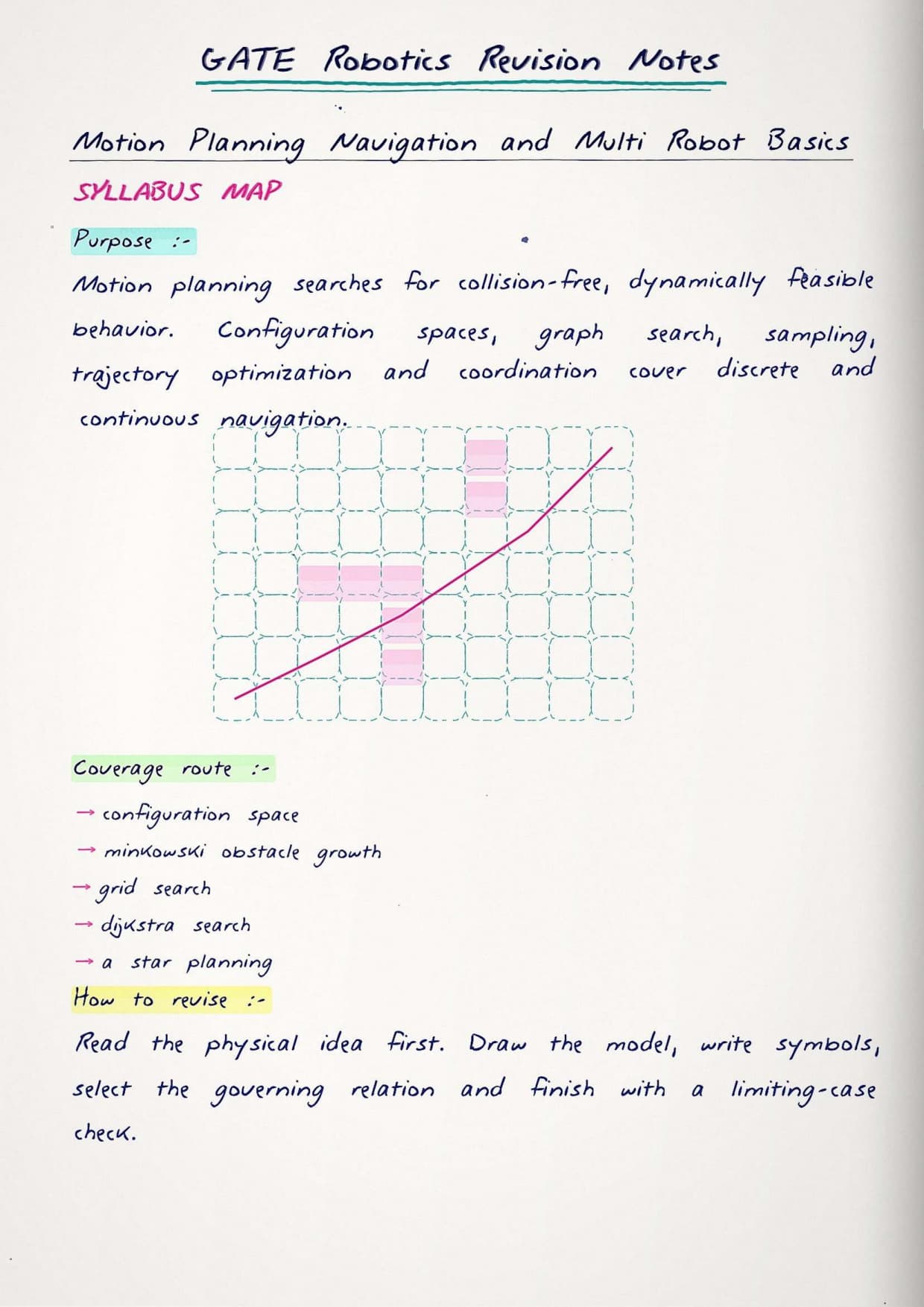
Getting a robot from where it is to where it needs to be without hitting anything is the whole job of motion planning, and these Motion Planning Navigation and Multi Robot Basics handwritten notes organise it by algorithm family.
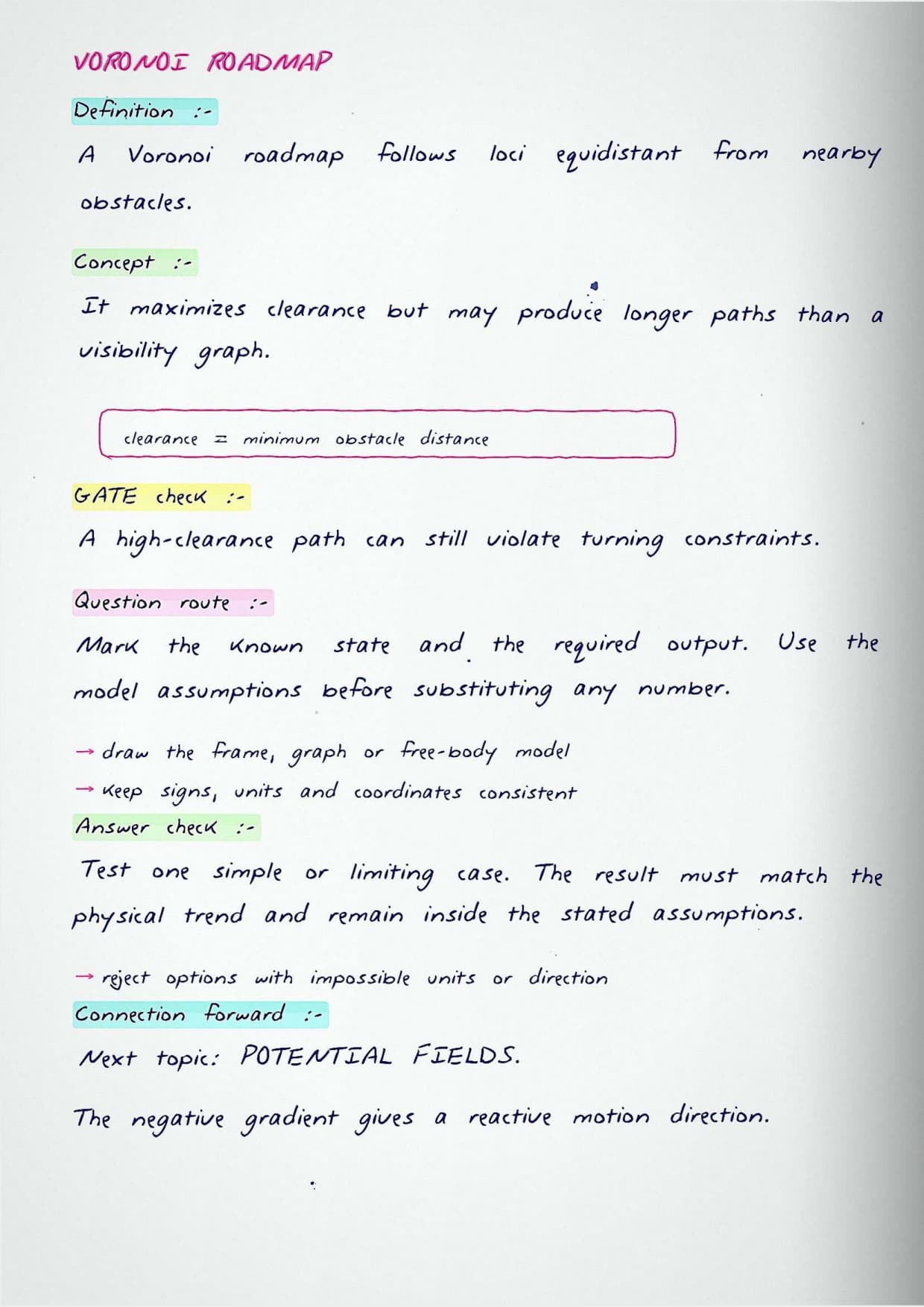
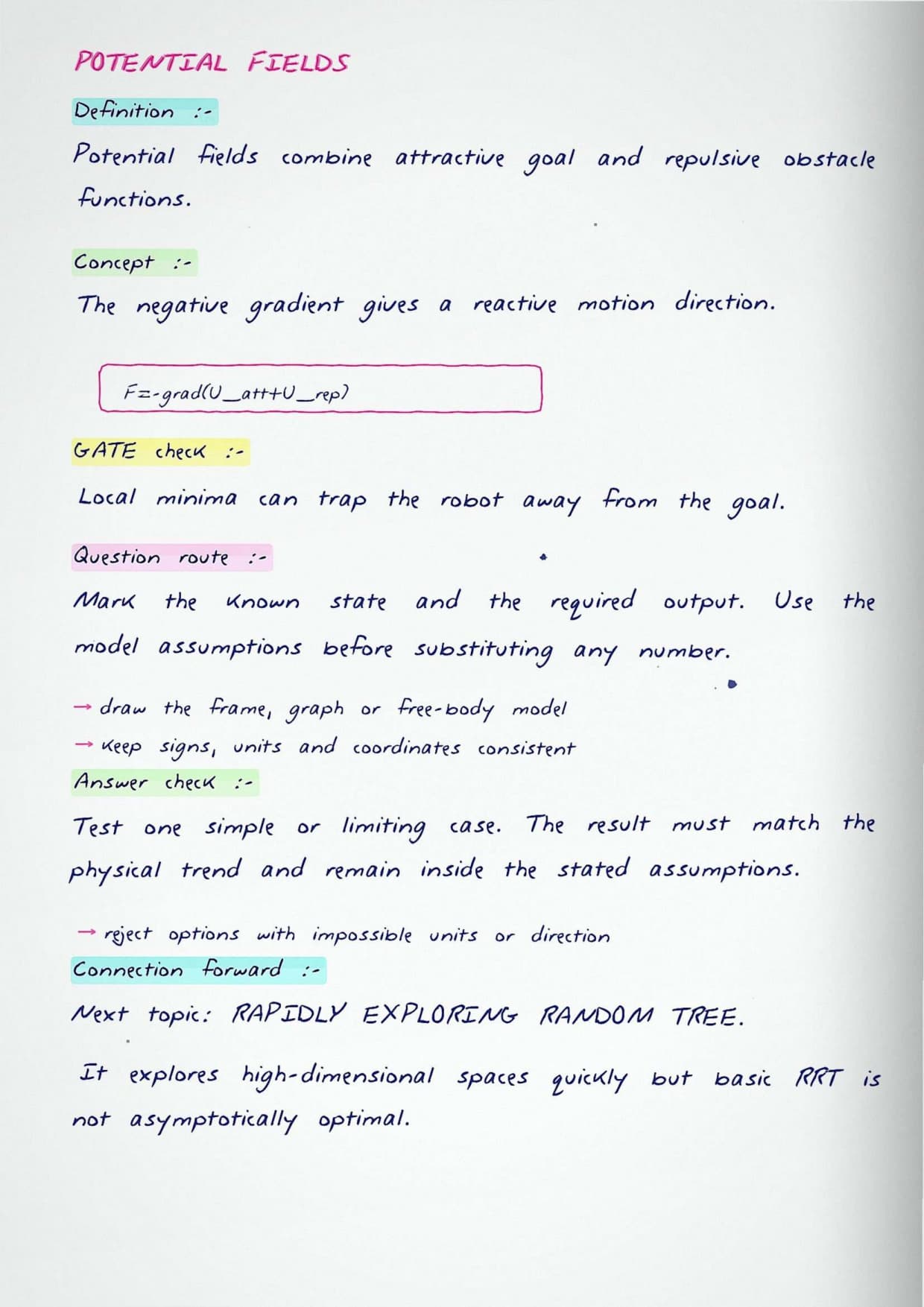
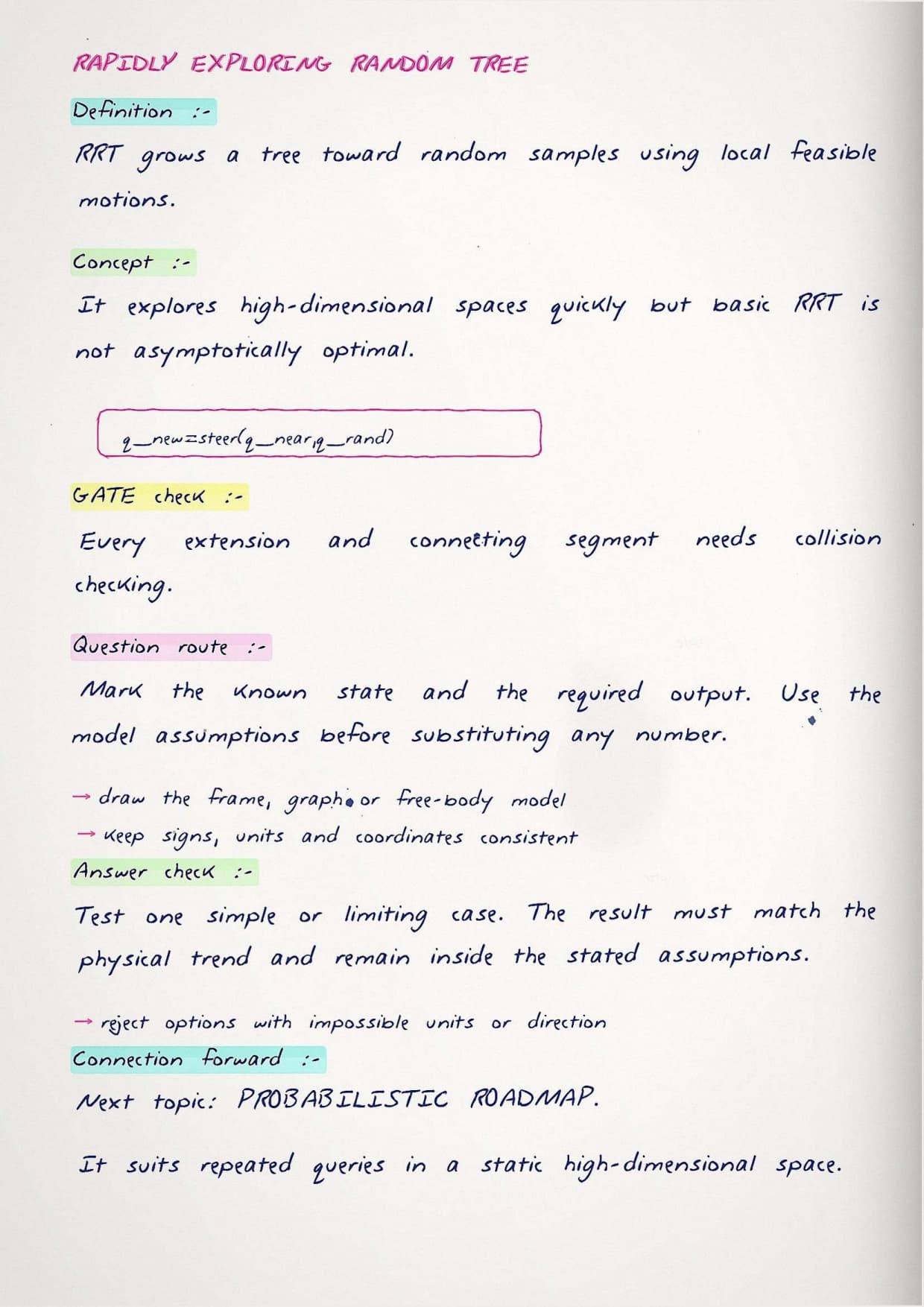
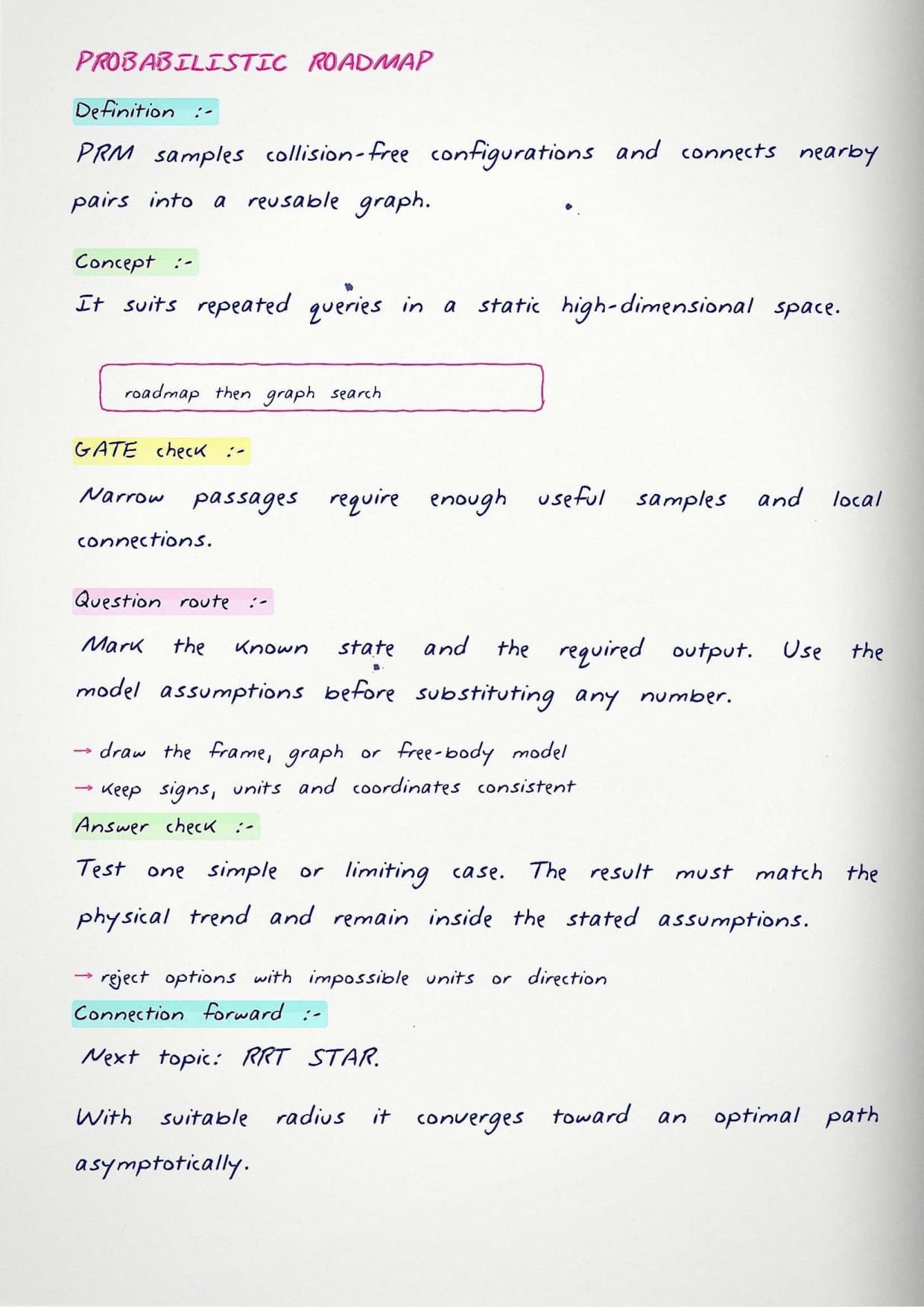
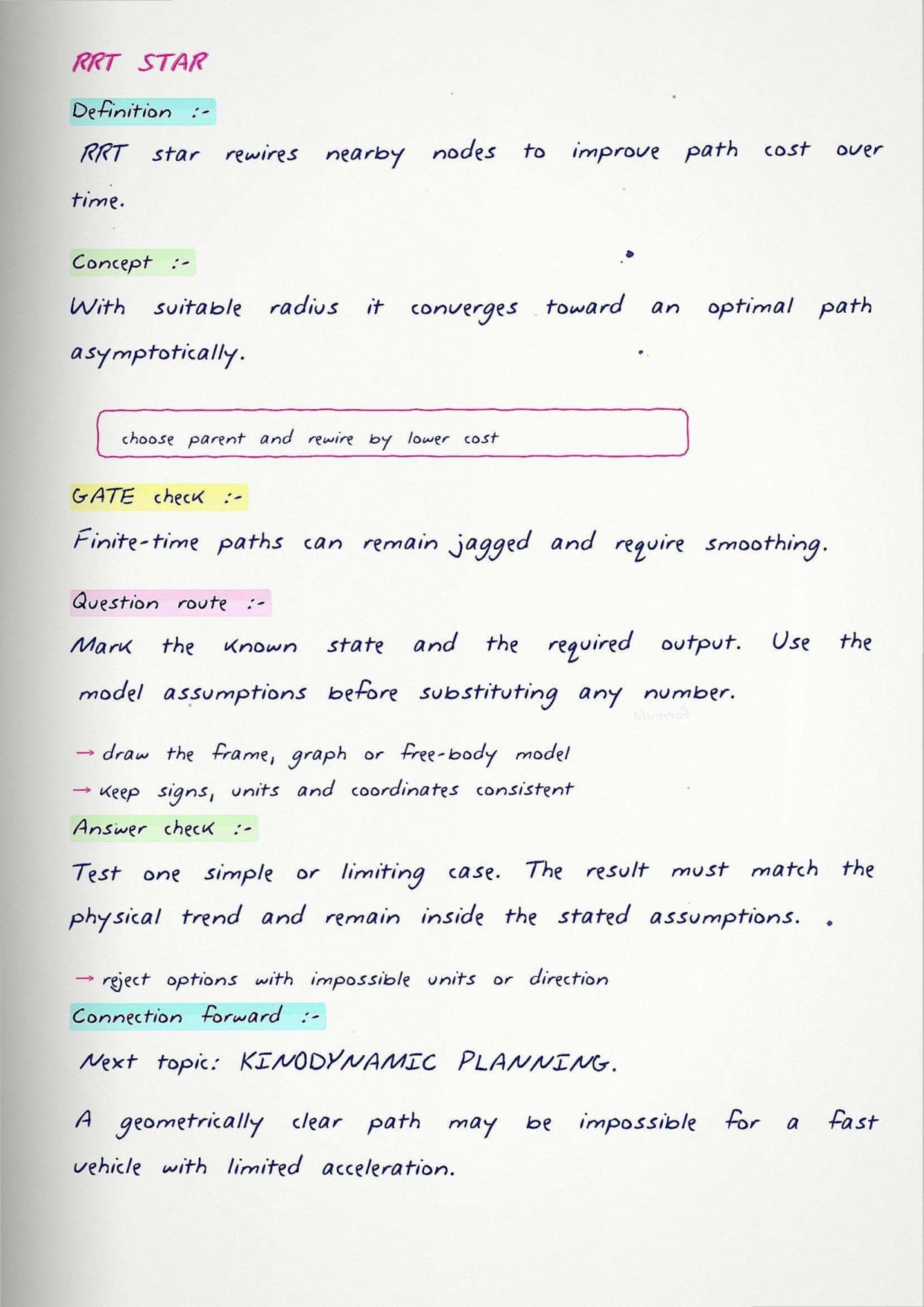
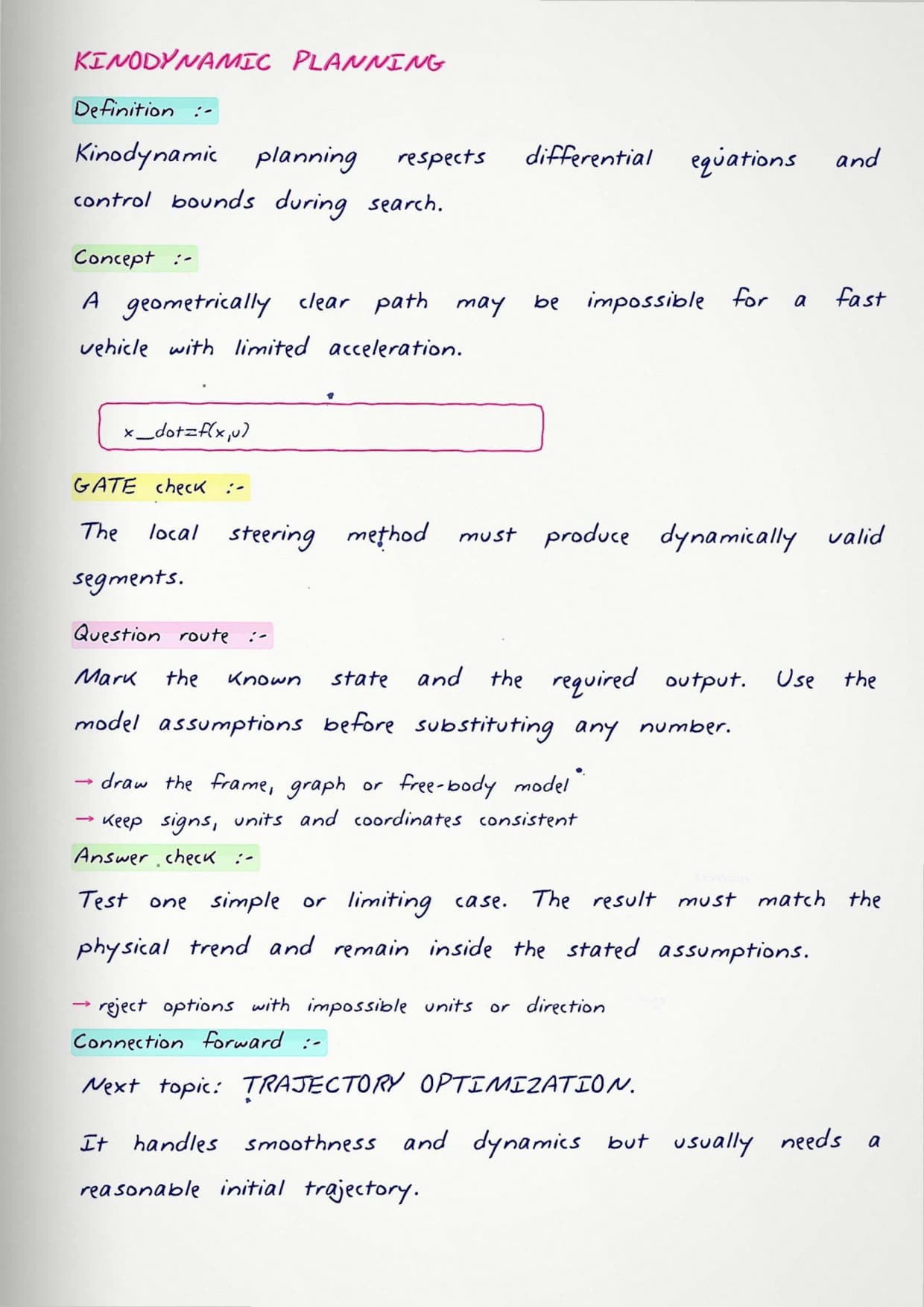
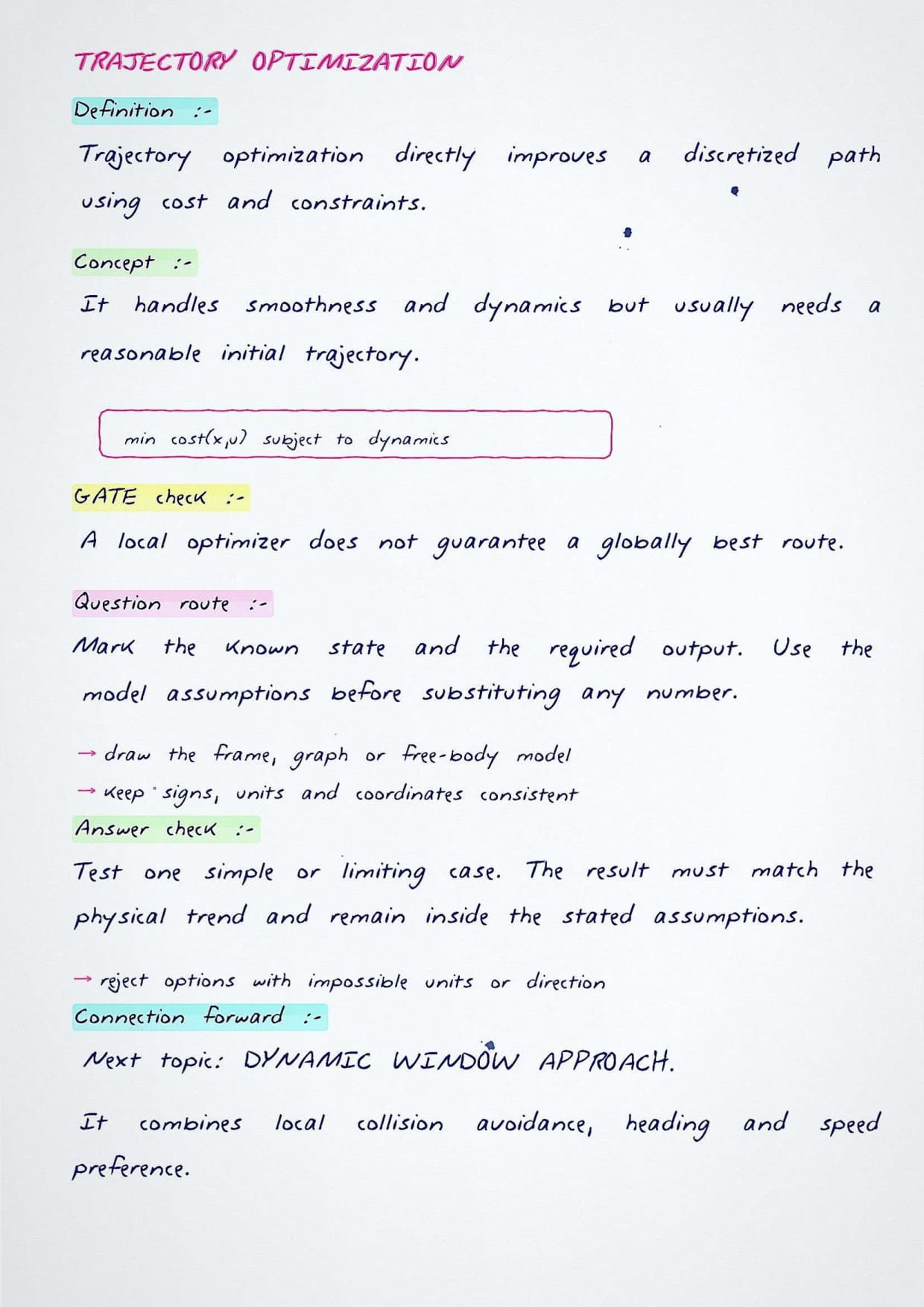
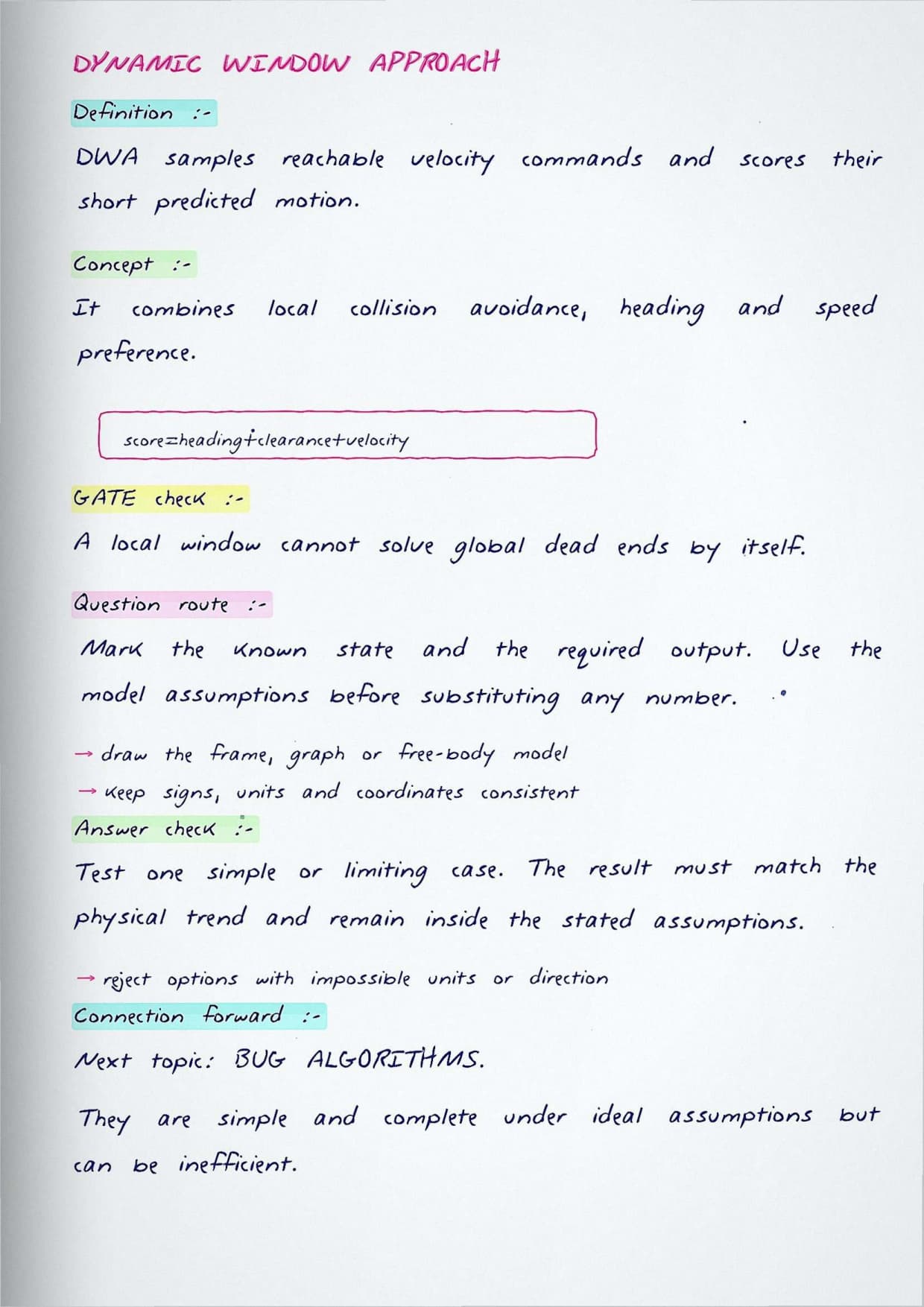
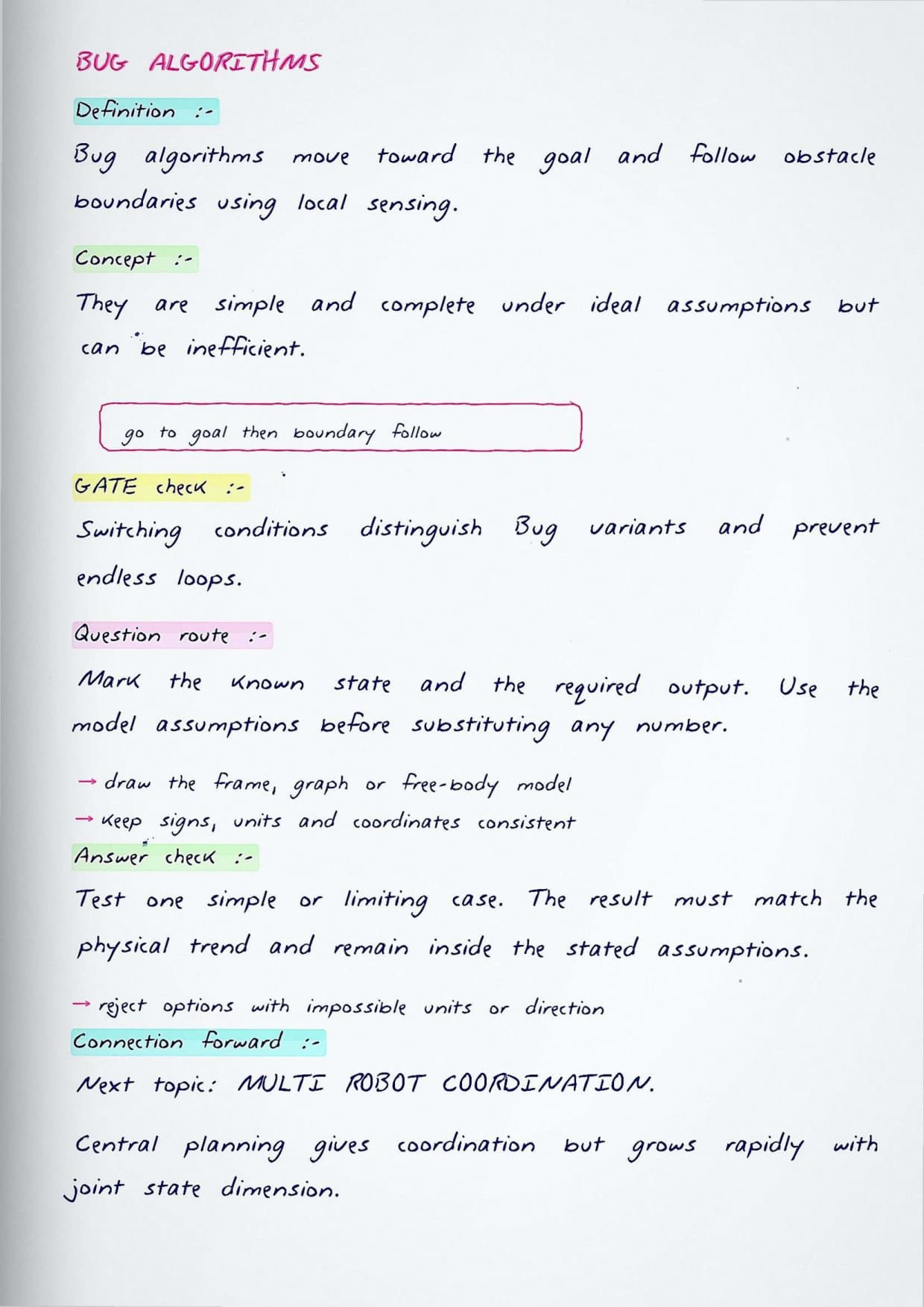
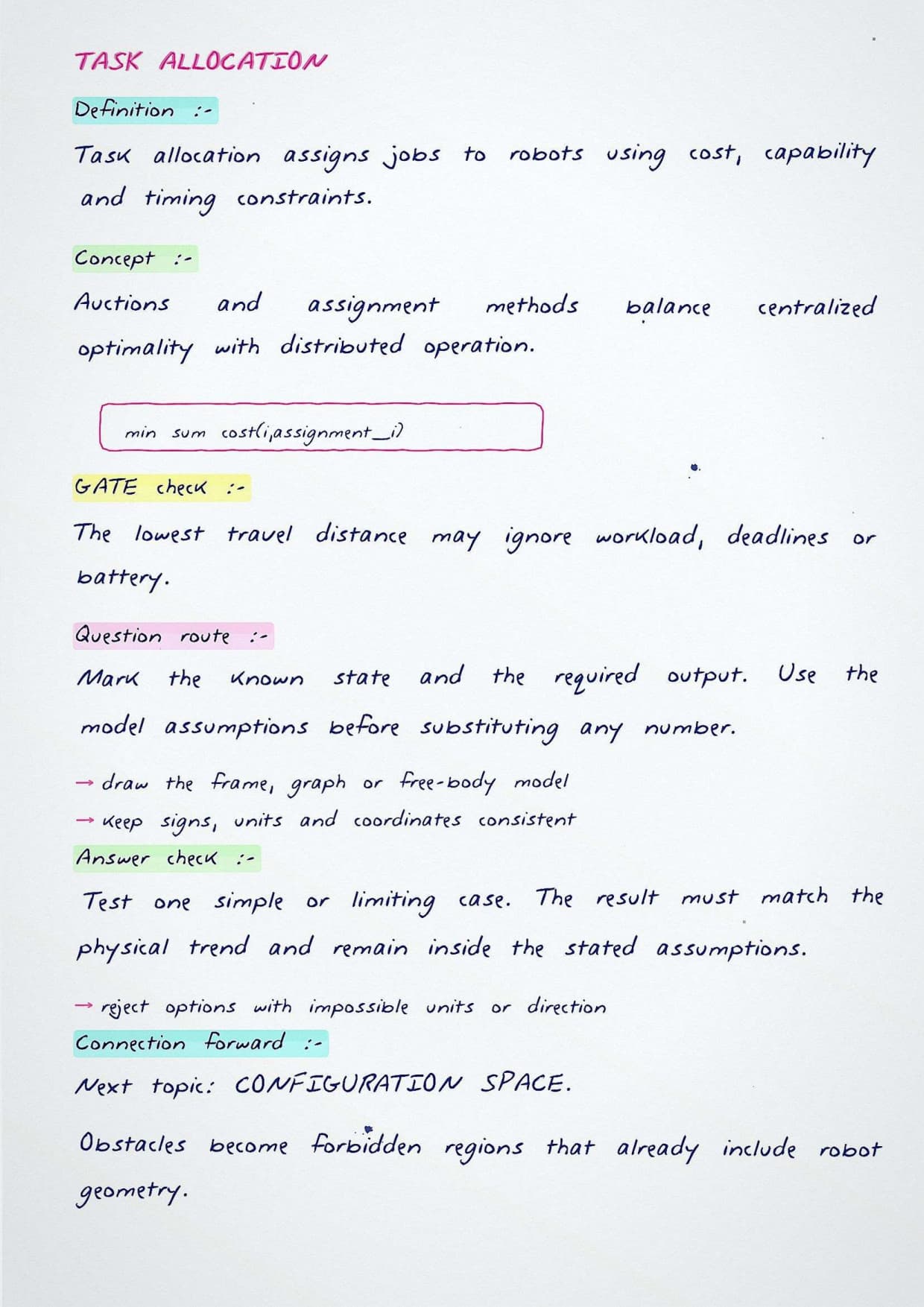
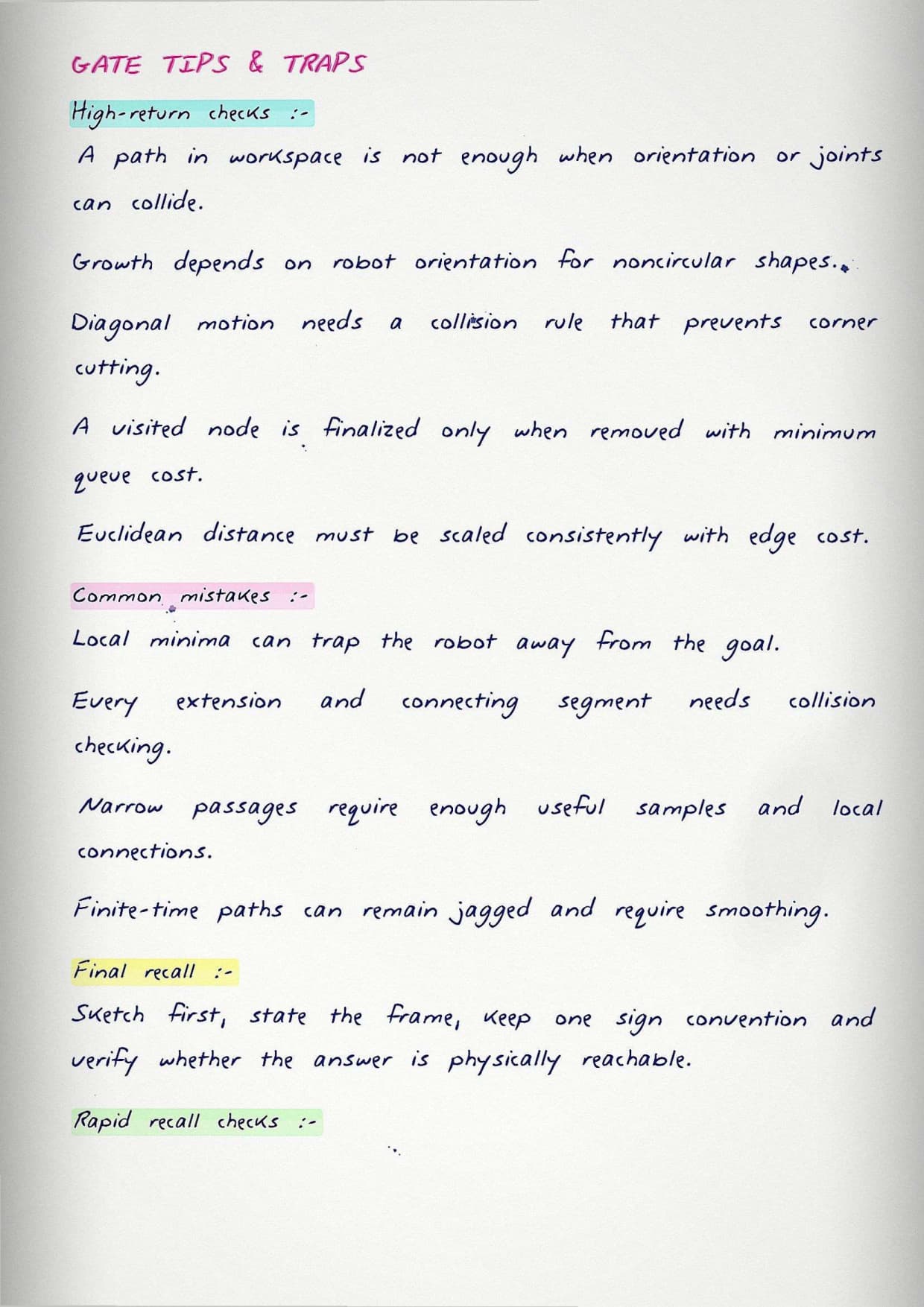
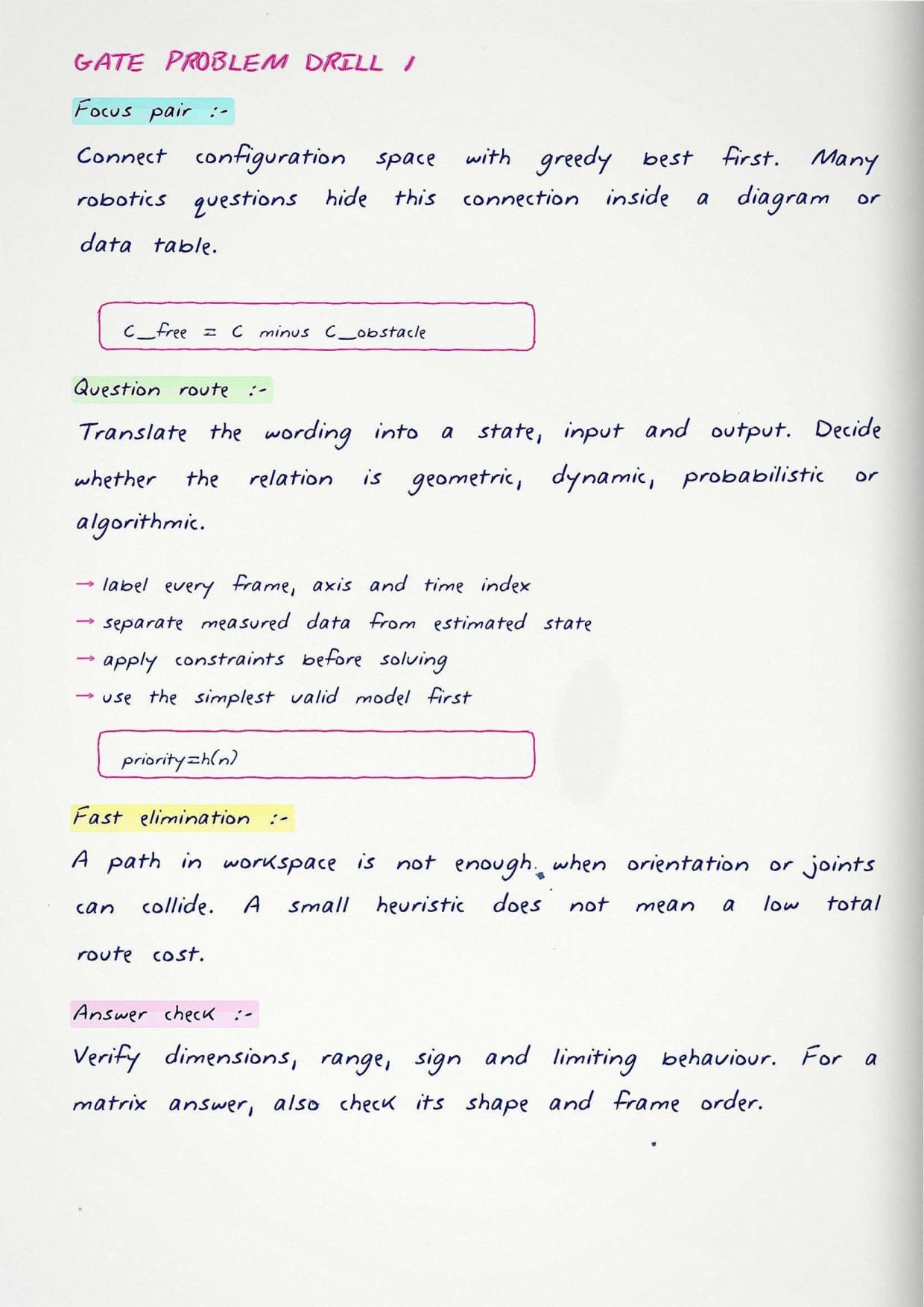
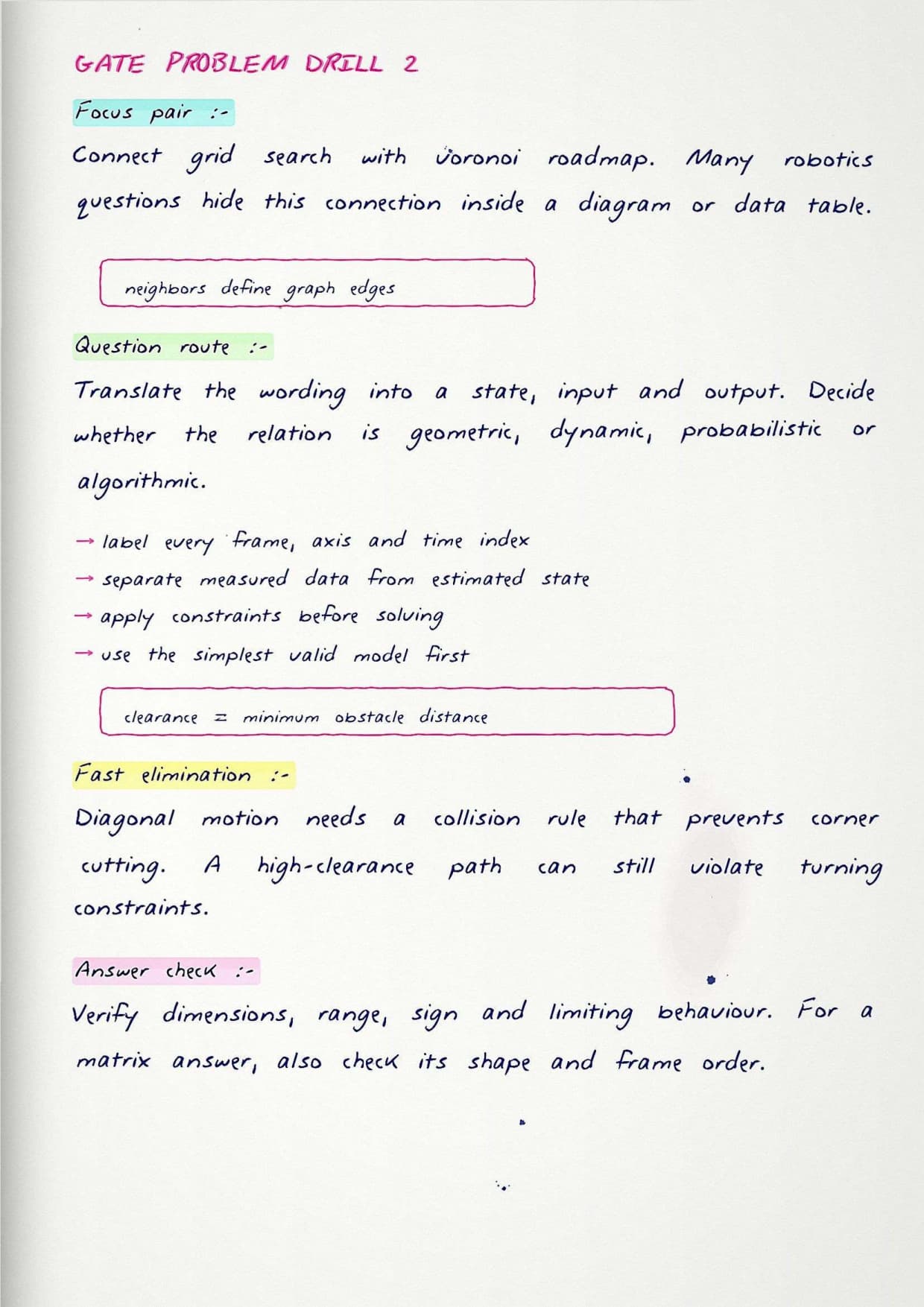
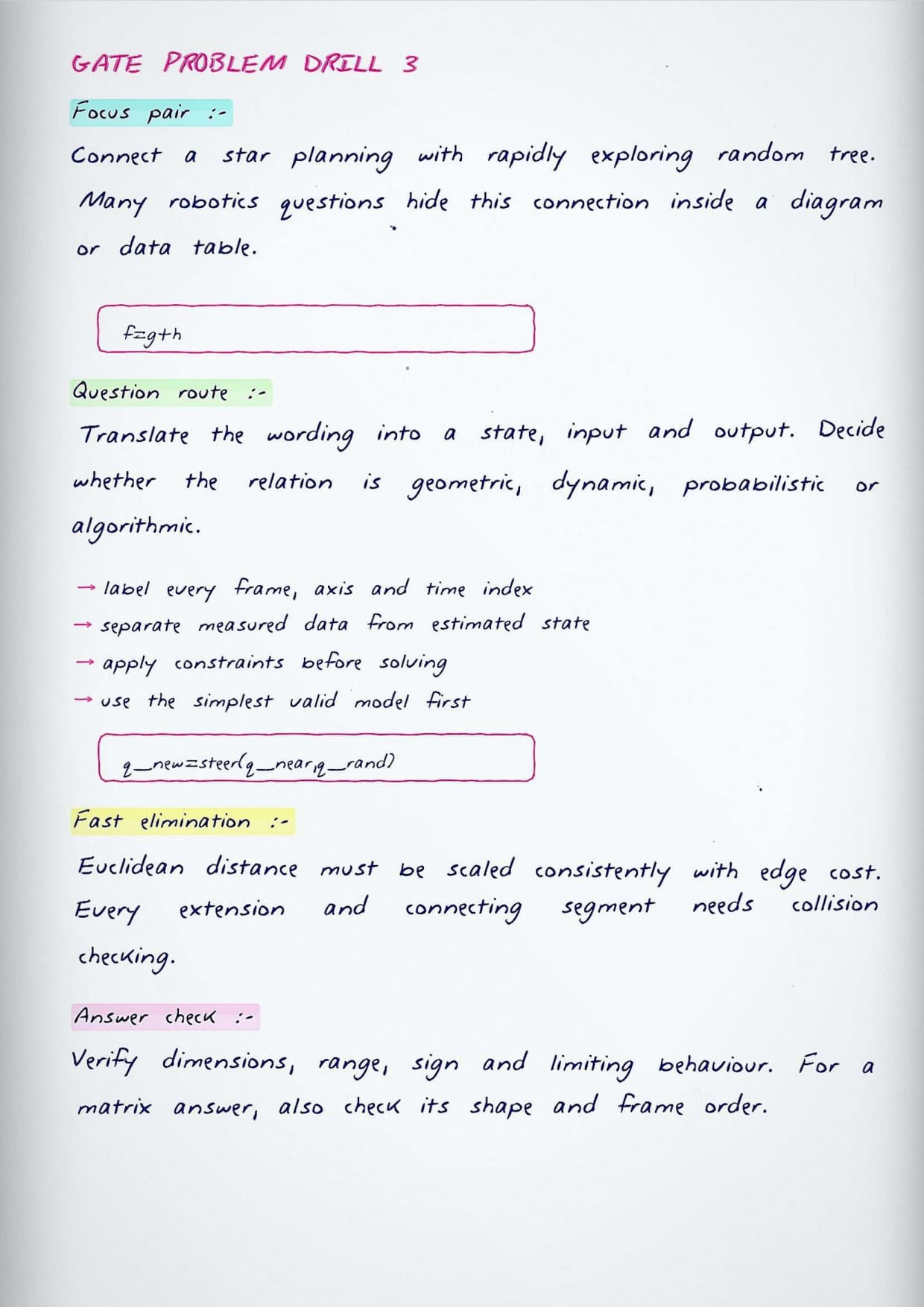
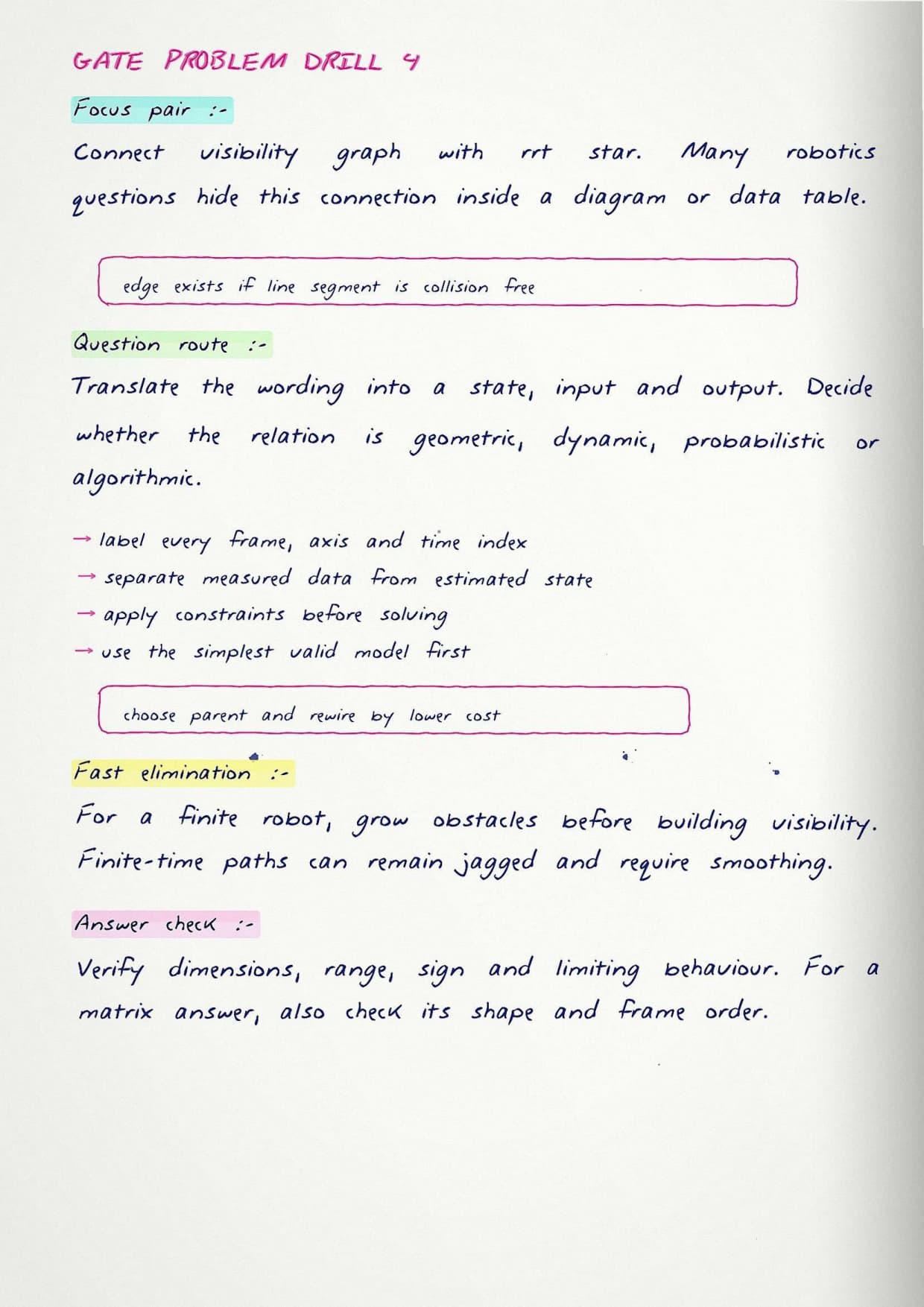
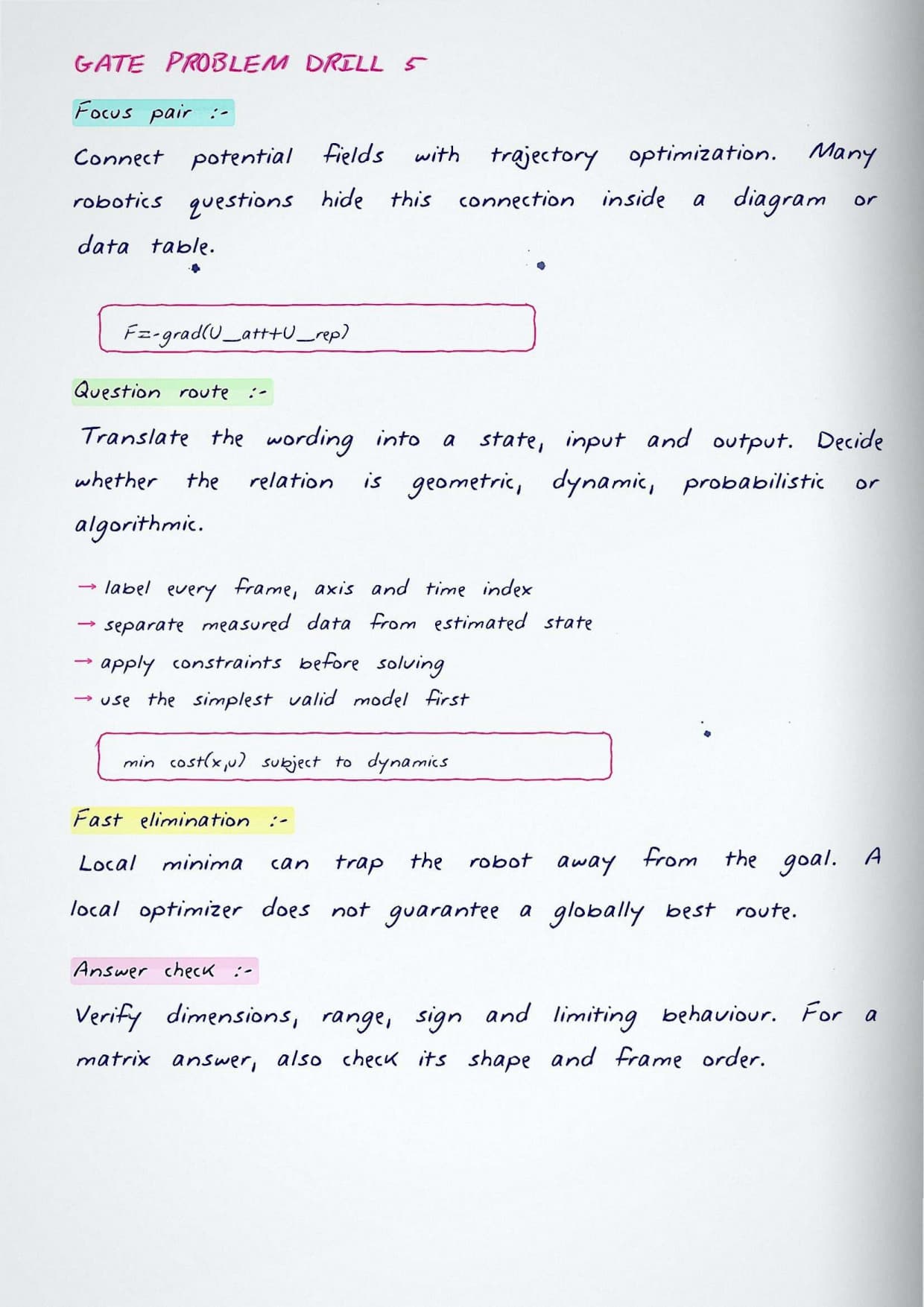
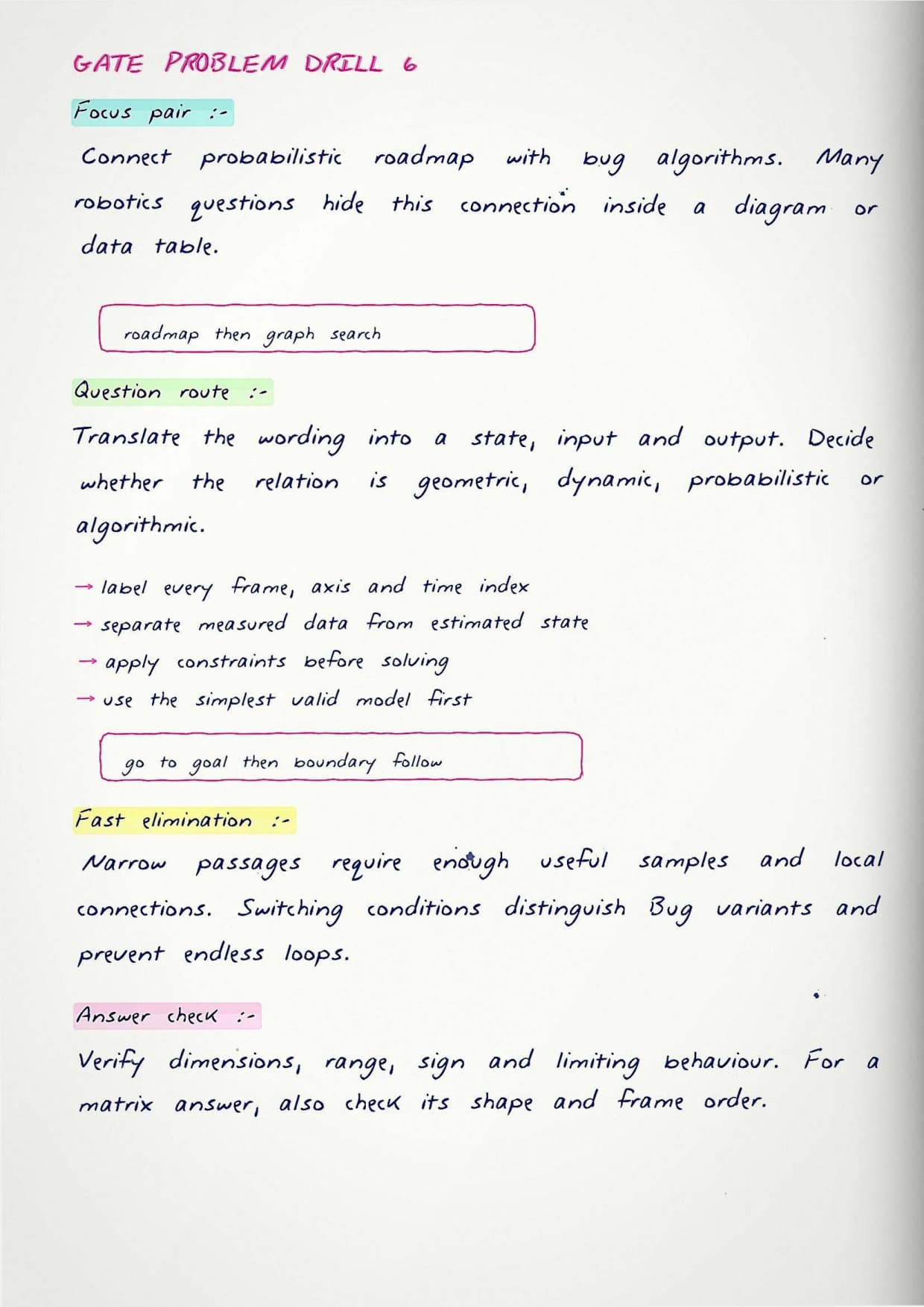
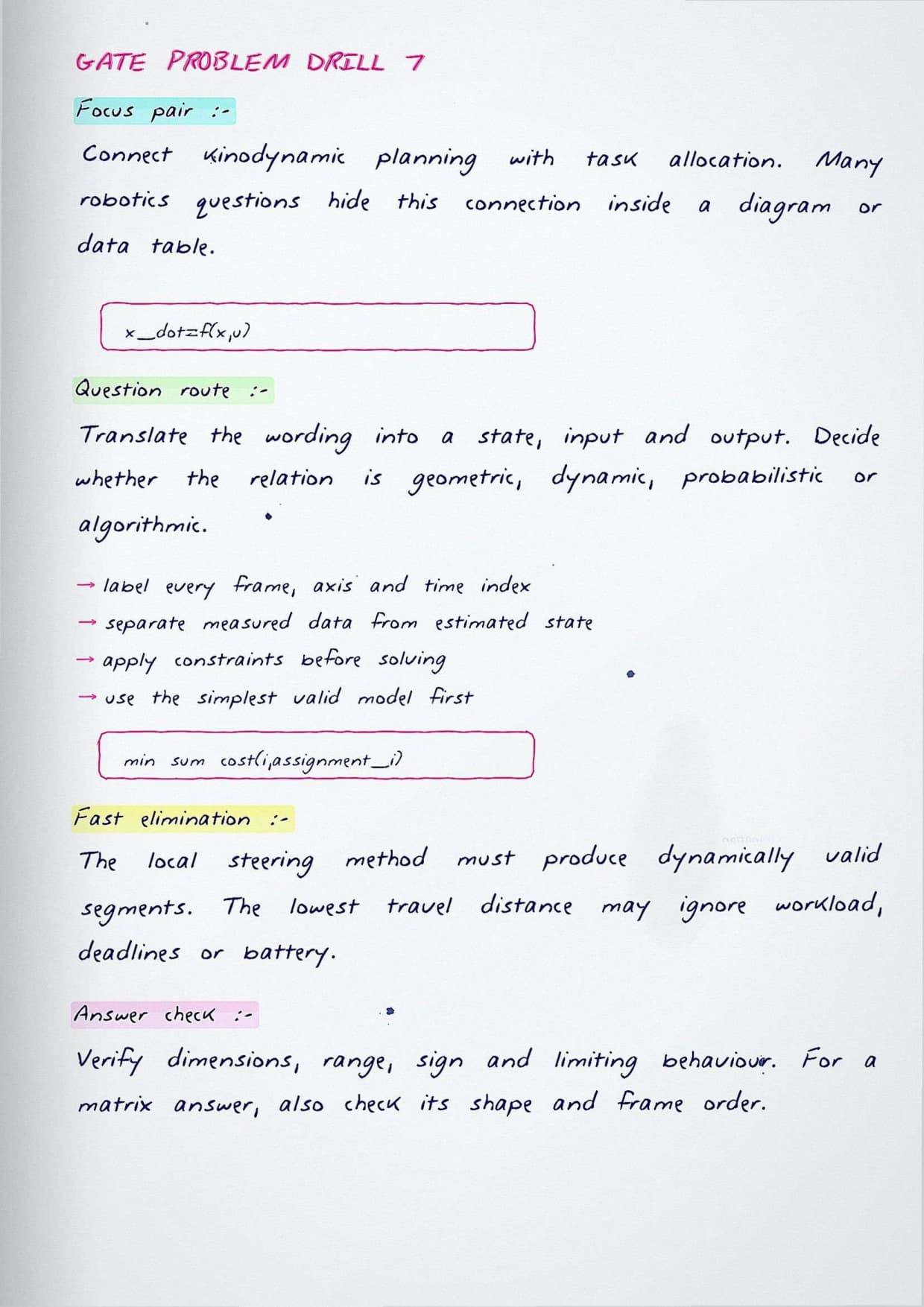
Planning and search are among the most reused ideas in any robotics test, and the same graph-search thinking overlaps with the algorithms section of GATE Computer Science. That is why students get real leverage from these pages.
Graph Search Planners: Dijkstra, A Star and Their Cousins
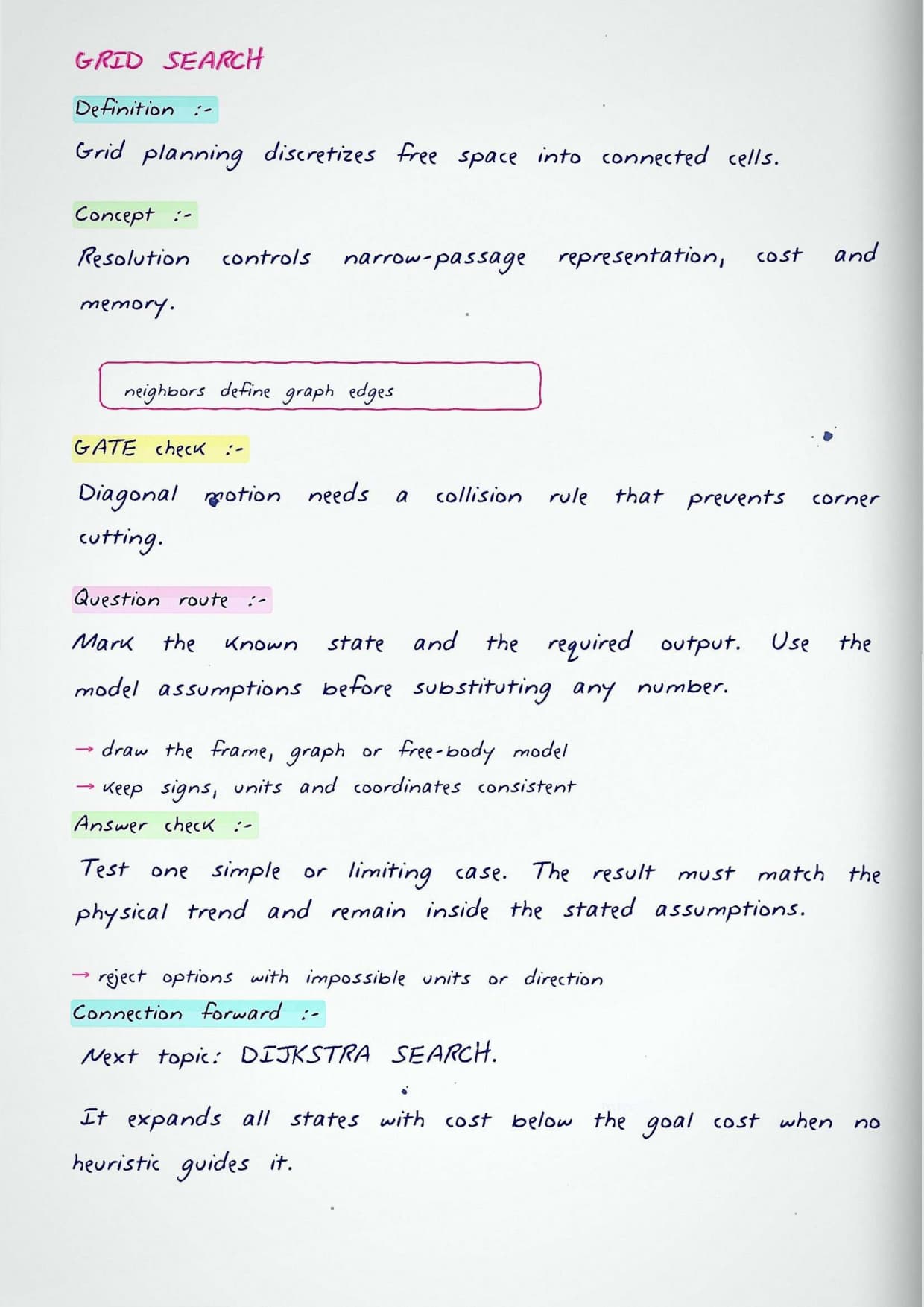
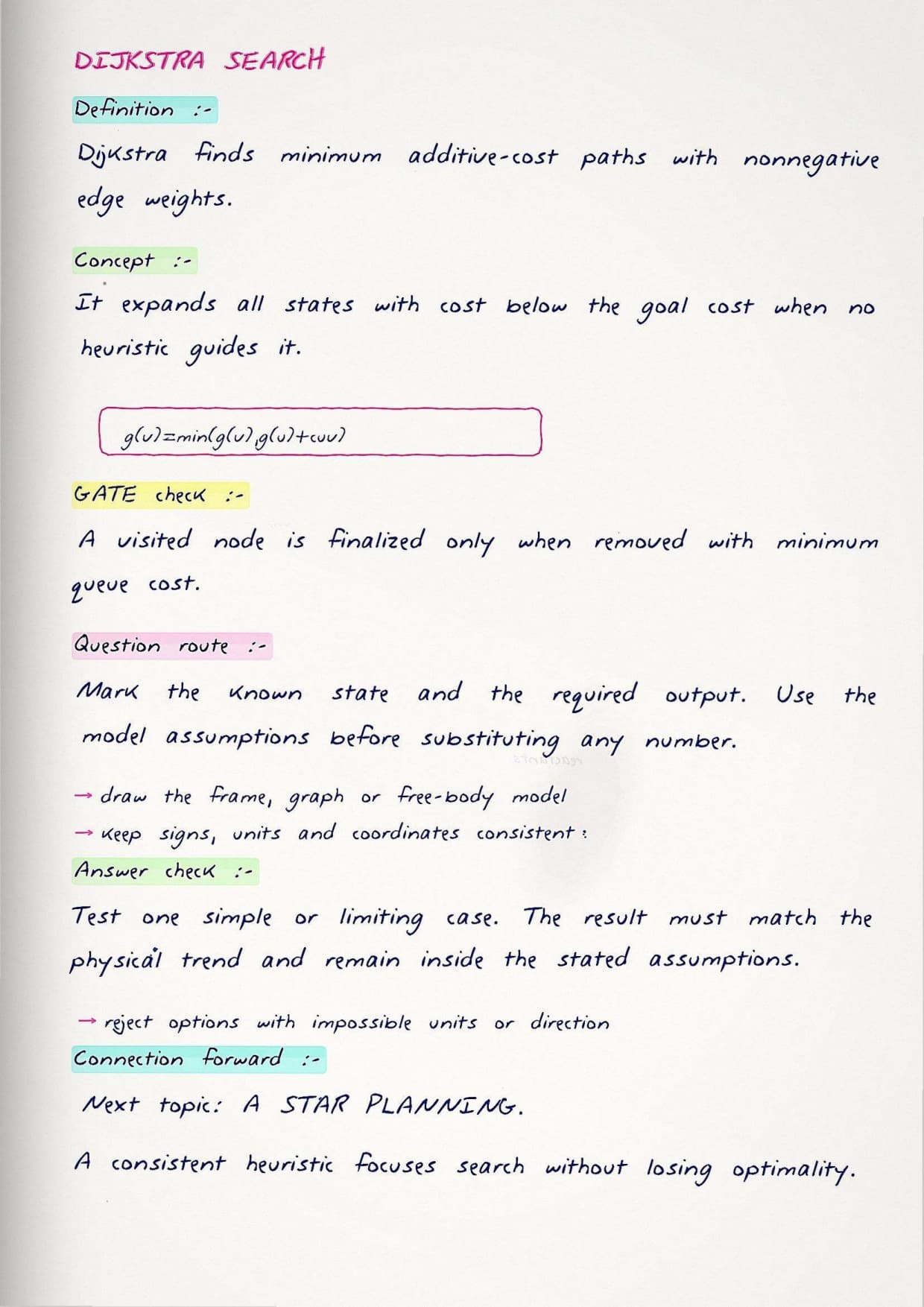
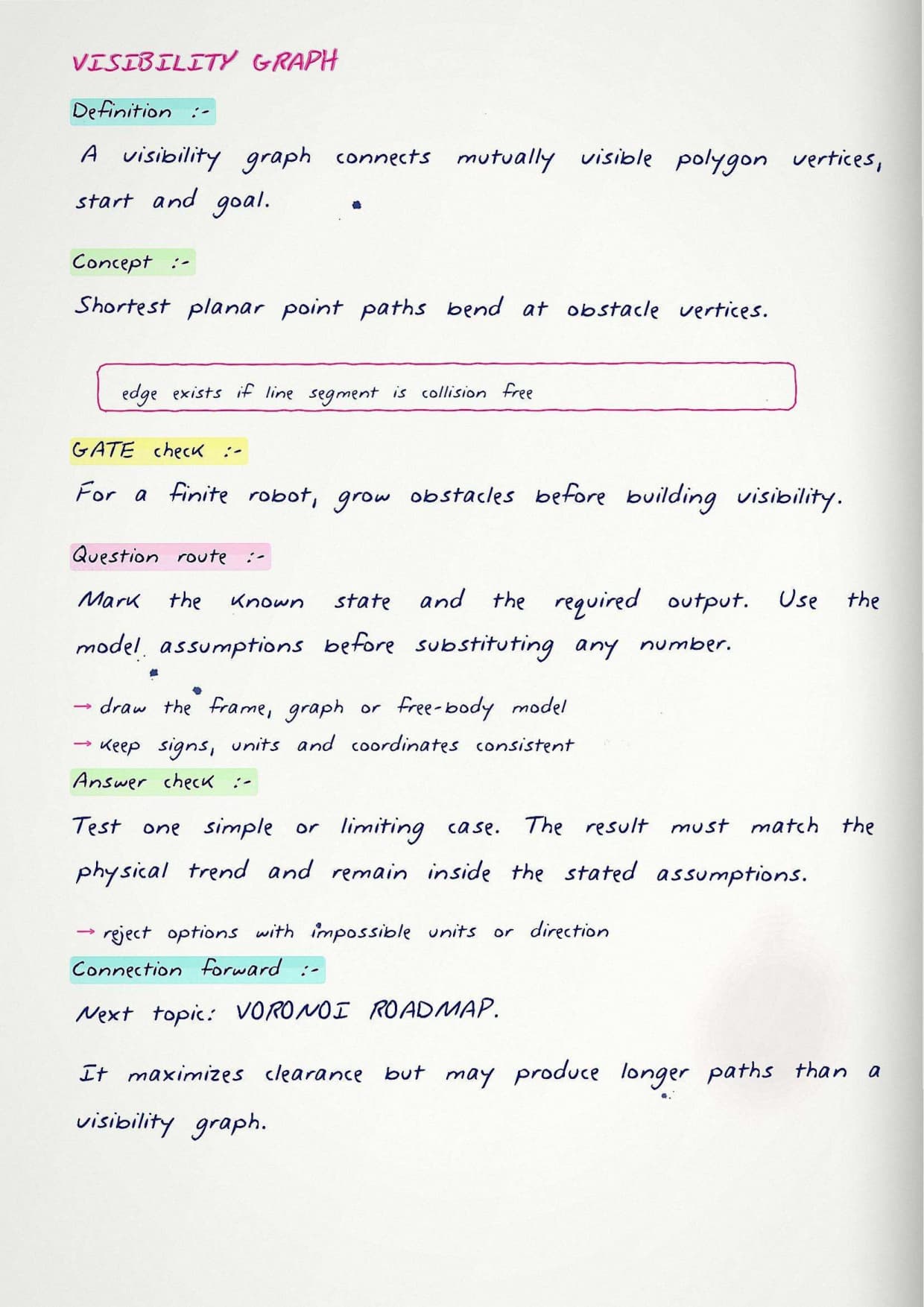
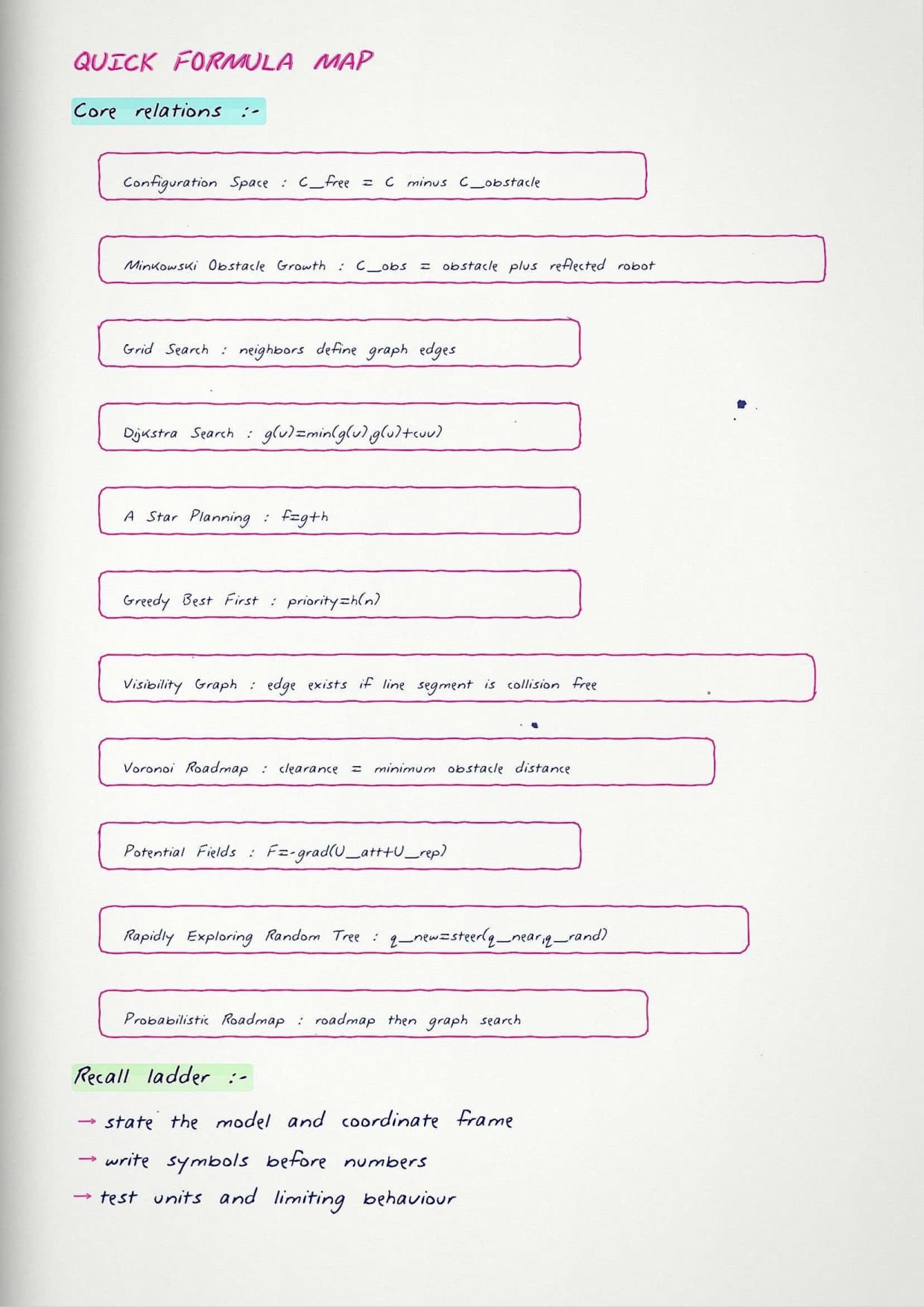
The notes open with the family most students meet first. A map becomes a graph of nodes and edges, and the planner searches it for the cheapest route. The core planners here are:
- Dijkstra's algorithm spreads outward by true cost until it reaches the goal.
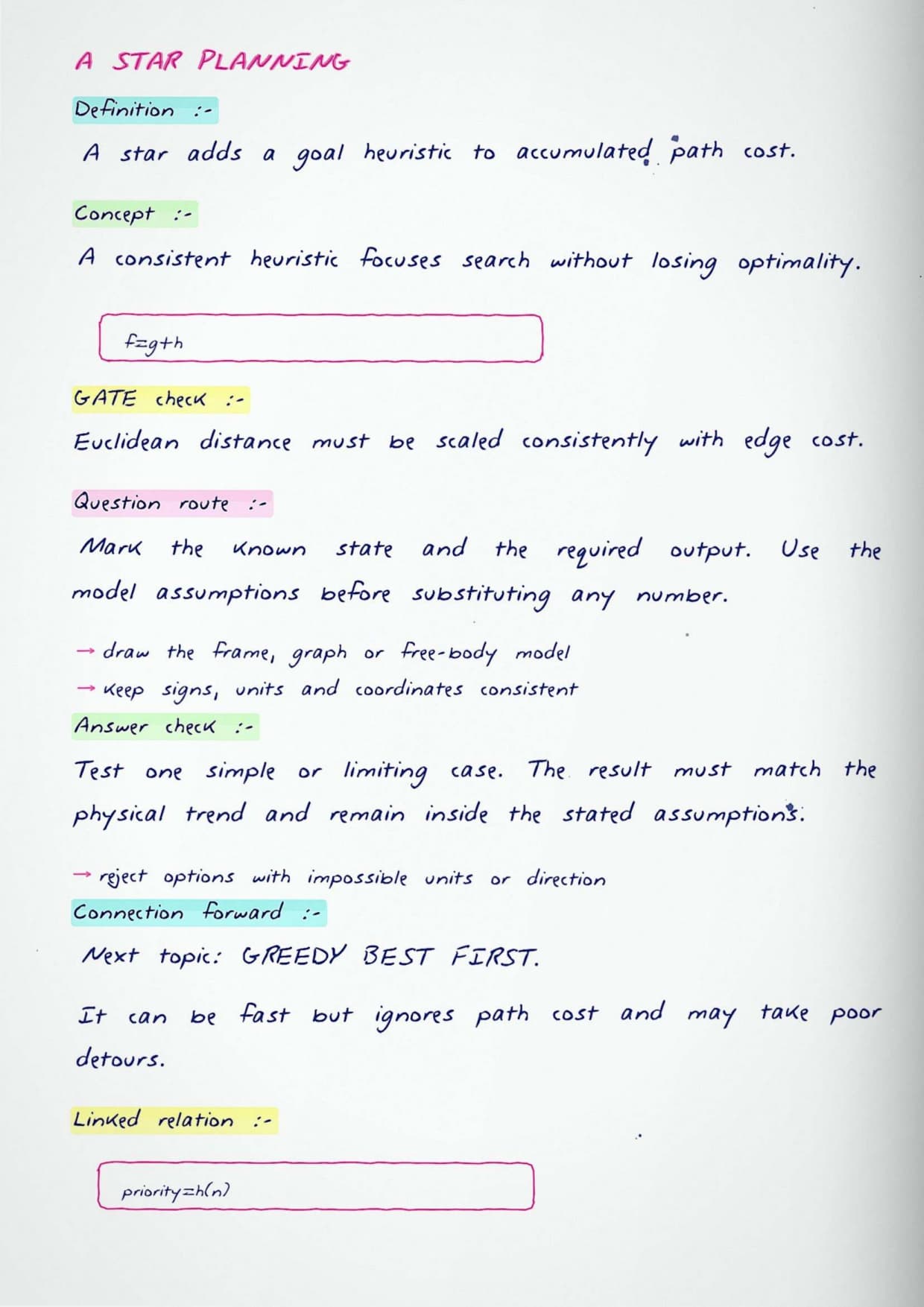
- A star adds a heuristic to aim the search toward the goal and reach it faster.
- An admissible heuristic keeps the answer optimal, while a badly chosen one quietly ruins that guarantee.
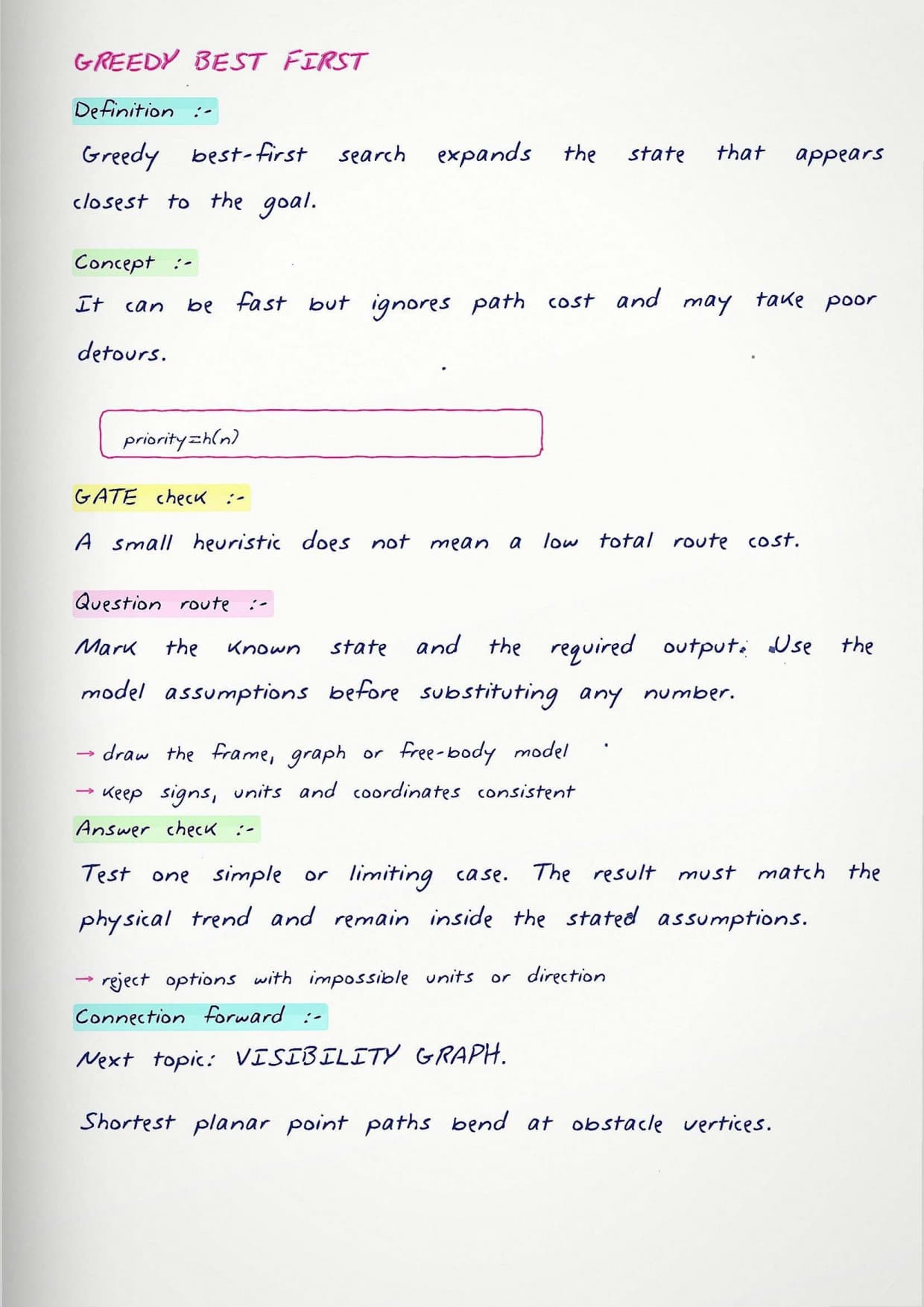
- Greedy best-first search trades safety for speed, the cautionary cousin of the group.
Sampling-Based Planners for Cluttered Spaces
When the space is high-dimensional or full of awkward obstacles, building a full graph stops being practical. Here the notes turn to planners that sample the free space instead:
- Rapidly-exploring Random Trees grow a tree outward from the start, reaching into open space quickly.
- Probabilistic Roadmaps scatter valid points, connect nearby ones, then search the resulting network.
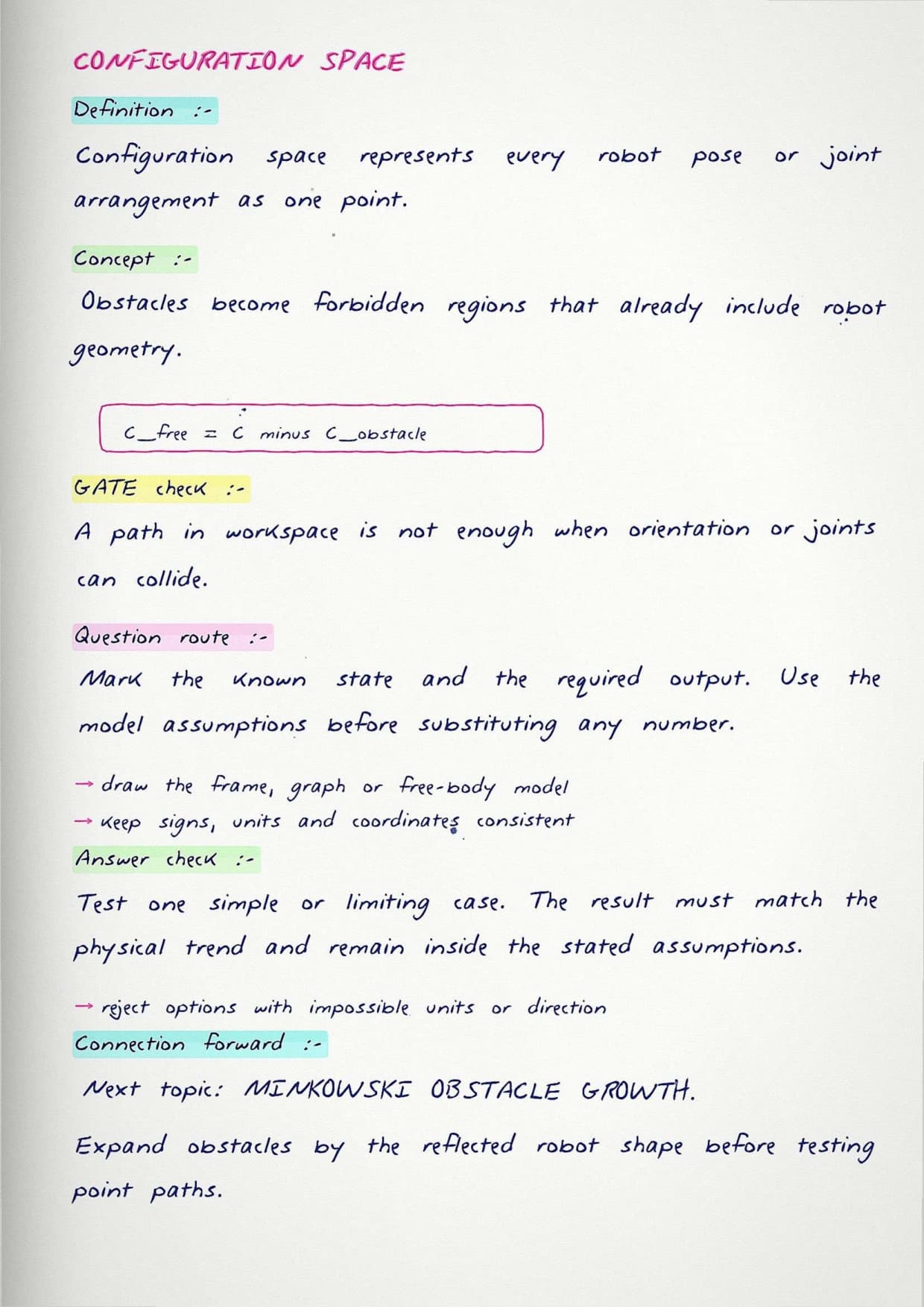
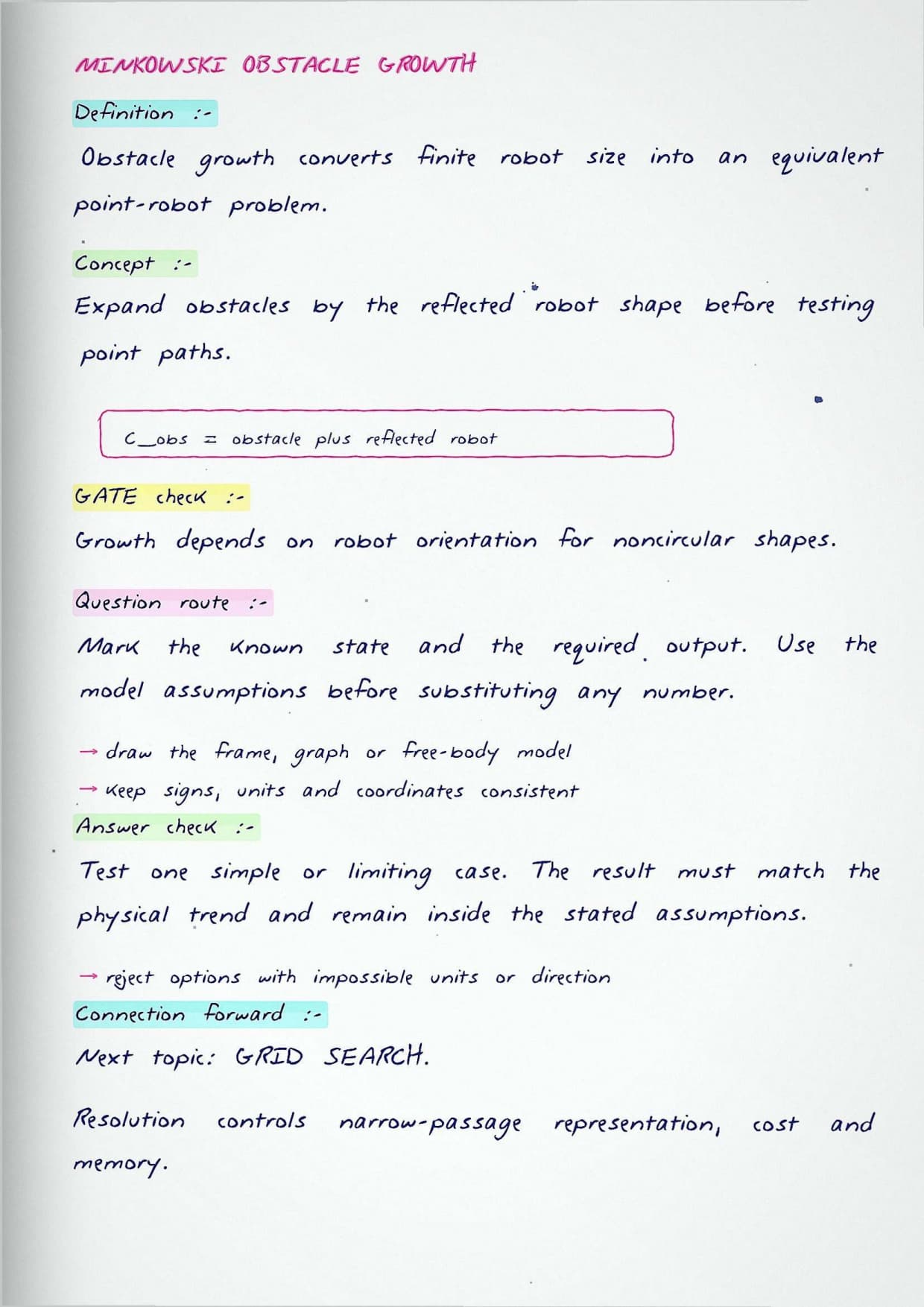
- The idea of configuration space, where the robot shrinks to a single point and obstacles grow to match.
Students see clearly why these methods trade a guaranteed best path for the ability to solve problems that graph search alone cannot touch.
Reactive and Potential-Field Navigation
Not every situation allows time to plan a full route in advance. This section covers the reactive side of navigation, where a robot responds to what its sensors report right now.
The artificial potential field method treats the goal as a pull and obstacles as a push, guiding the robot along the combined force. The notes are honest about its weakness too, spelling out the local minimum trap, where a robot stalls between obstacles even though a clear path exists.
See Motion Planning Solved Step by Step
Source: Cyrill Stachniss (YouTube)
When One Robot Becomes Many
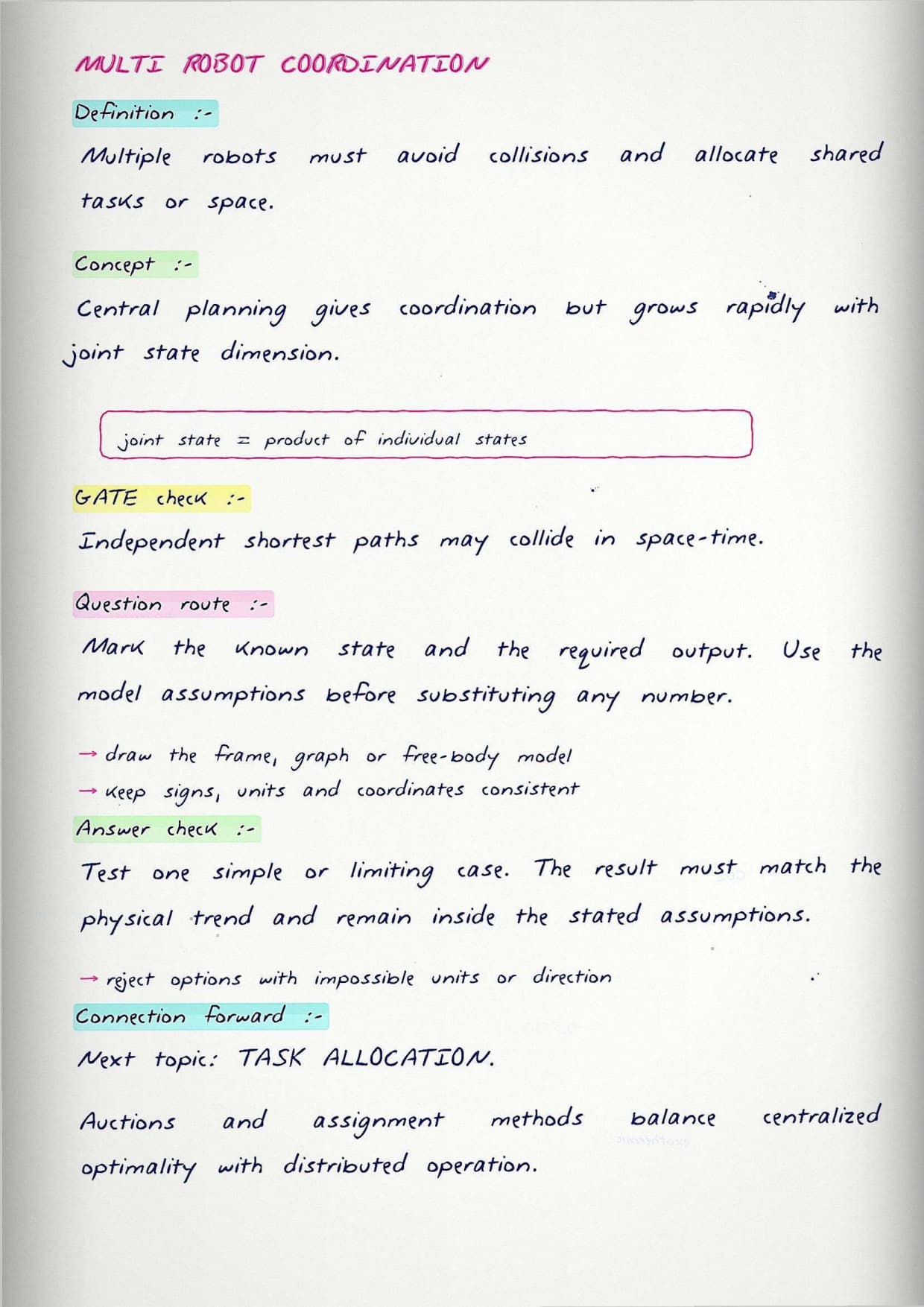
The final family scales the problem up. Once several robots share a space, planning has to worry about them getting in each other's way. The notes introduce multi-robot basics through a few clean ideas:
- Centralised versus decentralised planning, and the trade-off between a full view and fast local decisions.
- Collision avoidance between moving robots, not just static walls.
- Simple coordination and priority schemes that decide who moves and who waits.
These are kept deliberately foundational, giving students the vocabulary and the mental picture before any heavier theory.
From These Notes to the Exam Hall
Because the material is grouped by algorithm family, revision has a natural rhythm. Students can take one family per sitting, redraw its core diagram from memory, and write out where it wins and where it fails.
A star, RRT and the potential field method reward this kind of compare-and-contrast study, since exam questions often ask which planner suits a given map. Working the pages by hand, one family at a time, turns a broad subject into a short, confident checklist.
Motion Planning Navigation and Multi Robot Basics FAQs
Ques. What is the difference between Dijkstra's algorithm and A star?
Ans. Both find least-cost paths on a graph, but A star adds a heuristic that steers the search toward the goal, so it usually reaches the answer faster while staying optimal when the heuristic is admissible.
Ques. When are sampling-based planners like RRT preferred?
Ans. They shine in high-dimensional or heavily cluttered spaces where building a full graph is impractical. They trade the guarantee of a best path for the ability to find a workable one quickly.
Ques. Why does the potential field method sometimes fail?
Ans. It can trap a robot in a local minimum, a spot where the pull to the goal and the push from obstacles cancel out, leaving the robot stuck even when a valid path exists.
Ques. Do these motion planning ideas help with other exams?
Ans. Yes. Graph search planners such as Dijkstra and A star overlap directly with the algorithms section of GATE Computer Science, so the study carries over well.
Ques. How are the multi-robot topics pitched?
Ans. They are kept foundational. The notes cover centralised versus decentralised planning, collision avoidance and simple coordination so students gain the core vocabulary before deeper theory.



Comments