




Engineering Mathematics for Robotics is the working toolkit behind every robot motion, and it doubles as high-return GATE revision since the same maths appears in every paper.
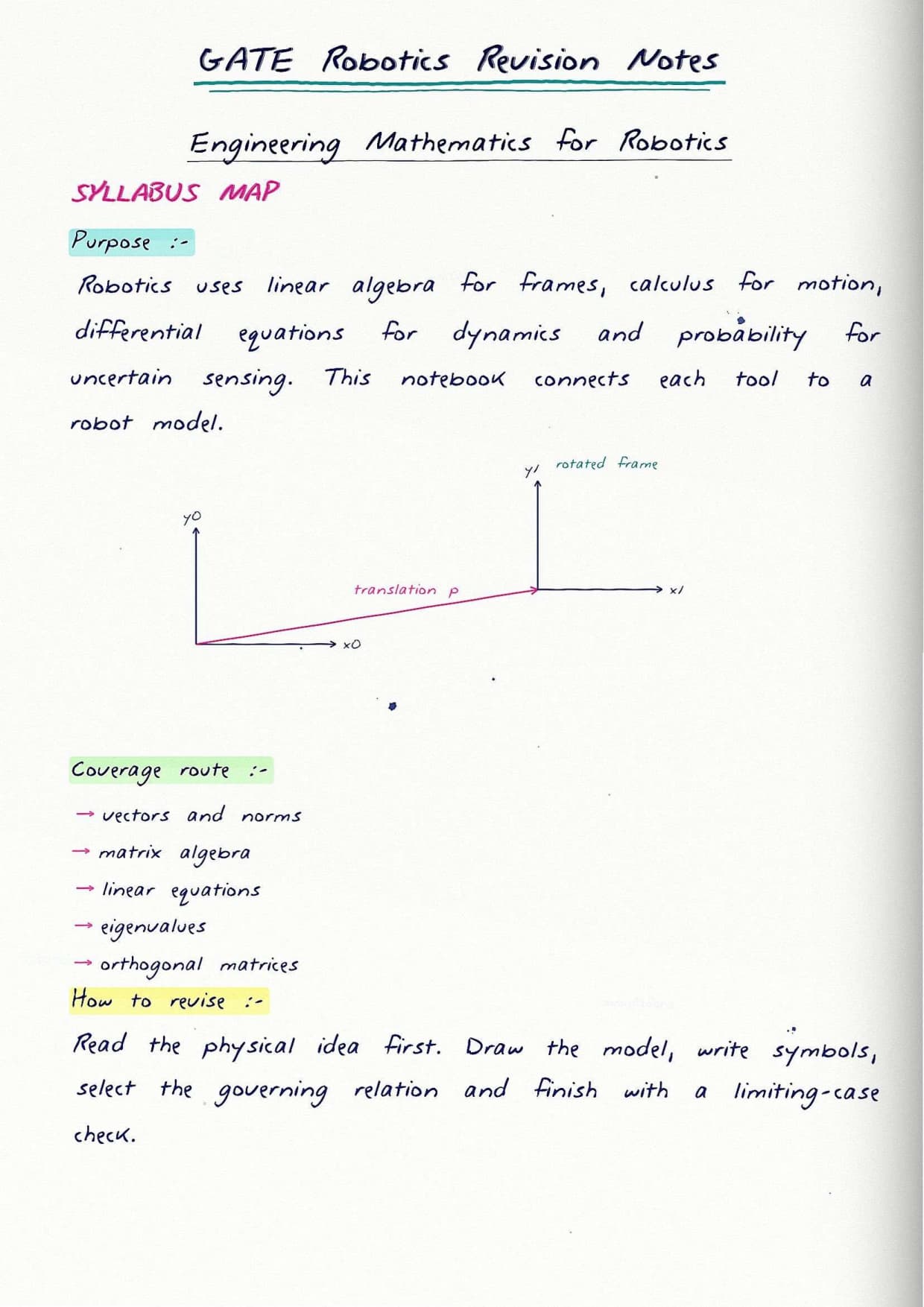
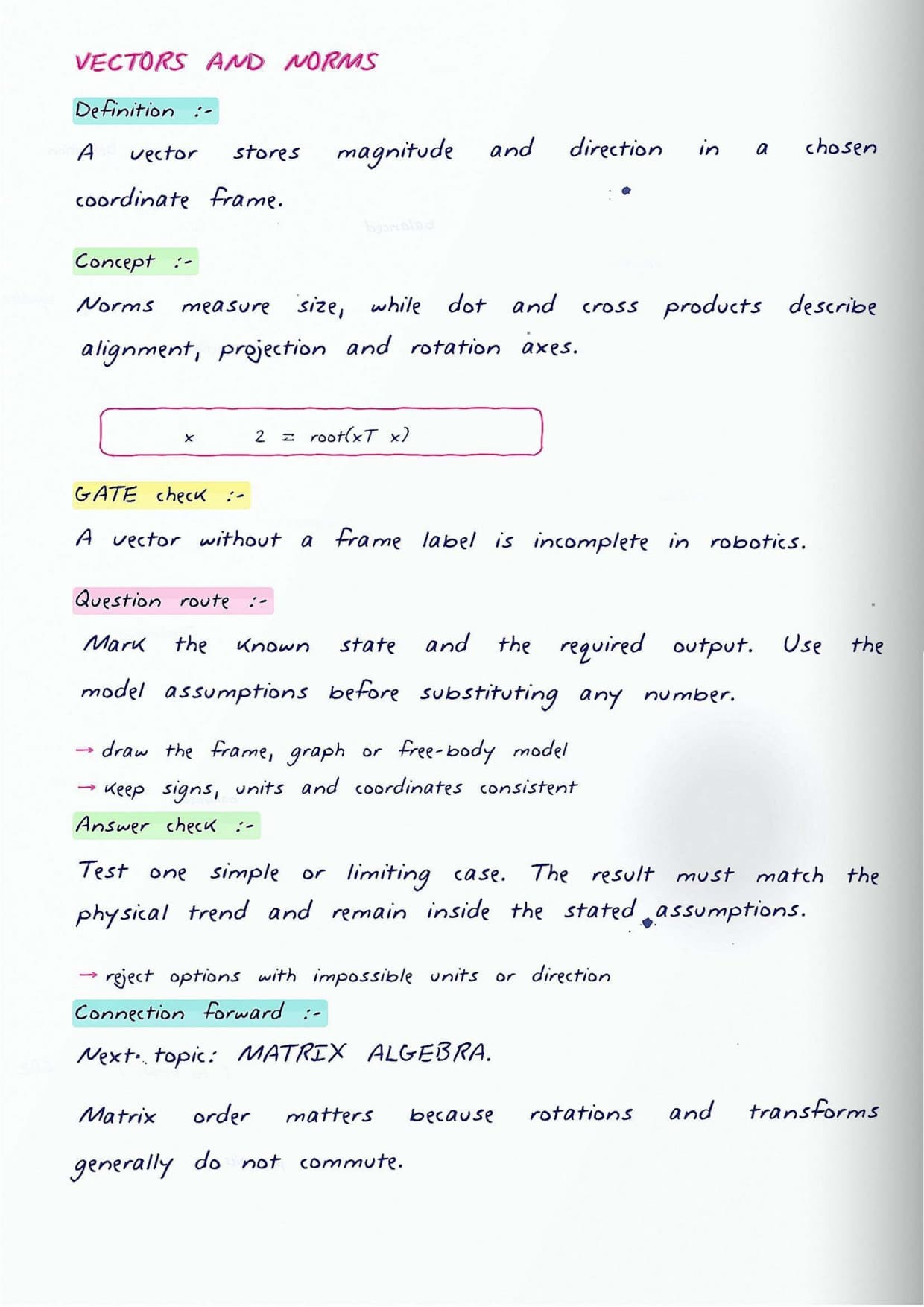
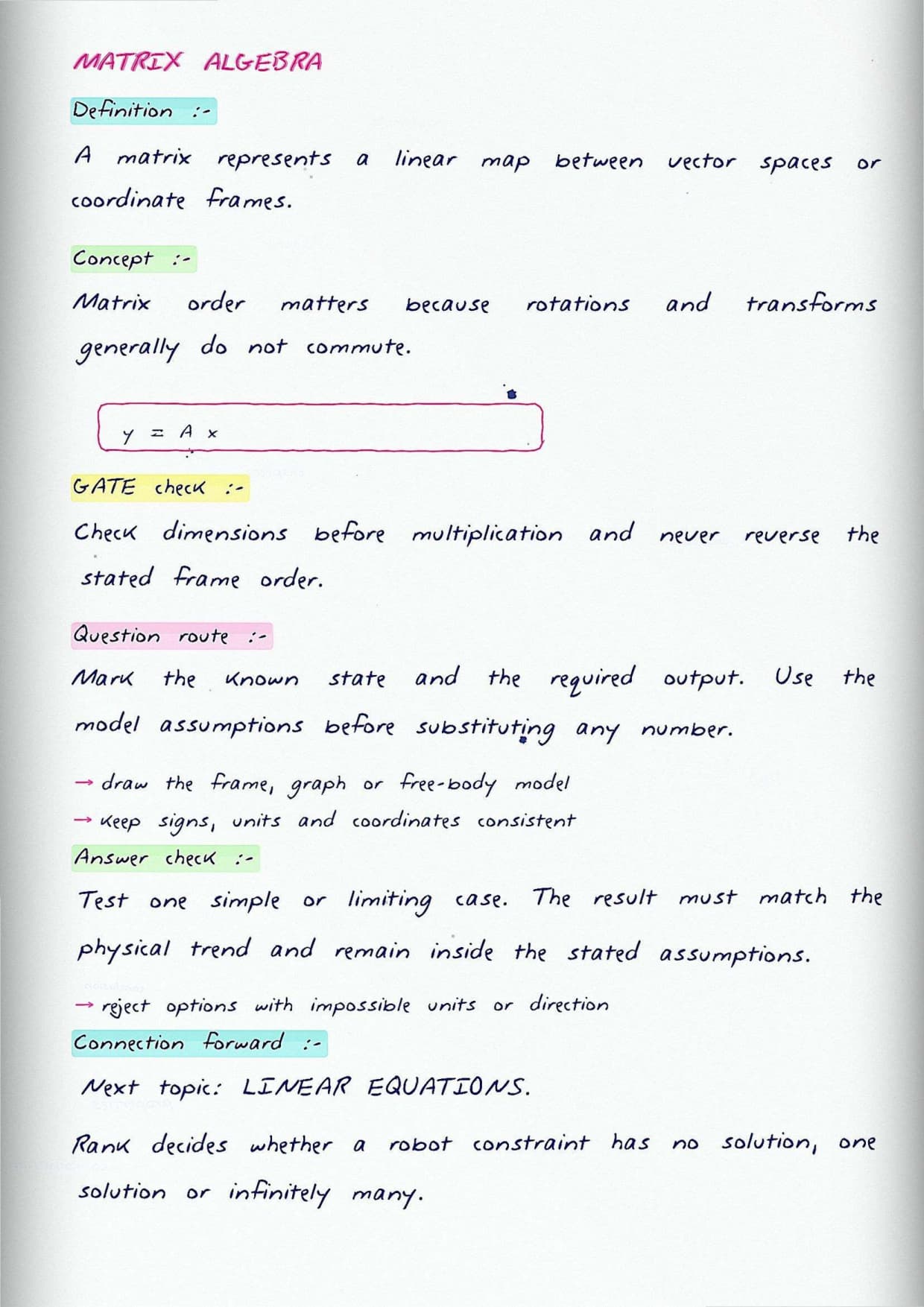
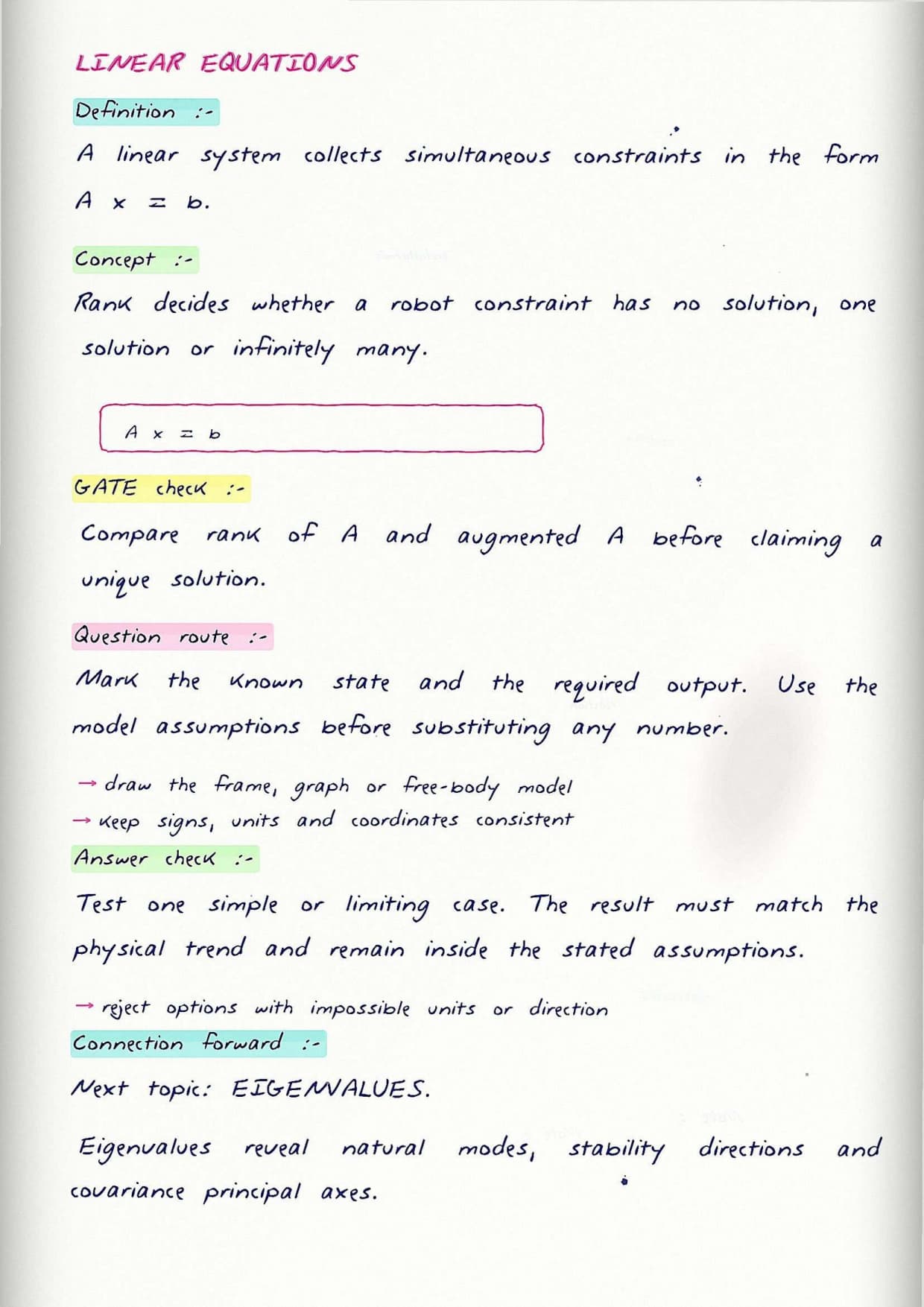
The Maths Toolbox Behind Every Robot Motion
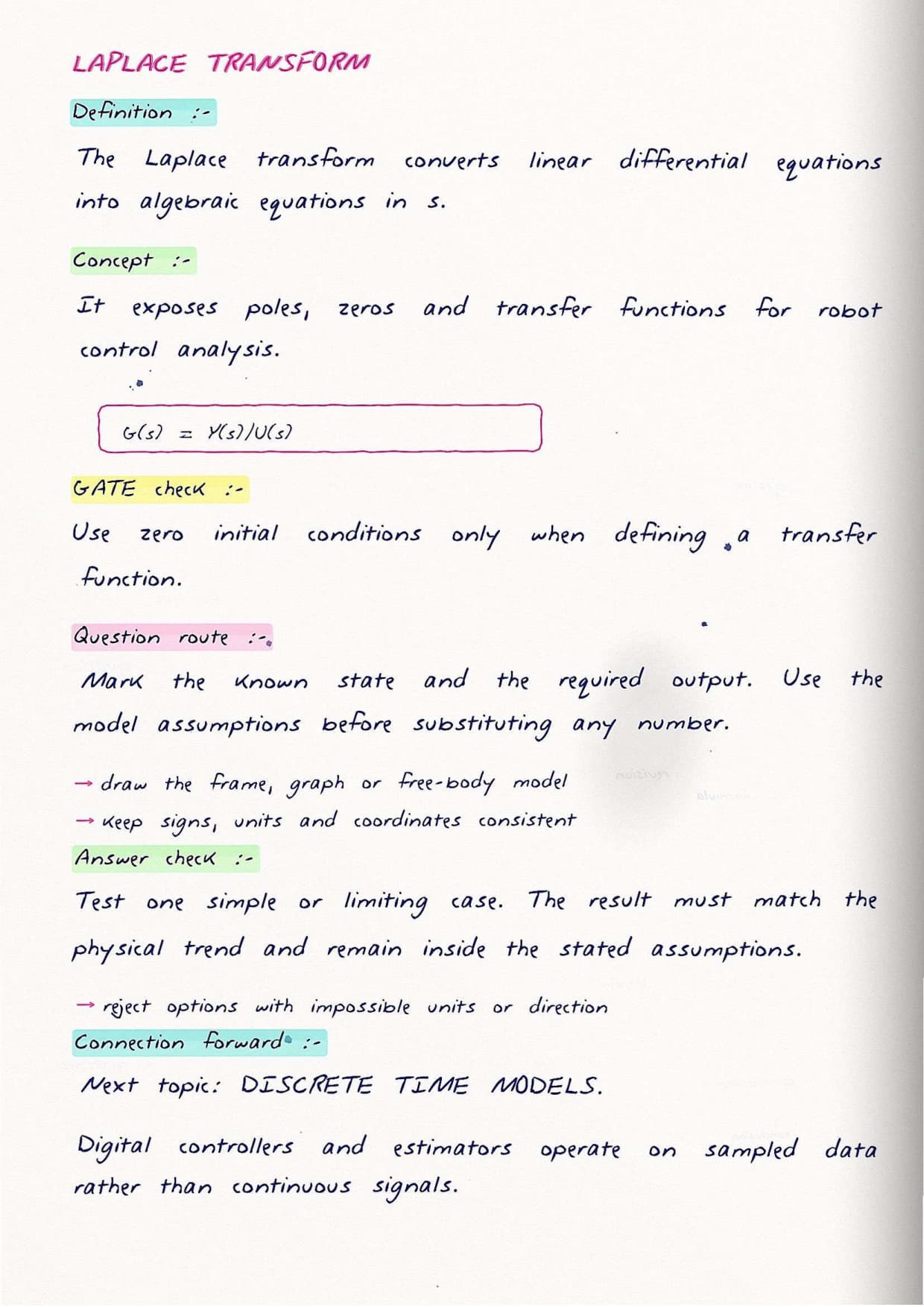
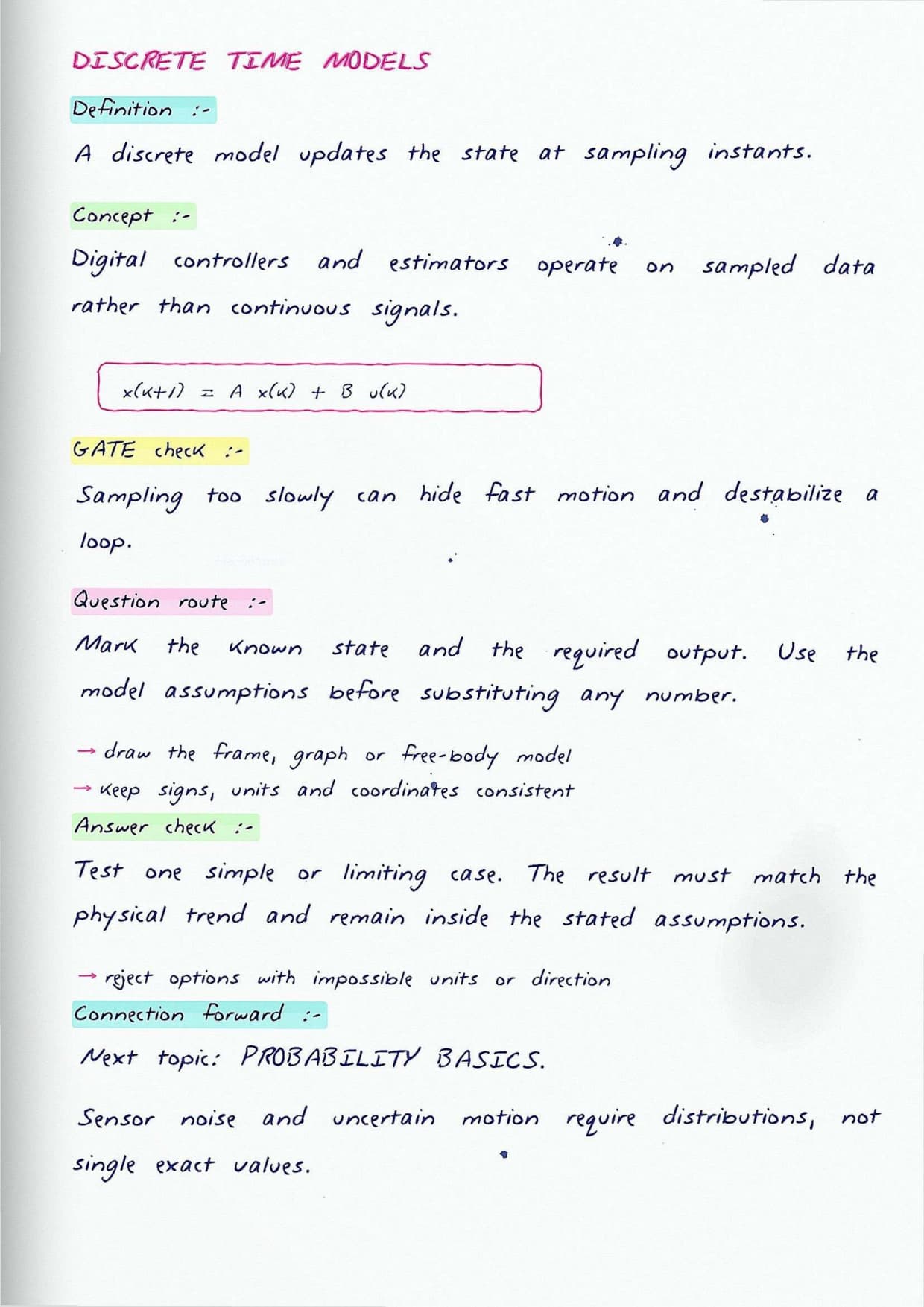
These notes gather robotics mathematics into one place and treat it as a working toolkit rather than a set of abstract chapters. Each tool solves a specific problem, and the pages are laid out so students grab the right one fast.
- Vectors and matrices for describing where things are and how they turn.
- Derivatives and integrals for how fast and how far.
- Random variables for sensors that never tell the exact truth.
- Iterative methods for answers that have no clean formula.
Linear Algebra: The Language of Poses and Transforms
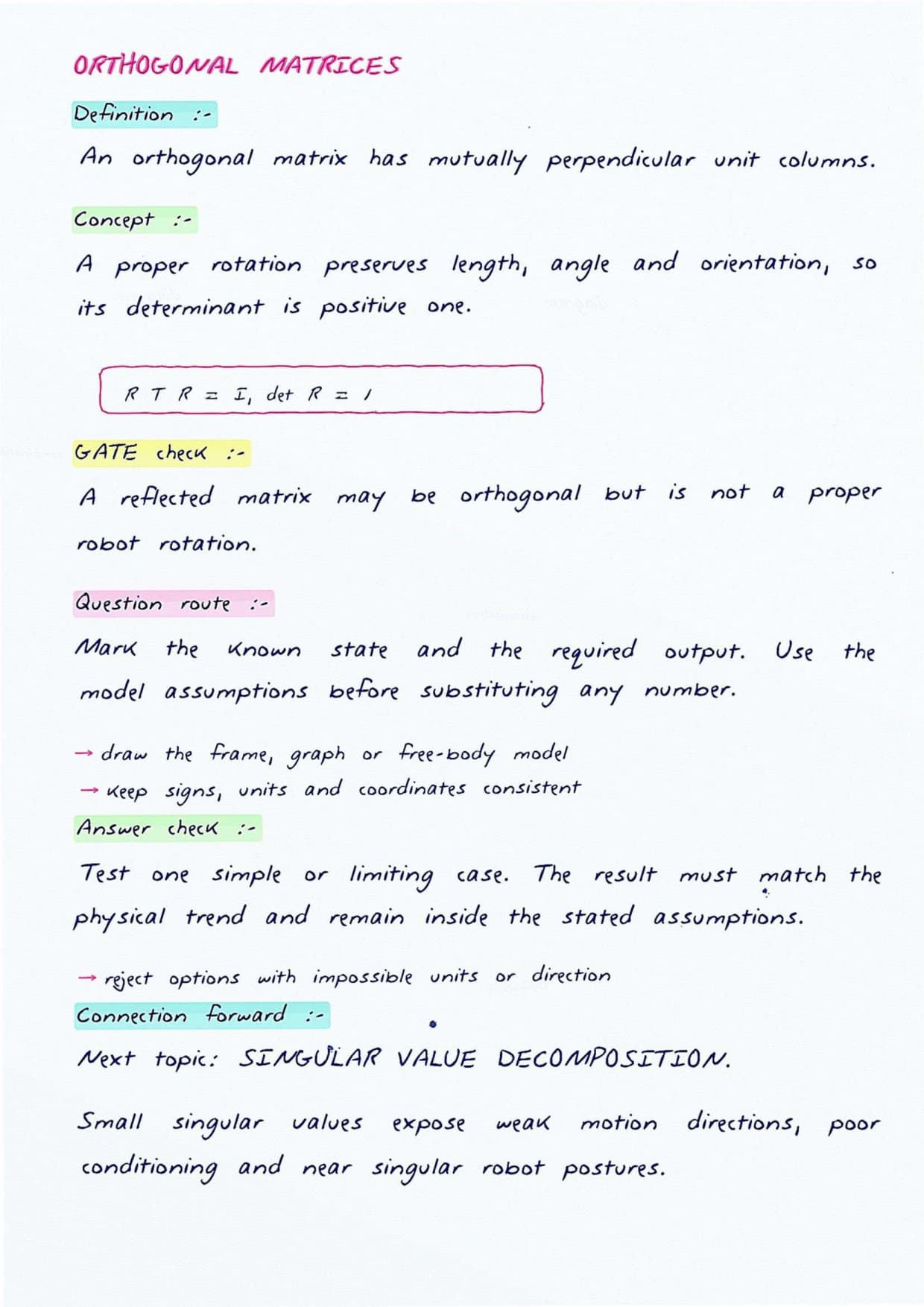
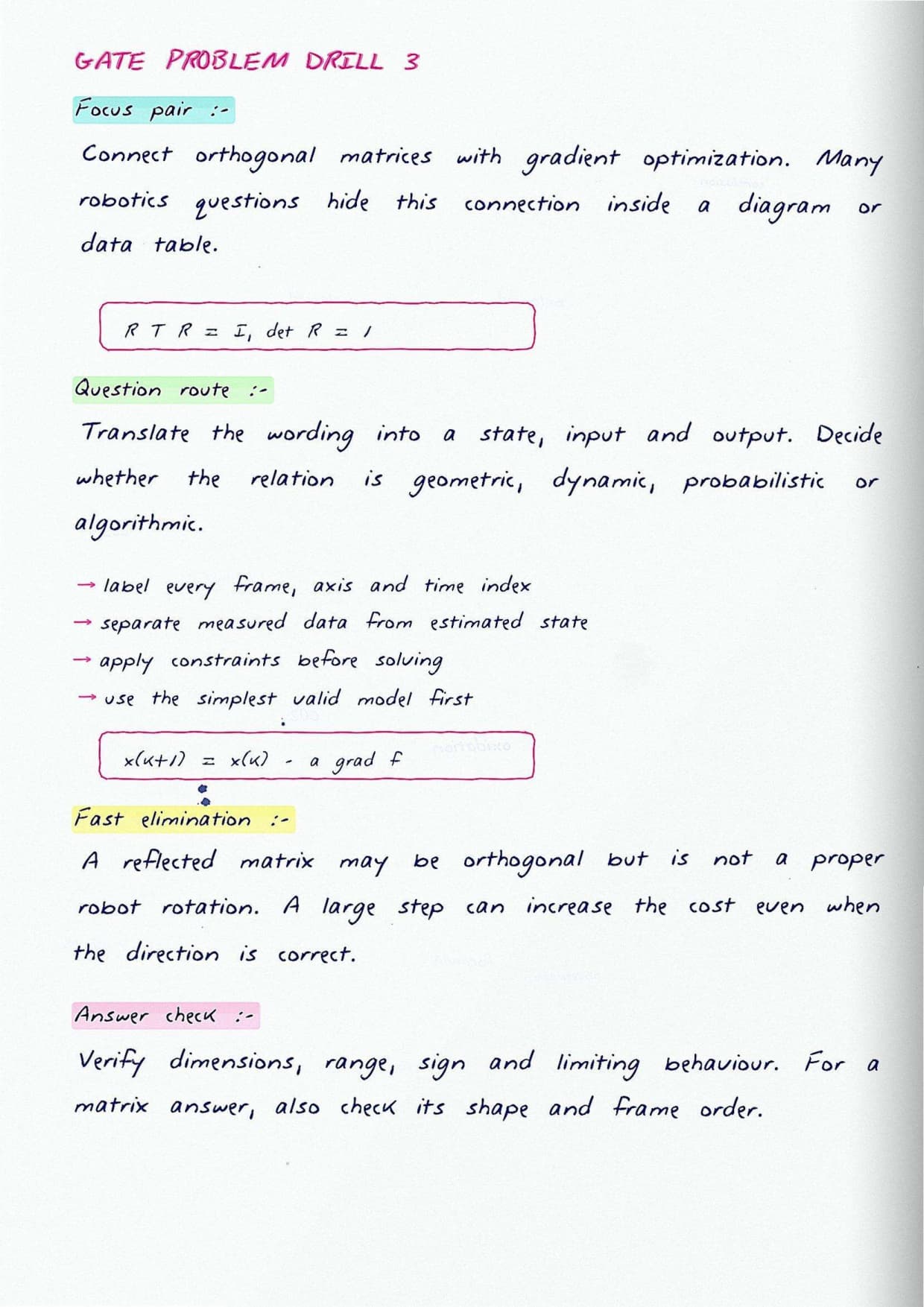
Most robotics maths starts here. A robot's pose, its position and orientation, is a vector and a rotation matrix, and moving between frames of reference is just matrix multiplication.
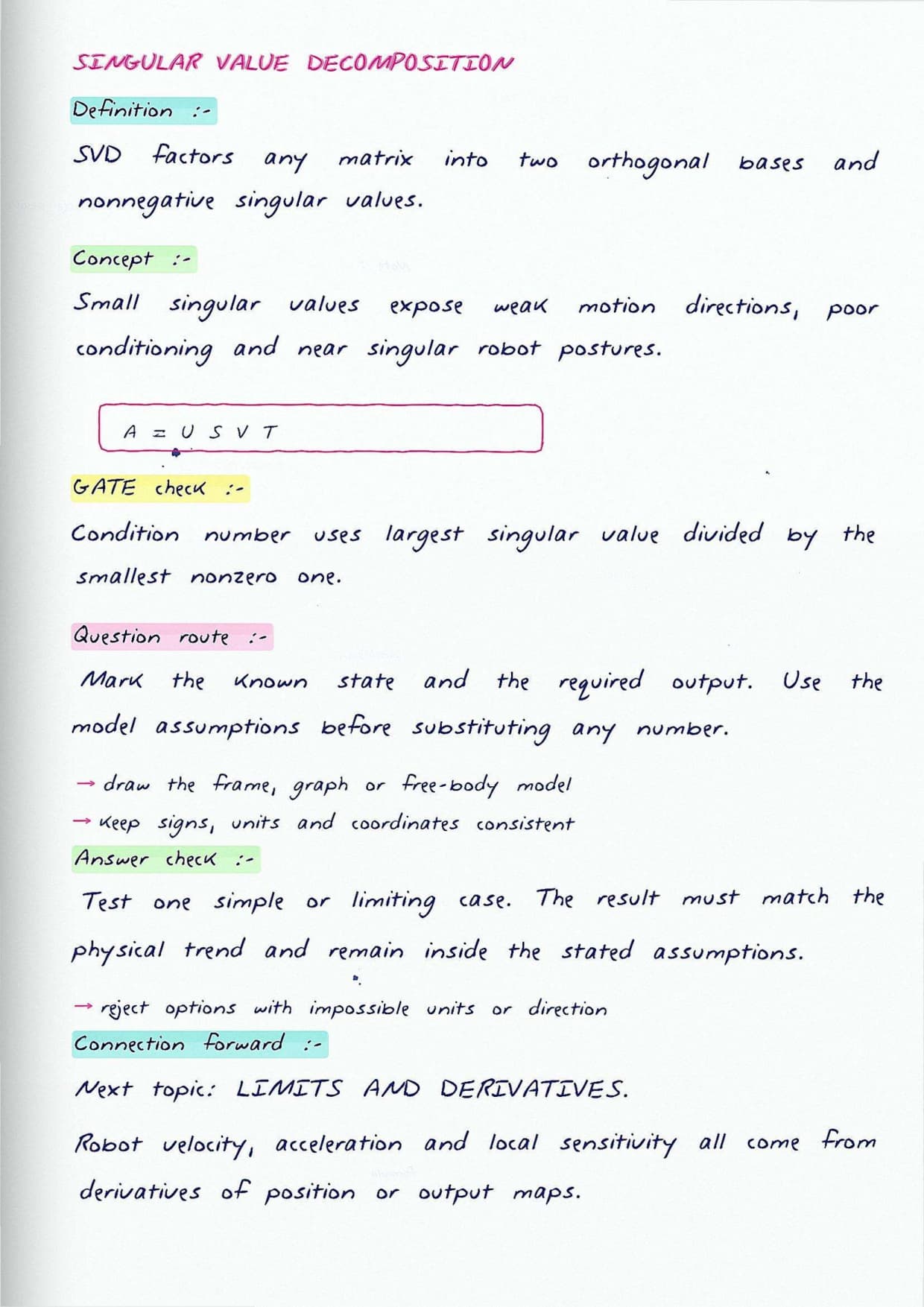
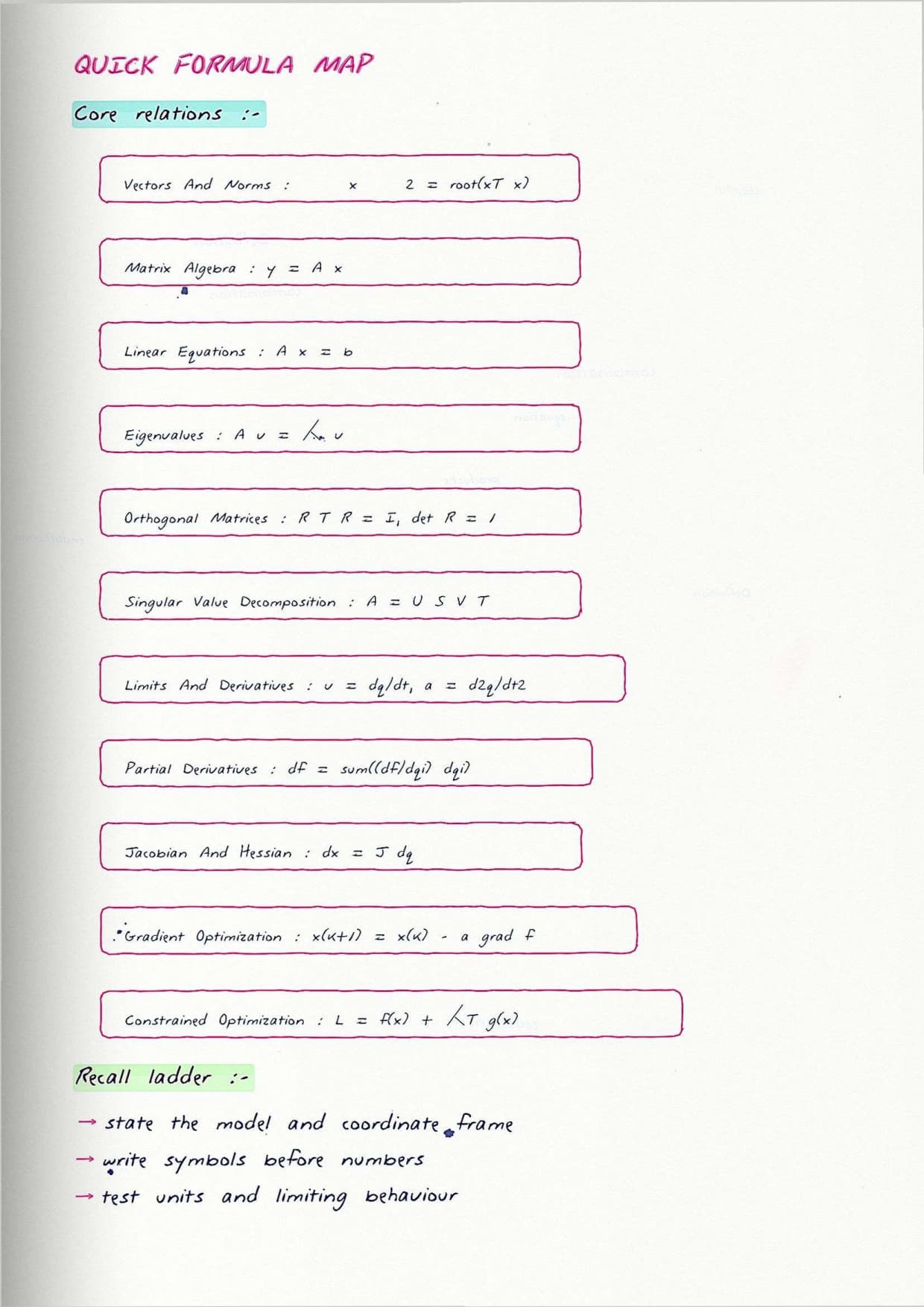
- Matrix inverses, determinants, and rank for solving and checking a system.
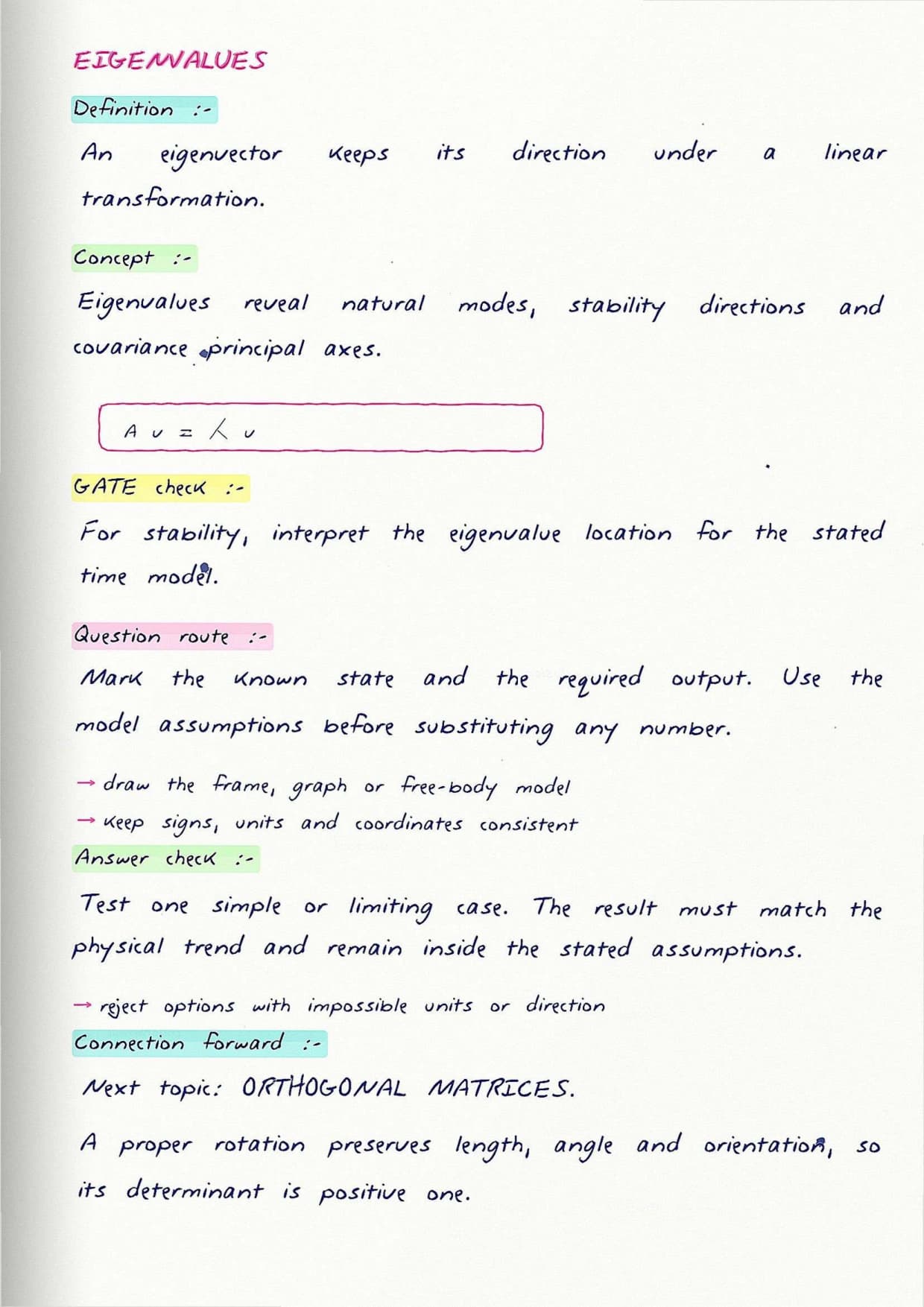
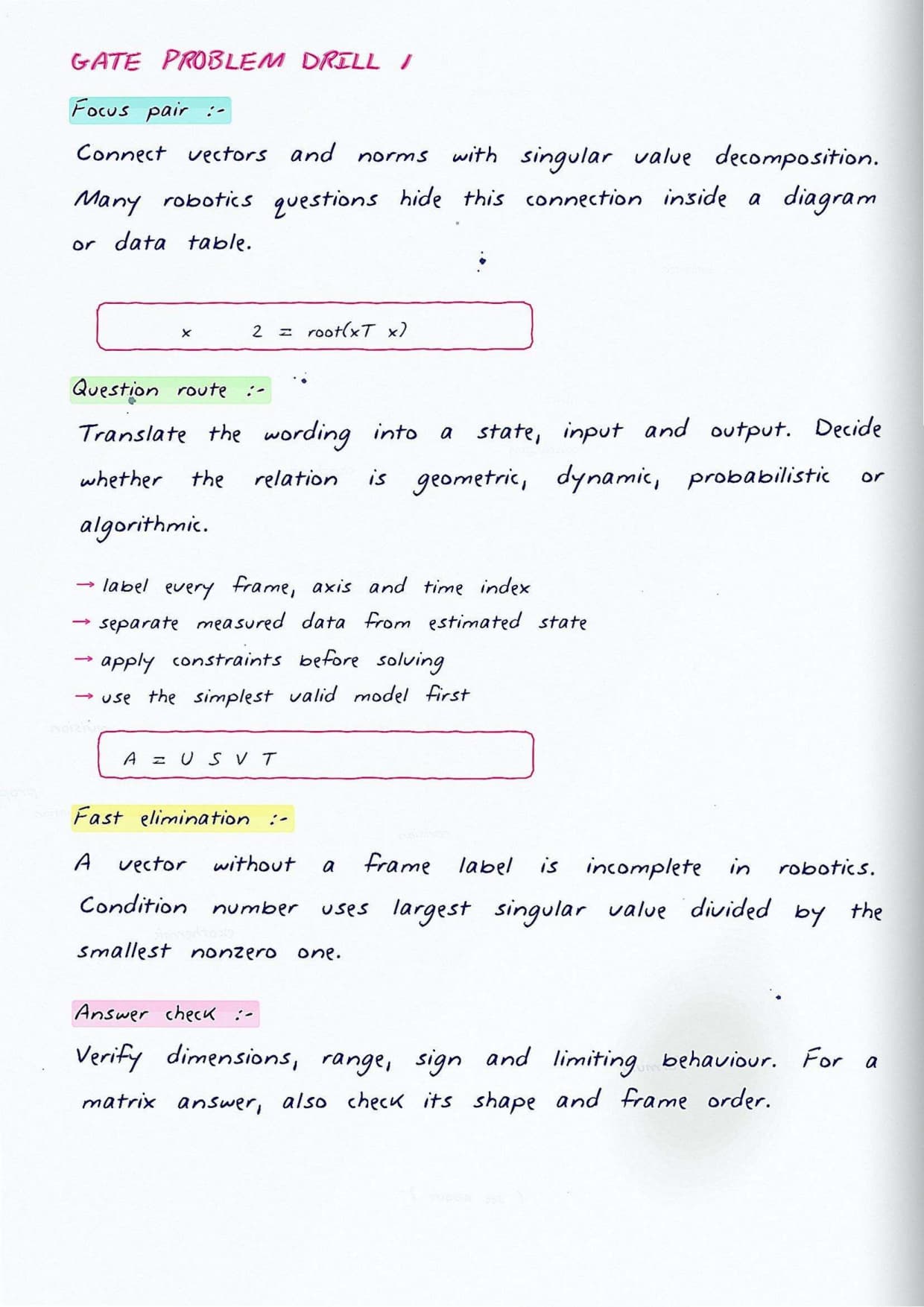
- Eigenvalues and eigenvectors for stability and principal directions in data.
- Homogeneous transforms that stack rotation and translation into one operation every kinematics chapter reuses.
Calculus and Differential Equations for Motion and Control
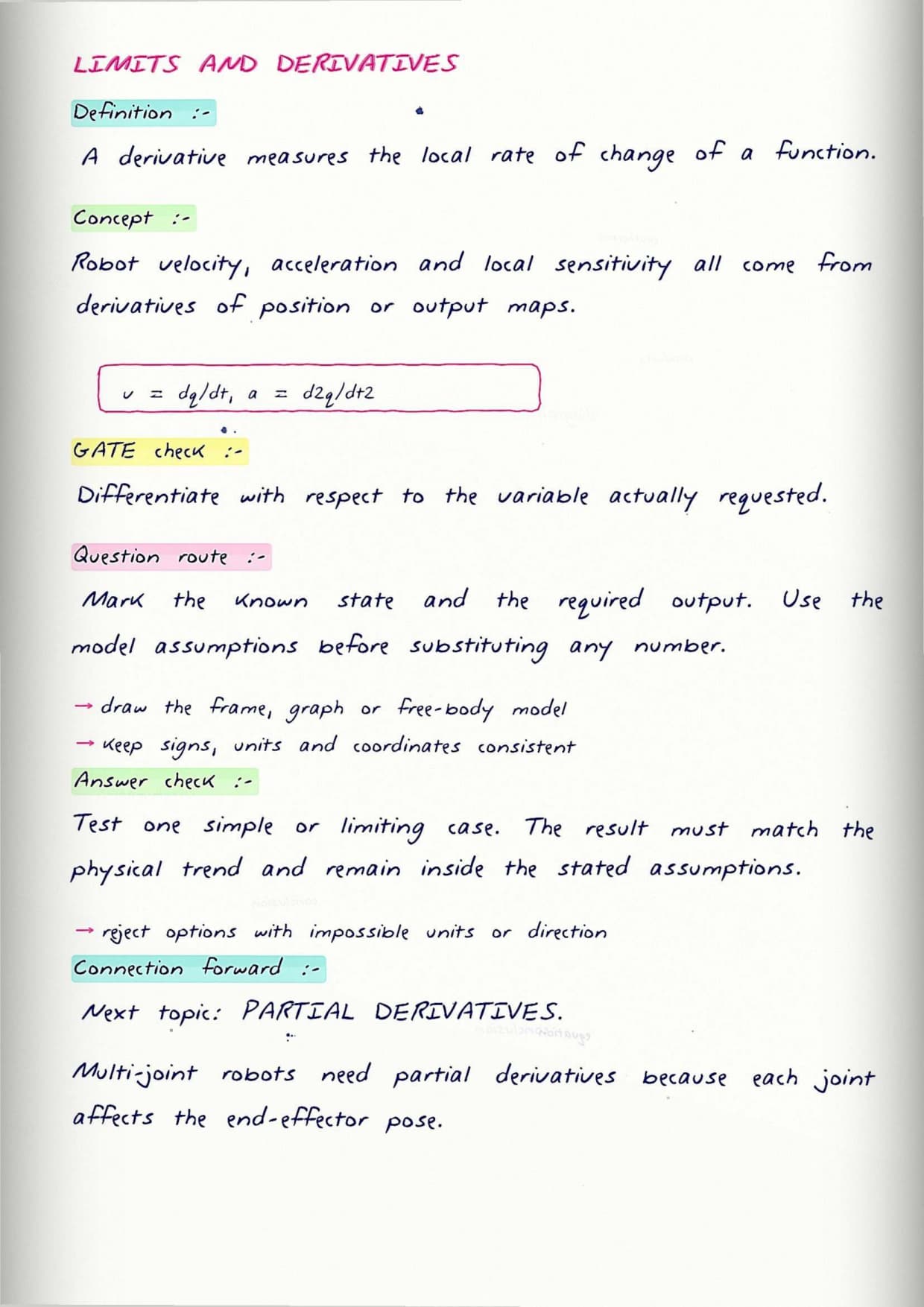
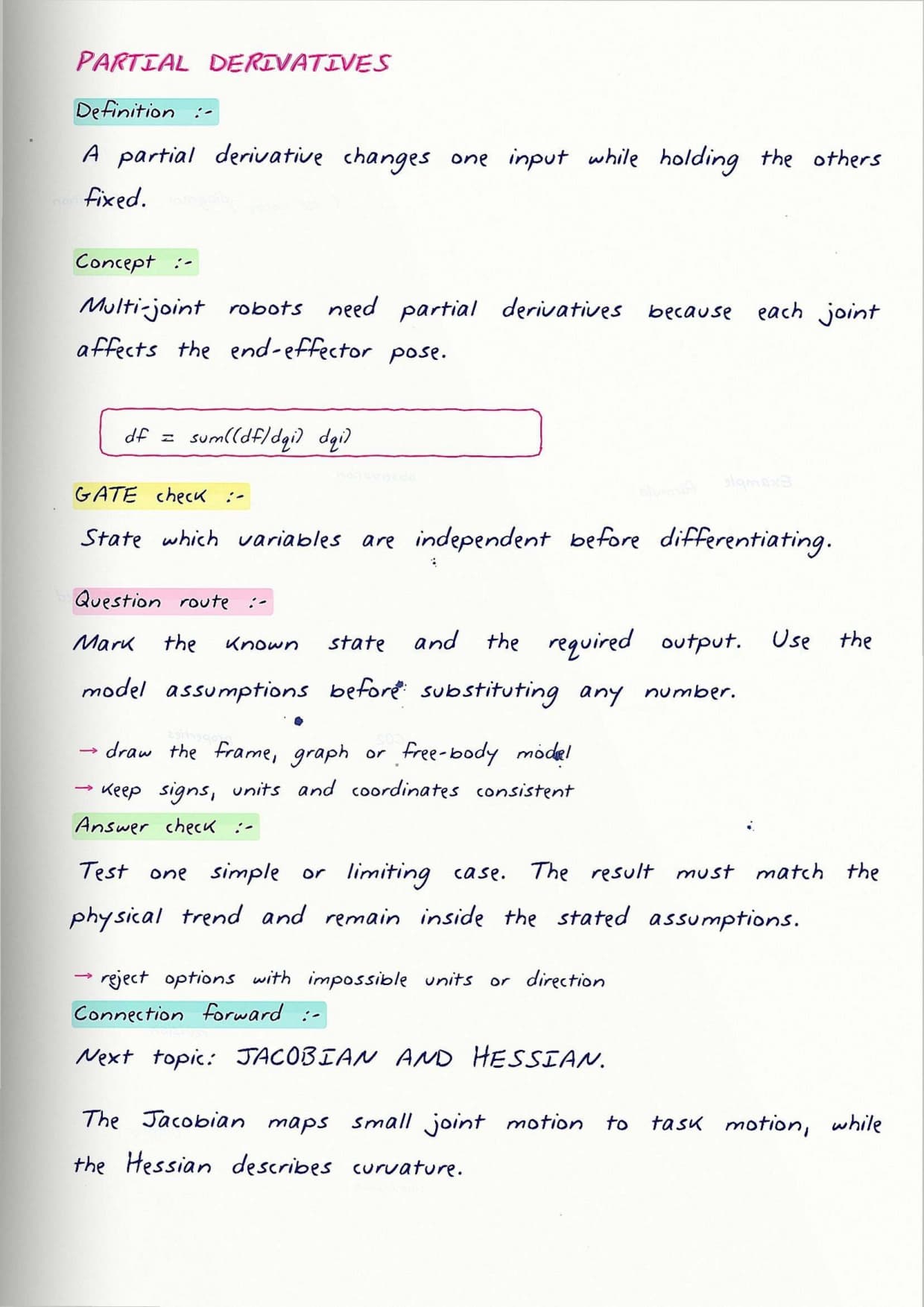
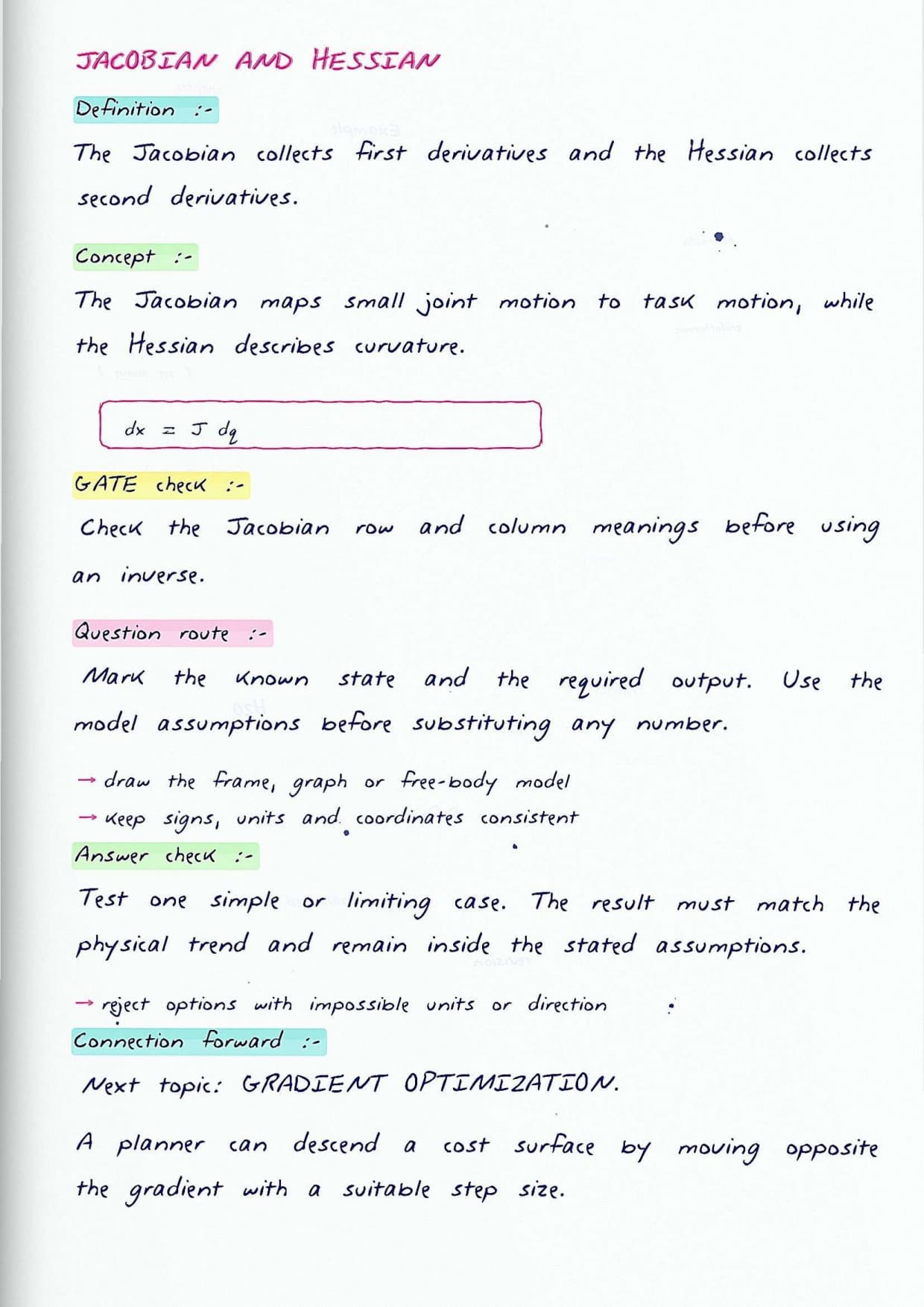
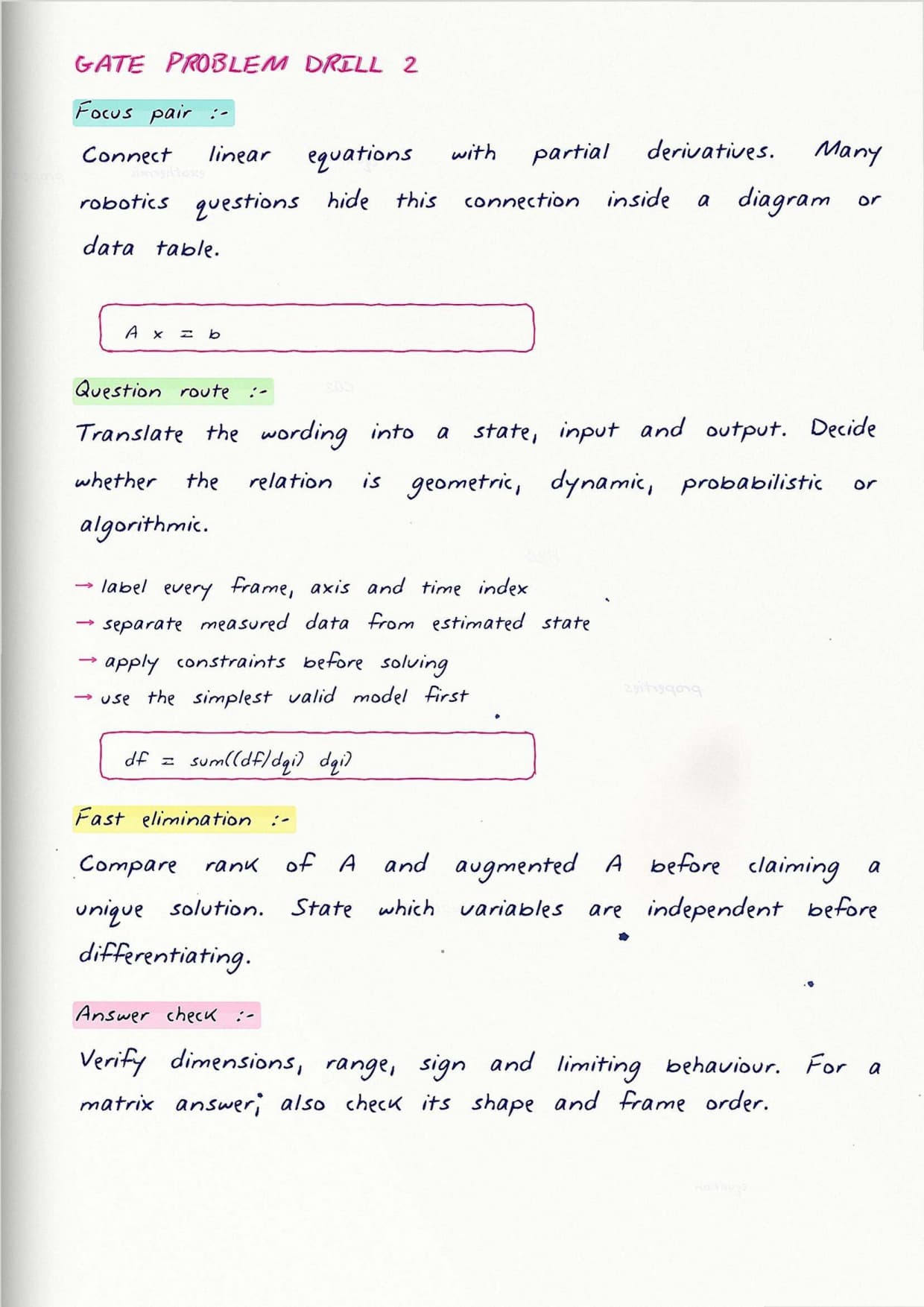
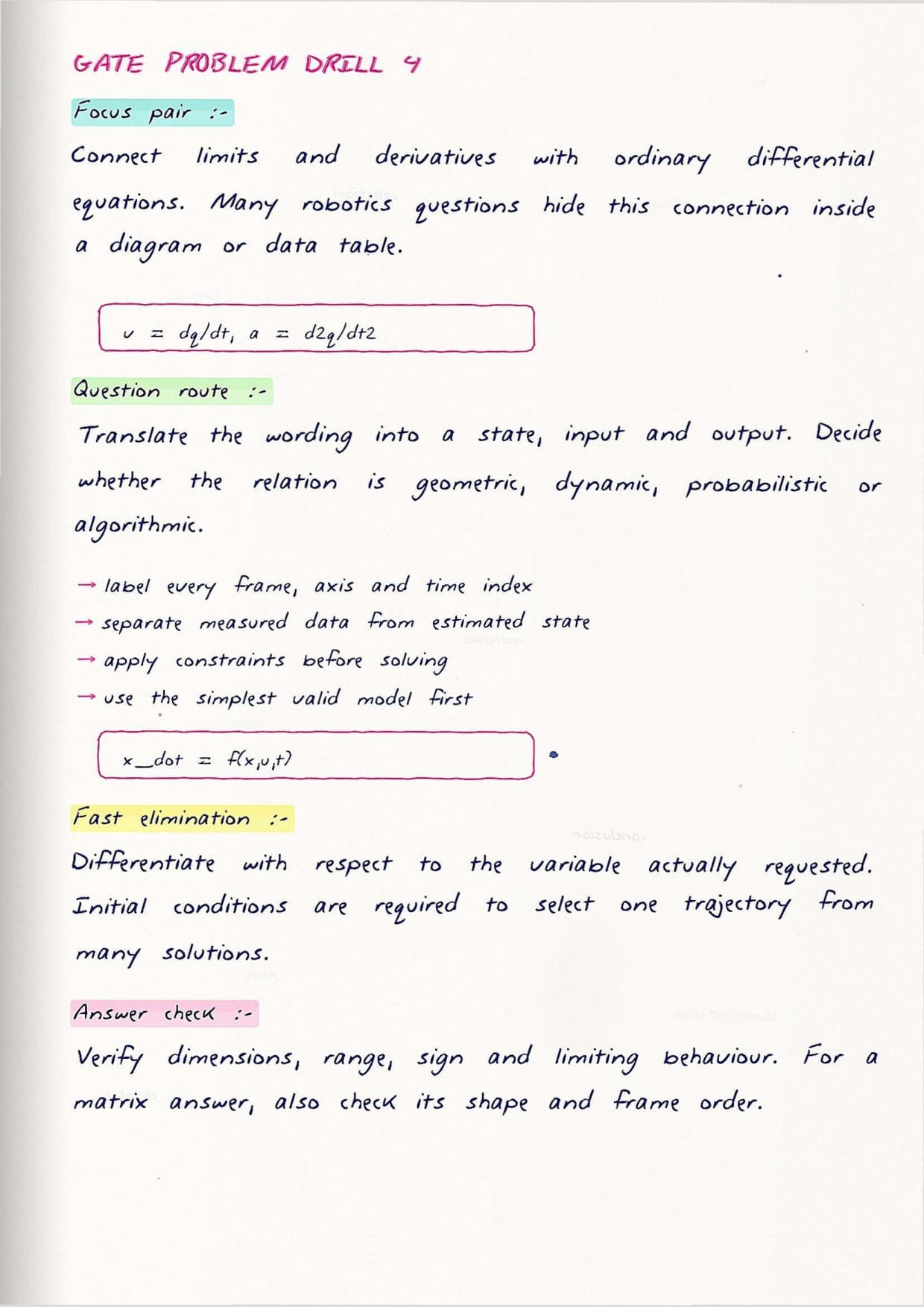
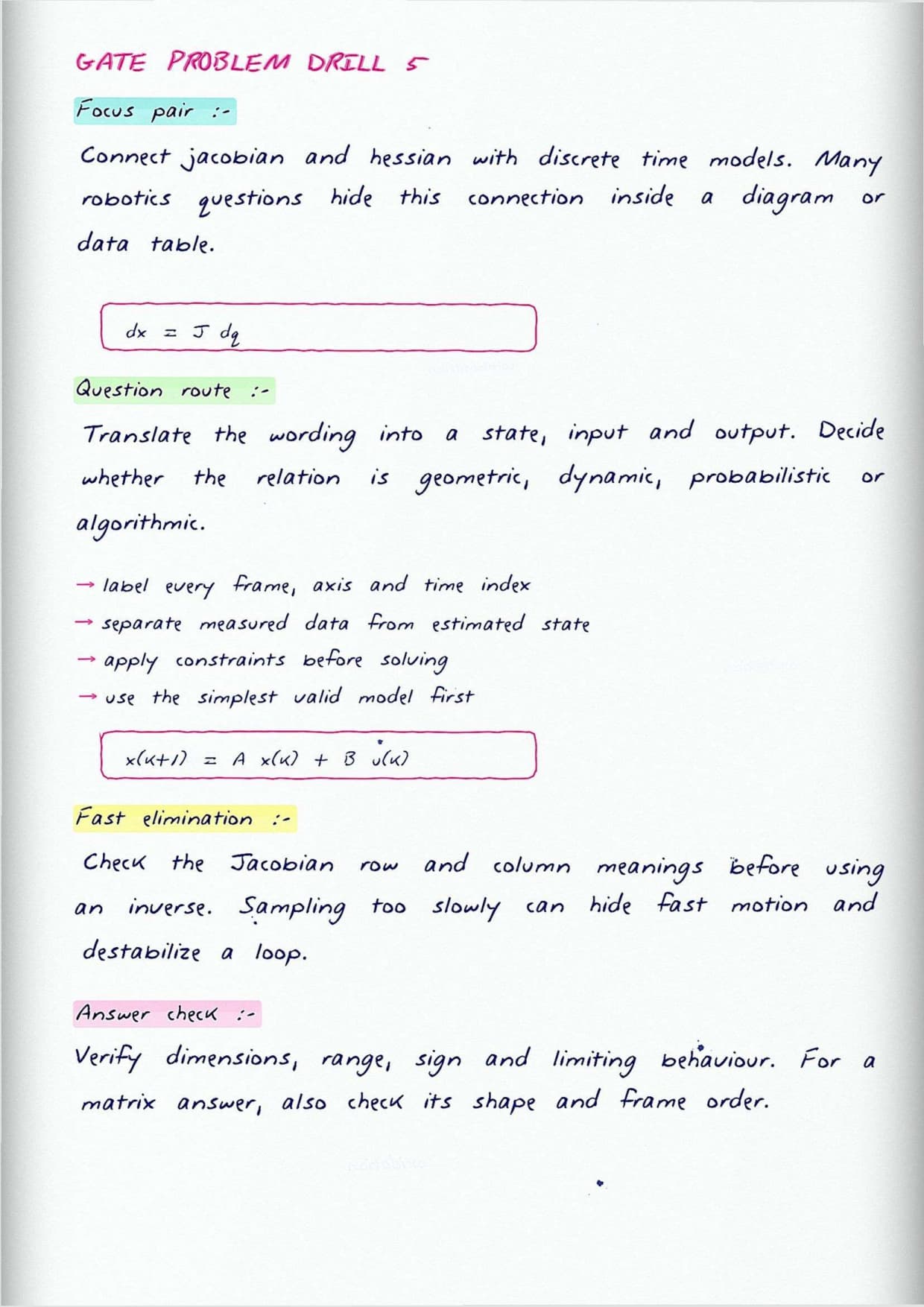
Once a robot moves, quantities change over time, and that is calculus territory. The notes cover partial derivatives and the Jacobian, which links joint speeds to end effector speed.
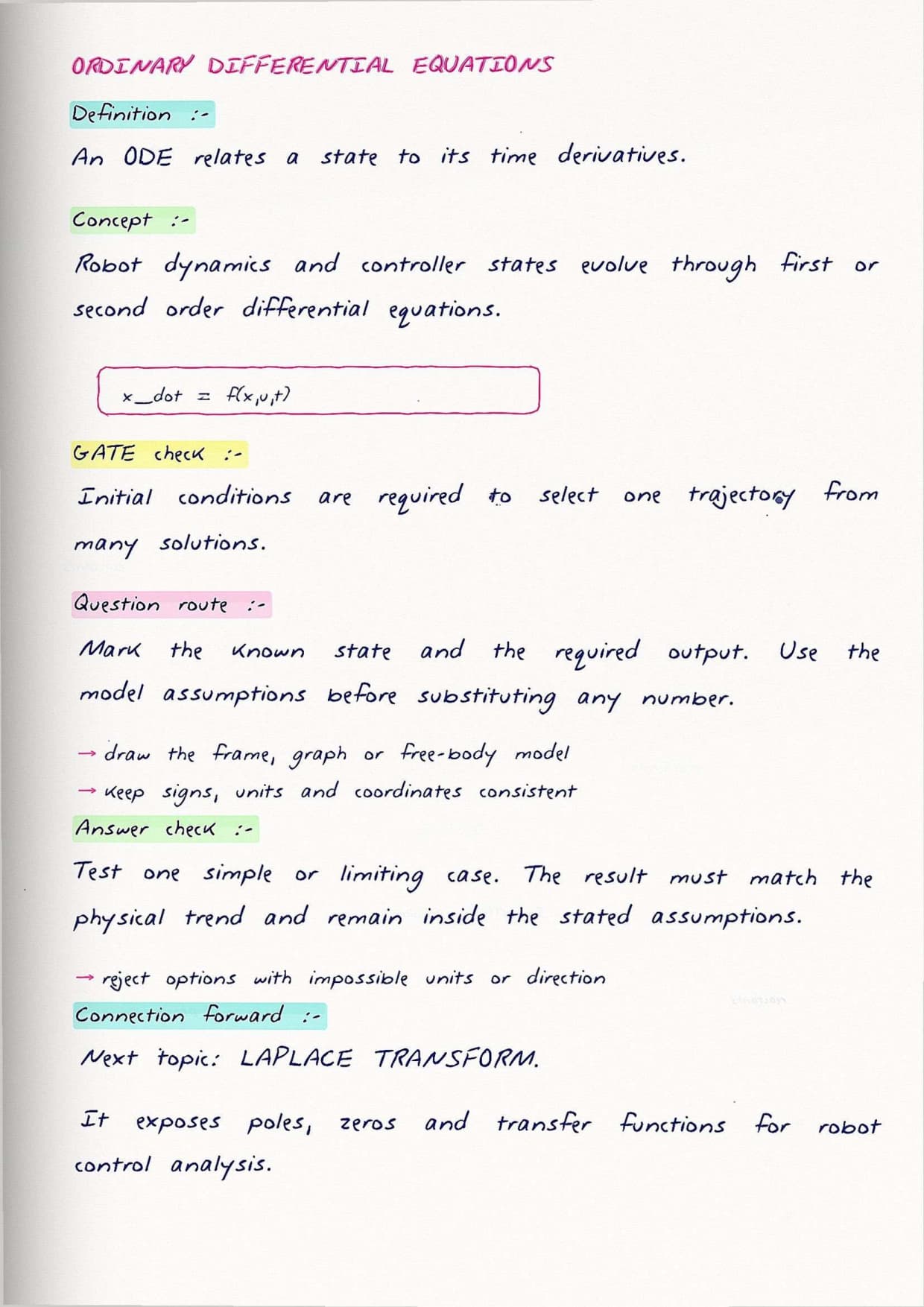
They then step into ordinary differential equations for how a motor or a mass and spring settles, plus Taylor expansion for linearising around a working point, a trick that returns the moment control systems appear.
Probability and Statistics for Noisy Sensors
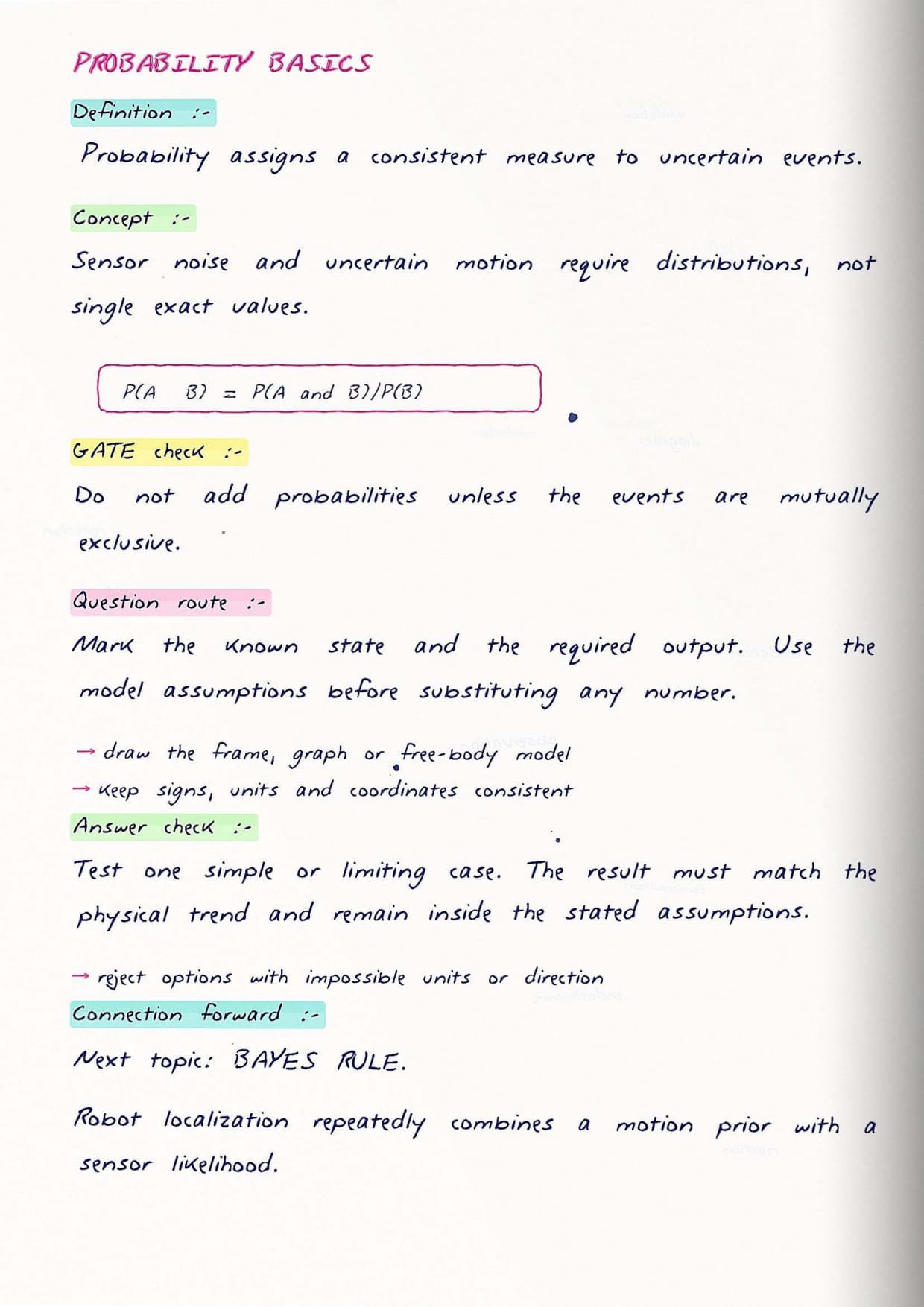
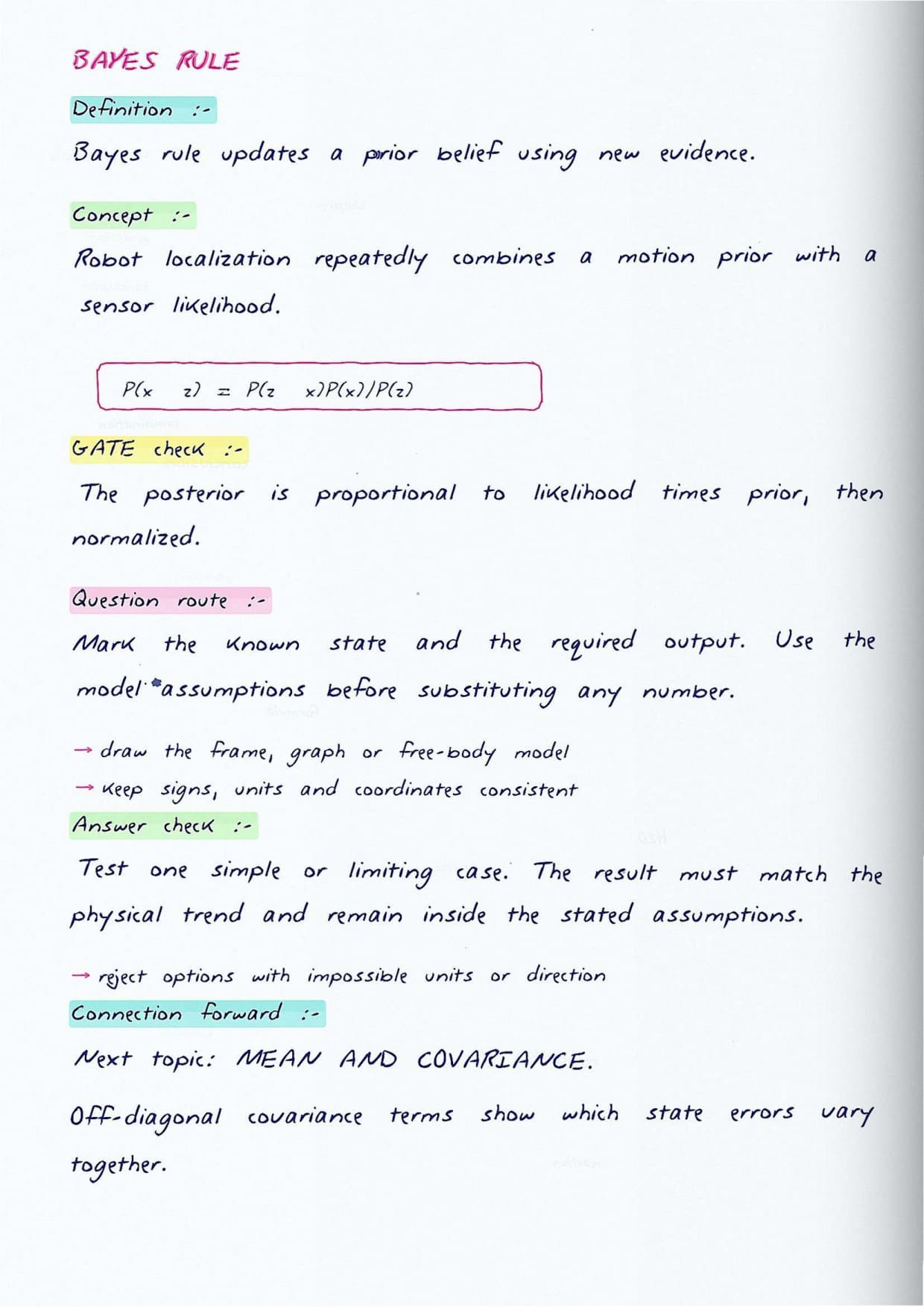
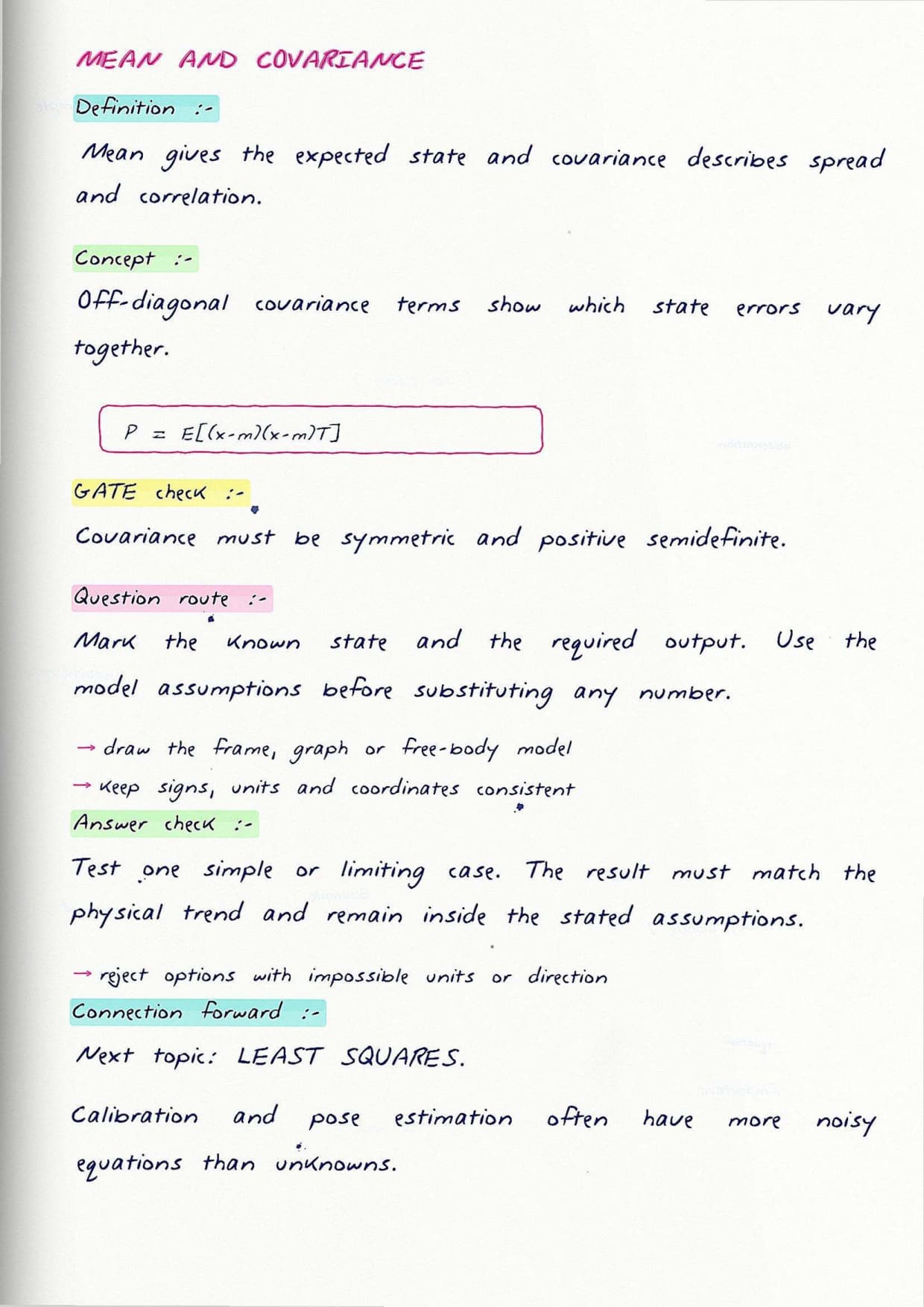
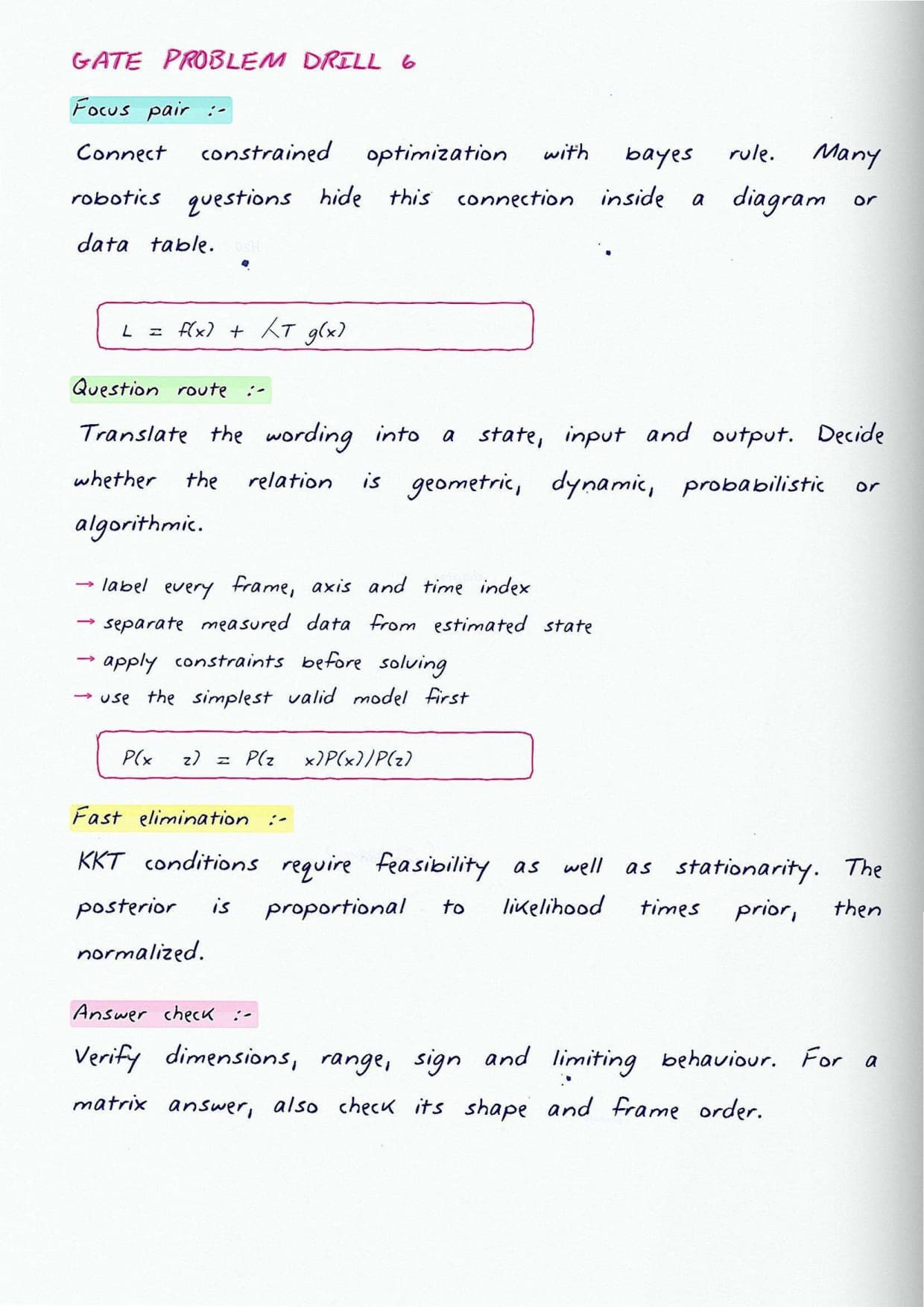
No real sensor is exact, so a robot must reason about uncertainty. This section builds probability from conditional rules and Bayes theorem, then the Gaussian distribution, mean, variance, and the covariance matrix.
These are the exact ideas that later power state estimation and filtering, so students who are solid here find perception and localisation far less intimidating.
Numerical Methods and Optimisation on the Job
Many robotics problems have no neat closed answer, so the machine solves them step by step. The notes frame these as everyday tools rather than exam trivia.
- Newton's method for finding roots.
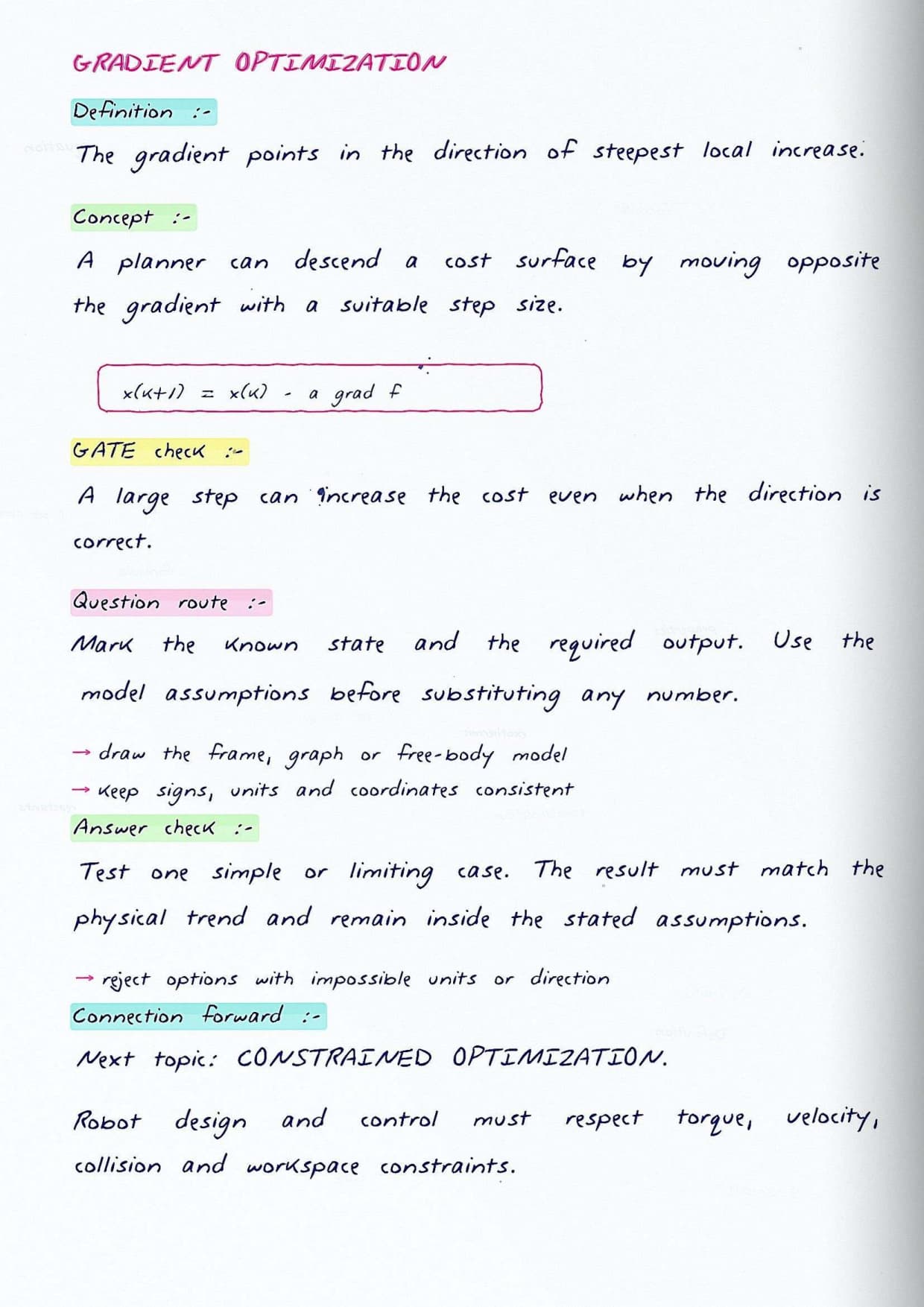
- Gradient descent for minimising an error.
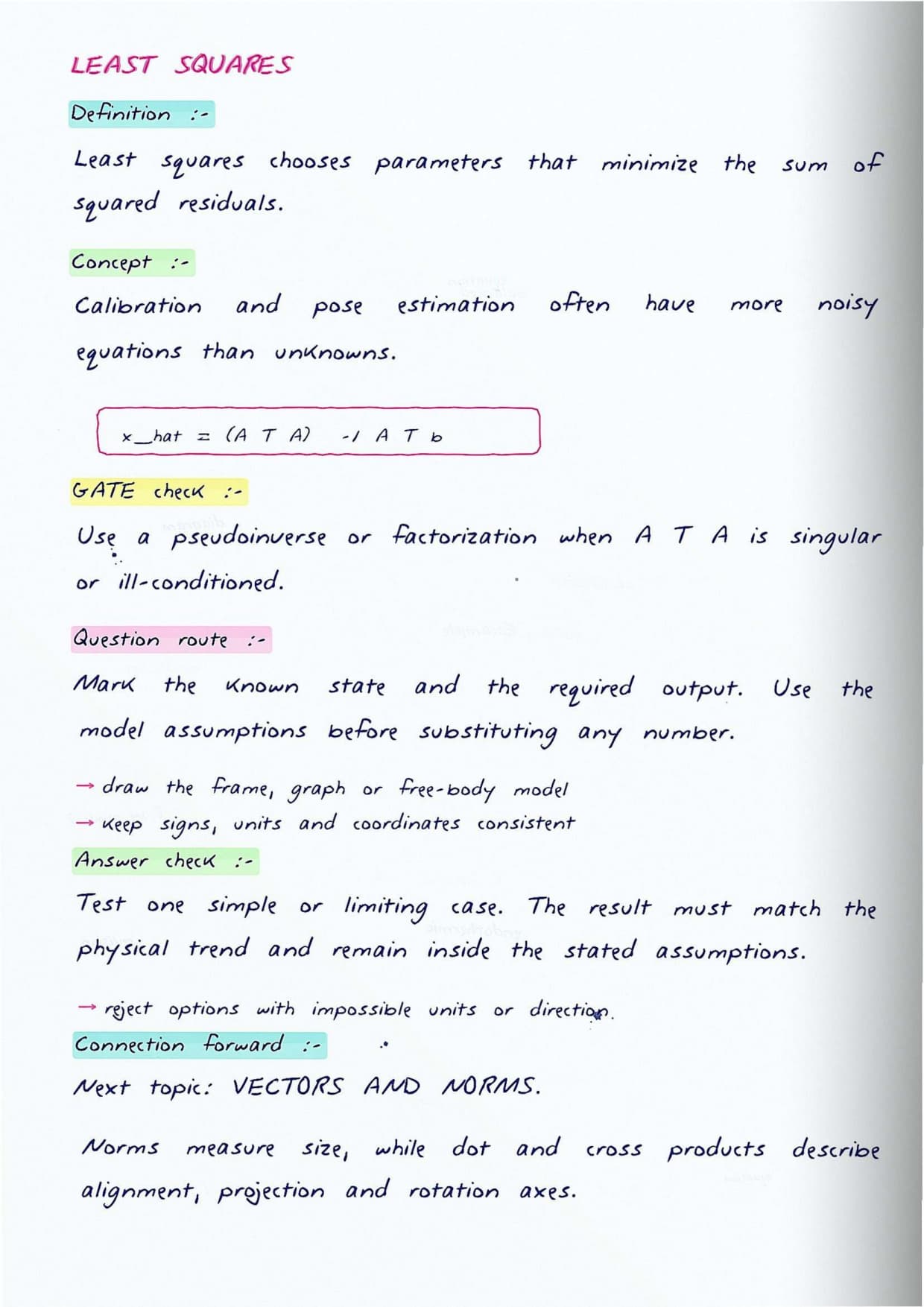
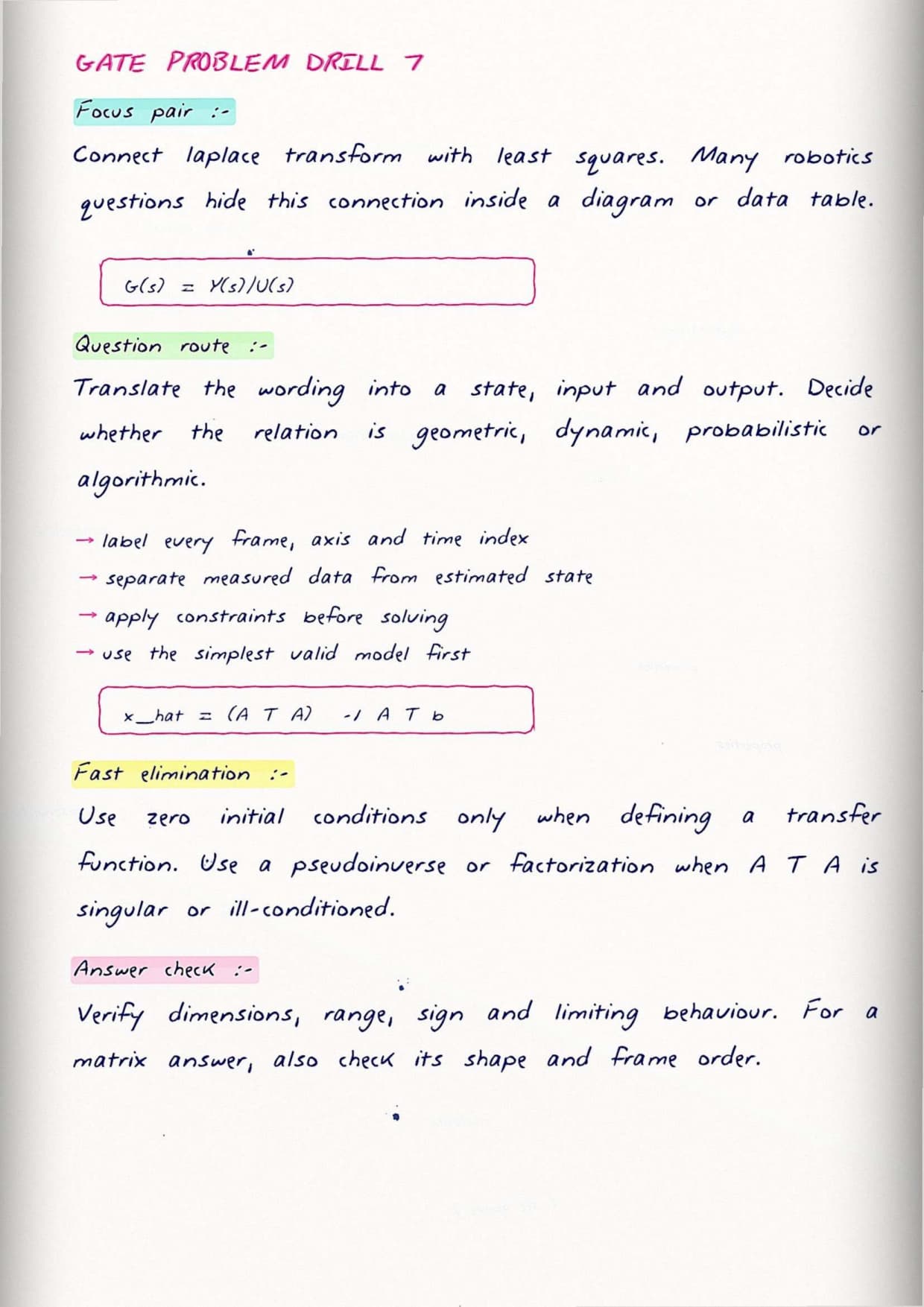
- Least squares for fitting a model to messy data.
- Numerical integration for updating an estimate in tiny time slices.
Watch Linear Algebra Explained
Source: nptelhrd
Where Students Trip Up
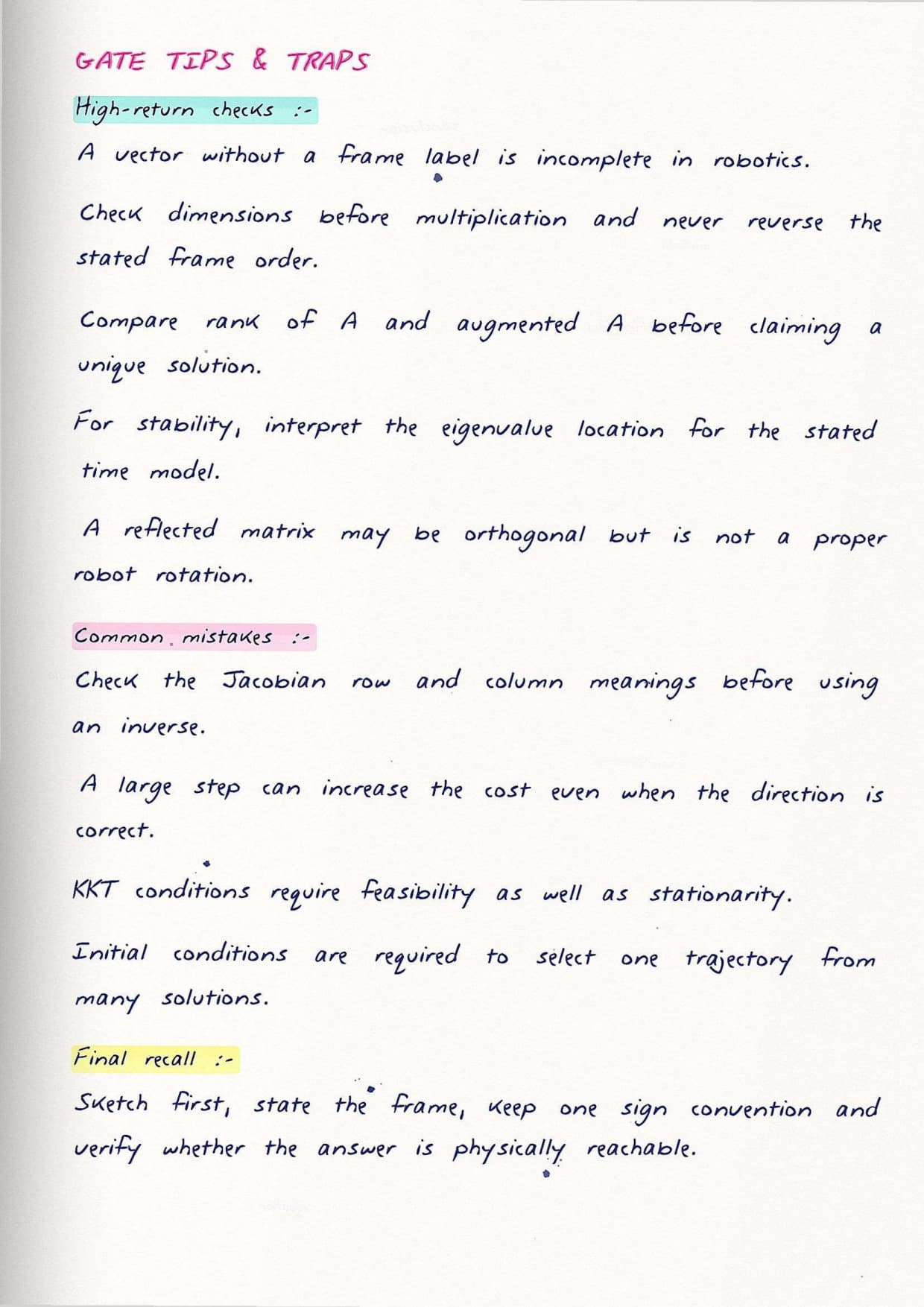
A few slips come up again and again, and the notes flag them in the margins. Students mix up row and column conventions in transforms, or forget that matrix multiplication is not commutative, so rotation order matters.
Many also treat a covariance matrix as a single number instead of a shape, or lose marks by dropping units or a sign midway through a Jacobian. Catching these early saves easy marks.
Drilling These Notes in Your Revision Week
These pages work best as an active revision aid, not a silent read. A steady plan helps.
- Spend one short session per tool: linear algebra, calculus, probability, optimisation.
- Re-derive the Jacobian and one Bayes example by hand, without peeking.
- Turn each boxed identity into a flashcard and test yourself the next day.
- Close the week by solving mixed problems so students switch tools on demand.
Handled this way, the maths stops feeling like a wall and starts feeling like a set of reliable moves students can trust in the exam hall.
Engineering Mathematics for Robotics FAQs
Ques. Why is linear algebra so important for robotics?
Ans. A robot's position, orientation, and every change of reference frame are written as vectors and matrices, so linear algebra is the language used to describe motion. Almost every later topic, from kinematics to perception, builds on it.
Ques. Do these handwritten notes cover the maths needed for GATE?
Ans. Yes. The linear algebra, calculus, differential equations, probability, and numerical methods in these notes overlap the Engineering Mathematics section that appears across GATE papers, so students can use them for both robotics preparation and general GATE revision.
Ques. How much probability do I really need for robotics?
Ans. Enough to reason about noisy sensors. That means conditional probability, Bayes theorem, the Gaussian distribution, and the covariance matrix. These few ideas power most state estimation and filtering work.
Ques. Are these notes better for learning from scratch or for revision?
Ans. They are pitched as a fast revision toolkit. Students who have seen the topics once will get the most out of the short derivations and margin reminders, though motivated beginners can use them alongside a full lecture series.



Comments