




Transformers is a high-weightage core topic in GATE Electrical, usually worth about 5 to 8 marks in the paper. It belongs to the Electrical Machines section, and its ideas return in Power Systems, Power Electronics, and Electrical Machines rotating types. These handwritten notes cover the full topic in a compact, exam-focused form.
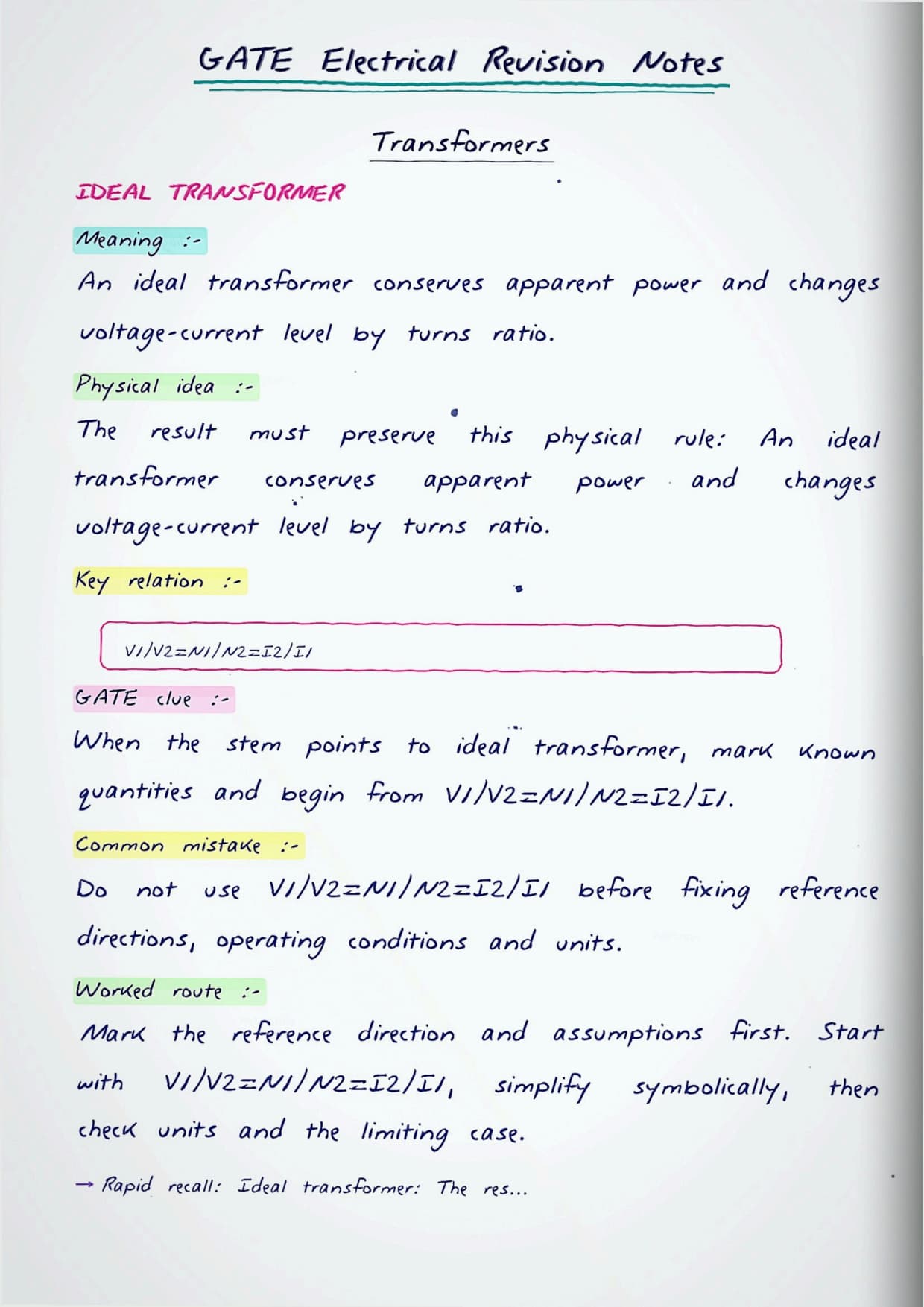
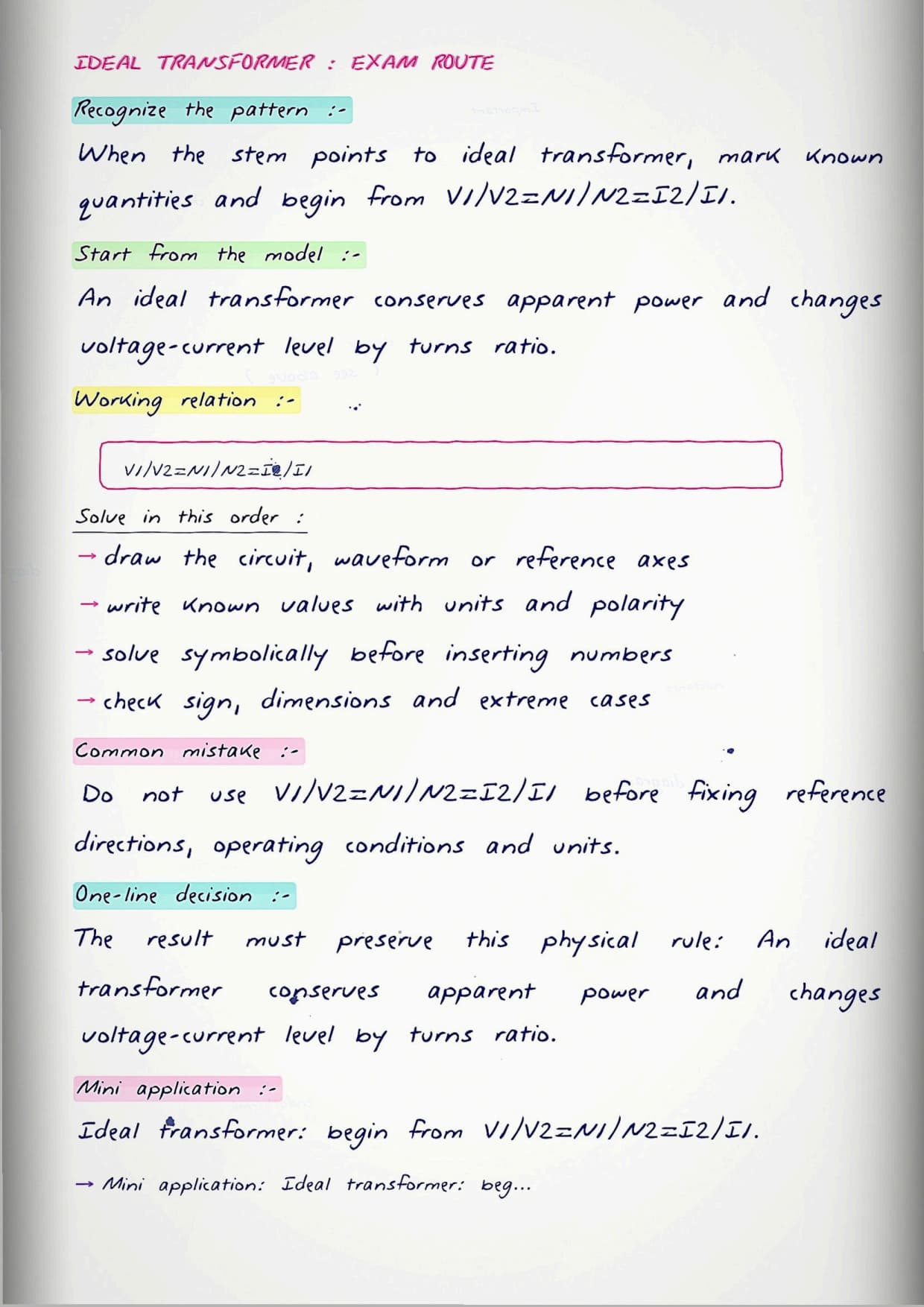
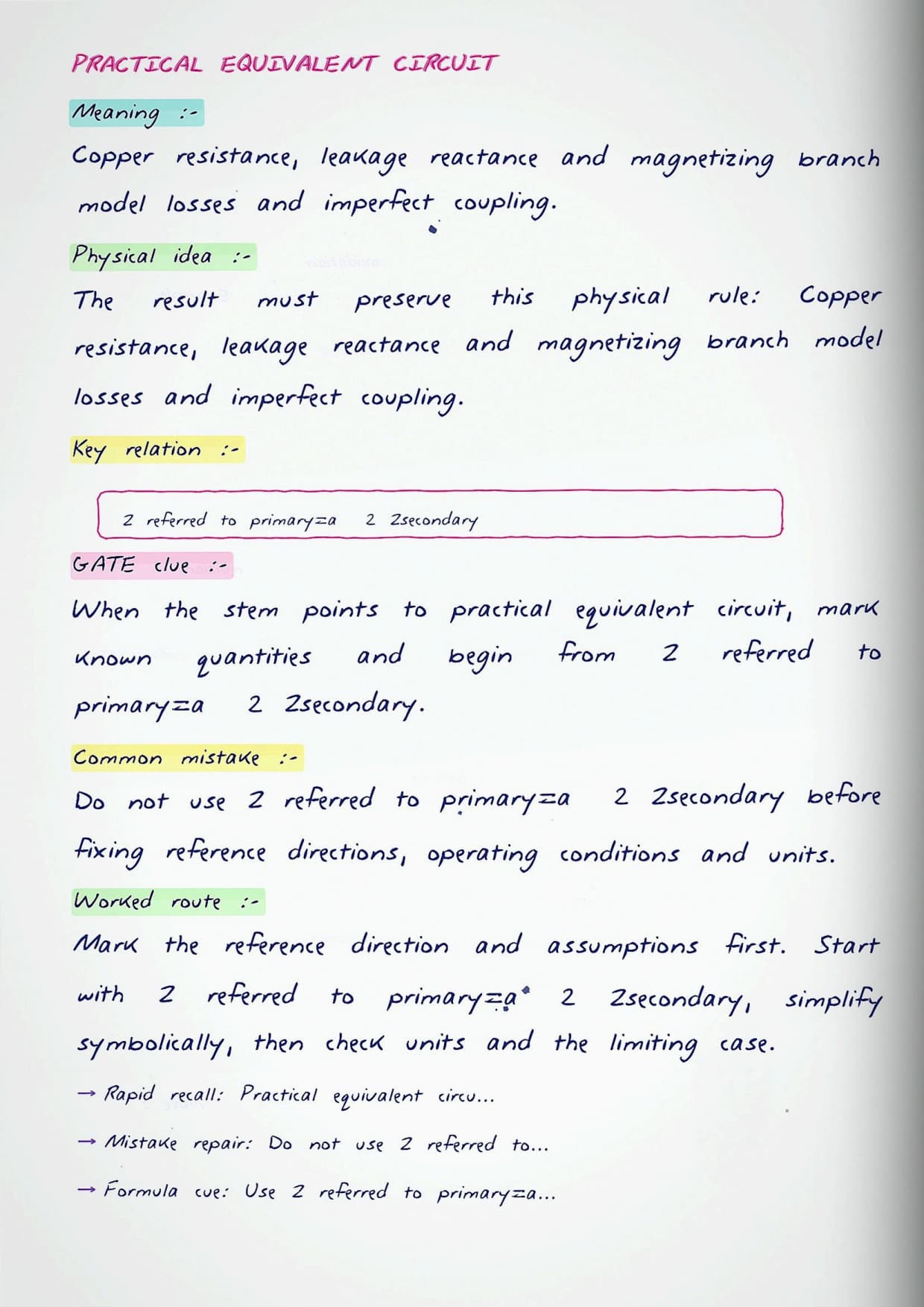
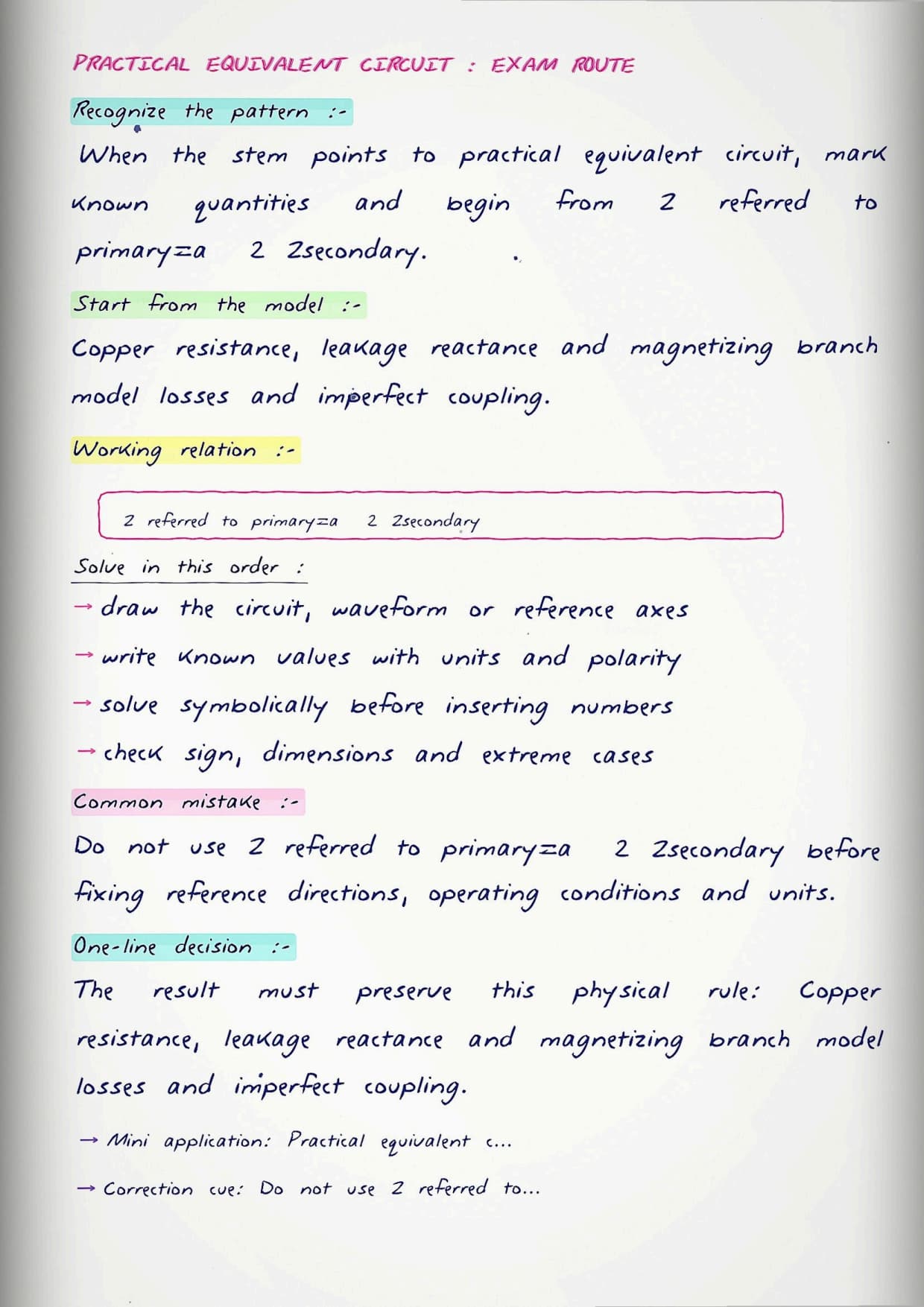
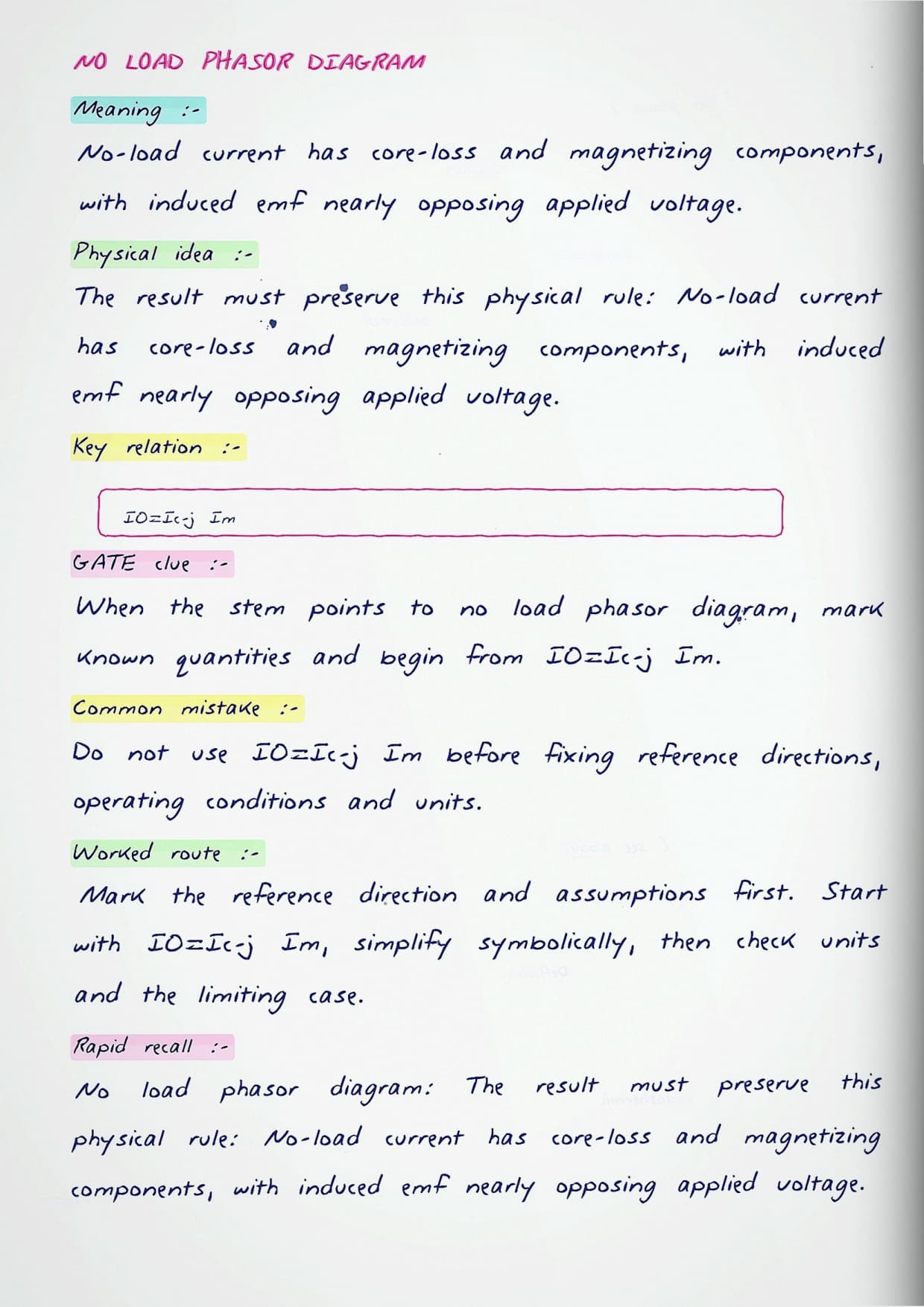
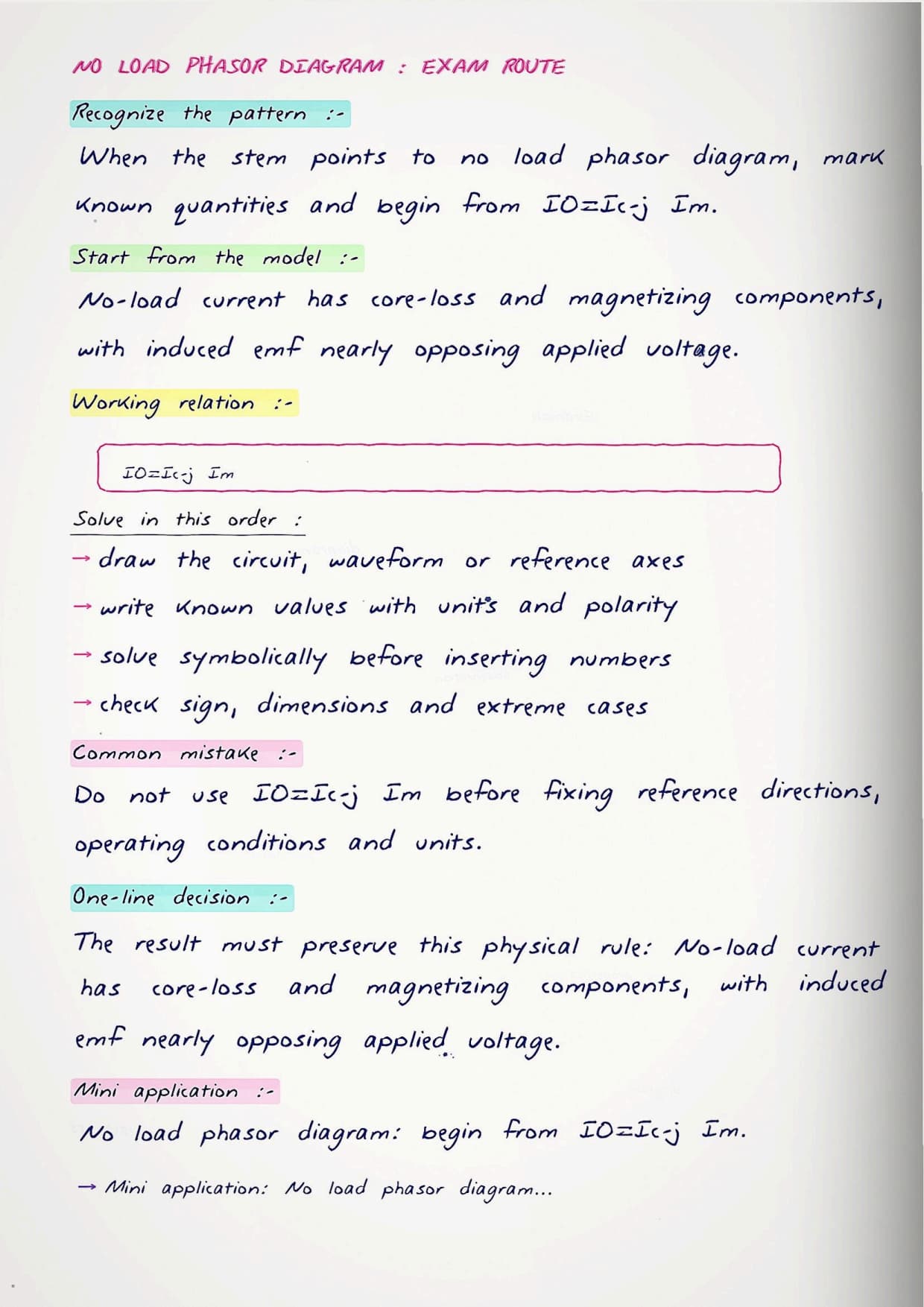
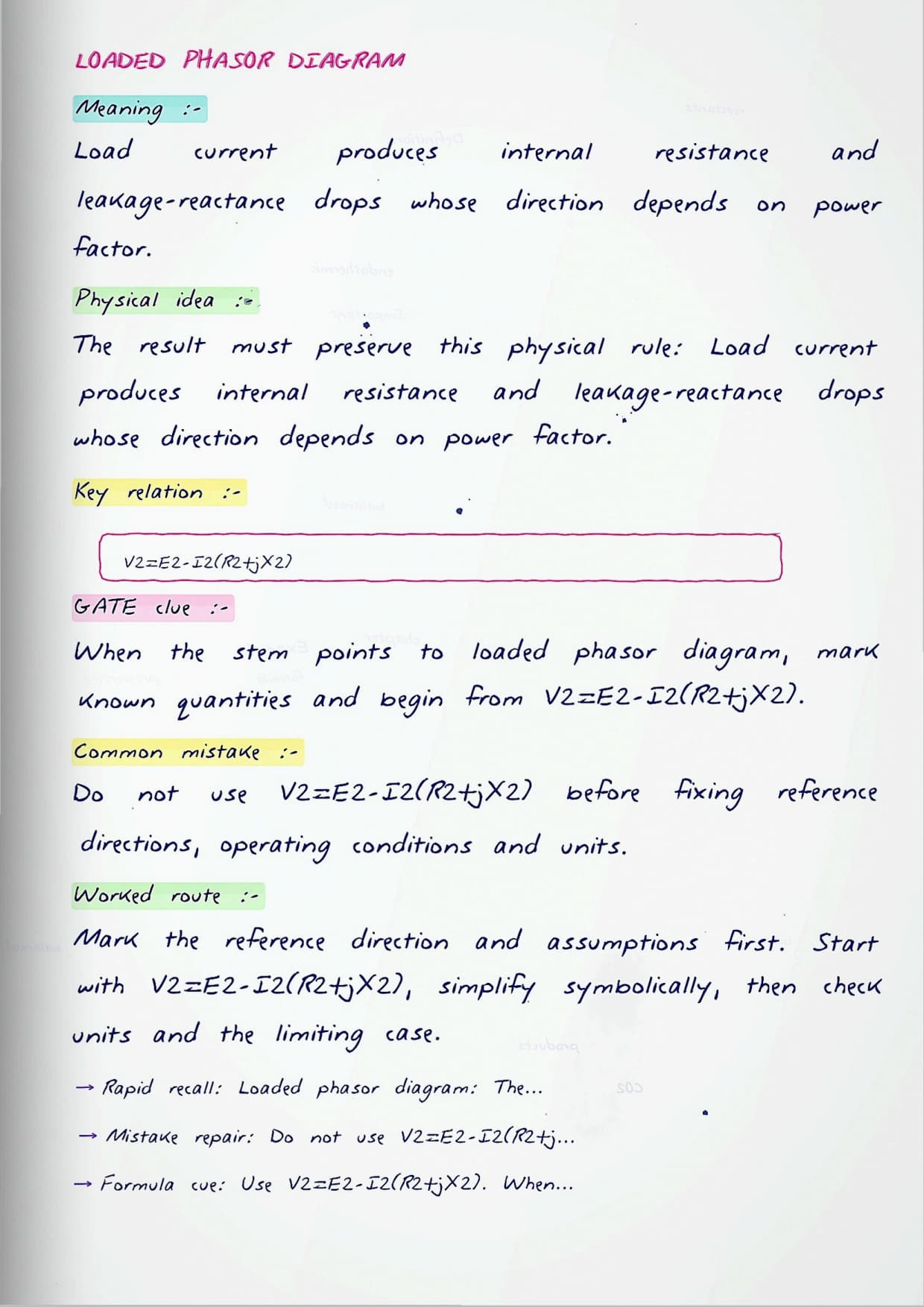
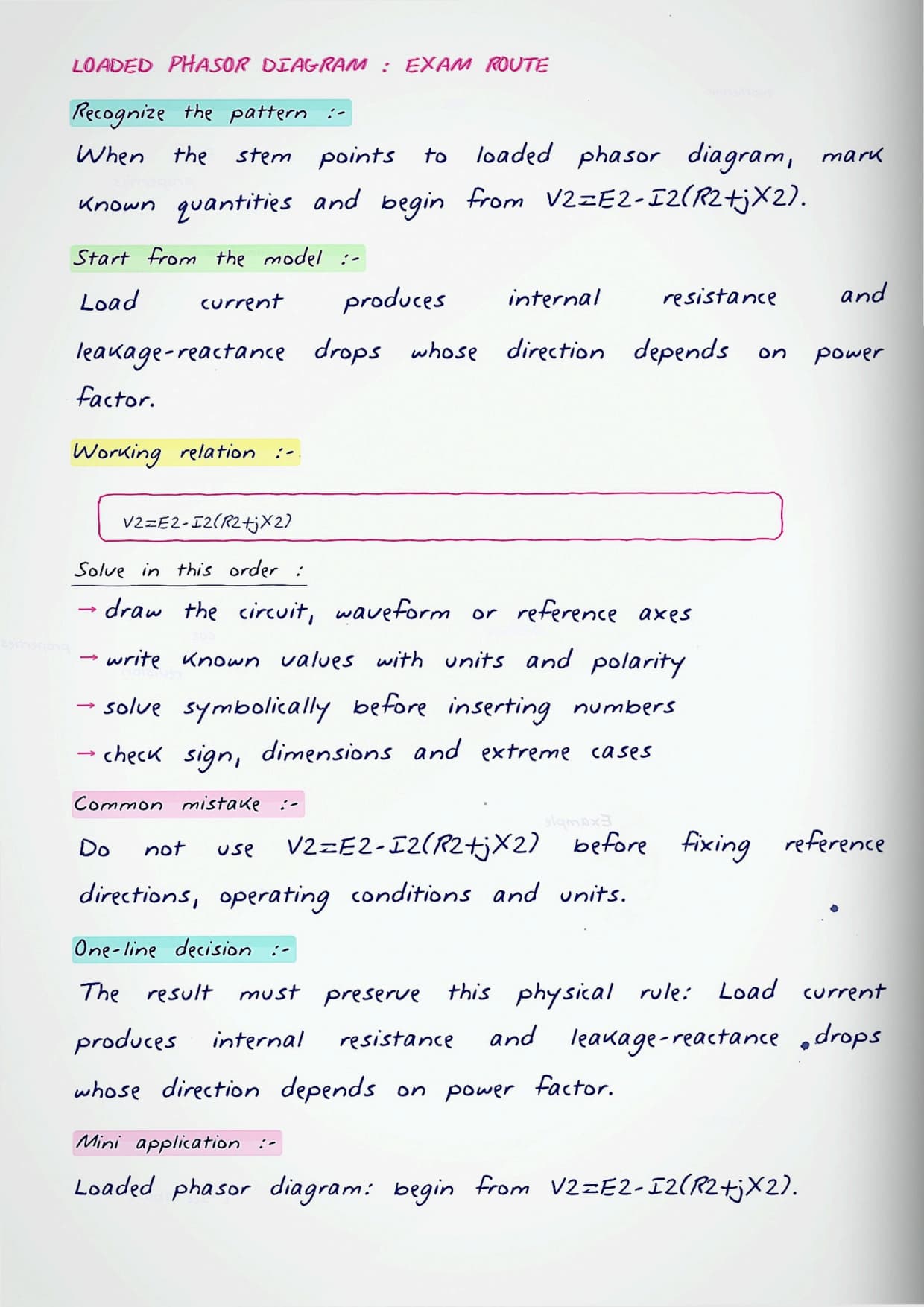
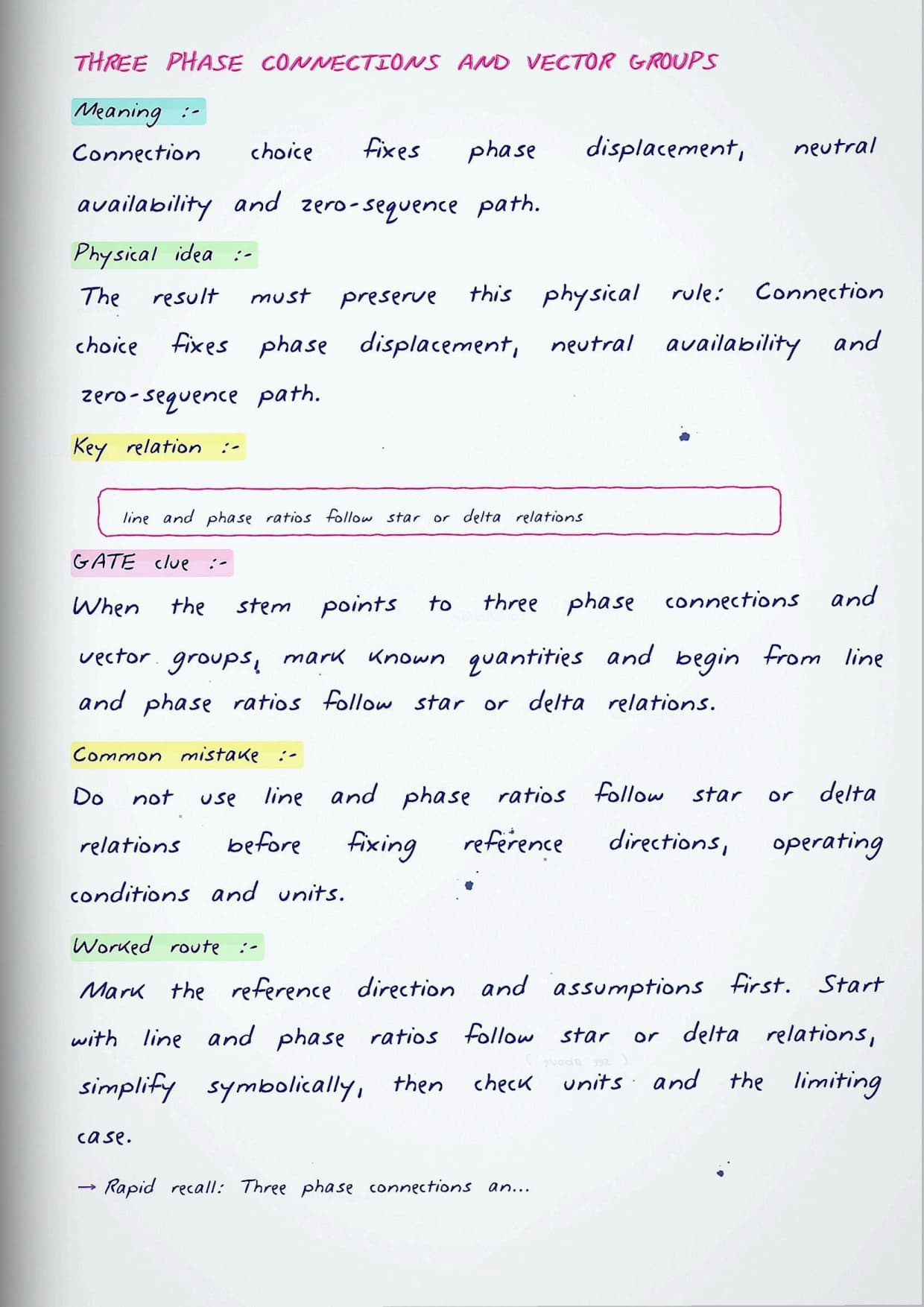
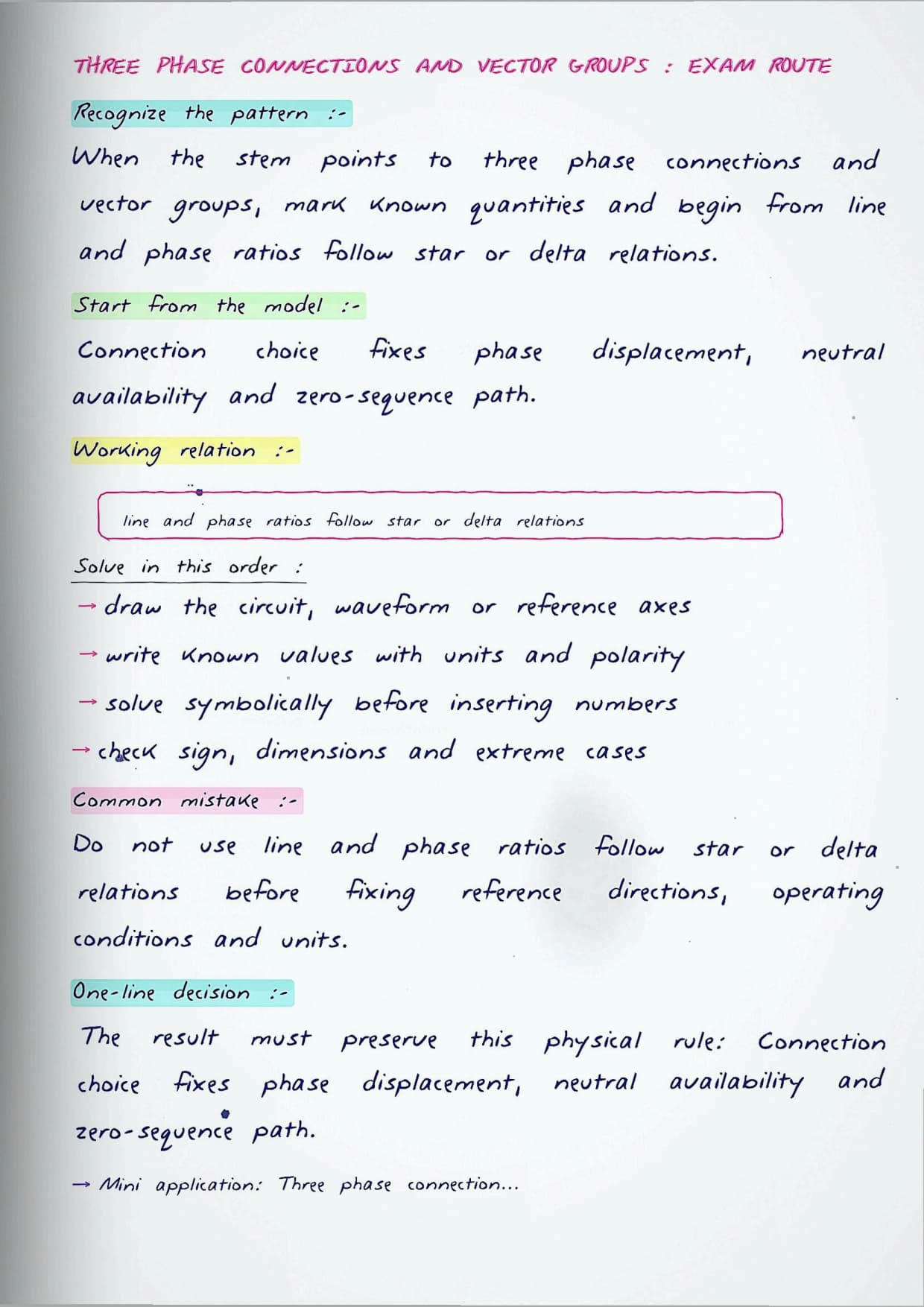
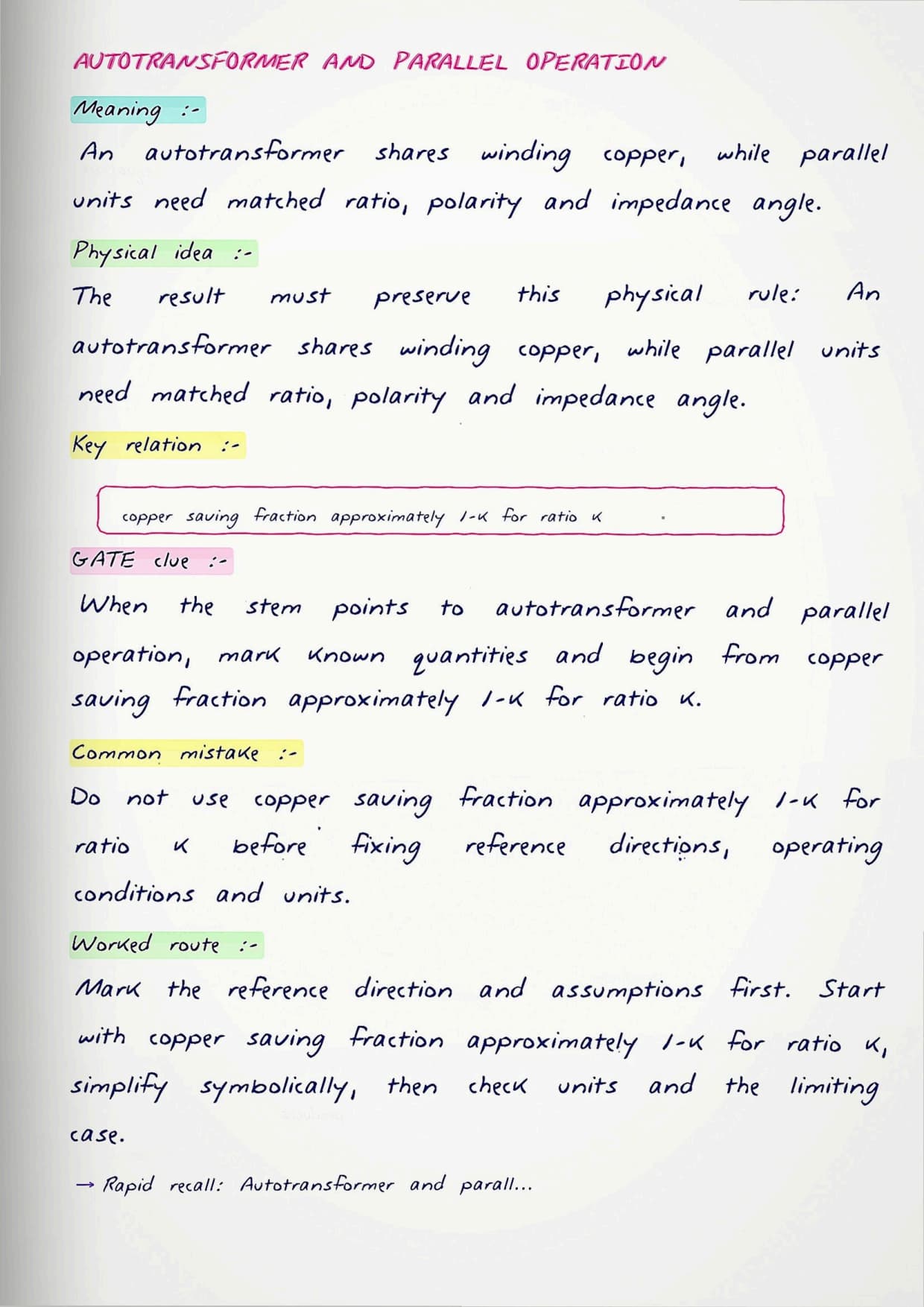
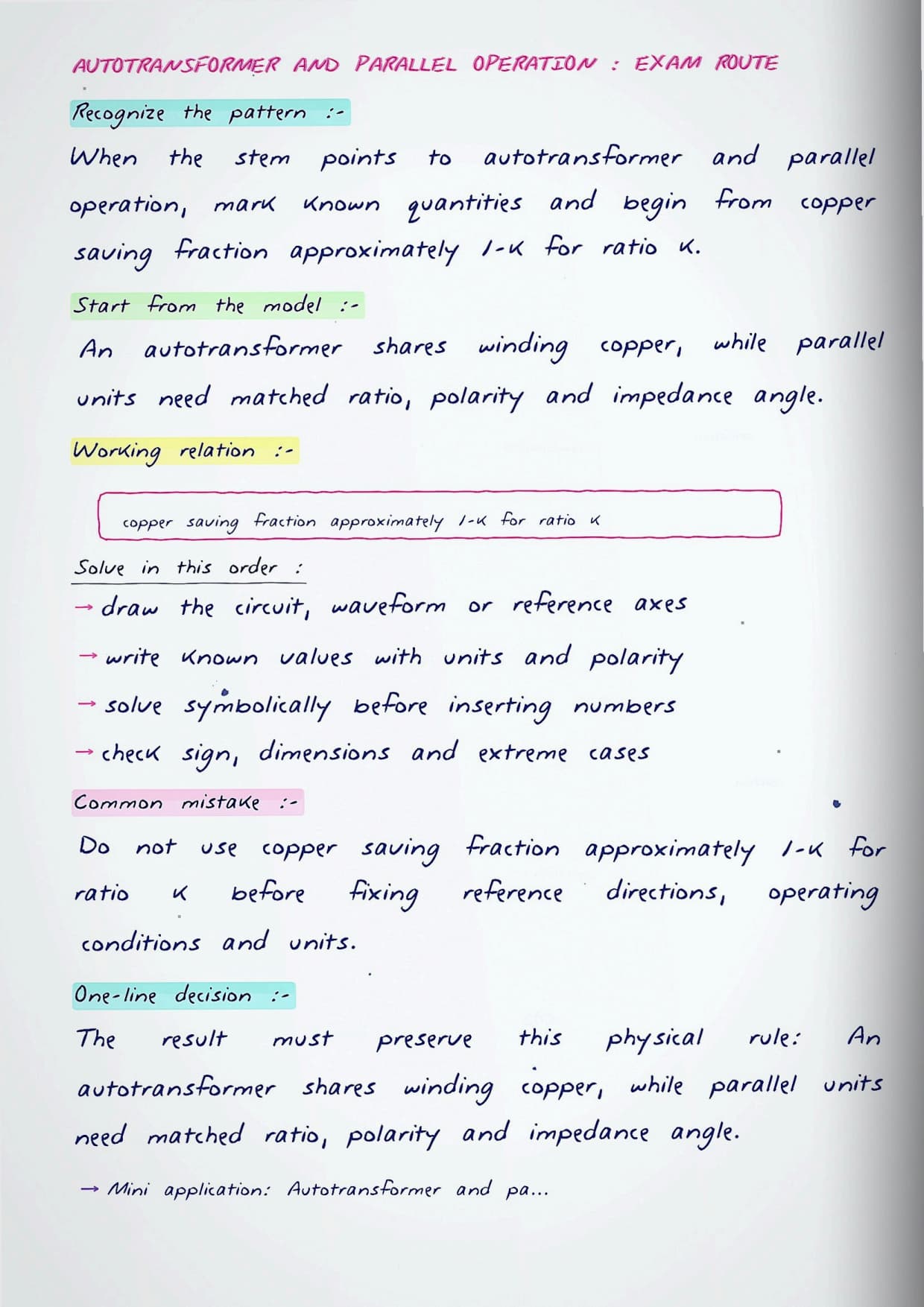
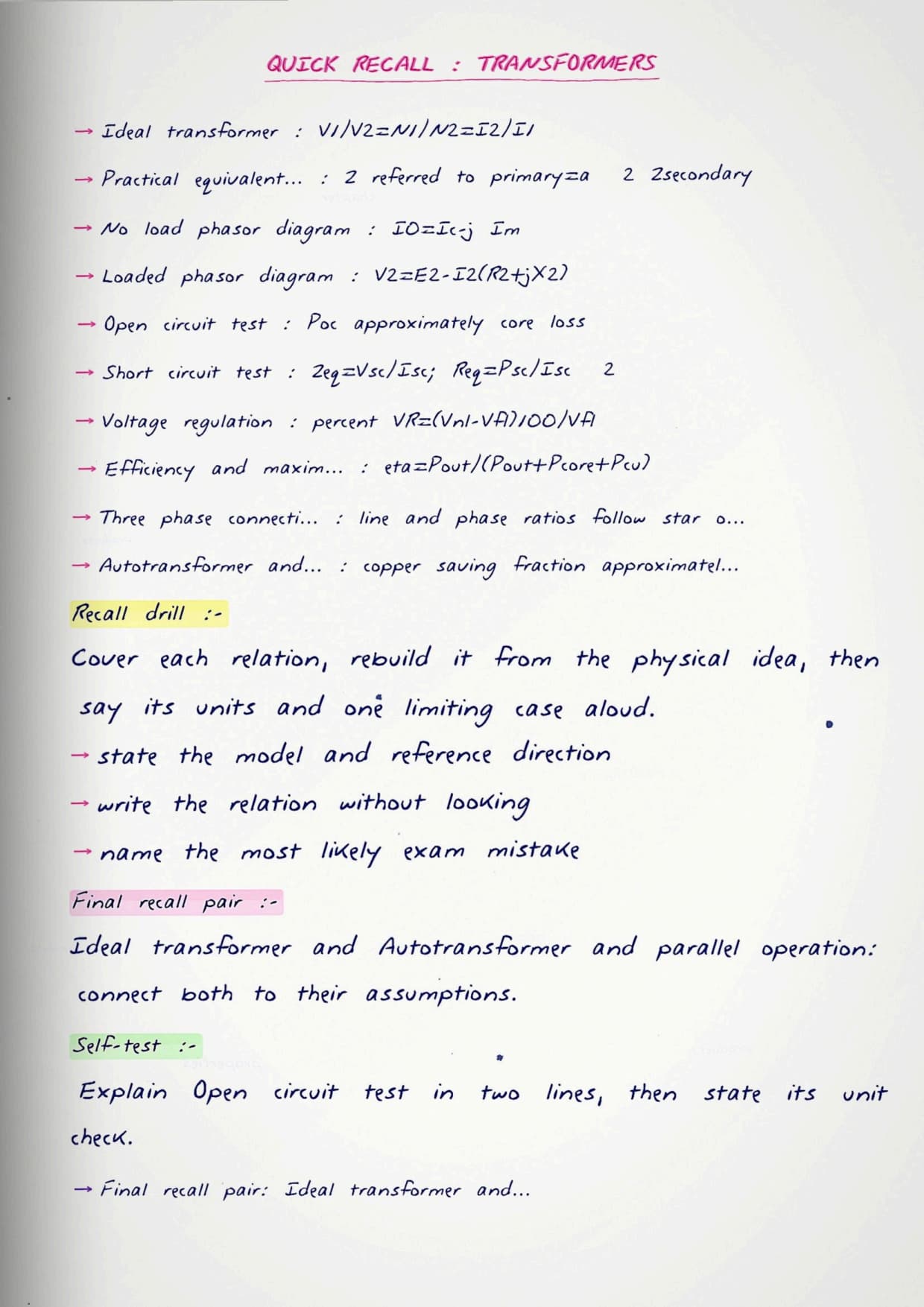
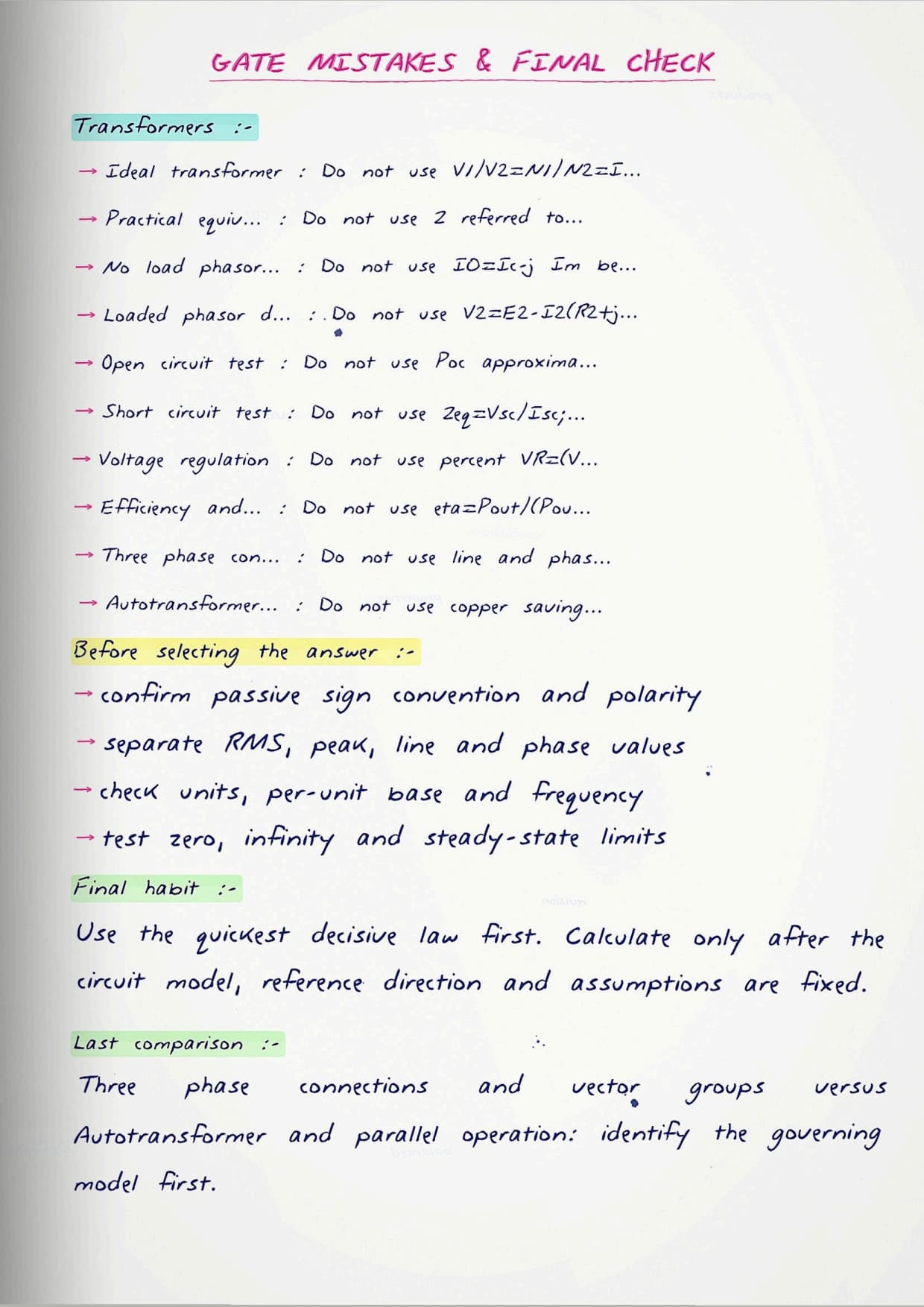
The notes lean on clear hand-drawn equivalent circuits, with the primary and secondary sides labelled and every impedance referred to one side. A worked open-circuit and short-circuit test sits alongside a phasor diagram, and a tidy formula sheet lists the turns-ratio relation, regulation, and efficiency in one place. A short table separates iron loss from copper loss and shows which bench test measures each, so students stop confusing the two, and every numerical carries its units written out to keep the working honest.
- Step-by-step equivalent circuit reduction referred to primary and to secondary
- Sketches of the no-load and on-load phasor diagrams with each drop marked
- Solved voltage regulation and efficiency problems, including maximum efficiency
What These GATE Transformers Notes Cover
The pages build from the ideal transformer up to real, loaded behaviour. Students see how core loss and copper loss enter the model, and how each test on the bench gives a specific parameter. The tone stays practical, with numbers filled into every relation. Rather than list results, the notes derive each one from the equivalent circuit, so a student understands why regulation rises with a lagging load and why efficiency peaks when copper loss equals iron loss, which makes the formulas far easier to recall in the exam hall.
- Ideal transformer action, EMF equation, and turns ratio
- Exact and approximate equivalent circuits with referred impedances
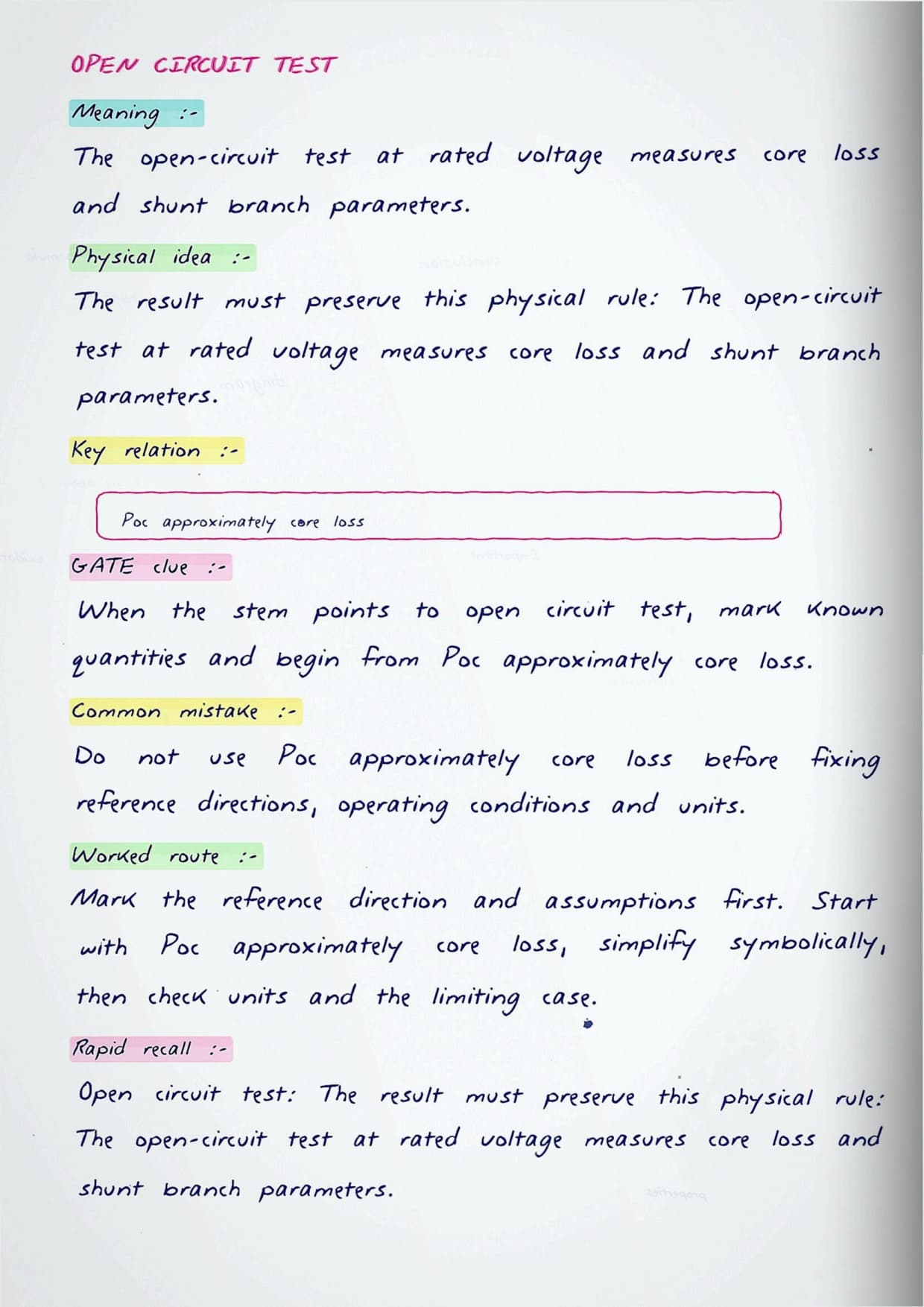
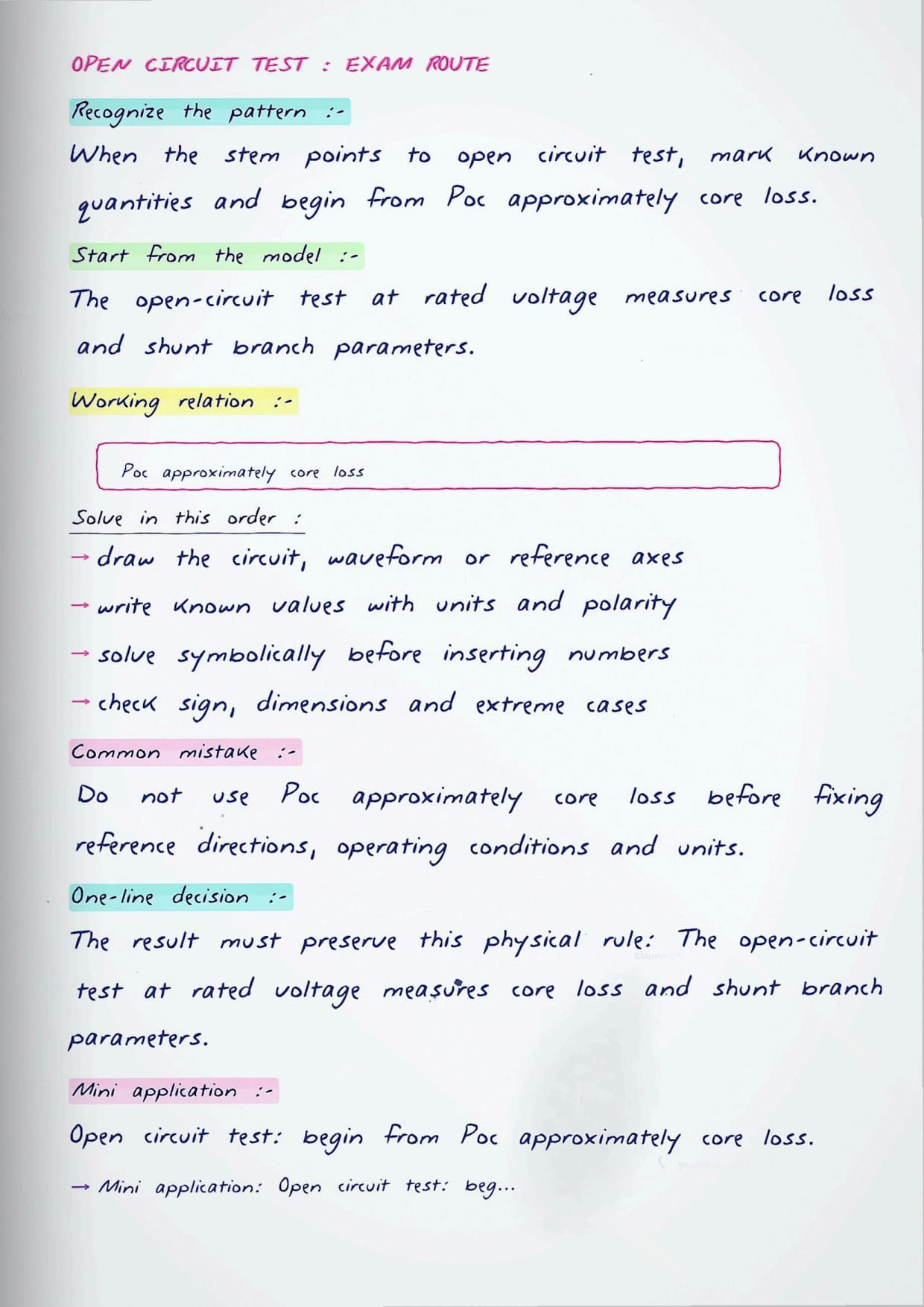
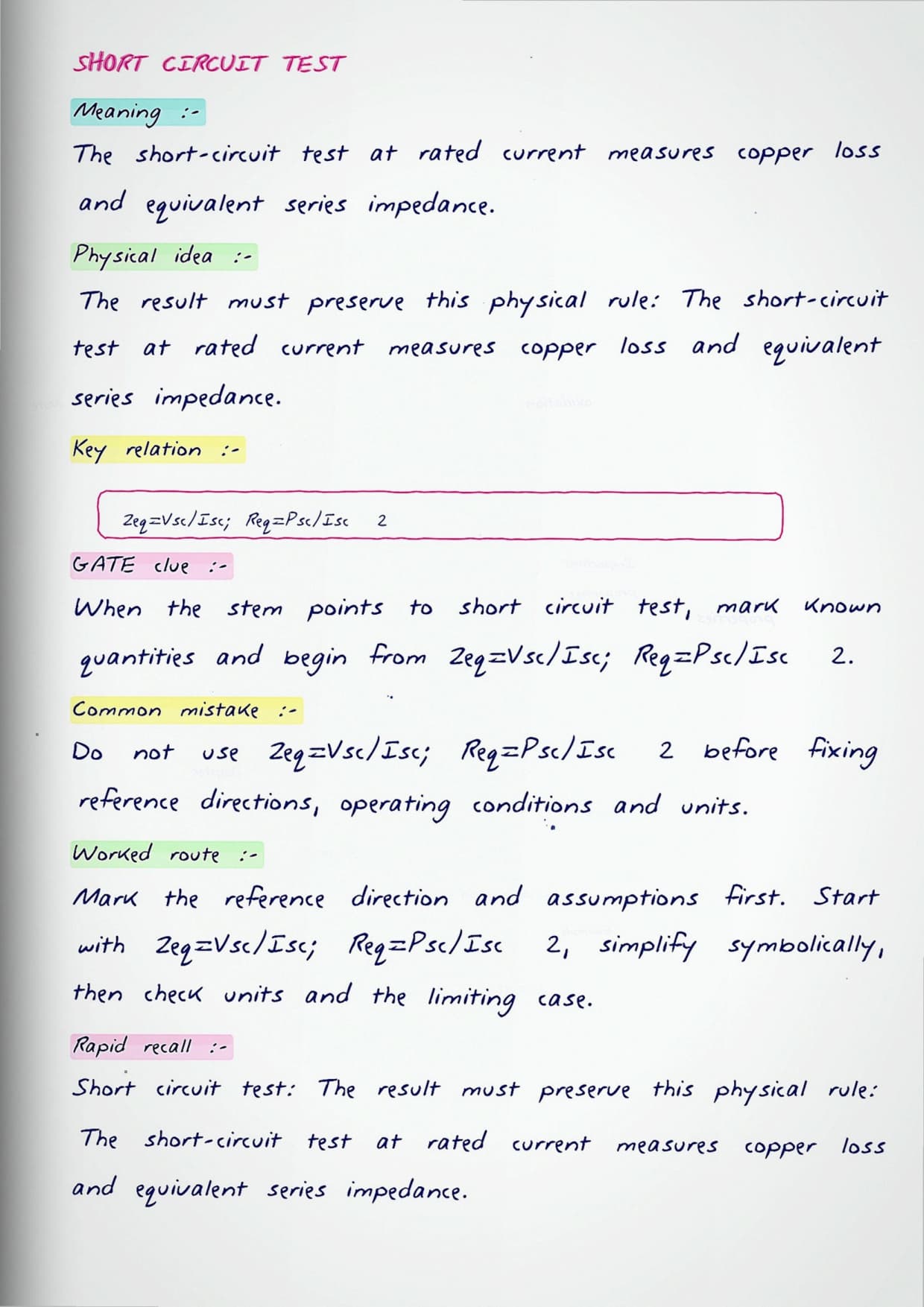
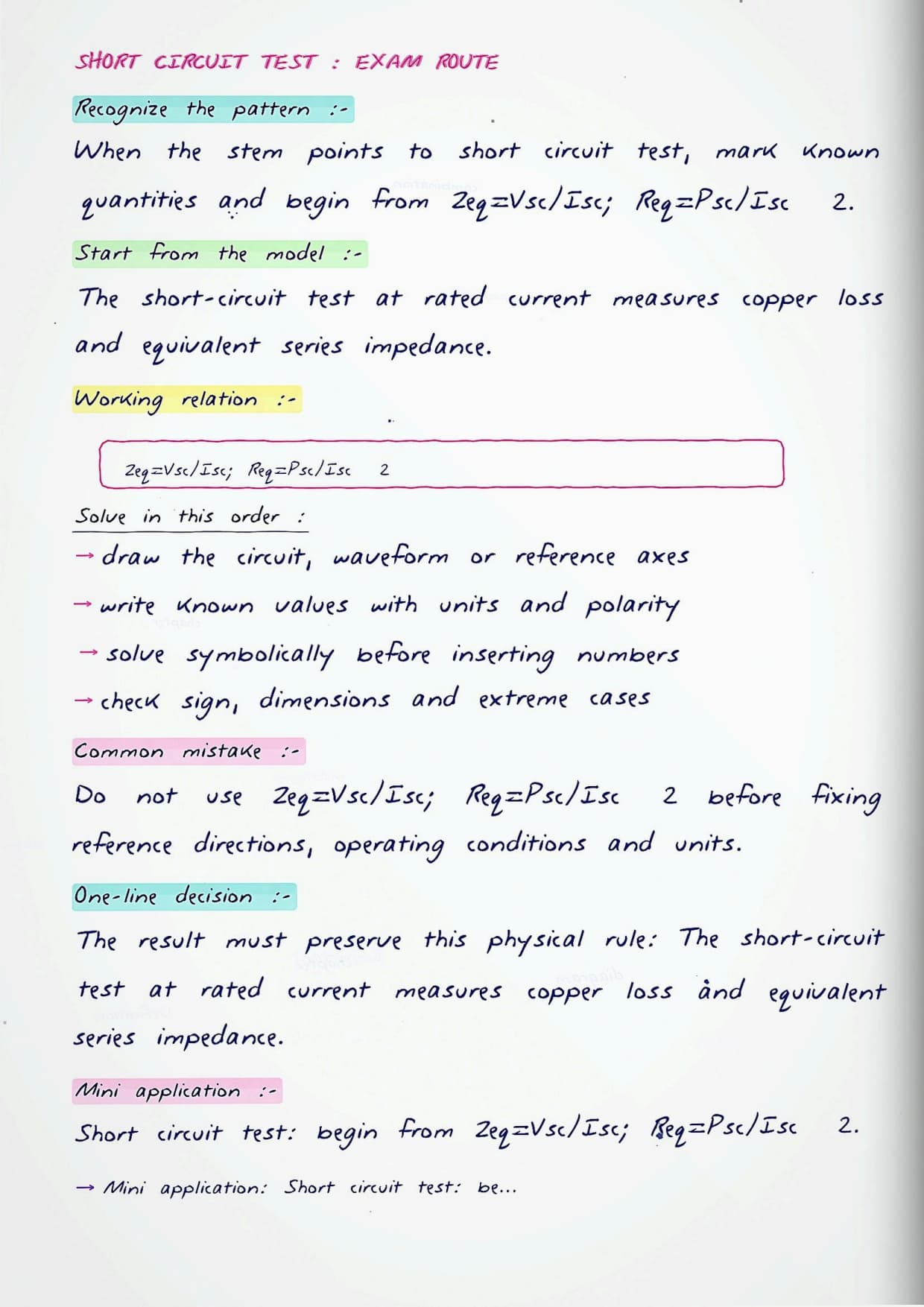
- Open-circuit and short-circuit tests and the parameters they yield
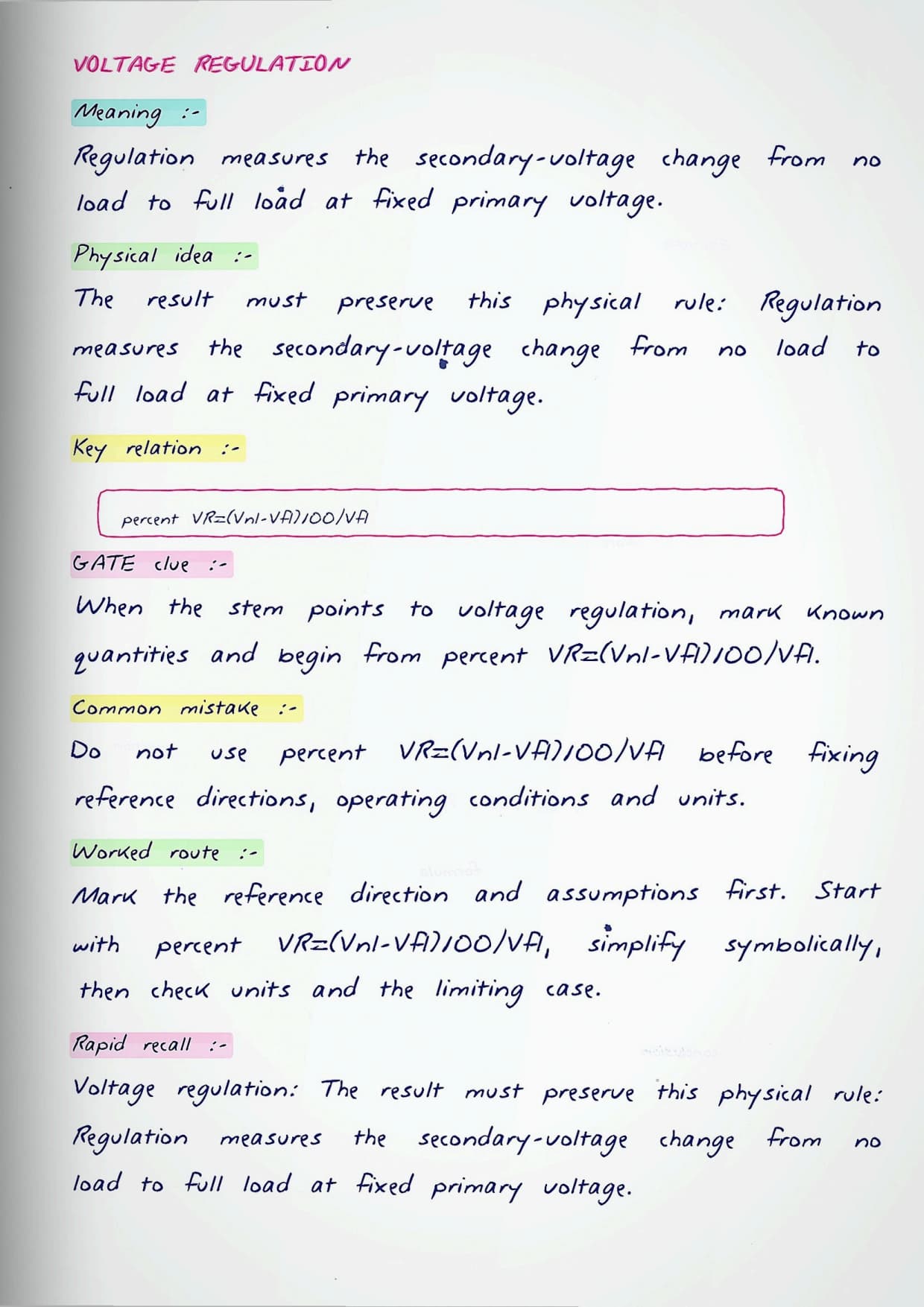
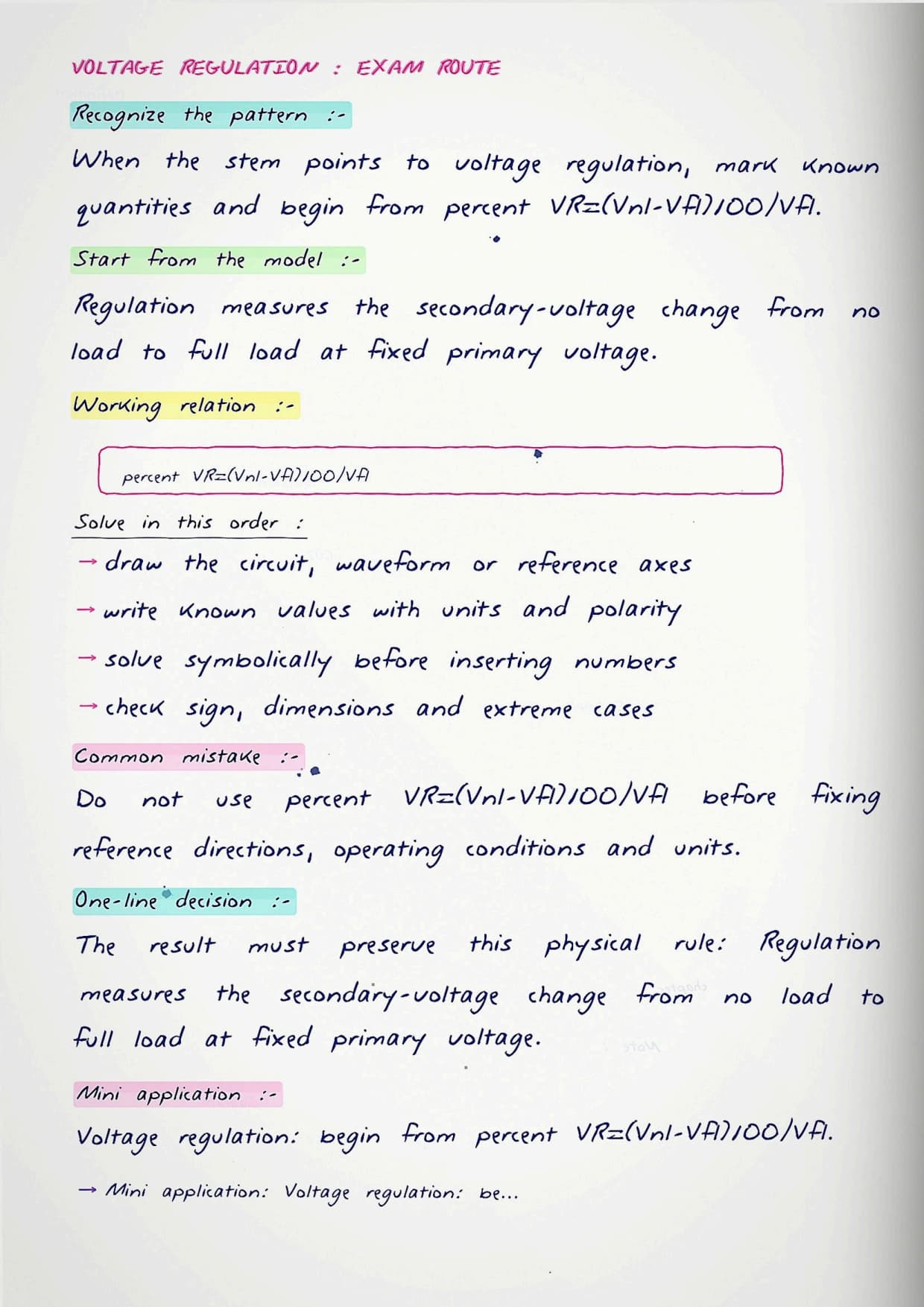
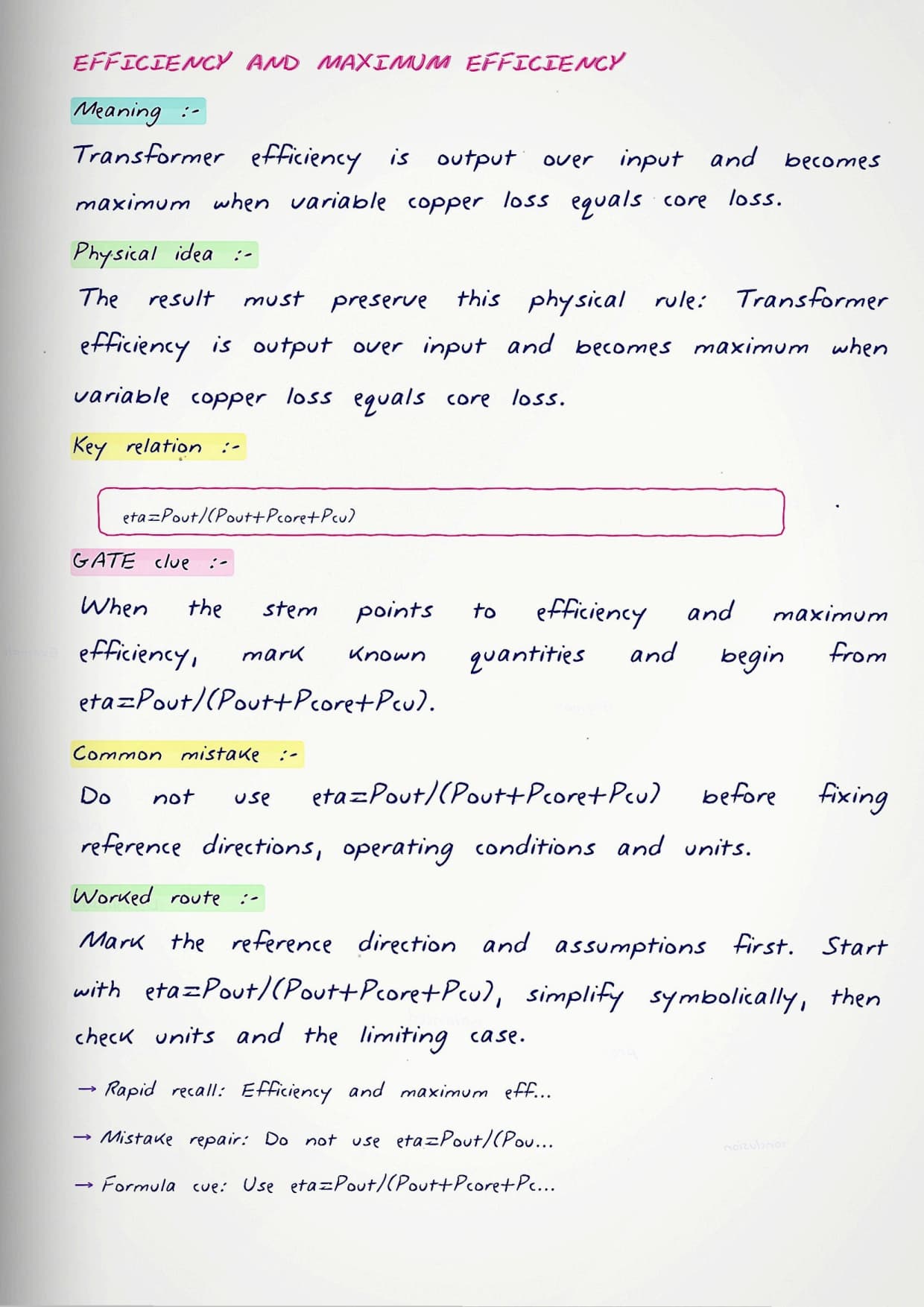
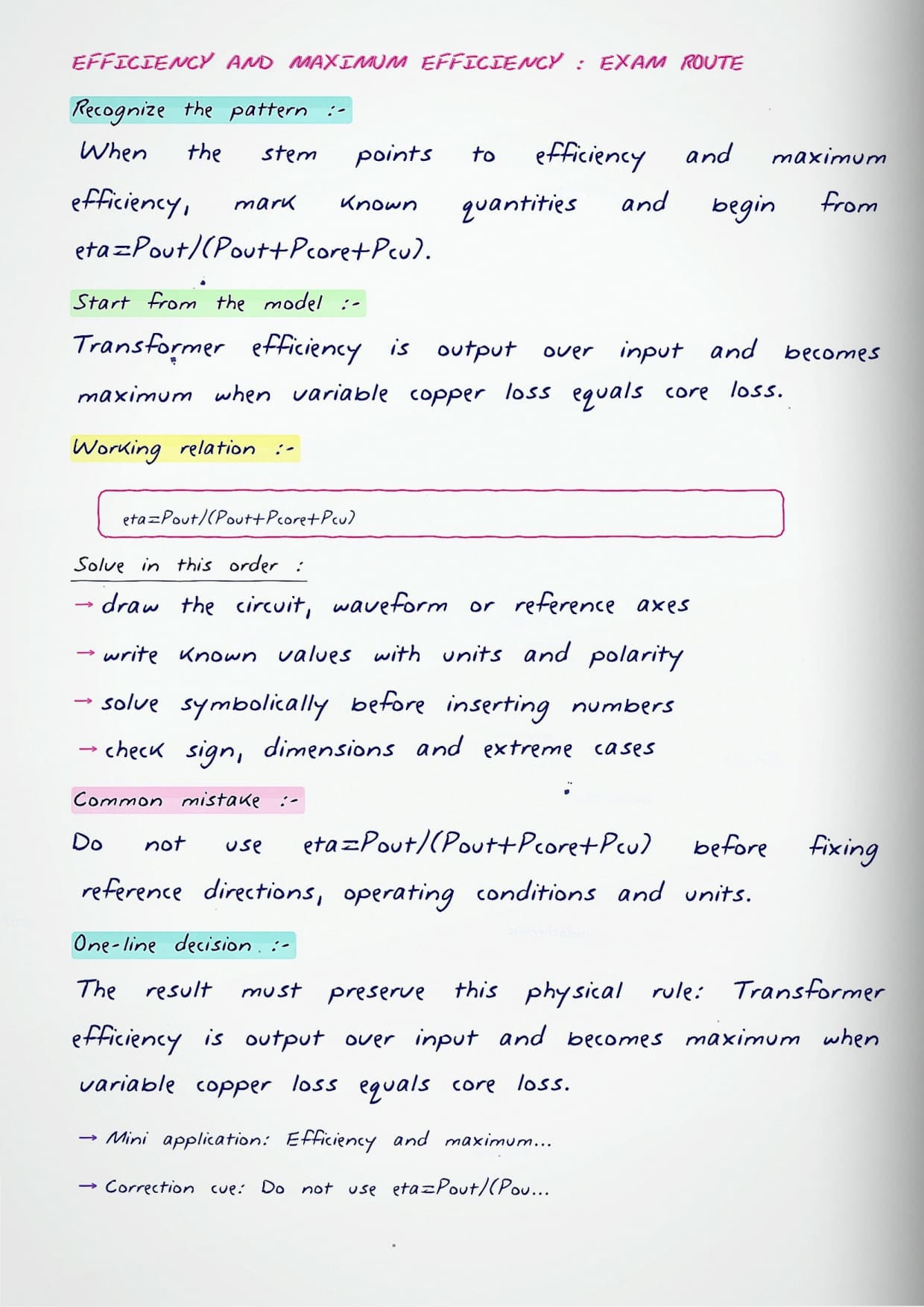
- Voltage regulation, losses, efficiency, and all-day efficiency
GATE Transformers Quick Revision
Source: EXAM DOST - Ankit Goyal on YouTube
Topics Covered in GATE Transformers
Coverage follows the official GATE Electrical Machines syllabus for transformers, from single-phase basics through to three-phase connections and special types. Each item carries a short solved illustration so the method stays fresh.
- EMF equation and the transformation ratio
- Equivalent circuit and per-unit representation
- Open-circuit and short-circuit test analysis
- Voltage regulation and condition for zero regulation
- Losses, efficiency, and maximum efficiency condition
- Auto-transformer construction and copper saving
- Three-phase connections such as star-delta and Scott connection
- Parallel operation and per-unit impedance sharing
How the Notes Are Organised
The order mirrors how the topic is usually taught. The ideal transformer and EMF equation come first, then the equivalent circuit that carries the rest of the analysis. Tests, regulation, and efficiency follow, and the special transformers close the sequence.
Each section pairs a short theory note with a boxed formula and a solved numerical. Students revising in a hurry can read only the boxes and the phasor sketches, while a first-time reader can follow the full derivation of each result. The auto-transformer and three-phase pages sit at the end on purpose, since they build on the single-phase equivalent circuit that the earlier pages establish, and returning to that circuit there reinforces it one final time before the exam.
How GATE Transformers Links to Other Topics
Transformer theory threads through much of the power side of the syllabus, so a solid base here makes several other topics easier to attack. The same magnetic and per-unit ideas recur in later chapters, which means the effort spent here quietly lifts a student's score on machines and power system questions too.
- Per-unit and referred impedance feed Power System fault analysis
- Regulation and losses connect to transmission and distribution efficiency
- Magnetic circuit ideas carry over to rotating machines
- High-frequency transformers link to Power Electronics converters
Important Topics in GATE Transformers
Some subtopics reappear year after year, and the notes mark the points where students most often slip. Referring impedances to the wrong side is the classic mistake to avoid.
- Referring resistance and reactance correctly using the square of the turns ratio
- Reading the two bench tests to separate iron loss from copper loss
- Regulation sign for lagging, leading, and unity power factor loads
- Condition for maximum efficiency and the load at which it occurs
- Copper saving in an auto-transformer versus a two-winding transformer
How to Prepare GATE Transformers with Handwritten Notes
Transformers reward practice with numbers, so the notes are built to be solved from, not just read. A simple four-stage plan keeps the preparation on track.
- First read: understand the equivalent circuit and redraw it referred to each side
- Second pass: solve the regulation and efficiency problems without looking at the steps
- PYQ stage: work through past GATE transformer numericals under a timer
- Final week: revise the phasor diagrams and the boxed formula sheet only
Why These Notes Help You Score Better
The strength of these notes is that every formula sits next to a picture, so an abstract relation becomes a circuit or a phasor a student can actually see. That link between the diagram and the number is what stops silly errors under exam pressure. Revising from one compact set keeps the whole topic in view, and it helps students walk into the exam confident of an easy few marks.
GATE Electrical Transformers Handwritten Notes FAQs
Ques. How much weightage do Transformers carry in GATE Electrical
Ans. Transformers typically contribute about 5 to 8 marks within the Electrical Machines section, which makes the topic one of the more rewarding areas for students who practise the numericals well.
Ques. What is the most important concept in these Transformer notes
Ans. The equivalent circuit is the heart of the topic. Once students can draw it referred to either side, voltage regulation, efficiency, and the bench tests all follow naturally from the same diagram.
Ques. Do these notes include solved numerical problems
Ans. Yes. The handwritten pages include worked regulation, efficiency, and open-circuit and short-circuit test problems, so students revise the method along with the theory.
Ques. Can I download these Transformer notes as a PDF
Ans. Yes. The full handwritten Transformer notes are available as a downloadable PDF on this page, letting students revise offline or print the formula and phasor pages.



Comments