




Signals, LTI Systems and Convolution is a steady, high-return topic in GATE Electrical, usually worth about 5 to 8 marks in the paper. It belongs to the Signals and Systems section, and its ideas return in Control Systems, Digital Signal Processing, and Network Theory. These handwritten notes cover the full topic in a compact, exam-focused form.
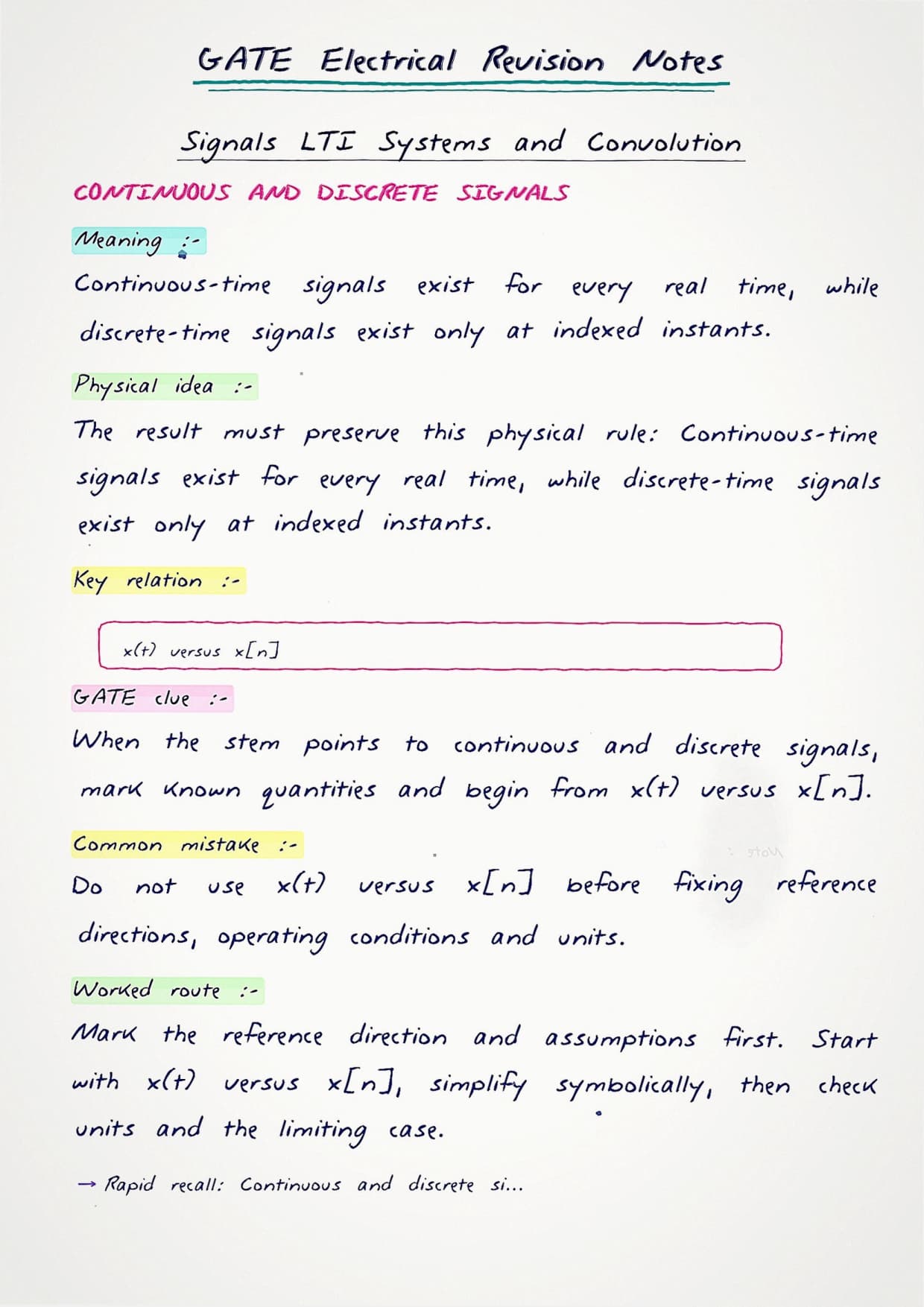
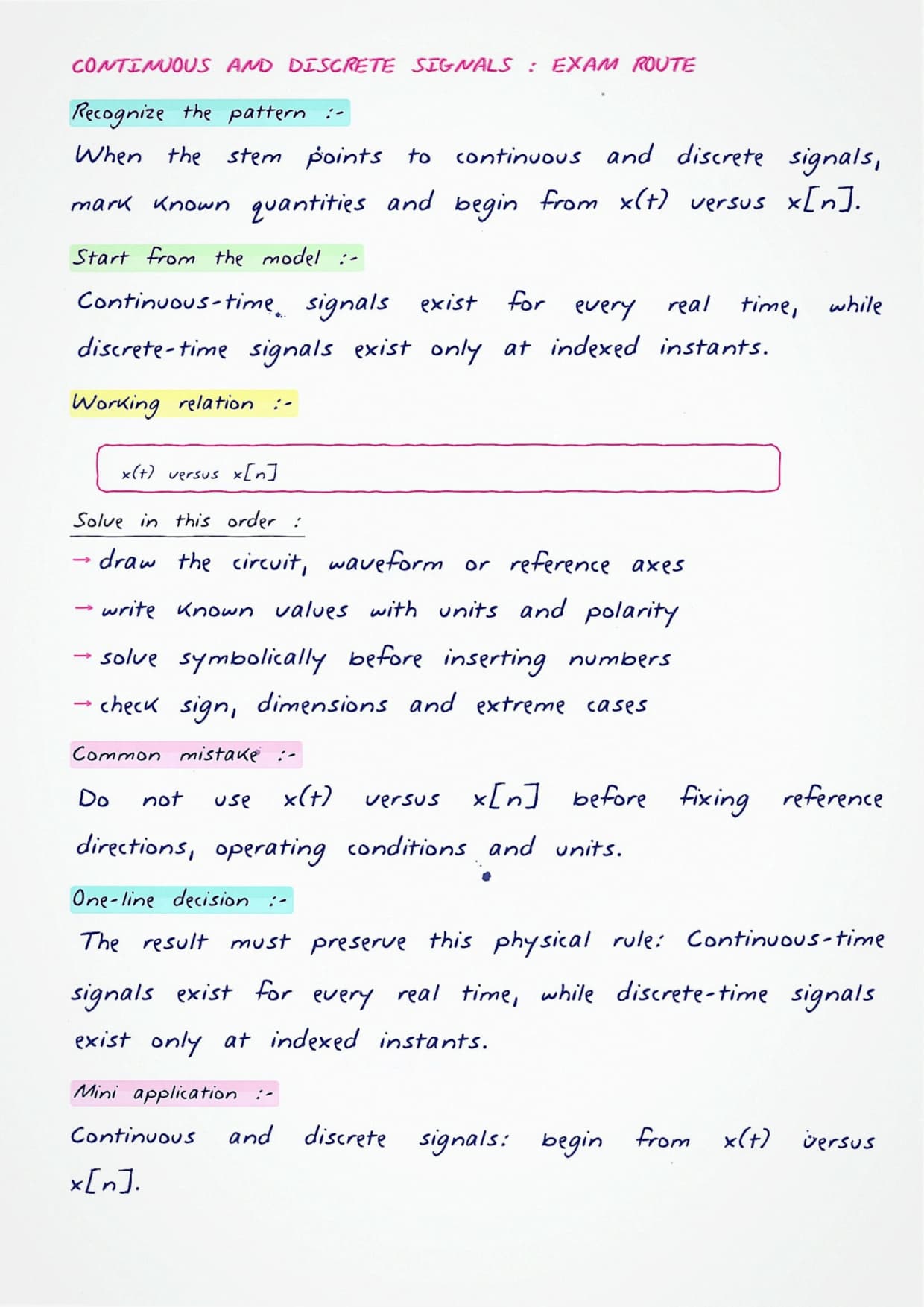
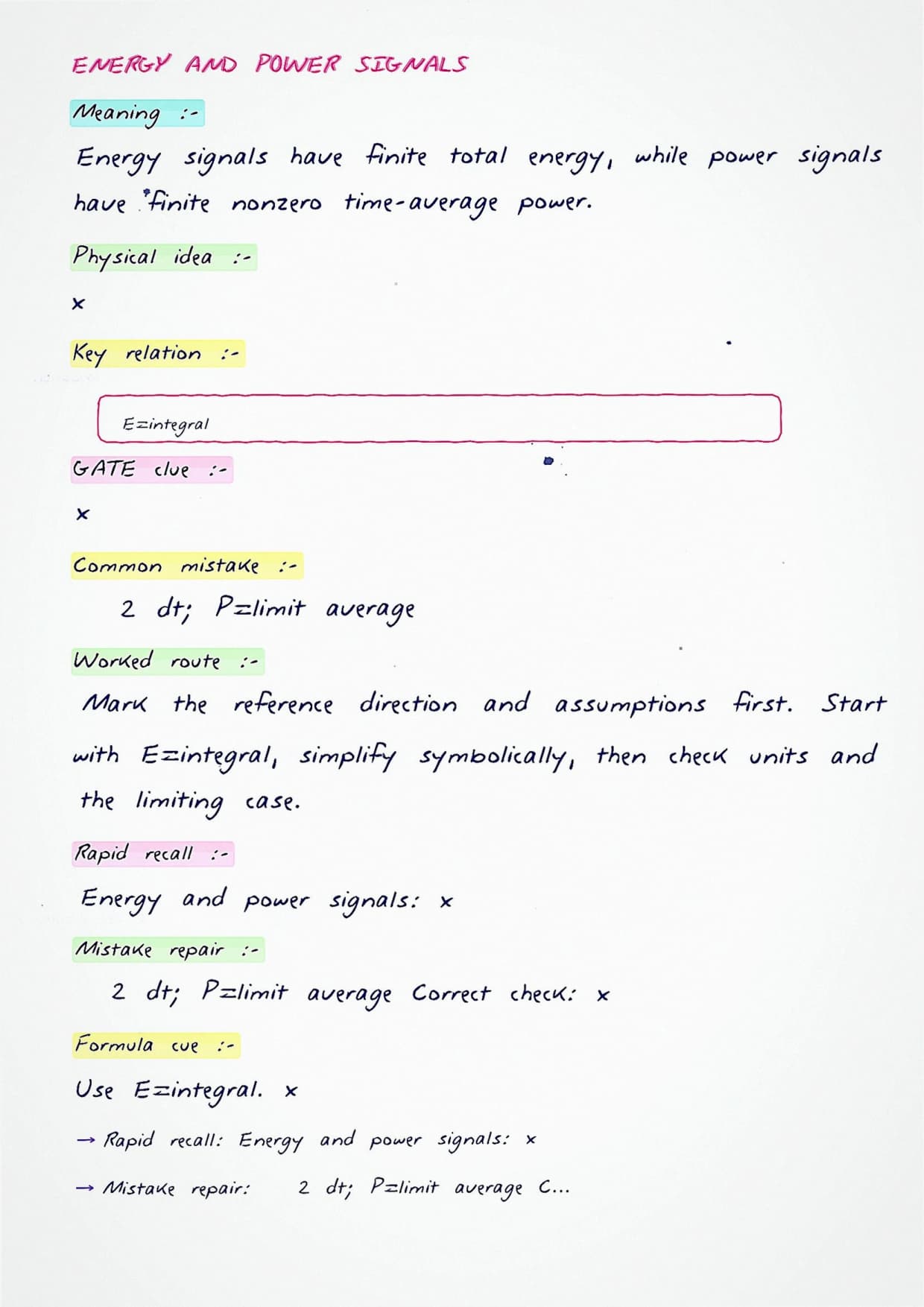
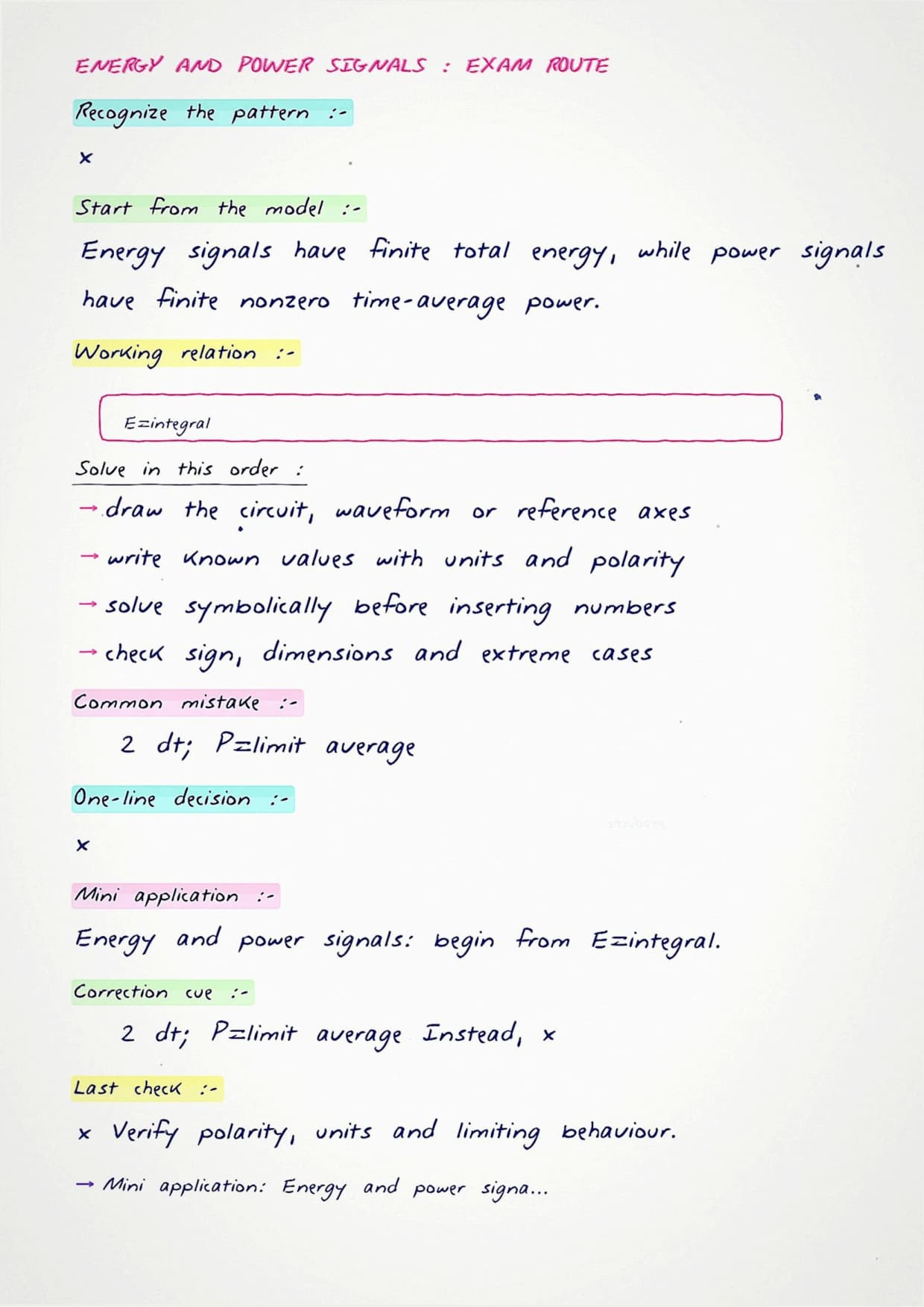
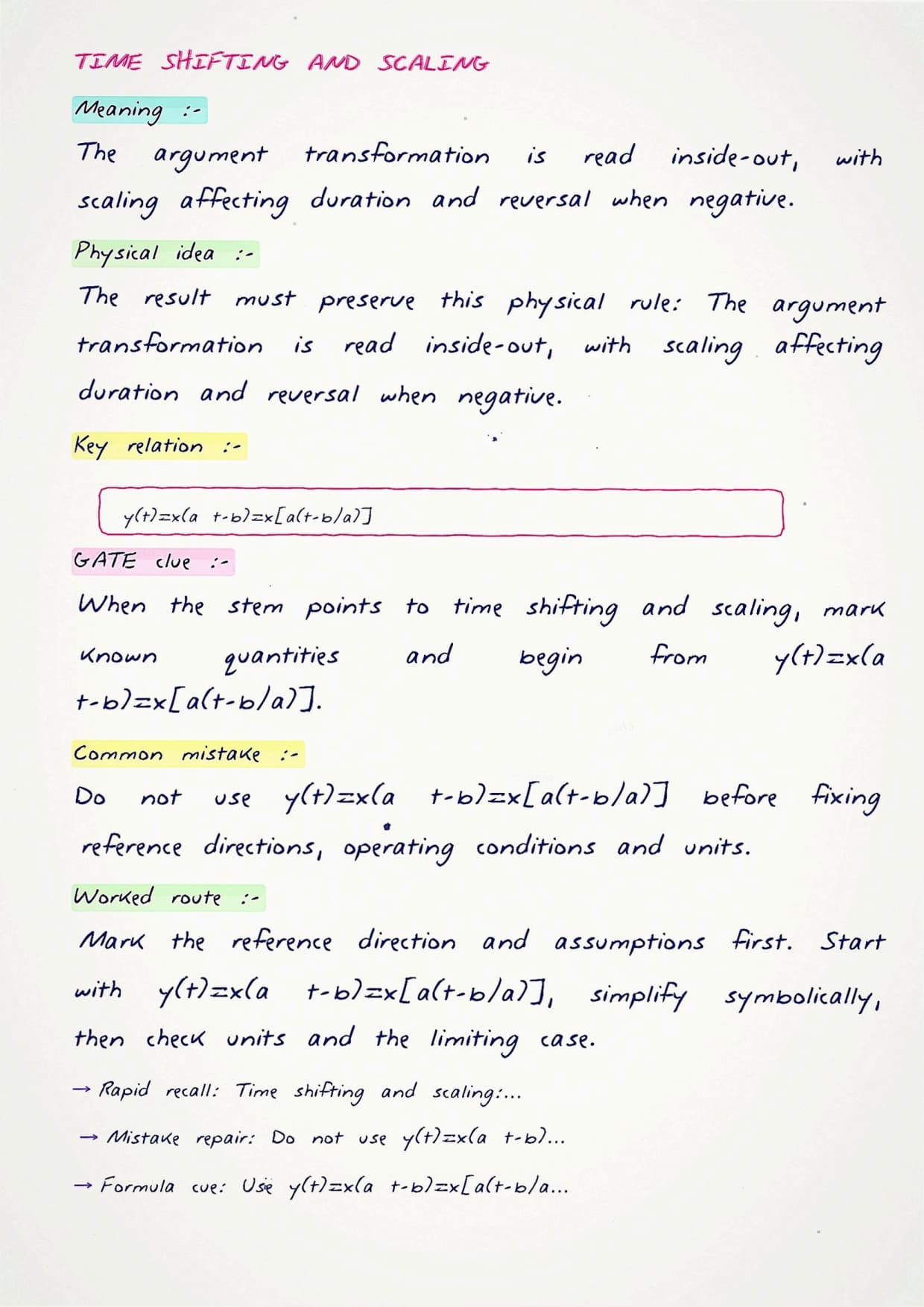
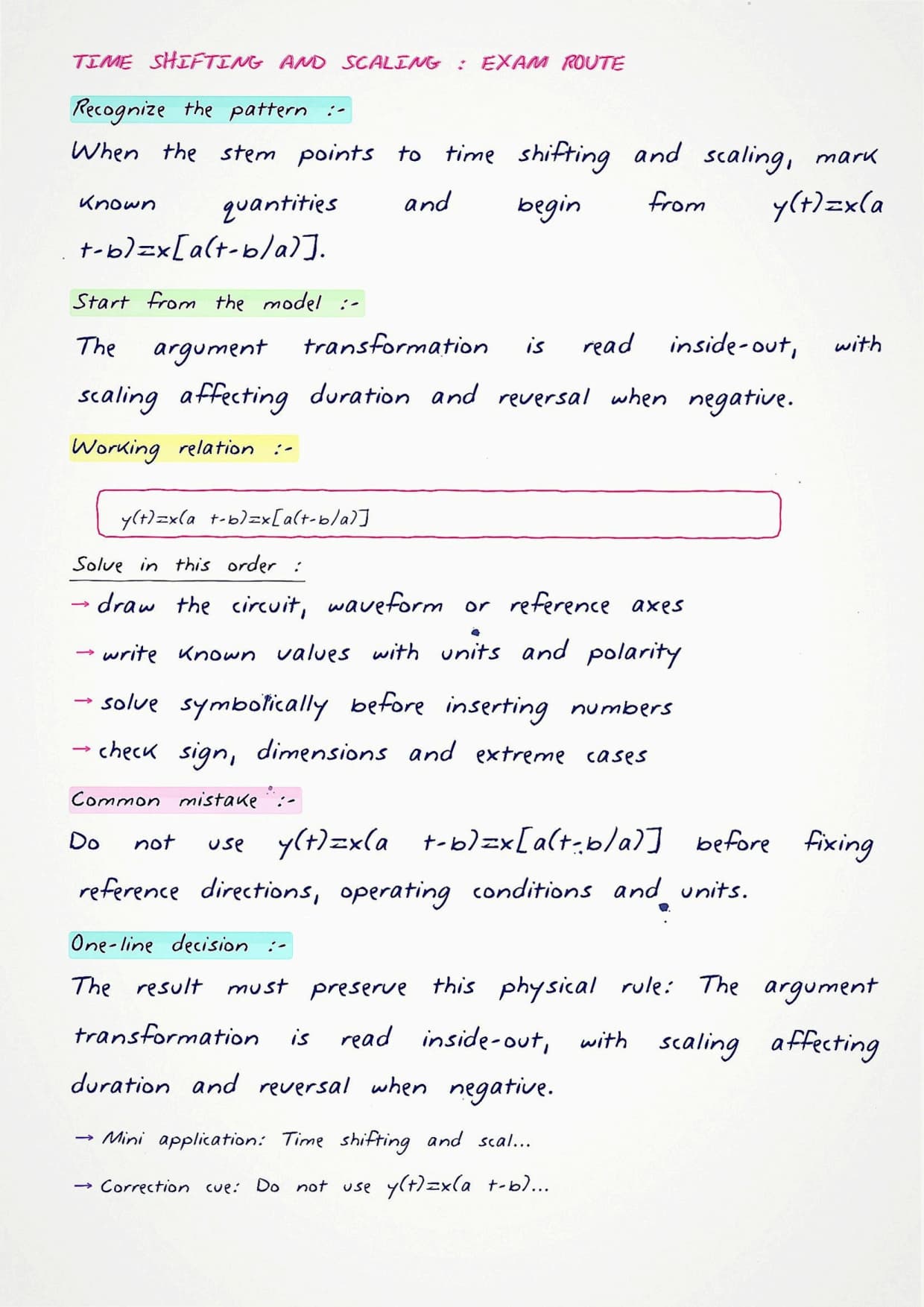
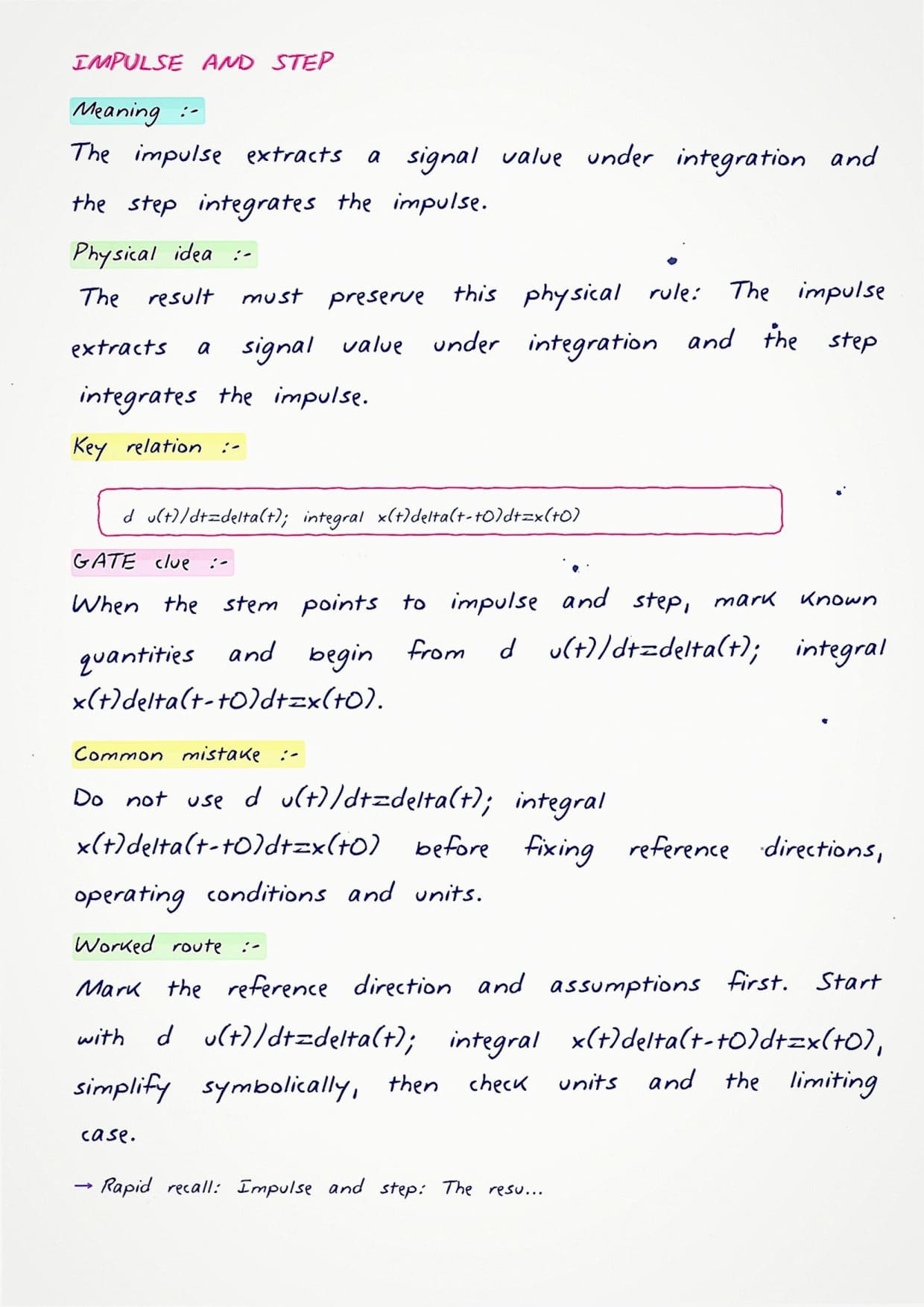
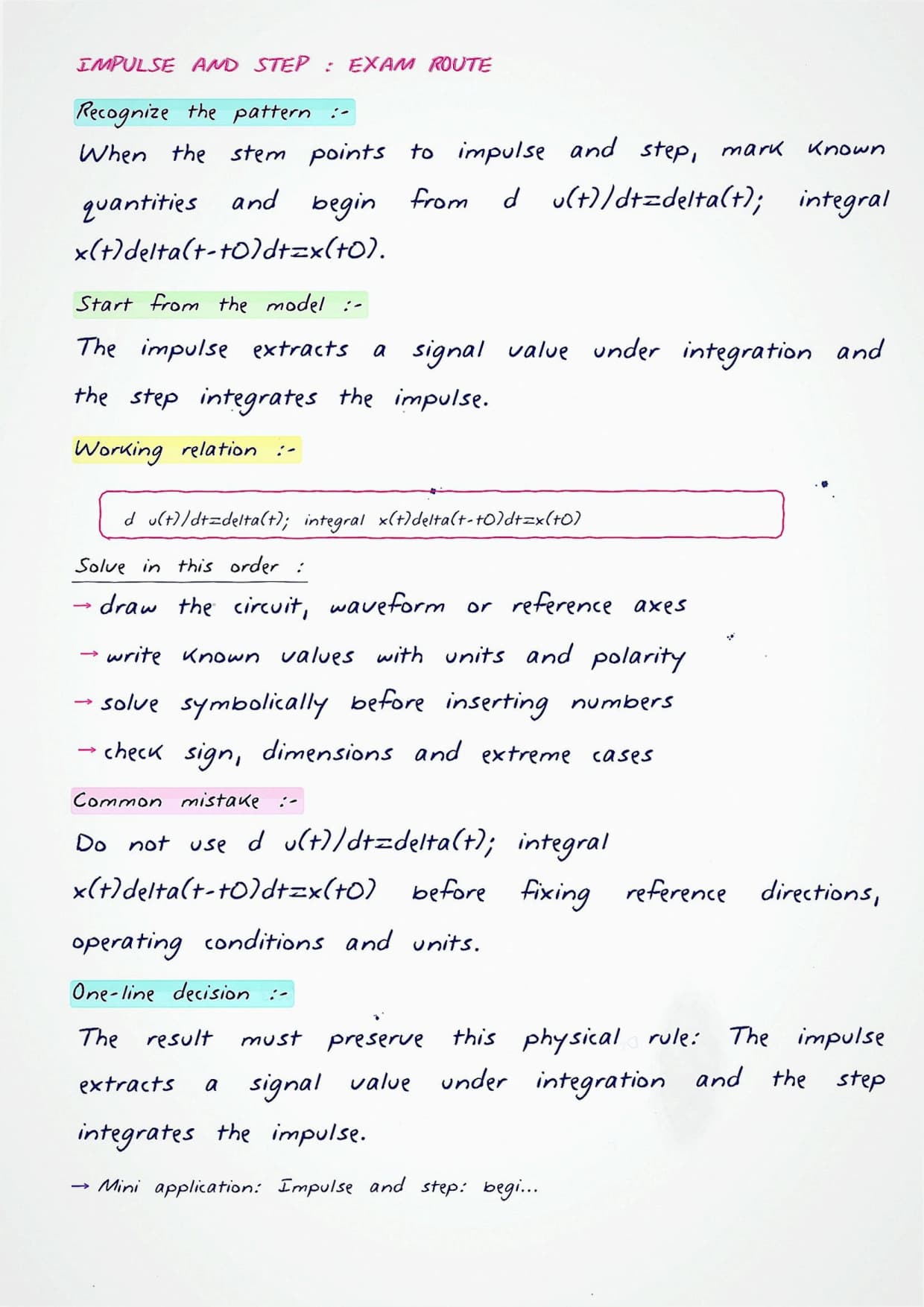
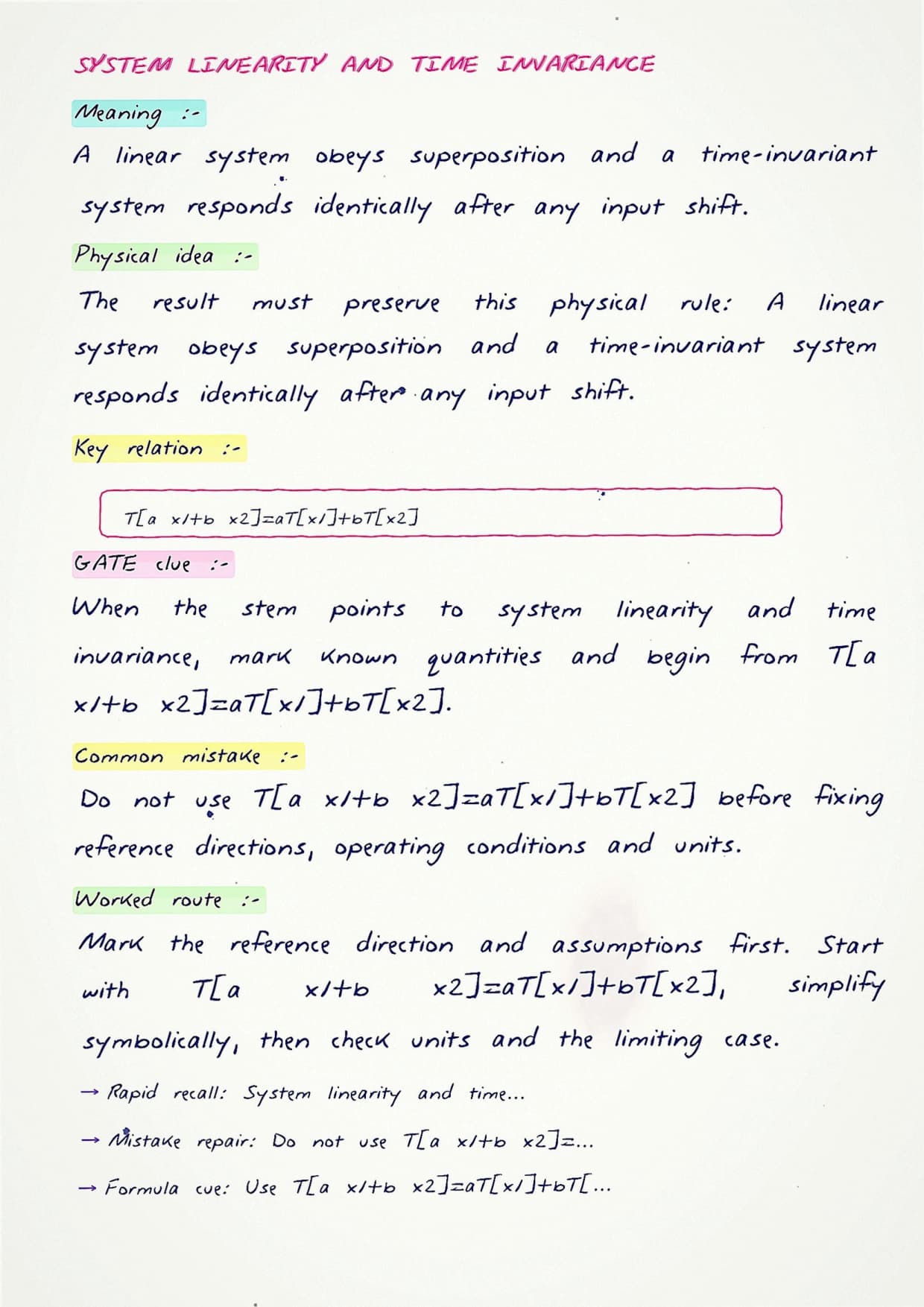
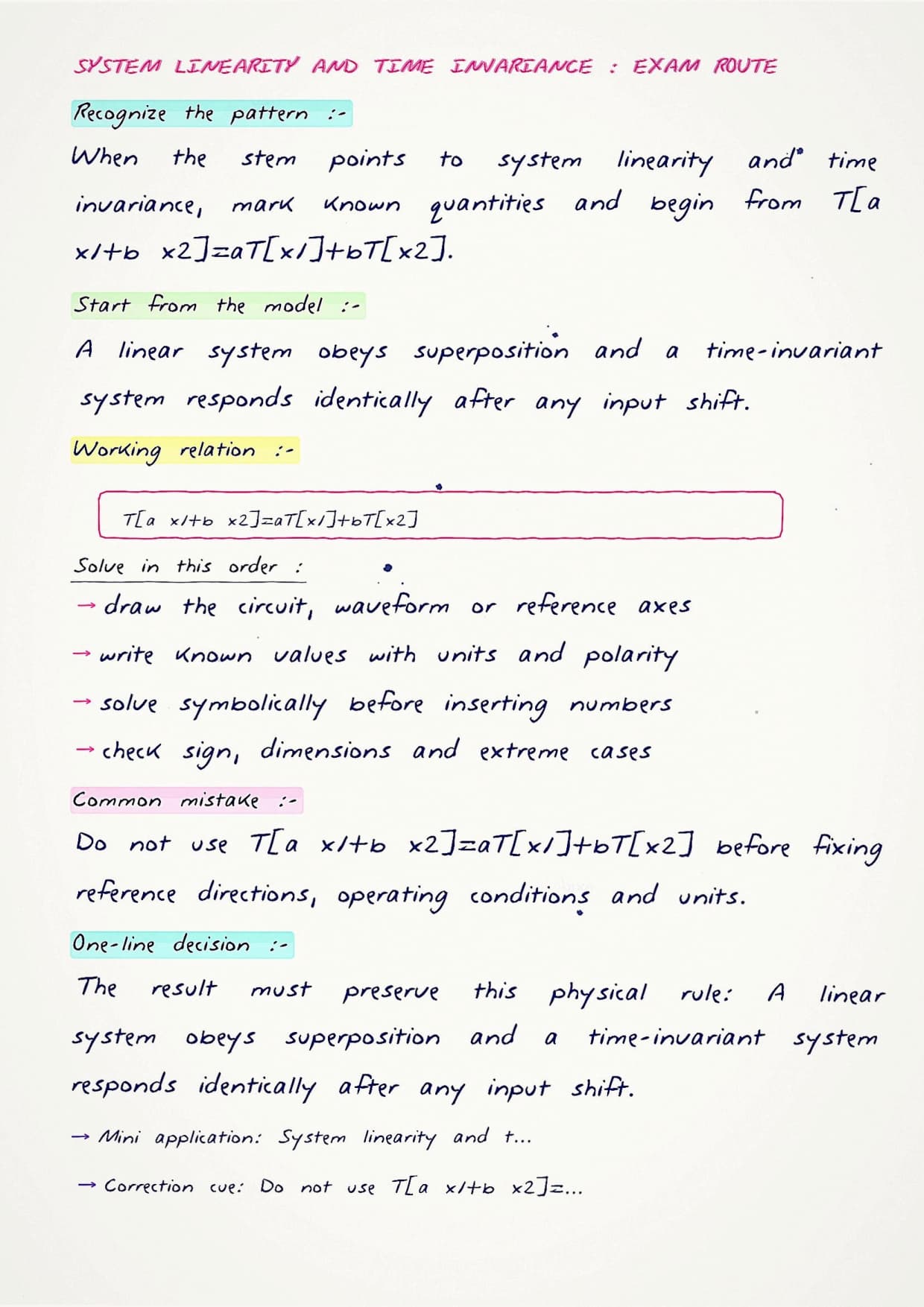
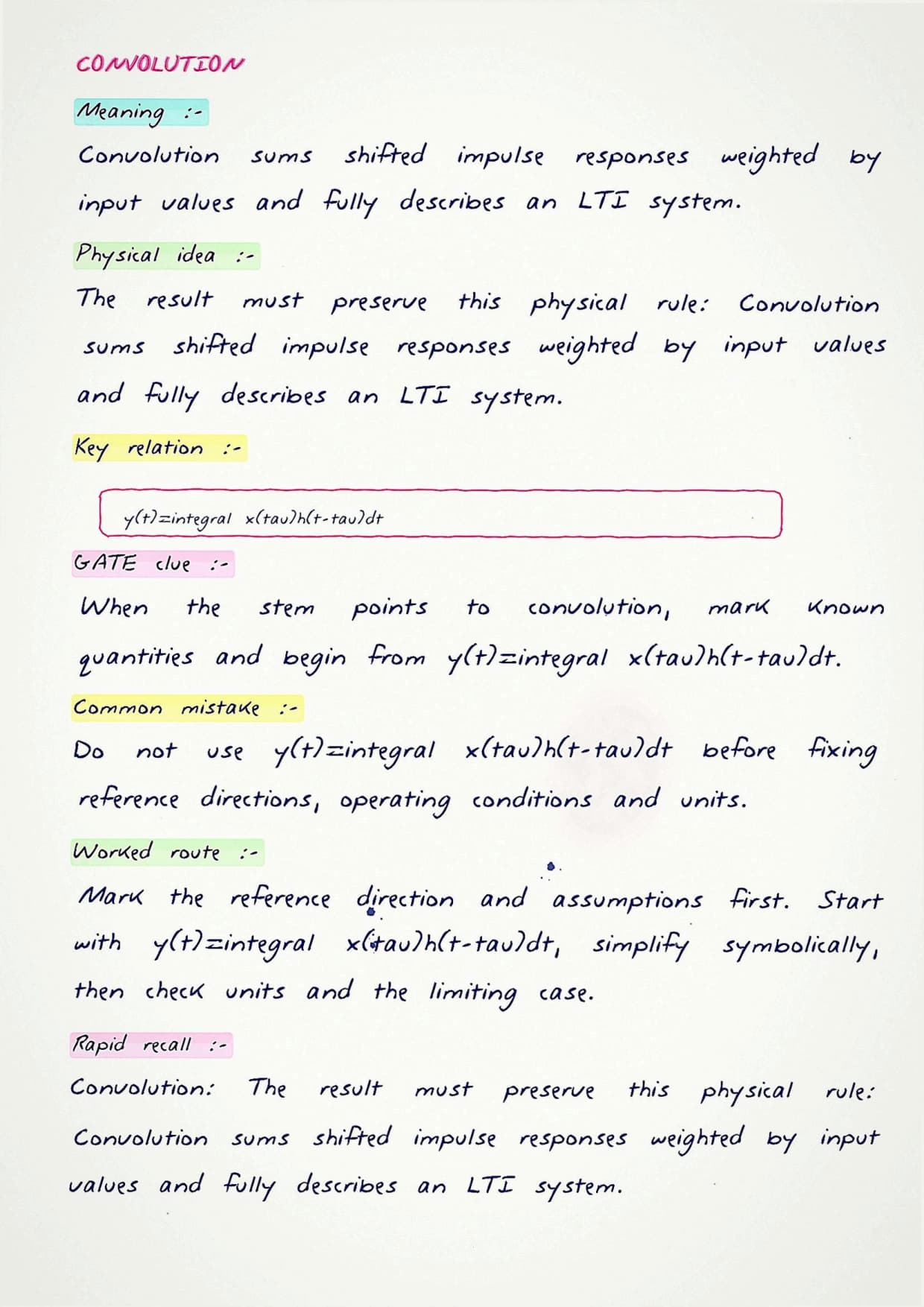
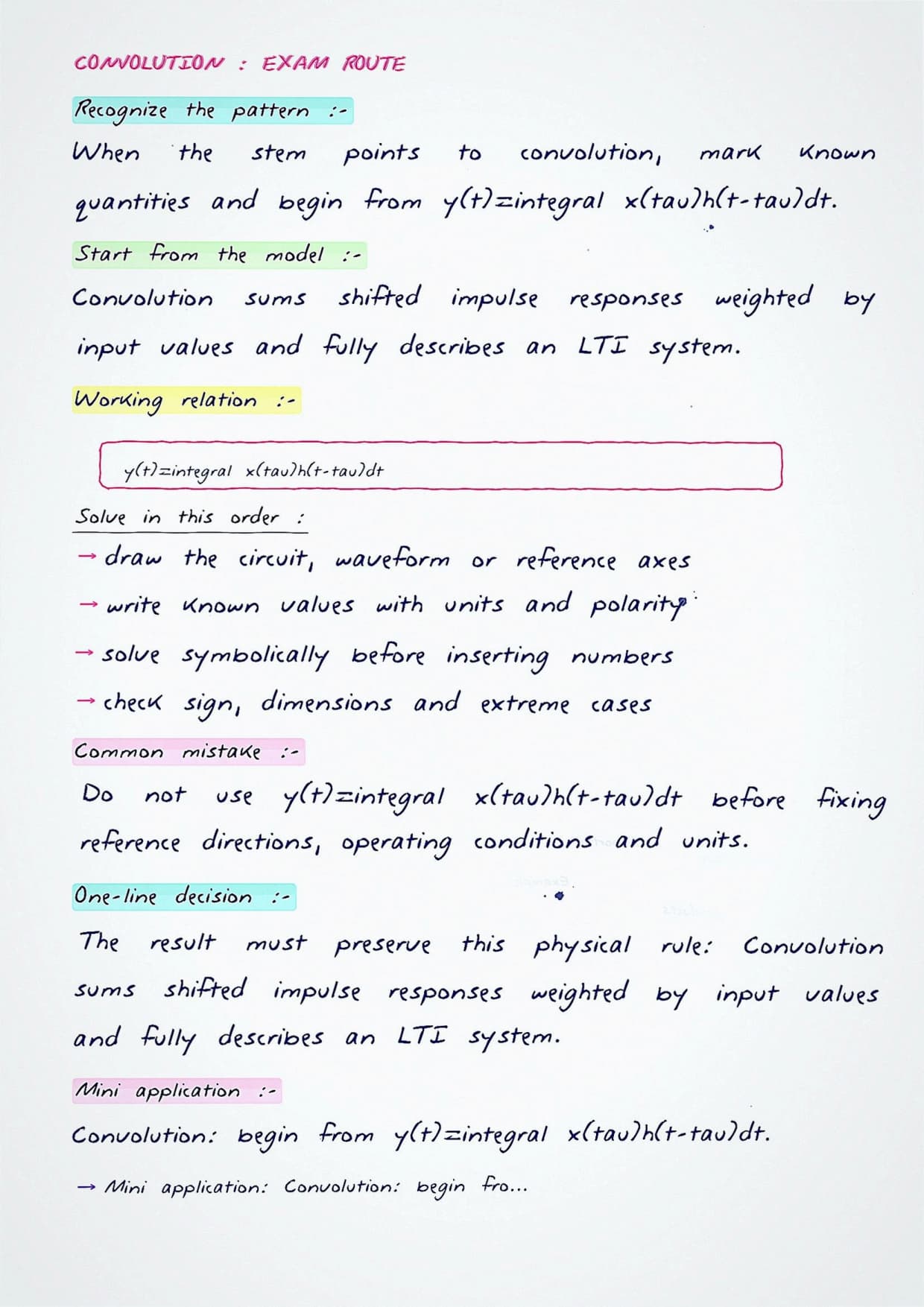
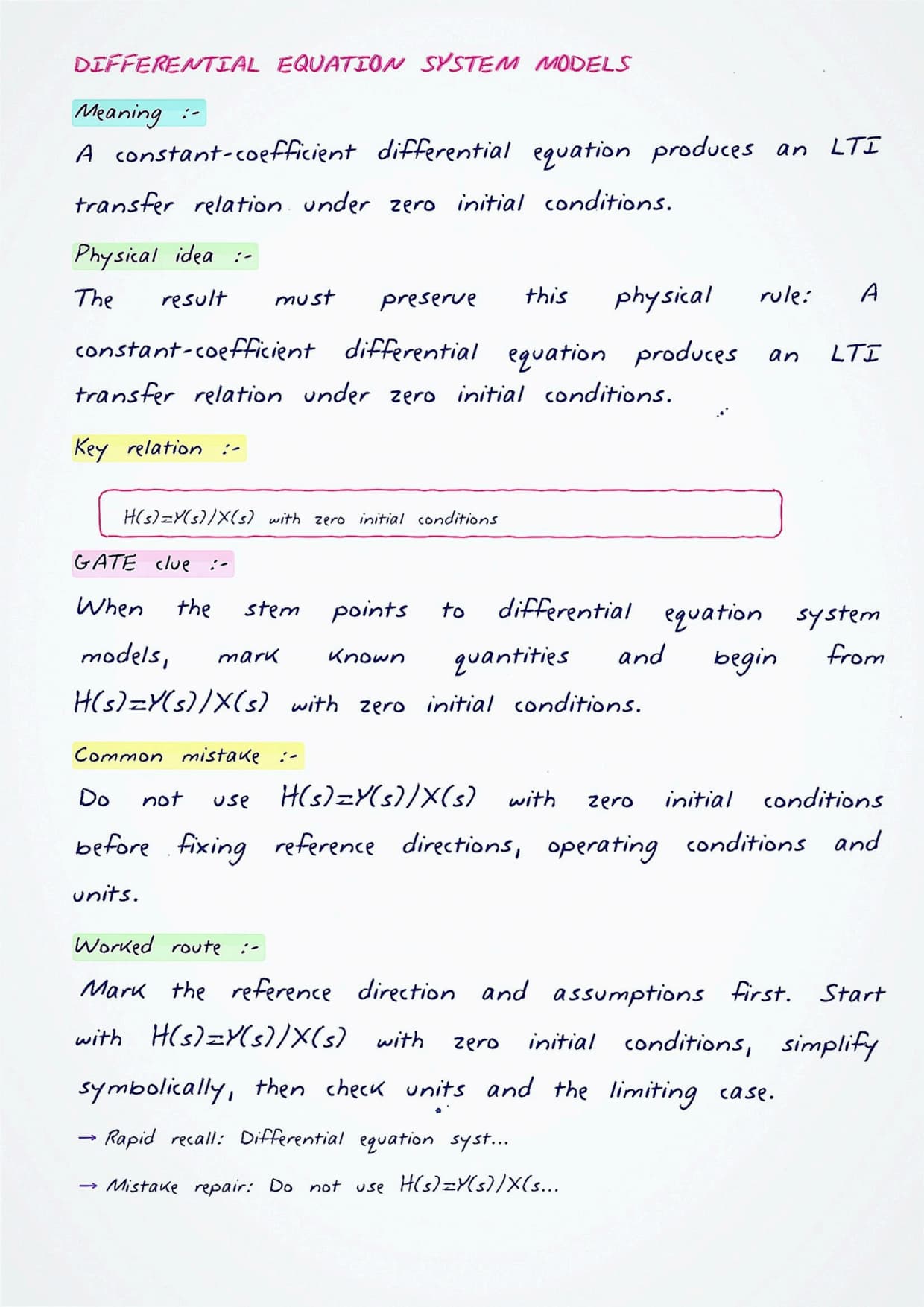
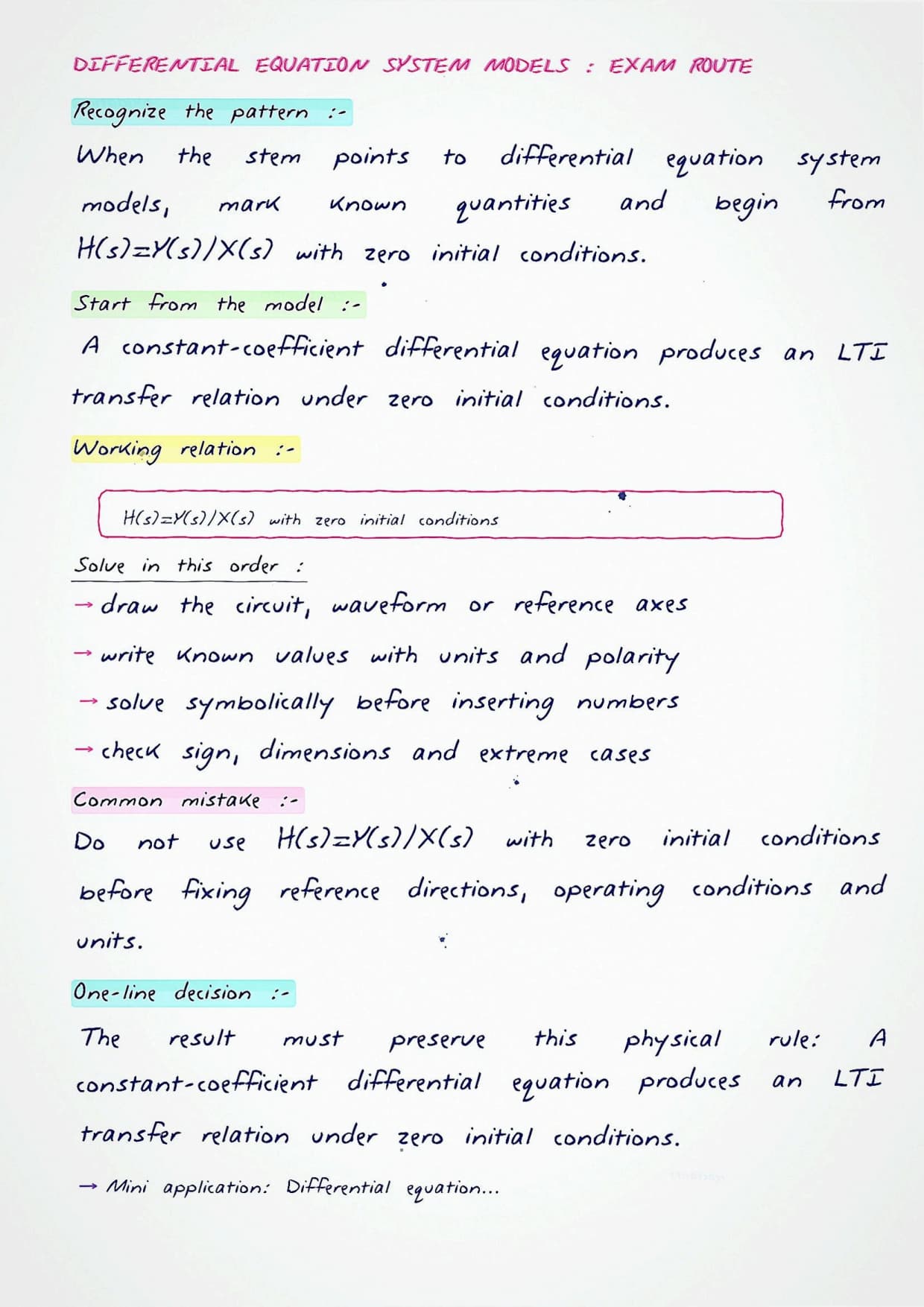
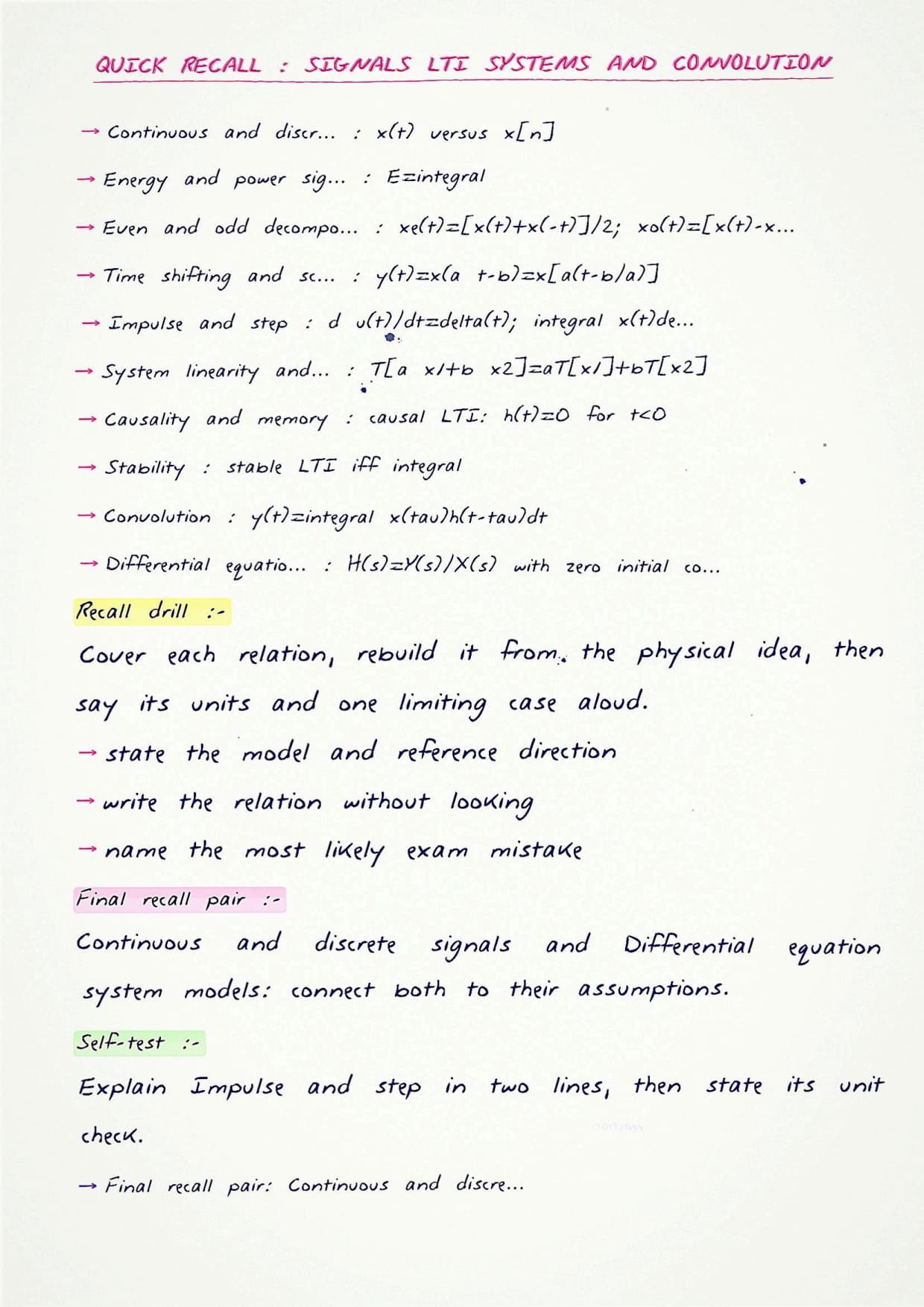
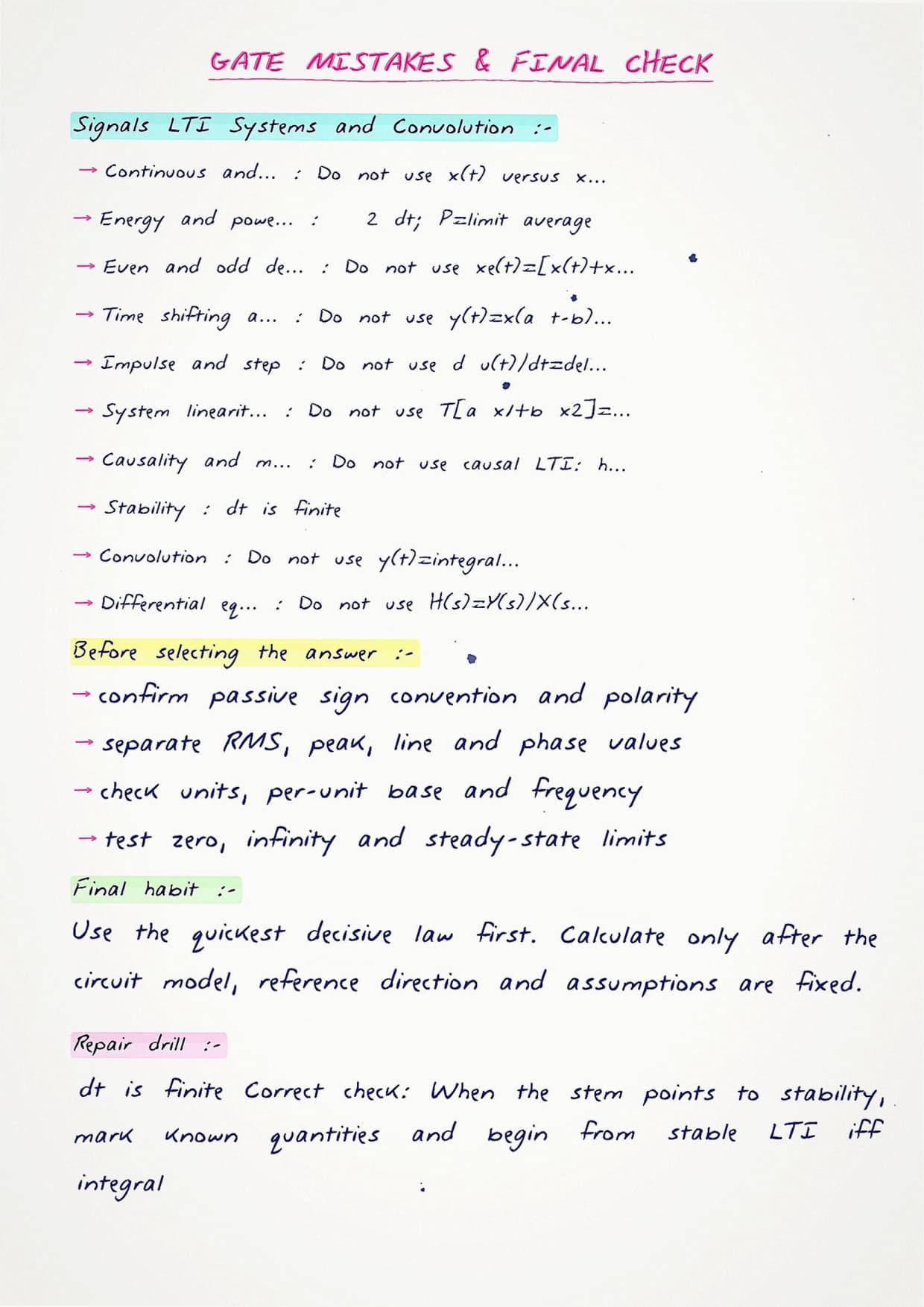
The pages open with neatly drawn signal plots, unit step and unit impulse sketches, and side-by-side timelines that show how a signal shifts, scales, and folds. Each convolution result is worked out by hand so students can follow the overlap of two signals frame by frame, and a small formula sheet on the margin lists the standard transform pairs used again and again in the exam.
- Hand-drawn impulse response sketches that make the convolution overlap easy to picture.
- Clear separation of continuous-time and discrete-time results so students never mix the two.
- Short worked problems on causality, stability, and time-invariance drawn straight from past papers.
What These GATE Signals and LTI Systems Notes Cover
The notes walk through signal classification, the properties of linear time-invariant systems, and the mechanics of convolution in both time forms. They keep the theory tight and put most of the space into solved examples that mirror the style of the actual exam.
- Basic signals: unit step, unit impulse, ramp, exponential, and sinusoid.
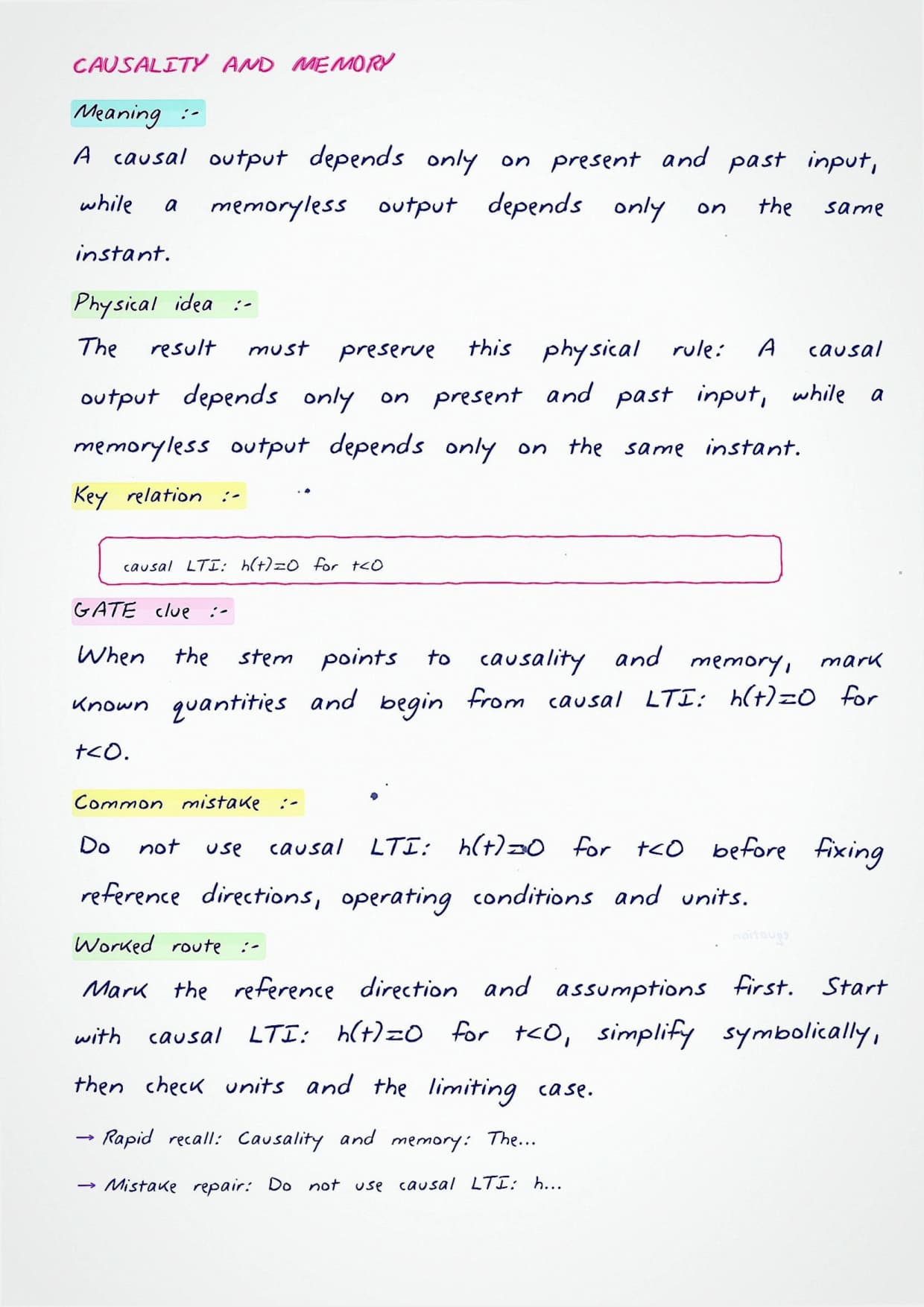
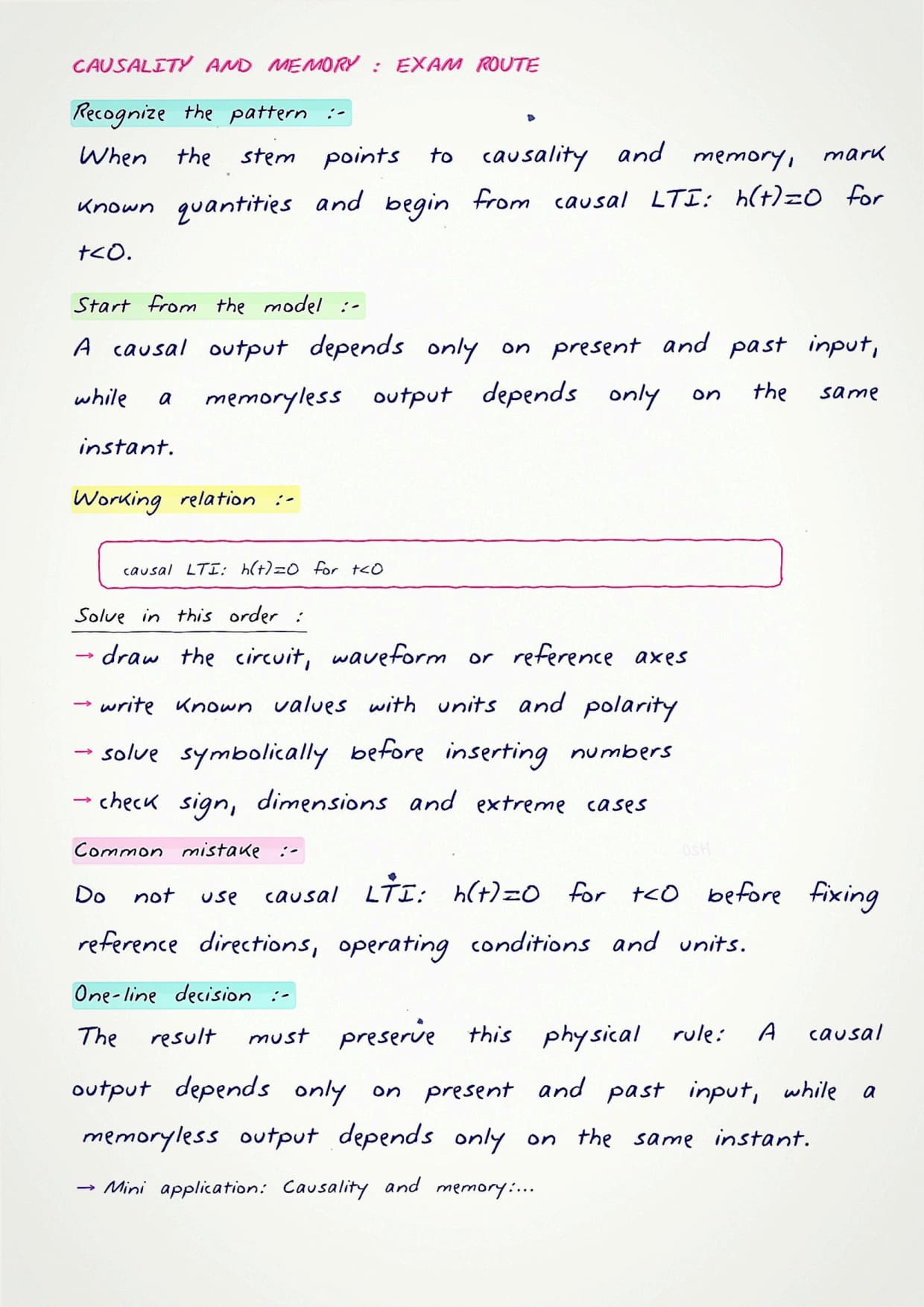
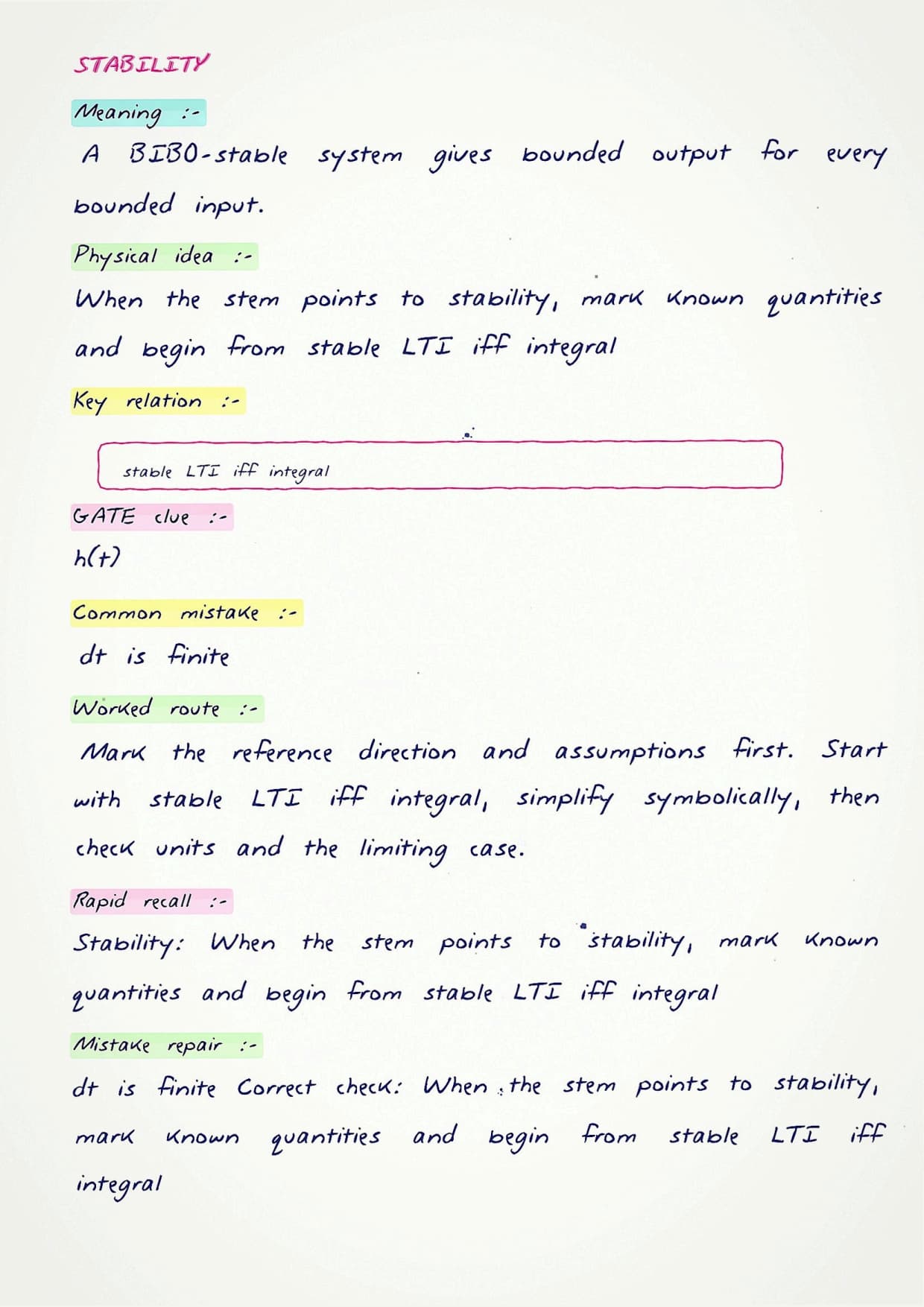
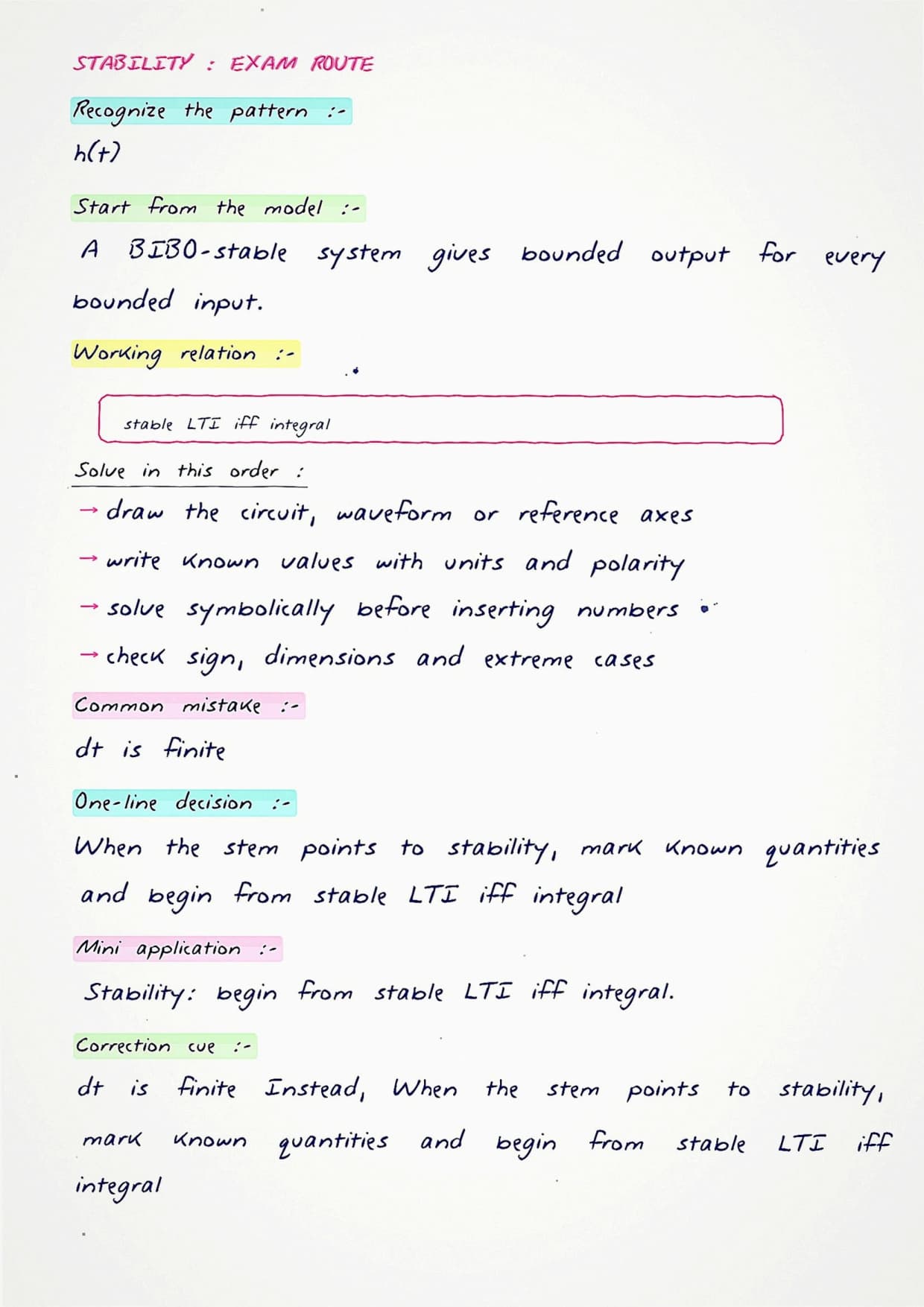
- System properties: linearity, time-invariance, causality, memory, and stability.
- Convolution sum and convolution integral, with the graphical fold-and-slide method.
- Impulse response and step response, and how they define an LTI system fully.
GATE Signals and LTI Systems Quick Revision
Source: IMS GATE ACADEMY on YouTube
Topics Covered in GATE Signals and LTI Systems
Every point below maps to the official GATE Electrical syllabus for signals and systems. The notes stay close to what examiners actually test, so students spend time only on ideas that carry marks.
- Representation and classification of continuous and discrete-time signals.
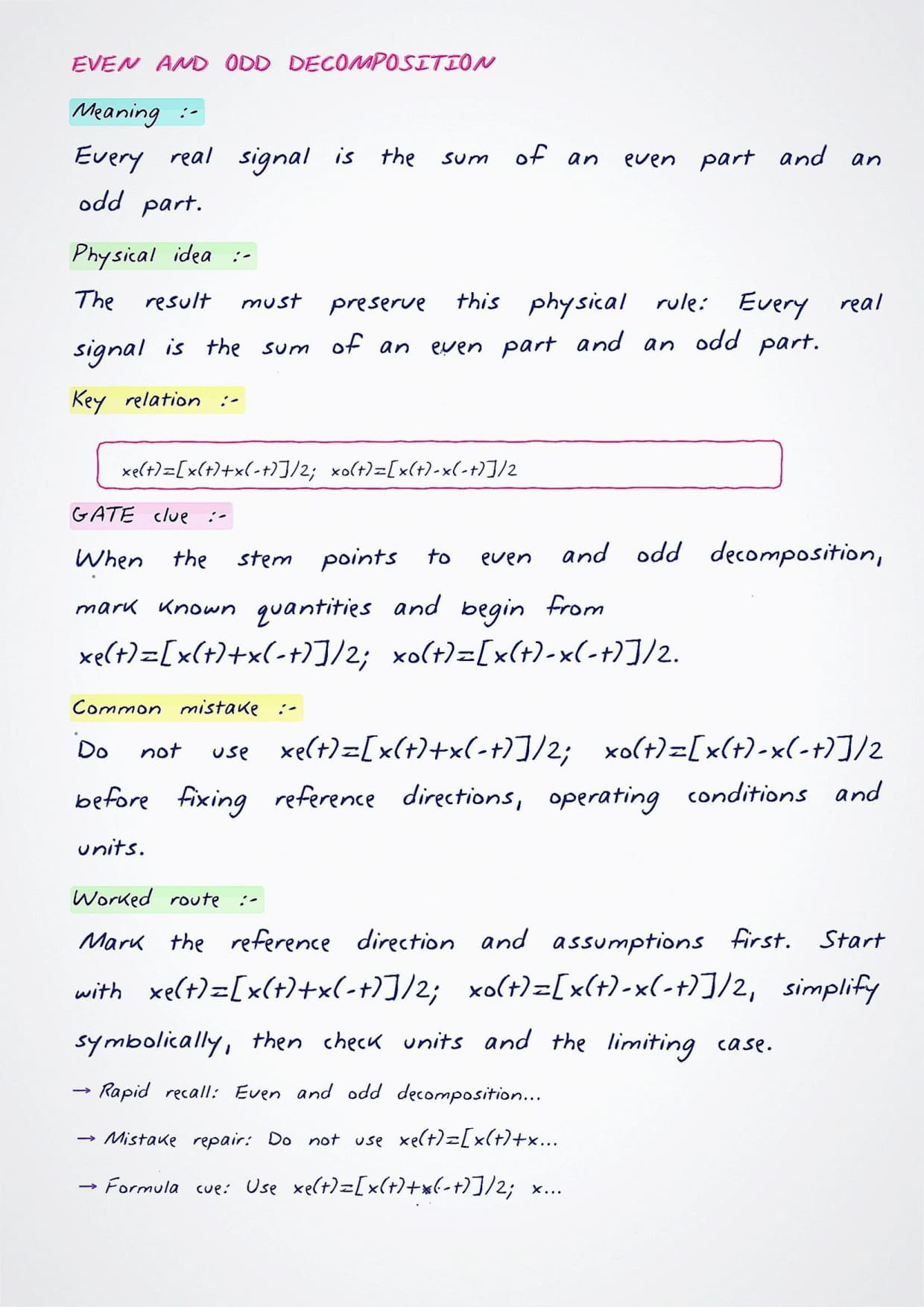
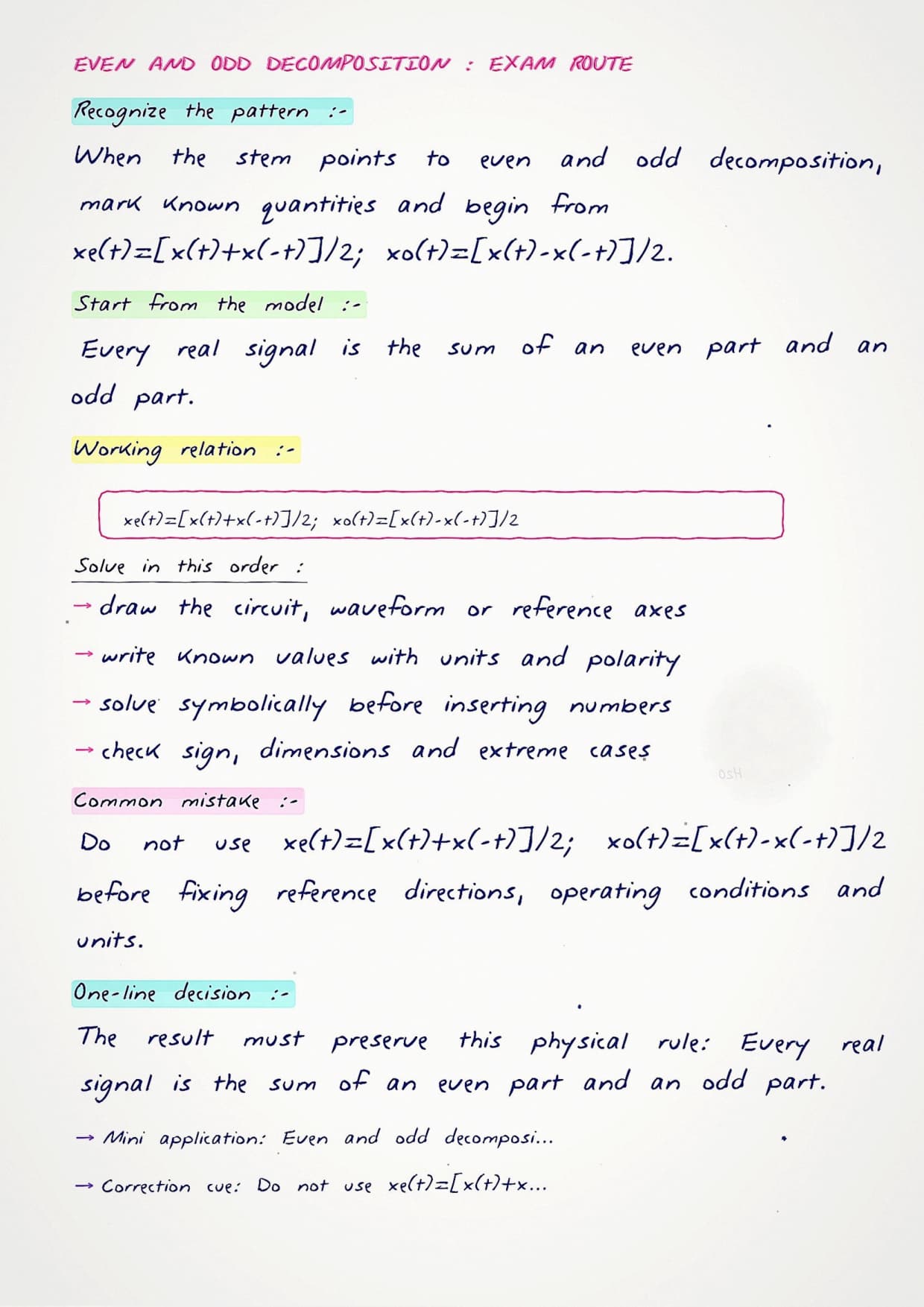
- Energy and power signals, and even and odd decomposition.
- Properties of LTI systems and the role of the impulse response.
- Linear convolution, its commutative and associative properties, and cascade systems.
- Correlation and the link between convolution and correlation.
- Sampling of a signal and the reasoning behind the sampling rate.
- Basics of the Fourier, Laplace, and z-transform used to solve system problems.
How the Notes Are Organised
The reading order moves from the simplest building block to the full system. Students first meet single signals, then learn how a system acts on them, and only then reach convolution, which ties the two together.
Each new idea sits next to a small worked example, so a student reads one concept and immediately sees it applied. The margin formula strip is meant for a fast recap the night before the exam, without hunting through the whole set.
How GATE Signals and LTI Systems Links to Other Topics
Signals and systems is a feeder topic. The same transform tools and the same idea of an impulse response show up across several other GATE Electrical subjects, so time spent here pays back later.
- Control Systems: transfer functions and impulse response come straight from this topic.
- Network Theory: the Laplace transform used here solves circuit transients.
- Digital Signal Processing: the discrete convolution sum is the base of every filter.
- Communication basics: sampling and correlation reappear in modulation questions.
Important Topics in GATE Signals and LTI Systems
A few ideas return in the exam almost every year, and convolution sits at the centre of most of them. The notes flag these points and mark the traps where students commonly lose easy marks.
- Linear convolution: watch the limits carefully when one signal is time-reversed.
- Stability: an LTI system is stable only when its impulse response is absolutely summable.
- Causality: confirm the impulse response is zero before time zero before you call a system causal.
- Sampling: pick the rate above twice the highest frequency to avoid overlap in the spectrum.
- Even and odd parts: split a signal correctly before using symmetry to shorten the work.
How to Prepare GATE Signals and LTI Systems with Handwritten Notes
Treat the notes as a guided revision path rather than a textbook. A short, repeated pass beats one long sitting, and every property should be tested on a real problem.
- First read: go slowly through the signal sketches and the property list, and copy each diagram once.
- Second pass: redo every convolution example on blank paper without looking.
- Practice: solve five years of GATE questions on this topic and mark the ones that trip you.
- Final week: revise only the margin formula strip and the trap list before the exam.
Why These Notes Help You Score Better
Signals and systems rewards students who can picture a signal and act on it quickly, and these hand-drawn pages build exactly that habit. The compact layout keeps the whole topic in one place, so revision is fast and confident. Worked steps show the reasoning, not just the answer, which is where the real understanding sits. The bullet-style traps sit right where students usually lose marks, so a quick glance fixes a weak habit before it costs a question. Used a few times before the exam, they help students walk in sure of the one-mark and two-mark questions on this topic.
GATE Electrical Signals and LTI Systems Handwritten Notes FAQs
Ques. How many marks does signals and systems carry in GATE Electrical?
Ans. It usually carries about 5 to 8 marks, split across signal properties, LTI system behaviour, and convolution, which makes it a reliable scoring area for students.
Ques. Are these handwritten notes enough to revise convolution?
Ans. Yes. The notes work every convolution example by hand and include both the continuous integral and the discrete sum, so students can revise the whole idea from one place.
Ques. Do the notes explain causality and stability of LTI systems?
Ans. They do. Each system property is stated in plain words with the exact test to apply, such as absolute summability for stability, so students avoid the usual mistakes.
Ques. Should I learn transforms before starting this topic?
Ans. A basic feel for the Laplace and z-transform helps, but the notes introduce the pairs students need as they appear, so they can start from signals and build up gradually.



Comments