




Per Unit, Load Flow and Economic Dispatch is a high-yield topic in GATE Electrical, usually worth about 6 to 9 marks in the paper. It belongs to the Power Systems section, and its ideas return in fault analysis, power system stability, and generator scheduling. These handwritten notes cover the full topic in a compact, exam-focused form.
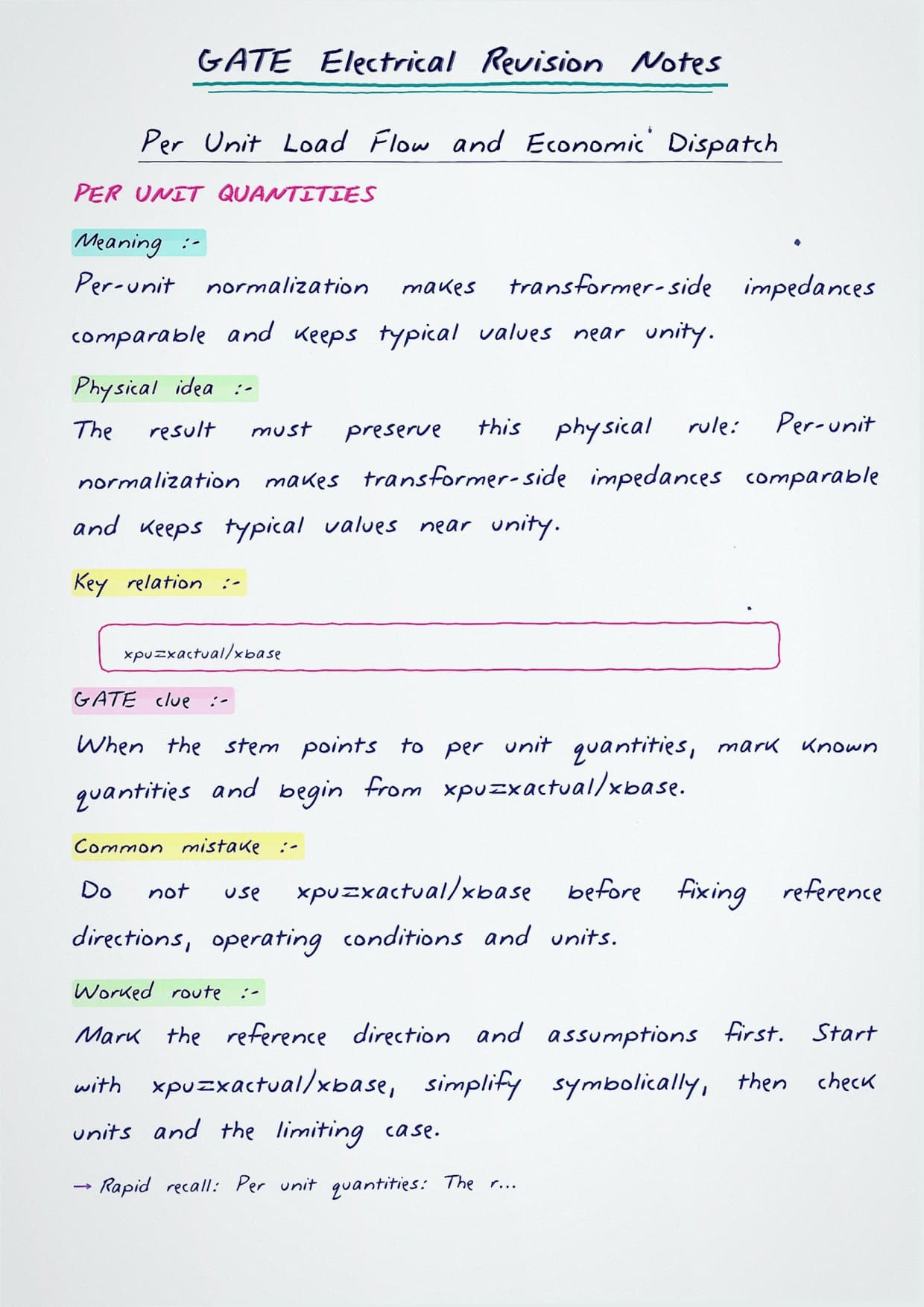
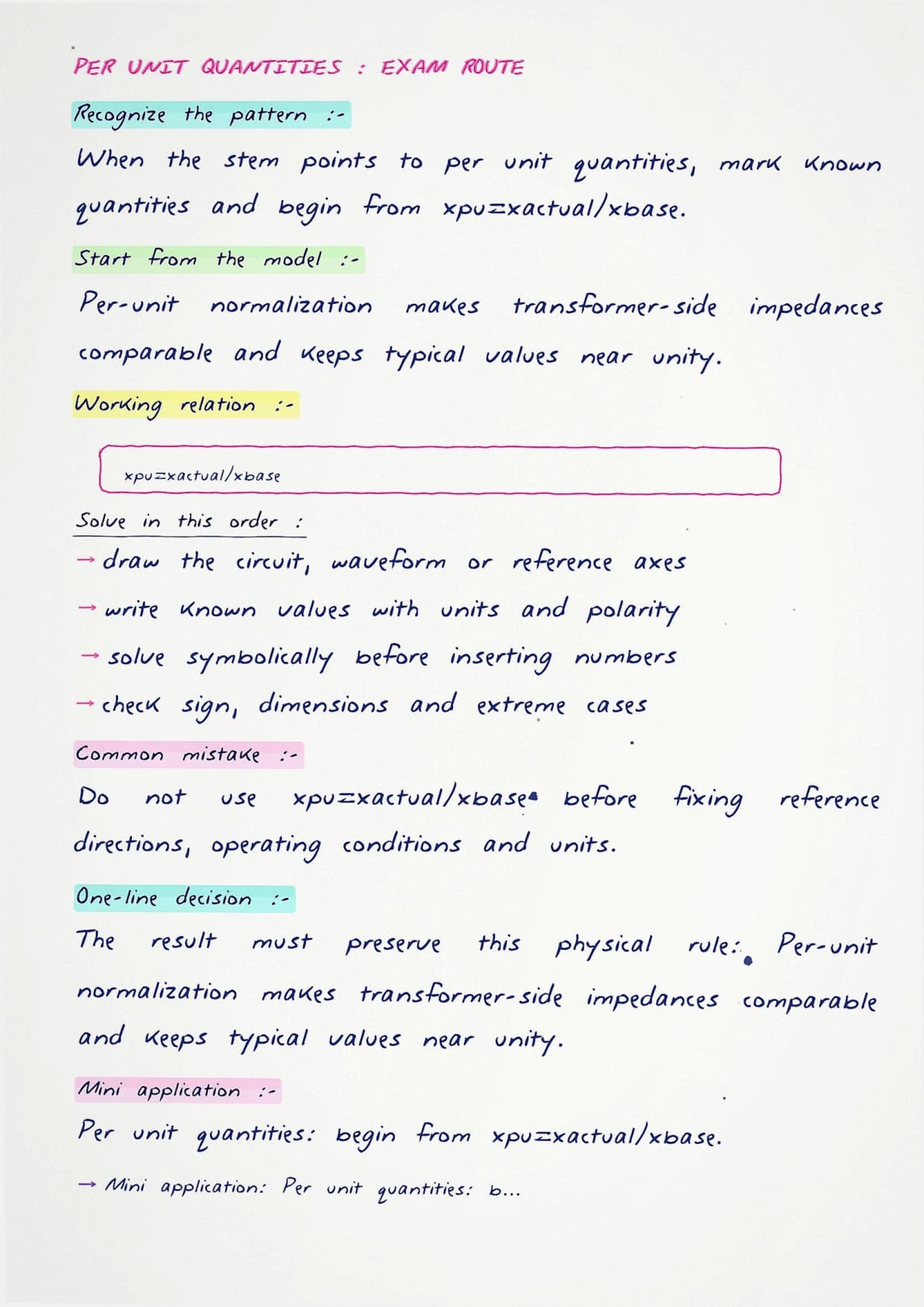
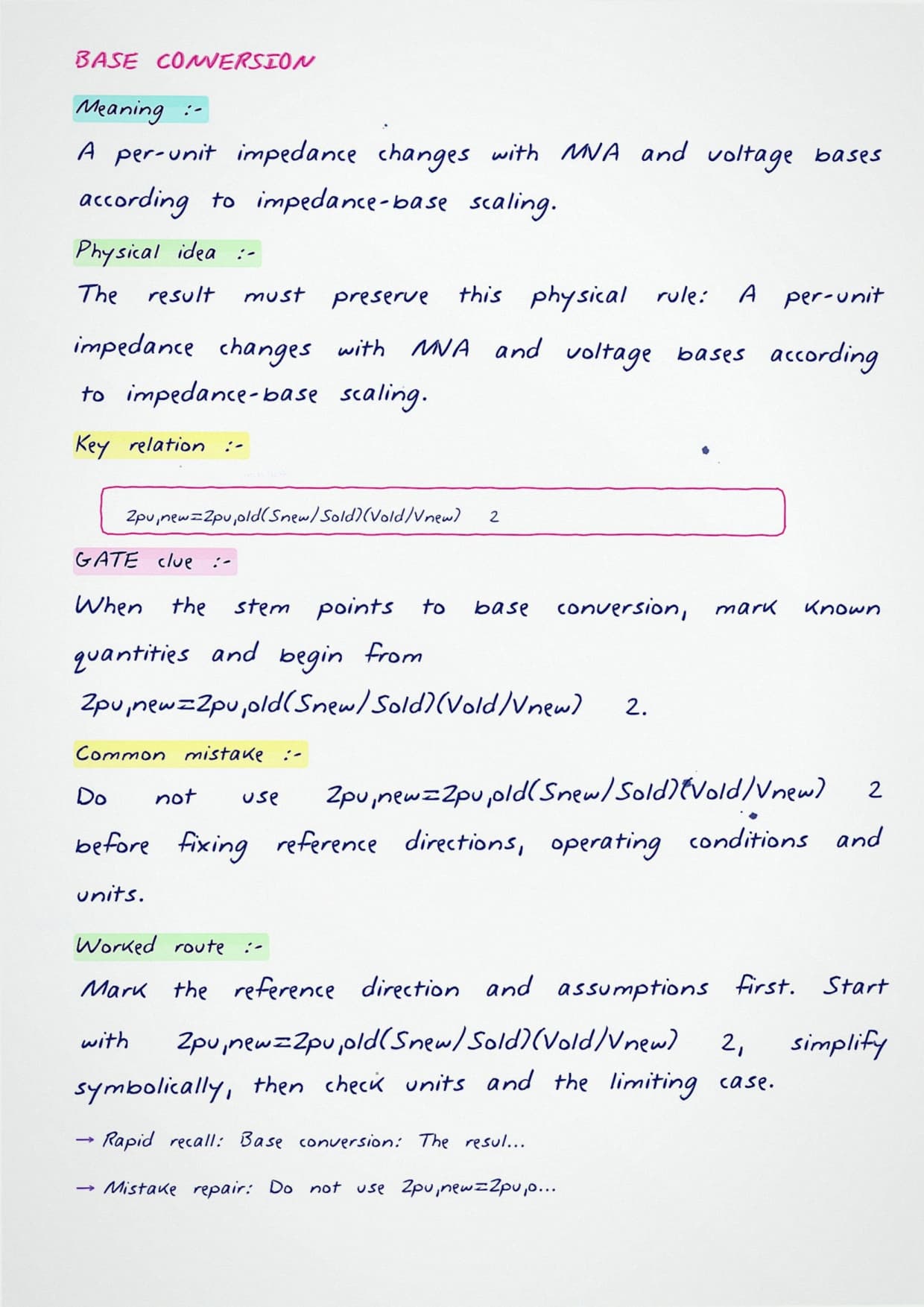
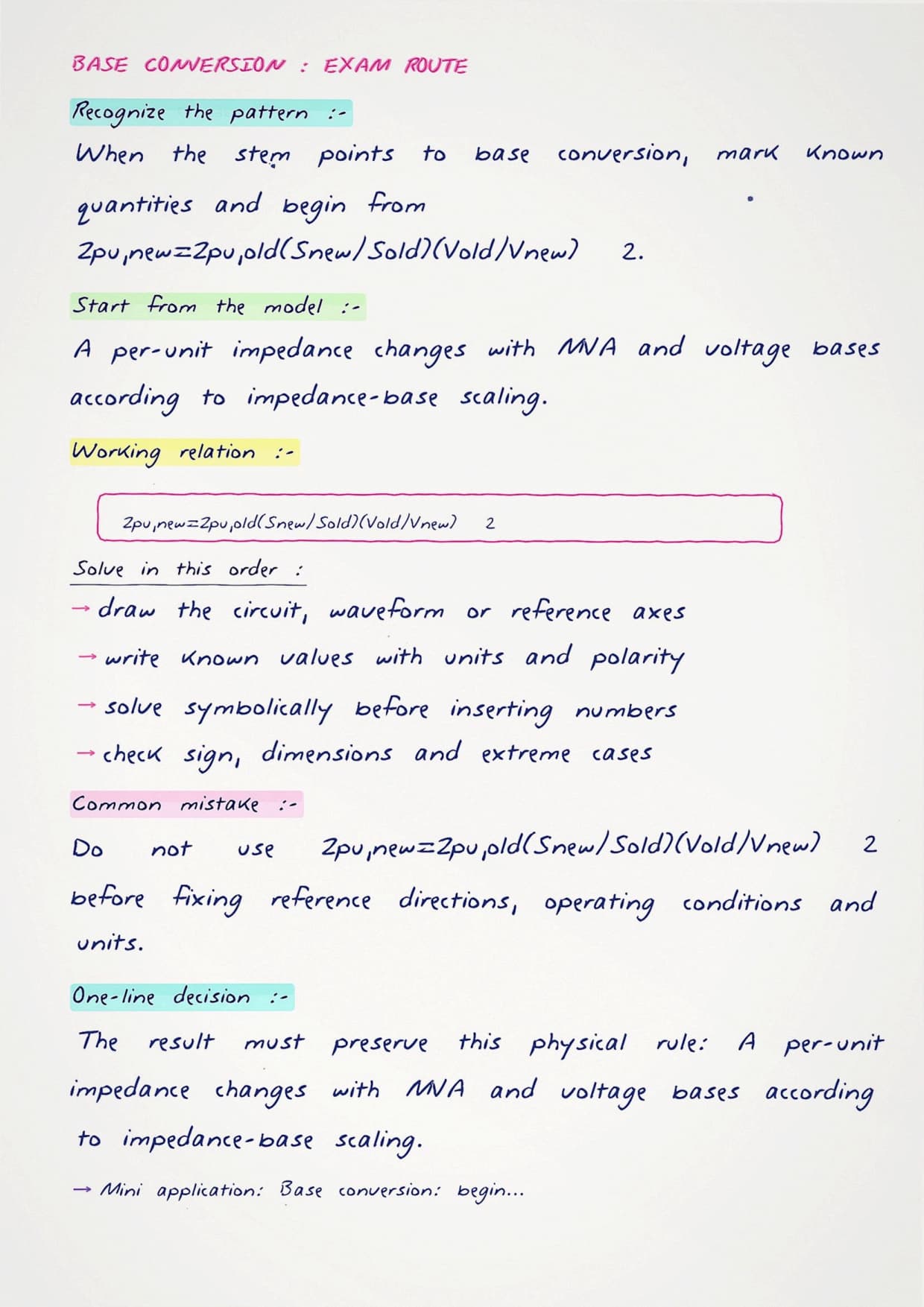
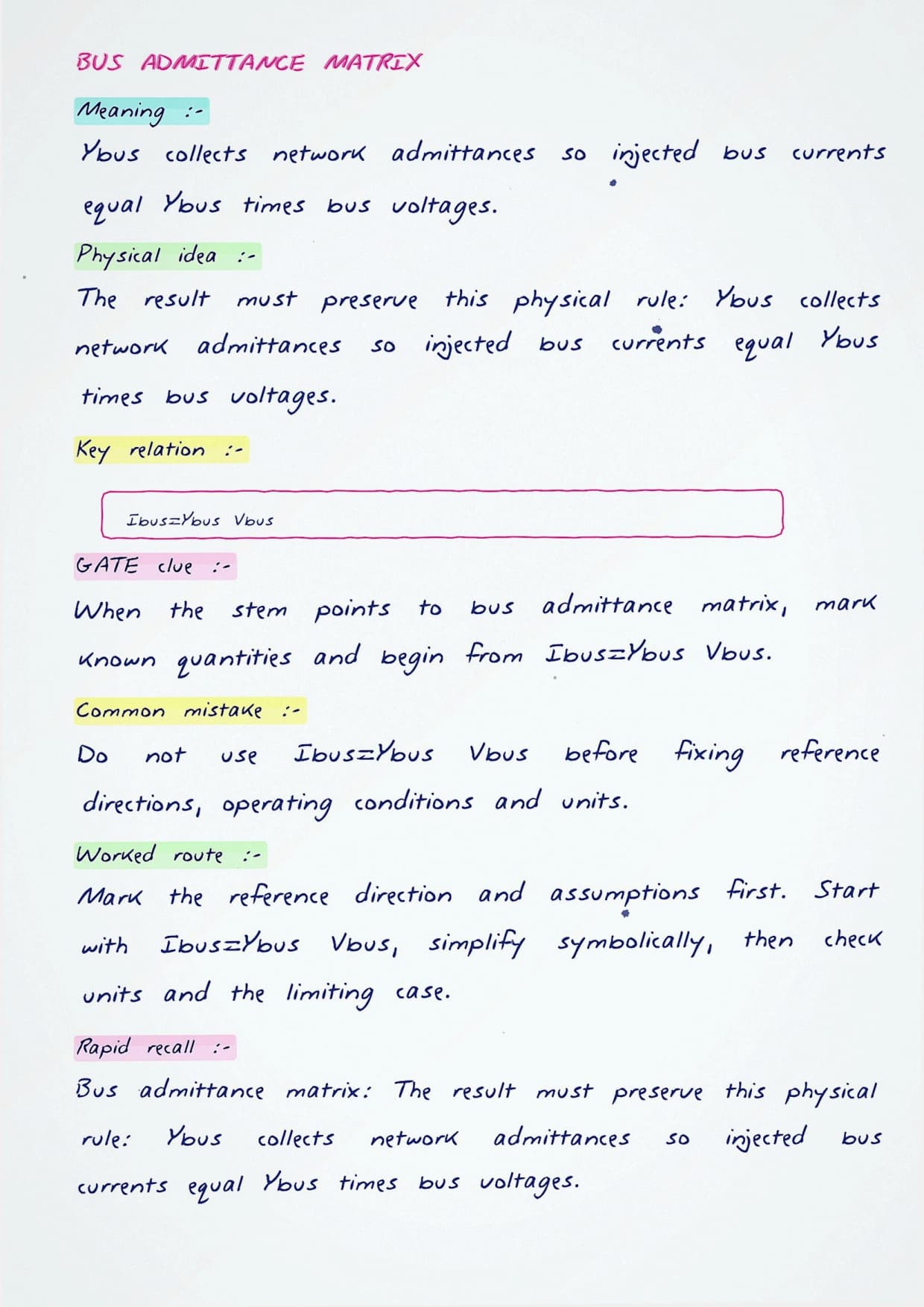
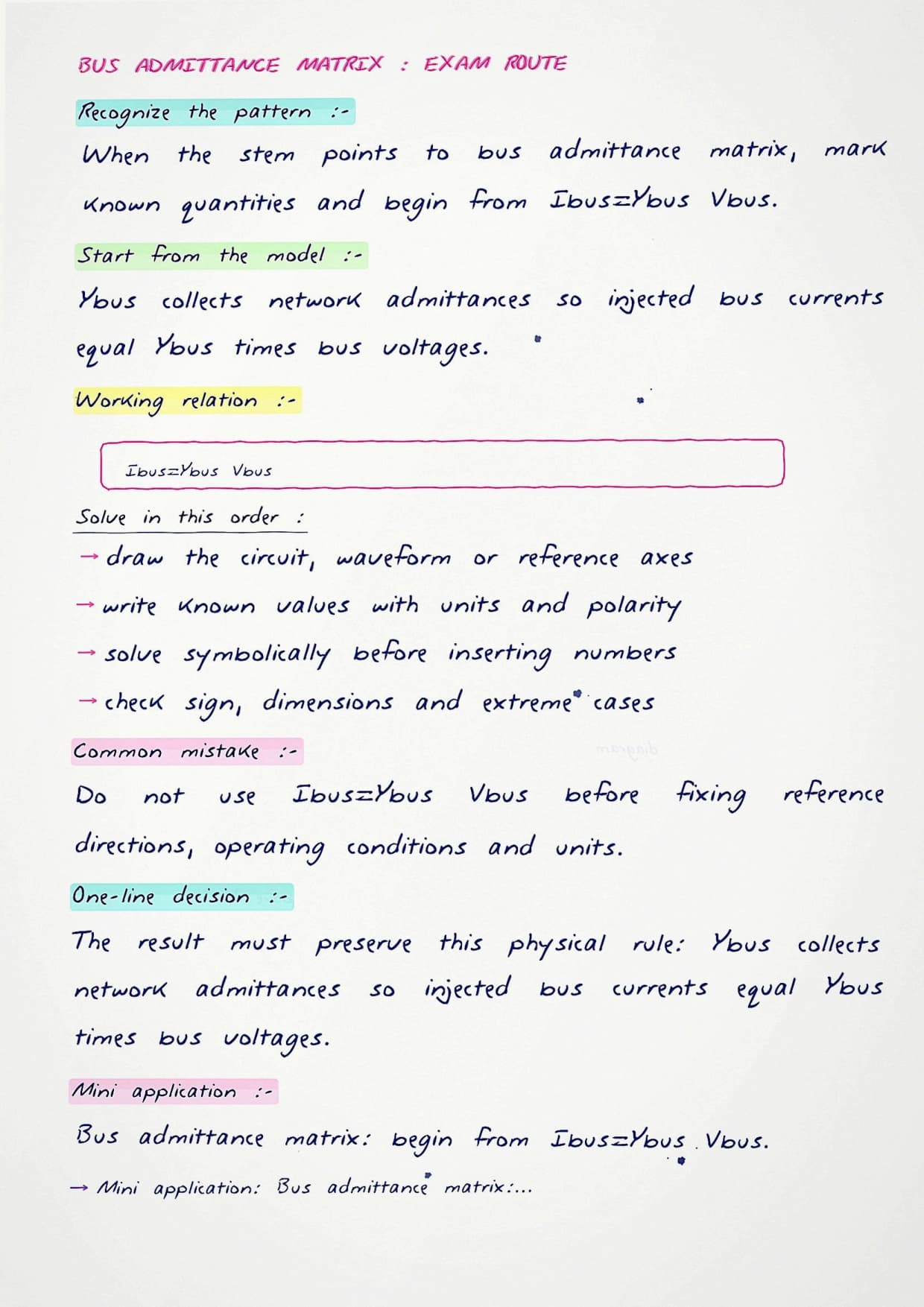
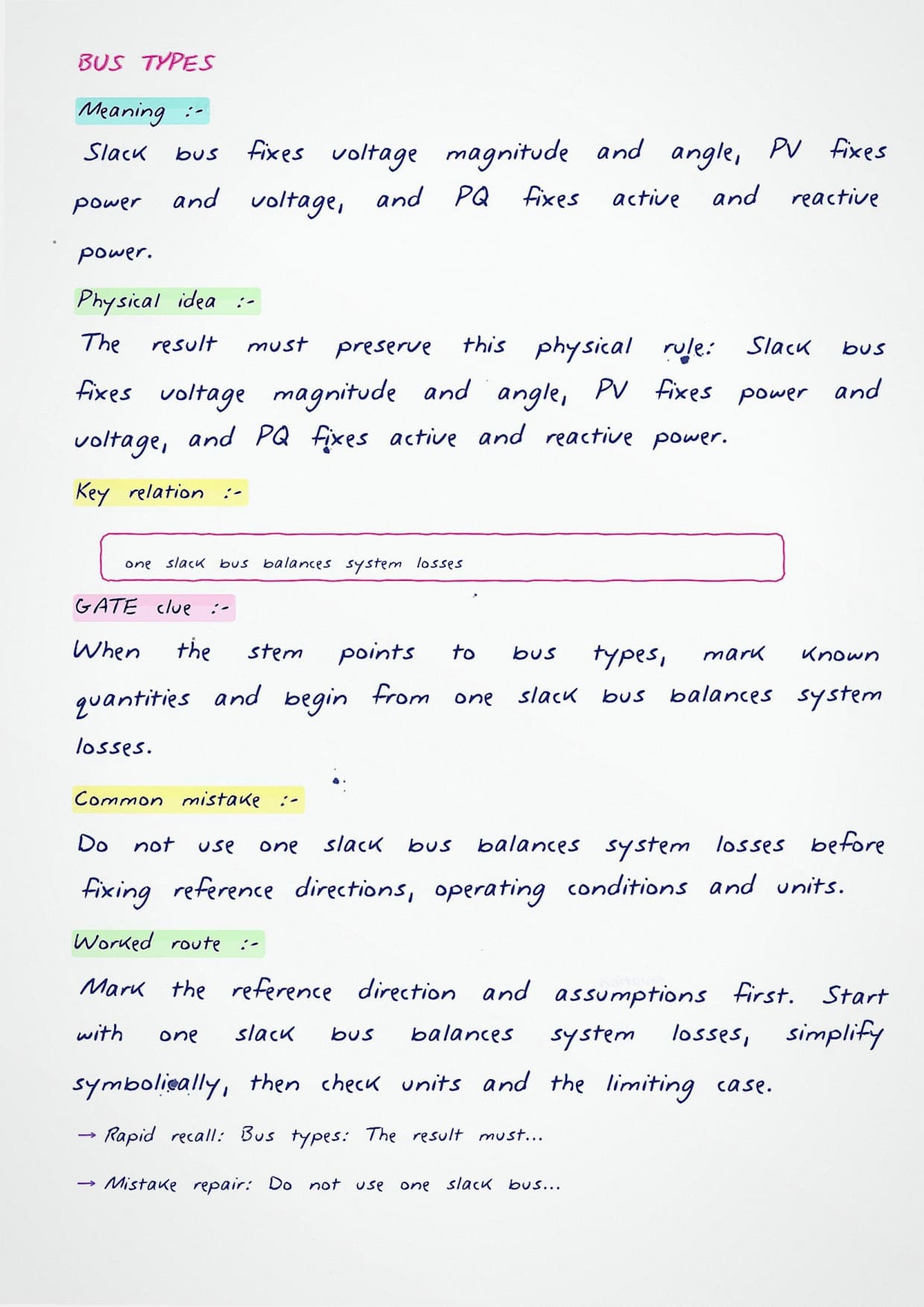
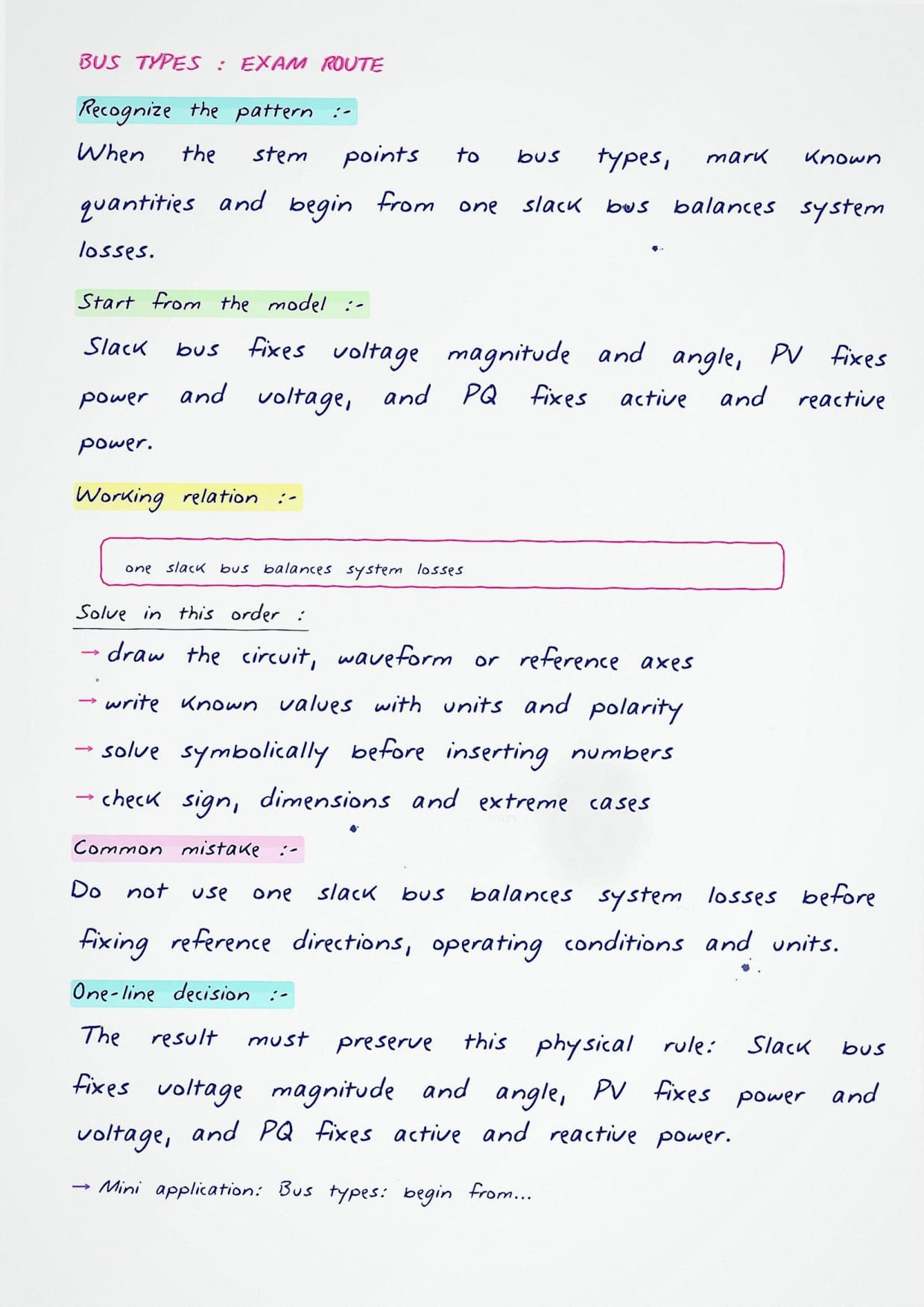
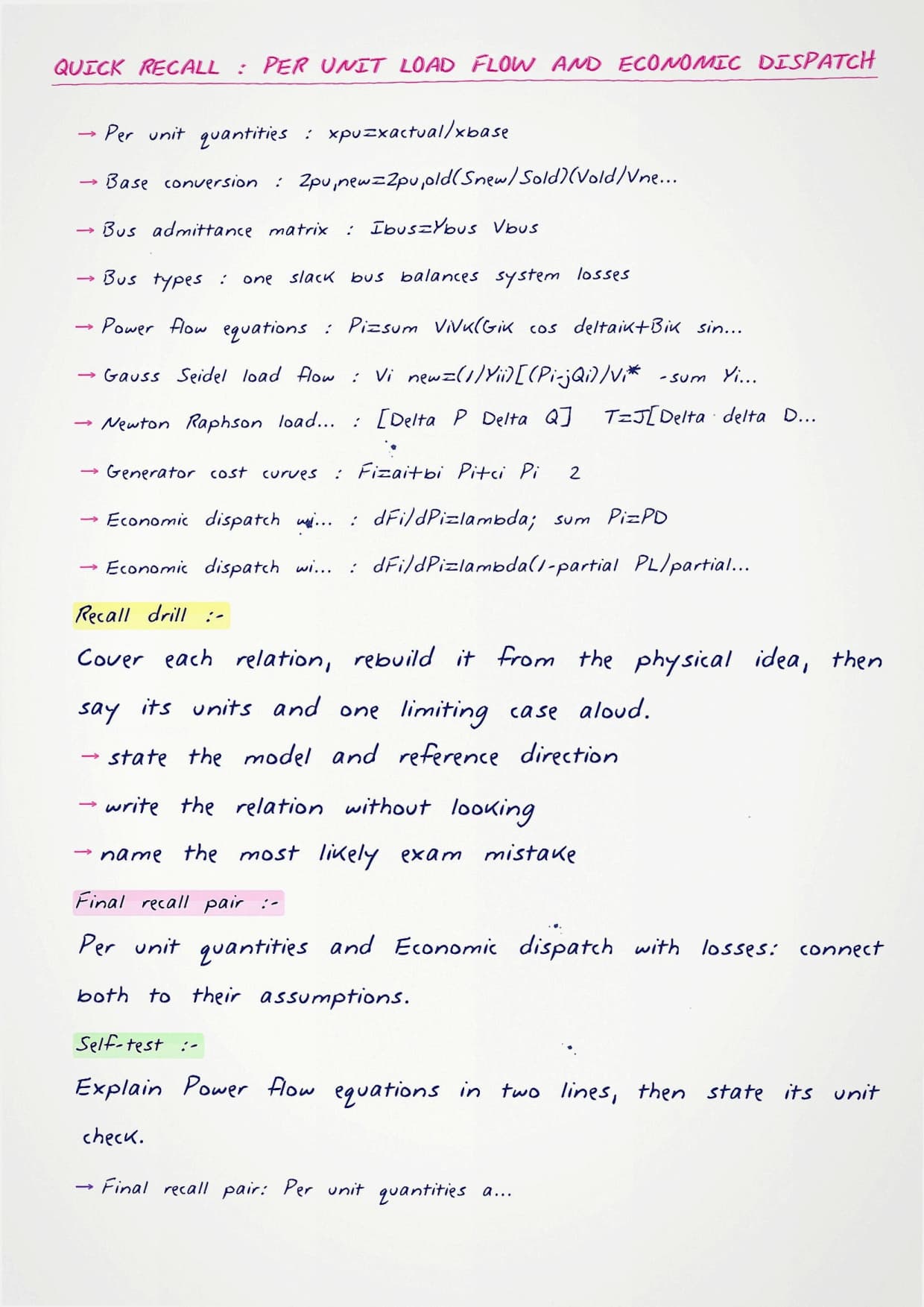
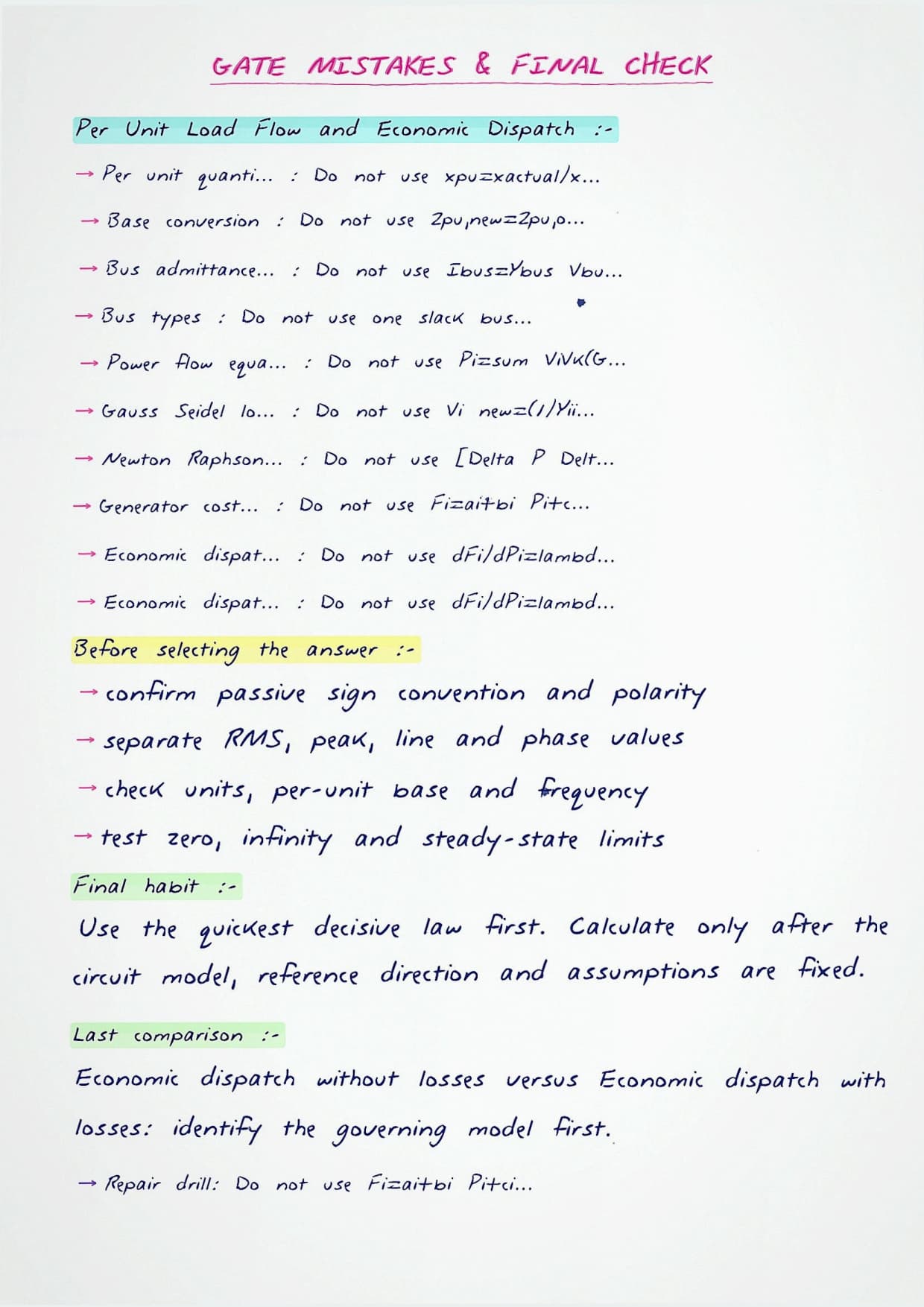
The pages start with a clean one-line diagram of a small grid, then rebuild it on a per unit base so students see exactly how impedances shift when the base changes. A load-flow bus is sketched with its four quantities labelled, and the economic dispatch pages carry a hand-drawn cost curve with the incremental cost slope marked at several loads. Numbers are worked in full, never skipped.
- A base conversion table drawn step by step, showing old base to new base for voltage, current, and impedance.
- A bus classification chart naming slack, PV, and PQ buses with the known and unknown values circled.
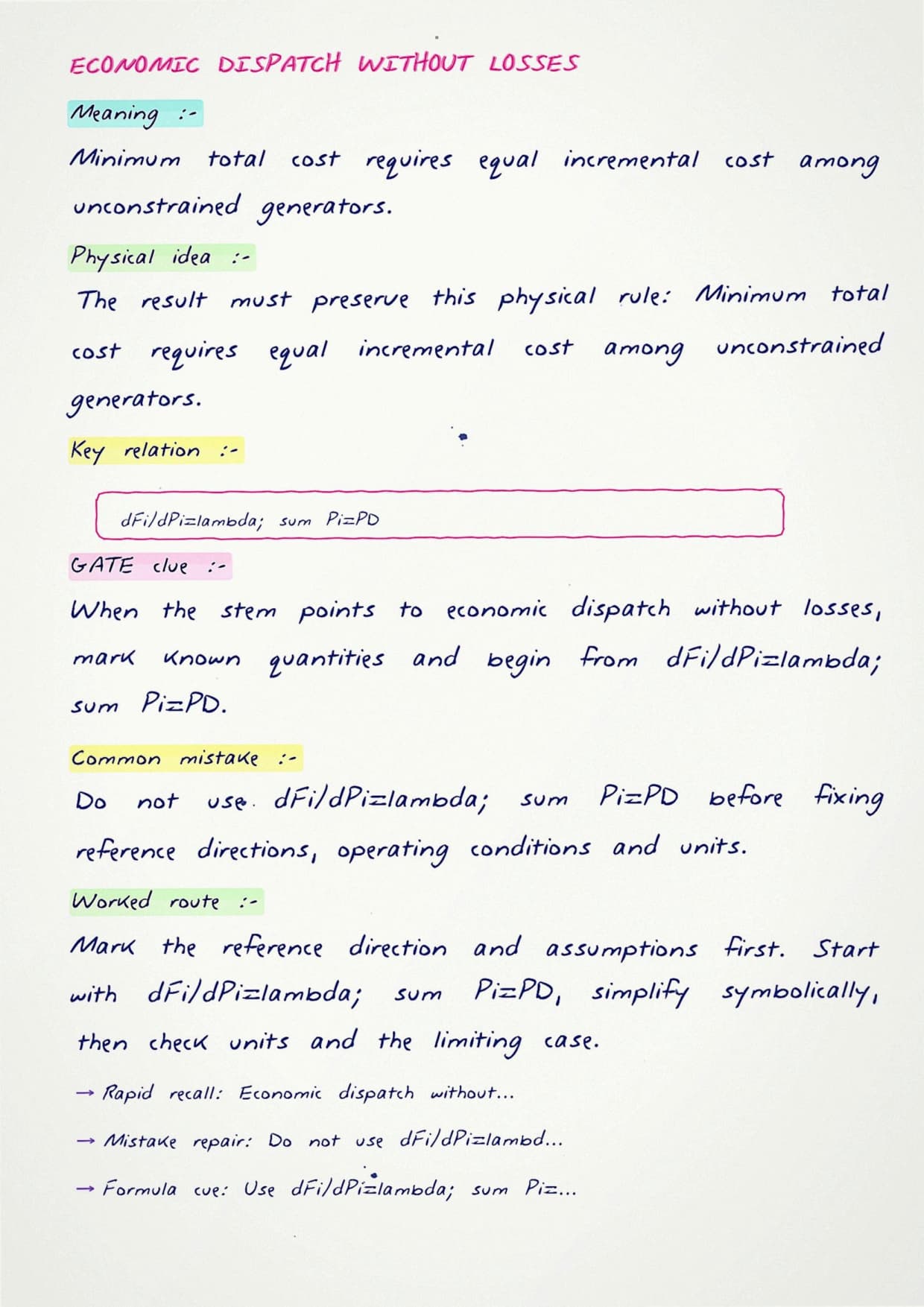
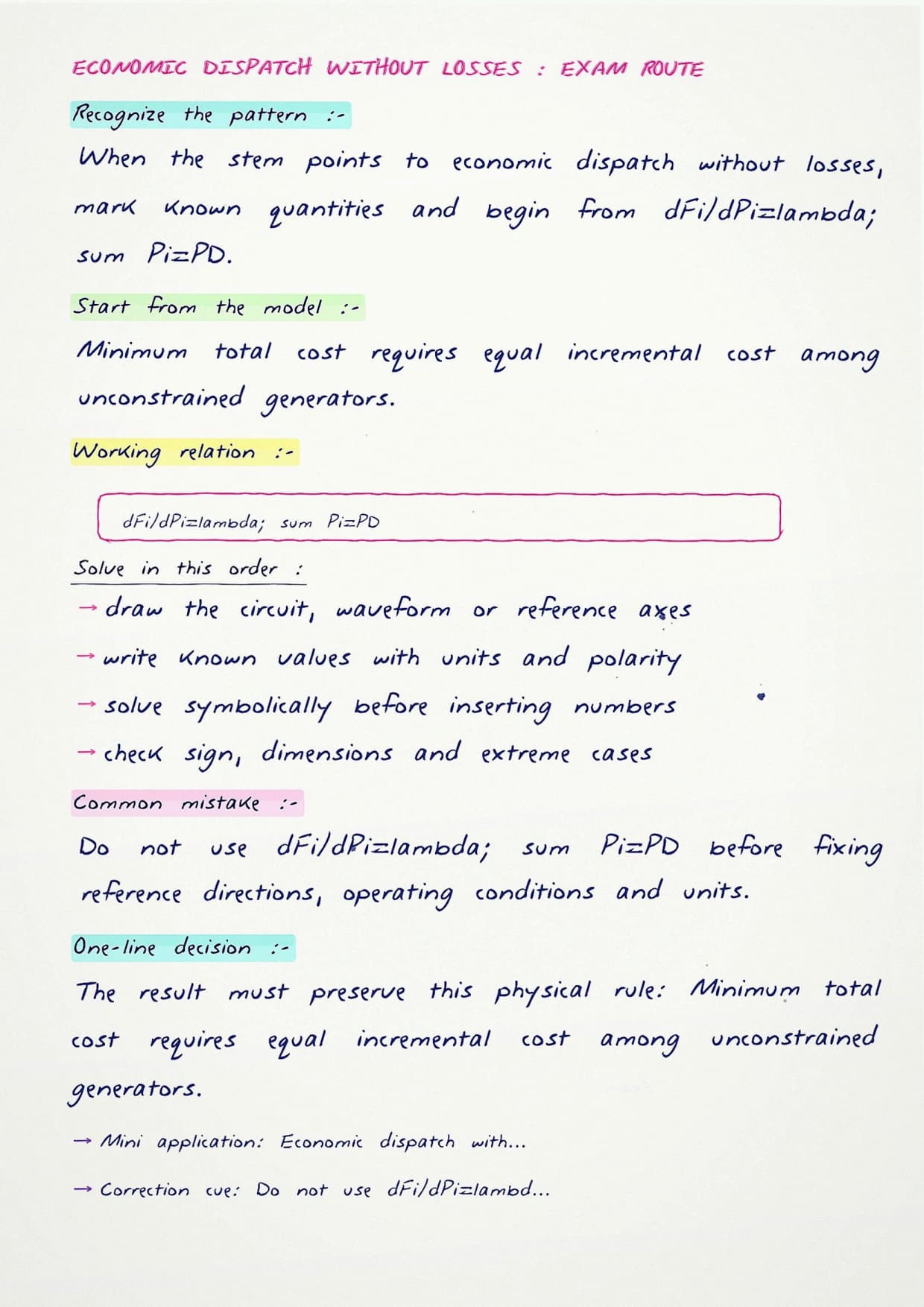
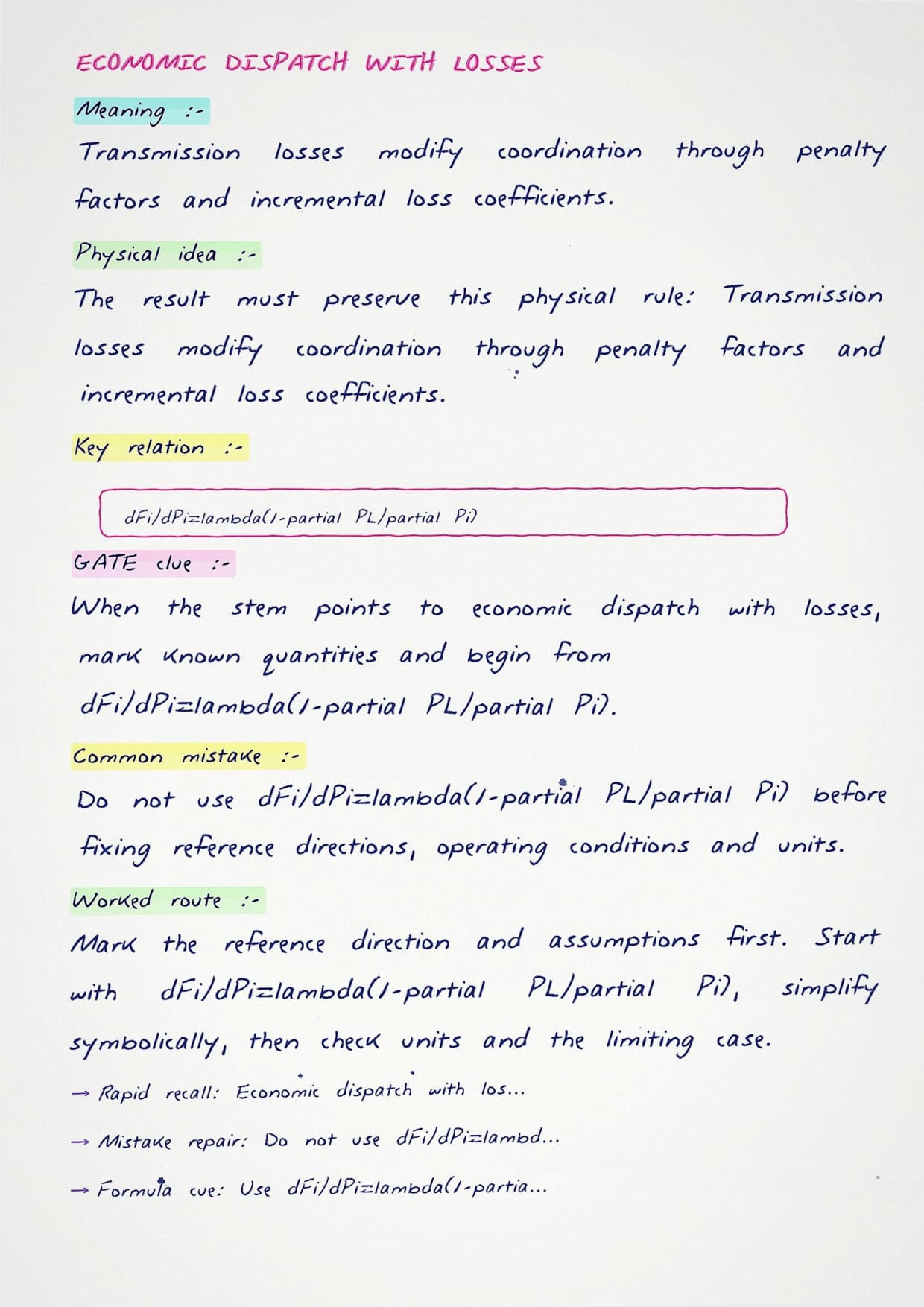
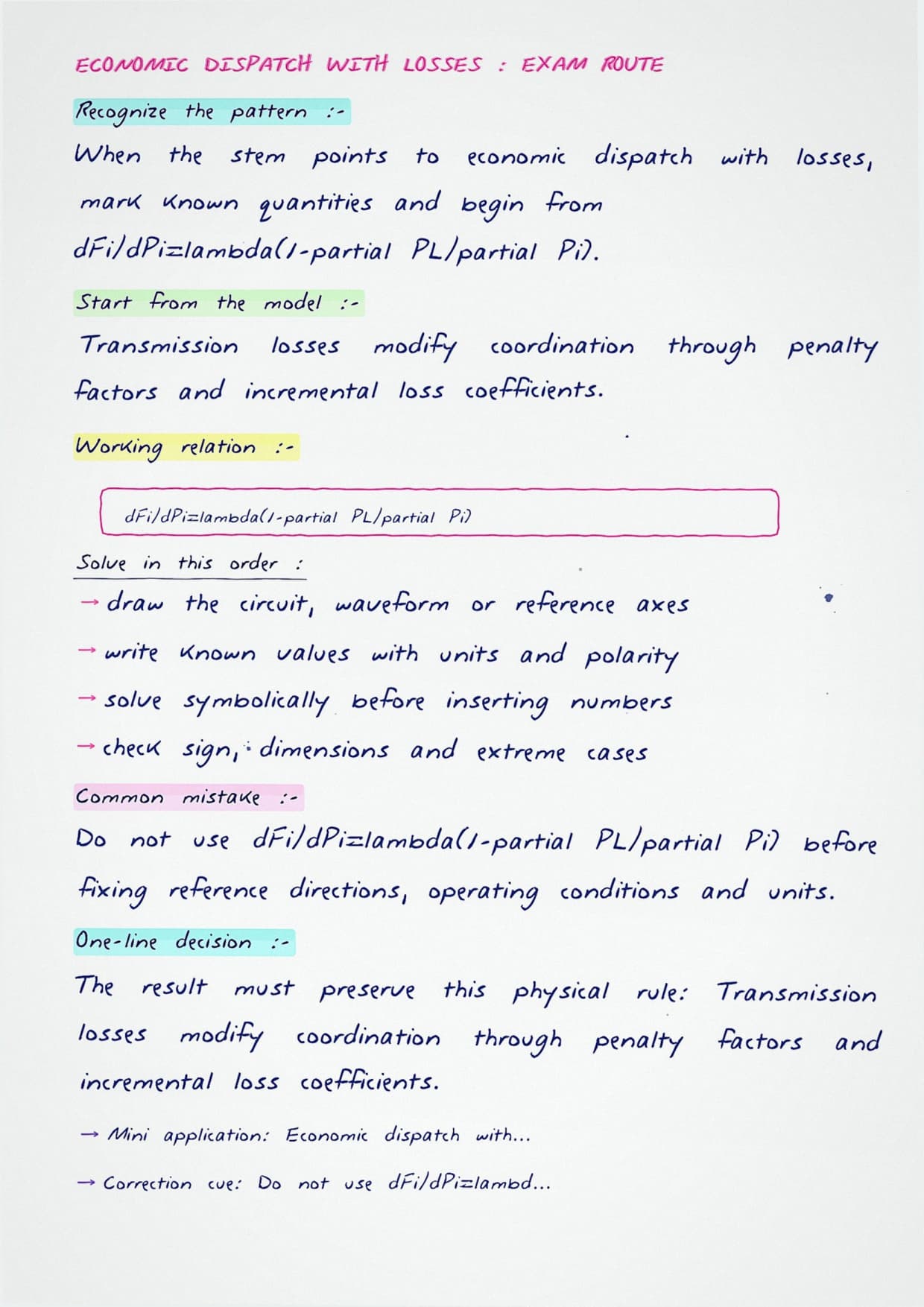
- A worked economic dispatch sum using the equal incremental cost rule, both with and without transmission losses.
What These GATE Per Unit & Load Flow Notes Cover
The notes take students from the per unit system, through the load-flow buses and solution methods, to the economics of sharing load between generators. Each block is short, worked, and tied to a picture so revision stays quick. The theory is kept to what an exam actually asks, and every method ends with a clear statement of what the calculation gives you.
- The per unit system and the reasons it simplifies transformer-heavy networks.
- Formation of the bus admittance matrix from a one-line diagram.
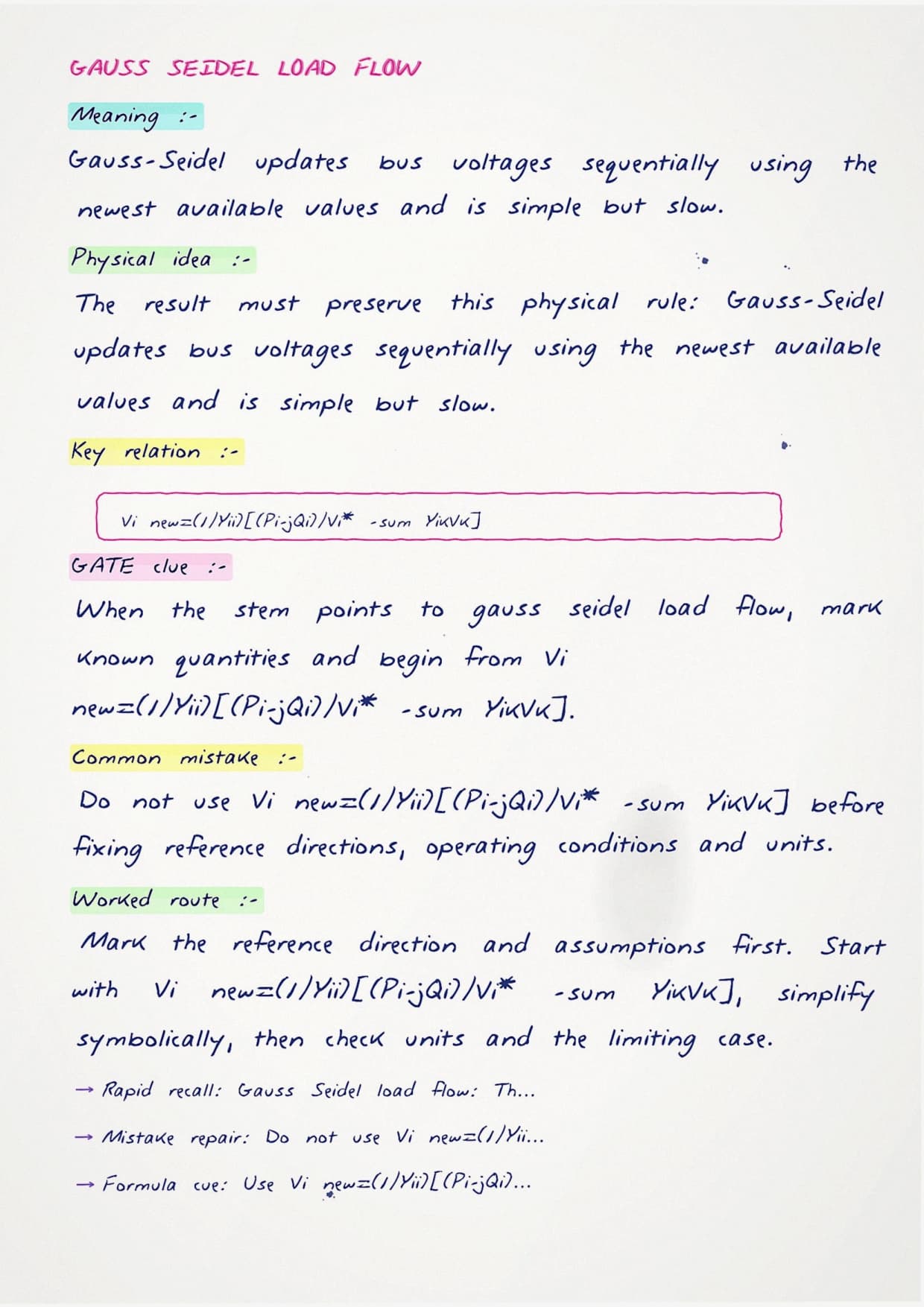
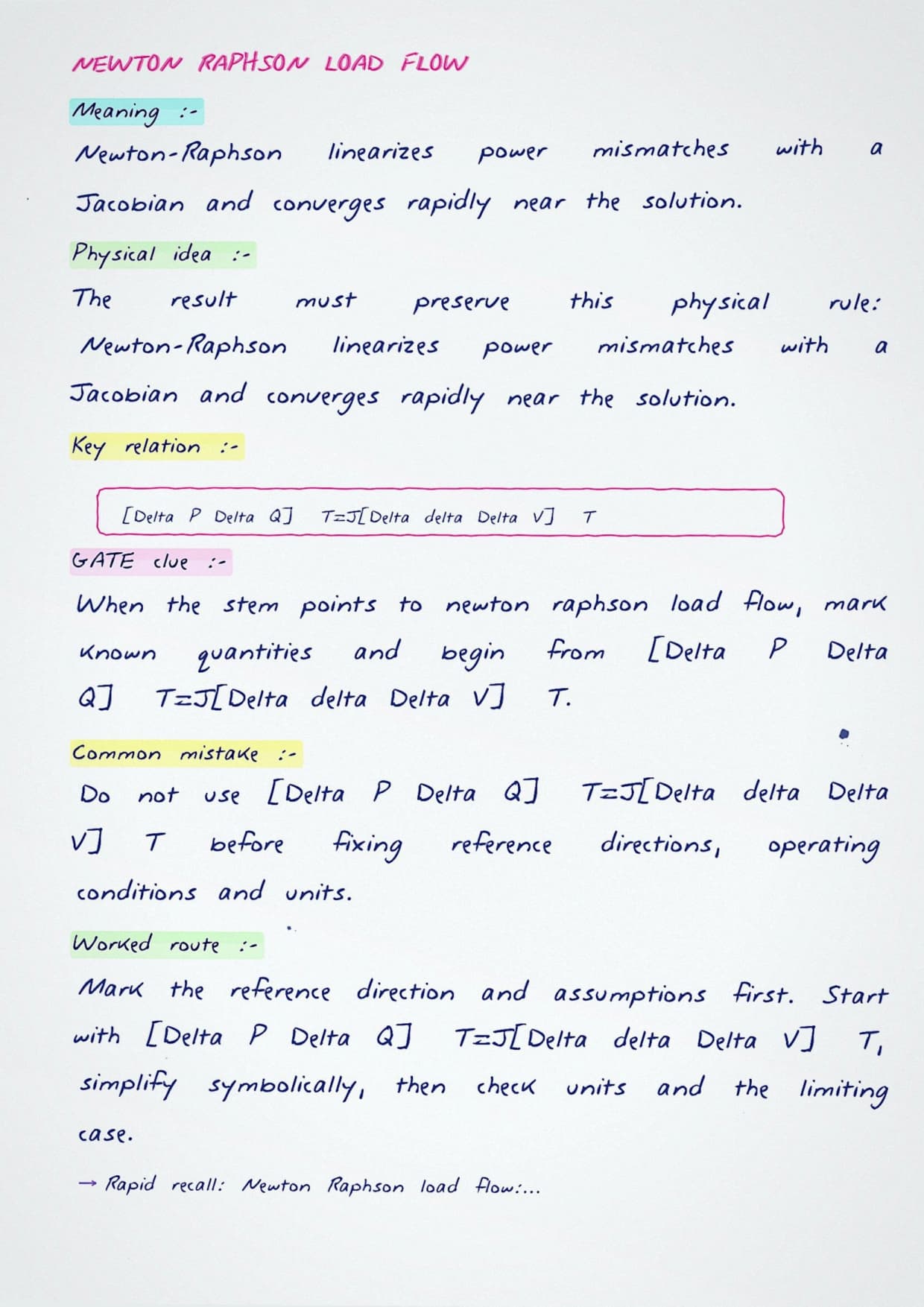
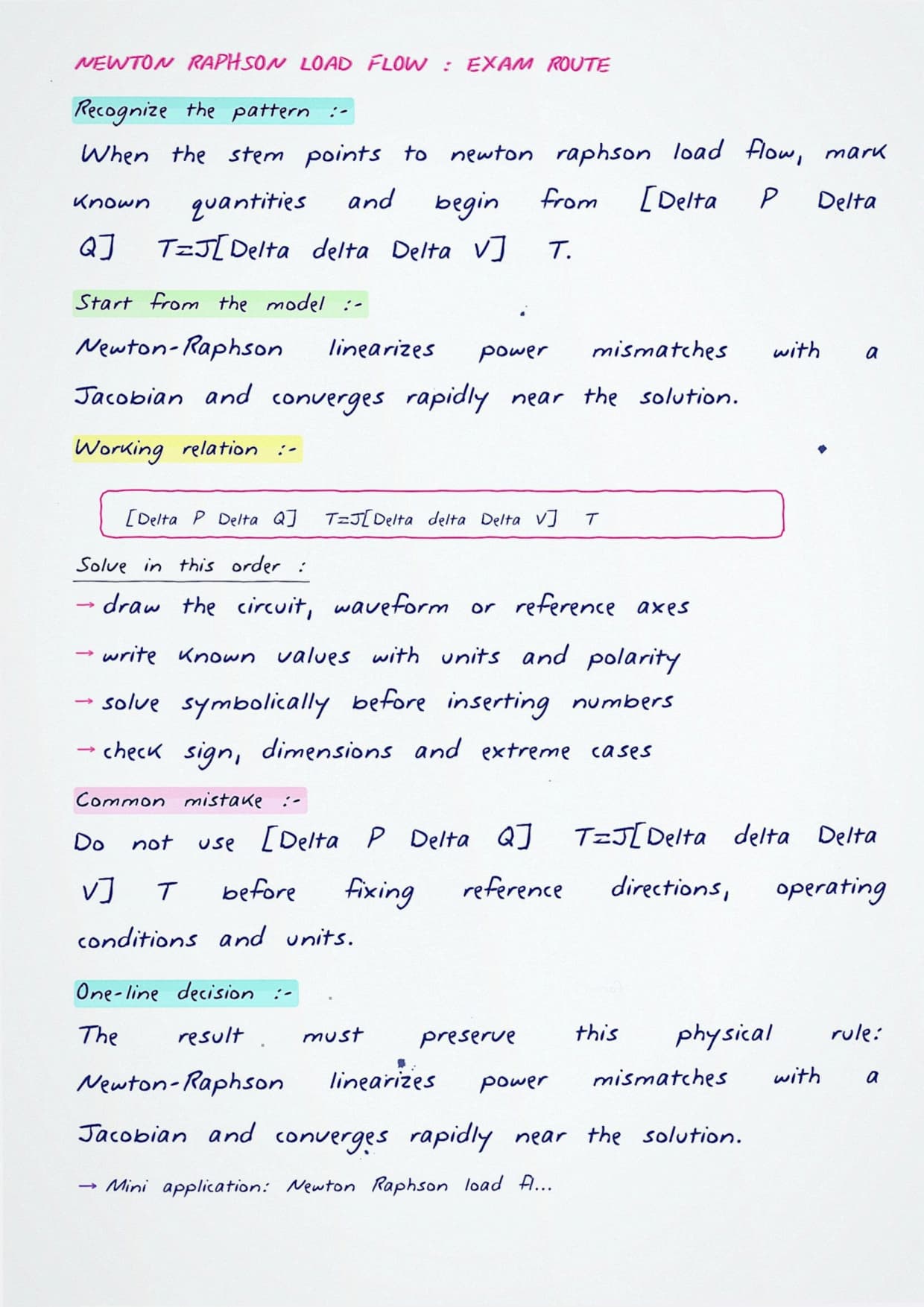
- The Gauss-Seidel and Newton-Raphson load-flow methods compared side by side.
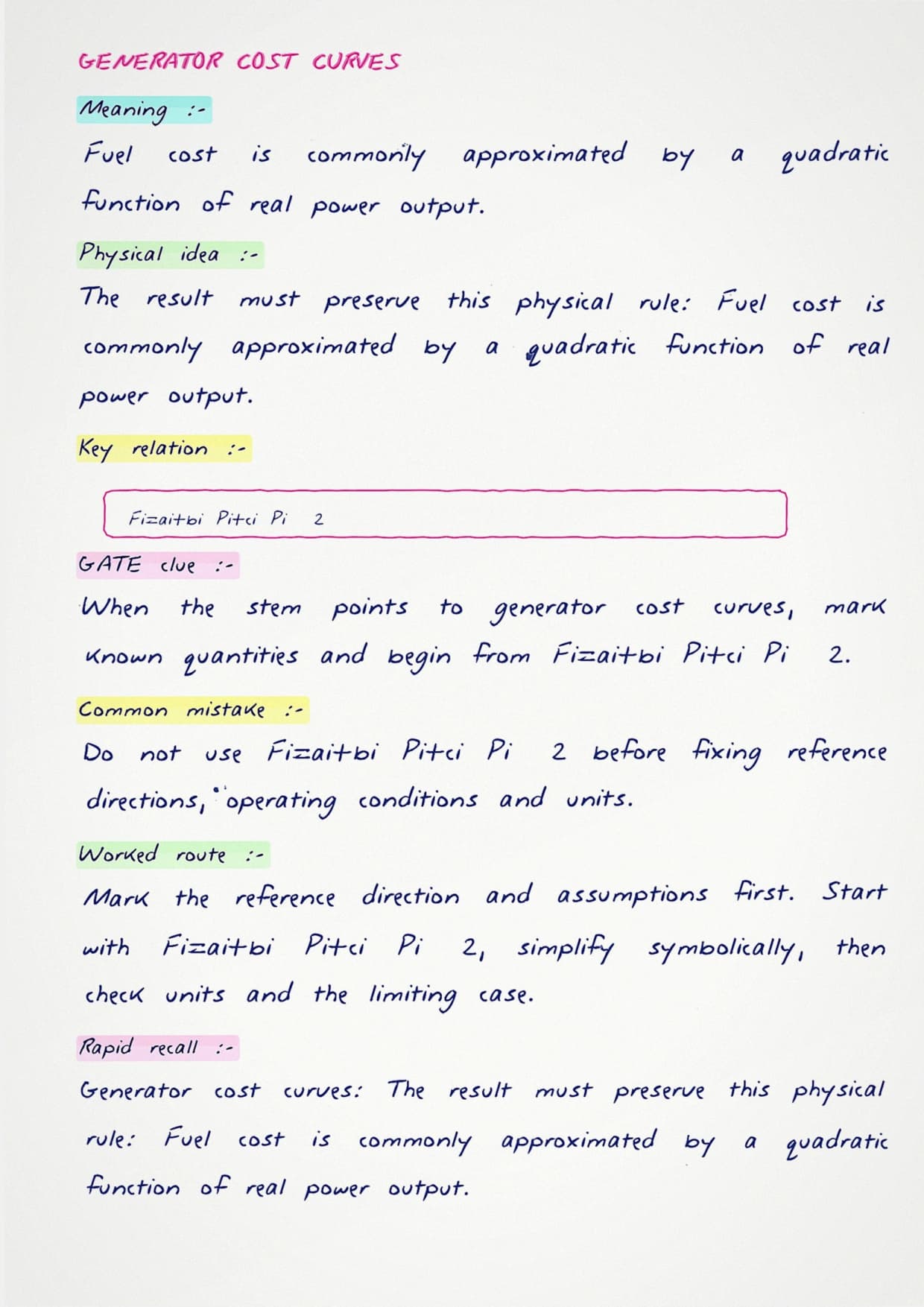
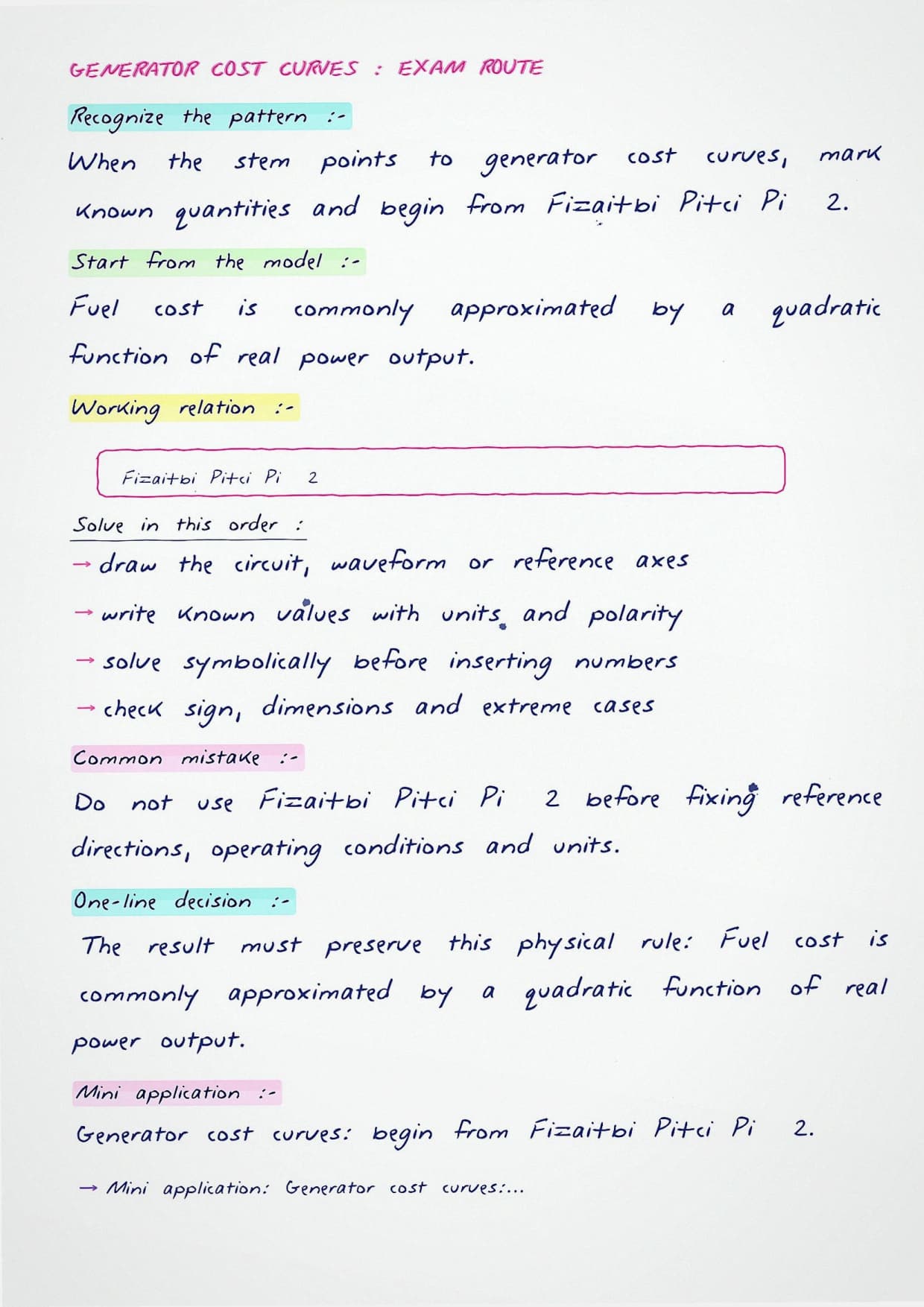
- Economic dispatch with the incremental cost rule and penalty factors for losses.
GATE Per Unit & Load Flow Quick Revision
Source: Kreatryx GATE - EE, ECE & IN by Unacademy on YouTube
Topics Covered in GATE Per Unit & Load Flow
The coverage tracks the official GATE Electrical Power Systems syllabus for the per unit, load-flow, and dispatch group. Every listed point has its own worked page so students can target a weak spot directly.
- Choice of base values and conversion of impedance between bases.
- Single-line diagrams and the impedance diagram of a power network.
- Building the Y-bus matrix and reading its diagonal and off-diagonal terms.
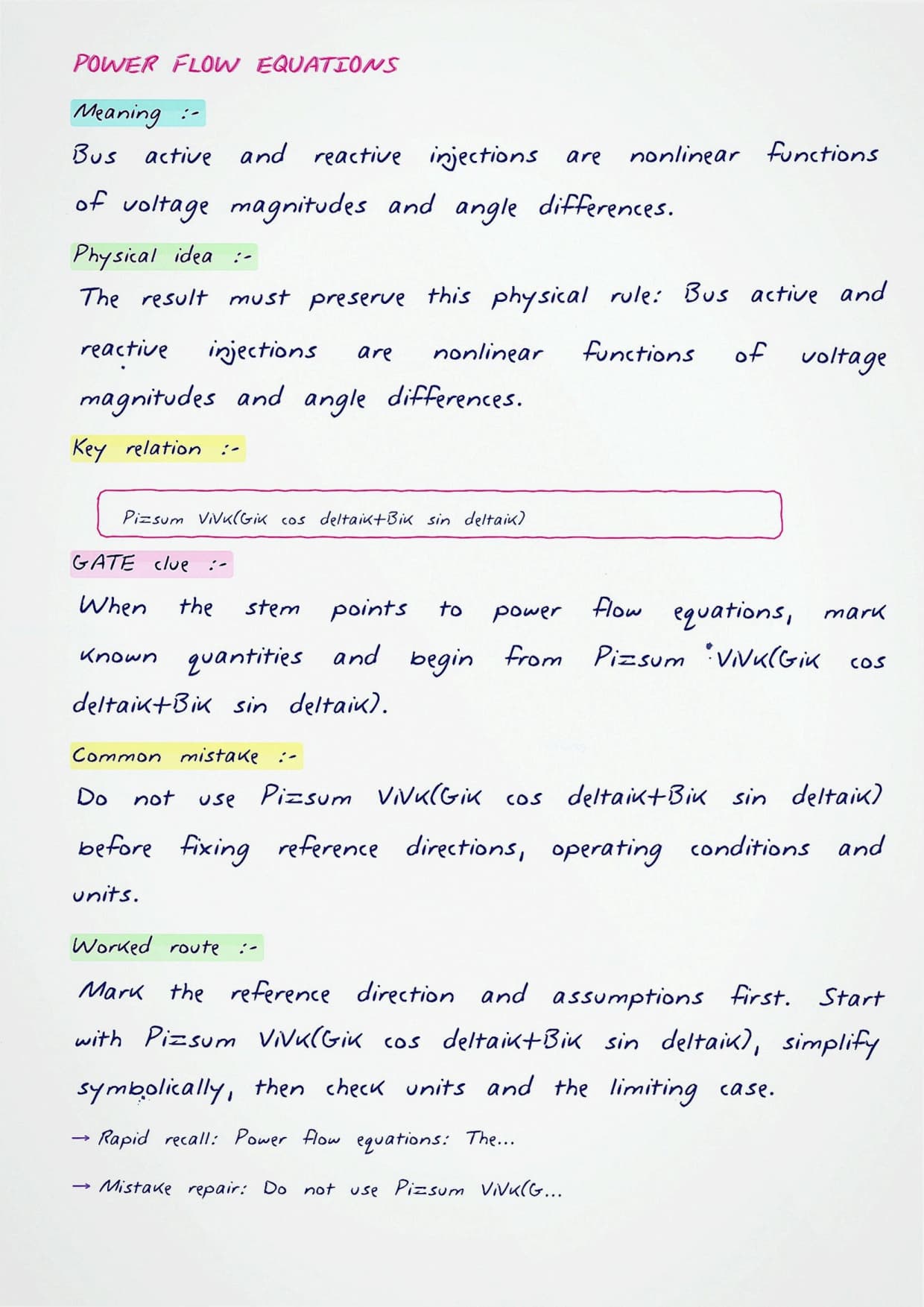
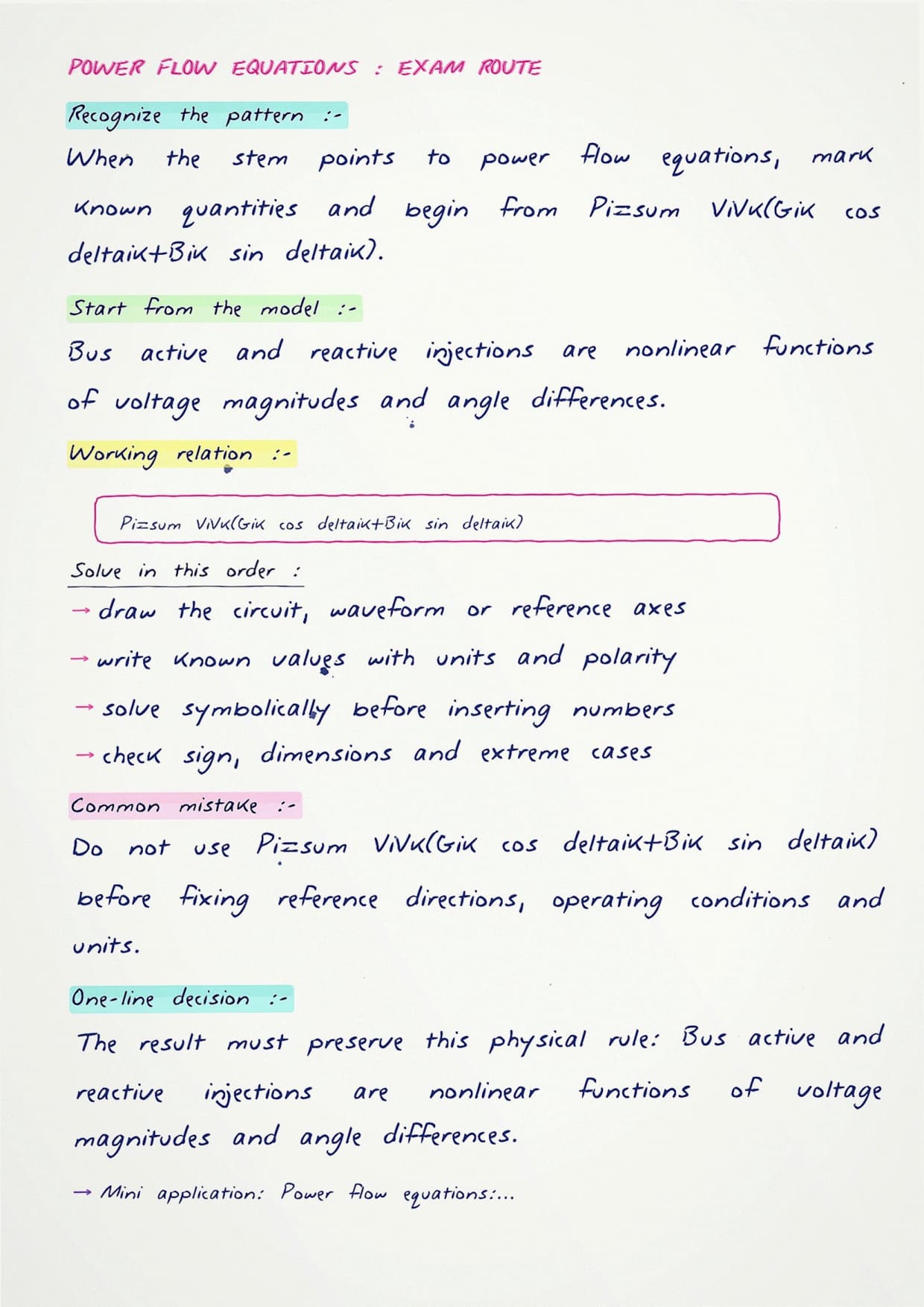
- Bus types and the load-flow equations that link real and reactive power.
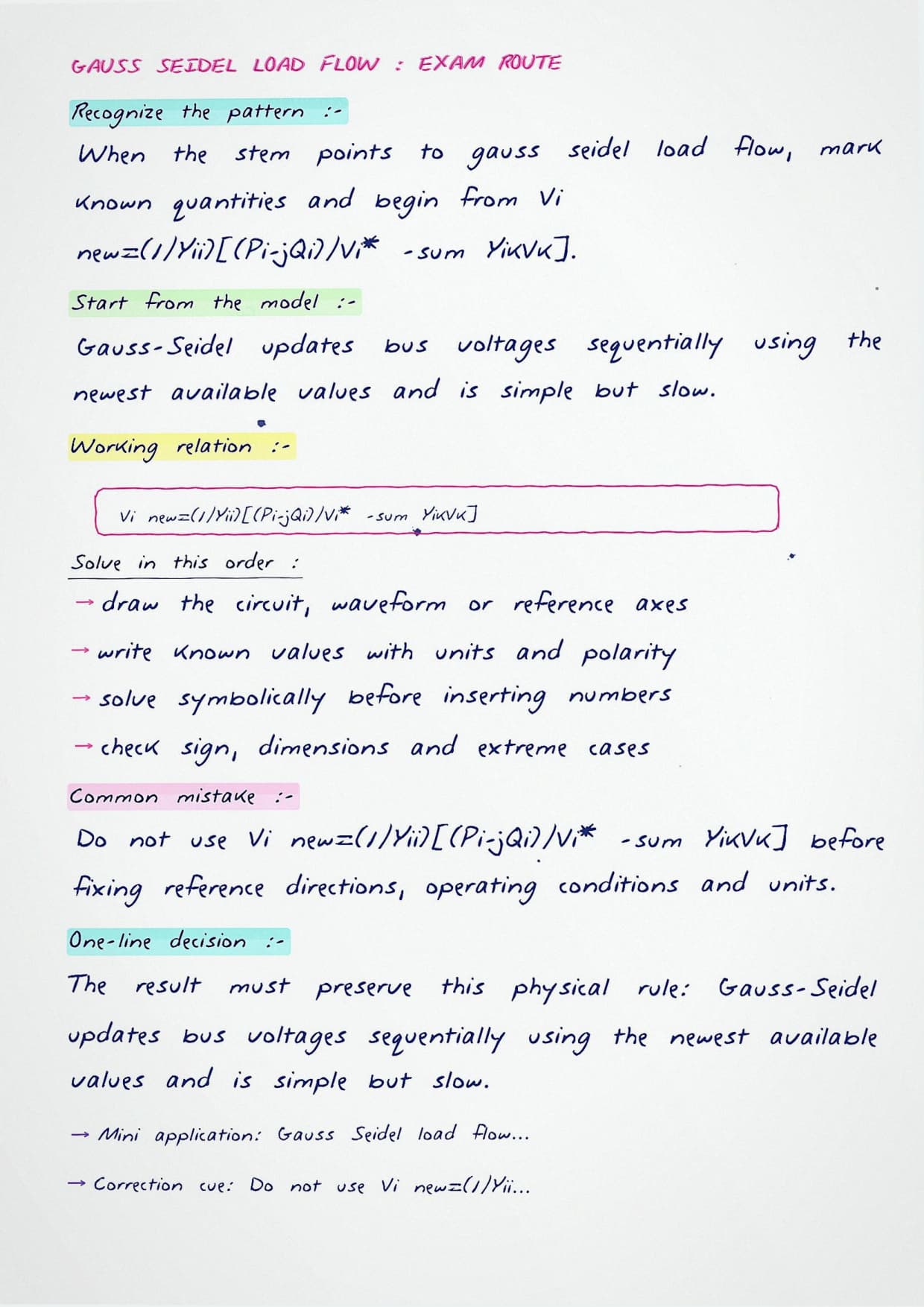
- Gauss-Seidel iteration and its acceleration factor.
- Newton-Raphson and the fast decoupled method, with convergence notes.
- Economic dispatch, incremental fuel cost, and the coordination equations with losses.
How the Notes Are Organised
The order follows how an engineer actually studies a grid. Students first fix a common base, then set up the network matrix, then solve for the bus voltages, and only then decide the cheapest way to meet the load.
Each method is boxed with its own step list, so a student can revise Newton-Raphson without rereading Gauss-Seidel. A summary page at the end lines up the dispatch conditions, which are the lines examiners test most often, and a quick comparison table sets the two iterative methods against each other for fast recall.
How GATE Per Unit & Load Flow Links to Other Topics
This topic is the backbone of the whole Power Systems paper. The per unit habit and the bus matrix feed straight into the analysis of faults, stability, and control.
- Symmetrical fault analysis, which reuses the same per unit impedances.
- Symmetrical components, where sequence networks build on the Y-bus idea.
- Power system stability, which starts from a converged load-flow solution.
- Load frequency control, where economic dispatch sets each unit's share.
Important Topics in GATE Per Unit & Load Flow
Marks cluster around a handful of results, and each one hides a common slip. The notes call out these traps so students do not lose easy marks to careless base or sign errors.
- Converting per unit impedance to a new base; the square on the voltage ratio is often dropped.
- Naming the slack bus correctly, since its angle is the reference for all others.
- Comparing Newton-Raphson and Gauss-Seidel on speed, memory, and number of iterations.
- Applying the equal incremental cost rule only within each generator's limits.
- Using penalty factors the right way when transmission losses are included.
How to Prepare GATE Per Unit & Load Flow with Handwritten Notes
The topic rewards steady practice over cramming. Students should build the ideas once, drill the numerical steps, and then face full past questions under time pressure. The plan below does exactly that.
- First read: redraw one small network and convert it fully to per unit.
- Second pass: form a Y-bus and run one Gauss-Seidel step by hand.
- PYQ practice: solve past GATE Electrical dispatch and base-change problems.
- Final week: revise the boxed method steps and the dispatch summary page.
Why These Notes Help You Score Better
Power Systems questions reward students who can move quickly and cleanly through set procedures, and that is what these notes drill. The worked base conversions build accuracy, the side-by-side method boxes save exam time, and the flagged traps guard the numerical marks. Worked through steadily, they give students a real edge on one of the paper's heaviest sections.
GATE Electrical Per Unit & Load Flow Handwritten Notes FAQs
Ques. How much weight does per unit and load flow carry in GATE Electrical?
Ans. Taken together, the per unit, load-flow, and economic dispatch group usually contributes about 6 to 9 marks, which makes it one of the highest-yield areas of the Power Systems section for students.
Ques. Do the notes compare Gauss-Seidel and Newton-Raphson?
Ans. Yes. Both load-flow methods are boxed side by side with their step lists, so students can weigh them on speed, memory use, and number of iterations before the exam.
Ques. Are economic dispatch problems solved in full?
Ans. Yes. The pages carry worked dispatch sums using the equal incremental cost rule, first without losses and then with penalty factors, so students see every stage of the working.
Ques. What is the most common error students make here?
Ans. Forgetting to square the voltage ratio during a base change is the frequent slip. The notes mark this step clearly so students convert per unit impedance correctly every time.



Comments