




Digital Electronics and Data Conversion is a reliable scoring topic in GATE Electrical, usually worth about 4 to 7 marks in the paper. It belongs to the Measurements and Electronics section, and its ideas return in Microprocessors, Control Systems, and Electrical Measurements. These handwritten notes cover the full topic in a compact, exam-focused form.
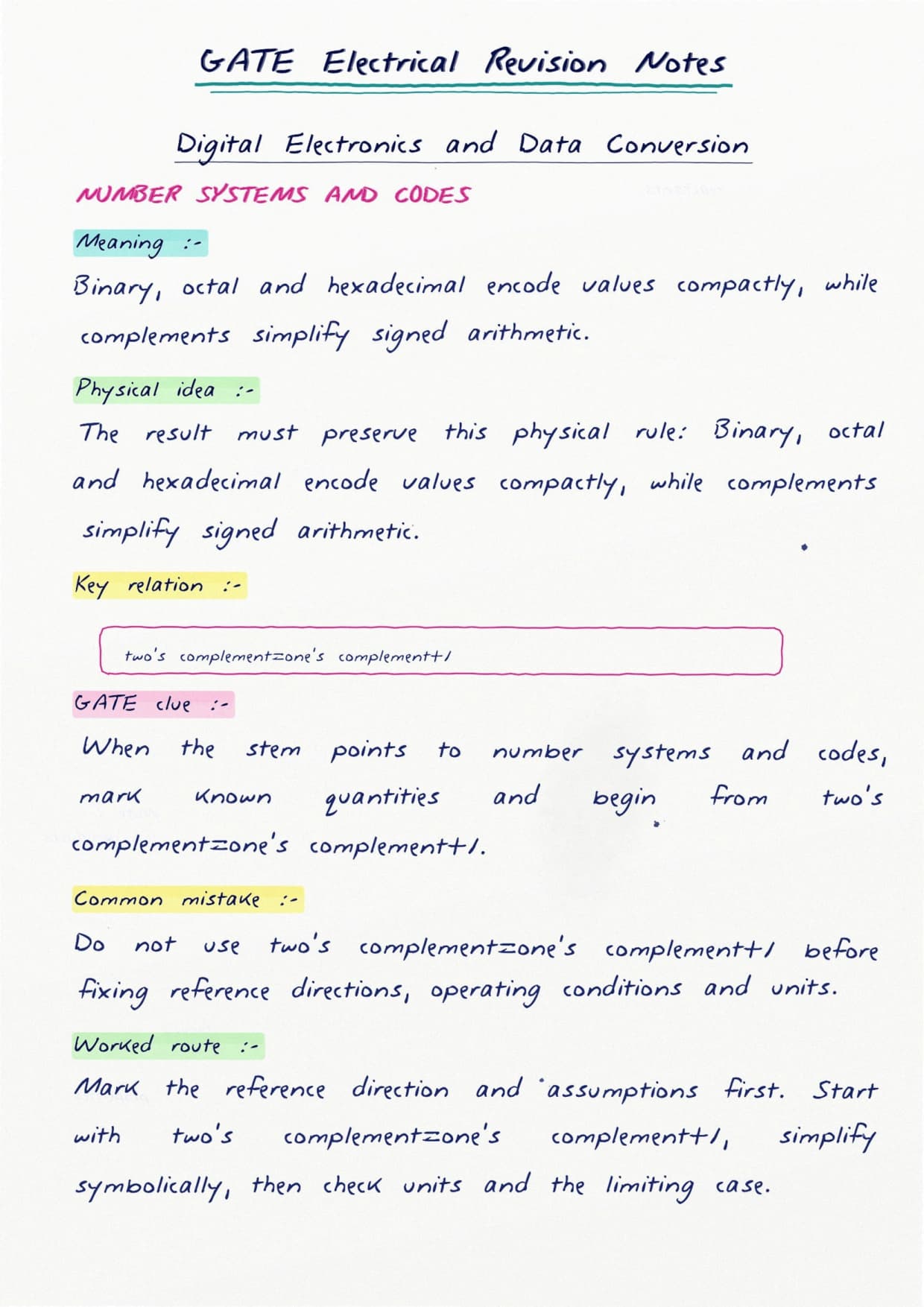
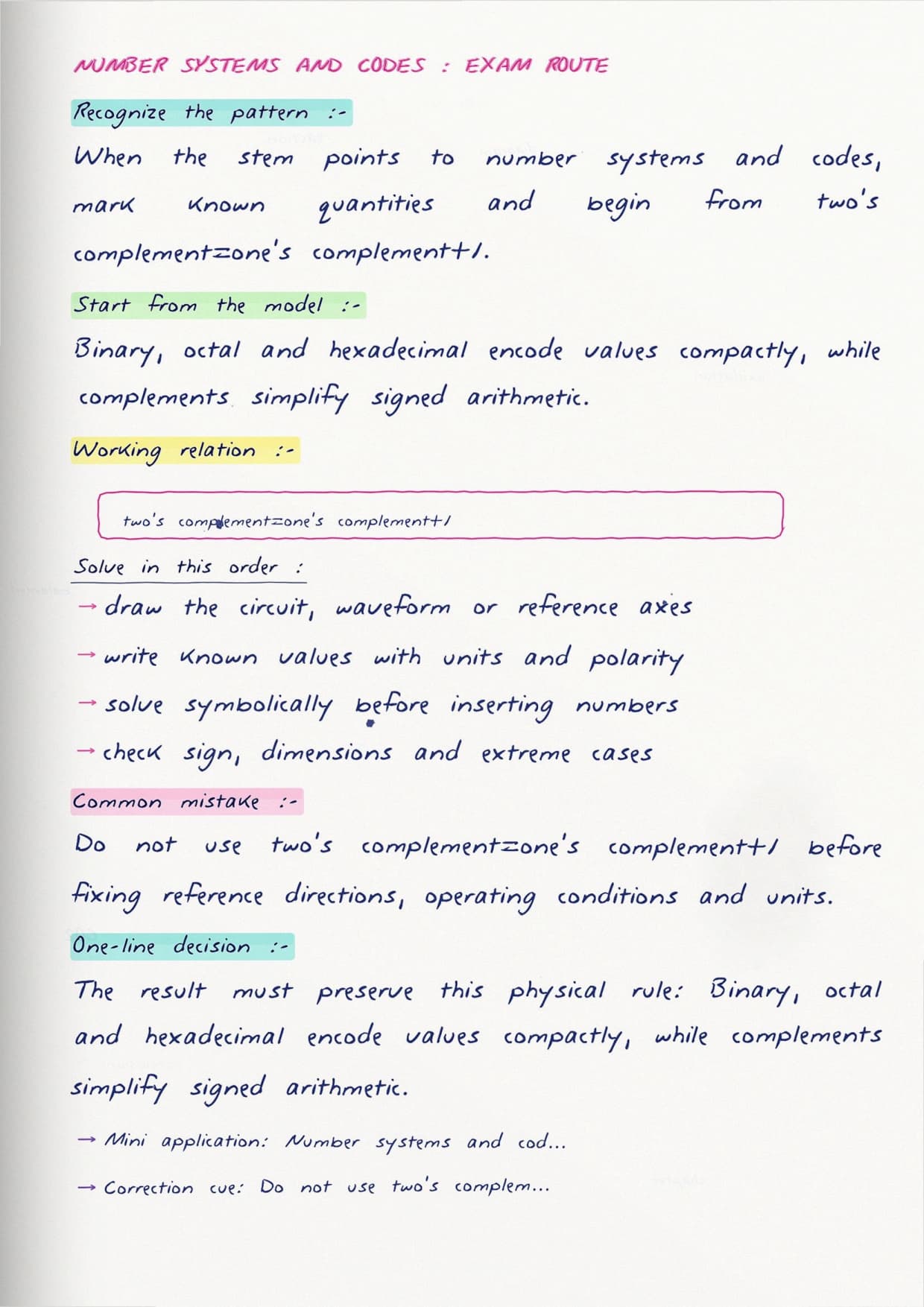
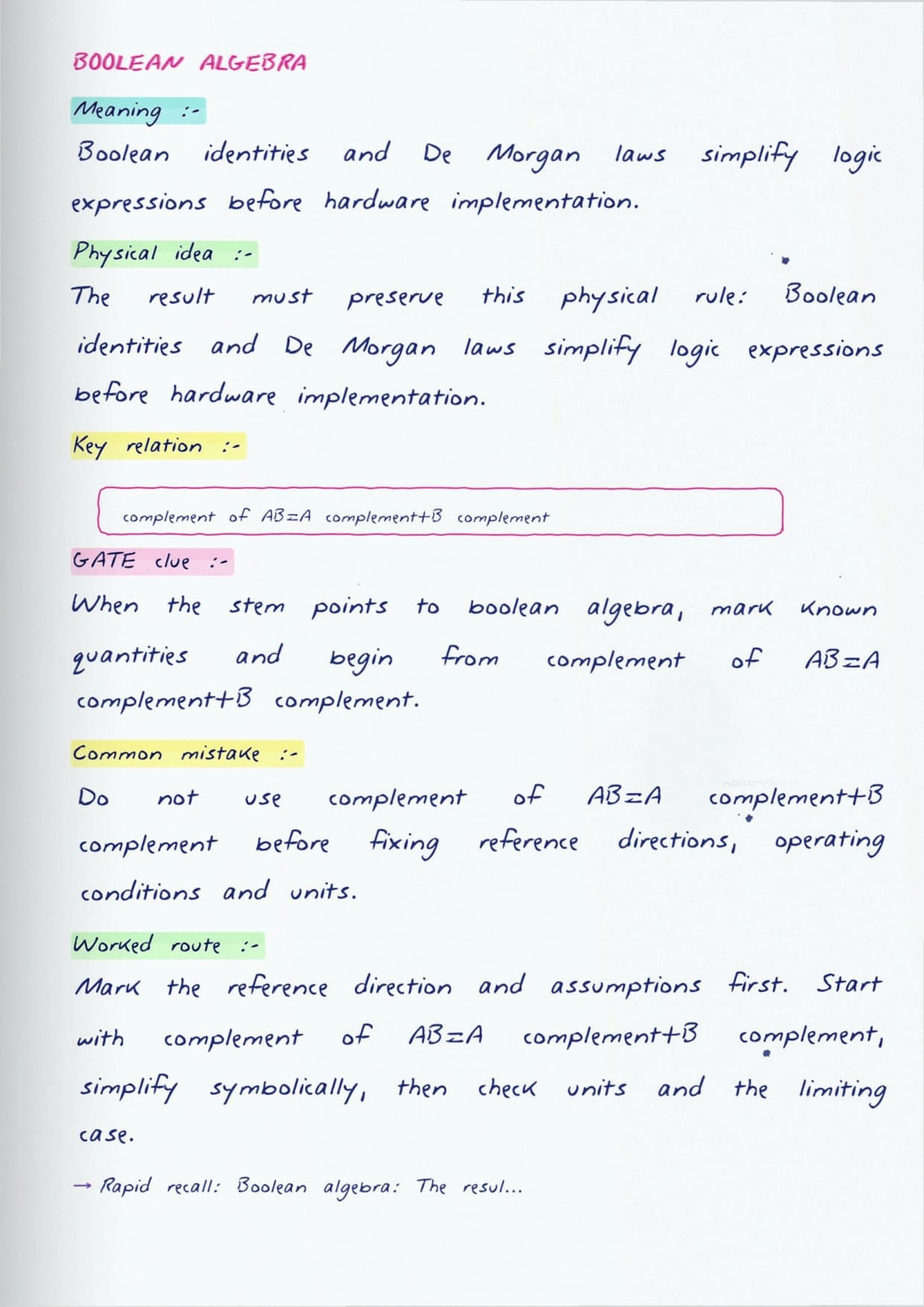
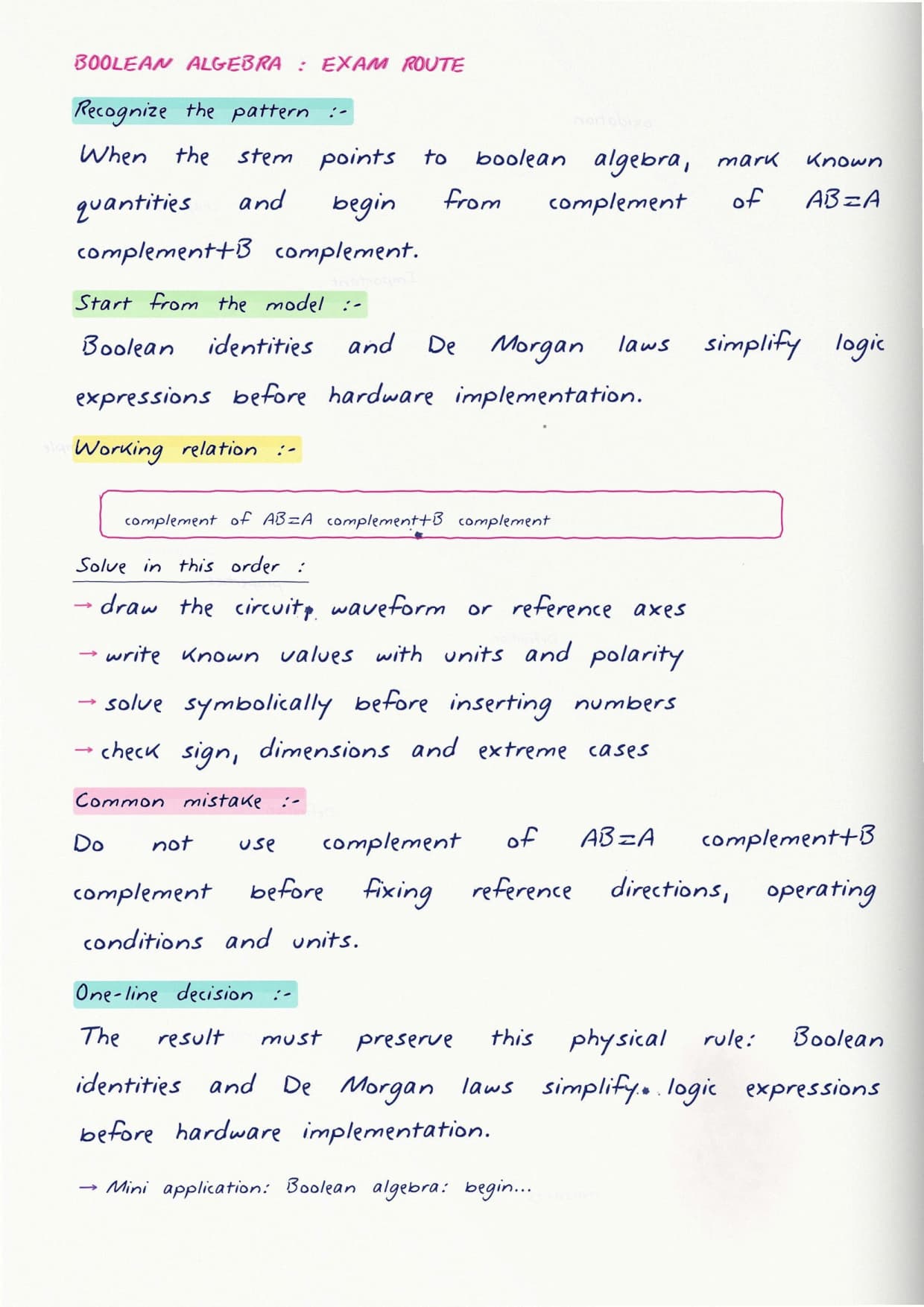
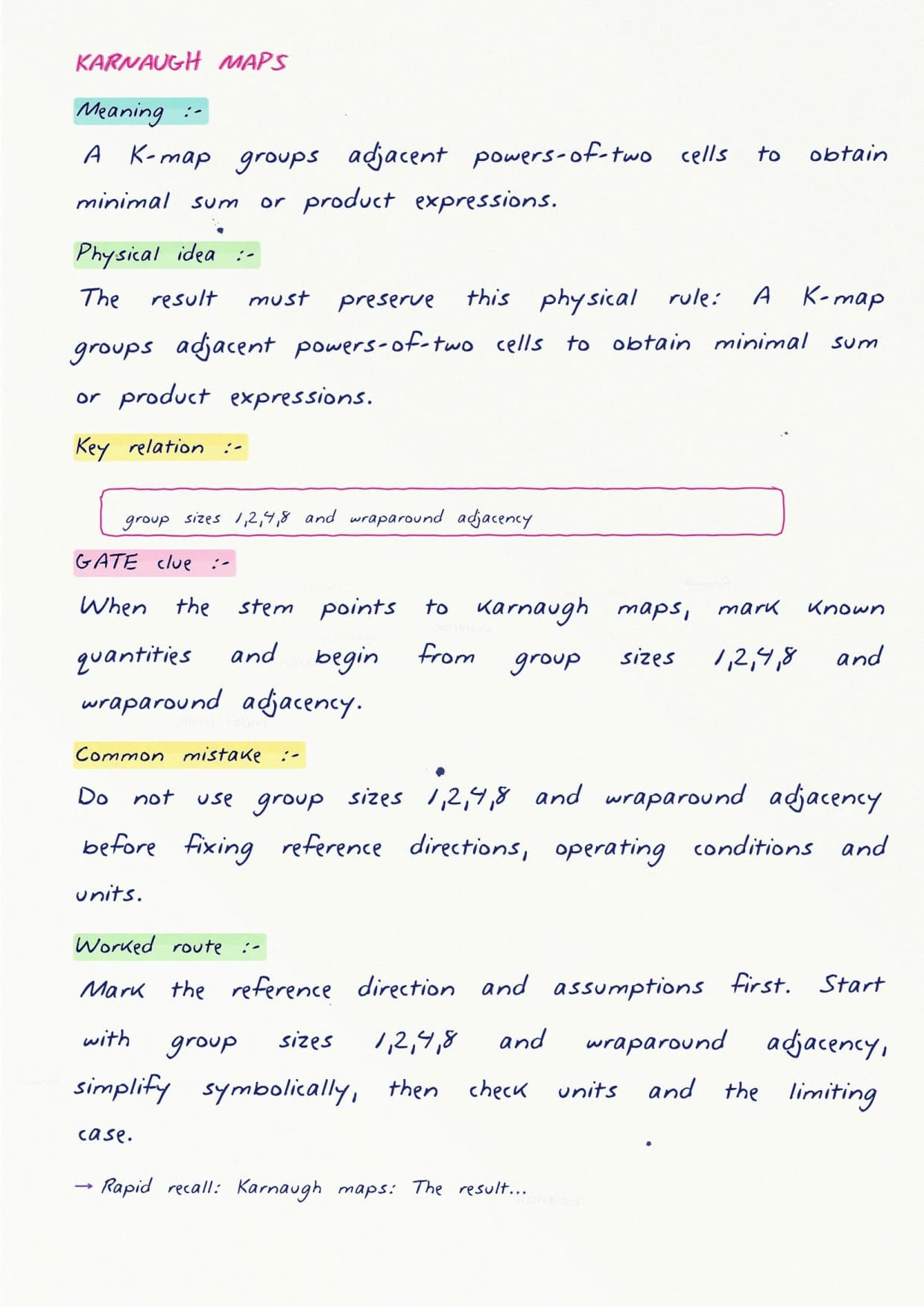
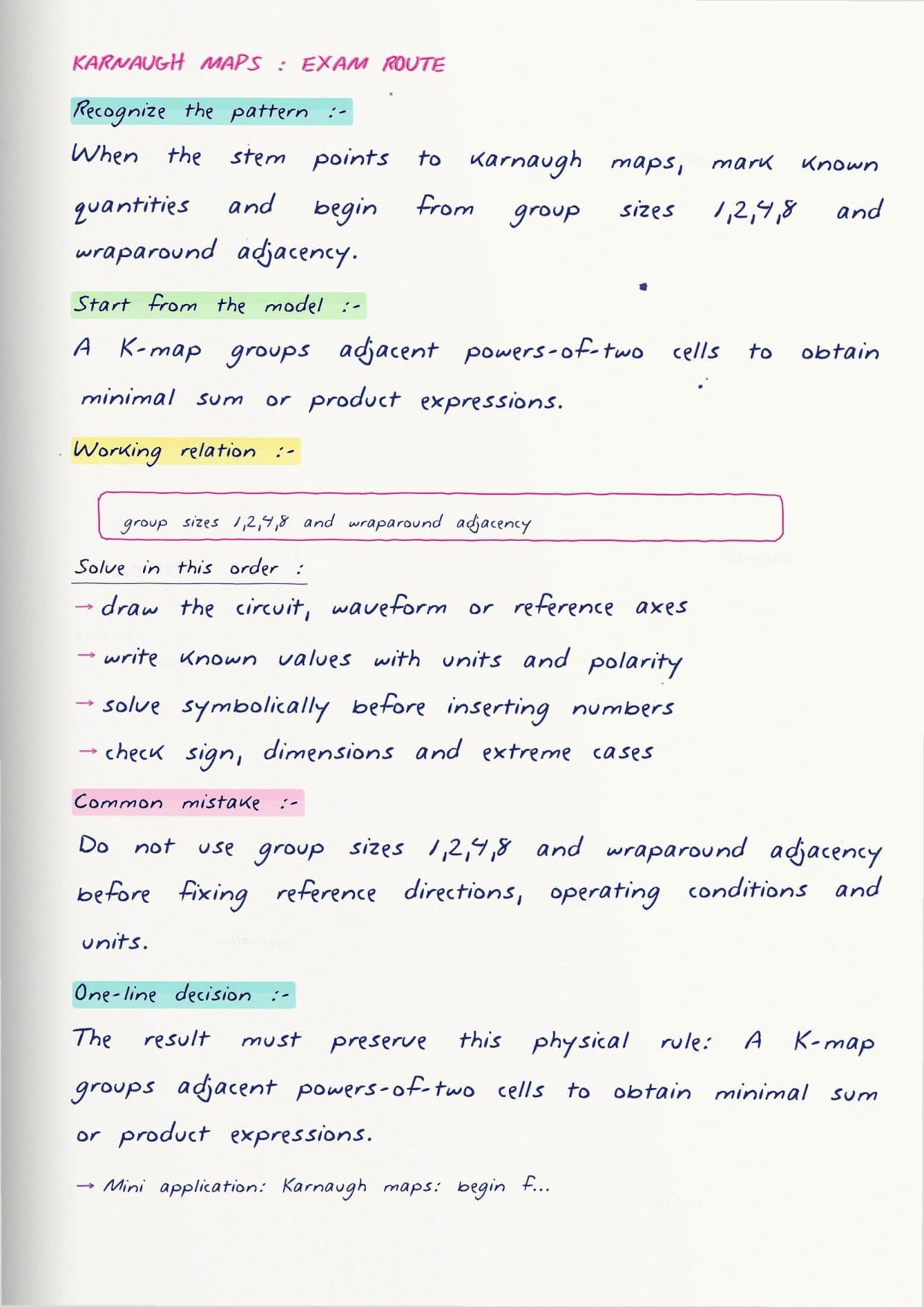
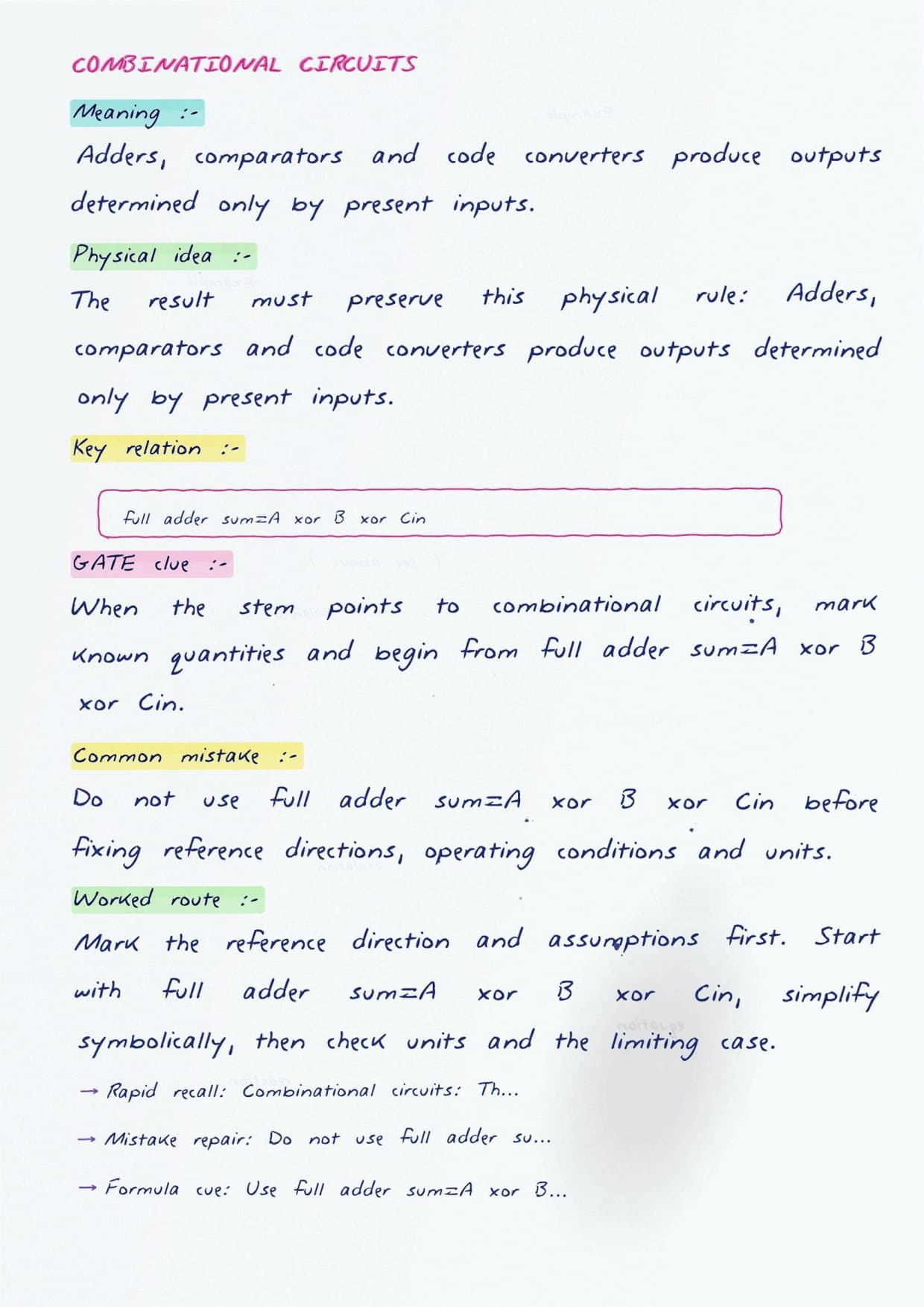
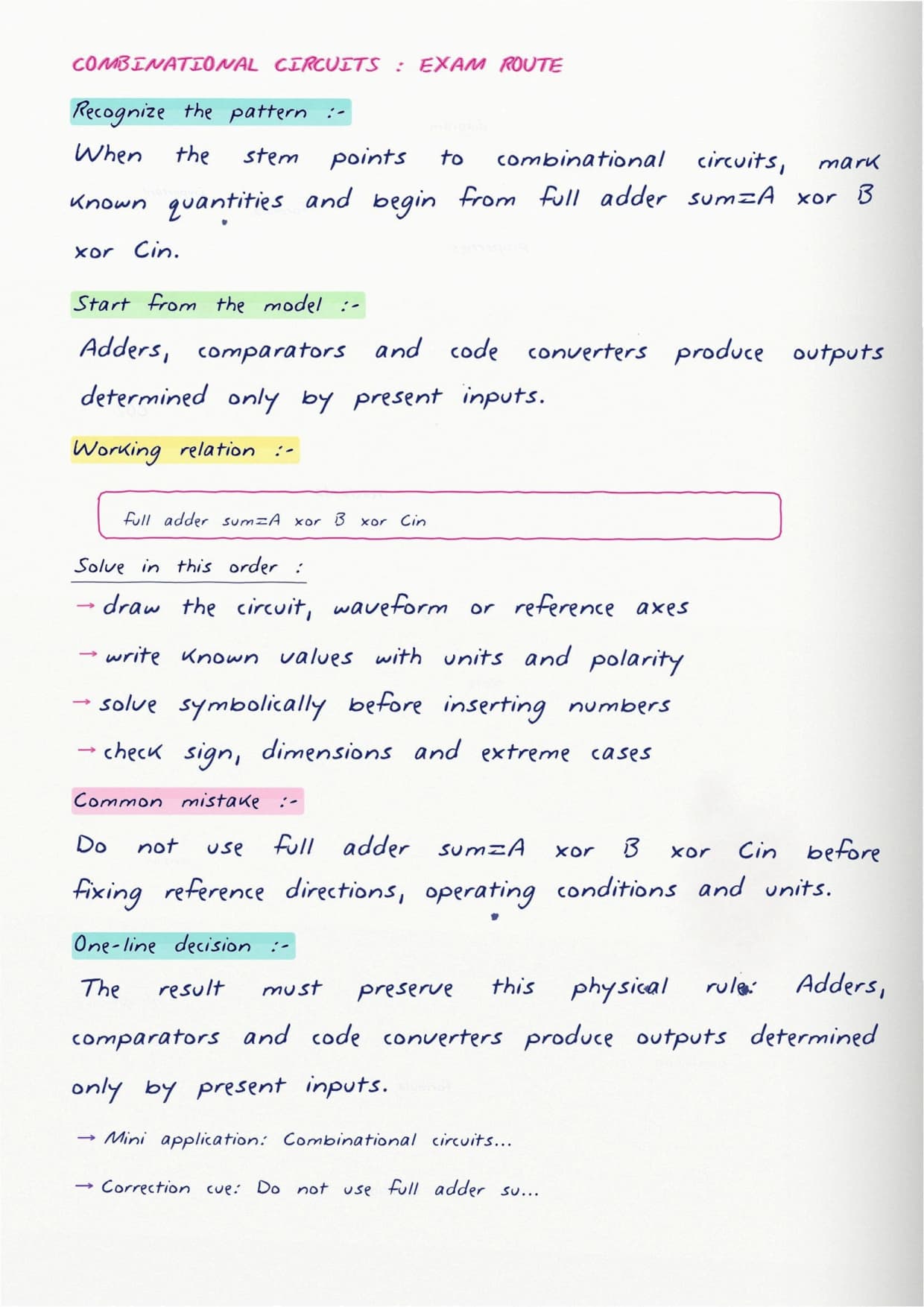
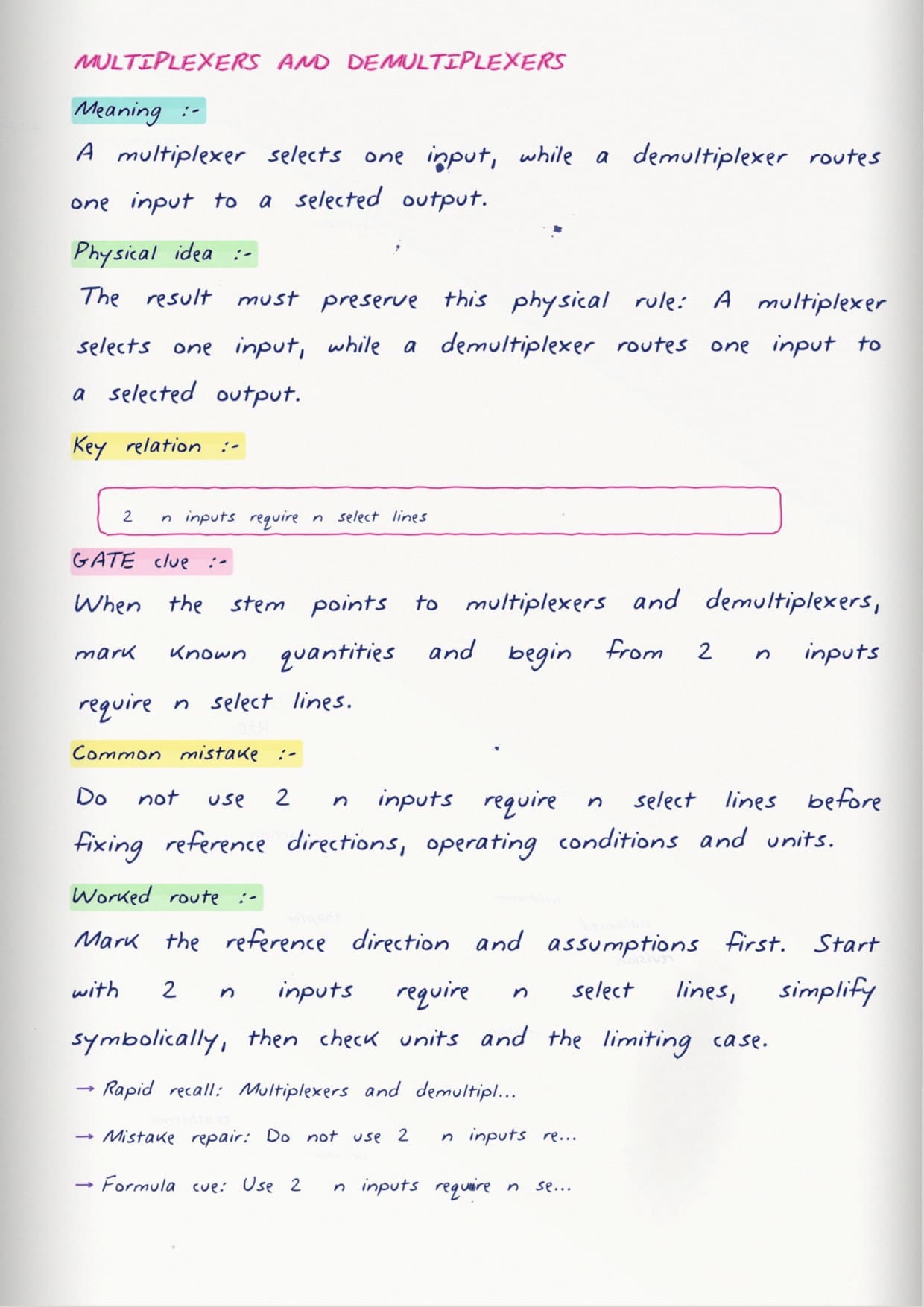
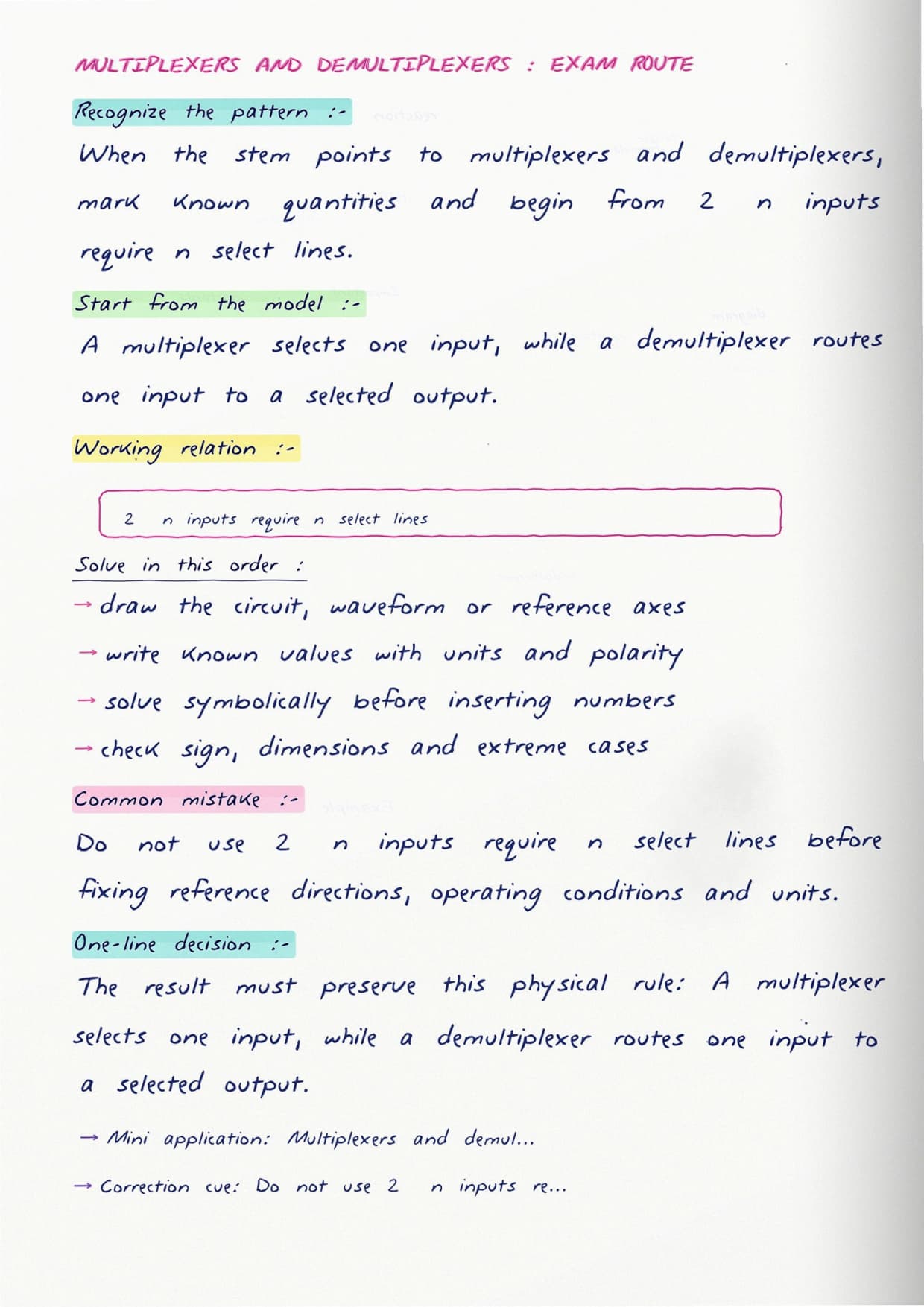
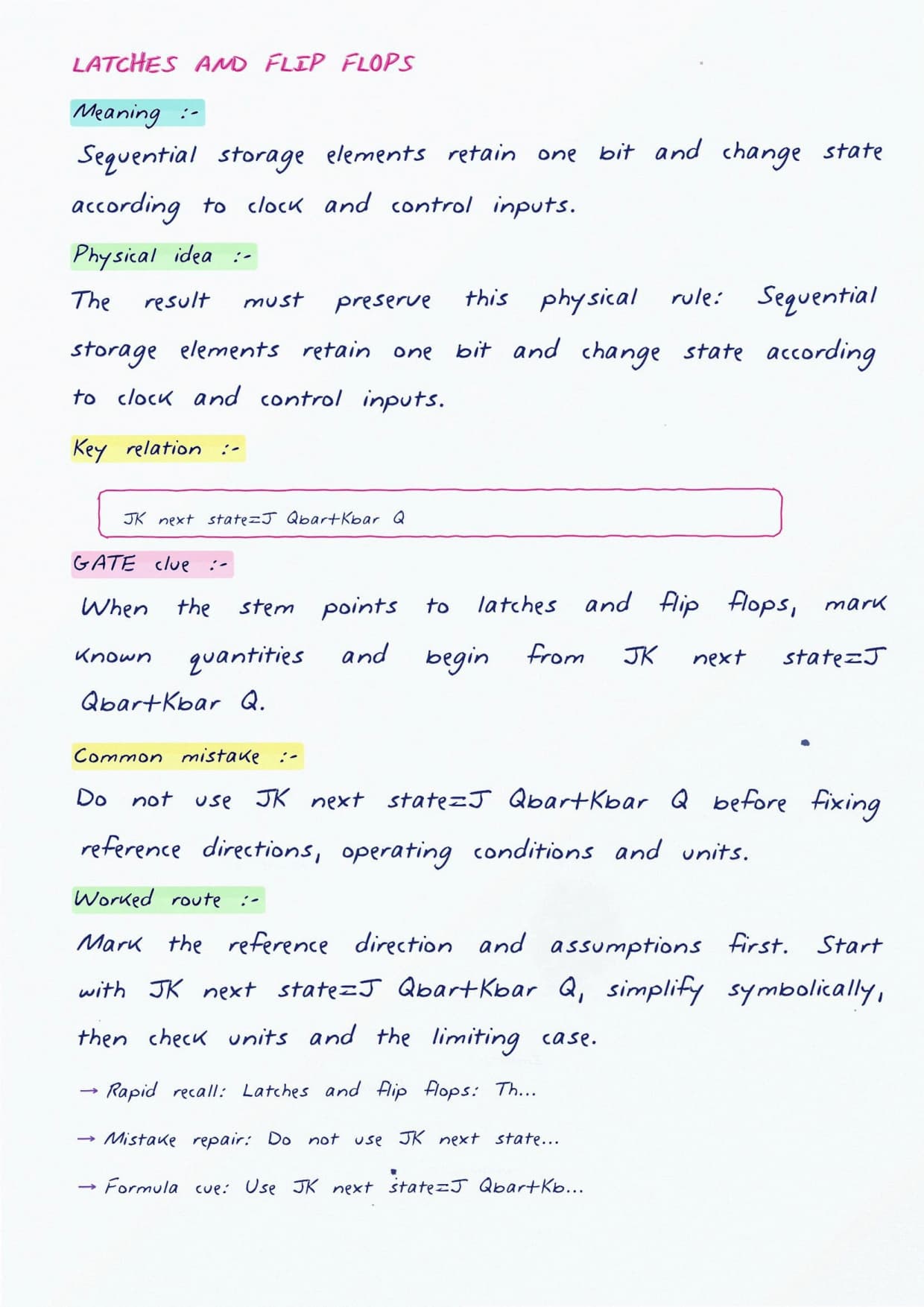
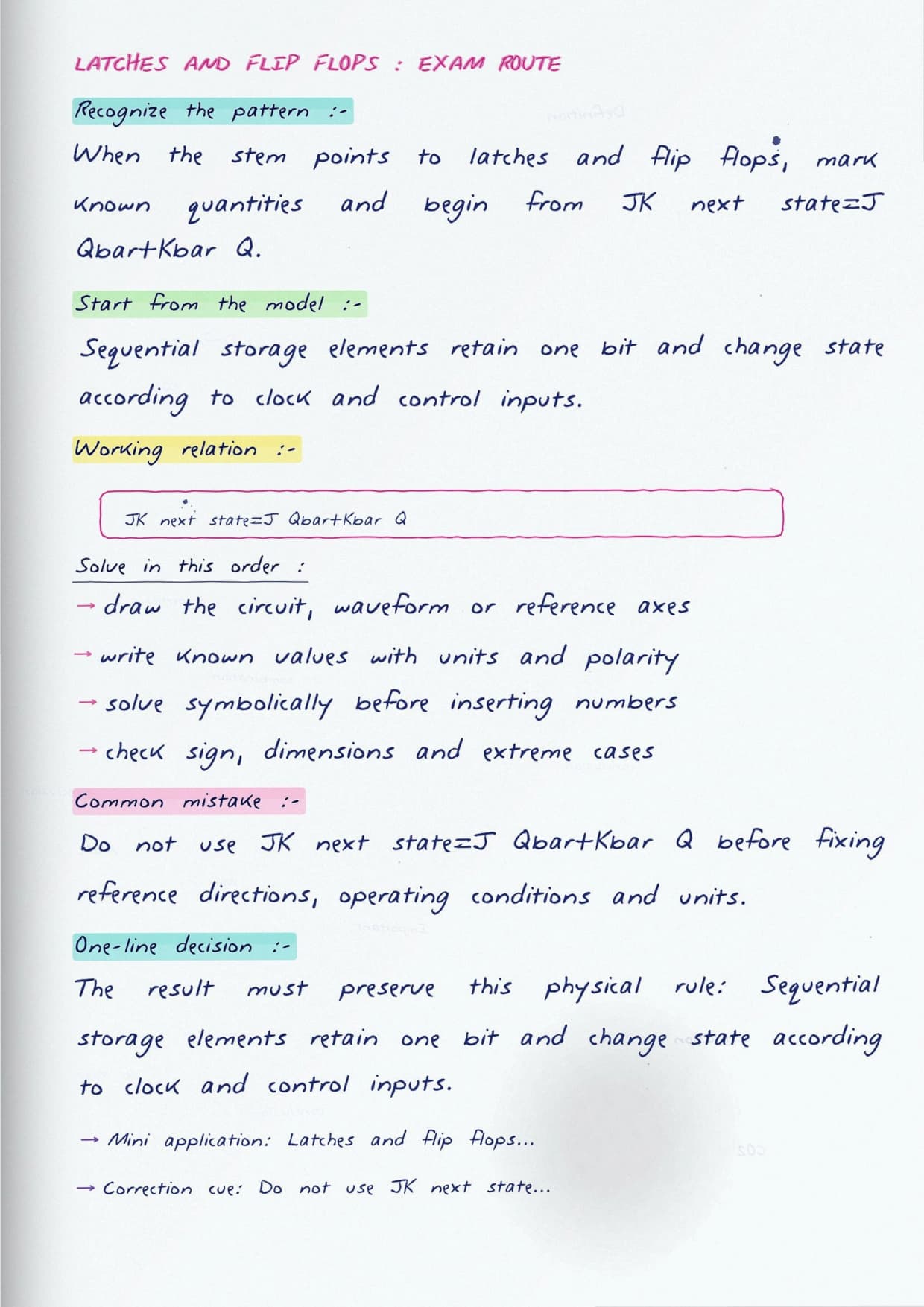
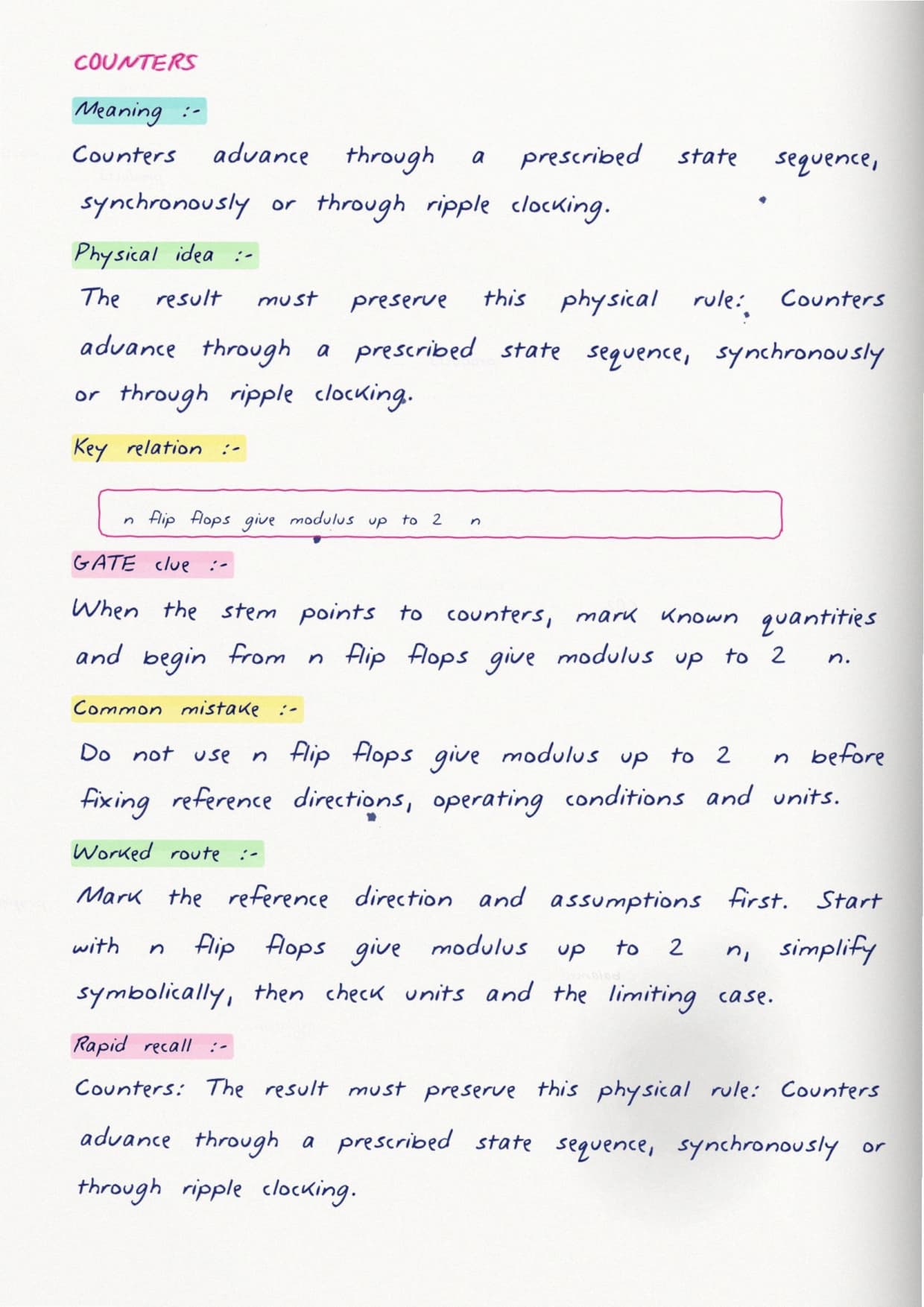
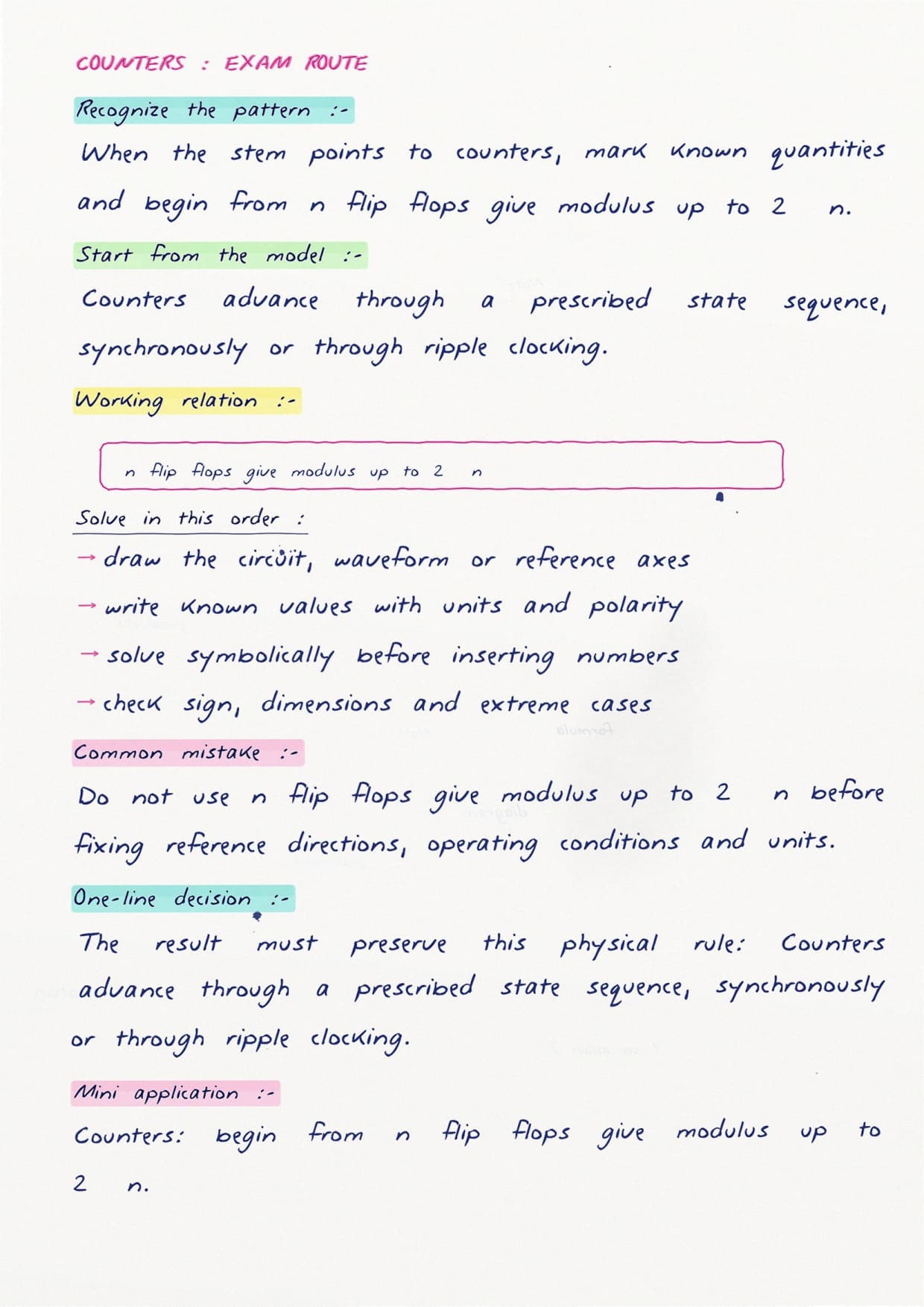
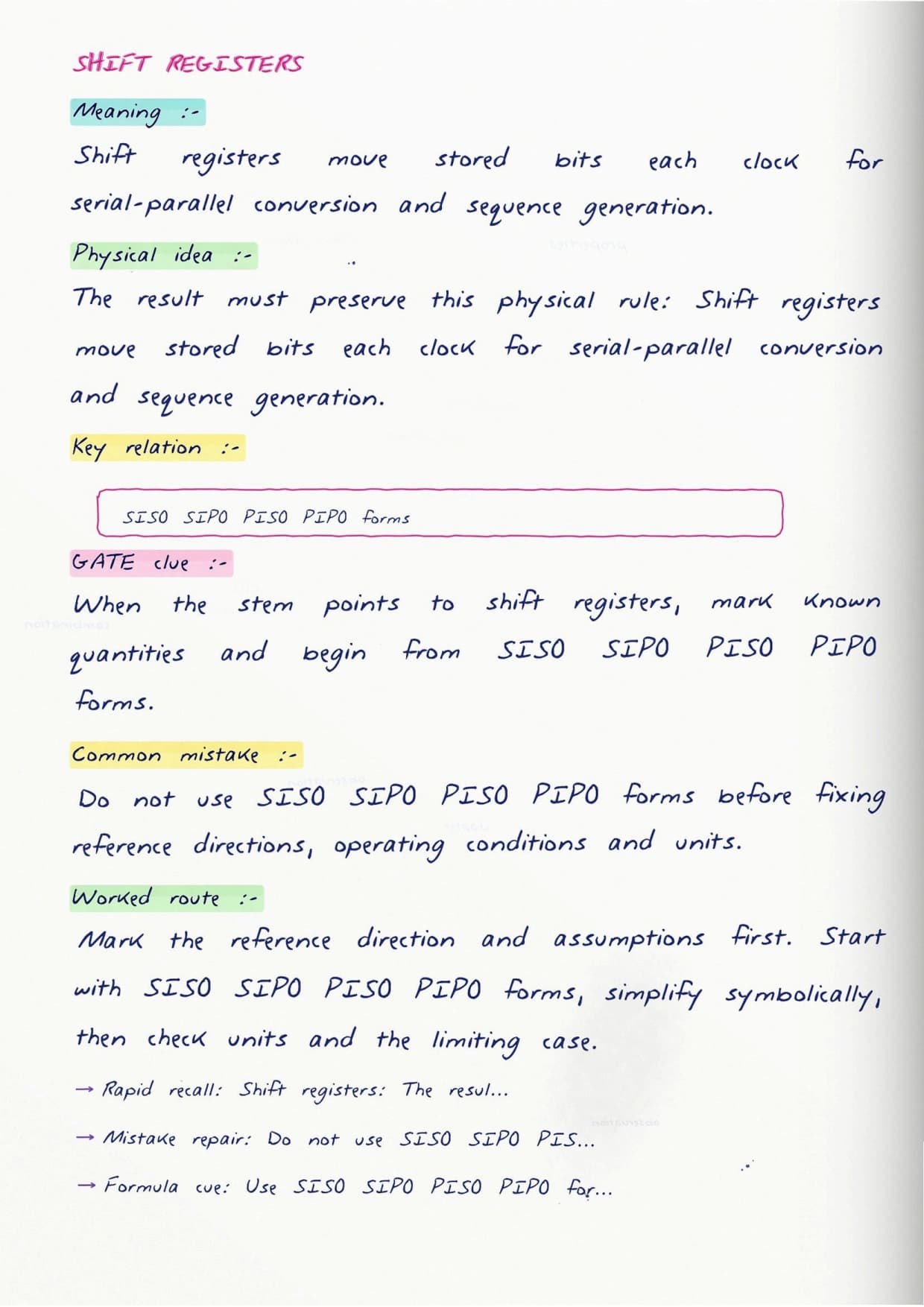
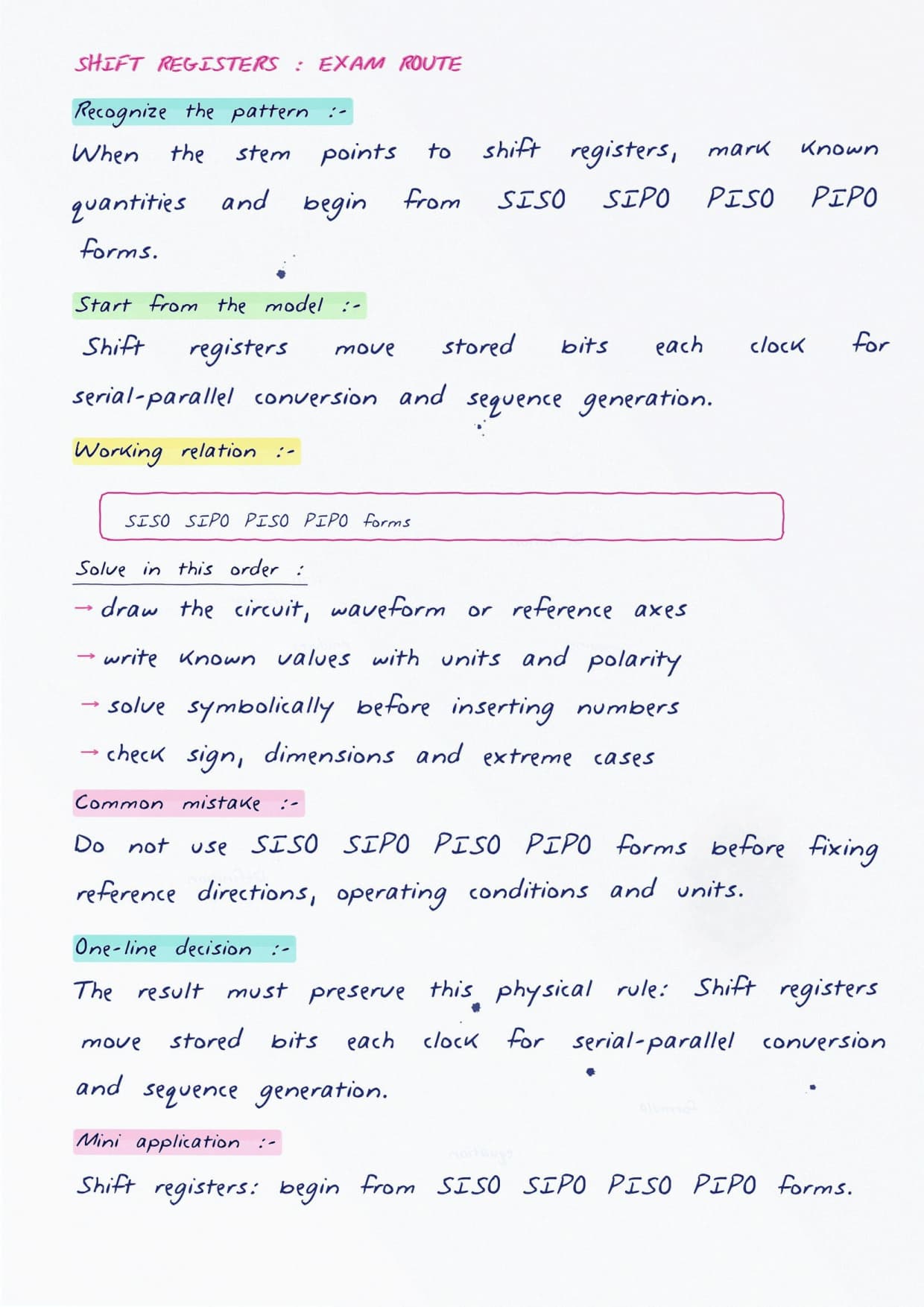
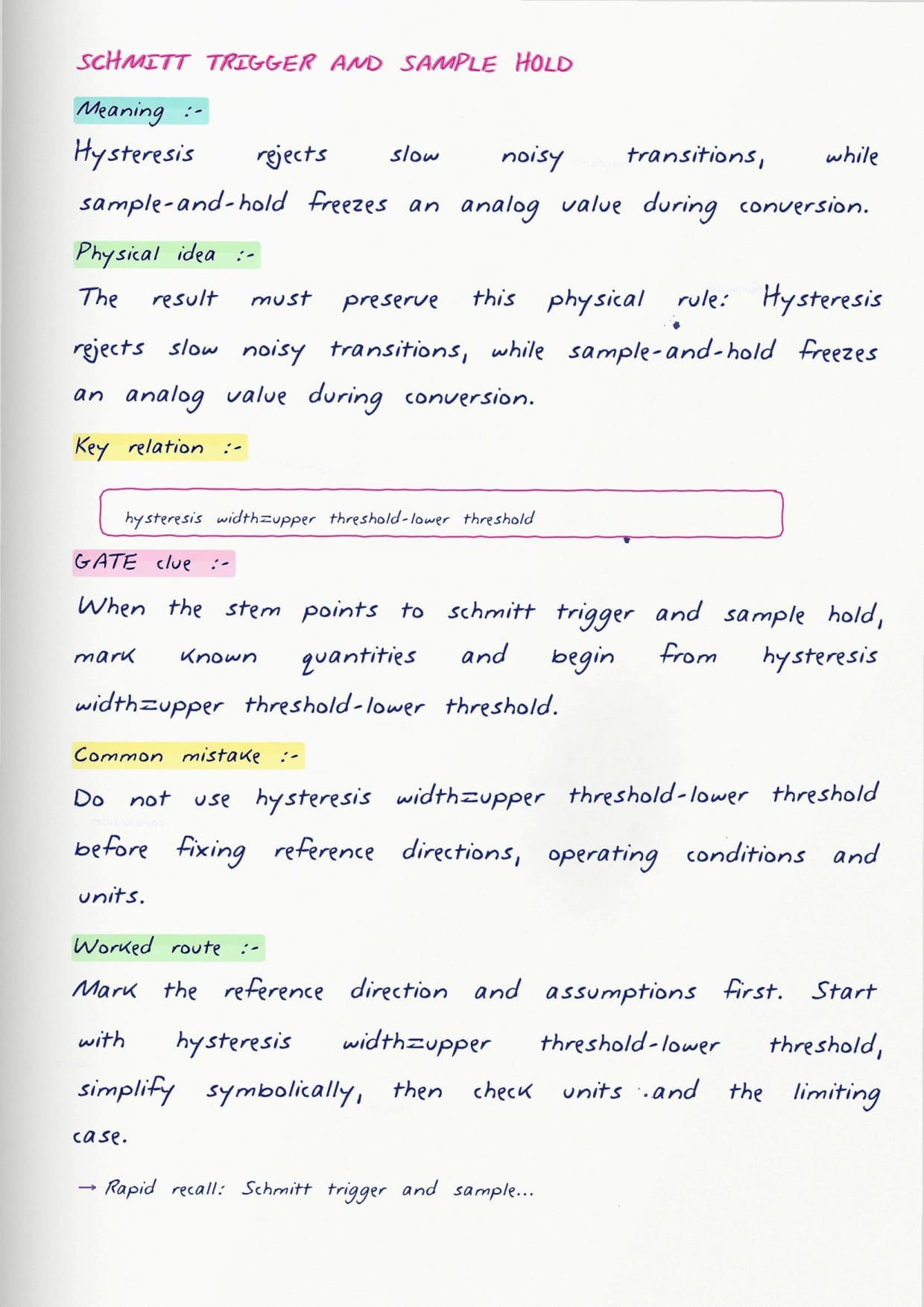
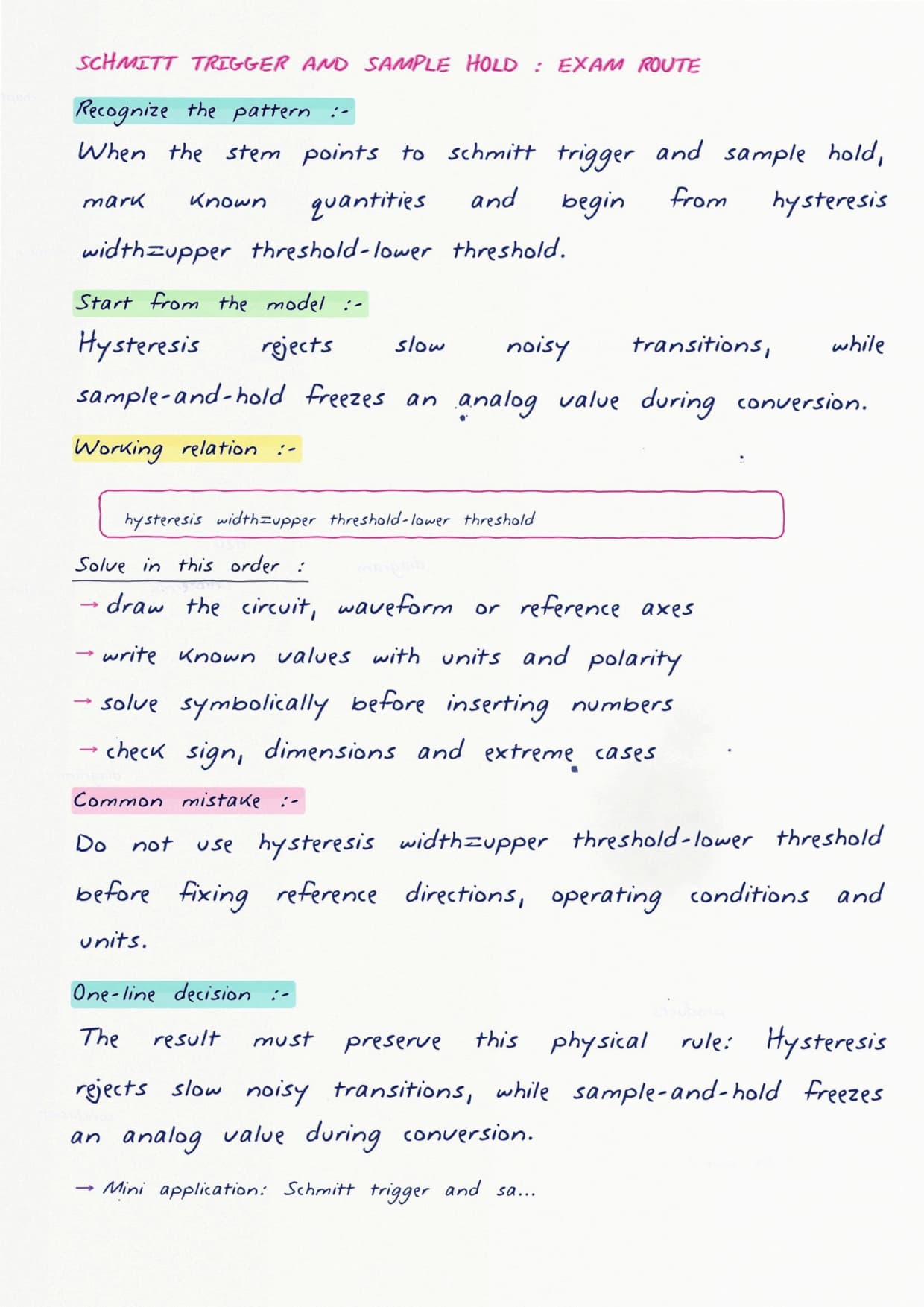
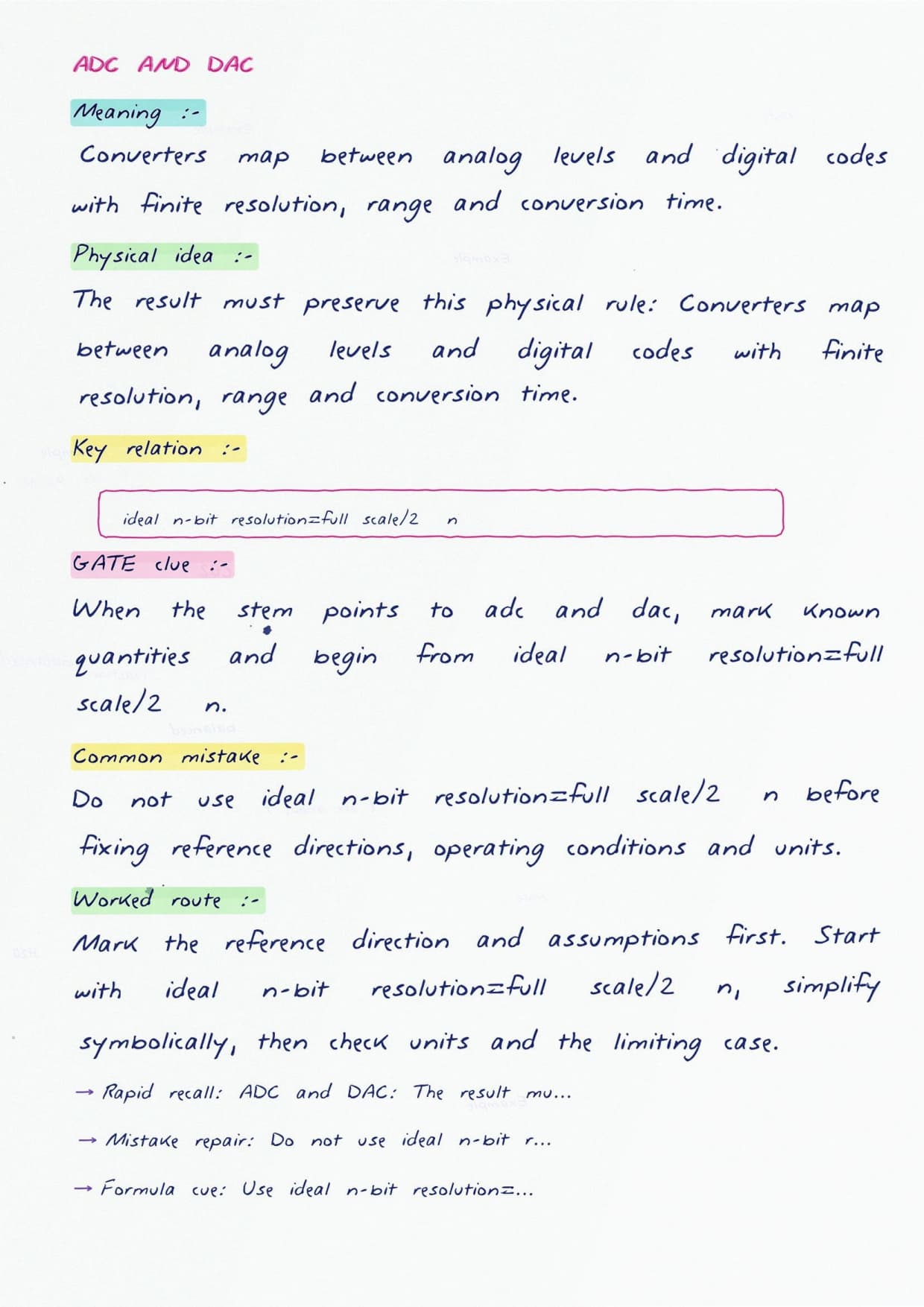
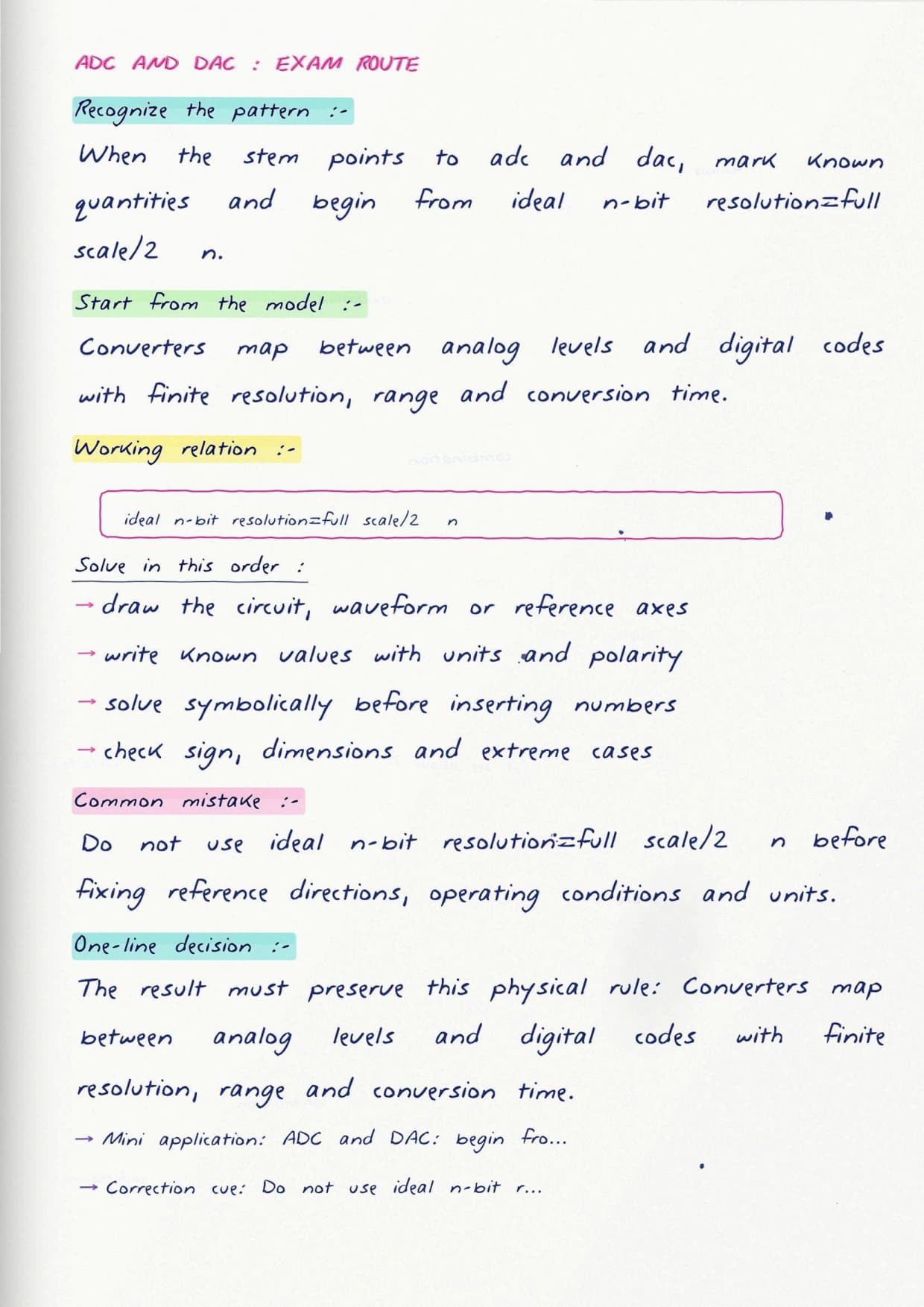
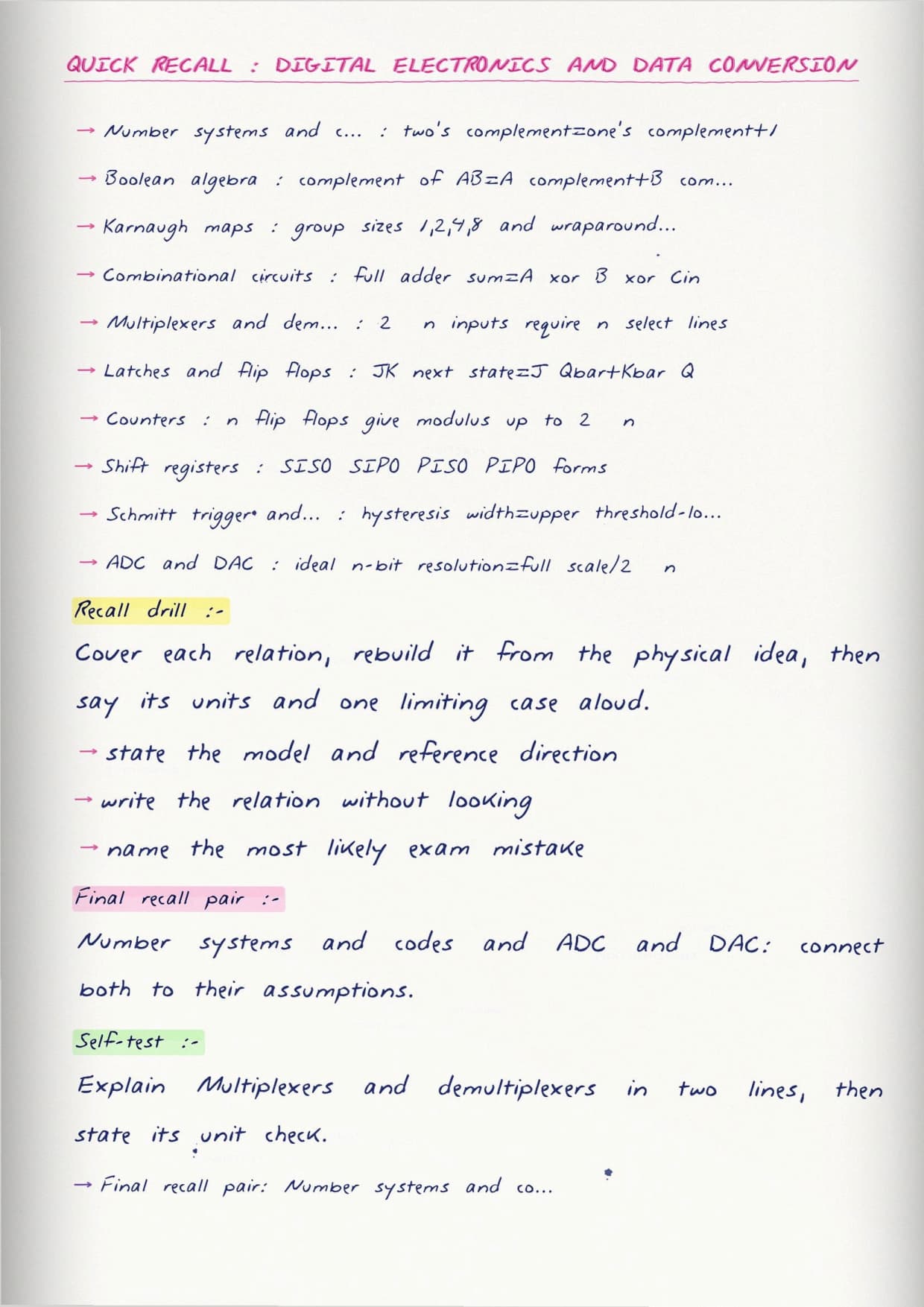
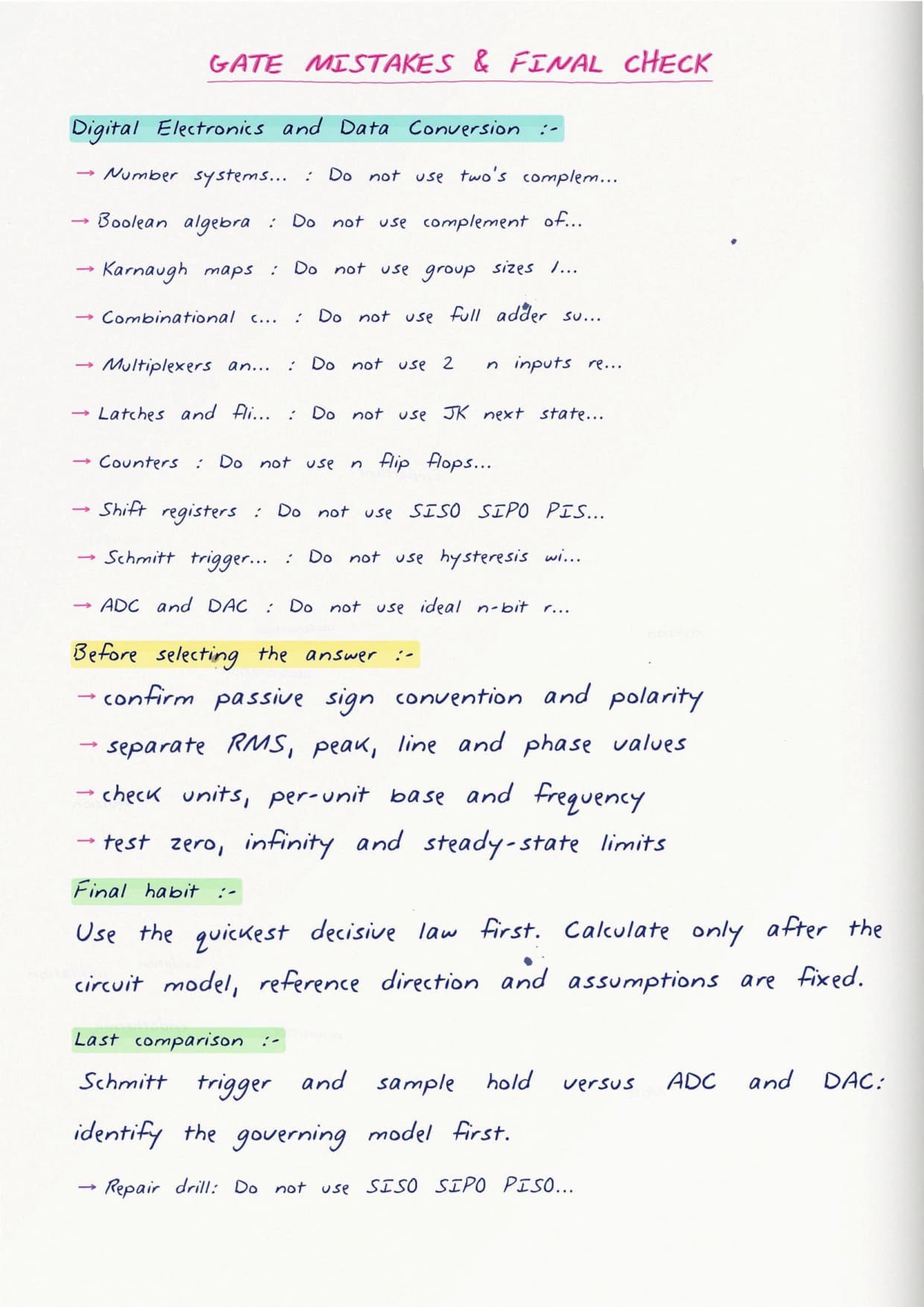
The pages start with hand-drawn truth tables and logic gate symbols, then move into Karnaugh maps that are shaded by hand to show each grouping. The counter and flip-flop timing diagrams are drawn on ruled lines so students can trace every clock edge without losing track. Each grouping on a map is circled and labelled with the term it produces, so the jump from a filled map to a minimised expression is easy to follow, even for the four-variable cases that trip students up.
- Step-by-step Boolean simplification with K-maps up to four variables and don't-care handling.
- Clean state and timing diagrams for flip-flops and counters, including ripple and synchronous types.
- A worked ADC and DAC comparison showing resolution, quantisation error and conversion time.
What These GATE Digital Electronics Notes Cover
The notes move from number systems up to data converters, keeping each idea on its own short page. They favour the results GATE tests, such as counter design and converter resolution, over long theory. A short recap line at the top of each page names the one idea that page is built around, so a quick flip through the set already works as a revision pass.
- Number systems, codes and binary arithmetic with signed representations.
- Logic gates, Boolean algebra and K-map minimisation.
- Combinational blocks: adders, multiplexers, decoders and encoders.
- Sequential blocks: latches, flip-flops, registers and counters.
GATE Digital Electronics Quick Revision
Source: Kreatryx GATE - EE, ECE & IN by Unacademy on YouTube
Topics Covered in GATE Digital Electronics
Coverage tracks the official GATE Electrical outline for digital circuits and data conversion. Each point below has its own worked page with a solved question.
- Binary, octal and hexadecimal systems with signed and complement arithmetic.
- Boolean laws, minterms, maxterms and K-map minimisation.
- Logic families with a focus on TTL and CMOS characteristics.
- Combinational design: adders, comparators, multiplexers and decoders.
- Sequential design: SR, JK, D and T flip-flops and their conversions.
- Counters and shift registers, both ripple and synchronous.
- Sample-and-hold, quantisation and the analog-to-digital converter types.
- Digital-to-analog converters, resolution and conversion accuracy.
How the Notes Are Organised
The reading order climbs from the smallest building block to the full converter. Students first fix the gate and Boolean basics, then assemble them into combinational blocks, and only then meet the clocked sequential circuits.
Data conversion sits at the end because it draws on everything before it. By that point the counter and comparator pages have already been read, so the successive-approximation converter makes immediate sense. The notes place a small worked example after each converter type, comparing a flash, a counter-type and a dual-slope design on speed and hardware, so students can pick the right one when a question describes an application. A short table on the last page lists the resolution and step size for common bit counts, which saves time in the exam.
How GATE Digital Electronics Links to Other Topics
Digital electronics is the glue between analog signals and digital processing, so it touches several other GATE subjects. Solid basics here shorten the learning curve elsewhere.
- Microprocessors reuse the same registers, counters and bus logic.
- Electrical Measurements depend on ADCs for digital meters and instruments.
- Control Systems connect through sampling and digital control ideas.
- Signals and Systems link via sampling theory and quantisation.
Important Topics in GATE Digital Electronics
A handful of areas produce most of the marks and also carry the usual traps. The notes point to each one right beside the working, with a quick reminder of the mistake students most often make there. Because the same few ideas keep returning in the paper, mastering this short list covers a large share of the likely questions.
- Counting the modulus and finding the maximum frequency of a ripple counter.
- Setup and hold timing, the reason a synchronous counter beats a ripple one.
- Flip-flop conversion, especially JK to D and D to T using excitation tables.
- Quantisation error and resolution of an ADC for a given number of bits.
- Reading a multiplexer as a function generator without a truth-table slip.
How to Prepare GATE Digital Electronics with Handwritten Notes
This topic rewards repeated small drills more than long study blocks, since most questions are quick if the method is fixed. A staged routine works well.
- First read: redraw each K-map and confirm the minimised expression yourself.
- Second pass: design a mod-N synchronous counter from a blank excitation table.
- PYQs: attempt several years of questions on counters and converter resolution.
- Final week: revise only the flip-flop excitation tables and the ADC formulas.
Why These Notes Help You Score Better
The notes reduce a broad topic to a set of quick, repeatable procedures, so students answer counter and converter questions almost on sight. Because every timing diagram is drawn edge by edge, the tricky sequential problems stop causing errors. The converter pages tie resolution and quantisation together cleanly, and with this preparation students can secure the digital electronics marks without hesitation.
GATE Electrical Digital Electronics Handwritten Notes FAQs
Ques. How many marks does digital electronics carry in GATE Electrical?
Ans. Digital electronics and data conversion generally carry about 4 to 7 marks in the GATE Electrical paper, mostly from counters, flip-flops and converter questions.
Ques. Do the notes explain both ADC and DAC?
Ans. Yes. The notes compare analog-to-digital and digital-to-analog converters, covering resolution, quantisation error and conversion time, with a hand-drawn diagram for each type.
Ques. What is the most tested part of this topic?
Ans. Counters and flip-flop conversions are tested most often, followed closely by K-map minimisation and ADC resolution, so students should drill those first.
Ques. Are excitation tables included for flip-flop conversion?
Ans. Yes. The notes give the full excitation tables for SR, JK, D and T flip-flops and show the conversion steps between them with worked examples.



Comments