




Signals, sensors, measurements and sensor fusion decide how well a robot knows the world around it, which makes them one of the most tested ideas in robotics preparation.
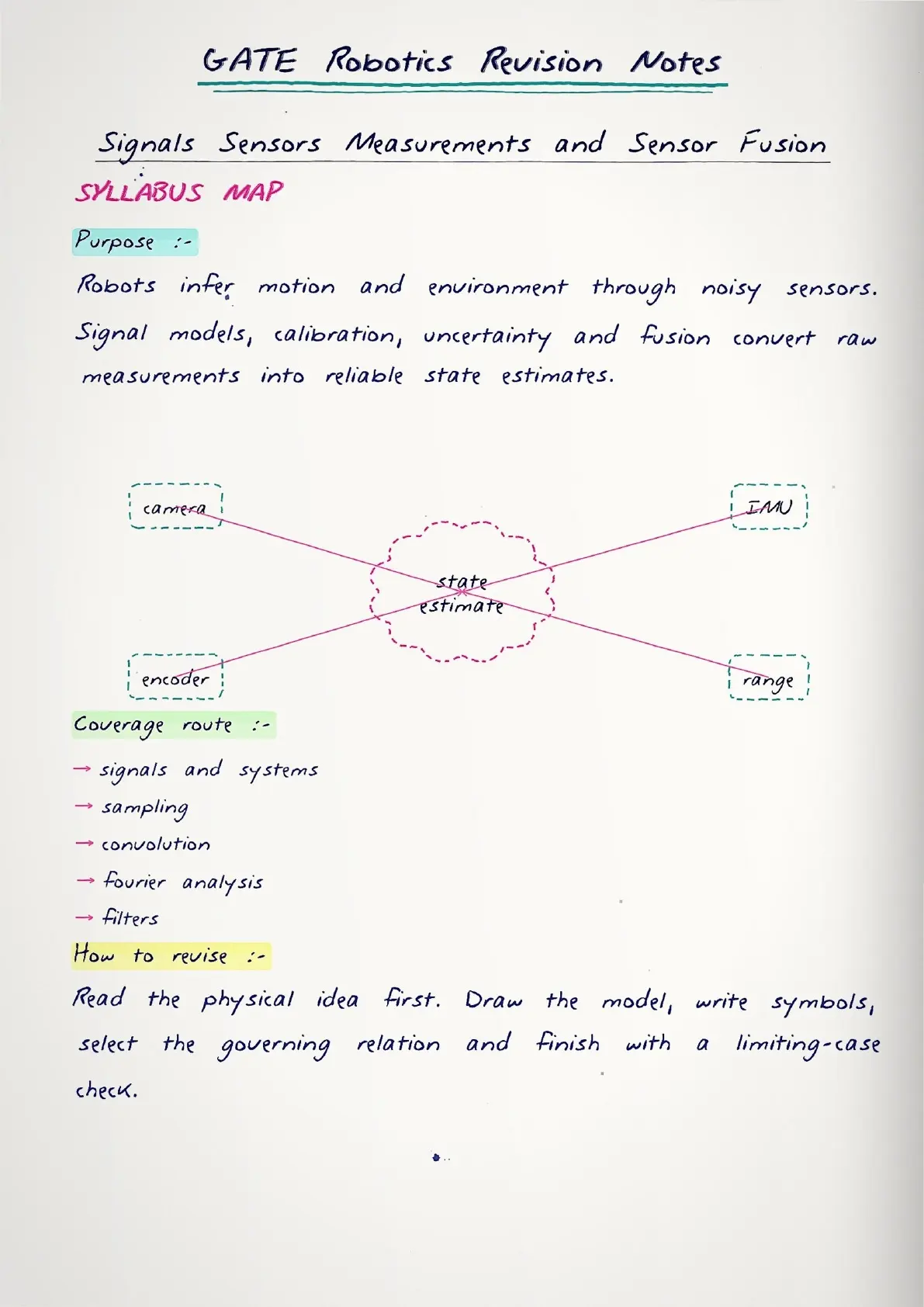
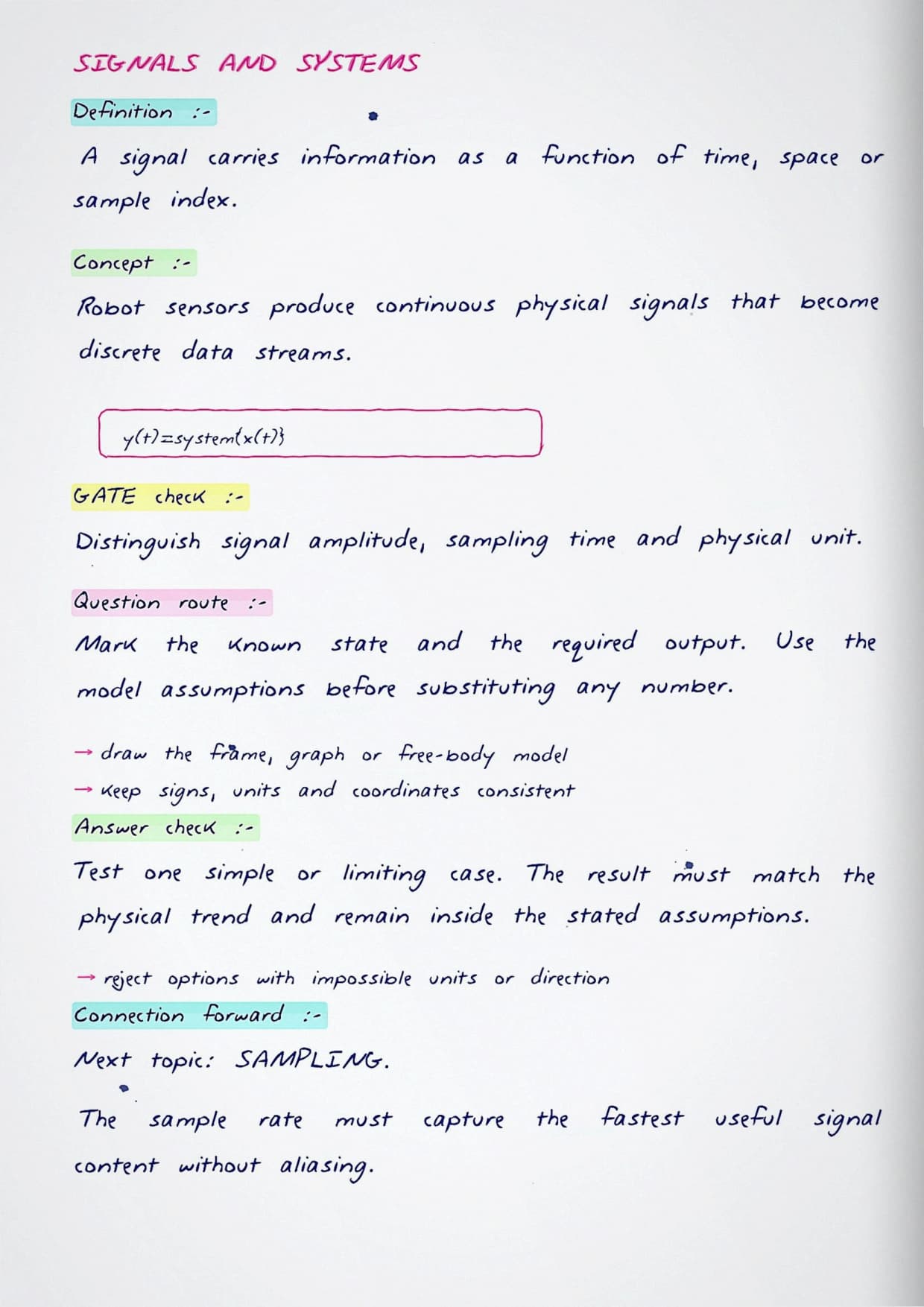
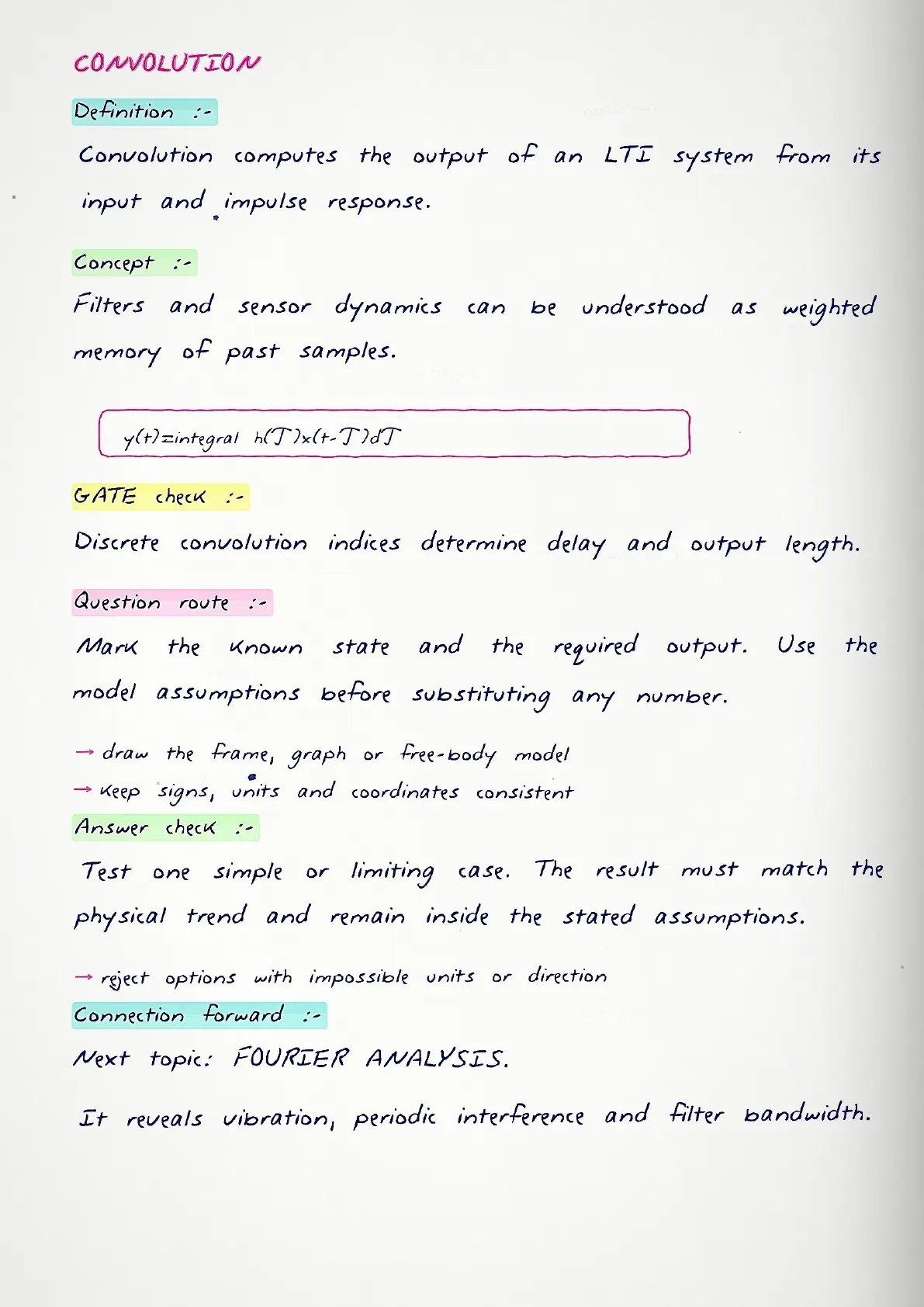
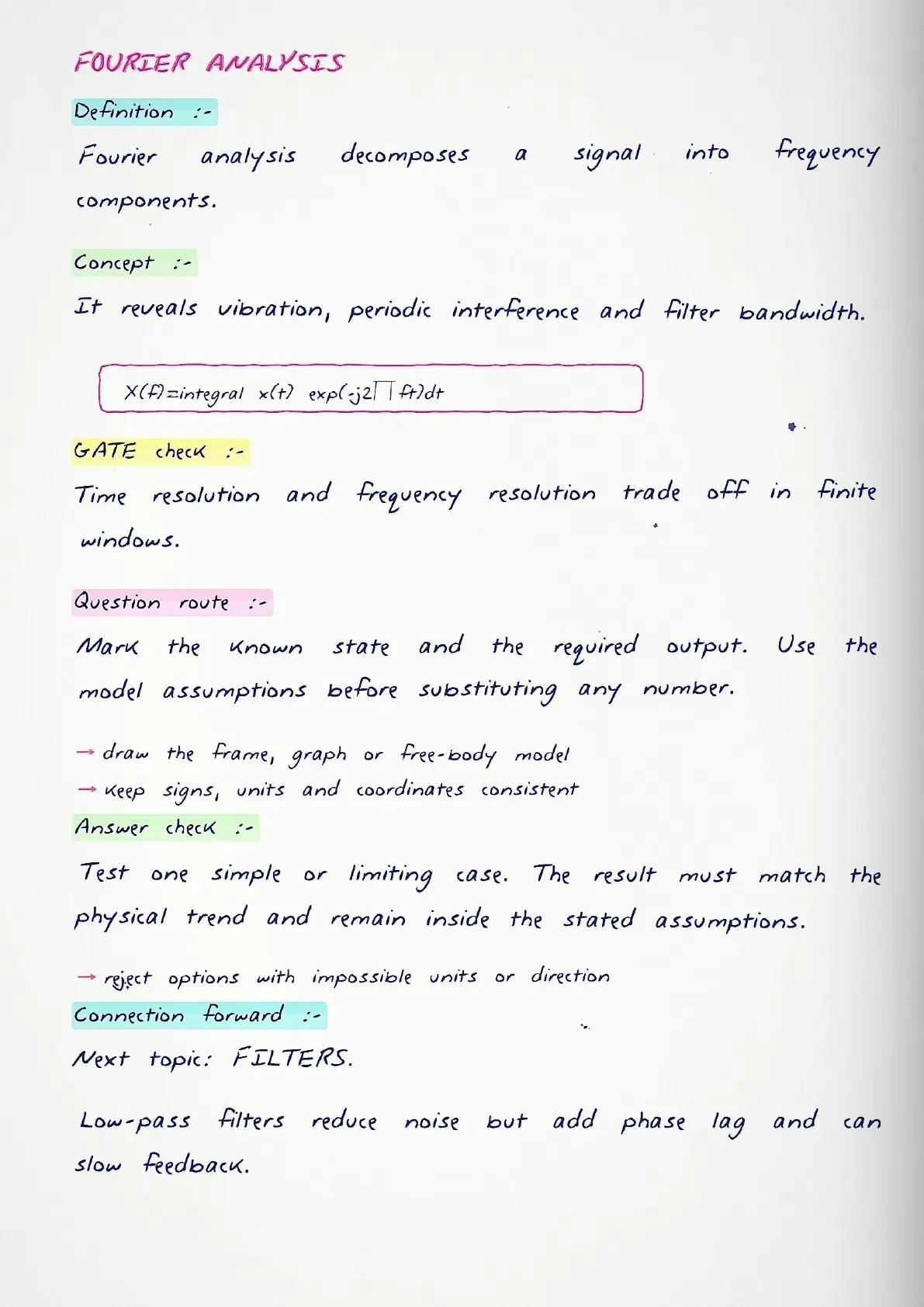
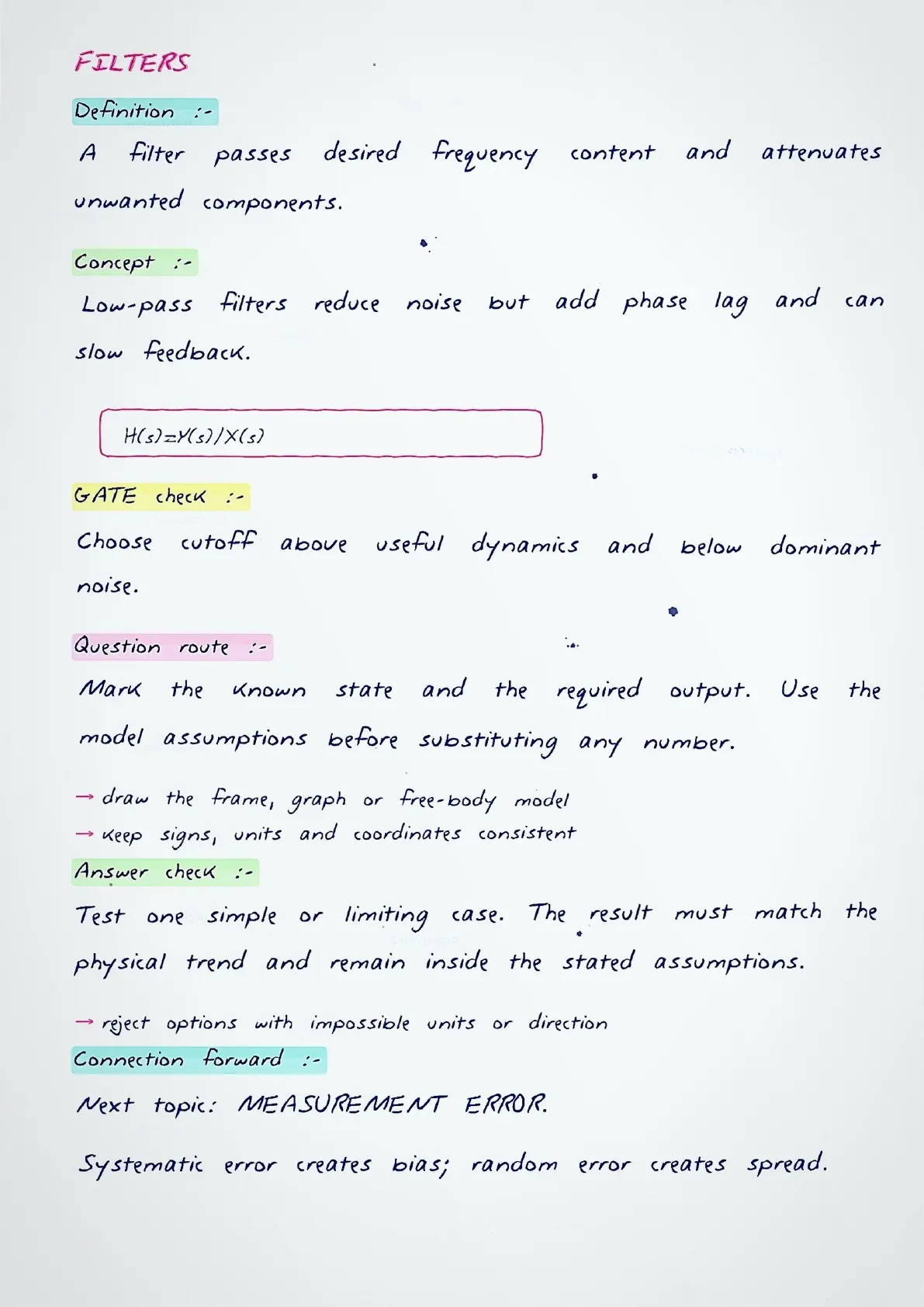
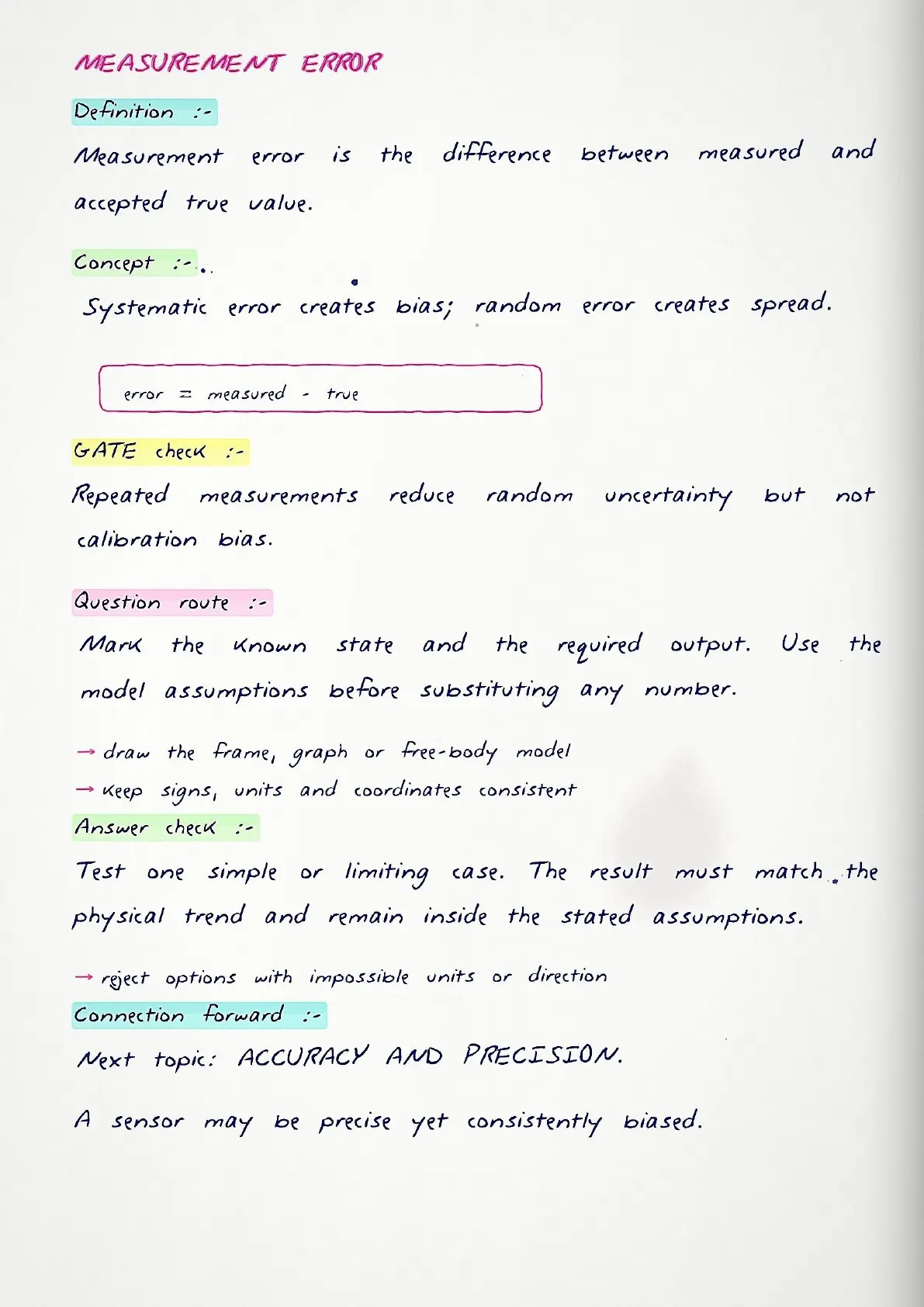
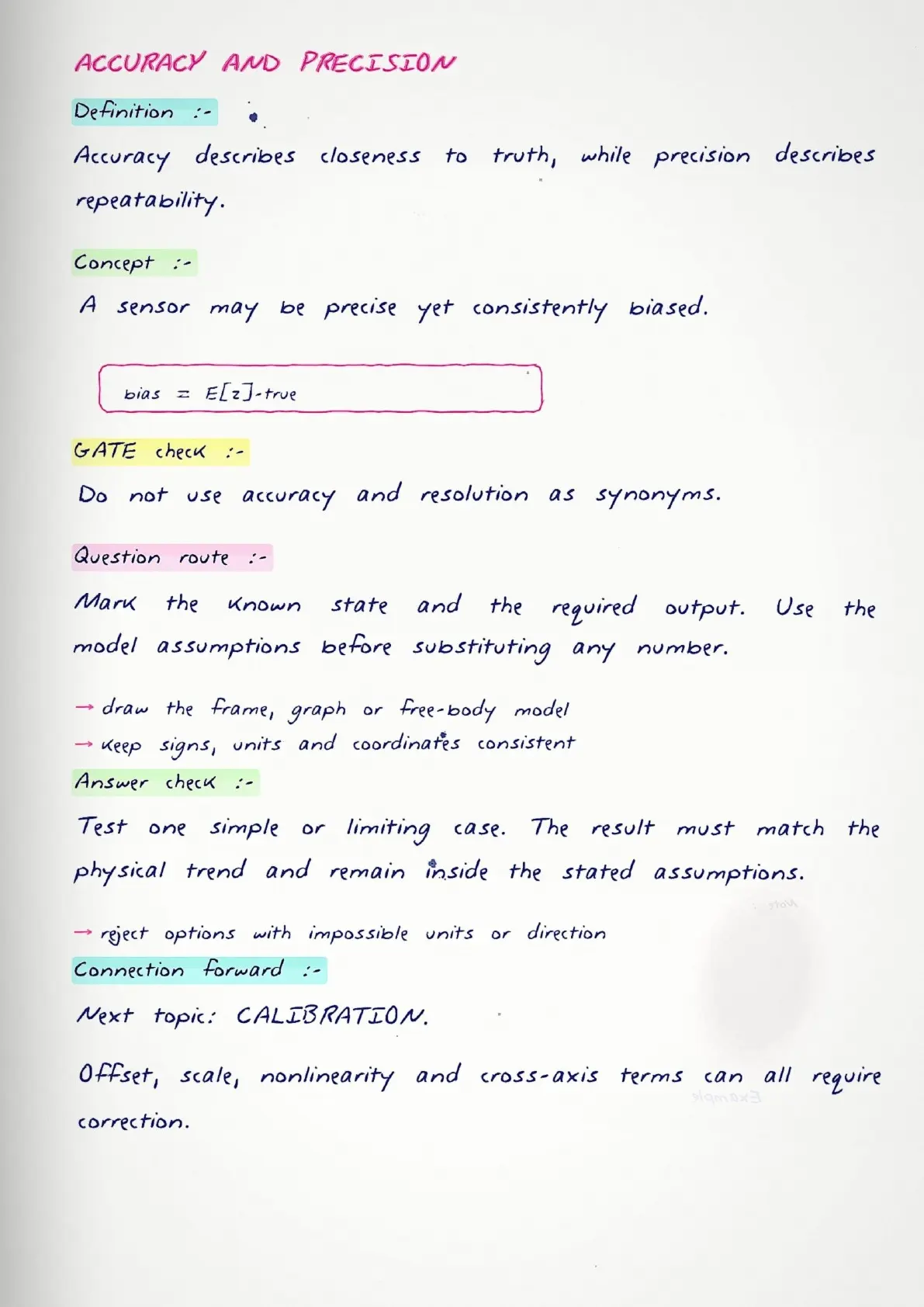
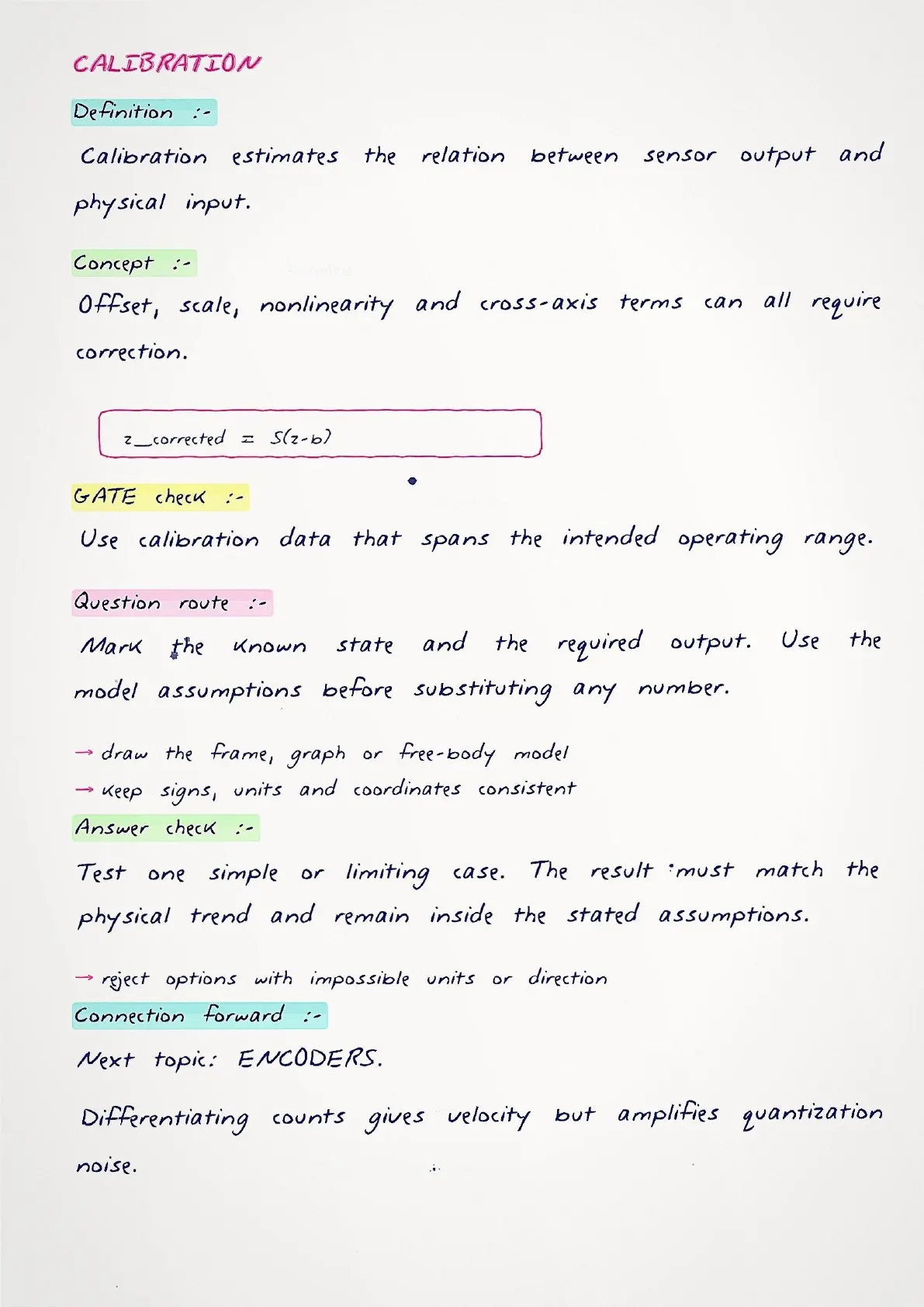
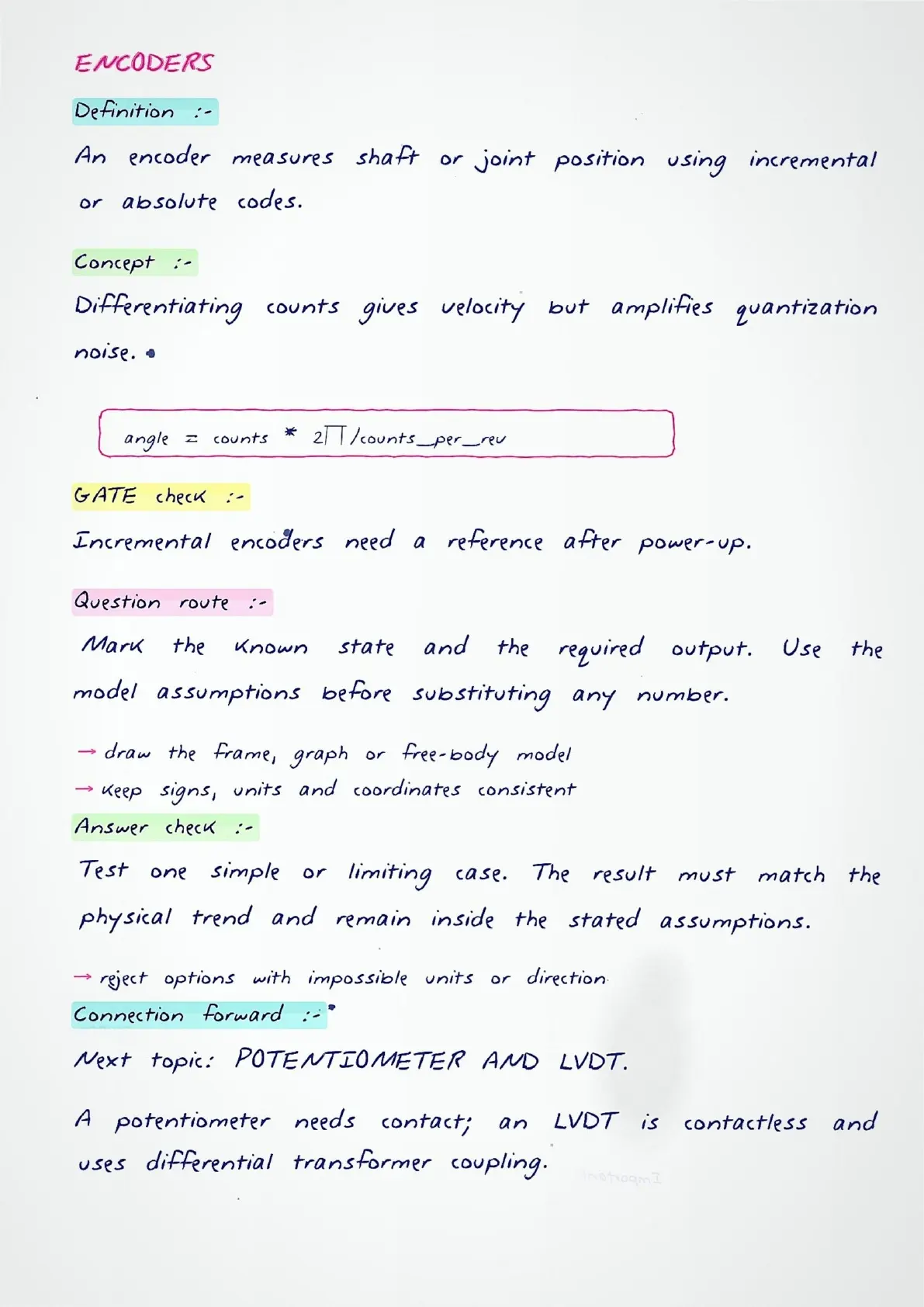
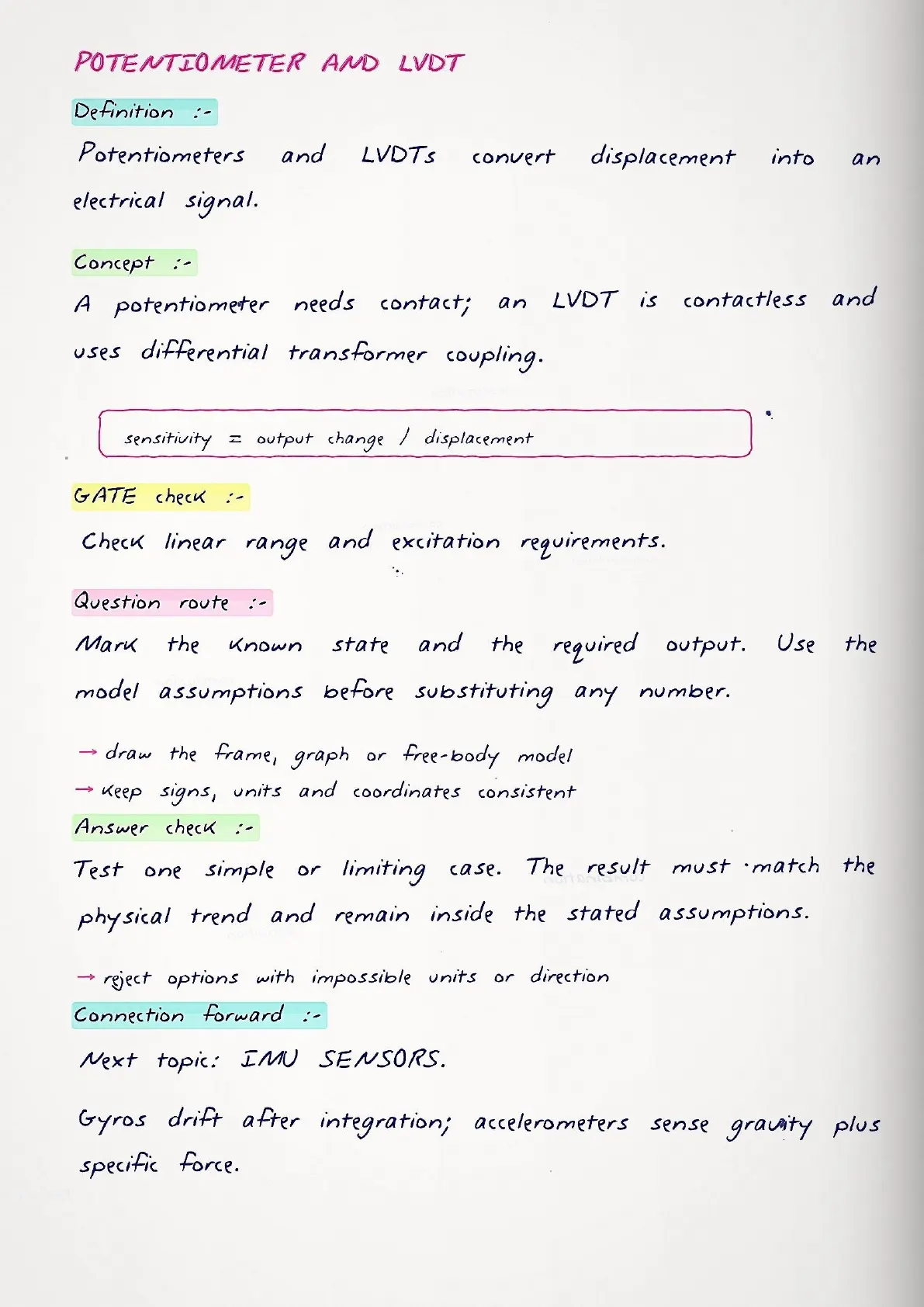
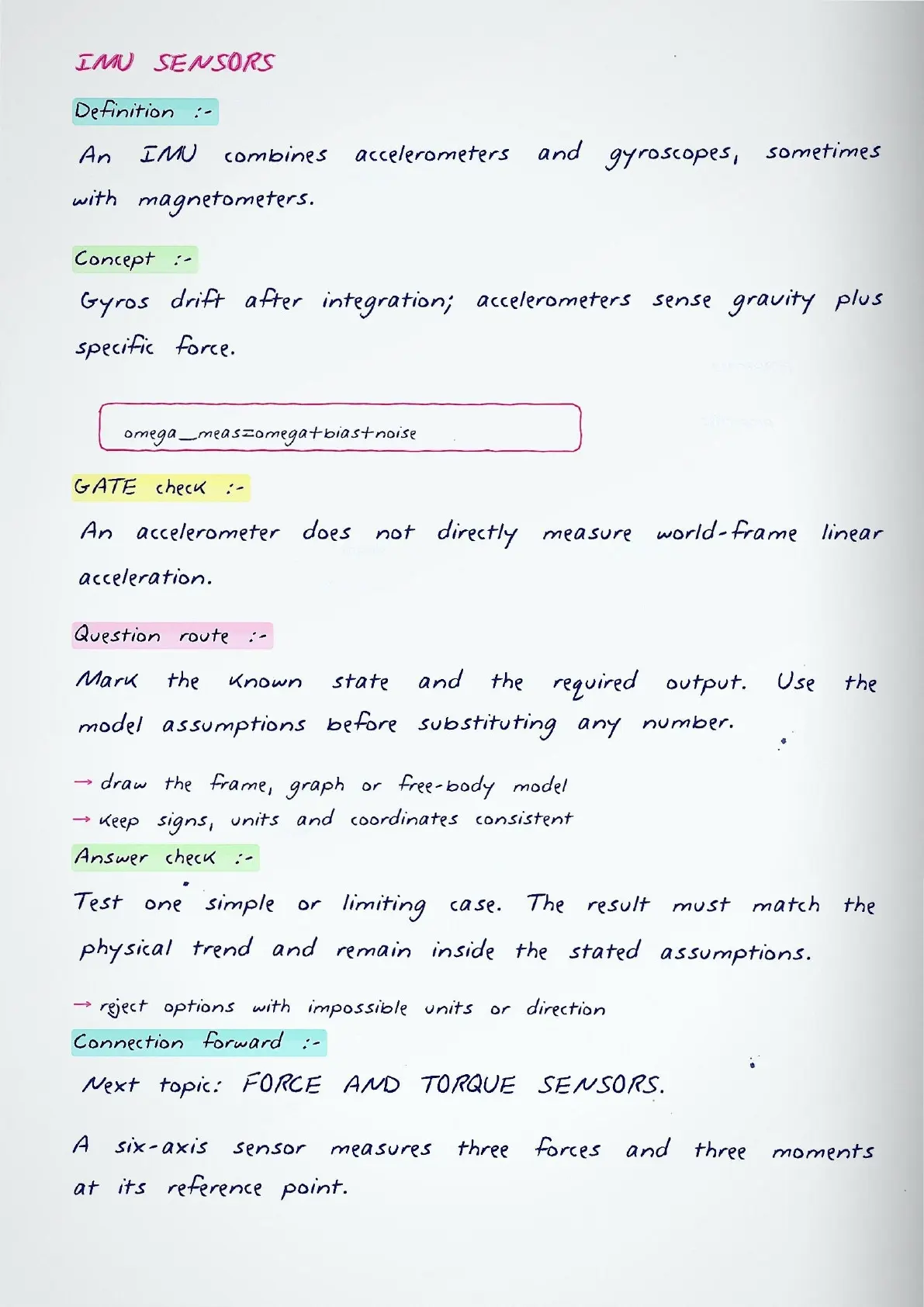
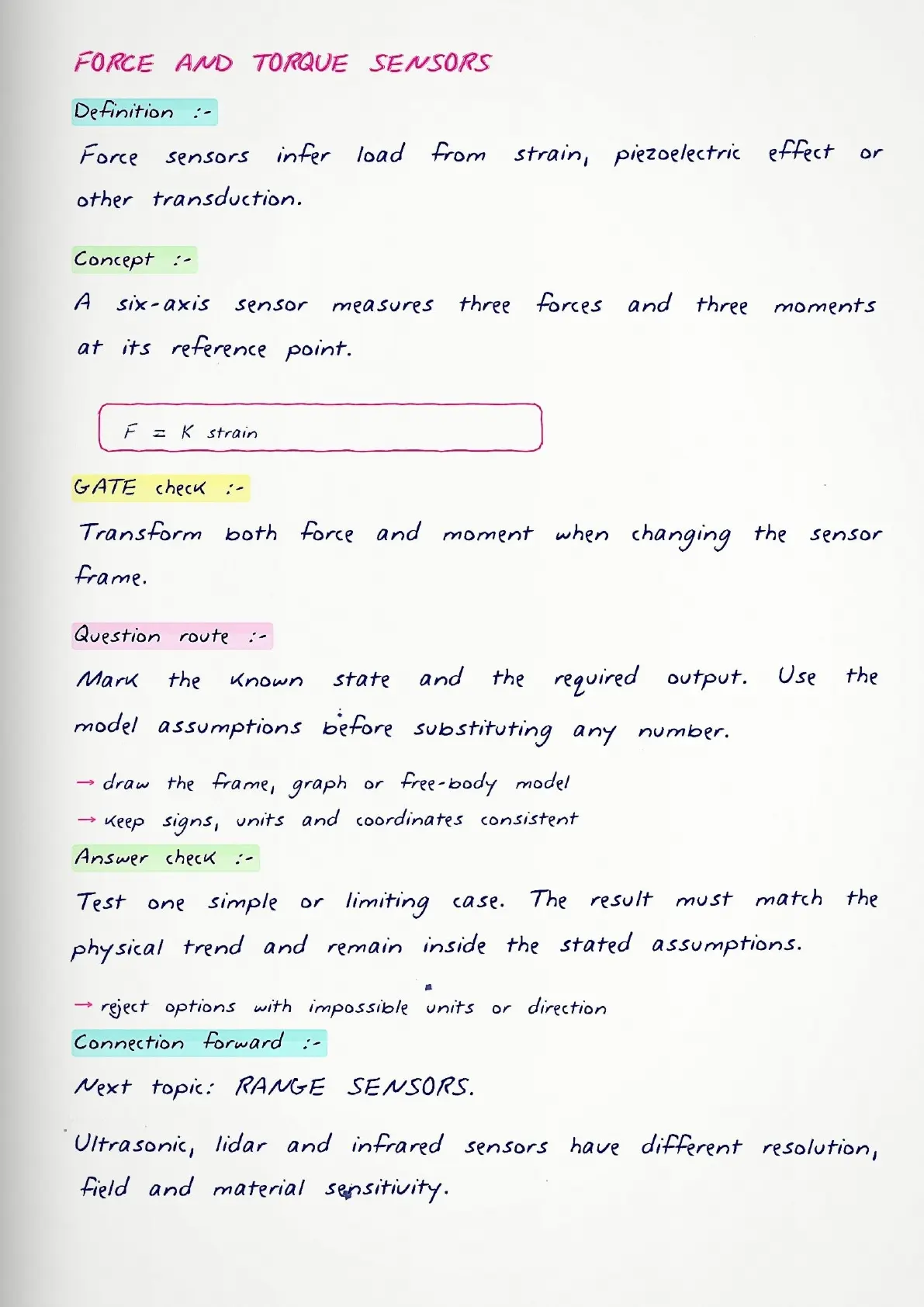
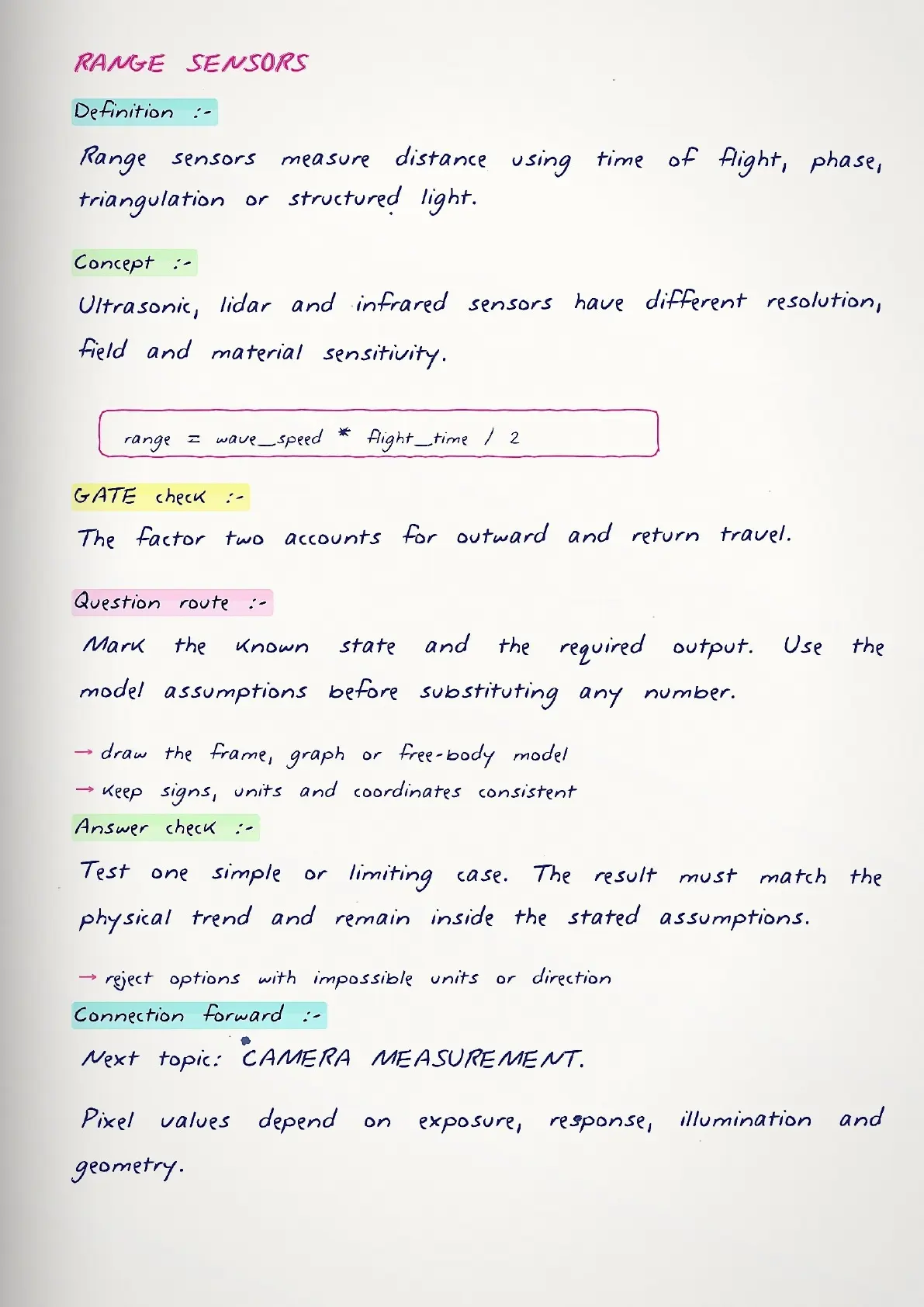
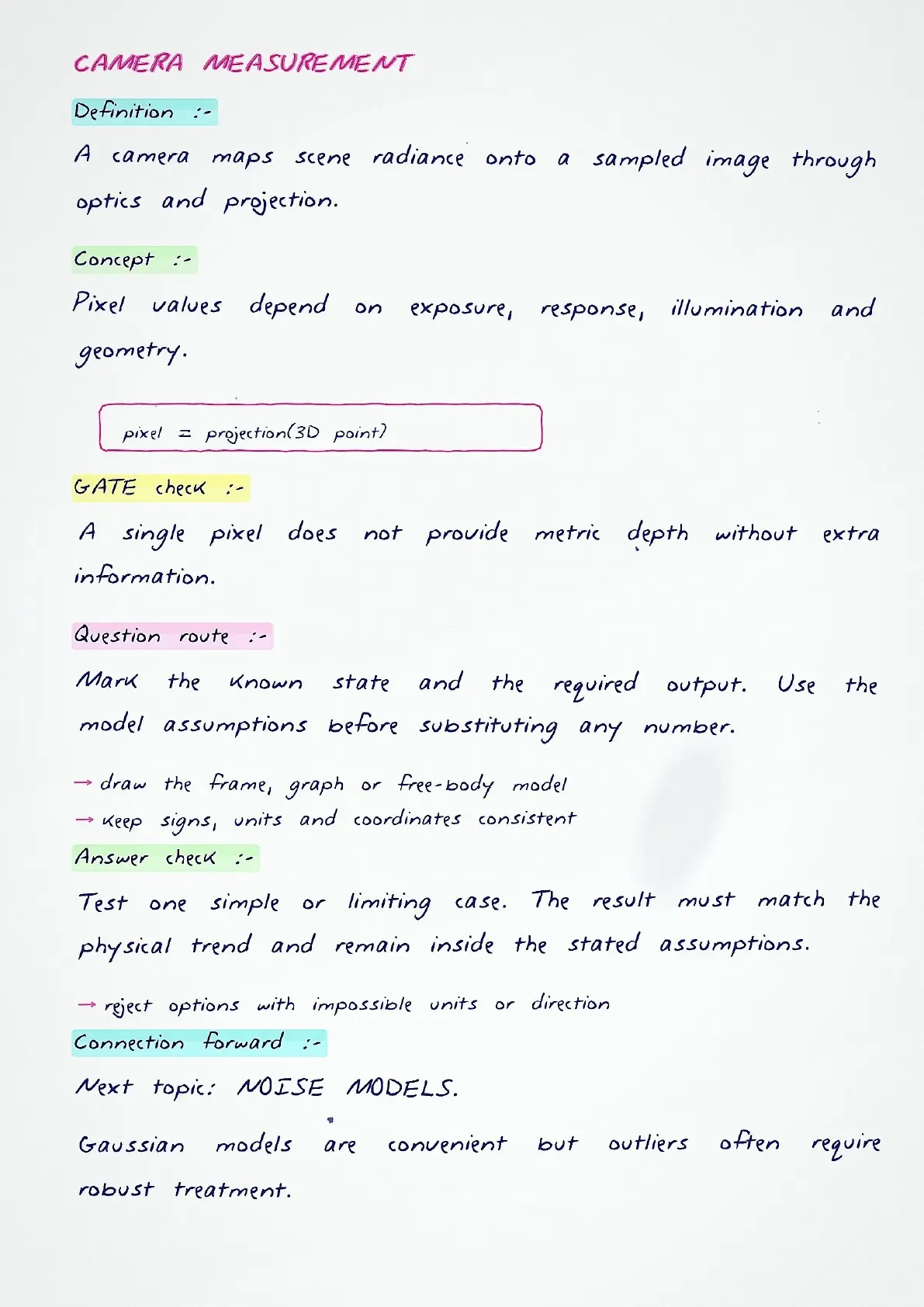
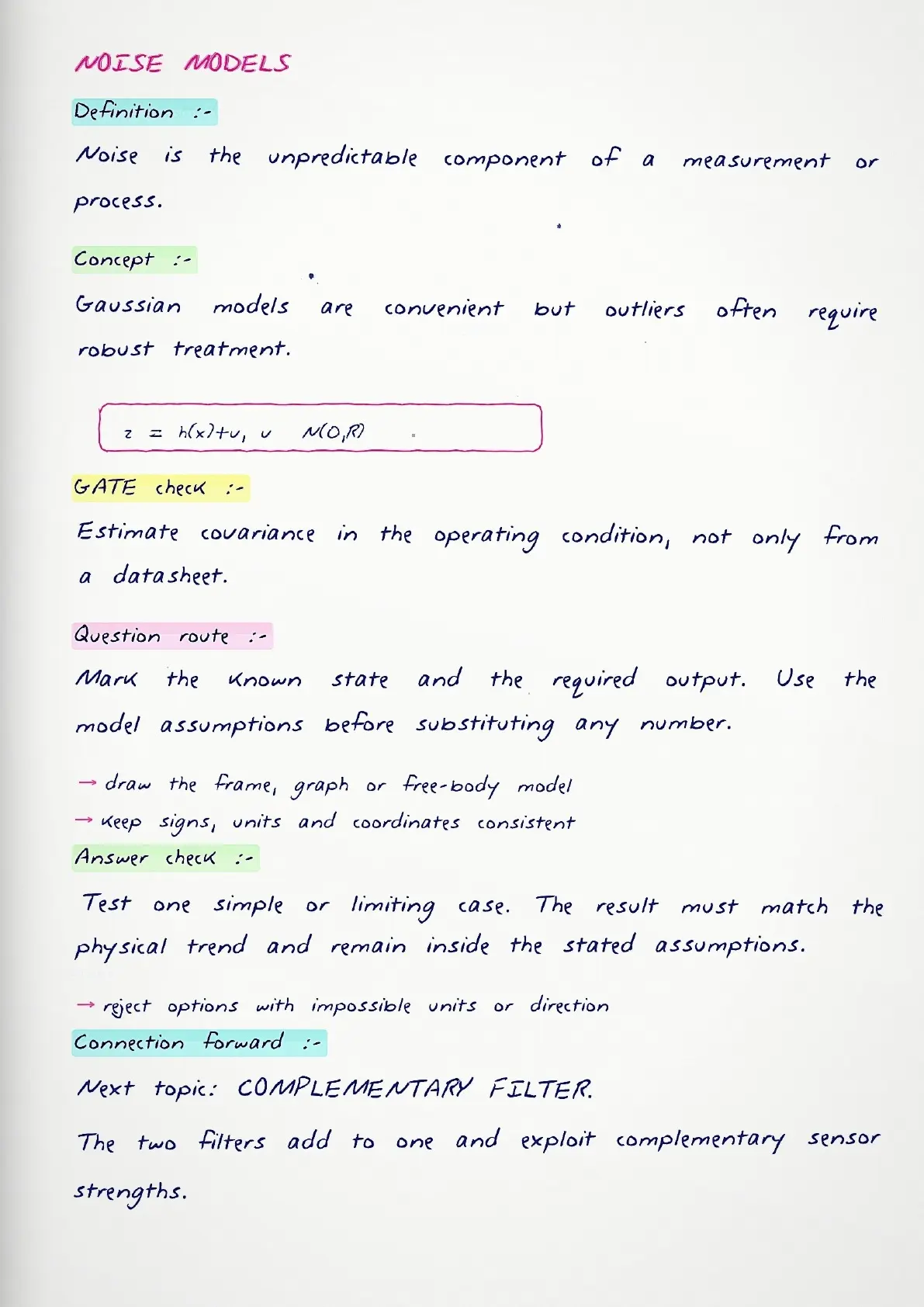
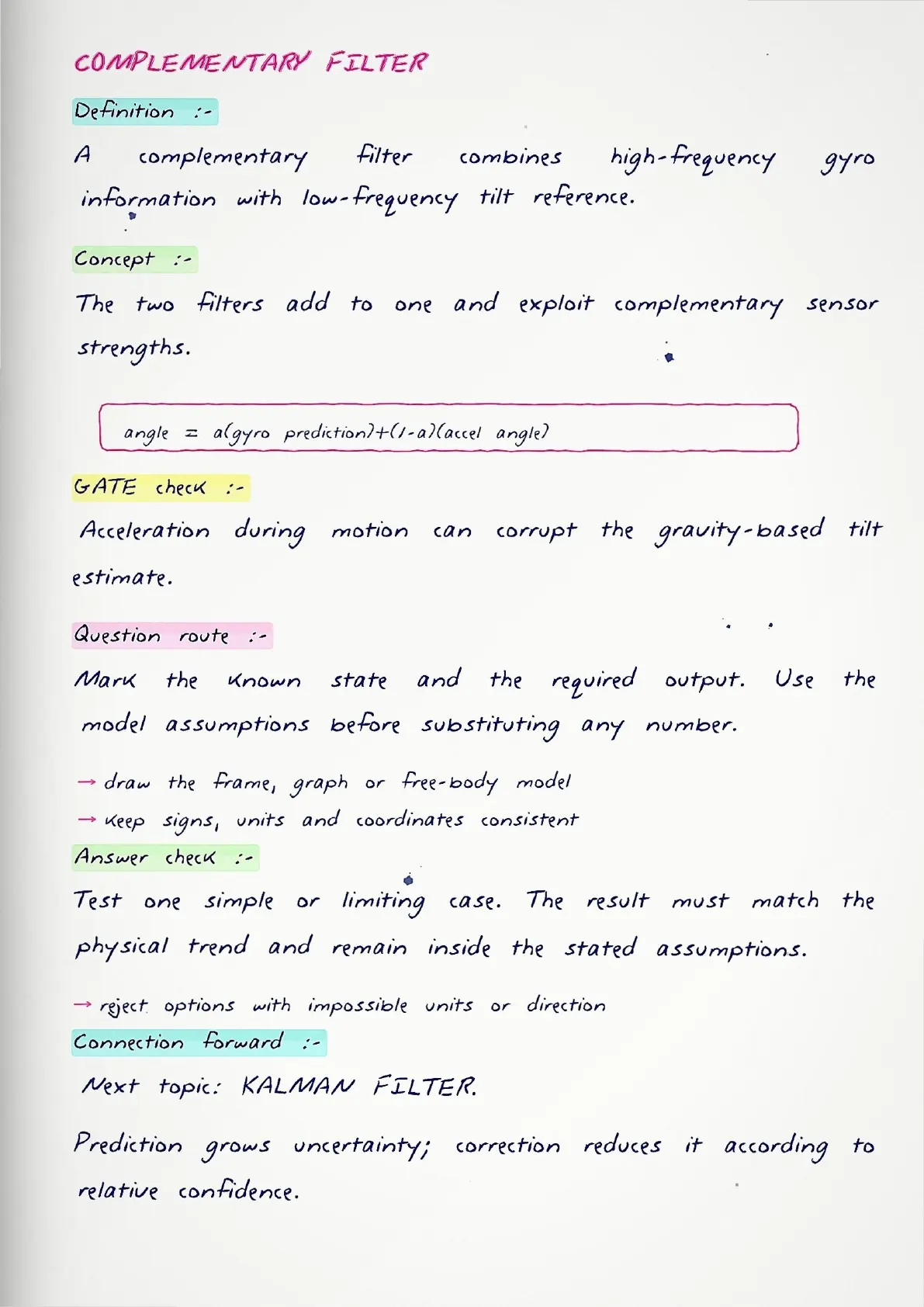
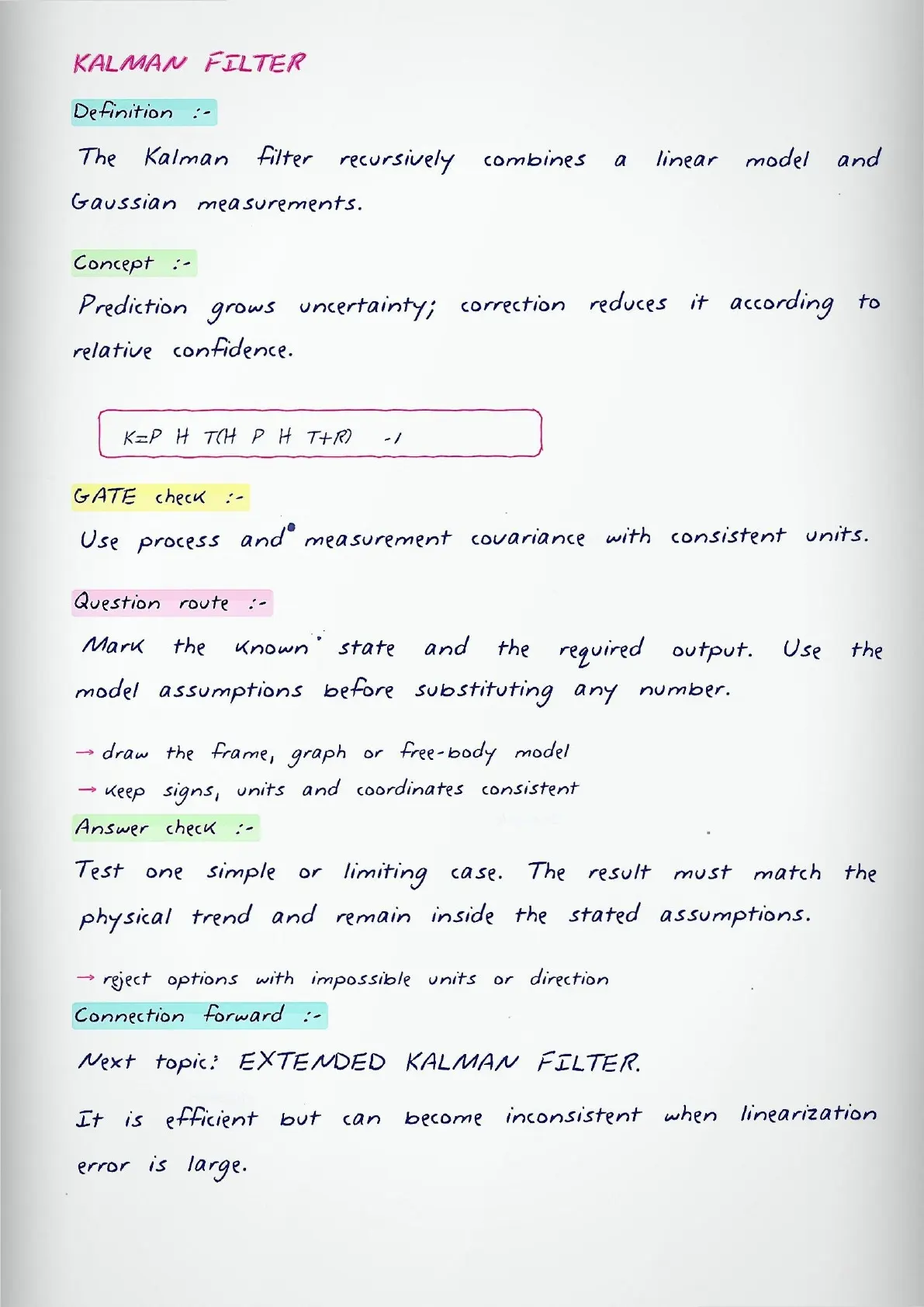
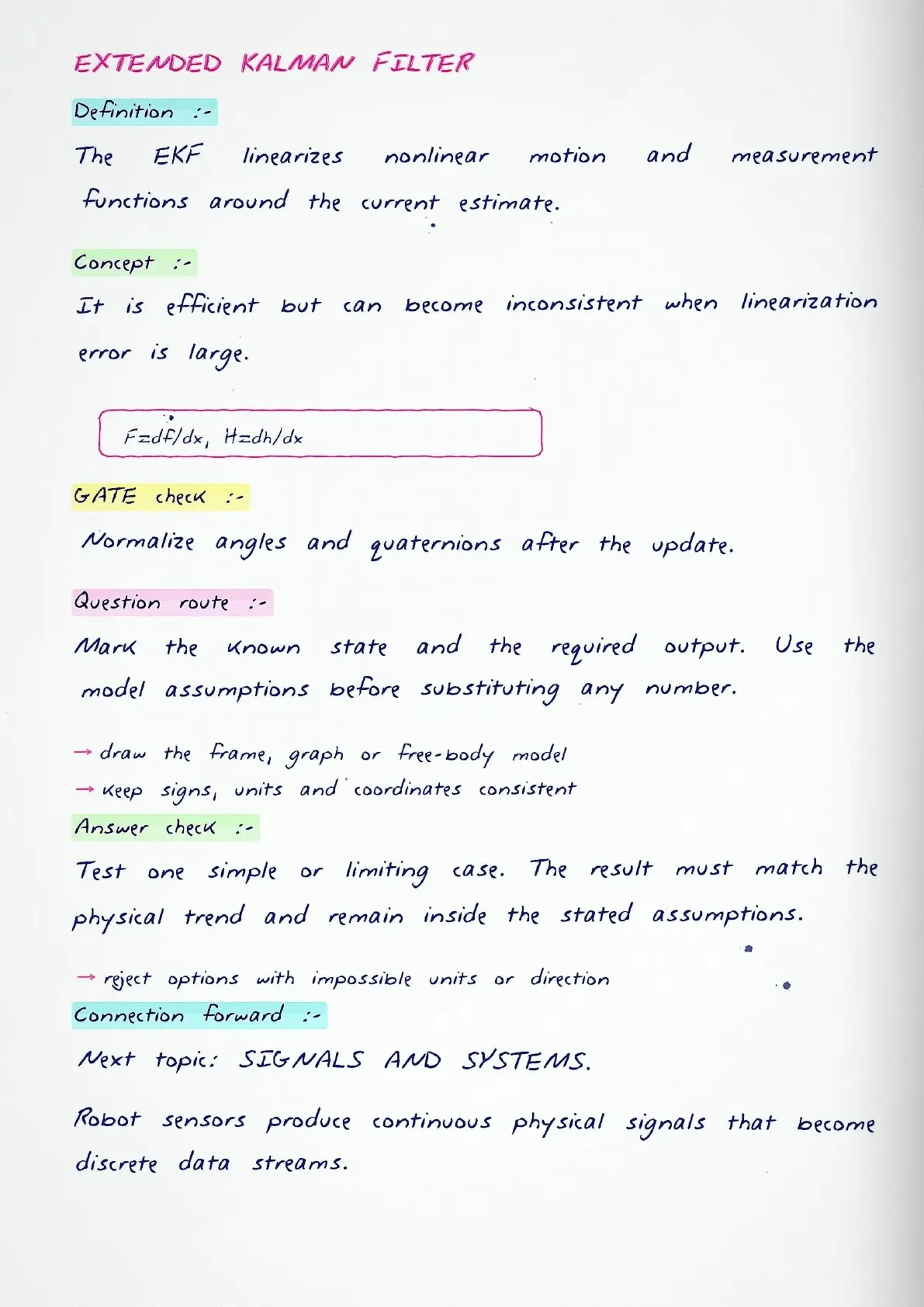
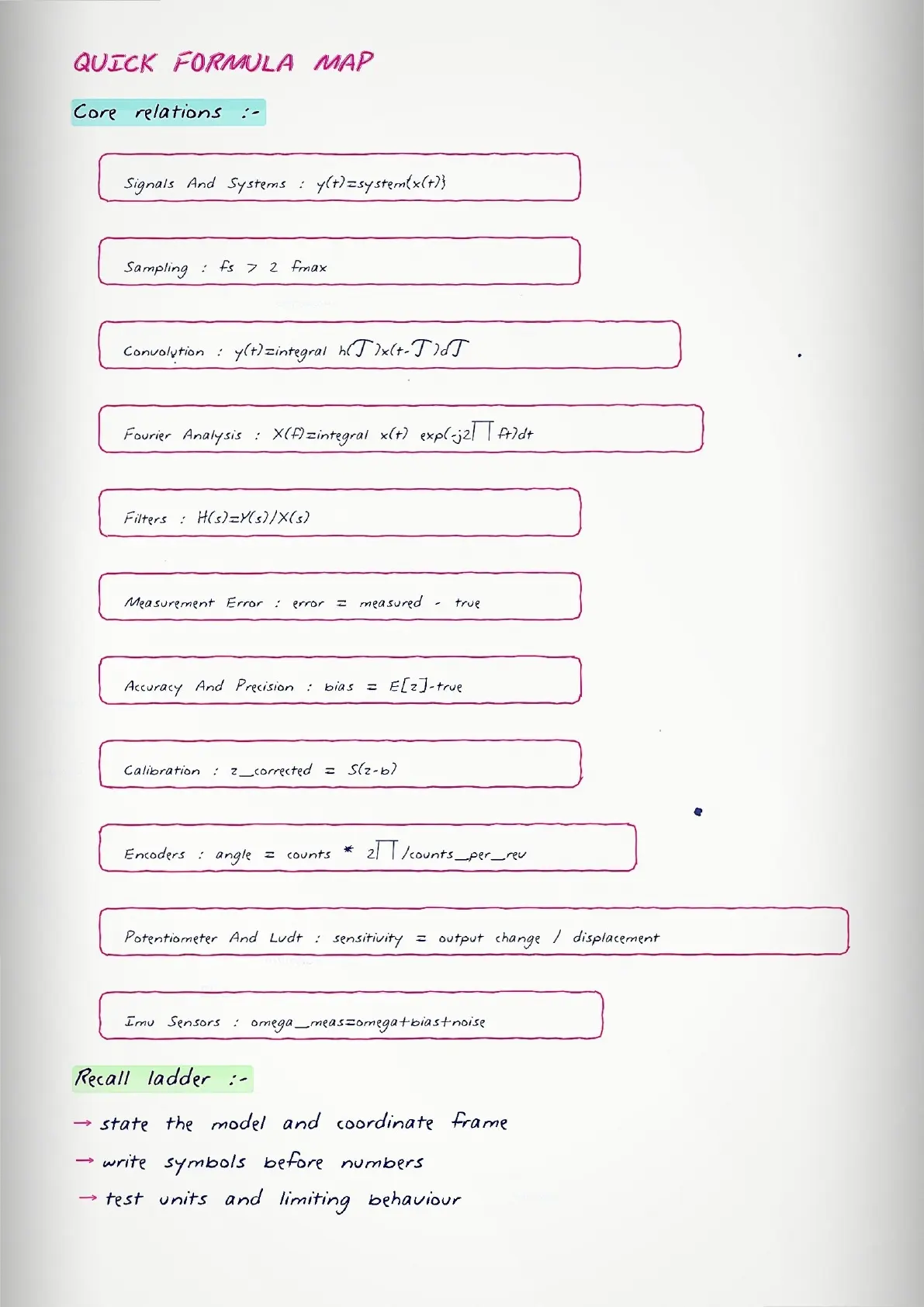
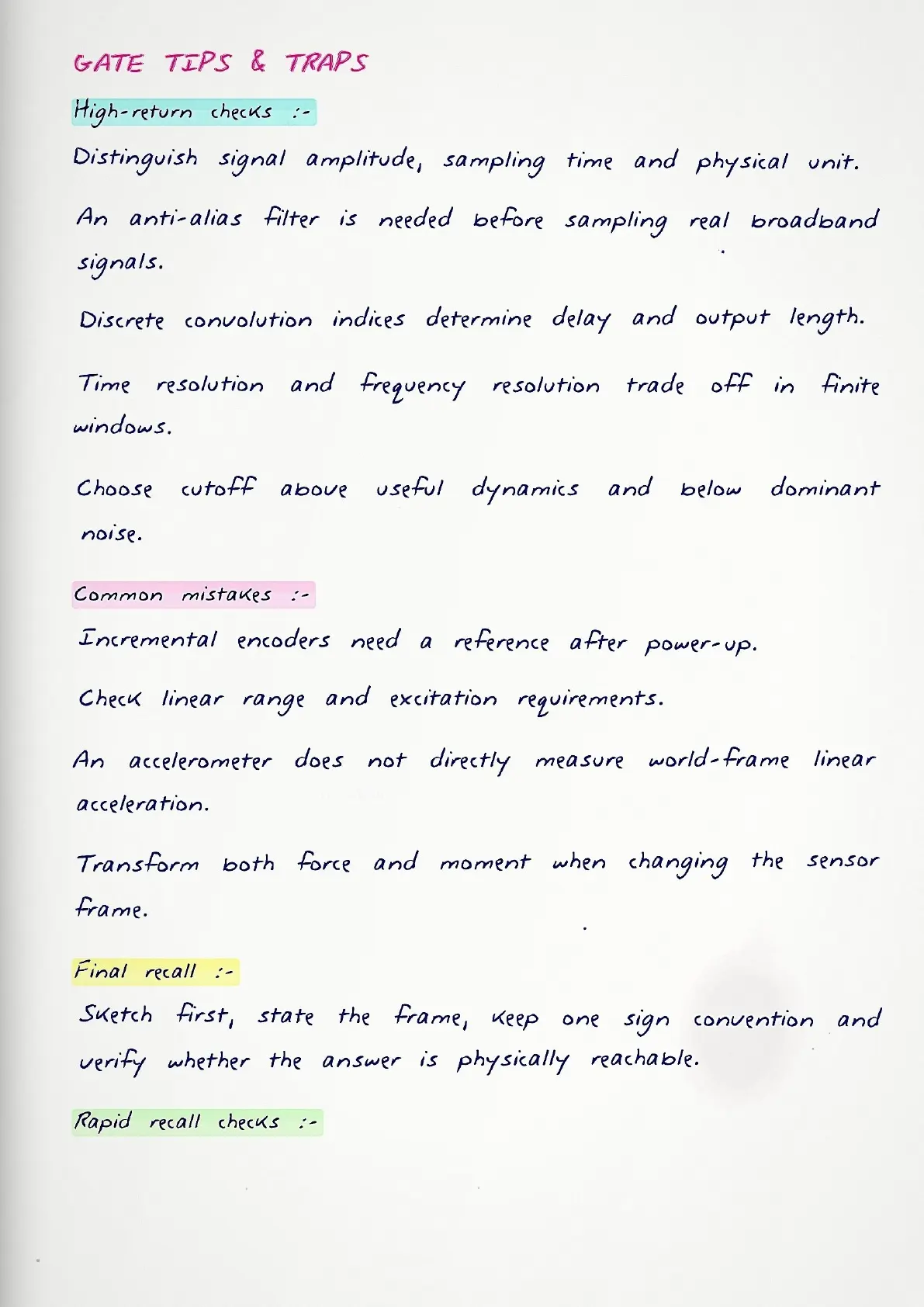
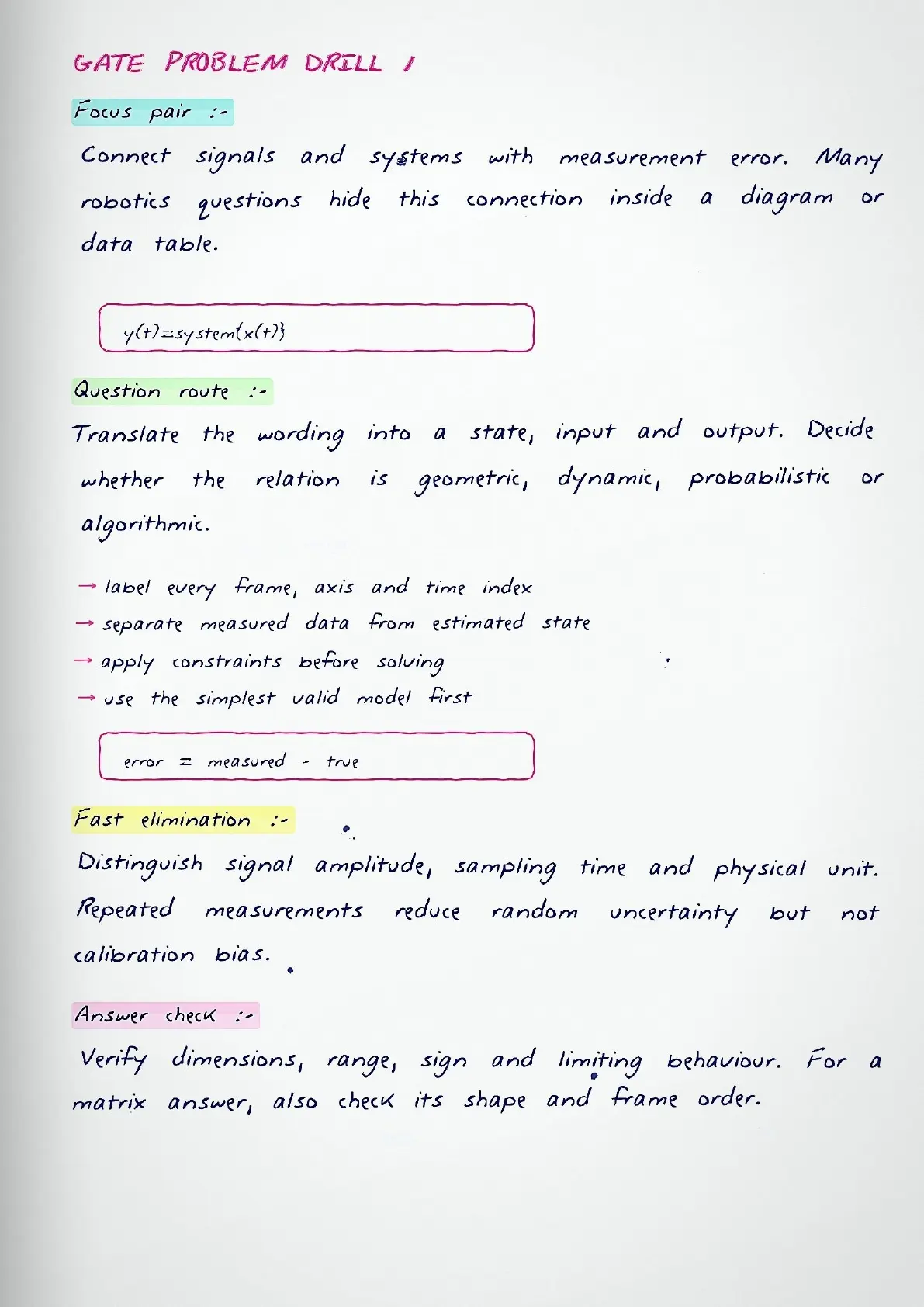
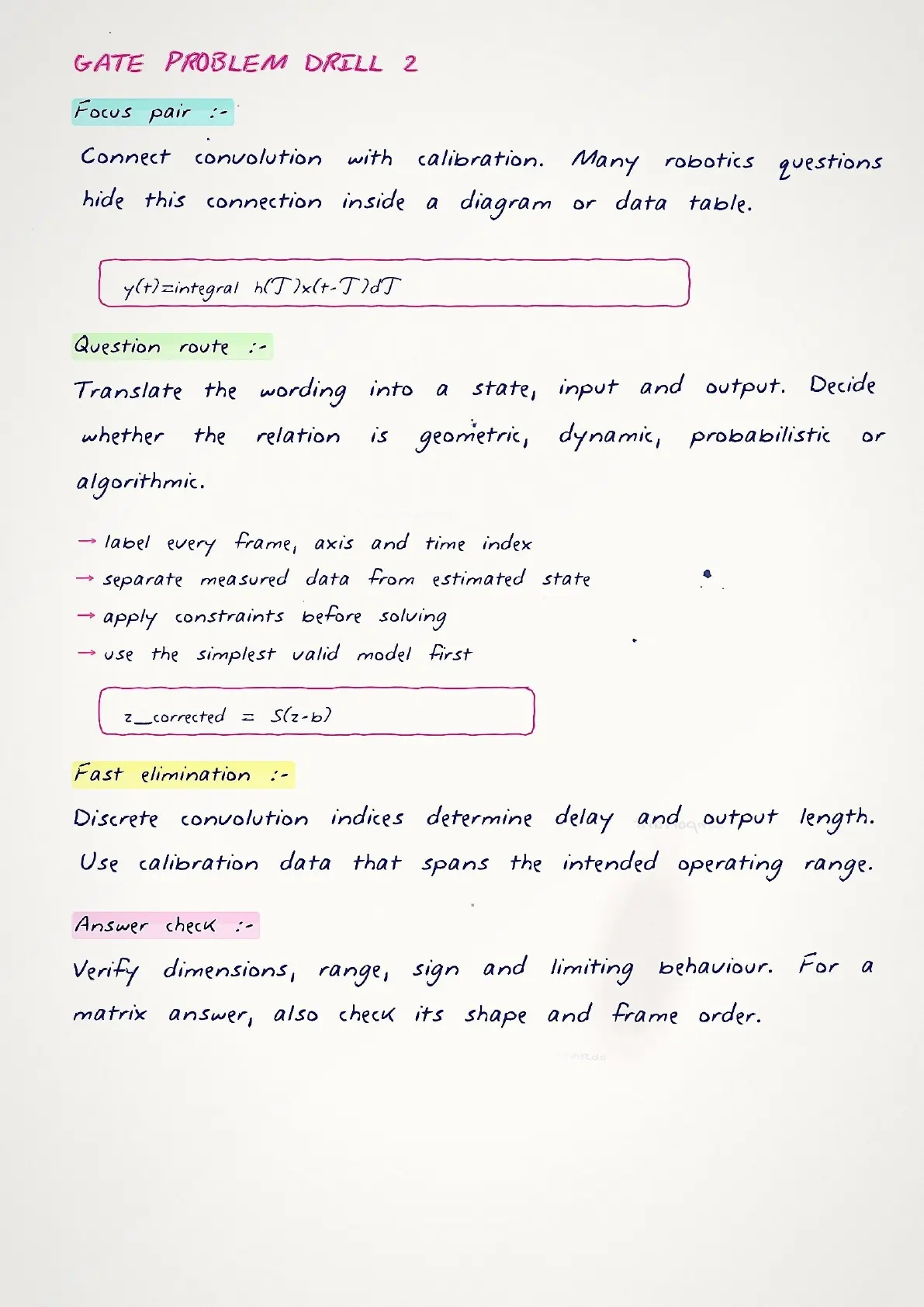
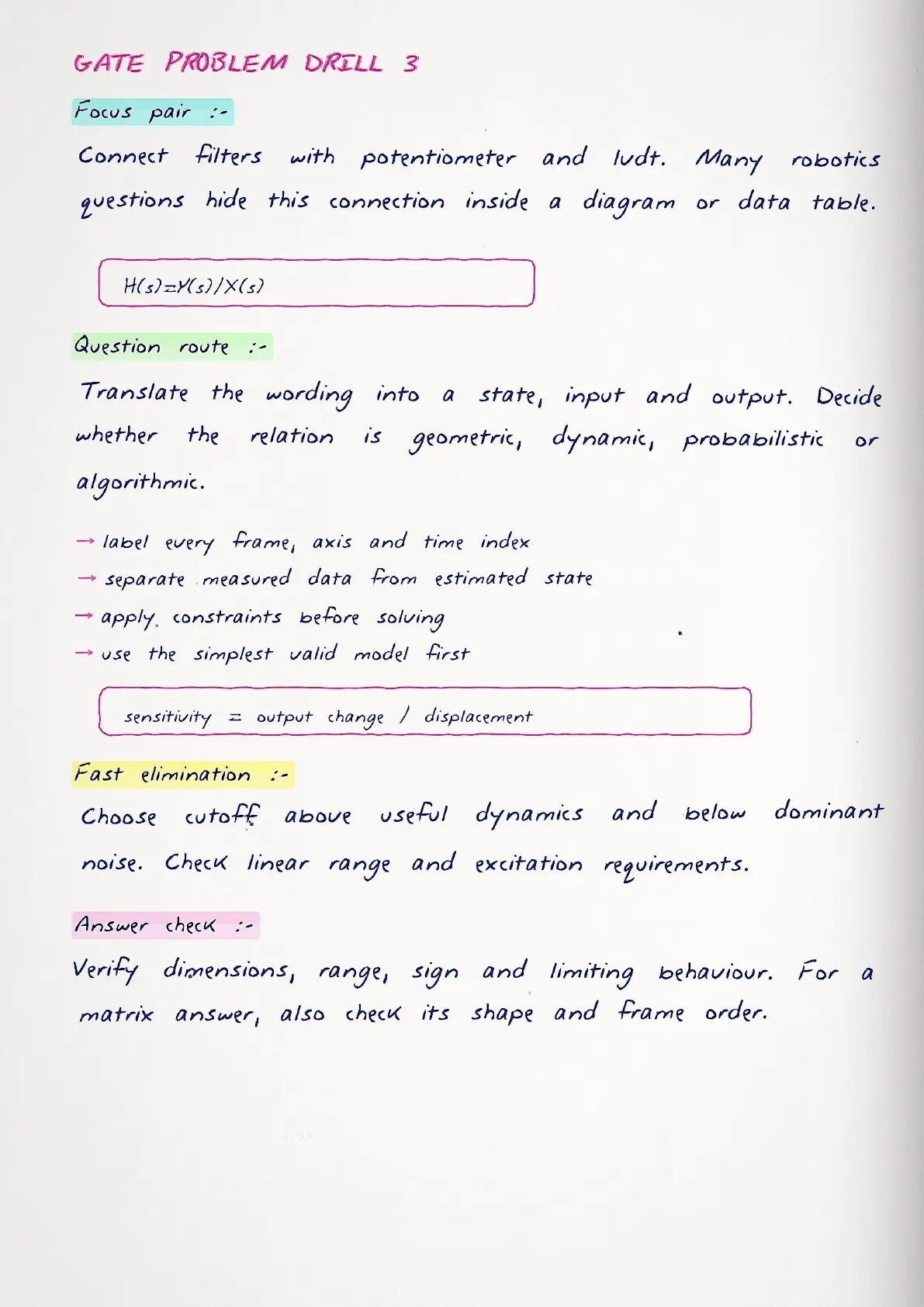
These handwritten notes trace one reading from the moment a sensor picks it up to the moment a filter turns noisy readings into a single trustworthy estimate. The estimation part leans on the probability and linear systems tools that appear across GATE papers.
Follow One Reading From Sensor to Estimate
The notes are laid out as a journey rather than a list. A single quantity, say the tilt of a robot, is followed from the physical world to a clean number the controller can use.
Each stage gets its own page block, and the same reading is carried through, so students see how noise enters early and how it is beaten down later. Reading the set in order is the whole point.
Stage One: The Sensor and the Physical Quantity
Every measurement starts with a device that turns something physical into a voltage or a count.
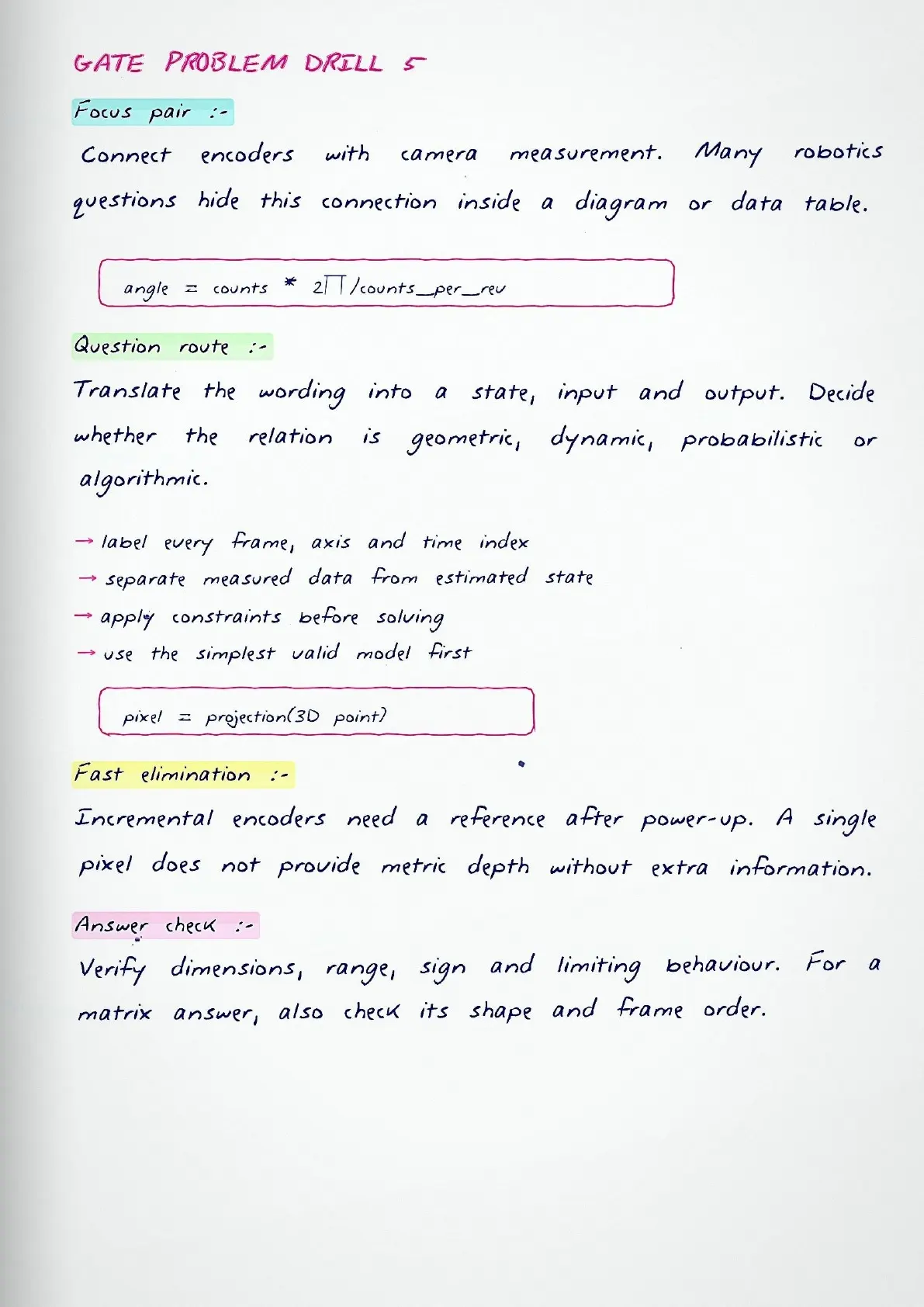
- Encoders and potentiometers for angle and position.
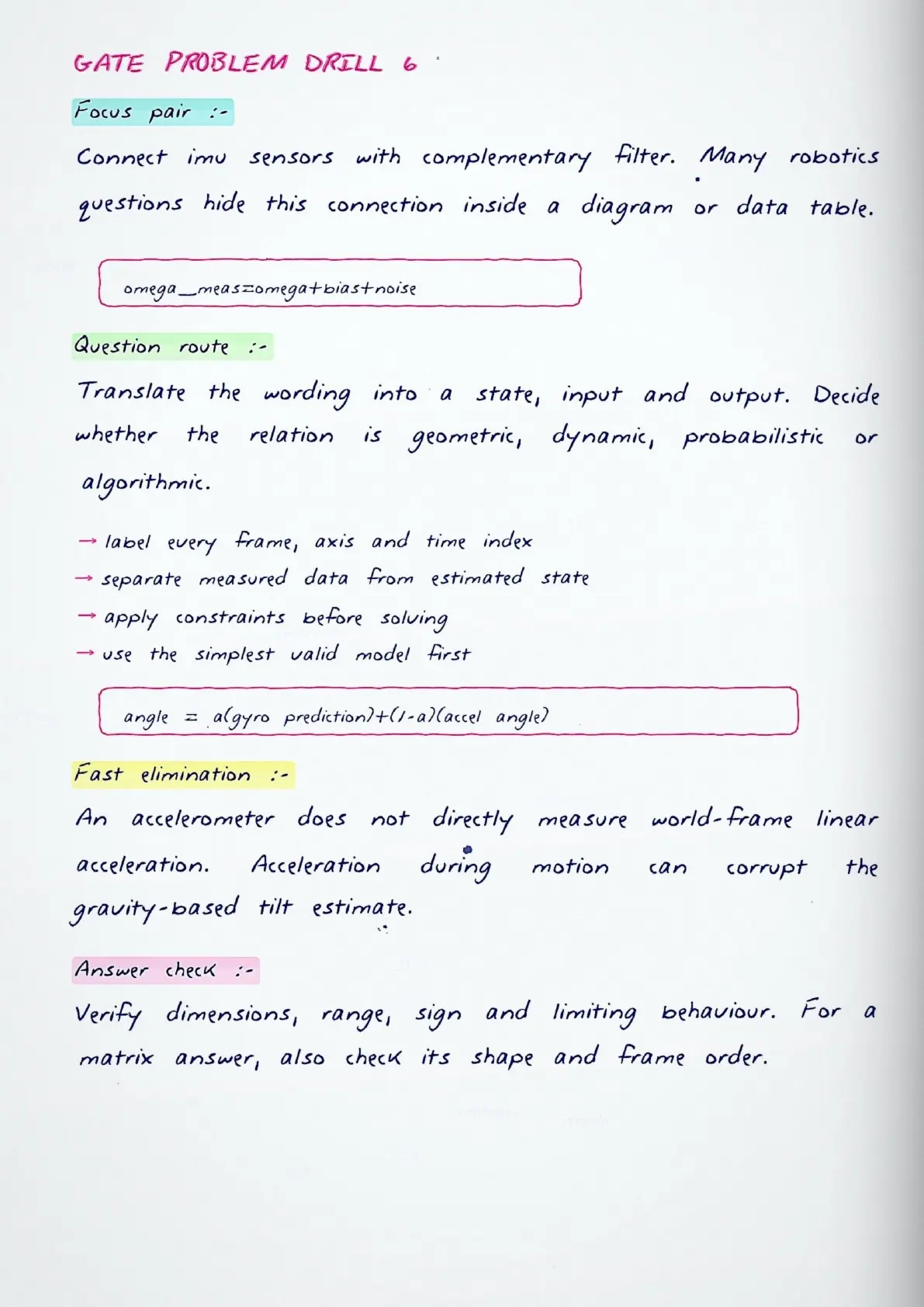
- Accelerometers and gyroscopes, the pair inside every inertial unit.
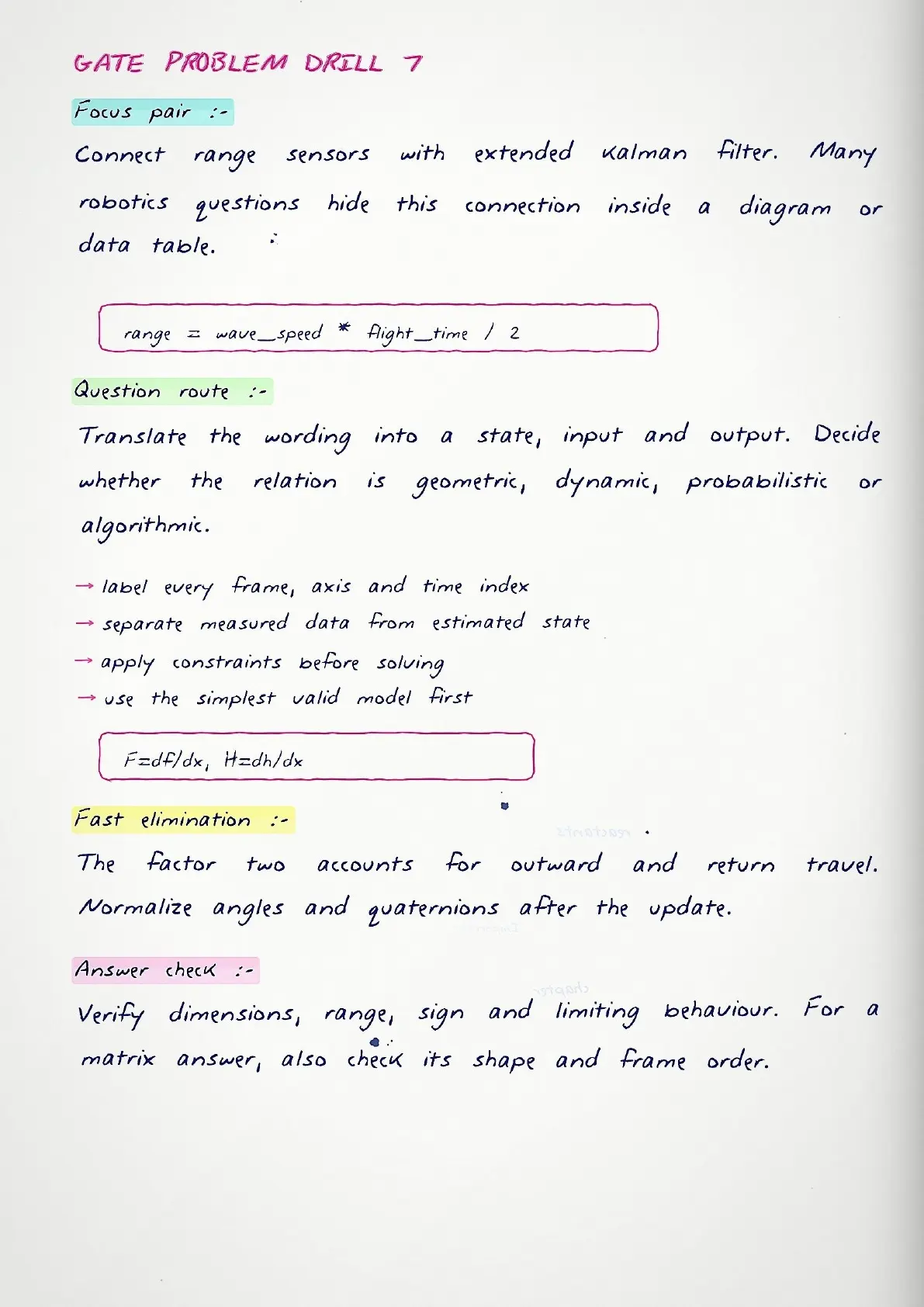
- Range sensors, from ultrasonic to lidar, for distance.
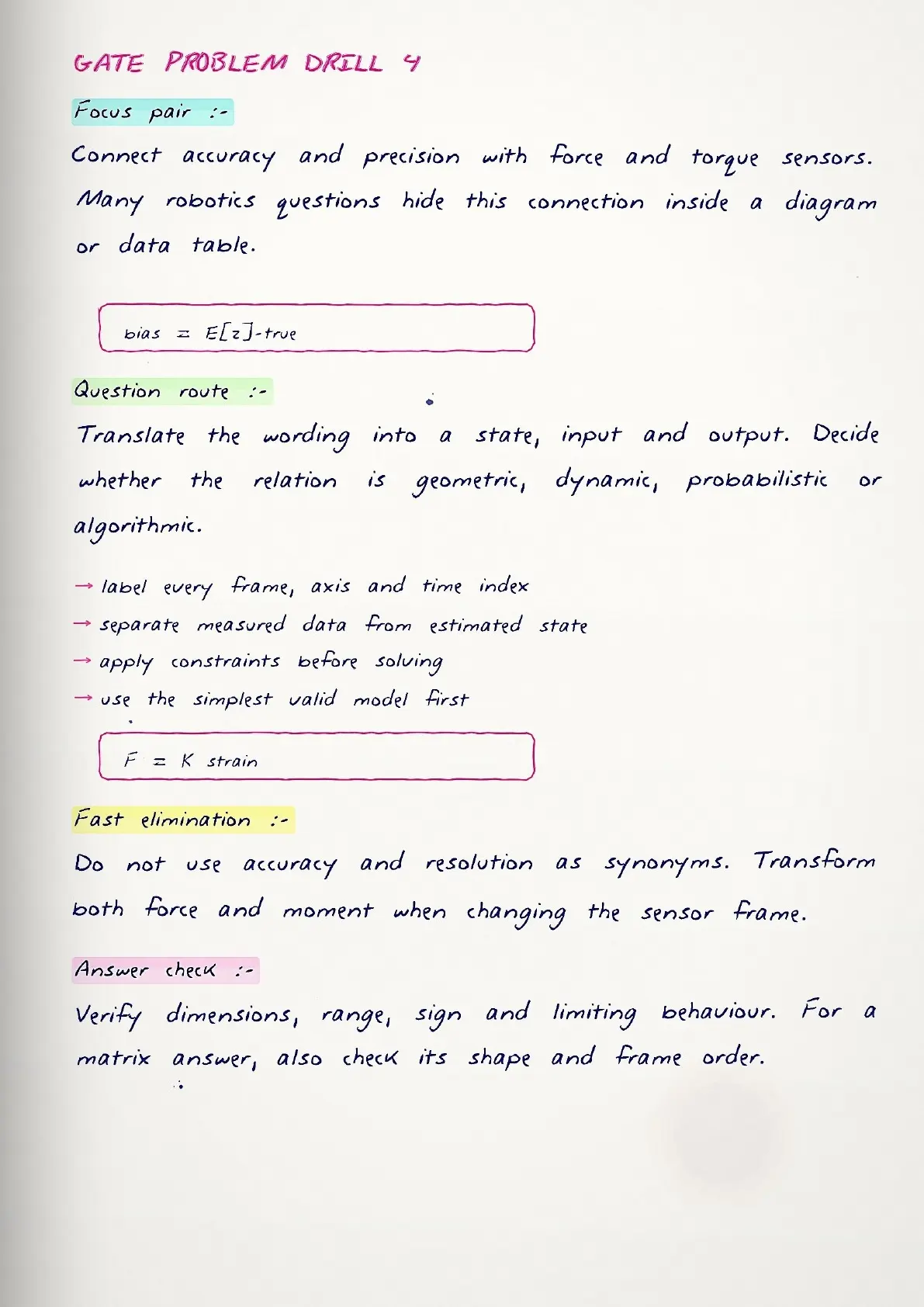
- Force and current sensors that report load indirectly.
For each, the notes list what it measures well and where it falls short, because no single sensor is trusted alone.
Stage Two: Conditioning, Sampling and Quantisation
A raw sensor voltage is rarely ready to use. This block covers the electronics and steps that clean it up.
- Amplification and filtering to lift a weak signal above hum.
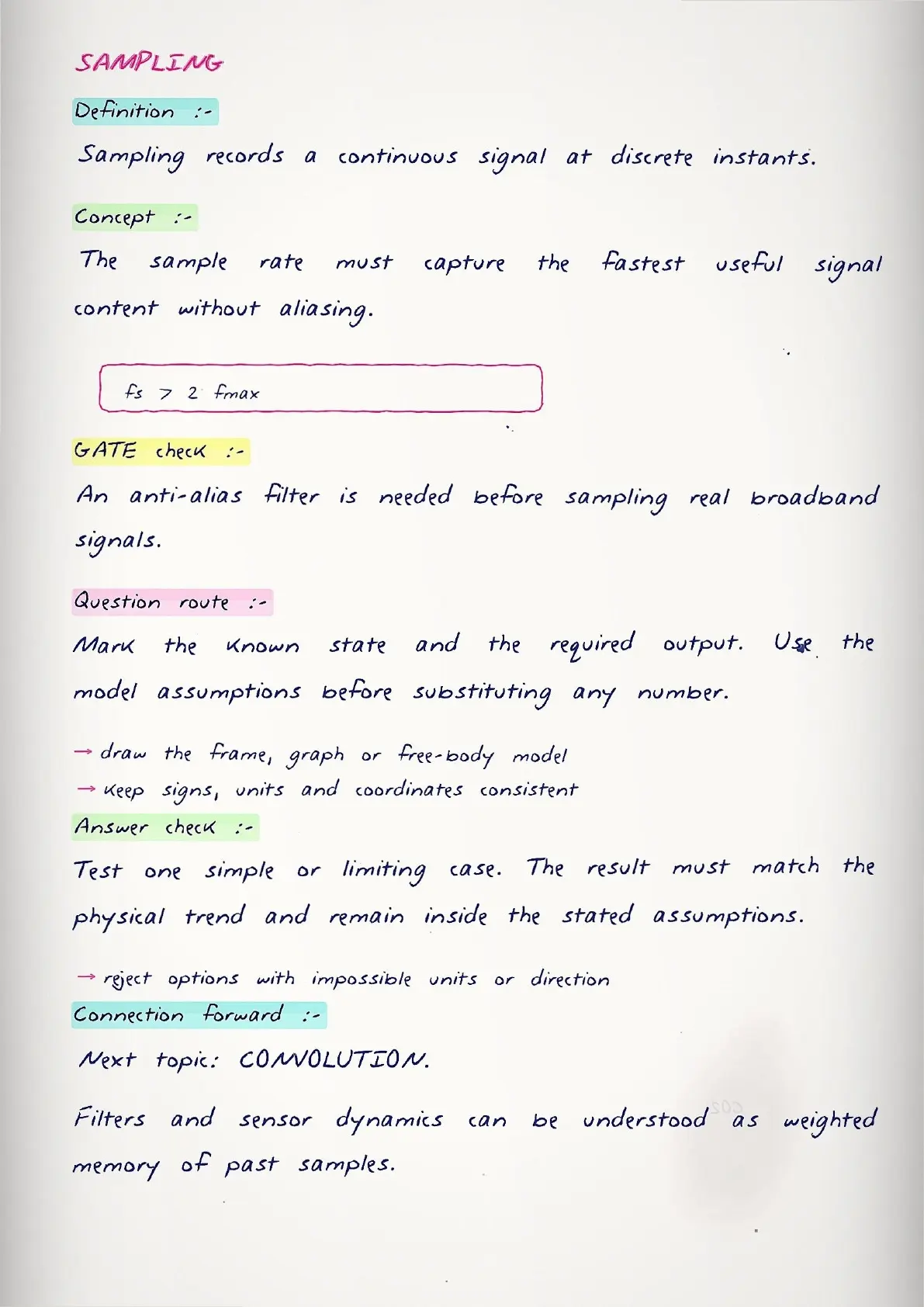
- Sampling, and the rule that the sampling rate must beat twice the highest frequency of interest.
- Quantisation, where a smooth voltage is rounded to the nearest step of the converter.
Students learn why an under sampled signal lies, and how resolution and range trade against each other.
The notes work a quick number for the step size of an analog to digital converter, so students see how many bits a sensor needs to catch a small movement without wasting memory on noise.
Stage Three: Naming the Errors, Noise and Drift
Before any fusion, students have to describe how wrong a reading can be.
- Random noise, spread around the true value.
- Bias, a steady offset that never averages away.
- Drift, a slow wander that ruins a gyroscope left running.
- Accuracy against precision, two words often confused.
The notes put numbers on these using mean and standard deviation, kept in plain language rather than heavy formulas.
Stage Four: Fusing Sources Into a Single Estimate
This is where the topic earns its name. Fusion combines several imperfect sensors into one estimate that is better than any of them alone.
- Complementary filtering, the quick way to blend a fast gyroscope with a steady accelerometer.
- The Kalman filter, which tracks both a best guess and how uncertain that guess is.
- The extended Kalman filter for the many robot models that are not linear.
The notes build the idea in steps, predict then correct, so students follow the logic before meeting the full method.
A small worked example fuses a wheel encoder with an inertial reading, and shows the estimate tightening as more measurements arrive. The role of the covariance, the number that says how much to trust each source, is spelled out in plain words.
See the Kalman Filter Built Step by Step
Source: Cyrill Stachniss (https://www.youtube.com/@CyrillStachniss)
Quick Facts Students Ask Before the Exam
A short recap block closes the set.
- The two inertial sensors, the accelerometer and gyroscope, fuse to give reliable orientation.
- Sampling below the Nyquist rate creates false low frequencies.
- The Kalman filter is optimal only when noise is well behaved and the model is linear.
- Bias can be calibrated out, but drift usually needs another sensor to correct it.
Students revising in a hurry can read this block alone the night before.
Sensors and Sensor Fusion Handwritten Notes FAQs
Ques. Is sensor fusion tested in GATE?
Ans. There is no standalone GATE Robotics paper, so it is not a labelled section. The estimation ideas behind fusion, probability and linear systems, do appear across GATE papers, and the topic is central to robotics tests generally.
Ques. Do students need to memorise the Kalman filter equations?
Ans. Understanding the predict and correct cycle matters more than rote memory. The notes explain each step in words so the equations make sense when students meet them.
Ques. How long are these notes?
Ans. The set is 28 handwritten pages, one block per stage from sensor to fused estimate.
Ques. Which sensors matter most here?
Ans. Accelerometers, gyroscopes, encoders and range sensors come up most often, especially the accelerometer and gyroscope pair used in inertial measurement.



Comments