




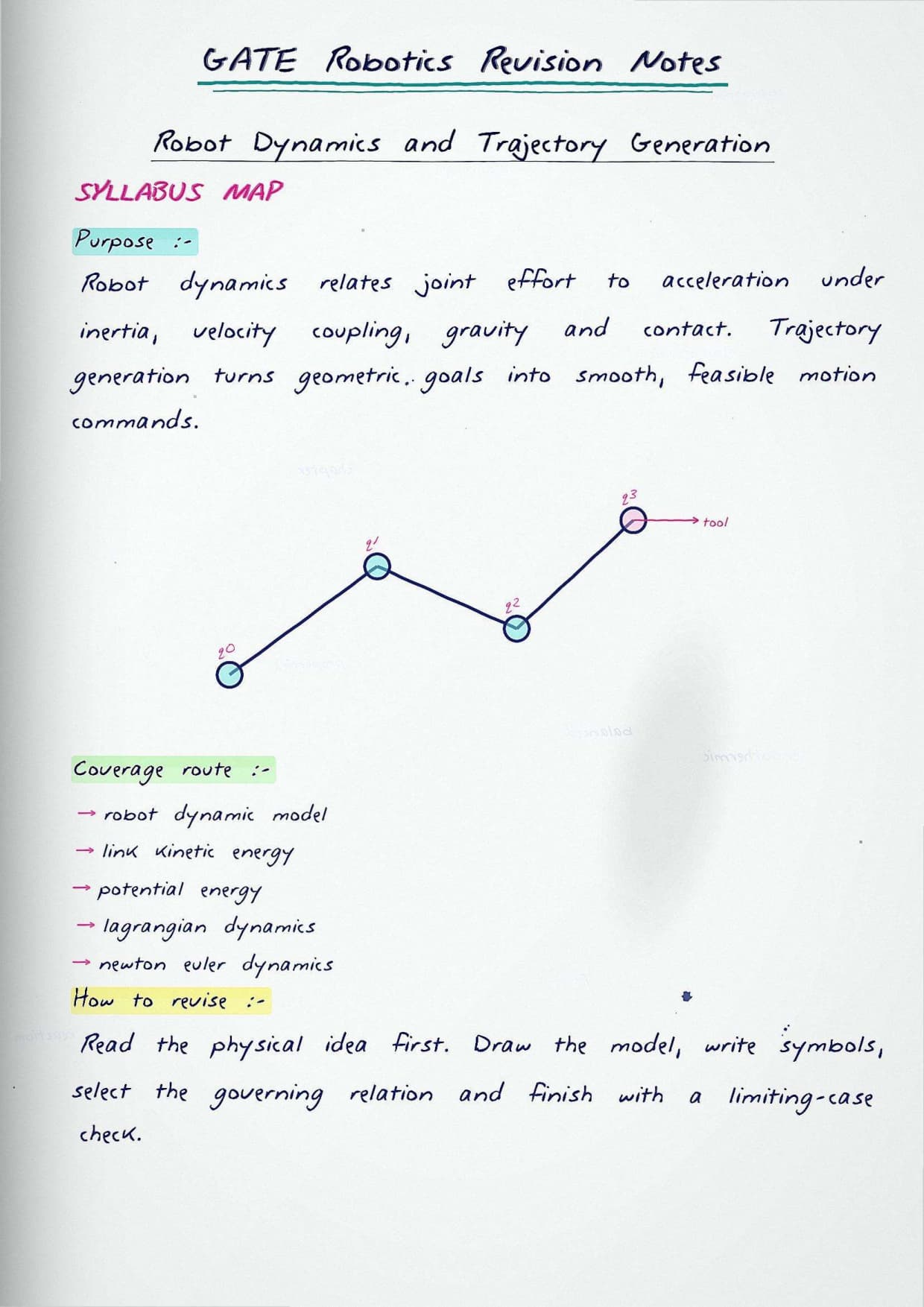
Robot Dynamics and Trajectory Generation leads with derivations, because here the equations are the understanding, which makes it the backbone of the modelling section for any serious robotics preparation.
Why the Dynamics Come Before the Motion
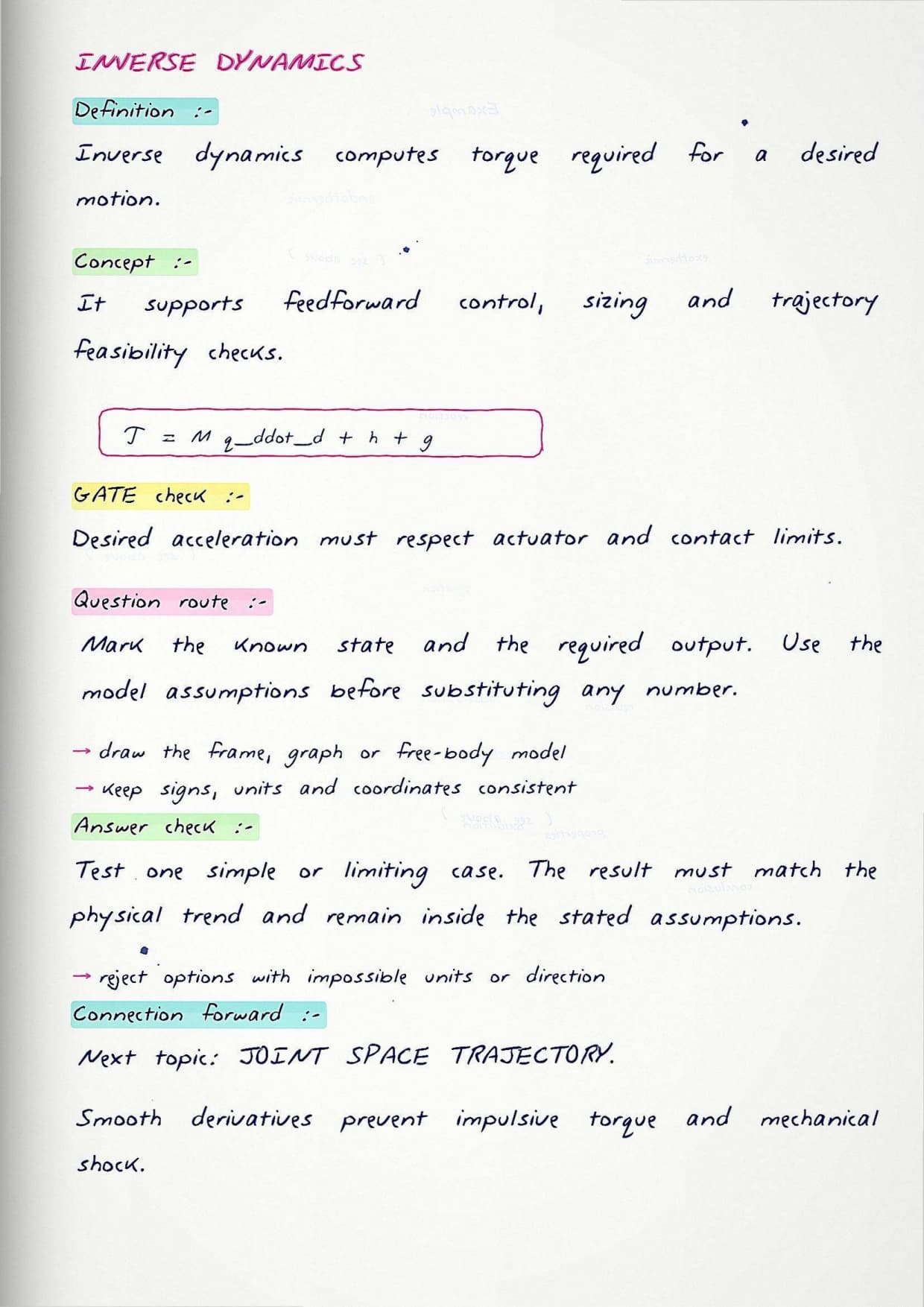
Before a robot can follow a path, its arm must obey physics. The notes separate two questions students often blur: dynamics asks what torques the joints must produce for a given motion, while trajectory generation asks what motion to ask for.
Each result is written out by hand, step following step, built from its starting principle rather than handed over as a finished formula. Setting the two questions apart early stops a lot of later confusion.
The Lagrangian Route to the Equations of Motion
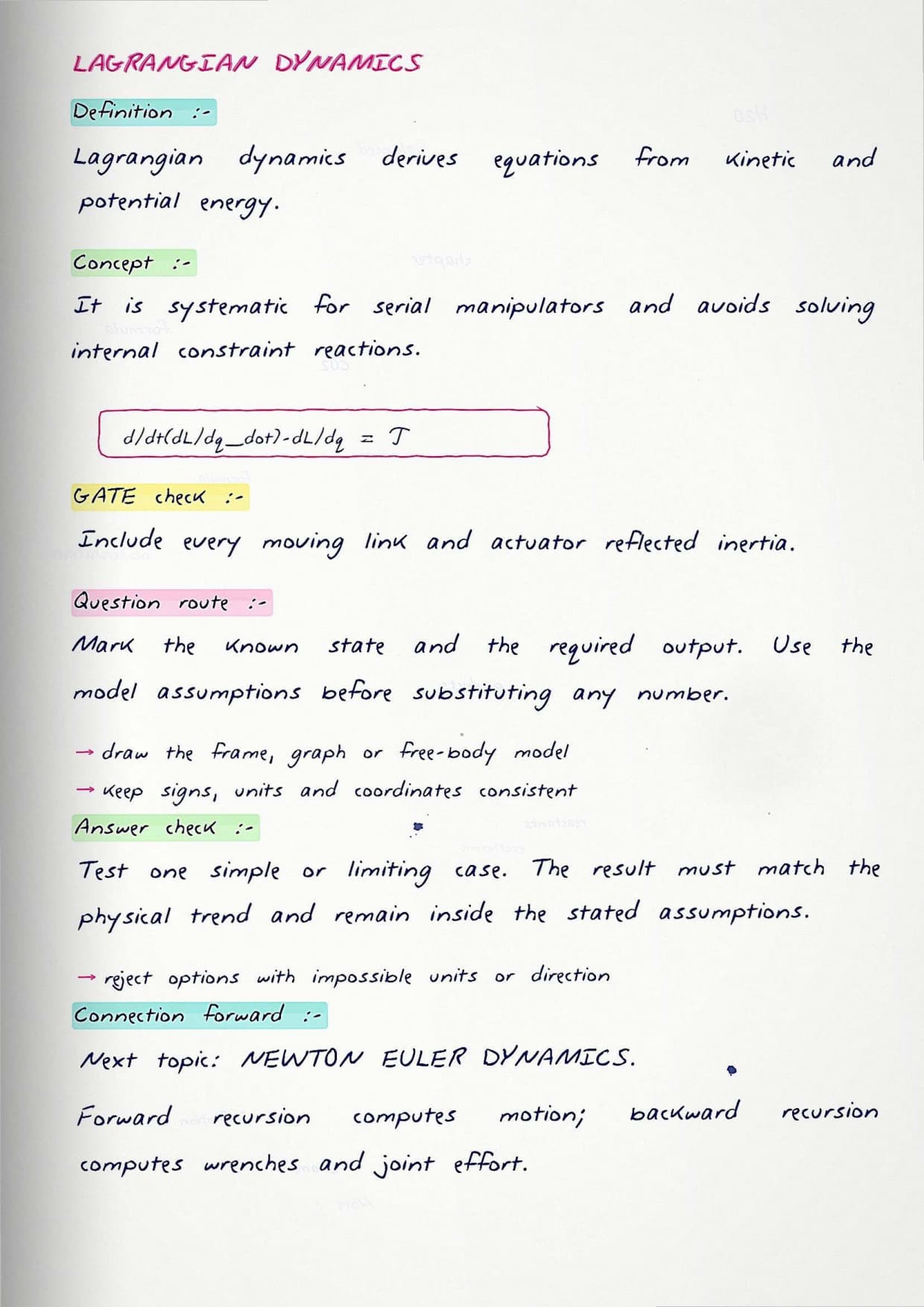
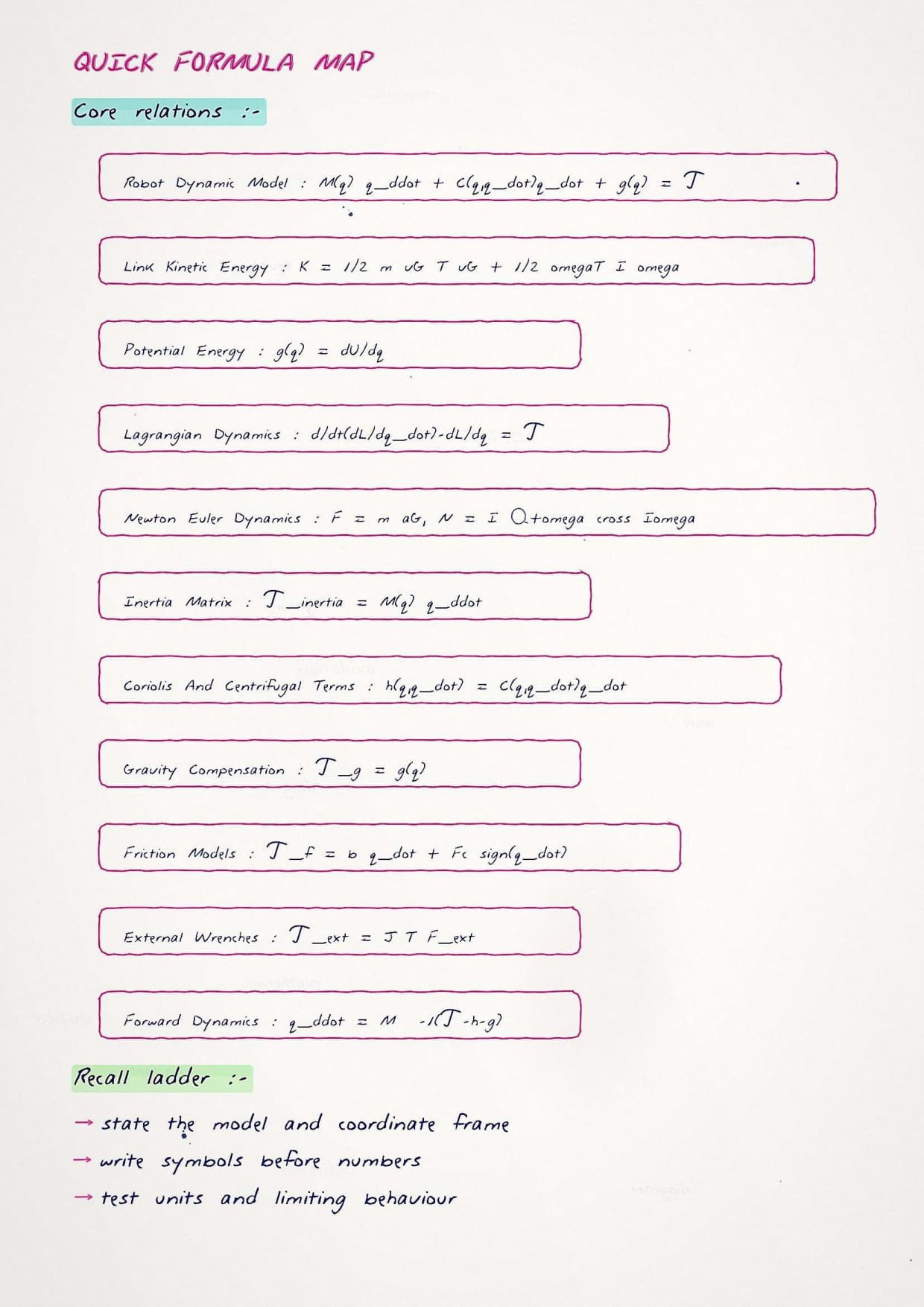
The main derivation runs through the Lagrangian method. The notes build it in the natural order:
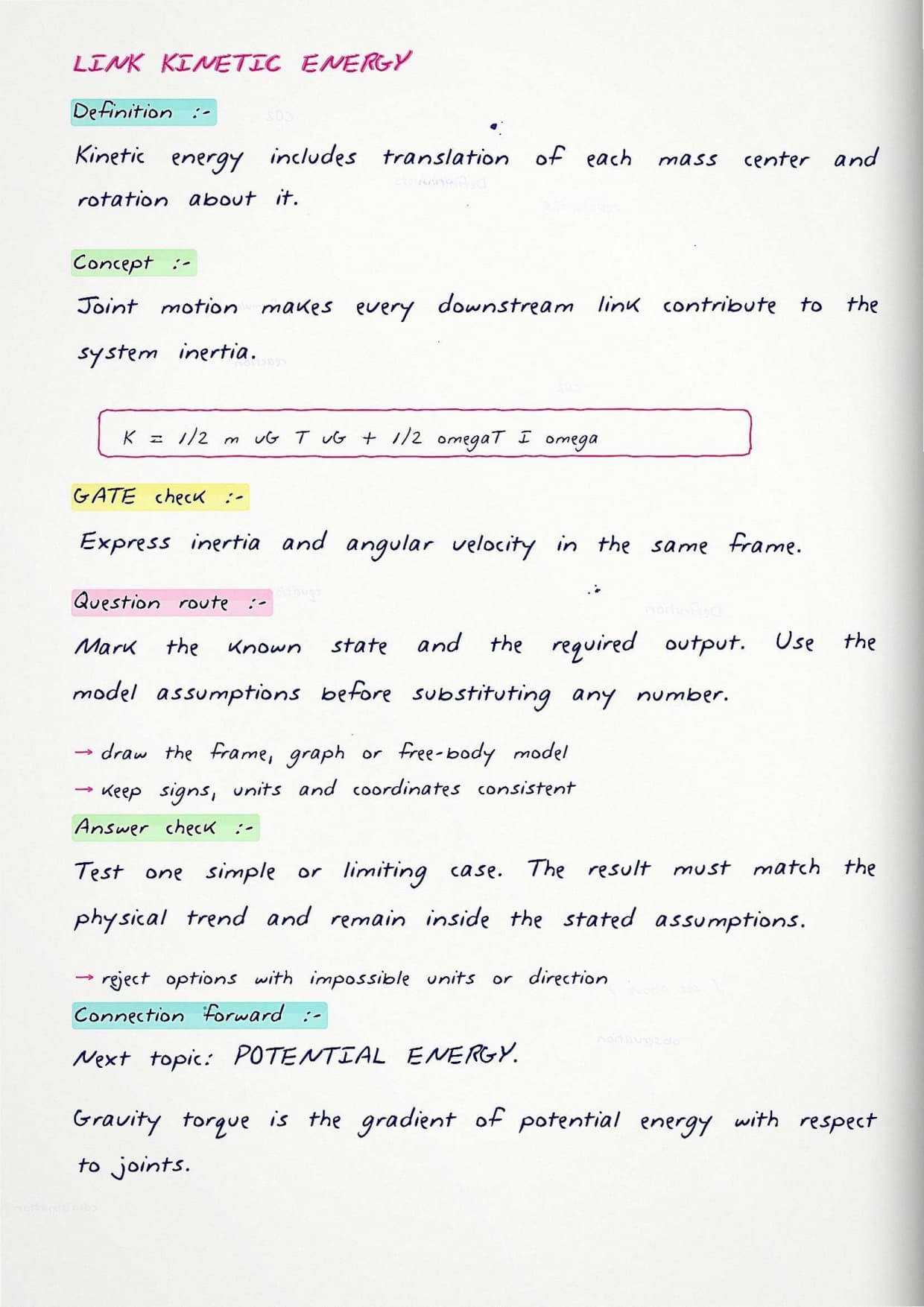
- Write the kinetic energy of each link in terms of joint velocities.
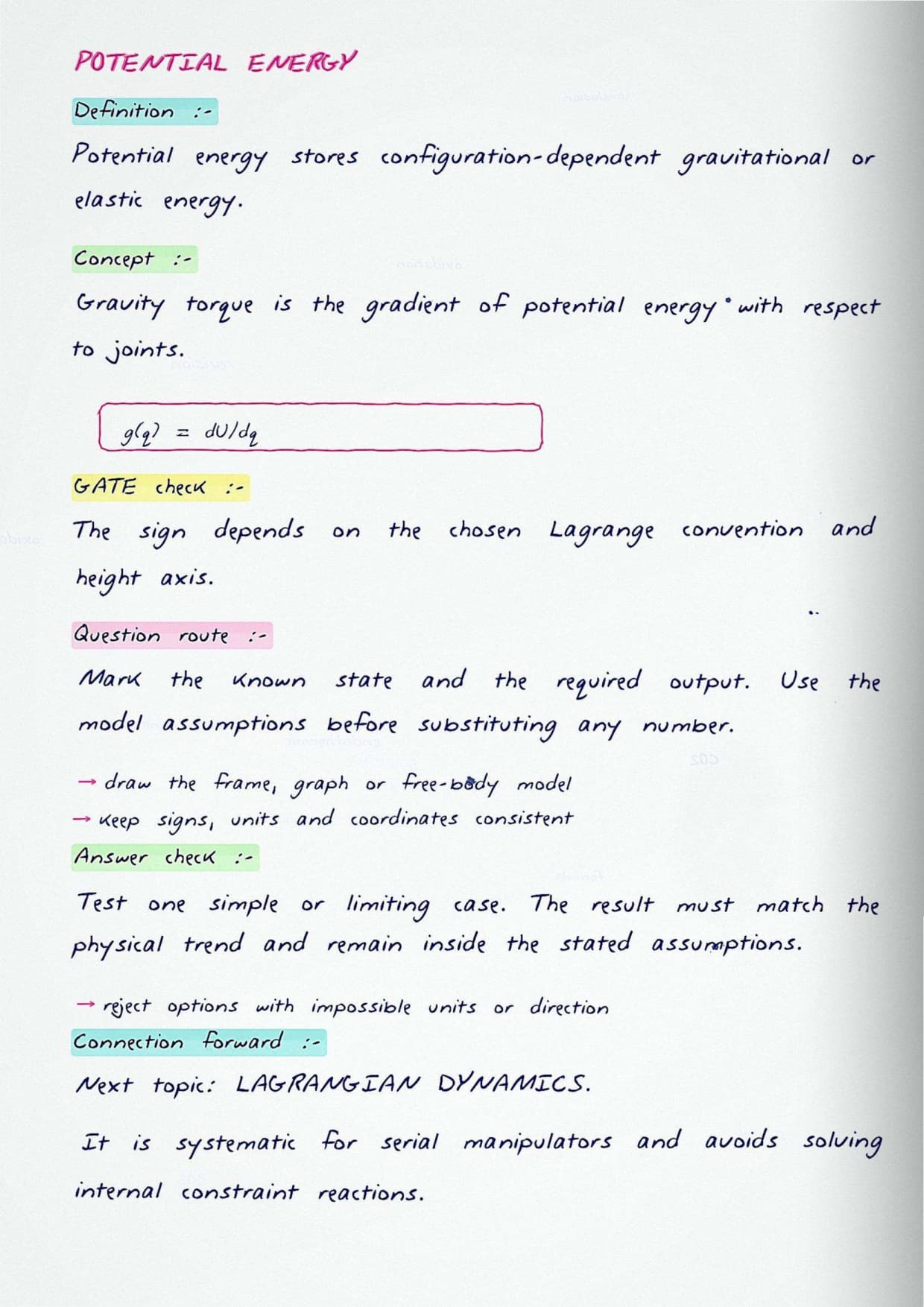
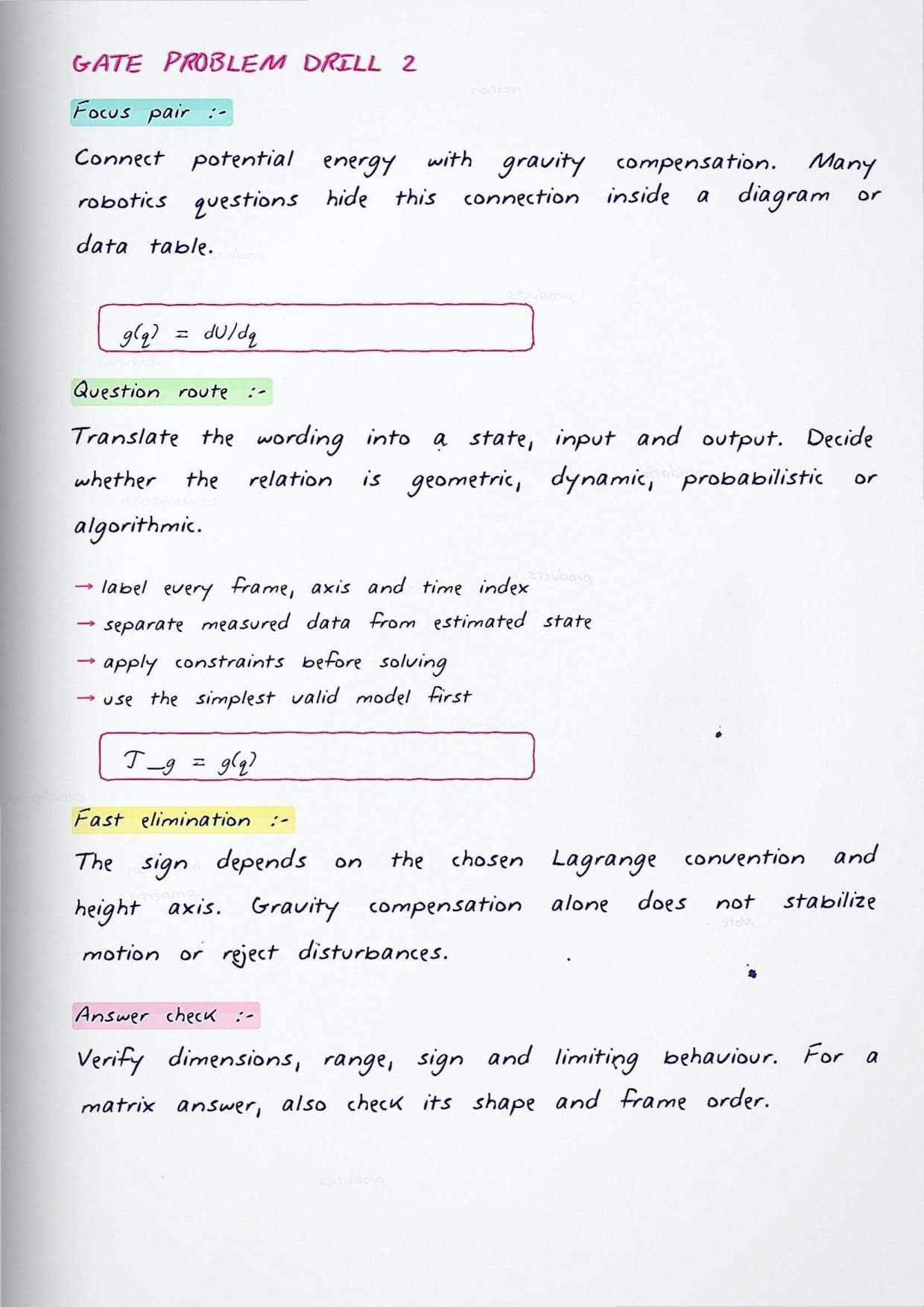
- Add the potential energy from gravity acting on each link.
- Form the Lagrangian as kinetic minus potential energy.
- Apply the Euler-Lagrange equation joint by joint to reach the torque expressions.
Each line is derived on the page, not quoted. Students can see exactly where a velocity squared term becomes part of the mass matrix, which is the moment the abstract method turns into something usable.
The Newton-Euler Alternative
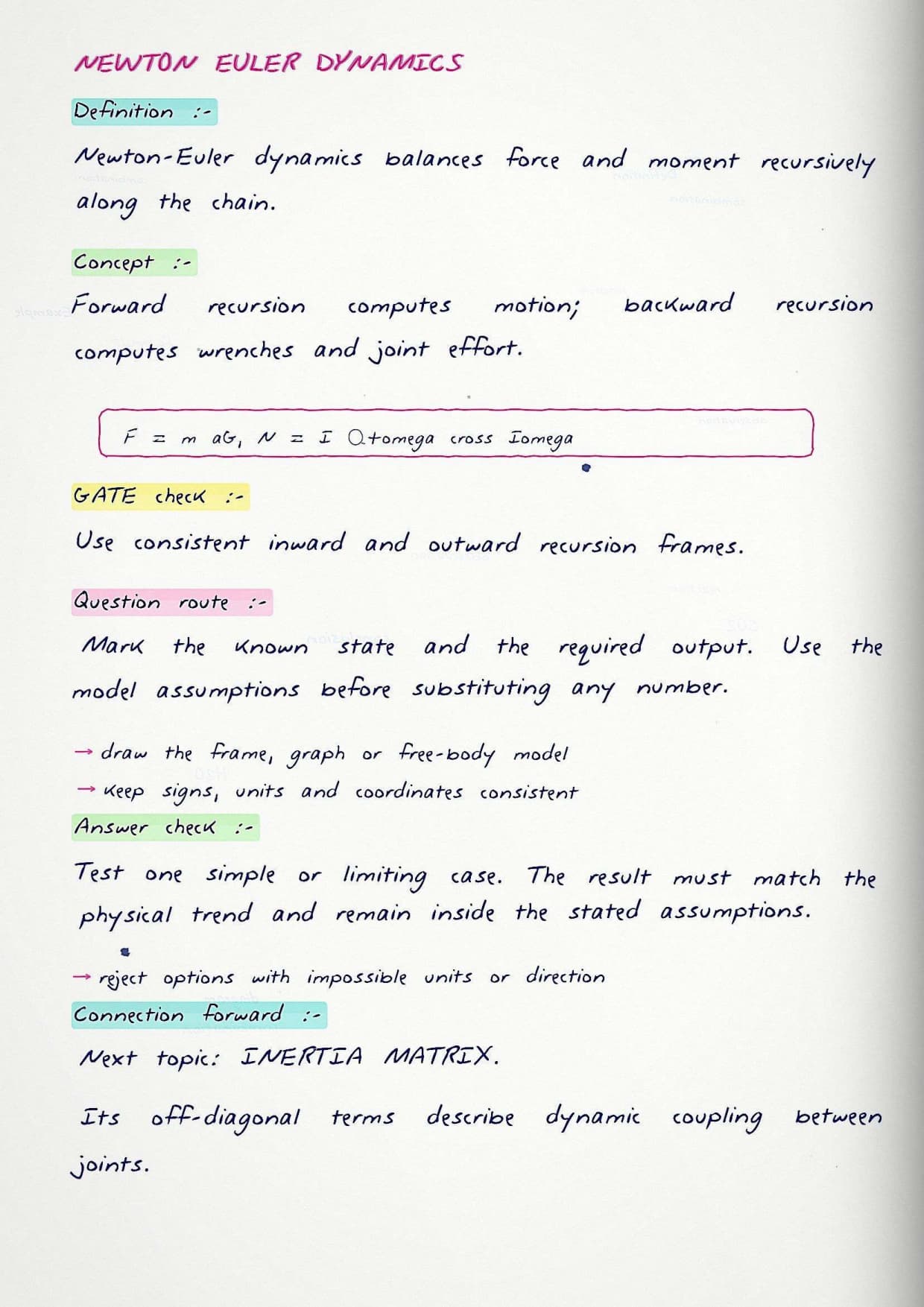
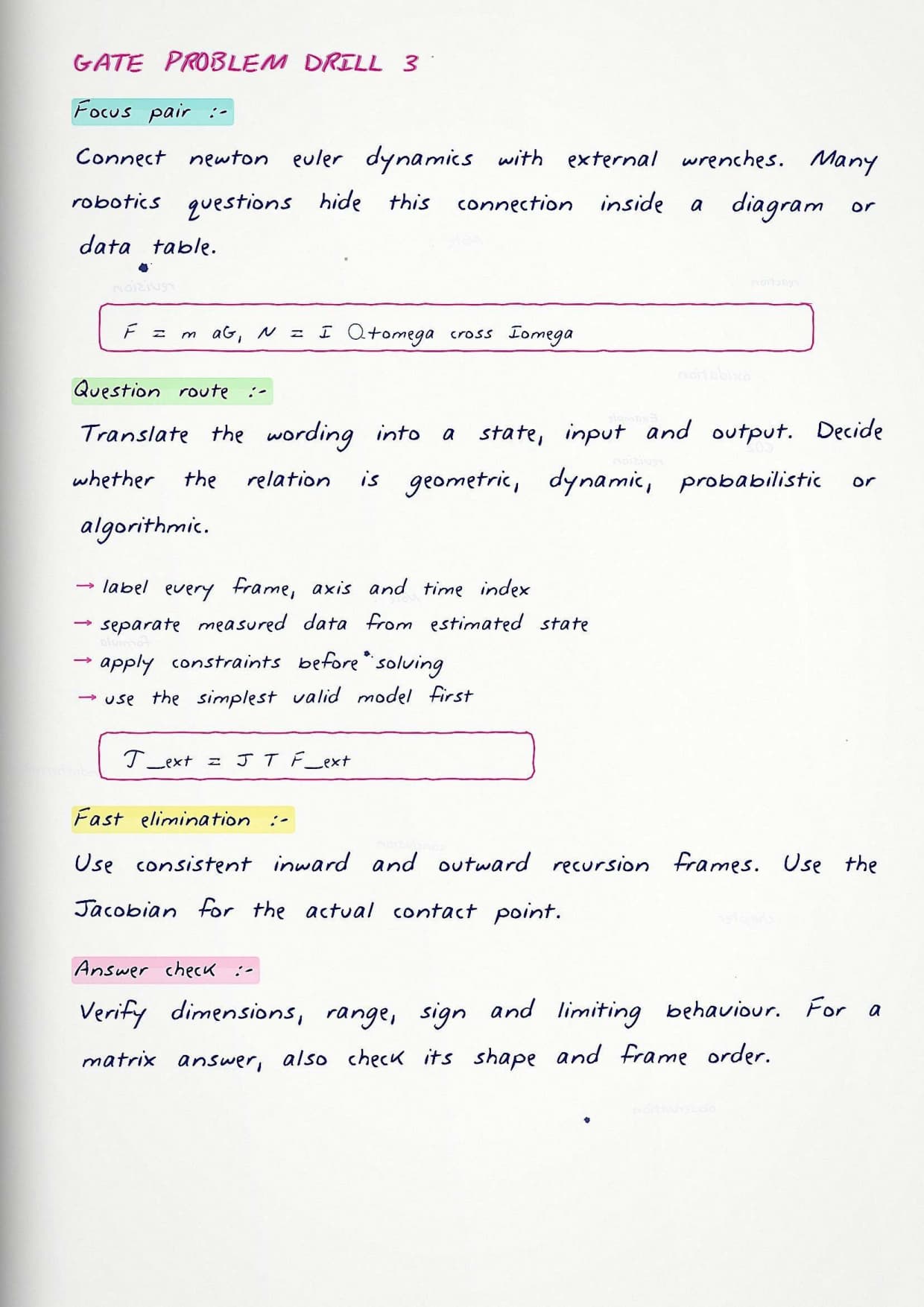
The notes then derive the same dynamics a second way, through the Newton-Euler method, working link by link along the arm:
- Forces and moments are propagated outward from the base to the tip.
- The reactions are then carried back inward, joint by joint.
- The recursive route is heavier to write by hand but far friendlier for a computer.
Students also see why the Lagrangian and Newton-Euler answers must agree. Having both side by side lets students recognise a problem's easier path under time pressure.
Reading the Mass, Coriolis and Gravity Terms
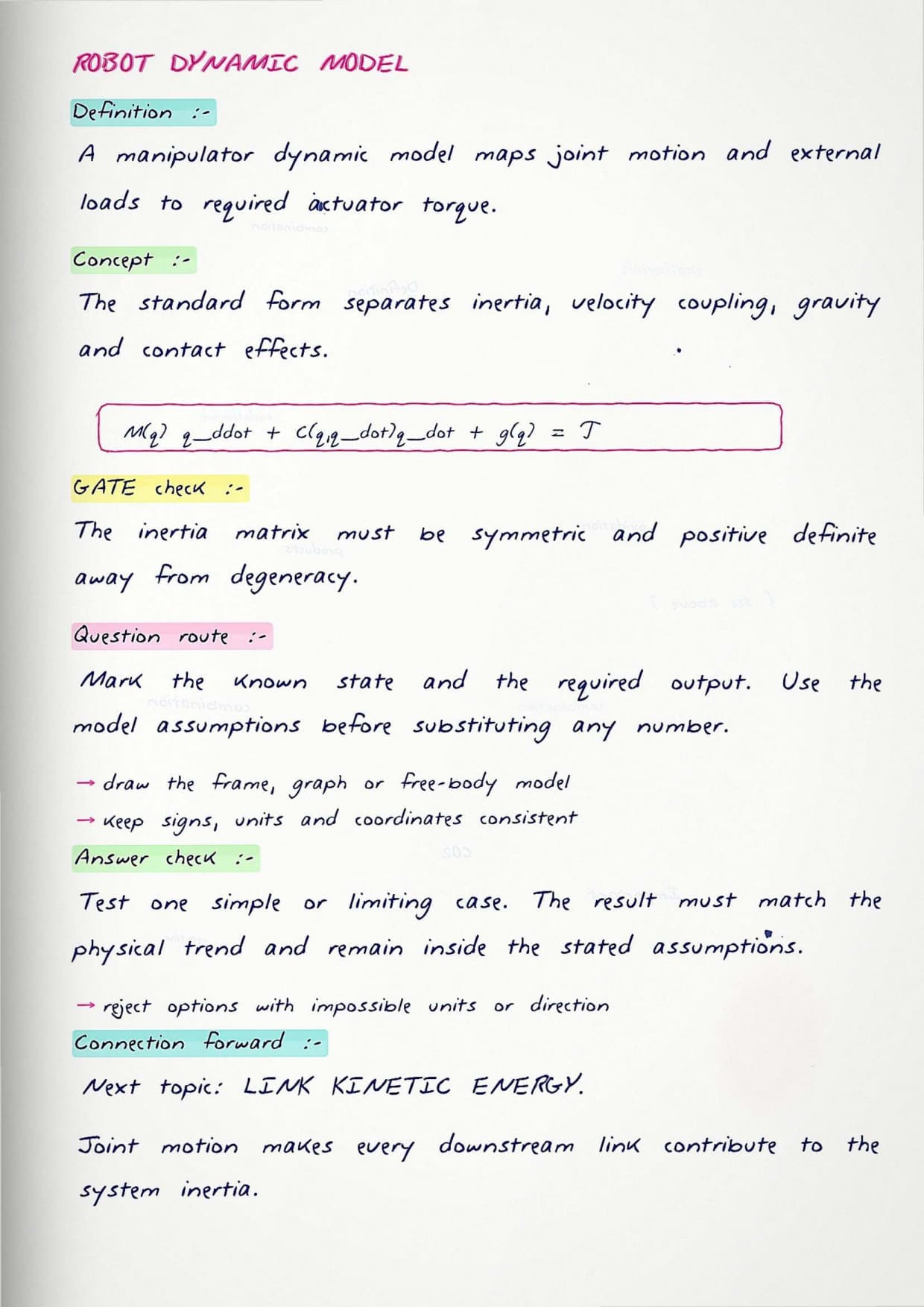
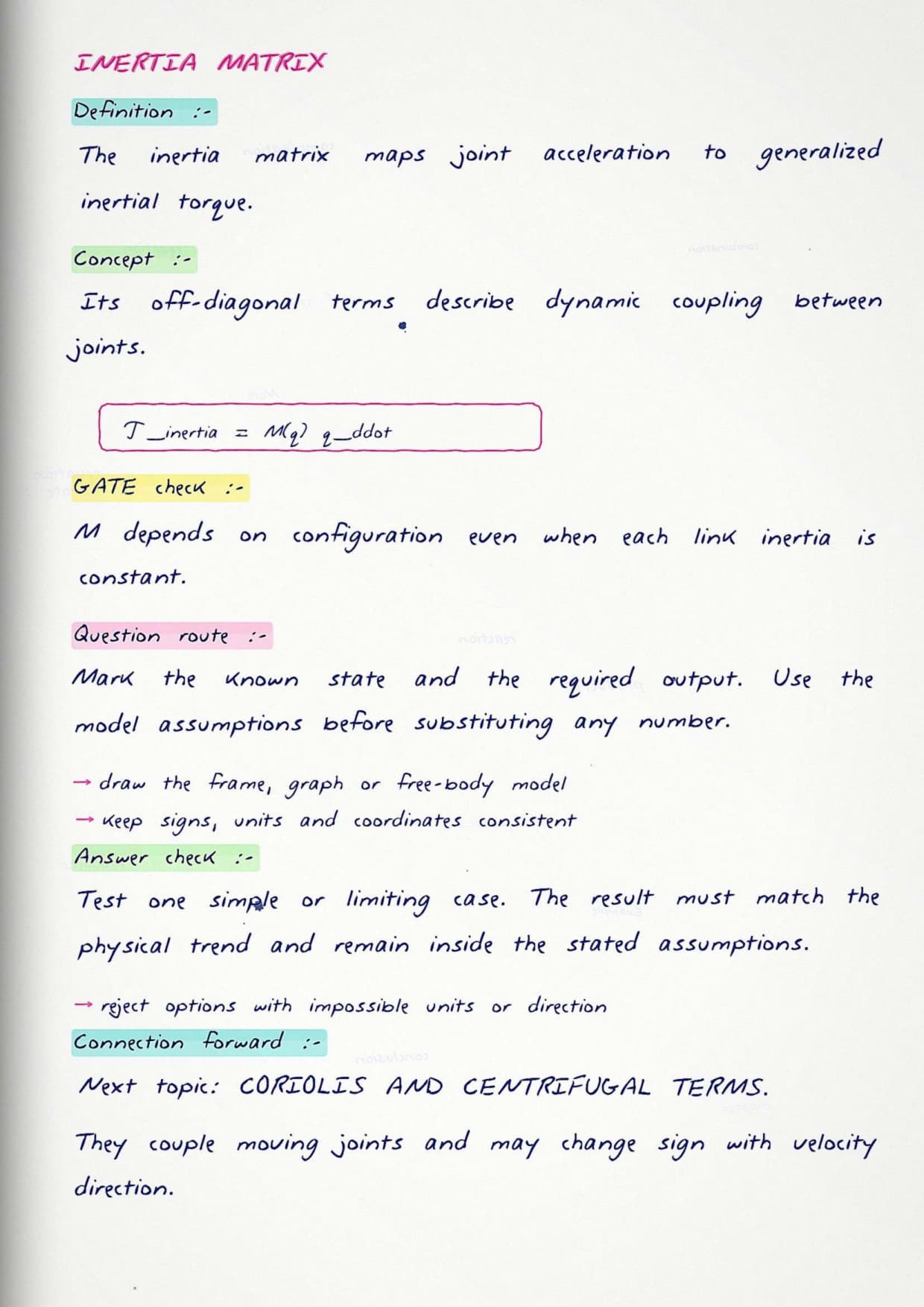
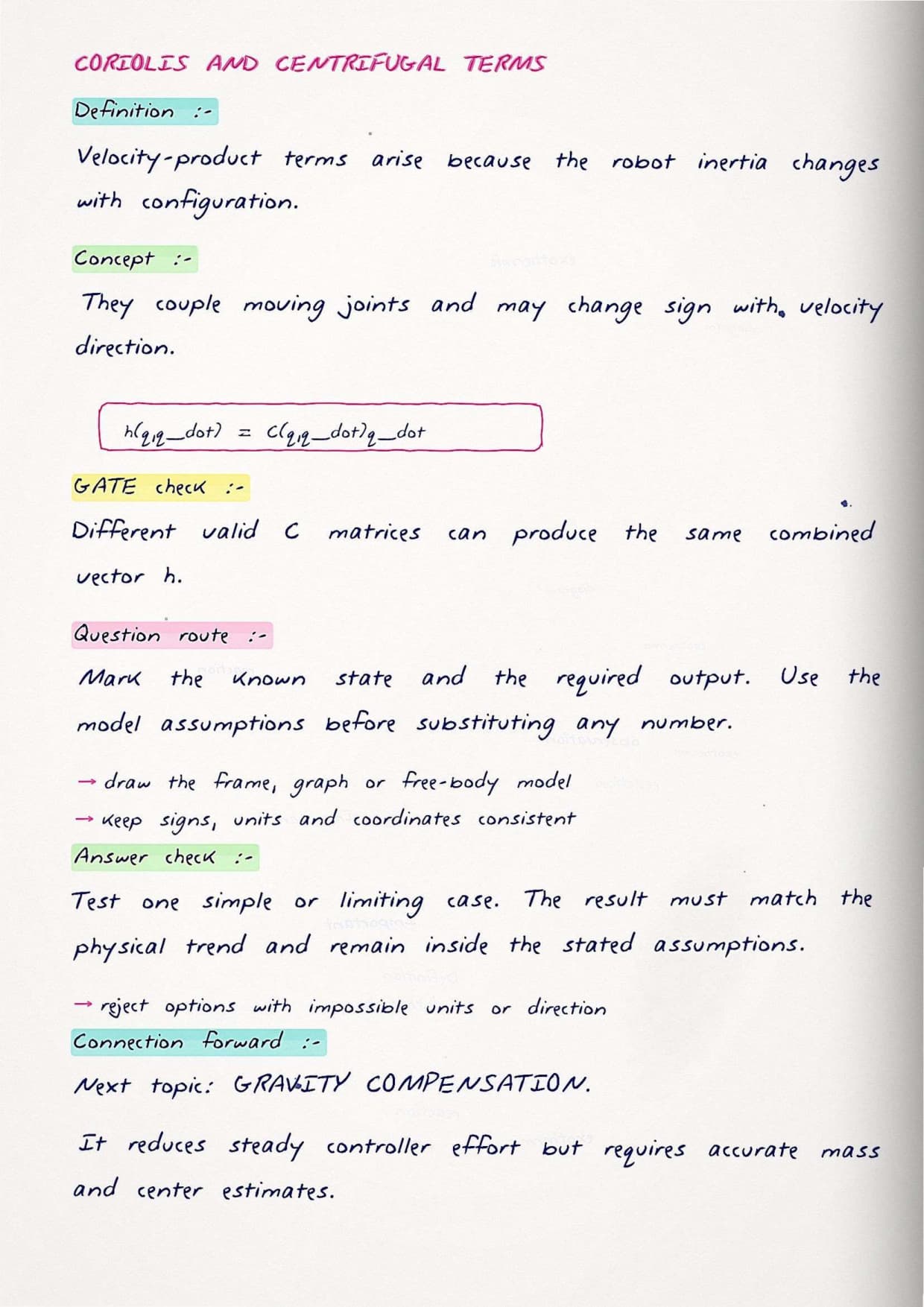
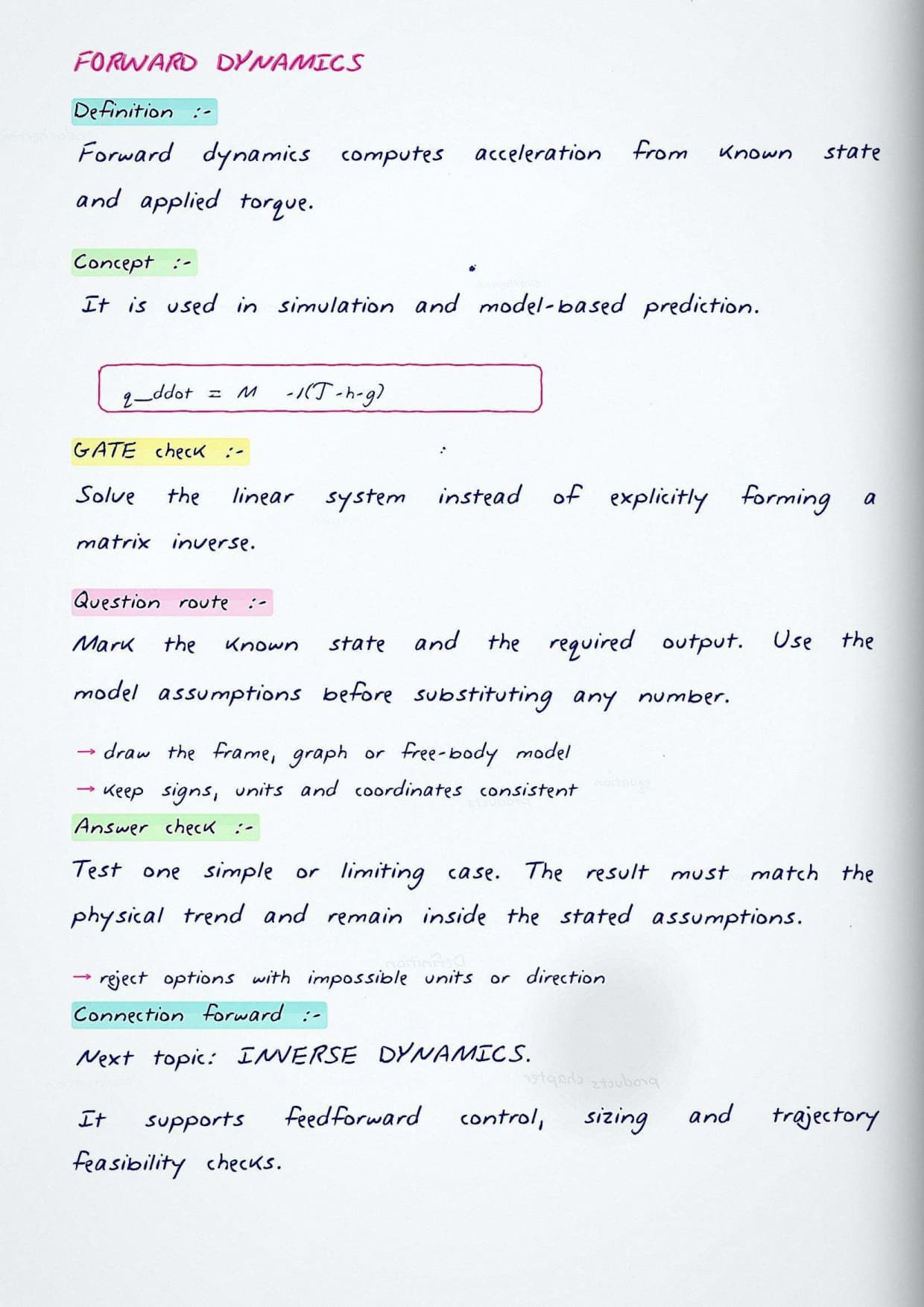
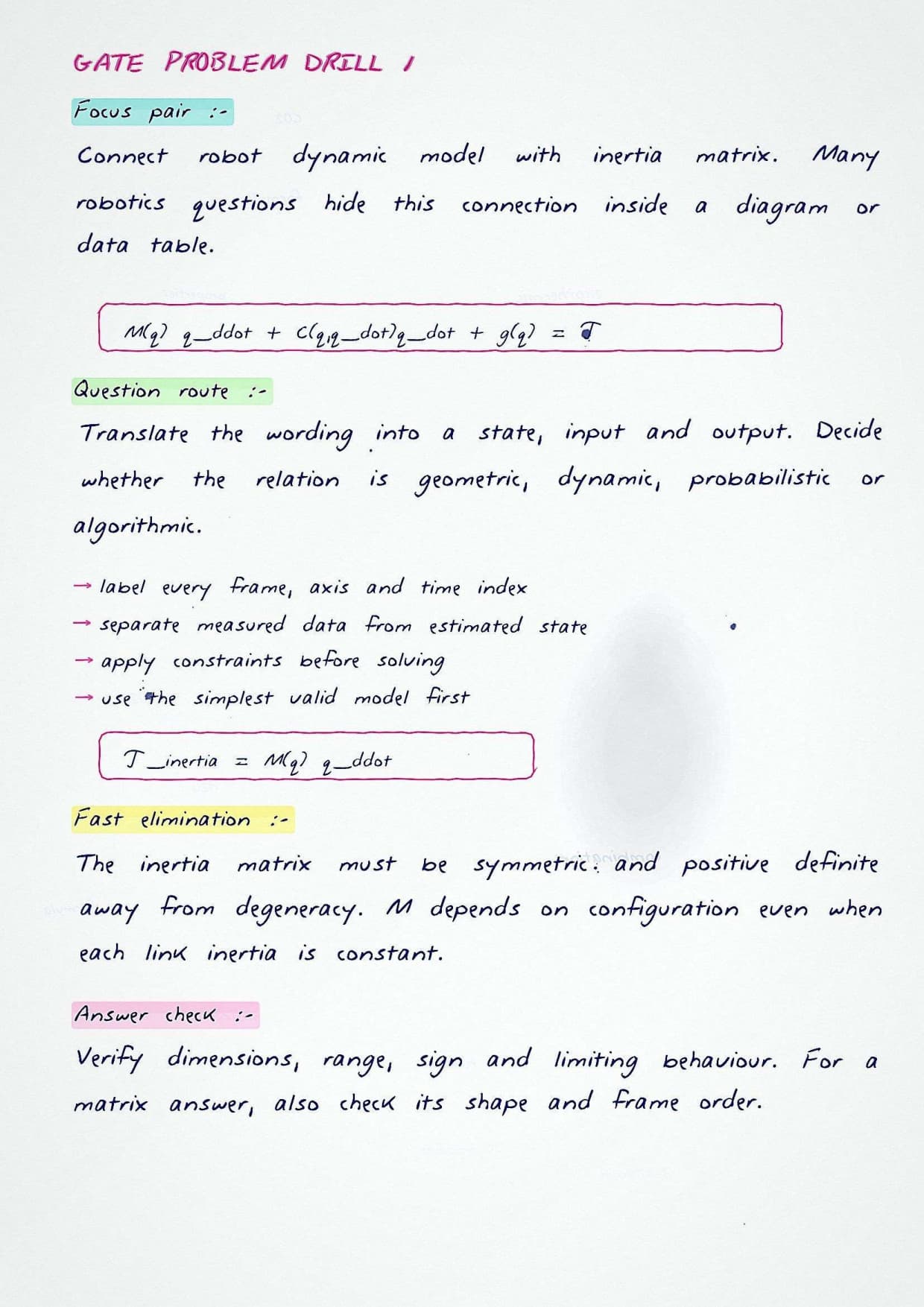
Once the equations exist, the notes slow down to read them. A manipulator's dynamics always sort into three parts, and students are shown how to spot each:
- The mass matrix, which links joint accelerations to torque and depends on the arm's pose.
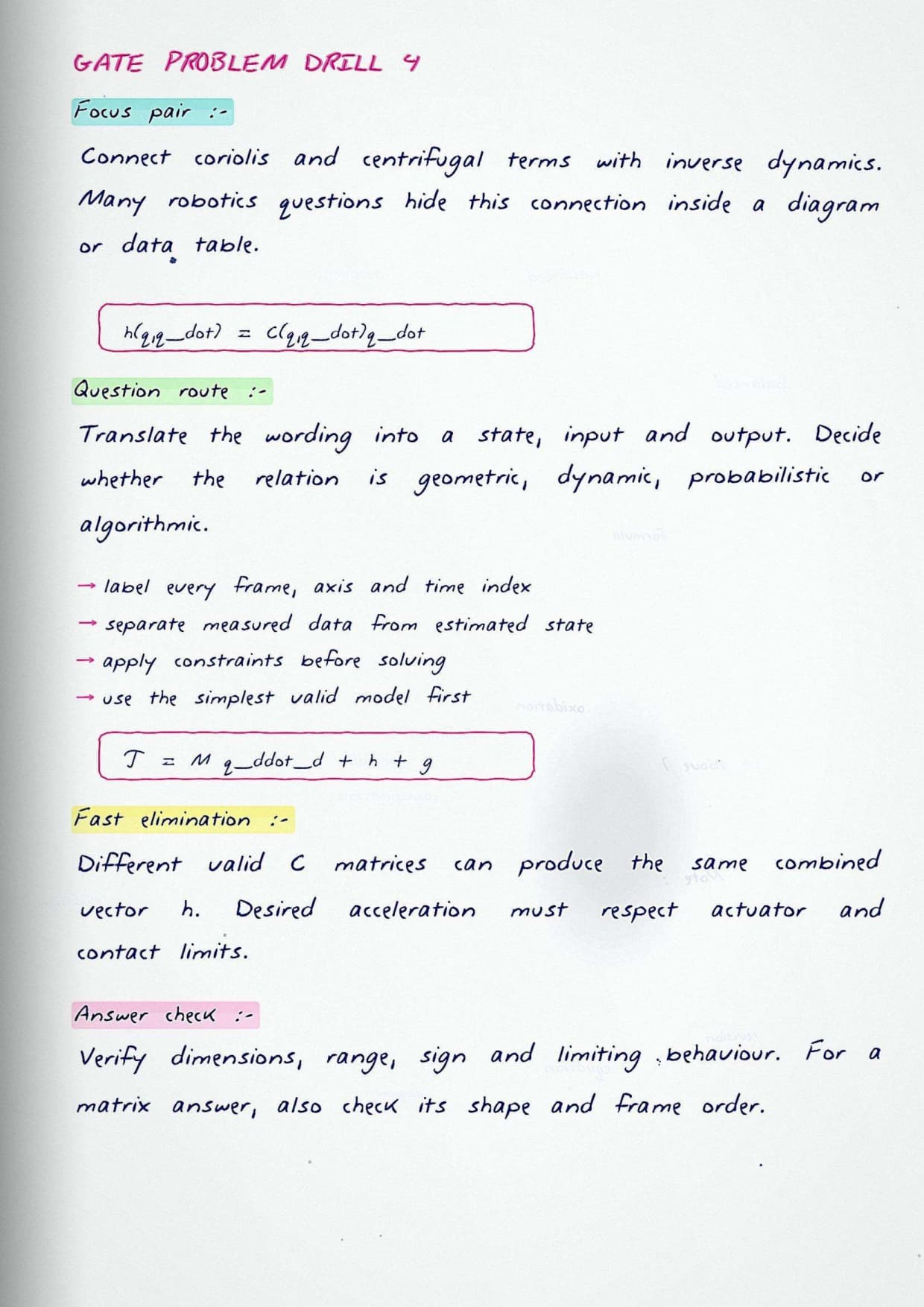
- The Coriolis and centrifugal terms, which appear whenever two joints move at once.
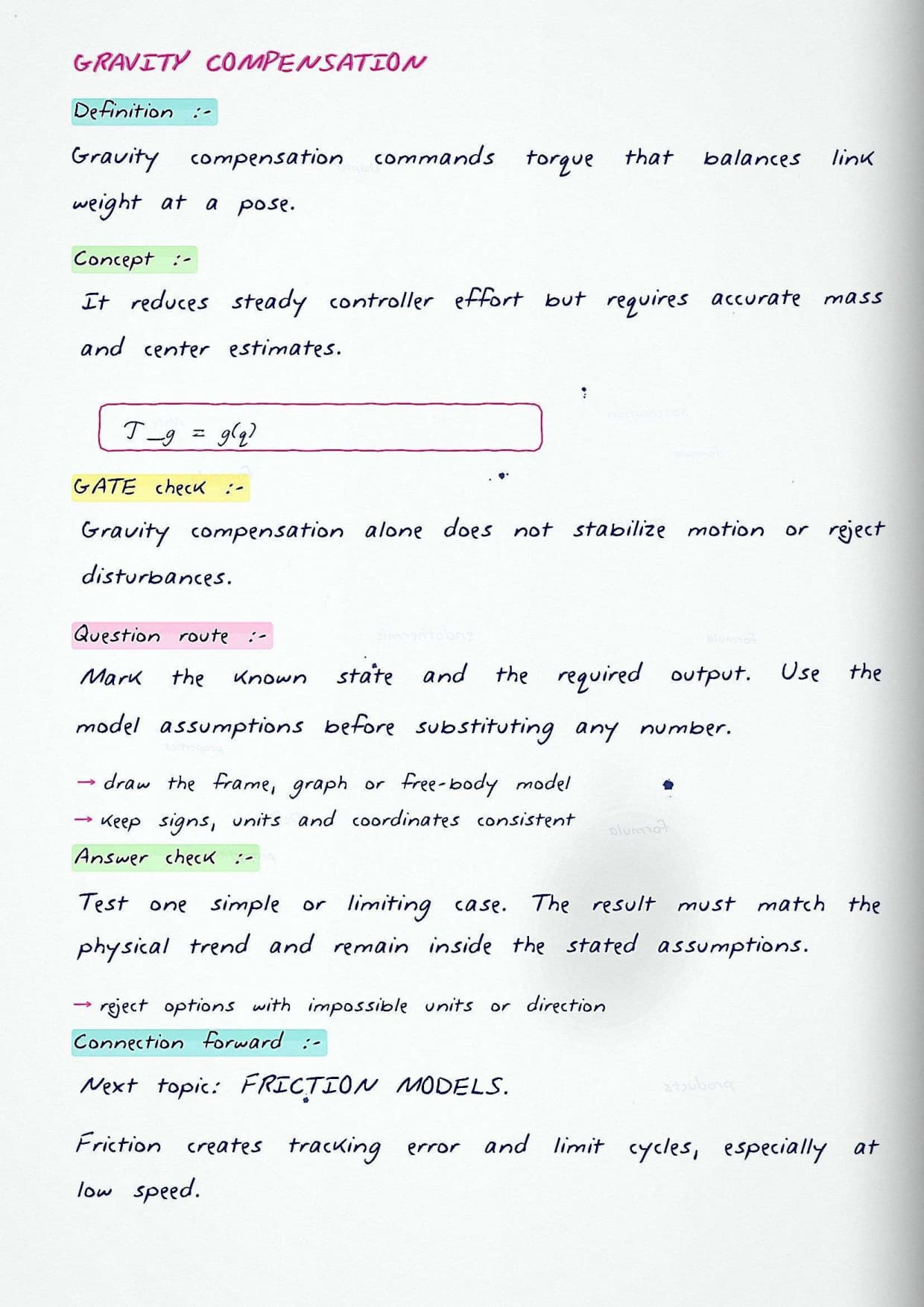
- The gravity vector, the torque needed just to hold the arm still against its own weight.
Recognising this structure is high-yield, since many questions are really asking students to identify one term and reason about it rather than solve the whole system.
Turning Paths into Timed Trajectories
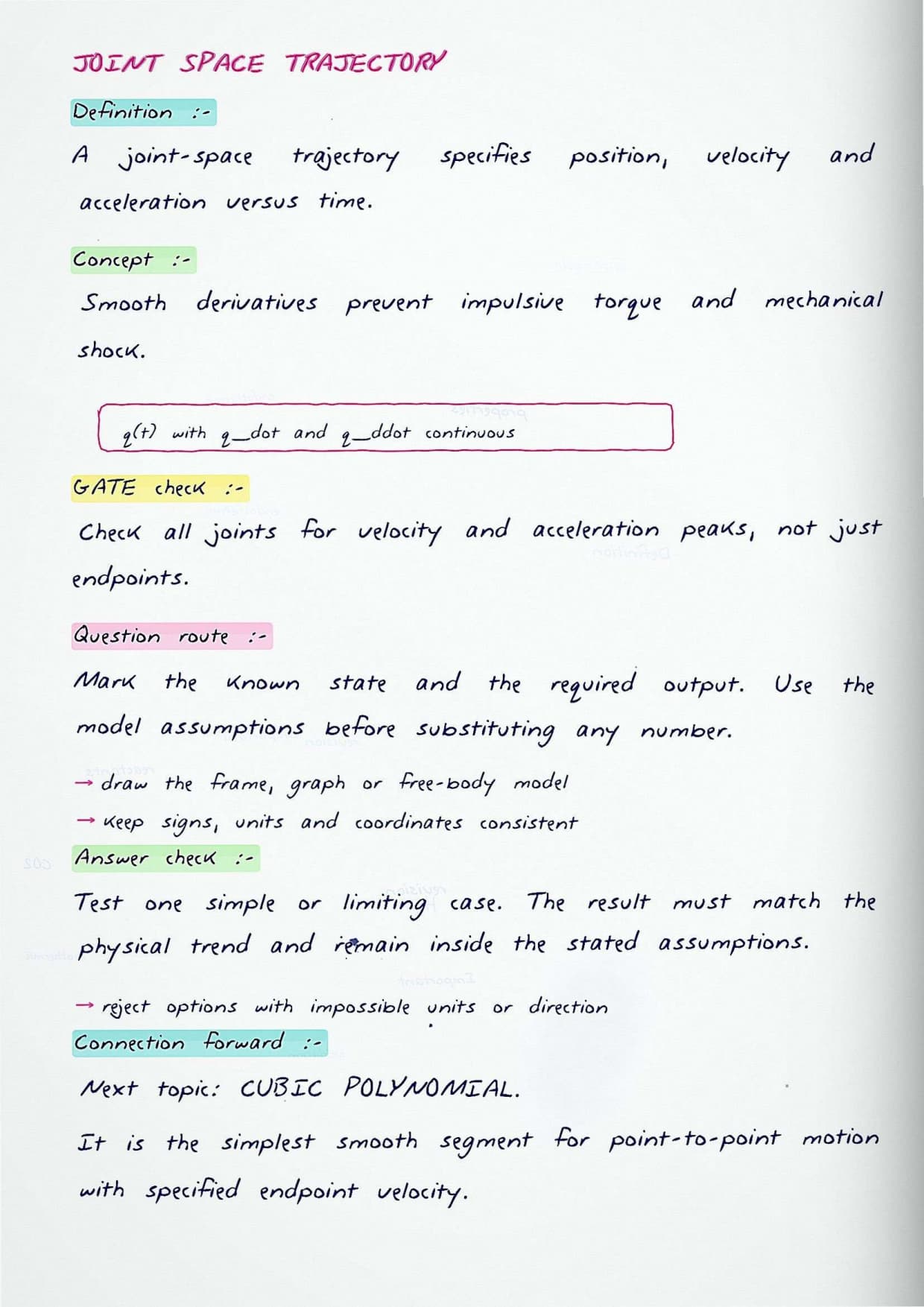
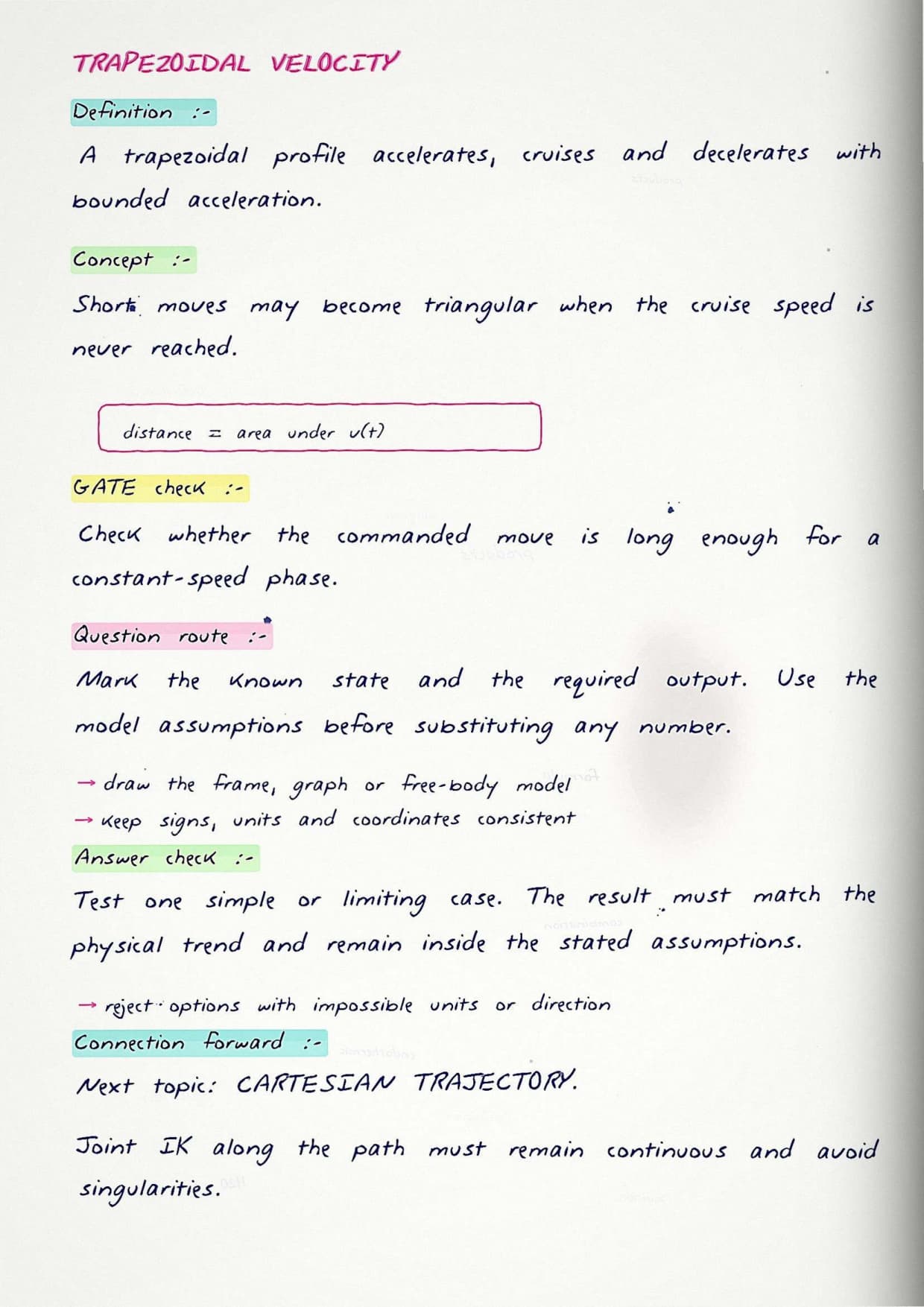
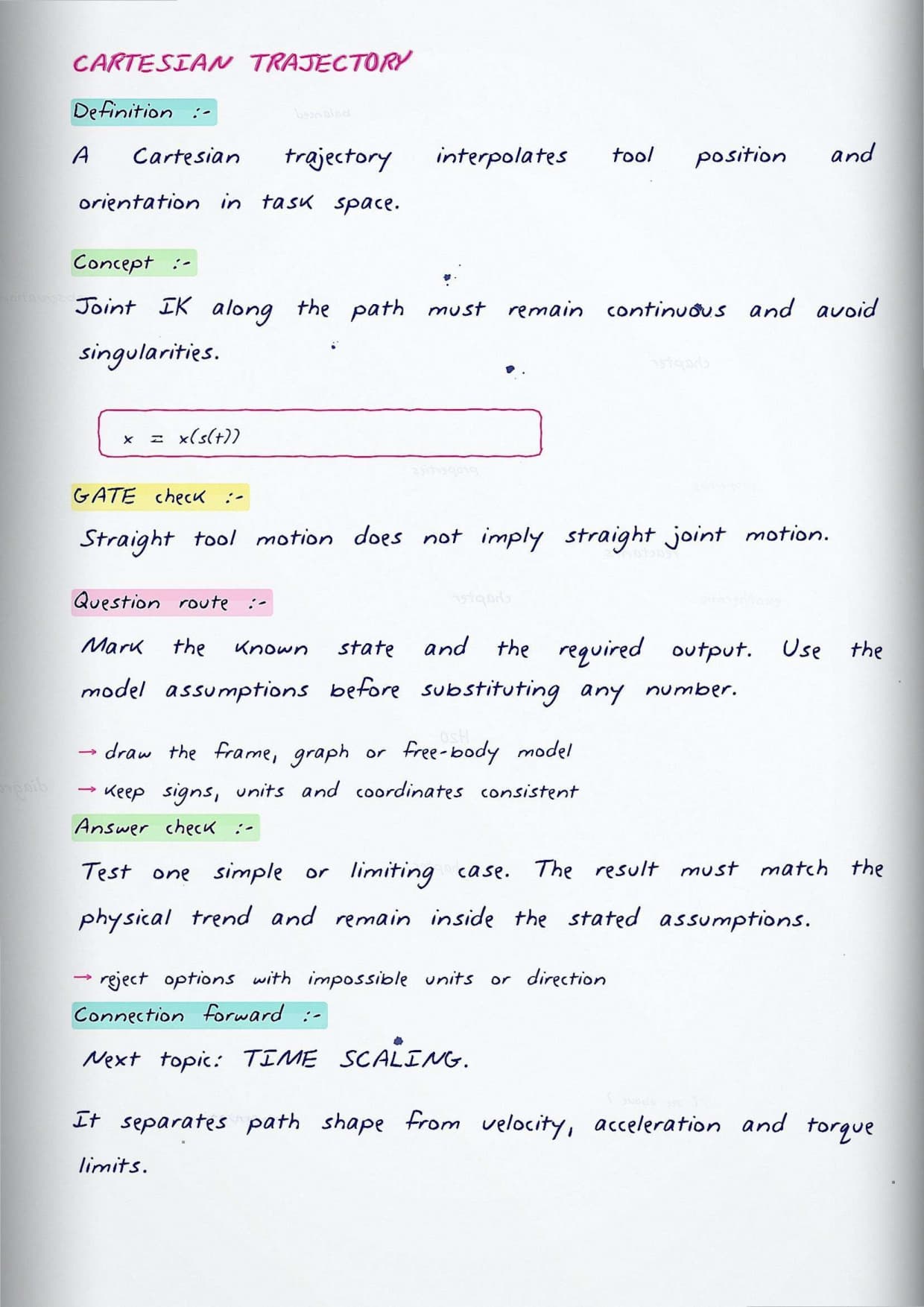
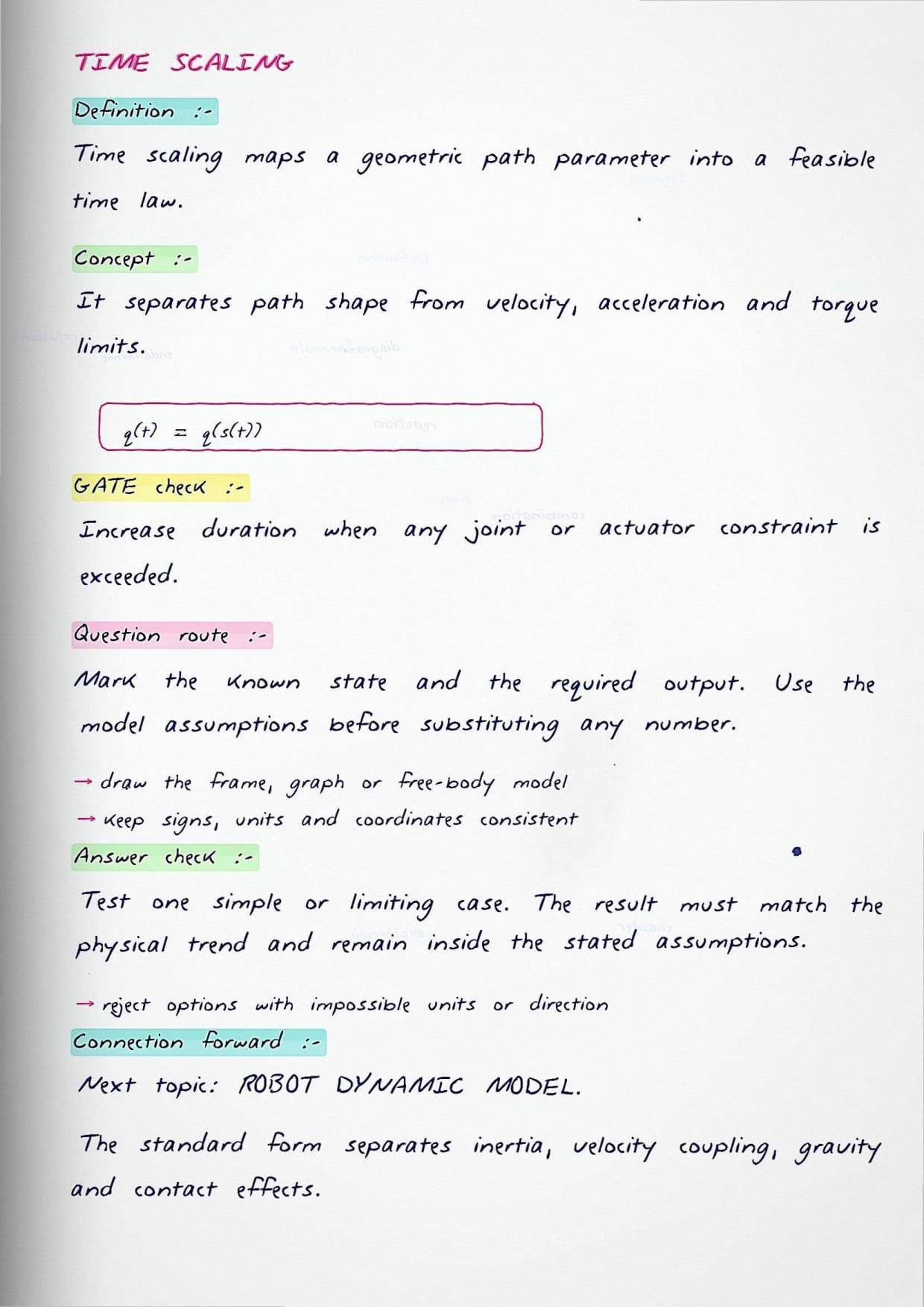
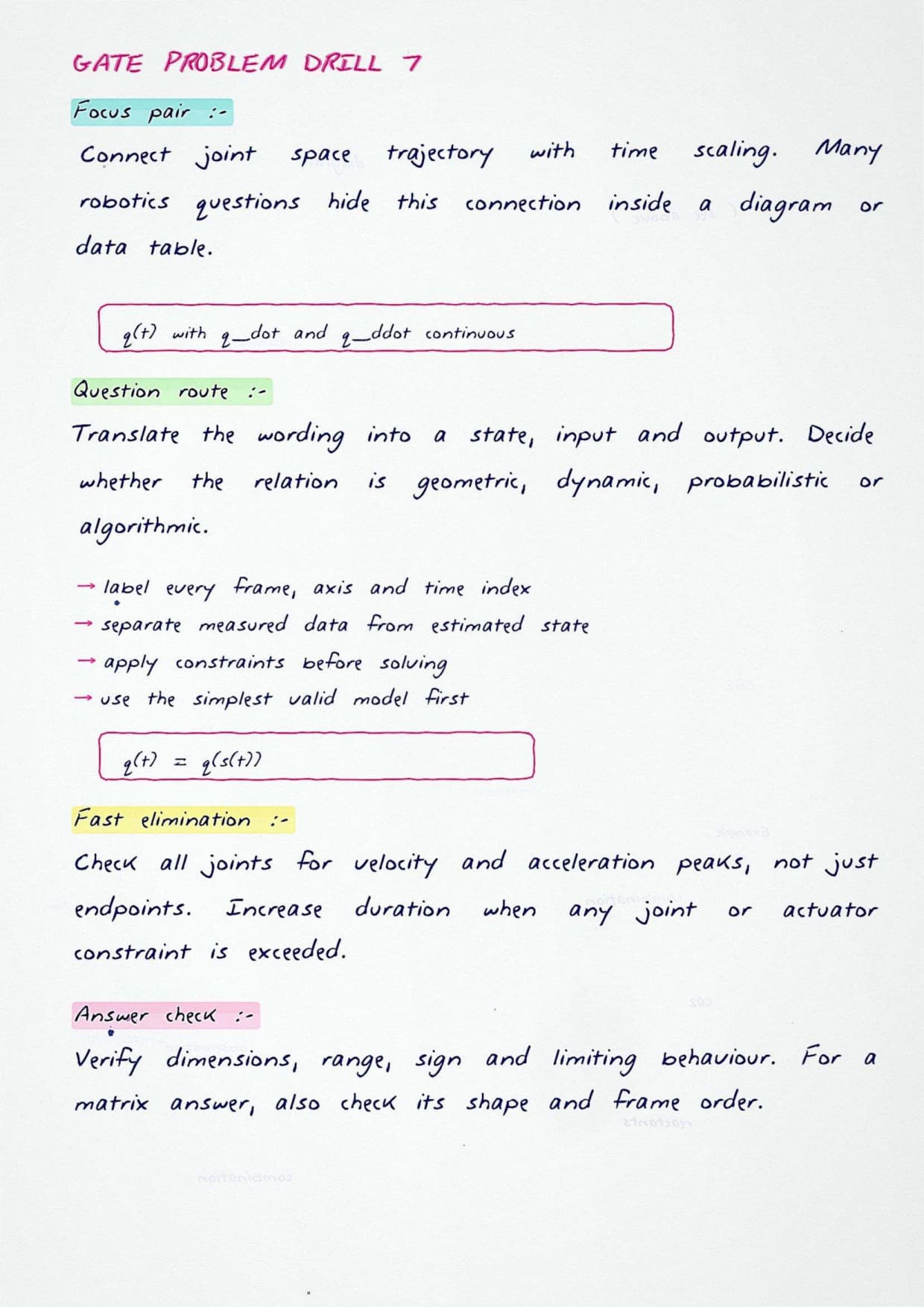
With the dynamics settled, the derivations turn to trajectory generation, showing how a path in space becomes a motion in time:
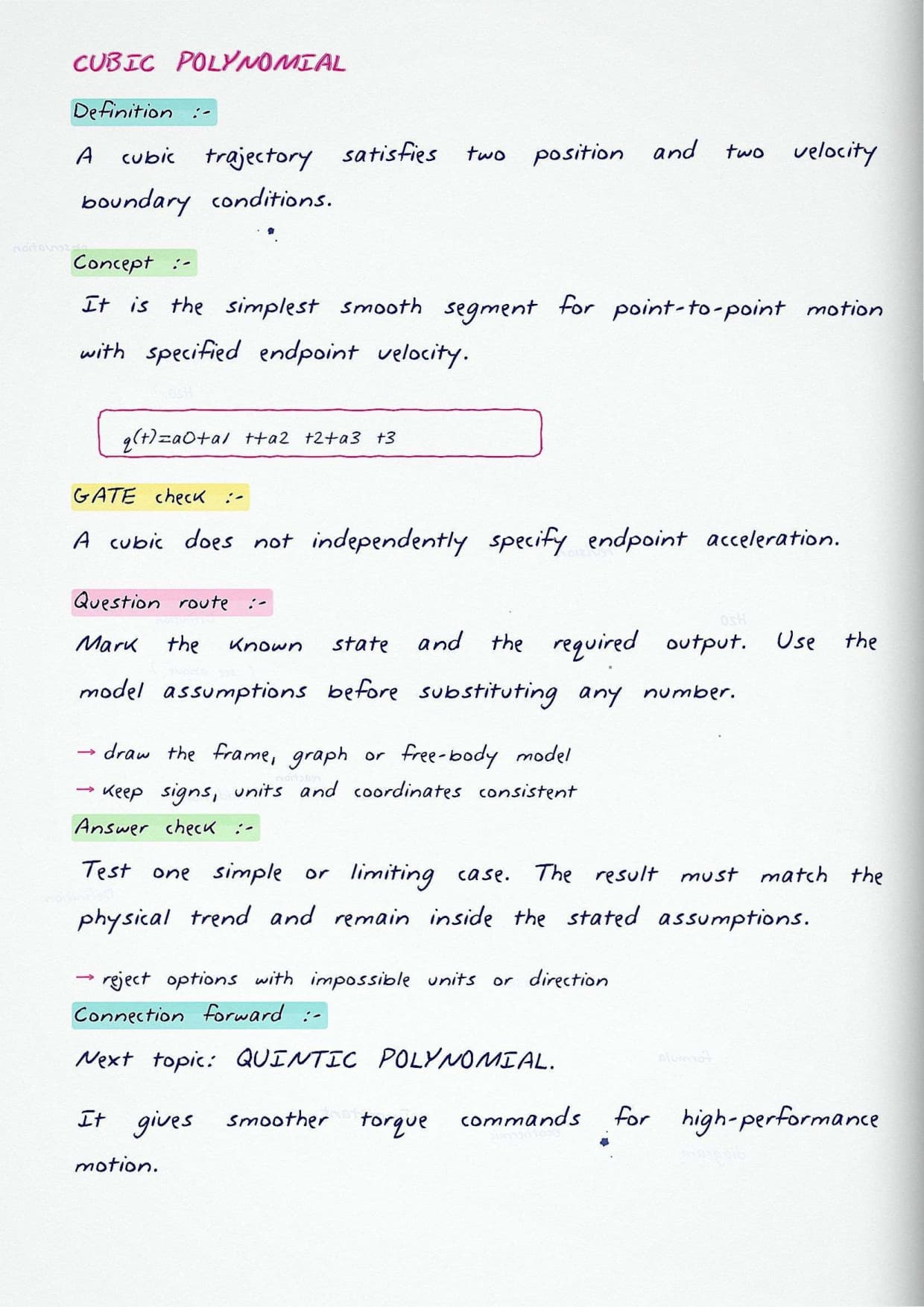
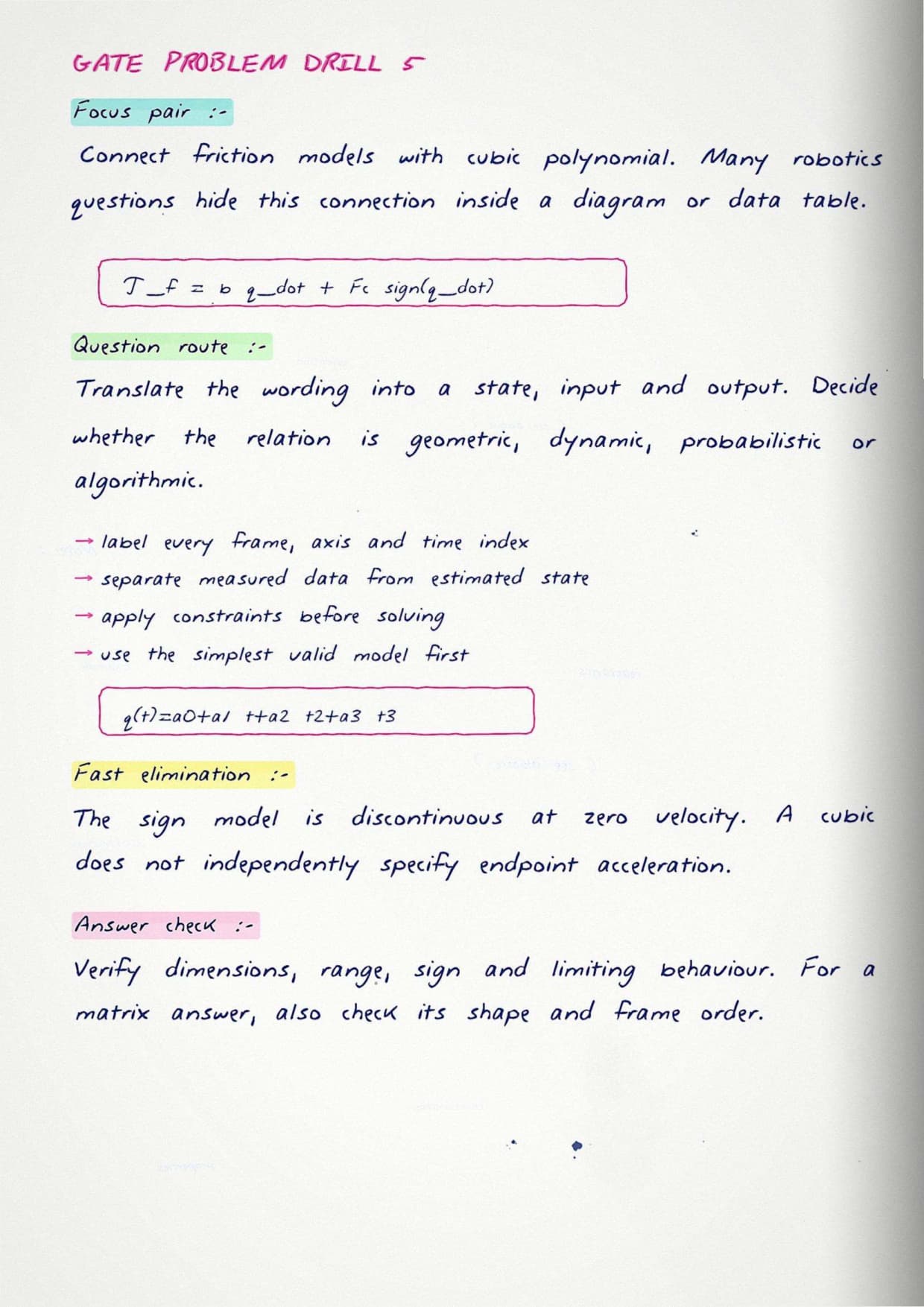
- The cubic polynomial trajectory, derived from its four boundary conditions on position and velocity.
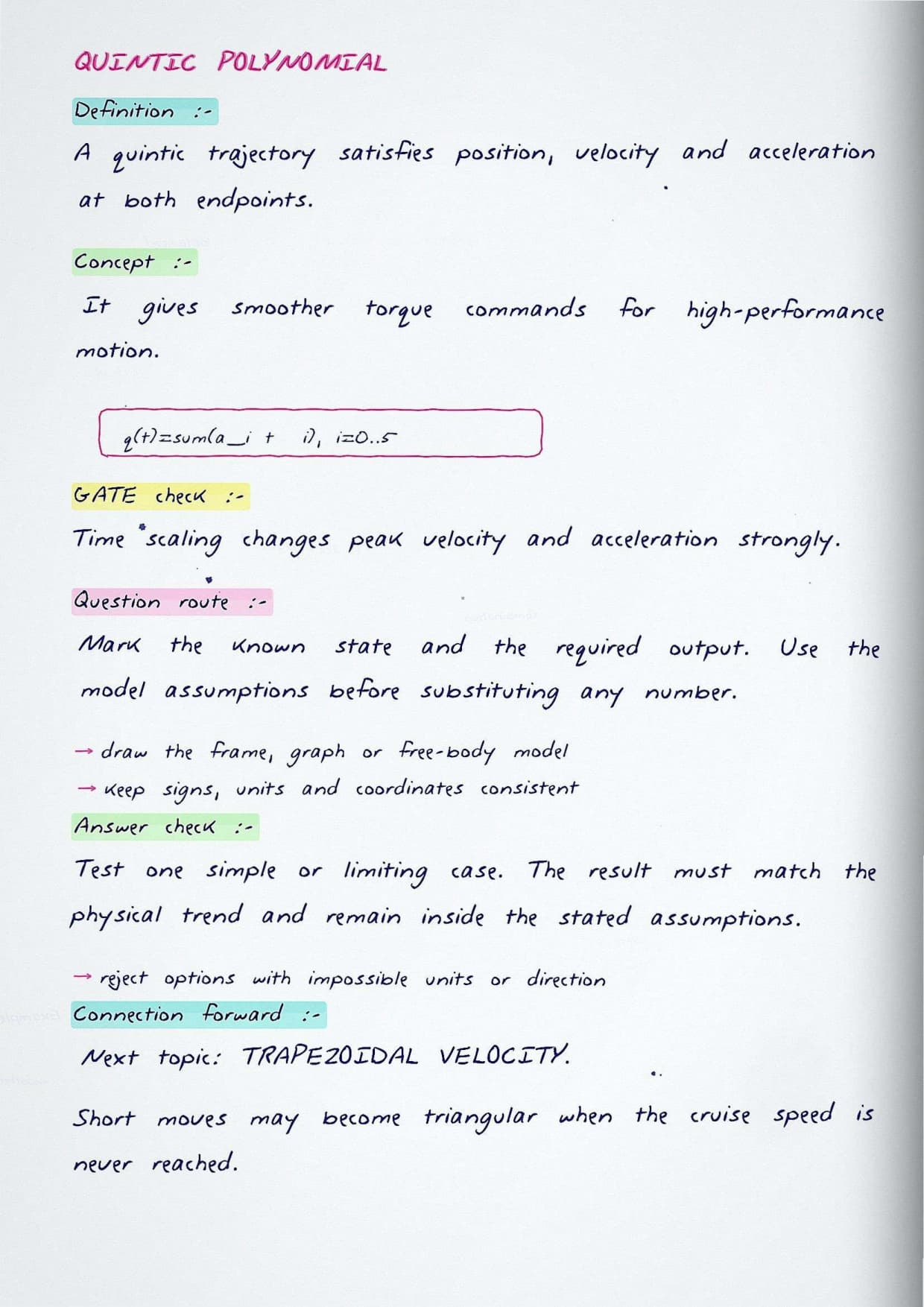
- The quintic polynomial, extended for when smooth acceleration matters.
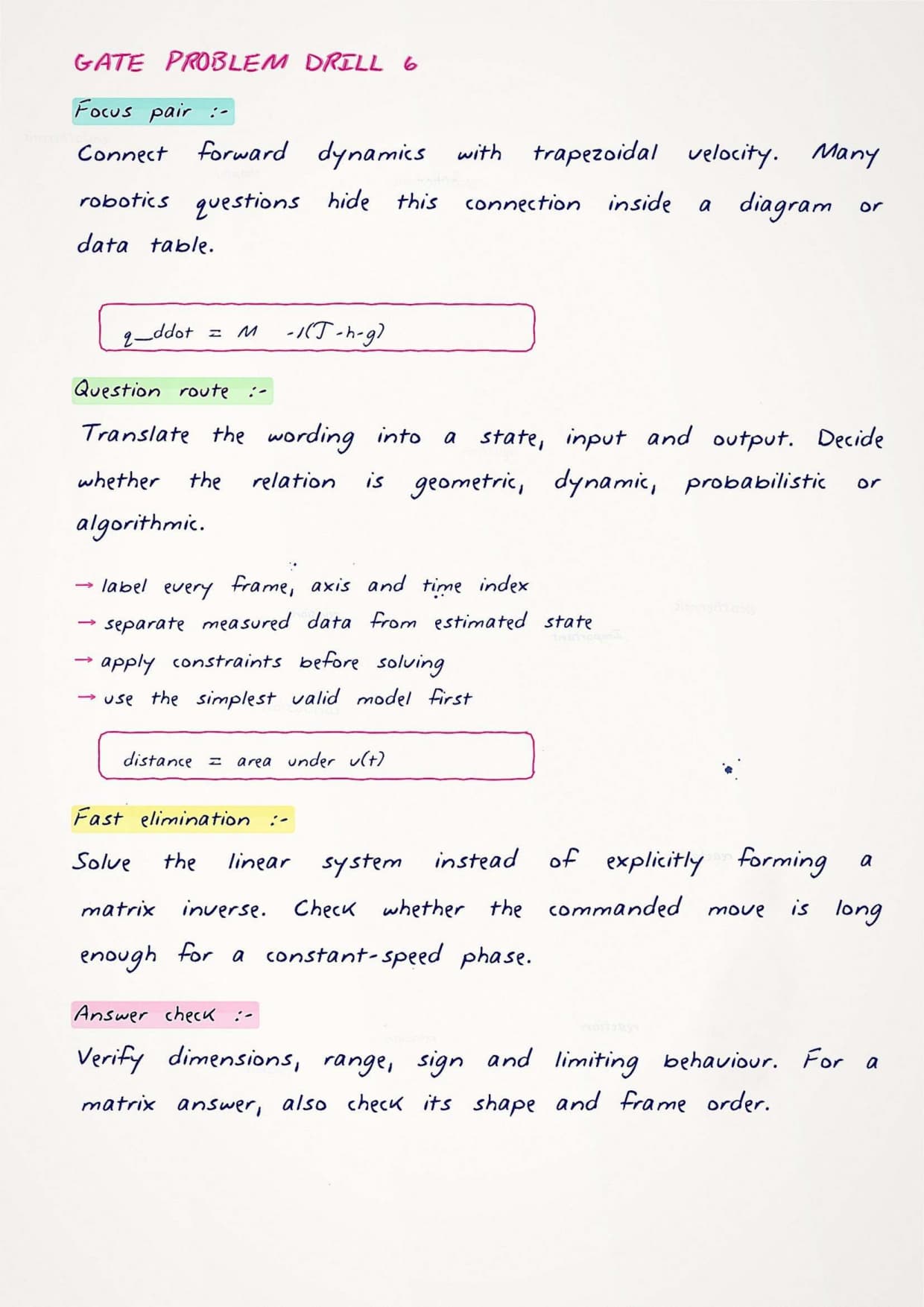
- The trapezoidal velocity profile, with its ramp up, constant cruise and ramp down.
Throughout, the working ties back to the dynamics, since a trajectory that ignores torque limits is one no real joint can follow.
A Lecture to Anchor the Derivations
Source: NPTEL-NOC IITM
Common Slips Students Make in the Algebra
Because this topic is derivation heavy, most lost marks come from small errors, and the notes flag the common ones:
- Dropping a term when differentiating the kinetic energy.
- Forgetting that the mass matrix changes with configuration.
- Mixing up which velocities produce Coriolis effects.
- Fixing the wrong number of boundary conditions for the polynomial in use.
Seeing these traps written next to the correct working helps students avoid repeating them.
How the Notes Fit Your Revision
The best way to use a derivation book is to rebuild it. Students should cover the working and reproduce each derivation from its first energy expression, checking only when stuck.
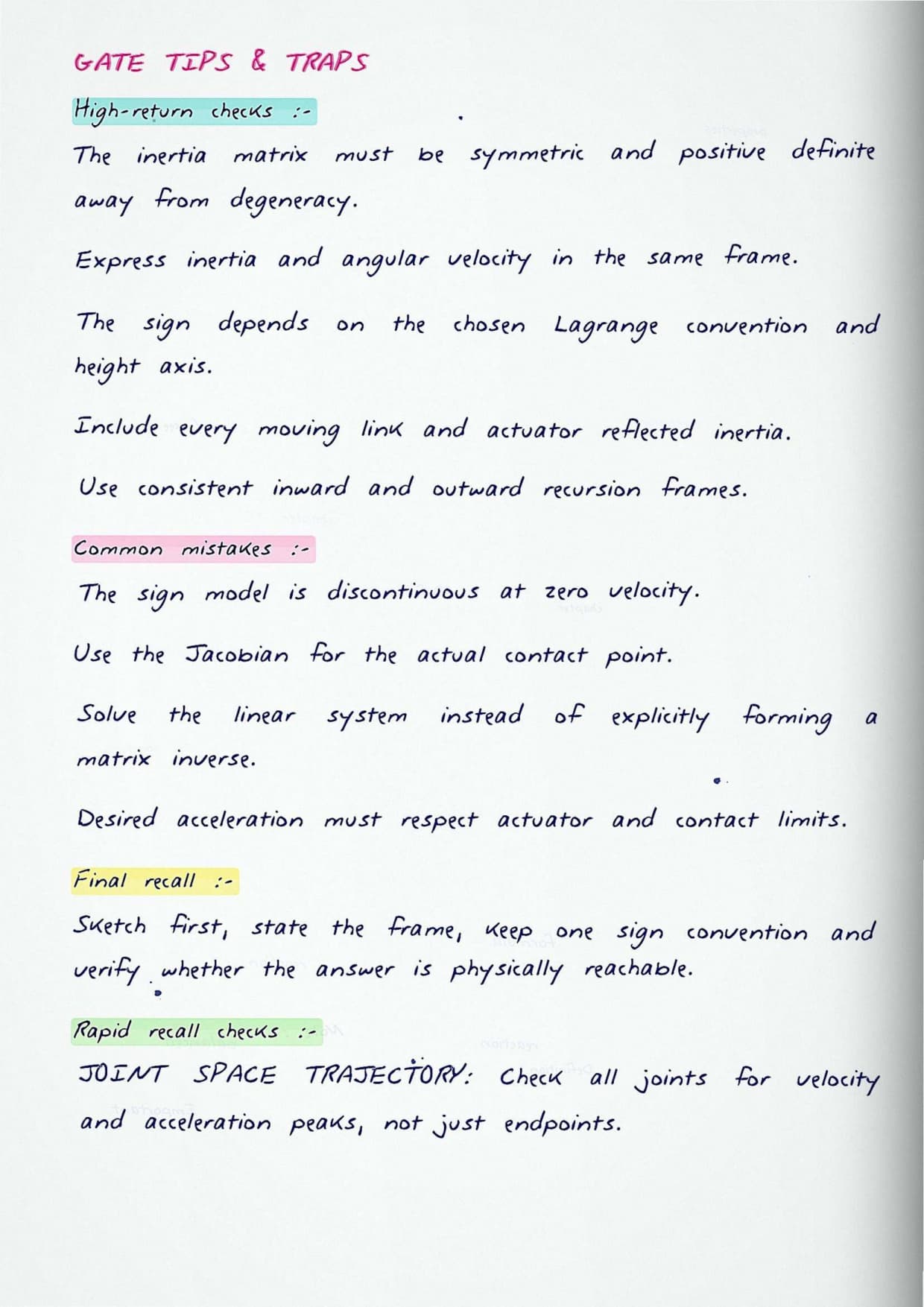
In the last days before an exam, the term-by-term reading of the dynamics equation and the trajectory boundary conditions are the fastest things to revisit. This content overlaps with the Engineering Mathematics and dynamics portions of the mechanical and control GATE papers, so the effort carries beyond robotics alone.
Robot Dynamics FAQs
Ques. Why do these notes derive the dynamics using two different methods?
Ans. The Lagrangian method is cleaner to write by hand, while the Newton-Euler method is better suited to computation. Deriving both lets students check their answer and choose the quicker route depending on the problem.
Ques. What are the three parts of a manipulator's equation of motion?
Ans. The mass matrix, the Coriolis and centrifugal terms, and the gravity vector. The notes show how to recognise each one, which is often all a question actually needs.
Ques. What is the difference between a cubic and a quintic trajectory?
Ans. A cubic polynomial fixes position and velocity at the two ends, giving smooth motion. A quintic also fixes acceleration at the ends, which matters when the start and stop need to be gentle on the joints.
Ques. Do these notes need heavy prior maths?
Ans. Students should be comfortable with basic calculus and matrices. Everything specific to robot dynamics, from energy expressions to the Euler-Lagrange step, is derived on the page so nothing is assumed.
Ques. How does this topic relate to GATE?
Ans. There is no separate robotics paper, but the dynamics and trajectory content overlaps with the engineering mathematics and dynamics sections of the mechanical and control based GATE papers.



Comments