




Robots do not run on hardware alone. Every sensor reading, path and grasp is decided by code, and its quality comes down to Programming, Data Structures and Algorithms, the one robotics foundation that overlaps GATE papers line for line.
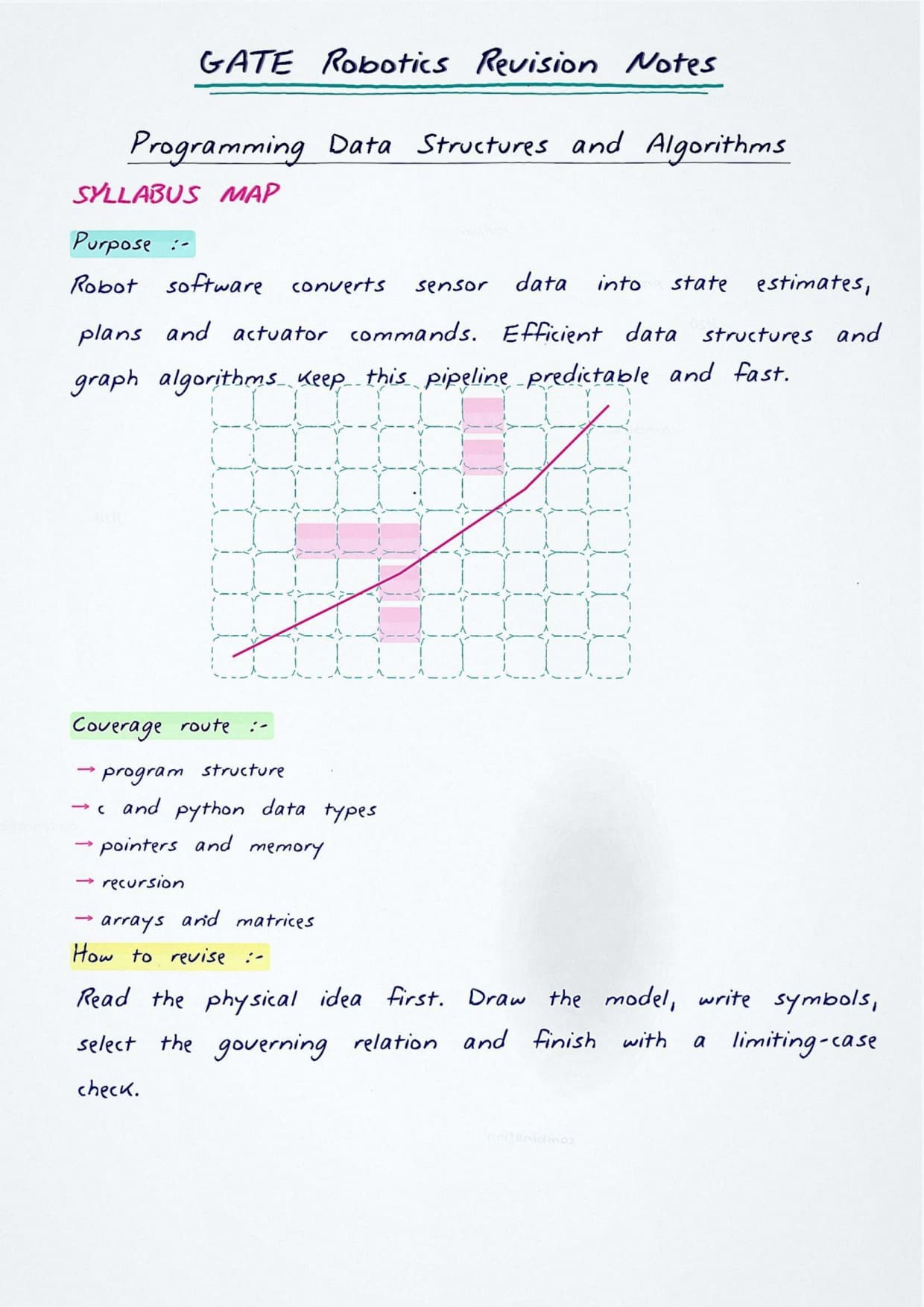
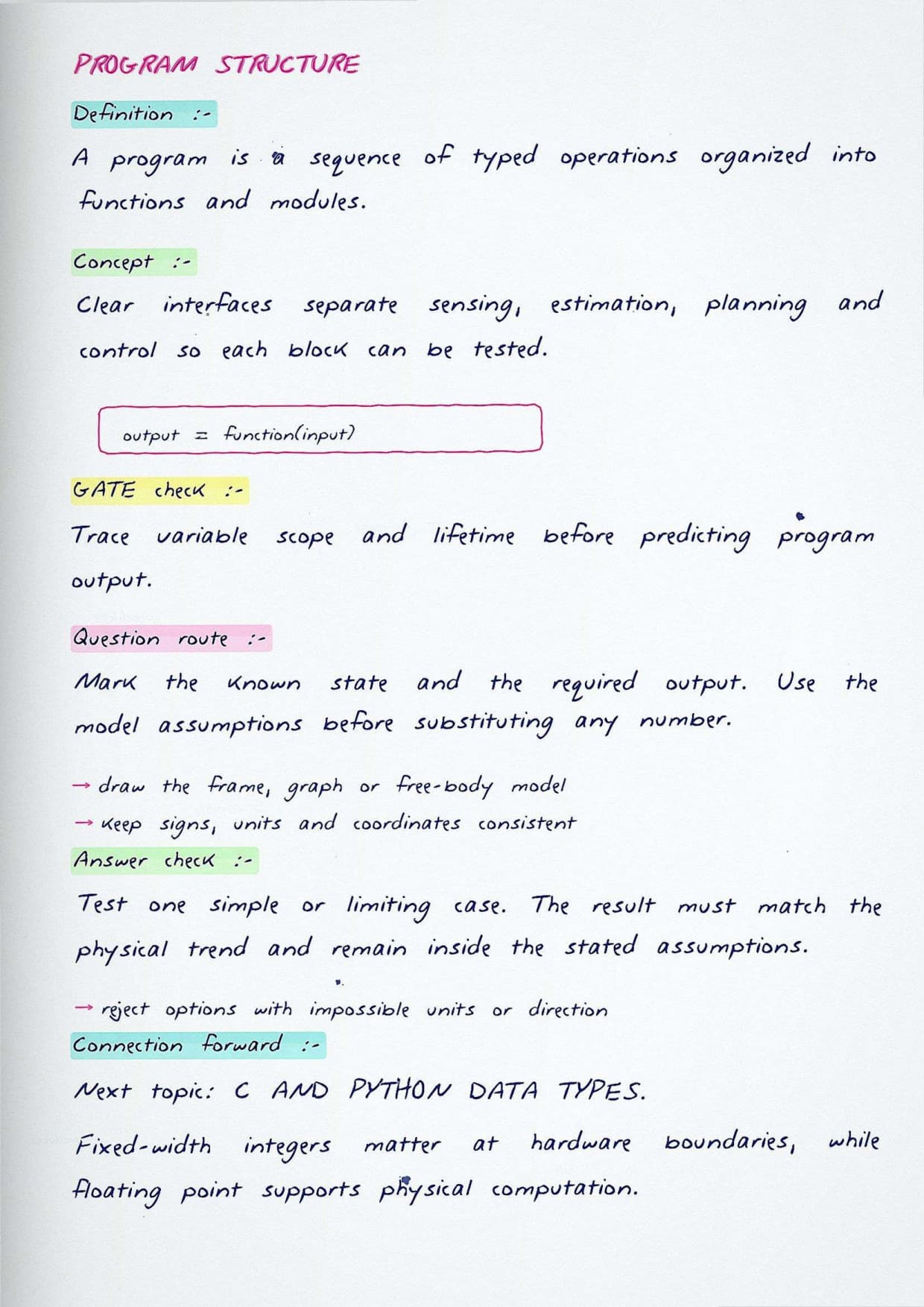
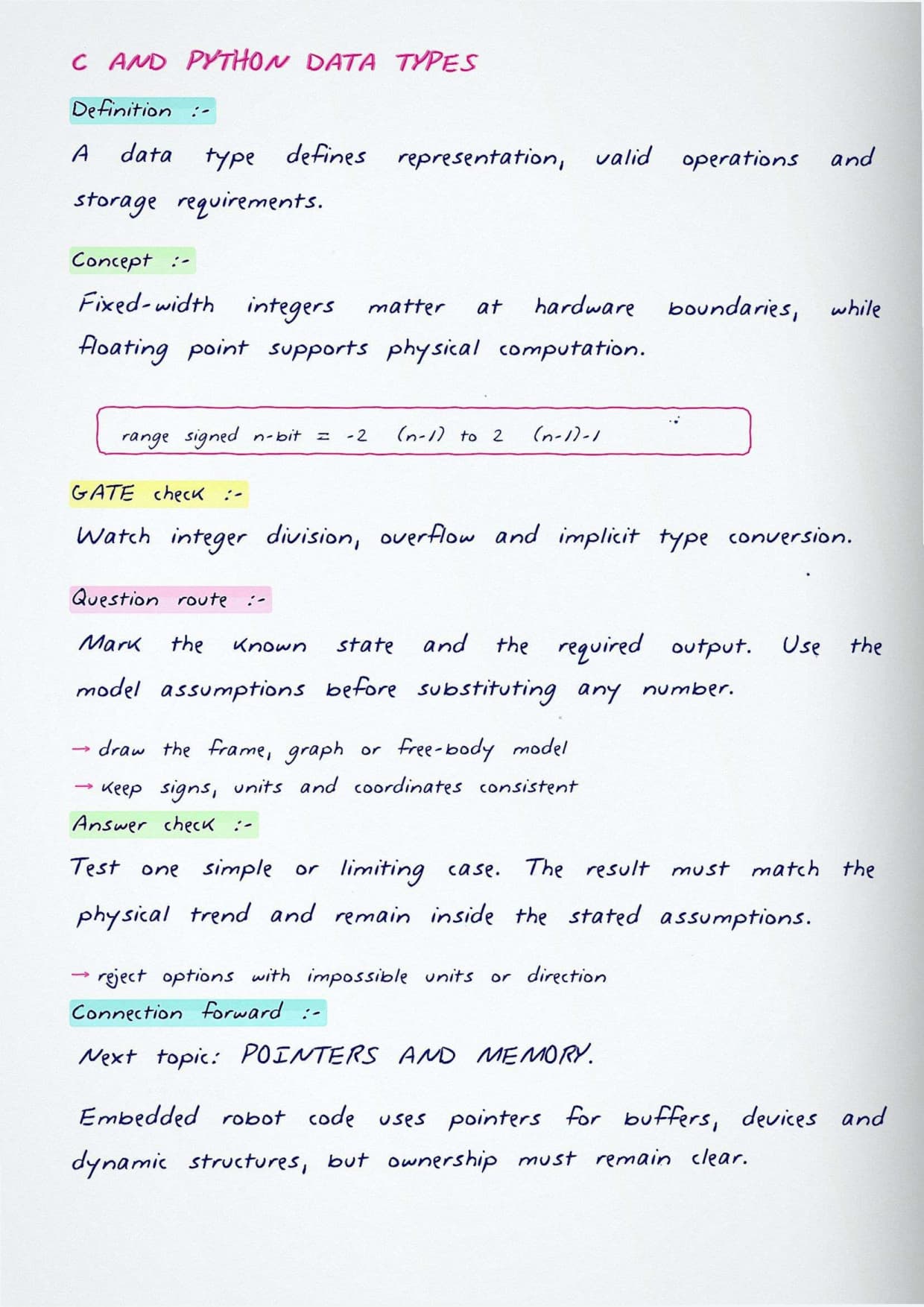
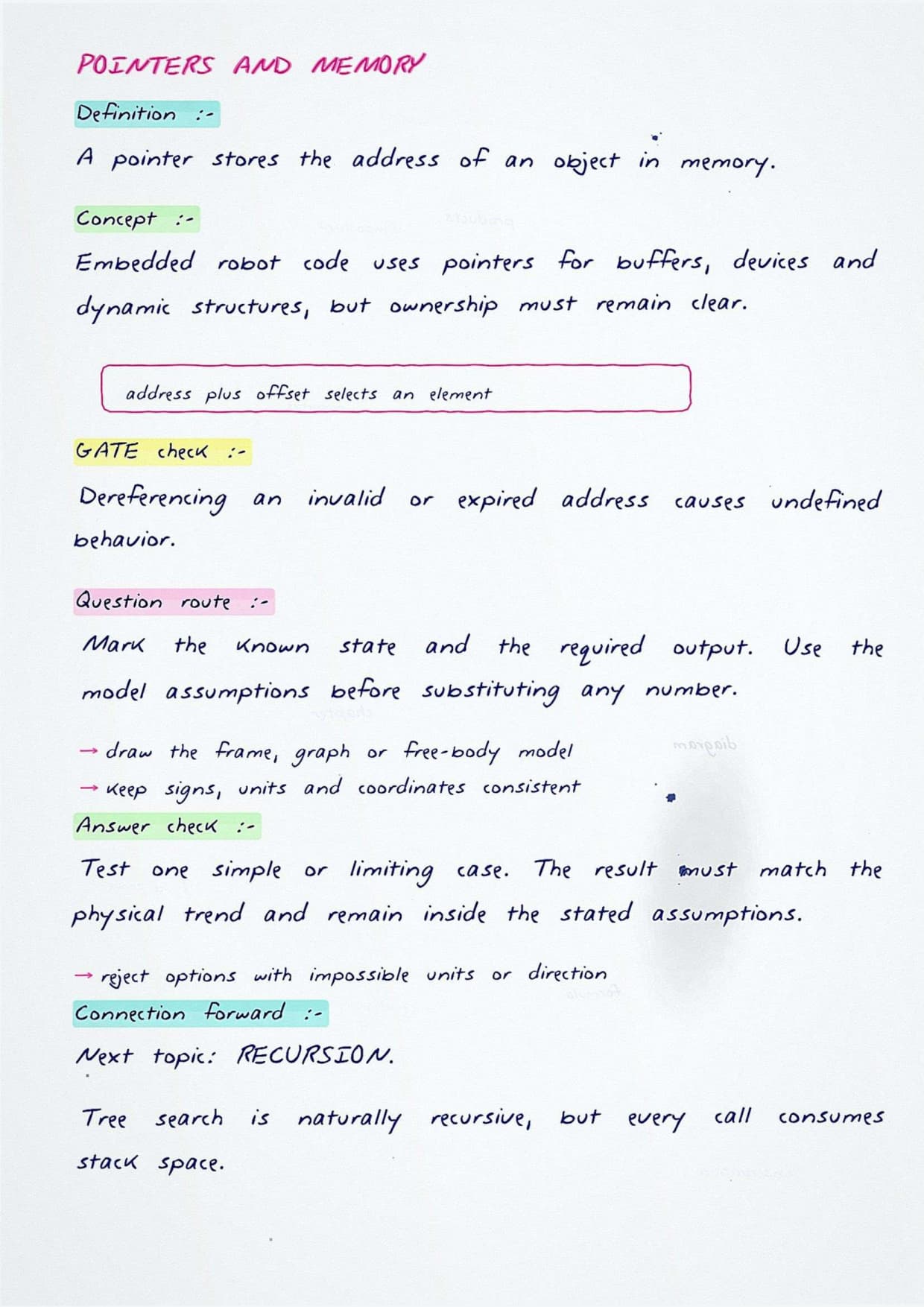
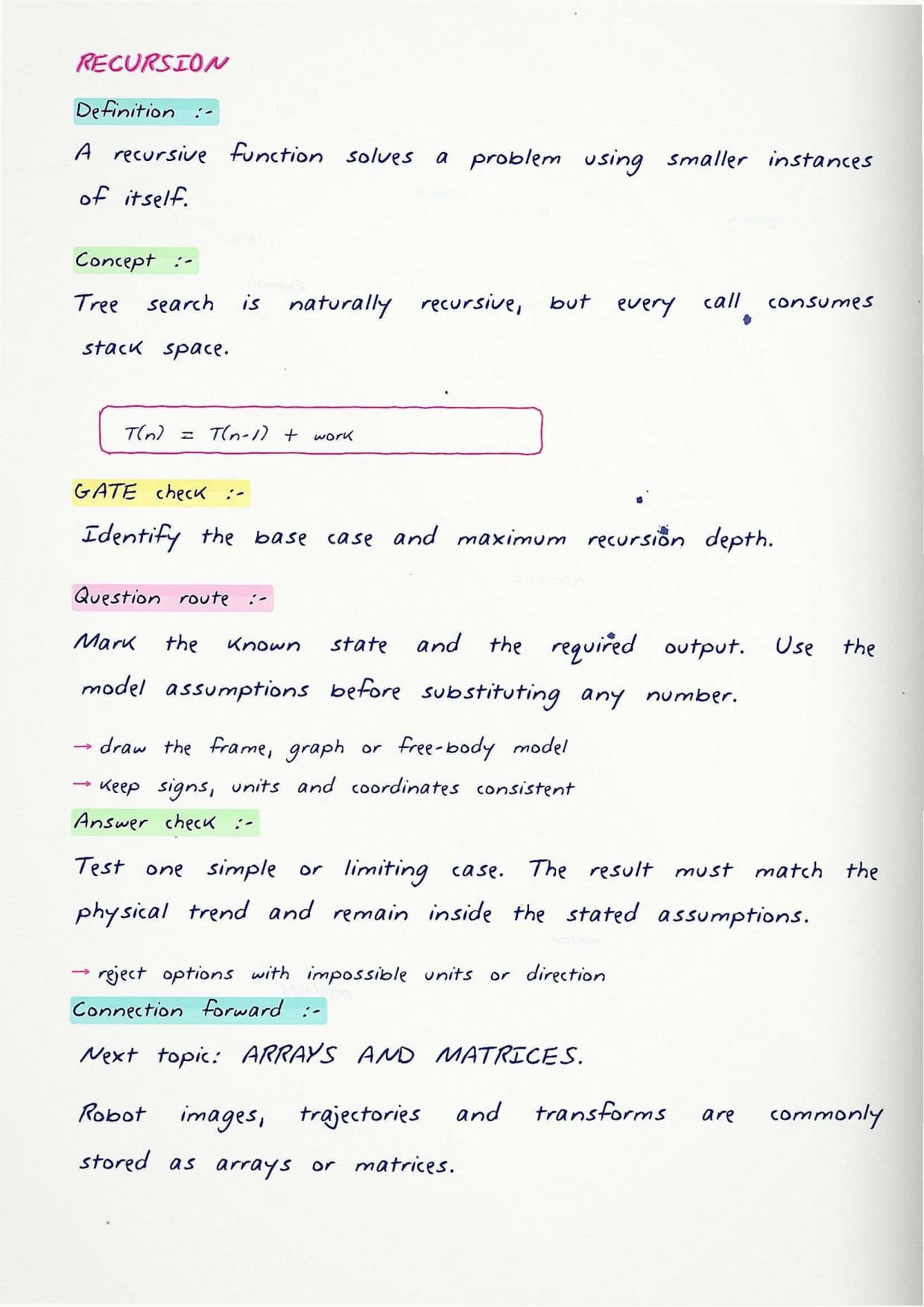
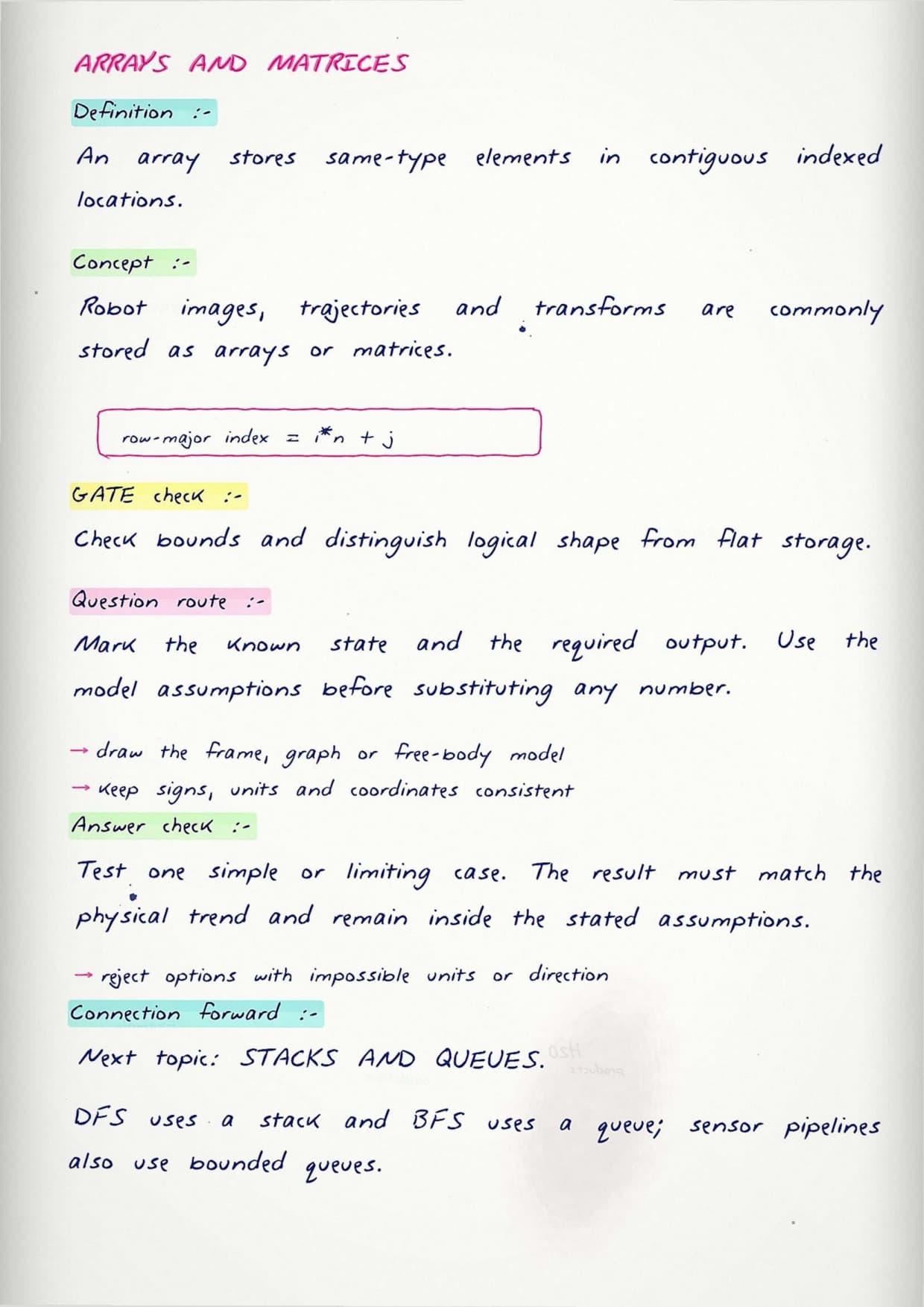
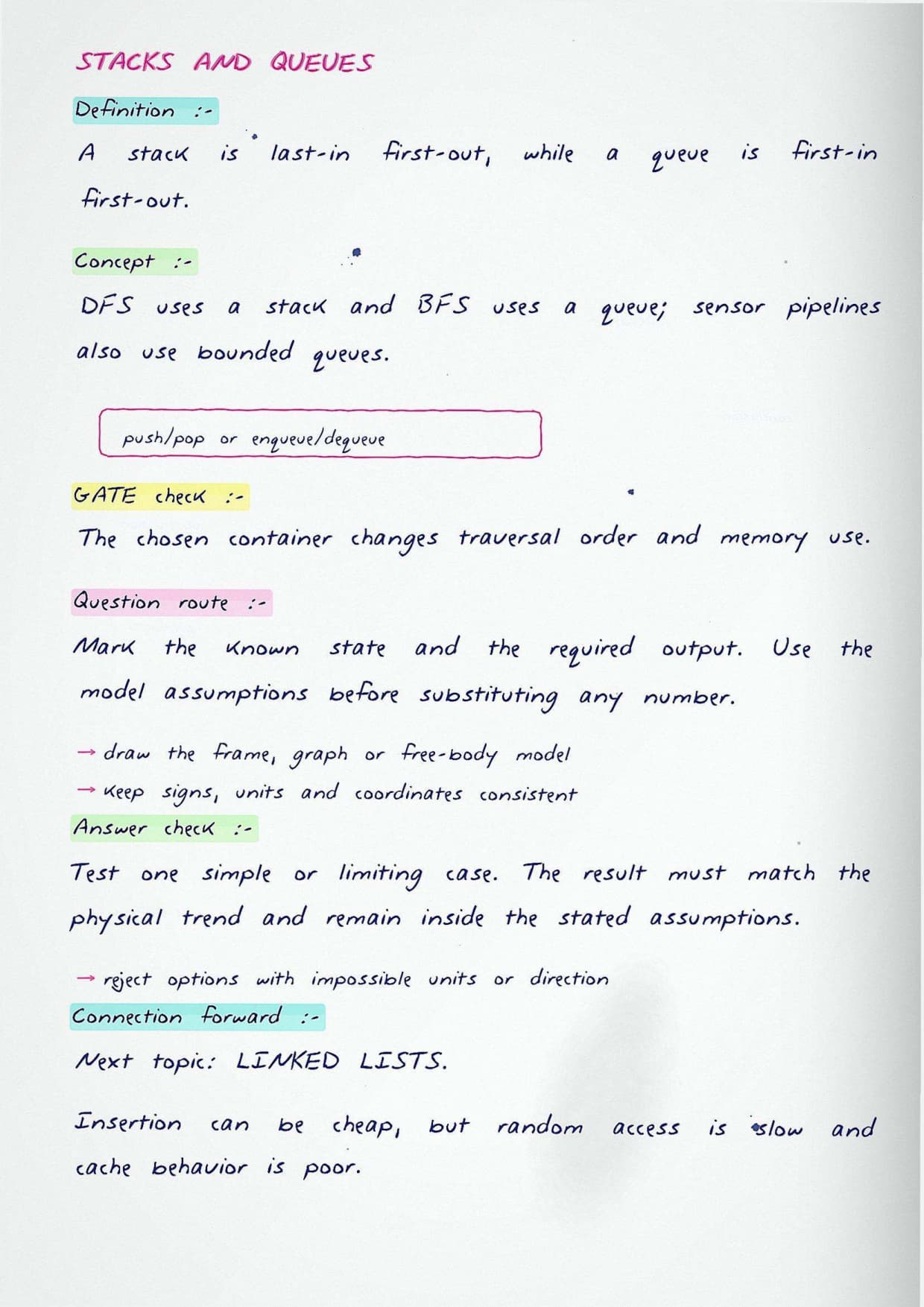
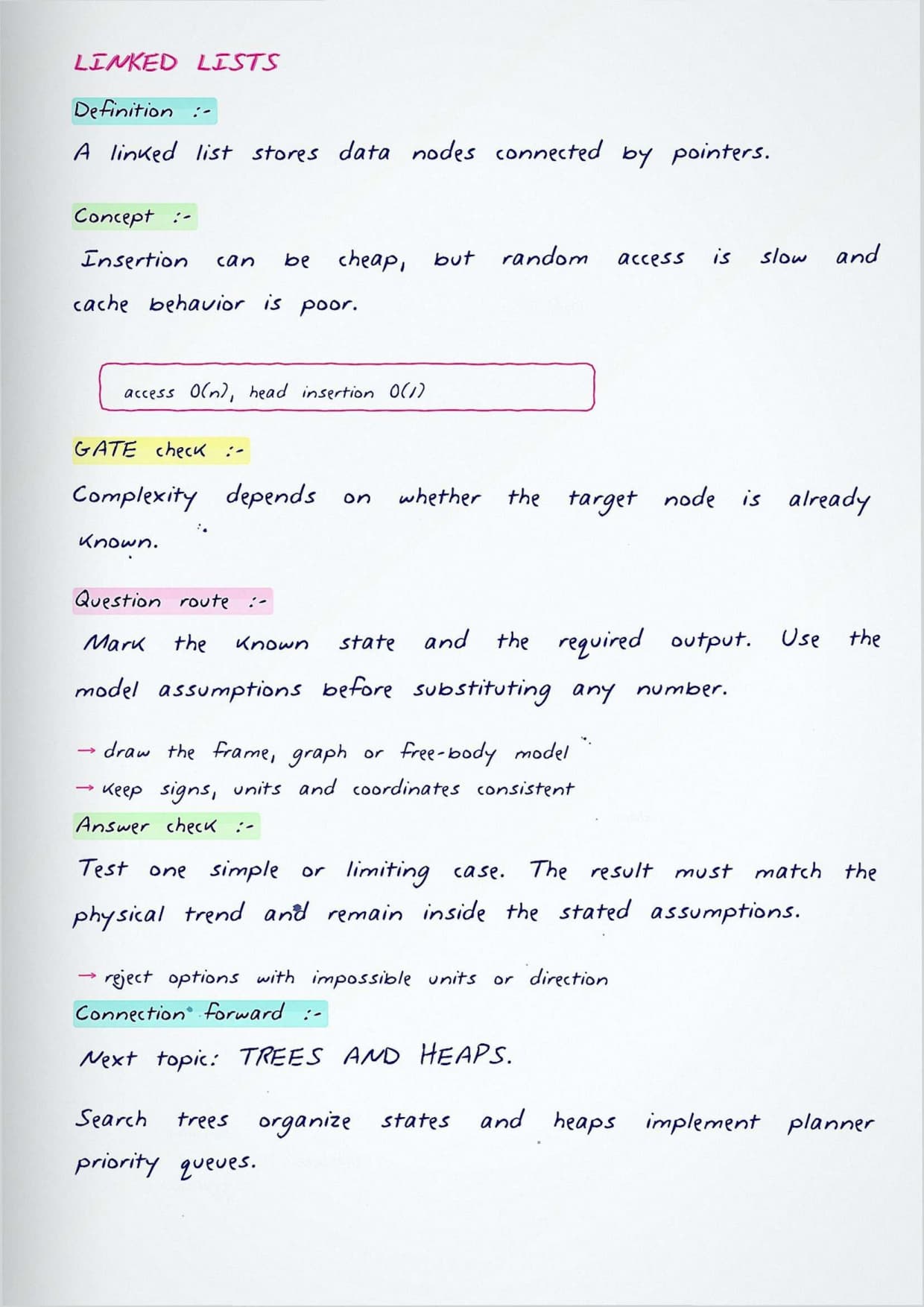
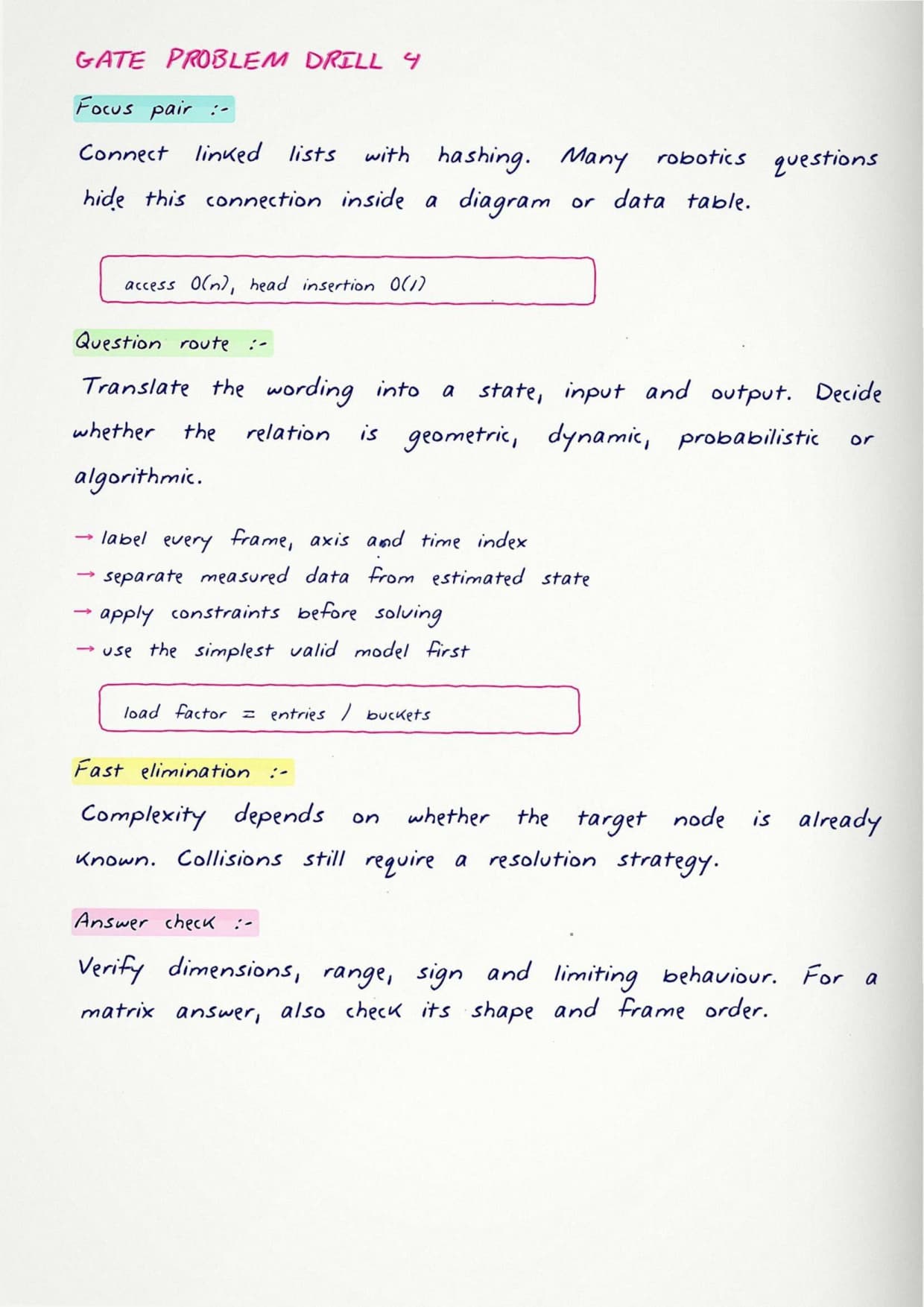
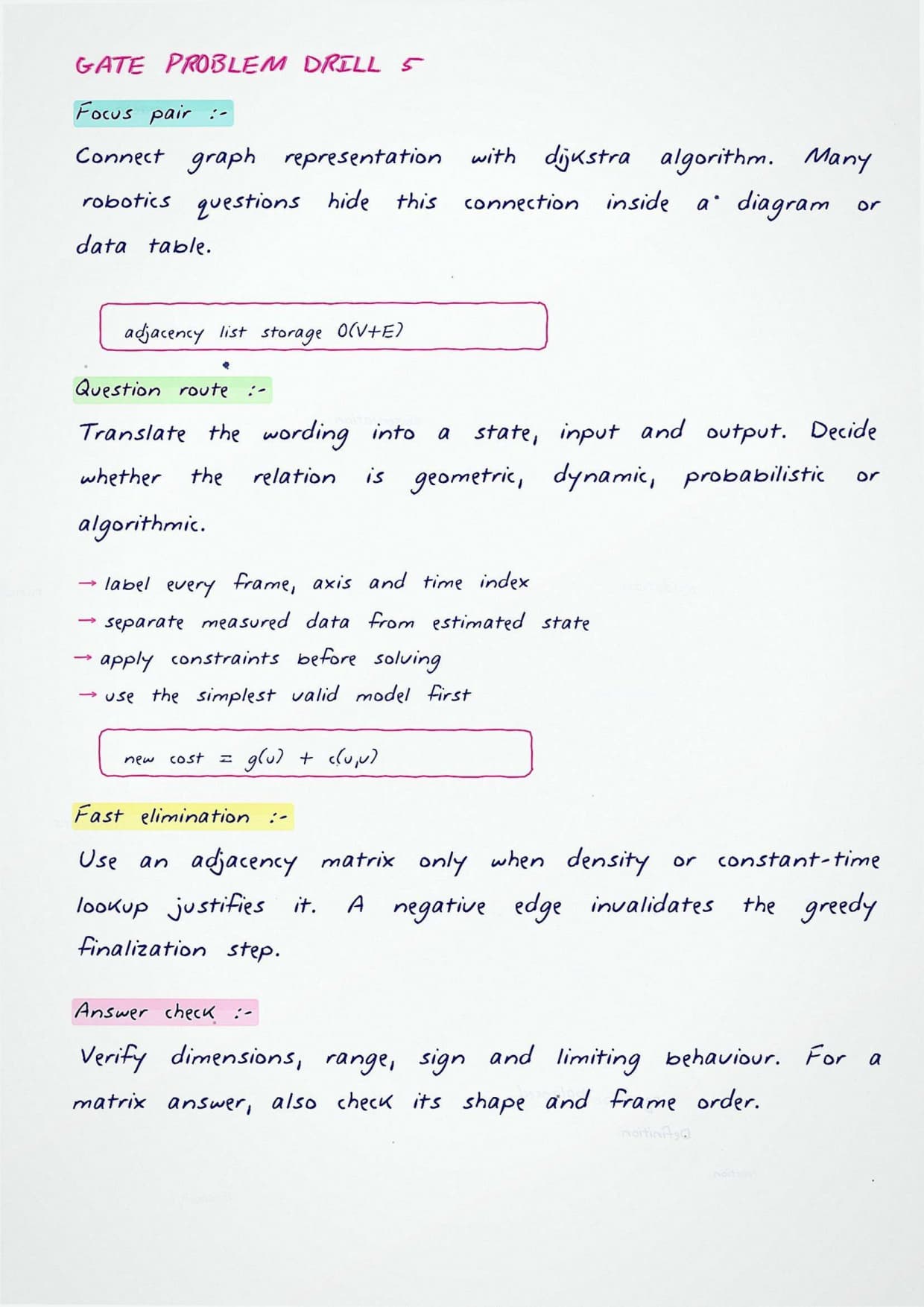
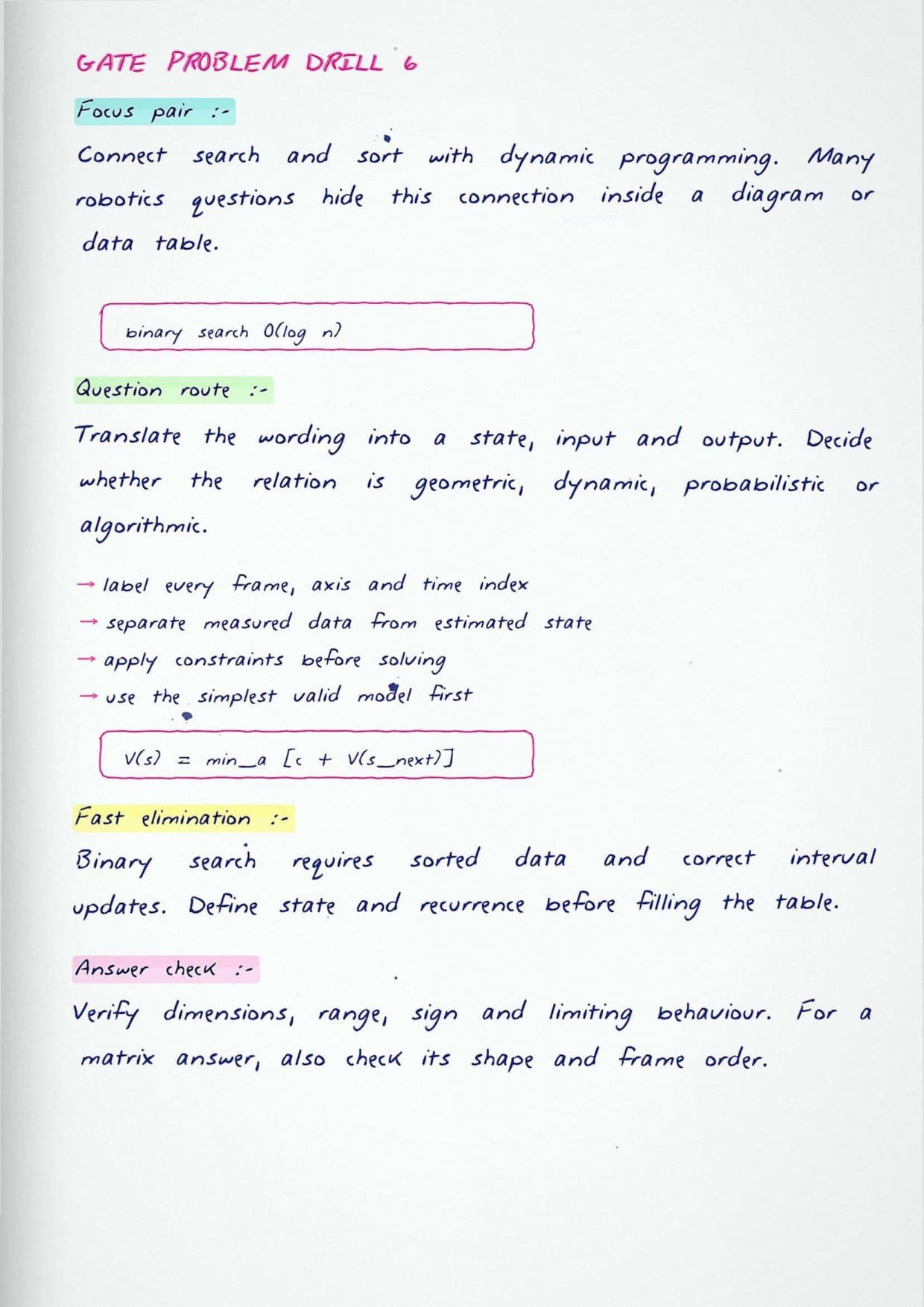
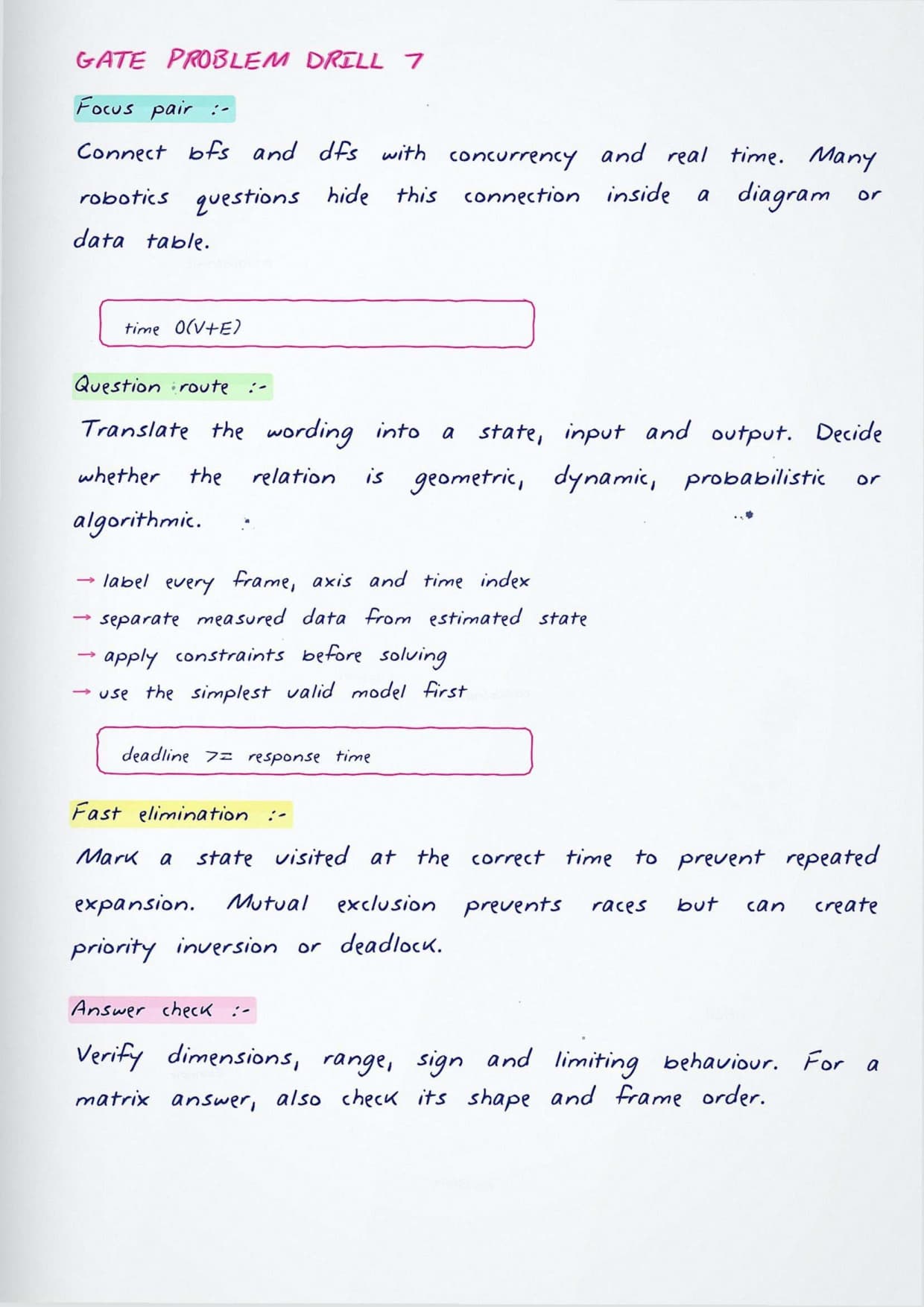
A Skill You Practice, Not a Chapter You Cram
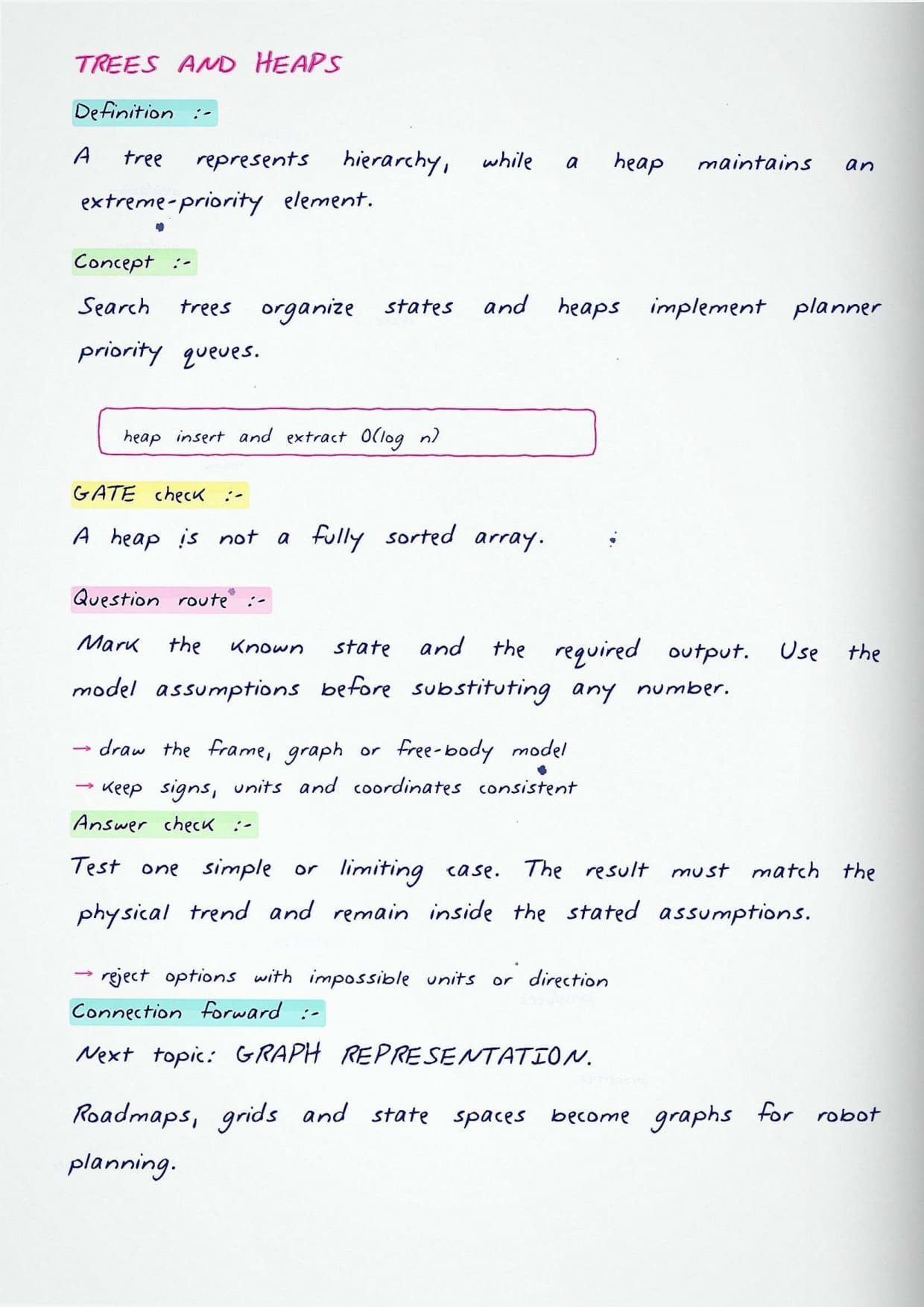
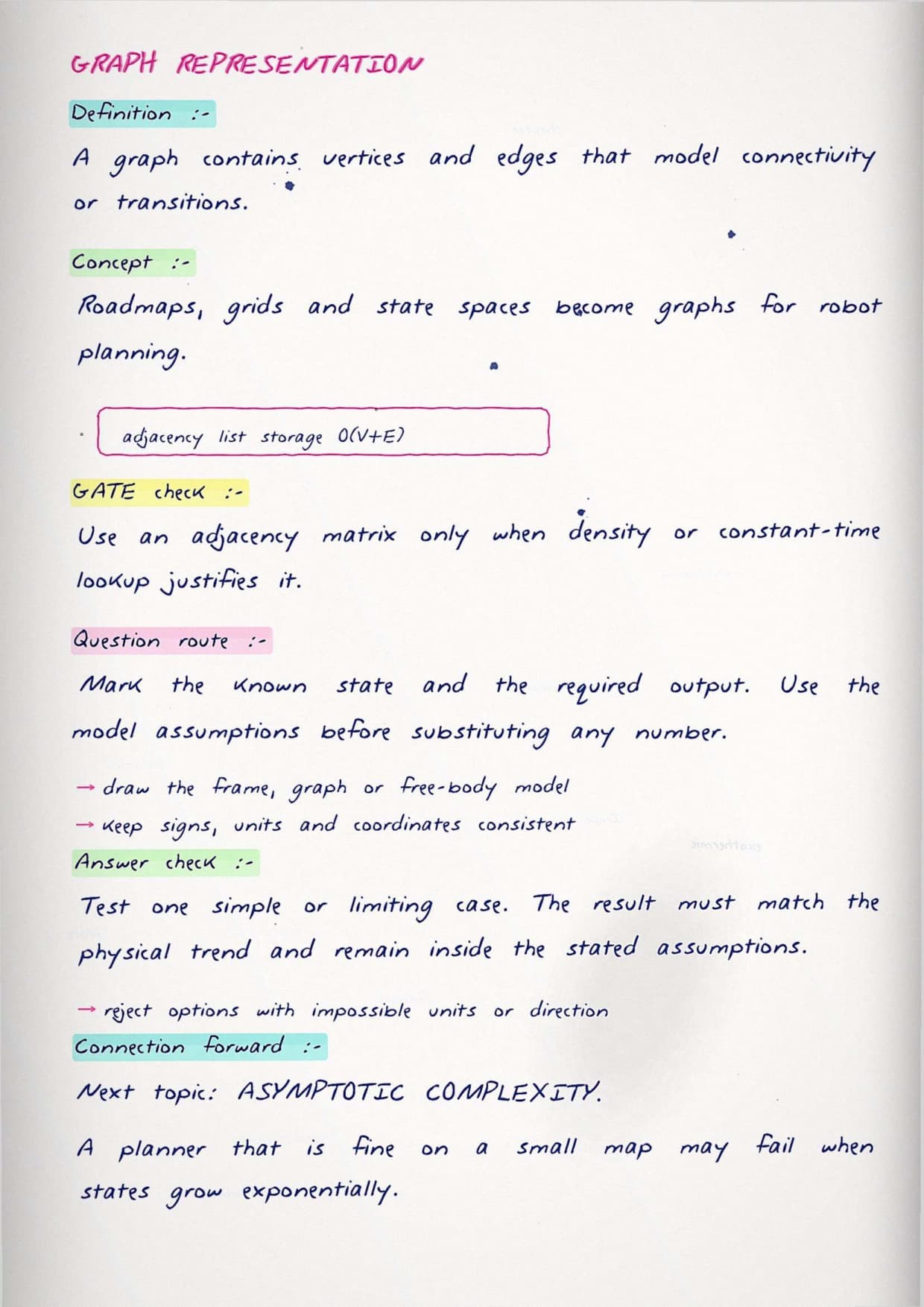
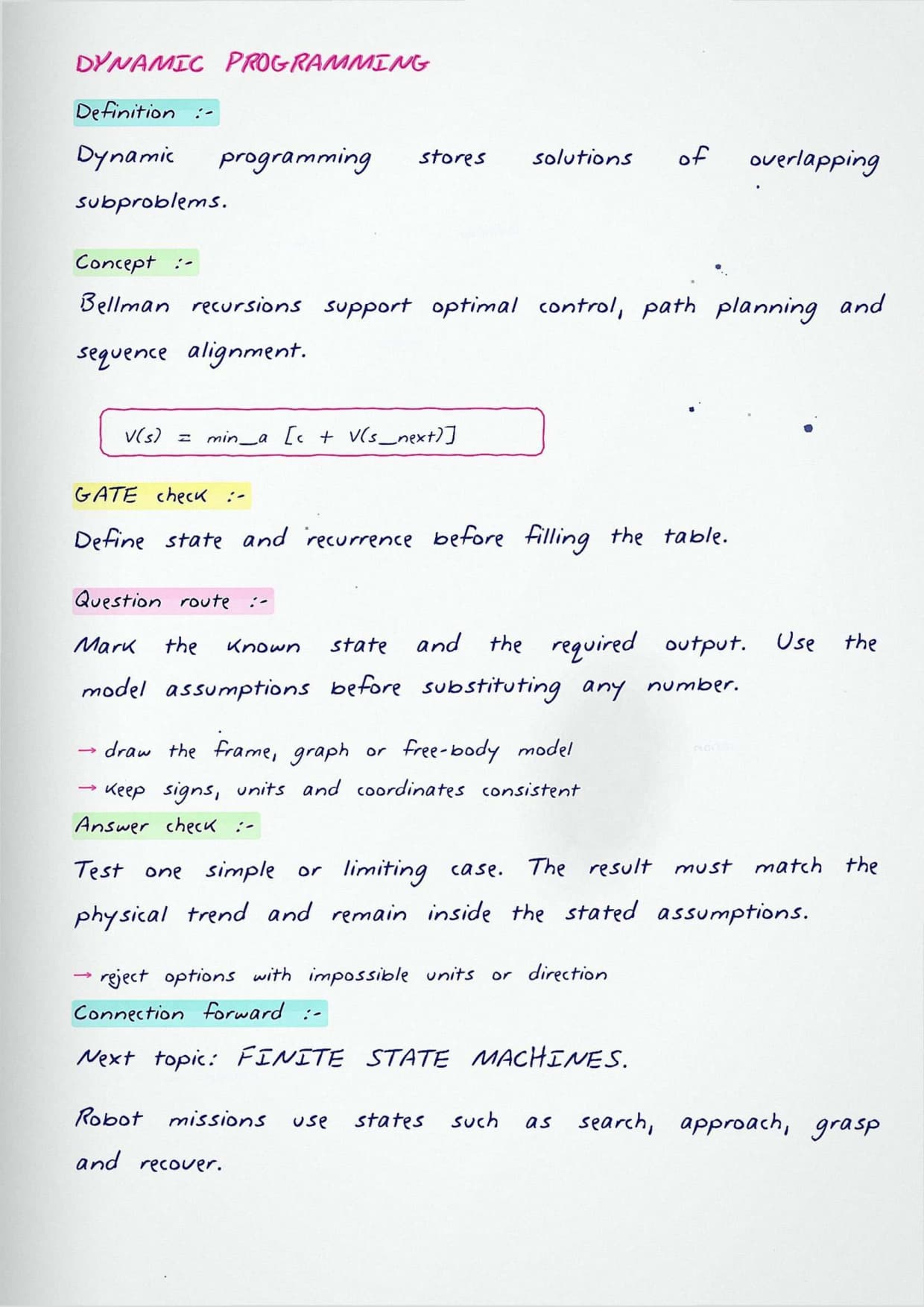
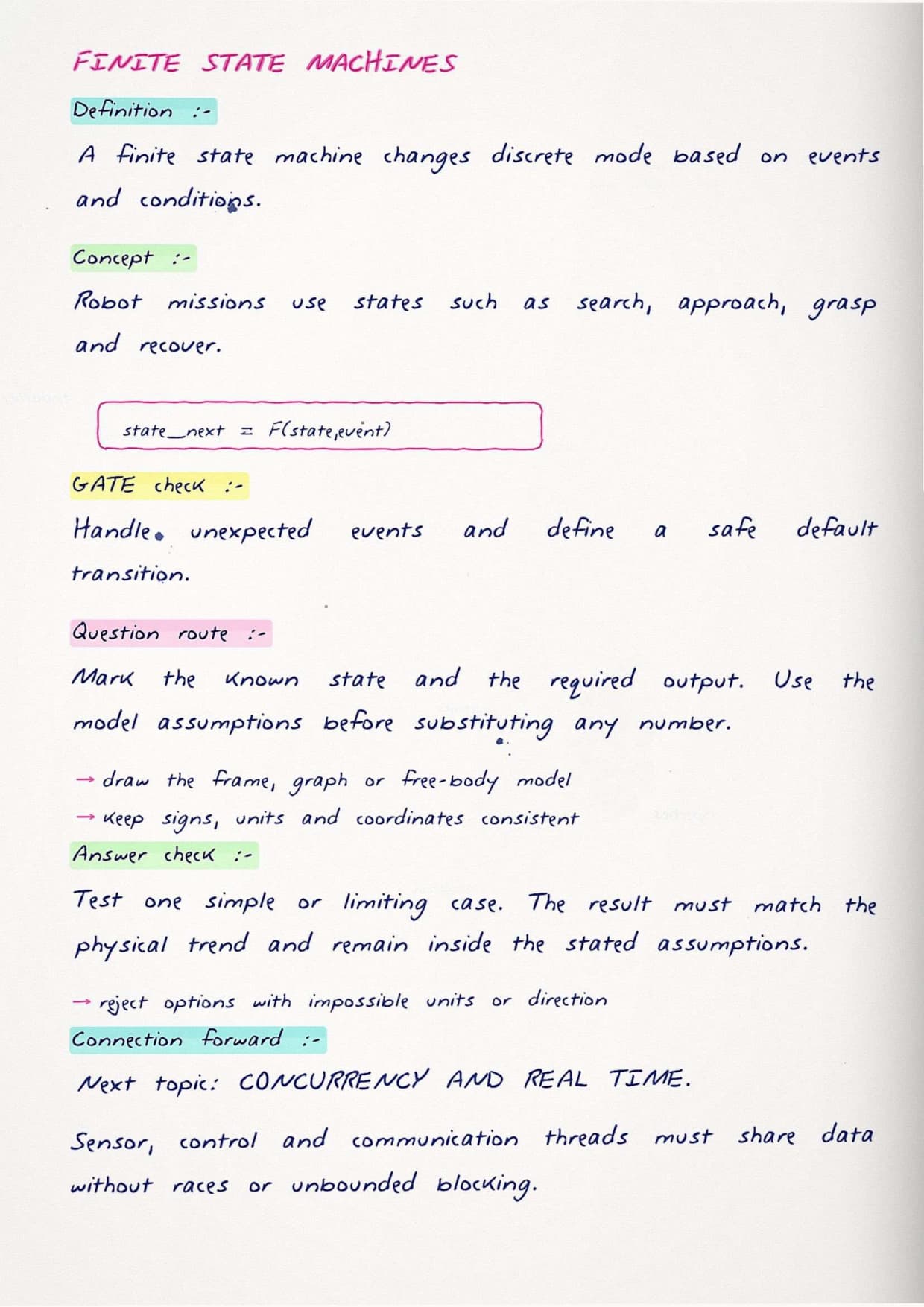
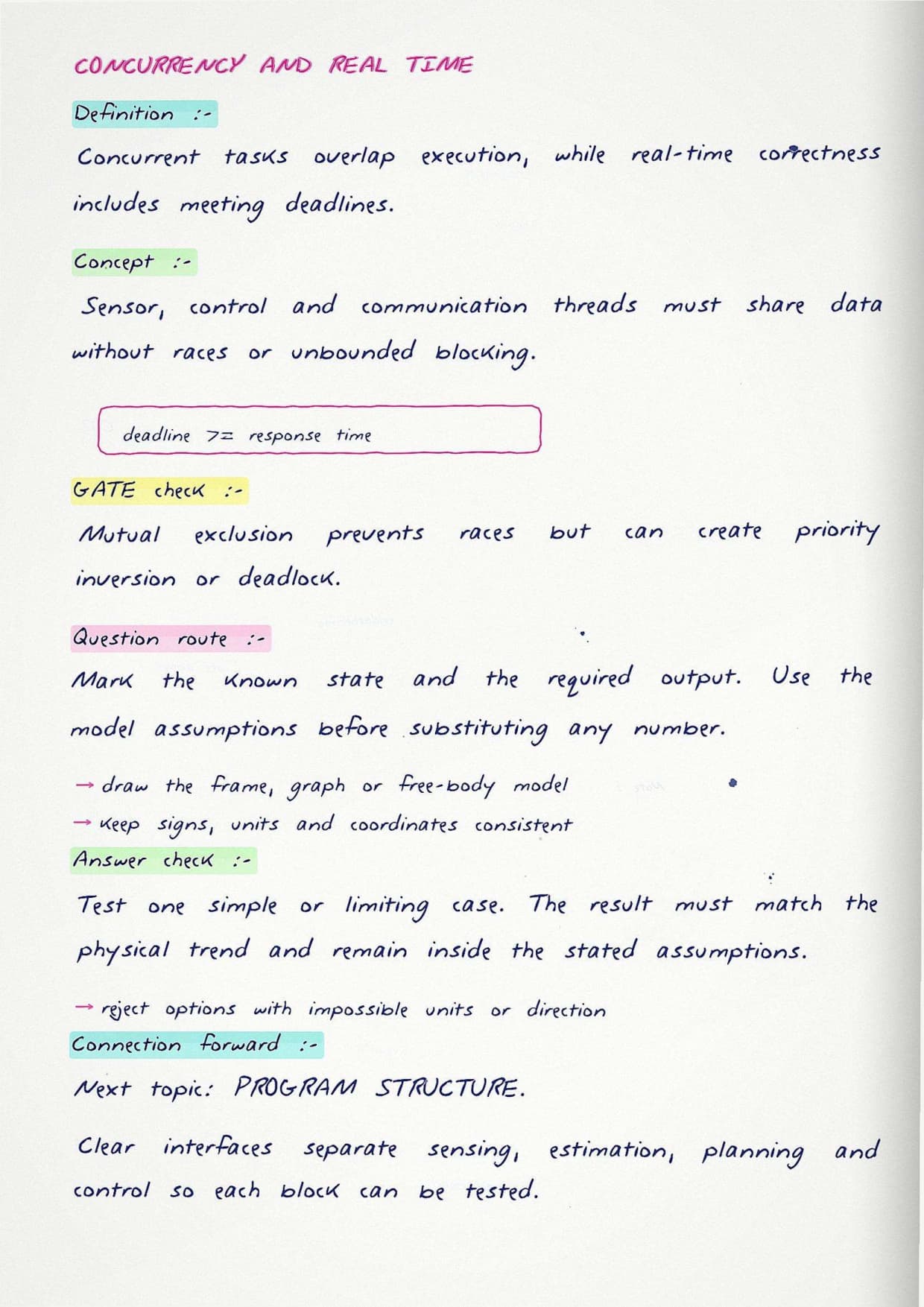
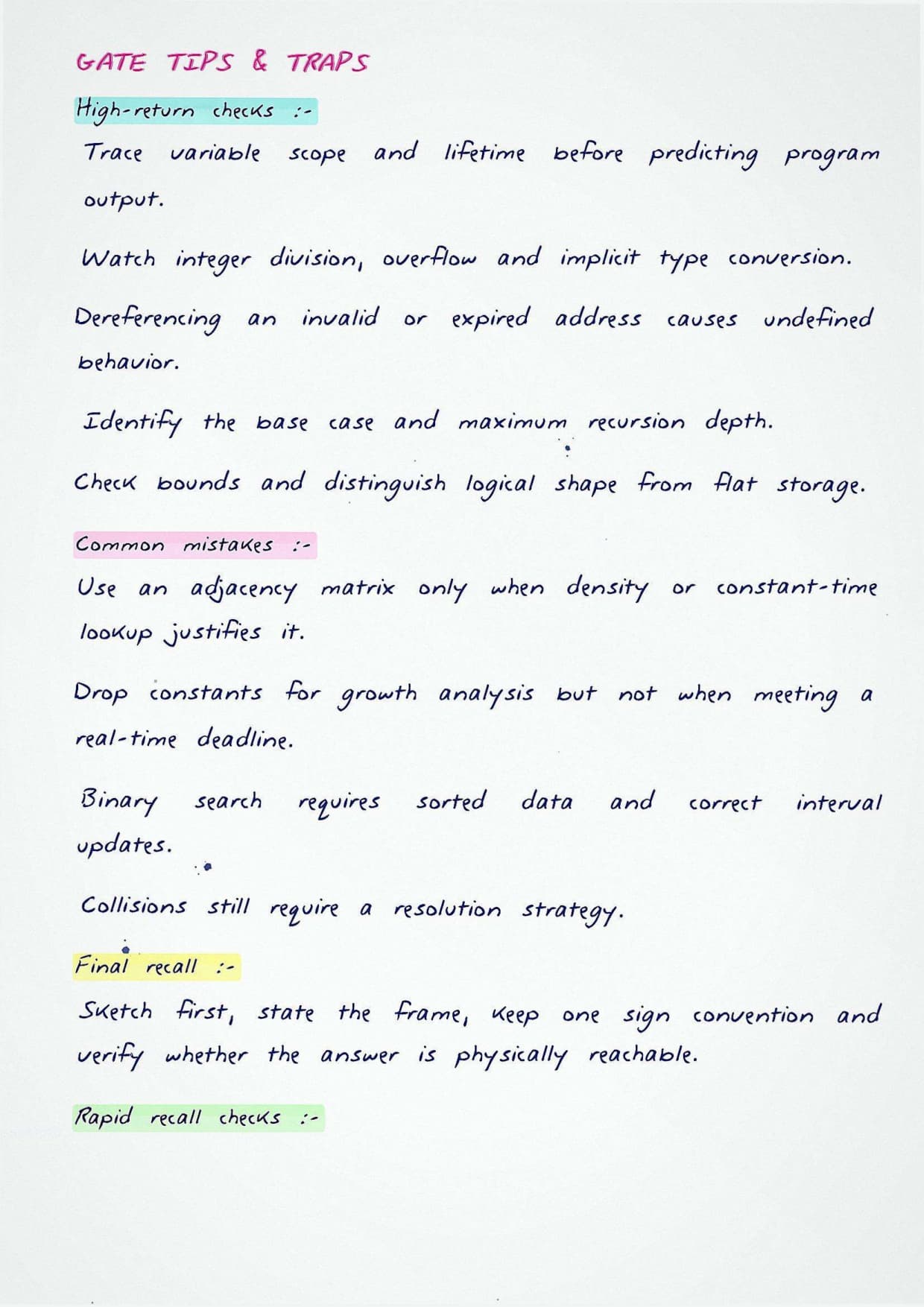
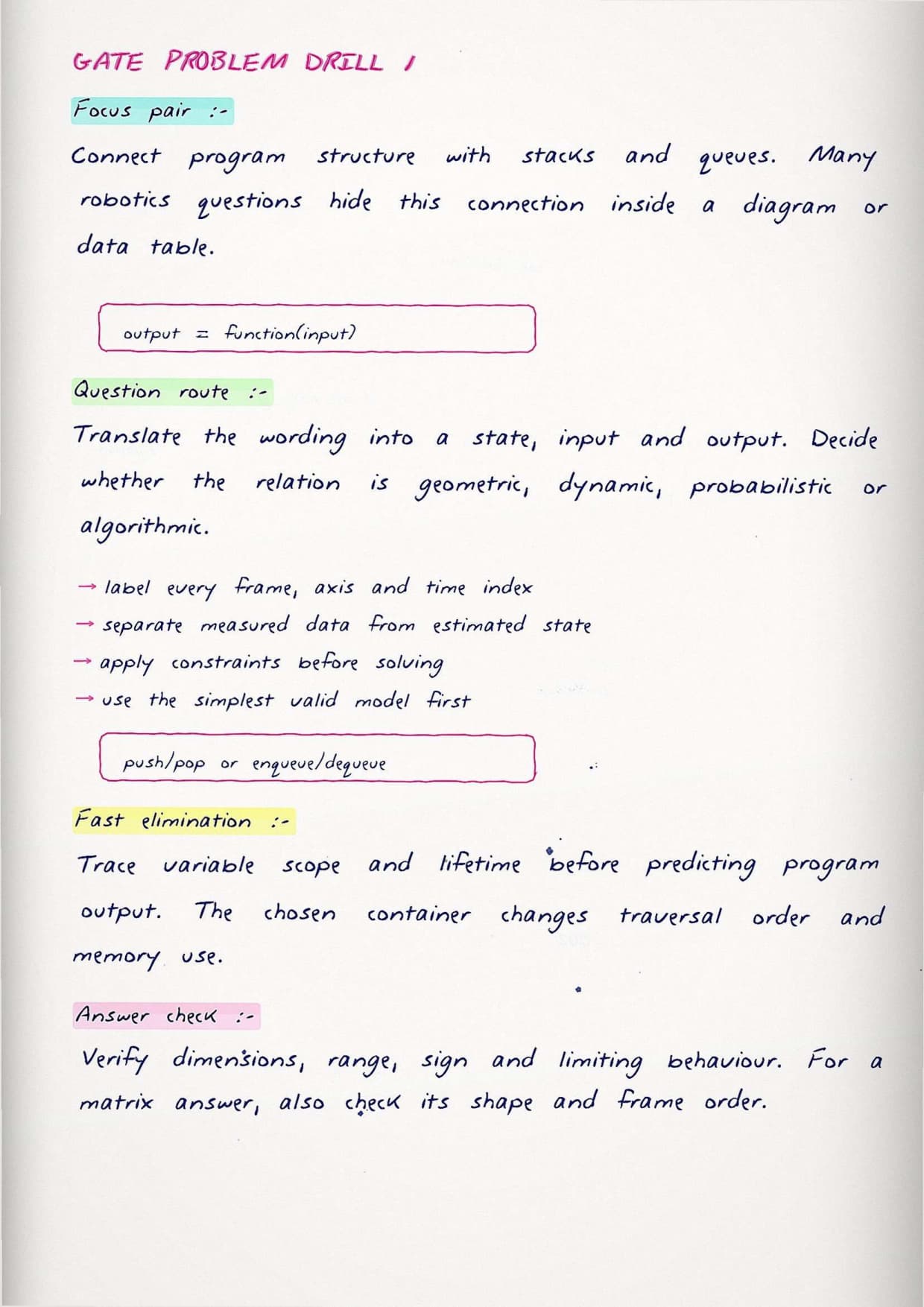
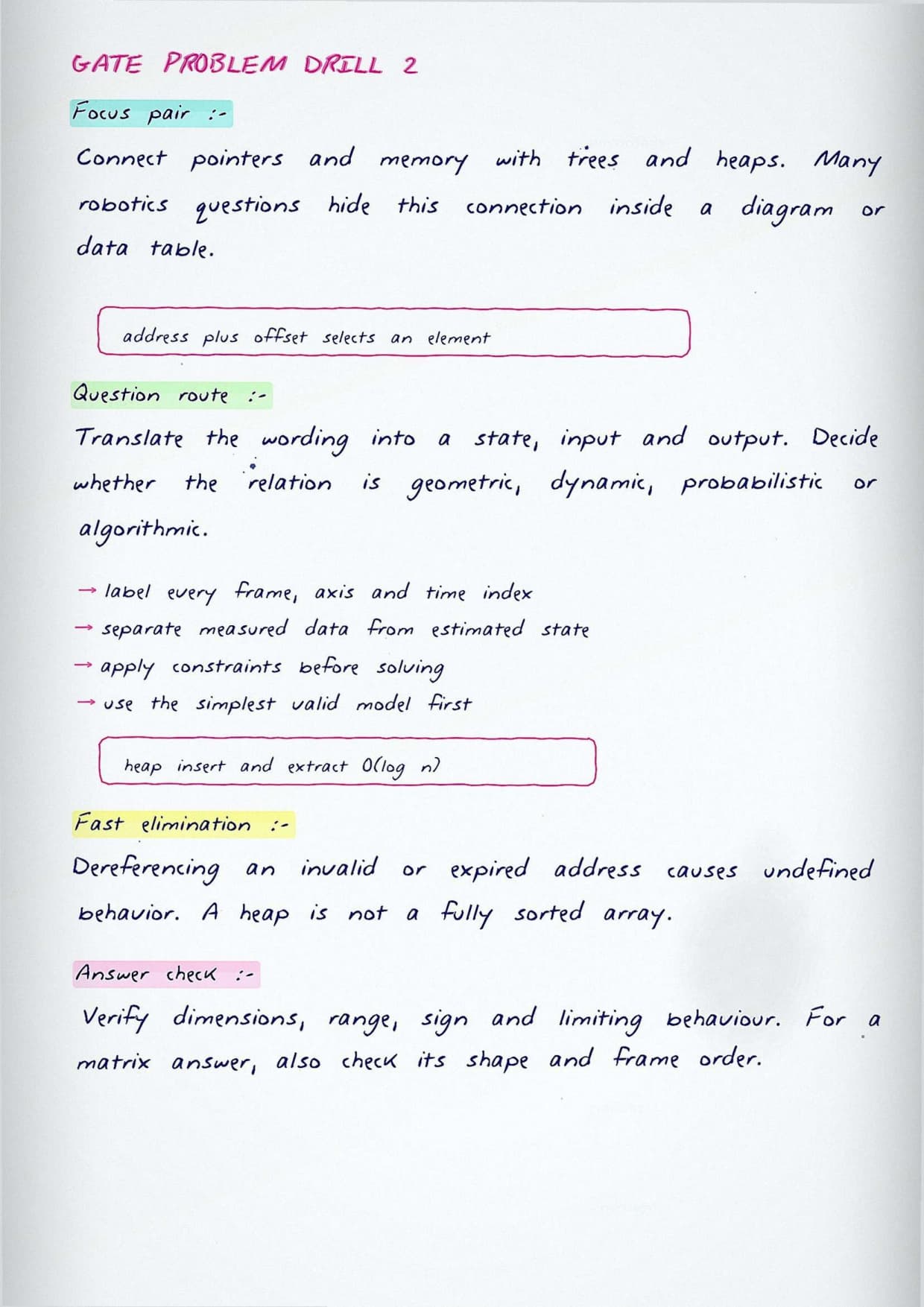
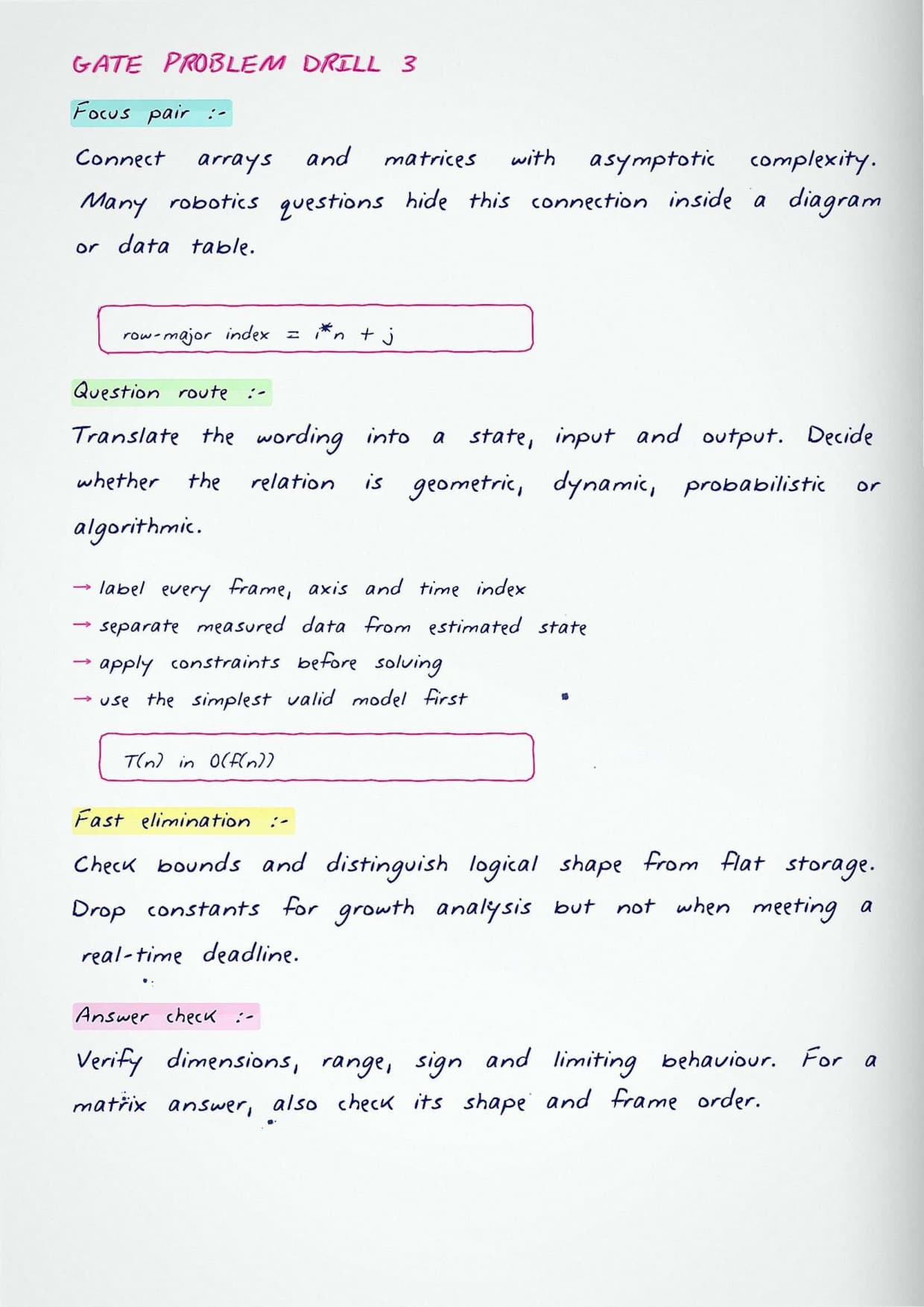
These notes treat the topic as a hands-on skill, not a set of facts to recall. Coding is learned by doing: reading about a linked list is not the same as writing one under time pressure.
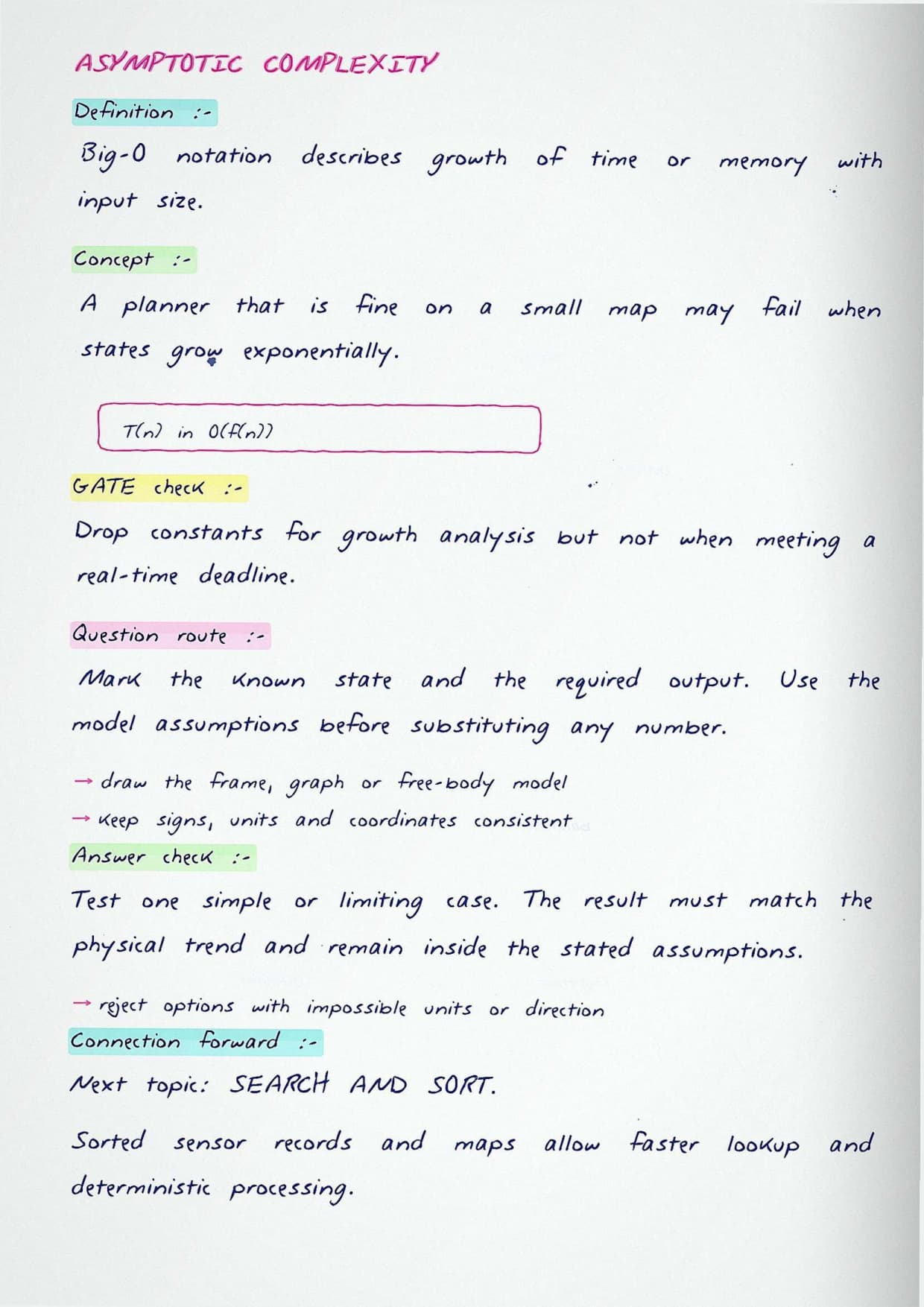
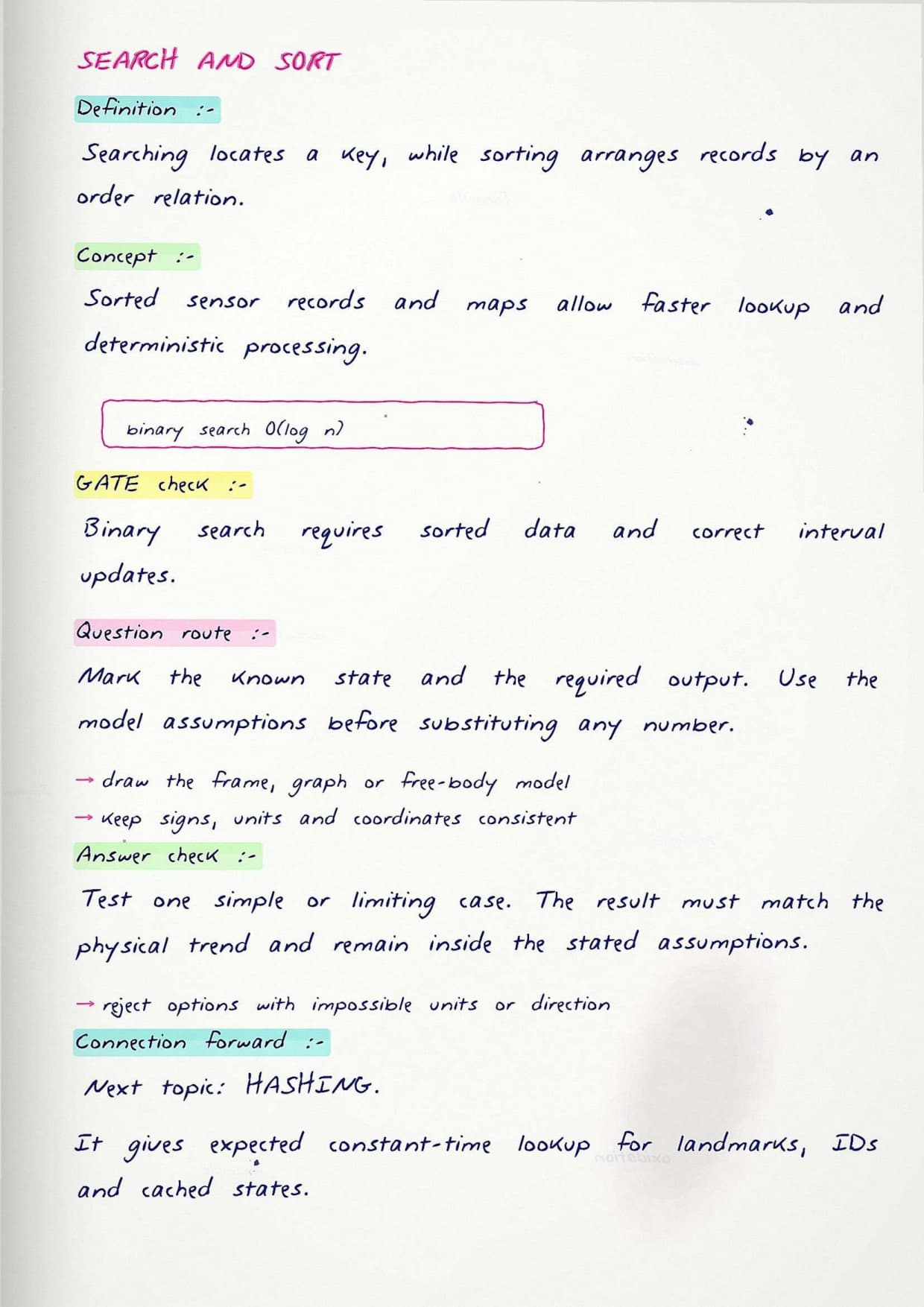
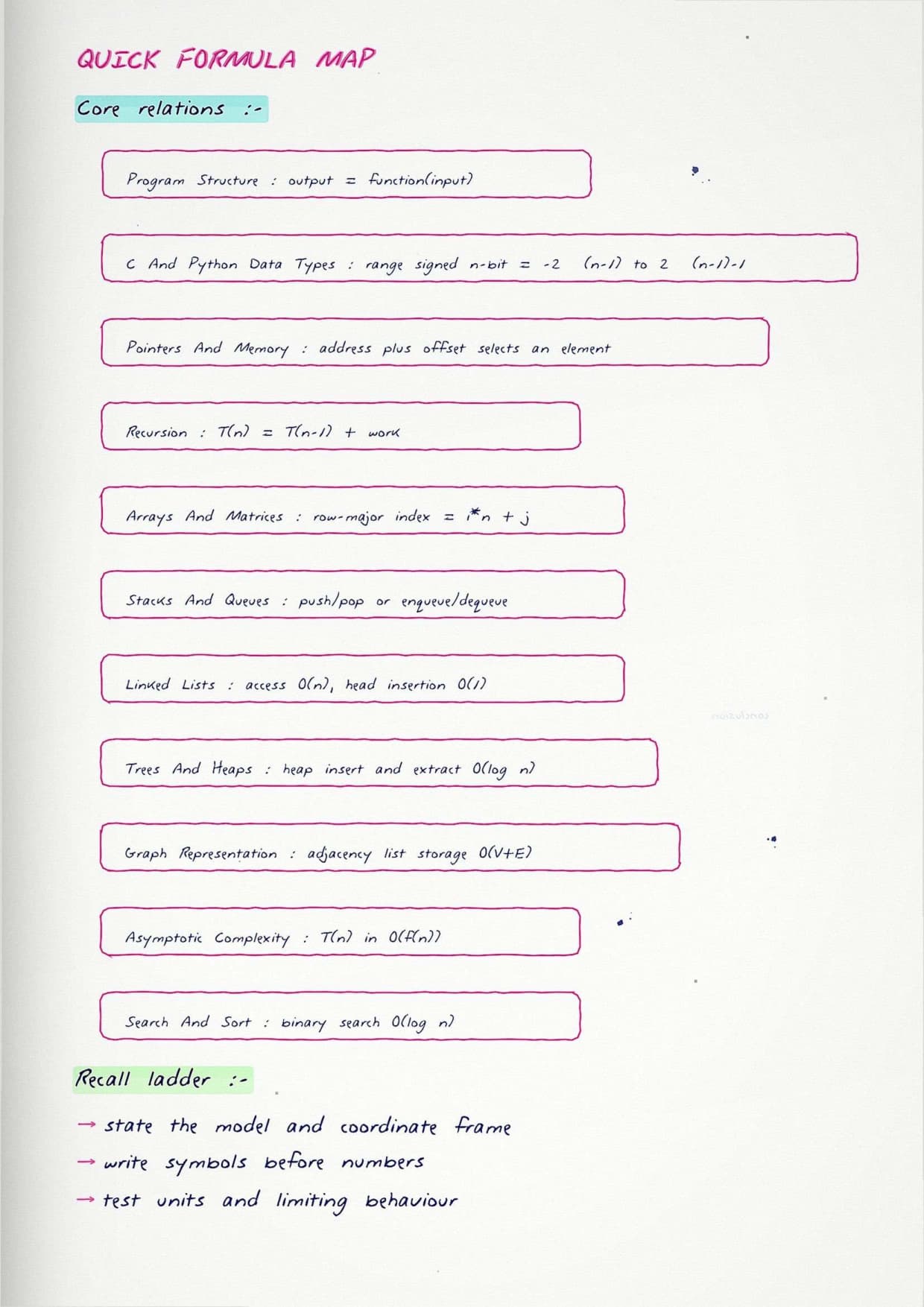
So the pages are written the way a student works a problem, with small worked traces, boxed key ideas, and short bits of hand-drawn pseudocode. The aim is to reach the point where students sketch the right method without hunting for it.
The Data Structures the Notes Drill
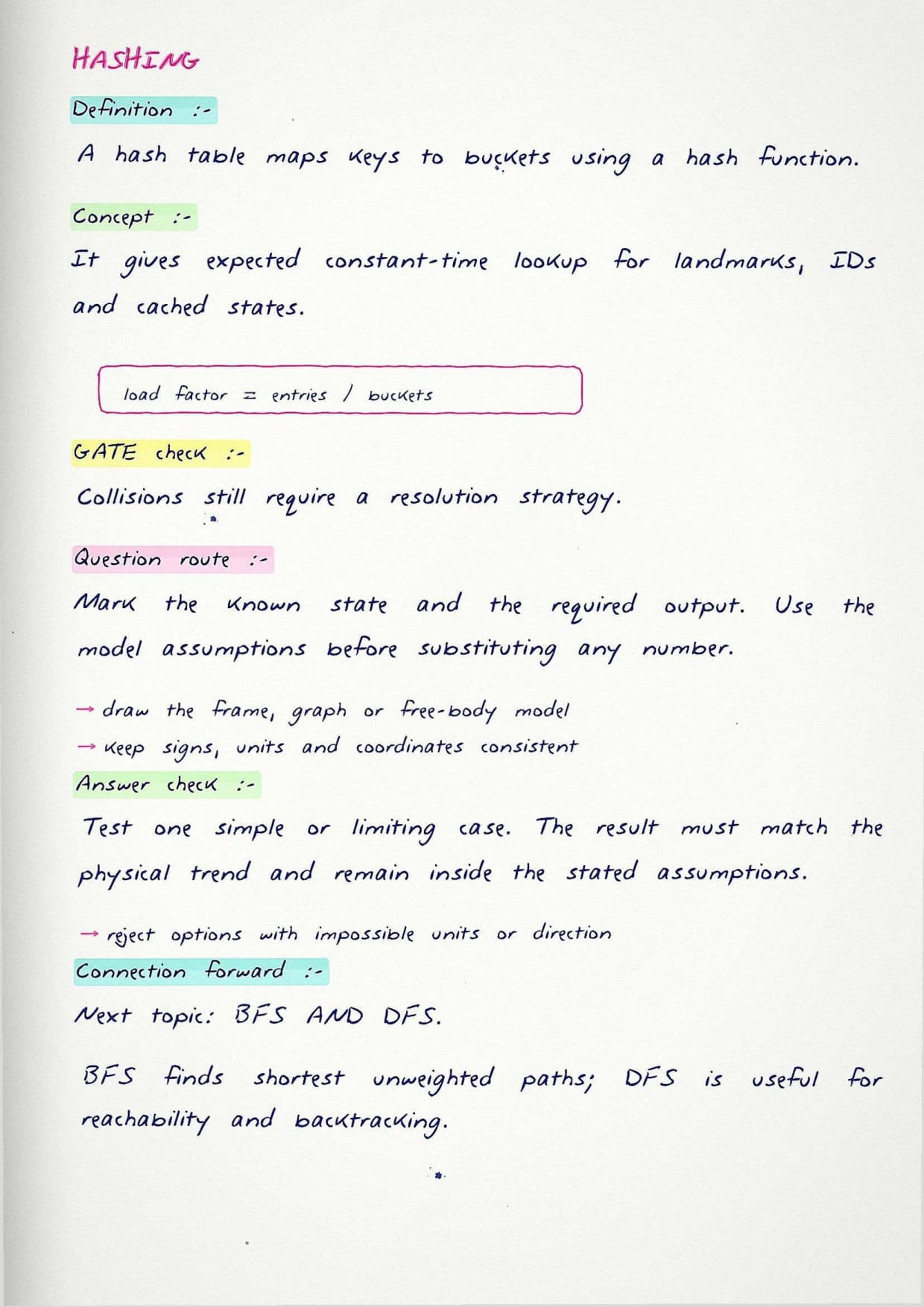
The first big block covers the containers that hold a program's data. Each one is introduced with what it is good at, what it is slow at, and the kind of robotics job it suits, from storing sensor buffers to holding a search frontier.
- Arrays and strings: fast direct access, the default starting point.
- Linked lists: easy inserts and deletes when order shifts a lot.
- Stacks and queues: the backbone of undo steps and task scheduling.
- Trees and heaps: fast lookups and priority ordering.
- Hash tables: near-instant retrieval by key.
- Graphs: the natural way to model maps, grids and robot connections.
Algorithms Worth Writing Out by Hand
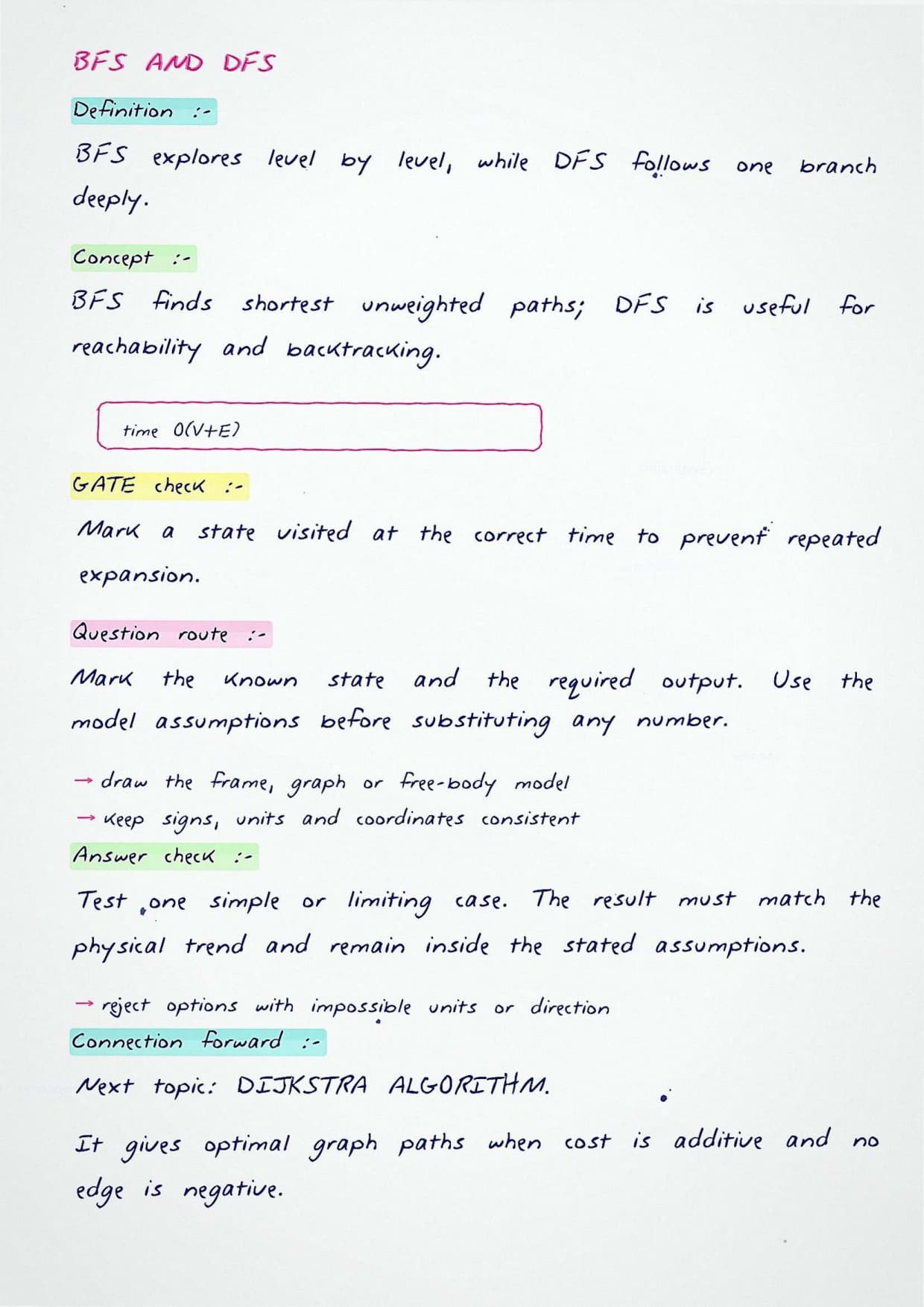
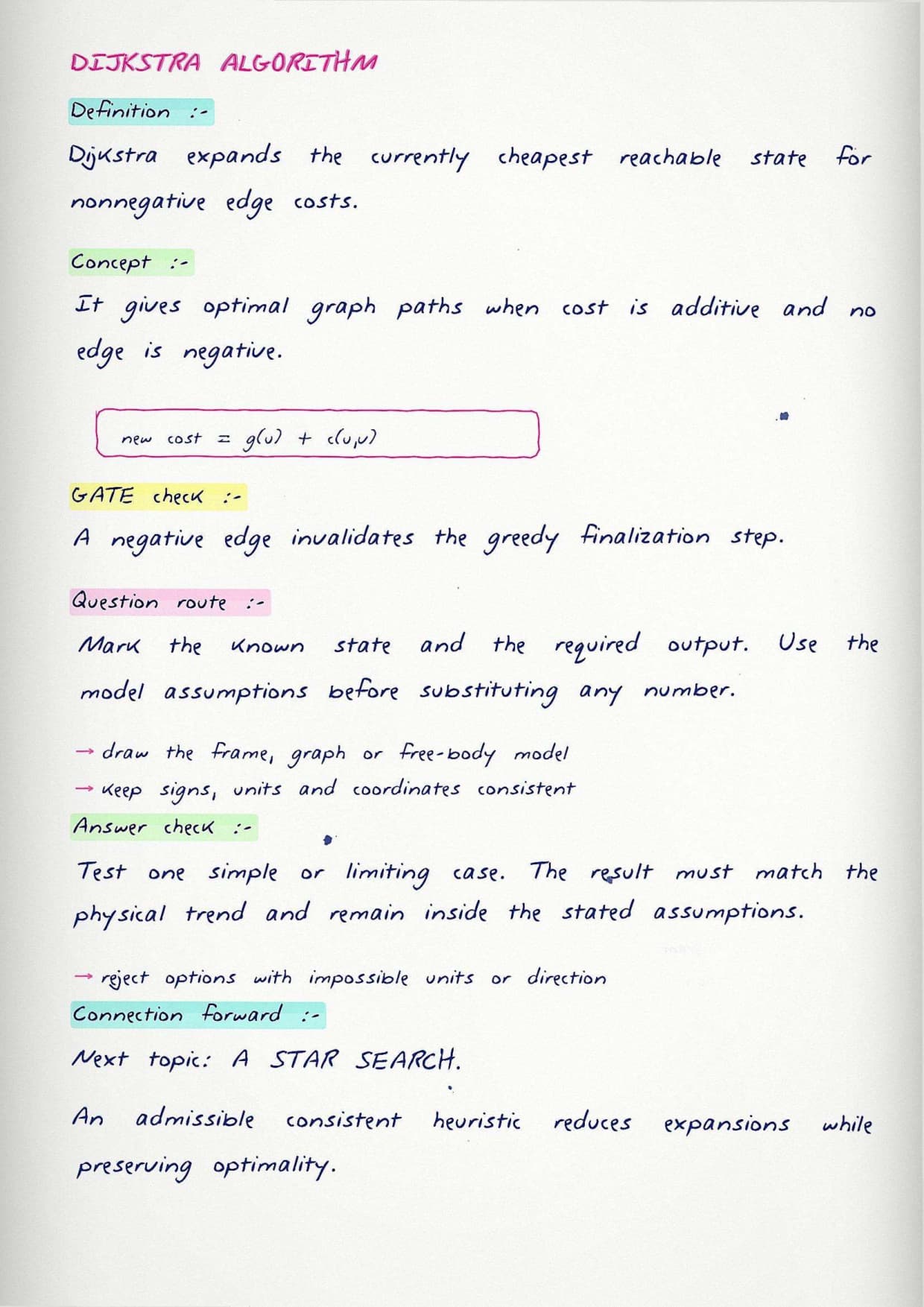
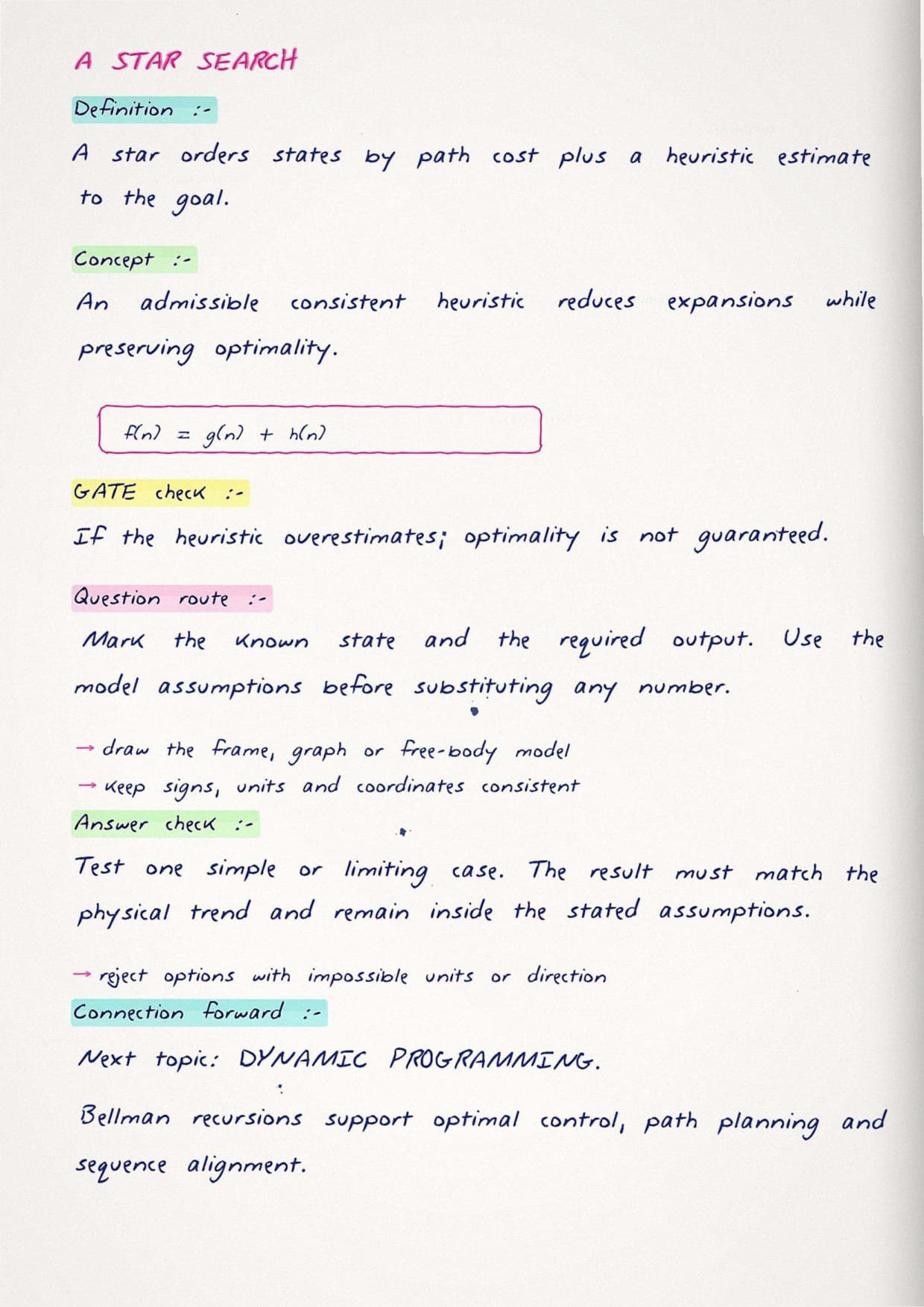
The second block is the methods that act on those structures. The pages walk each one as a numbered trace so students see it run, not just read its name.
- Sorting and searching: the first methods to master.
- Recursion and divide and conquer: breaking a problem into smaller ones.
- Greedy methods and dynamic programming: the heavier hitters.
- Graph traversals: breadth-first and depth-first search that feed robot path planning.
Writing these by hand once is worth more than re-reading them five times, and the notes are laid out to make that practice quick.
Reading Big-O Without the Panic
Every method carries a cost, and the notes give time and space complexity its own short treatment. Rather than a wall of symbols, the pages show how to count the work a loop does and land on the right Big-O class.
This matters twice over. In a real robot, a slow choice can stall a control loop, and in an exam, complexity questions are among the most reliably tested points in any programming section.
Watch the Basics Explained Simply
Source: Abdul Bari (https://www.youtube.com/@abdul_bari)
How This Overlaps Real GATE Papers
Here is the honest part, and the reason this subject deserves extra hours. GATE runs no standalone Robotics paper, but Programming and Data Structures and Algorithms are named sections in the GATE Computer Science syllabus, and they carry into the Data Science and AI paper.
That makes this the rare robotics topic where practice pays off directly in a parent exam. Students aiming at either paper can treat these pages as double duty: robotics groundwork and genuine GATE preparation at once.
Turning the Notes Into Coding Practice
Because the topic is a skill, the pages are built to be worked, not just read. A simple loop keeps the effort useful.
- Read one structure or method, then close the notes and rewrite its pseudocode from memory.
- Code the same thing in your language of choice and test it on a tiny example.
- Note the complexity before moving on, so the cost sticks with the method.
- Revisit the graph and dynamic programming pages most often, since those are the heaviest and the most tested.
A short, hand-drawn set like this is ideal for that last-week loop, when students want to refresh the whole toolkit fast rather than start a fresh textbook.
Programming, Data Structures and Algorithms FAQs
Ques. Why does a robotics student need data structures and algorithms?
Ans. Every robot decision, from planning a path to sorting sensor data, is code underneath. Choosing the right structure and method decides whether that code is fast enough to run in real time. These notes build the exact skill that robot software depends on.
Ques. Is this topic really tested in GATE?
Ans. Yes, and this is the standout point. Programming and Data Structures and Algorithms are named sections in the GATE Computer Science syllabus, and they carry into the Data Science and AI paper. So this robotics subject overlaps a parent GATE paper more directly than almost any other.
Ques. Which data structures should students focus on first?
Ans. Start with arrays, linked lists, stacks and queues to build comfort, then move to trees, heaps, hash tables and graphs. Graphs matter most for robotics because maps and paths are naturally modelled as graphs, so give them extra time.
Ques. How should I use these handwritten notes to practice?
Ans. Read a method, rewrite its pseudocode from memory, then code and test it on a small example. Always note the time and space complexity before moving on. The short, hand-drawn format is built for this write-it-yourself loop rather than passive reading.
Ques. Do I need to know complexity analysis for both robotics and exams?
Ans. Absolutely. In a real robot a slow method can stall a control loop, and in exams Big-O questions are among the most reliably asked. The notes give complexity its own section so students can judge the cost of any method quickly.



Comments