




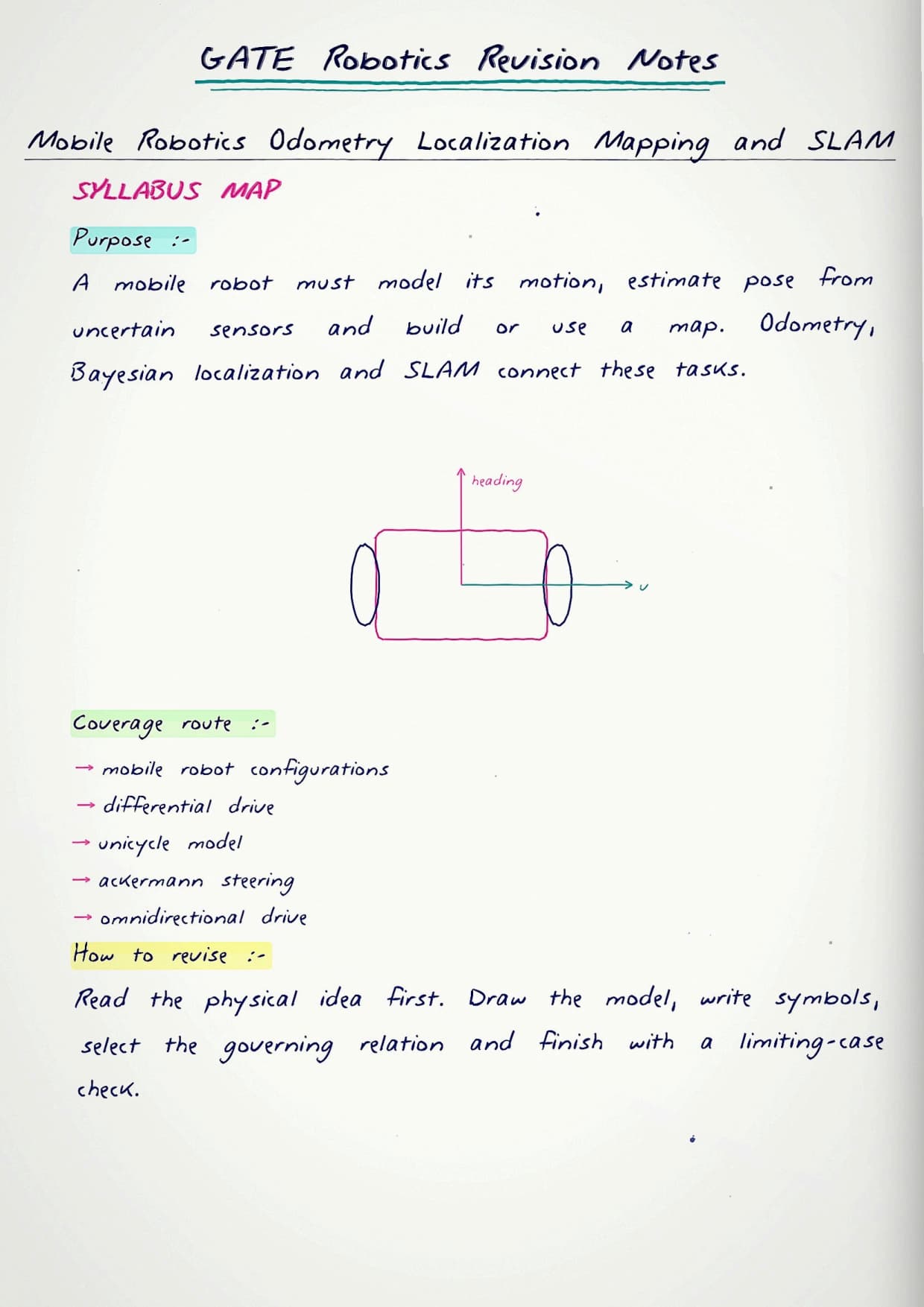
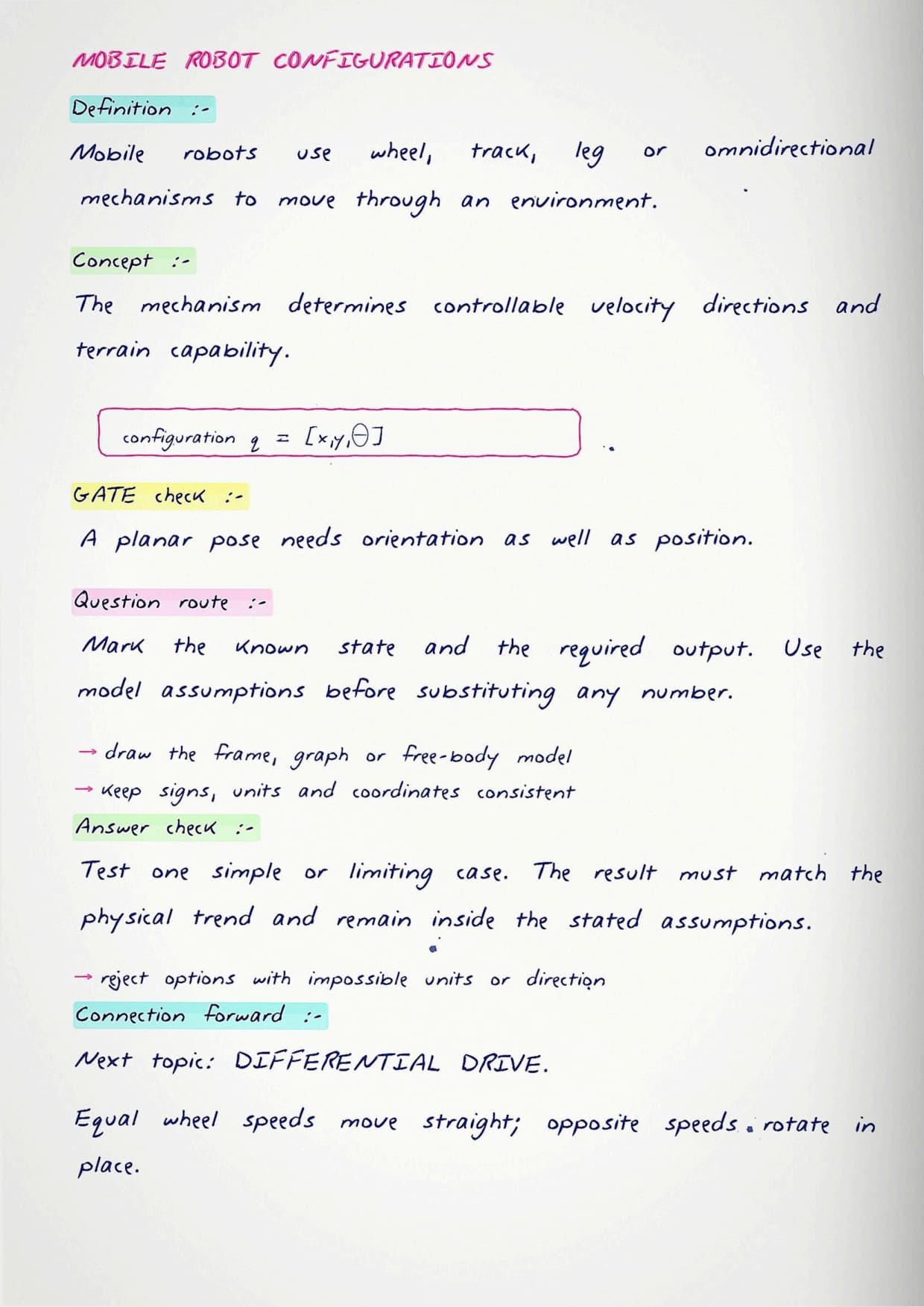
These Mobile Robotics Odometry Localization Mapping and SLAM handwritten notes follow one question from the wheels outward: where is the robot, and what does the space around it look like? It is one of the most tested areas in robotics.
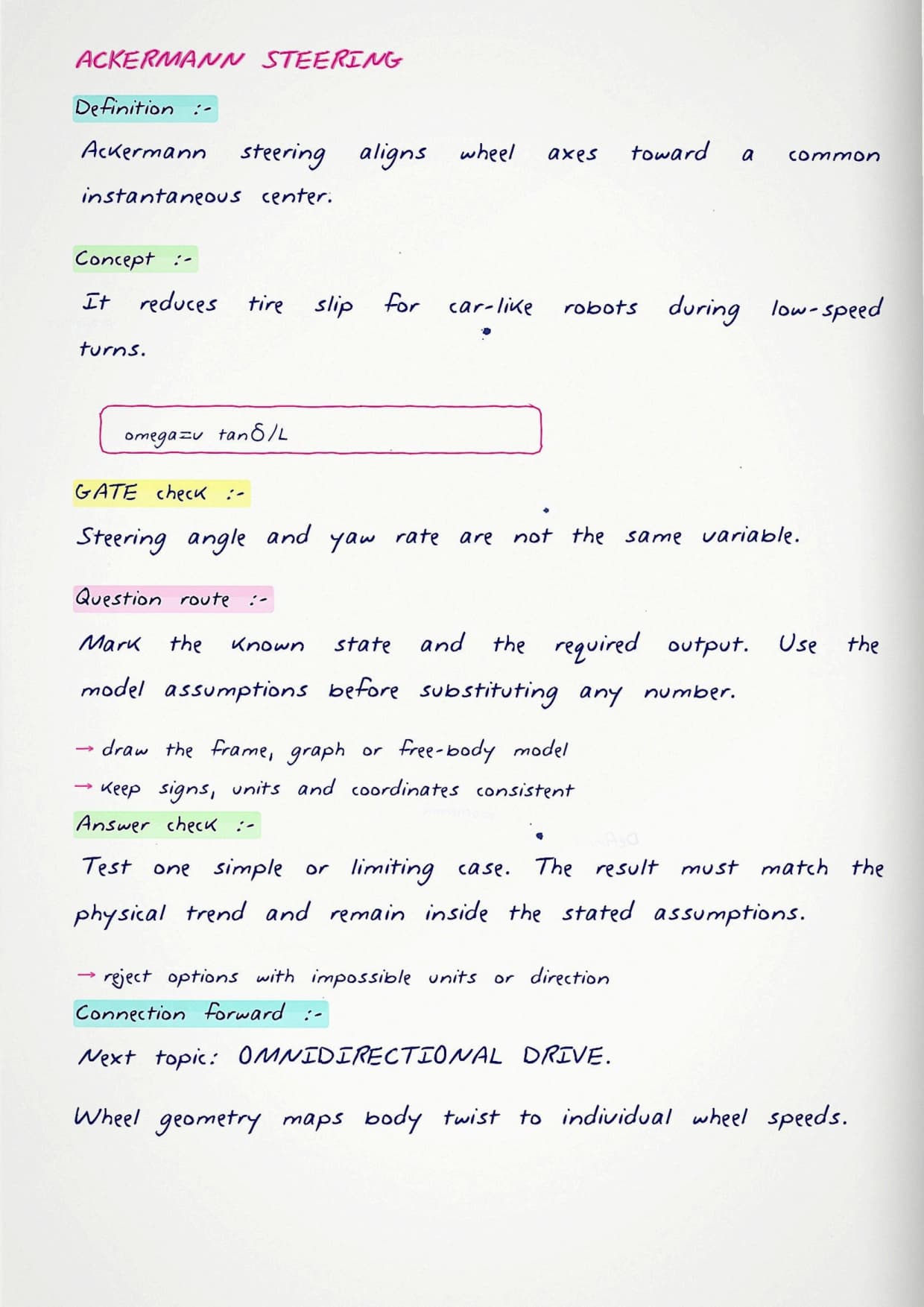
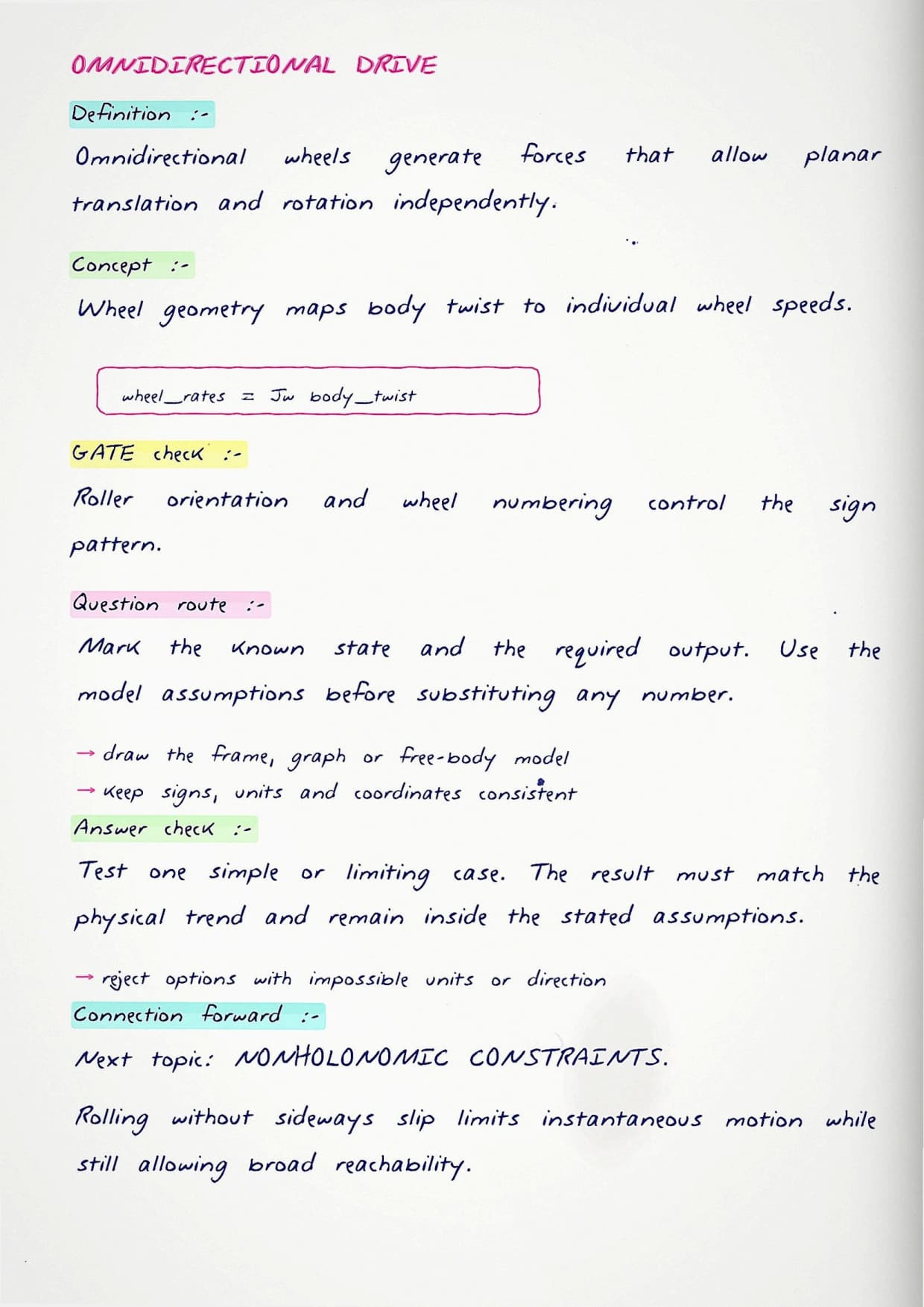
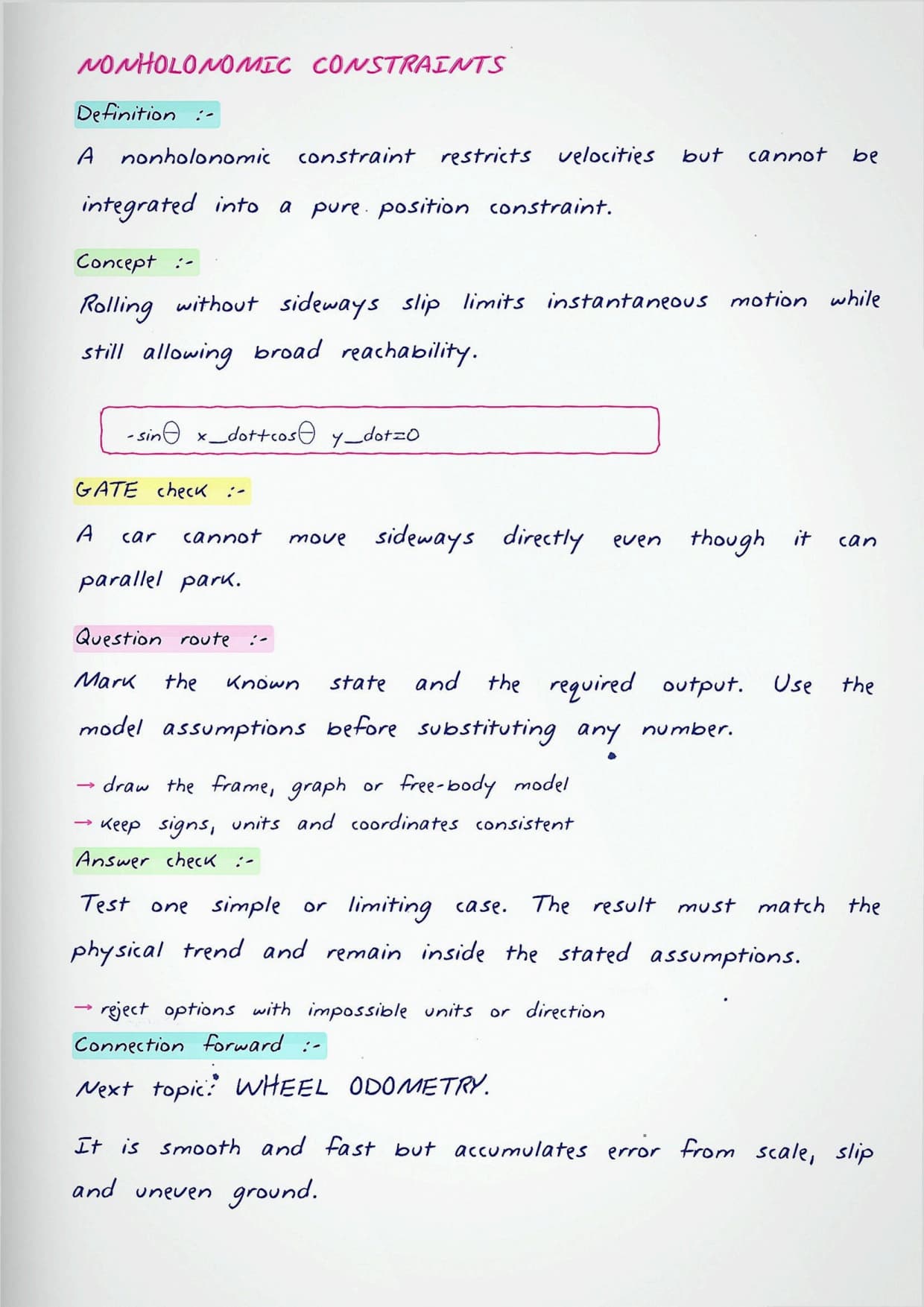
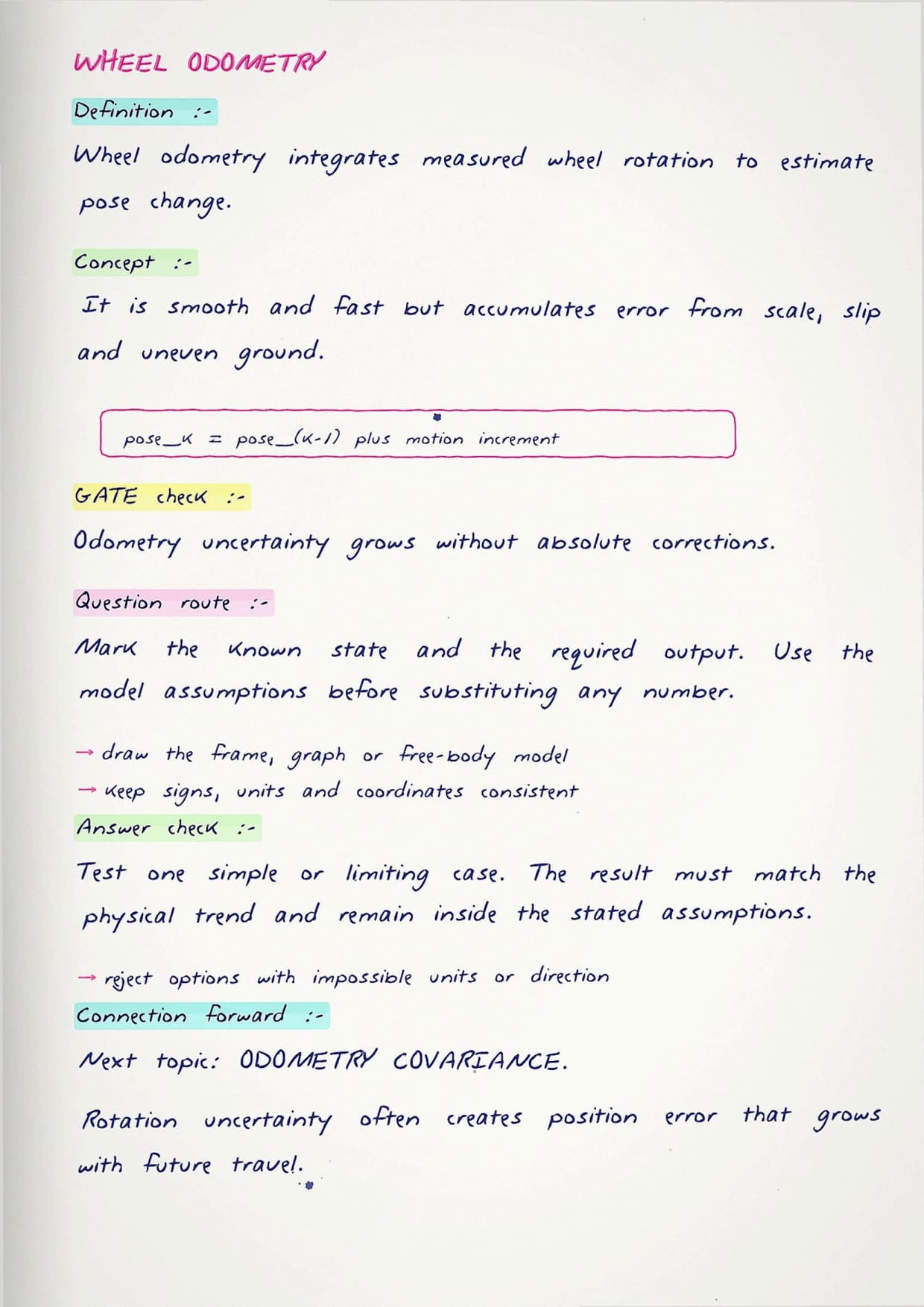
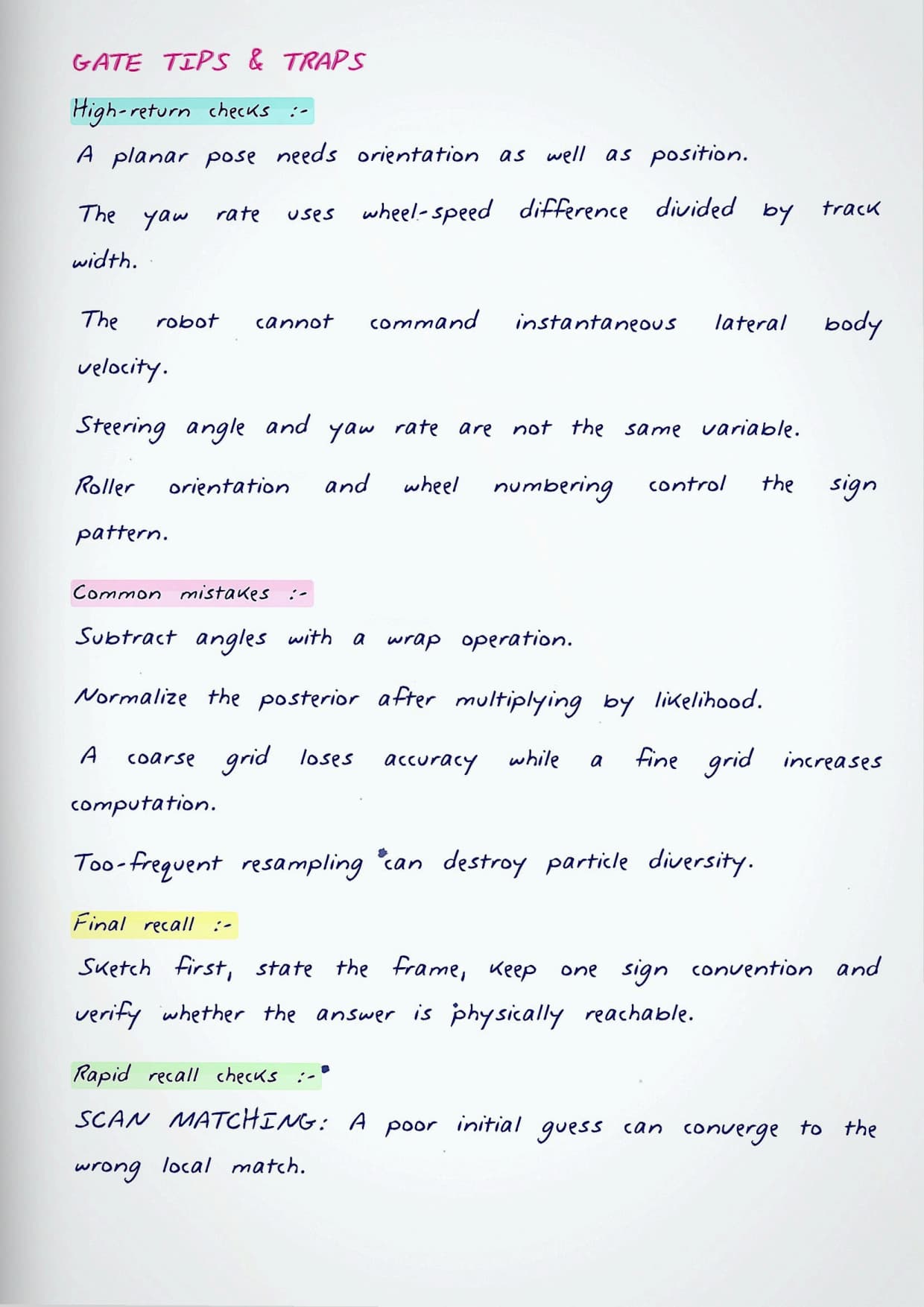
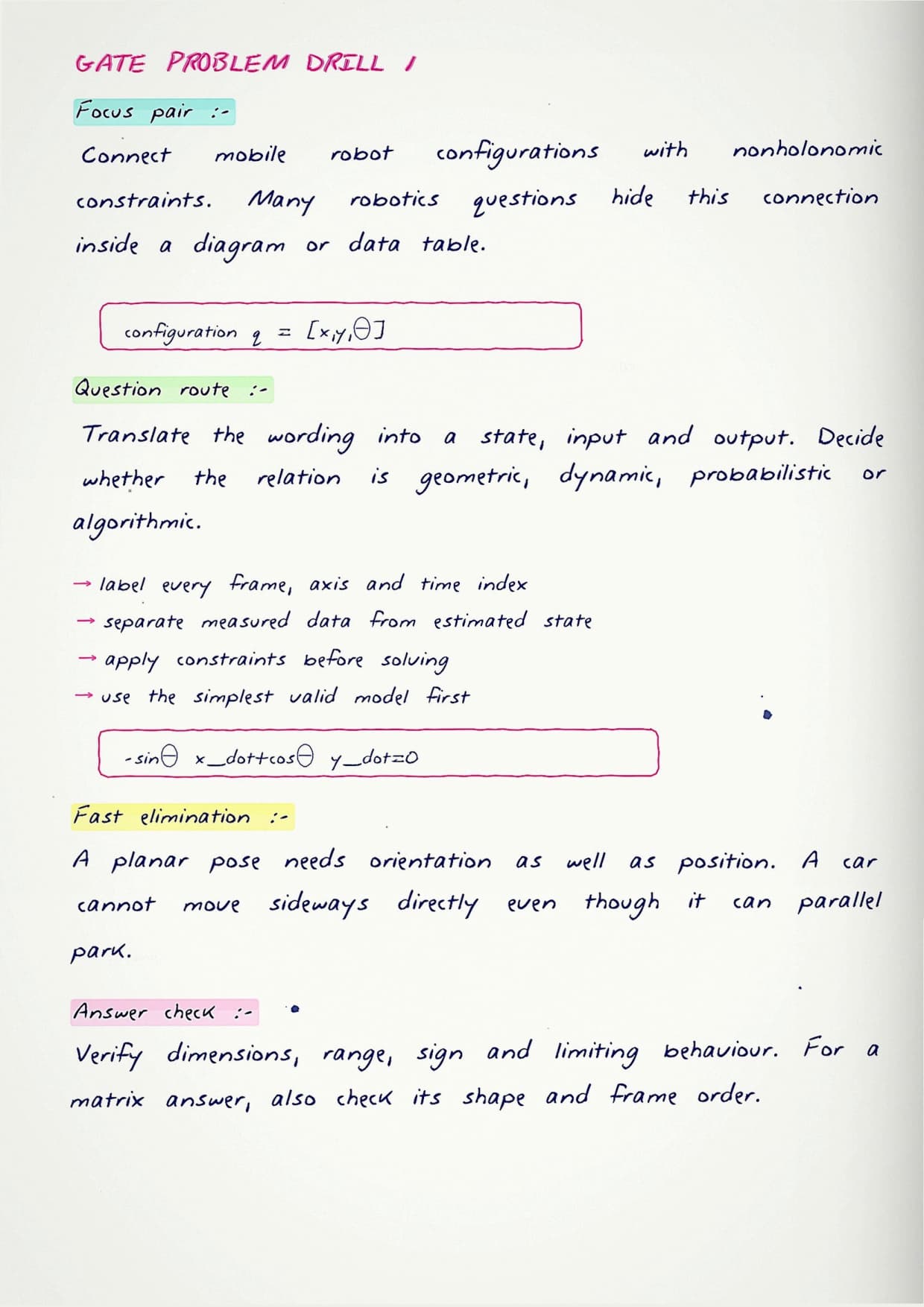
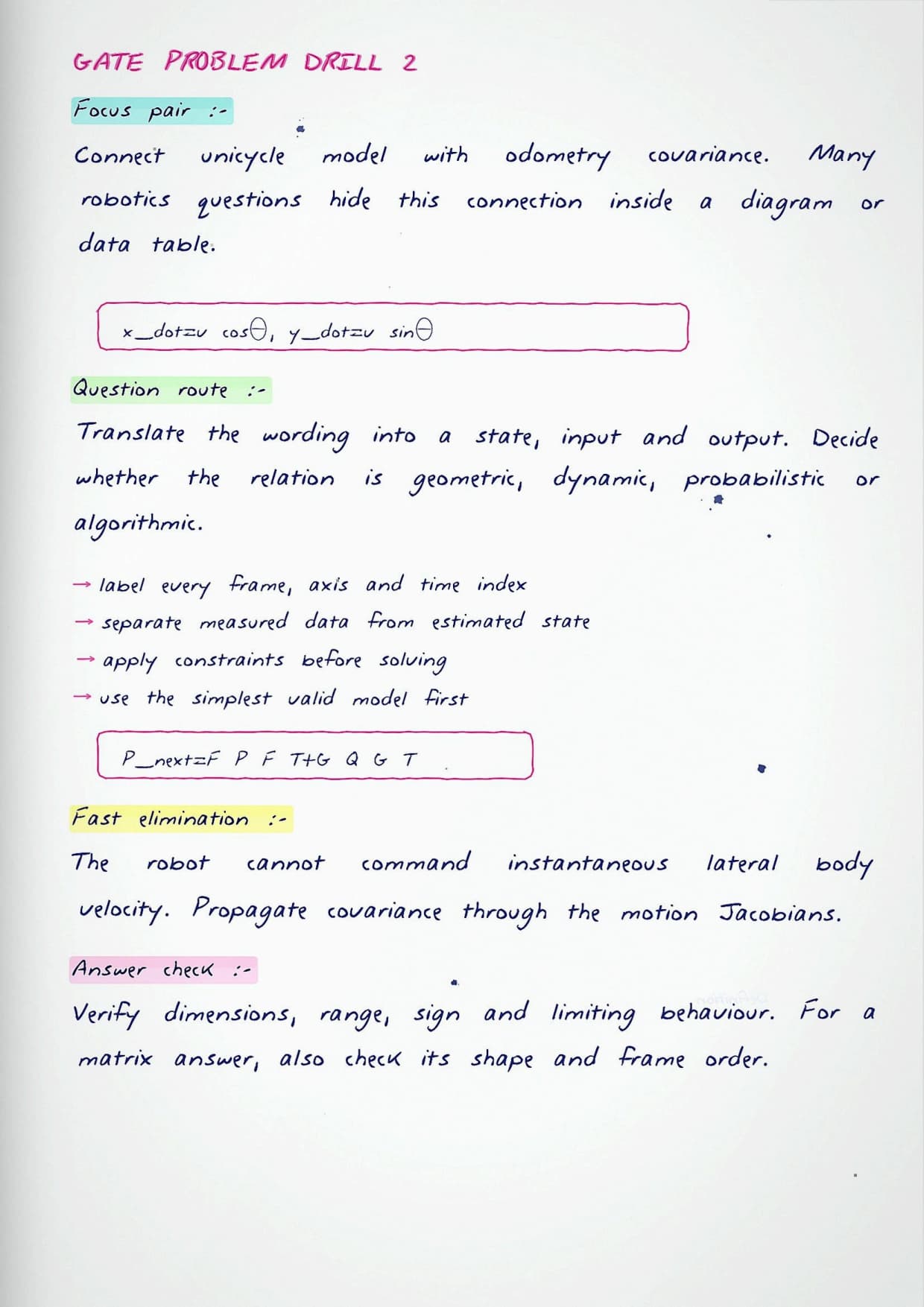
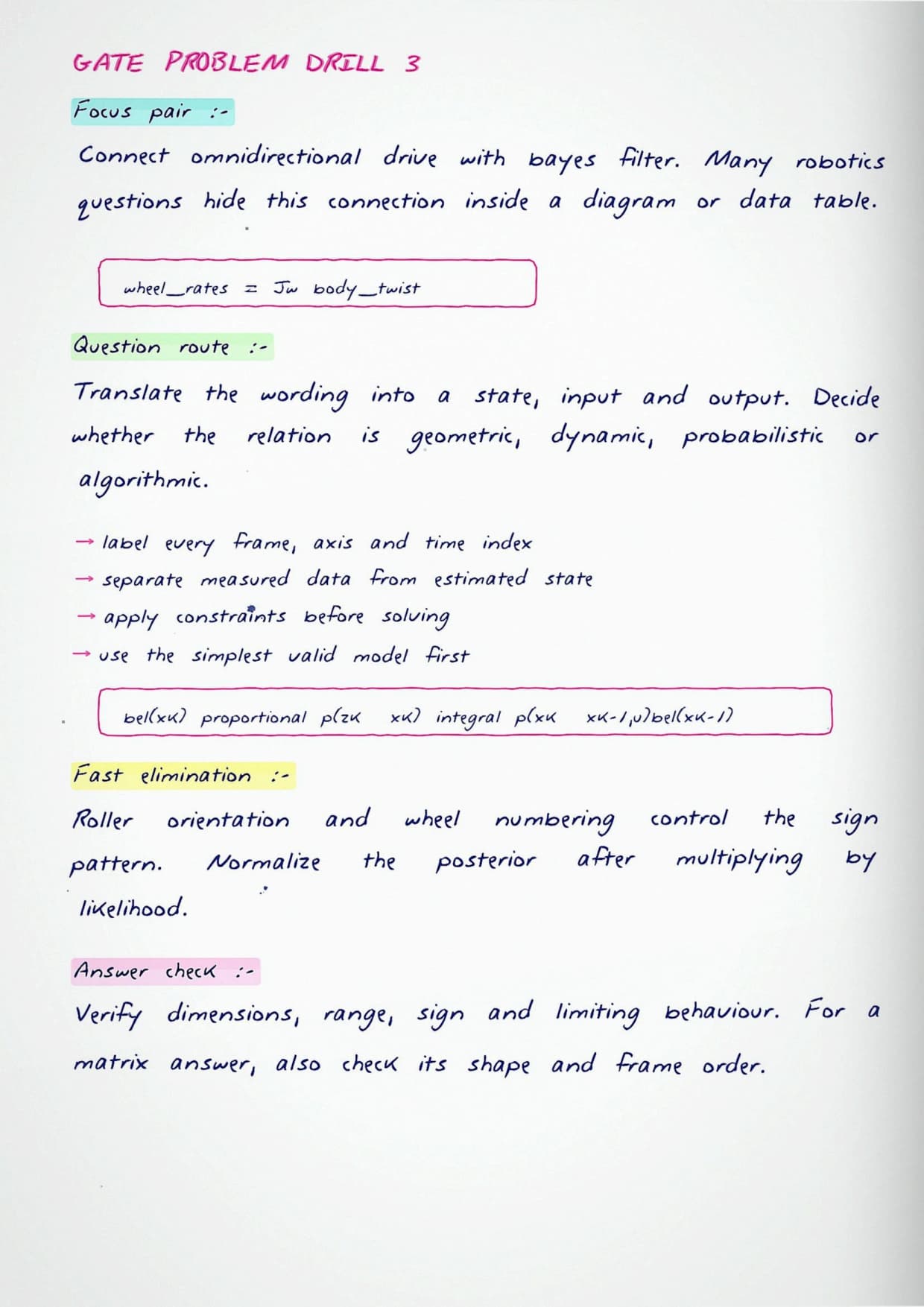
The One Question a Mobile Robot Keeps Asking
A robot that does not know where it is cannot plan, avoid obstacles, or finish a task, so localization sits at the heart of mobile robotics.
From a warehouse shuttle to a self-driving car, every machine turns raw motion and sensor readings into a trusted estimate of its own place. The notes frame the whole subject as one problem broken into stages, keeping the focus on reasoning rather than jargon.
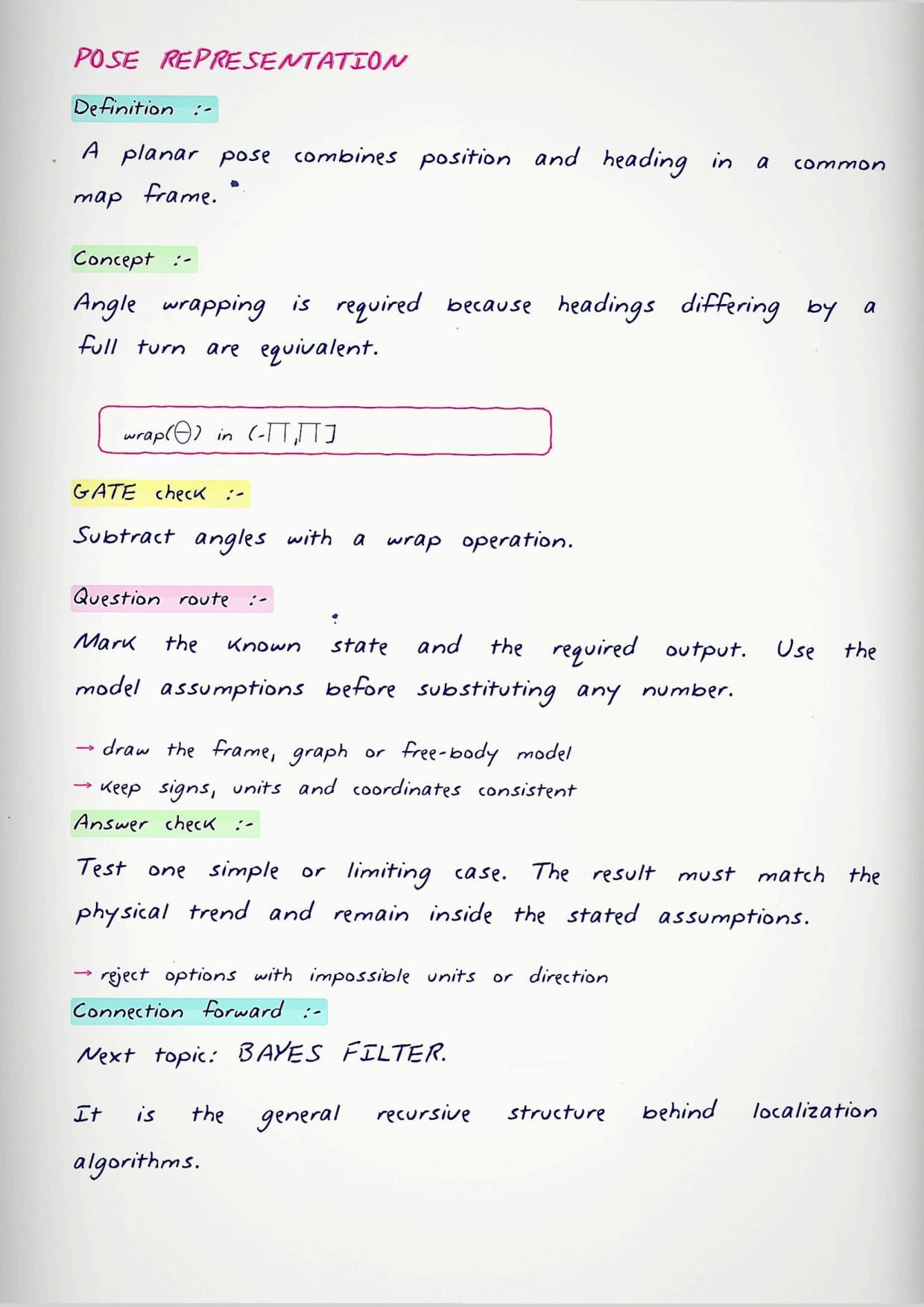
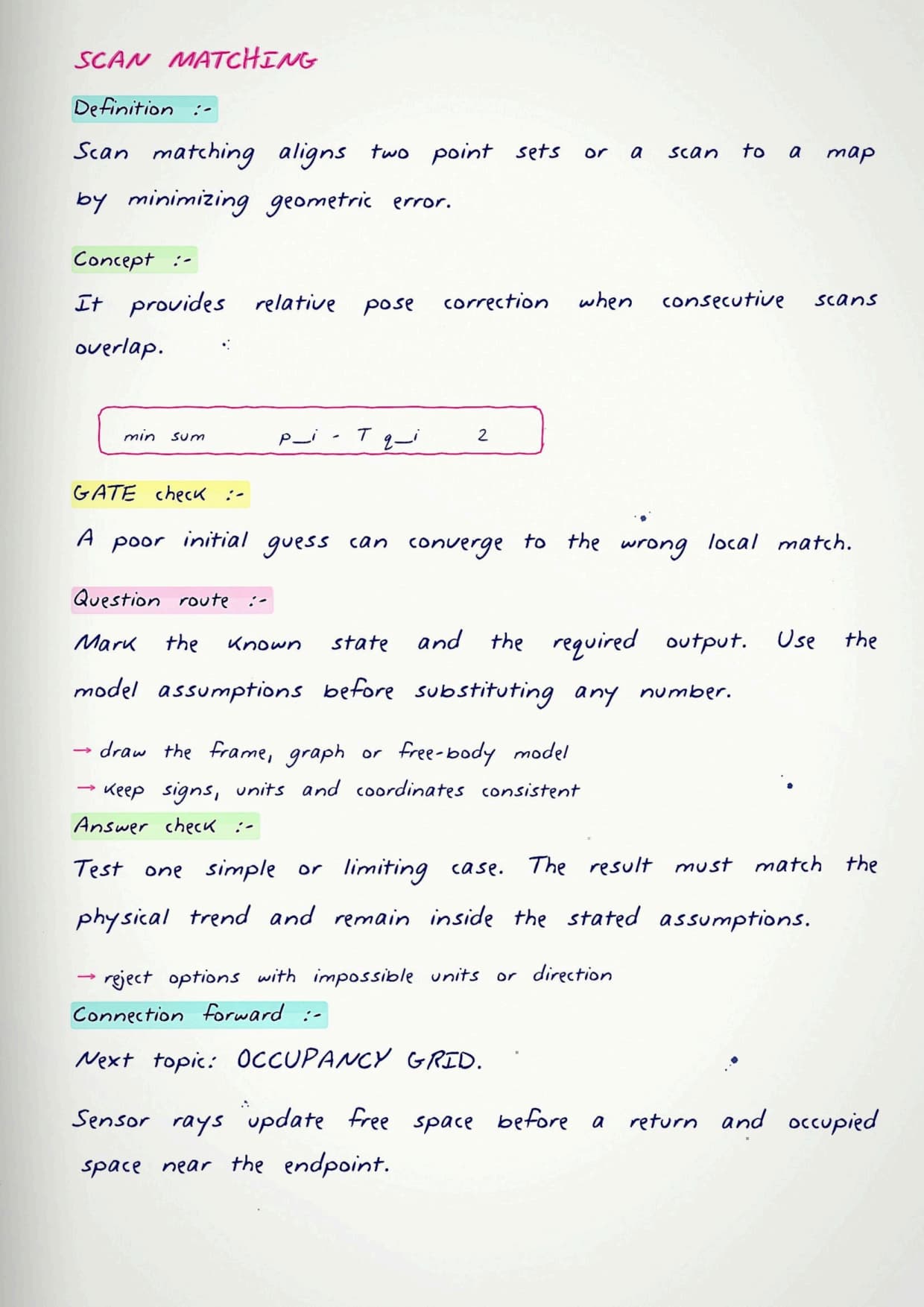
Students see early that the pieces are not separate topics but steps in one pipeline: measure motion, correct it against the world, then build a map to correct against.
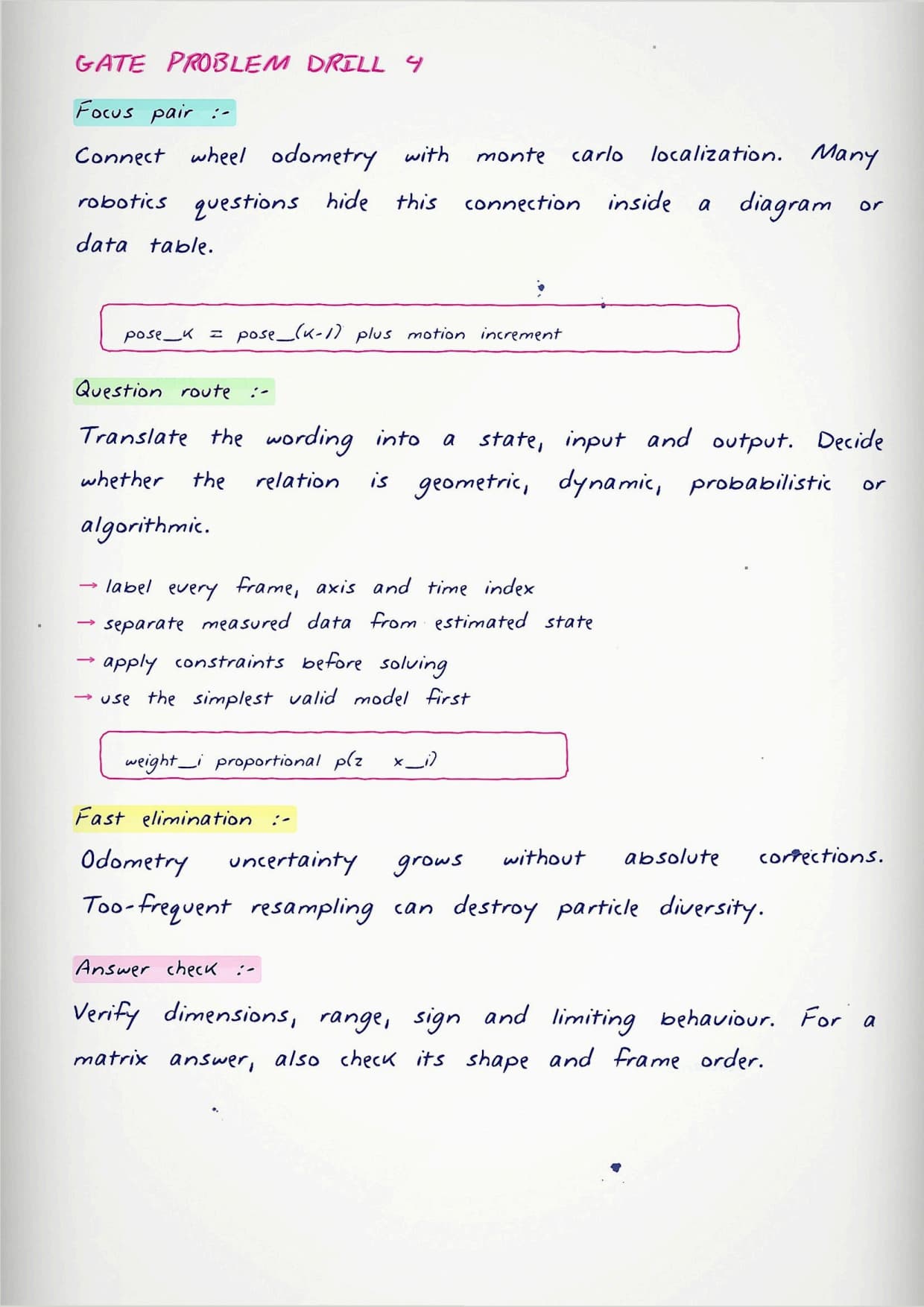
From Wheel Counts to a Position: Odometry
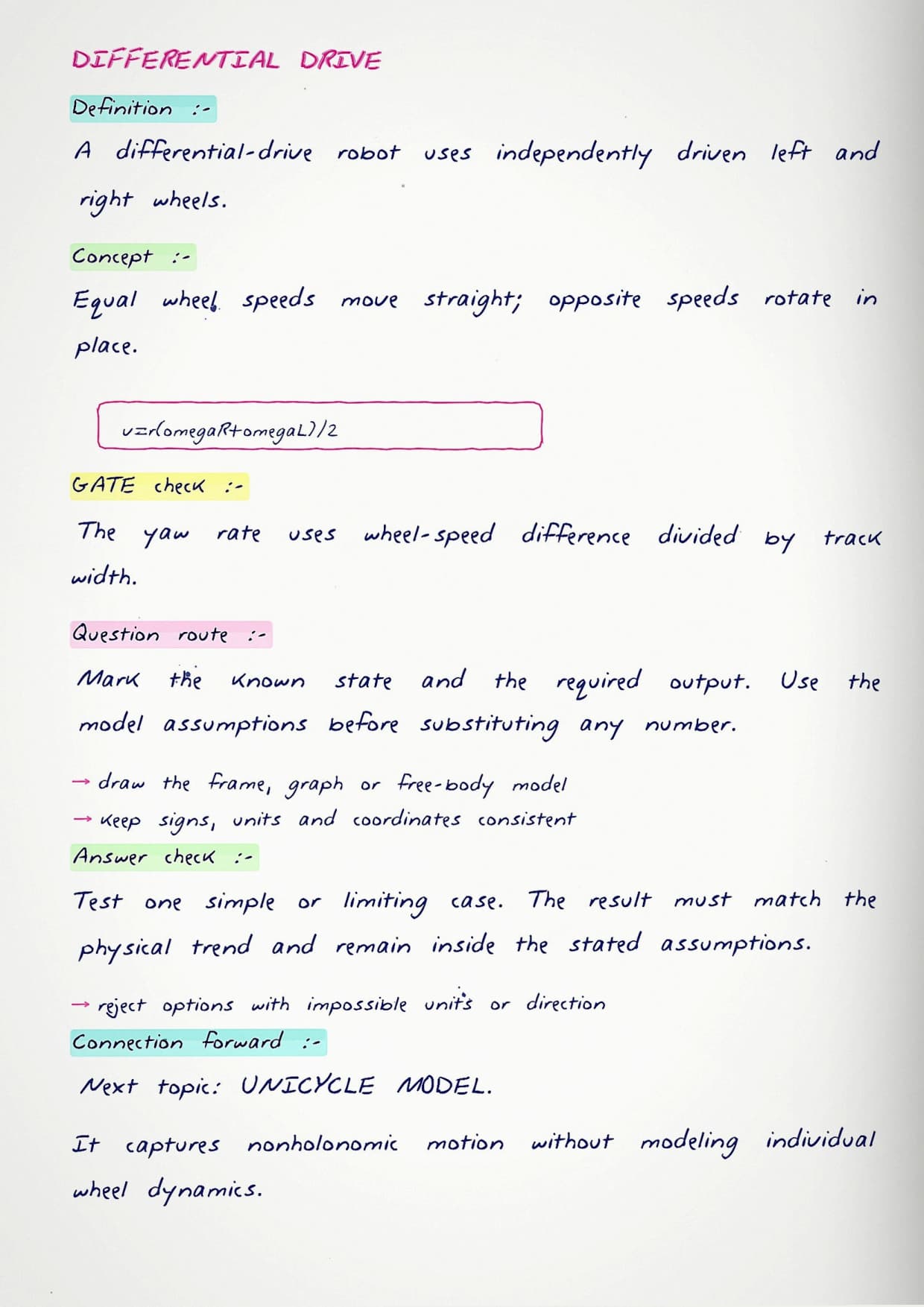
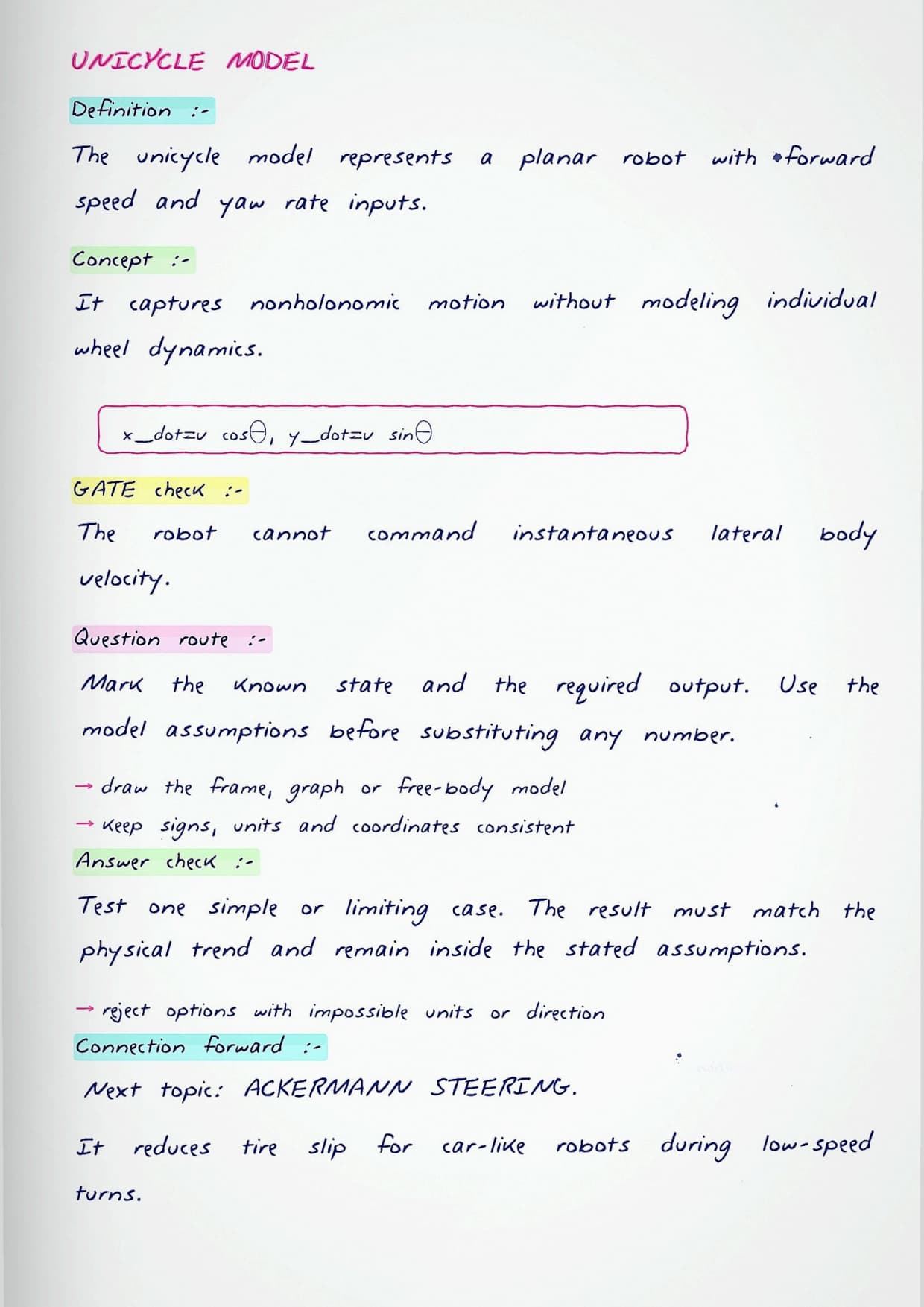
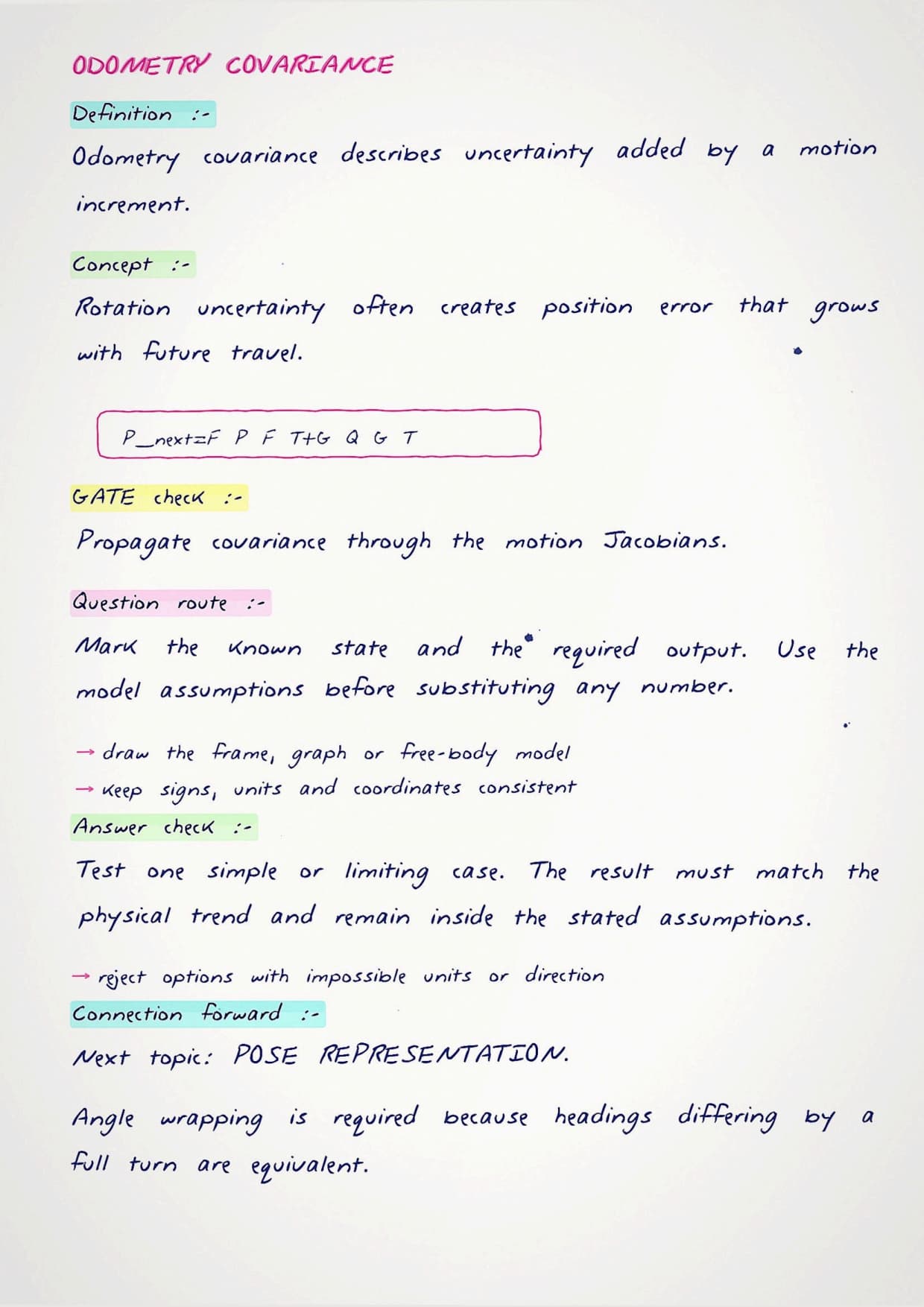
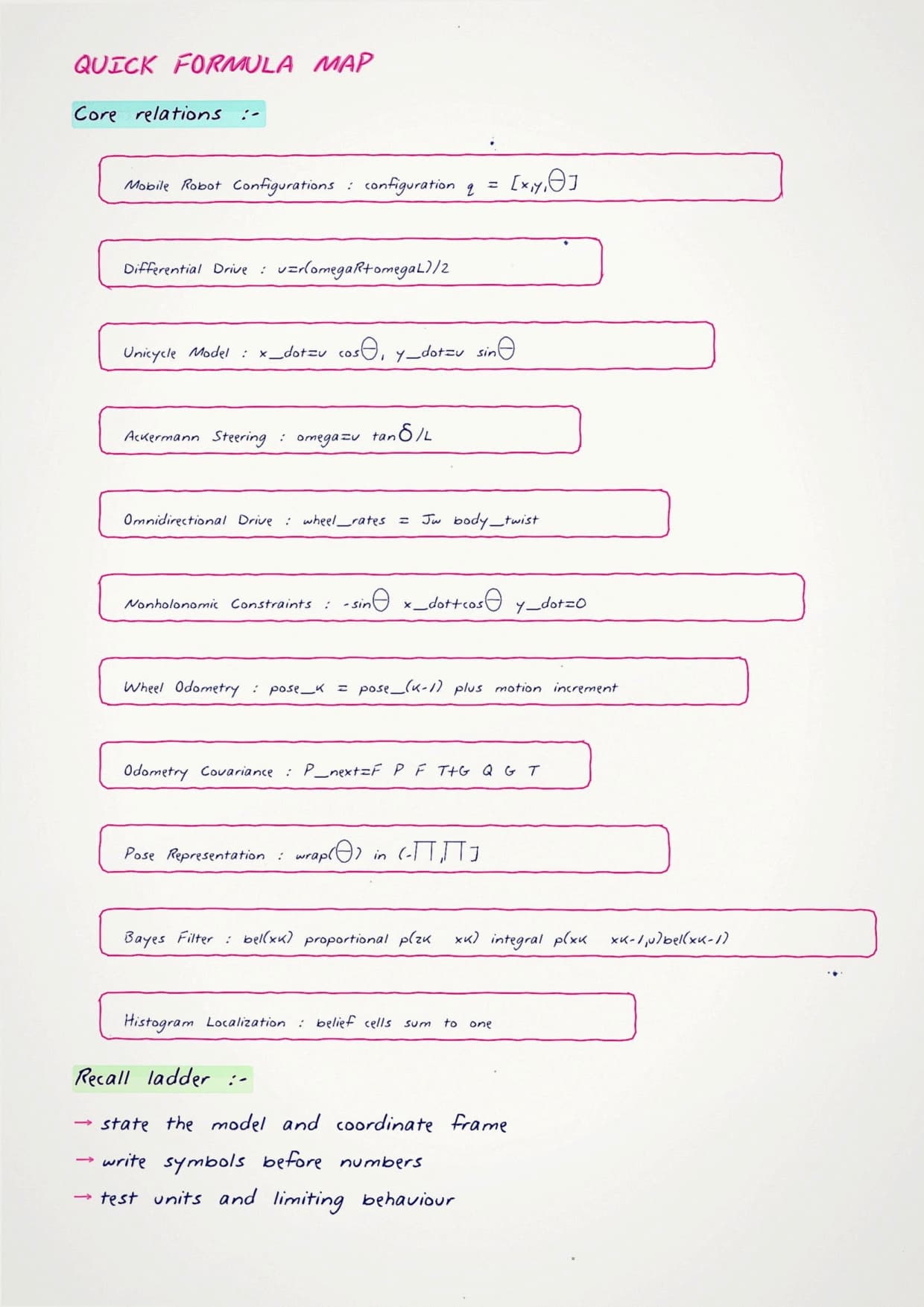
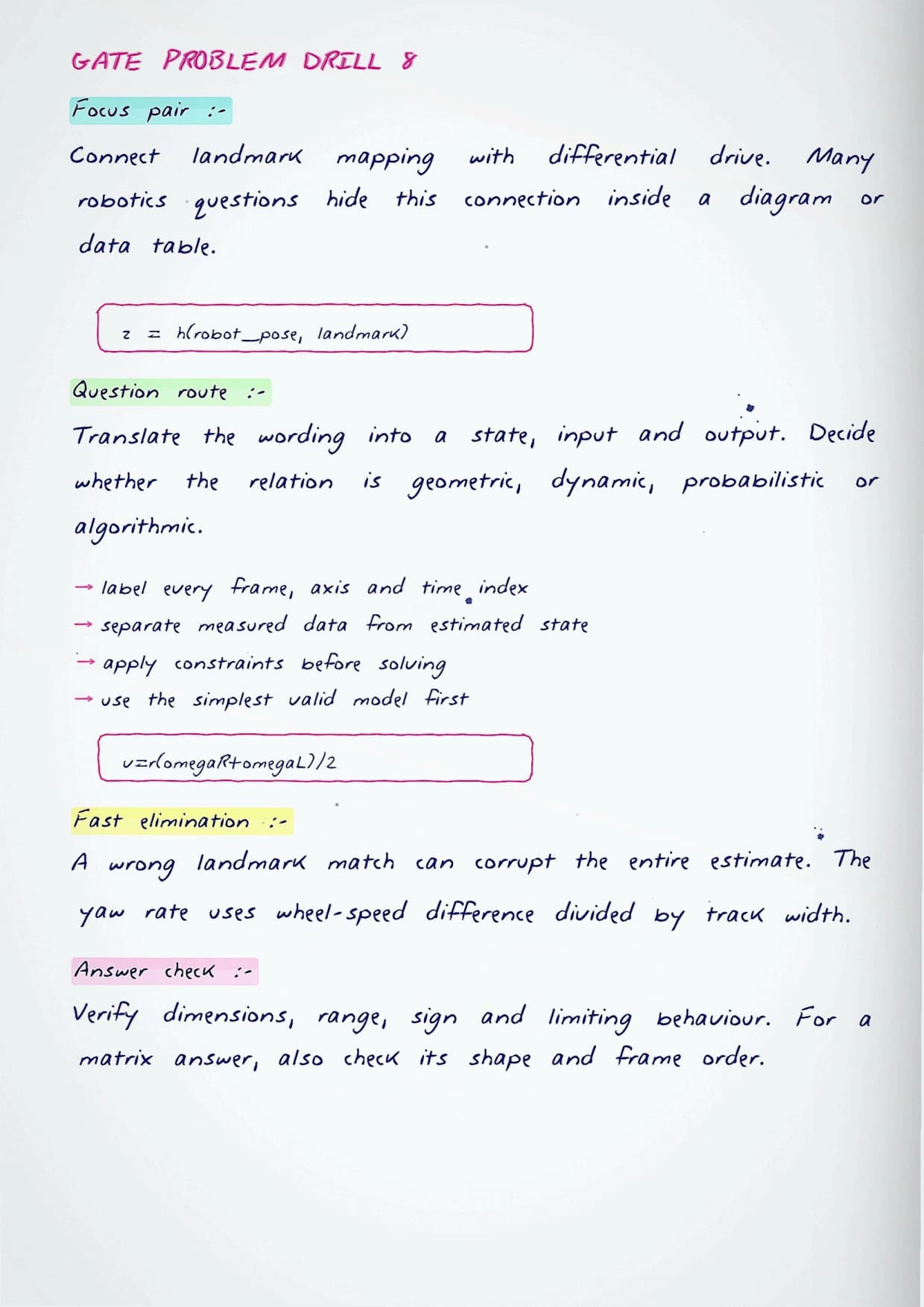
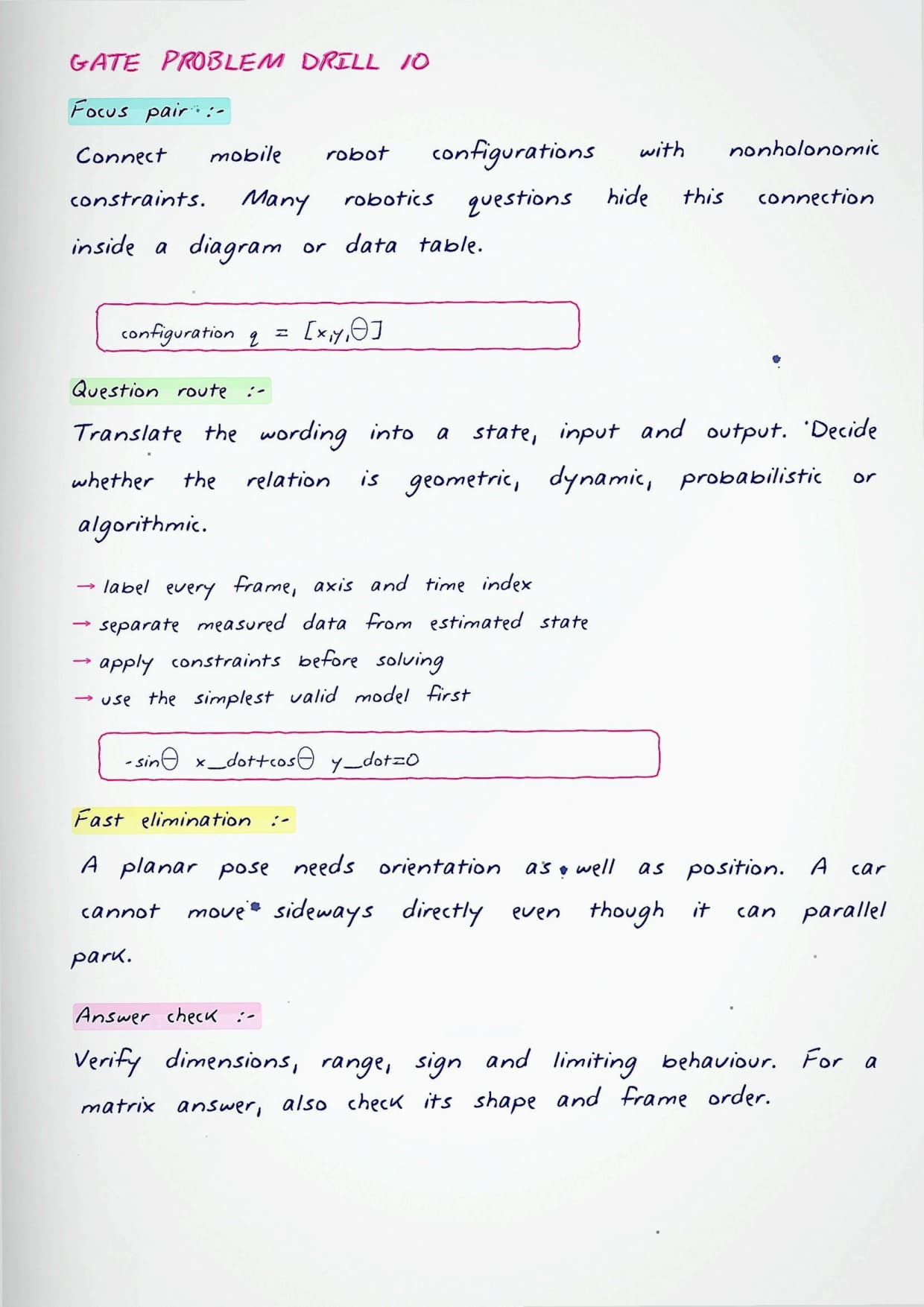
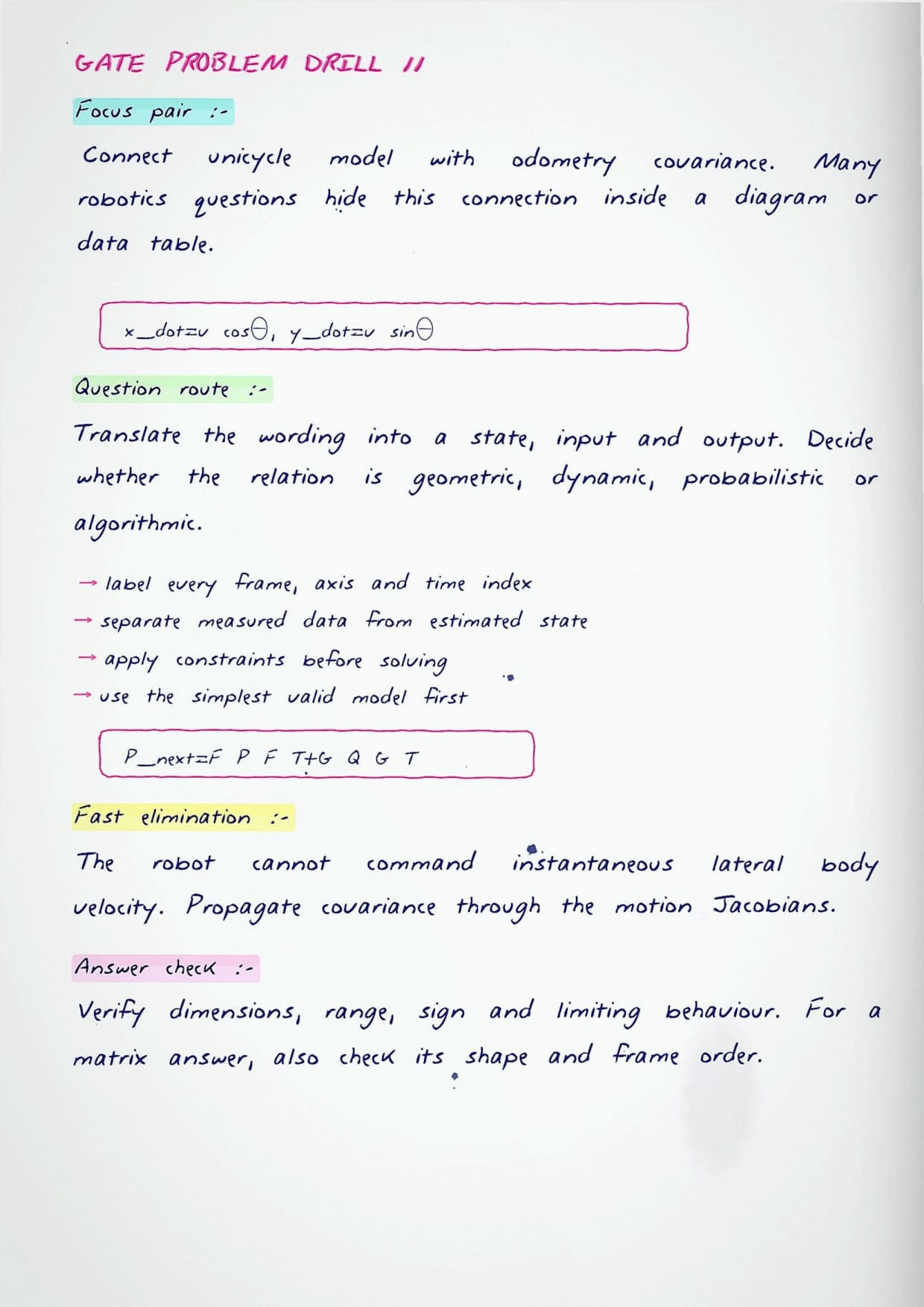
The first stage is odometry, the robot's own estimate of how far it has travelled from counting wheel rotations. The pages walk through the differential-drive model:
- How left and right wheel speeds combine into a forward speed and a turn rate.
- How those integrate into a running pose.
- Why odometry drifts, as wheel-radius error, floor slip, and rounding all add up.
A robot trusting only its wheels slowly loses track, and that drift is the reason every later stage exists.
Fixing the Drift: Localization
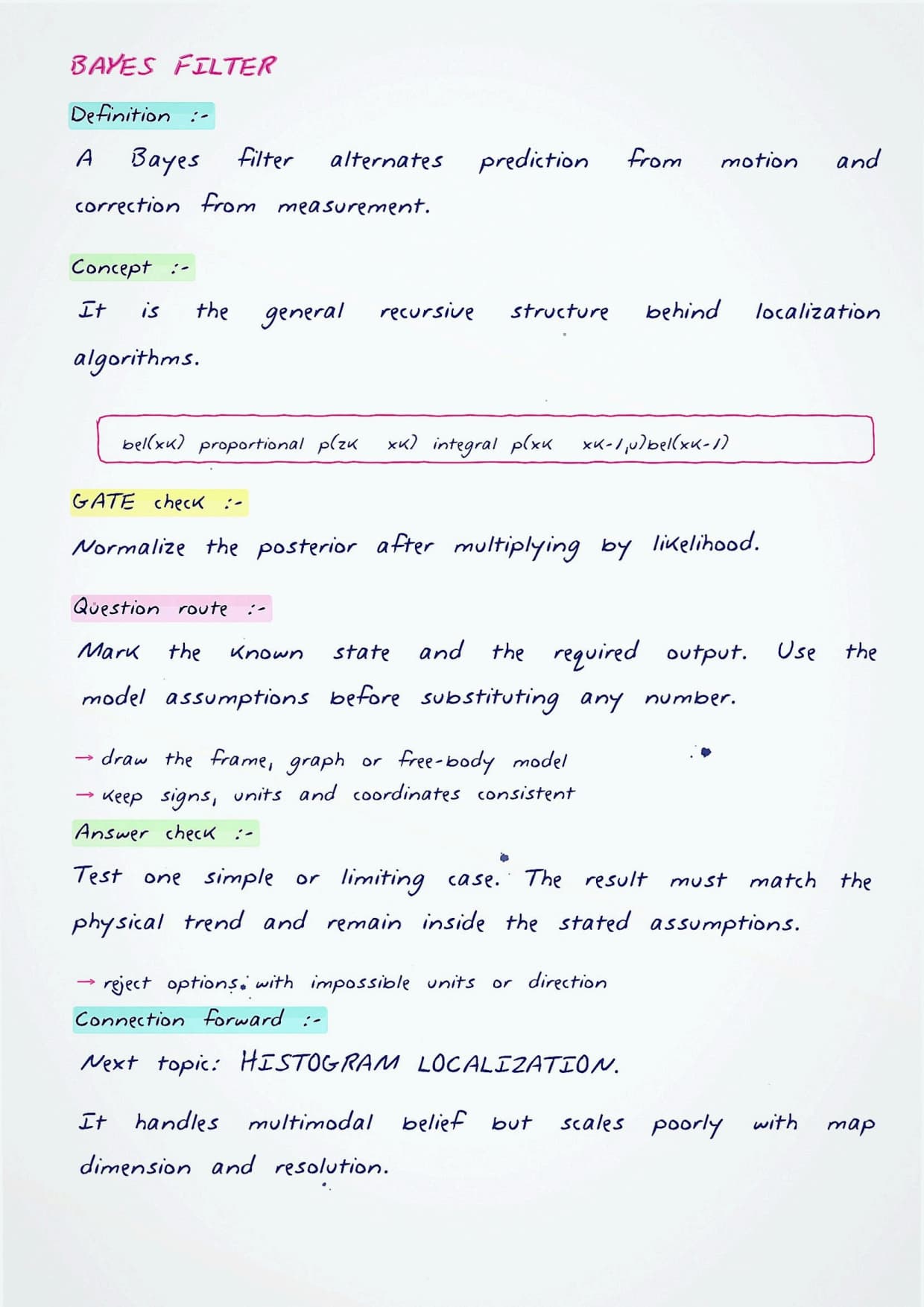
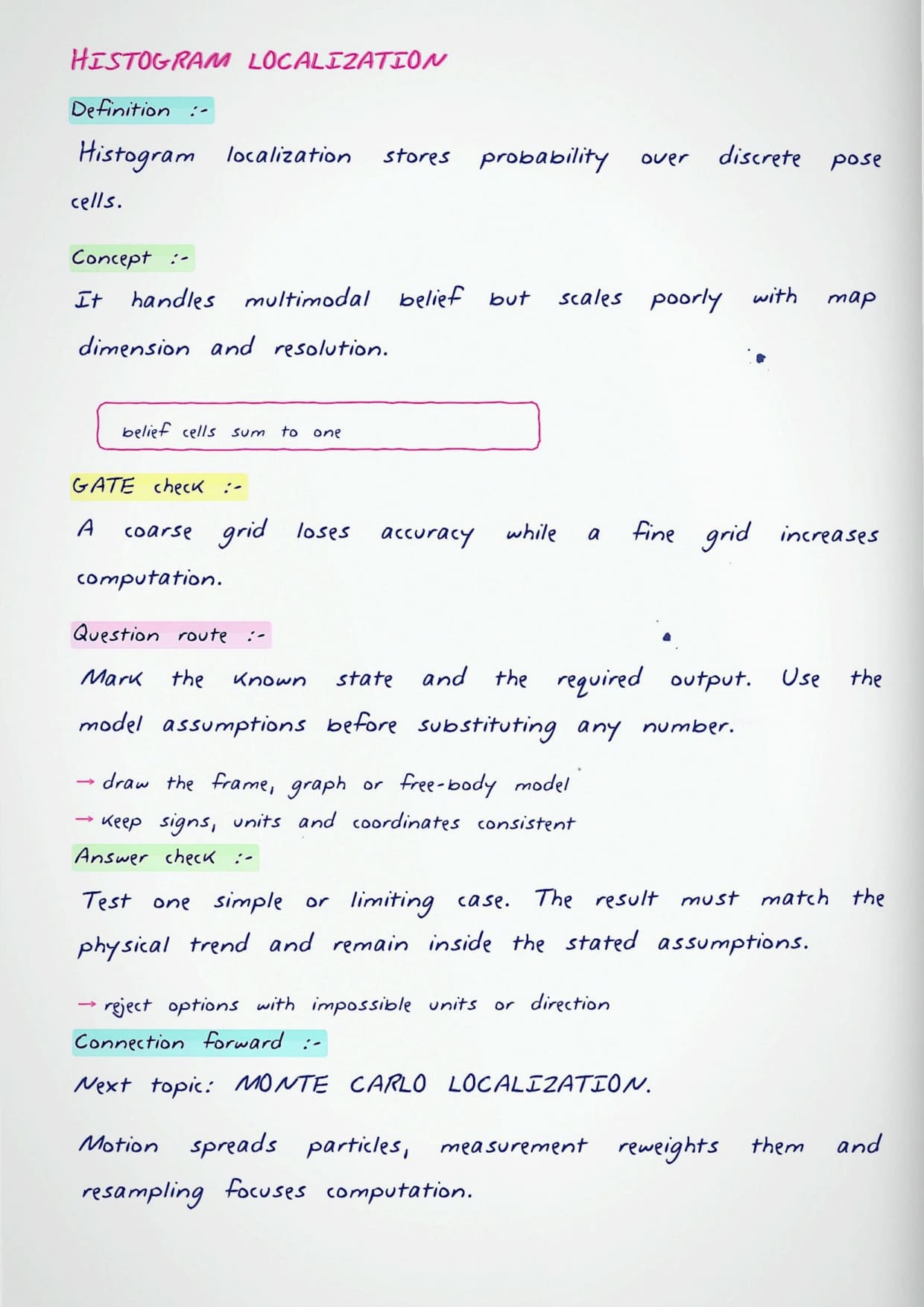
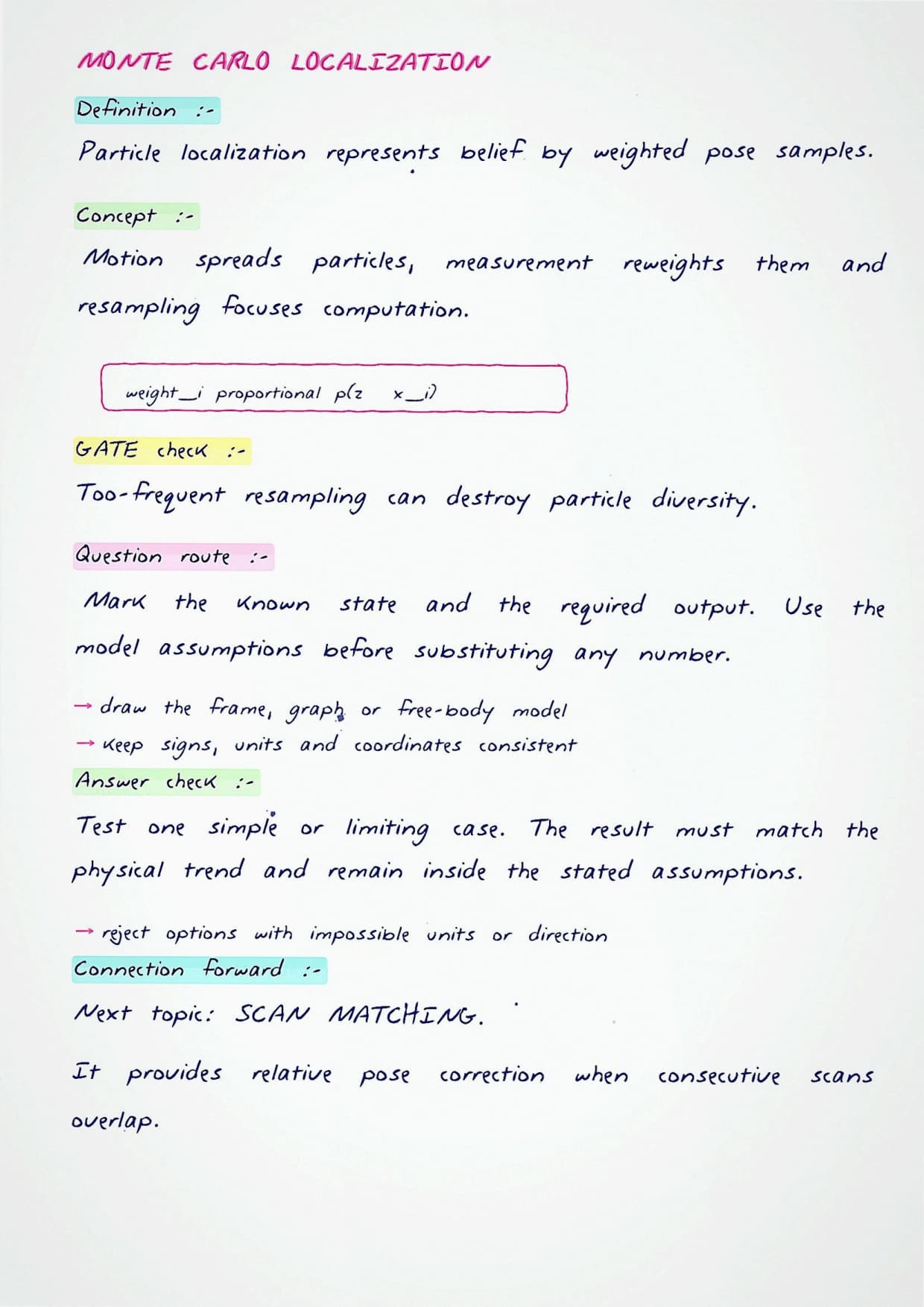
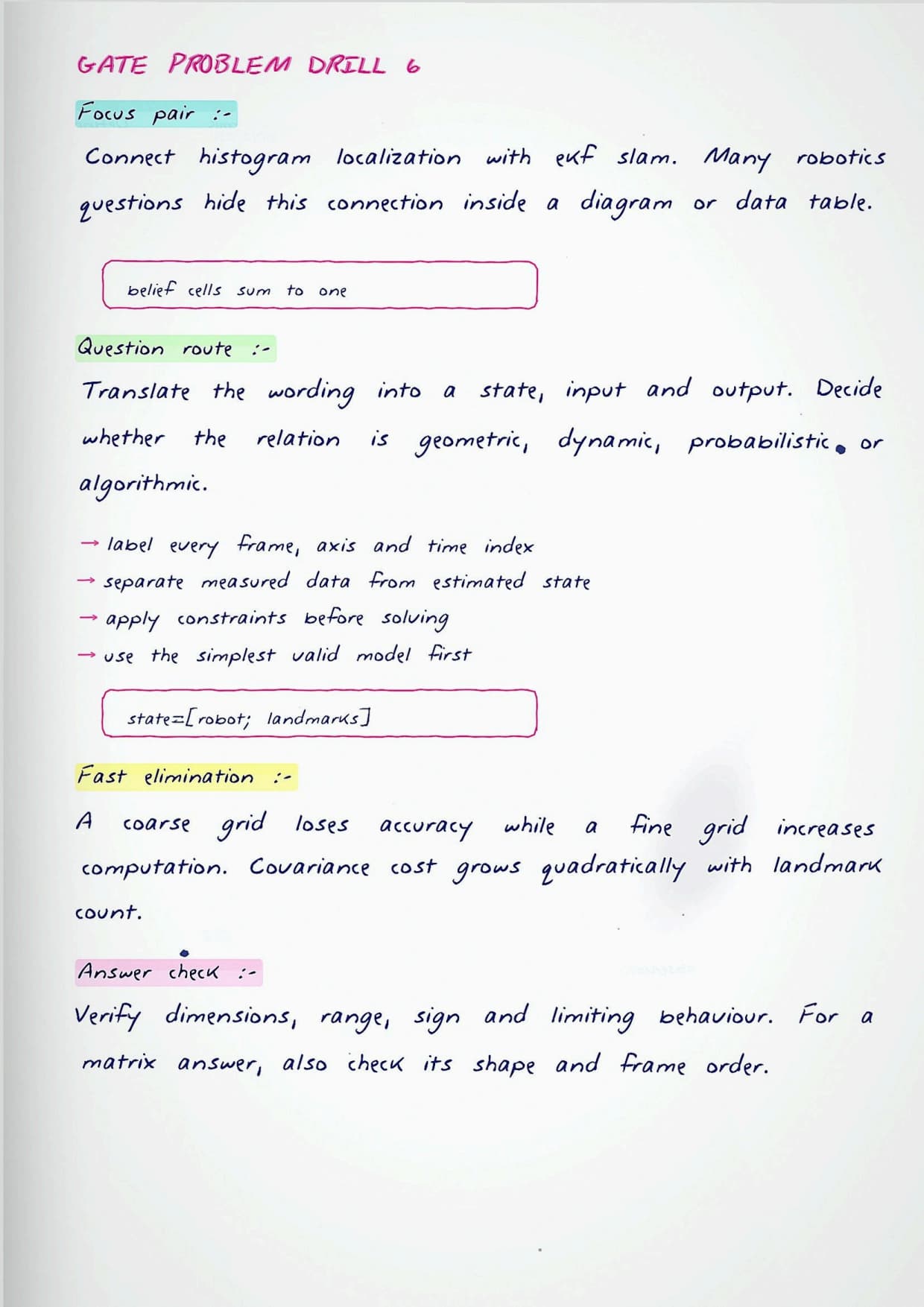
To correct drift, the robot compares what it senses against what it expects. This is localization. The notes build a belief, a spread of possible positions, and show how each sensor reading sharpens it. Two families appear here:
- The Kalman filter line, which tracks a single estimate and its uncertainty and updates both as fresh measurements arrive.
- The particle filter line, which scatters many guesses across the map and lets the good ones survive as evidence comes in.
Seeing both side by side helps students understand why one is chosen over the other depending on how messy the environment is.
Building the Map While You Move
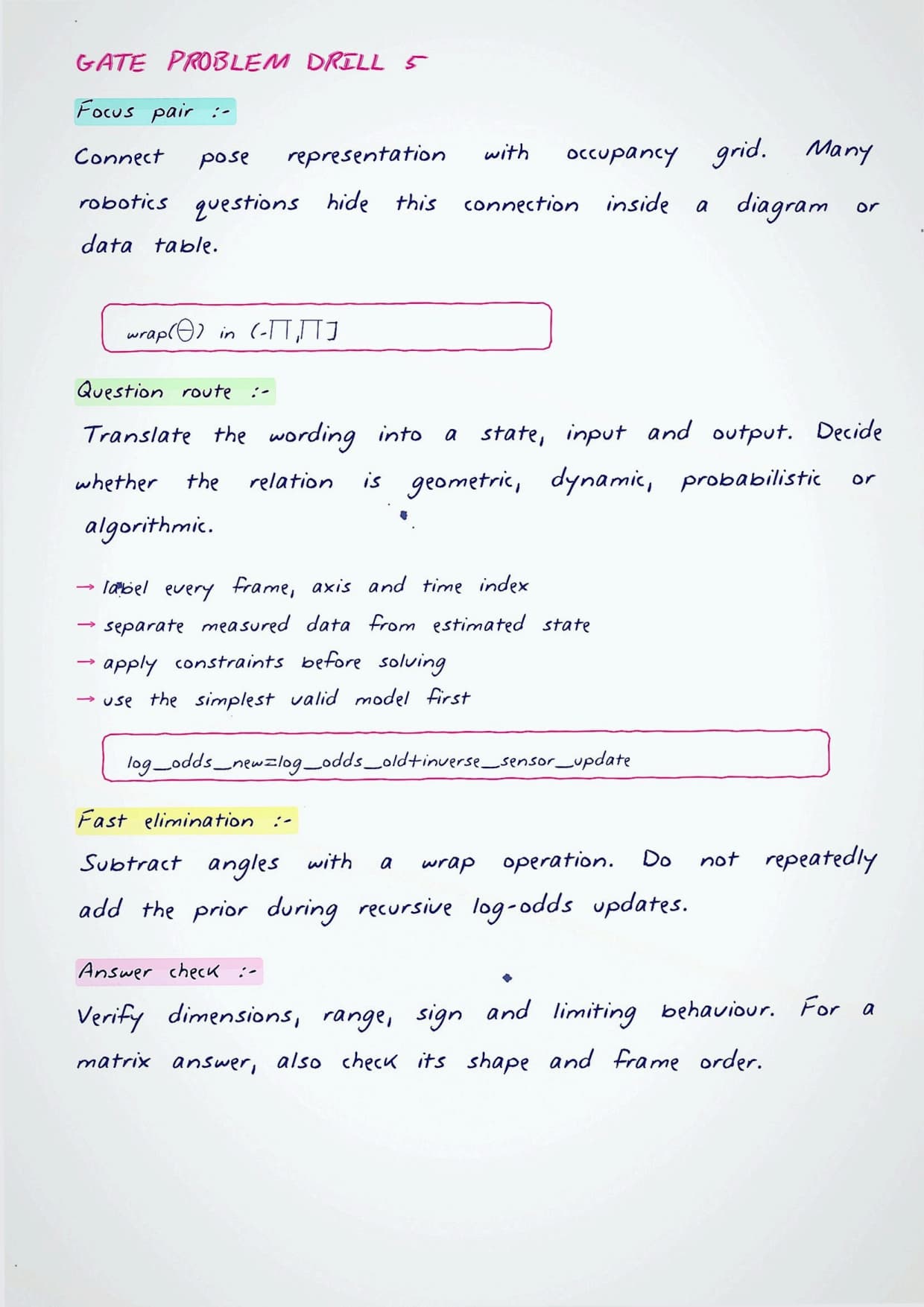
Localization assumes the robot already has a map, and often it does not. Mapping is the stage where the robot writes down the world it discovers.
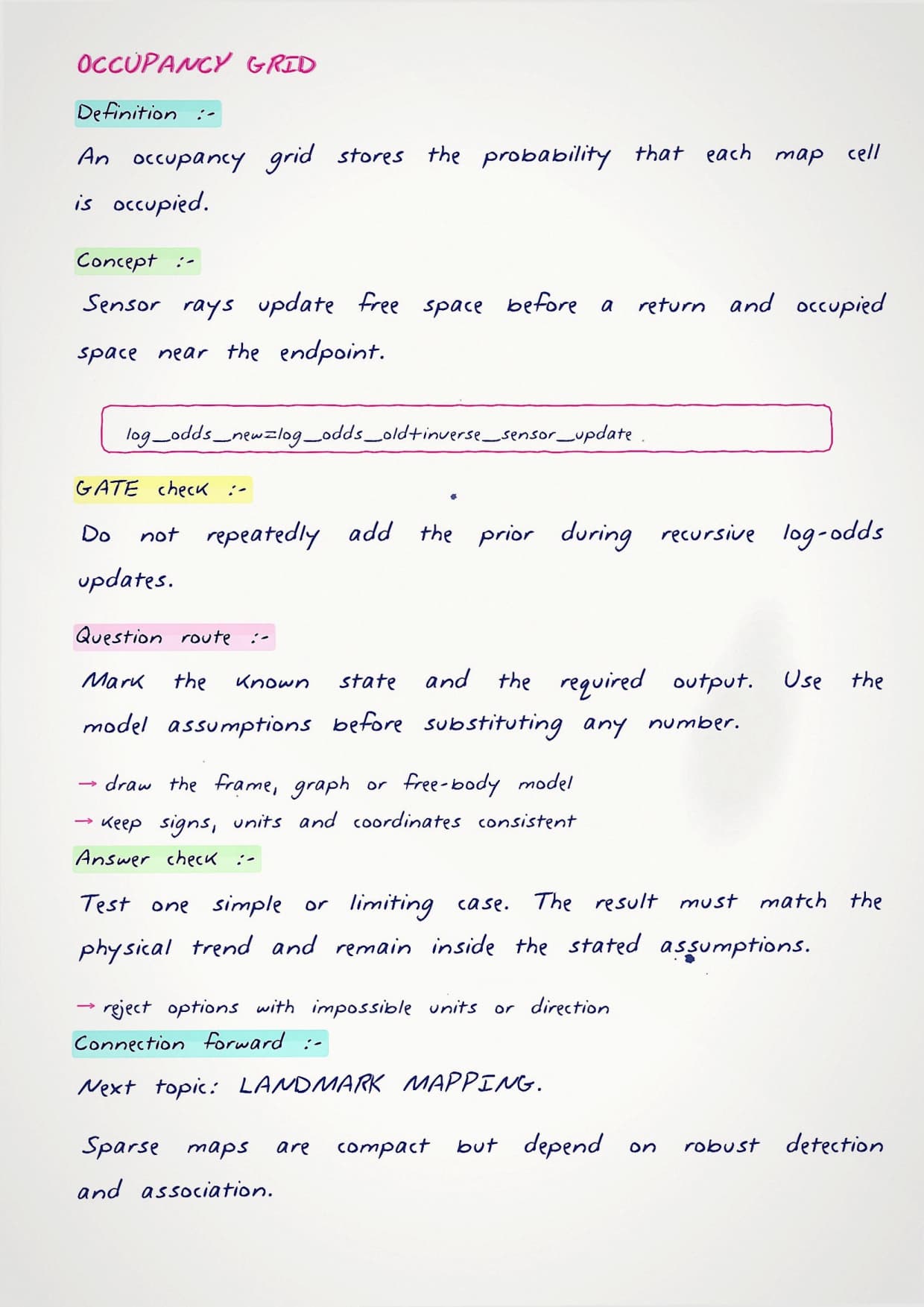
The notes cover the workhorse method, the occupancy grid, where space is split into cells each marked as free, occupied, or unknown. As the range sensors sweep, the cells fill in, and the pages stress how uncertainty carries through, since a wrongly placed wall corrupts every future decision.
See SLAM Explained in One Sitting
Source: Cyrill Stachniss
Why the Chicken-and-Egg of SLAM Is Hard
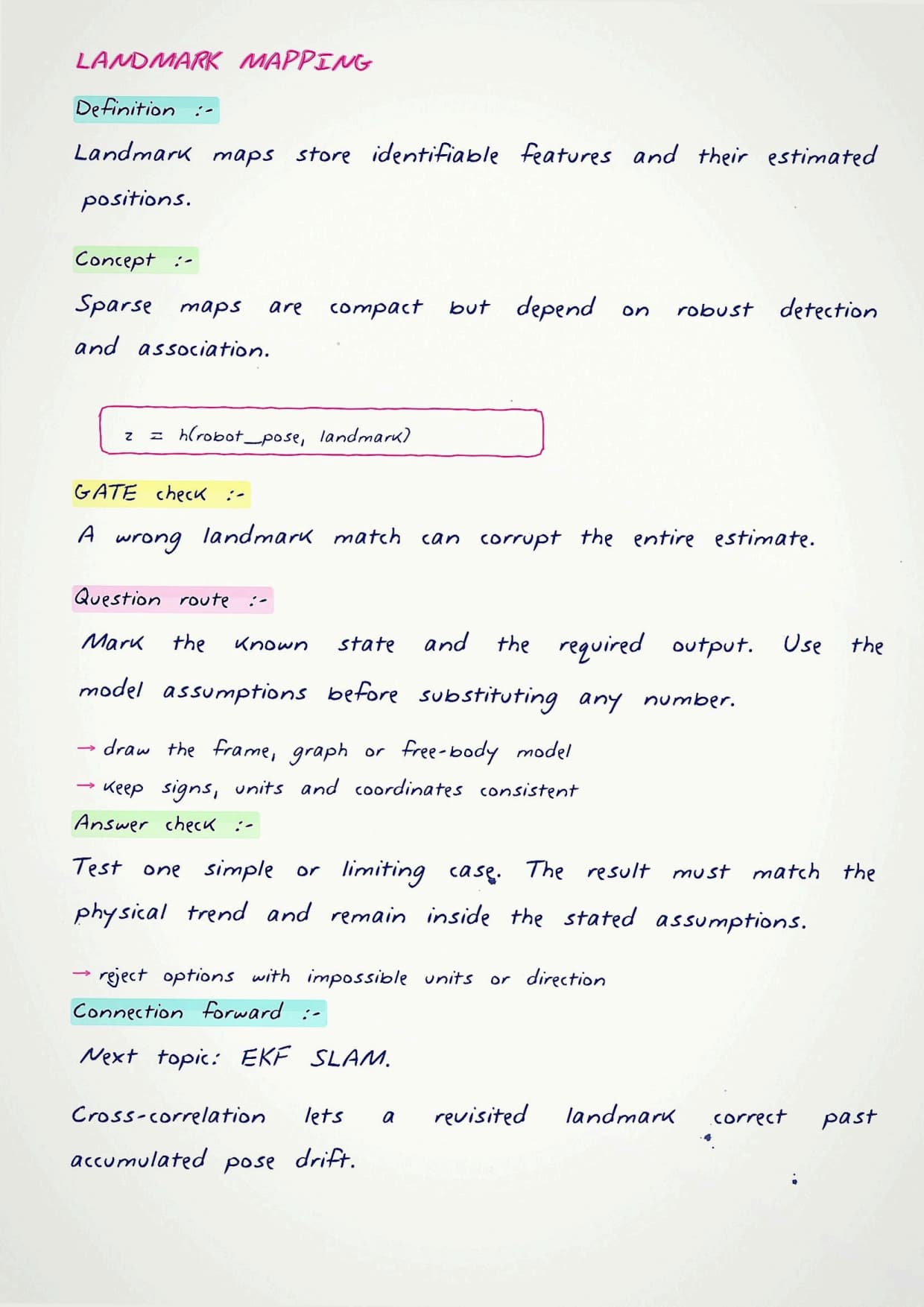
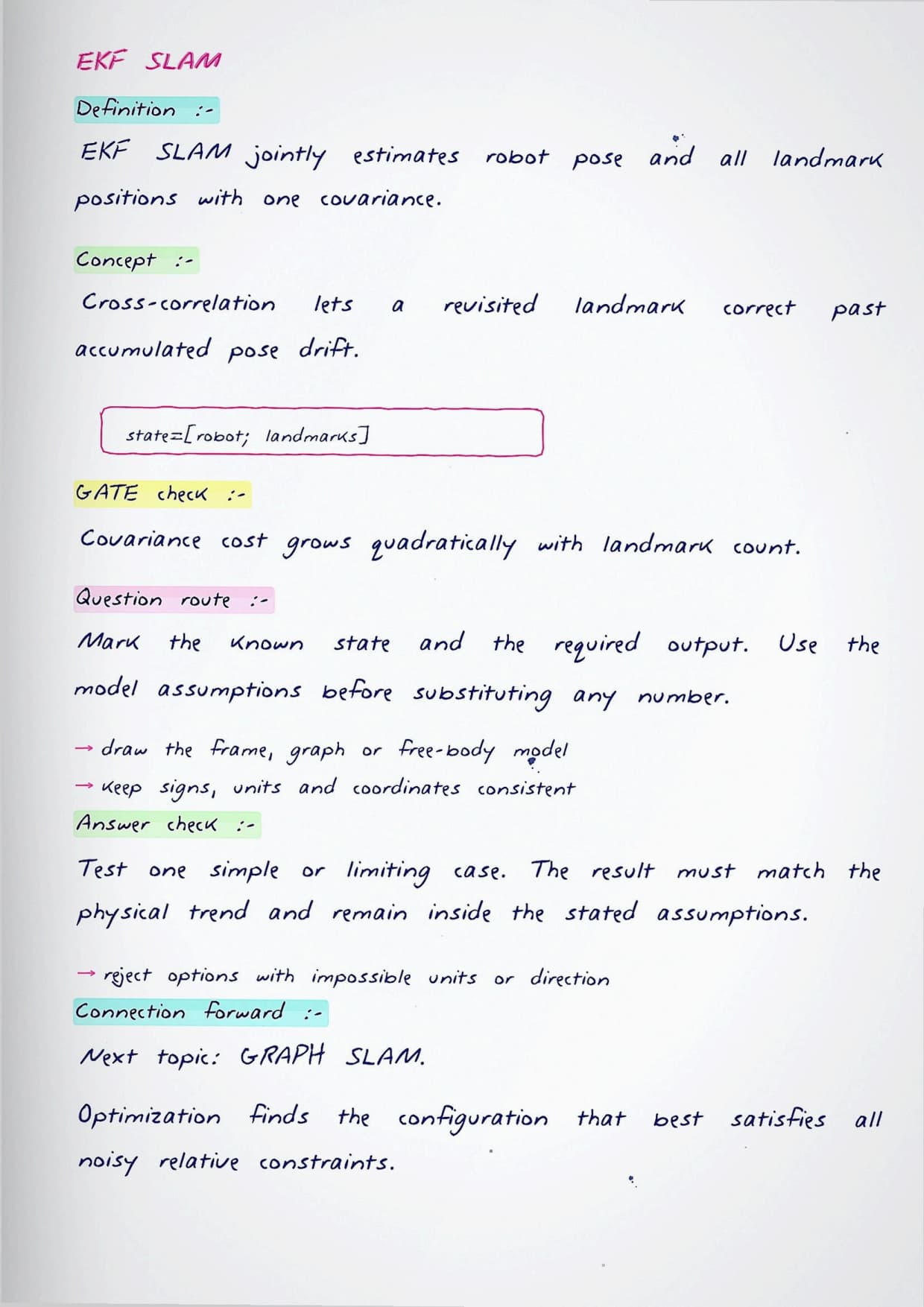
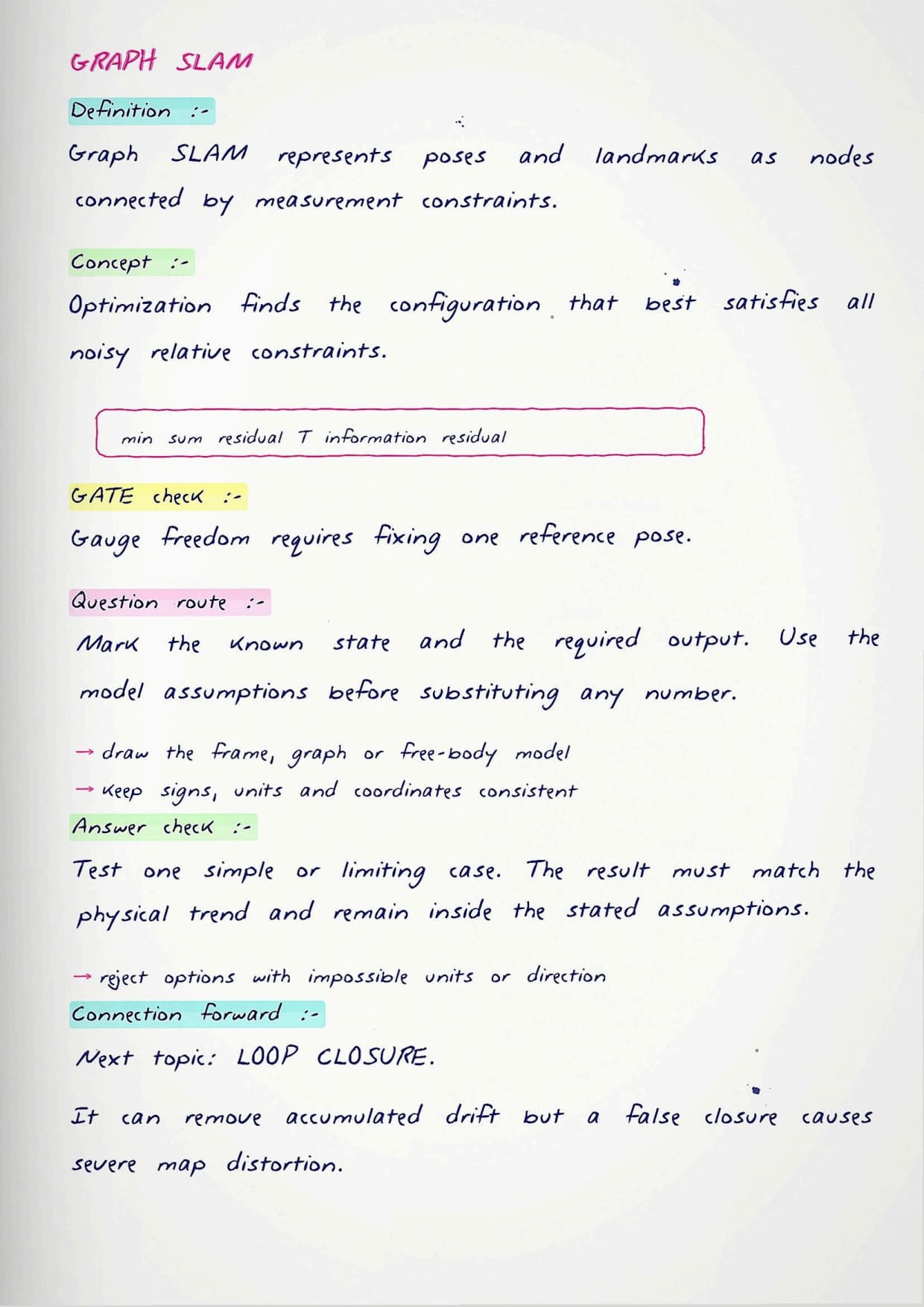
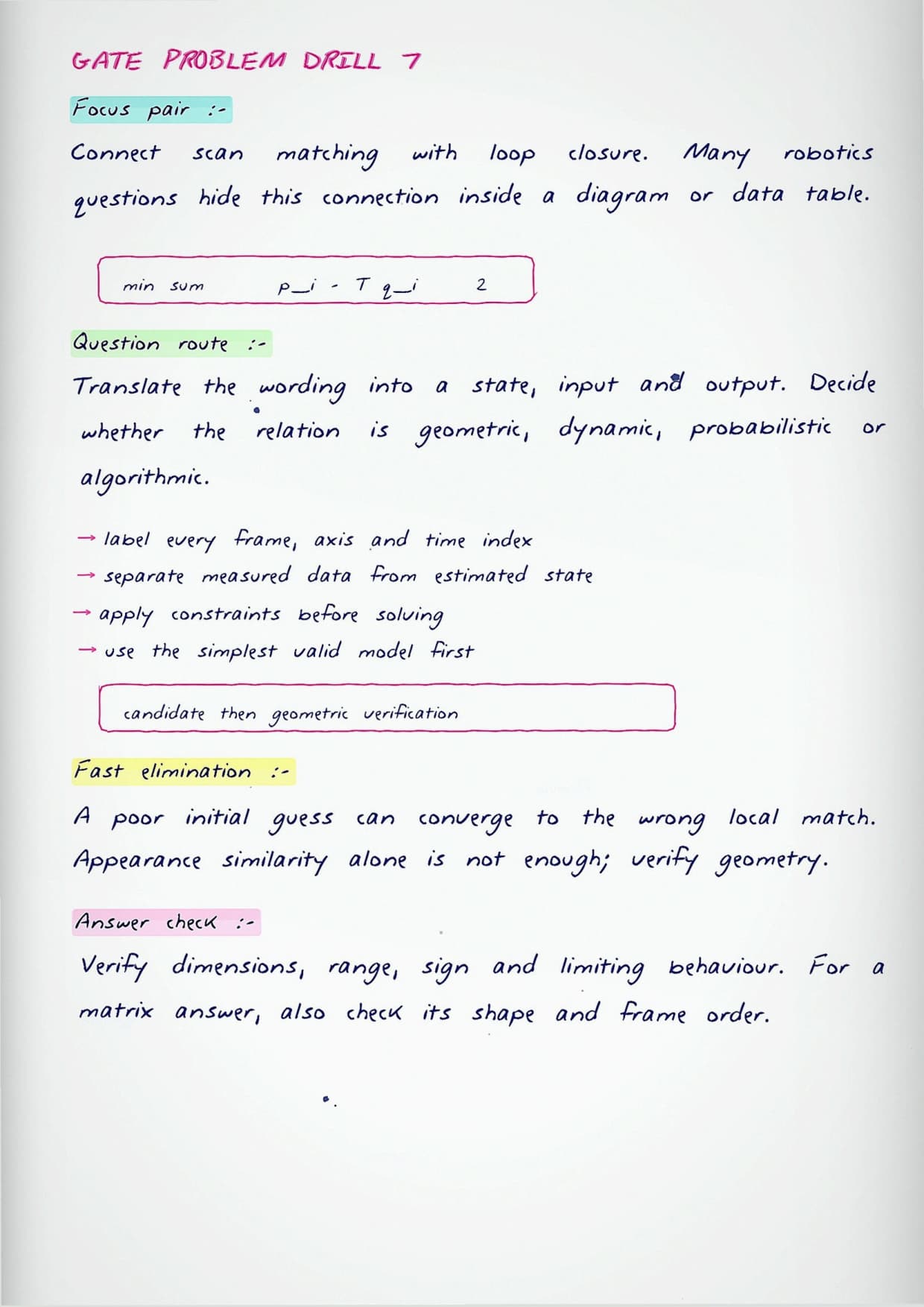
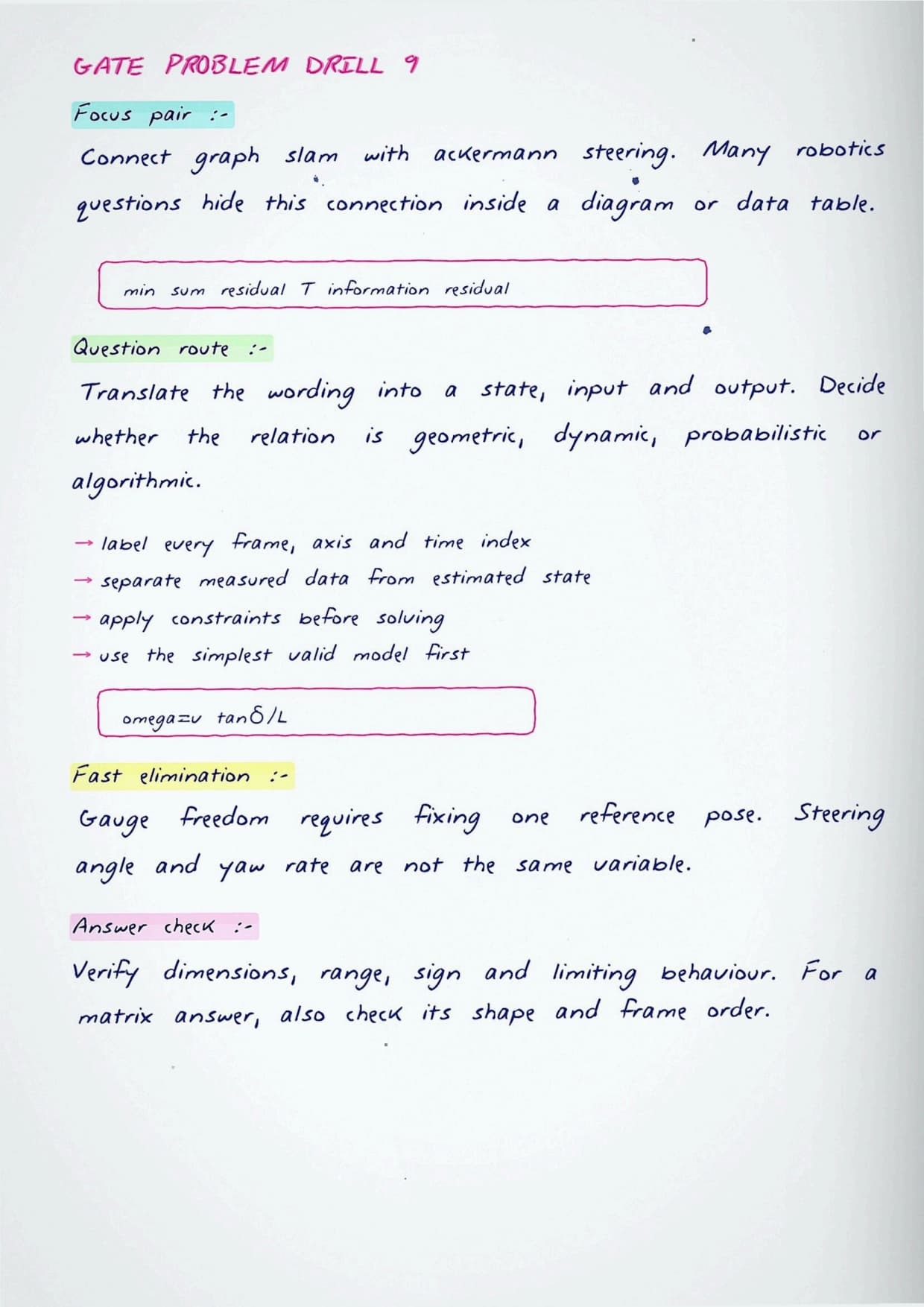
The final stage ties everything together. SLAM, simultaneous localization and mapping, asks the robot to build a map and locate itself in it at once, with neither known in advance.
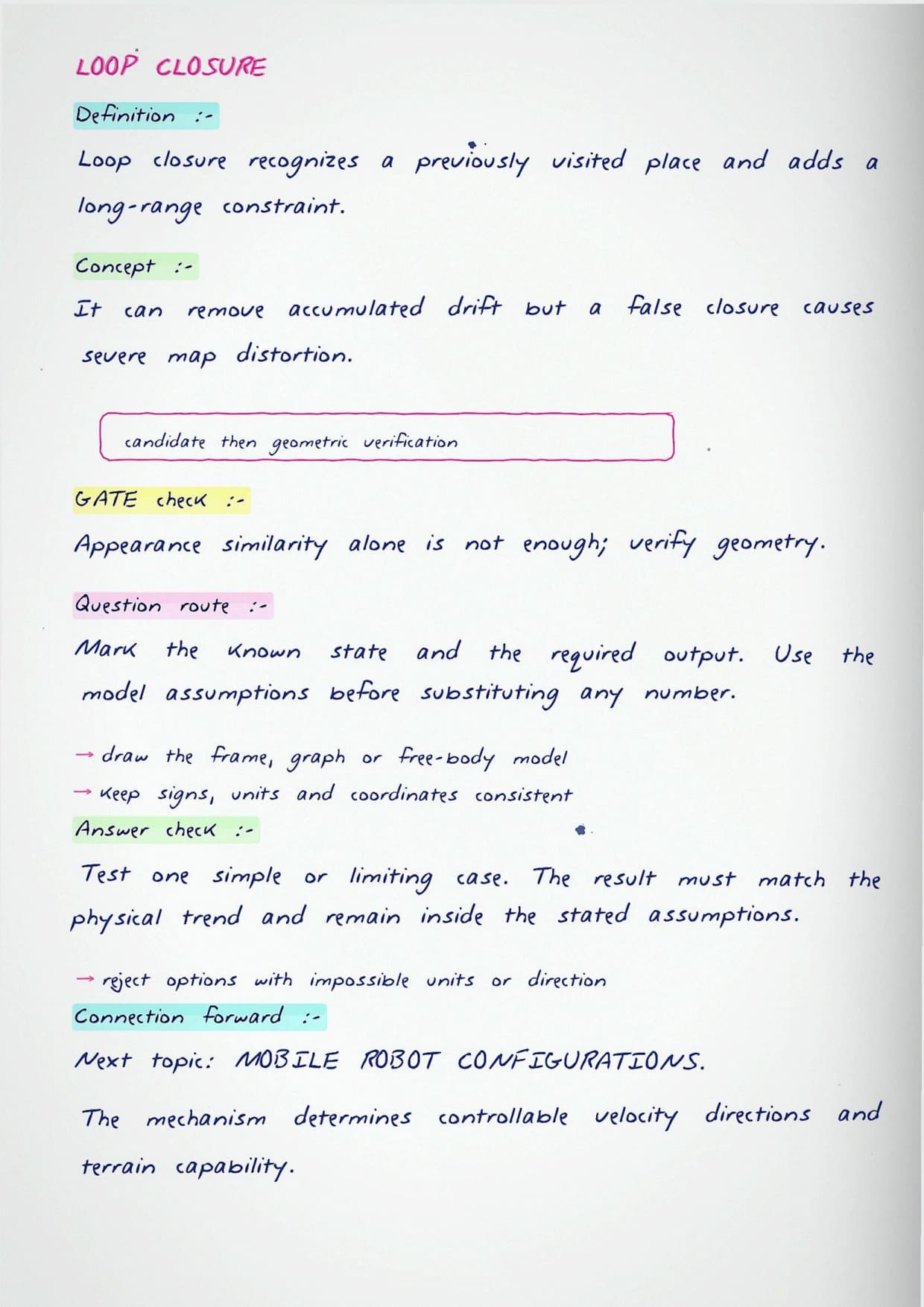
The notes name this as a chicken-and-egg problem: a good map needs a good position, and a good position needs a good map. Students see how loop closure, recognising a place the robot has visited before, snaps the accumulated error back into line and makes the whole scheme workable.
Putting These Pages to Work Before the Exam
Because the notes follow one thread, they are best revised in order rather than dipped into. A good approach is to redraw the pipeline from memory: motion in, drift, correction, map, then the joint SLAM loop.
If students can explain why each stage hands its weakness to the next, they understand the subject far better than by memorising equations. This topic connects to probability, linear algebra, and control ideas that recur across robotics, so the effort spent here carries a long way.
Mobile Robotics and SLAM FAQs
Ques. What is the difference between odometry and localization?
Ans. Odometry estimates motion from the robot's own wheel counts and drifts over time. Localization corrects that drift by comparing sensor readings against a known map, giving a much more reliable position.
Ques. Why is SLAM called a chicken-and-egg problem?
Ans. Building an accurate map needs an accurate position, but working out an accurate position needs an accurate map. SLAM has to solve both at once, with neither known in advance.
Ques. What is loop closure and why does it matter?
Ans. Loop closure is when a robot recognises a place it has already visited. That recognition lets it correct the error built up along the way, which is what keeps a SLAM map consistent.
Ques. What is an occupancy grid?
Ans. It is a map made of small cells, each marked as free, occupied, or unknown. As the robot's range sensors sweep the space, the cells are updated to build a picture of the environment.
Ques. Which background topics help most with this subject?
Ans. Probability, linear algebra, and basic control theory. These underpin the filters and mapping methods and appear across the parent GATE papers, so they are worth revising alongside these notes.



Comments