




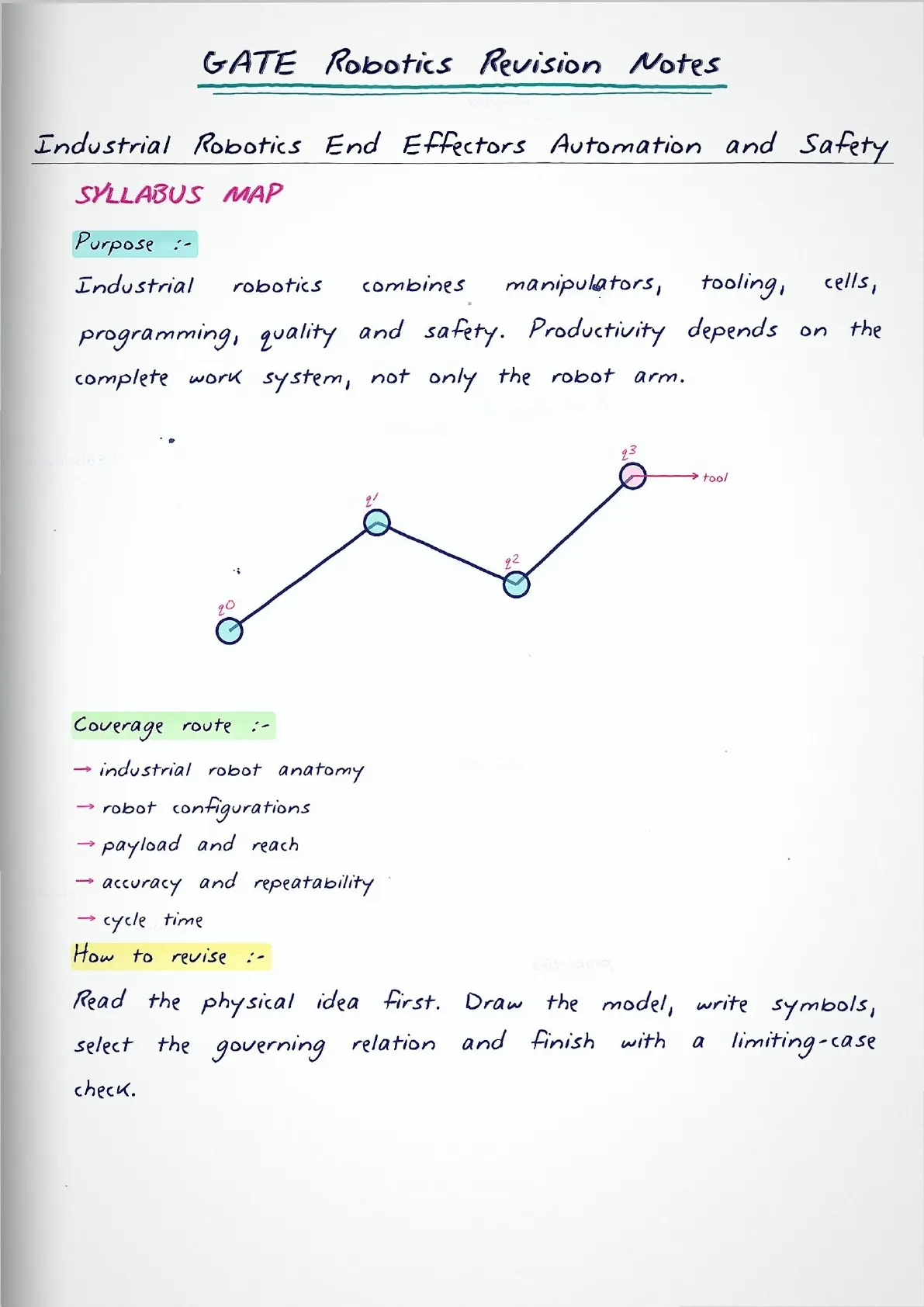
Industrial robotics is where robots earn their keep: the tooling on the wrist, the cell that keeps parts flowing, and the guarding that keeps people safe make this one of the most application-heavy reads in any preparation.
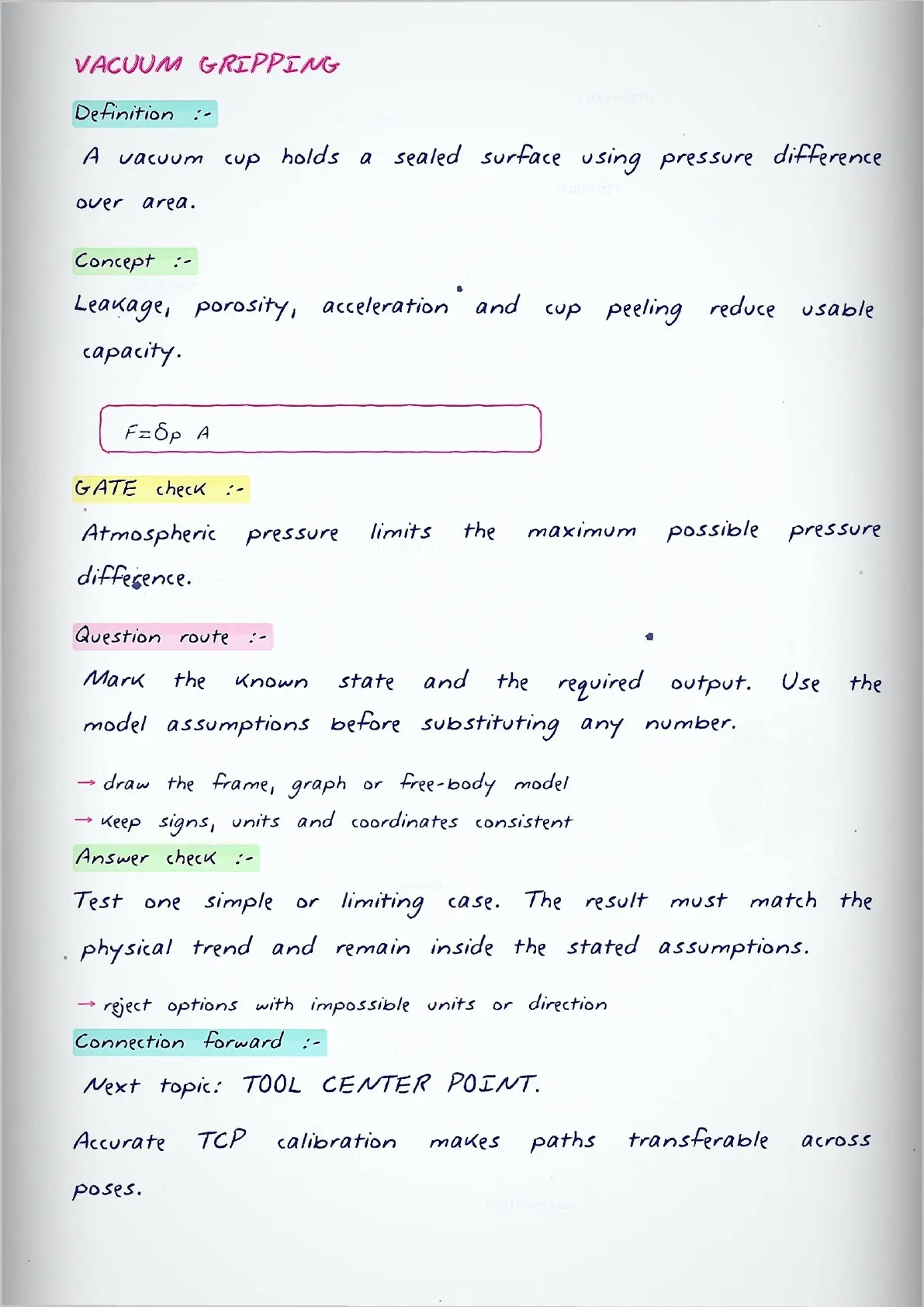
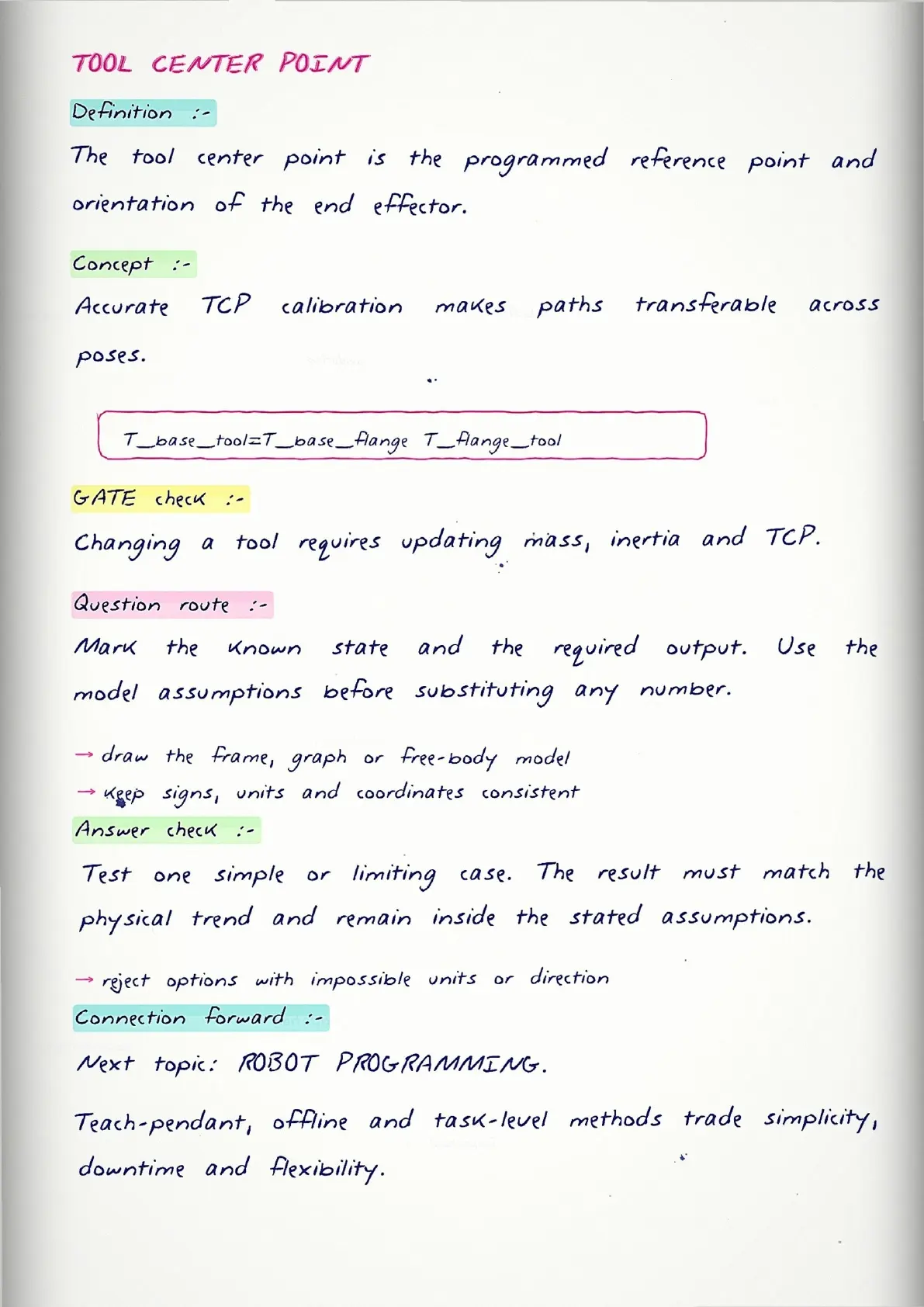
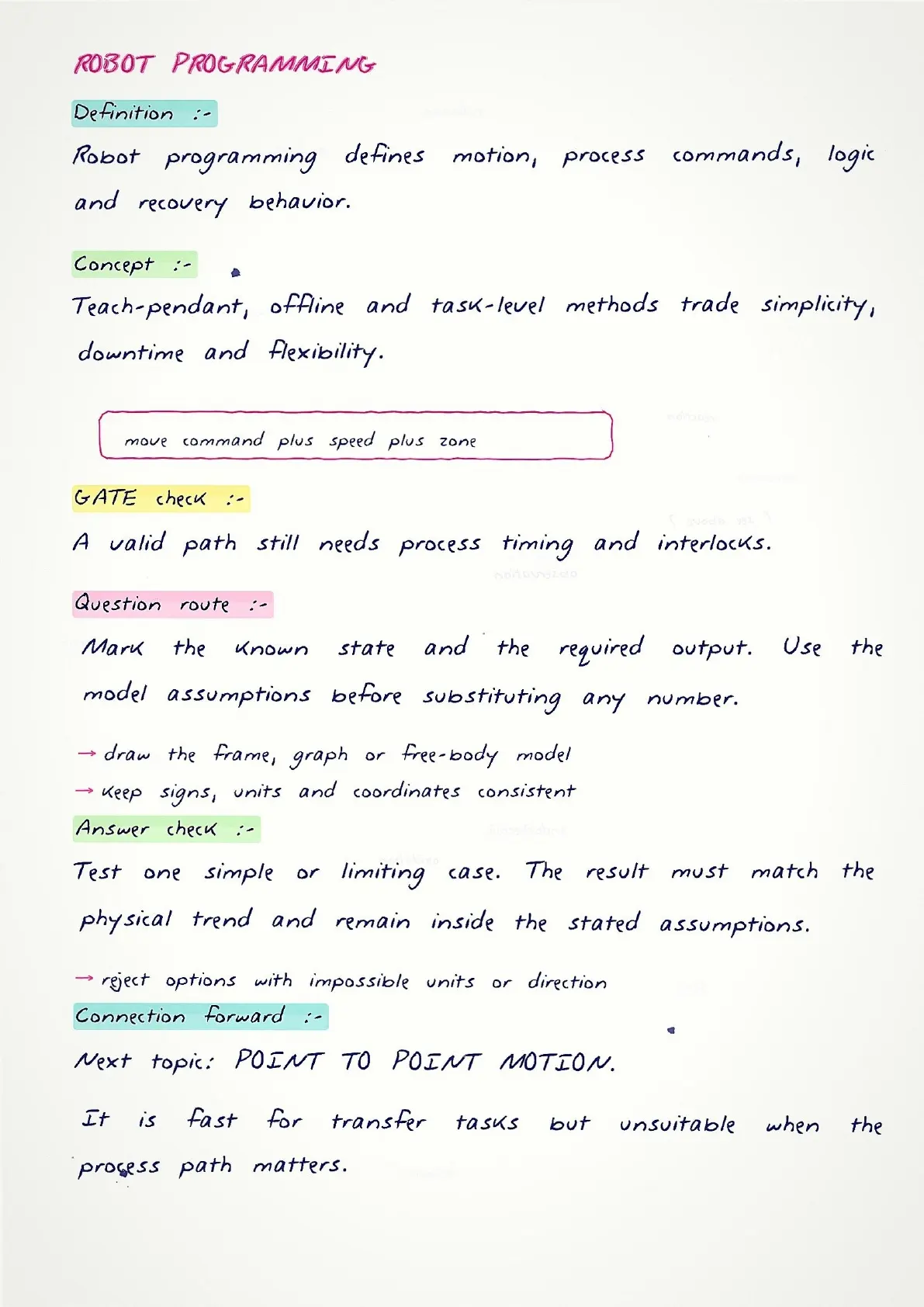
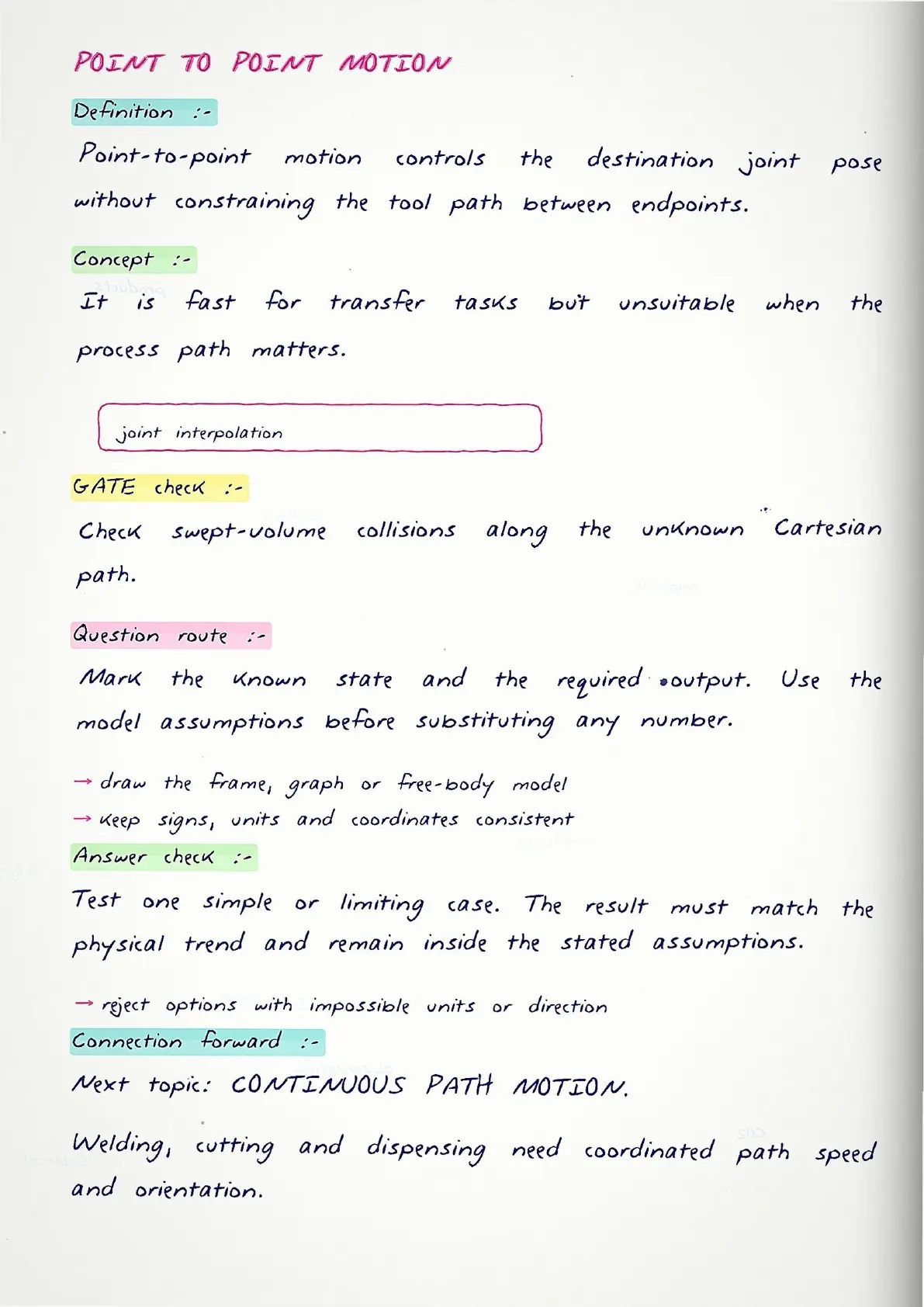
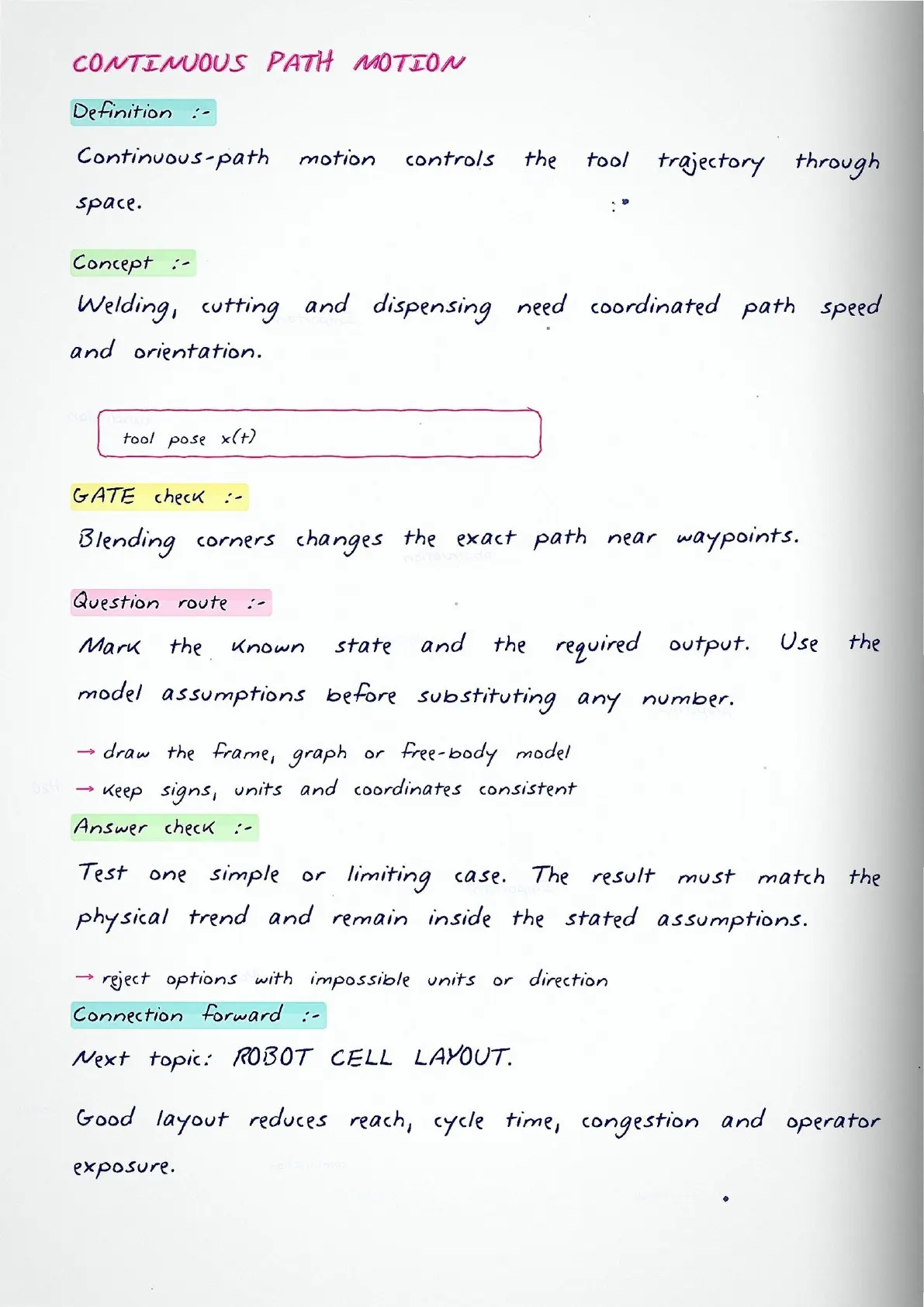
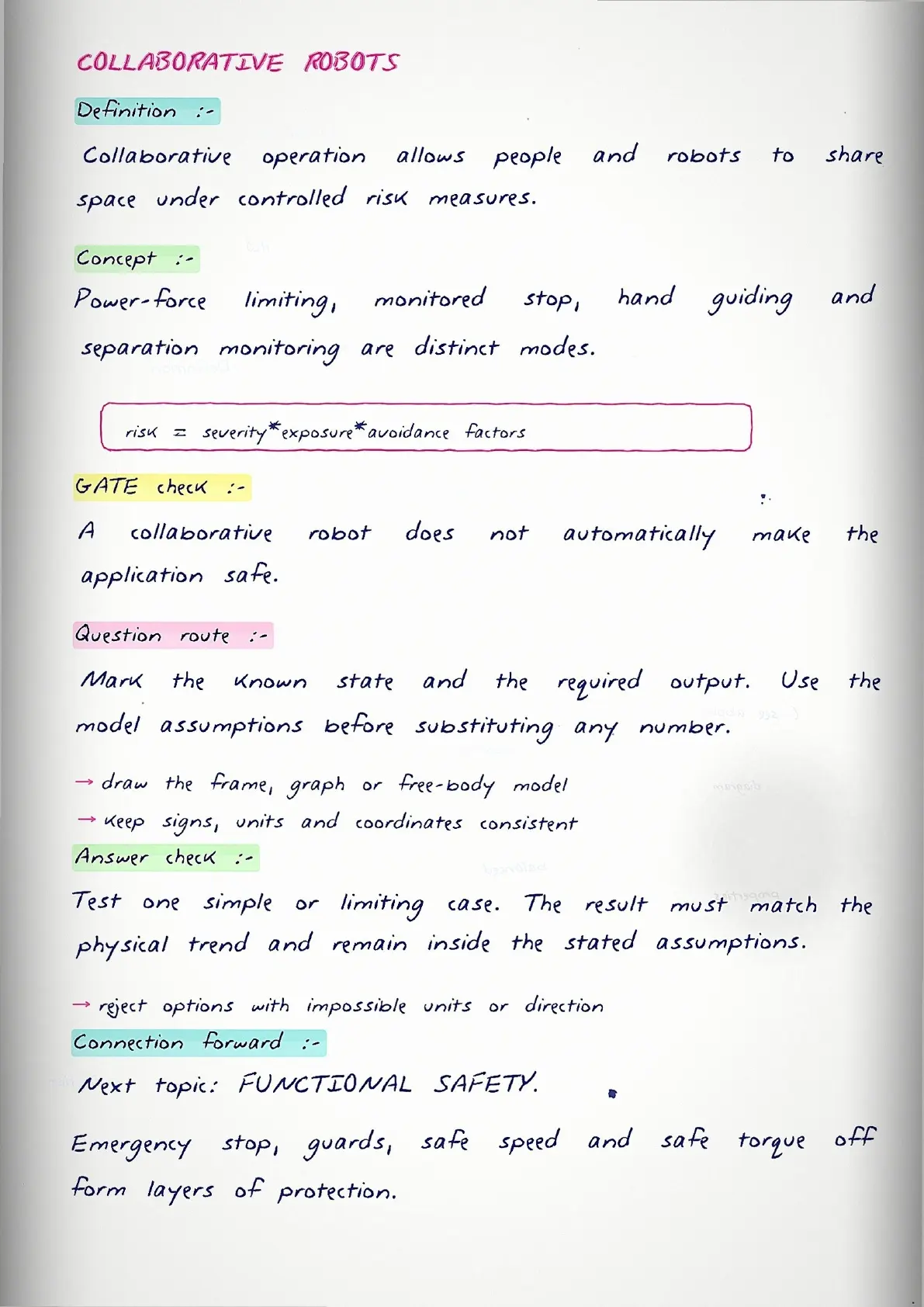
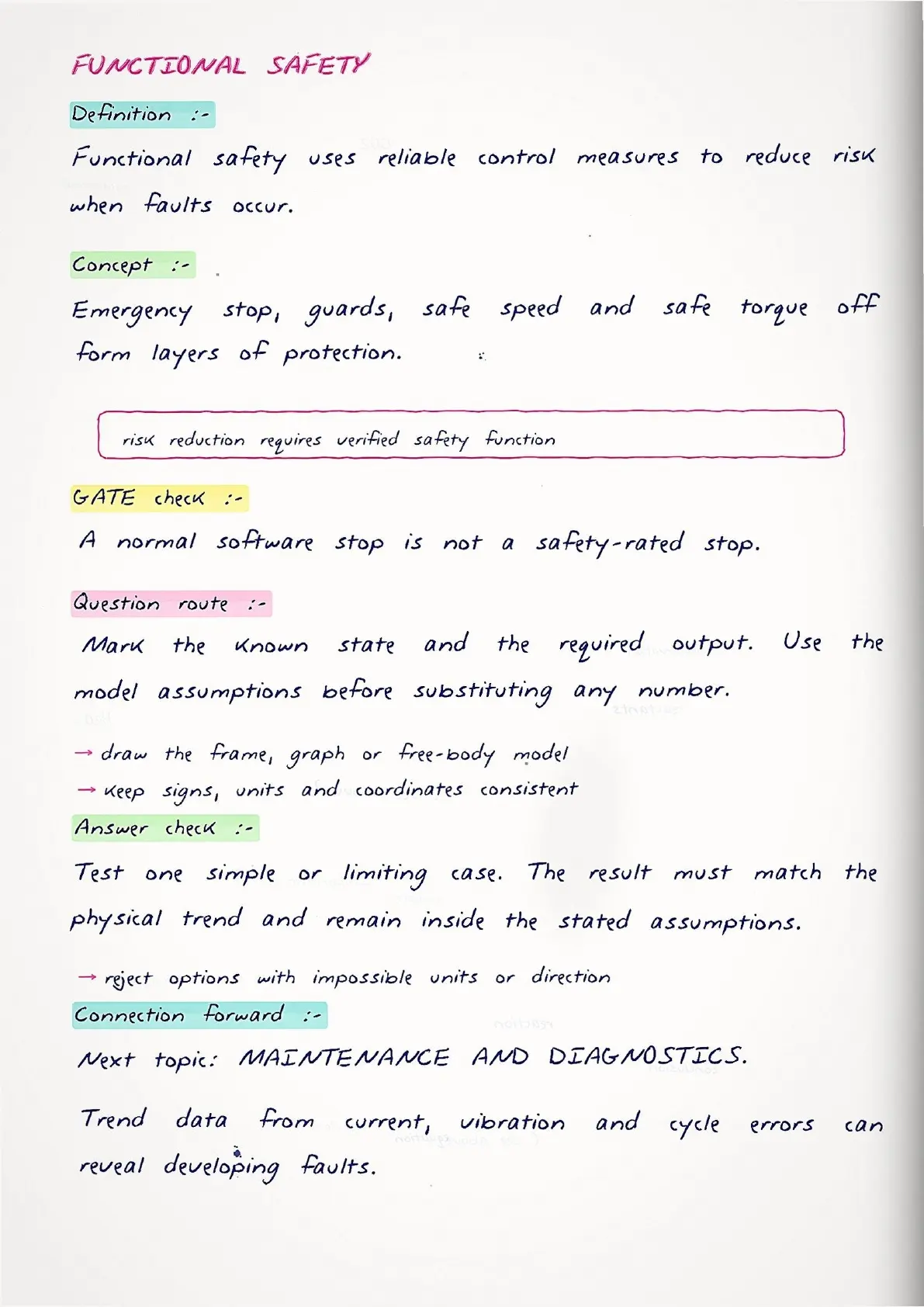
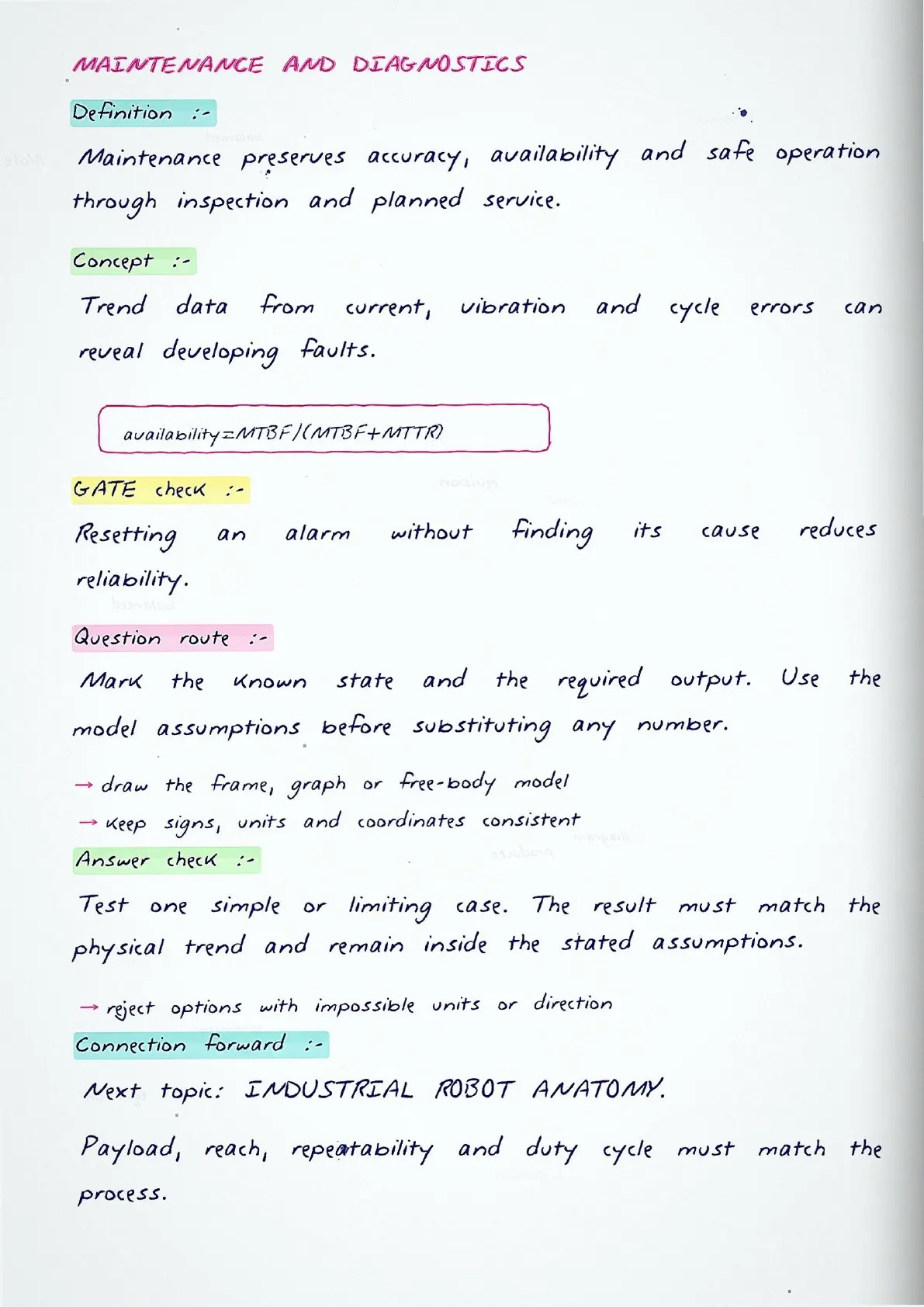
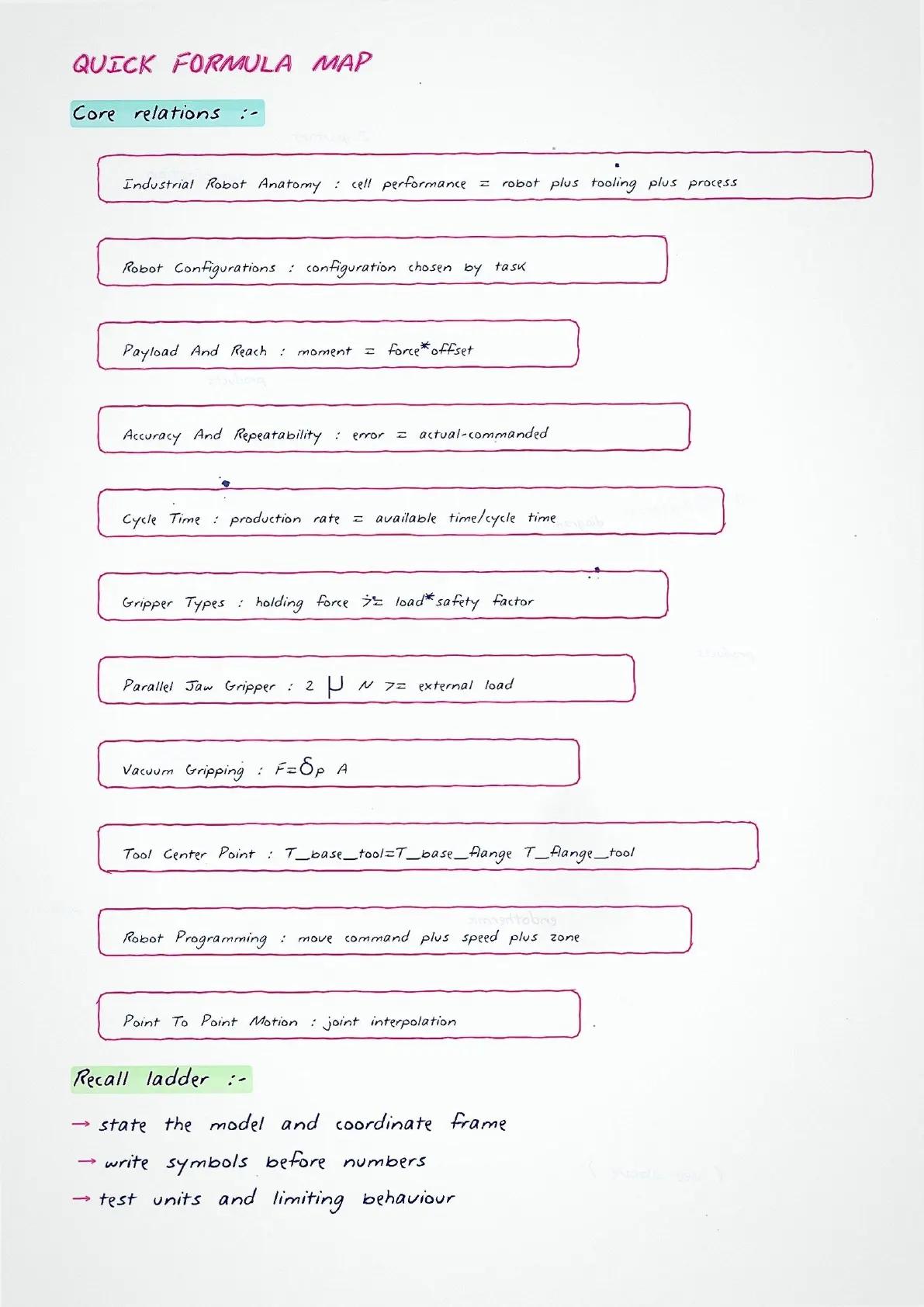
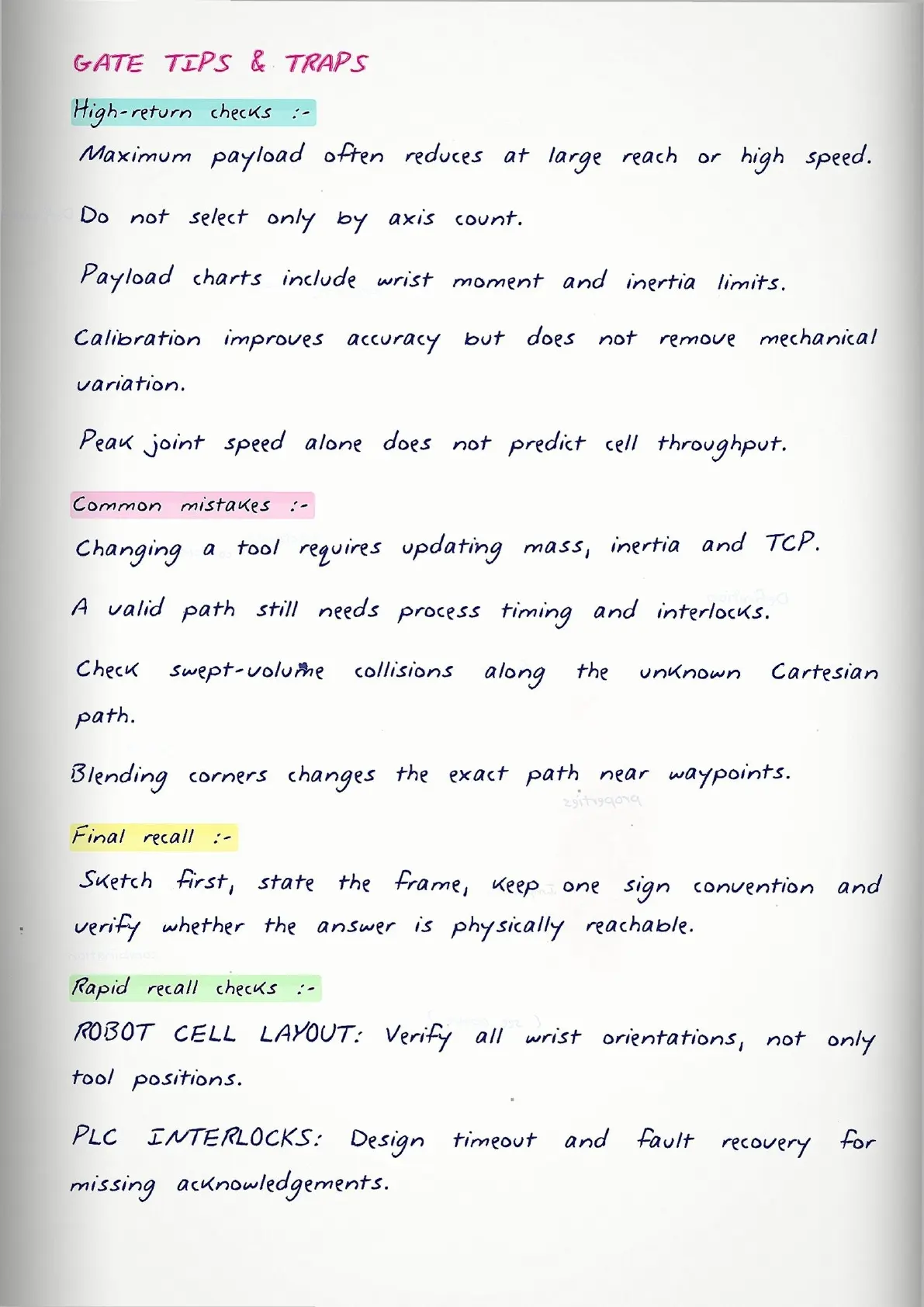
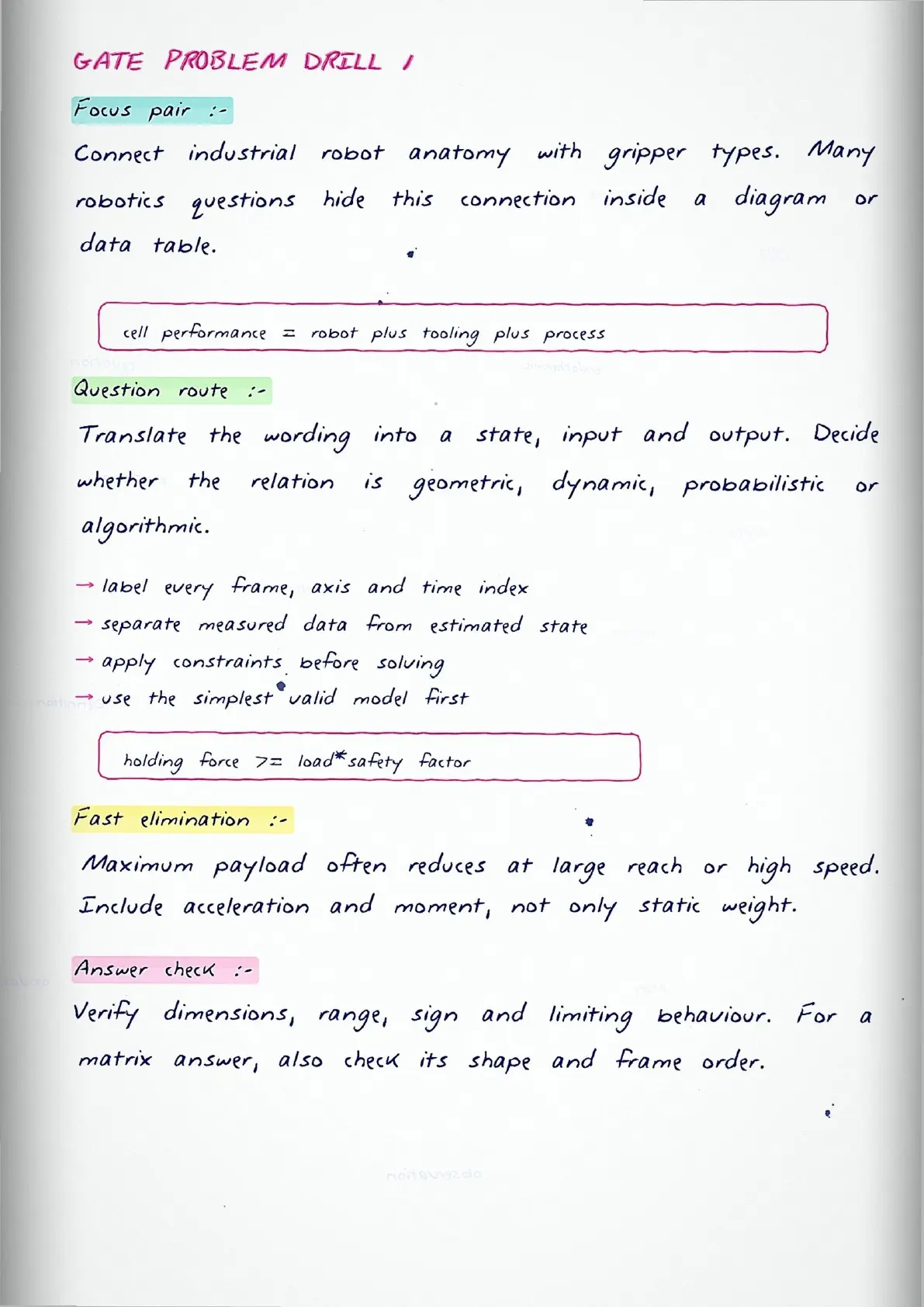
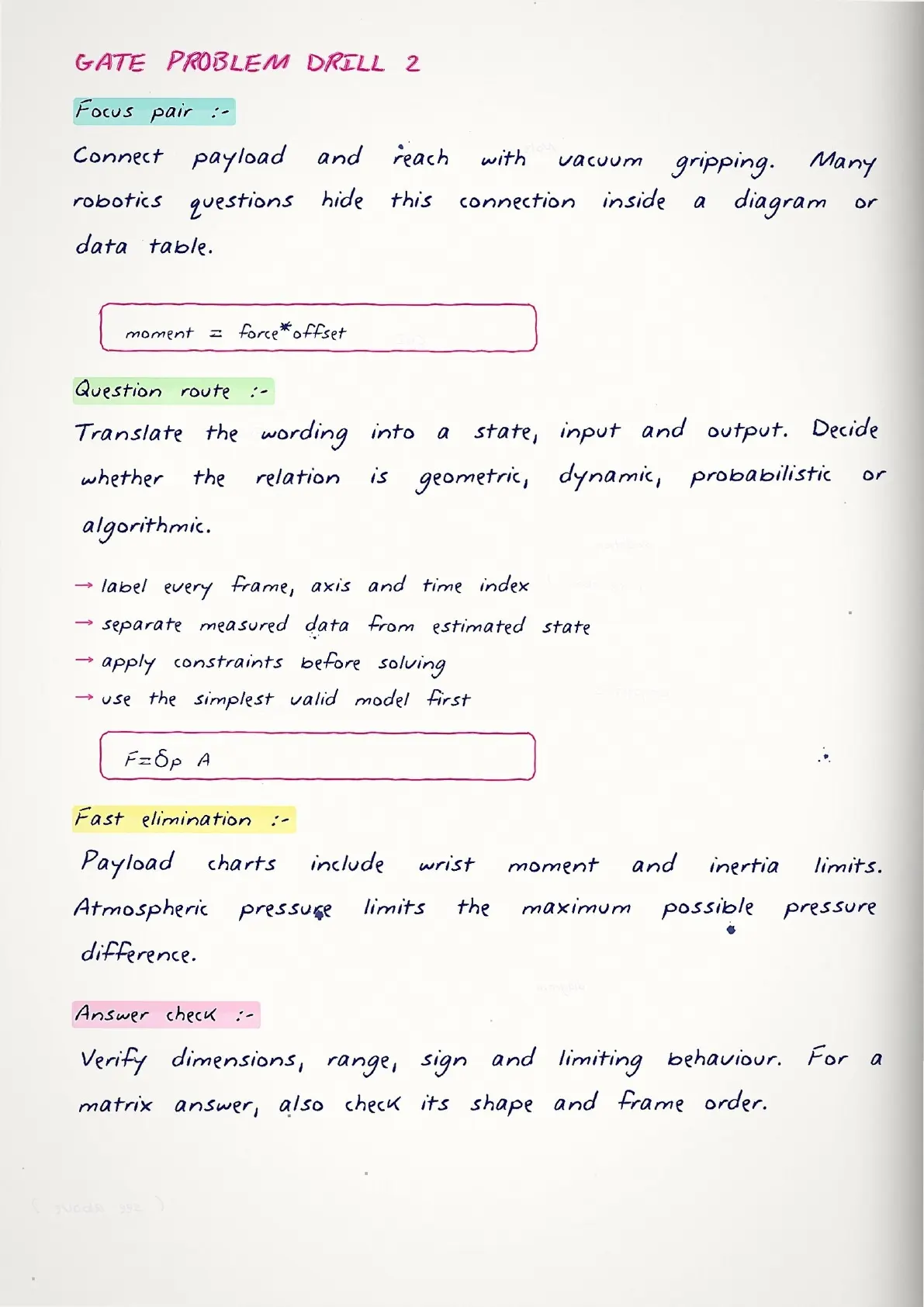
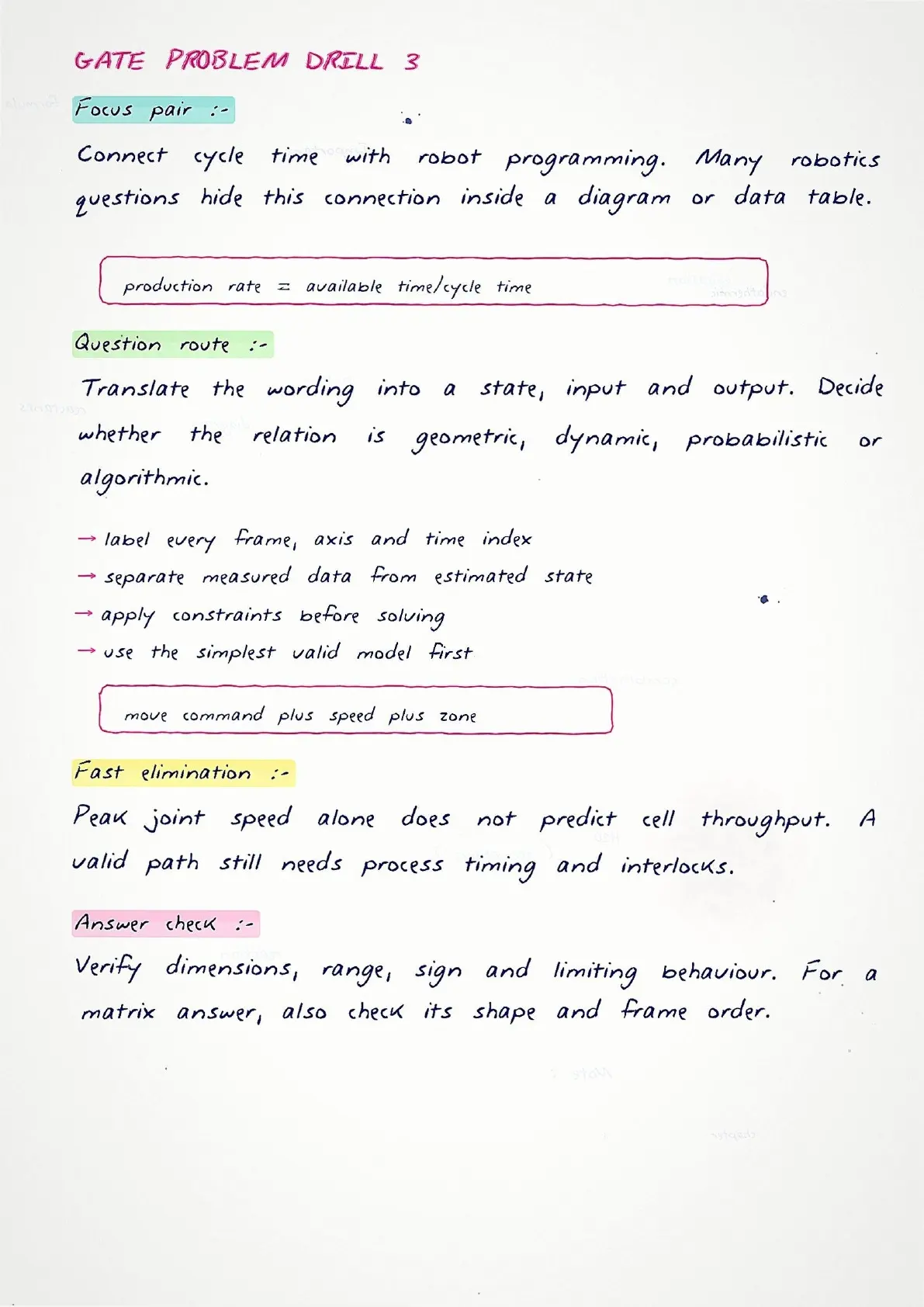
A Day on the Factory Floor
In a modern factory the robots are only half the story; these notes treat the whole picture and open with the scene rather than a list.
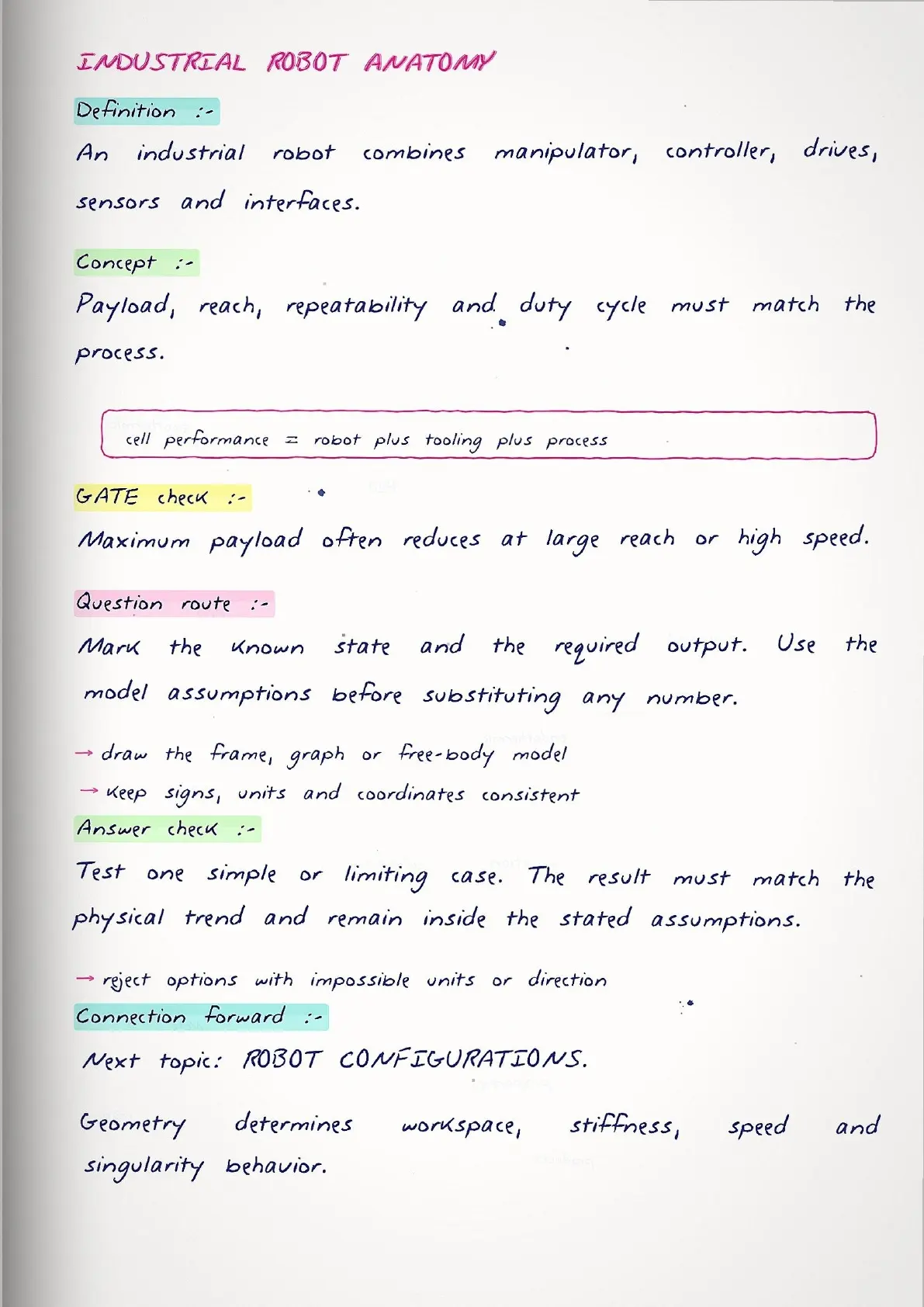
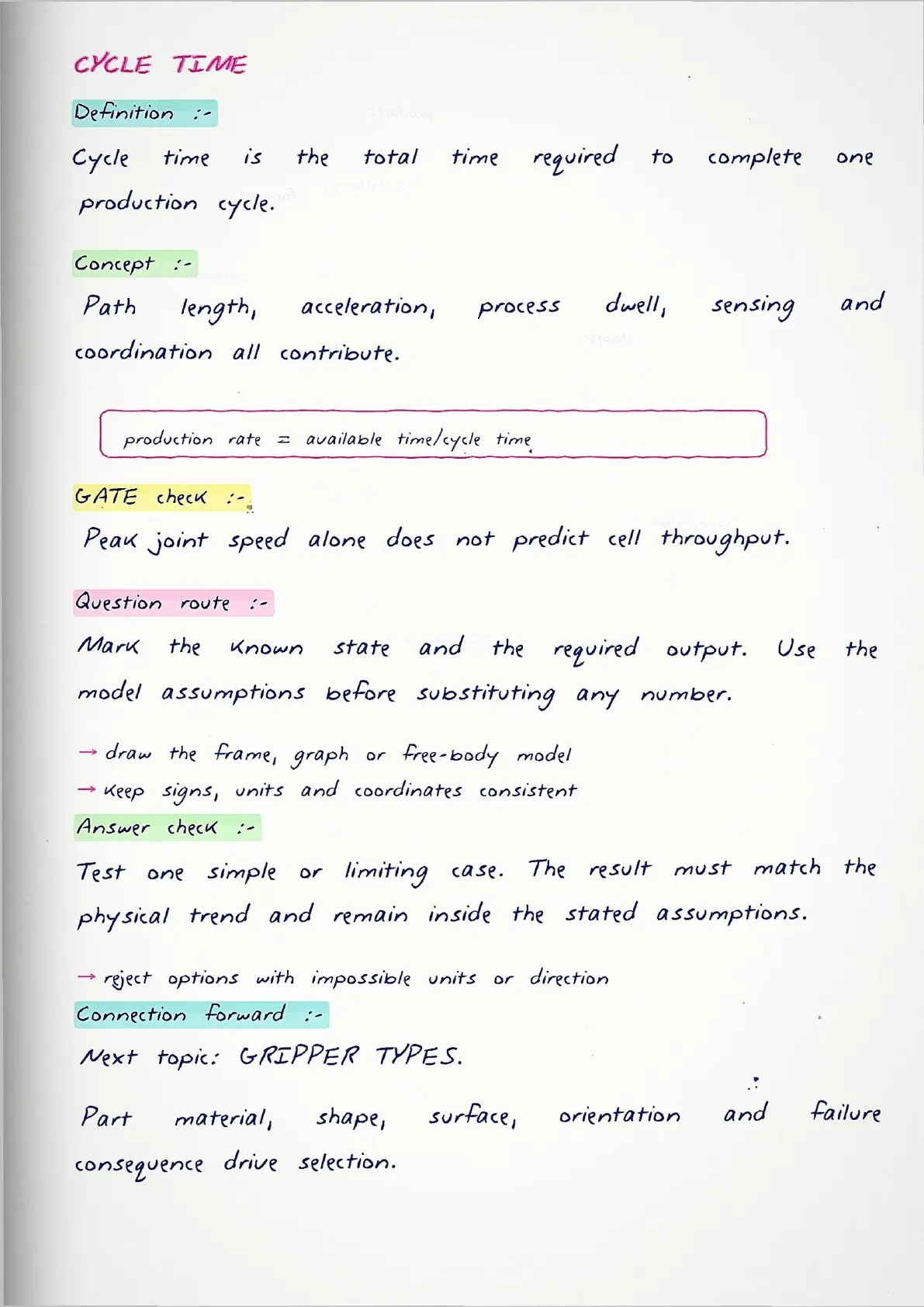
A robot picks a casting off a conveyor, places it in a machine, waits for the cycle, and moves the finished part to a pallet. Around that loop sit the ideas the pages unpack: work envelope, cycle time, repeatability, and payload.
Anchoring the theory to one real task is what makes these terms stick.
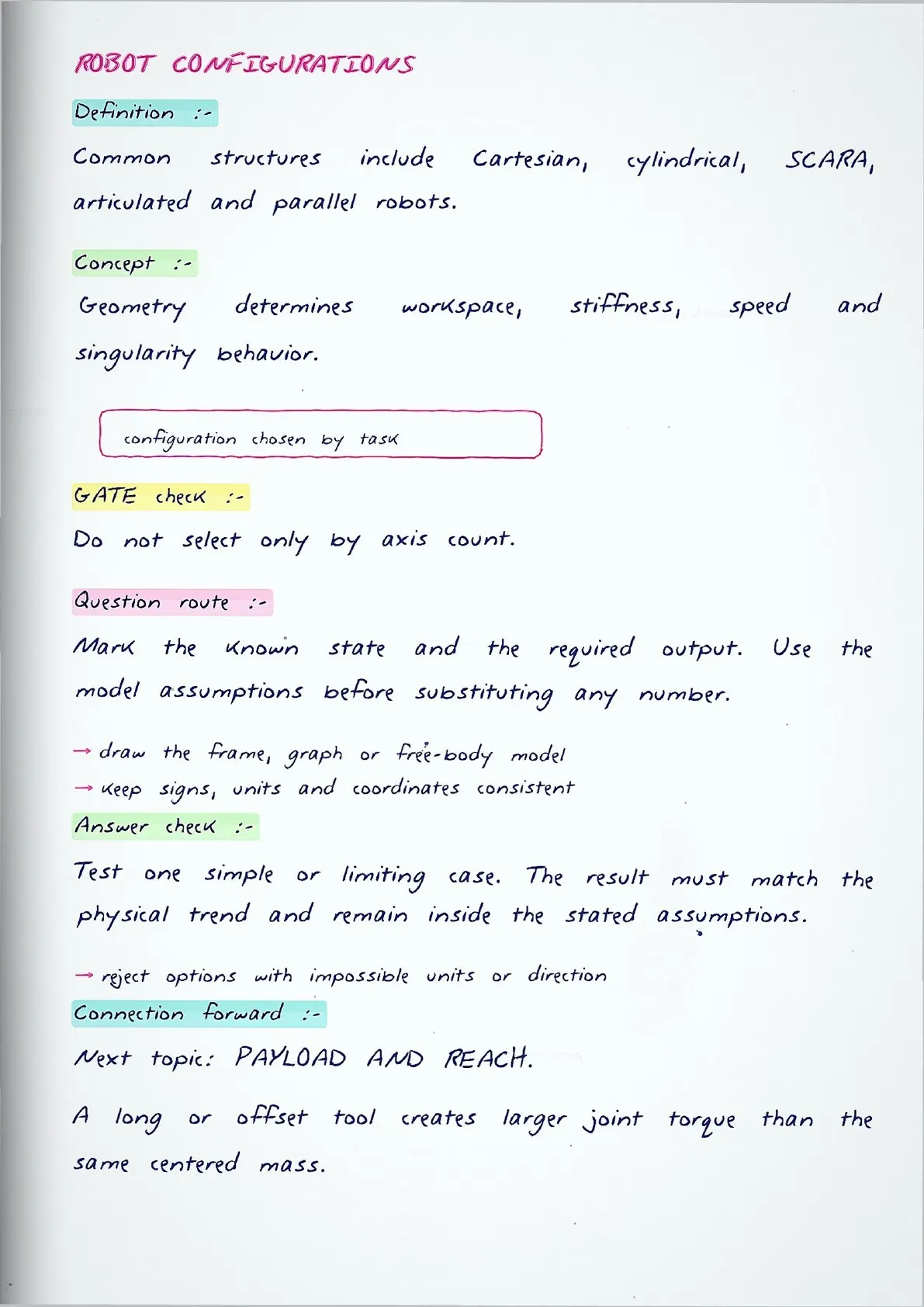
Students meet the common robot types here too, from the fast SCARA for pick and place to the flexible six-axis arm and the space-saving delta, each matched to the kind of job it suits.
Building the Robot Cell
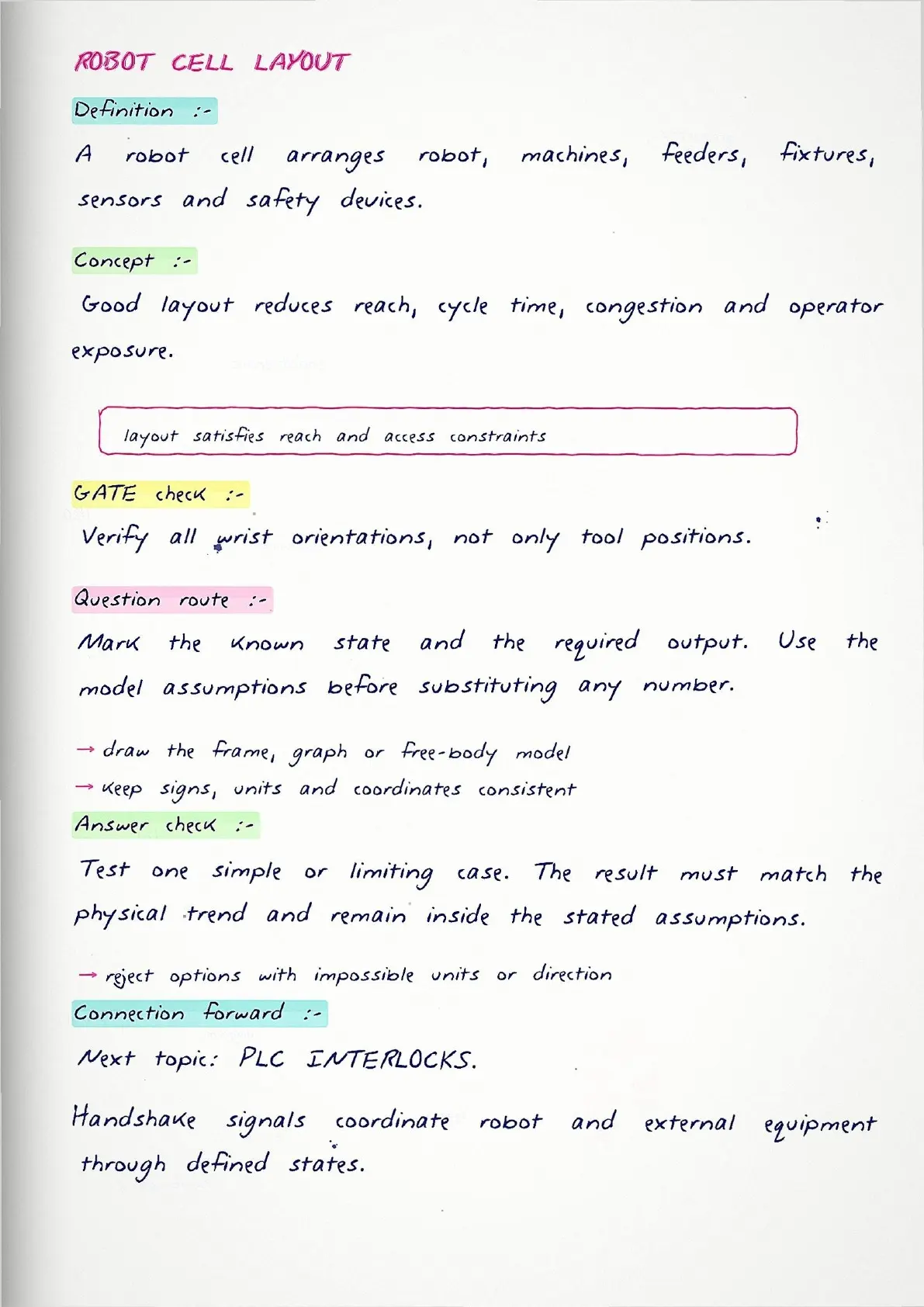
A robot alone does nothing useful, so the notes step through the cell that surrounds it and show how parts move through:
- Part presentation, so the robot finds each piece in a known place and pose.
- Fixturing and jigs that locate the work repeatably.
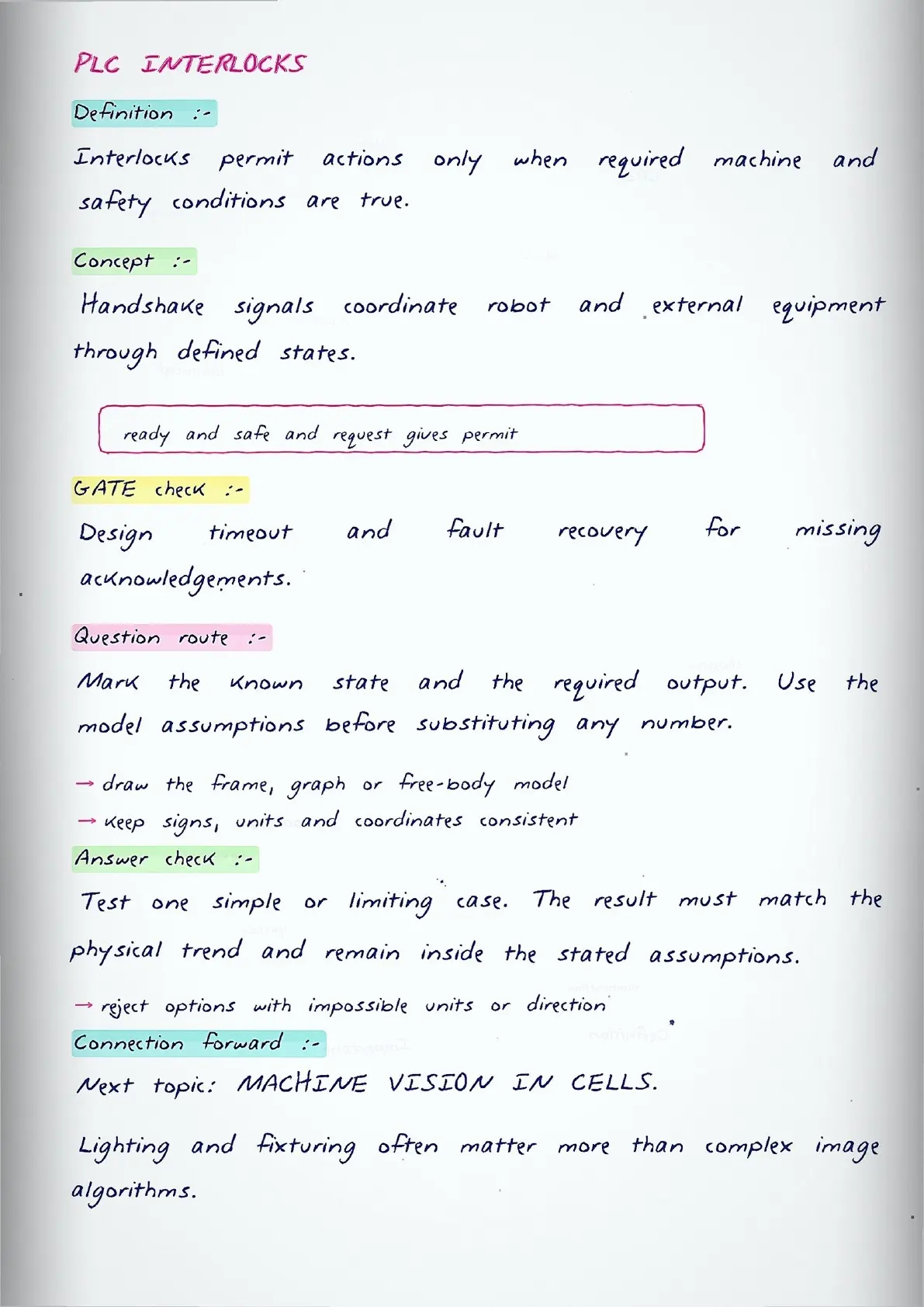
- Sensors and interlocks that tell the cell when it is safe to move.
Cycle time comes through as the real measure of a cell's output, drawn out with a simple timing sketch.
The Business End: Grippers and Tooling
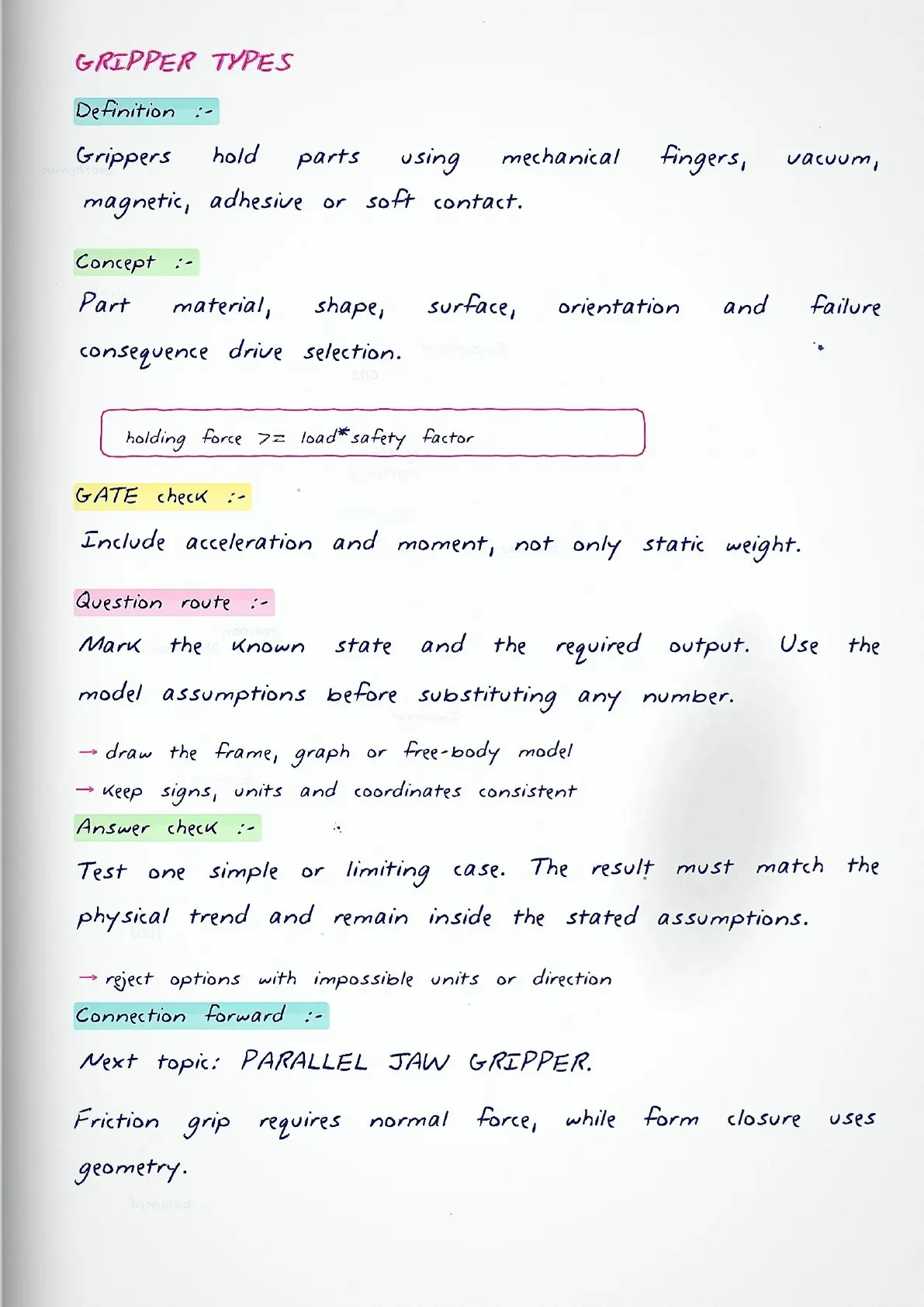
The end effector is where a robot actually touches the world, and the notes give it real room. The main gripper families are compared:
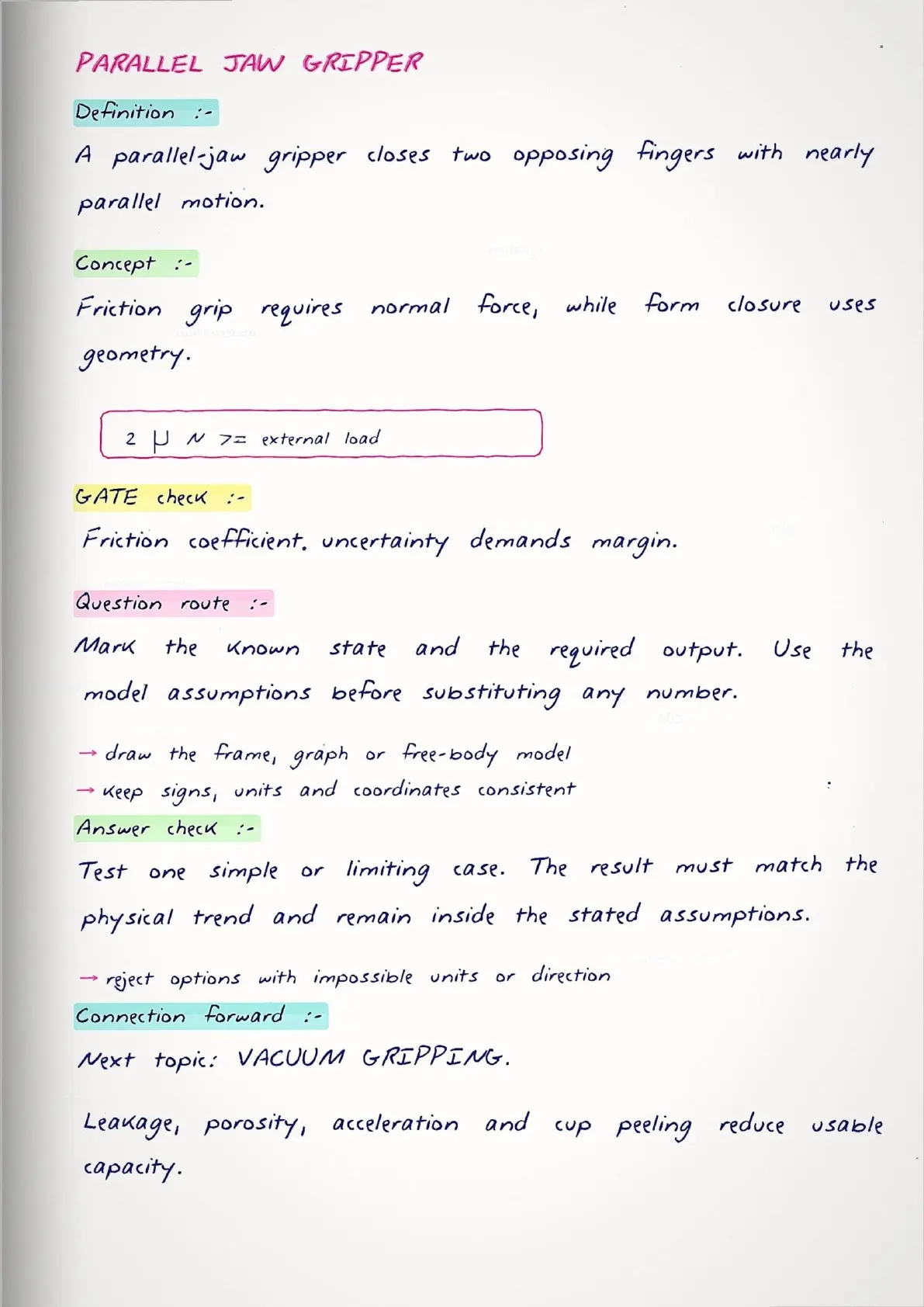
- Mechanical jaw grippers, two or three finger, for solid regular parts.
- Vacuum and suction cups for flat sheets and boxes.
- Magnetic grippers for ferrous work.
- Process tools such as welding torches, spray heads, and screwdrivers for jobs beyond simple handling.
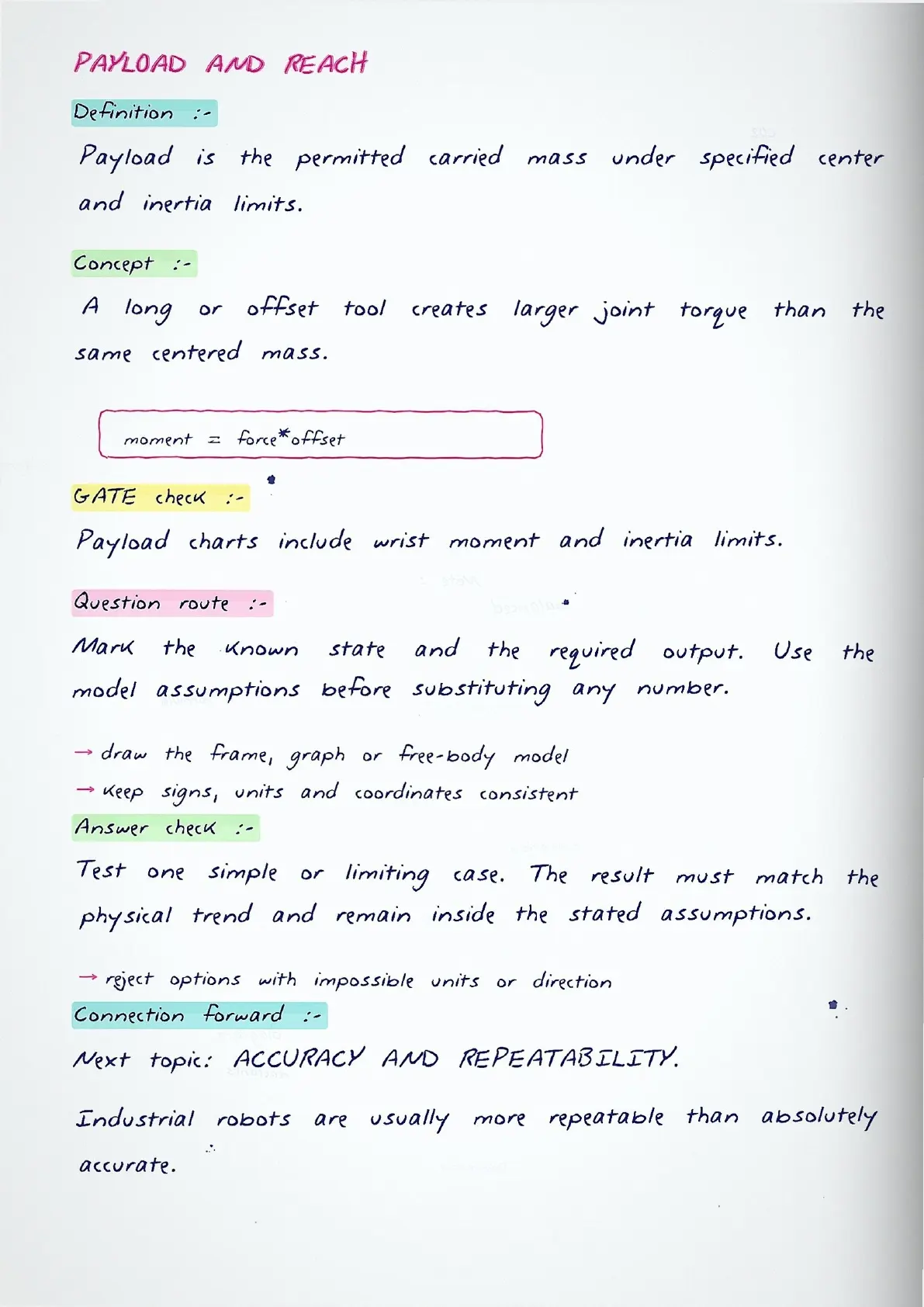
Alongside the types, the notes explain how gripping force is chosen so a part is held firmly without being crushed, and why the tool's weight counts against the robot's payload.
Keeping People Safe Around Robots
Safety gets a serious section, because it is both a real duty and a favourite source of questions. The pages separate the layers of protection:
- Fixed guarding and fences that keep people out of the working zone.
- Light curtains and area scanners that stop motion when someone enters.
- Emergency stops wired to cut power fast.
- A safety-rated speed that has the robot slow when a person is near.
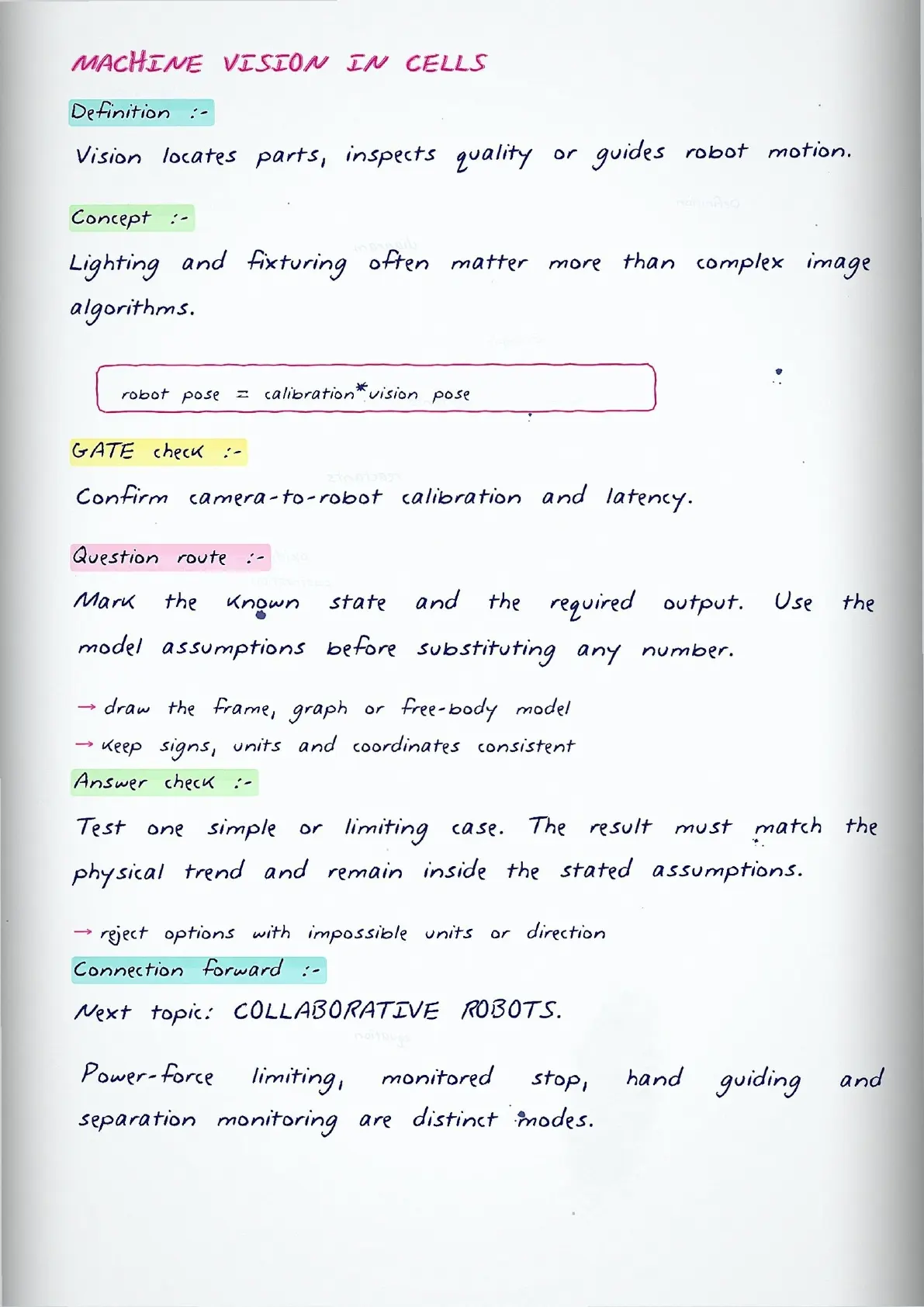
The notes also draw the line between a traditional caged robot and a collaborative robot built to share space with people, along with the reasoning behind force and speed limits on those machines.
See Industrial End Effectors in Action
Source: Badrinathan K S
Numbers and Terms Worth Memorising
Some facts return often enough that the notes gather them for a quick glance. Students should be able to recall:
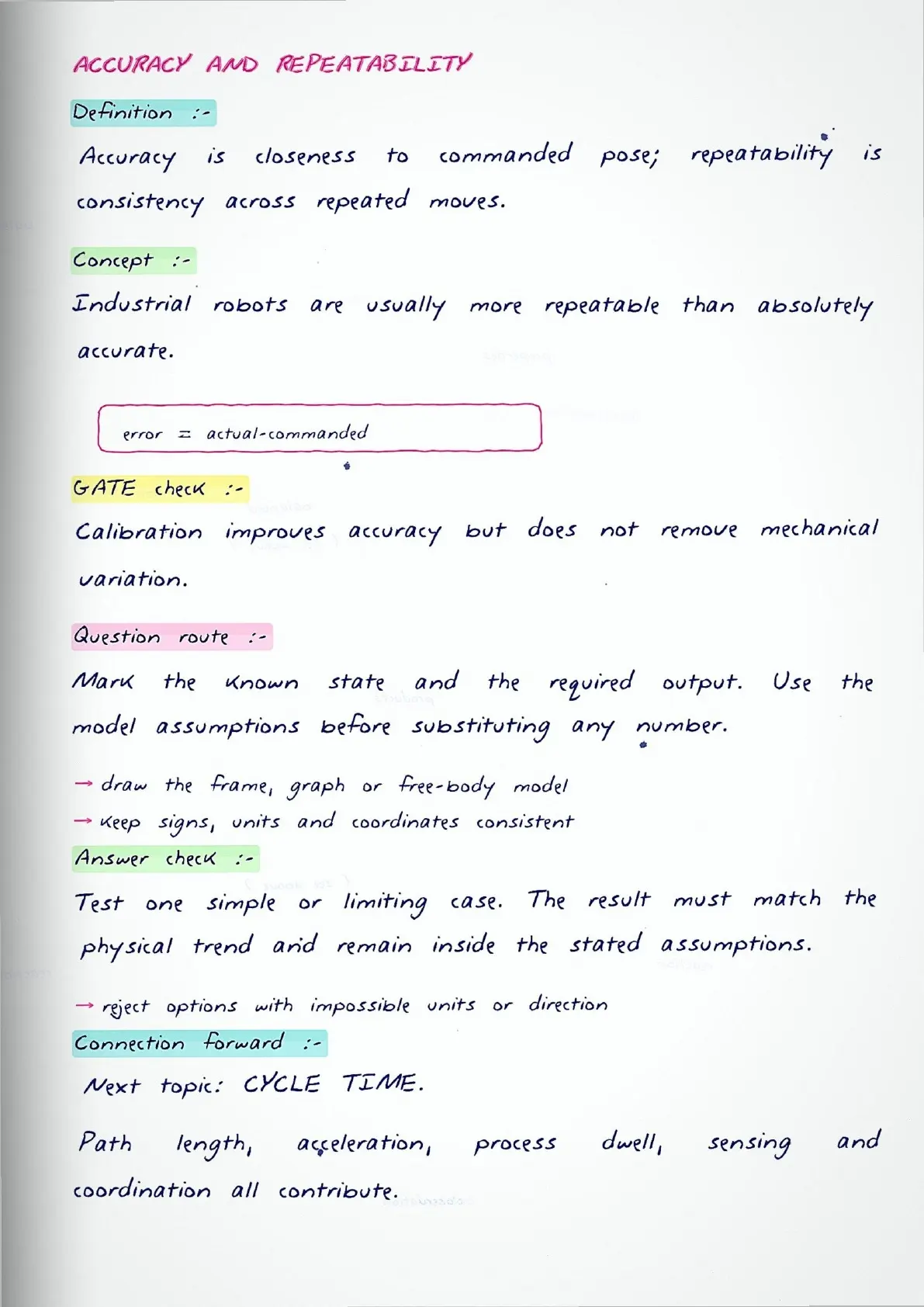
- The difference between accuracy and repeatability.
- Why payload drops as the arm extends.
- What degrees of freedom a given robot offers.
The pages keep these as short, boxed reminders, so a last pass takes minutes, not hours.
How This Ties into Automation and Control
Industrial robotics does not stand alone. The cell logic and interlocks overlap with the PLC and automation ideas in GATE Instrumentation and Electrical, while the motion behaviour connects back to Control Systems.
Seeing those links helps students treat this as a connected area rather than a set of facts to cram.
Industrial Robotics Handwritten Notes FAQs
Ques. What is the difference between accuracy and repeatability?
Ans. Accuracy is how close the robot gets to a commanded point, while repeatability is how consistently it returns to the same point. The notes stress that most industrial robots are far more repeatable than accurate.
Ques. Which end effectors do the notes explain?
Ans. They cover mechanical jaw grippers, vacuum and suction cups, magnetic grippers, and process tools such as welding and spraying heads, with guidance on choosing gripping force.
Ques. How much safety content is included?
Ans. A full section covers guarding, light curtains, emergency stops, safety-rated speed, and the difference between caged and collaborative robots.
Ques. Are these notes useful if there is no robotics paper in GATE?
Ans. Yes. The cell, automation, and control content overlaps with GATE Instrumentation, Electrical, and Control Systems topics, so students gain in those areas too.
Ques. Do they help with interviews and viva as well?
Ans. They do. The application focus on cells, grippers, and safety mirrors the practical questions asked in placement and viva settings.



Comments