




Engineering Mechanics, covering rigid body dynamics and vibrations, decides how a robot arm swings and why a joint rattles at speed, so it is a core, high-return foundation for robotics preparation.
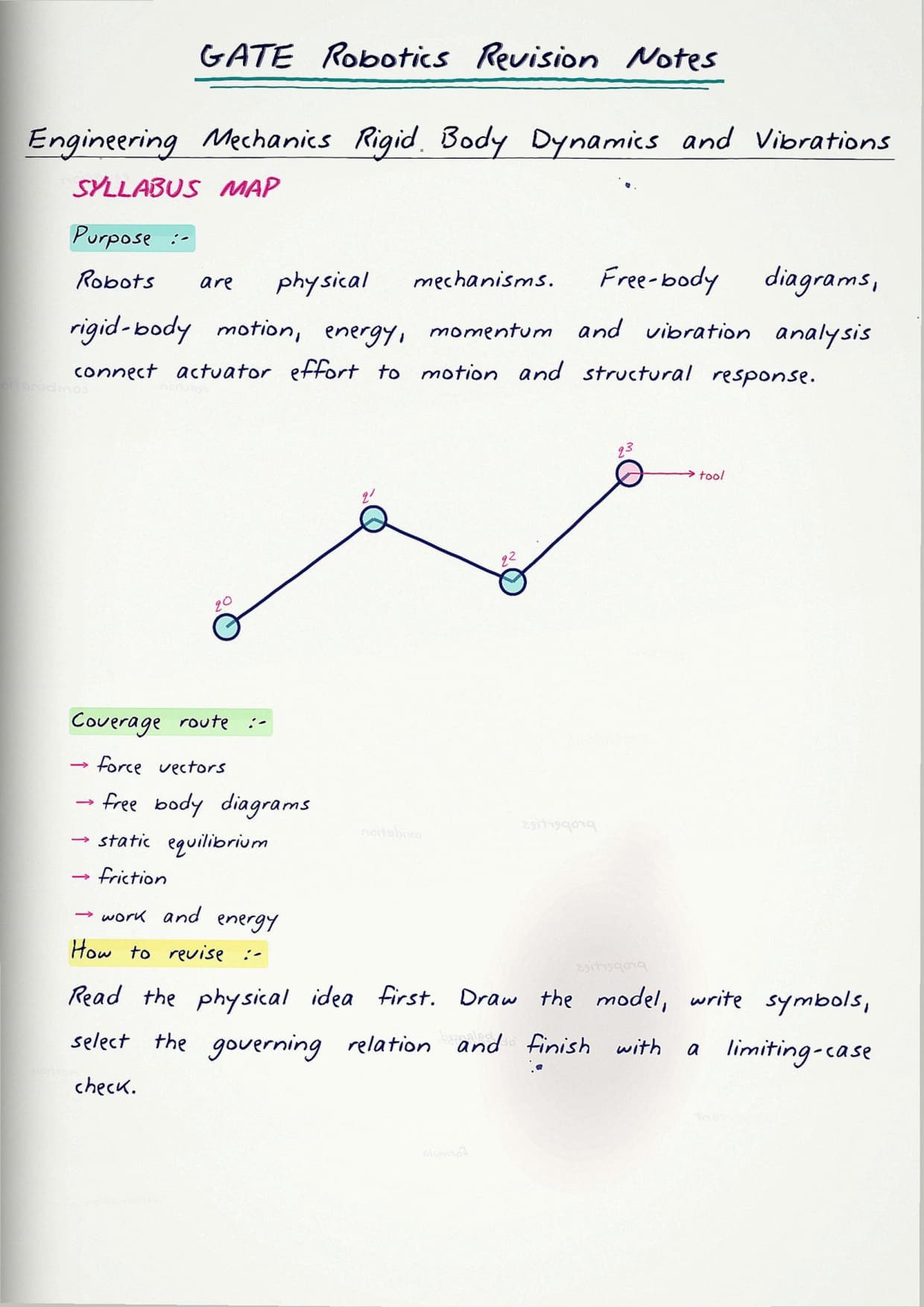
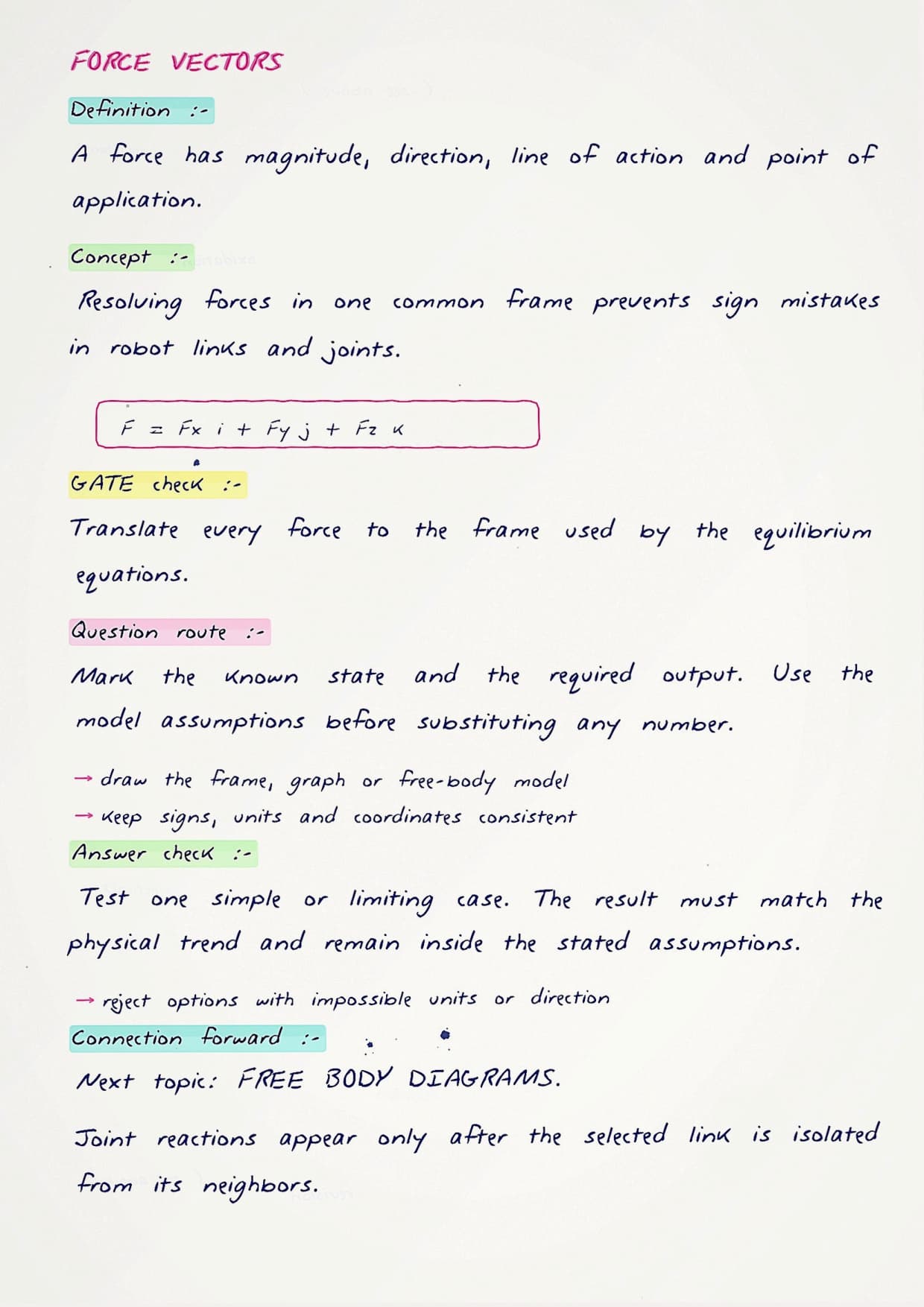
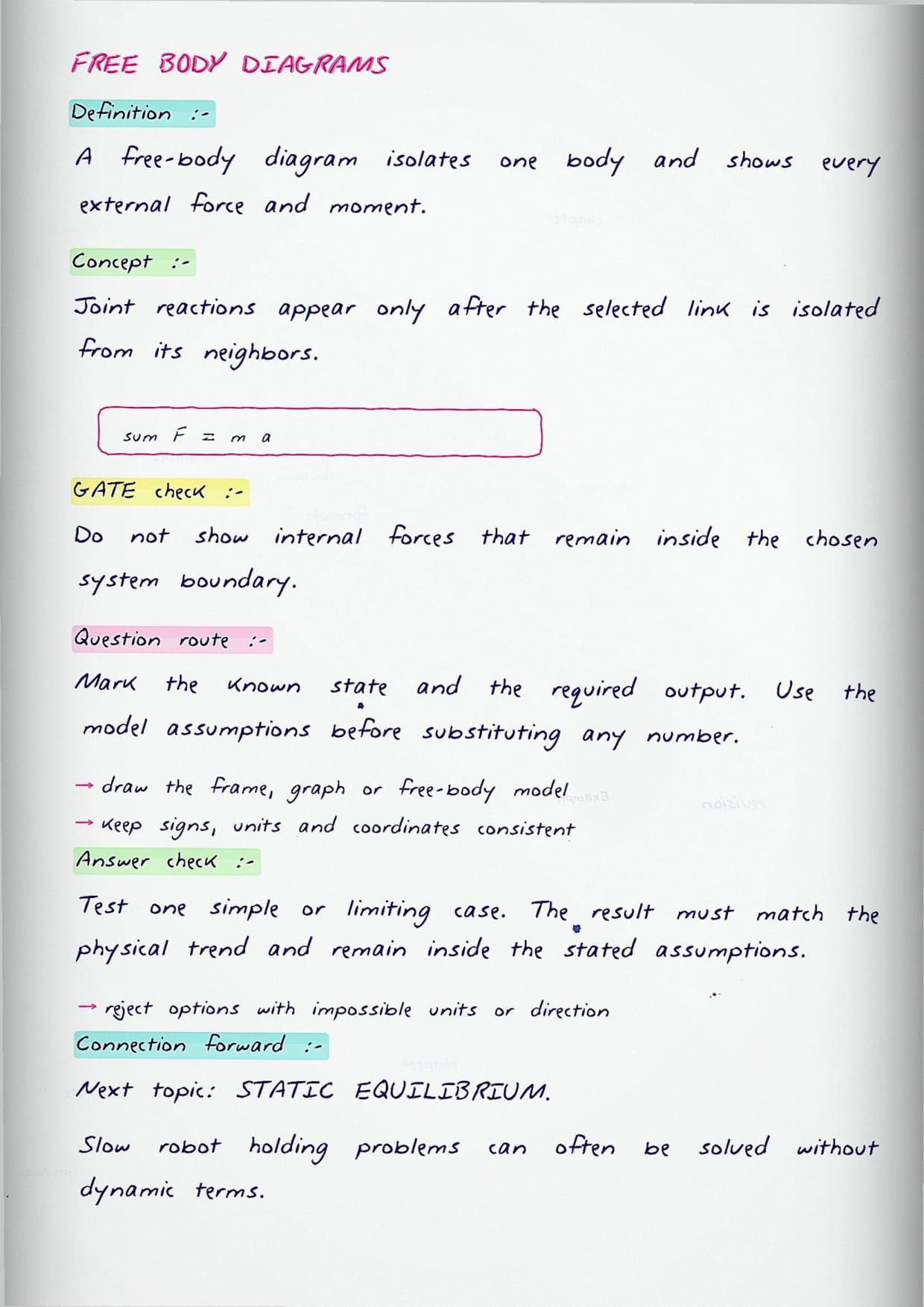
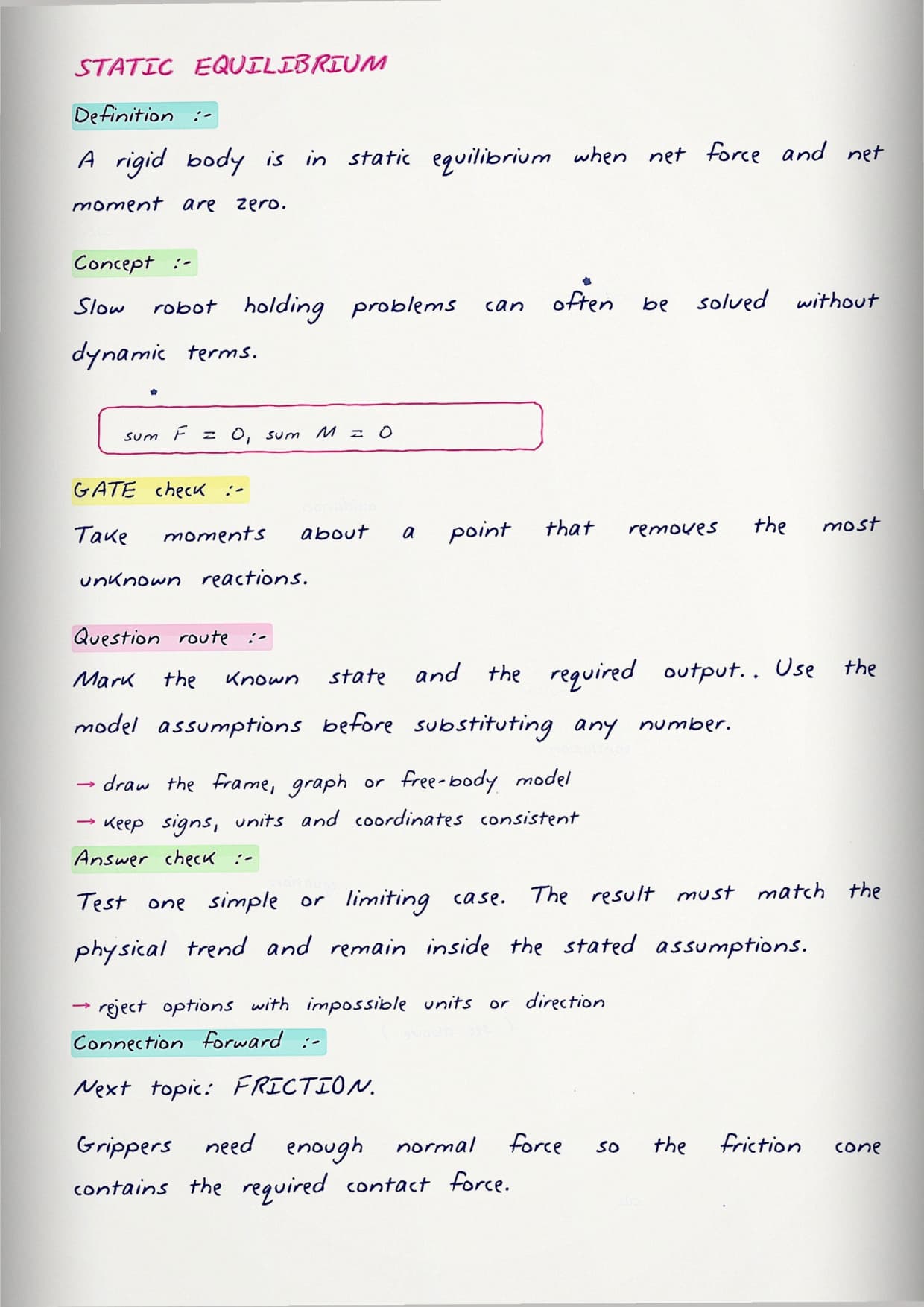
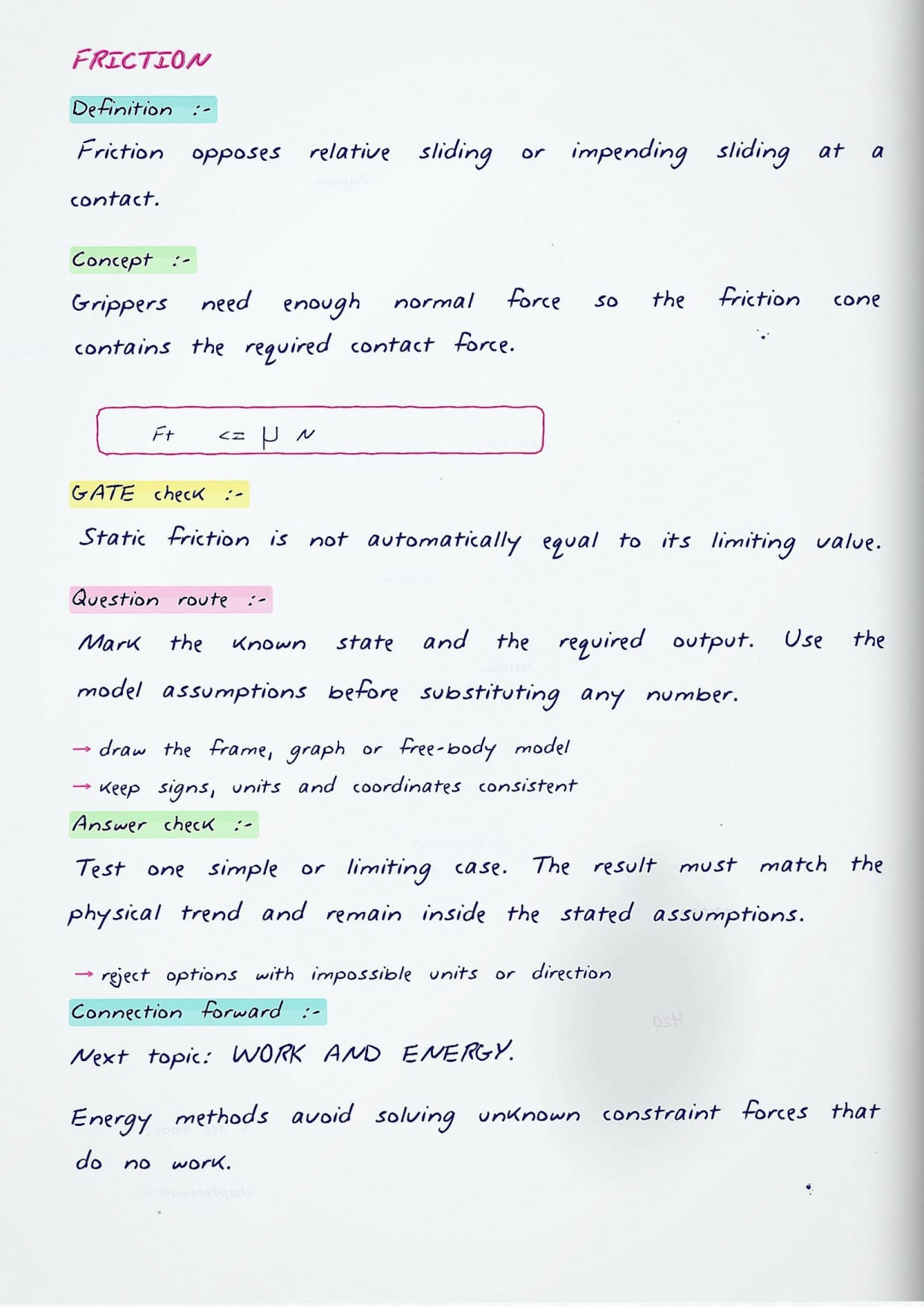
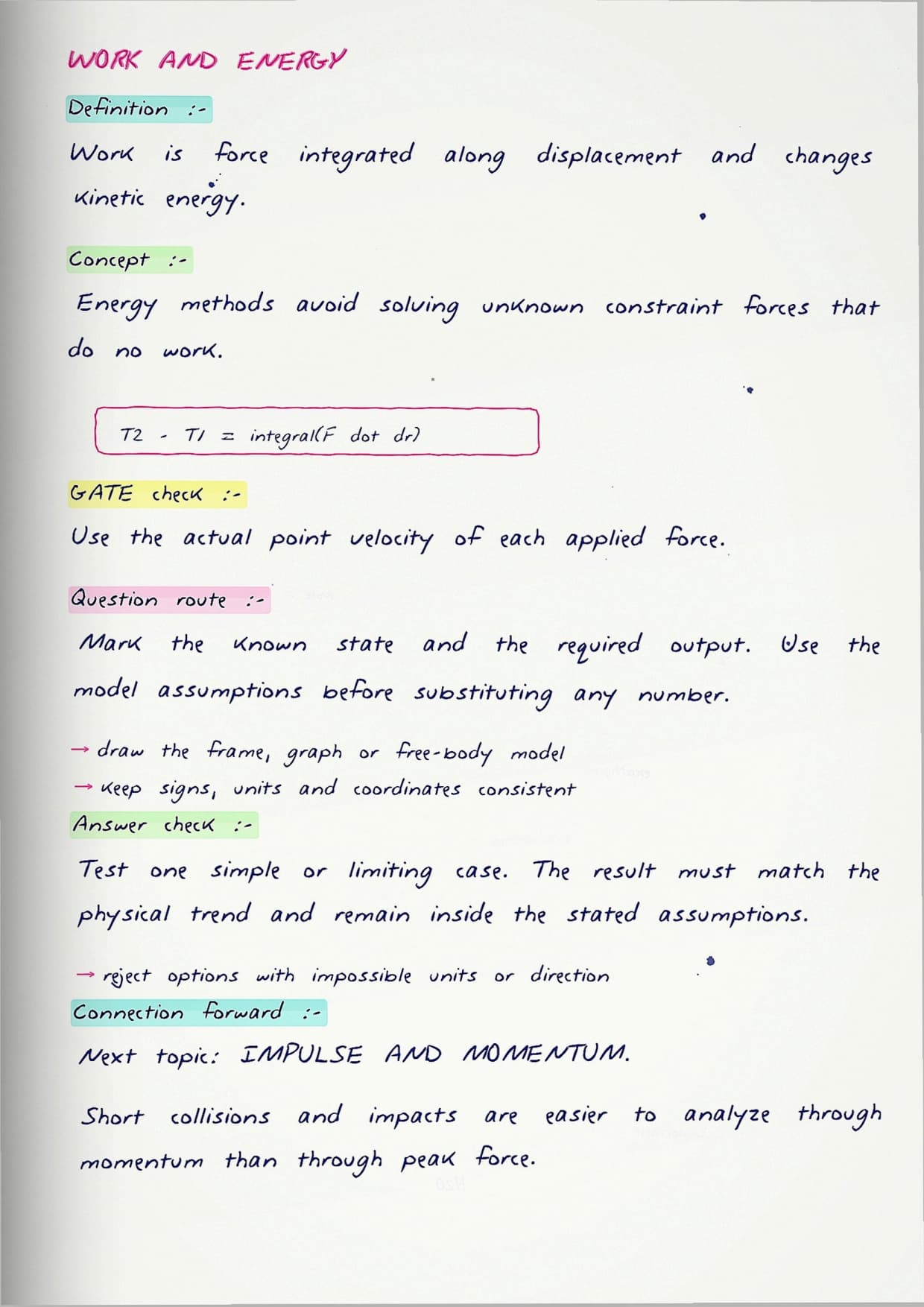
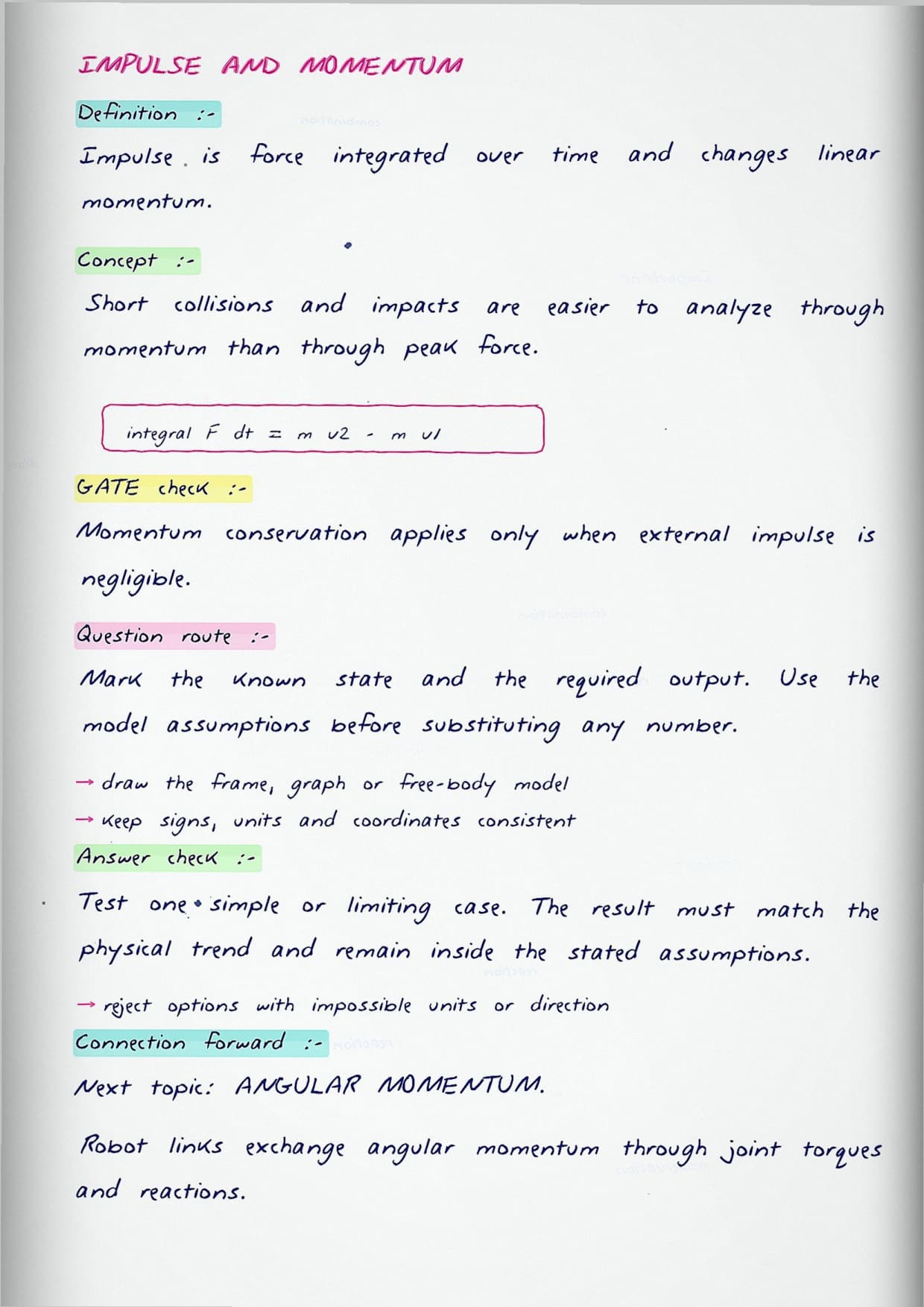
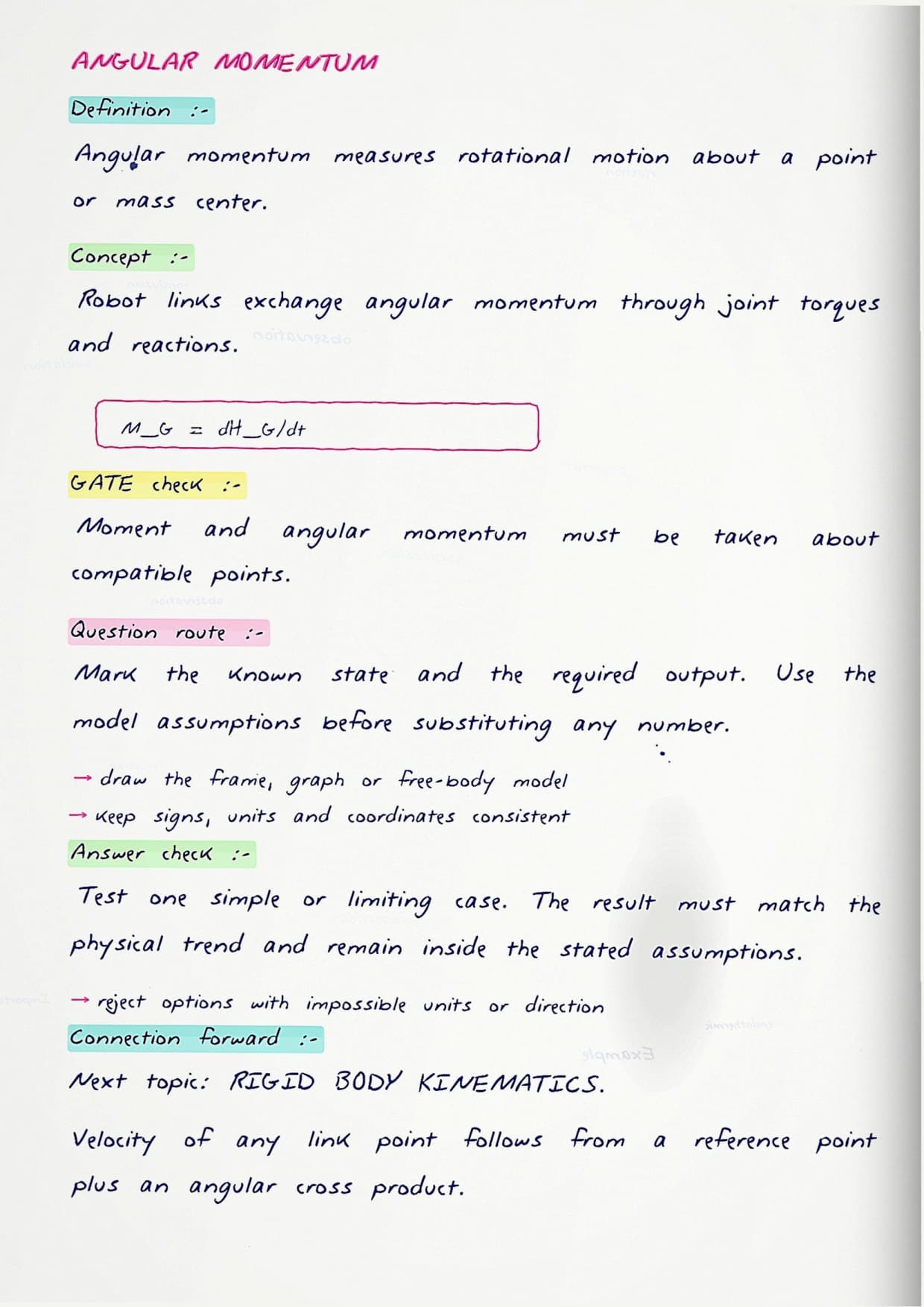
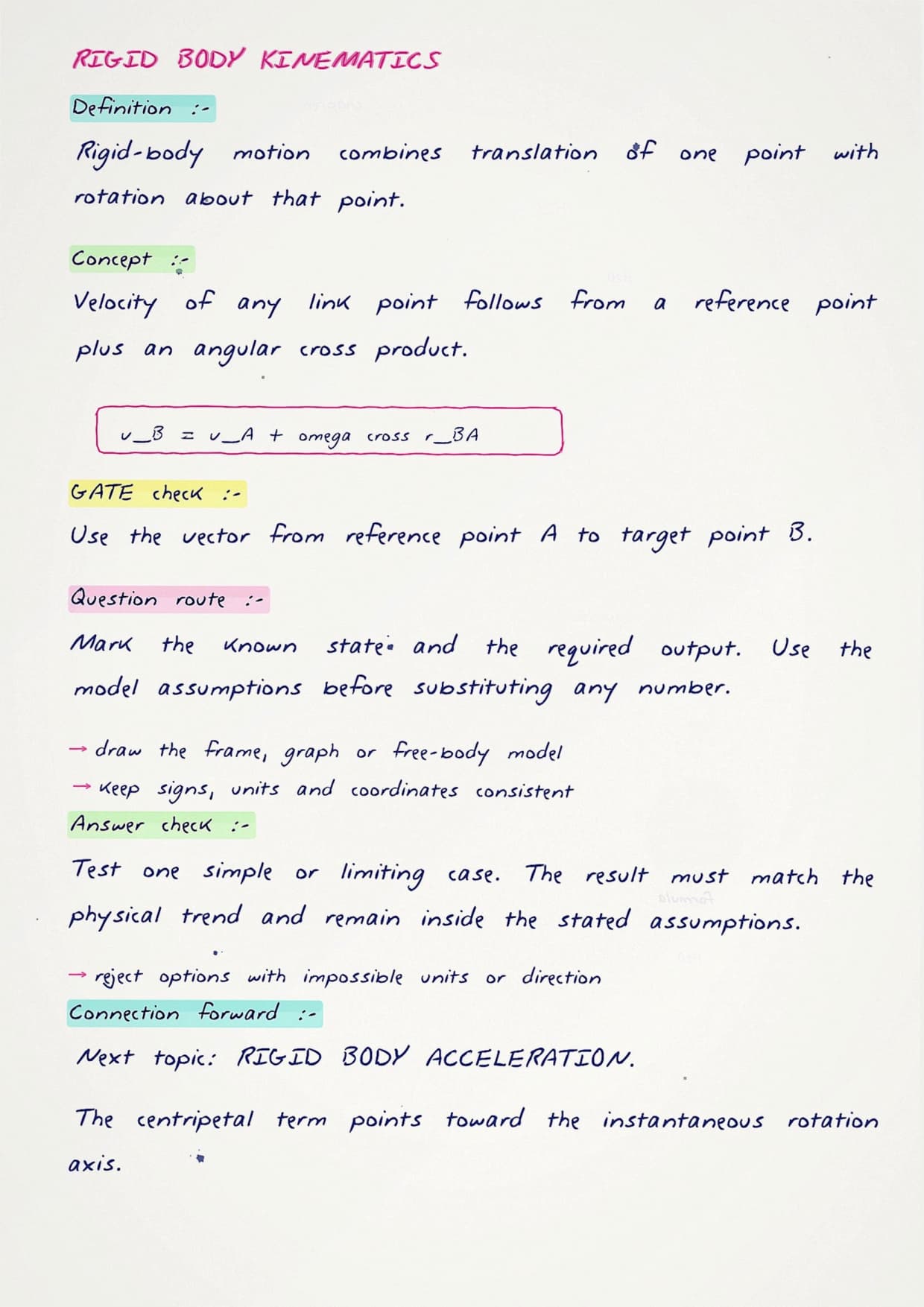
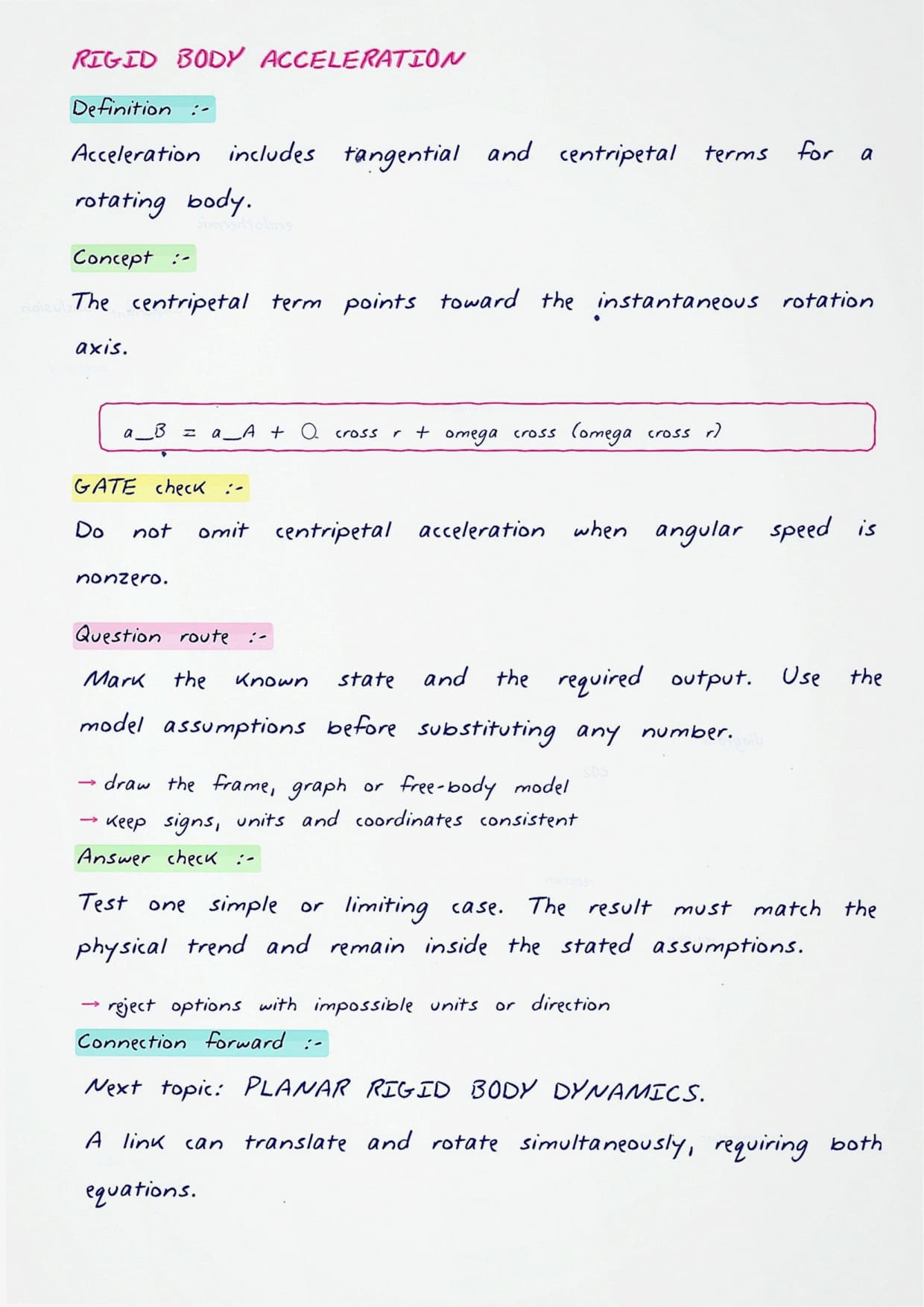
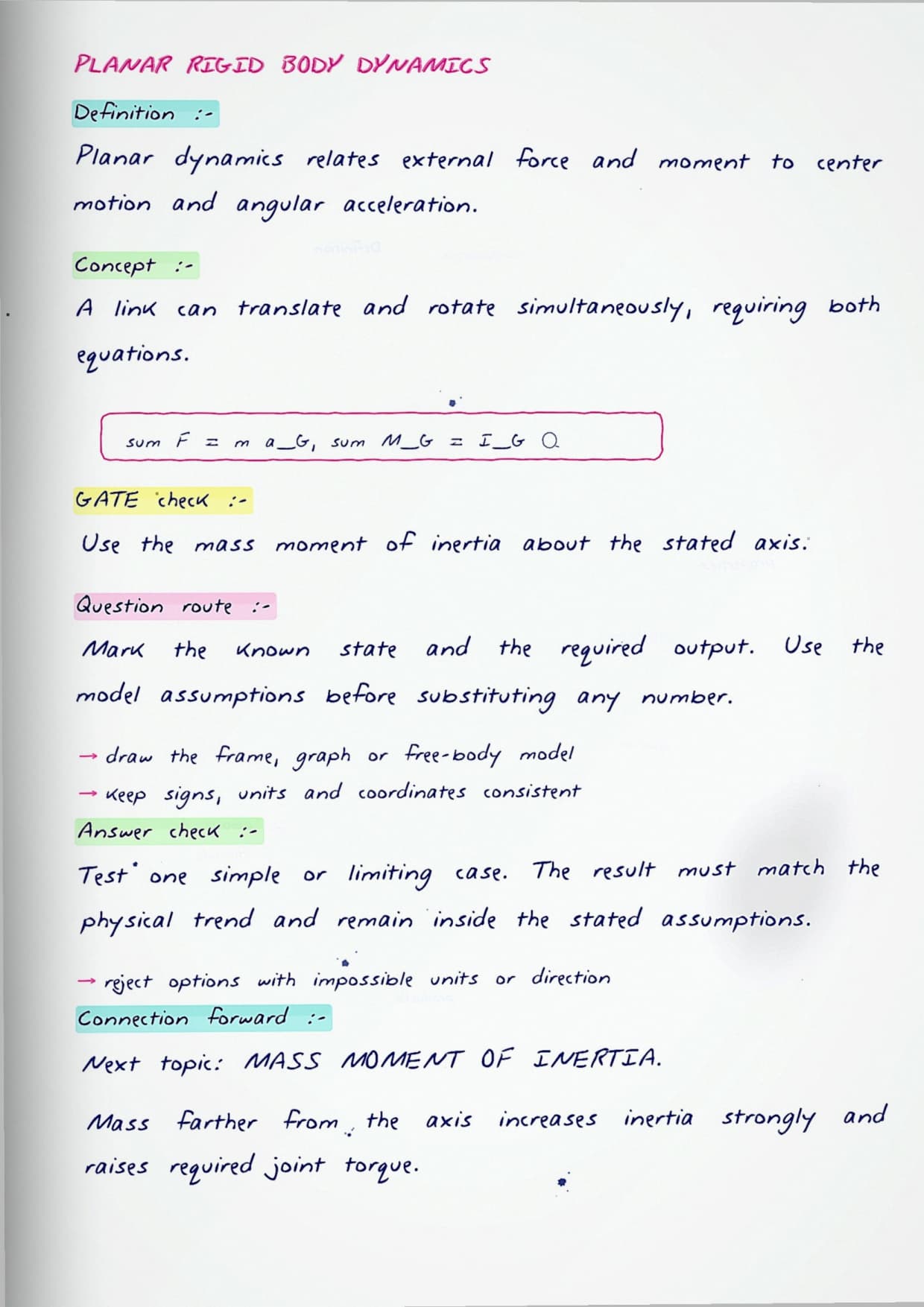
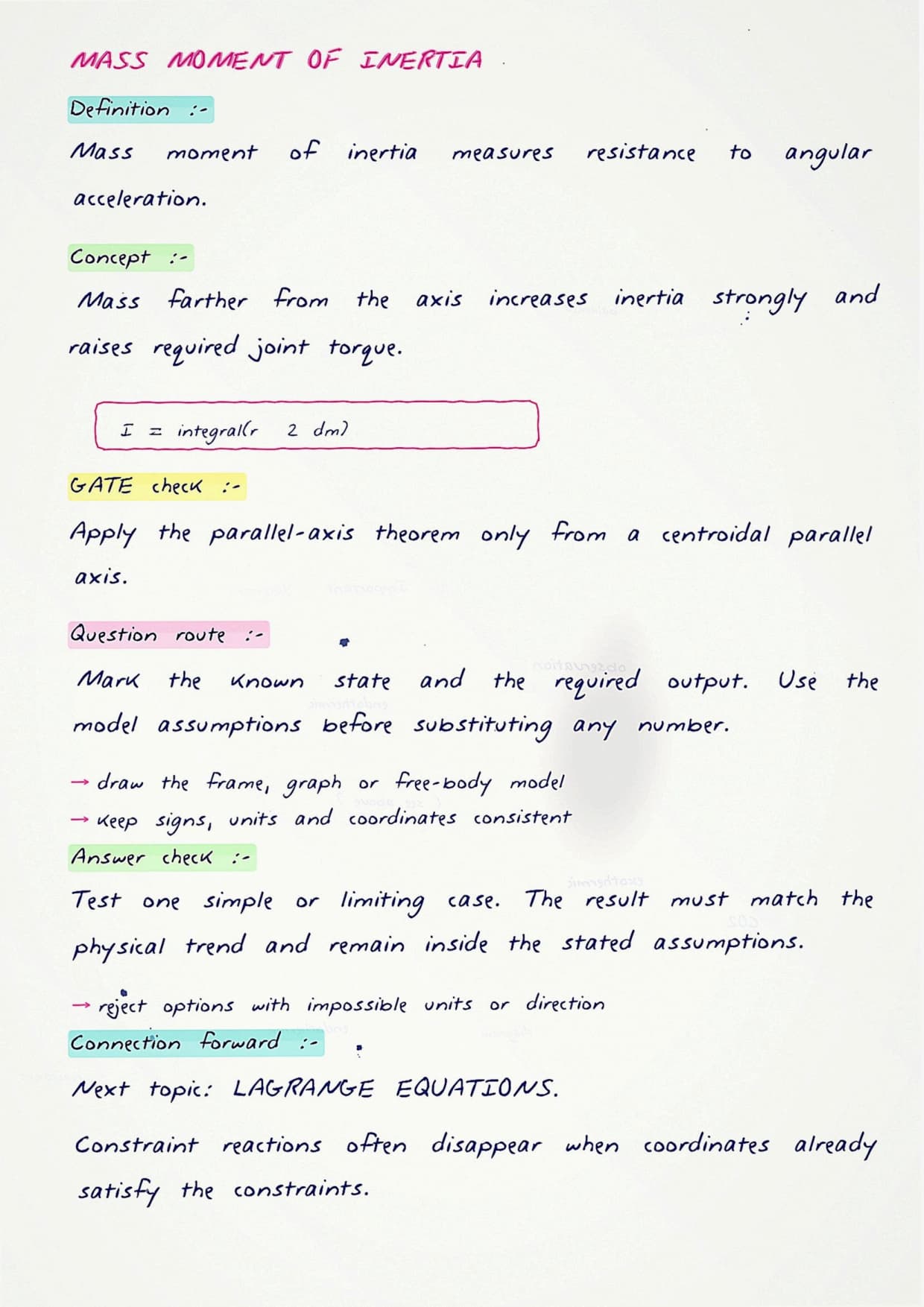
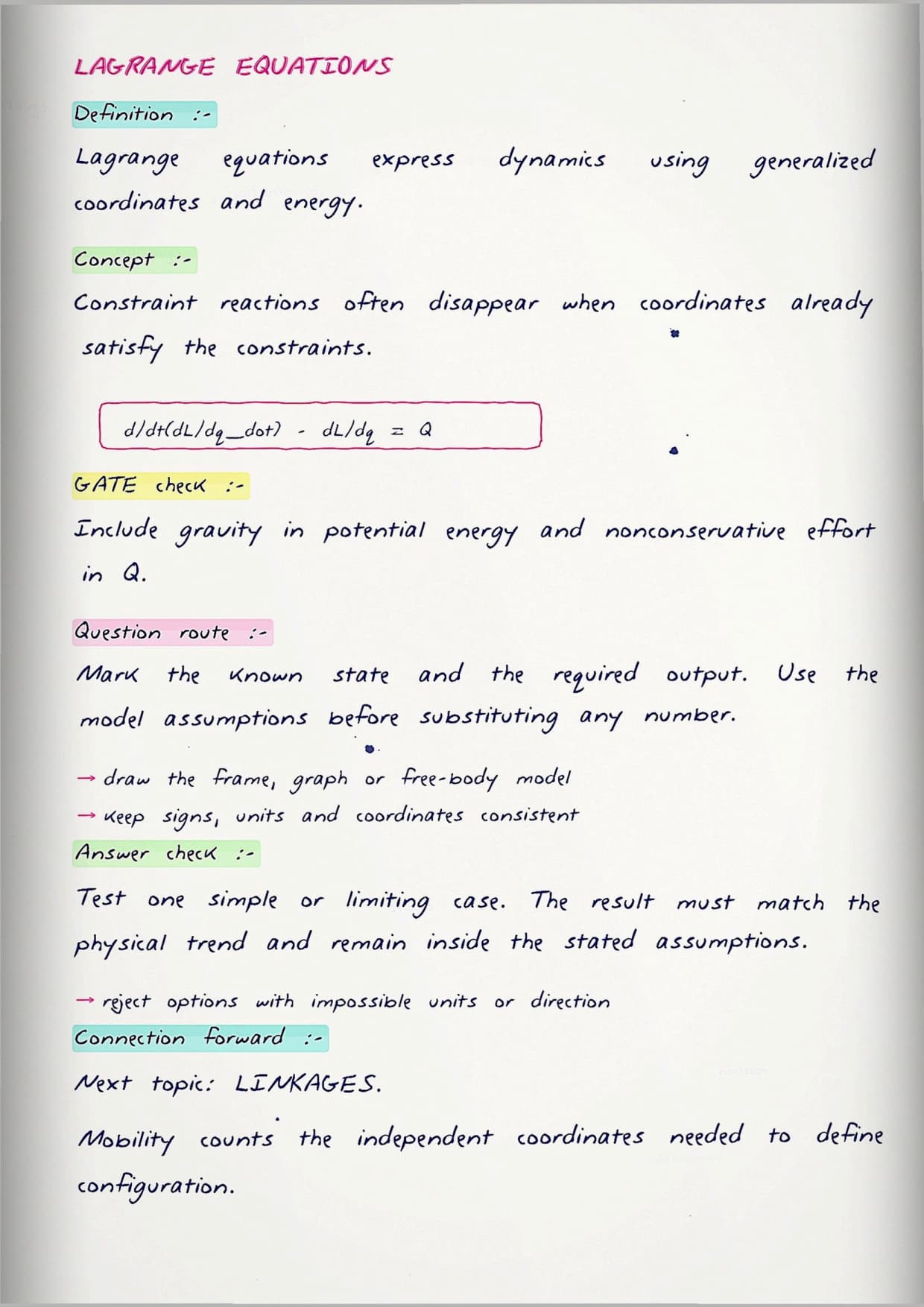
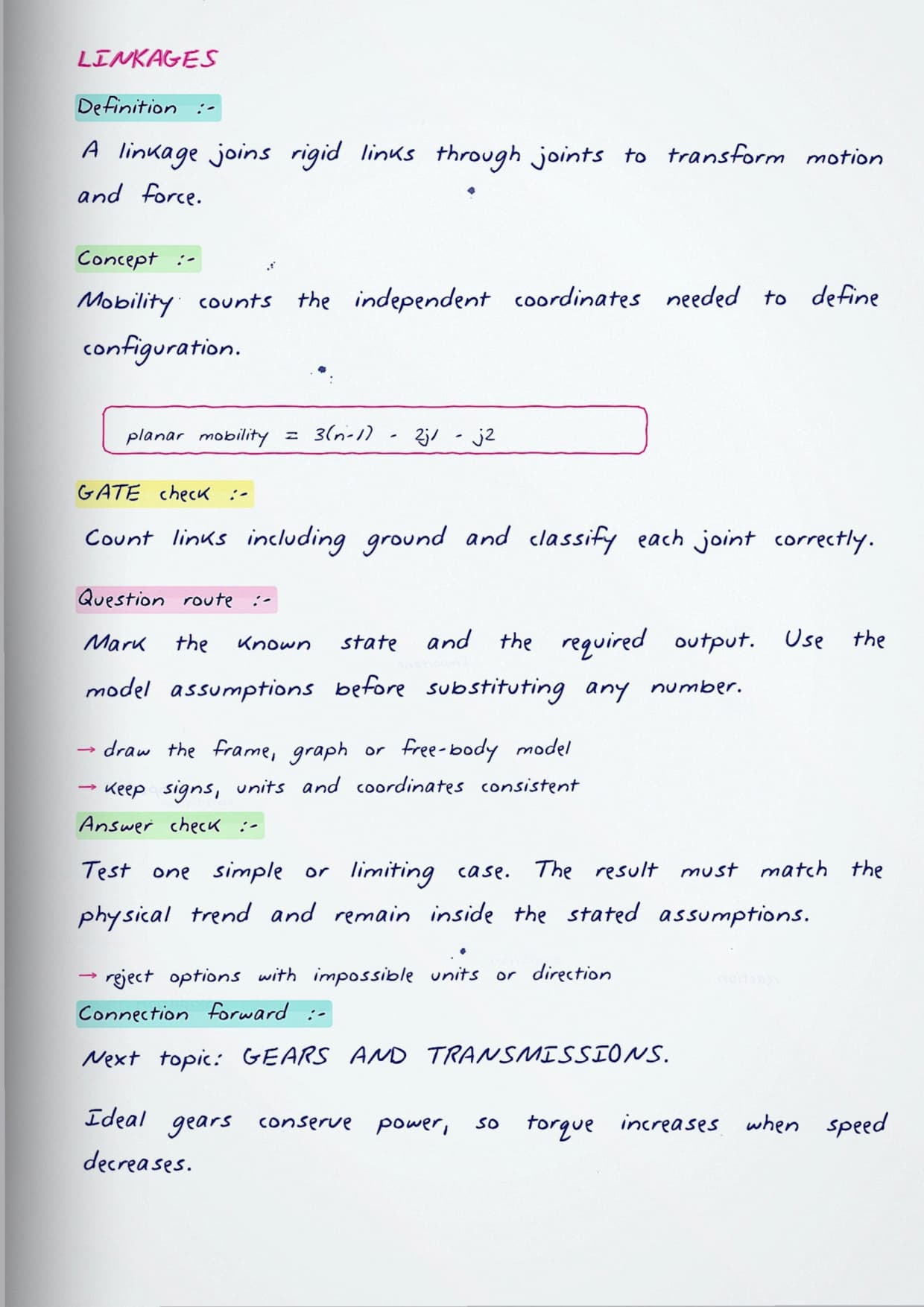
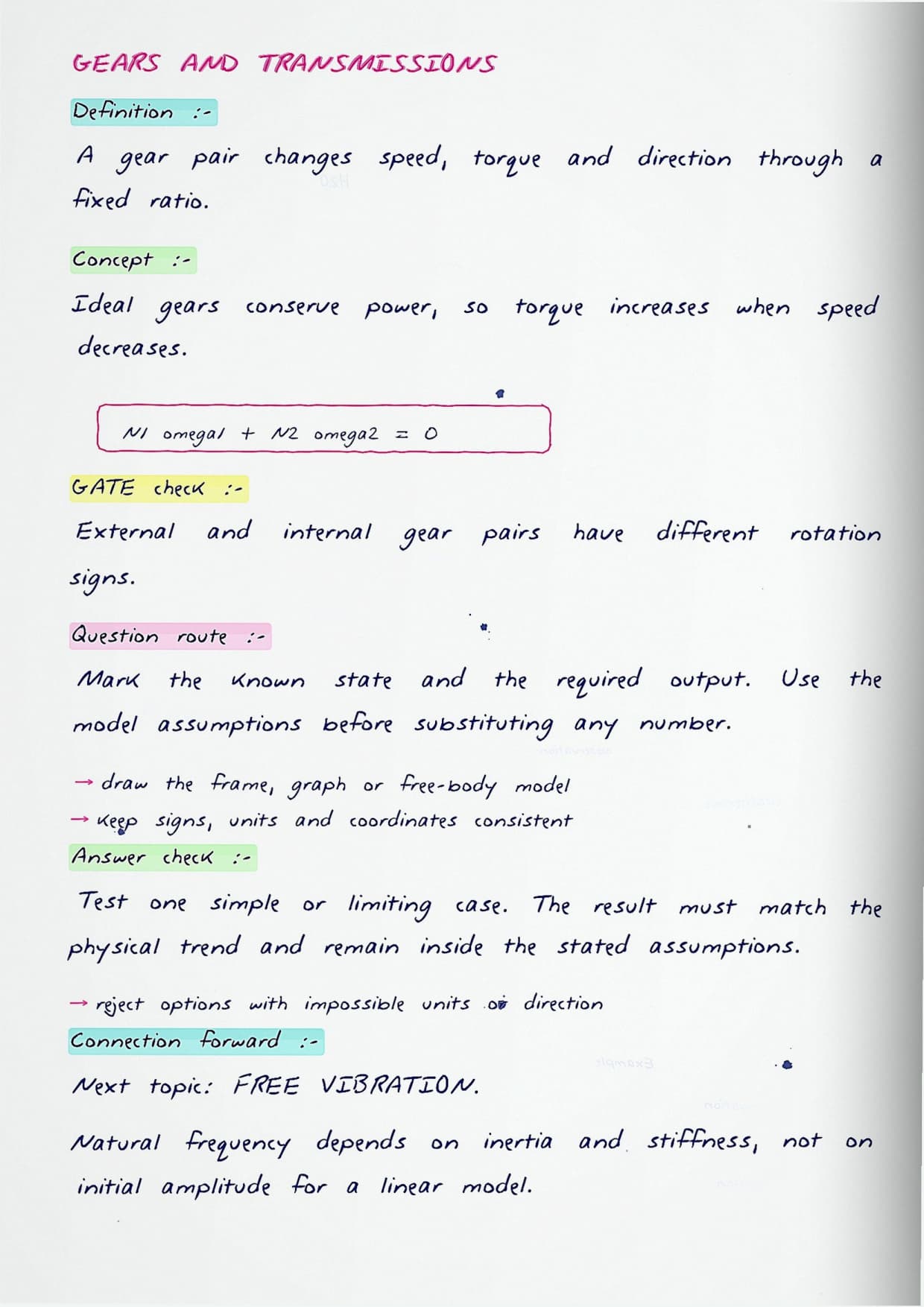
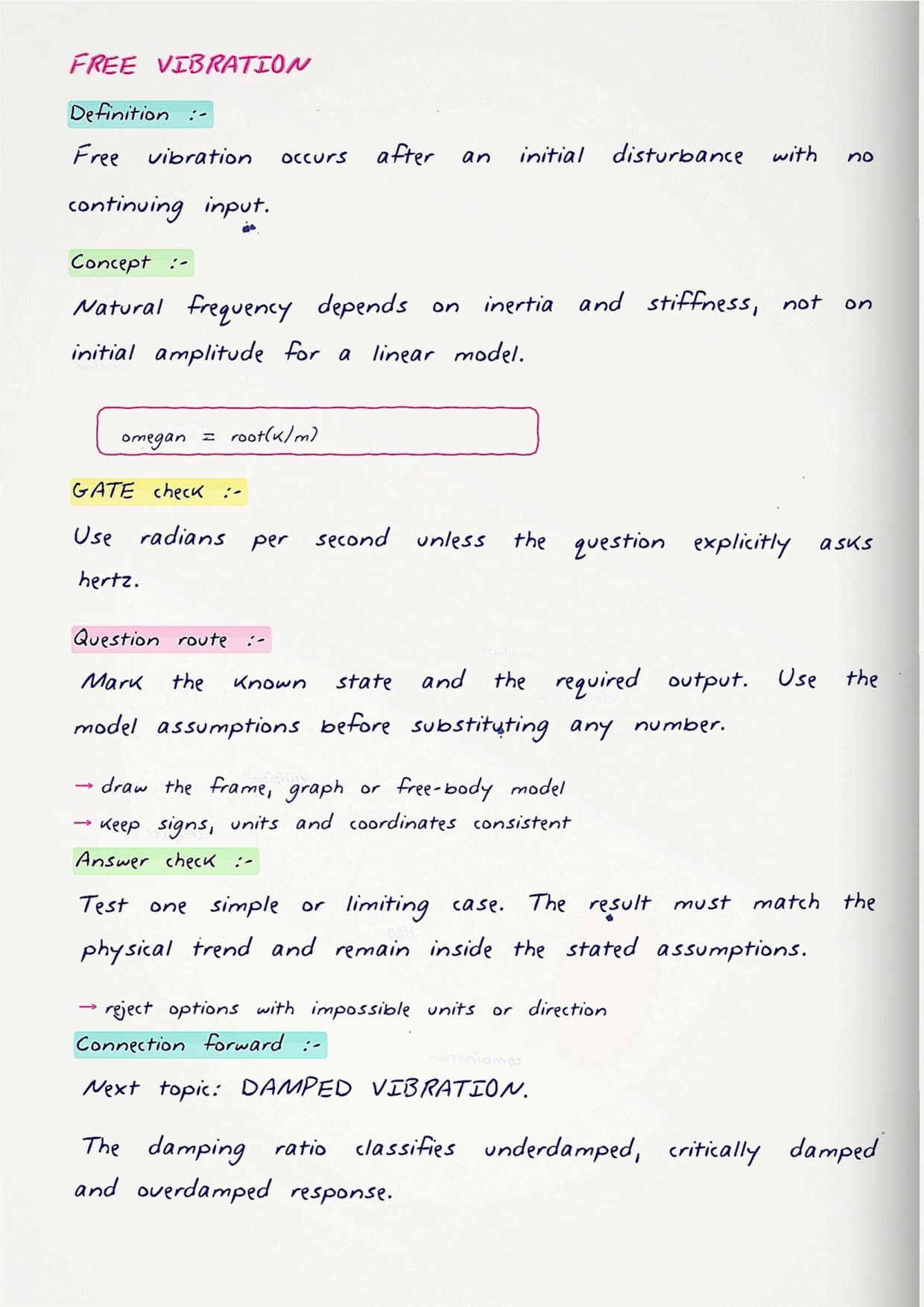
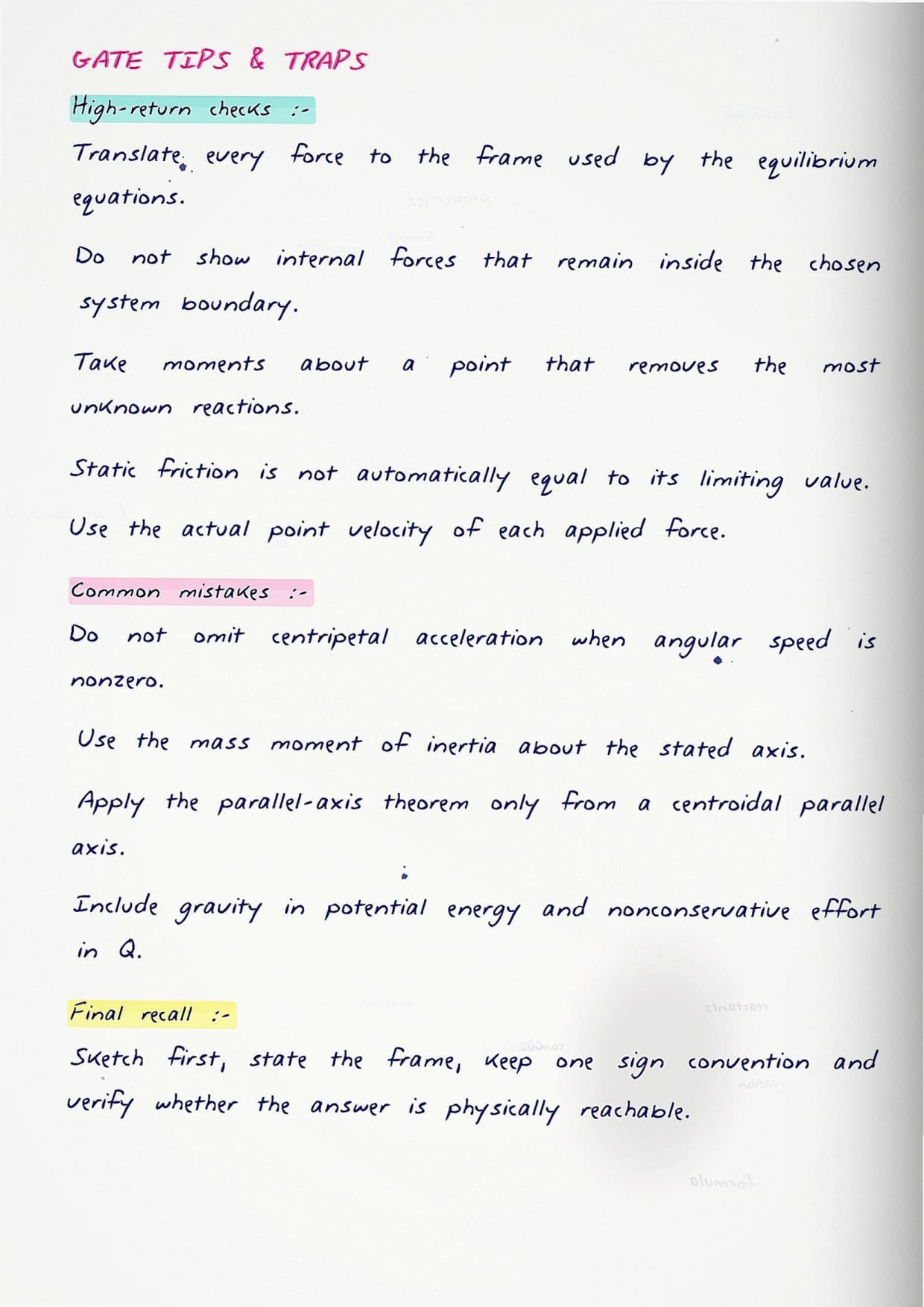
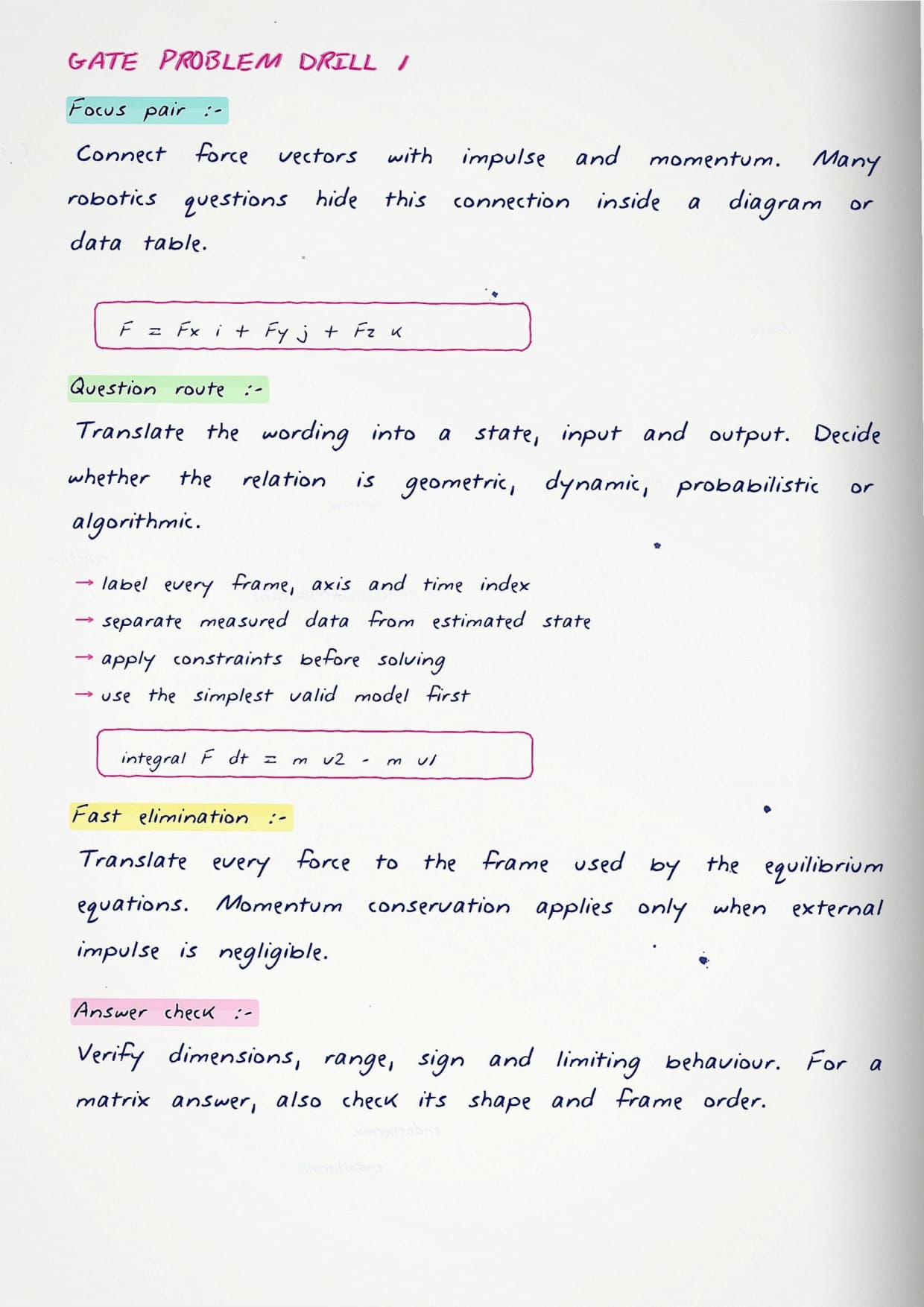
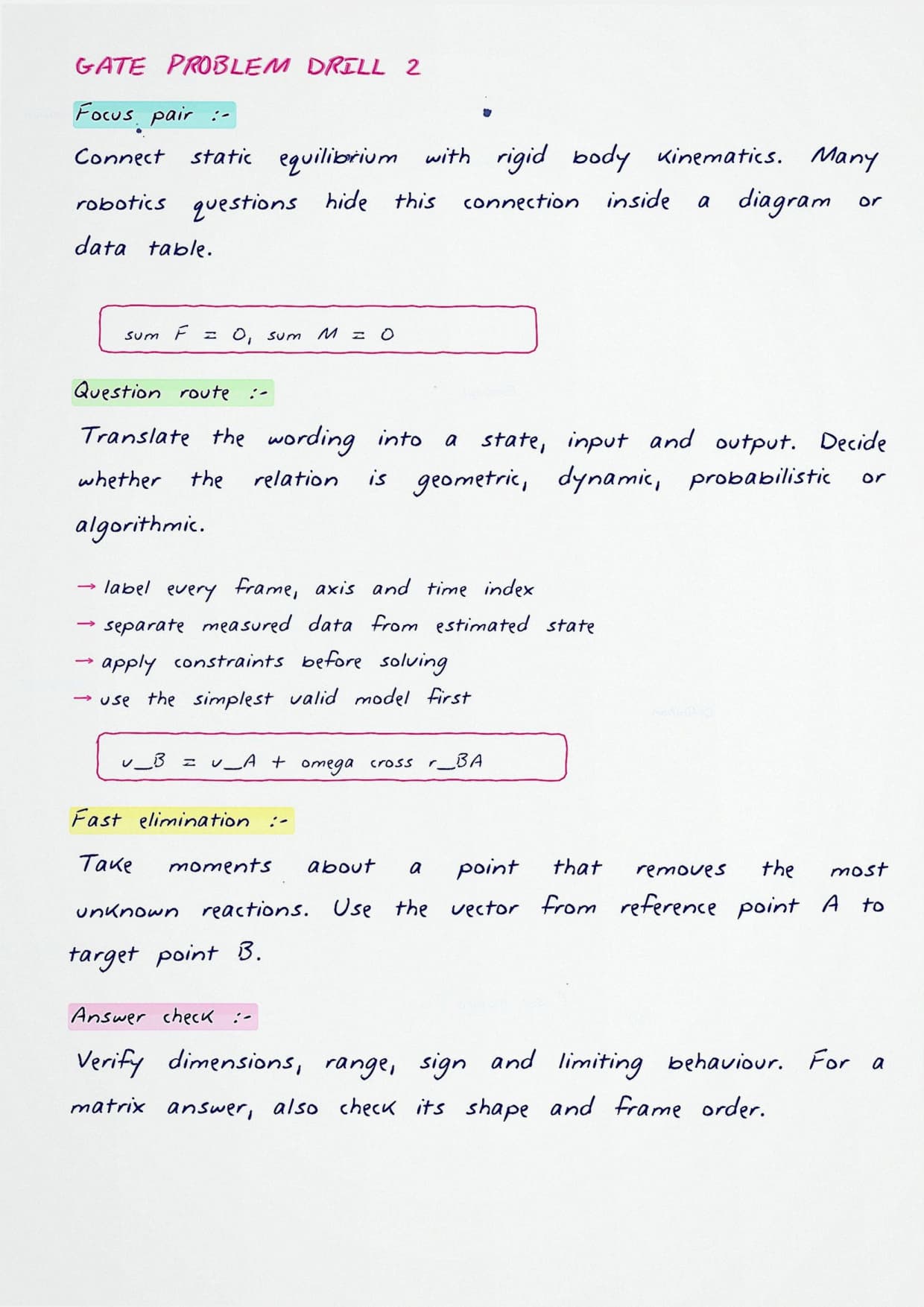
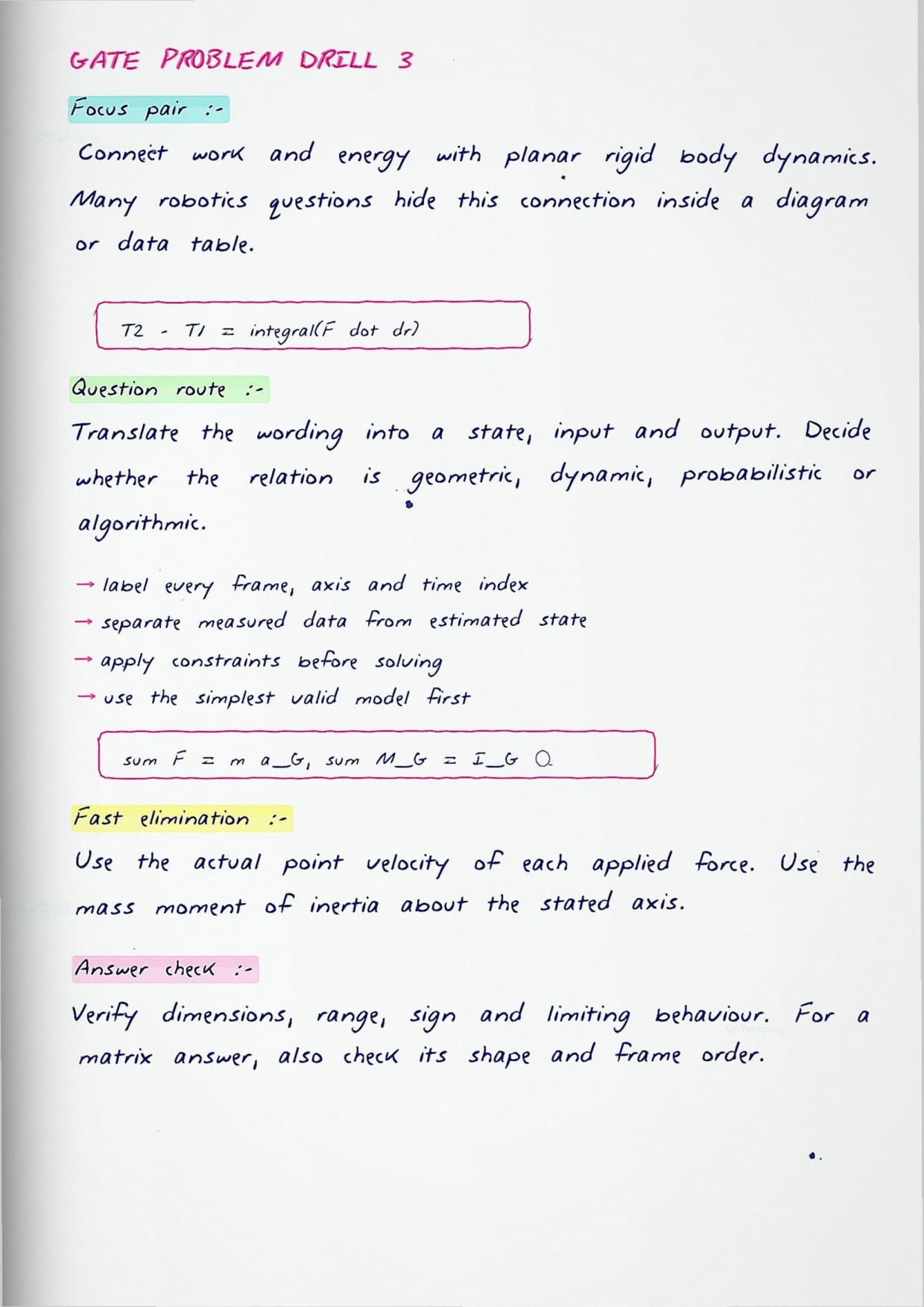
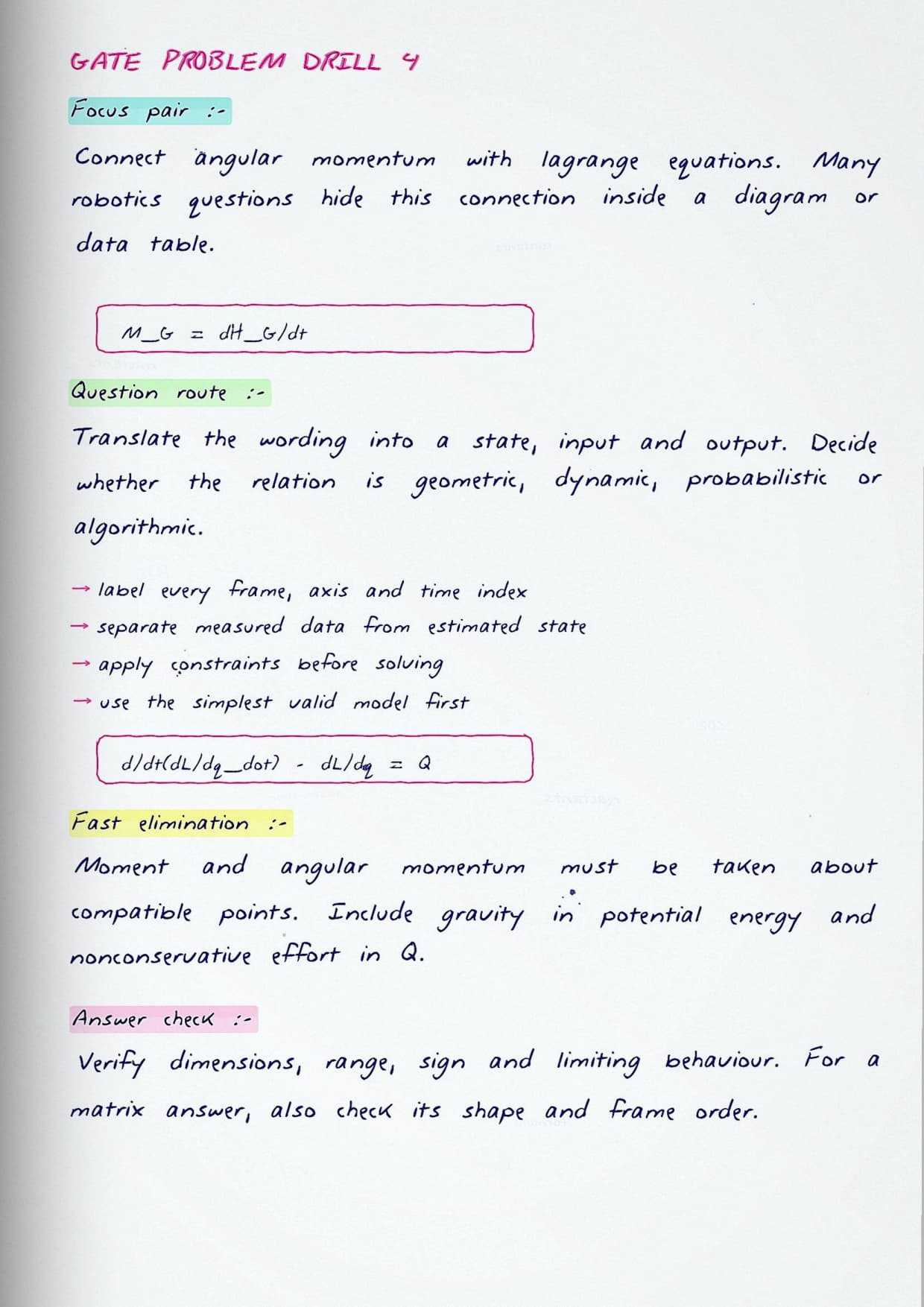
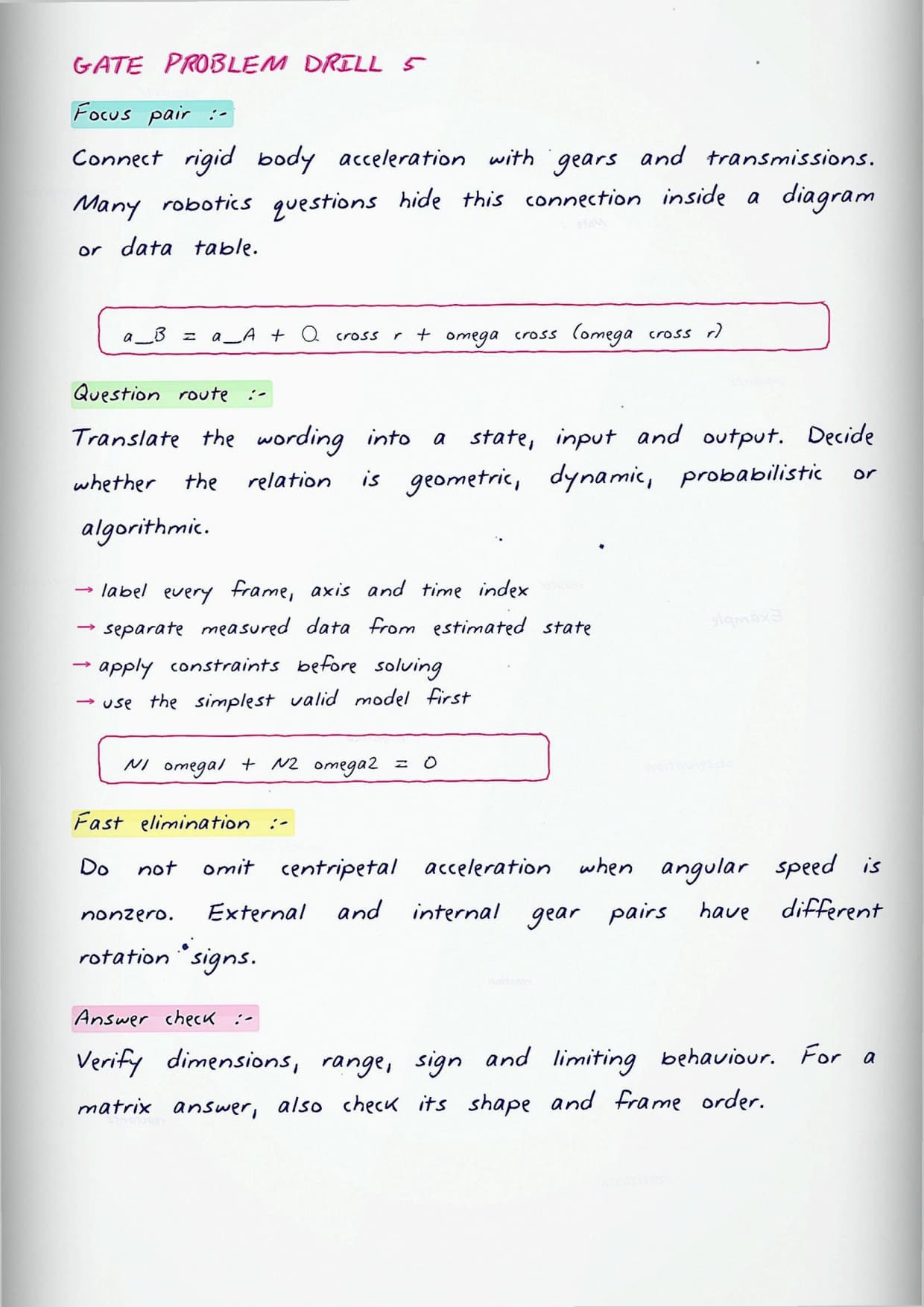
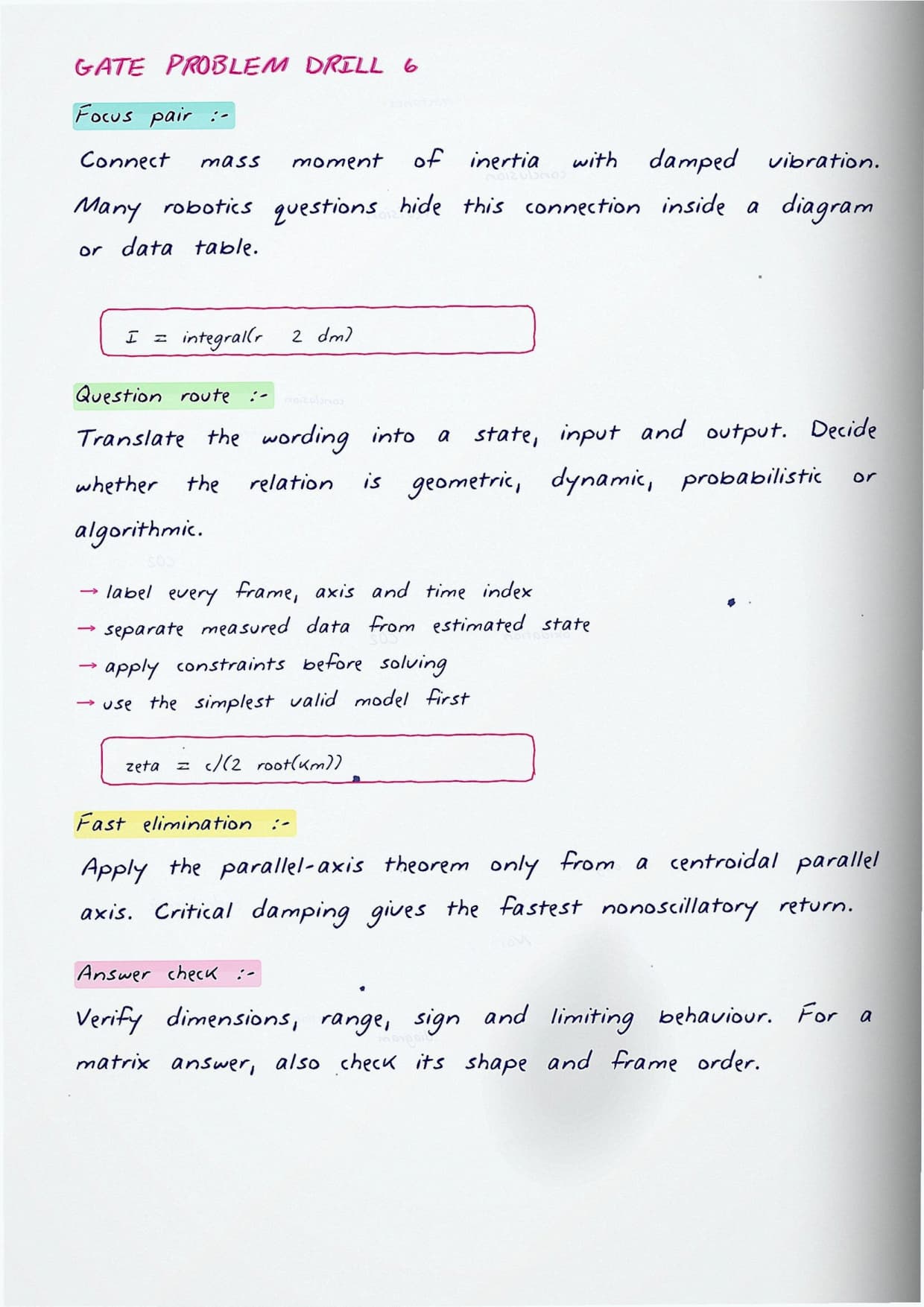
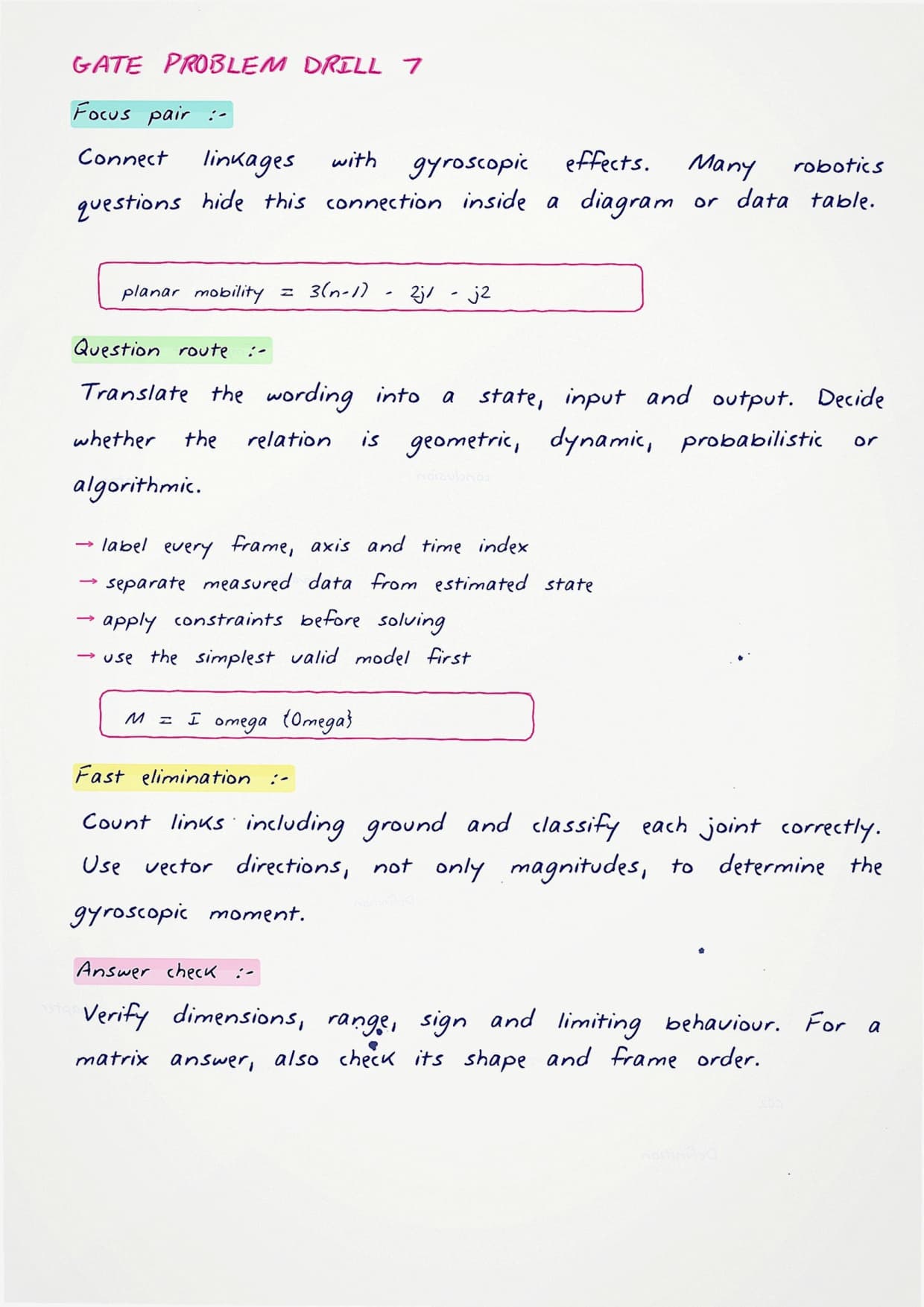
These handwritten notes walk through the mechanics that decide how a robot arm swings, how a mobile base tips, and why a joint rattles at certain speeds. The set overlaps the Engineering Mechanics and Vibrations that GATE Mechanical students already study.
Starting From Newton and Euler
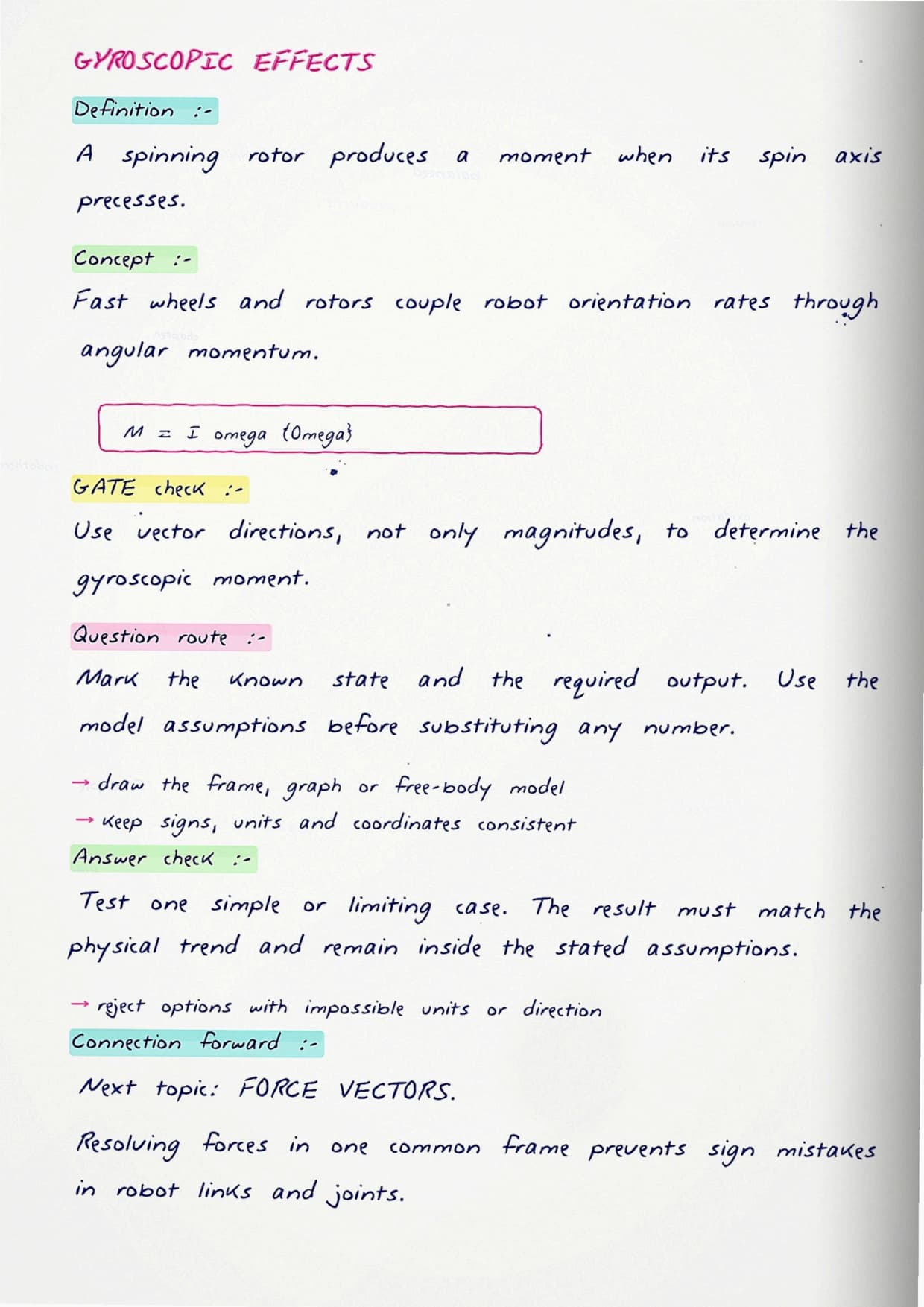
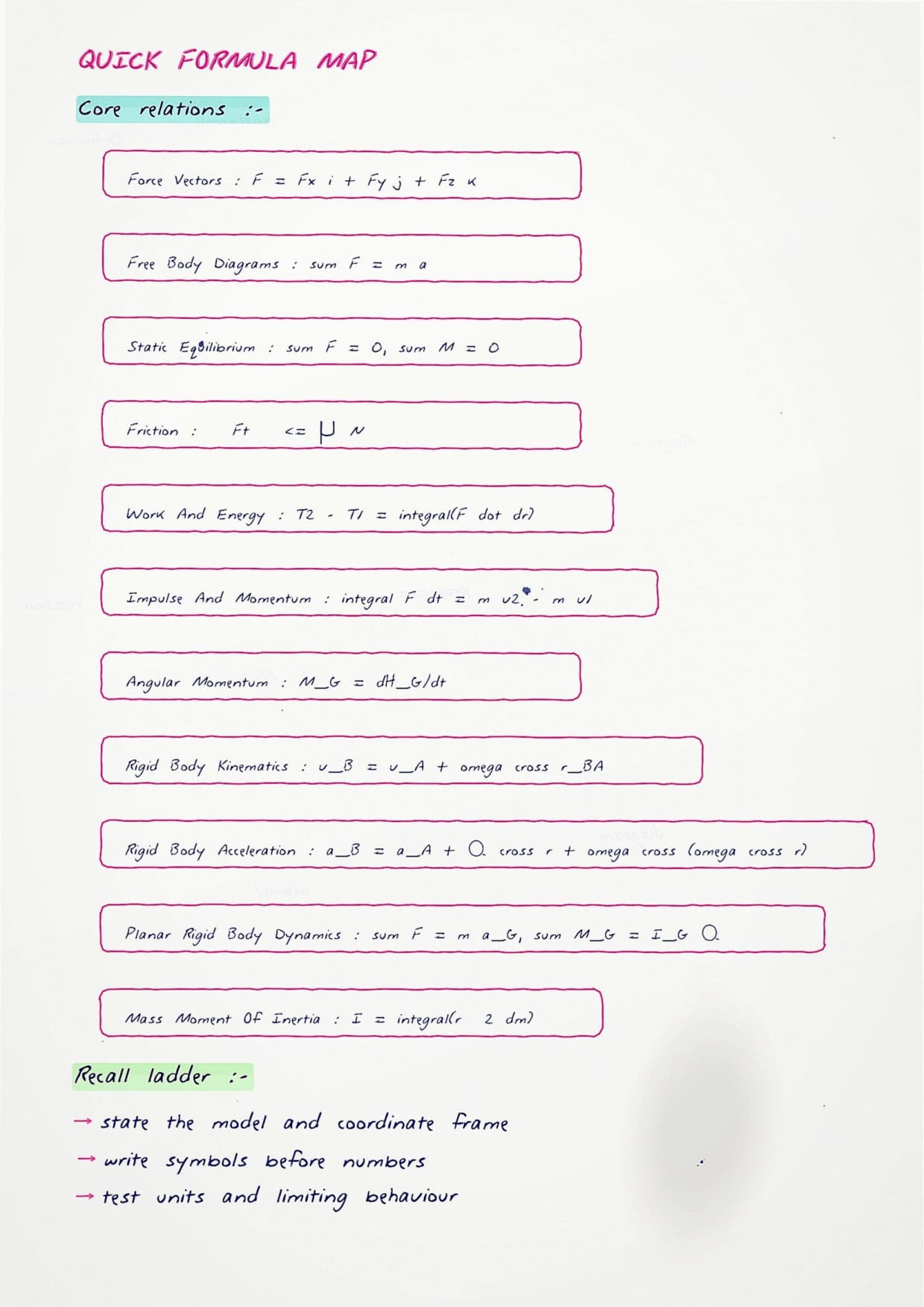
Every page here builds from two ideas students already trust. Newton's second law handles how the centre of mass of a body moves, and Euler's equation handles how the same body spins about that centre.
Together they describe the full motion of a rigid link. Free body diagrams are drawn by hand for a swinging bar, a rolling wheel, and a two link arm, so one method is reused rather than memorised case by case.
Kinematics of Rigid Bodies in the Plane
Before forces come in, the notes fix the language of motion. Position, velocity and acceleration are tracked for a body that both moves and turns at once.
- Angular velocity and angular acceleration, and how a point on the body picks up speed from both.
- The relative velocity method for linked bodies, written the way it appears in mechanism problems.
- The instantaneous centre of rotation, with a couple of worked locations.
Students who are shaky on rotating frames will find this the most useful warm up in the set.
Kinetics: Torque, Inertia and Angular Momentum
This is where the marks usually sit. The notes connect torque to angular acceleration, and momentum to impulse.
- The mass moment of inertia is defined for standard shapes, then shifted with the parallel axis theorem when the pivot is off centre.
- Work and energy methods sit alongside the force methods, so students pick whichever route reaches the answer faster.
- The impulse momentum approach gets its own worked example, since it saves time when a force acts over a short interval, like a gripper closing on a part.
A short table of inertia values for a rod, disc, ring and sphere is copied out for quick recall, and each entry is tied back to a real link in a robot arm.
Where Free Vibration Turns Into Forced Vibration
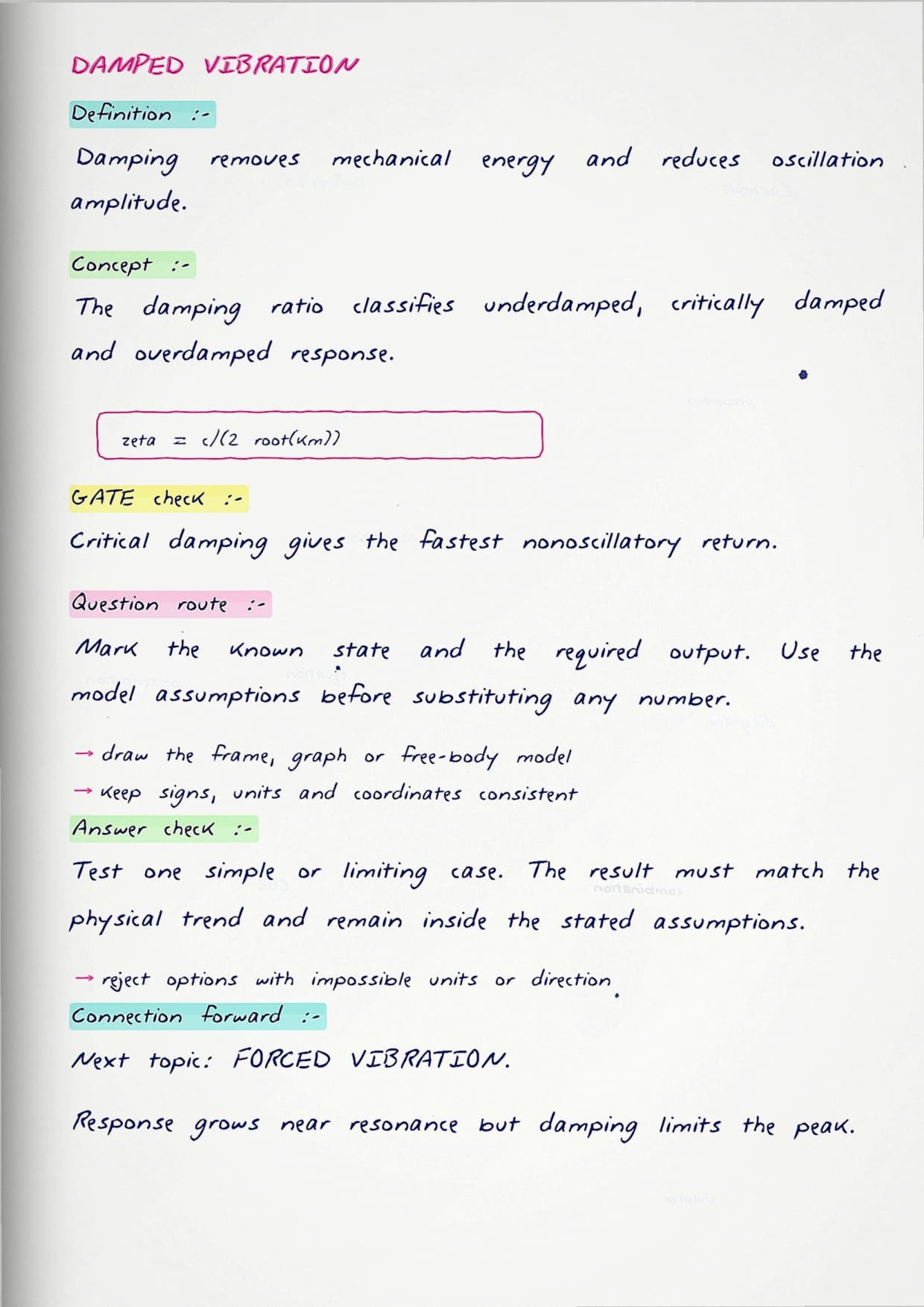
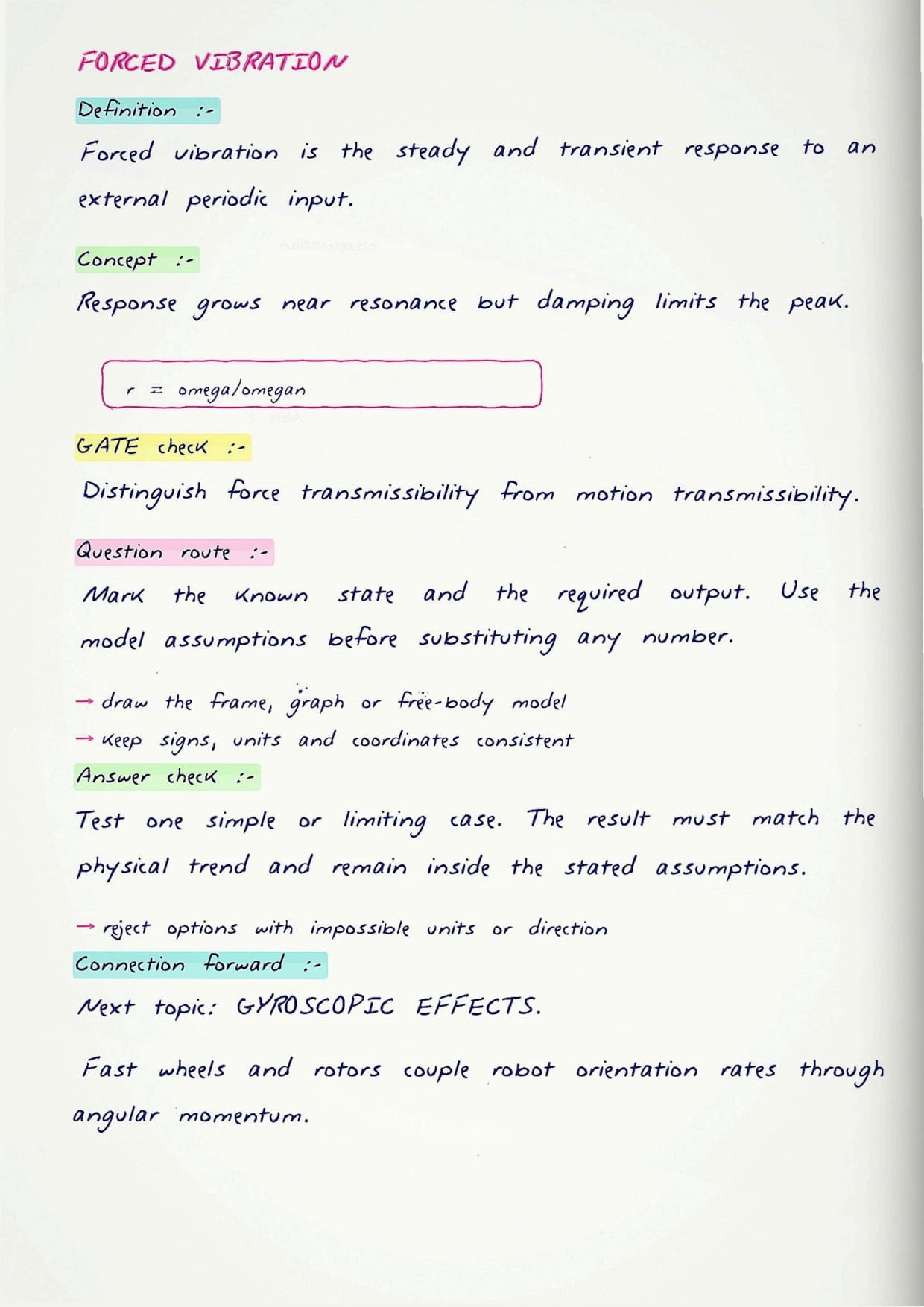
Vibration is treated as one idea seen from two angles. Free vibration asks how a disturbed system returns to rest. Forced vibration asks what happens when something keeps pushing it.
- Natural frequency of a spring mass system, and why it depends only on stiffness and mass.
- Damping, split into under, critical and over damped behaviour in plain words.
- Resonance, and the reason engineers fear it near the natural frequency.
For a robot this is not abstract. A gripper that oscillates after every move is a forced vibration problem waiting to be solved.
The notes also sketch how logarithmic decrement reads the damping straight off a decaying oscilloscope trace, a trick for estimating how quickly a shaking part settles.
Watch the Vibration Basics Worked Out
Source: nptelhrd (https://www.youtube.com/@iit)
The Maths Students Should Warm Up First
None of this needs heavy mathematics, but a few tools should be fresh. The notes flag each one where it is needed, so students revise it in context.
- Vectors and cross products decide torque direction.
- Second order differential equations describe every free vibration.
- Basic trigonometry keeps the geometry honest.
Slips That Quietly Cost Marks
A few mistakes show up again and again in dynamics answers.
- Taking moments about the wrong point, then forgetting the extra term.
- Mixing up mass moment of inertia with area moment of inertia.
- Dropping the sign on angular acceleration in a rolling problem.
- Reading a forced vibration graph as free vibration.
Each trap is marked in the margin next to the worked example it ruins, so students meet it once on paper rather than for the first time in the exam hall.
Engineering Mechanics Handwritten Notes FAQs
Ques. Does GATE have a separate Robotics paper for these notes?
Ans. No. GATE does not run a standalone Robotics paper right now. This topic still matters because rigid body dynamics and vibrations overlap directly with the Engineering Mechanics and Vibrations tested in GATE Mechanical, and they form the foundation for robot modelling.
Ques. How many pages are these notes?
Ans. The set runs to 28 handwritten pages covering kinematics, kinetics, and both free and forced vibration.
Ques. Are the notes enough on their own?
Ans. They work best as a revision layer over a standard mechanics course. Students who have seen the topic once will find every important result and worked example in one place.
Ques. What should students revise before starting?
Ans. Vectors and cross products, second order differential equations, and basic trigonometry. Each is flagged inside the notes where it is used.



Comments