




Before a robot can reach for anything, it needs a way to say where things sit and how they are turned. These Coordinate Frames, Transformations and Screw Theory notes build that language, the foundation almost every kinematics topic stands on.
Everything in Robotics Starts With a Frame
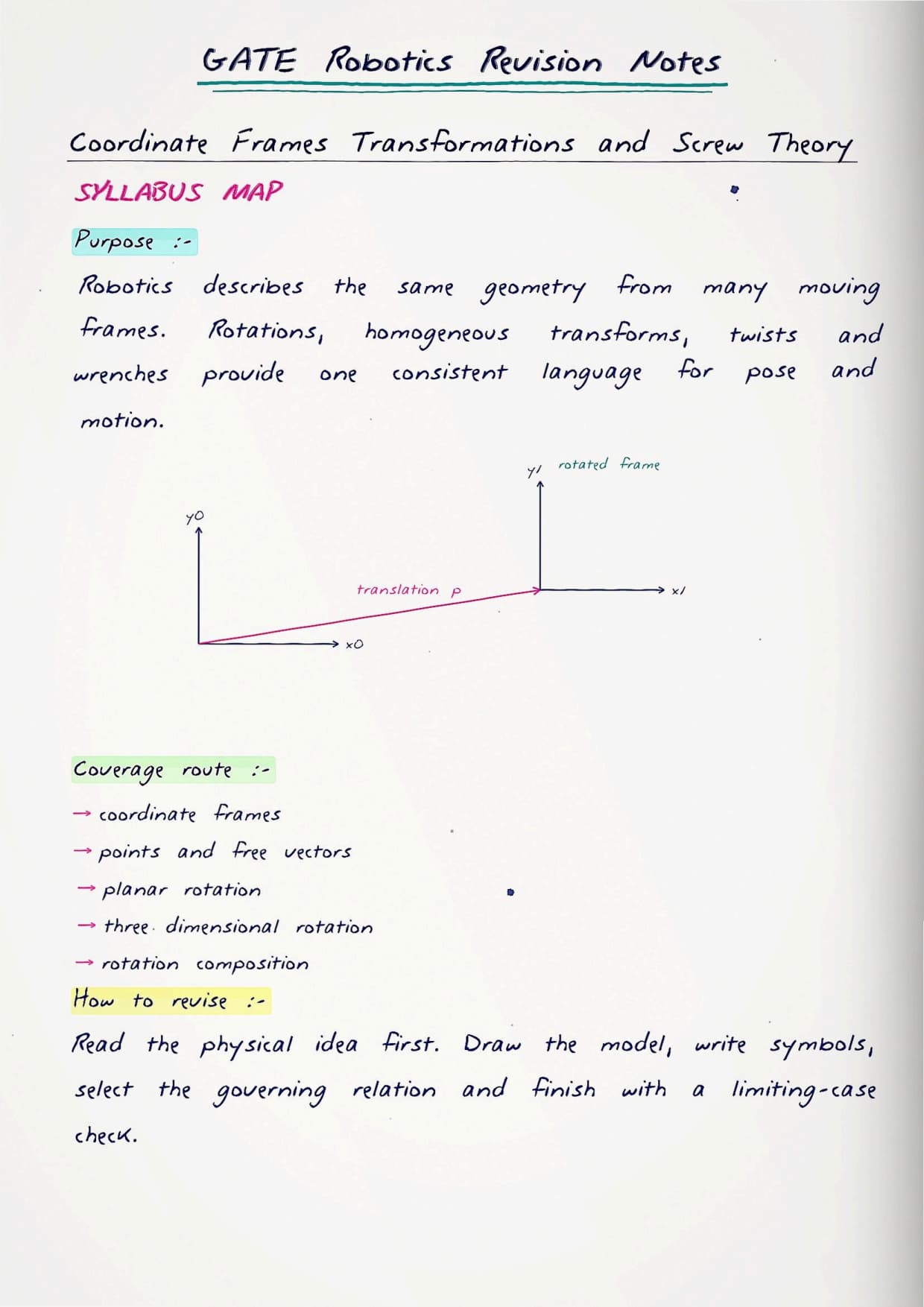
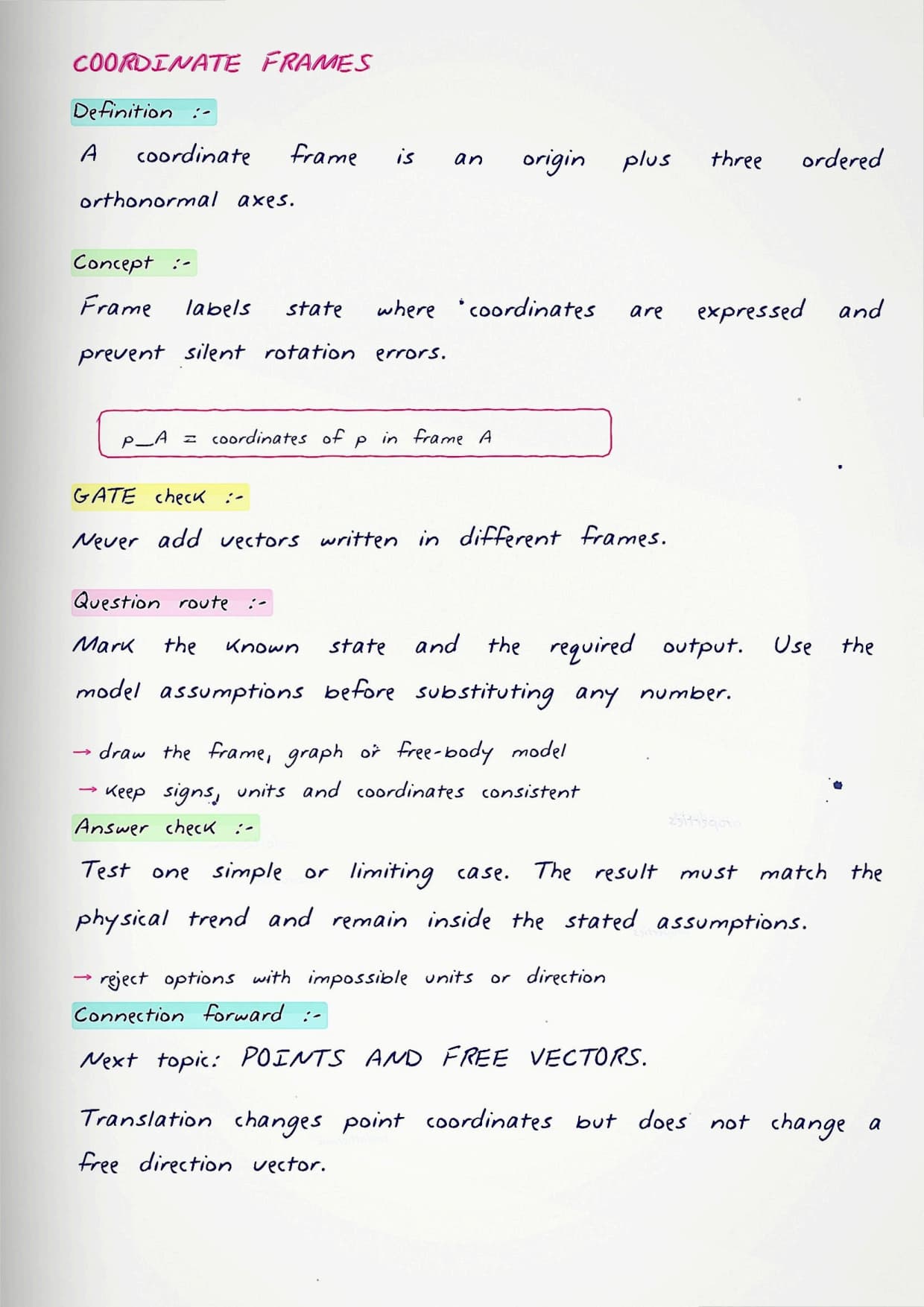
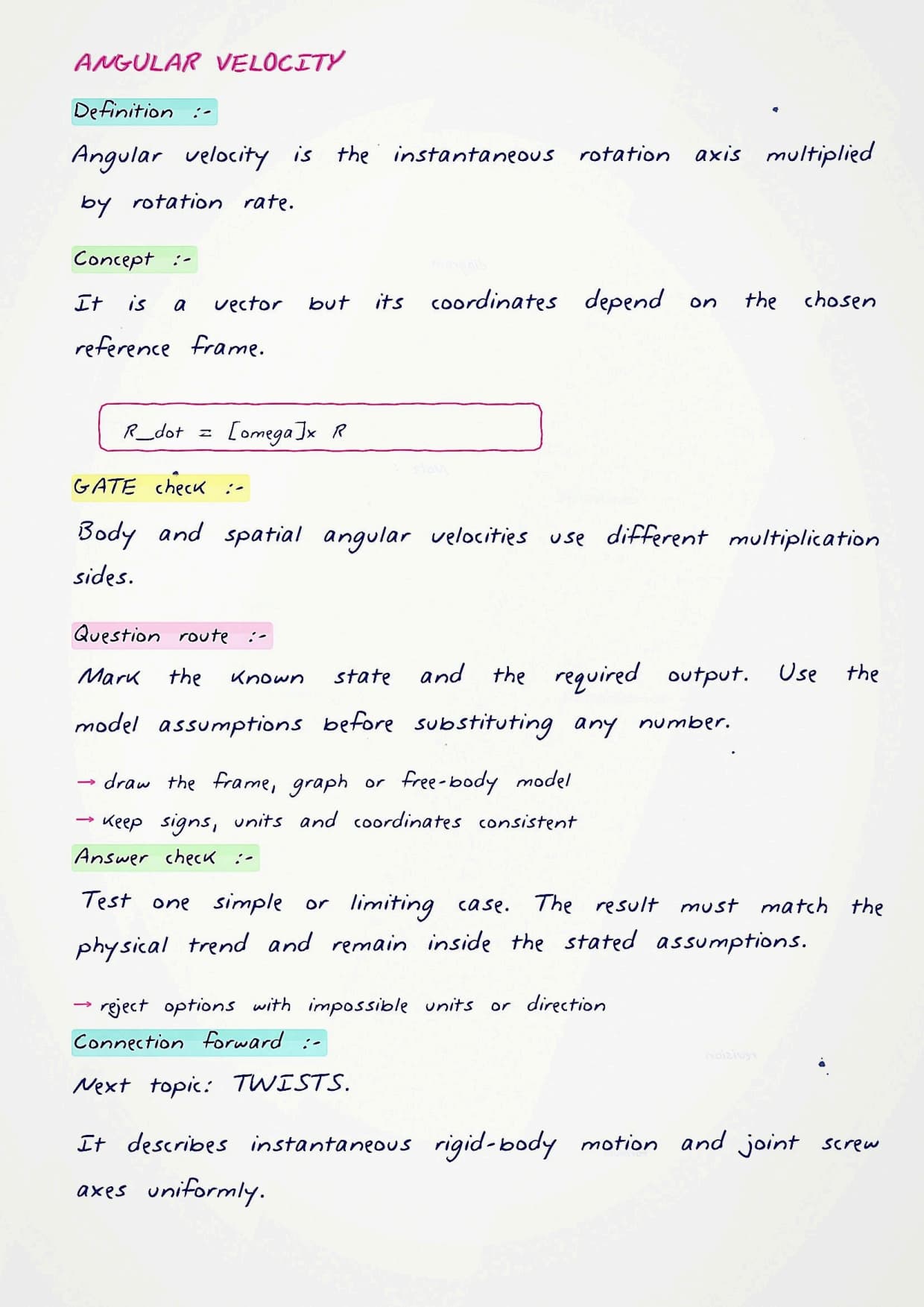
These hand-drawn pages build the subject one small idea at a time, and dynamics and motion planning lean on all of it. They start with the object the whole thing rests on: a coordinate frame, just a set of axes glued to a body.
- World frame: fixed to the ground.
- Base frame: at the robot's mount.
- Tool frame: at the gripper.
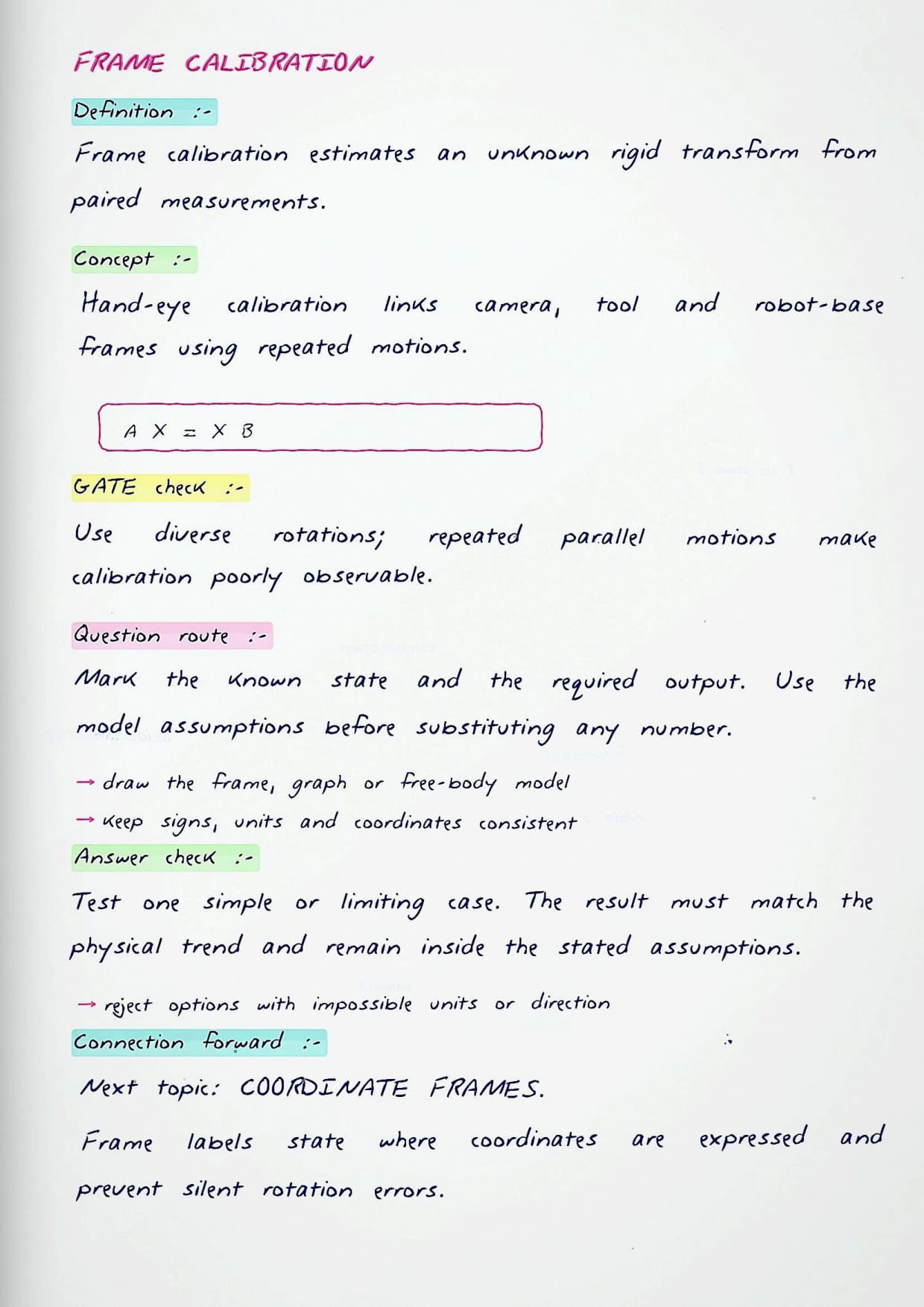
Once those are on paper, a point in space becomes a plain position vector measured from one chosen origin. The lesson the pages push early is simple: a number for position means nothing until students say which frame it was read in.
From a Point to a Pose
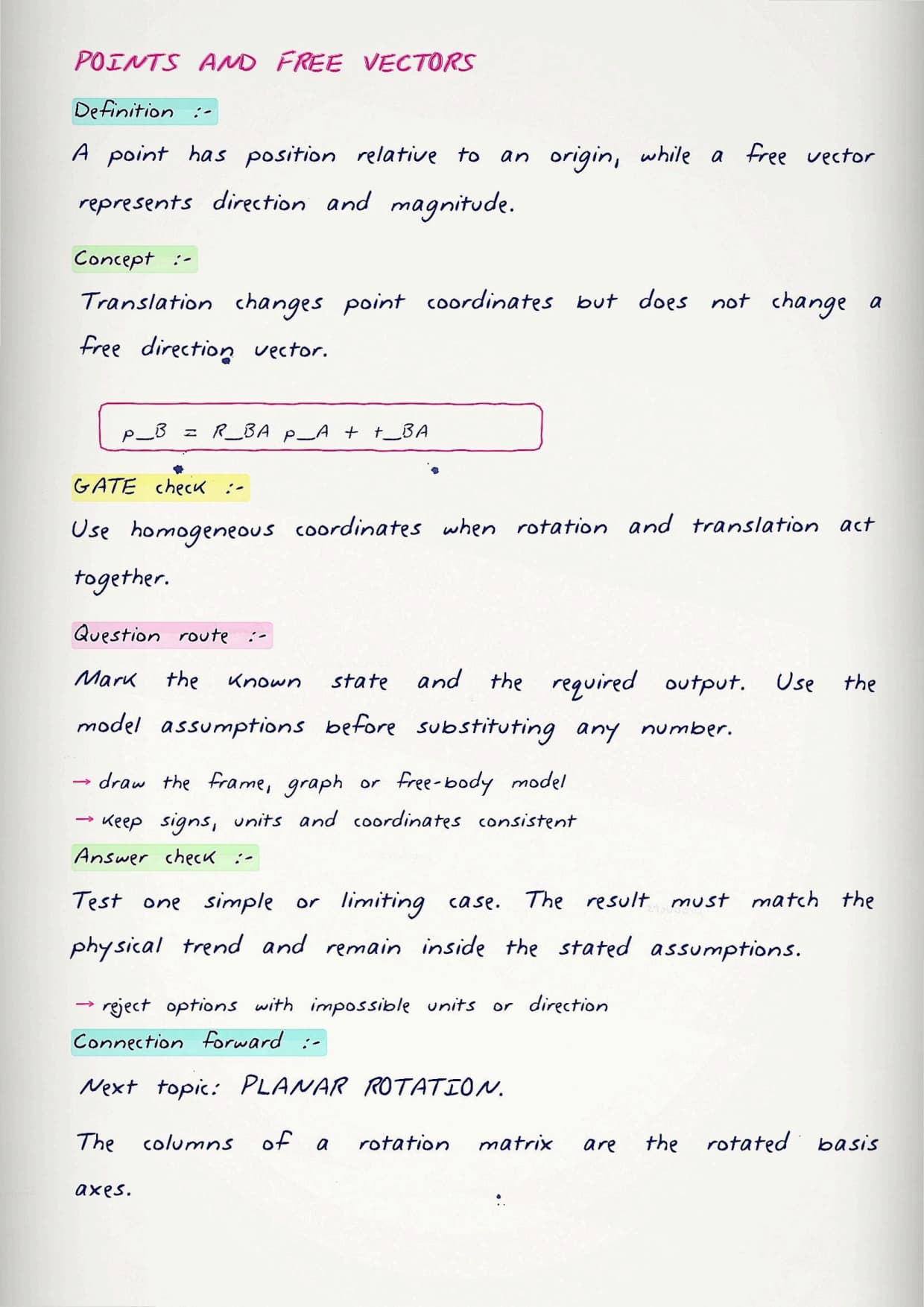
Position alone cannot describe a gripper, since the same point can be reached while the hand faces many directions. So the notes add orientation next and combine the two into a single pose.
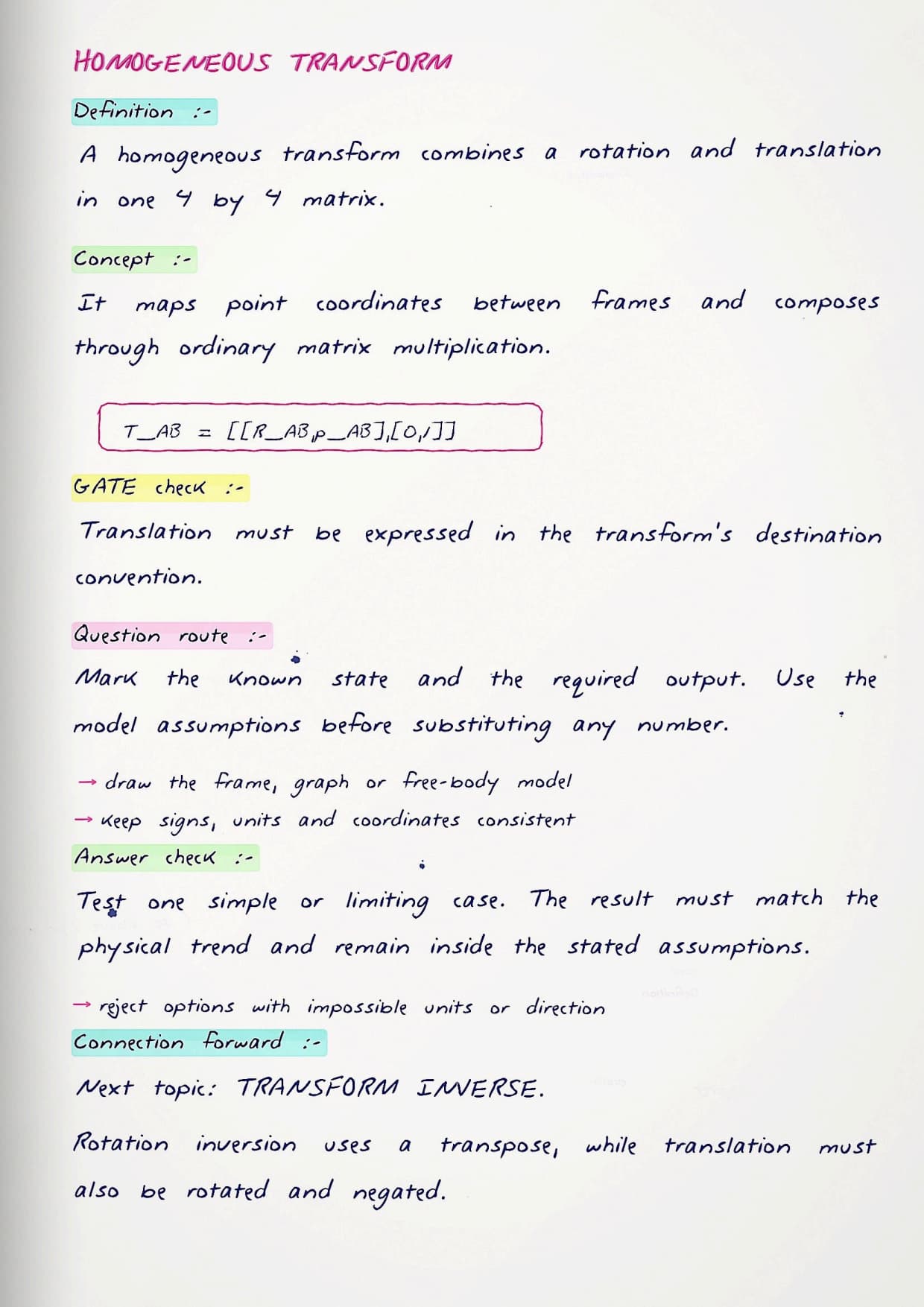
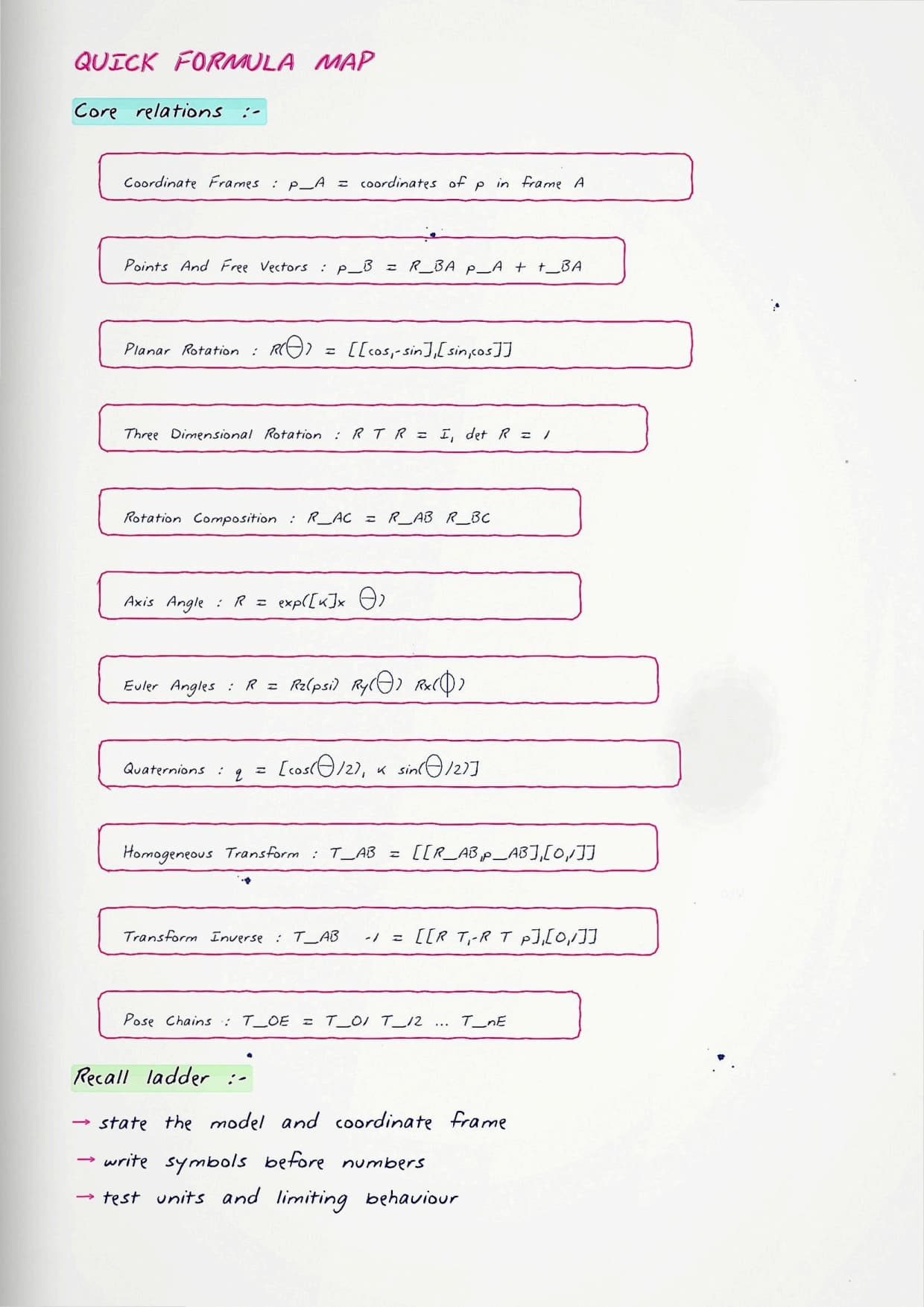
This is where the homogeneous transformation shows up, packing a rotation and a translation into one tidy block that later chapters reuse everywhere.
- Position: where the origin of one frame sits inside another.
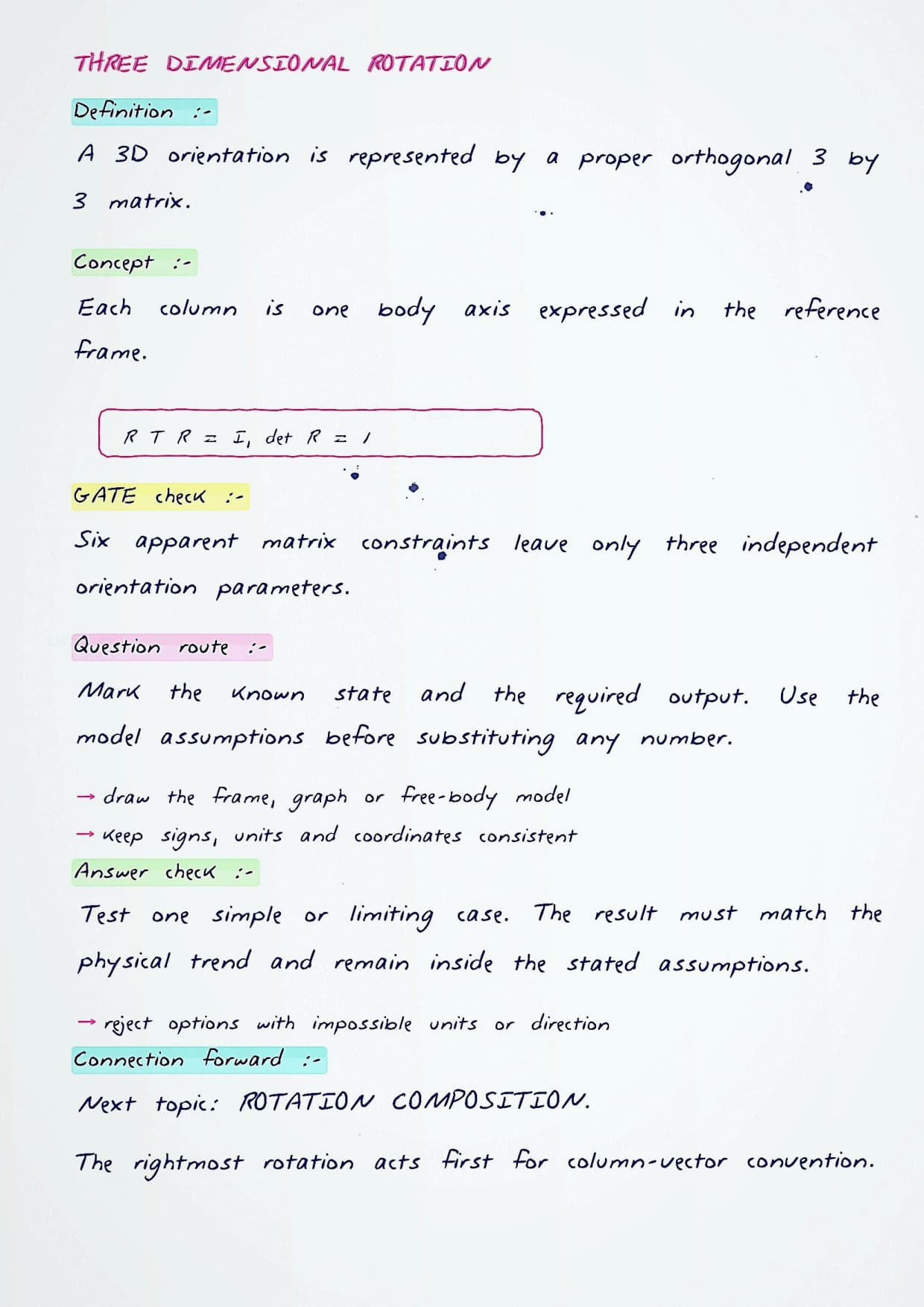
- Orientation: how the axes are turned relative to that frame.
- Pose: the two carried together, the real output of any kinematics step.
Rotations, Written Three Ways
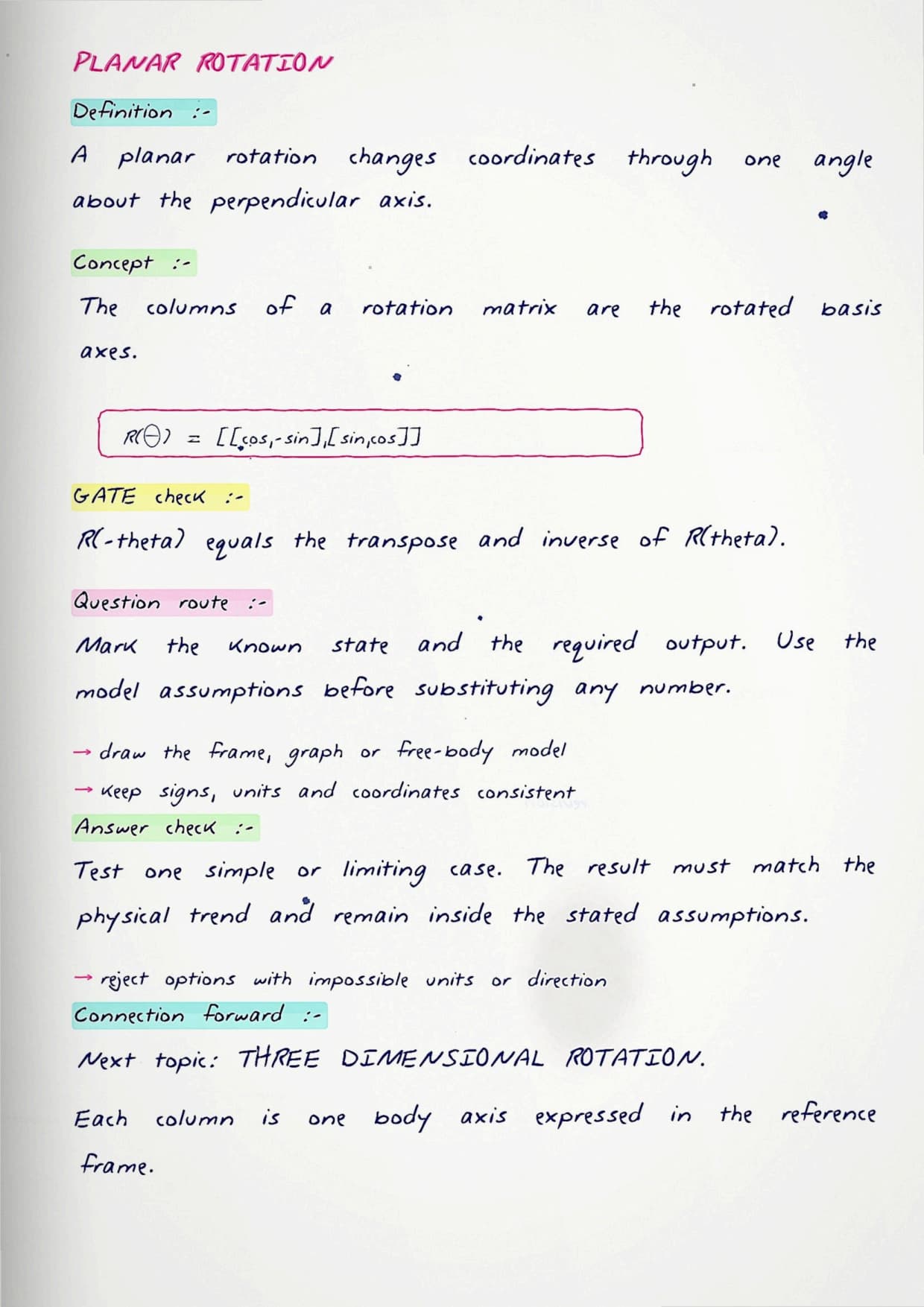
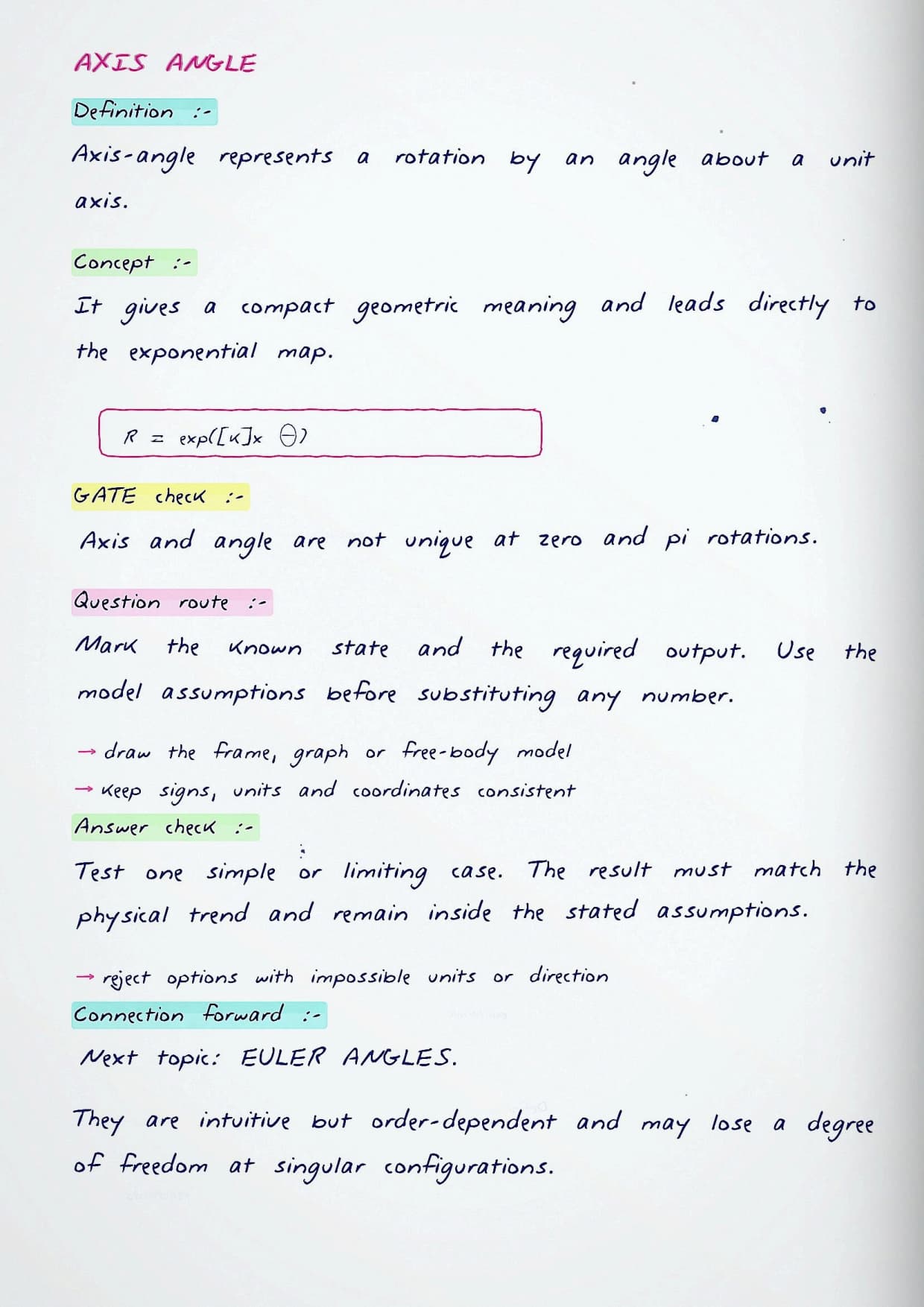
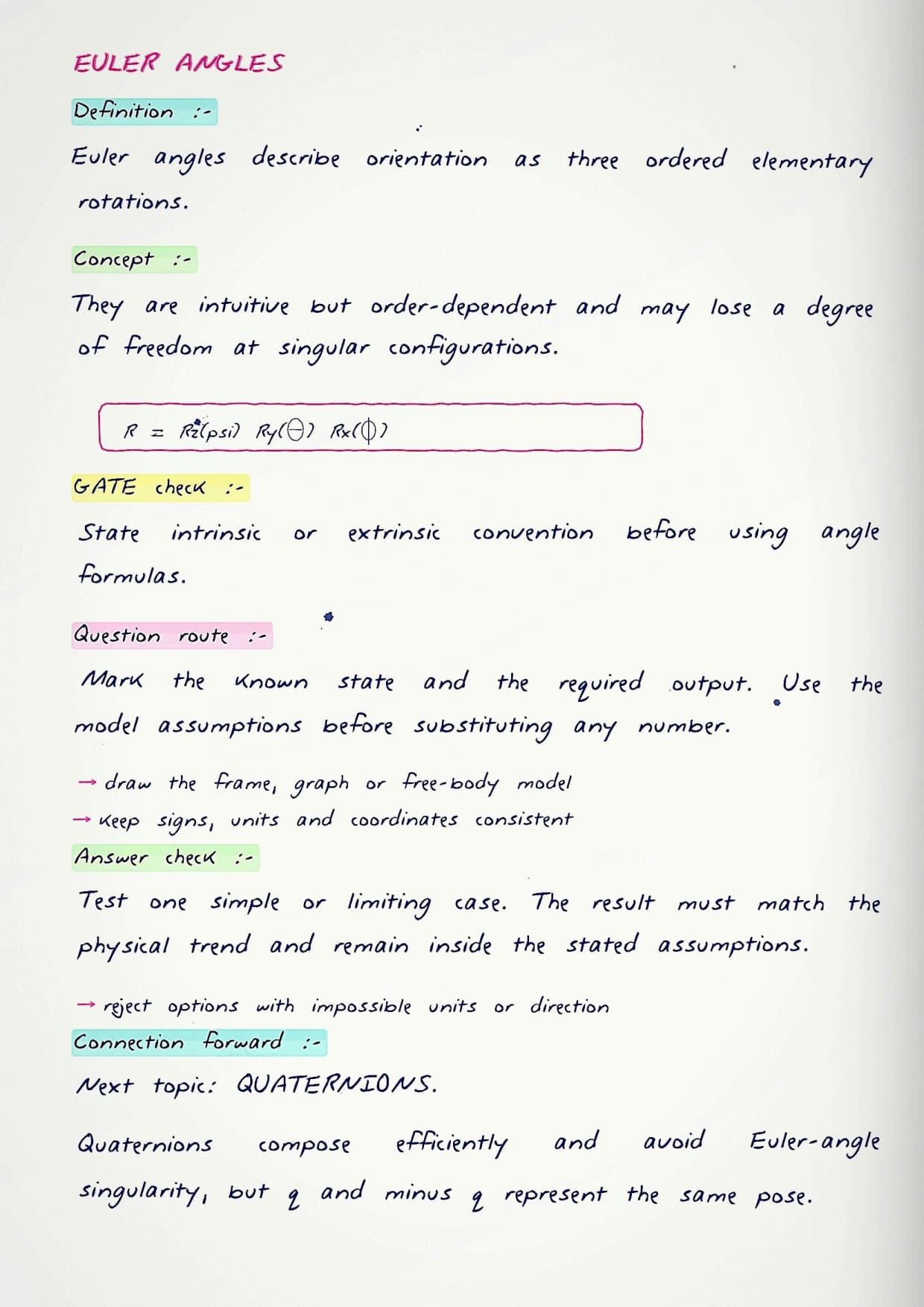
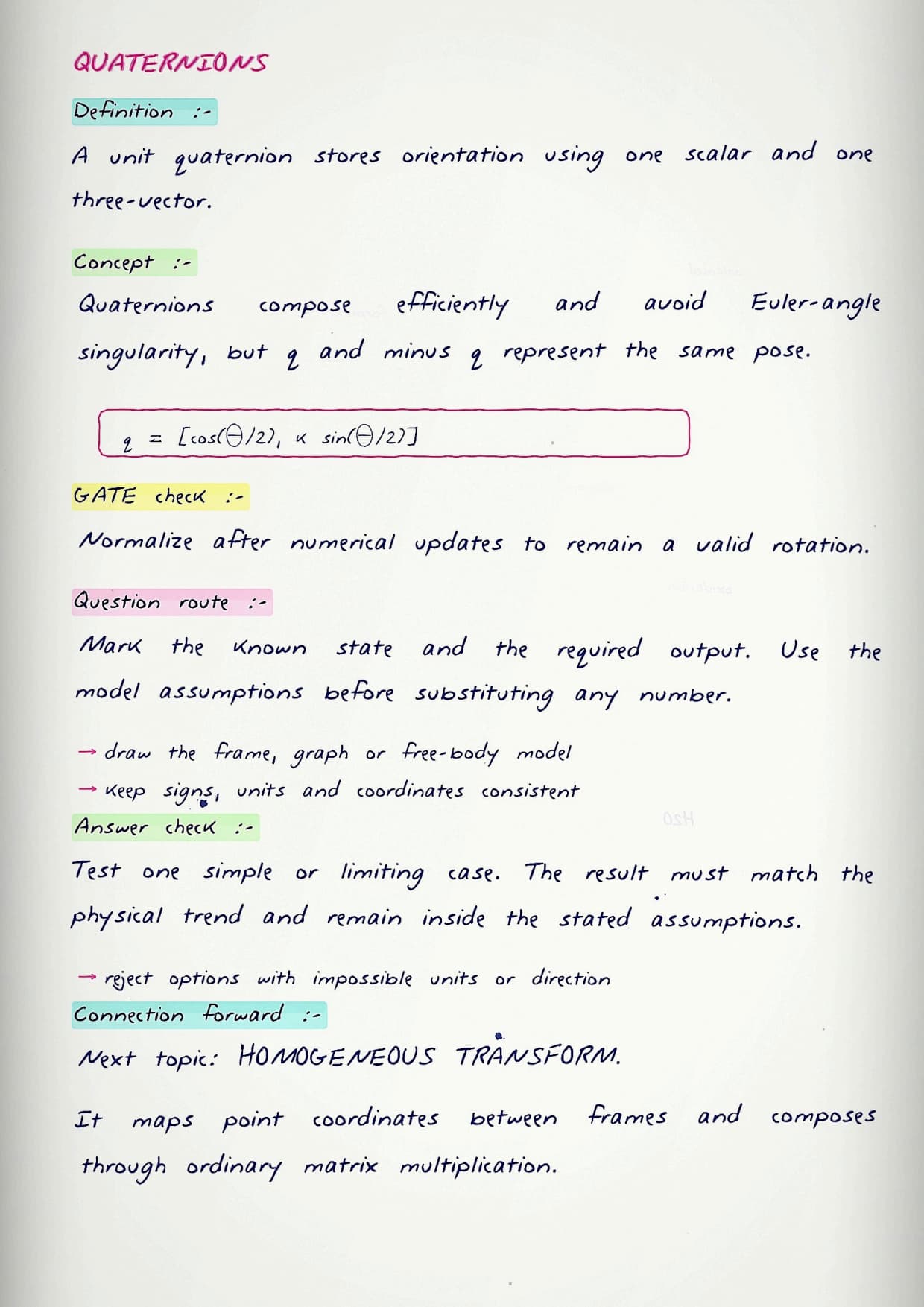
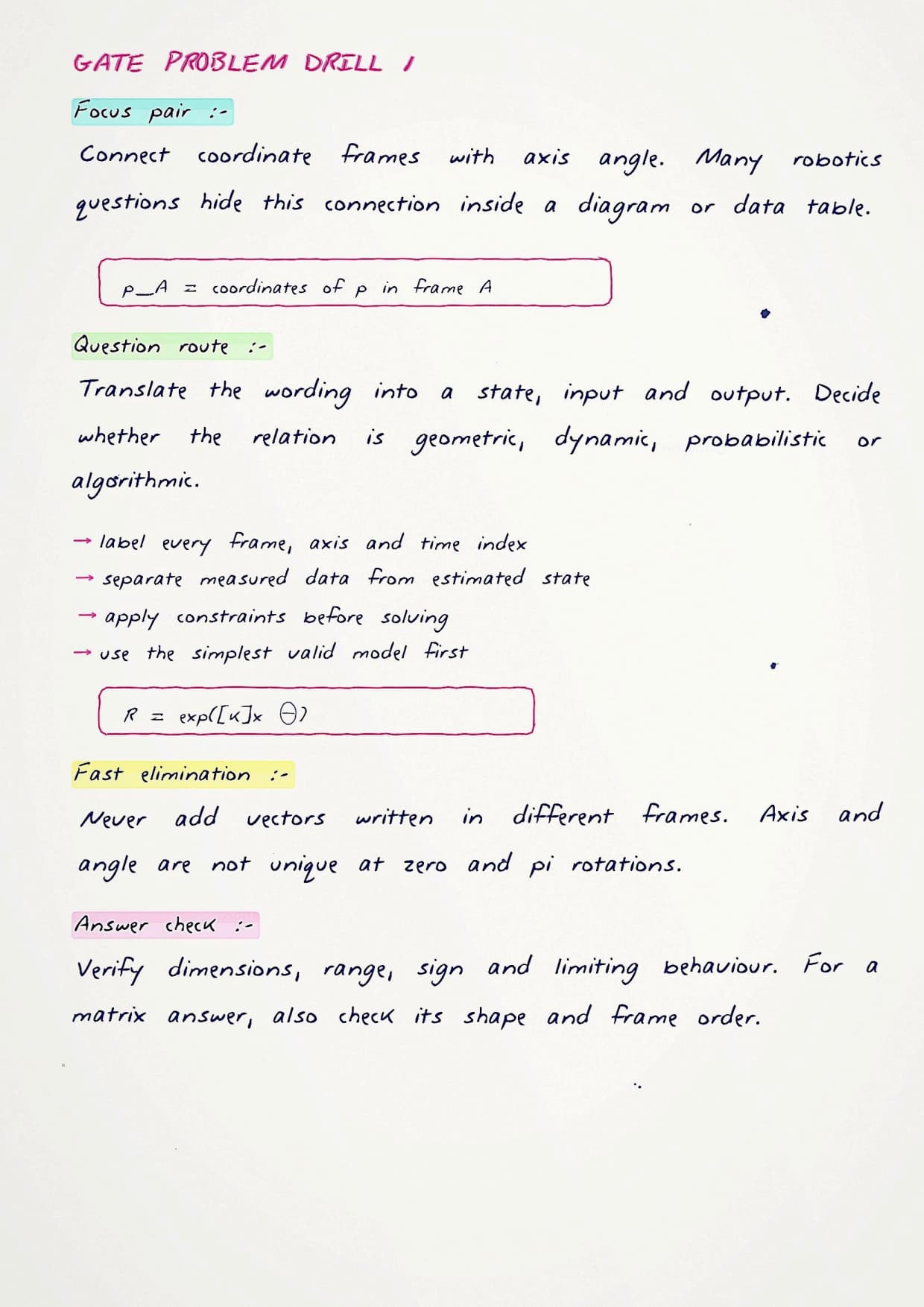
Because orientation trips up so many students, the pages spend real time on it and show the same rotation in three forms.
- Rotation matrix: the full nine-number description.
- Euler and roll-pitch-yaw angles: the compact three-number form.
- Axis-angle: one axis and one turn amount describe the whole thing.
Seeing all three side by side is what makes later topics click, since each robotics tool prefers a different one, and the hand-drawn arrows make the swap between them easy to follow.
Chaining Transforms Along a Robot
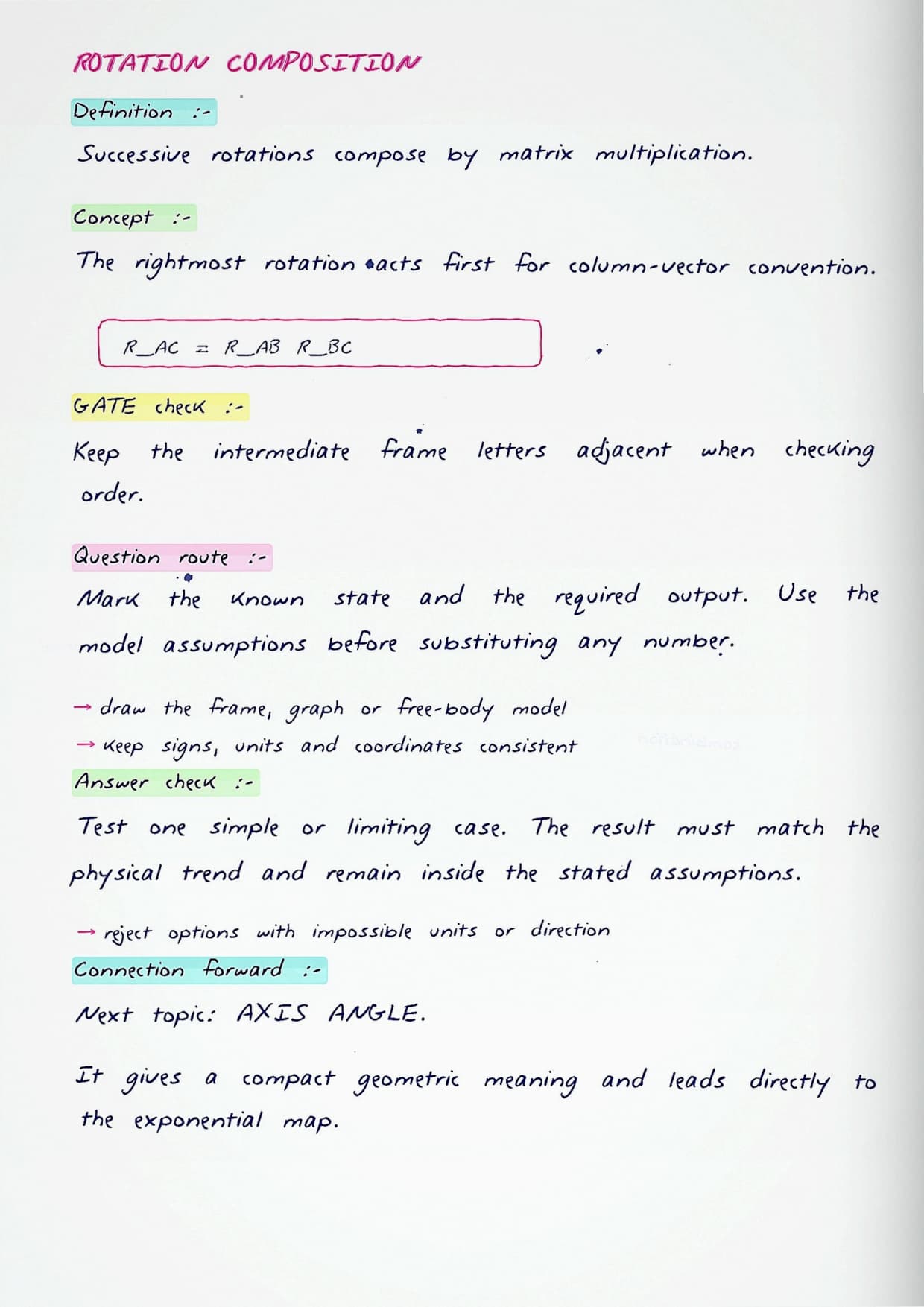
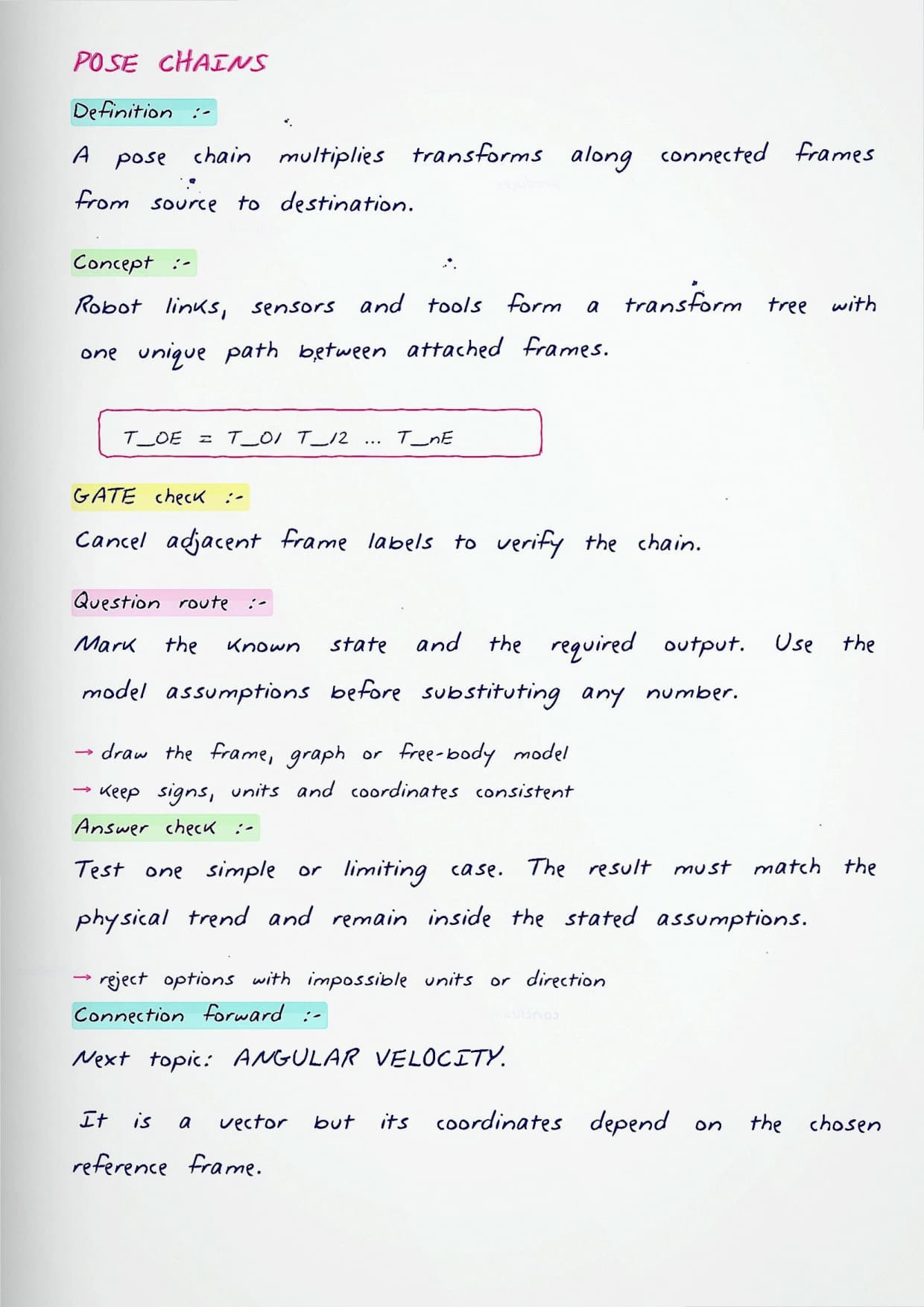
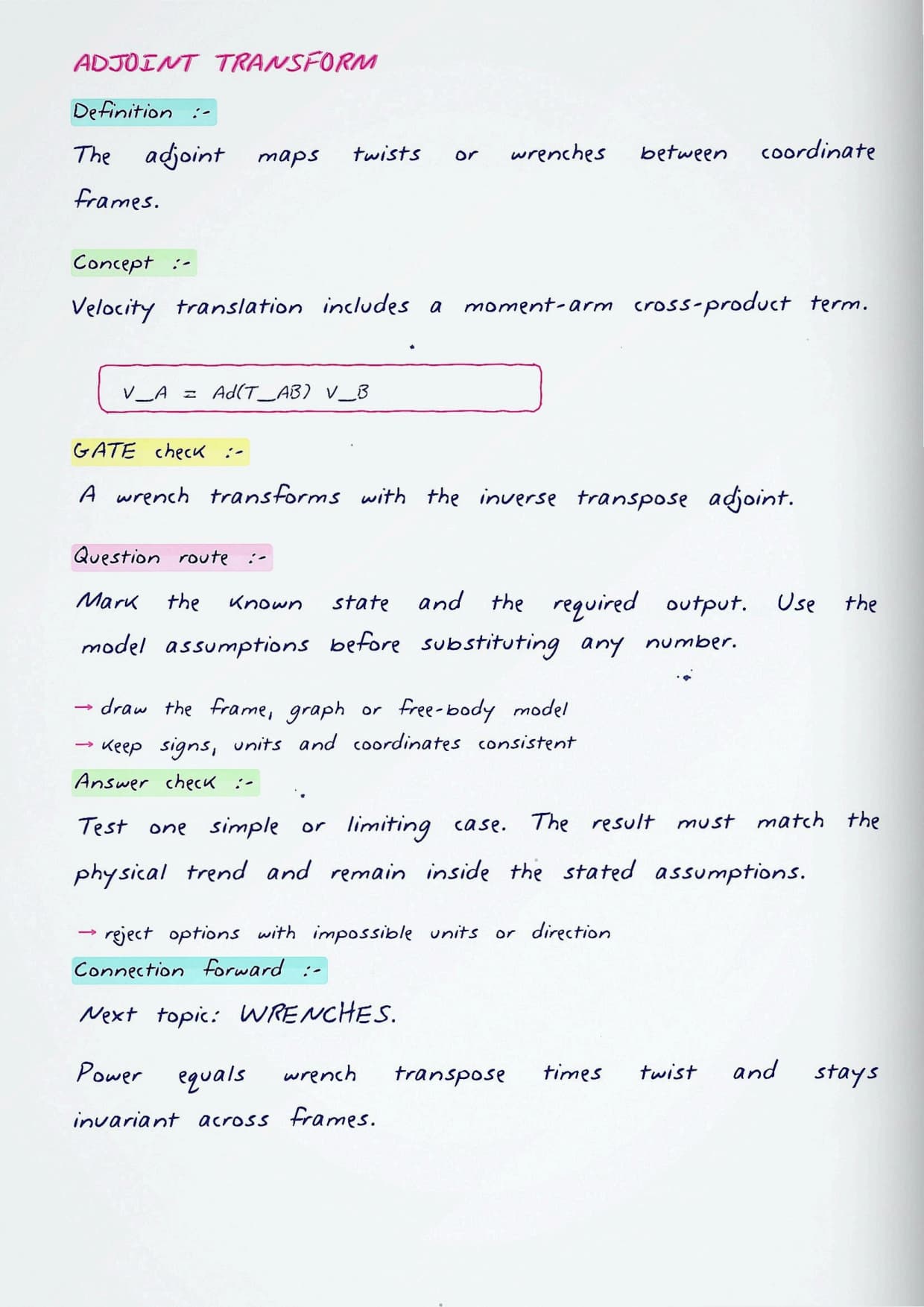
With one transform understood, the notes link many together. A serial arm is really a stack of frames, one per joint, so multiplying transforms in order walks students from the base all the way to the tool.
This quietly sets up forward kinematics: put in the joint values, chain the frames, read the final pose. The pages stress order and direction, because reversing a transform or multiplying frames the wrong way is the fastest route to a wrong answer.
Screw Theory Ties Rotation and Translation Together
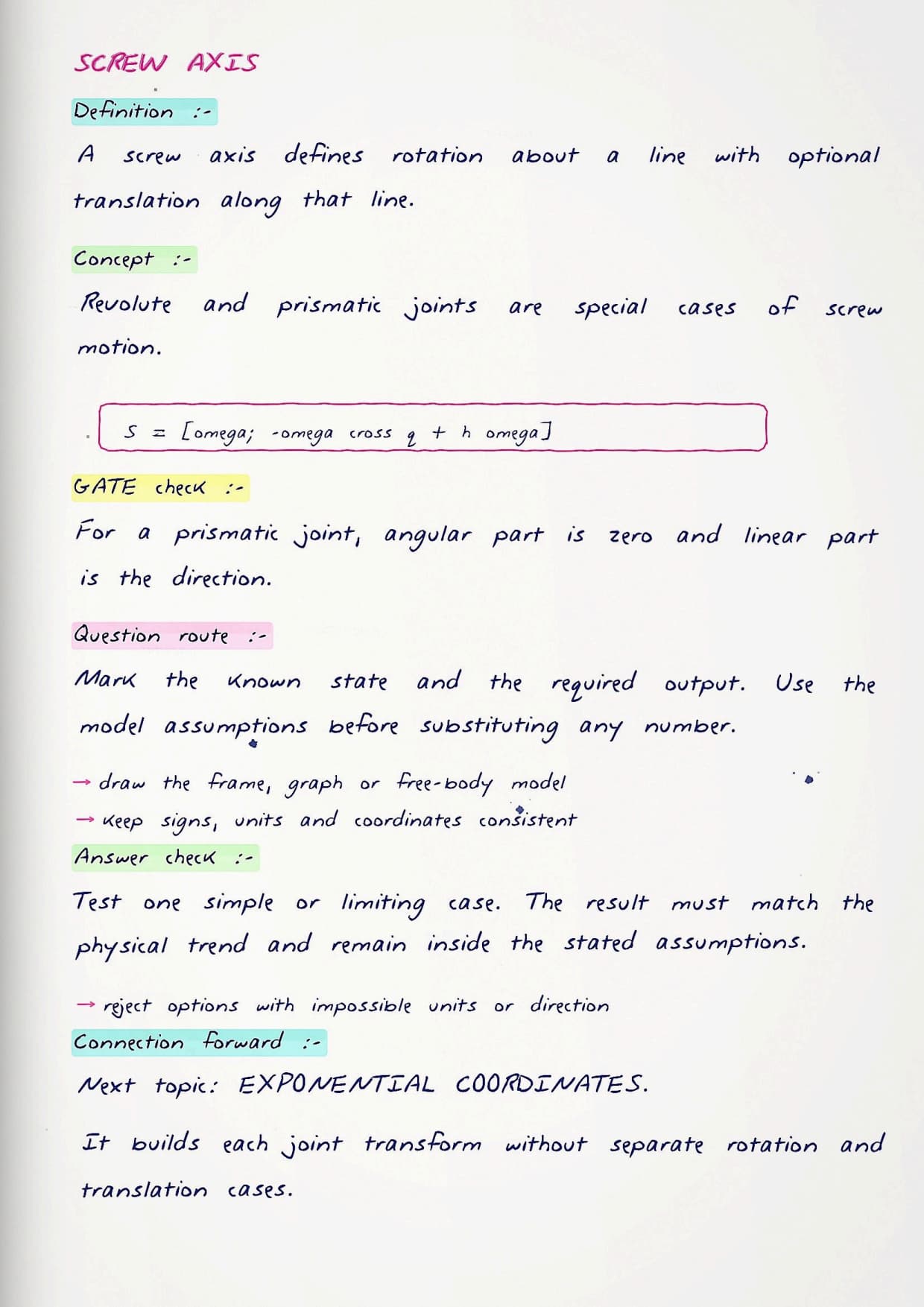
The last stretch is the payoff. Instead of treating turning and sliding as separate jobs, screw theory says any rigid-body motion is a rotation about an axis paired with a translation along it, like a bolt threading through a nut.
- Screw axis: the single line the motion turns and slides along.
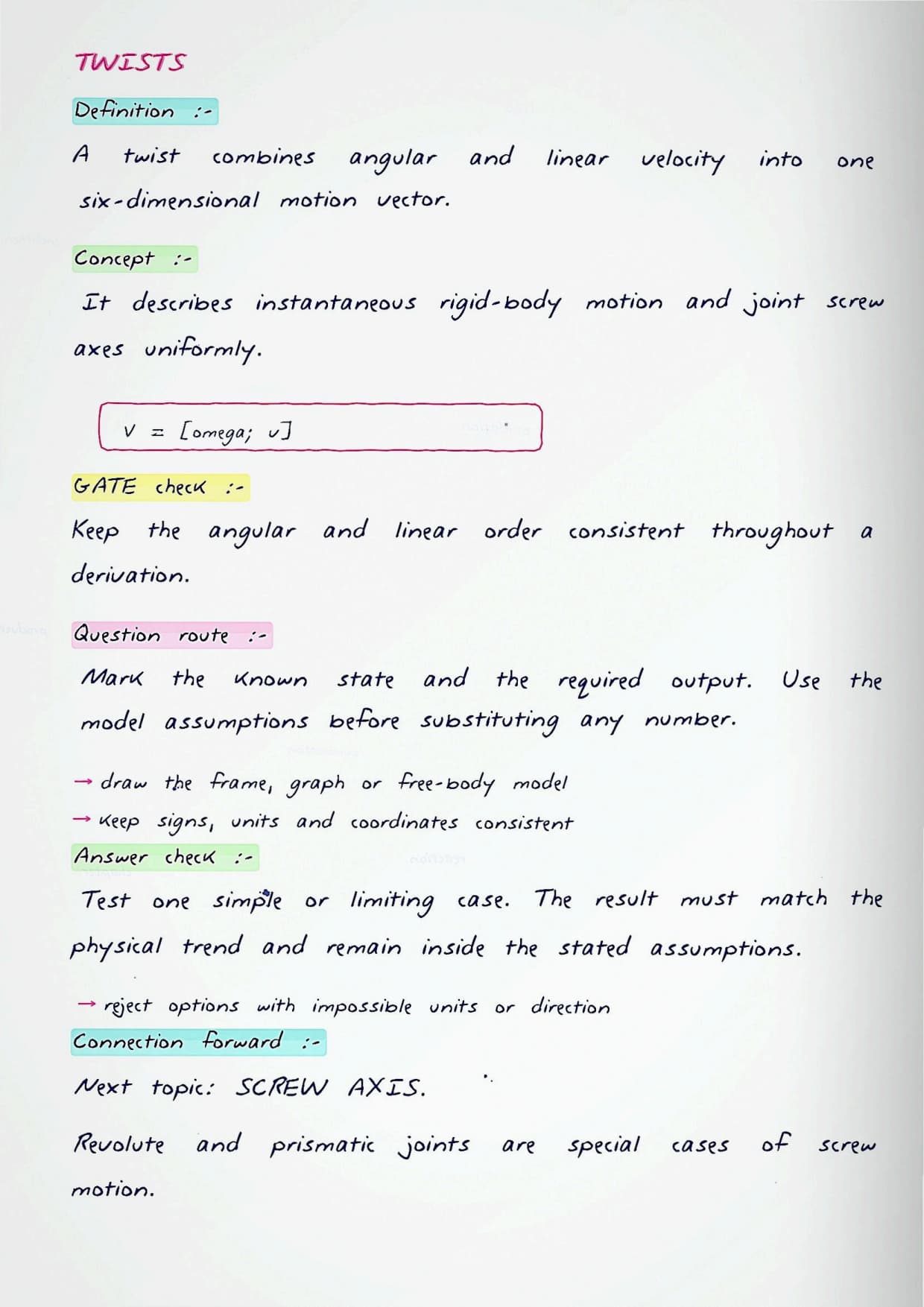
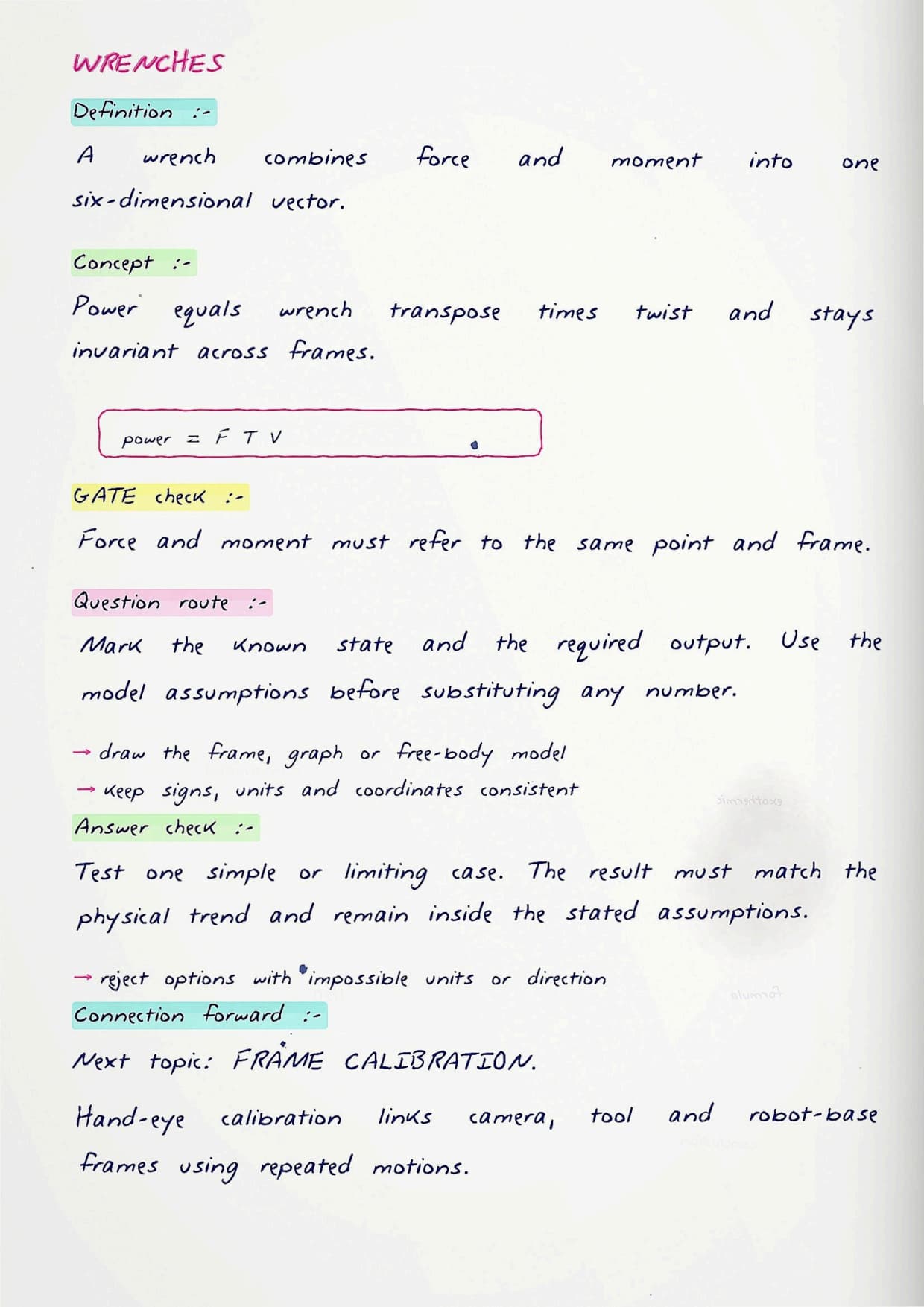
- Twist: linear and angular velocity carried as one six-part quantity.
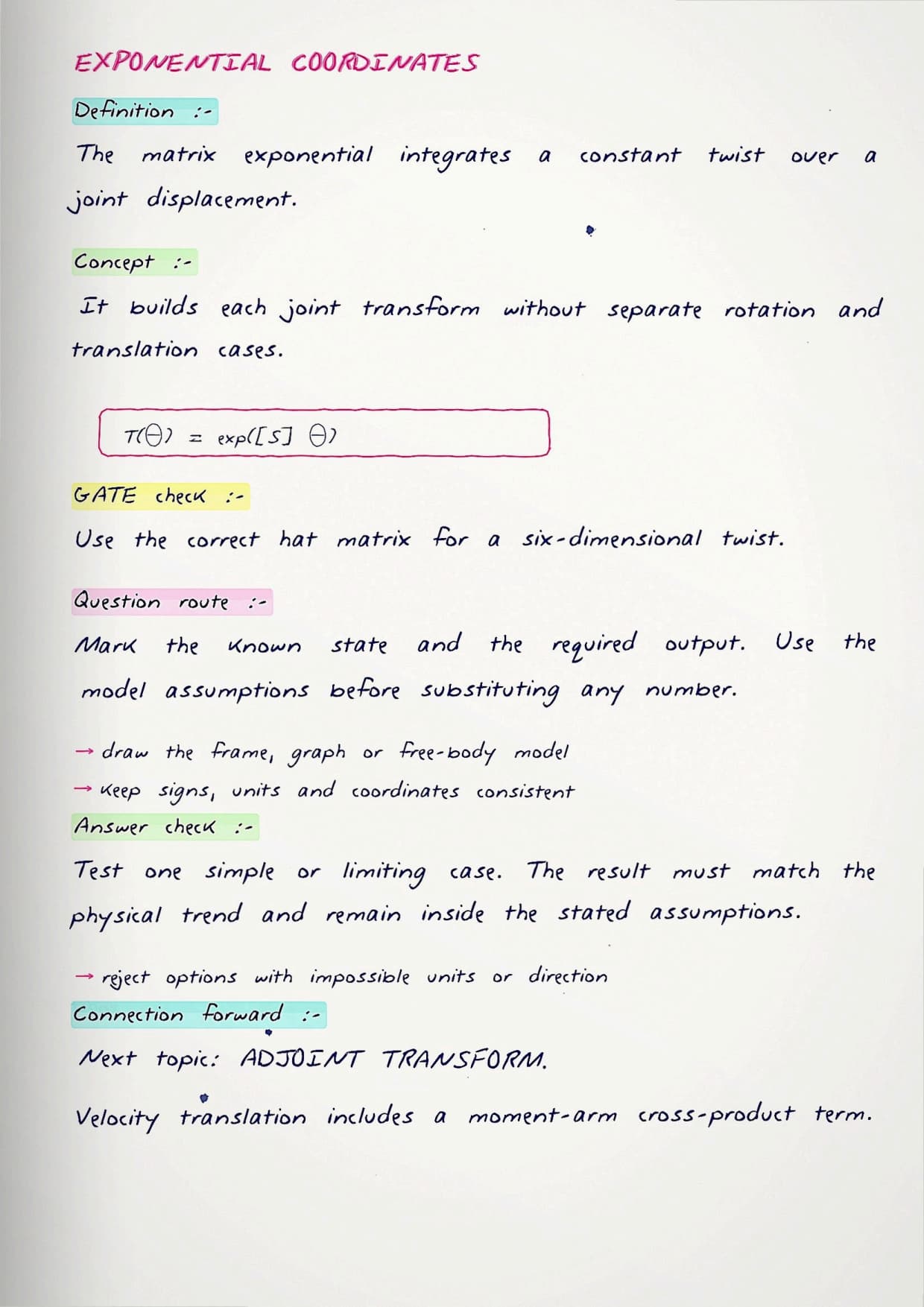
- Exponential coordinates: rebuild a full transform from an axis and an amount.
It is a cleaner, more unified way to model motion, and it is the backbone of modern robot kinematics.
See Rigid-Body Motions Worked on a Board
Source: Northwestern Robotics (https://www.youtube.com/@NorthwesternRobotics)
Where Students Slip Up
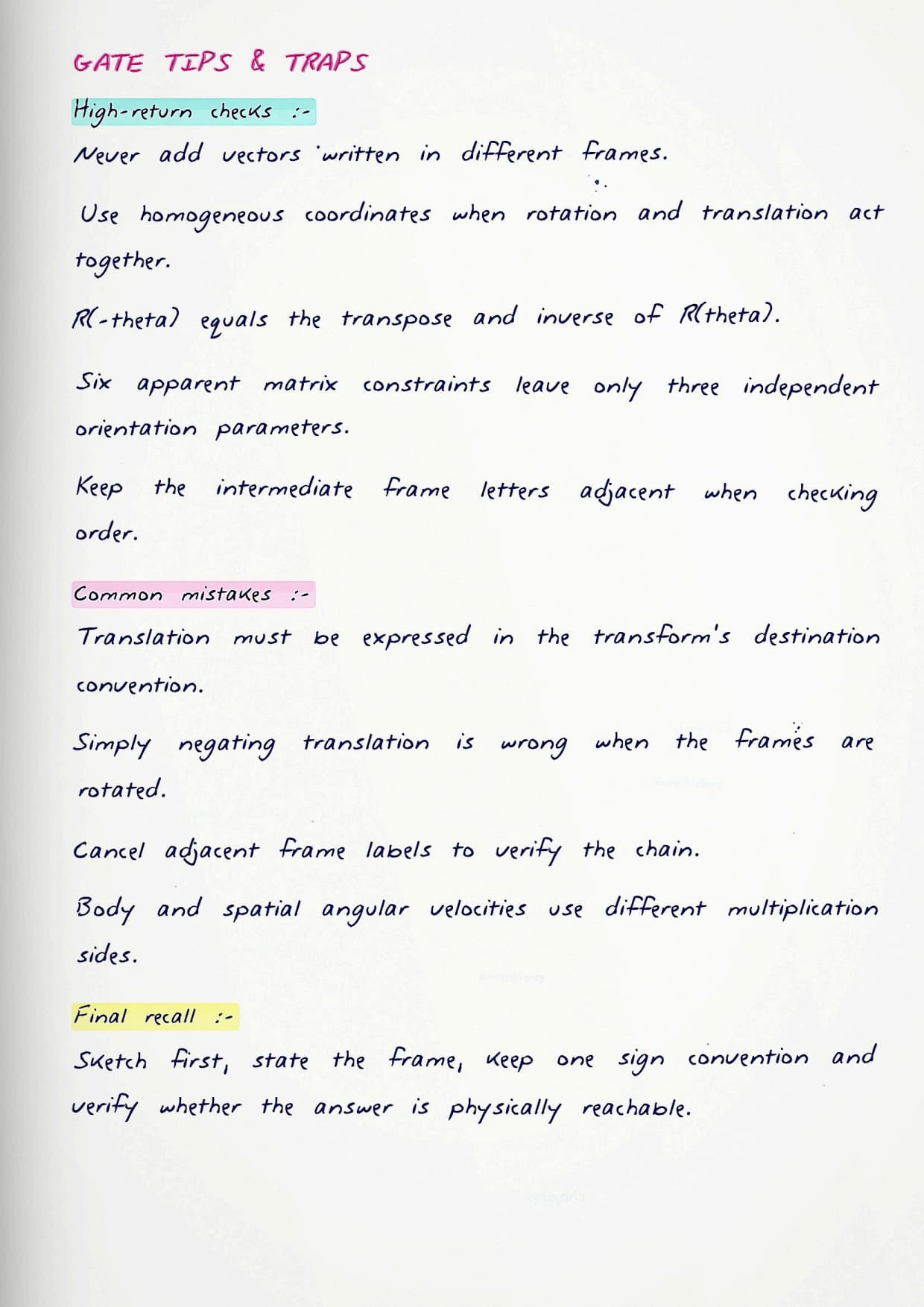
A short review page near the end collects the traps that cost easy marks, and it is worth a second read before any test.
- Mixing up which frame a vector was measured in, then adding numbers that do not belong together.
- Multiplying transforms in the wrong order, since the sequence is not swappable.
- Reading Euler angles in one convention but solving in another.
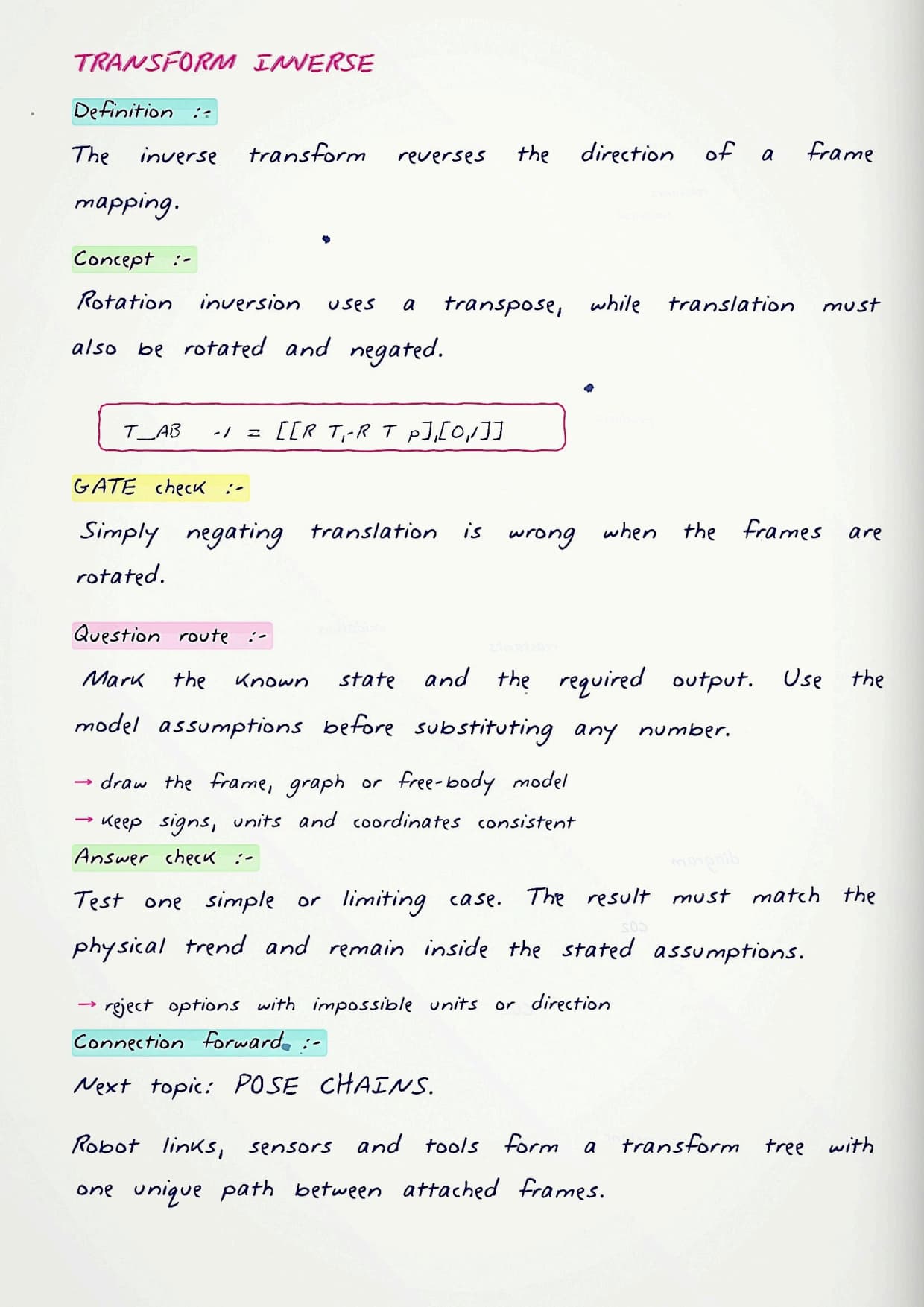
- Forgetting that a rotation and its reverse are related by a clean flip, and inverting the long way instead.
Because these notes stay short and hand-drawn, a full pass takes only a sitting or two, which makes them handy for a quick final revision the night before rather than a first read from scratch.
Coordinate Frames, Transformations and Screw Theory FAQs
Ques. Why do coordinate frames come before everything else in robotics?
Ans. Every position, velocity and pose is meaningless until students say which frame it was measured in. Frames give the whole subject a shared language, so kinematics, dynamics and planning all lean on them. That is why these notes treat frames as the true starting point.
Ques. What is the difference between a transformation and a rotation?
Ans. A rotation only turns the axes. A transformation carries both a rotation and a translation together, so it describes a full change of pose from one frame to another. The homogeneous transform is simply the tidy way to write the two as one object.
Ques. What does screw theory actually add?
Ans. Screw theory treats any rigid-body motion as one rotation about an axis plus a slide along it, like a bolt turning through a nut. This unifies turning and sliding into a single idea and leads to twists and exponential coordinates, which make robot motion far cleaner to model.
Ques. Are these notes enough to learn the topic from zero?
Ans. They are best used as a fast build-up and revision aid. The pages move quickly from a single frame to screw theory, so students who have seen the ideas once will find them ideal, while complete beginners should pair them with a full lecture course.
Ques. Does this topic overlap with any GATE parent paper?
Ans. The vector and matrix reasoning behind frames and transforms overlaps directly with Engineering Mathematics, which appears across GATE branches. There is no standalone Robotics paper, but the modelling skills here are a core, high-return foundation for any robotics test.



Comments