




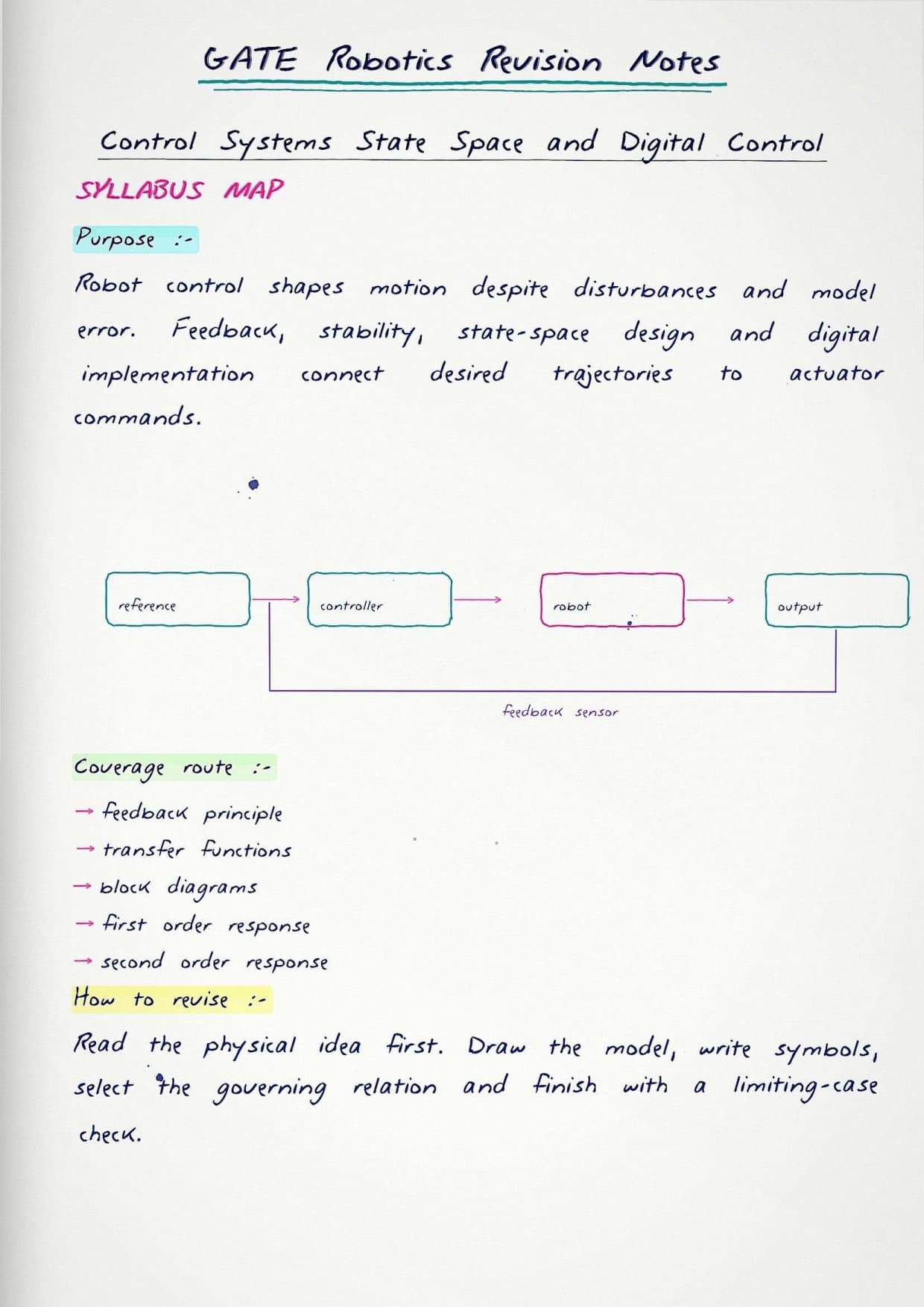
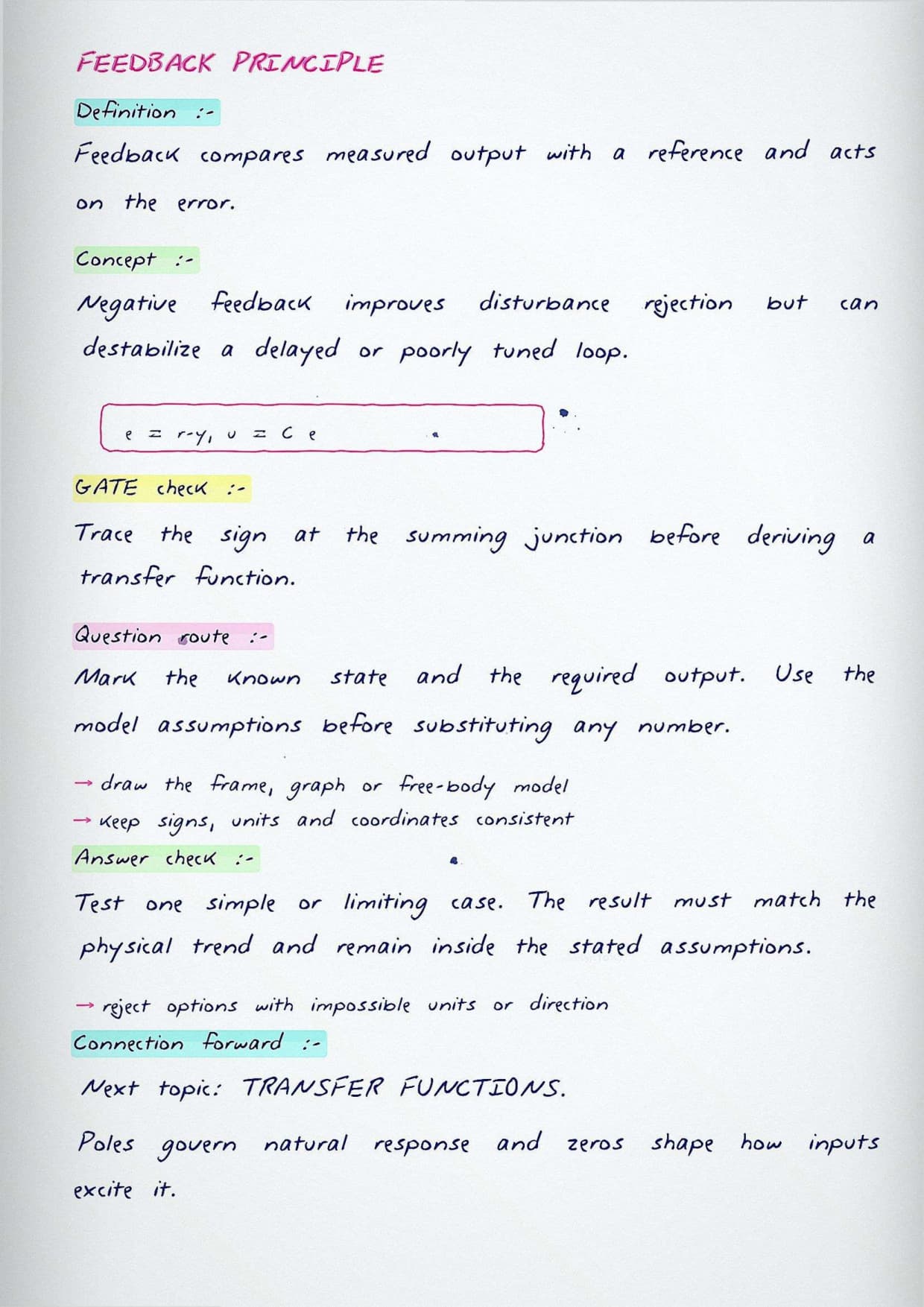
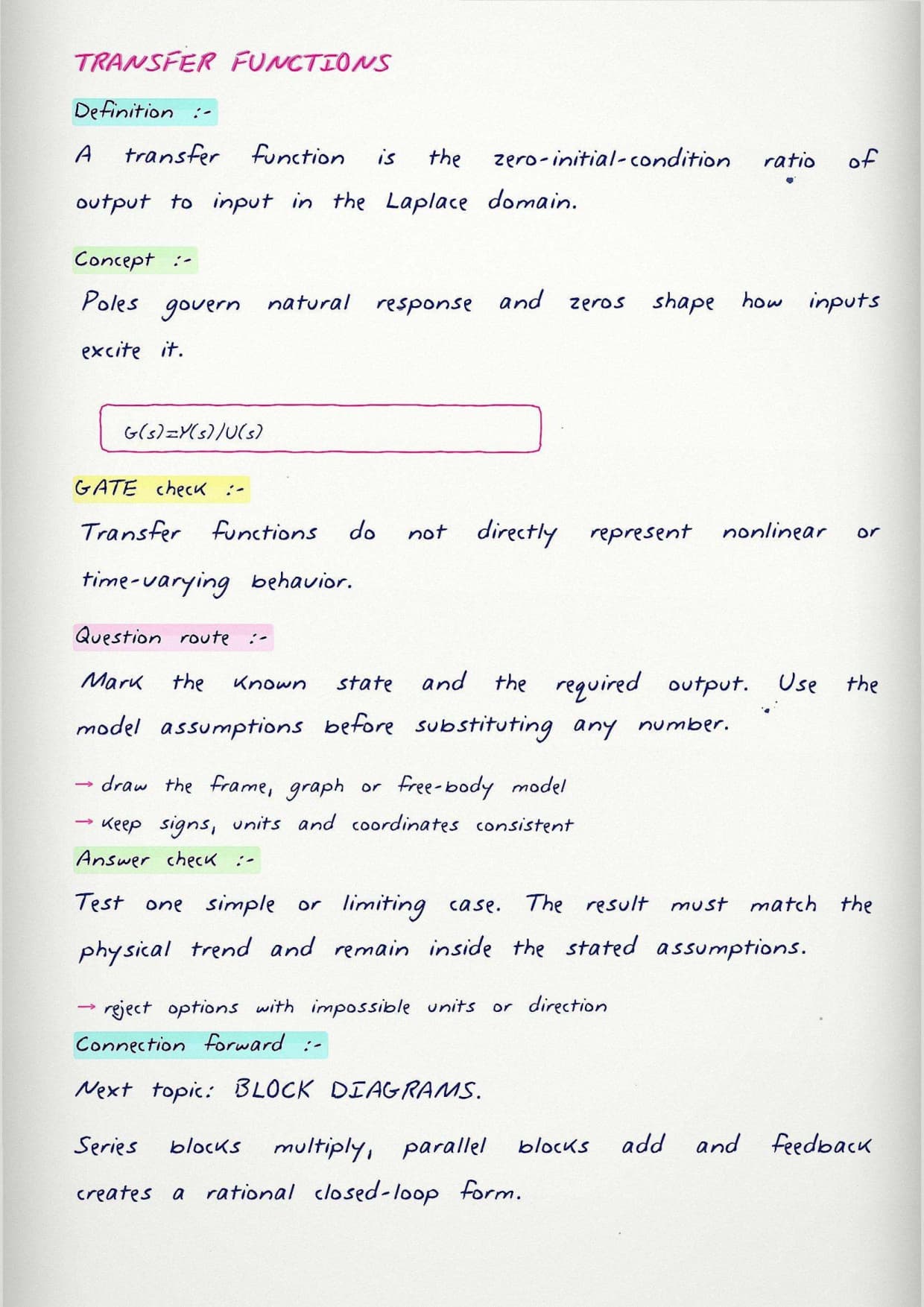
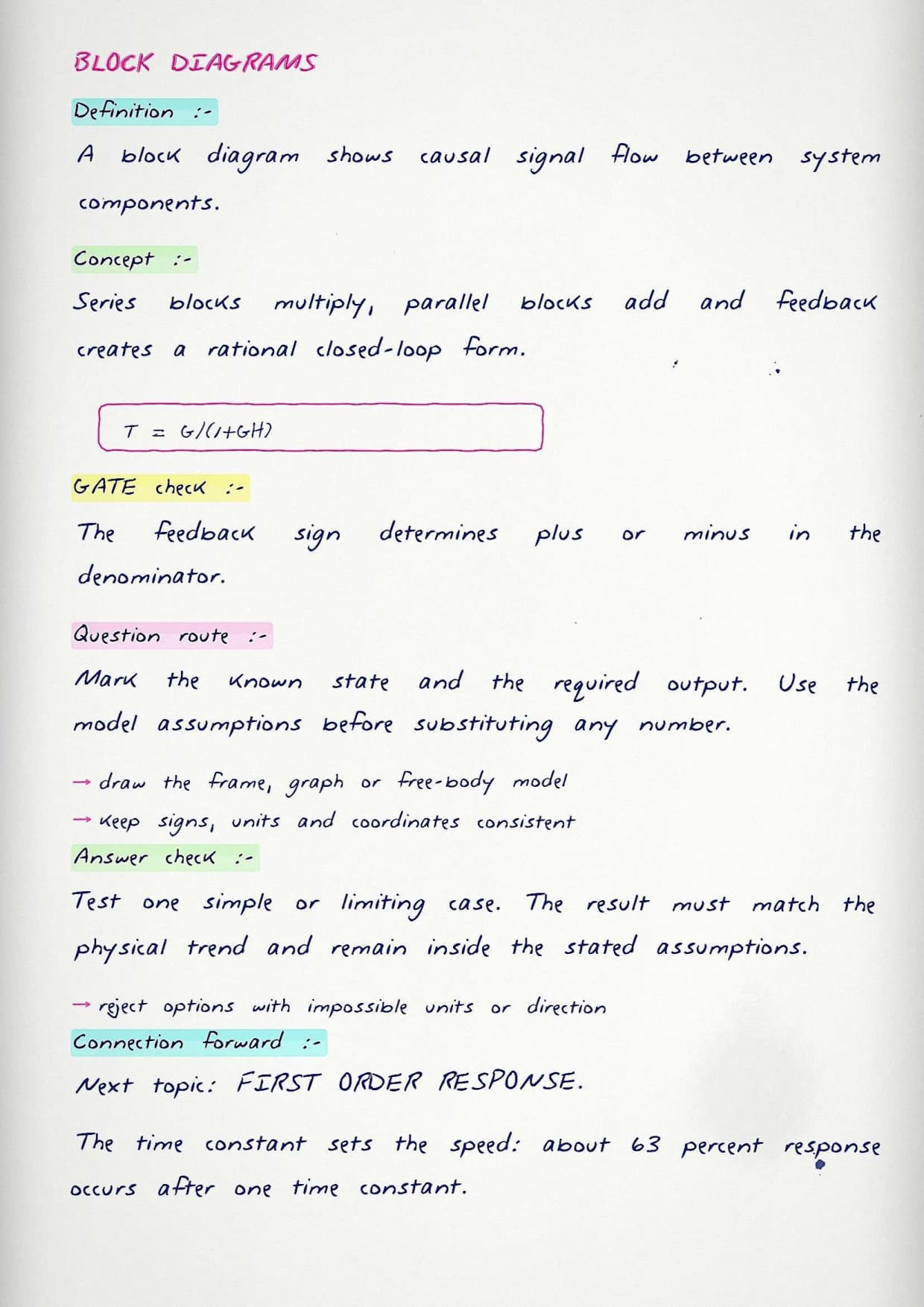
State space and digital control sit at the heart of how a robot is modelled, steadied and made to follow commands, which makes these Control Systems State Space and Digital Control handwritten notes a genuinely high-return study asset.
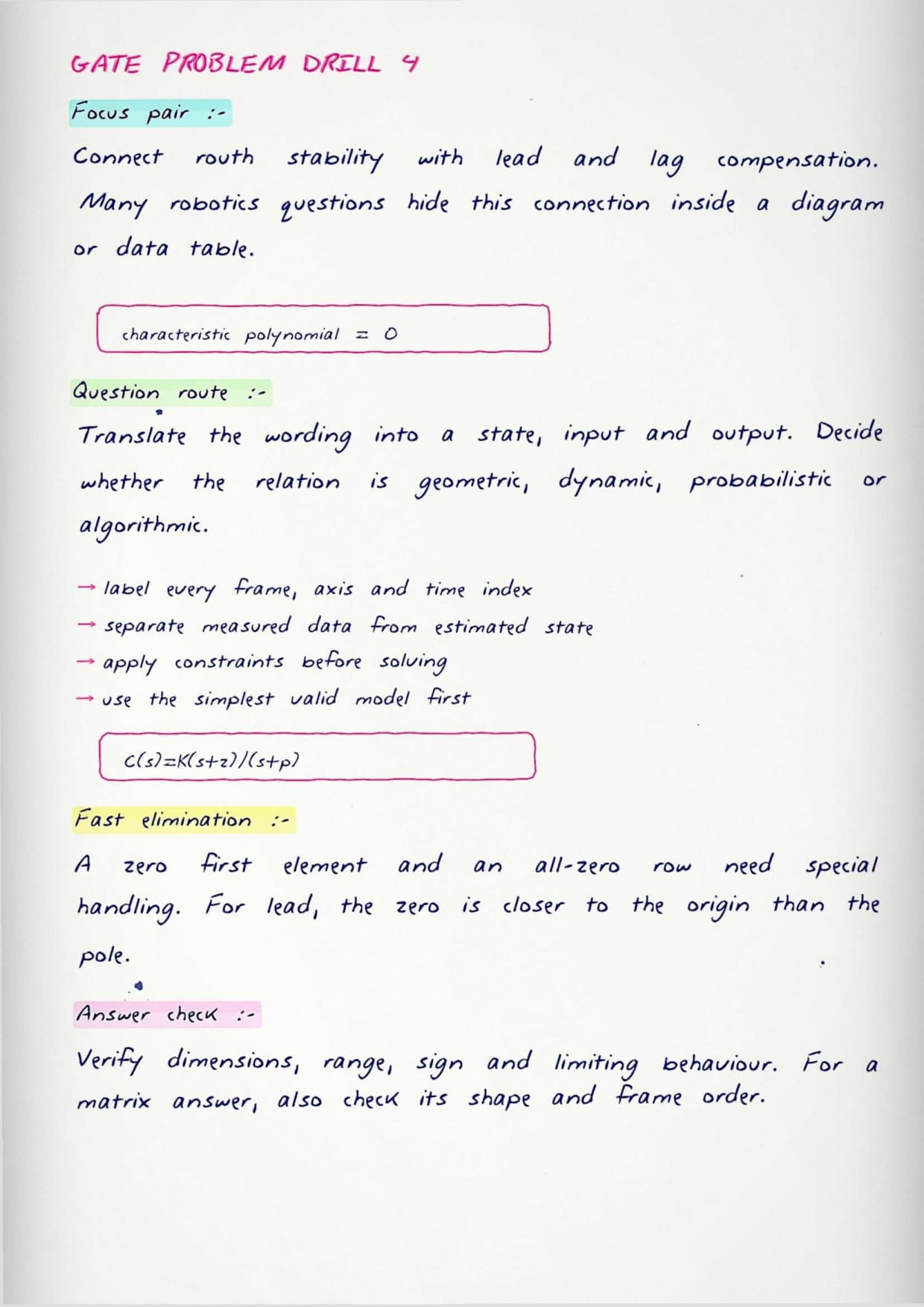
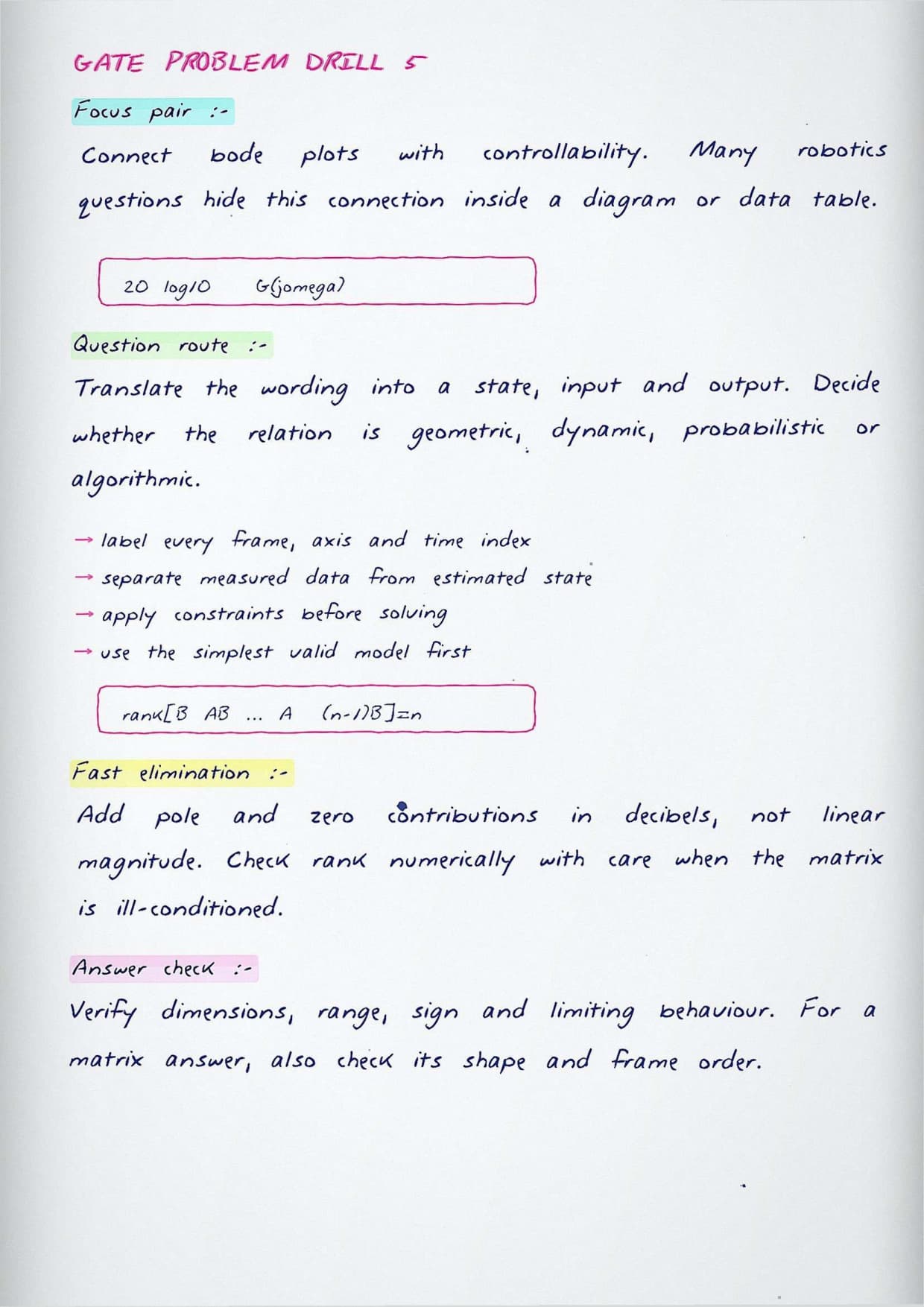
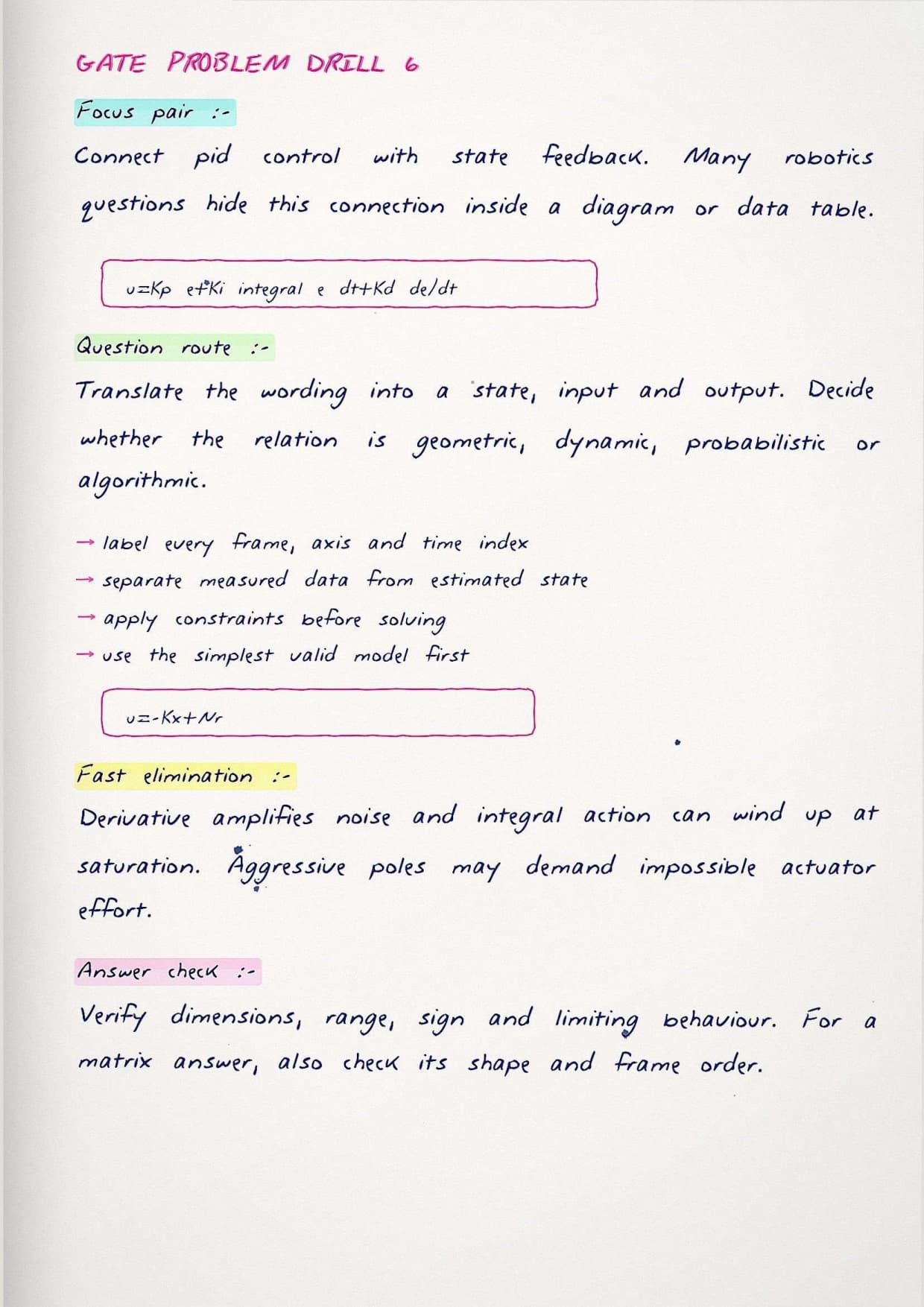
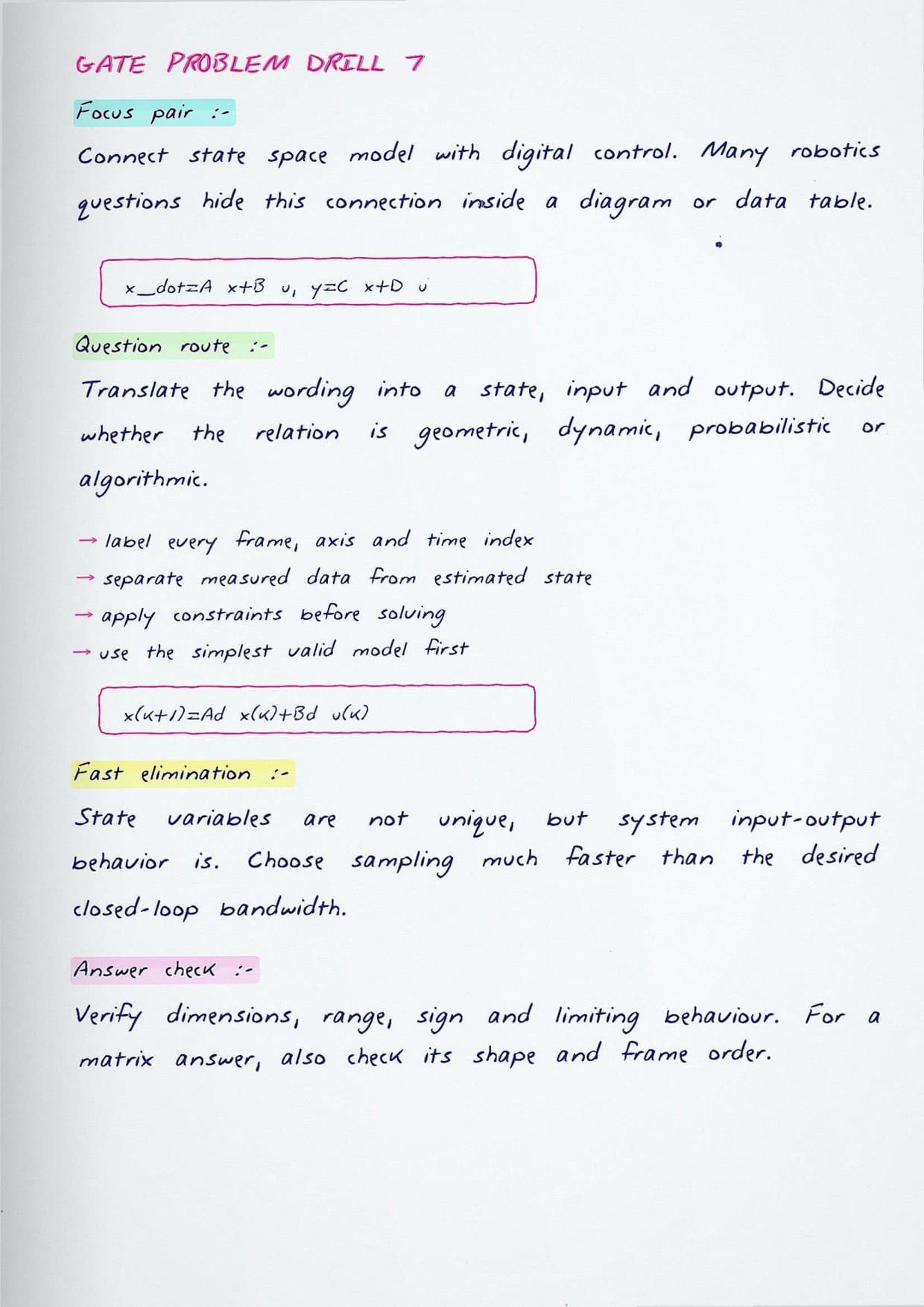
Why State Space and Digital Control Punch Above Their Weight
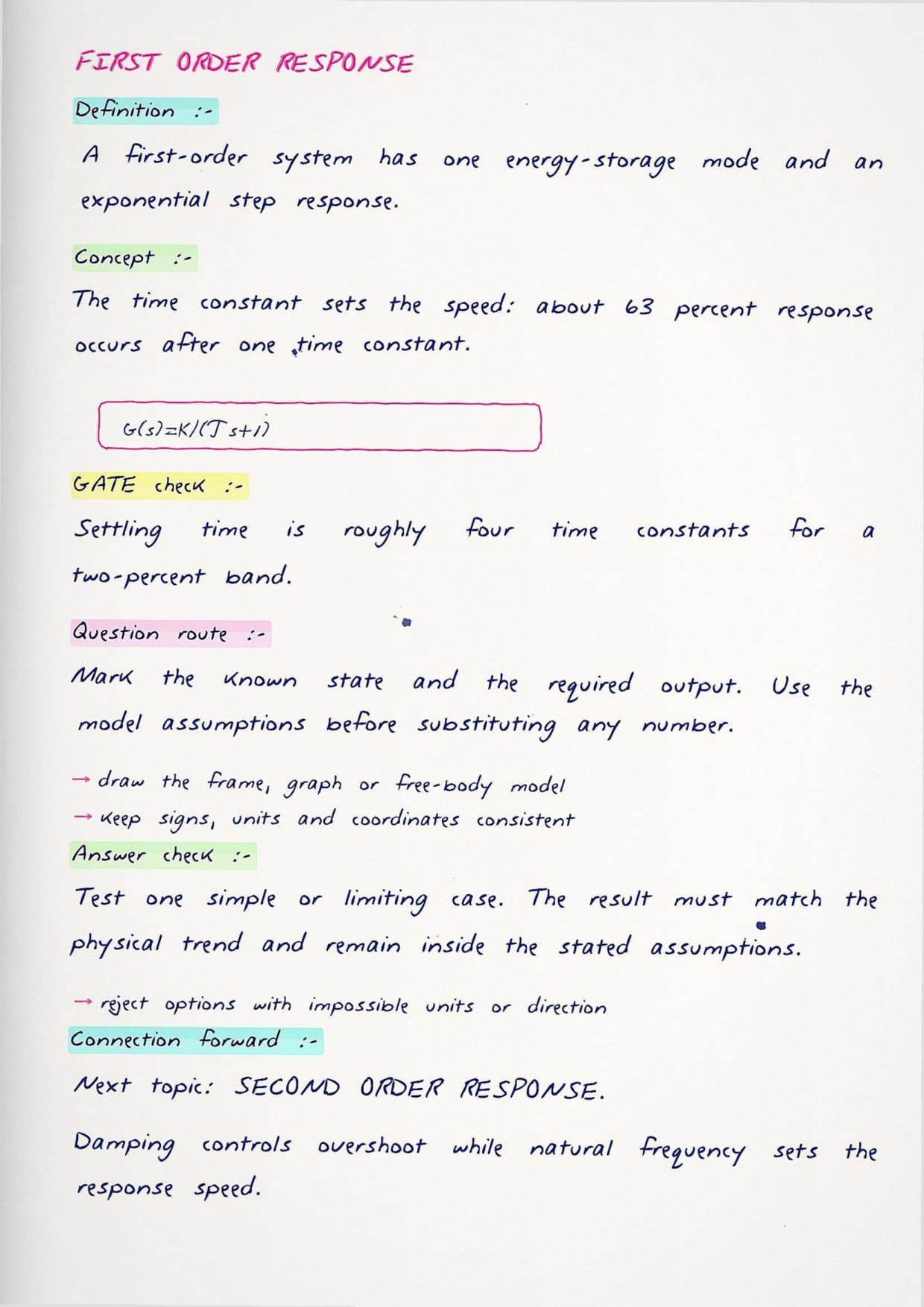
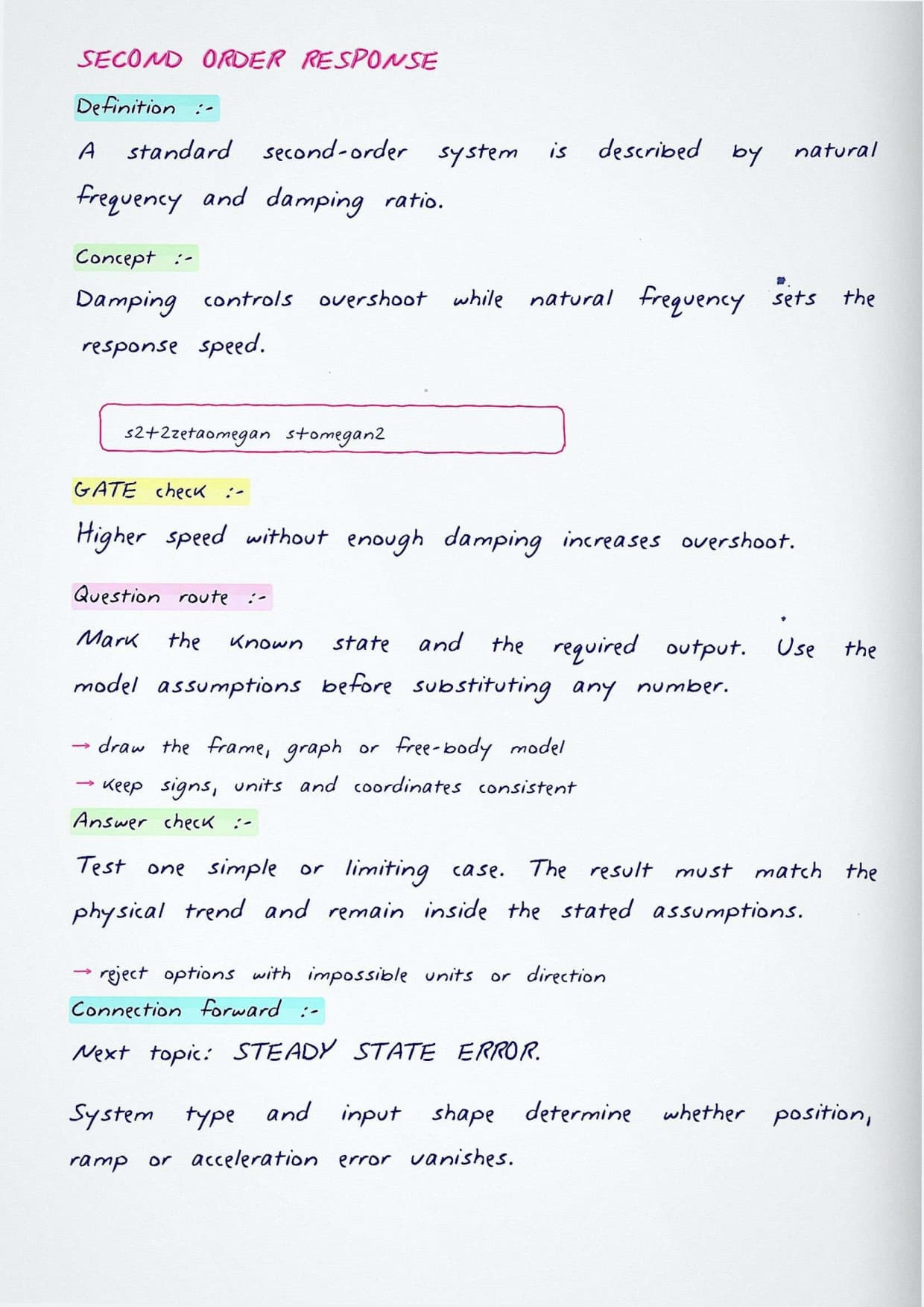
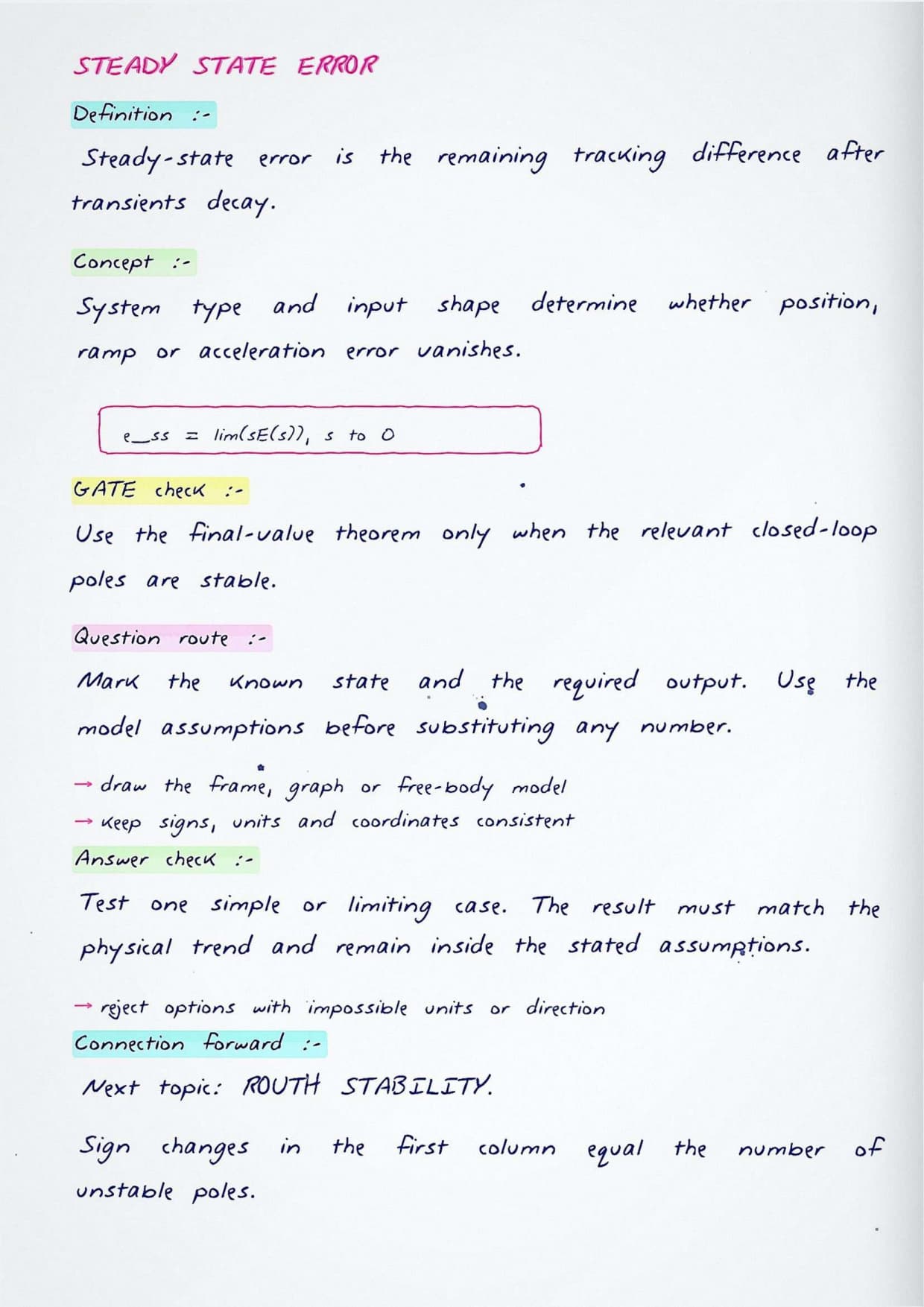
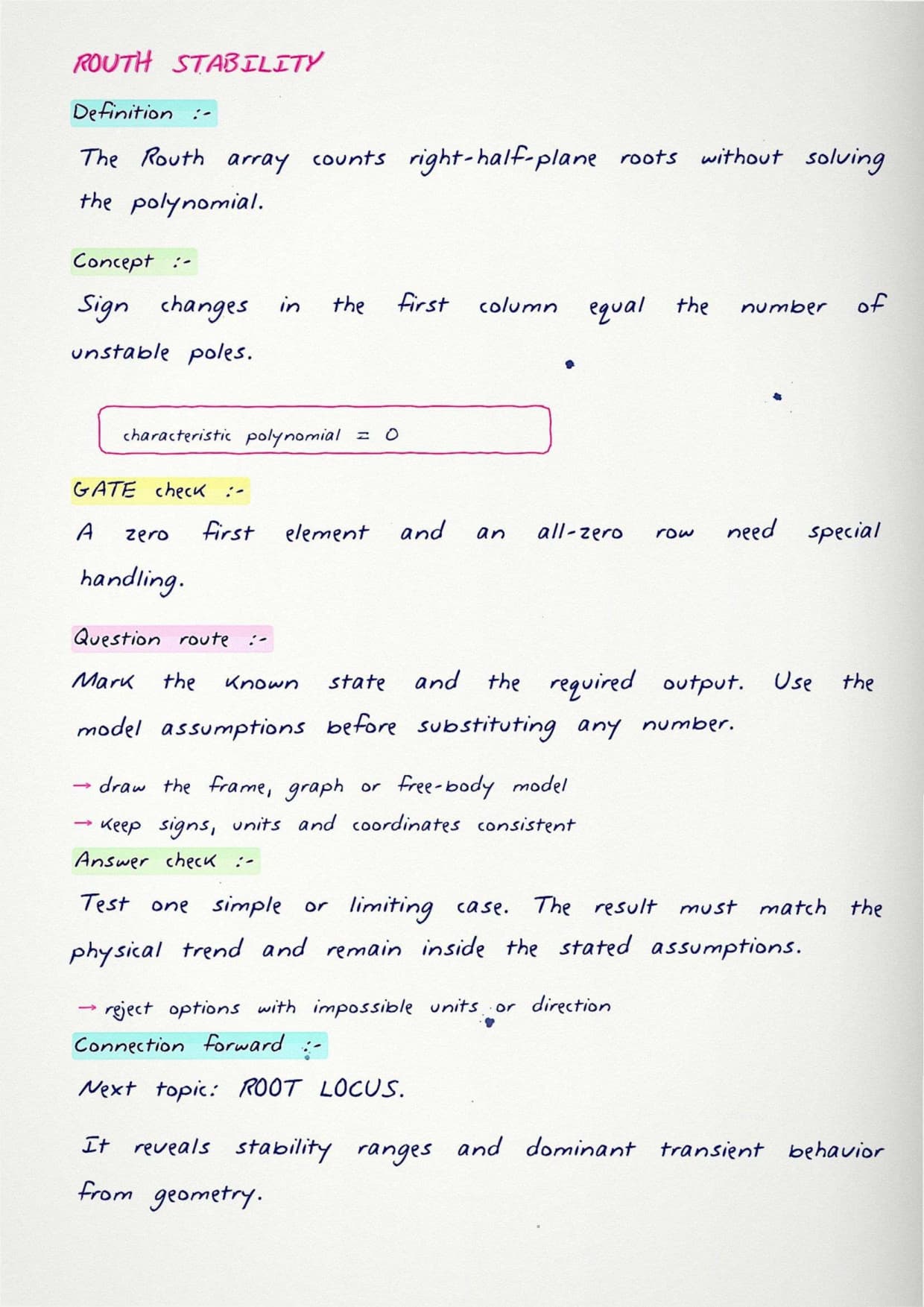
These notes give students a fast, honest route through one of the most tested corners of robotics preparation. Control theory also overlaps directly with GATE Electrical, Electronics and Instrumentation papers, so the effort here pays back across several exams.
Ask any student who has sat a controls test and the same answer comes back: the marks cluster around a handful of ideas that reappear year after year. State space modelling and discrete-time control are two of them.
The notes lean into that reality. Each page pins down the one result an examiner is likely to ask for, then shows the shortest clean path to it. That is why students treat it as a scoring topic, not a survival one.
The High-Return Topics These Notes Zero In On
Everything on these pages earns its place. The core threads students will find are:
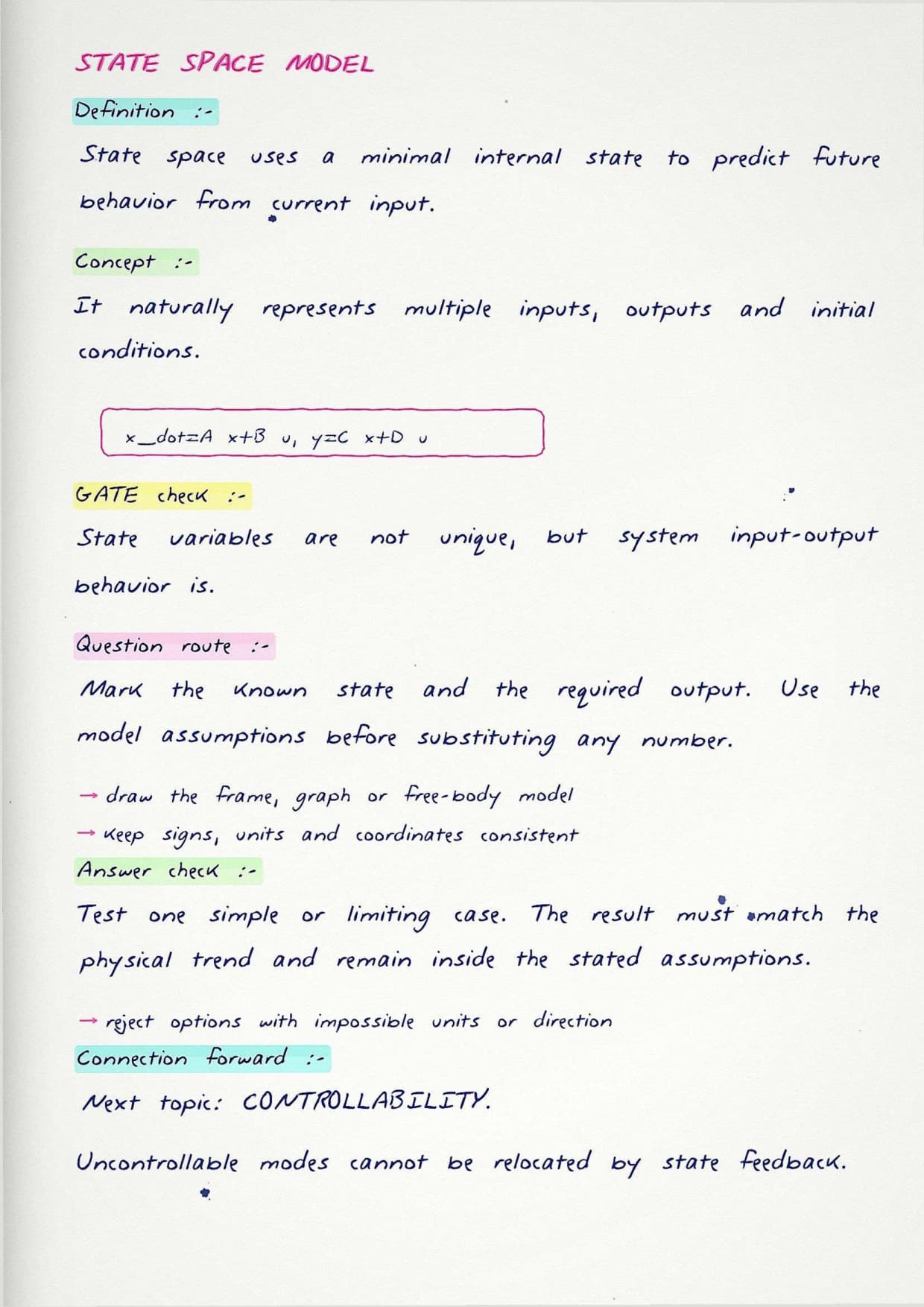
- State variable form: writing the A, B, C and D matrices from a differential equation or a transfer function.
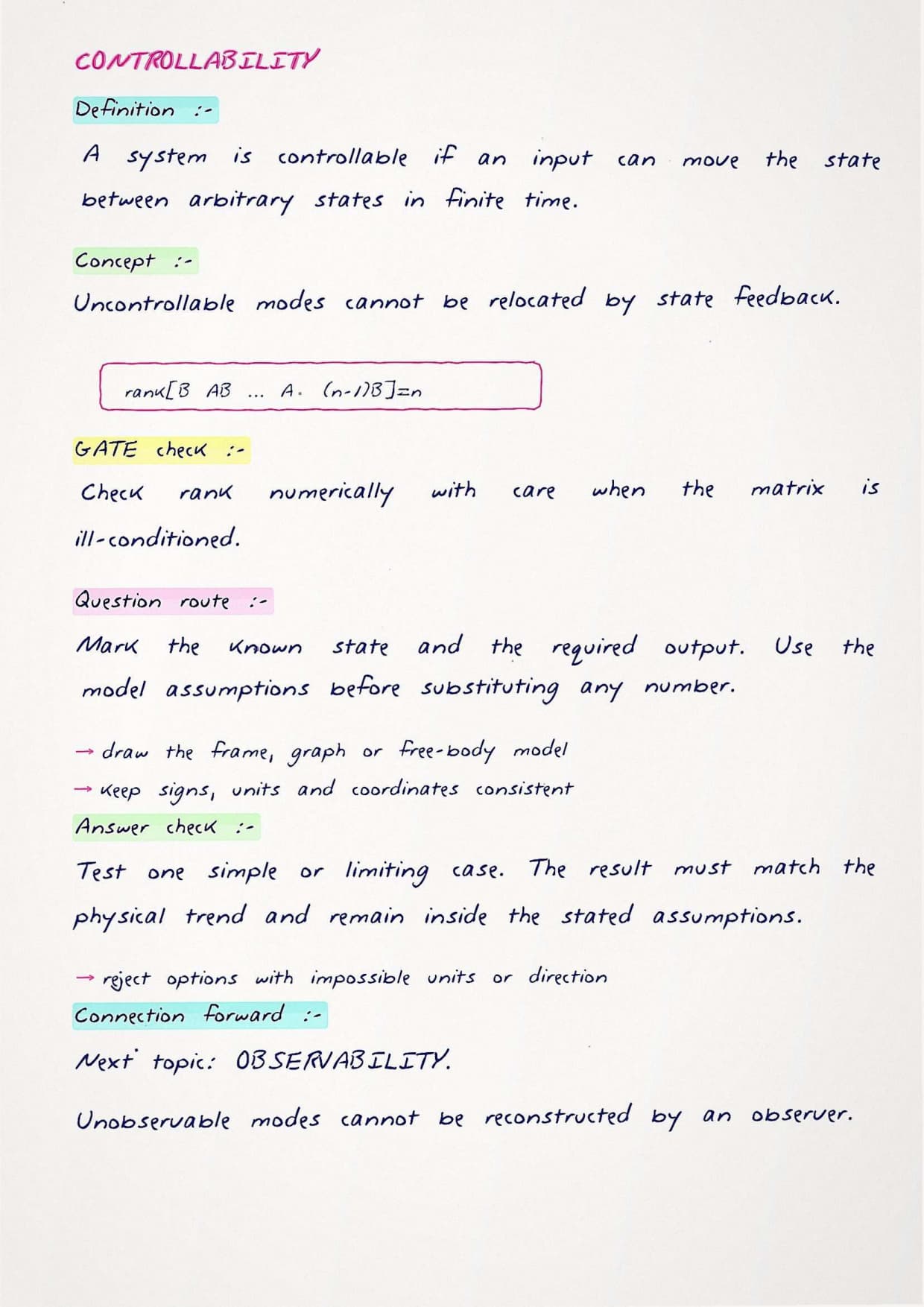
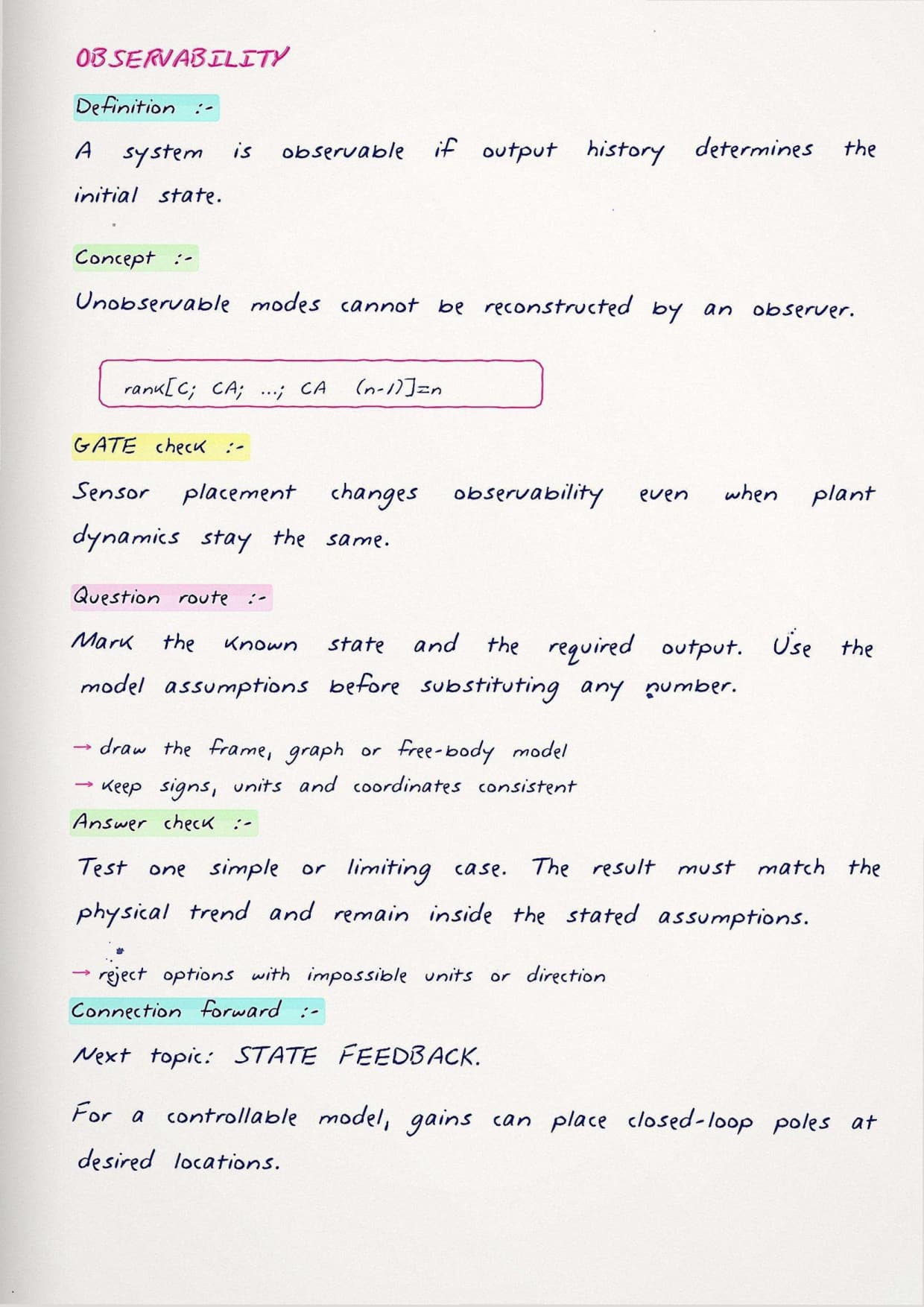
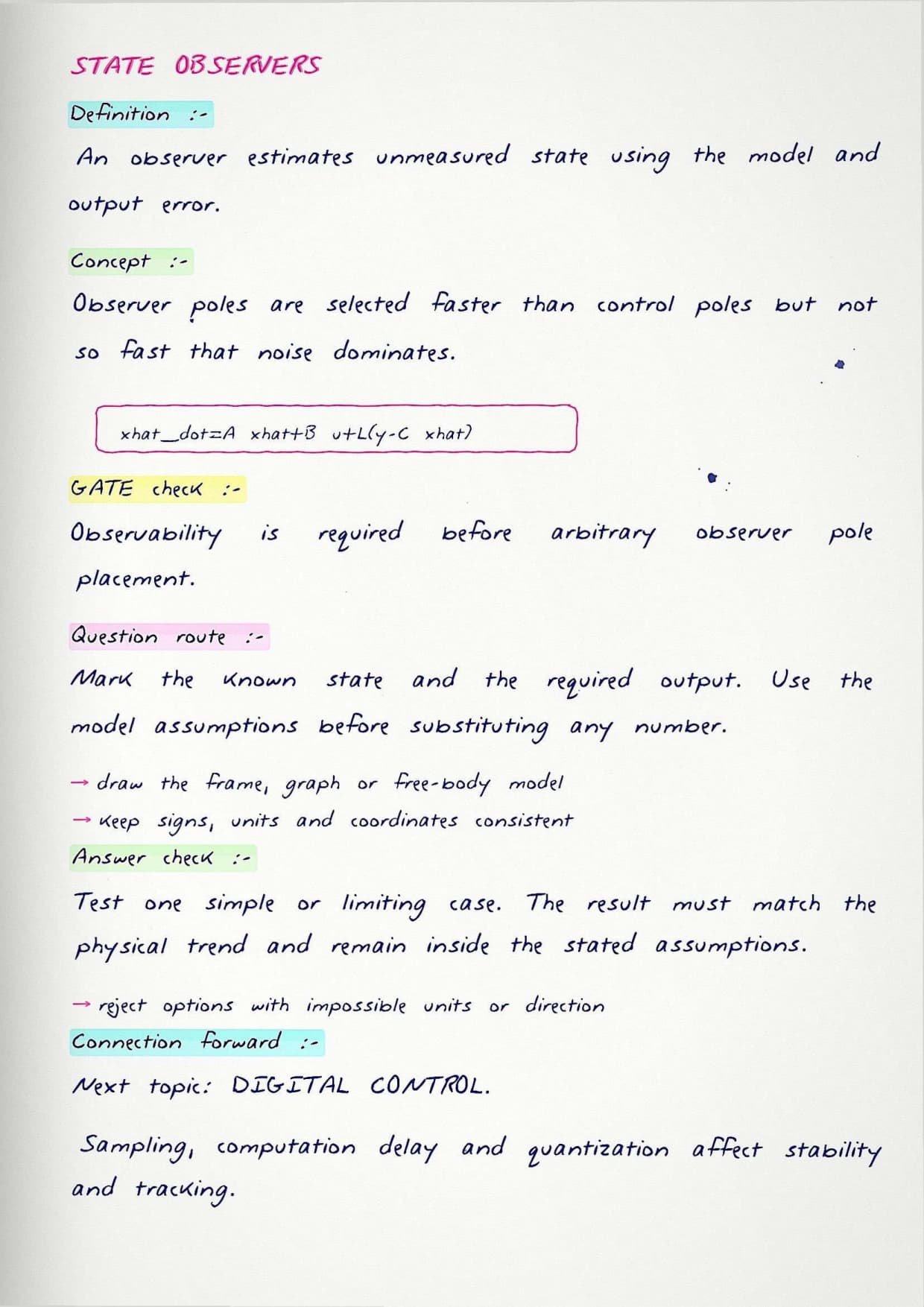
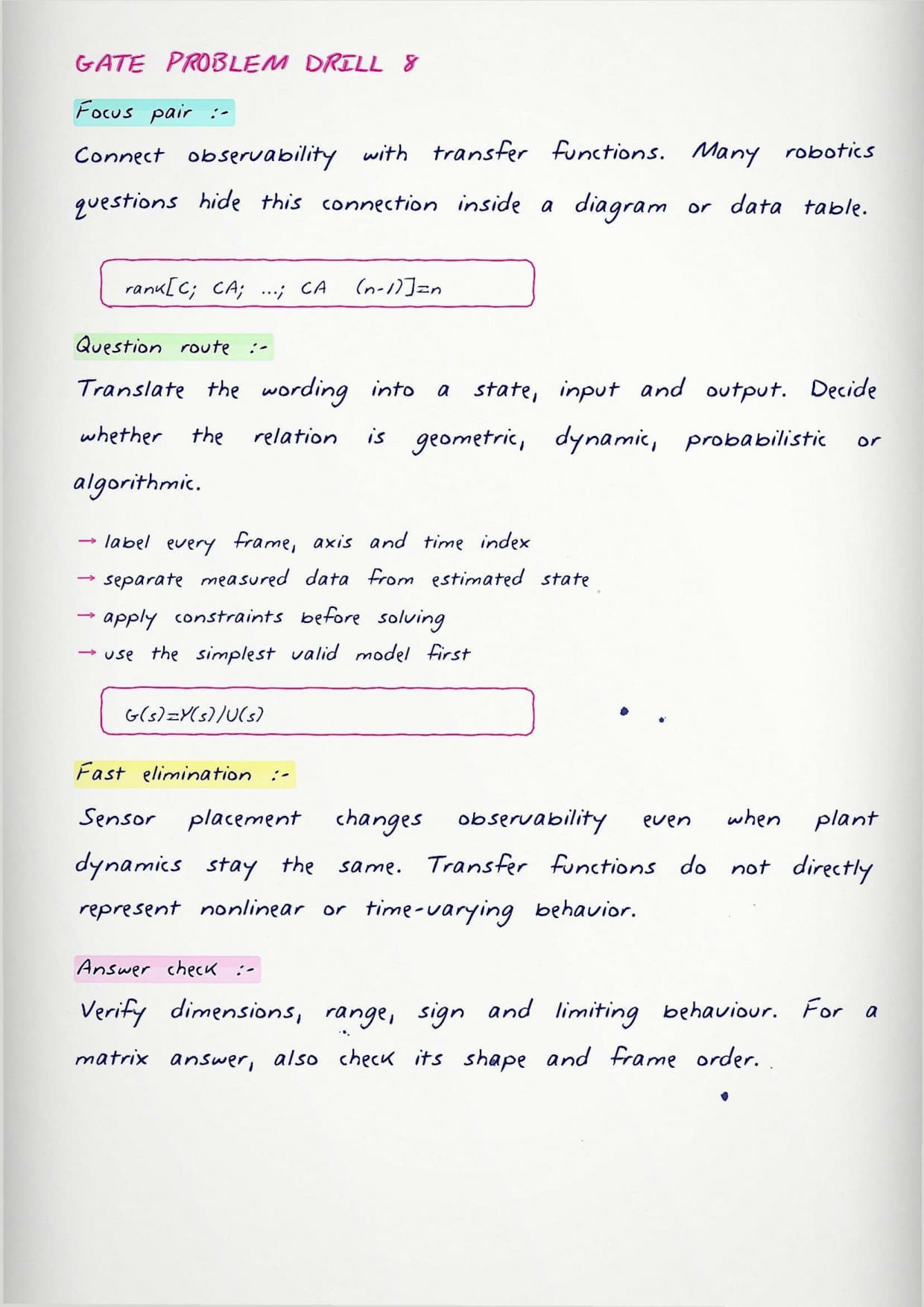
- Controllability and observability: setting up the test matrices and reading their rank.
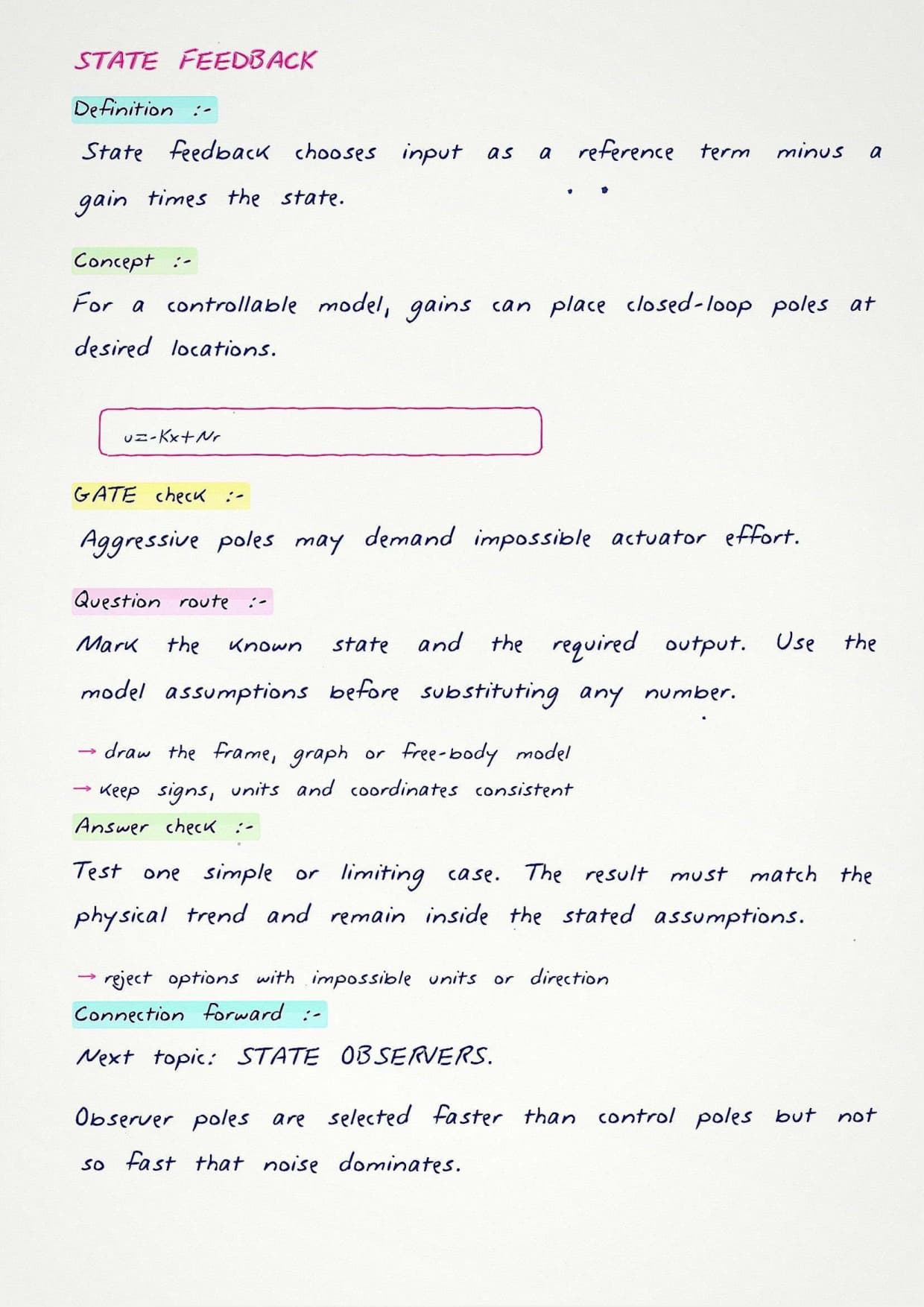
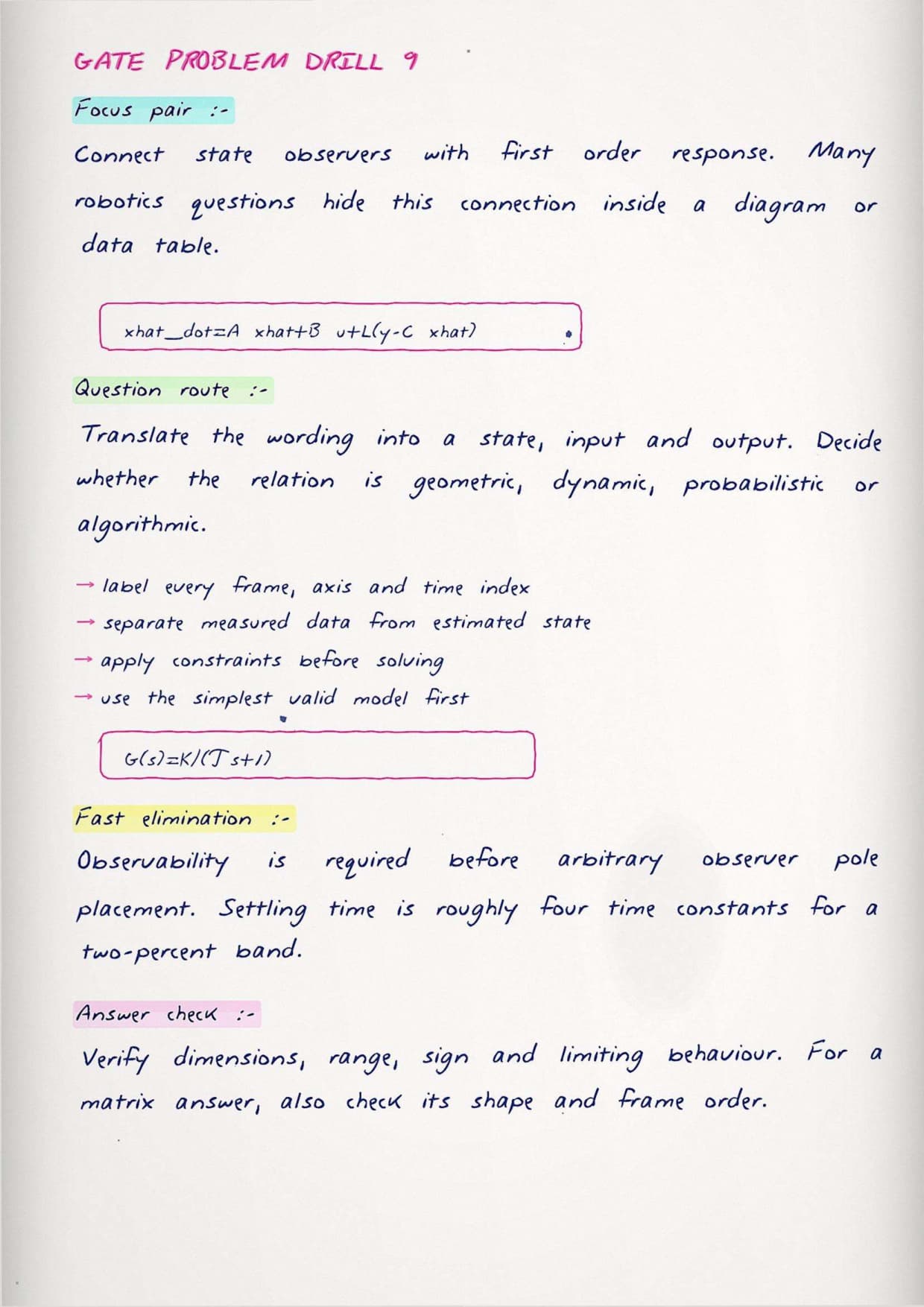
- Pole placement and the idea of moving system behaviour by choosing feedback gains.
- Solution of the state equation using the state transition matrix.
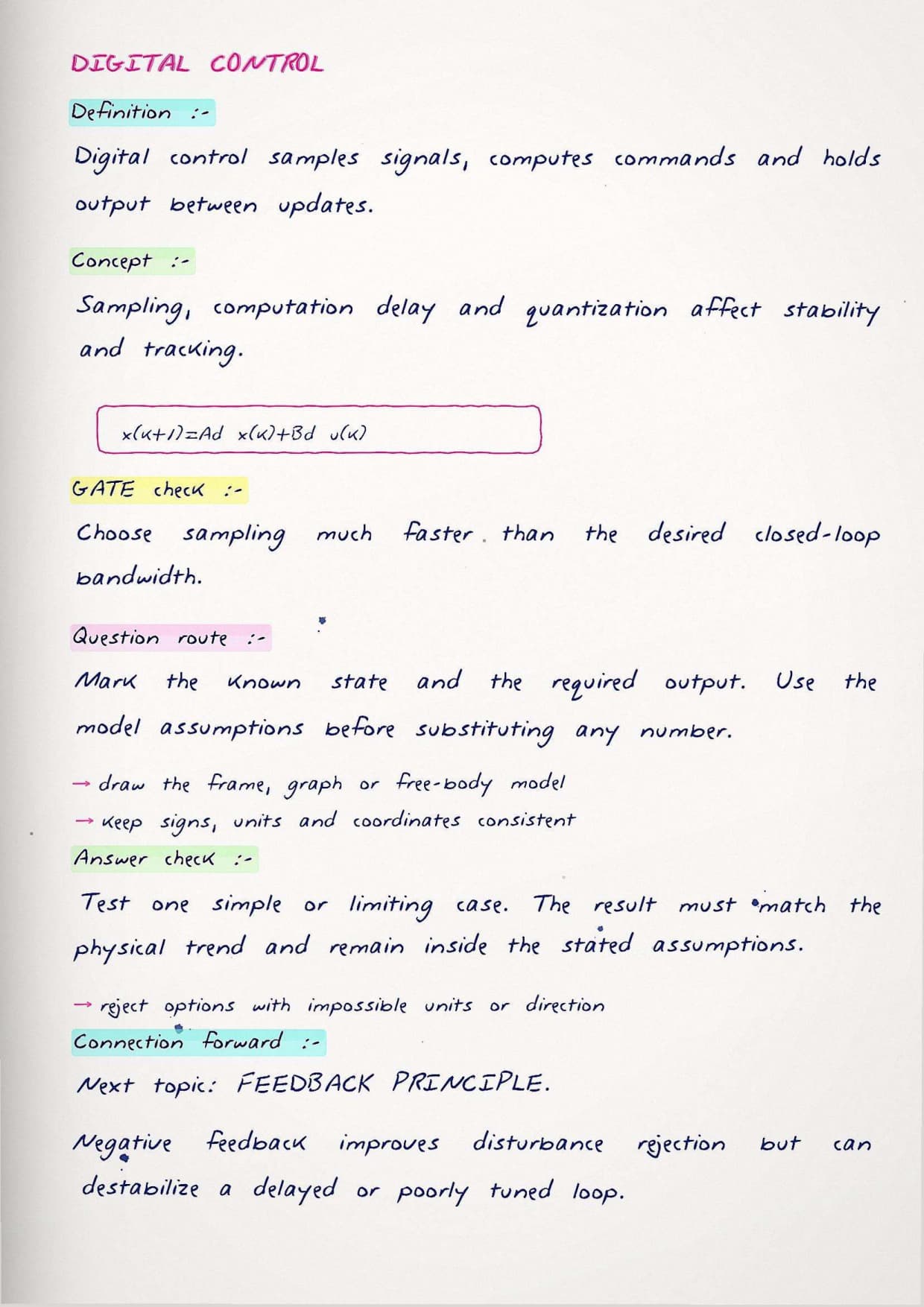
- Discretisation: moving from a continuous model to a sampled one, and the role of the sampling period.
- Z-transform basics and the mapping between the s-plane and the z-plane for stability.
Handwriting these derivations once, by the student's own hand, tends to lock them in far better than re-reading a printed chapter. That is the quiet strength of working through notes like these.
Where Students Slip Up in State Space Problems
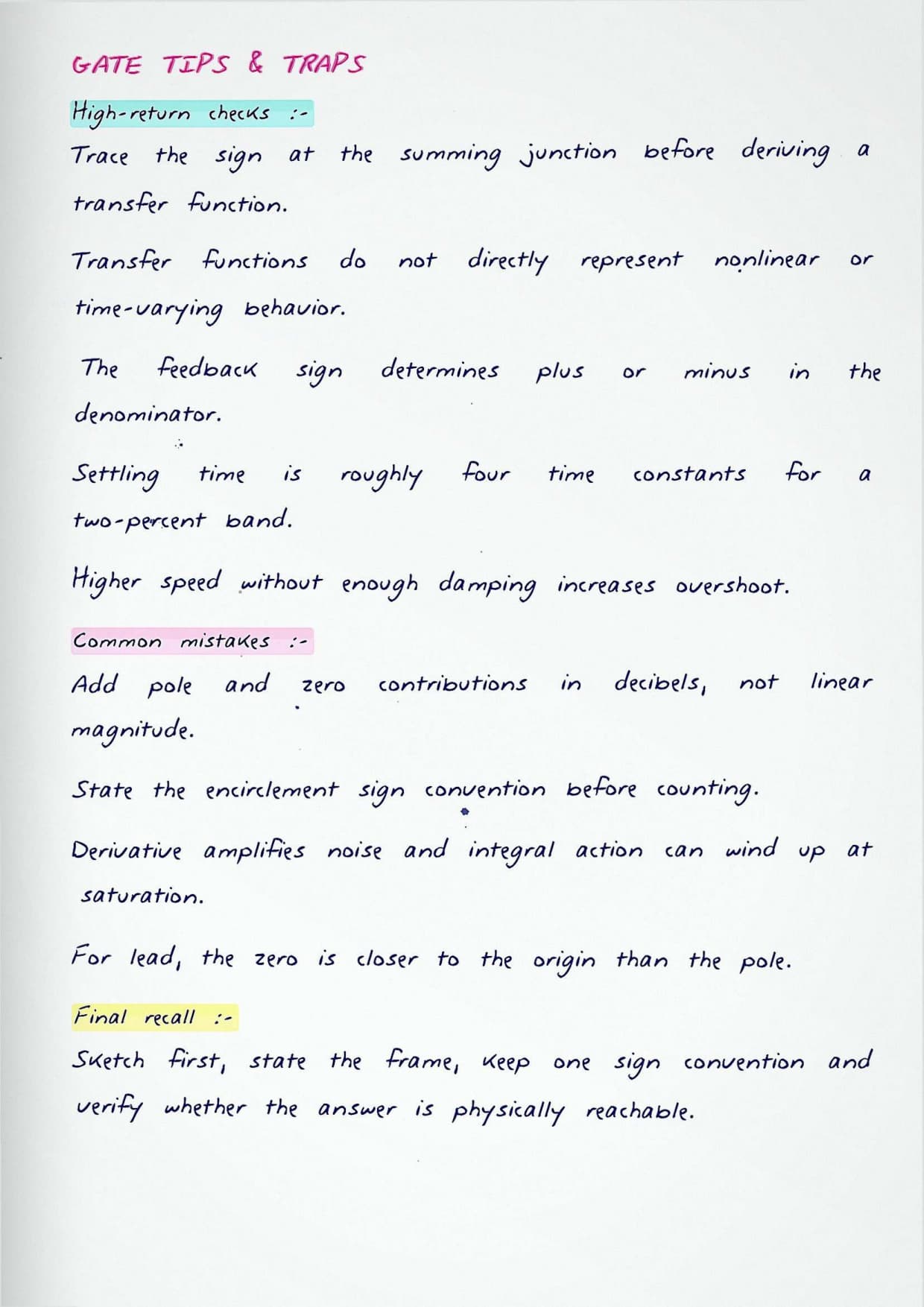
Most lost marks here are avoidable. The recurring traps the notes flag are worth stating plainly:
- Mixing up rows and columns when building the controllability matrix, then misreading its rank.
- Forgetting that a non-unique state space form exists, so two correct answers can look different.
- Treating a discrete system like a continuous one and checking poles against the wrong boundary.
- Dropping the sampling period when discretising, which quietly breaks every later step.
Each trap is called out beside the method it threatens, so students meet the warning exactly where the mistake usually happens.
Watch State-Space Equations Explained
Source: MATLAB (YouTube)
Digital Control: The Bits Examiners Love to Test
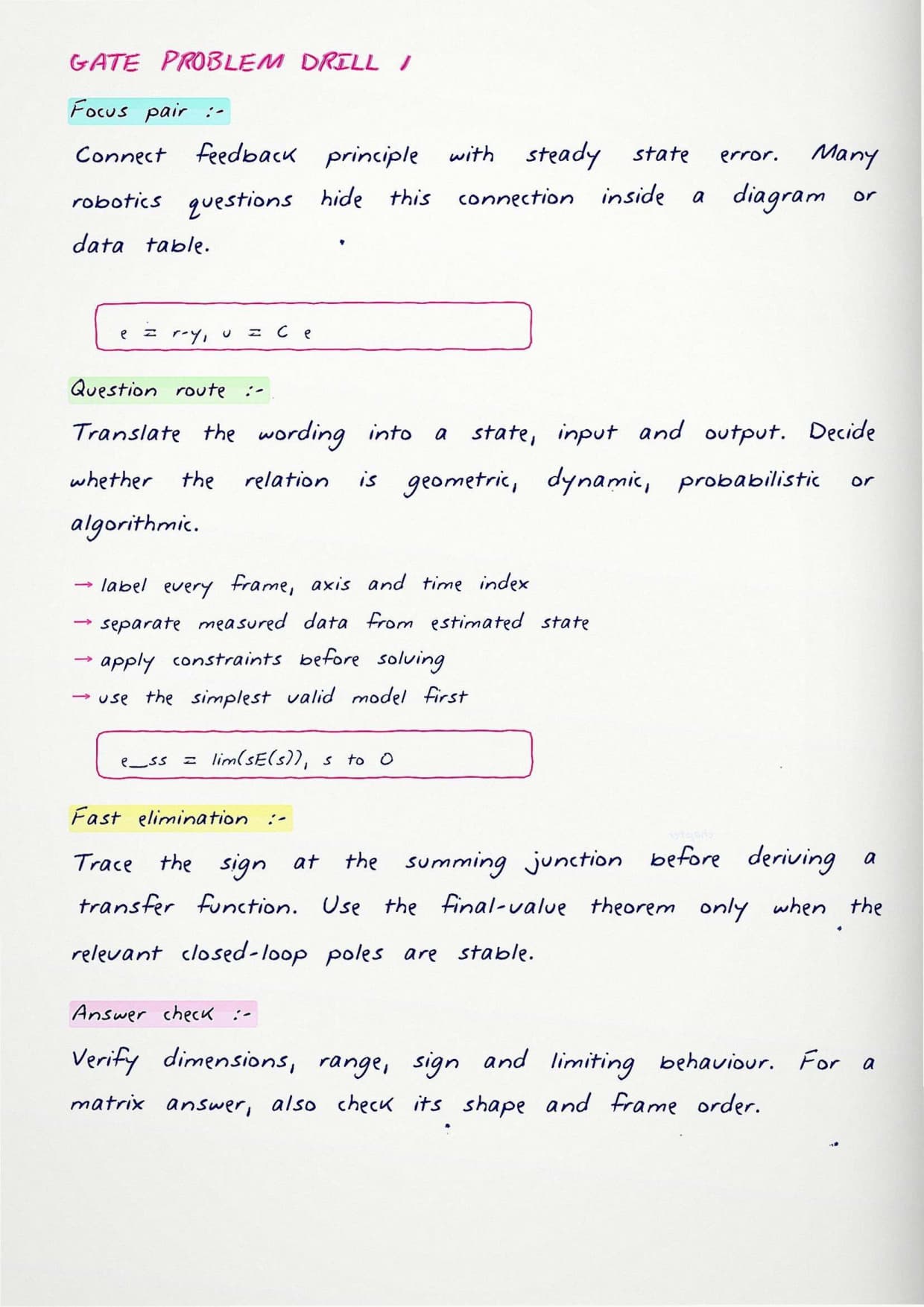
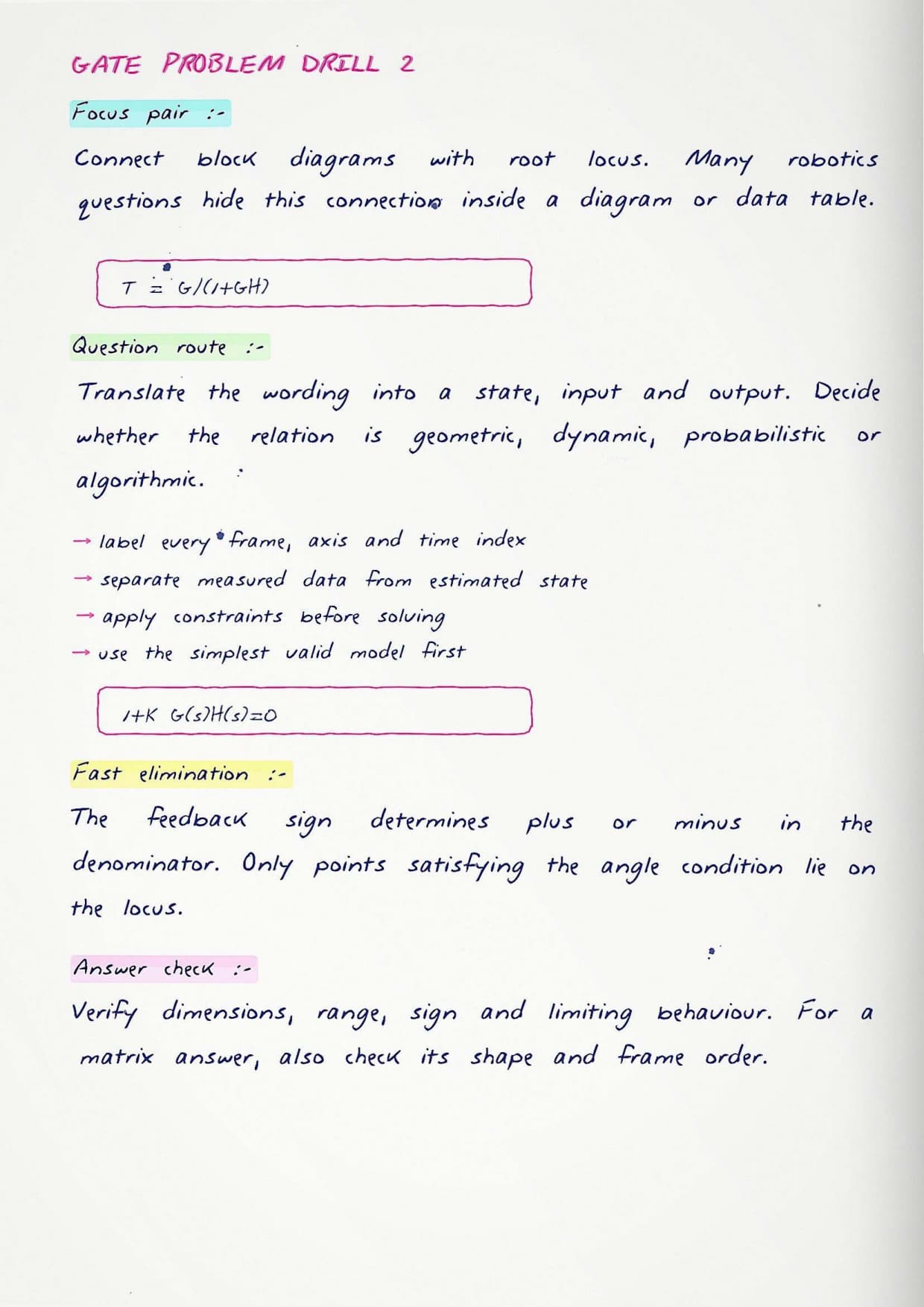
Once a controller runs on a microprocessor, time stops being continuous. The notes give digital control its own careful treatment because robots almost always run sampled controllers in practice. The pages focus on three ideas:
- How a sampler and hold reshape a continuous signal into a sampled one.
- Why the sampling rate decides whether a stable design stays stable.
- How the unit circle in the z-plane replaces the left-half plane as the stability test.
Small worked checks sit next to each idea, so the rule and its use never drift apart.
A Last-Week Drill Plan for These Pages
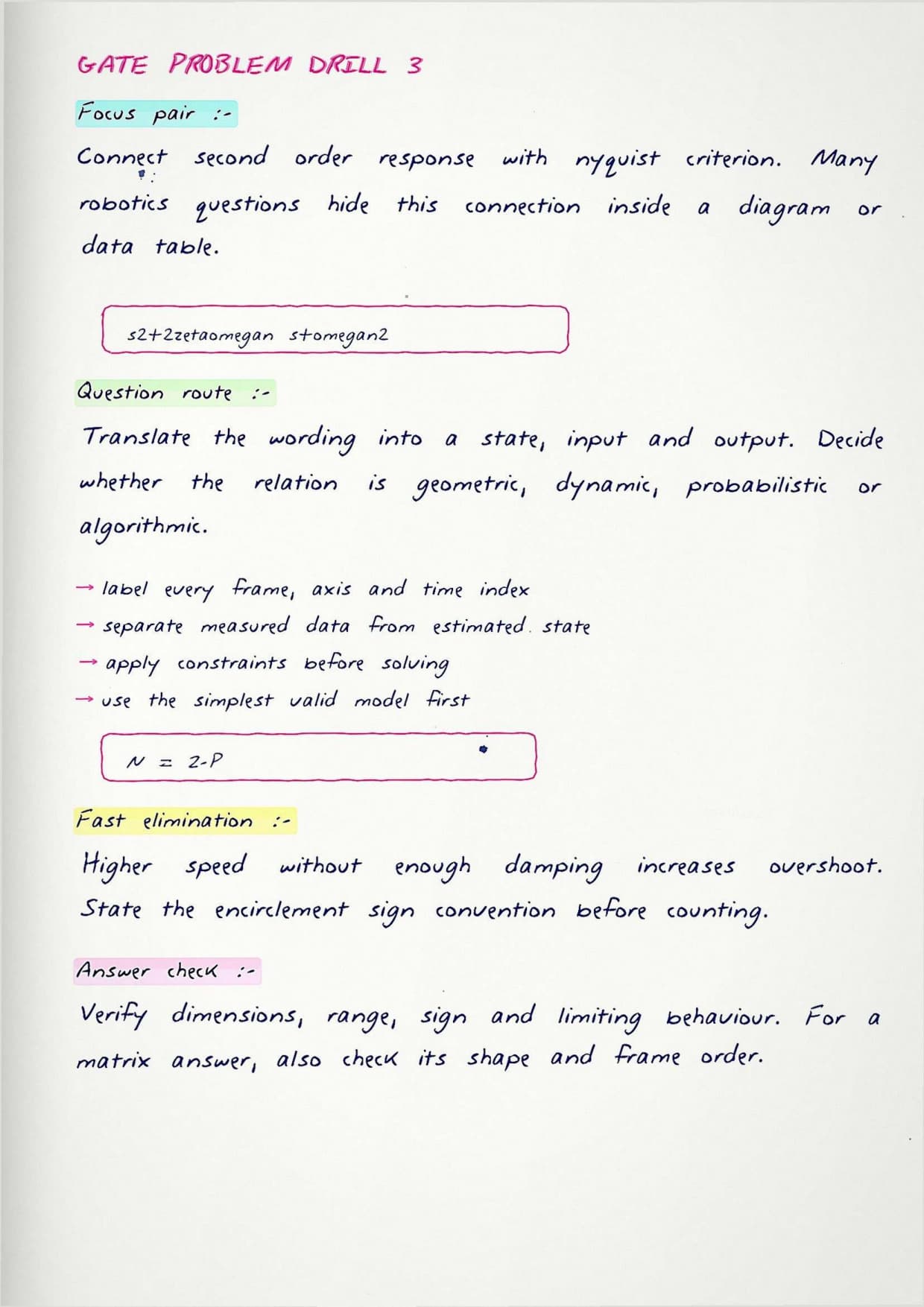
In the final stretch, these notes work best as a drill sheet rather than a reading. A plan students can follow:
- Day one: rebuild the state space form from three different starting points until it feels automatic.
- Day two: run the controllability and observability tests on old questions and time yourself.
- Day three: focus on discretisation and z-plane stability, the two ideas most often rushed.
- Every day: redraw one block diagram from memory to keep the wiring of the system fresh.
Short, repeated passes beat one long sitting. That is how these pages turn a heavy topic into steady marks.
Control Systems State Space and Digital Control FAQs
Ques. Do these handwritten notes assume prior control theory?
Ans. No. The pages start from writing a state space model and build up, so students moving in from a general engineering background can follow the flow without a separate primer.
Ques. Is state space useful only for robotics?
Ans. Not at all. The same state space and stability tools appear in GATE Electrical, Electronics and Instrumentation control questions, so studying them here pays off across several papers.
Ques. What is the difference between the s-plane and z-plane checks?
Ans. Continuous systems are stable when poles sit in the left half of the s-plane, while sampled digital systems are stable when their poles sit inside the unit circle in the z-plane. The notes show both side by side.
Ques. How should students revise these pages in the last week?
Ans. Use them as a drill. Rebuild the state space form daily, run controllability and observability tests on past questions, and spend focused time on discretisation and z-plane stability.



Comments