




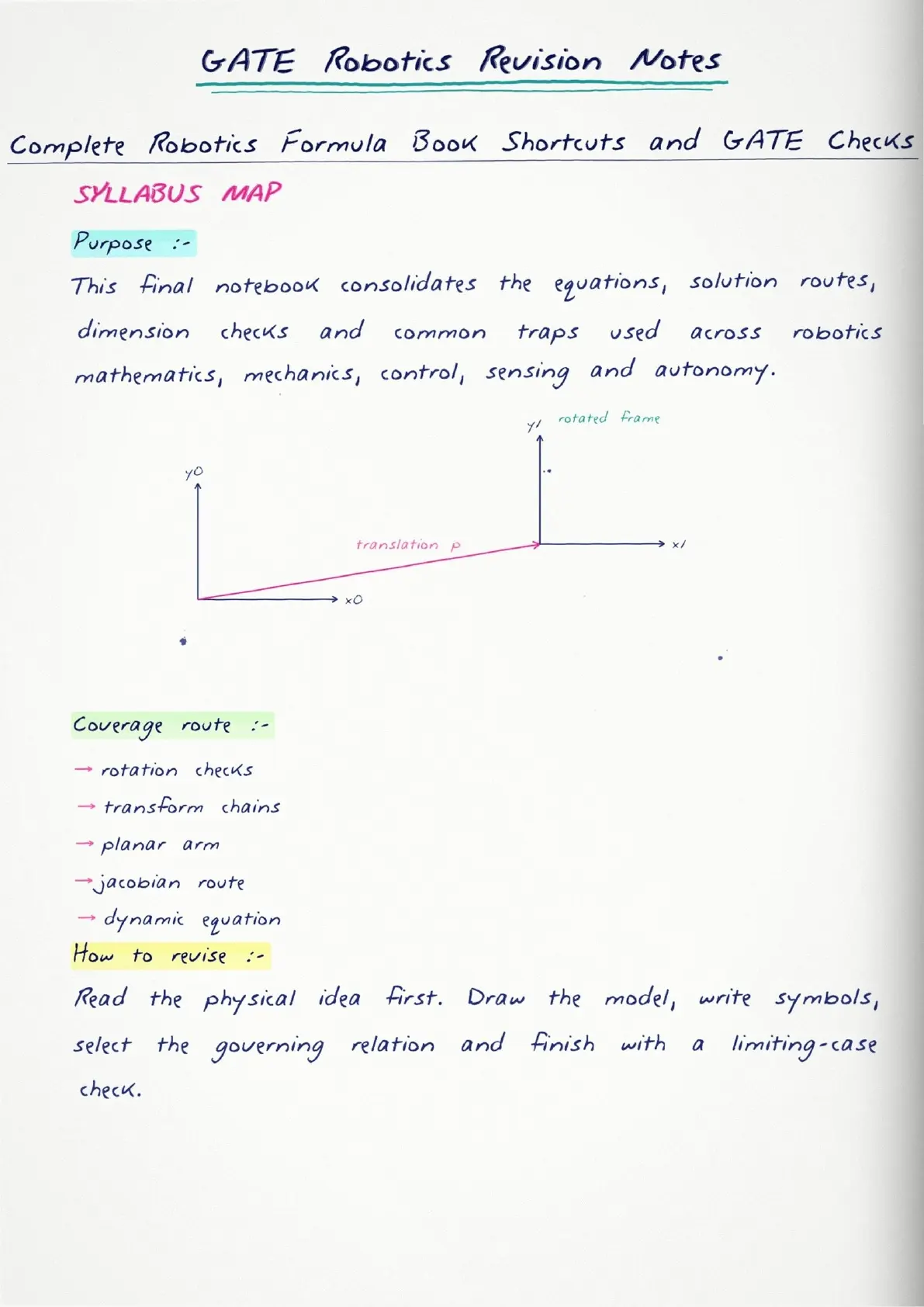
The Complete Robotics Formula Book gathers every core relation, unit check, and fast sanity test into one slim revision handbook, so students can flip to a page, refresh a result, and keep moving.

What This Book Puts in Your Hands
With the exam only days away, students rarely have time to reread full chapters. This is a recall book, not a first textbook, written the way a student jots things down the night before a test.
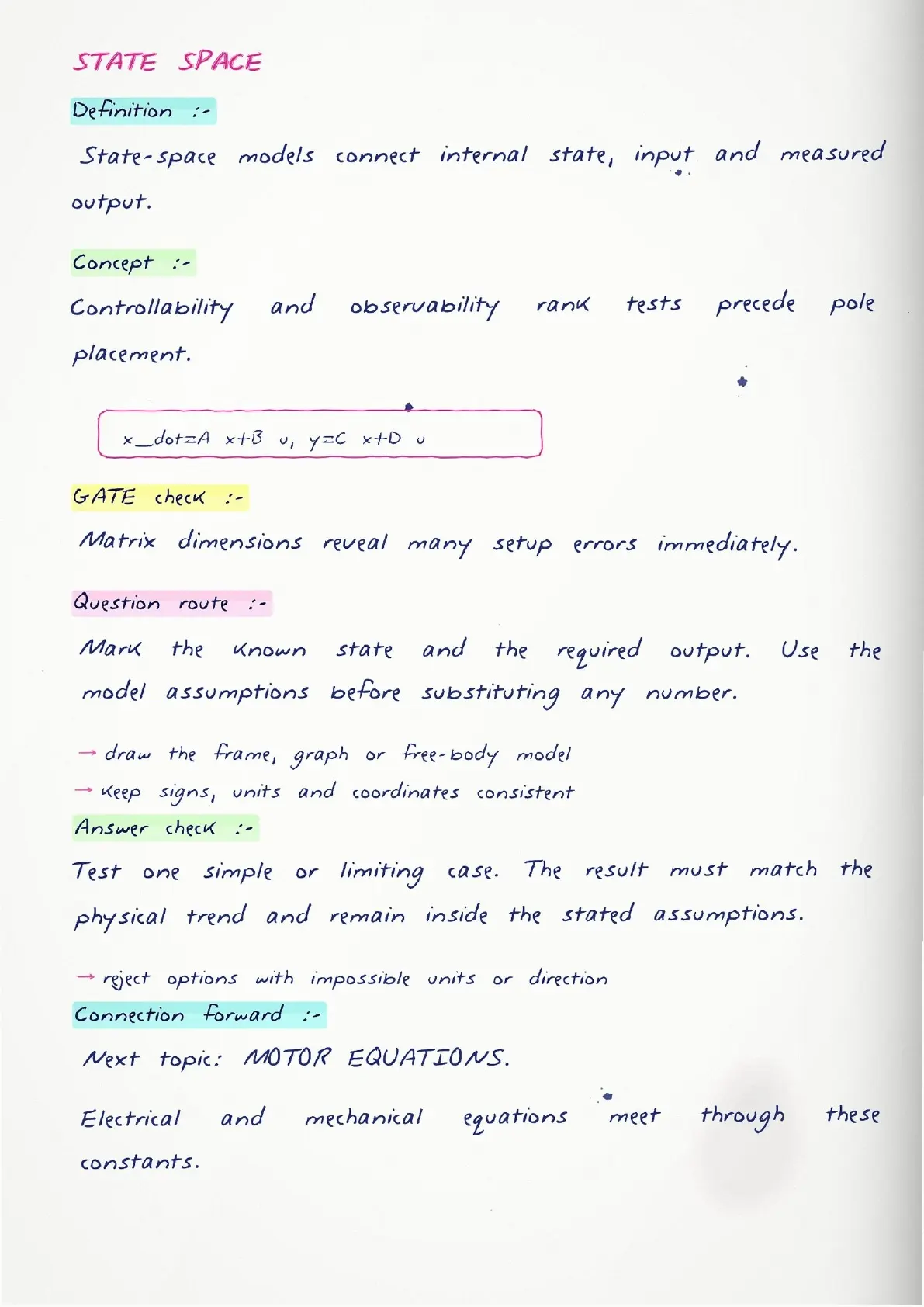
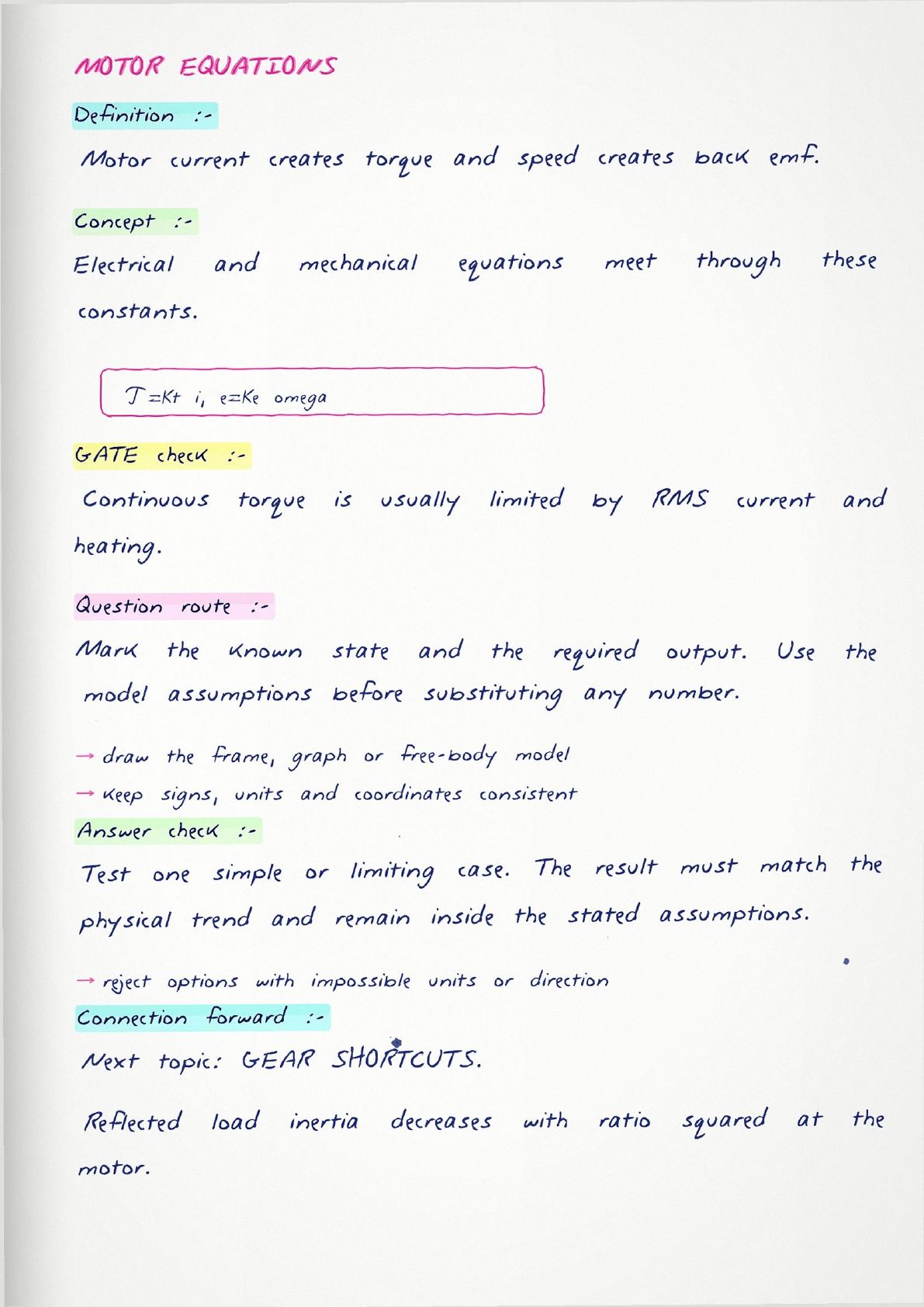
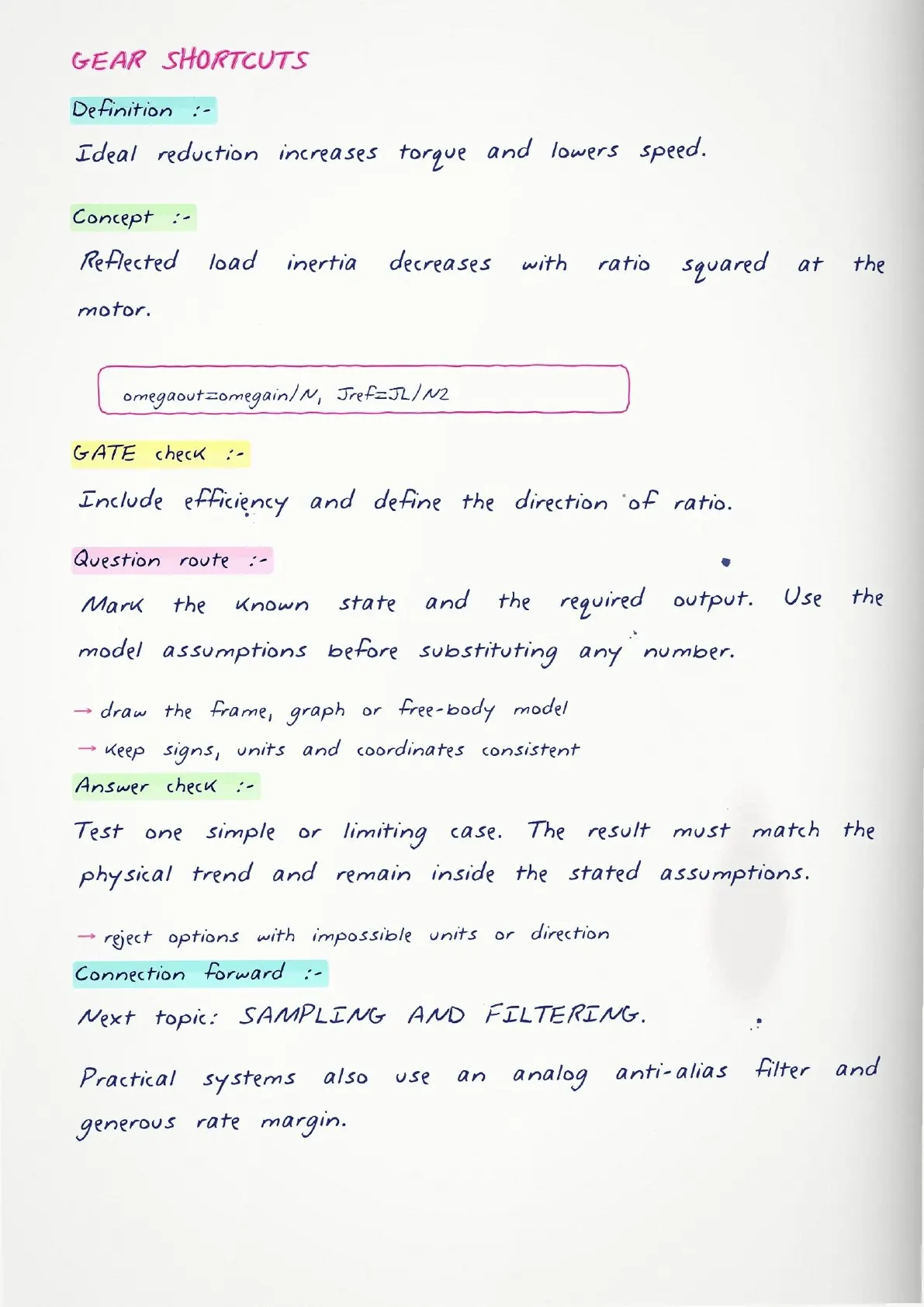
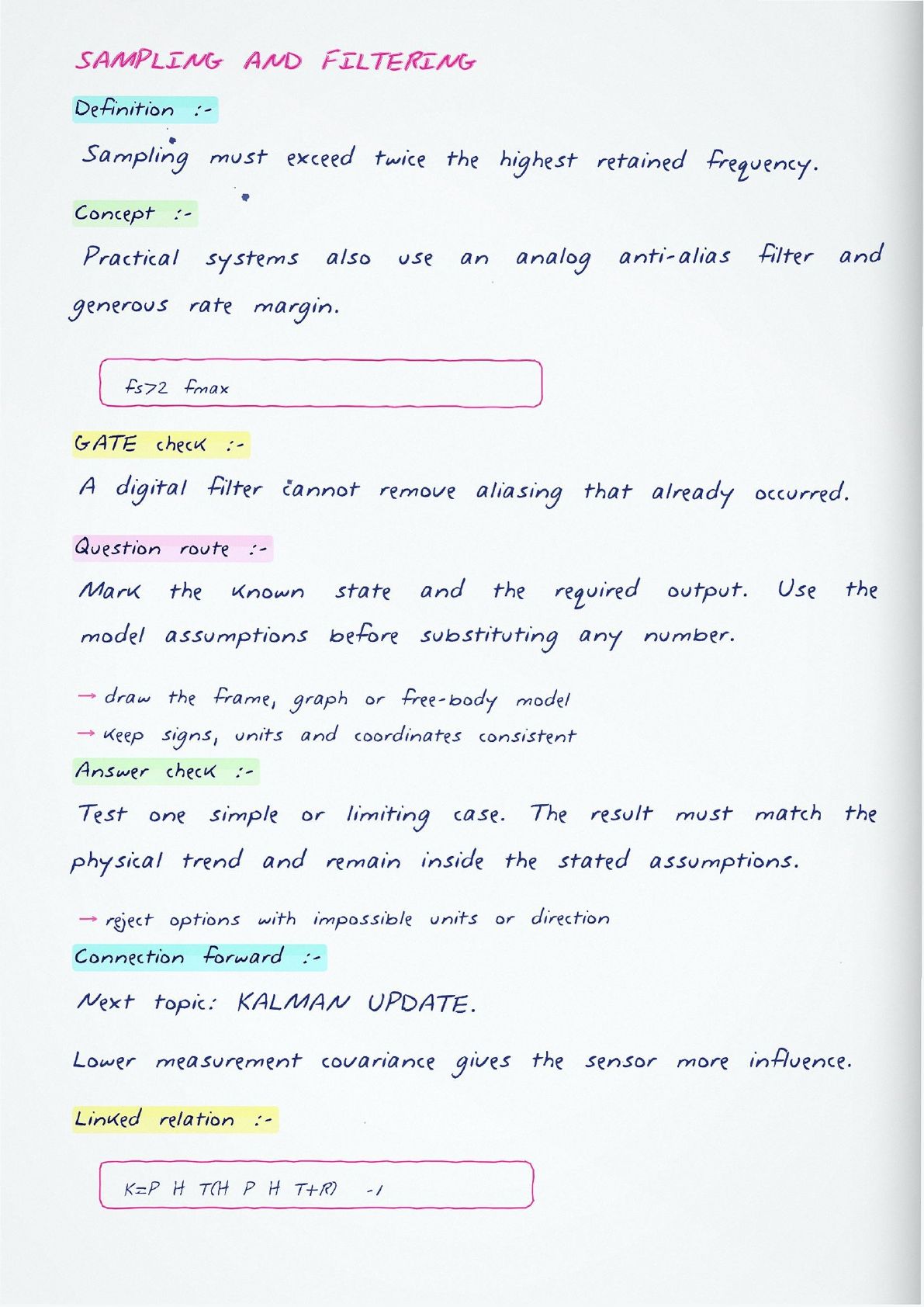
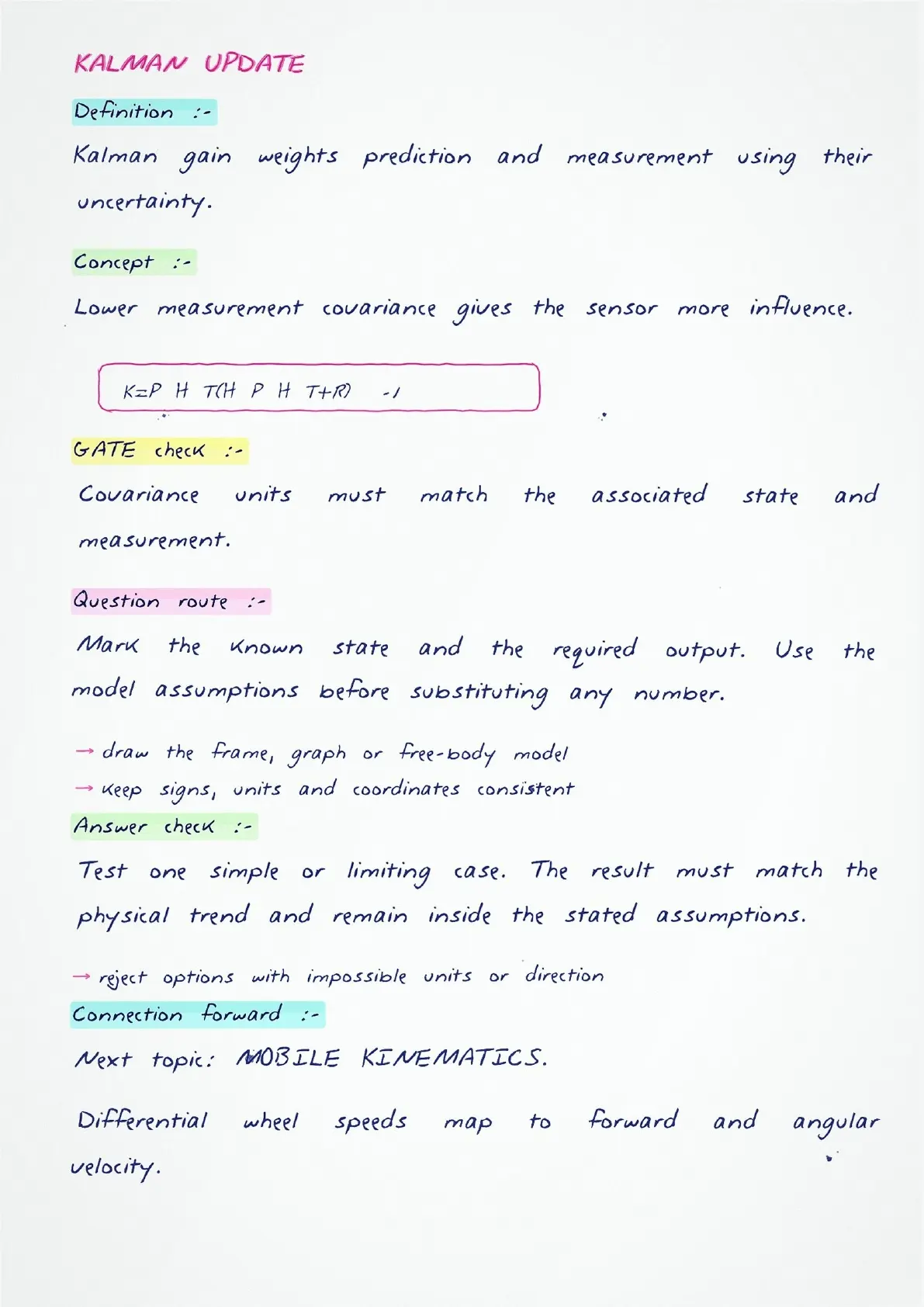
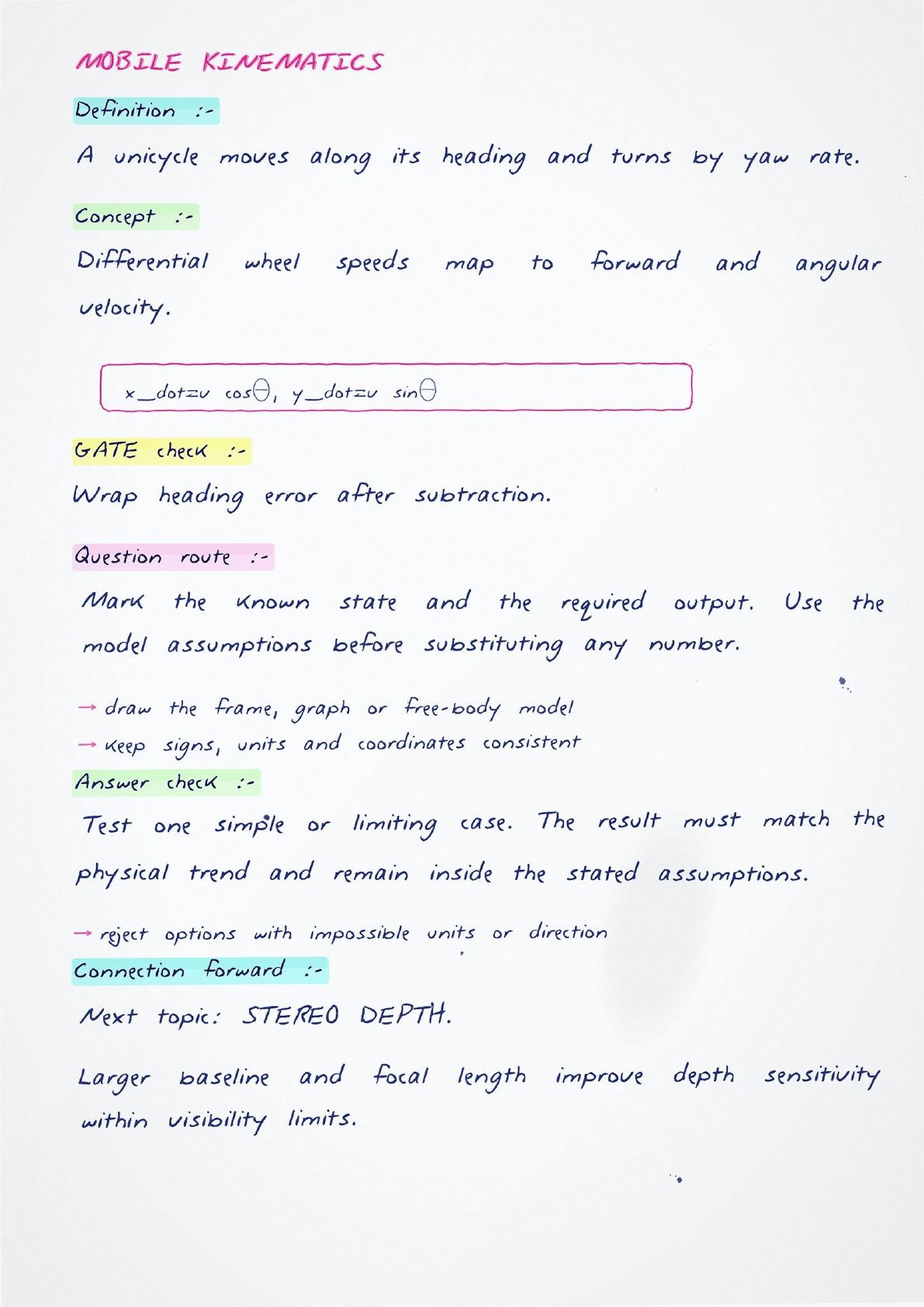
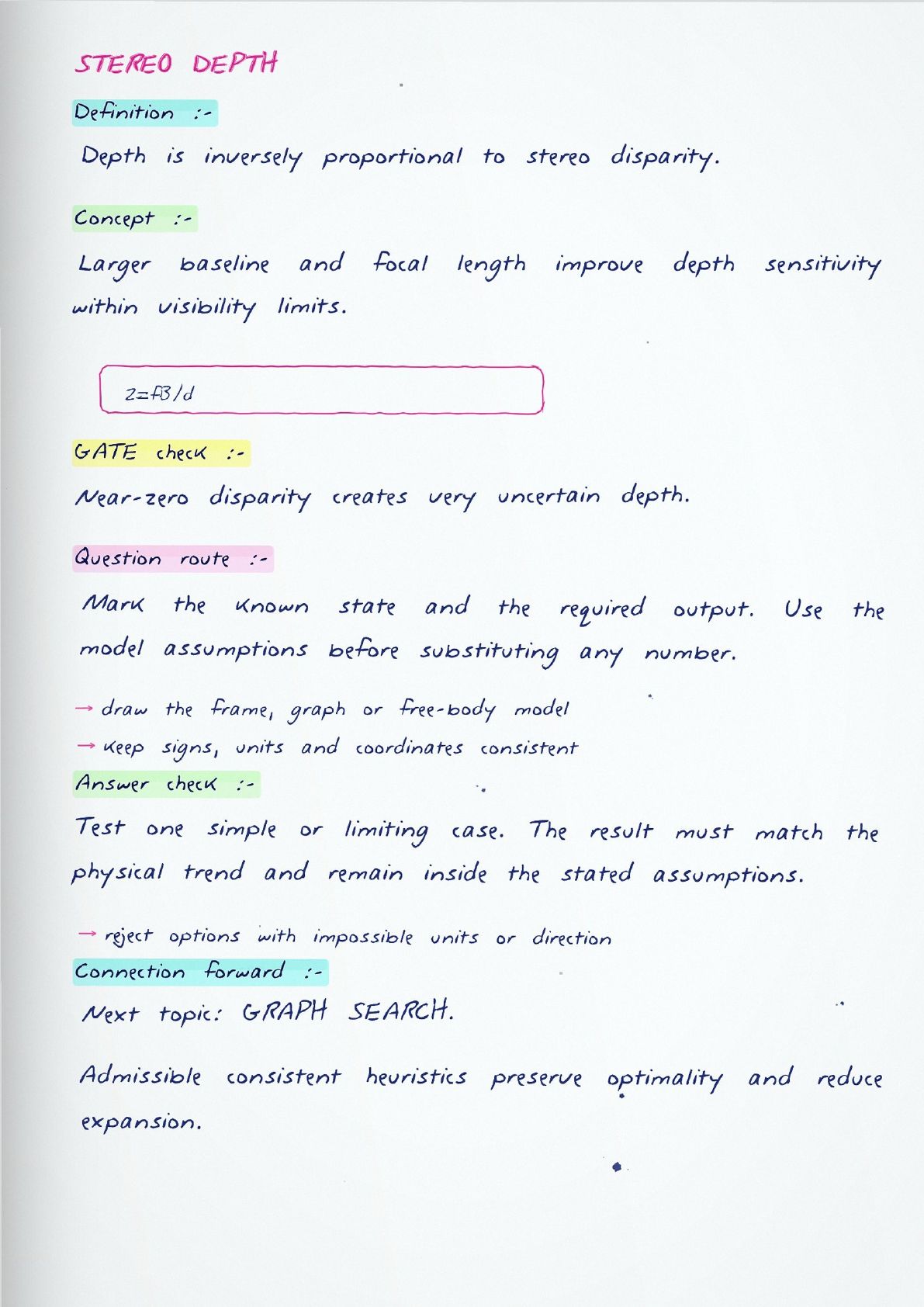
Every page carries one small cluster of ideas, so the whole toolkit fits in a single sitting:
- The formula itself, written out cleanly.
- A plain note on what each symbol stands for.
- A short line on when that relation actually applies.
The value is real because robotics leans on kinematics, dynamics, and control, which overlap heavily with the Electrical, Electronics, and Mechanical GATE papers. Drilling this book pays off well beyond a single subject.
The Formula Map, Chapter by Chapter
The pages are ordered the way a robot problem unfolds, from describing pose to commanding motion. At a glance, students will find:
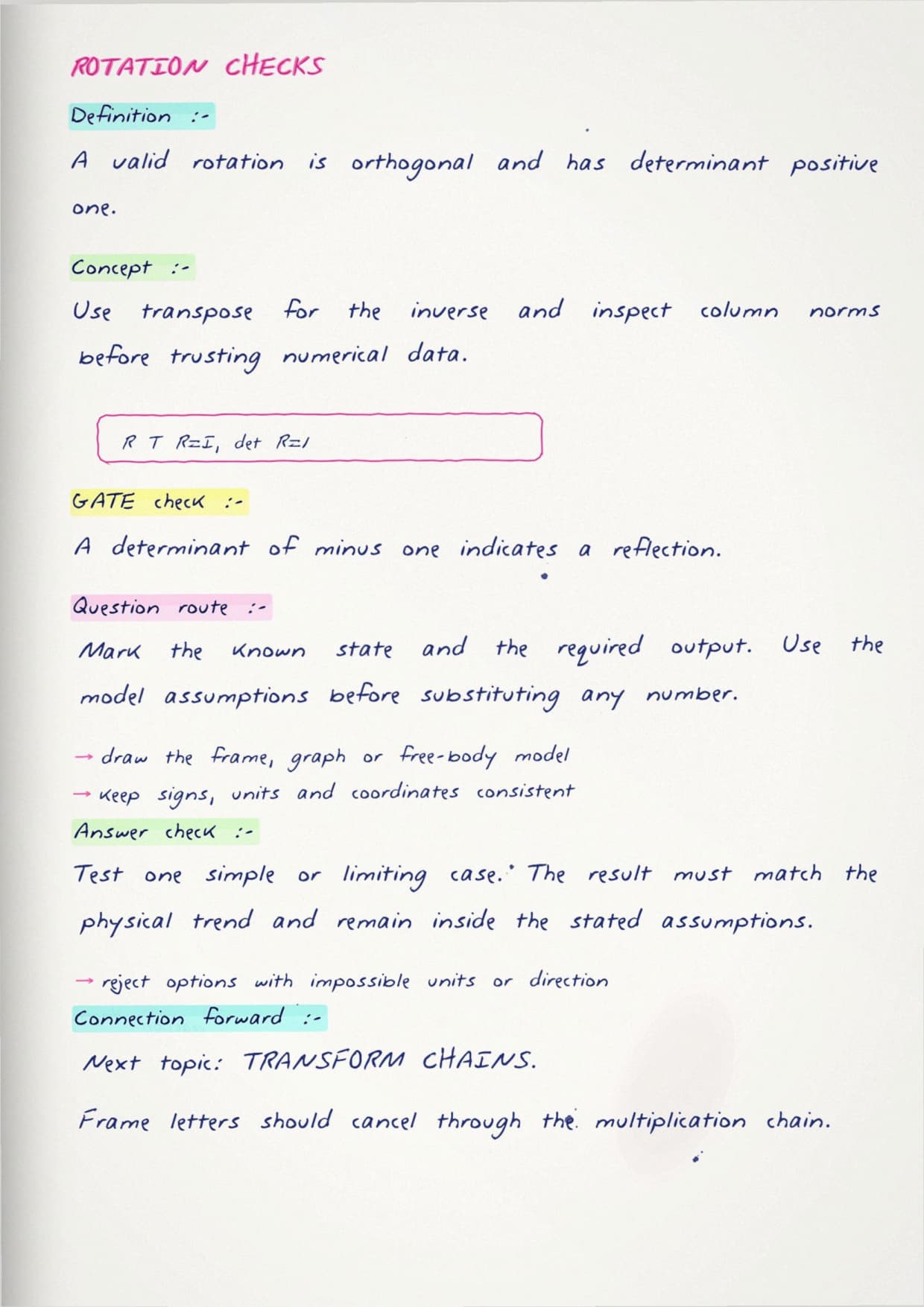
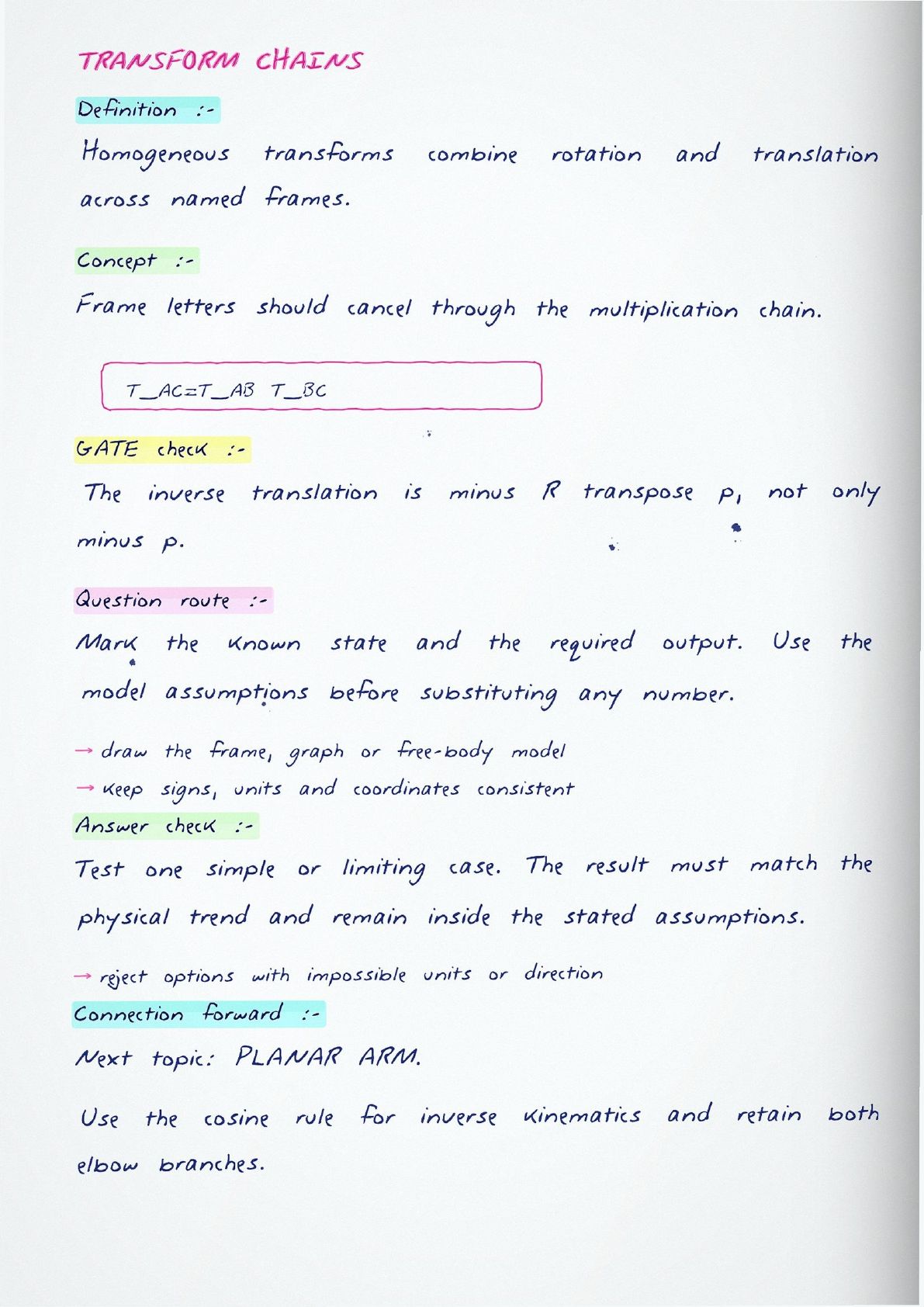
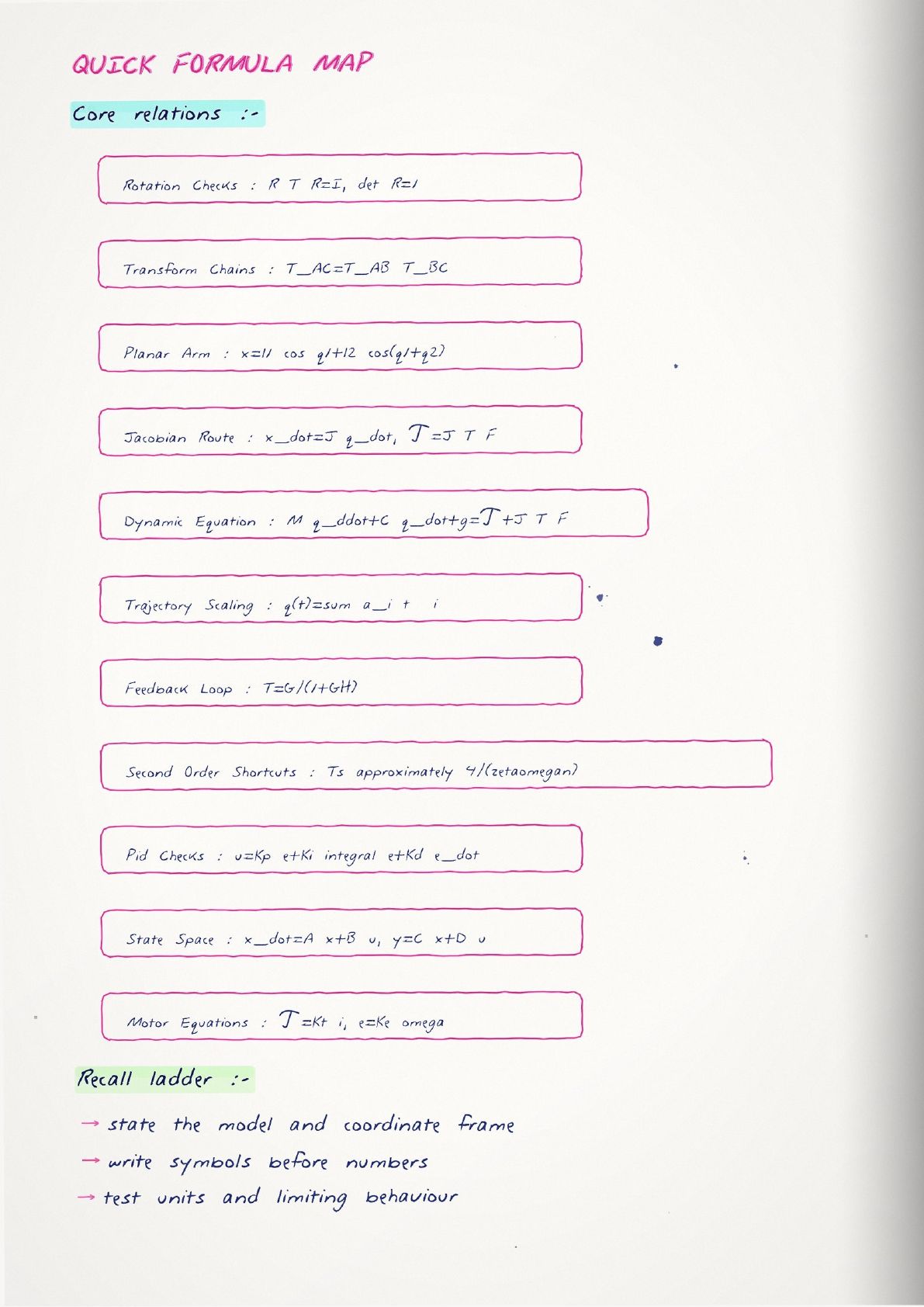
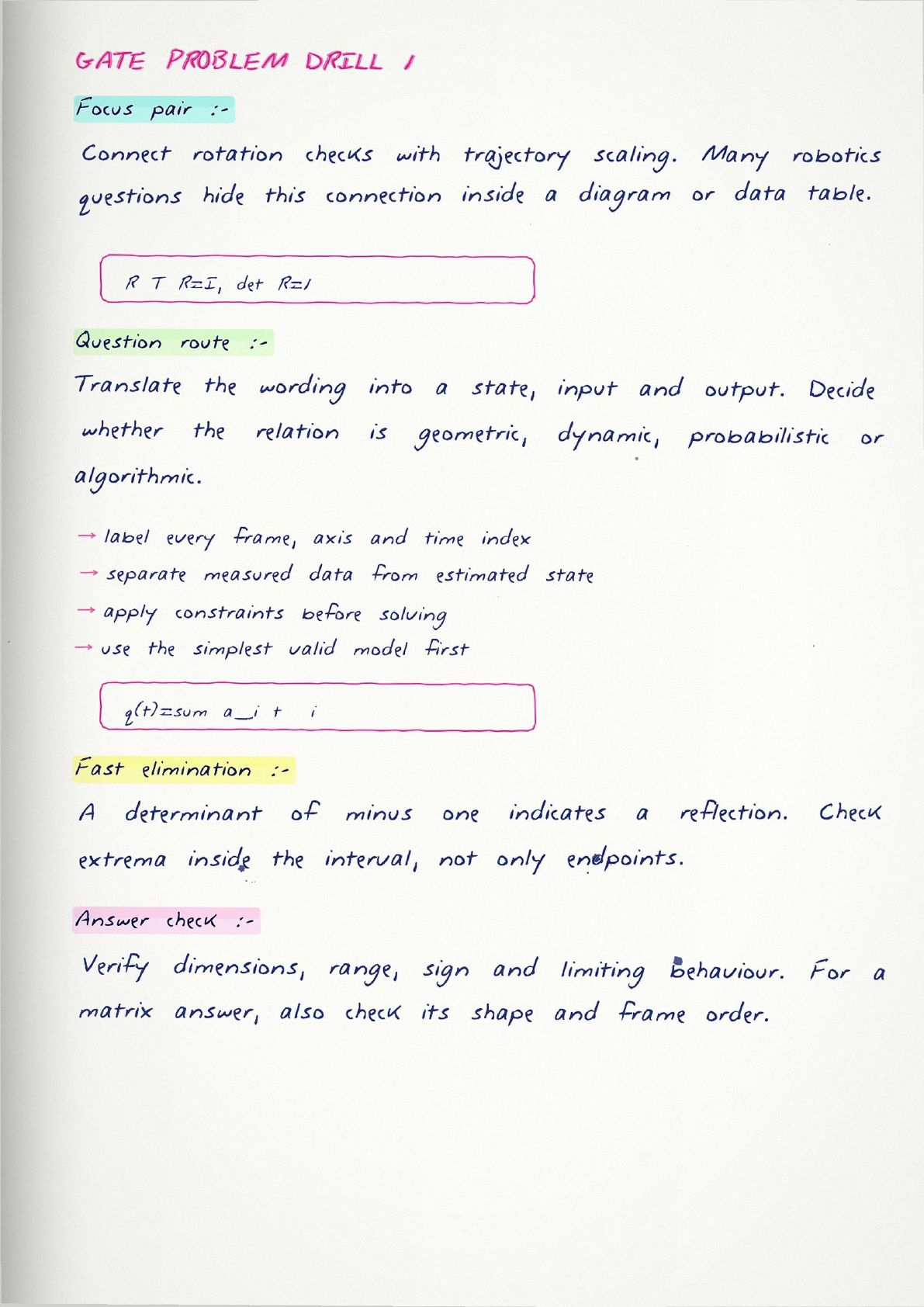
- Rotations and transforms: rotation matrices, homogeneous transforms, and the rules for chaining frames together.
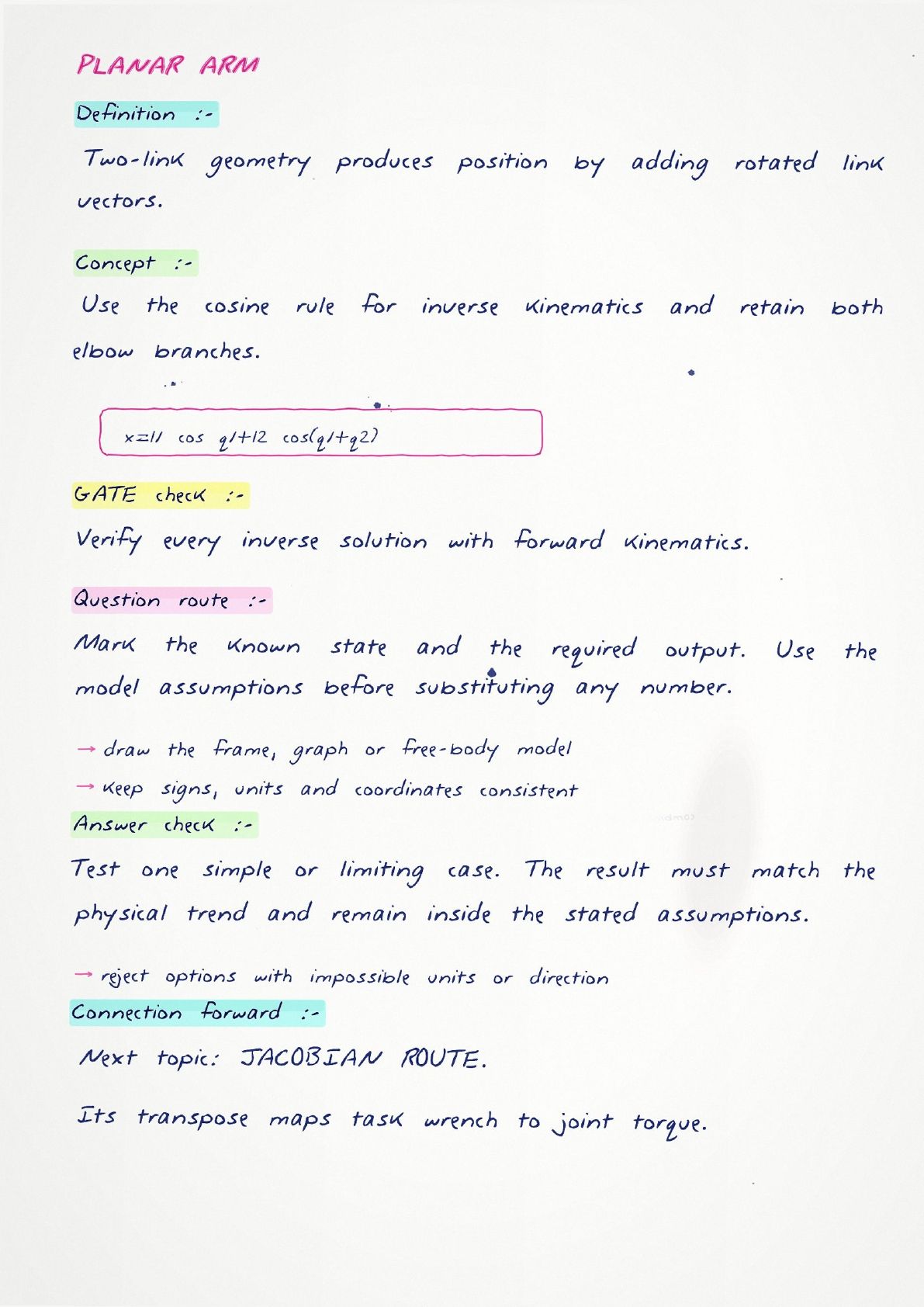
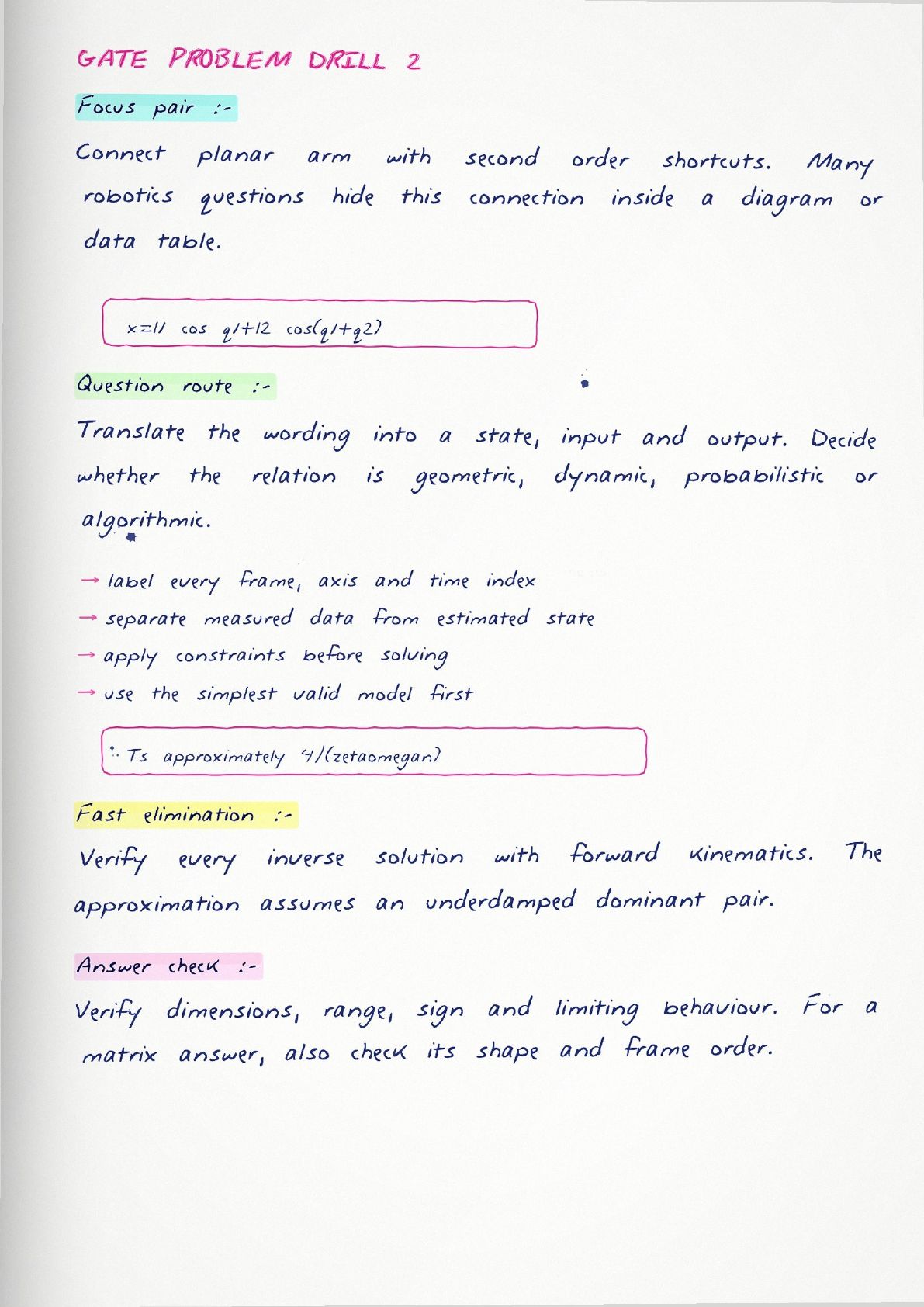
- Forward kinematics: the Denavit-Hartenberg convention and how link parameters build the end-effector pose.
- Velocity and the Jacobian: mapping joint rates to end-effector motion, plus the meaning of a singular configuration.
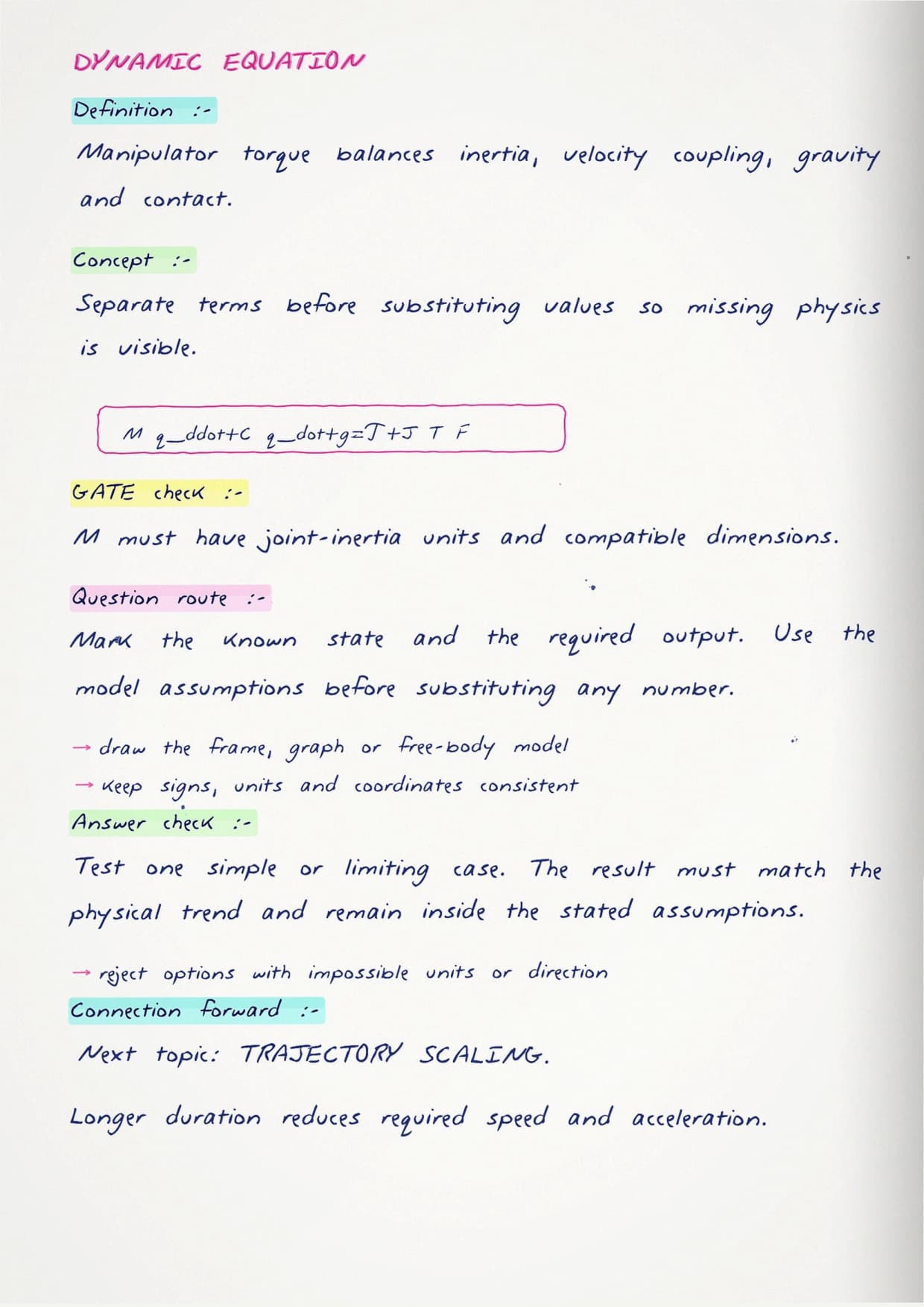
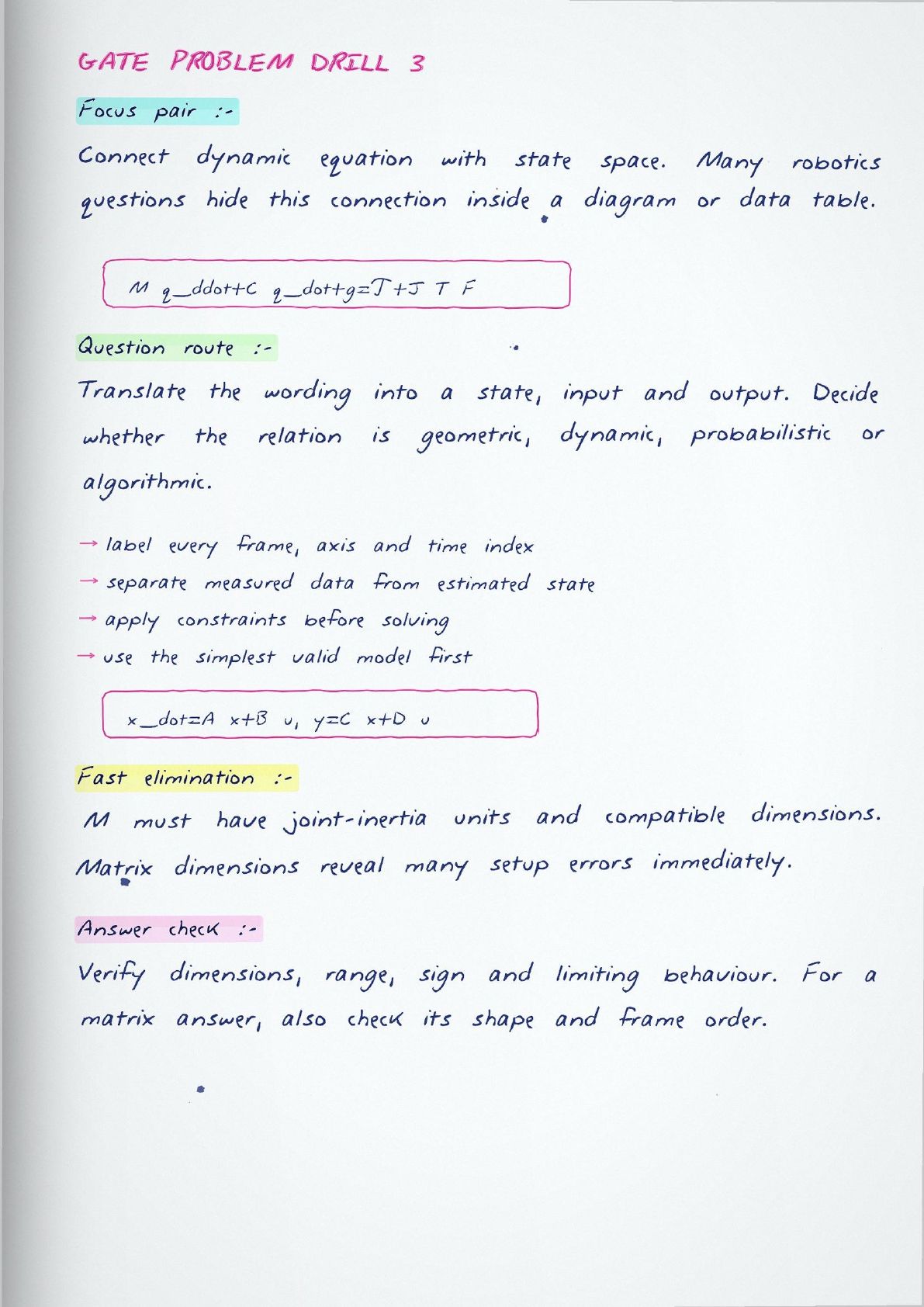
- Dynamics: the Lagrangian and Newton-Euler routes to the equations of motion, with the inertia and gravity terms named.
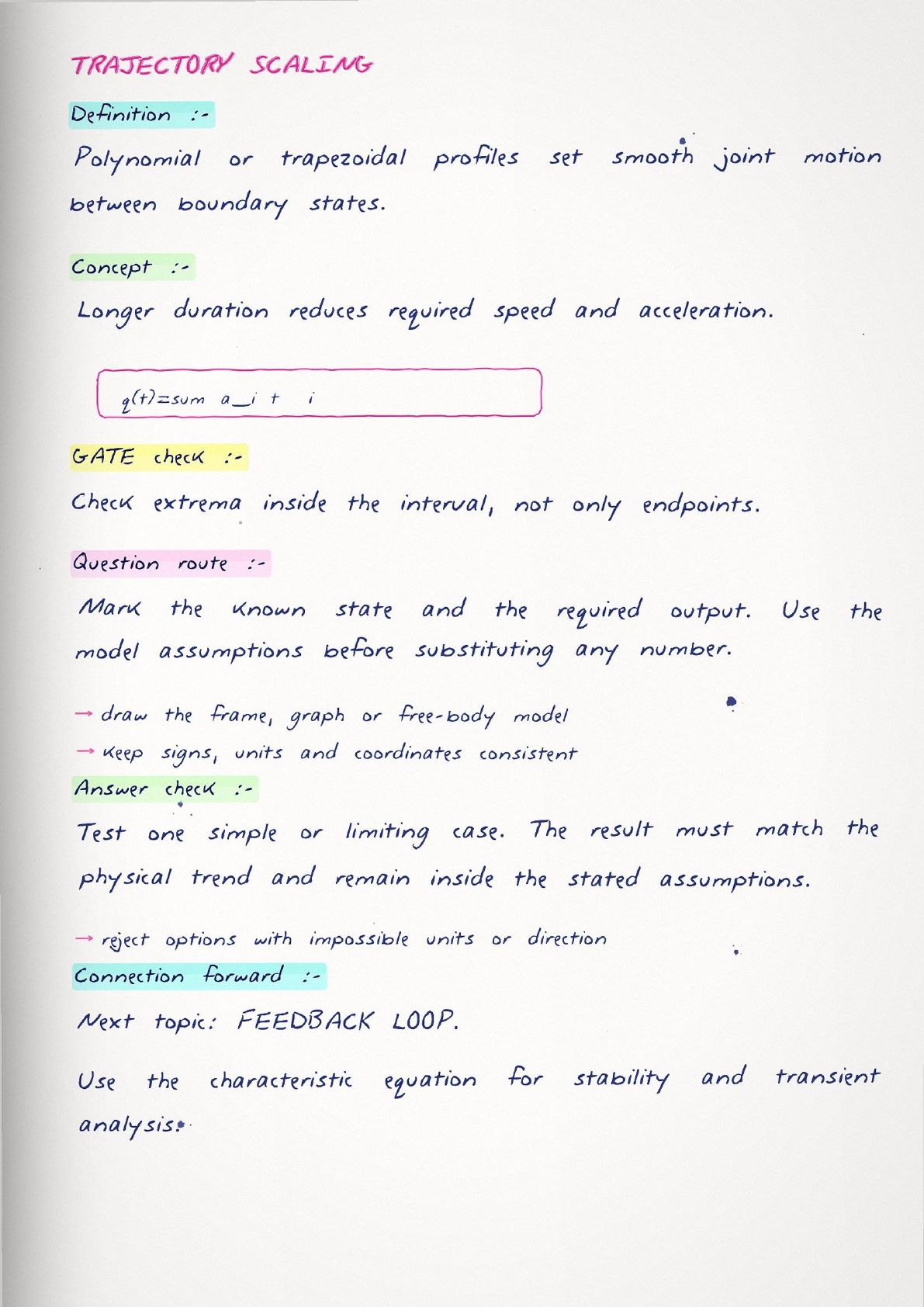
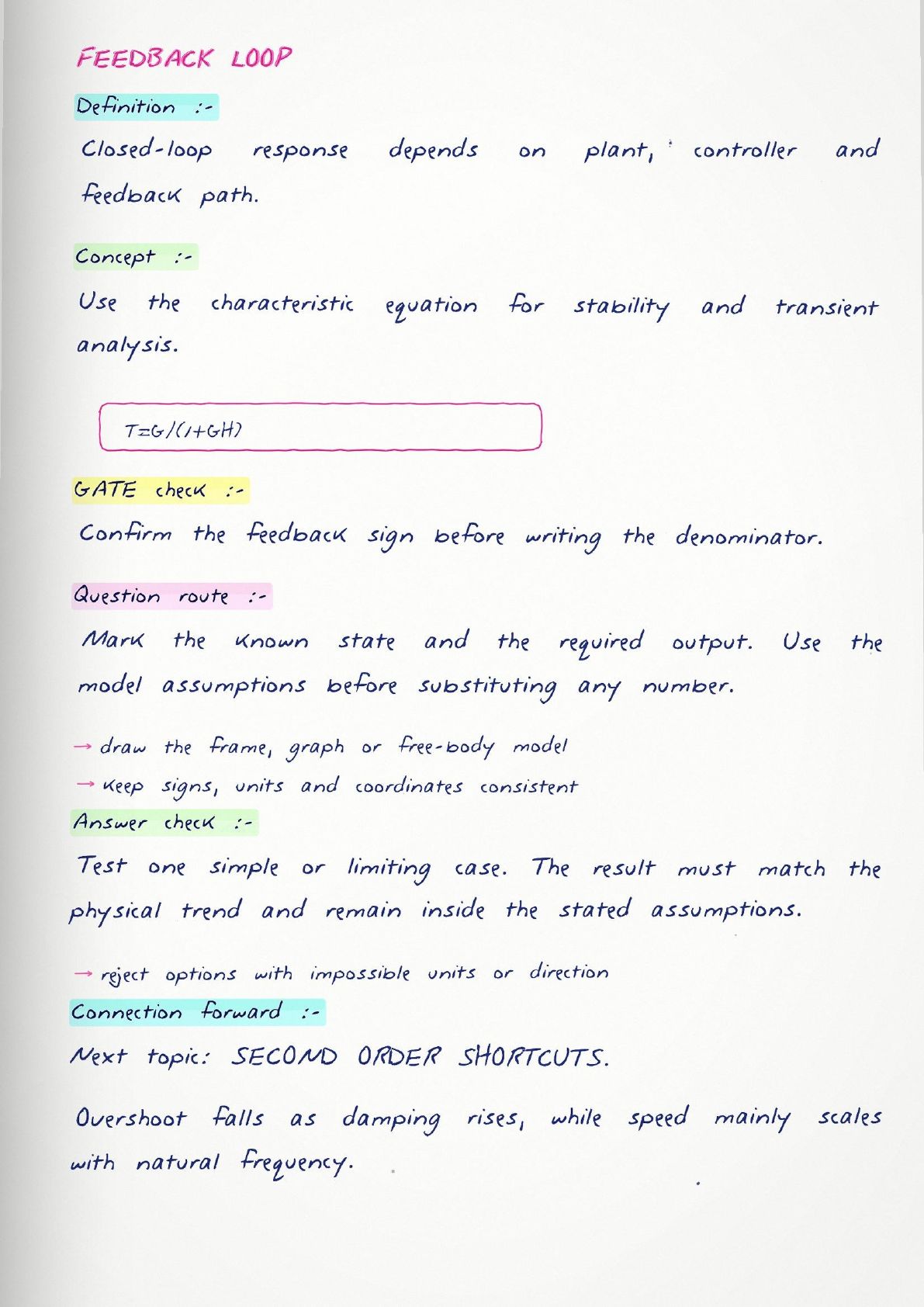
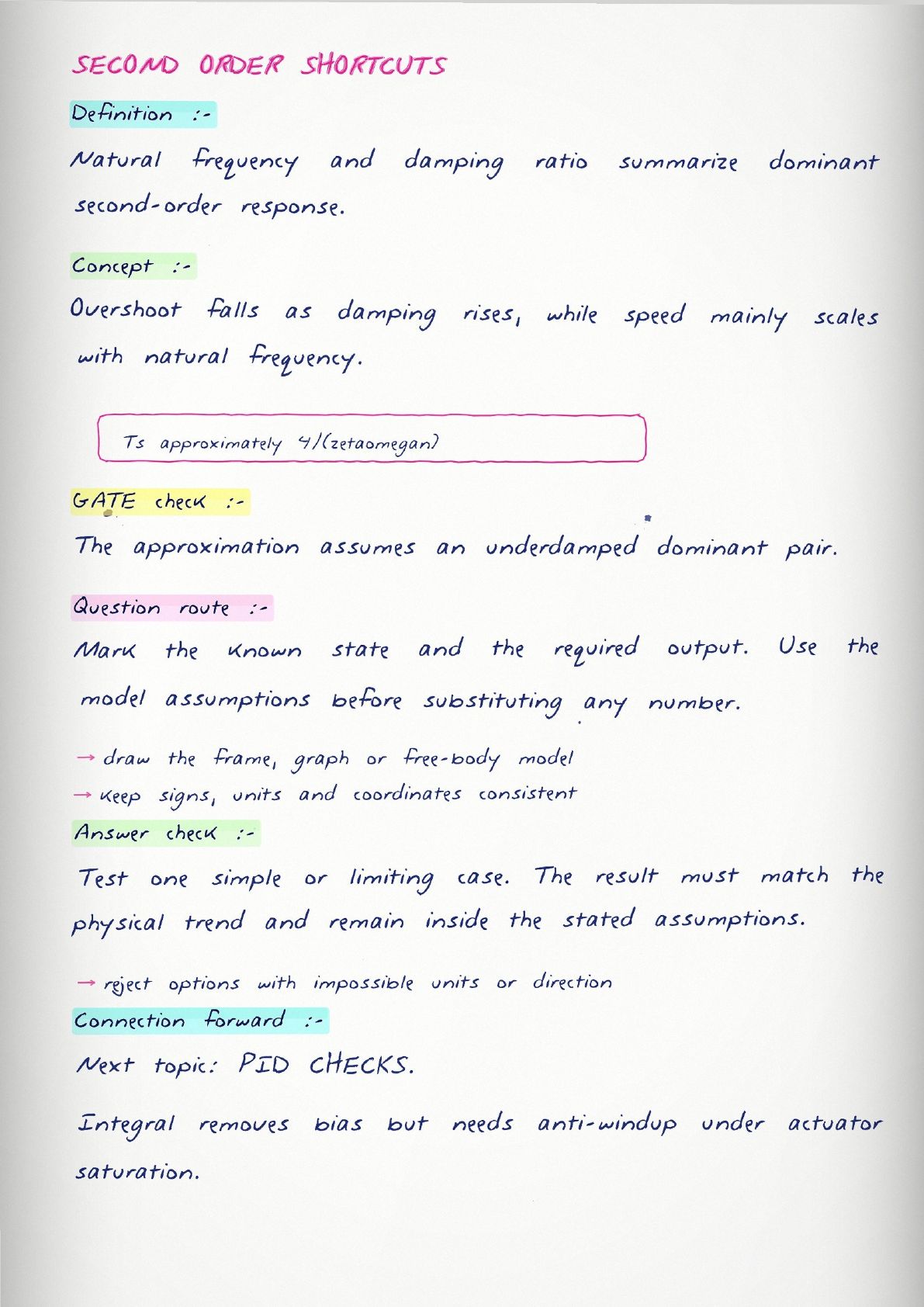
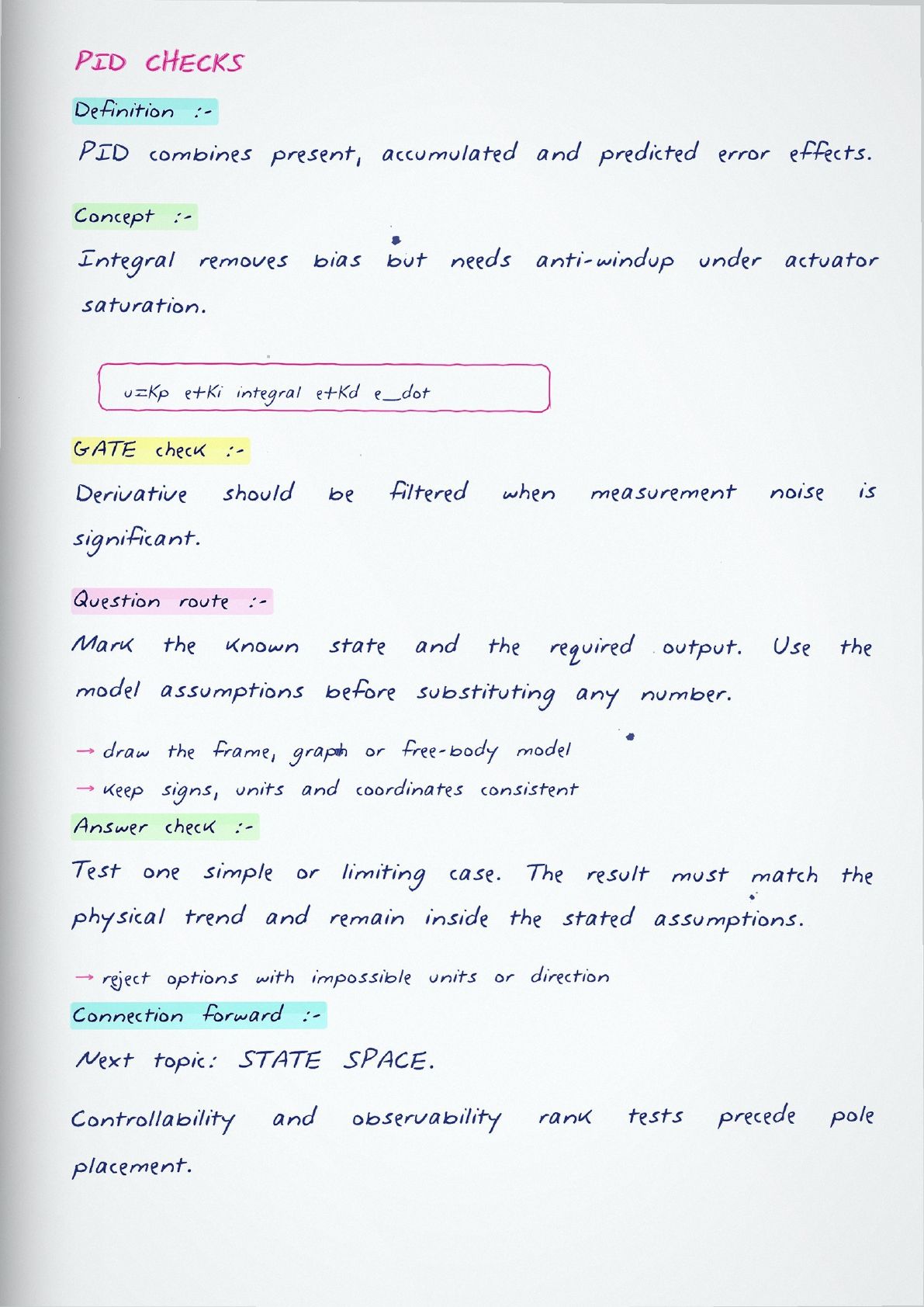
- Control: proportional, integral, and derivative action, transfer functions, and the quick tests for stability.
- Sensors and error: encoder resolution, noise, and the small relations that turn raw readings into usable numbers.
The GATE Checks That Save You in the Exam Hall
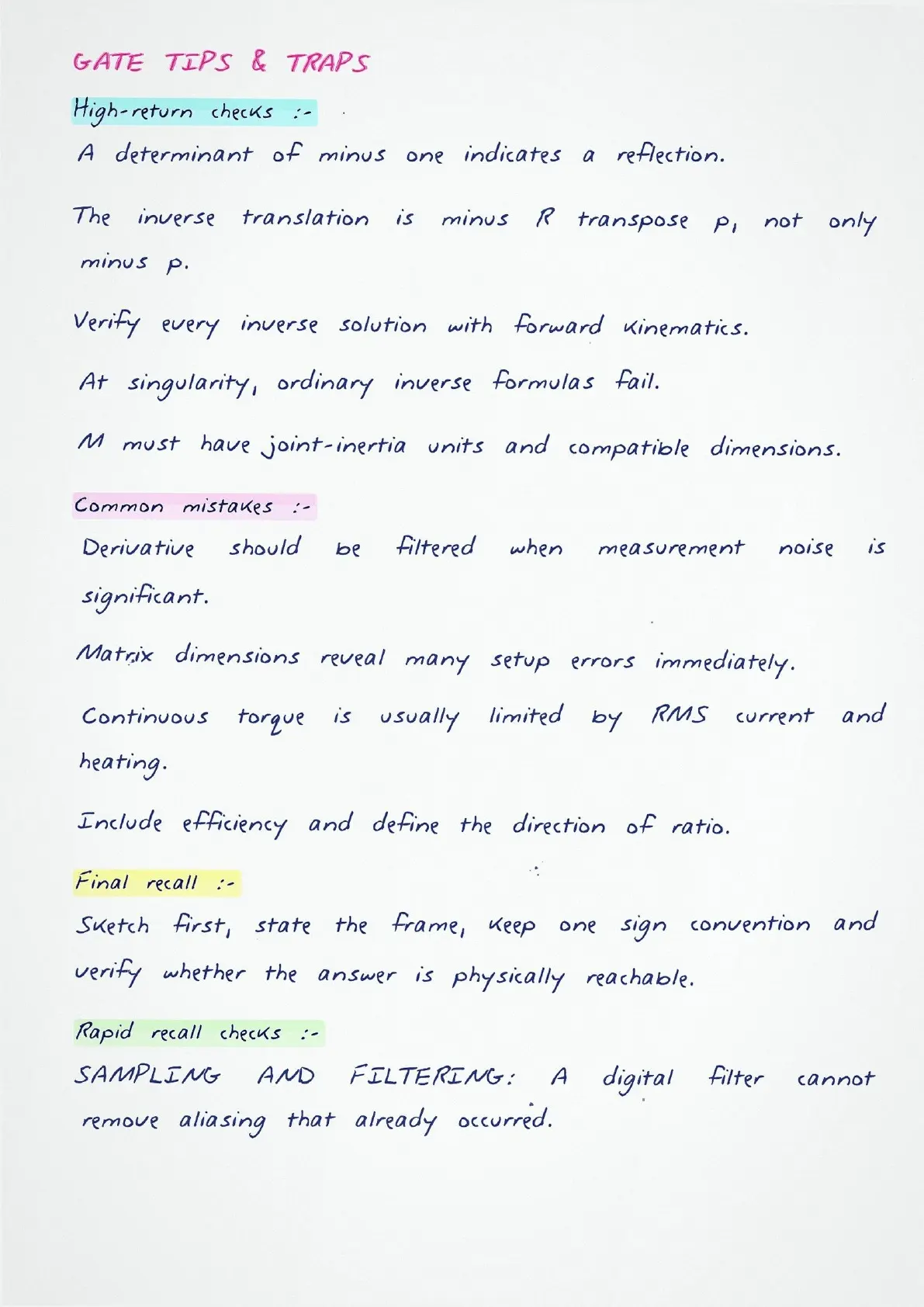
A GATE check is a fast test that tells a student whether an answer is even plausible before they commit to it. This book collects them so they become reflex. The checks worth memorising:
- A dimensional check on every final expression.
- A degrees-of-freedom count using Grubler's rule before trusting a mechanism answer.
- A quick orthogonality test on any rotation matrix, whose columns must stay unit length.
Each one takes seconds and catches the kind of slip that quietly drains marks.
See a Quick Refresher on Robot Motion
Source: Northwestern Robotics
Drilling This Book in the Final Week
A formula handbook only works if students use it actively. In the last week, treat this book as a daily lap: cover the right column, write each relation from memory, then check.
Pair one section a day with two or three solved problems so formulas stay tied to real questions. On the final day, revise only the checks page and the transforms page, since those carry the most topics.
Kept this way, this book turns scattered revision into a tight, repeatable routine.
Small Slips That Cost Marks
Most lost marks in robotics come from habits, not gaps in knowledge. The notes flag the usual traps so students can watch for them:
- Mixing radians and degrees inside the same expression.
- Swapping row and column vector conventions midway.
- Dropping the sign of a rotation angle.
- Confusing torque units with force units.
None of these are hard once named, and seeing them beside the formulas makes them far easier to avoid under time pressure.
This Book at a Glance
For students deciding how to slot it into their revision, a few quick points capture what this book is and is not:
- It is a single-source recall sheet, meant to be flipped through, not read cover to cover.
- Every relation sits beside a note on its symbols and its use, so nothing is left to guesswork mid-revision.
- The checks pages double as a self-marking tool, letting students catch a wrong answer before it is written down.
- Because the content spans kinematics, dynamics, and control, the same pages support Electrical, Electronics, and Mechanical preparation at once.
Used honestly in the final stretch, this book turns a nervous last week into a calm, repeatable set of laps through the essentials.
Complete Robotics Formula Book FAQs
Ques. Is this formula book enough to learn robotics from the start?
Ans. No. It is a revision handbook, not a first textbook. It assumes students have already studied kinematics, dynamics, and control, and it exists to help them recall those results quickly in the final days.
Ques. Which topics does the book actually cover?
Ans. Rotations and transforms, forward kinematics with the Denavit-Hartenberg convention, the Jacobian, dynamics through the Lagrangian and Newton-Euler methods, control fundamentals, and sensor error relations.
Ques. What are the GATE checks mentioned in the title?
Ans. They are quick sanity tests, such as a dimensional check, a degrees-of-freedom count with Grubler's rule, and an orthogonality test on rotation matrices, that tell students whether an answer is plausible before they finalise it.
Ques. Is robotics a separate GATE paper?
Ans. There is no standalone GATE robotics paper. The topics here overlap with Control Systems, Engineering Mathematics, and mechanics content that appear across the Electrical, Electronics, and Mechanical papers, which is where the practice pays off.
Ques. How should students use it in the final week?
Ans. Recite one section a day from memory, pair each with a couple of solved problems, and on the last day revise only the checks and transforms pages, since those carry across the most topics.



Comments