




Artificial Intelligence and Machine Learning for Robotics is what lets a robot recognise objects, plan a grasp, and improve its own behaviour, which makes it a core, high-return topic for robotics prep.
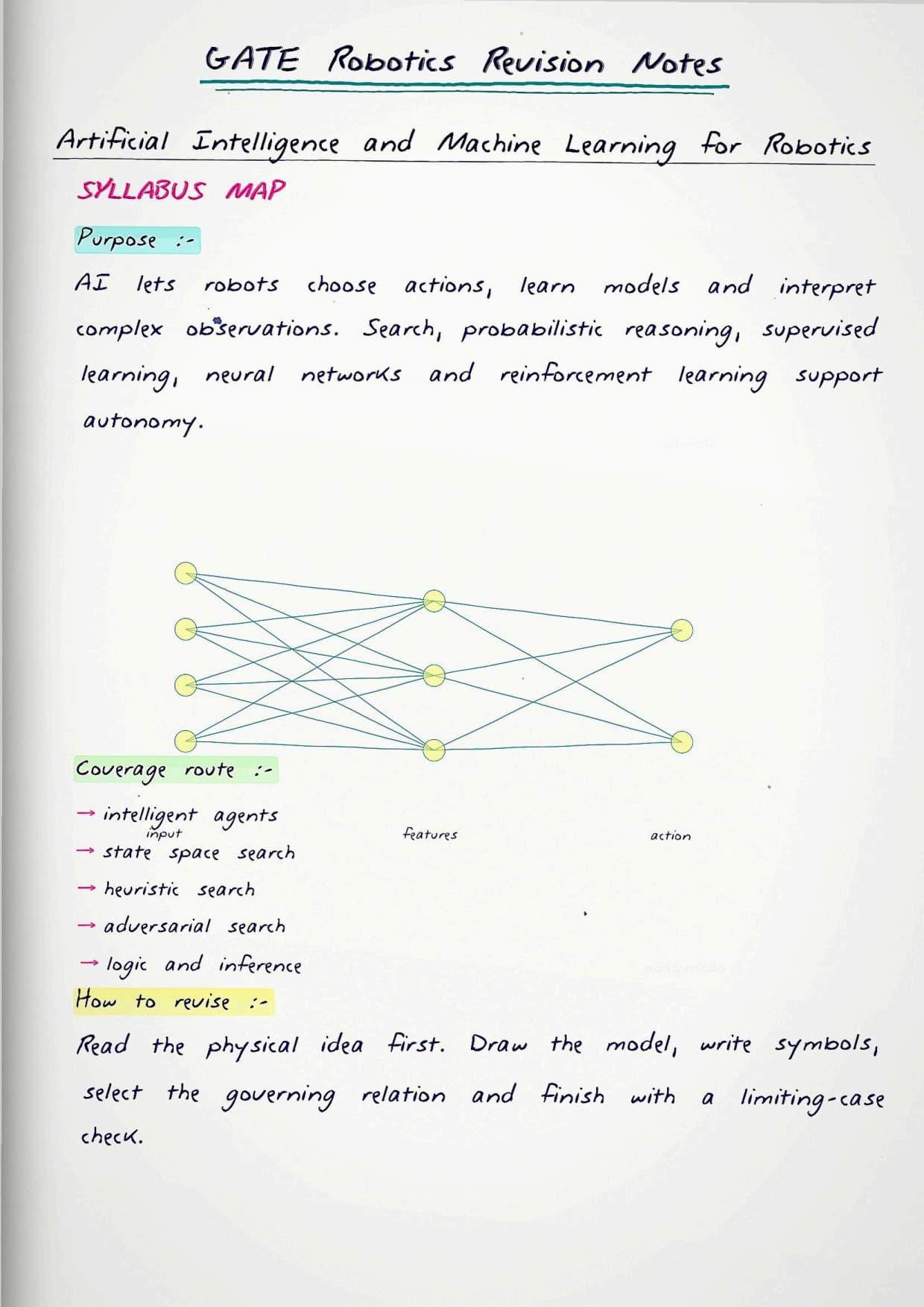
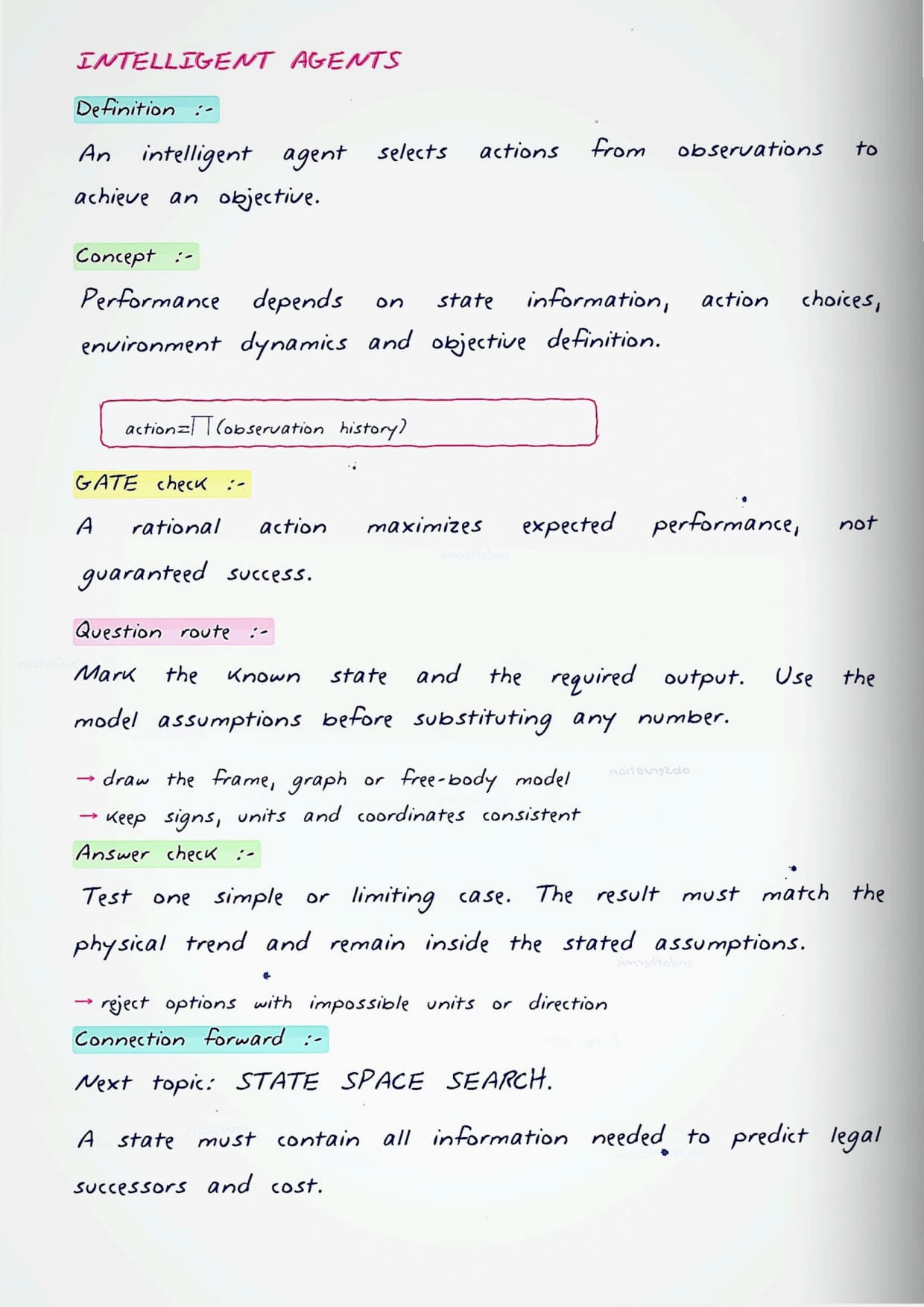
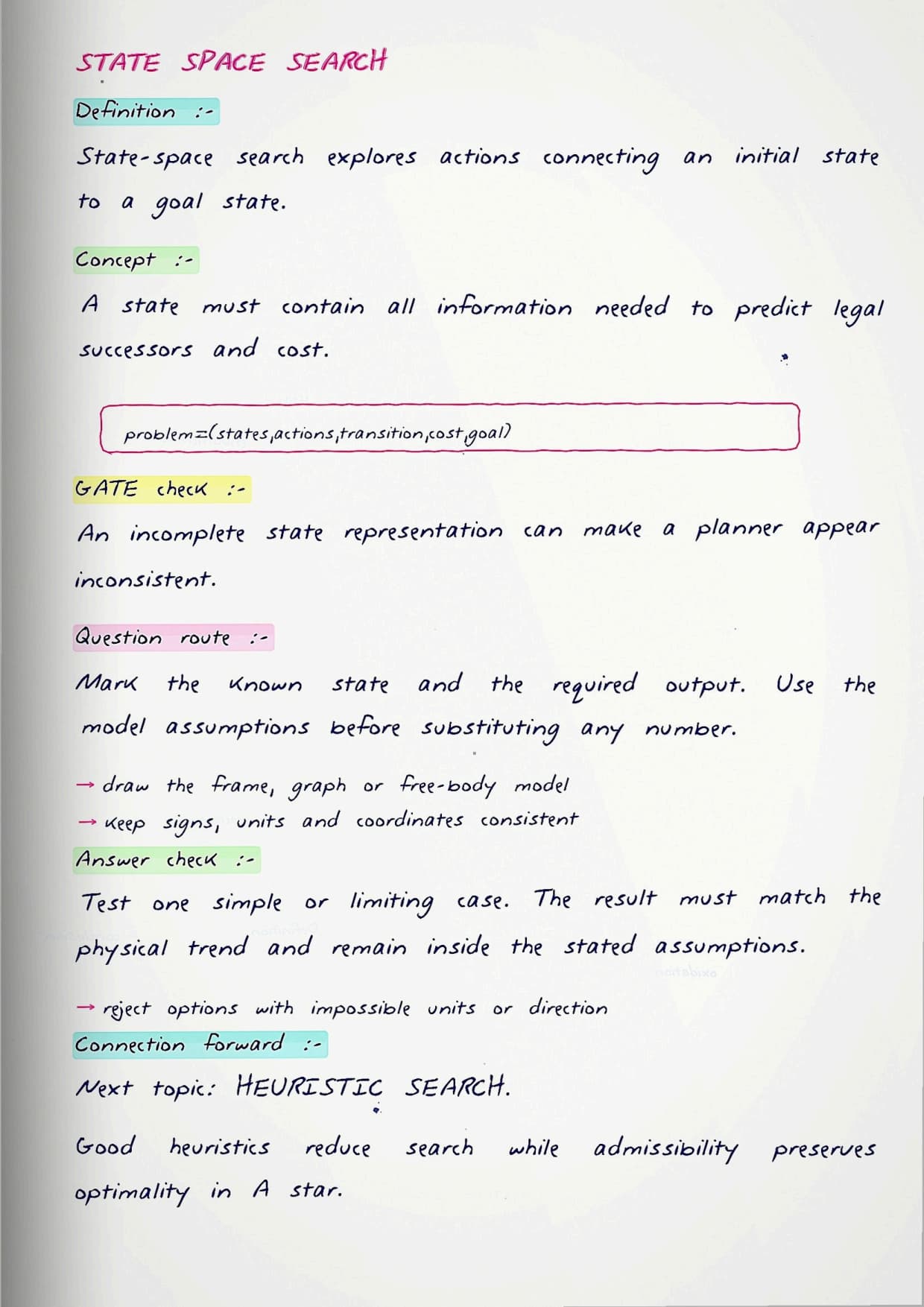
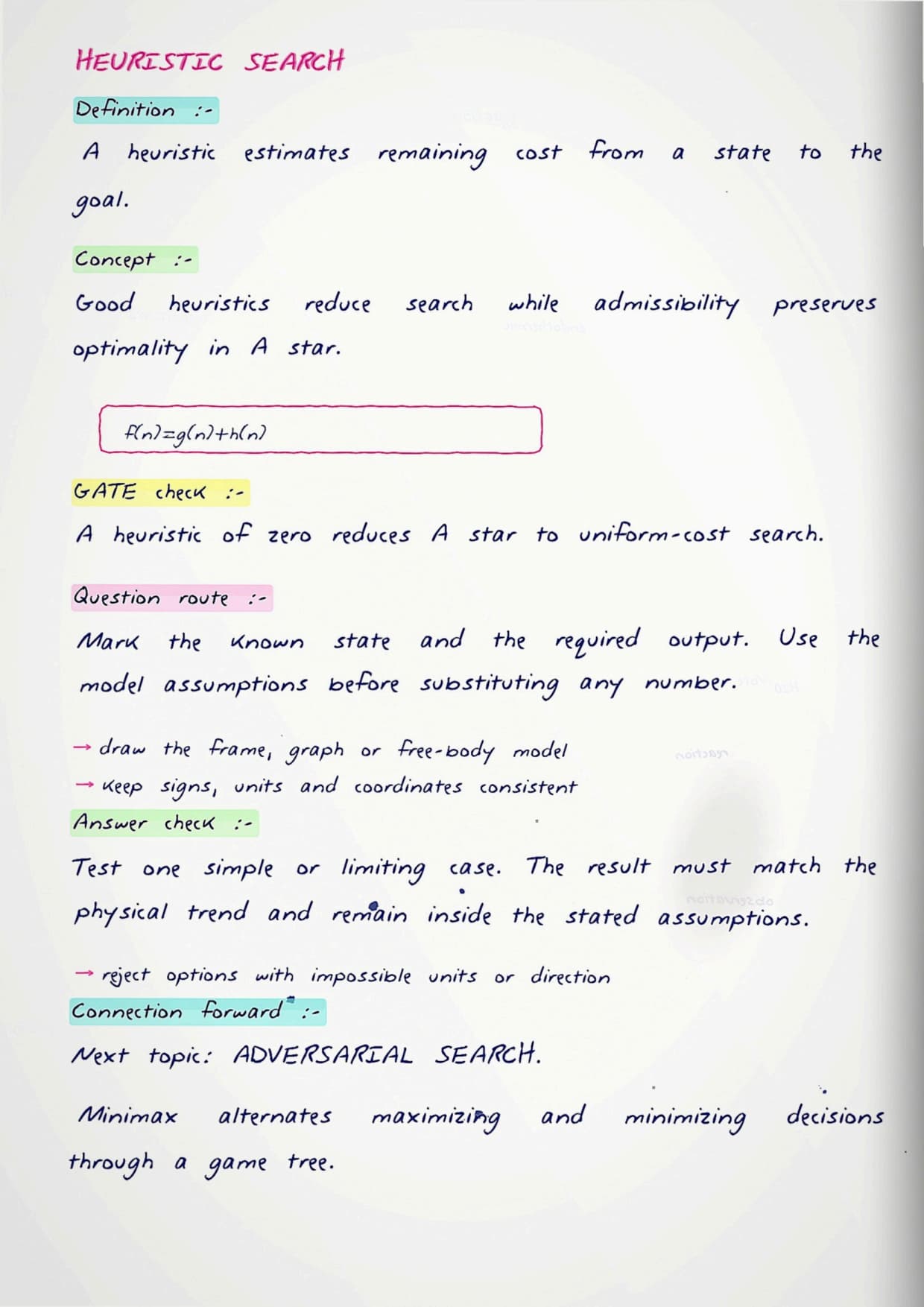
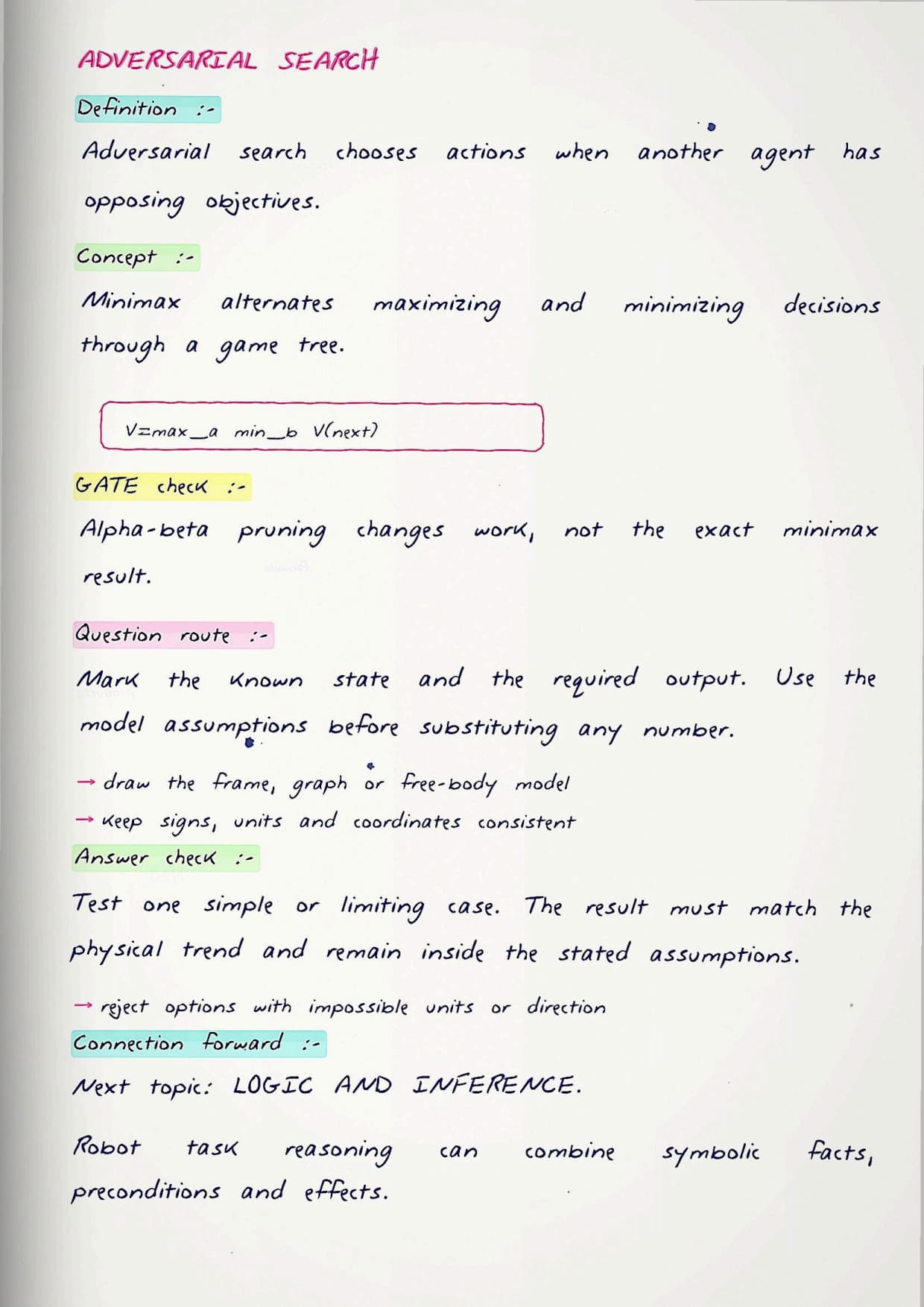
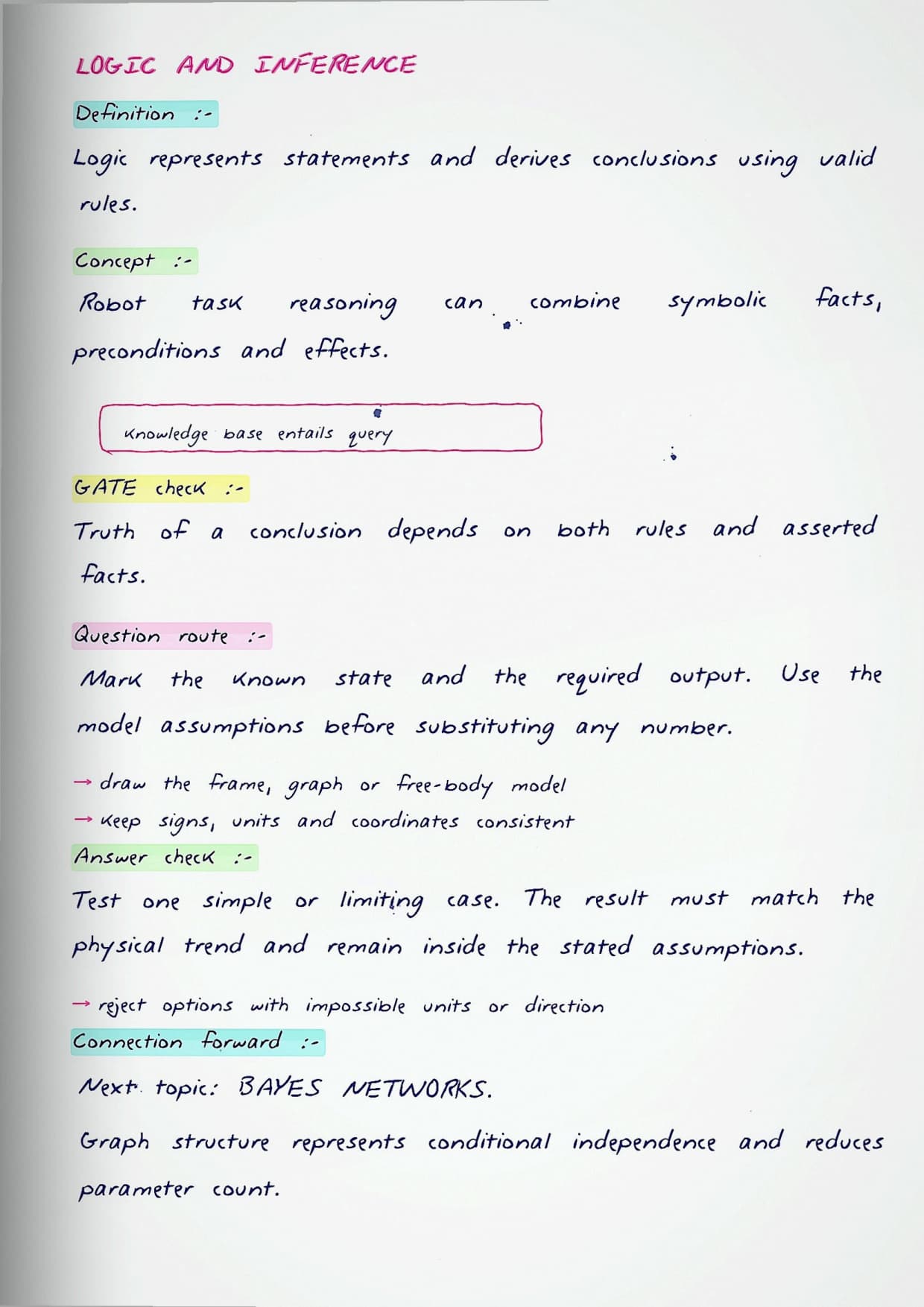
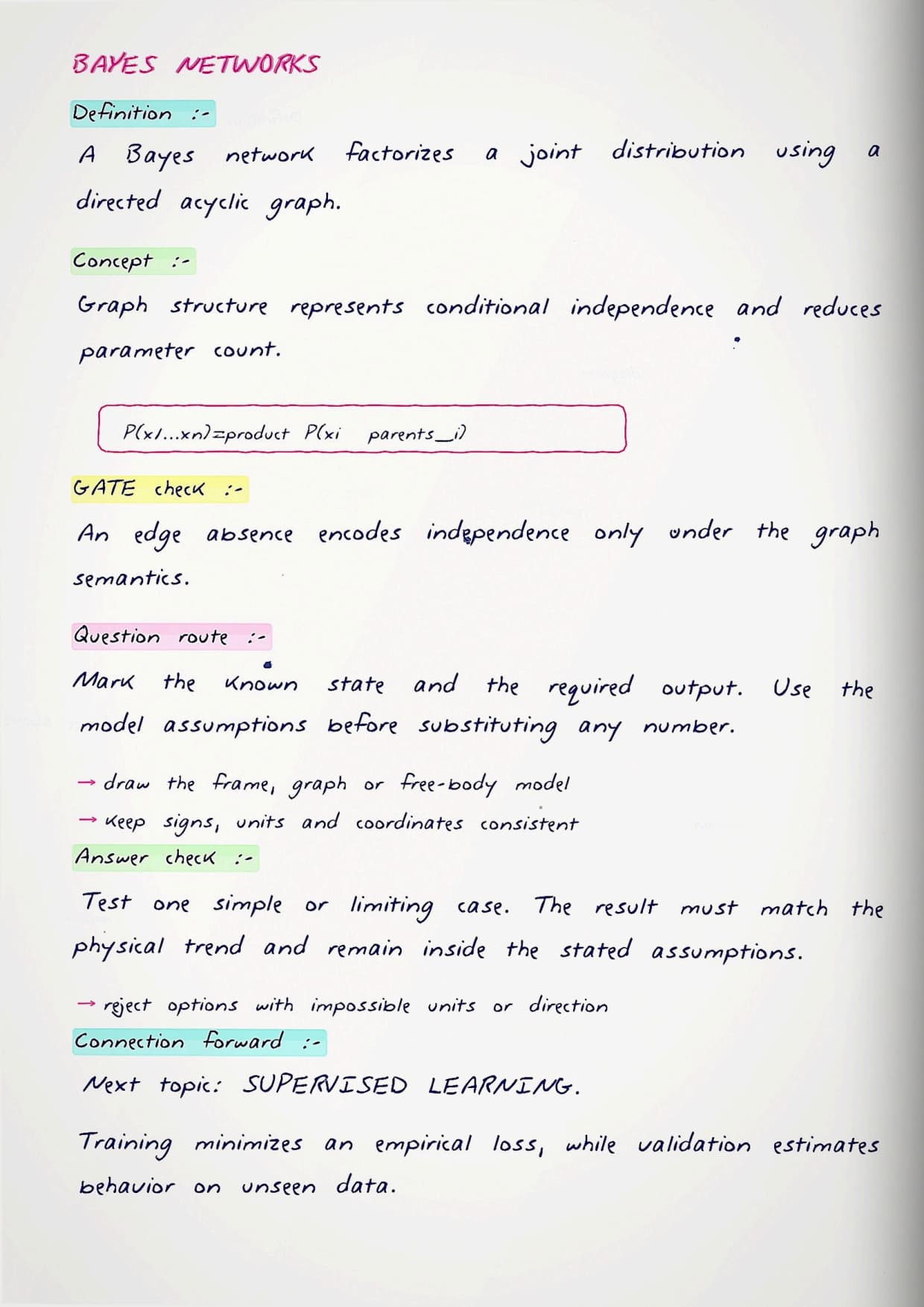
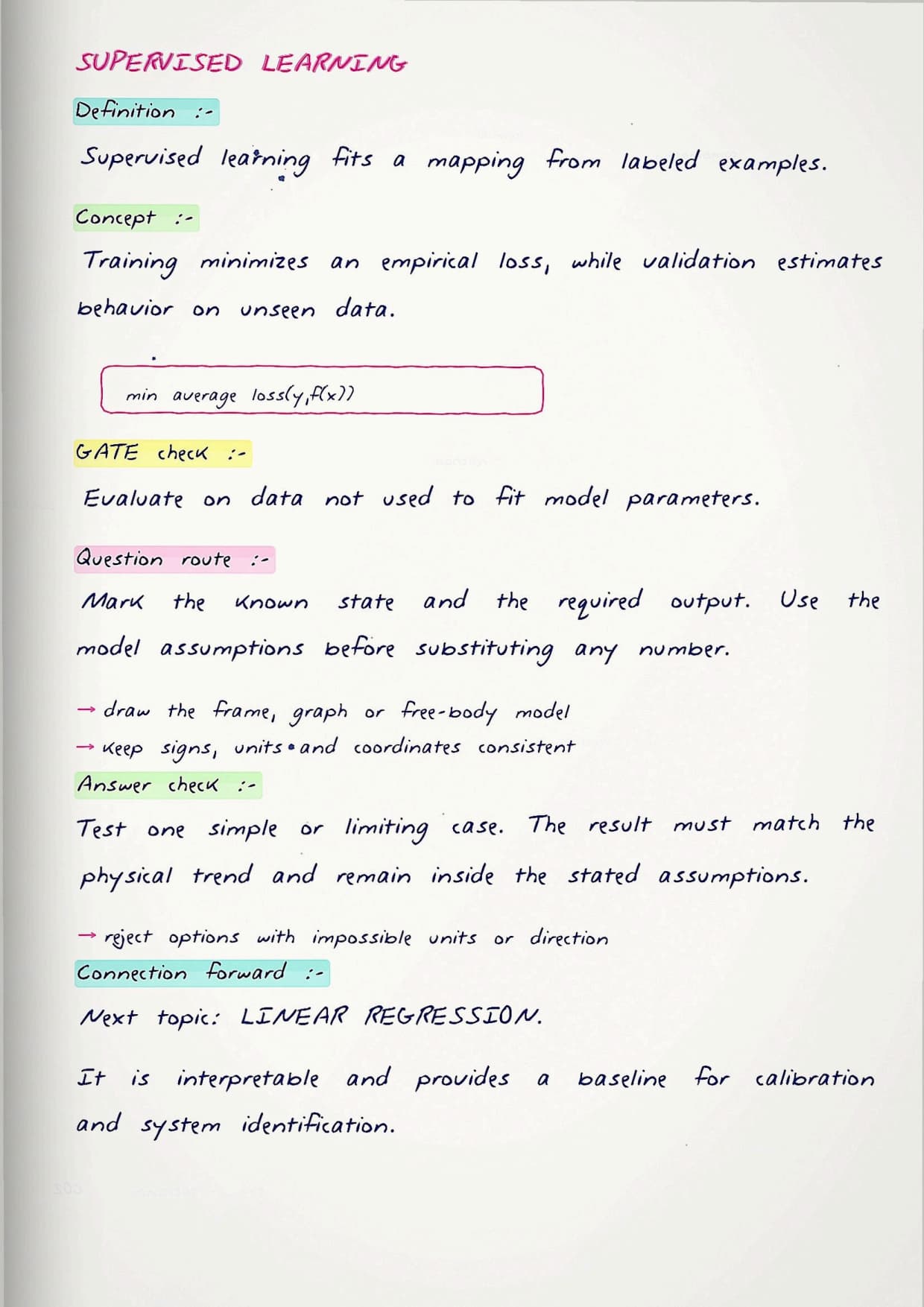
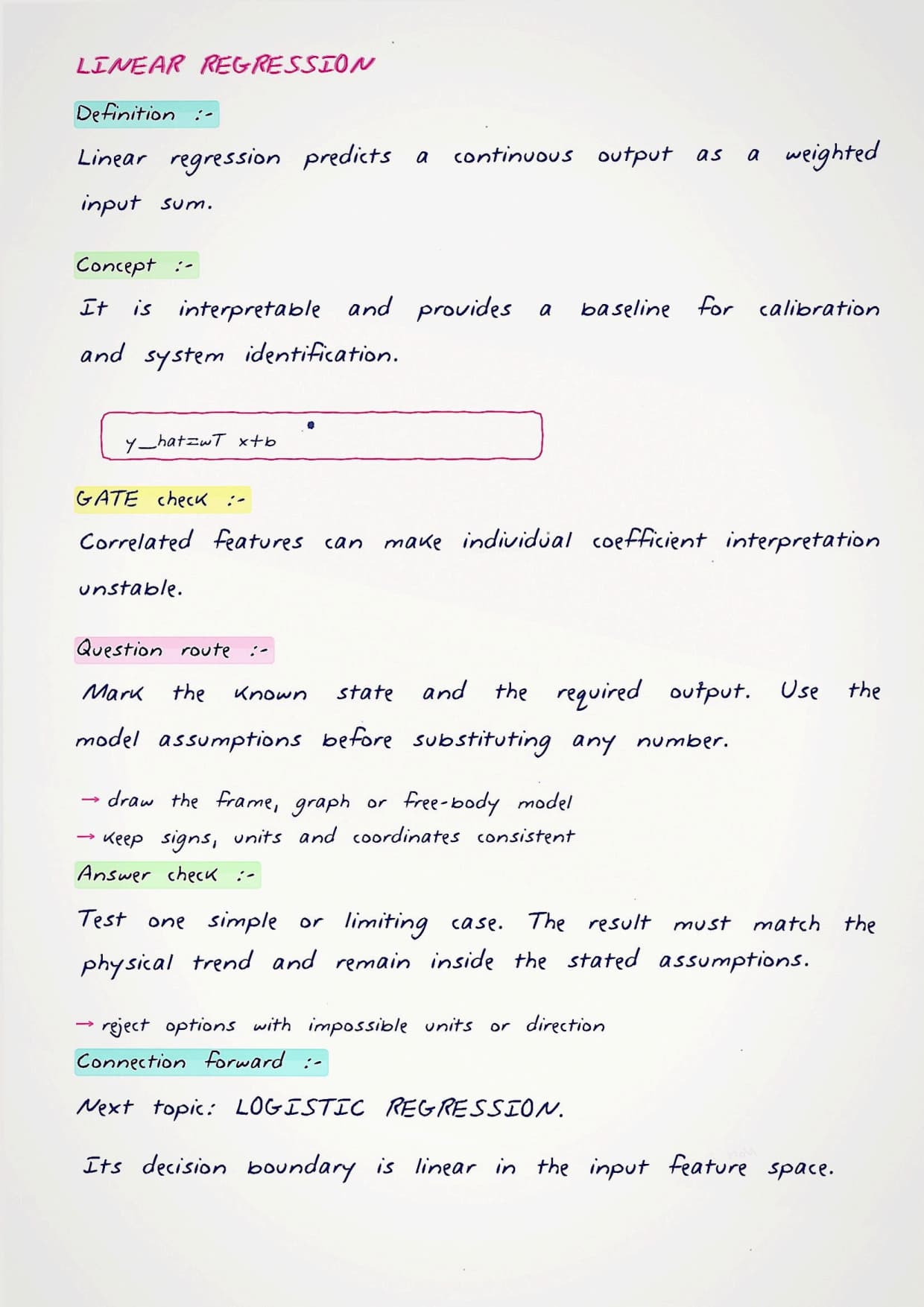
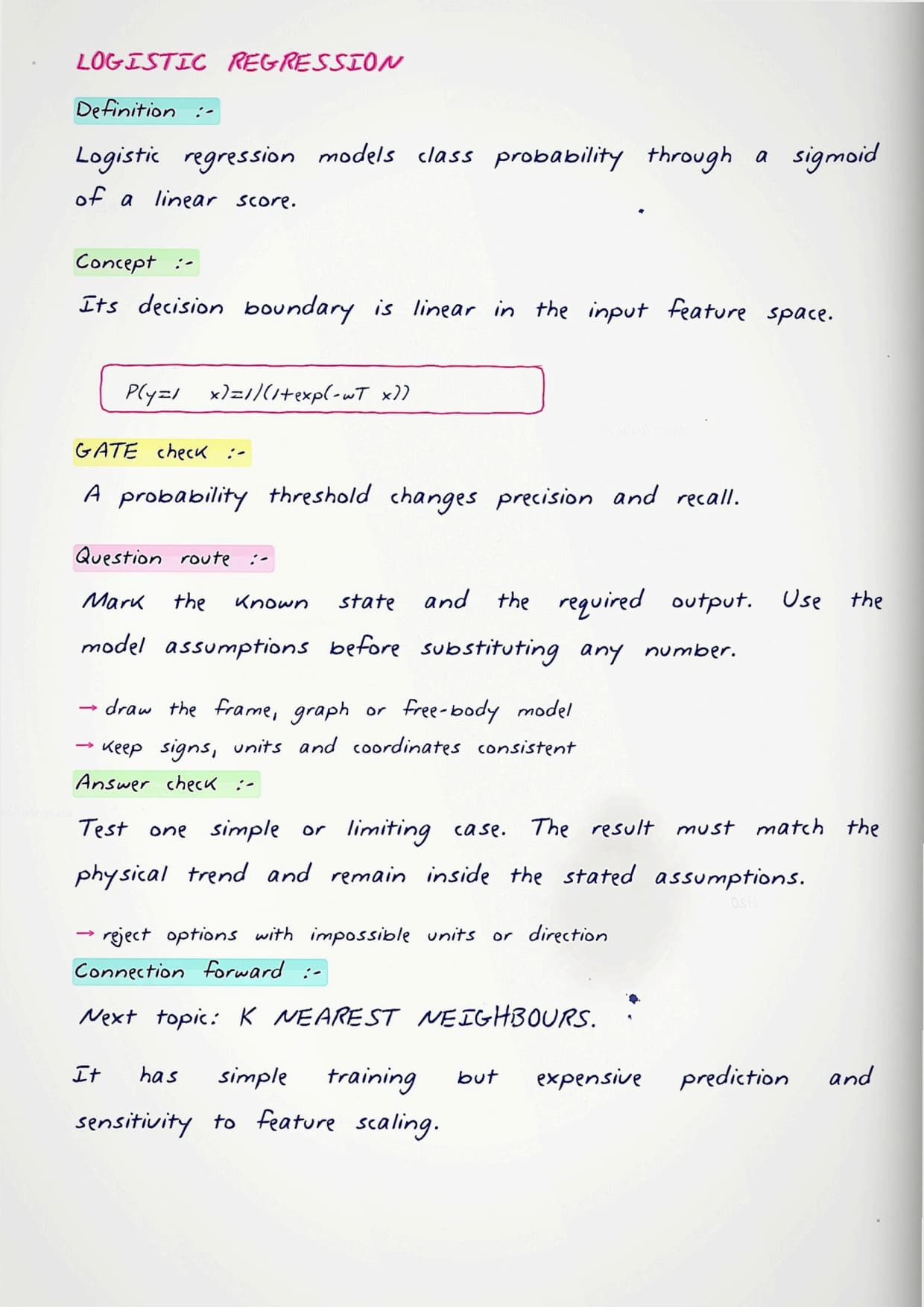
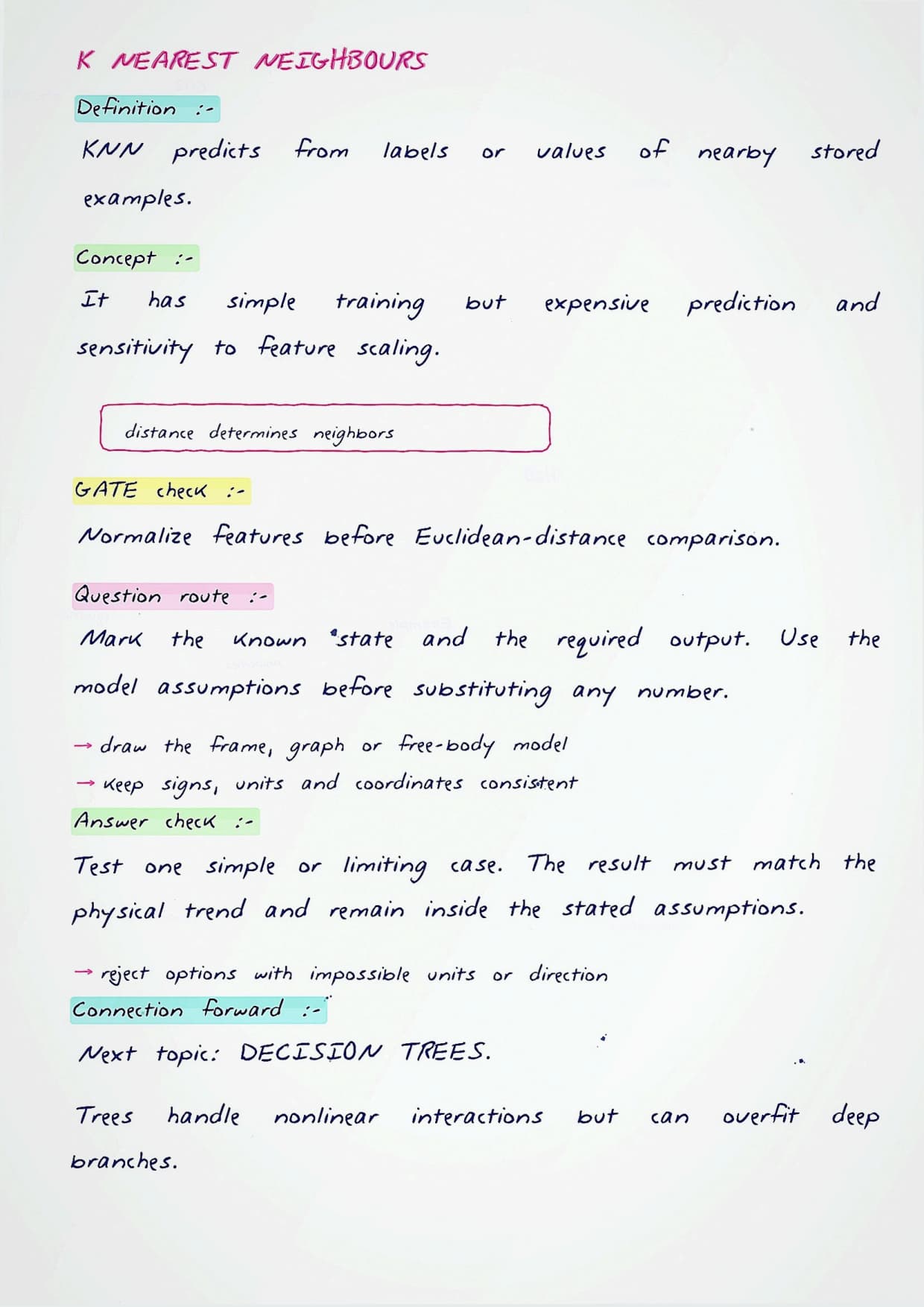
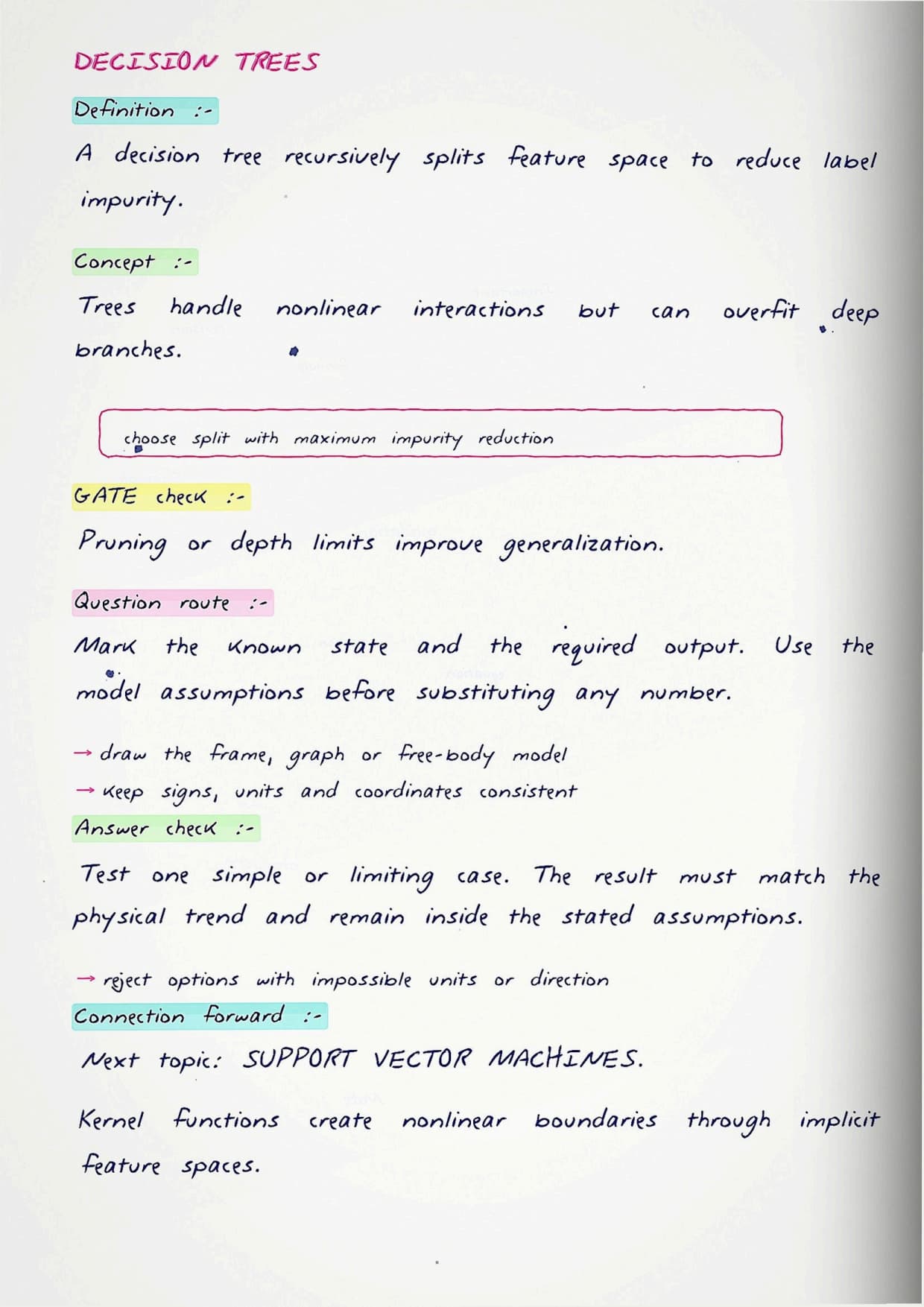
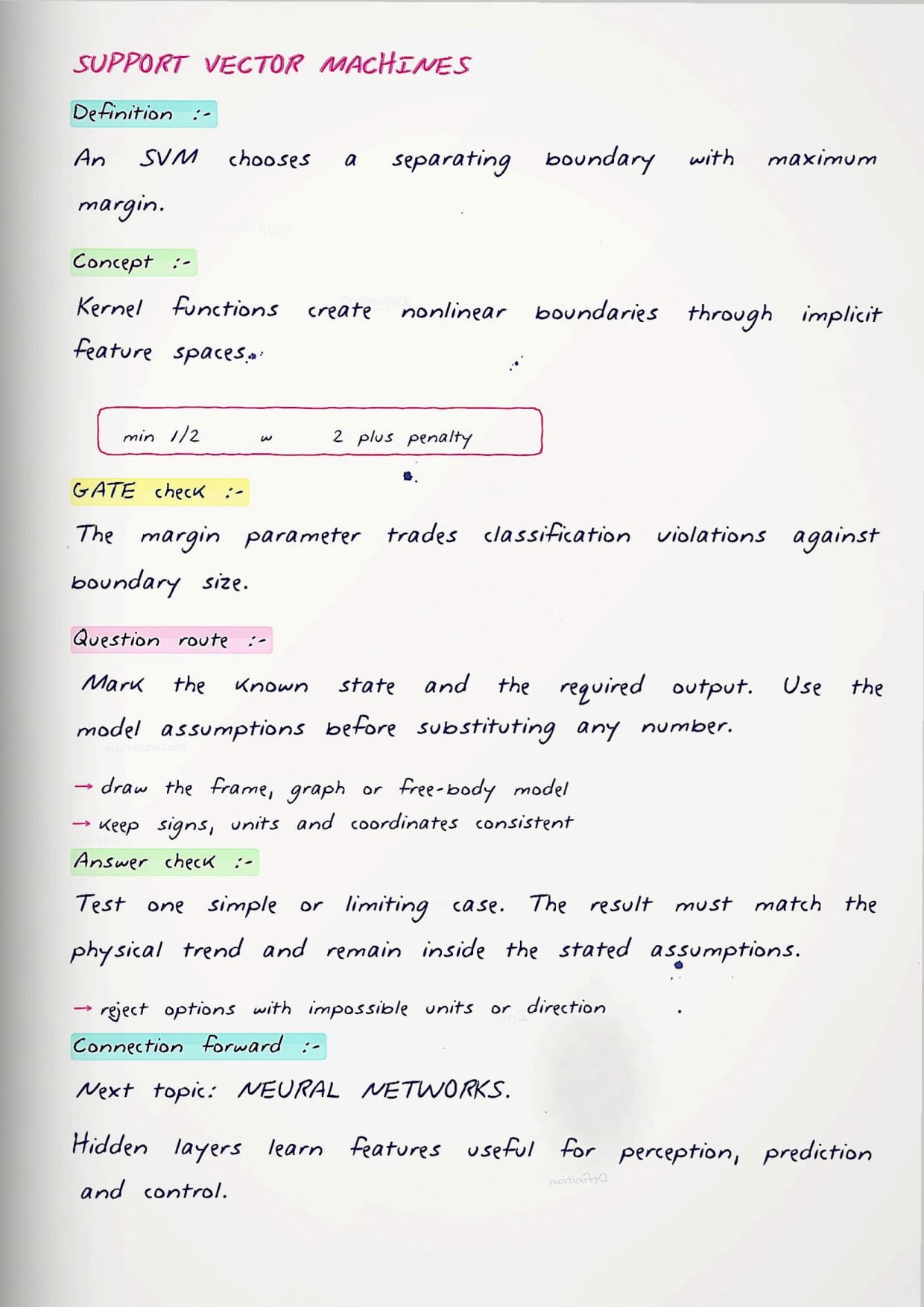
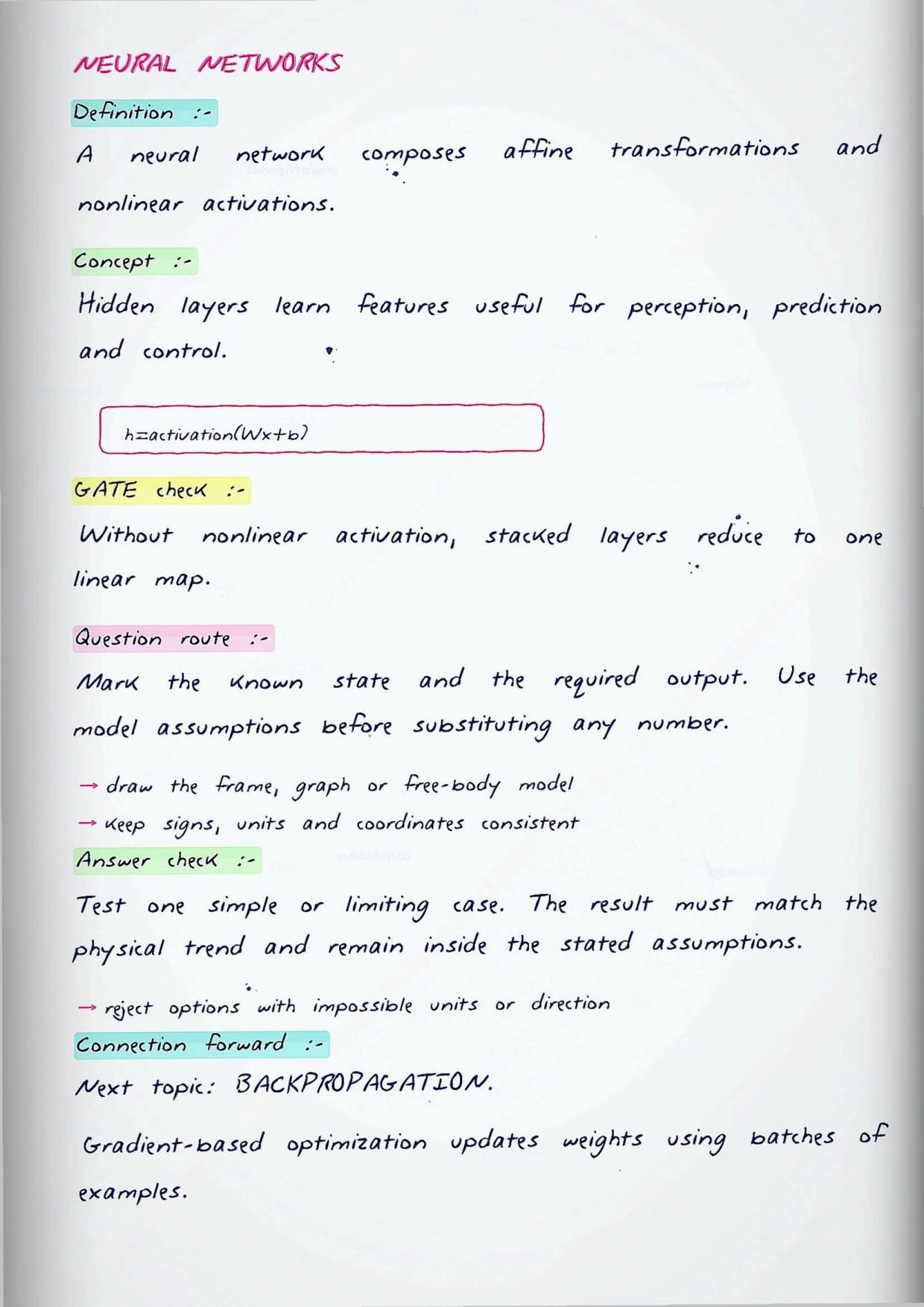
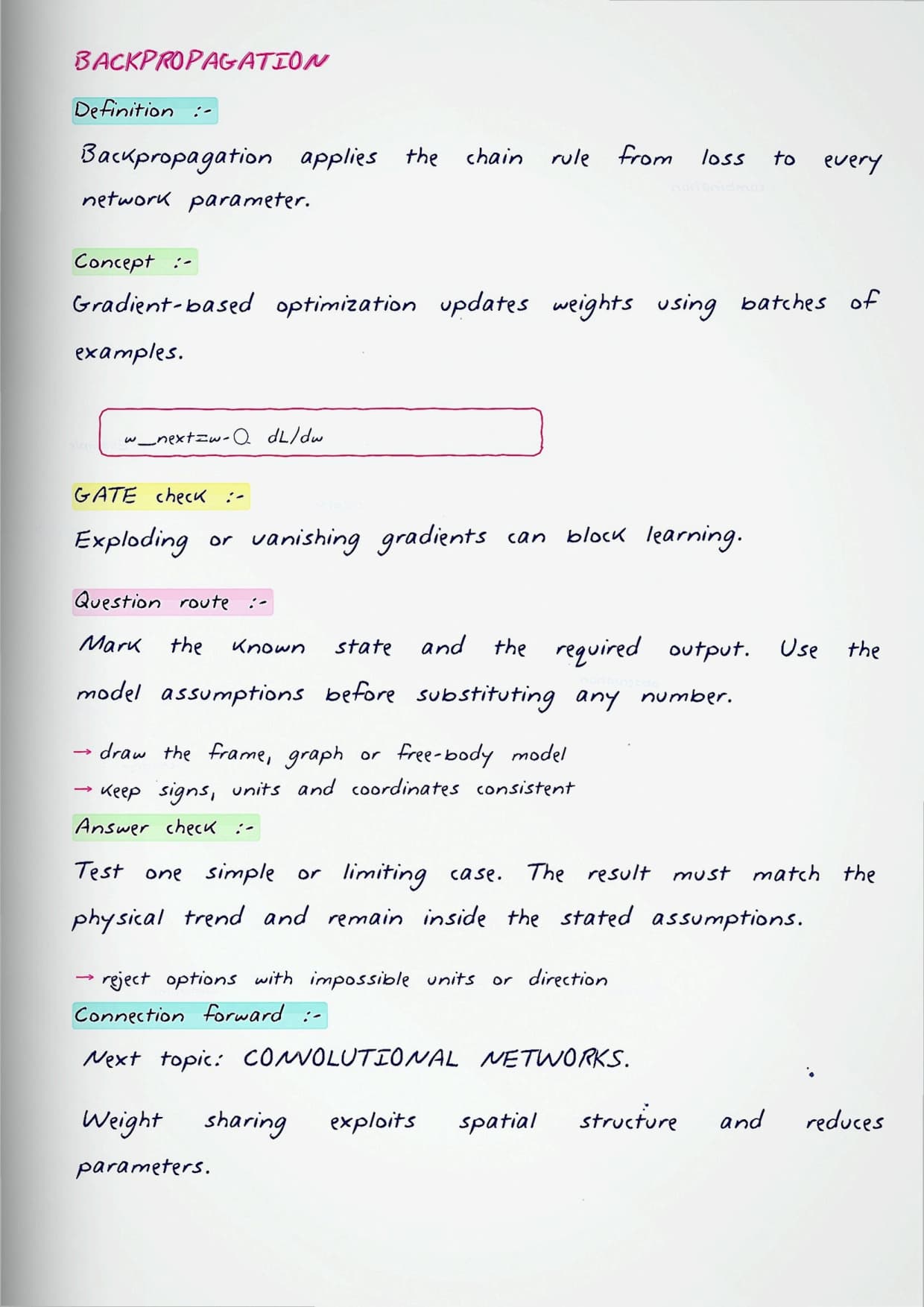
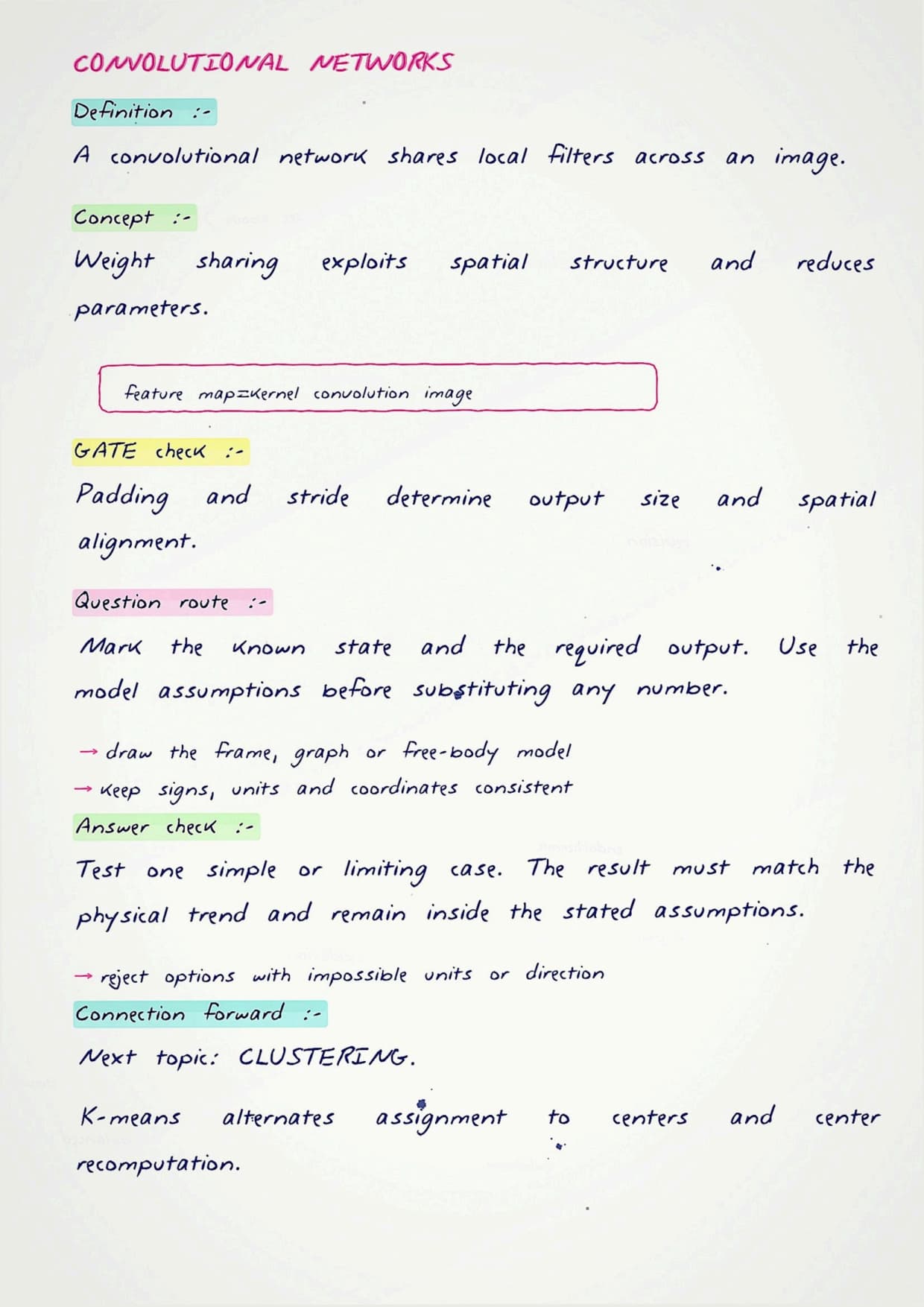
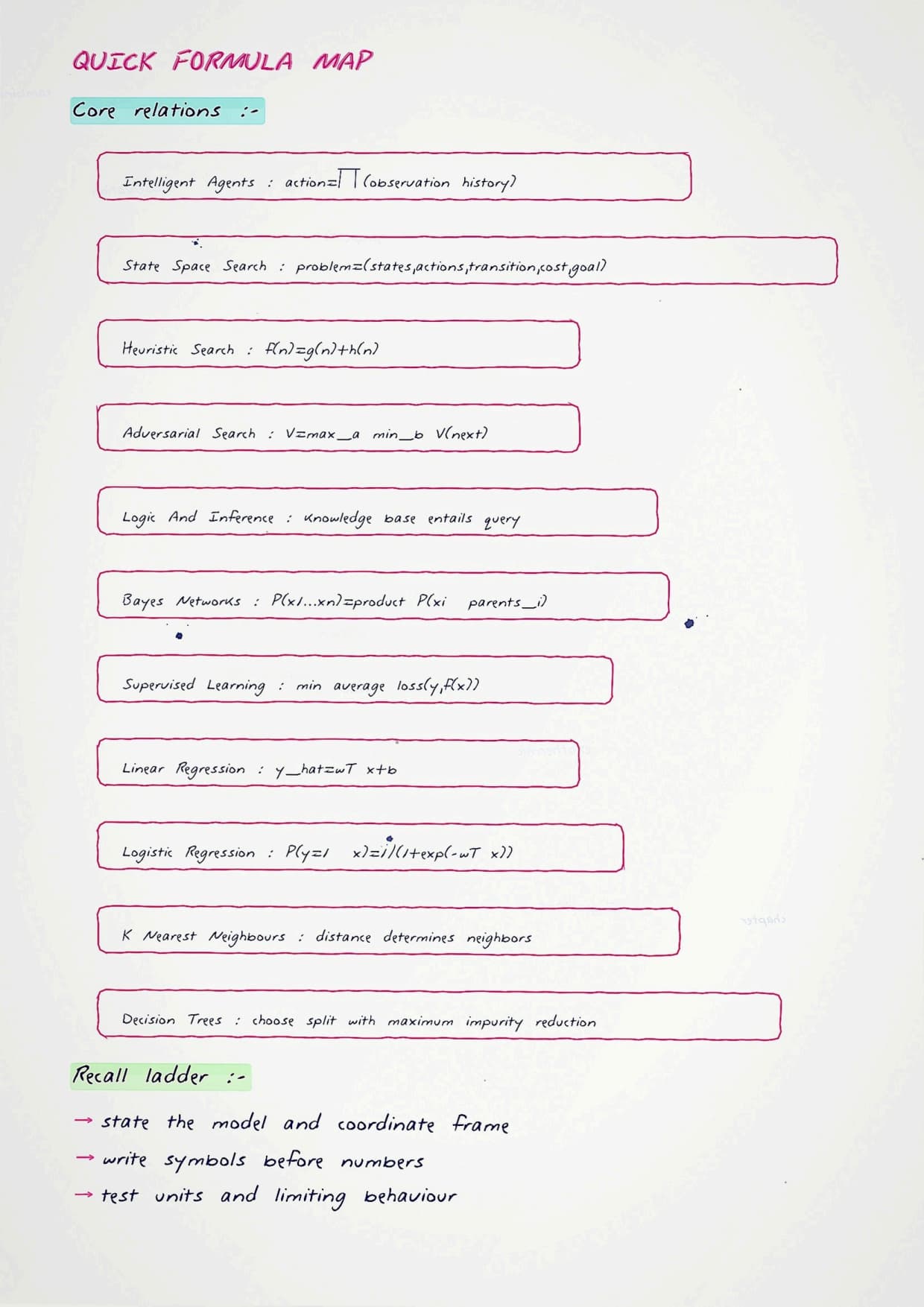
These handwritten notes walk students through the field one concept cluster at a time, the way a good tutor would, so the ideas stick. The material overlaps heavily with the Programming, Probability, and Linear Algebra tested across GATE CS, EC, and EE papers.
From Raw Sensor Data to a Decision
The notes open with the loop every intelligent robot runs: sense, model, decide, act. From there they pin down the vocabulary students actually need:
- Feature, a useful measurement pulled from raw camera or lidar data.
- Model, the map from those features to a label, a value, or an action.
- Training set, generalisation, and inference, kept meaning the same thing every time they appear.
A small sketch shows where each idea sits in the loop, so students always know whether they are looking at perception, learning, or action. That map saves time when a question jumps between topics.
The Three Learning Paradigms
Next comes the backbone of the subject, the three ways a robot can learn. Each gets its own worked sketch:
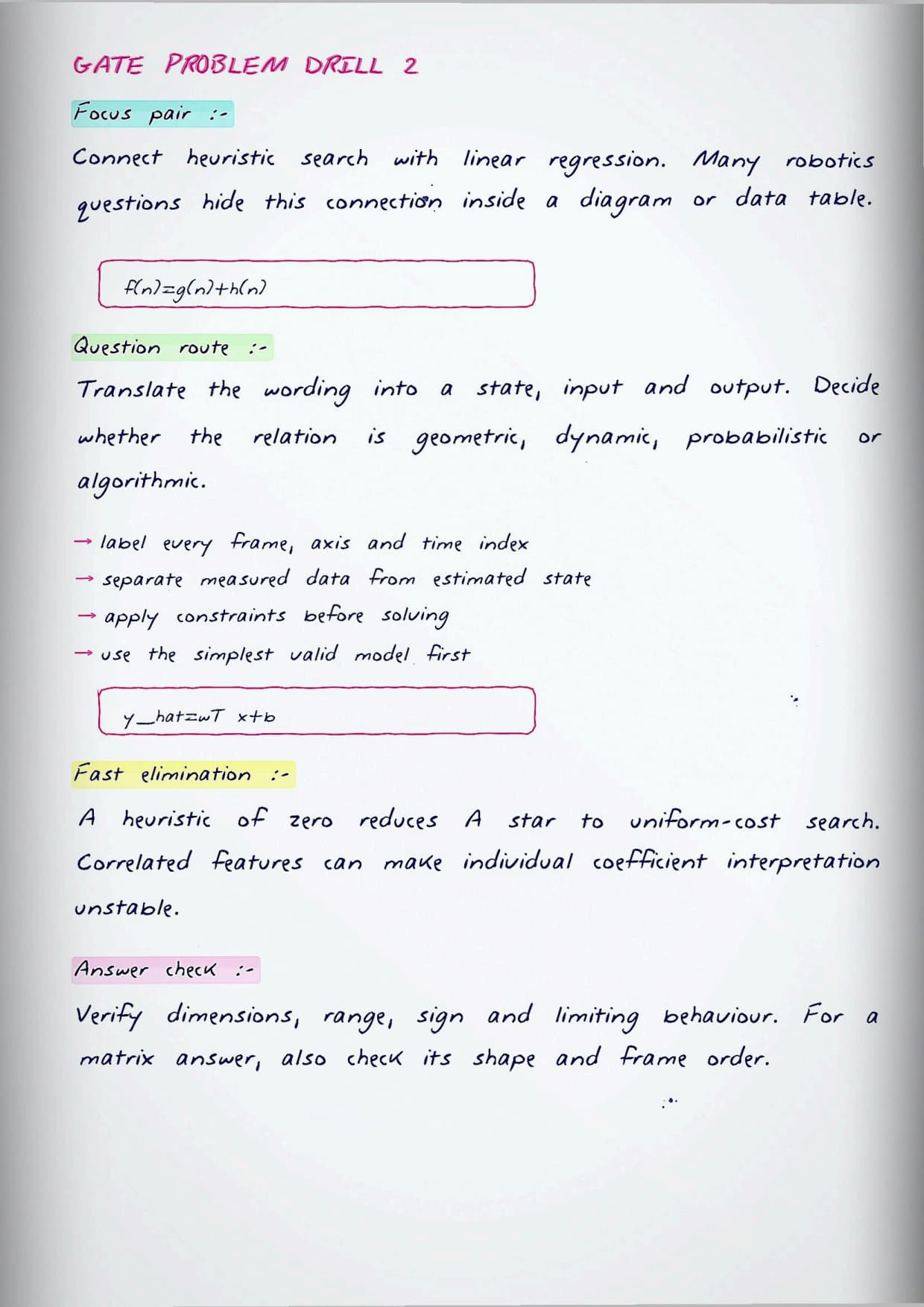
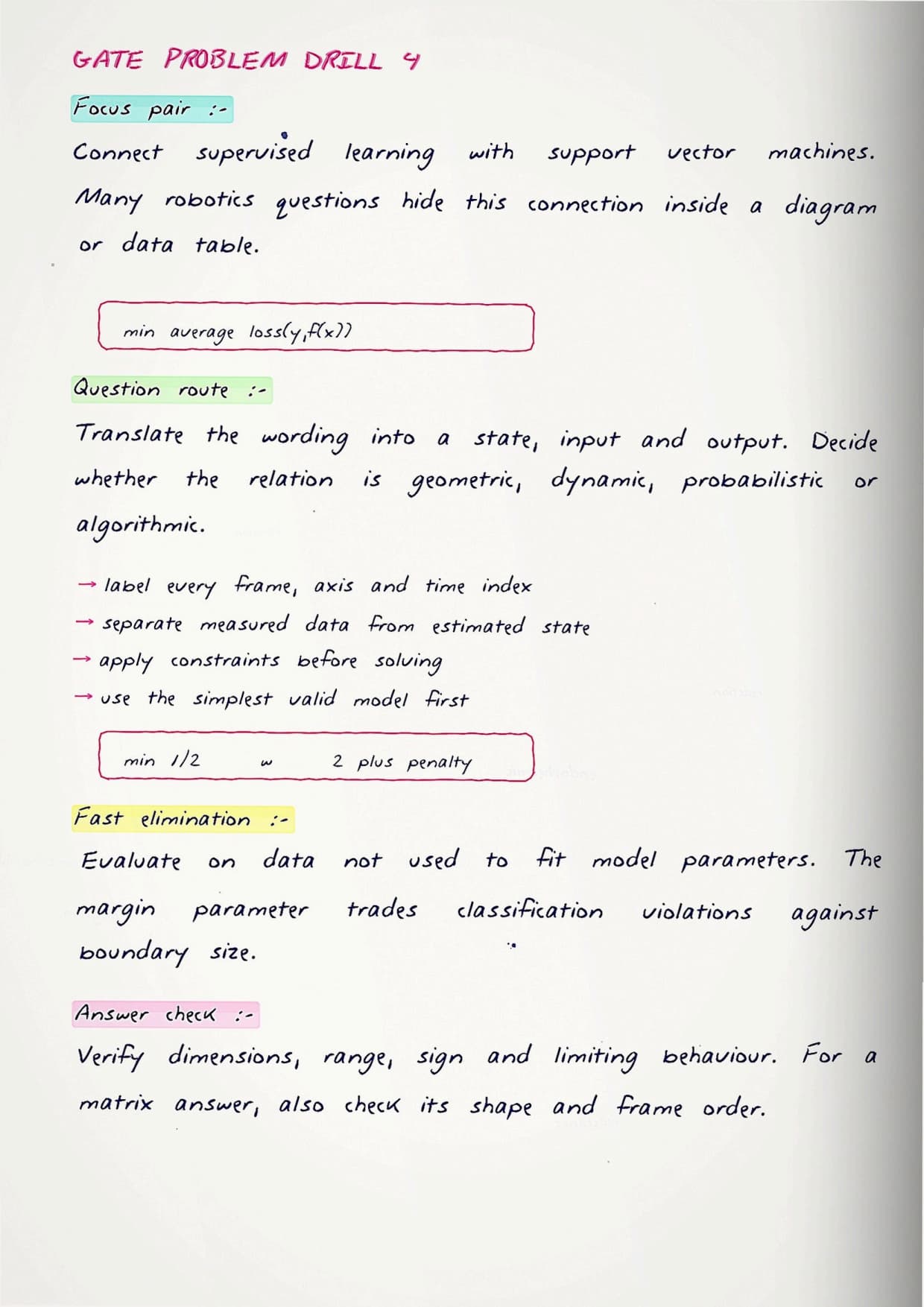
- Supervised learning, where labelled examples teach a mapping, covering classification for object recognition and regression for estimating distances or angles.
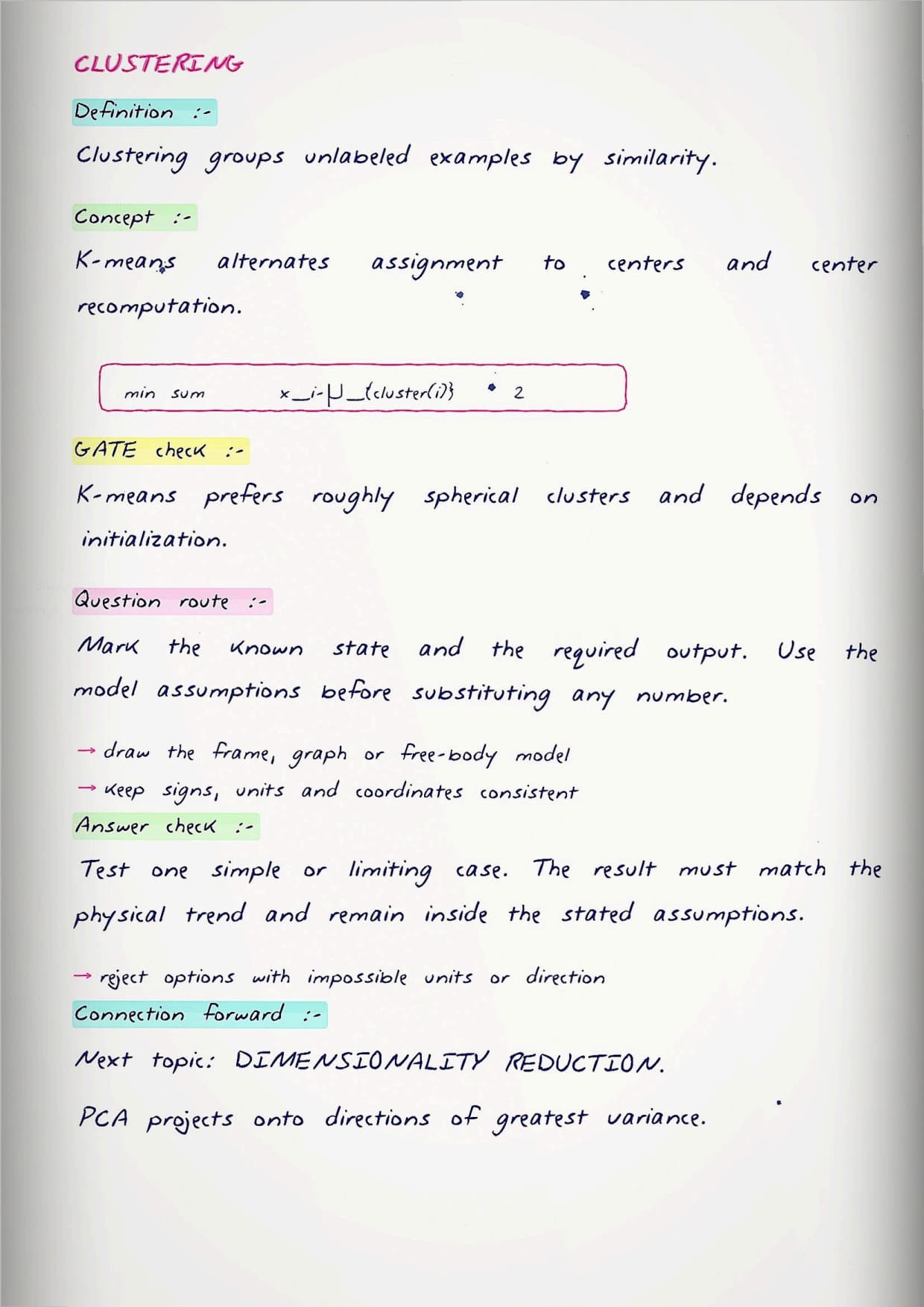
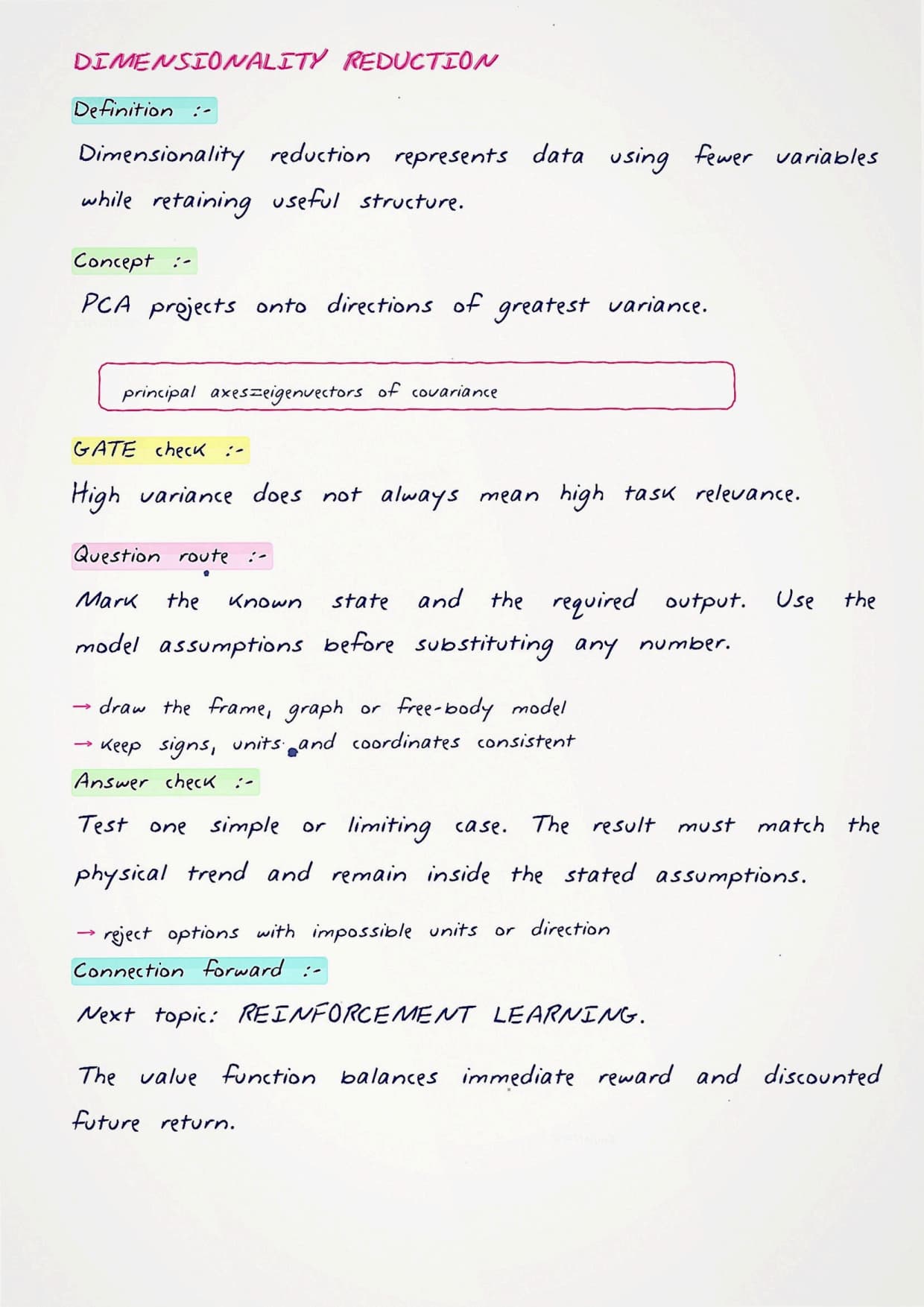
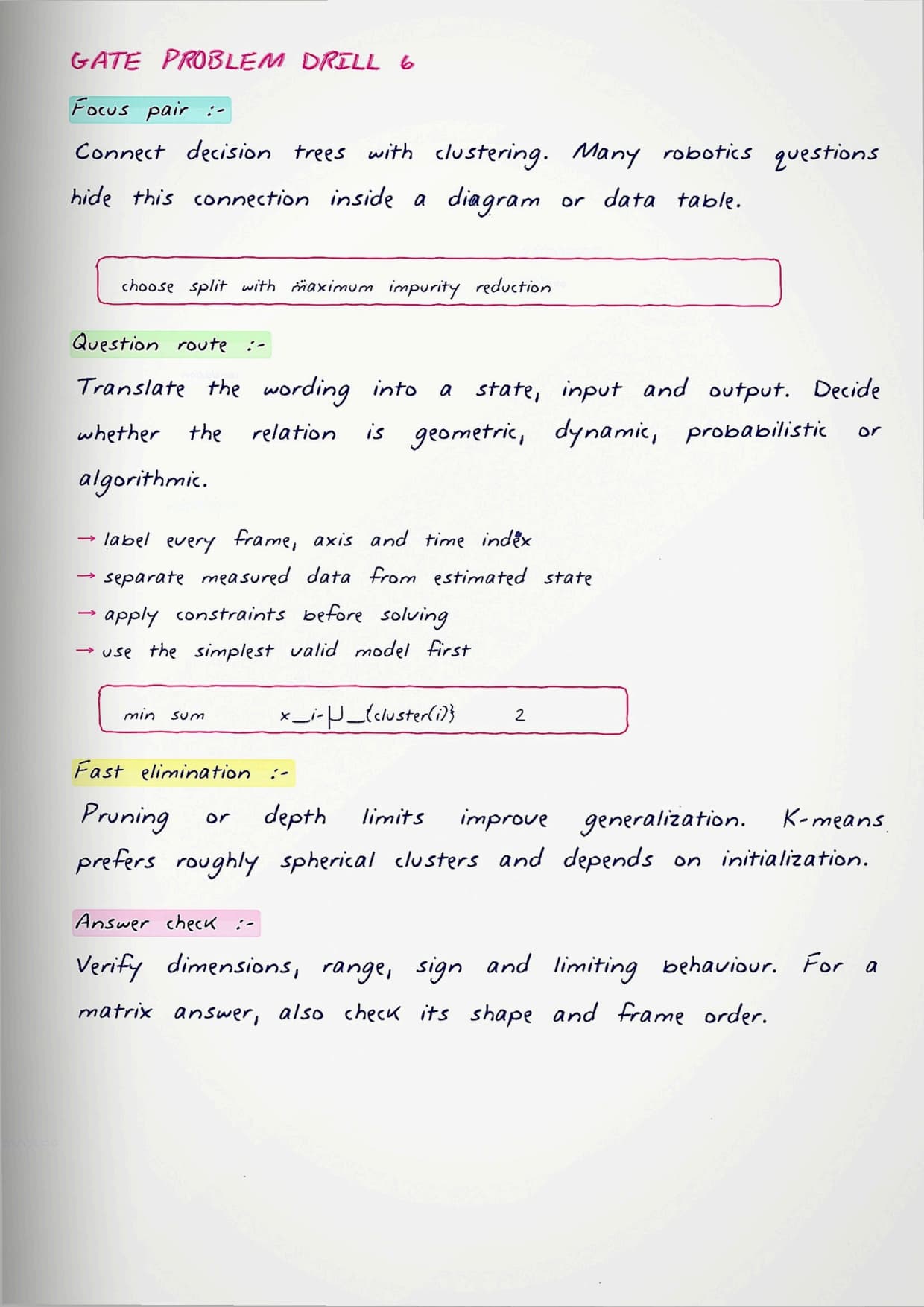
- Unsupervised learning, where the robot finds structure on its own, with clustering and dimensionality reduction shown on scattered sensor points.
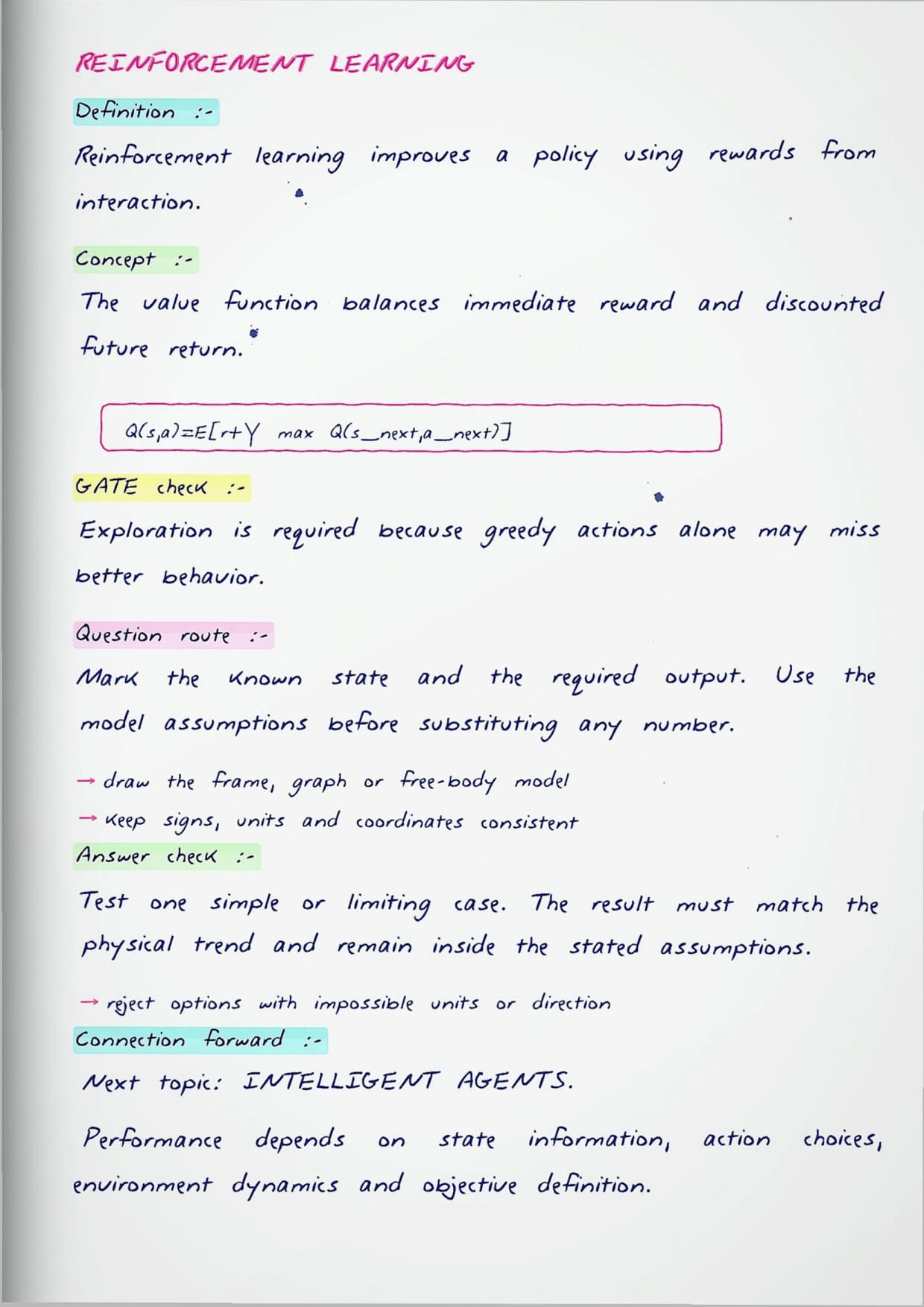
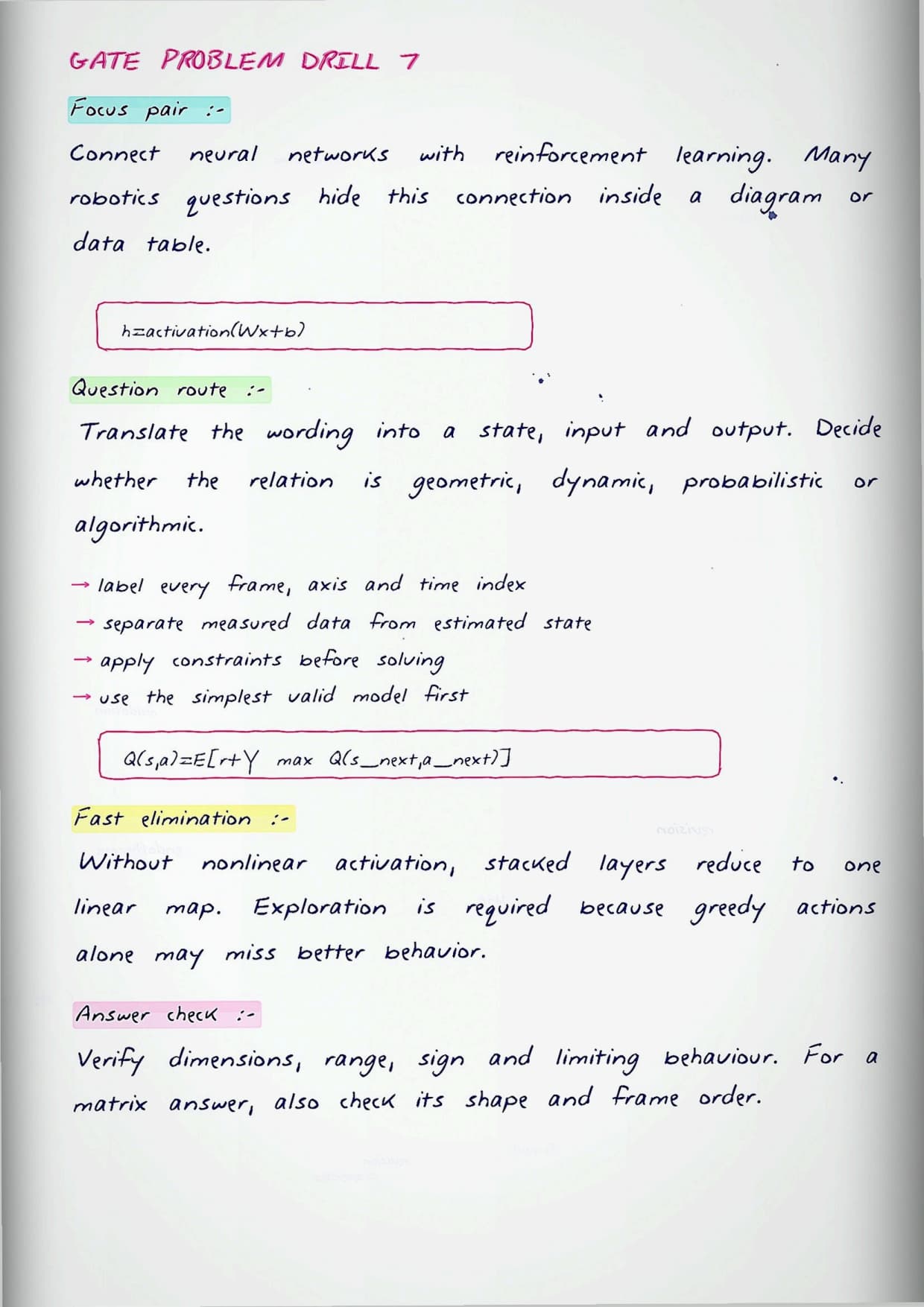
- Reinforcement learning, where an agent earns rewards for good actions, with the notes laying out states, actions, rewards, and policy in plain words.
The idea of overfitting is introduced here too, along with why students split data into training and test sets to catch it early.
Neural Networks and Deep Perception
The heart of modern robot vision gets its own cluster. Students move from a single perceptron to a layered network, seeing how weights and an activation function draw non-linear boundaries.
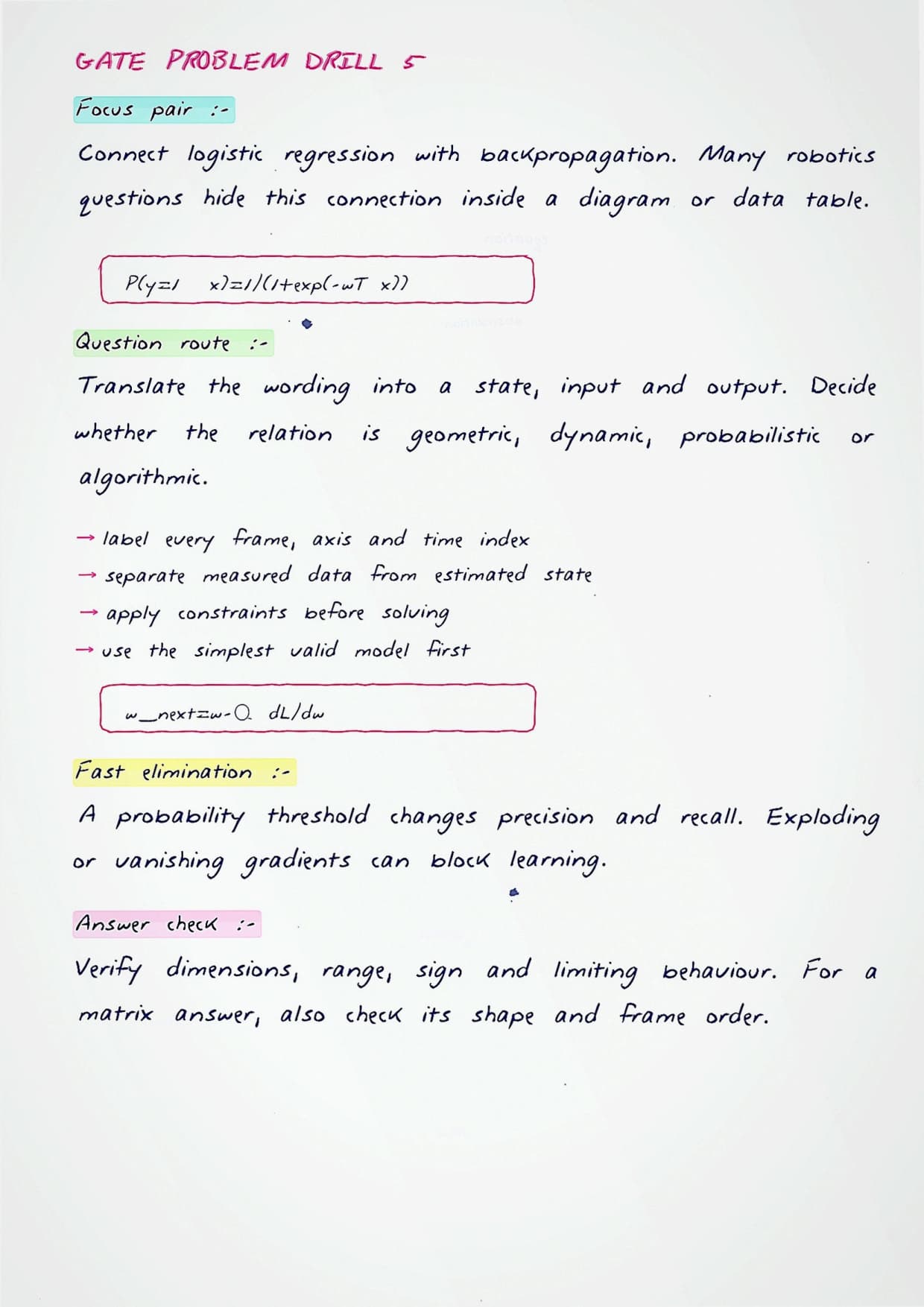
The notes explain gradient descent and backpropagation as the way a network tunes its weights from its own errors, described step by step rather than as a formula to memorise.
From there the pages reach convolutional neural networks, the workhorse for images, and show why sharing filters makes them so good at spotting edges, shapes, and whole objects. This is the material that powers a robot's sight.
Reasoning Under Uncertainty
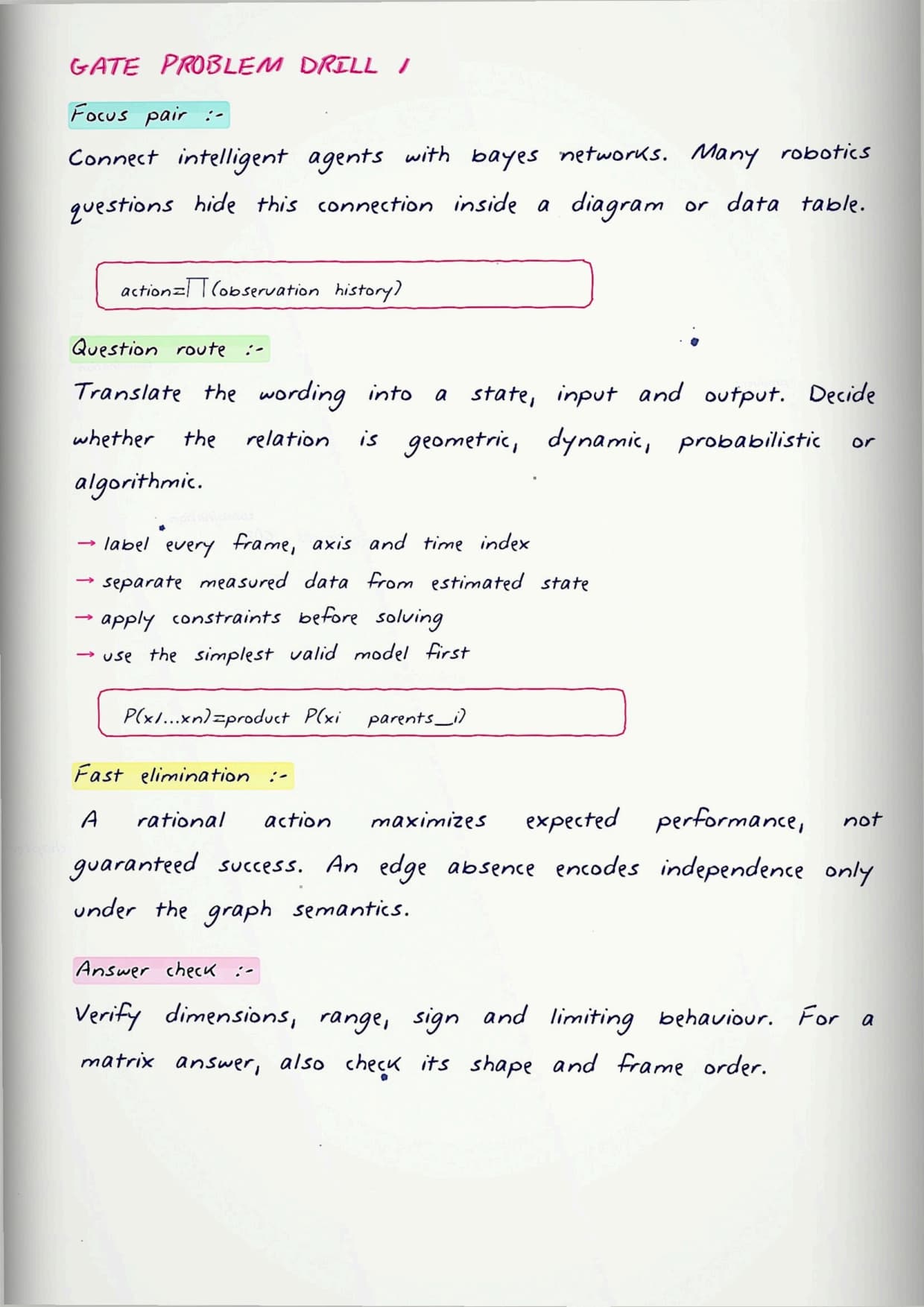
Real sensors are noisy, so a robot must reason with probability. This section ties the AI ideas to the Bayesian thinking that runs through the rest of a robotics syllabus:
- Conditional probability, plus the idea of a prior and a posterior.
- How a robot updates a belief as new evidence arrives, shown on a small numeric example.
- Decision making under uncertainty, linking perception to the planning and control that follow.
The same probability tools return in localisation and mapping, so this section is really the bridge from AI to the rest of a robotics course.
See It Explained by an Expert
Source: Cyrill Stachniss (https://www.youtube.com/@CyrillStachniss)
This short lecture on how a neural network actually learns pairs well with the backpropagation pages, so students can hear the intuition and then revise it from their own notes.
Traps That Cost Students Marks
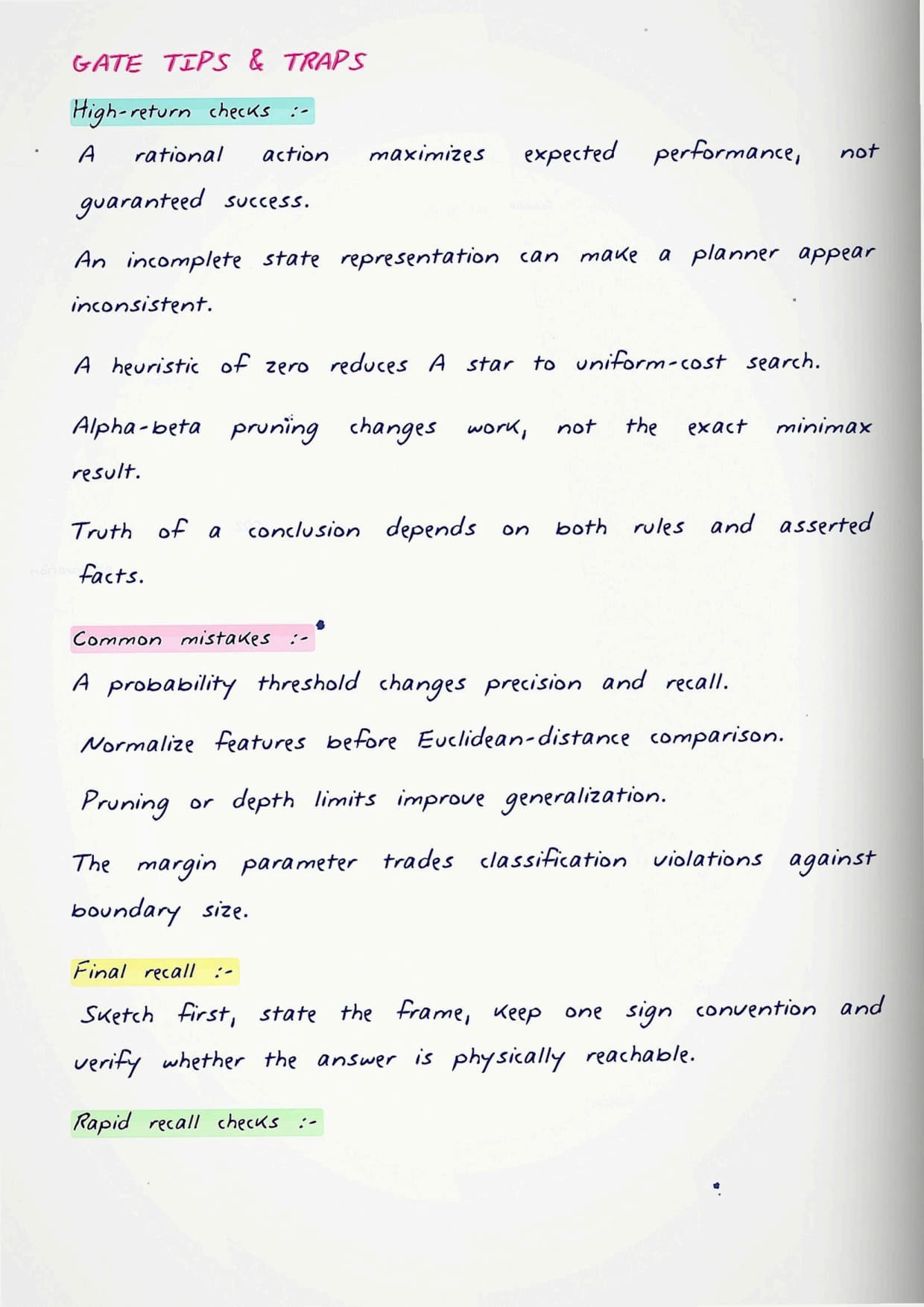
A dedicated page collects the mistakes examiners love to test. Students often confuse classification with regression, mix up precision and recall, or forget that a high training score hides poor generalisation.
The notes flag each trap plainly, so none of them surprise anyone in the exam hall.
Fitting These Notes Into Your Revision
Because the notes are grouped by concept rather than by textbook chapter, students can revise one cluster in a single sitting.
A sensible plan is early days on the learning paradigms, mid revision on neural networks, and final passes on probability and the common traps. Read a page, cover it, and redraw the sketch from memory, and the ideas will hold on test day.
AI and Machine Learning for Robotics FAQs
Ques. Do these handwritten notes assume I already know machine learning?
Ans. No. They begin from the sense, model, decide, act loop and build up basic terms first, so students new to the field can follow along while those revising get a fast refresher.
Ques. Which learning types are covered?
Ans. All three main paradigms are covered, supervised, unsupervised, and reinforcement learning, each with a short worked sketch and typical robotics examples.
Ques. Is this topic useful for GATE preparation?
Ans. Yes. There is no standalone Robotics paper, but the probability, linear algebra, and programming ideas here overlap strongly with GATE CS, EC, and EE, so the practice carries over.
Ques. How are neural networks explained?
Ans. Step by step, from a single perceptron to convolutional networks, with gradient descent and backpropagation described in plain words rather than dense notation.
Ques. How many pages are the notes?
Ans. The set runs to 28 pages, grouped by concept cluster so each revision session covers one clean topic.



Comments