




Actuators, motors and drives are what turn a robot's commands into real motion, so they sit at the heart of every hardware question and make this core, high-return material for GATE preparation.
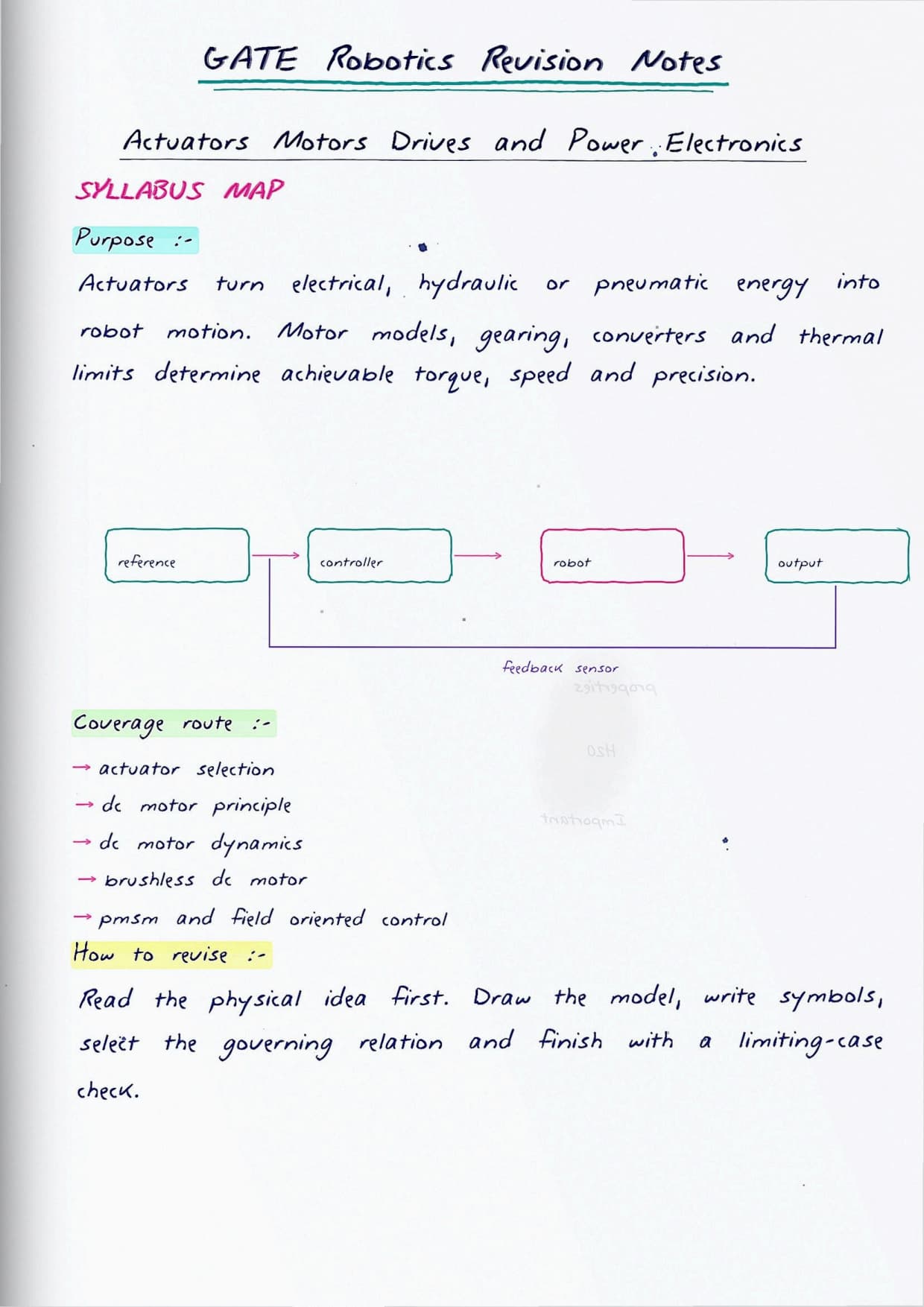
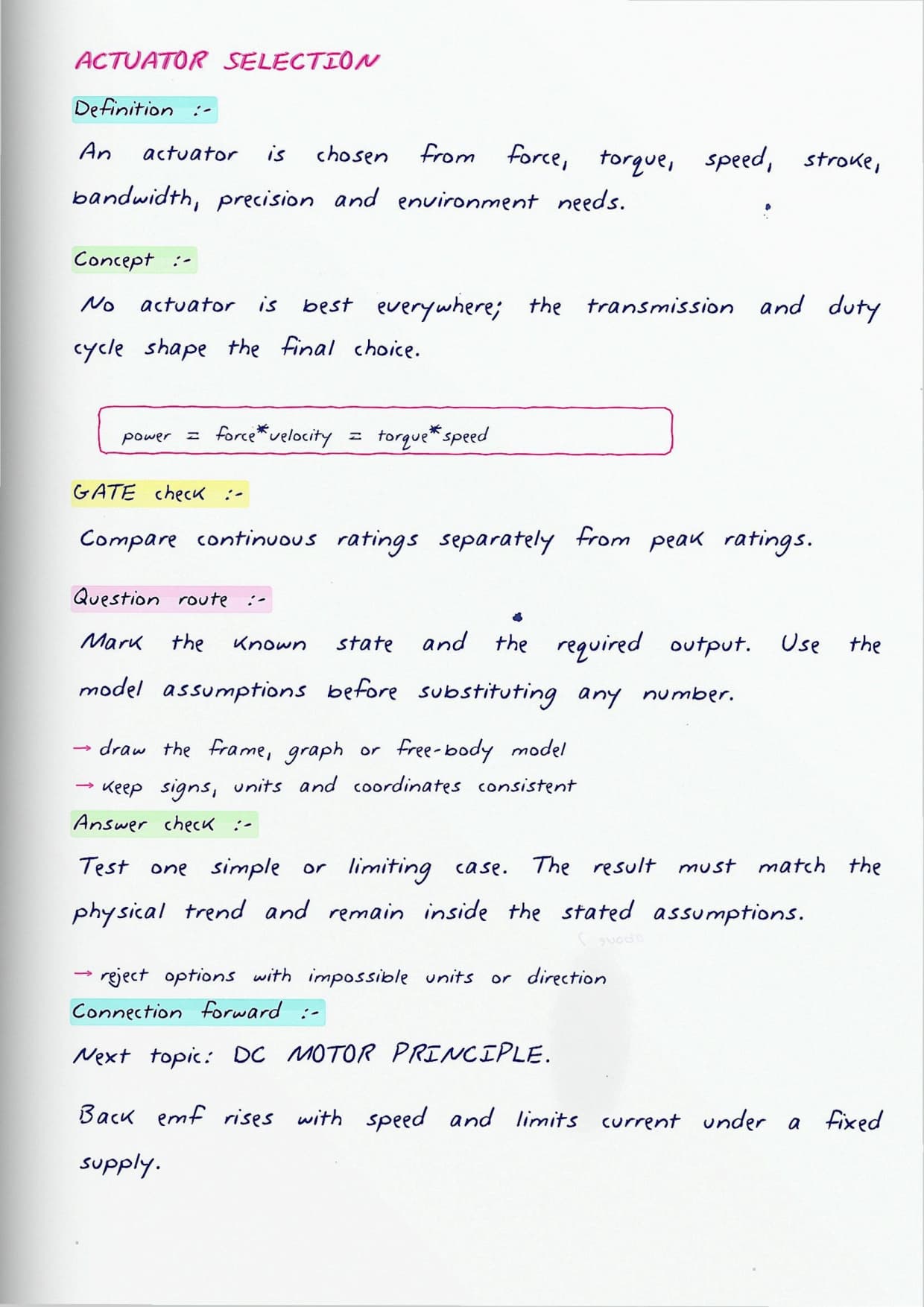
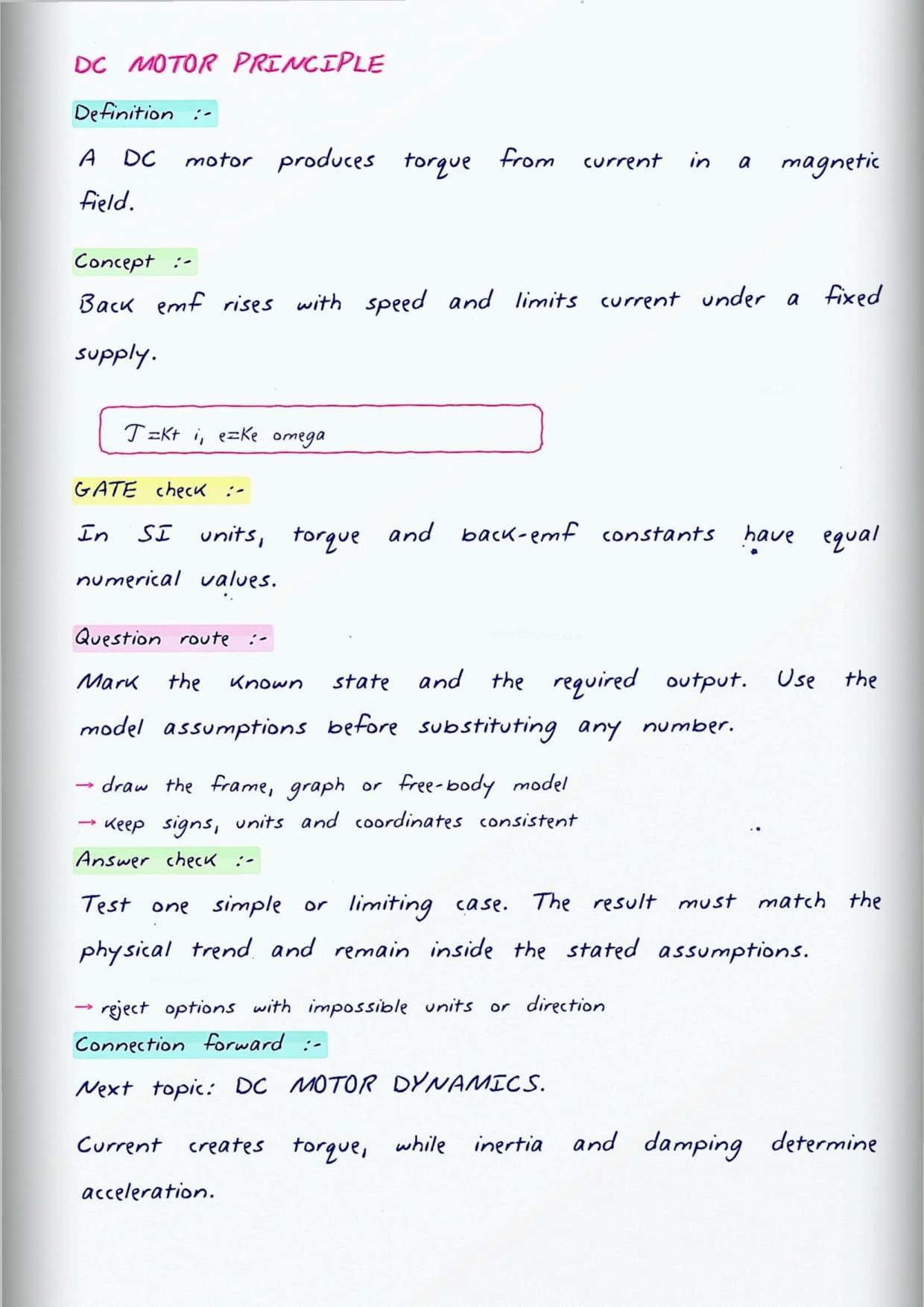
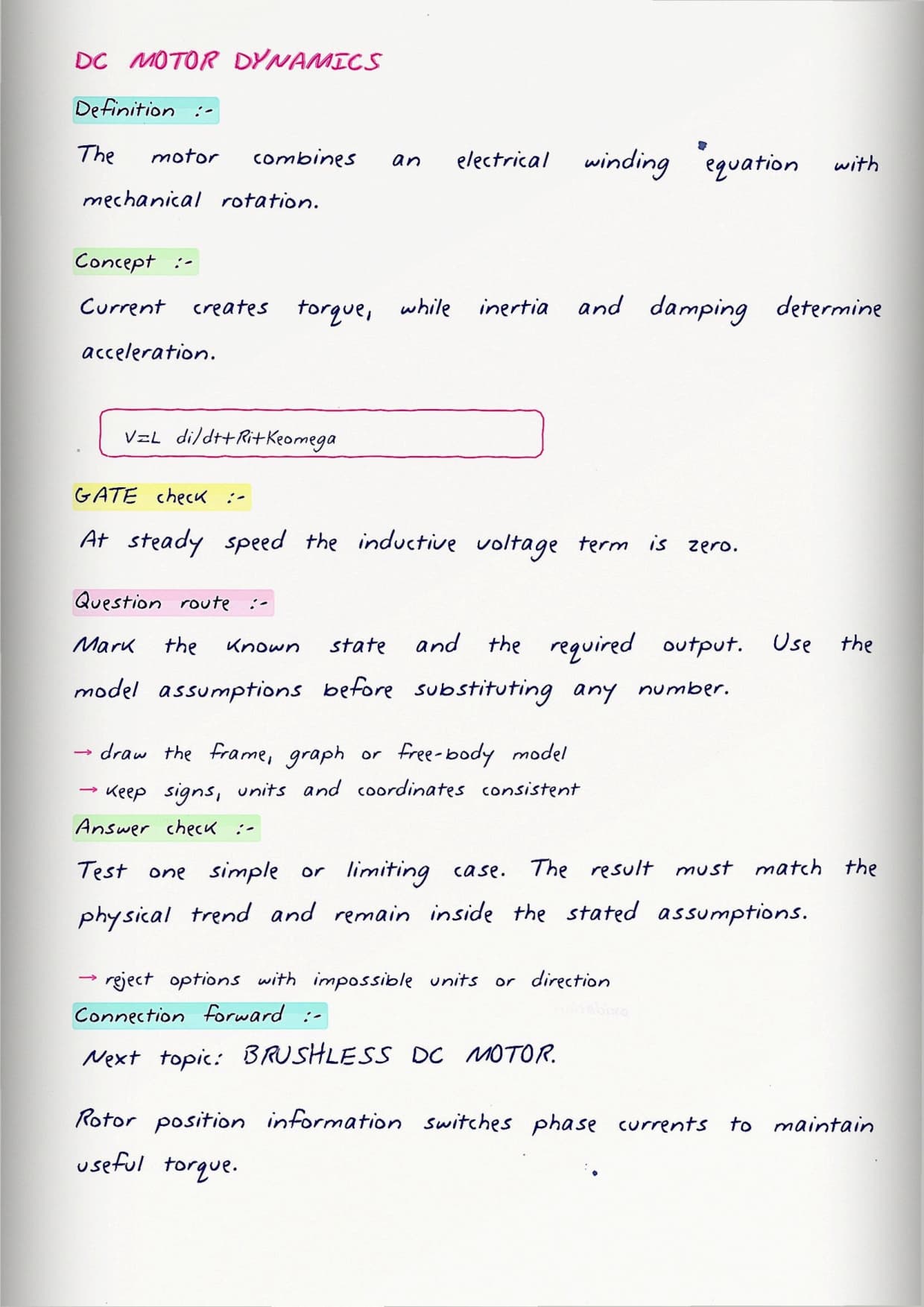
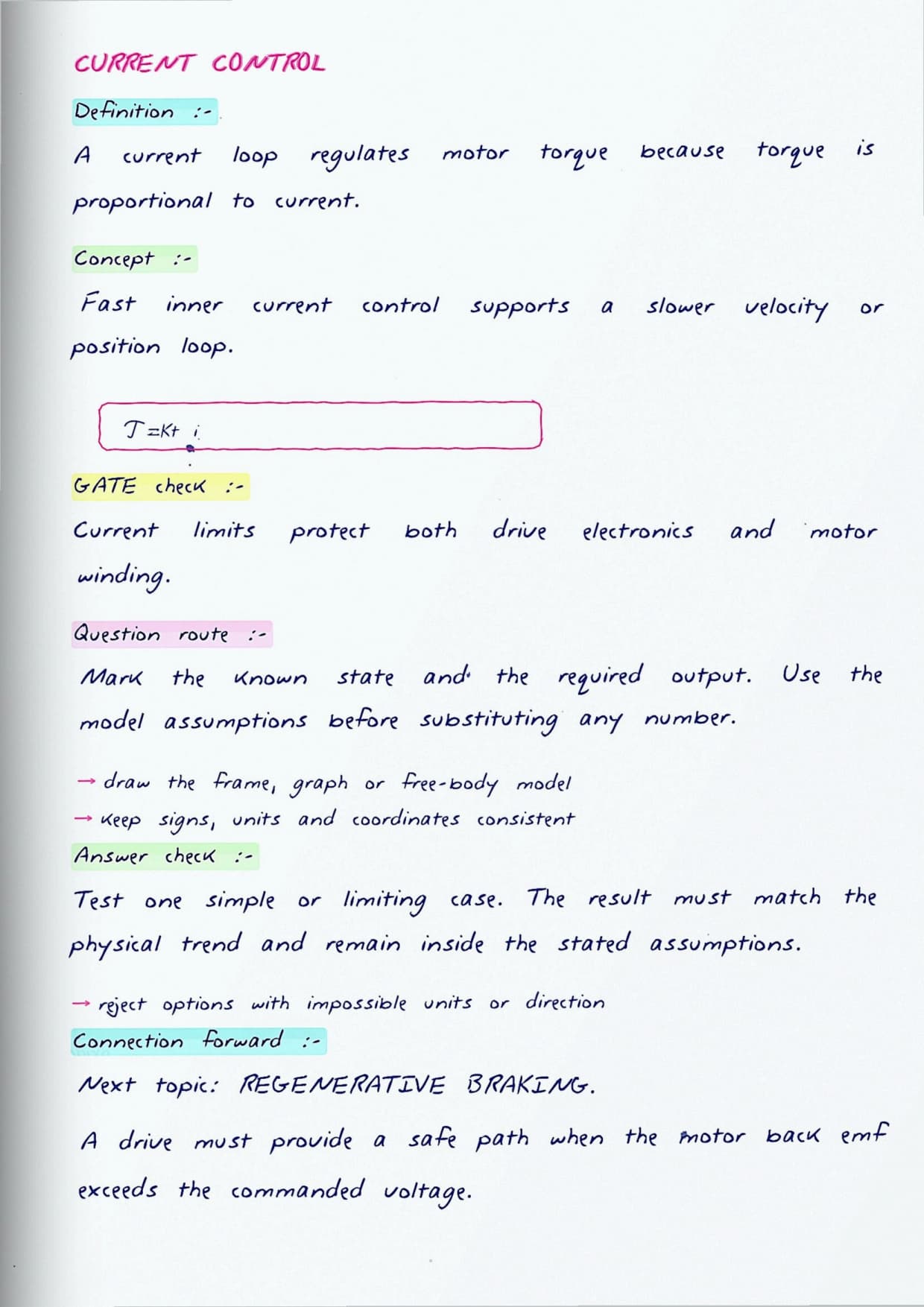
Where Motors and Drives Sit Inside a Robot
These notes walk the hardware the way an engineer meets it, from the joint outward to the electronics that feed it. They start at the joint, not at a definition.
A two-link arm diagram is marked up to show which actuator drives each axis, where the gearbox trades speed for torque, and how the encoder reports position to the controller. Students who picture the motor as one block in a loop read the rest far more easily.
From there the pages trace the flow of energy: the supply feeds the power stage, the power stage feeds the motor windings, and the motor turns electrical input into work at the joint. Keeping that chain in view stops the topic from feeling like scattered formulas.
The Actuator Families the Notes Walk Through
Robots rarely use one kind of actuator, so the notes lay the main families side by side and explain when each earns its place:
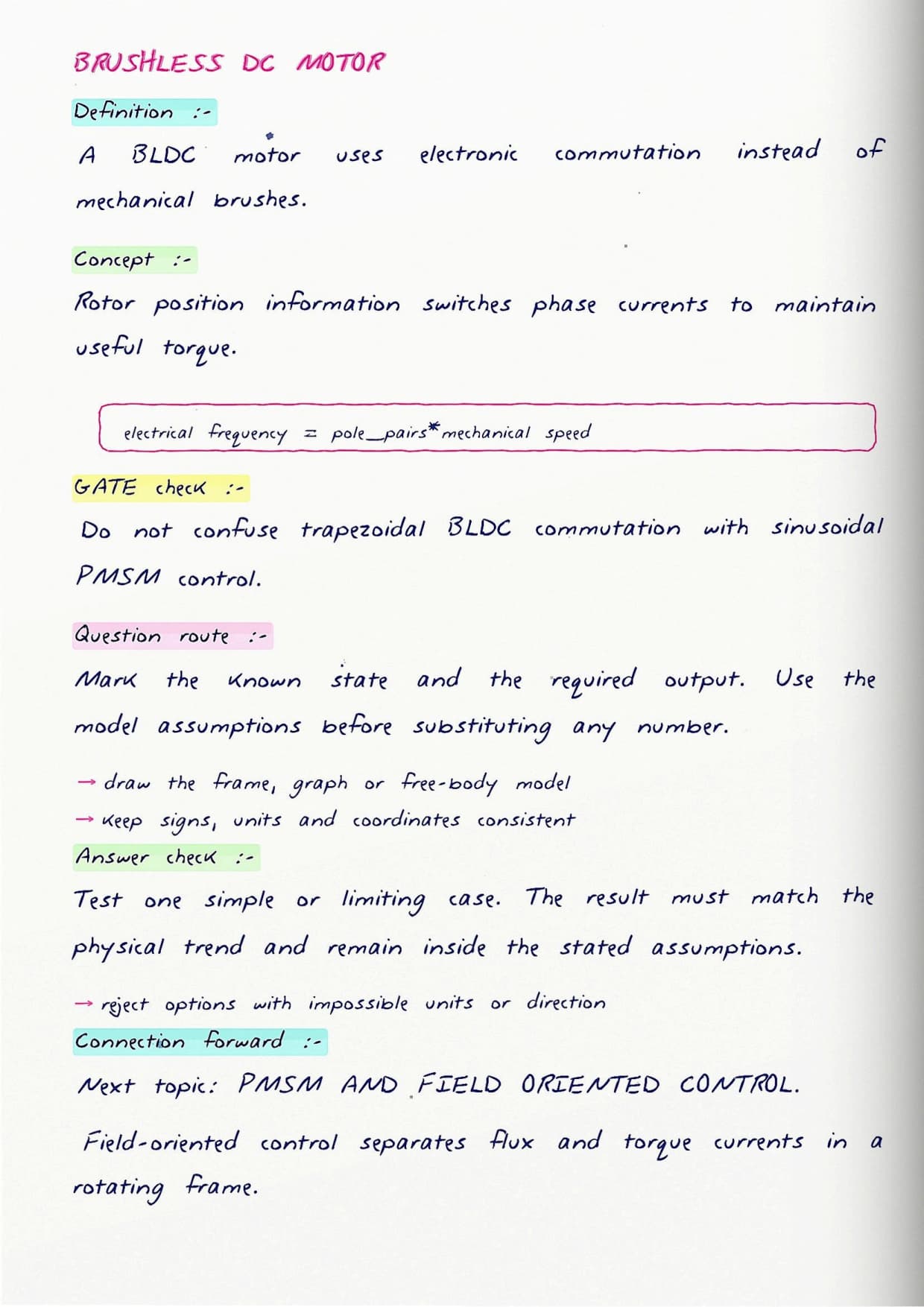
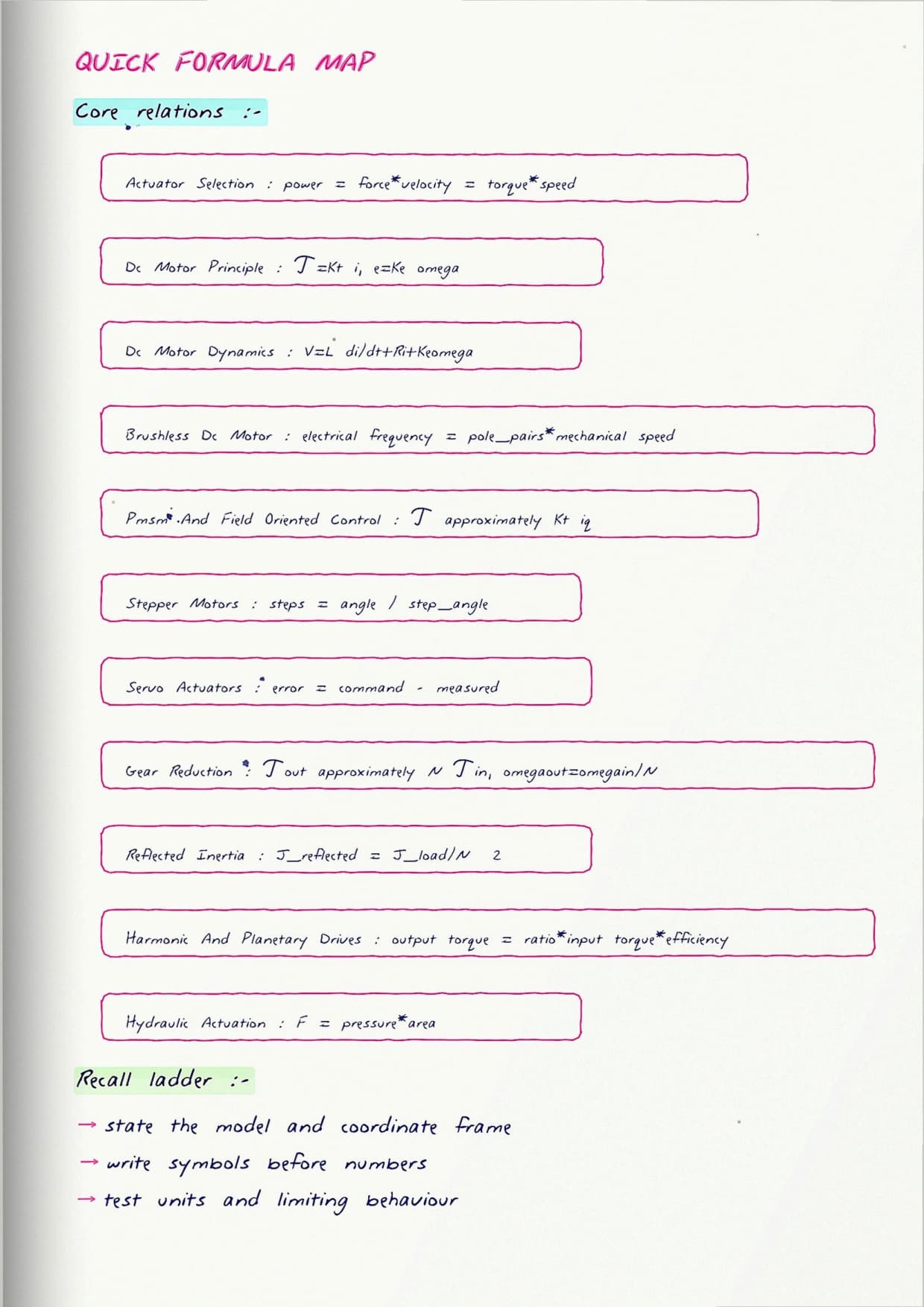
- DC and brushless DC motors for smooth, controllable joint motion, with the torque-speed relationship drawn out by hand.
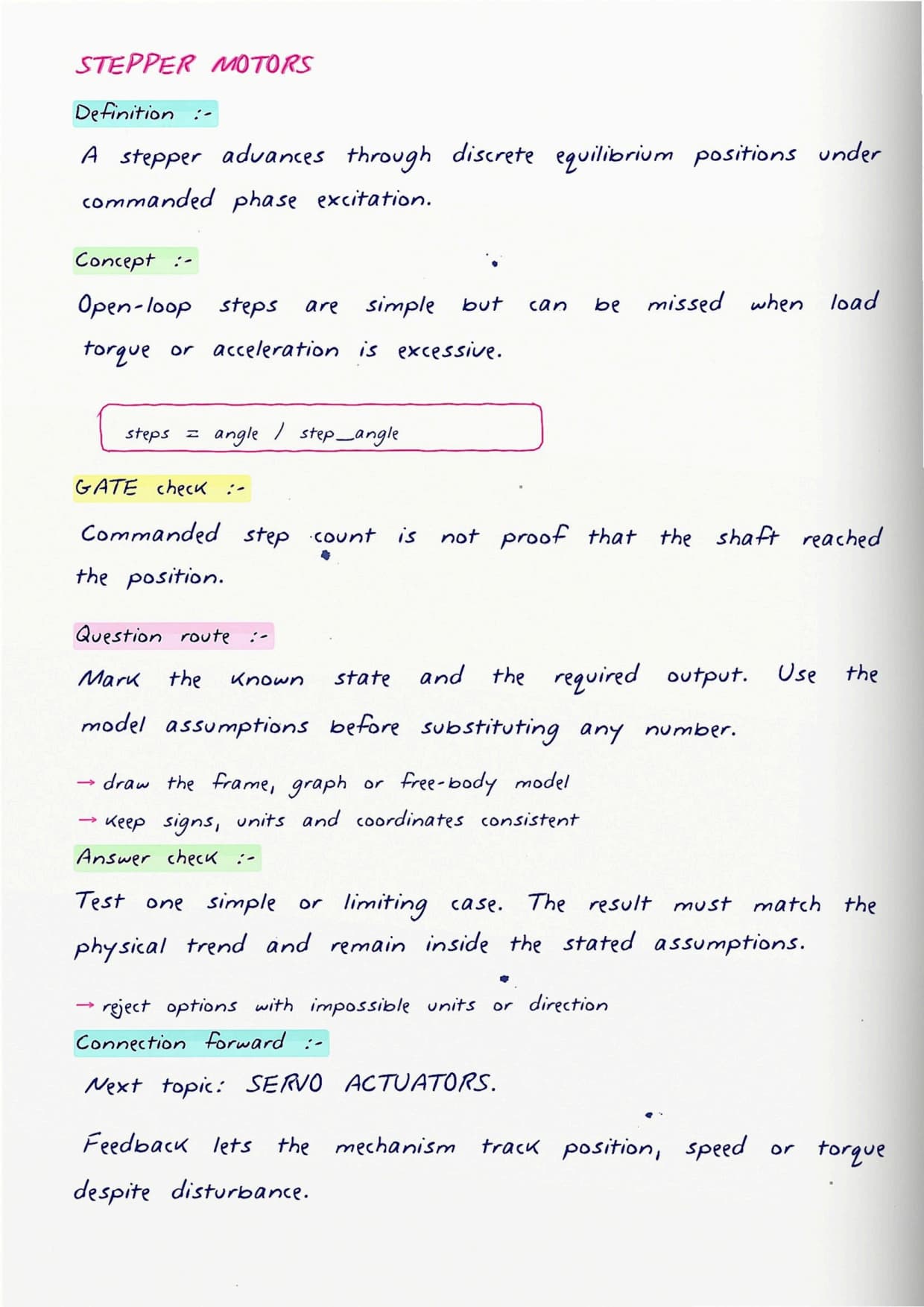
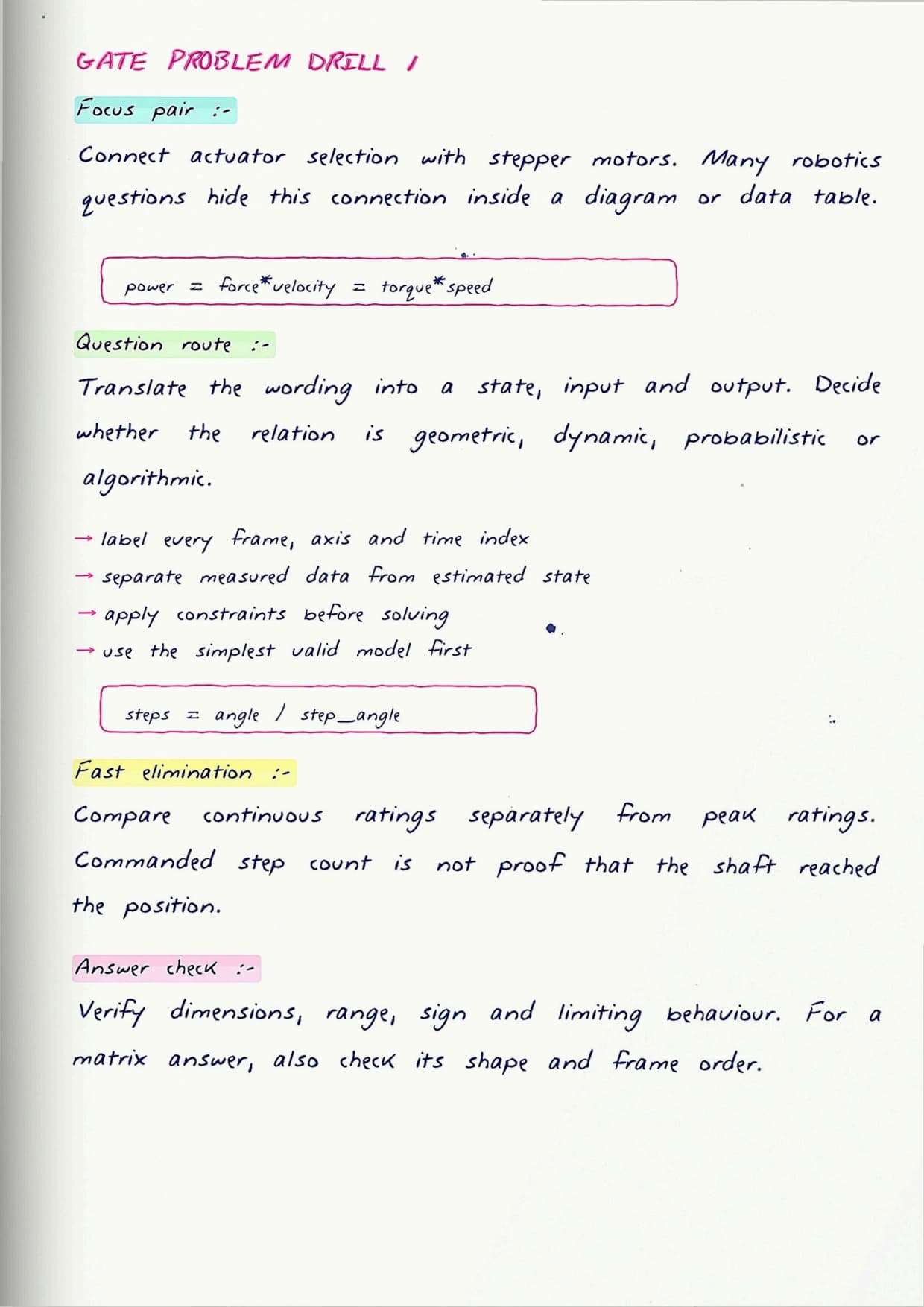
- Stepper motors for open-loop positioning, where counting steps replaces a feedback sensor.
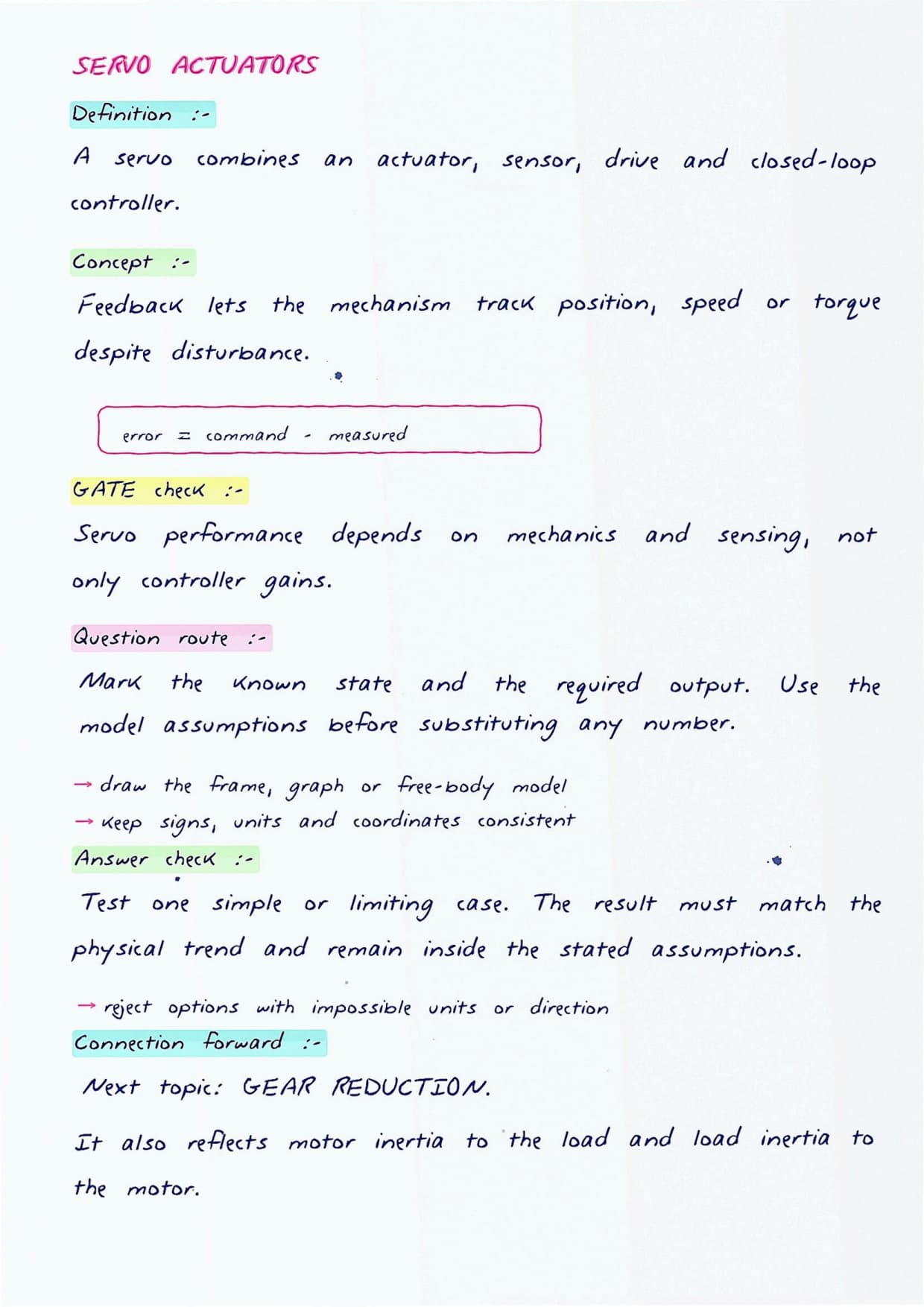
- Servo motors, which bundle a motor, a gearbox, and feedback into one closed-loop unit.
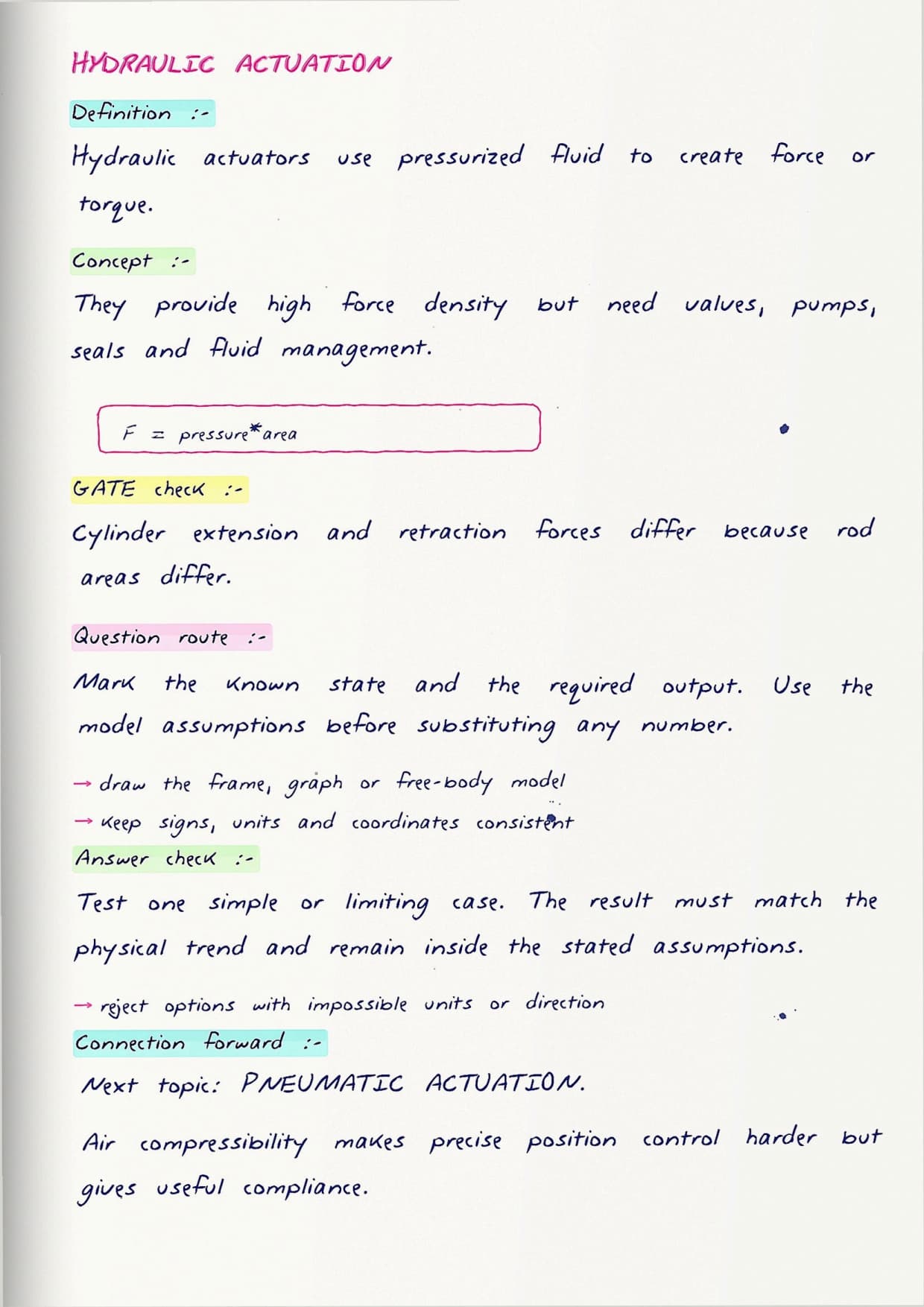
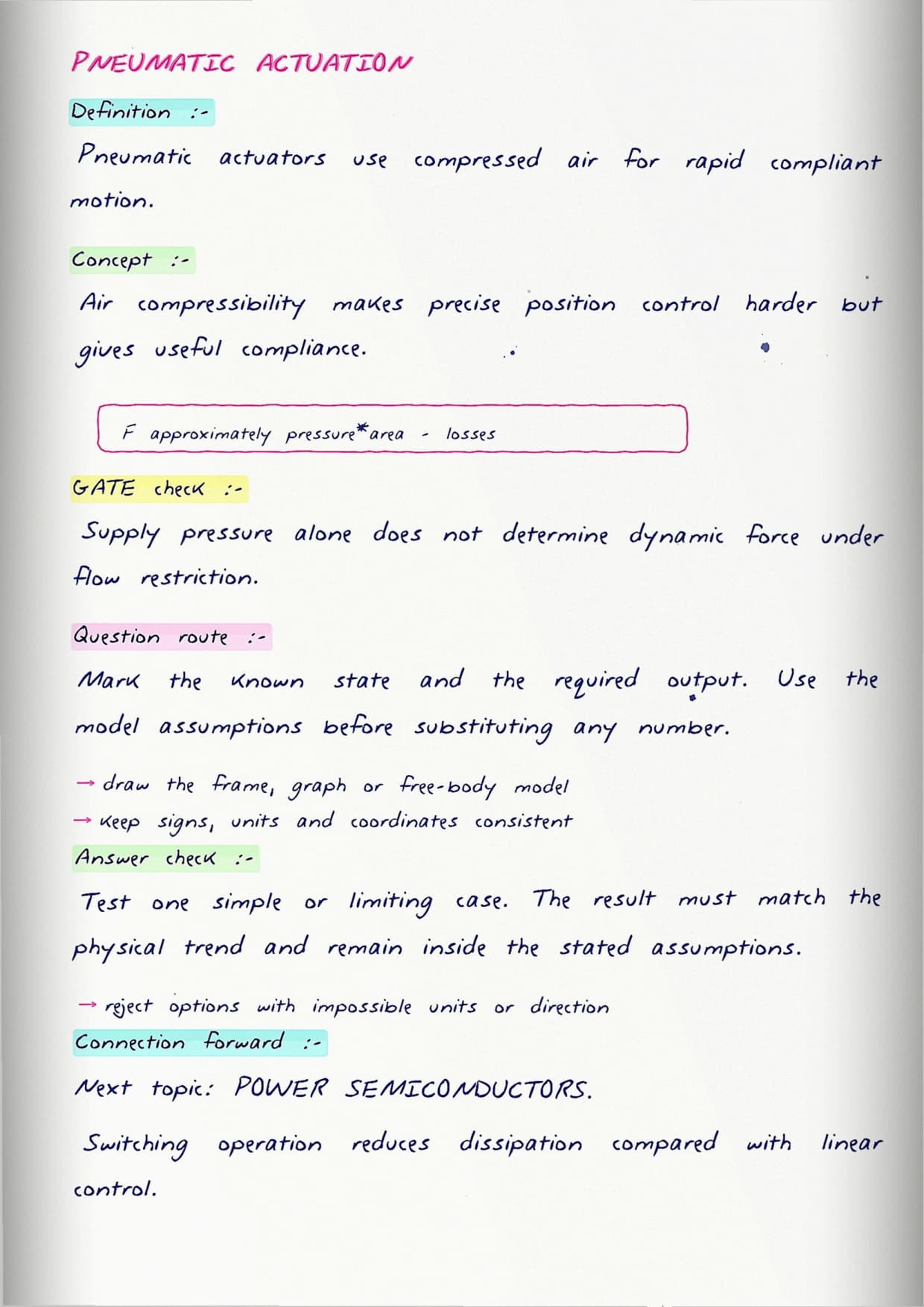
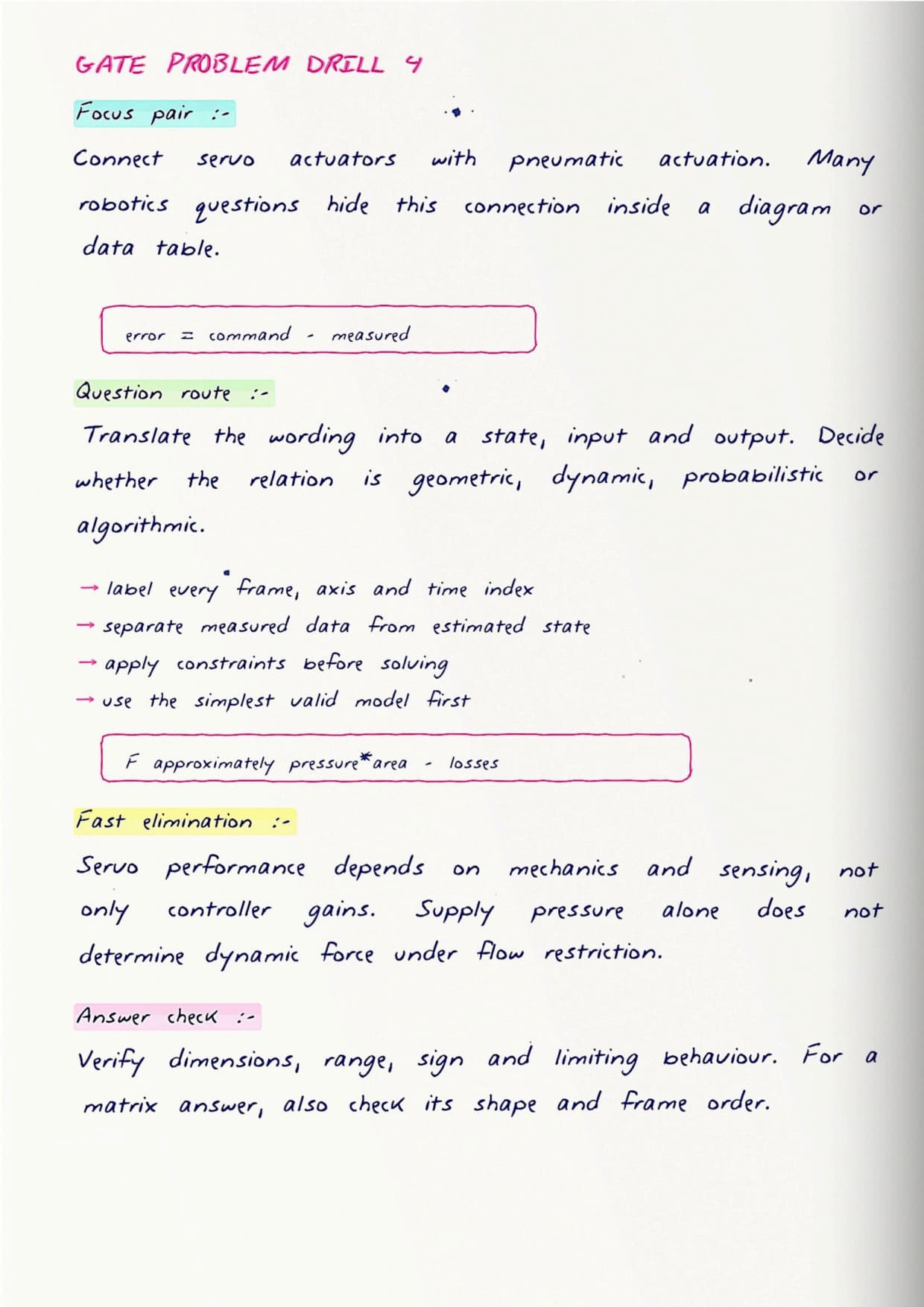
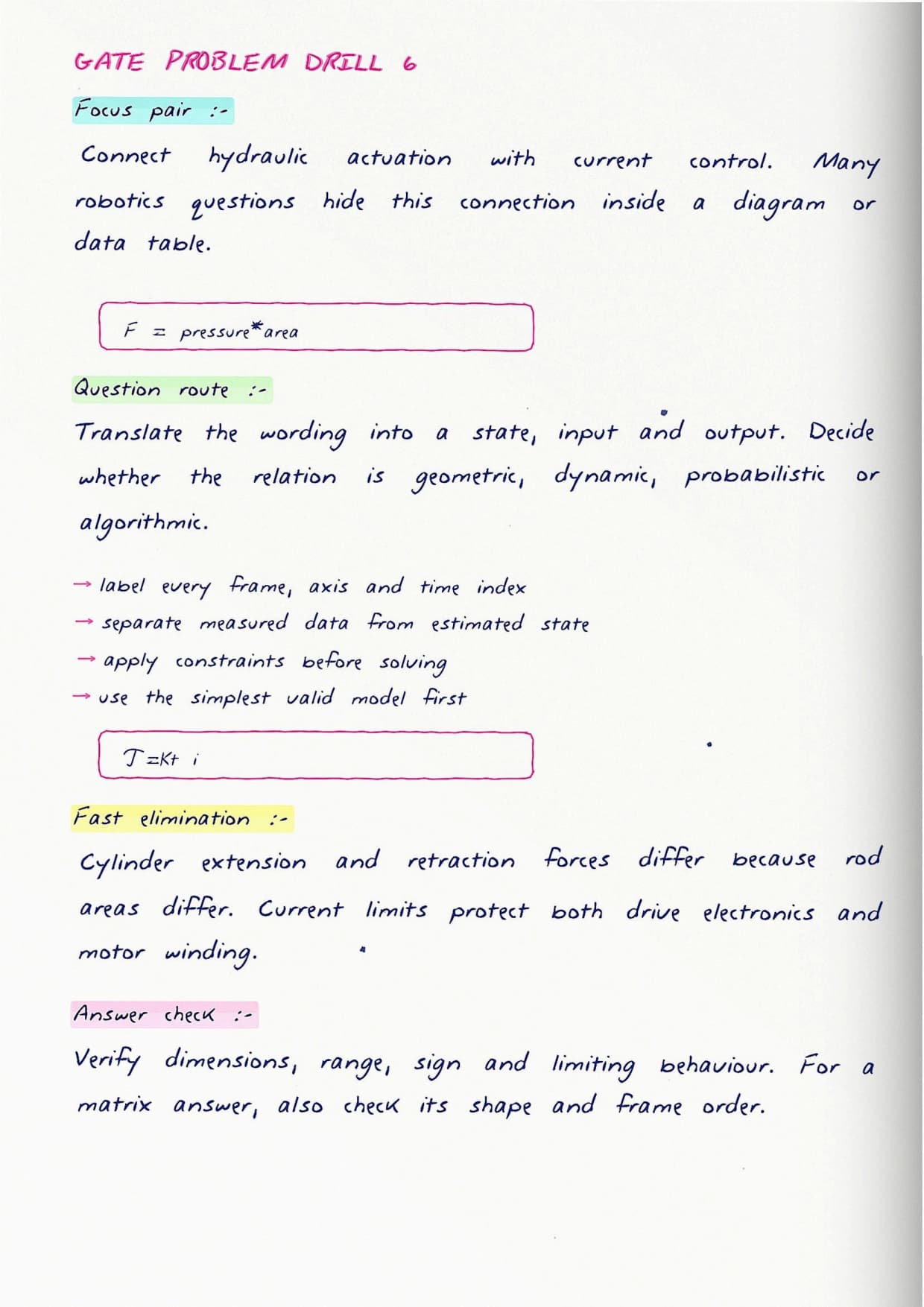
- Hydraulic and pneumatic actuators for heavy force or fast gripping, noted with their trade-offs on stiffness and control.
Each family gets a short note on its strengths and its weak spots, so students can argue why a design would pick one over another rather than just name them.
From Signal to Torque: The Power Electronics Layer
This is the layer many students skip and then regret. The notes show how a small control signal becomes real current in the windings:
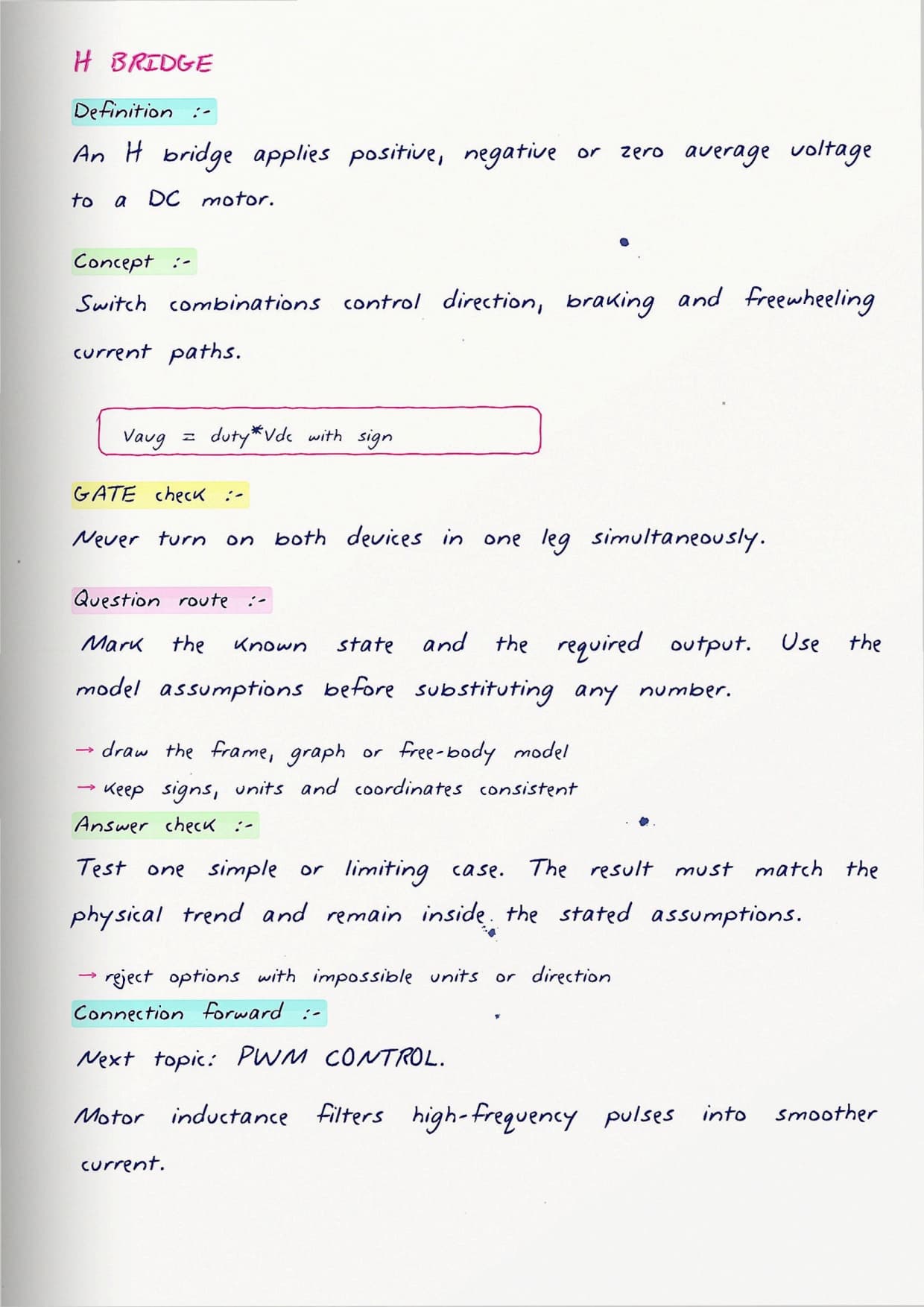
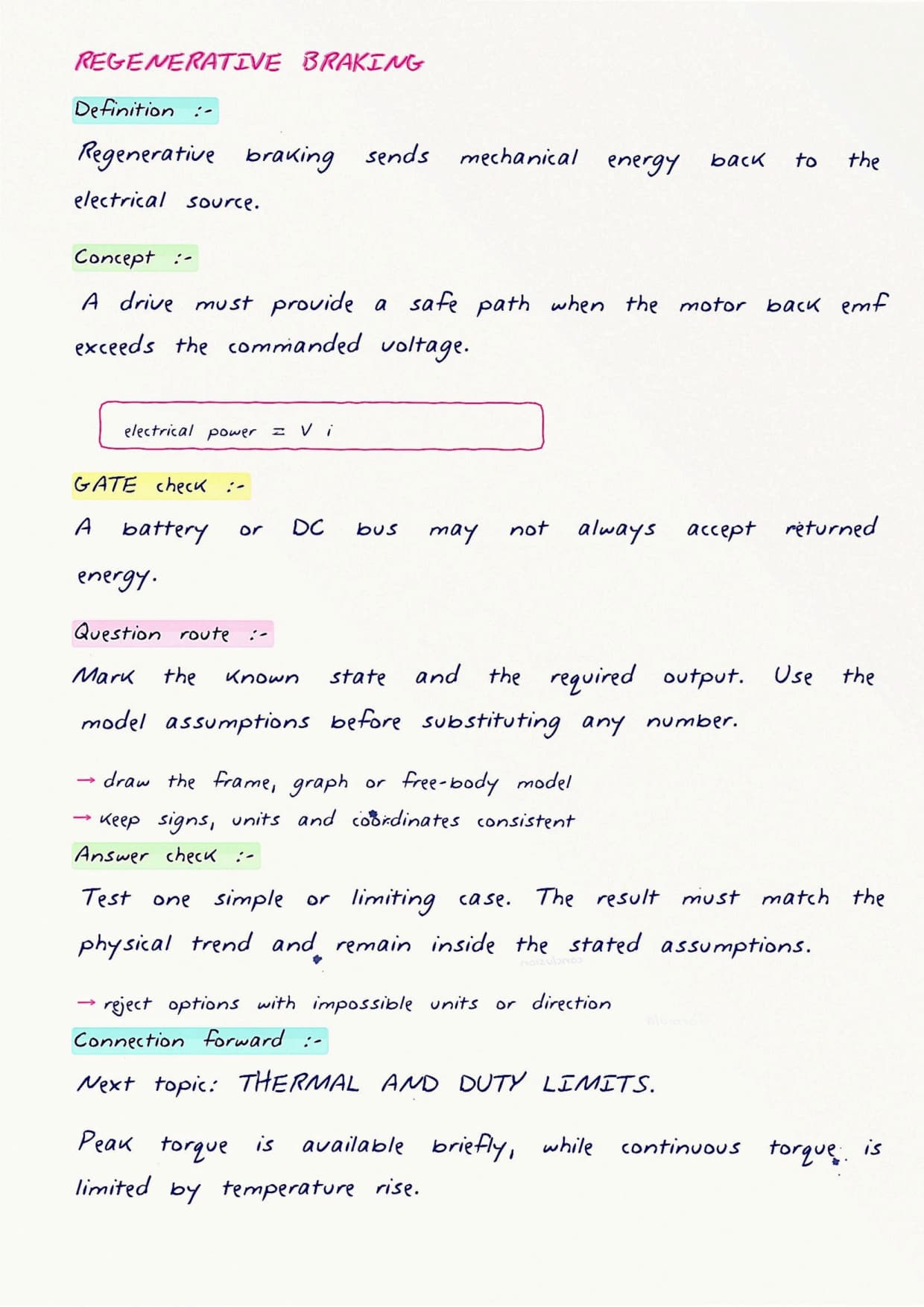
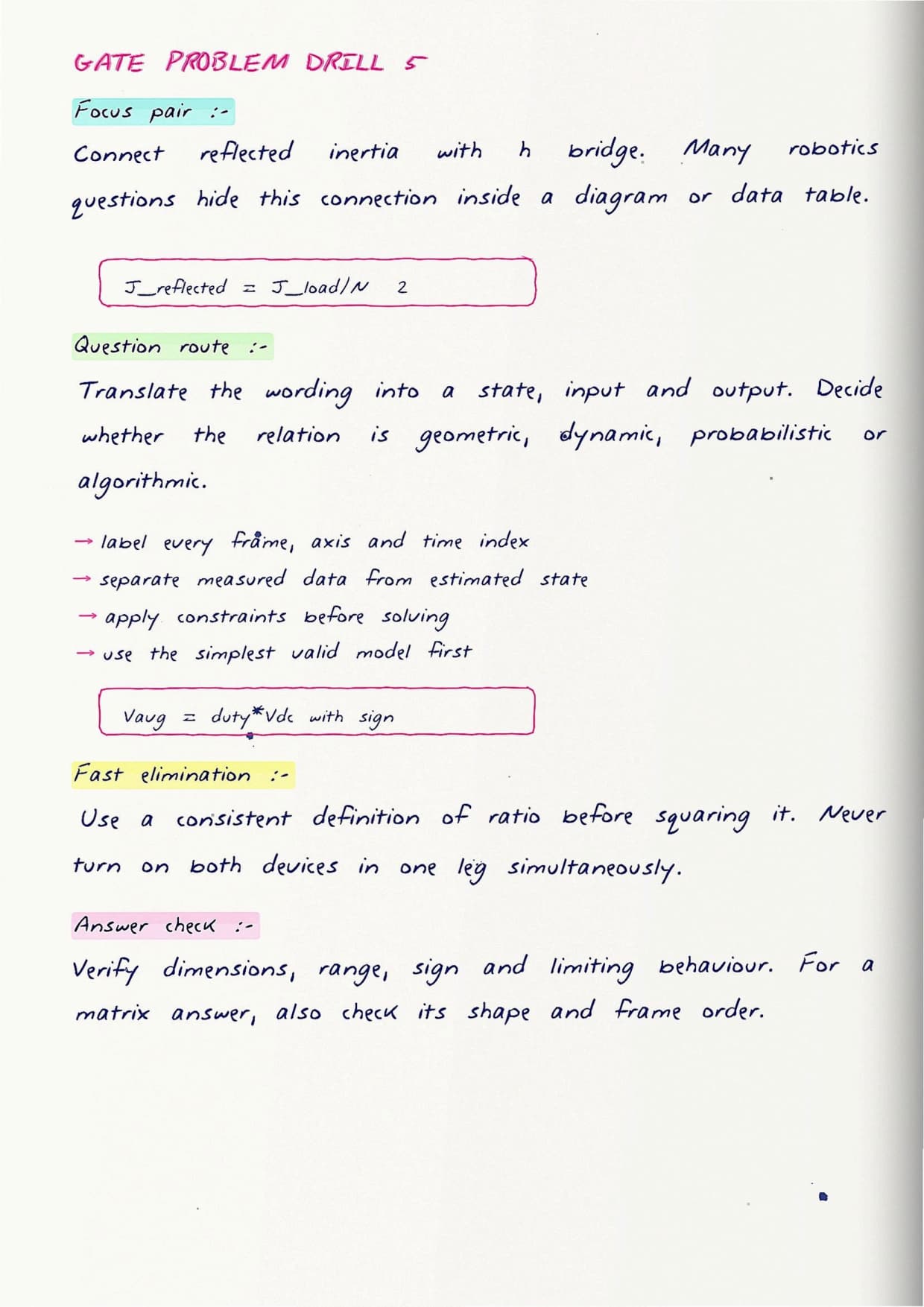
- The H-bridge, drawn out across its forward, reverse, and braking states.
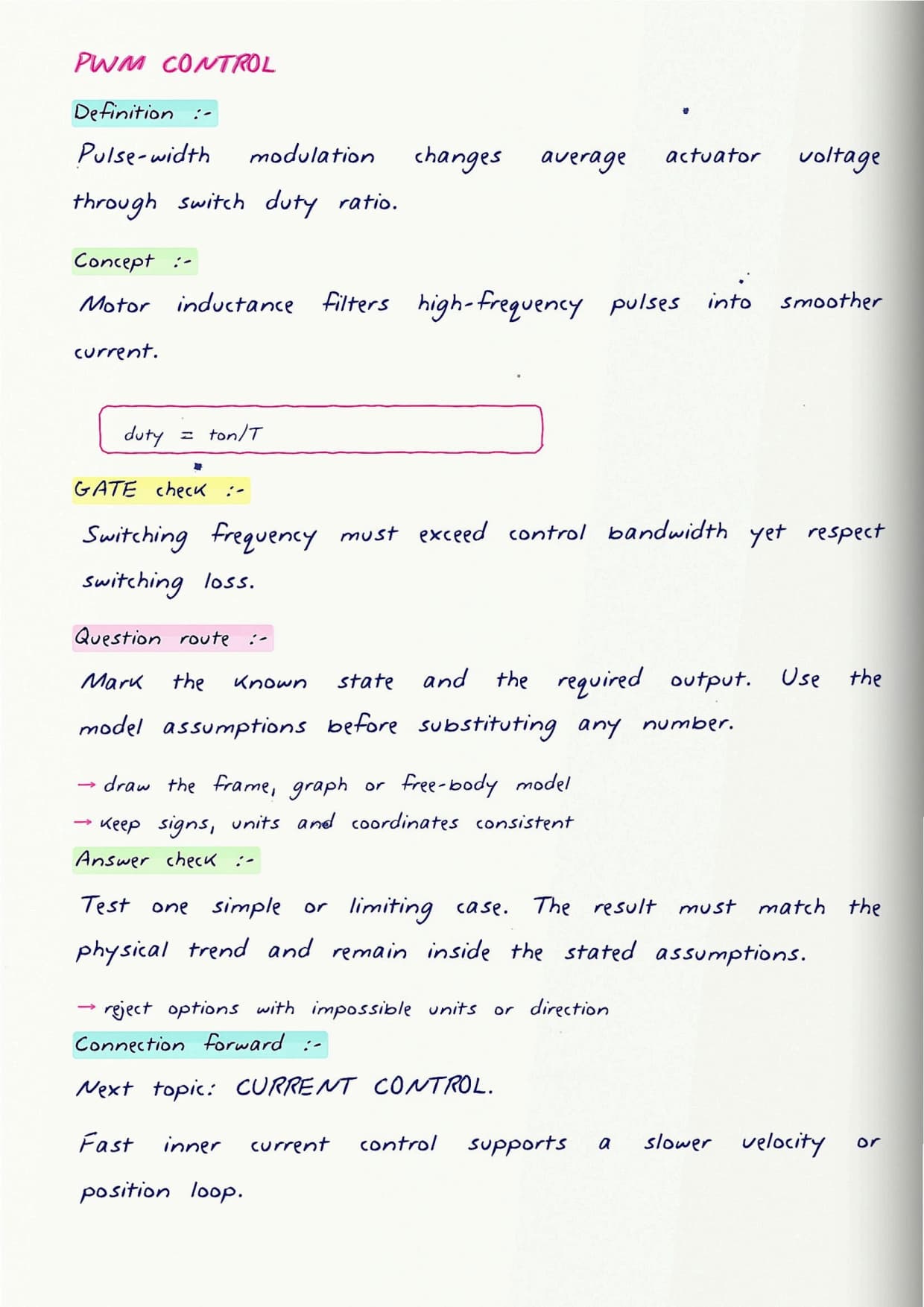
- Pulse width modulation, switching the supply on and off quickly so the average voltage sets the speed.
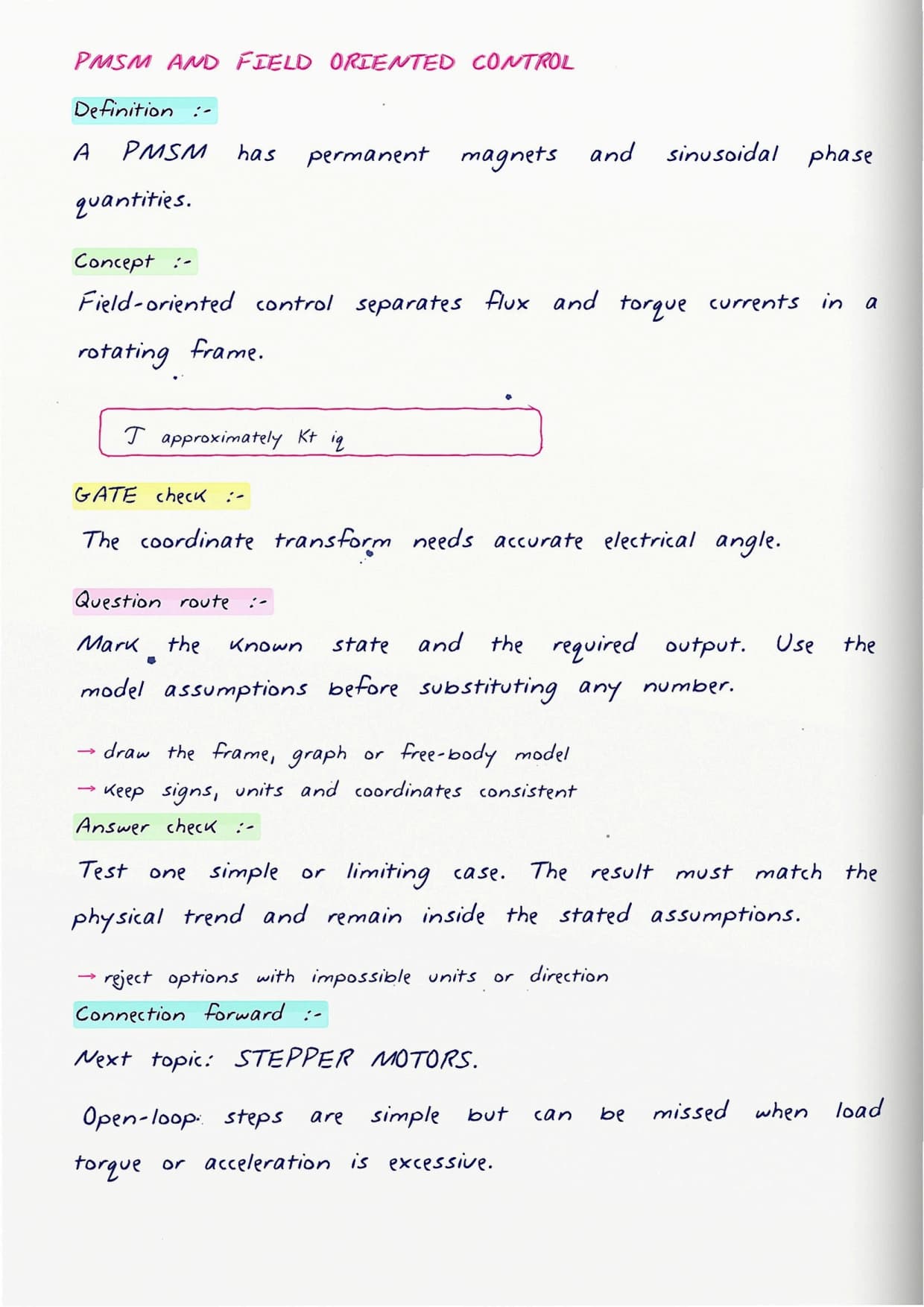
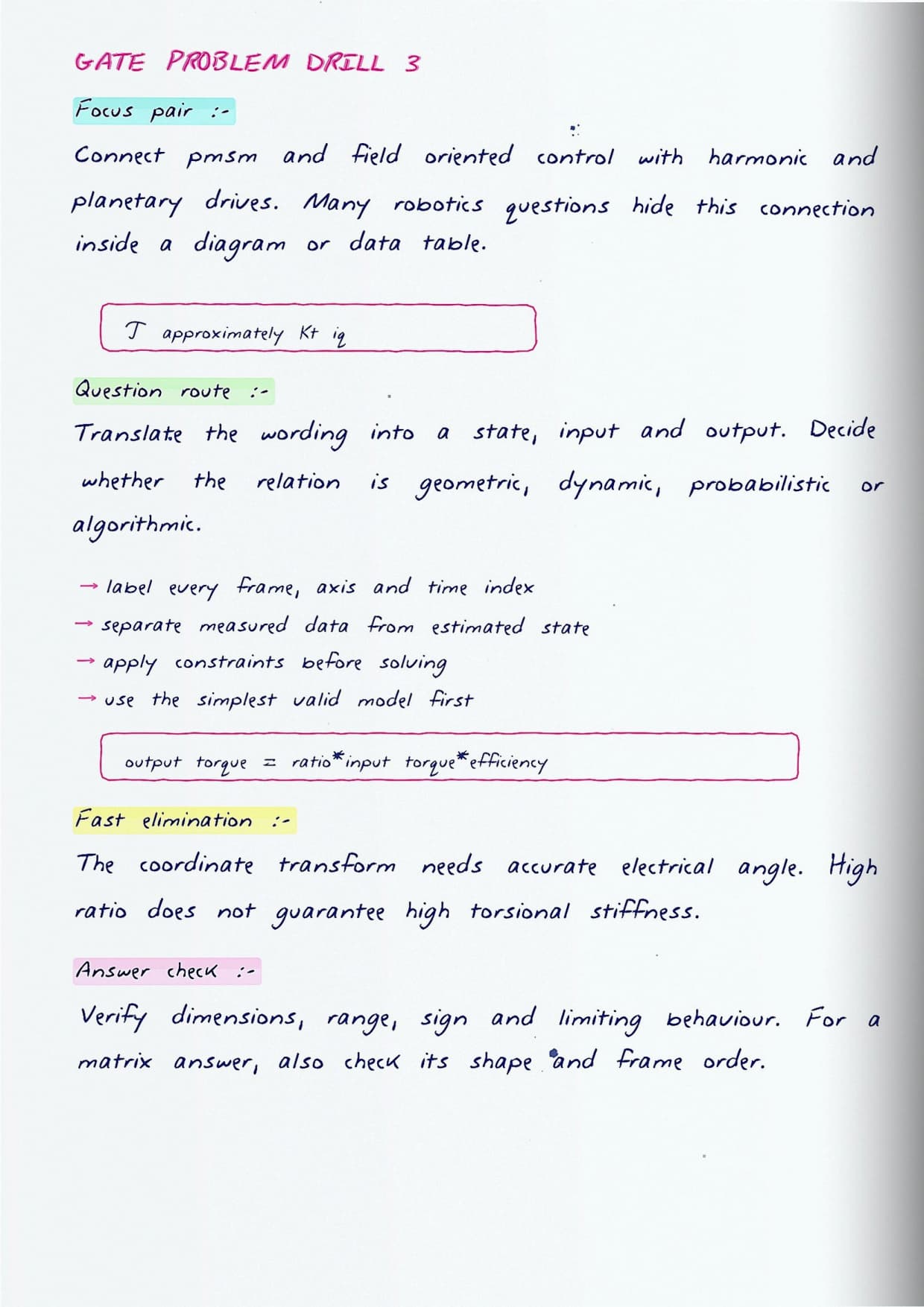
- The inverter that a brushless or AC motor needs to run.
- Current feedback, which is what really lets a drive command torque.
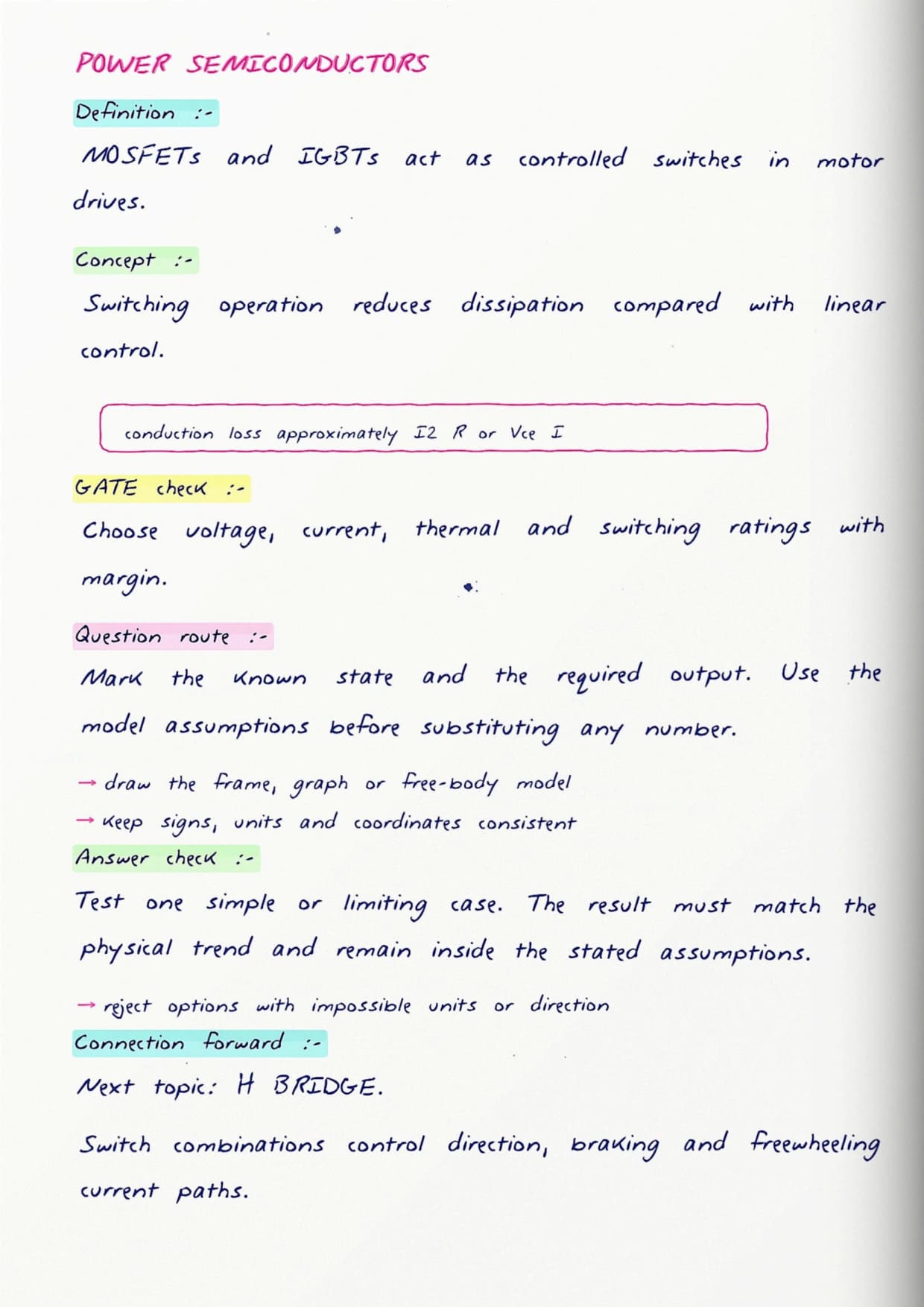
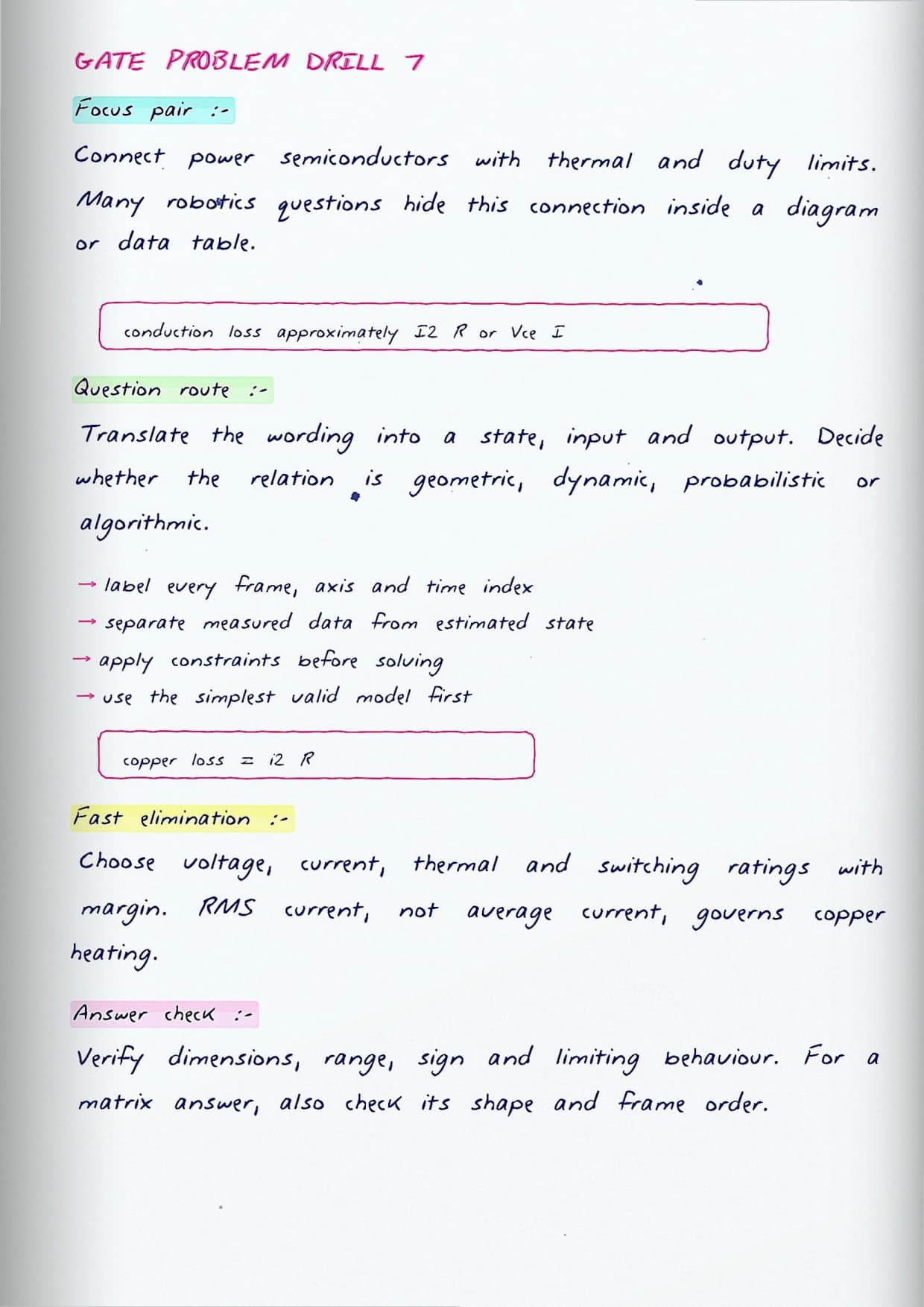
The switching devices themselves get honest treatment: the MOSFET and IGBT, their loss behaviour, and why heat management shapes a drive's rating. This is where robotics genuinely overlaps with the power electronics that GATE Electrical and Electronics students already study.
Sizing and Picking a Motor for the Job
The notes turn practical here. To size an actuator, students learn to:
- Work out the load torque the joint must overcome.
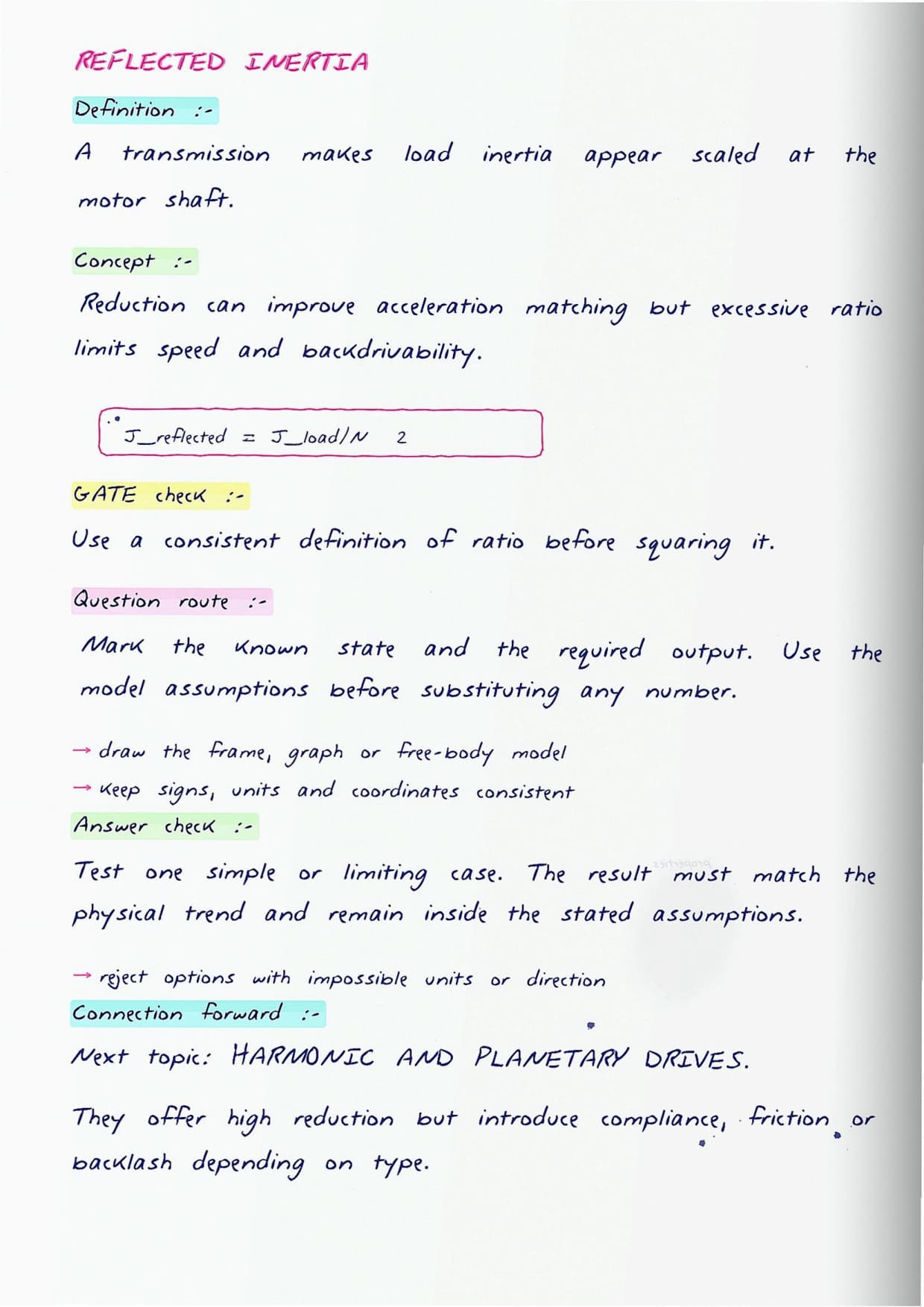
- Add the torque needed to accelerate the inertia.
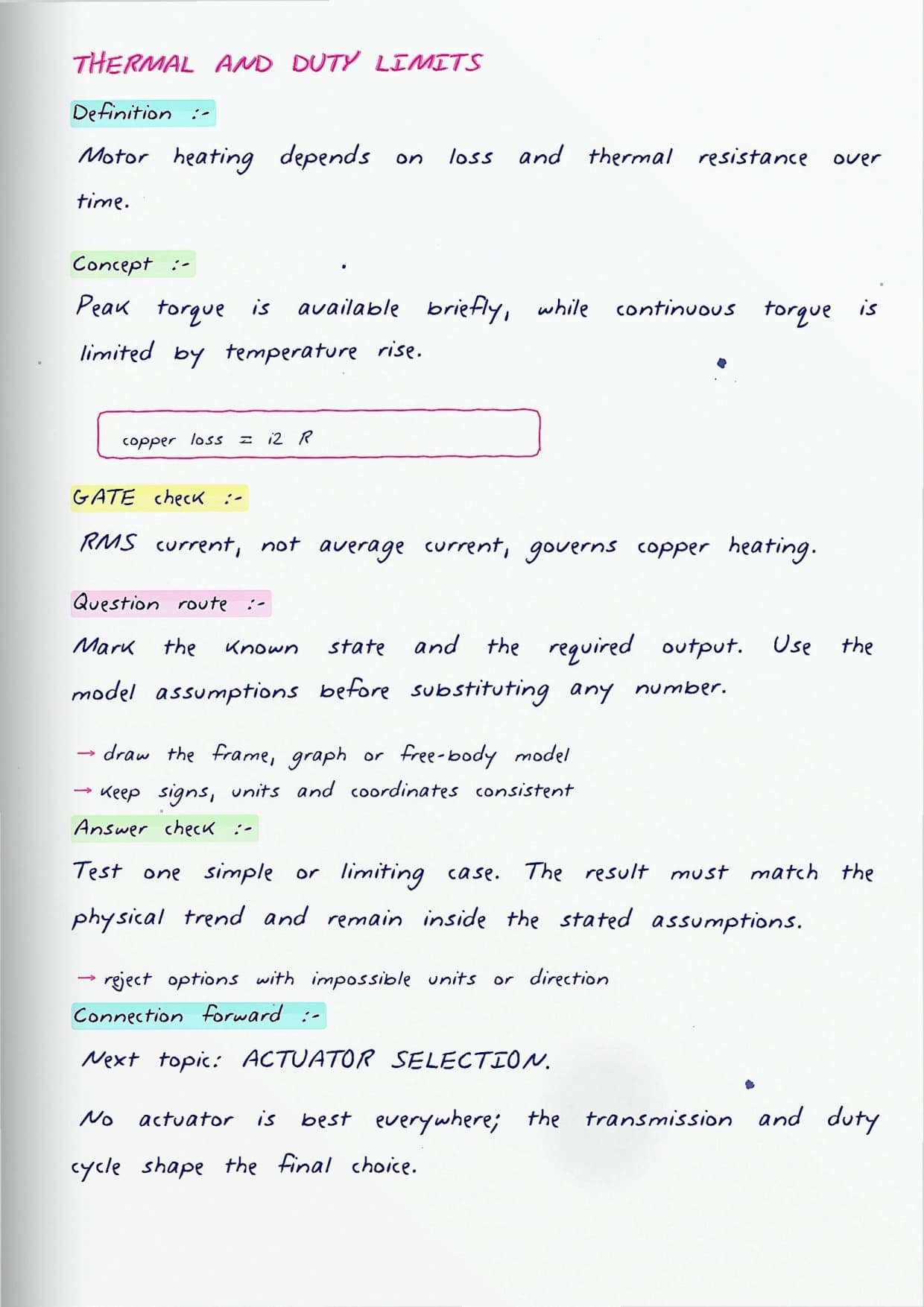
- Check the total against the motor's continuous and peak ratings.
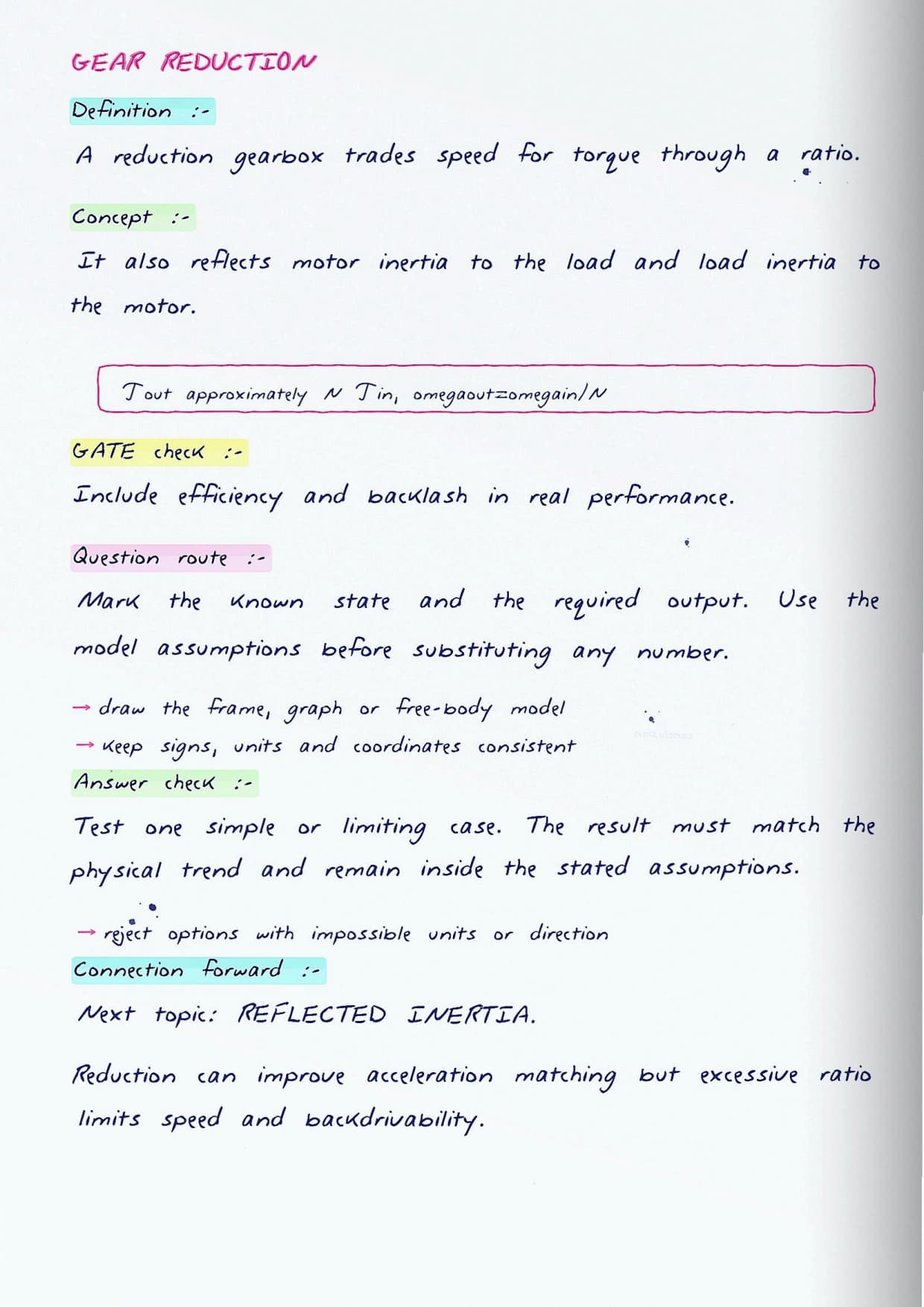
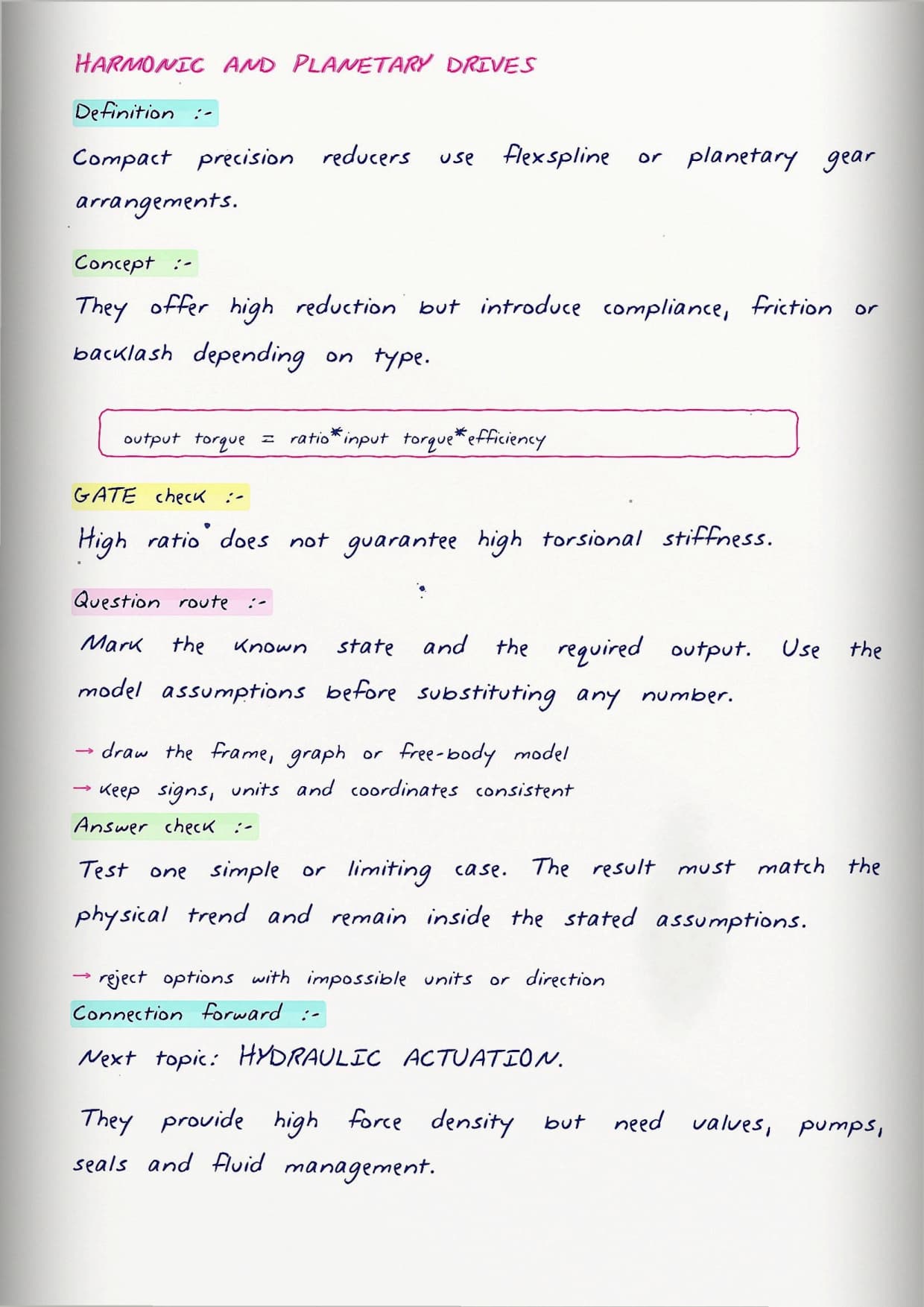
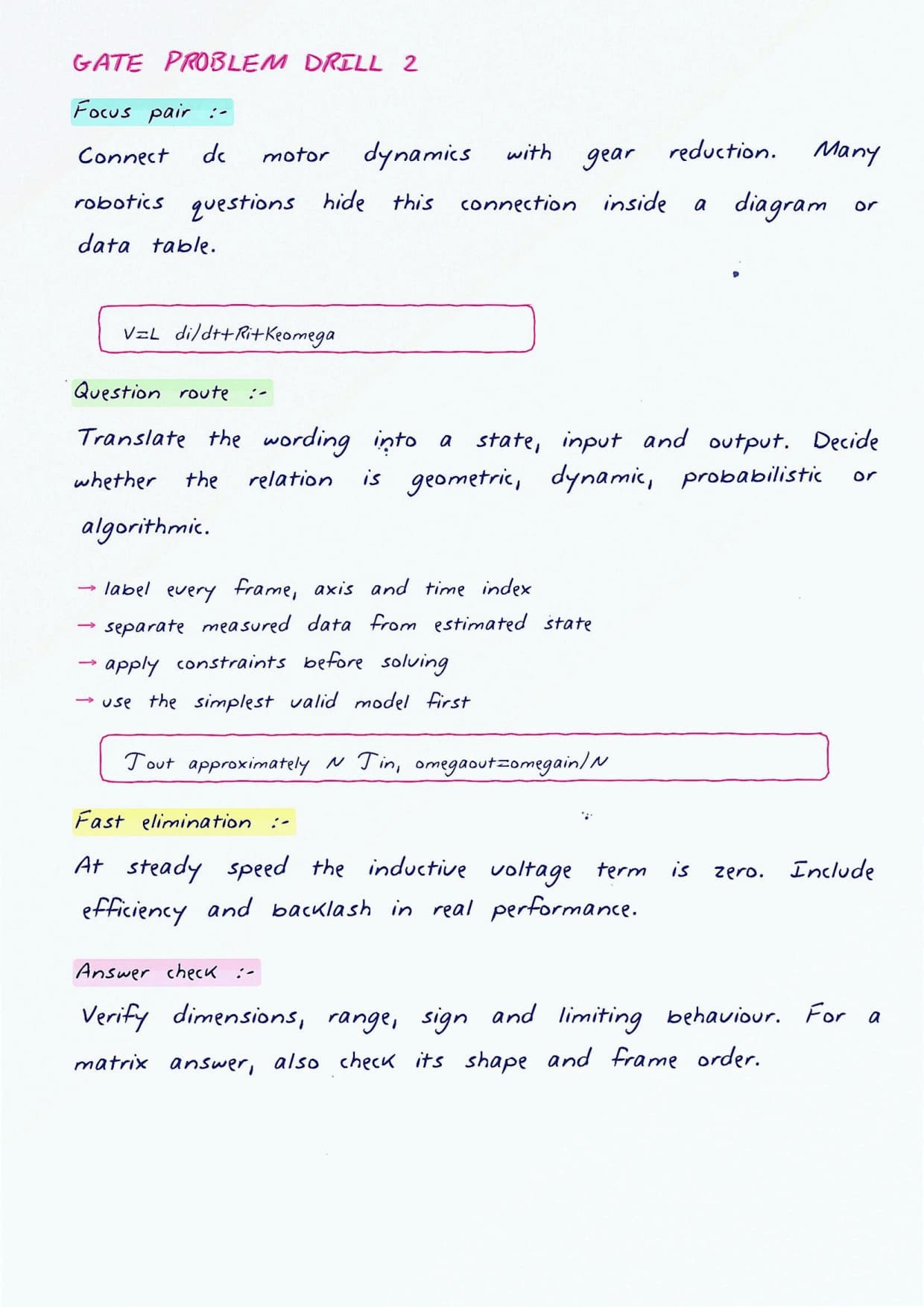
- Use the gear ratio to trade speed for torque, remembering it also reflects load inertia back to the motor.
Duty cycle, thermal limits, and the gap between stall torque and rated torque all appear, because a motor that looks strong on paper can still overheat in steady use.
Watch the Actuator Basics Explained
Source: nptelhrd (NPTEL)
Where This Overlaps with GATE Papers
There is no standalone robotics paper, but this hardware shows up all over the parent papers:
- Torque-speed and drive content maps onto Electrical Machines and Power Electronics in GATE EE and EC.
- The motor as a plant inside a feedback loop feeds straight into Control Systems.
- Treating the actuator plus load as an inertia problem ties back to Engineering Mechanics.
Learn the hardware once and several of those topics start reinforcing each other.
Slips Students Make on Drive Questions
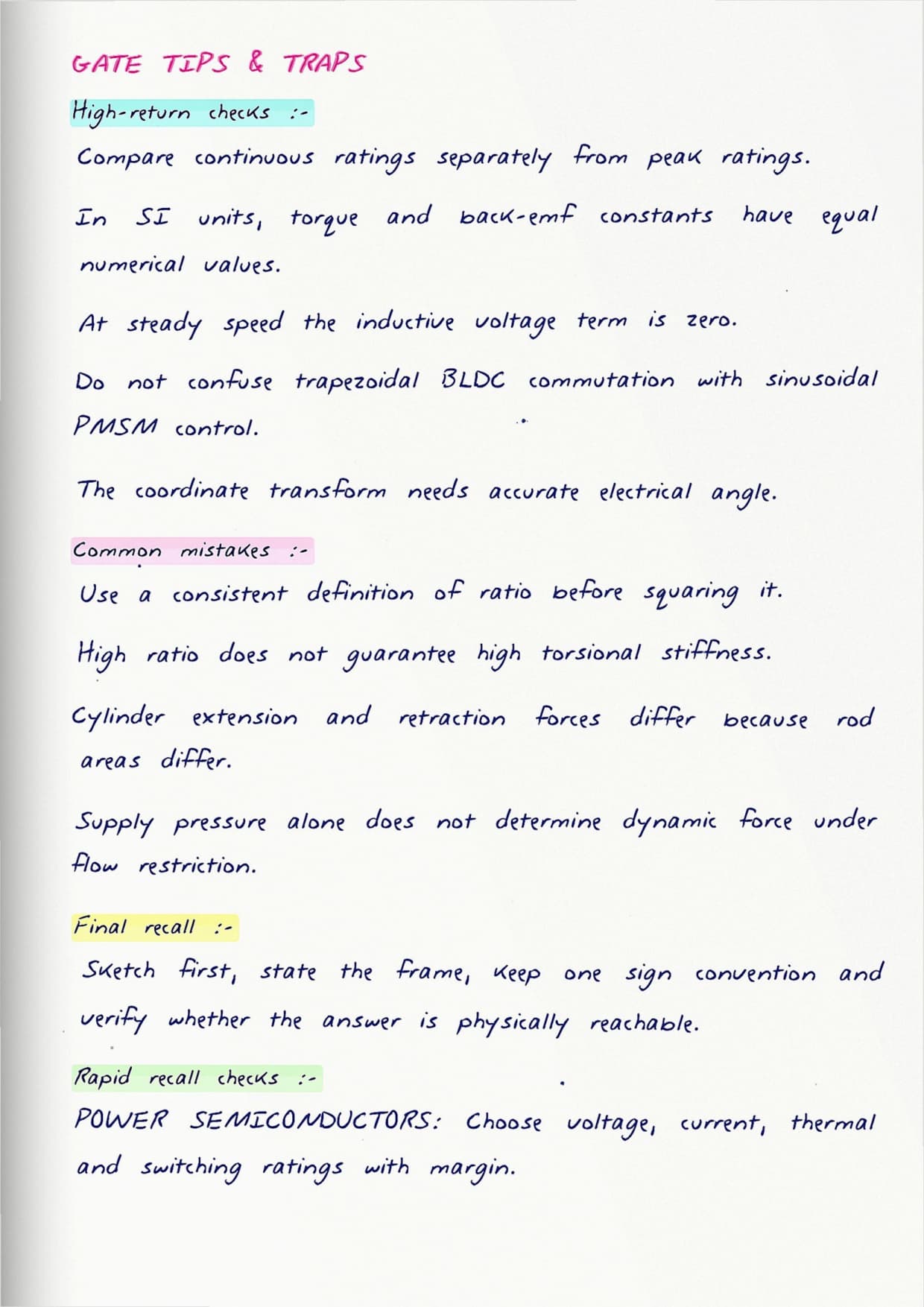
A few mistakes come up again and again, and the notes flag them:
- Mixing up torque and power, or forgetting that a gearbox changes both speed and reflected inertia.
- Assuming a stepper never loses position, when a missed step under overload quietly ruins accuracy.
- Reading average PWM voltage as if the switching were smooth DC.
- Sizing to stall torque instead of the continuous rating the motor can actually hold.
Because the pages are handwritten, the corrections and small side notes sit right next to the point they fix, which is exactly how a quick revision pass should feel.
Actuators and Drives Handwritten Notes FAQs
Ques. Which actuators do these notes cover?
Ans. They cover DC and brushless DC motors, stepper motors, servo motors, and hydraulic and pneumatic actuators, with the strengths and trade-offs of each set out for comparison.
Ques. Do I need power electronics knowledge to follow them?
Ans. No. The notes build the H-bridge, PWM, and inverter ideas from the basics, so students can start even if they have only seen a motor as a single block before.
Ques. How does this topic help for GATE even though there is no robotics paper?
Ans. The material overlaps directly with Electrical Machines, Power Electronics, and Control Systems in GATE EE, EC, and ME, so the effort carries into several scoring areas.
Ques. Are motor sizing calculations included?
Ans. Yes. The notes show how to estimate load torque, account for inertia and gear ratio, and check the result against continuous and peak ratings.
Ques. Can I use these for a last-day revision?
Ans. They work well for it. The layout moves from the joint outward and keeps corrections beside each point, so a full read gives students a fast, connected recap.



Comments