



Machining, Machine Tools and Metrology is one of the highest-weightage areas in the GATE Mechanical Manufacturing section, and it appears every year in both theory and numericals. These handwritten notes cover the full topic in one place, from the theory of metal cutting to measurement and inspection. Every topic is set out the way you would revise it before the exam, with the key formulas and the diagrams that explain them.
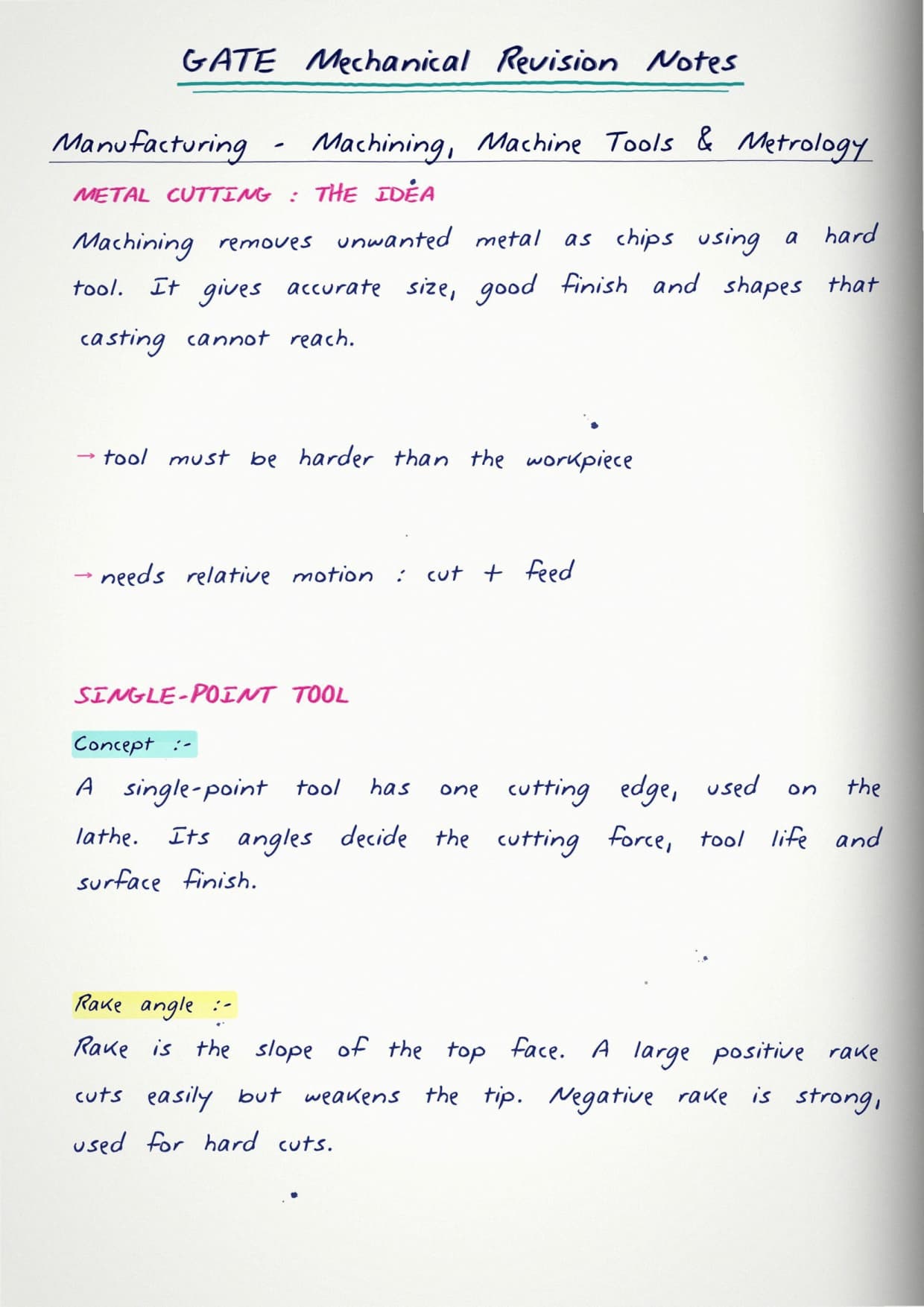
You can revise the entire unit from this single file, instead of moving between thick manufacturing and metrology textbooks. The notes keep the theory, the formulas, and the diagrams together, so a topic that is heavy on formulas becomes quick to review.
- The full syllabus in one file, from tool geometry to gear metrology.
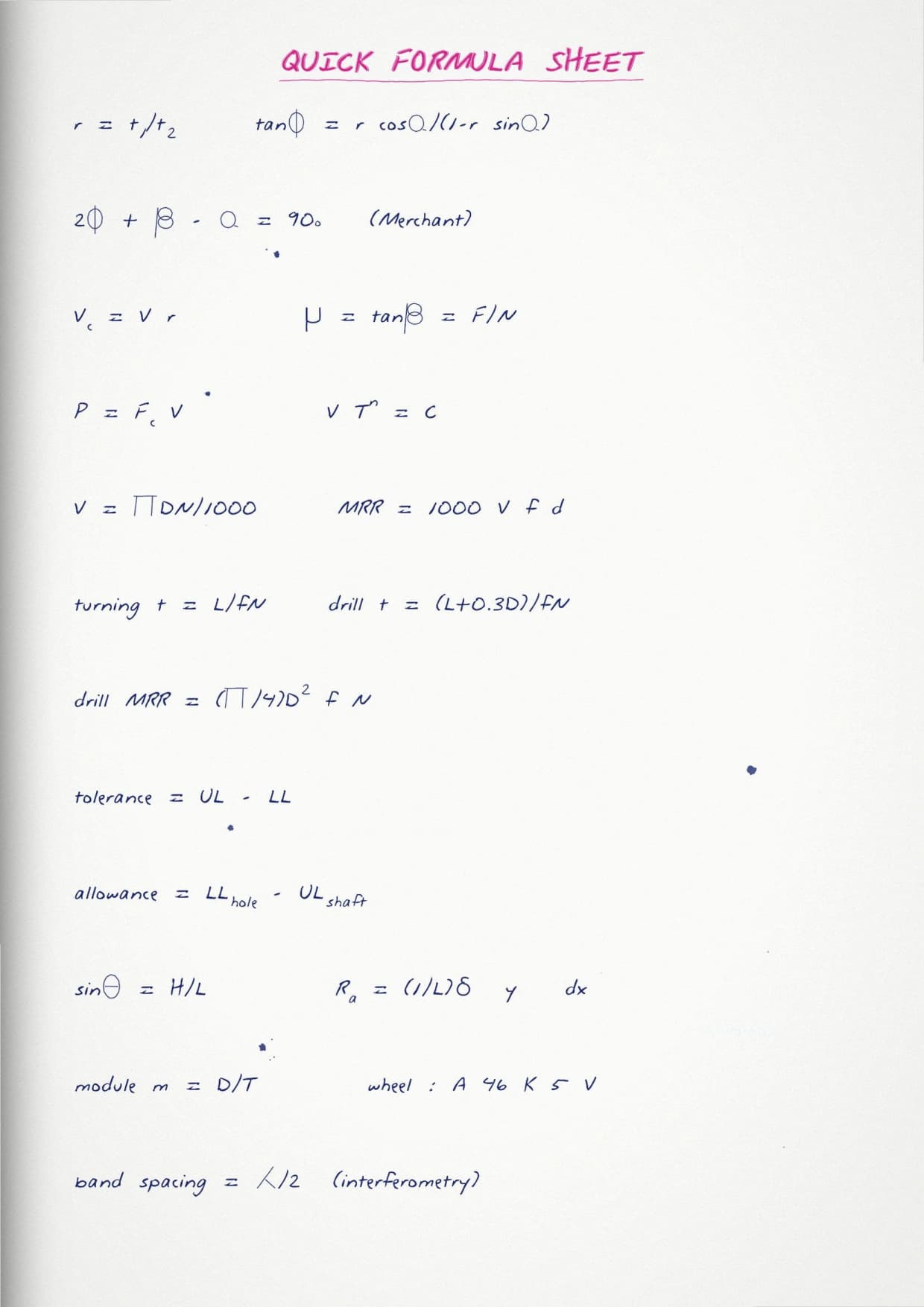
- Key formulas for cutting forces, tool life and fits, with solved steps.
- Hand-drawn diagrams like Merchant's circle and tolerance zones.
What These GATE Machining and Metrology Notes Cover
The notes bring together the two halves of this topic, metal cutting and metrology, which are usually studied from separate books. Both are covered to the depth GATE expects, with the formulas and figures kept next to the theory they belong to.
- Metal cutting theory and the machine tools that use it.
- Metrology: limits, fits, gauges and surface measurement.
- Key formulas for each topic, with the units students must remember.
- Simple hand-drawn figures placed next to the theory they explain.
GATE Machining and Metrology Quick Revision
Source: GATE Wallah - ME, CE, XE, CH, PI & ES on YouTube
Topics Covered in GATE Machining and Metrology
The notes follow the standard GATE Mechanical order, starting with cutting theory and ending with measurement and inspection. Every topic in the official syllabus is included, so nothing important is left out. The main areas are listed below.
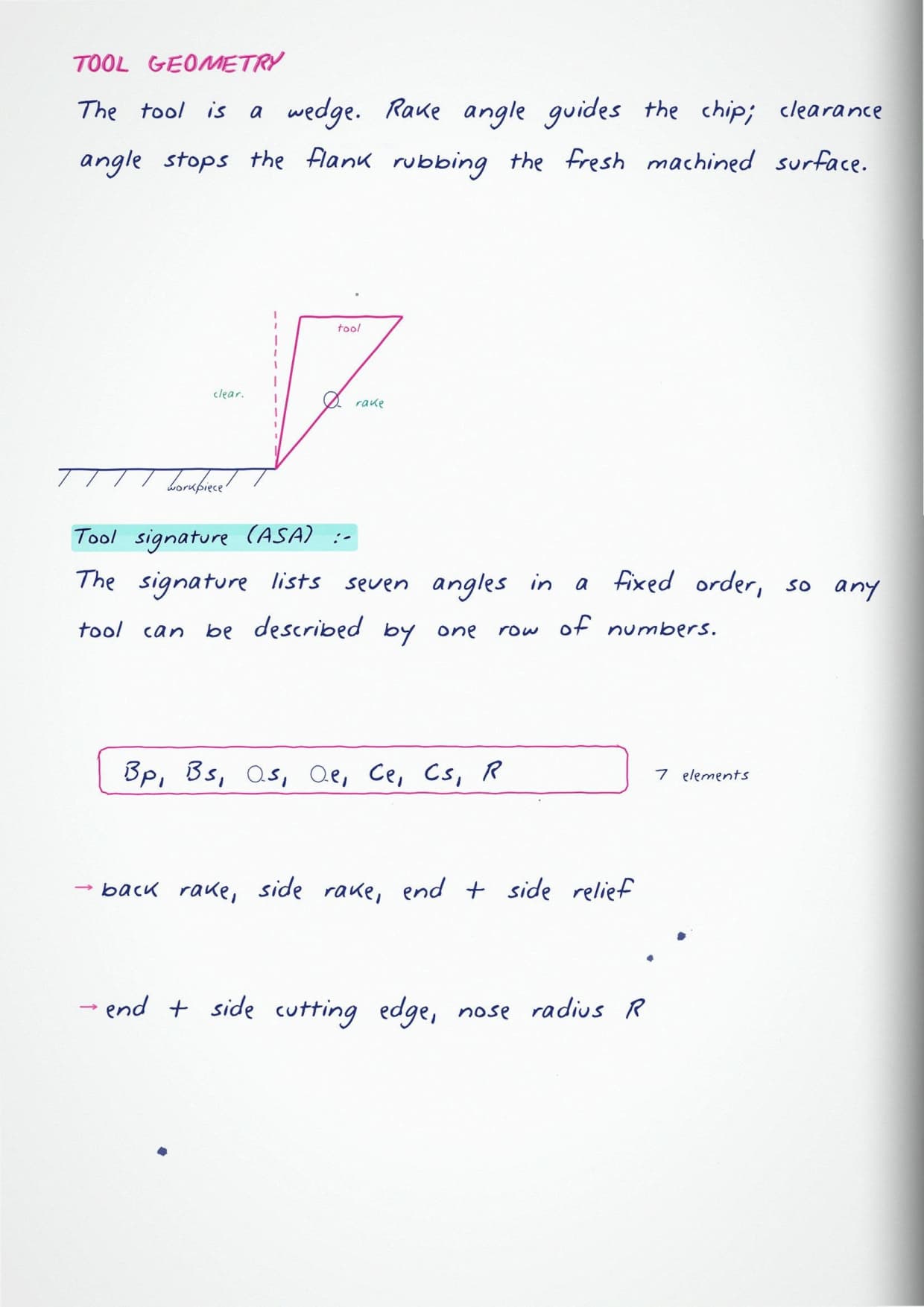
- Tool geometry, tool signature, rake and clearance angles
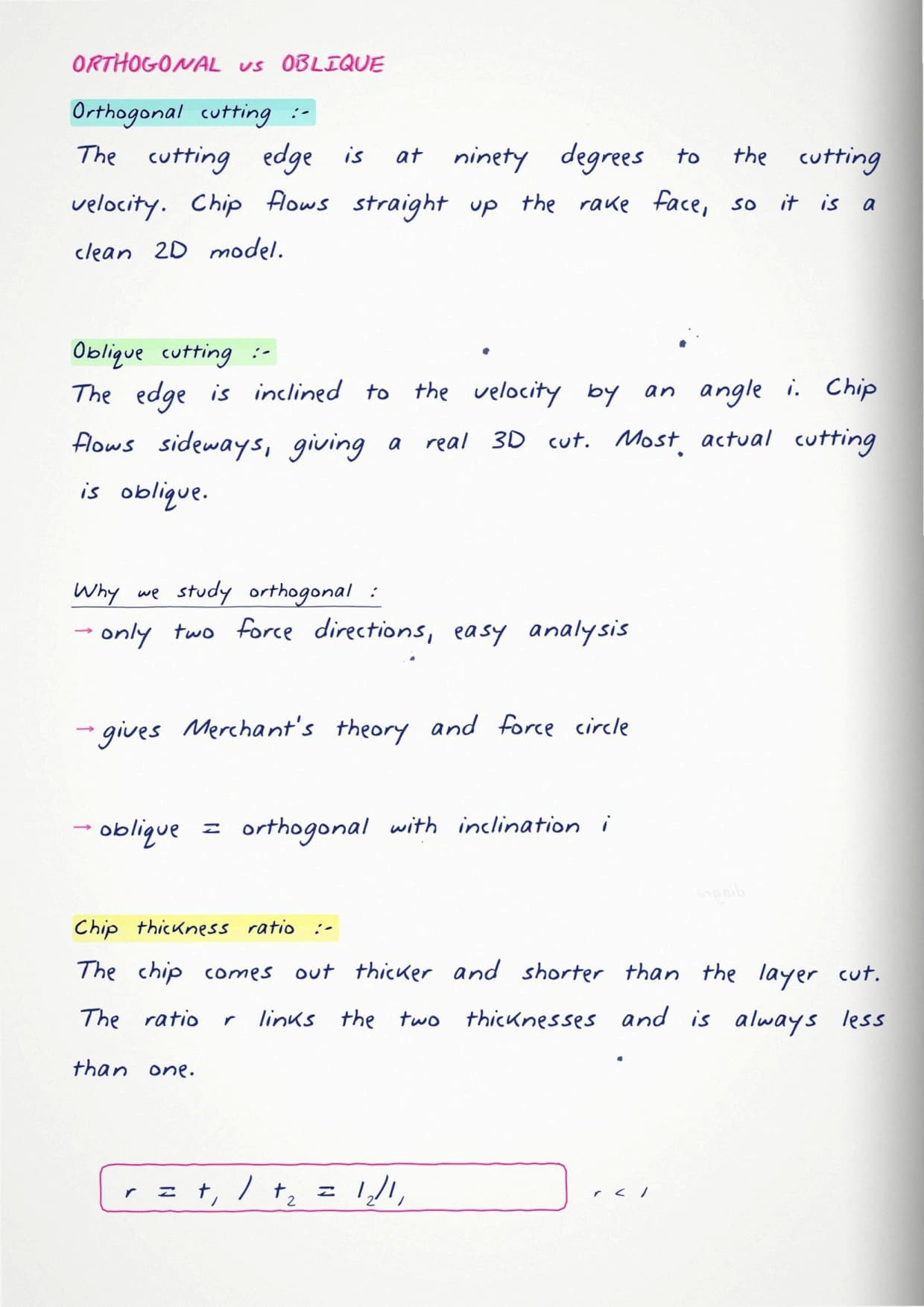
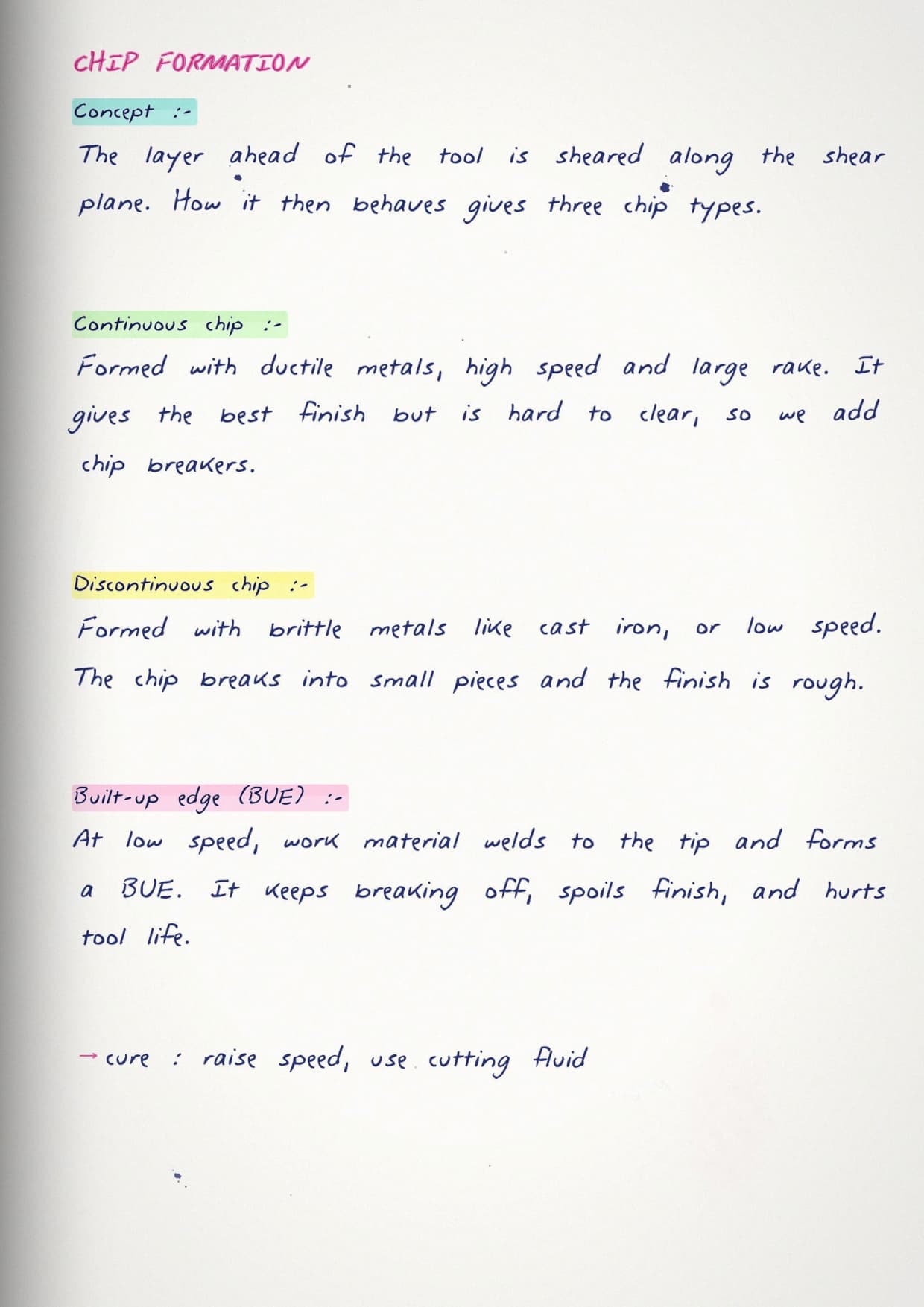
- Orthogonal and oblique cutting, chip formation and chip types
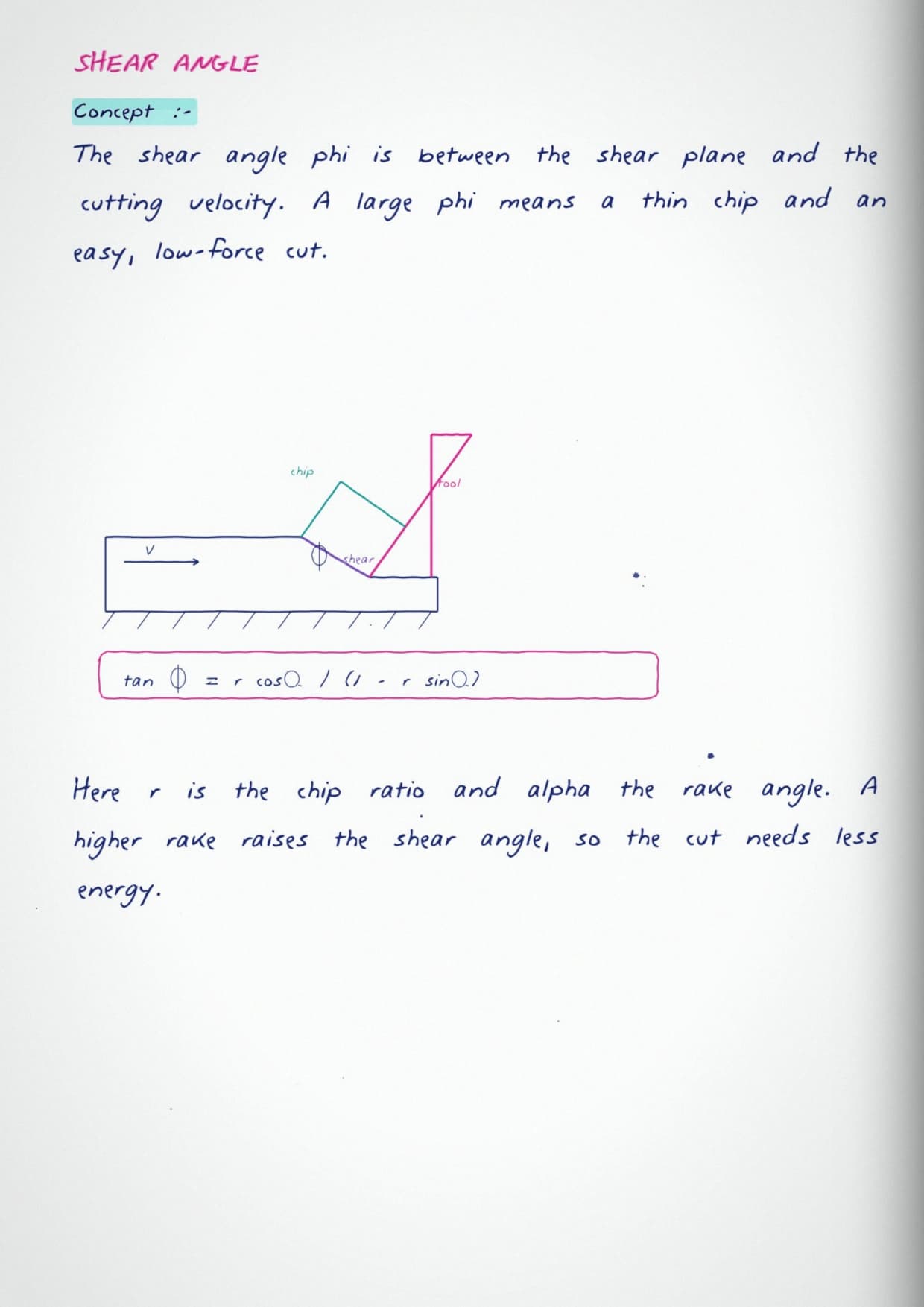
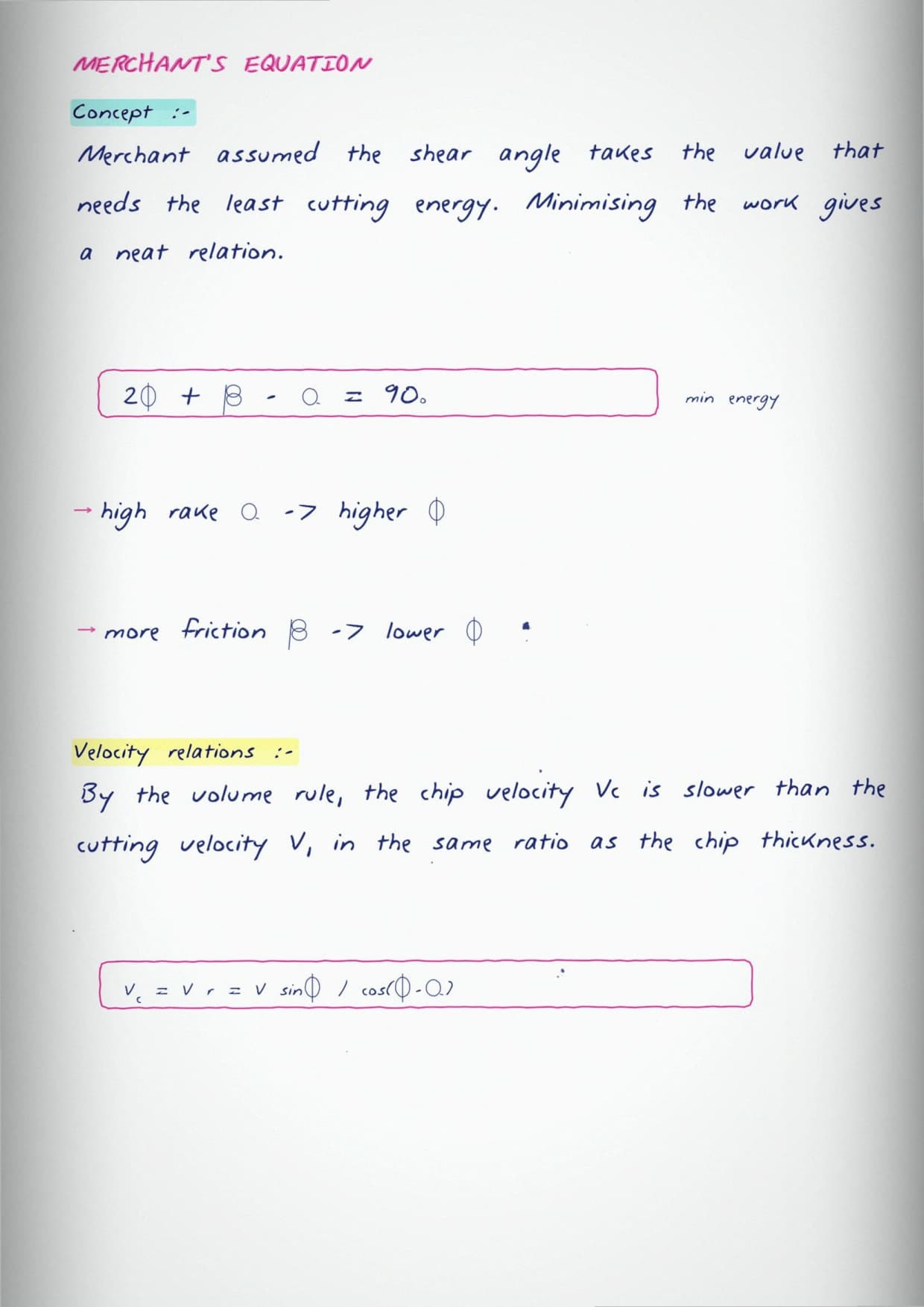
- Chip thickness ratio and shear angle relations
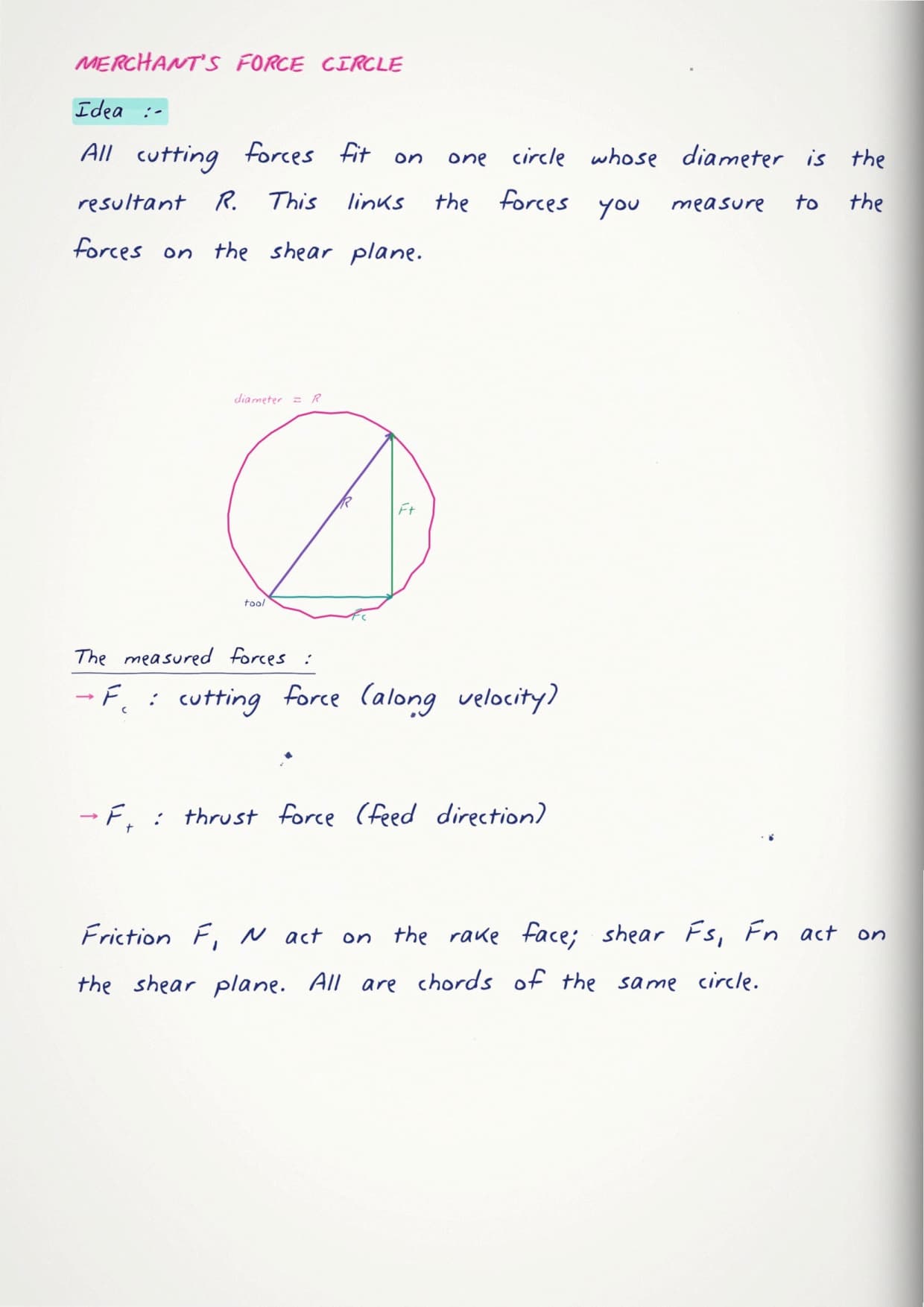
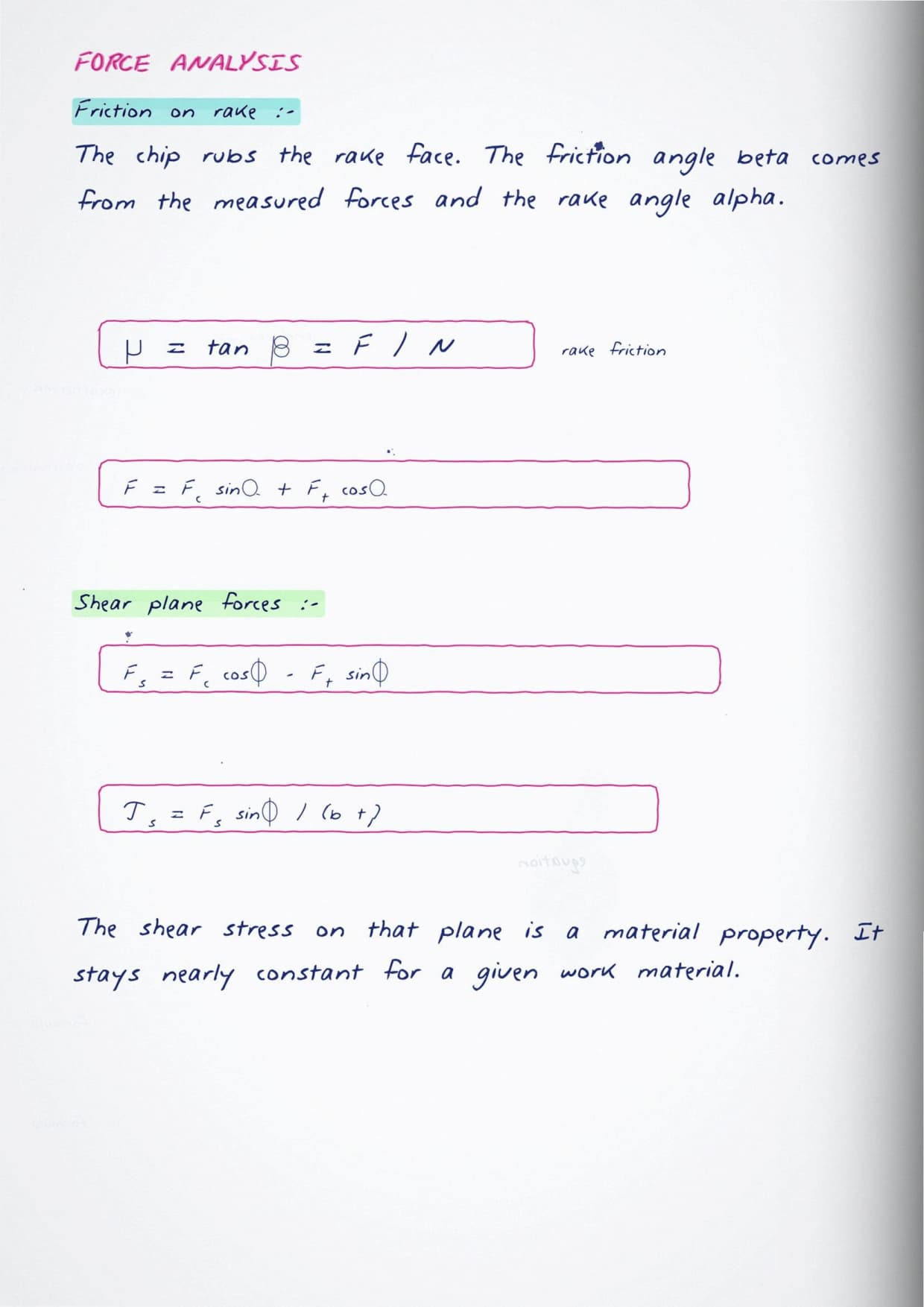
- Merchant's circle and the cutting force components
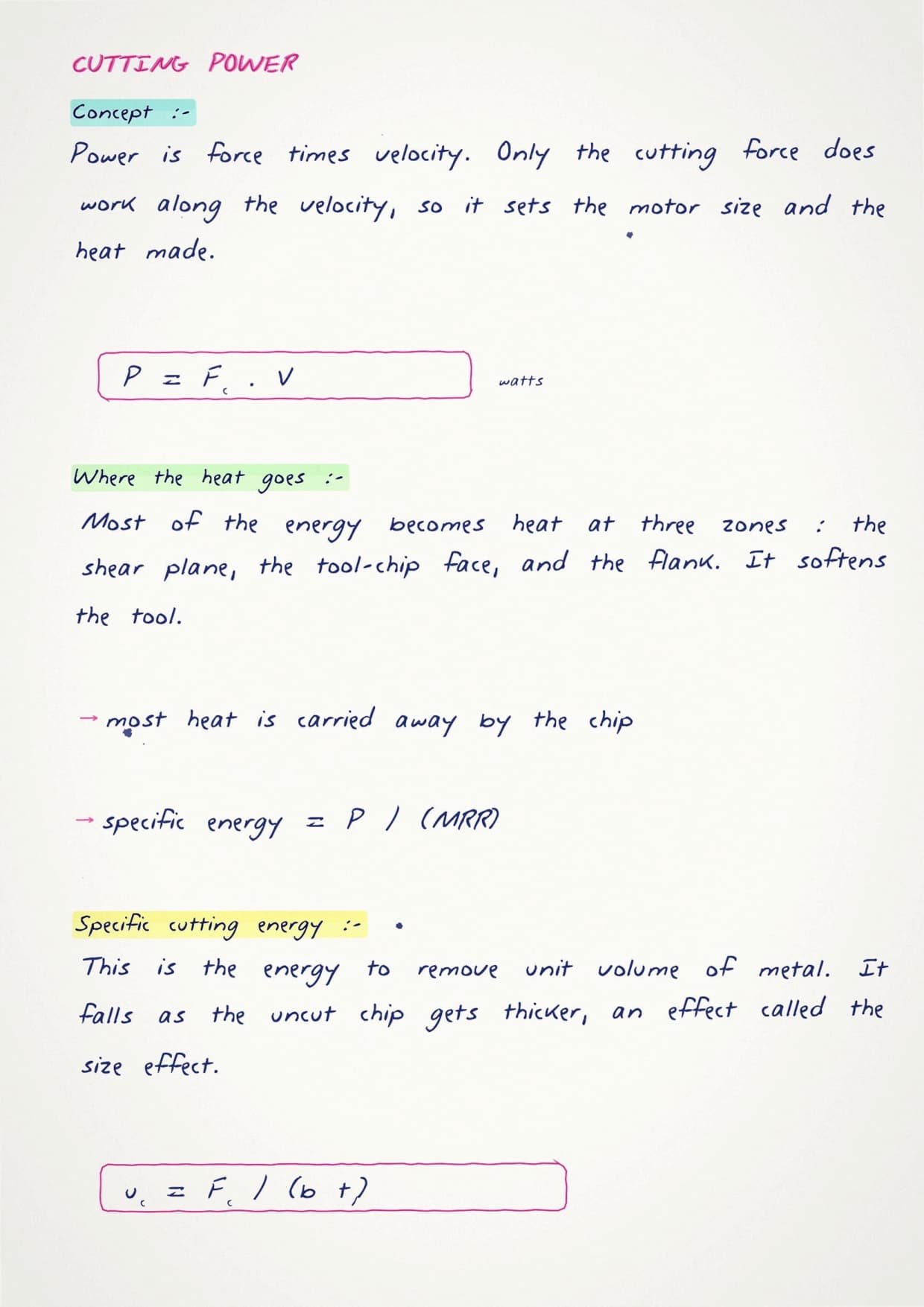
- Cutting velocity, power and specific cutting energy
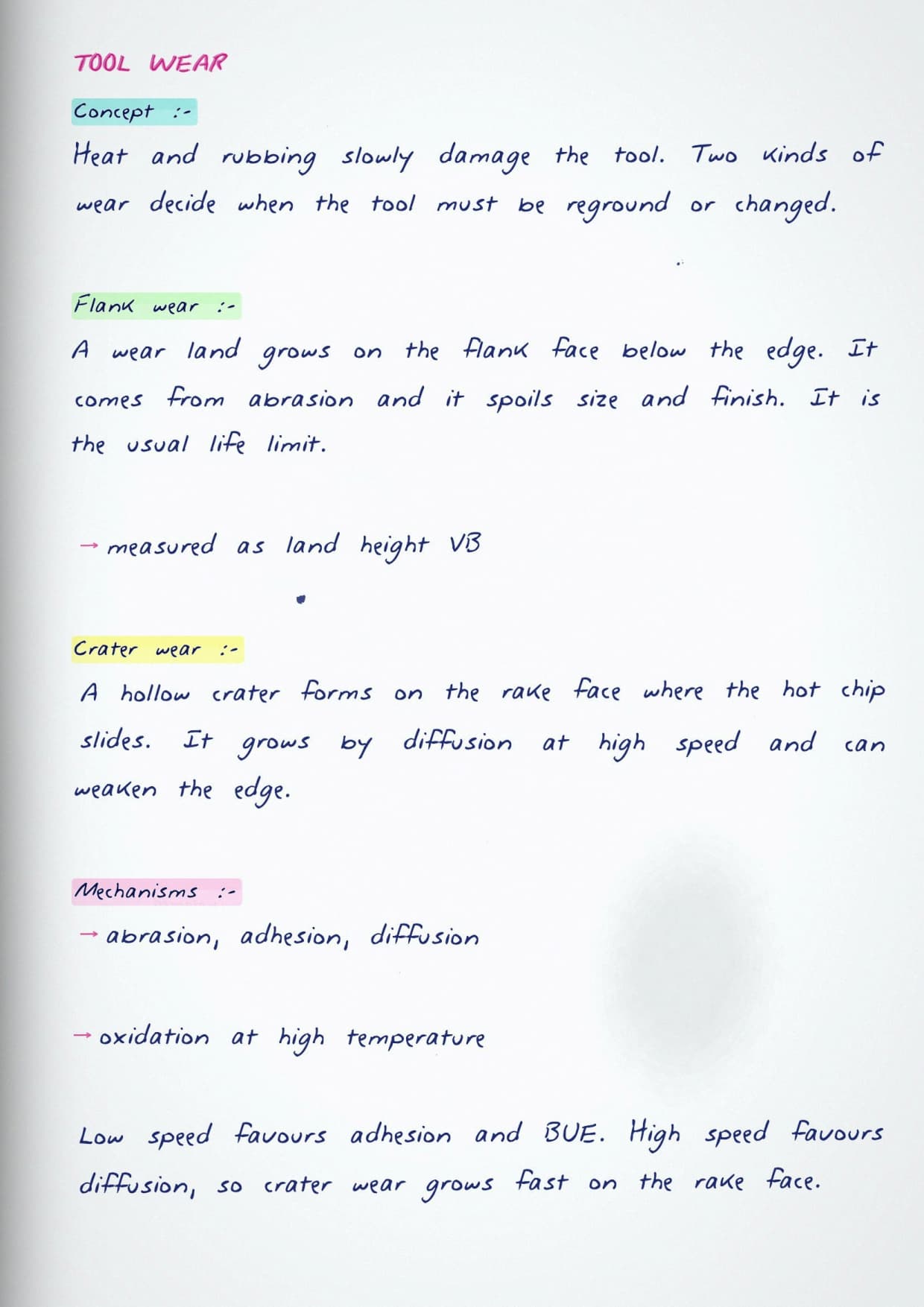
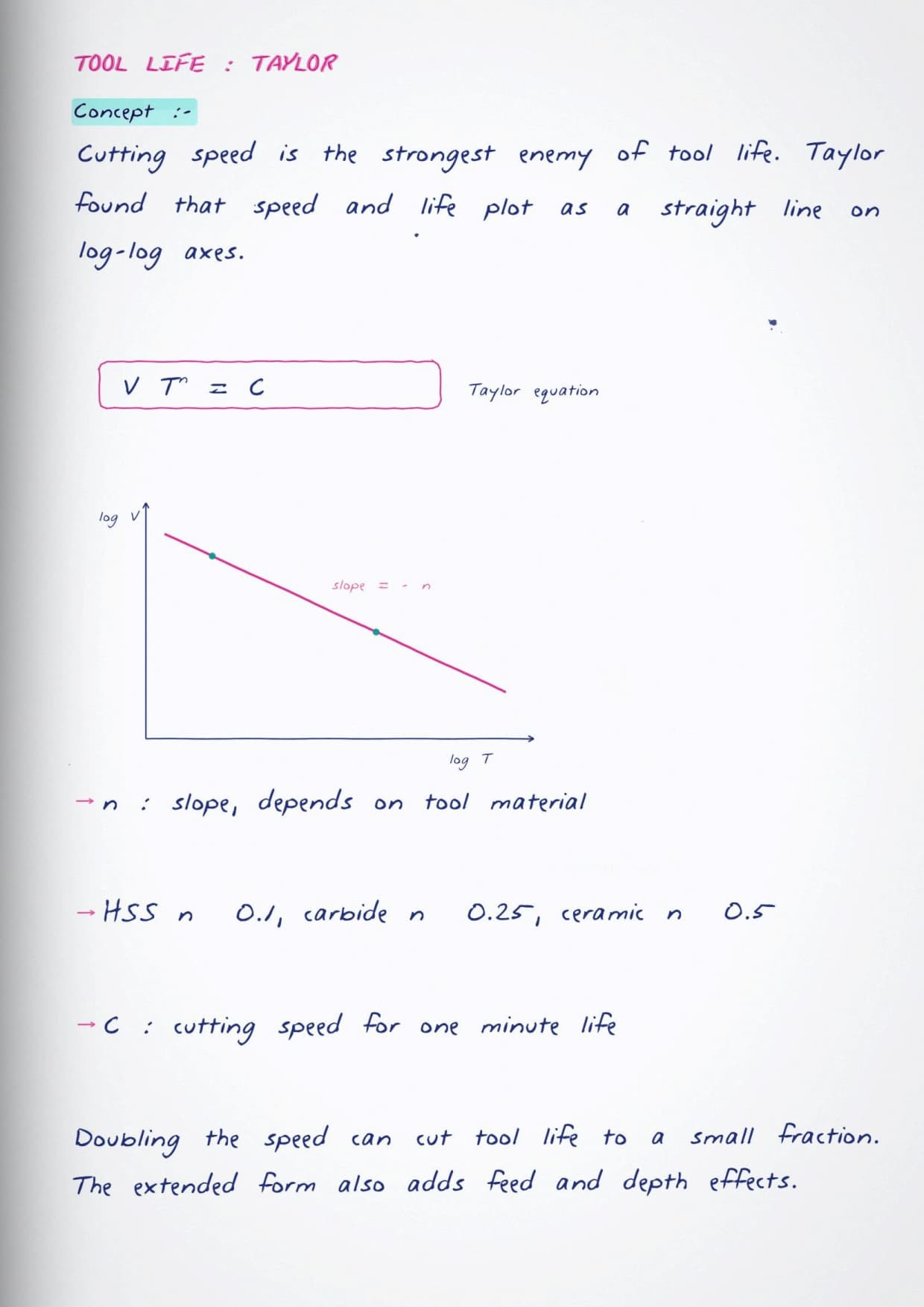
- Tool life, Taylor's equation and the types of tool wear
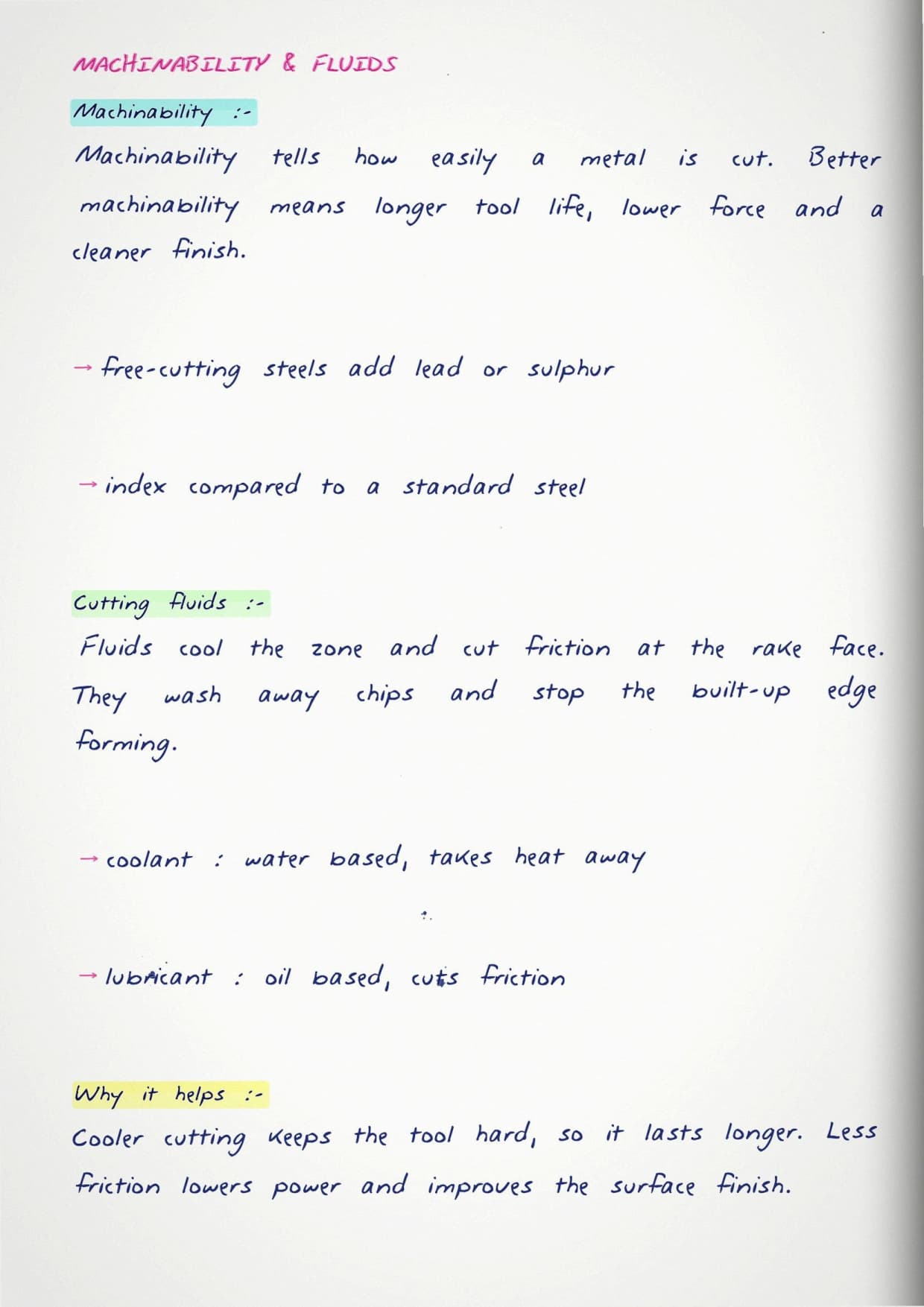
- Cutting fluids, tool materials and machinability
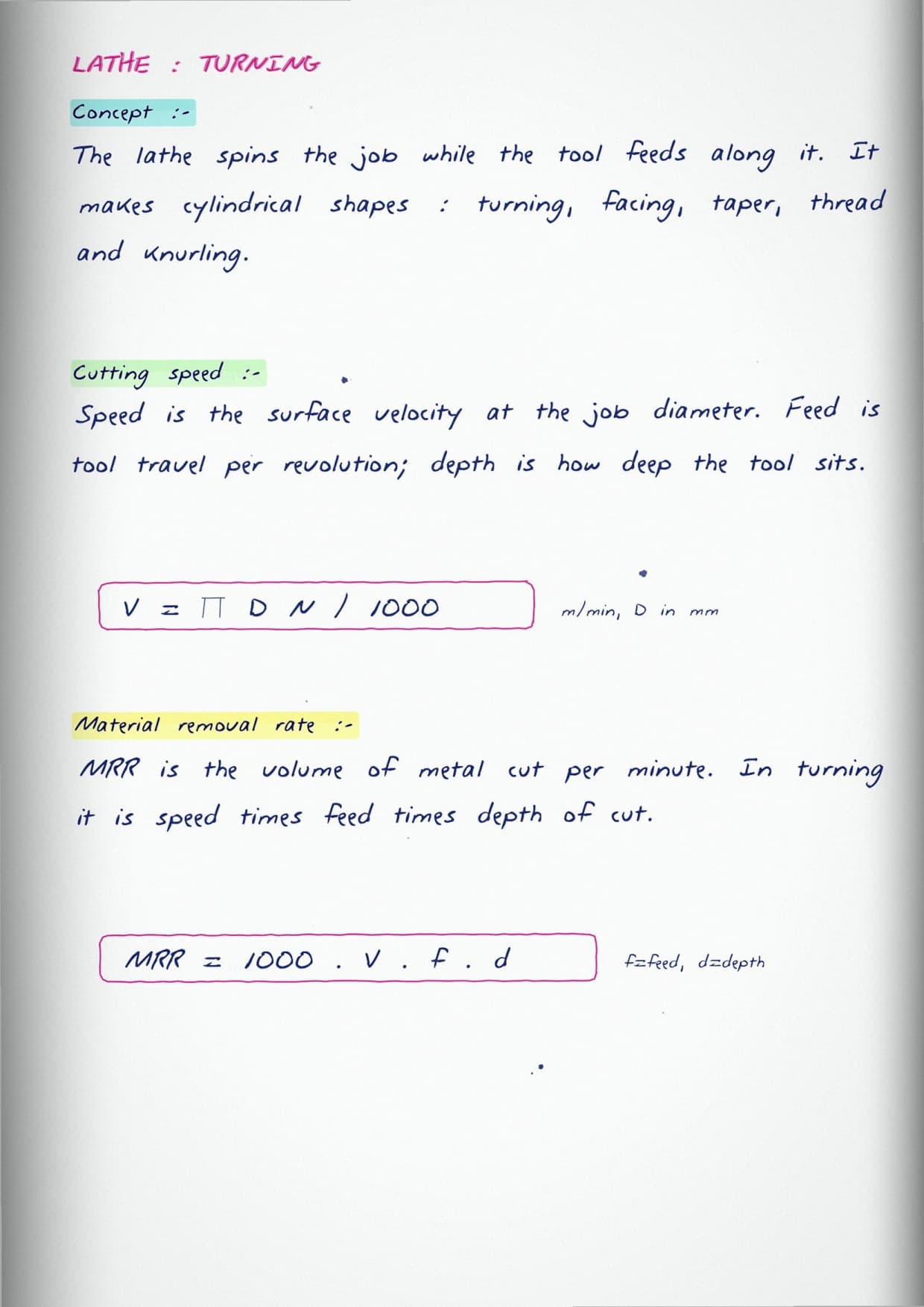
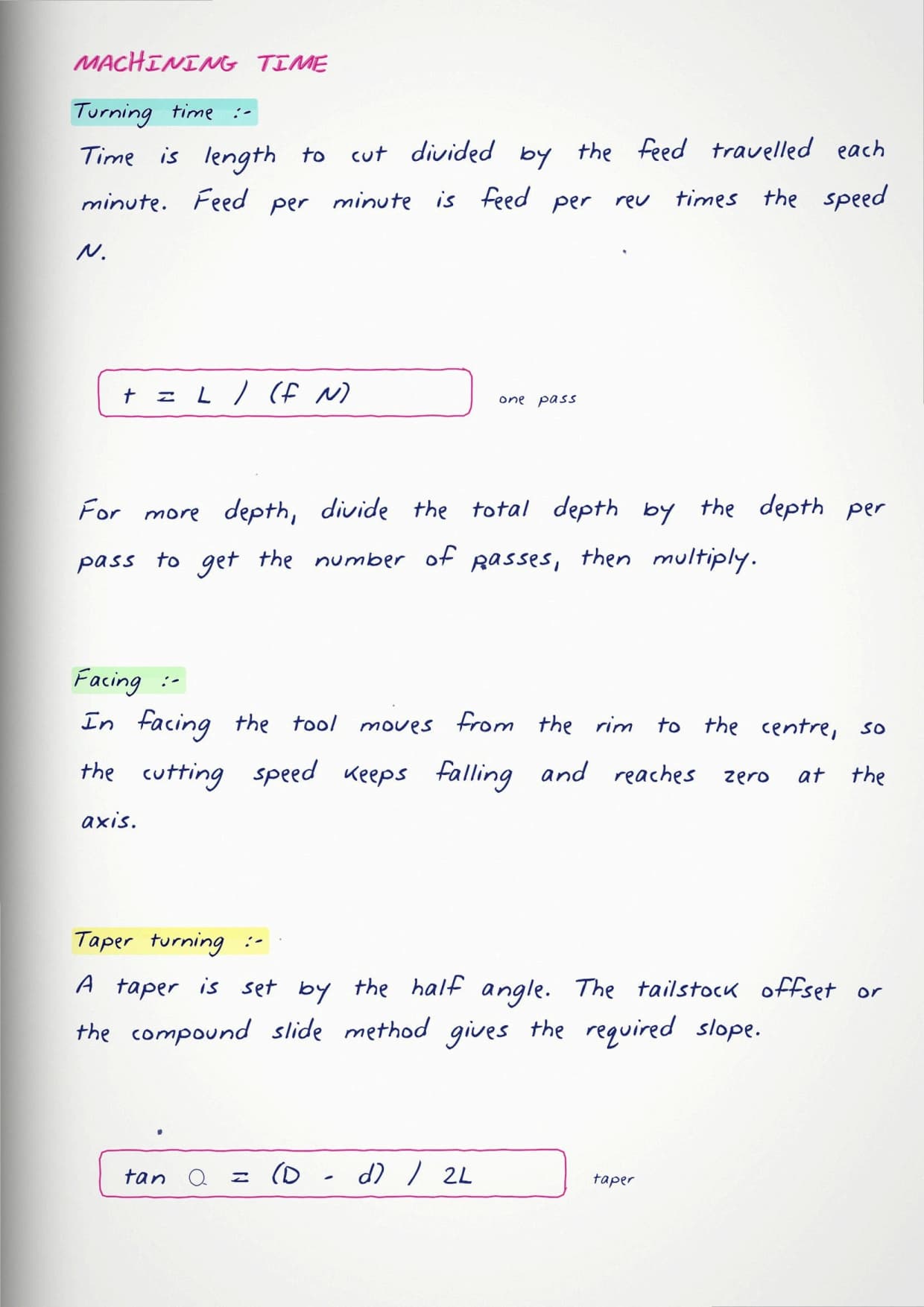
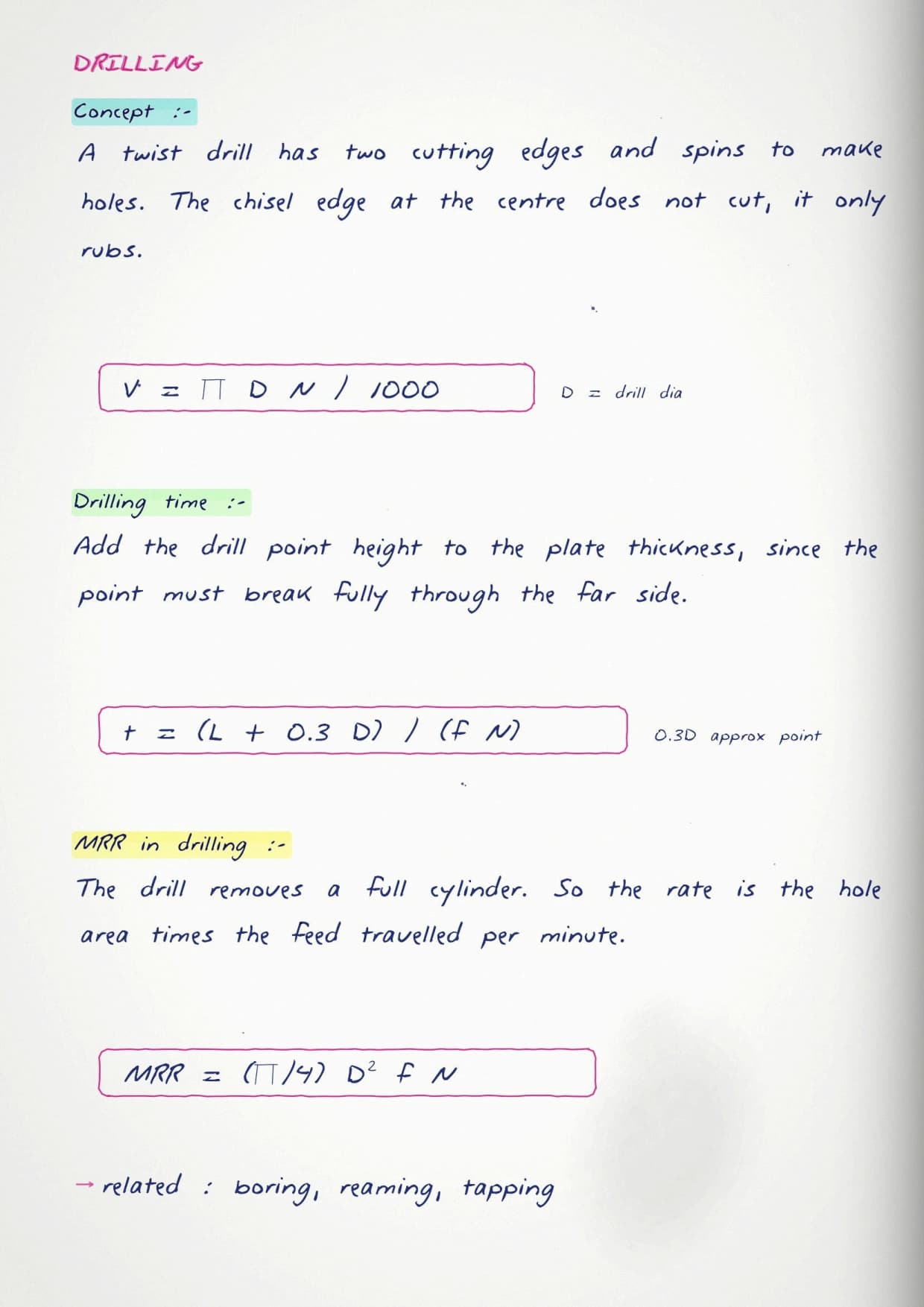
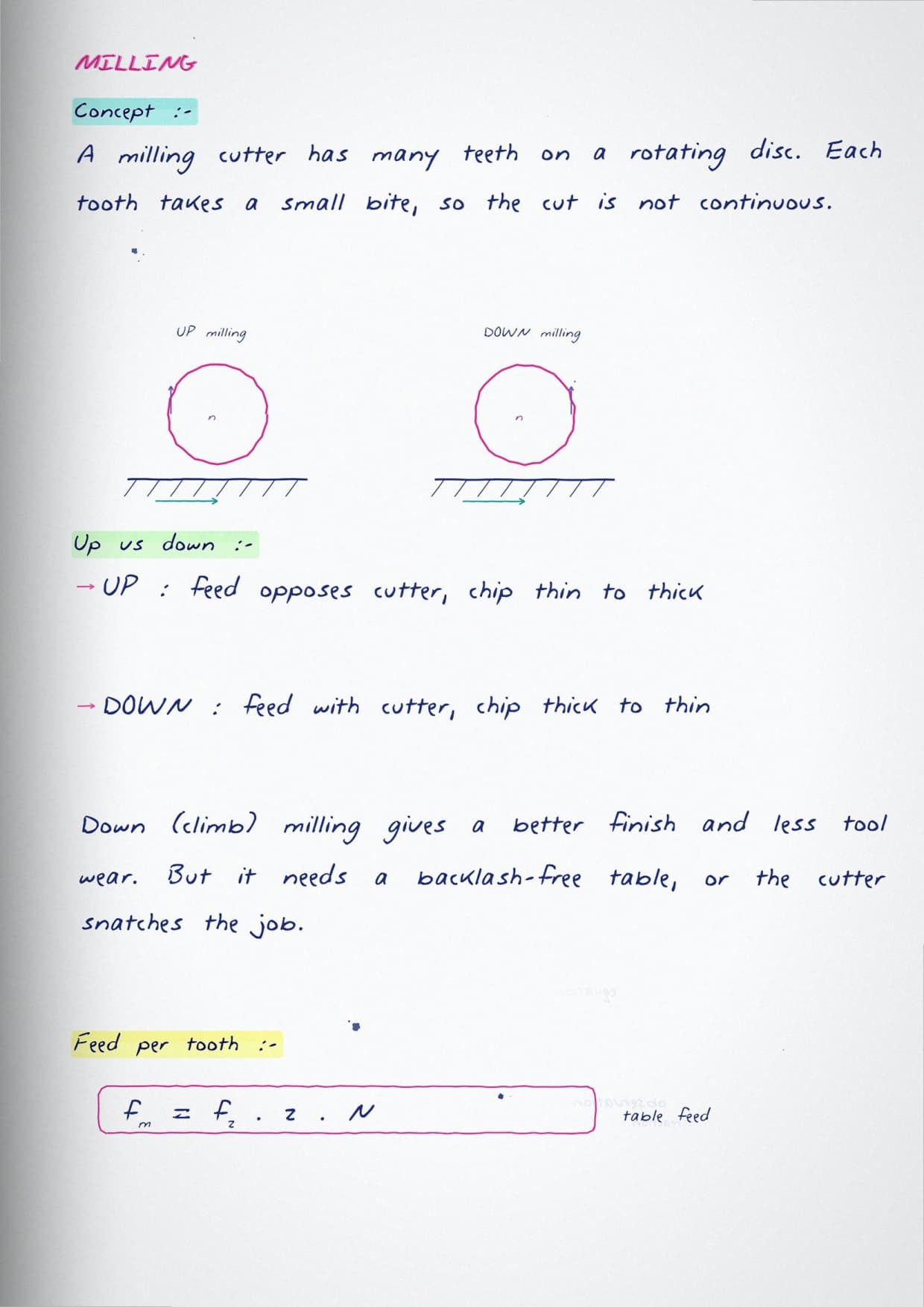
- Turning, milling, drilling and material removal rate
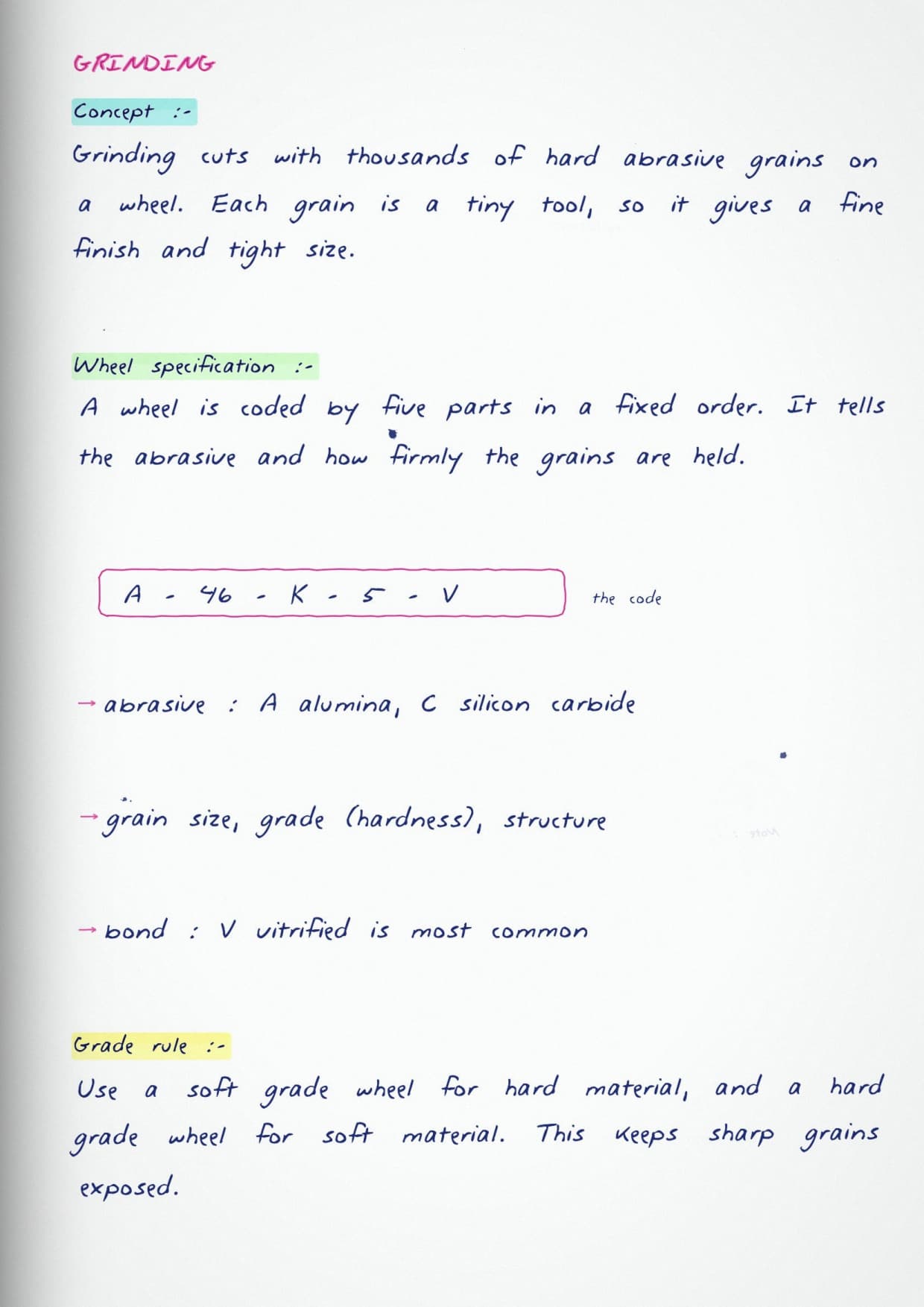
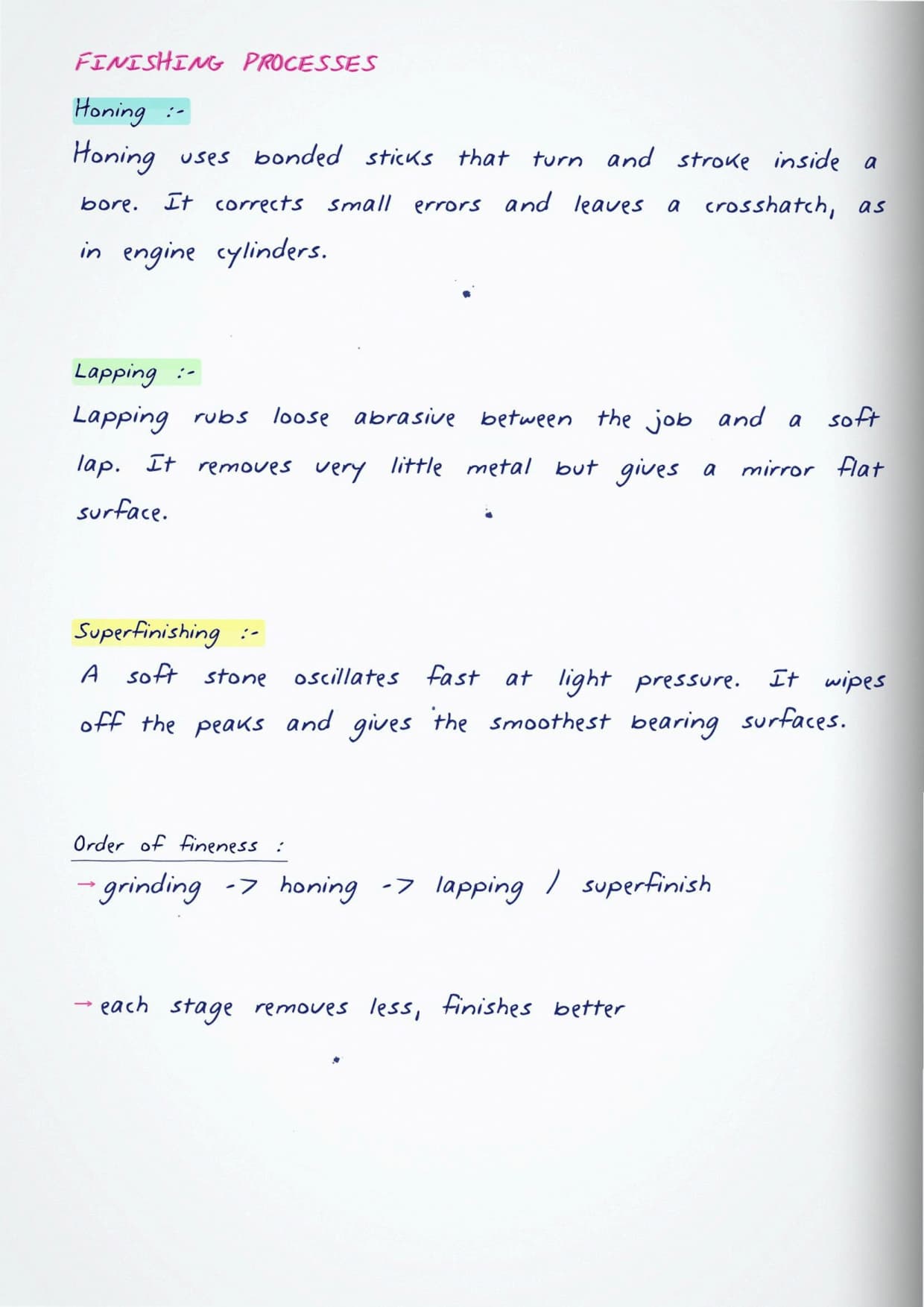
- Grinding and surface finishing processes
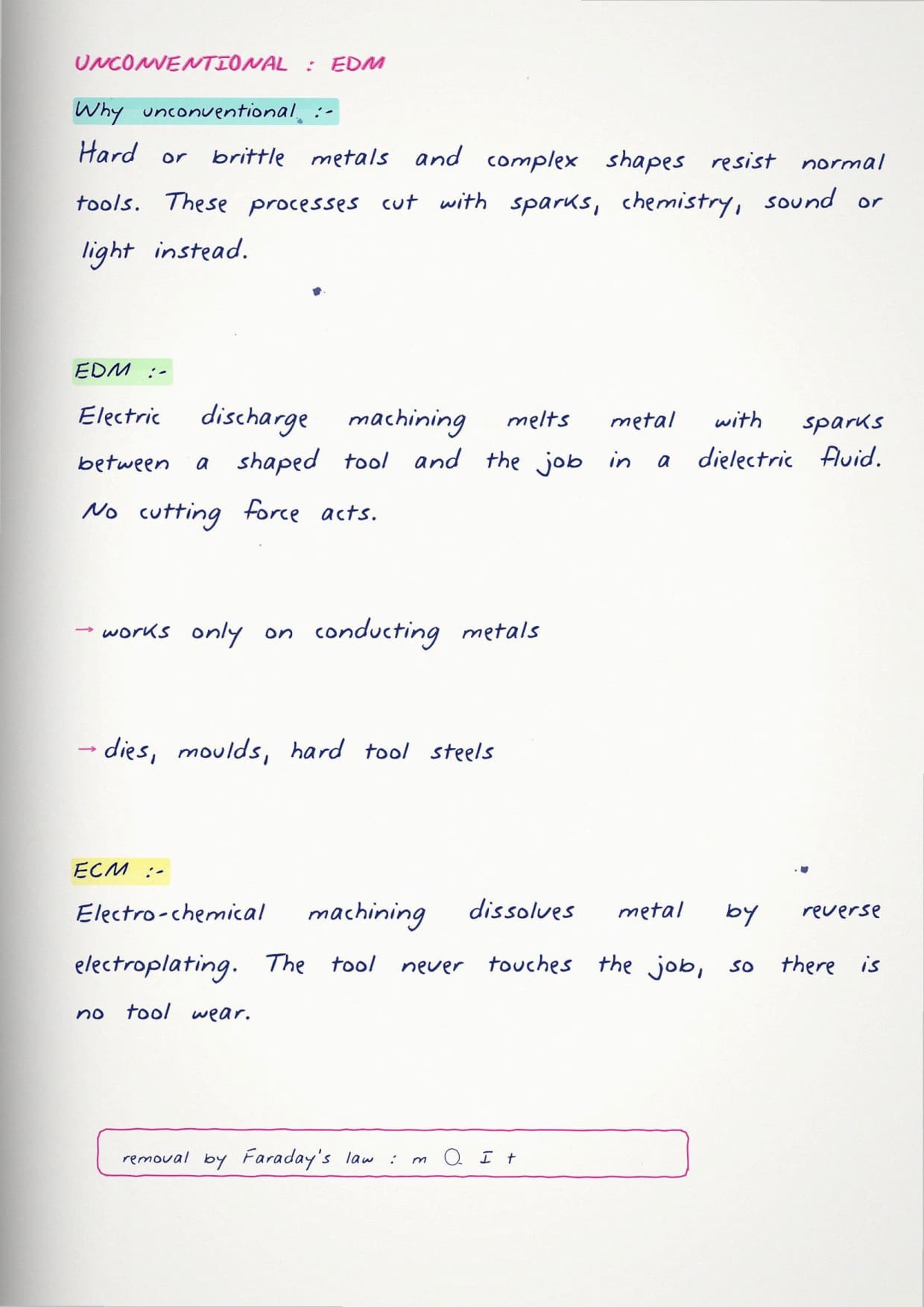
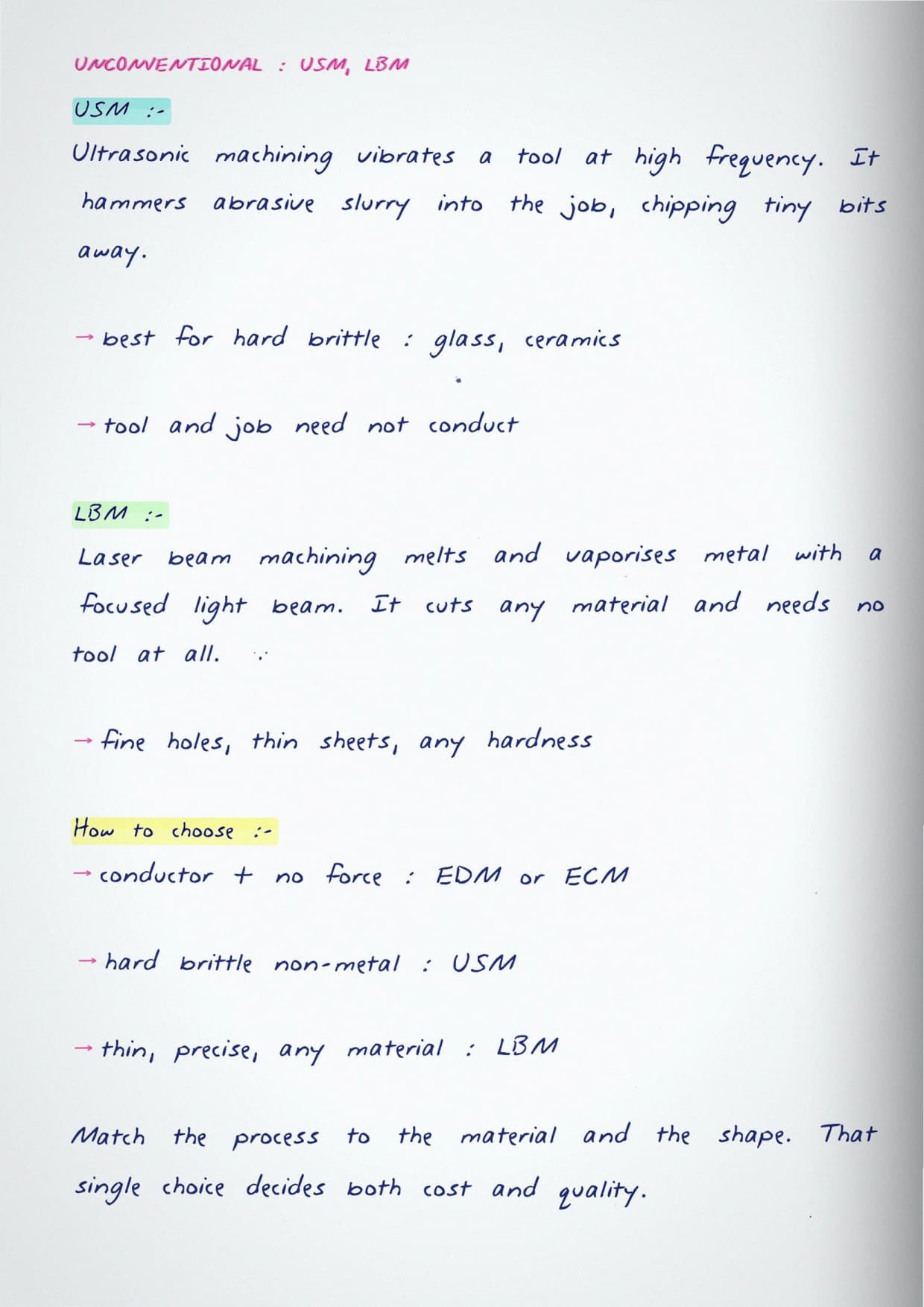
- Unconventional machining: EDM, ECM, USM and LBM
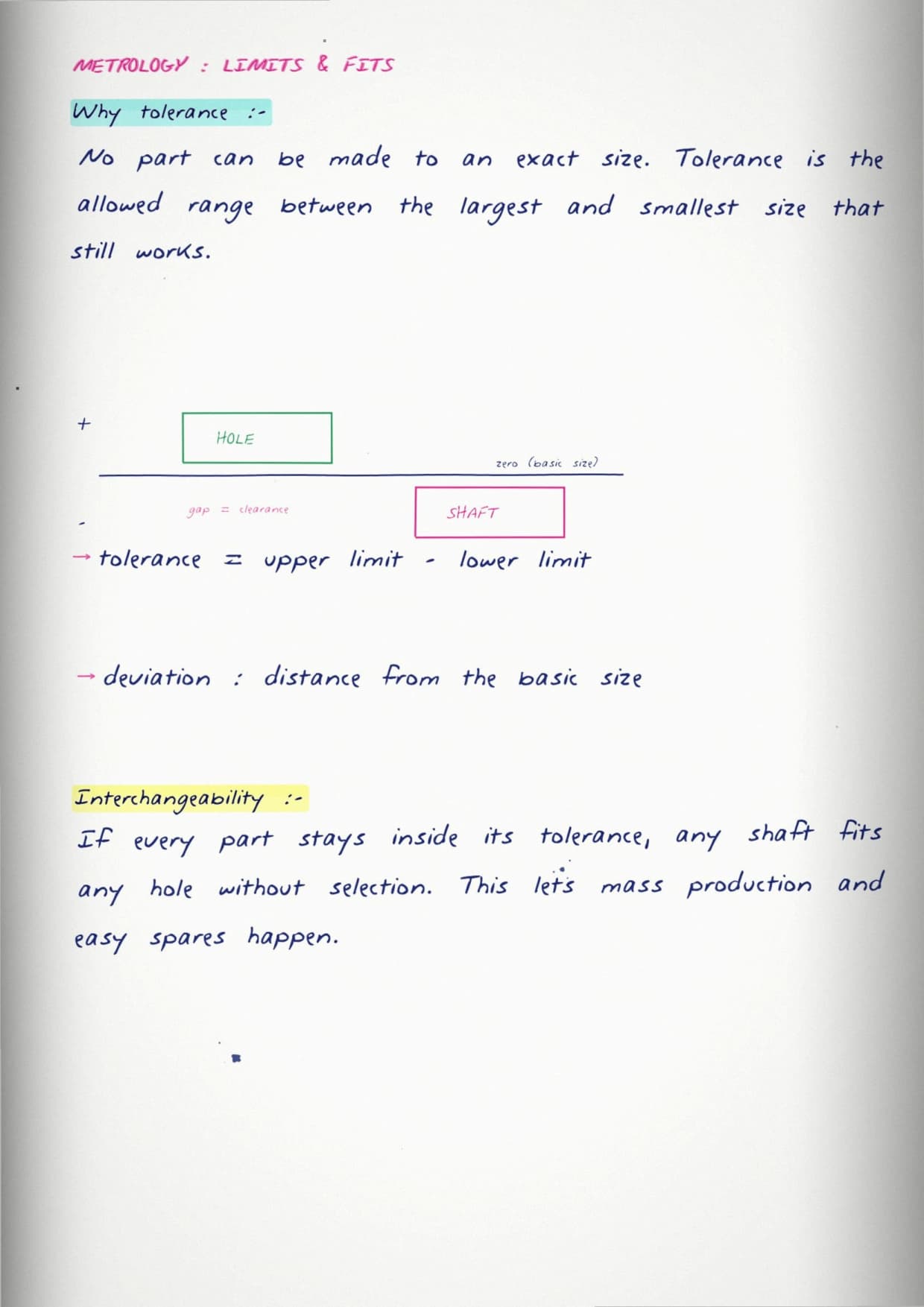
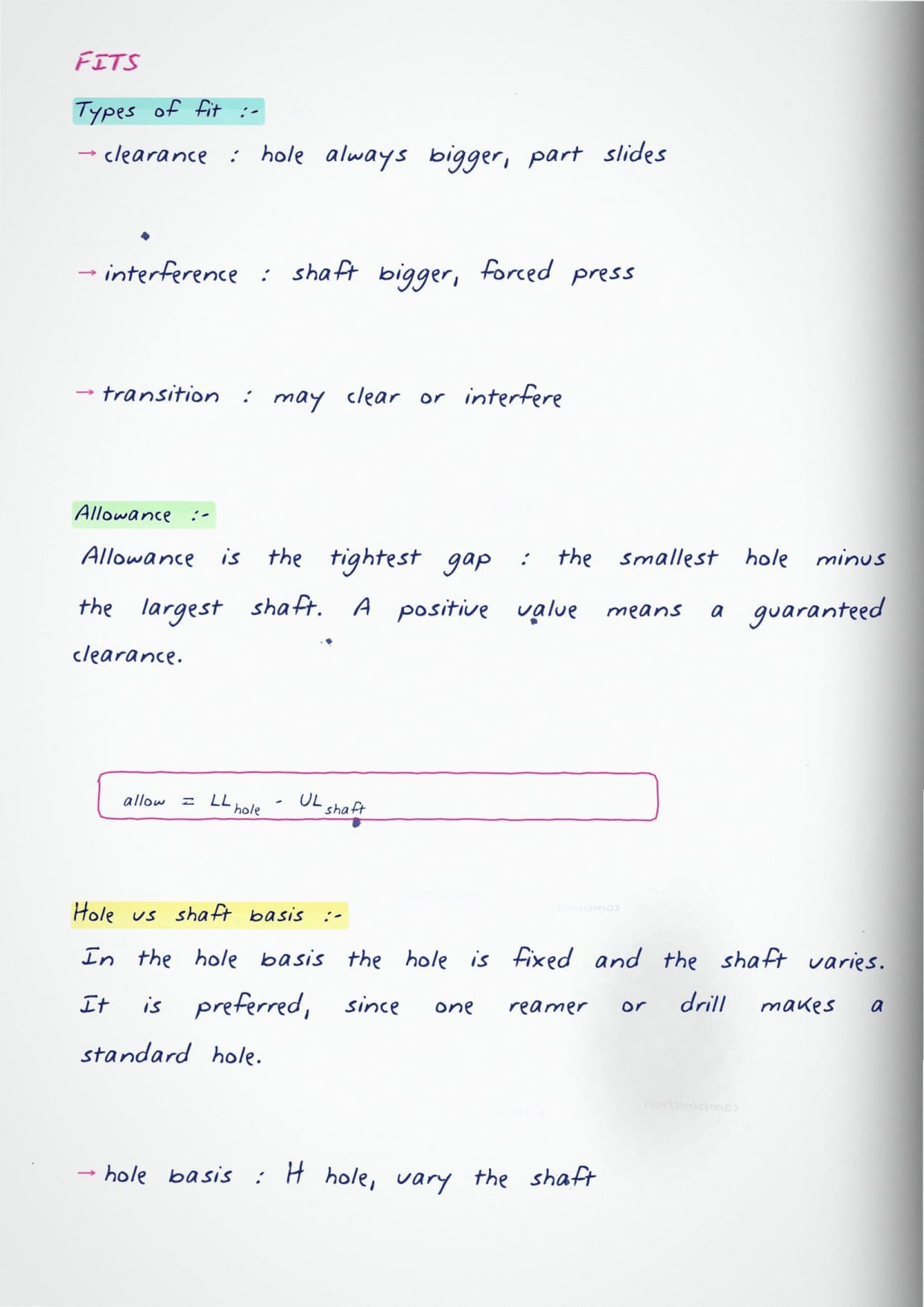
- Limits, fits and tolerances, hole basis and shaft basis
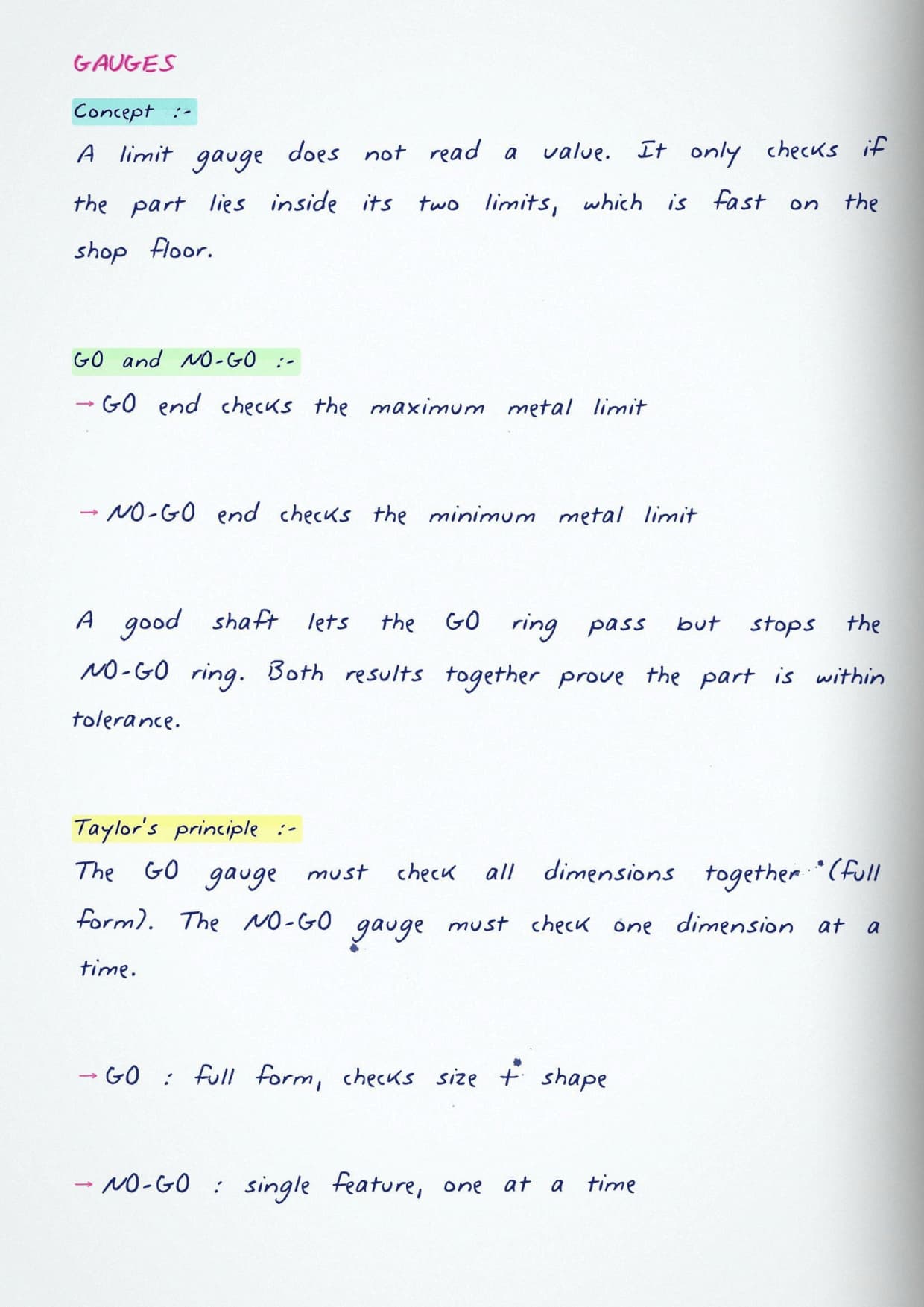
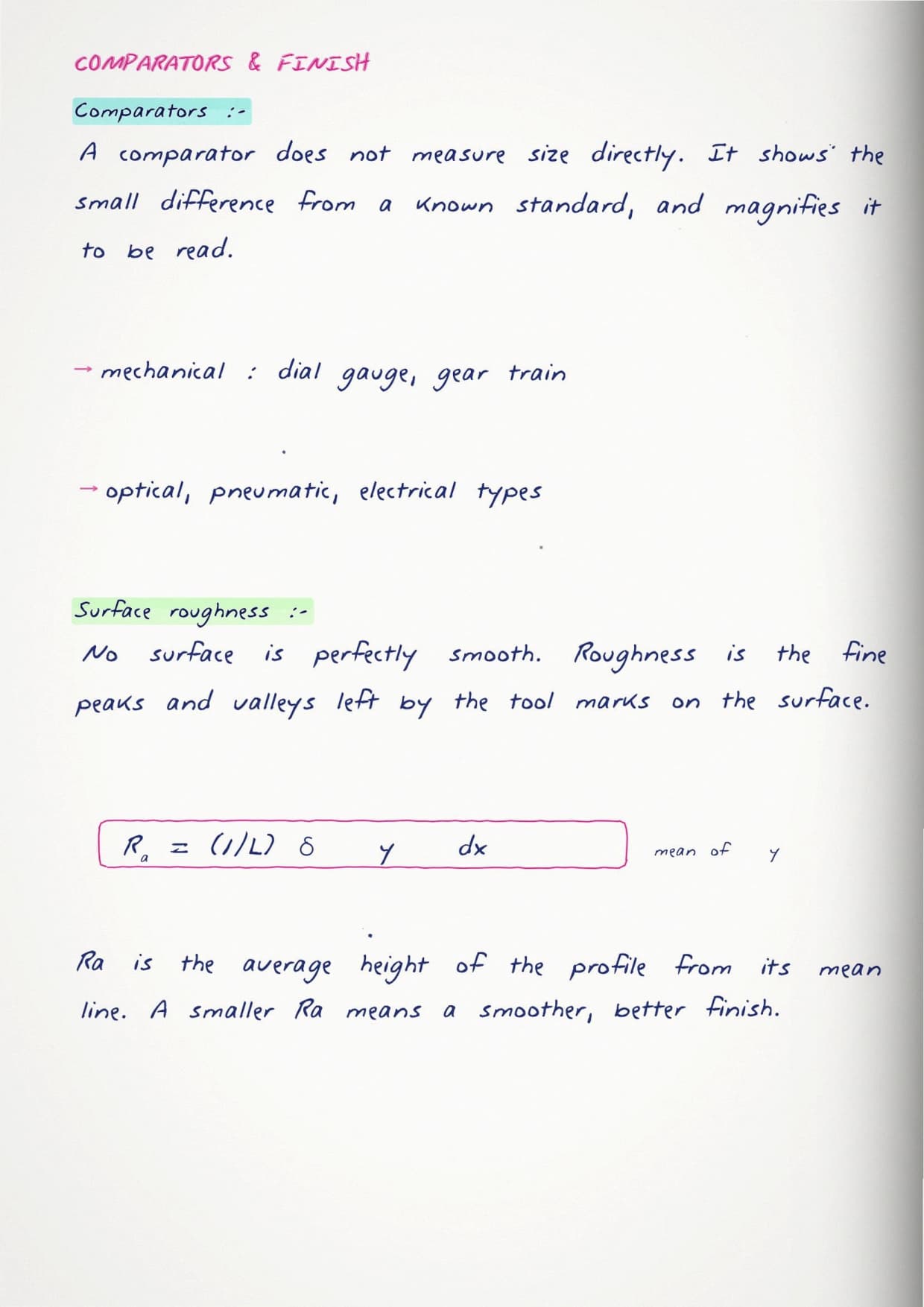
- Gauges, Taylor's principle of gauge design and comparators
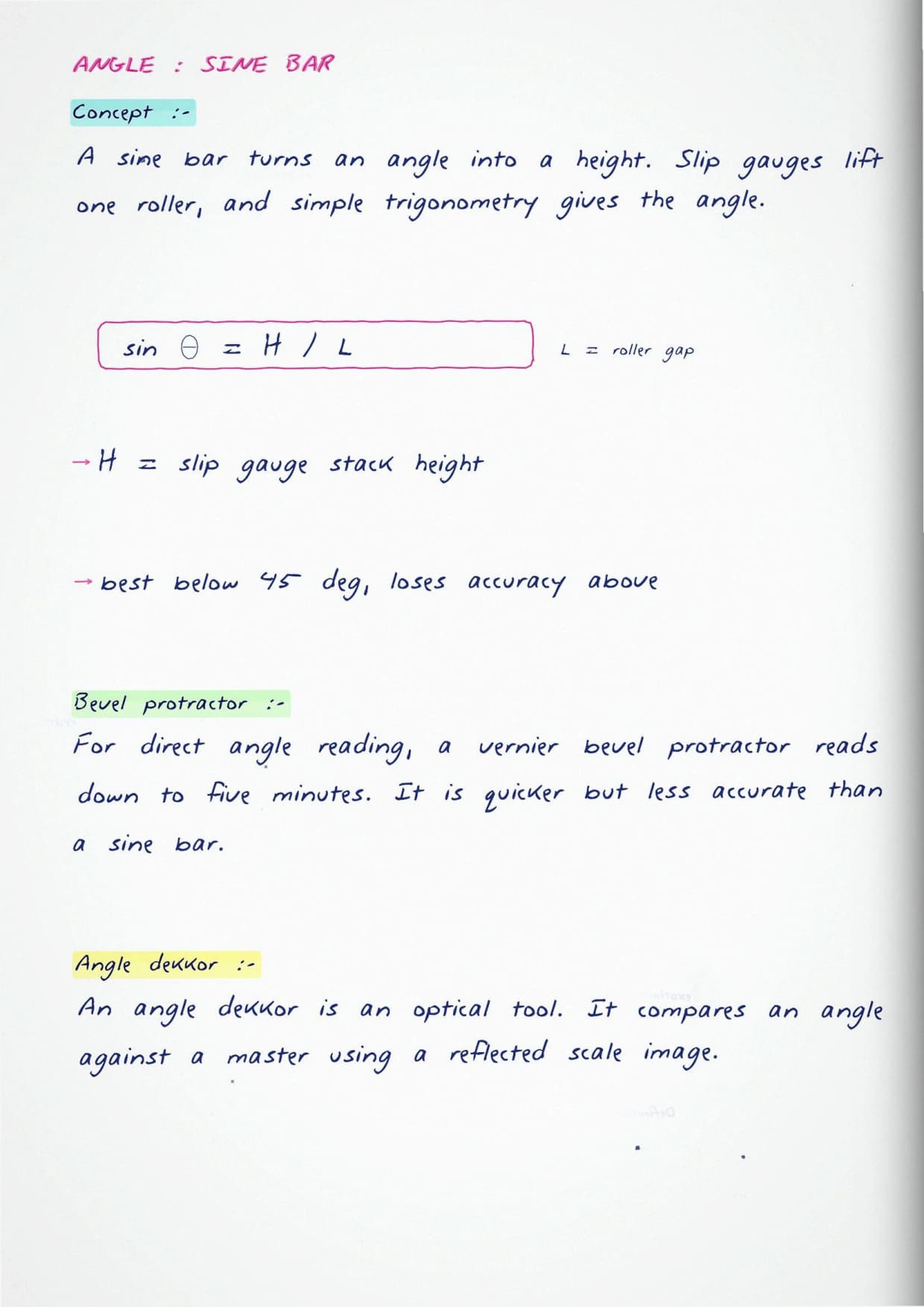
- Surface roughness, sine bar and angle measurement
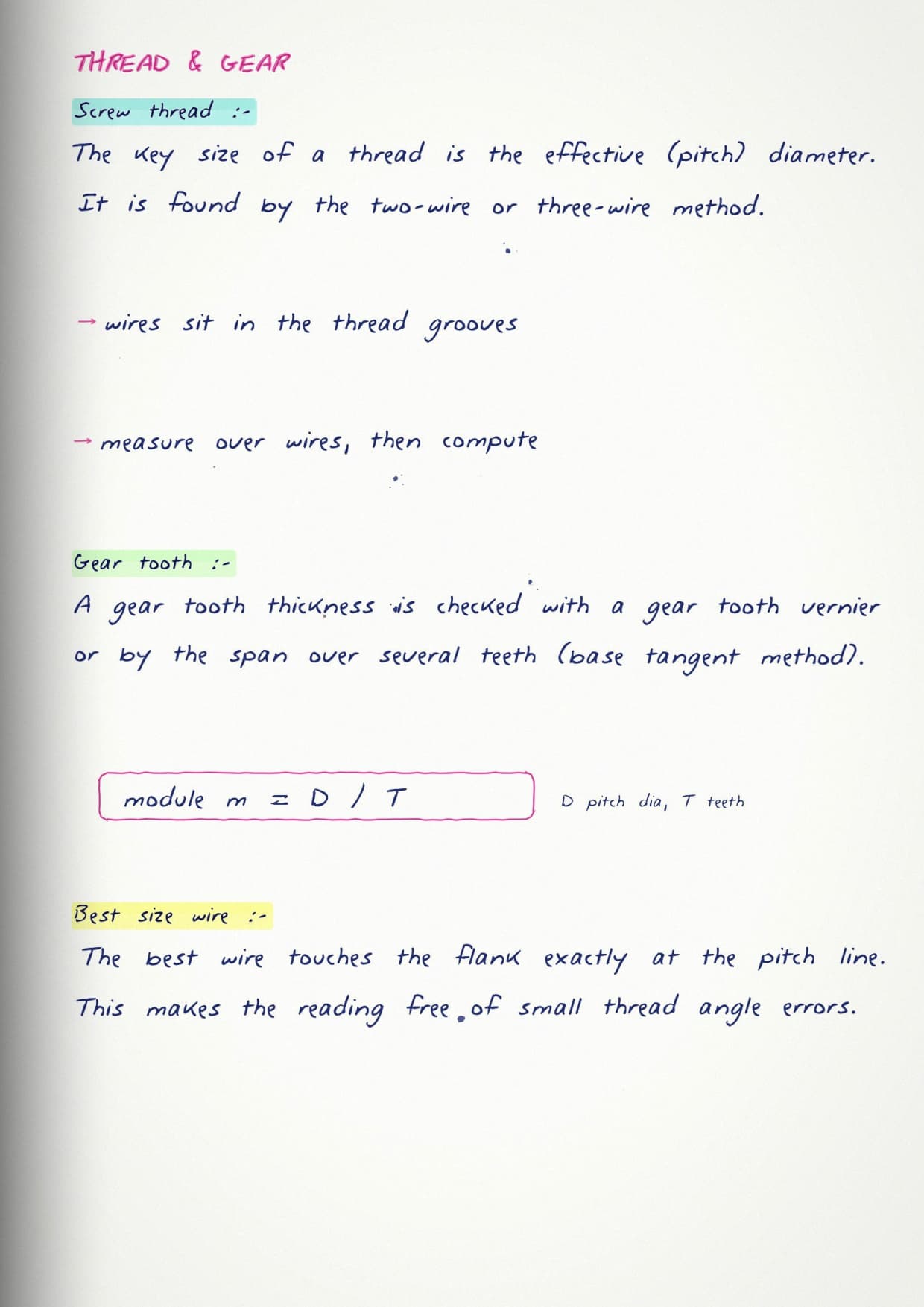
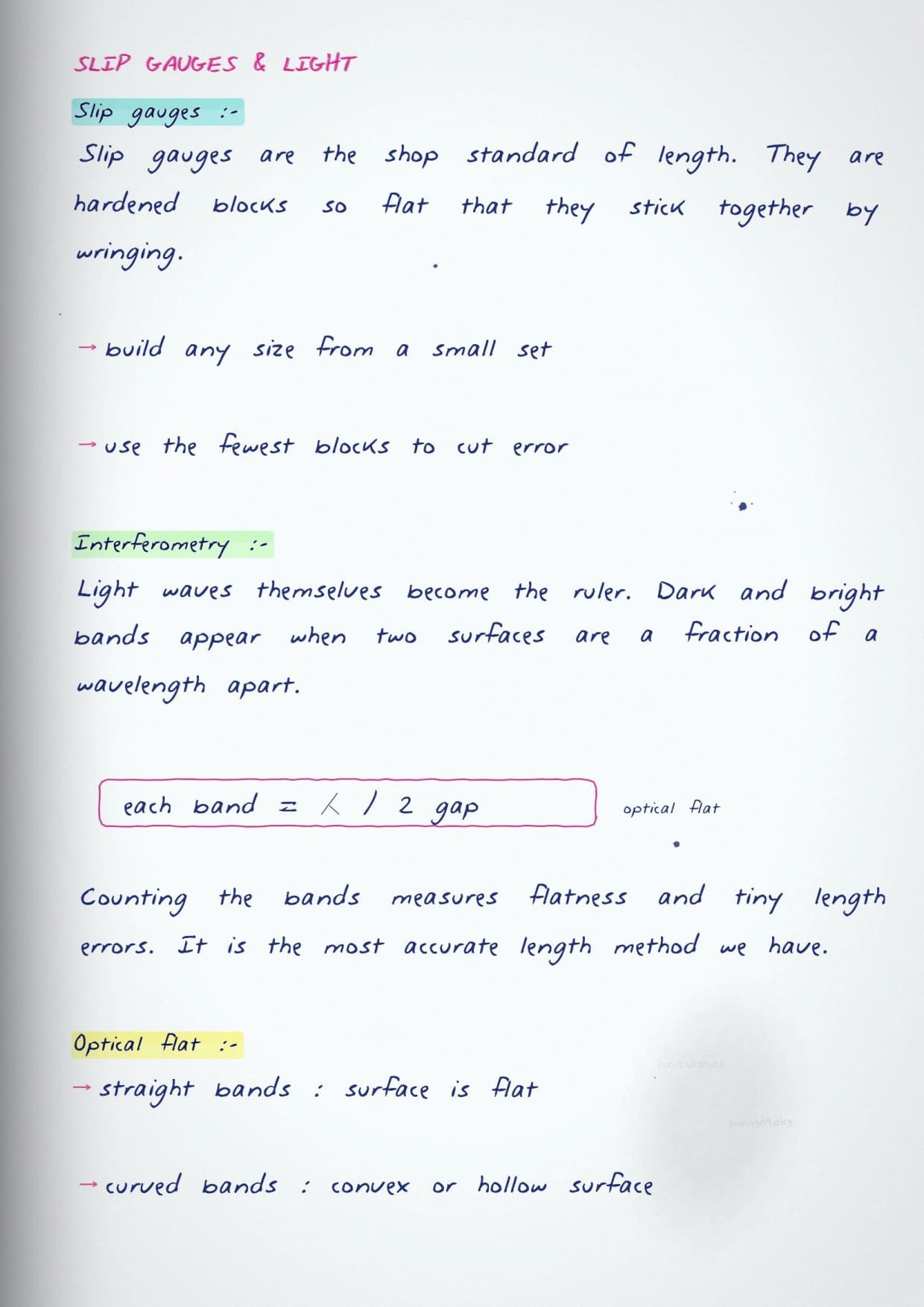
- Screw thread and gear metrology, and interferometry
How the Notes Are Organised
The order is built for revision, not just first reading. Cutting theory comes first because its results come up again in the machine tool and material removal problems, and metrology follows so that measurement ties back to the parts being made.
- Cutting theory comes first; its formulas return in machine tool problems.
- Metrology follows, from tolerances to the instruments that check them.
- Related ideas stay on one page, so the full picture is clear.
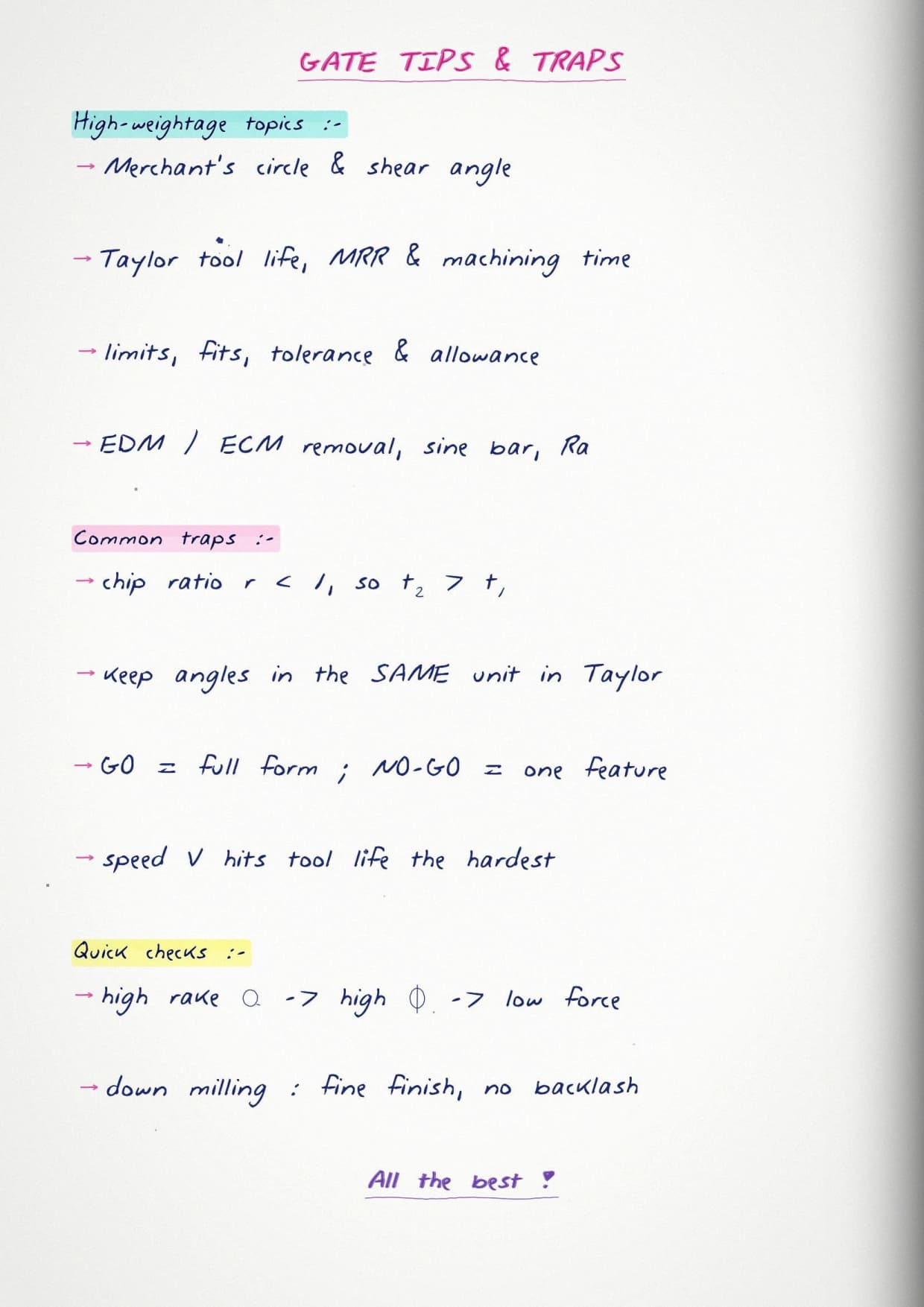
- A formula sheet and a tips and traps page close the set.
Important Topics in GATE Machining and Metrology
Not every topic carries the same marks in GATE. The notes give more space to the areas that appear almost every year, so students who are short on time know exactly where to start. These are the topics to revise first.
- Merchant's circle and the cutting force relations
- Tool life and Taylor's equation, often as numericals
- Limits, fits and tolerances, with simple fit calculations
- Material removal rate in turning and milling
- Surface roughness parameters and their meaning
- Low-return topics like special finishing are kept short.
How to Prepare GATE Machining and Metrology with Handwritten Notes
These notes work best as a revision layer over a standard textbook and a good question bank. Read a topic, note its formula, and then solve a few previous year questions on it before moving on. Machining is a numerical-heavy area, so regular practice matters as much as the theory.
- First pass: read every topic and diagram once.
- Second pass: solve past GATE questions topic by topic.
- Final pass: revise only the formula sheet and the traps page.
- Machining is numerical, so time your practice and check units.
- For metrology, draw the fit before choosing an answer.
Why These Notes Help You Score Better
Handwritten notes suit the final weeks of GATE preparation, when you need to revise a whole subject in one go. Because the formulas and diagrams are together on the page, a formula-heavy area like this one becomes easy to scan and recall.
- The full unit is in one short file for quick review.
- Formulas and diagrams stay together, so recall is faster.
- A formula-packed topic becomes easy to scan in minutes.
GATE Mechanical Manufacturing Machining Machine Tools and Metrology Handwritten Notes FAQs
Ques. Do these notes cover the full GATE Mechanical machining and metrology syllabus?
Ans. Yes. They cover metal cutting theory, machine tools, unconventional machining and the complete metrology section in one file.
Ques. Are the notes good for last-minute GATE revision?
Ans. Yes. The topic-wise layout and a quick formula sheet make them ideal for fast revision before the exam.
Ques. Do the notes include the important numerical formulas?
Ans. Yes. Every key formula, such as Taylor's tool life equation and Merchant's force relations, is included and explained in plain words.
Ques. Can beginners follow these notes?
Ans. Yes. Each topic is explained in plain words before the formula, so students new to it can follow easily.



Comments