




Casting, Forming and Joining is one of the highest scoring parts of the GATE Mechanical Manufacturing section, and it usually carries around 8 to 12 marks each year. These handwritten notes cover the whole topic, from casting and metal forming to welding, with the standard formulas and solved numericals for each process. They are built for quick, exam focused revision alongside your regular problem solving.
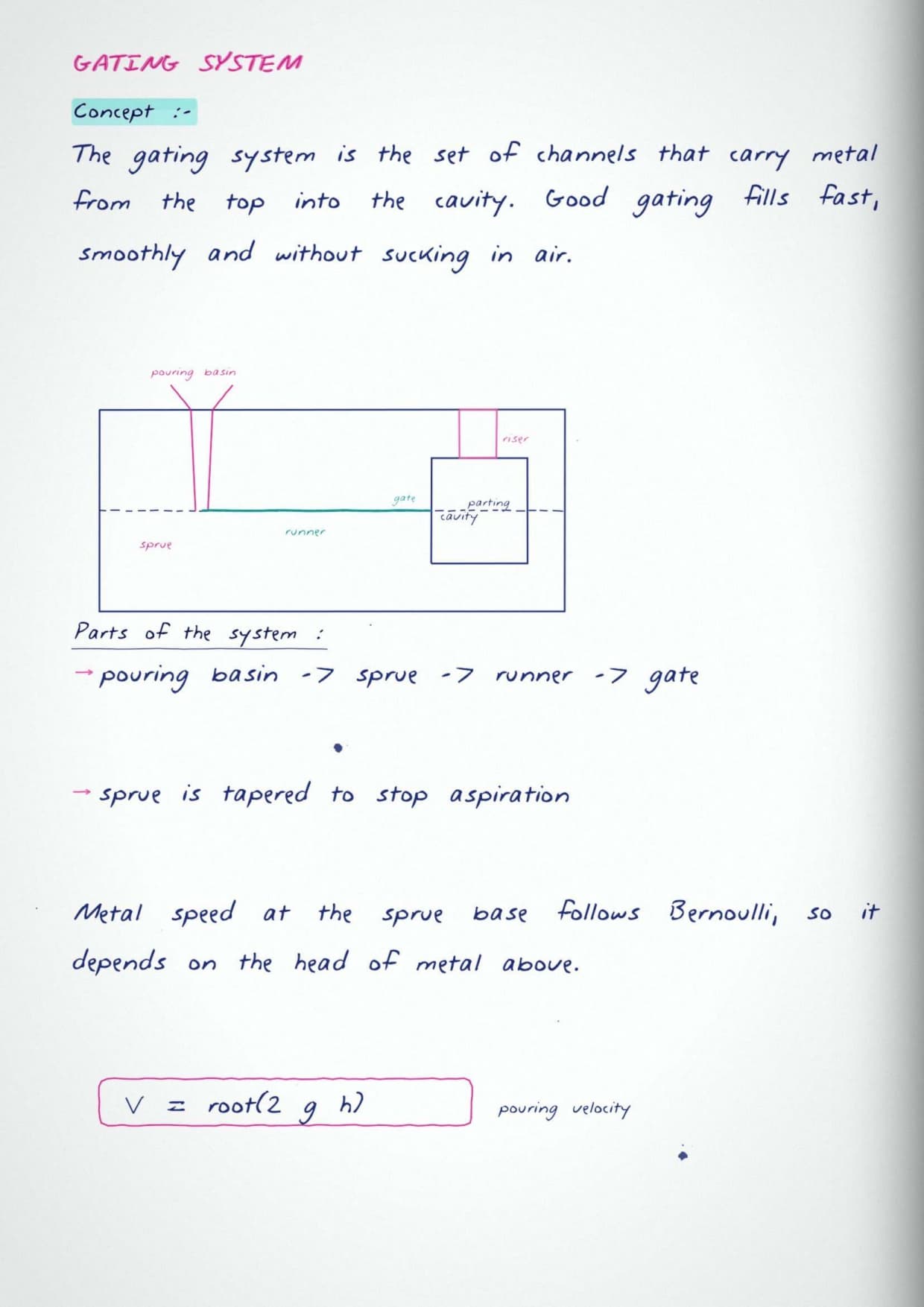
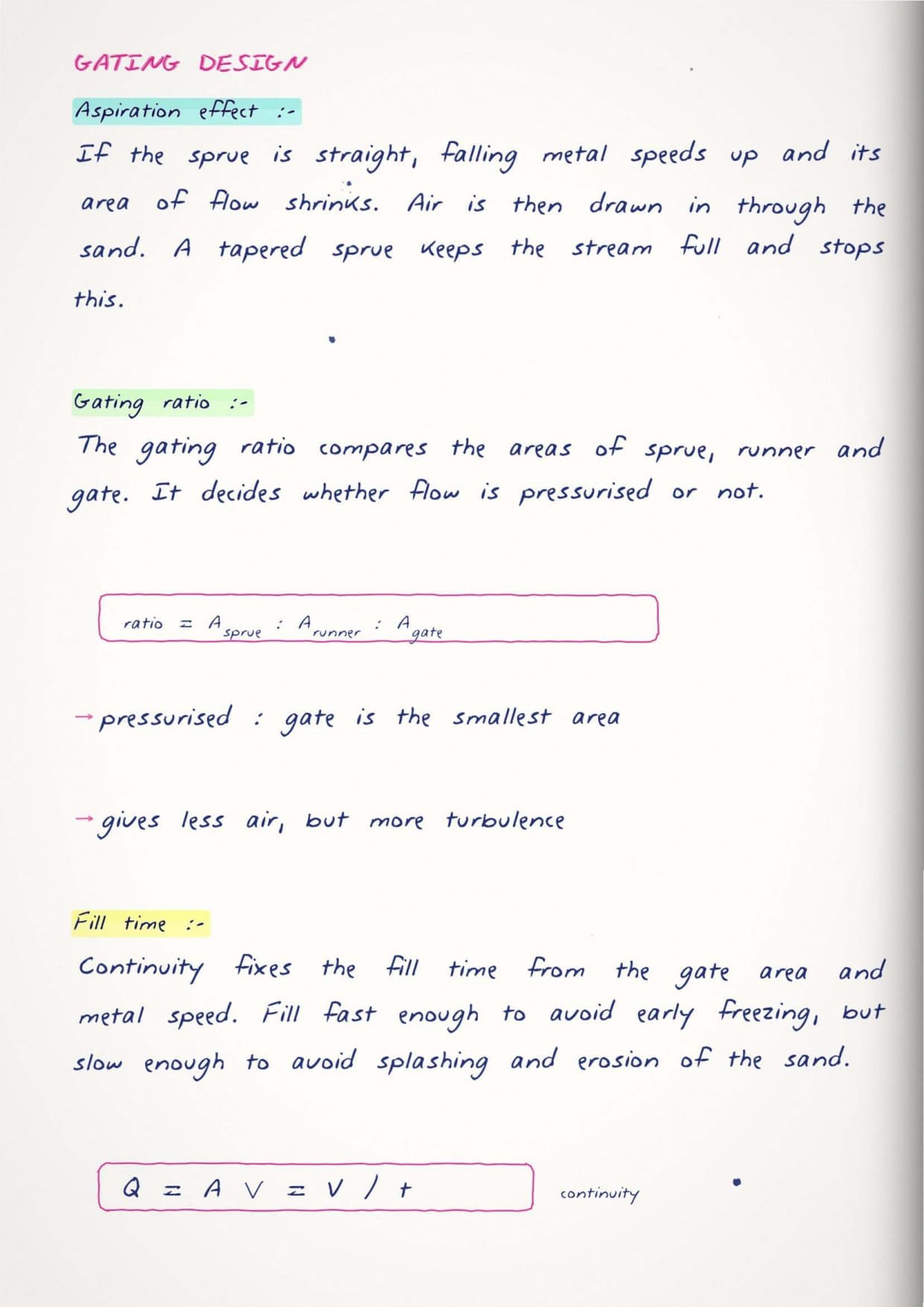
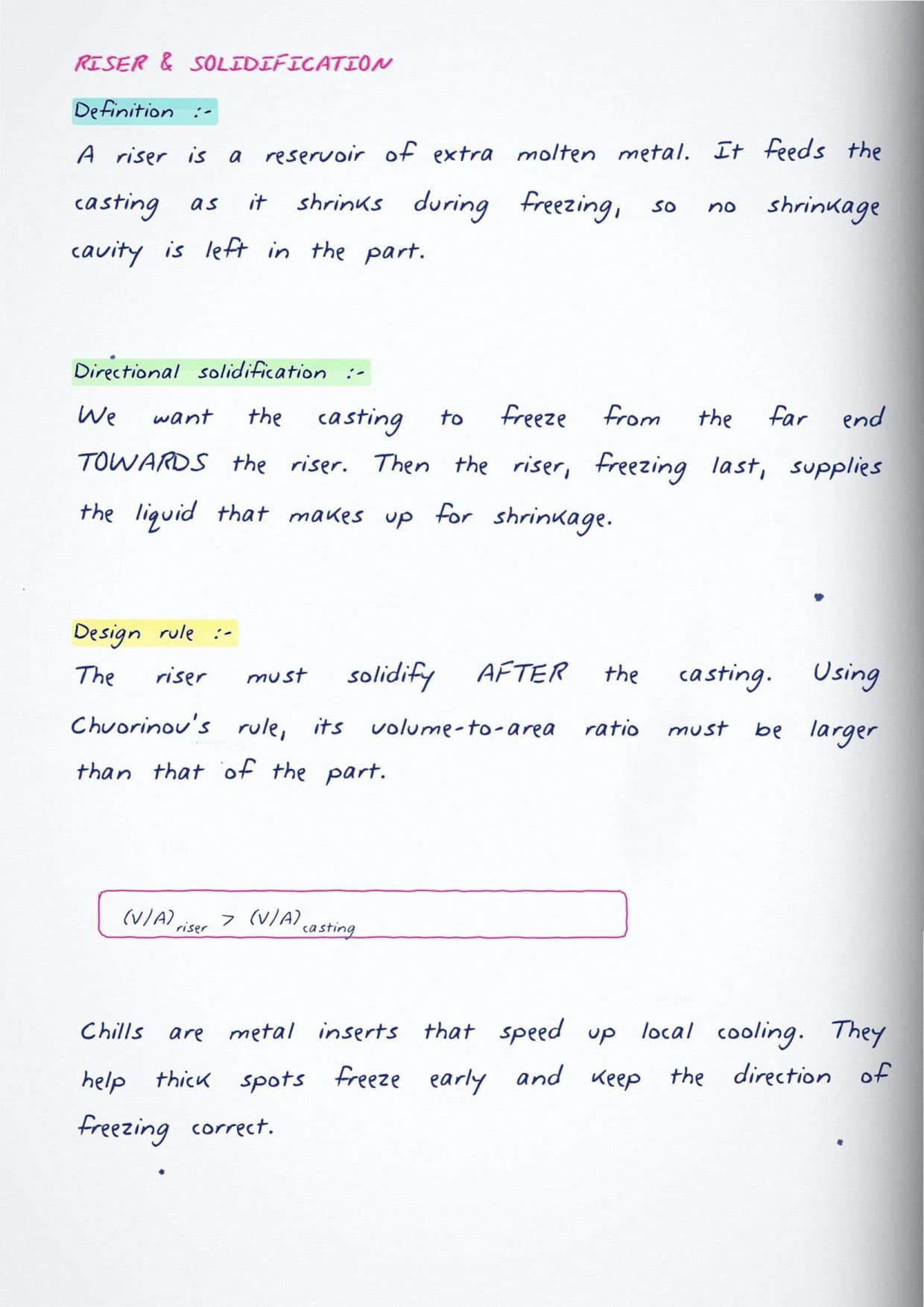
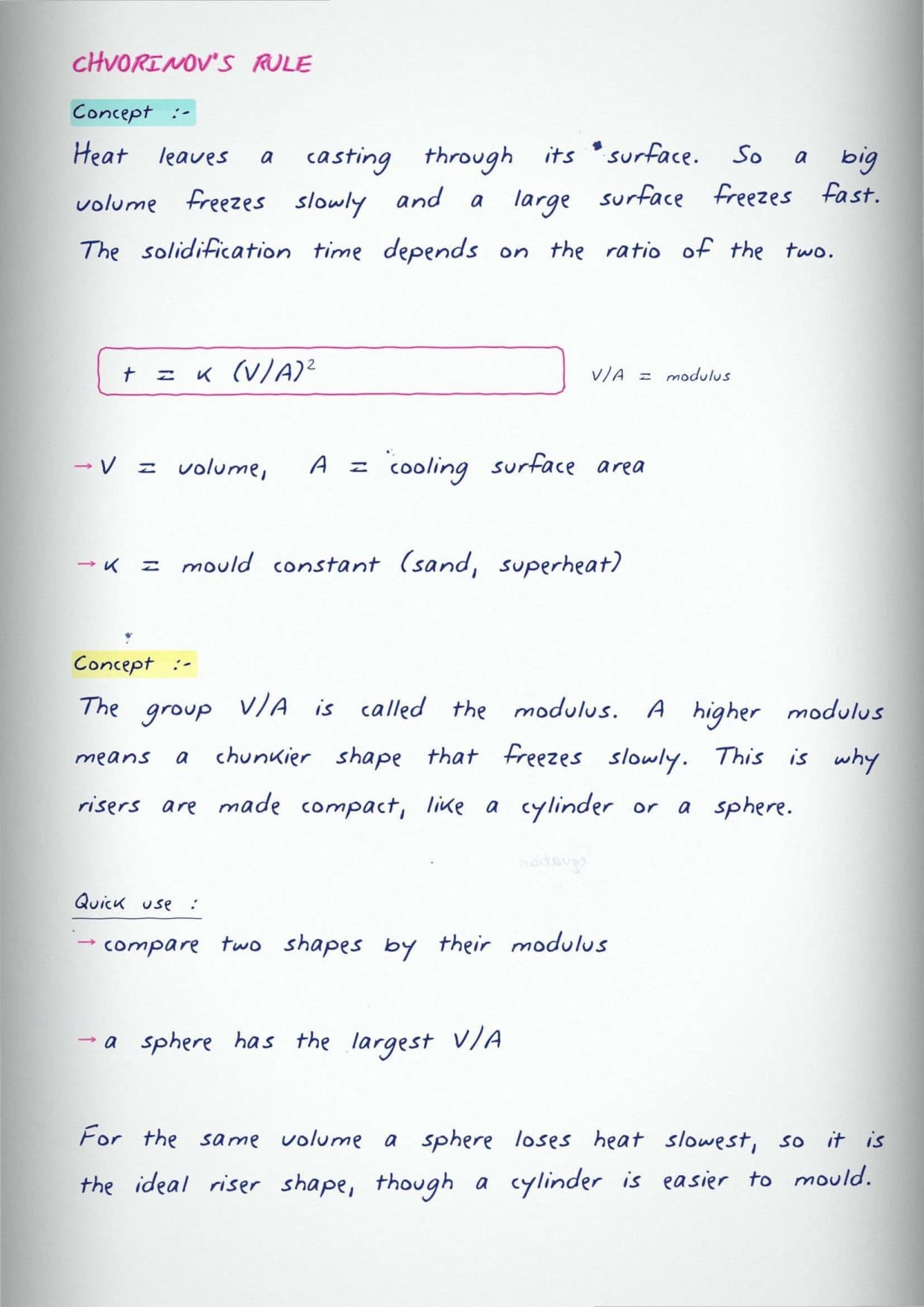
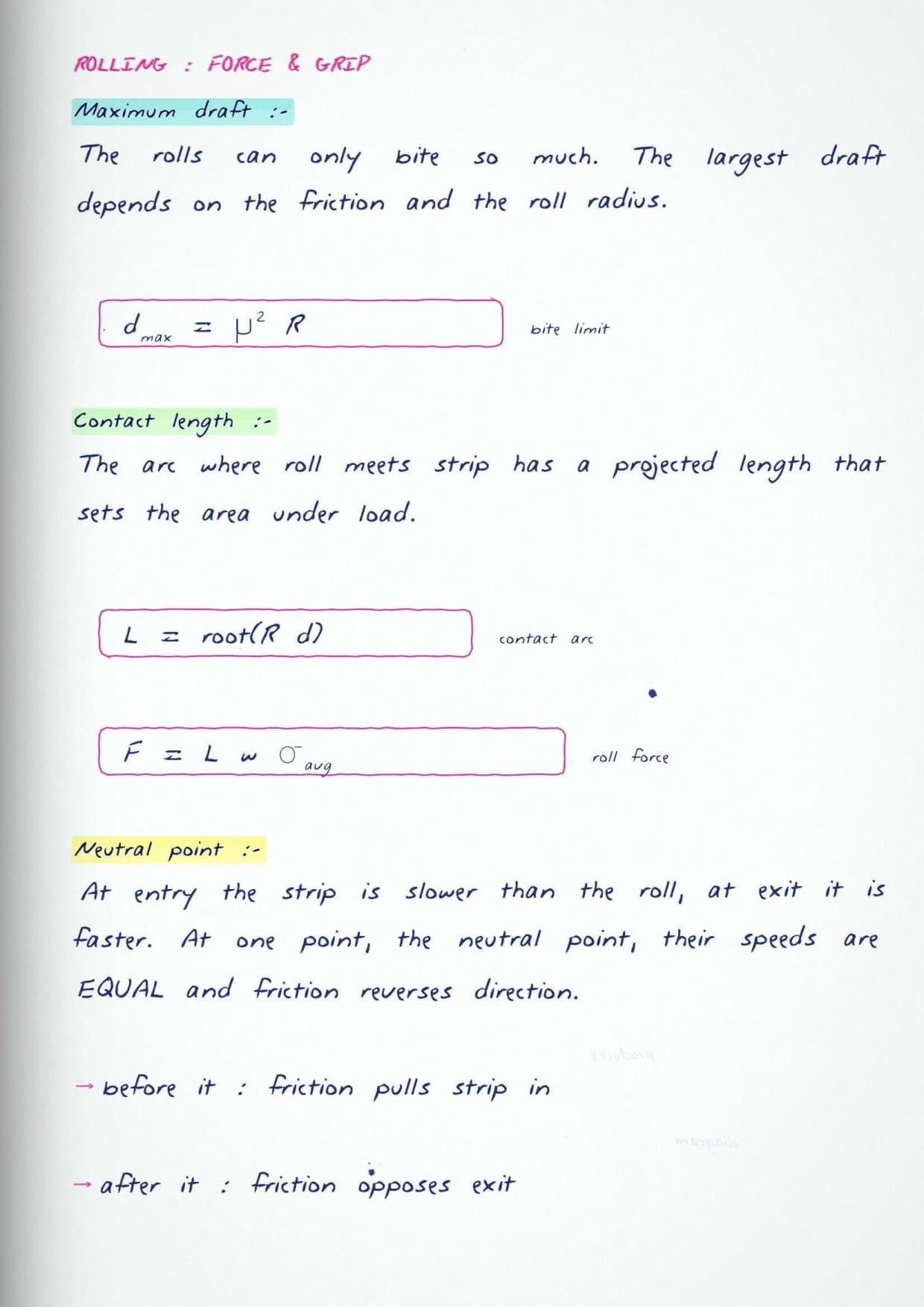
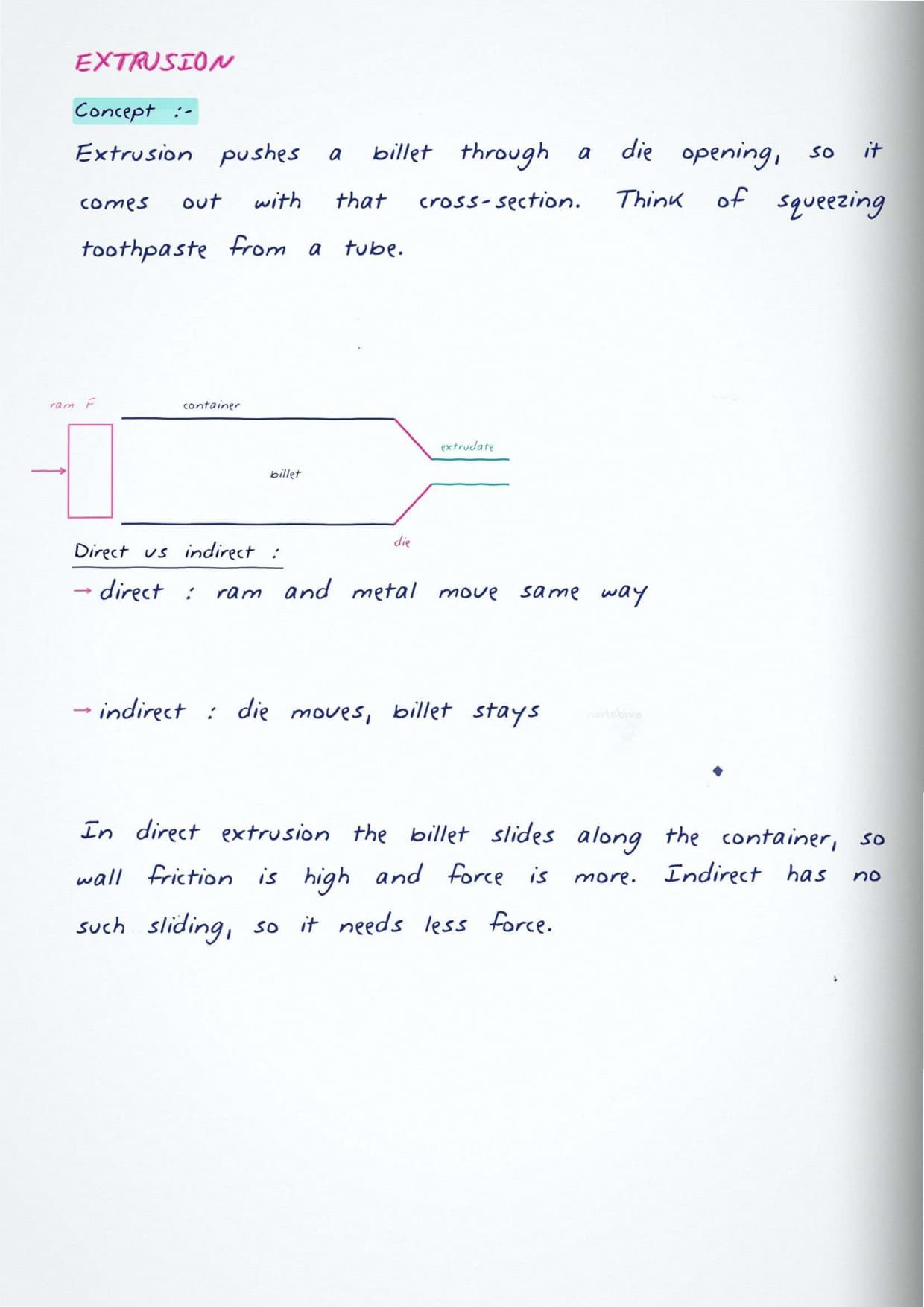
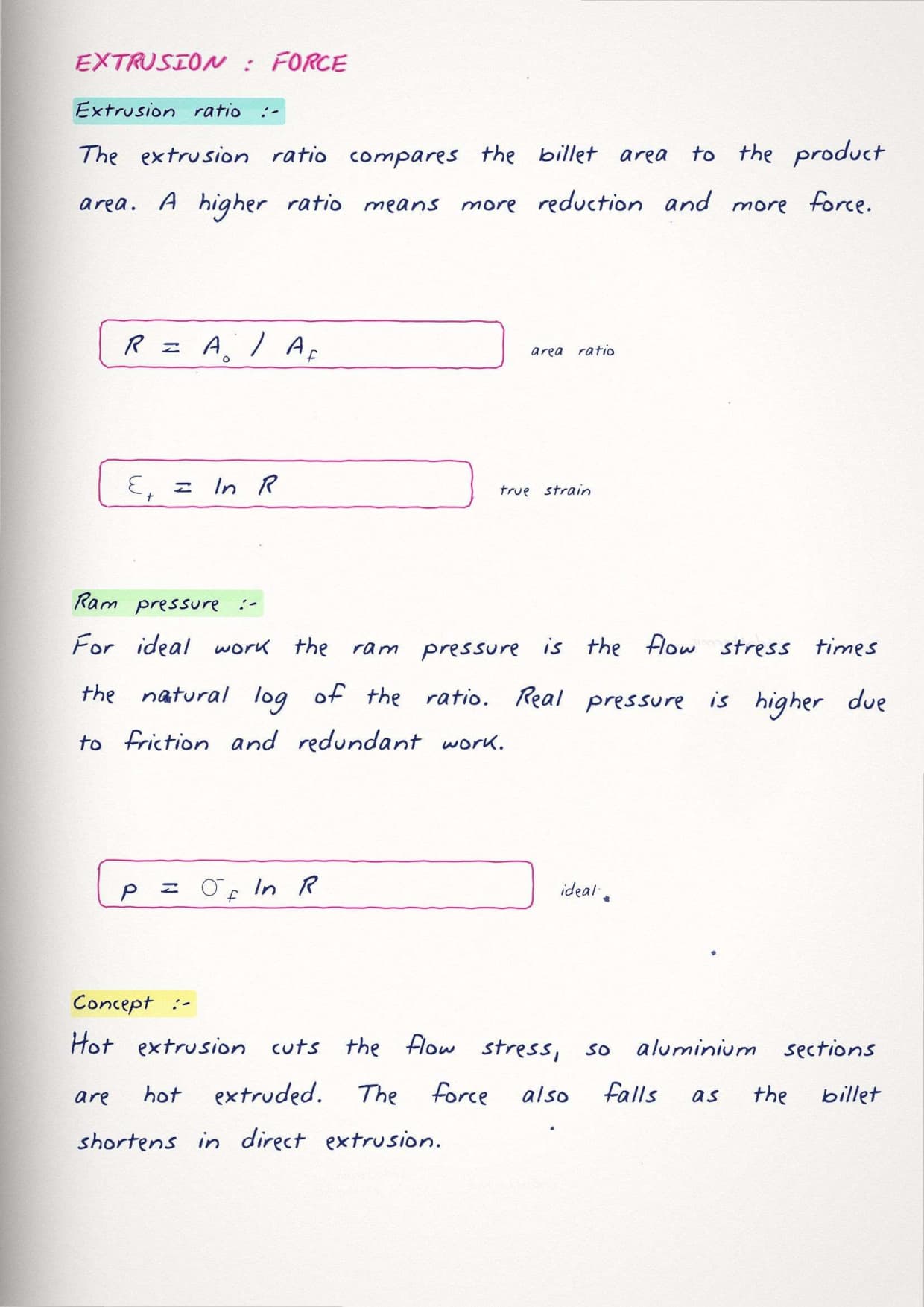
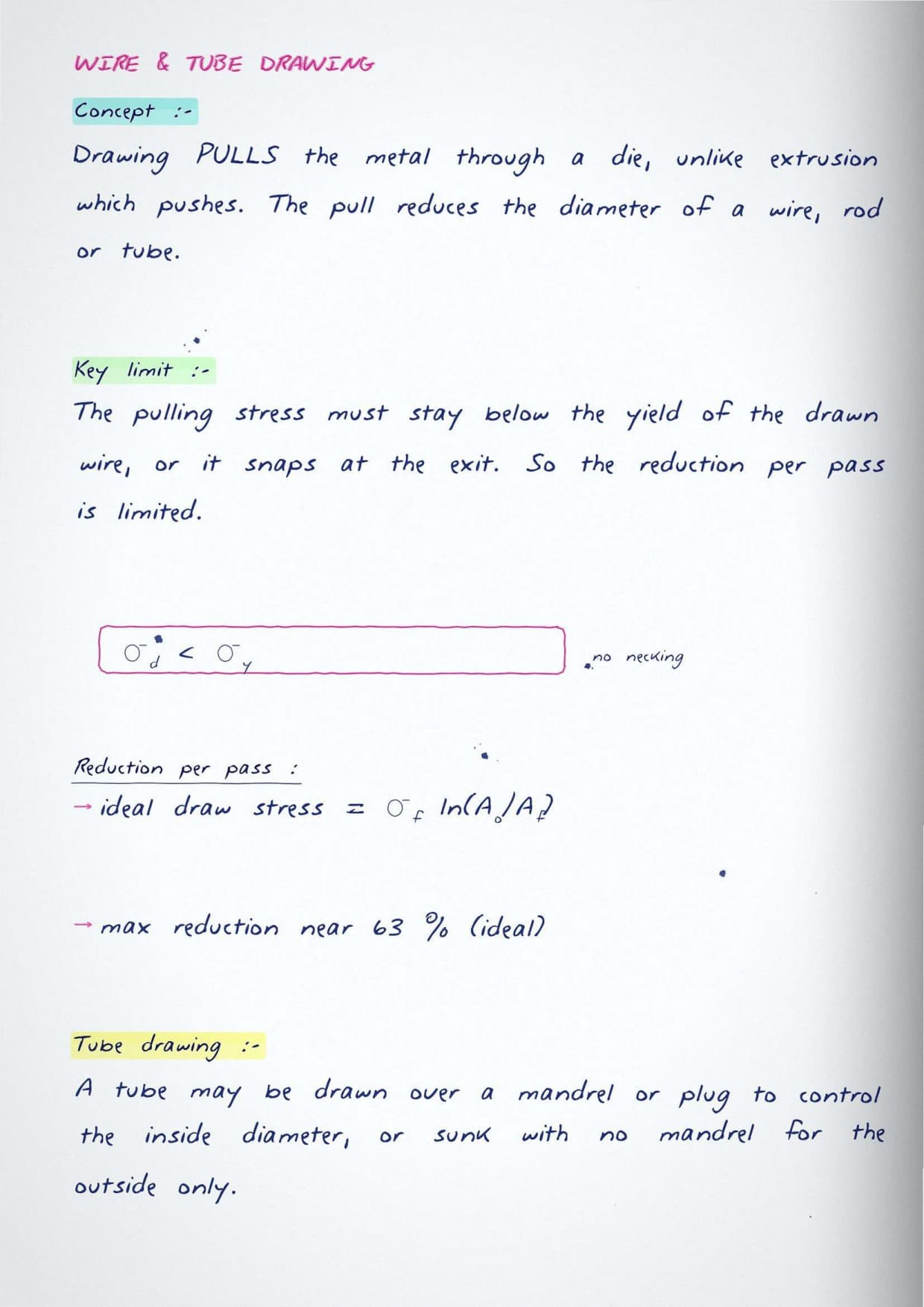
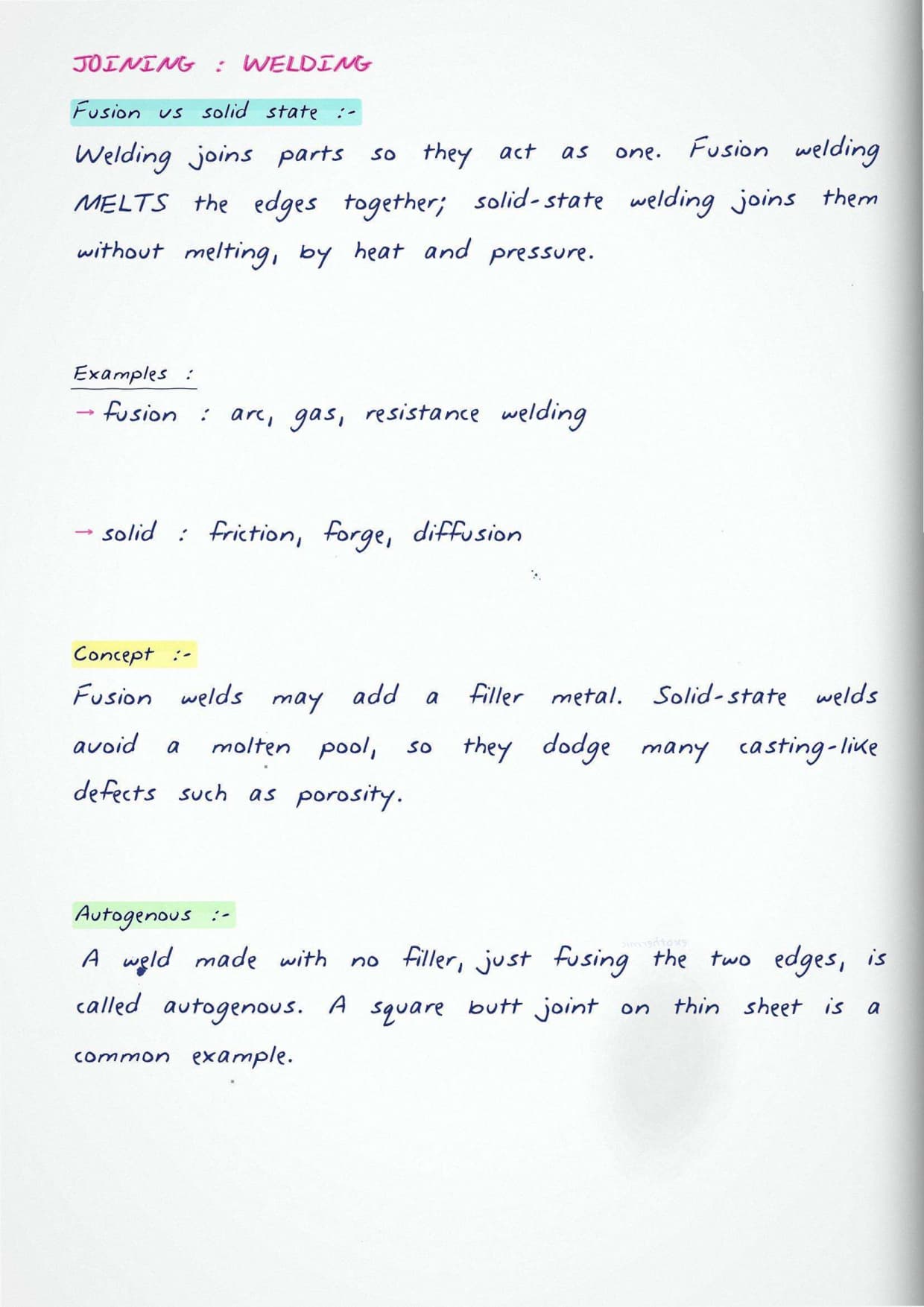
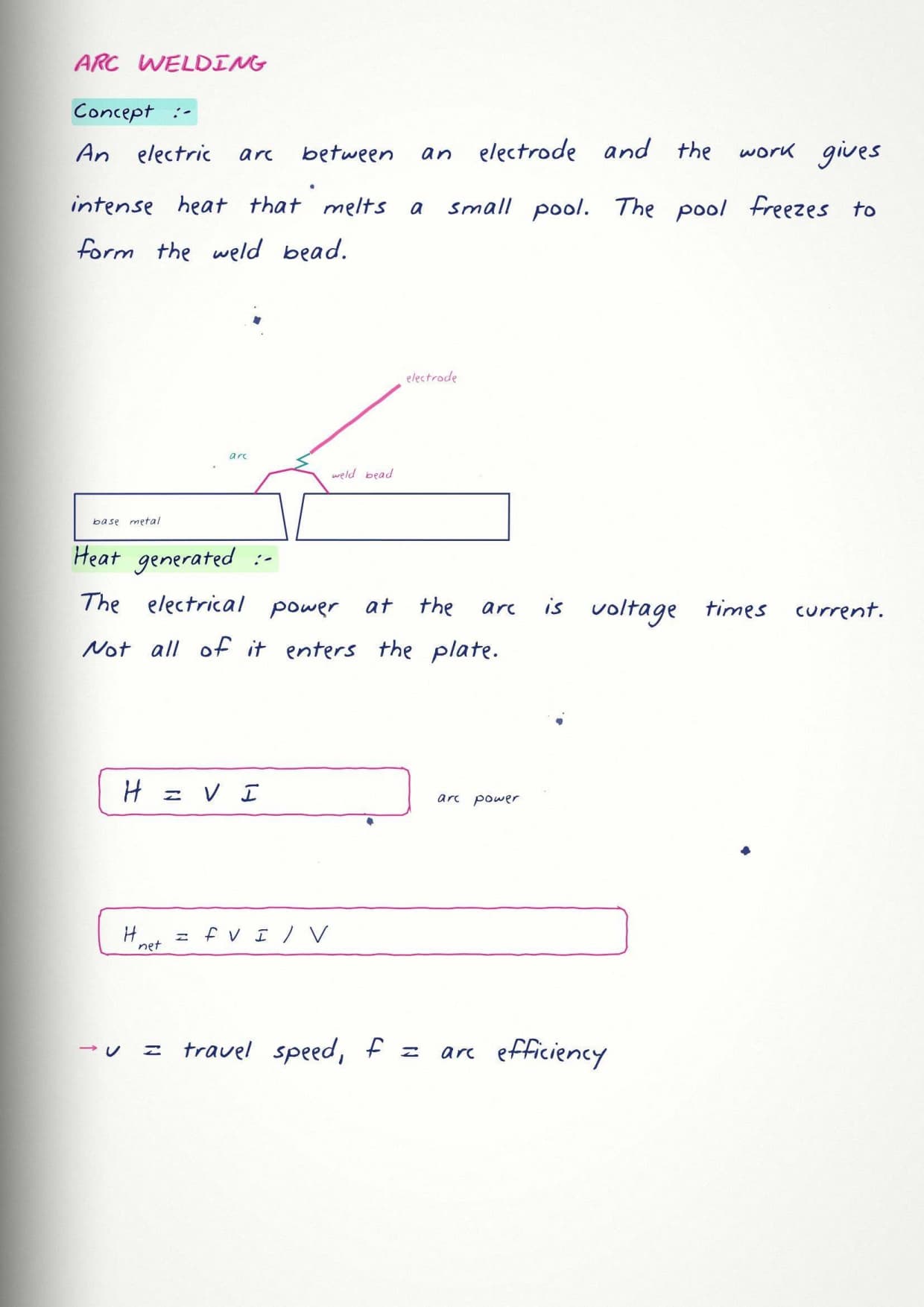
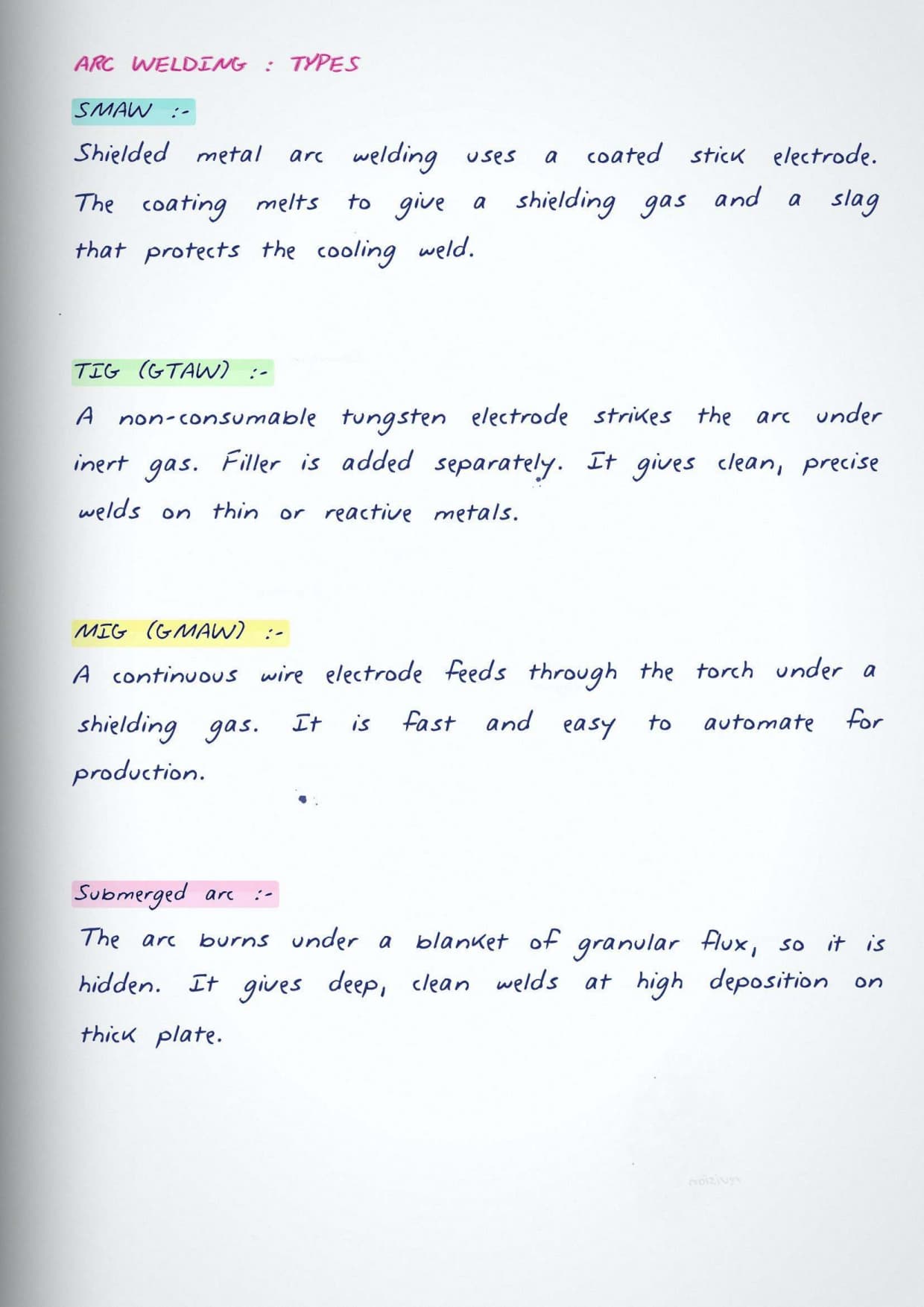
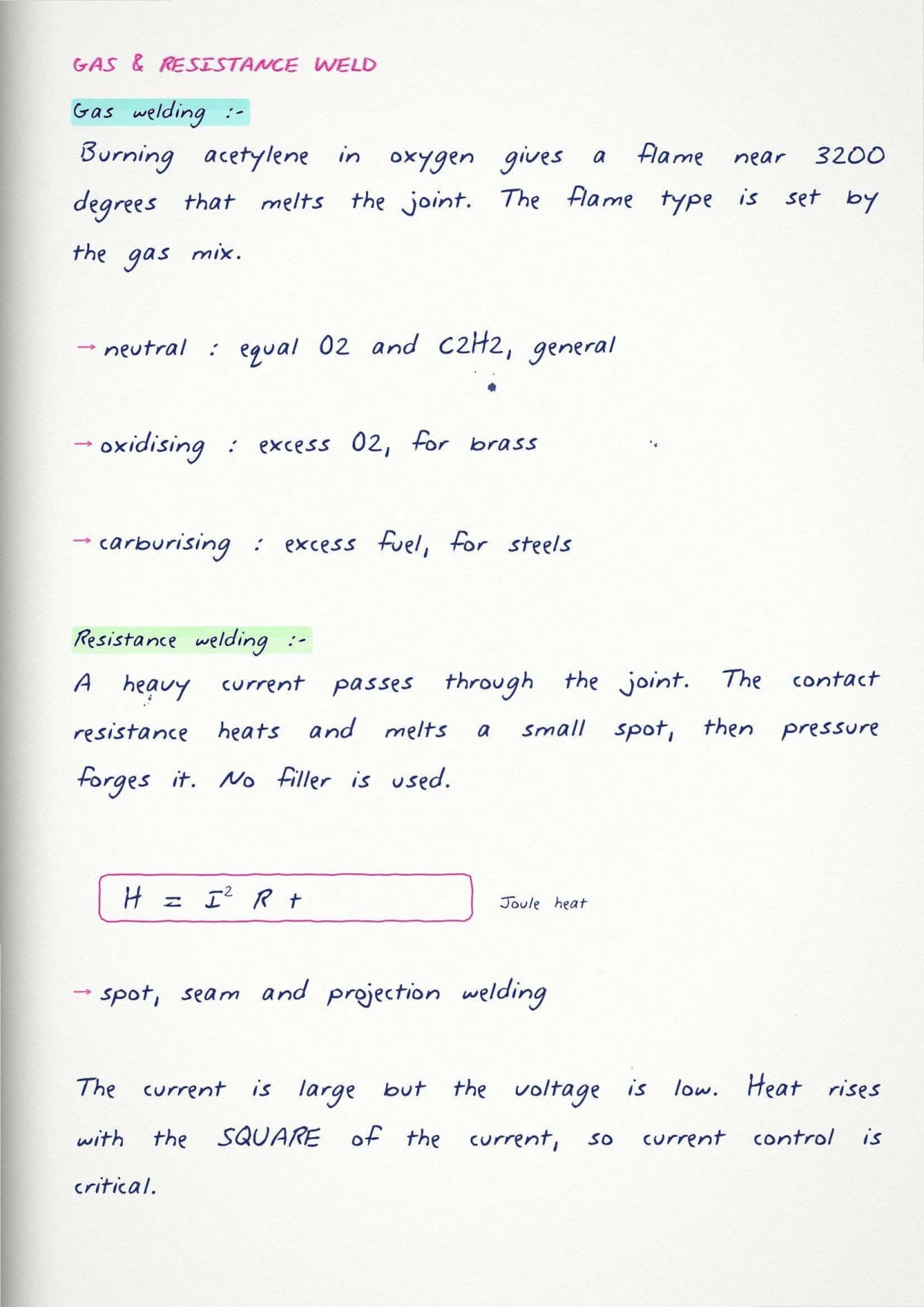
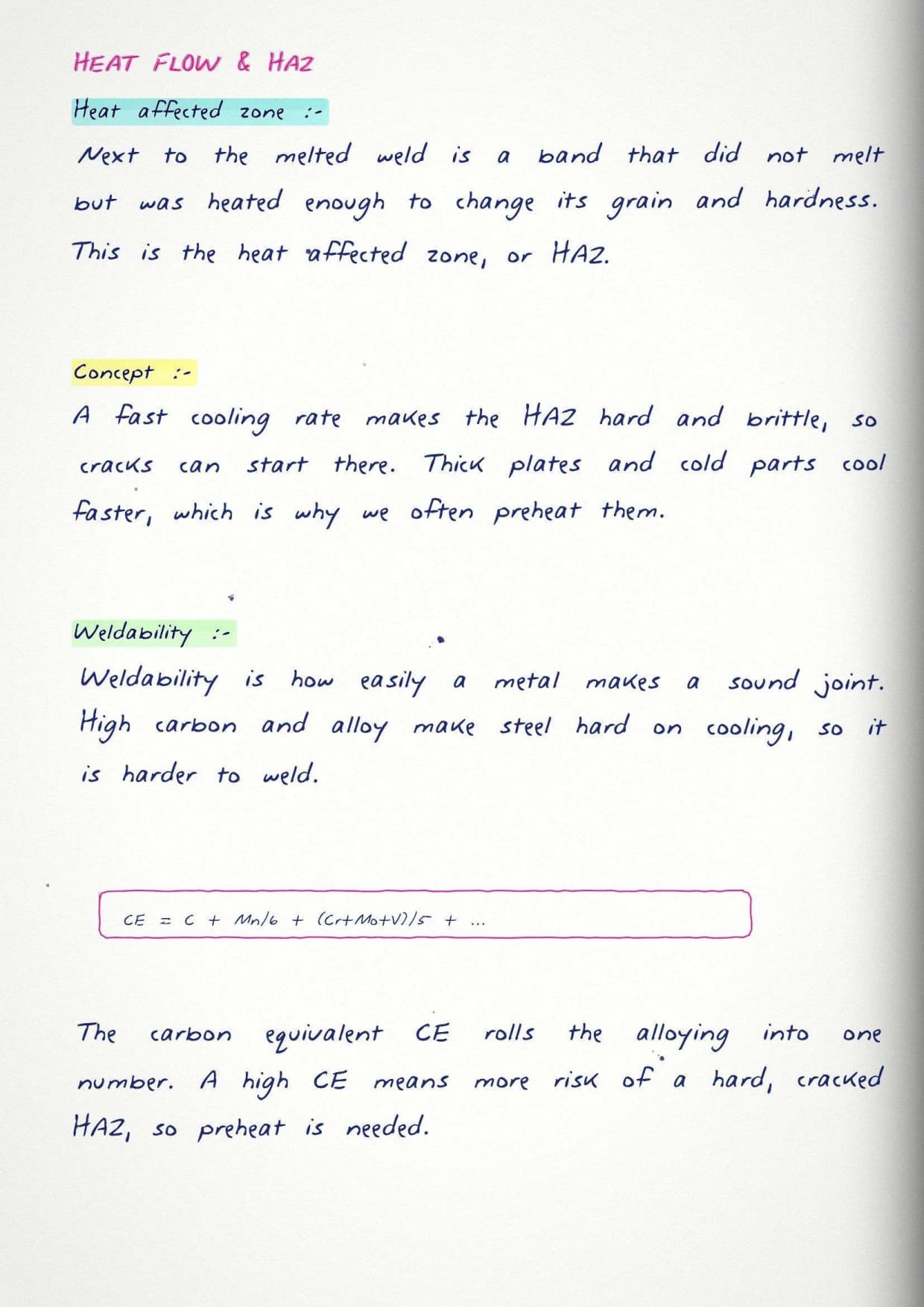
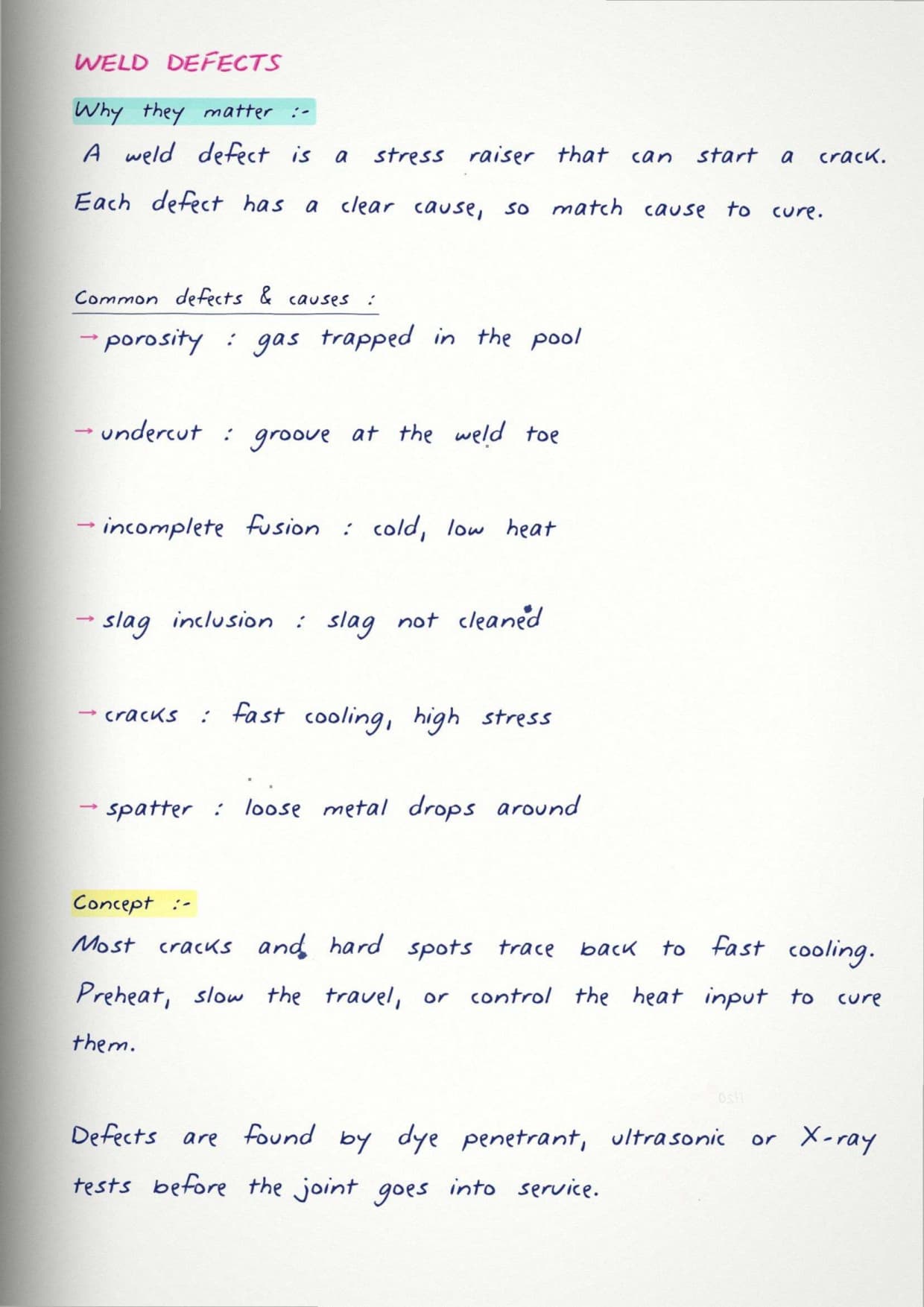
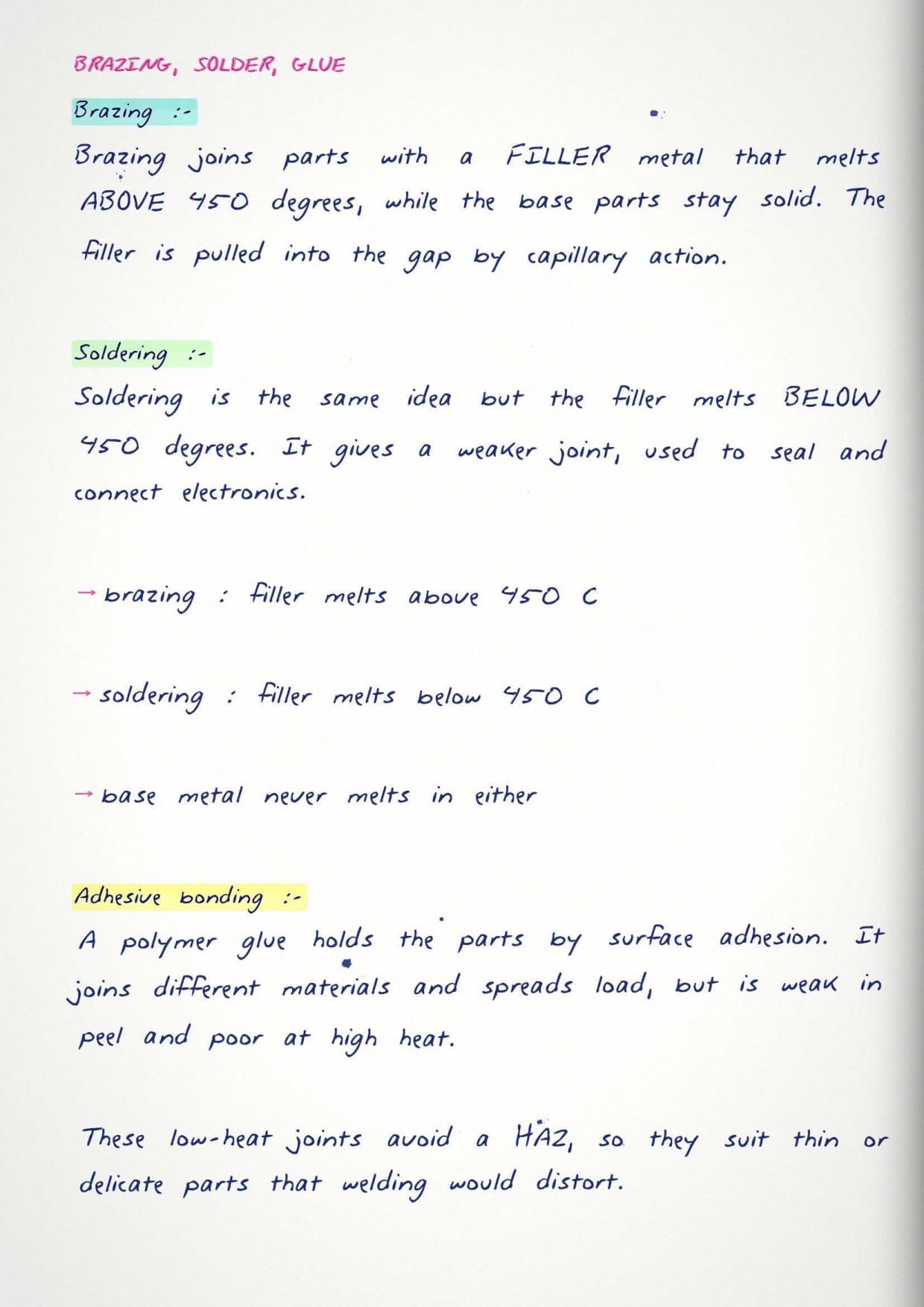
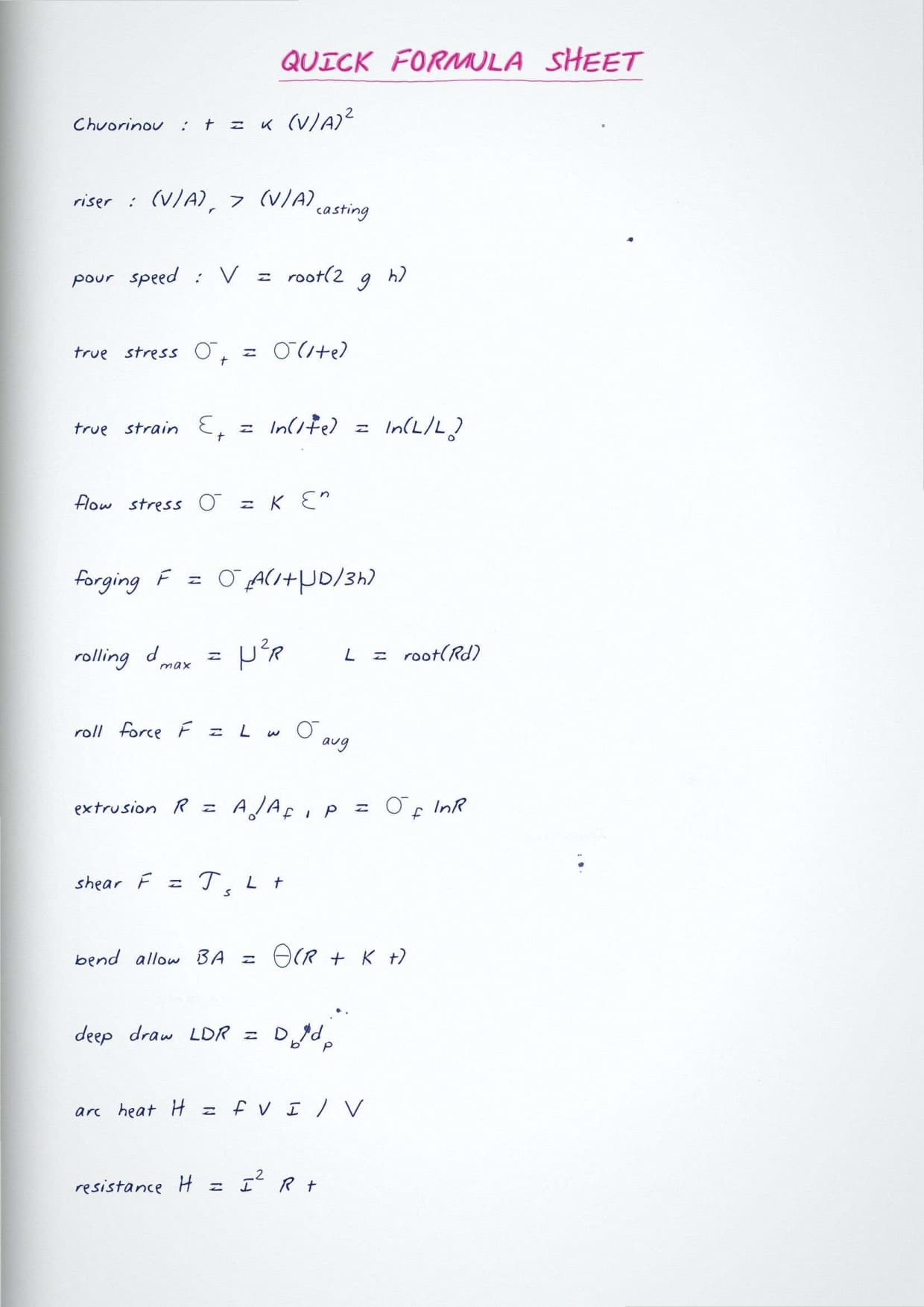
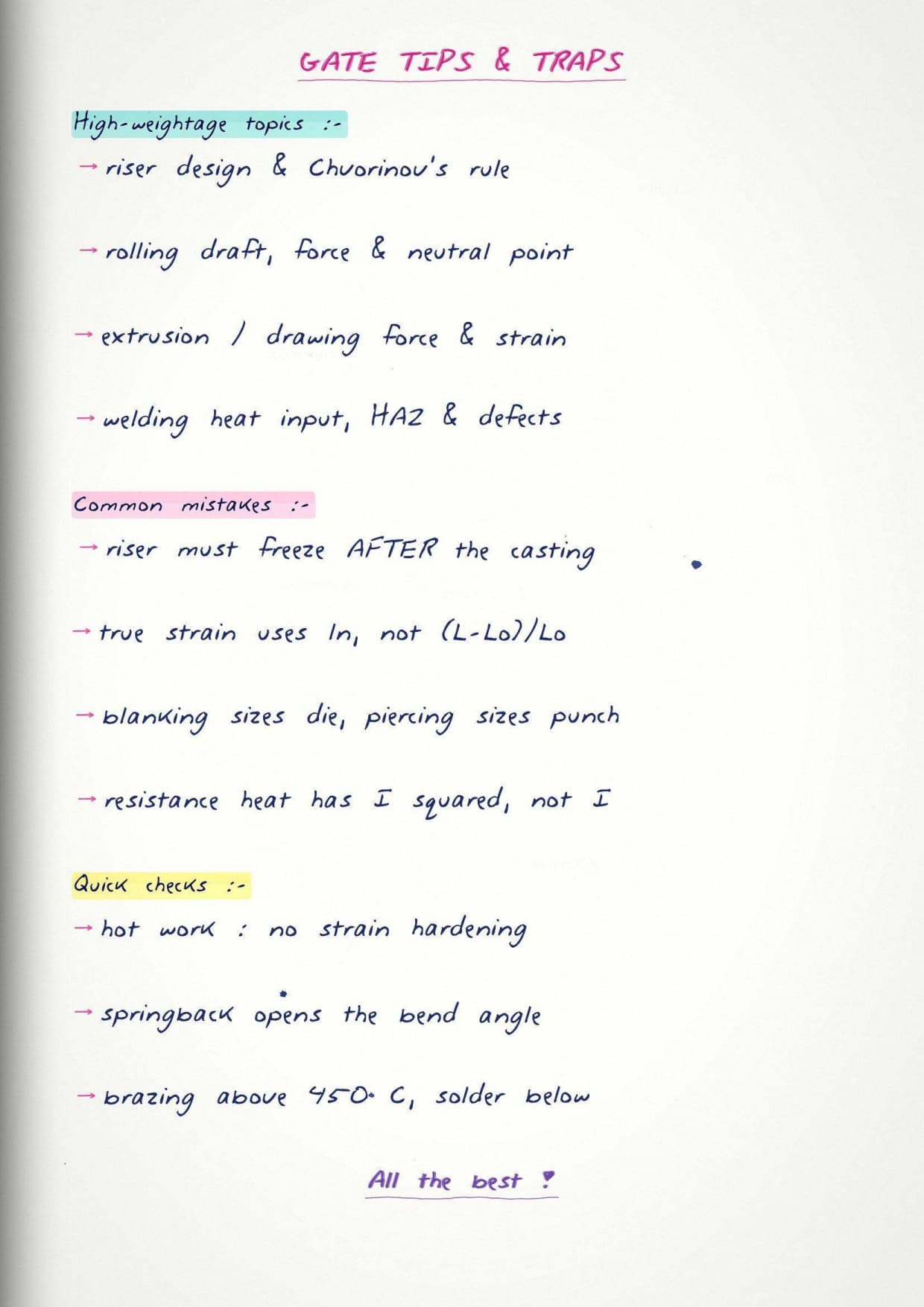
The notes go through every process in the syllabus, pairing each one with the formula you need and a hand-drawn diagram of the mould, rolling stand or weld joint involved. Casting and welding in particular tend to give direct one to two mark questions, so both are covered in detail.
- Full syllabus: casting, metal forming and joining.
- Solved steps for solidification, rolling force and welding heat.
- Labelled diagrams of moulds, rolls and weld joints.
What These GATE Casting, Forming and Joining Notes Cover
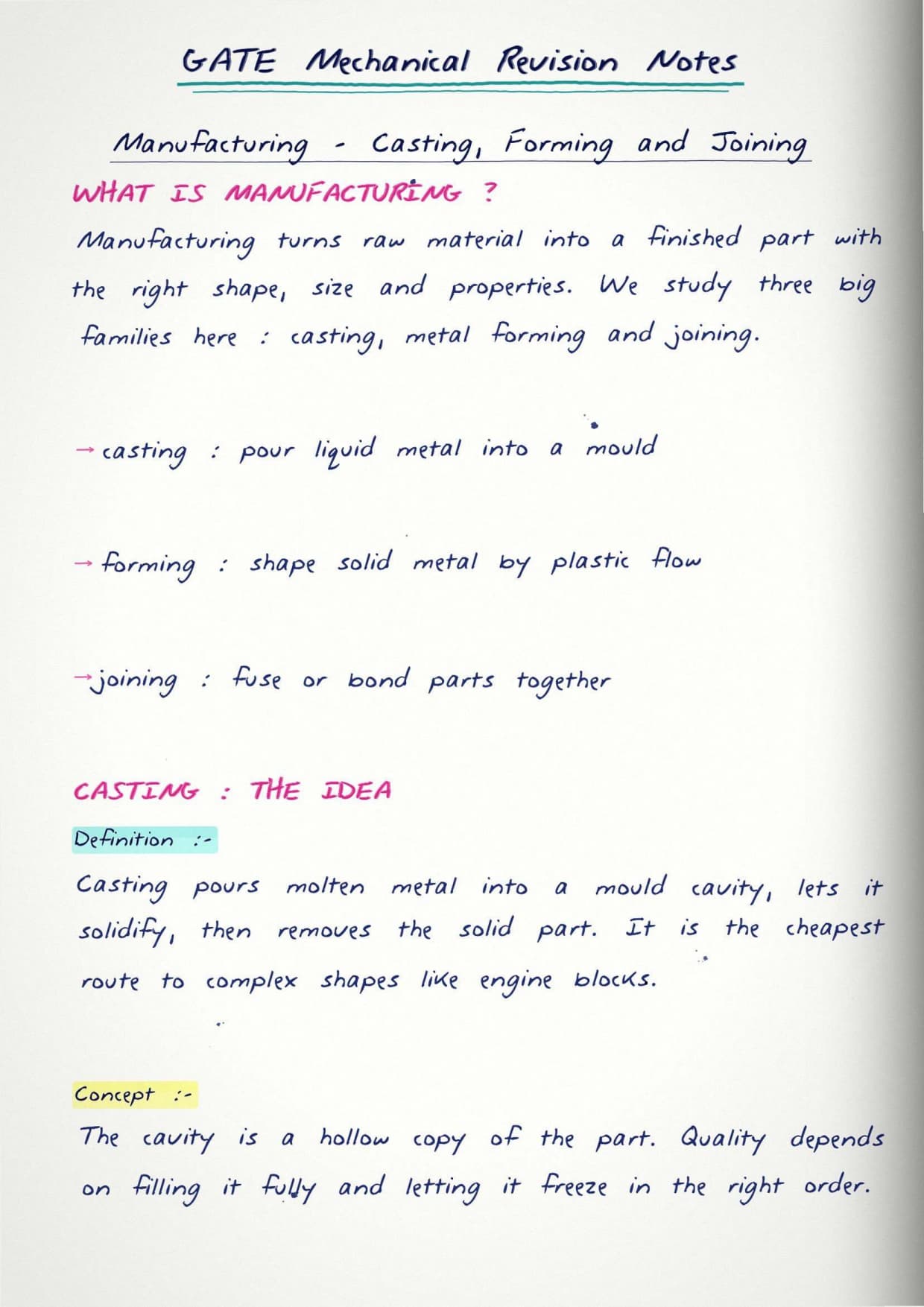
Each process is explained in plain words before the formula, so the theory and the numerical side stay connected. The notes give balanced coverage of casting, forming and joining rather than leaning on one area, and they include every important defect, formula and special process from the GATE syllabus.
- Short definition of every process and term.
- Key formulas such as Chvorinov's rule, with units.
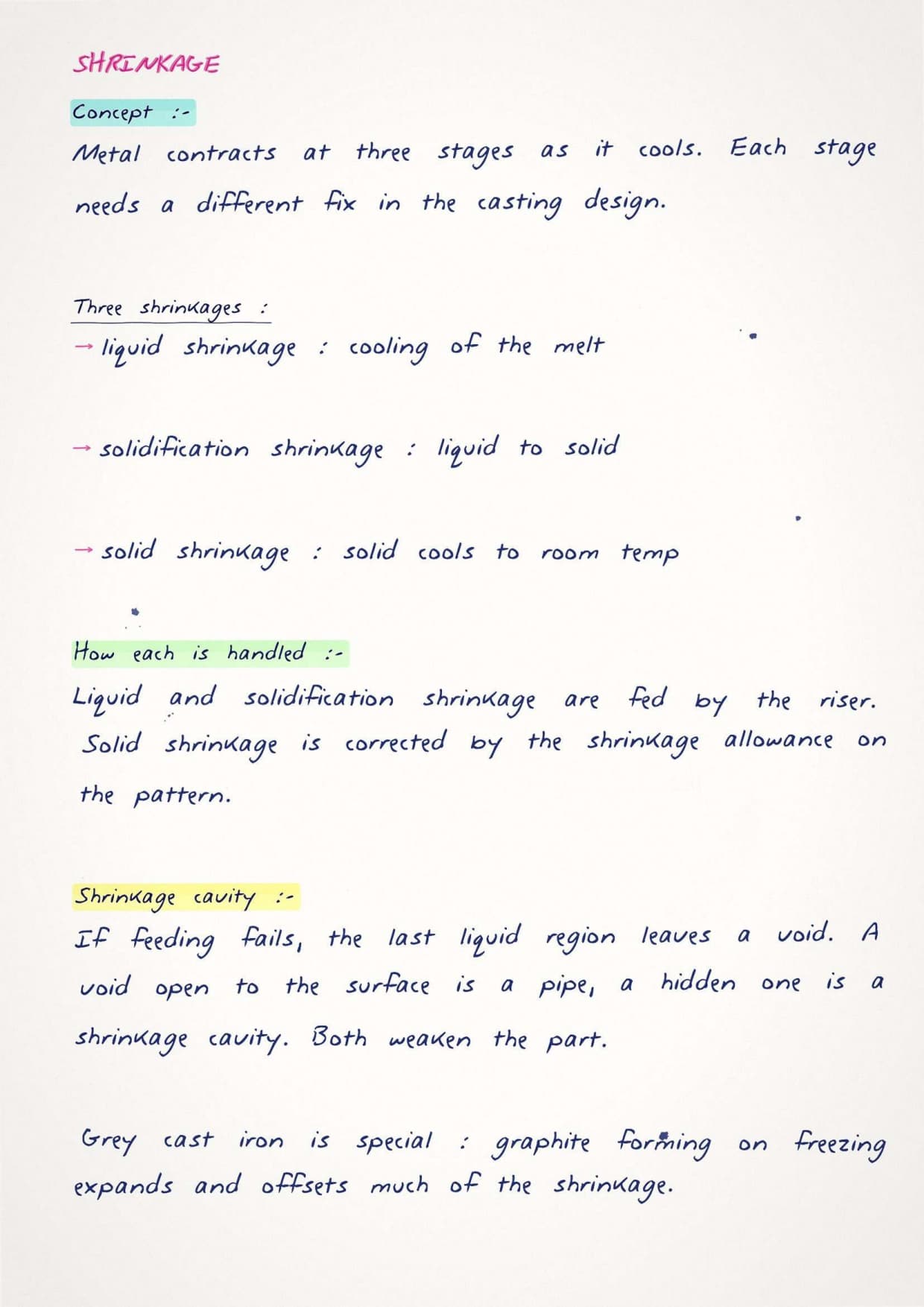
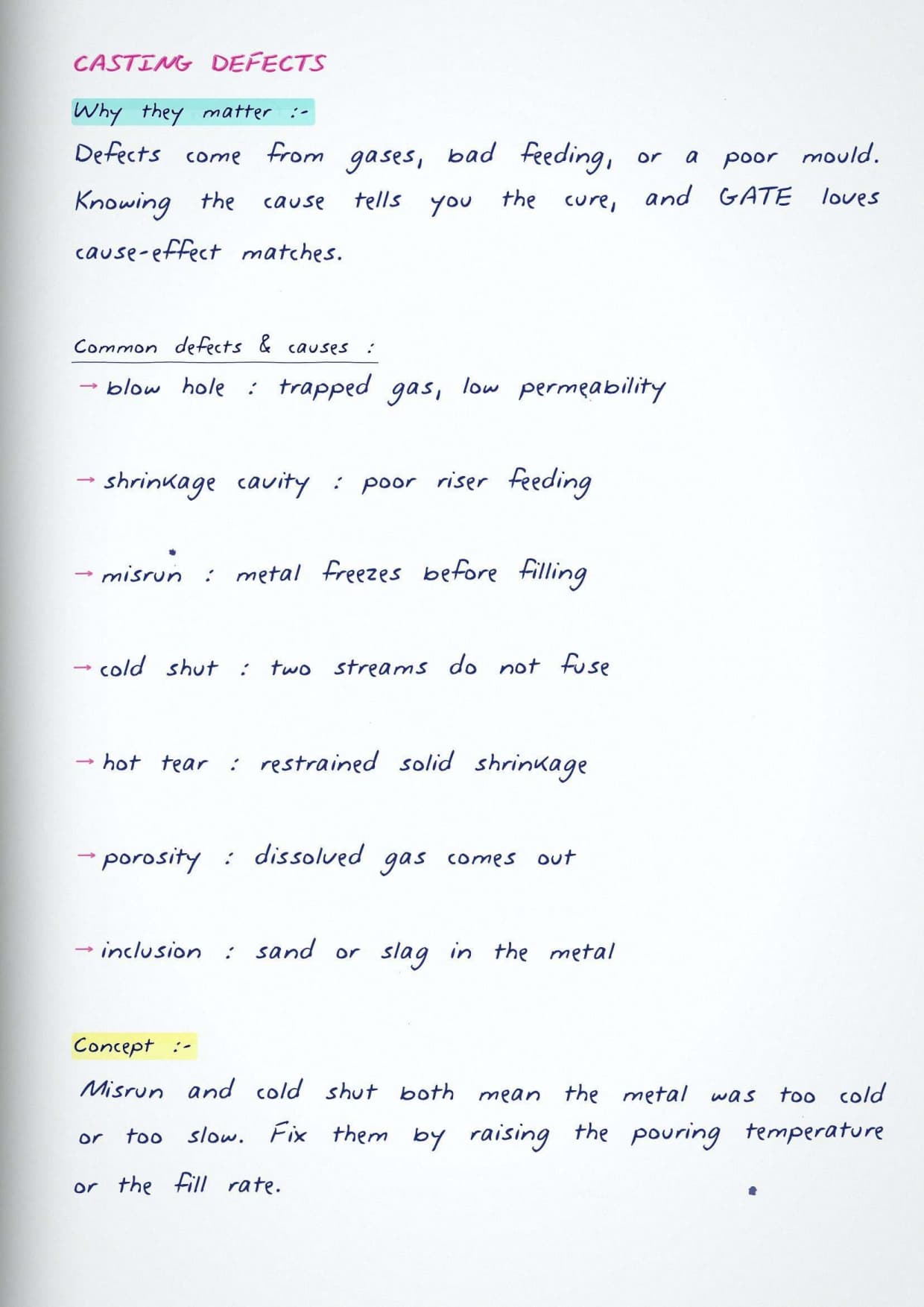
- Common casting defects and their causes.
- Labelled diagrams of moulds, rolls and joints.
GATE Casting, Forming and Joining Quick Revision
Source: Unacademy GATE - ME, PI, XE on YouTube
Topics Covered in GATE Casting, Forming and Joining
Casting, Forming and Joining spans three process families, and GATE draws questions from all of them. The notes follow the official syllabus so nothing important is left out, and each family is built up from its basics to the parts that actually carry marks. The full list of topics is below.
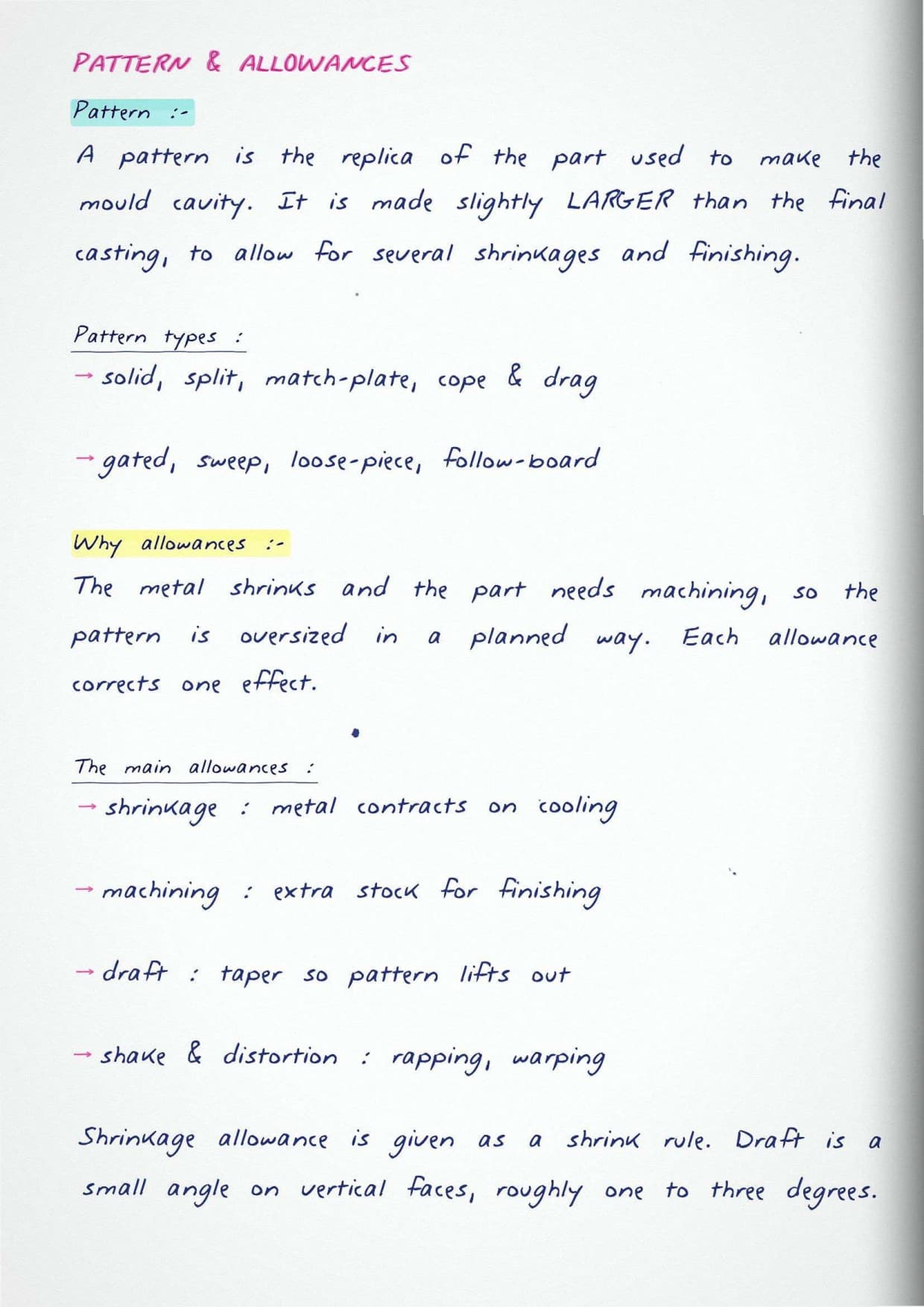
- Casting: pattern types and pattern allowances.
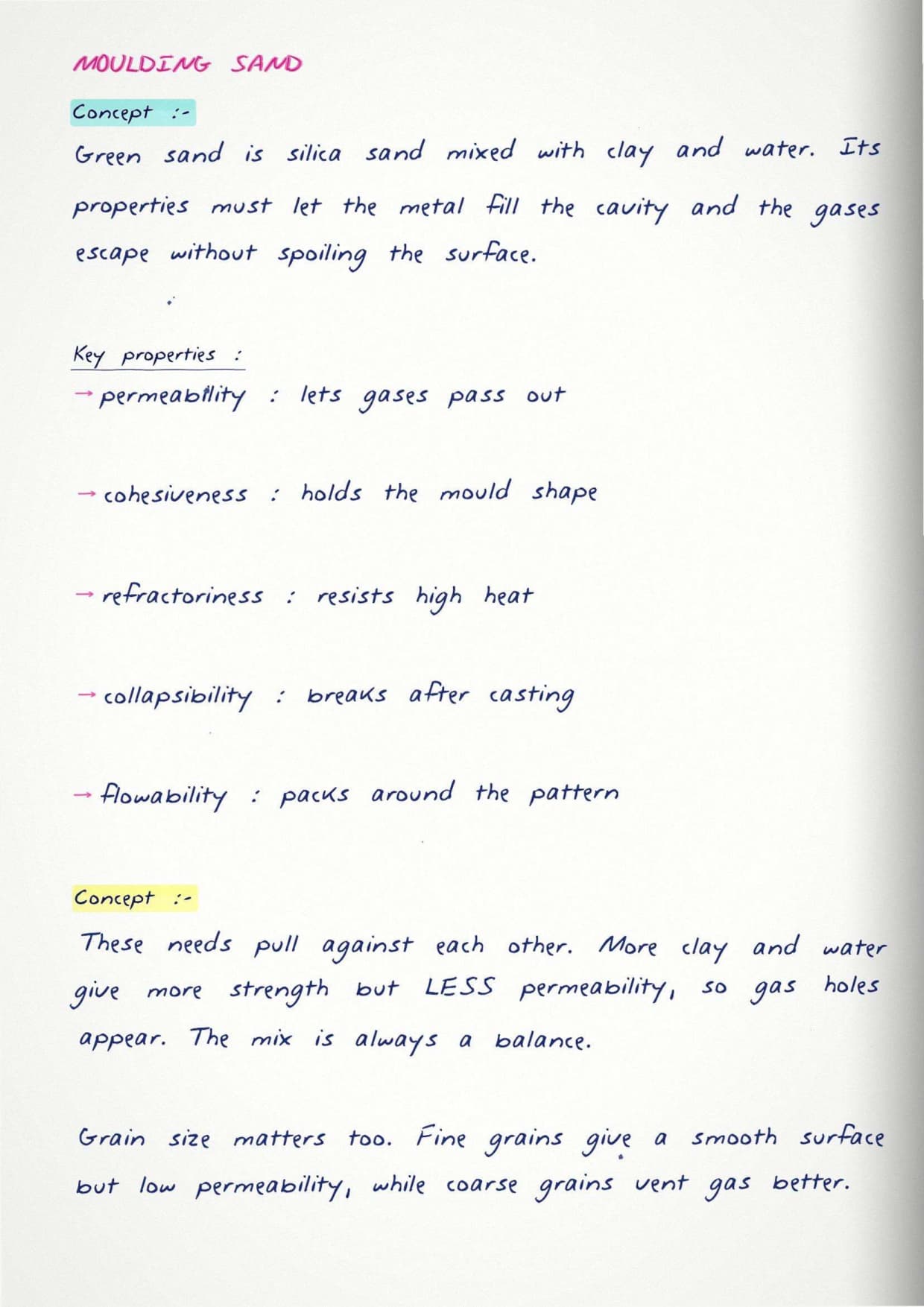
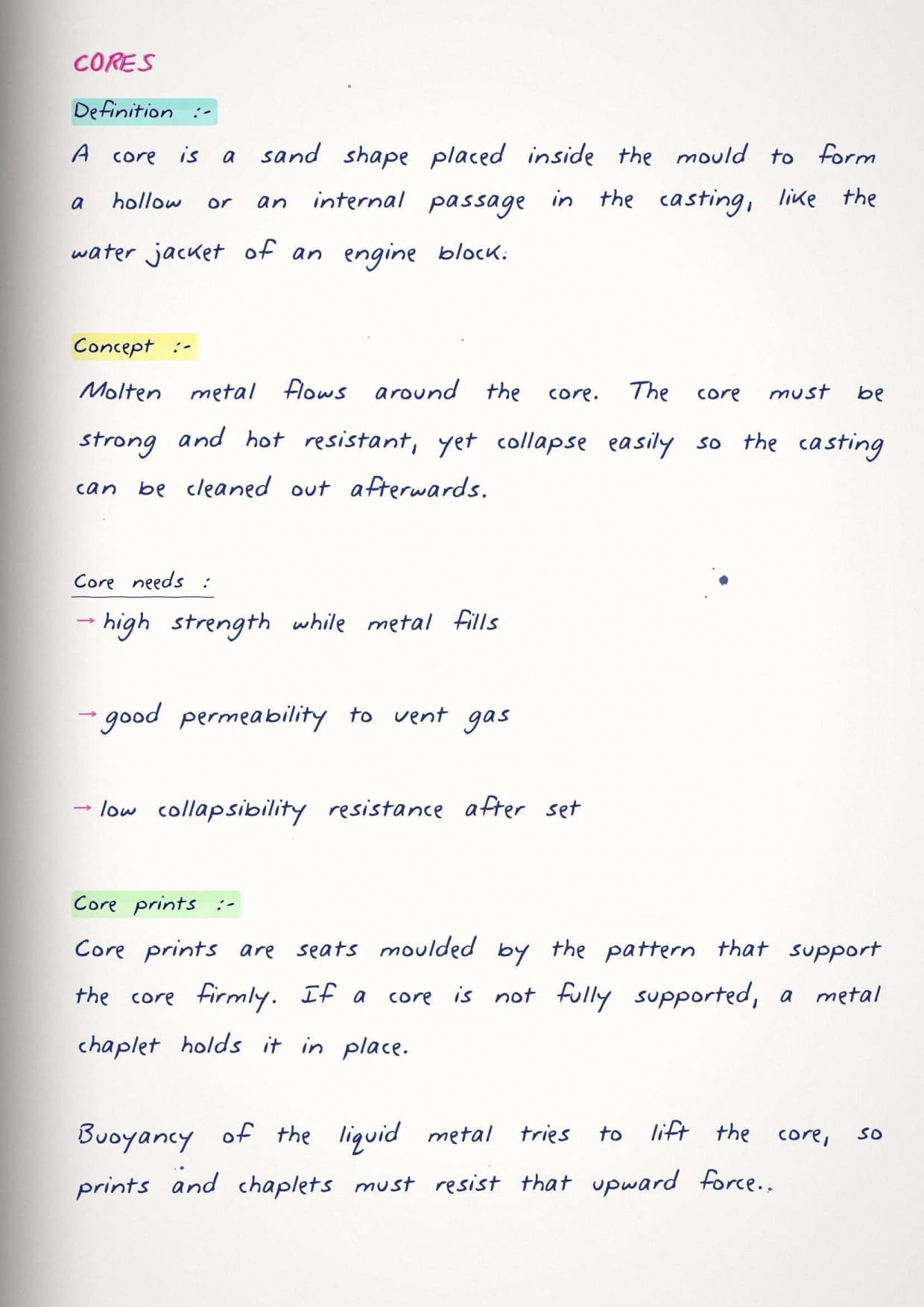
- Moulding sand properties, cores and core prints.
- Gating system, riser design and directional solidification.
- Solidification time and Chvorinov's rule.
- Common casting defects and their causes.
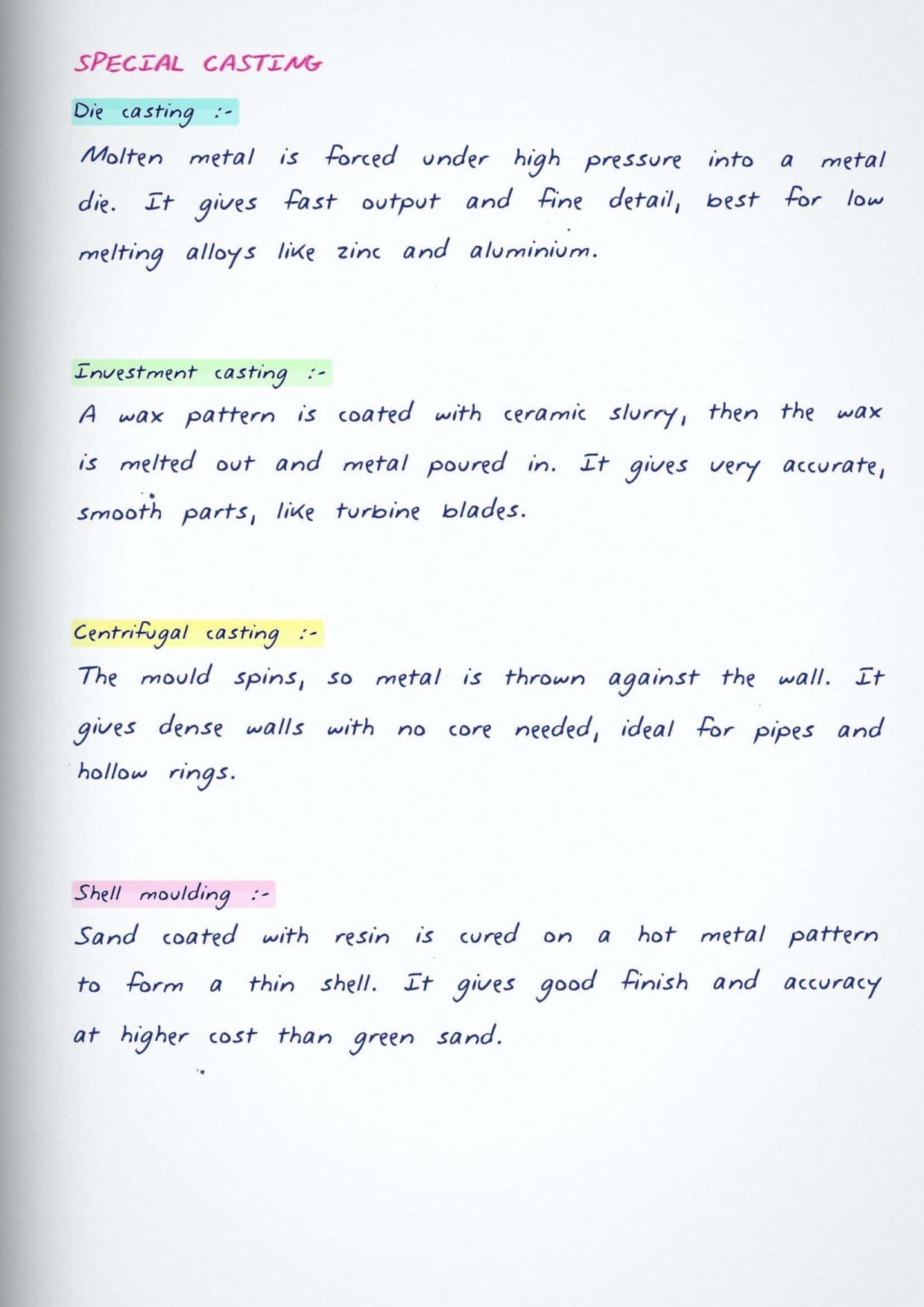
- Special casting: die, investment and centrifugal.
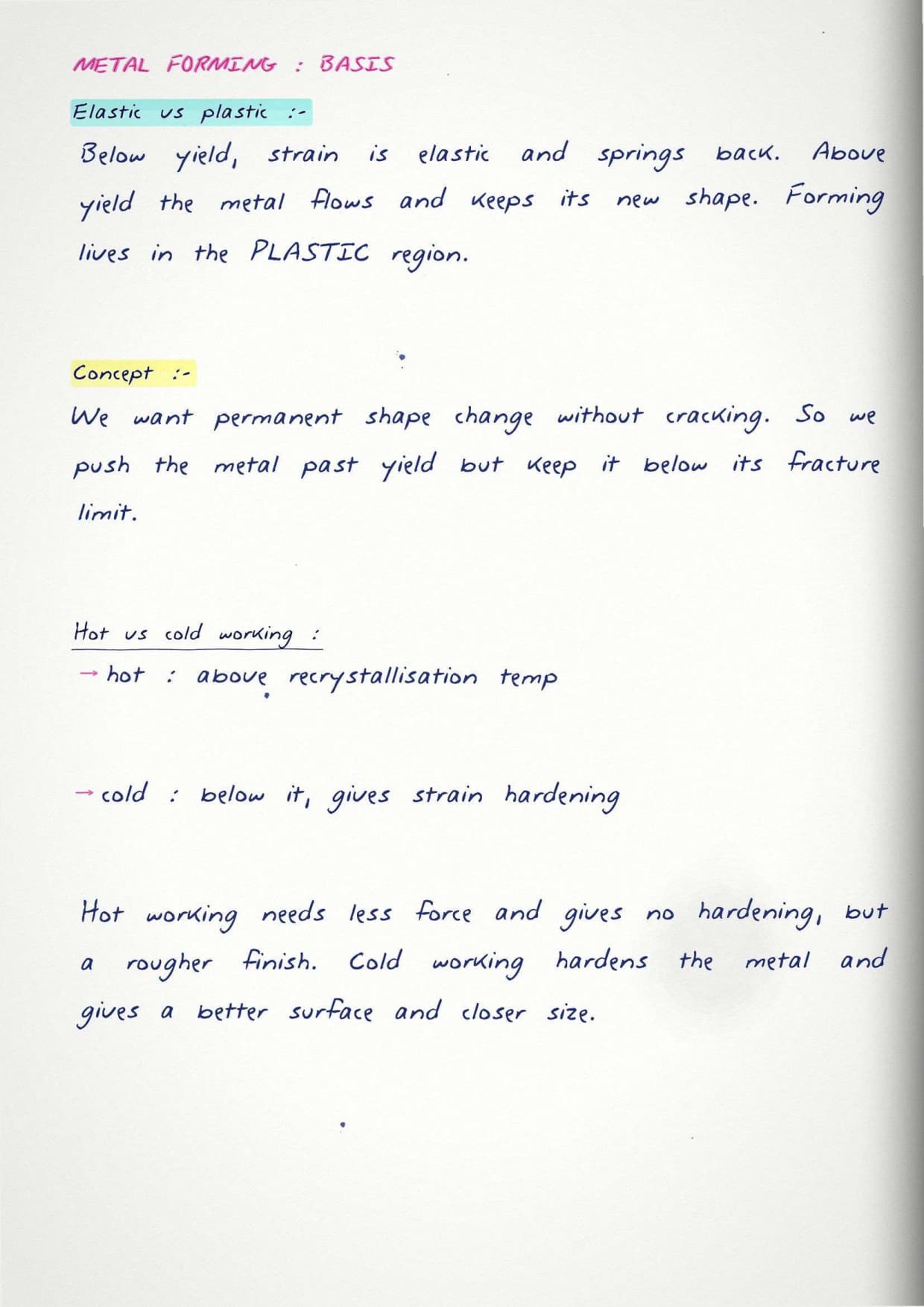
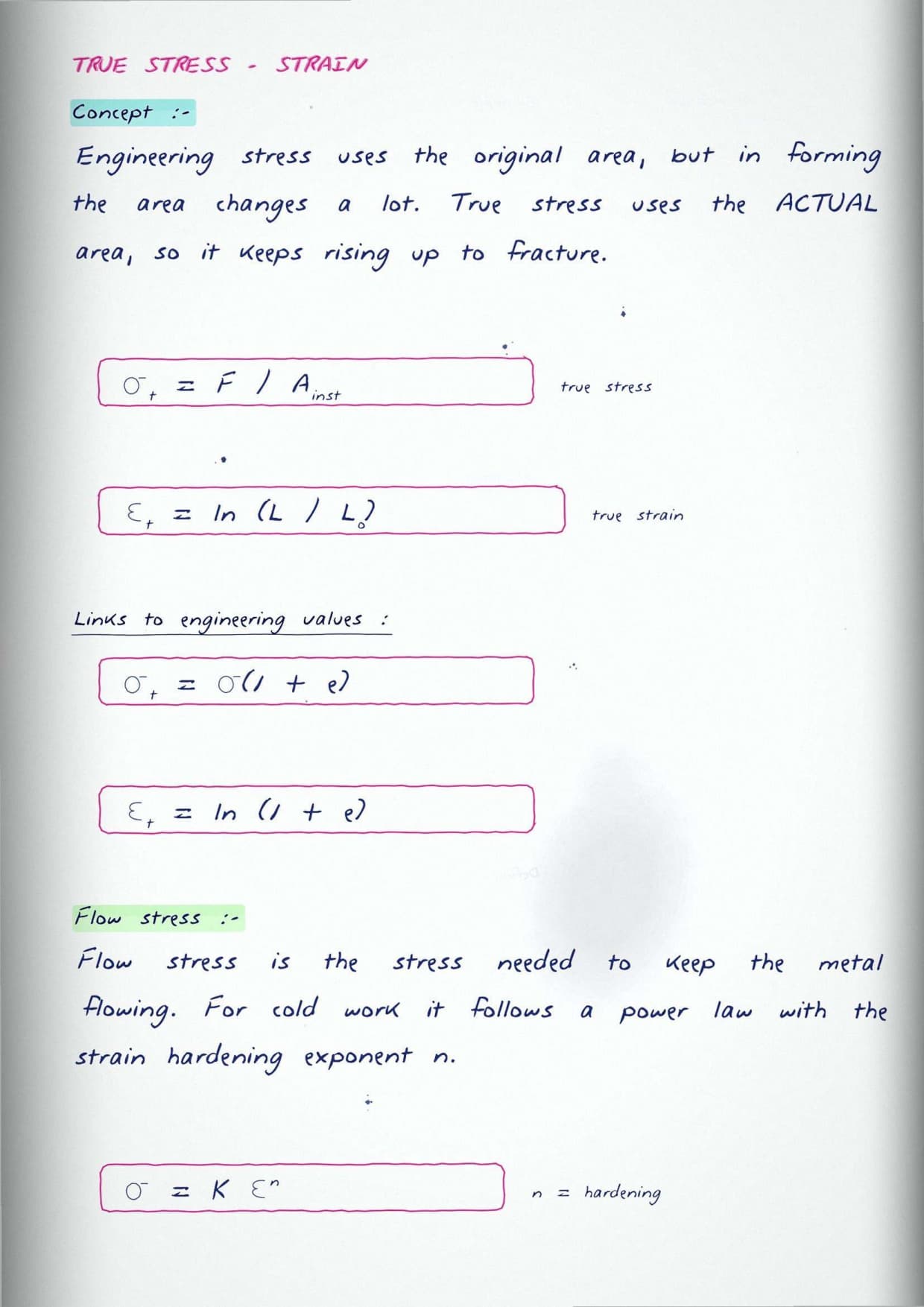
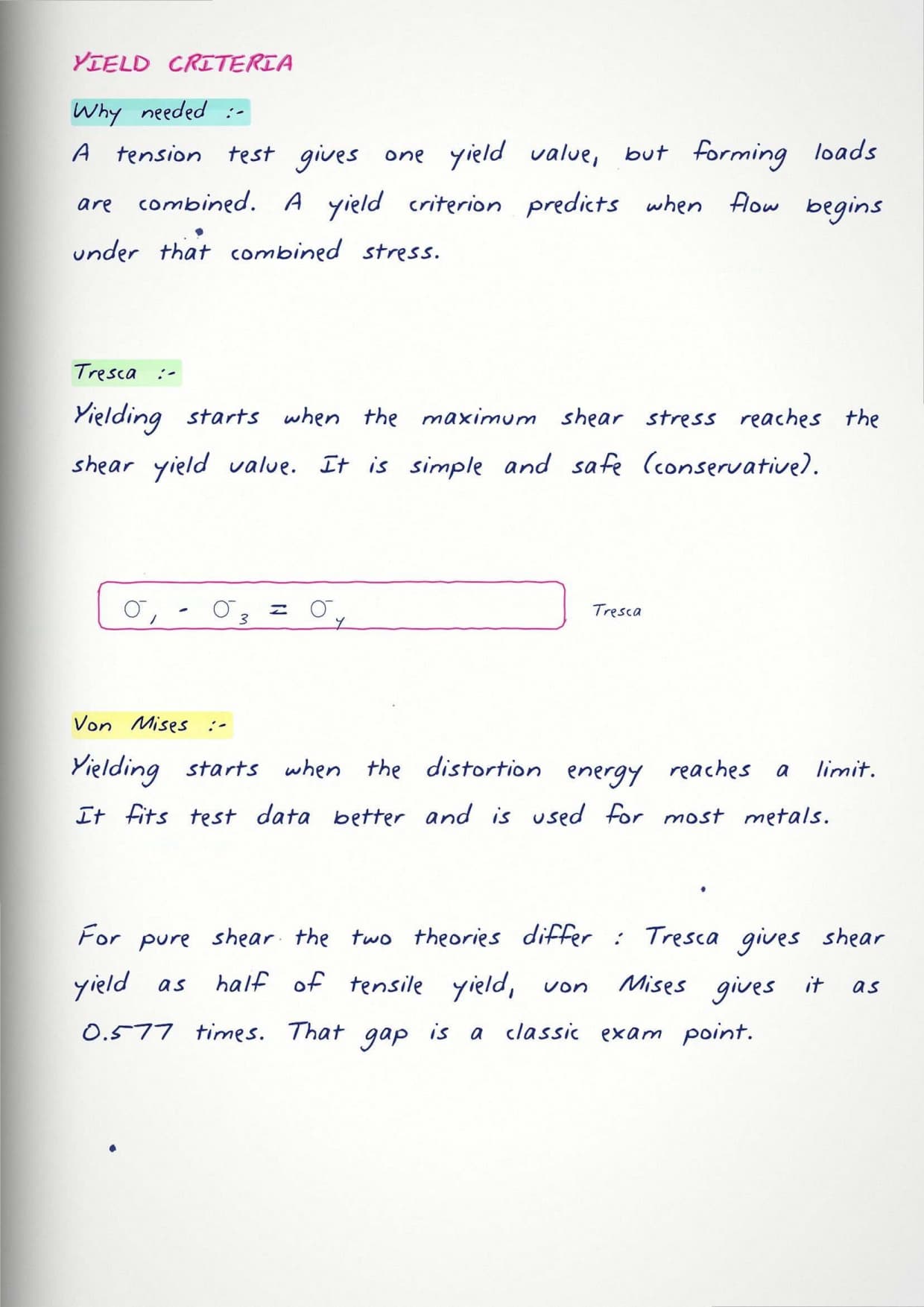
- Metal forming: true stress, true strain and yield.
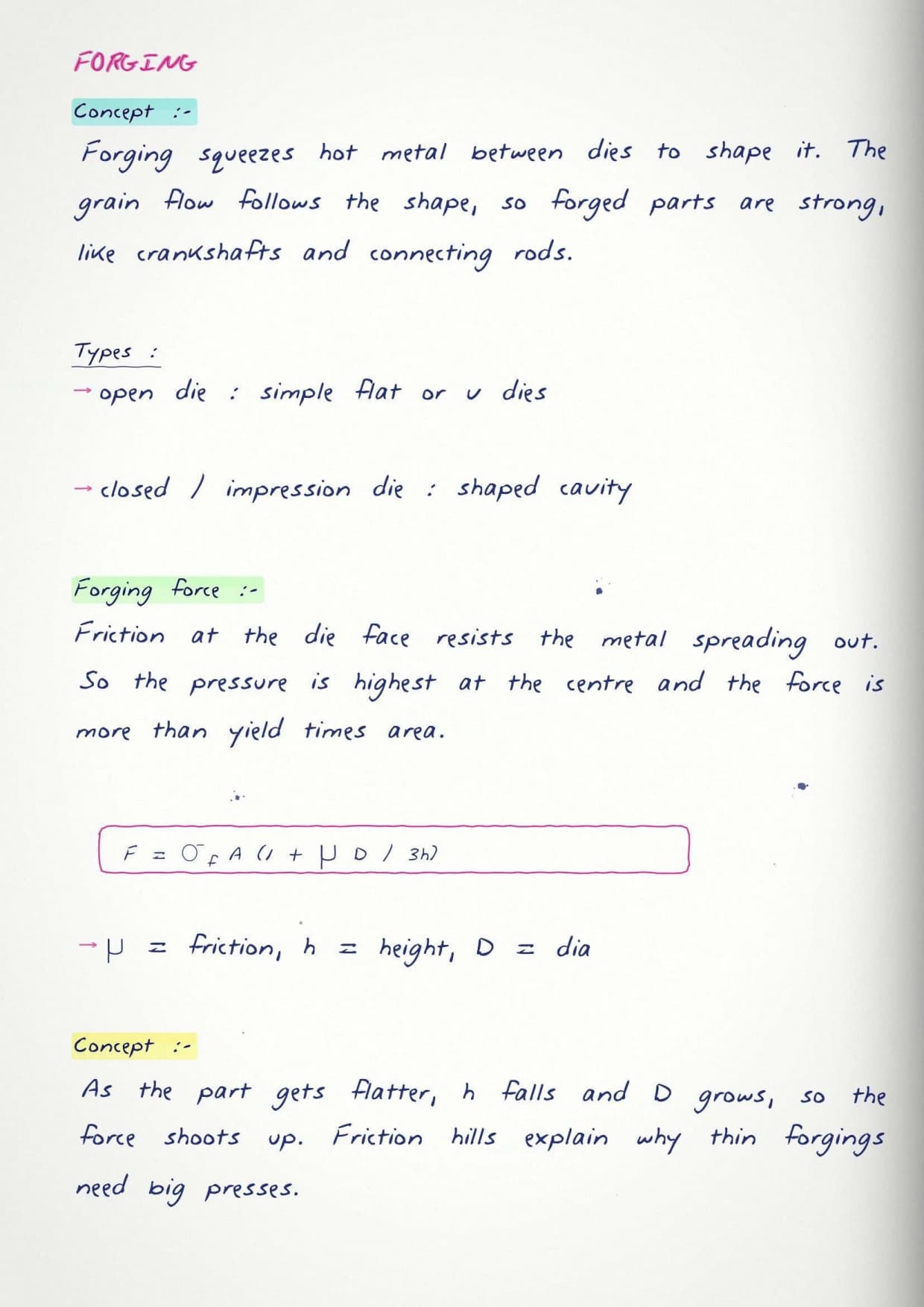
- Forging, and how forging force builds up.
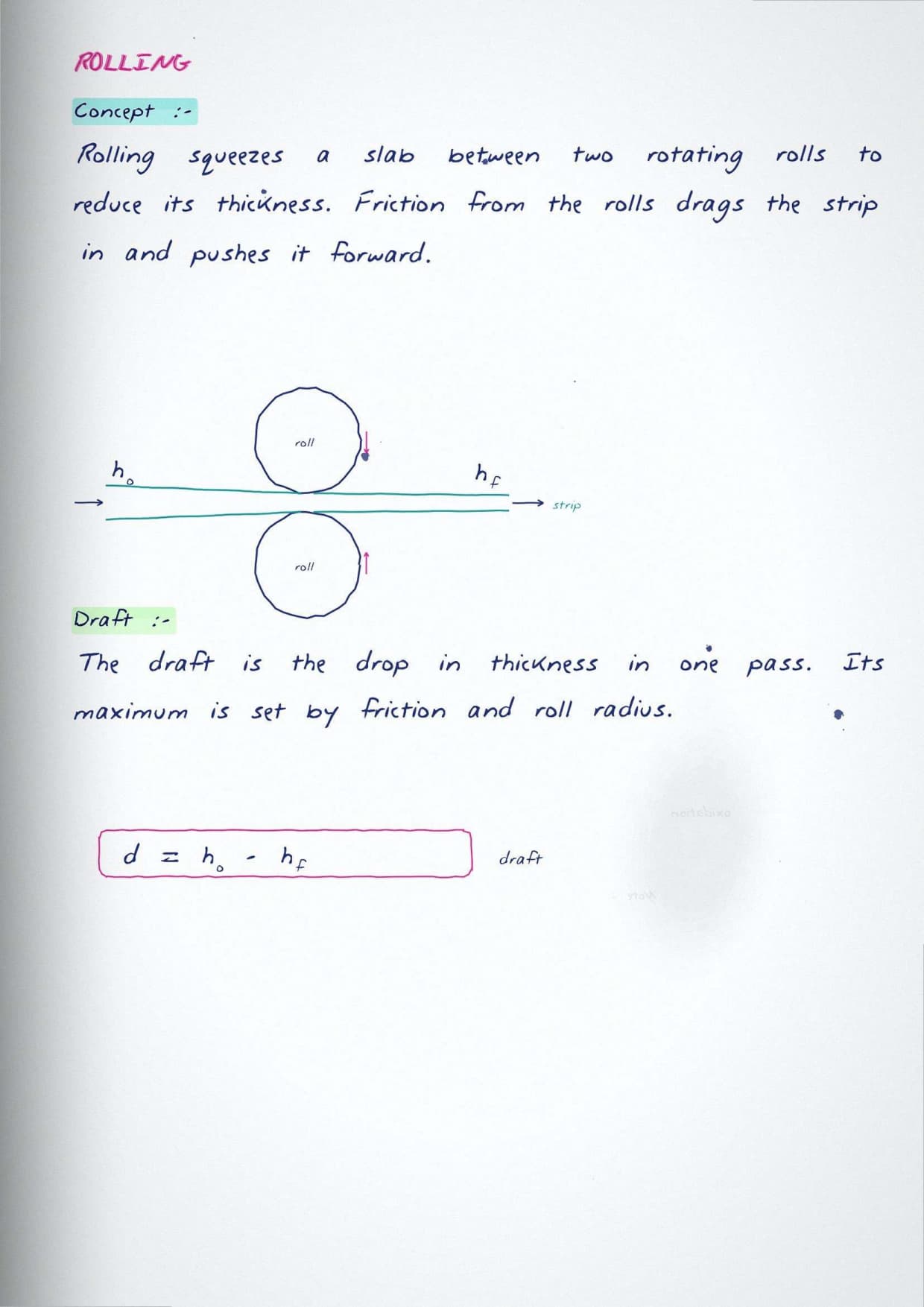
- Rolling: draft, roll force and the neutral point.
- Extrusion and wire and tube drawing.
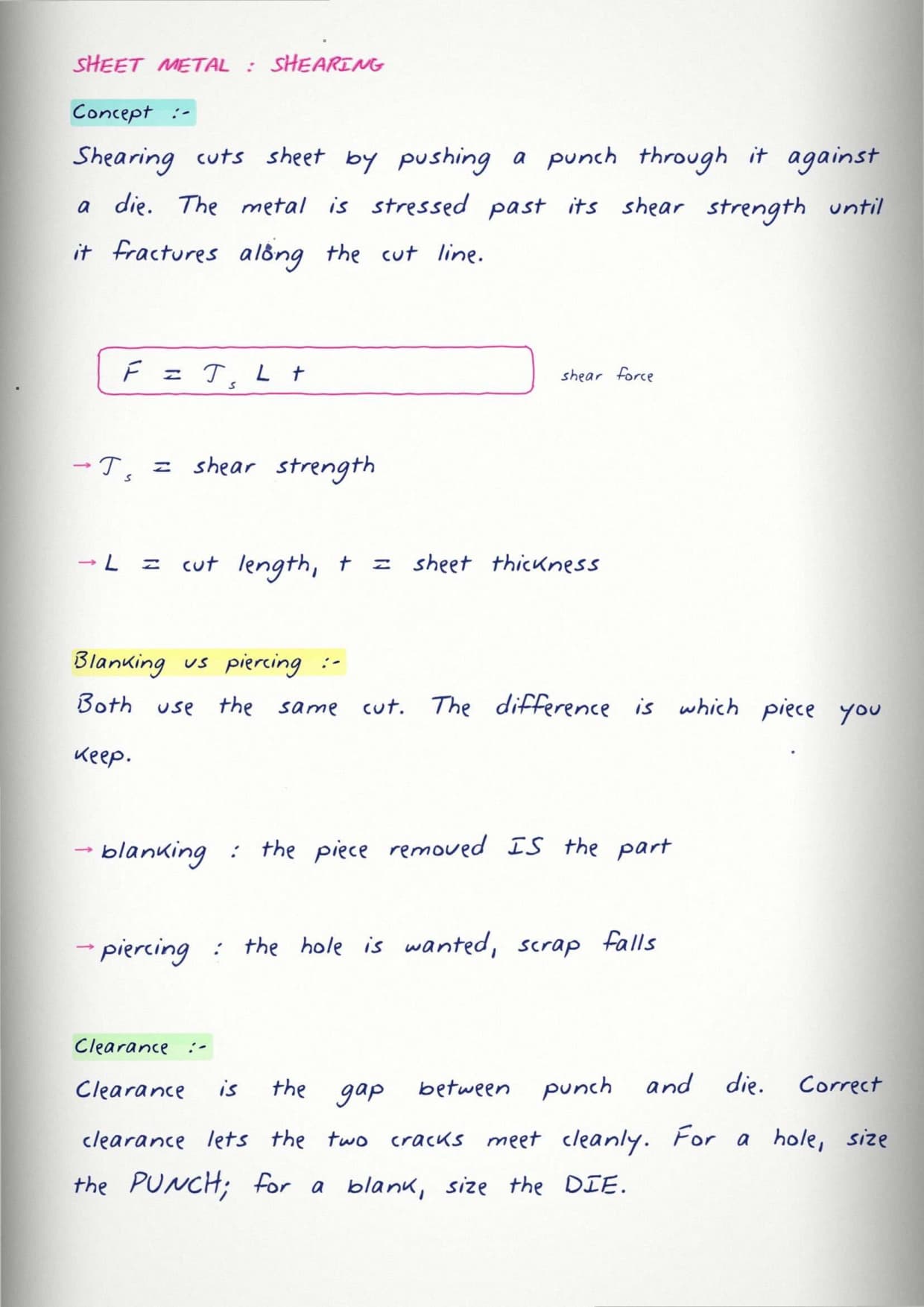
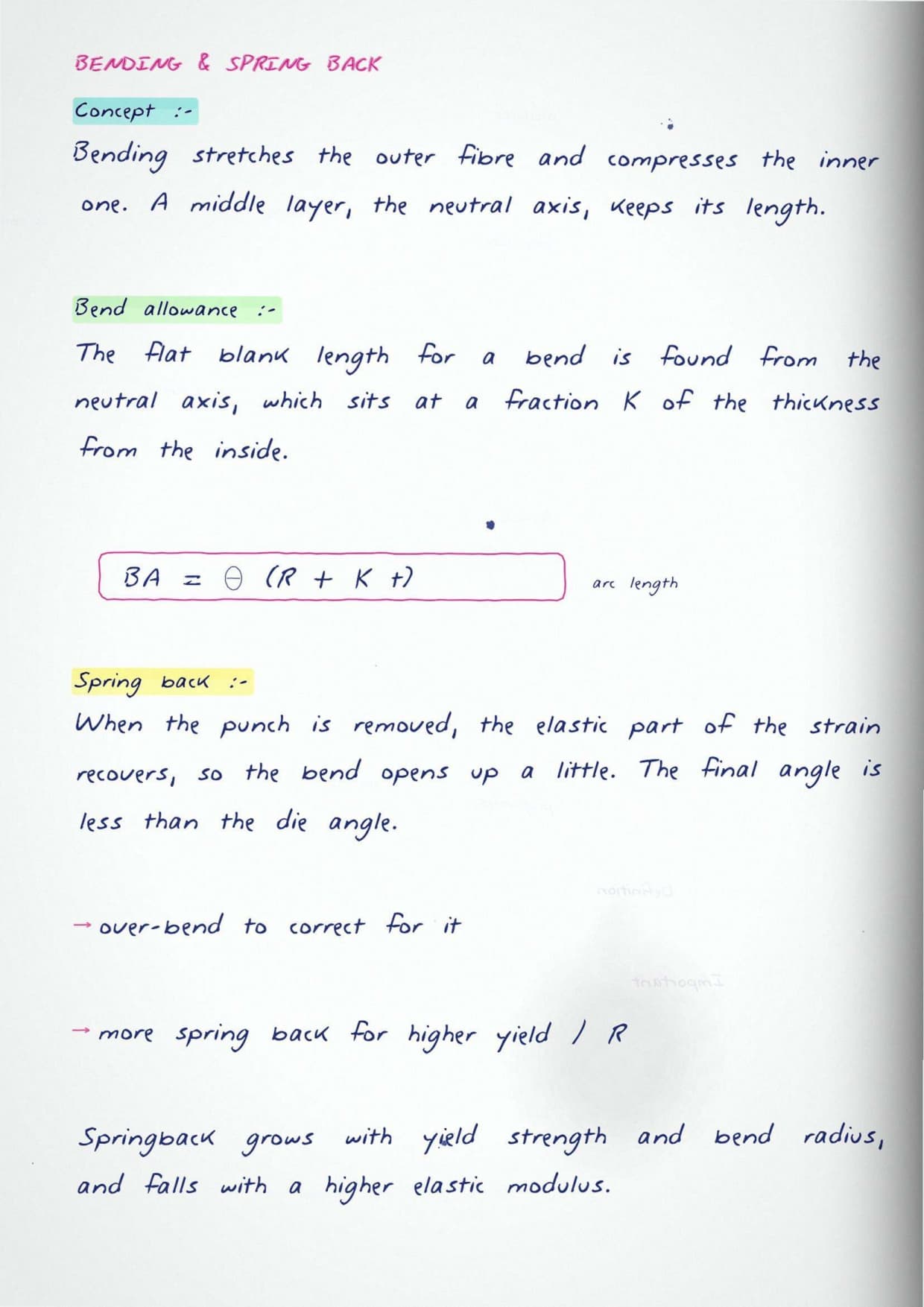
- Sheet metal: shearing, blanking, piercing, bending.
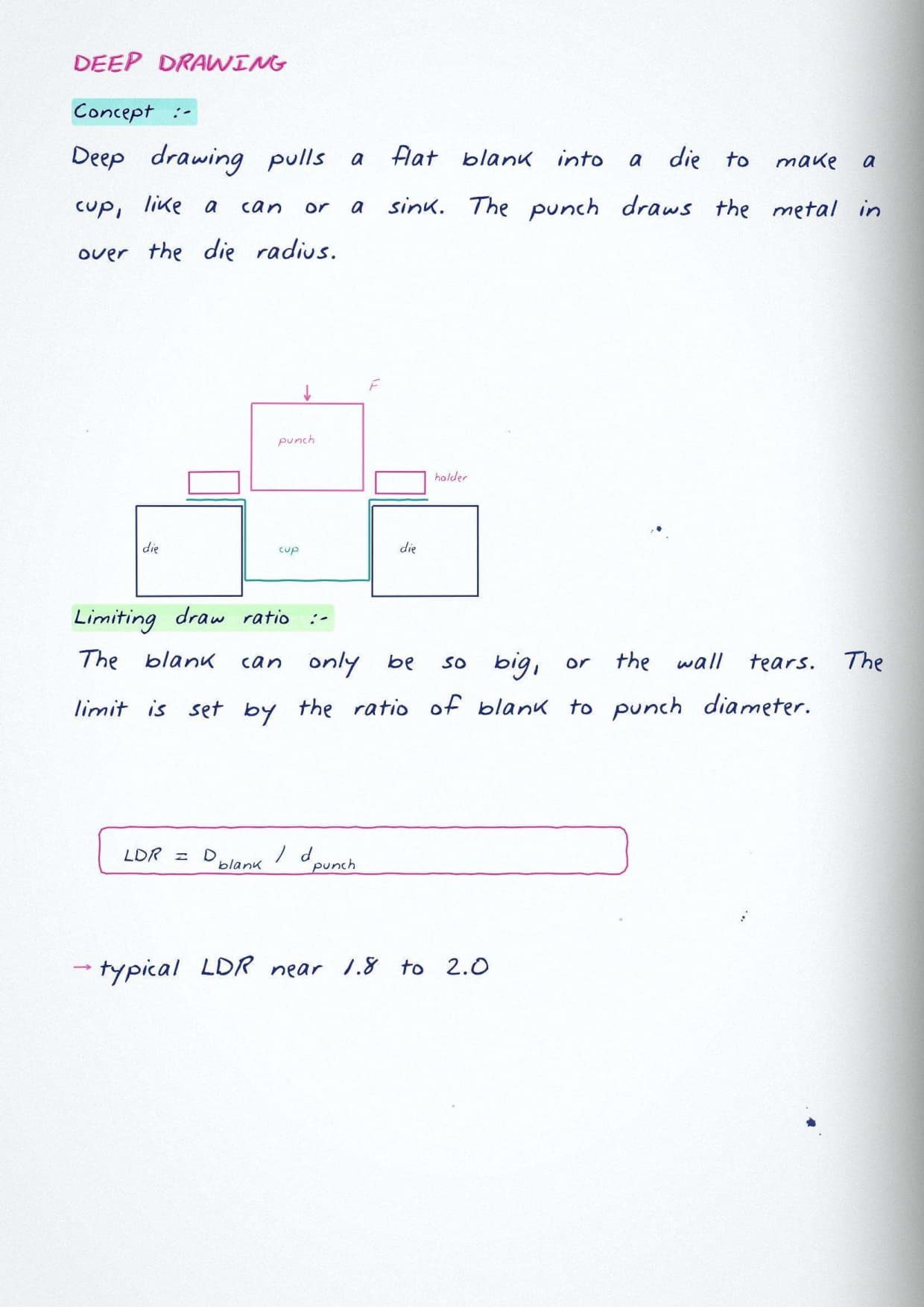
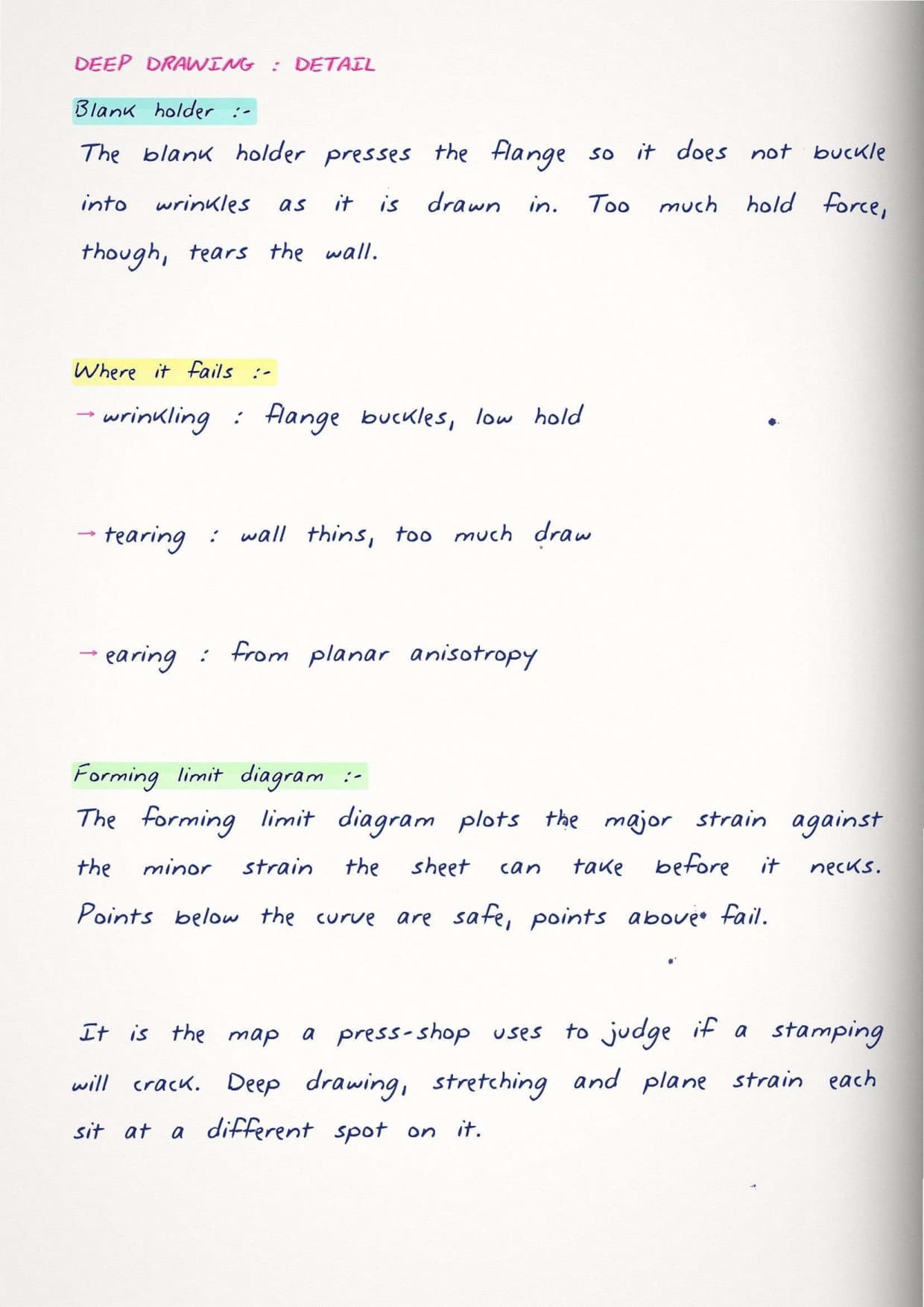
- Deep drawing, drawing ratio and spring back.
- Joining: arc, gas and resistance welding.
- Heat flow in welding and the heat affected zone.
- Weld defects, brazing, soldering and adhesives.
How the Notes Are Organised
The notes run in syllabus order, starting with casting, moving to metal forming and ending with joining. This matches how the processes work in practice, from melting and pouring, to shaping solid metal by force, and finally to welding it together. Where GATE likes to mix ideas, the notes point out the link so you can answer those questions faster.
- Casting first: melting, pouring and solidifying.
- Forming next: shaping solid metal by force.
- Joining last: welding, heat flow and the HAZ.
- Linked ideas GATE mixes, like riser size versus freezing time.
- In welding, heat input controls the HAZ and weld strength.
Common Mistakes in GATE Casting, Forming and Joining
A few small mistakes cost easy marks in this section, and they turn up in the objective questions almost every year. Keeping the points below clear is often the difference between a correct and an incorrect answer.
- Riser must solidify after the casting, never before it.
- Shrinkage allowance and machining allowance are added, not confused.
- In deep drawing, spring back grows with higher strength material.
- Resistance welding needs high current and low voltage.
- Blank size for deep drawing comes from equal surface area.
How to Prepare GATE Casting, Forming and Joining with Handwritten Notes
These notes work best as a revision layer beside steady problem solving, not as a replacement for it. Read a process, note its formula and units, then solve a few numericals on it before moving on. In the final week they give you a quick way to run through the whole section.
- First read: cover each process with its diagram.
- Second read: focus on the formulas and their units.
- Final week: revise defects and special cases.
- Practice numericals on solidification, rolling and welding heat.
- Casting and welding often give direct 1 to 2 mark questions.
Why These Notes Help You Score Better
Handwritten notes keep only the exam useful points, which makes them faster to revise than a full textbook. For a broad section like Manufacturing that focus matters, because the syllabus is wide but each question is usually short and direct. The simple diagrams also make each process easier to picture under exam pressure, when there is no time to reason a mould or a weld joint from scratch.
GATE Mechanical Manufacturing Casting Forming and Joining Handwritten Notes FAQs
Ques. Do these notes cover the full GATE Mechanical casting, forming and joining syllabus?
Ans. Yes. The notes cover casting, metal forming and joining as listed in the GATE Mechanical Manufacturing section, from patterns and gating to rolling, deep drawing and welding.
Ques. Are the notes good for last-day revision?
Ans. Yes. The formulas and topic-wise layout let students revise the whole set quickly before the exam.
Ques. Do the notes explain concepts or only list formulas?
Ans. They cover both. Each topic gives a short explanation and the formula you need, with solved steps for the numericals.
Ques. Can beginners use these notes?
Ans. Yes. The language is simple and each process is broken into small points, so students reading the topic for the first time can follow it easily.



Comments