




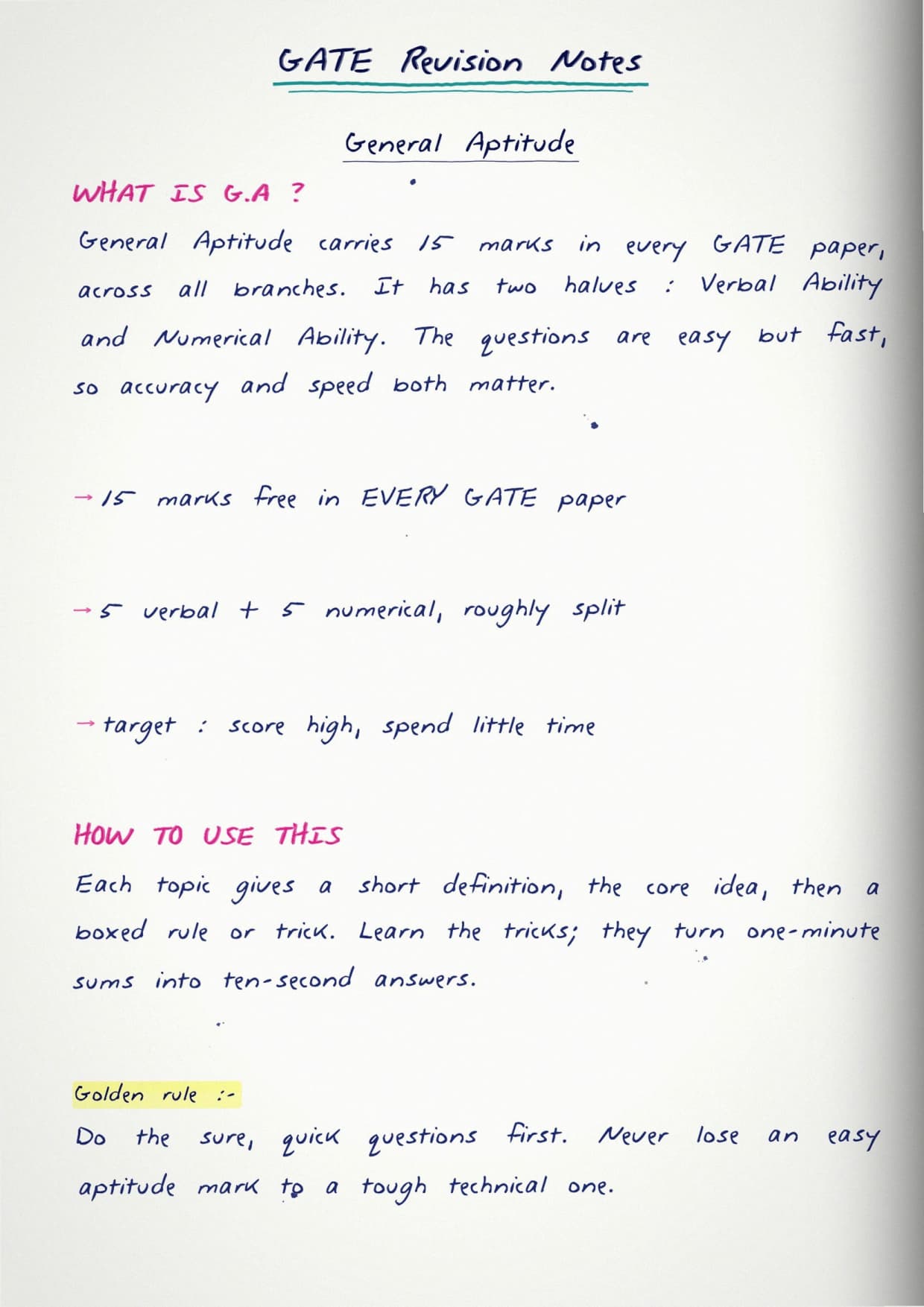
General Aptitude carries 15 marks in every GATE paper, the same weight across all branches, and it is the fastest section to score in. These handwritten notes cover the complete General Aptitude syllabus for GATE, both the verbal ability and the quantitative aptitude parts, with a short method and a solved example for every topic.
The section is small and repeats in a similar pattern every year, so focused revision here adds easy marks to your total. These notes are built to help you finish that revision quickly and confidently.
- Complete verbal and numerical aptitude syllabus in one PDF.
- A short method and a solved example for each topic.
- A final shortcut sheet for quick revision.
What These GATE General Aptitude Notes Cover
General Aptitude in GATE follows a fixed pattern of about ten questions, split between verbal ability and numerical ability. These notes keep every topic short and practical, pairing a quick method with one solved example so you learn the approach and can apply it under exam pressure.
- A short method or shortcut for every topic.
- One solved example per concept.
- Hand-drawn tables and figures for data interpretation.
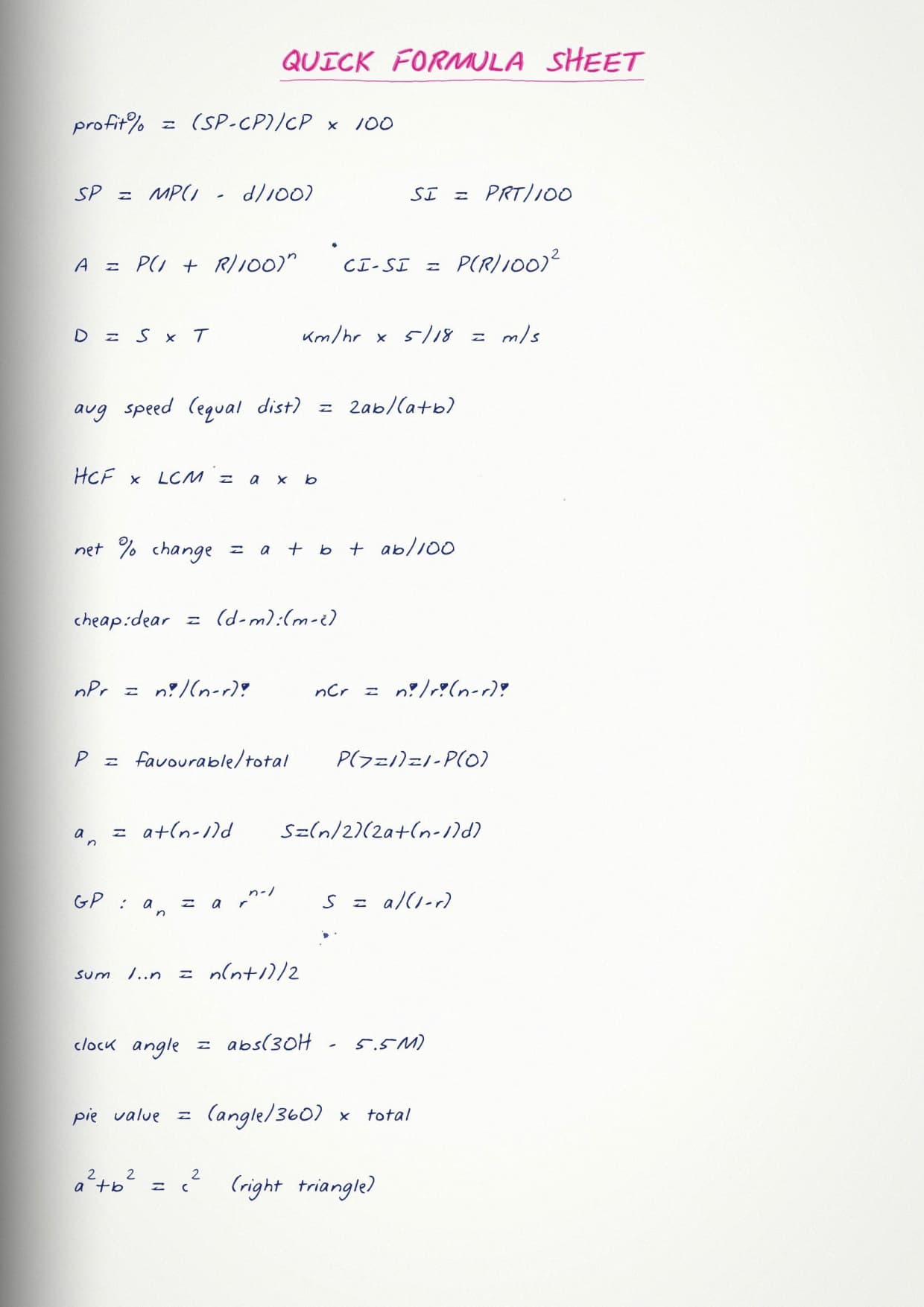
- A shortcut sheet and an exam-tips page at the end.
GATE General Aptitude Quick Revision
Source: GATE Wallah on YouTube
Topics Covered in GATE General Aptitude
The notes follow the official GATE General Aptitude syllabus and divide neatly into a verbal ability part and a quantitative aptitude part, with a reasoning set inside the numerical section. Every topic below appears with its shortcut and a solved example, so nothing important is left out.
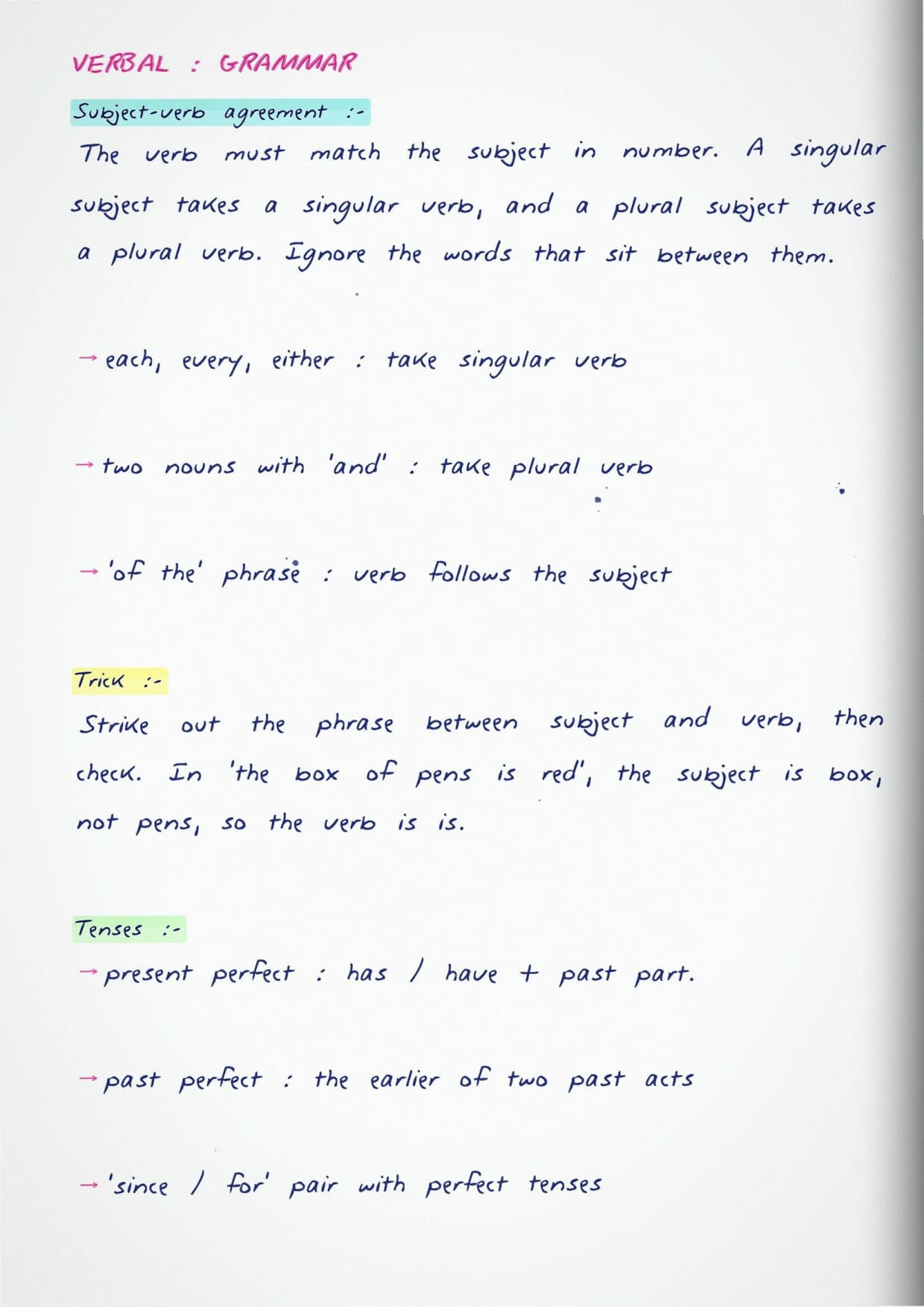
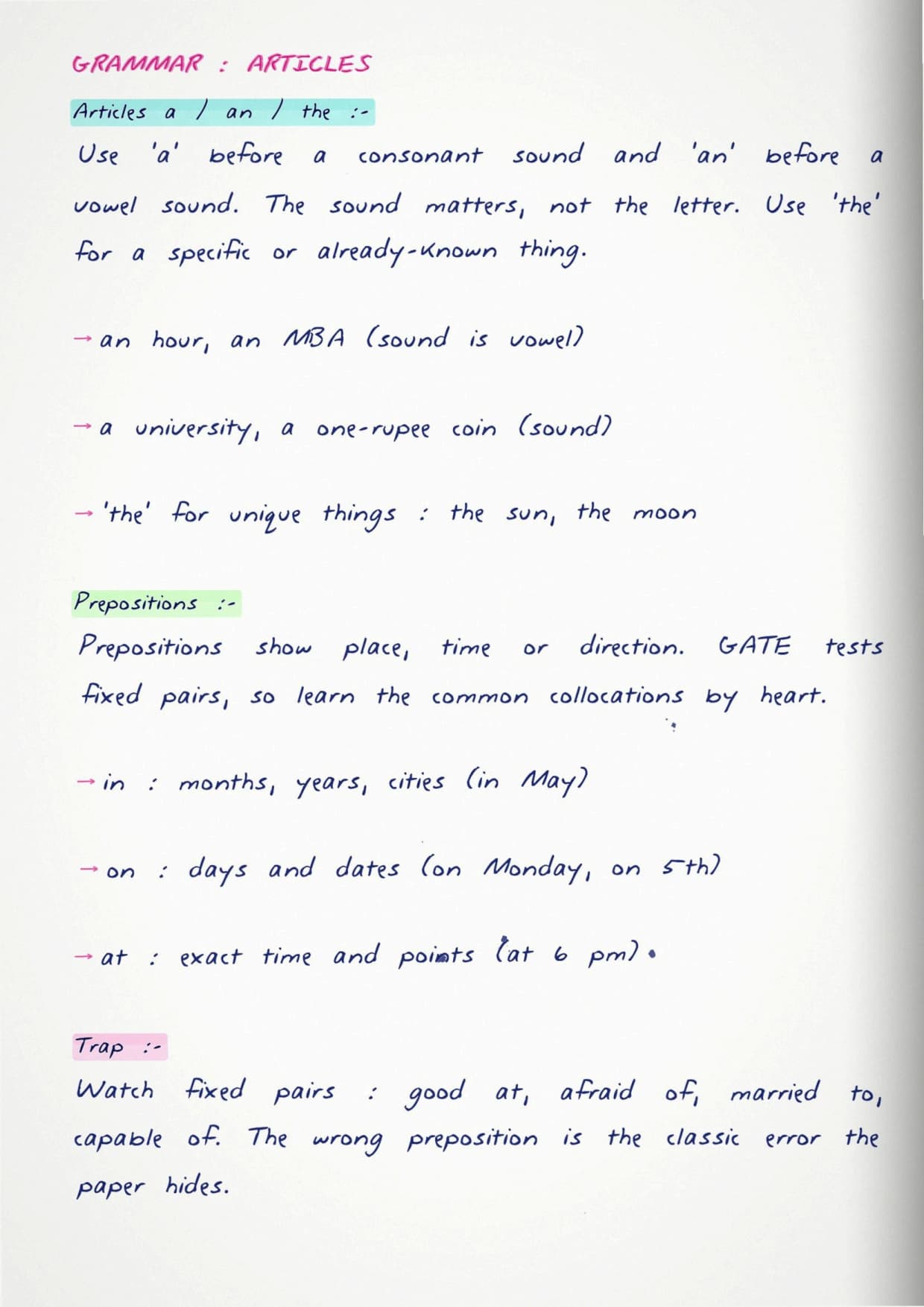
- Verbal: English grammar, tenses, articles and prepositions.
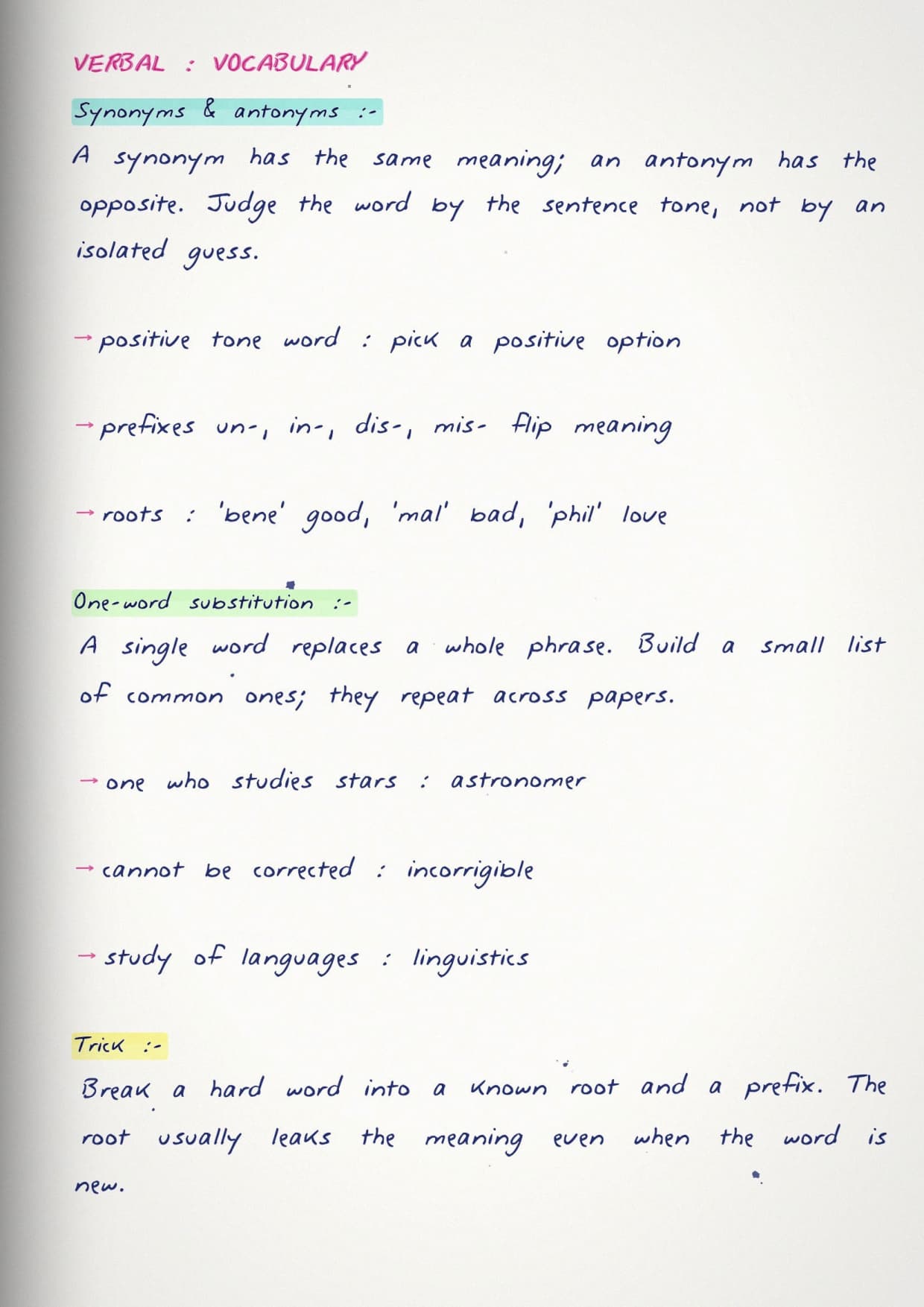
- Verbal: vocabulary, synonyms, antonyms and one-word substitution.
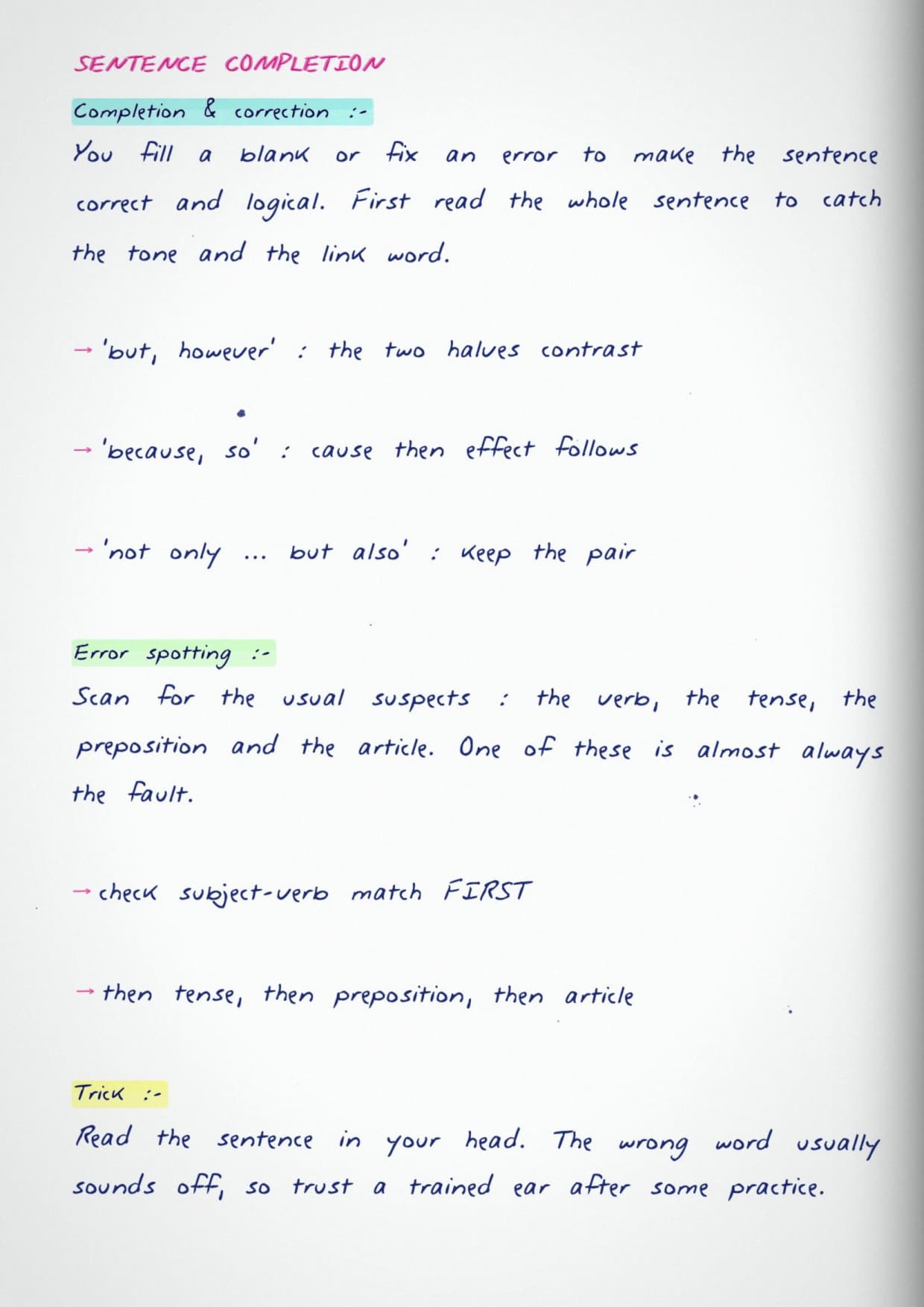
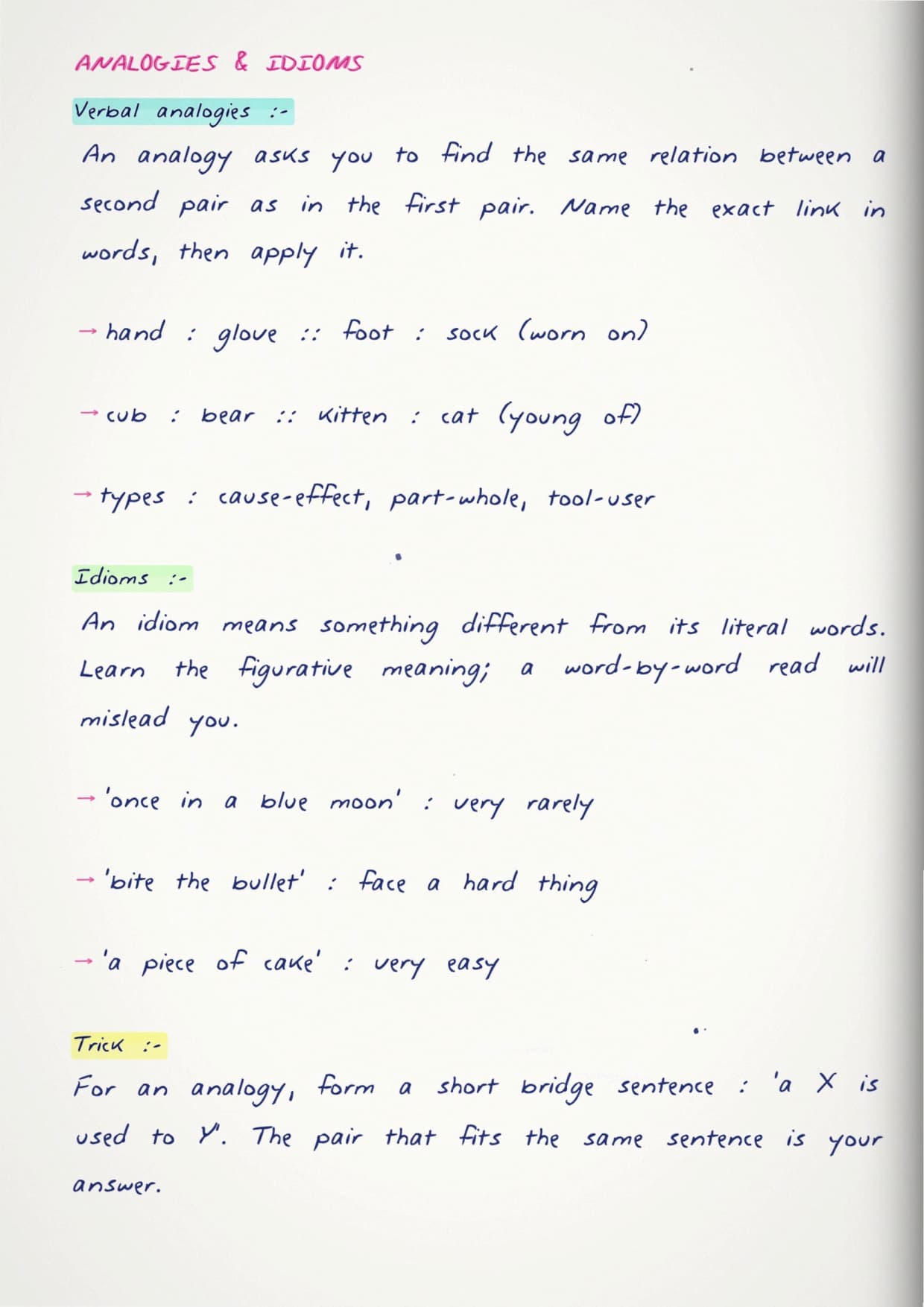
- Verbal: sentence completion, correction and verbal analogies.
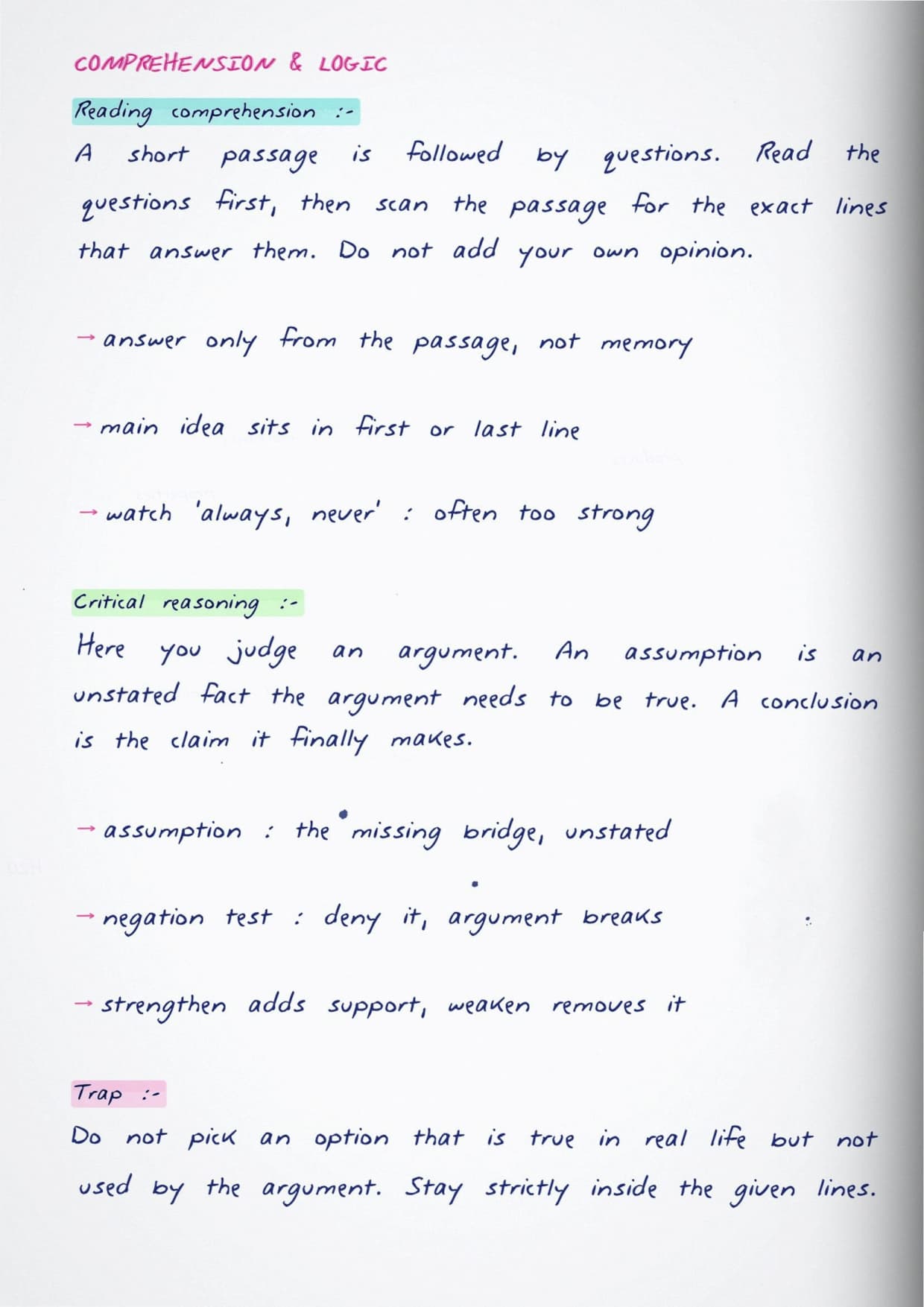
- Verbal: reading comprehension and critical reasoning.
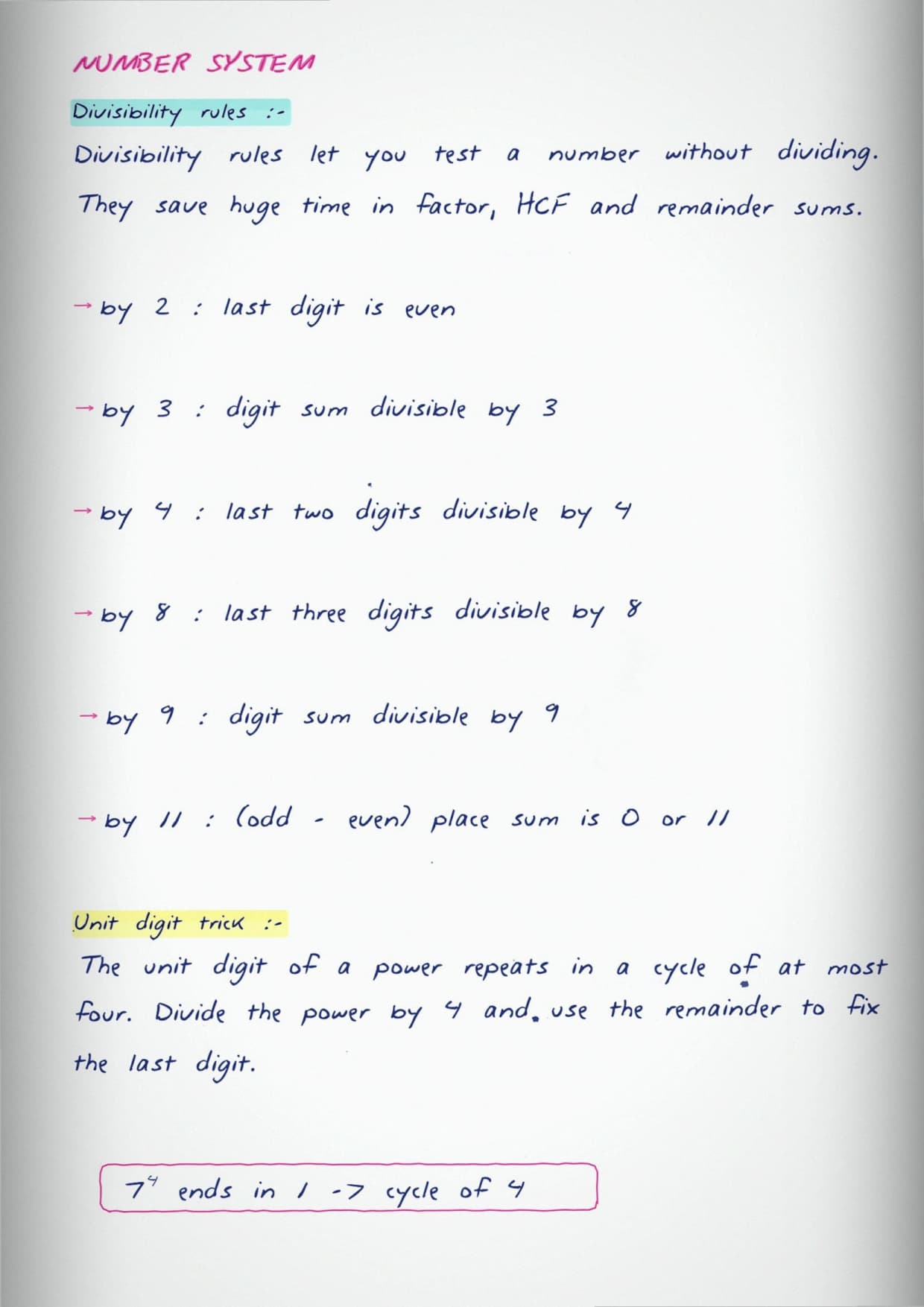
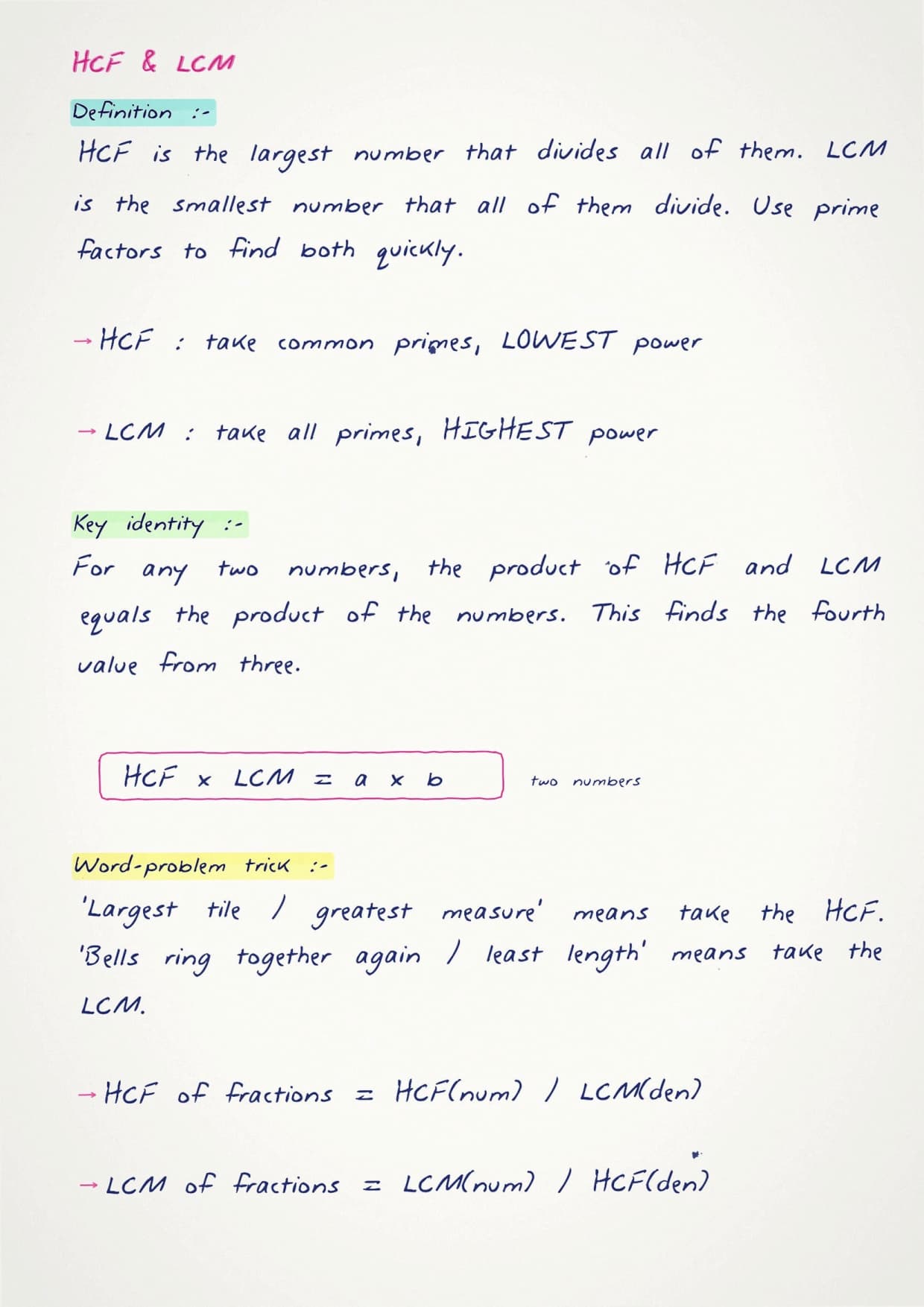
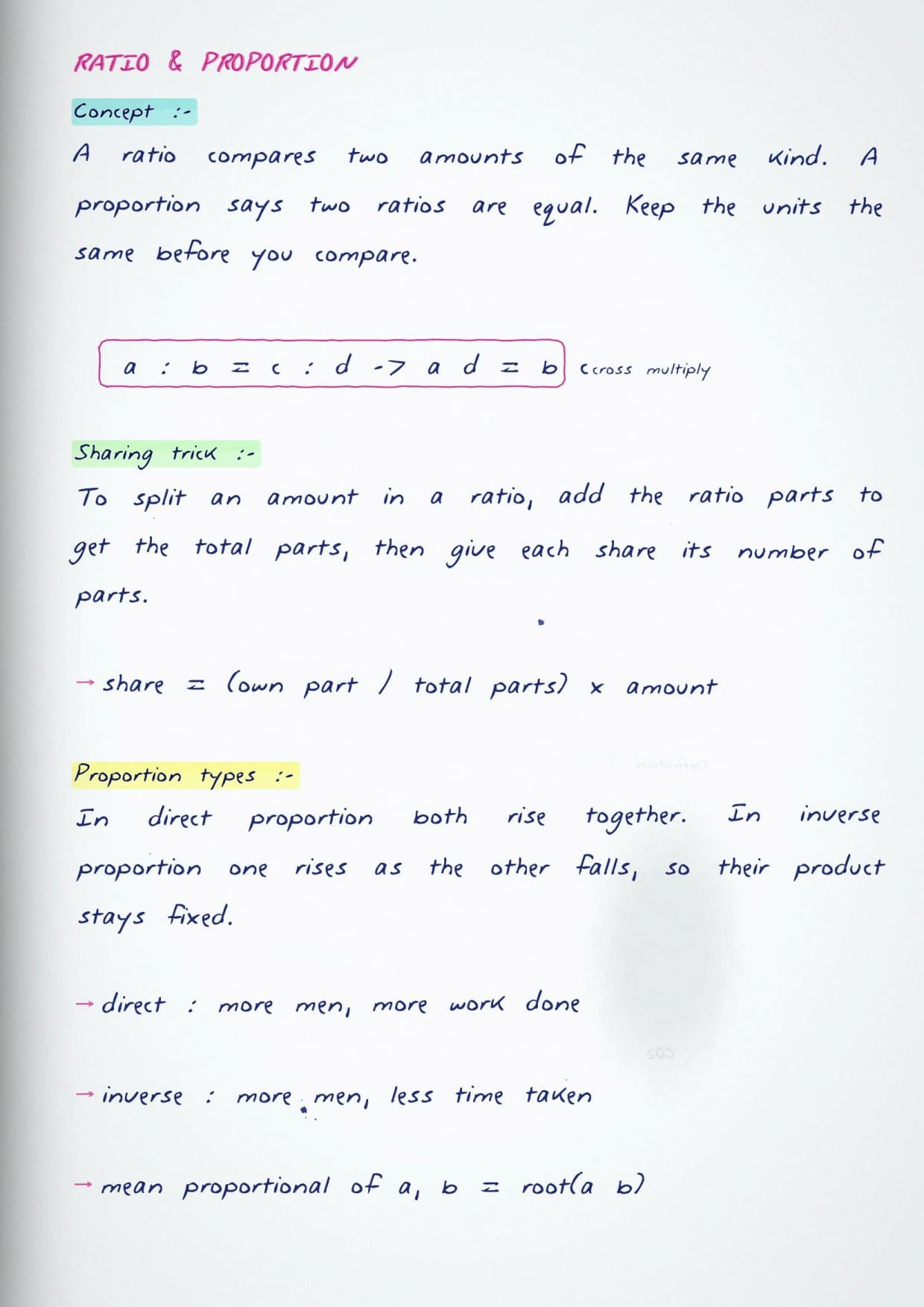
- Numerical: number system, simplification and ratio and proportion.
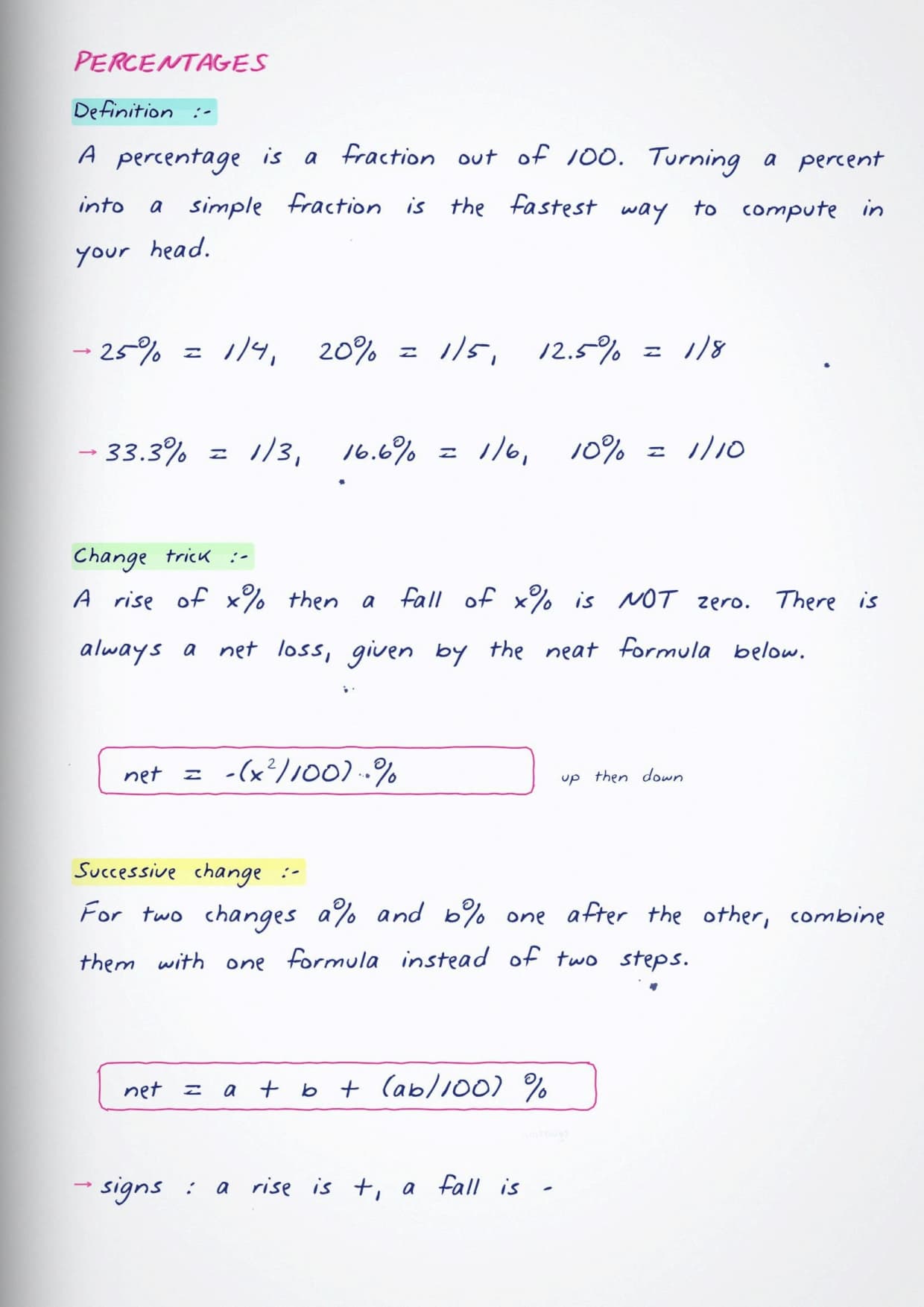
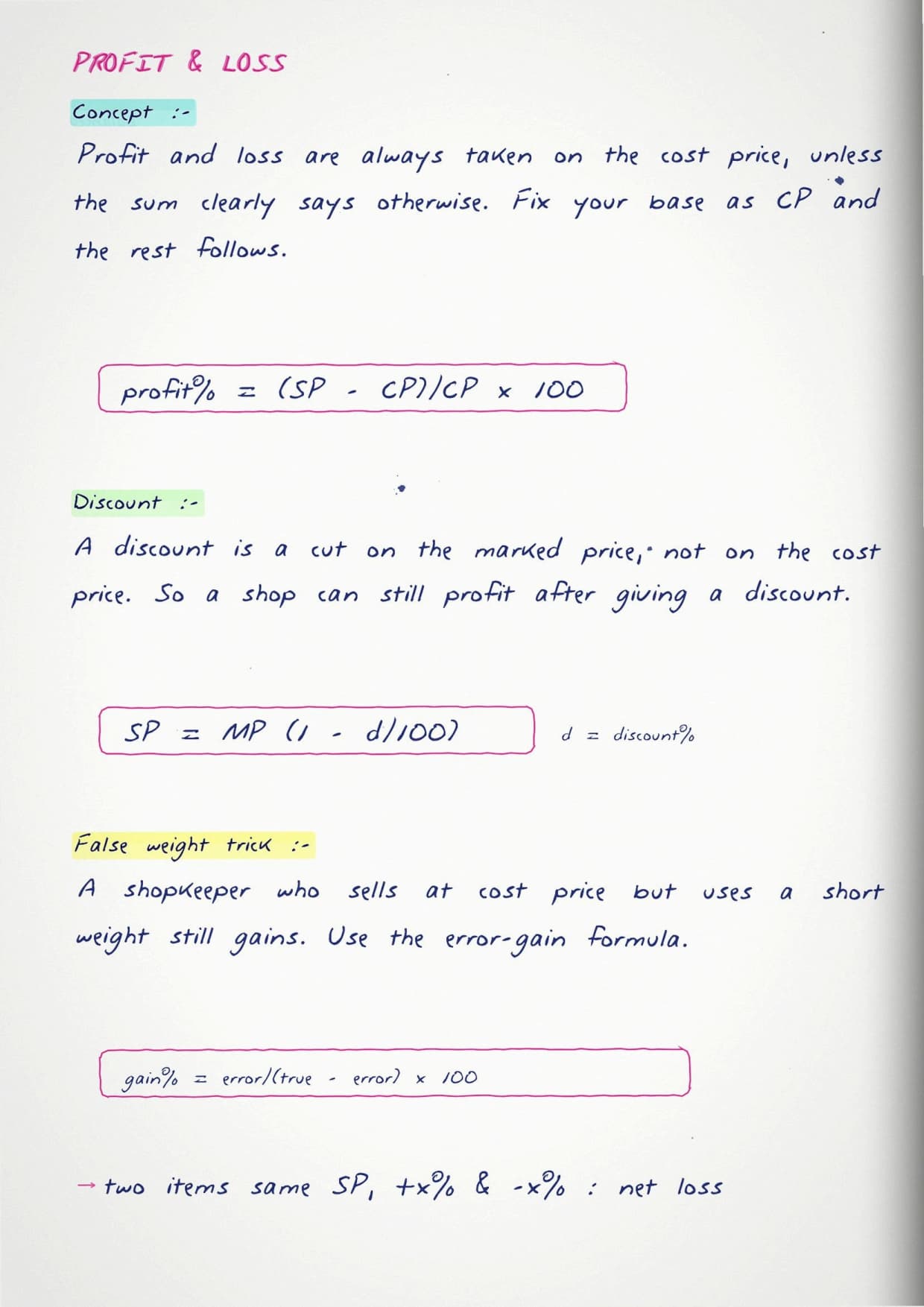
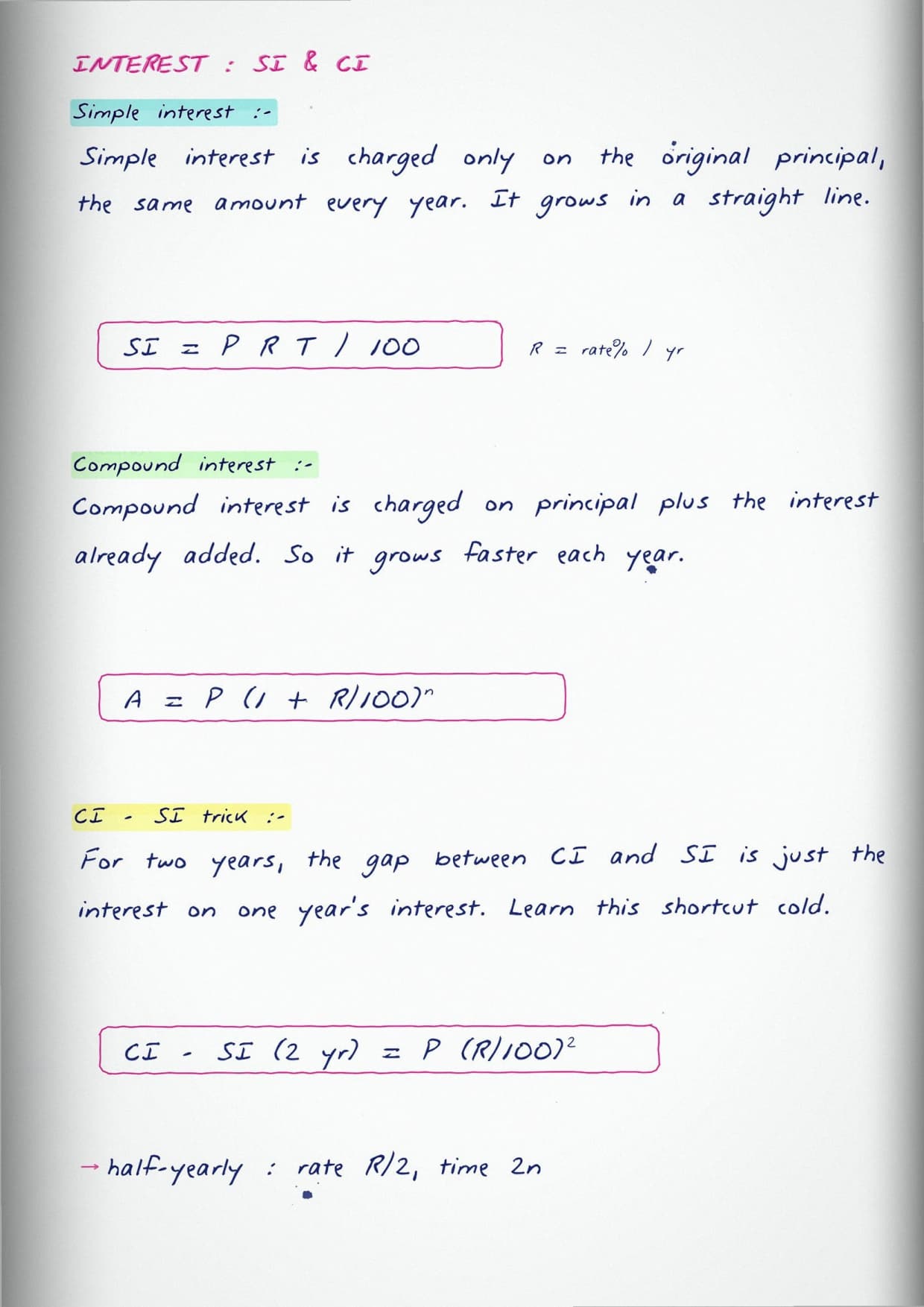
- Numerical: percentages, profit and loss, and interest.
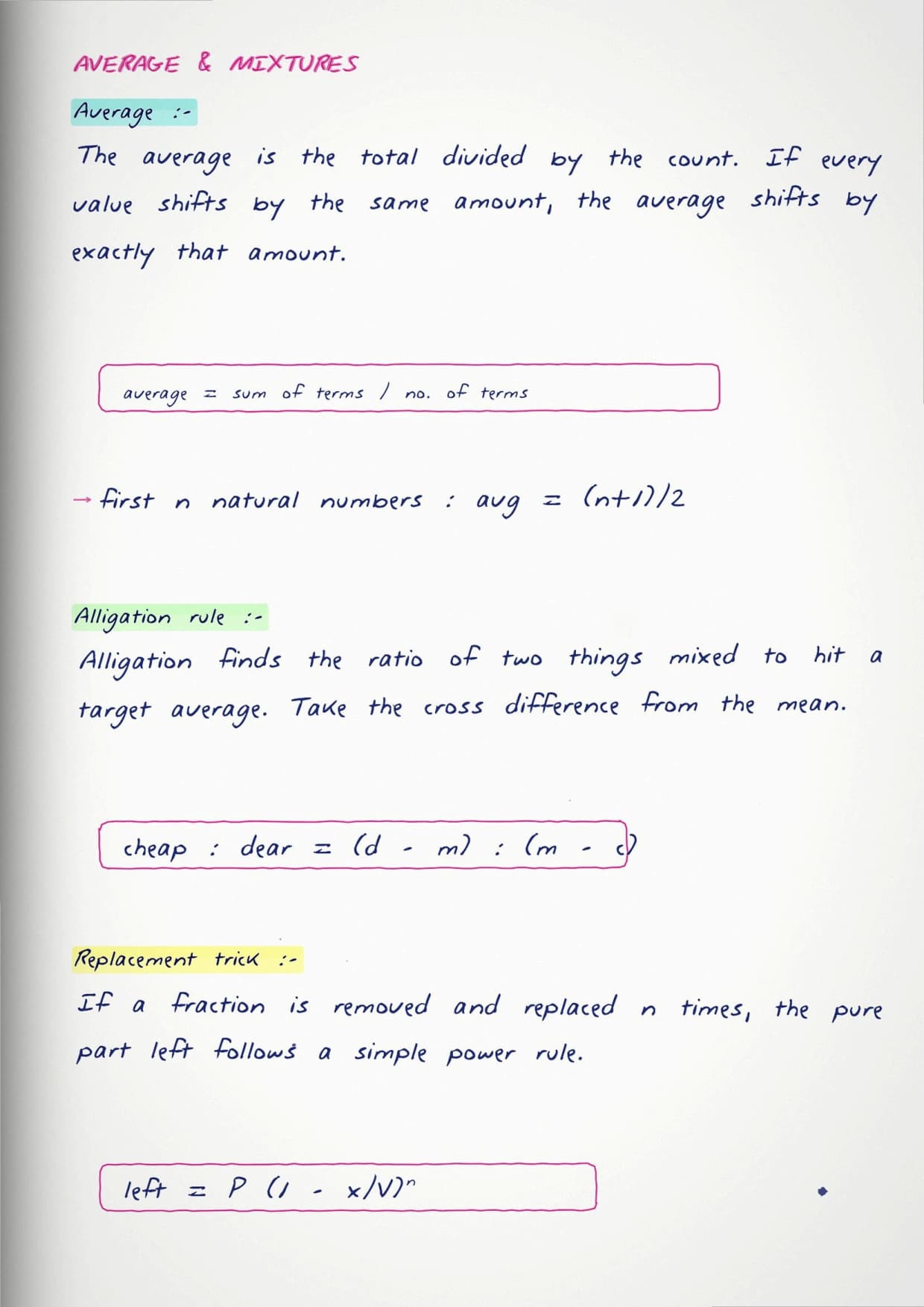
- Numerical: averages, mixtures and alligation.
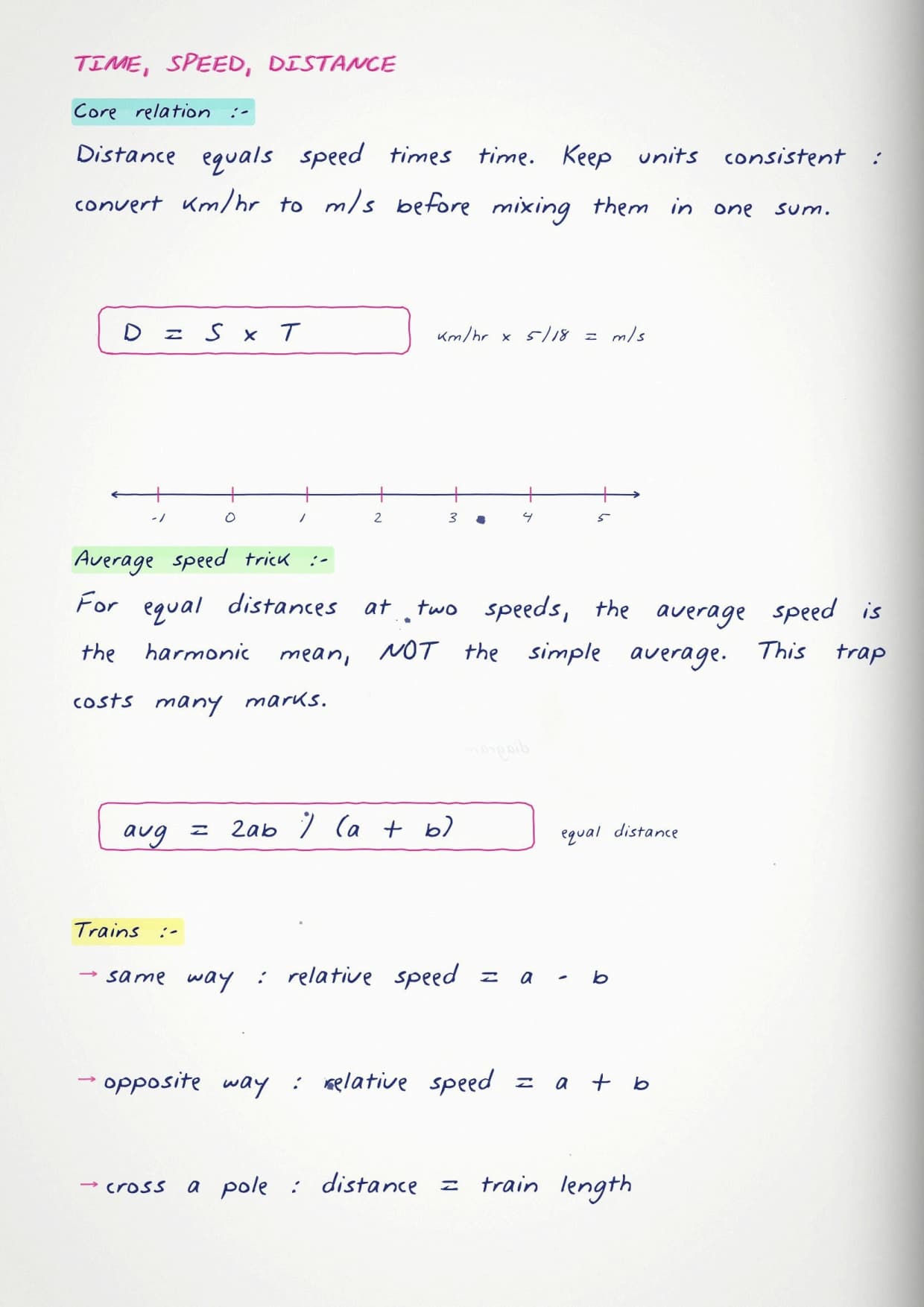
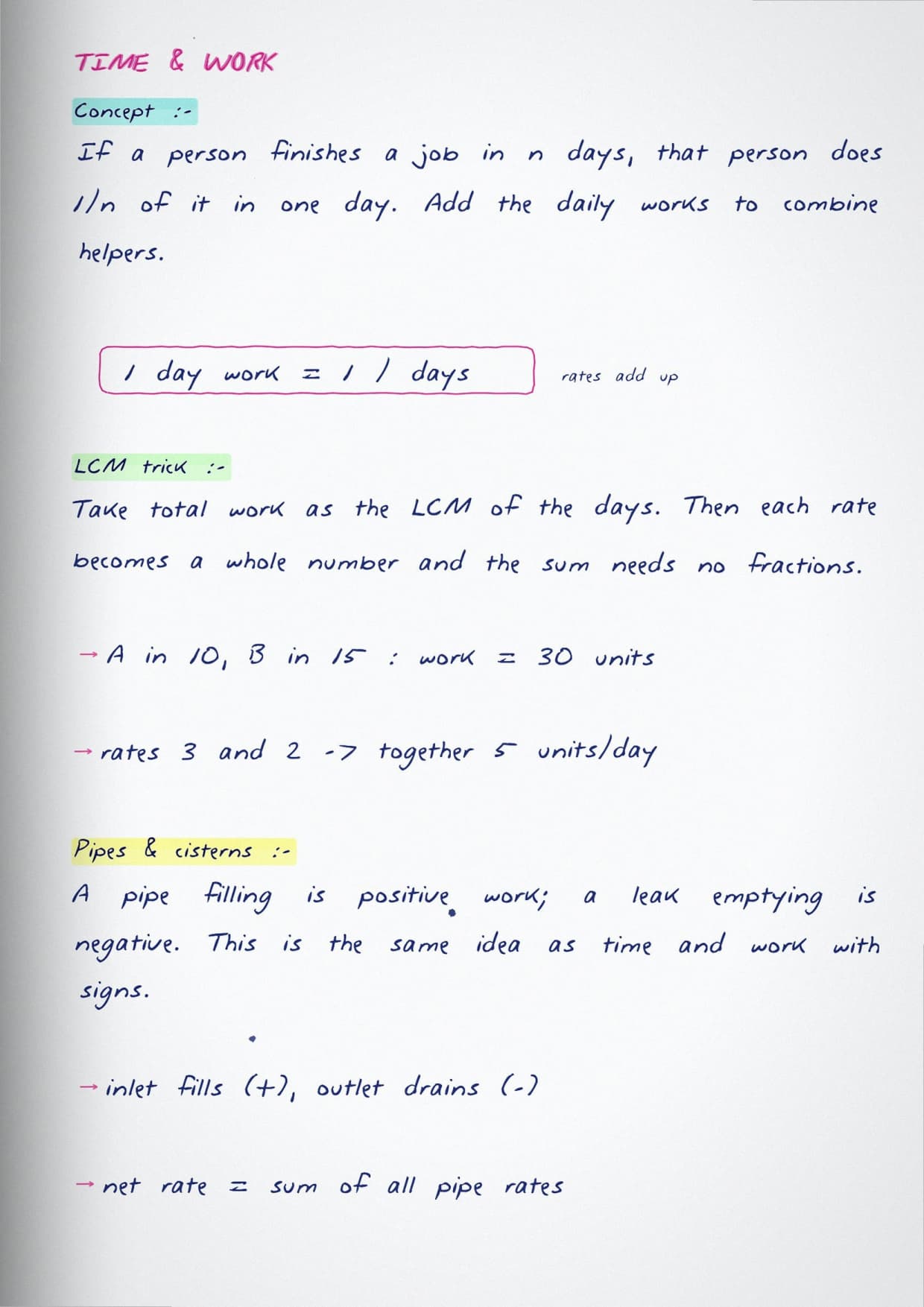
- Numerical: time, speed and distance, and time and work.
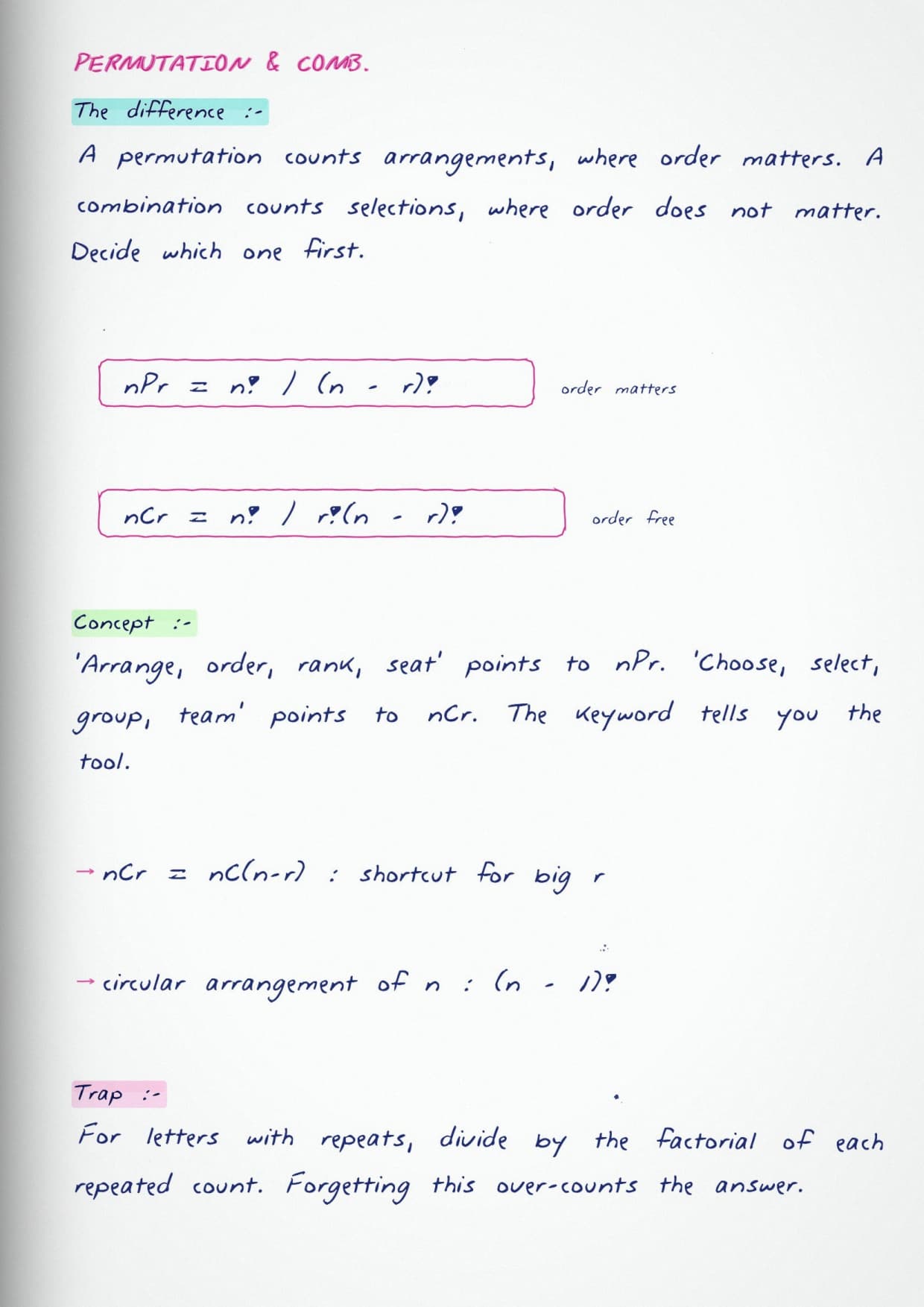
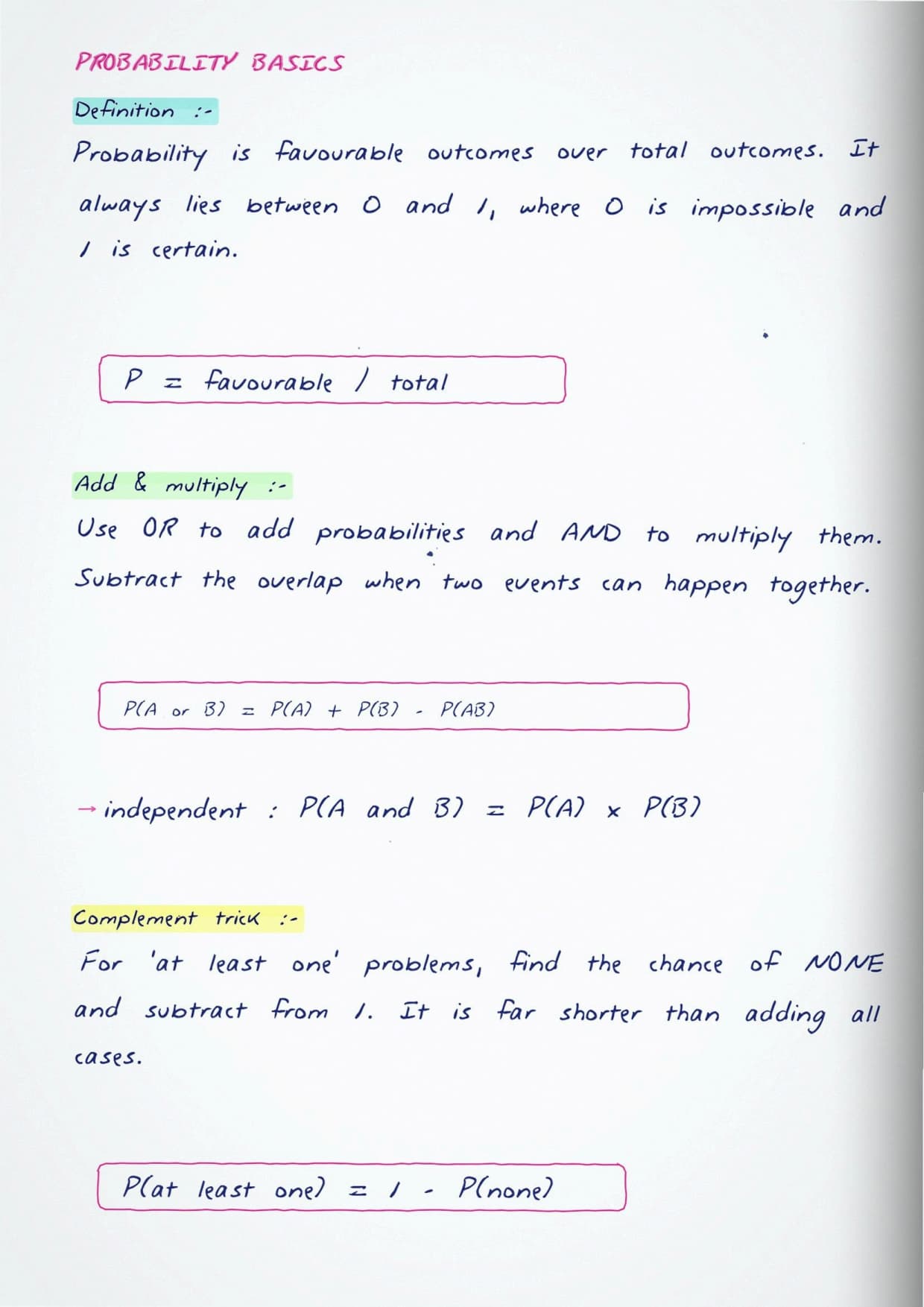
- Numerical: permutations, combinations and probability.
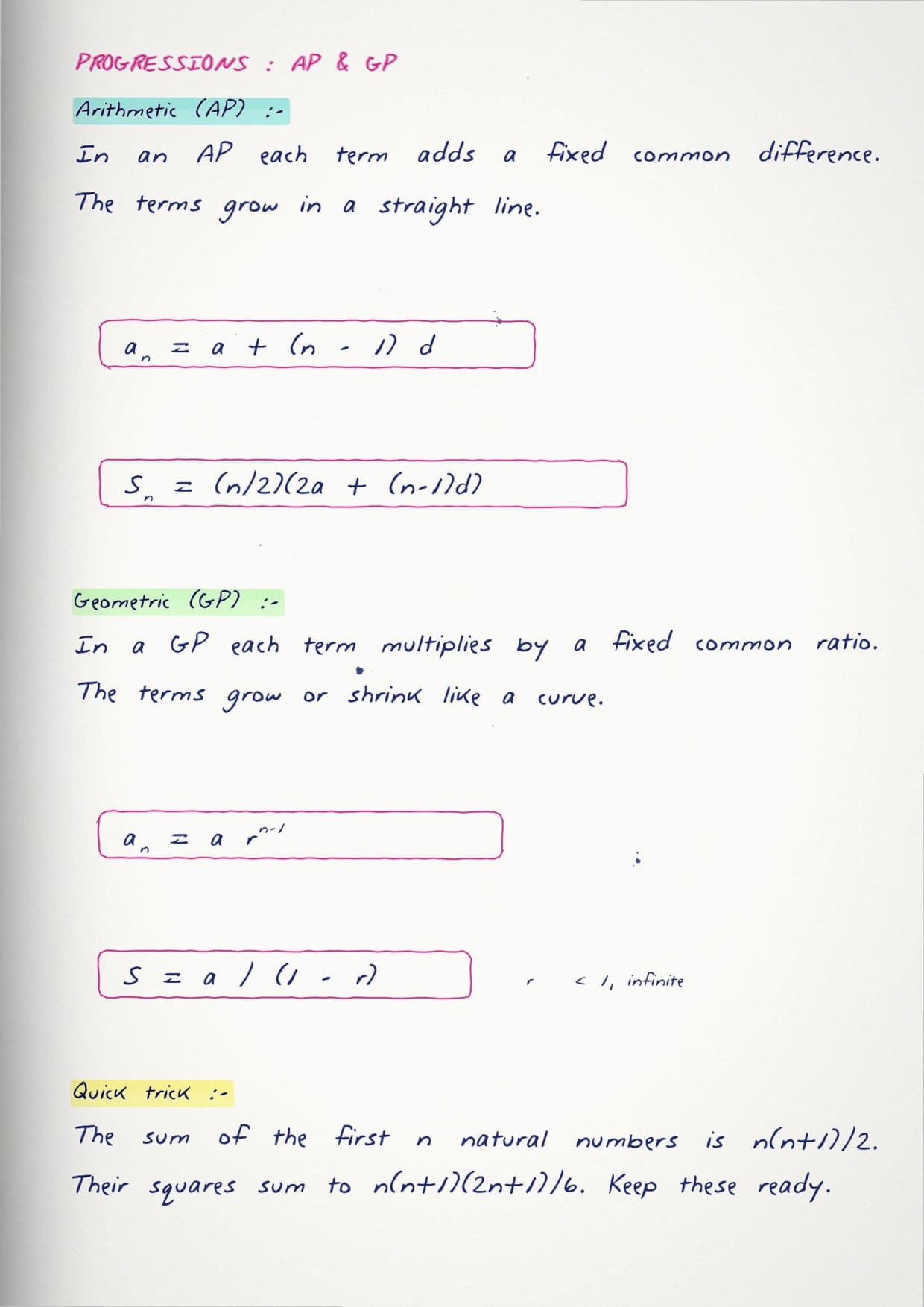
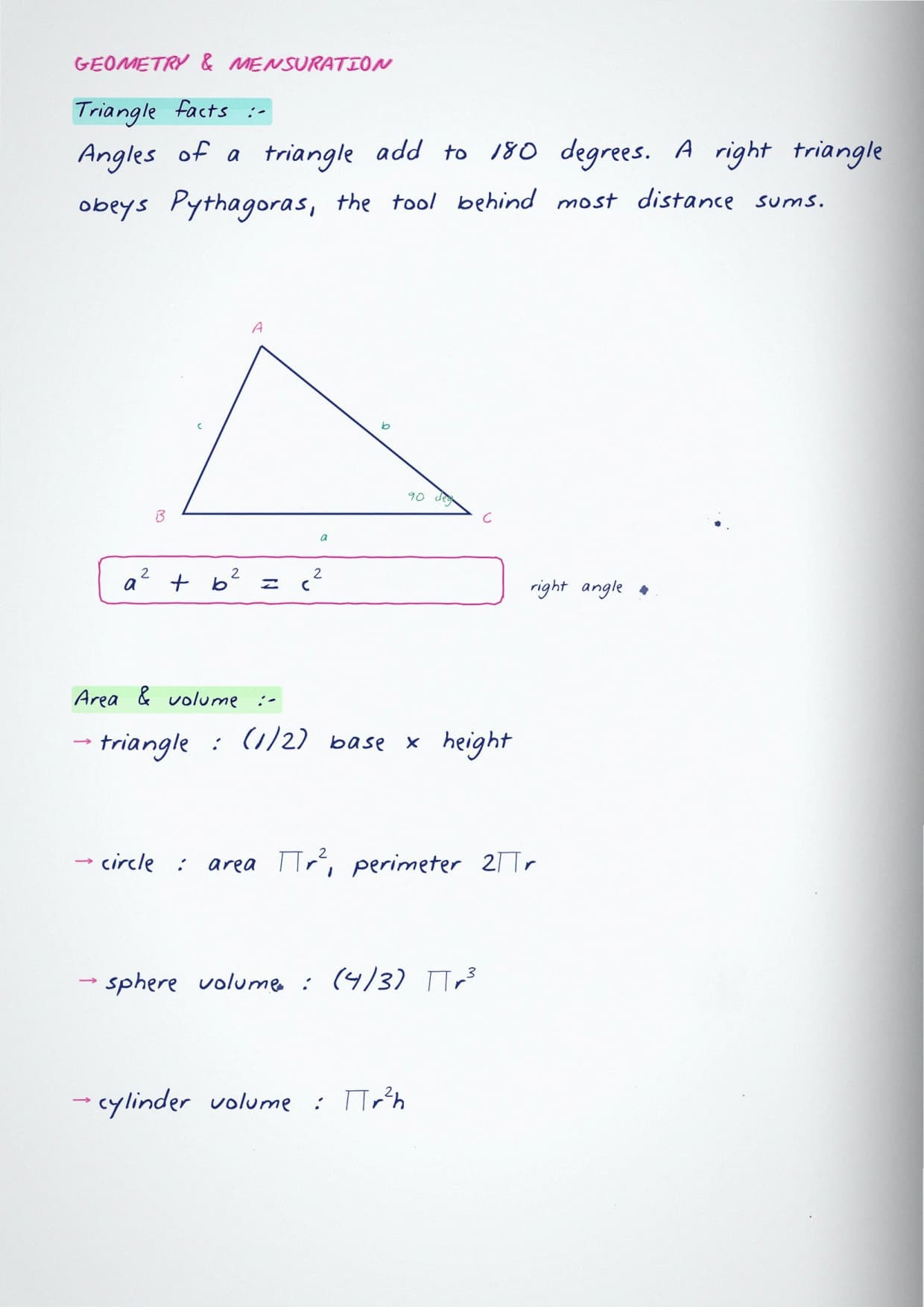
- Numerical: progressions, mensuration and basic geometry.
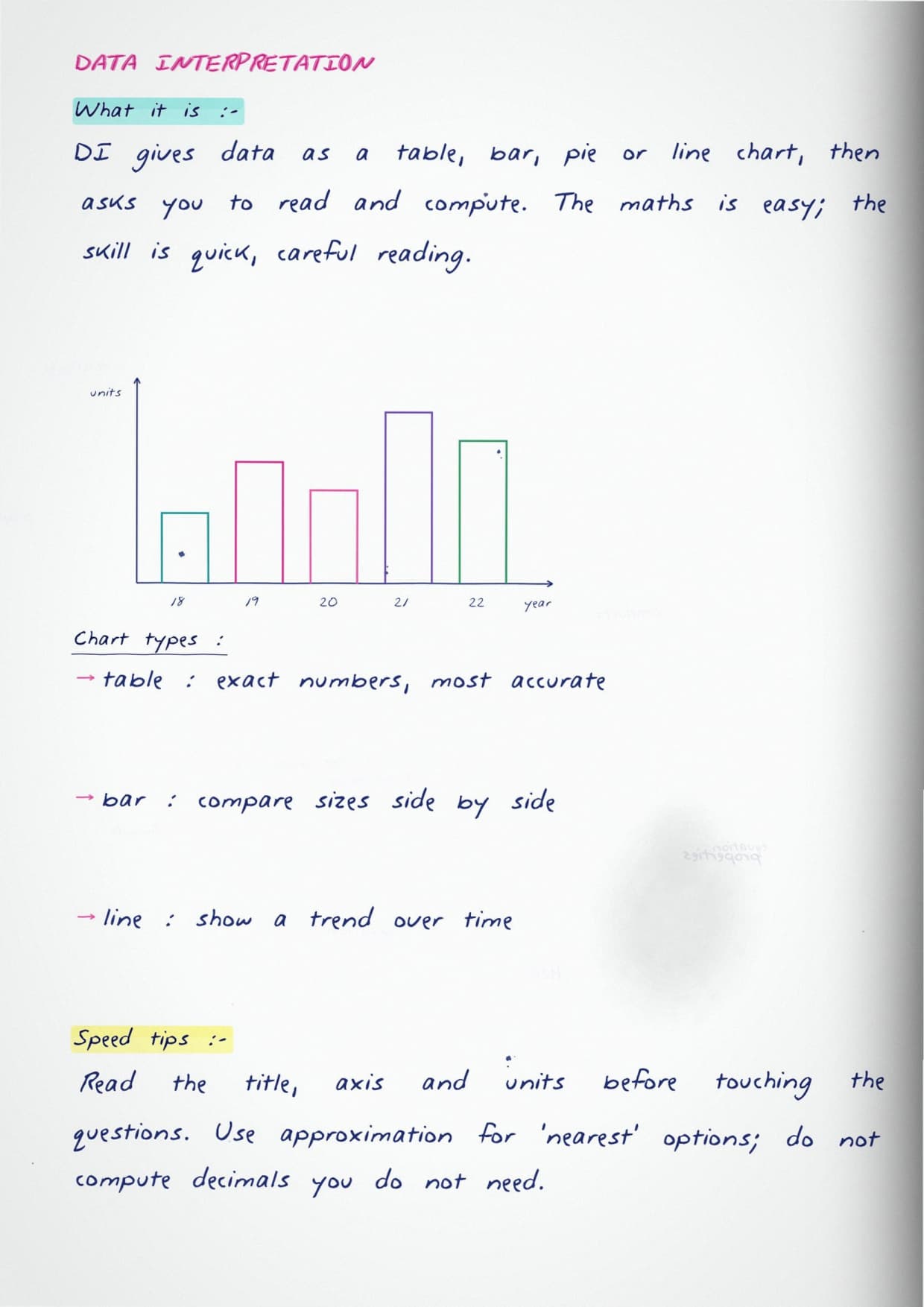
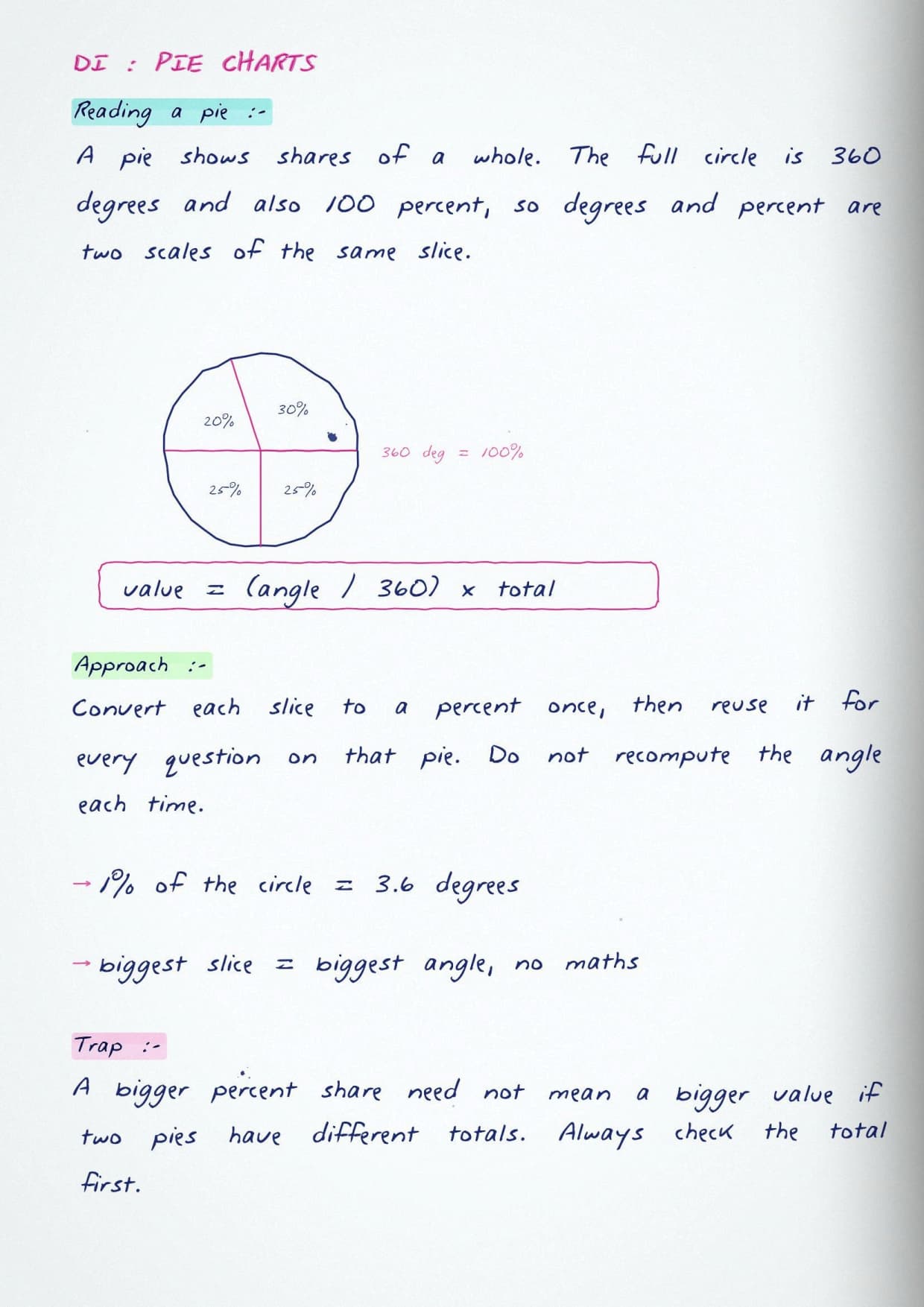
- Numerical: data interpretation using tables, bar, pie and line graphs.
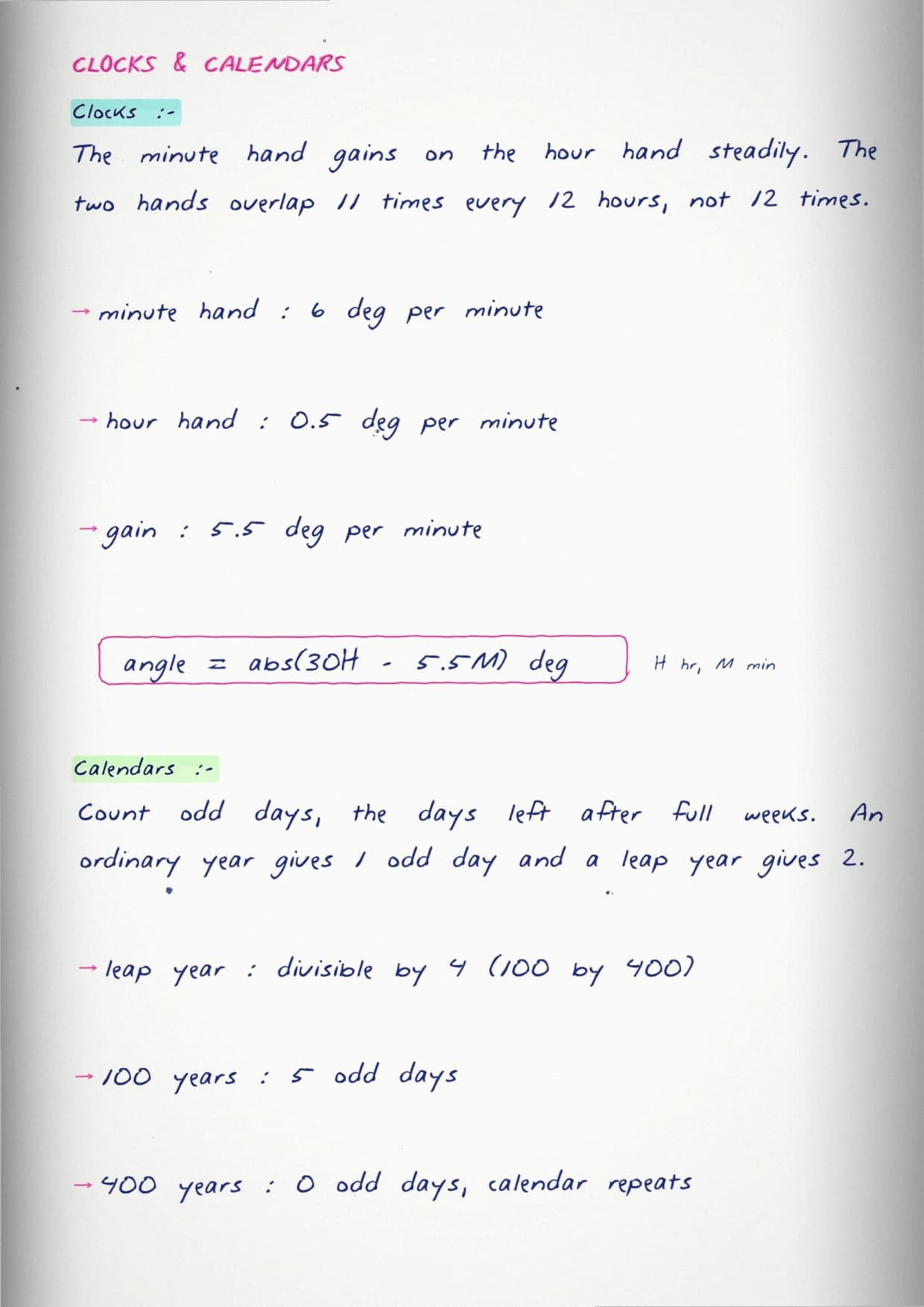
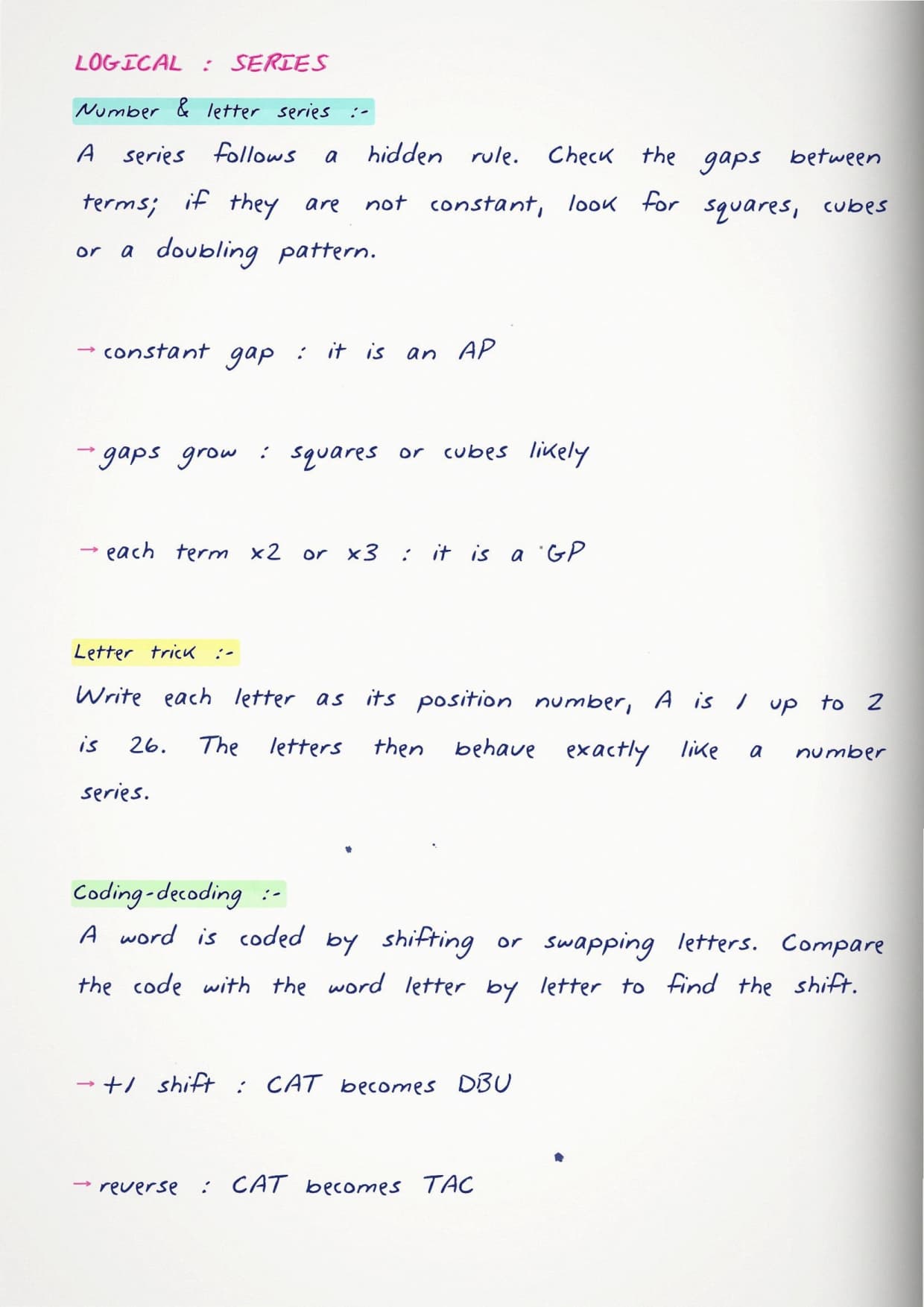
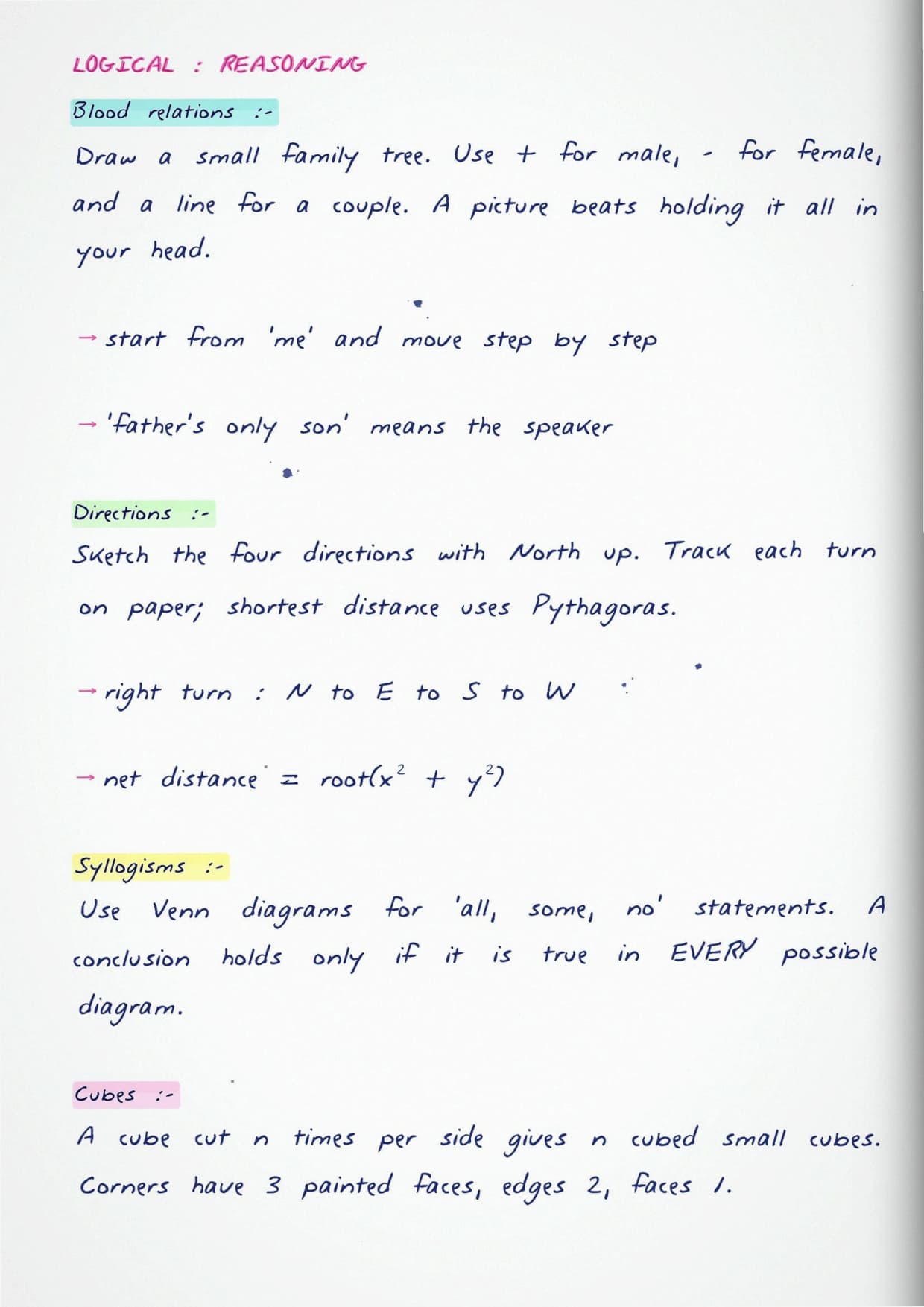
- Reasoning: seating, blood relations, directions, coding and syllogisms.
Verbal Ability in GATE General Aptitude
Verbal ability is where many students lose easy marks by reading too fast or second-guessing simple grammar. The notes treat it as a scoring area and give clear rules with short reading strategies you can trust when time is tight.
- Grammar rules as short points, with the common error beside the correct form.
- Vocabulary grouped by root and theme for easier recall.
- A simple reading plan: skim, mark keywords, match to options.
- Analogies and critical reasoning with small solved examples.
Quantitative Aptitude in GATE General Aptitude
The numerical part rewards speed as much as accuracy, since every question carries the same mark whether you solve it fast or slowly. The notes give the shortest reliable method for each topic, so you spend less time per sum and attempt more questions.
- Percentages linked to fractions for quick mental maths.
- Time, speed and distance solved with ratio tricks.
- Data interpretation read from the figure before the numbers.
- The fastest method first, not the long textbook one.
How the Notes Are Organised
Every topic in the notes follows the same simple order, which makes the section quick to revise even the night before the exam. Verbal and numerical topics are kept apart, so you can pick up either one on its own.
- State the rule, show the shortcut, then solve one sum.
- Verbal and numerical parts kept separate.
- Short entries, since aptitude needs practice not long theory.
Common Mistakes in GATE General Aptitude
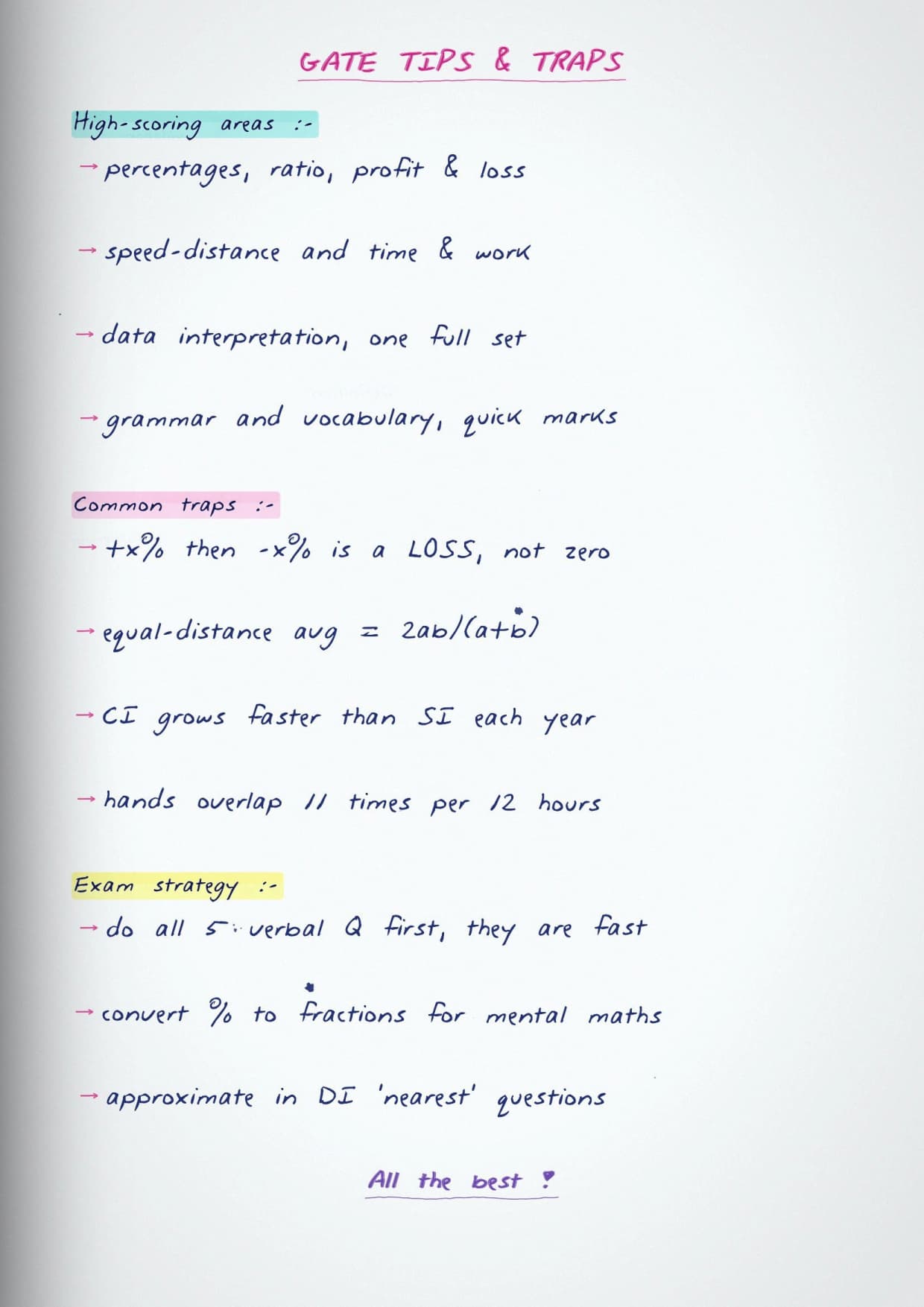
A short traps page collects the errors that cost easy marks. These are the small slips that students make under time pressure, and knowing them in advance is half the fix.
- Reading only part of a comprehension passage before answering.
- Confusing percentage change with percentage point change.
- Forgetting units in speed, work and mixture problems.
- Rushing data interpretation and misreading the graph scale.
- Skipping the easy verbal questions to save time, then losing them.
How to Prepare GATE General Aptitude with Handwritten Notes
General Aptitude rewards steady practice more than heavy theory, because the question types repeat every year. Use these notes to lock in the methods first, then build speed and accuracy on fresh questions.
- First pass: read every topic and its shortcut.
- Second pass: solve the example, then attempt fresh questions.
- Last week: revise only the shortcut sheet.
- Before the exam: skim the data interpretation and reasoning figures.
GATE General Aptitude Handwritten Notes FAQs
Ques. Do these General Aptitude notes work for every GATE branch?
Ans. Yes. General Aptitude is a common section in every GATE paper, so these notes suit students from all branches, including Mechanical, Civil, Electrical, Computer Science and others.
Ques. How many marks does General Aptitude carry in GATE?
Ans. General Aptitude carries 15 marks in the GATE paper. It is a high-return section, since the questions are quick and need less preparation than the core subject.
Ques. Do the notes cover both verbal and numerical parts?
Ans. Yes. The notes cover the full syllabus, both the verbal ability topics and the quantitative aptitude and reasoning topics, with tricks and solved examples for each.
Ques. Can I use these notes for last-minute revision?
Ans. Yes. The shortcut sheet and topic-wise notes are made for fast last-day revision, so students can refresh the whole section quickly.



Comments