




Three Phase Circuits, Complex Power and Power Factor is a steady scoring topic in GATE Electrical, usually worth about 3 to 6 marks in the paper. It belongs to the Electric Circuits and Fields section, and its ideas return in Power Systems, Electrical Machines, and Power Electronics. These handwritten notes cover the full topic in a compact, exam-focused form.
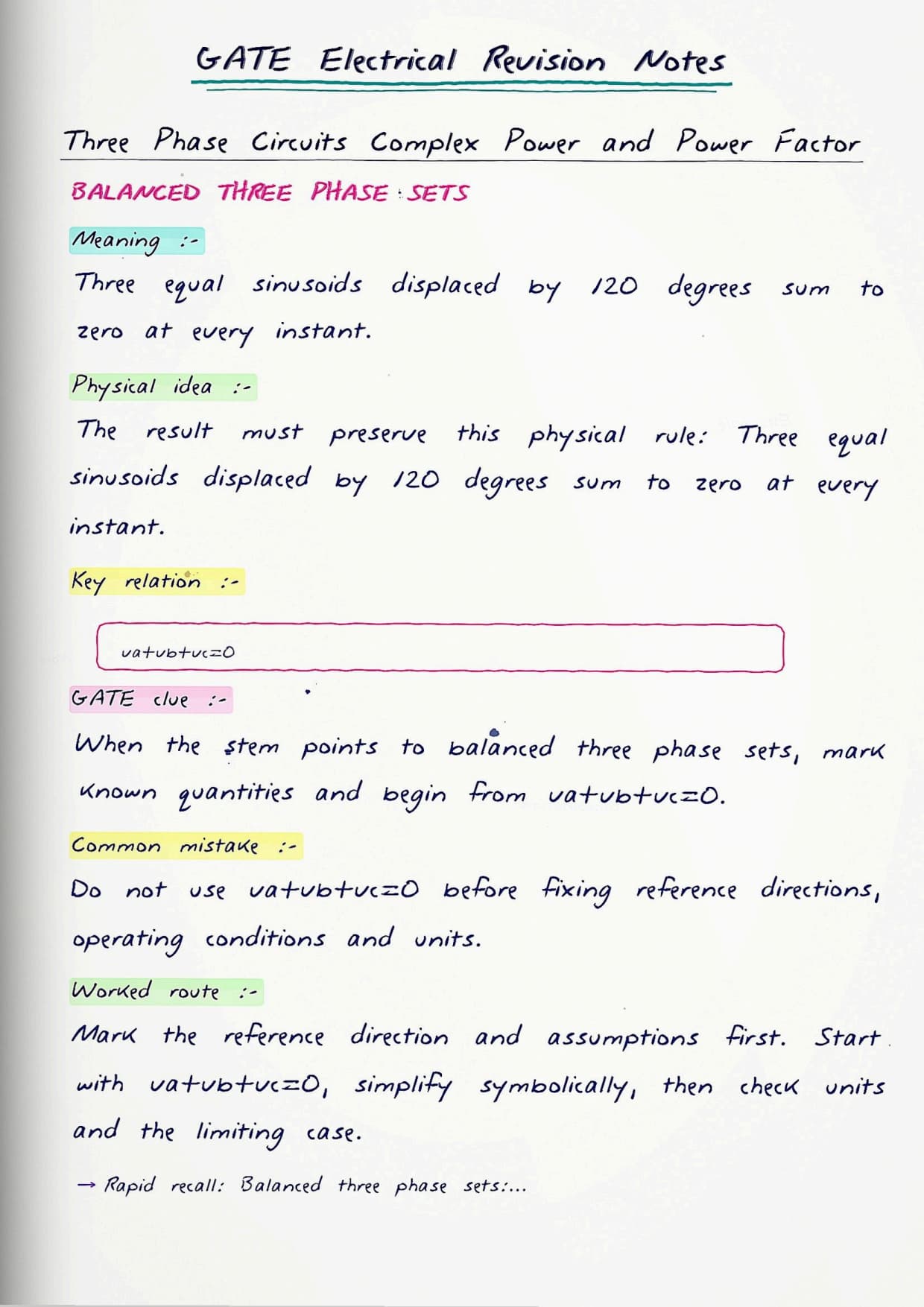
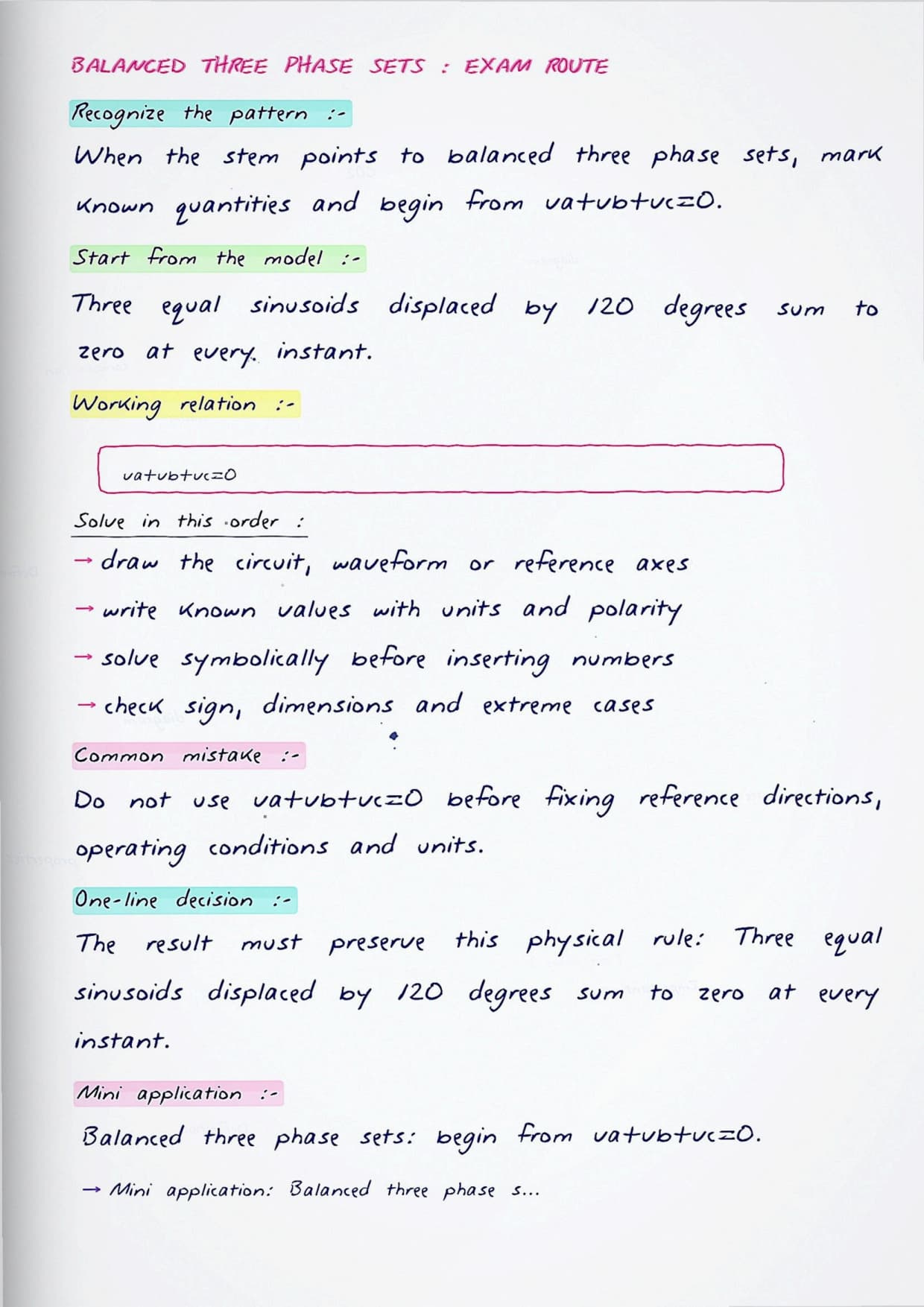
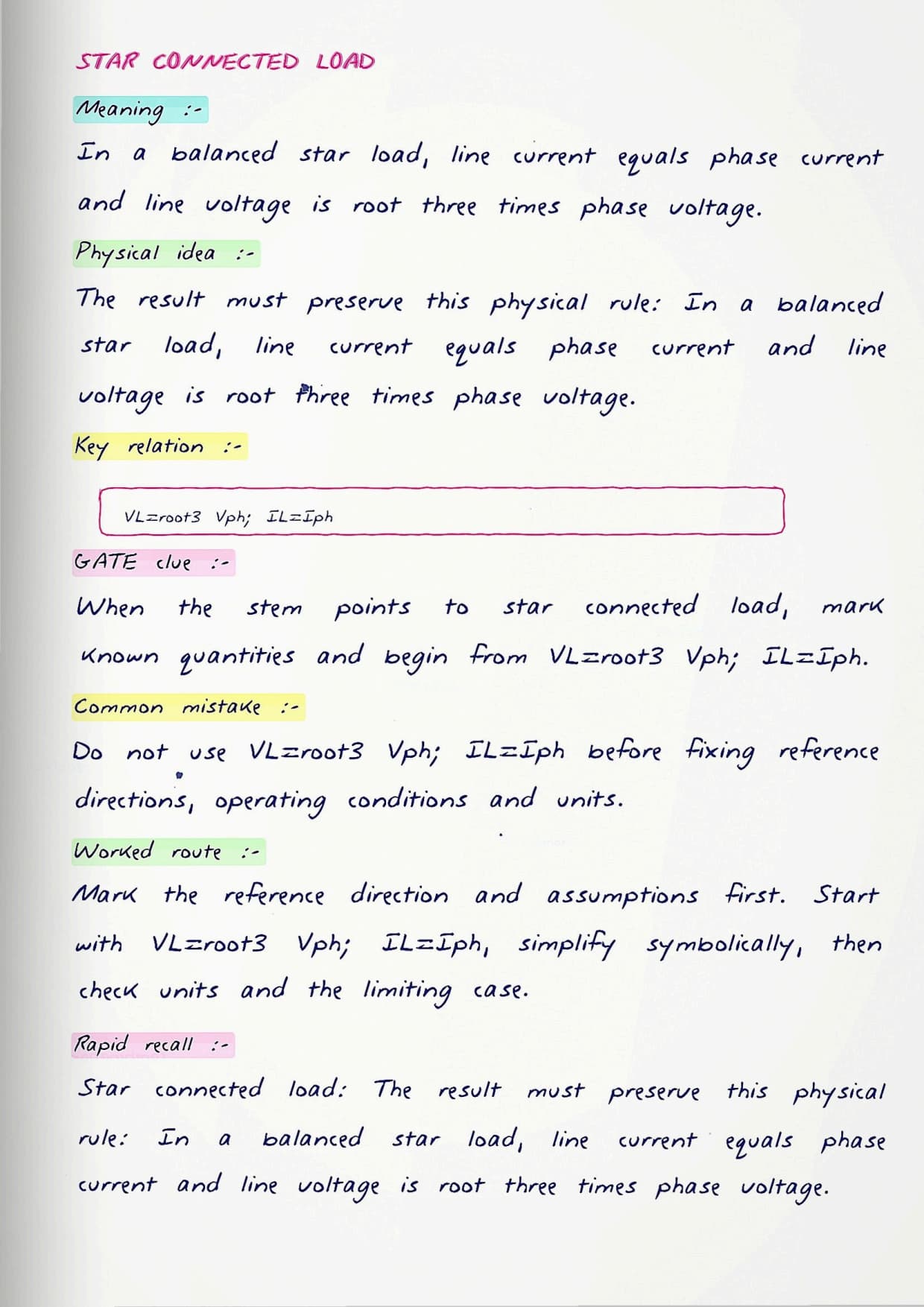
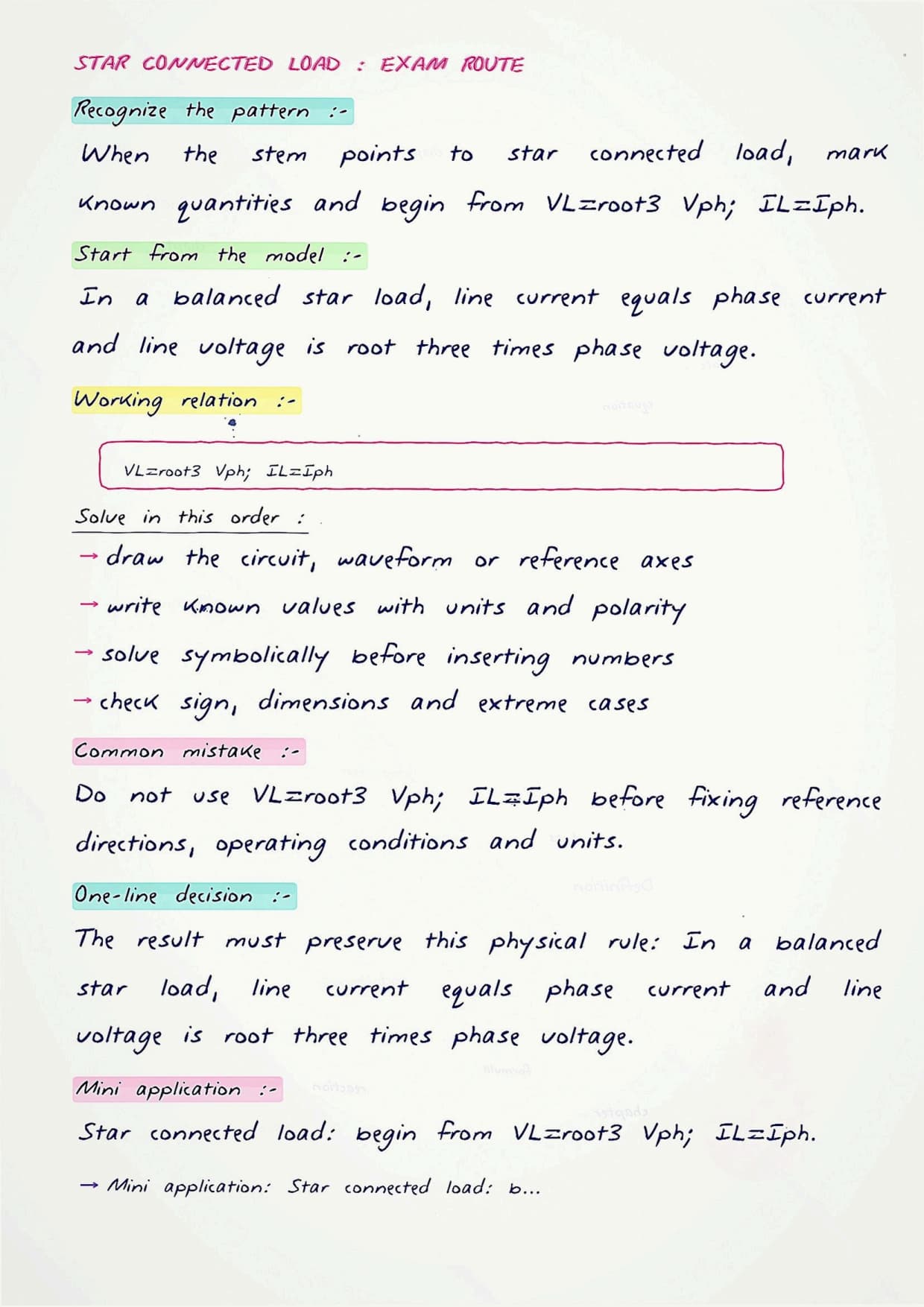
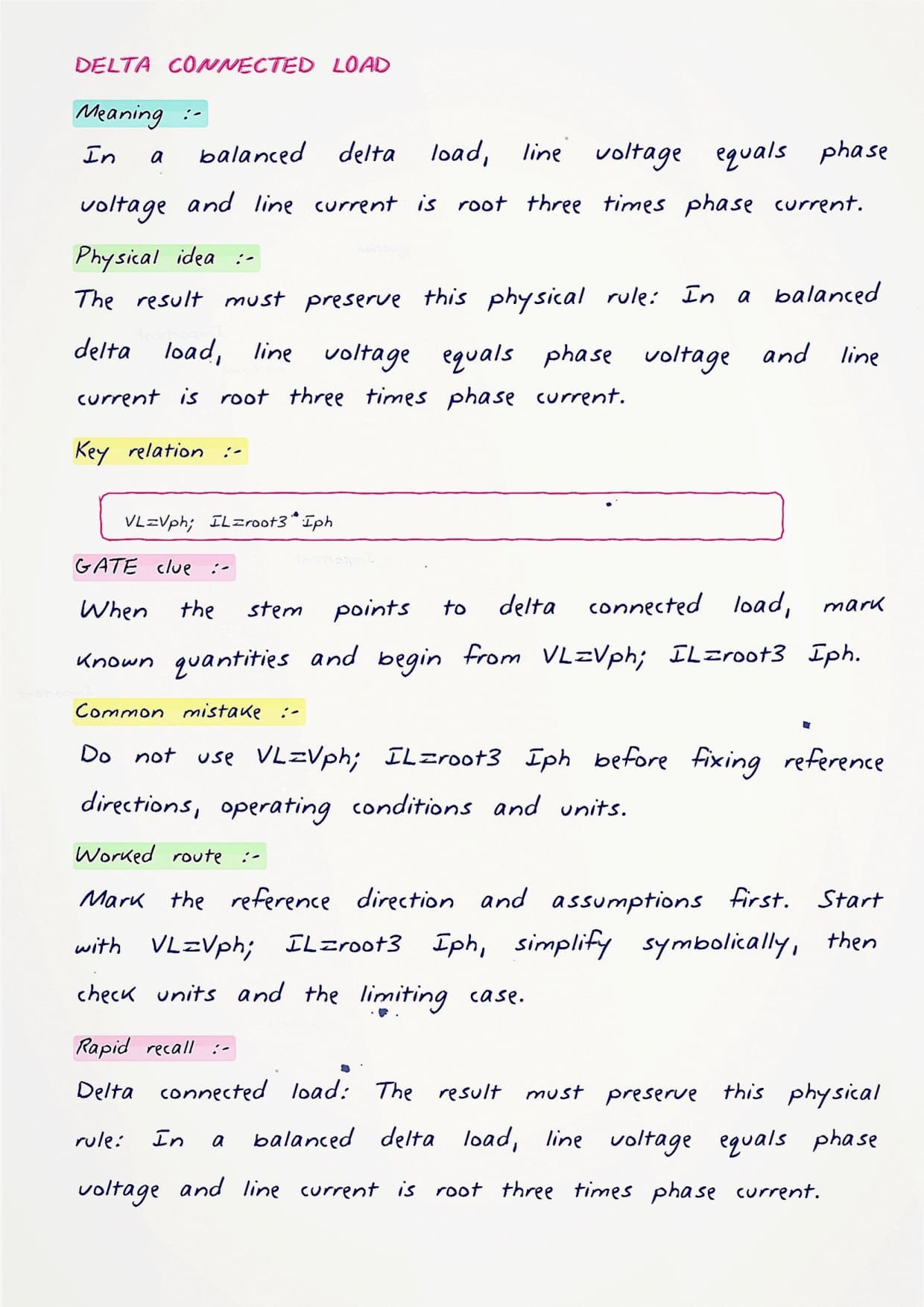
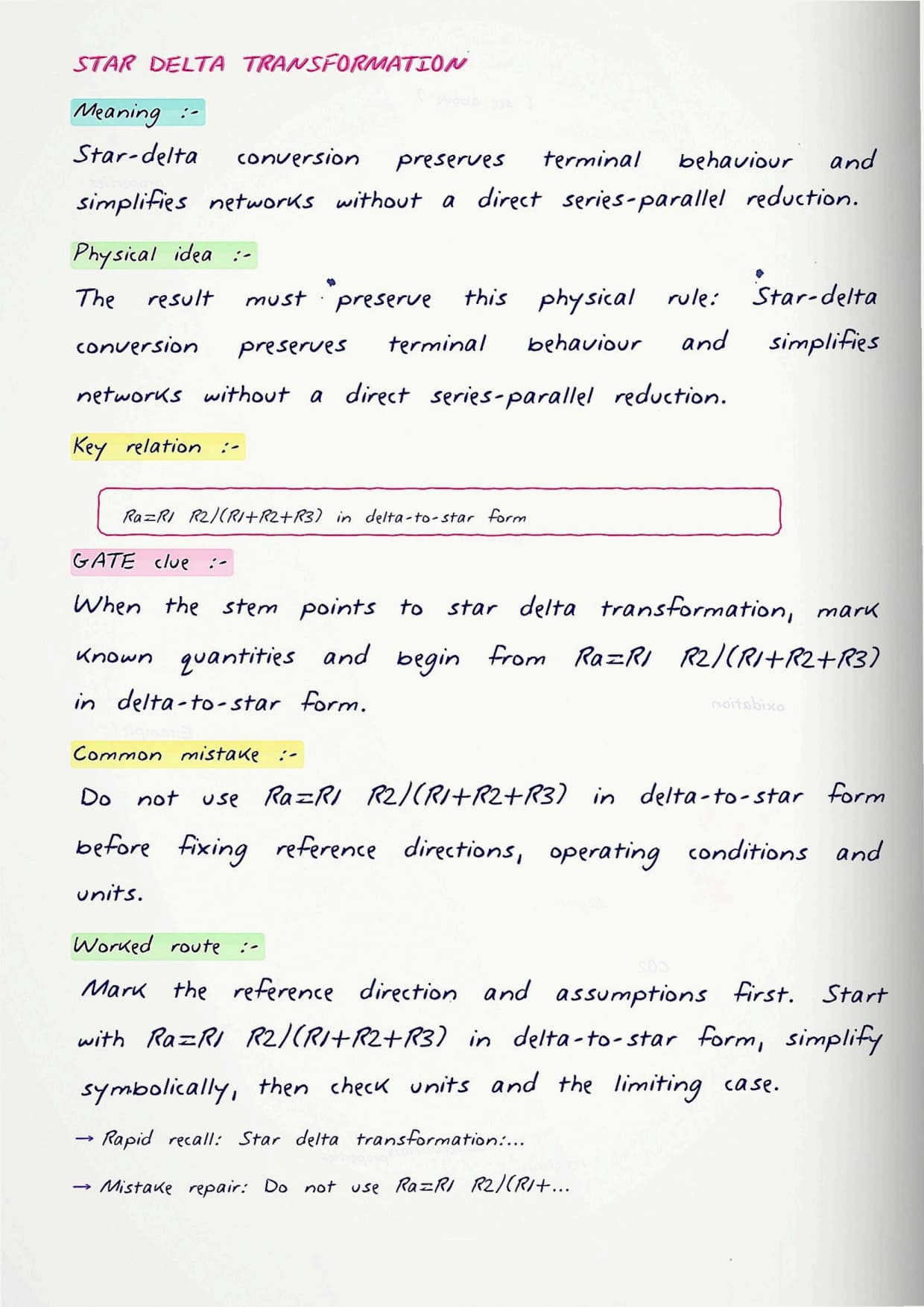
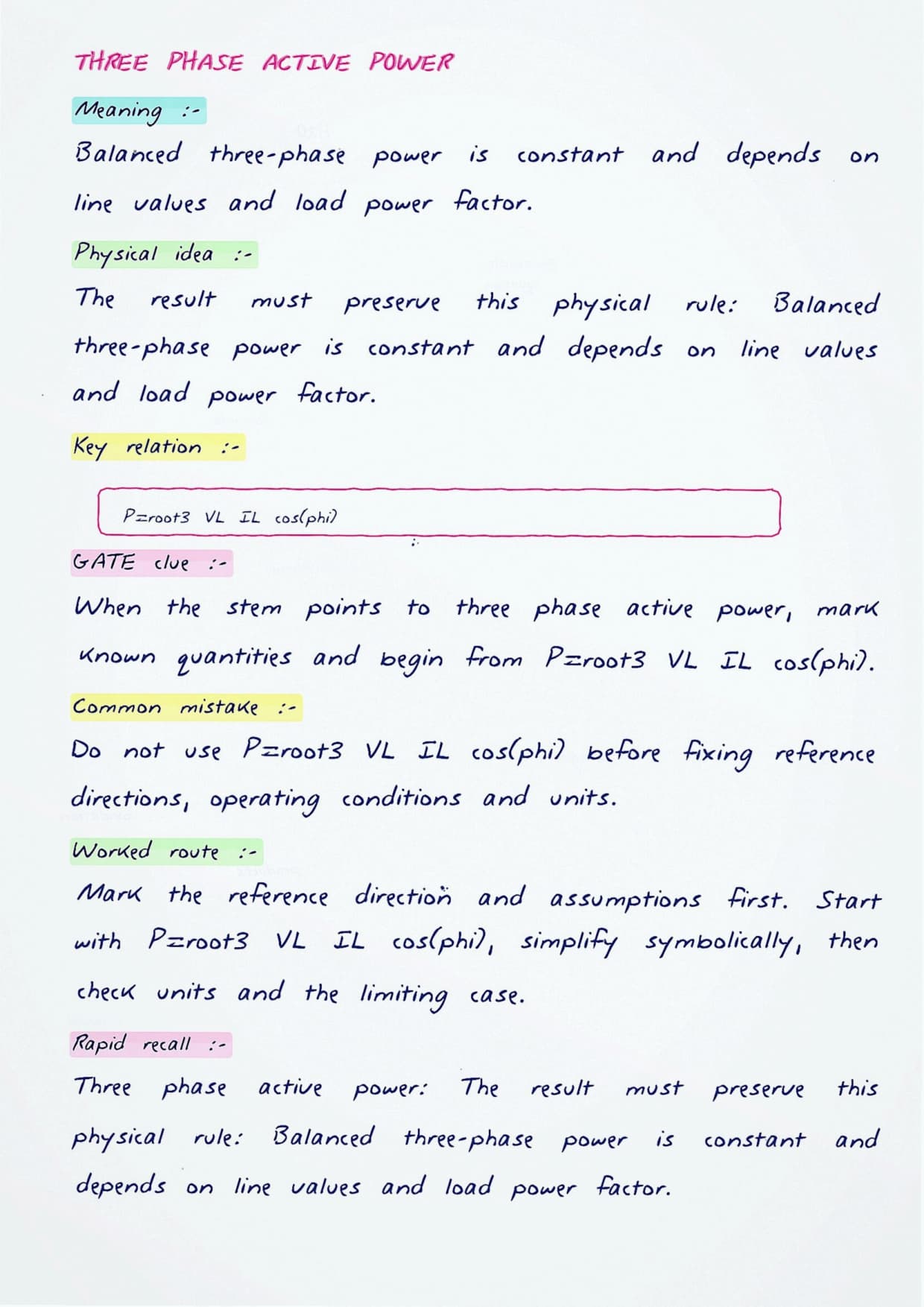
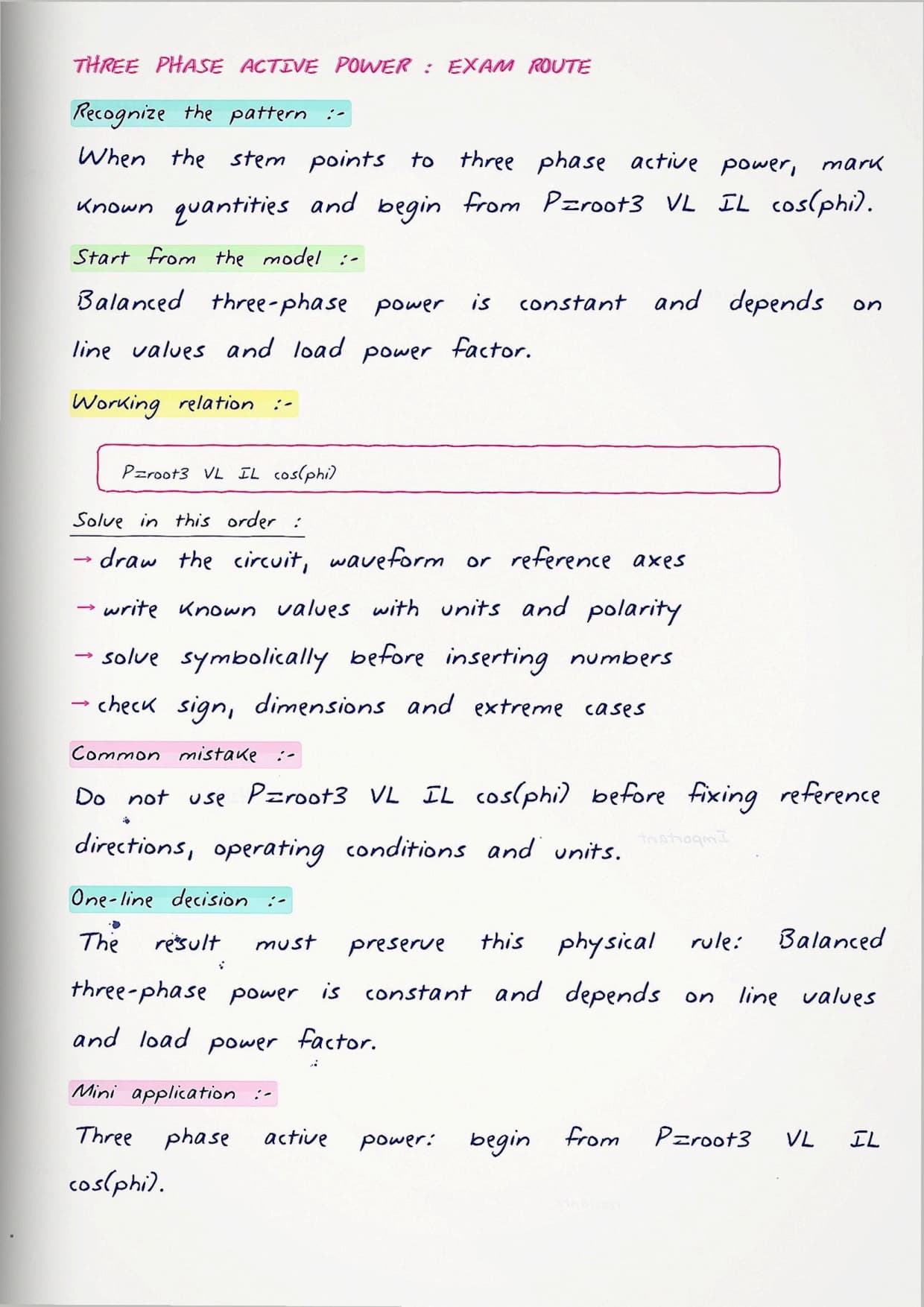
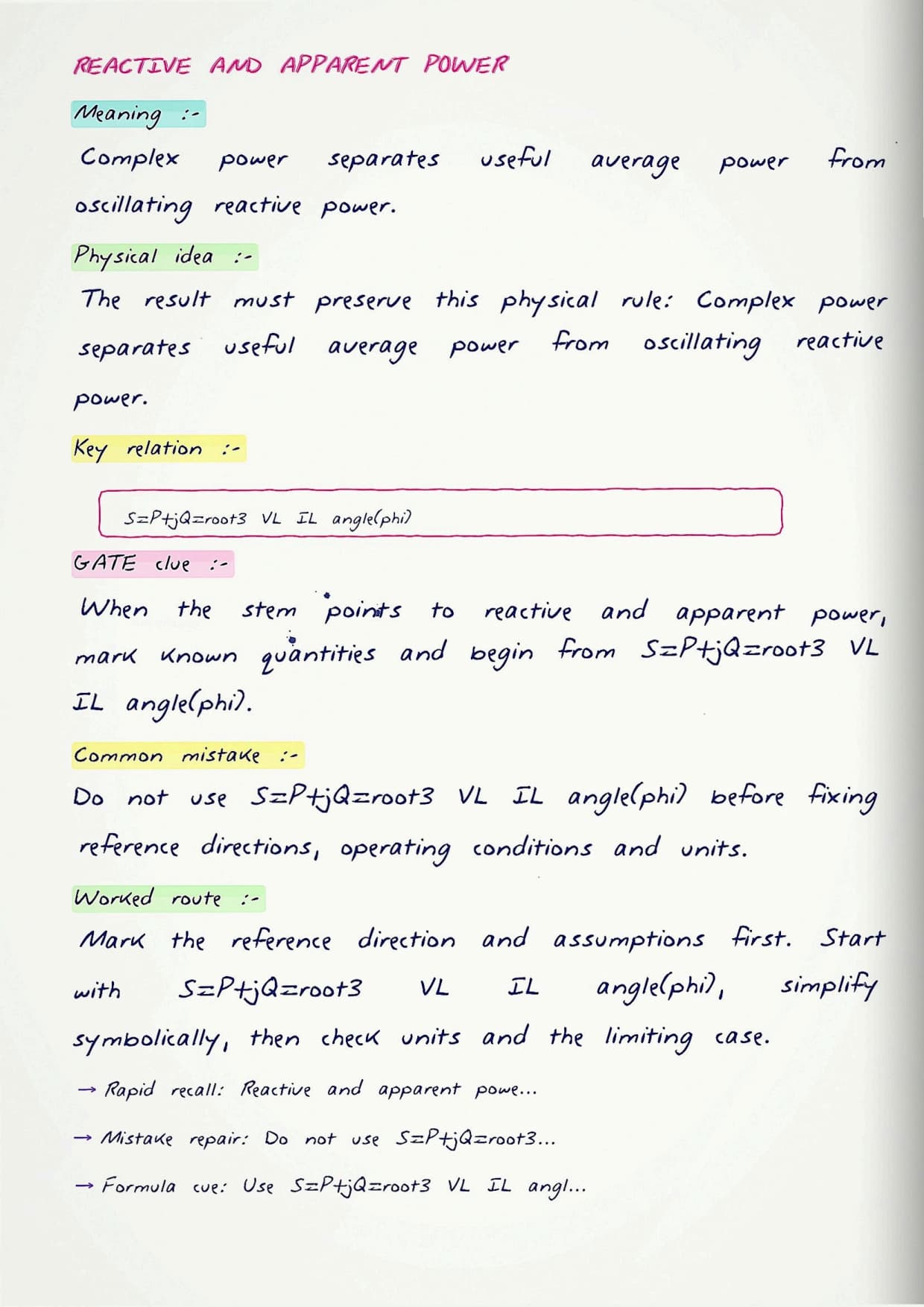
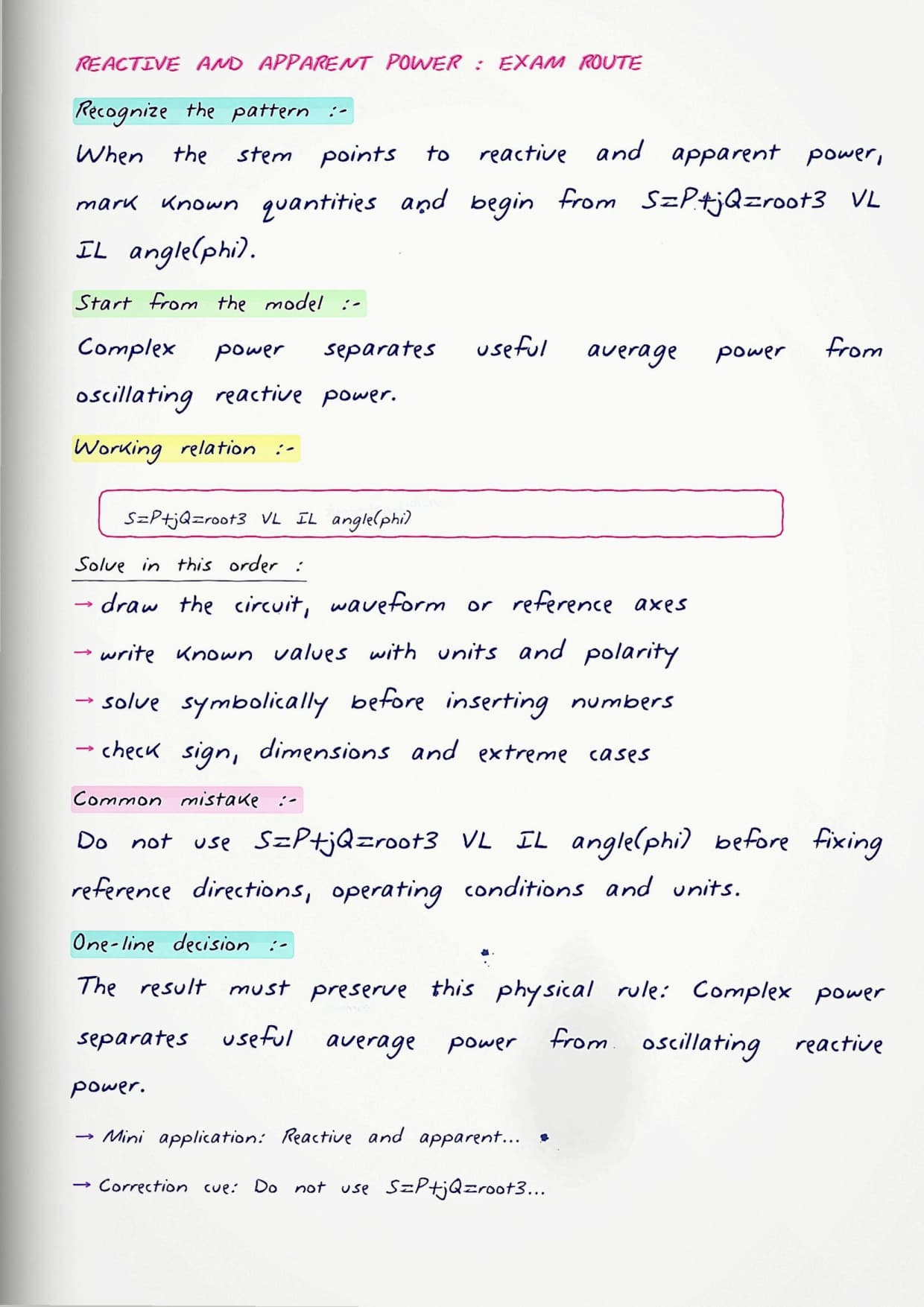
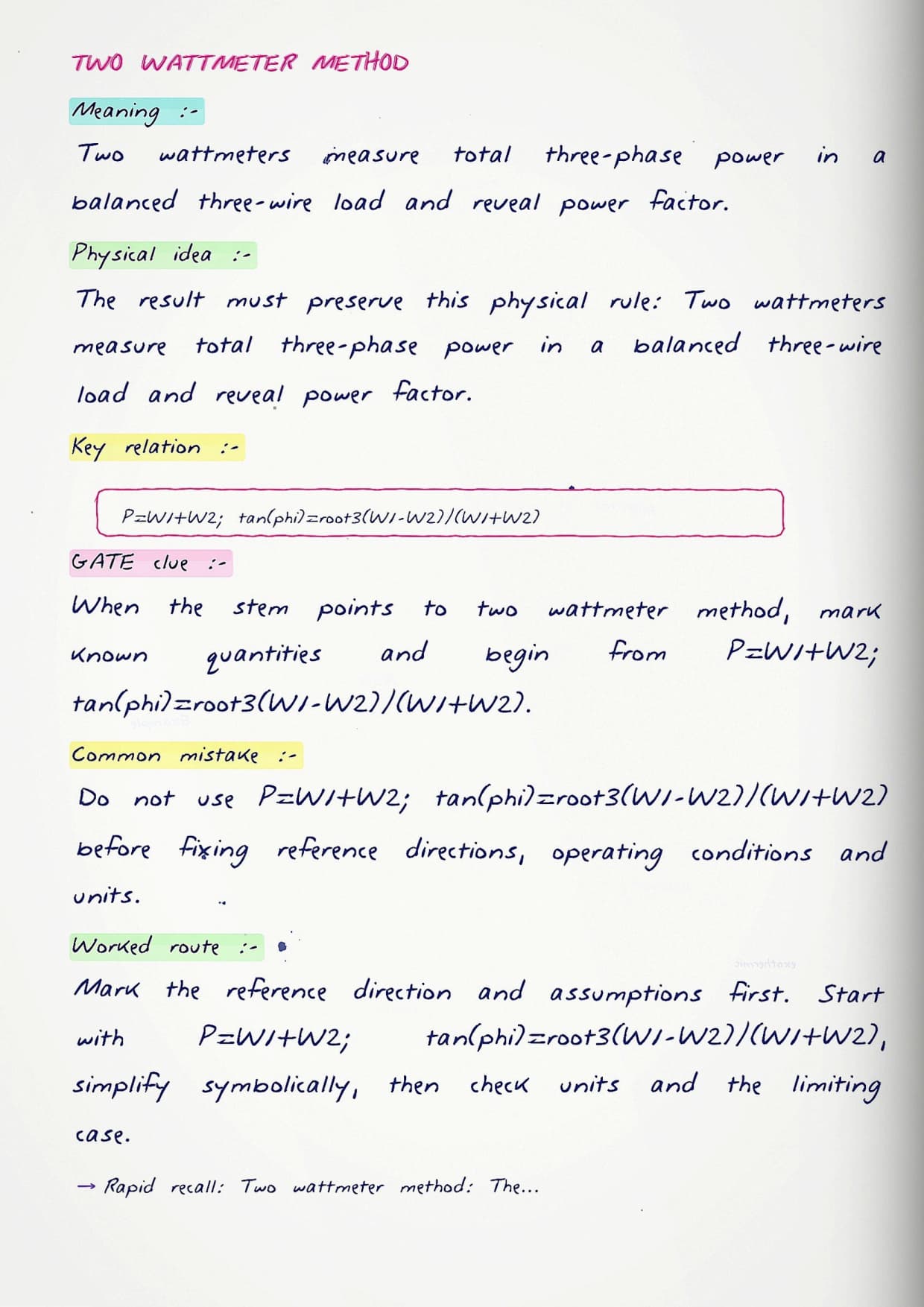
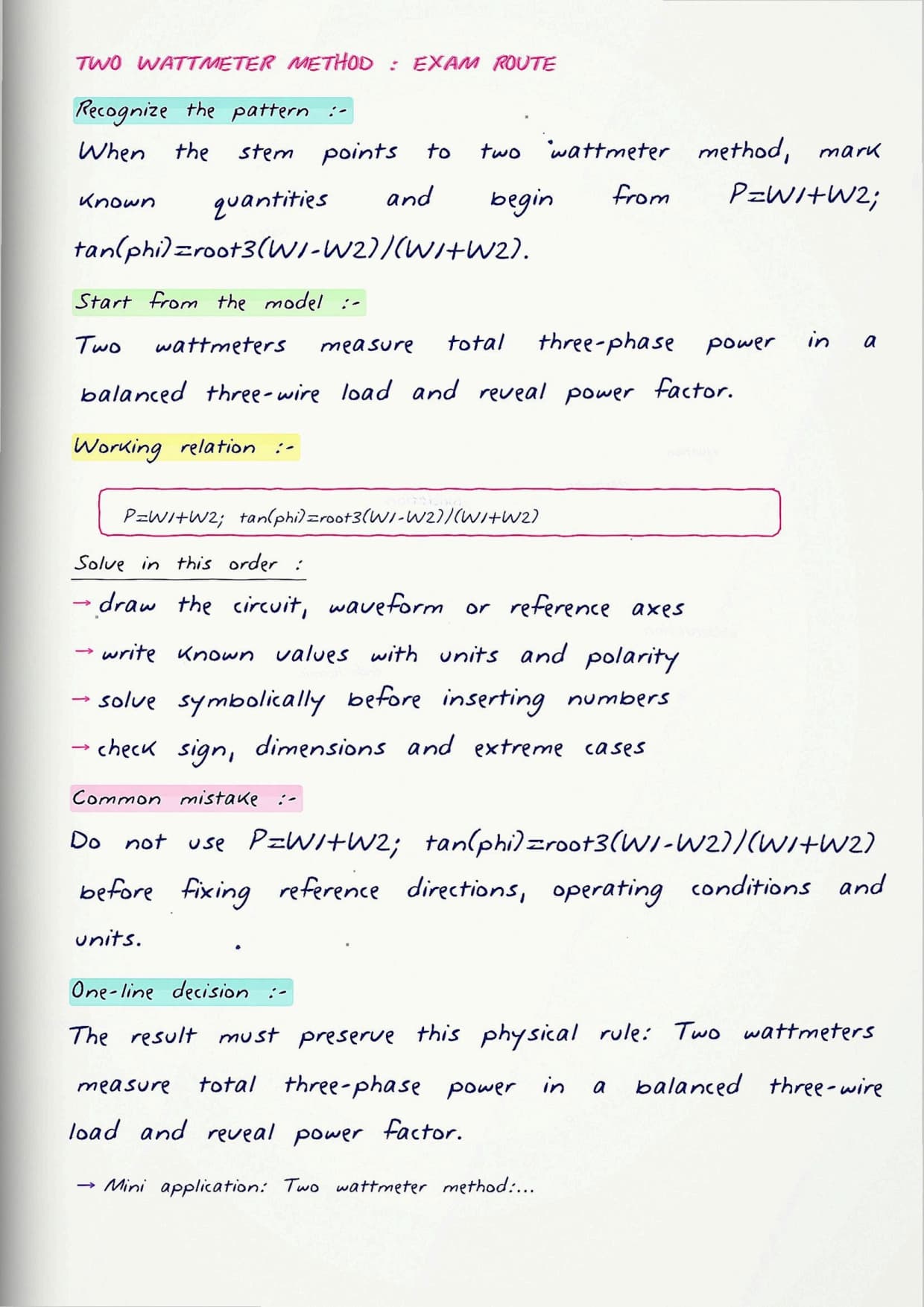
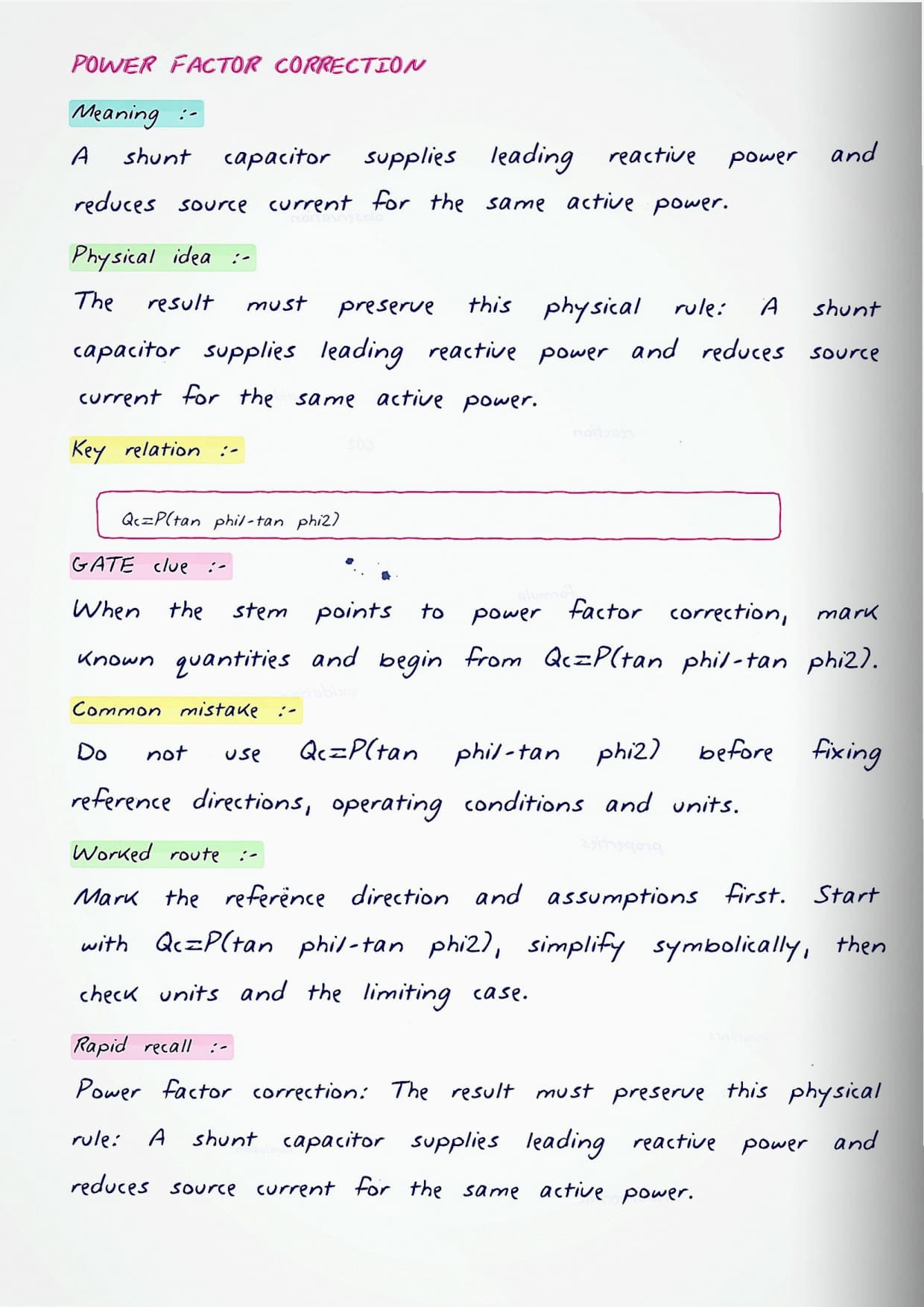
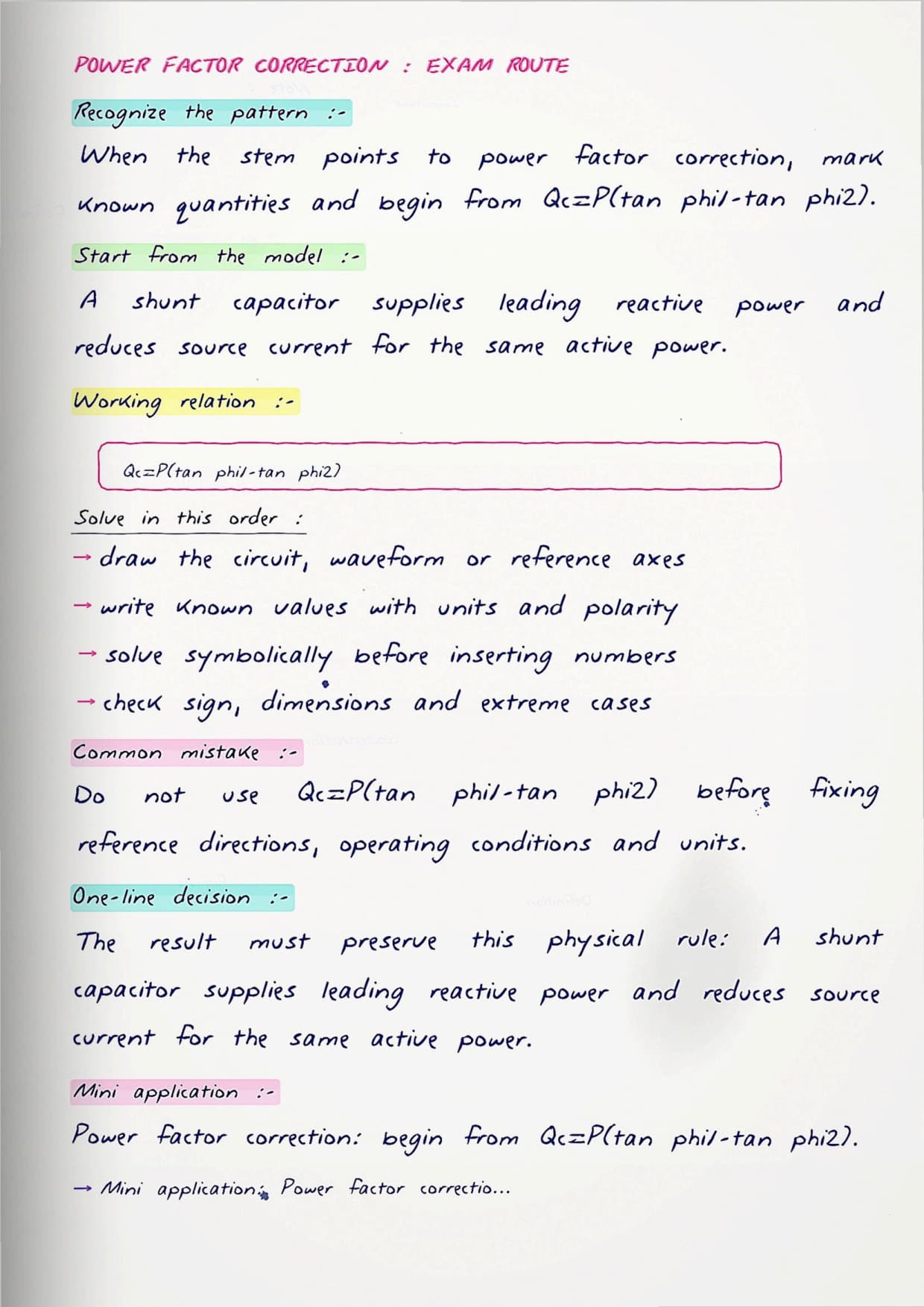
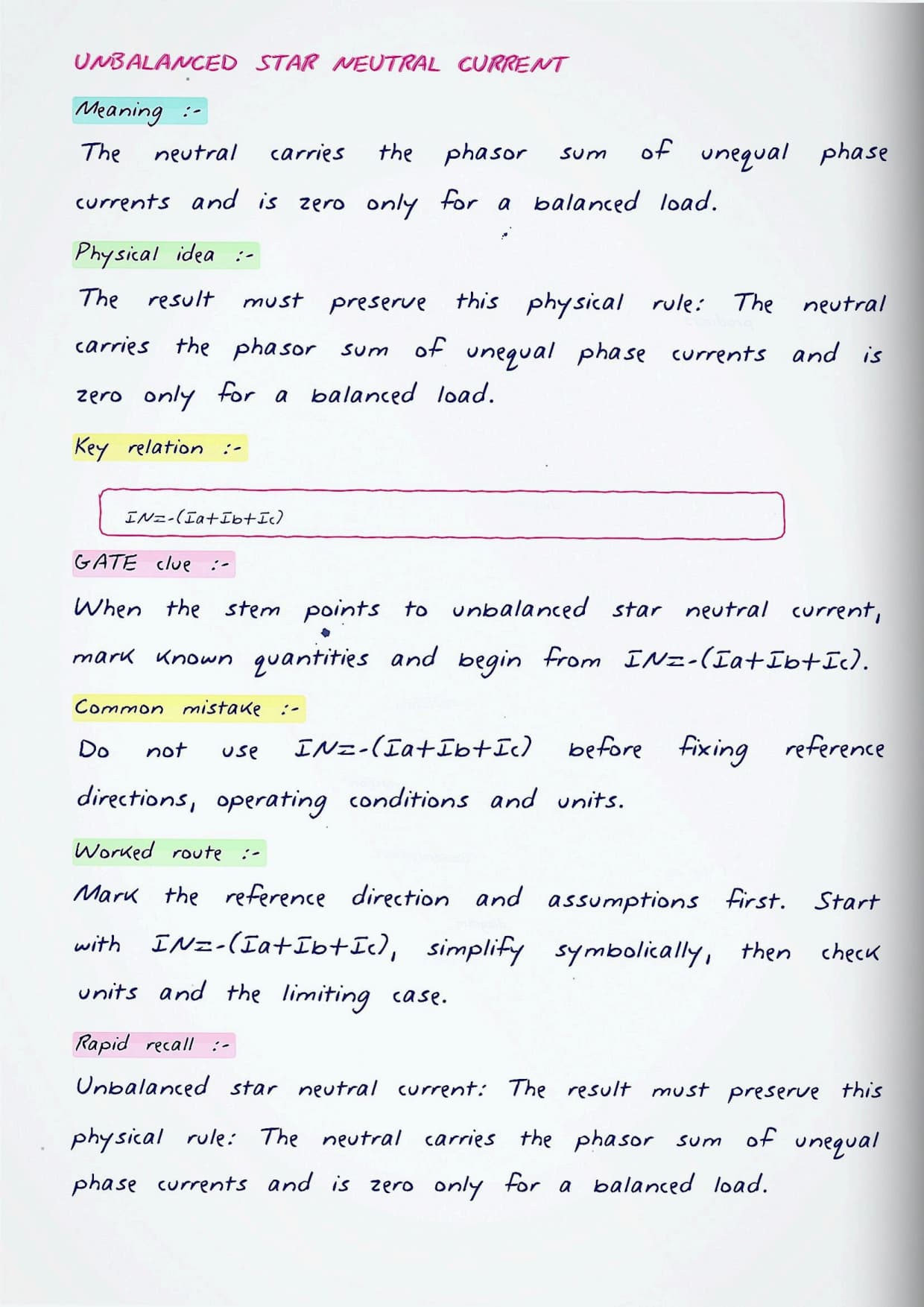
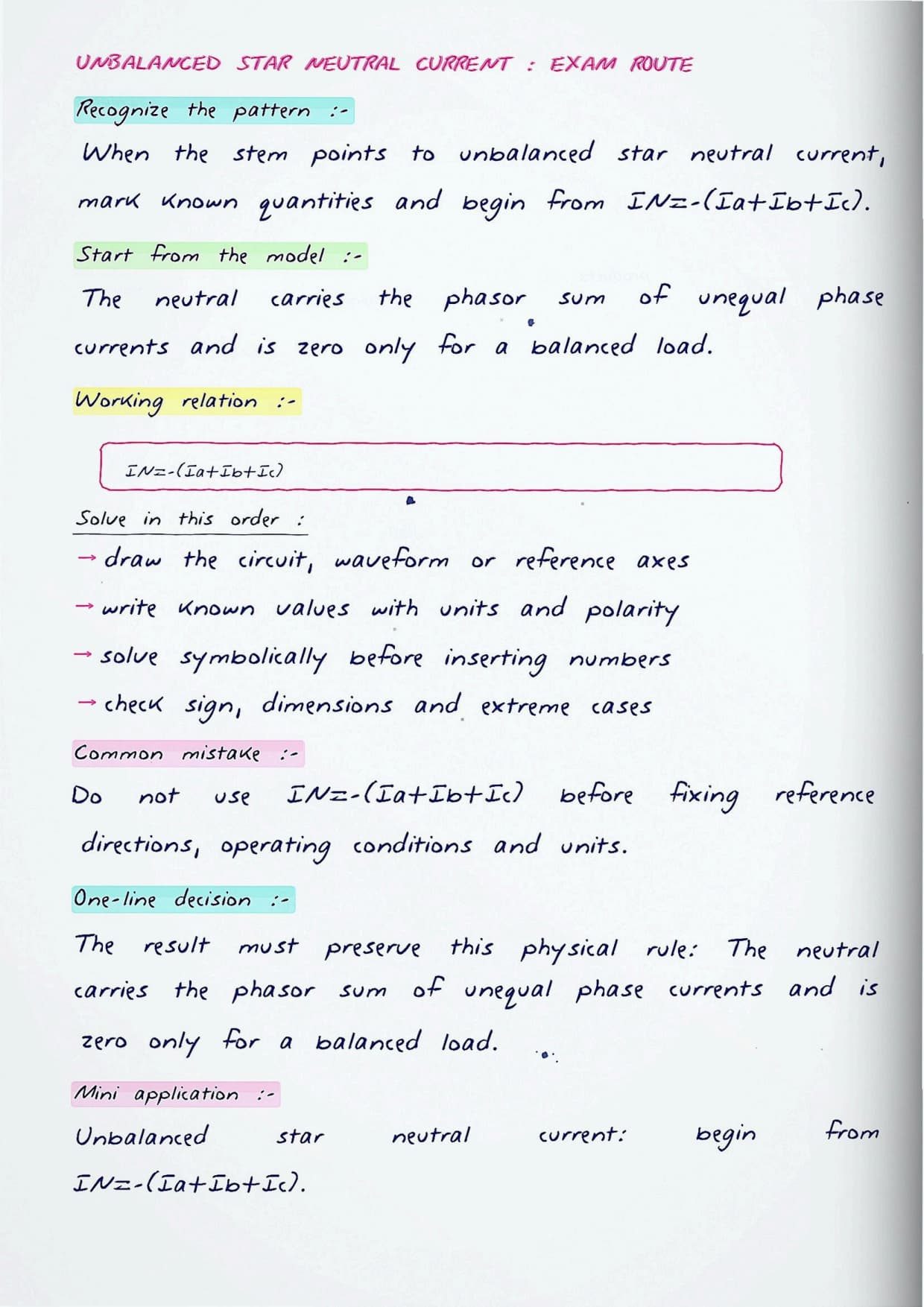
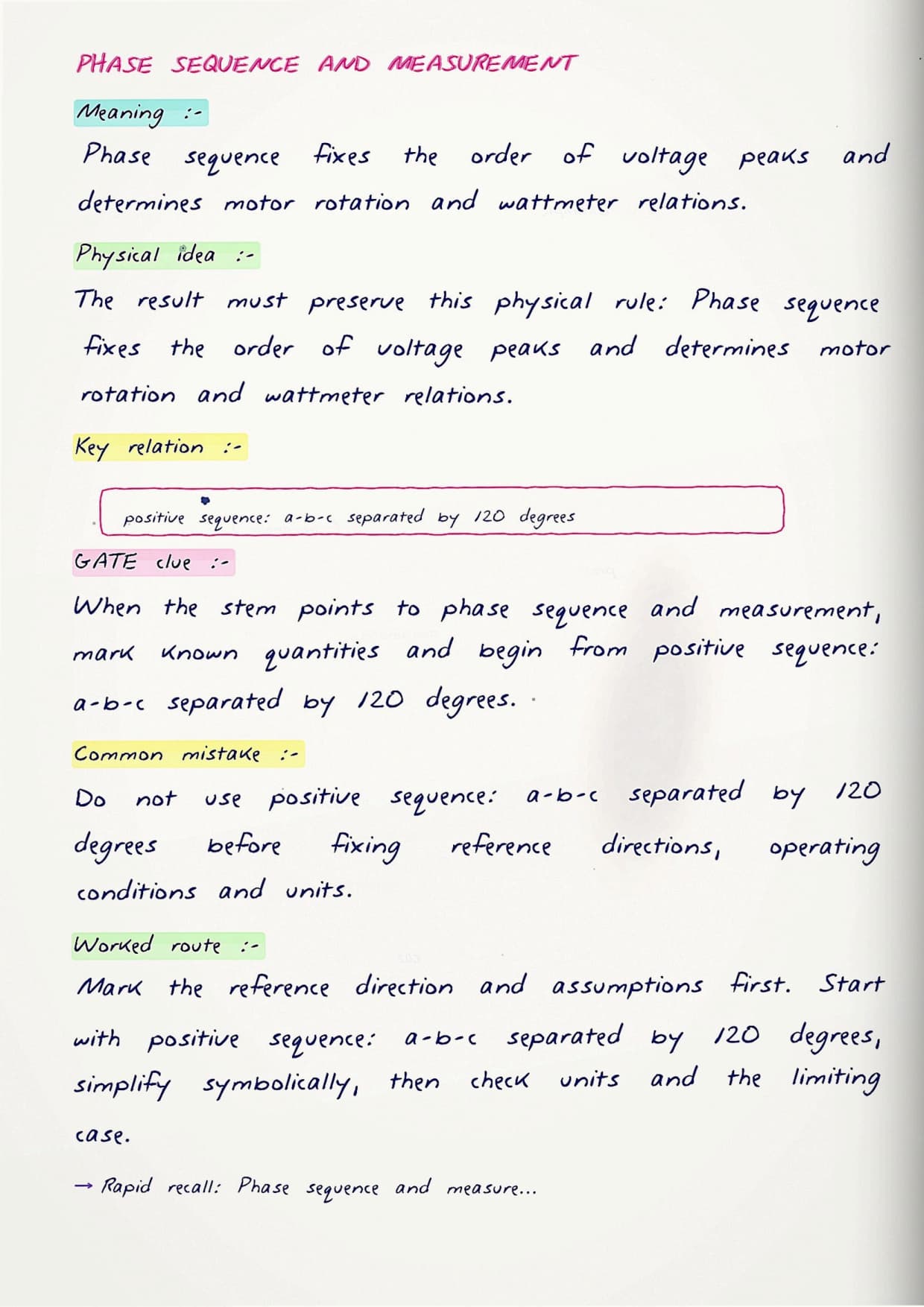
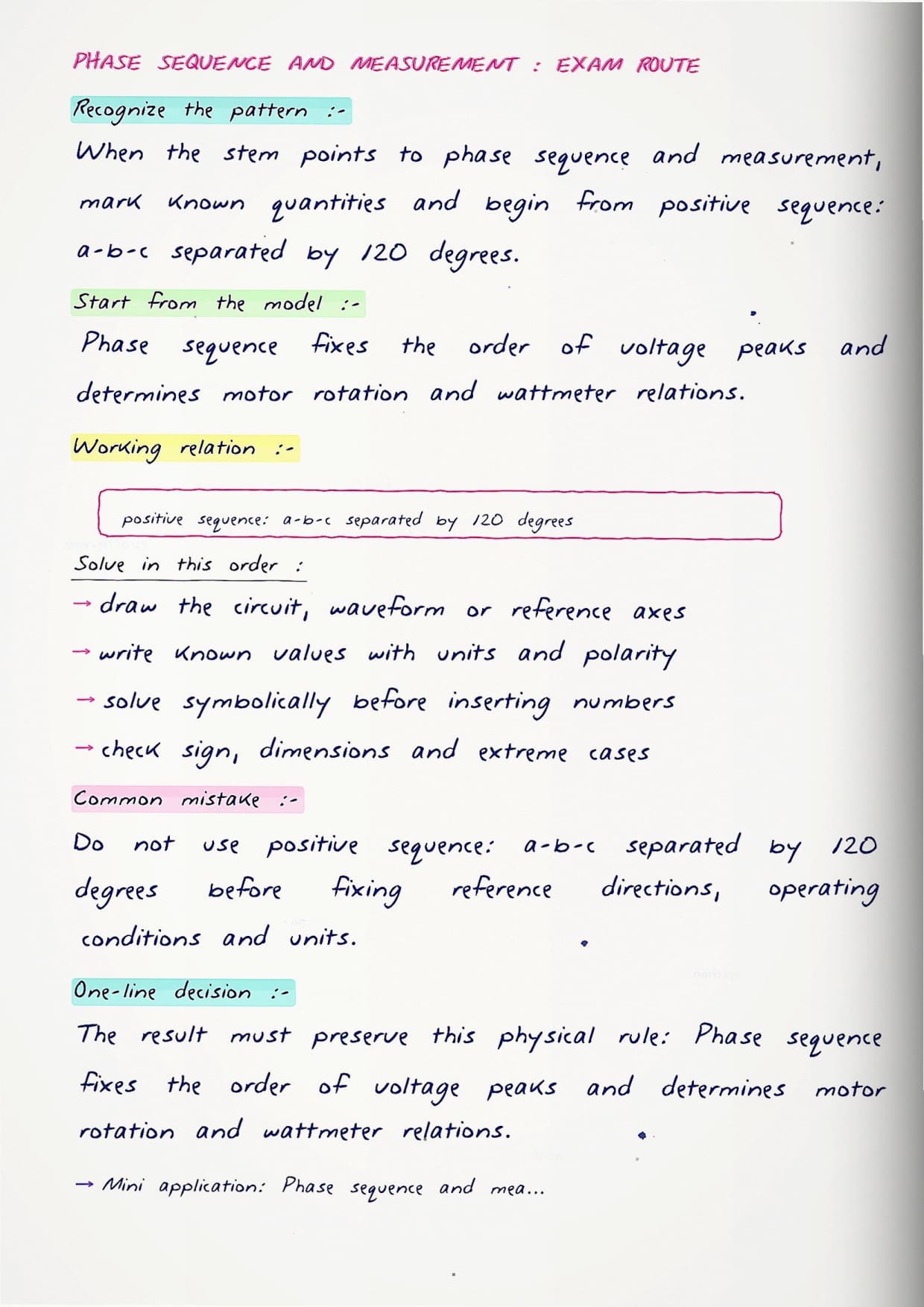
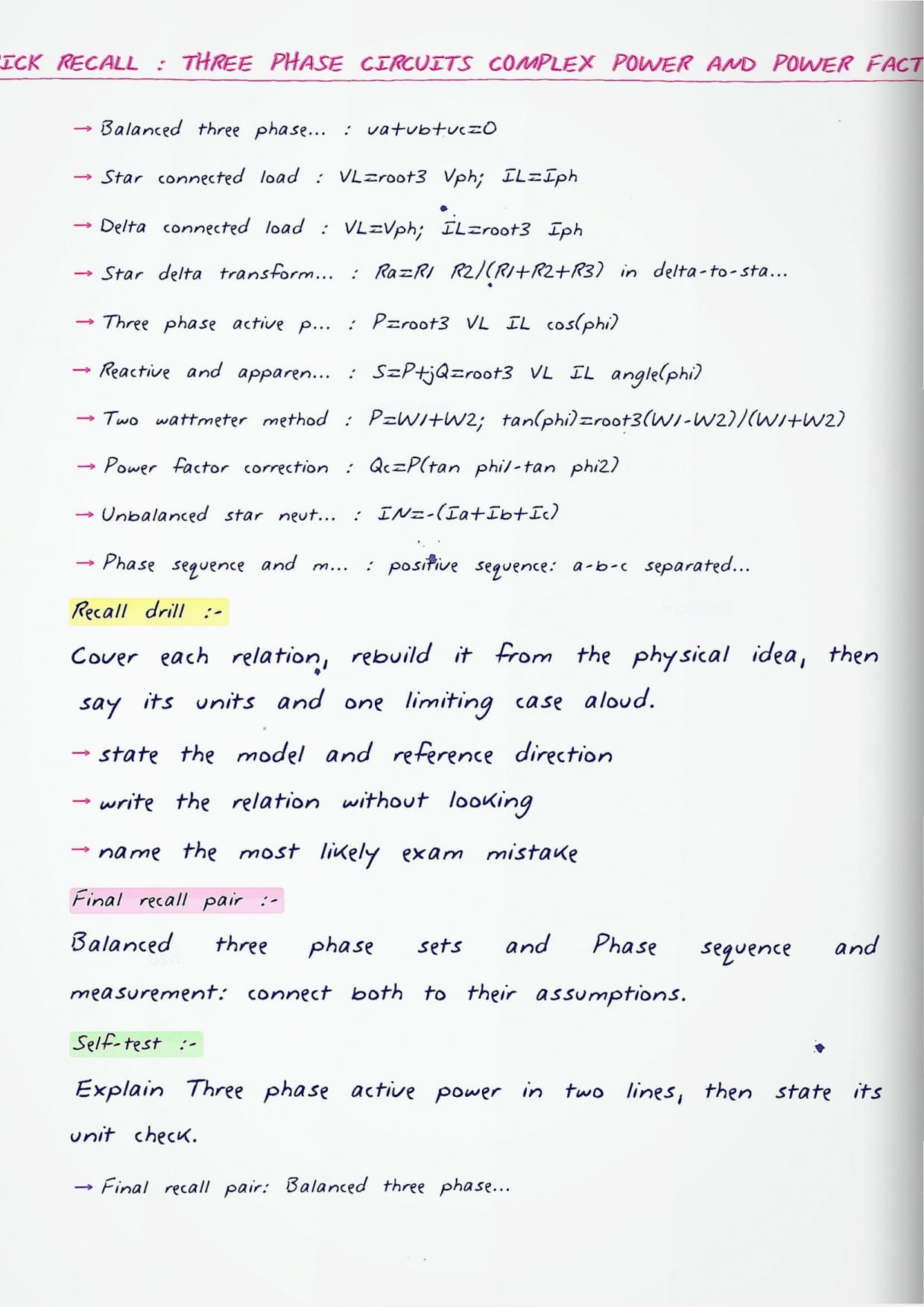
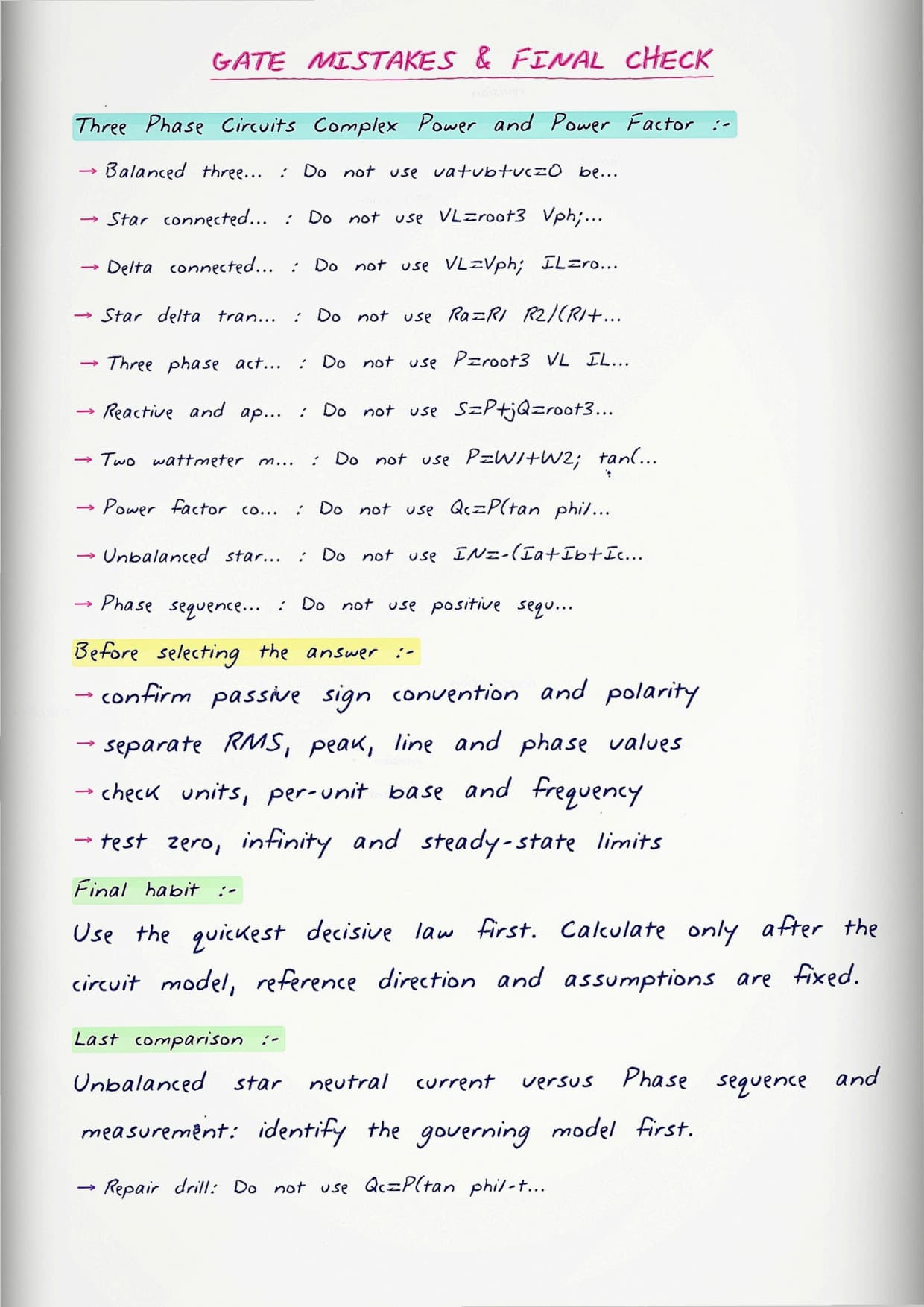
The pages open with clean hand-drawn phasor diagrams for balanced star and delta systems, then walk through the power triangle with active, reactive and apparent power sitting side by side. Every worked step is written out by hand, so students can see how line and phase quantities are related before the numbers are plugged in. The apparent power is drawn as the hypotenuse, the active power along the base, and the reactive power up the side, which makes the effect of a changing power factor easy to picture.
- Neat phasor sketches show the 120-degree phase displacement and how line voltage leads phase voltage in a star connection.
- A hand-drawn power triangle ties active power, reactive power and apparent power to the power factor angle.
- Solved examples on the two-wattmeter method show how the two readings give both total power and power factor.
What These GATE Three Phase Circuits Notes Cover
The notes build the topic from a single-phase refresher up to unbalanced three-phase analysis. They keep the focus on the relations that GATE tests most often, without drifting into long derivations.
- Balanced star and delta connections with line-to-phase relations for voltage and current.
- Complex power written as active plus reactive parts, with correct sign conventions.
- Power factor definition, leading and lagging behaviour, and simple correction ideas.
- Measurement of three-phase power using one, two and three wattmeters.
GATE Three Phase Circuits Quick Revision
Source: GeeksforGeeks- EC, EE & IN on YouTube
Topics Covered in GATE Three Phase Circuits
The syllabus coverage stays close to the official GATE Electrical outline for circuits. Each point below maps to a page or two of hand-written working with a solved example.
- Generation of a balanced three-phase supply and phase sequence.
- Star and delta transformation for sources and loads.
- Line and phase voltage, line and phase current relations.
- Instantaneous and average power in a three-phase load.
- Complex power, apparent power and the power triangle.
- Power factor, its improvement, and capacitor sizing basics.
- Two-wattmeter method for balanced and unbalanced loads.
- Unbalanced three-phase circuits solved by mesh and node methods.
How the Notes Are Organised
The reading order moves from pictures to numbers. Students first meet the phasor diagram, then the algebra, then a solved problem that reuses the same diagram, so the concept and the calculation stay linked in memory.
Later pages group the measurement methods together, so all the wattmeter cases sit in one place. This makes the last-day revision quick, because the two-wattmeter shortcut and its power factor formula are on facing pages. A short margin note beside each solved sum reminds students whether the load is star or delta, which is the detail that most often decides the final answer. The unbalanced cases are kept at the very end, once the balanced tools are firm, so nothing new distracts from the harder mesh working.
How GATE Three Phase Circuits Links to Other Topics
This topic is a bridge between basic circuit theory and the heavier machines and power subjects. Getting the power definitions right here pays off across half the syllabus.
- Power Systems uses the same per-phase and complex power ideas for load flow.
- Electrical Machines borrow the phasor and power factor treatment for transformers and induction motors.
- Power Electronics reuses reactive power and power factor when studying converters.
- Electromagnetic Fields connects through the energy stored in balanced loads.
Important Topics in GATE Three Phase Circuits
A few sub-topics carry most of the marks and also hide the common mistakes. The notes flag each trap right next to the working.
- Mixing up line and phase values in a delta load is the single most frequent slip.
- The two-wattmeter method sign, one reading can go negative at low power factor.
- Reactive power sign for leading versus lagging power factor.
- Star-delta conversion of an unbalanced load before applying mesh analysis.
- Capacitor rating for a target power factor without changing the real power.
How to Prepare GATE Three Phase Circuits with Handwritten Notes
The notes work best as an active revision tool rather than a first textbook. A simple staged plan keeps the topic fresh through the whole preparation.
- First read: follow every phasor diagram and redraw it once by hand.
- Second pass: cover the solution and re-derive the two-wattmeter result yourself.
- PYQs: solve five years of GATE questions on power factor and measurement.
- Final week: skim only the boxed formulas and the trap notes.
Why These Notes Help You Score Better
Because every relation is shown as a picture first and a formula second, the topic stops feeling abstract and starts feeling mechanical. The solved wattmeter cases mean there are no surprises on exam day, and the trap notes catch the errors that usually cost easy marks. Students who revise from these pages walk into the paper able to finish a three-phase question in under two minutes.
GATE Electrical Three Phase Circuits Handwritten Notes FAQs
Ques. How many marks does three phase circuits carry in GATE Electrical?
Ans. Three phase circuits, complex power and power factor together carry roughly 3 to 6 marks in a typical GATE Electrical paper, split across the electric circuits section.
Ques. What is the two-wattmeter method used for?
Ans. It measures total power in a three-phase load using only two wattmeters, and the ratio of the two readings also gives the power factor of a balanced load.
Ques. Do these handwritten notes include solved examples?
Ans. Yes. Each concept is followed by a hand-worked example, including phasor diagrams and step-by-step power calculations, so students can check their own method.
Ques. Is knowing power factor correction enough for GATE?
Ans. Power factor correction is important, but students should also master the line-phase relations and the two-wattmeter sign rule, since those appear more often in the exam.



Comments