




Induction Machines is a heavily tested, high-weightage topic in GATE Electrical, usually worth about 7 to 10 marks in the paper. It belongs to the Electrical Machines section, and its ideas return in Power Electronics drives, transformer equivalent circuits, and Control Systems speed regulation. These handwritten notes cover the full topic in a compact, exam-focused form.
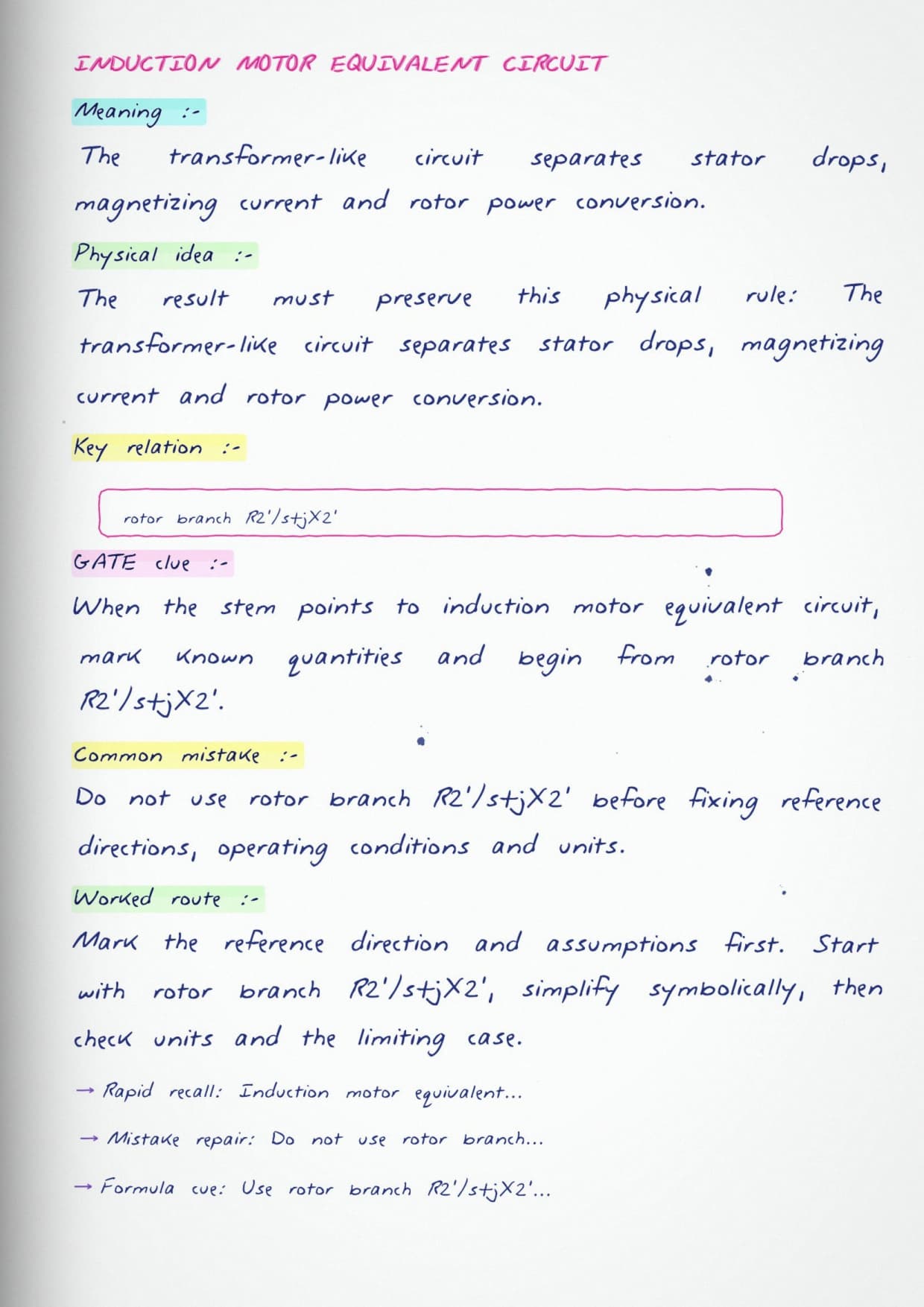
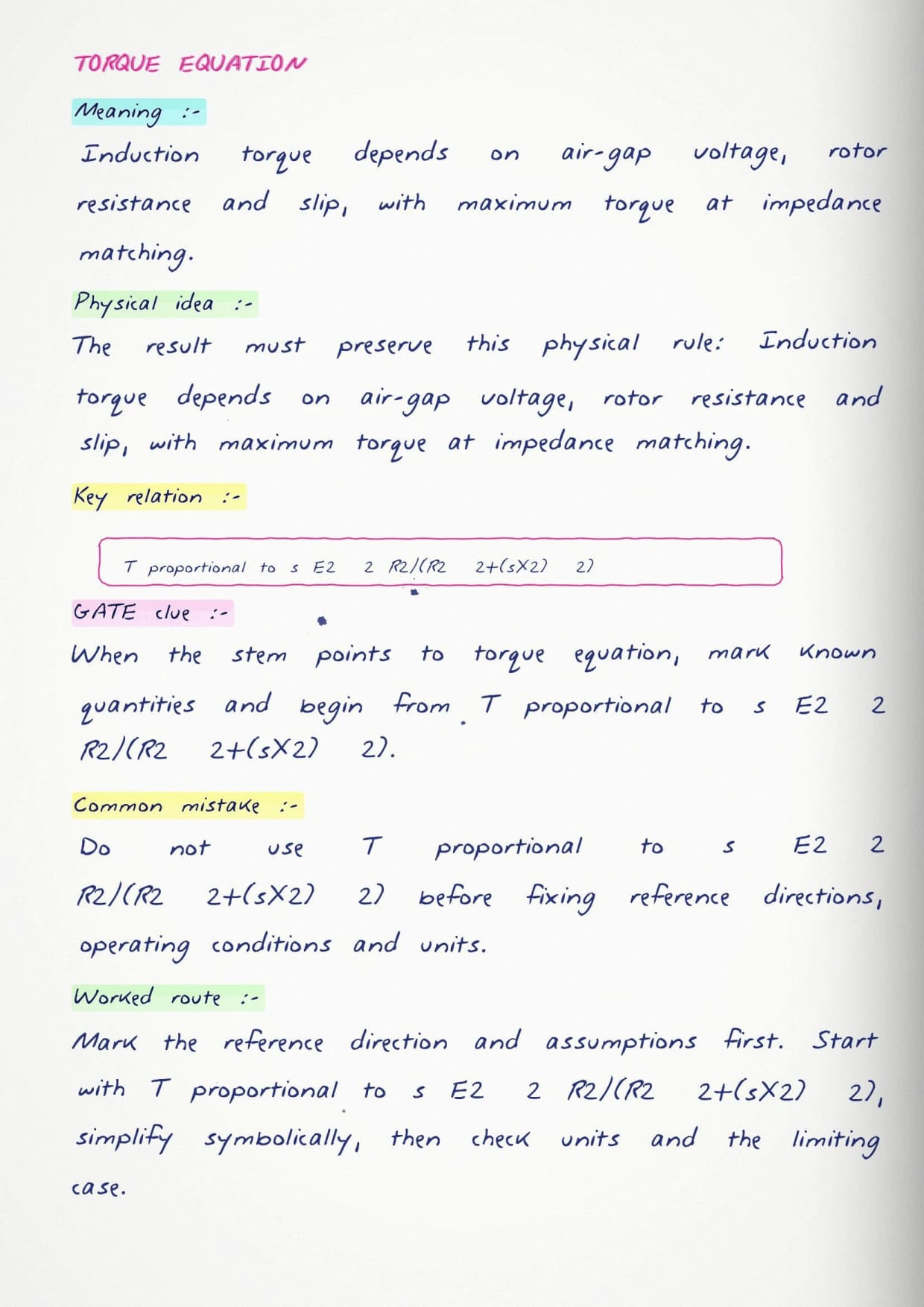
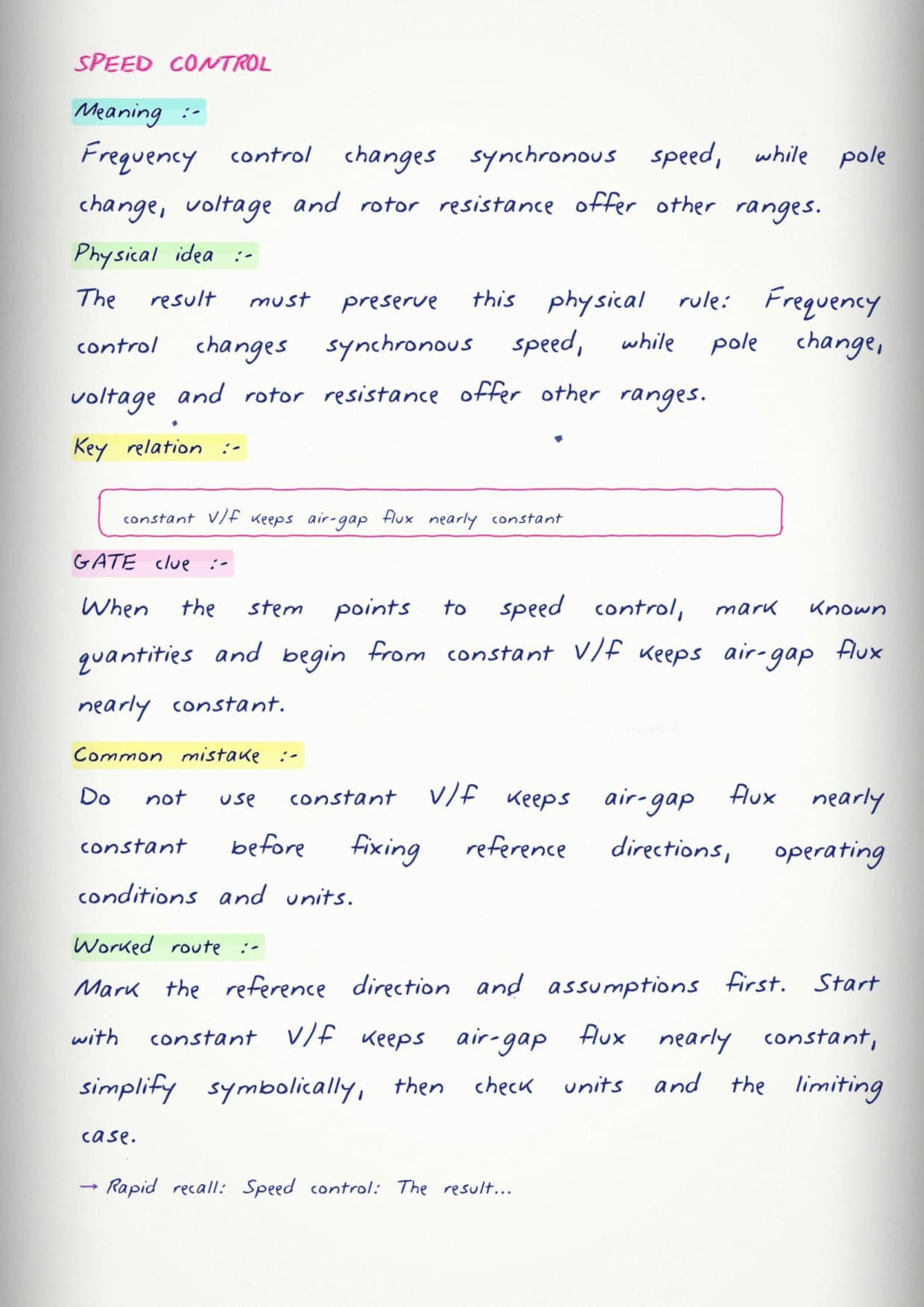
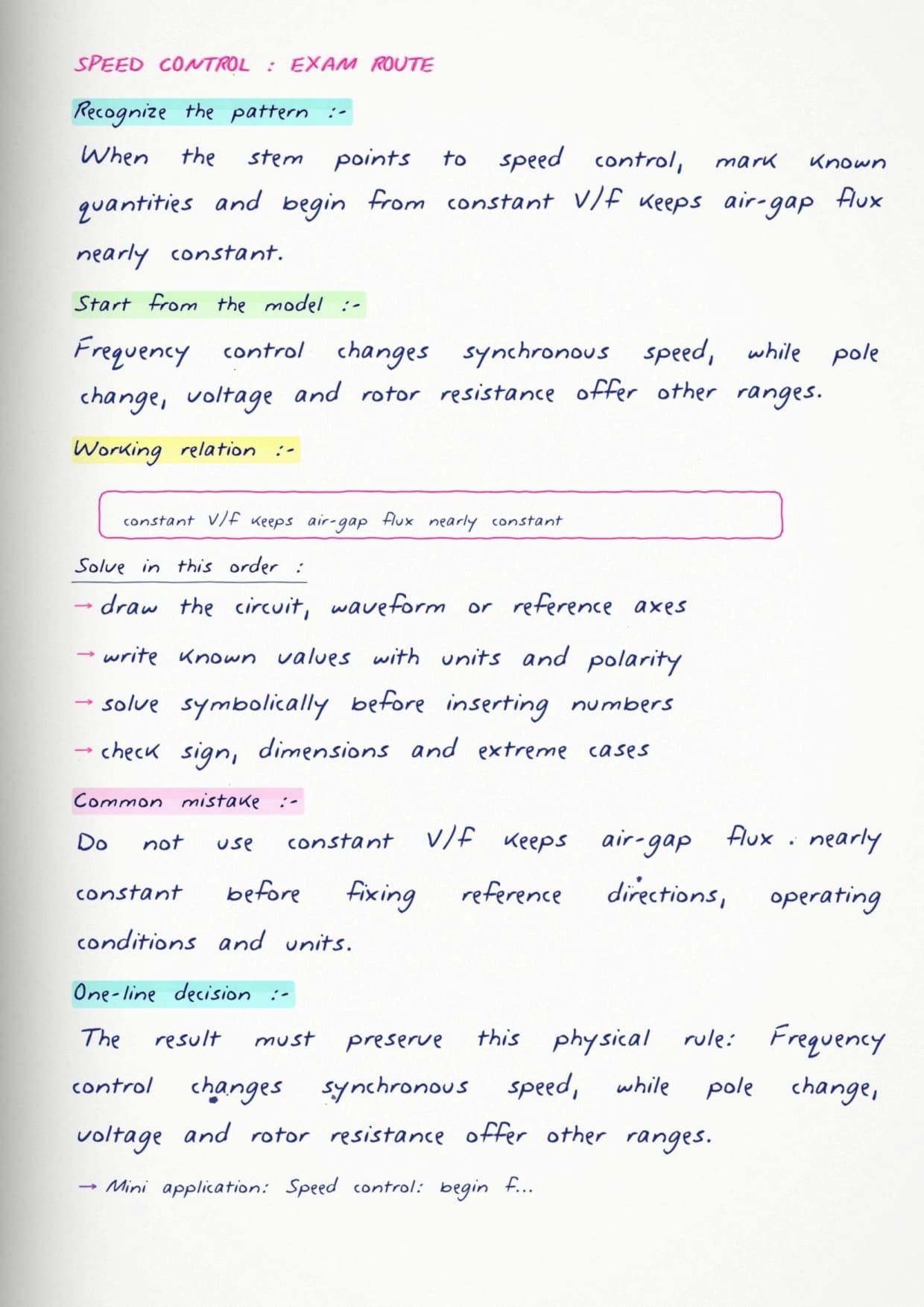
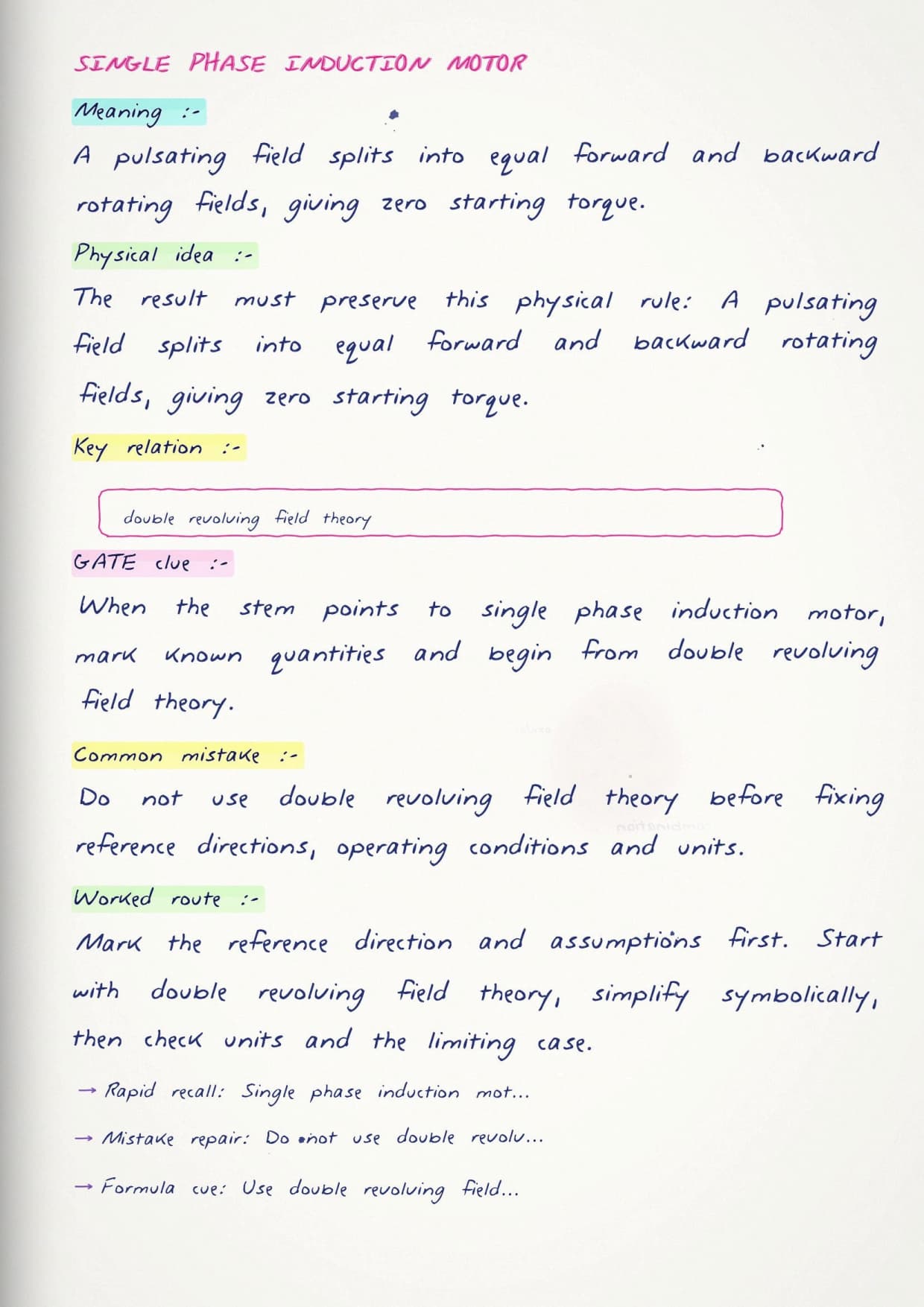
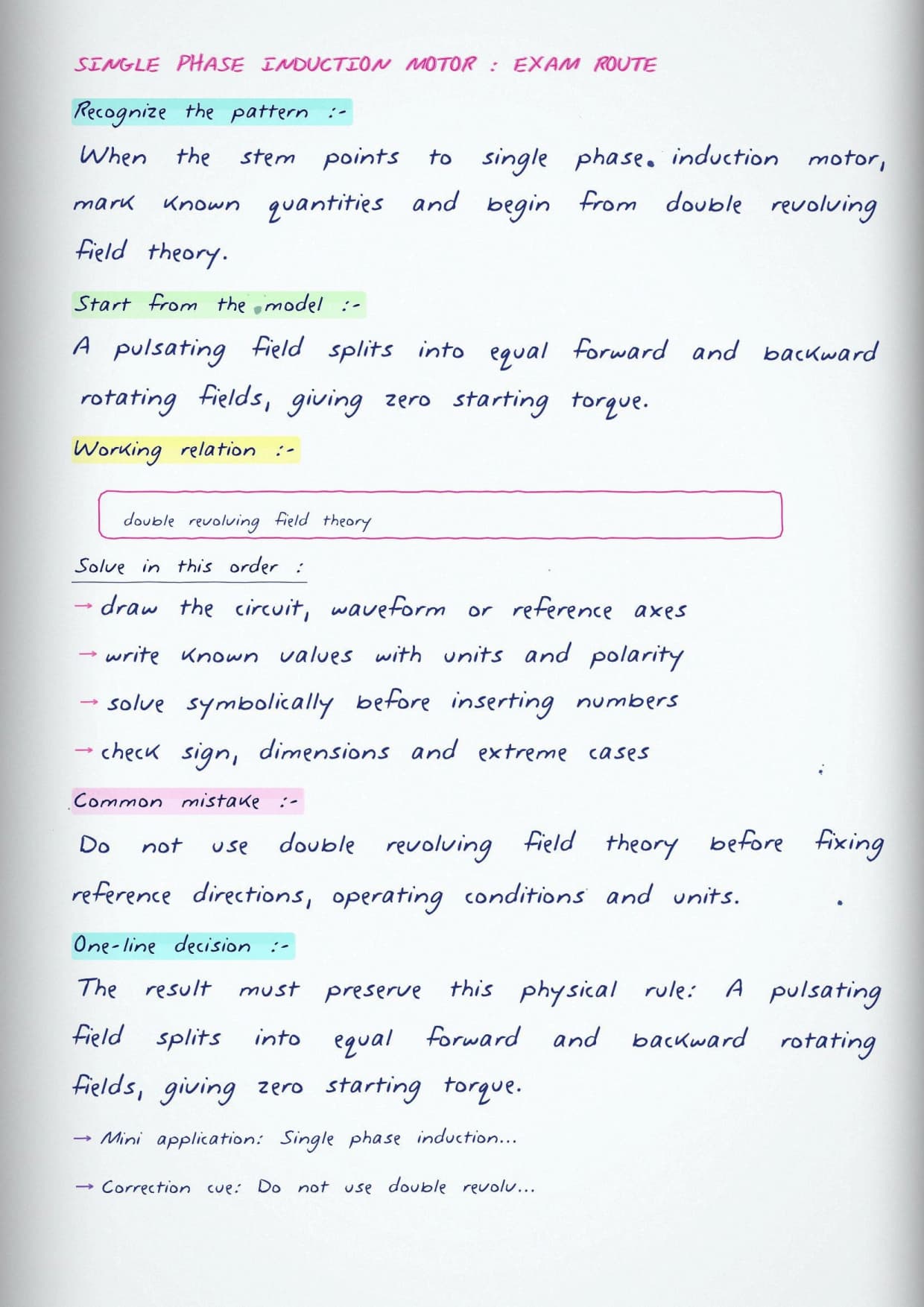
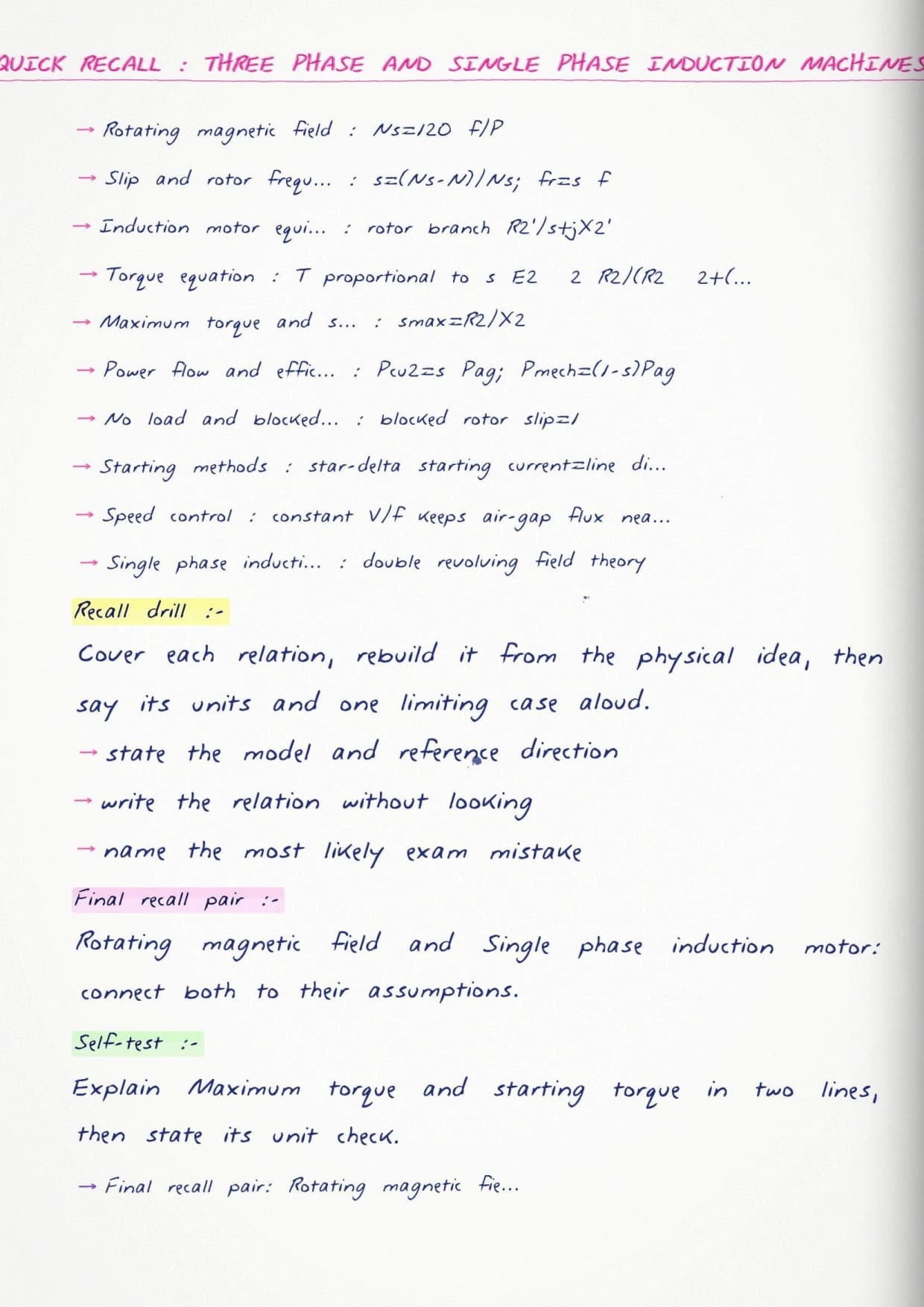
The notes lean on labelled cross-section sketches of the stator and rotor, so students can picture how the rotating field drags the rotor along. The equivalent circuit and torque-slip curve are drawn in stages, with the starting, maximum, and full-load points marked clearly, and every rotor quantity is shown before and after it is referred to the stator so the algebra never feels like a leap.
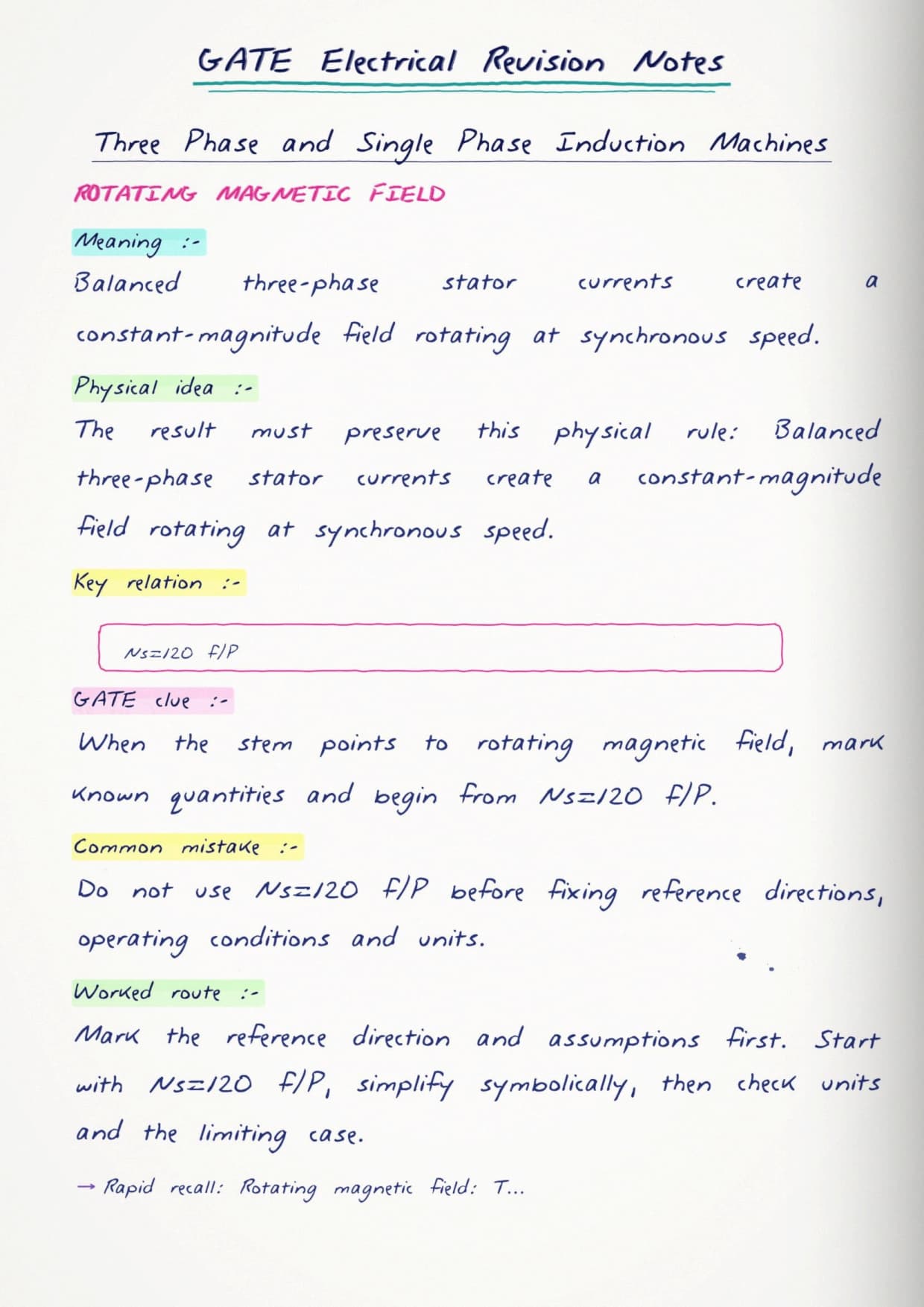
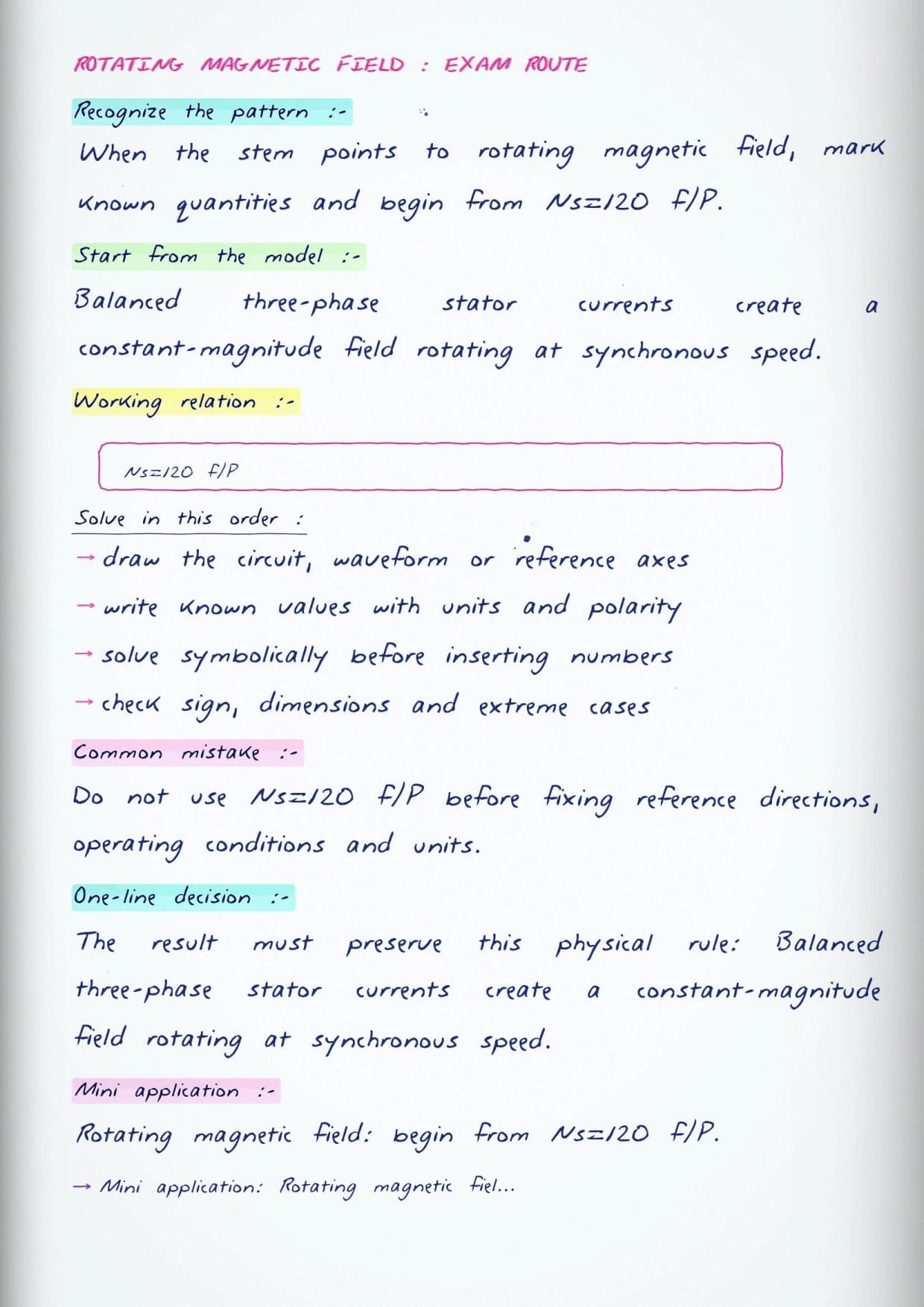
- Hand-drawn rotating magnetic field diagram explaining synchronous speed and slip.
- Stage-by-stage equivalent circuit with rotor quantities referred to the stator.
- A labelled torque-slip characteristic showing breakdown torque and starting torque.
What These GATE Induction Machines Notes Cover
The notes trace an induction motor from its physical construction to its full performance analysis. Both three-phase and single-phase machines are covered, with the special starting methods that single-phase motors need. Each performance quantity, from slip to efficiency, is tied back to a labelled diagram so students always know which part of the machine a formula is describing rather than memorising symbols in isolation.
- Construction of squirrel-cage and slip-ring rotors.
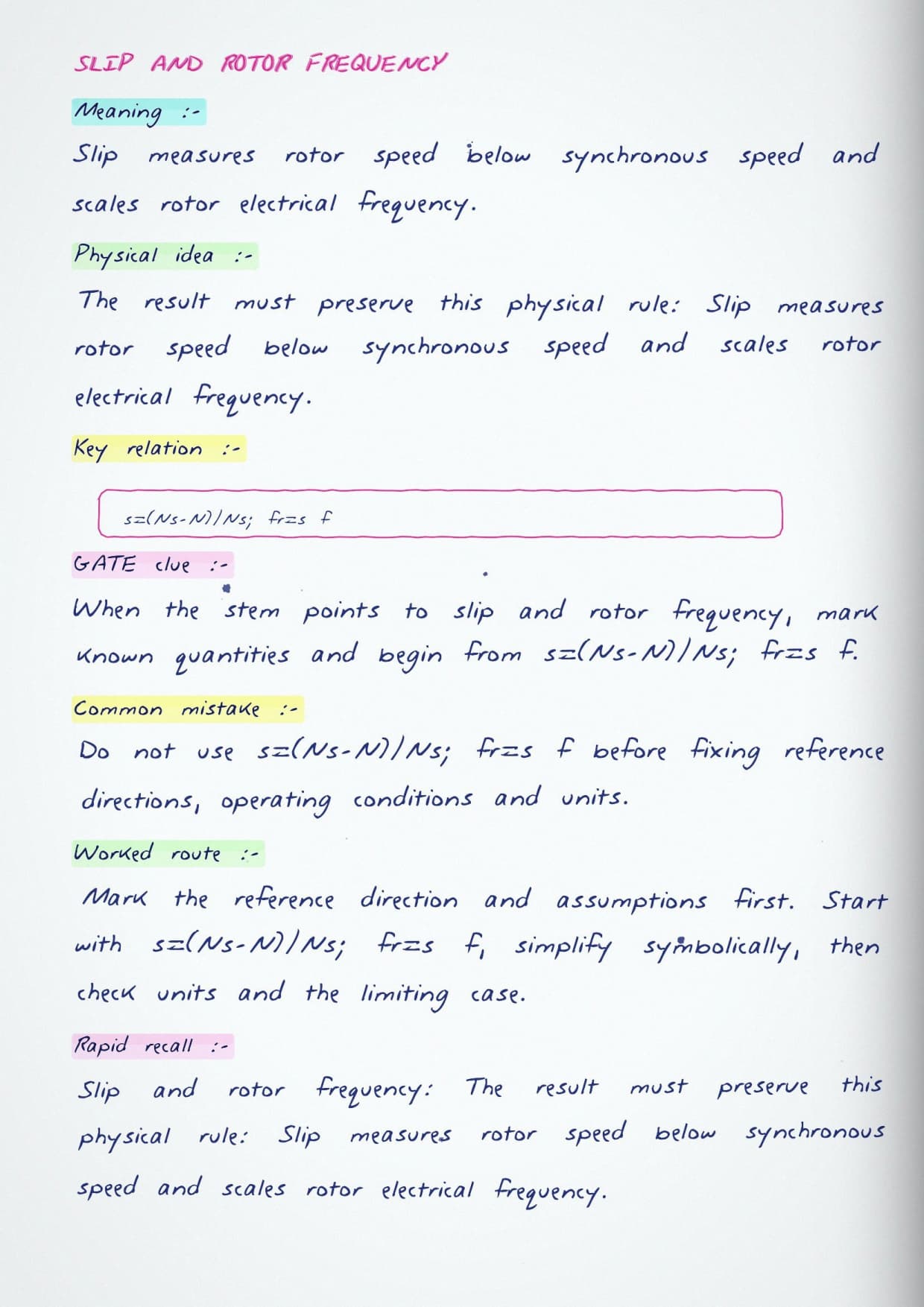
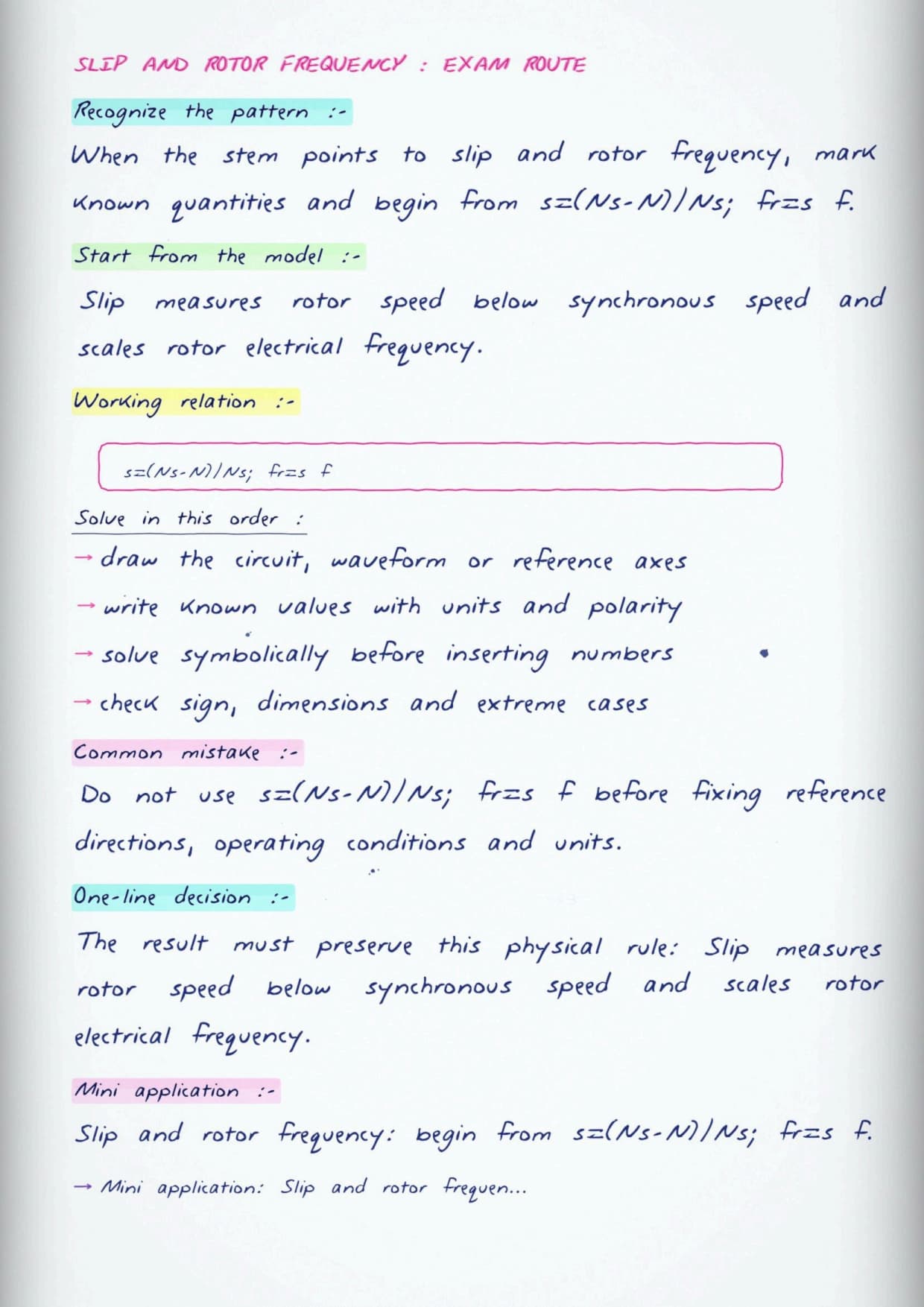
- Slip, rotor frequency, and the power flow diagram.
- Torque equation, maximum torque, and speed control methods.
- Single-phase motor theory and starting techniques.
GATE Induction Machines Quick Revision
Source: GATE Wallah CSE & DA on YouTube
Topics Covered in GATE Induction Machines
The coverage follows the official GATE Electrical syllabus for induction machines point by point. Each item connects to a numeric example somewhere in the notes.
- Production of the rotating magnetic field and synchronous speed.
- Slip, rotor EMF, and rotor frequency relations.
- Equivalent circuit and phasor diagram of the machine.
- Power stages: air-gap power, mechanical power, and efficiency.
- Torque-slip curve, starting torque, and breakdown torque.
- Speed control by voltage, frequency, and rotor resistance.
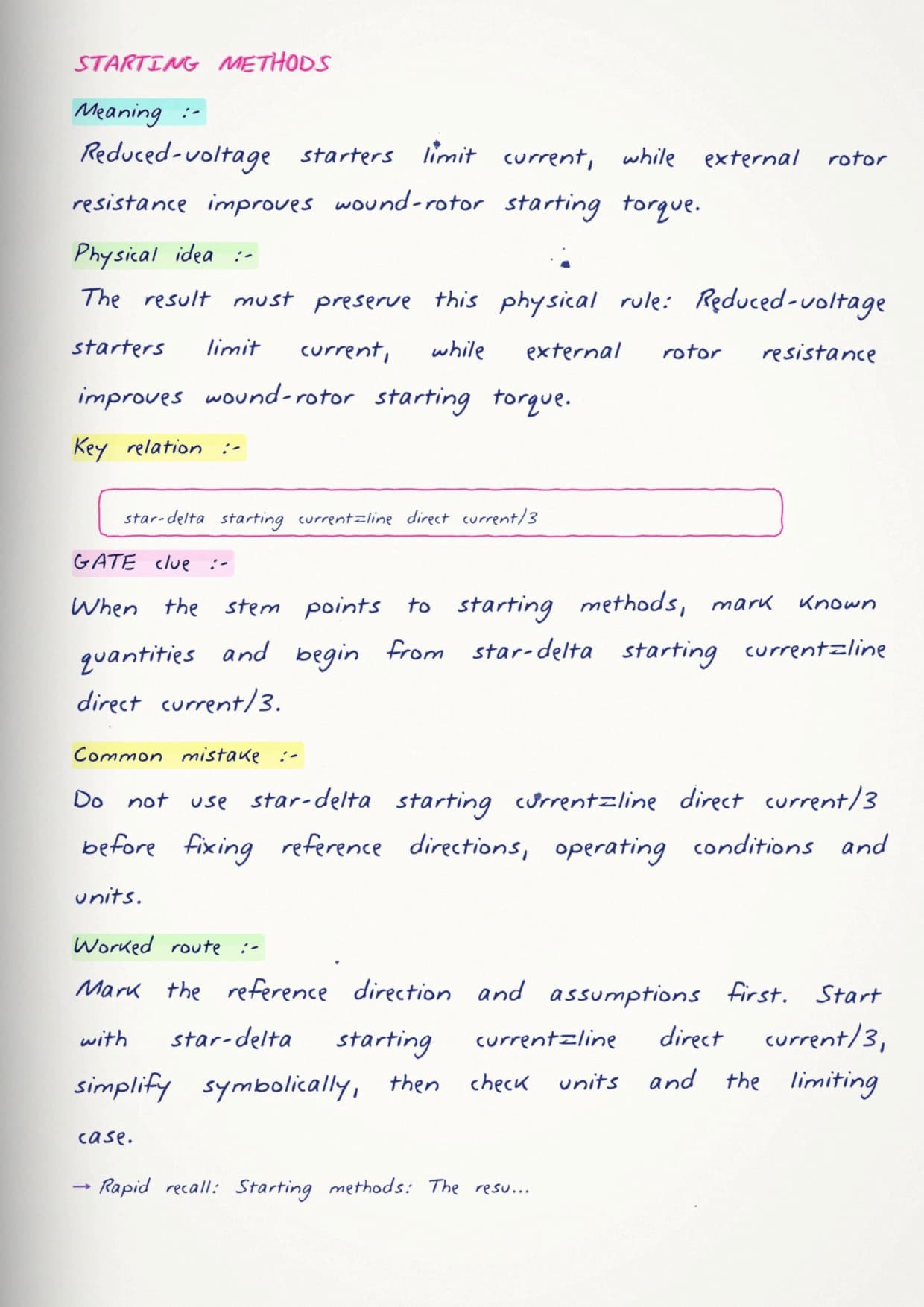
- Starting methods including star-delta and autotransformer.
- Single-phase induction motor and double revolving field theory.
How the Notes Are Organised
The reading order matches how the machine actually works. Students begin with construction and the rotating field, then meet slip and the power flow, and finally reach torque, control, and single-phase behaviour. This order means each new idea rests on the one before it, so students rarely have to jump ahead to make sense of a diagram.
Later pages are built for practice. The equivalent circuit, the no-load and blocked-rotor test results, and the torque expressions are placed together so a full performance problem can be solved without turning back through the notes. A worked test-data example runs end to end on these pages, taking students from raw meter readings to the final equivalent-circuit values in the same sequence an exam question demands.
How GATE Induction Machines Links to Other Topics
The induction machine is a hub that touches several other parts of the syllabus. Understanding it well makes those neighbouring topics far easier to attempt.
- Transformers, since the equivalent circuit and referred quantities work the same way.
- Power electronic drives, where variable-frequency control sets motor speed.
- Synchronous machines, for comparison of torque and excitation behaviour.
- Control systems, where motor dynamics appear as transfer functions.
Important Topics in GATE Induction Machines
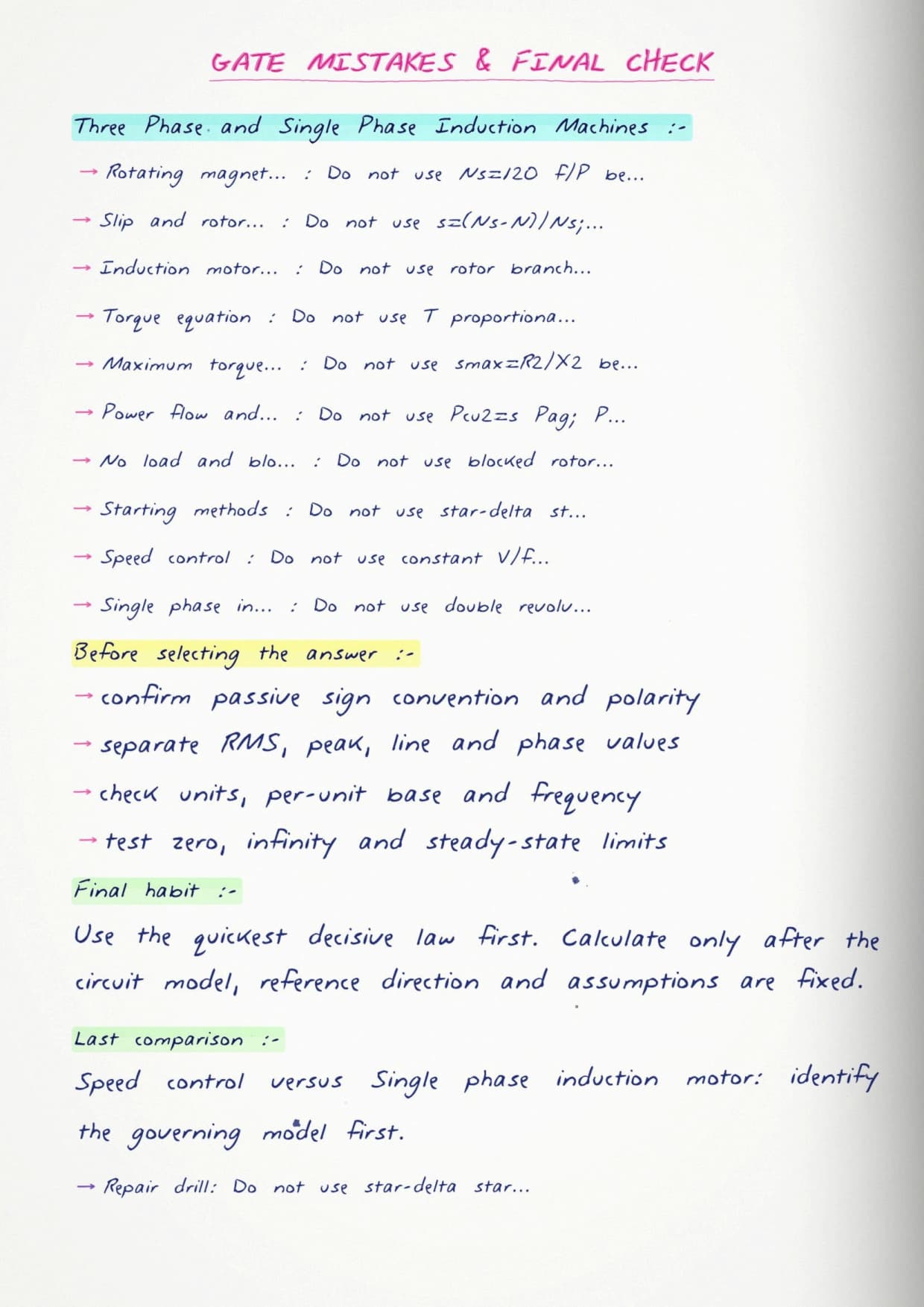
Examiners return to a handful of results year after year, and a few common misreadings quietly lose marks. The notes highlight each of these, and they spell out the units and sign of every term so students do not mix up rotor input with mechanical output when the numbers get busy.
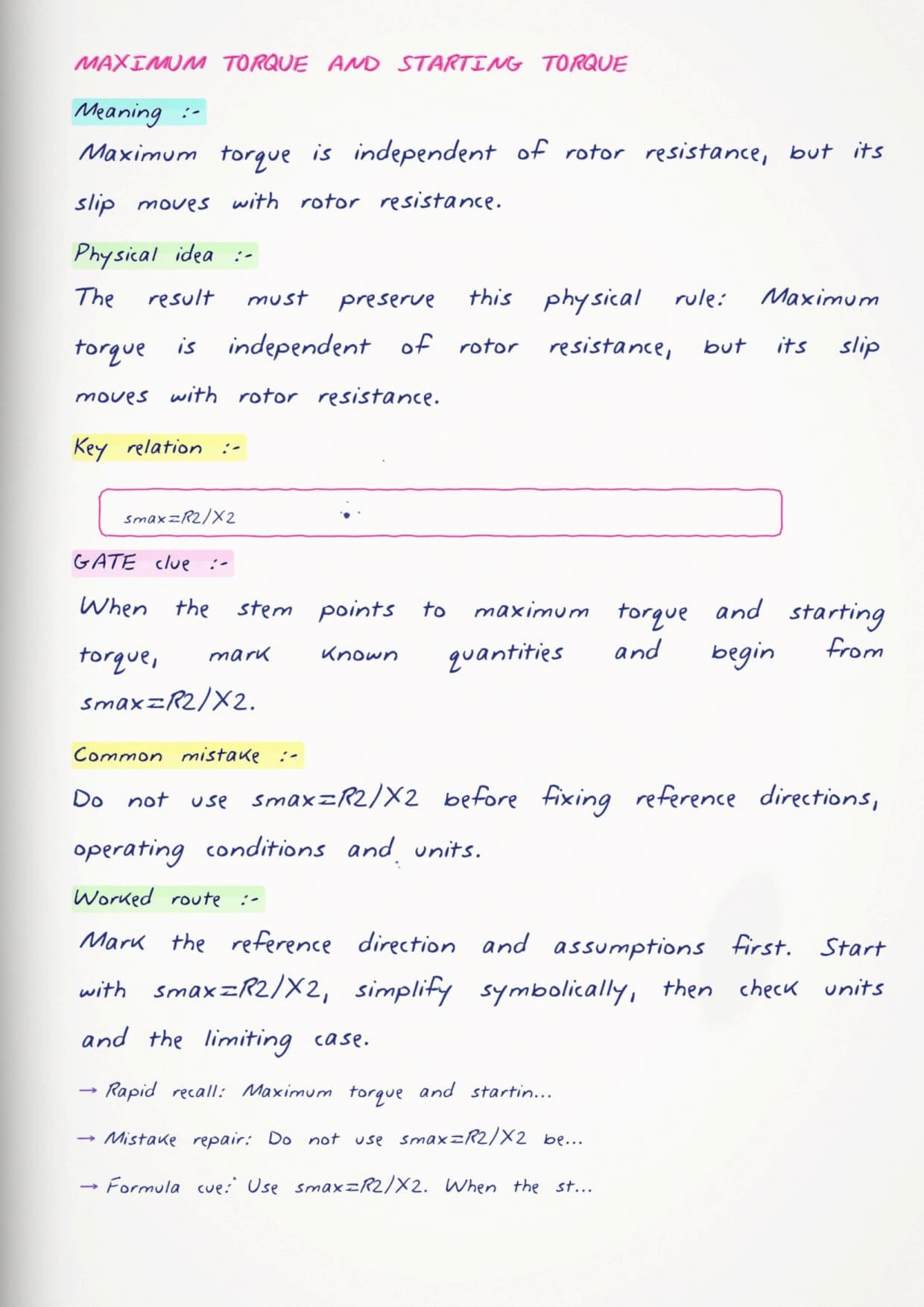
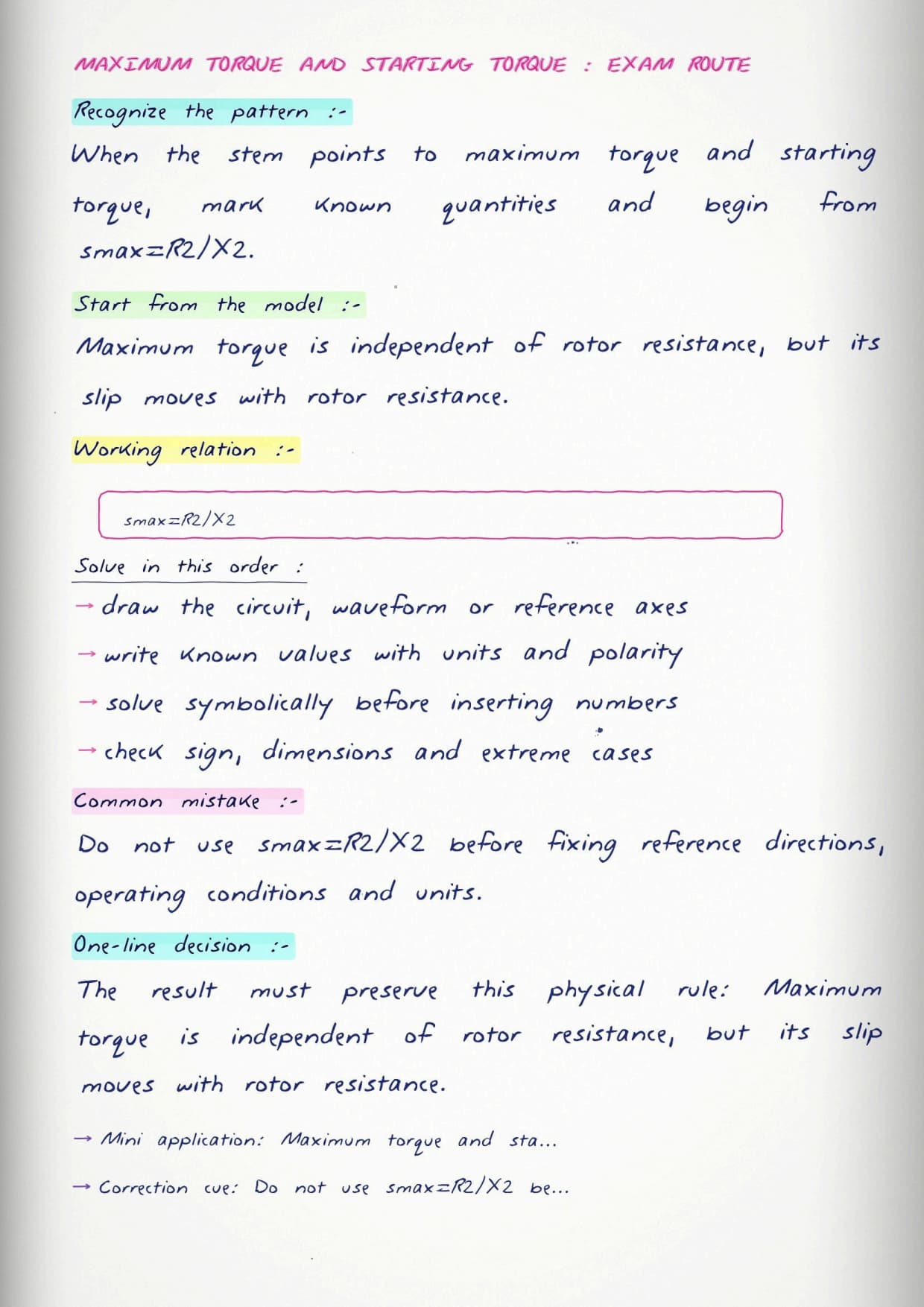
- The slip at which maximum torque occurs and why it is load independent.
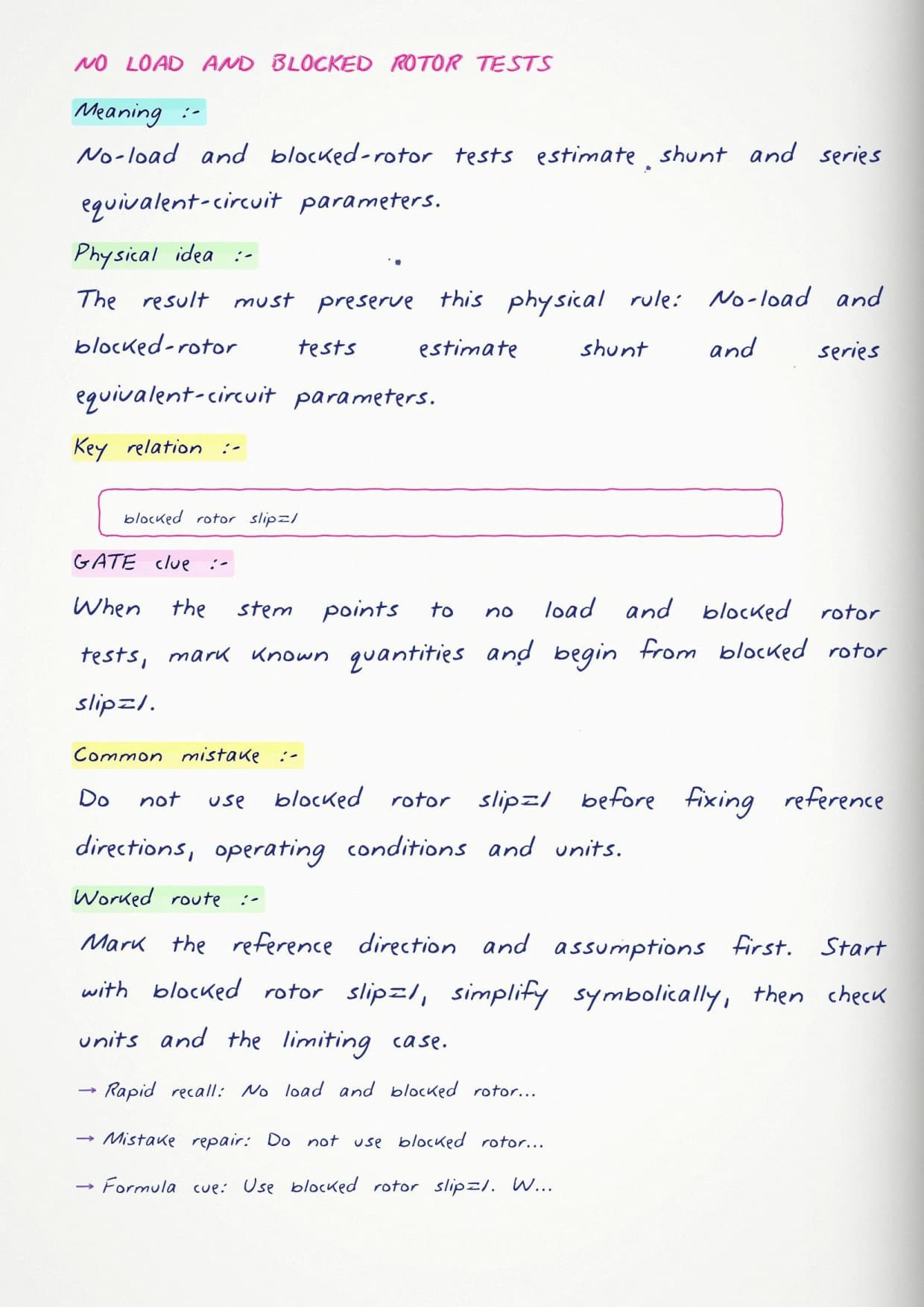
- Interpreting no-load and blocked-rotor tests to find circuit parameters.
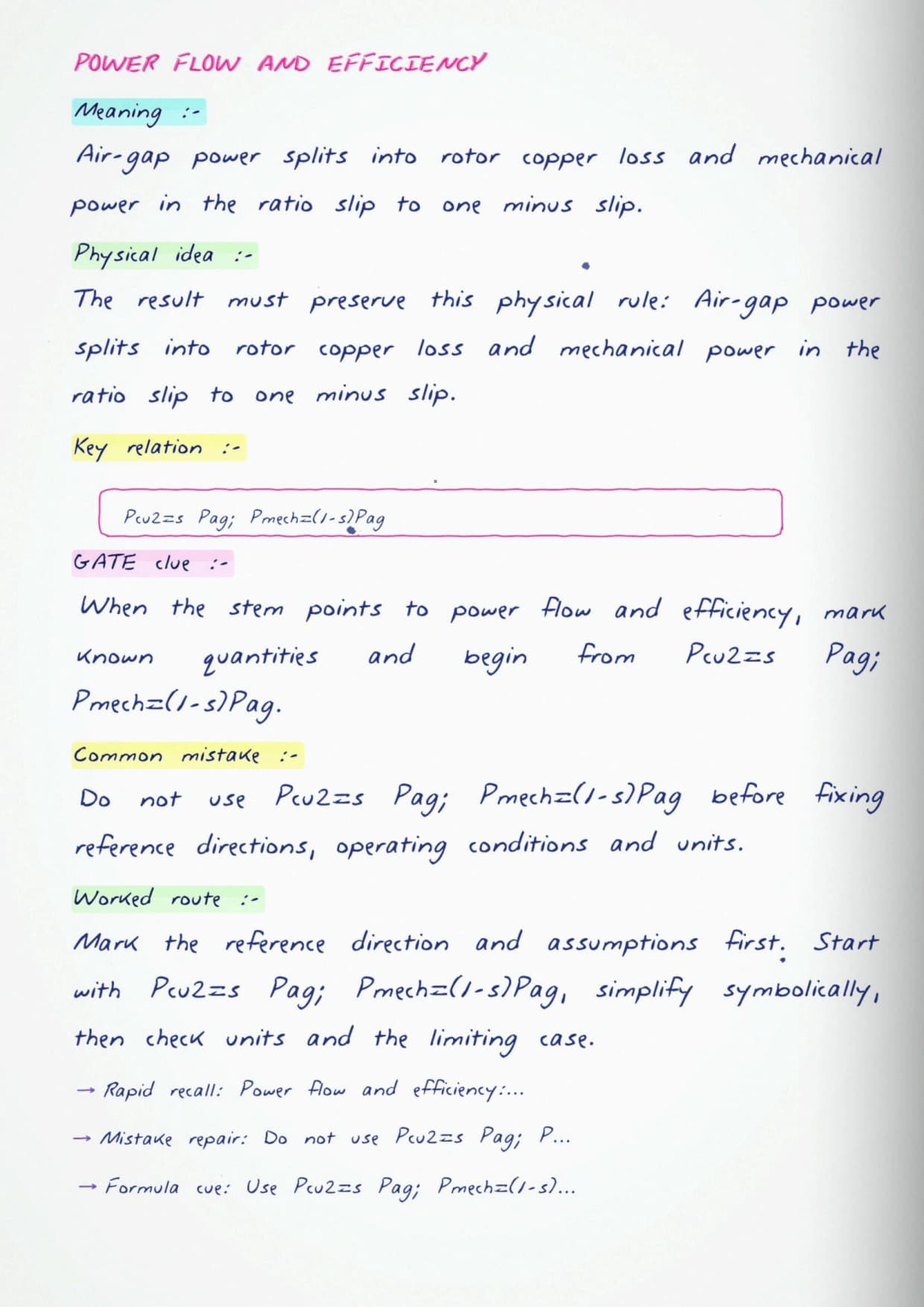
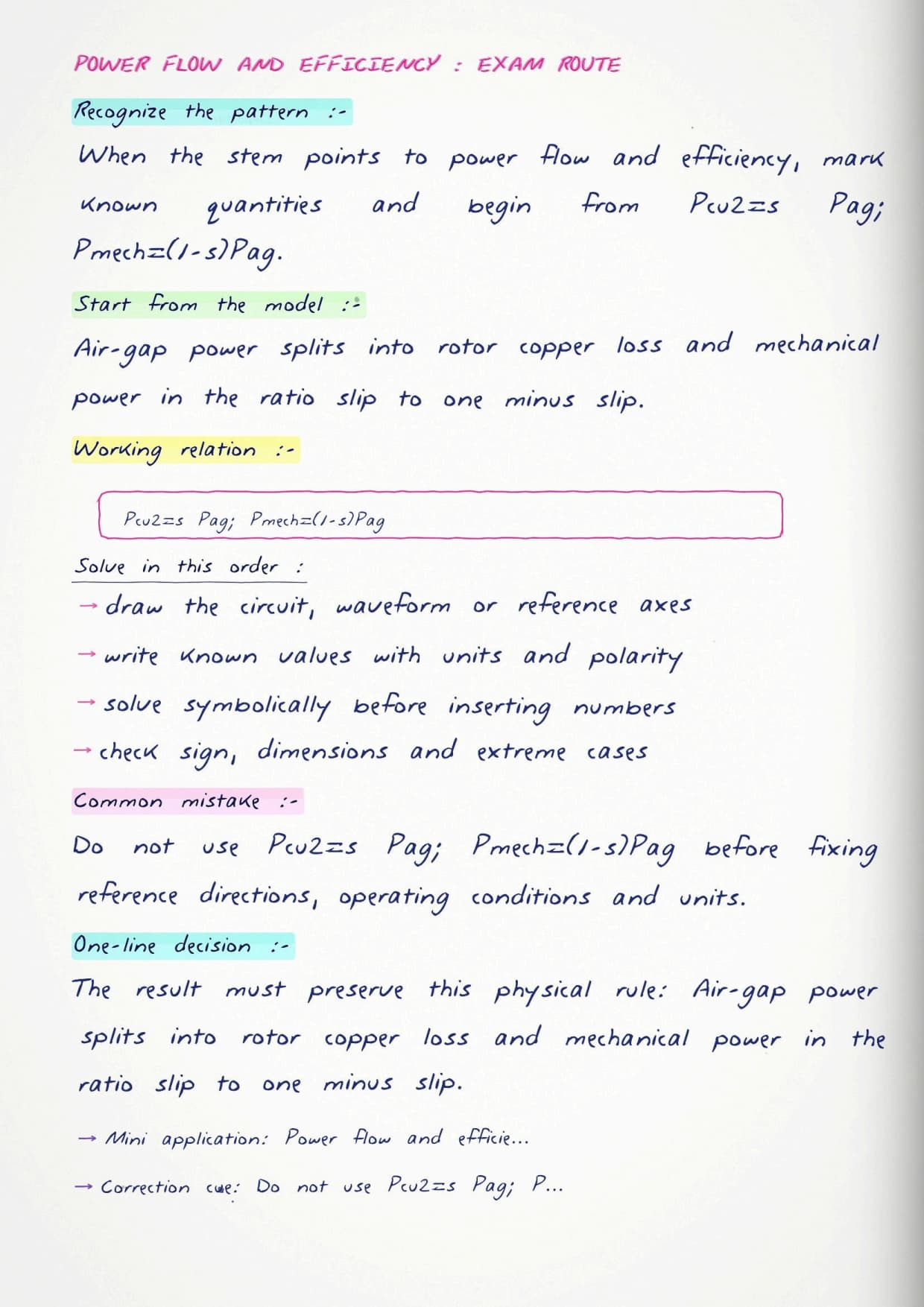
- The split of rotor input into mechanical power and rotor copper loss by slip.
- Why a single-phase motor has zero starting torque without an auxiliary winding.
- Effect of rotor resistance on the shape of the torque-slip curve.
How to Prepare GATE Induction Machines with Handwritten Notes
The topic rewards steady practice, so use the notes as a workbook across several sittings rather than a single skim.
- First read: study each diagram and derive the slip and torque relations by hand.
- Second pass: solve equivalent-circuit and test-based numericals unaided.
- PYQ round: attempt previous GATE questions on torque, slip, and speed control.
- Final week: revise the torque-slip curve, test methods, and the flagged traps.
Why These Notes Help You Score Better
Induction machines carry heavy weight but confuse many candidates because the theory and the circuit feel disconnected. These notes fix that by placing the physical picture, the equivalent circuit, and the torque curve on facing pages. Students see the whole story at once, which turns a tricky topic into a dependable source of marks and gives students confidence when a machines numerical appears in the paper.
GATE Electrical Induction Machines Handwritten Notes FAQs
Ques. How much weightage do induction machines carry in GATE Electrical?
Ans. Induction machines typically account for around 7 to 10 marks, making them one of the most rewarding parts of the Electrical Machines section for students who prepare the equivalent circuit and torque analysis thoroughly.
Ques. Do the notes cover both three-phase and single-phase induction motors?
Ans. Yes. The notes handle three-phase machines in depth and then cover single-phase motors, including the double revolving field theory and the starting methods that give them their initial torque.
Ques. Are the no-load and blocked-rotor tests explained with examples?
Ans. They are. Both tests are drawn out with sample readings, showing students exactly how to extract the equivalent-circuit parameters that later questions depend on.
Ques. Can these handwritten notes replace a full textbook for revision?
Ans. For revision, yes. The notes condense the essential derivations, diagrams, and formulae into a form students can review quickly, though a textbook still helps during the first learning pass.



Comments