




Symmetrical Components and Fault Analysis is a high-weightage topic in GATE Electrical, usually worth about 4 to 7 marks in the paper. It belongs to the Power Systems section, and its ideas return in Power System Protection, Load Flow Studies, and the per-unit system. These handwritten notes cover the full topic in a compact, exam-focused form.
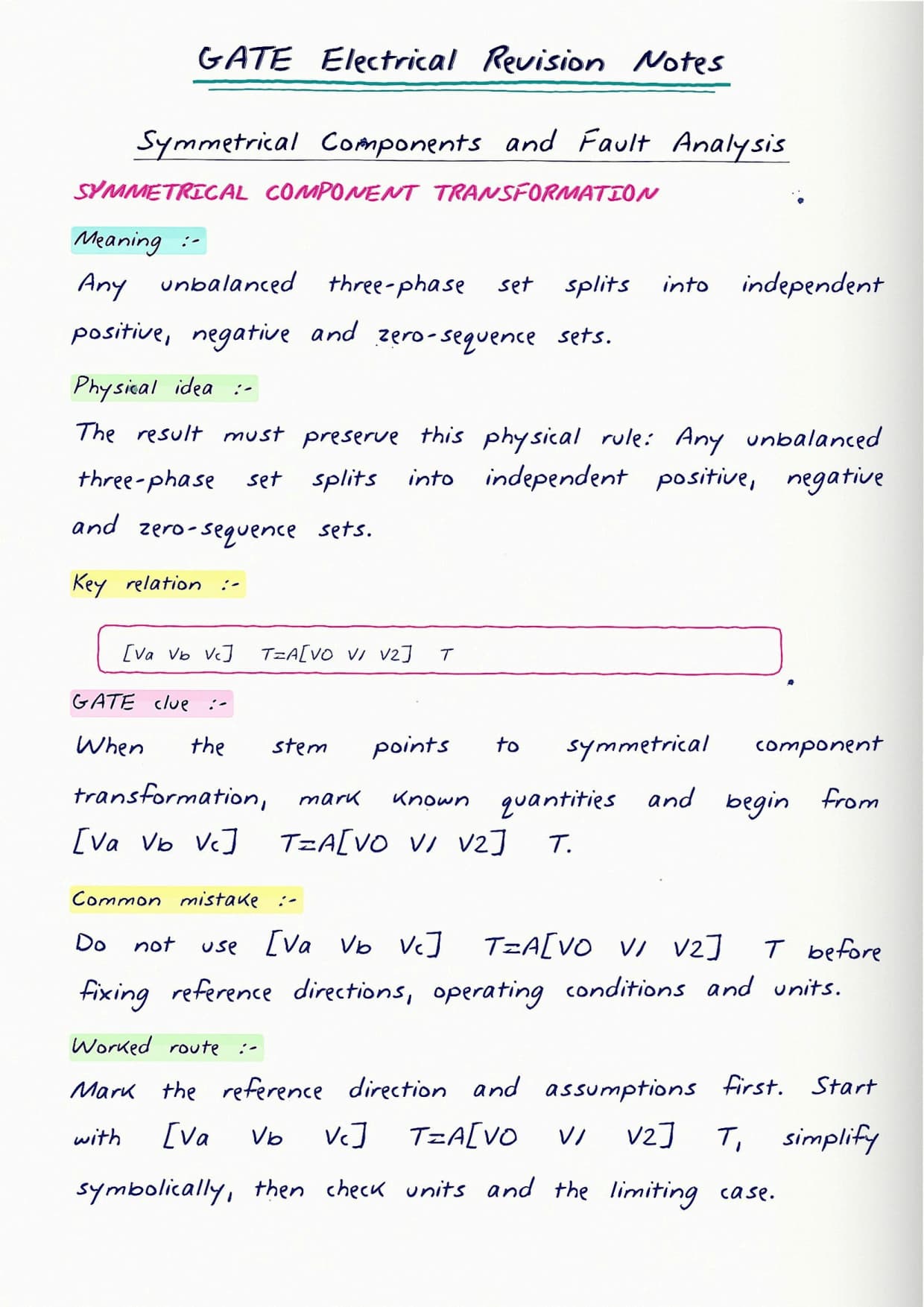
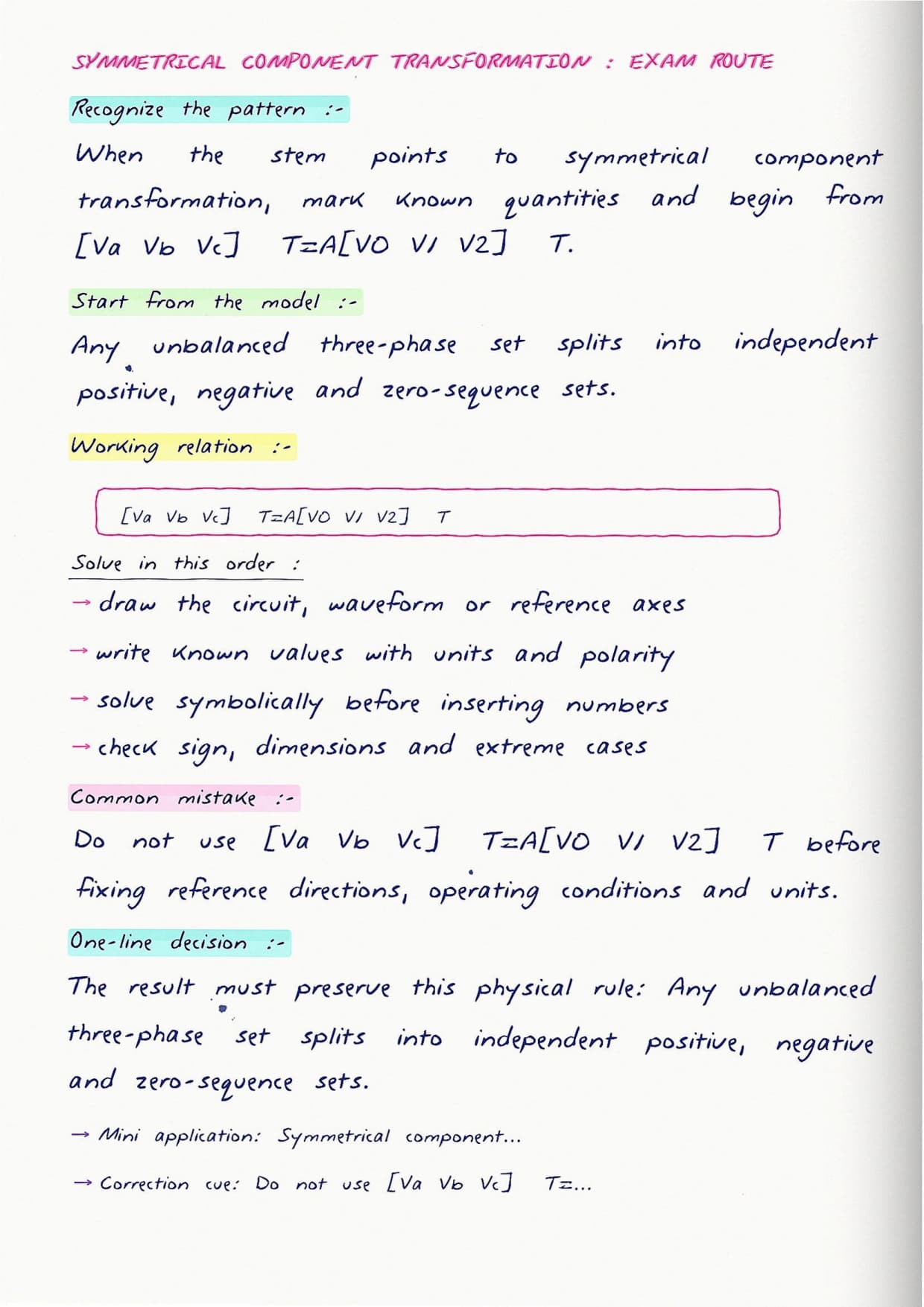
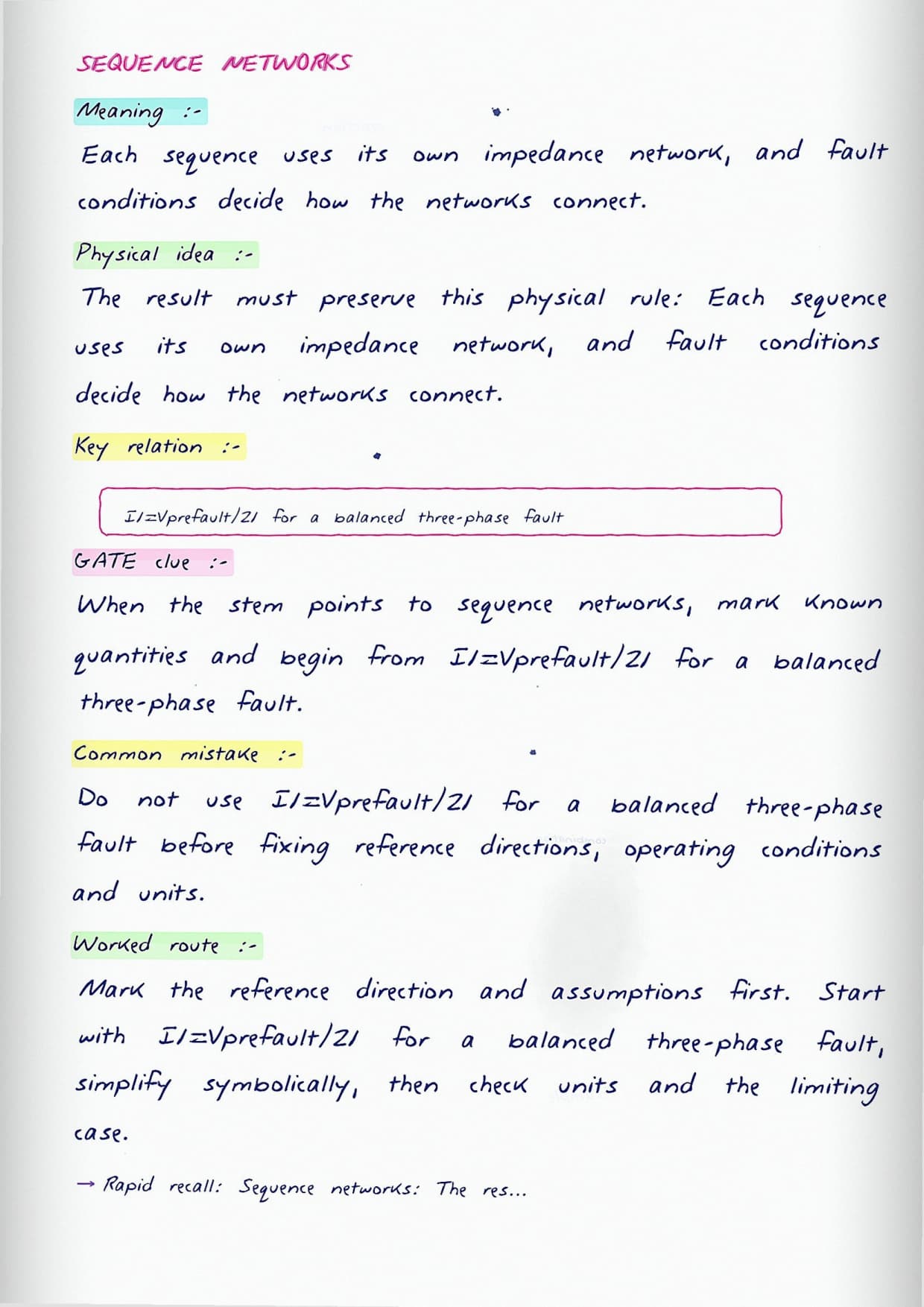
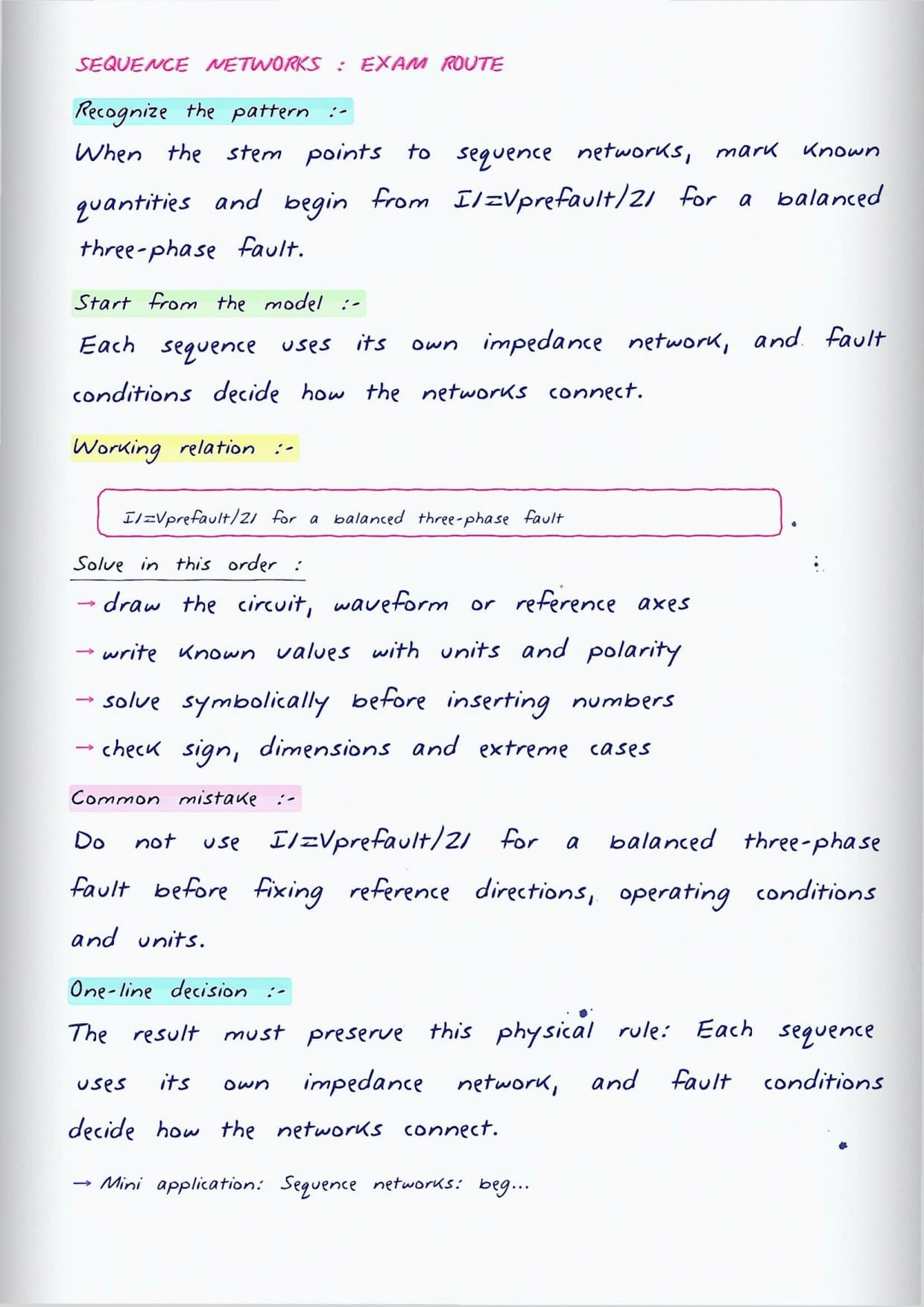
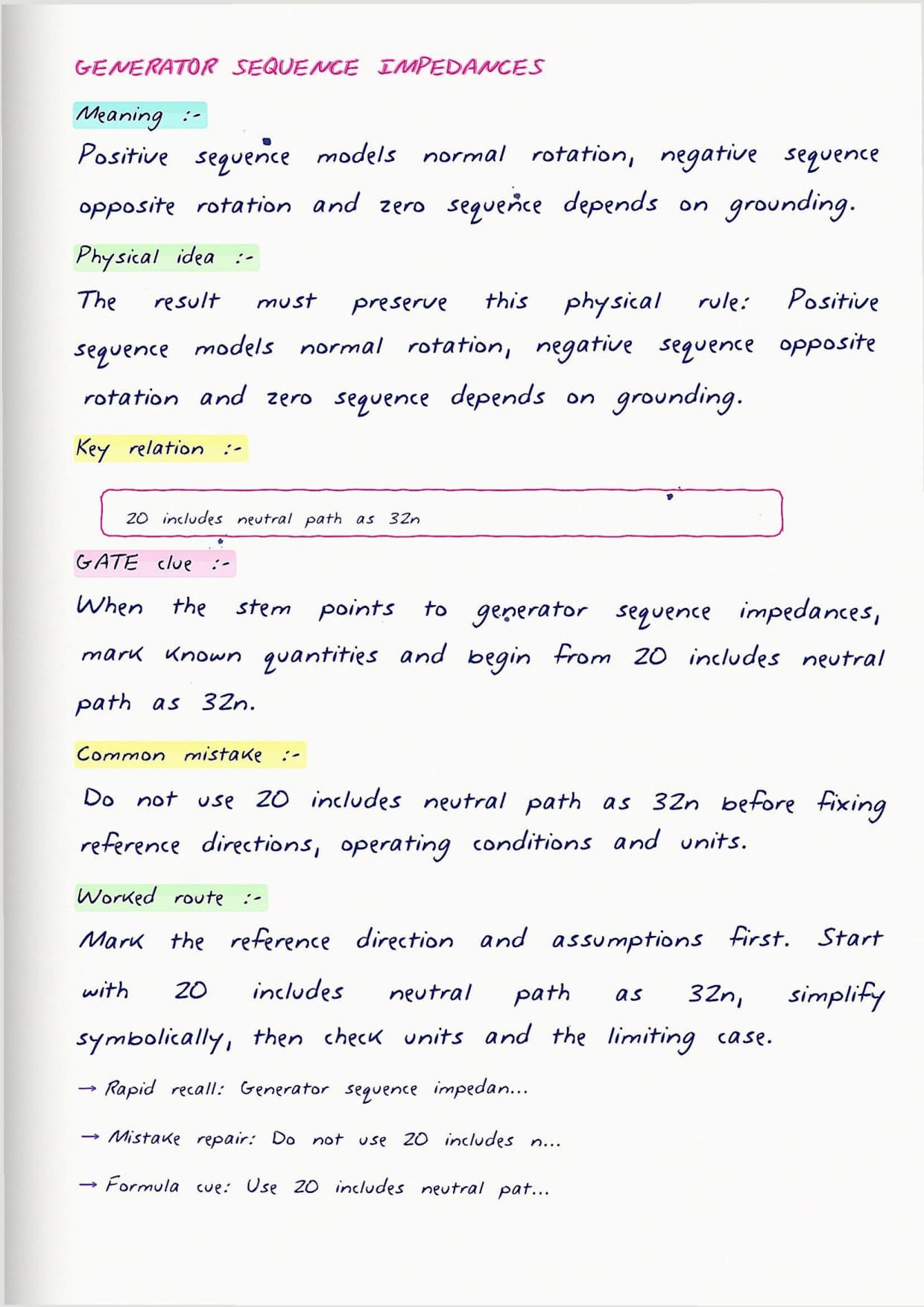
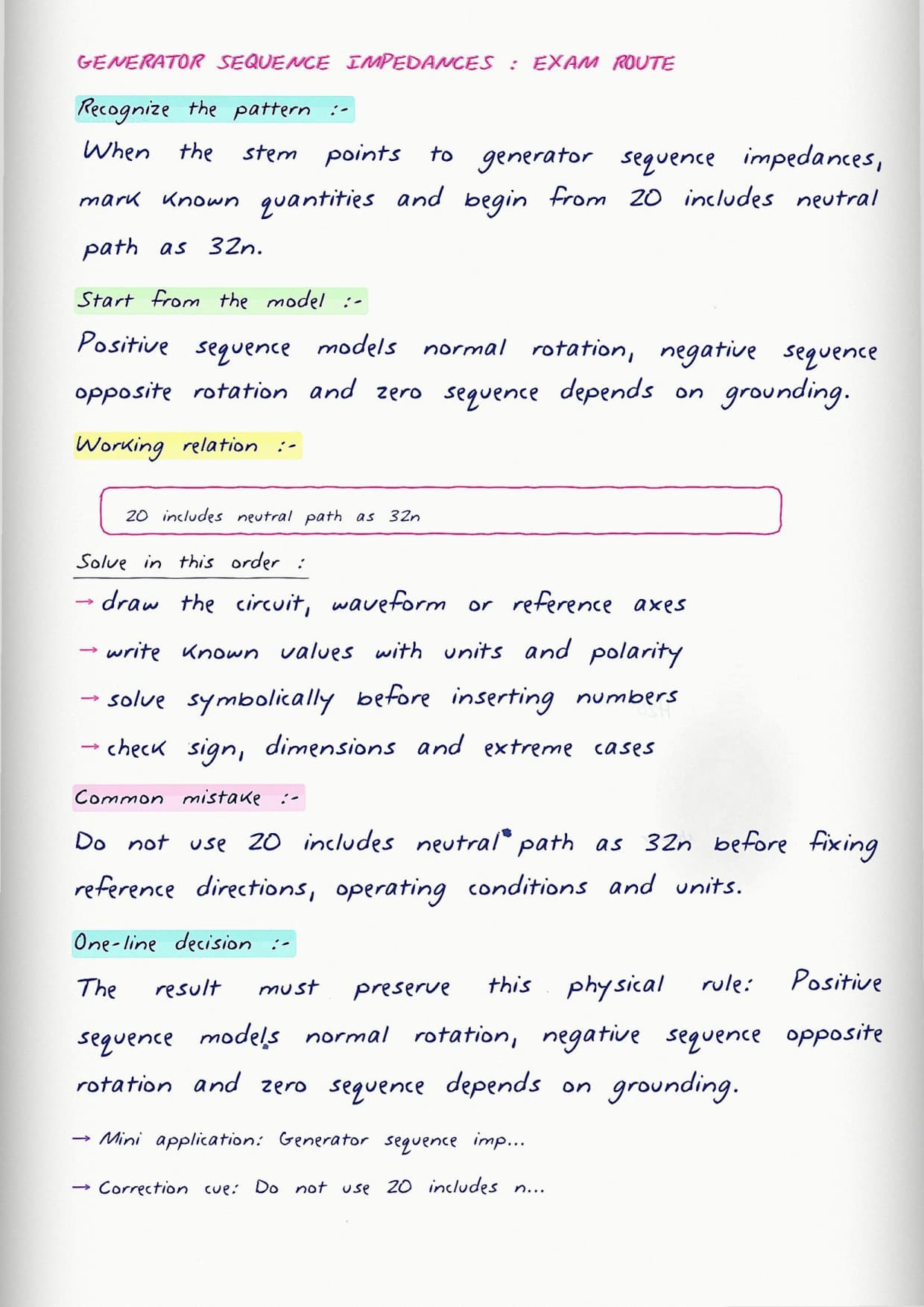
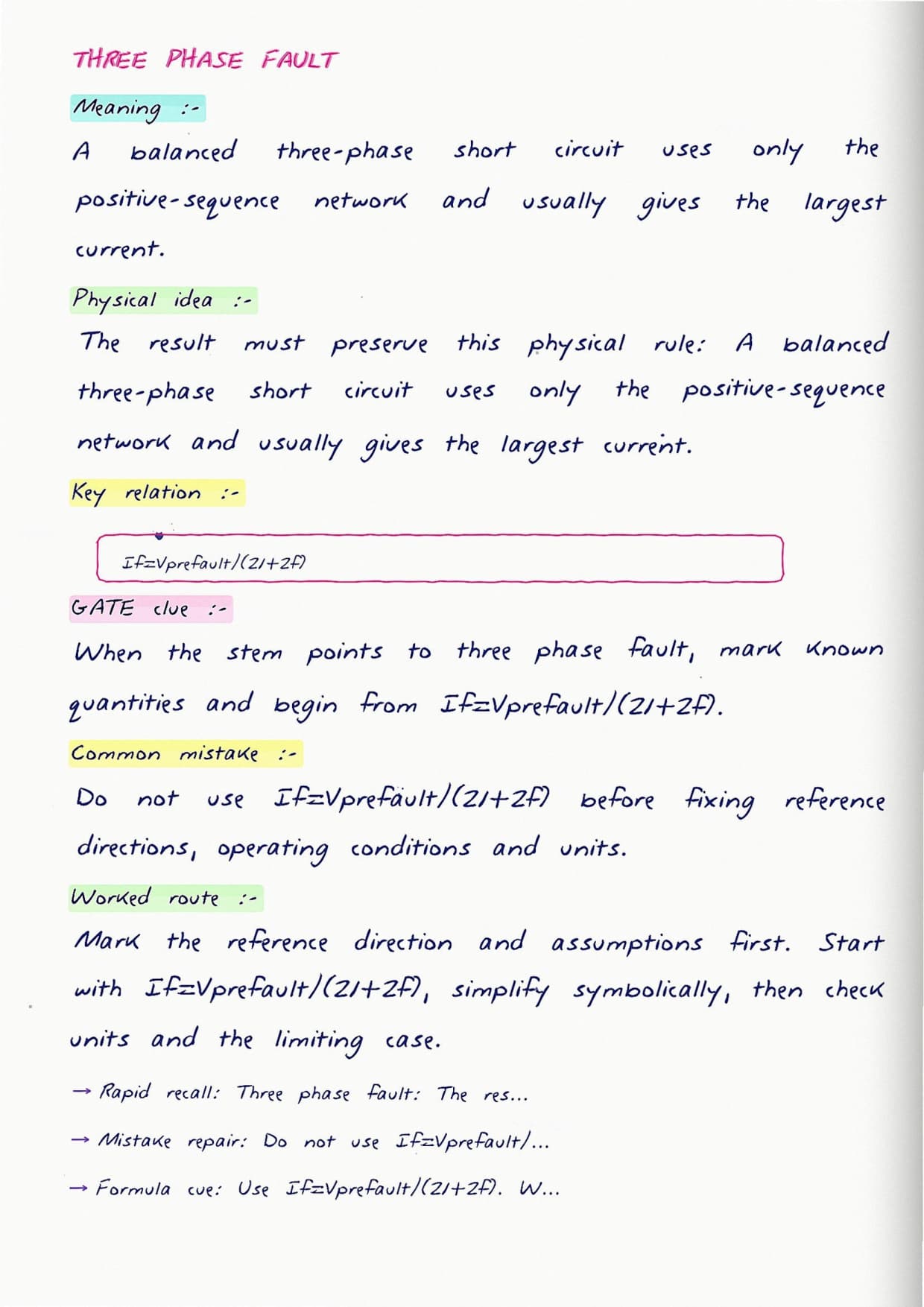
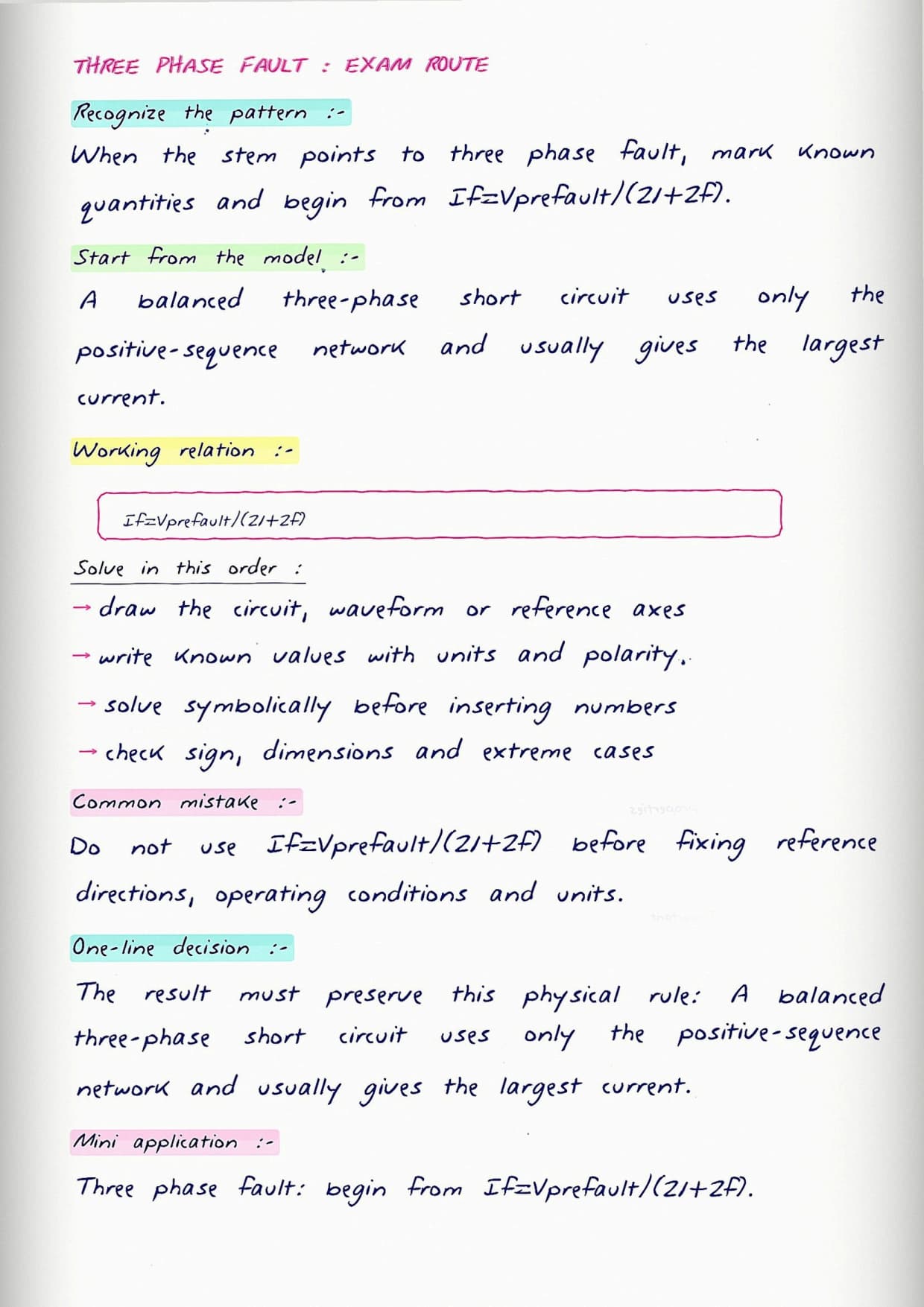
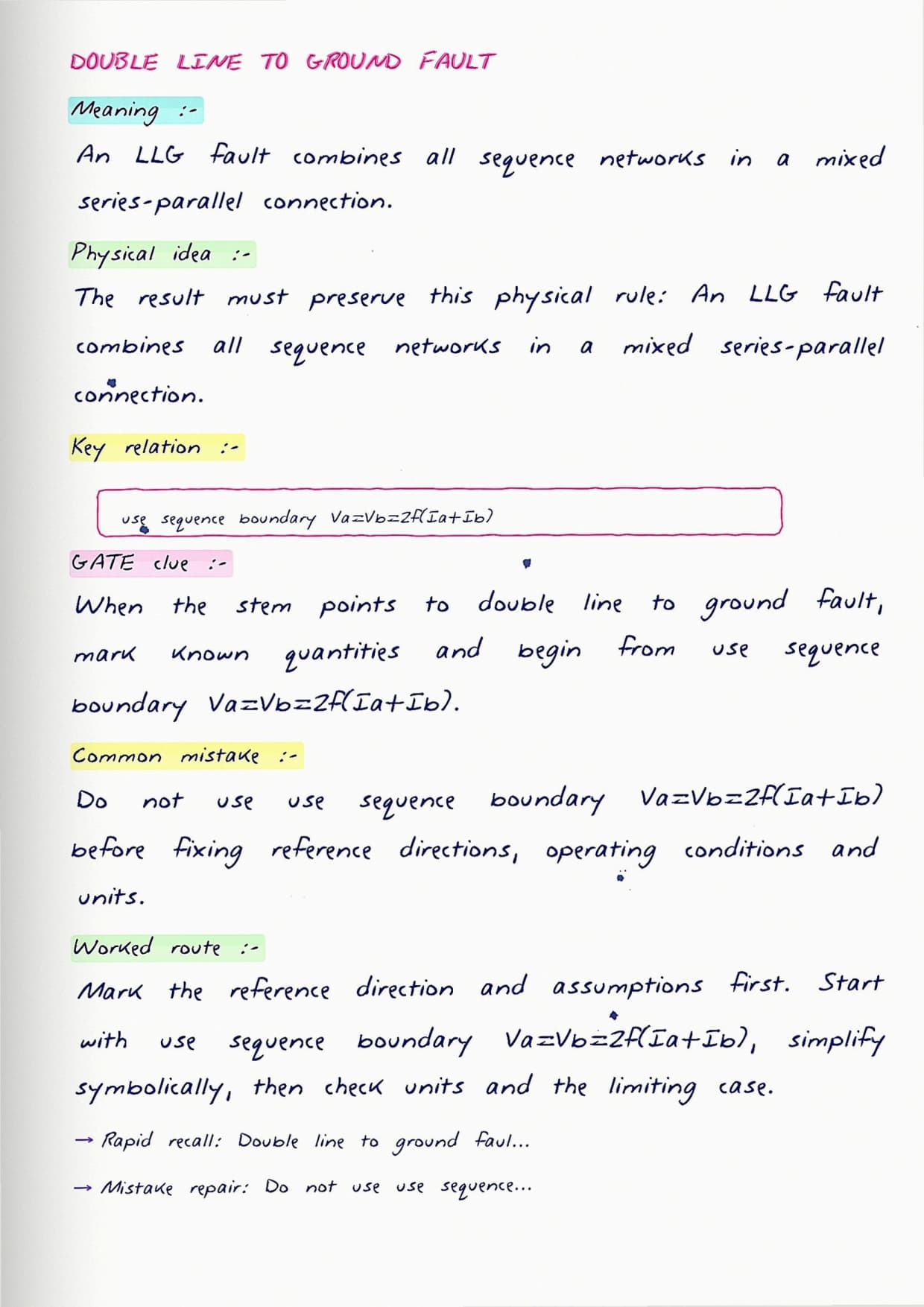
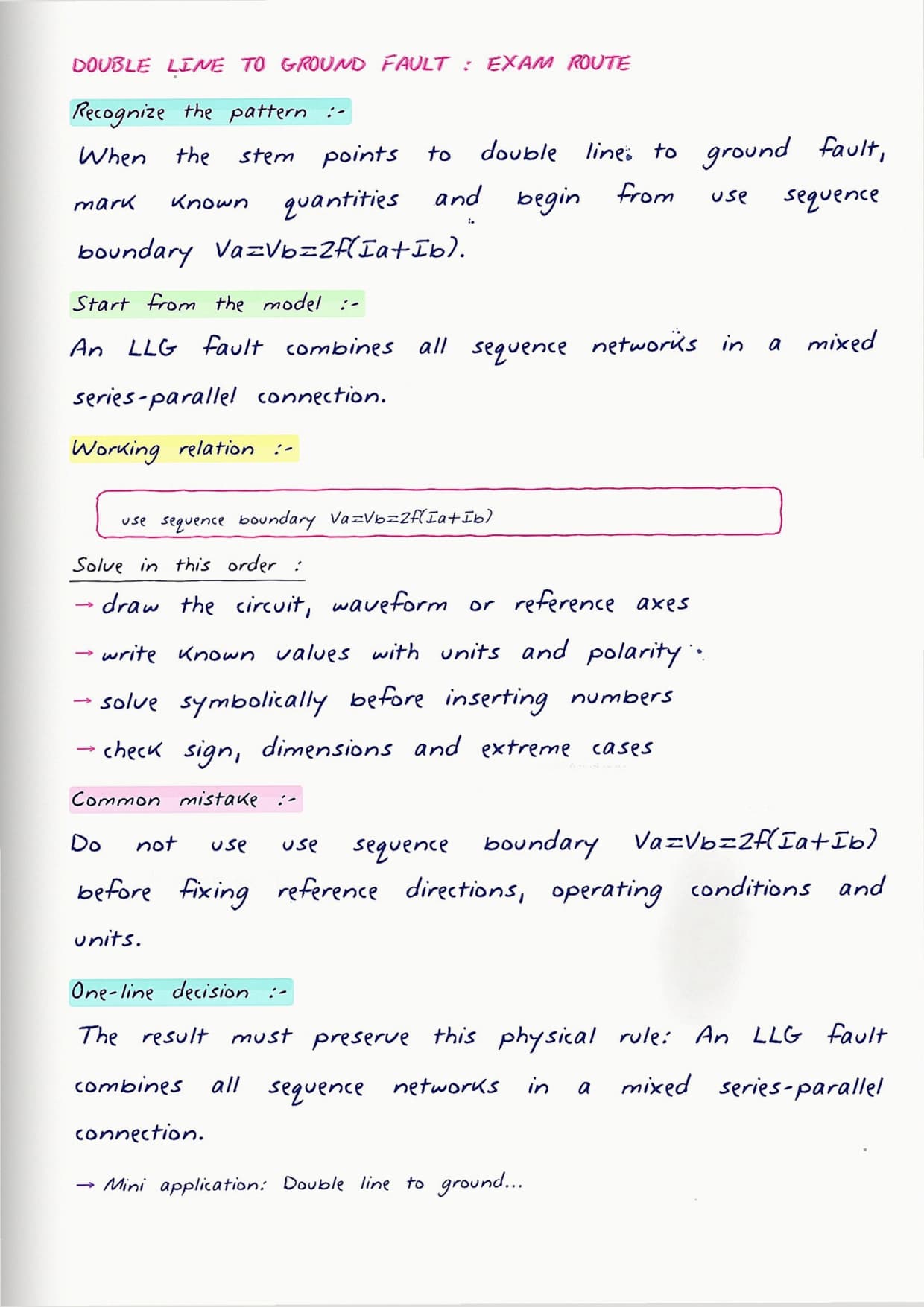
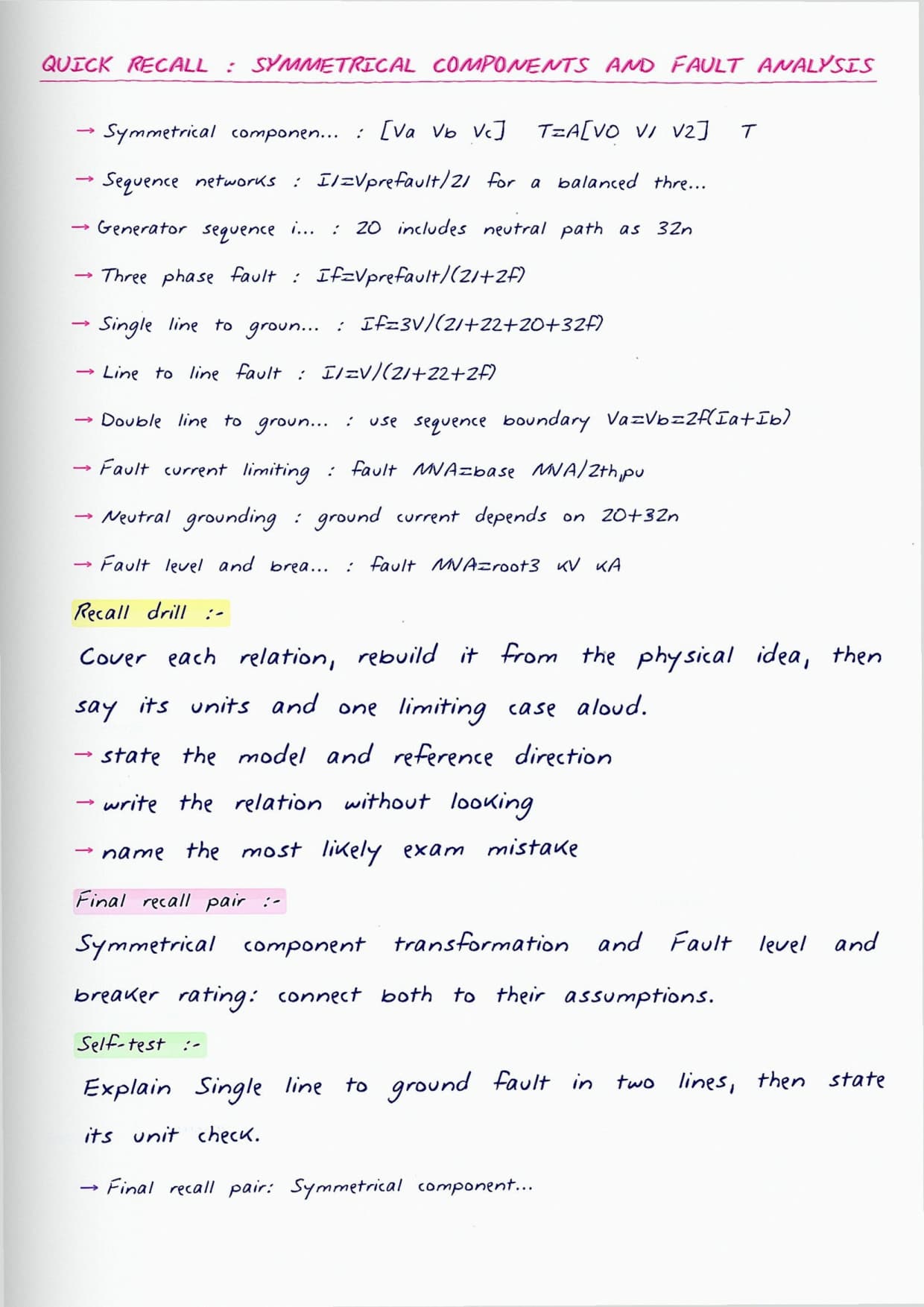
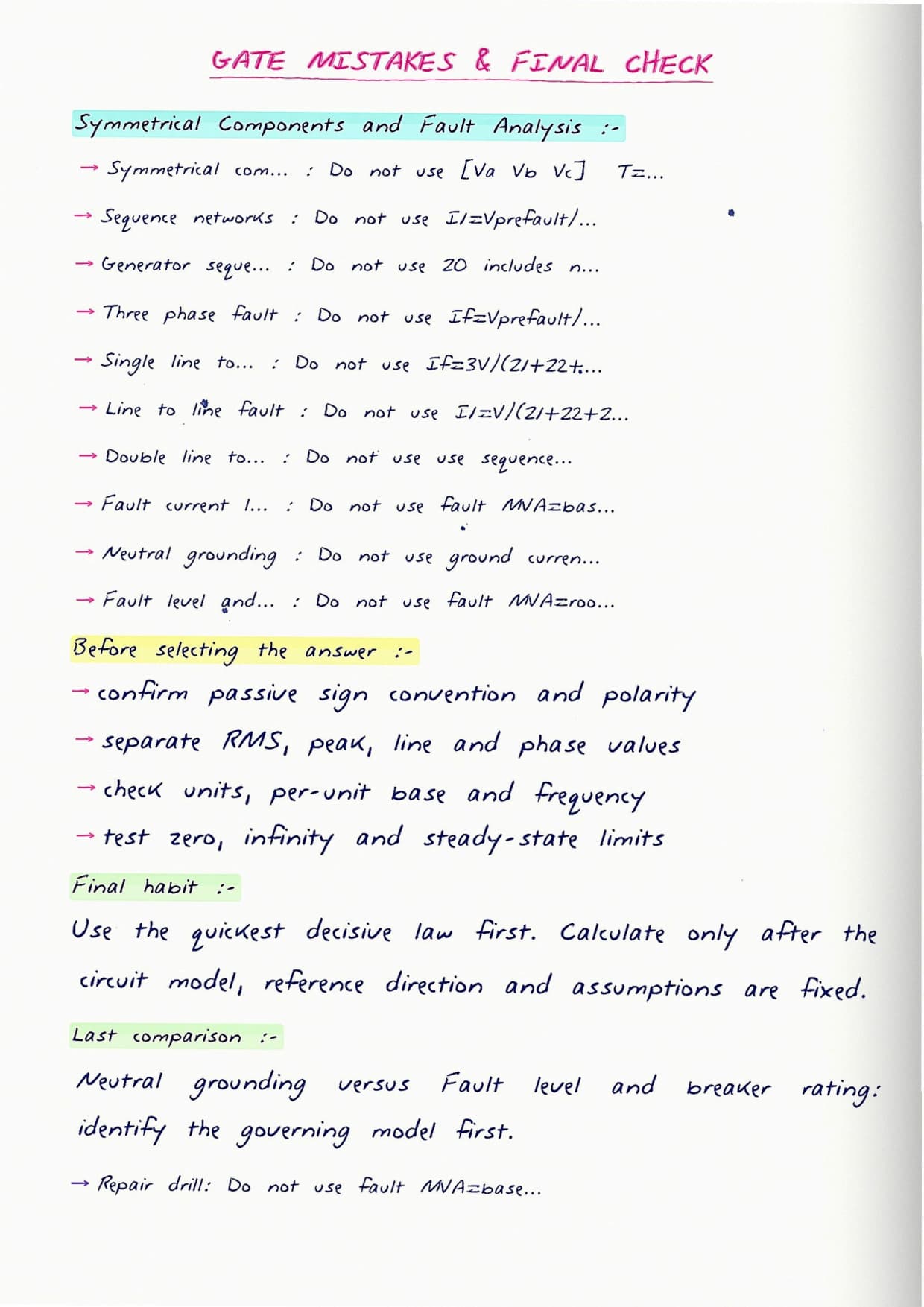
The pages carry clean phasor diagrams that break an unbalanced three-phase set into its positive, negative, and zero sequence parts, drawn by hand so students can see the 120-degree rotation clearly. Sequence networks for a single line-to-ground, line-to-line, and double line-to-ground fault are laid out one after another, and a short worked example computes the fault current for each with every step shown.
- Hand-drawn sequence networks connected the correct way for each fault type.
- Clear treatment of the a-operator and how it builds the transformation matrix.
- Solved fault current problems on the per-unit base, straight from past papers.
What These GATE Symmetrical Components and Fault Analysis Notes Cover
The notes start from the idea of resolving an unbalanced system into three balanced sets and then apply that idea to real fault conditions. The focus stays on the fault types that GATE tests, with the sequence network connection for each spelled out.
- The three sequence components and the Fortescue transformation between phase and sequence quantities.
- Positive, negative, and zero sequence impedances of lines, generators, and transformers.
- Symmetrical three-phase faults and the sub-transient fault current.
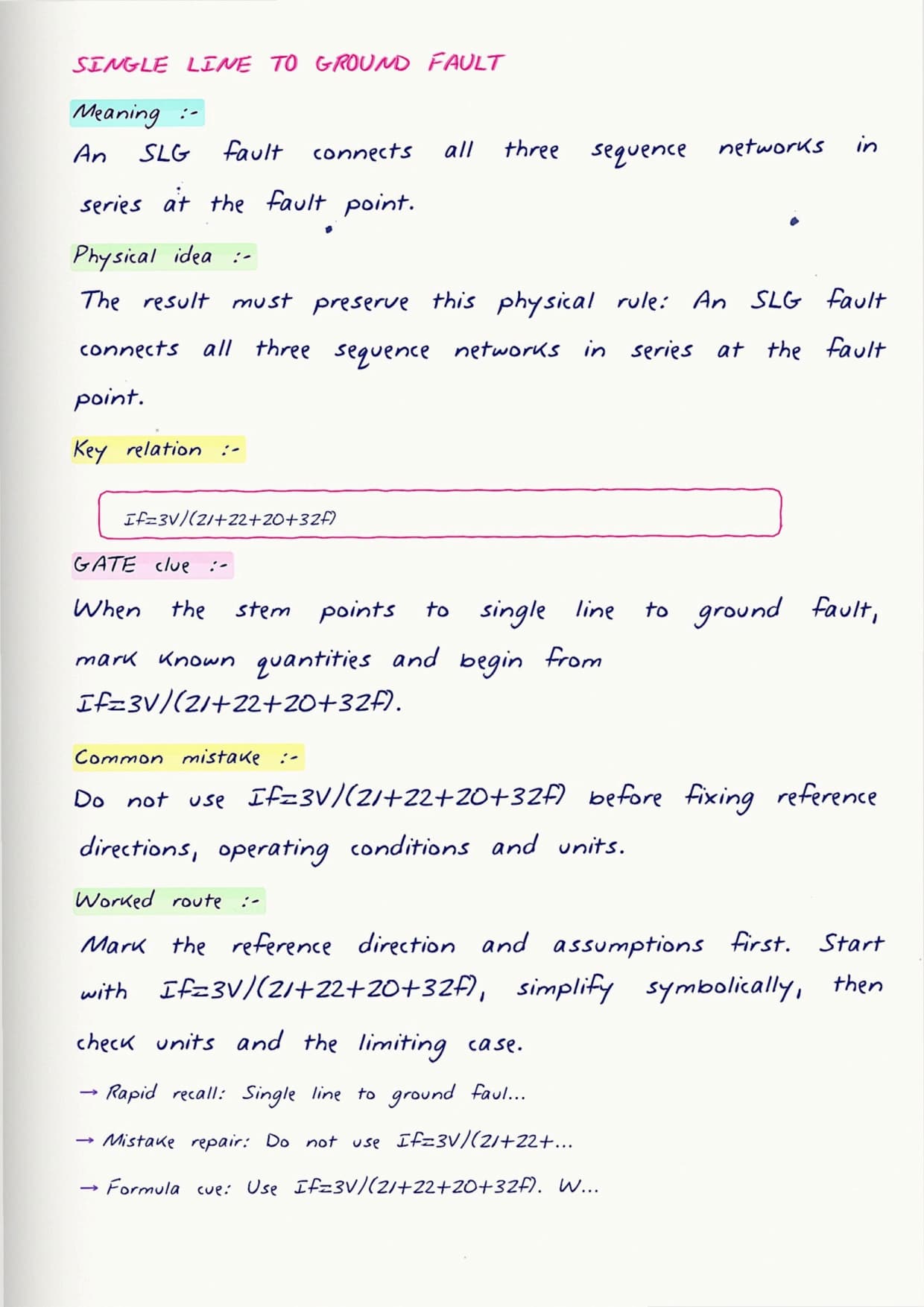
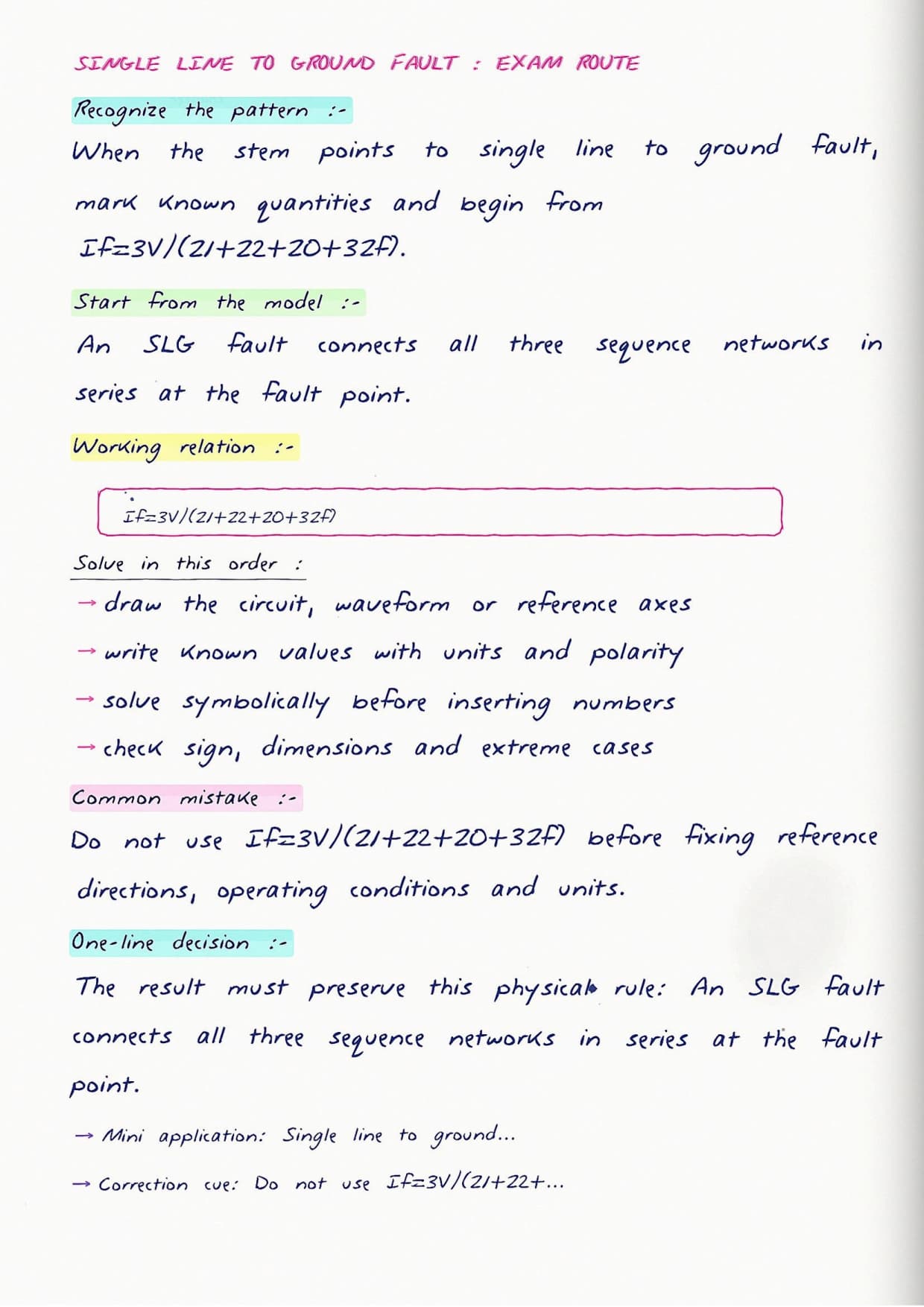
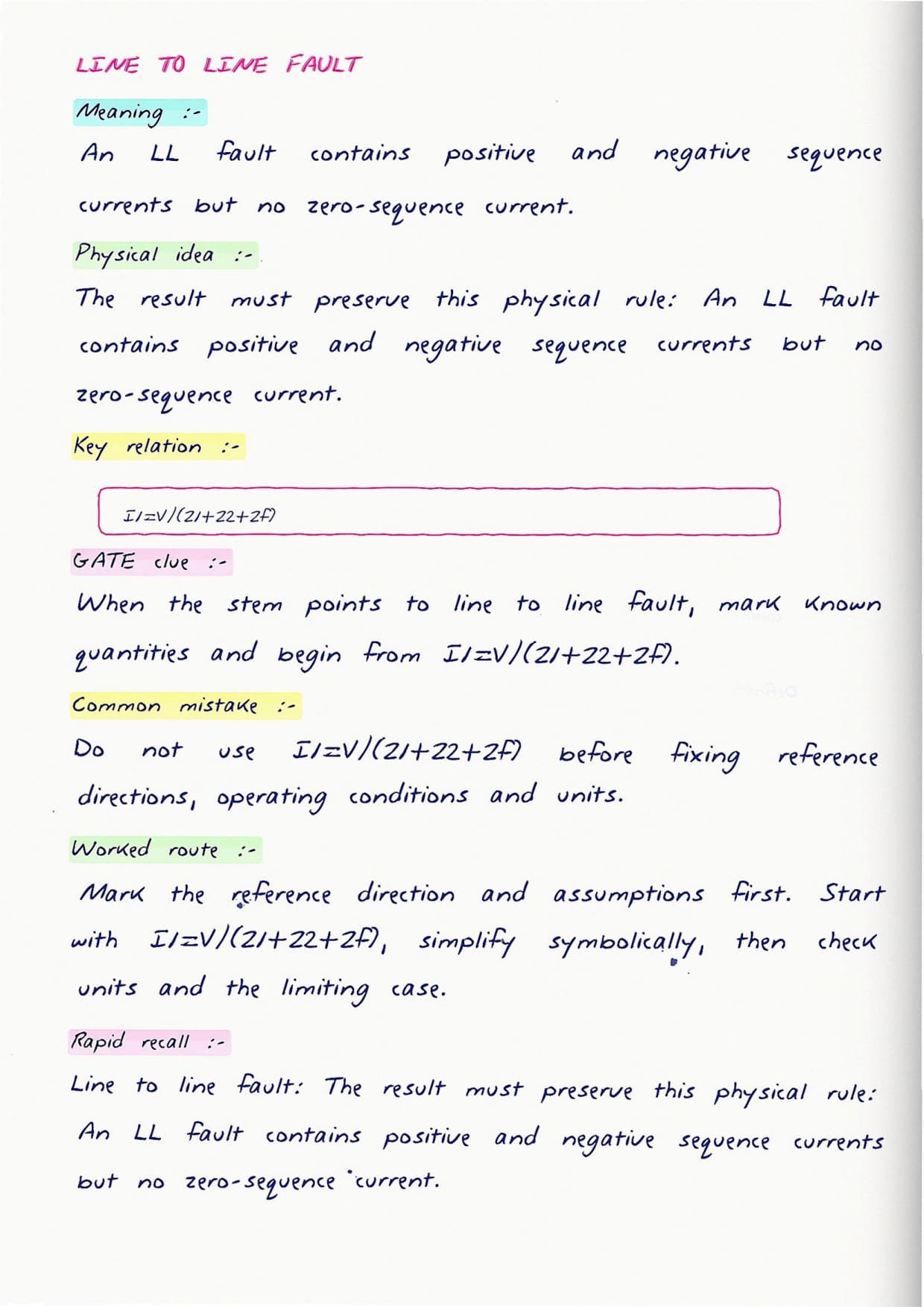
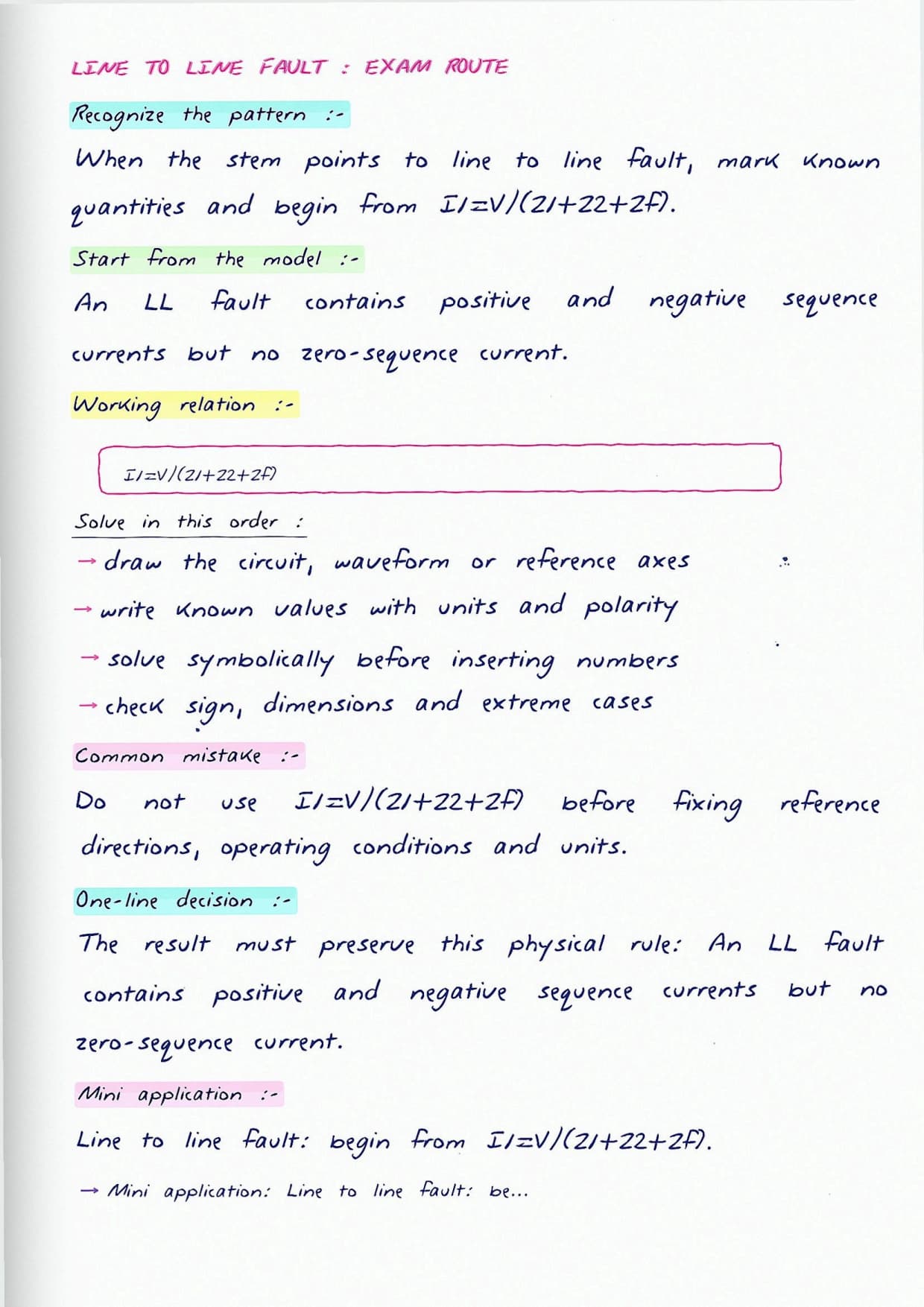
- Unsymmetrical faults: single line-to-ground, line-to-line, and double line-to-ground.
GATE Symmetrical Components and Fault Analysis Quick Revision
Source: BYJU'S Exam Prep GATE & ESE: EE,EC,IN,CS on YouTube
Topics Covered in GATE Symmetrical Components and Fault Analysis
The list below follows the official GATE Electrical power systems syllabus for faults. Each item appears in the notes with a diagram or a short solved case, so students see how the theory turns into a number.
- Definition of positive, negative, and zero sequence sets.
- The a-operator, the symmetrical component transformation, and its inverse.
- Sequence impedance diagrams of generators, transformers, and transmission lines.
- Connection of sequence networks for each unsymmetrical fault.
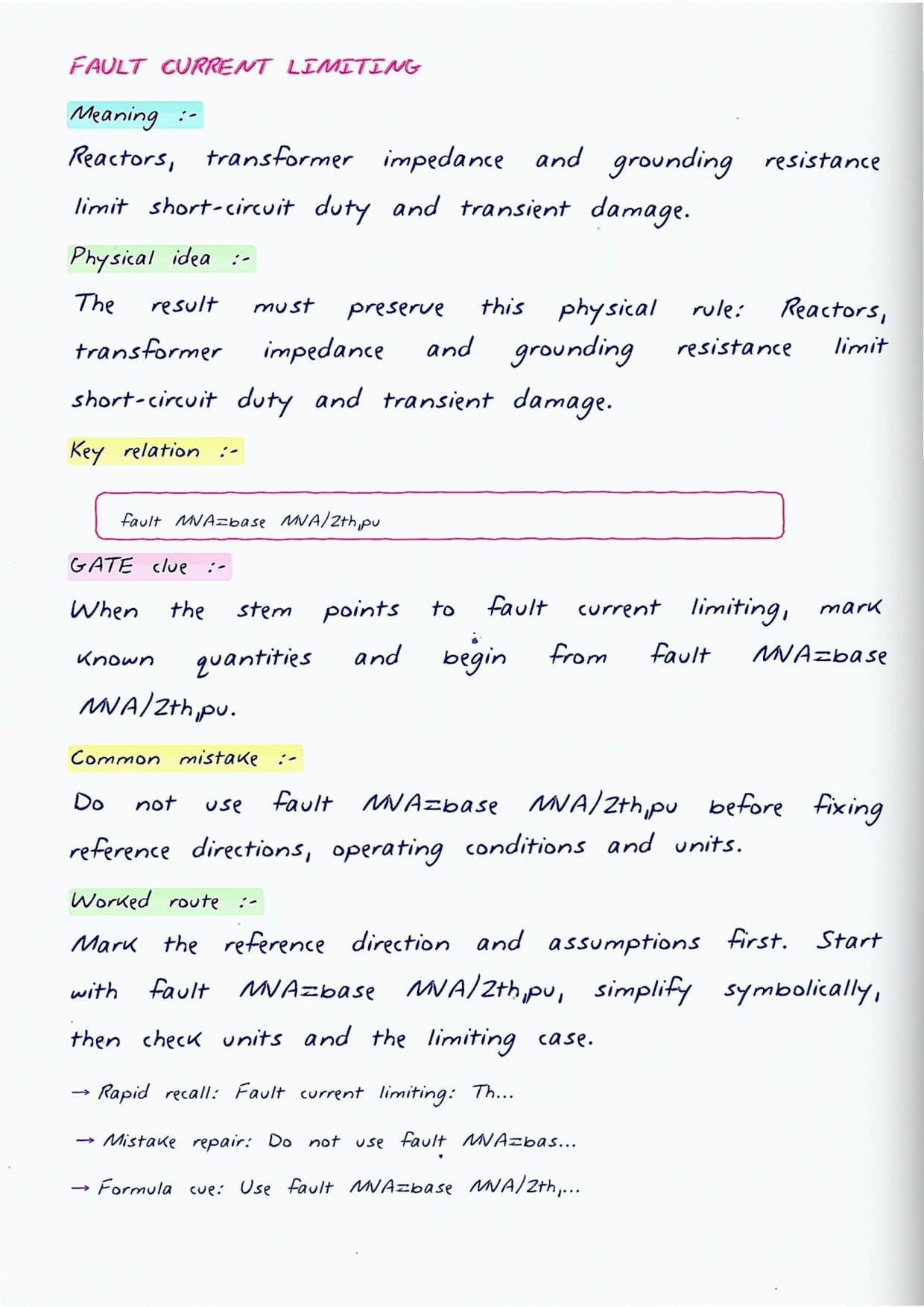
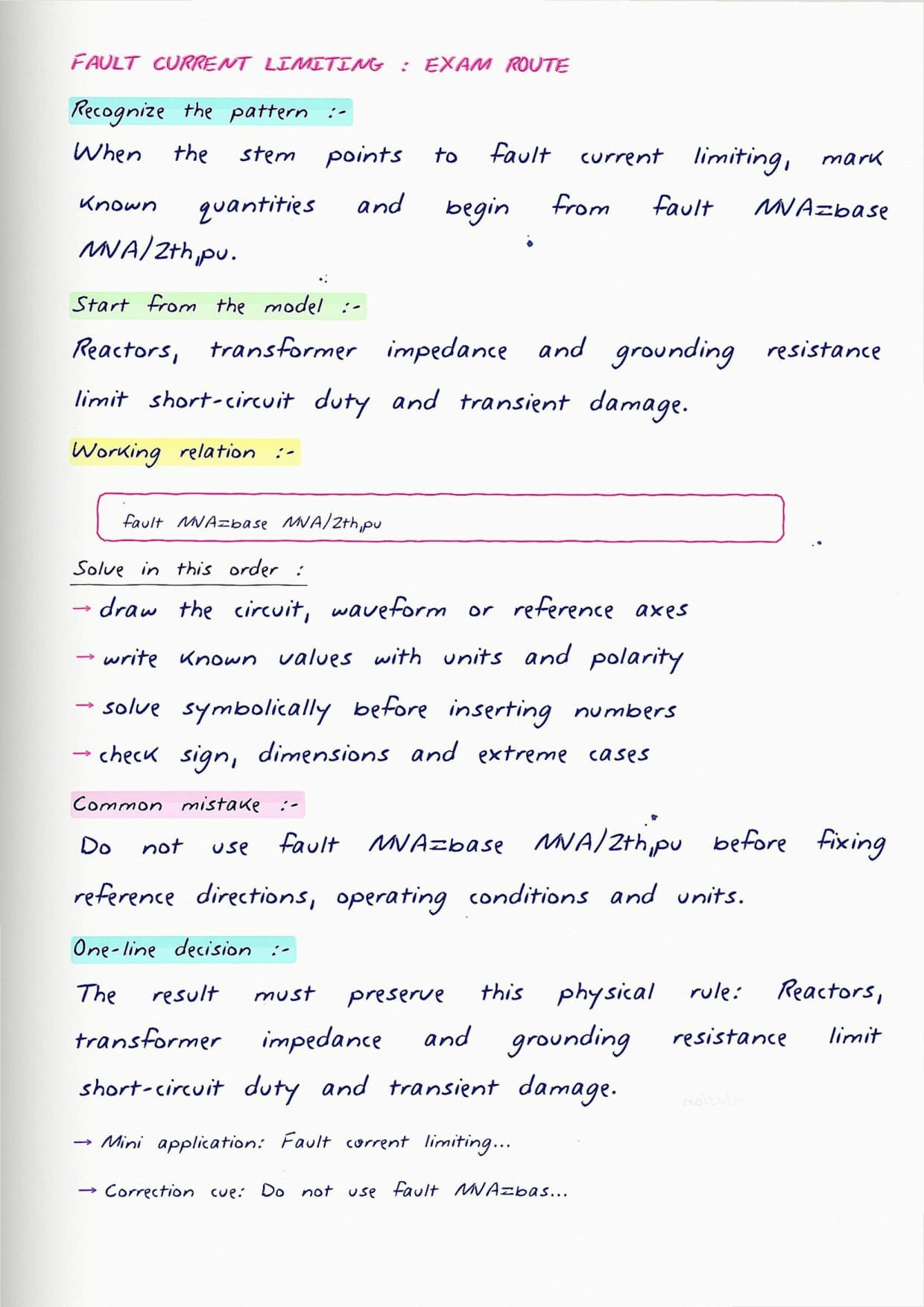
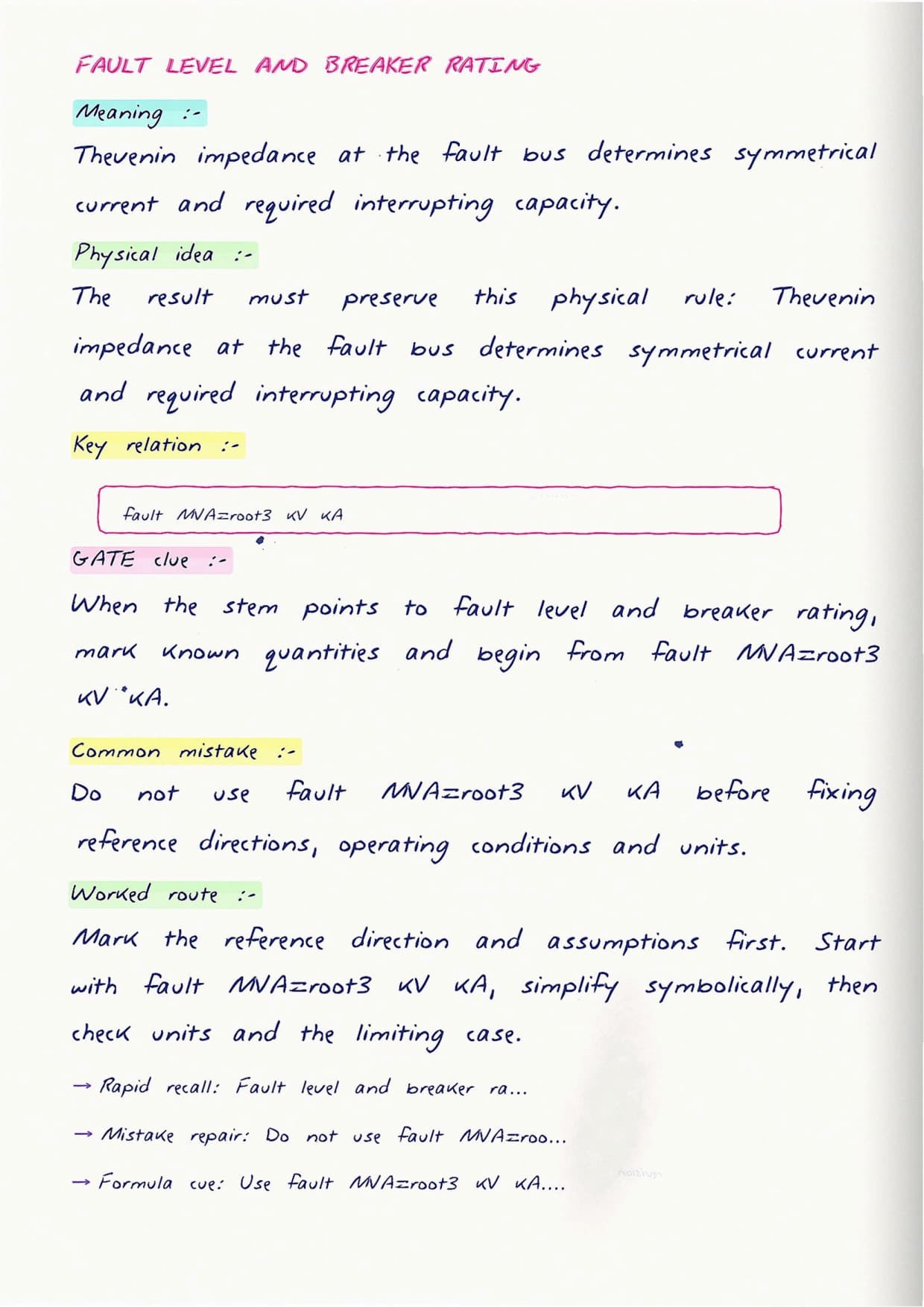
- Fault current and fault MVA on a chosen per-unit base.
- Effect of transformer winding connection on zero sequence current flow.
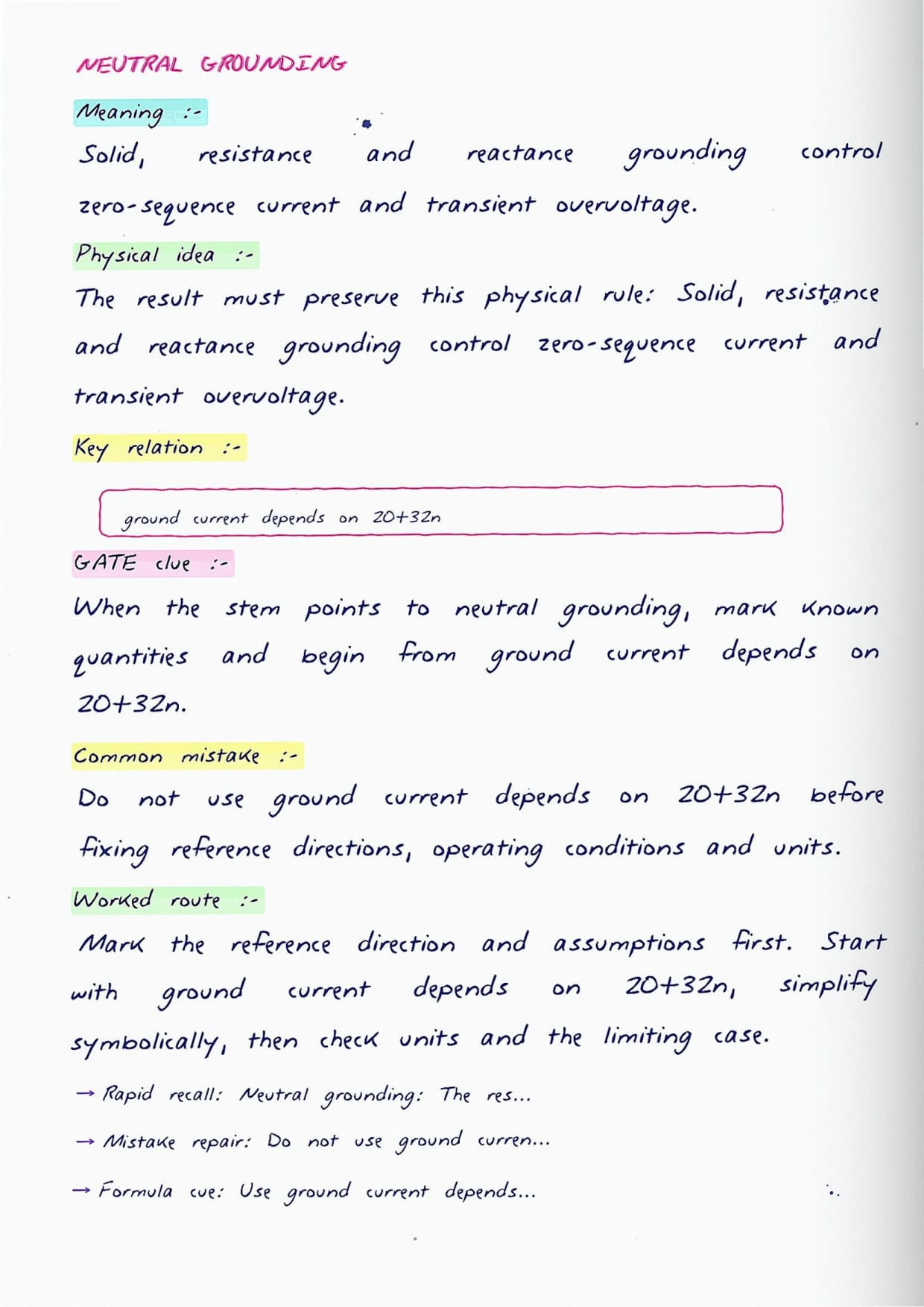
- Neutral grounding and its role in limiting ground fault current.
How the Notes Are Organised
The order runs from the transformation to the impedances and then to the faults, which is the natural path a solution follows in the exam. Students first learn to split a set into sequences, then gather the impedances, and finally join the networks for the fault at hand.
Every fault type gets its own page with the network drawn, connected, and reduced to a single expression for the fault current. A student can read one page, cover the answer, and reproduce the connection from memory, which is the skill the exam rewards.
How GATE Symmetrical Components and Fault Analysis Links to Other Topics
Fault analysis sits at the centre of power systems and connects to several neighbouring topics. The sequence impedances used here come from machine models, and the results feed directly into protection design.
- Power System Protection: relay settings depend on the fault currents found here.
- Synchronous Machines: generator sub-transient and transient reactances feed the sequence networks.
- Per-unit System: every fault calculation runs on a common per-unit base.
- Load Flow: the same bus impedance idea supports the fault level at each bus.
Important Topics in GATE Symmetrical Components and Fault Analysis
Some points come up in the exam almost every session. The notes highlight them and warn about the small errors that cost marks under time pressure.
- A line-to-line fault uses only the positive and negative networks, never the zero sequence one.
- Zero sequence current flows only when a path to ground exists, so the transformer connection matters.
- A single line-to-ground fault connects all three sequence networks in series.
- Keep every reactance on the same per-unit base before adding networks.
- A balanced three-phase fault gives the largest symmetrical current but is the simplest to compute.
How to Prepare GATE Symmetrical Components and Fault Analysis with Handwritten Notes
This topic rewards steady practice with the network connections rather than memorising formulas. A student who can draw the right network quickly has already done most of the work.
- First read: learn the transformation and draw each sequence network once by hand.
- Second pass: redraw the connection for all four fault types from memory.
- Practice: solve past GATE fault problems on a per-unit base and check the current values.
- Final week: revise the fault connection chart and the grounding notes only.
Why These Notes Help You Score Better
Fault analysis questions in GATE follow a fixed pattern, and once a student can pick the right sequence network connection the answer follows in a few clean steps. These hand-drawn pages train that instinct by showing each network built and reduced in full. The per-unit worked cases remove the doubt about bases that often trips people in the exam hall. The grounding and transformer-connection notes settle the one detail that decides whether zero sequence current even flows. Practised a few times, they let students earn these power system marks with confidence.
GATE Electrical Symmetrical Components and Fault Analysis Handwritten Notes FAQs
Ques. Why are symmetrical components used in fault analysis?
Ans. They turn an unbalanced three-phase fault into three balanced sets that are easy to solve separately, which is why students use them for every unsymmetrical fault.
Ques. Which sequence networks connect for a line-to-ground fault?
Ans. All three, the positive, negative, and zero sequence networks, connect in series. The notes draw this connection so students can reproduce it quickly in the exam.
Ques. Do the notes cover fault current on a per-unit base?
Ans. Yes. Each solved fault runs on a chosen per-unit base with every step shown, so students learn to keep all reactances consistent before combining networks.
Ques. How much of GATE power systems does this topic cover?
Ans. Fault analysis alone usually accounts for about 4 to 7 marks, and the skills carry into protection questions, so it is a strong area for students to secure.



Comments