




Protection, Circuit Breakers and Power System Stability is a concept-heavy and frequently tested area of GATE Electrical, usually worth about 6 to 9 marks in the paper. It belongs to the Power Systems section, and its ideas return in Fault Analysis, Switchgear, and Control Systems. These handwritten notes cover the full topic in a compact, exam-focused form.
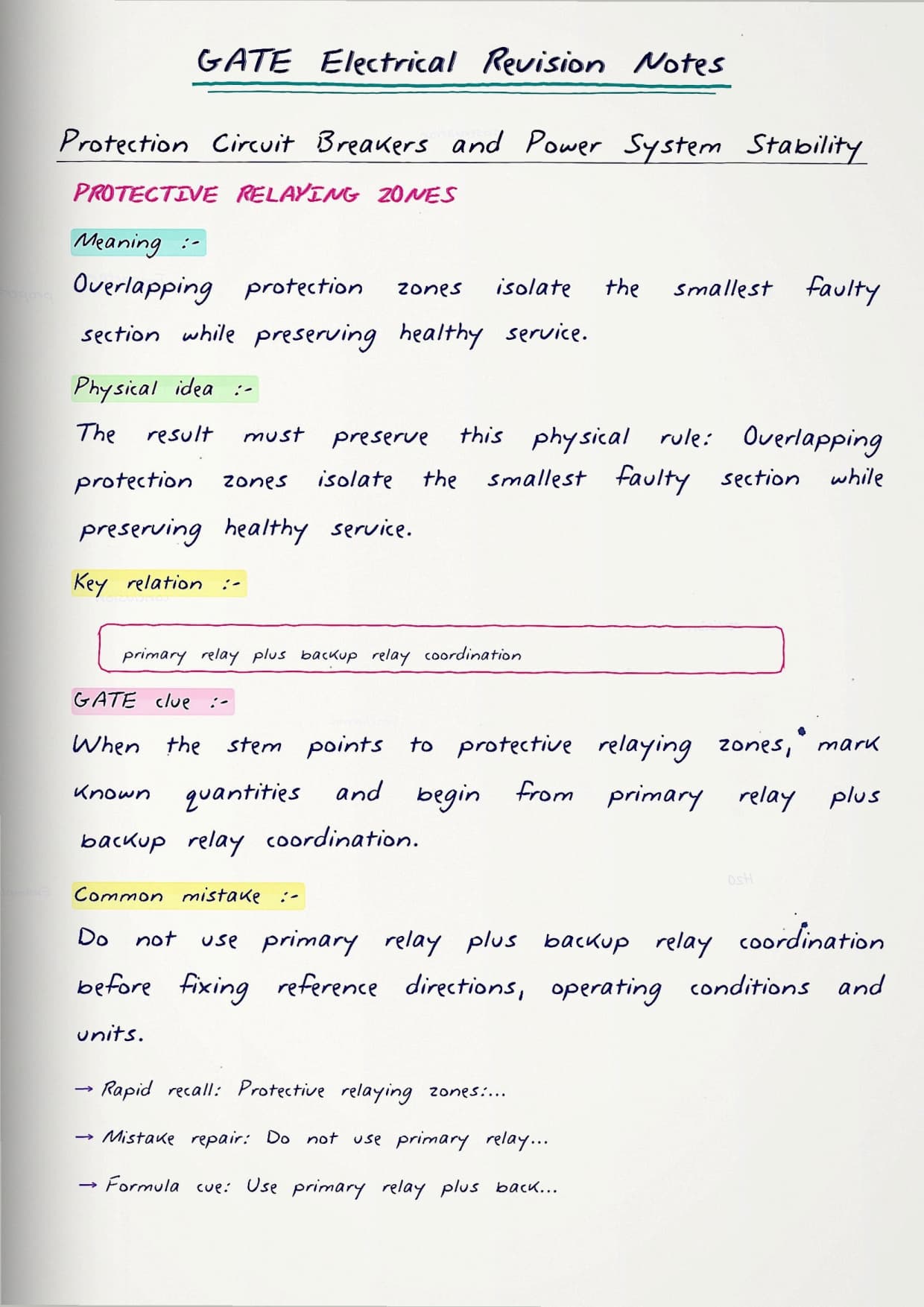
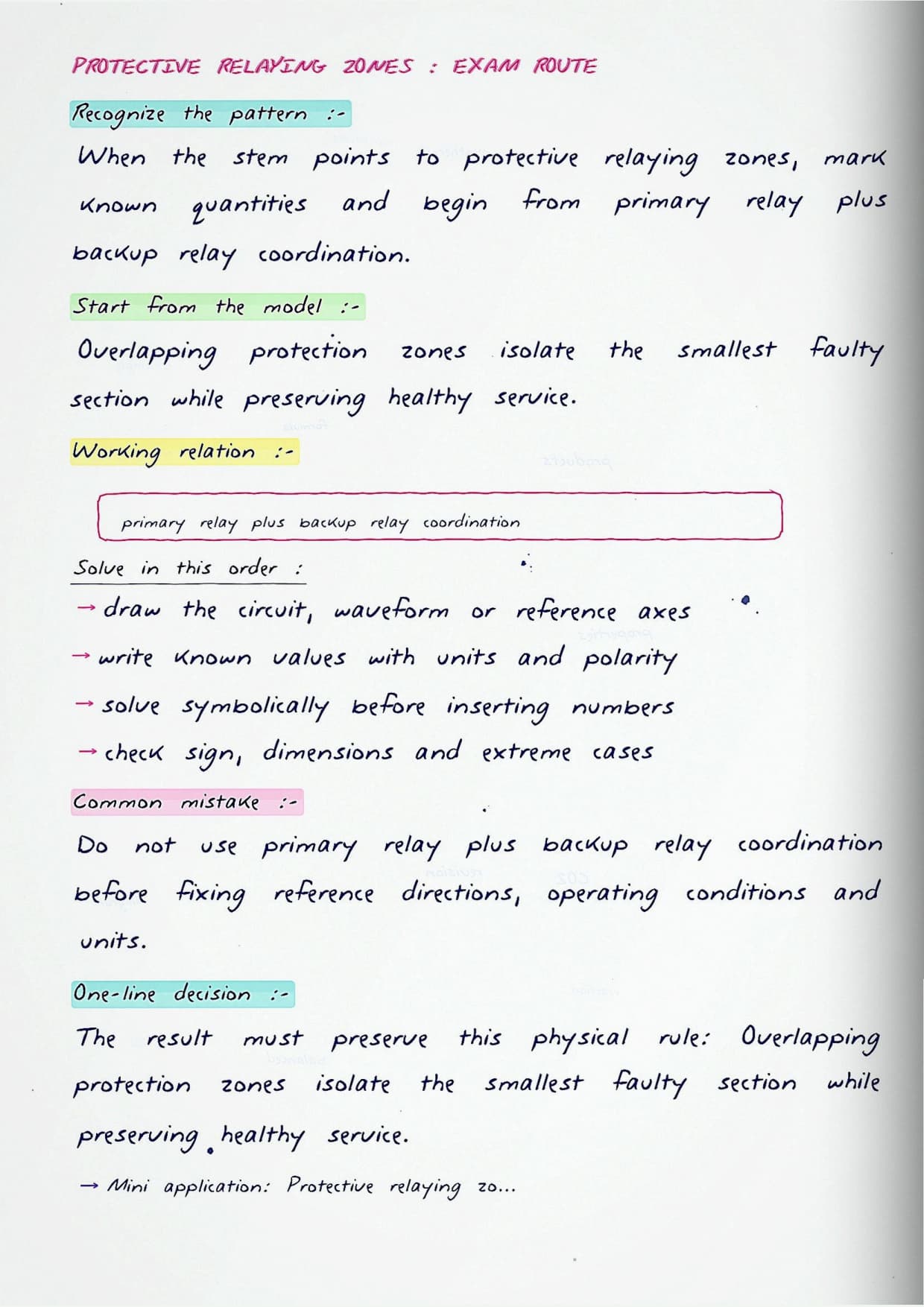
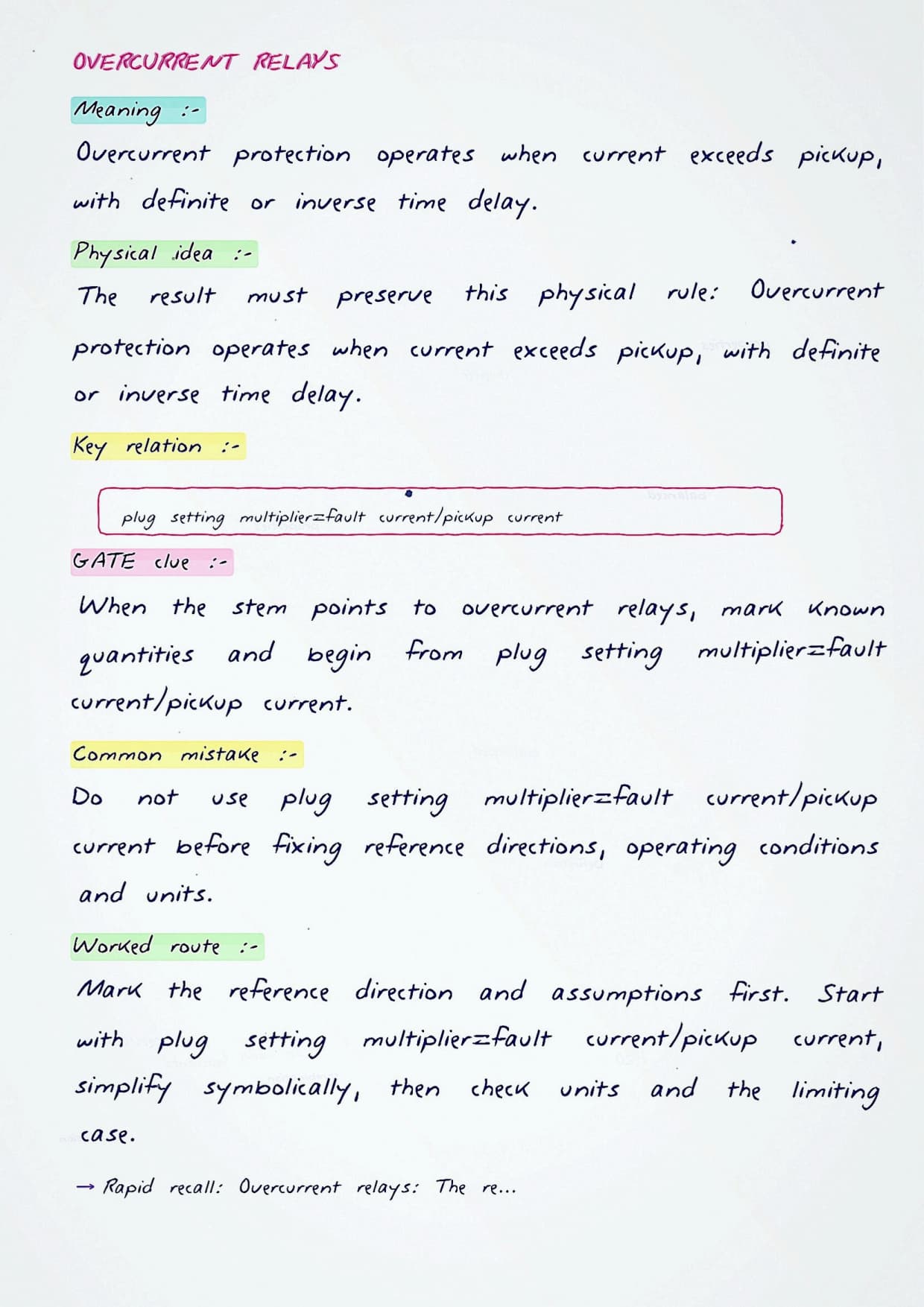
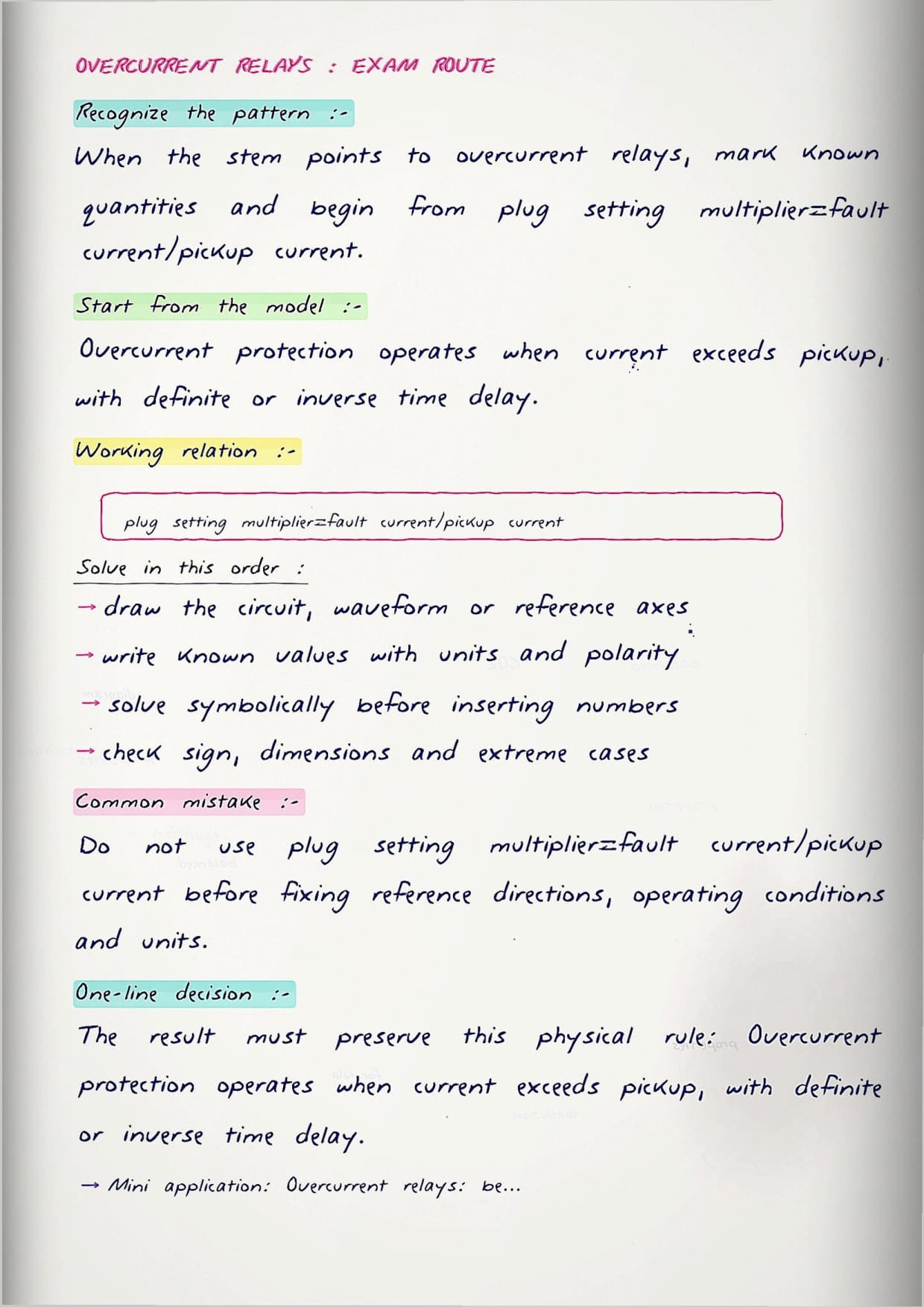
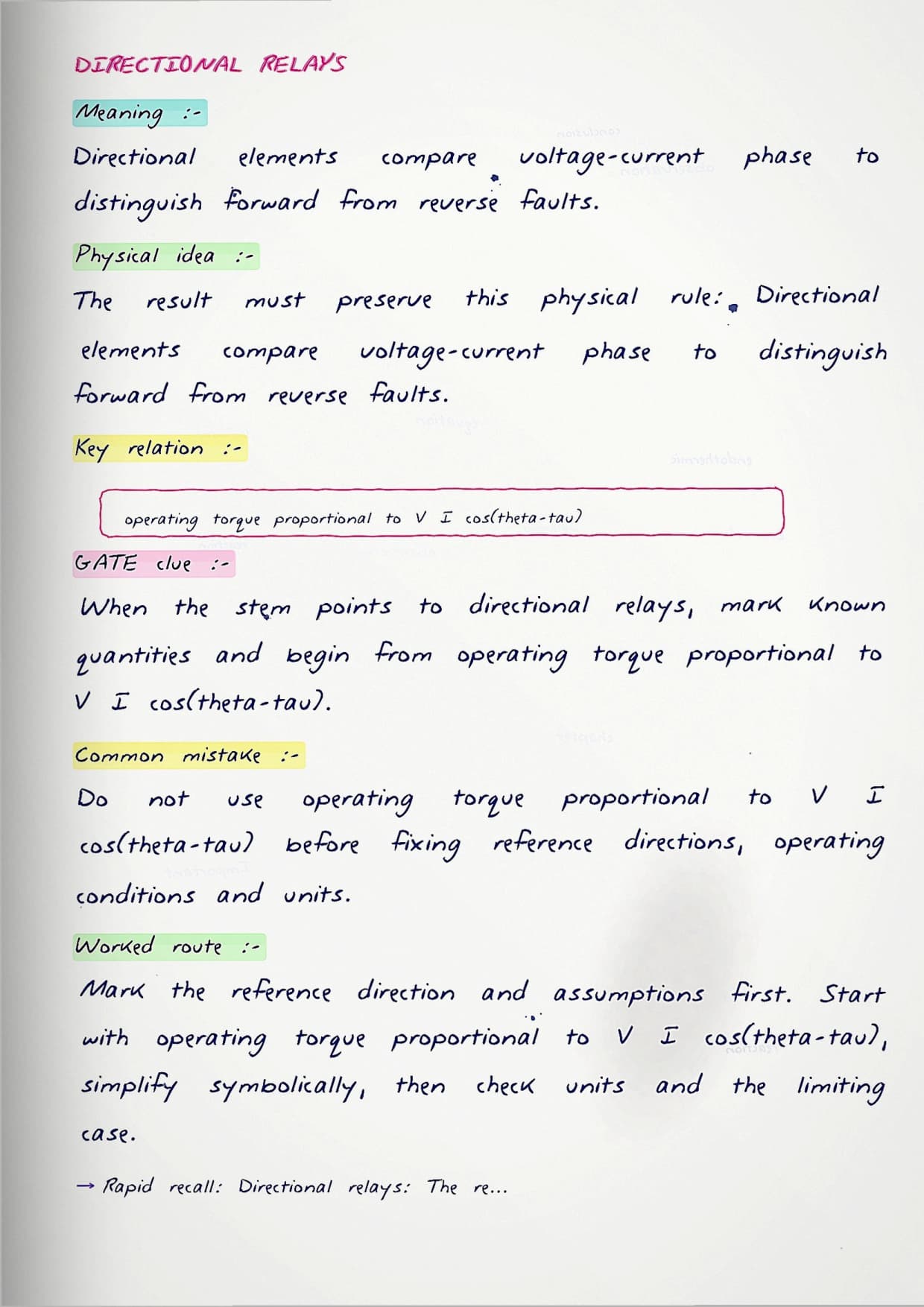
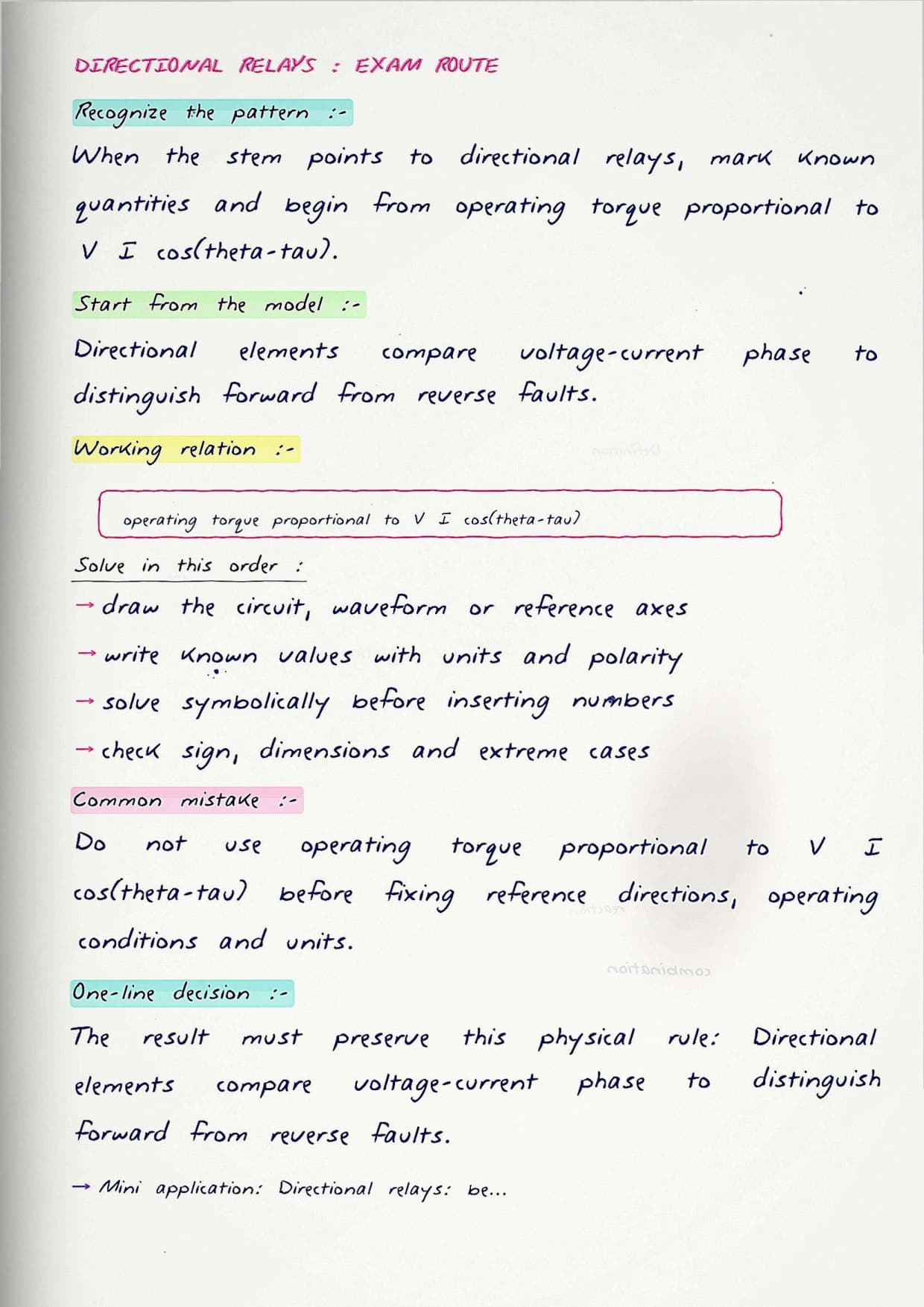
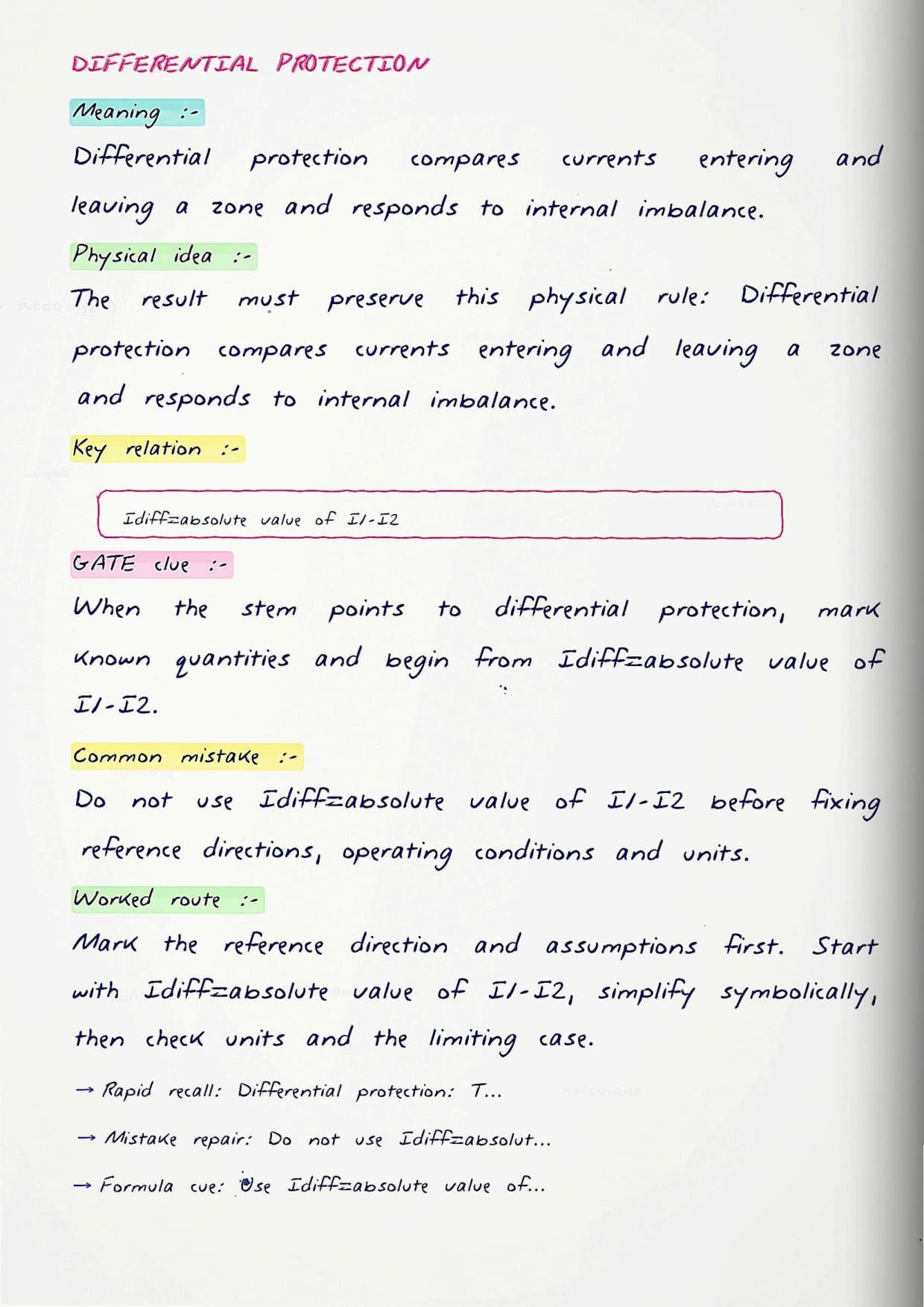
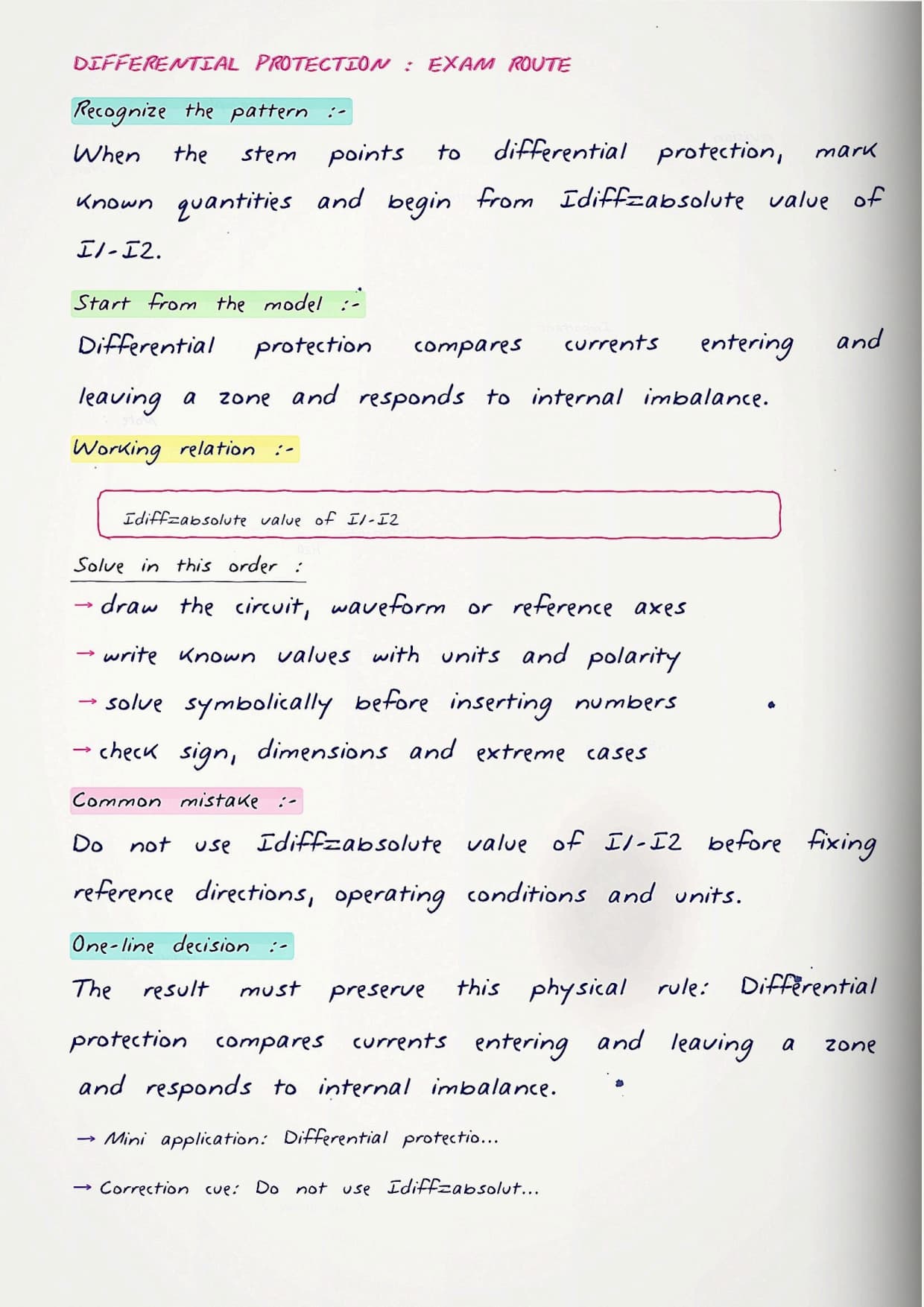
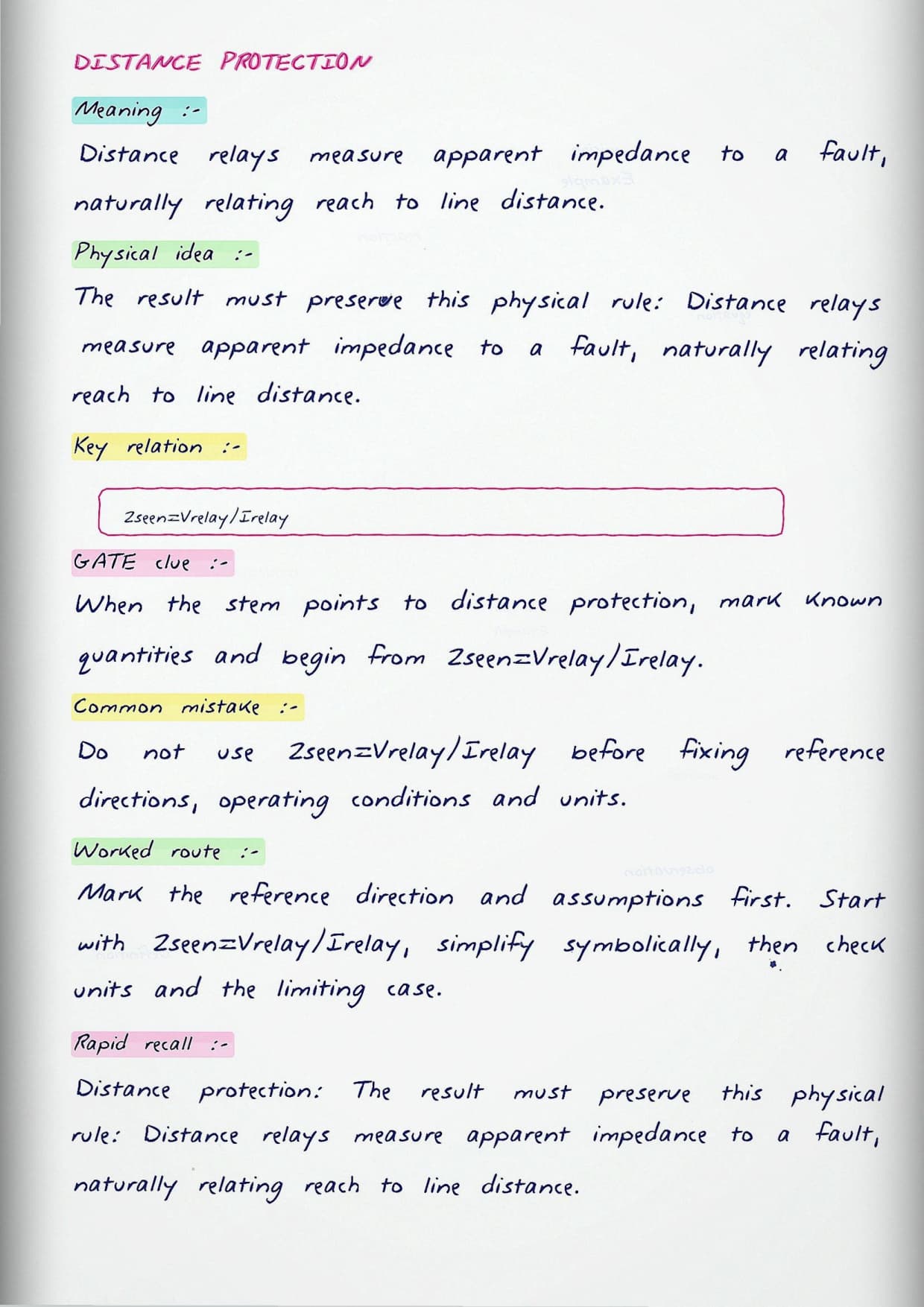
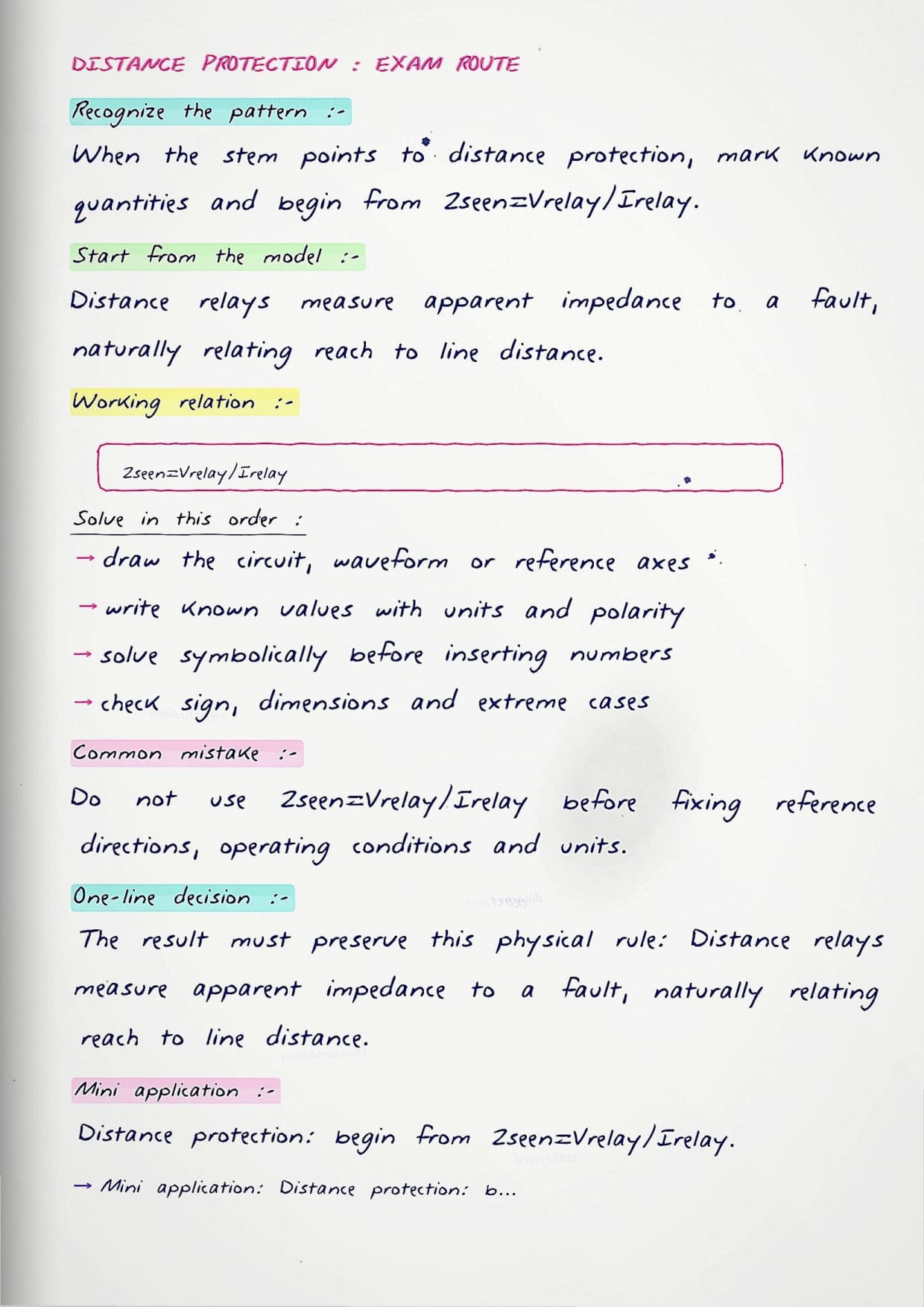
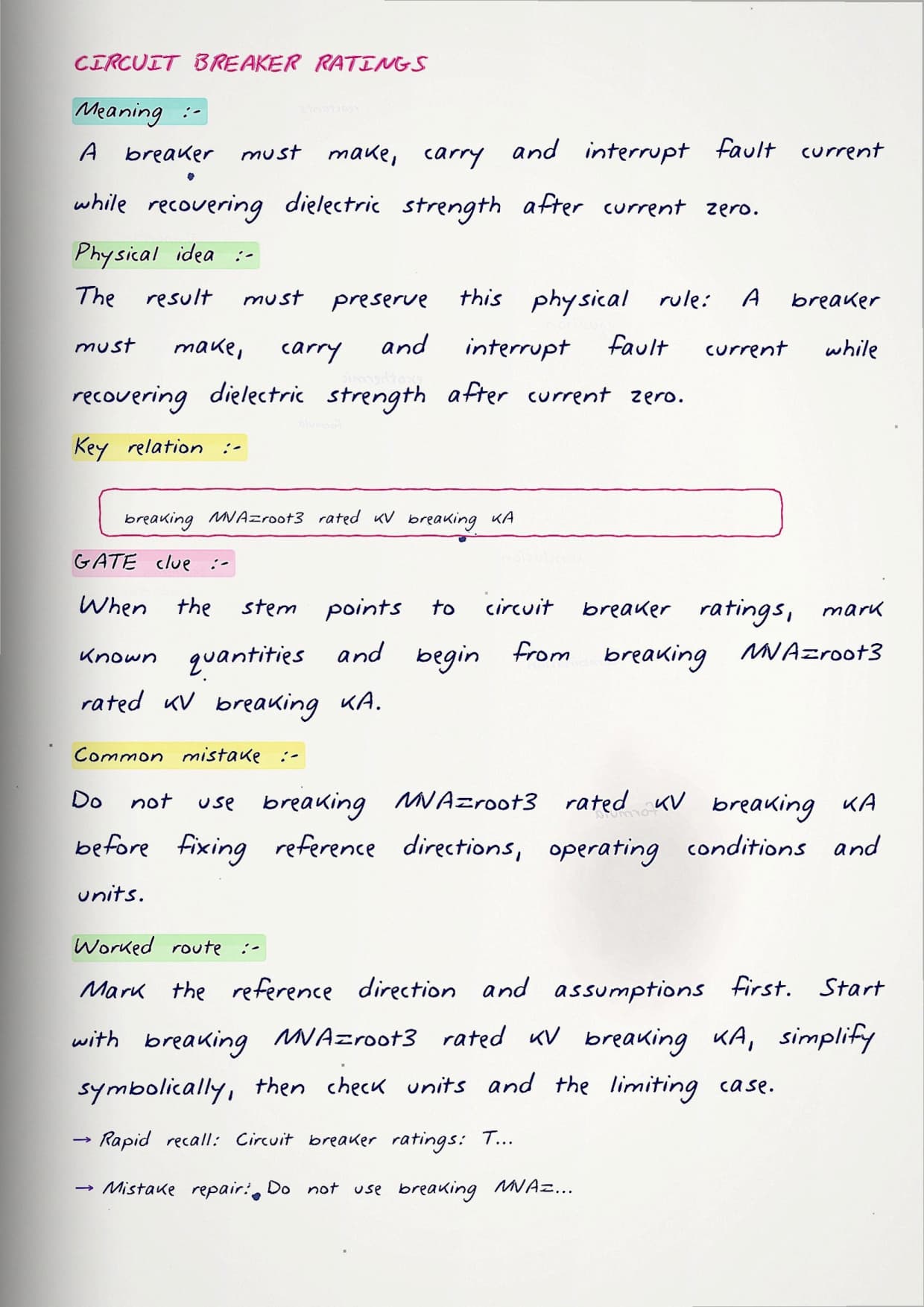
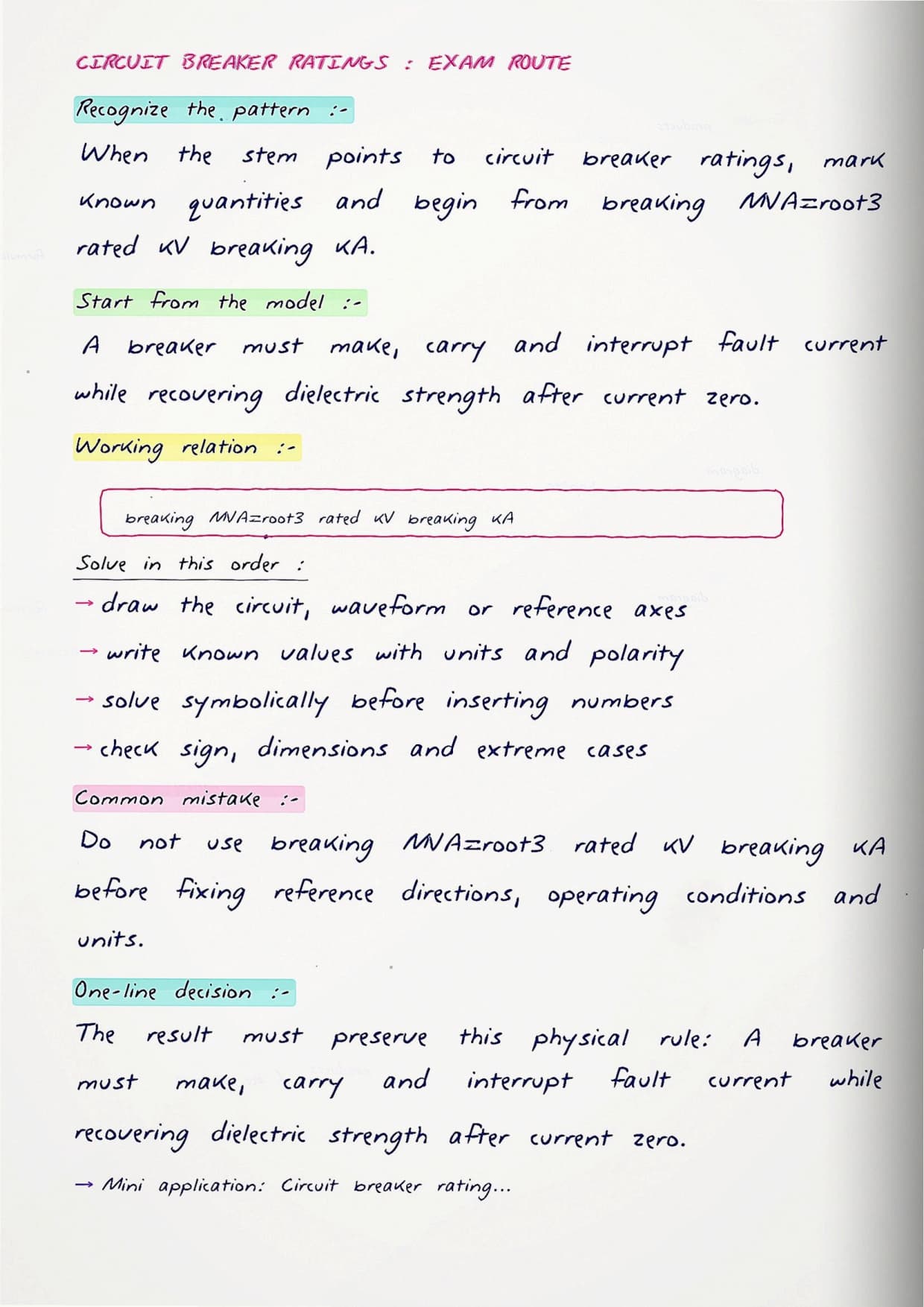
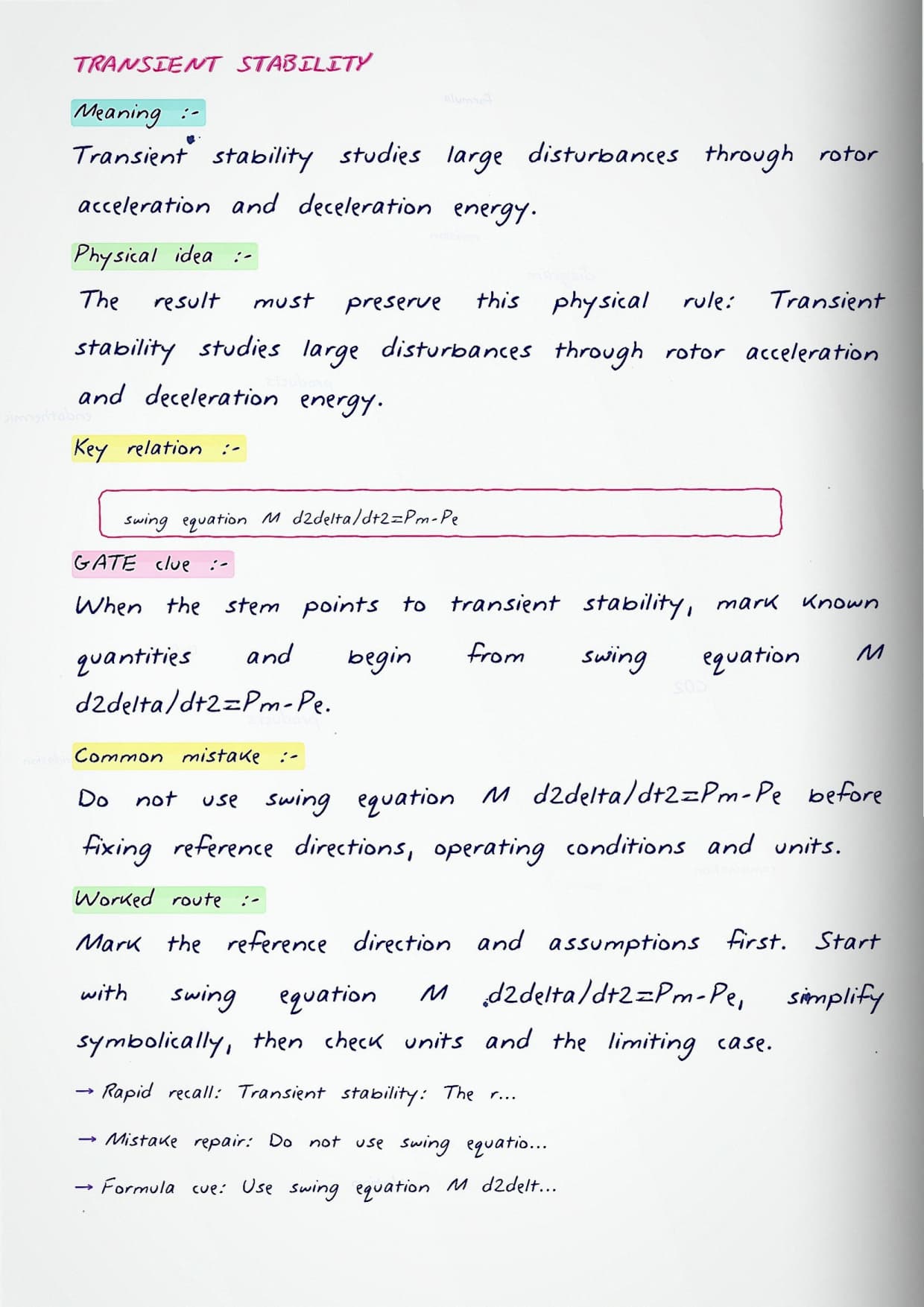
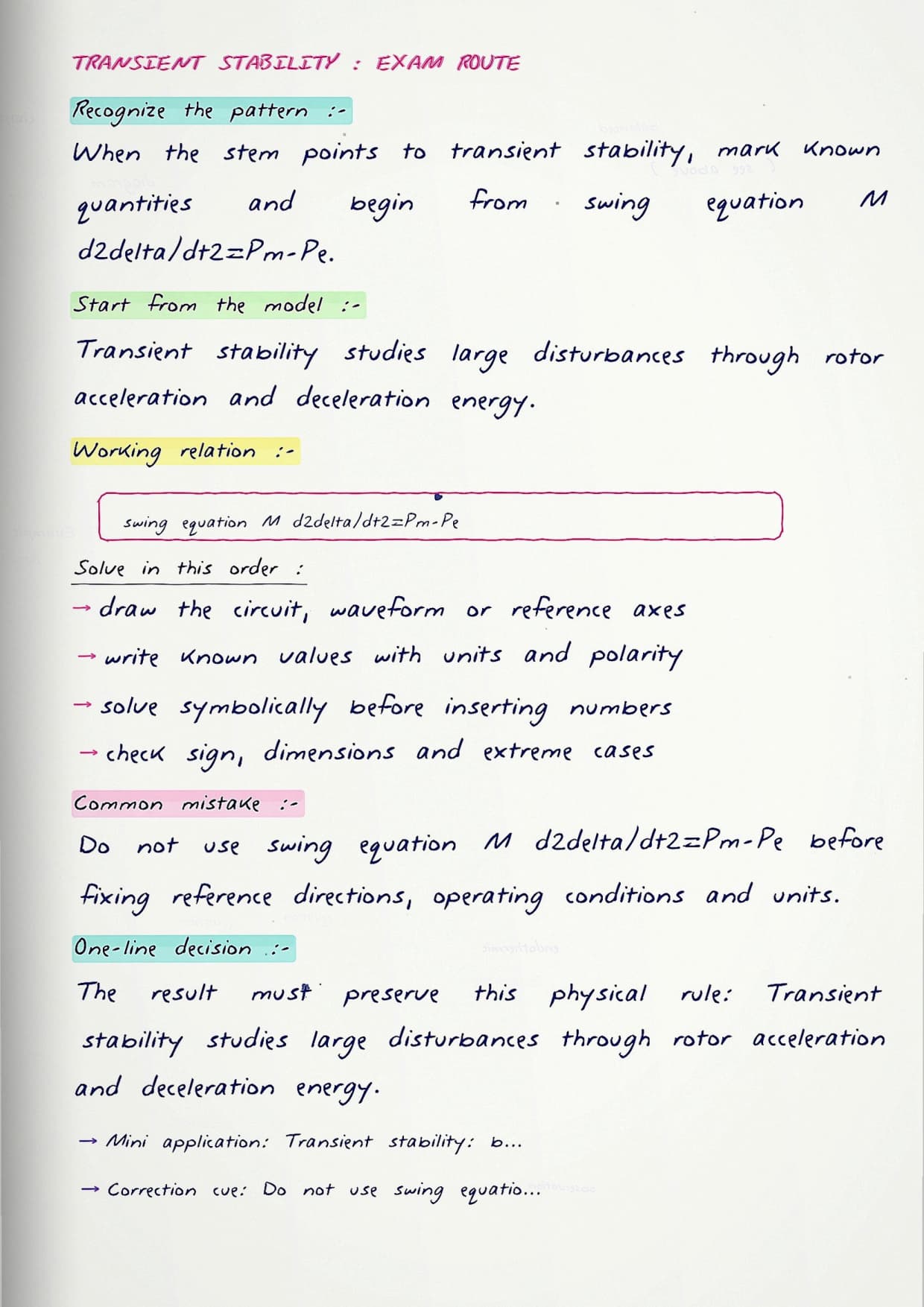
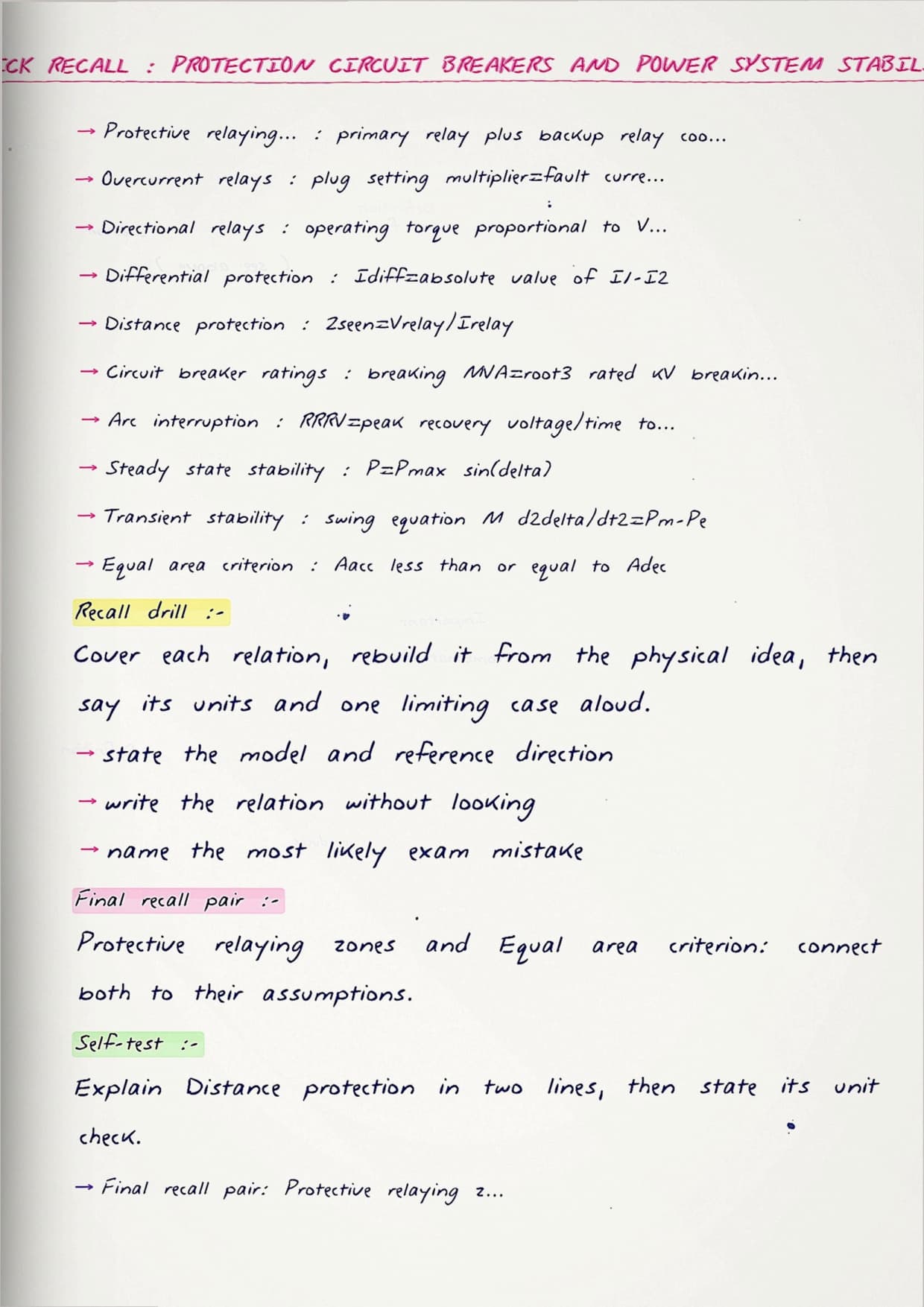
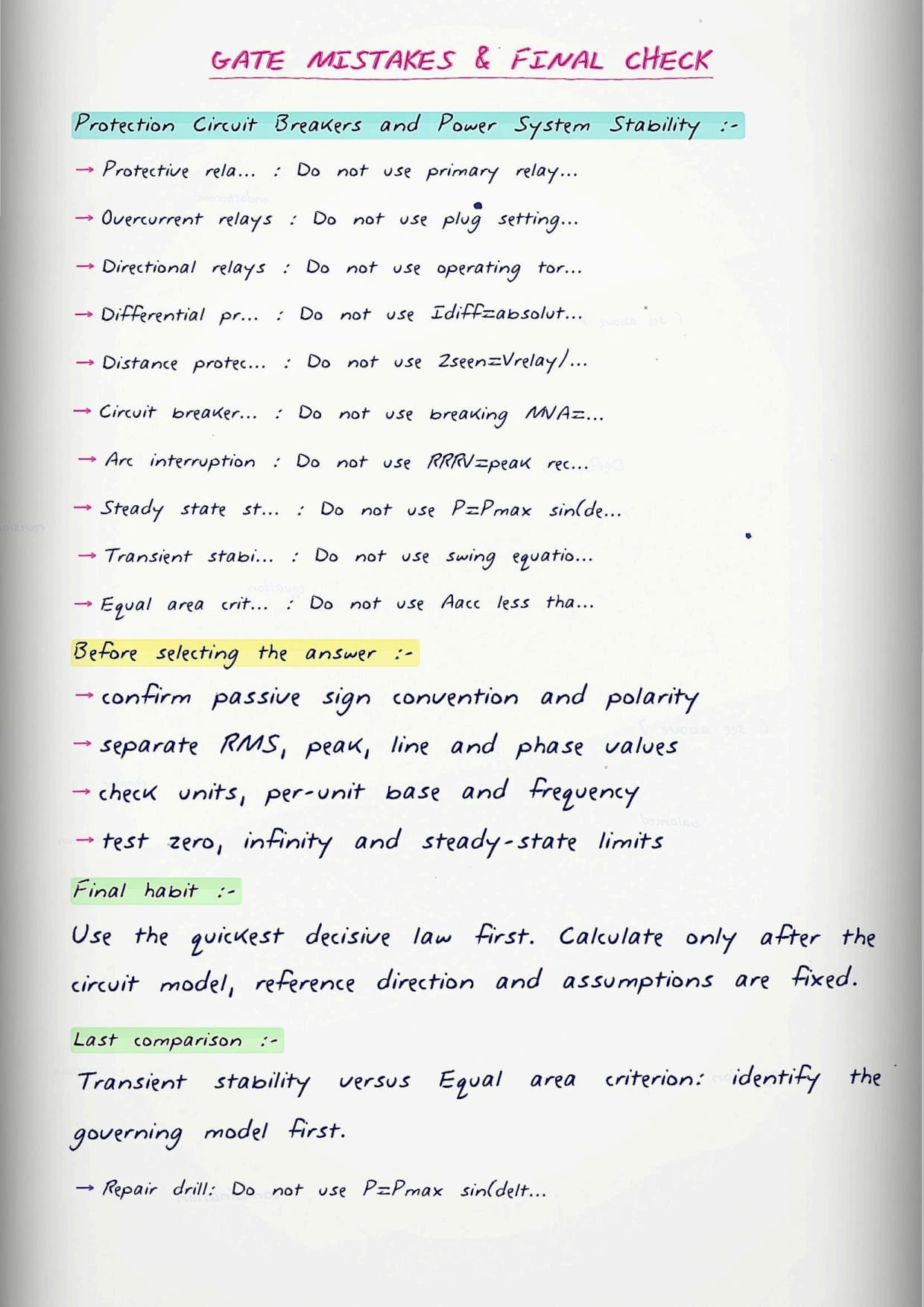
The notes begin with hand-drawn single-line diagrams that show where relays, current transformers and breakers sit on a feeder, so students can picture the protection zone before touching any formula. Time-current characteristics of overcurrent relays are sketched by hand, and the swing equation is built up step by step next to a labelled rotor-angle diagram. Small annotations point out why a relay picks up, so the logic of a trip is never left to memory alone.
- Clear drawings of differential and distance protection, with the operating and restraining quantities marked.
- A comparison table of SF6, vacuum, air-blast and oil circuit breakers covering arc quenching and ratings.
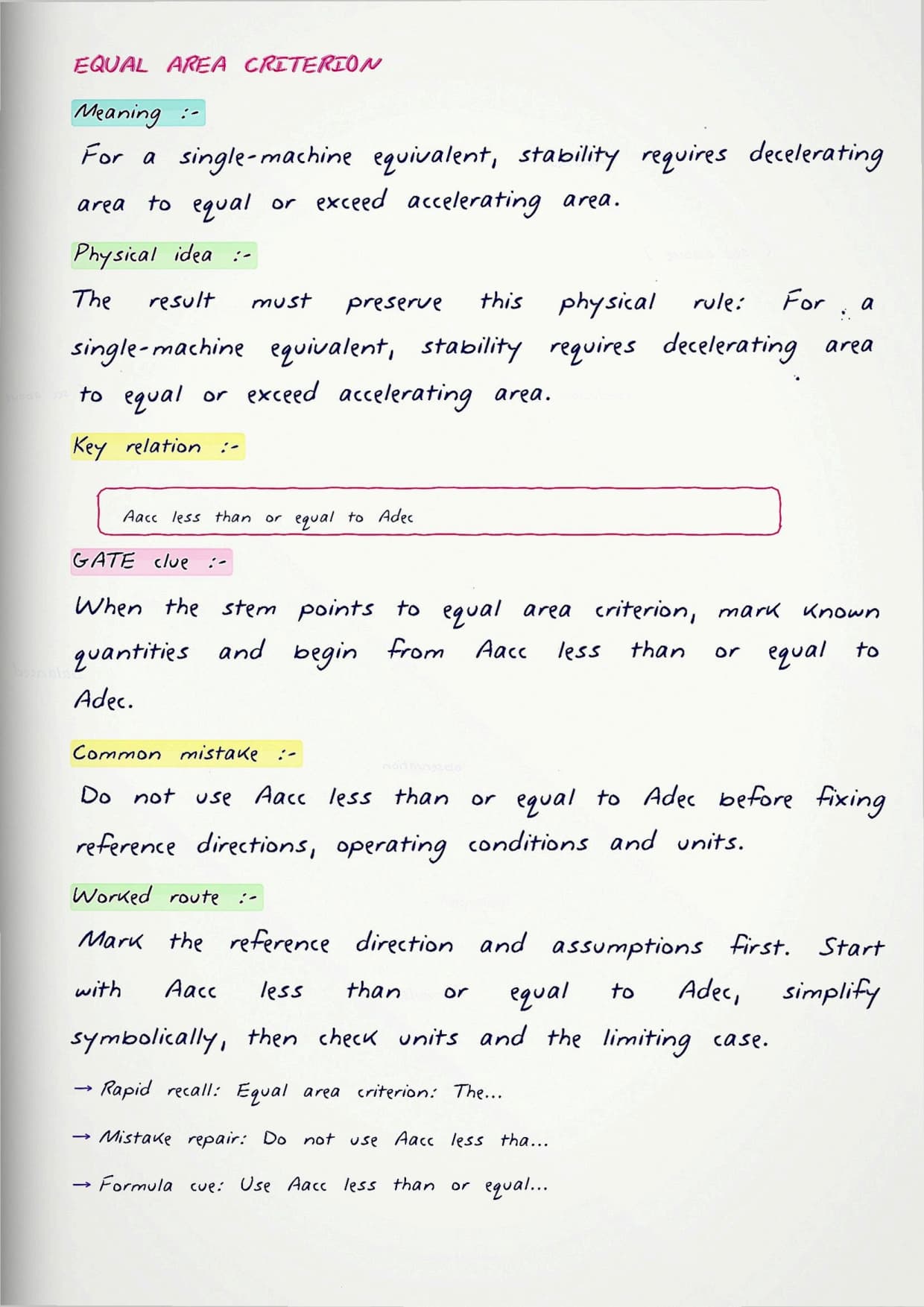
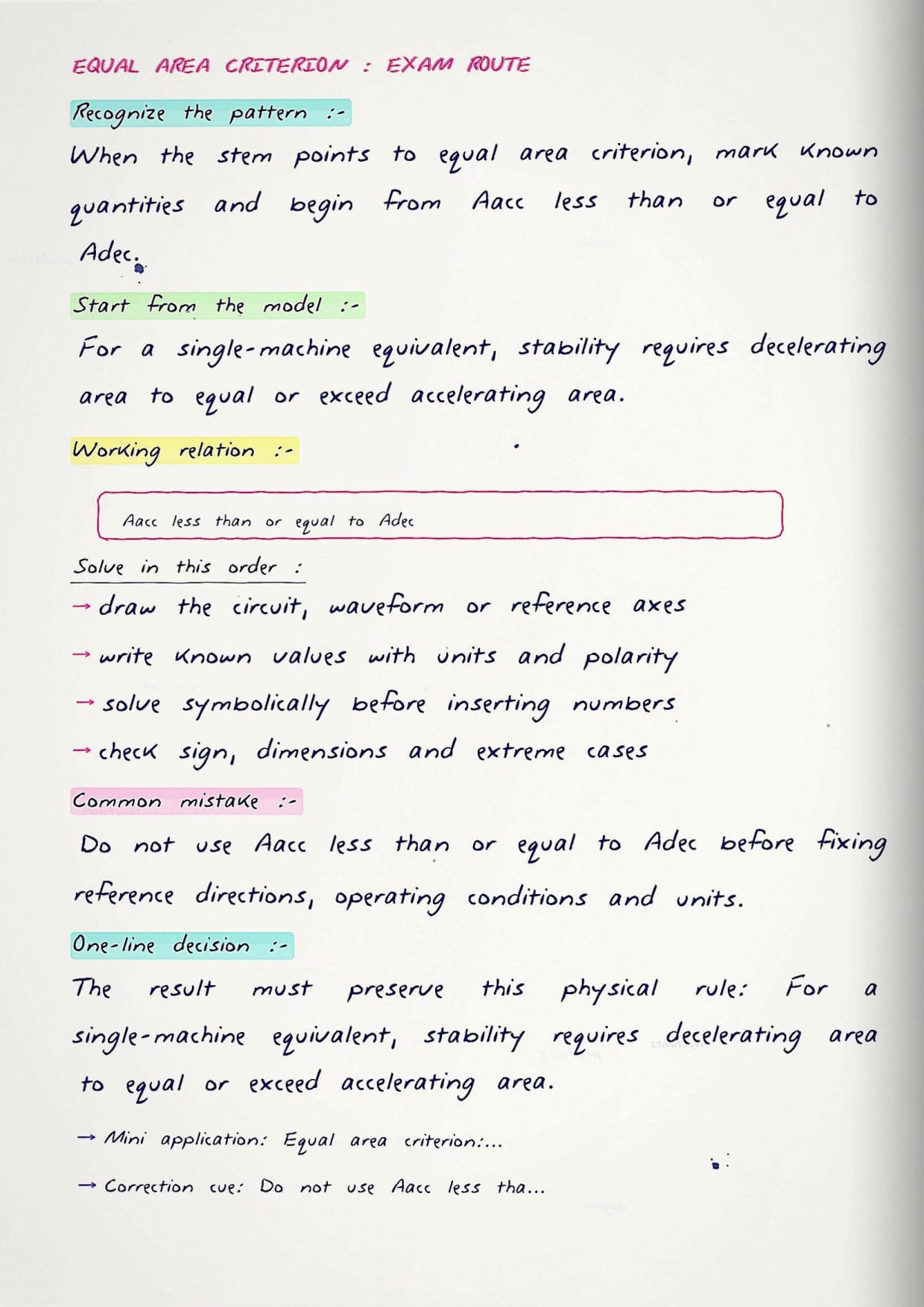
- The equal-area criterion shown as a shaded power-angle curve, the way it is usually asked in the exam.
What These GATE Protection Notes Cover
The notes tie together the three linked ideas of detecting a fault, isolating it, and keeping the rest of the system in step. Each is treated with the depth GATE expects while staying brief enough to revise quickly, and the recurring numerical patterns are shown so students recognise a question type on sight.
- Relay types and settings, including overcurrent, differential and distance relays.
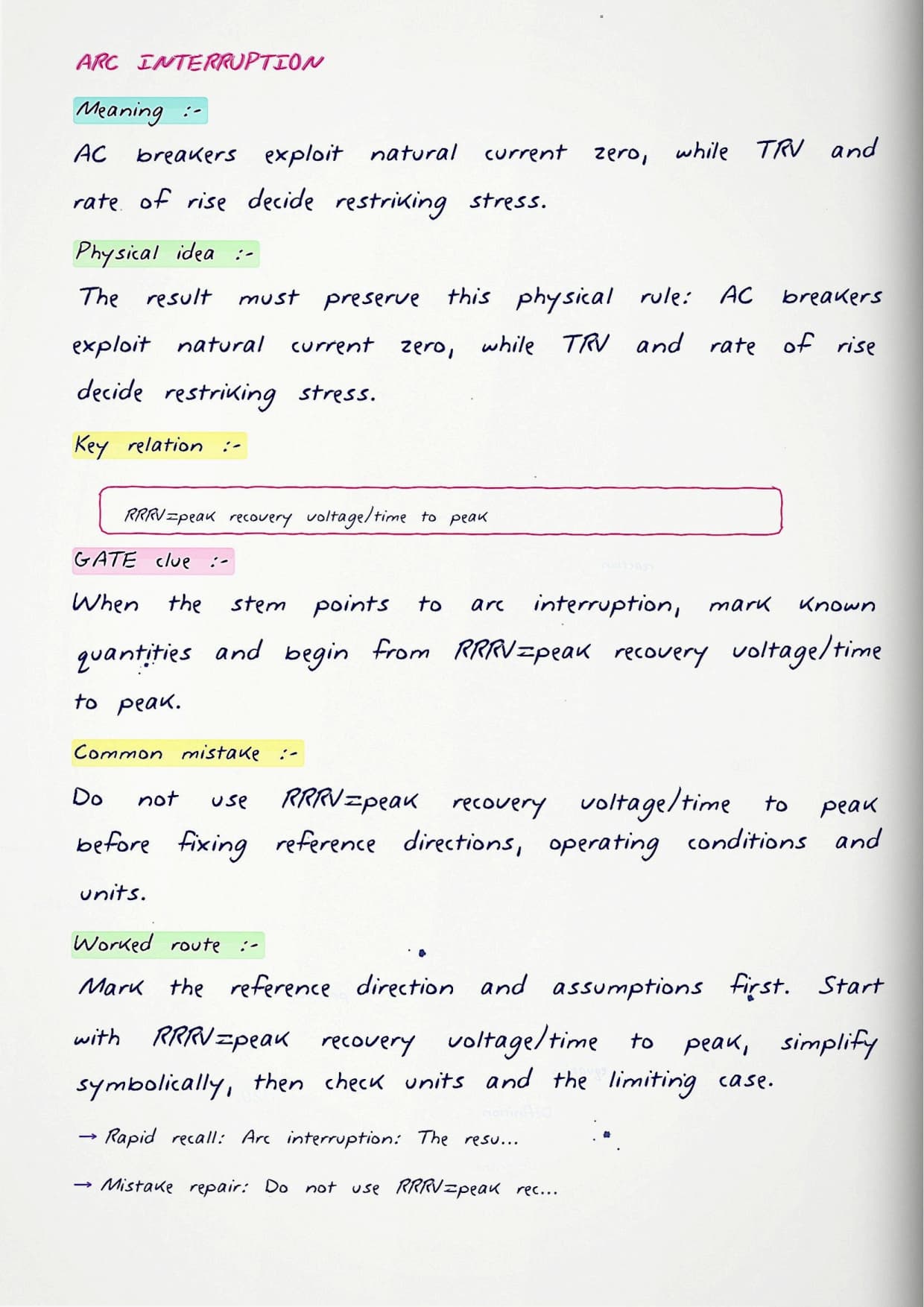
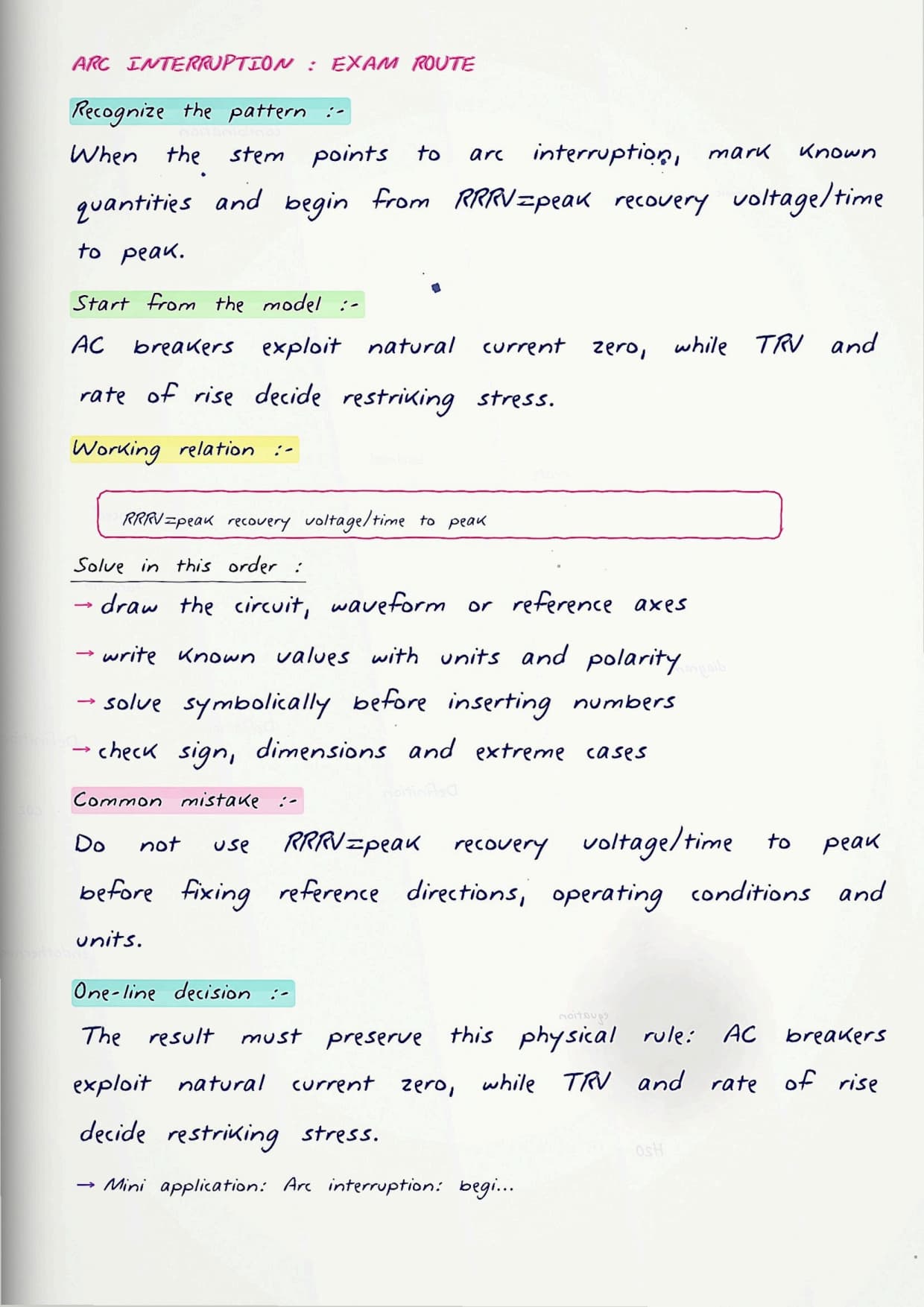
- Construction and arc interruption in circuit breakers, plus ratings and restriking voltage.
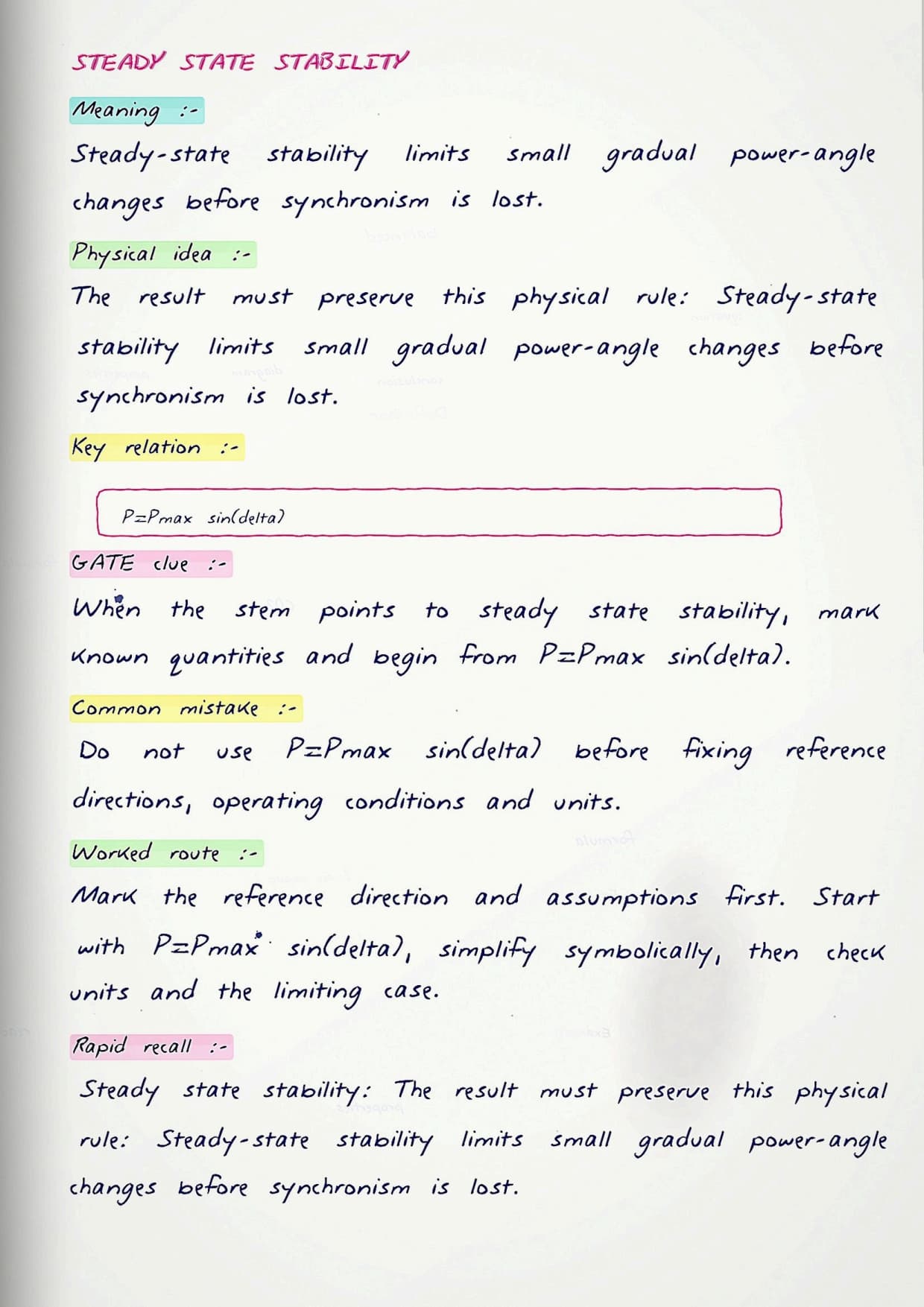
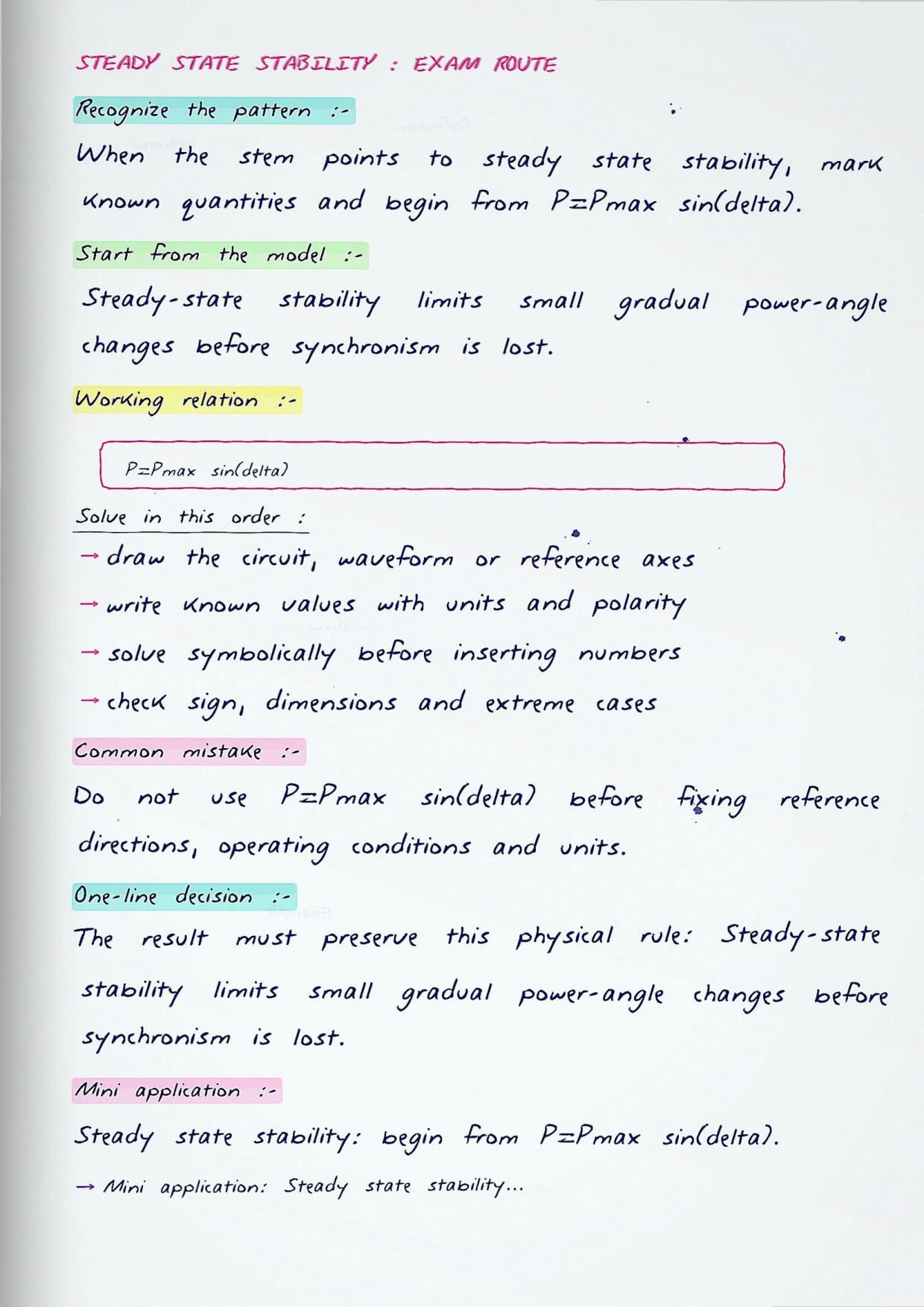
- Steady-state and transient stability, with the swing equation and equal-area criterion.
- Critical clearing time and the role of fault clearing speed in stability.
GATE Protection Quick Revision
Source: EXAM DOST - Ankit Goyal on YouTube
Topics Covered in GATE Protection
The subtopics below match the protection and stability lines of the official GATE Electrical Power Systems syllabus, so students can use the list as a coverage check.
- Overcurrent relay coordination and time-current curves.
- Differential protection for transformers and generators.
- Distance protection zones and impedance relays.
- Circuit breaker arc extinction, recovery and restriking voltage.
- Ratings of SF6 and vacuum breakers and their applications.
- The swing equation and rotor-angle dynamics.
- Equal-area criterion and critical clearing angle.
- Methods to improve transient stability in a network.
How the Notes Are Organised
The pages follow the natural life of a fault. Students first meet the sensing elements, current and voltage transformers feeding relays, then the relays that decide, and finally the breaker that acts.
Only after the protection chain is clear do the notes turn to stability, asking what happens to the machines while a fault is being cleared. This ordering means the stability section can lean directly on the fault-clearing ideas built earlier.
Each concept is paired with a compact solved example, and the numerical steps are written out fully so students can follow the arithmetic rather than guess at a jump. A short summary strip at the foot of every page repeats the key result, which turns the whole set into a fast revision tool during the final days before the exam.
How GATE Protection Links to Other Topics
Protection and stability sit at the crossroads of several Power Systems chapters, so these pages reinforce a wide slice of the syllabus.
- Symmetrical fault analysis, which sets the currents relays must detect.
- Per-unit and sequence networks used to size protection settings.
- Synchronous machines, whose inertia and reactance drive the swing equation.
- Load flow, which fixes the pre-fault operating point for stability studies.
Important Topics in GATE Protection
Examiners return to a few dependable ideas here, and the notes highlight the slips that lose easy marks. The equal-area criterion is treated as the single most examined idea in this topic, so it earns extra worked examples and a full-page sketch.
- Reading the equal-area criterion correctly, especially the accelerating and decelerating areas.
- Choosing plug setting and time multiplier in overcurrent relay coordination.
- Distinguishing restriking voltage from recovery voltage in breaker questions.
- Remembering that critical clearing time falls as fault severity rises.
- Matching each breaker medium to its correct voltage and duty.
How to Prepare GATE Protection with Handwritten Notes
Stability and protection reward a mix of diagram recall and short numerical drills. A staged approach keeps both sharp.
- First read: redraw the single-line diagrams and label every protection element.
- Second pass: memorise the breaker comparison table and relay characteristics.
- Practice phase: solve previous year questions on critical clearing angle and relay settings.
- Final week: revise the equal-area sketches and the breaker ratings box only.
Why These Notes Help You Score Better
Protection questions often hinge on one clean diagram or one correctly applied criterion, and these hand-drawn pages put that diagram right in front of students. The breaker tables and swing-equation steps are compact enough to revise the night before, yet detailed enough to answer numerical parts. Working through them regularly helps students turn a tricky Power Systems topic into steady marks.
GATE Electrical Protection Handwritten Notes FAQs
Ques. How much weightage do protection and stability carry in GATE Electrical?
Ans. Protection, circuit breakers and power system stability together account for roughly 6 to 9 marks each year within the Power Systems section, so students should treat them as core scoring topics.
Ques. Do the notes cover the equal-area criterion?
Ans. Yes. The equal-area criterion is drawn as a shaded power-angle curve, alongside the swing equation and critical clearing angle, exactly as these ideas appear in the exam.
Ques. Are different circuit breaker types compared in the notes?
Ans. The notes include a comparison table of SF6, vacuum, air-blast and oil circuit breakers, covering arc quenching, ratings and typical applications for each.
Ques. Can students use these notes without a heavy textbook?
Ans. Yes. The hand-drawn diagrams and summary tables condense the topic so students can revise protection and stability quickly without opening a full Power Systems textbook.



Comments