




Power Generation, Transmission Lines, Cables and Distribution is a high-weightage topic in GATE Electrical, usually worth about 6 to 10 marks in the paper. It belongs to the Power Systems section, and its ideas return in Fault Analysis, Power System Protection, and Load Flow Studies. These handwritten notes cover the full topic in a compact, exam-focused form.
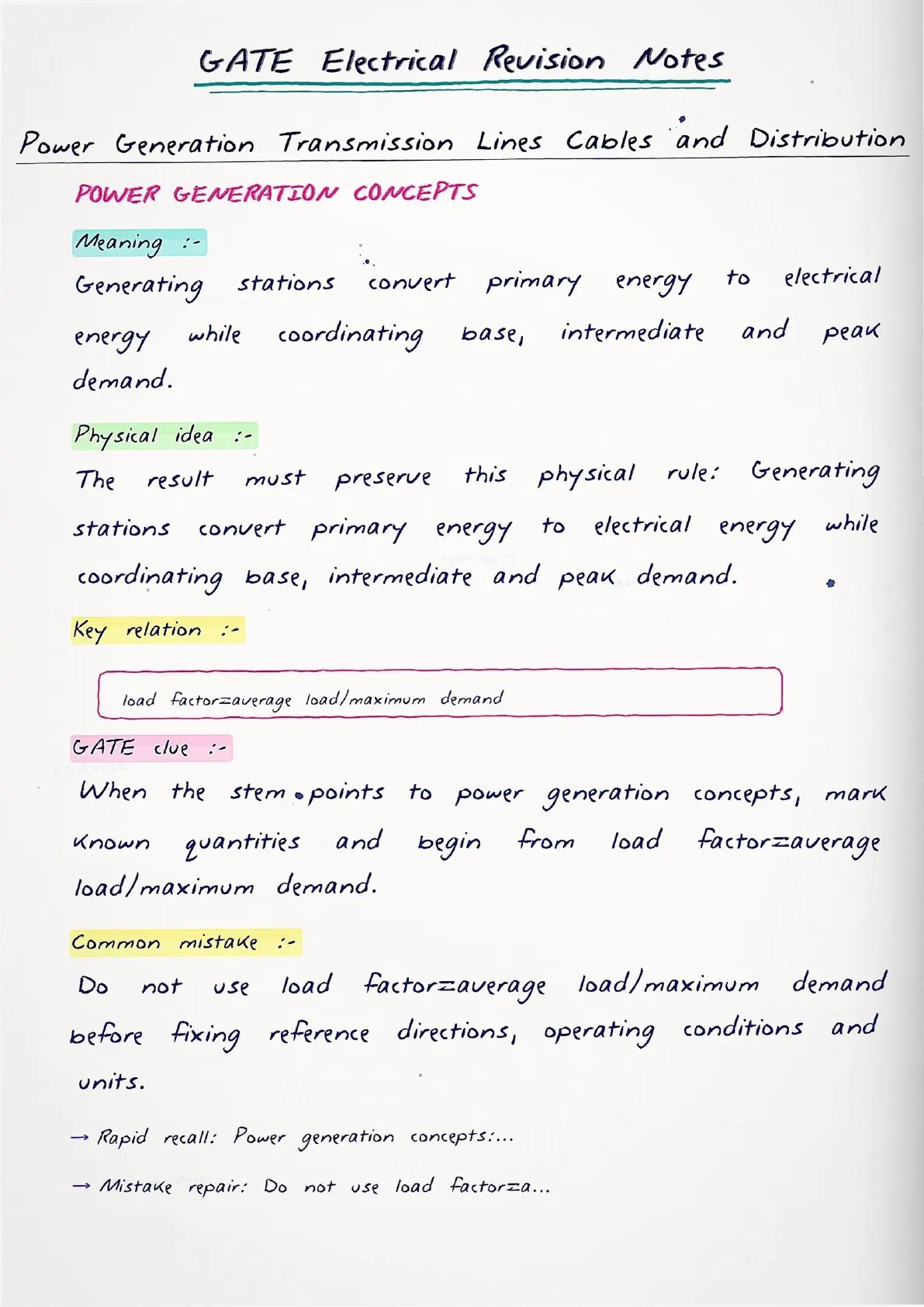
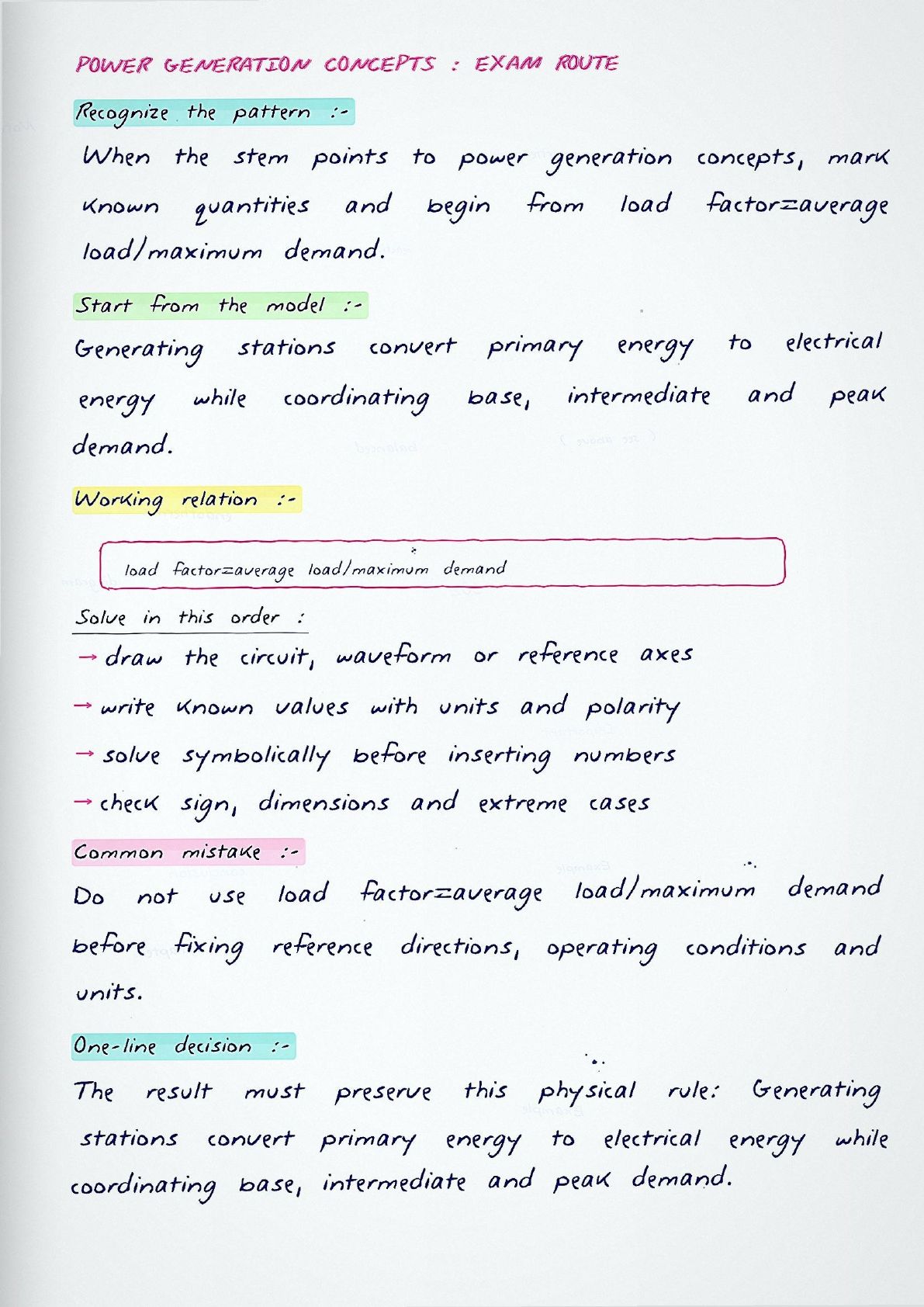
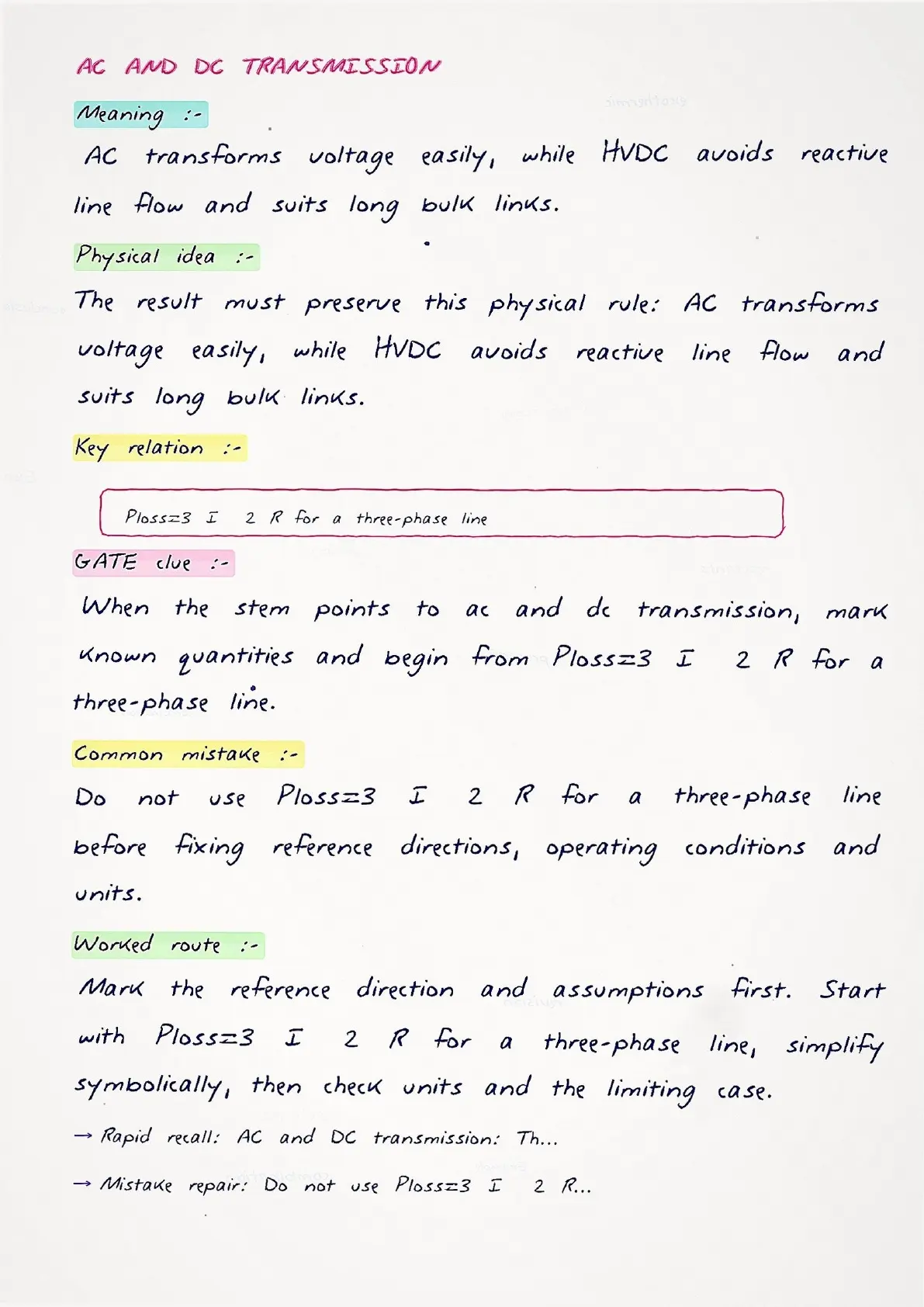
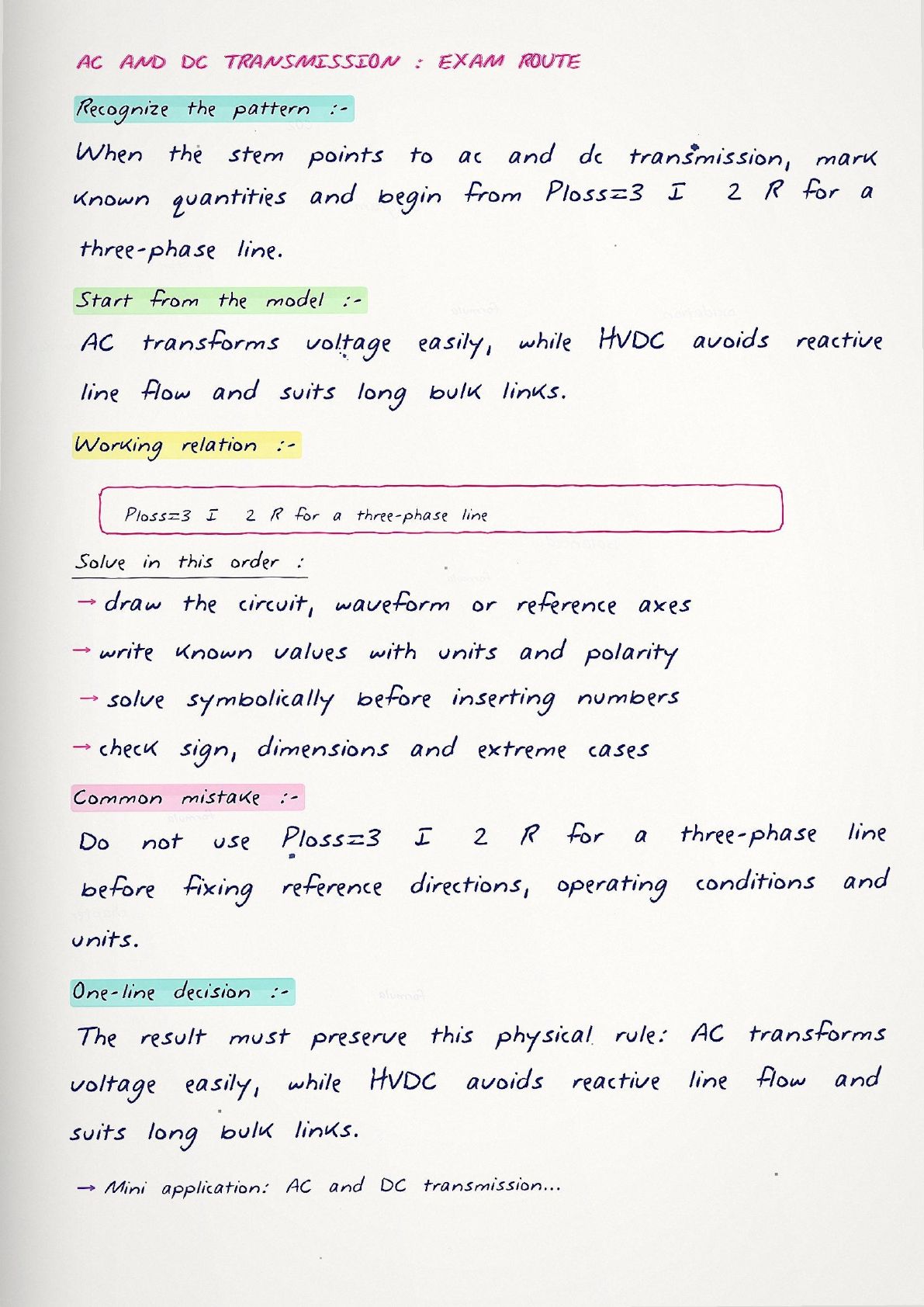
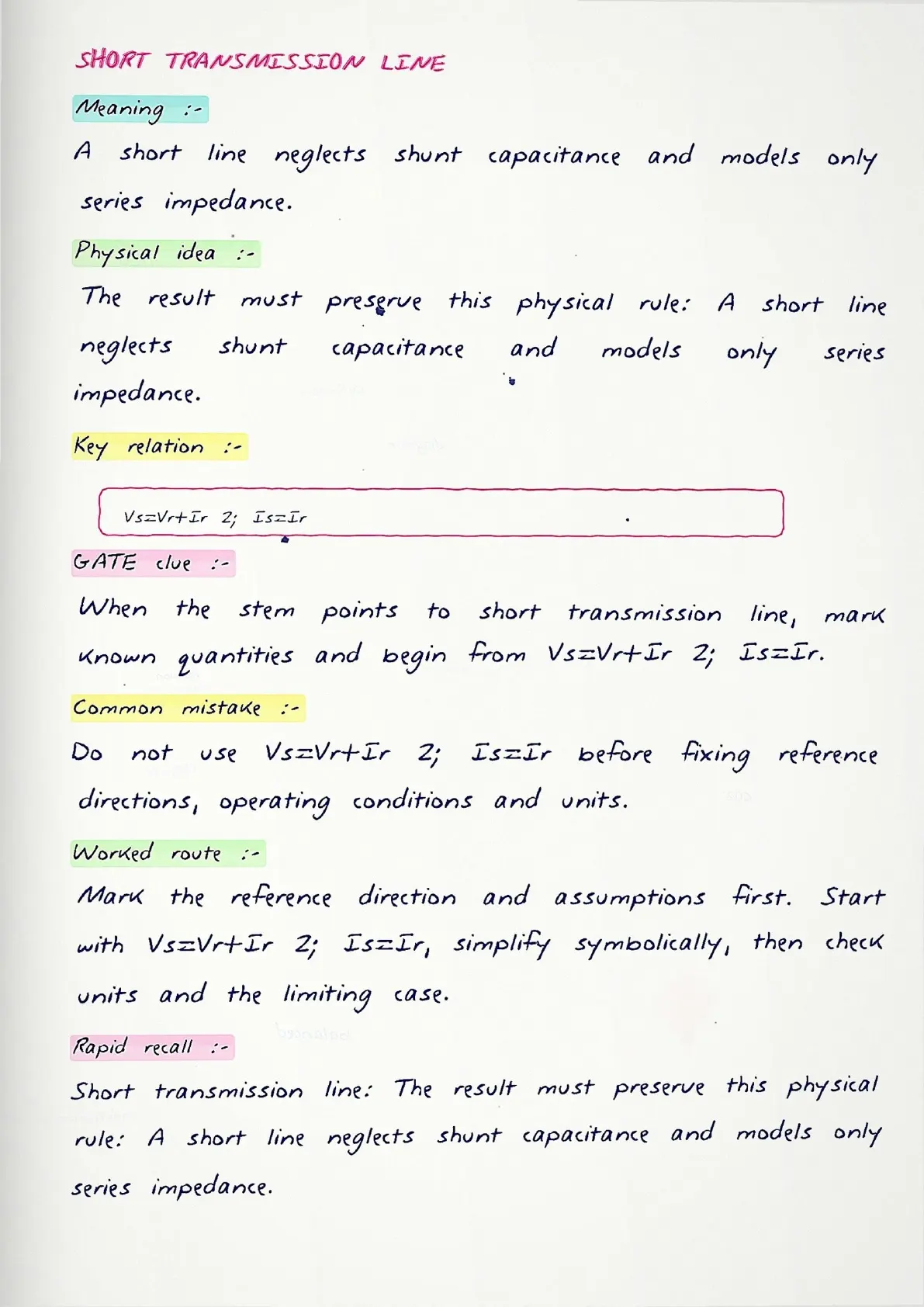
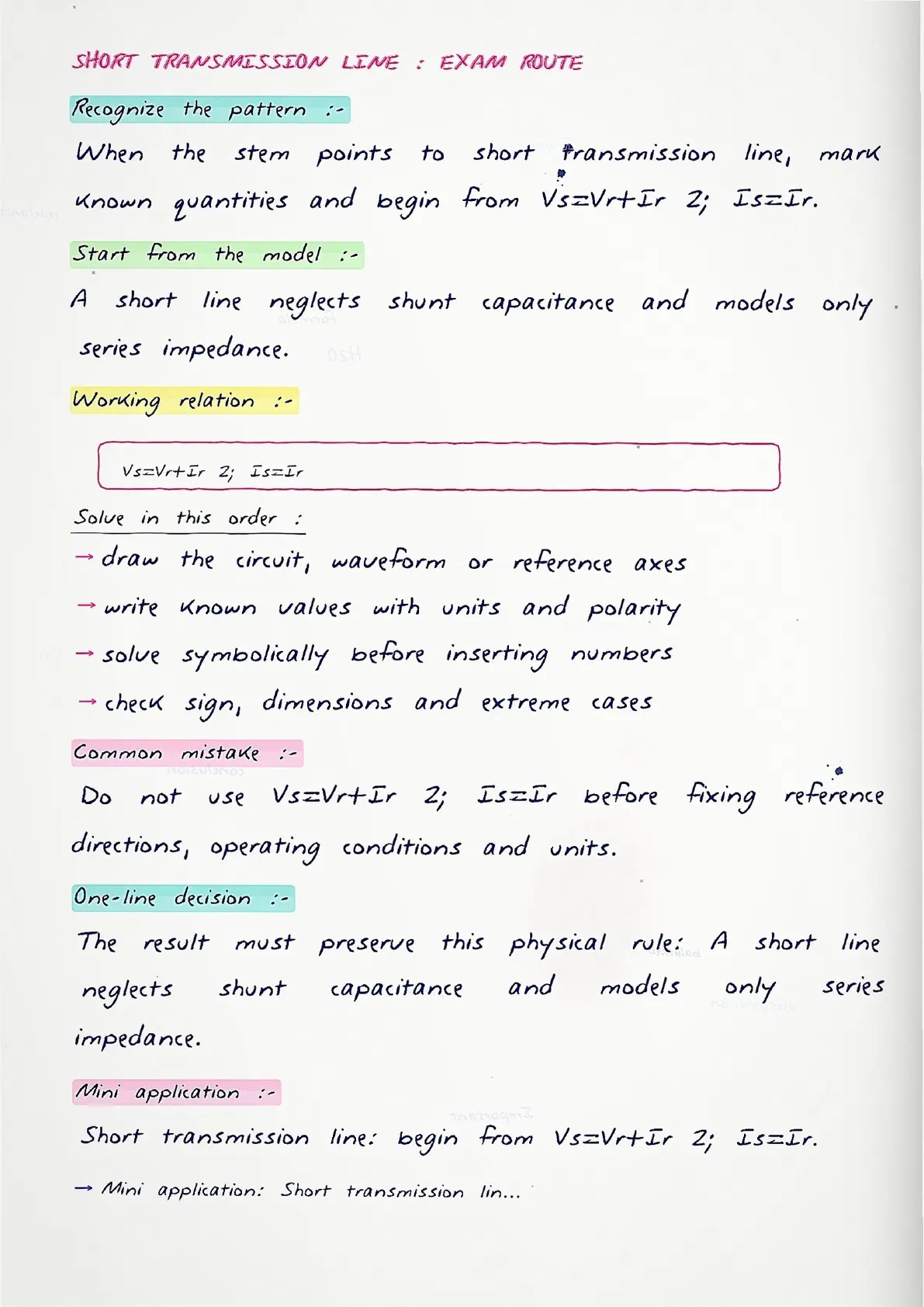
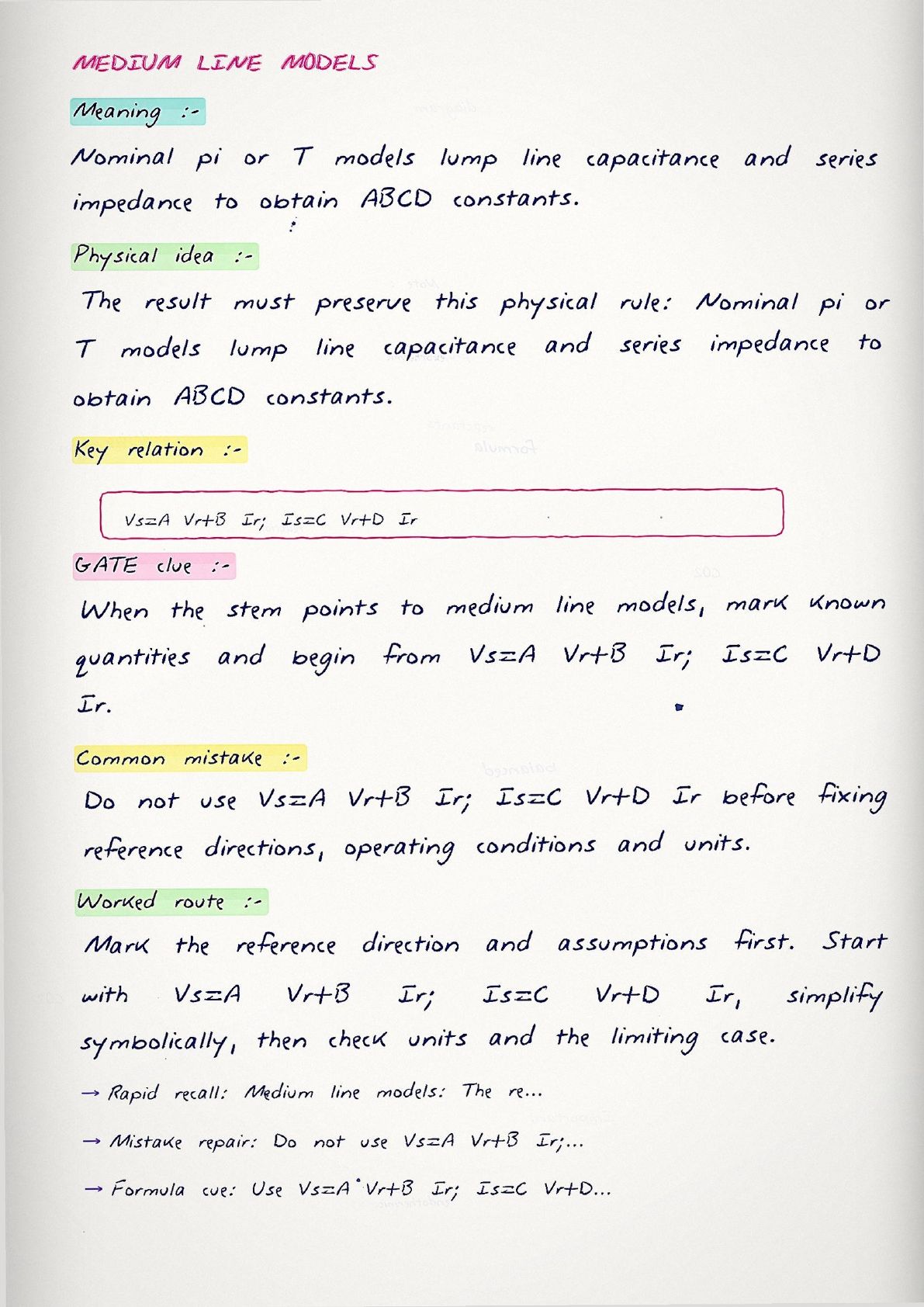
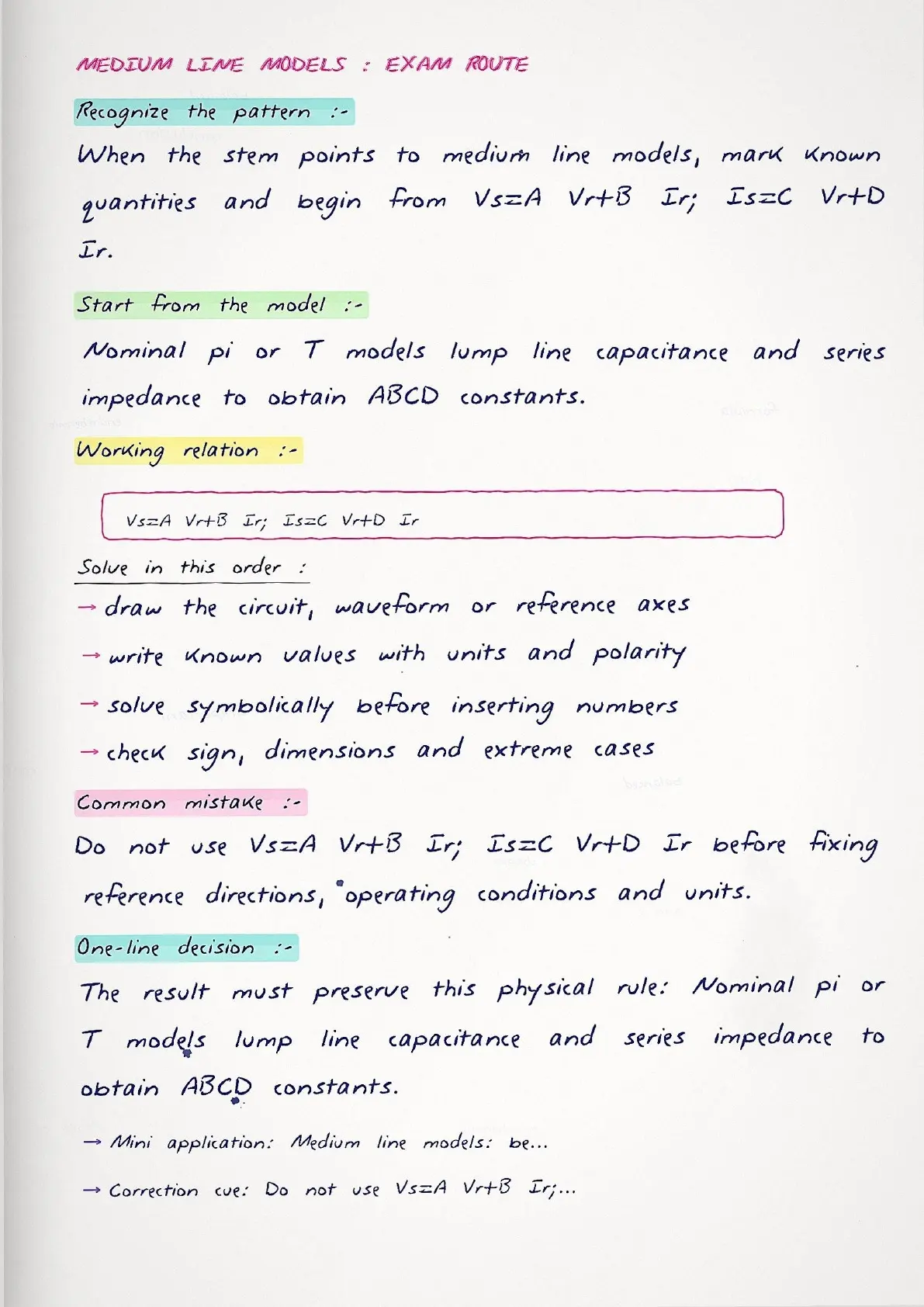
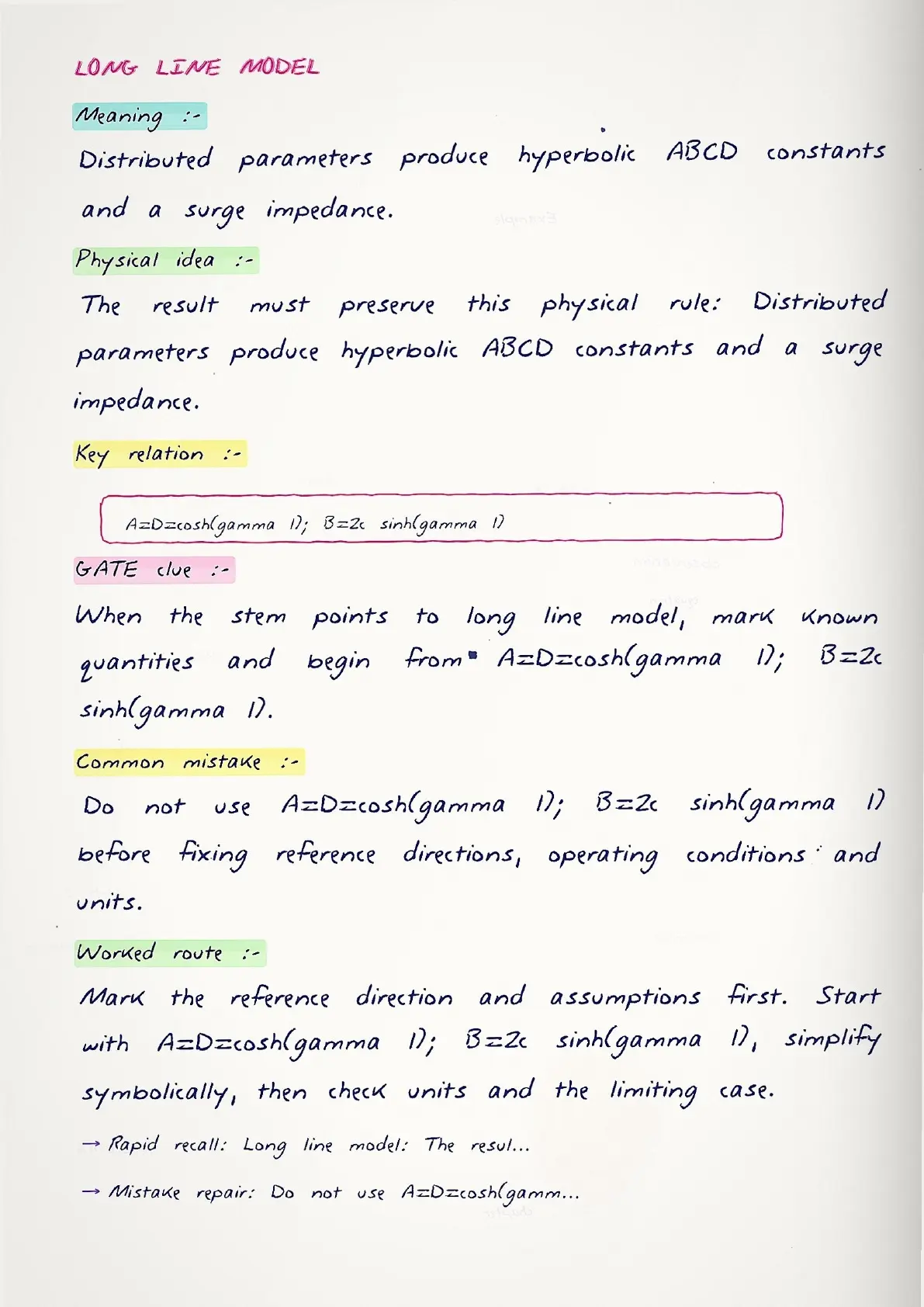
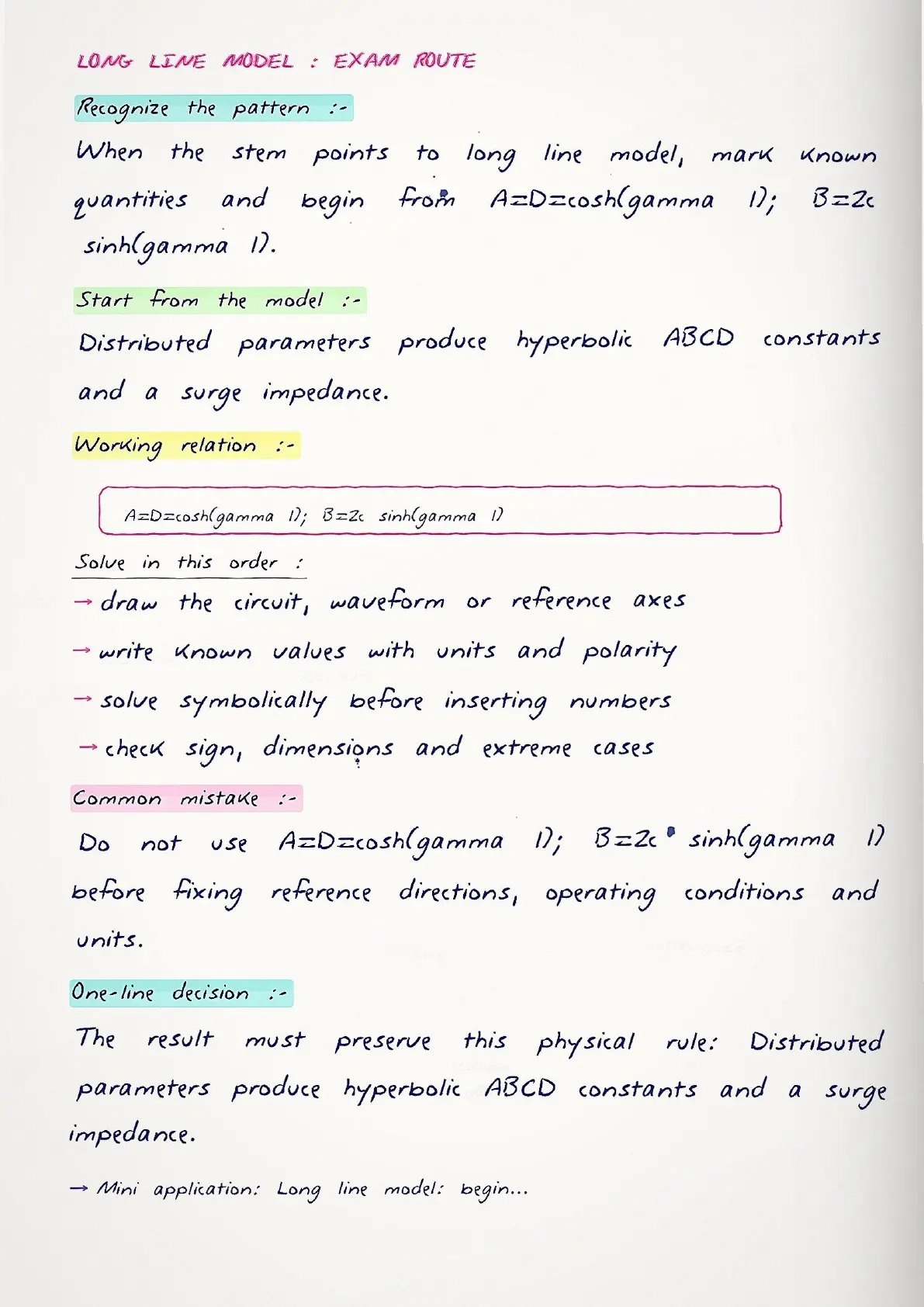
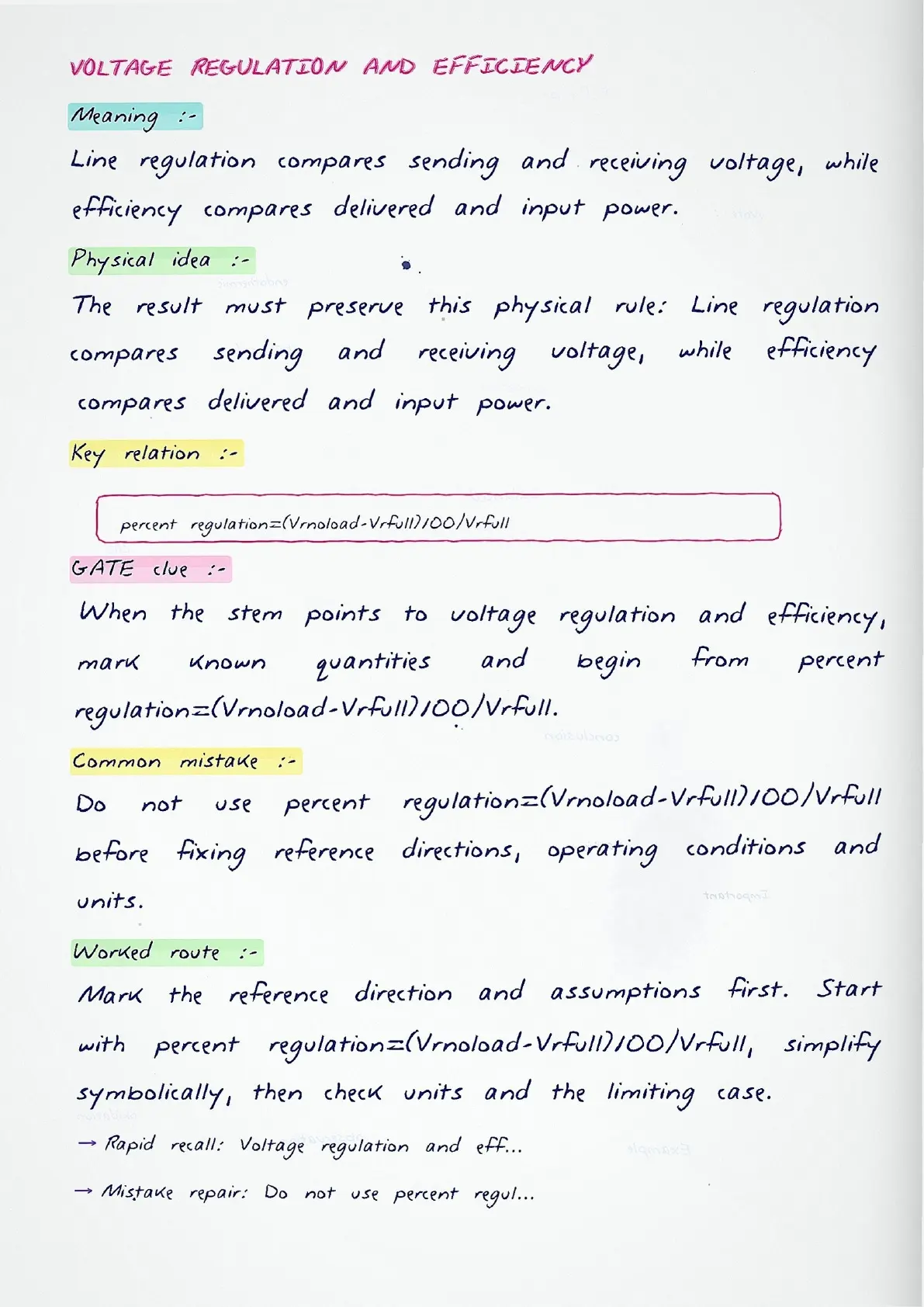
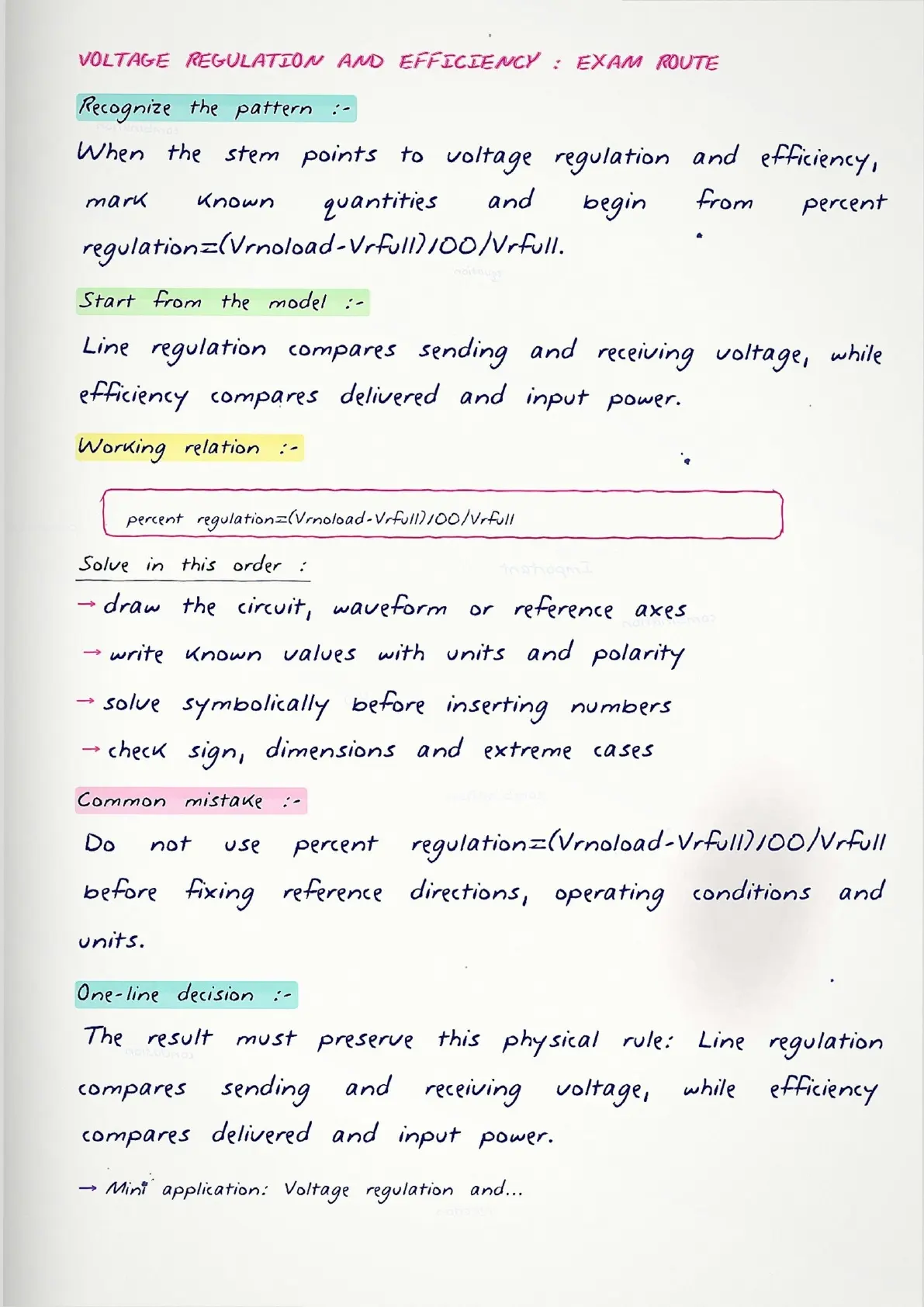
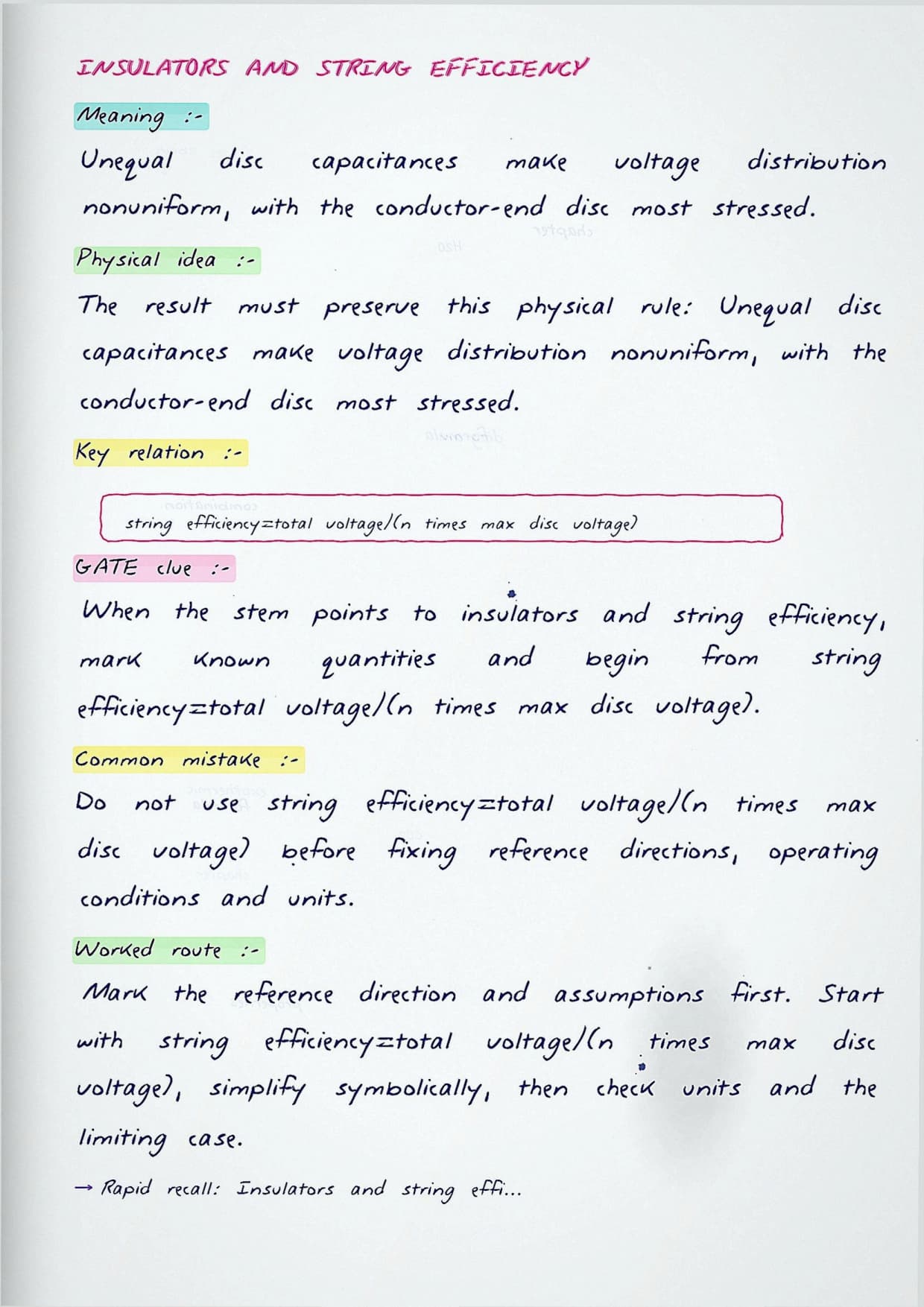
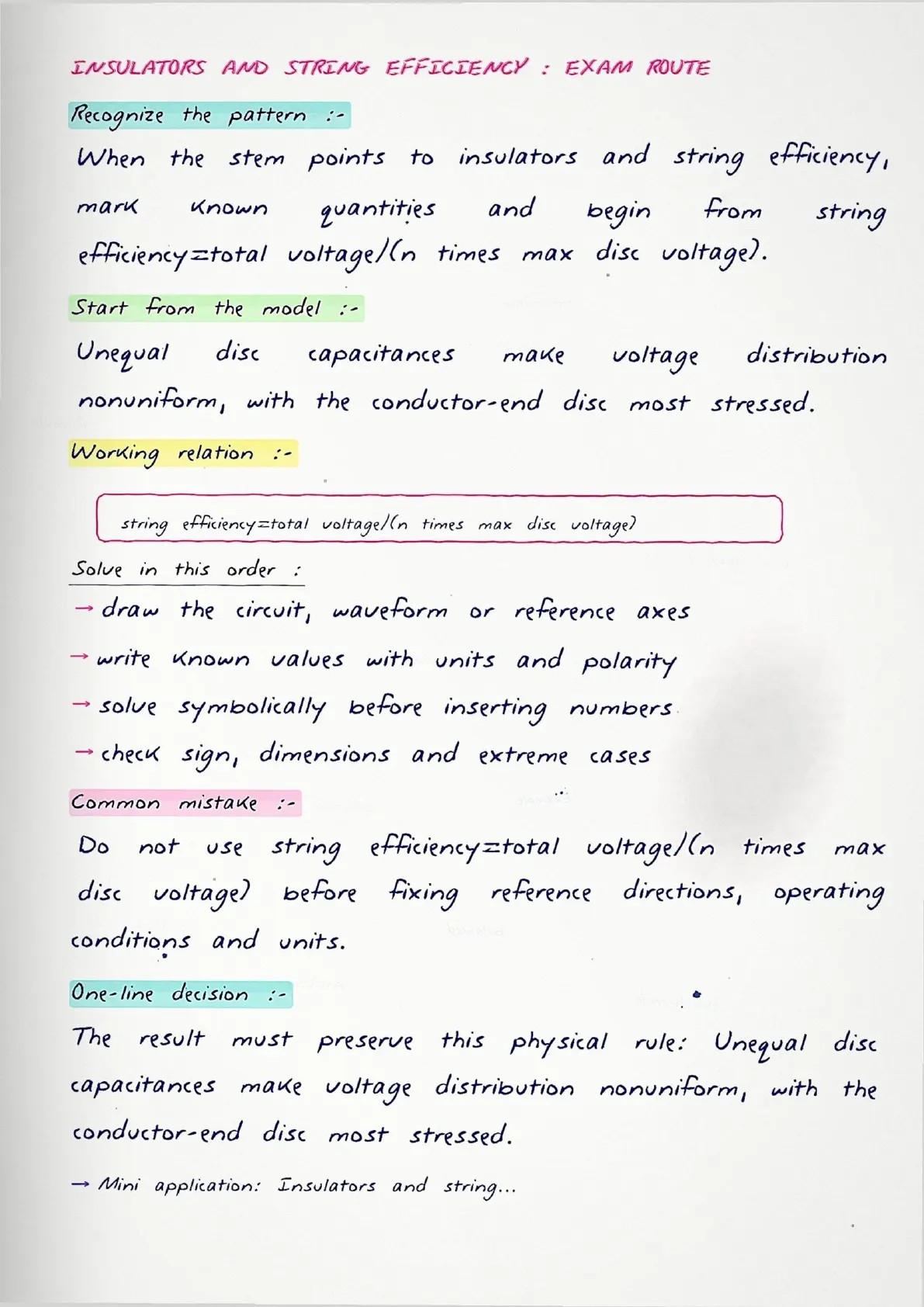
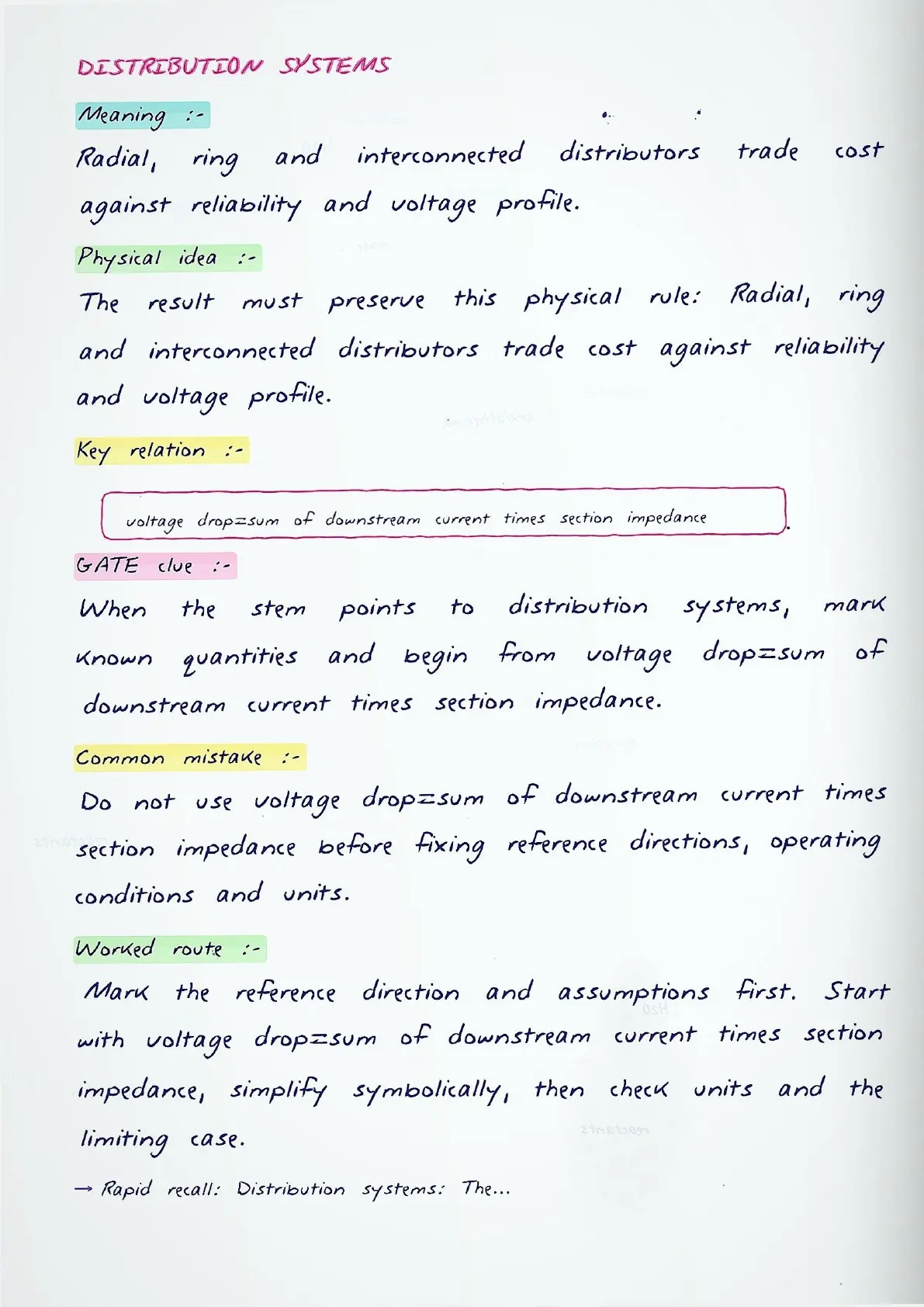
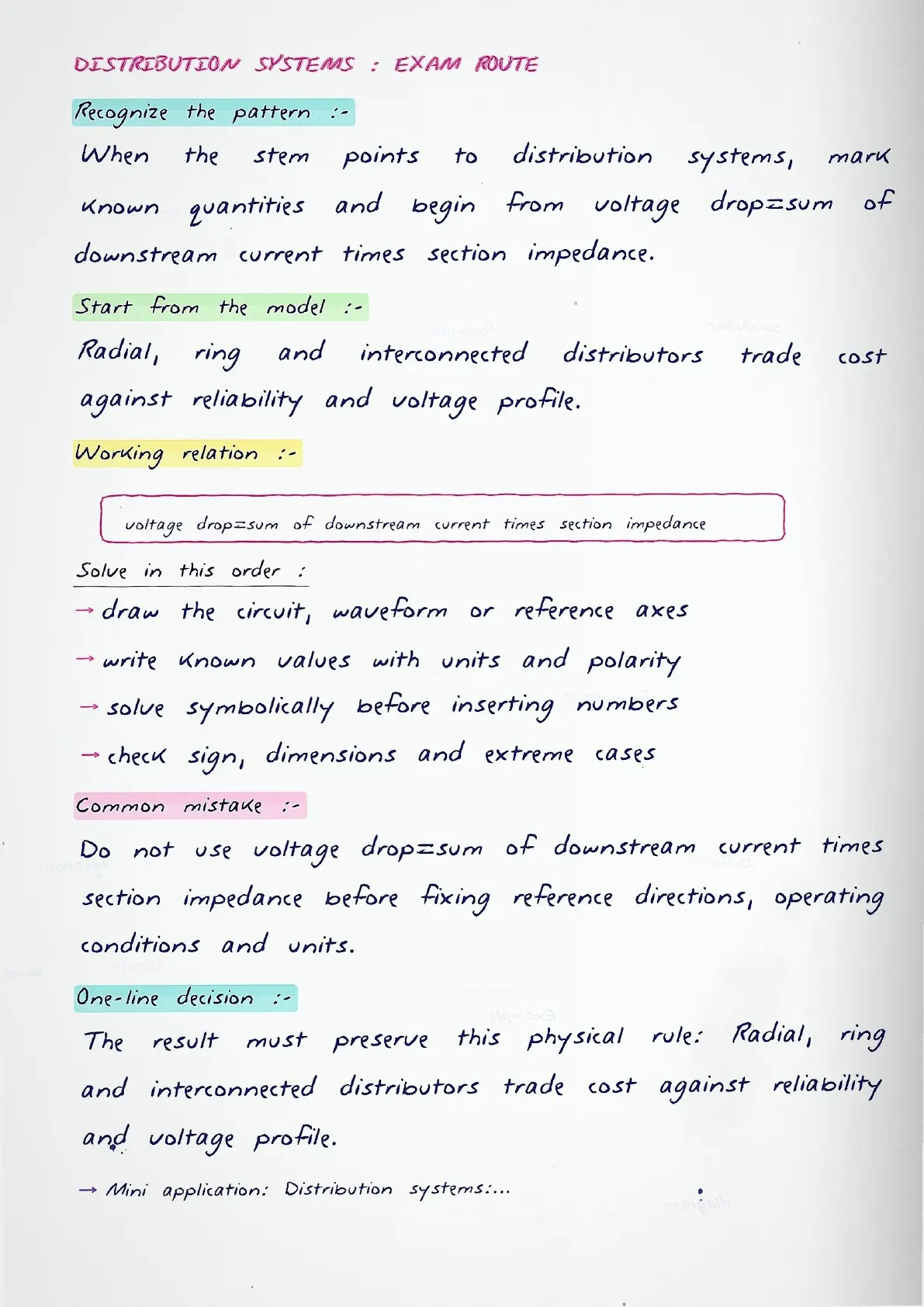
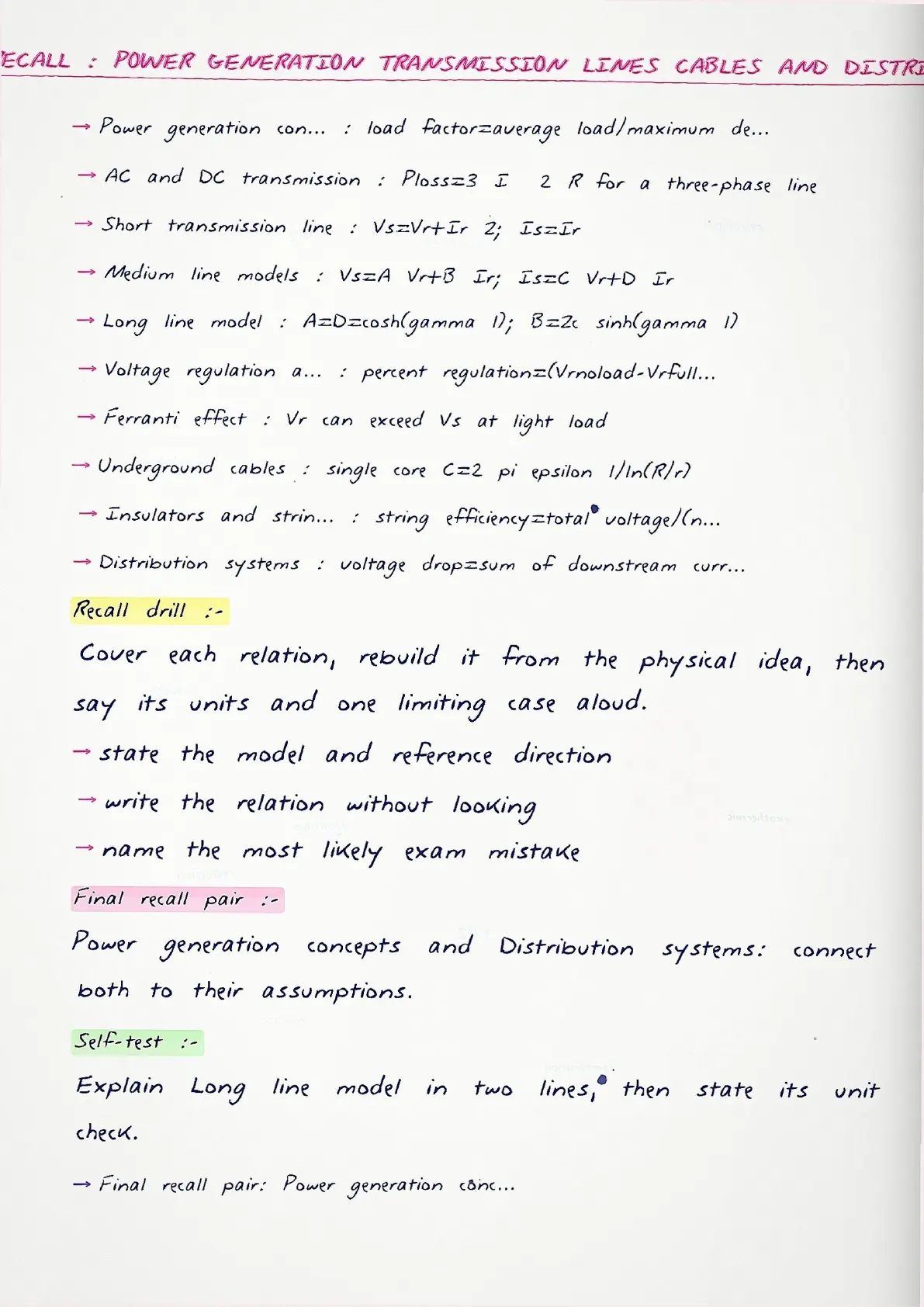
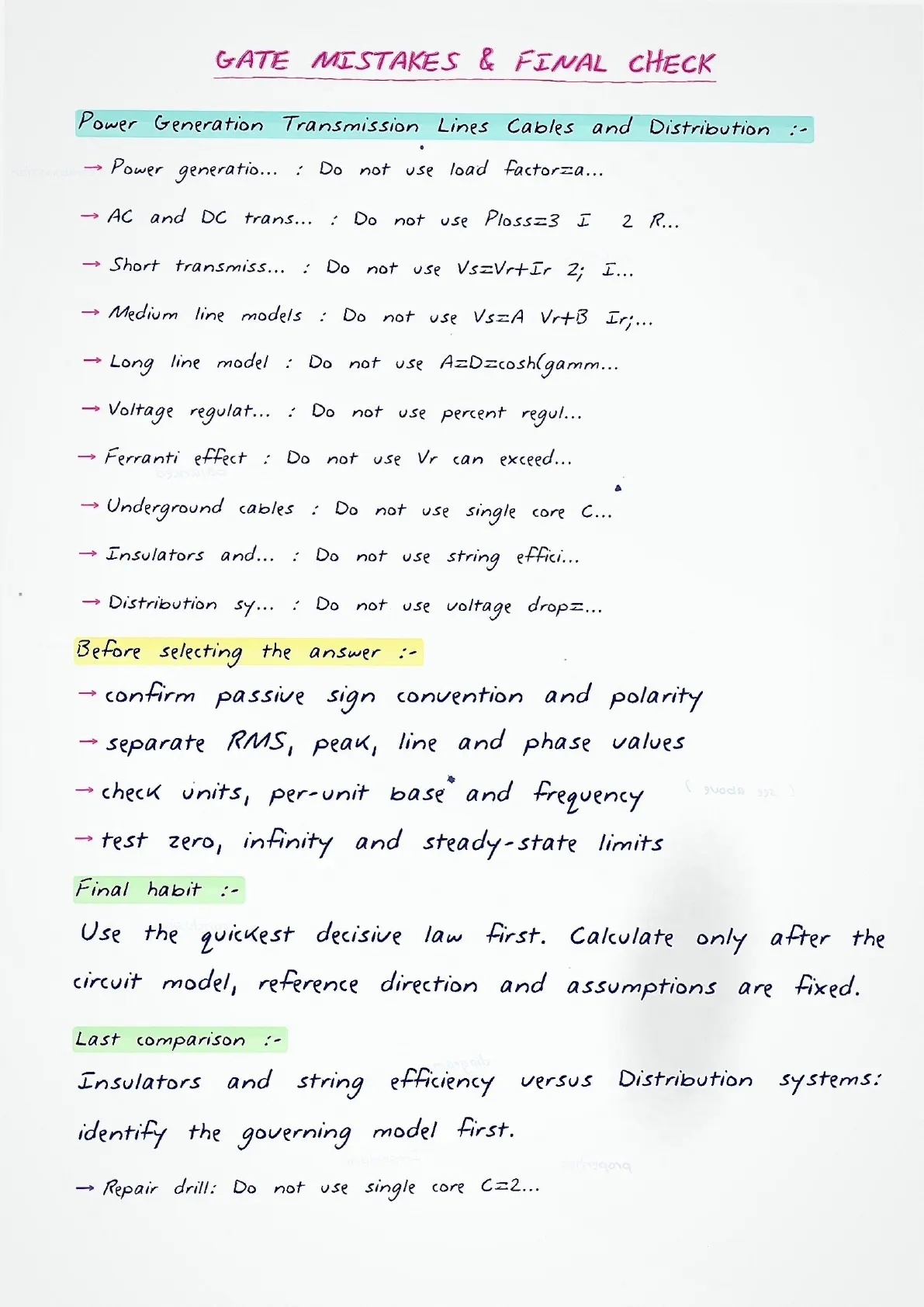
The pages carry hand-drawn line diagrams of a full transmission network, from the generating station bus down to the distribution feeder. A running equivalent circuit for short, medium and long lines is redrawn on each page so students can see exactly which model applies at which length. The series resistance and reactance are labelled on every sketch, and the shunt capacitance is shown split to the two ends where the pi model needs it, so the transition from one model to the next is never a mystery.
- Clear sketches of the nominal-pi and nominal-T models with their series impedance and shunt admittance.
- Worked steps for ABCD parameters and how they give voltage regulation and efficiency.
- A hand-drawn comparison of overhead lines and underground cables, including their charging current behaviour.
What These GATE Power Systems Notes Cover
The notes span the whole delivery chain, from generation economics to the last distribution transformer. They stress the formulas that GATE reuses year after year and skip the descriptive filler.
- Line parameters: resistance, inductance and capacitance with and without earth effect.
- Performance of short, medium and long lines using ABCD constants.
- Voltage regulation, transmission efficiency, and the surge impedance load.
- Cable insulation, grading, and the difference between overhead and underground systems.
GATE Power Systems Quick Revision
Source: Engineering Devotion on YouTube
Topics Covered in GATE Power Systems
Coverage follows the official GATE Electrical power systems outline for the generation and transmission block. Every point below has a matching page of hand-written derivation and a numerical example.
- Basics of thermal, hydro and nuclear generation and their cost structure.
- Calculation of transmission line inductance and capacitance for single and bundled conductors.
- Short, medium and long line models with the hyperbolic long-line equations.
- ABCD parameters and their use in voltage regulation and efficiency.
- Ferranti effect, surge impedance loading and line compensation.
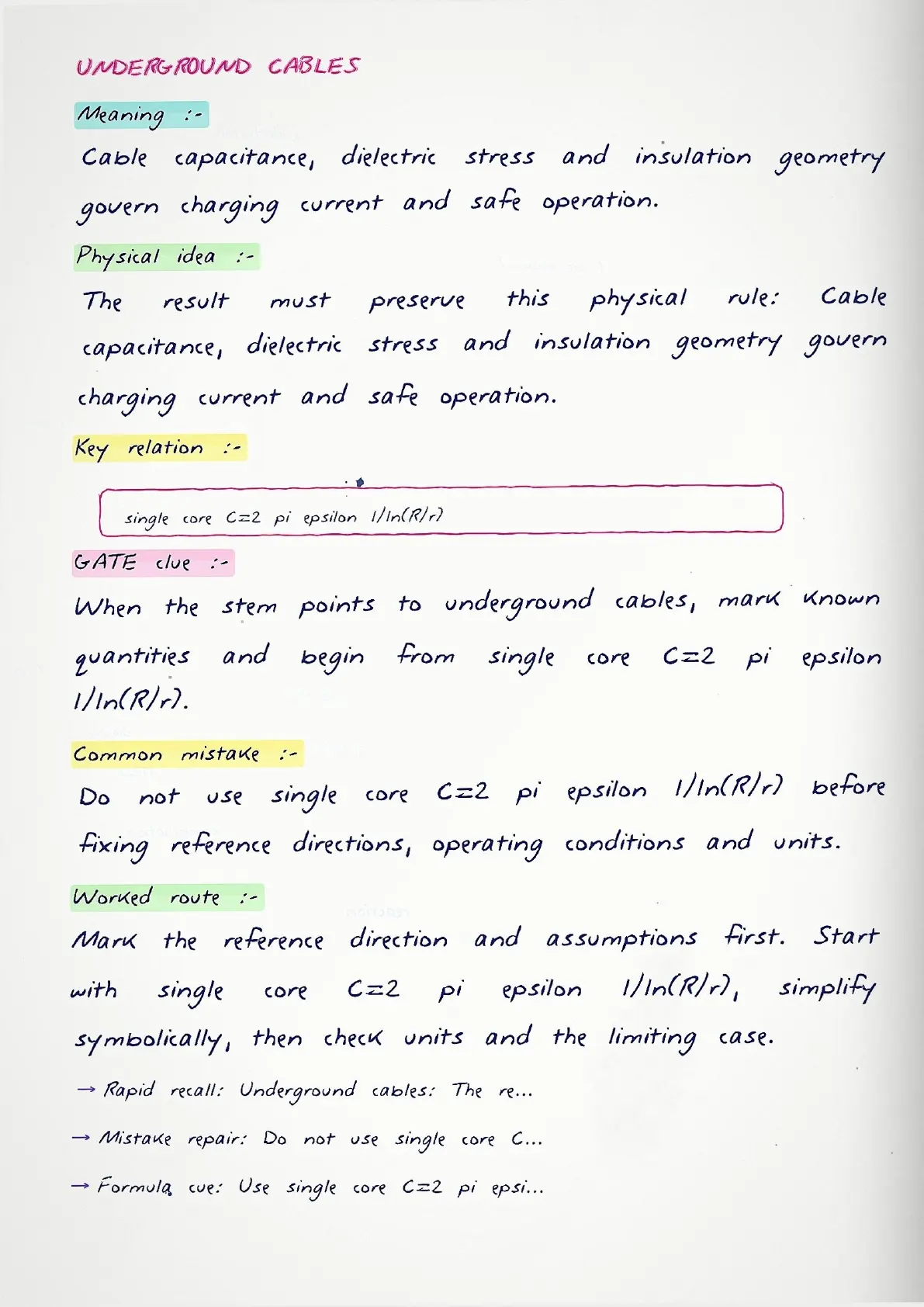
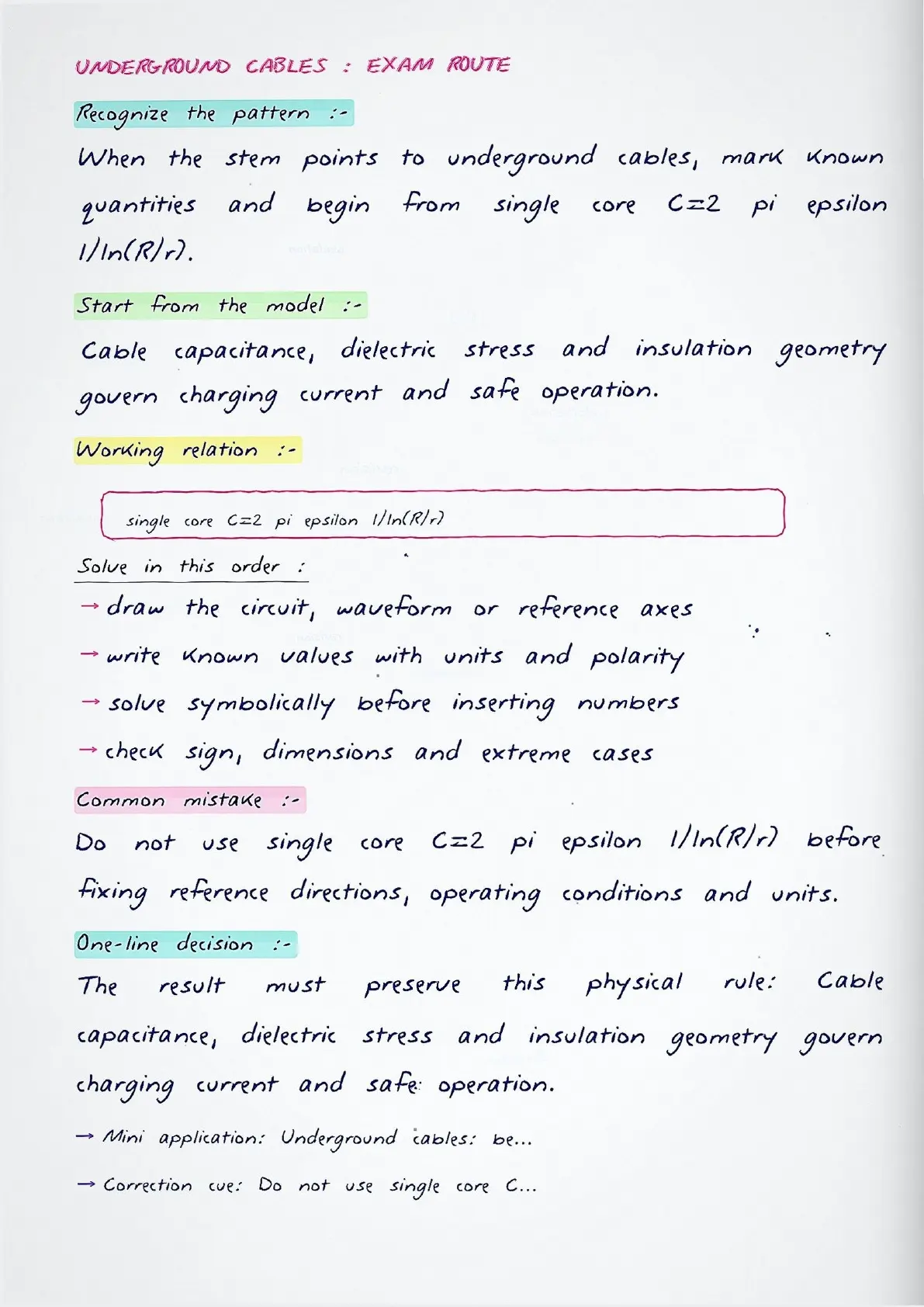
- Cable types, dielectric stress and capacitance grading.
- Radial and ring distribution systems with voltage drop calculations.
- Skin effect, proximity effect and corona loss on overhead lines.
How the Notes Are Organised
The material flows in the same direction as real power, from the power plant to the consumer. Students first see how a line is modelled, then how that model predicts regulation and losses, and finally how cables and feeders differ.
The heavier derivations, such as the long-line hyperbolic solution, are placed after the simpler lumped models. This keeps the early pages readable while still giving the exact result needed for the tougher numerical questions. Each performance formula is followed by a small worked case with real voltage and current figures, so students see the method end to end rather than just the final expression. The cable and distribution pages close the set, drawing on the same parameter ideas but applied to the shorter, buried conductors that feed local loads.
How GATE Power Systems Links to Other Topics
Generation and transmission form the backbone that the rest of the power syllabus hangs on. A firm grip here makes the protection and stability chapters far easier.
- Fault Analysis uses the same line impedances to compute symmetrical fault currents.
- Power System Protection relies on line parameters to set relay reach.
- Load Flow Studies build directly on the ABCD and per-unit models.
- Power System Stability needs the transfer reactance derived from line data.
Important Topics in GATE Power Systems
Some sub-topics return almost every year and also carry classic traps. The notes mark each one so students do not lose marks to a familiar slip.
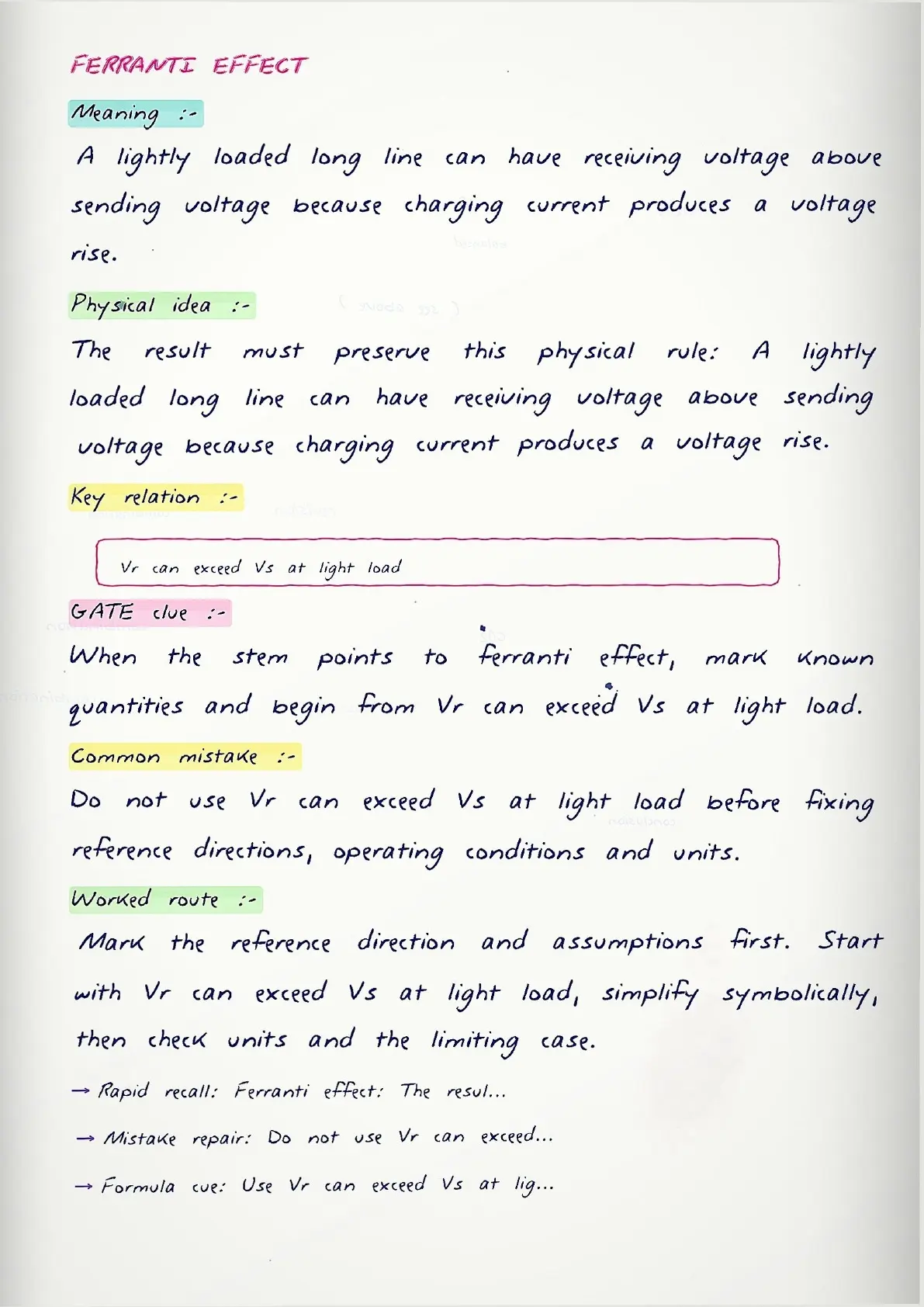
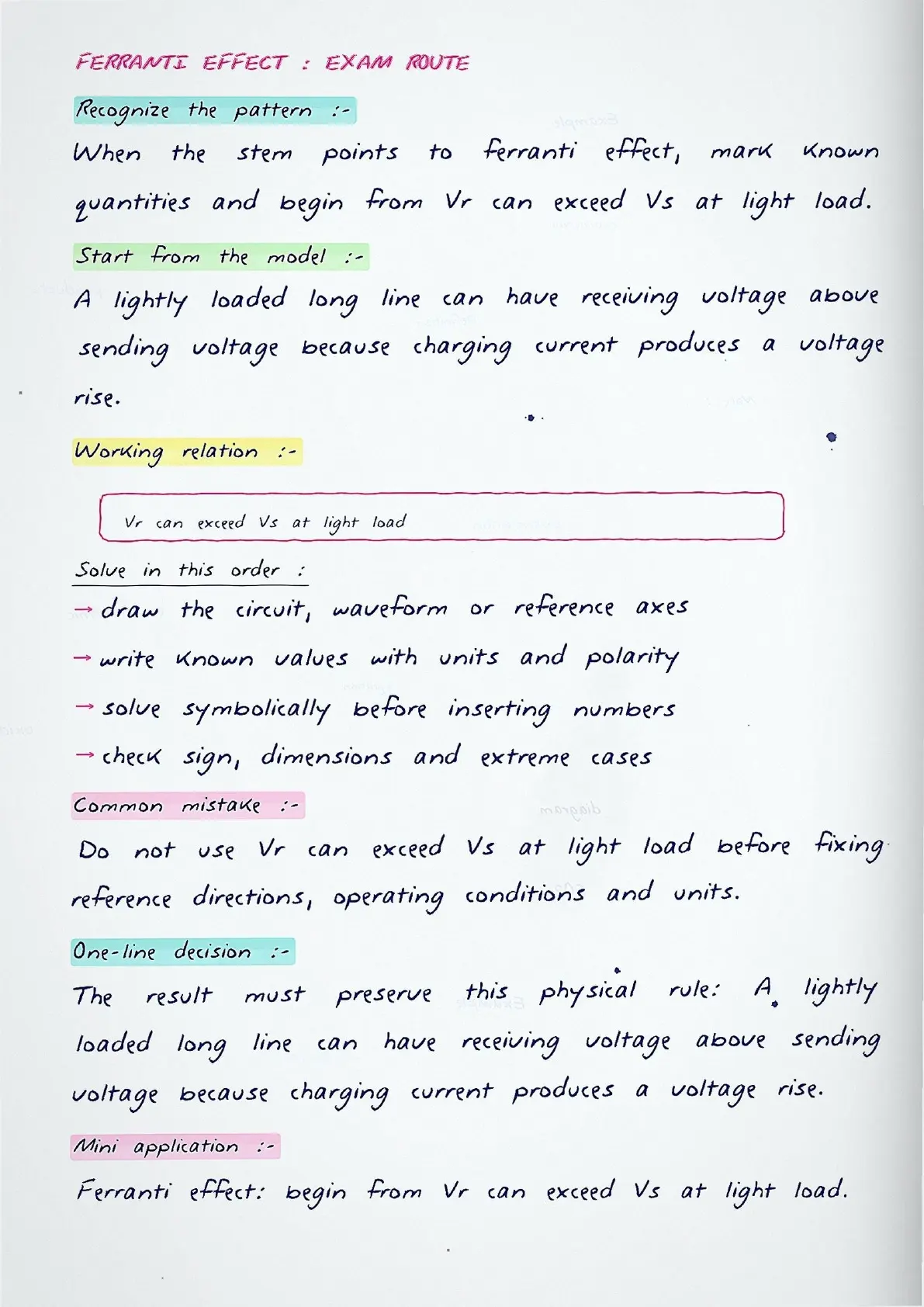
- The Ferranti effect, why the receiving-end voltage can rise above the sending end on a lightly loaded line.
- Choosing the right line model, the medium-line pi model versus the long-line hyperbolic form.
- Capacitance grading in cables and where the maximum stress occurs.
- Surge impedance loading and its link to the natural power of a line.
- Sign and units when converting to the per-unit system.
How to Prepare GATE Power Systems with Handwritten Notes
This topic rewards steady practice over one-time reading, because the formulas are many and easy to confuse. A staged plan keeps them straight.
- First read: label every line diagram and note which model each page uses.
- Second pass: derive the ABCD constants for a medium line without looking.
- PYQs: work through a decade of questions on regulation and the Ferranti effect.
- Final week: revise only the boxed formulas for the three line lengths and cable grading.
Why These Notes Help You Score Better
The notes turn a formula-heavy topic into a small set of clearly drawn models, so students stop guessing which equation to use. Each numerical example ends with a check on units and sign, which is exactly where marks usually leak. With the diagrams and boxed formulas in one place, students can revise the entire generation and transmission block in a single sitting and answer these questions with confidence.
GATE Electrical Power Systems Handwritten Notes FAQs
Ques. How much weight does power generation and transmission carry in GATE Electrical?
Ans. The generation, transmission and distribution block usually contributes around 6 to 10 marks, making it one of the highest-scoring parts of the power systems section.
Ques. What is the Ferranti effect and why does GATE ask about it?
Ans. The Ferranti effect is the rise of receiving-end voltage above the sending-end value on a long, lightly loaded line. GATE tests it because it checks whether students understand line capacitance.
Ques. Do the notes cover both overhead lines and underground cables?
Ans. Yes. The notes compare overhead lines and underground cables side by side, including their parameters, charging current and insulation, with hand-drawn cross sections.
Ques. Which line model should students use in the exam?
Ans. Students should use the short-line model below about 80 km, the medium-line pi or T model up to around 250 km, and the long-line hyperbolic equations beyond that.



Comments