




Magnetostatics, Inductance and Magnetic Circuits is a steady scorer in GATE Electrical, usually worth about 4 to 7 marks in the paper. It belongs to the Electric Circuits and Fields section, and its ideas return in transformers, DC and AC machines, and electromagnetic field theory. These handwritten notes cover the full topic in a compact, exam-focused form.
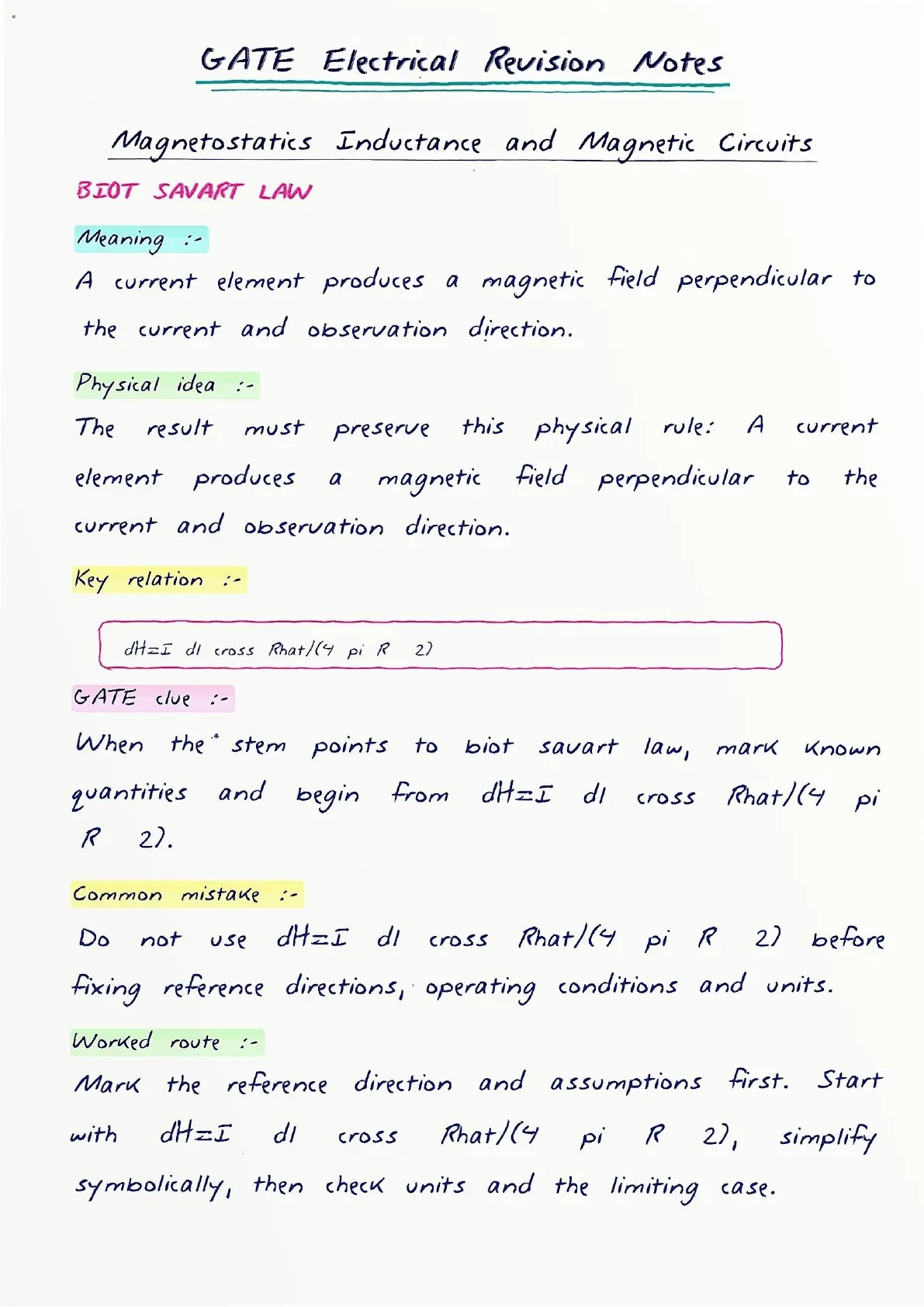
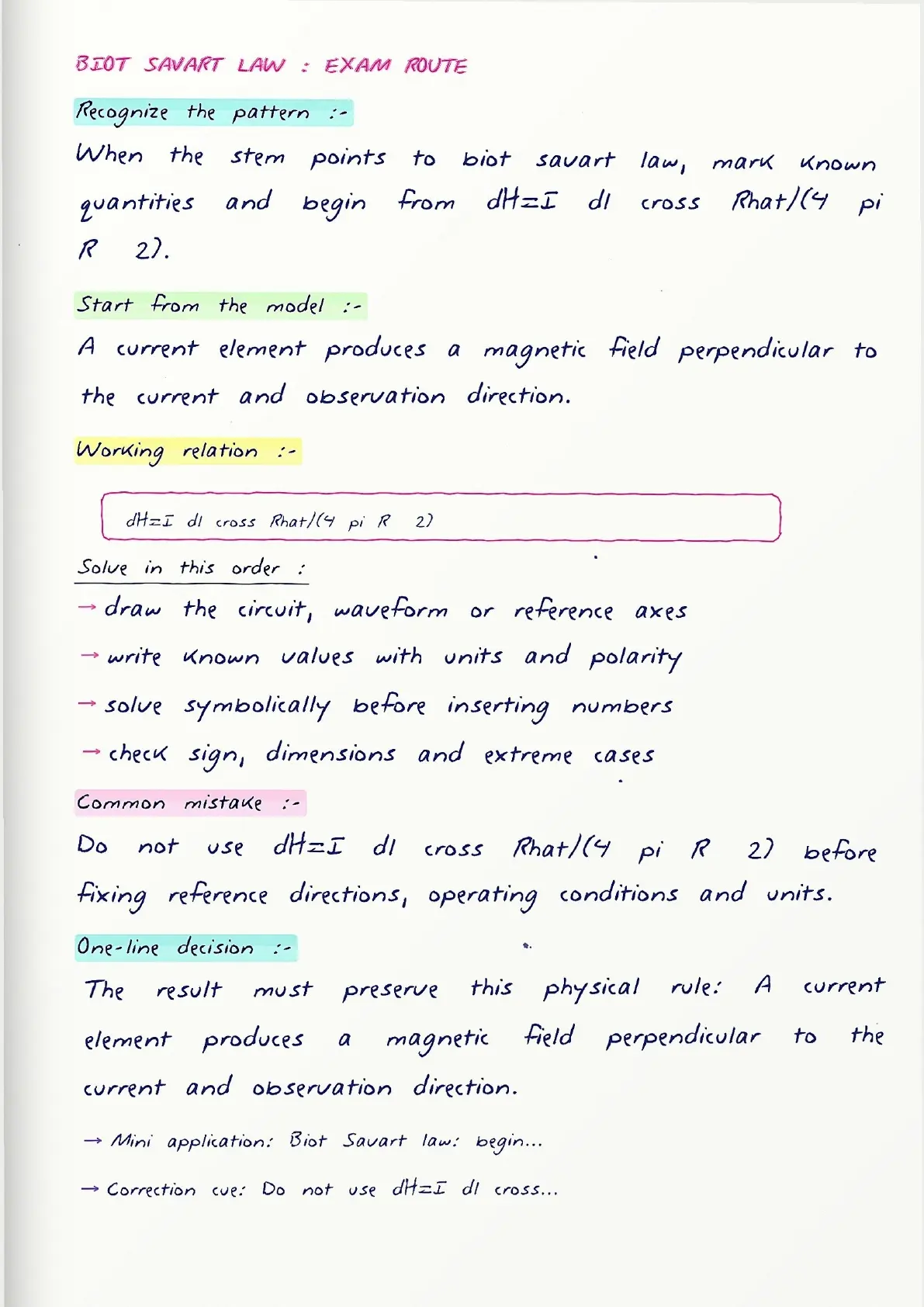
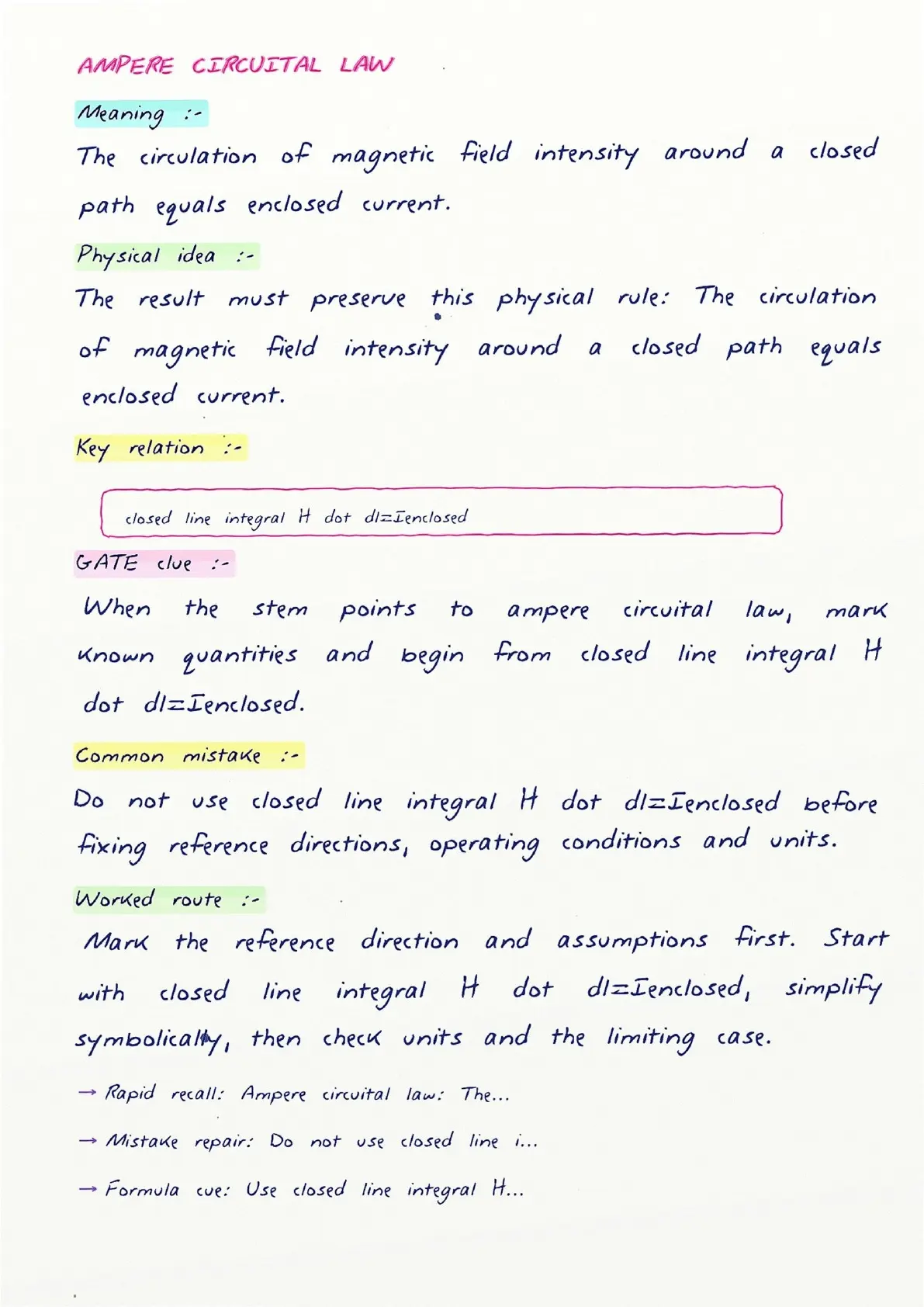
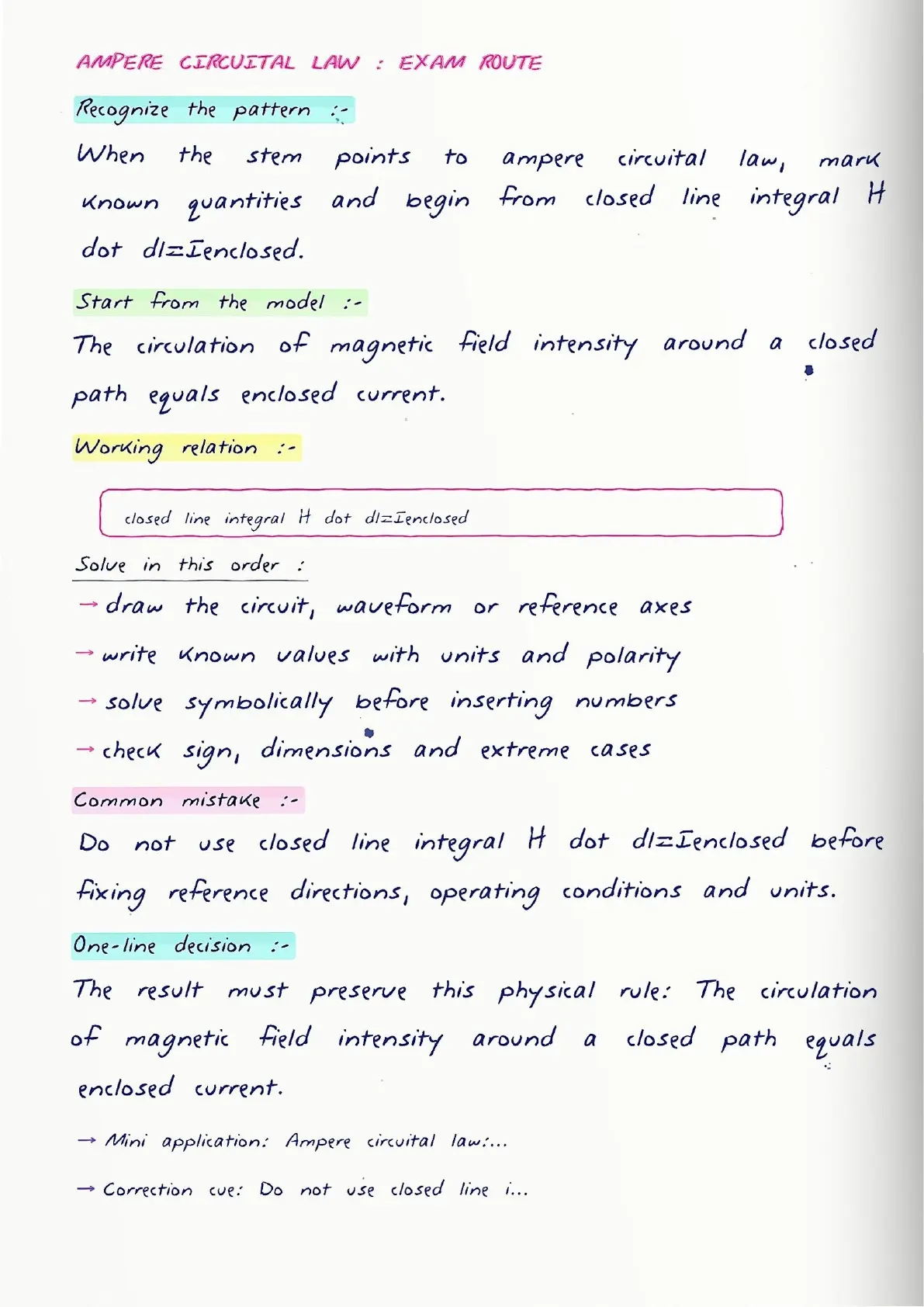
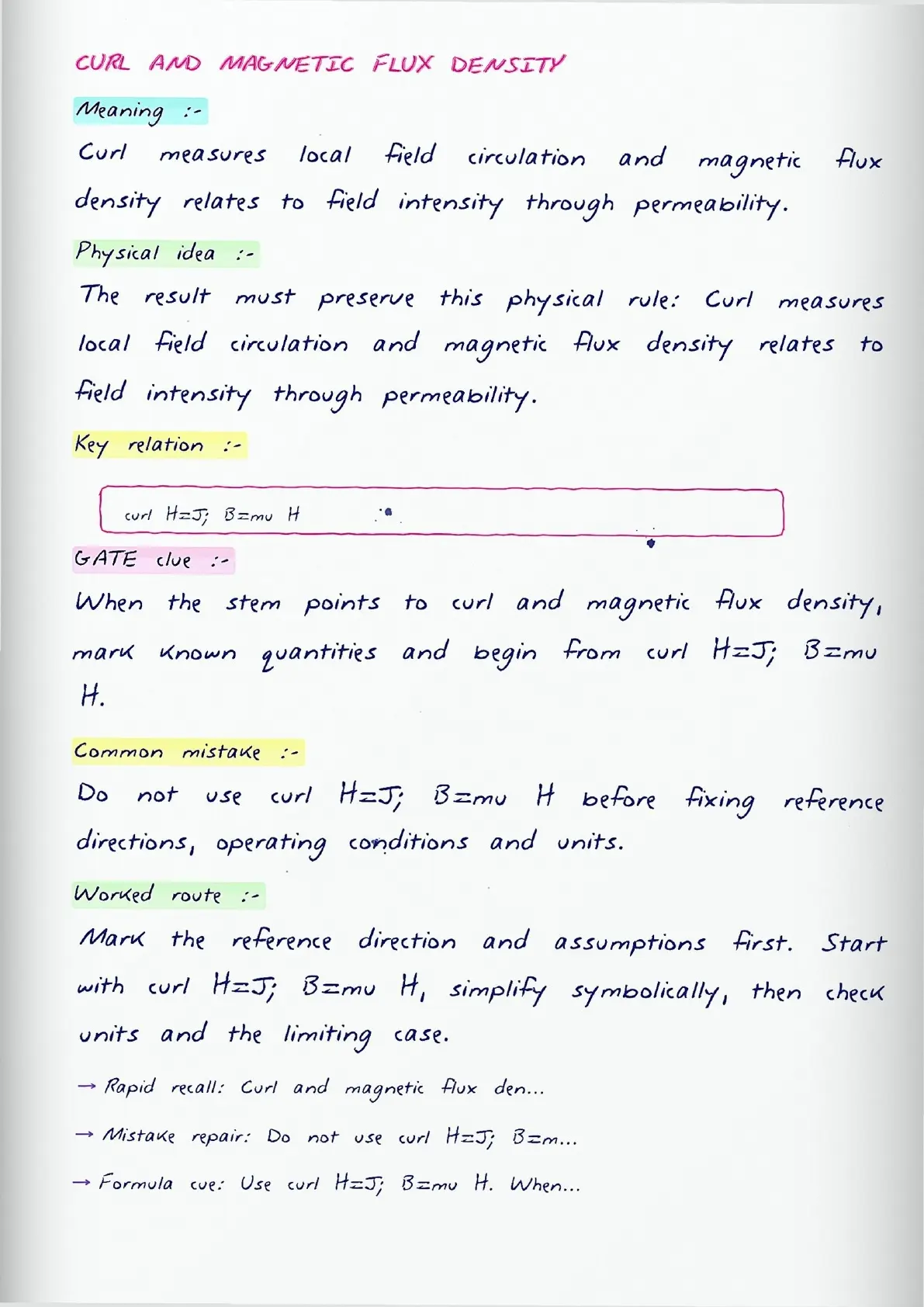
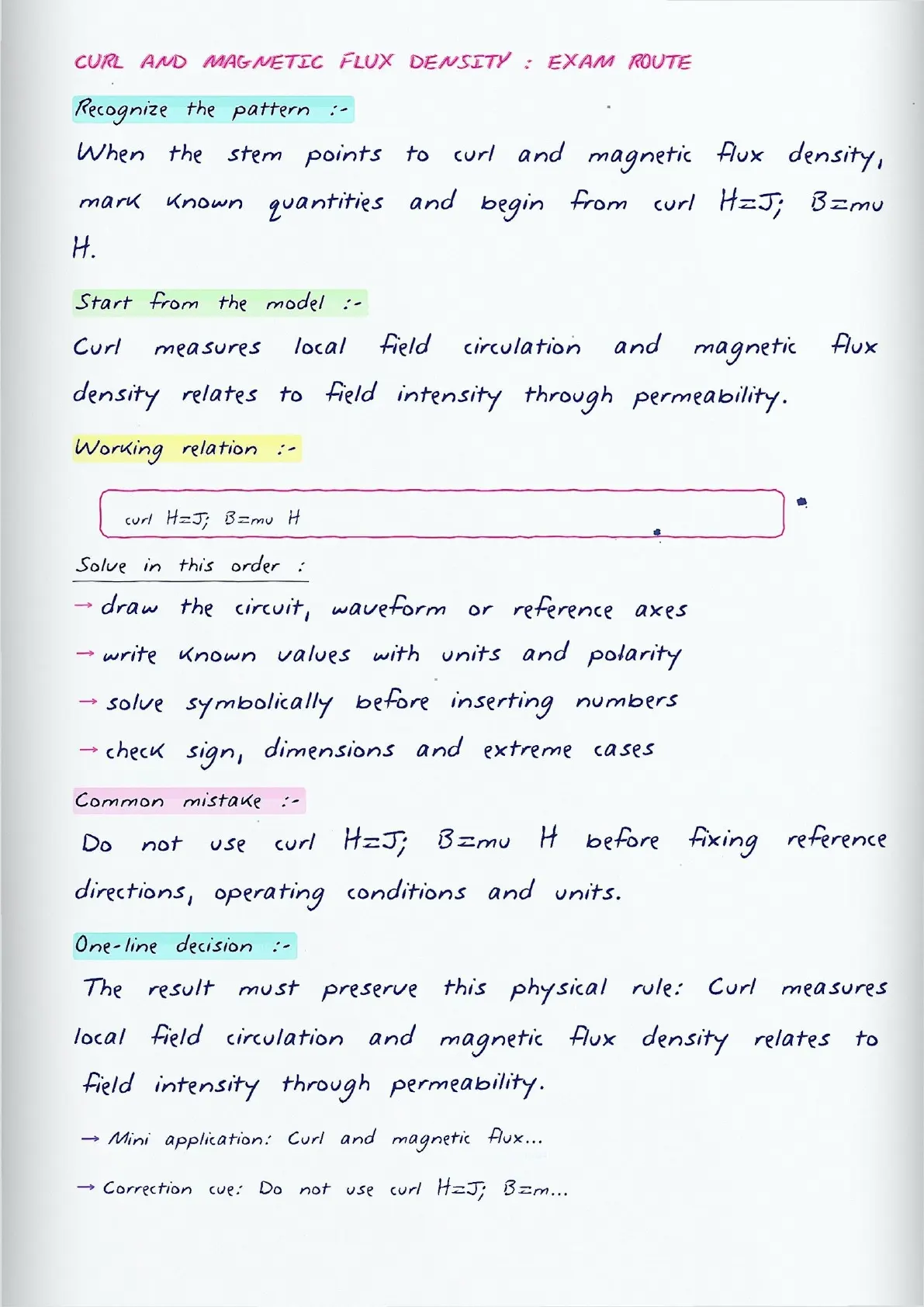
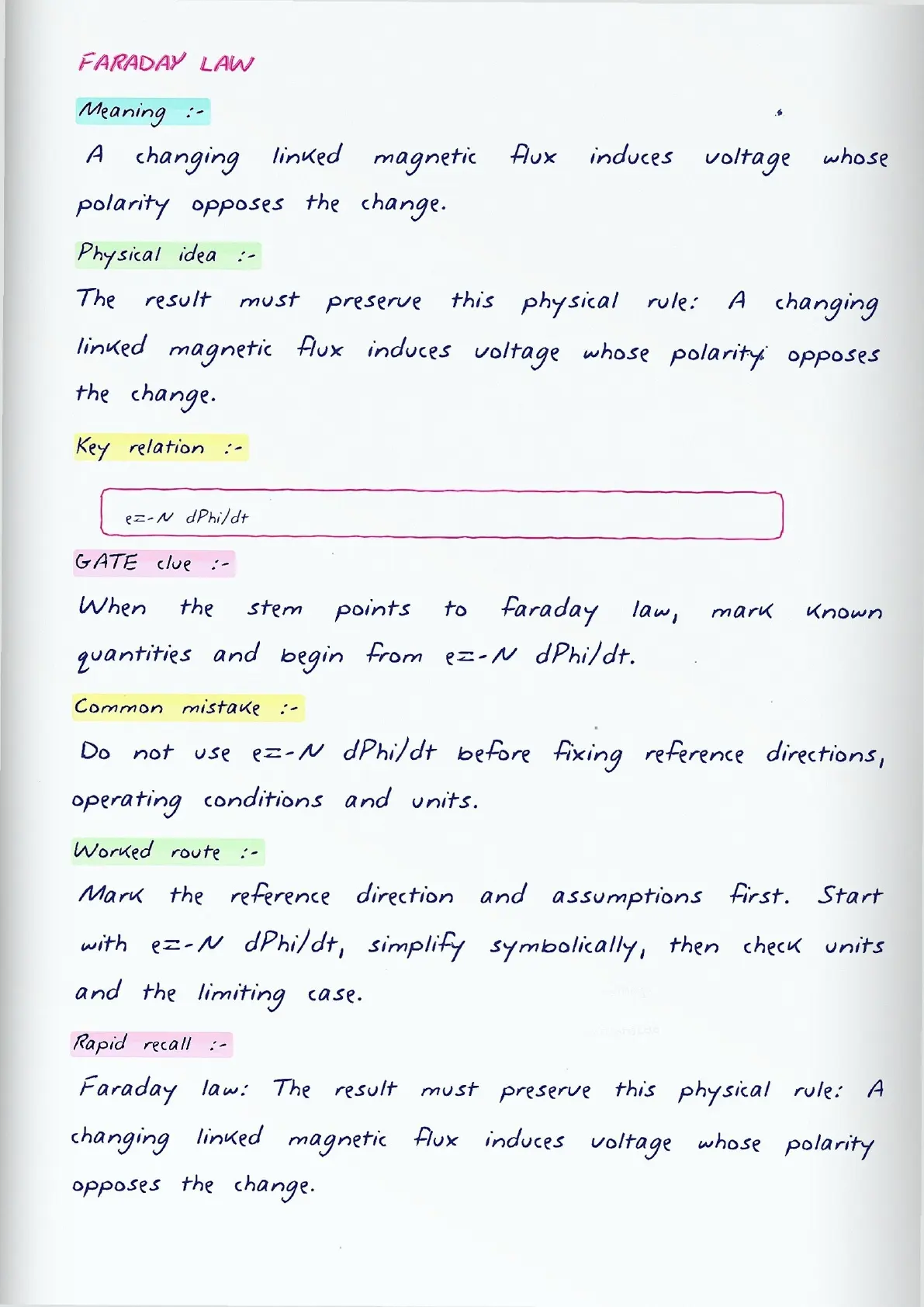
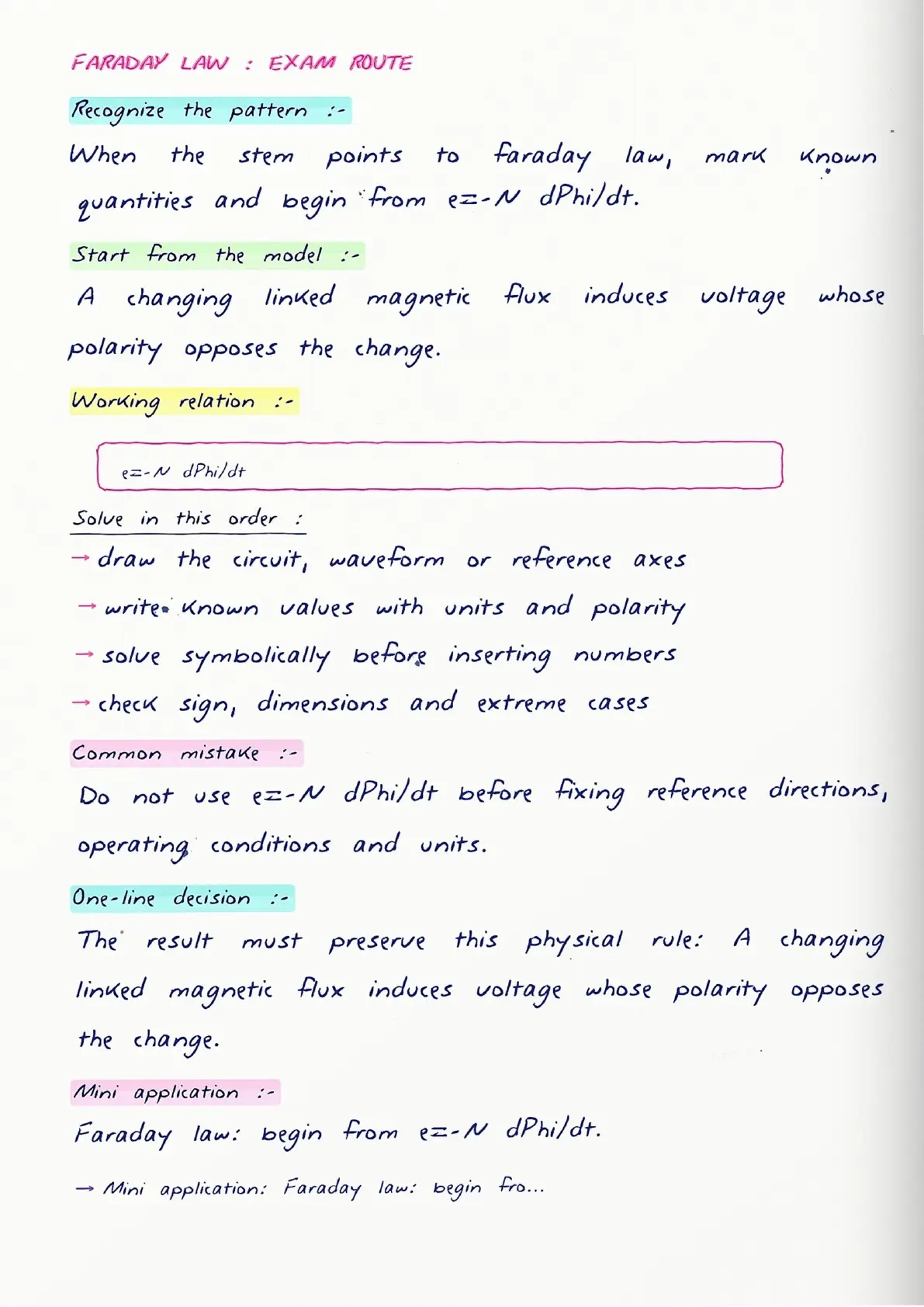
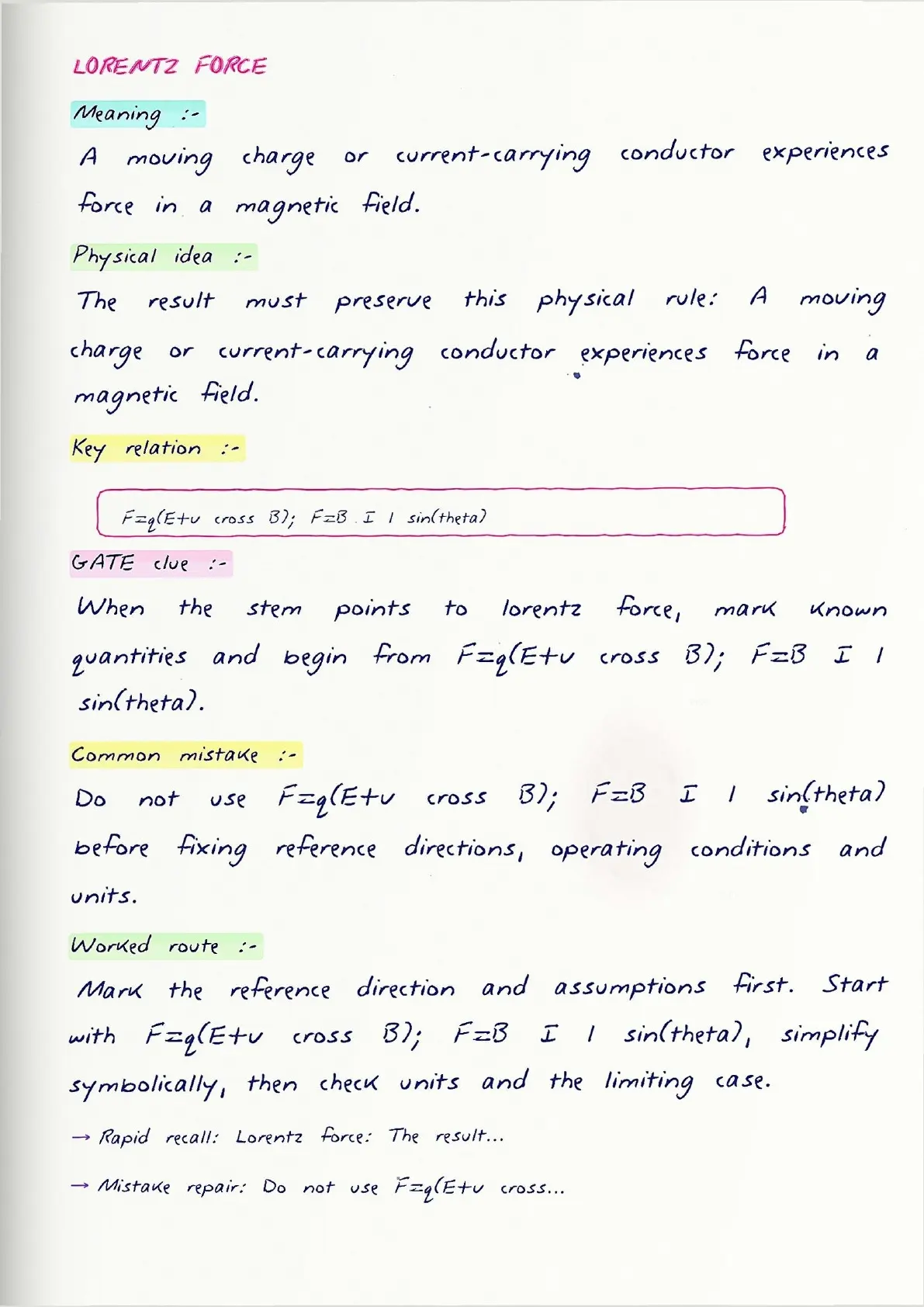
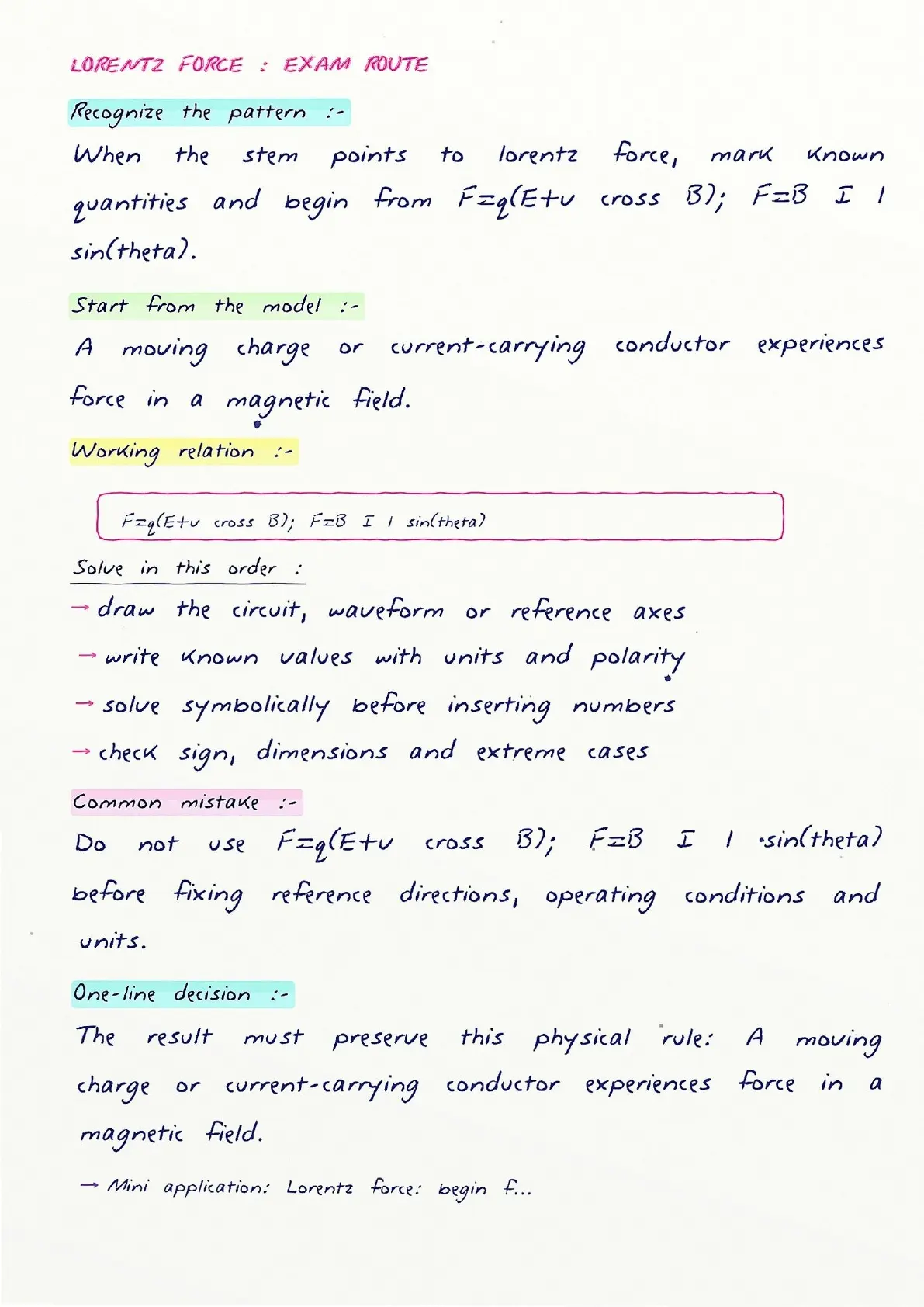
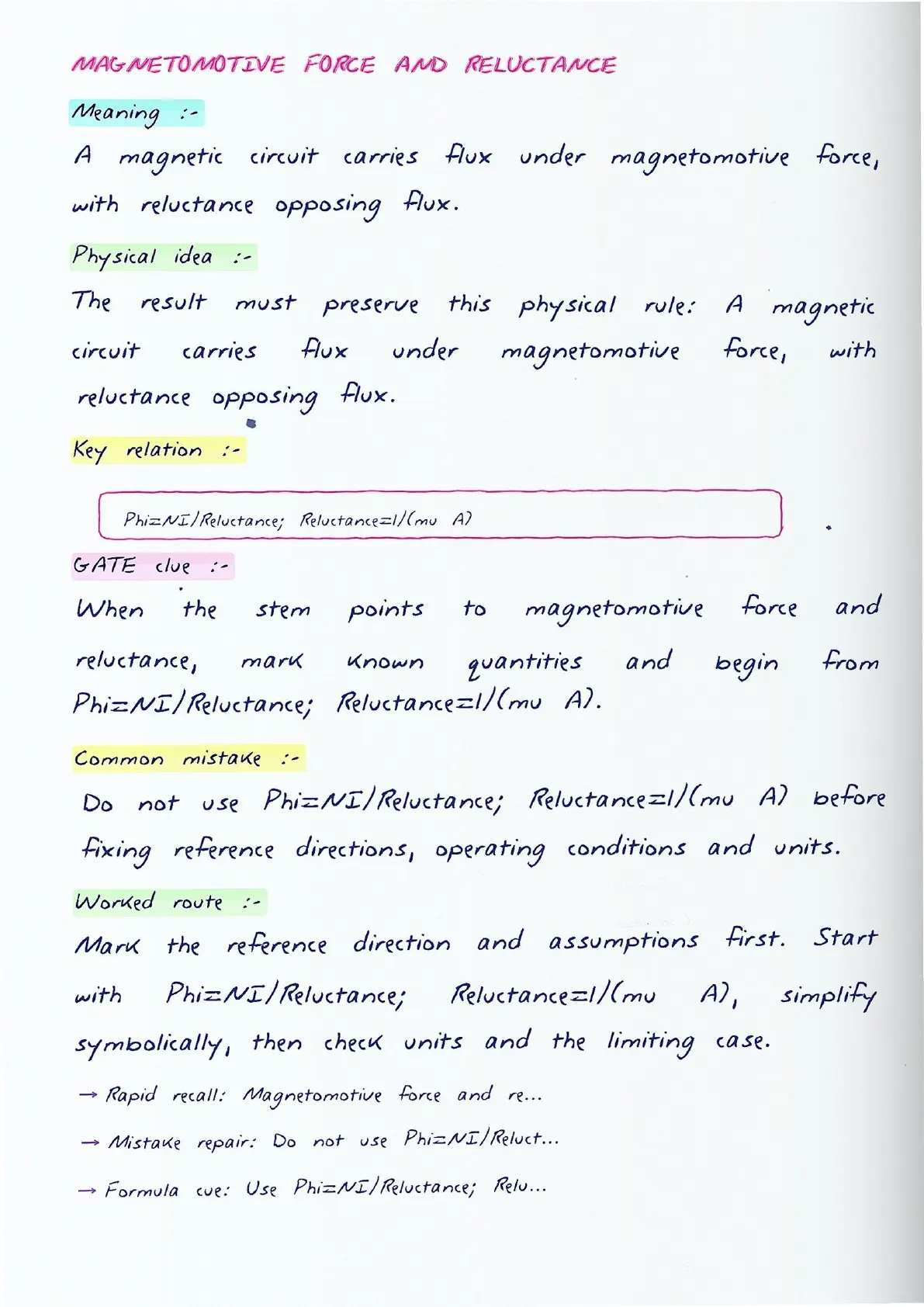
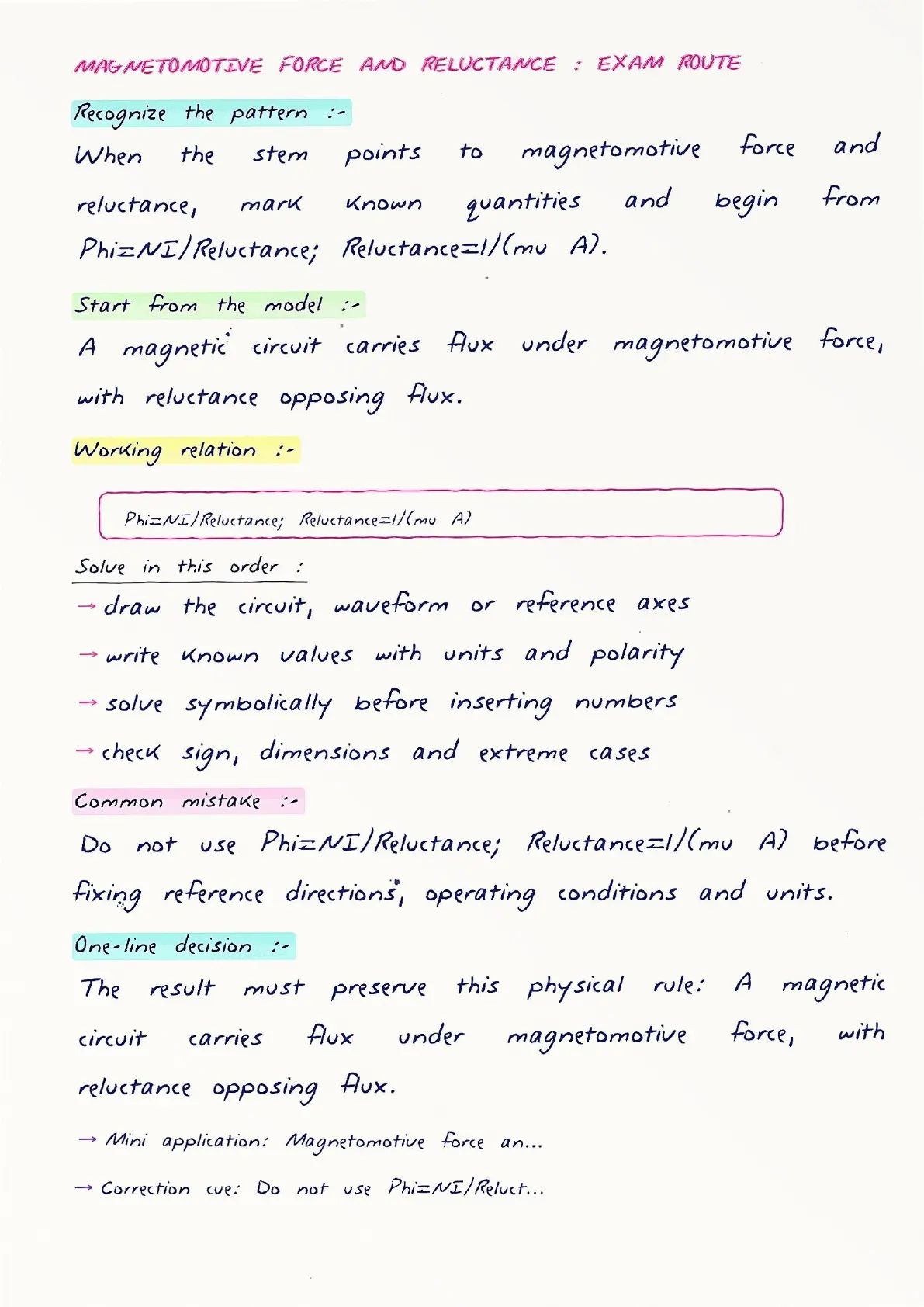
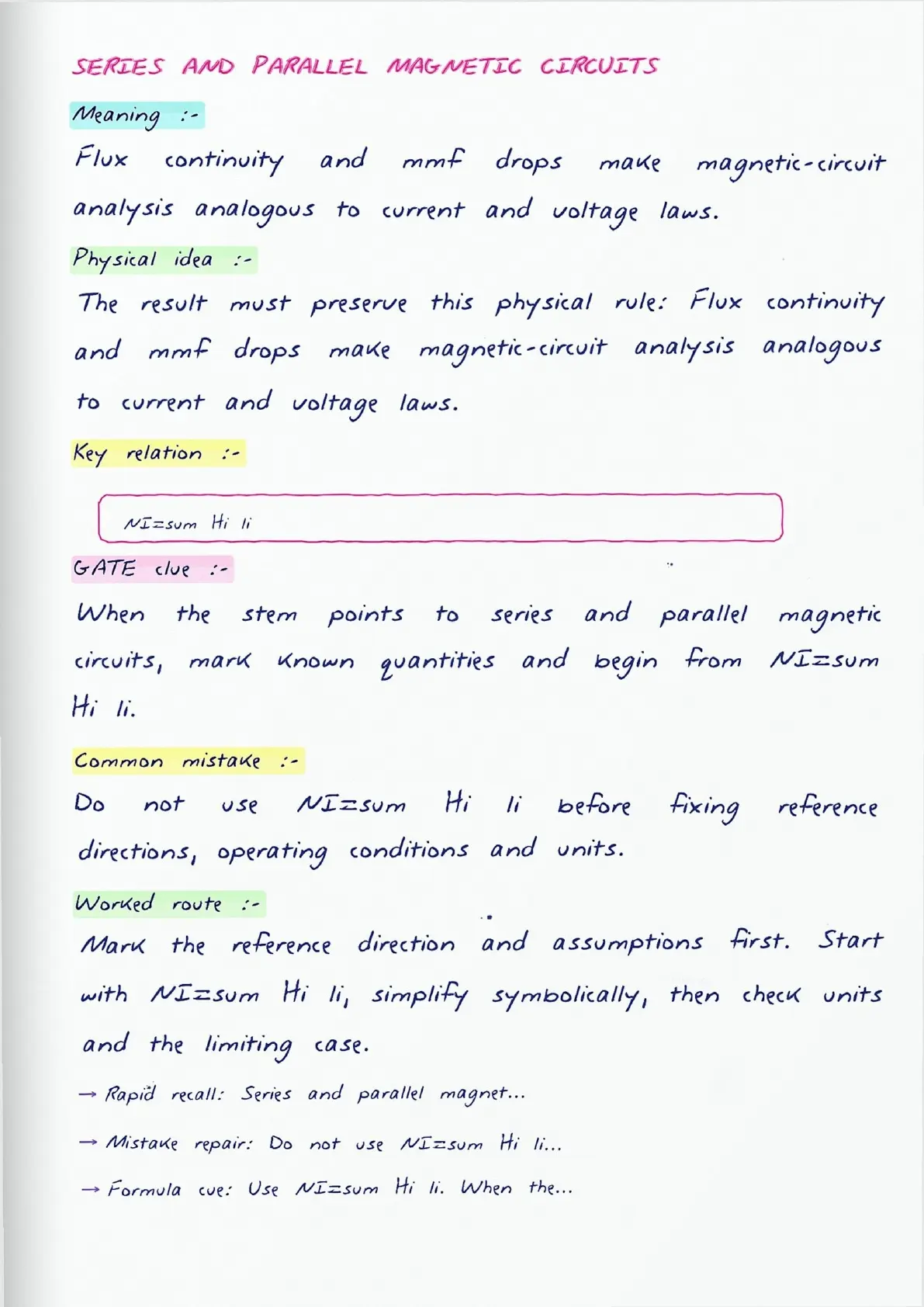
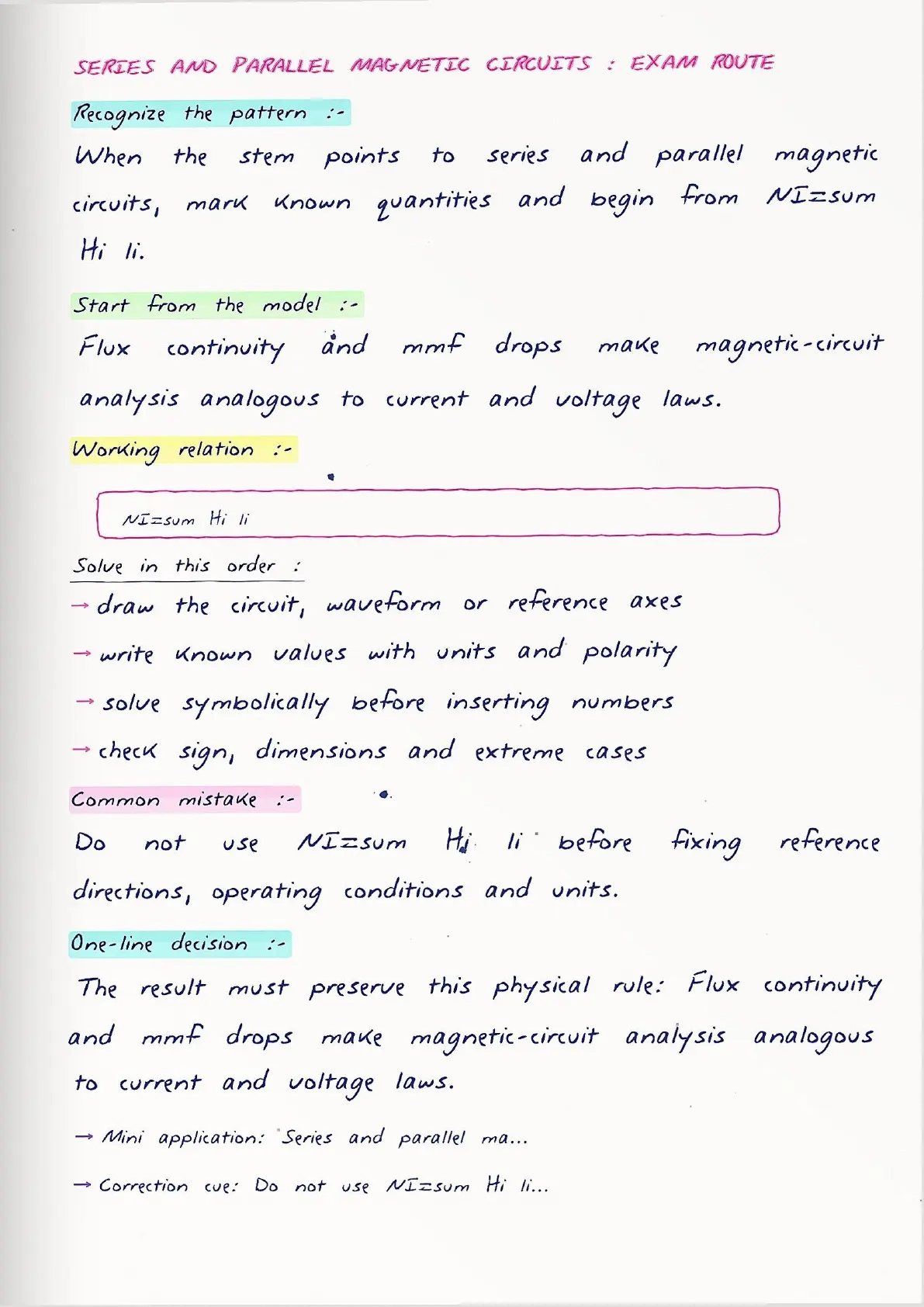
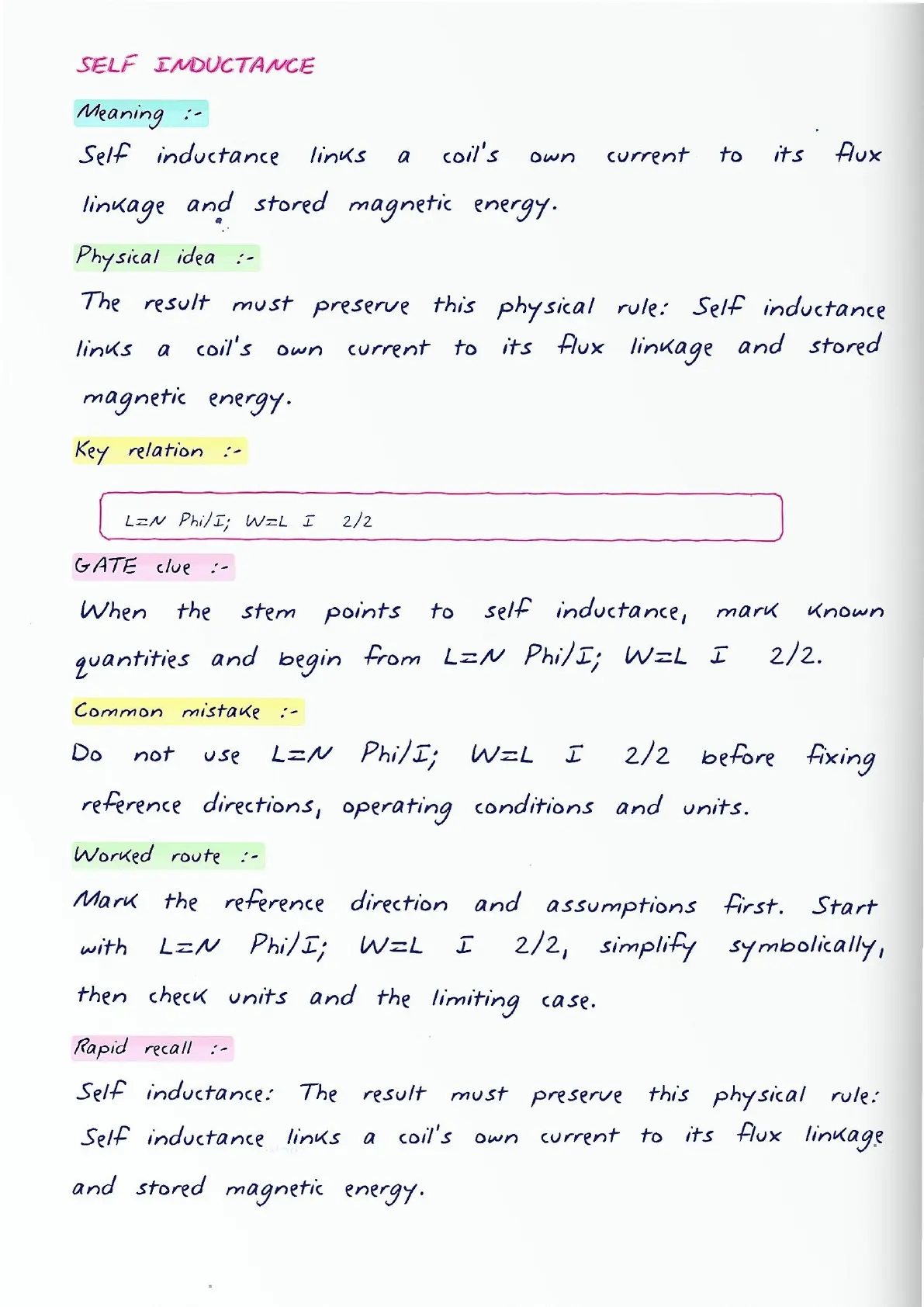
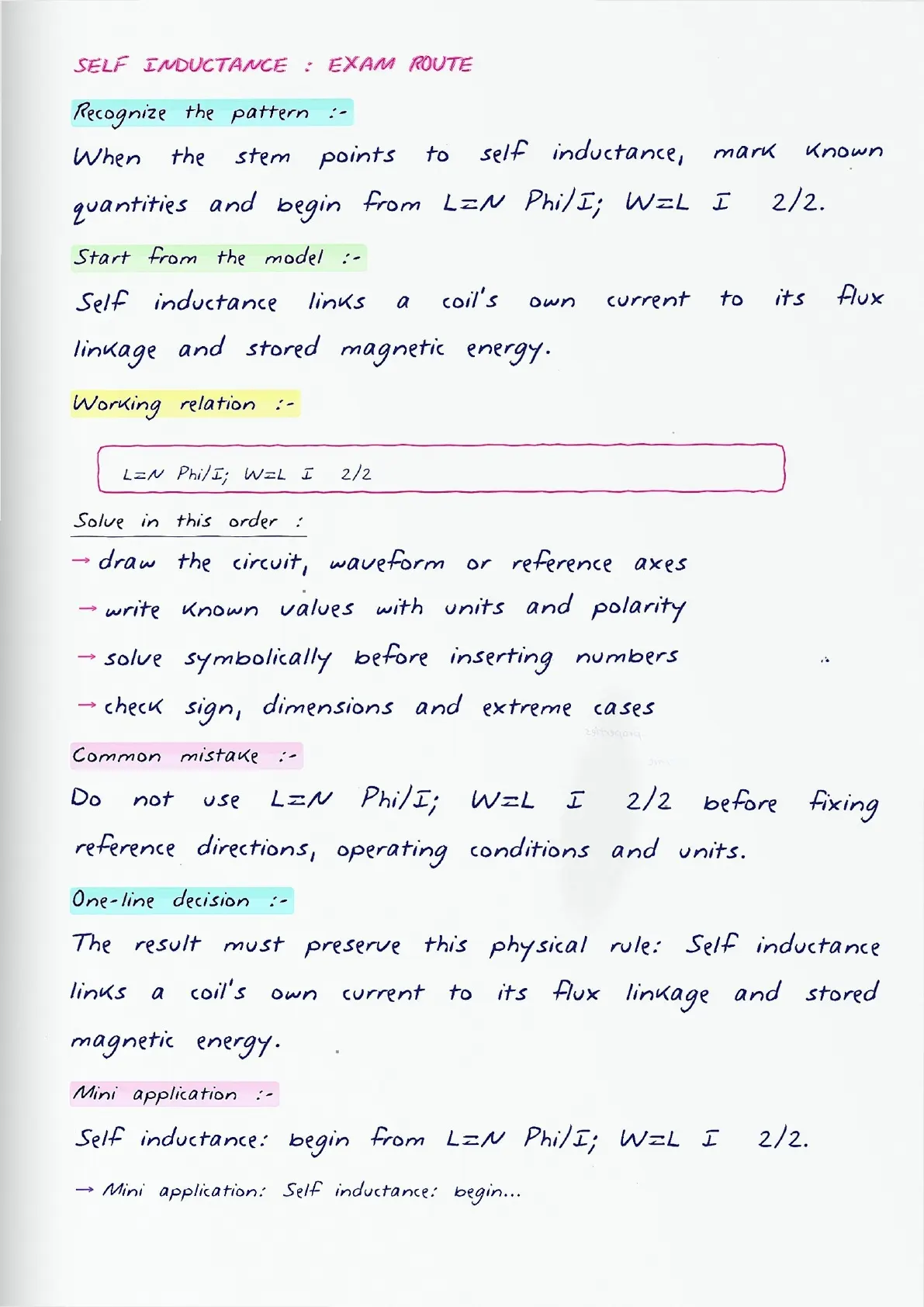
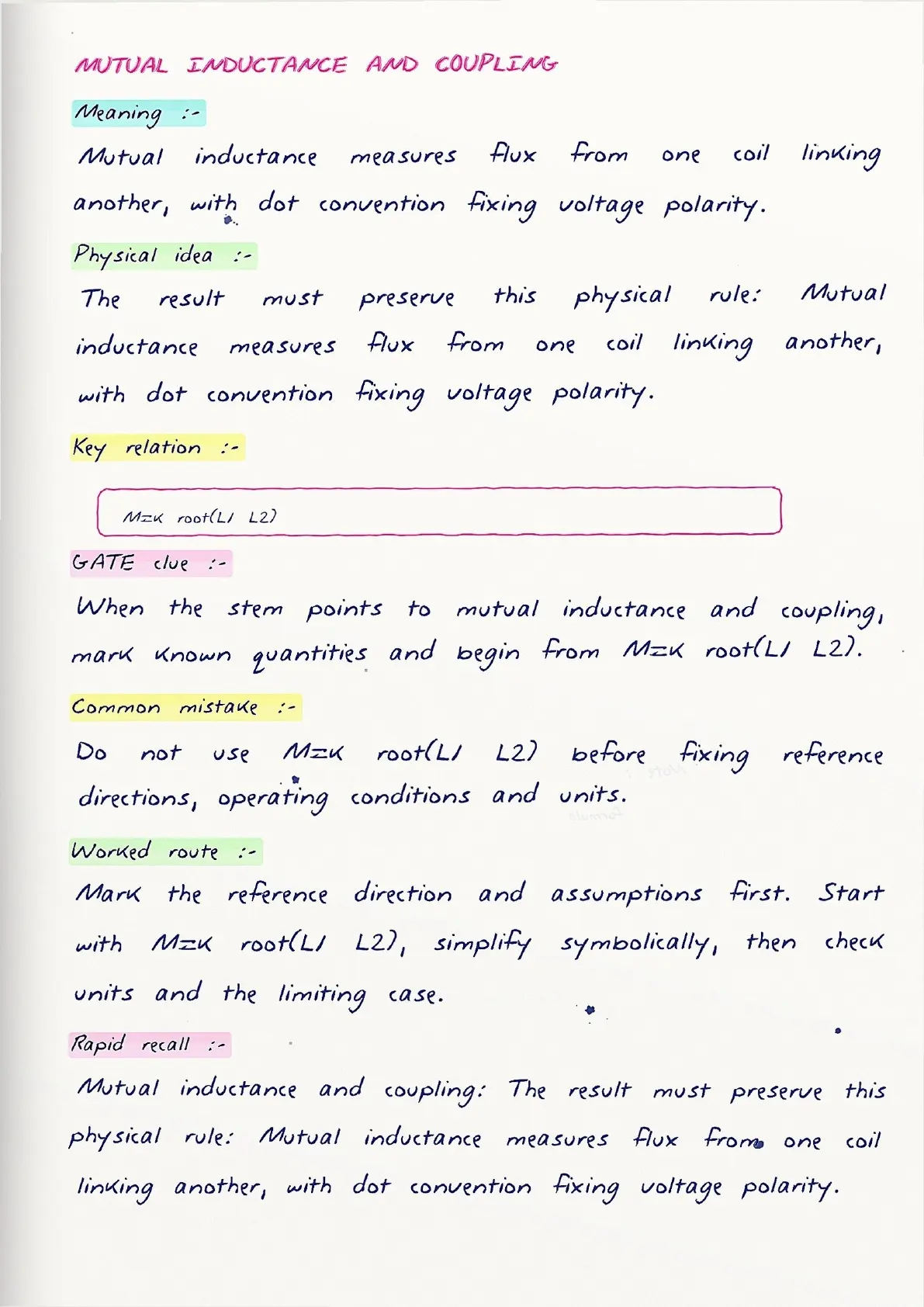
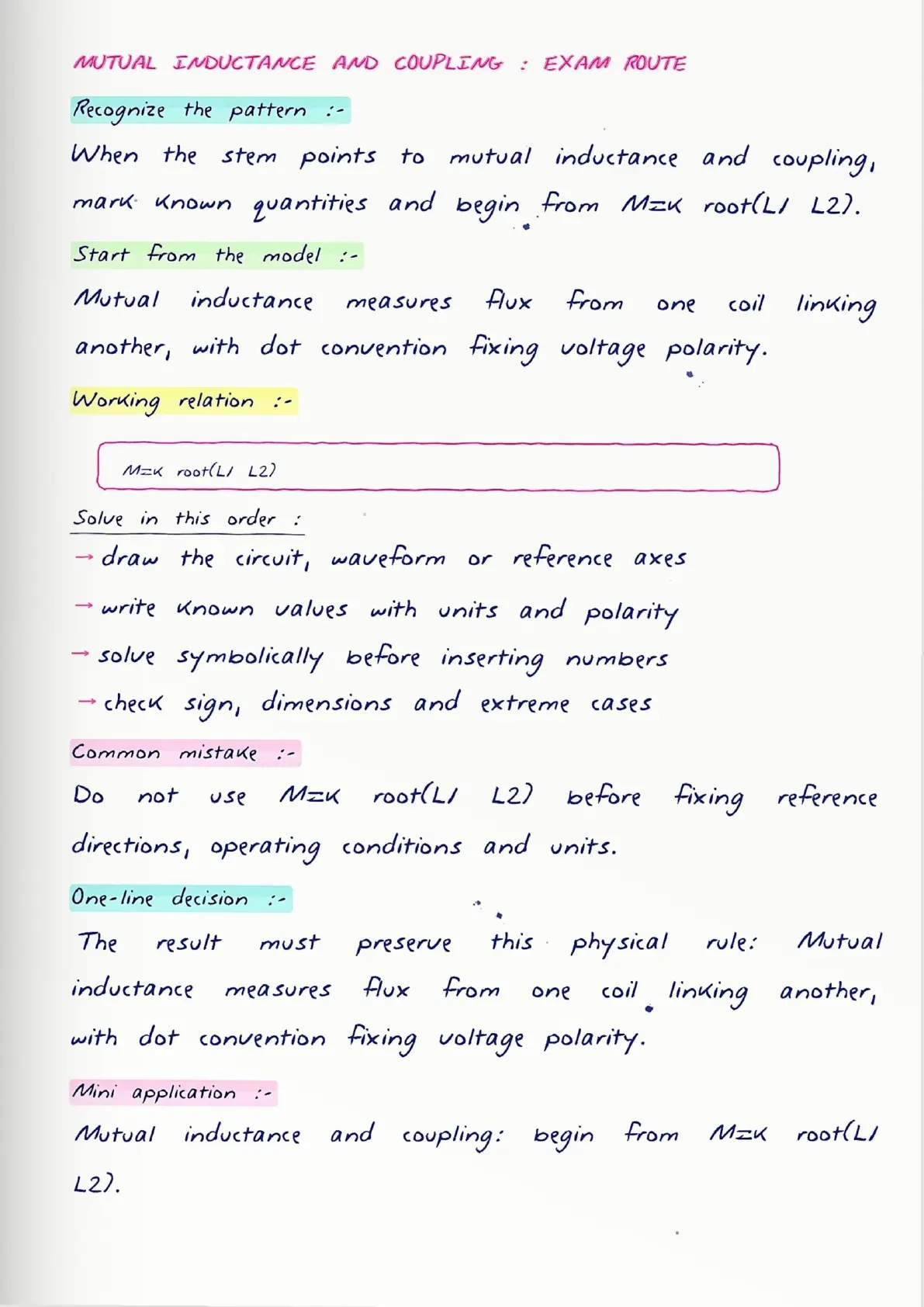
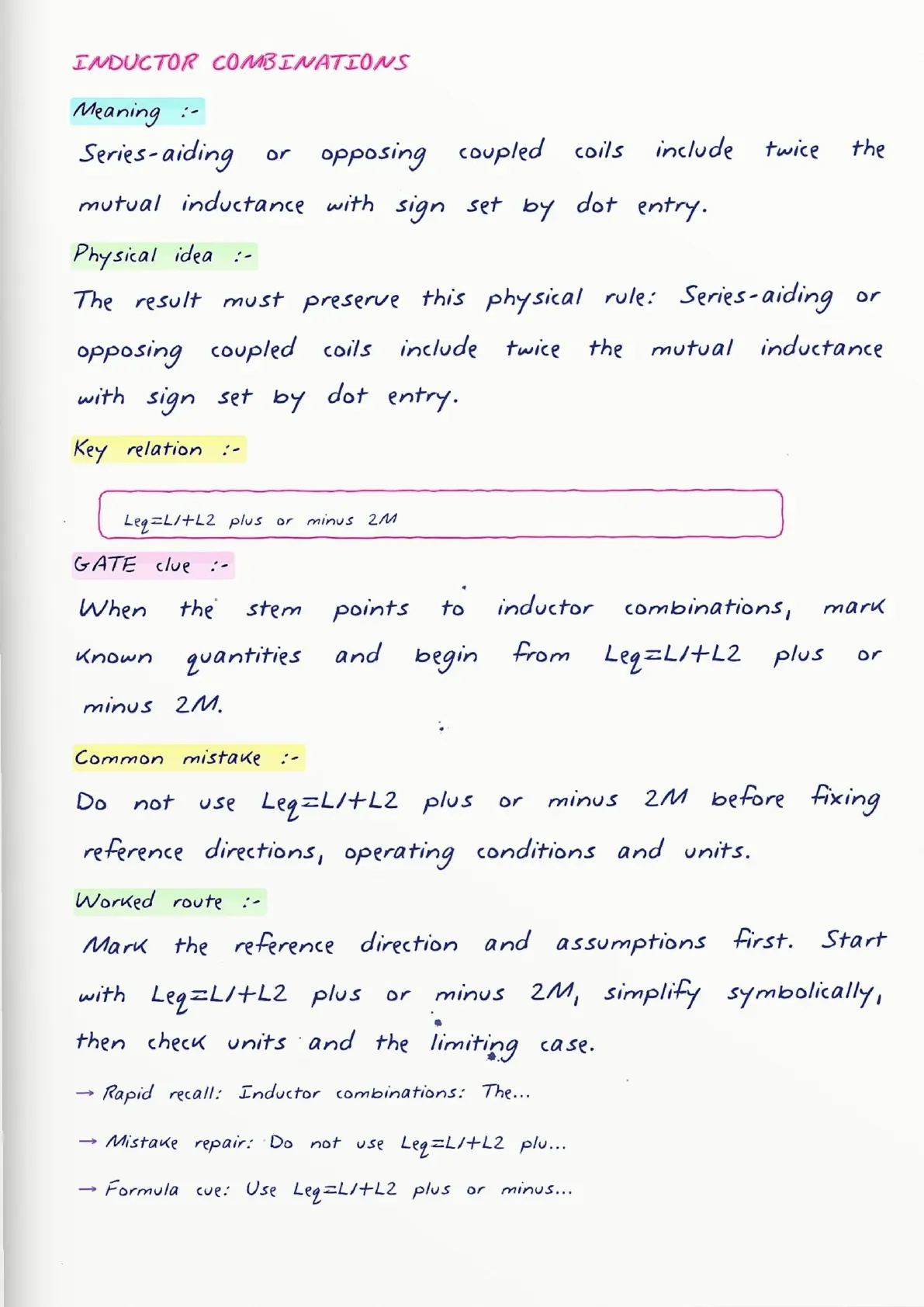
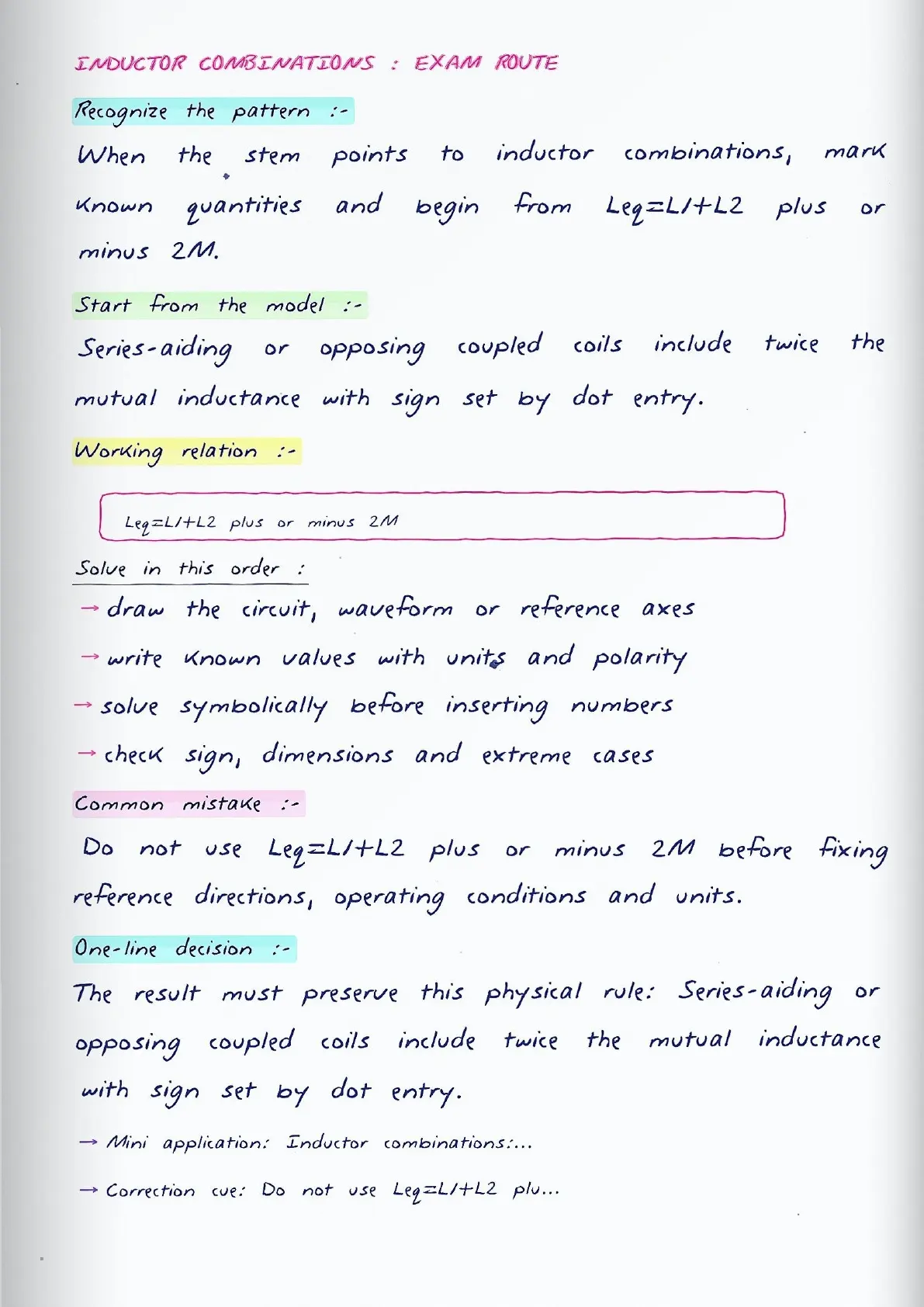
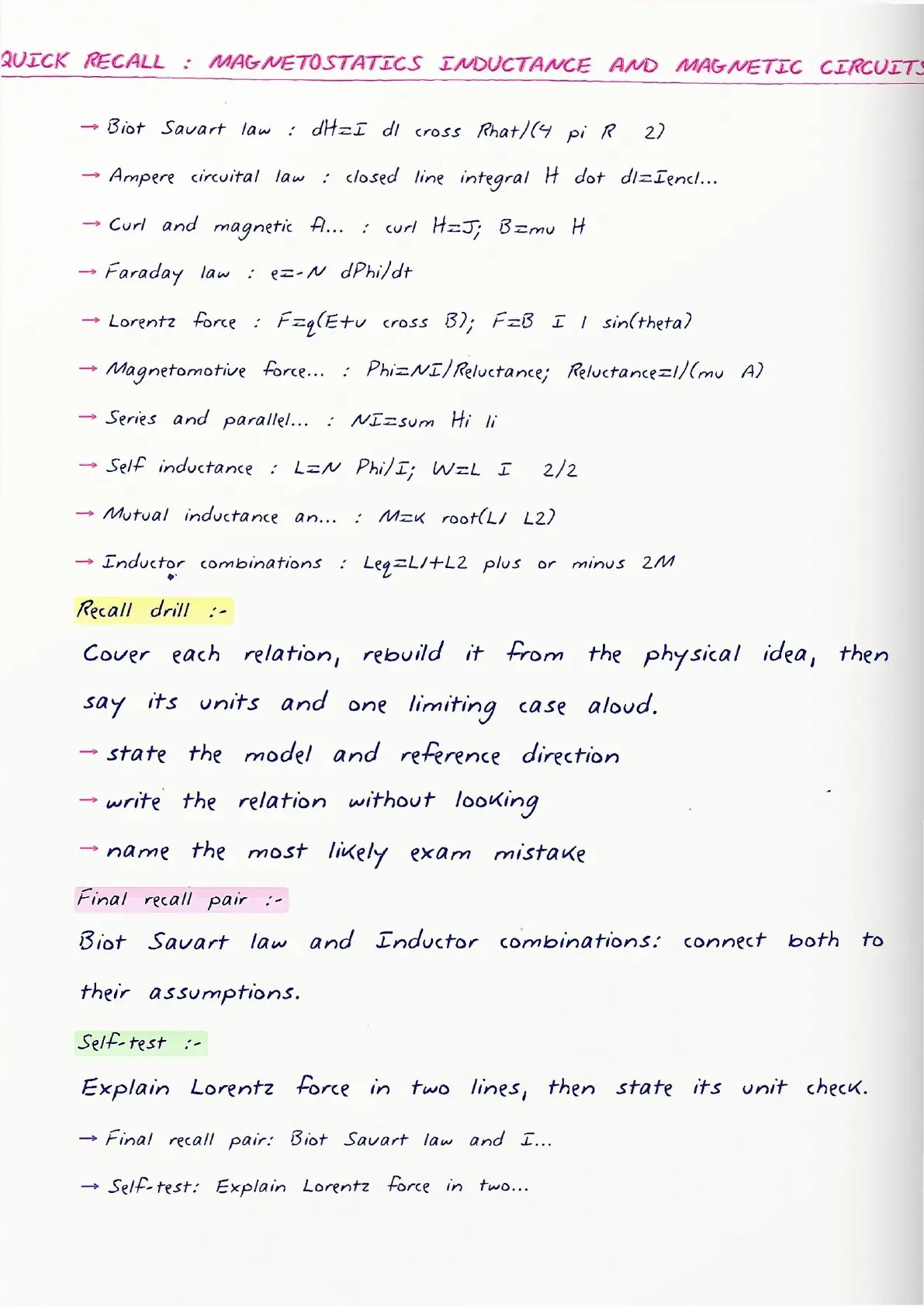
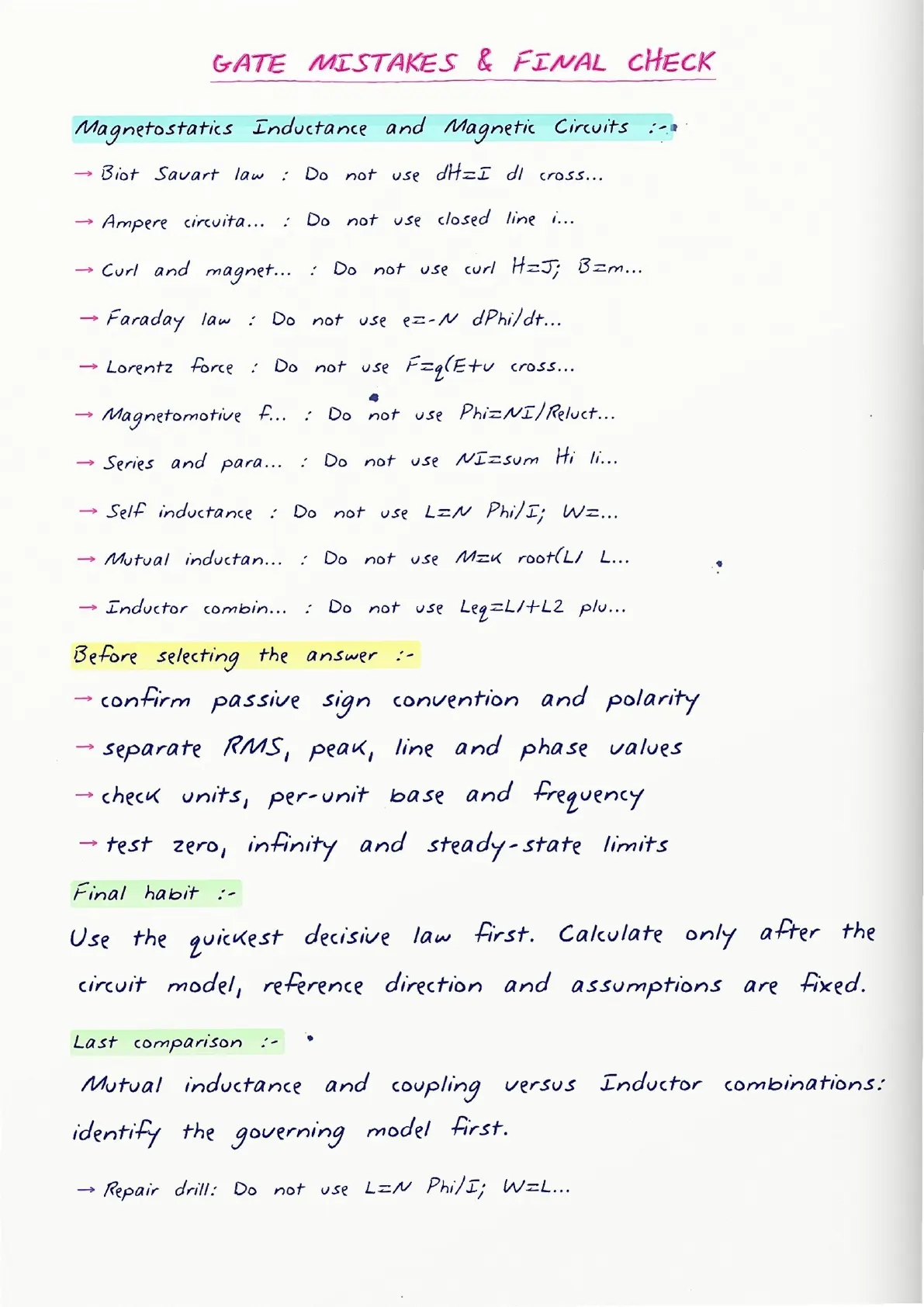
The notes open with hand-drawn field sketches around straight wires, loops, and solenoids, so students can see how the magnetic field wraps around a current before any formula appears. Each result, from the Biot-Savart law to Ampere's circuital law, is written out in words with a worked example beside it, and a hand-labelled B-H curve shows how reluctance behaves once the core starts to saturate.
- Clear diagrams of flux linkage for coupled coils, with dot-convention marks drawn in by hand.
- A one-page magnetic circuit analogy sheet lining up MMF, flux, and reluctance against voltage, current, and resistance.
- Short derivations for self and mutual inductance of common geometries, kept to the steps GATE actually tests.
What These GATE Magnetostatics Notes Cover
These pages walk students from the basic force on a moving charge up to full magnetic circuit analysis. The aim is to build a working picture first, then attach the equations, so recall stays fast during the exam.
- Biot-Savart and Ampere's law applied to wires, loops, and toroids.
- Magnetic flux, flux density, and field intensity and how they connect.
- Self, mutual, and series-parallel inductance with coupling coefficient.
- Reluctance networks, fringing, leakage flux, and energy stored in a field.
GATE Magnetostatics Quick Revision
Source: GATE Wallah CSE & DA on YouTube
Topics Covered in GATE Magnetostatics
The topic list follows the official GATE Electrical syllabus for magnetics under the fields group. Every point below appears in the notes with a small worked case so students can match theory to a number.
- Force on a current-carrying conductor and the Lorentz force.
- Magnetic field of infinite wires, finite segments, and circular loops.
- Ampere's circuital law for solenoids and toroids.
- Magnetic materials, permeability, and the B-H hysteresis loop.
- Magnetic circuits with air gaps and composite cores.
- Self-inductance, mutual inductance, and the coupling coefficient.
- Energy density and force in a magnetic field.
- Boundary conditions on the normal and tangential field components.
How the Notes Are Organised
The order runs from the pure field picture to the circuit model. Students first meet single conductors and loops, then build up to the solenoid and toroid, and only then does the magnetic circuit analogy appear. This keeps the reluctance idea grounded in real geometry rather than dropped in as a formula.
Later pages fold in inductance and stored energy, then close with boundary conditions that link straight into field theory. Each spread has a highlighted result line at the top, so a quick flip is enough for last-minute revision. Small margin notes point out where a symbol changes meaning, for example when field intensity and flux density are used in the same step, which keeps students from mixing the two under pressure.
How GATE Magnetostatics Links to Other Topics
Magnetics is the shared root of most machine and transformer questions, so time spent here pays off across the paper. The notes flag these bridges wherever a result reappears elsewhere.
- Transformers, where core reluctance and leakage flux fix the equivalent circuit.
- DC machines and induction machines, built on flux per pole and MMF.
- Electromagnetic field theory, sharing boundary conditions and energy ideas.
- Single and coupled circuits, where mutual inductance drives the coupling term.
Important Topics in GATE Magnetostatics
A few sub-topics carry most of the marks and also hide the usual traps. The notes mark these with worked numbers so students do not lose easy points on sign or unit slips.
- Reluctance of a core with an air gap, where students often forget the gap dominates.
- Series and parallel inductance with mutual terms, minding the dot convention.
- Energy stored in a coupled system, kept separate from single-coil energy.
- Field of a finite wire, where the angle limits are easy to misread.
- B-H saturation, and why constant permeability fails near the knee.
How to Prepare GATE Magnetostatics with Handwritten Notes
A tight plan beats long unfocused reading here, since the topic is compact but formula-heavy. Students should treat these notes as a spine and hang practice around them.
- First read: follow the field sketches and say each result in your own words.
- Second pass: reproduce the reluctance analogy sheet from memory.
- PYQs: solve past magnetic-circuit and inductance questions against the worked cases.
- Final week: revise only the highlighted top-of-page results and traps.
Why These Notes Help You Score Better
Magnetics rewards a clear mental picture more than heavy algebra, and these hand-drawn pages give exactly that. By pairing every result with a sketch and a worked number, they cut the guesswork that costs marks under time pressure. Because the same field ideas resurface in transformer and machine problems, the effort spent here quietly lifts scores in those sections too. The compact layout also makes revision quick in the last days before the exam. Used steadily, they help students turn a tricky field topic into reliable marks.
GATE Electrical Magnetostatics Handwritten Notes FAQs
Ques. How many marks does magnetostatics carry in GATE Electrical?
Ans. The magnetics and fields group usually contributes about 4 to 7 marks across direct questions and its use inside machine and transformer problems, so it is worth steady preparation.
Ques. Are these handwritten notes enough for the magnetic circuits topic?
Ans. Yes, the notes cover the full syllabus point by point with hand-drawn diagrams and worked cases, and they pair best with past-year questions for practice.
Ques. What is the most common mistake students make in this topic?
Ans. The frequent slip is ignoring the air-gap reluctance, which usually dominates the magnetic circuit, and mixing up the dot convention when adding mutual inductance.
Ques. Do these notes include inductance and coupled coils?
Ans. They do, with short derivations of self and mutual inductance, the coupling coefficient, and the energy stored in coupled circuits, all kept to exam depth.



Comments