




Control Systems is a heavy-weight scoring area in GATE Electrical, usually worth about 8 to 11 marks in the paper. It belongs to the Control Systems section, and its ideas return in Signals and Systems, Electric Drives, and Instrumentation. These handwritten notes cover the frequency response, compensator, controller, and state space portion in a compact, exam-focused form.
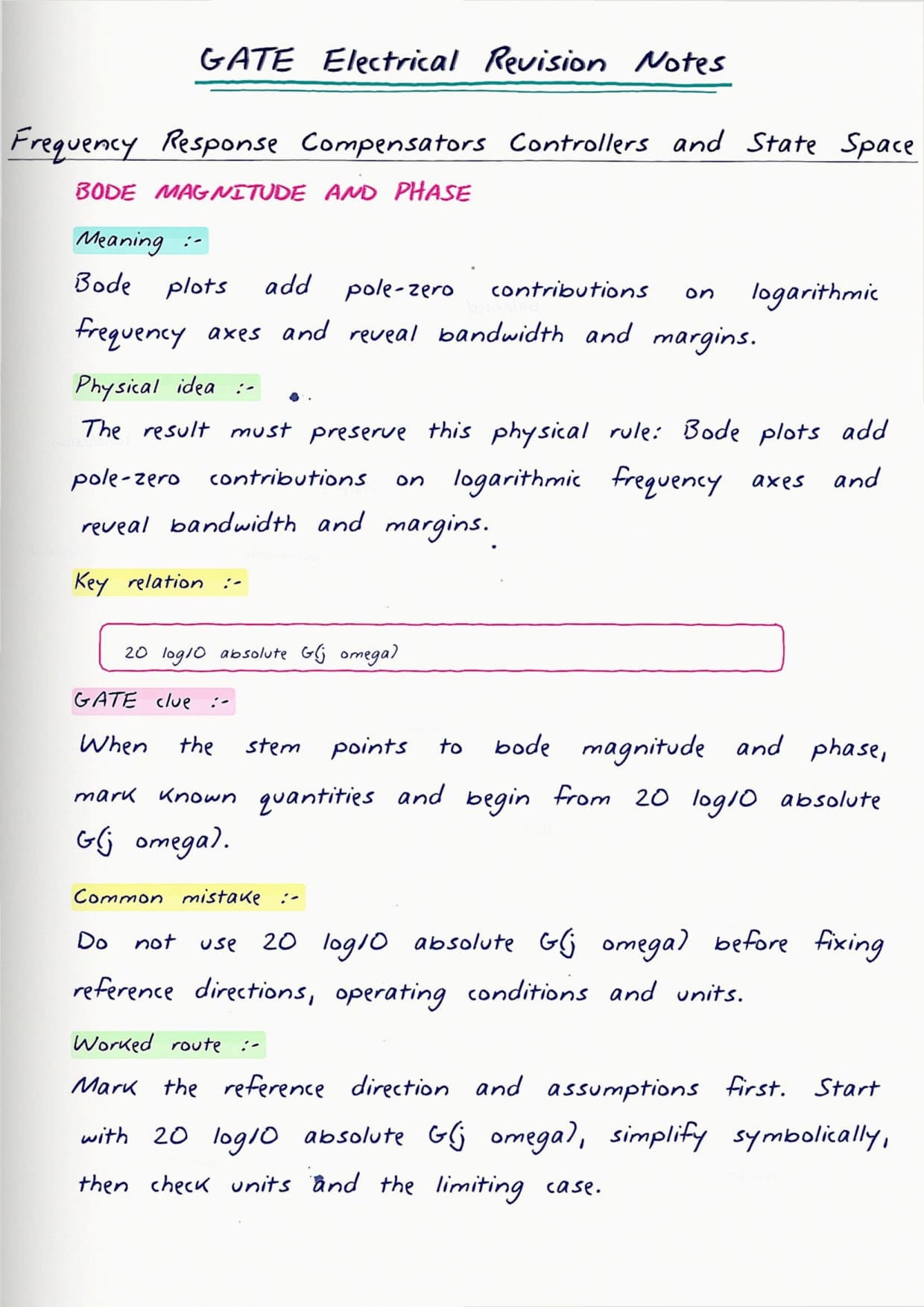
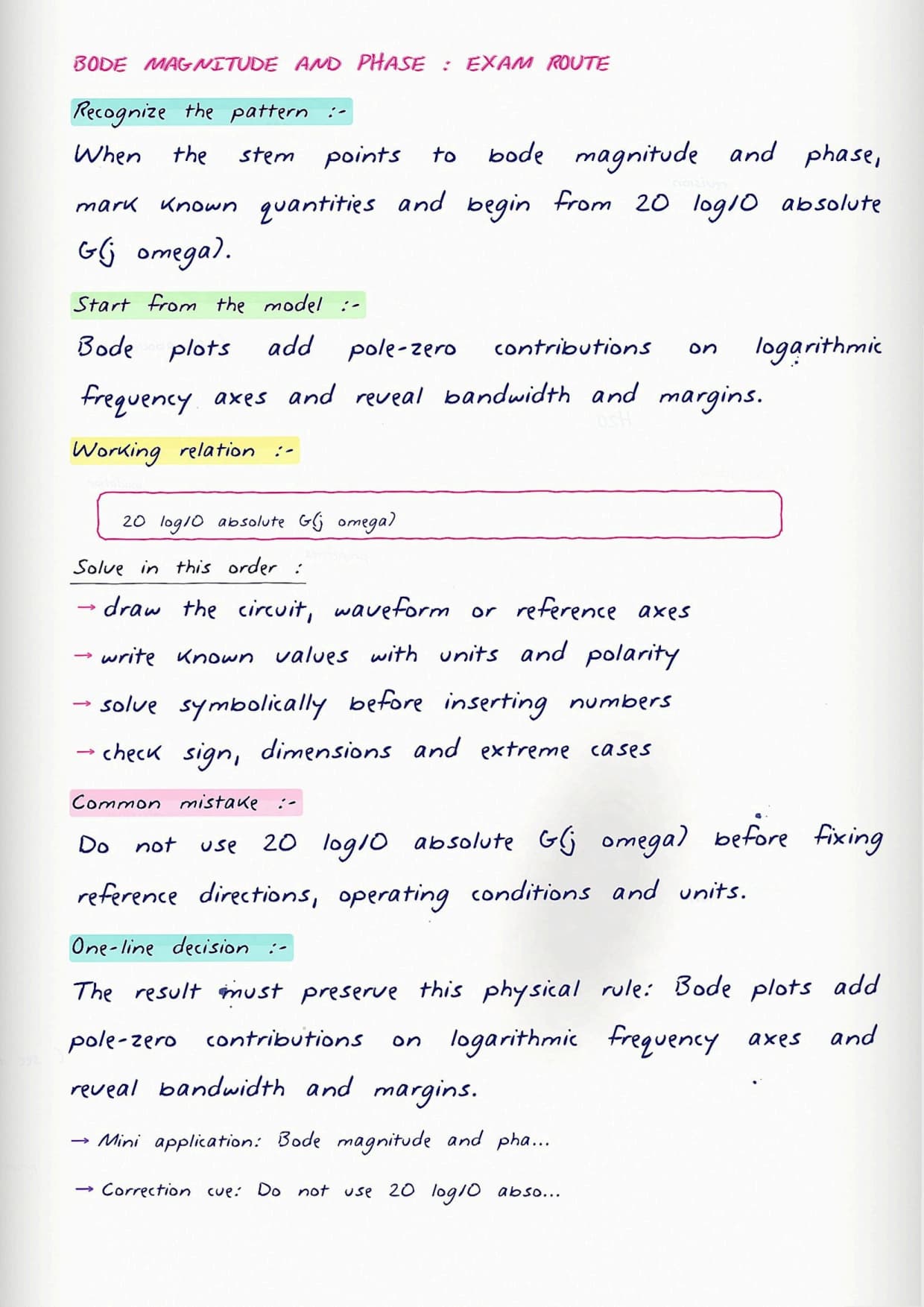
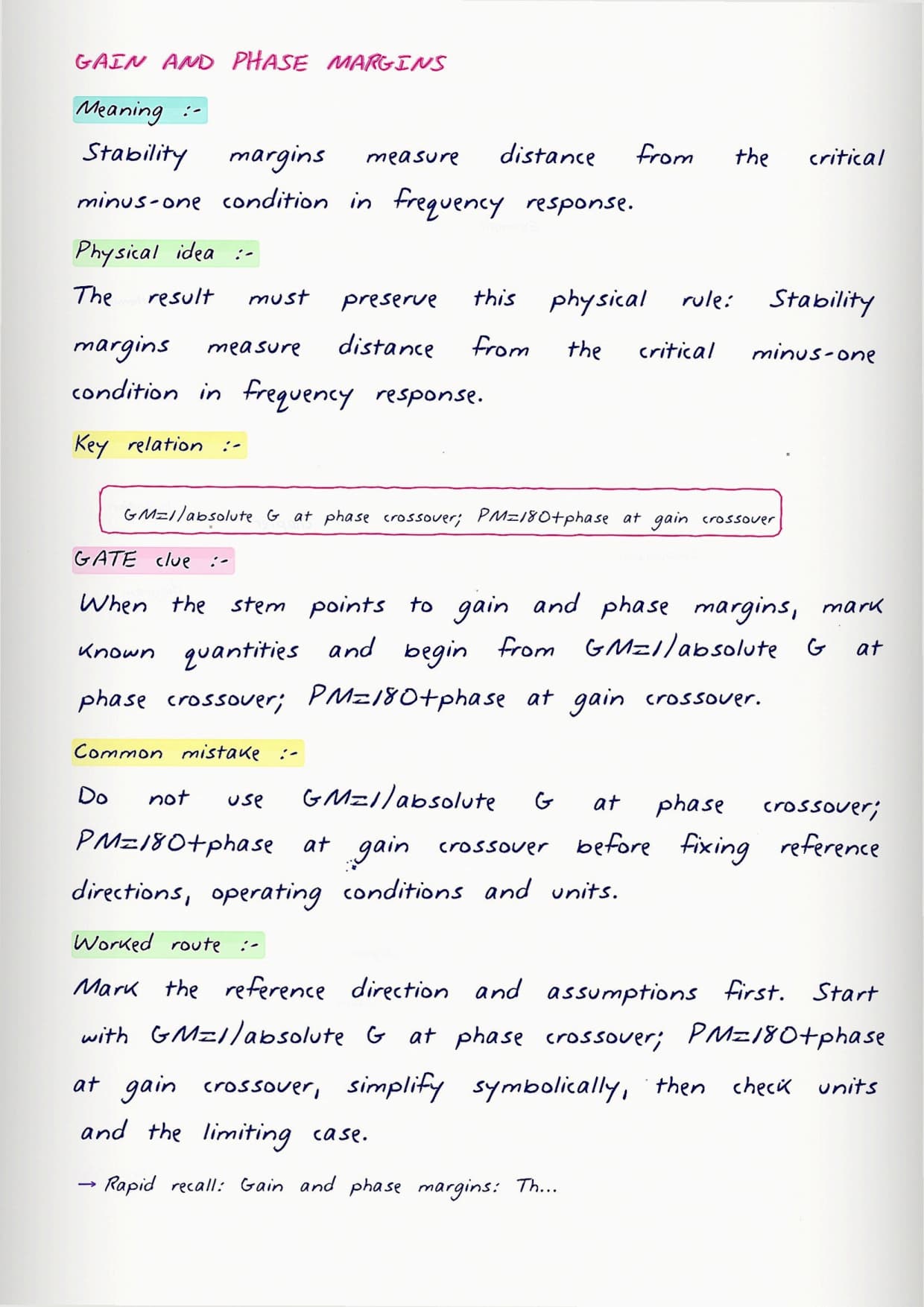
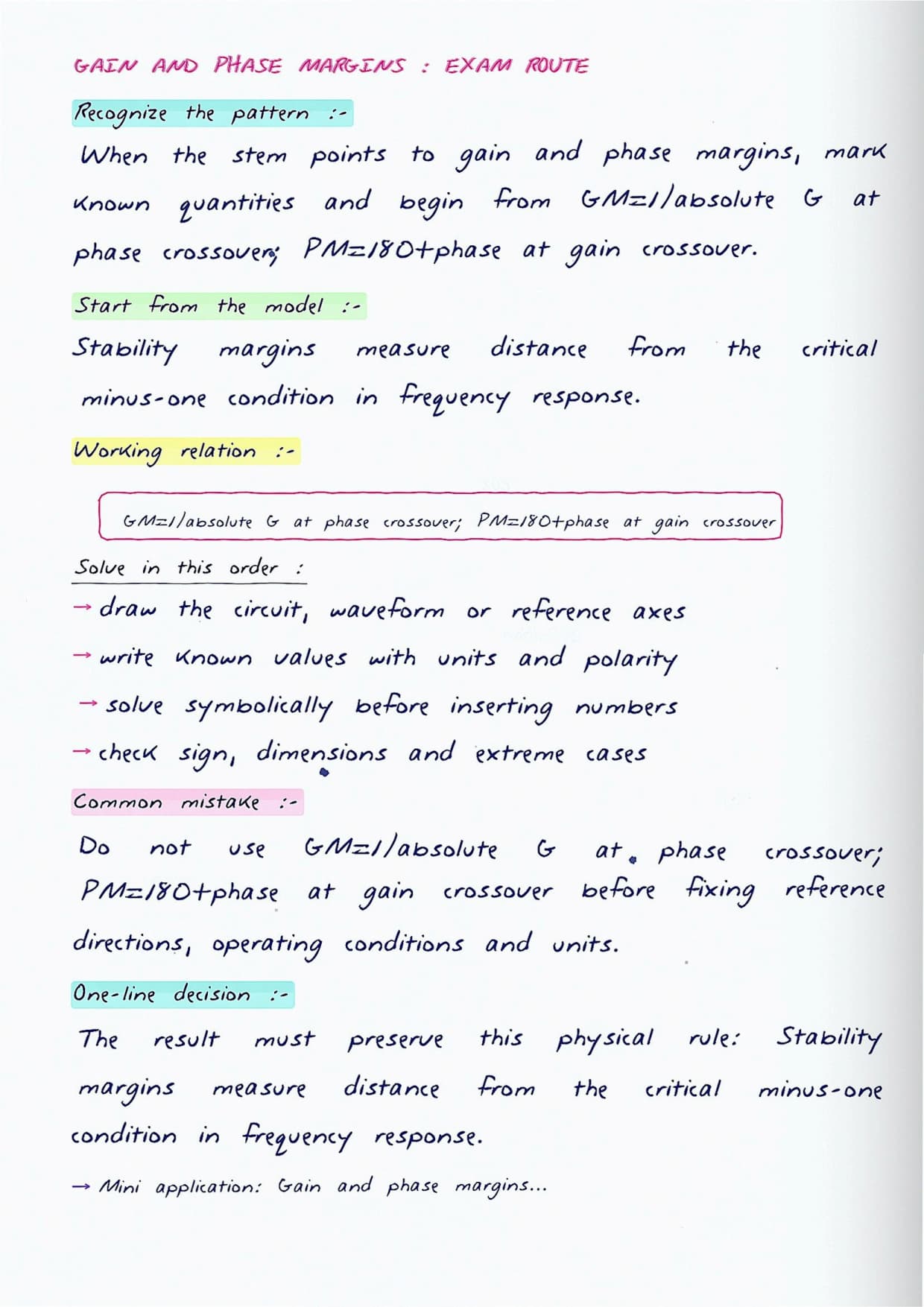
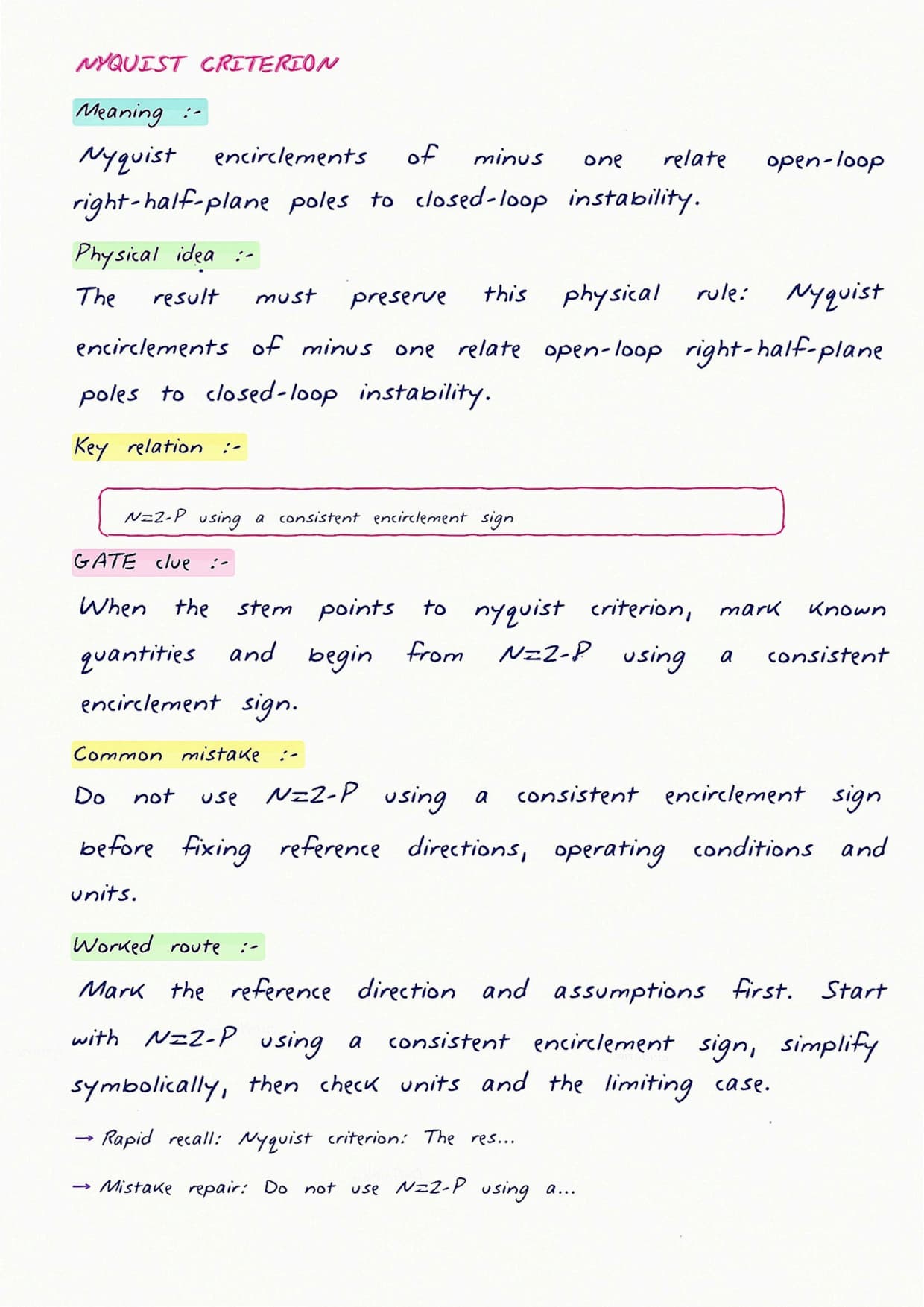
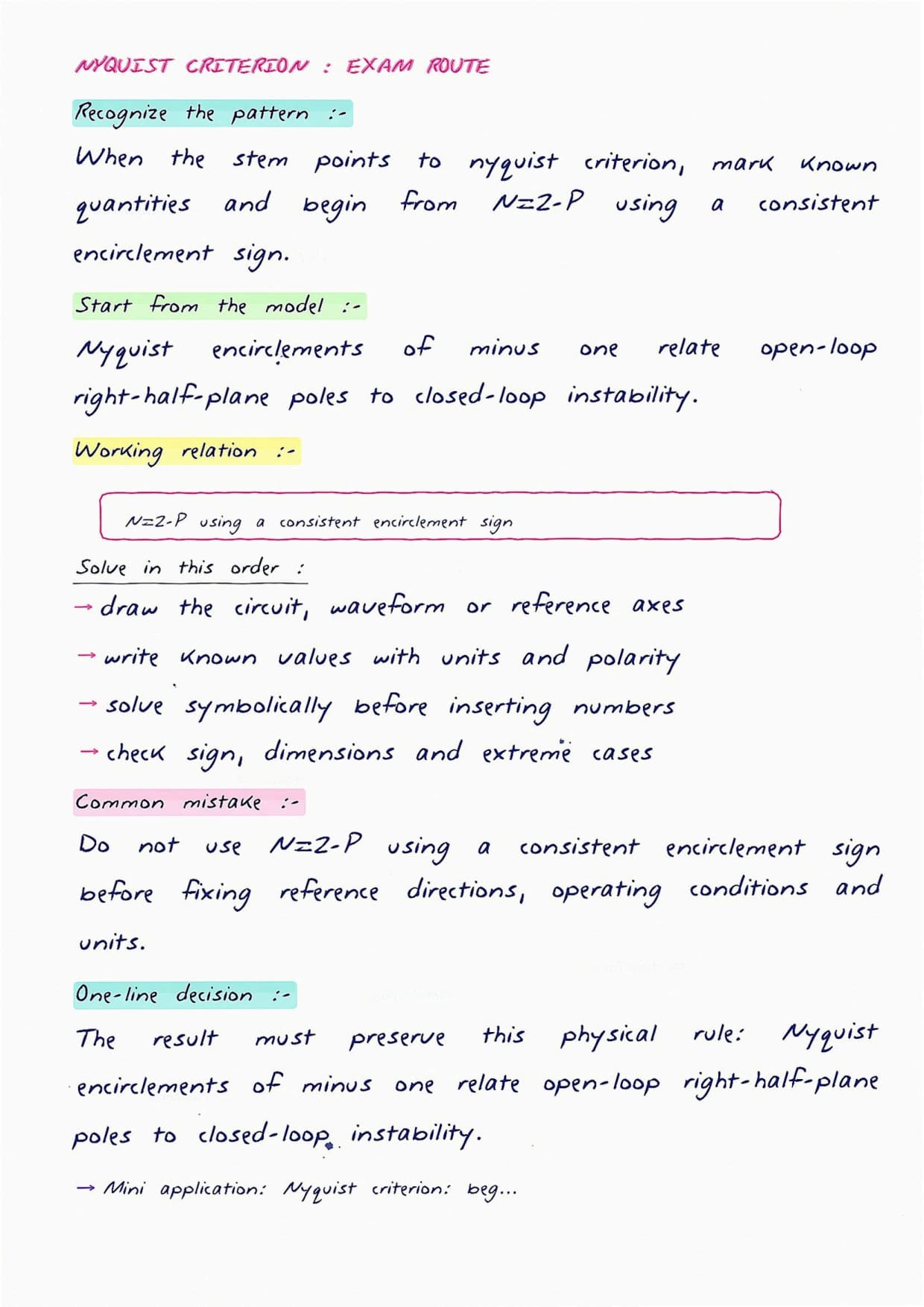
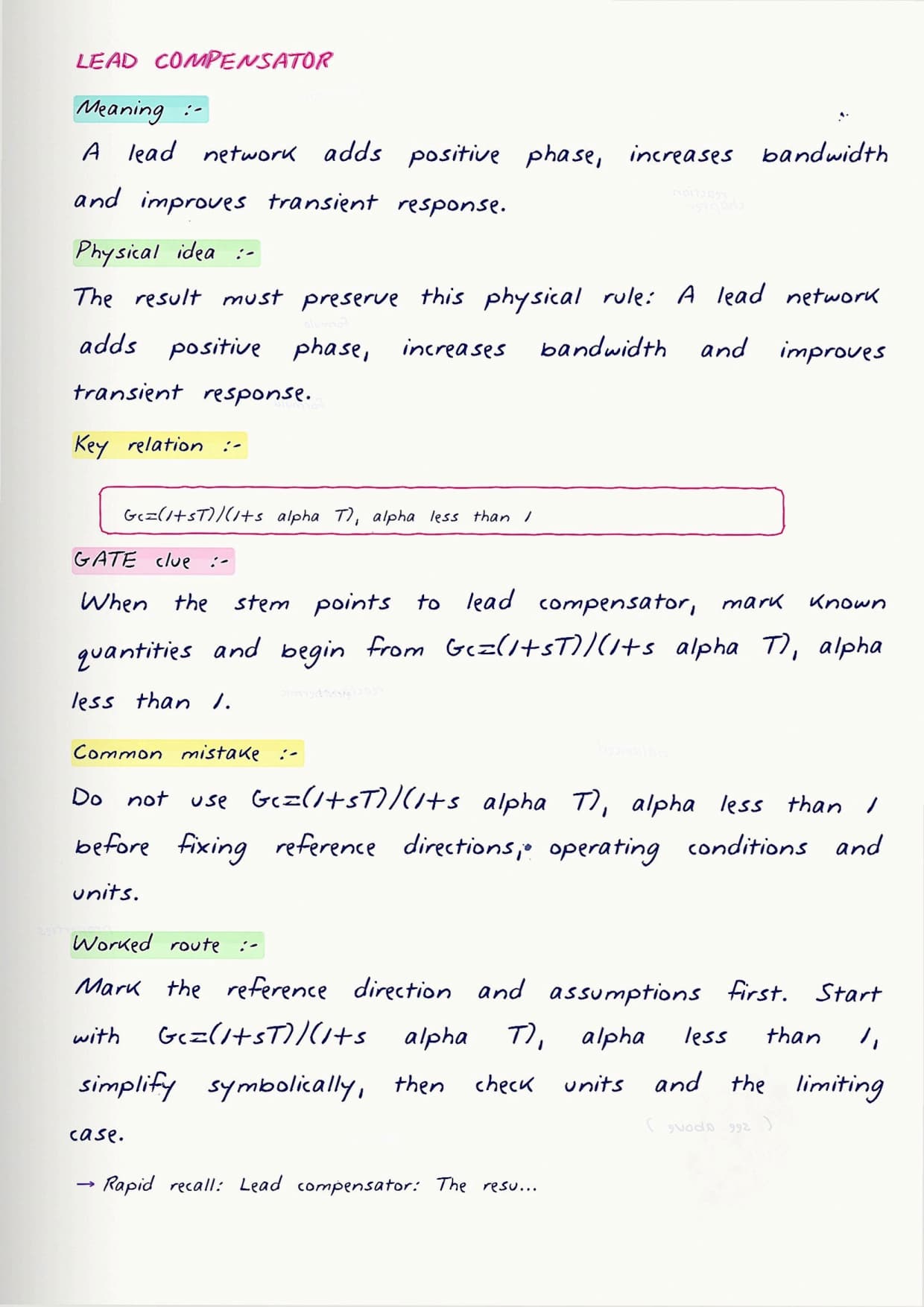
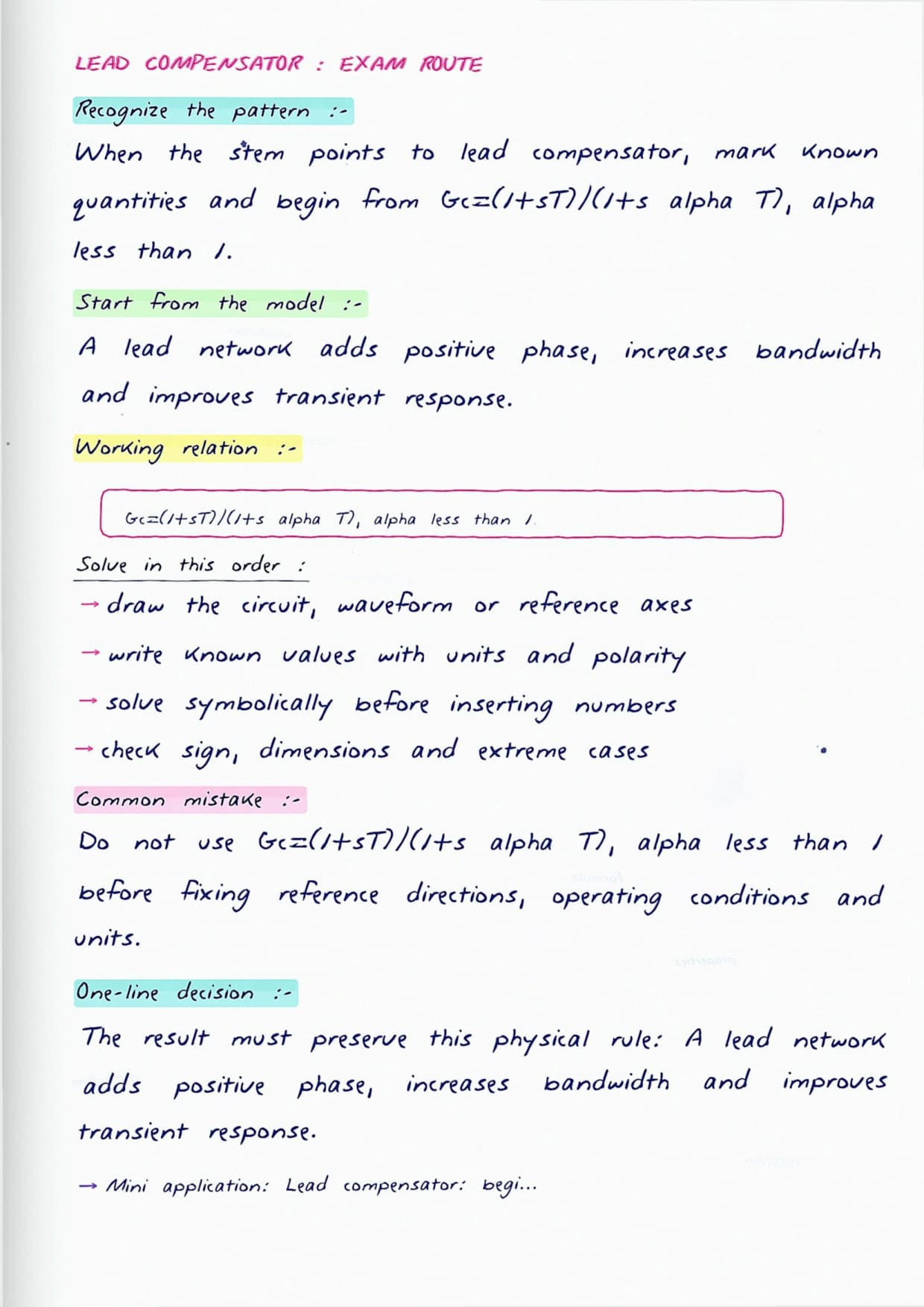
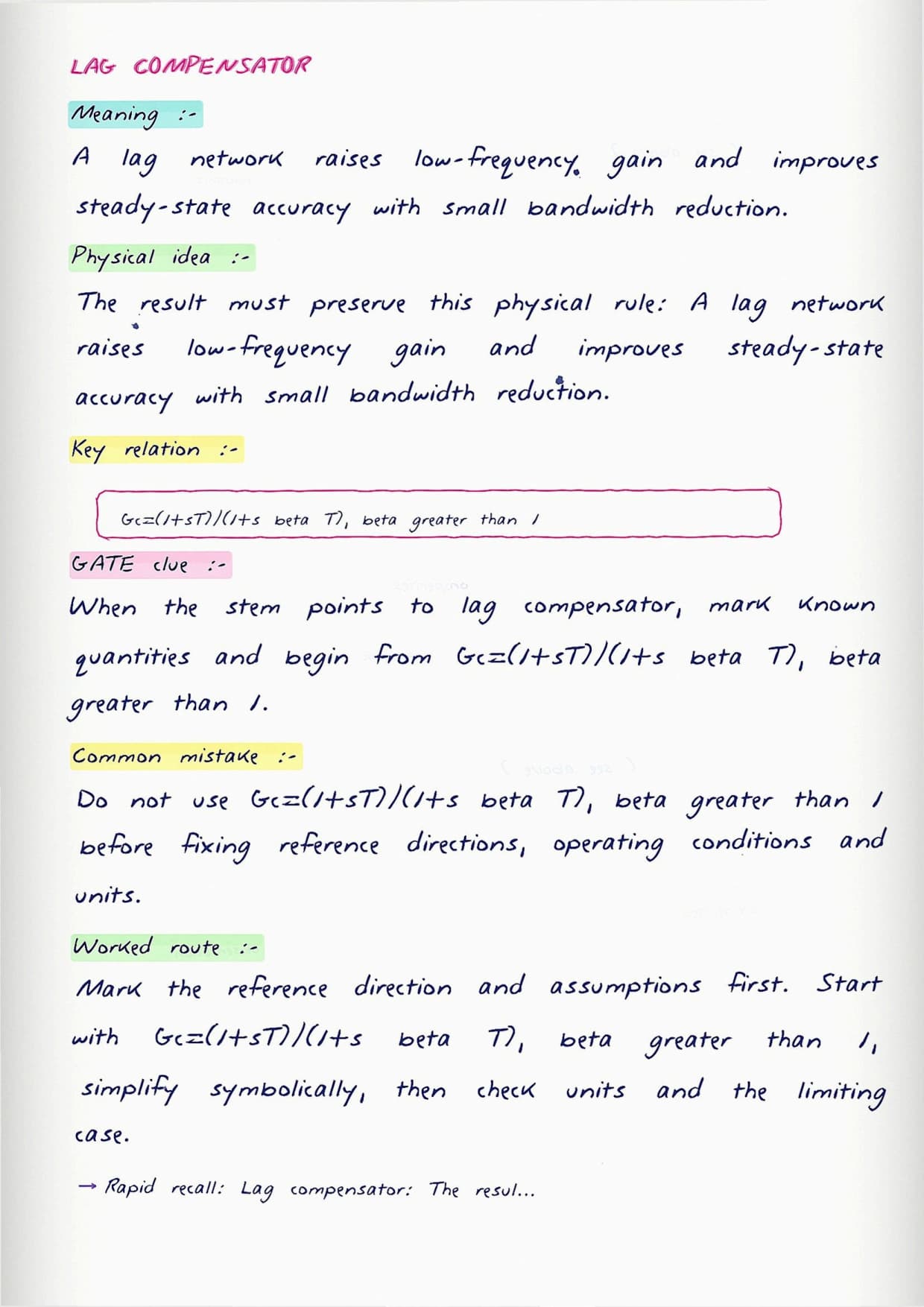
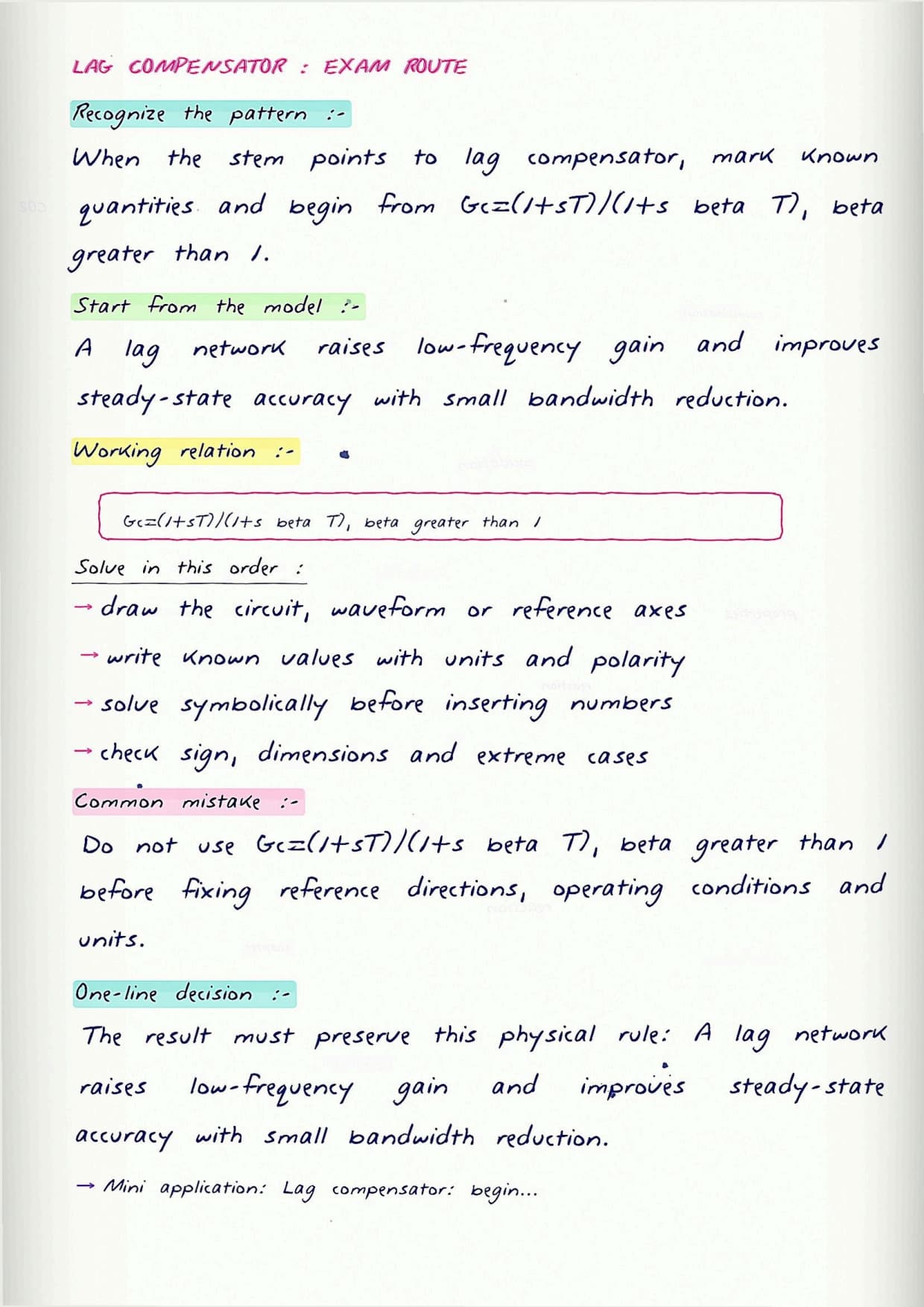
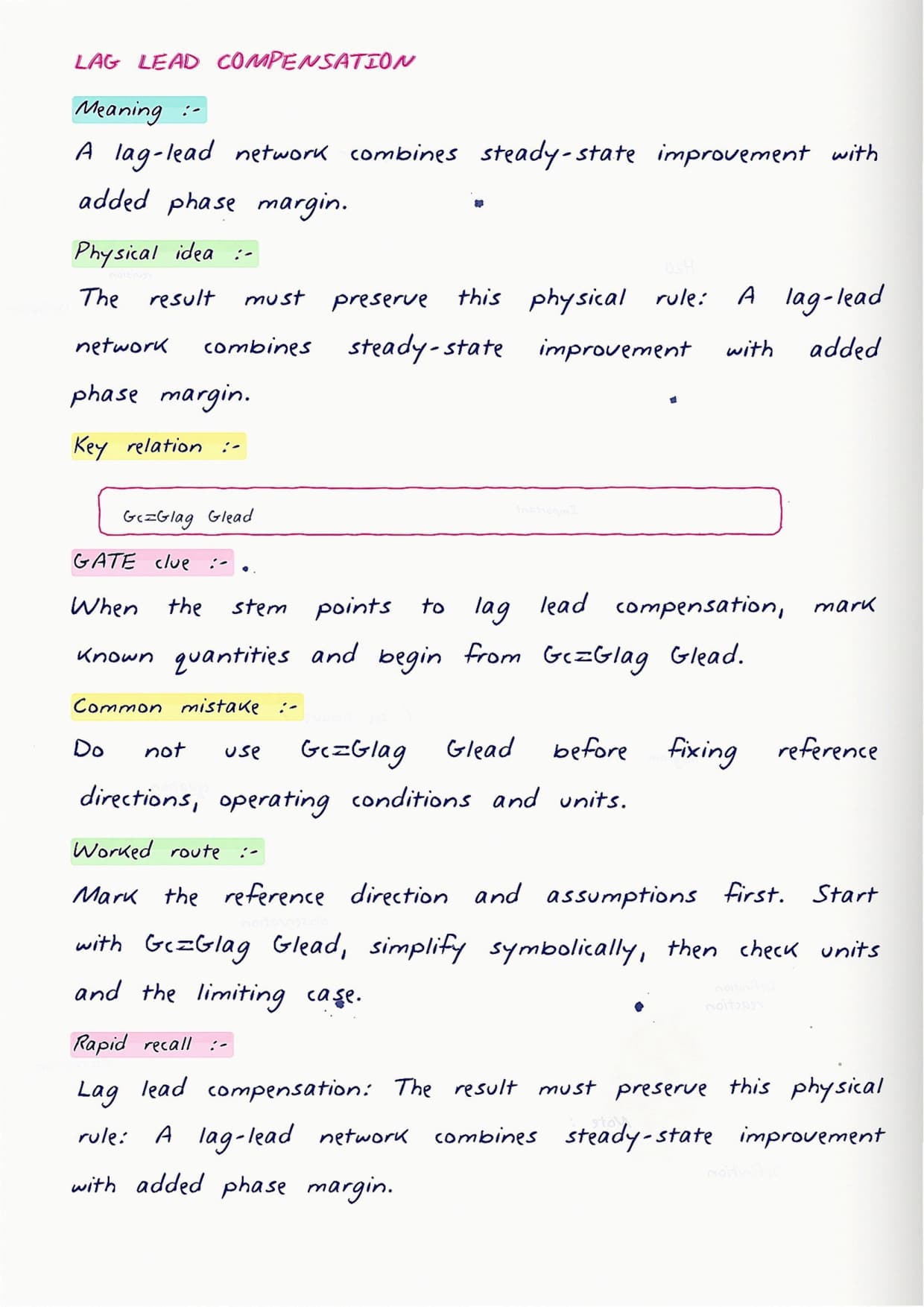
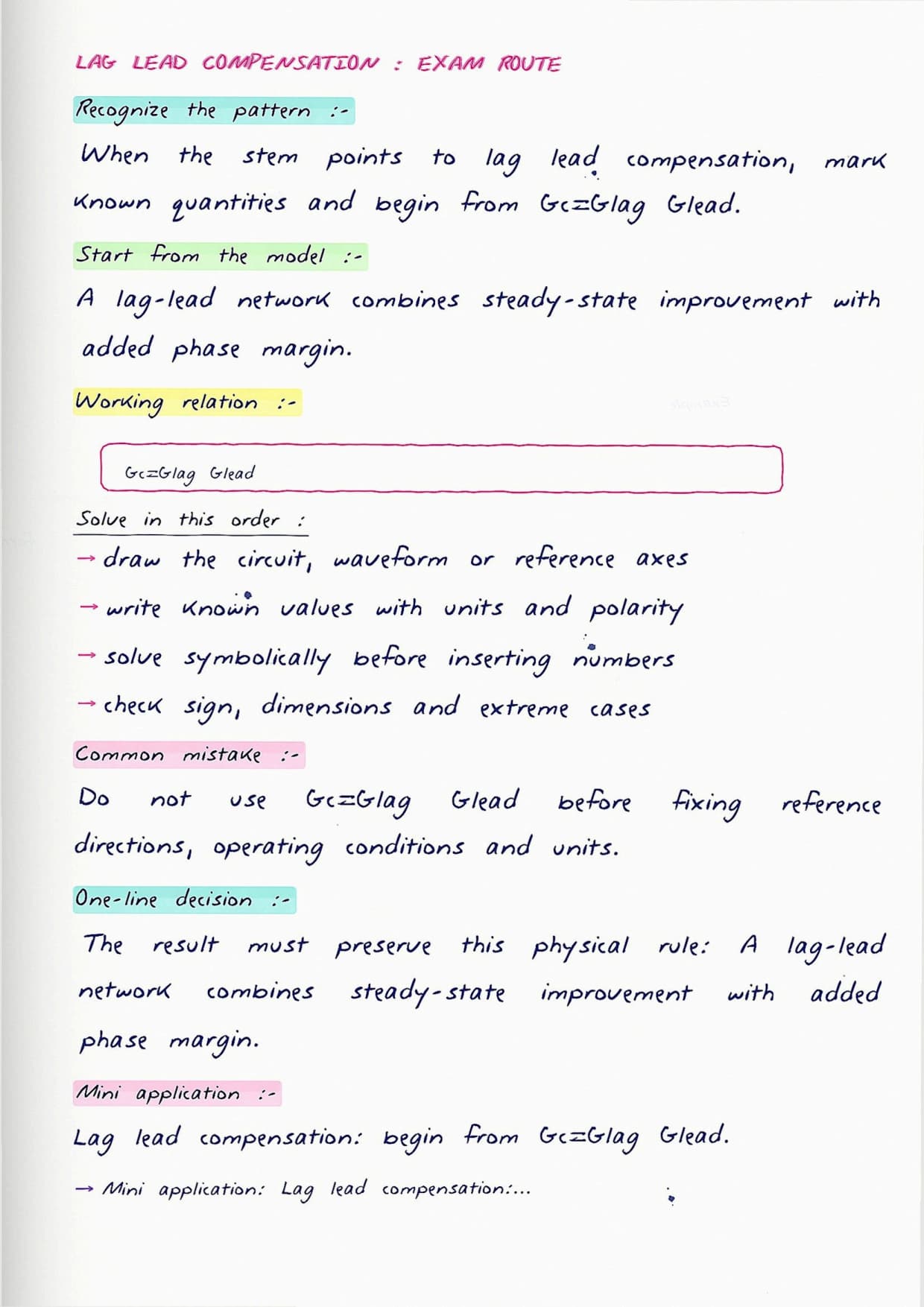
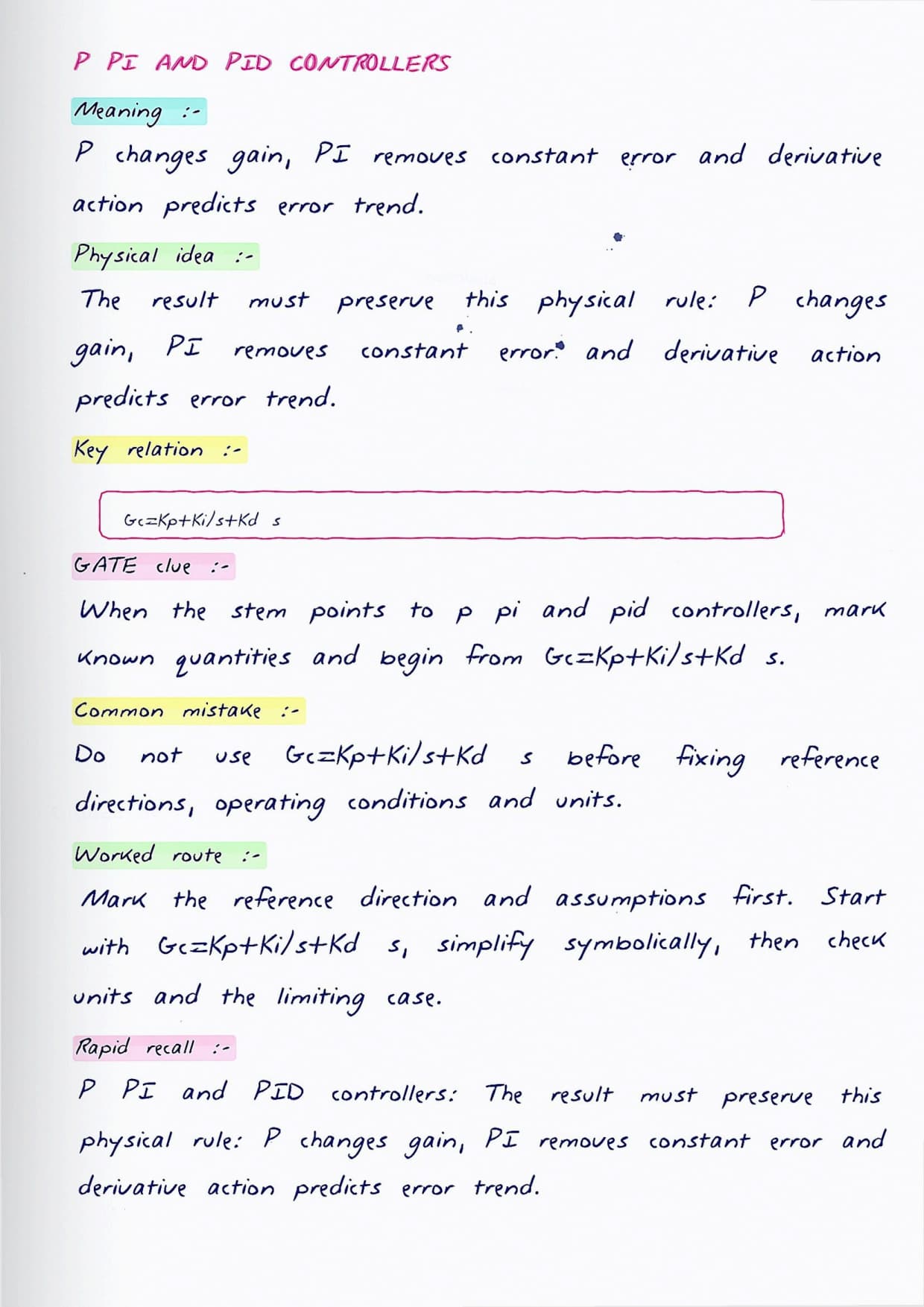
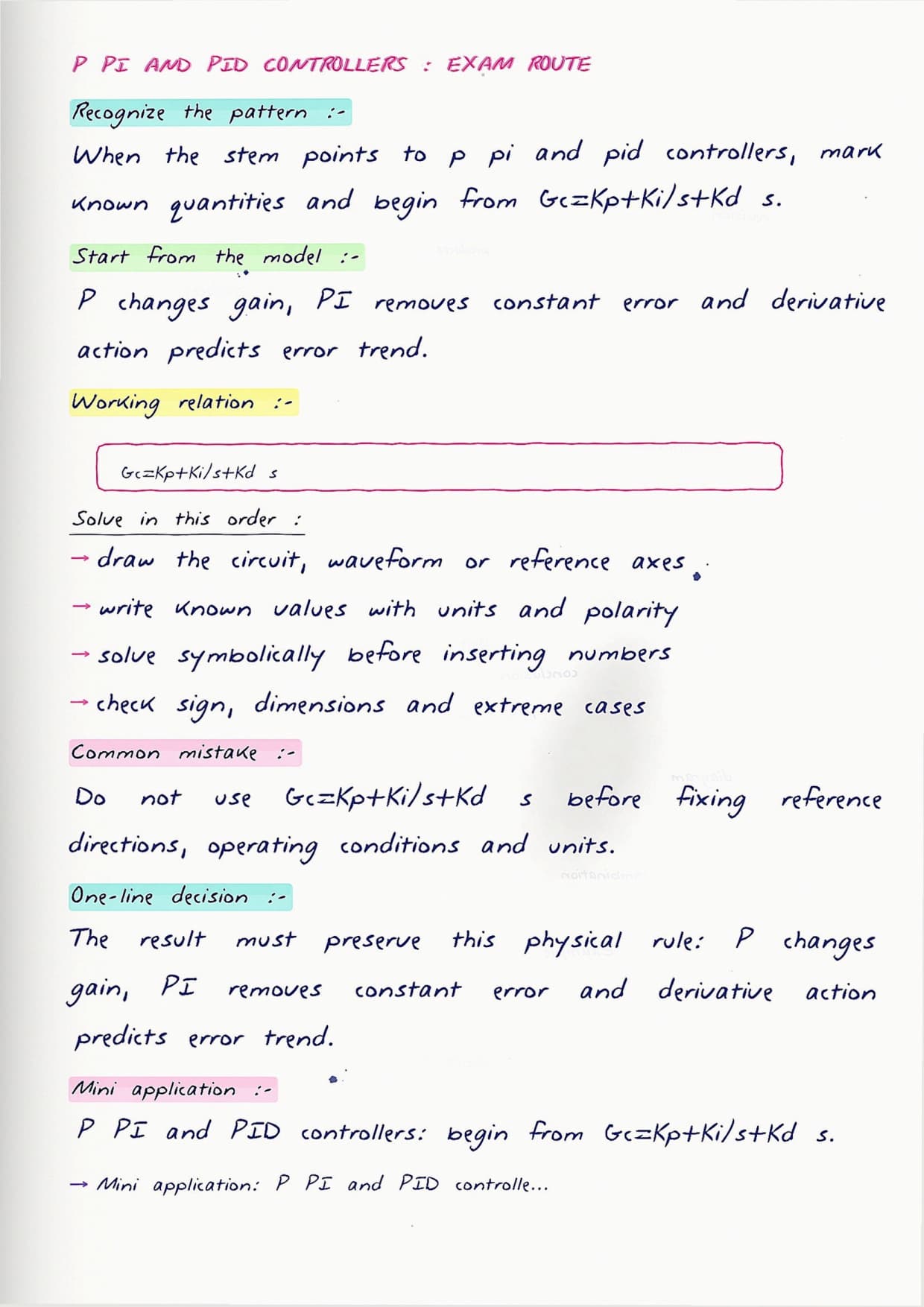
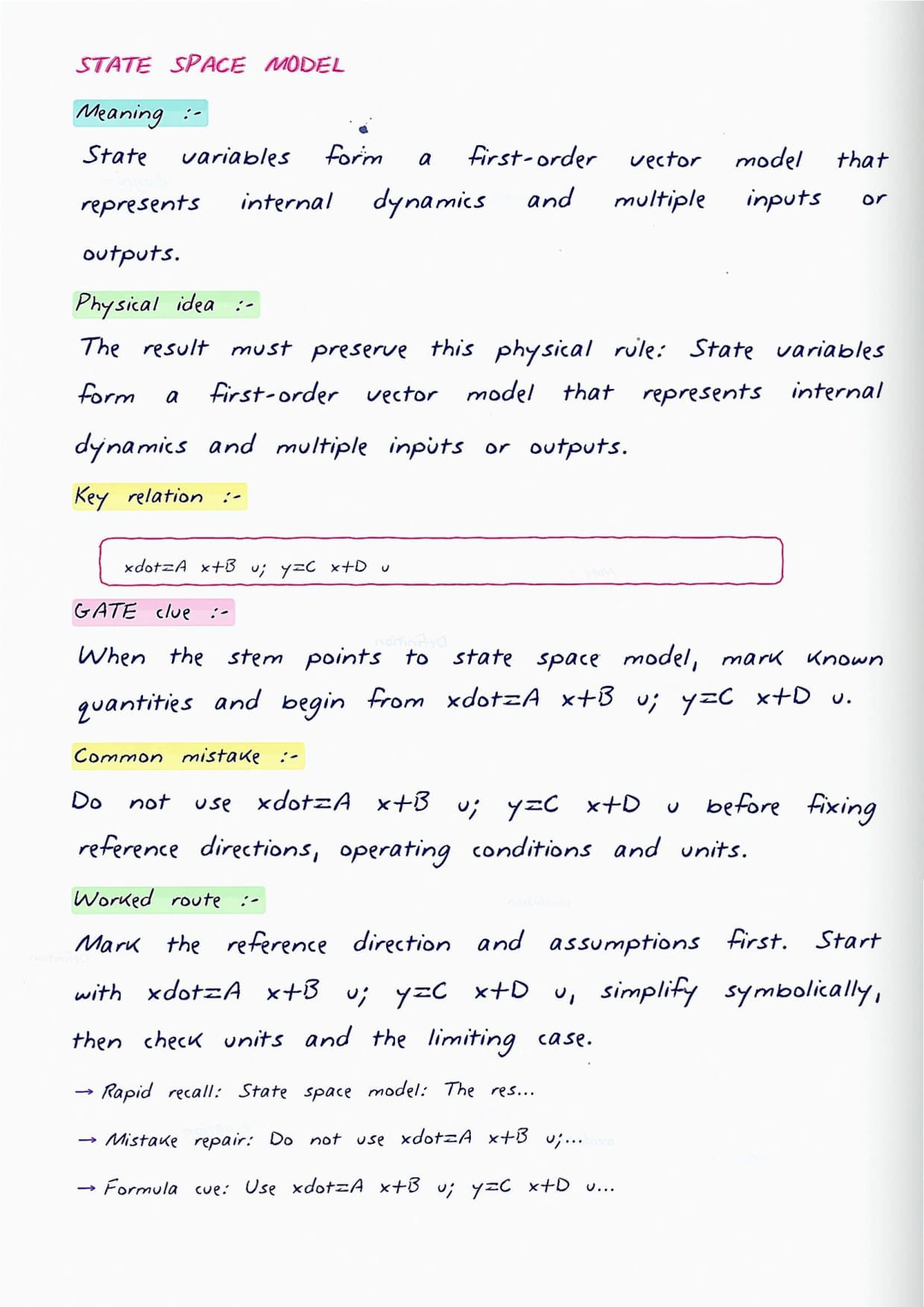
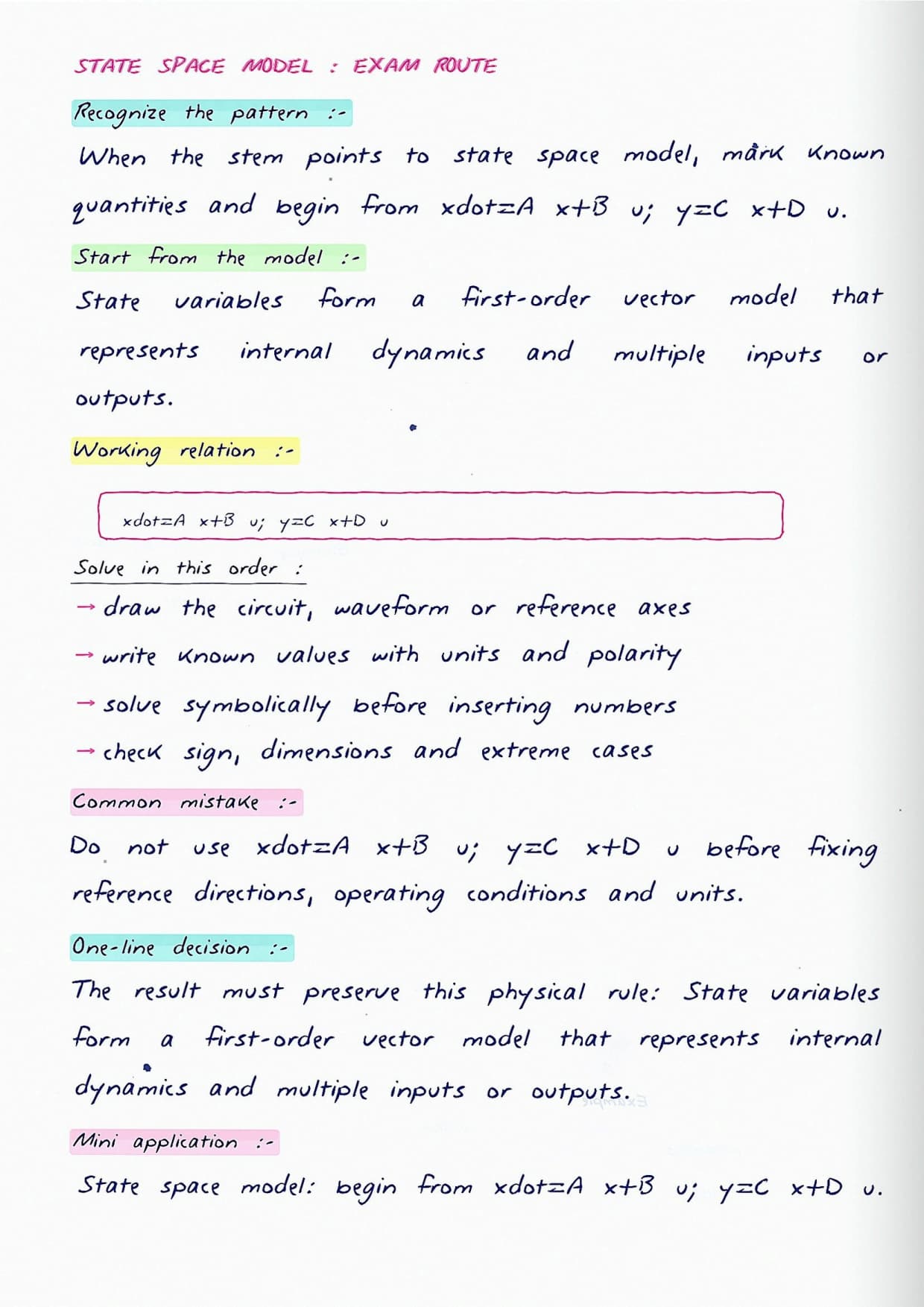
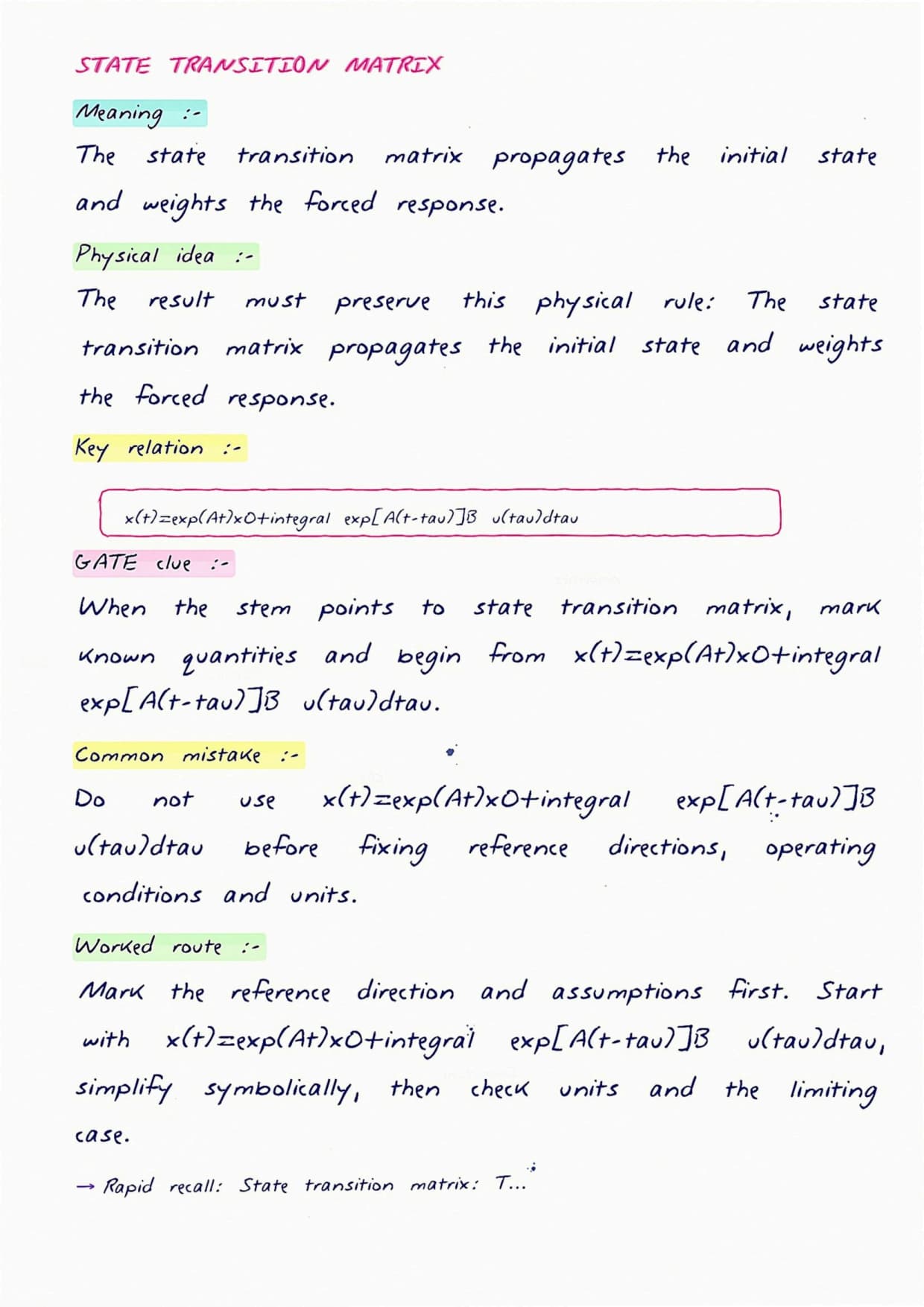
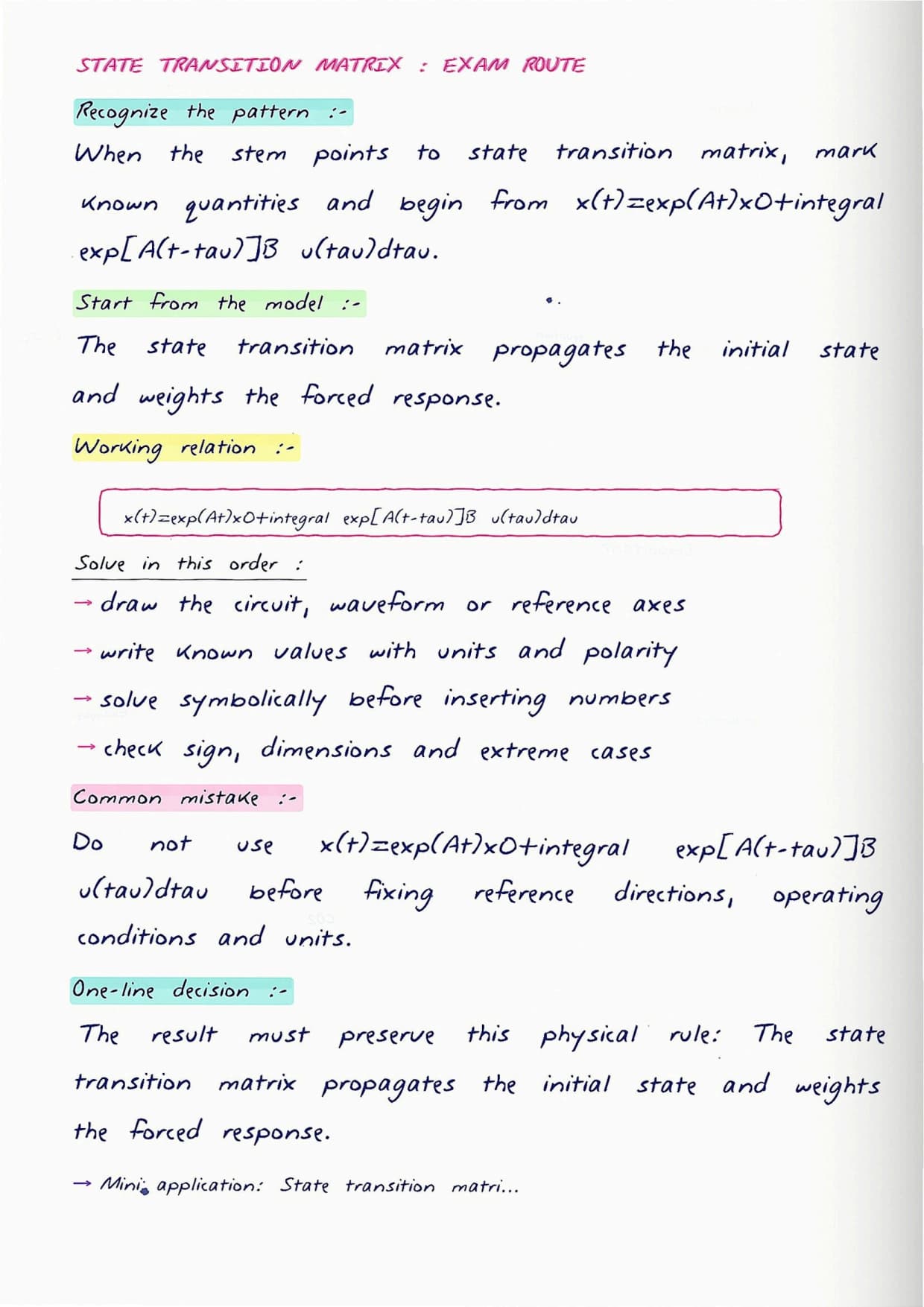
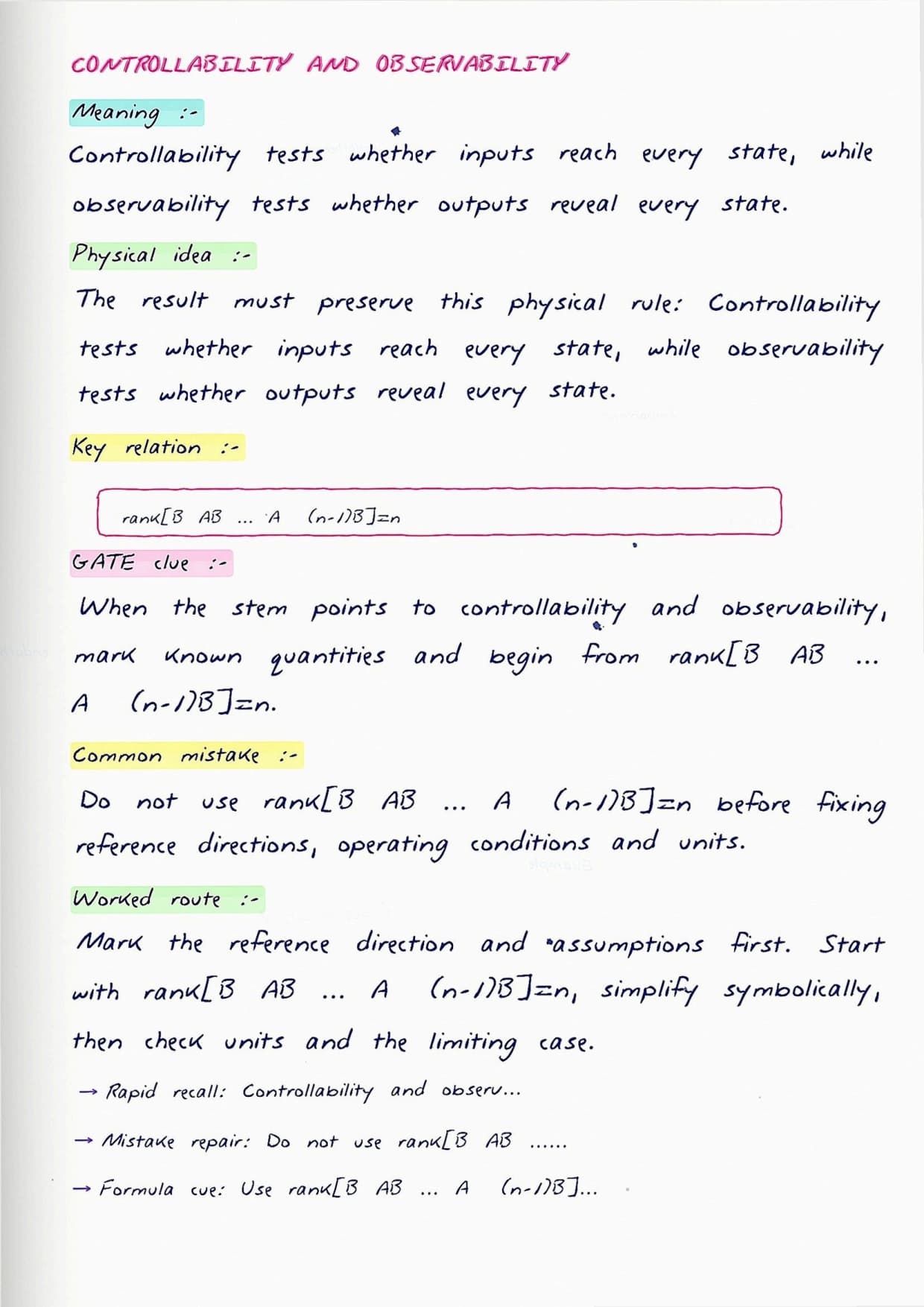
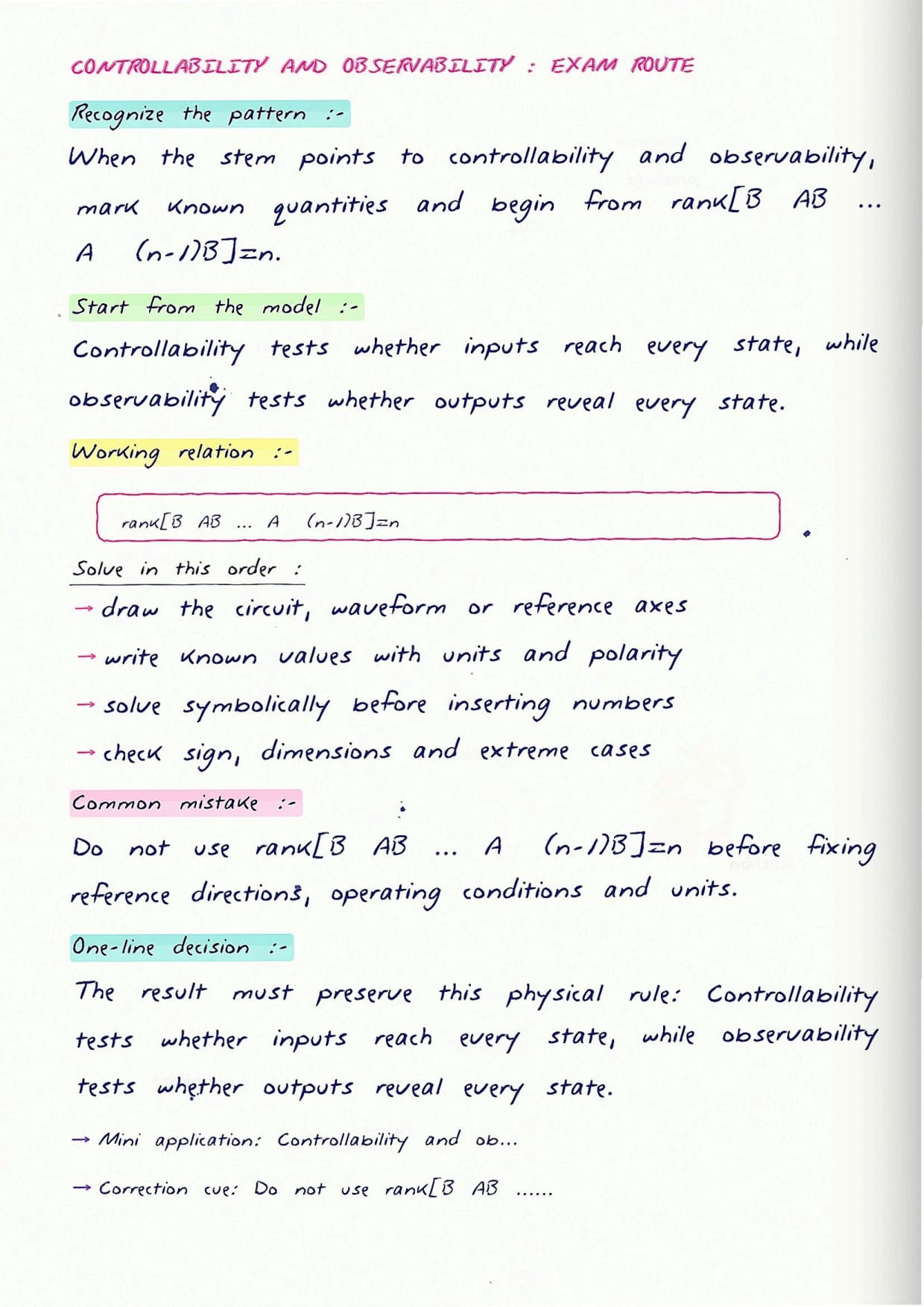
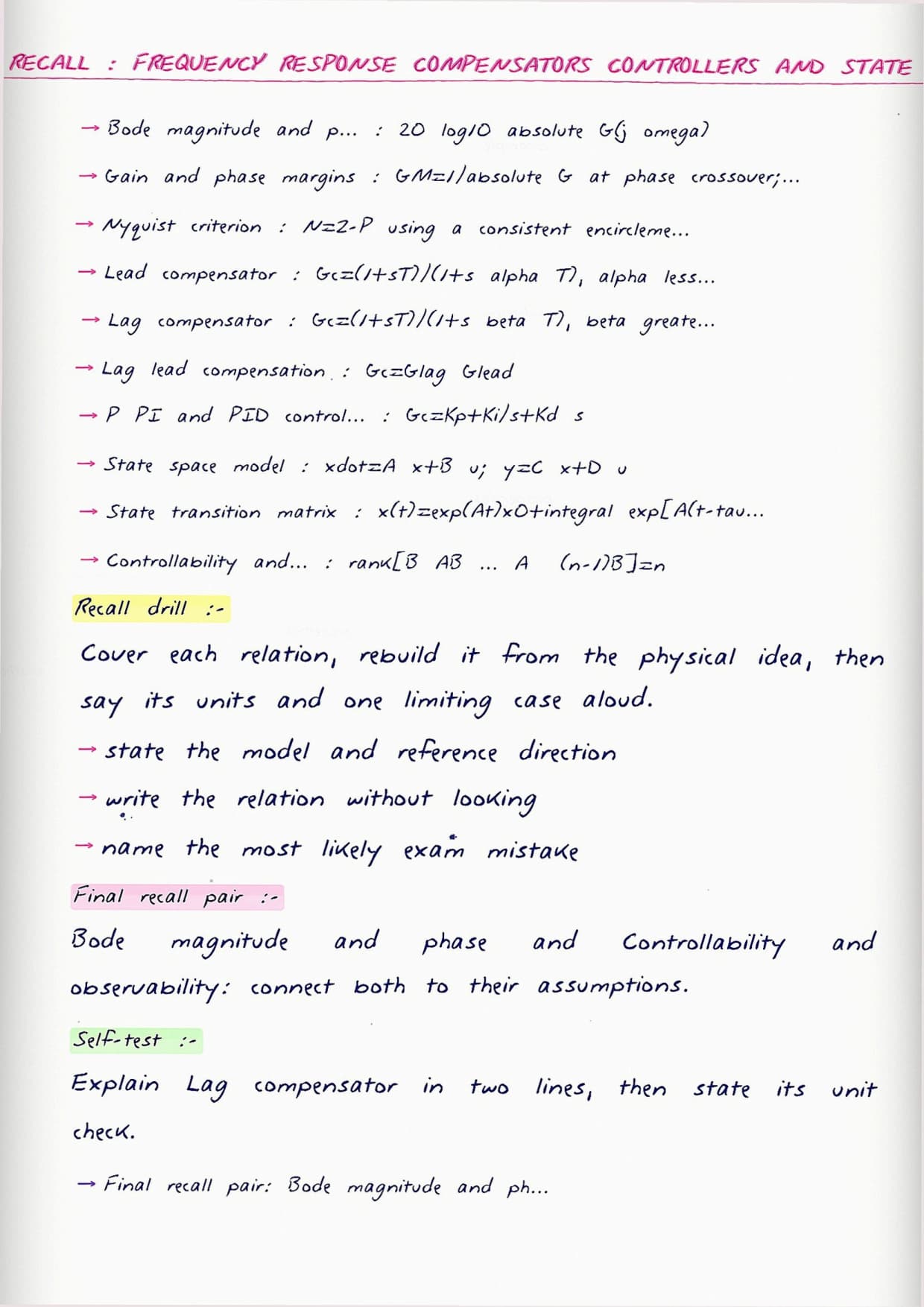
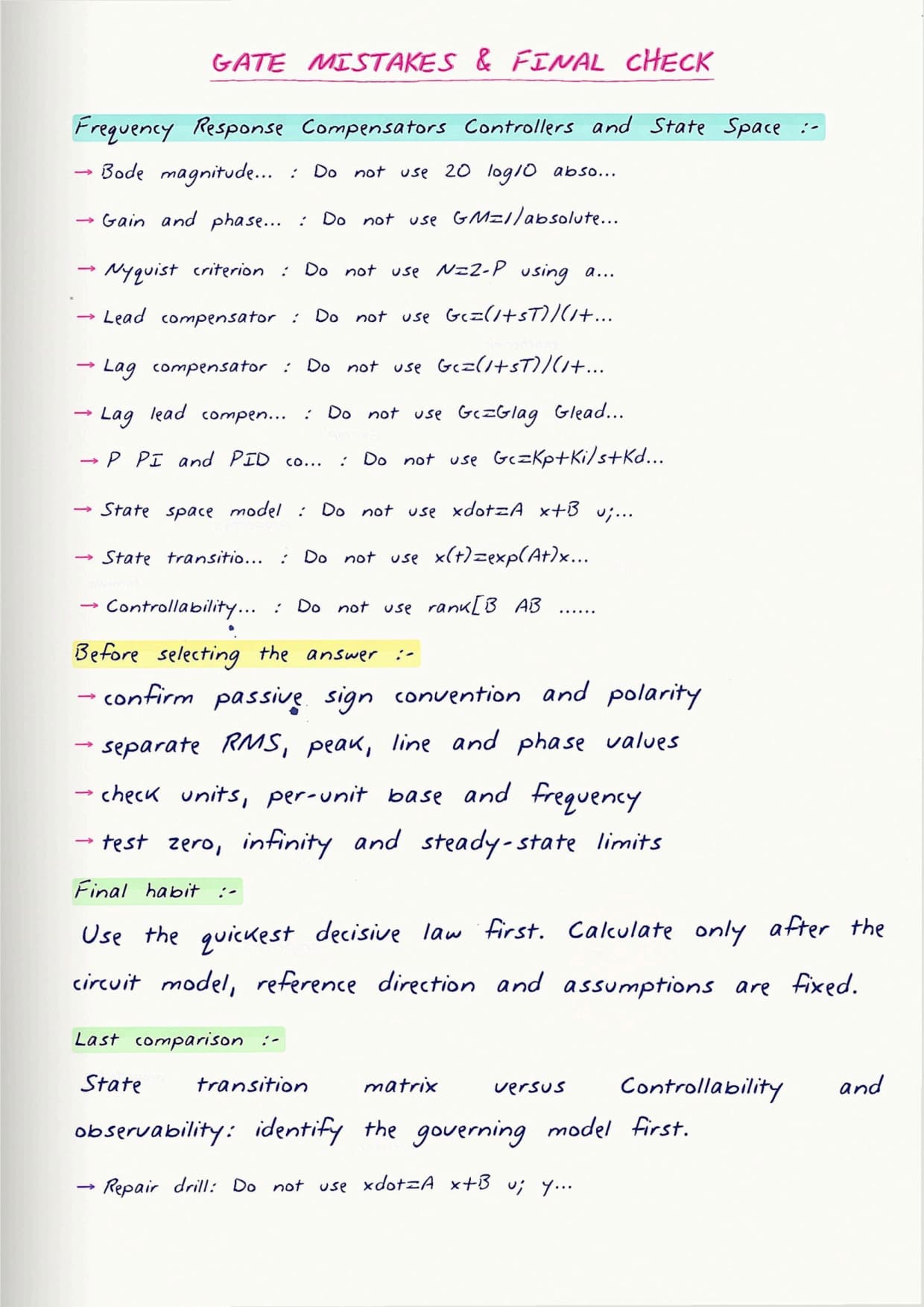
The pages are full of hand-drawn Bode plots, polar plots, and Nyquist contours, each marked with the gain and phase margins that GATE loves to ask about. Worked steps show how a lead or lag compensator is designed from a target margin, and a state space block sets out the matrices and the solution of the state equation with clean numerical examples. Every plot is drawn from a sample transfer function so students can trace how each pole and zero bends the curve.
- Neatly labelled Bode magnitude and phase plots with corner frequencies and slopes.
- A stability toolkit built around the Nyquist criterion and gain and phase margins.
- Design walk-throughs for lead, lag, and lead-lag compensators and PID controllers.
What These GATE Control Systems Notes Cover
This bundle focuses on the frequency-domain and state-space half of Control Systems, which together carry a large share of the section's marks. Each method is tied to the exact type of question it answers so nothing feels abstract.
- Frequency response through Bode, polar, and Nyquist plots.
- Relative stability using gain margin, phase margin, and the Nyquist criterion.
- Compensator and controller design, including lead, lag, and PID action.
- State variable models, controllability, observability, and the state transition matrix.
GATE Control Systems Quick Revision
Source: BYJU'S Exam Prep GATE & ESE: EE, EC, IN, CS on YouTube
Topics Covered in GATE Control Systems
The coverage tracks the frequency-response and state-space clauses of the GATE Electrical control syllabus, so students revise exactly what the paper asks.
- Bode plots, corner frequencies, and the asymptotic magnitude and phase behaviour.
- Polar plots and the Nyquist stability criterion with encirclement counting.
- Gain margin and phase margin, and their link to relative stability.
- Lead, lag, and lead-lag compensator design from a specified margin.
- Proportional, integral, and derivative controller action and tuning ideas.
- State variable representation and conversion between transfer function and state space.
- Controllability and observability tests through the Kalman rank condition.
- Solution of the state equation and the state transition matrix.
How the Notes Are Organised
The reading flow moves from frequency response to compensator design and then to state space, because a clear grip on margins makes compensator design far easier to follow. Students should study each plot together with the small table of slopes and phases printed beside it.
The state space section is kept self-contained, with the matrices defined once and reused through every example. A short recap closes each method so a revision pass leans on the plots and the boxed conditions rather than long prose. Wherever a shortcut exists, such as reading a phase margin straight off the polar plot, it is written beside the full method so students can choose speed or rigour as the question demands.
How GATE Control Systems Links to Other Topics
Control ideas thread through much of the GATE Electrical paper, so mastery here quietly lifts several other scores.
- Frequency response builds directly on transforms from Signals and Systems.
- Compensator design uses the pole-zero thinking of Network Theory.
- State space models appear in modern Electric Drives and motor control.
- Stability margins connect to feedback ideas in Analog Electronics.
Important Topics in GATE Control Systems
A handful of areas produce most of the questions and reward careful bookkeeping of signs and encirclements. The notes call out the errors that quietly drain marks.
- Counting Nyquist encirclements correctly relative to the open-loop poles.
- Reading gain and phase margins off the plot at the right crossover frequencies.
- Placing the compensator zero and pole so the added phase actually helps.
- Checking controllability and observability before attempting pole placement.
- Computing the state transition matrix without dropping a term in the exponential.
How to Prepare GATE Control Systems with Handwritten Notes
This topic rewards students who draw plots by hand until the shapes feel natural. Treat every method as a small procedure to be repeated, not a passage to be read once.
- First read: learn to sketch a Bode plot from a transfer function step by step.
- Second pass: redo the compensator design examples and check each margin.
- Practice window: solve past GATE questions on Nyquist and state space every day.
- Final week: revise the plot rules and the flagged traps in short sittings.
Why These Notes Help You Score Better
Because the plots, design steps, and state space matrices sit together on a page, the frequency-domain half of Control Systems finally reads as one connected story. The hand-drawn margins and encirclement counts make the tricky ideas concrete, and the worked examples build the speed that decides a good rank. With a few disciplined passes, students turn this dense section into a dependable source of marks.
GATE Electrical Control Systems Handwritten Notes FAQs
Ques. How many marks does Control Systems carry in GATE Electrical?
Ans. Control Systems usually carries about 8 to 11 marks in GATE Electrical, and the frequency response and state space portions covered here account for a large part of that.
Ques. Do these notes cover both compensators and state space?
Ans. Yes, the notes work through lead, lag, and lead-lag compensator design and PID action, and then move into state variable models, controllability, observability, and the state transition matrix.
Ques. Are the Bode and Nyquist plots drawn by hand in these notes?
Ans. The notes carry hand-drawn Bode, polar, and Nyquist plots with corner frequencies, slopes, and margins marked, which helps students learn to sketch them quickly in the exam.
Ques. How should students revise this topic close to the exam?
Ans. Students should redraw the standard plots from memory, redo the compensator design examples, and solve previous year questions on Nyquist and state space in short daily sittings.



Comments