




Fourier, Laplace and Z Transforms is a high-yield and highly predictable area of GATE Electrical, usually worth about 5 to 8 marks in the paper. It belongs to the Signals and Systems section, and its ideas return in Control Systems, Electrical Circuits, and Digital Signal Processing. These handwritten notes cover the full topic in a compact, exam-focused form.
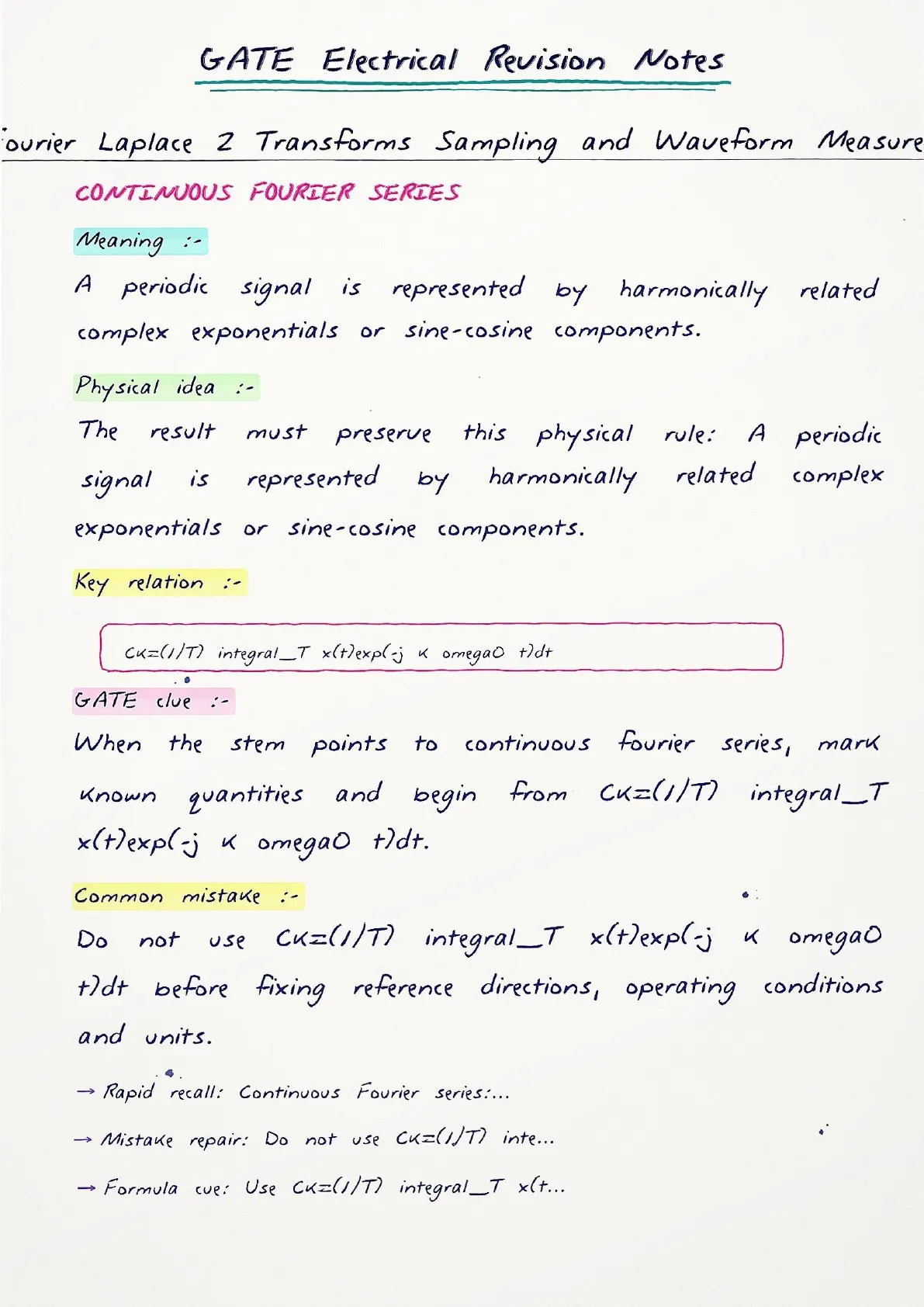
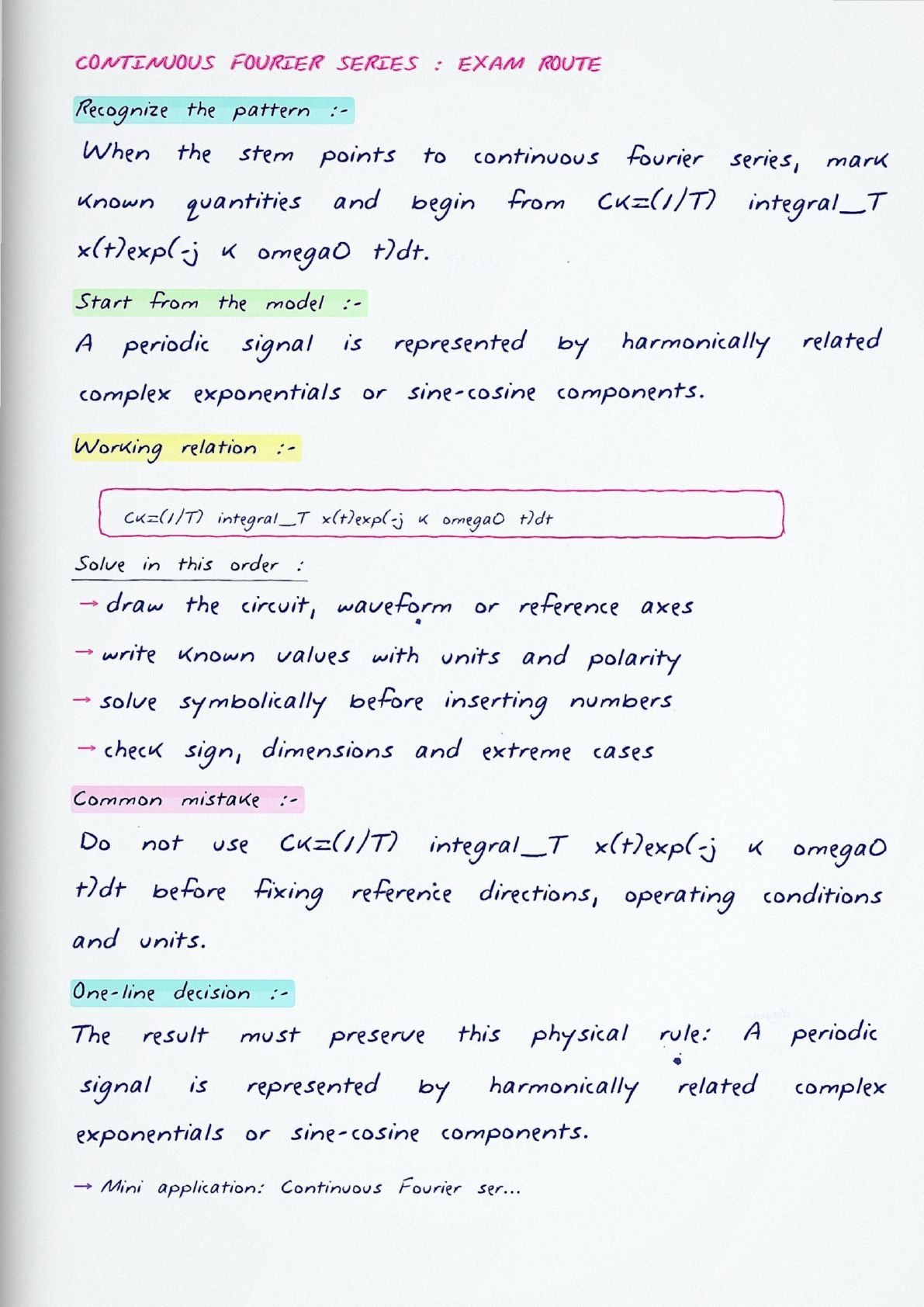
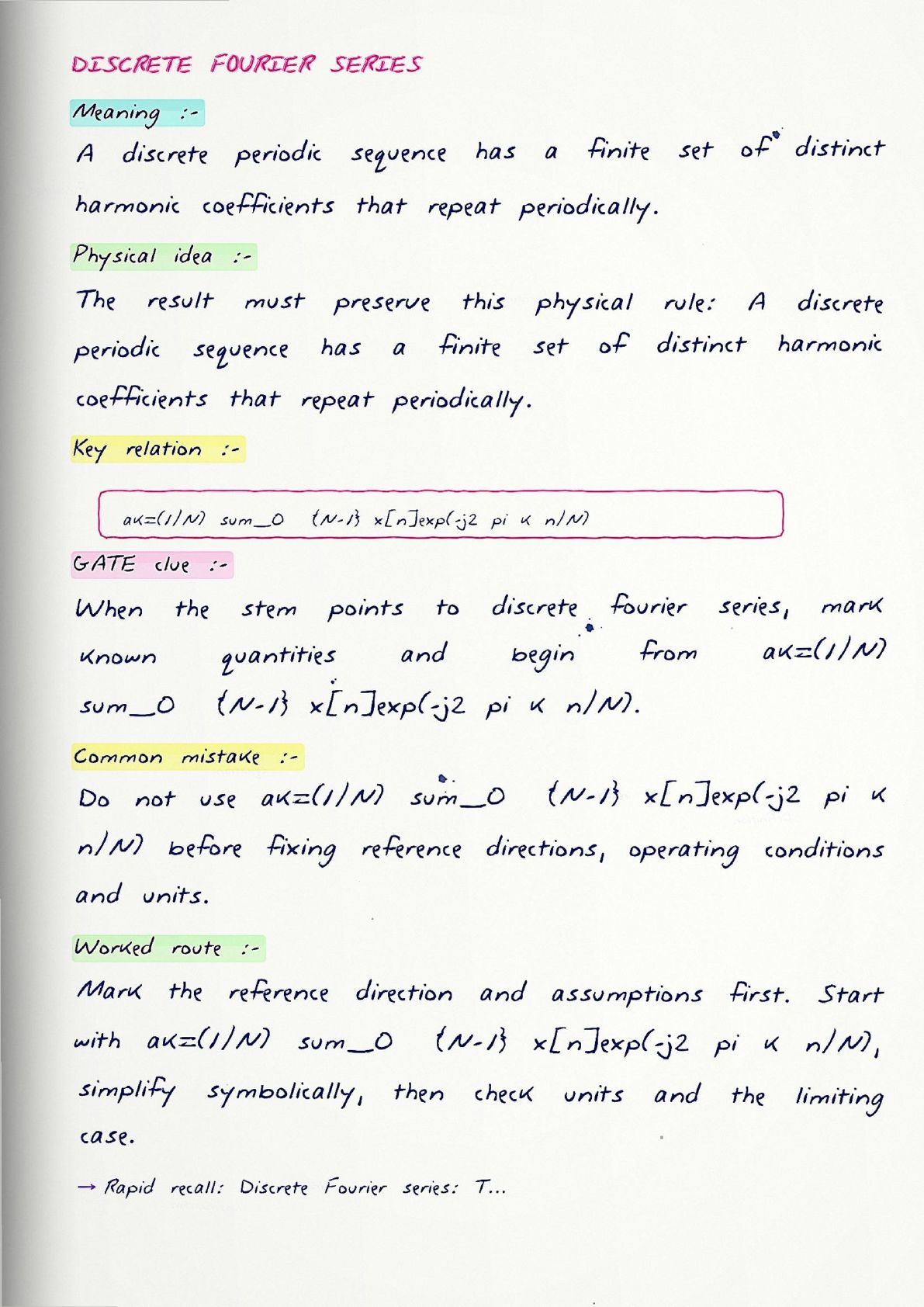
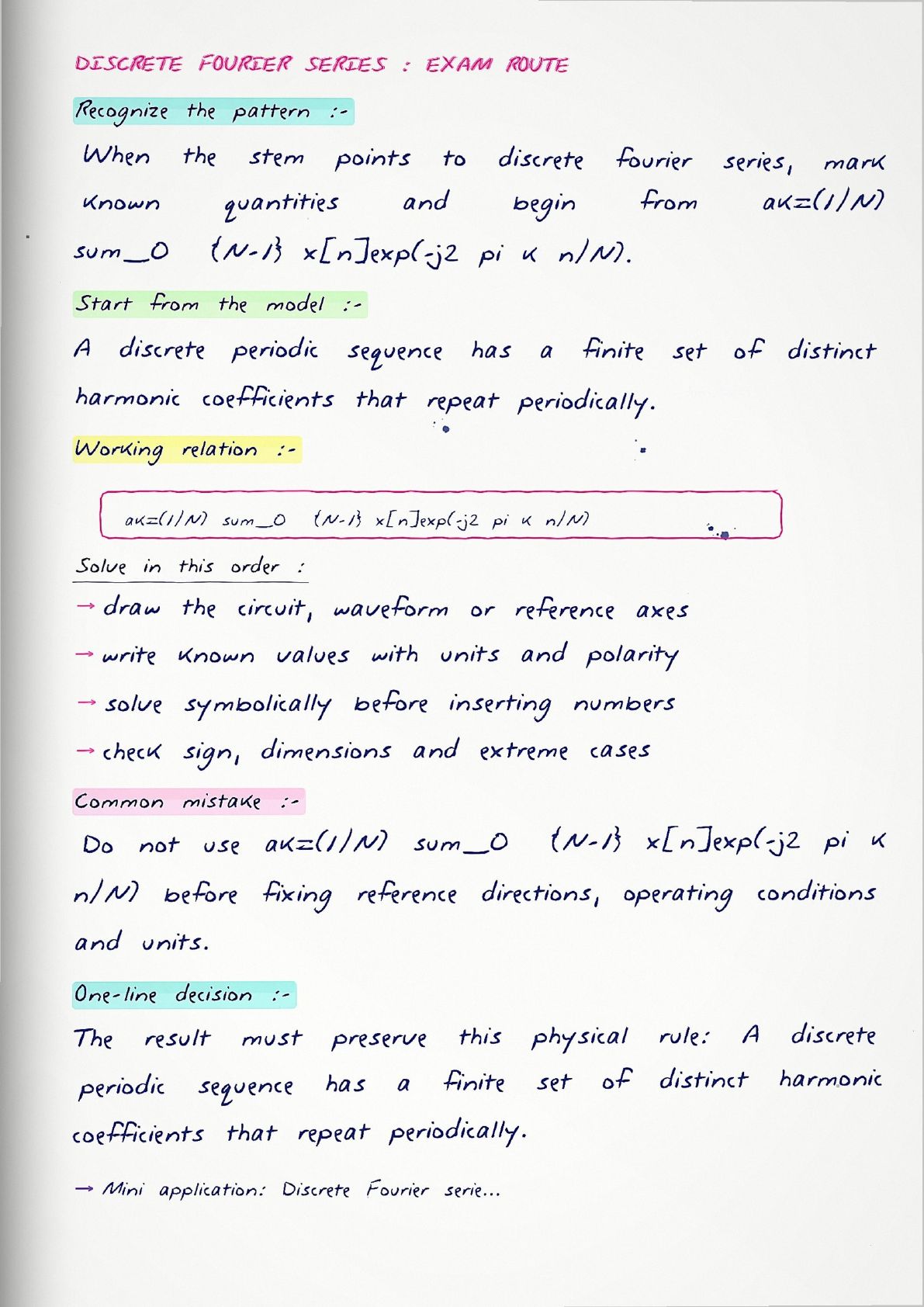
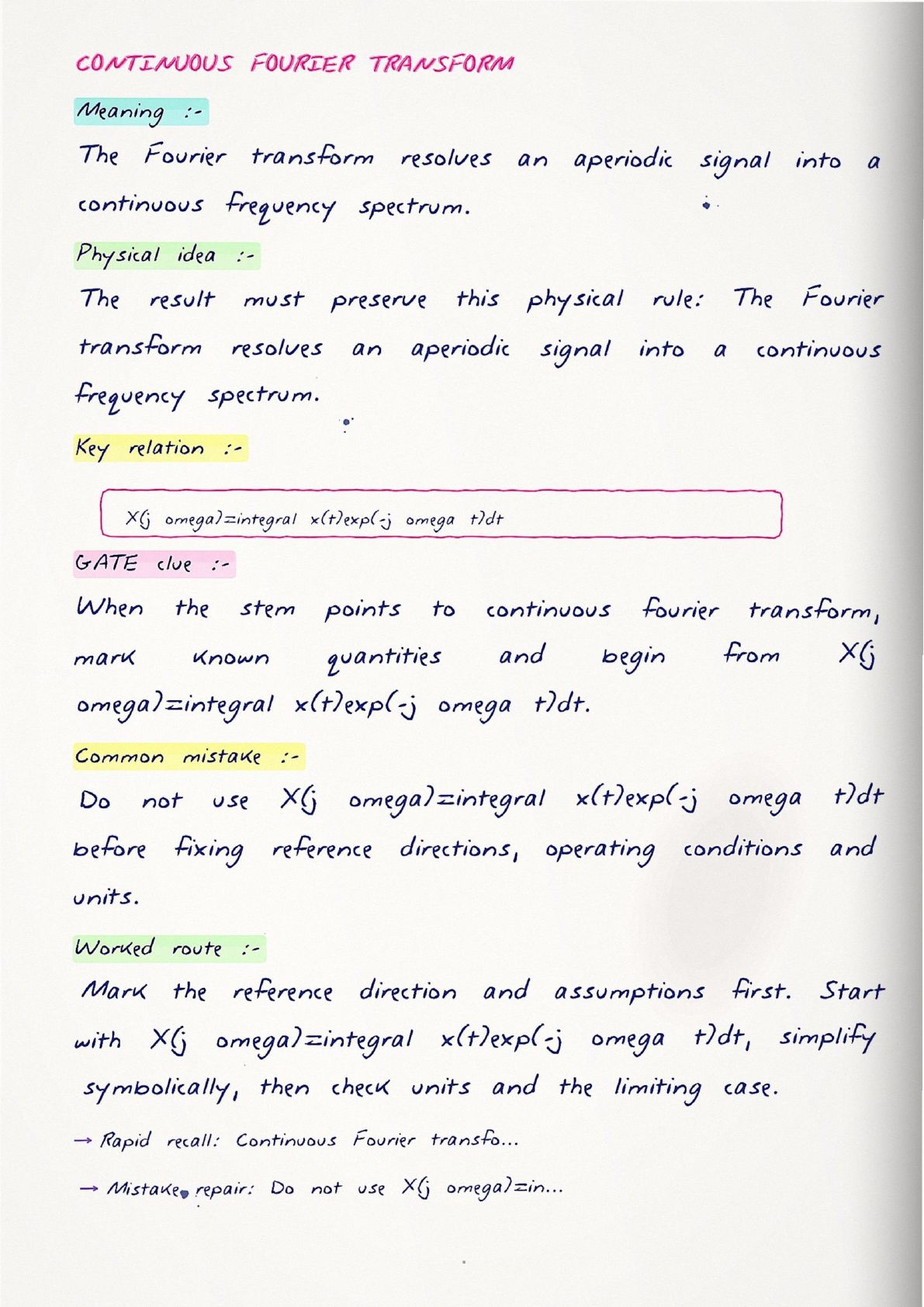
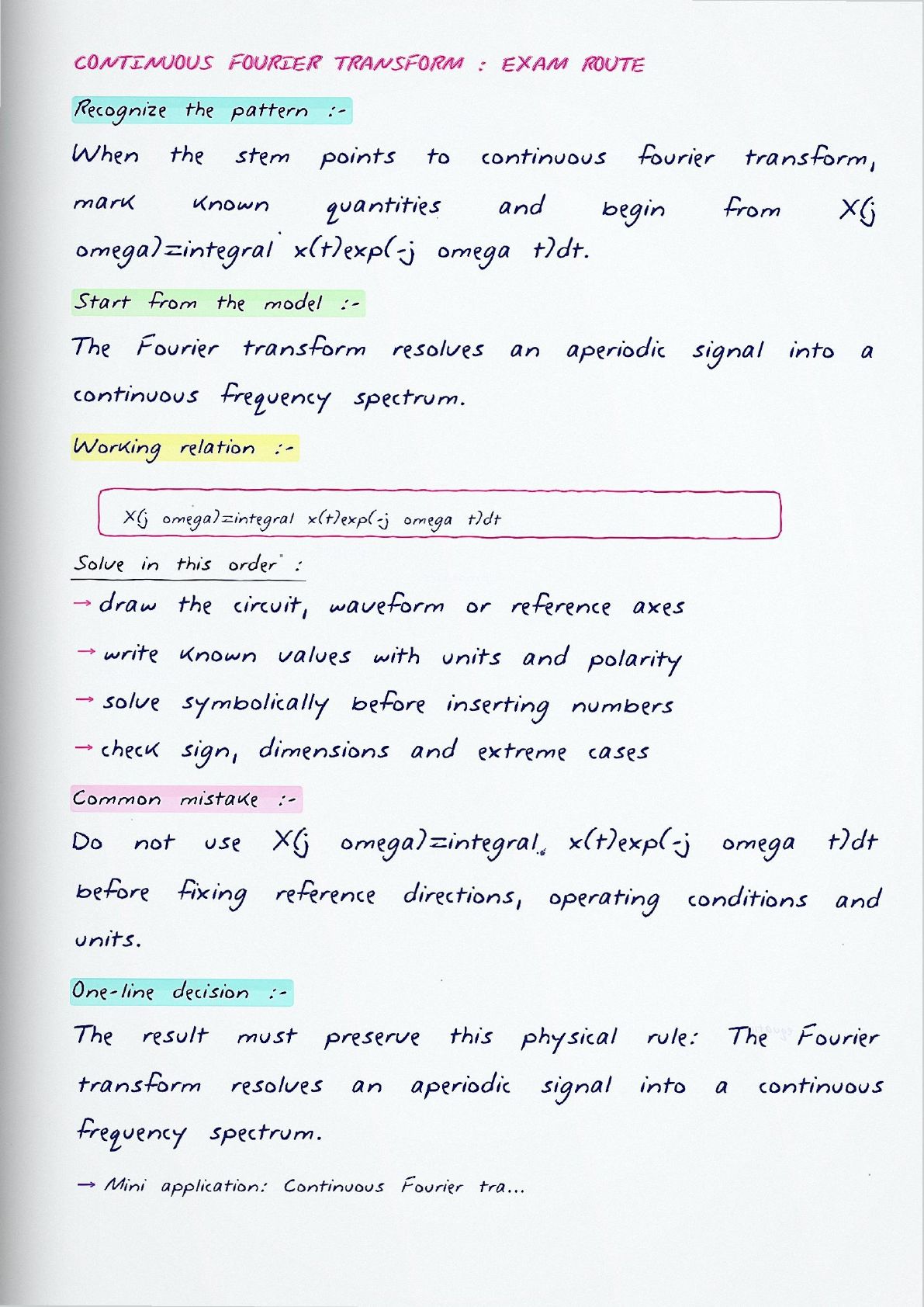
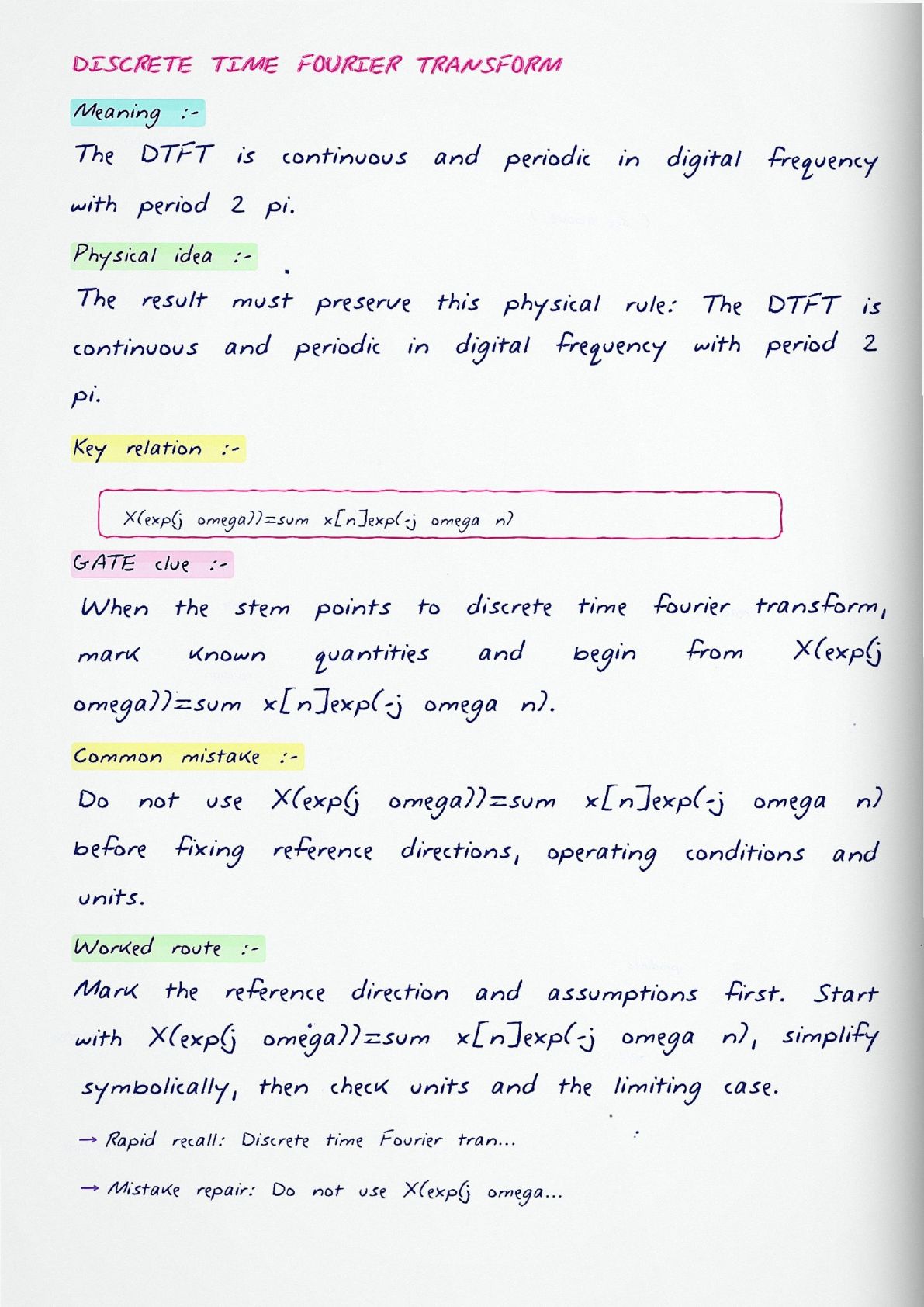
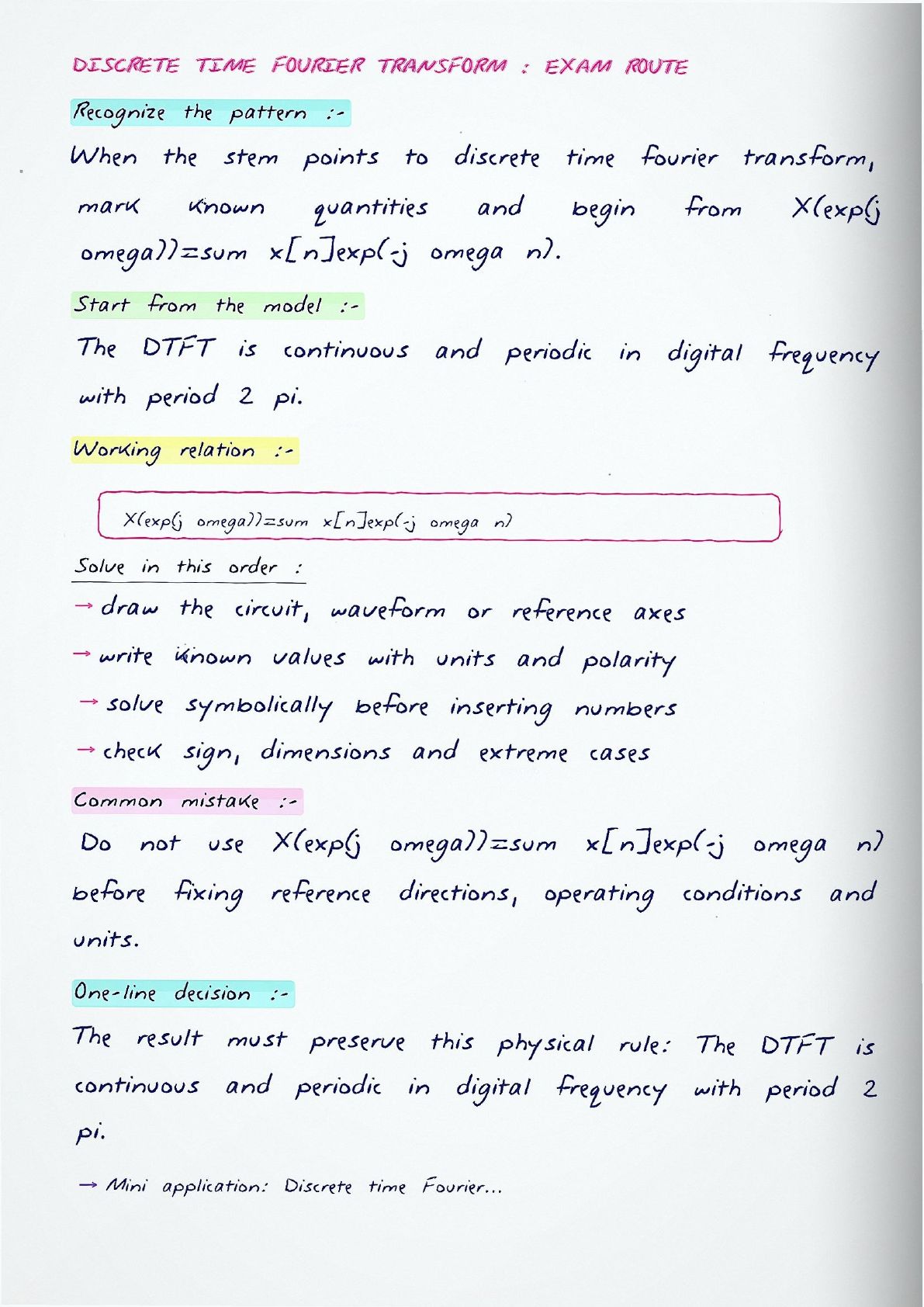
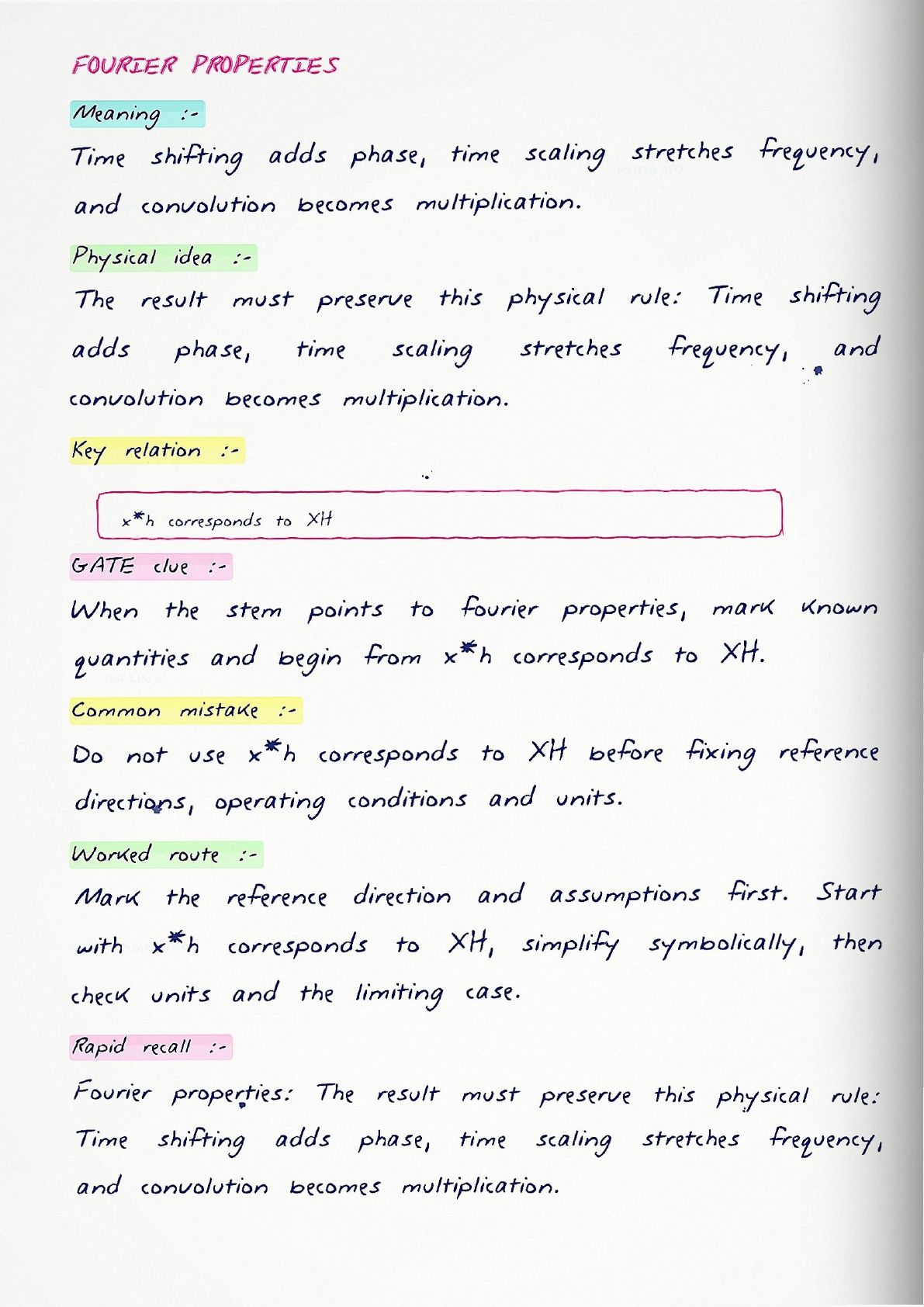
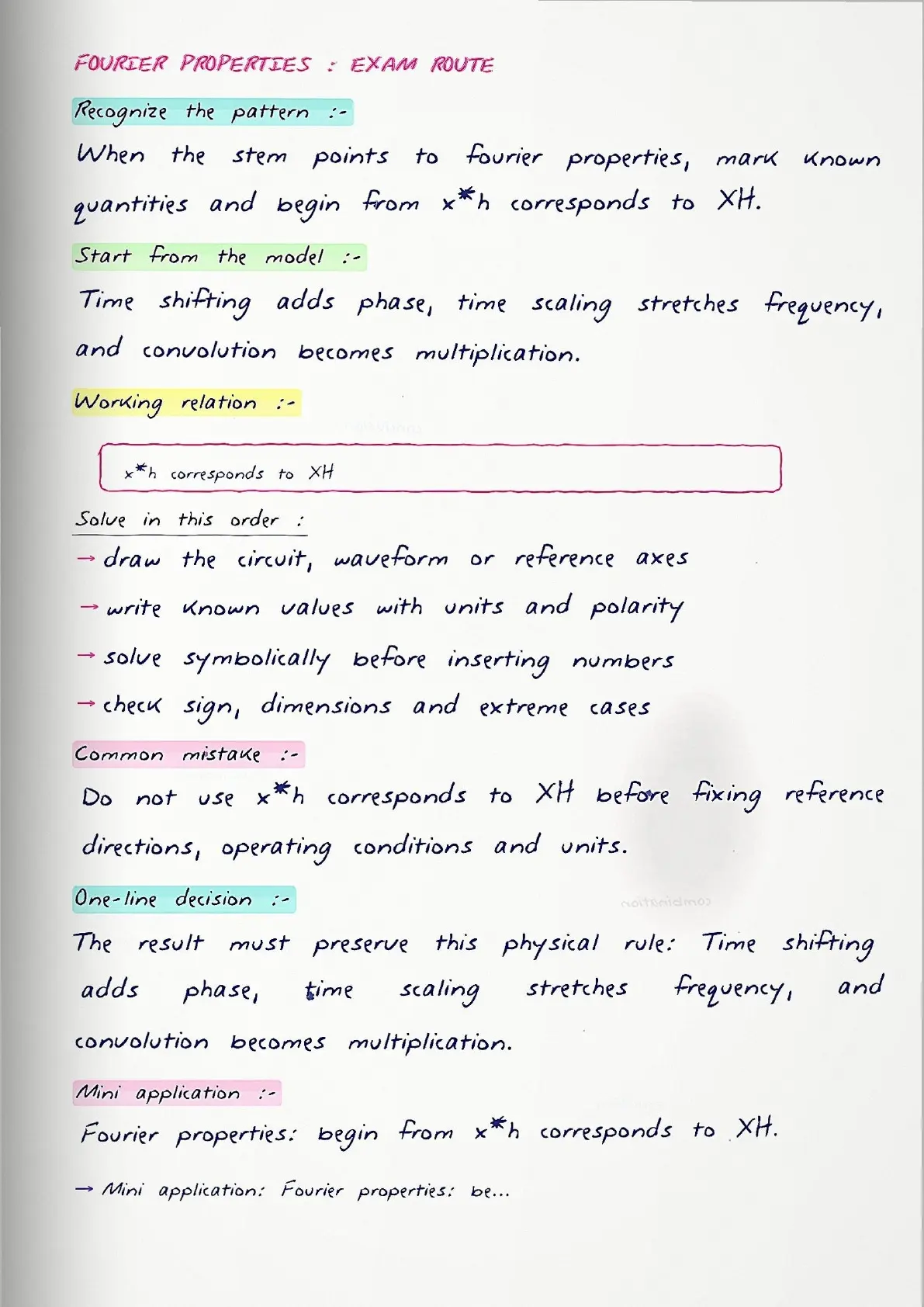
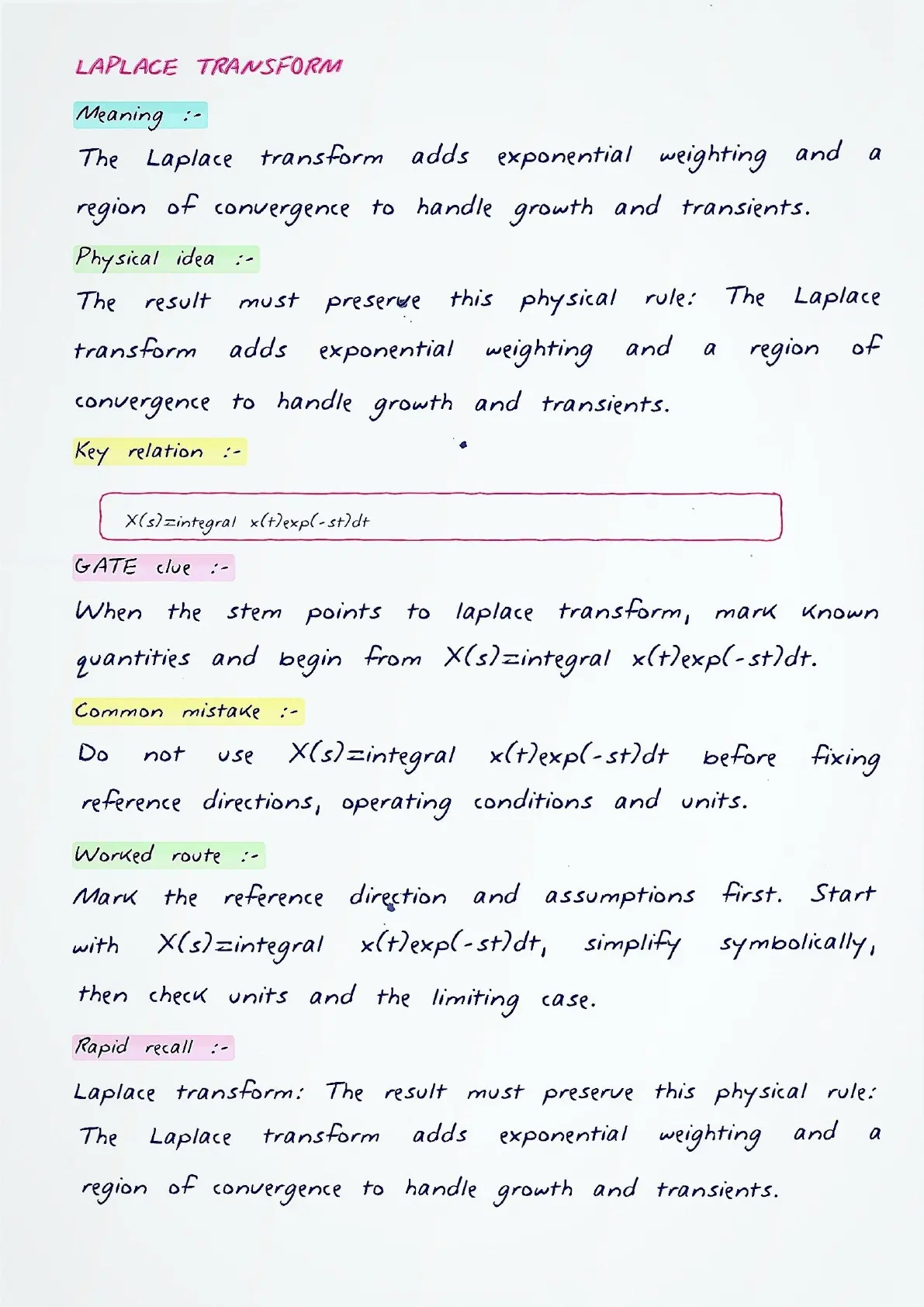
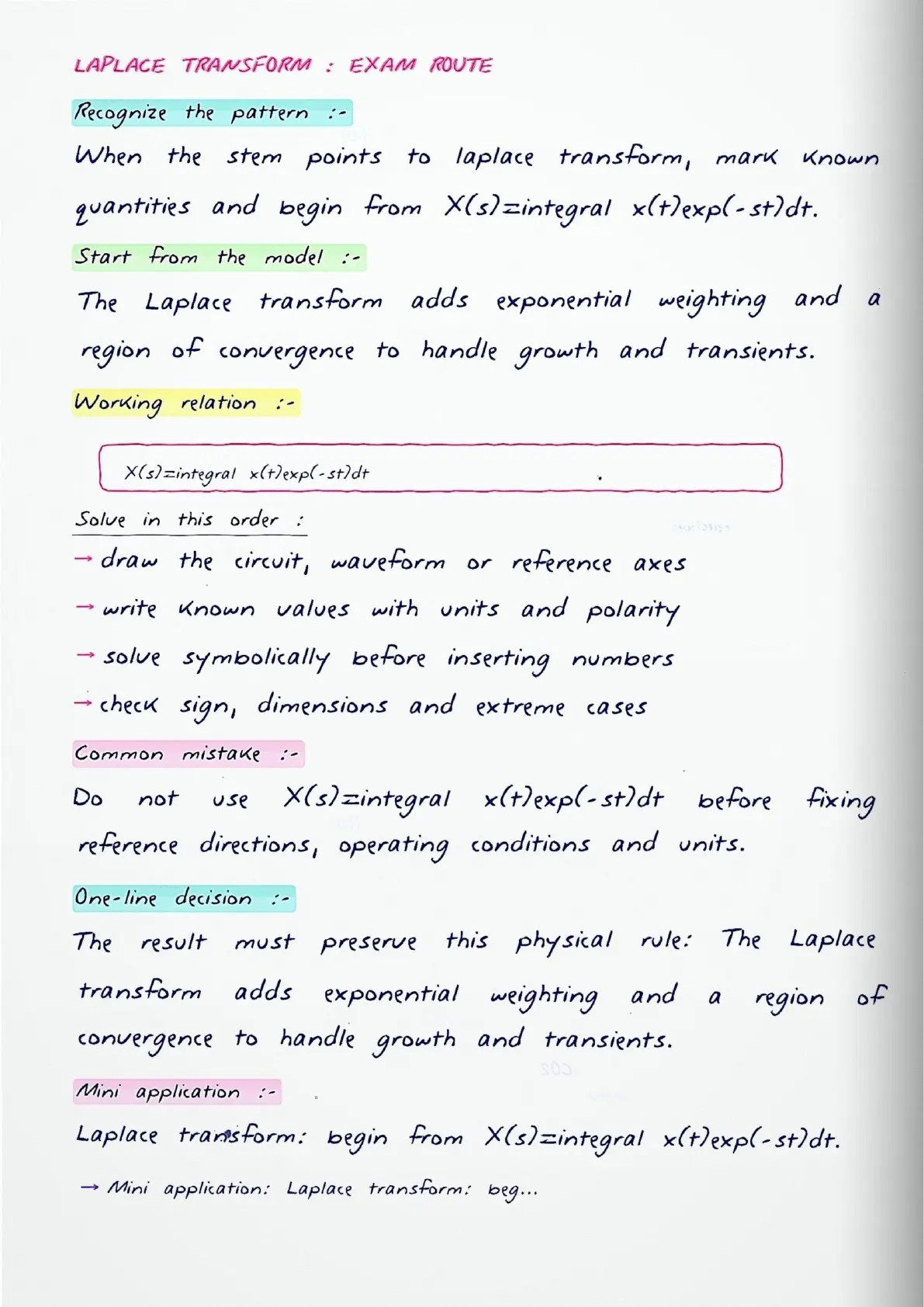
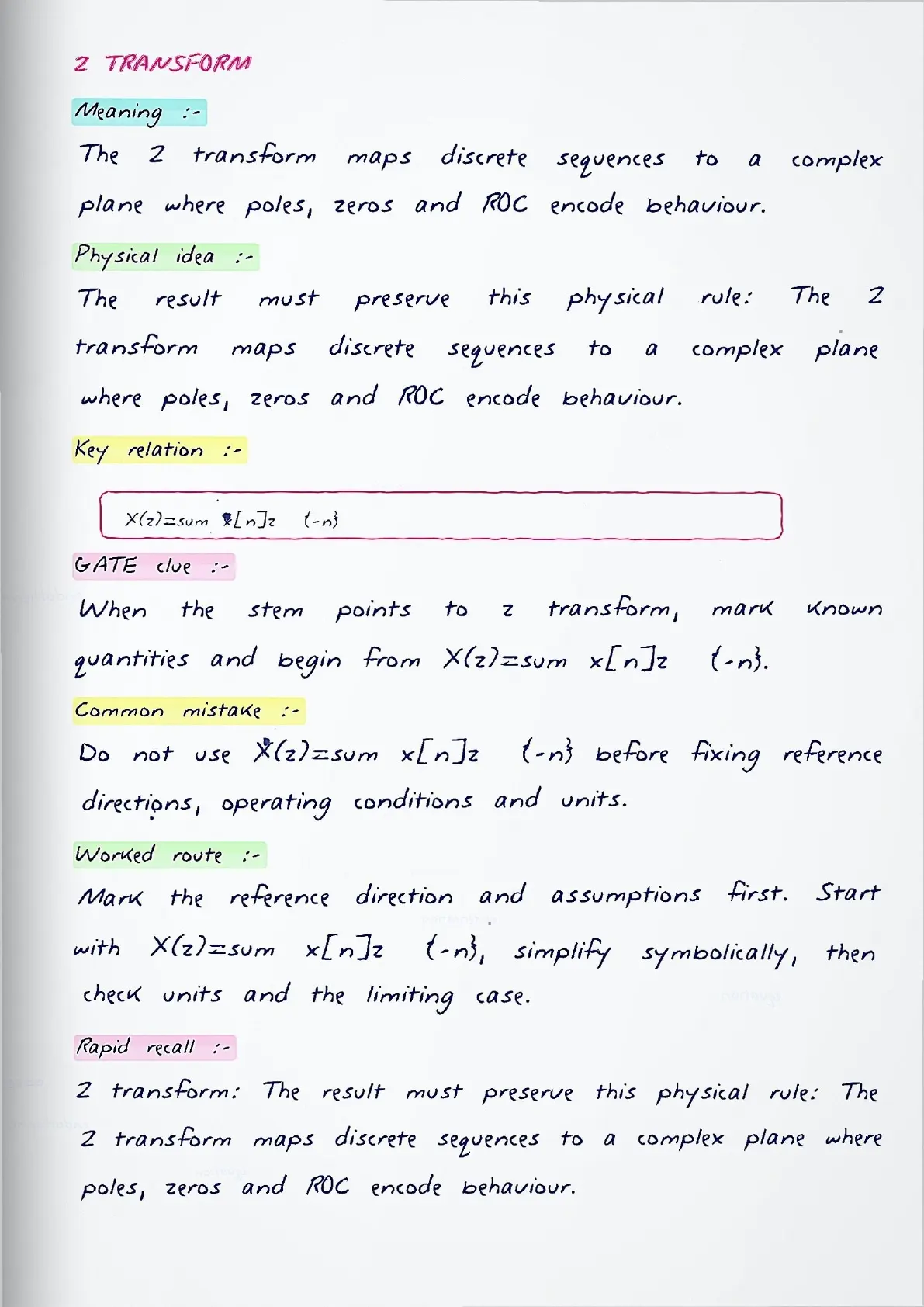
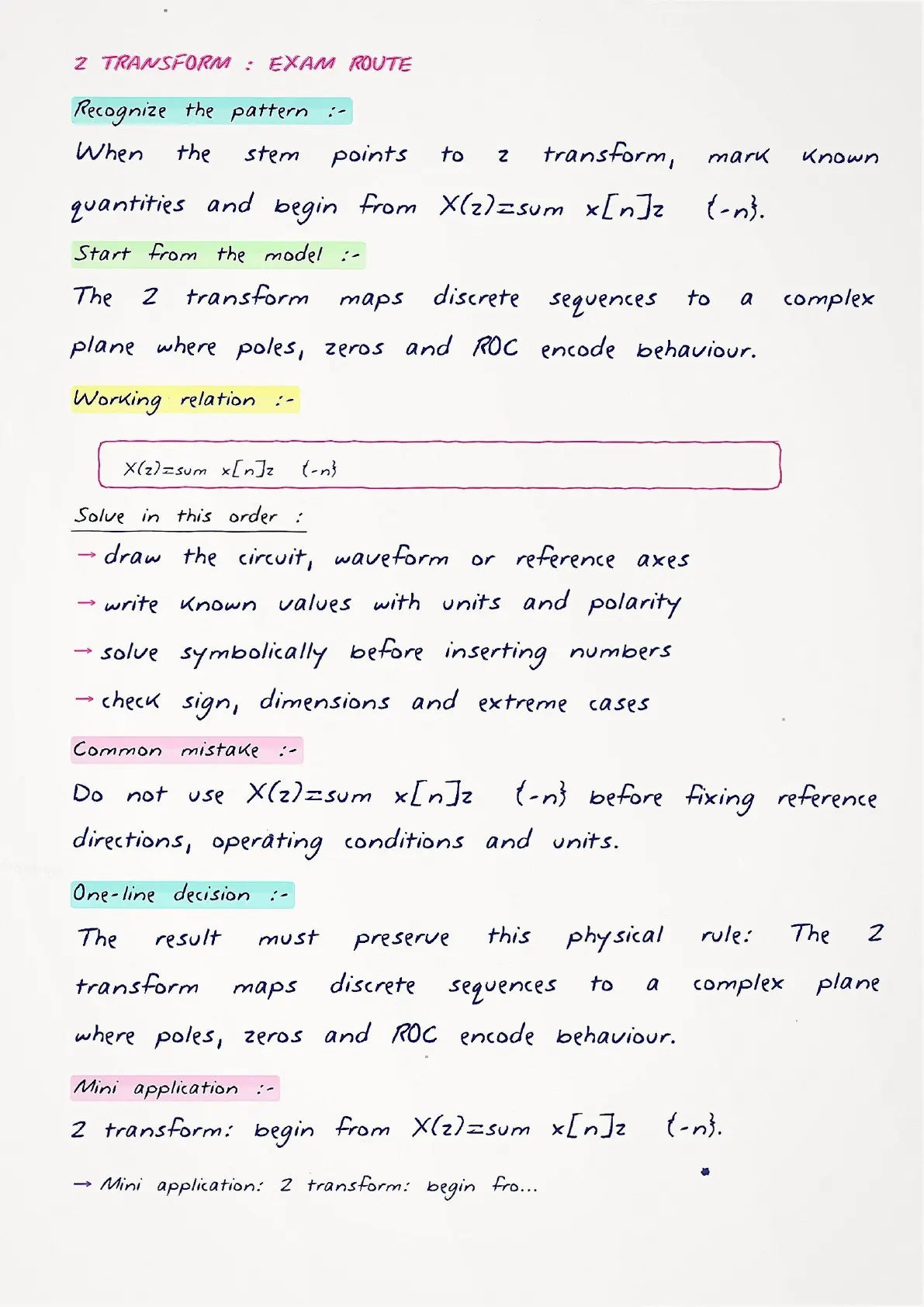
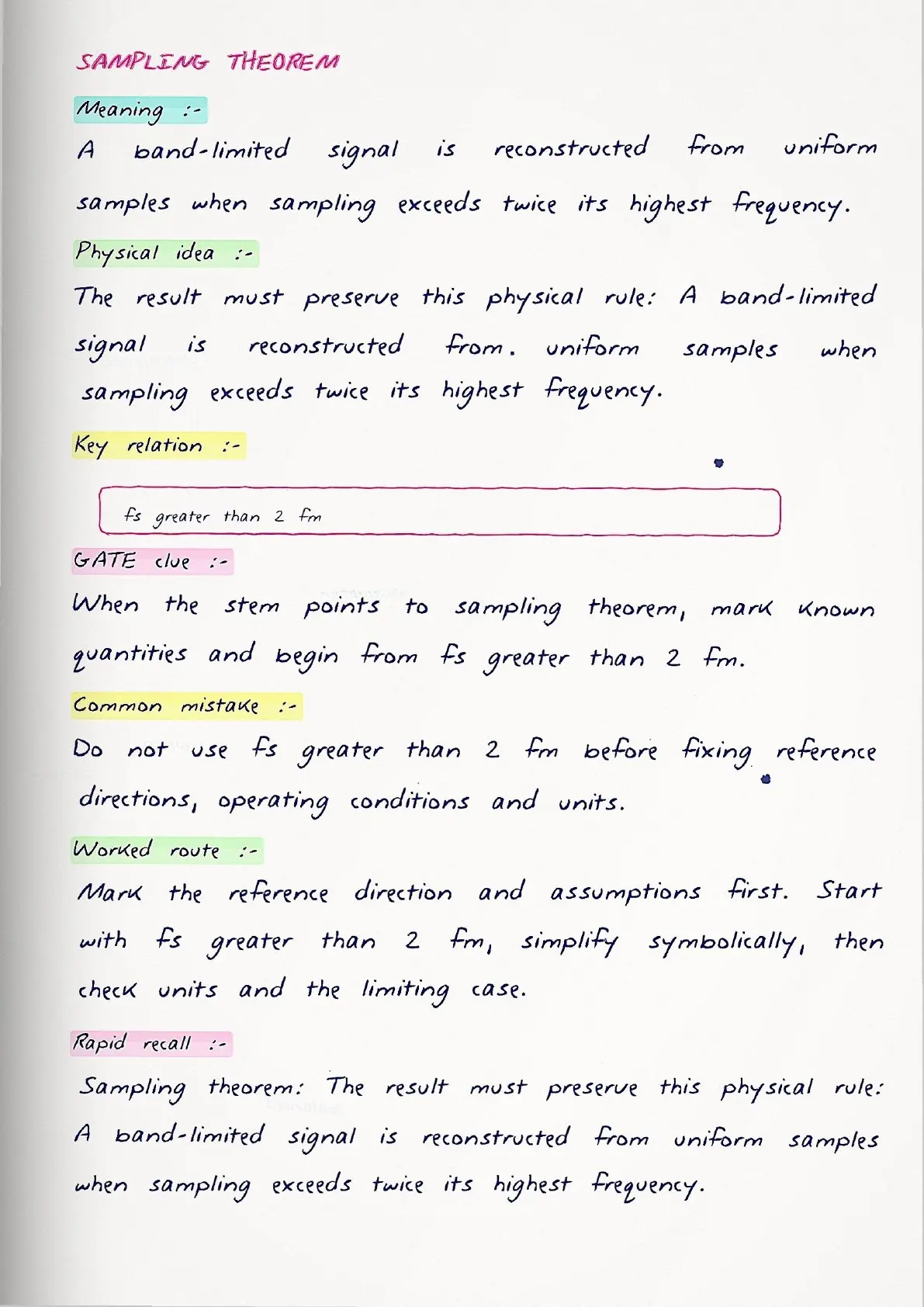
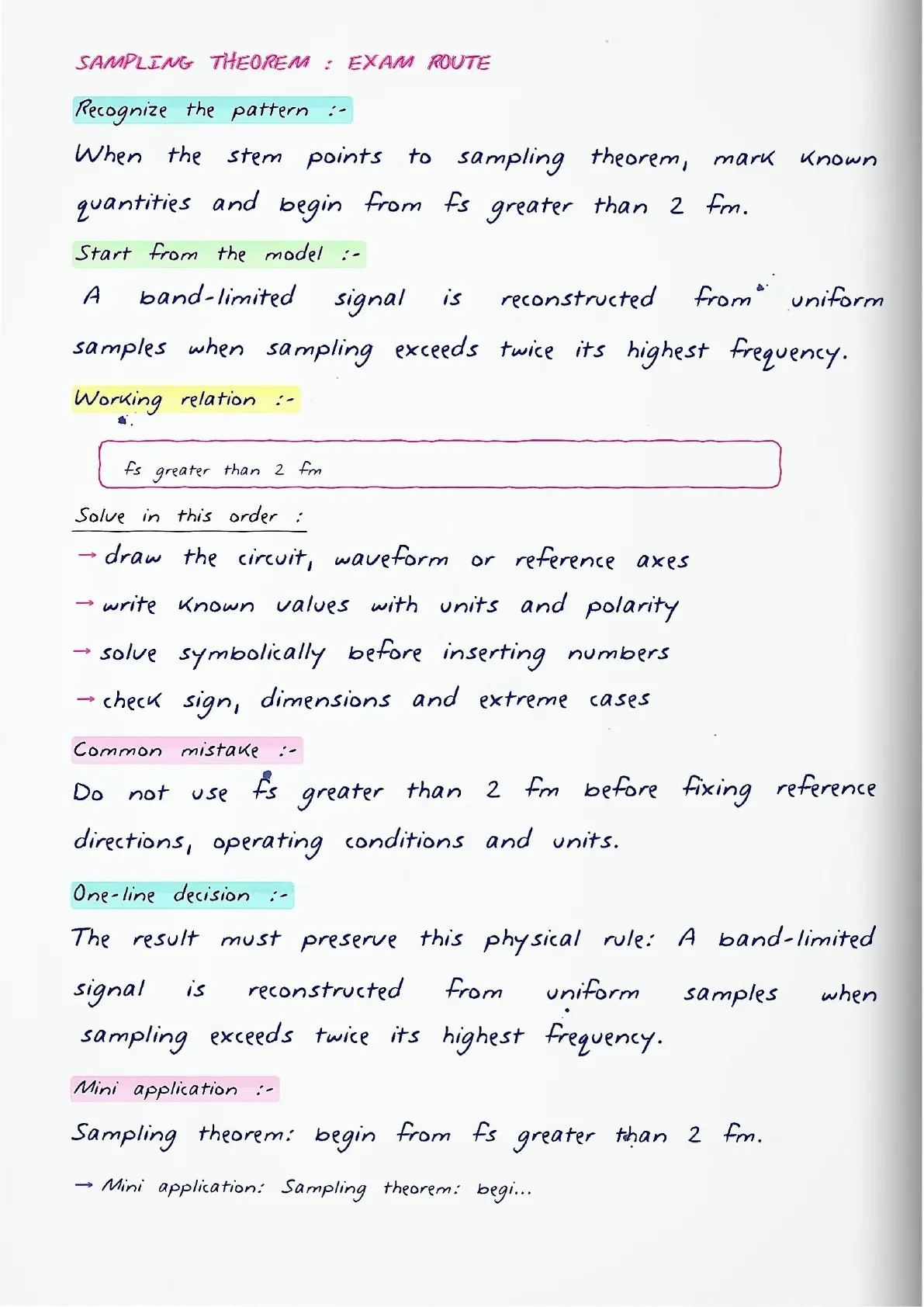
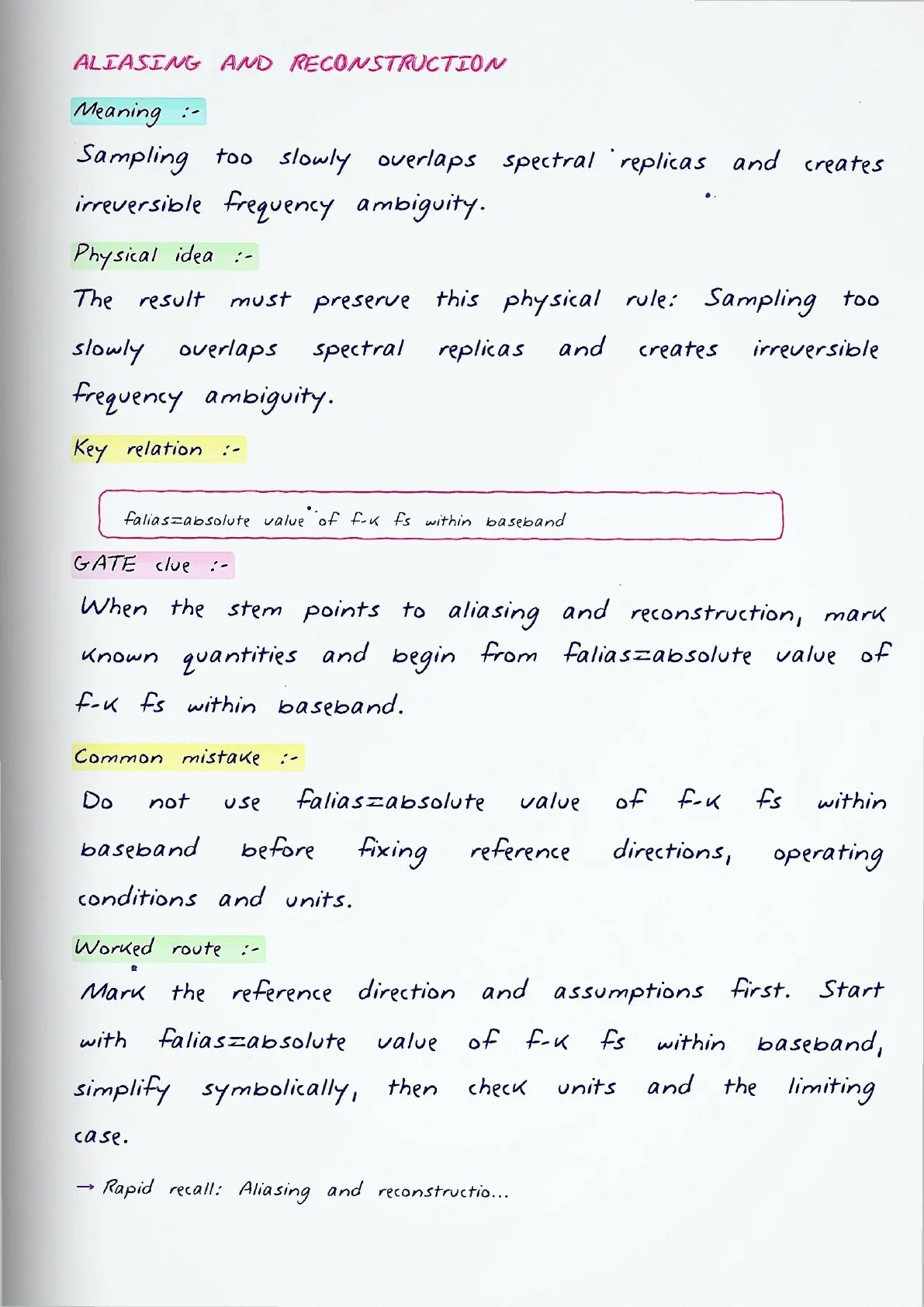
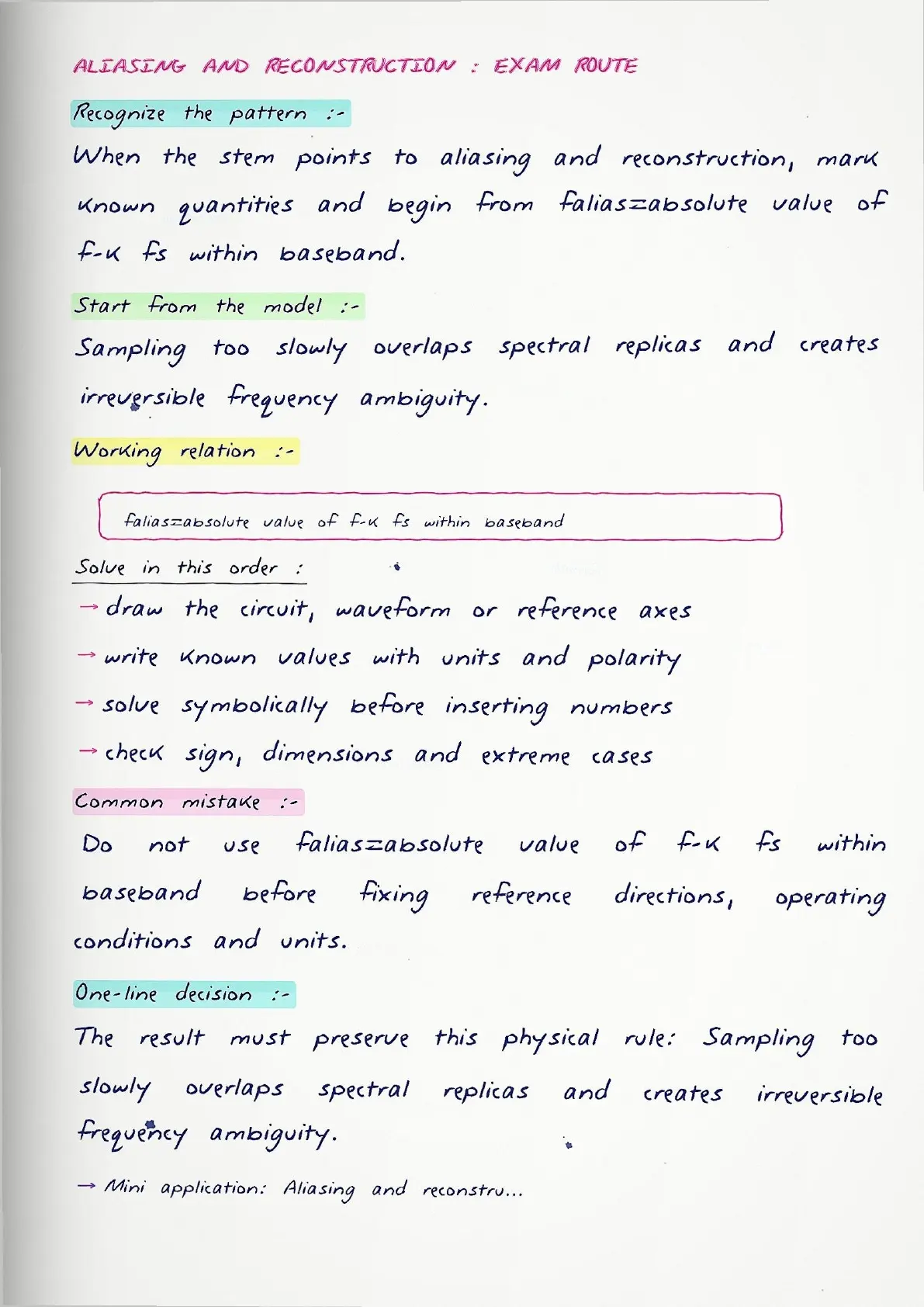
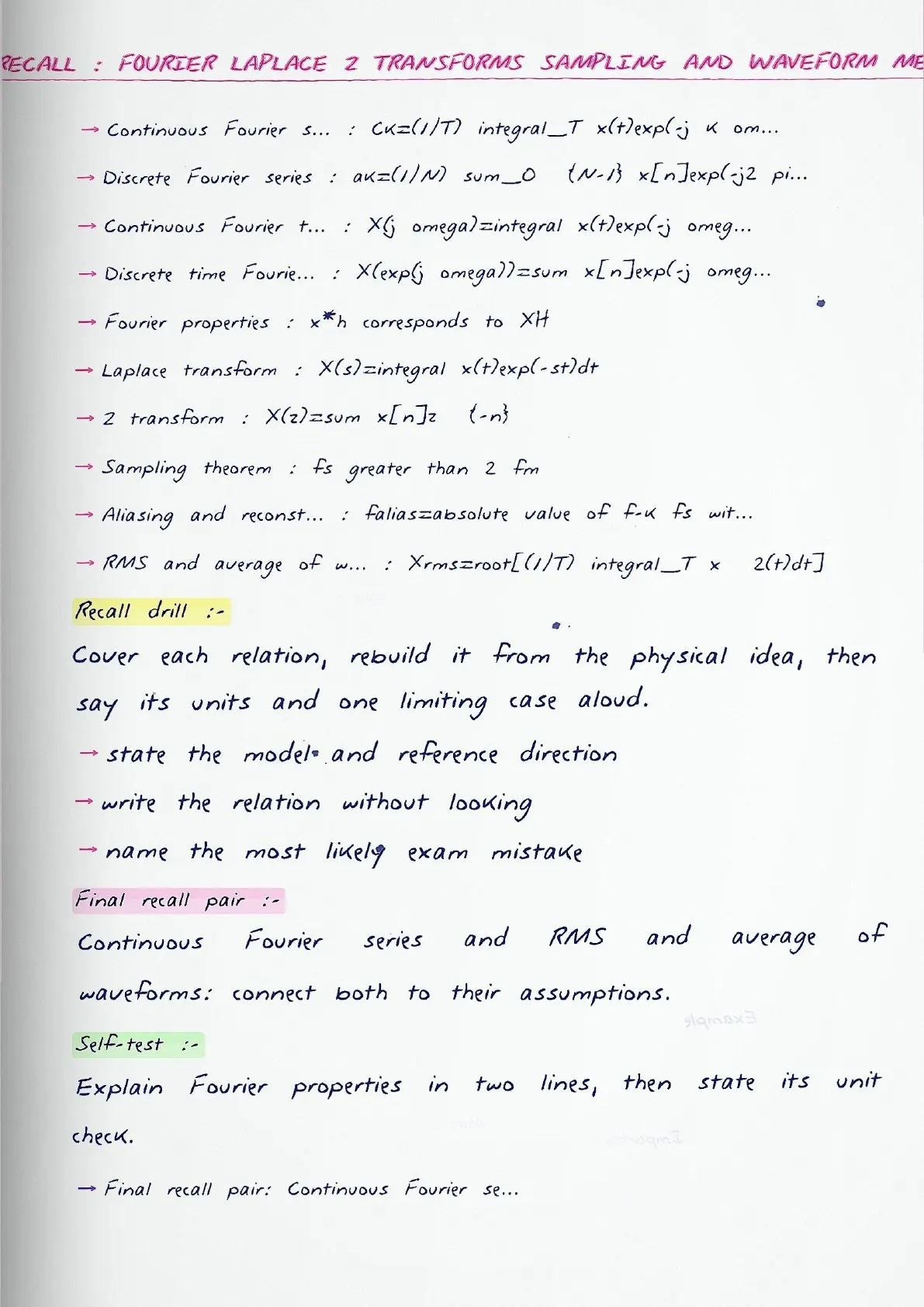
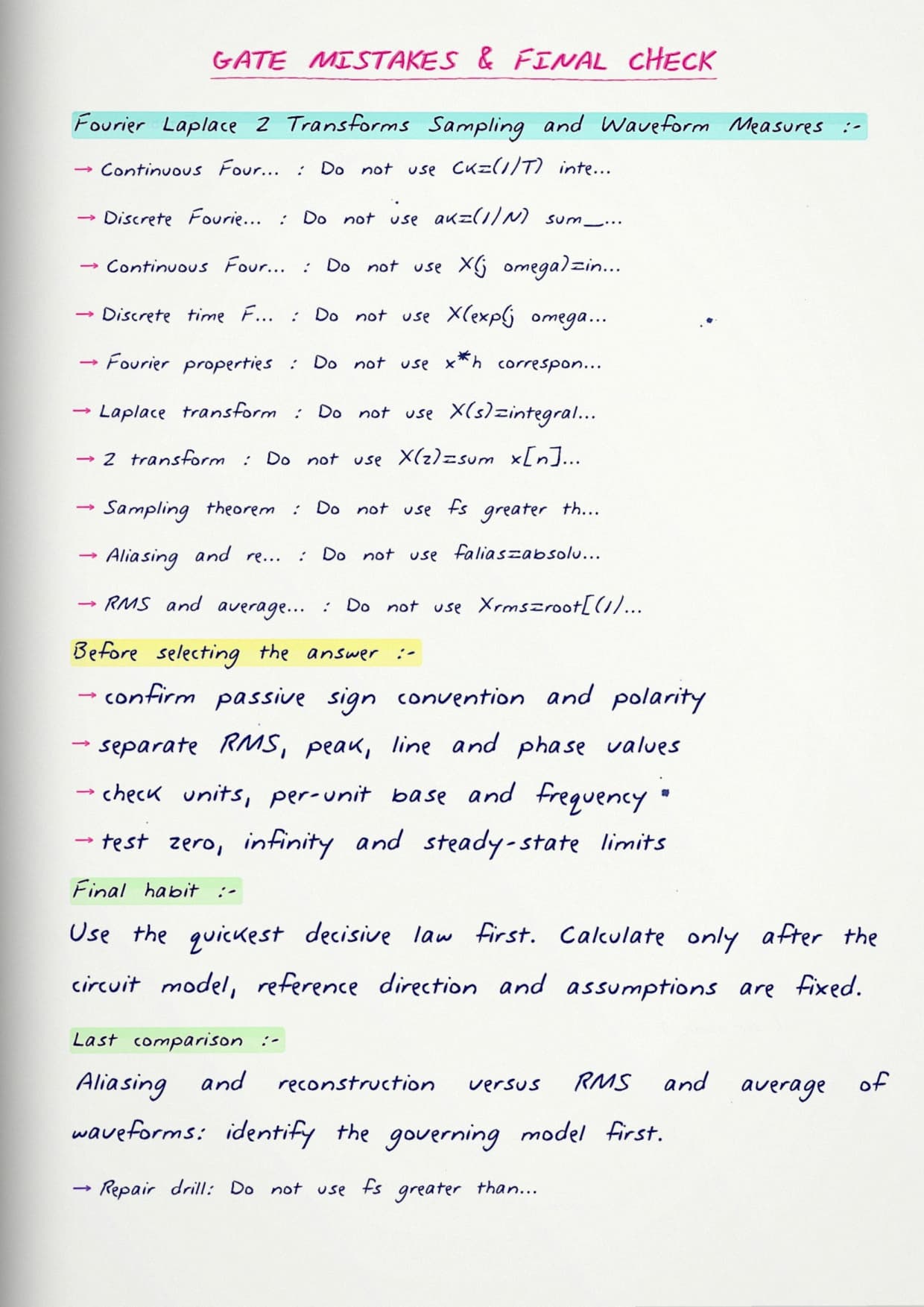
The pages open with a hand-drawn map that separates continuous-time tools from discrete-time tools, so students can see at a glance when to reach for the Laplace transform and when the Z transform is the right choice. Property tables for linearity, time shifting, scaling and convolution are written out in the margins, and every standard pair is worked from the defining integral rather than just quoted.
- A neat side-by-side sheet of Fourier series and Fourier transform pairs, with the sampling theorem drawn as a spectrum-copy picture.
- Fully solved region of convergence sketches for one-sided and two-sided signals, the part students most often get wrong.
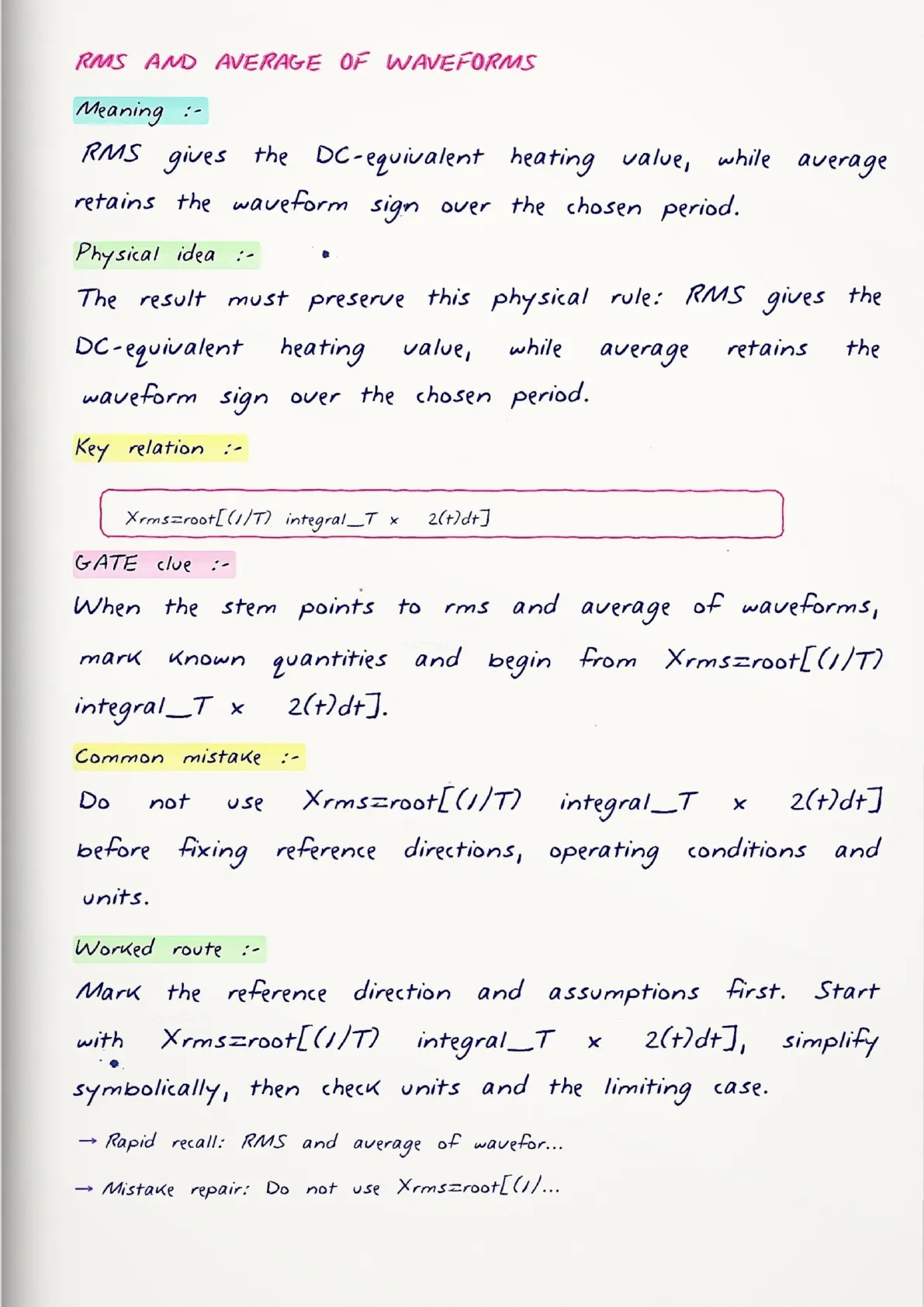
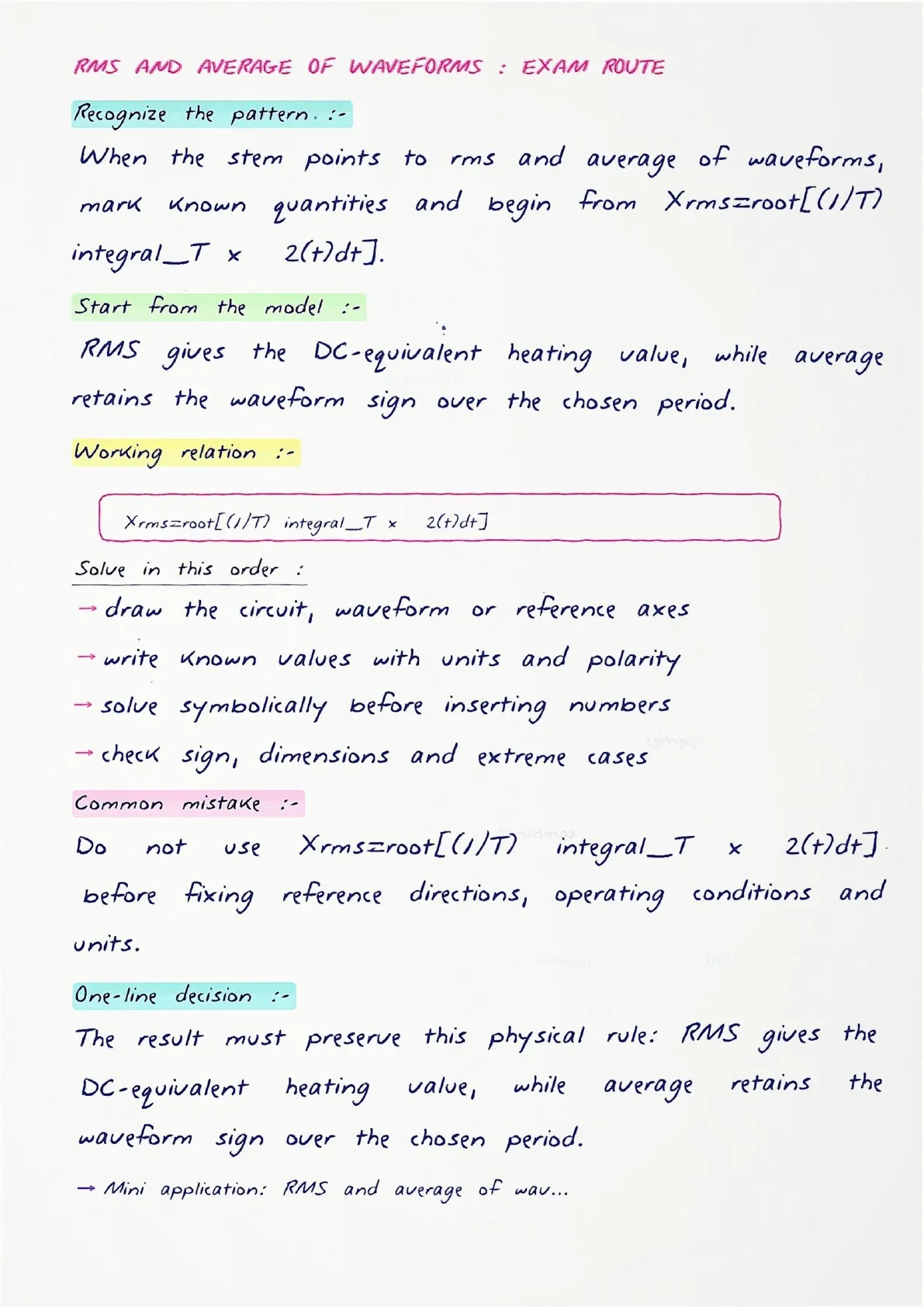
- A quick-reference box for RMS, average and form-factor waveform measures, tied back to Fourier coefficients.
What These GATE Transforms Notes Cover
The notes walk through every transform that appears in the GATE Electrical syllabus and connect each one to the kind of question it answers. The aim is to make students fluent at moving a signal between the time domain and the frequency or s-domain.
- Continuous-time and discrete-time Fourier analysis, including spectra and magnitude-phase plots.
- The Laplace transform, its inverse by partial fractions, and initial and final value theorems.
- The Z transform, its region of convergence, and stability tests for discrete systems.
- The sampling theorem, Nyquist rate, aliasing, and periodic waveform measures.
GATE Transforms Quick Revision
Source: GATE Wallah (English) on YouTube
Topics Covered in GATE Transforms
Every subtopic below maps directly to a line in the official GATE Electrical Signals and Systems syllabus. Students can tick them off as a revision checklist.
- Fourier series of periodic signals and coefficient calculation.
- Continuous-time Fourier transform and its standard properties.
- Discrete-time Fourier transform and the discrete Fourier transform.
- Laplace transform pairs, ROC, and partial-fraction inversion.
- Z transform, inverse Z transform, and pole-zero stability.
- Sampling theorem, Nyquist criterion, and aliasing.
- Waveform measures such as RMS value, average value and form factor.
- Linear time-invariant system response through transfer functions.
How the Notes Are Organised
The reading order runs from the most familiar to the most abstract. Students begin with Fourier series on a periodic square wave, move to the continuous-time transform, and only then meet the Laplace transform as a Fourier transform with a convergence factor added.
Discrete-time material follows the same rhythm, so the Z transform feels like a natural cousin of the Laplace transform rather than a fresh subject. The final pages gather sampling and waveform measures, which lean on everything before them.
Short worked examples sit between the theory blocks, and the answer to each is boxed at the bottom of the page so students can attempt the problem first and confirm the result afterwards. Cross-references in the margins point back to the property that a given step uses, which keeps the whole set of pages tightly connected instead of feeling like isolated formulas.
How GATE Transforms Links to Other Topics
Transform methods are the shared language of several GATE Electrical sections, so time spent here pays off well beyond Signals and Systems.
- Control Systems, where Laplace transforms build transfer functions and stability criteria.
- Electrical Circuits, where s-domain impedance simplifies transient analysis.
- Electrical Machines, where periodic waveform measures feed loss and rating work.
- Digital signal processing ideas, where the Z transform underpins filter design.
Important Topics in GATE Transforms
A handful of ideas return in almost every paper. The notes flag the traps that quietly cost marks so students can rehearse them deliberately, with the region of convergence singled out as the single most common stumbling block in transform questions.
- Region of convergence, since the same algebraic expression can describe different signals.
- Initial and final value theorems, and the conditions under which the final value even exists.
- Aliasing and correct choice of sampling rate above the Nyquist limit.
- Sign and scaling errors in time shifting and time scaling properties.
- Reading stability straight from pole locations in the s-plane and z-plane.
How to Prepare GATE Transforms with Handwritten Notes
The notes are built for repeated, active revision rather than a single slow read. A staged plan keeps the transforms fresh right up to exam day.
- First read: derive two or three standard pairs yourself, covering the printed answer.
- Second pass: memorise the property tables and reproduce them from a blank page.
- Practice phase: solve previous year questions on ROC and inverse transforms.
- Final week: revise only the summary boxes and the sampling theorem picture.
Why These Notes Help You Score Better
Because the material is compact and hand-drawn, students can revise the whole transform toolkit in a single sitting instead of leafing through a thick textbook. Each derivation is short enough to redo under time pressure, and the property tables double as a formula sheet in the last week. That blend of speed and depth is exactly what helps students convert this predictable topic into confident, quick marks.
GATE Electrical Transforms Handwritten Notes FAQs
Ques. How many marks do transforms carry in GATE Electrical?
Ans. Fourier, Laplace and Z transforms together contribute roughly 5 to 8 marks each year through the Signals and Systems section and linked Control Systems questions, which makes the topic a reliable scoring area for students.
Ques. Do these handwritten notes explain the region of convergence clearly?
Ans. Yes. The notes include hand-drawn ROC sketches for one-sided and two-sided signals and show how the same expression can represent different signals depending on its region of convergence.
Ques. Is the sampling theorem covered in the notes?
Ans. The sampling theorem, Nyquist rate and aliasing are drawn as spectrum-copy pictures, along with waveform measures such as RMS value, average value and form factor.
Ques. Can students use these notes for last-minute revision?
Ans. Absolutely. The property tables and summary boxes are designed so students can revise the entire transform toolkit in one short sitting before the exam.



Comments