




Linear Algebra and Calculus is a steady, high-return part of GATE Electrical, usually worth about 7 to 10 marks in the paper. It belongs to the Engineering Mathematics section, and its ideas return in Control Systems, Signals and Systems, and Electromagnetic Fields. These handwritten notes cover the full topic in a compact, exam-focused form.
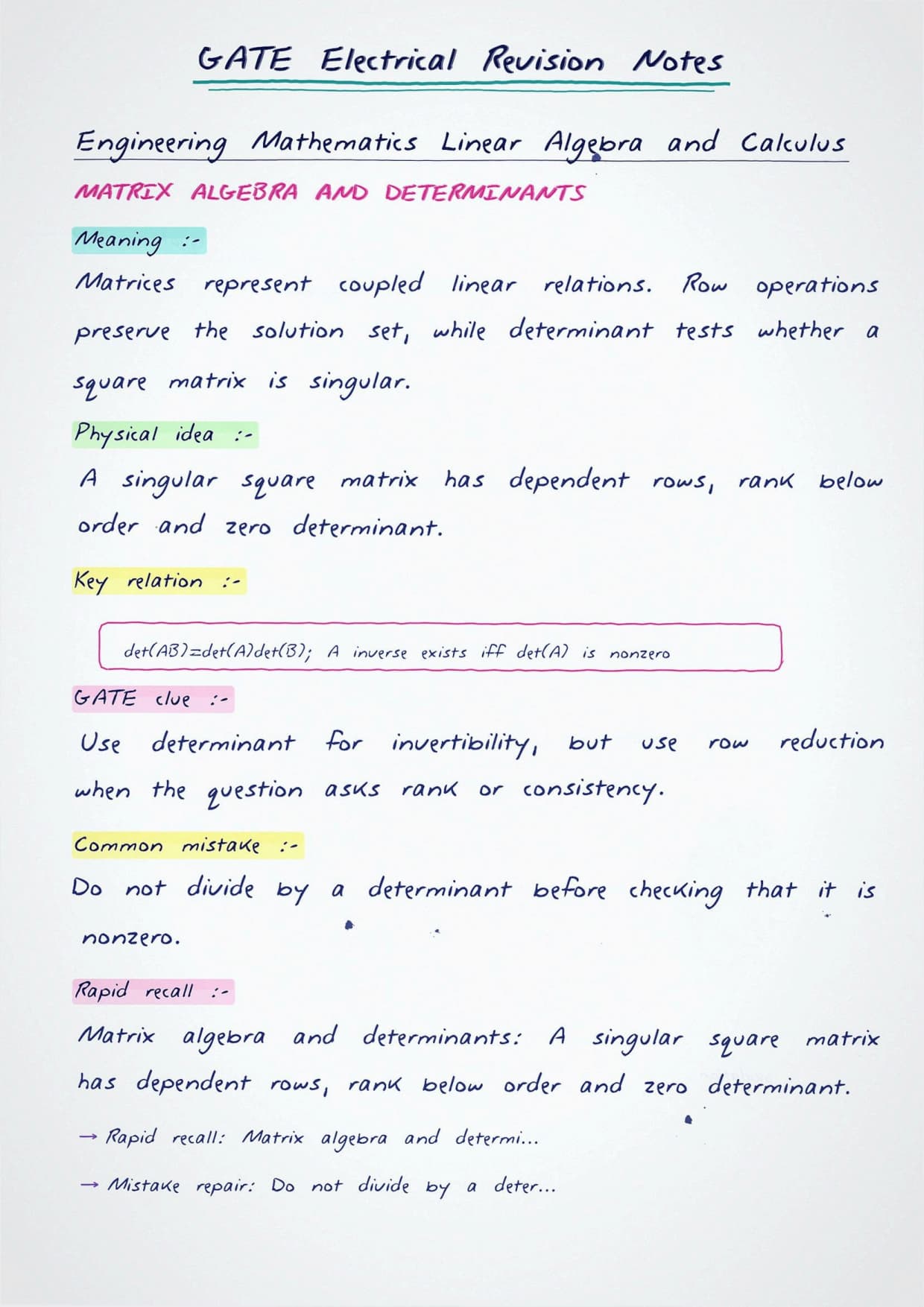
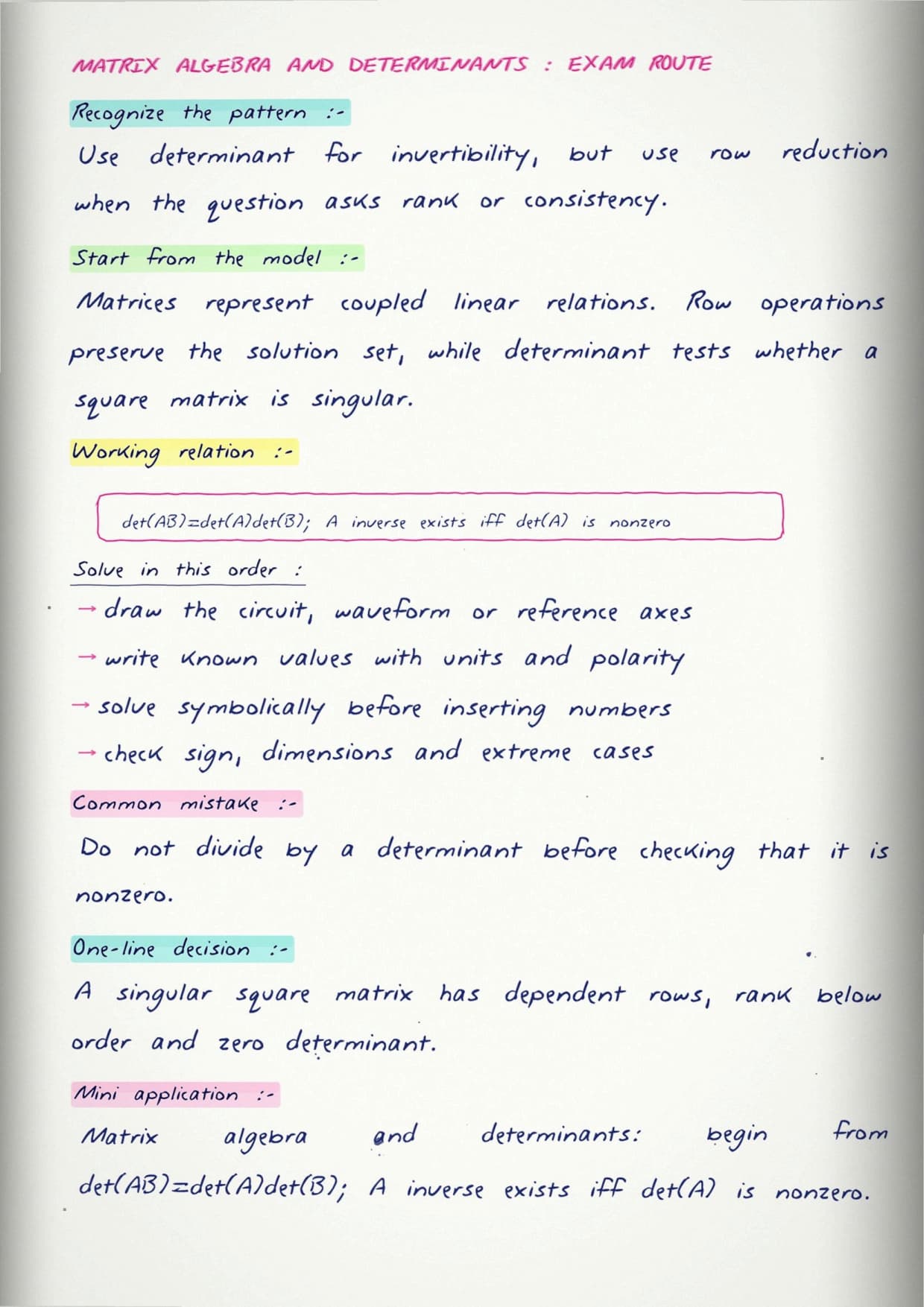
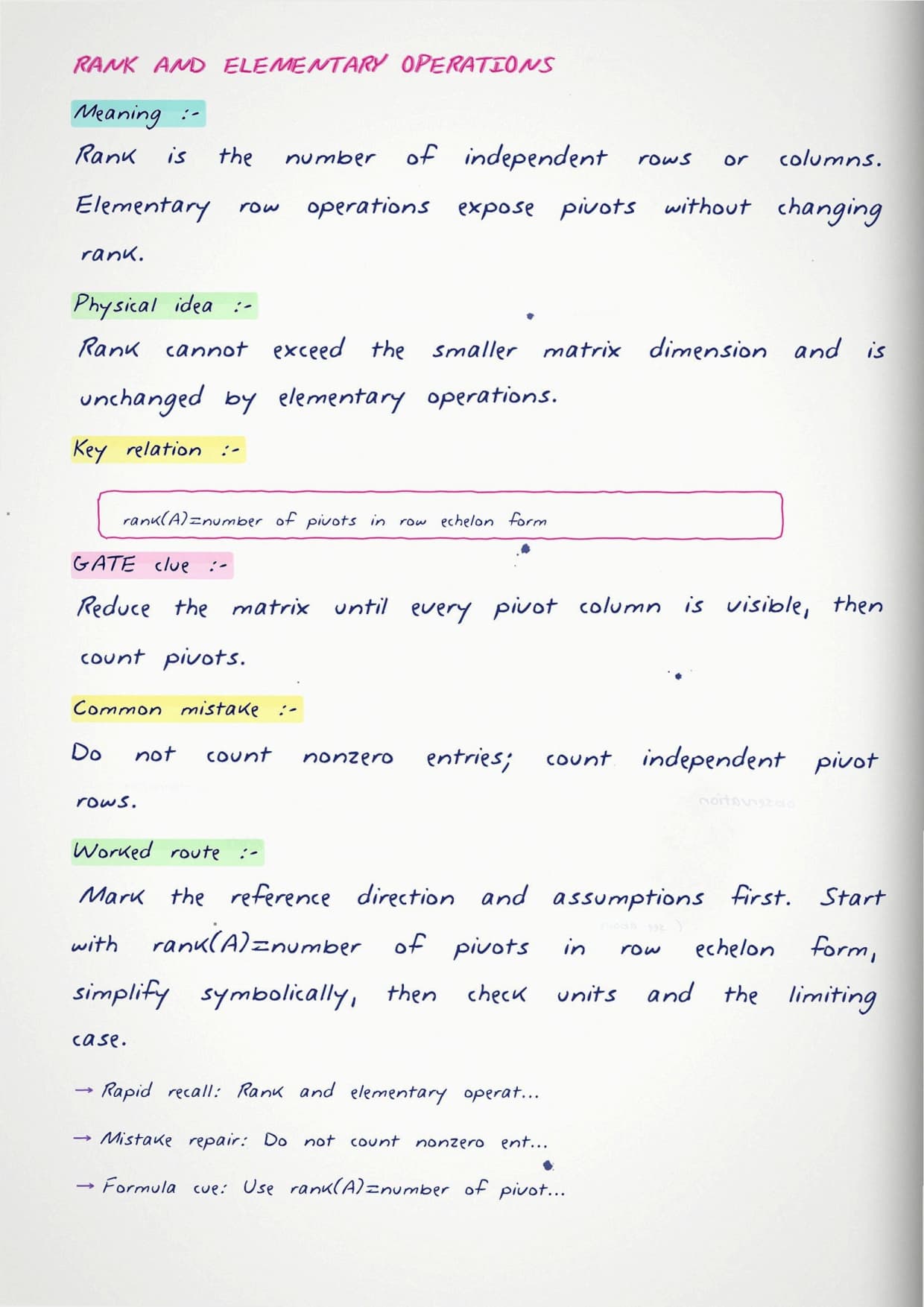
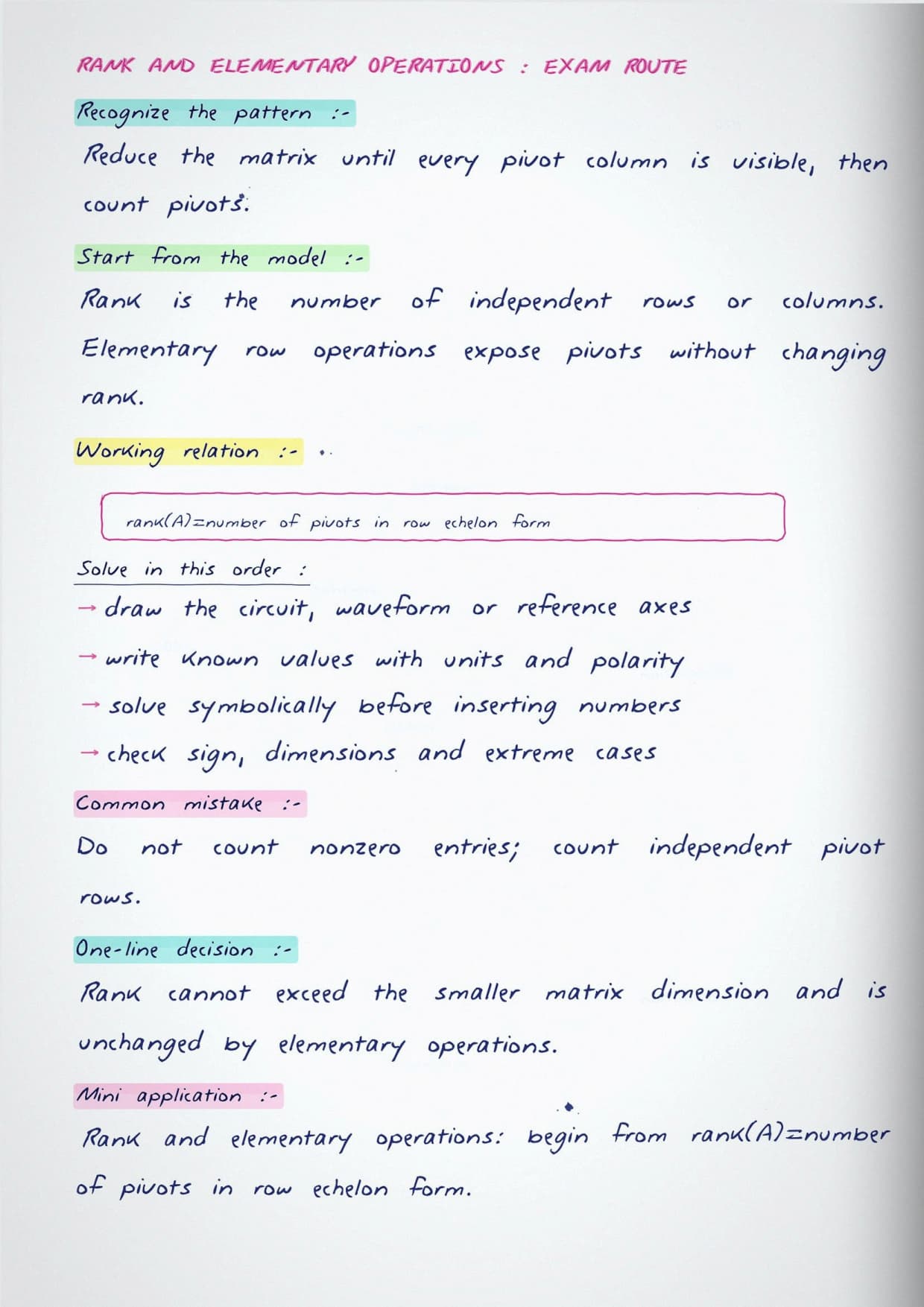
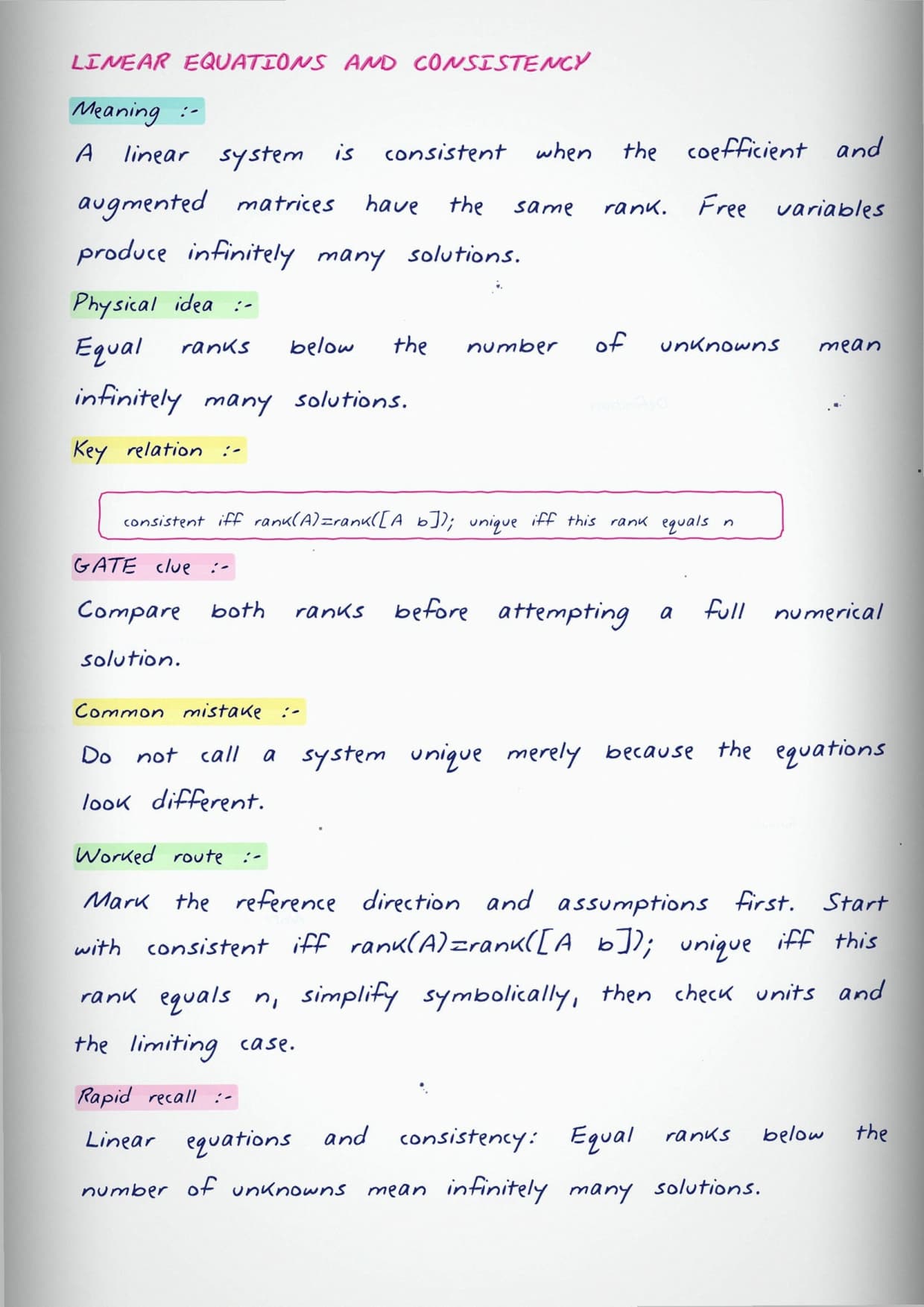
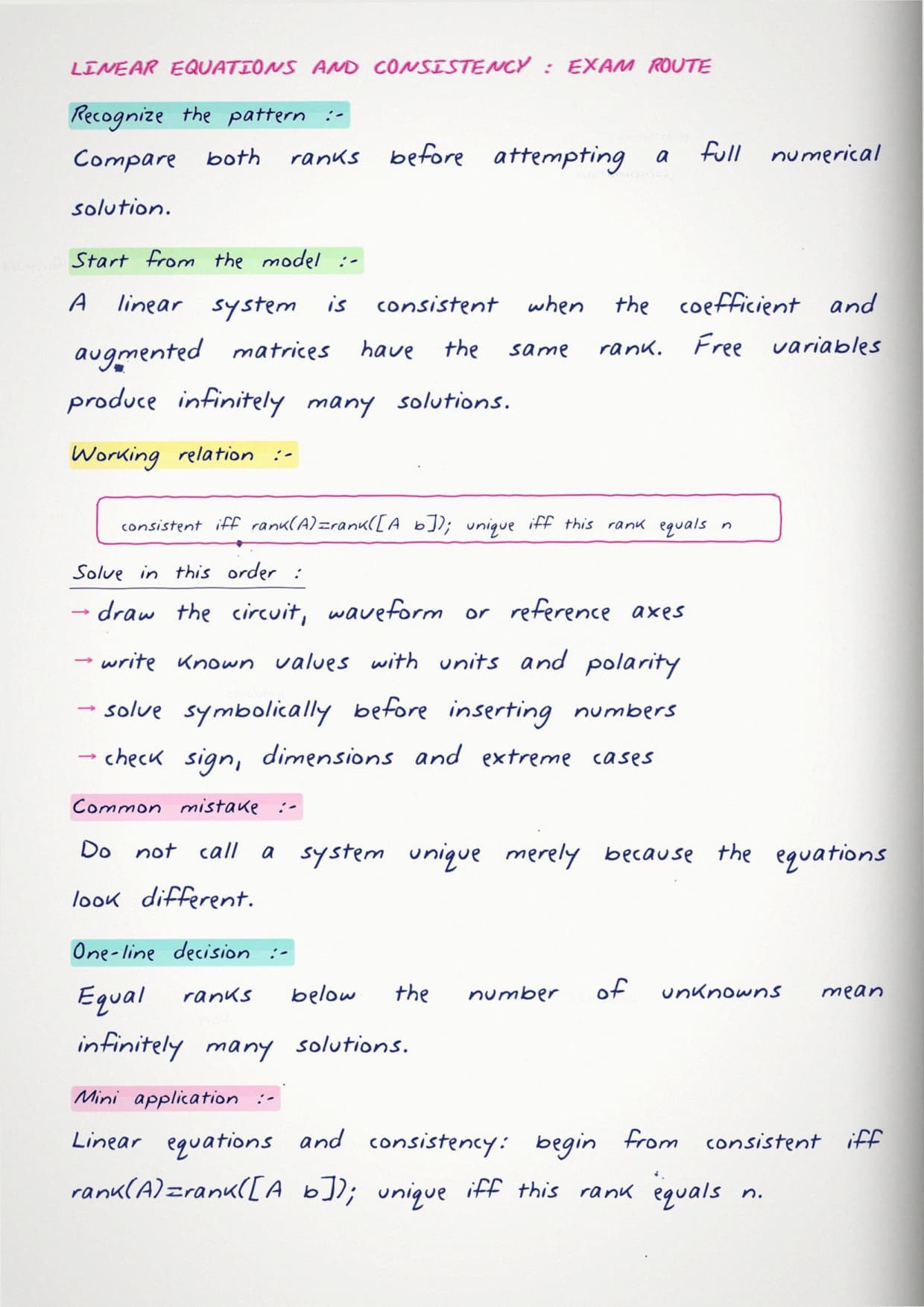
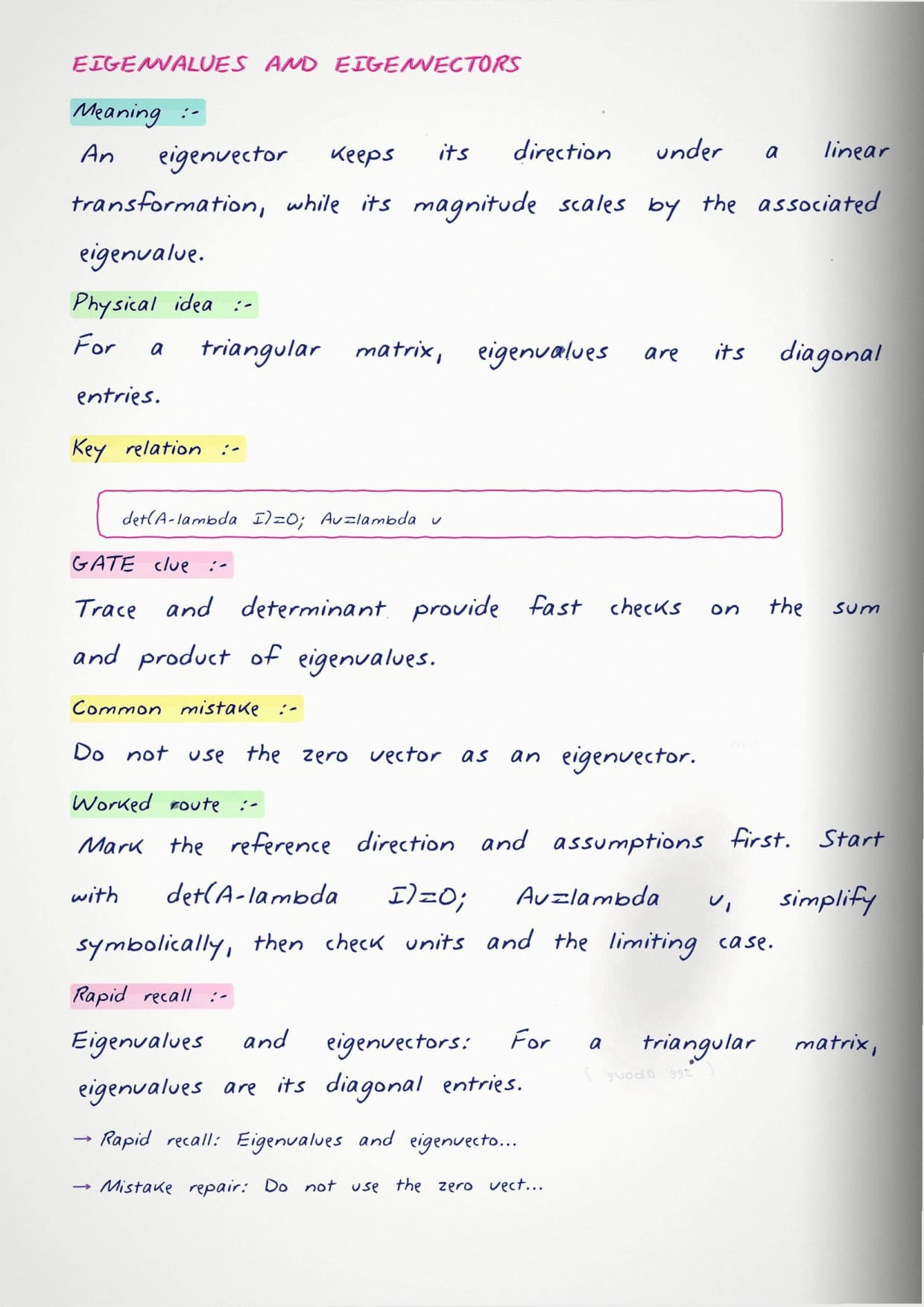
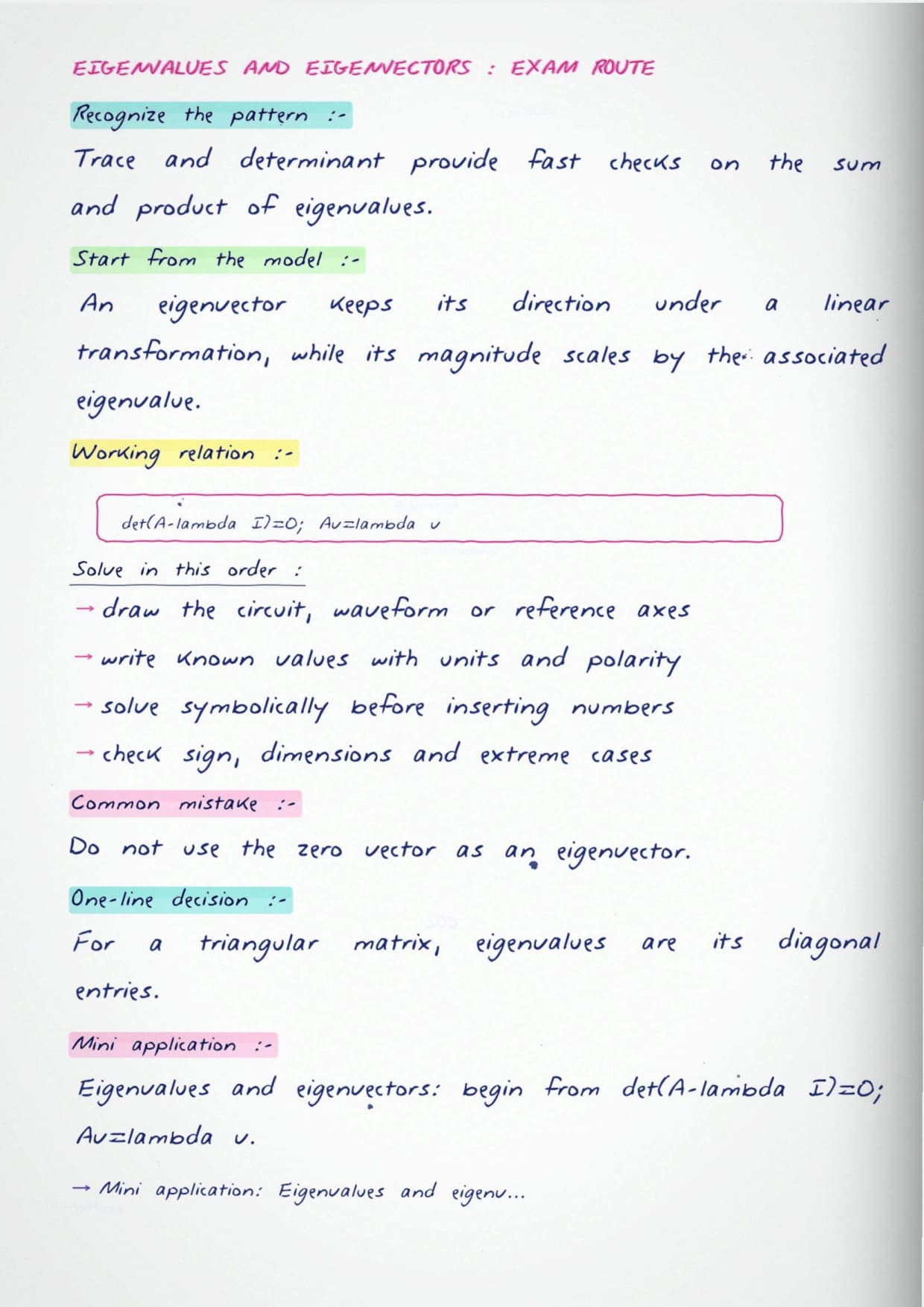
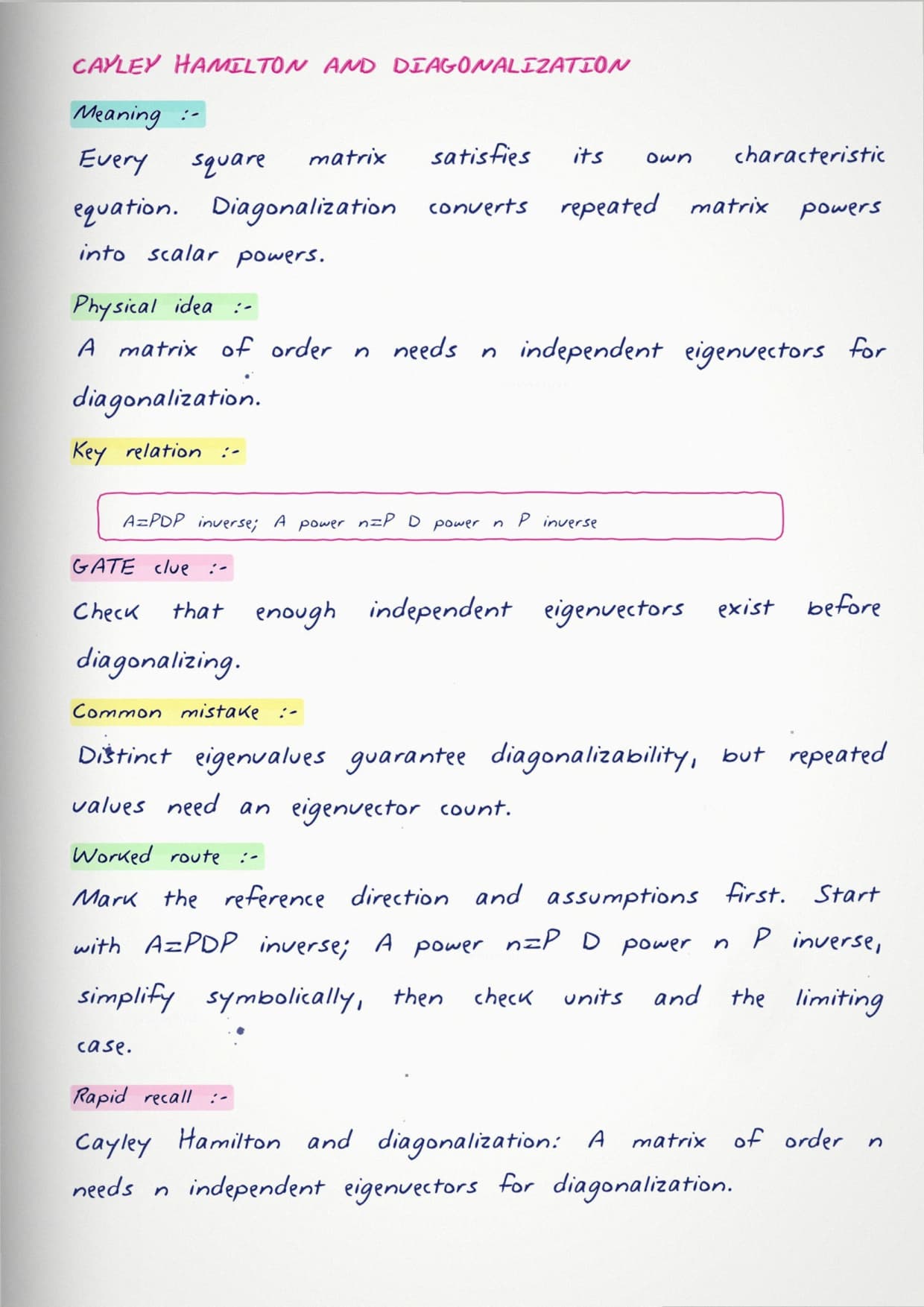
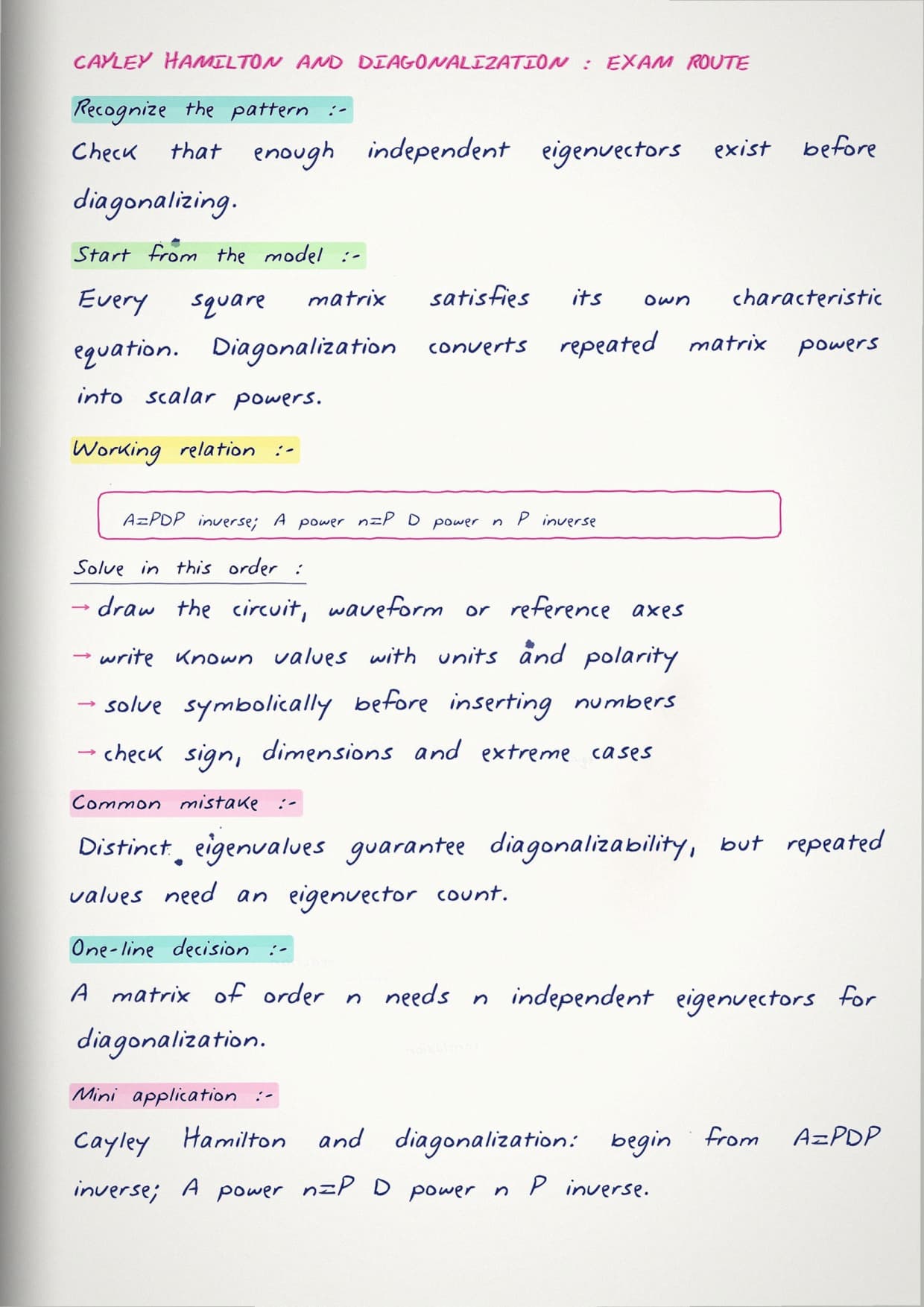
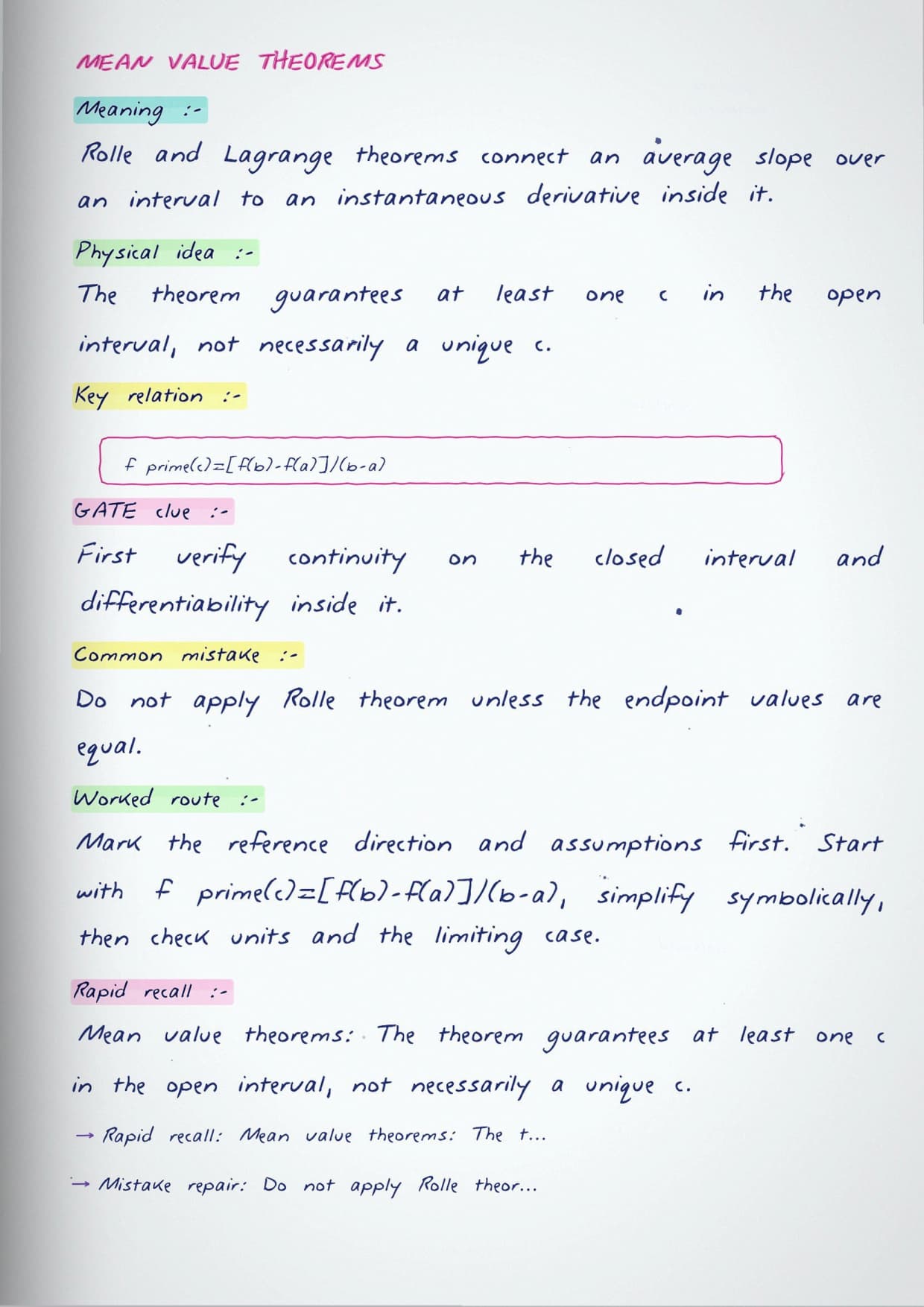
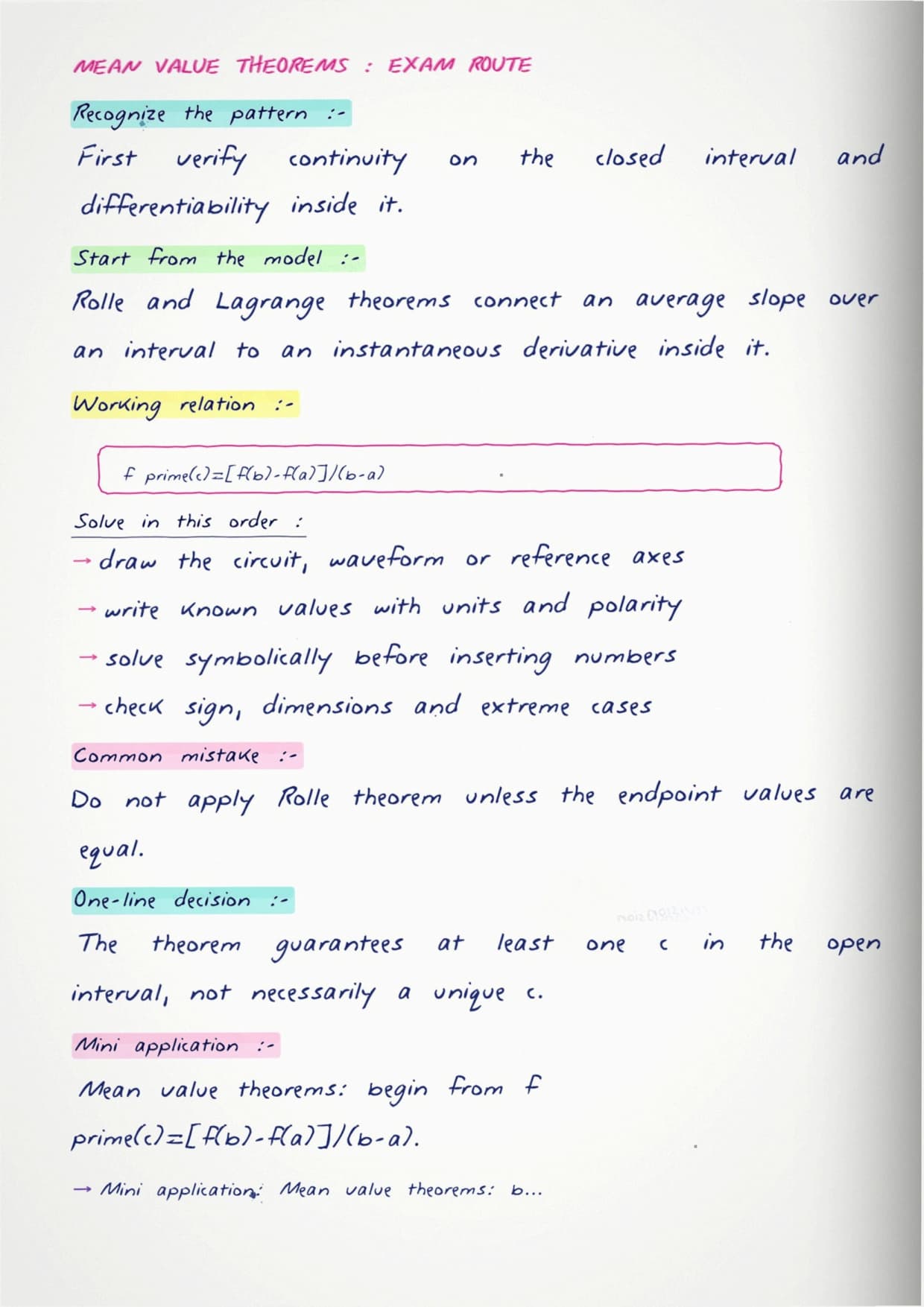
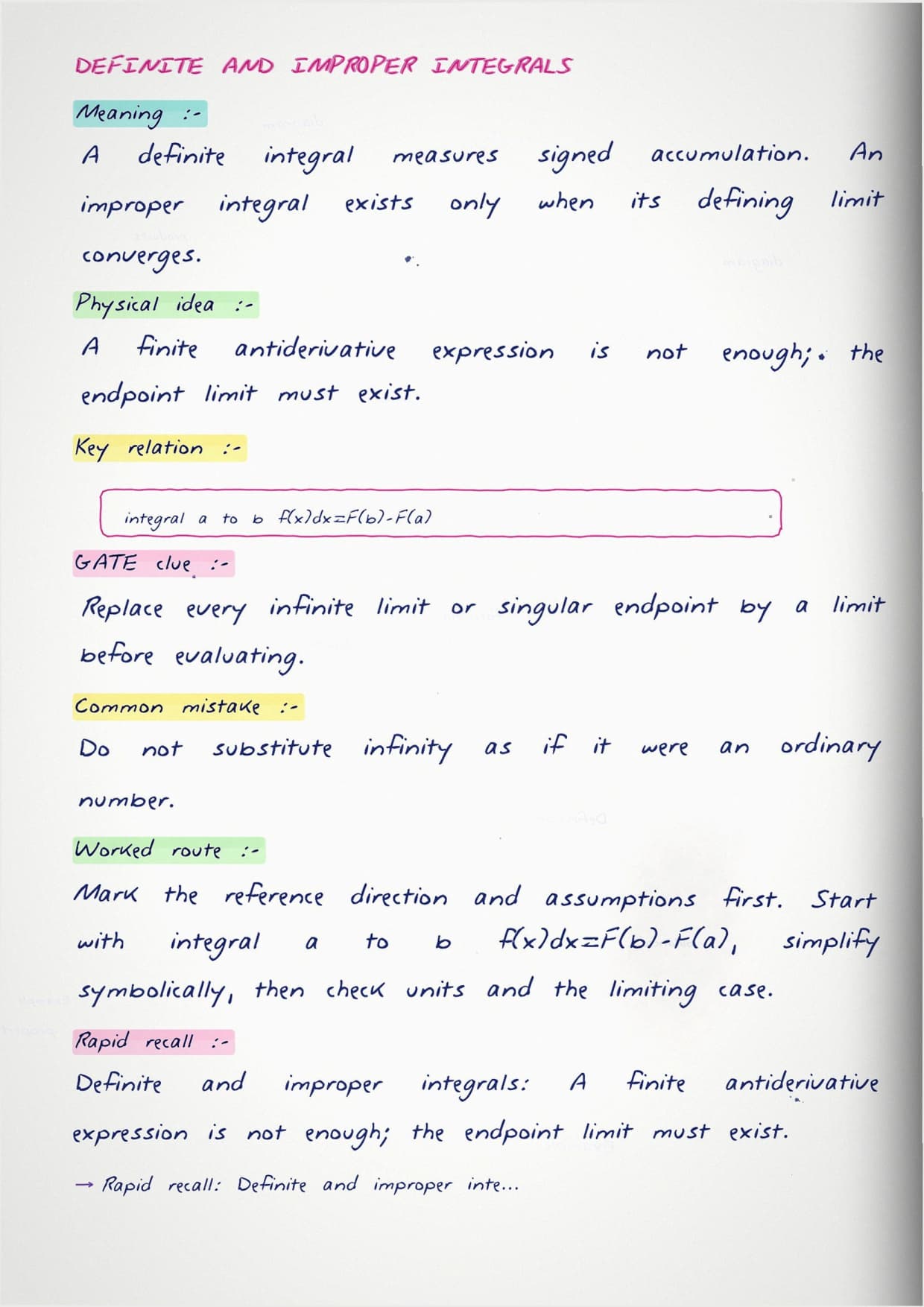
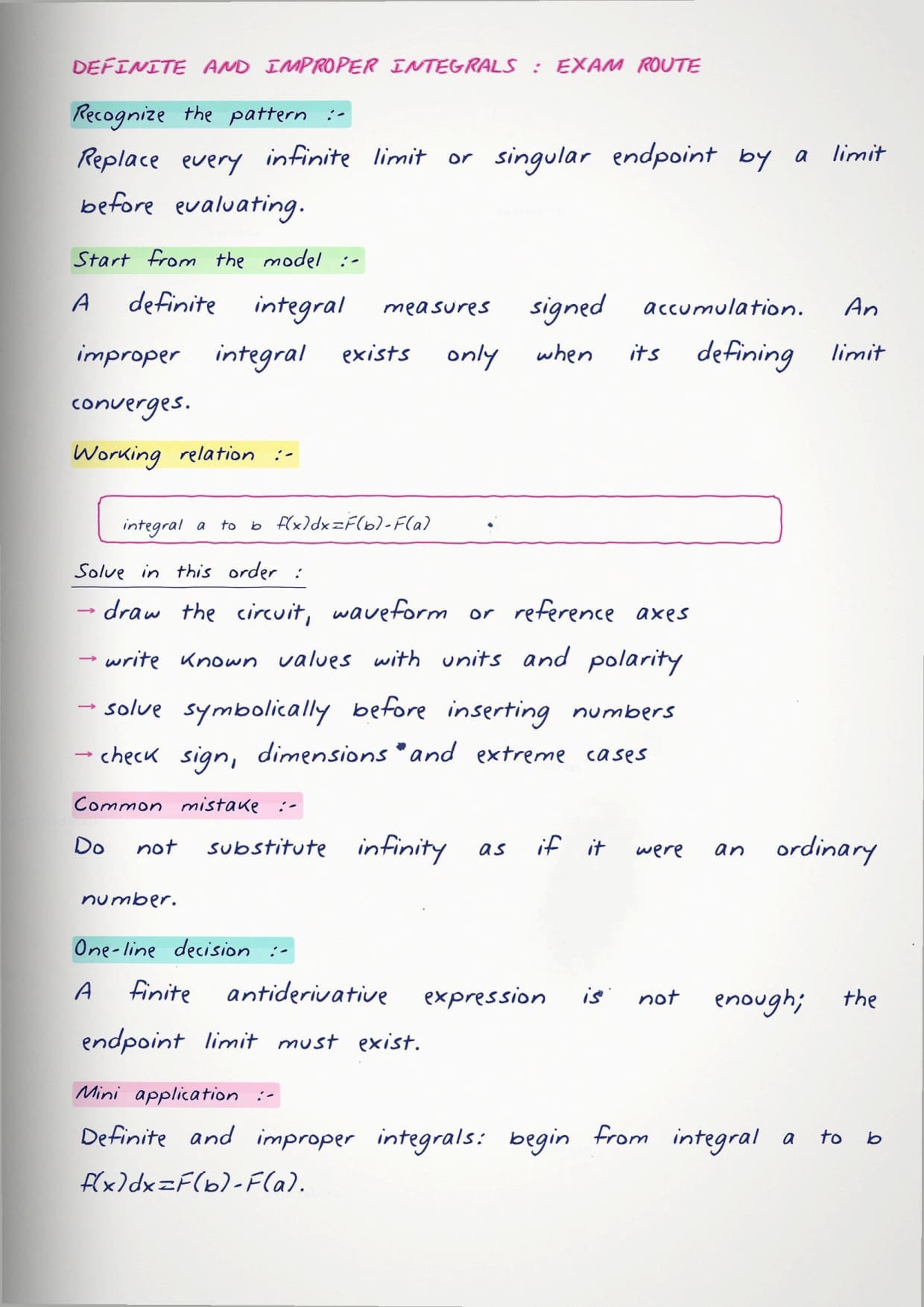
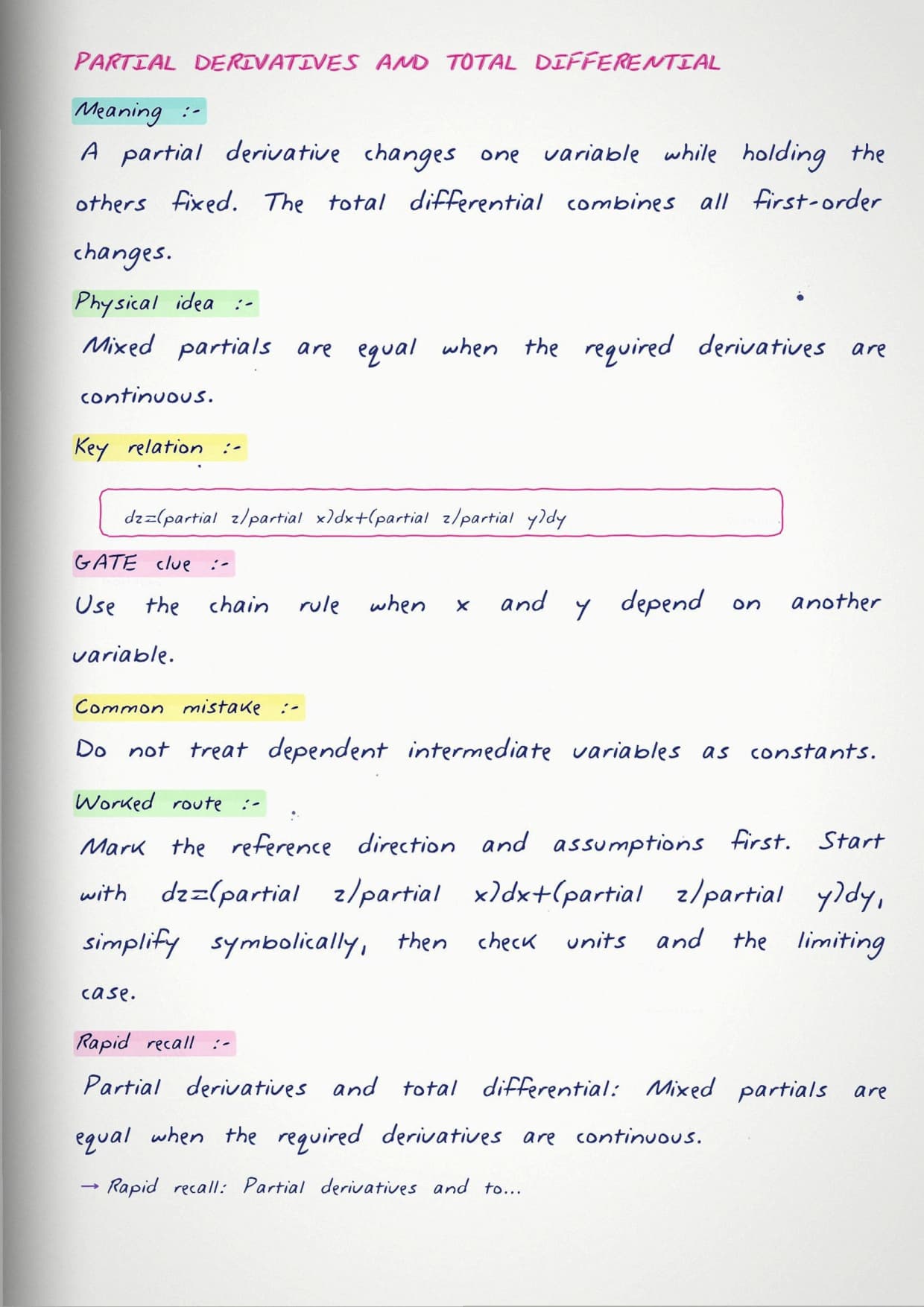
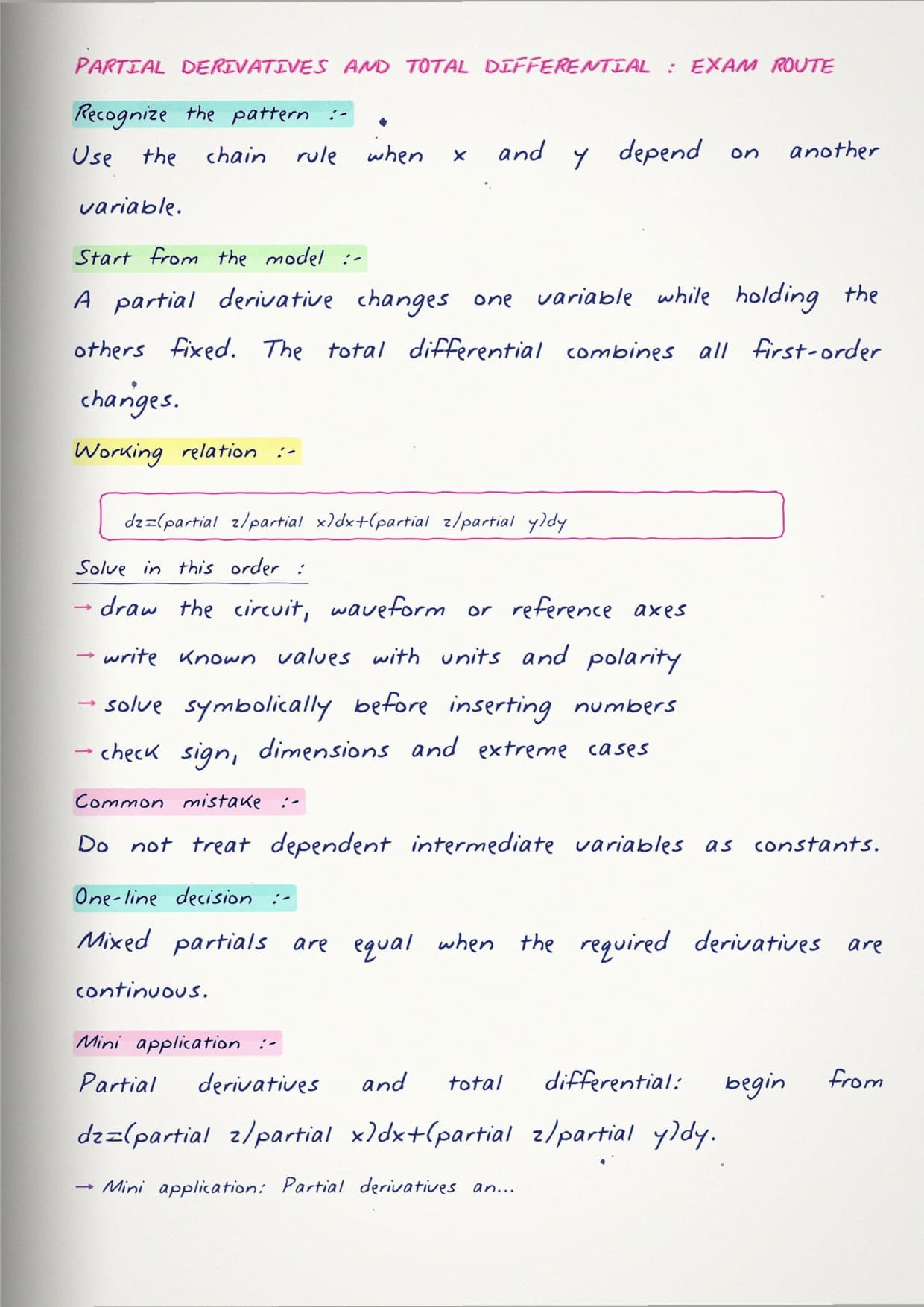
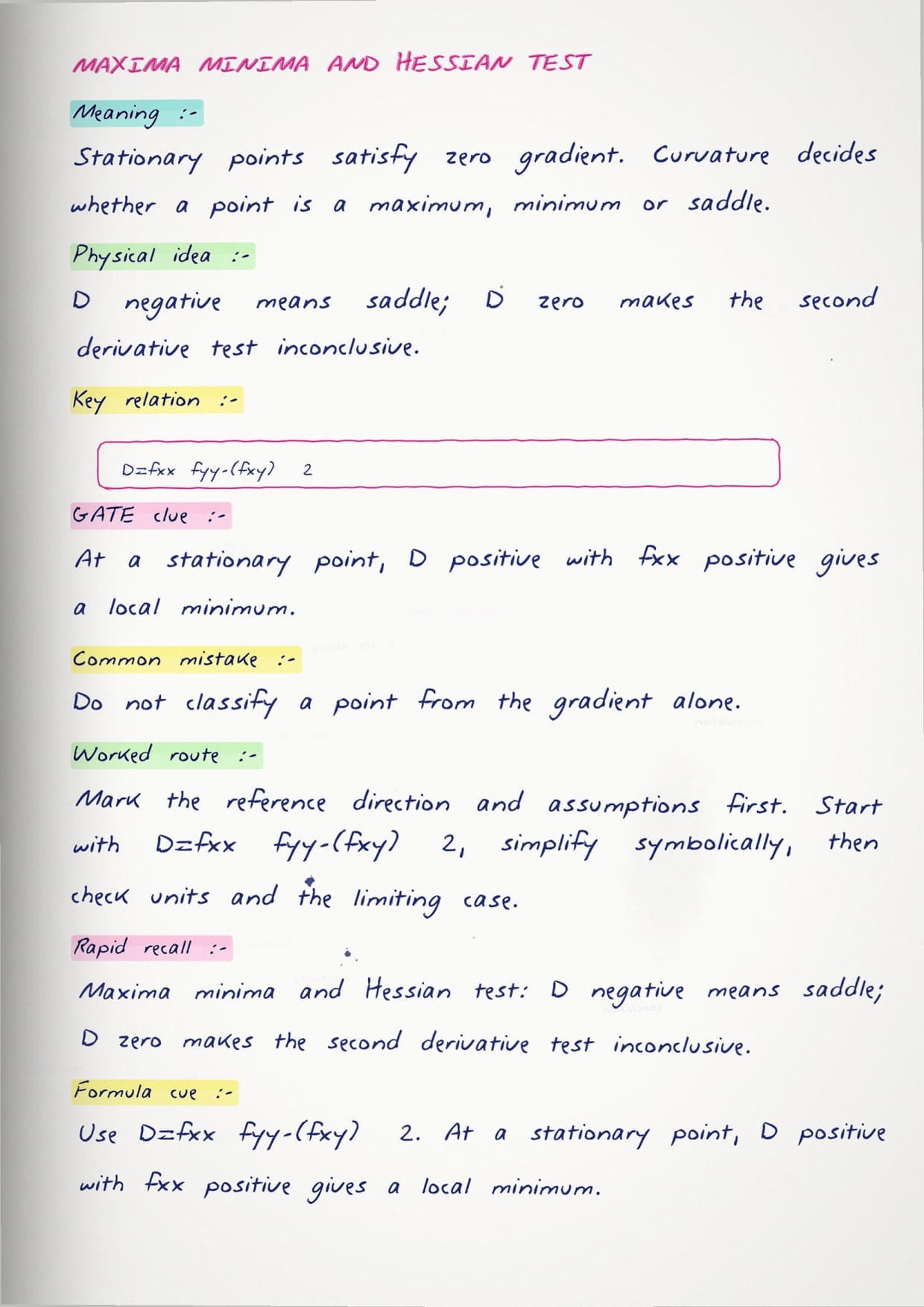
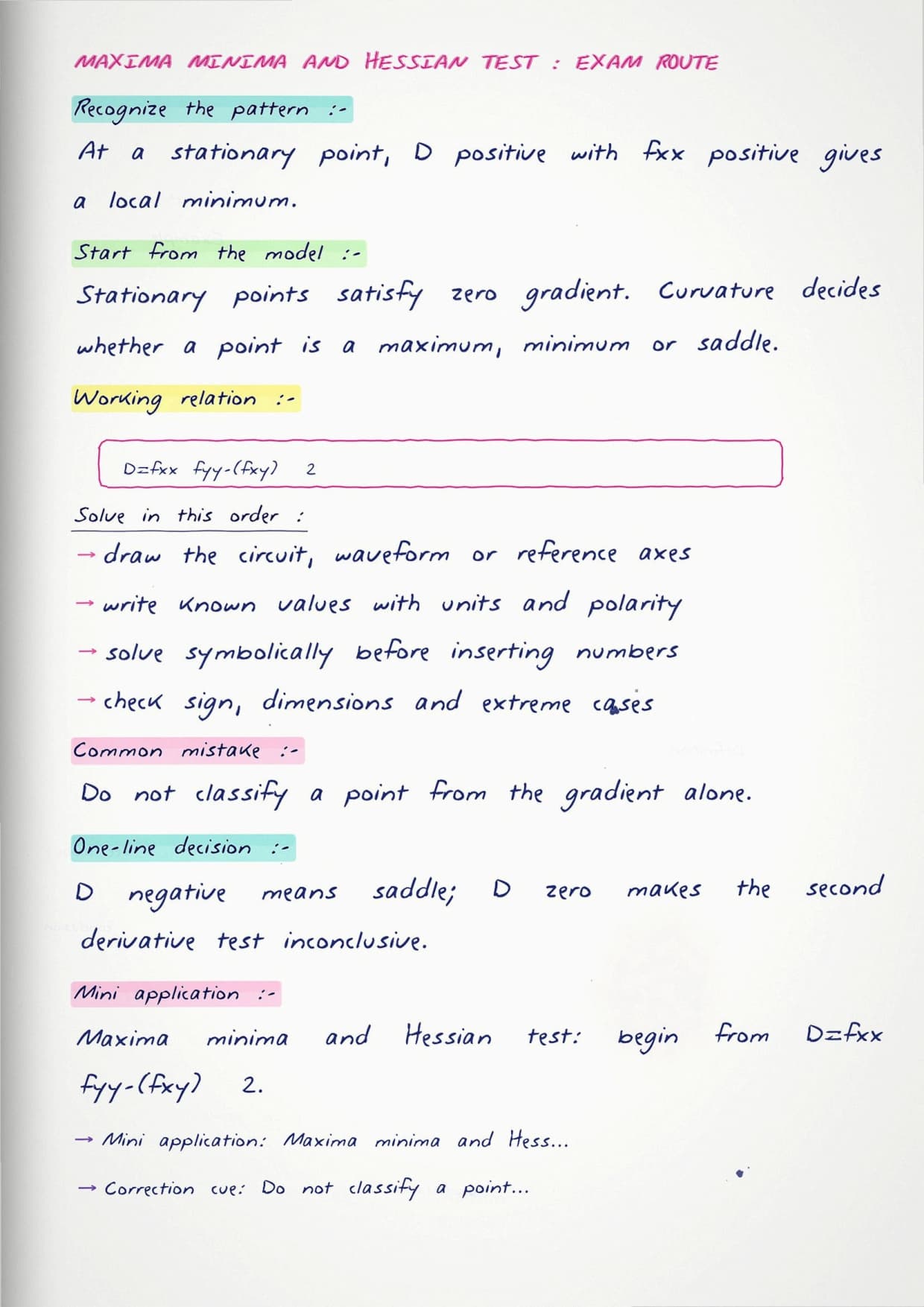
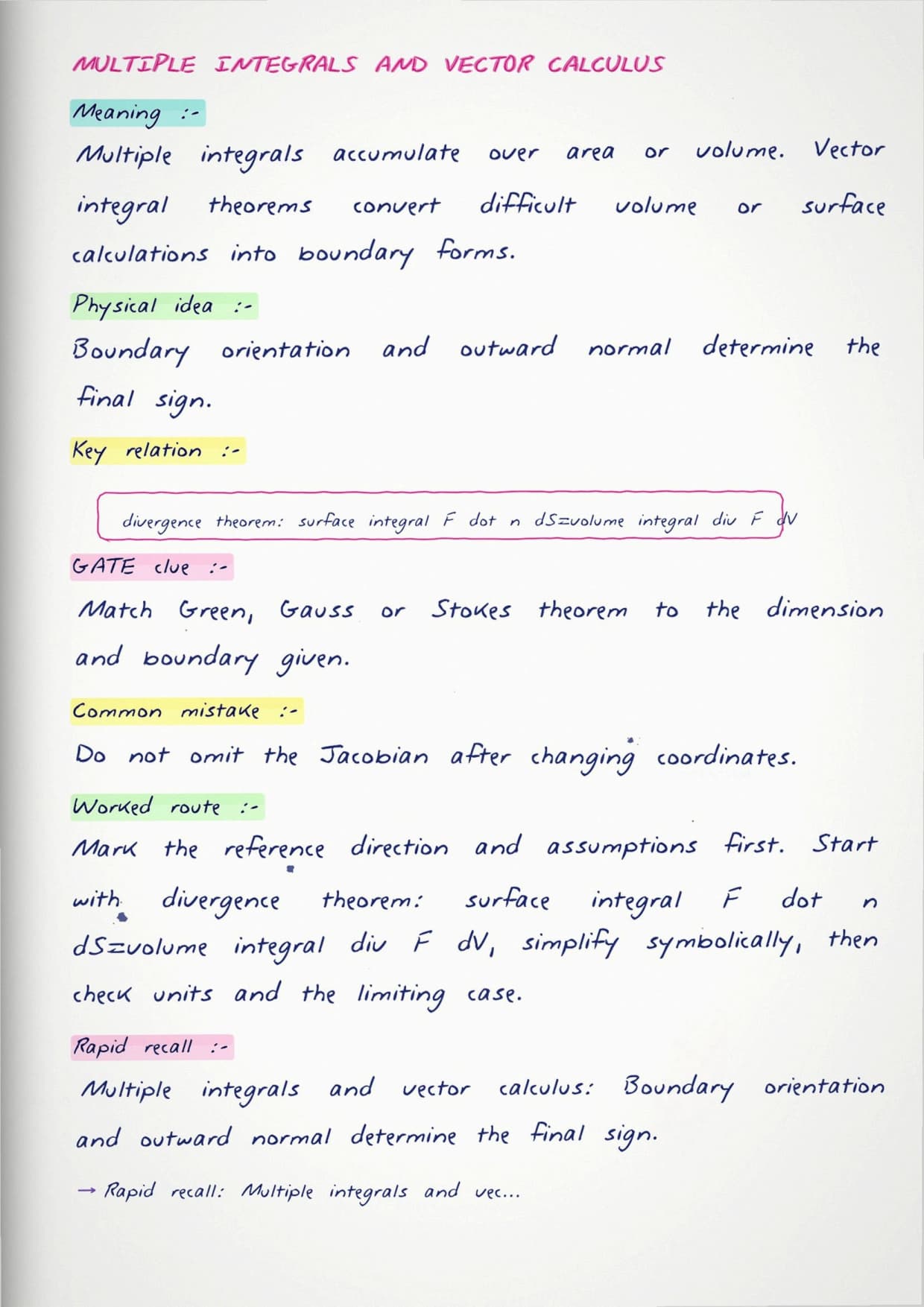
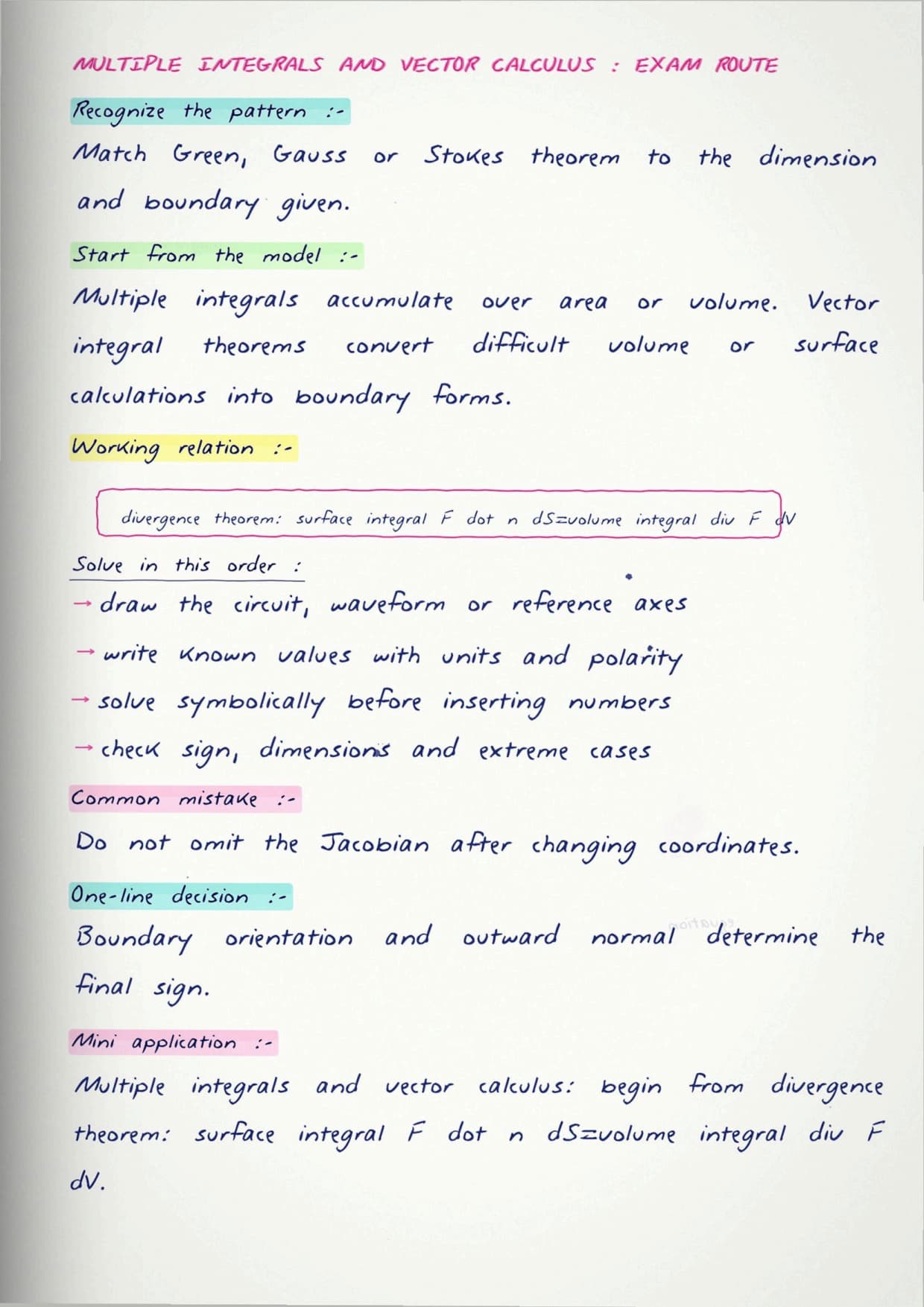
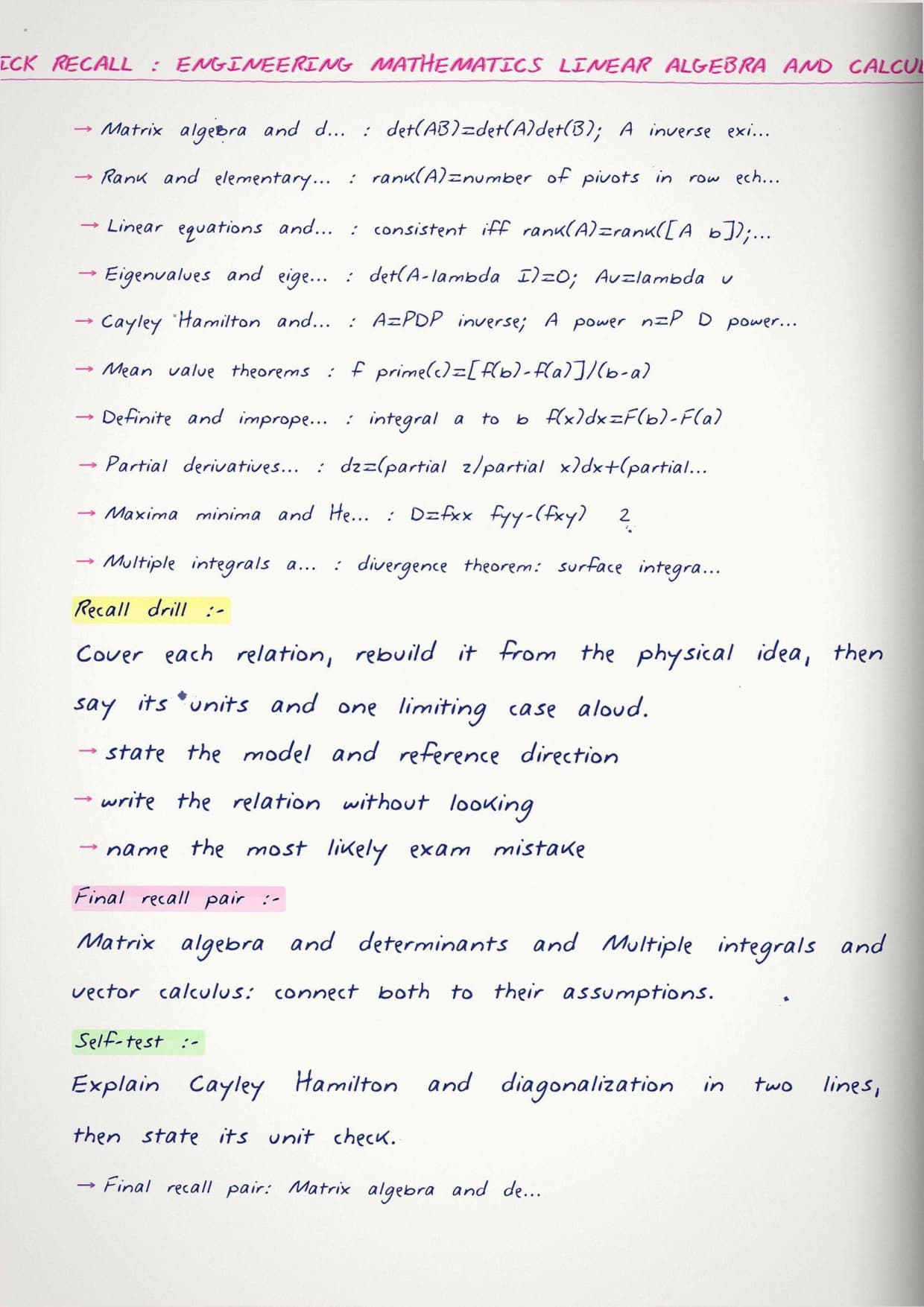
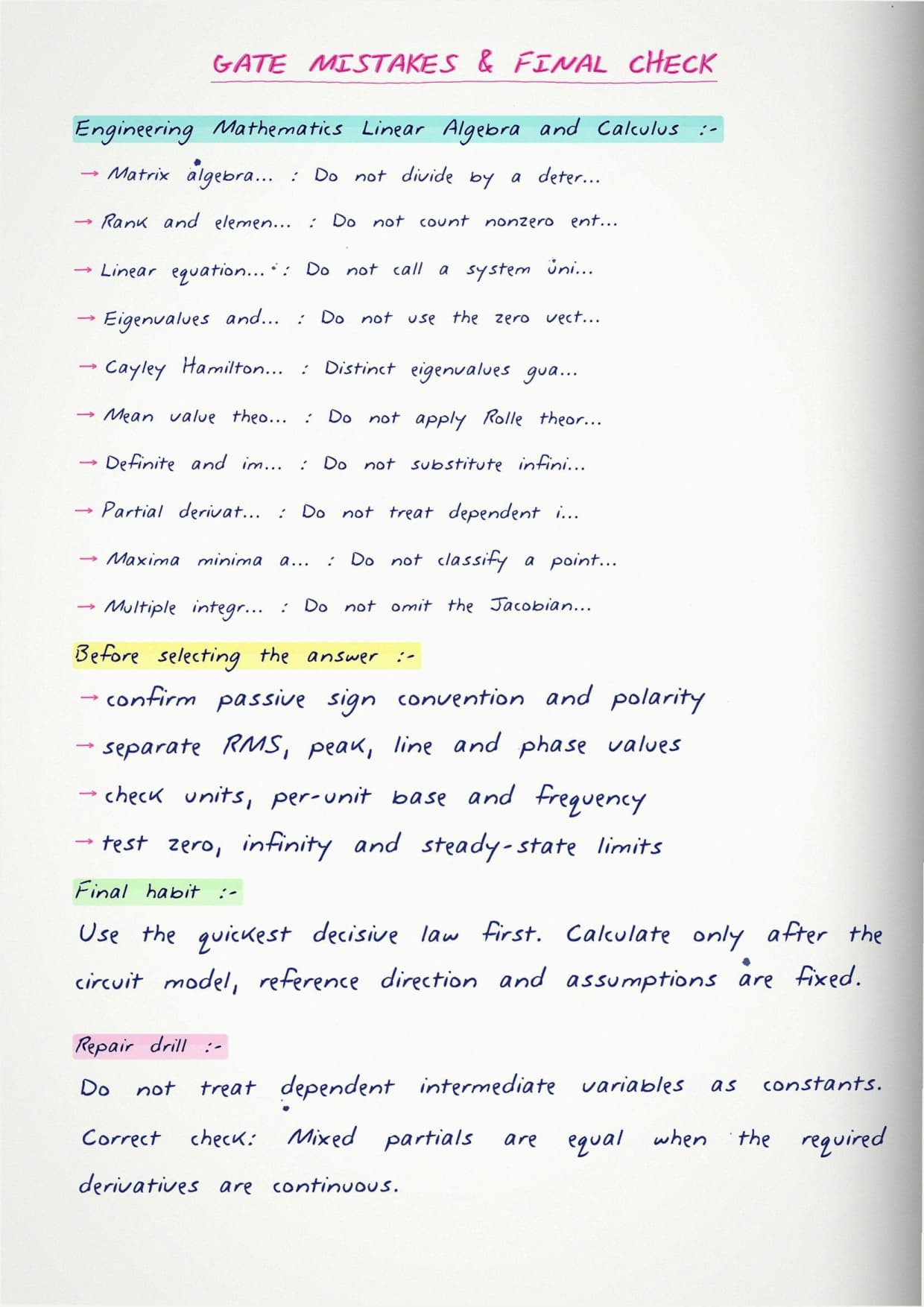
The pages open with clean, hand-drawn matrix layouts that show how row operations reduce a system step by step, followed by worked determinant and eigenvalue problems in the same pen. A short formula sheet on eigenvalues and eigenvectors sits beside sketches of limit, derivative, and area-under-curve ideas, so students can see the algebra and the calculus side by side. Small margin notes flag where a common sign error creeps in, and each solved example ends with a one-line sanity check so students learn to catch a wrong answer before it costs marks.
- Hand-solved Gauss elimination and rank examples with each pivot marked
- A quick-reference box for the Cayley-Hamilton theorem and characteristic equations
- Neatly drawn graphs for maxima, minima, and points of inflection
What These GATE Linear Algebra and Calculus Notes Cover
The notes walk students through matrices and systems of equations first, then move into single and multivariable calculus. Every result is written the way a student would jot it in class, with the key relation circled and a small numerical check next to it. The aim is to build a working memory of methods, so a student who has been through the pages once can reproduce the steps under exam pressure rather than freeze on an unfamiliar-looking question.
- Matrix algebra, determinants, rank, and the inverse of a matrix
- Eigenvalues, eigenvectors, and diagonalisation of square matrices
- Limits, continuity, differentiation, and the mean value theorems
- Definite and improper integrals, partial derivatives, and gradient
GATE Linear Algebra and Calculus Quick Revision
Source: GATE Wallah on YouTube
Topics Covered in GATE Linear Algebra and Calculus
The syllabus coverage stays close to the official GATE Electrical Engineering Mathematics list. Each subtopic gets a short worked example so students revise the method, not just the definition.
- Systems of linear equations, consistency, and Cramer's rule
- Rank of a matrix and echelon form
- Eigenvalues, eigenvectors, and the Cayley-Hamilton theorem
- Mean value theorems and Taylor and Maclaurin series
- Maxima and minima of one and two variable functions
- Evaluation of definite, improper, and multiple integrals
- Partial derivatives, total derivative, and directional derivative
- Vector calculus basics such as gradient, divergence, and curl
How the Notes Are Organised
The reading order flows from algebra to calculus. Matrices and determinants come first, because they set up the eigenvalue work that so many GATE questions rest on. Once the algebra is comfortable, the pages move into limits, derivatives, and integrals.
Within each part, a short theory note is followed by one or two solved problems and then a boxed formula. Students can read straight through for a first pass, or jump to the boxed results during a last-minute revision. The calculus pages also cross-reference the algebra where the two meet, for example when an integral leads back to a matrix of coefficients, which keeps the whole subject feeling like one connected story instead of a list of unrelated tricks.
How GATE Linear Algebra and Calculus Links to Other Topics
These maths tools are not studied in isolation. They quietly power a large share of the core electrical syllabus, so a firm grip here pays off across the whole paper. A student who is fluent with eigenvalues and integration finds that several core chapters suddenly feel familiar, which is why these pages reward early and repeated revision.
- Eigenvalues feed directly into state-space analysis in Control Systems
- Integration underpins Fourier and Laplace transforms in Signals and Systems
- Vector calculus supports Electromagnetic Fields and Maxwell's equations
- Matrix methods appear in Power System load-flow and network analysis
Important Topics in GATE Linear Algebra and Calculus
A few areas show up almost every year, and the notes flag the traps that cost students easy marks. Watching the sign and the order of operations matters here.
- Finding eigenvalues quickly using trace and determinant shortcuts
- Rank and consistency conditions for a system of equations
- Correct use of the mean value theorem hypotheses before applying it
- Improper integrals that need a limit check for convergence
- Second-derivative test for maxima and minima in two variables
How to Prepare GATE Linear Algebra and Calculus with Handwritten Notes
Treat the notes as a working companion rather than a book to read once. A steady four-step routine builds both speed and accuracy before the exam.
- First read: go slowly through matrices and calculus theory, re-solving each example
- Second pass: cover the solution and attempt every boxed problem on your own
- PYQ stage: match each formula to previous GATE questions and time yourself
- Final week: revise only the boxed results and the flagged traps
Why These Notes Help You Score Better
Because the algebra and calculus live on the same pages, students stop treating them as separate silos and start seeing the shared logic. The compact layout means a full revision fits into a single sitting, and the flagged traps stop the small slips that quietly drain marks. For most students, that turns Engineering Mathematics into one of the safest scoring blocks in GATE Electrical.
GATE Electrical Linear Algebra and Calculus Handwritten Notes FAQs
Ques. How many marks does Linear Algebra and Calculus carry in GATE Electrical
Ans. Engineering Mathematics as a whole carries roughly 13 to 15 marks, and Linear Algebra with Calculus usually accounts for about 7 to 10 of those marks, which makes it a reliable scoring area for students.
Ques. Are these handwritten notes enough for the full GATE Maths preparation
Ans. The notes cover the complete Linear Algebra and Calculus syllabus with worked examples and a formula sheet. Students should pair them with previous year questions and a timed mock test to be fully exam ready.
Ques. Which topic should students revise first in these notes
Ans. Start with matrices, determinants, and eigenvalues, since these ideas support state-space work in Control Systems and appear directly in many GATE numerical questions.
Ques. Can I download these Linear Algebra and Calculus notes as a PDF
Ans. Yes. The complete handwritten notes are available as a downloadable PDF on this page, so students can revise offline or print the formula pages for quick reference.



Comments