




Electrostatics, Dielectrics and Capacitance is a steady scoring topic in GATE Electrical, usually worth about 4 to 6 marks in the paper. It belongs to the Electric Circuits and Fields section, and its ideas return in magnetostatics and Ampere's law, transmission line capacitance, and high-voltage insulation design. These handwritten notes cover the full topic in a compact, exam-focused form.
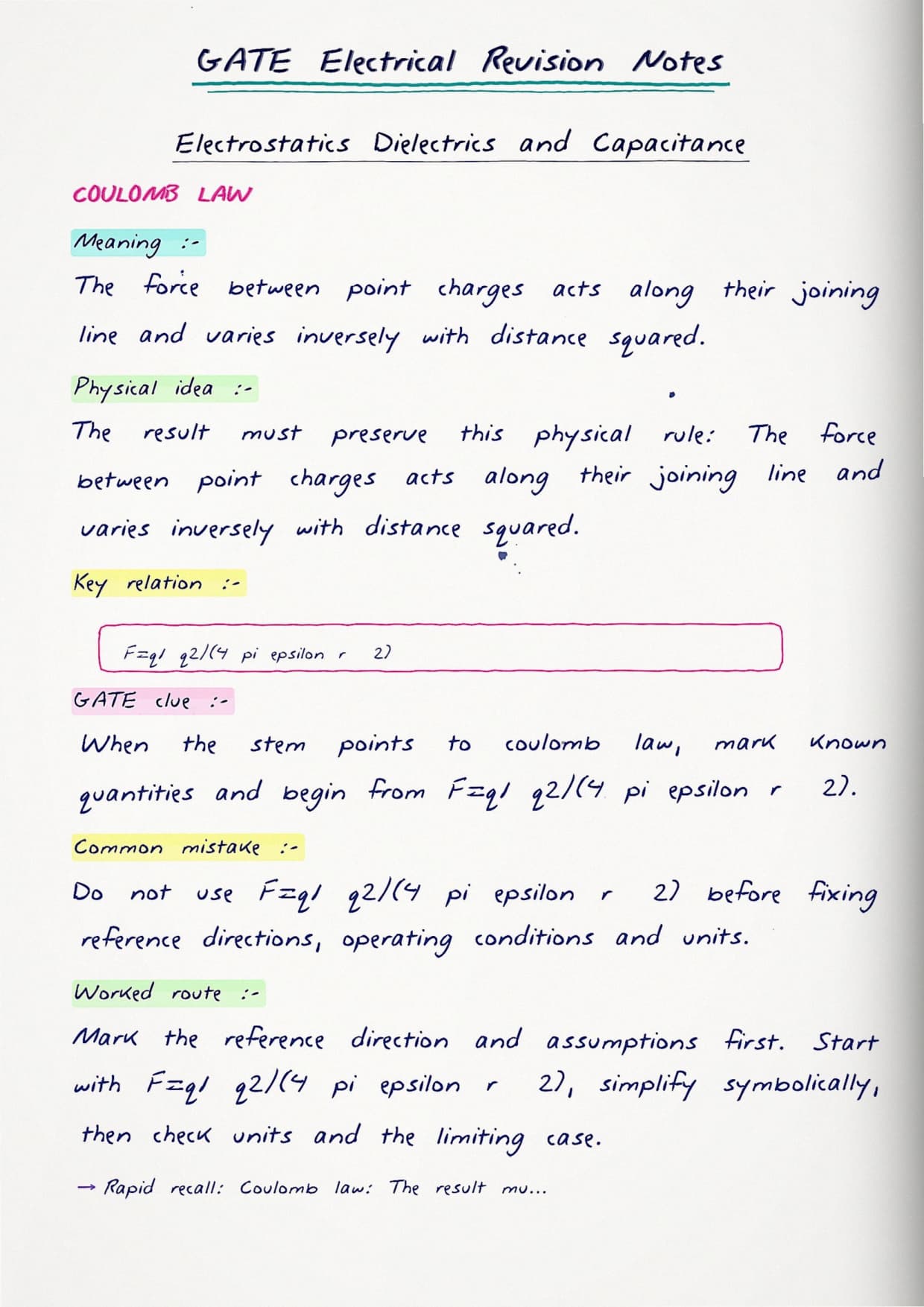
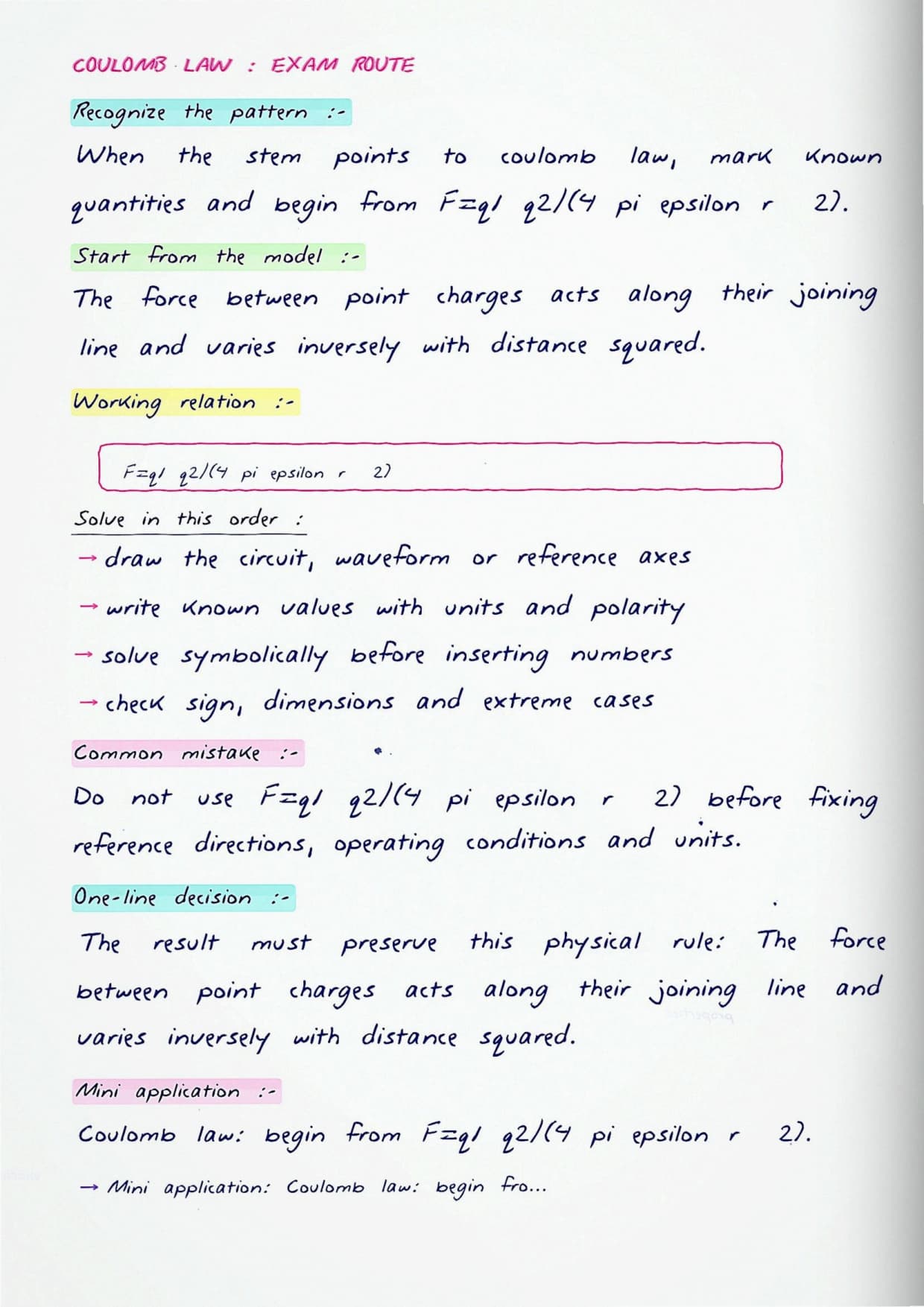
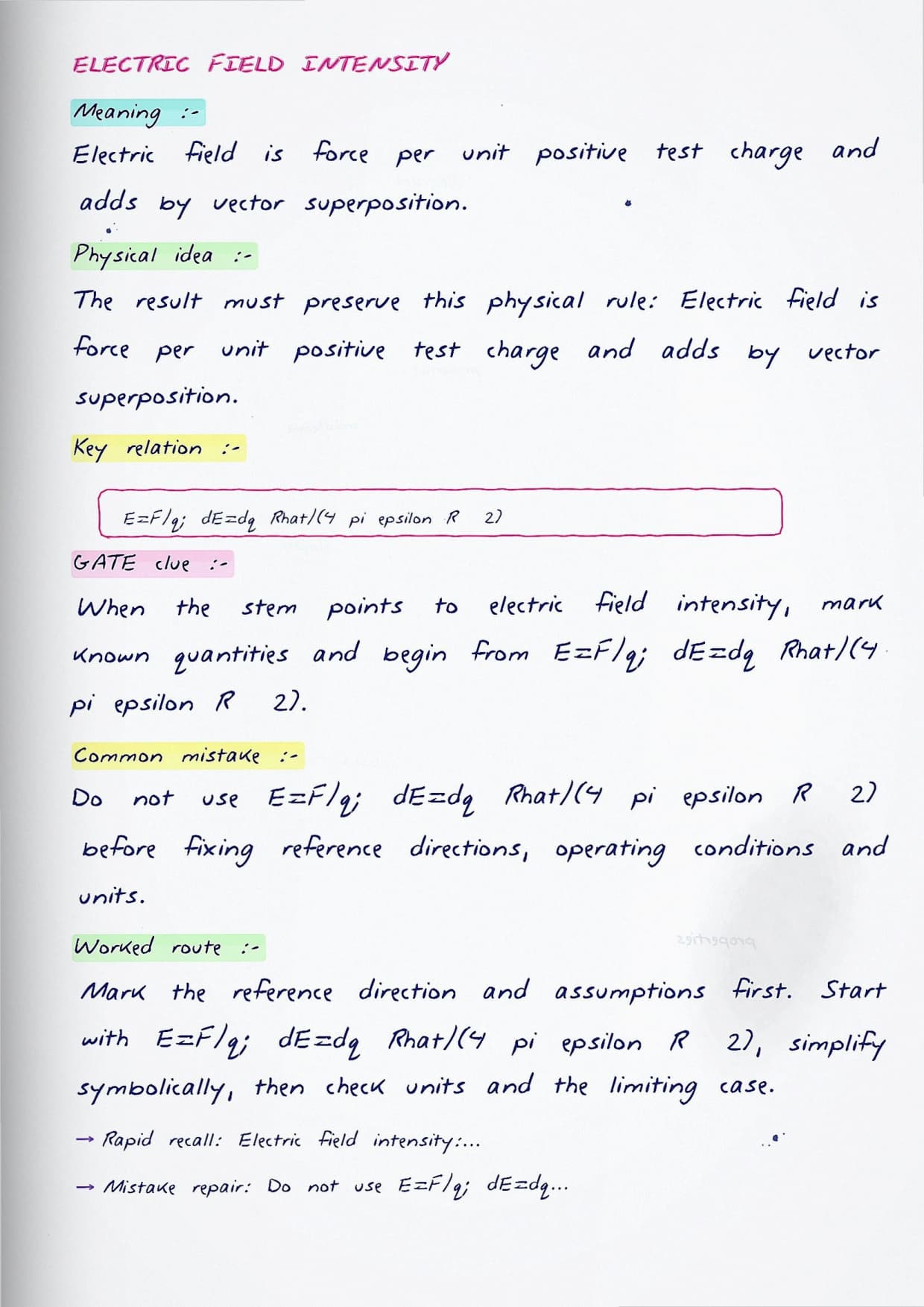
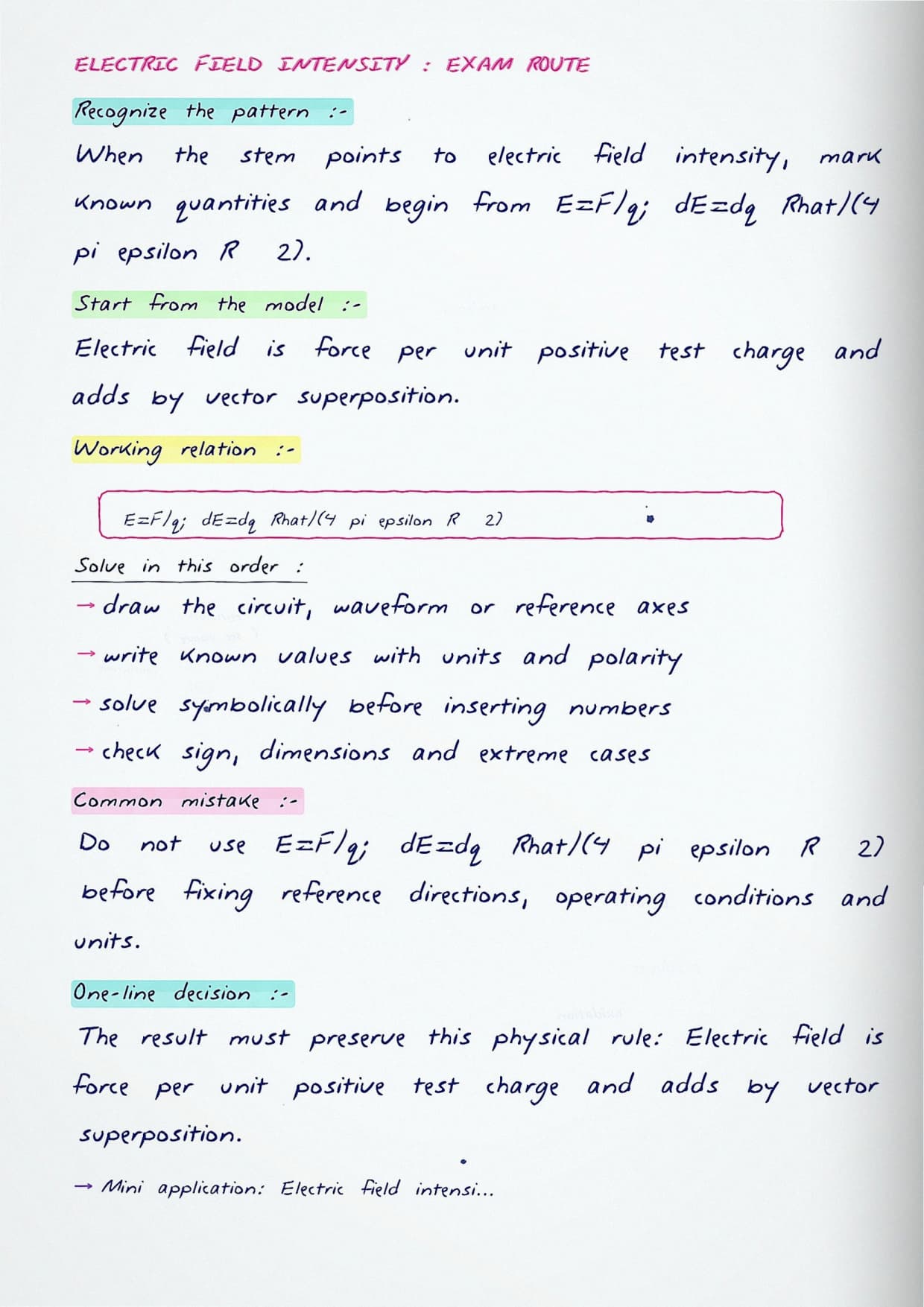
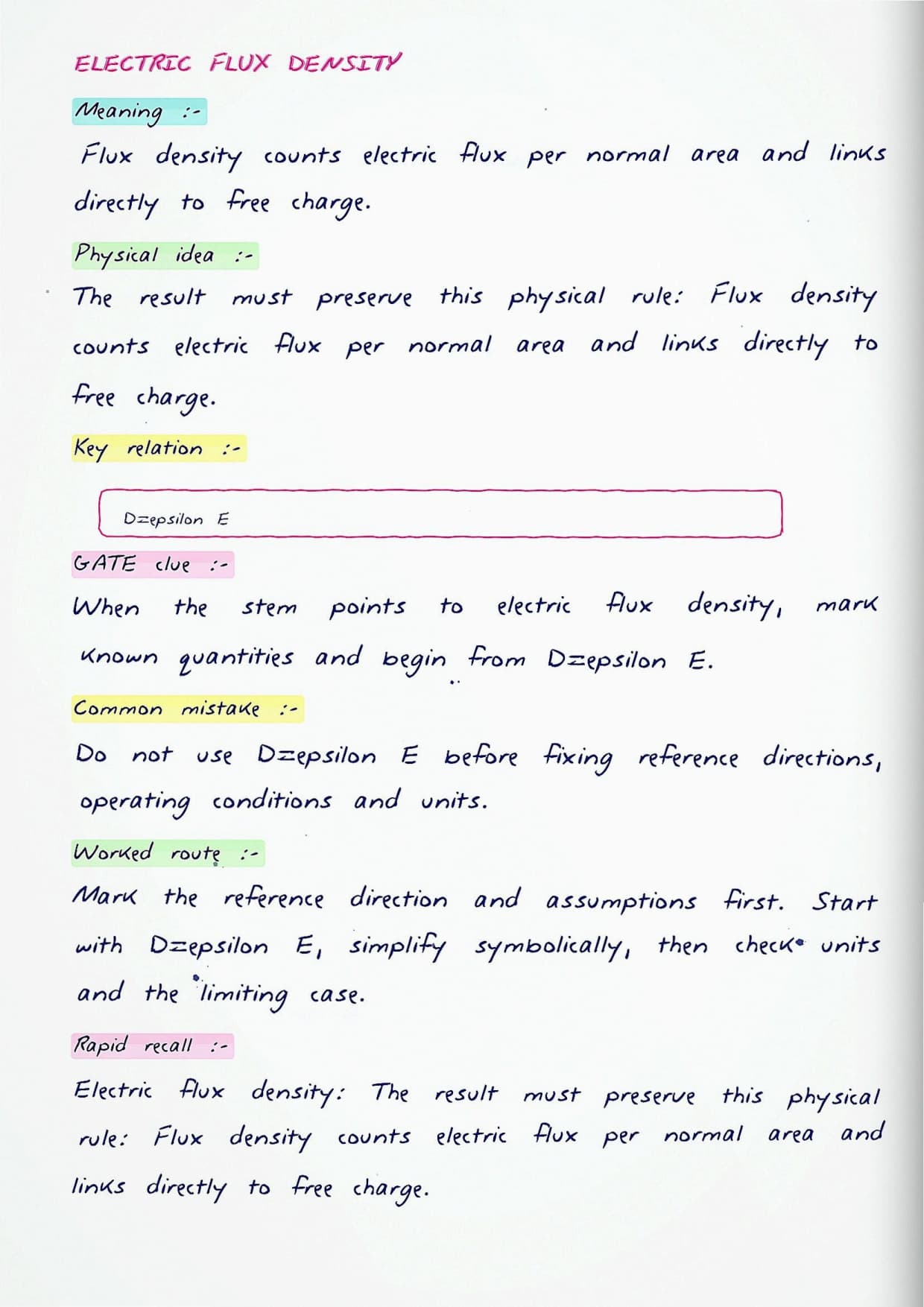
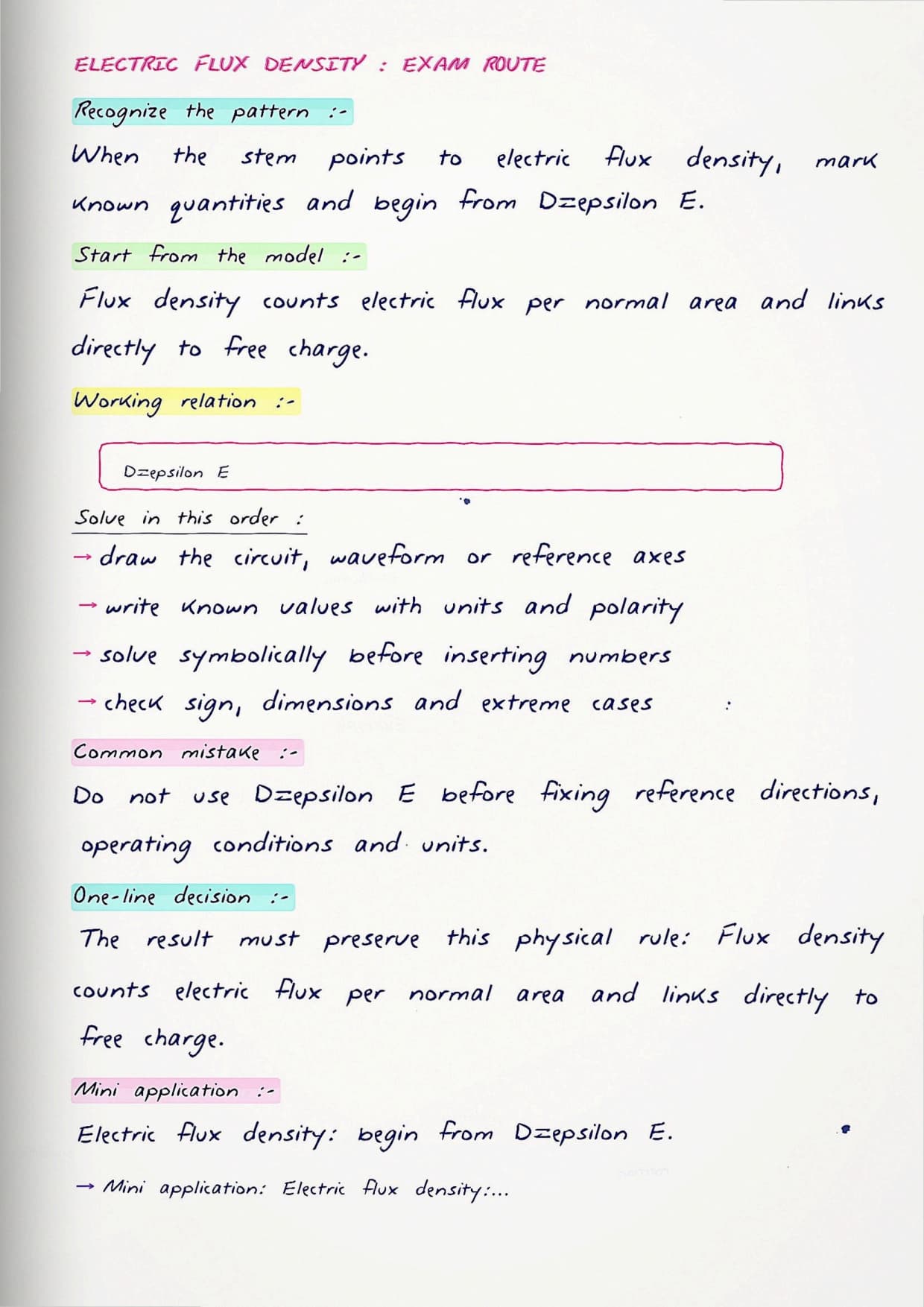
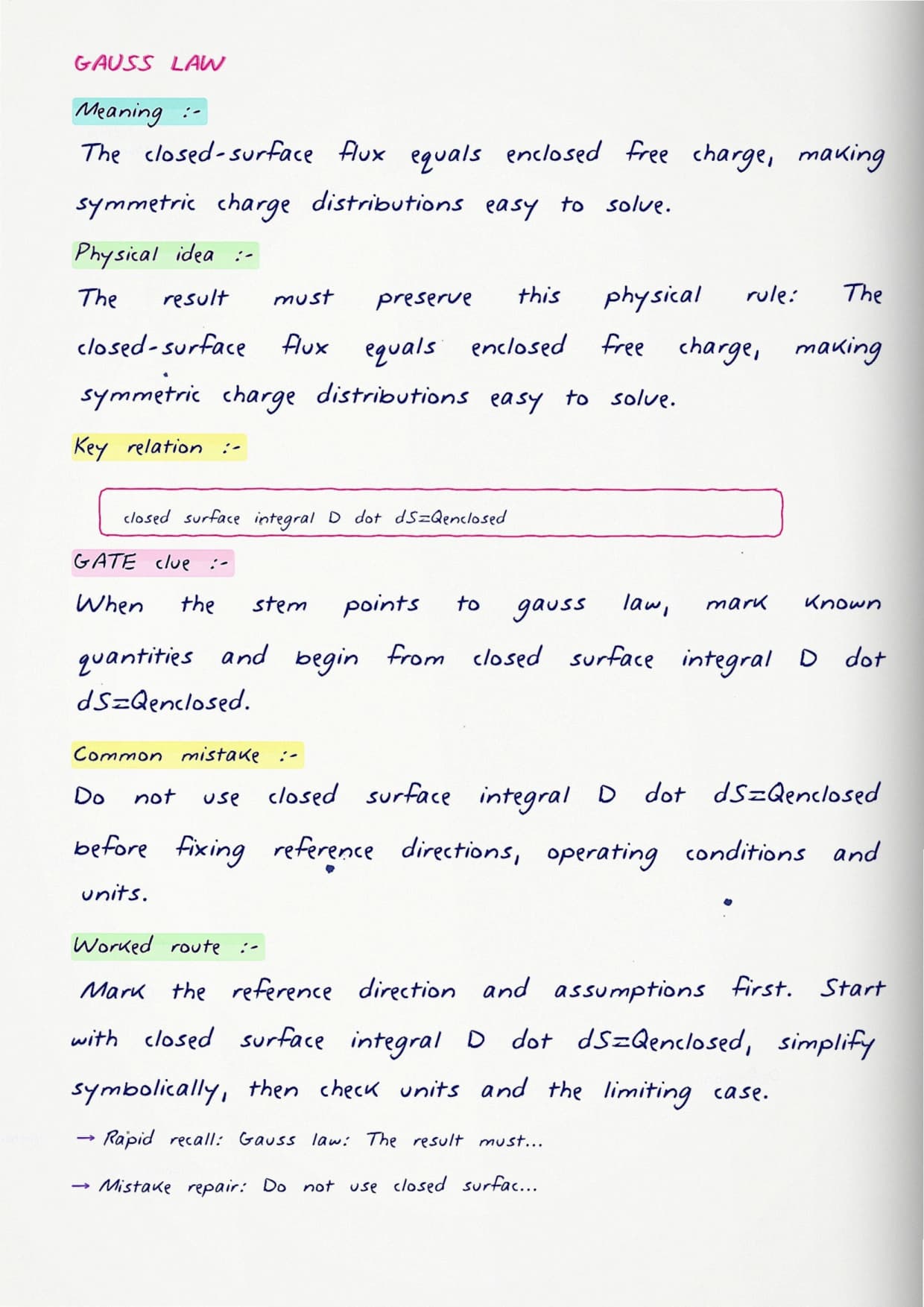
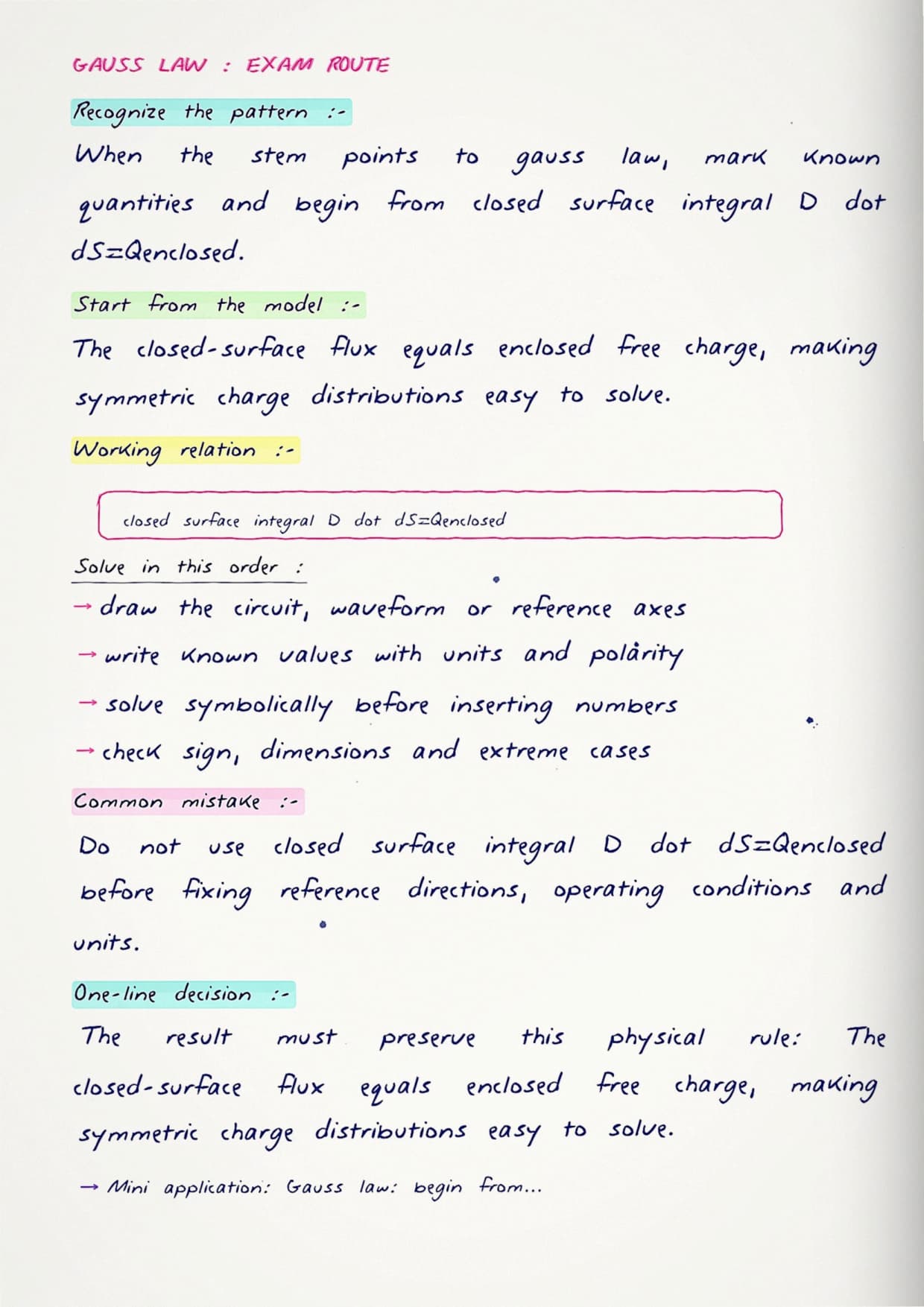
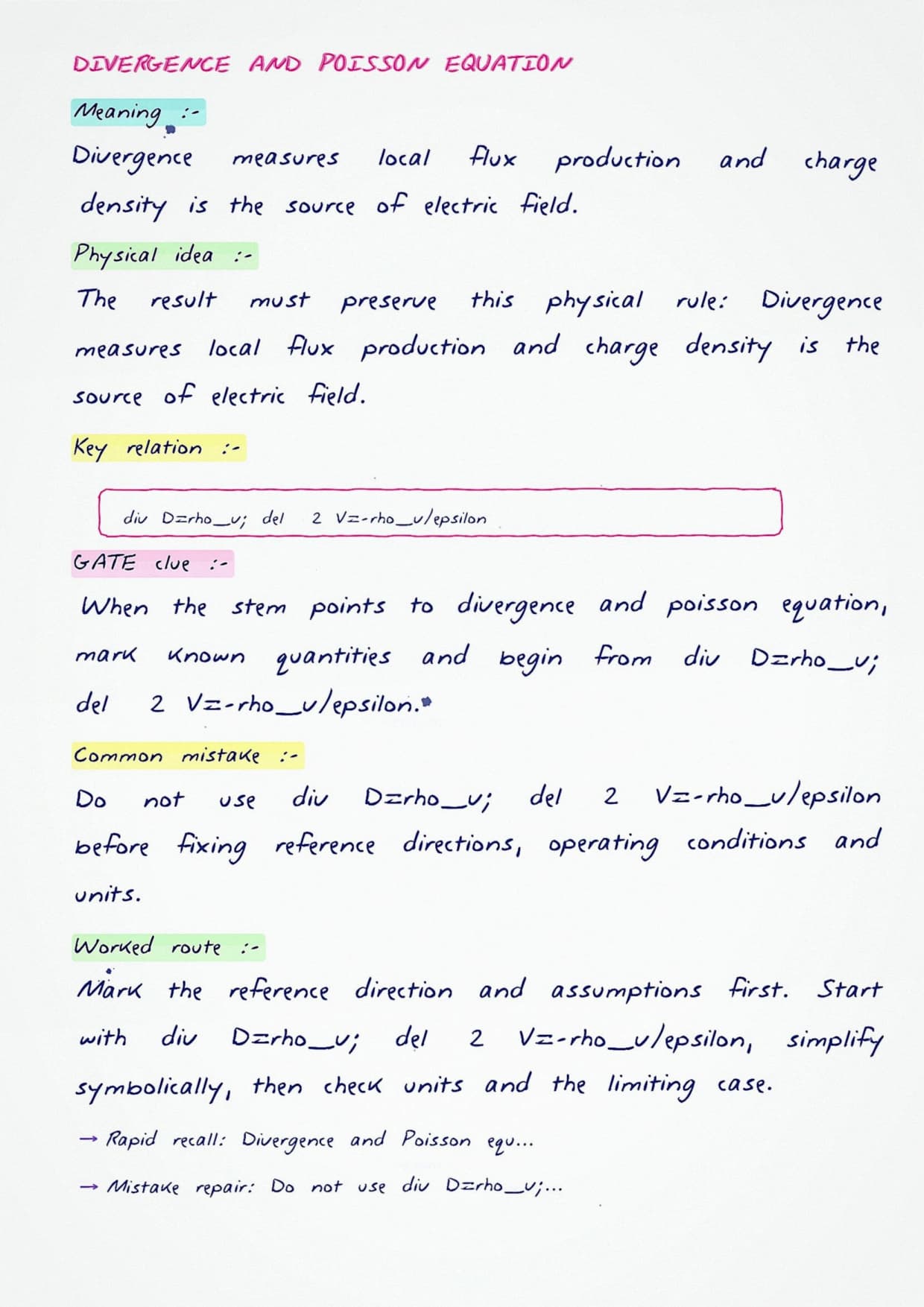
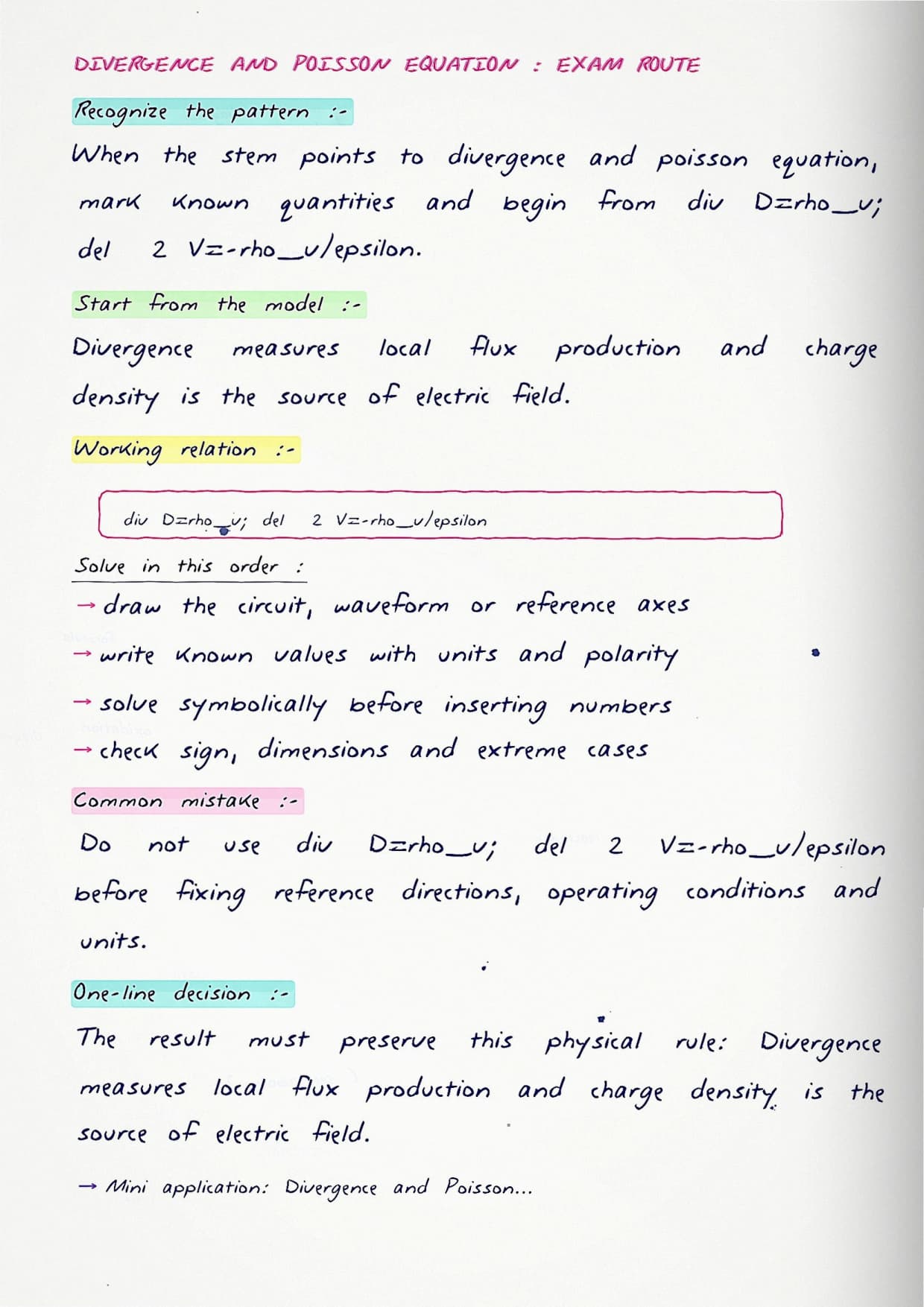
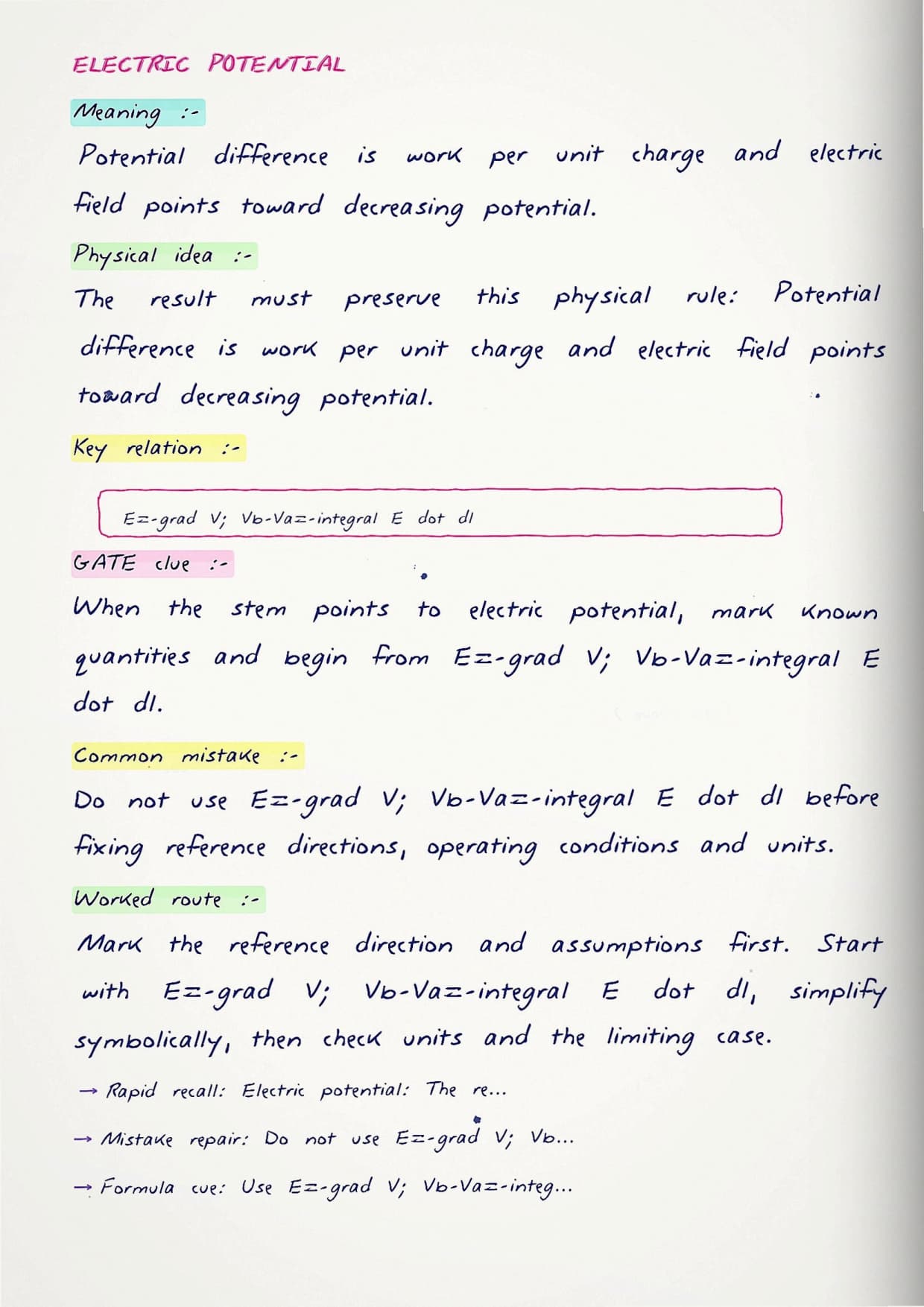
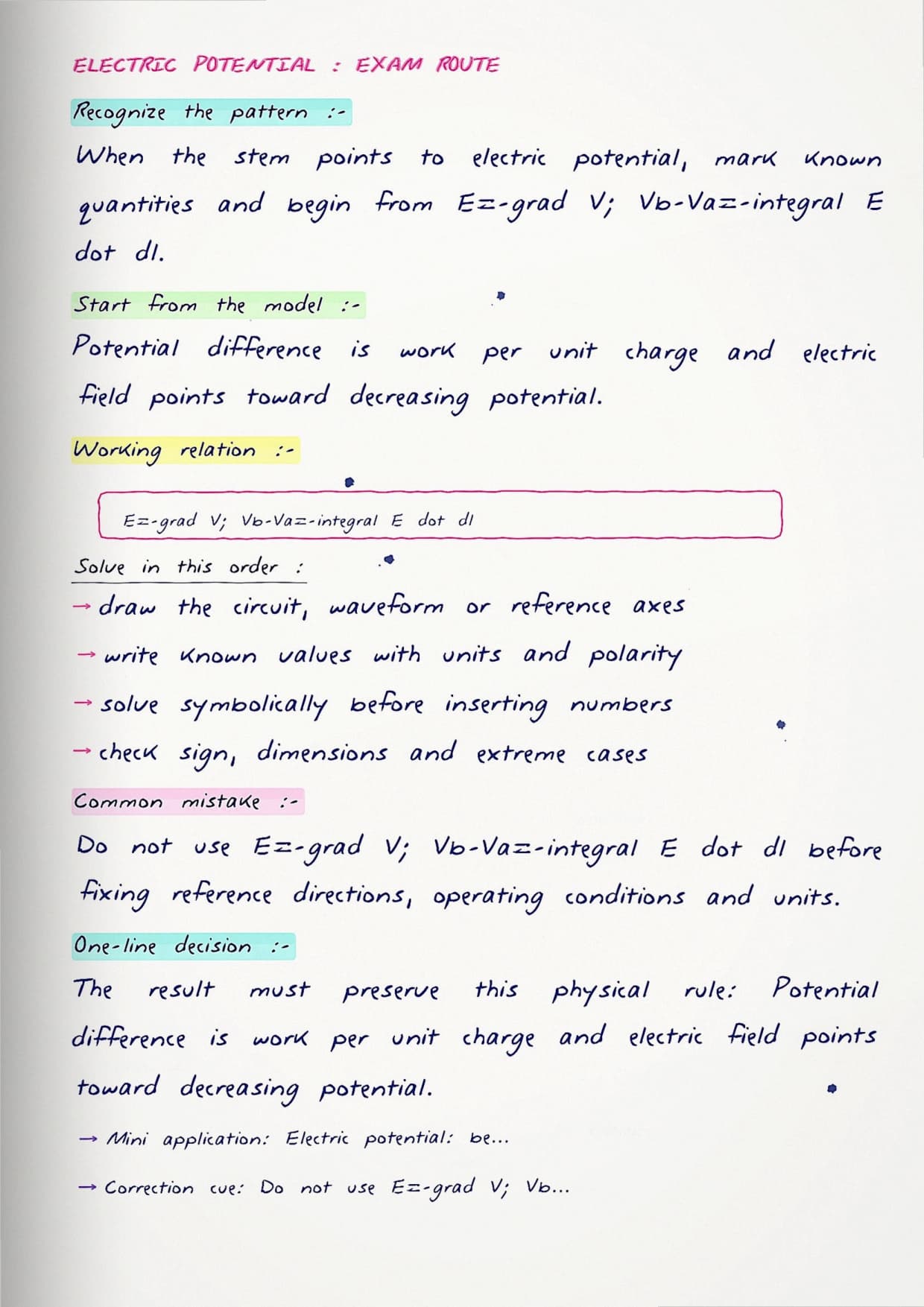
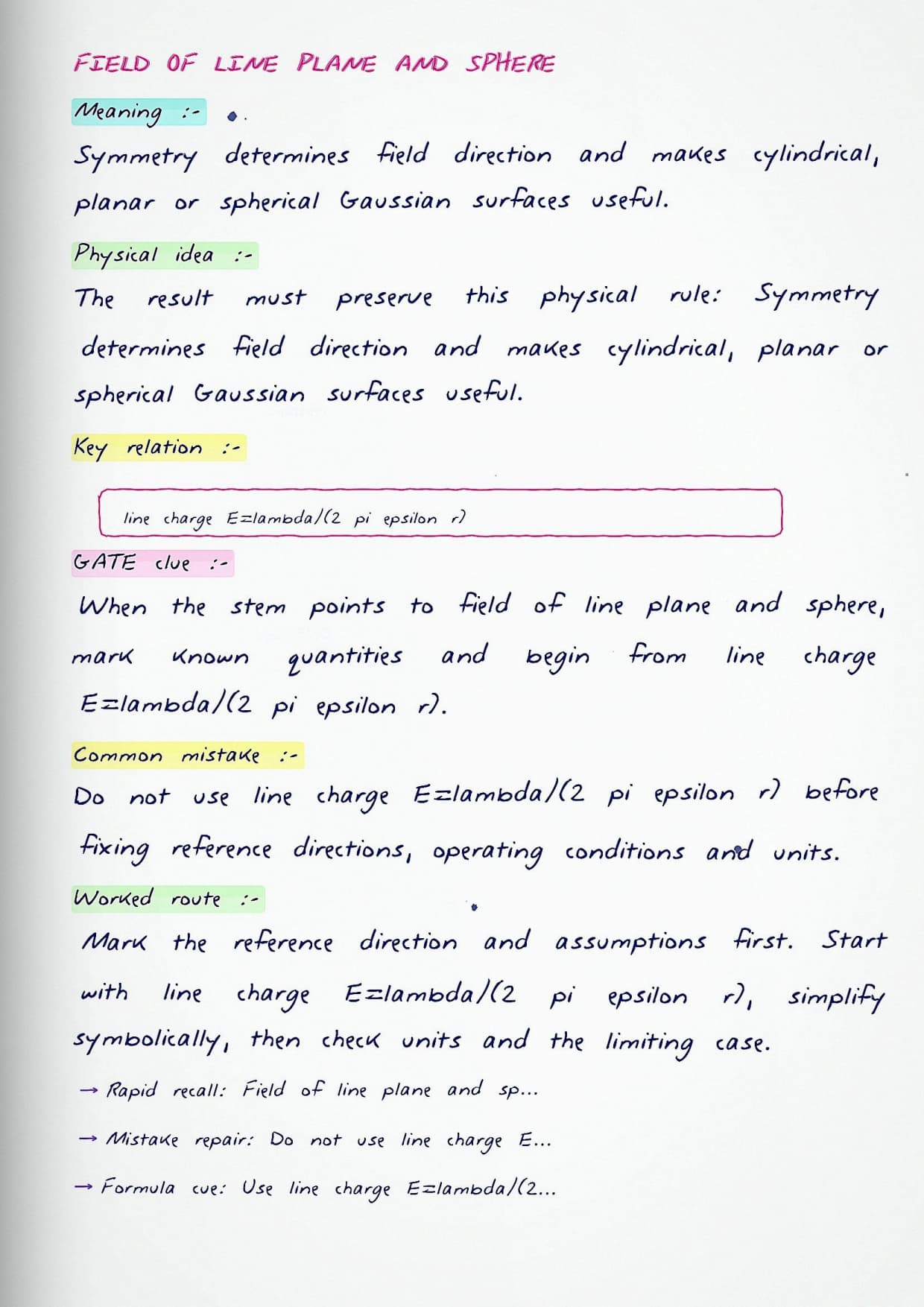
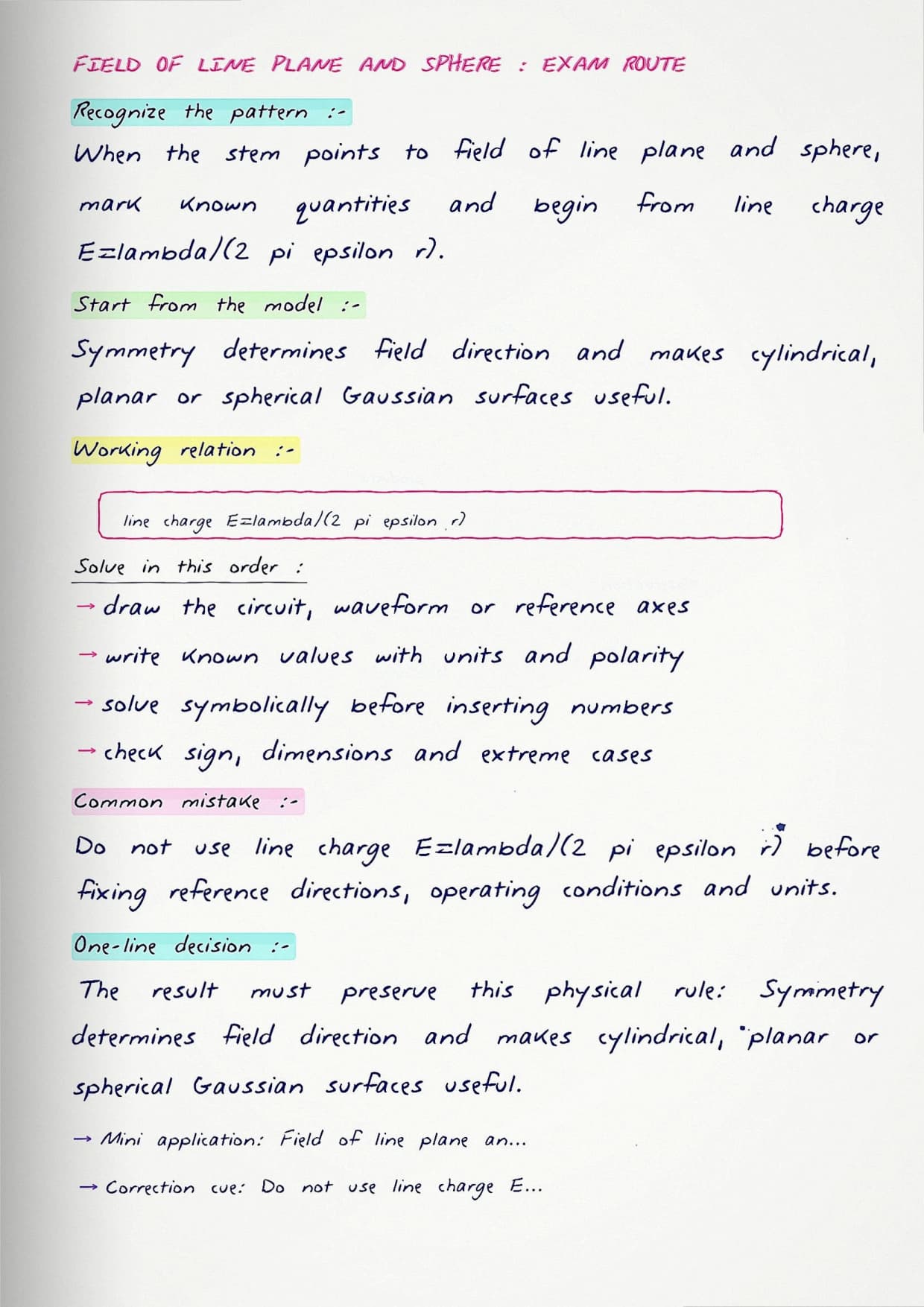
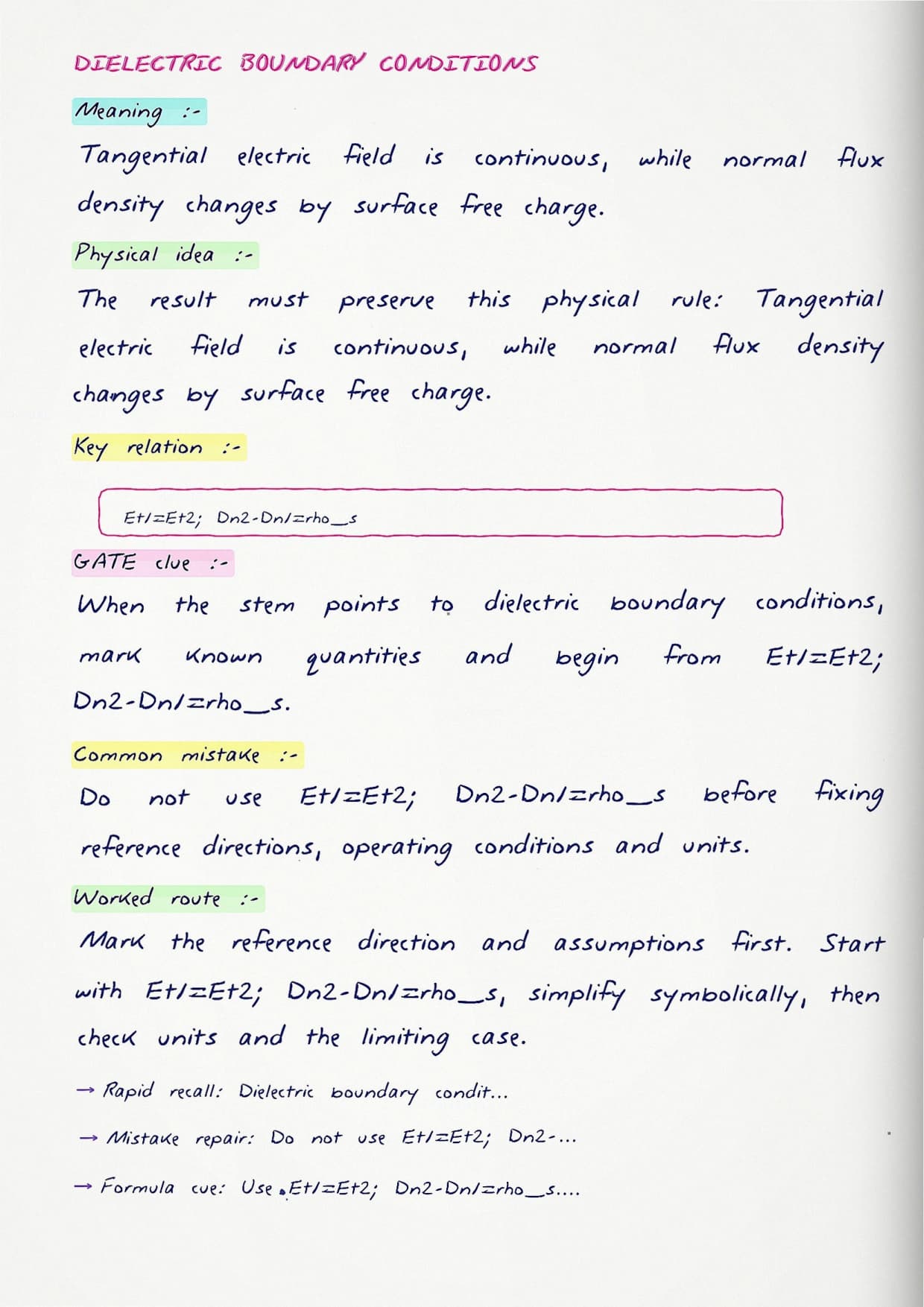
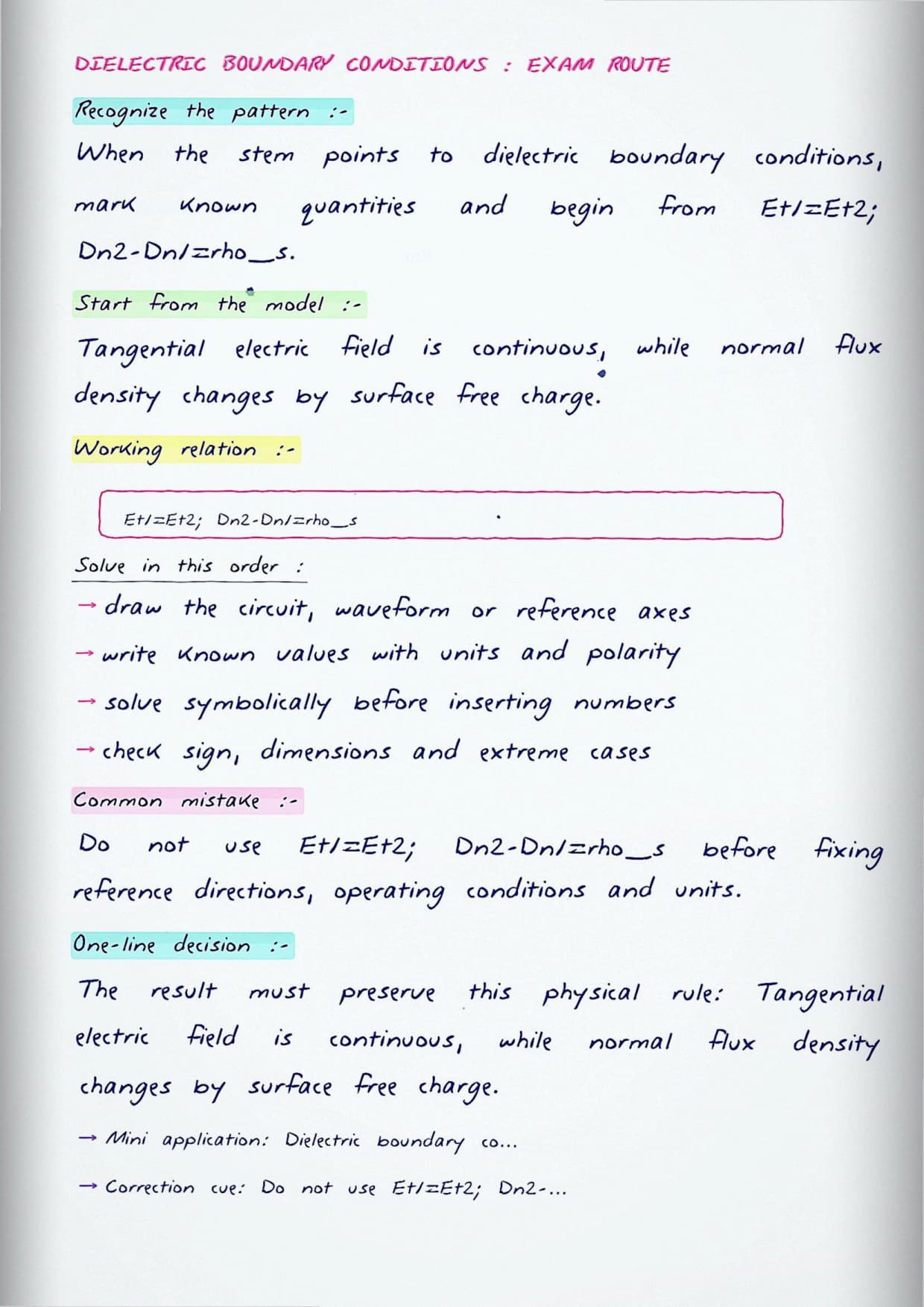
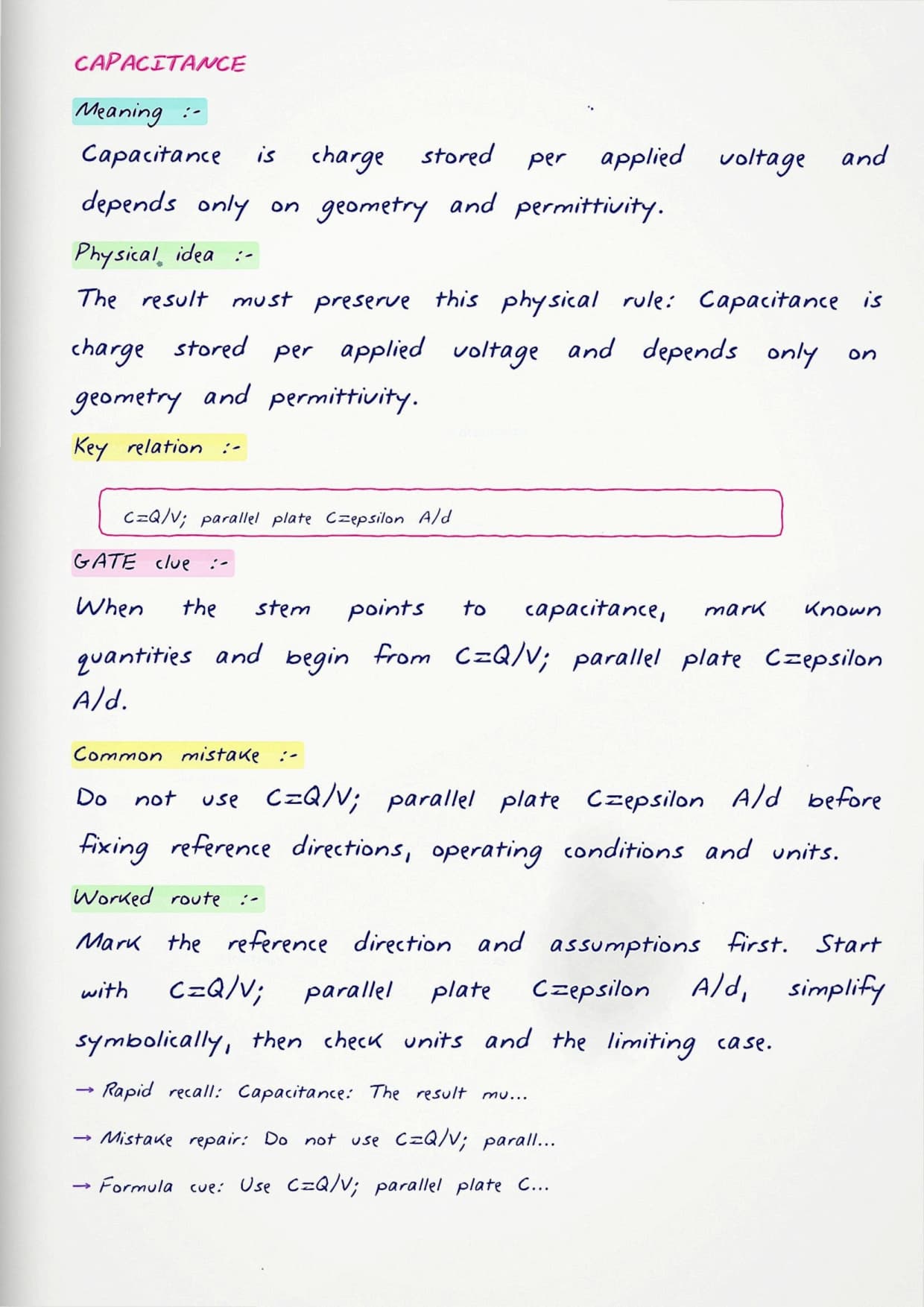
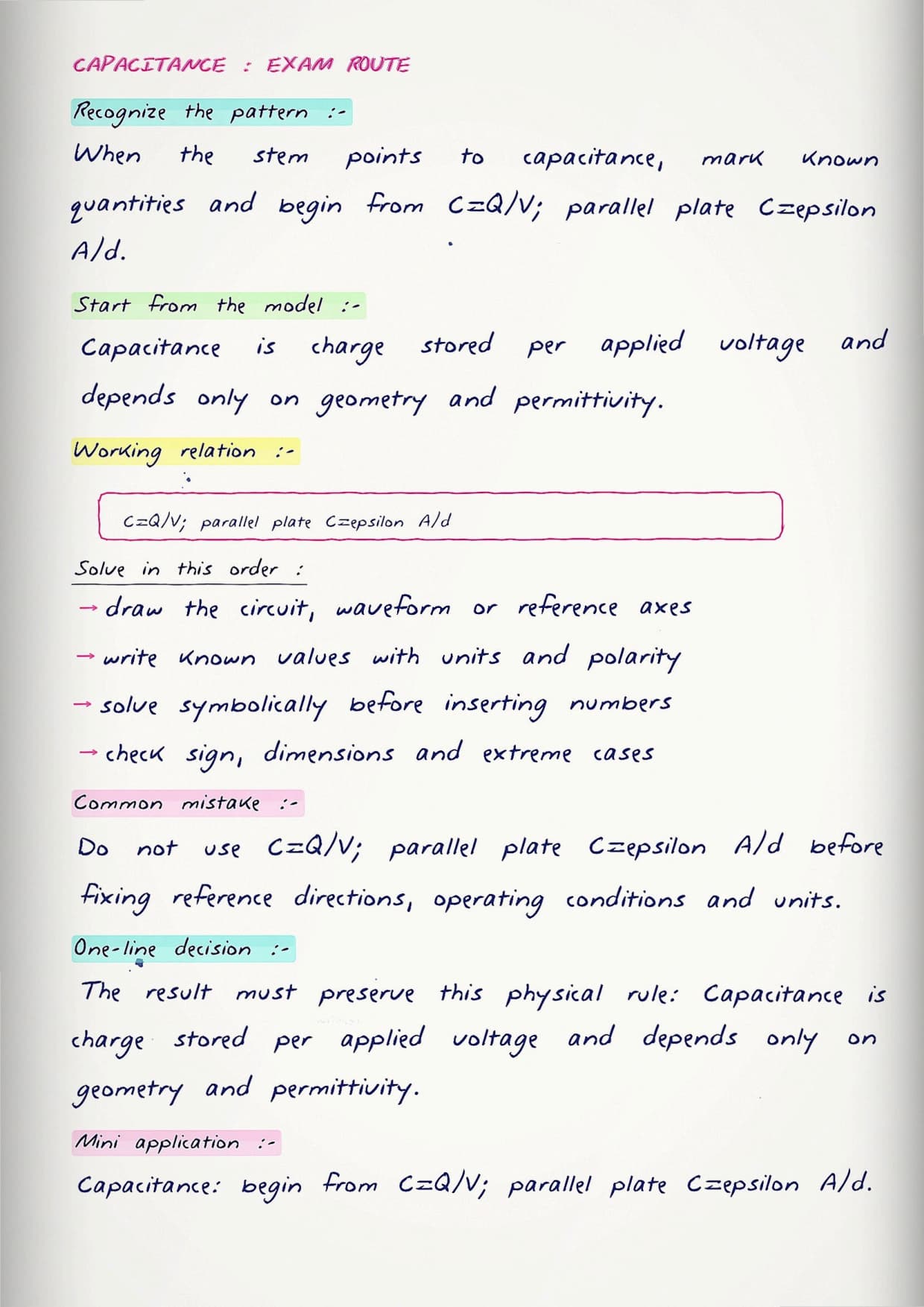
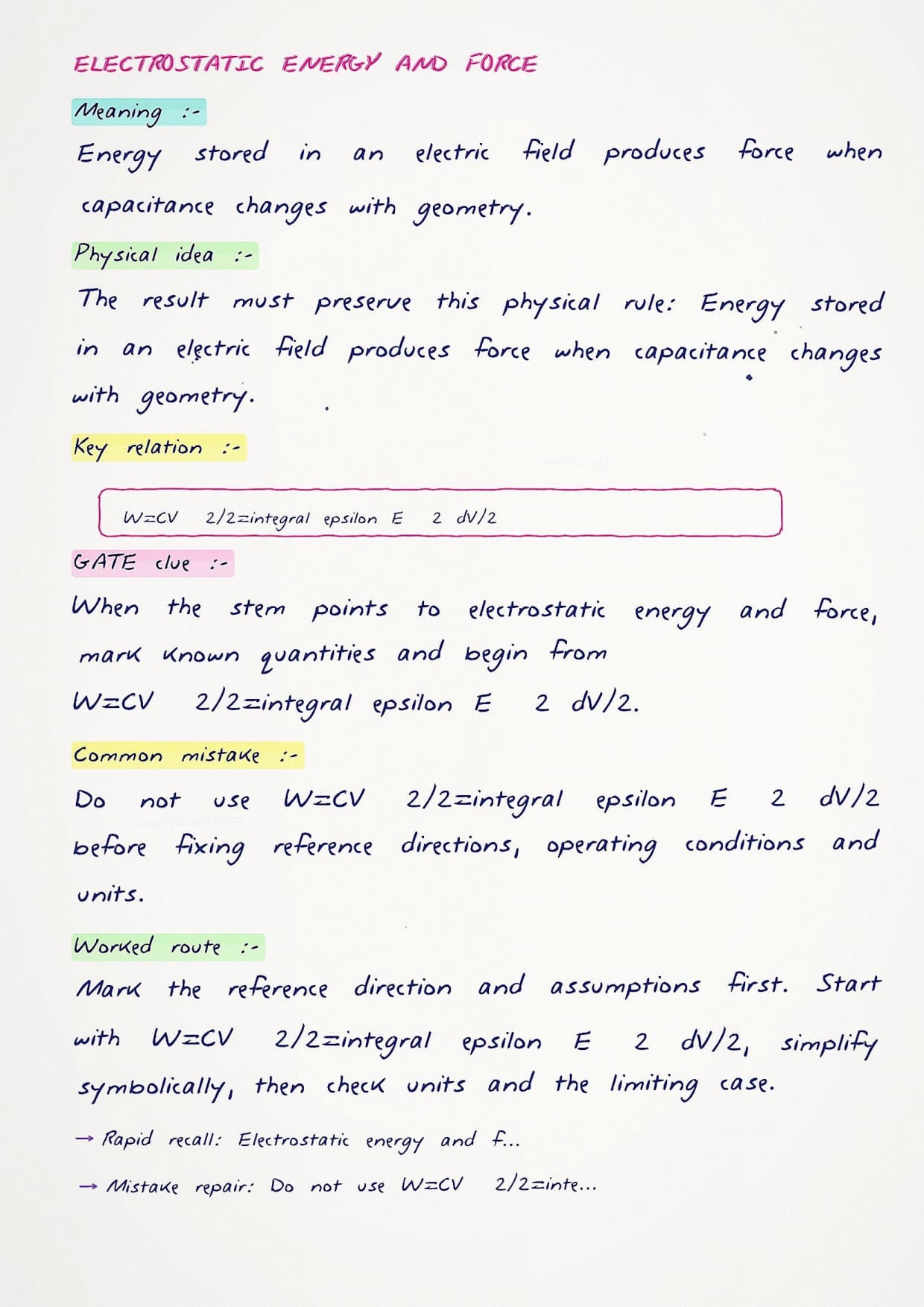
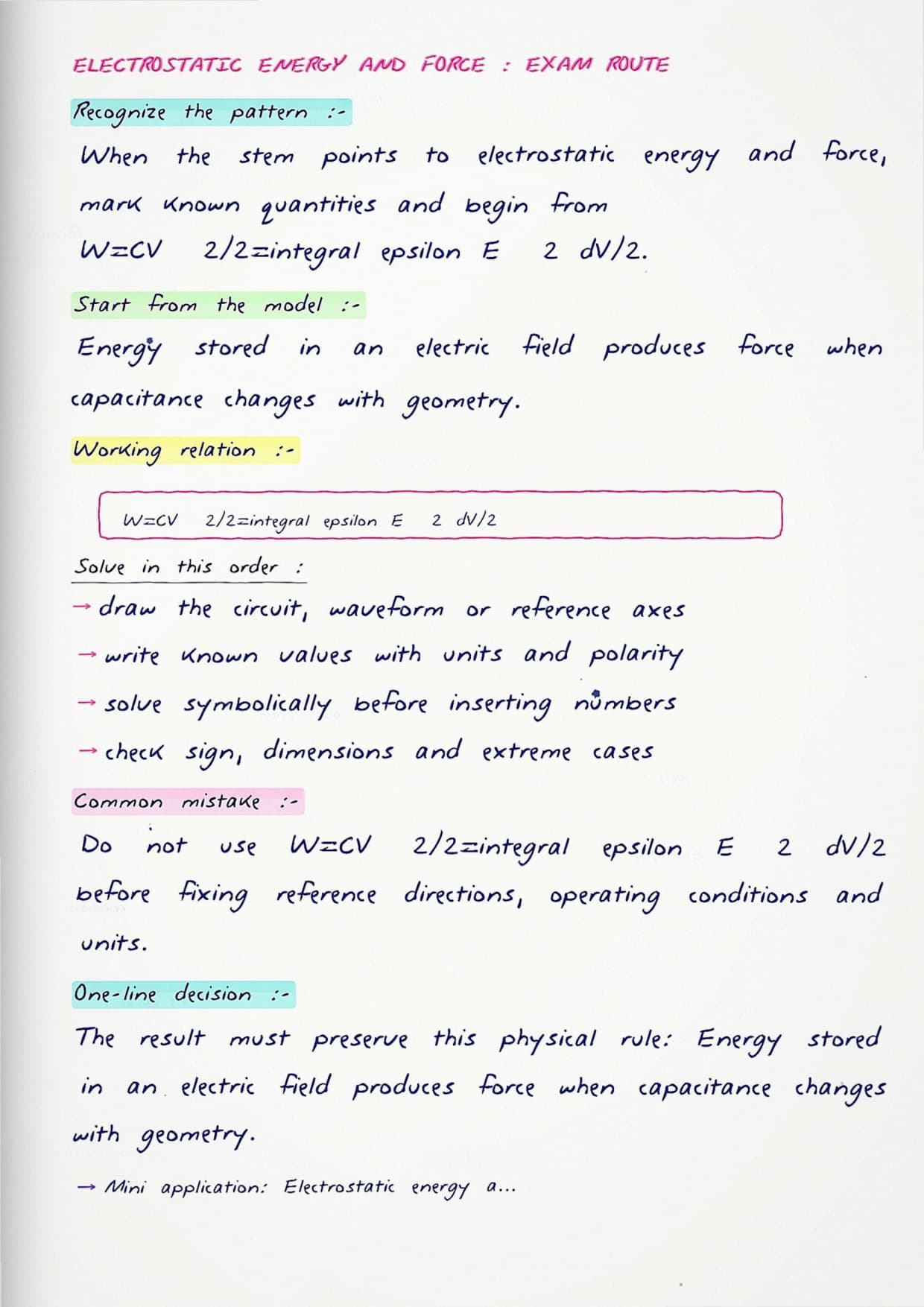
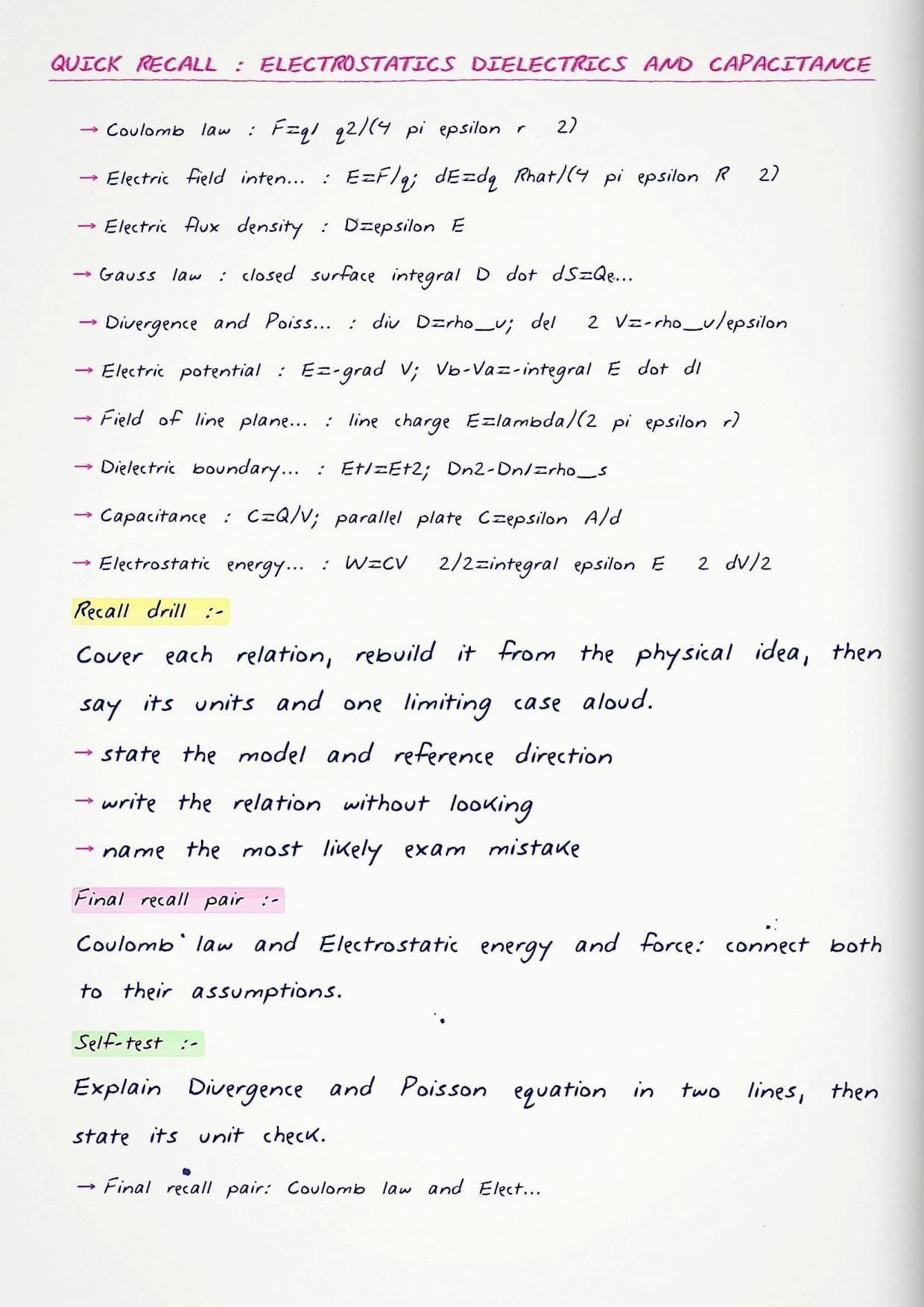
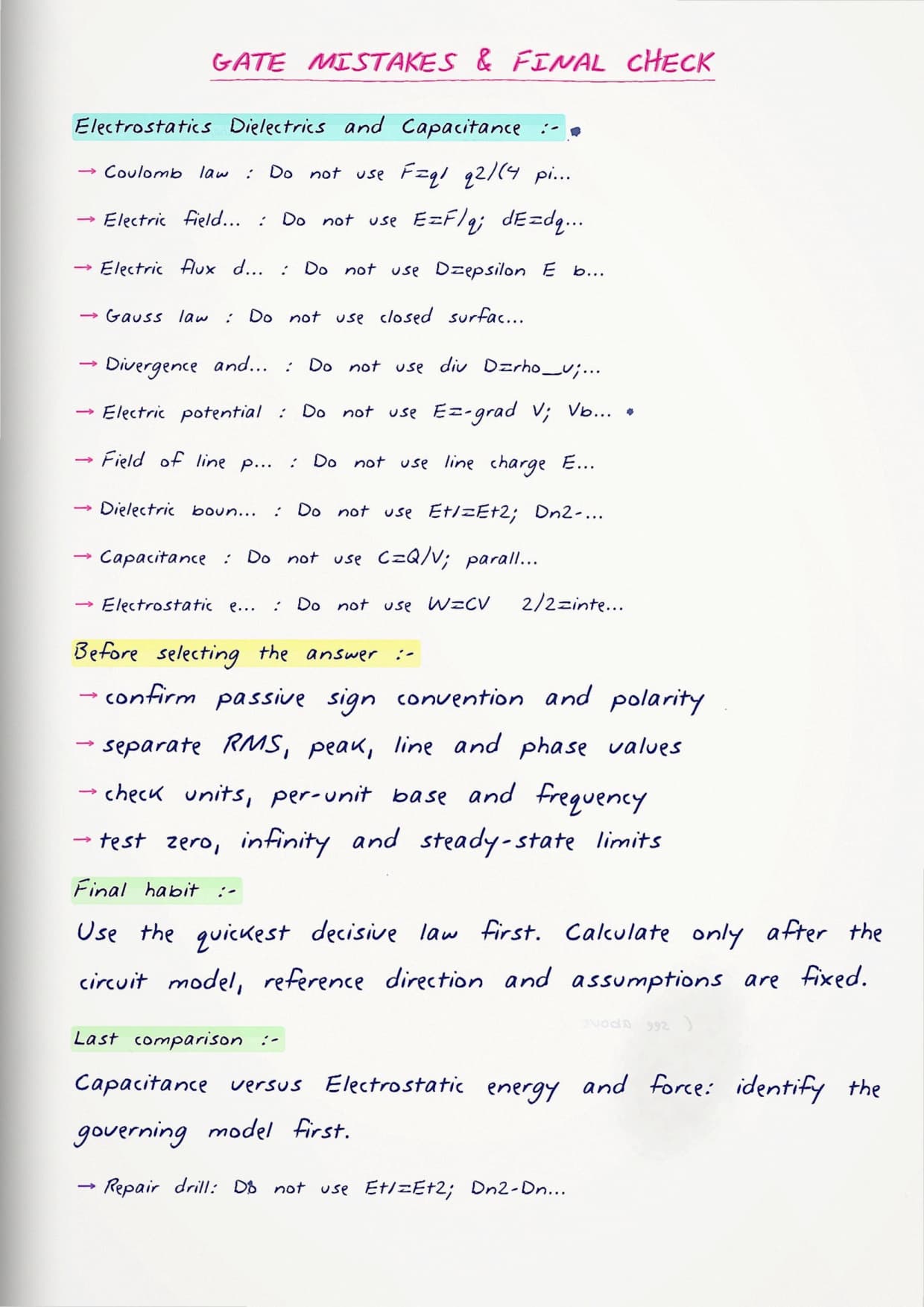
The pages open with hand-drawn field maps that show how electric flux spreads out from point charges and charged plates, so students can picture Gauss's law before touching a single formula. Worked steps sit right beside each sketch, and a one-page formula sheet at the end gathers every capacitance expression the topic asks for. The parallel-plate capacitor is drawn plate by plate with the dielectric slab shaded in, and the field lines that bend at the slab edge are marked so the physics stays visible.
- Hand-drawn Gaussian surfaces for spherical, cylindrical, and planar symmetry, each with the enclosed-charge reasoning written alongside.
- Neat derivations of capacitance for parallel-plate, spherical, and coaxial arrangements, with units checked at every line.
- A shaded diagram of a dielectric slab partly filling a capacitor, showing the series and parallel split clearly.
What These GATE Electrostatics & Capacitance Notes Cover
The notes take students from the Coulomb force between charges up to the energy stored in a charged capacitor. Every idea is tied to a picture, so the field concepts never feel abstract. The aim is a quick, confident revision rather than a textbook read.
- Electric field and electric potential for standard charge distributions.
- Gauss's law applied to symmetric surfaces to find field strength fast.
- Behaviour of conductors and dielectrics placed inside a field, including polarisation.
- Capacitance, energy density, and series and parallel capacitor networks.
GATE Electrostatics & Capacitance Quick Revision
Source: Kreatryx GATE - EE, ECE & IN by Unacademy on YouTube
Topics Covered in GATE Electrostatics & Capacitance
The coverage follows the official GATE Electrical syllabus for the electric-field portion of Electric Circuits and Fields. Each point below maps to a page of worked notes so students can jump straight to a weak area.
- Coulomb's law and the superposition of forces from many charges.
- Electric field intensity and electric flux density across different media.
- Gauss's law in integral form and its use on spheres, cylinders, and sheets.
- Electric potential, potential gradient, and the work done in moving a charge.
- Polarisation, permittivity, and the effect of a dielectric on capacitance.
- Capacitance of parallel-plate, coaxial cable, and spherical capacitors.
- Energy stored, energy density, and boundary conditions at a dielectric interface.
How the Notes Are Organised
The reading order moves from cause to effect. Students first meet charges and forces, then the field and potential they set up, and only after that the capacitance that stores their energy. This keeps each new page resting on the one before it.
Short boxed results sit at the foot of every page, and the final sheet lines up all the key formulas together. A student short on time can read only those closing boxes and still hold the whole topic in view before an exam.
How GATE Electrostatics & Capacitance Links to Other Topics
Field ideas rarely stay inside one chapter. The same reasoning about flux and boundaries shows up across the wider syllabus, so a firm grip here pays off in several other subjects.
- Magnetostatics, where Ampere's law mirrors the flux logic of Gauss's law.
- Transmission line parameters, where line capacitance sets the charging current.
- Electromagnetic waves, which begin from the field and boundary rules learned here.
- High-voltage insulation, where dielectric strength decides the breakdown limit.
Important Topics in GATE Electrostatics & Capacitance
A few ideas carry most of the marks and also trip up careful students. The notes flag each trap in the margin so the mistake is spotted before the exam, not during it.
- Choosing the right Gaussian surface; a wrong symmetry wastes the whole question.
- Handling a partly filled dielectric, which splits into series and parallel parts.
- Keeping charge fixed against voltage fixed when a capacitor is disconnected.
- Correct use of the permittivity of free space against relative permittivity.
- Energy change when a slab is inserted, where work and stored energy differ.
How to Prepare GATE Electrostatics & Capacitance with Handwritten Notes
These notes suit a layered revision. Students should read for understanding first, then return for speed, and finally test recall against real questions. The plan below fits a busy GATE timetable.
- First read: follow each diagram and rewrite one derivation in your own hand.
- Second pass: cover the steps and rebuild every capacitance formula from memory.
- PYQ practice: solve past GATE Electrical questions on Gauss's law and dielectrics.
- Final week: revise only the closing formula sheet and the flagged traps.
Why These Notes Help You Score Better
Because every rule sits next to the picture that explains it, the notes turn a formula-heavy topic into something students can actually see. The worked steps remove guesswork, the flagged traps stop silly errors, and the compact formula sheet makes last-minute revision quick. Used across a full study cycle, they help students walk into the exam sure of the marks this topic offers.
GATE Electrical Electrostatics & Capacitance Handwritten Notes FAQs
Ques. How many marks does electrostatics and capacitance carry in GATE Electrical?
Ans. The topic usually contributes about 4 to 6 marks, drawn from the Electric Circuits and Fields section, so it is a steady and worthwhile source of marks for students.
Ques. Do these handwritten notes include diagrams?
Ans. Yes. The notes carry hand-drawn Gaussian surfaces, field maps, and shaded dielectric sketches, each placed beside its worked steps so the concept and the calculation stay together.
Ques. Which is the most common mistake students make in this topic?
Ans. Picking the wrong Gaussian surface for the given symmetry is the frequent slip. The notes mark this trap in the margin and show the correct choice for spheres, cylinders, and sheets.
Ques. Can I use these notes for last-minute revision?
Ans. Yes. The one-page formula sheet and the boxed results at the foot of each page are built for quick recall, so students can revise the whole topic in a short final sitting.



Comments