




Electrical and Electronic Measurements is a steady, high-accuracy scoring topic in GATE Electrical, usually worth about 5 to 8 marks in the paper. It belongs to the Measurements and Electronics section, and its ideas return in Analog Electronics, Electric Circuits bridge analysis, and Signals and Systems sampling. These handwritten notes cover the full topic in a compact, exam-focused form.
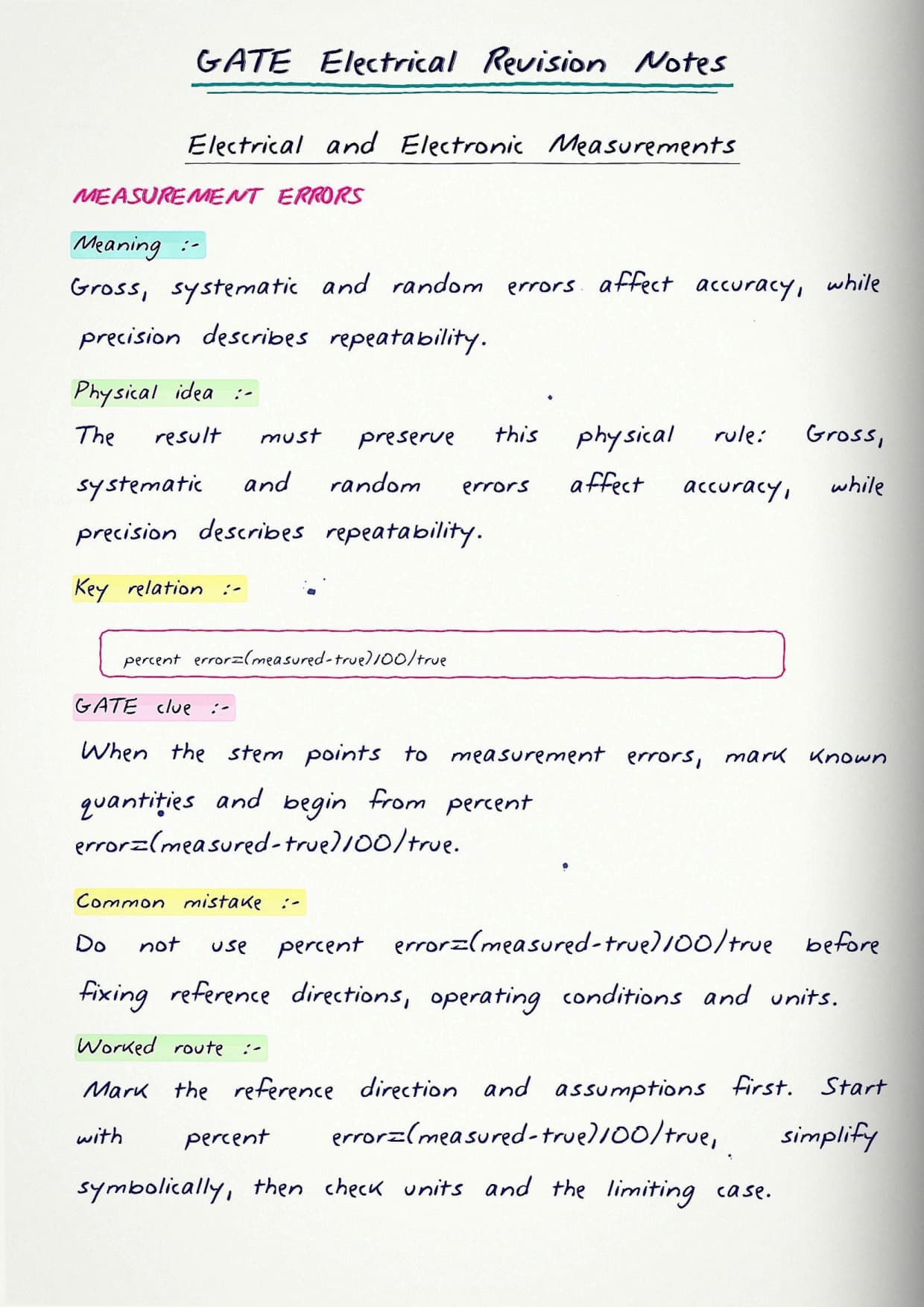
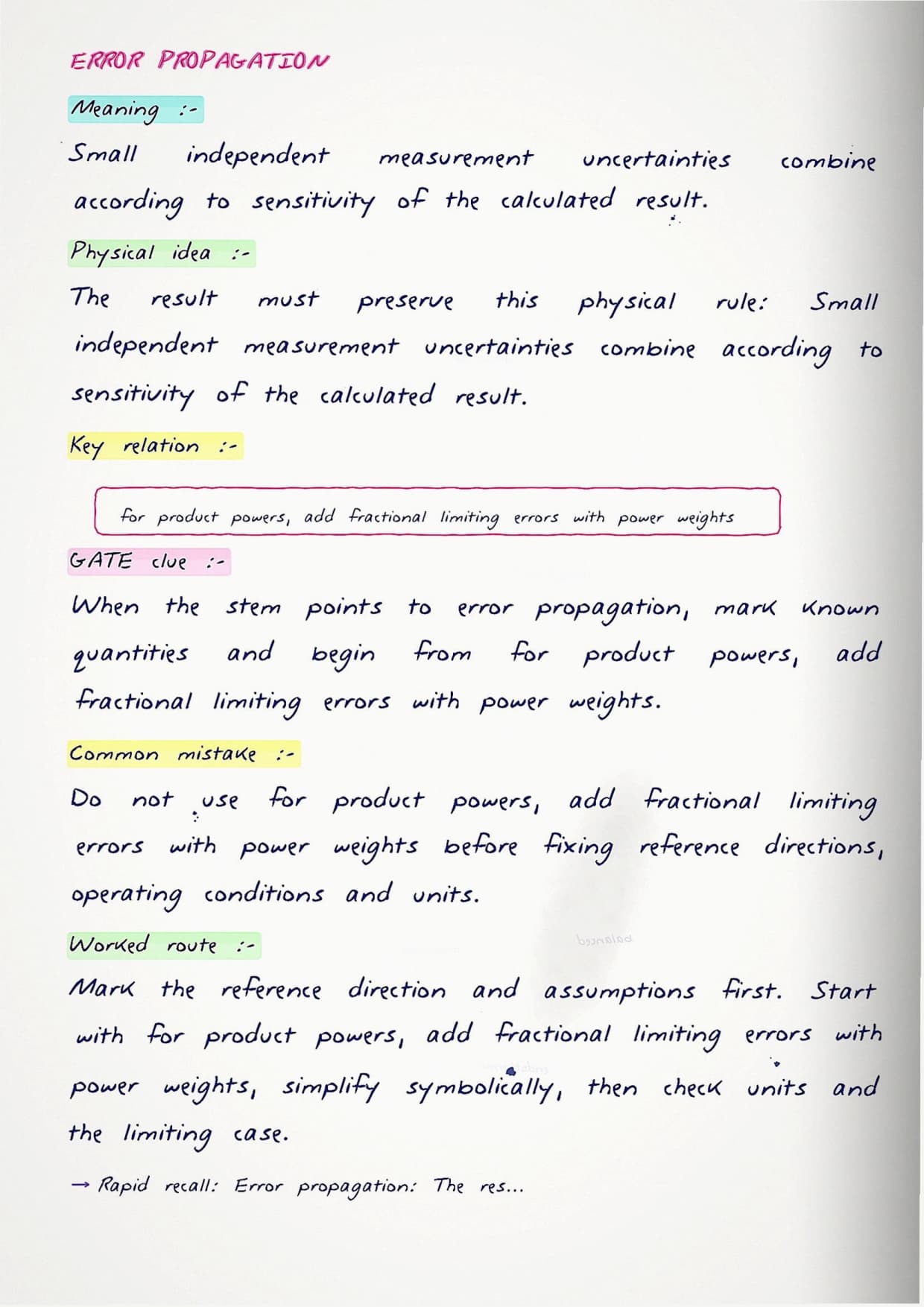
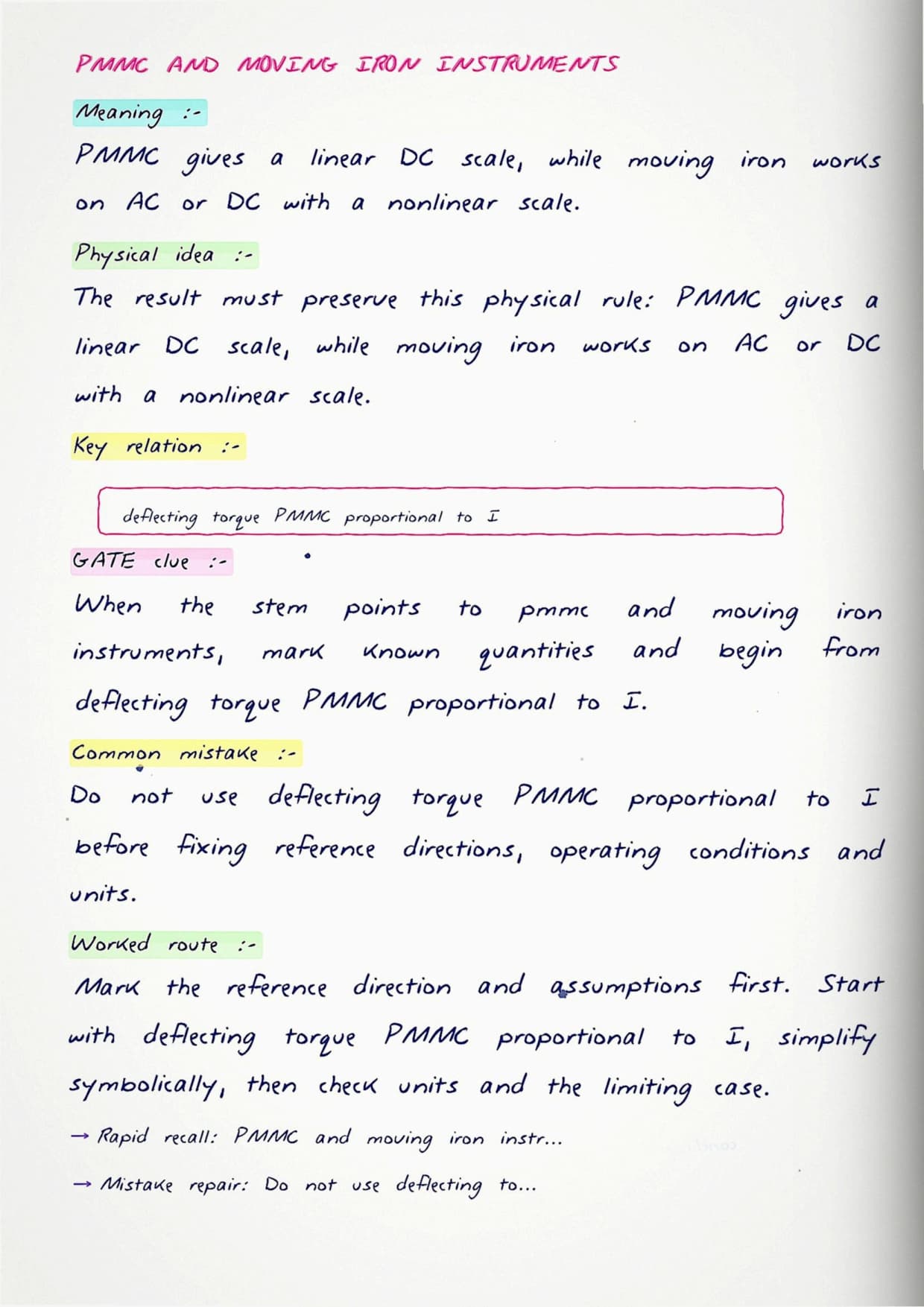
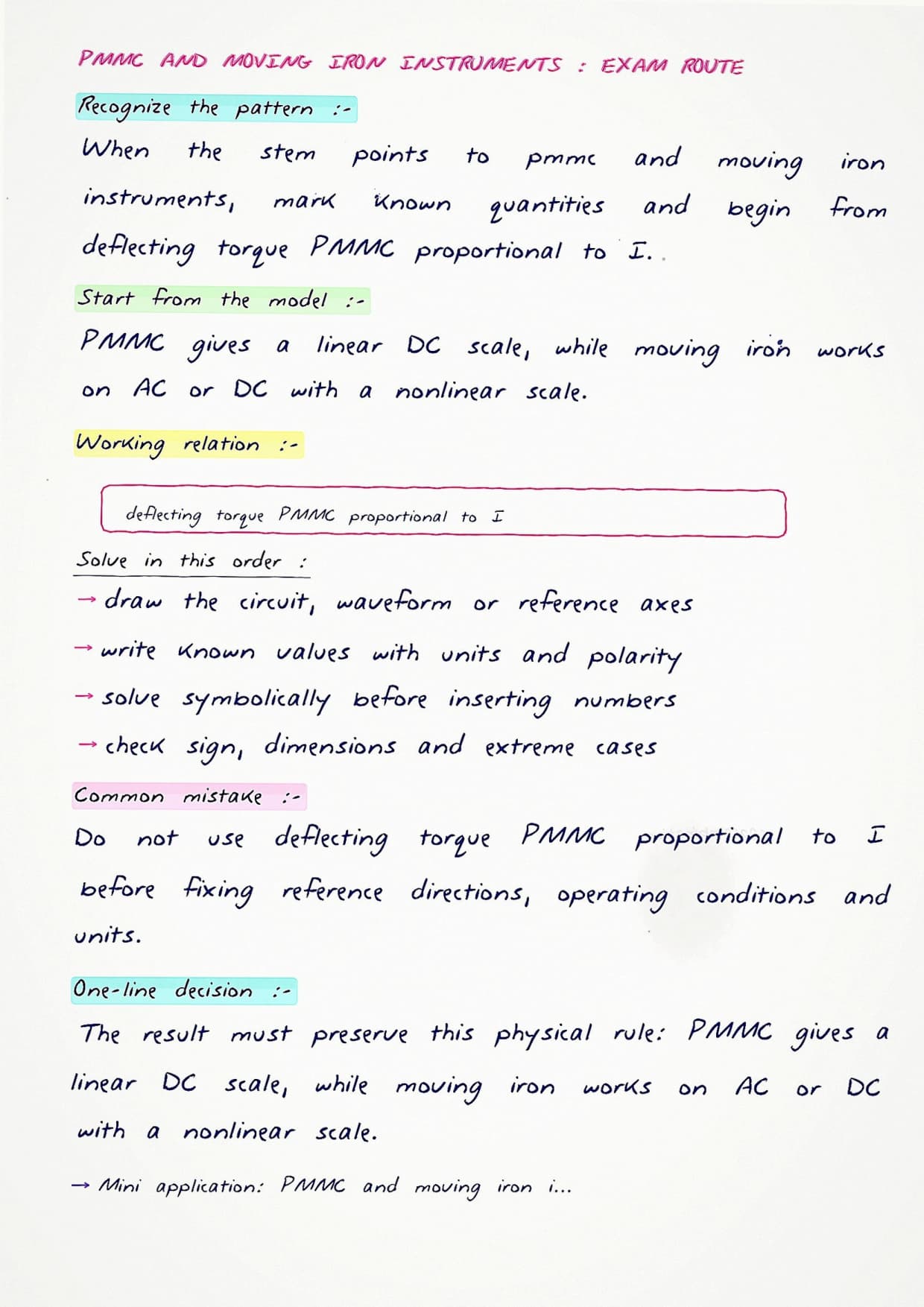
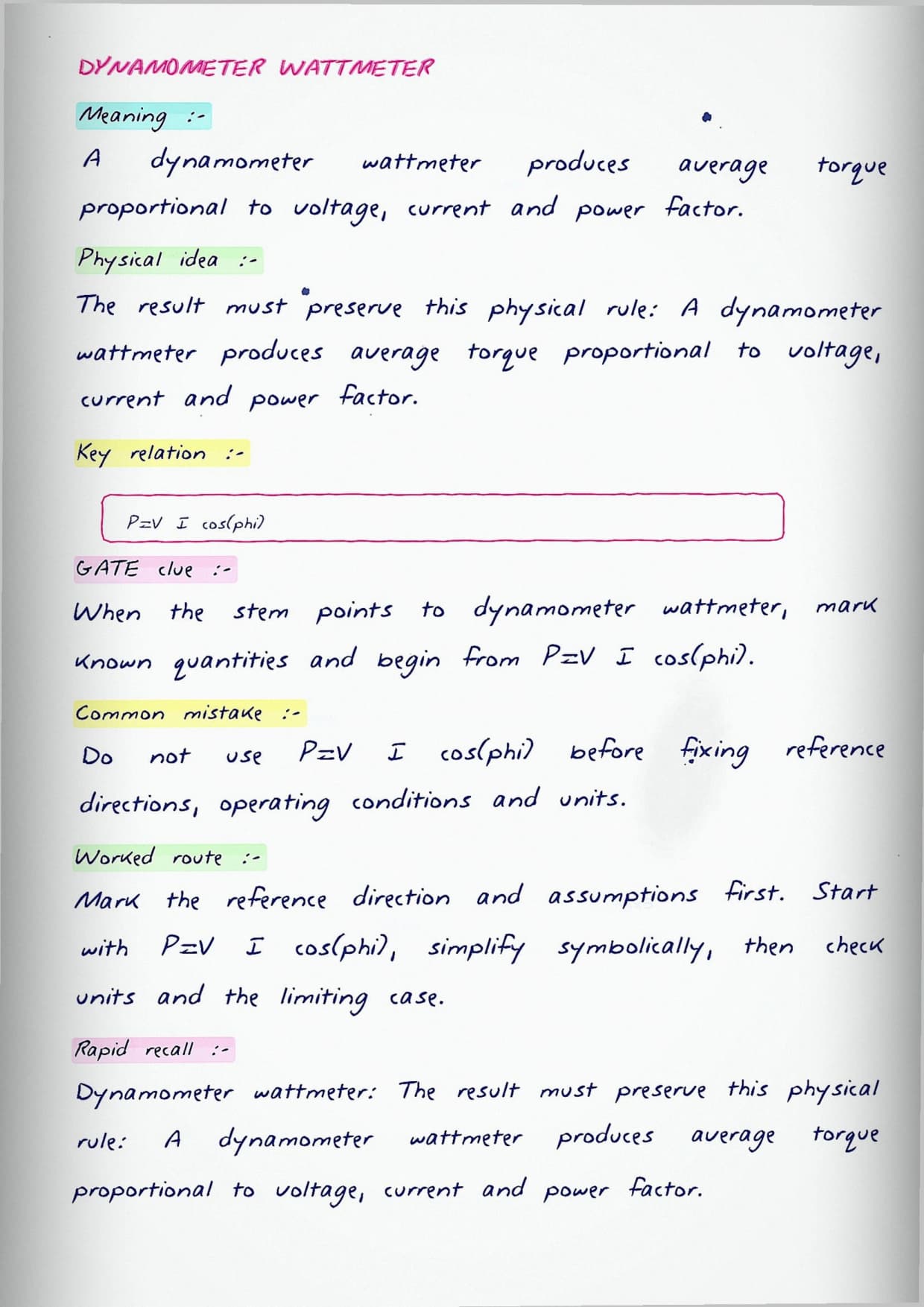
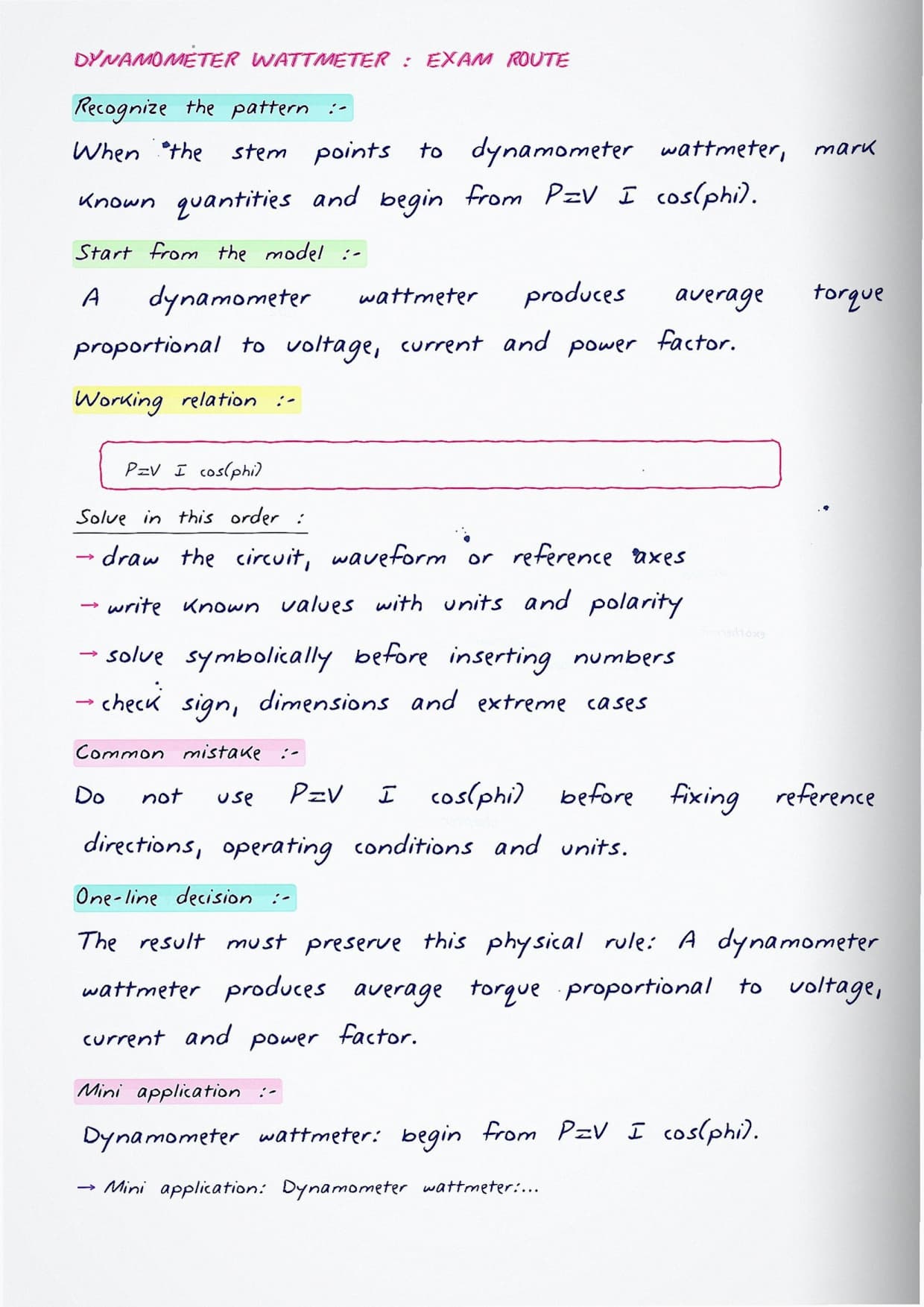
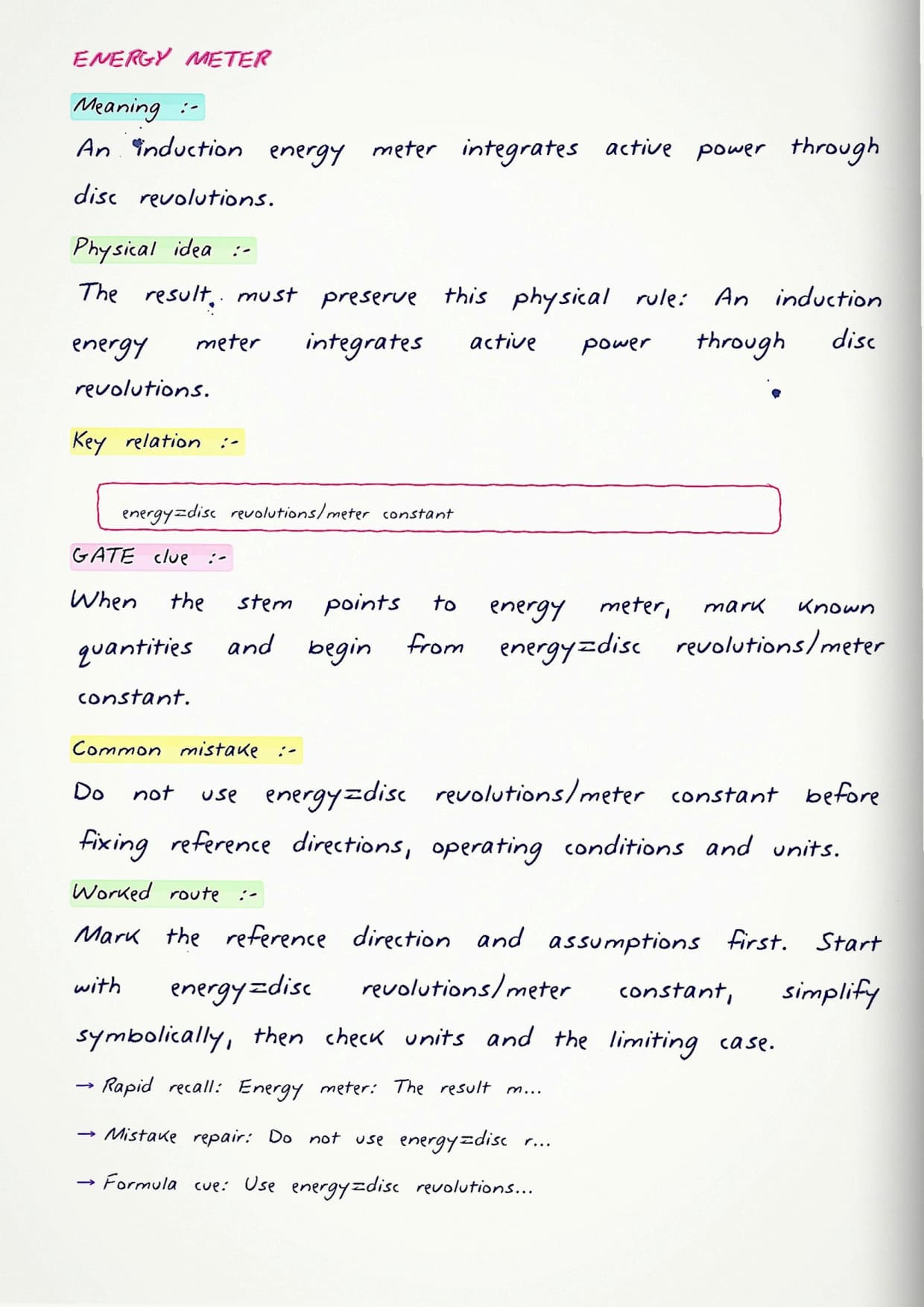
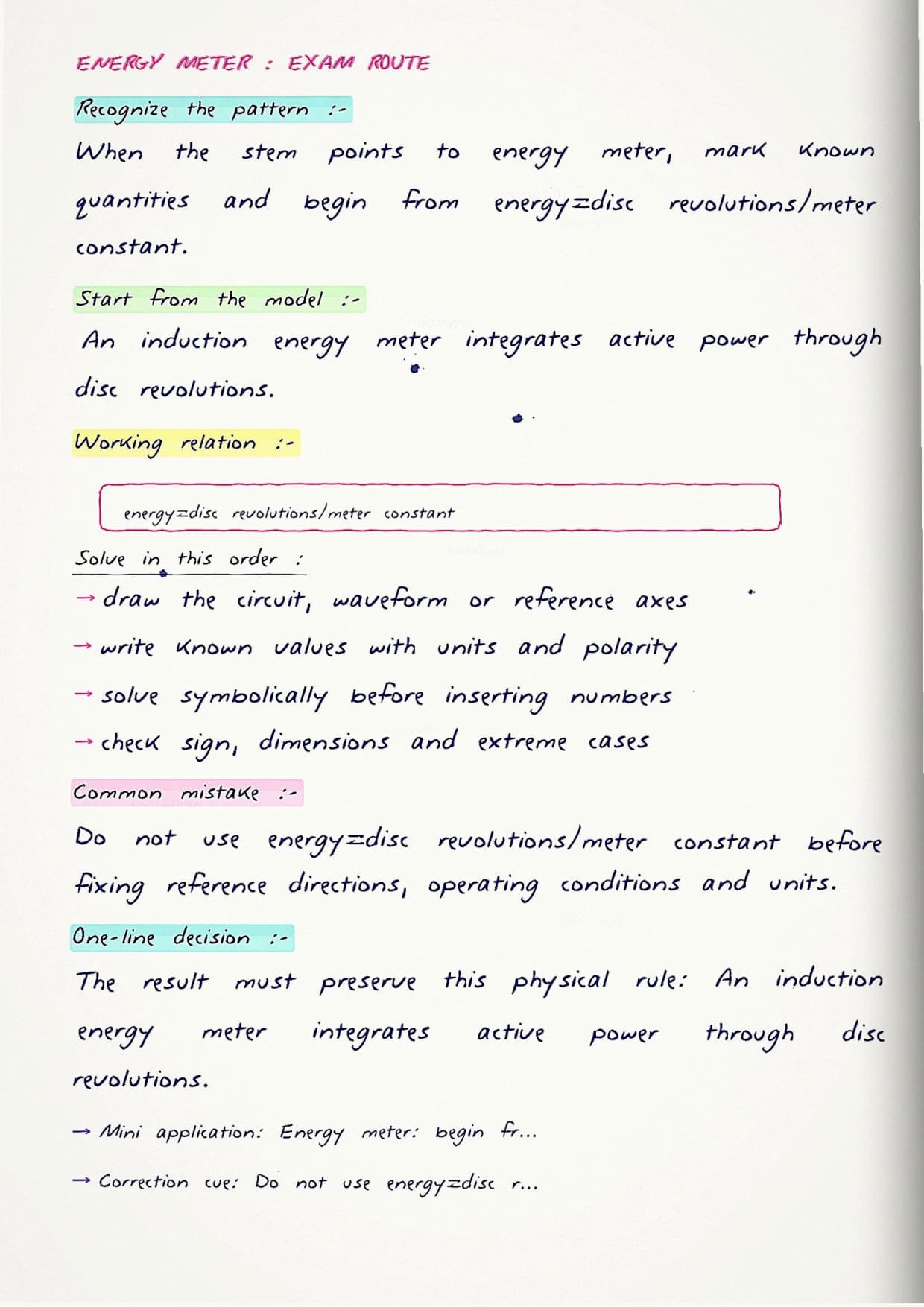
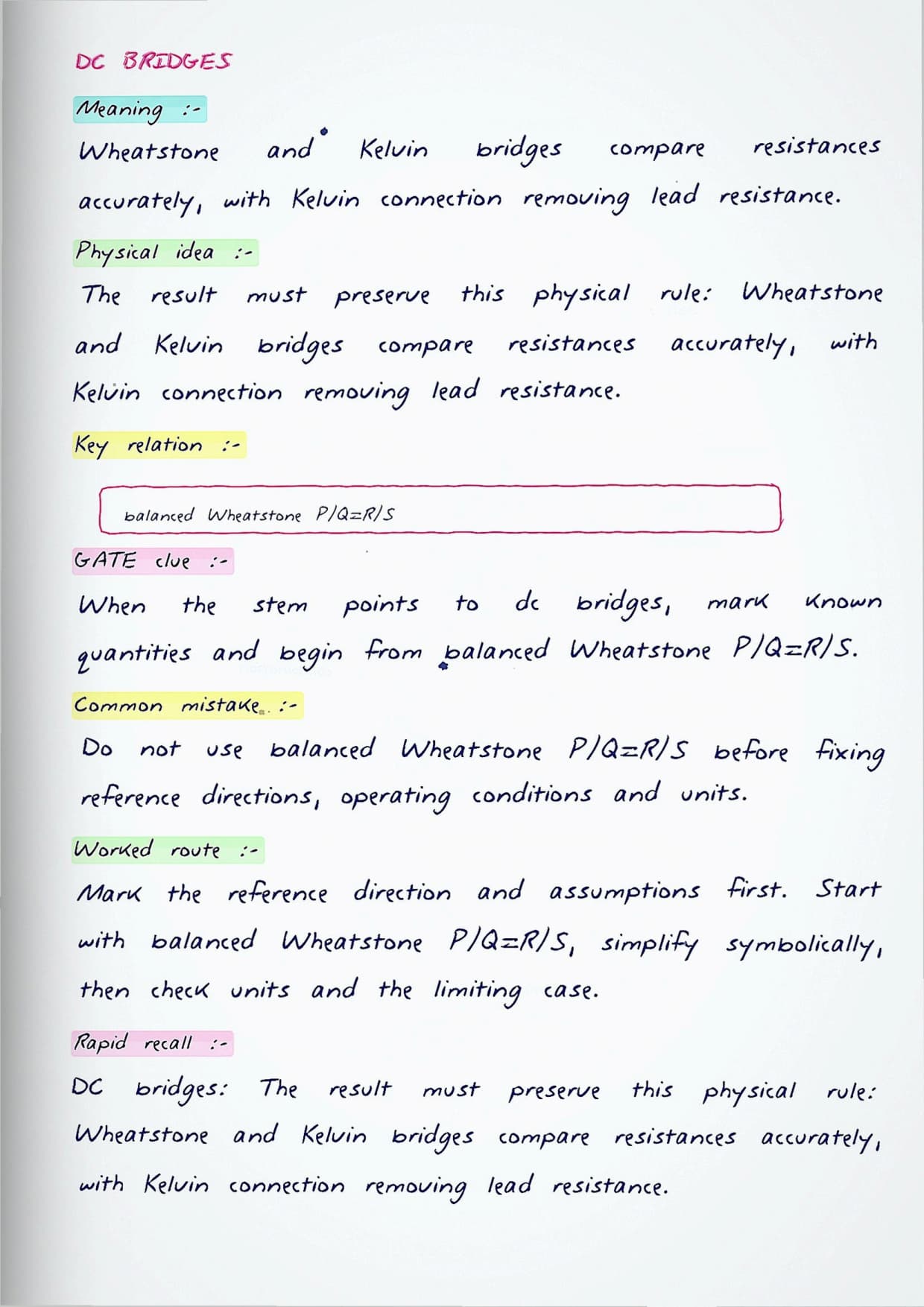
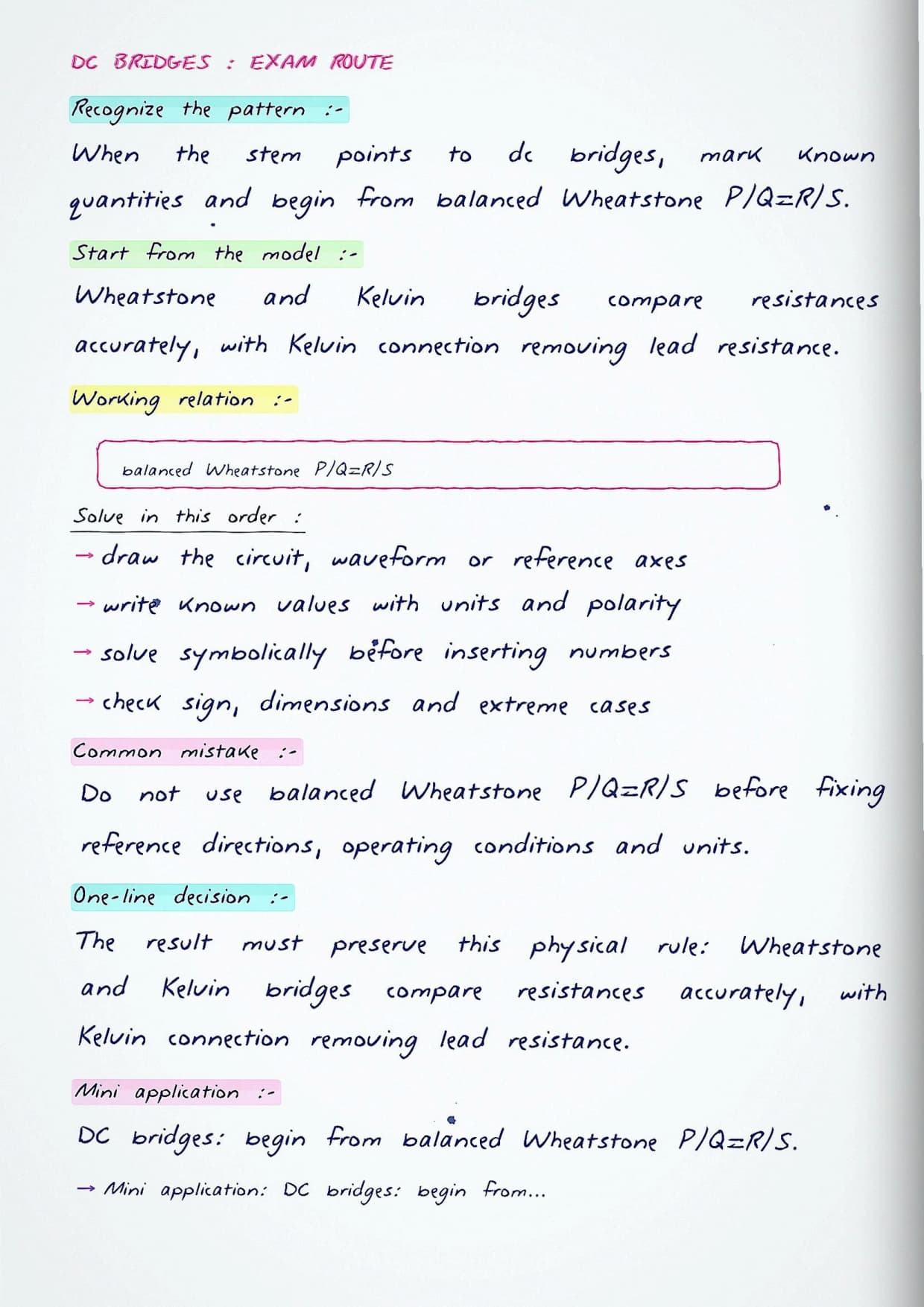
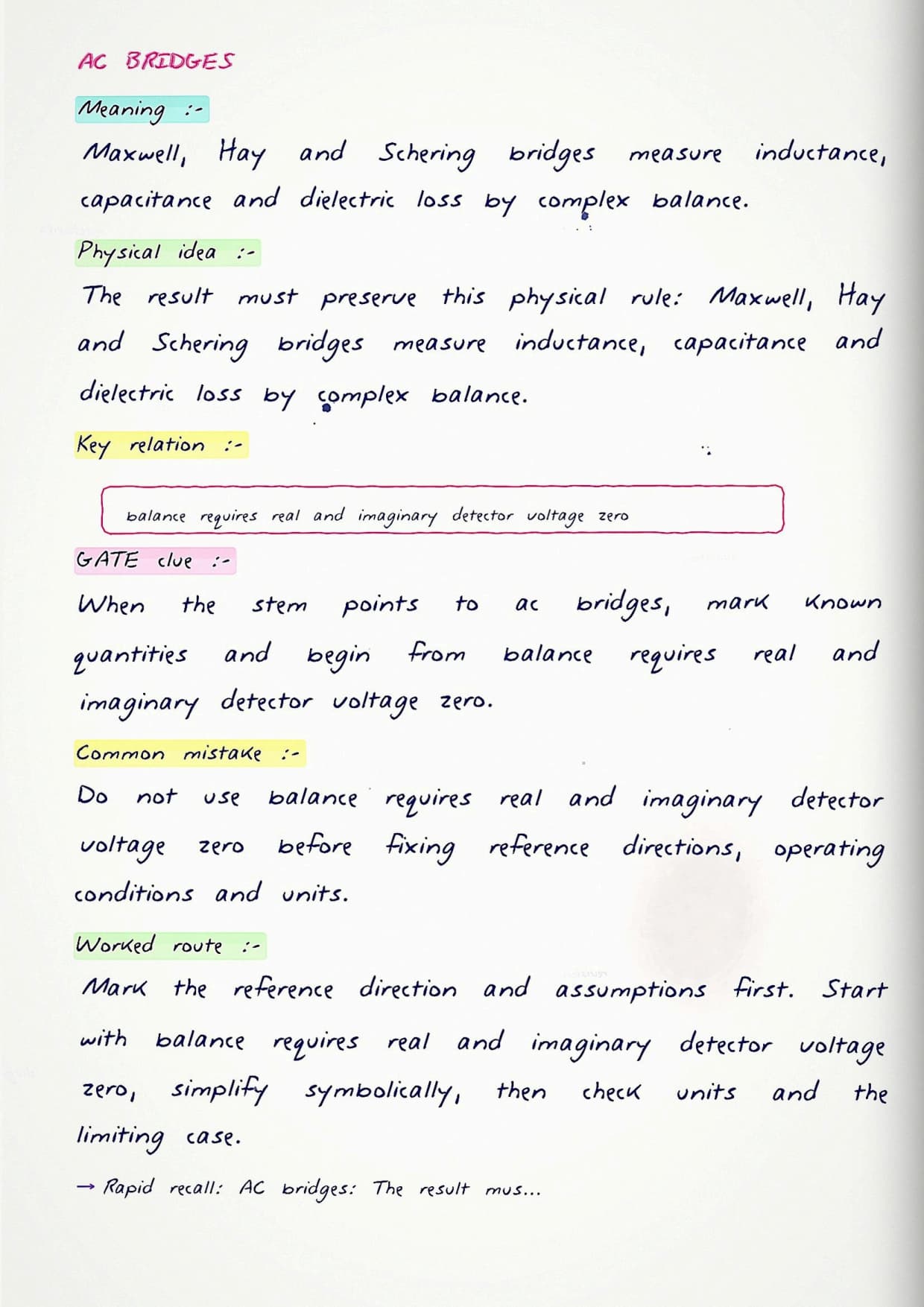
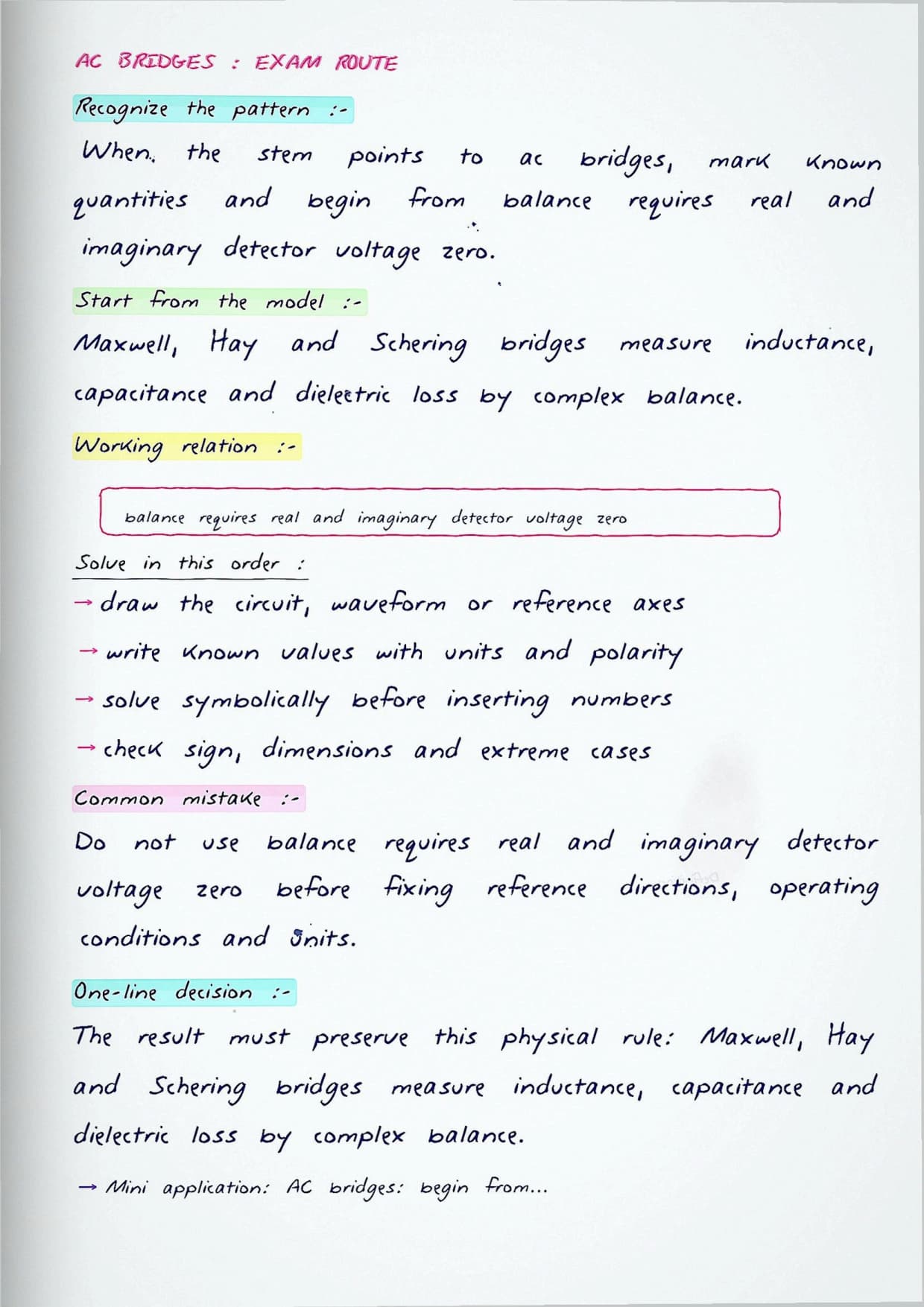
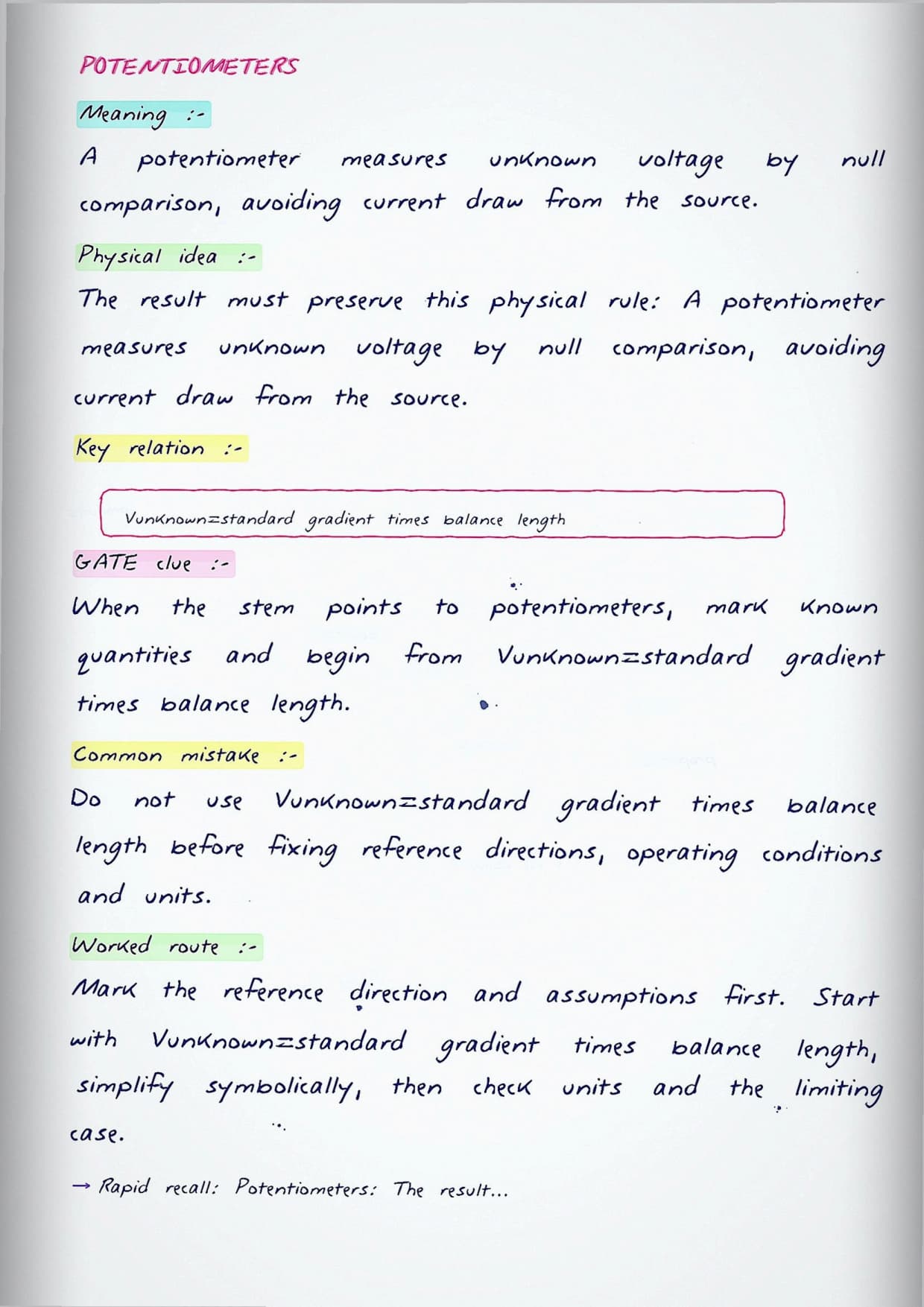
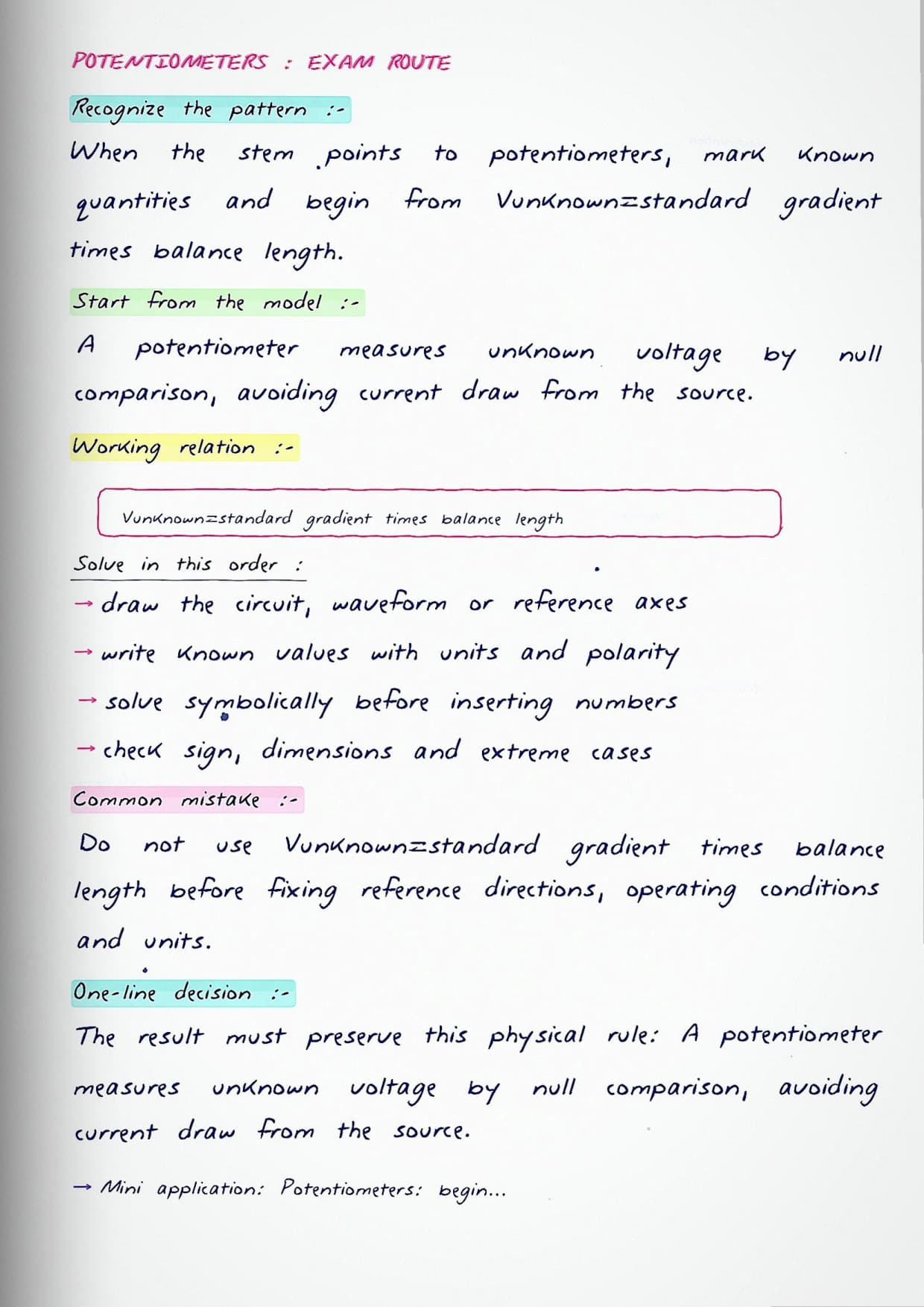
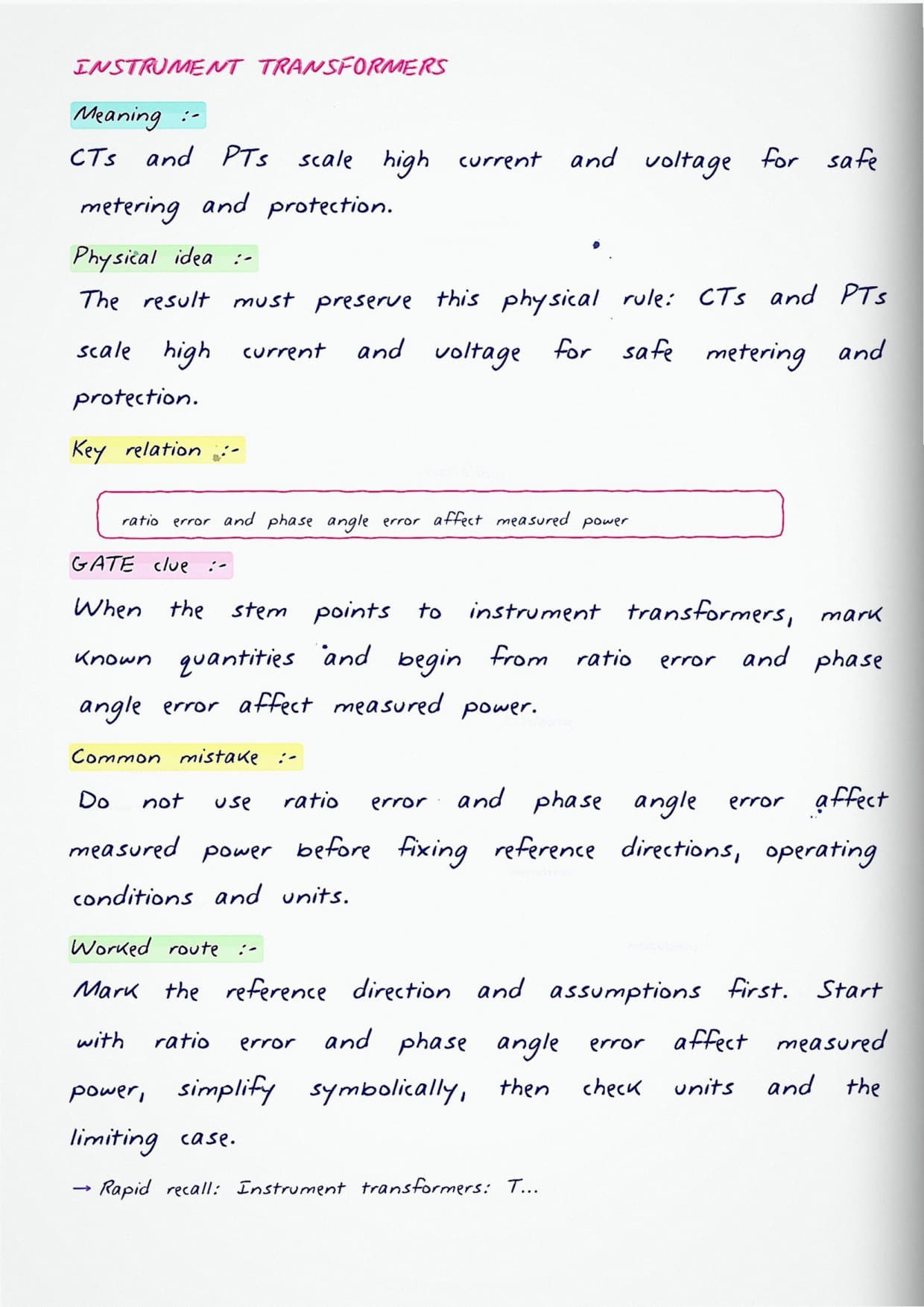
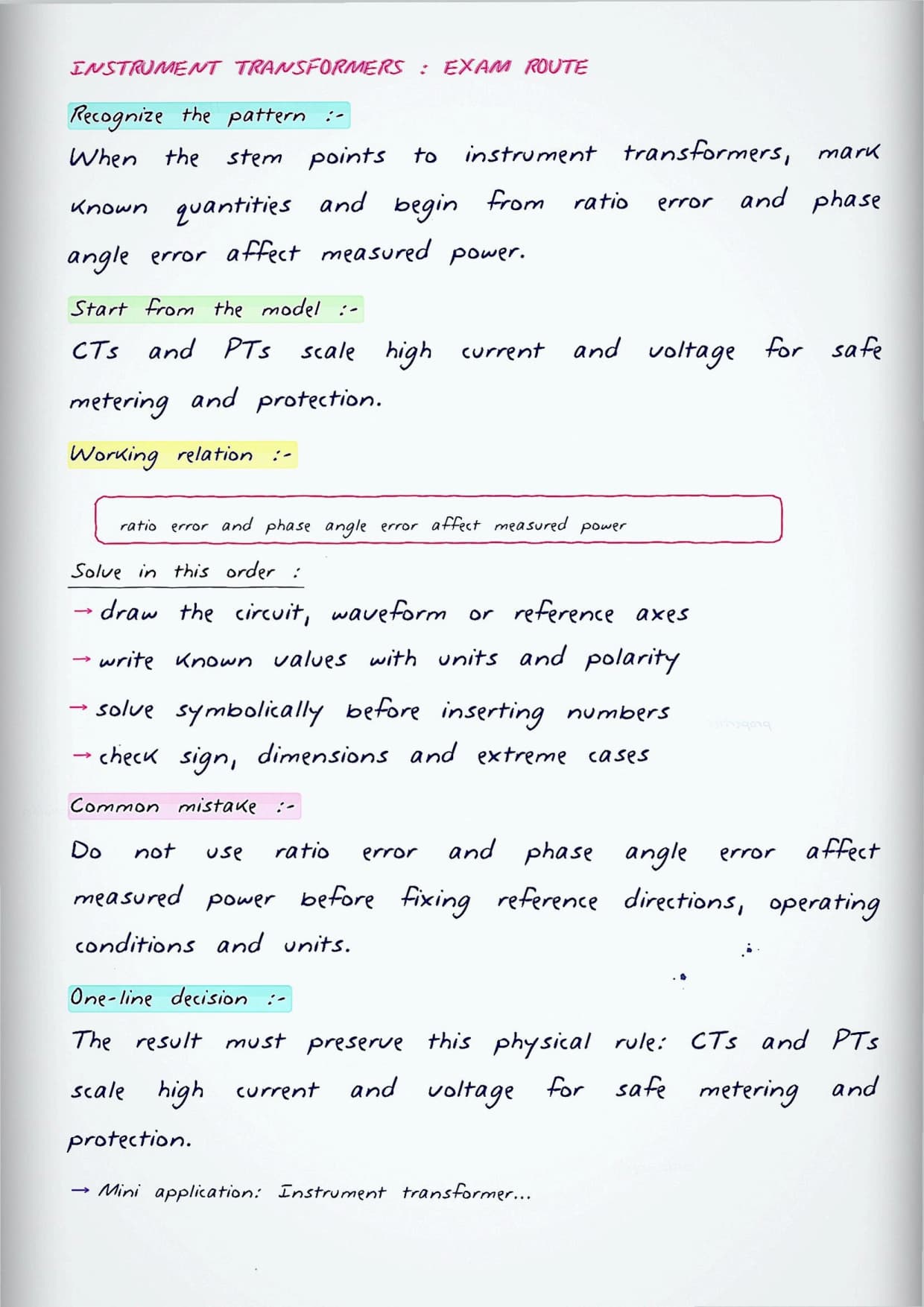
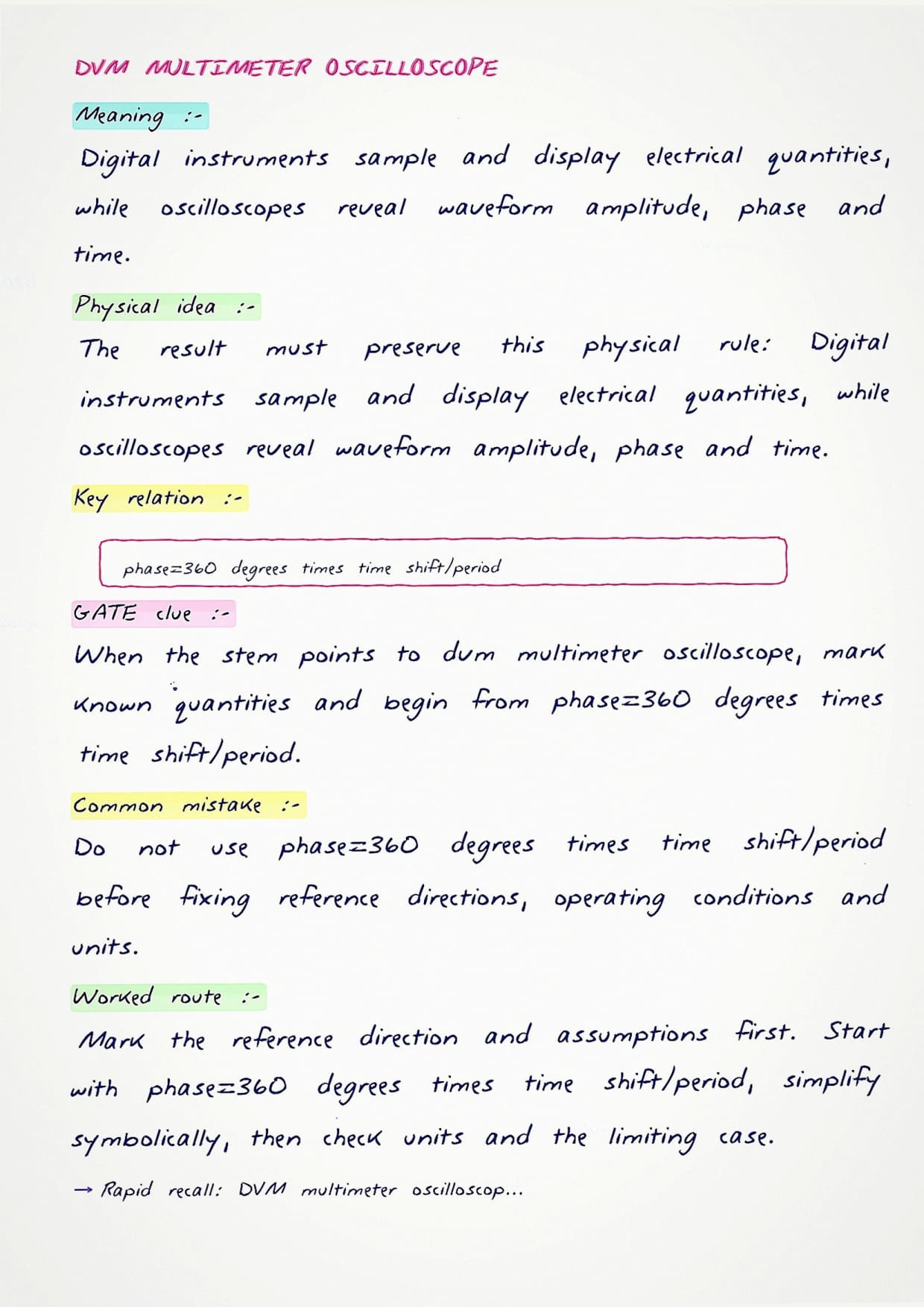
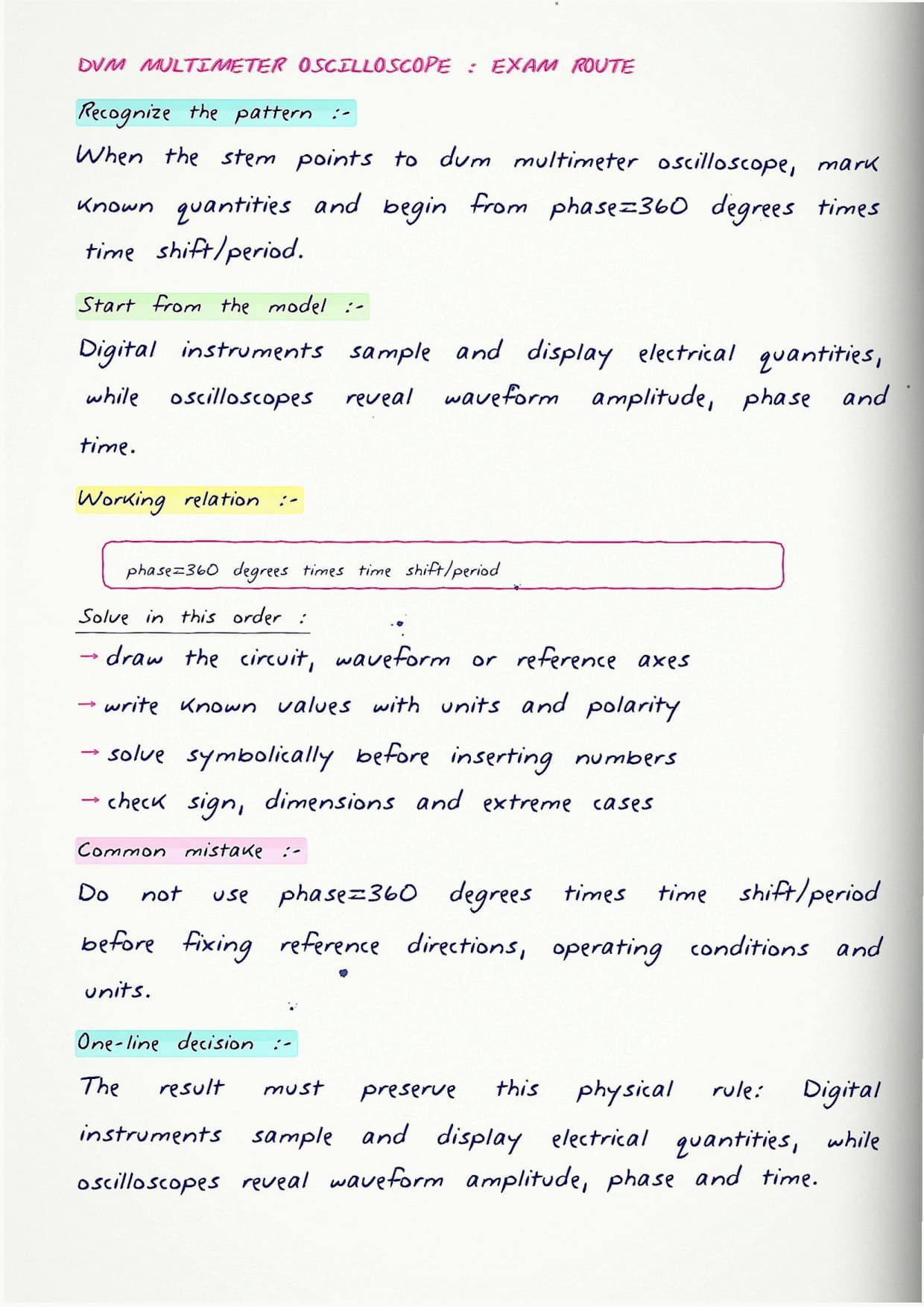
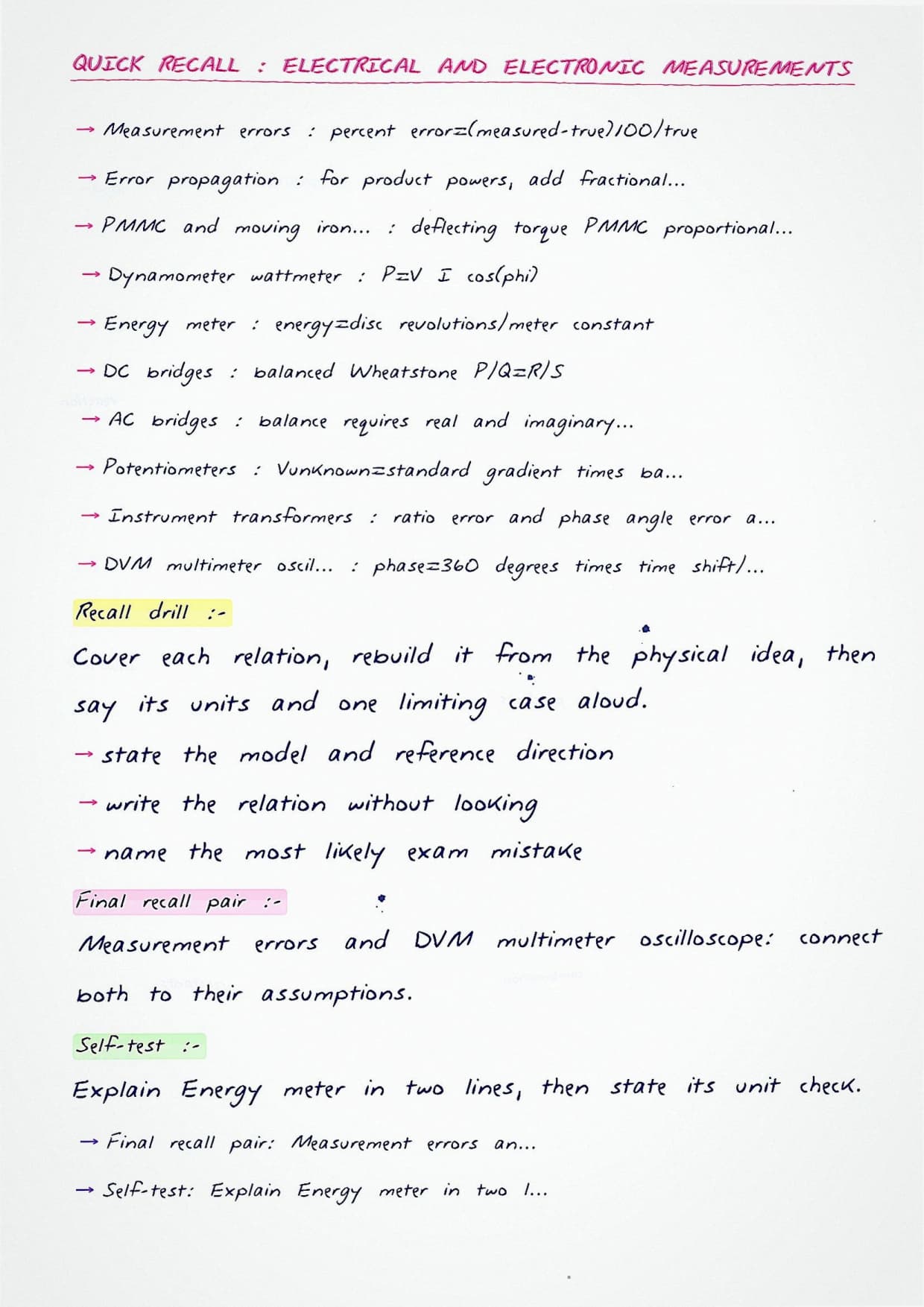
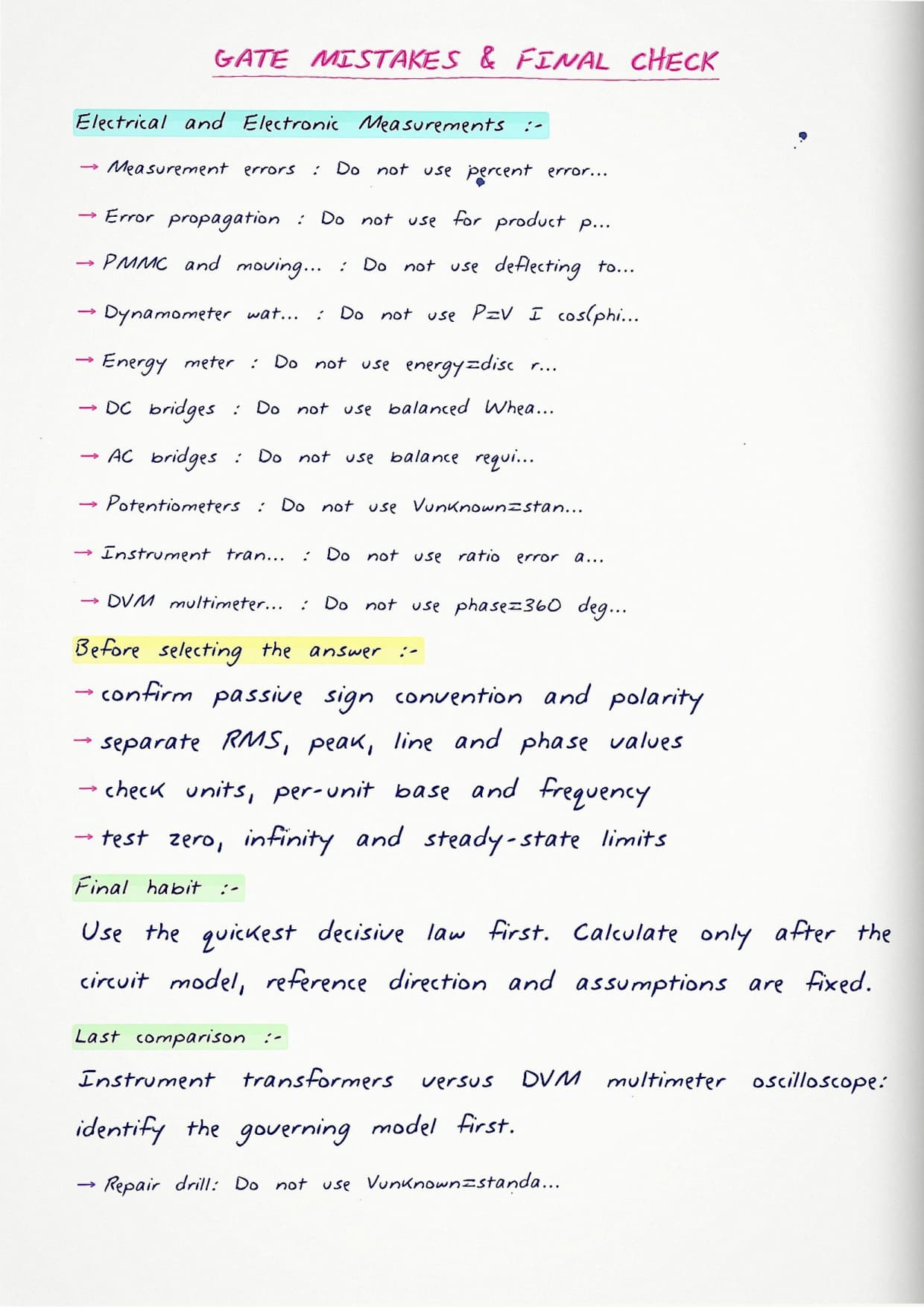
The notes are rich with hand-drawn instrument schematics, from moving-coil meters to bridge circuits and the cathode ray oscilloscope. Each measurement method comes with a short error-analysis note in the margin, and a compact table gathers the working, use, and error type of every instrument in one place so students can compare rival meters at a glance instead of memorising each separately.
- Labelled sketches of PMMC and moving-iron meter movements with torque equations named.
- Balance conditions for Wheatstone, Maxwell, and Schering bridges drawn step by step.
- A block diagram of the cathode ray oscilloscope with the signal path marked.
What These GATE Measurements Notes Cover
The notes span classical analog instruments through to modern electronic measurement, keeping error analysis in view throughout. The aim is to let students both compute a reading and judge how trustworthy it is.
- Analog meters: PMMC, moving-iron, electrodynamometer, and induction types.
- Measurement of power, energy, and power factor.
- Bridge circuits for resistance, inductance, and capacitance.
- Electronic instruments and error and uncertainty analysis.
GATE Measurements Quick Revision
Source: GATE Wallah CSE & DA on YouTube
Topics Covered in GATE Measurements
The topic list is aligned with the official GATE Electrical syllabus for measurements, so students can revise it as a checklist. Each entry has a diagram or a solved reading in the notes, and closely related instruments are grouped together so students can spot the small differences in working principle that examiners like to test.
- Characteristics of instruments: accuracy, precision, and resolution.
- Error analysis, including gross, systematic, and random errors.
- PMMC and moving-iron meters and their range extension using shunts and multipliers.
- Wattmeter, energy meter, and power factor measurement.
- AC and DC bridge measurements and their balance conditions.
- Instrument transformers, the current transformer and potential transformer.
- Cathode ray oscilloscope and measurement of phase and frequency.
- Digital voltmeters and Q-meter fundamentals.
How the Notes Are Organised
The layout moves from principles to instruments to error handling. Students first meet accuracy, error types, and standards, then work through each meter and bridge, and finally reach electronic and digital measurement. Because the error ideas come early, every later instrument can be read with its accuracy and limitations already in mind.
The closing pages serve as a compact reference. A comparison table of instruments sits beside the key bridge balance equations, so a student solving a numerical can confirm both the method and the formula on one spread. A short worked bridge problem shows the full balance calculation in order, from writing the balance condition to reading off the unknown value, which is exactly the sequence a GATE numerical follows.
How GATE Measurements Links to Other Topics
Measurement leans on ideas from several other subjects, which makes it a good topic to revise alongside them. The overlaps also mean effort here pays off twice.
- Electric circuits, since every bridge is solved with network analysis.
- Analog electronics, where op-amp based instruments appear.
- Signals and systems, for sampling in digital measurement.
- Power systems, through instrument transformers used in metering and protection.
Important Topics in GATE Measurements
Certain items appear in the paper with high regularity, and a few subtle points regularly trip students up. The notes call out each one clearly.
- Bridge balance conditions, especially the Maxwell and Schering bridges.
- Combining component errors correctly in error propagation.
- Ratio and phase-angle error in the current transformer.
- Reading a waveform on the oscilloscope for phase and frequency using Lissajous figures.
- Extending meter range with the right shunt or multiplier value.
How to Prepare GATE Measurements with Handwritten Notes
Measurement rewards precision, so use the notes in focused loops that build both speed and accuracy.
- First read: study each instrument sketch and note its working principle and error source.
- Second pass: derive every bridge balance condition and solve a numerical for each.
- PYQ round: work through past GATE questions on bridges, meters, and error analysis.
- Final week: revise the instrument comparison table and the flagged traps only.
Why These Notes Help You Score Better
Measurement questions are usually direct, so accuracy matters more than speed, and that is exactly where these notes help. By keeping each instrument, its error type, and its governing formula together, the notes let students answer confidently without second-guessing a balance condition. Because the error-analysis ideas here also appear inside numerical questions in other sections, a solid grip on this topic quietly protects marks across the whole paper. The result is a clean, high-scoring topic where prepared students rarely drop marks.
GATE Electrical Measurements Handwritten Notes FAQs
Ques. How many marks do electrical and electronic measurements carry in GATE Electrical?
Ans. The topic generally contributes around 5 to 8 marks, and because most questions are direct, it is one of the safest areas for students to secure accurate marks with focused preparation.
Ques. Do the notes cover bridge circuits in detail?
Ans. Yes. The Wheatstone, Maxwell, Schering, and other bridges are drawn with their balance conditions derived step by step, so students can solve any bridge numerical that appears in the exam.
Ques. Is error analysis explained in these handwritten notes?
Ans. It is a core part of the notes. Gross, systematic, and random errors are explained, along with how component errors combine, which is a frequently tested area in GATE.
Ques. Are the notes useful for quick pre-exam revision?
Ans. Very much so. The instrument comparison table and collected bridge equations let students revise the whole topic quickly and check any formula at a glance before the exam.



Comments