




Engineering Mathematics is a high-return scoring area in GATE Electrical, usually worth about 7 to 10 marks in the paper. It belongs to the Engineering Mathematics section, and its ideas return in Signals and Systems, Control Systems, and Electromagnetic Fields. These handwritten notes cover the full topic in a compact, exam-focused form.
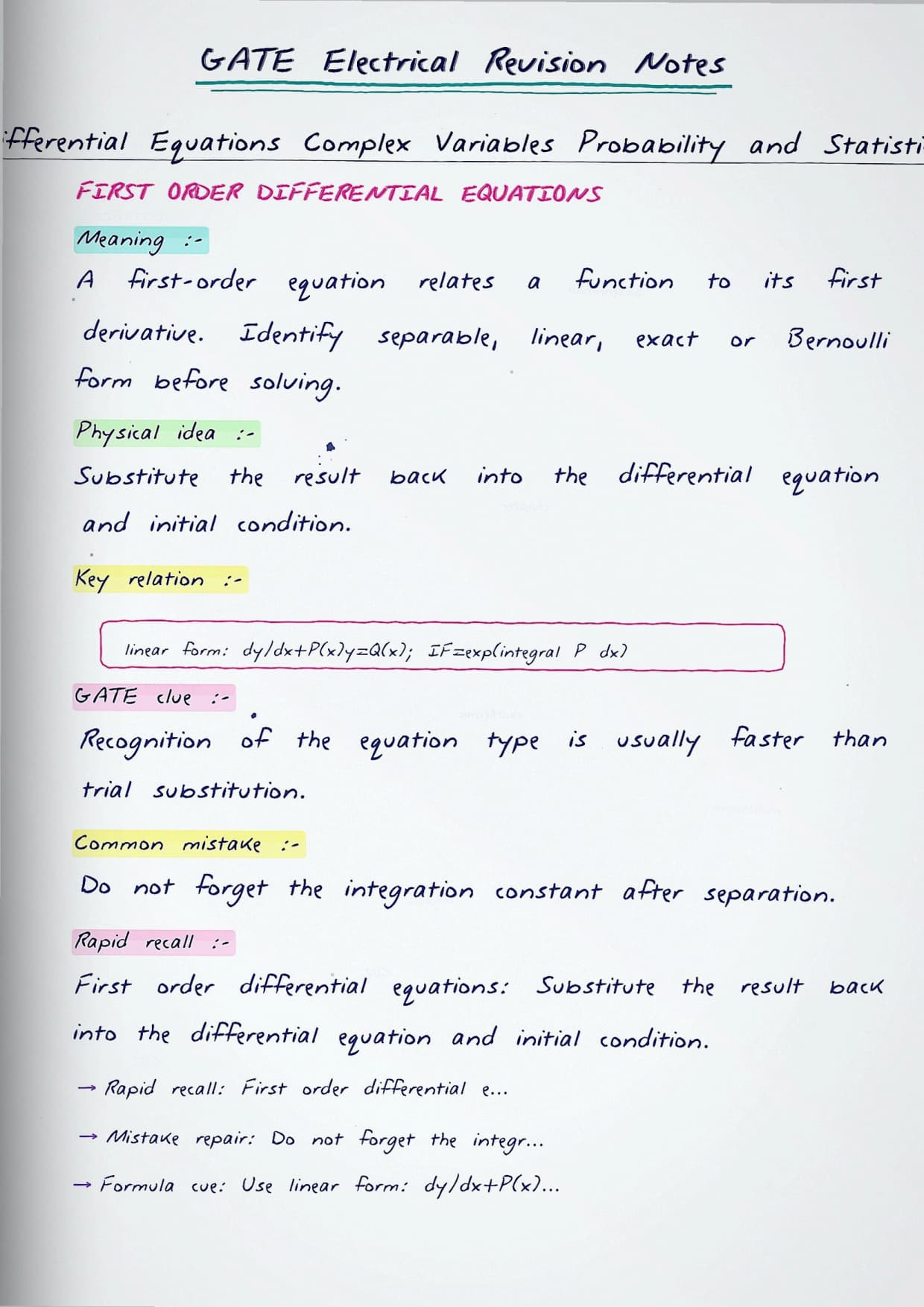
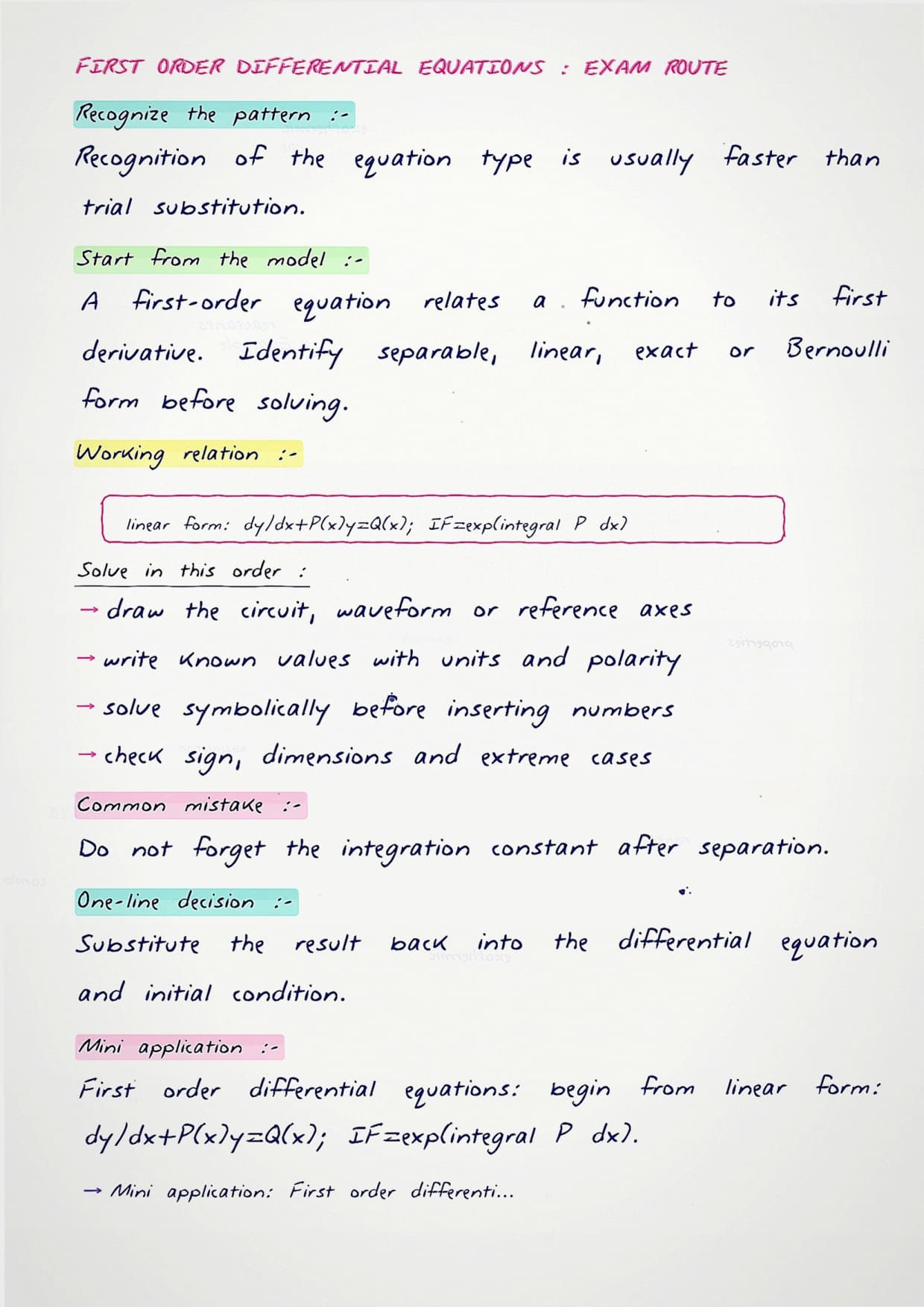
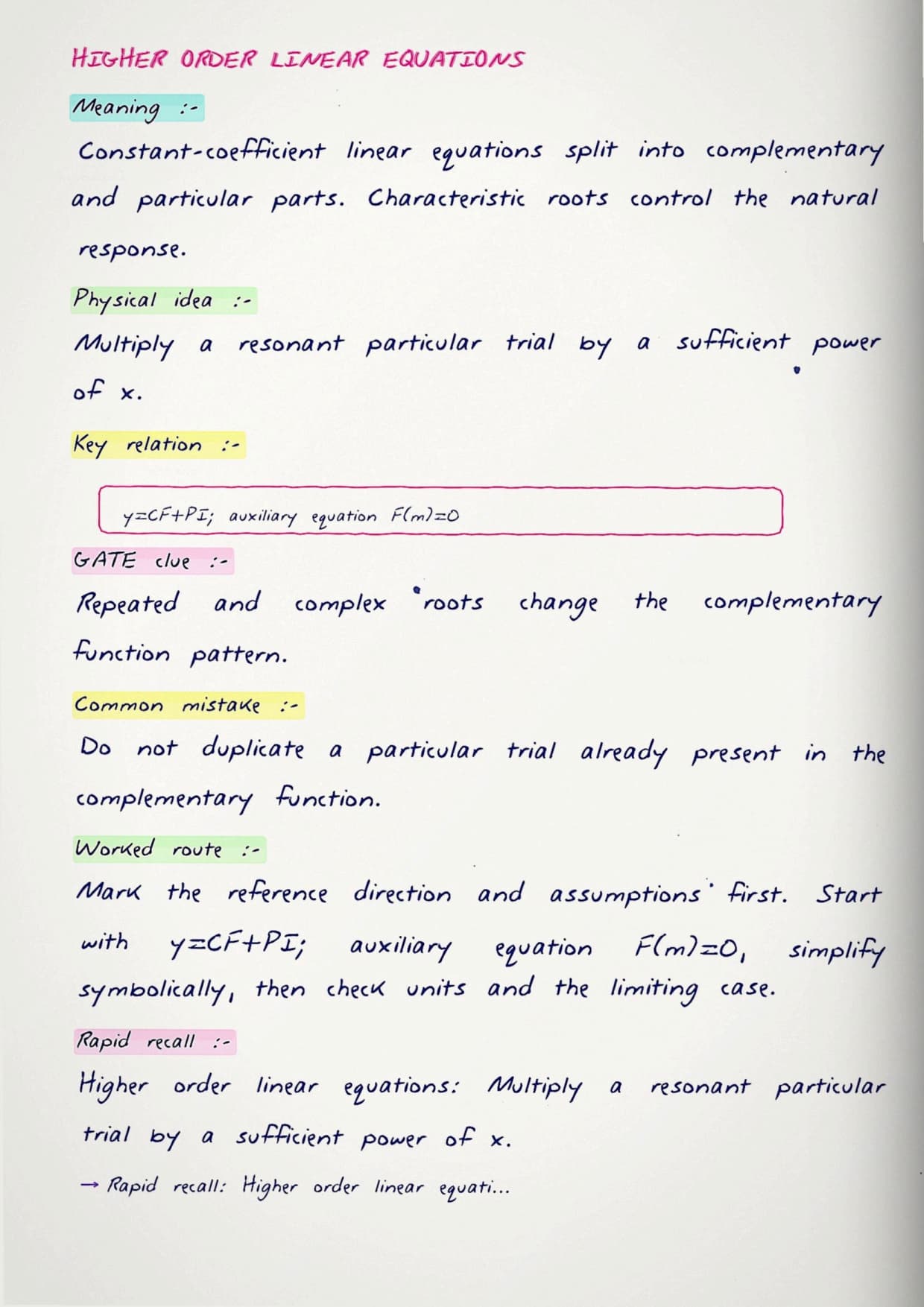
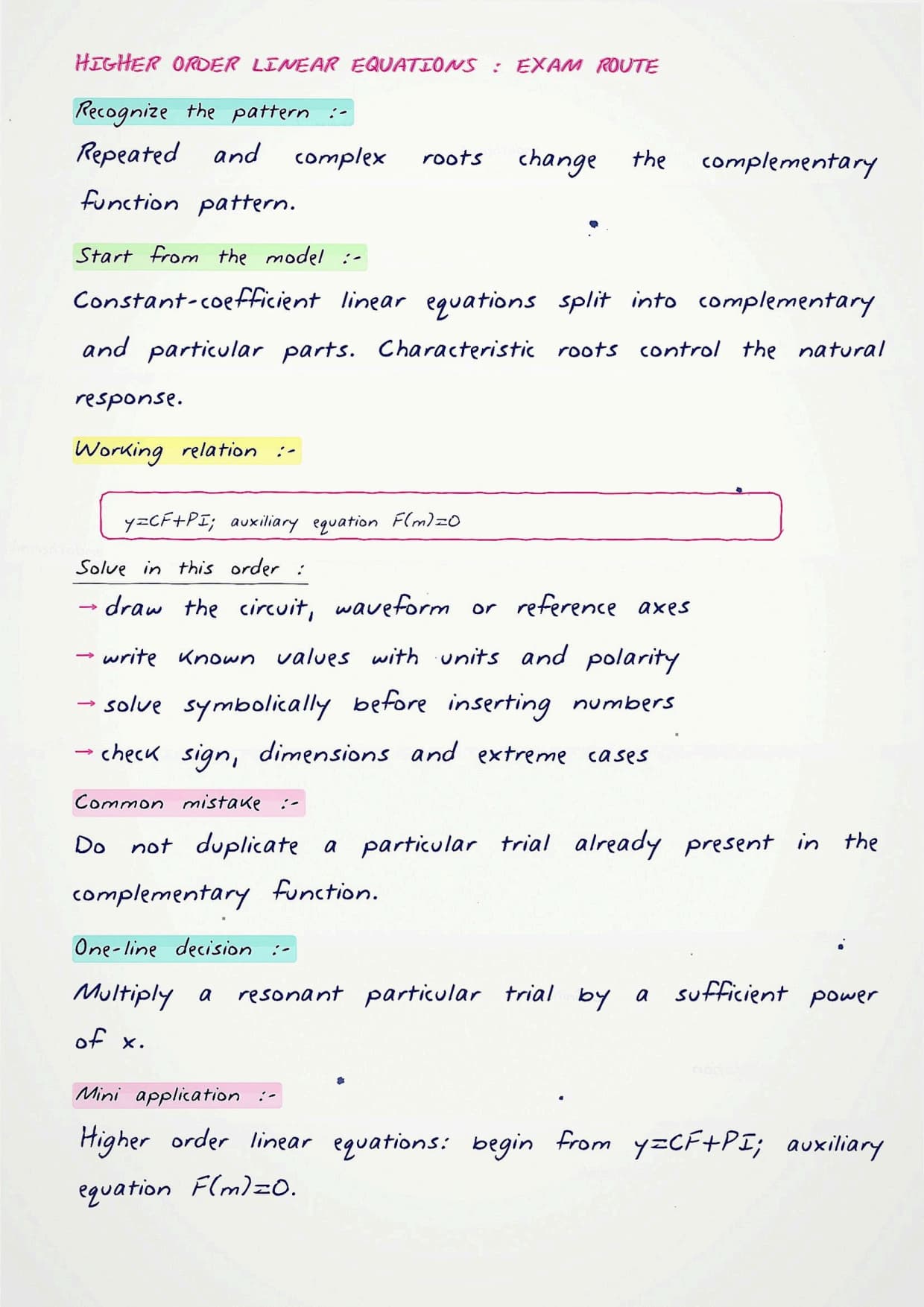
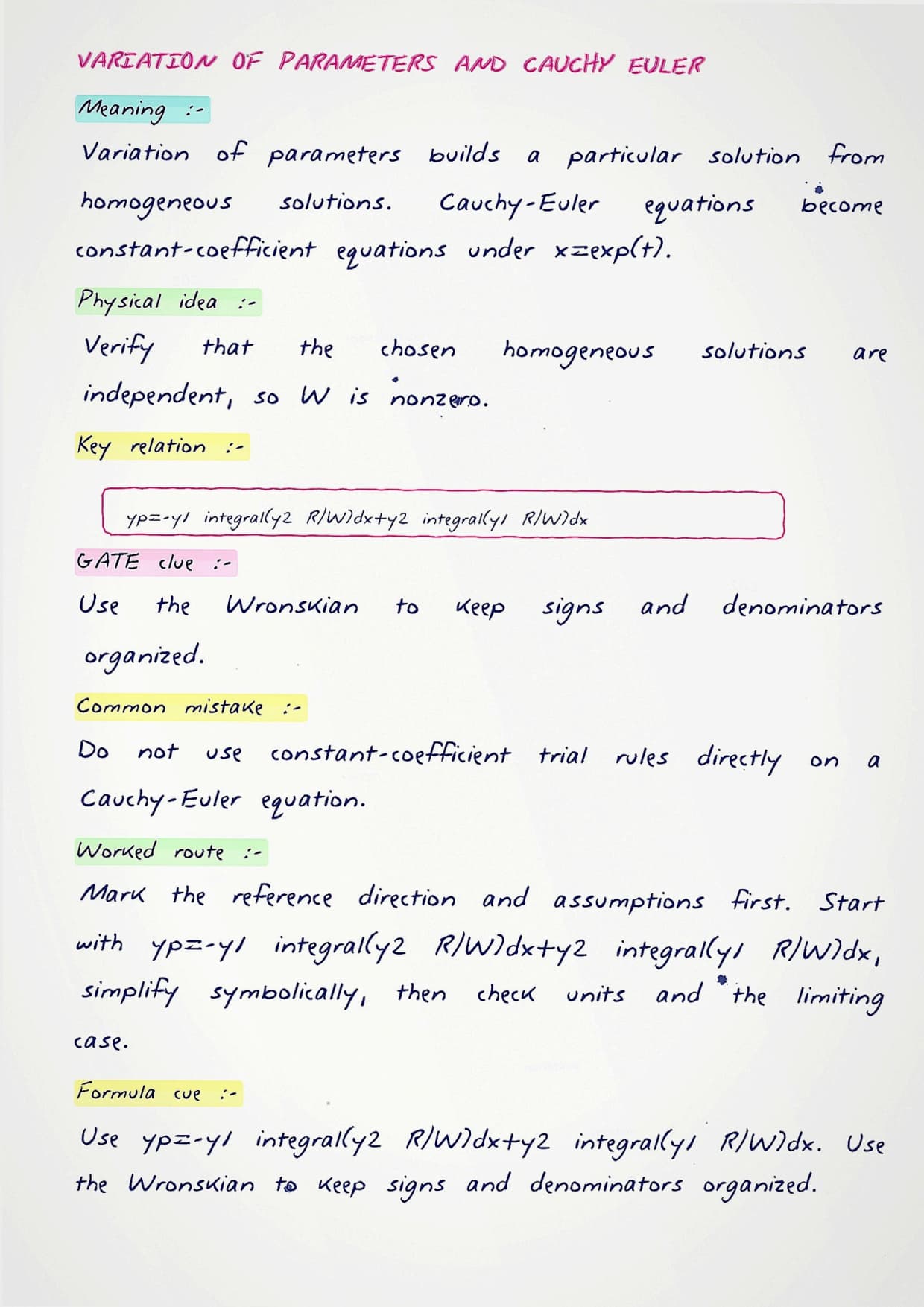
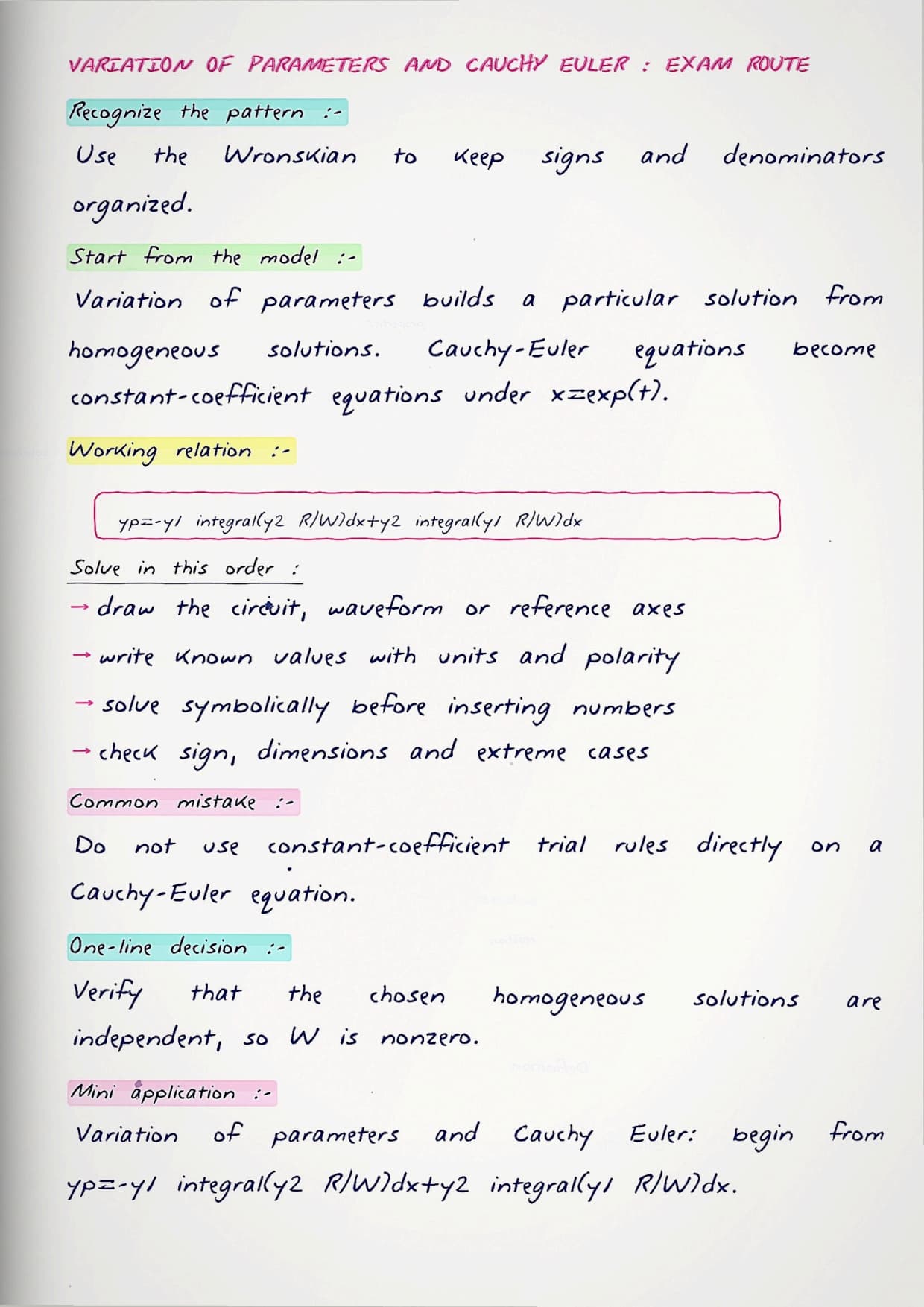
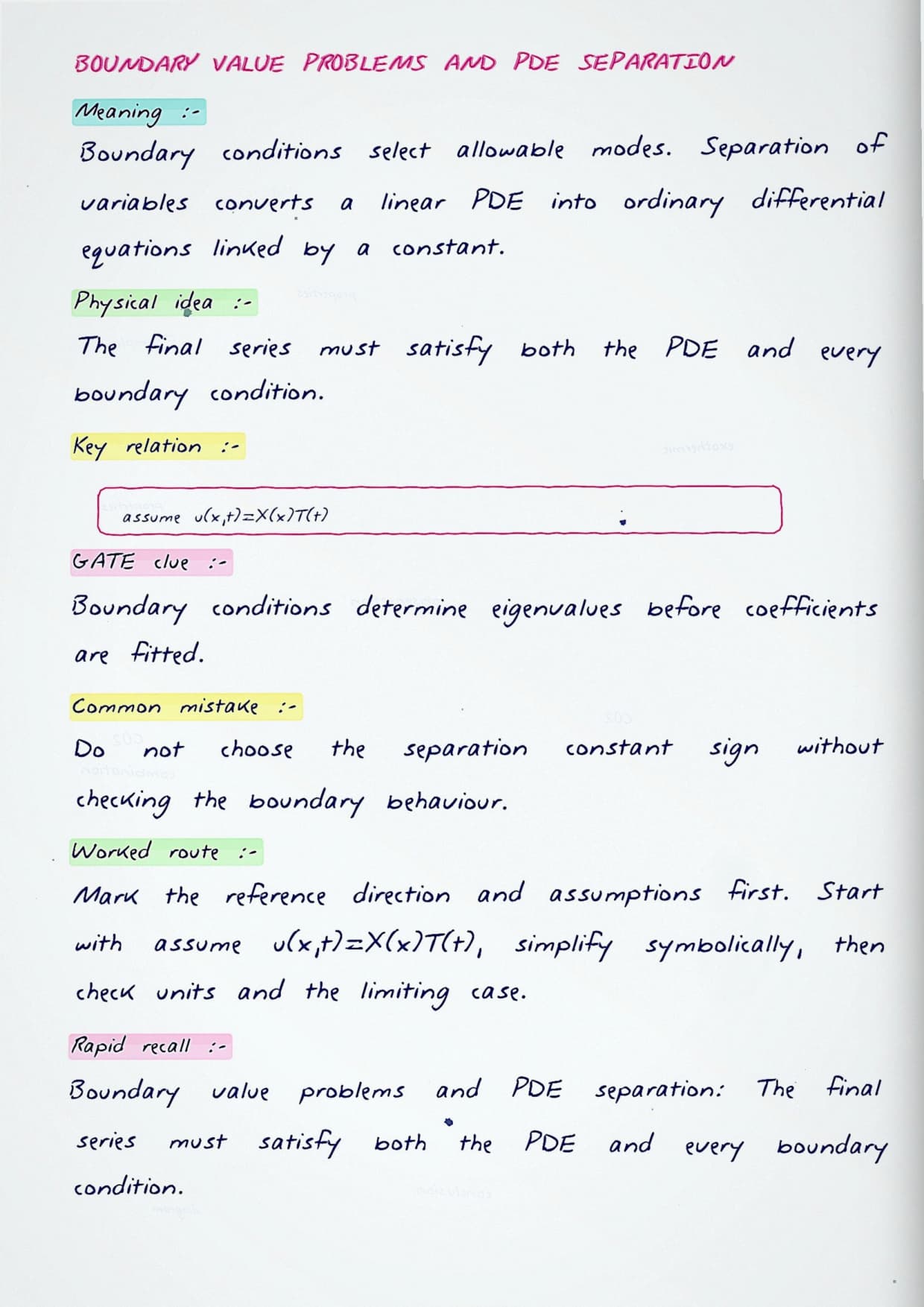
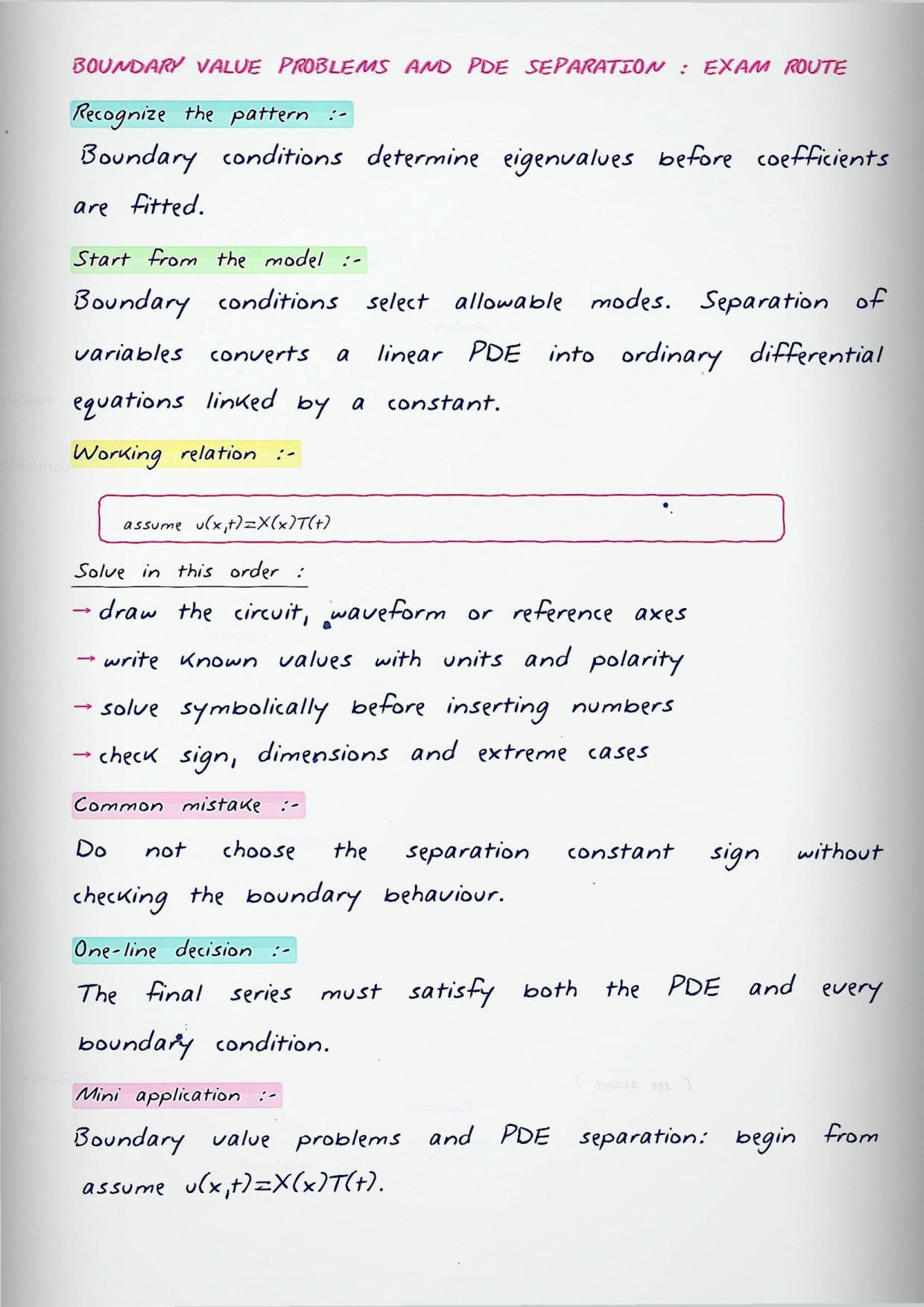
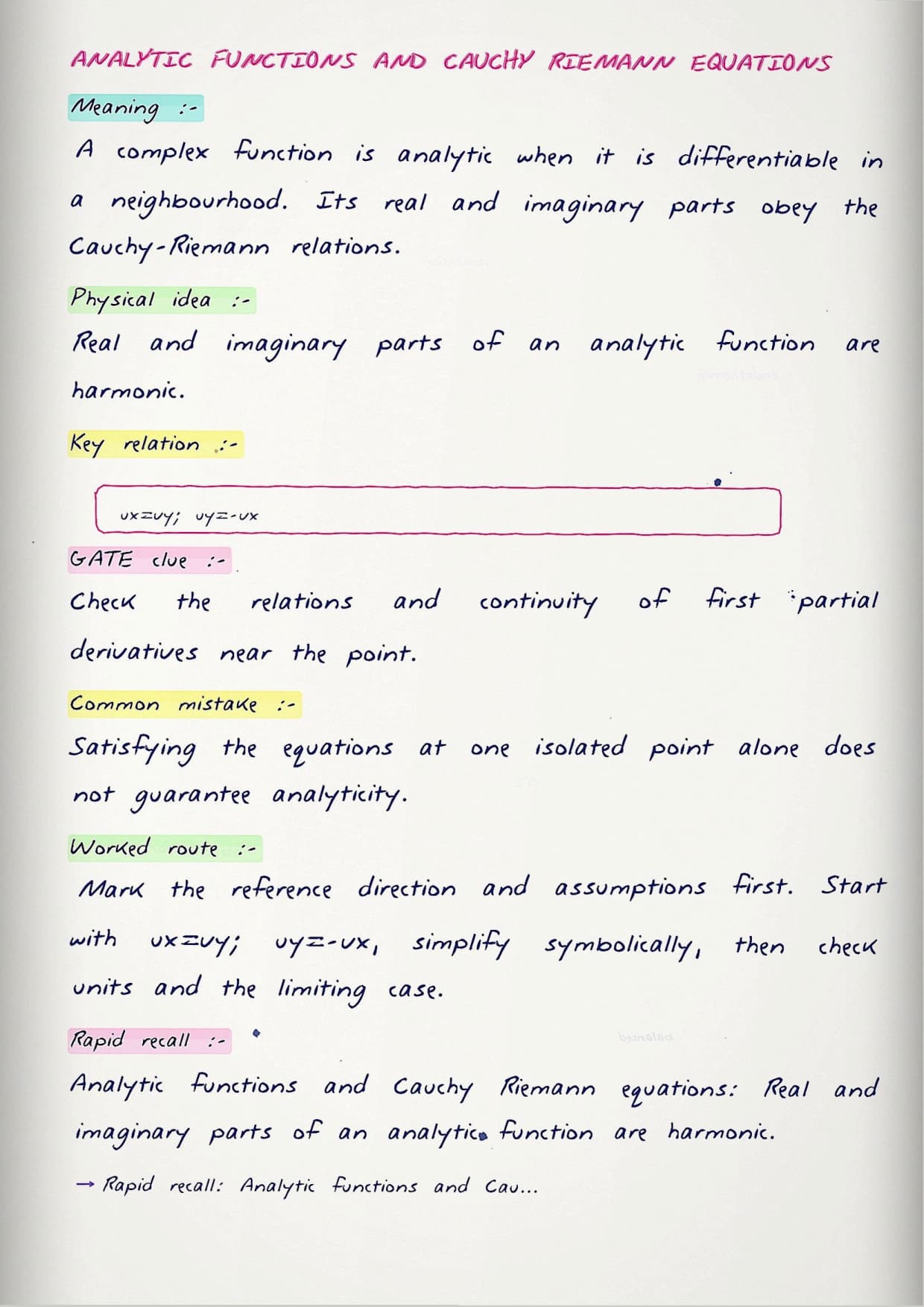
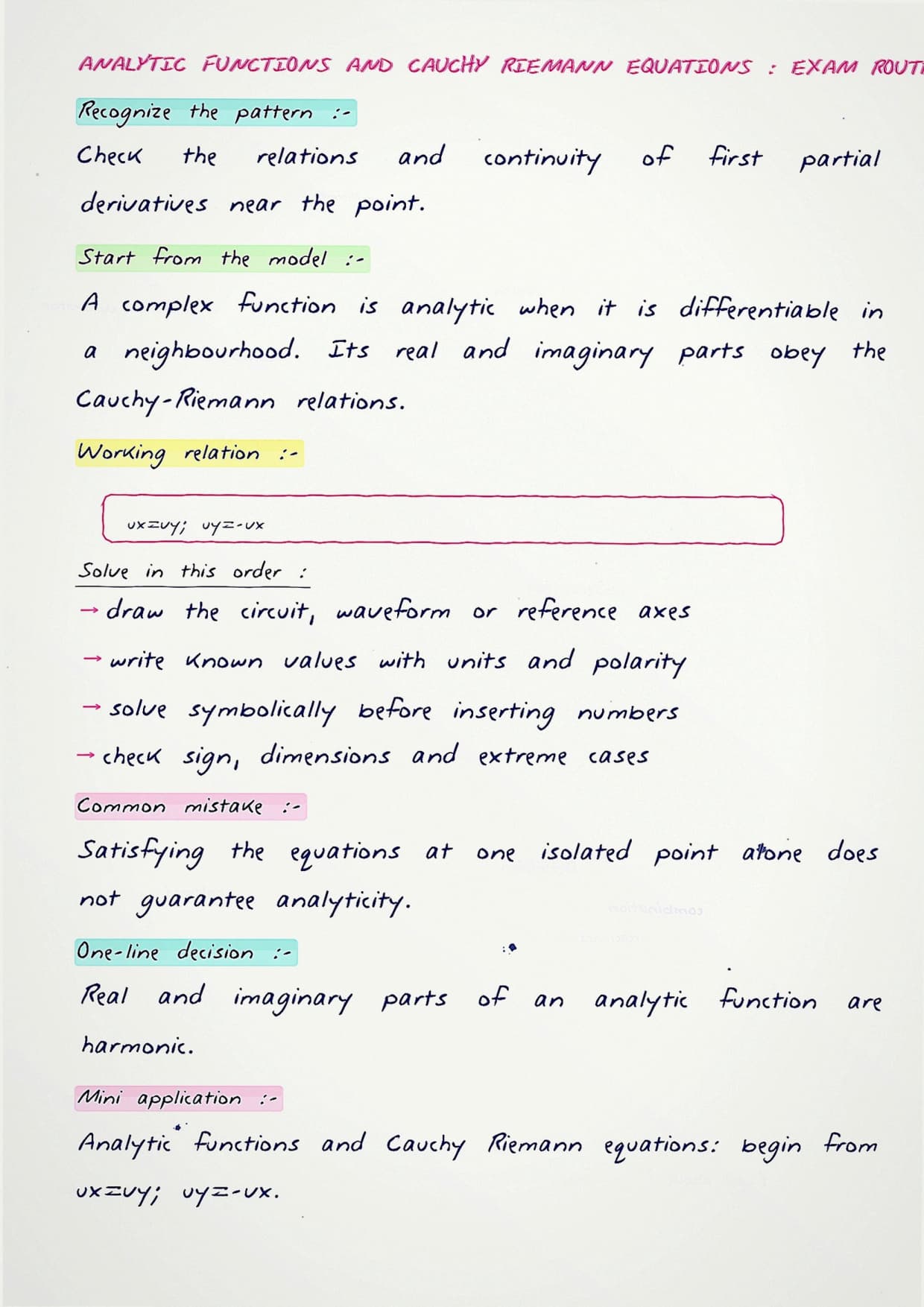
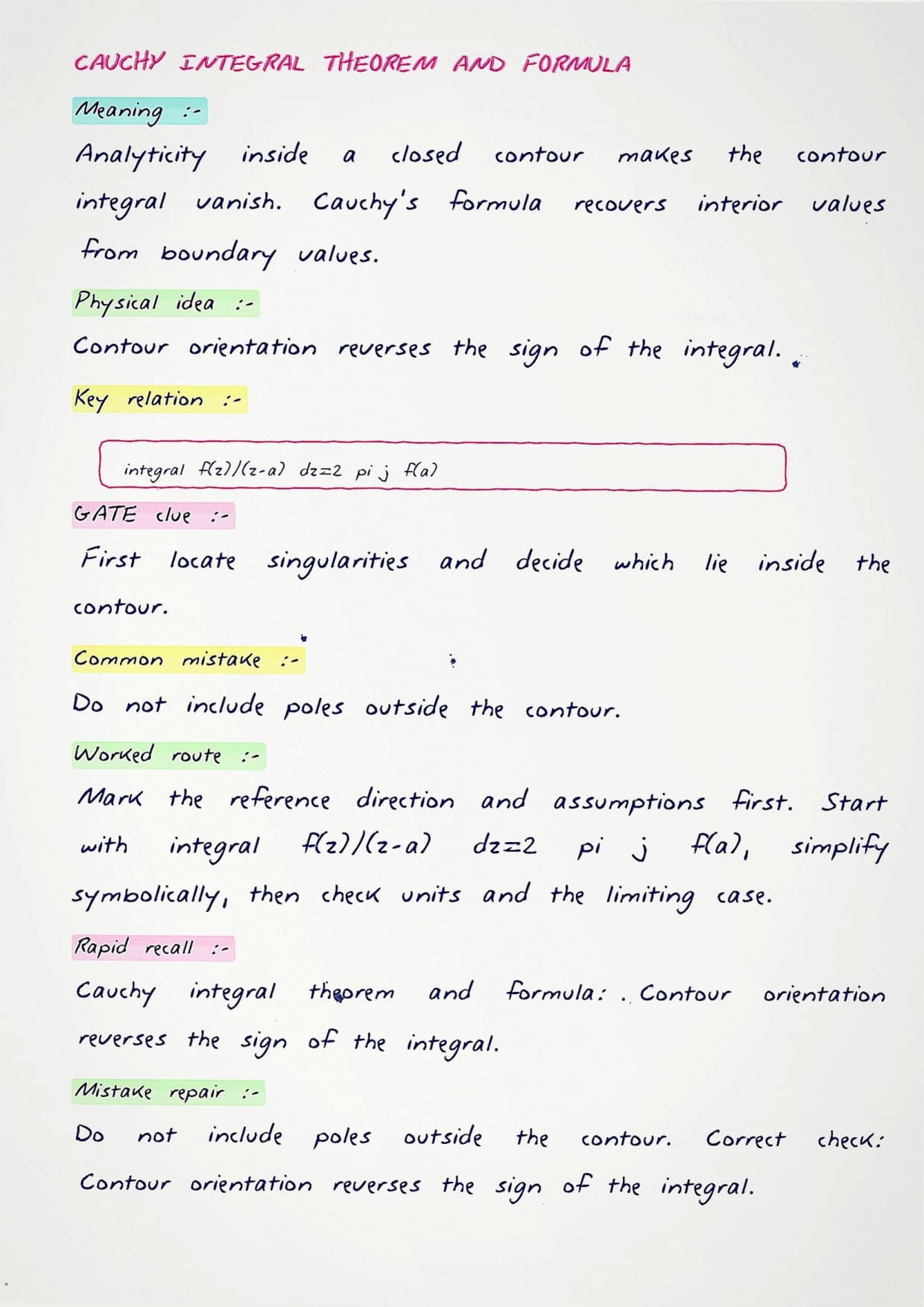
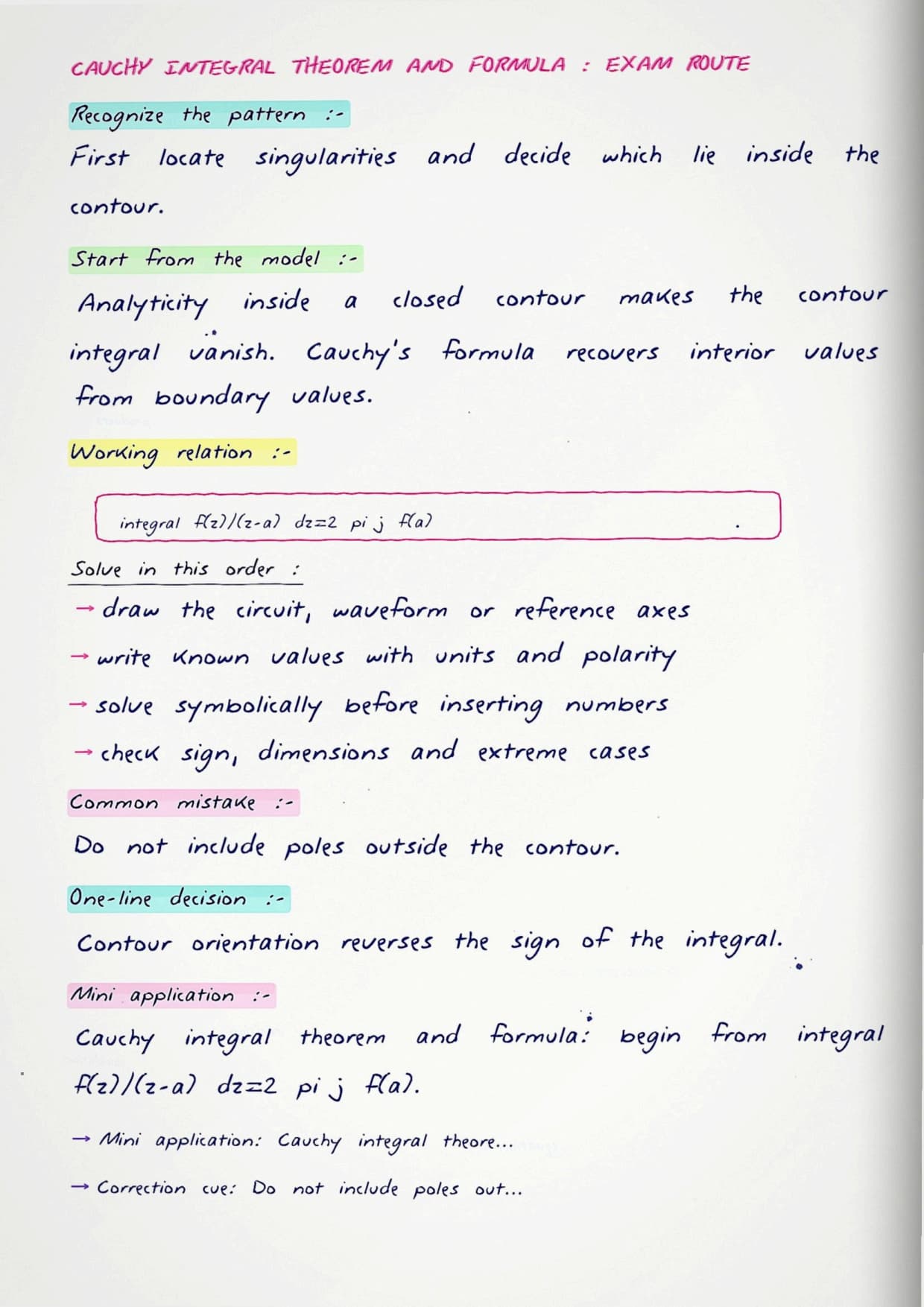
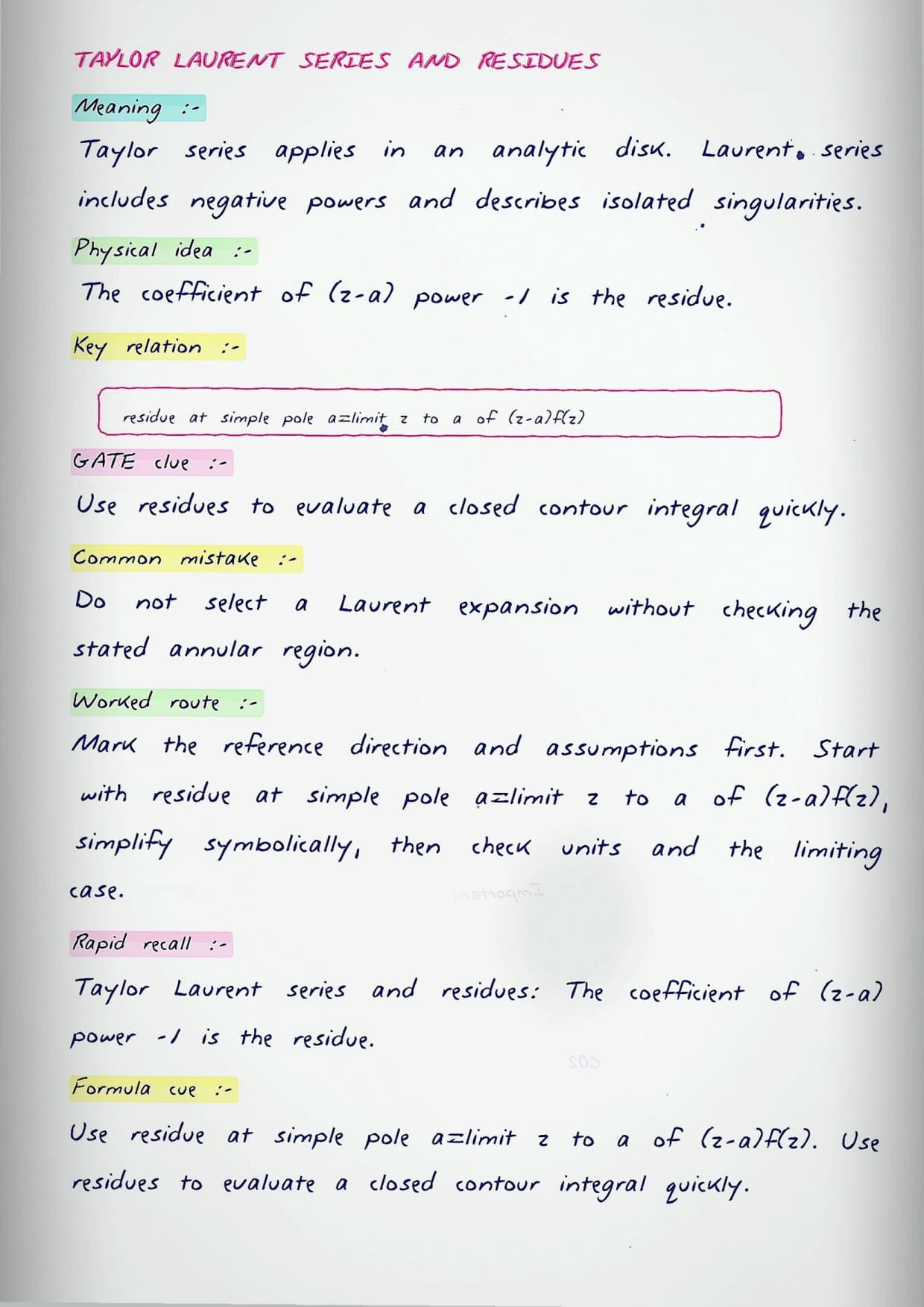
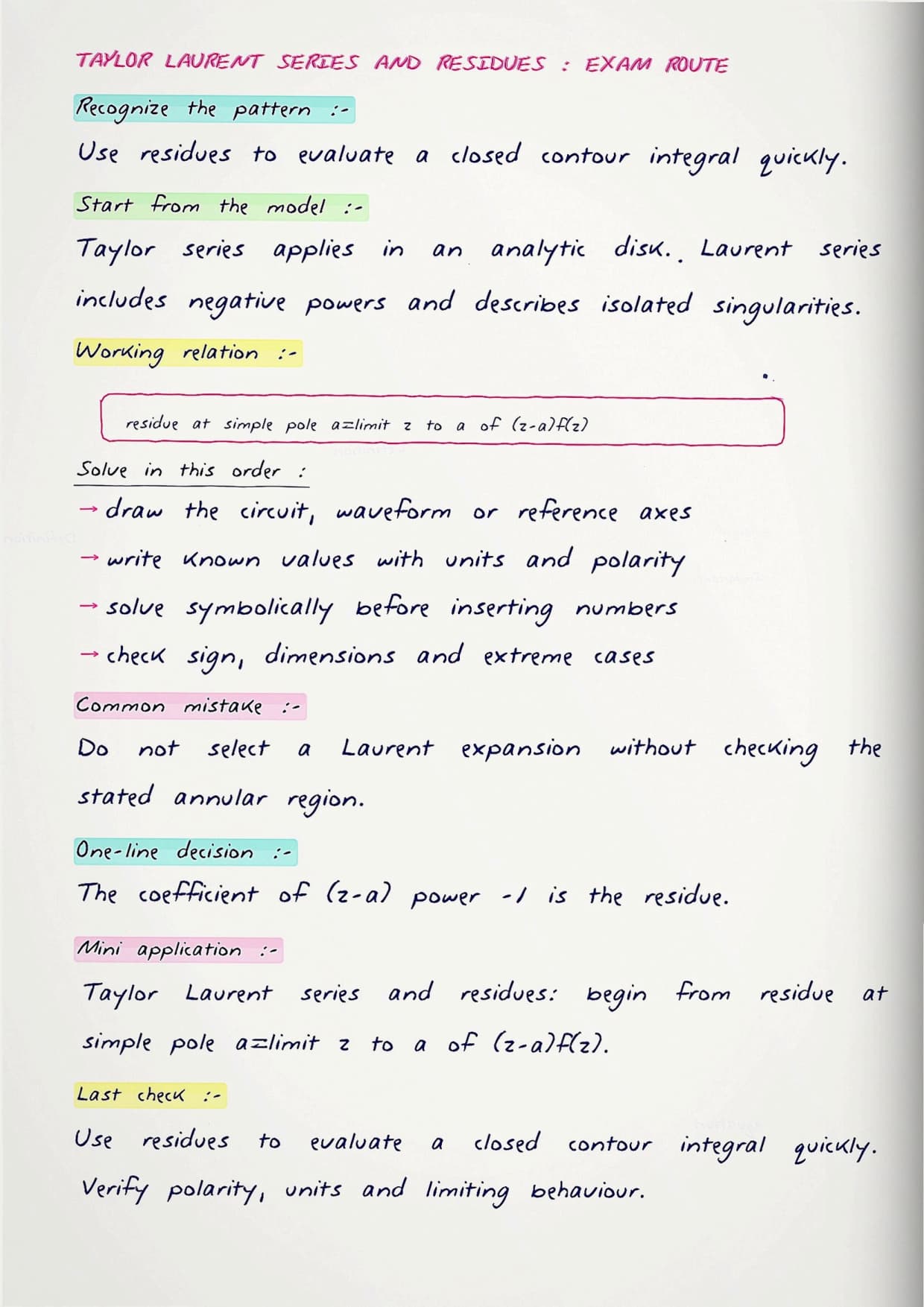
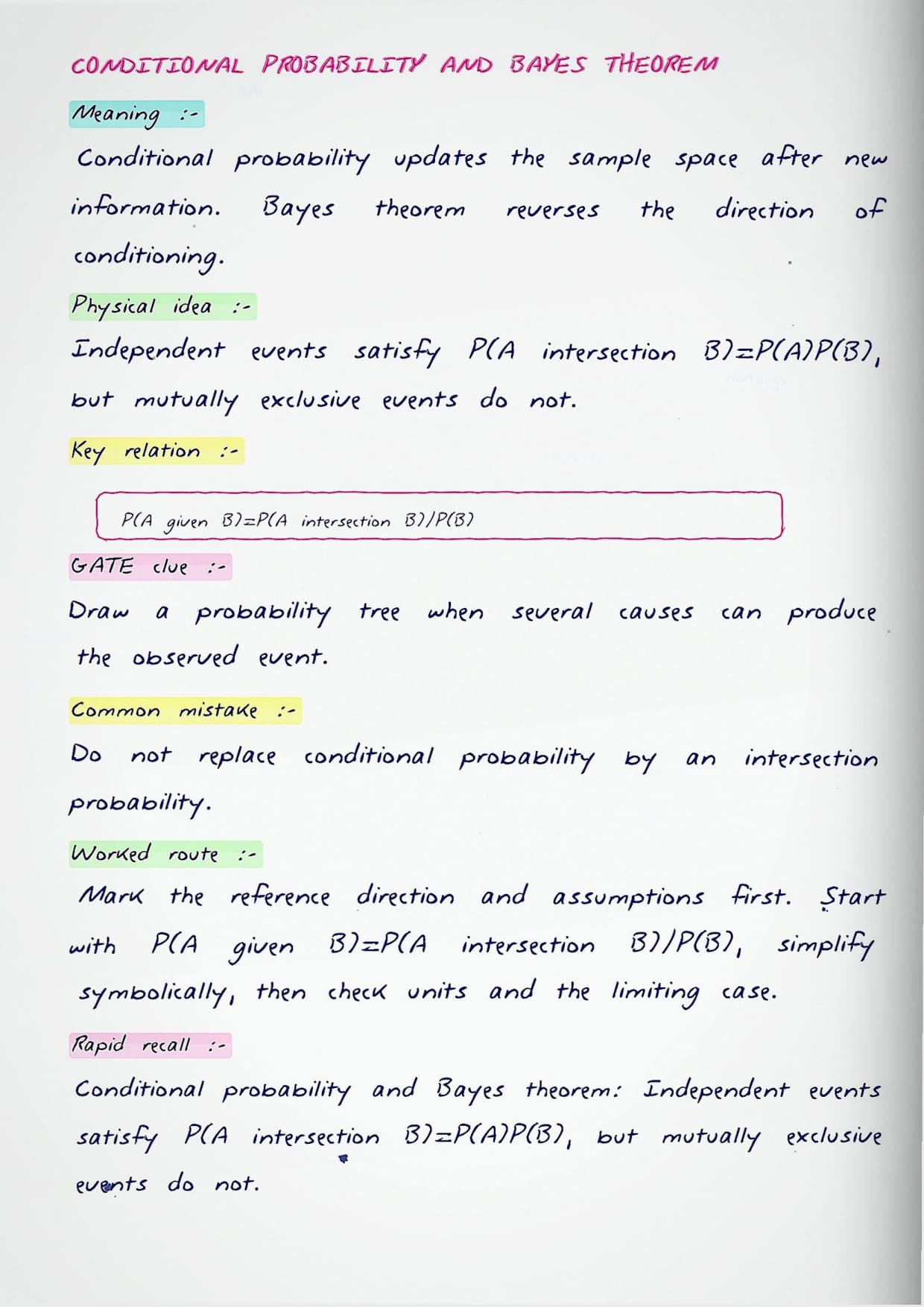
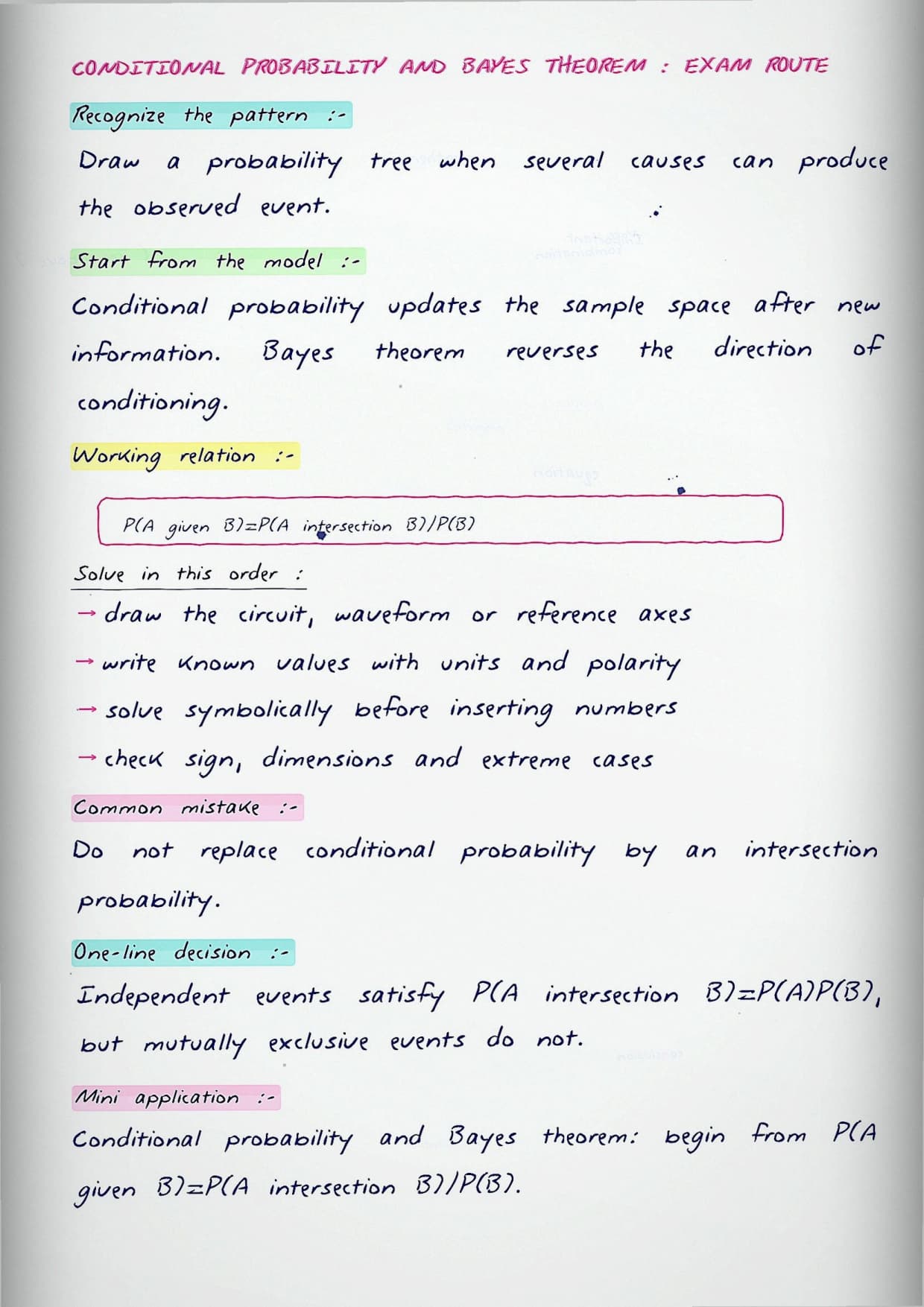
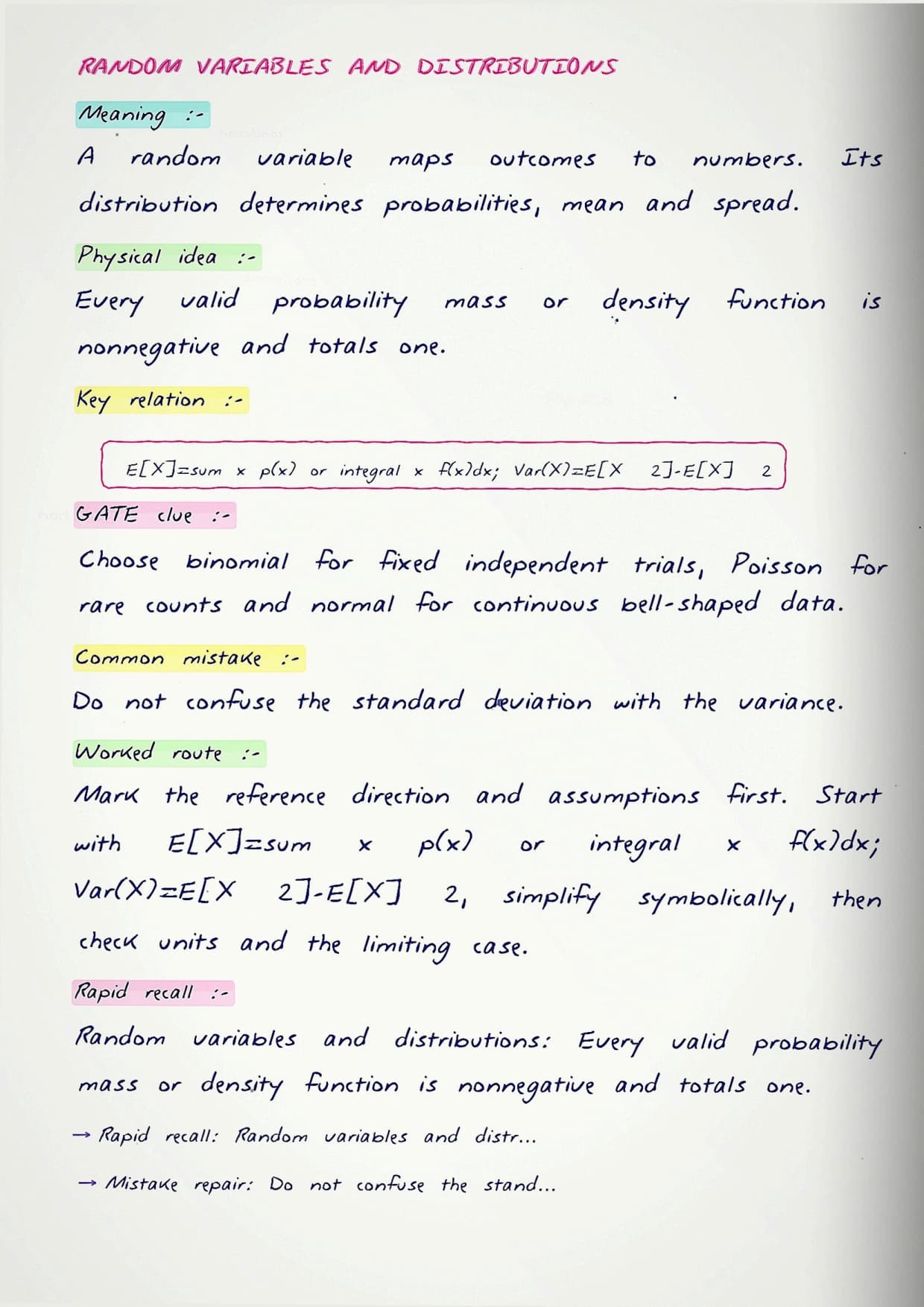
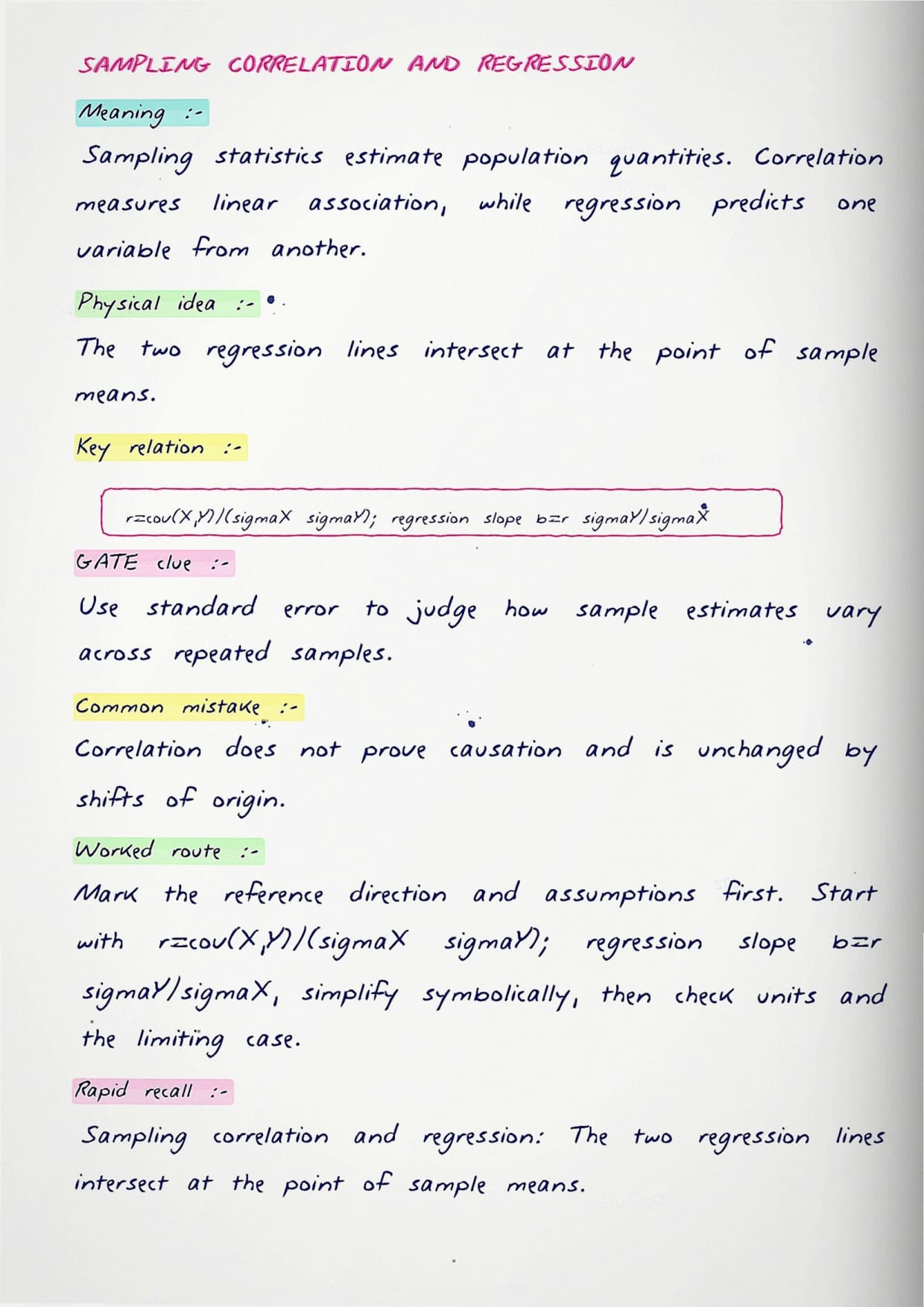
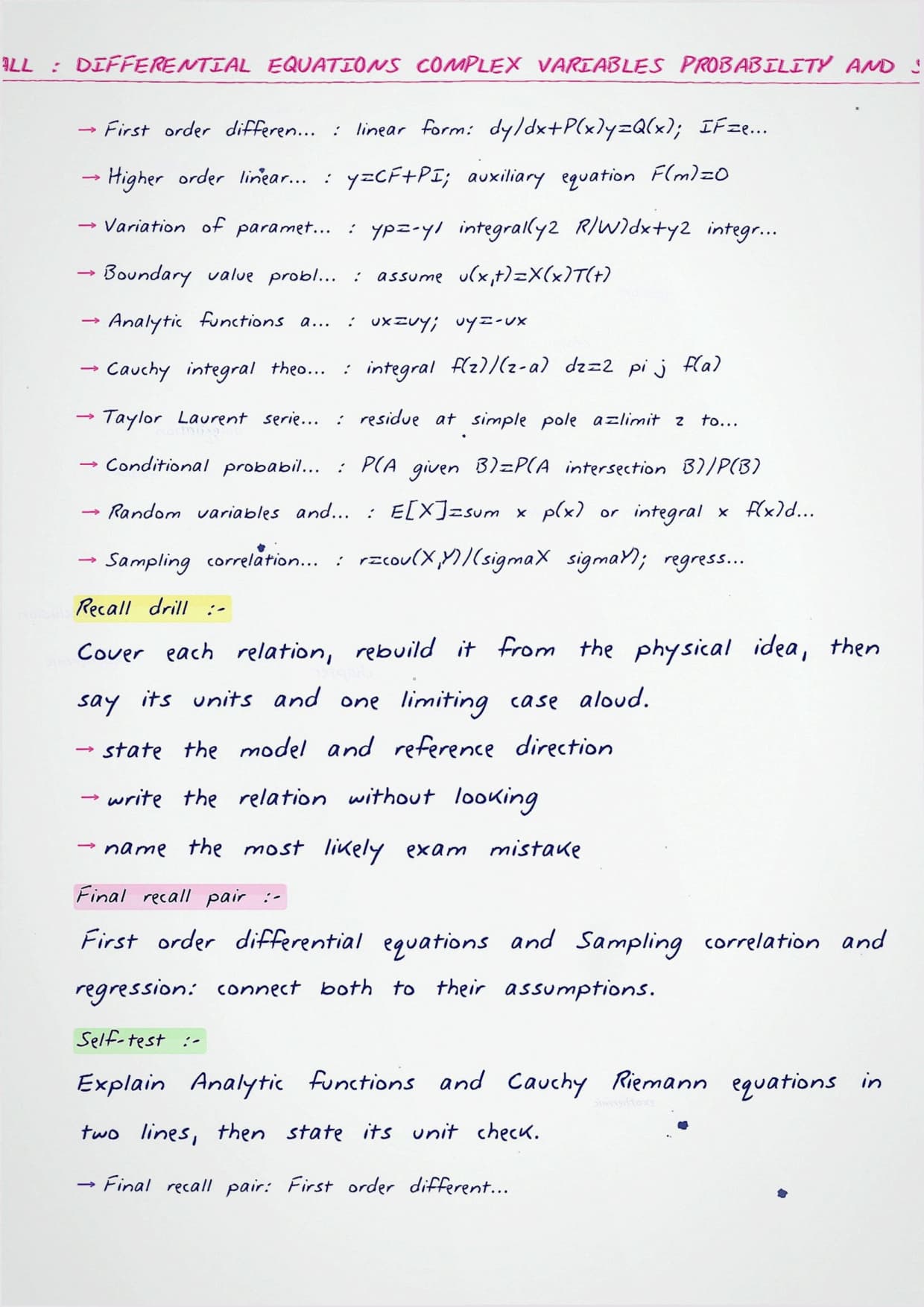
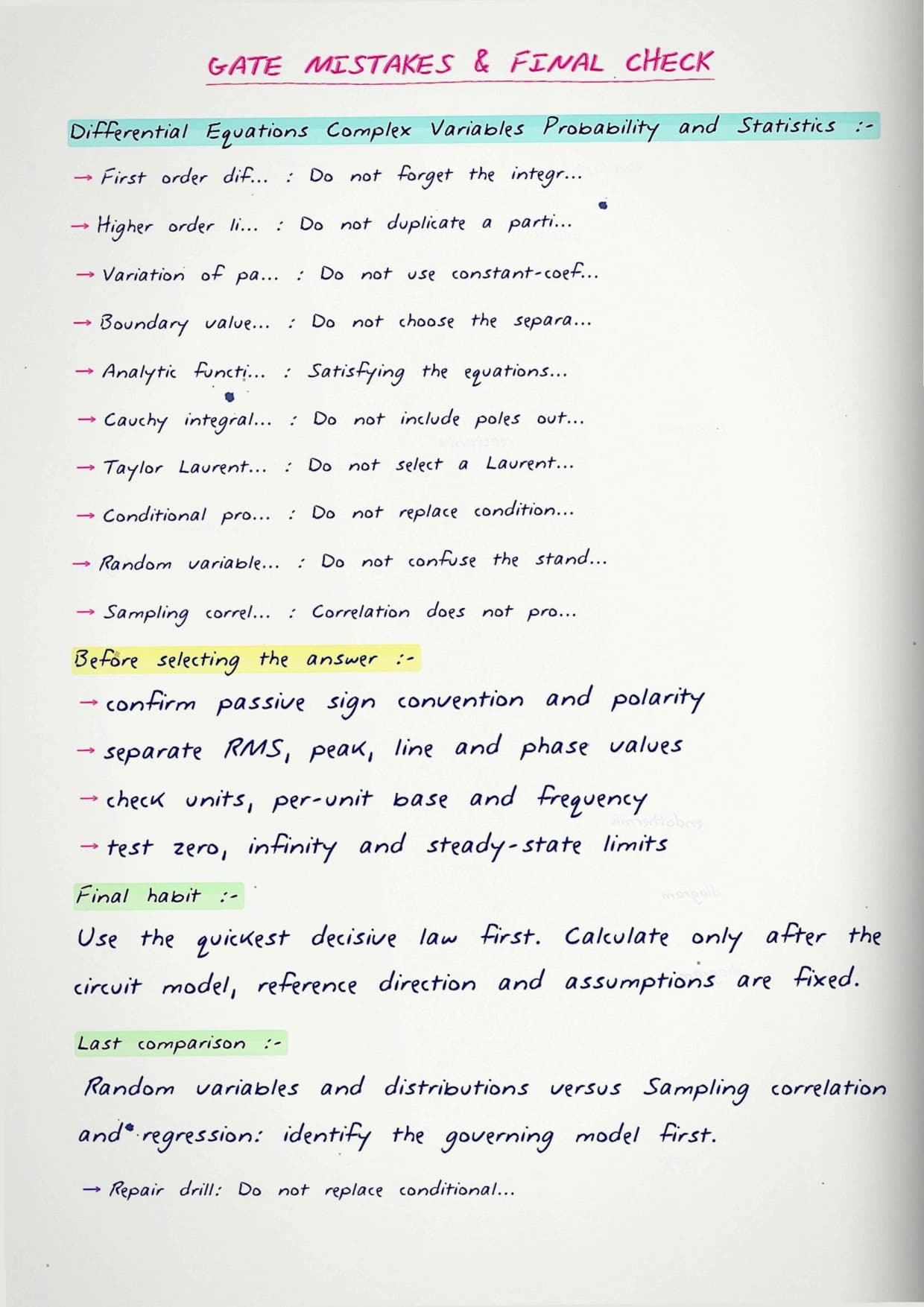
The pages open with margin sketches of slope fields and solution curves, then walk through each method line by line so students can see exactly where every step comes from. A hand-drawn formula sheet at the end gathers the standard integrating factors, residue results, and distribution formulas for quick last-day recall.
- Side-by-side worked cases for variable-separable, exact, and linear first-order differential equations.
- The Cauchy-Riemann conditions, analytic functions, and contour integration shown through small solved examples.
- A tidy probability and statistics block on distributions, mean, variance, and the theorems GATE keeps testing.
What These GATE Engineering Mathematics Notes Cover
These notes bundle three closely linked chapters that GATE Electrical mixes freely across the paper. Every rule is written the way students actually reproduce it under time pressure, with the trigger conditions marked in the margin.
- Ordinary differential equations of first and second order, including Cauchy-Euler and higher-order linear forms.
- Complex variables, analyticity, singularities, and the residue theorem for evaluating integrals.
- Basic probability, conditional probability, and Bayes reasoning with quick decision trees.
- Common probability distributions and descriptive statistics such as mean, median, variance, and correlation.
GATE Engineering Mathematics Quick Revision
Source: GATE Wallah on YouTube
Topics Covered in GATE Engineering Mathematics
The coverage follows the official GATE Electrical syllabus for these three chapters, so students can revise straight from the exam blueprint without hunting through a thick textbook.
- First-order equations by separation of variables, exact equations, and the integrating-factor method.
- Higher-order linear differential equations with constant coefficients and the method of undetermined coefficients.
- Cauchy-Euler equations and the general structure of the complementary function and particular integral.
- Analytic functions, the Cauchy-Riemann test, and harmonic conjugates.
- Cauchy's integral theorem, integral formula, poles, and the residue theorem.
- Random variables with discrete and continuous distributions, including binomial, Poisson, and normal.
- Mean, mode, median, standard deviation, and the basics of correlation and regression.
- Conditional probability, independence, and Bayes theorem for multi-stage problems.
How the Notes Are Organised
The reading order runs from differential equations to complex variables and finally to probability, because each block borrows small tools from the one before it. Students should skim the boxed definitions first, then read the worked example that sits directly beneath each rule.
Short recap strips appear at the foot of every couple of pages so a second pass takes only a few minutes. Colour is used only to separate a definition from its example, which keeps the eye moving without clutter. The final formula sheet is meant to be revised on its own the night before the exam once the concepts are already clear, and it doubles as a checklist to confirm no method has slipped from memory.
How GATE Engineering Mathematics Links to Other Topics
Mathematics is rarely tested in isolation in GATE Electrical. The same tools quietly power several technical subjects, so a firm grip here pays off across the paper.
- Differential equations feed the transient analysis in Electric Circuits.
- Complex numbers and phasors underpin steady-state study in Power Systems and AC circuits.
- Laplace transforms link straight into Control Systems and Signals and Systems.
- Probability supports reliability and noise questions across Measurements and communication style problems.
Important Topics in GATE Engineering Mathematics
A few areas return almost every year and carry the easiest marks once the tricks are memorised. The notes flag the classic traps that cost students silly errors.
- Choosing the correct integrating factor and not dropping the constant of integration.
- Residue calculation at simple and higher-order poles, where sign errors are common.
- Reading the Cauchy-Riemann conditions correctly before declaring a function analytic.
- Mixing up the binomial and Poisson settings when the sample size is large.
- Confusing variance with standard deviation while framing the final numerical answer.
How to Prepare GATE Engineering Mathematics with Handwritten Notes
A steady plan beats last-minute cramming for a subject built on small repeatable methods. Use the notes in short focused sittings rather than one long marathon.
- First read: cover one chapter a day and copy every boxed rule into your own rough book.
- Second pass: solve the margin examples again with the solutions hidden.
- Practice window: attempt ten years of GATE previous questions on these three chapters.
- Final week: revise only the formula sheet and the marked traps each morning.
Why These Notes Help You Score Better
Because the rules, worked steps, and formula sheet all sit in one slim set of pages, revision stays fast and the panic of a scattered syllabus disappears. The hand-drawn layout keeps the eye on the trigger condition for each method, which is exactly what saves time in the exam hall. Regular passes build the muscle memory that turns these questions into guaranteed marks, and that is why so many students keep this bundle close in the last month.
GATE Electrical Engineering Mathematics Handwritten Notes FAQs
Ques. How many marks does Engineering Mathematics carry in GATE Electrical?
Ans. The full Engineering Mathematics section usually carries around 11 to 15 marks, and the differential equations, complex variables, and probability chapters together contribute roughly 7 to 10 of those marks.
Ques. Are these handwritten notes enough for the whole syllabus of these chapters?
Ans. Yes, the notes follow the official GATE Electrical syllabus for differential equations, complex variables, and probability, and pair every rule with a worked example so students can revise without a separate textbook.
Ques. Do I need to solve previous year questions after reading these notes?
Ans. Absolutely. Students should attempt about ten years of GATE previous questions on these chapters, because the notes teach the method and the past papers train the speed and accuracy.
Ques. Which topic here is the safest for scoring marks?
Ans. Probability and the residue theorem are usually the safest, since their questions follow fixed patterns that the notes drill through short repeatable examples.



Comments