




DC Machines is a consistently rewarding topic in GATE Electrical, usually worth about 4 to 7 marks in the paper. It belongs to the Electrical Machines section, and its ideas return in Transformers, Power Electronics, and Control of Drives. These handwritten notes cover the full topic in a compact, exam-focused form.
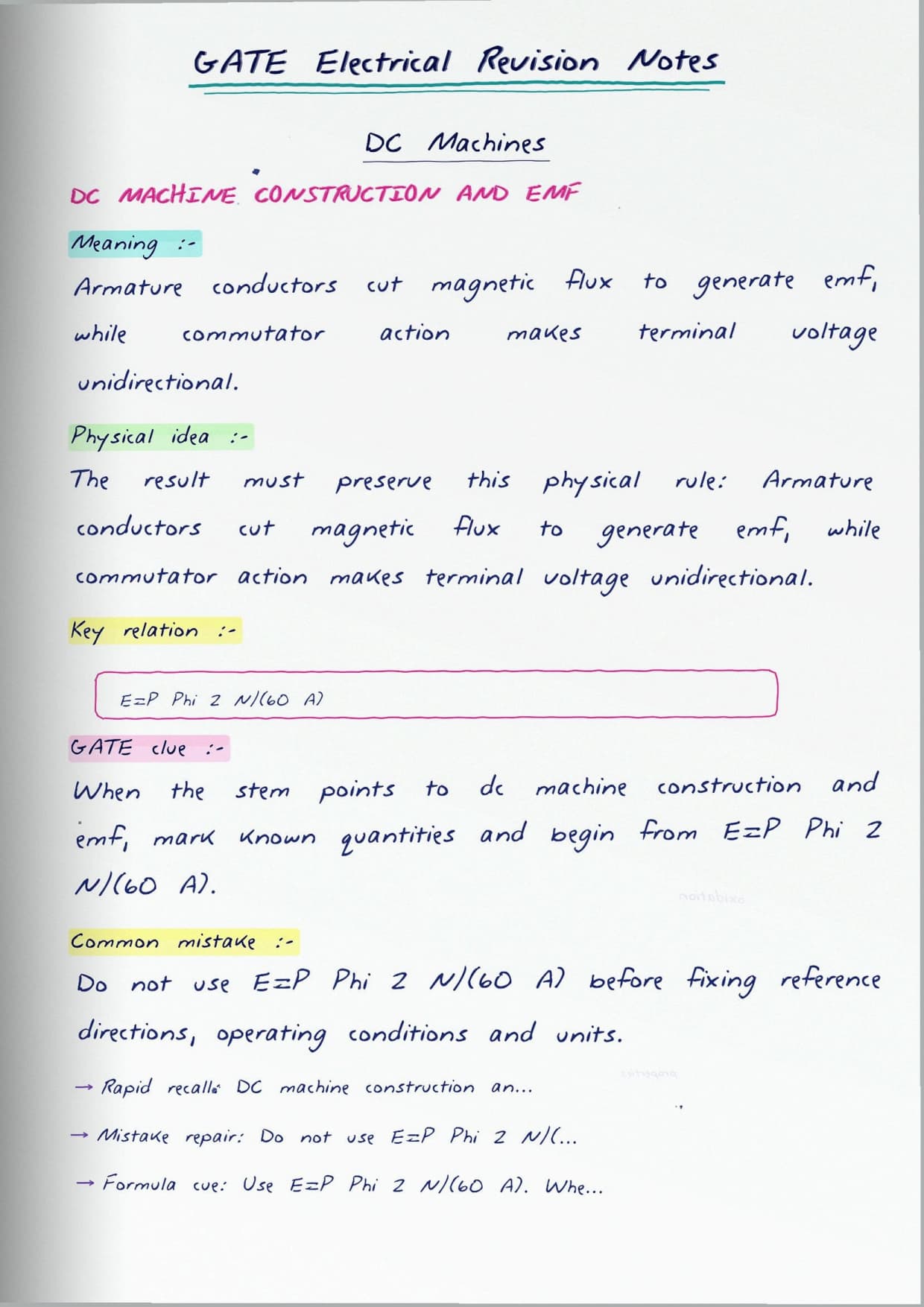
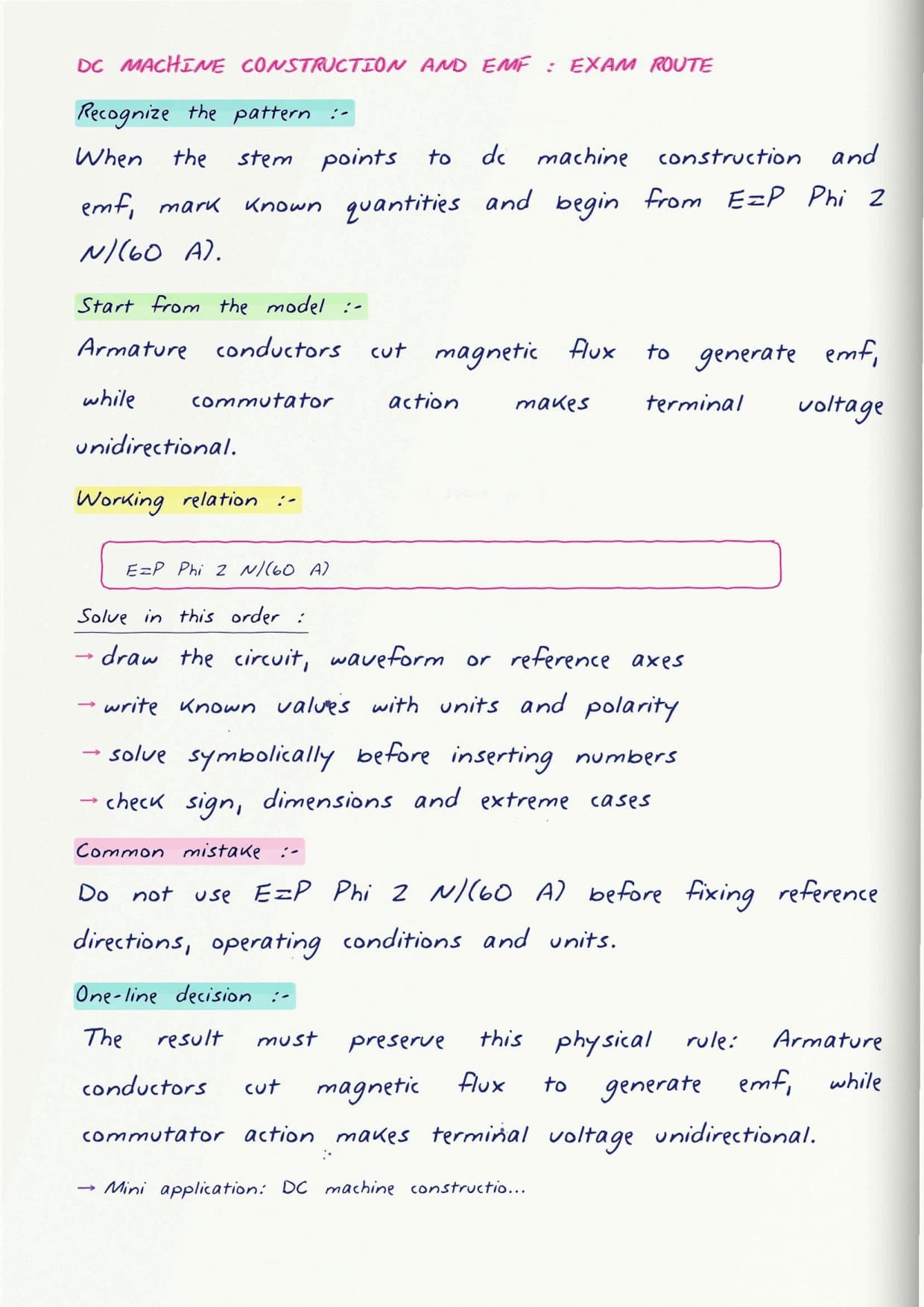
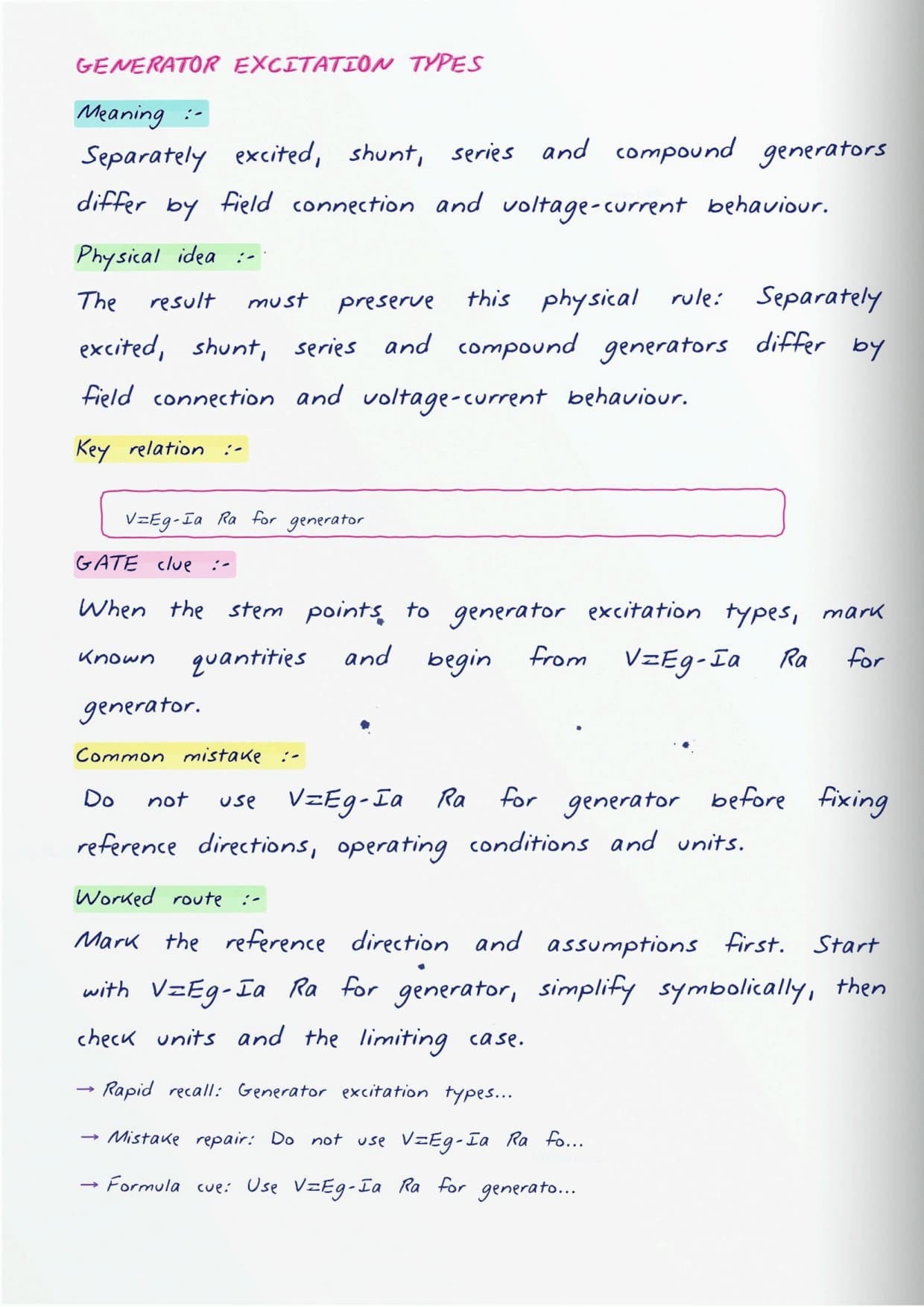
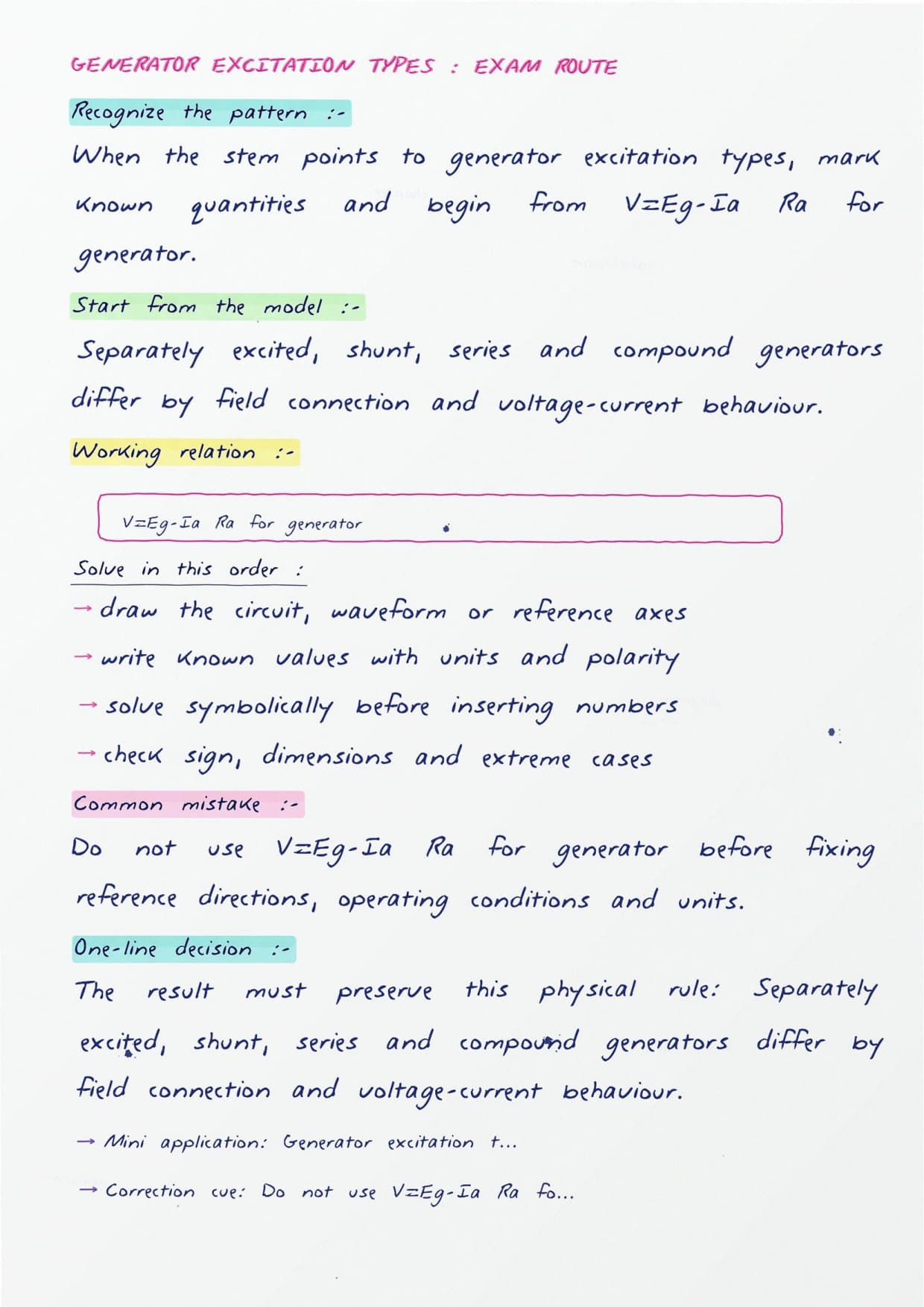
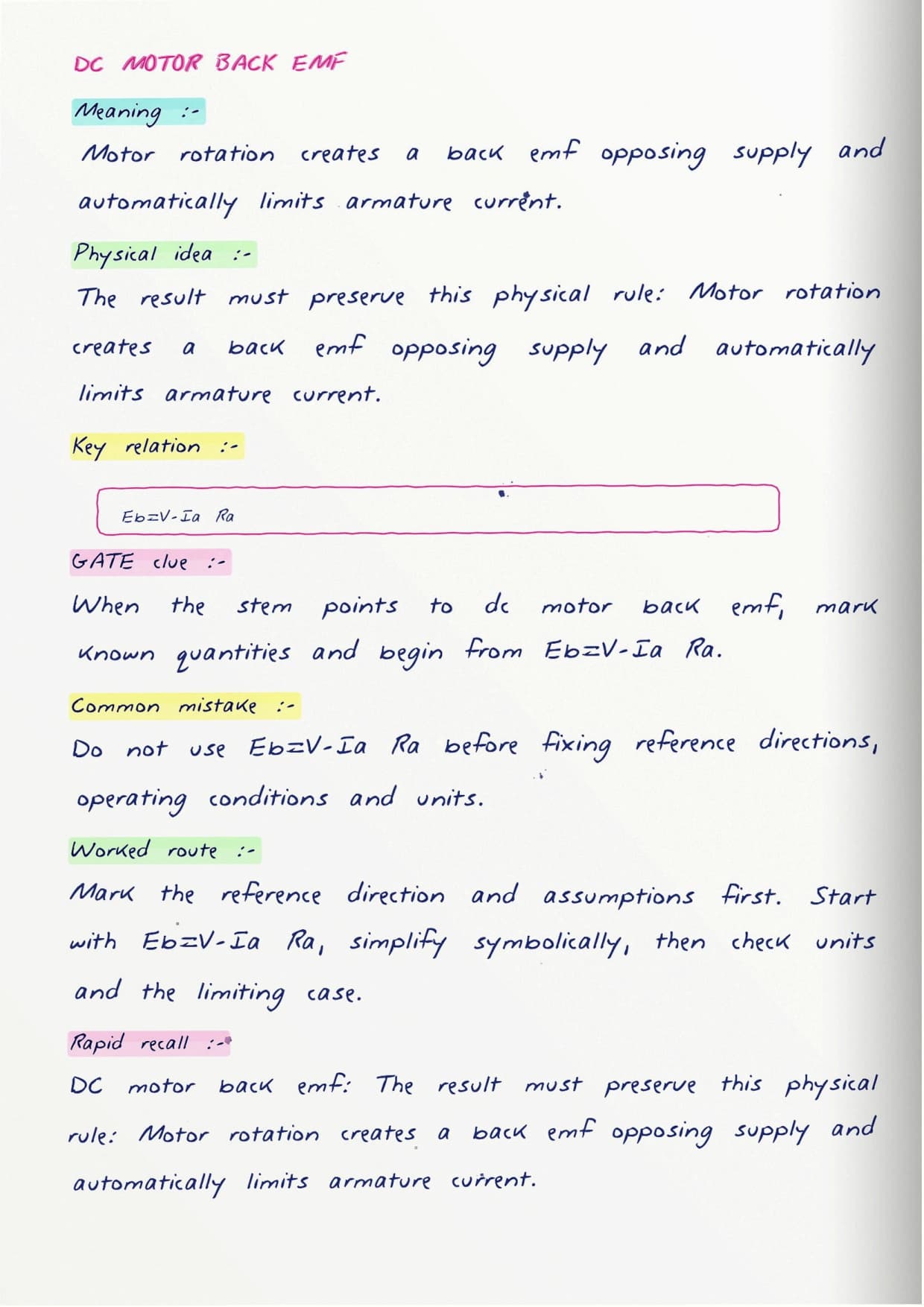
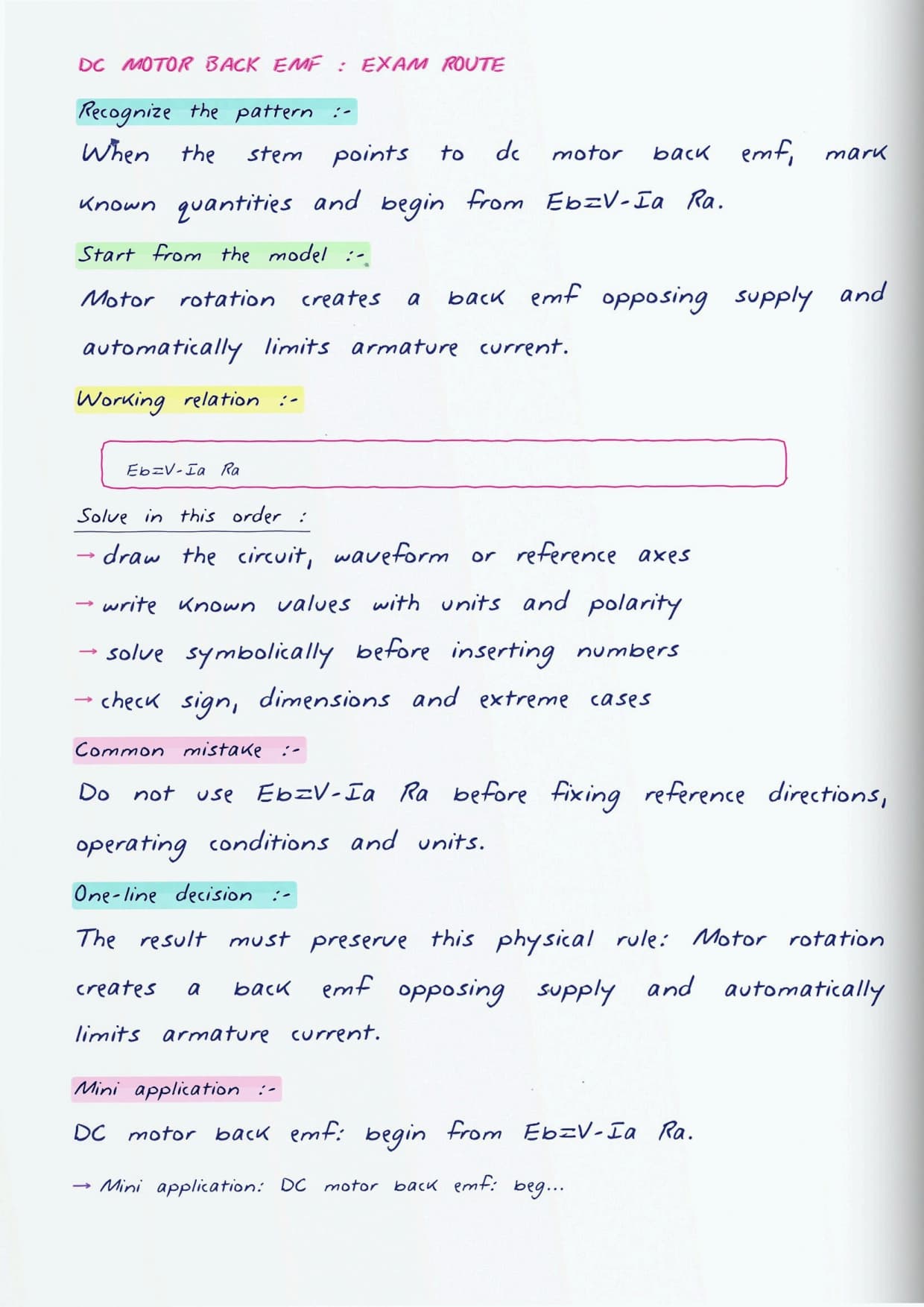
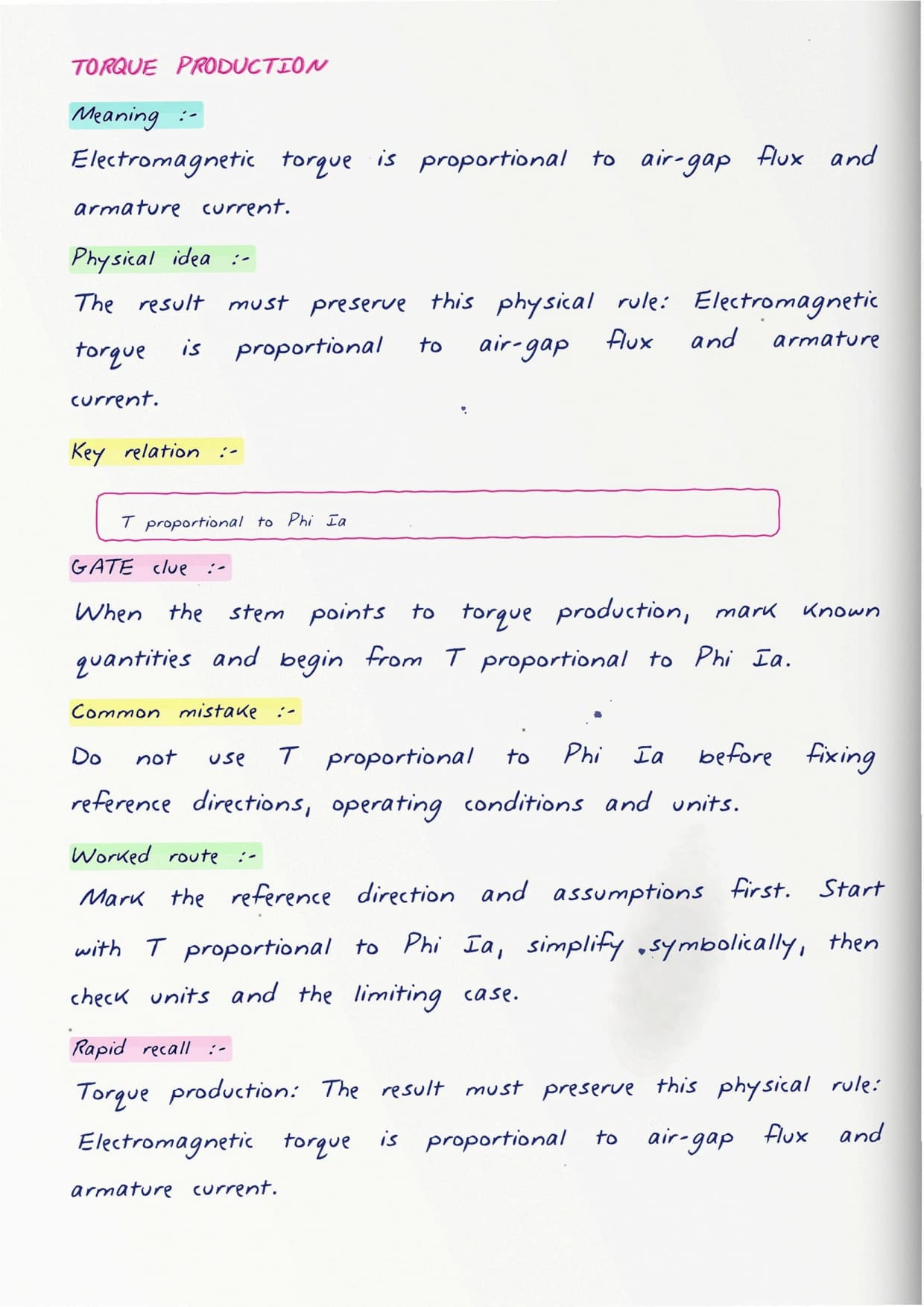
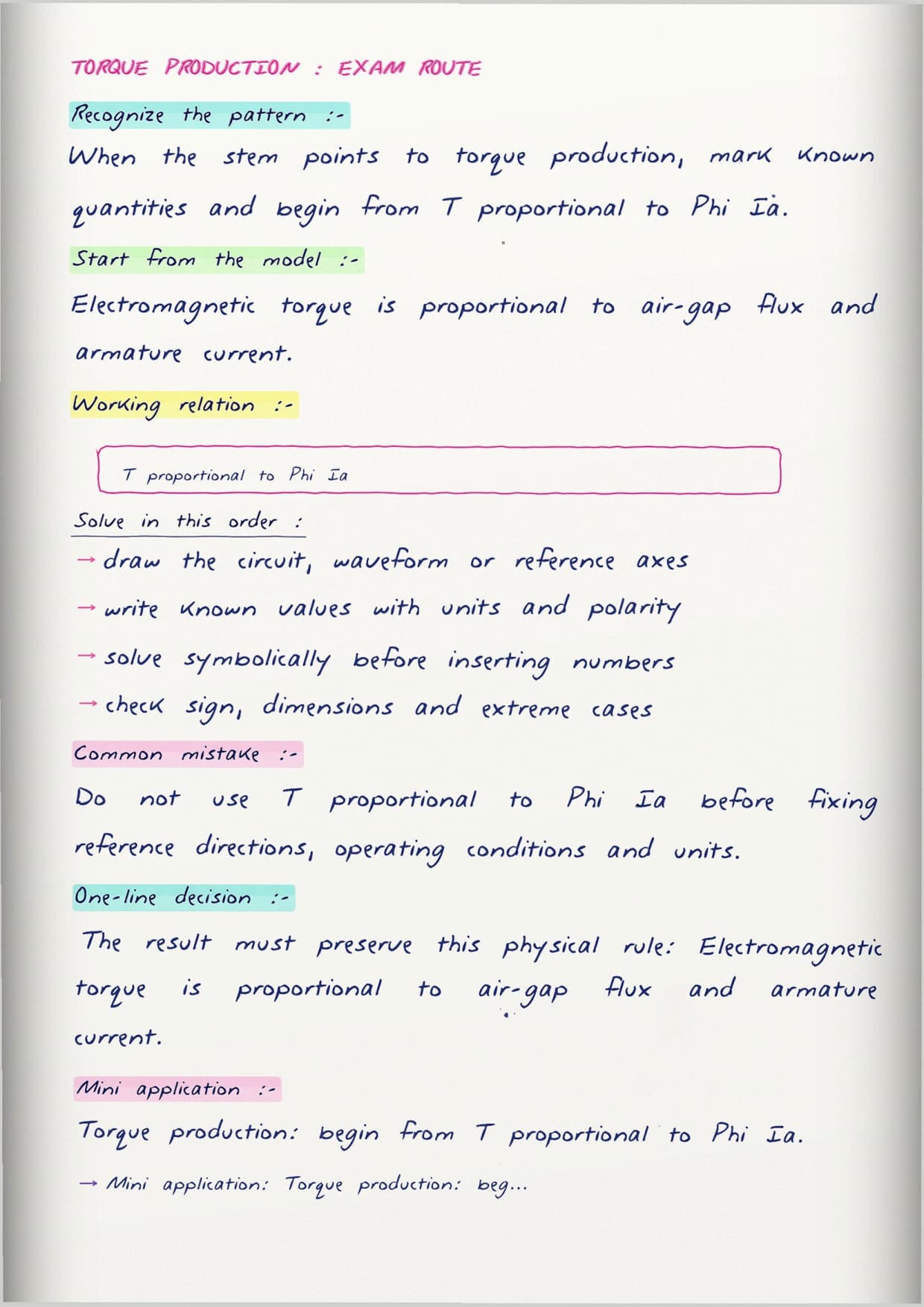
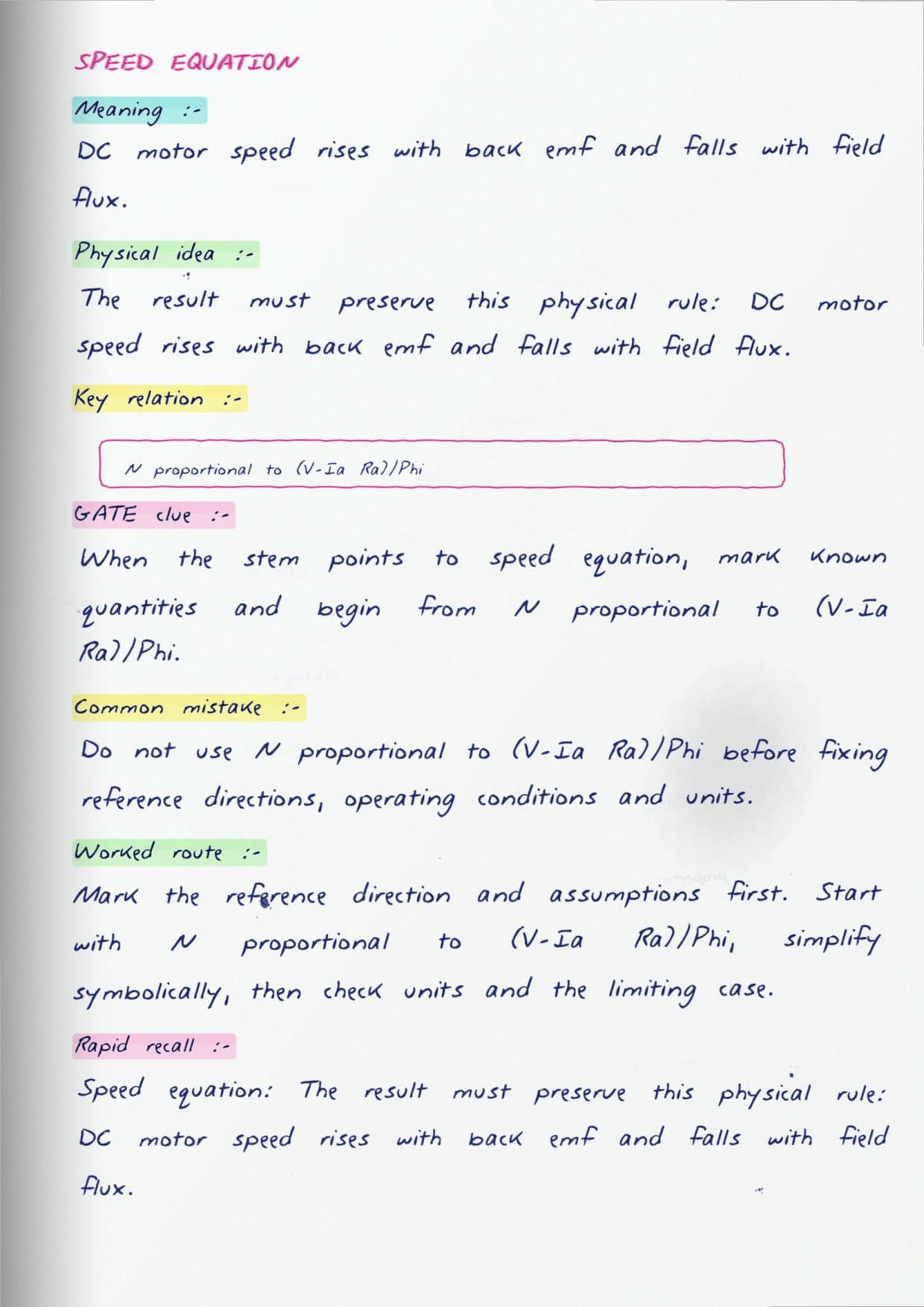
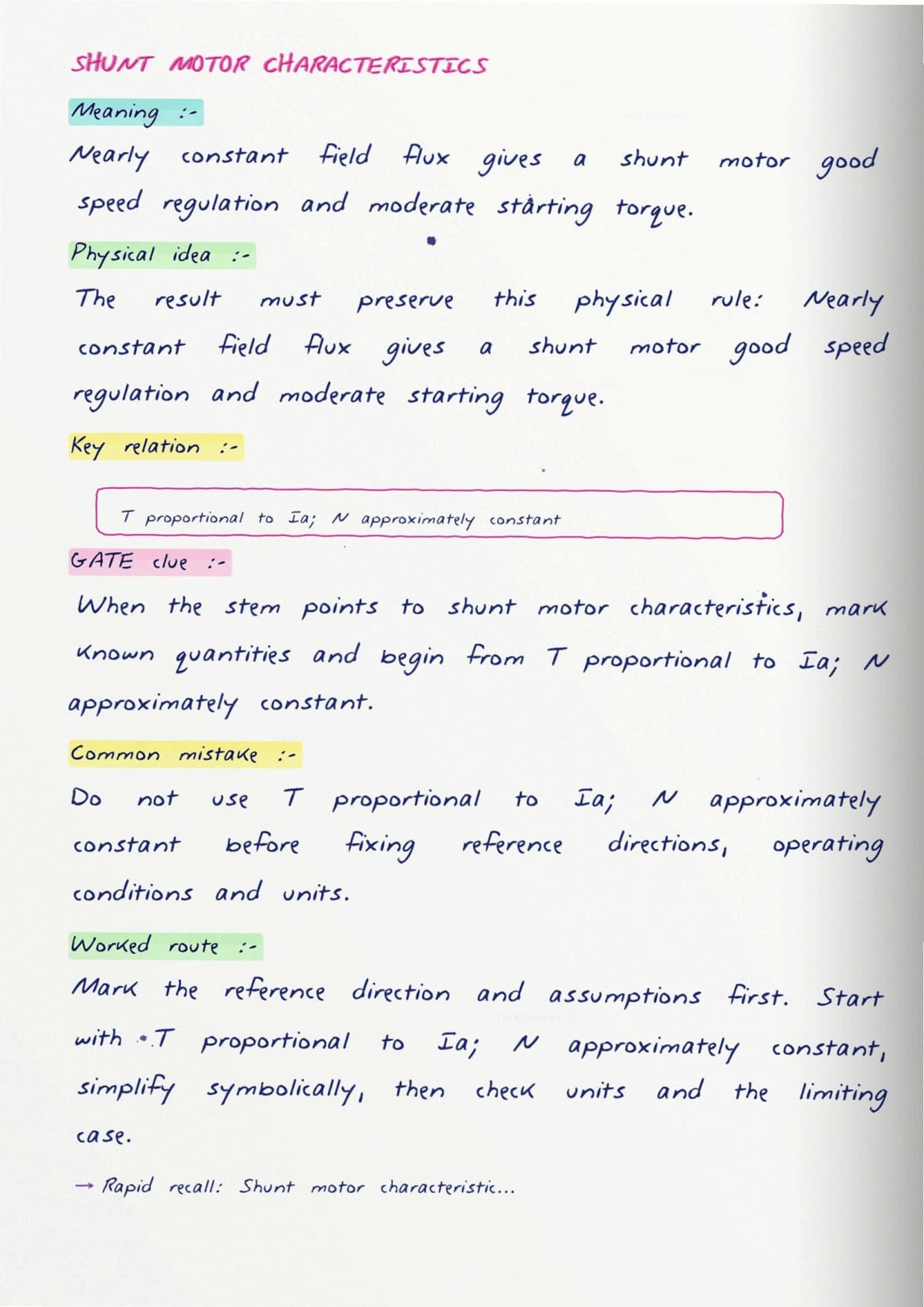
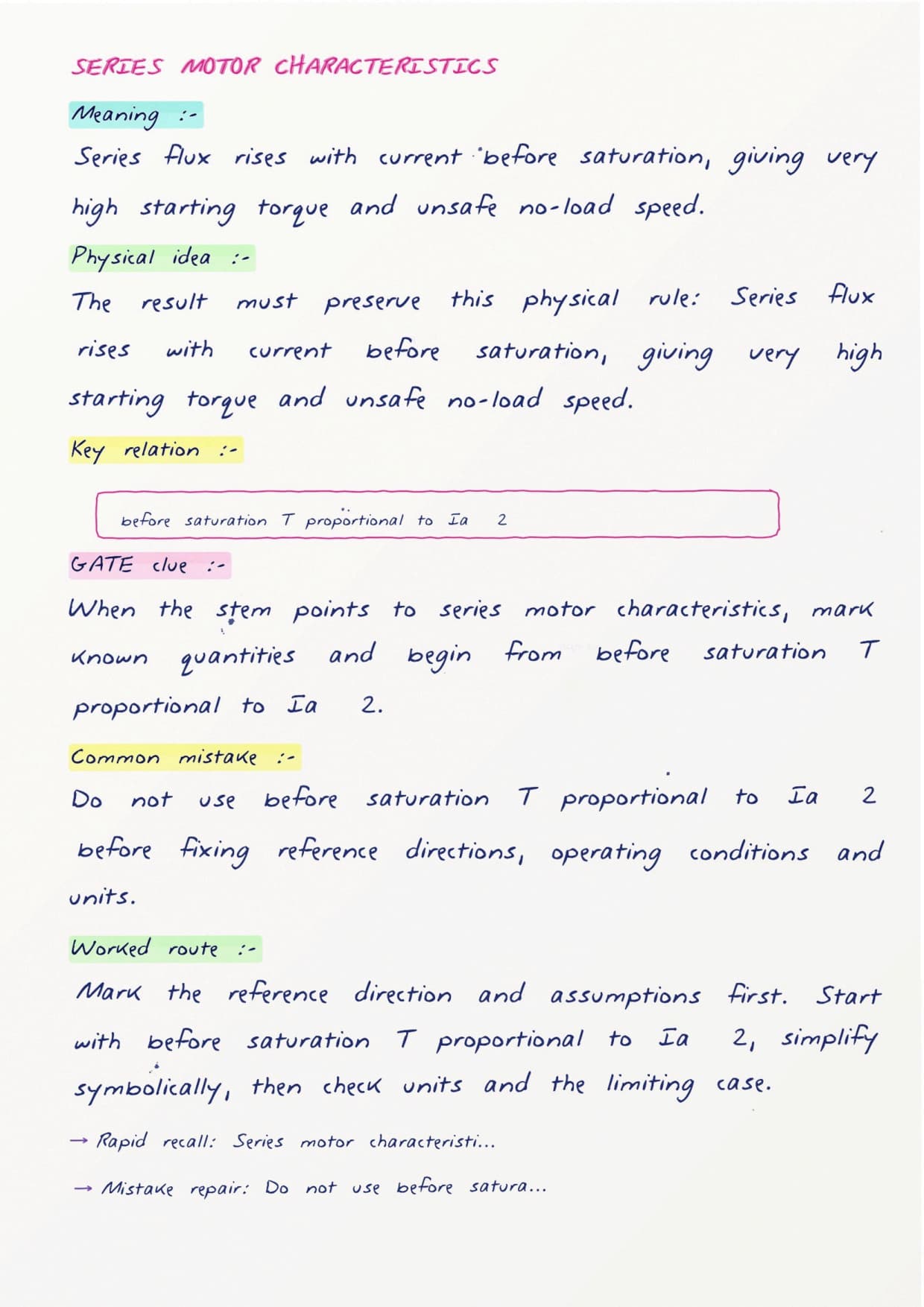
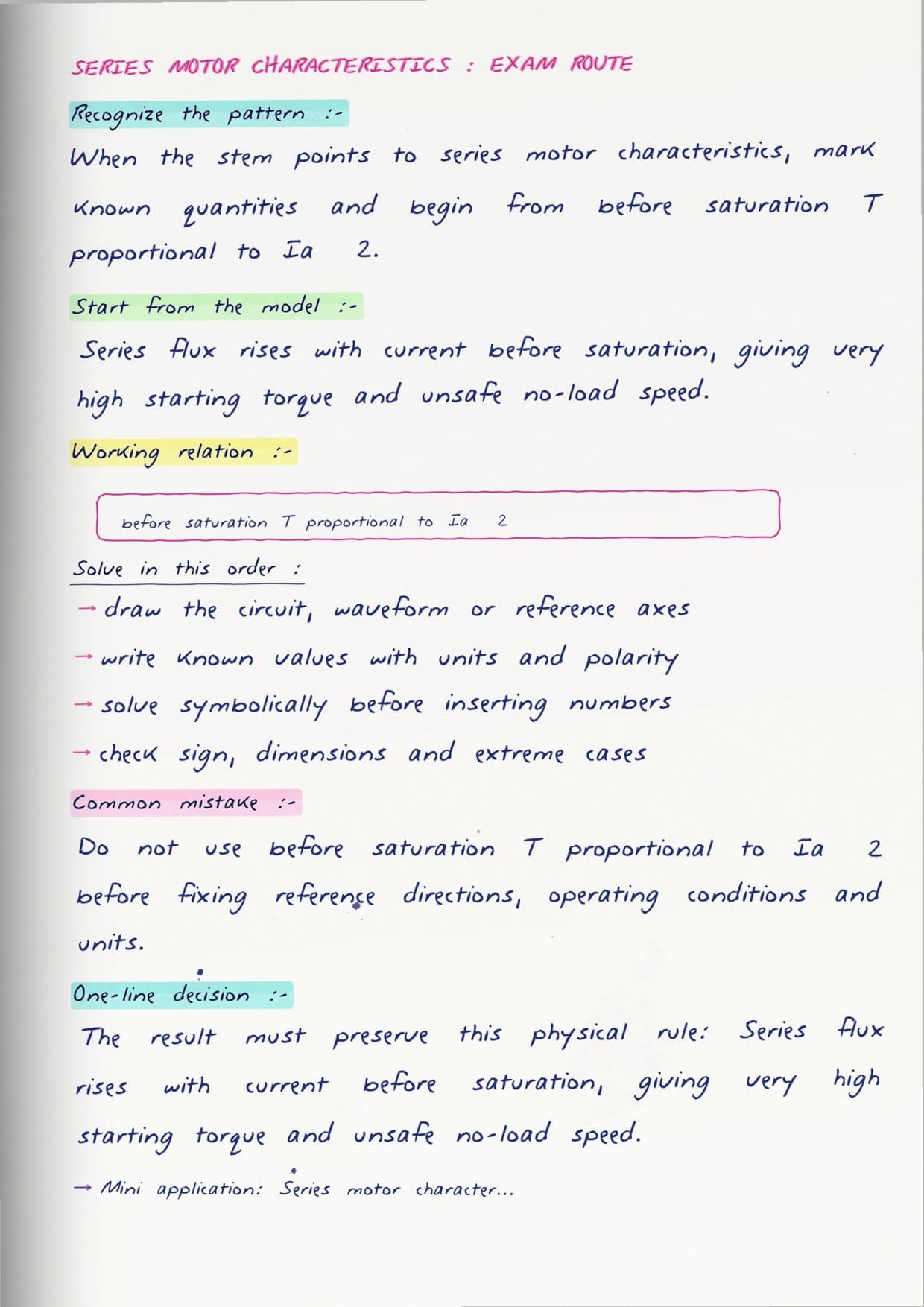
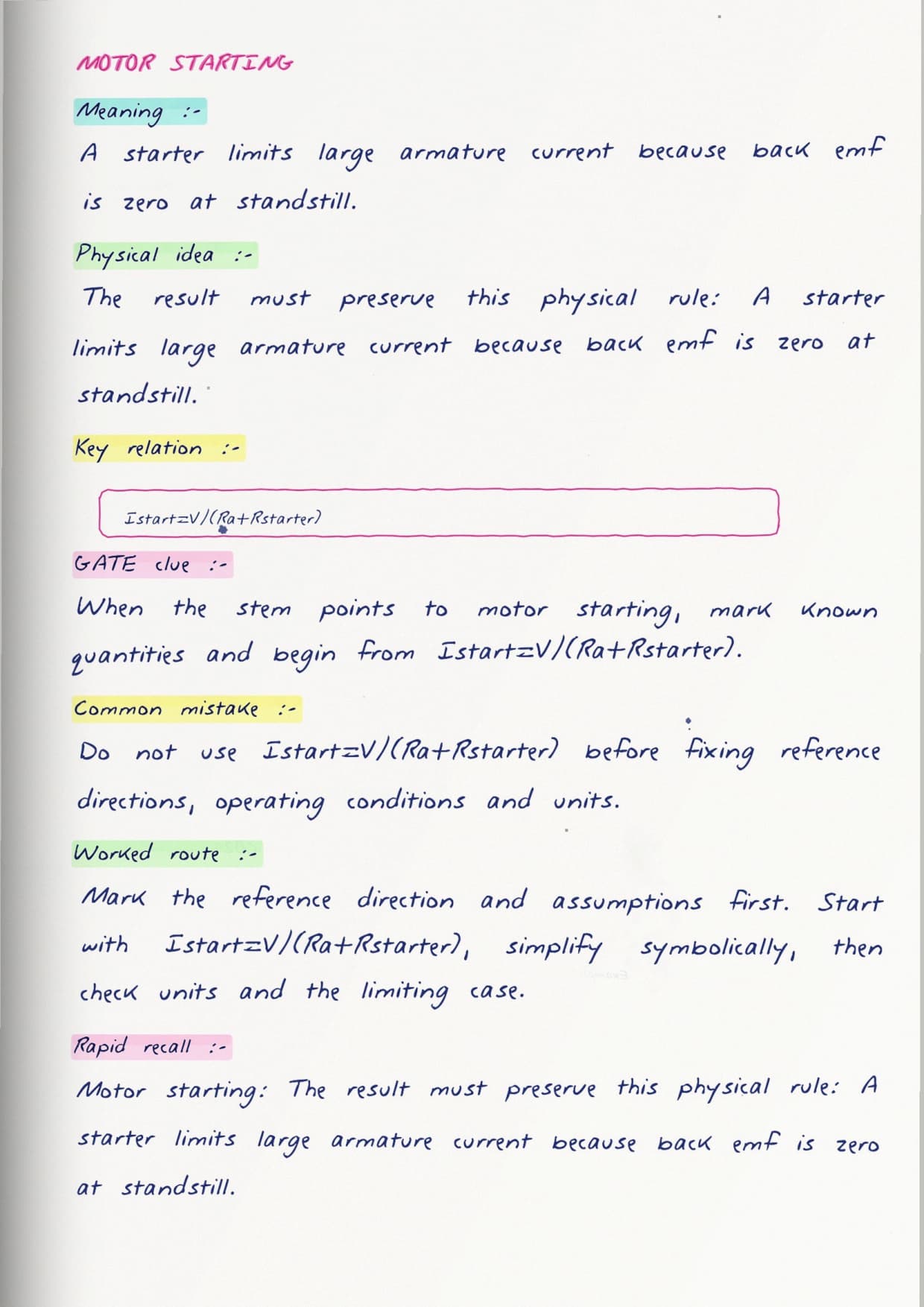
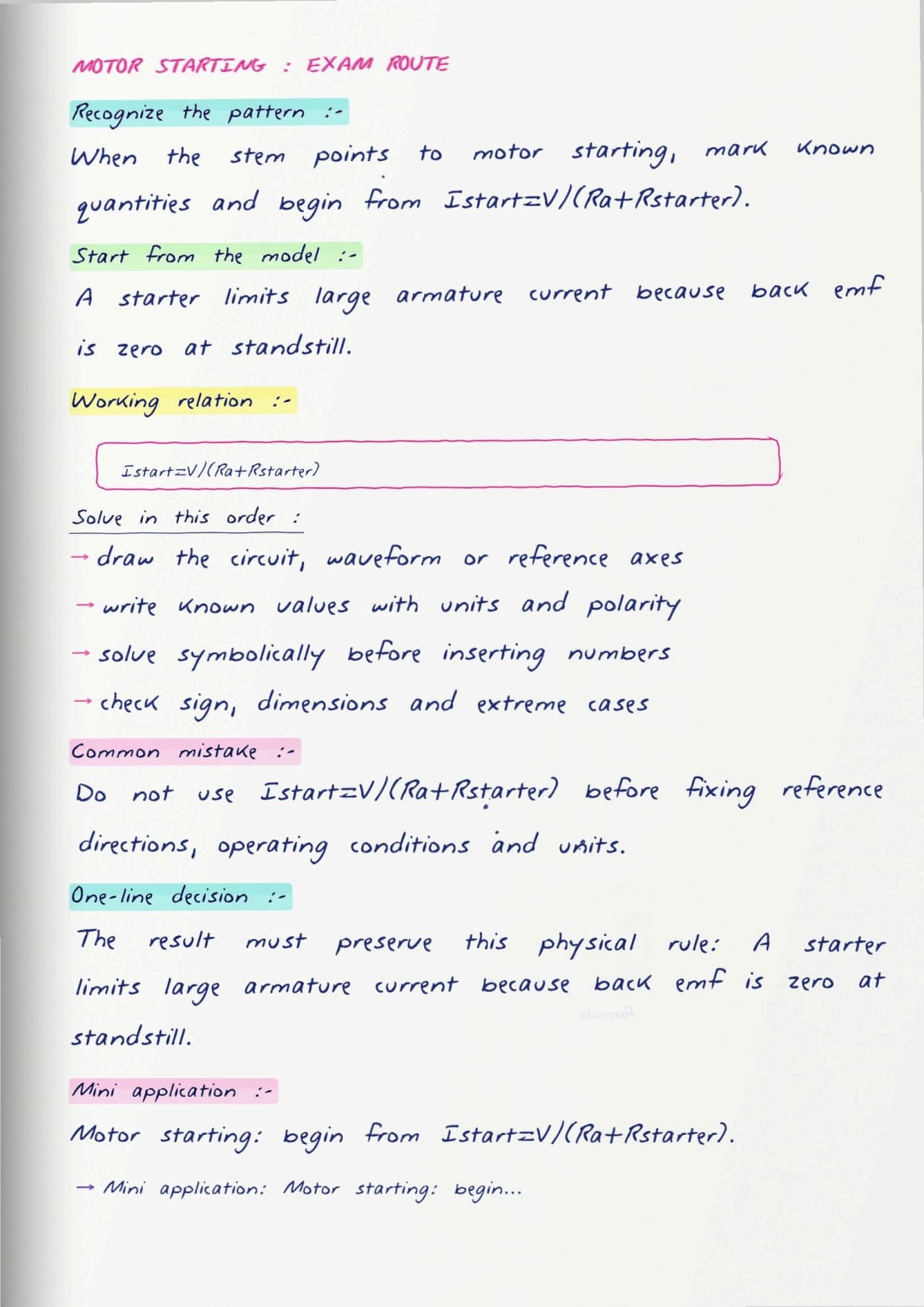
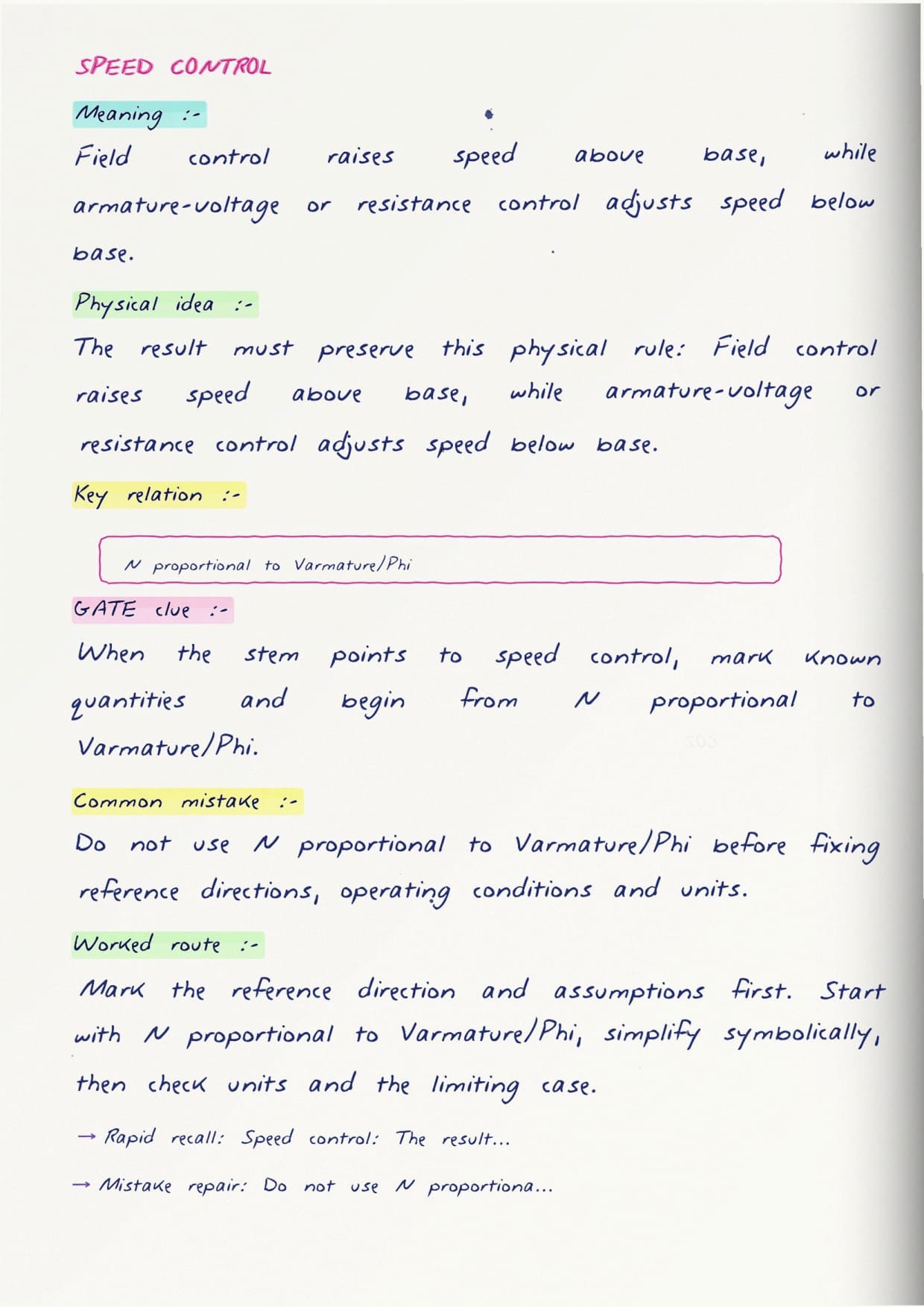
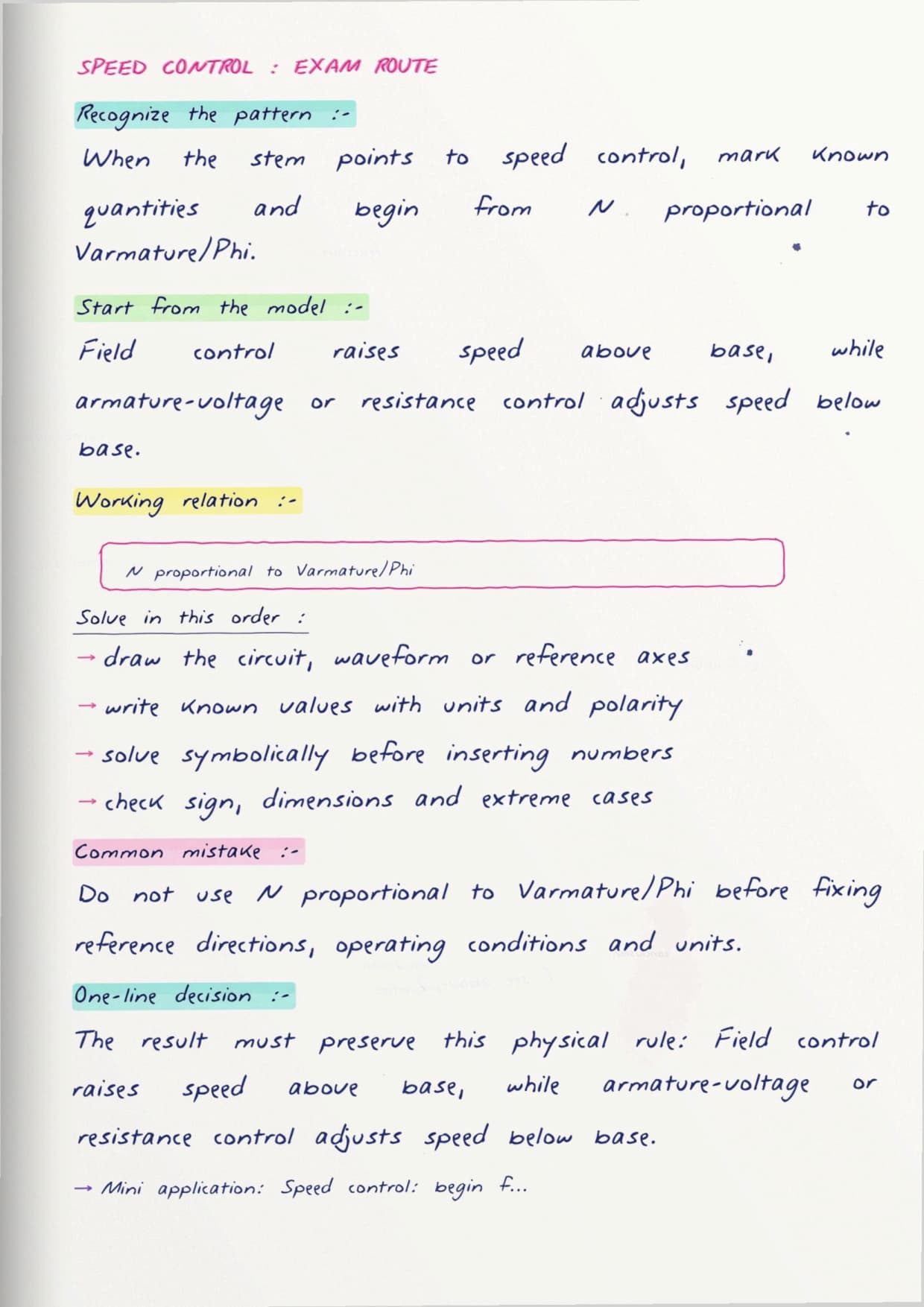
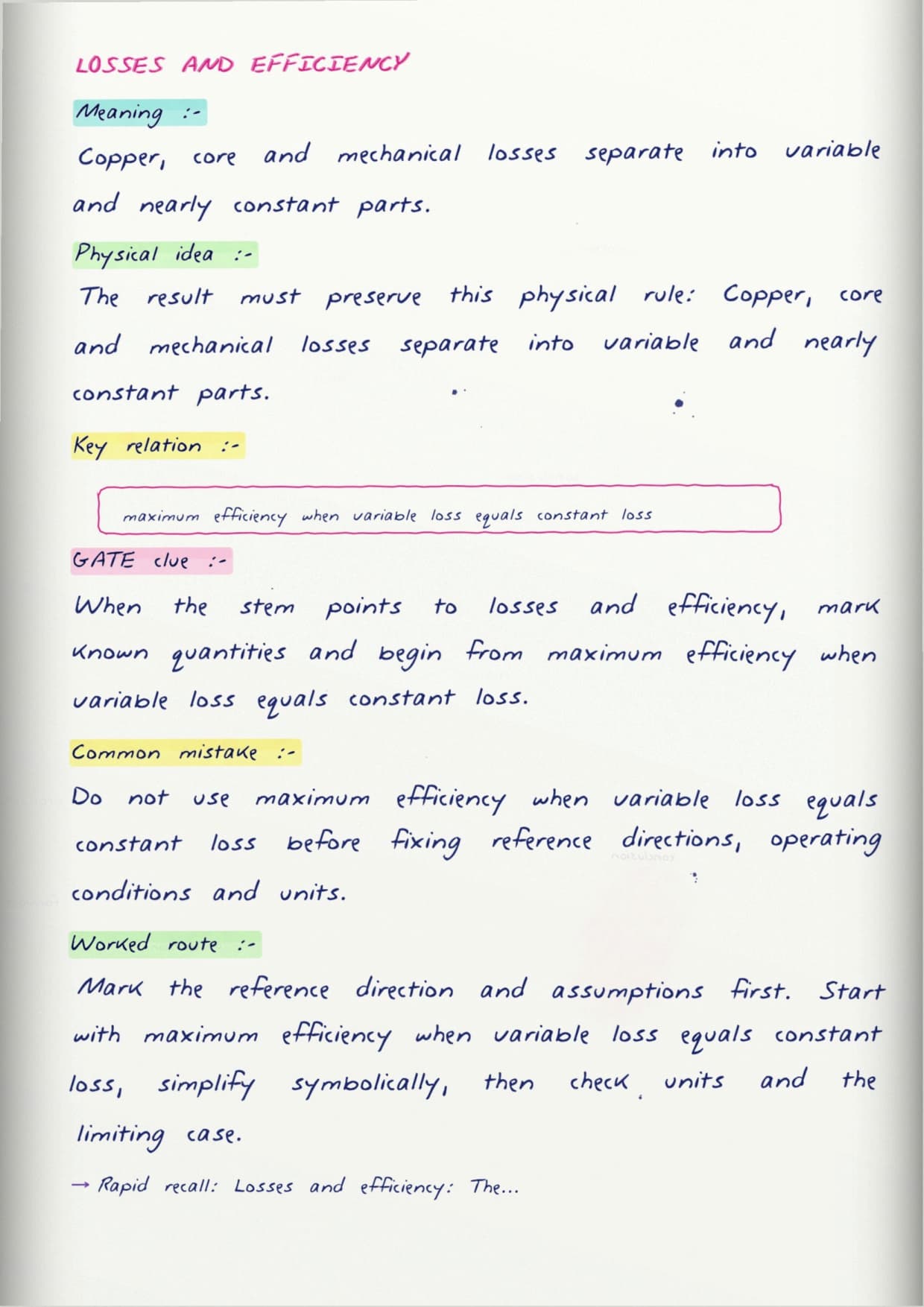
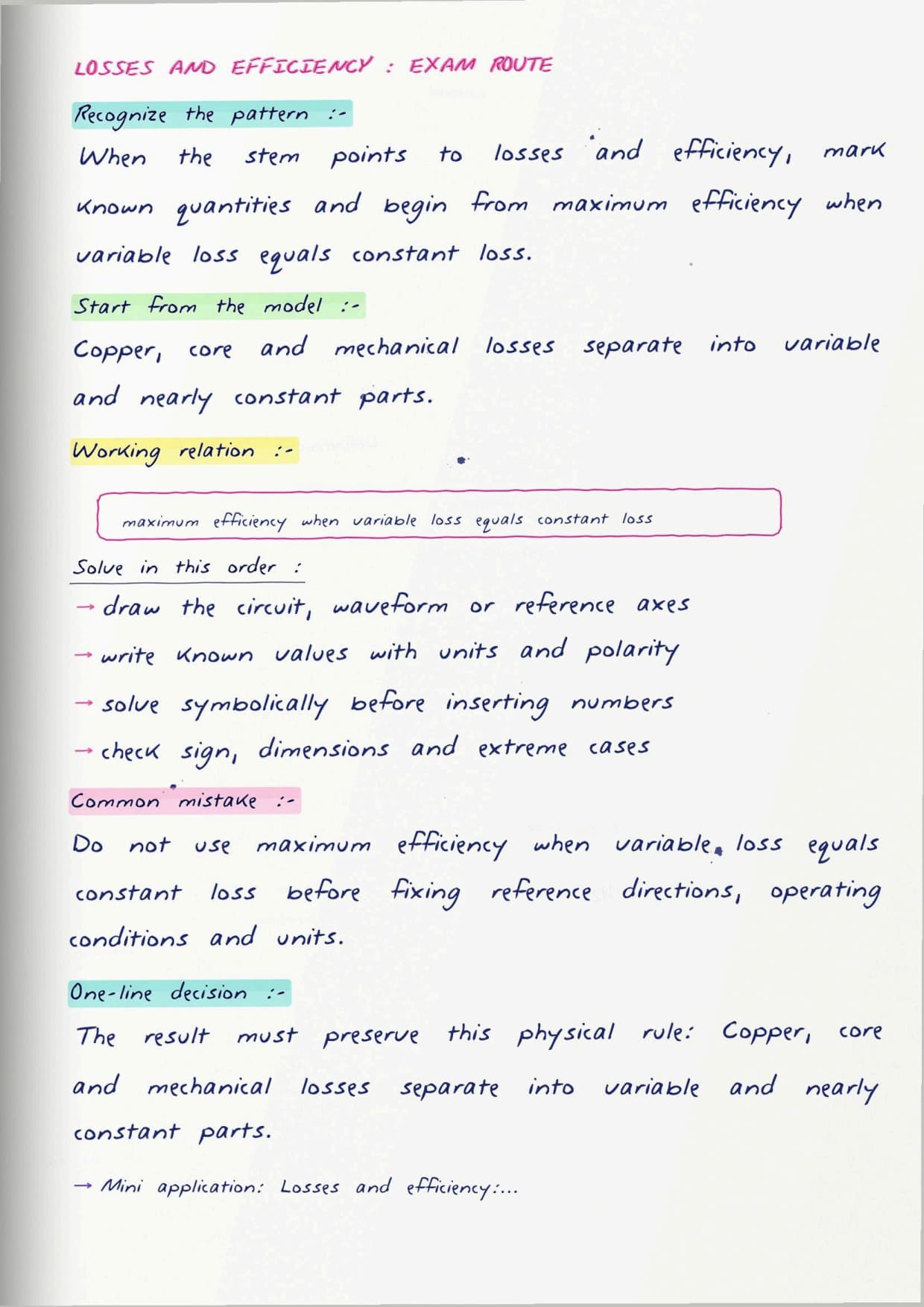
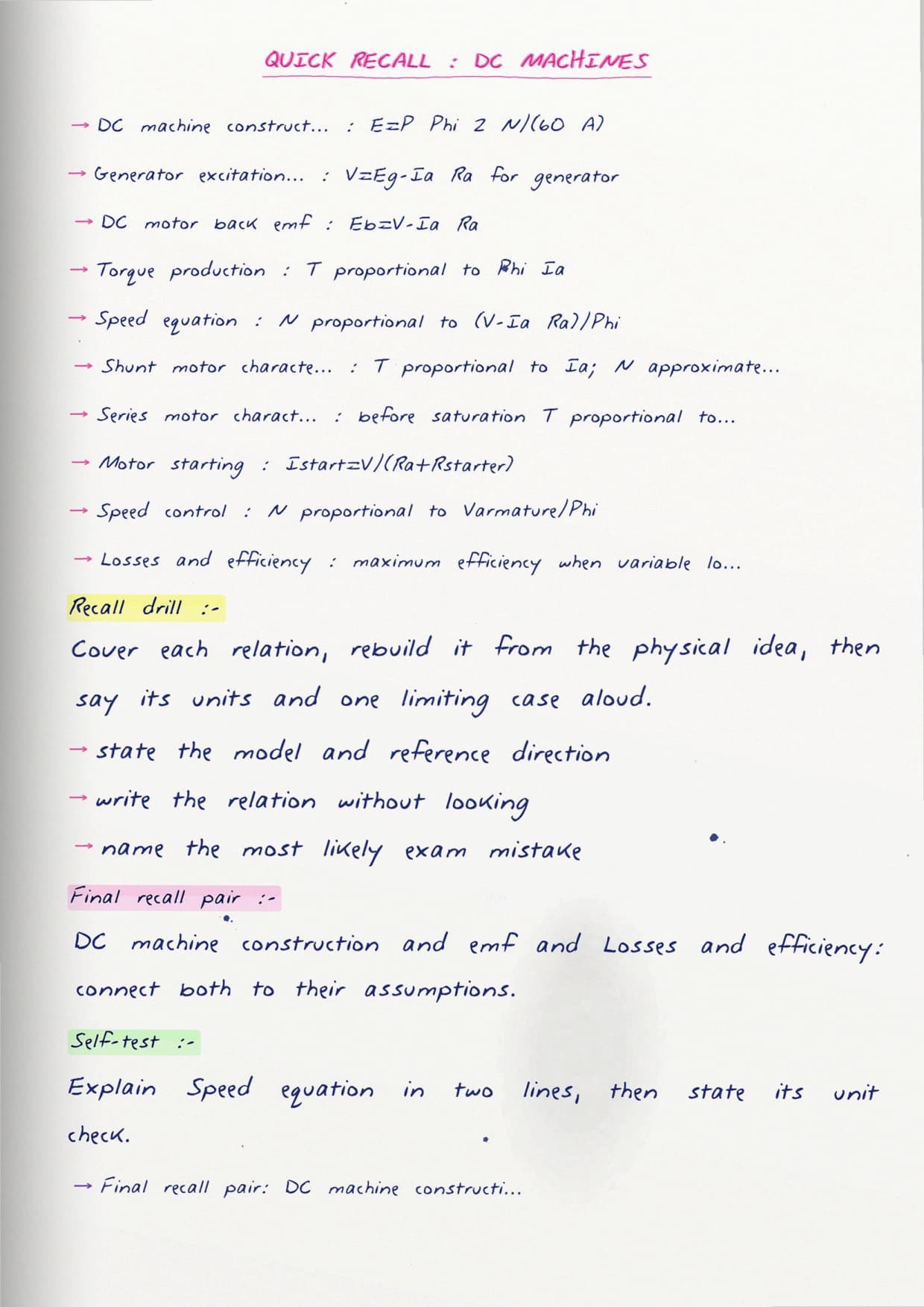
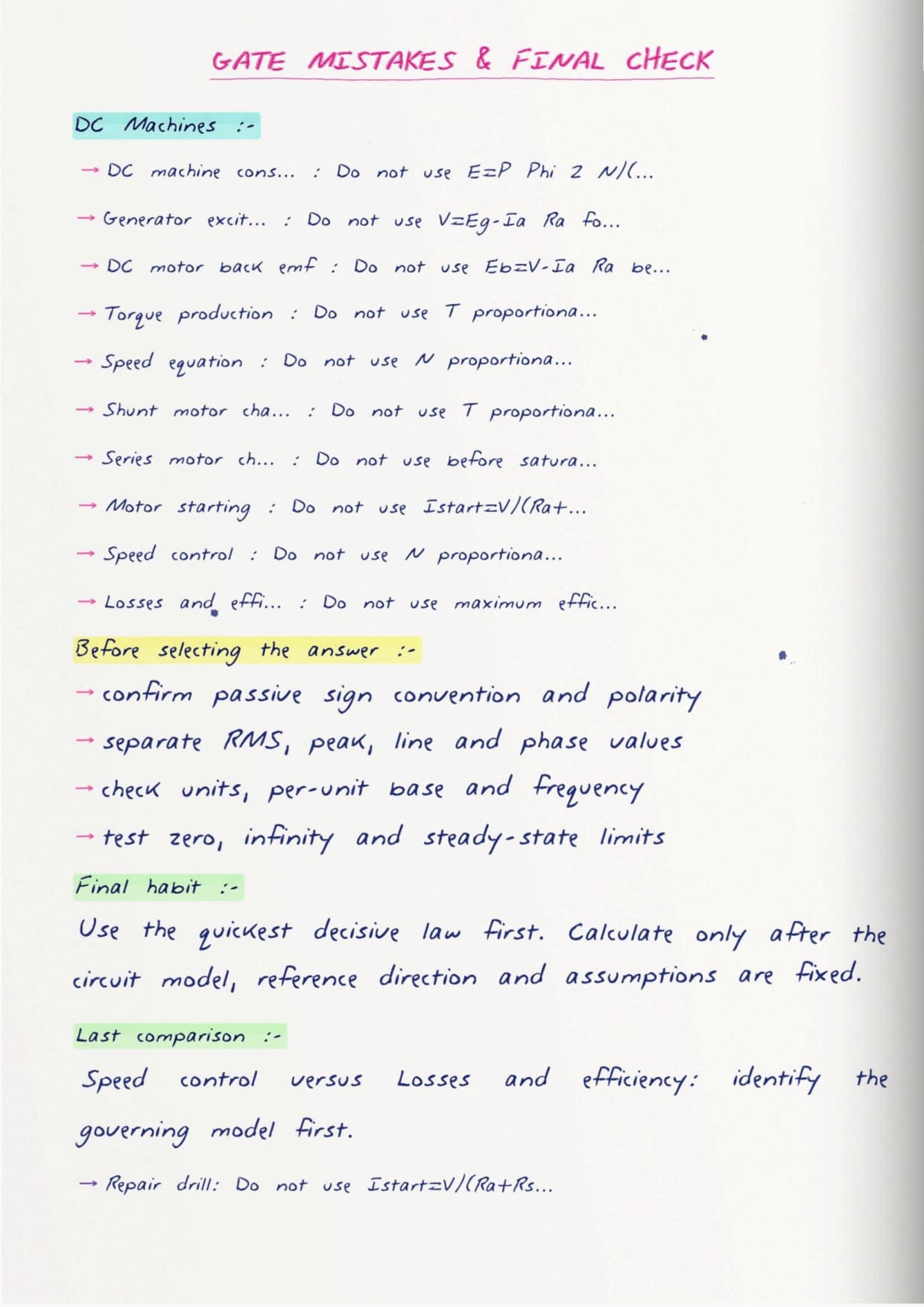
Every page carries a labelled sketch of the machine, from the yoke and pole shoes to the commutator and brushes, so students can picture the flux path while reading the theory. The worked numericals show the full arithmetic for back-emf, torque, and efficiency, and a formula sheet collects the winding and characteristic relations at the end.
- Clean diagrams of lap and wave windings with the parallel-path count written beside each.
- Step-by-step derivations of back electromotive force and developed torque.
- Side-by-side plots for shunt, series, and compound generator and motor characteristics.
What These GATE DC Machines Notes Cover
DC Machines rewards students who can connect construction, winding type, and the resulting characteristic. The notes keep all three in view on the same page so the logic never feels disconnected, and they treat the generator and motor as two faces of the same machine rather than separate chapters. That single idea removes most of the confusion students face when a question suddenly reverses the direction of power flow.
- Construction, armature windings, and the working principle of the generator and motor.
- Armature reaction, the role of interpoles, and the commutation problem.
- Types of excitation and the load characteristics that follow from each.
- Speed control, starting, testing, and efficiency by the Swinburne and Hopkinson methods.
GATE DC Machines Quick Revision
Source: GATE Wallah CSE & DA on YouTube
Topics Covered in GATE DC Machines
The topic list maps directly to the Electrical Machines portion of the GATE Electrical syllabus, so nothing tested in recent papers is left out.
- Separately excited, shunt, series, and compound generator connections.
- Back-emf equation, torque equation, and the speed relation of a DC motor.
- Armature reaction, cross magnetising and demagnetising effects, and compensating windings.
- Commutation, reactance voltage, and the use of interpoles.
- External and internal characteristics of generators under load.
- Speed control by armature voltage, field flux, and Ward-Leonard methods.
- Starters, the three-point and four-point starter, and starting resistance sizing.
- Losses, efficiency, and testing through the Swinburne and Hopkinson methods.
How the Notes Are Organised
The pages begin with construction and the generating principle, then move to characteristics, and only later reach control and testing, which mirrors how the concepts actually build on one another. Students who follow this order rarely get confused between generator and motor conventions.
Each characteristic curve sits beside the circuit that produces it, and a short recap line closes every sub-topic. Small arrows on the diagrams track the direction of current and induced emf, which stops students from guessing the sign under exam pressure. That way a quick revision needs only the diagrams and the boxed equations rather than a full re-read.
How GATE DC Machines Links to Other Topics
DC Machines shares its core ideas with several other machine and drive topics, so time spent here lightens the load elsewhere in the syllabus.
- The emf and flux logic carries straight into Transformers and induction machines.
- Speed control connects to Power Electronics converters and choppers.
- Torque-speed behaviour feeds motor problems in Electric Drives.
- Testing and efficiency ideas overlap with Electrical Measurements.
Important Topics in GATE DC Machines
Certain areas appear again and again and reward a careful reading of the sign and direction conventions. The notes highlight the mistakes that regularly trip students up.
- Getting the parallel paths right for lap versus wave windings before applying the emf equation.
- Separating the magnetising and demagnetising parts of armature reaction.
- Applying the correct back-emf sign when a motor is compared with a generator.
- Sizing starter resistance steps without skipping the first current limit.
- Reading the Hopkinson test as a back-to-back setup rather than a single machine.
How to Prepare GATE DC Machines with Handwritten Notes
This topic rewards steady practice with numericals rather than passive reading. Keep a pencil moving whenever a characteristic or a formula appears.
- First read: learn the construction and derive the emf and torque equations yourself.
- Second pass: sketch each characteristic curve from memory and check it against the notes.
- Practice window: solve past GATE numericals on speed control and testing.
- Final week: revise the formula sheet and the flagged traps in short daily bursts.
Why These Notes Help You Score Better
Because the diagrams, derivations, and characteristic curves share a page, students stop flipping between sources and start seeing the whole machine at once. The hand-drawn flux paths make the theory stick far better than a wall of text, and the worked numericals build the speed needed for the exam. Since every characteristic is tied back to a physical cause, students remember the shape of a curve instead of memorising it blindly, which pays off when a question changes the excitation. With a few focused passes, DC Machines becomes one of the surest scoring topics for students who use these notes well.
GATE Electrical DC Machines Handwritten Notes FAQs
Ques. How much weightage does DC Machines carry in GATE Electrical?
Ans. DC Machines usually contributes about 4 to 7 marks in GATE Electrical, and combined with the wider Electrical Machines section it is one of the heavier scoring blocks in the paper.
Ques. Do these notes explain both generator and motor operation?
Ans. Yes, the notes cover construction, generator characteristics, motor operation, speed control, and testing, with labelled diagrams that keep the generator and motor conventions clearly apart.
Ques. Are numerical problems included in these handwritten notes?
Ans. The notes carry step-by-step worked numericals for back-emf, torque, efficiency, and starter design, so students can follow the full arithmetic rather than only the final formula.
Ques. What is the best way to revise DC Machines before the exam?
Ans. Students should redraw the characteristic curves from memory, revise the formula sheet daily in the final week, and solve previous year questions on speed control and machine testing.



Comments