




Control Systems Modelling, Time Response and Root Locus is a high-scoring core area of GATE Electrical, usually worth about 6 to 9 marks in the paper. It belongs to the Control Systems section, and its ideas return in Signals and Systems, Electrical Machines drives, and Power Electronics control loops. These handwritten notes cover the full topic in a compact, exam-focused form.
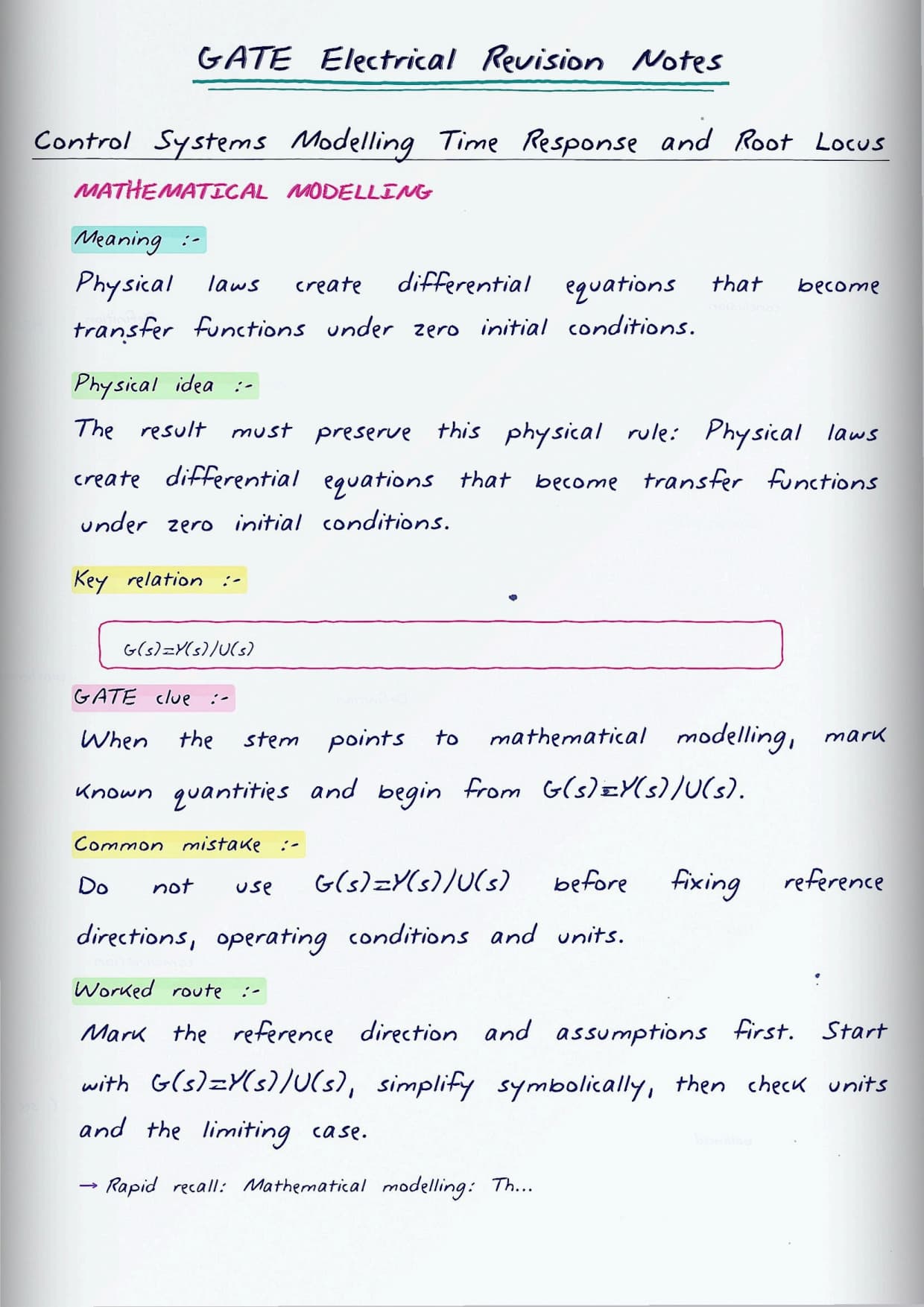
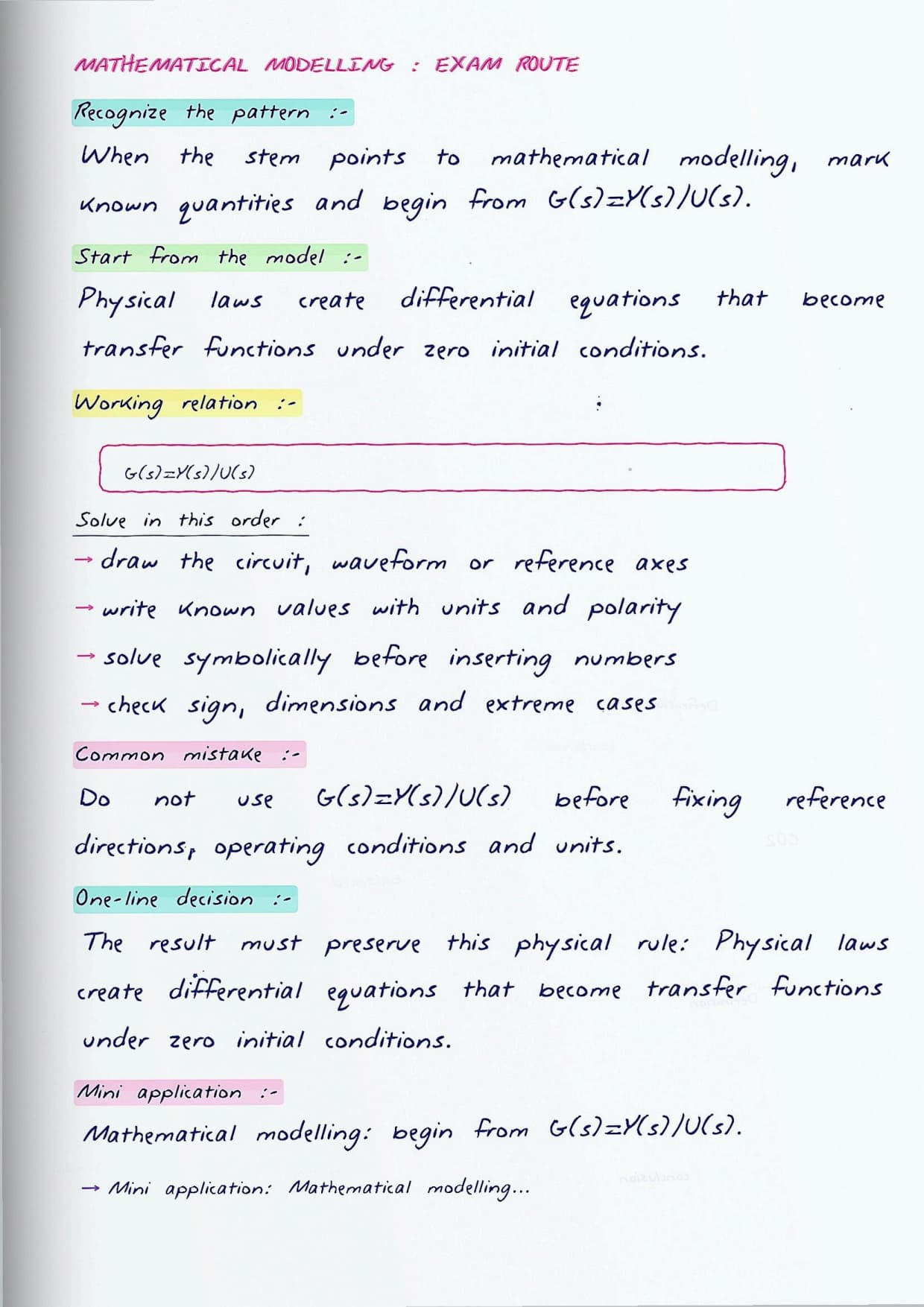
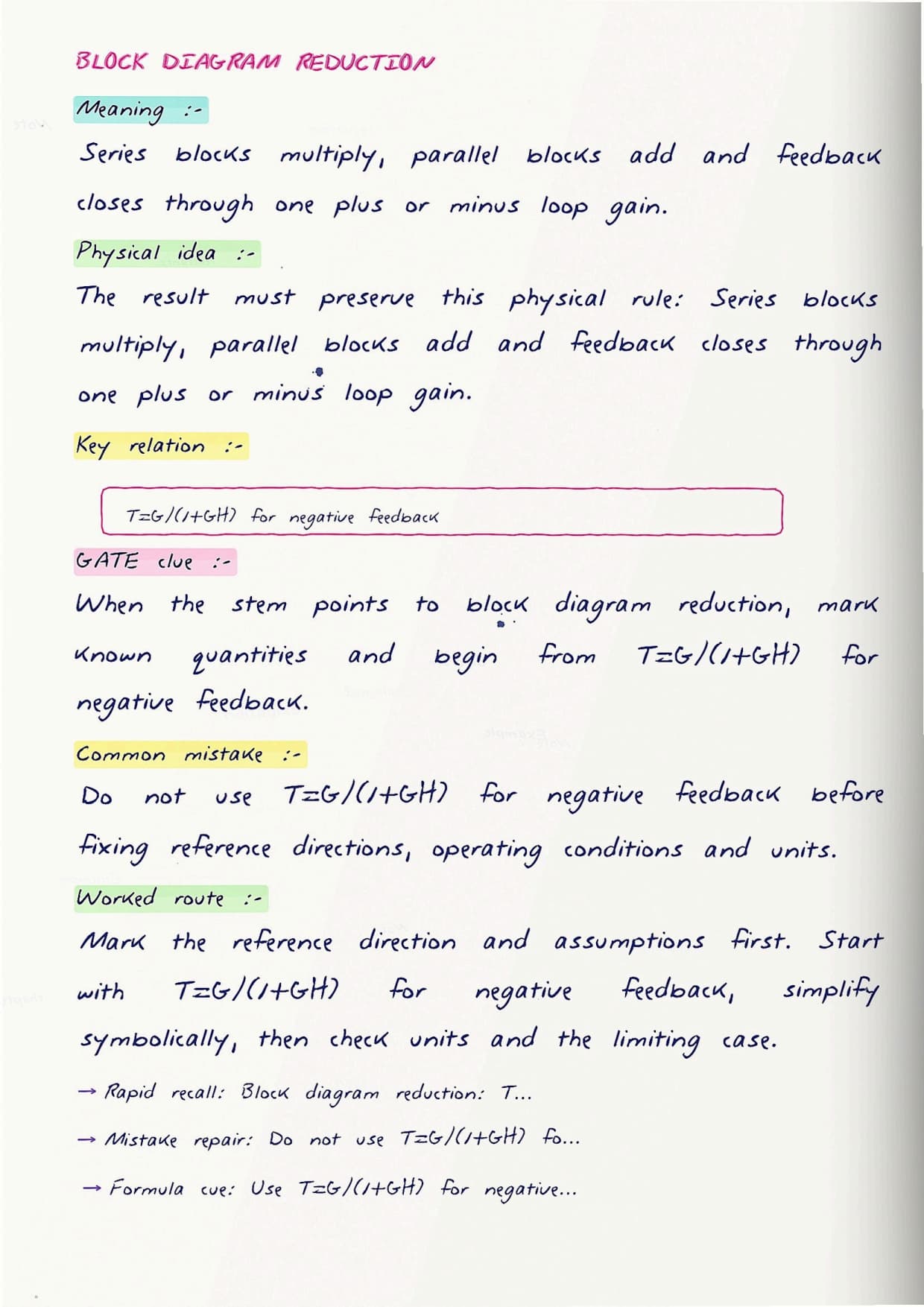
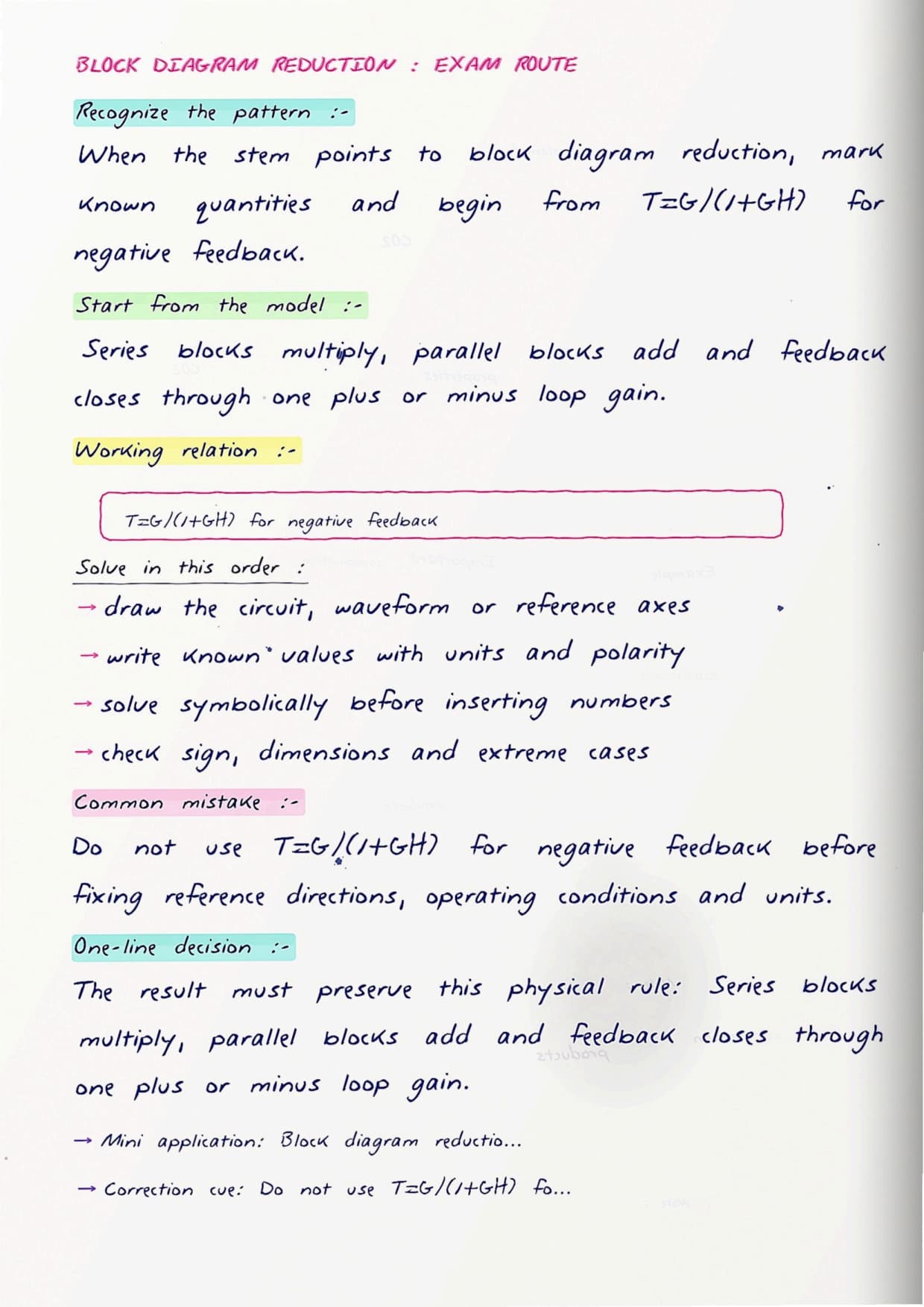
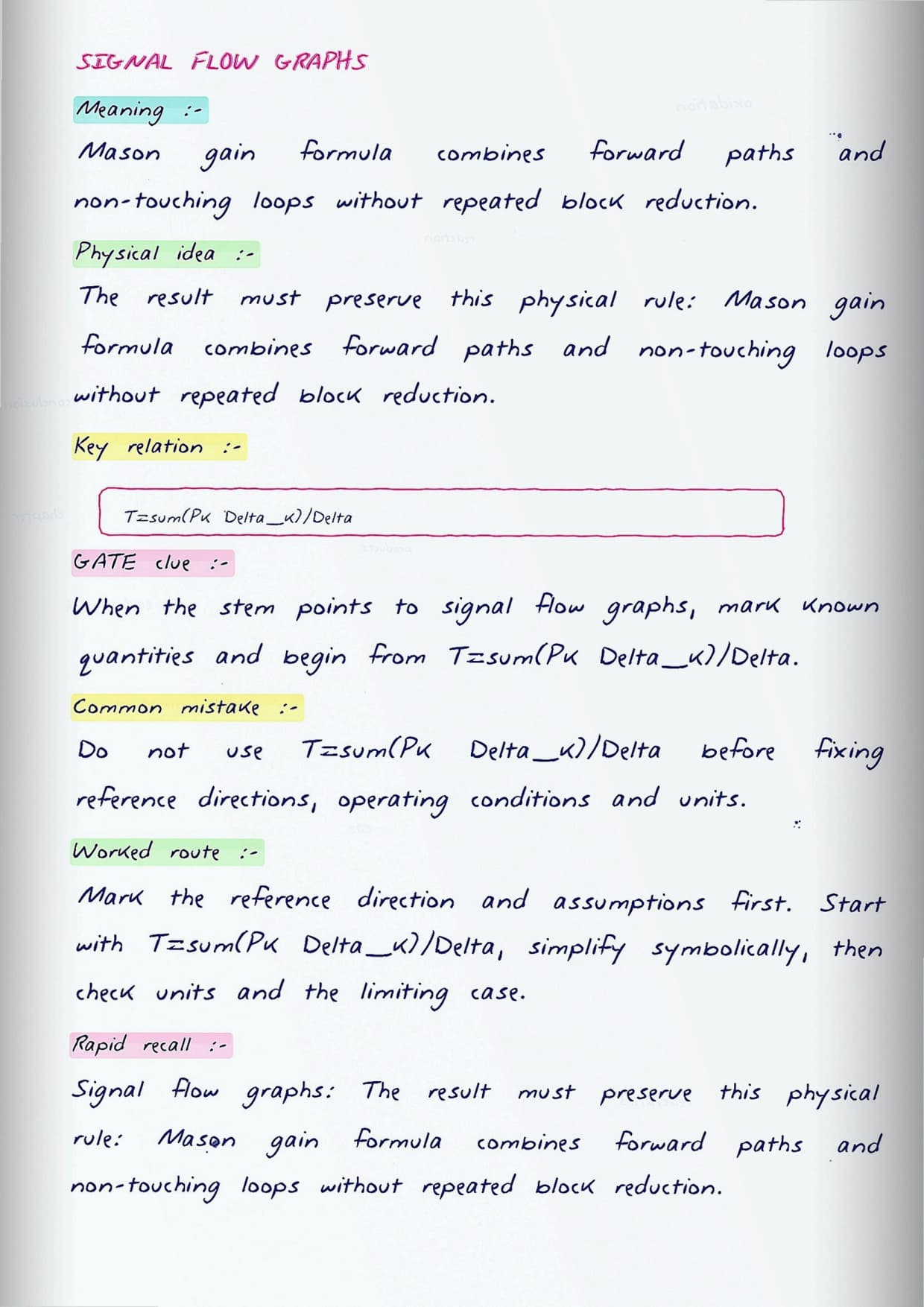
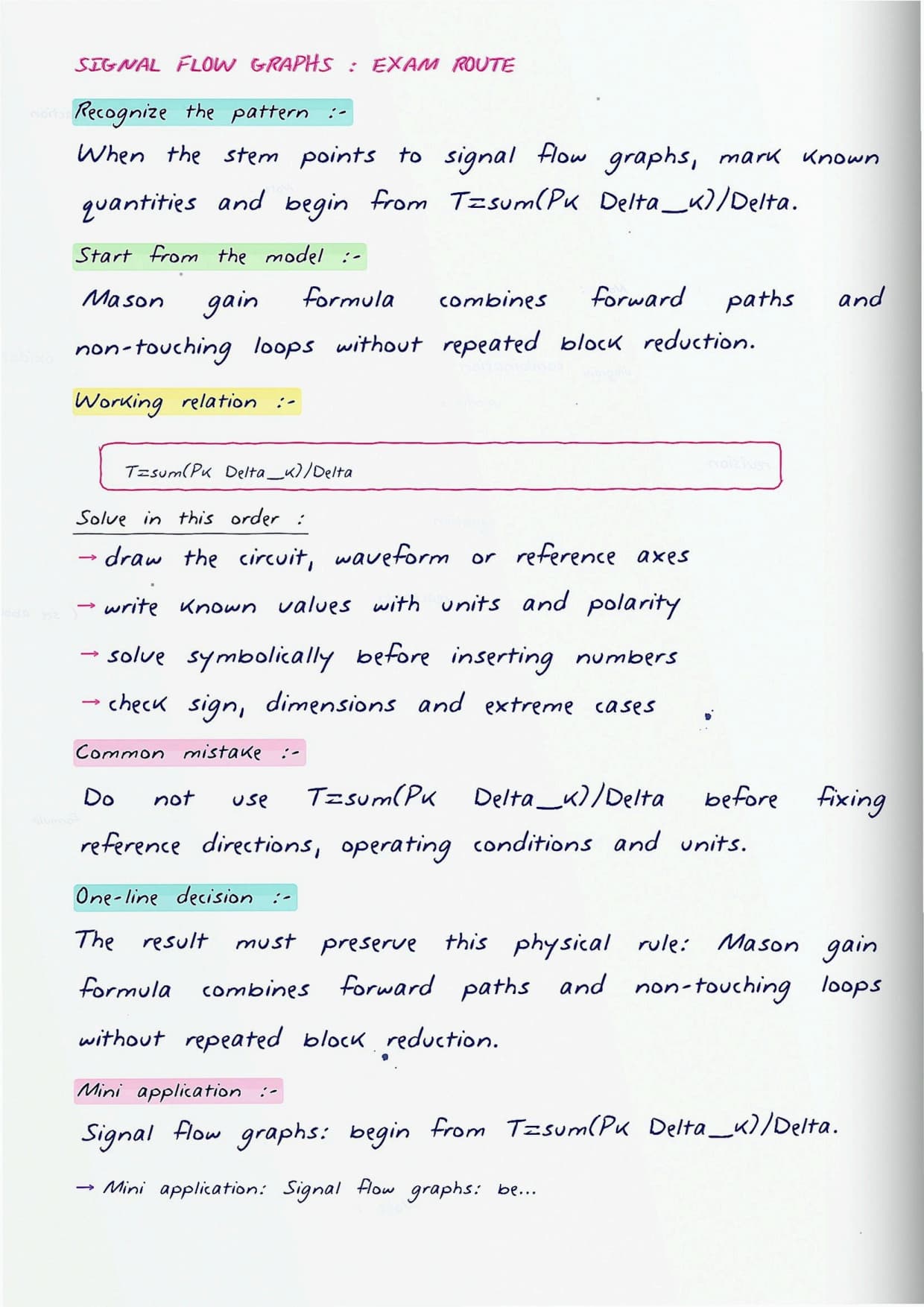
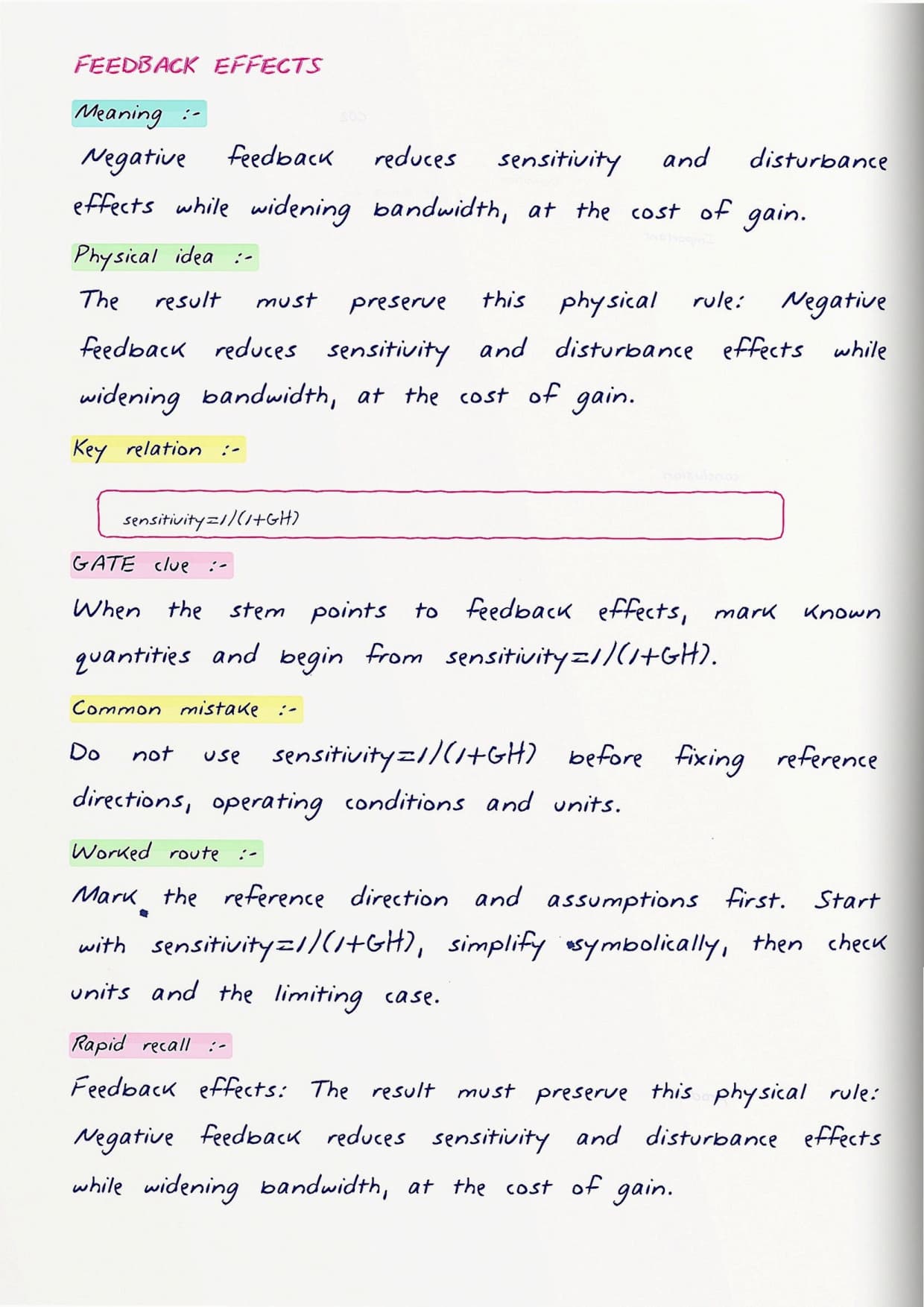
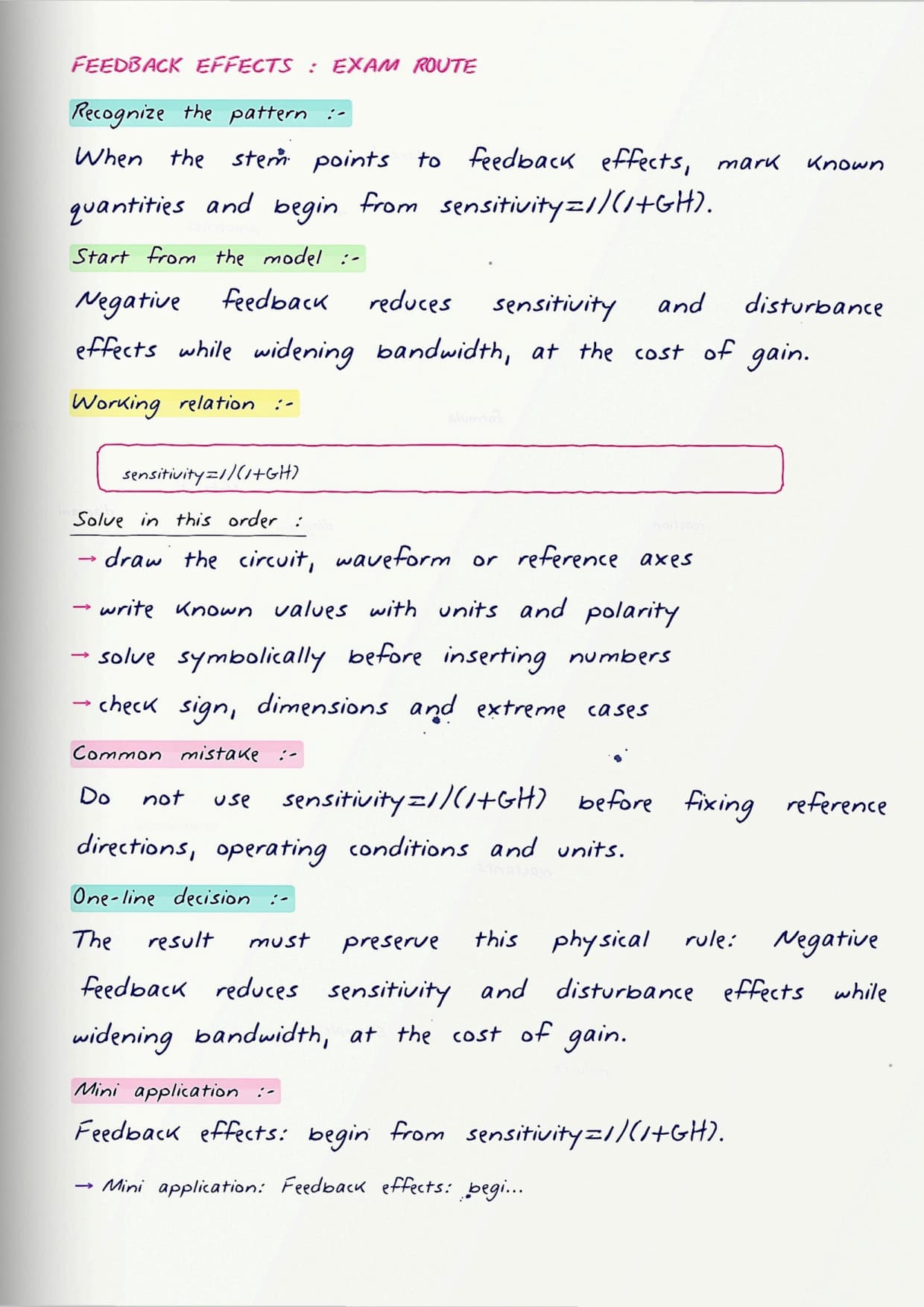
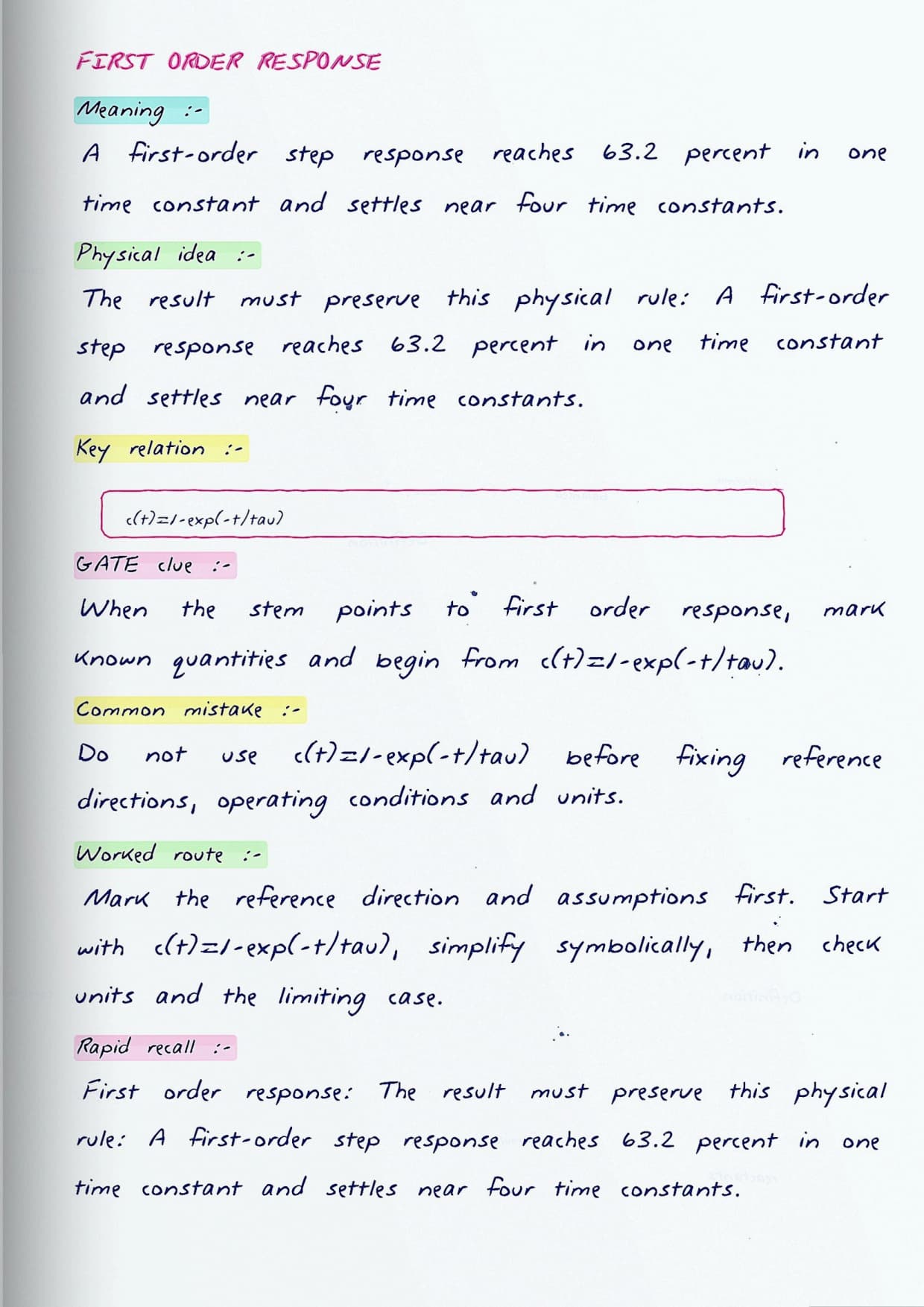
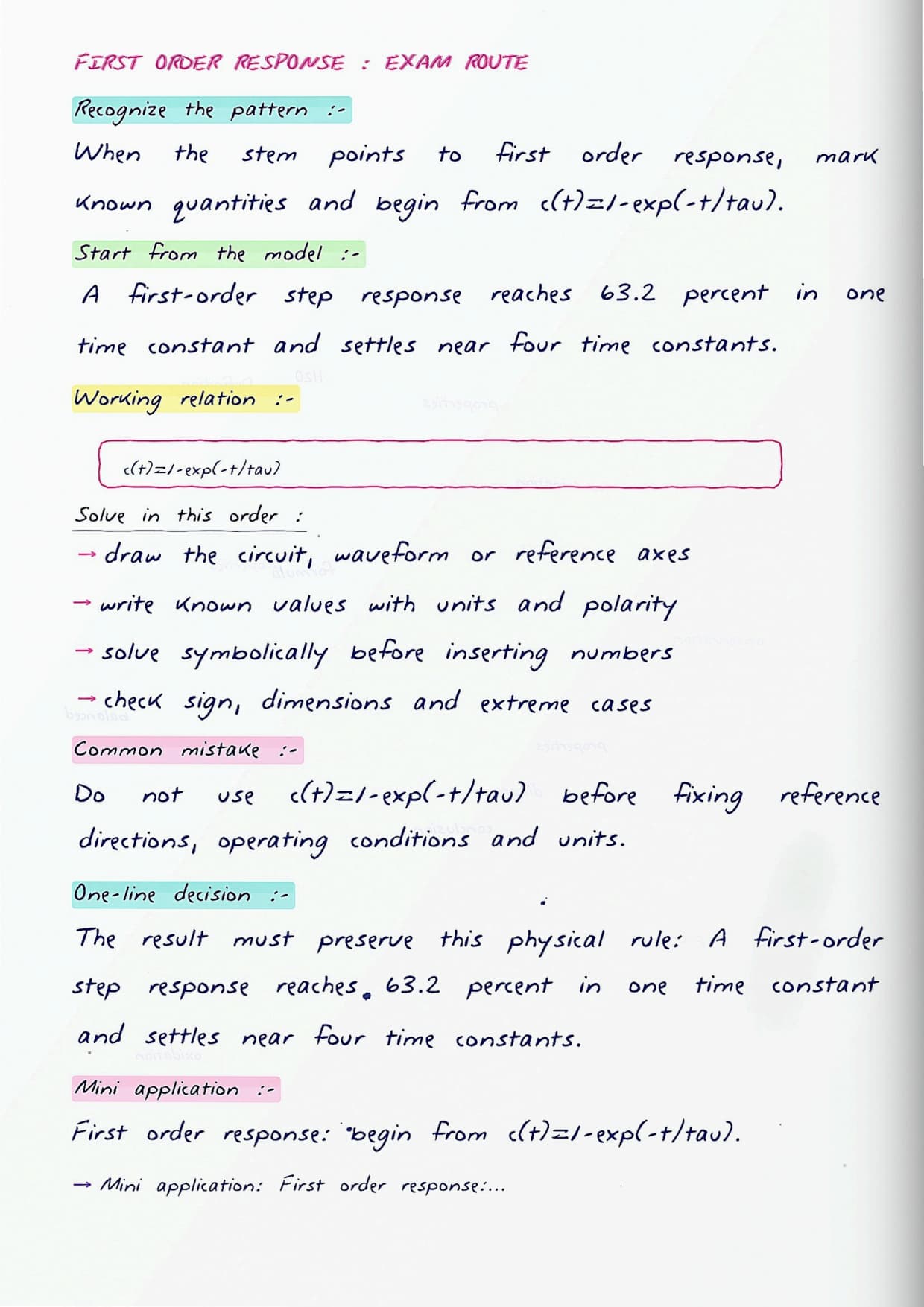
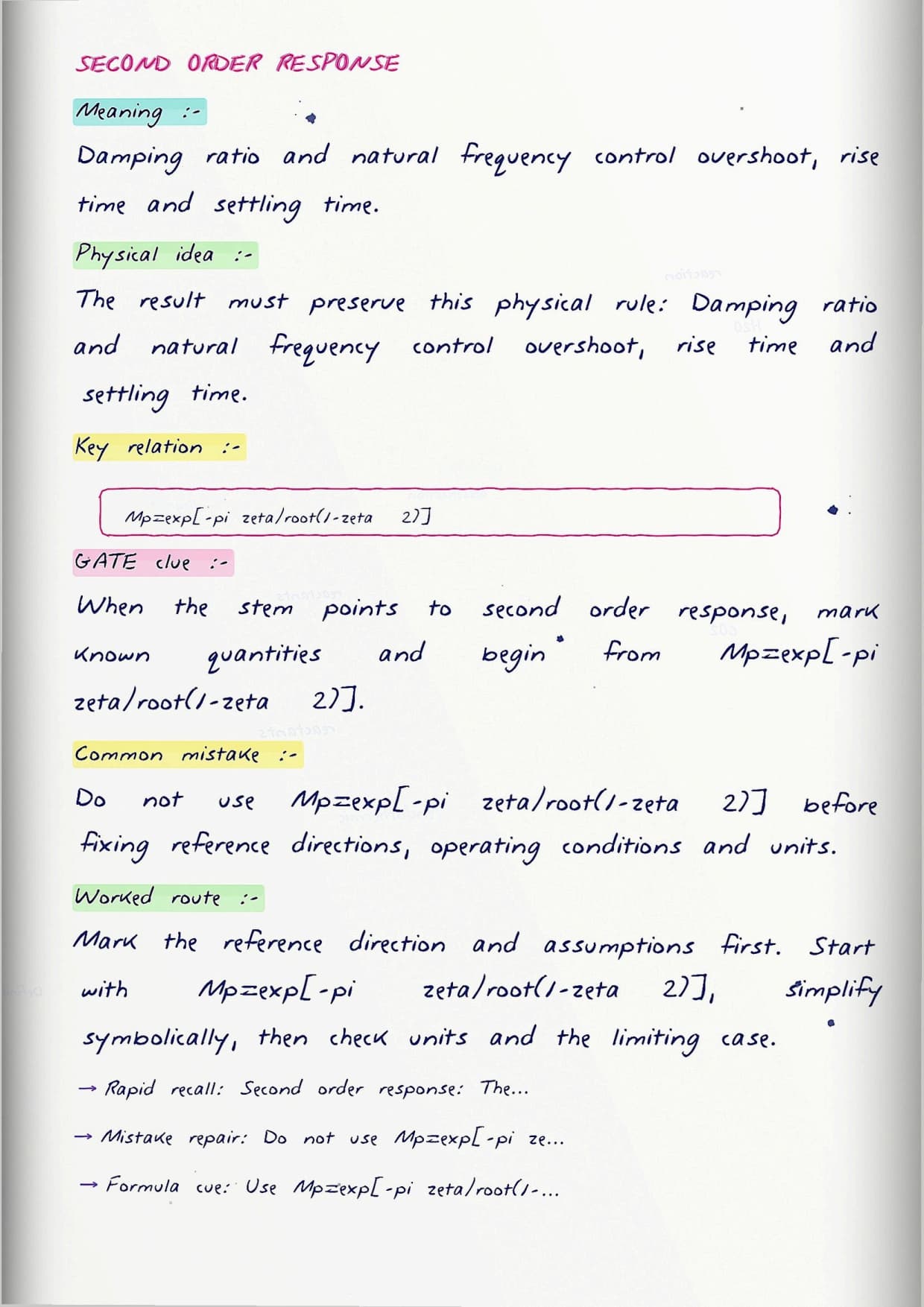
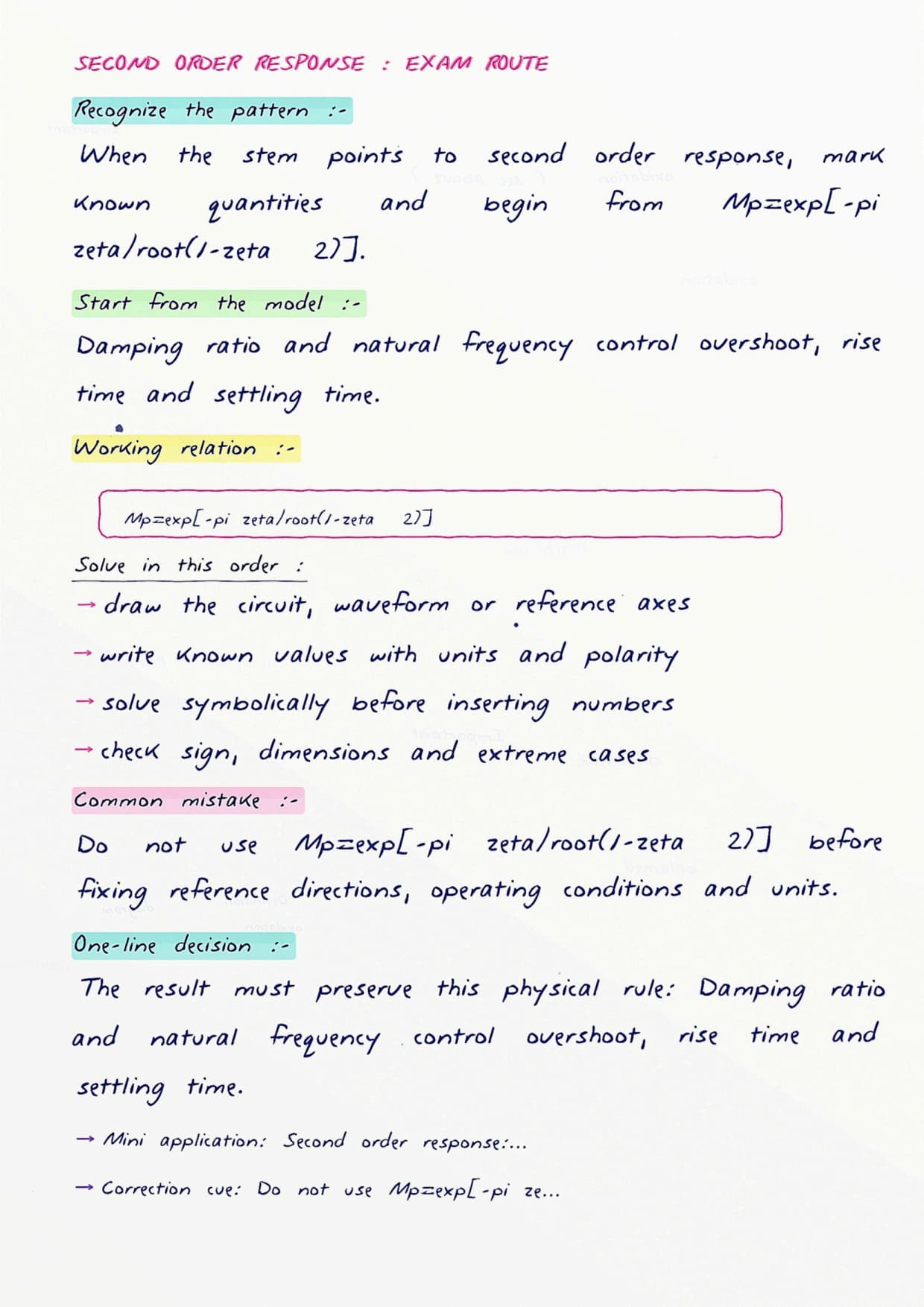
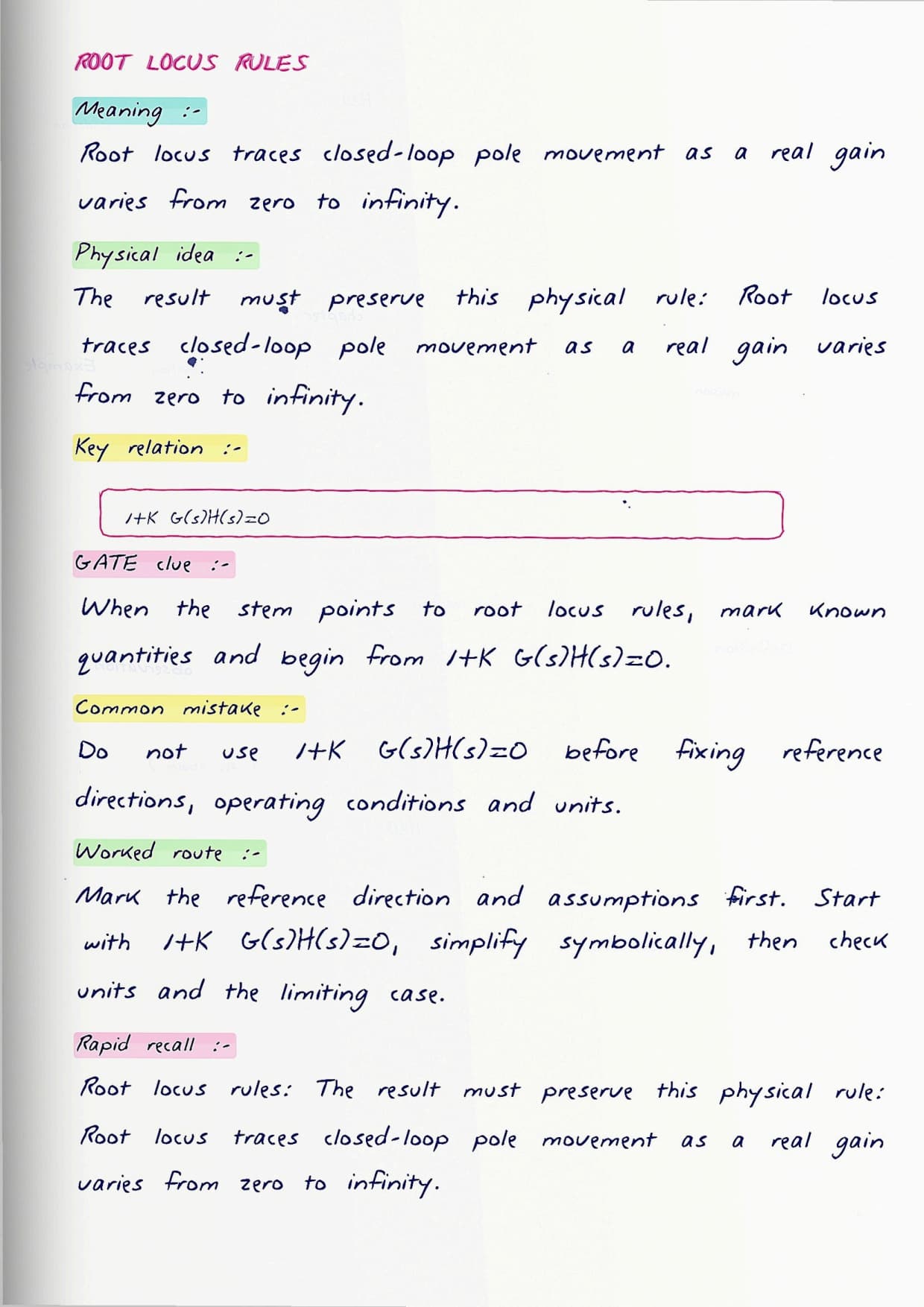
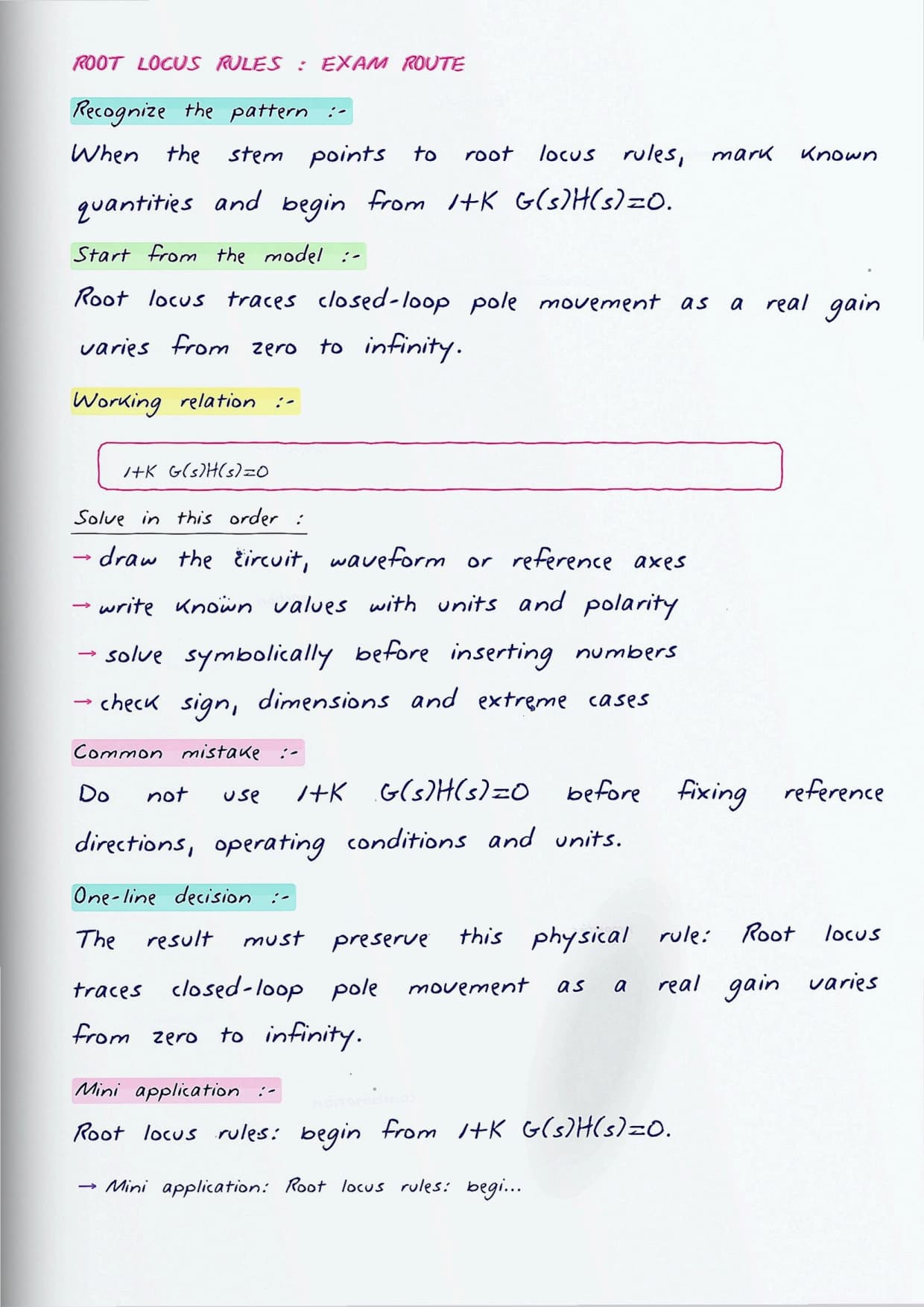
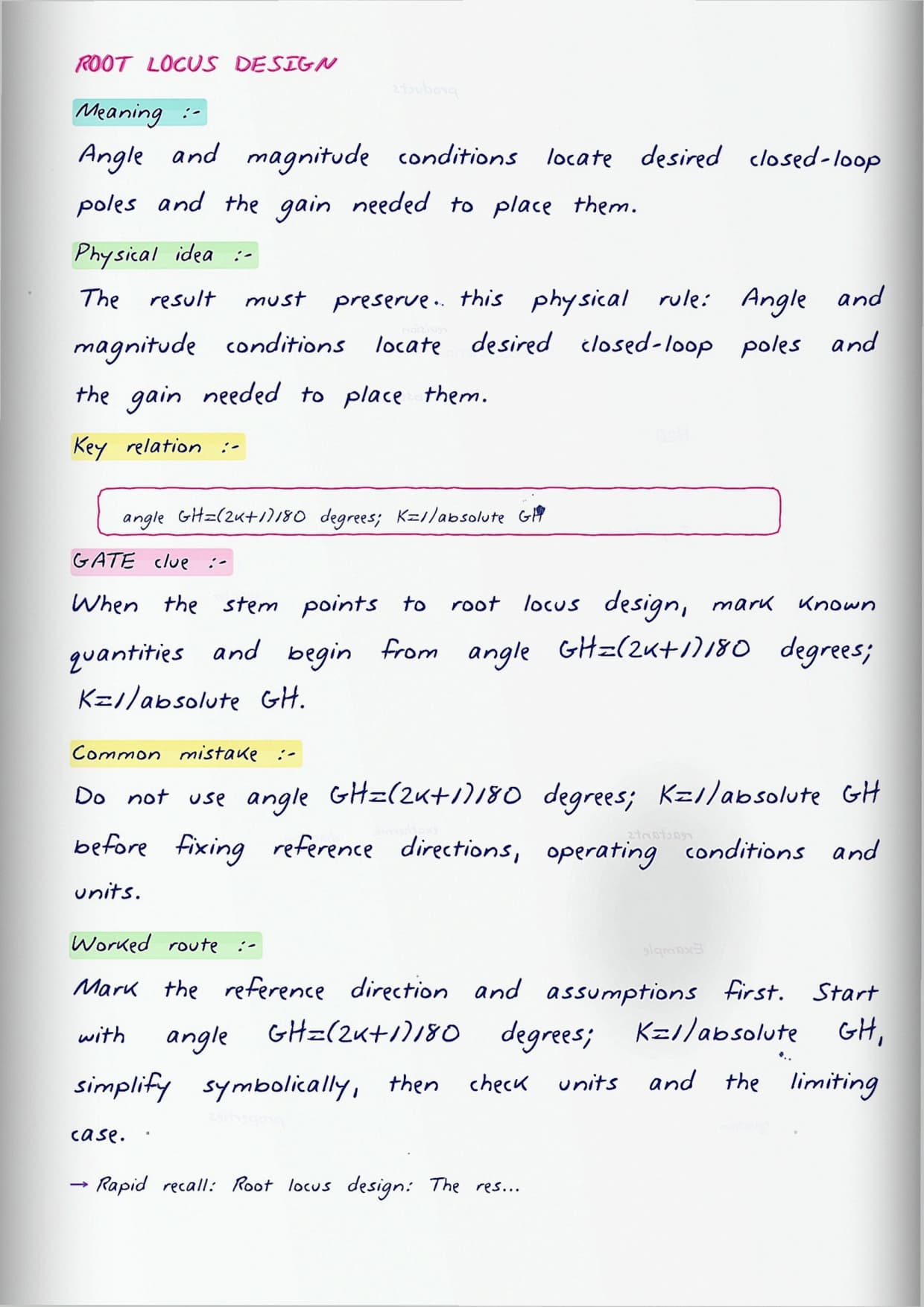
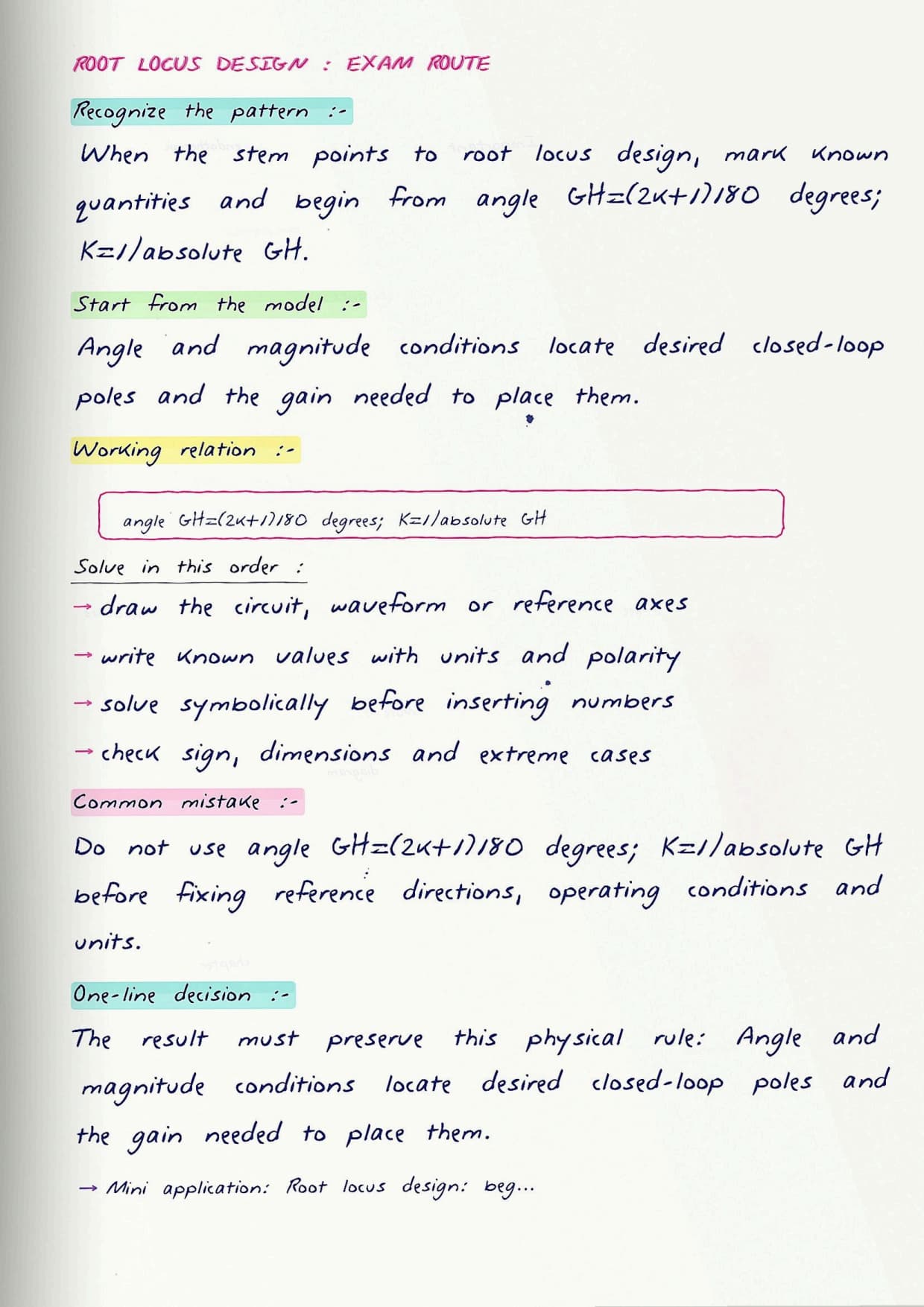
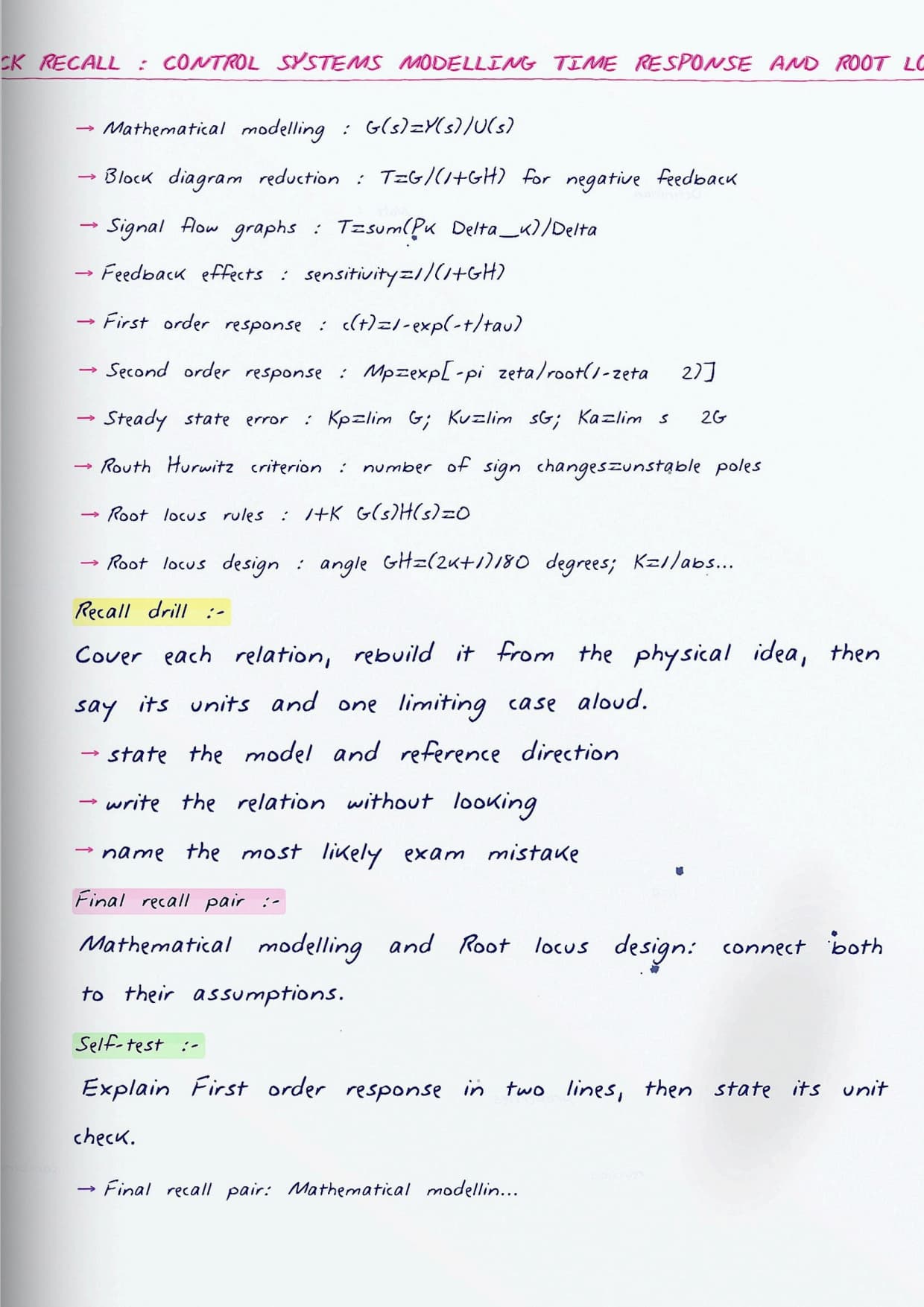
The pages start with hand-drawn block diagrams and signal flow graphs, showing how a physical system reduces to a single transfer function. Step and impulse response curves are sketched with rise time, peak time, and settling time marked, and a worked root locus plot shows every construction rule applied on one example. Small arrows on each plot trace how a pole moves as the gain grows, and a short margin note names the rule being used at each step, so a student can redraw the whole figure from memory rather than half-recall a sequence of tricks.
- Block diagram reduction and Mason's gain formula worked side by side
- Second-order response sketches with damping ratio and natural frequency labelled
- A full root locus drawn from poles and zeros, with angle and breakaway steps shown
What These GATE Control Systems Notes Cover
The notes move from modelling a system to reading how it behaves and finally to shaping its stability. Every transfer function is tied to a picture, so students connect the algebra with the physical response rather than memorising steps. The idea throughout is that a single transfer function carries the whole story of a system, and once a student can read that story off the pole and zero positions the numerical questions turn into quick, almost mechanical work.
- Transfer function modelling, block diagrams, and signal flow graphs
- Standard test inputs and first and second-order time response
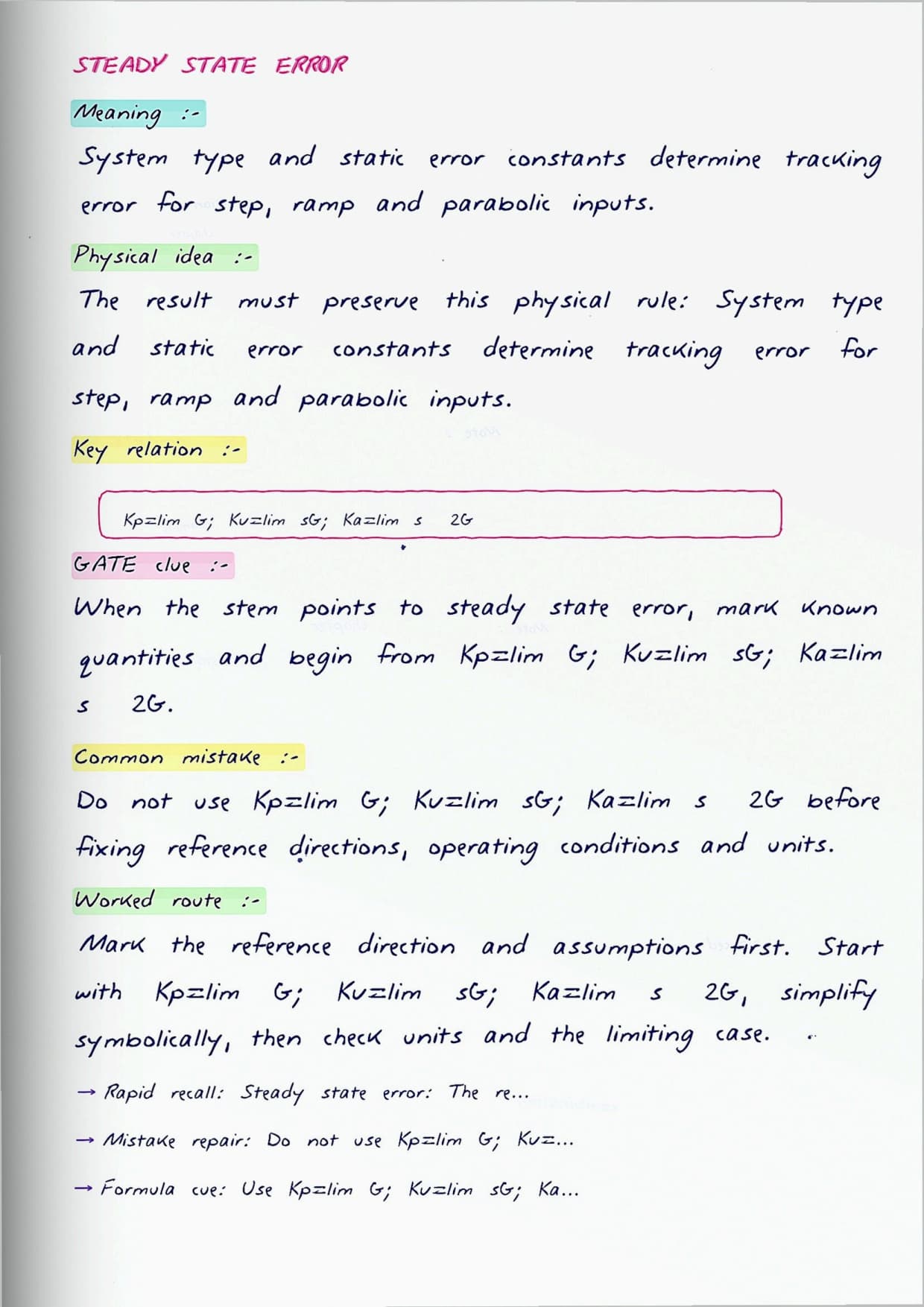
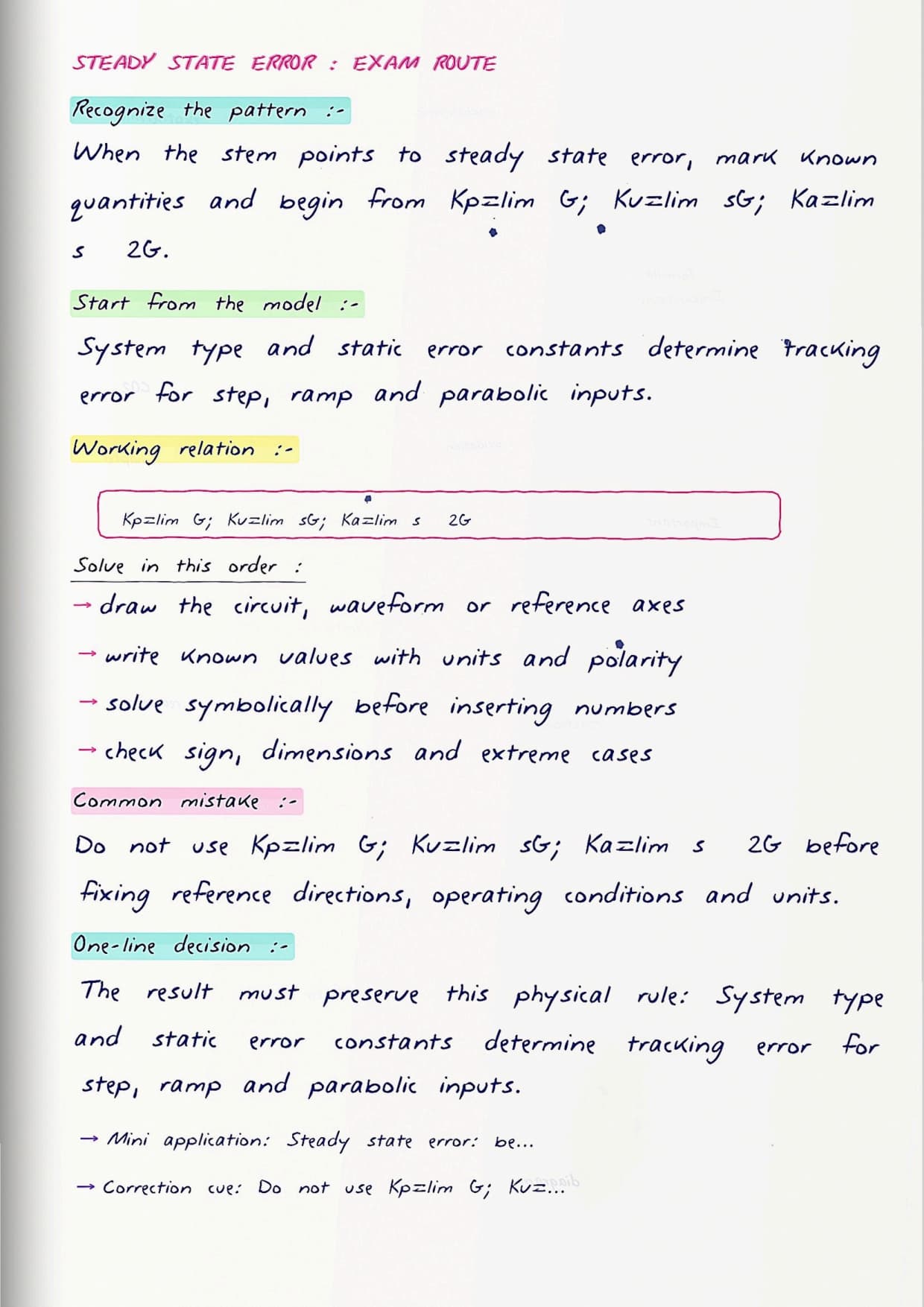
- Time-domain specifications and steady-state error with error constants
- Root locus construction rules and stability interpretation
GATE Control Systems Quick Revision
Source: BYJU'S Exam Prep GATE & ESE: EE,EC,IN,CS on YouTube
Topics Covered in GATE Control Systems
The coverage tracks the official GATE Electrical Control Systems syllabus for this cluster, from modelling through the root locus. Each subtopic carries a short solved example so the construction stays clear, and the harder root locus rules are broken into small numbered steps that students can follow one at a time.
- Transfer function and impulse response of linear systems
- Block diagram reduction and Mason's gain formula
- First-order and second-order system time response
- Rise time, peak time, settling time, and peak overshoot
- Steady-state error and static error constants
- Effect of adding poles and zeros on the response
- Root locus construction rules and centroid and asymptotes
- Breakaway points and range of gain for stability
How the Notes Are Organised
The sequence follows the natural chain of the subject. Modelling comes first so students can turn a system into a transfer function. Time response follows, connecting pole locations to the shape of the output curve.
Root locus closes the set, using the same poles and zeros to show how the response changes as gain varies. Each part places a short theory note next to a solved plot and a boxed set of specifications, which suits both a first read and a fast revision.
How GATE Control Systems Links to Other Topics
This cluster sits at the centre of the control syllabus and reaches into several neighbouring areas, so mastering it pays back across the paper.
- Transfer functions and poles link directly to Signals and Systems
- Stability ideas continue into frequency response and Bode plots
- Second-order behaviour appears in machine speed control and drives
- Steady-state error connects to controller and compensator design
Important Topics in GATE Control Systems
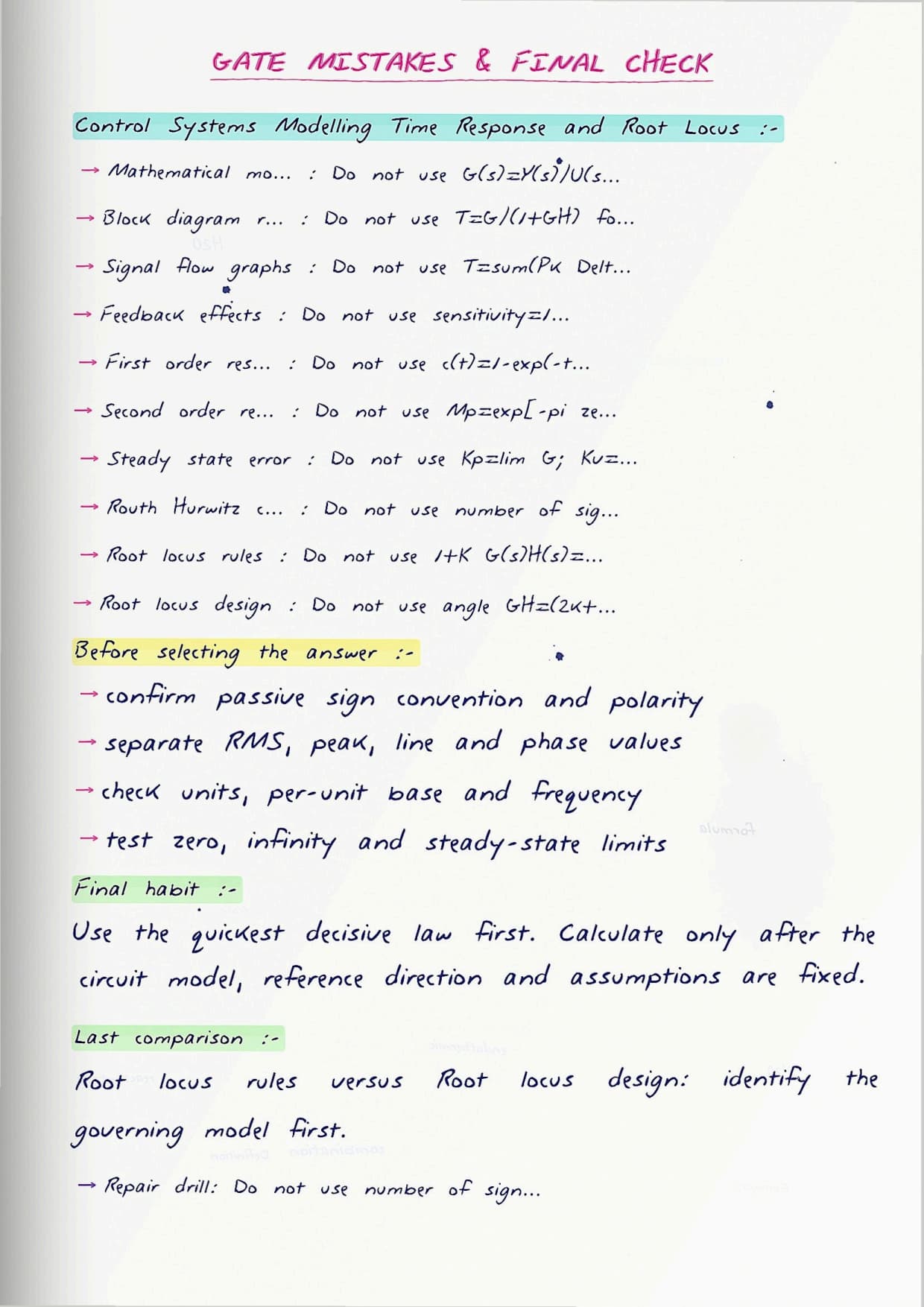
A handful of ideas dominate the questions from this area, and the notes call out the mistakes that most often cost marks. Reading the second-order parameters off a response curve is a frequent test.
- Extracting damping ratio and natural frequency from a transfer function
- Computing steady-state error using the correct static error constant
- Applying every root locus rule in the right order, including angle of departure
- Finding breakaway points and the gain at the imaginary axis crossing
- Judging stability from pole locations rather than guessing from the plot
How to Prepare GATE Control Systems with Handwritten Notes
This topic rewards drawing over reading, so the notes are meant to be worked with a pen in hand. A clear four-stage plan builds fluency with the plots.
- First read: model a few systems and reduce their block diagrams yourself
- Second pass: sketch step responses and mark every time specification
- PYQ stage: draw root locus plots for past GATE questions under a timer
- Final week: revise the specification formulas and the root locus rule list
Why These Notes Help You Score Better
Control Systems questions are quick marks once the plots feel routine, and these notes get students there by tying each formula to a diagram they can redraw from memory. Seeing the pole movement and the response curve together builds the intuition that pure formula lists never give. With one compact set covering modelling, response, and the root locus, students revise the whole cluster in a single pass and carry that confidence into the exam.
GATE Electrical Control Systems Handwritten Notes FAQs
Ques. How many marks does this Control Systems cluster carry in GATE Electrical
Ans. Control Systems usually contributes about 6 to 9 marks in the GATE Electrical paper, and modelling, time response, and root locus together form the bulk of that, so it is a strong scoring area for students.
Ques. Is root locus difficult to learn from handwritten notes
Ans. Not when each rule is shown on a worked plot. The notes apply every construction step on one clear example, so students can follow the angle, centroid, and breakaway calculations and then repeat them on their own.
Ques. Which formulas should students memorise from these notes
Ans. Focus on the second-order time specifications, the static error constants, and the full root locus rule list. These few relations answer the large majority of questions from this cluster.
Ques. Can I download these Control Systems notes as a PDF
Ans. Yes. The complete handwritten notes are available as a downloadable PDF on this page, so students can revise the block diagrams and root locus plots offline whenever they need.



Comments