




Circuit Laws and Network Theorems is a high-return, must-clear topic in GATE Electrical, usually worth about 6 to 9 marks in the paper. It belongs to the Electric Circuits and Fields section, and its ideas return in AC steady-state analysis, Control Systems, and Power Systems fault studies. These handwritten notes cover the full topic in a compact, exam-focused form.
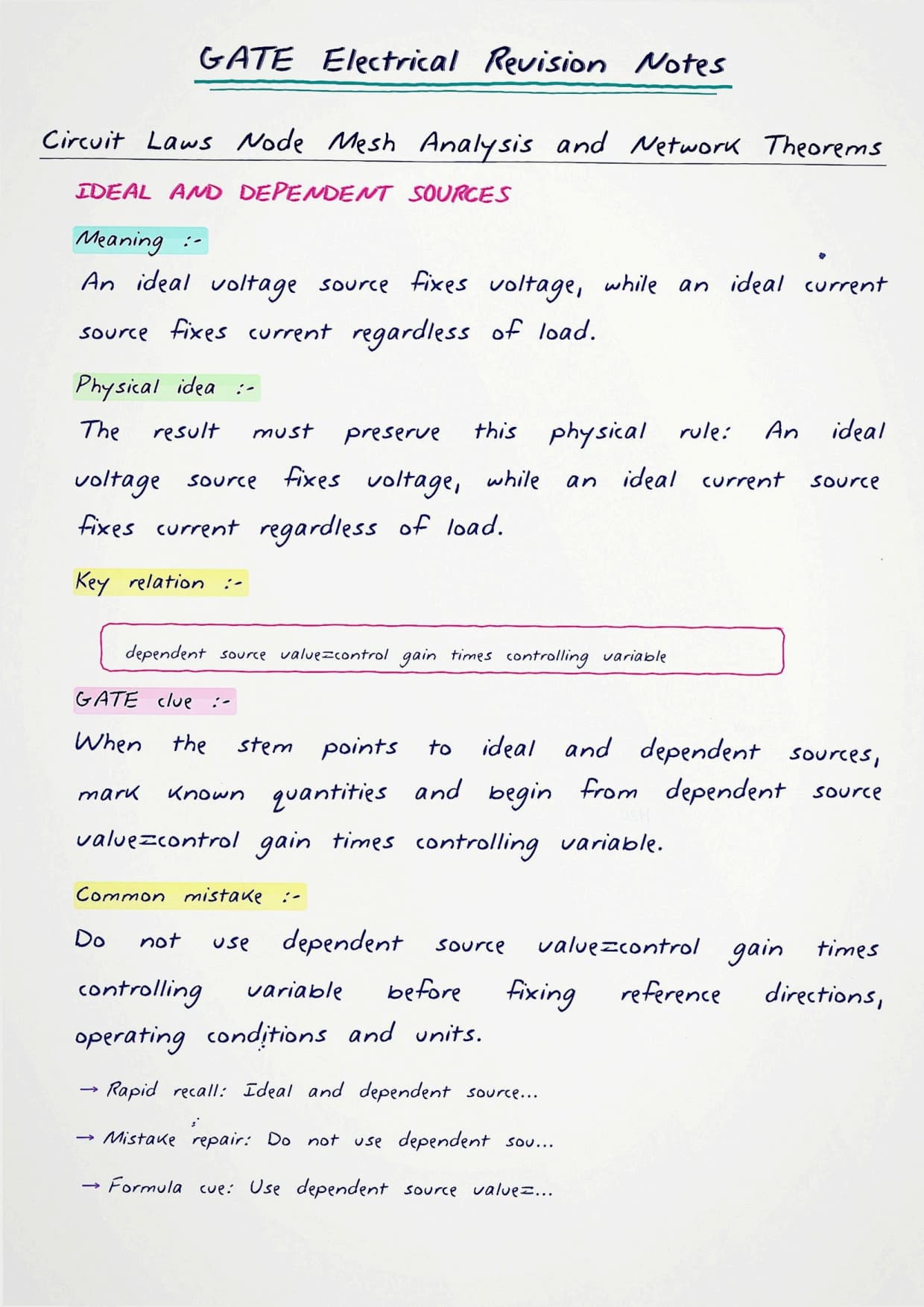
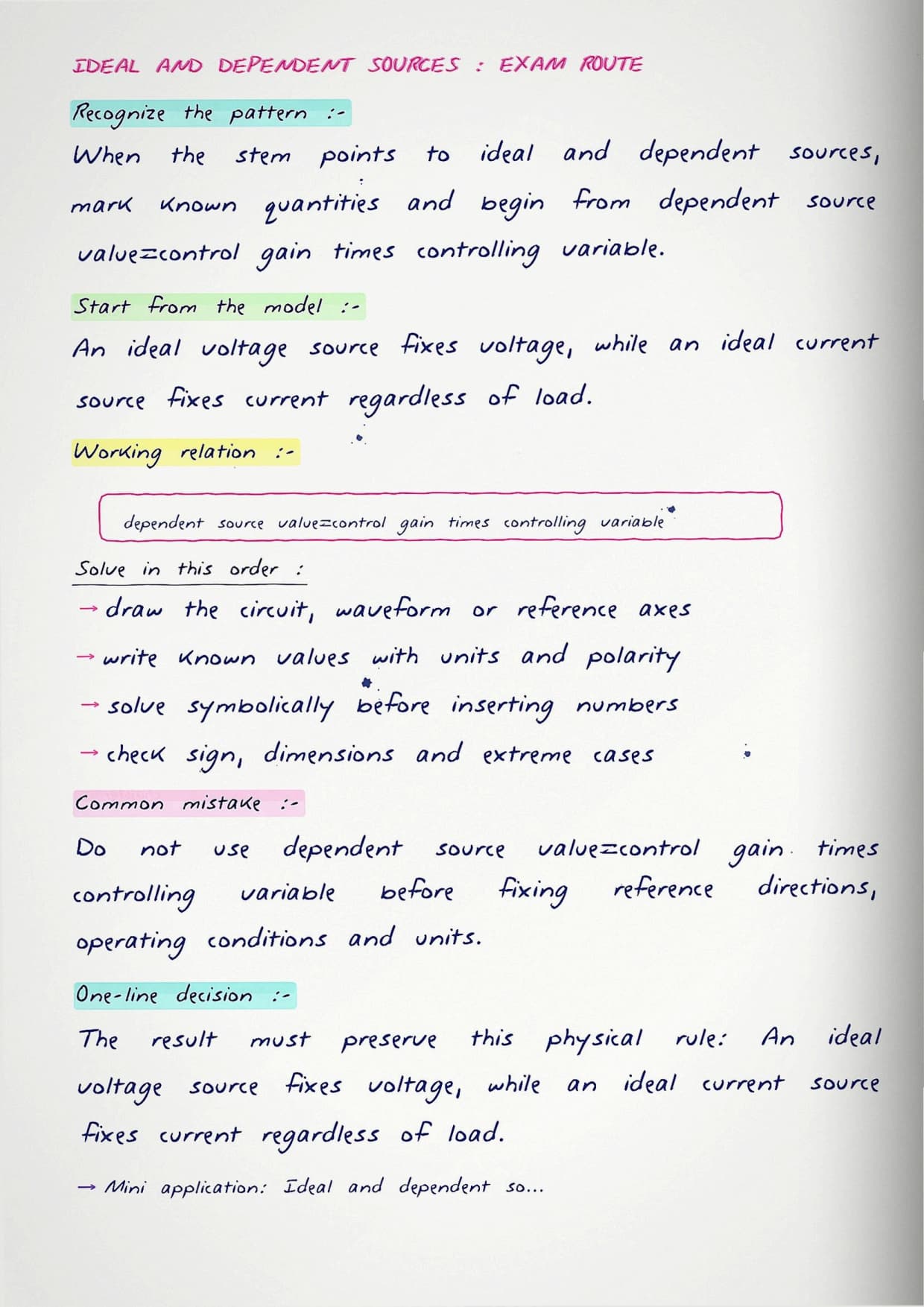
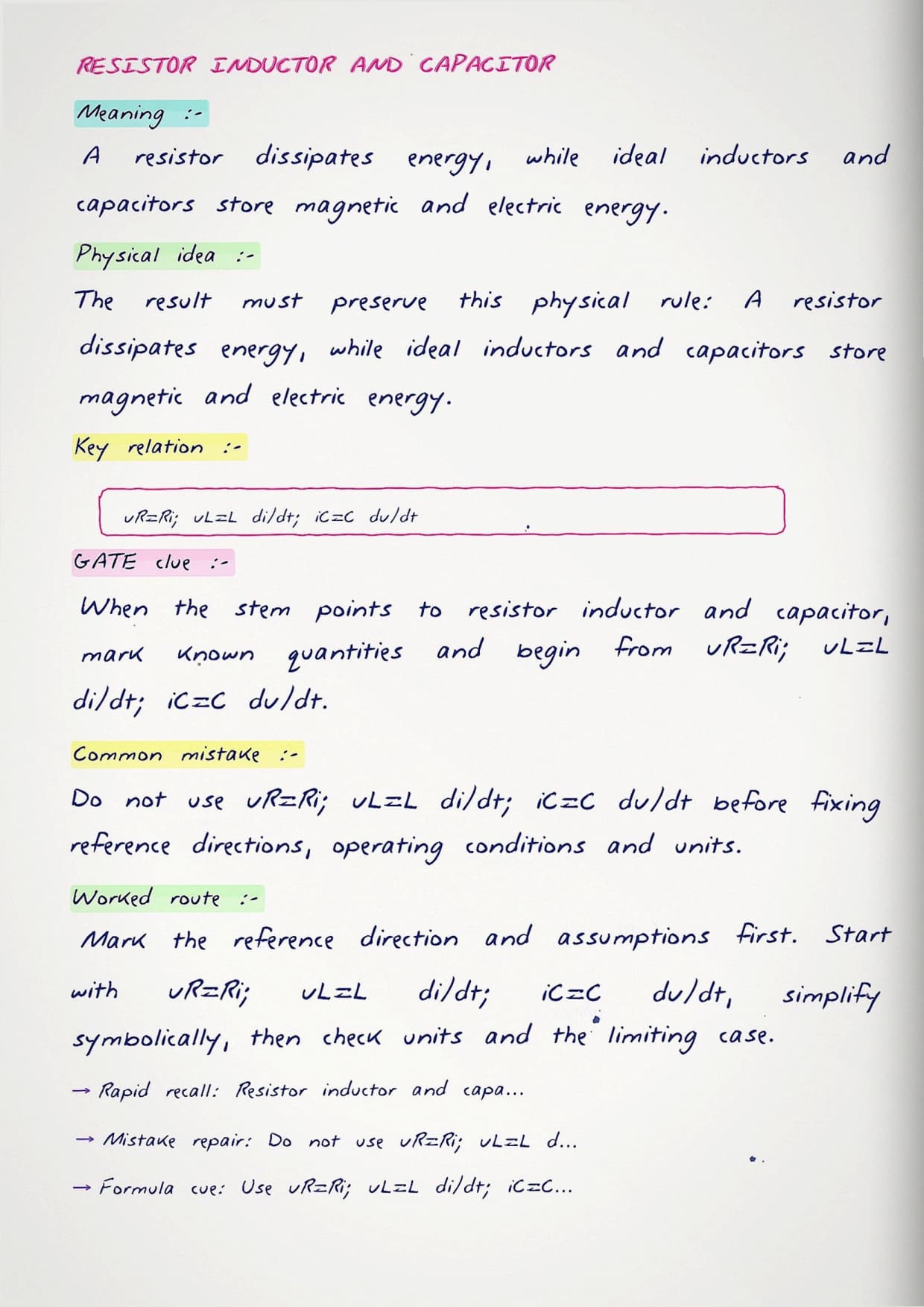
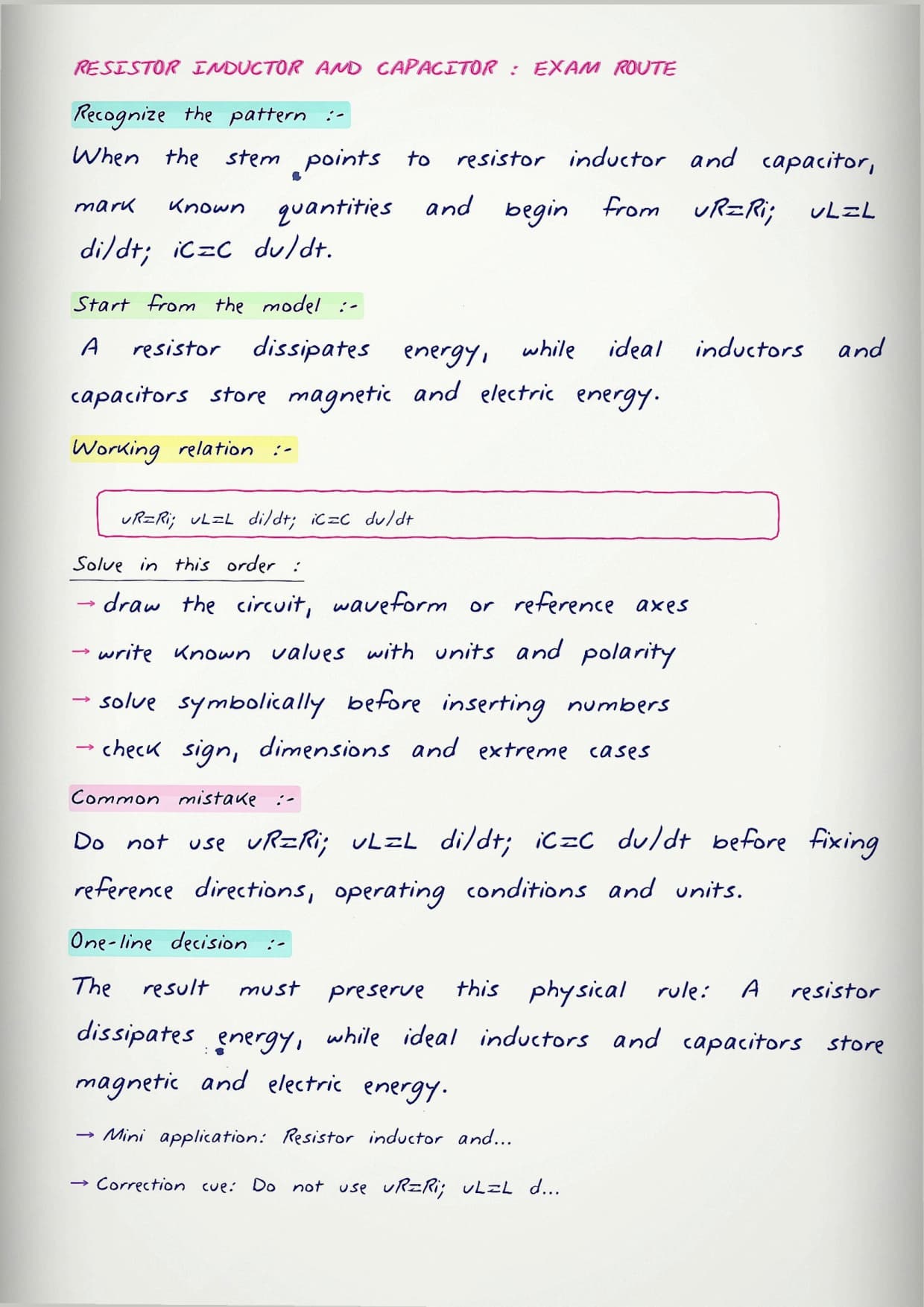
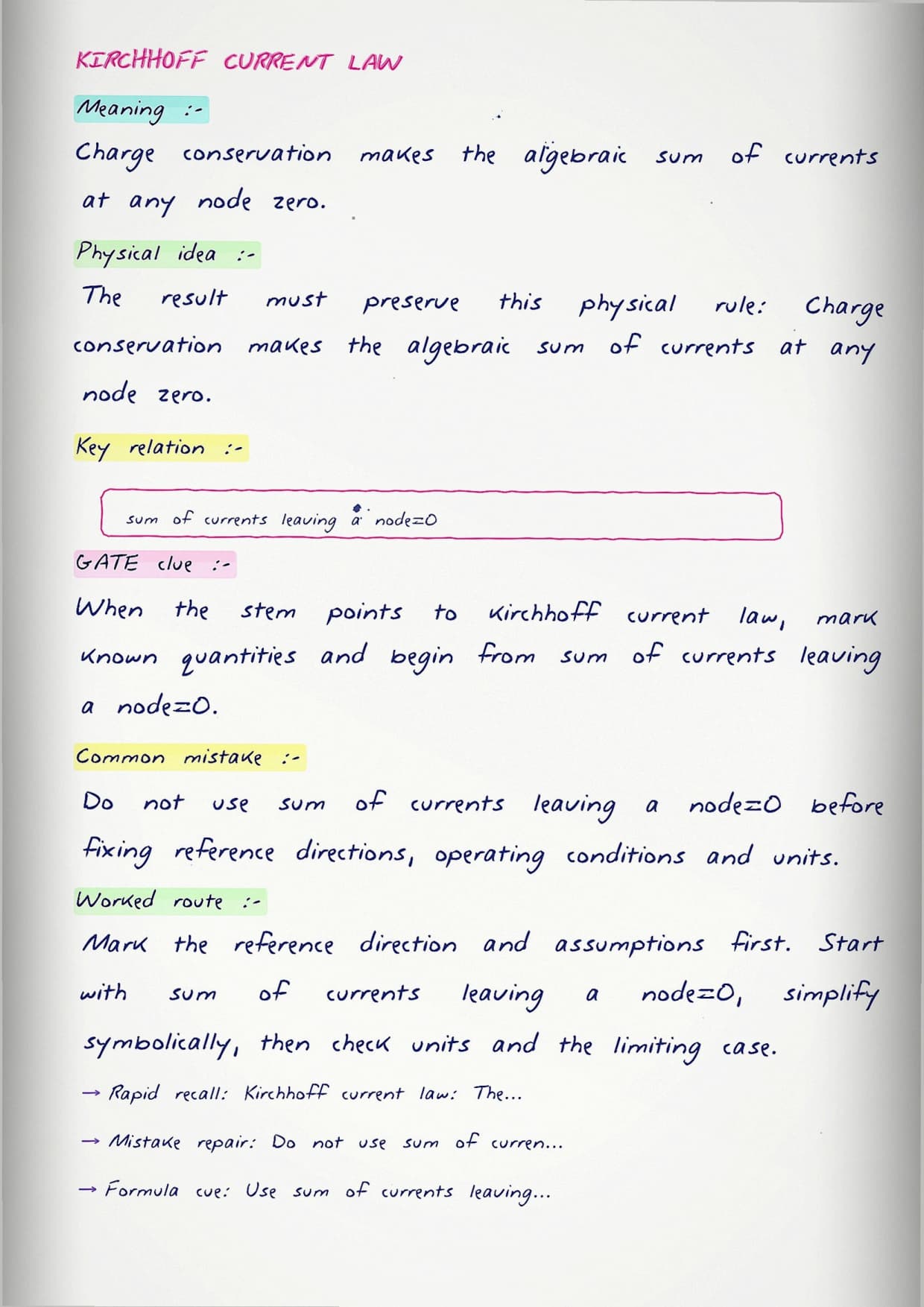
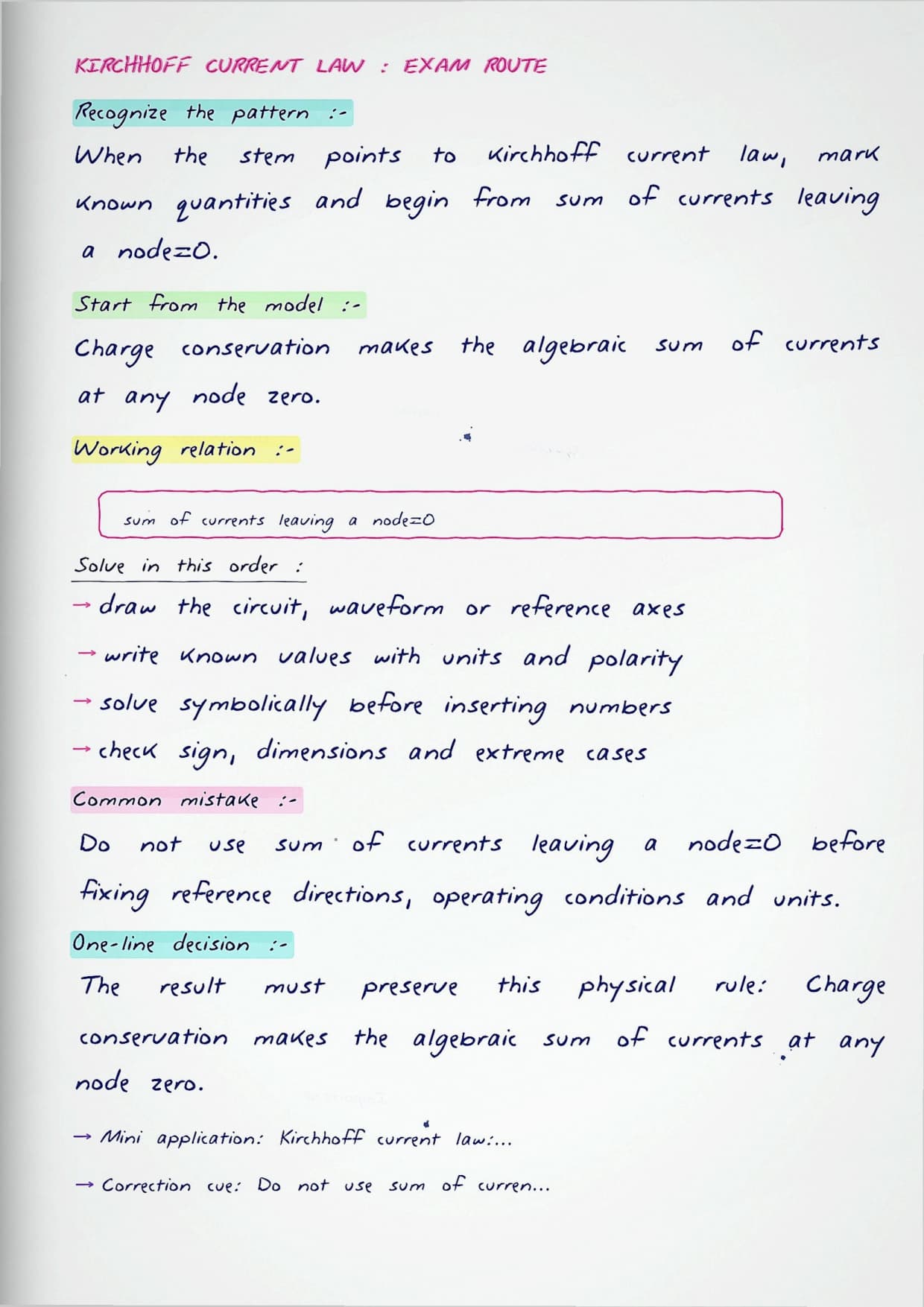
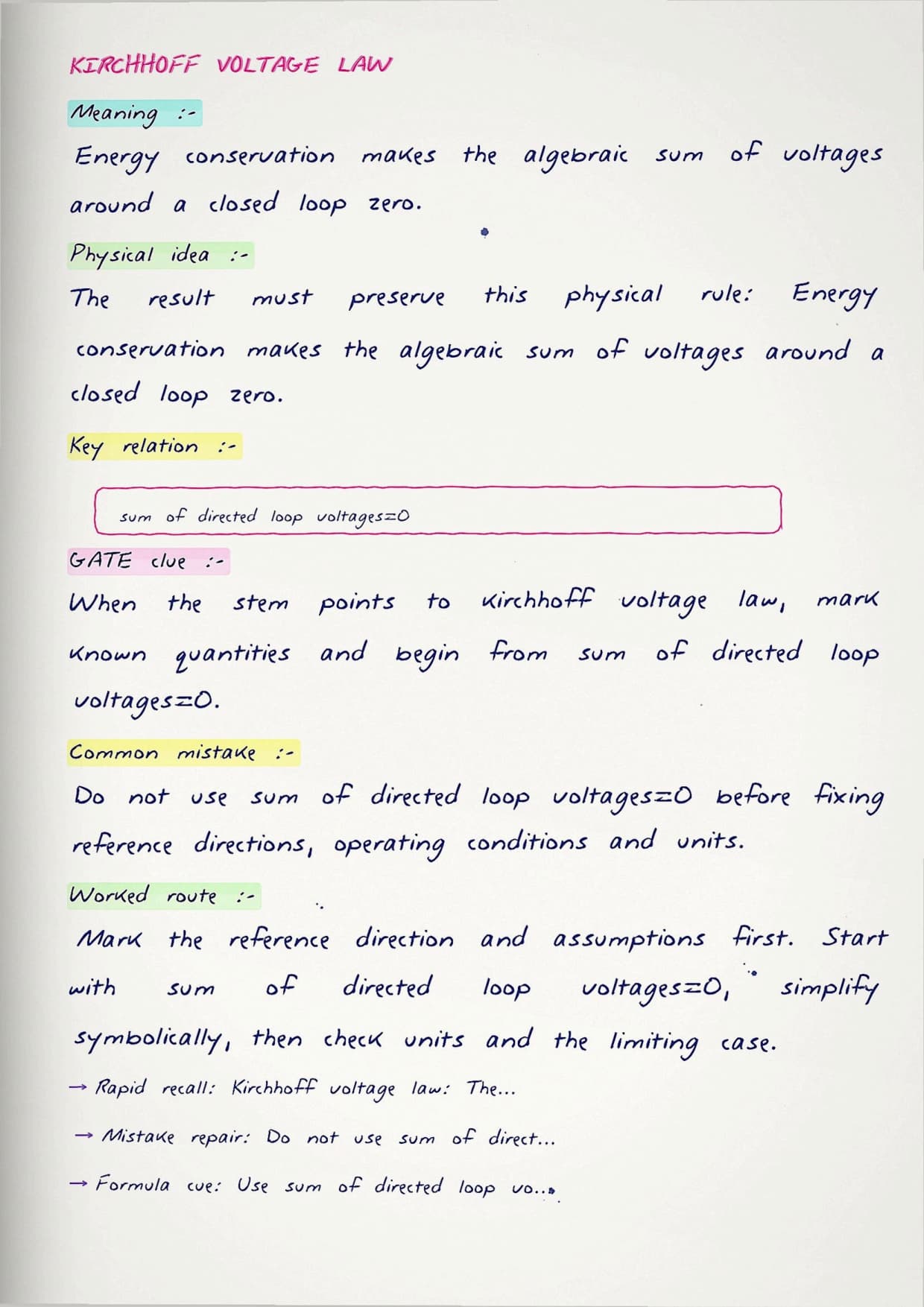
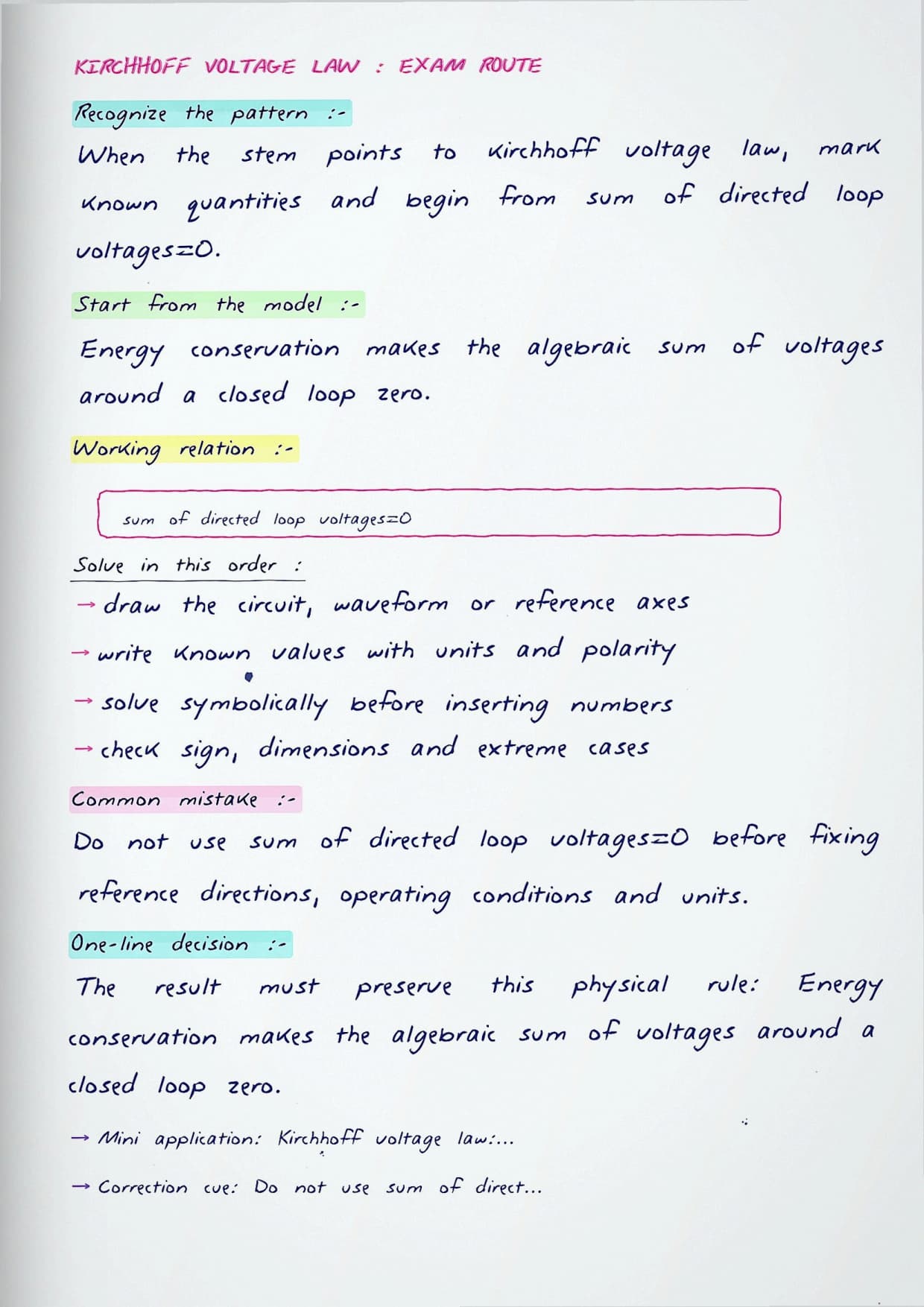
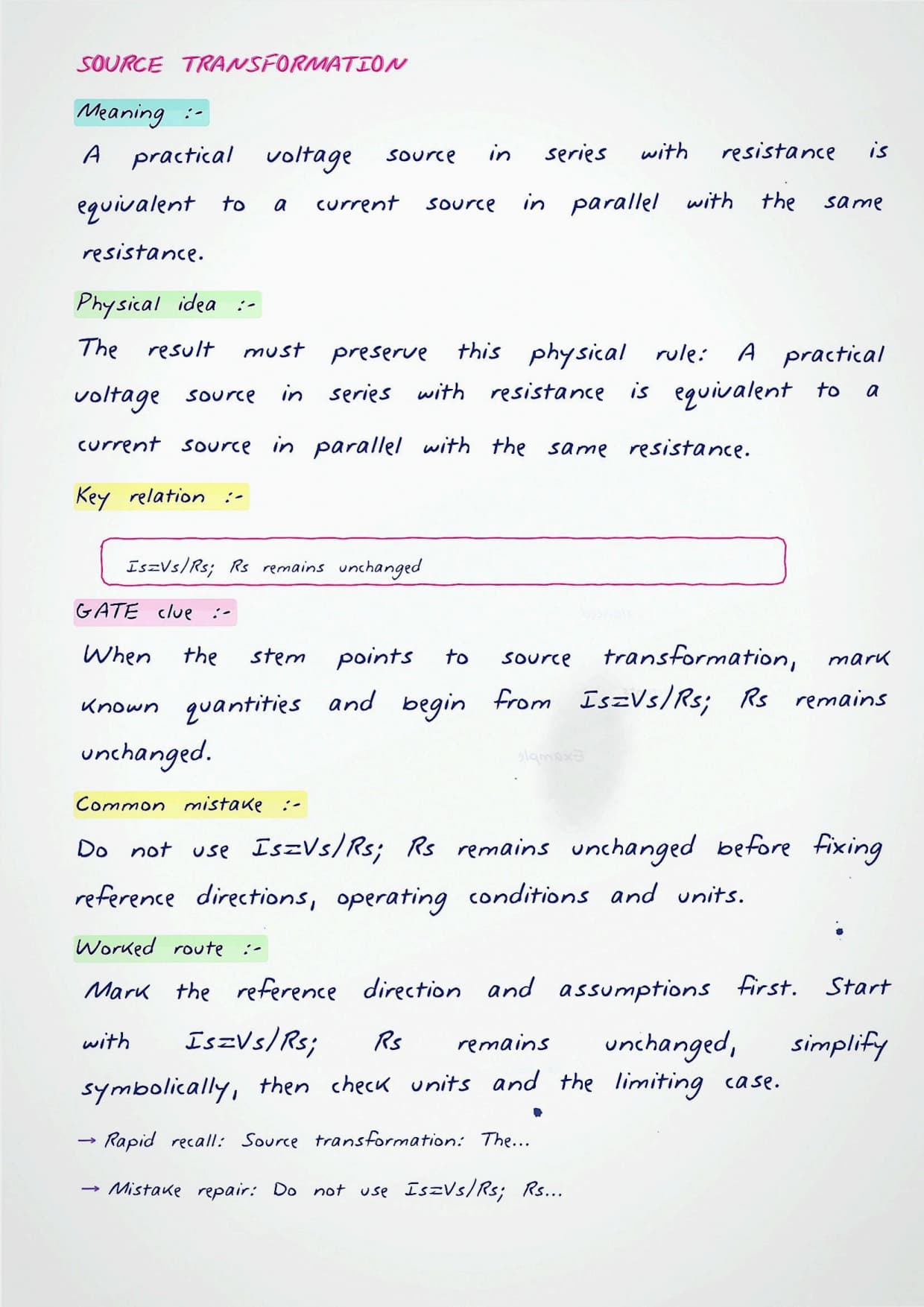
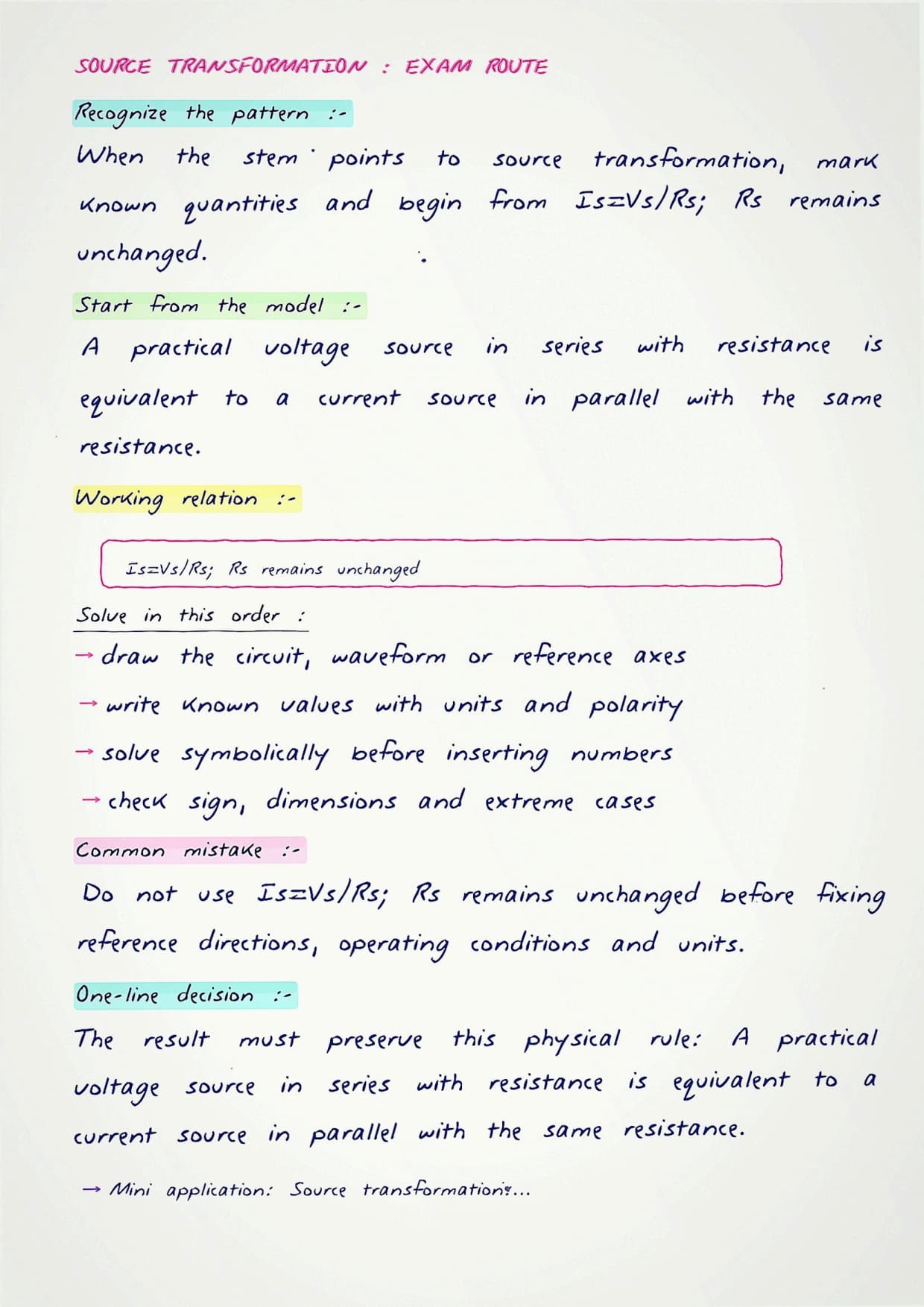
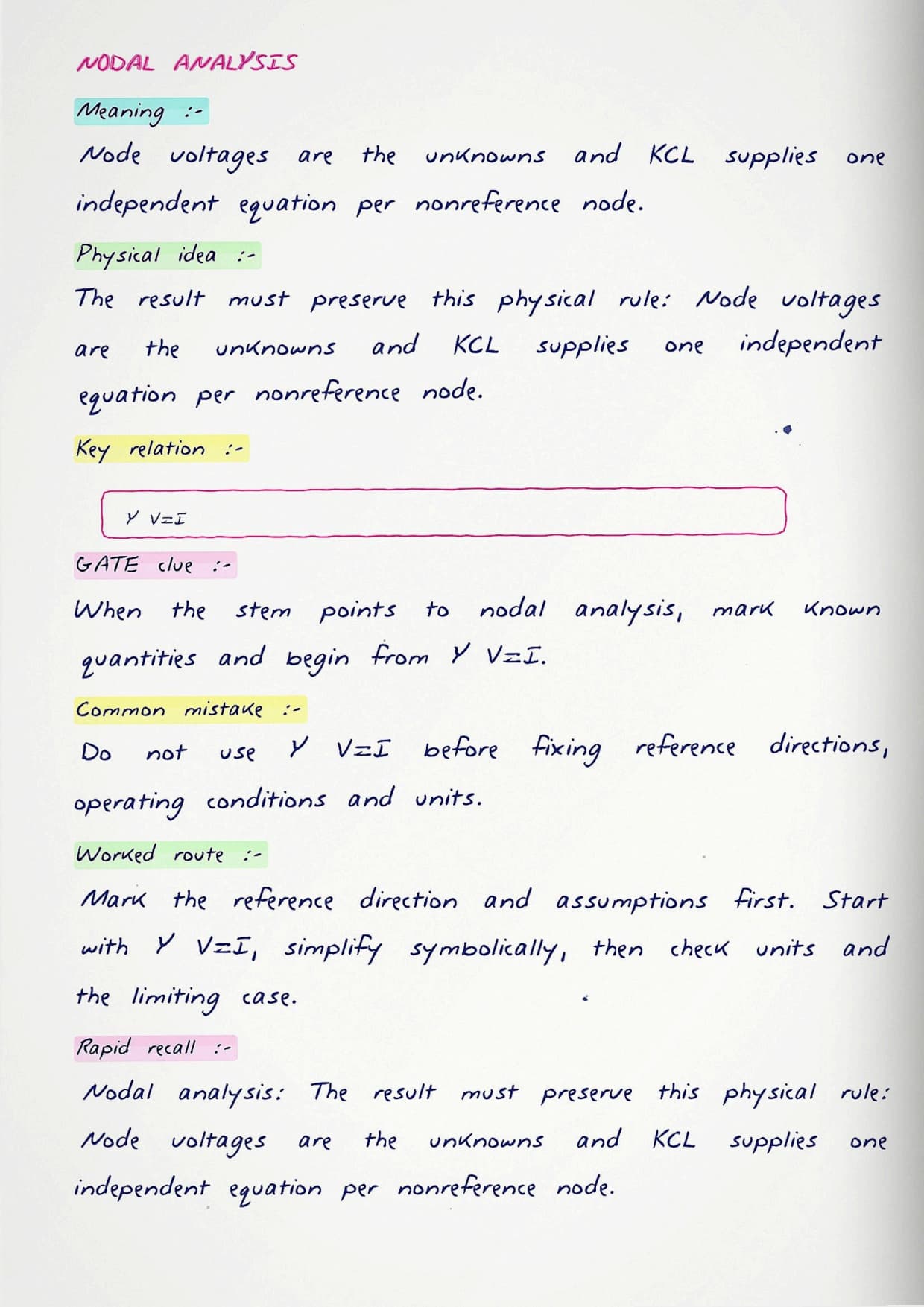
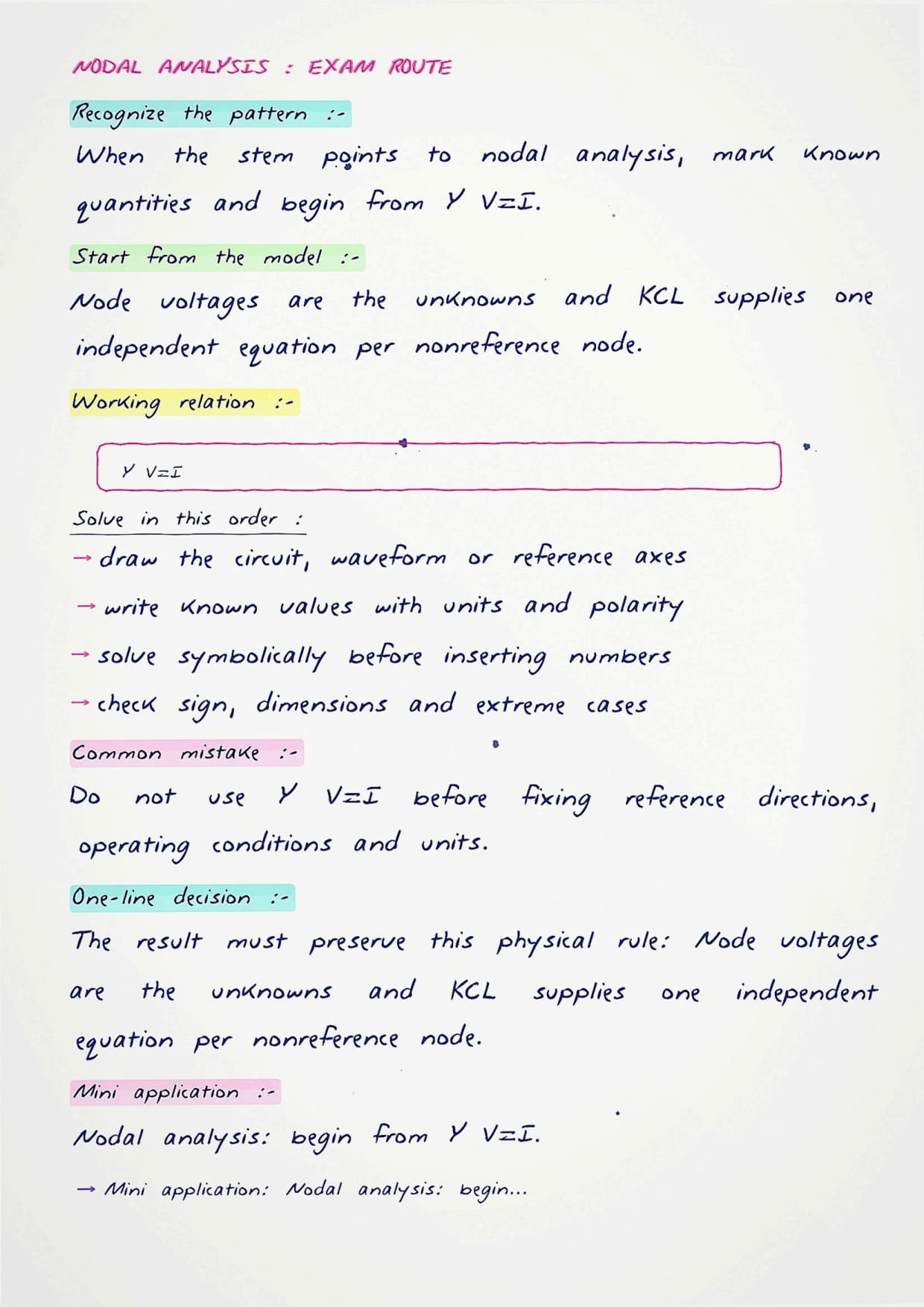
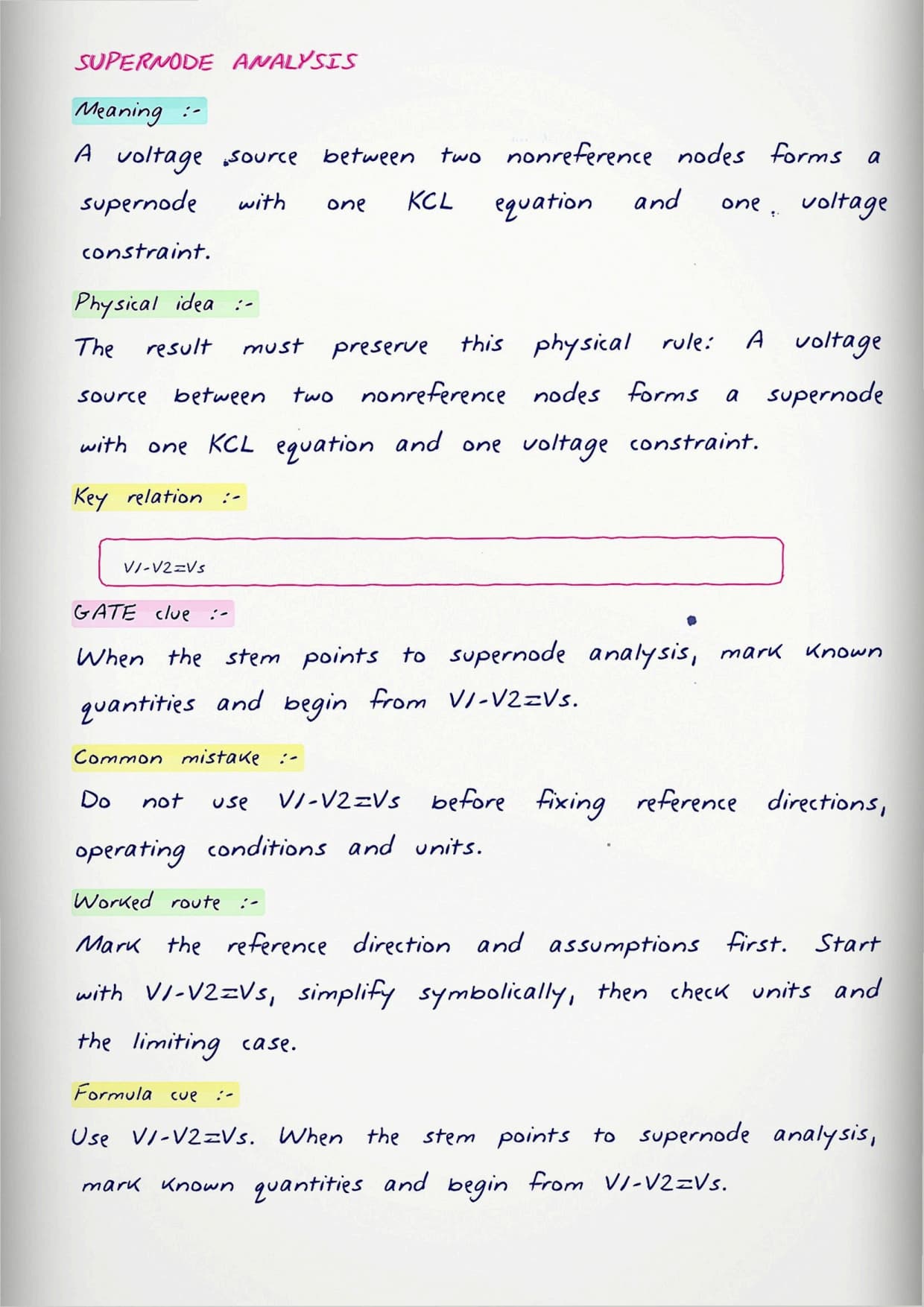
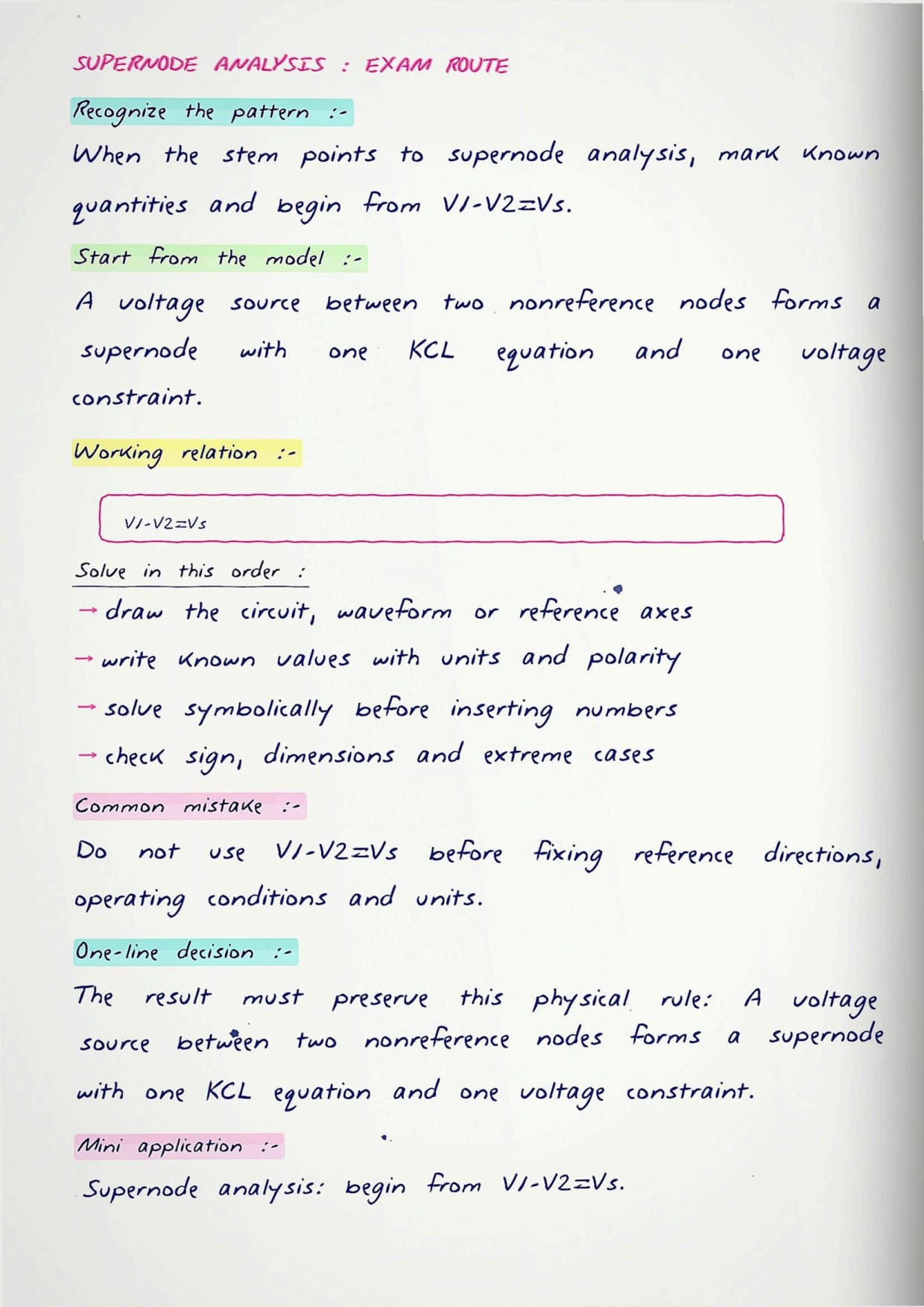
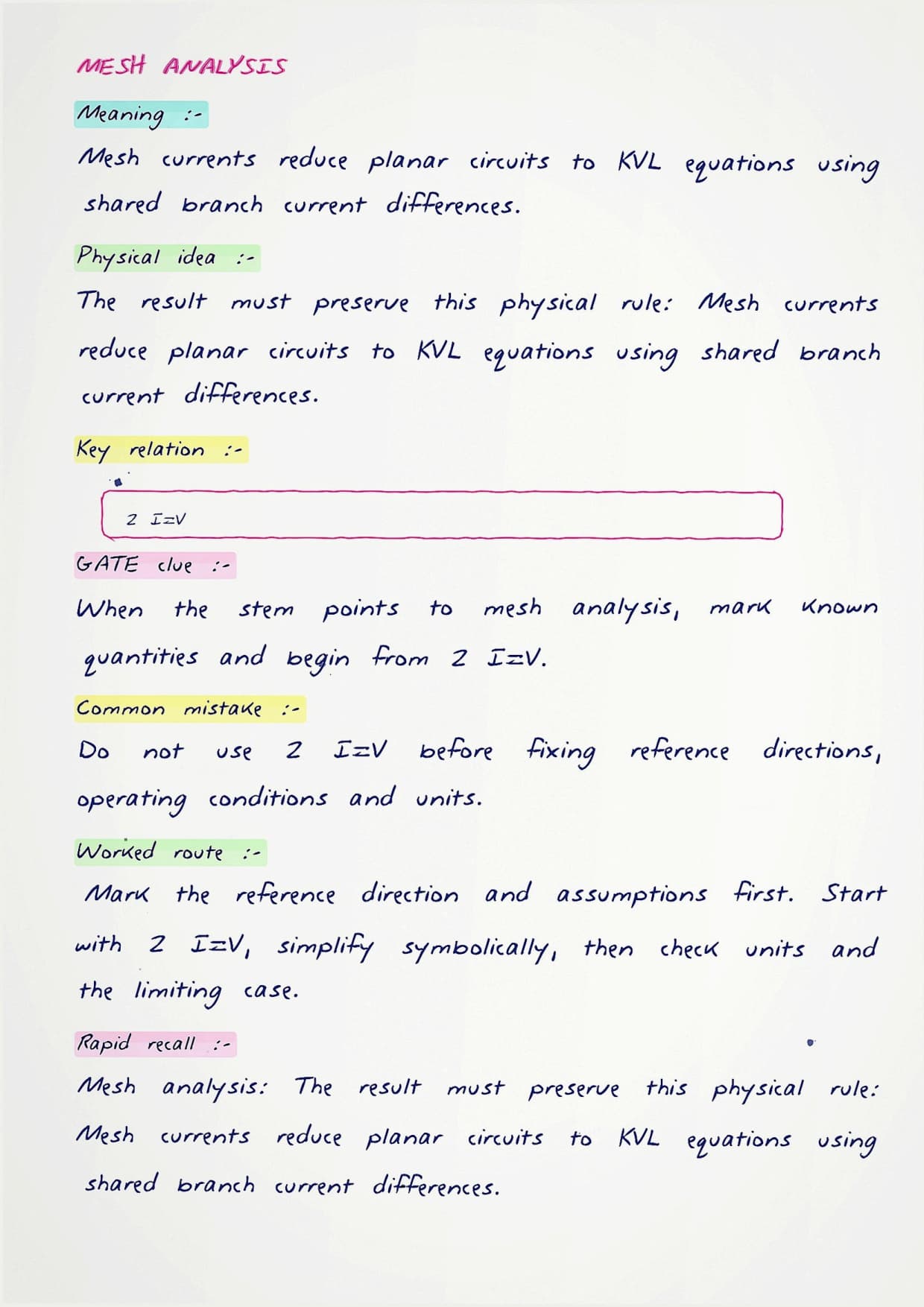
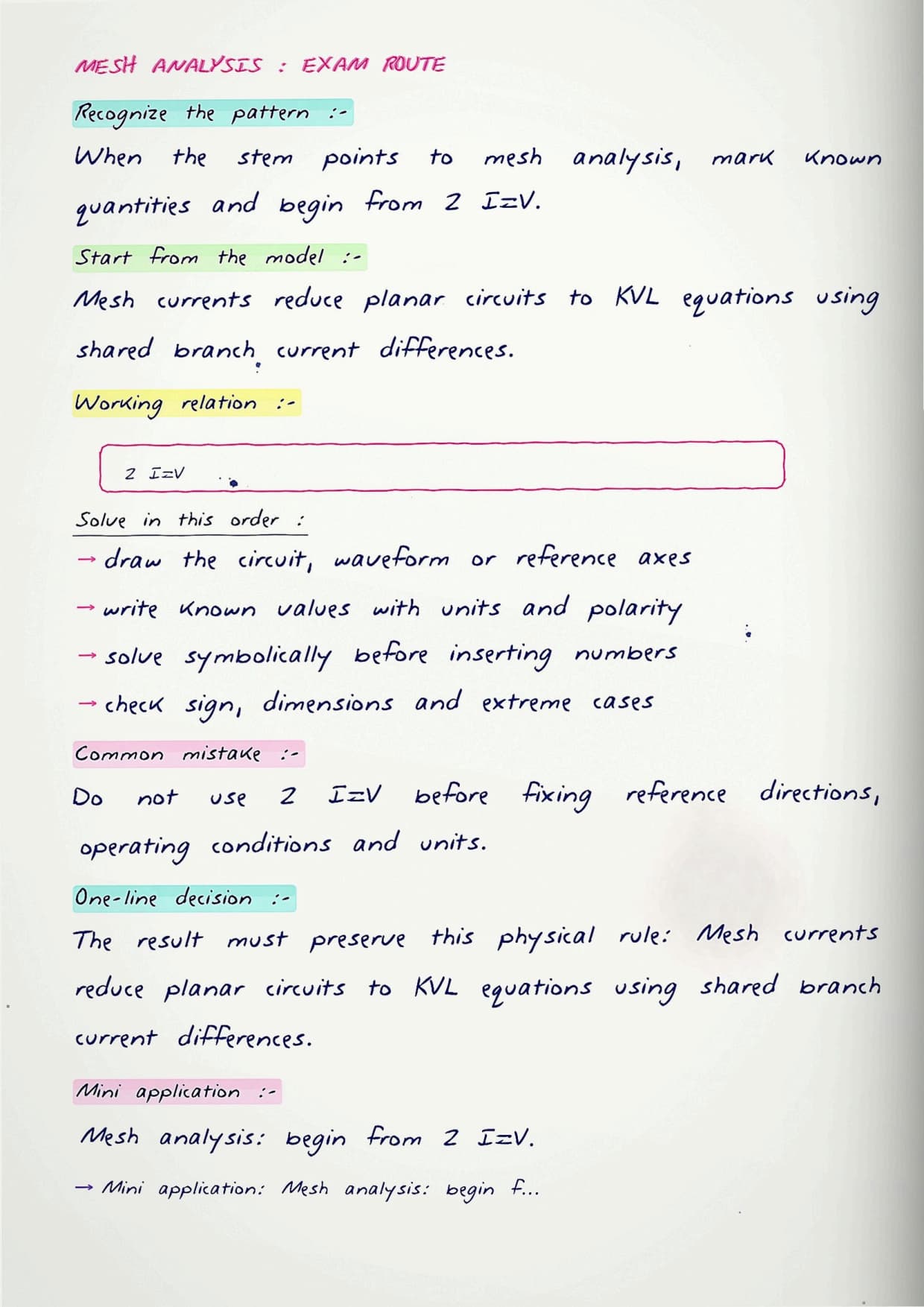
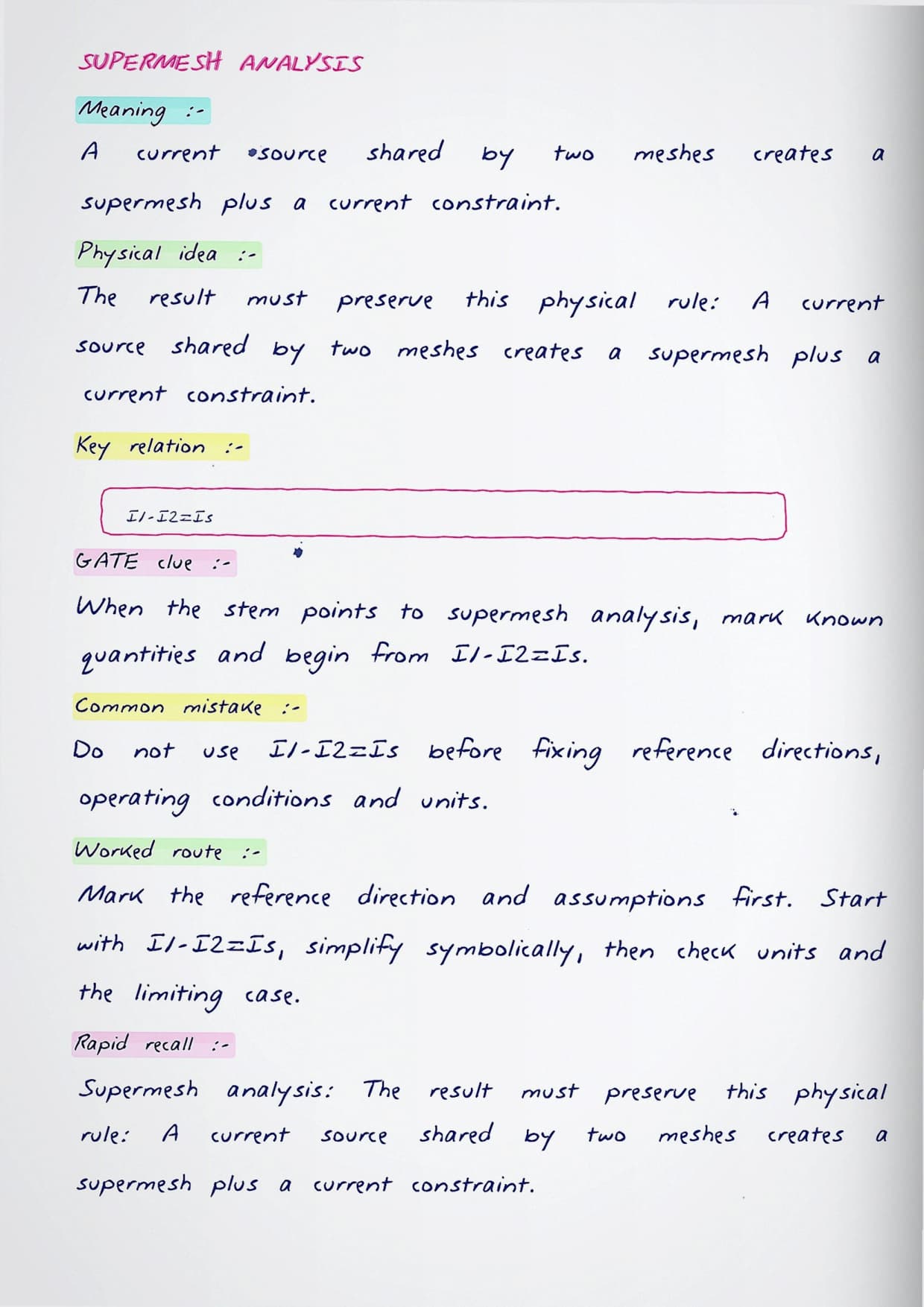
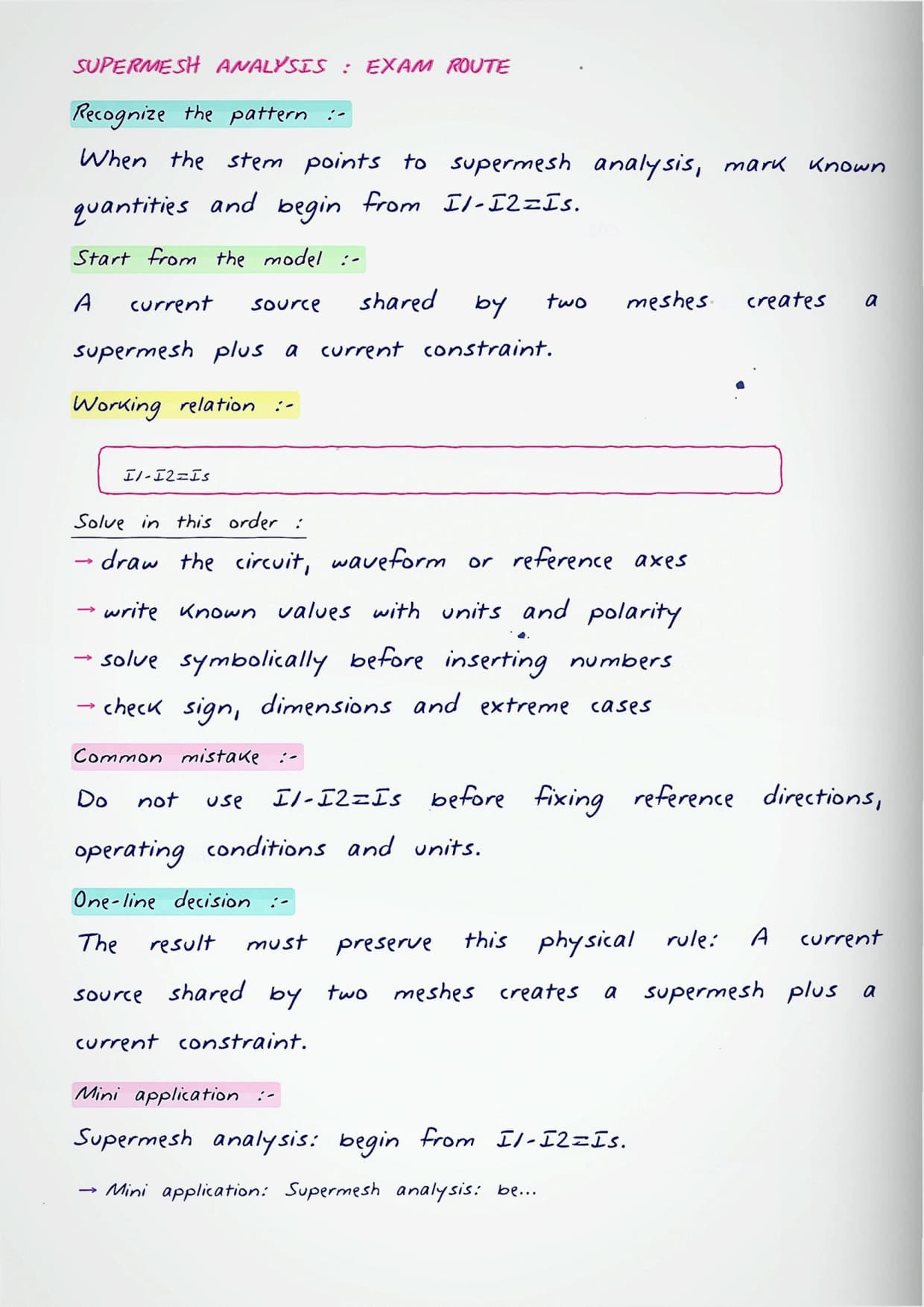
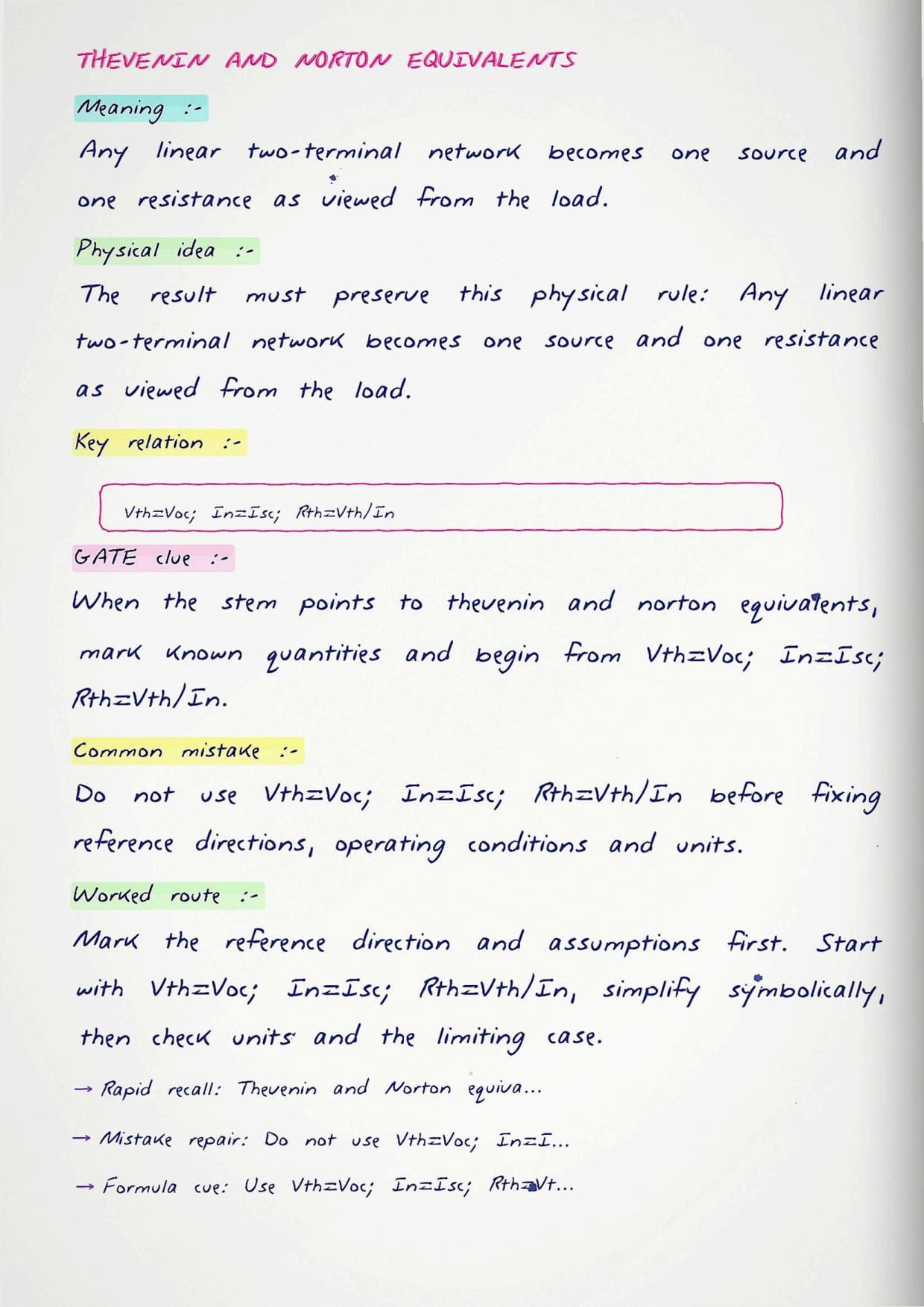
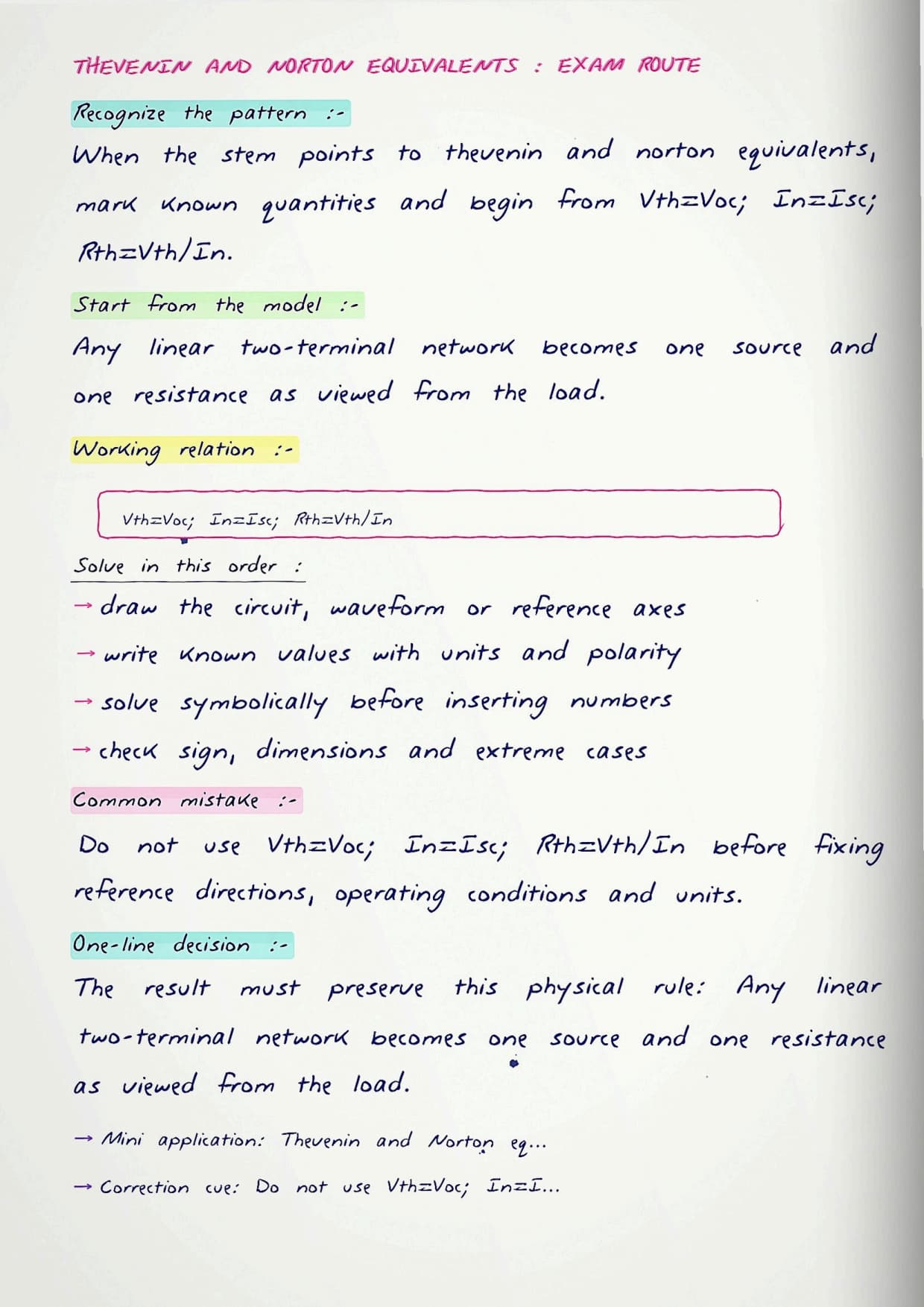
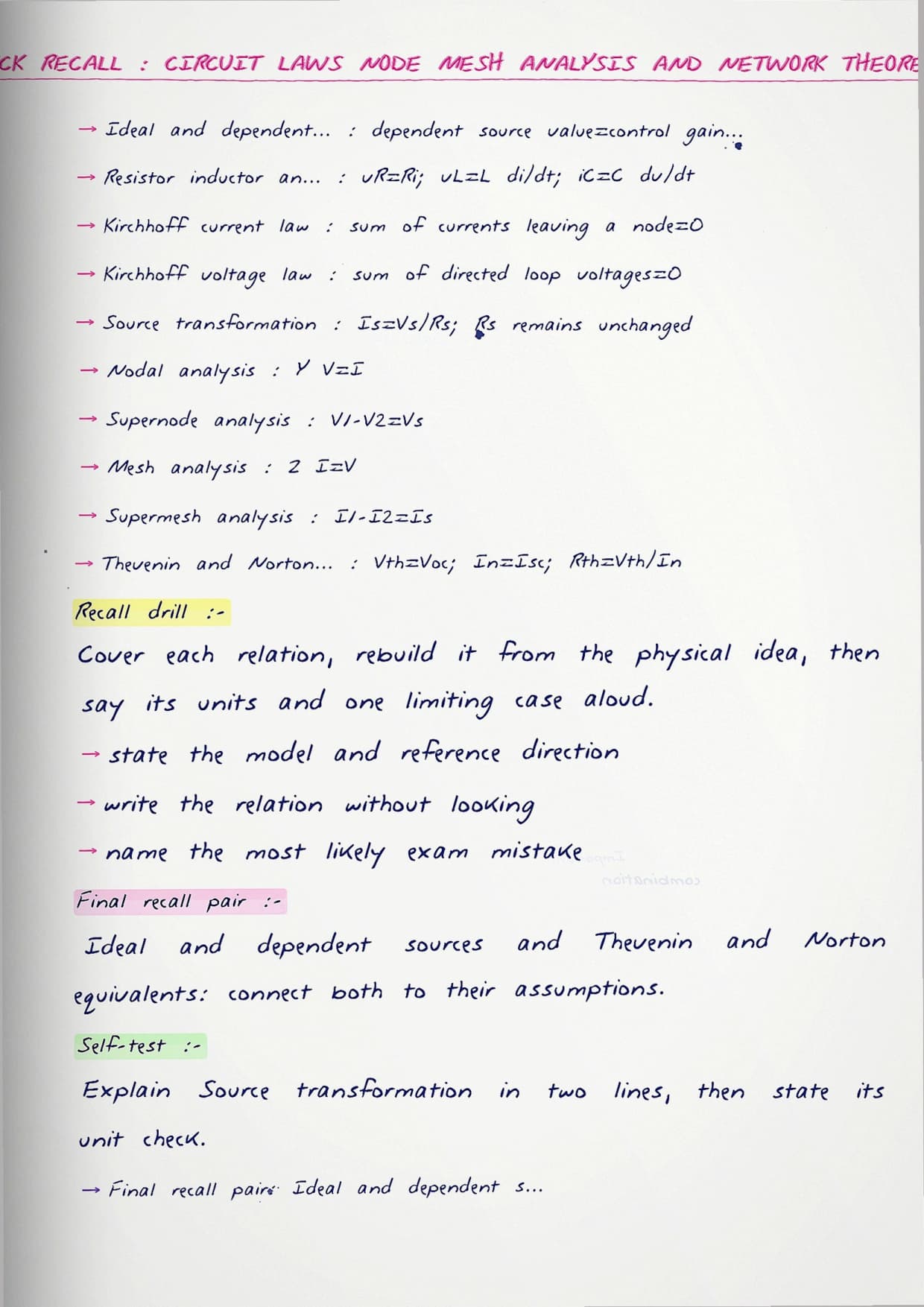
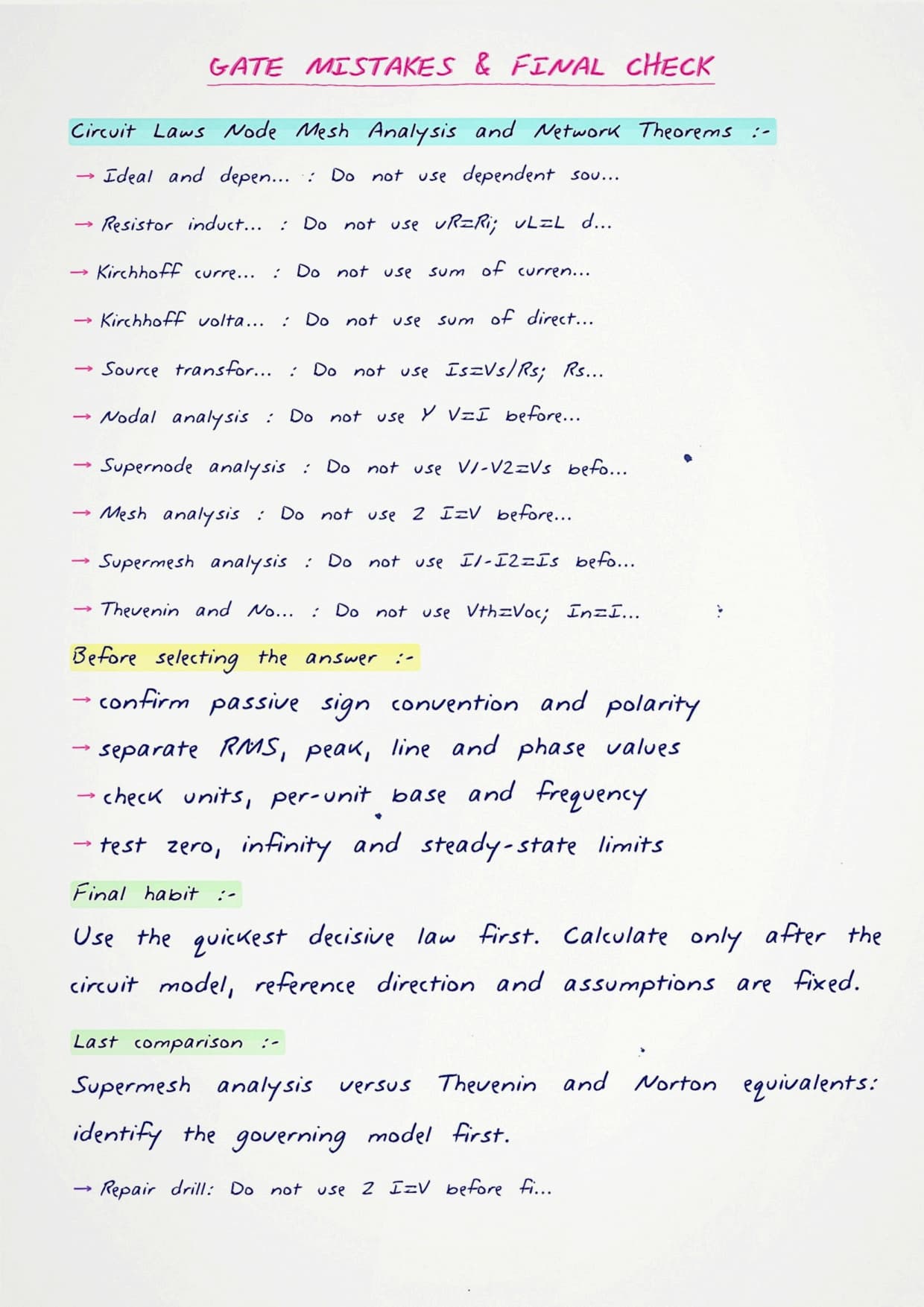
The notes open with clean hand-drawn circuit sketches for every rule, so students can trace current directions and node labels while they read. Each theorem sits next to a small worked example, and a one-page formula sheet at the end pulls together Thevenin, Norton, and Maximum Power Transfer in a single glance.
- Hand-drawn Kirchhoff's Current Law and Kirchhoff's Voltage Law diagrams with sign conventions marked in the margin.
- Step-by-step node voltage and mesh current solutions, including supernode and supermesh cases.
- A quick-reference sheet linking source transformation to Thevenin and Norton equivalents.
What These GATE Network Theorems Notes Cover
The notes walk through circuit analysis from the ground up, starting with element definitions and finishing with the theorems examiners test most. Every method is shown on a real numeric circuit so students see how marks are actually earned. Where two approaches solve the same circuit, both are worked out so students can compare the effort and choose the shorter path under exam pressure.
- Basic laws: Ohm's law, KCL, KVL, and series-parallel reduction.
- Systematic nodal and mesh analysis for planar and non-planar networks.
- Core theorems: superposition, Thevenin, Norton, reciprocity, and Millman.
- Power results including the Maximum Power Transfer condition.
GATE Network Theorems Quick Revision
Source: GeeksforGeeks- EC, EE & IN on YouTube
Topics Covered in GATE Network Theorems
The topic list mirrors the official GATE Electrical syllabus for network analysis, so students can tick items off as they revise. Nothing on this list is optional for a serious attempt.
- Classification of ideal and practical sources and source shifting.
- KCL and KVL with sign conventions and Tellegen's theorem.
- Node voltage method including supernodes.
- Mesh current method including supermeshes.
- Superposition and the homogeneity principle.
- Thevenin and Norton equivalents for dependent-source networks.
- Reciprocity, substitution, and Millman's theorem.
- Maximum power transfer for resistive and reactive loads.
How the Notes Are Organised
The pages follow a simple build-up. Students first meet the basic laws and reduction tricks, then move to nodal and mesh analysis, and only after that reach the named theorems that depend on those methods.
The final pages act as a revision zone. Solved examples sit beside the formula sheet, so a student can attempt a circuit, then check both the method and the shortcut on the same spread without flipping back and forth. Short margin notes flag the exact step where sign errors usually creep in, which keeps the focus on the mistakes that actually cost marks rather than on rote memorisation.
How GATE Network Theorems Links to Other Topics
Circuit analysis is the language the rest of the paper speaks in. A student who is fluent here saves time everywhere else, because the same reduction steps appear again and again.
- AC circuit analysis, where the same theorems apply to phasors and impedances.
- Transient and steady-state response of RL, RC, and RLC circuits.
- Two-port networks, which reuse mesh and nodal equations.
- Power system fault analysis, which leans on Thevenin equivalents.
Important Topics in GATE Network Theorems
A few ideas return almost every year, and a couple of predictable traps cost students easy marks. The notes flag each one where it appears, and they pair the trap with the quickest safe method so students do not lose time second-guessing a step in the exam hall.
- Thevenin resistance with dependent sources, found by the test-source method.
- Maximum power transfer, where the load must match the complex conjugate of source impedance in AC.
- Supernode and supermesh handling, a frequent sign-error trap.
- Superposition applied only to independent sources, never to power directly.
- Correct treatment of ideal current sources during source transformation.
How to Prepare GATE Network Theorems with Handwritten Notes
Treat the notes as a fast loop rather than a one-time read. The layout is built for repeated passes as the exam nears.
- First read: follow every hand-drawn circuit and redo each worked example on paper.
- Second pass: cover the solutions and solve each circuit yourself before checking.
- PYQ round: map five years of GATE questions onto the matching note page.
- Final week: revise only the formula sheet and the flagged traps.
Why These Notes Help You Score Better
Because the whole topic sits in a few dense pages, students can revise all of network theory in one sitting instead of hunting through a thick textbook. The hand-drawn circuits make the sign conventions stick, and the solved examples show exactly how a full-mark answer is set out. Since the same reduction and equivalent-circuit skills reappear across the paper, time spent here quietly lifts the score on AC, control, and power questions too. That combination of speed and wide reach is what helps students convert this reliable topic into guaranteed marks.
GATE Electrical Network Theorems Handwritten Notes FAQs
Ques. How many marks do circuit laws and network theorems carry in GATE Electrical?
Ans. This topic usually contributes around 6 to 9 marks, spread across direct theorem questions and its use inside AC, control, and power-system problems, which makes it one of the highest-return areas to master.
Ques. When should students use nodal analysis instead of mesh analysis?
Ans. Nodal analysis is faster when a circuit has many current sources or few nodes, while mesh analysis suits circuits dominated by voltage sources and loops. The notes show both worked side by side so students can pick the shorter route.
Ques. Do these handwritten notes include solved examples?
Ans. Yes. Every law and theorem is paired with a hand-solved numeric circuit, and the closing pages hold extra solved examples beside a one-page formula sheet for quick self-testing.
Ques. Are the notes enough for last-minute revision?
Ans. They are designed for it. The compact layout and formula sheet let students refresh the entire topic in a single short session before the exam.



Comments