




Analog Electronics is a steady scoring topic in GATE Electrical, usually worth about 4 to 7 marks in the paper. It belongs to the Analog and Digital Electronics section, and its ideas return in Control Systems, Signals and Systems, and Electrical Measurements. These handwritten notes cover the full topic in a compact, exam-focused form.
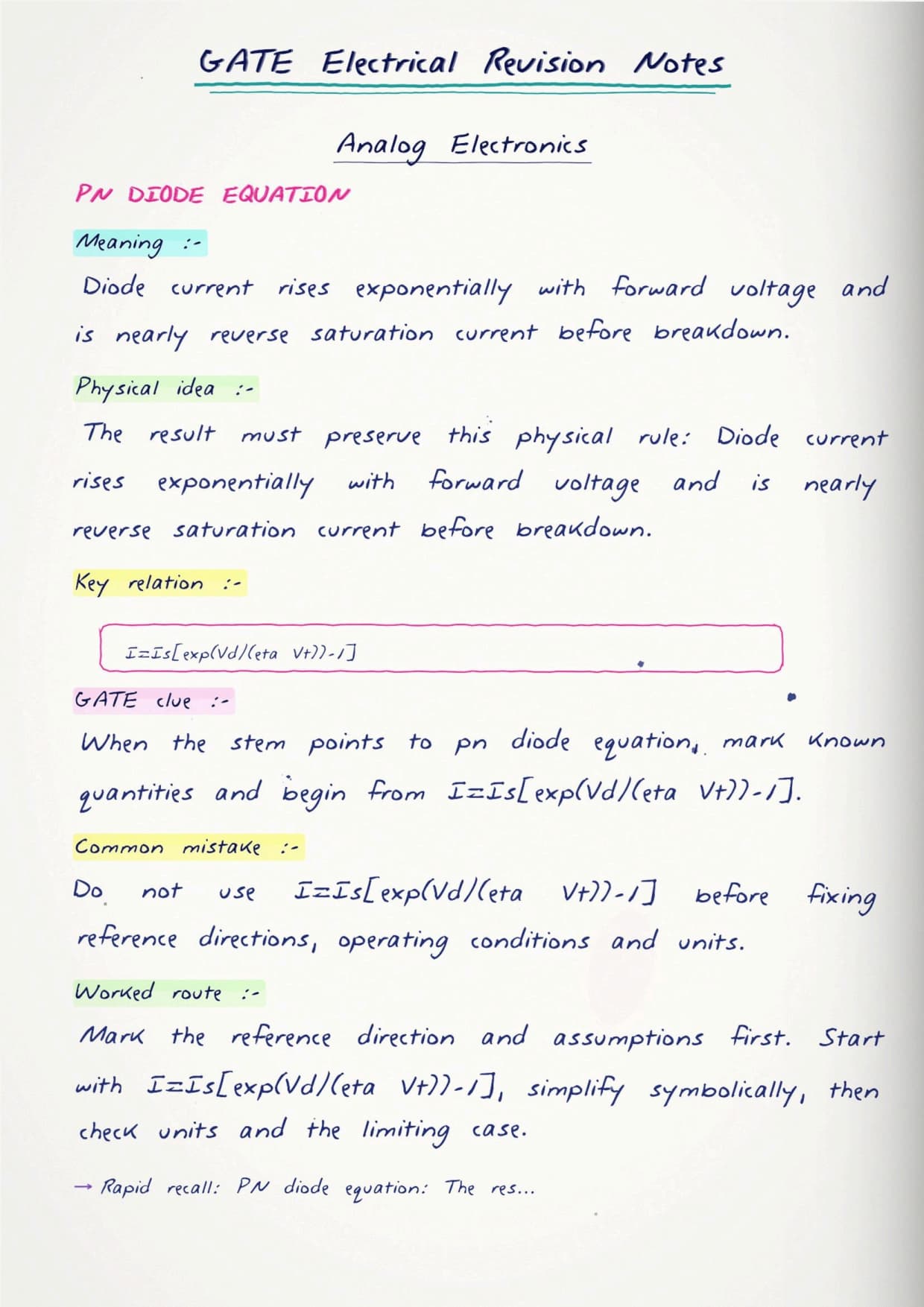
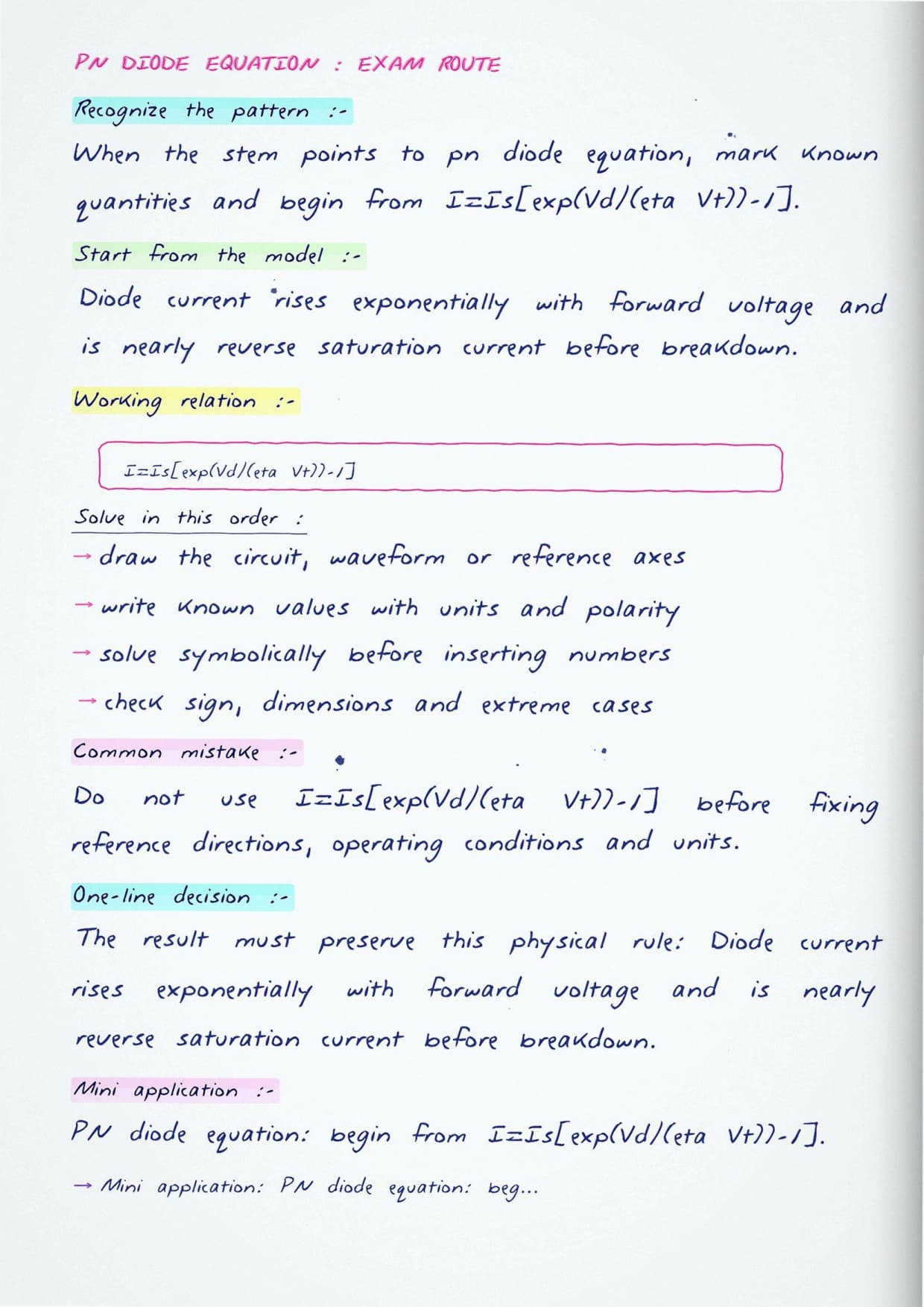
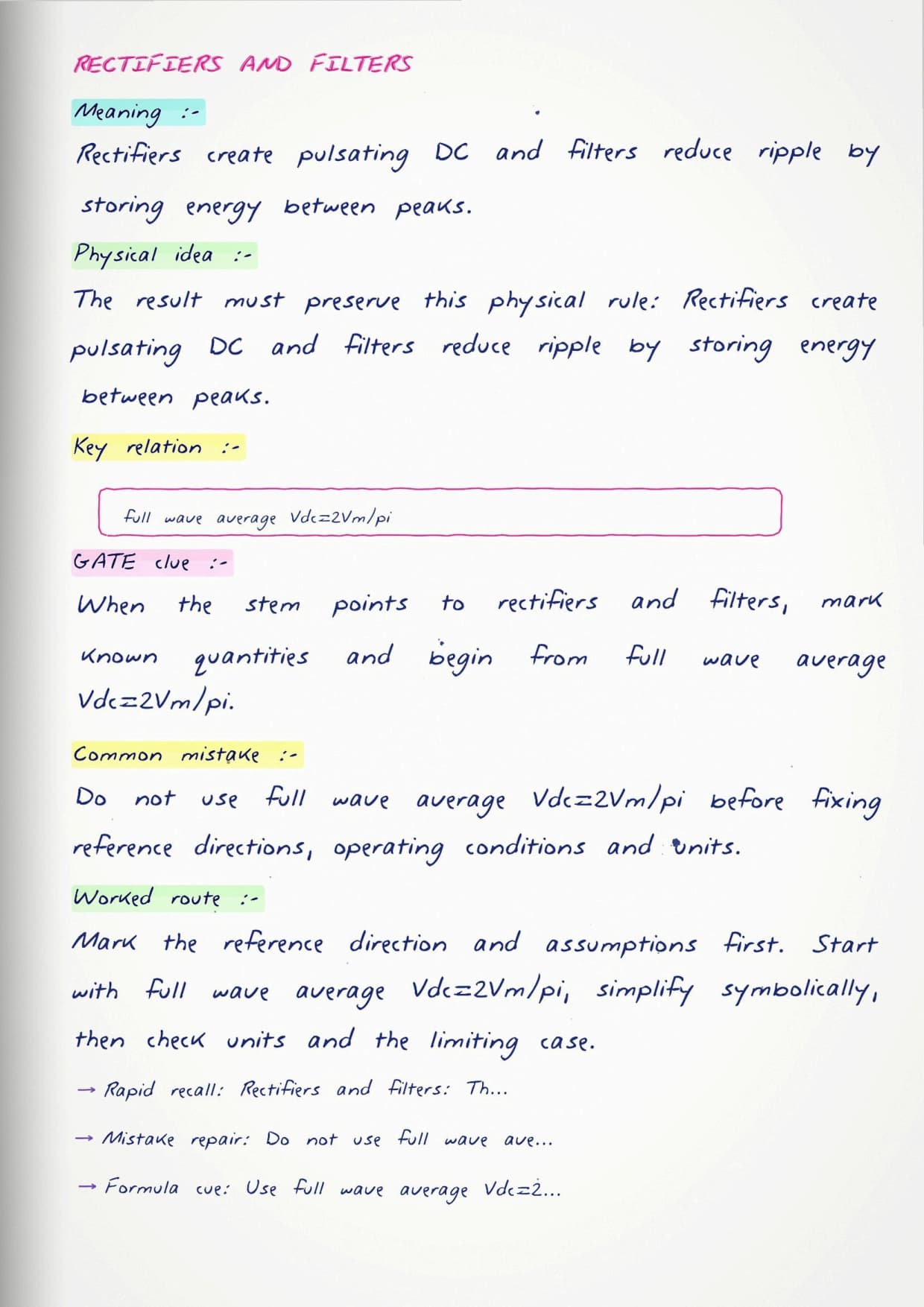
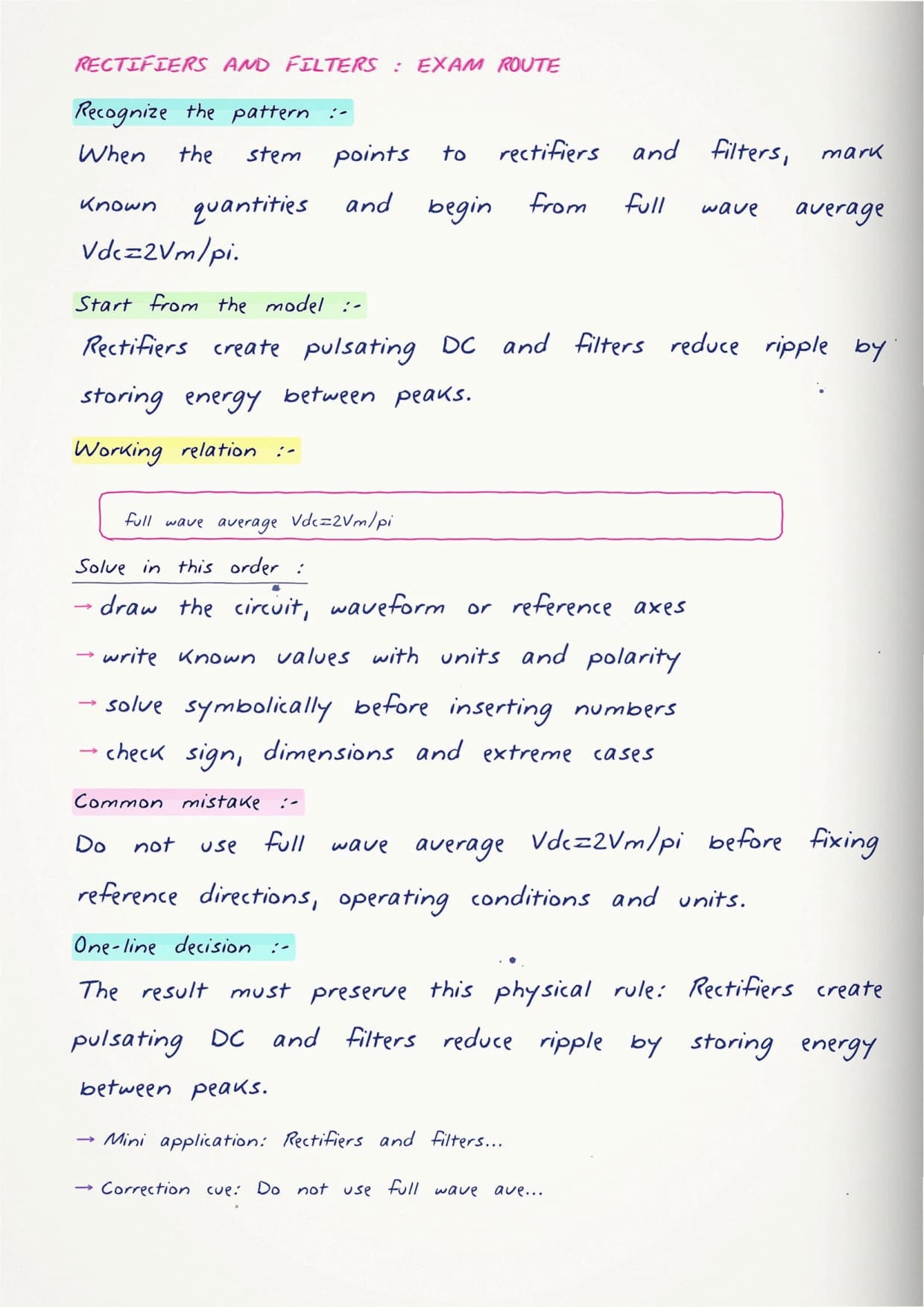
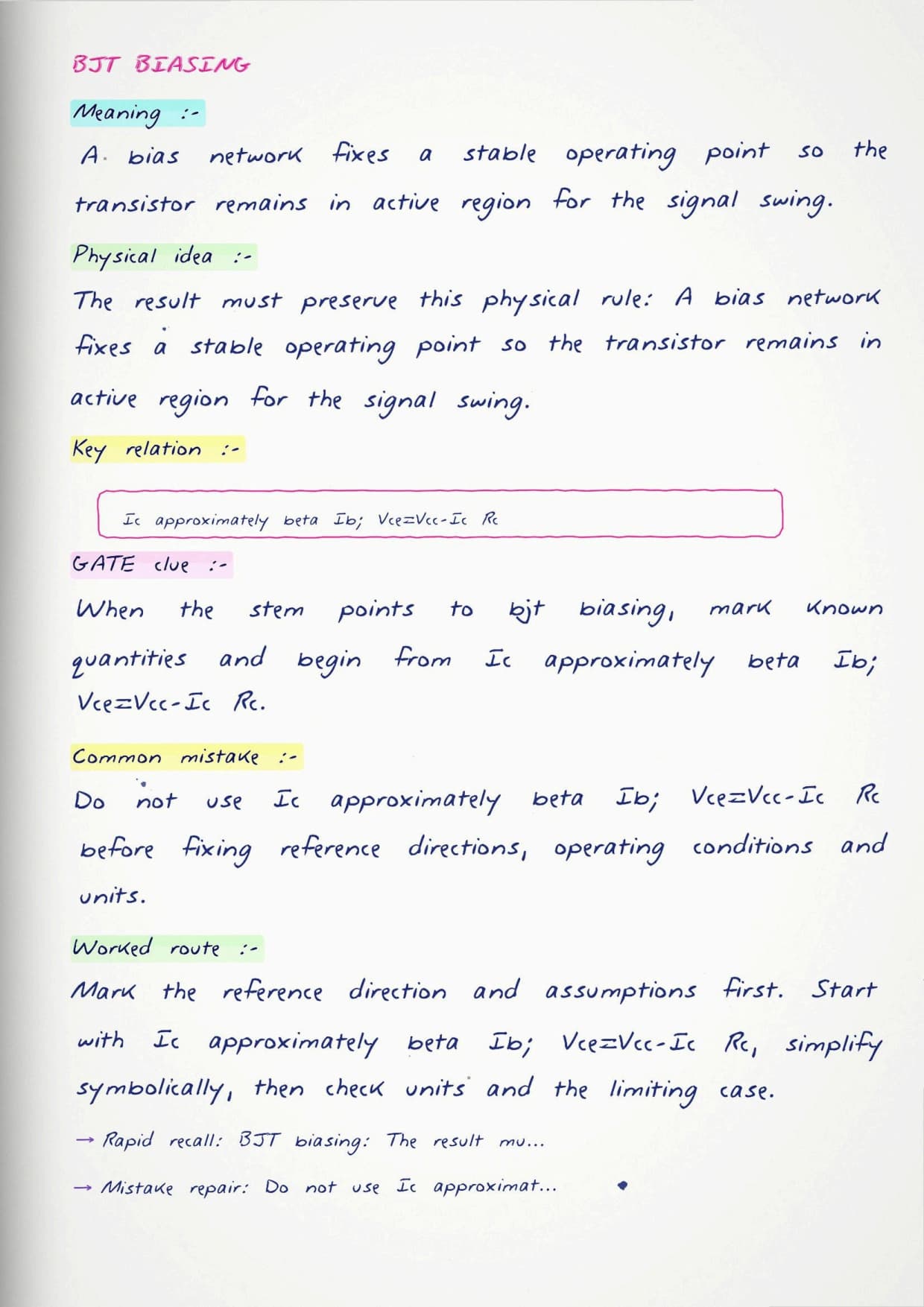
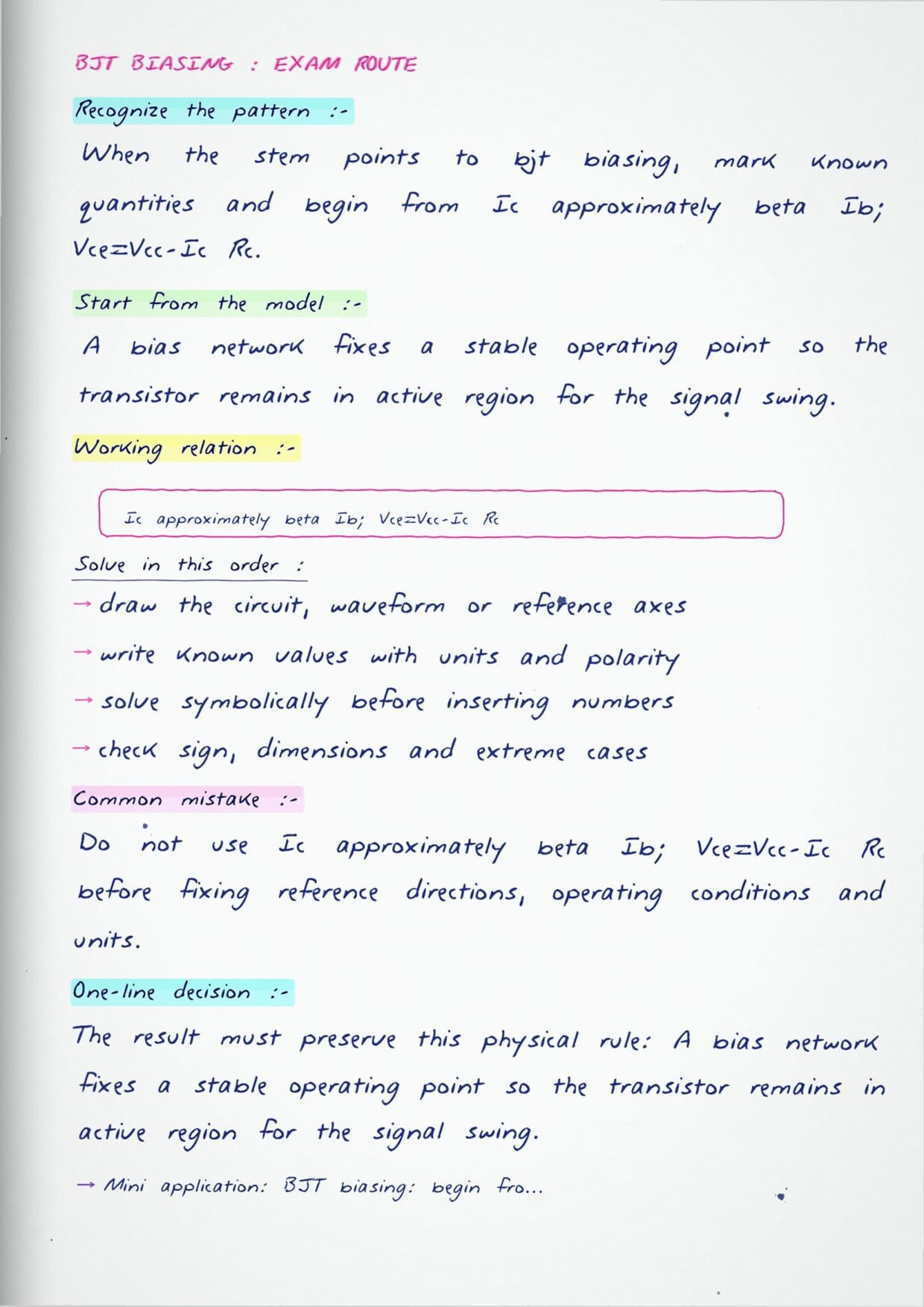
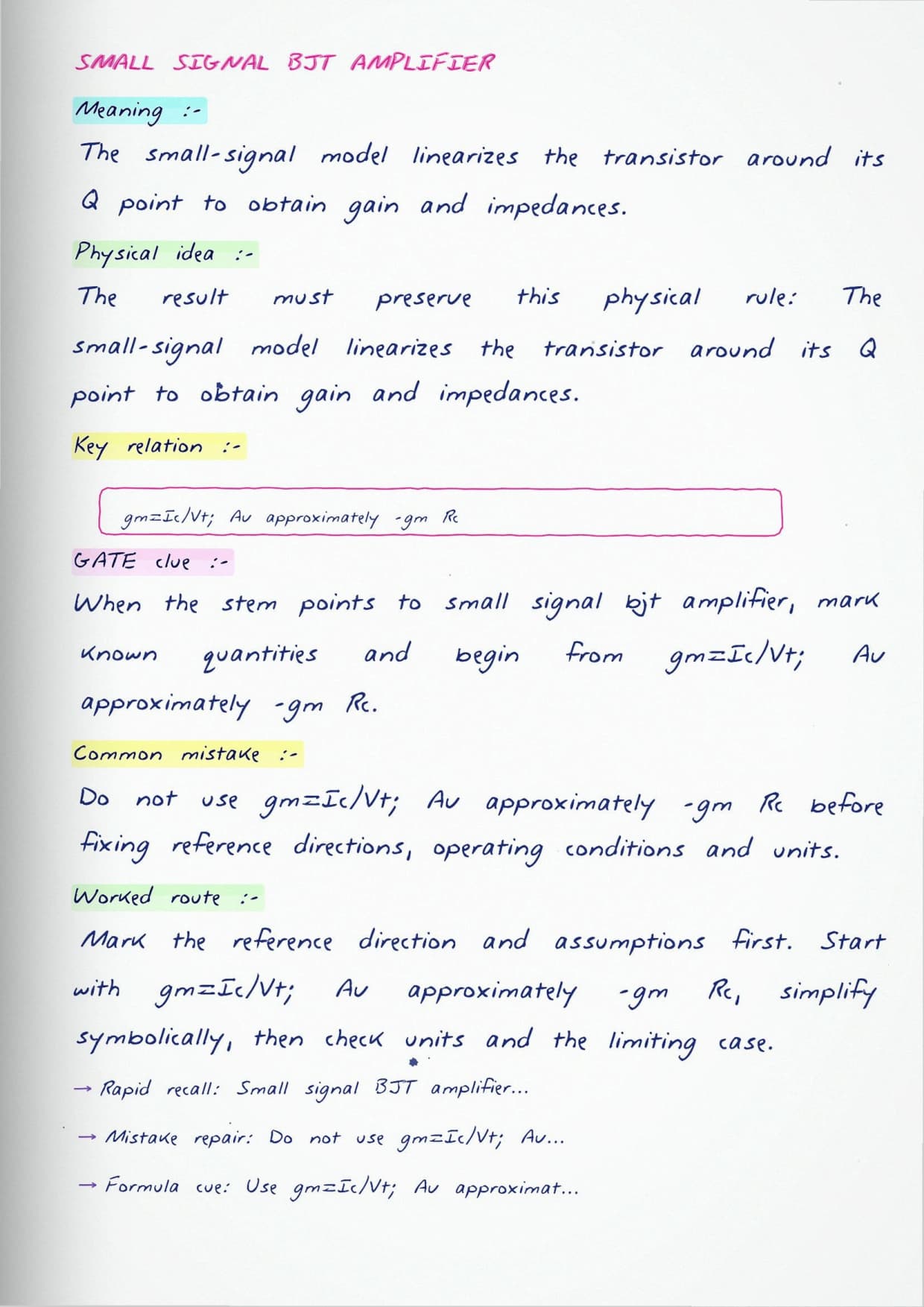
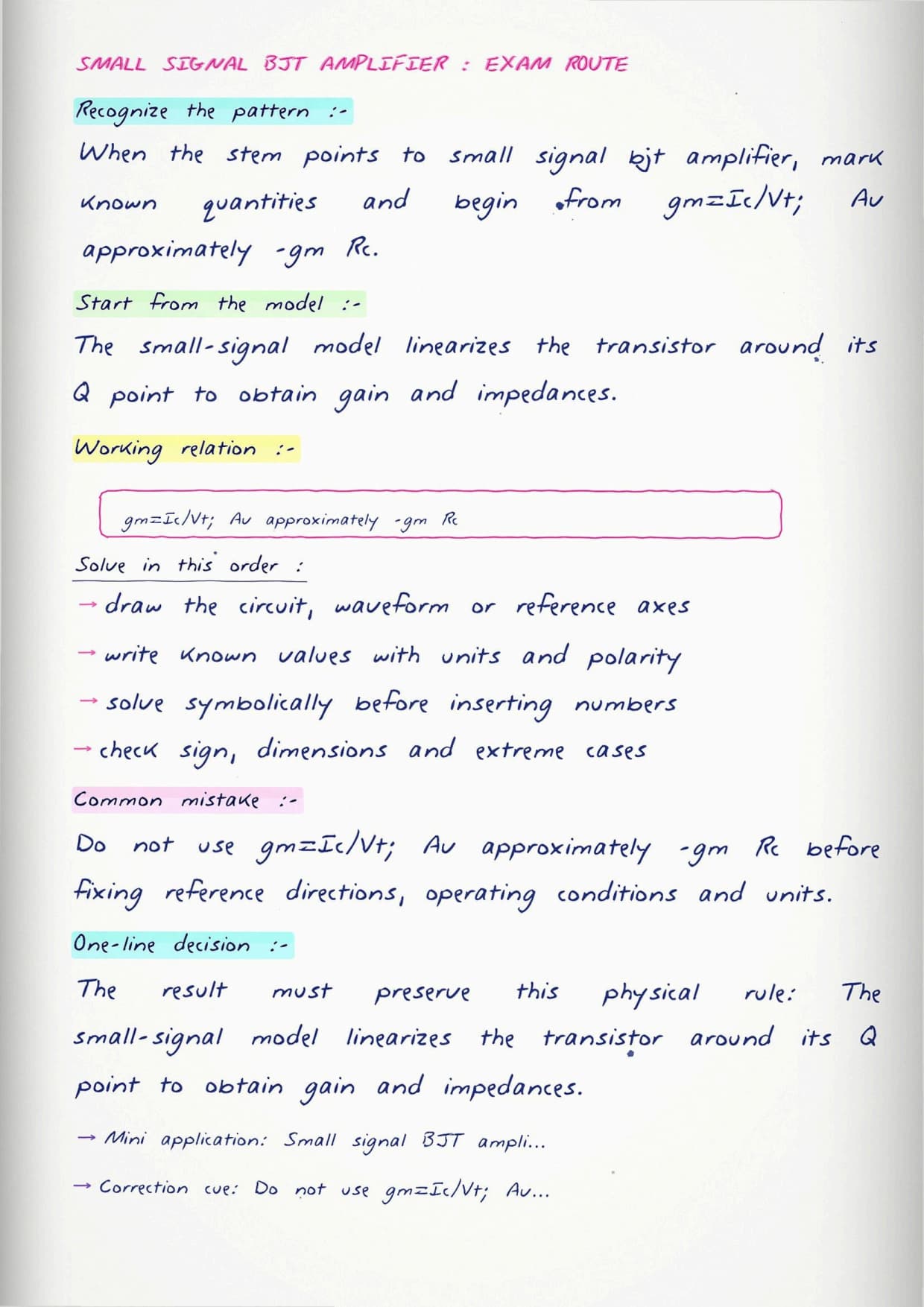
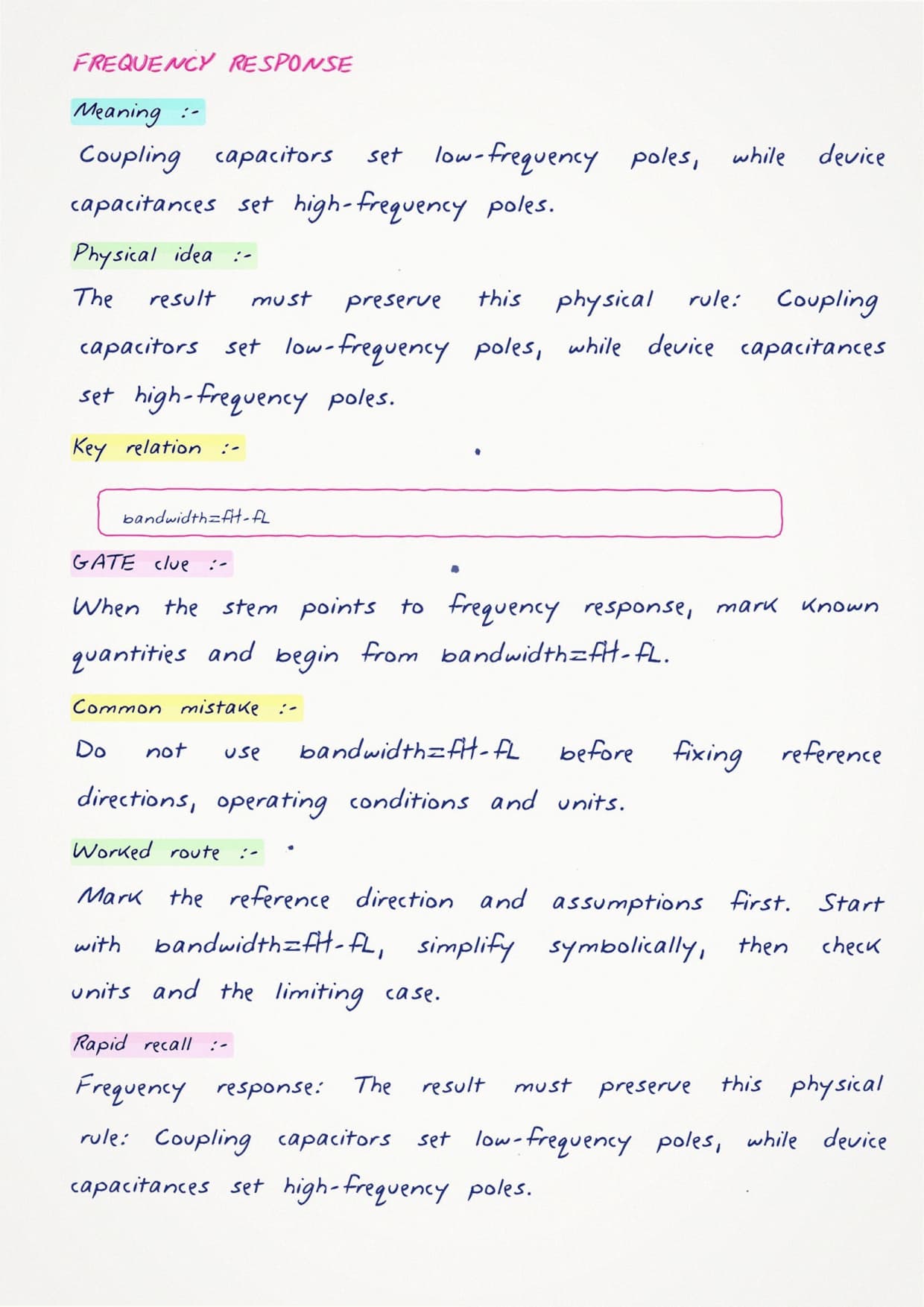
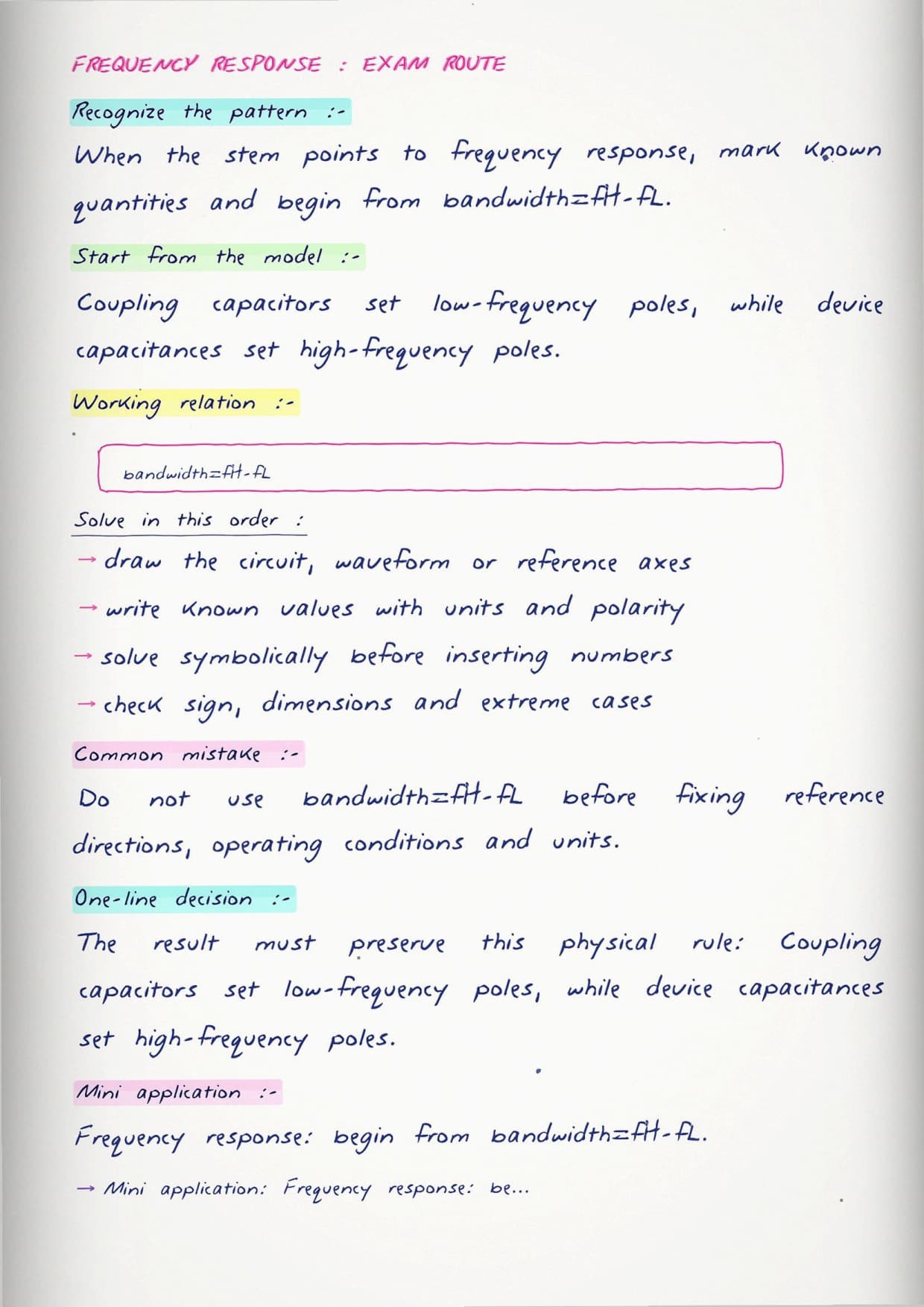
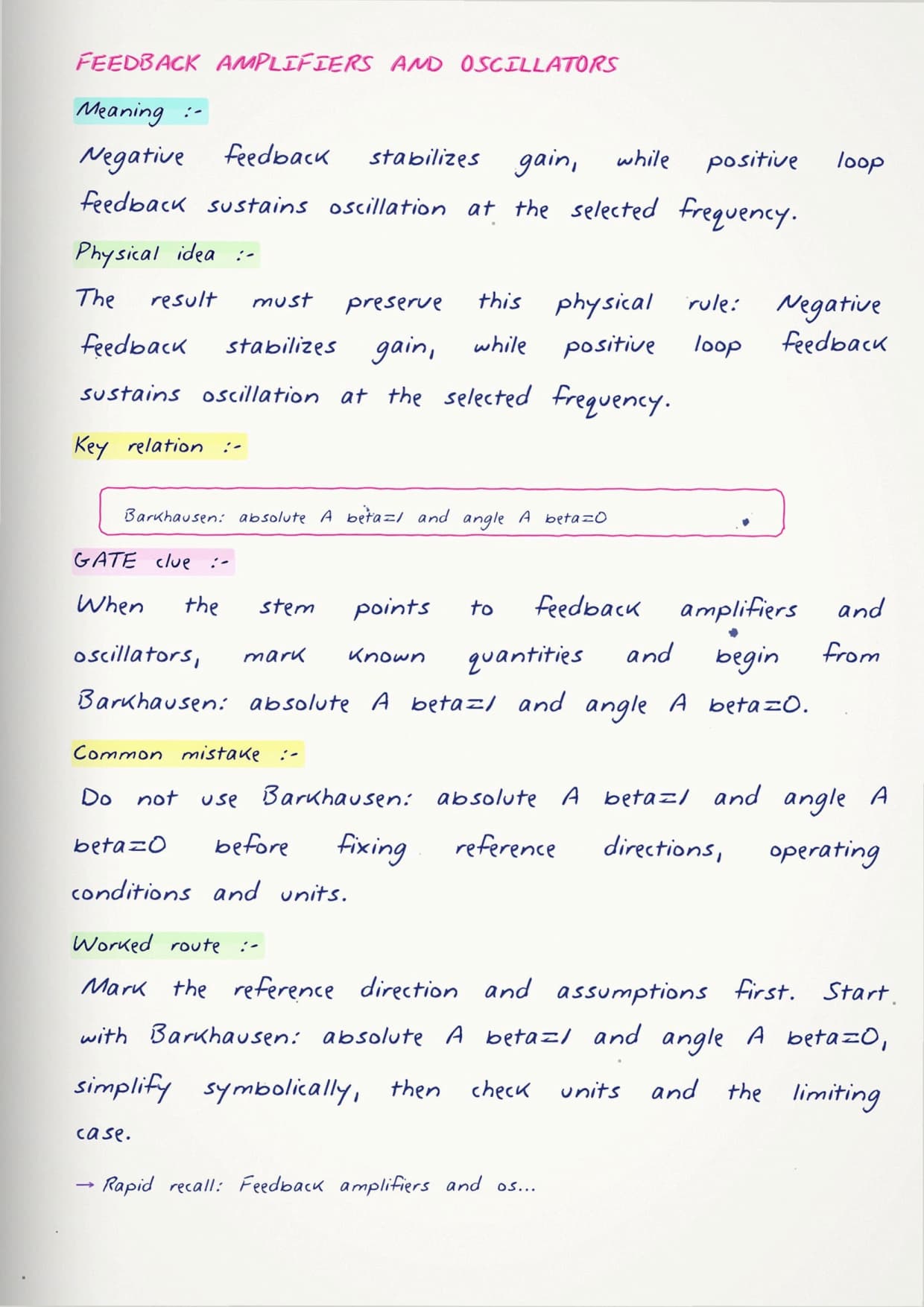
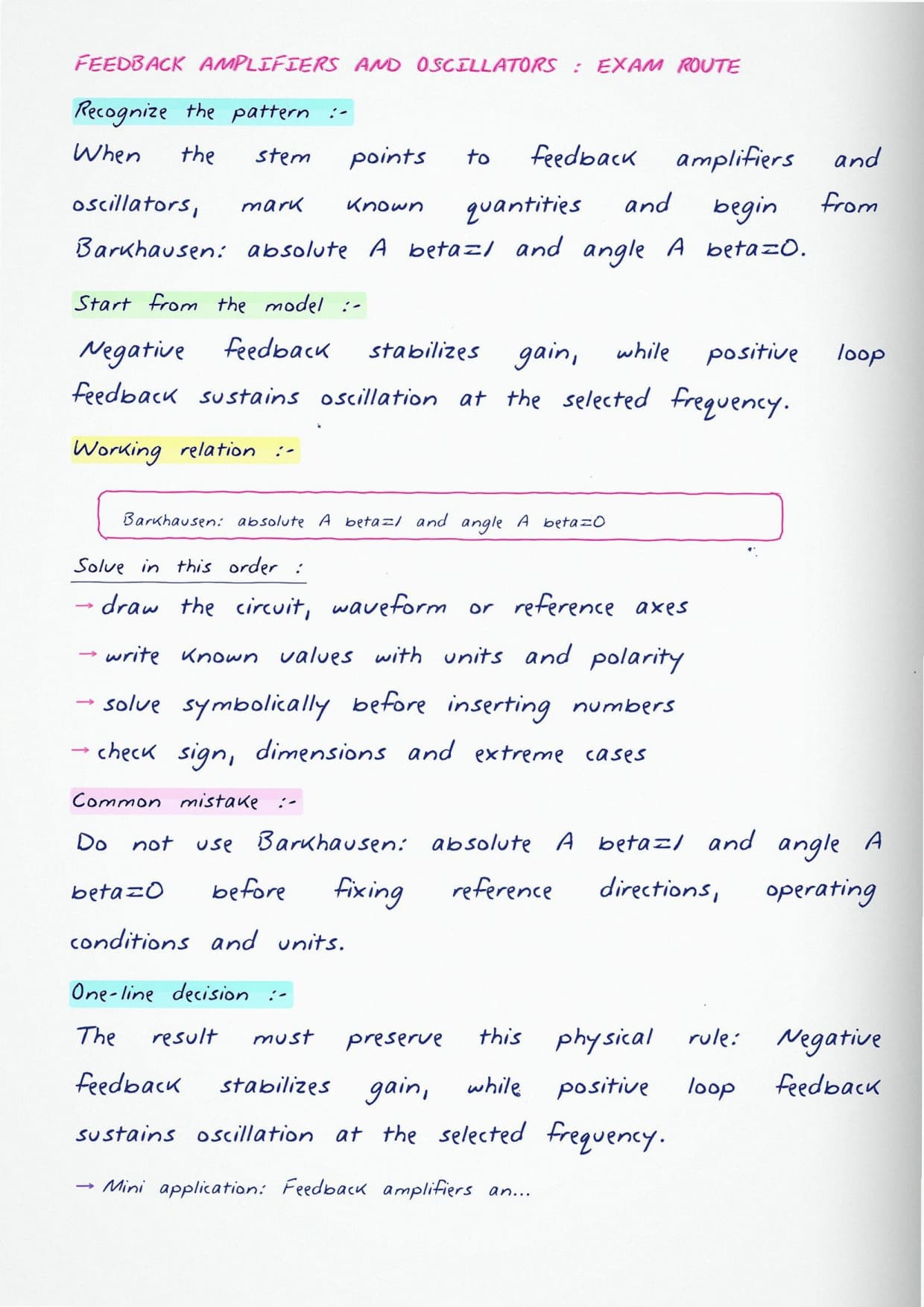
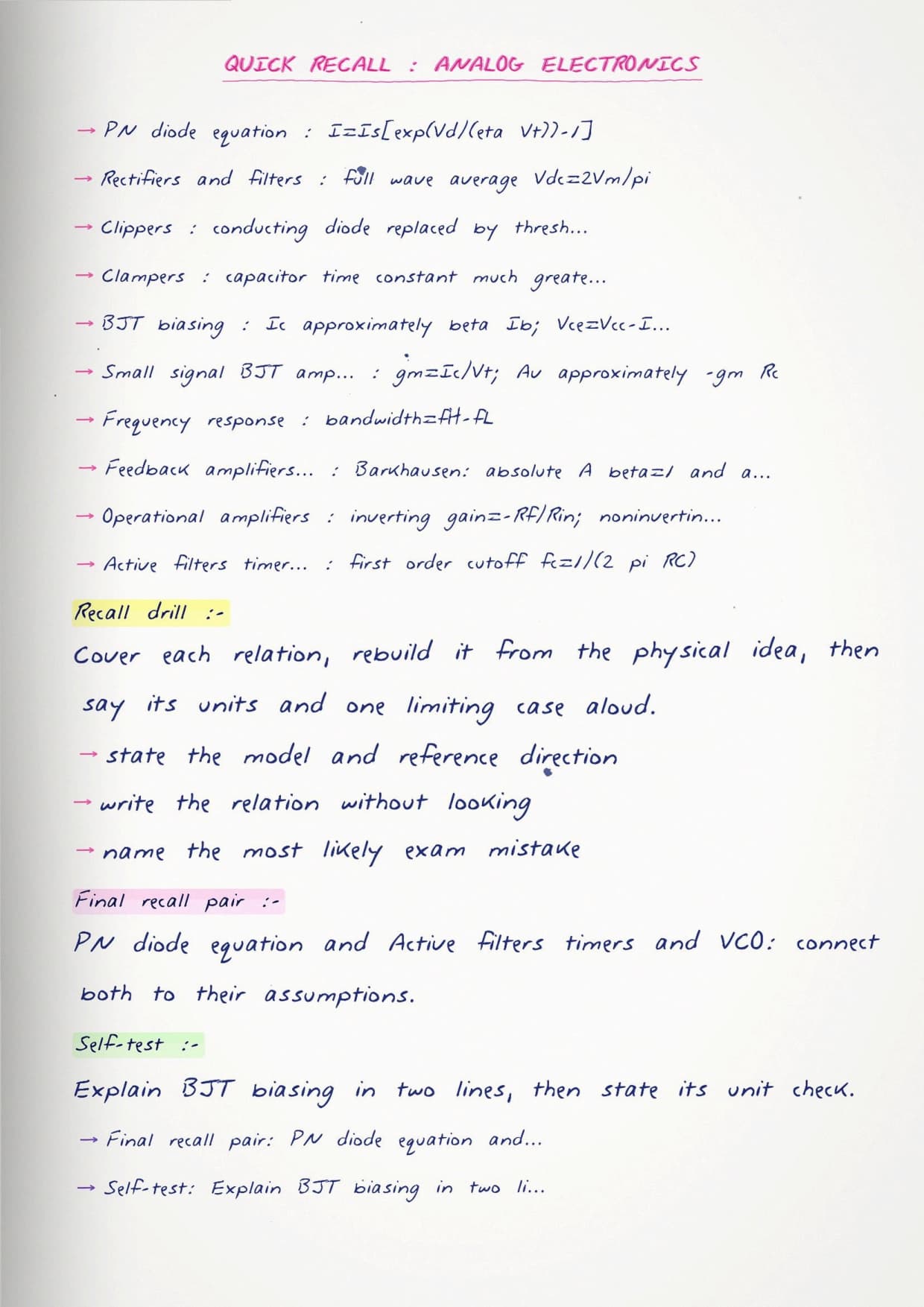
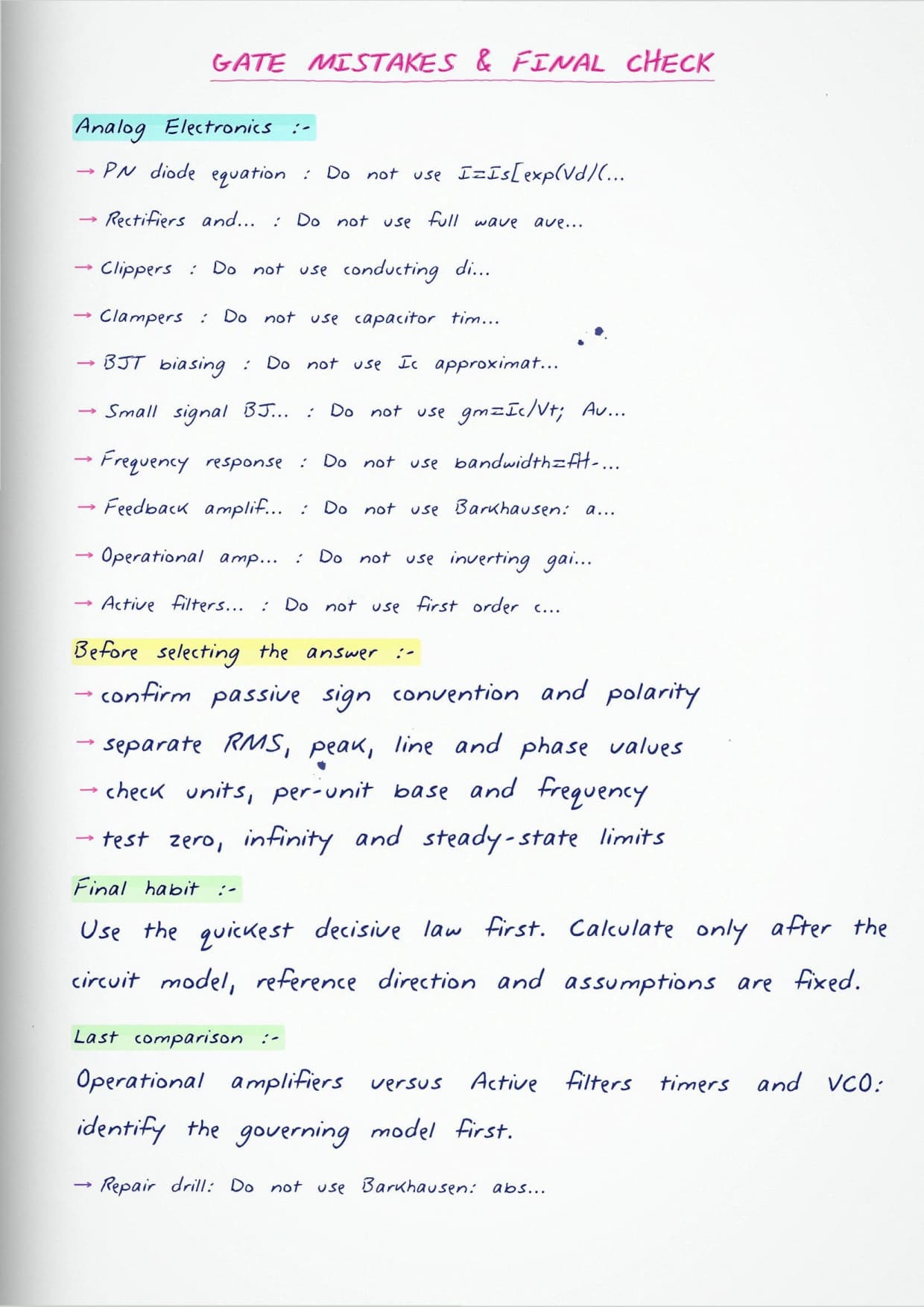
The notes sketch each device characteristic by hand, then draw the small-signal model next to the actual circuit so the link is obvious. Op-amp configurations are worked line by line, and a formula sheet pulls together the gain, feedback, and biasing relations that recur in GATE numericals. The load line is drawn straight onto the device curve for the biasing pages, so students can see the operating point being fixed rather than just quoted from a formula.
- Hand-drawn diode and transistor characteristics with the operating point marked.
- Small-signal BJT and MOSFET models set beside their bias circuits.
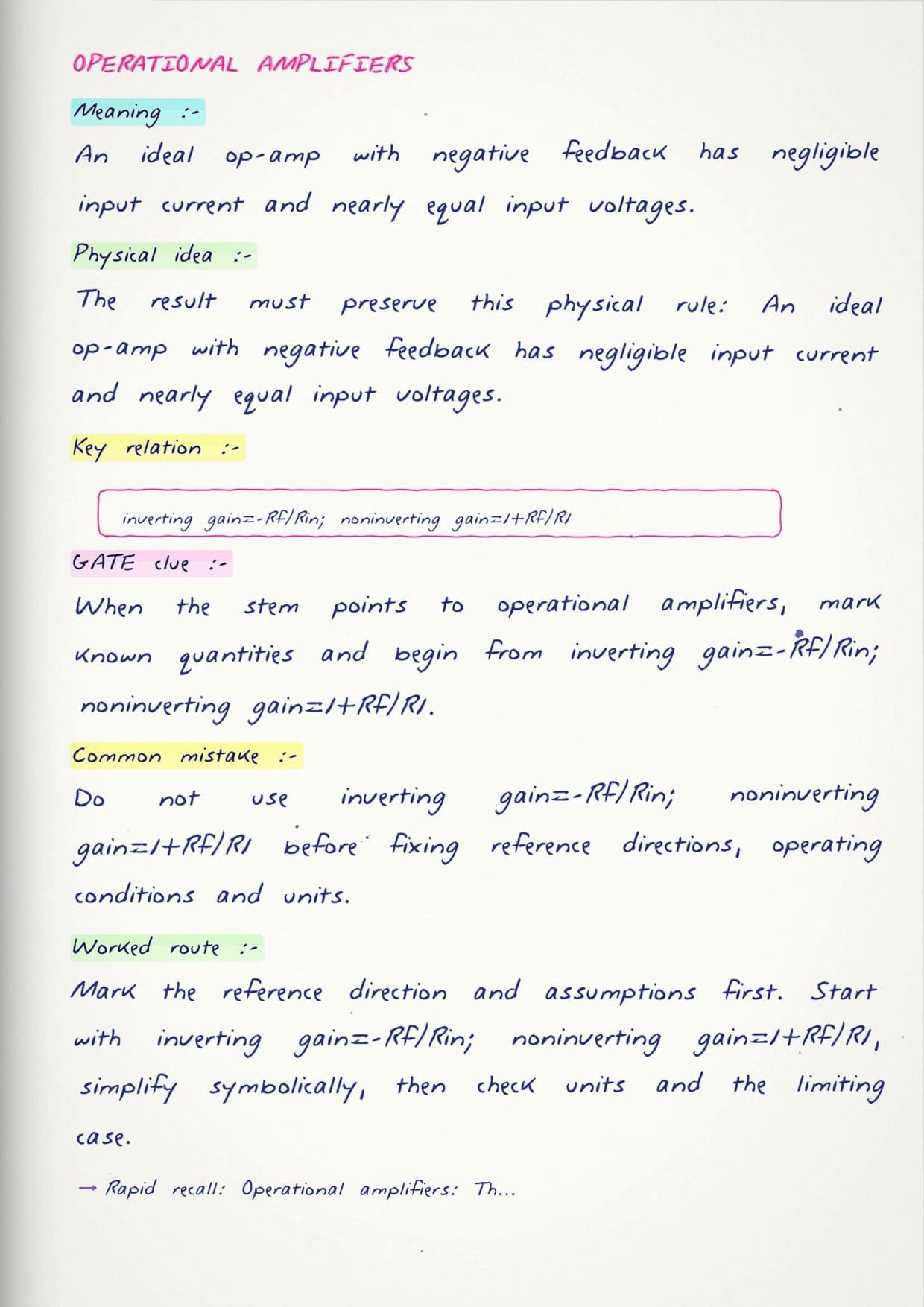
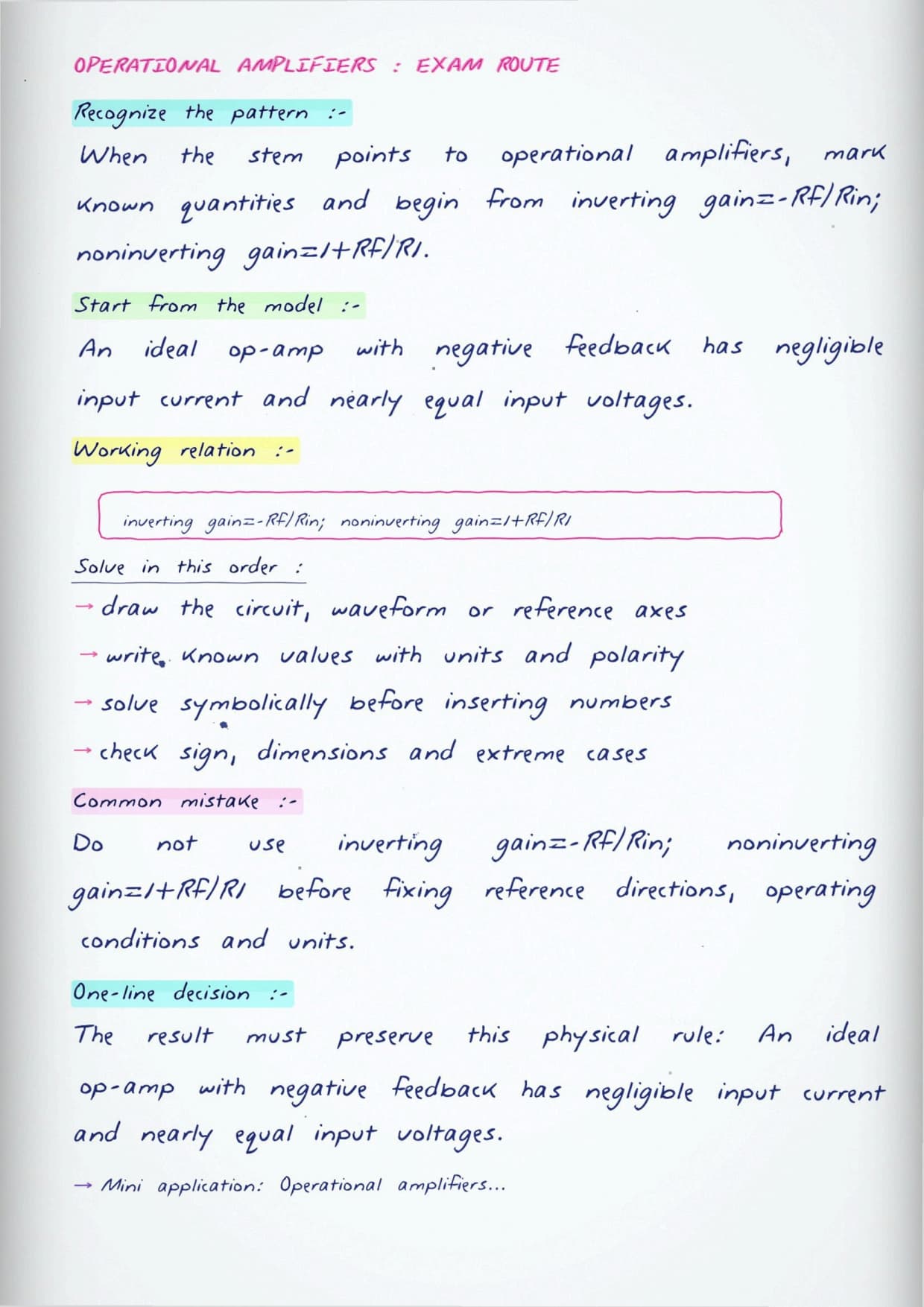
- Worked op-amp configurations covering inverting, non-inverting, and comparator cases.
What These GATE Analog Electronics Notes Cover
The notes build from single devices to full amplifier stages and then to op-amp systems, matching how GATE layers its questions. Each model is tied to the quantity the exam asks students to find, whether that is a gain, a bias current, or a cut-off frequency. Common numerical shortcuts are written in the margins so students can move quickly once they recognise the circuit type.
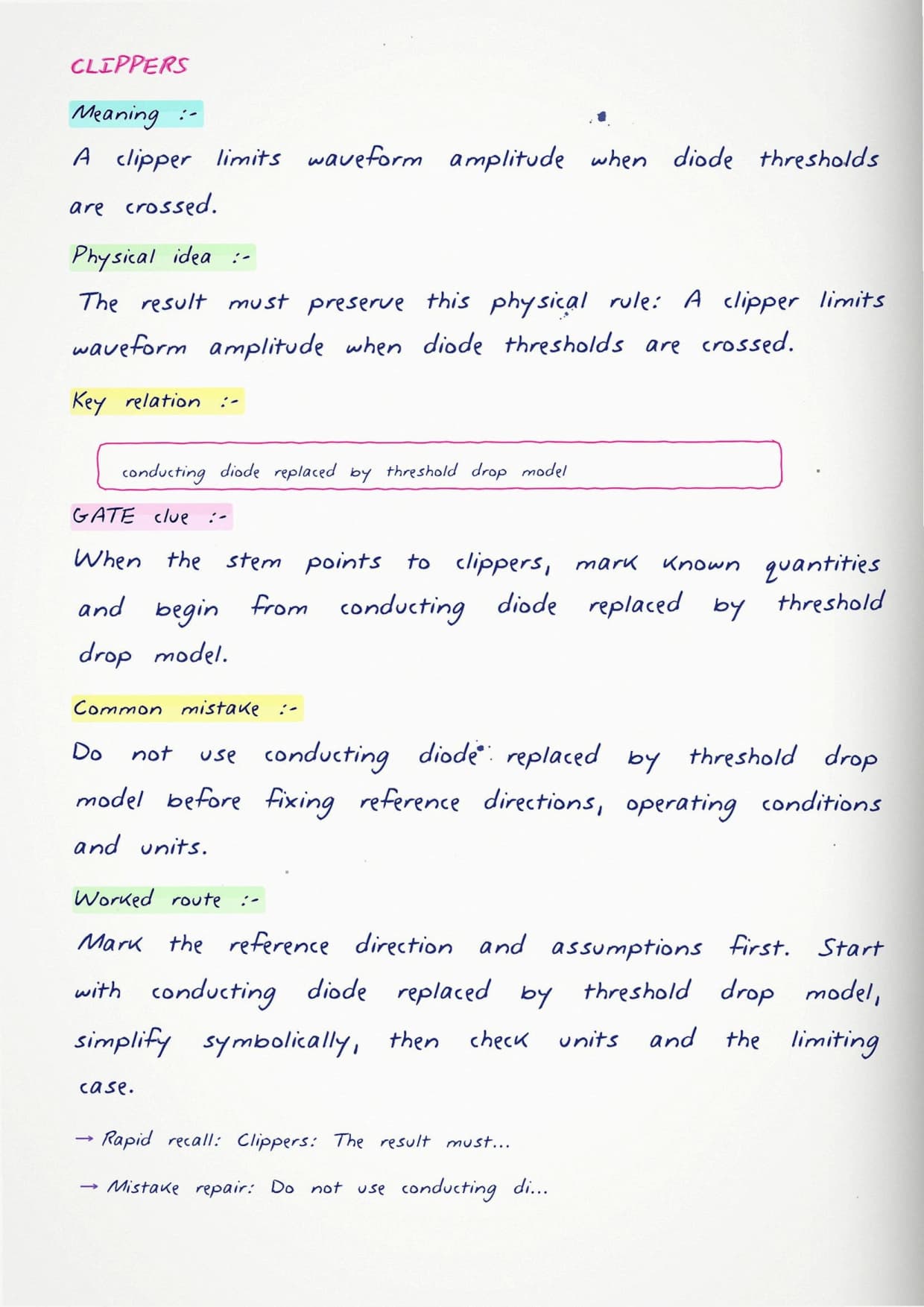
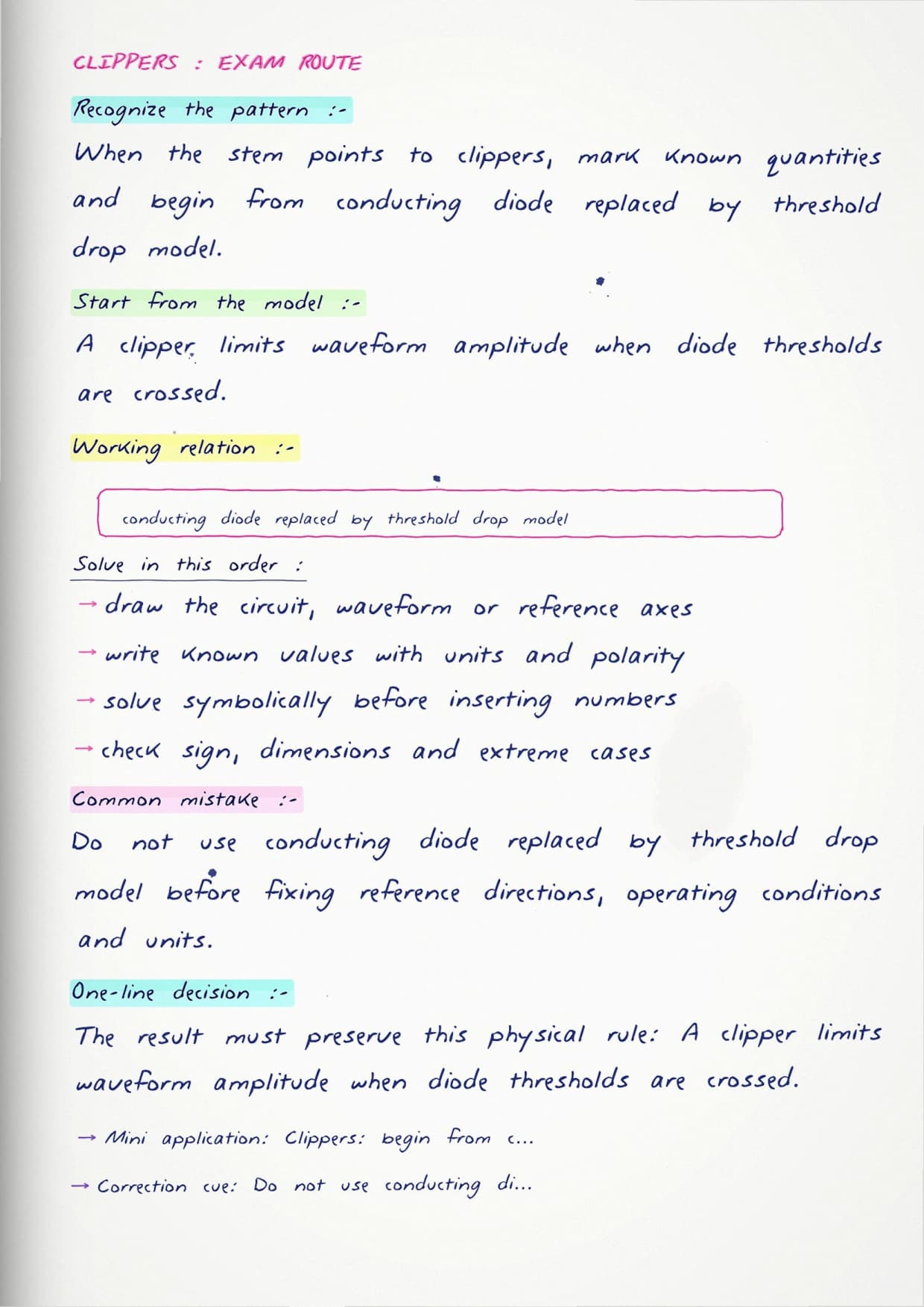
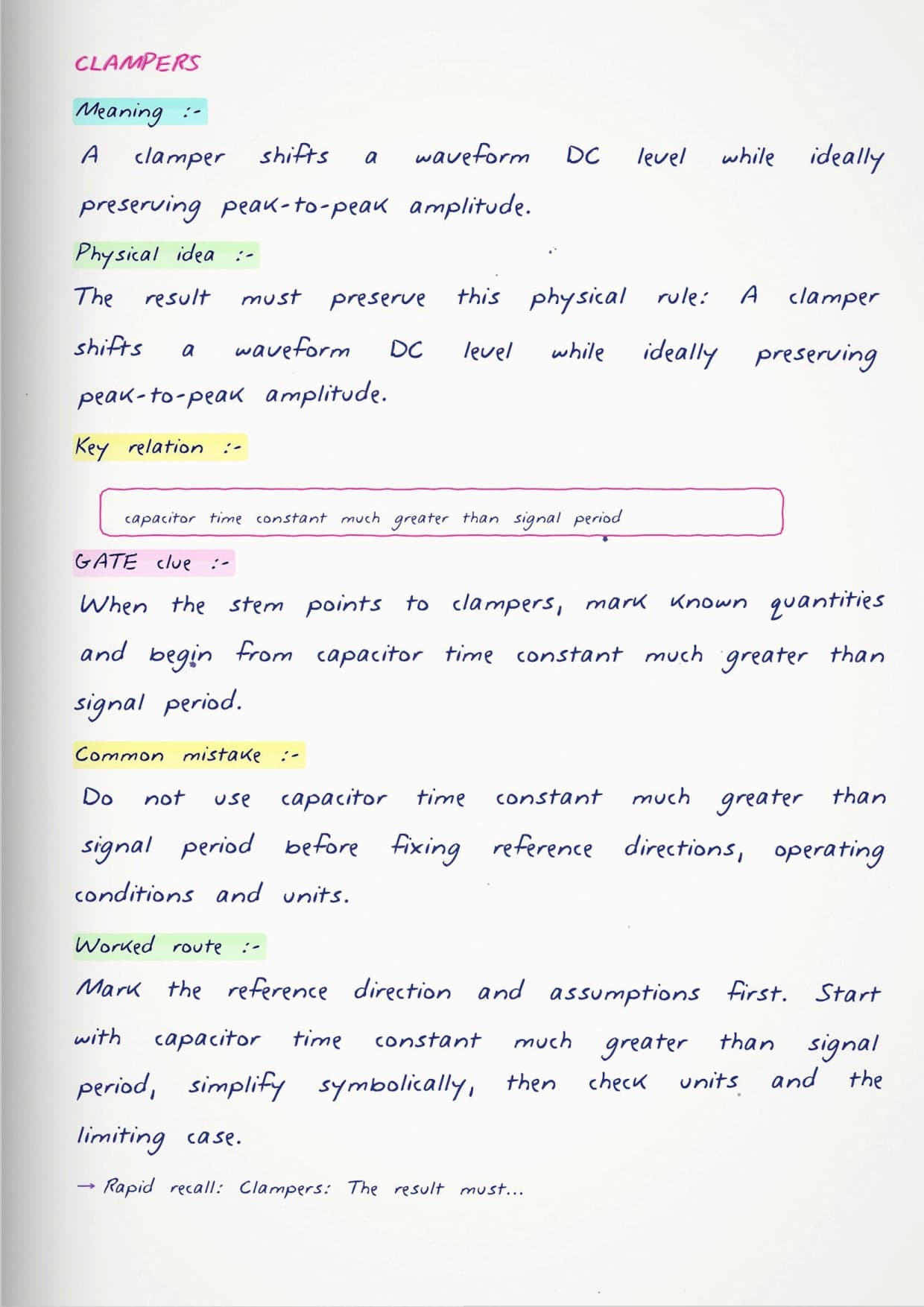
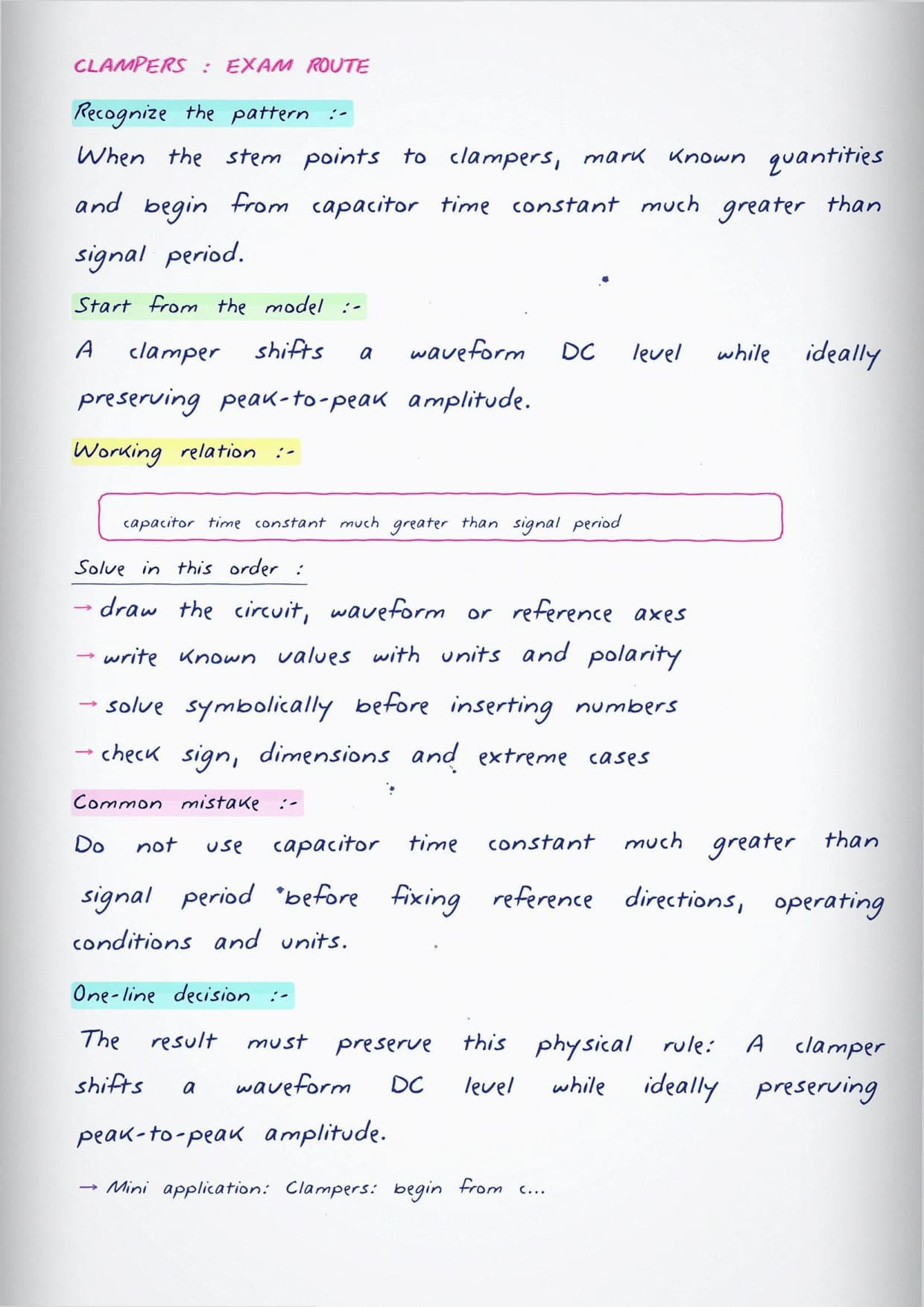
- Diodes, clippers, clampers, and rectifier circuits.
- BJT and MOSFET biasing and small-signal analysis.
- Amplifier frequency response and feedback.
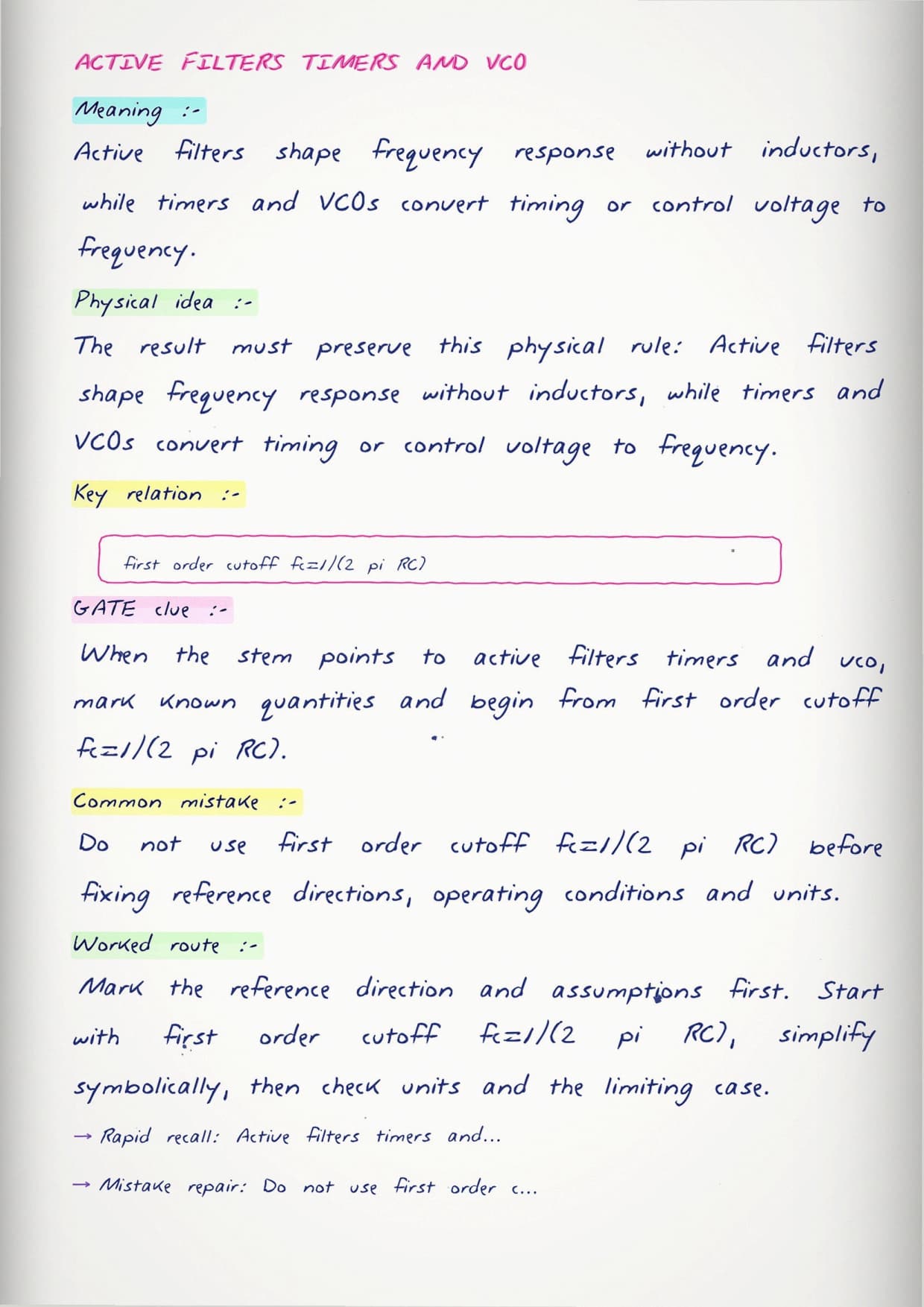
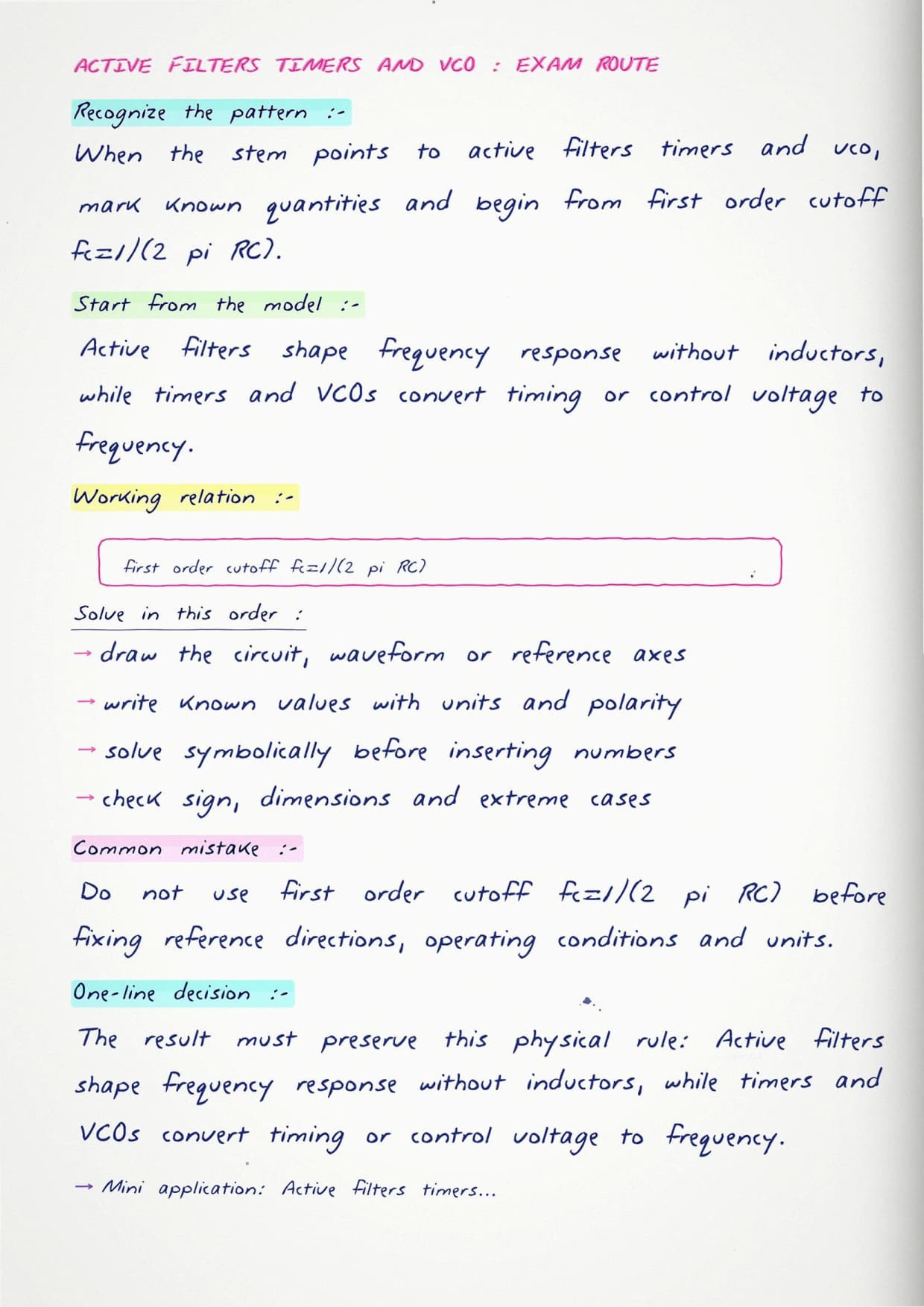
- Op-amps, oscillators, and active filters.
GATE Analog Electronics Quick Revision
Source: GATE Wallah CSE & DA on YouTube
Topics Covered in GATE Analog Electronics
The set follows the official GATE Electrical syllabus for analog electronics, so device theory, amplifiers, and op-amp applications all appear together. Students can revise each block and then test it against past questions without hunting through a full textbook. The notes keep the ideal and practical op-amp behaviour separate, since GATE often rewards students who spot when the ideal assumptions break down.
- Diode circuits, clippers, clampers, and rectifiers.
- BJT and MOSFET characteristics and biasing.
- Small-signal equivalent models.
- Single-stage amplifiers and their frequency response.
- Feedback topologies and stability.
- Op-amp based amplifiers, integrators, and differentiators.
- Oscillators and sinusoidal oscillation conditions.
- Active filters and comparators.
How the Notes Are Organised
The reading order opens with diodes and moves to transistors, because the small-signal method learnt on the BJT carries straight into the MOSFET pages. Amplifier response and feedback follow once the models are in place, so students never meet a technique before they have the tool for it.
Op-amps and their applications sit last, treating the device as an ideal block so students can focus on the surrounding circuit. This keeps each stage short and lets the concepts stack cleanly, and it means a student can stop after any section with a complete idea rather than a half-finished one.
How GATE Analog Electronics Links to Other Topics
Analog electronics supplies the building blocks that several other subjects assume students already know. The notes mark these crossovers where they matter.
- Control Systems, where op-amp feedback mirrors closed-loop behaviour.
- Signals and Systems, which reuses the frequency-response and filter ideas.
- Digital Electronics, where the transistor as a switch begins the logic-gate story.
- Electrical Measurements, which relies on op-amp signal conditioning.
Important Topics in GATE Analog Electronics
A handful of areas are almost guaranteed marks, and the notes flag the usual slips beside each. Students should weight their practice toward these before touching the rarer question types. Each caution below sits right next to the worked circuit it applies to, so the warning lands while the method is fresh.
- Transistor biasing, locating the operating point correctly before small-signal work.
- Op-amp circuits, applying the virtual-short rule without dropping input currents.
- Feedback, identifying the topology before computing gain change.
- Oscillators, checking the Barkhausen condition for frequency and gain.
- Active filters, reading cut-off and roll-off from the transfer expression.
How to Prepare GATE Analog Electronics with Handwritten Notes
This topic rewards students who can draw the small-signal model fast and reason on it directly. The notes are staged so that skill sharpens with each pass.
- First read: redraw one small-signal model from device to circuit yourself.
- Second pass: recall the op-amp gain and feedback formulas without the derivation.
- PYQ stage: solve past GATE questions on biasing and op-amp circuits under time pressure.
- Final week: revise only the formula sheet and the marked traps.
Why These Notes Help You Score Better
Analog questions punish students who rush the operating point or misplace a feedback sign, and both mistakes come from working without a clear model. Because these notes place every device characteristic next to its small-signal circuit, students set up problems correctly the first time and save the seconds that add up across a section. That accuracy is what converts a tricky topic into reliable marks, and it is the habit these notes are designed to build in students aiming for a strong rank.
GATE Electrical Analog Electronics Handwritten Notes FAQs
Ques. How many marks does analog electronics carry in GATE Electrical?
Ans. Analog electronics usually contributes about 4 to 7 marks, and the questions are concept-based, so a solid grasp of models gives steady returns.
Ques. Do these notes cover op-amps as well as transistors?
Ans. Yes, they span diodes, BJT and MOSFET biasing, small-signal models, amplifiers, and a full set of op-amp applications including oscillators and active filters.
Ques. What is the most common mistake students make in this topic?
Ans. Setting the operating point wrongly or dropping a feedback sign, which the notes address by drawing each device characteristic next to its small-signal circuit.
Ques. Can students revise analog electronics quickly from these notes?
Ans. Yes, the hand-drawn models and the single formula sheet make a fast final pass possible, which is ideal in the last week before the exam.



Comments