




These pages hand students a working toolkit that ties Engineering Mathematics and Circuit Analysis together, the two subjects that seed questions across almost every other GATE Electronics paper.
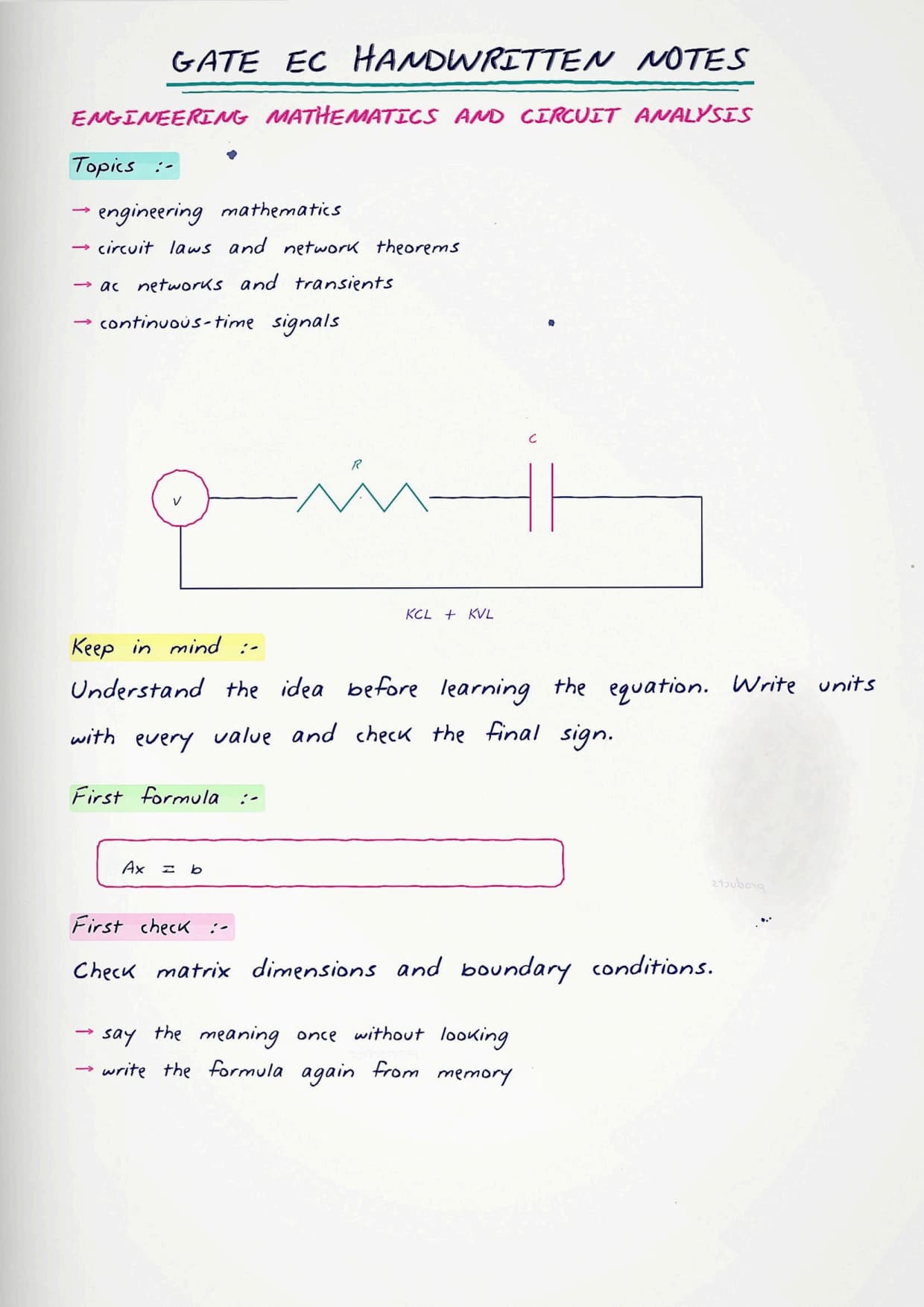
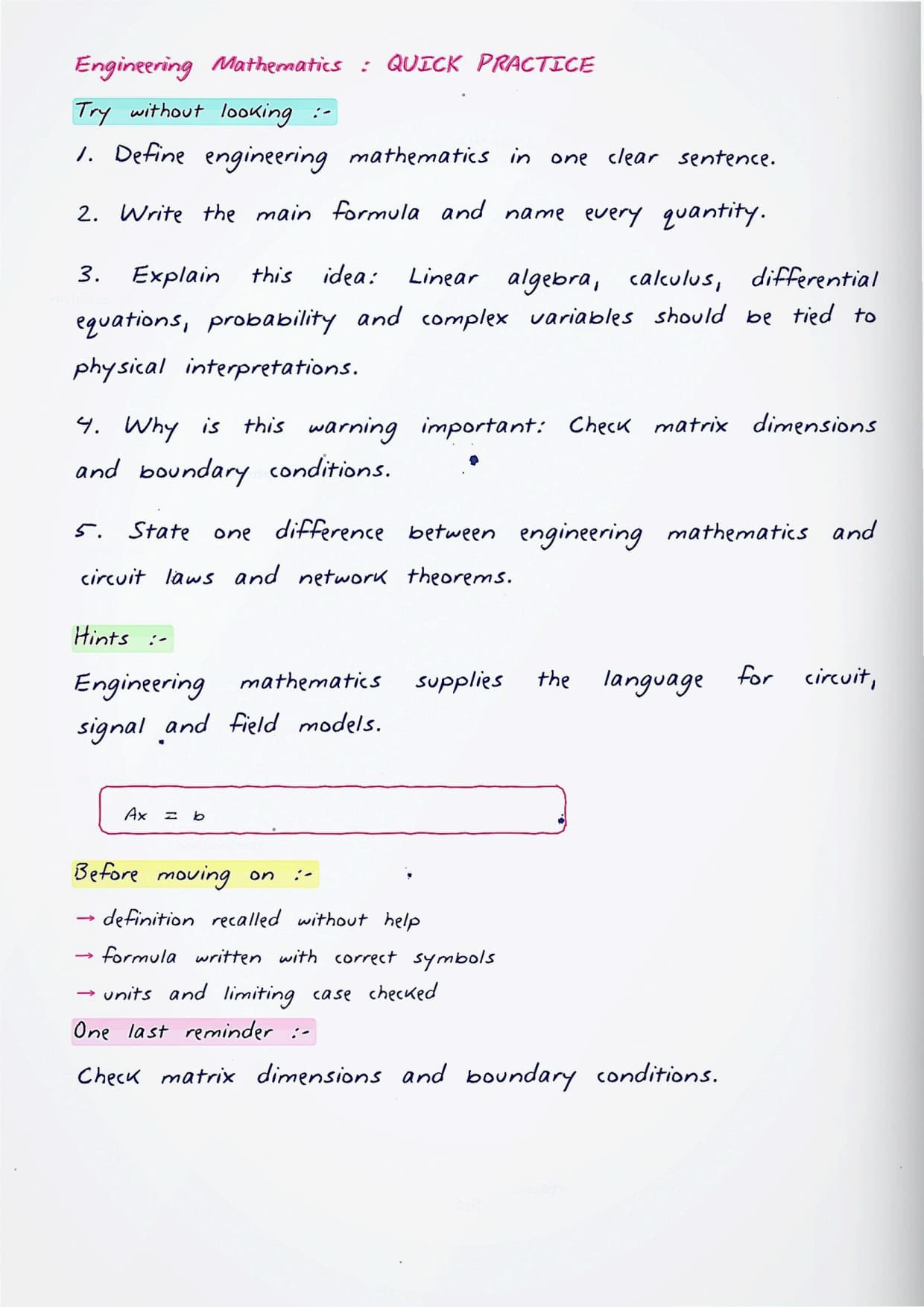
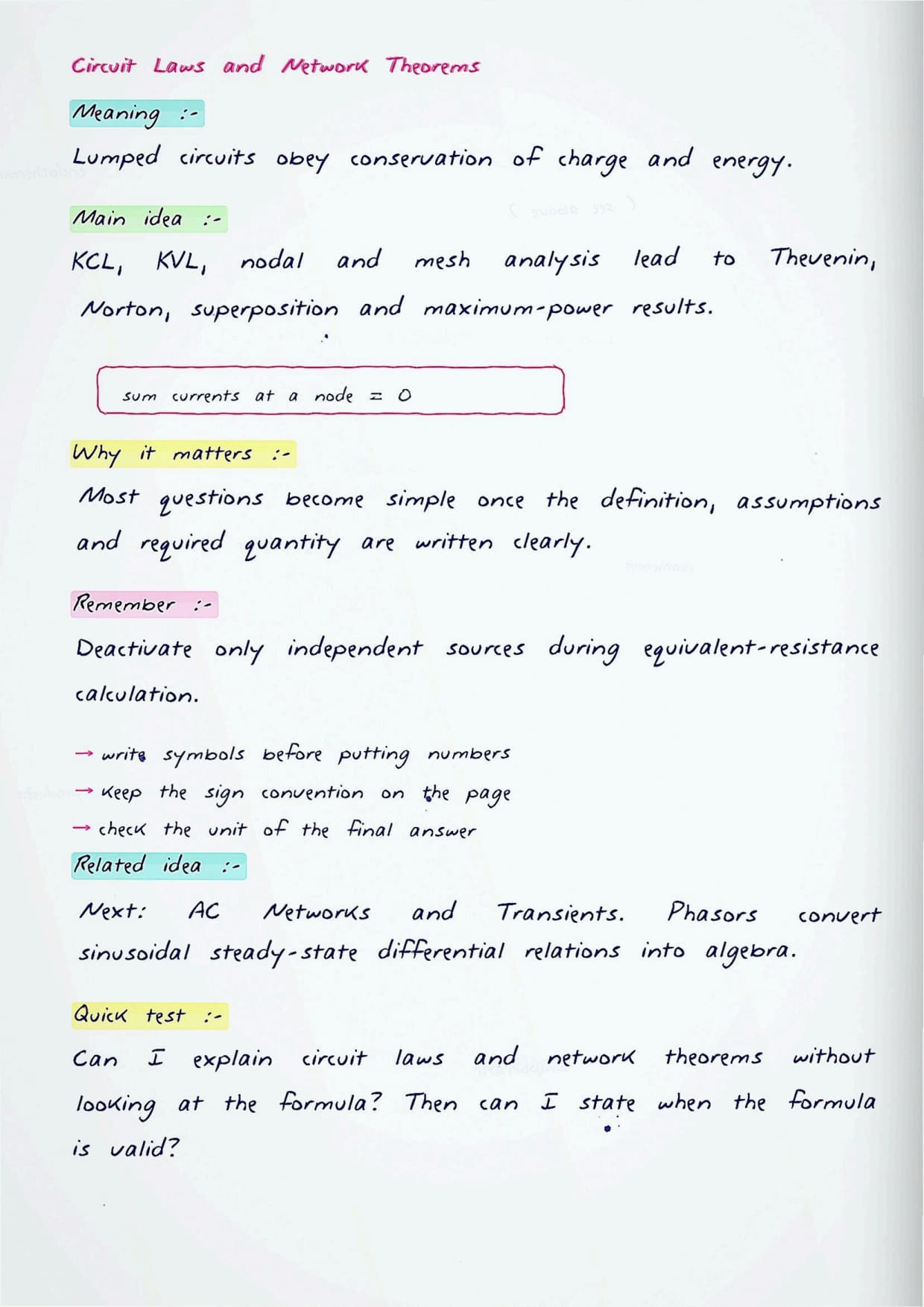
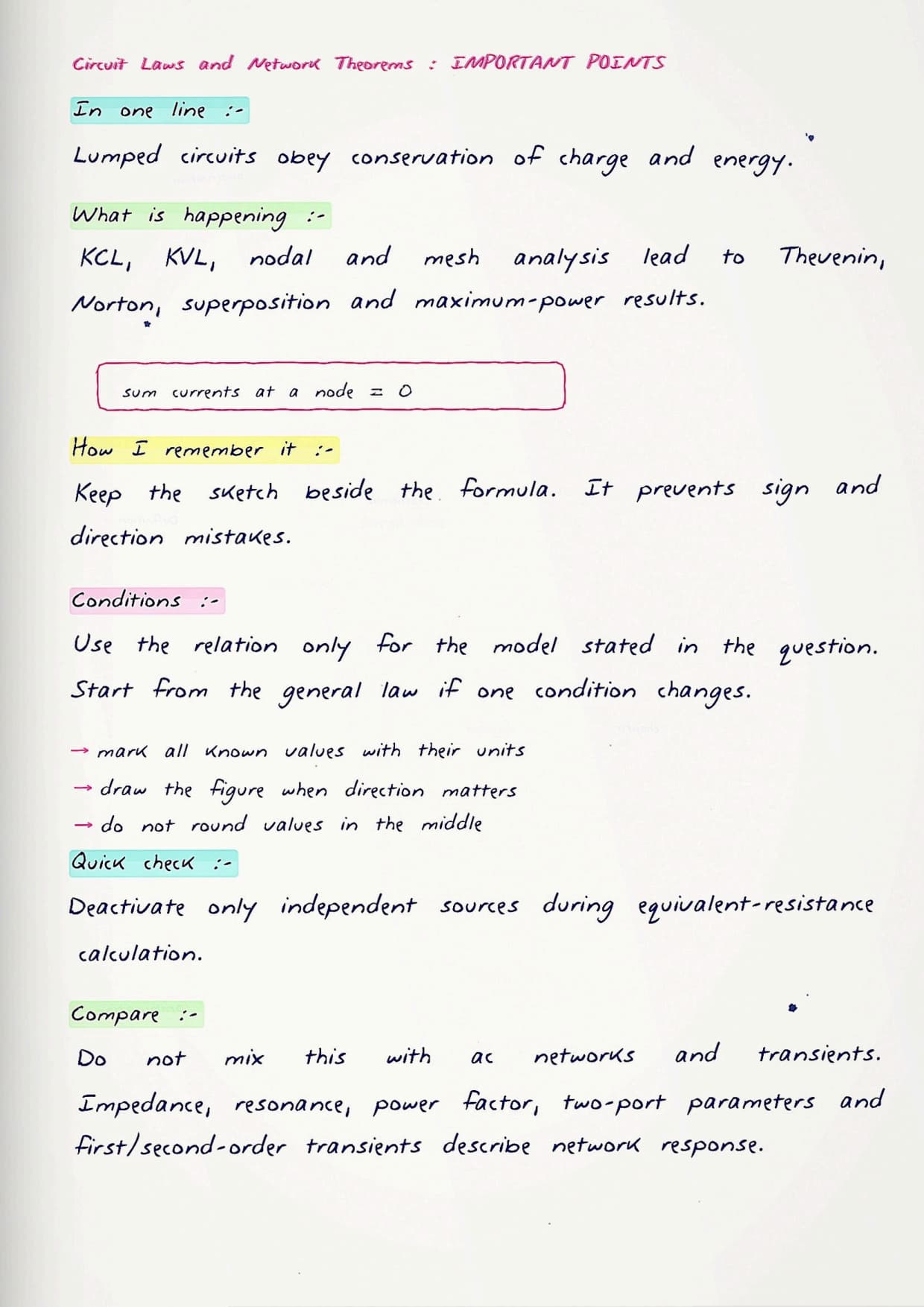
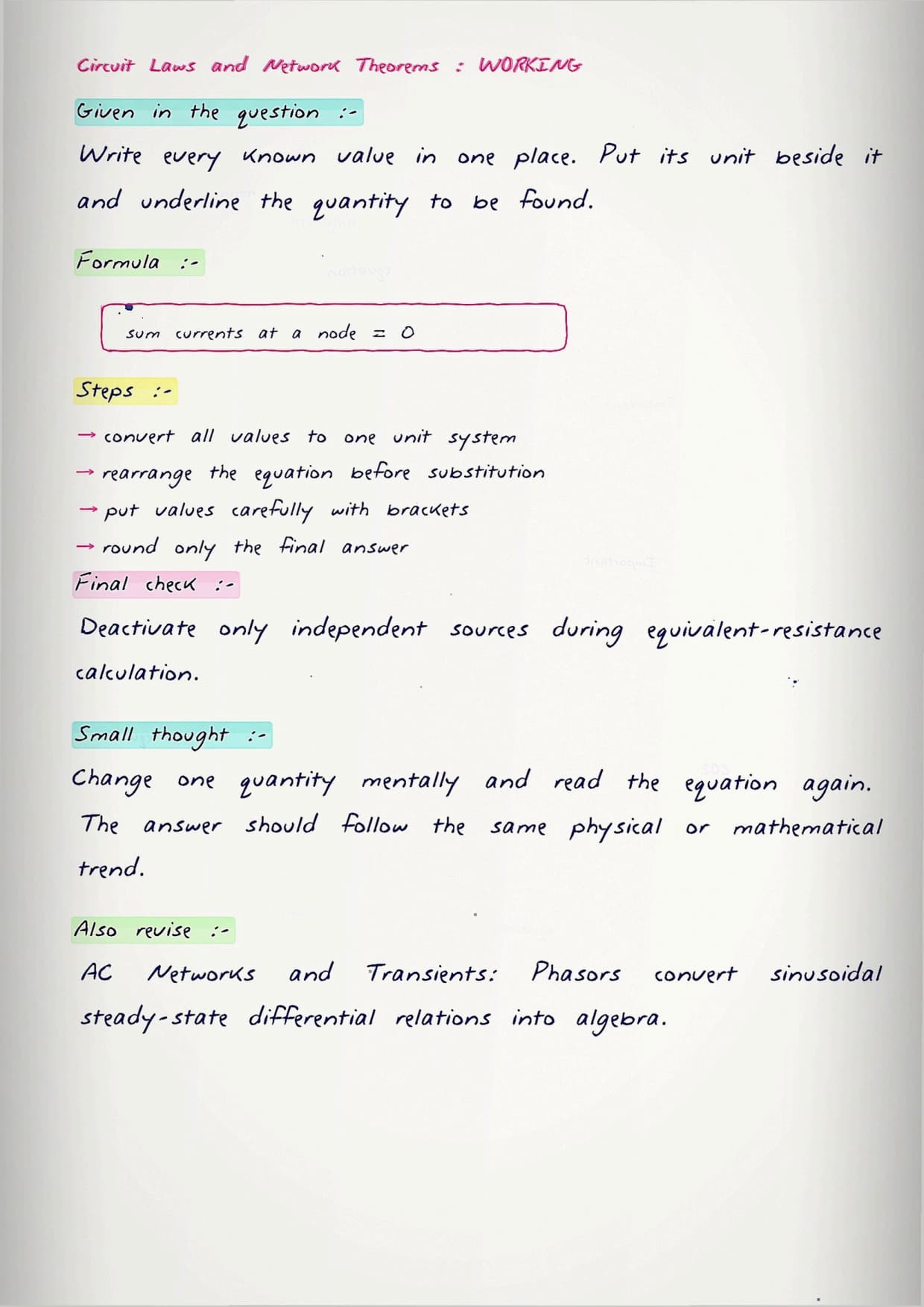
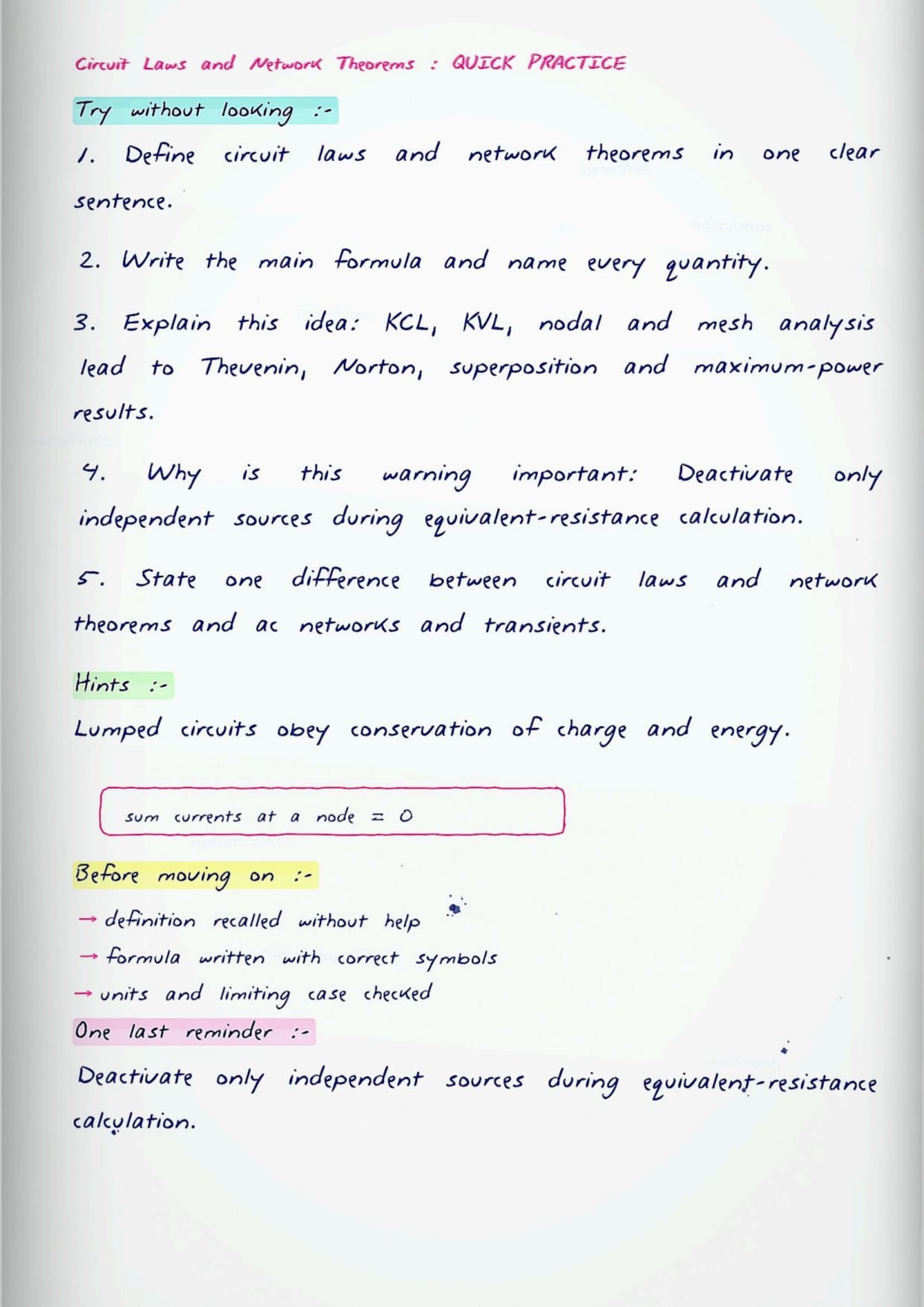
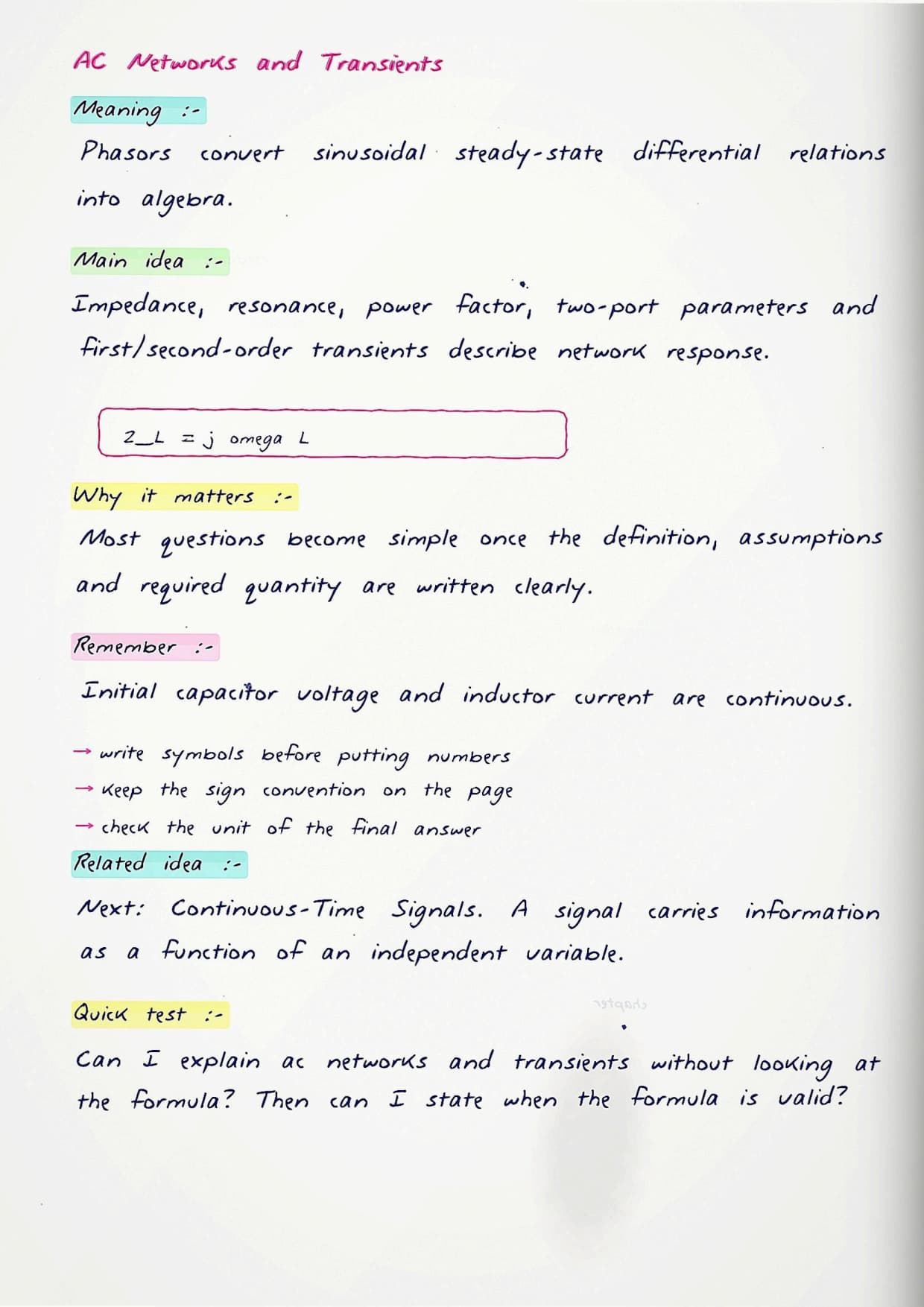
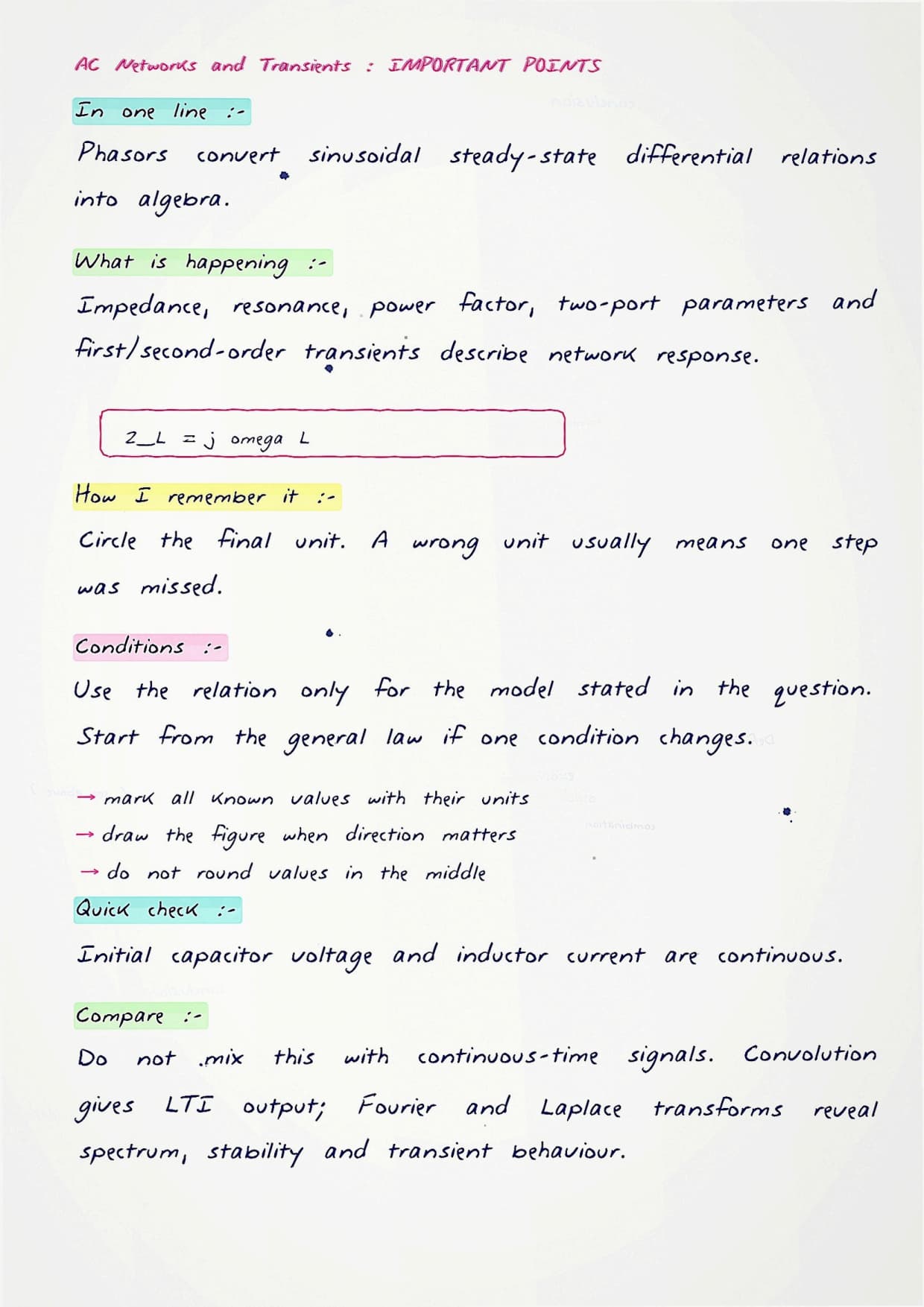
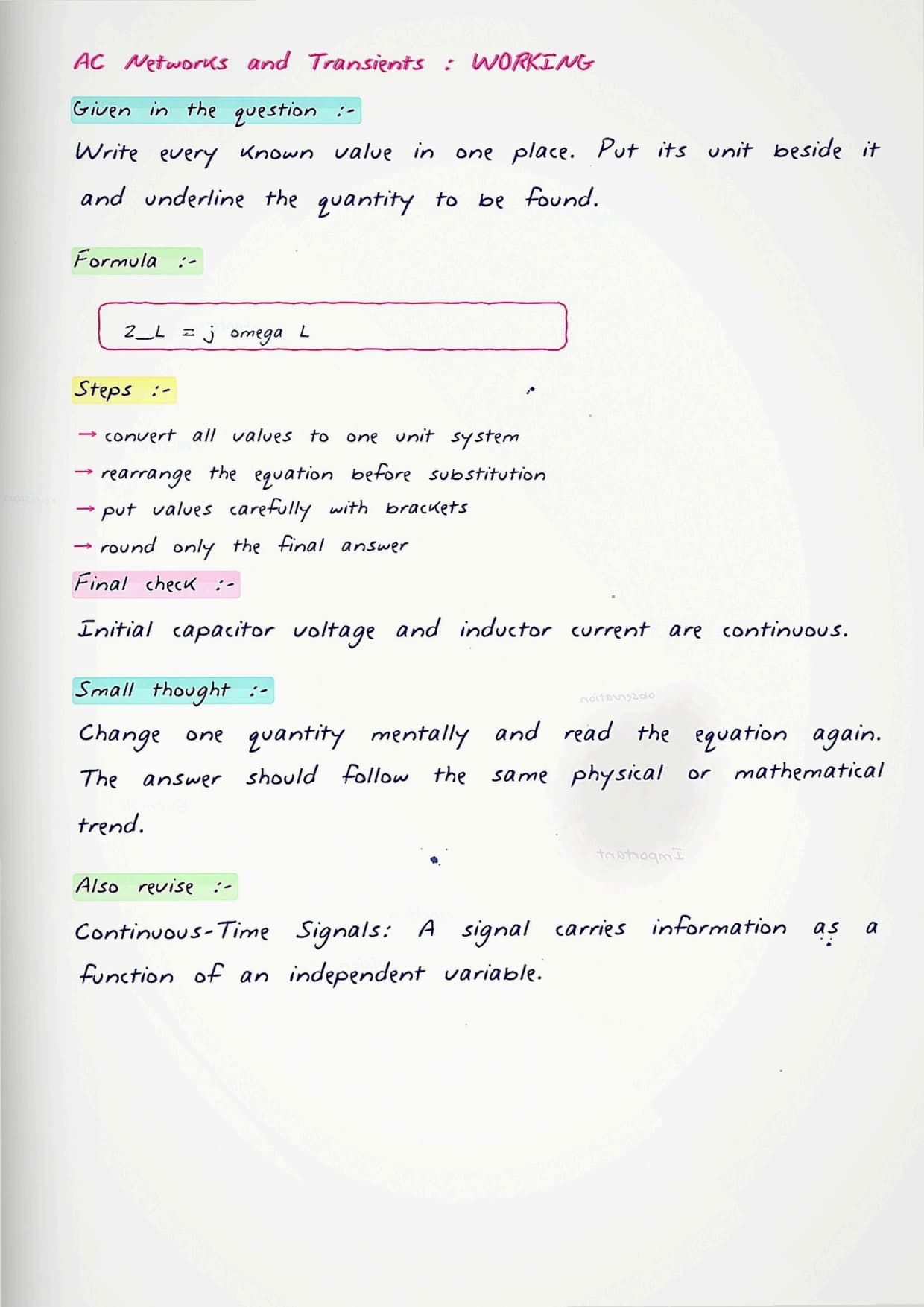
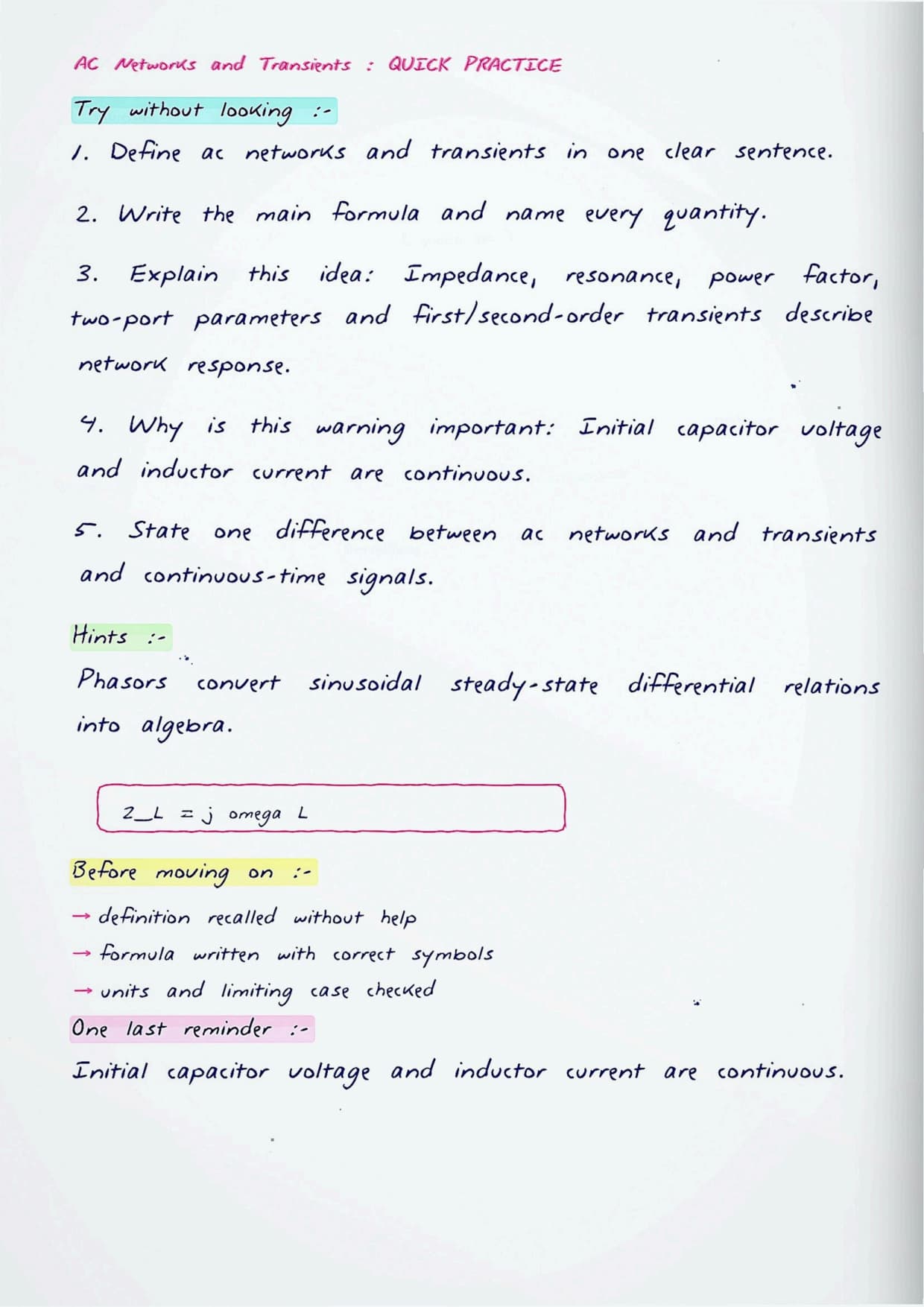
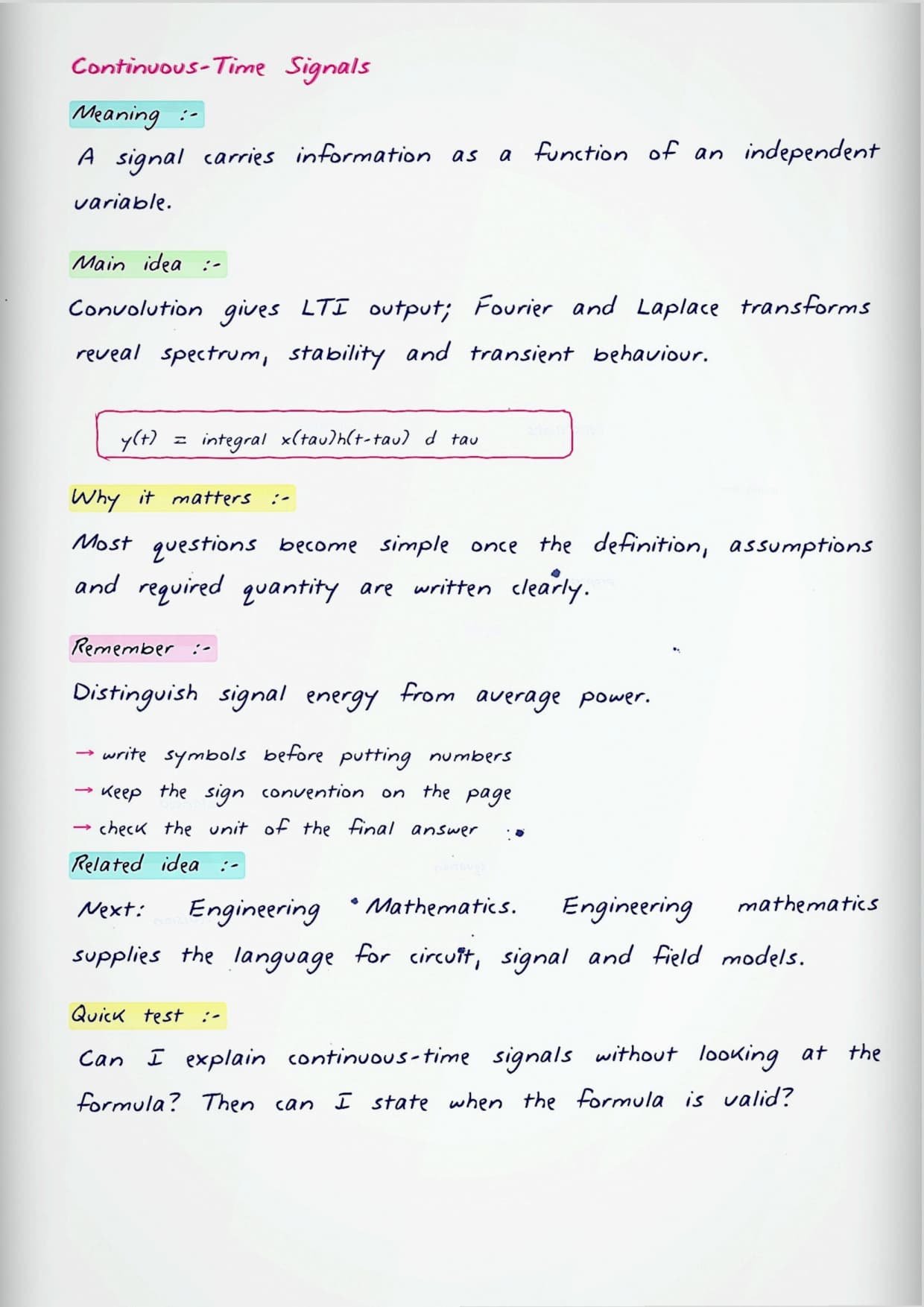
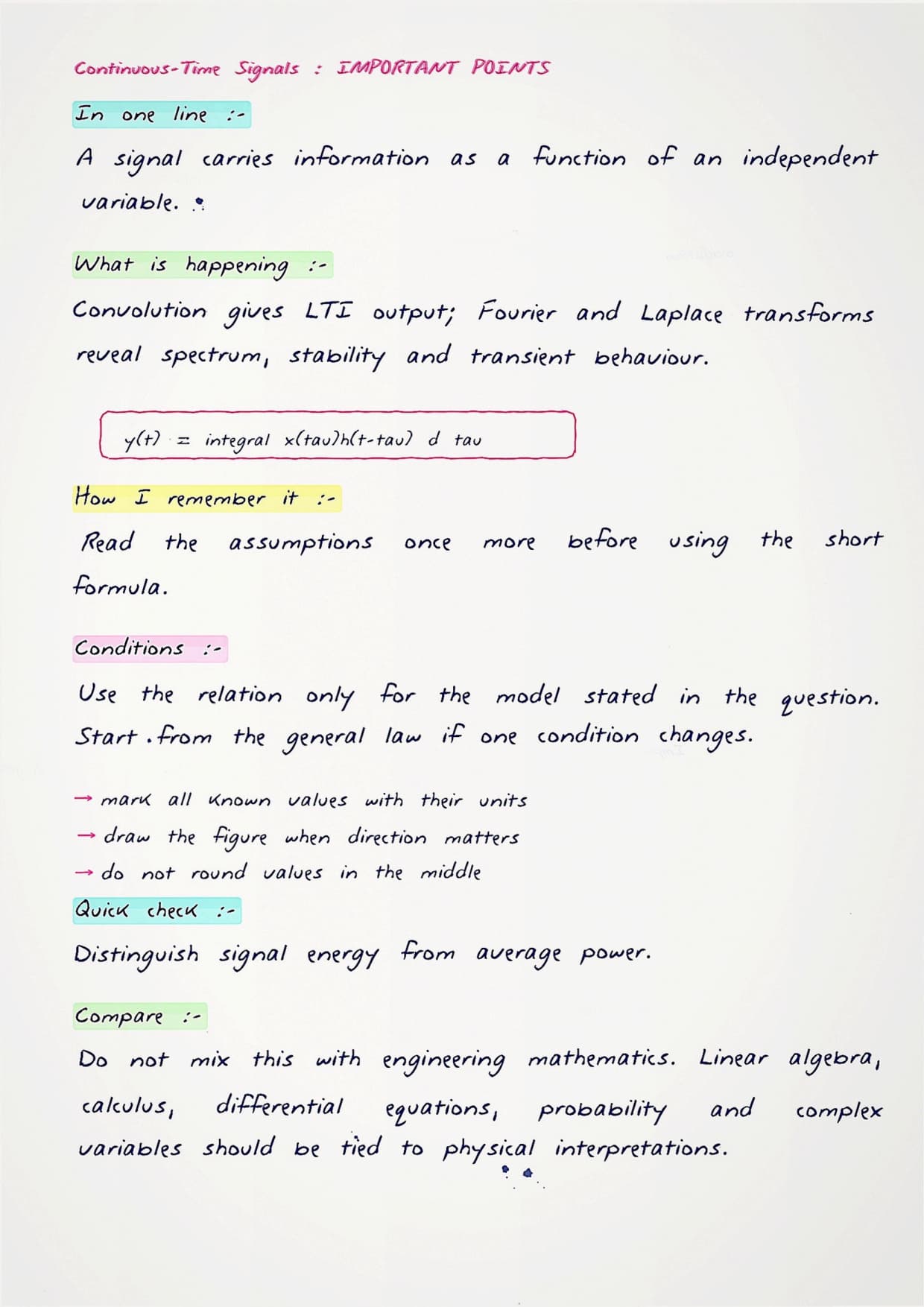
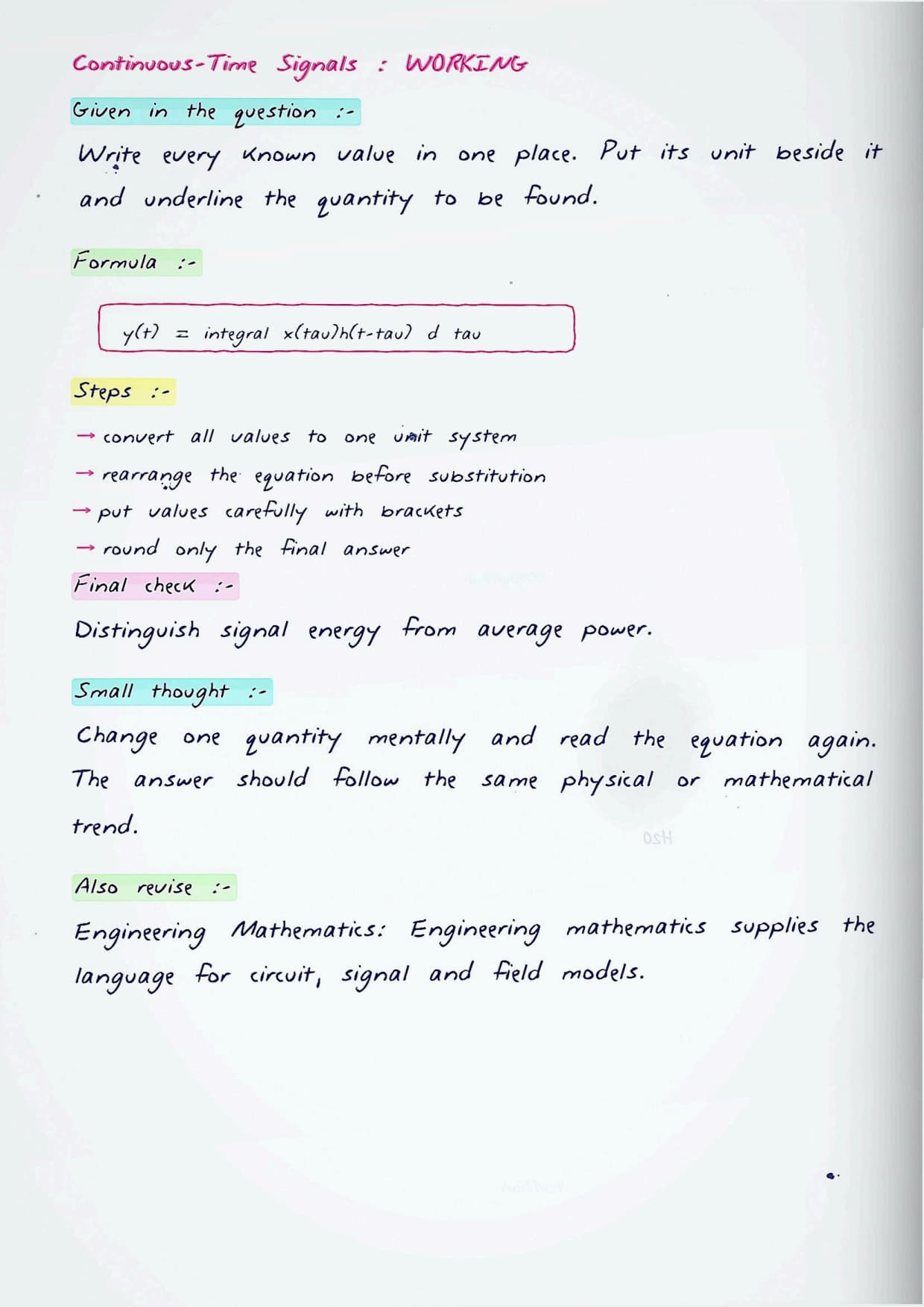
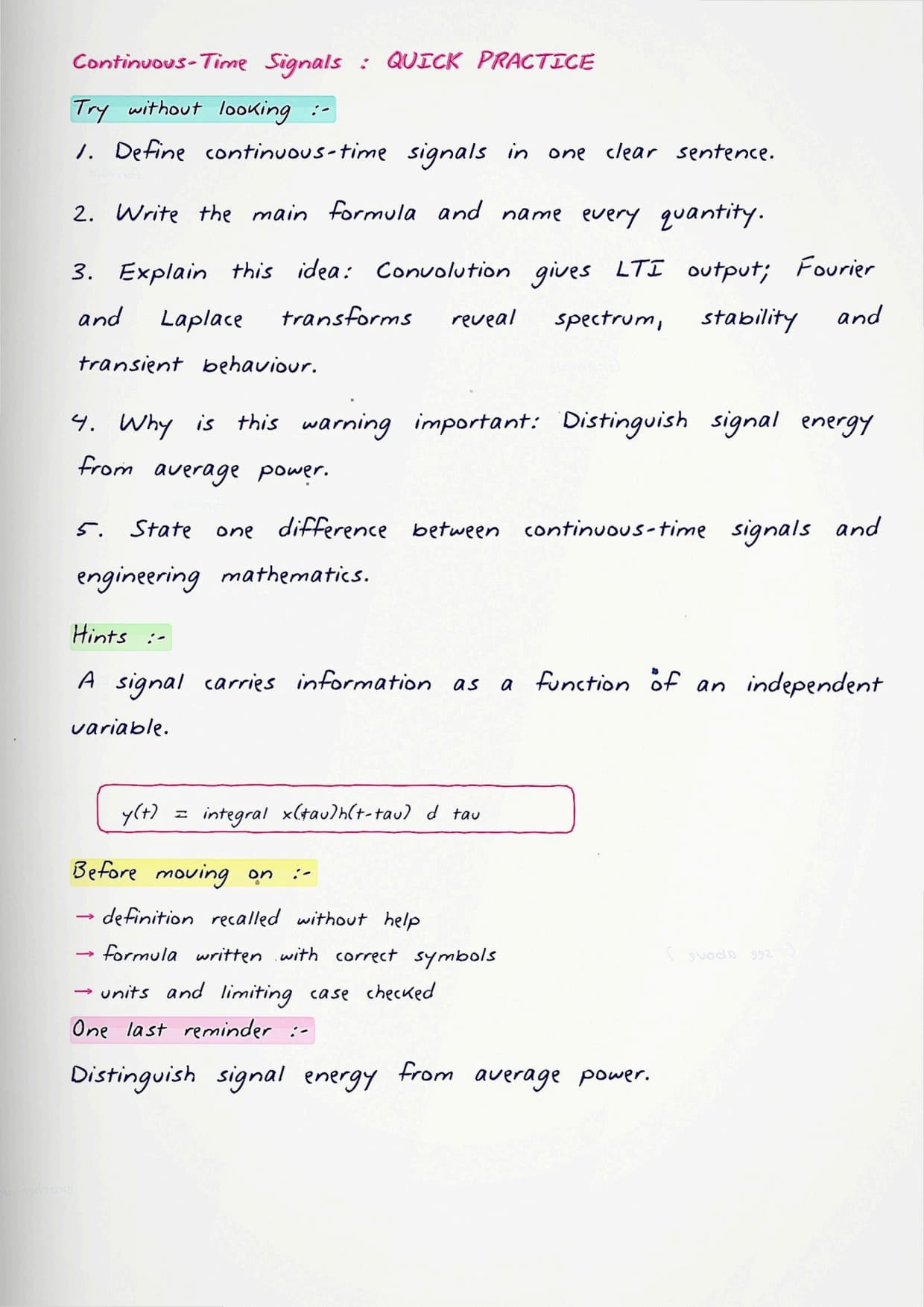
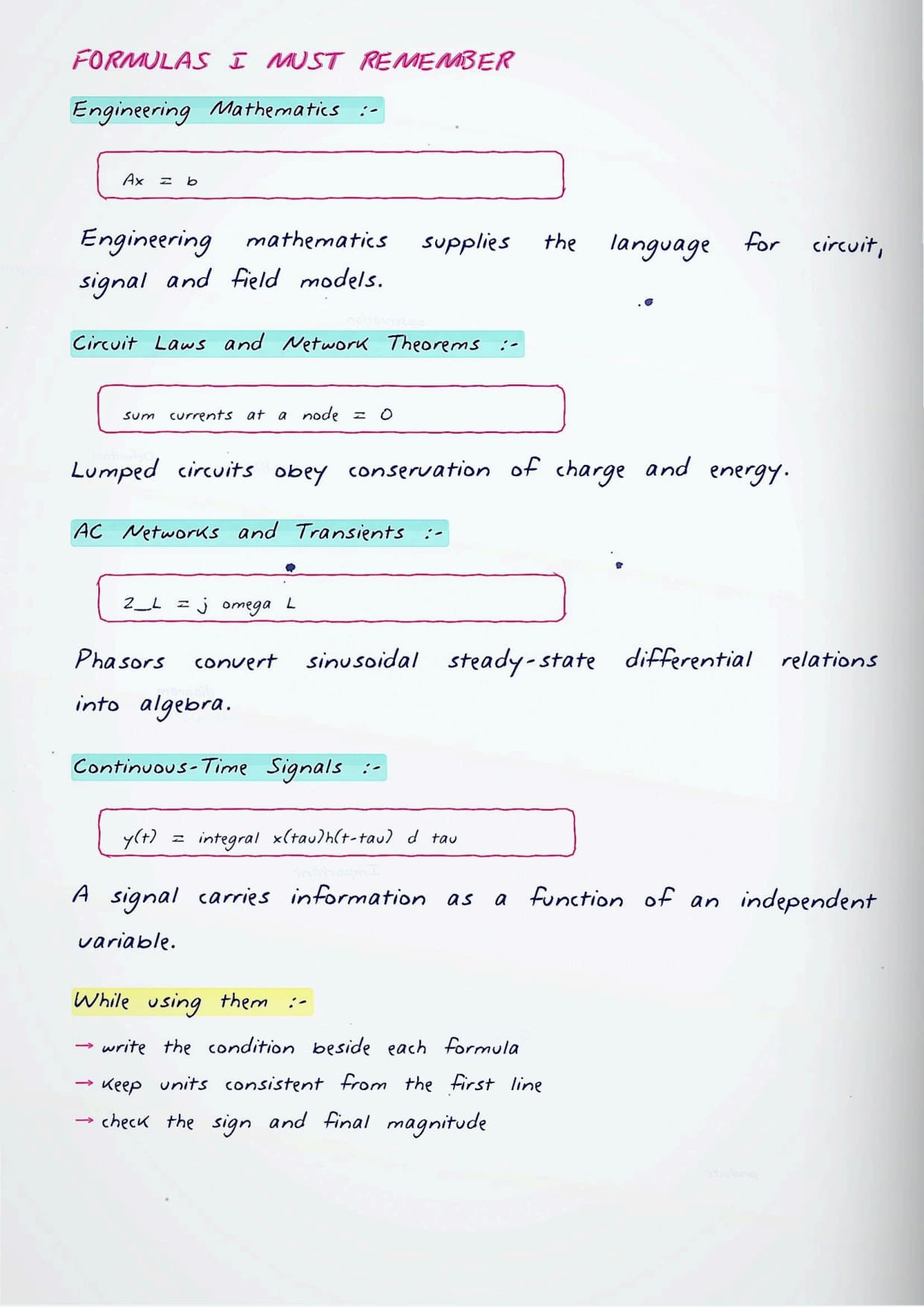
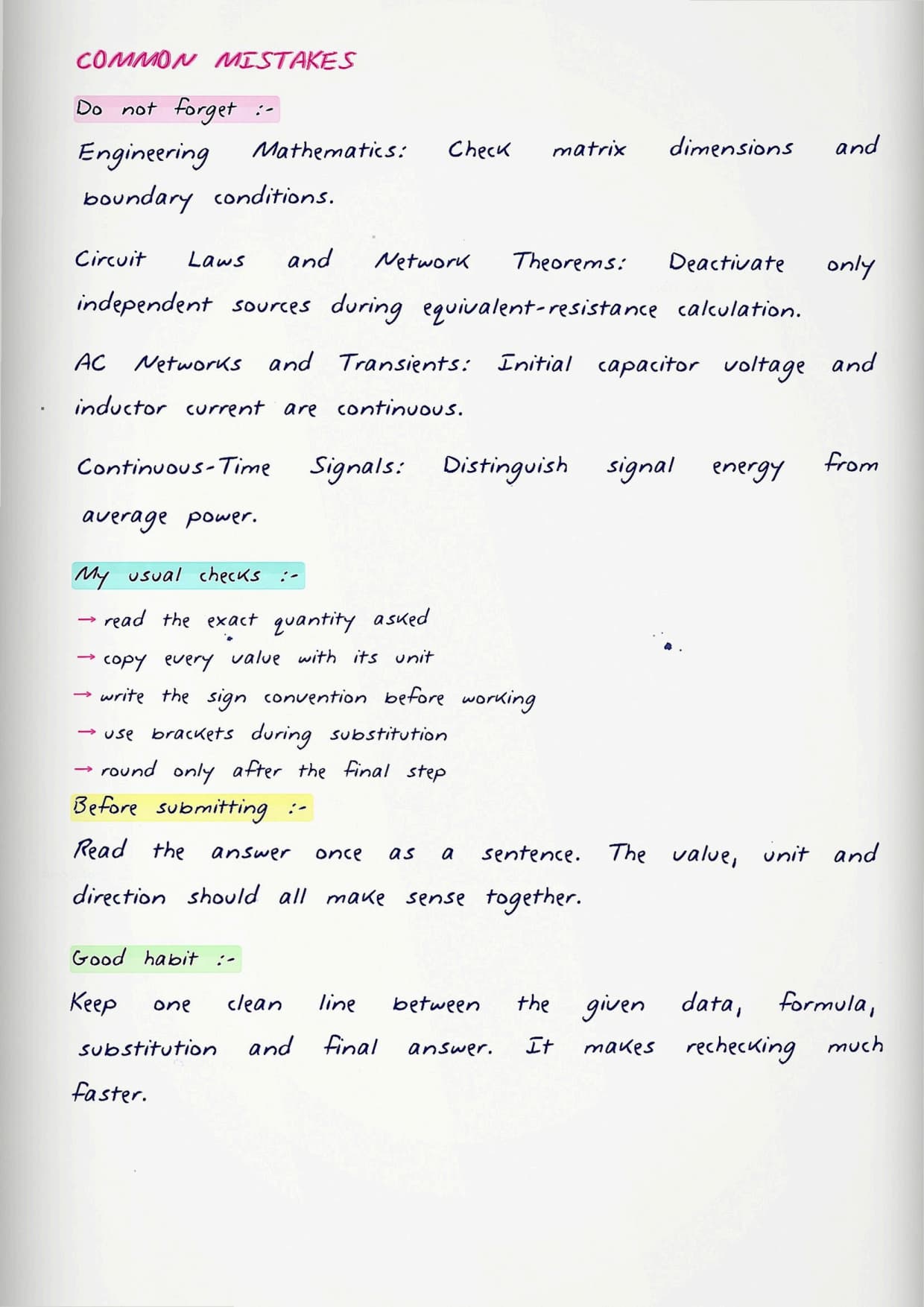
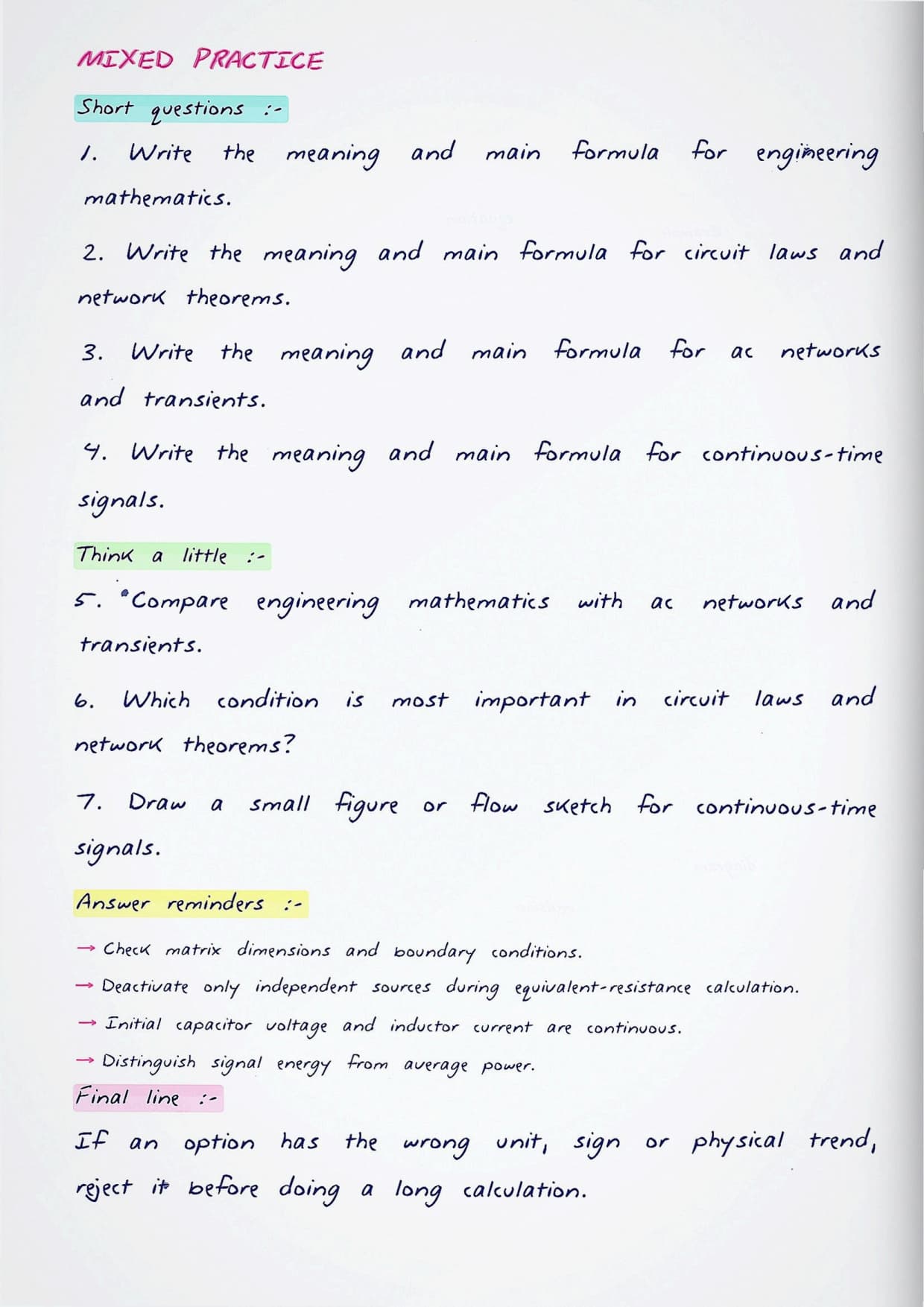
Engineering Mathematics carries a steady share of marks on its own, and it also props up every circuit and signals question. Strong maths quietly lifts the whole paper.
The Tools Packed Into These Pages
The notes stay practical. Each method comes with the setup, the steps, and a small example, so students can apply it rather than just recognise it.
- Linear algebra tools: matrices, eigenvalues, and rank for solving systems.
- Calculus for engineers: differentiation, integration, and series used in circuits.
- Differential equations that describe how currents and voltages change over time.
- Probability and complex numbers, both of which surface across the paper.
- Circuit laws that turn a network into a set of solvable equations.
From Linear Algebra to Nodal Equations
The book walks the syllabus in an order that builds naturally, so each idea leans on the one before it.
- Start with matrix methods and eigenvalues, the backbone of system solving.
- Move to calculus and Laplace transforms for time-varying behaviour.
- Apply Kirchhoff's laws to write mesh and nodal equations.
- Reduce networks with Thevenin and Norton before solving them.
- Close with the transient and steady-state response of RLC circuits.
Where the Maths Meets the Circuit
The real value shows when the two halves meet. A nodal analysis is just a linear system, and a transient response is just a differential equation with initial conditions.
- Matrix inversion solves large nodal networks in one clean step.
- Laplace transforms turn circuit differential equations into simple algebra.
- Eigenvalues predict whether a circuit response grows, decays, or oscillates.
See the Maths Revision on Screen
Source: Kreatryx GATE - EE, ECE & IN by Unacademy
Points Examiners Keep Returning To
Some ideas earn marks almost every year because they anchor whole question sets.
- Eigenvalues and eigenvectors, asked directly and used inside stability questions.
- Laplace transforms, the bridge between the maths and the circuit response.
- Superposition and maximum power transfer, short and reliable scorers.
Slips That Cost Easy Marks
Most lost marks here come from small habits, not hard concepts. A quick pause avoids them.
- Mixing up row and column operations when reducing a matrix.
- Forgetting the initial conditions in a transient problem.
- Dropping the sign on a current direction in nodal equations.
- Treating an average value as an RMS value in AC circuits.
Engineering Maths and Circuits FAQs
Ques. How much does Engineering Mathematics count in GATE Electronics?
Ans. It carries a steady, notable share of the marks on its own, and it also underpins circuit, signals, and control questions, so its real weight is even higher.
Ques. Do these notes cover both maths and circuits together?
Ans. Yes. They pair each mathematical tool with the circuit problem it solves, so the two subjects reinforce each other.
Ques. Are the methods shown with examples?
Ans. Each method comes with a short worked example, so students see how the steps run before trying questions on their own.
Ques. What is the best way to revise from these pages?
Ans. Work through one tool at a time, then solve a related circuit question using that tool, so the maths sticks in context.



Comments