




These GATE EC digital communication and electromagnetics handwritten notes trace the full signal path, from source bits to radiated waves, giving students a connected view of three tightly linked GATE topics.
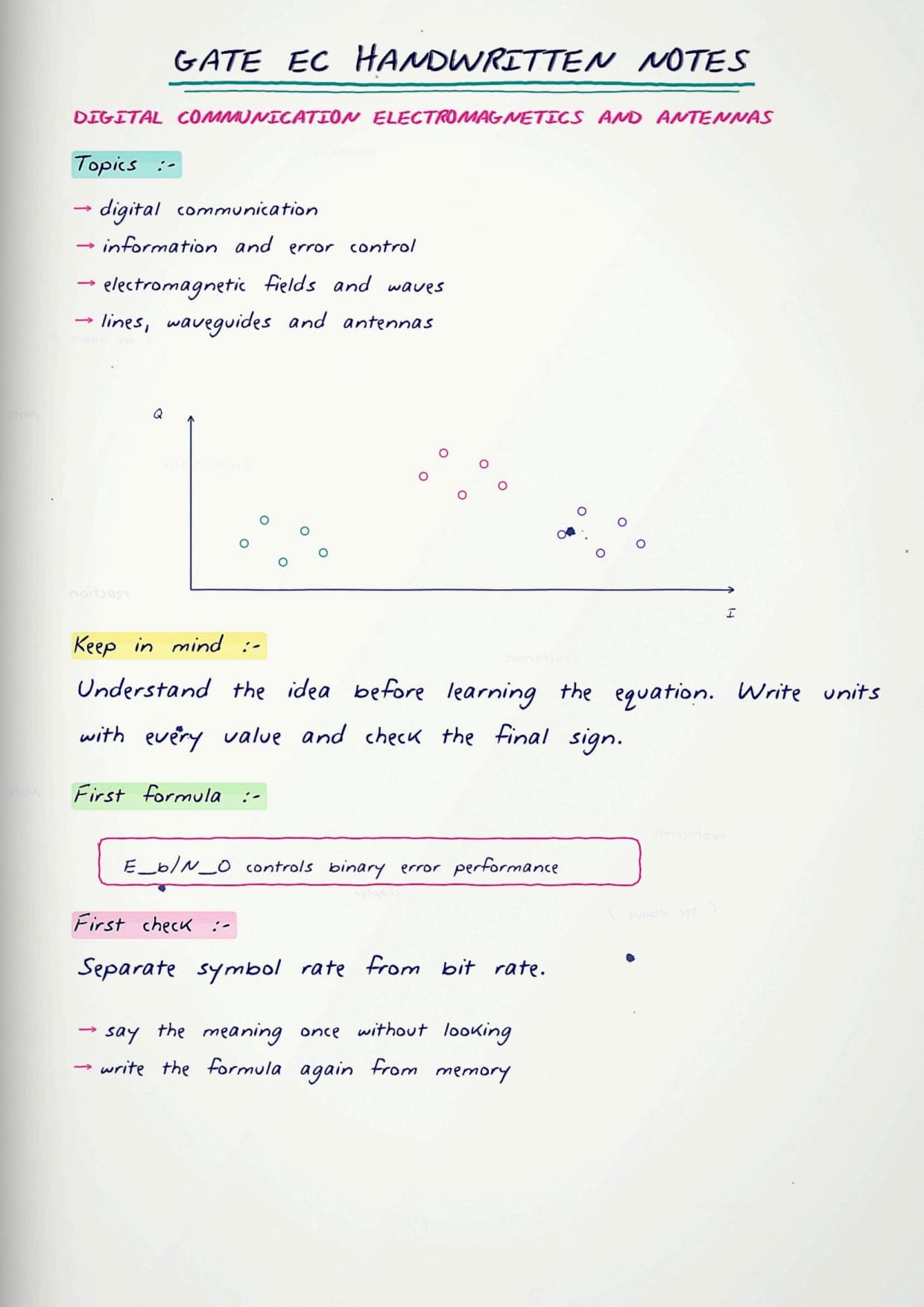
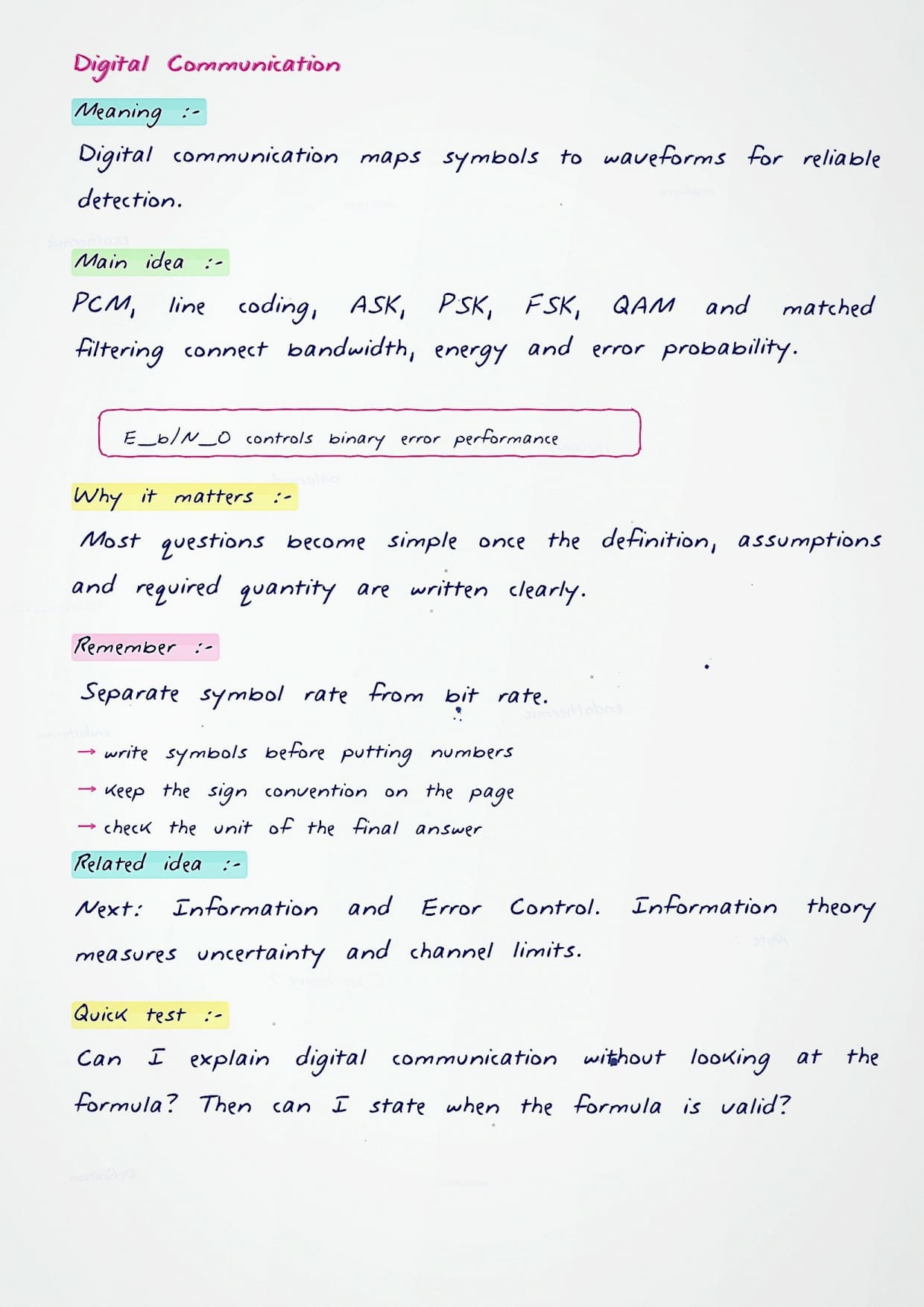
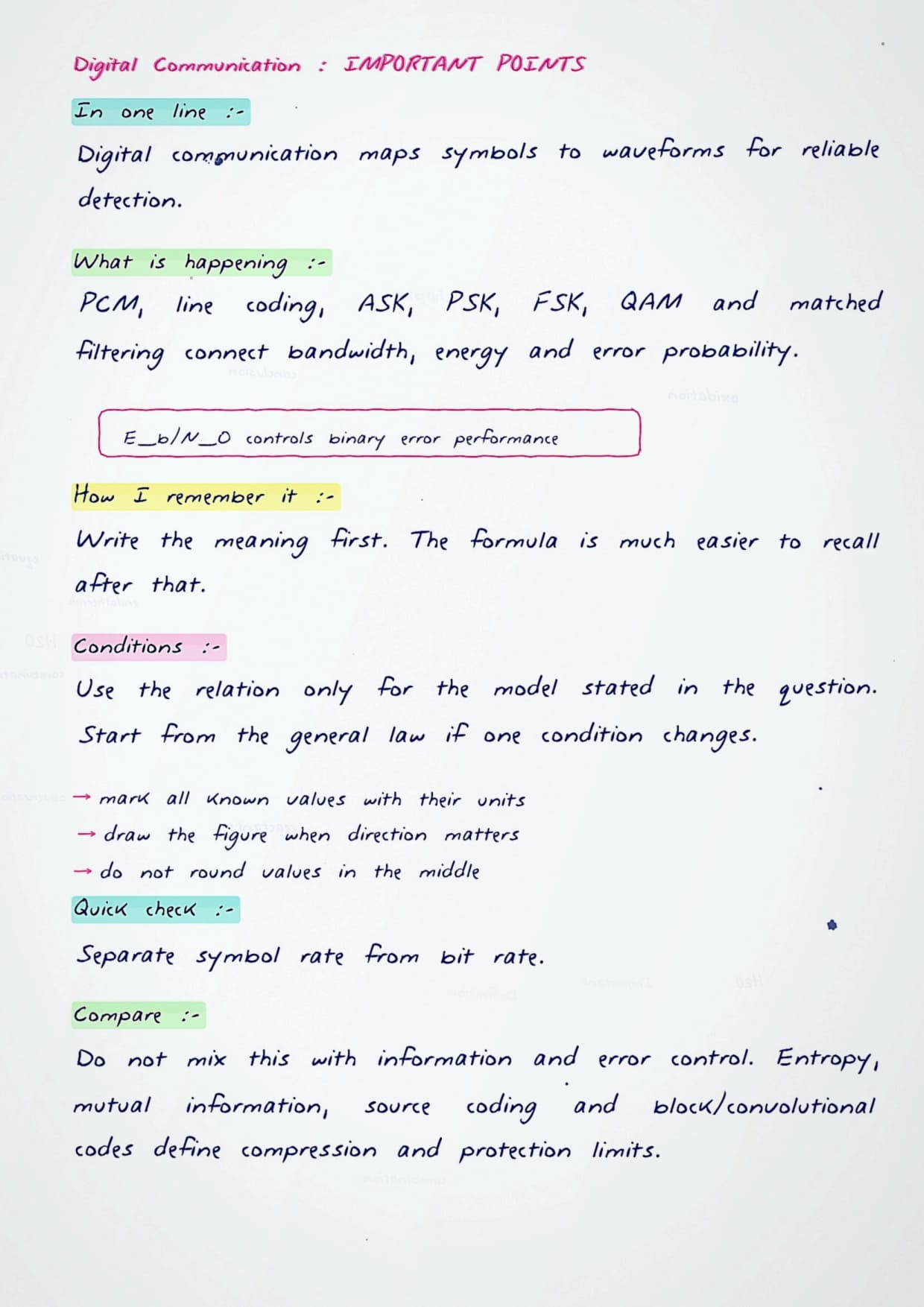
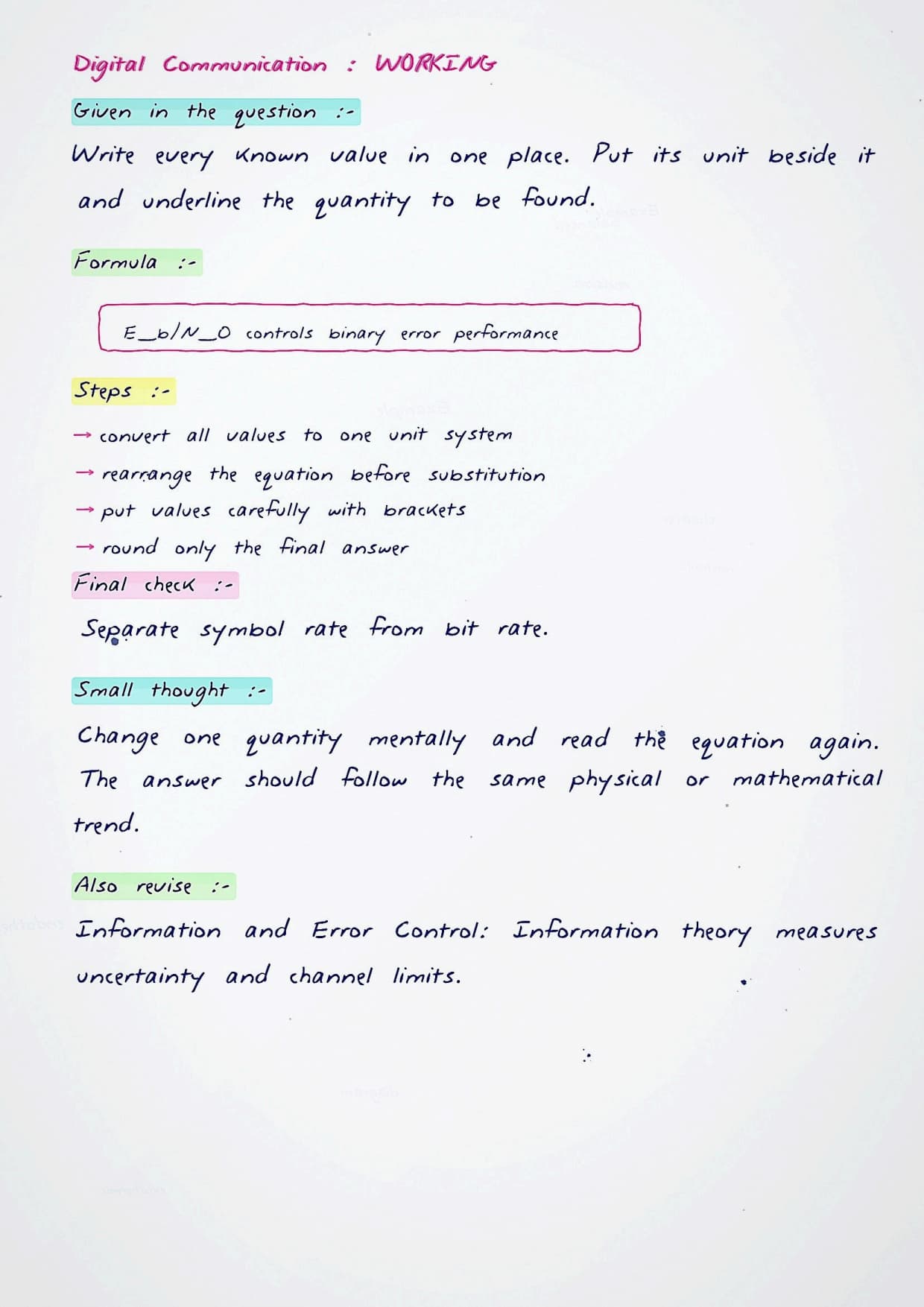
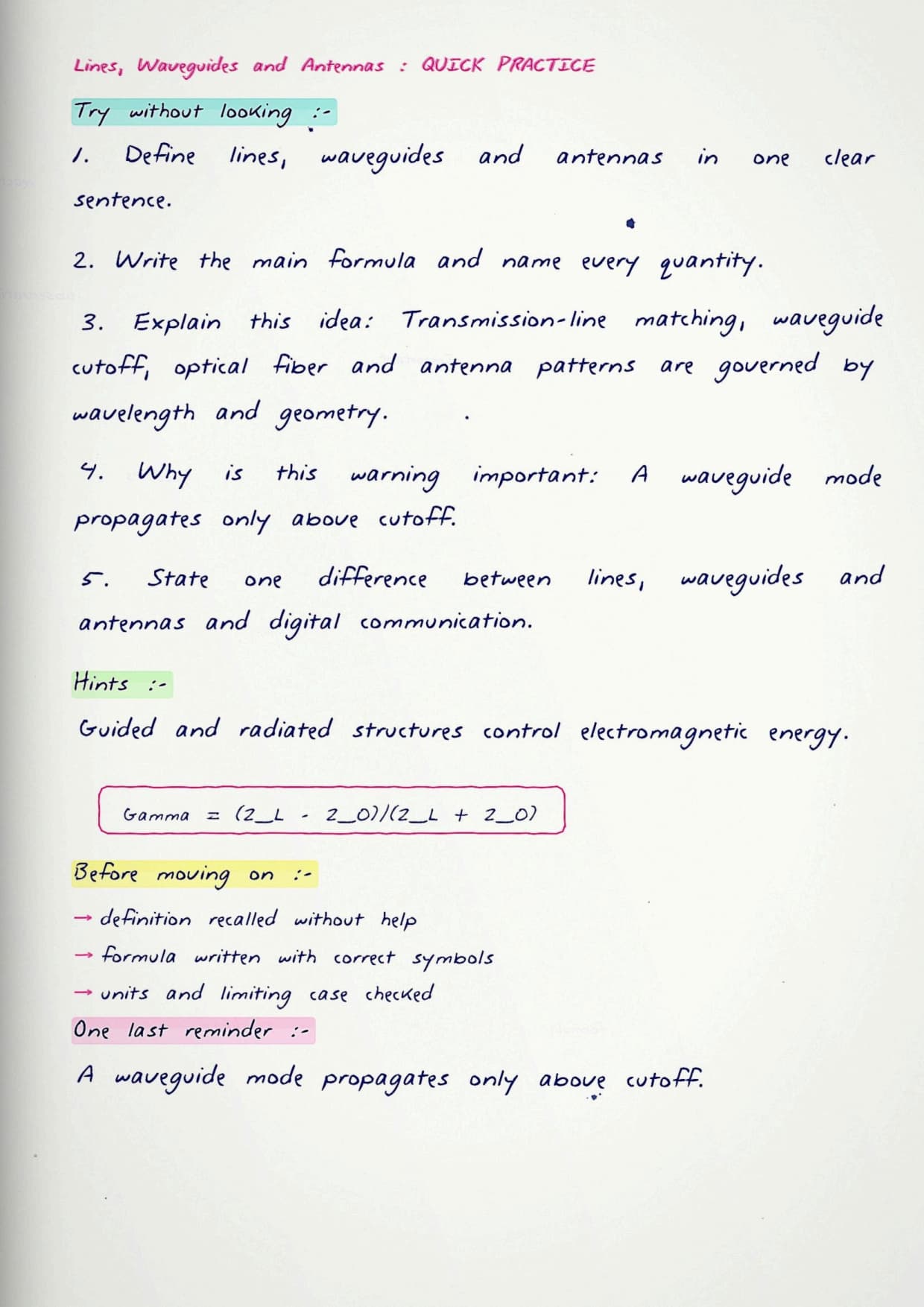
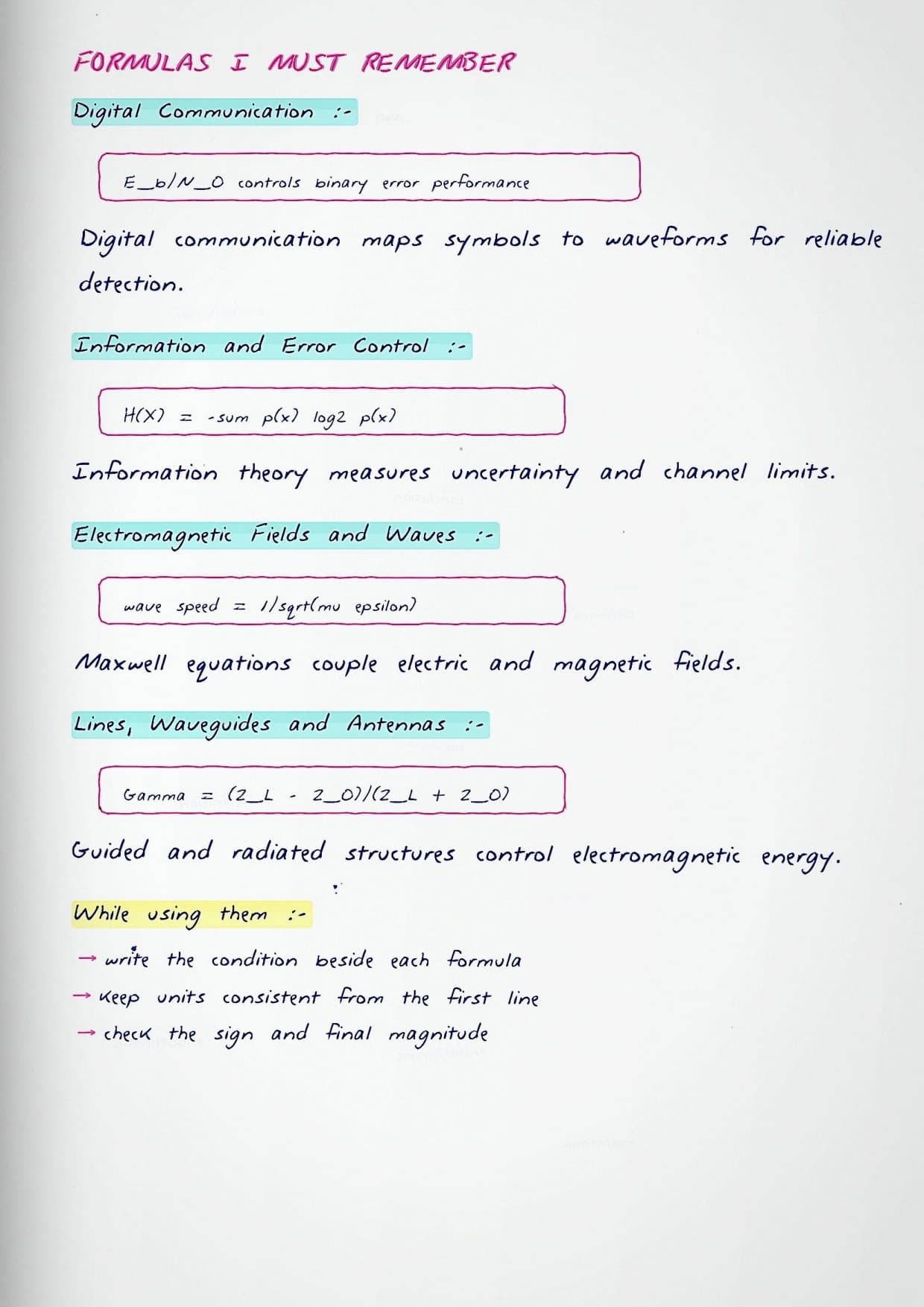
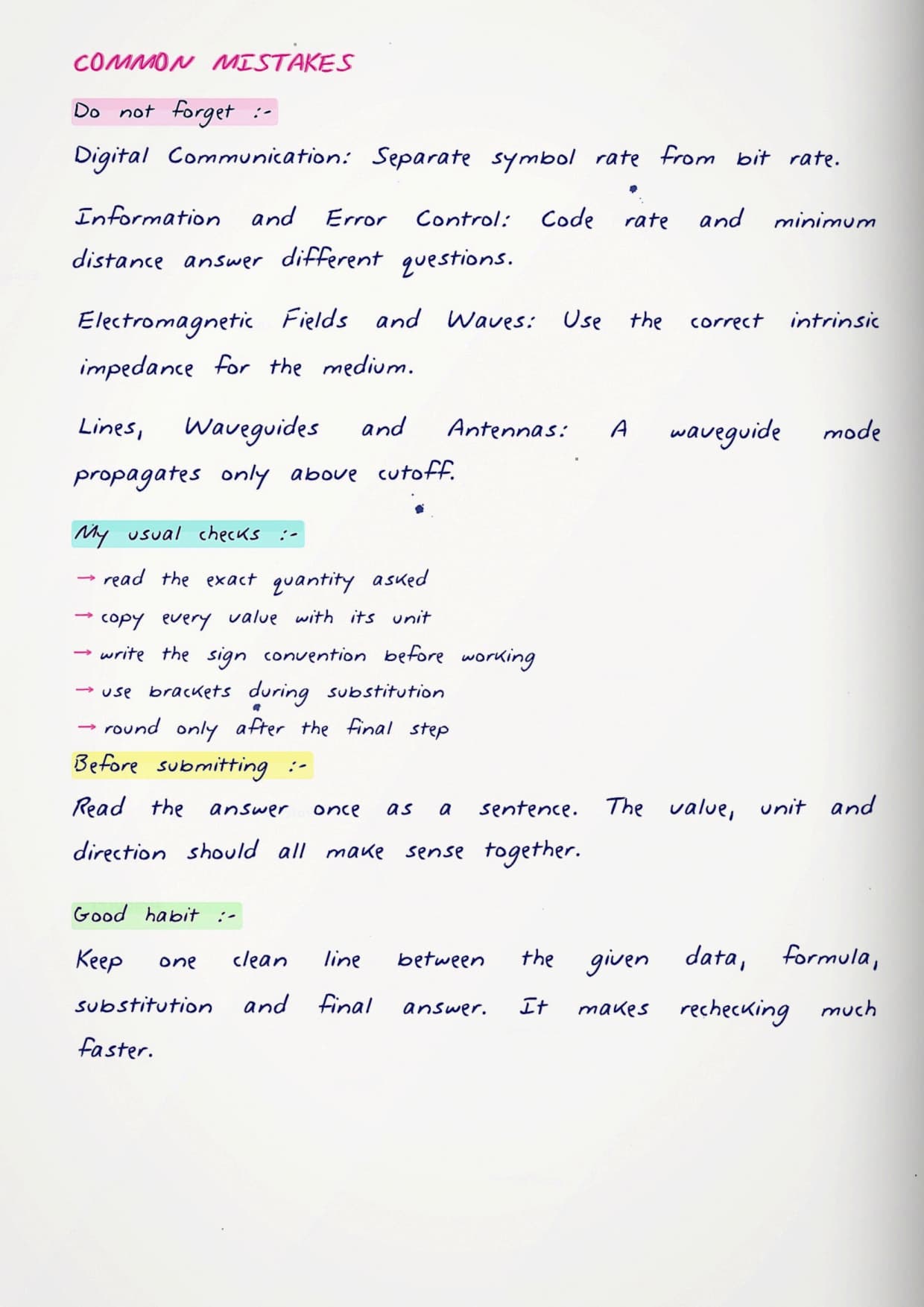
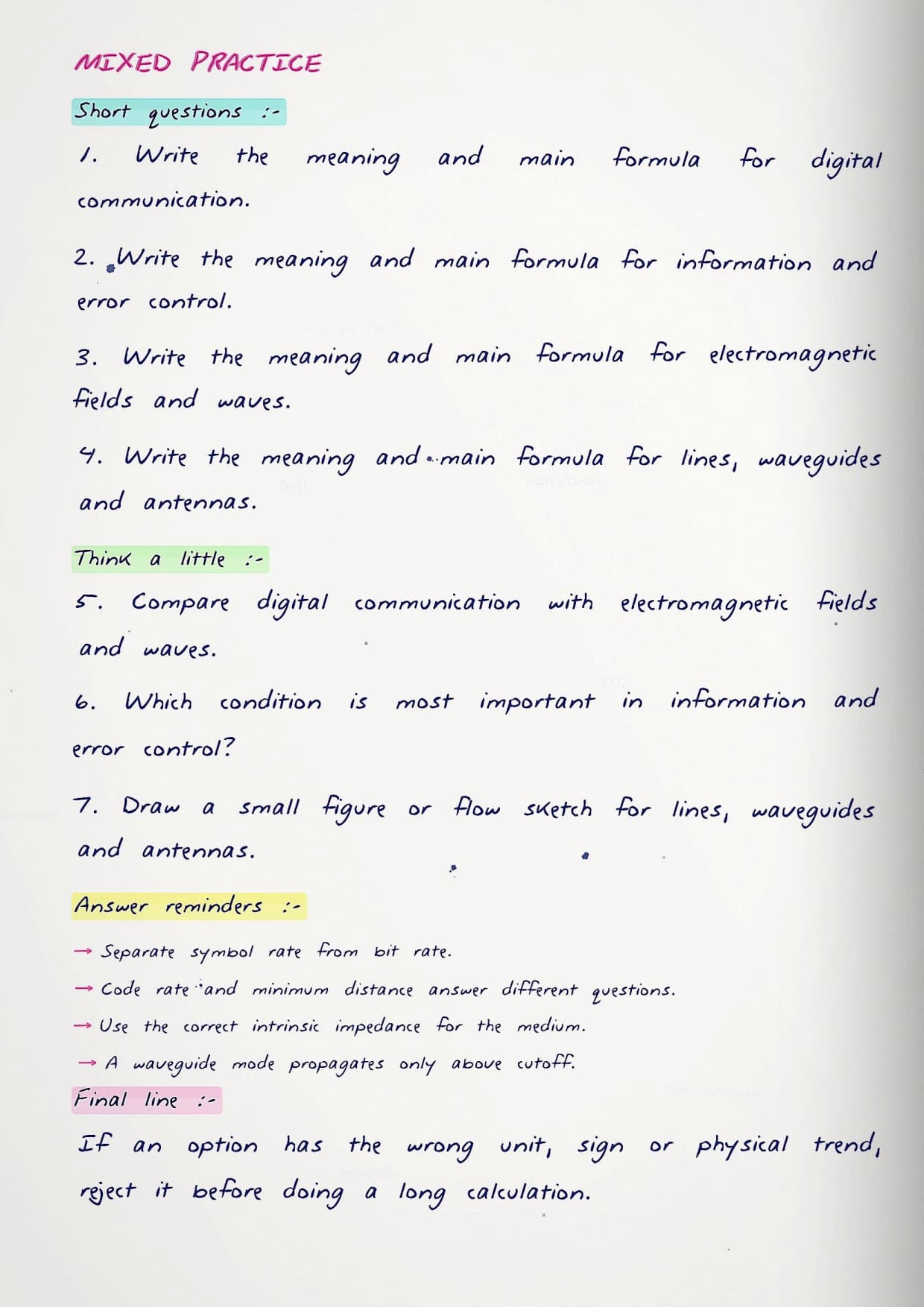
Digital communication, electromagnetics and antennas are usually studied apart, yet in a real link they form one chain. These notes follow that chain end to end so the ideas reinforce each other instead of feeling separate.
From Source Bits to Radiated Waves
The notebook is built as a pipeline. You start with information at the transmitter and end with energy leaving an antenna, seeing every stage in order.
- Source and channel coding that shape and protect the bits.
- Digital modulation mapping bits onto carriers.
- Transmission lines carrying the signal toward the radiator.
- Antennas converting guided waves into free-space radiation.
Tracing the Digital Communication Chain
The communication half stays quantitative and exam-focused. Each block is written with the results GATE actually asks about.
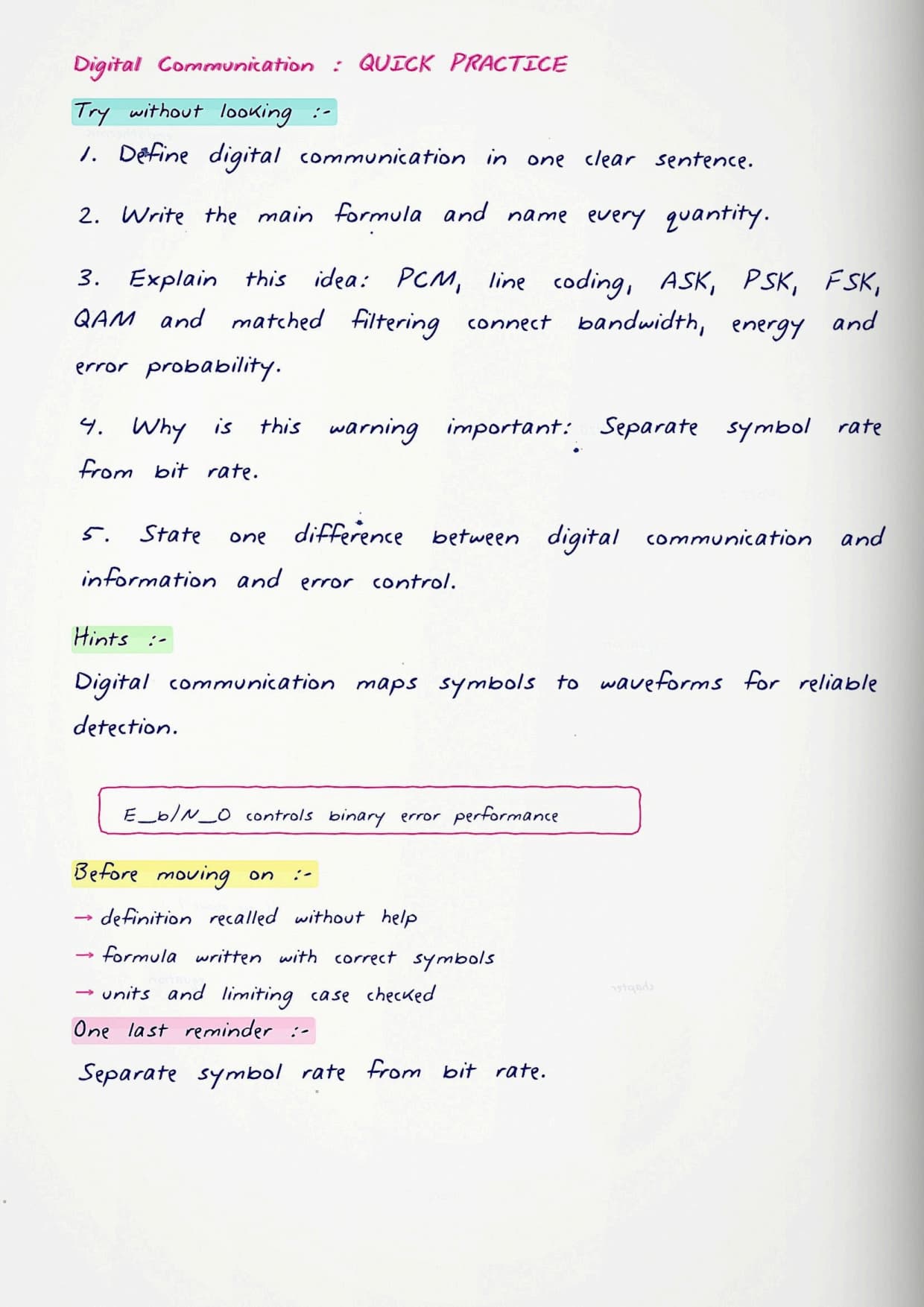
- Sampling, quantisation and PCM for turning signals digital.
- ASK, FSK, PSK and QAM with their bandwidth and error behaviour.
- Matched filtering and probability of error under noise.
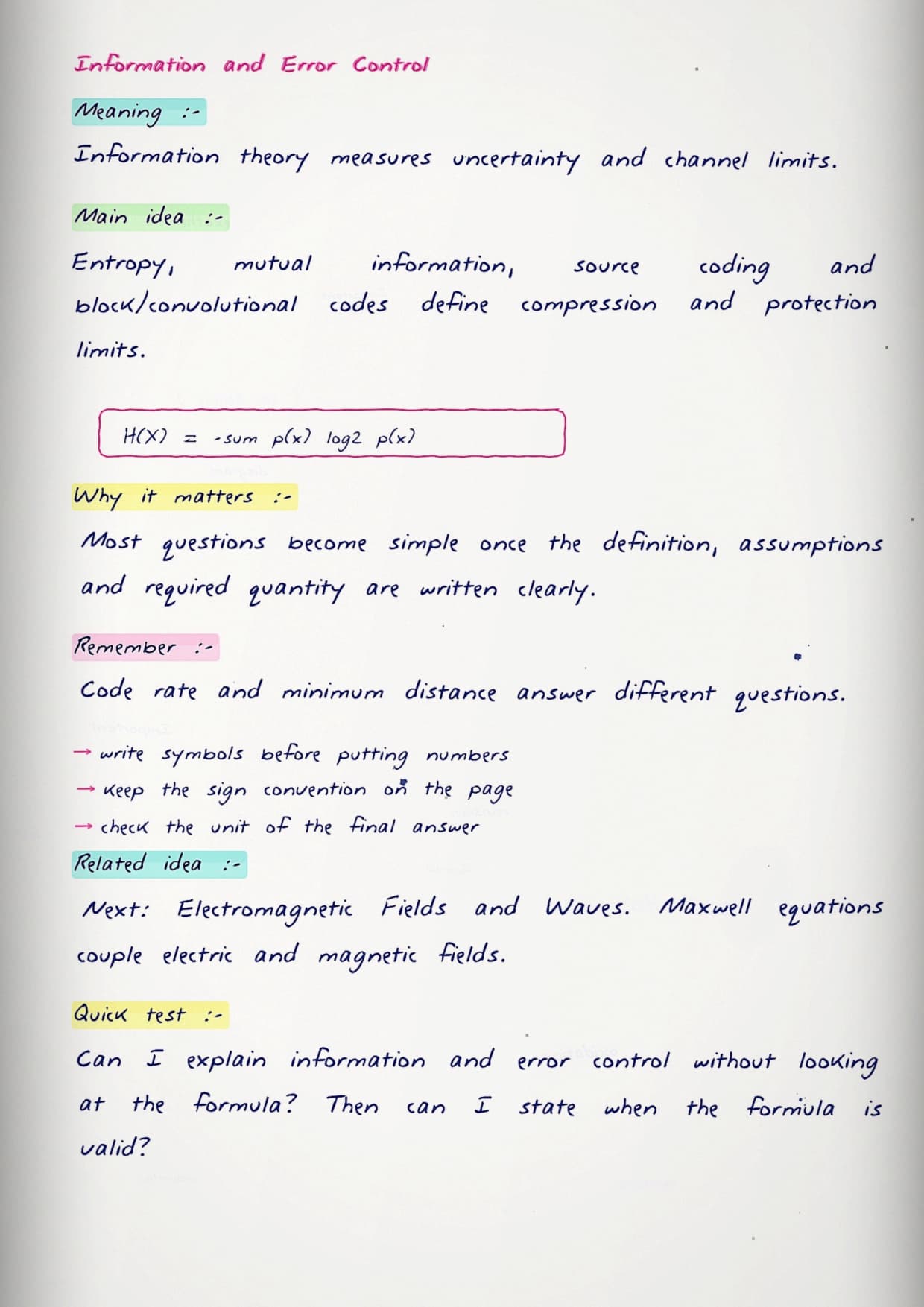
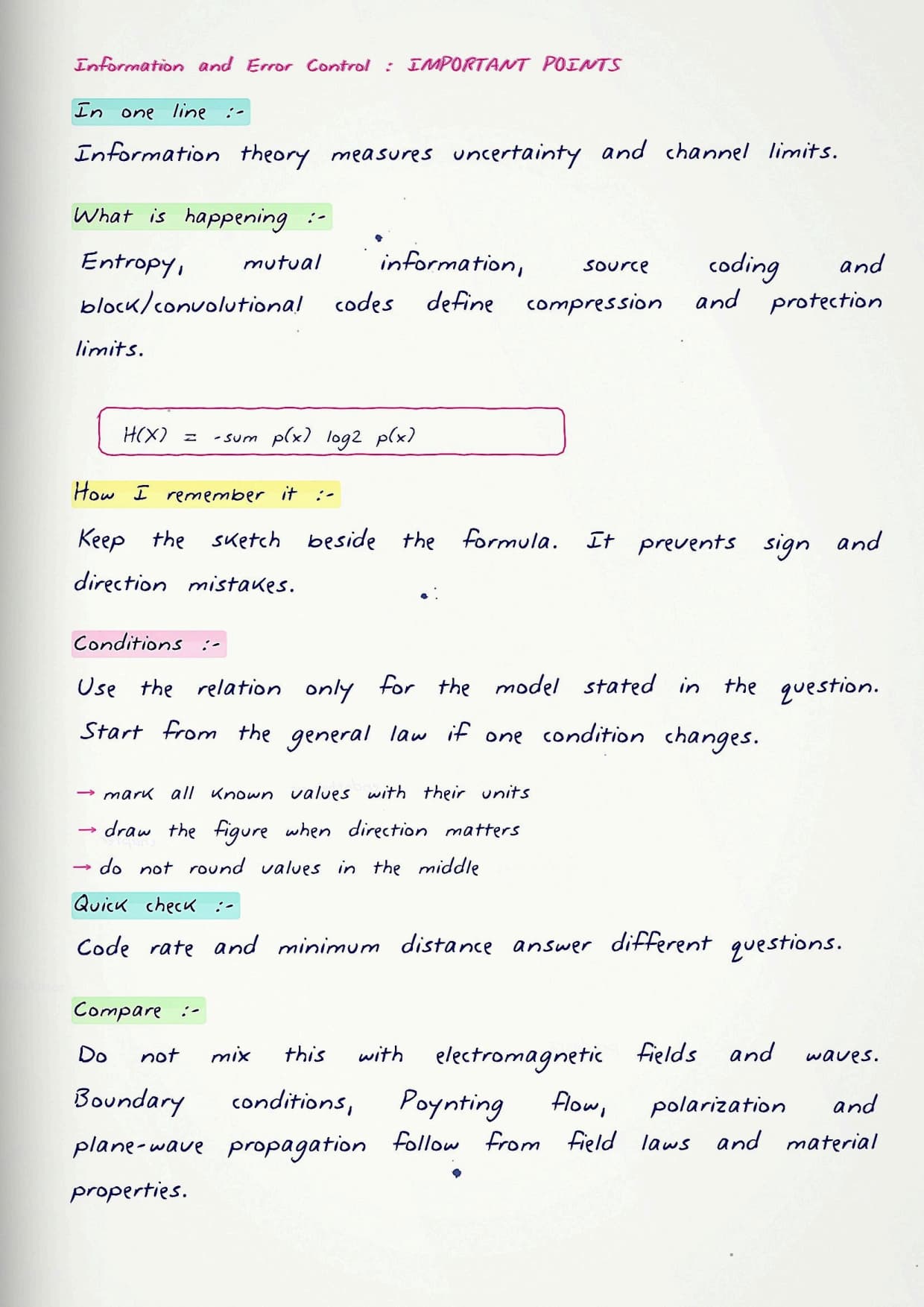
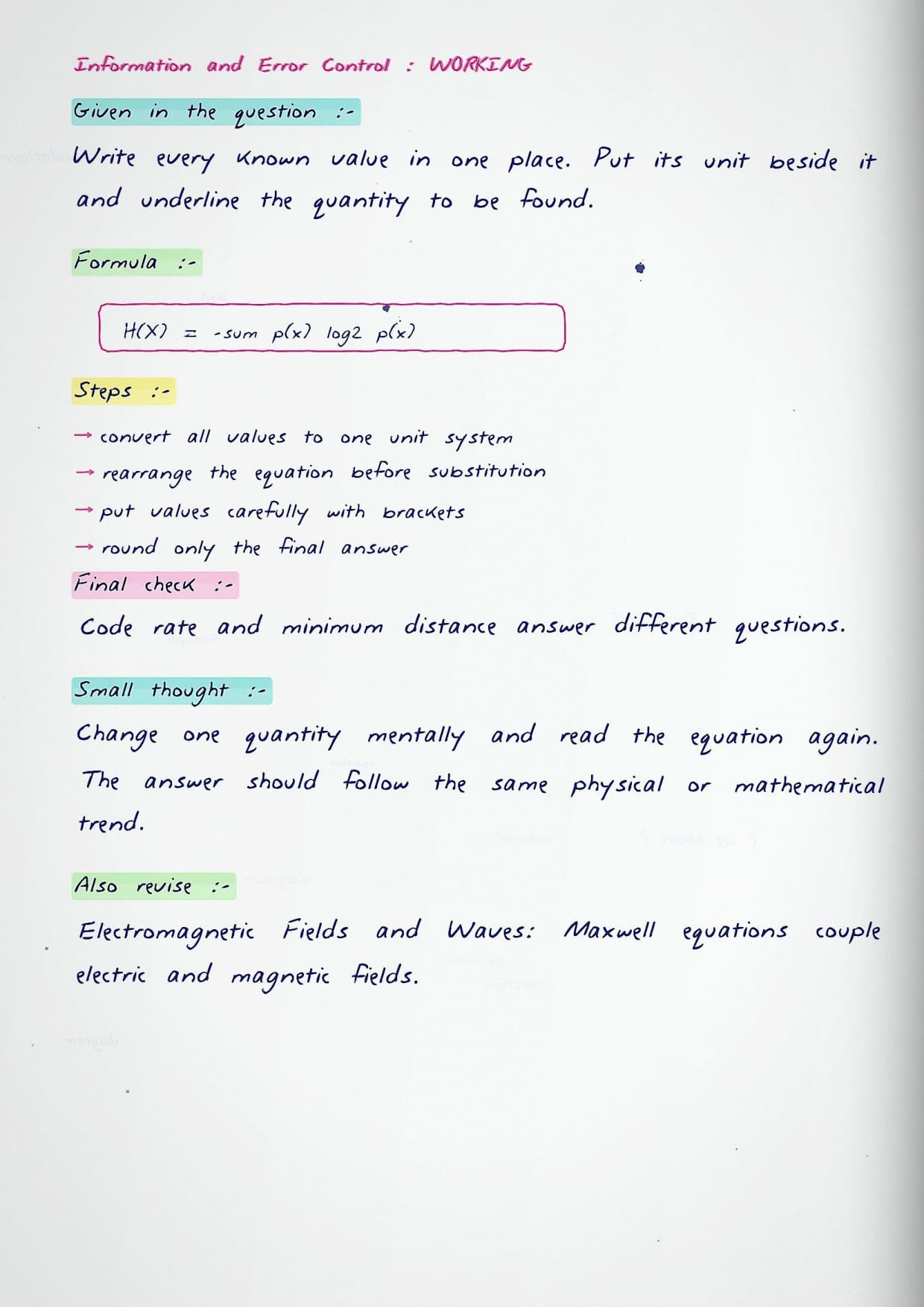
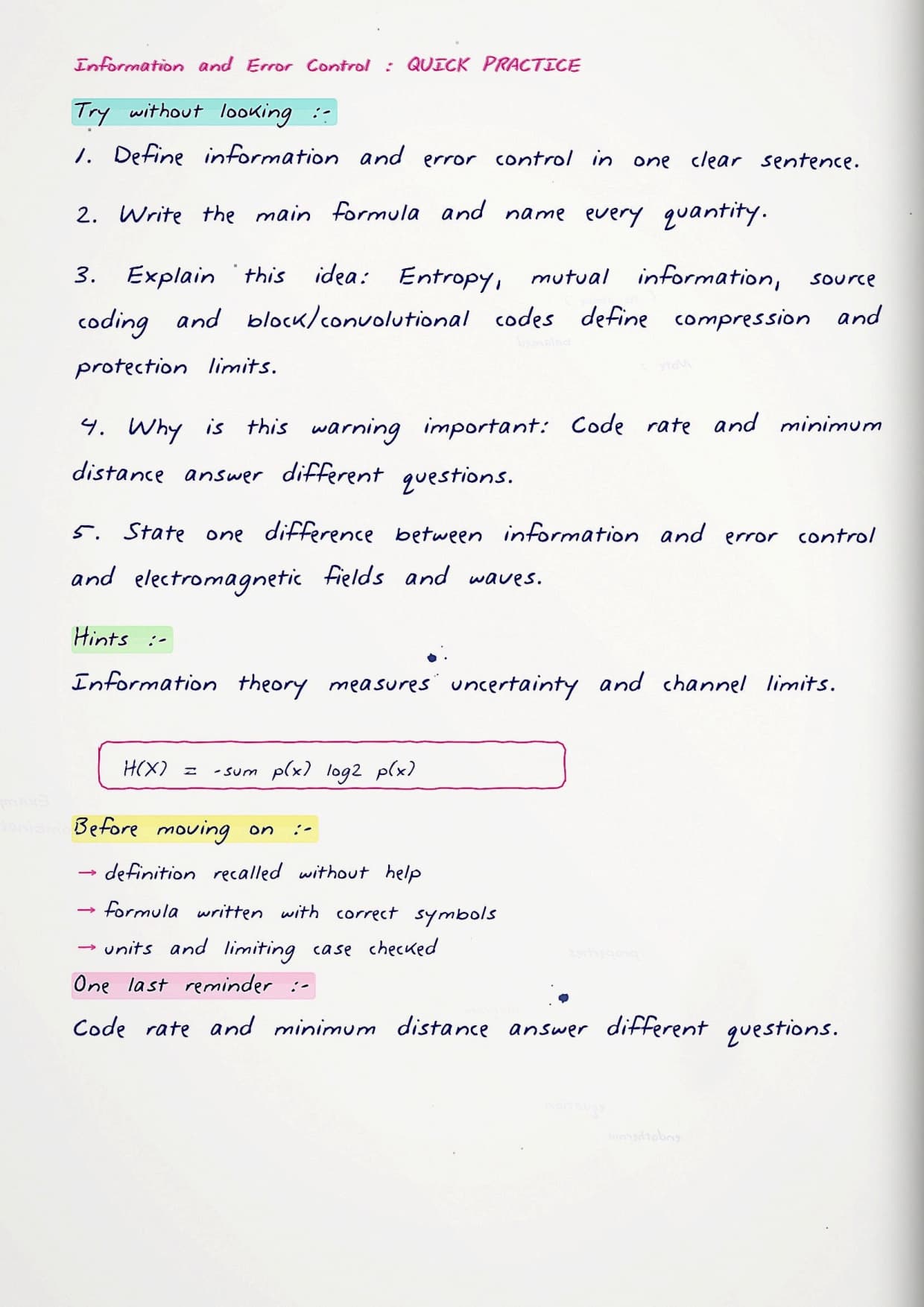
- Information theory basics, entropy and channel capacity.
Because errors depend on signal-to-noise ratio, the notes keep noise front and centre through every modulation scheme.
Where Fields, Lines and Antennas Come In
The electromagnetics half explains what physically carries the signal once it leaves the modulator. Field theory stops being abstract and becomes part of the link.
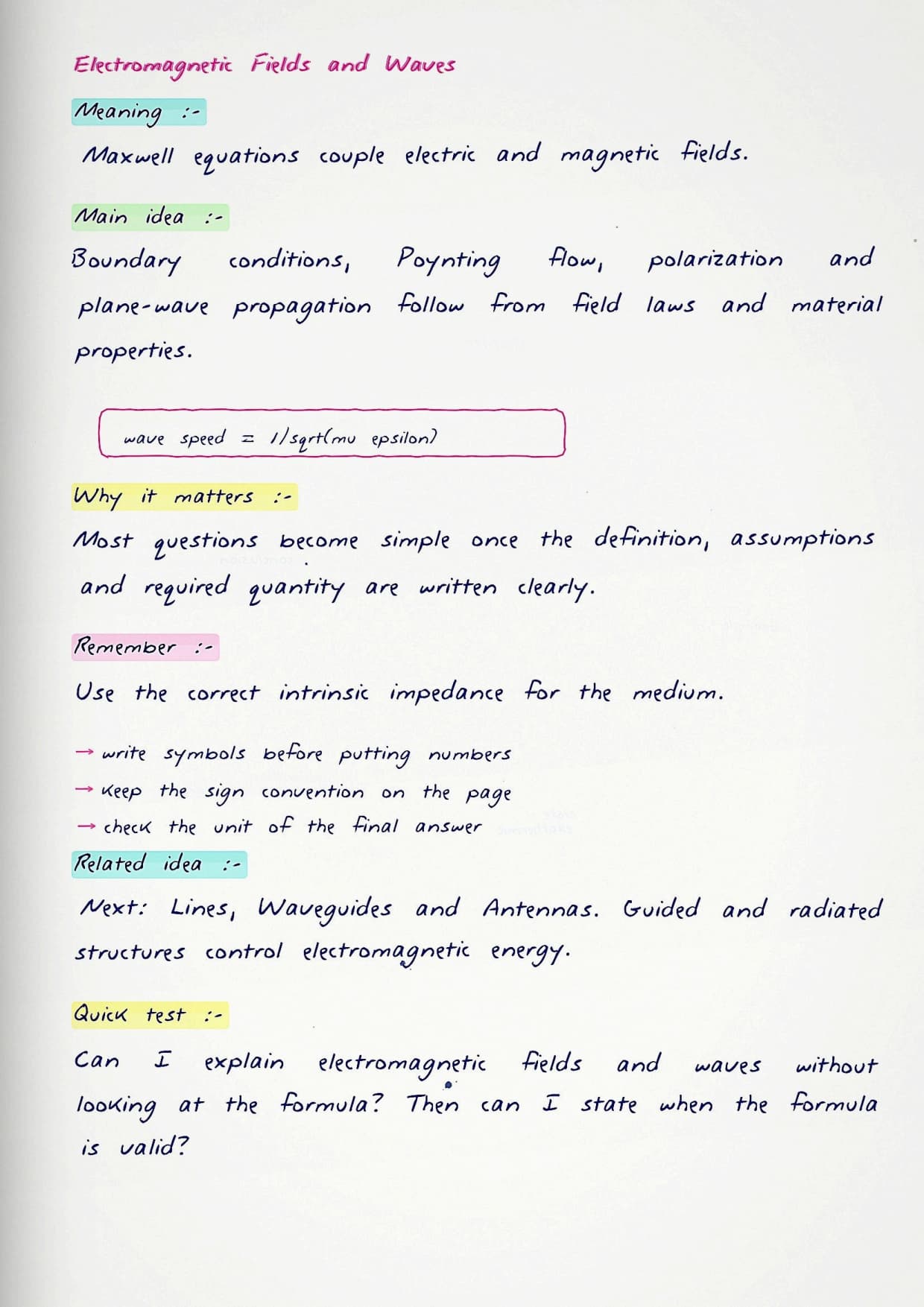
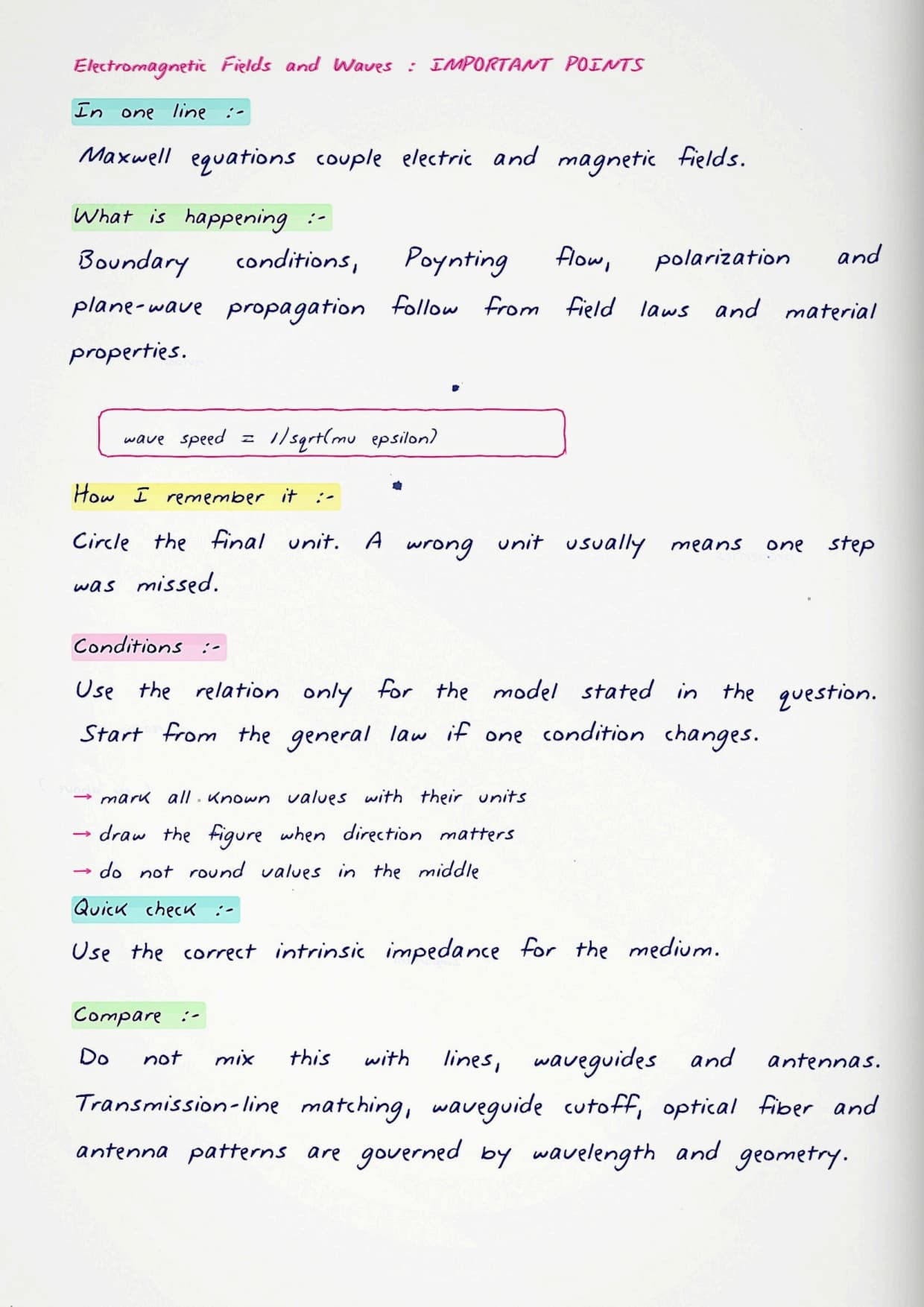
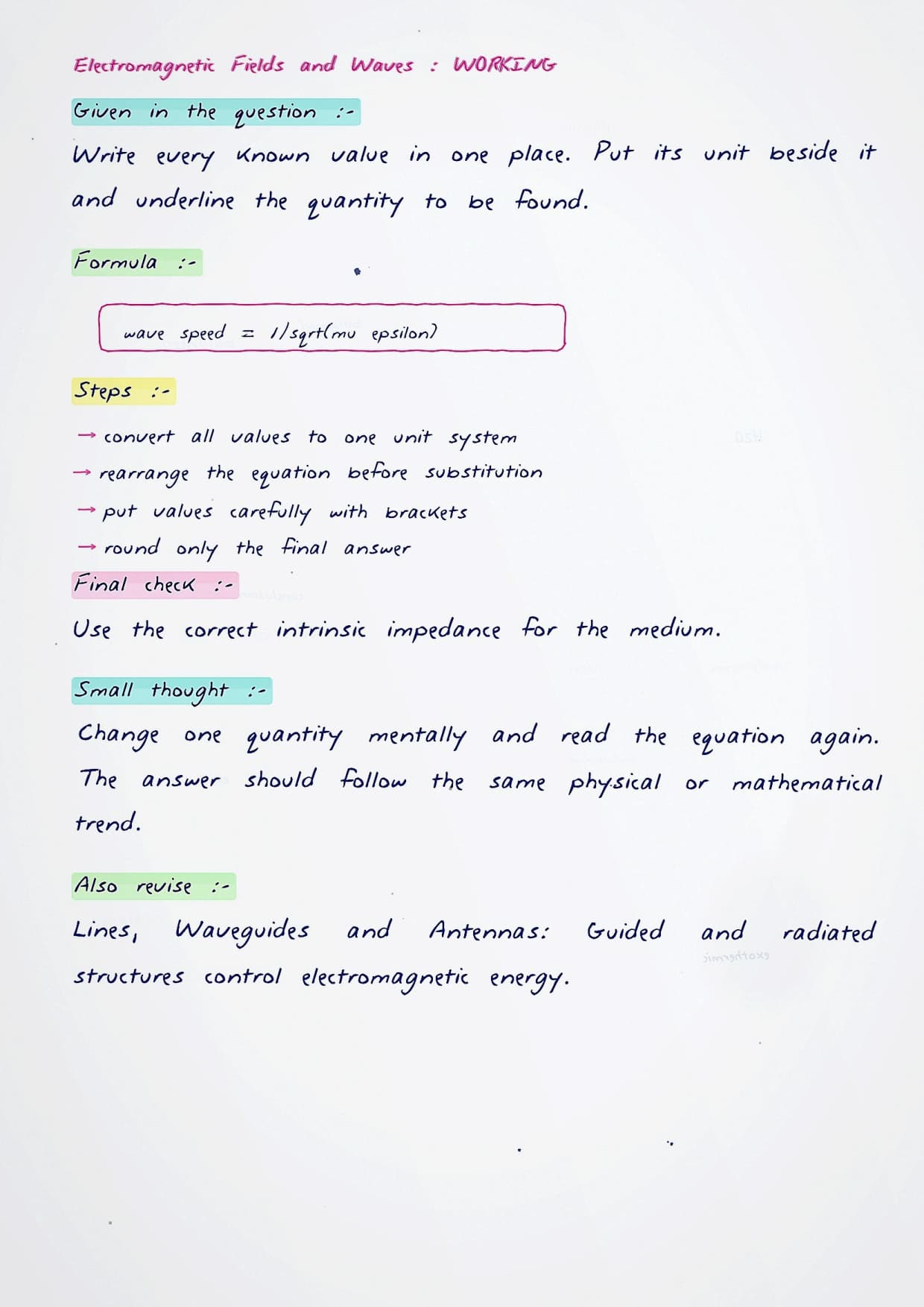
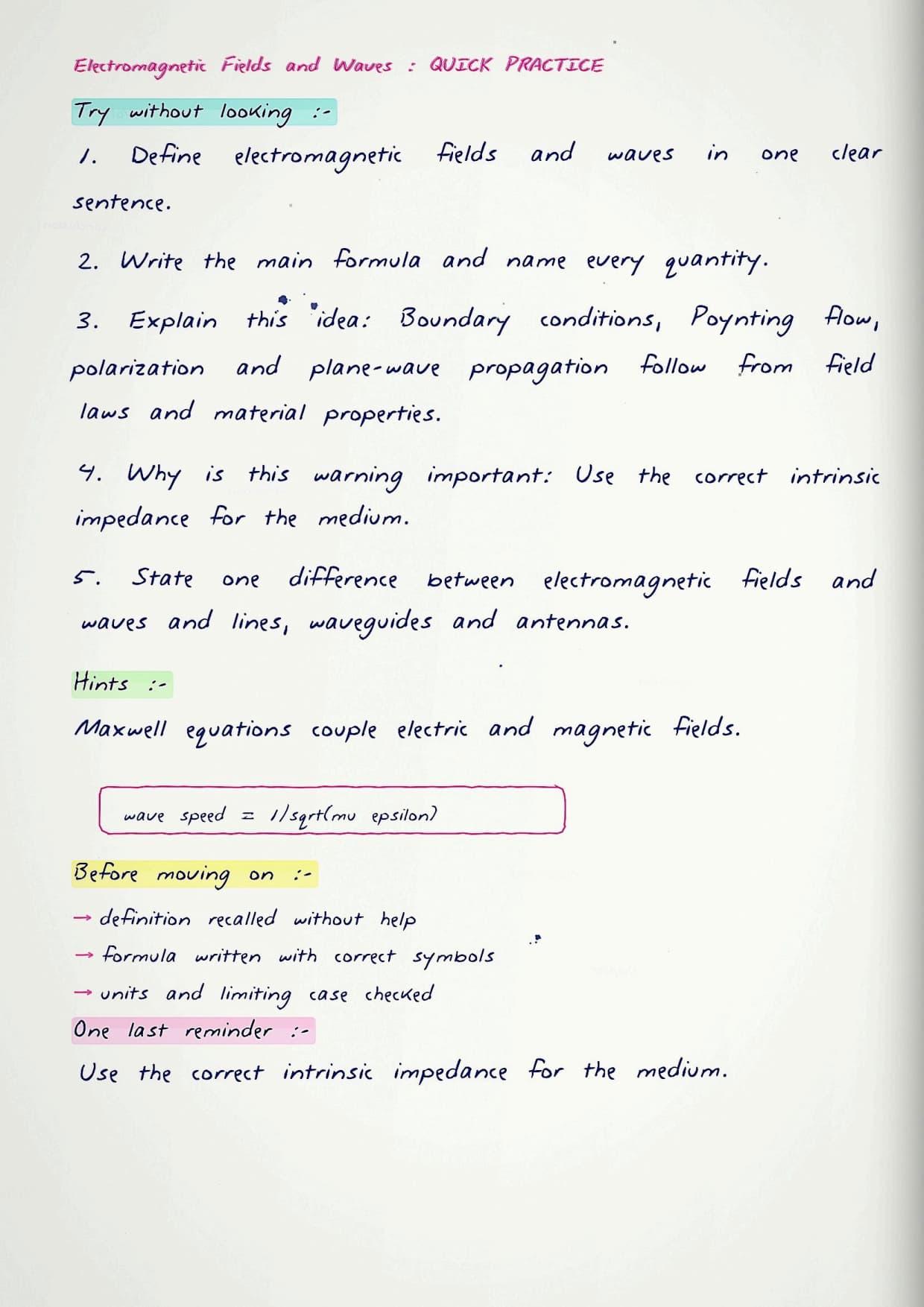
- Maxwell equations and plane waves as the foundation.
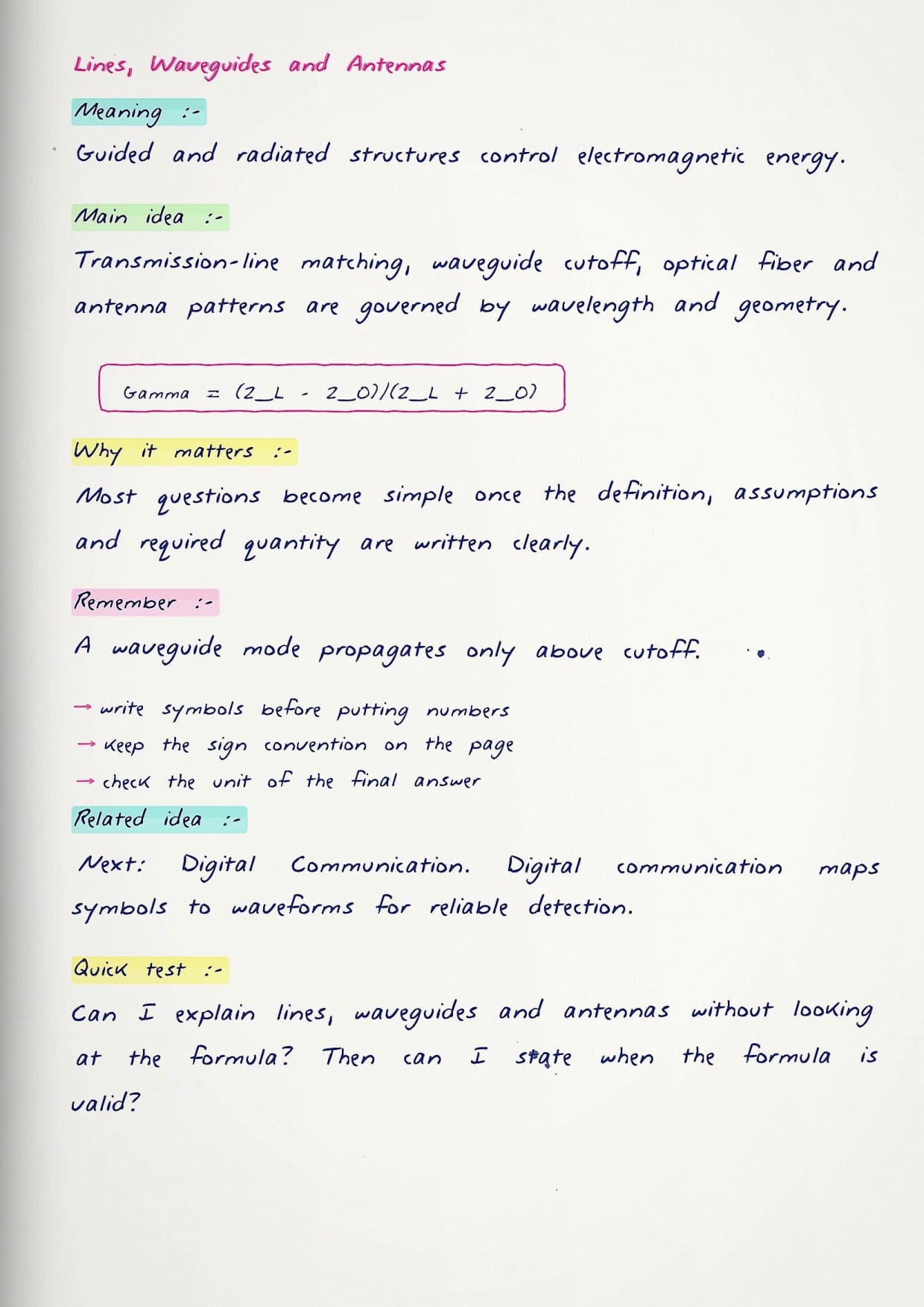
- Transmission line equations, characteristic impedance and the Smith chart.
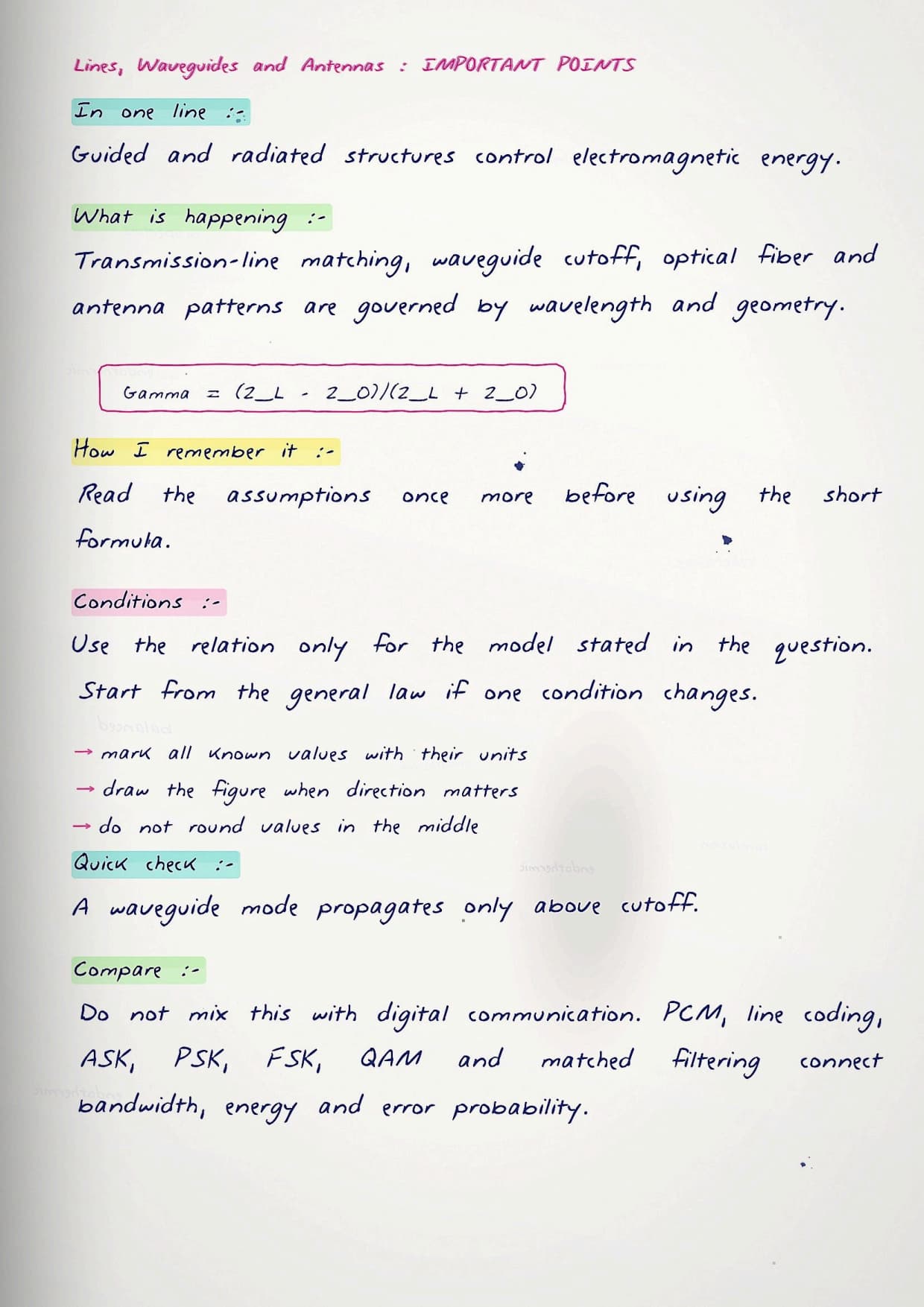
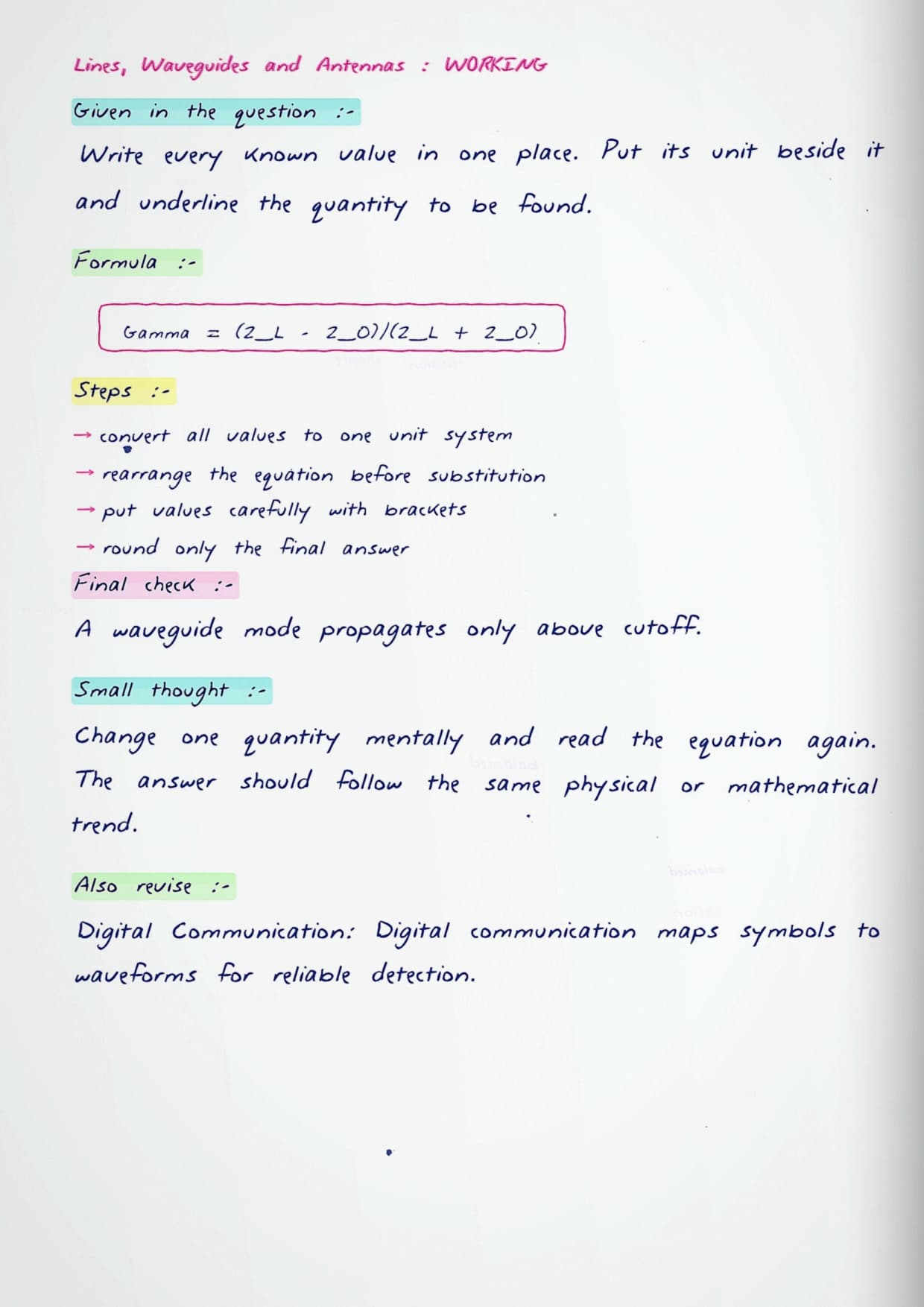
- Impedance matching and reflection that decide how much power gets through.
- Dipole and monopole antennas, gain, radiation pattern and aperture.
Formulas and Ideas Worth Memorising
Some relations show up almost every year. The notes box these so students recall them instantly under time pressure.
- Channel capacity as a function of bandwidth and signal-to-noise ratio.
- Reflection coefficient and standing wave ratio on a line.
- Error probability trends across coherent modulation schemes.
- Antenna gain, directivity and effective aperture links.
See Electromagnetics Revised in One Sitting
This one-shot session lines up neatly with the field theory pages before you attempt questions.
Source: GATE Wallah CSE & DA
Traps Students Fall Into Here
These topics punish shortcuts. A few recurring slips cost marks that are otherwise easy to keep.
- Confusing bit rate with symbol rate in modulation problems.
- Misreading the Smith chart direction while matching impedance.
- Forgetting that error probability depends on energy per bit, not raw power.
- Treating antenna gain and directivity as identical.
Working previous-year questions alongside these pages fixes most of these habits quickly.
GATE EC Digital Communication and Electromagnetics Handwritten Notes FAQs
Ques. Why combine digital communication, electromagnetics and antennas in one set?
Ans. In a real link they form a single chain, from encoded bits through transmission lines to radiating antennas. Studying them together shows how each stage depends on the last.
Ques. Are these GATE EC topics high scoring?
Ans. Communications and Electromagnetics together carry a meaningful applied share of the GATE EC paper, and their formula-based questions are among the more predictable ones.
Ques. What maths should students know first?
Ans. Comfort with probability, Fourier analysis and vector calculus helps, since modulation, noise and field theory all lean on them.
Ques. How should these notes be used?
Ans. Read them stage by stage as a pipeline, memorise the boxed formulas, then solve previous-year questions on each block to lock the concepts in.



Comments