




These handwritten notes pull together Control Systems, Noise and Analog Communication for GATE EC into one revision set, and they matter because both areas return marks almost every year.
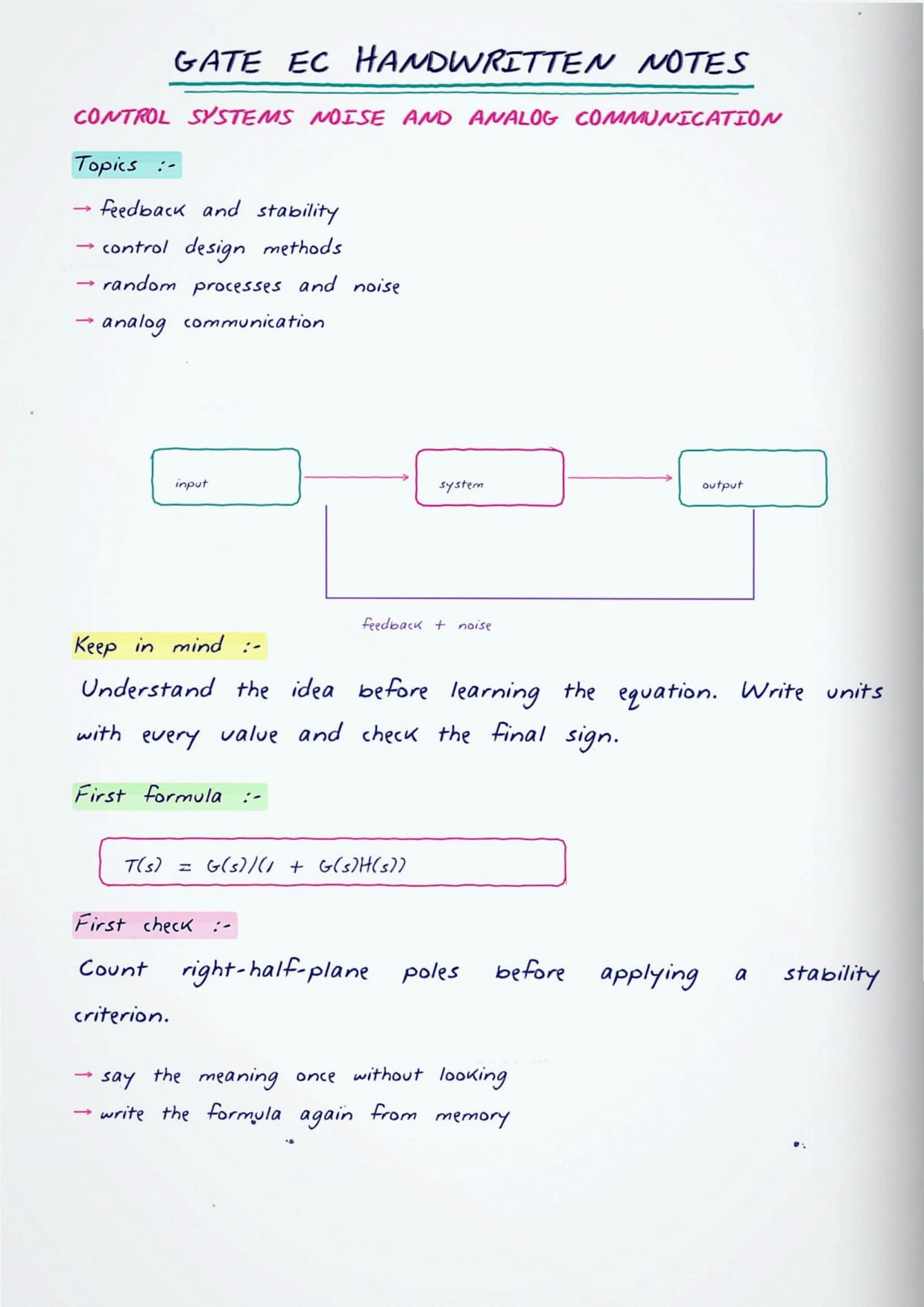
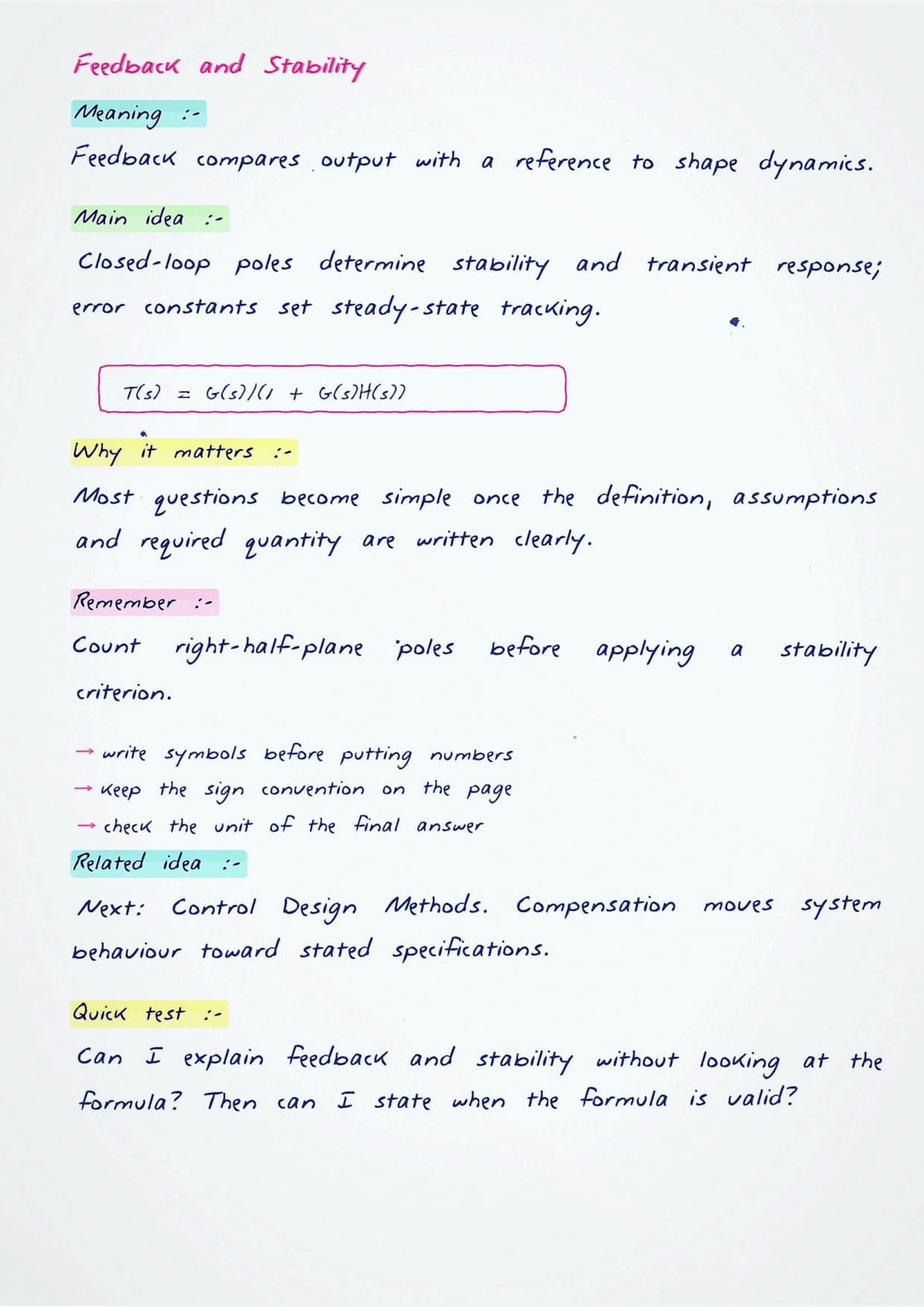
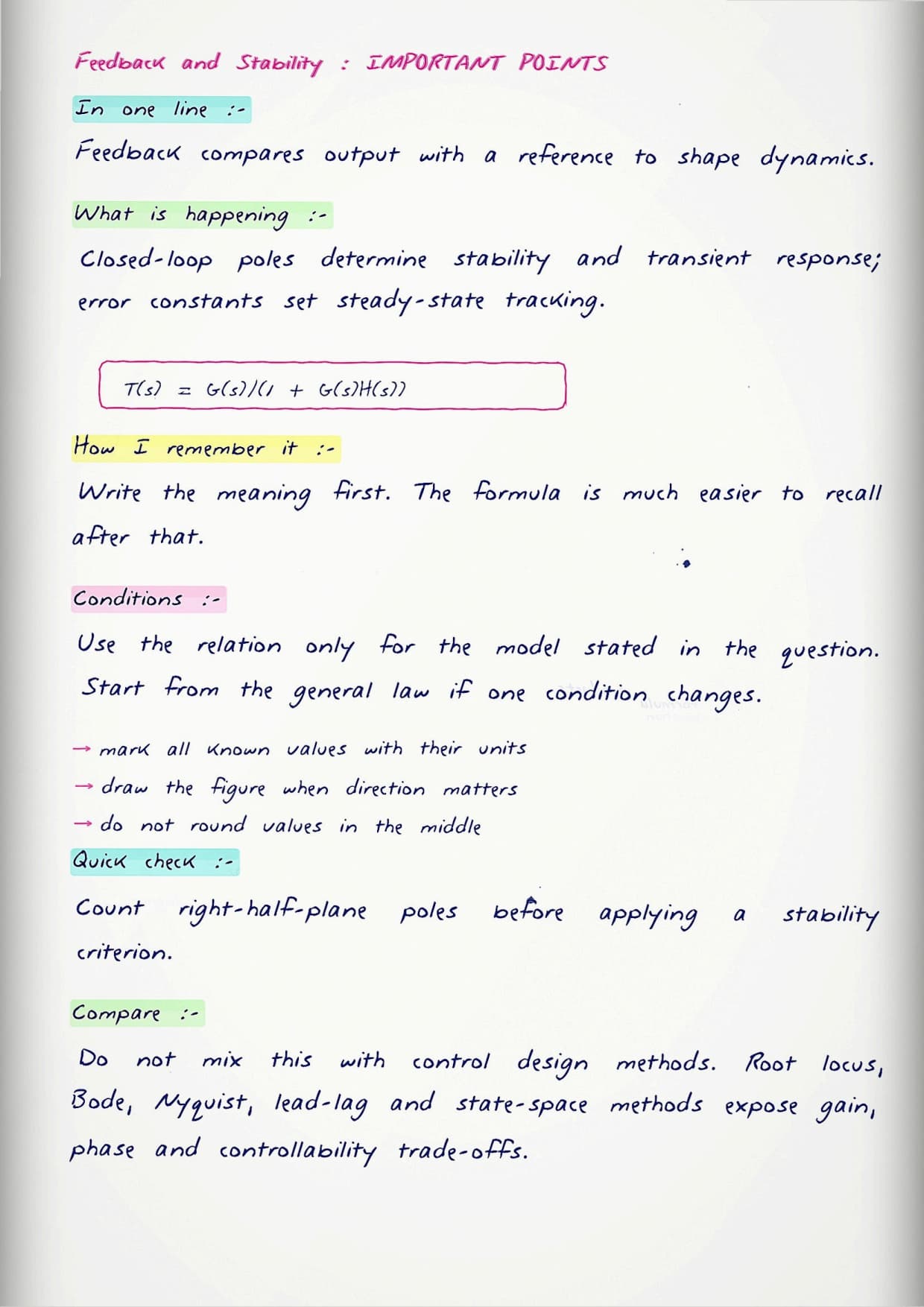
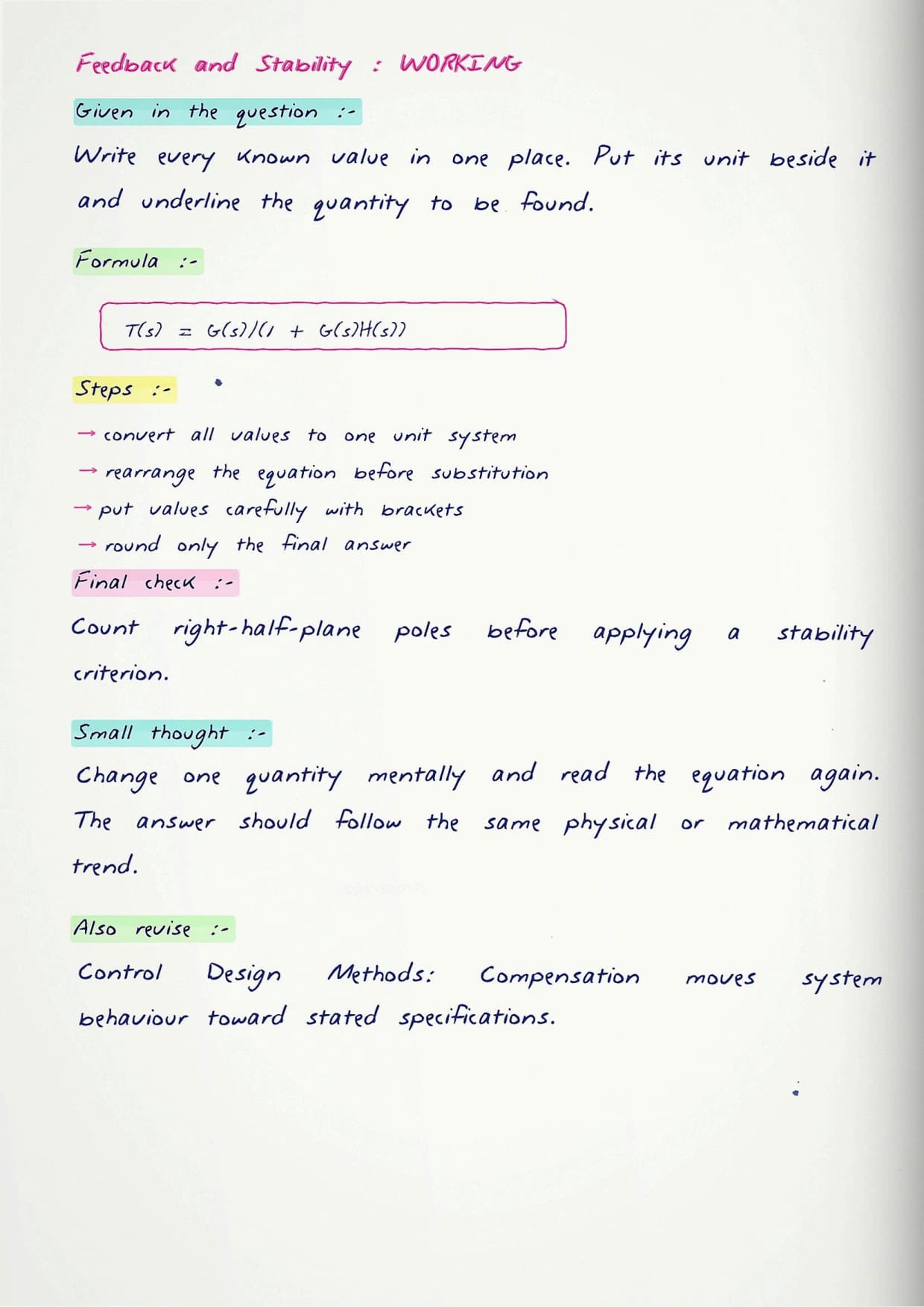
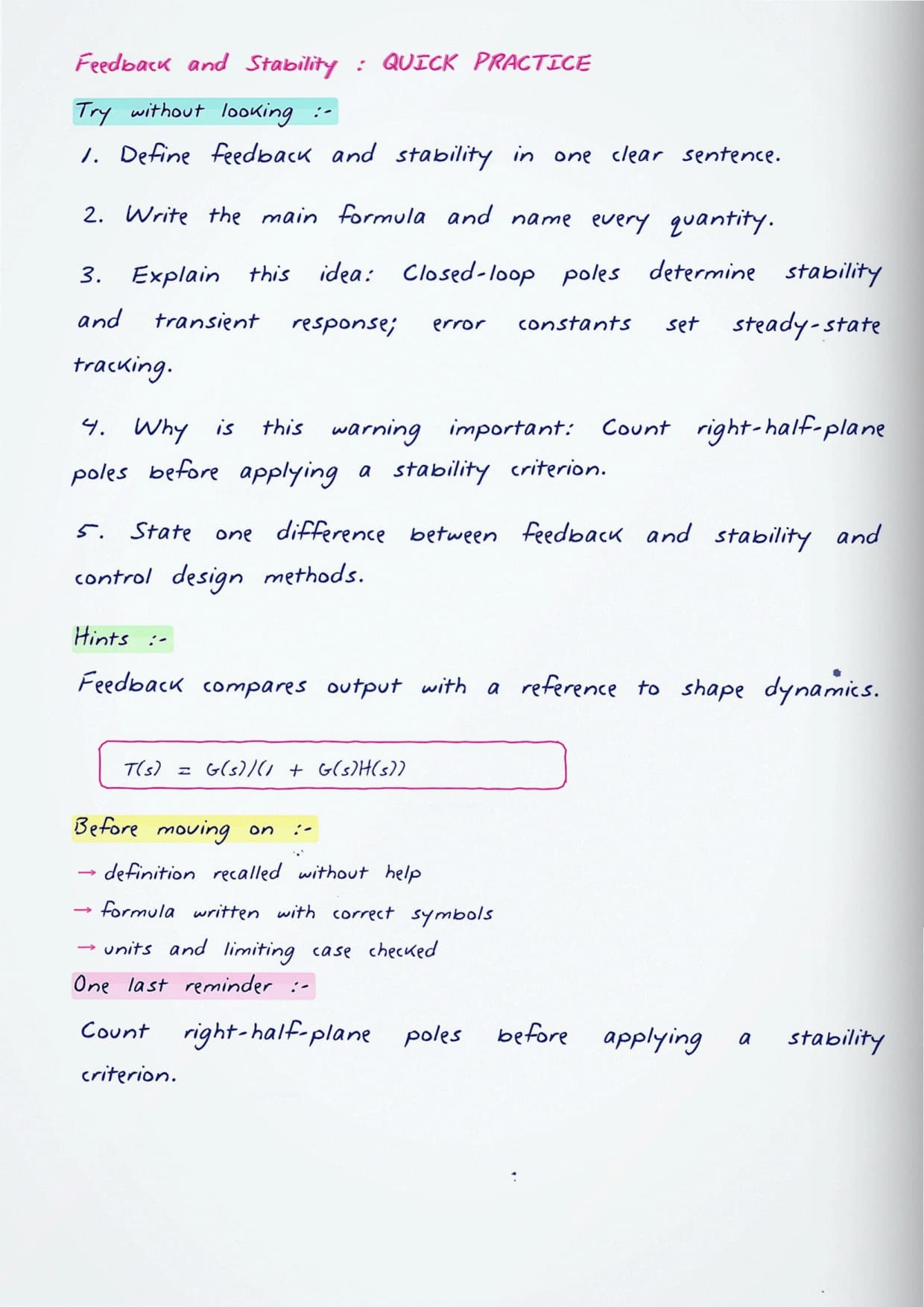
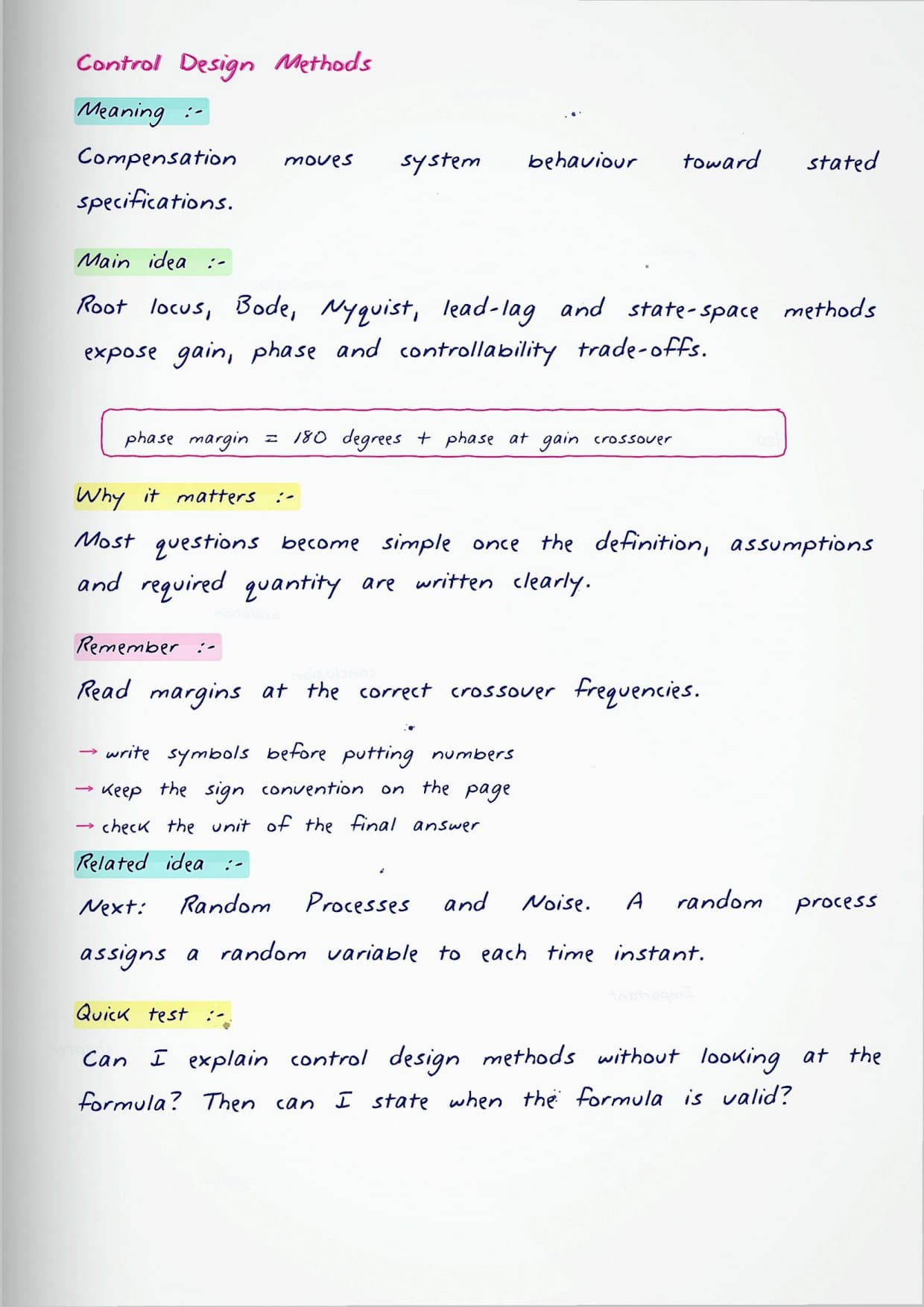
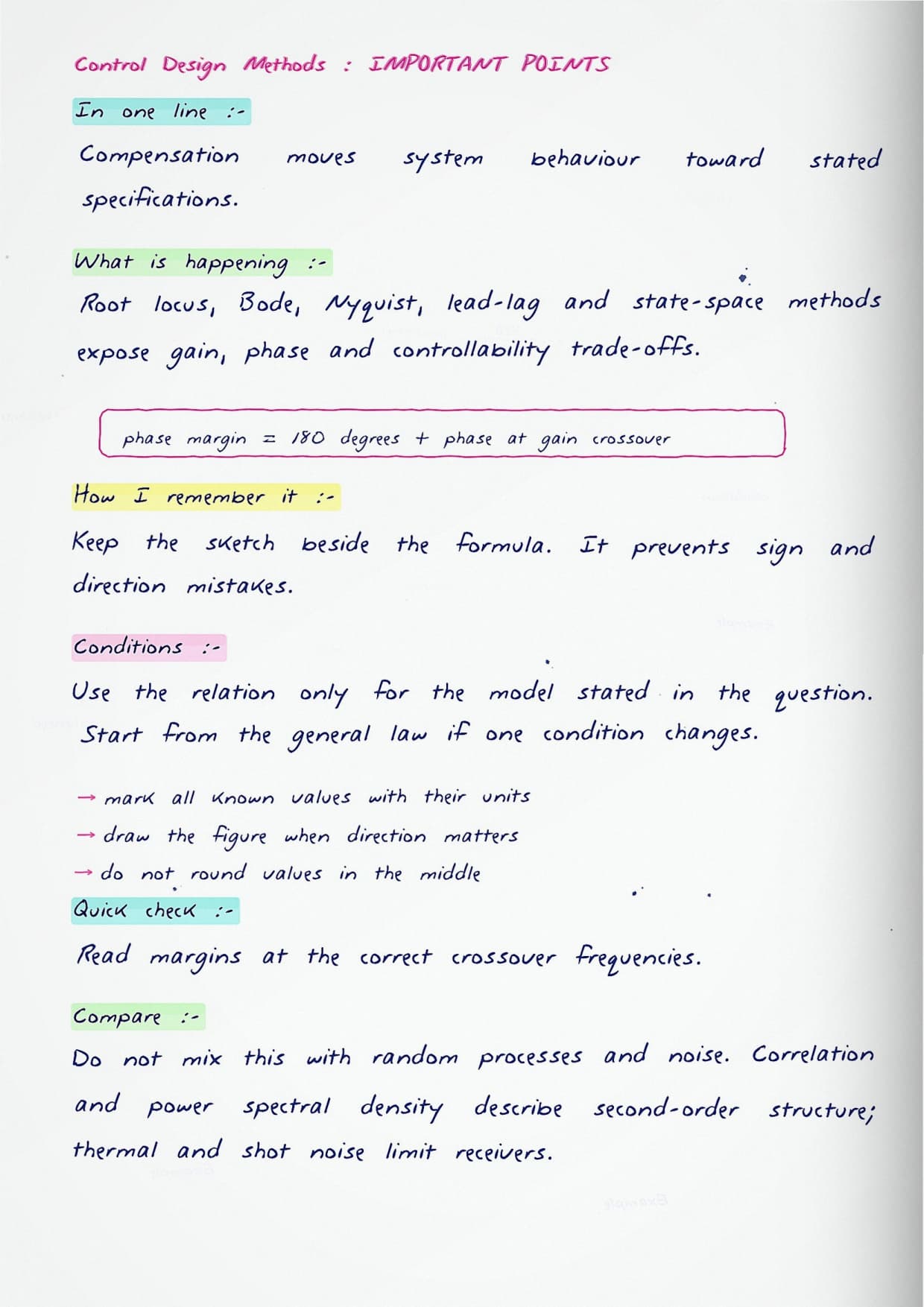
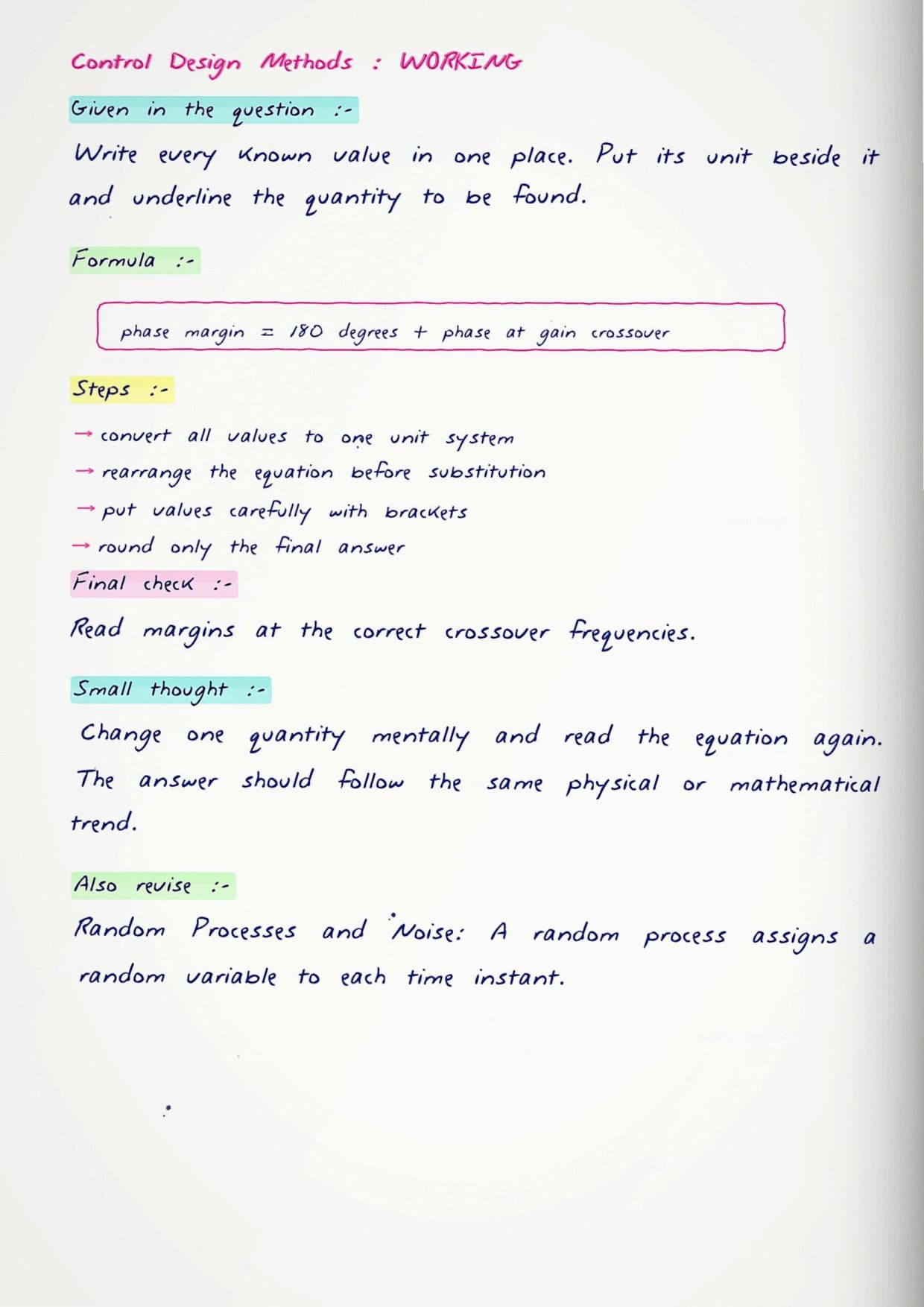
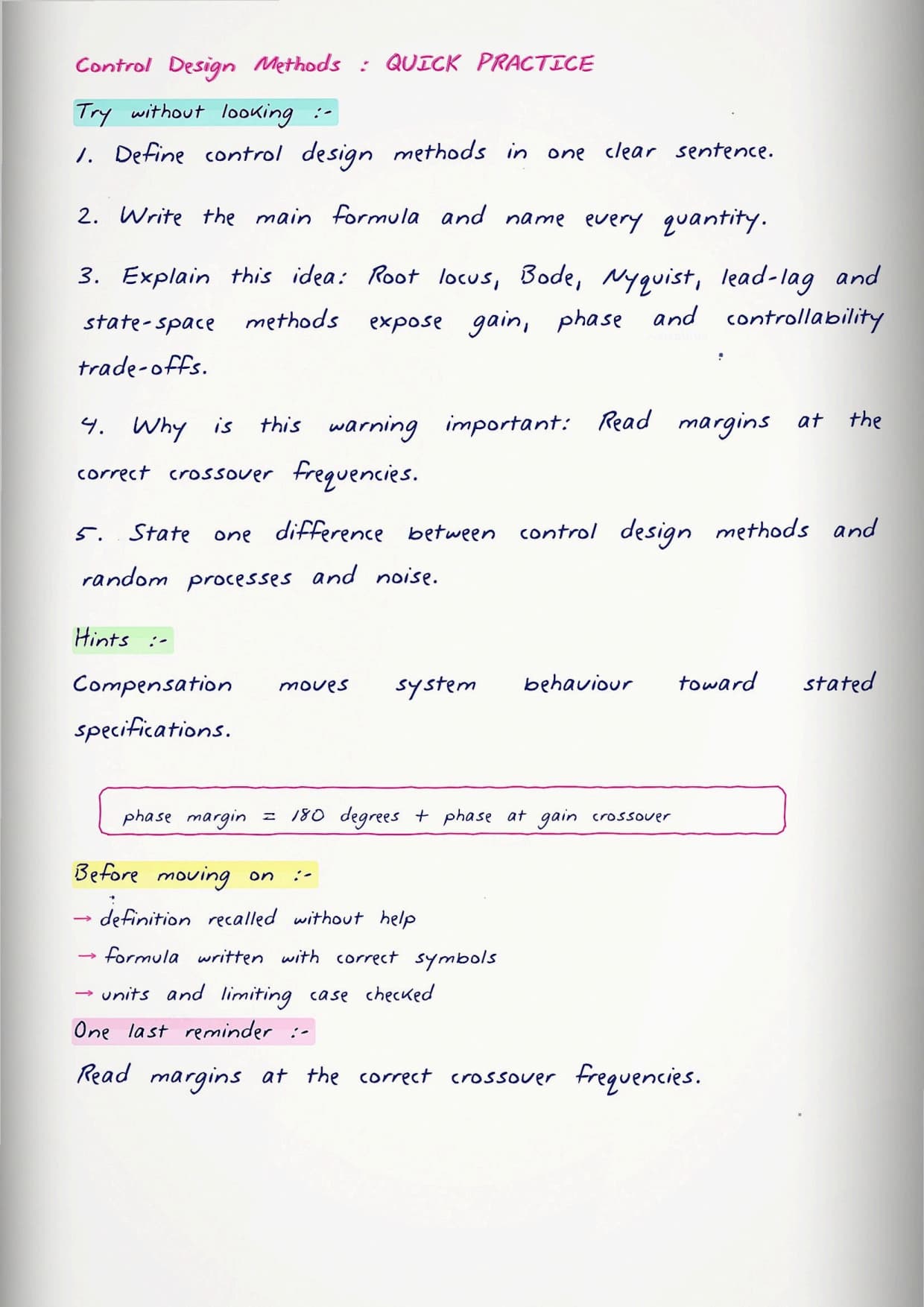
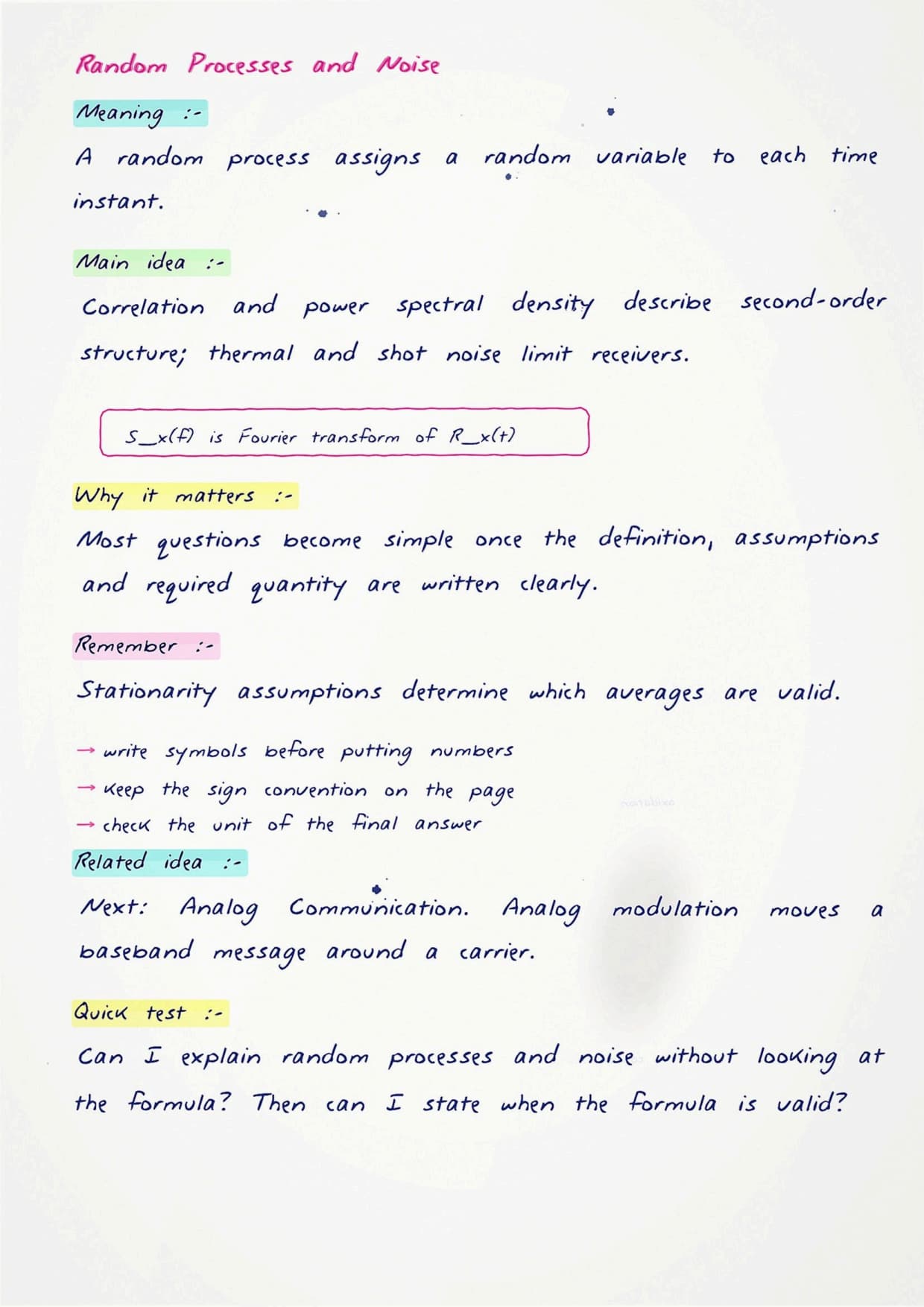
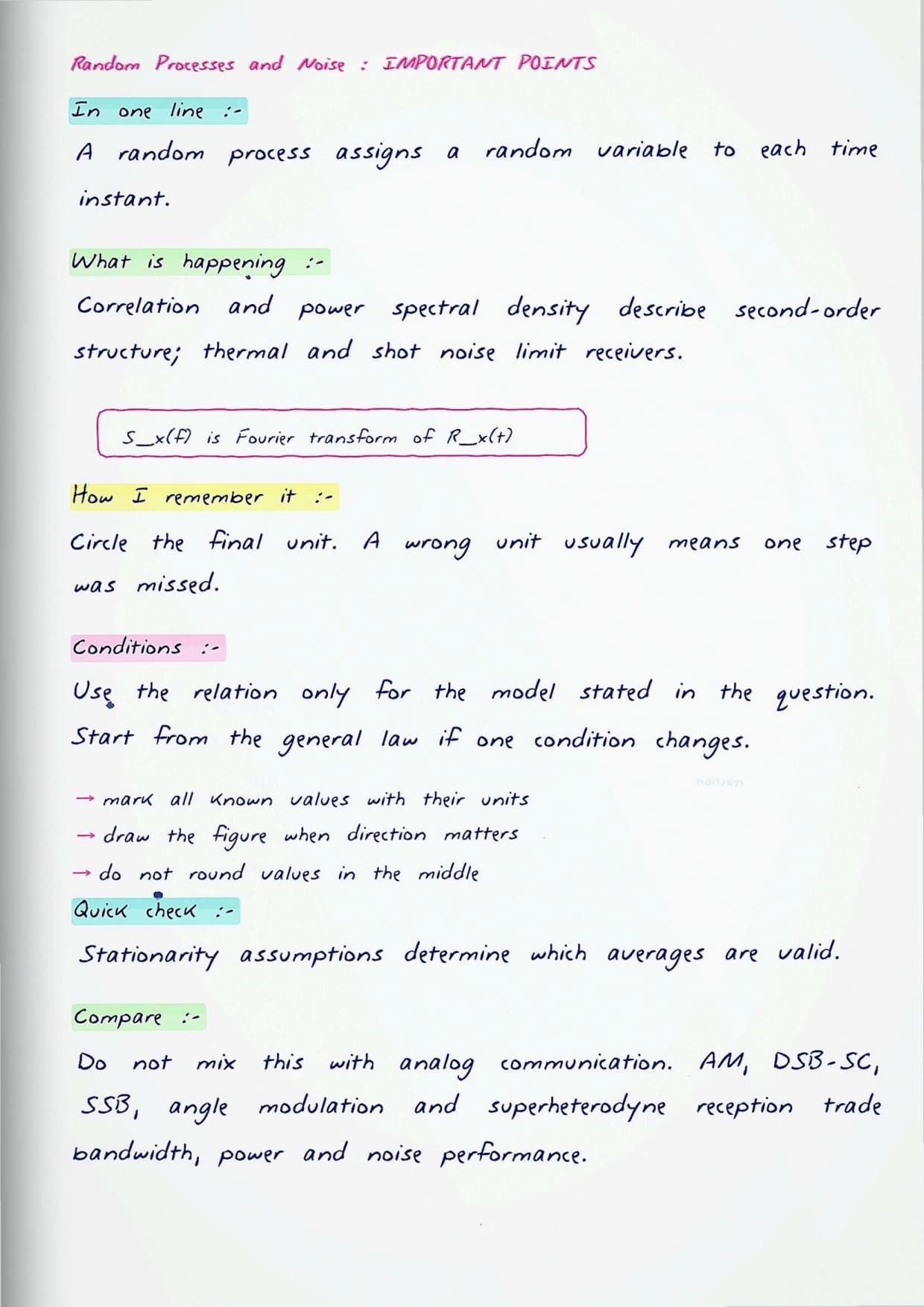
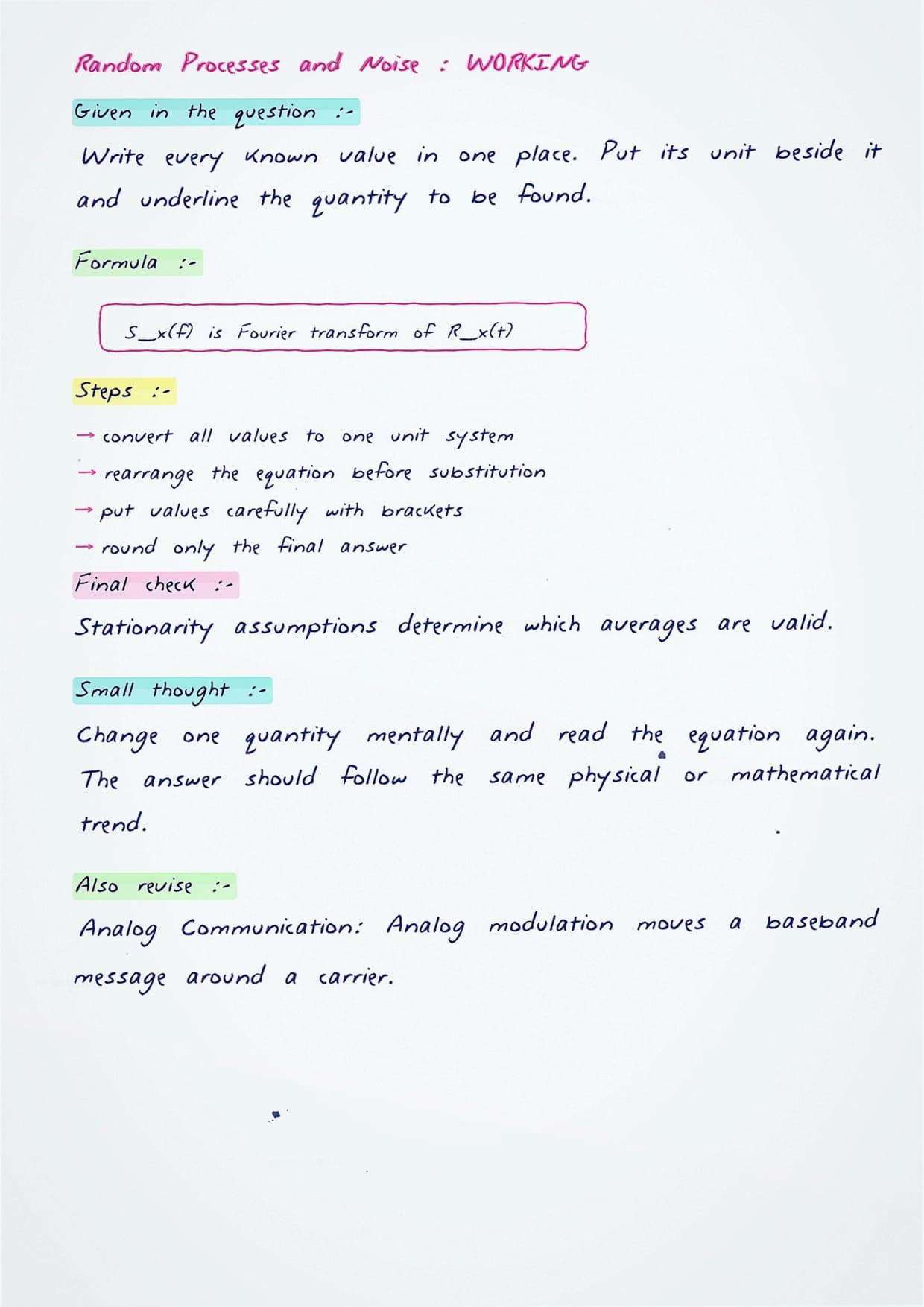
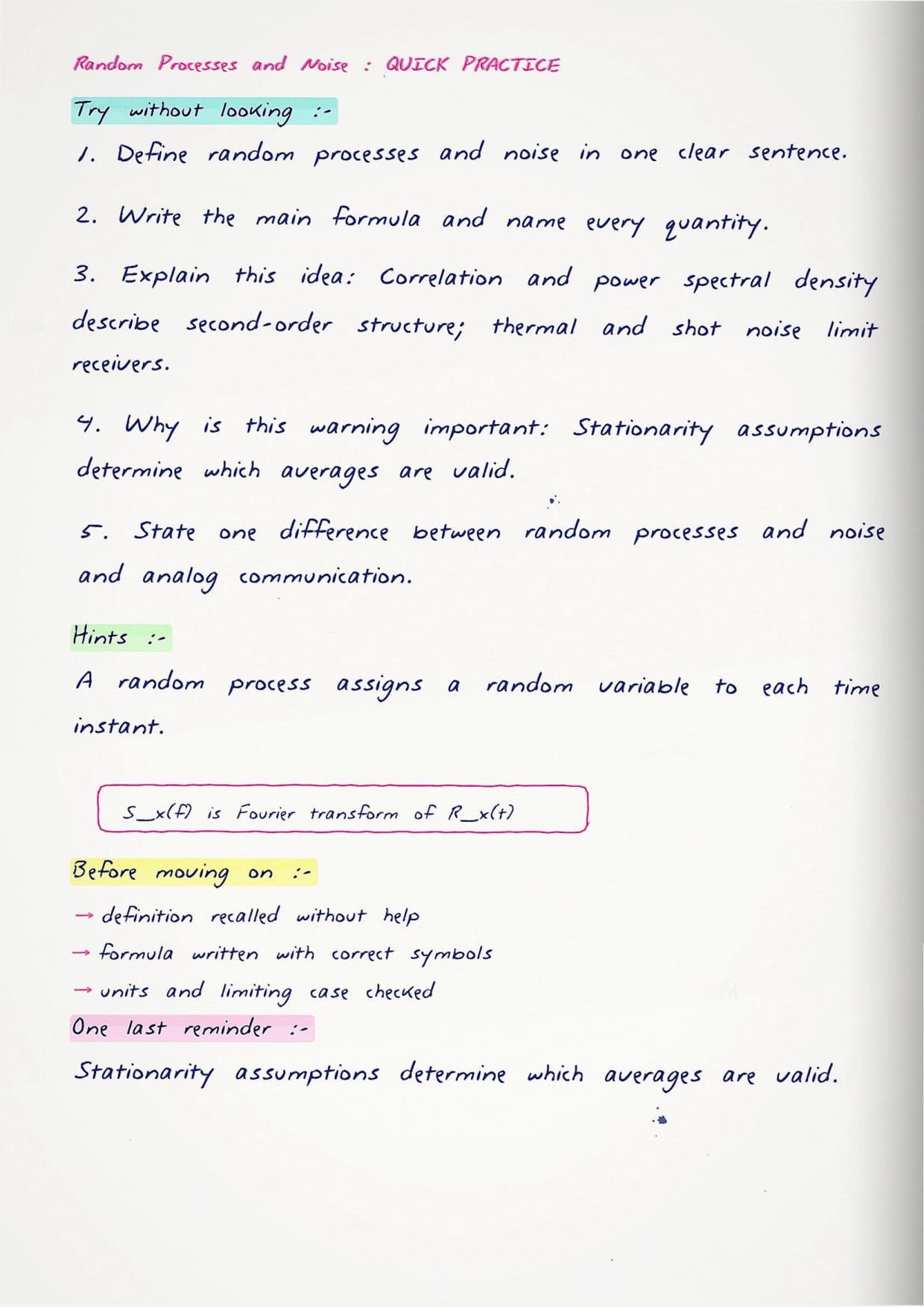
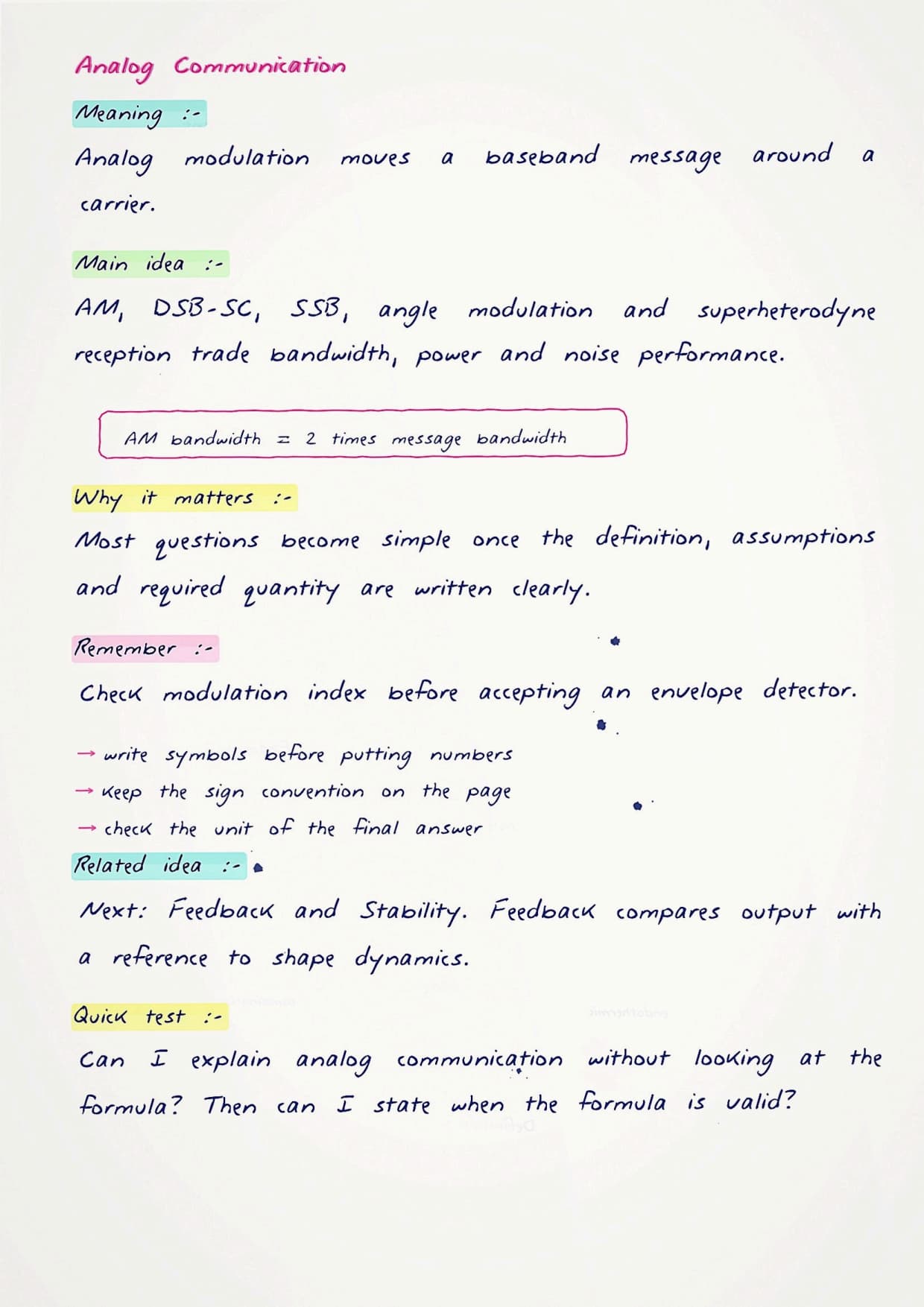
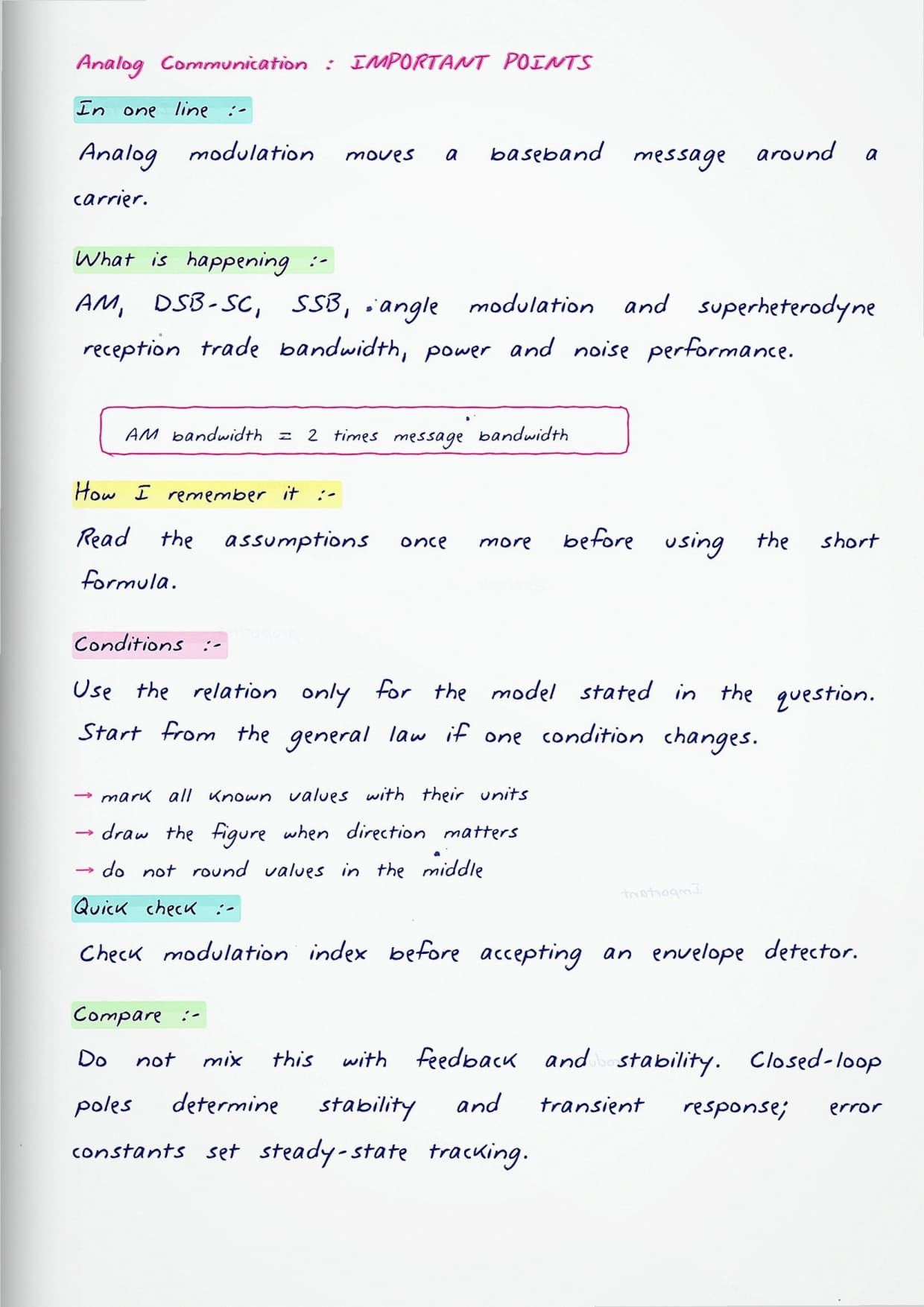
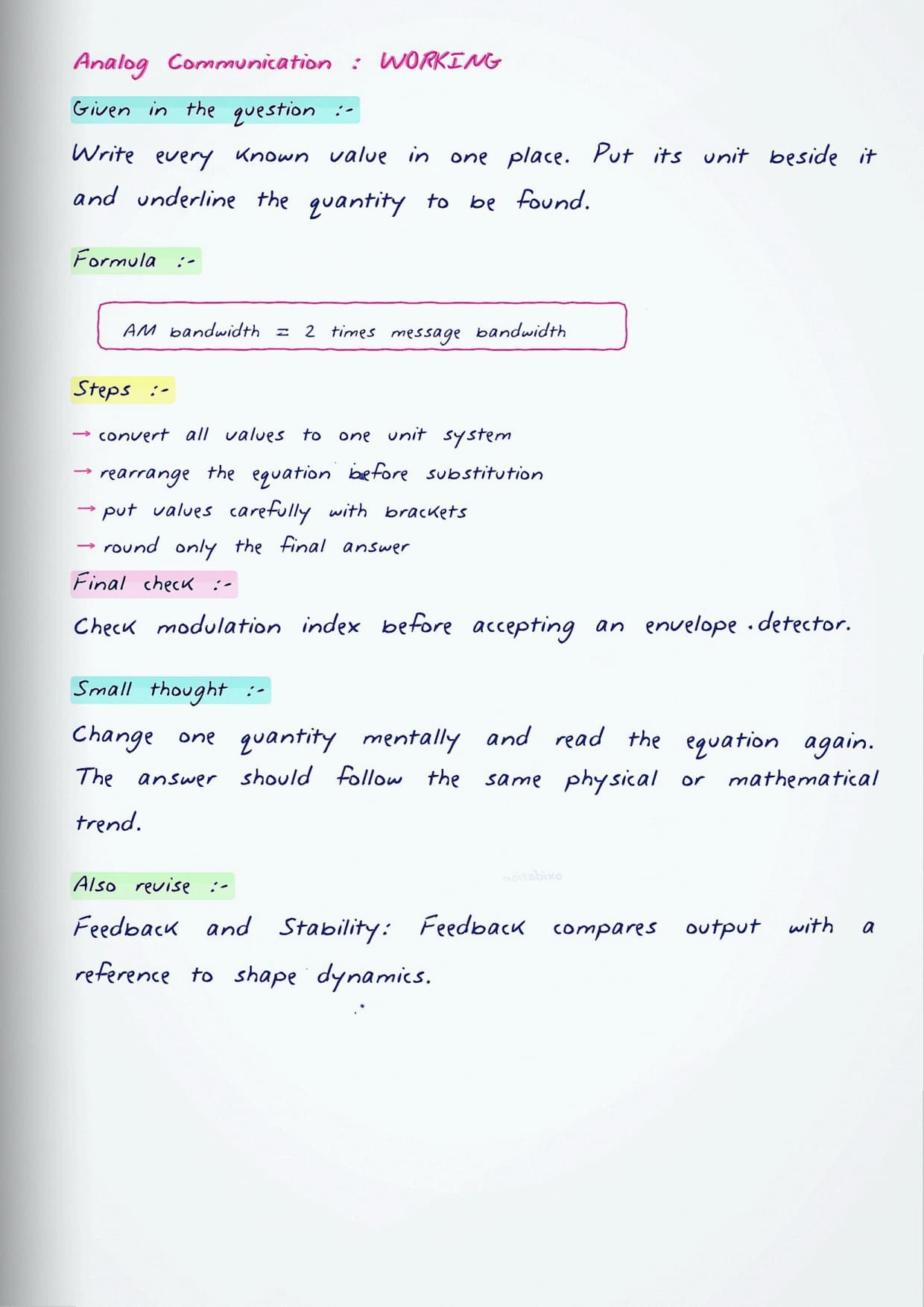
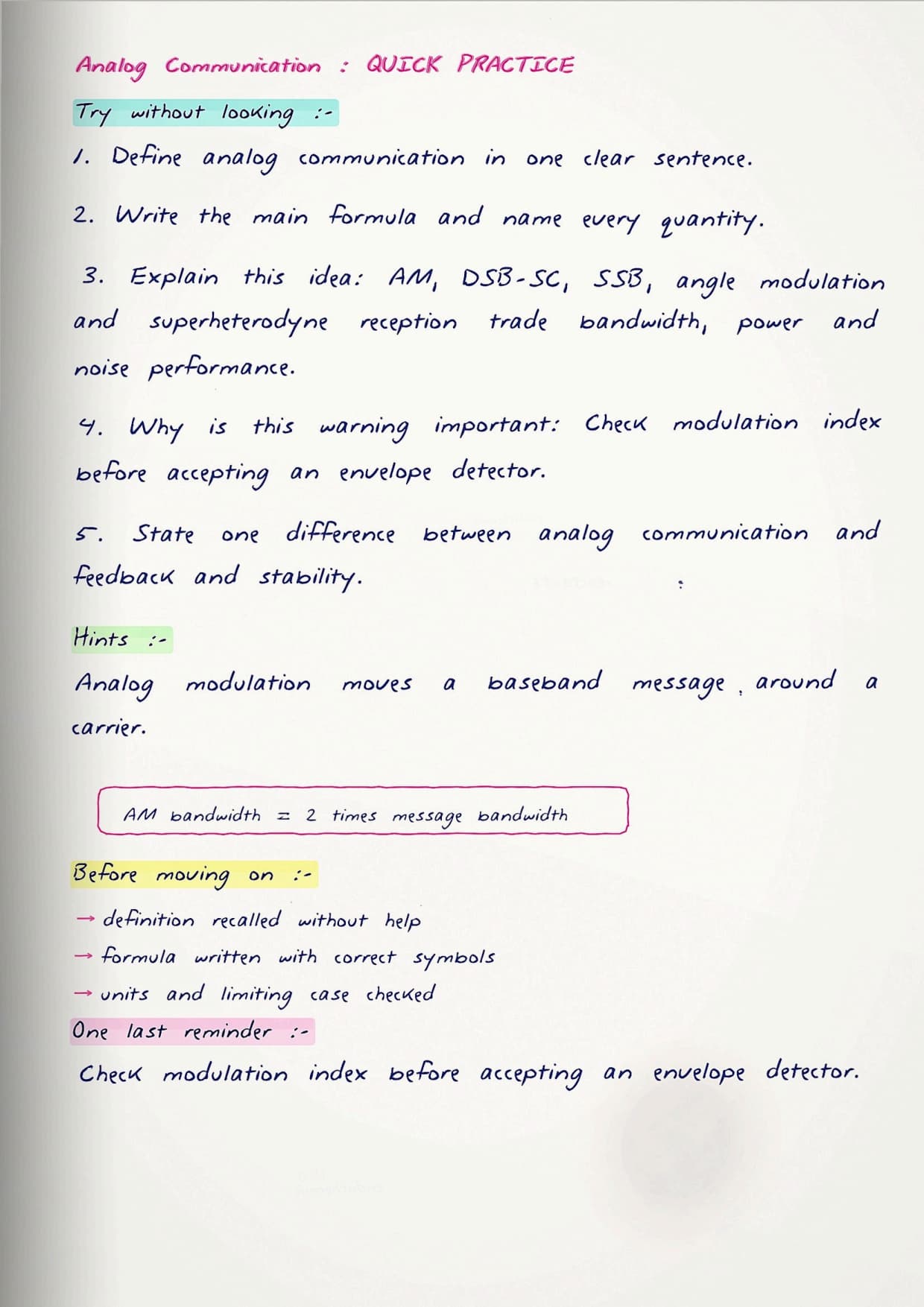
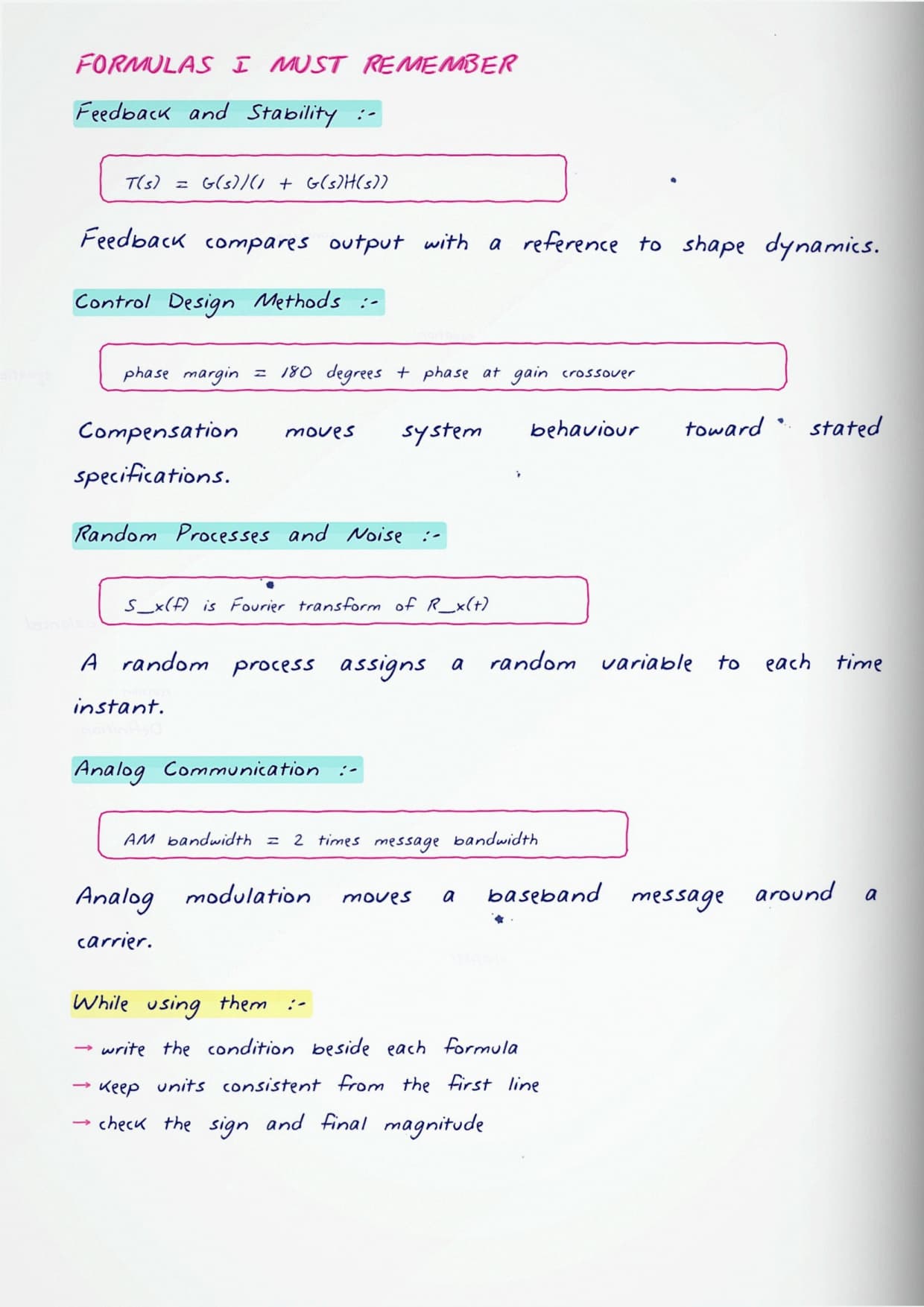
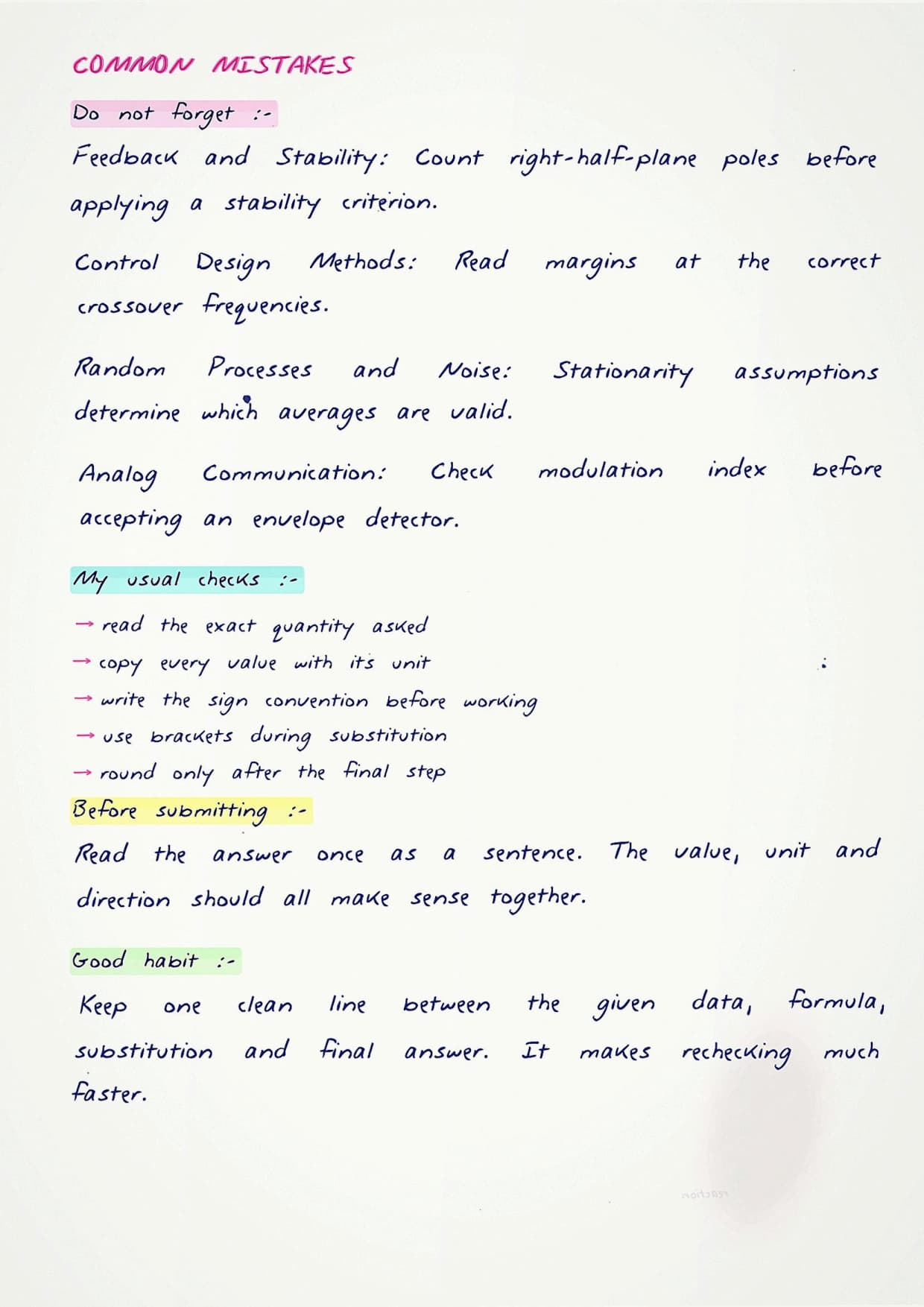
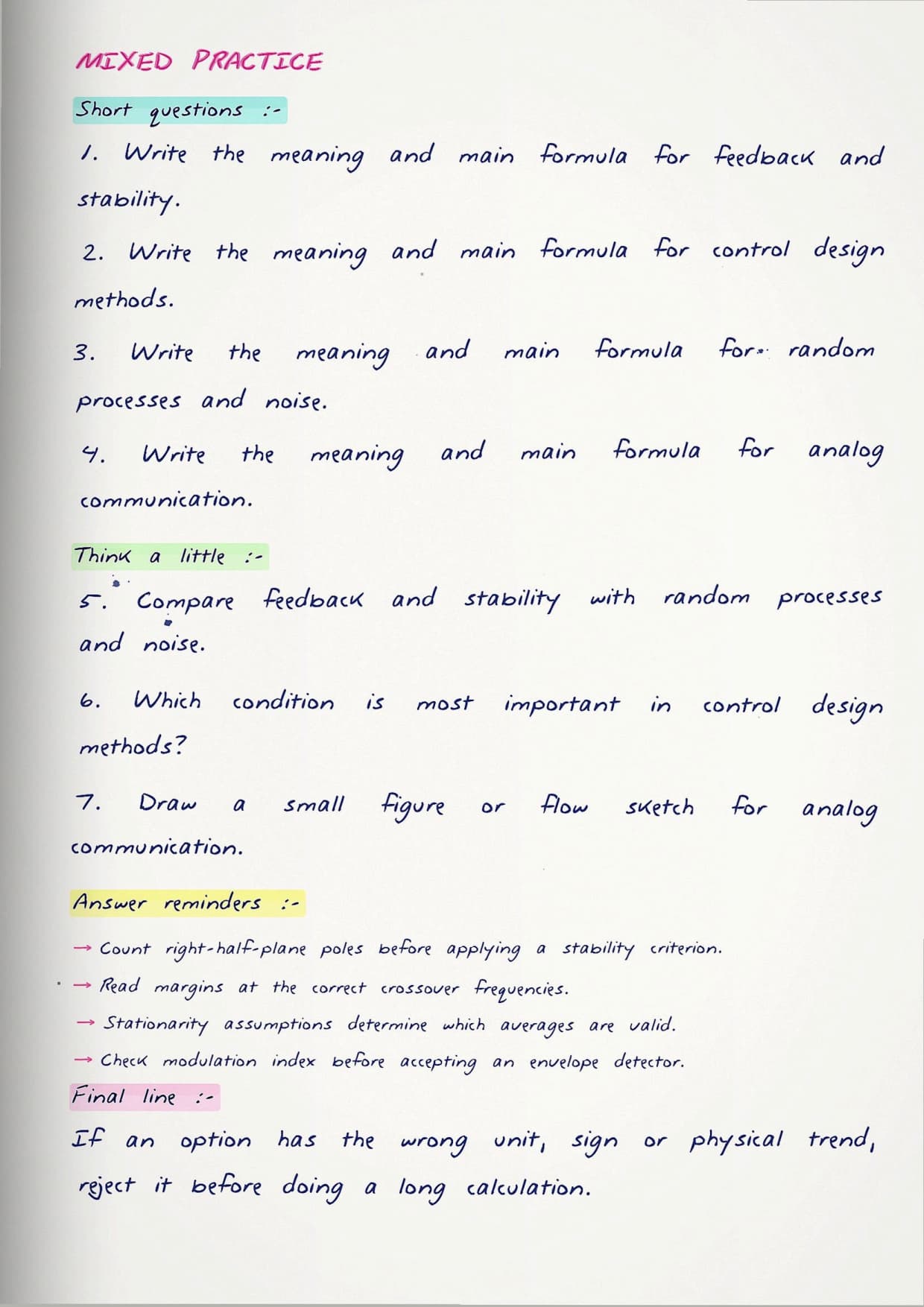
The set runs across 20 pages and keeps Control Systems and Analog Communication side by side, so students revising for the GATE EC paper can move between the two without switching books.
Why Control and Analog Communication Repay Your Revision Hours
In the GATE EC paper, Control Systems and Communications are two of the most dependable scoring areas. Between them they usually account for a meaningful chunk of the technical section, year after year.
- Questions tend to be formula-driven, so a clean derivation on paper often finishes in under two minutes.
- The topics overlap with Signals and Systems, which means one round of revision feeds two subjects.
- Numericals here are less trick-heavy than network theory, so accuracy is easier to hold.
- Both areas reward memory of a few standard results, which handwritten pages fix quickly.
That is why students who are short on time still keep these two on the priority list.
What the Control Systems Pages Walk You Through
The Control Systems half stays close to the GATE syllabus and moves in the usual teaching order, from modelling a system to judging whether it is stable.
- Transfer functions, block diagram reduction and signal flow graphs with Mason's gain rule.
- Time response of first and second order systems, including rise time, peak overshoot and settling time.
- Steady state error and the static error constants for different input types.
- Routh Hurwitz, root locus and the stability reading each one gives.
- Bode plots, gain margin and phase margin, plus a short note on the Nyquist idea.
Where Noise and Analog Communication Come In
The communication pages start with how a message rides on a carrier and end with how noise eats into the signal. This is the part students often leave for the last week, so it is written to revise fast.
- Amplitude modulation with modulation index, power sharing and bandwidth, then DSB, SSB and VSB variants.
- Frequency and phase modulation, Carson's rule and narrowband versus wideband FM.
- Noise basics: thermal noise, noise figure, noise temperature and signal to noise ratio.
- Receiver performance, comparing how AM and FM hold up once noise is added.
The Results Students End Up Marking In Red
A handful of standard results carry most of the marks in these two areas. The notes keep them boxed so they are easy to find on the night before the exam.
- The second order pair linking damping ratio to peak overshoot and settling time.
- Static error constants and which one matches step, ramp or parabolic input.
- The AM power equation and the fraction of power carried by the sidebands.
- Carson's rule for FM bandwidth and the meaning of the modulation index.
- The noise figure relation and how stages combine in a cascade.
Watch Control Systems Basics Explained
Source: Neso Academy
Slips That Quietly Drain Marks
Most lost marks here come from small habits rather than hard concepts. Students who watch for these usually gain a few clean marks.
- Mixing up gain margin and phase margin, or reading them off the wrong plot.
- Forgetting to check the type of the system before choosing the error constant.
- Leaving the carrier power in when the question asks only for sideband power.
- Using single sided instead of double sided noise density, which doubles the answer.
The pages flag each of these next to the working, so the correction sticks.
Fitting These Notes Into a Tight Study Plan
These pages work best as a fast second pass, not a first read. A short, repeated cycle keeps both topics warm right up to the exam.
- Day one: read the Control Systems pages, then solve two previous year sets on stability and time response.
- Day two: cover modulation and noise, and rework any AM and FM power sums.
- Weekly: revisit only the boxed results, which takes about thirty minutes.
- Final week: use the mistake flags as a quick checklist before the mock tests.
Kept in this rhythm, the two topics stay ready without crowding out the rest of the paper.
Control Systems, Noise and Analog Communication Notes FAQs
Ques. Are Control Systems and Communications high scoring in GATE EC?
Ans. Yes. Both are steady scoring areas that return marks almost every year, and the questions are largely formula driven, so careful practice pays off well.
Ques. Do these notes cover the full GATE Control Systems syllabus?
Ans. They cover the core: transfer functions, time response, steady state error, Routh Hurwitz, root locus and frequency response through Bode and Nyquist ideas.
Ques. Is Analog Communication enough, or do I need digital too?
Ans. These pages focus on analog modulation and noise. Digital communication is a separate topic and should be revised from its own notes alongside this set.
Ques. How many pages are in the PDF?
Ans. The set runs across 20 pages, keeping Control Systems and Analog Communication together so students can revise both in one sitting.
Ques. When should I use these notes in my preparation?
Ans. Use them as a fast second pass after your first study round, then repeat the boxed results and mistake flags weekly up to the exam.



Comments