




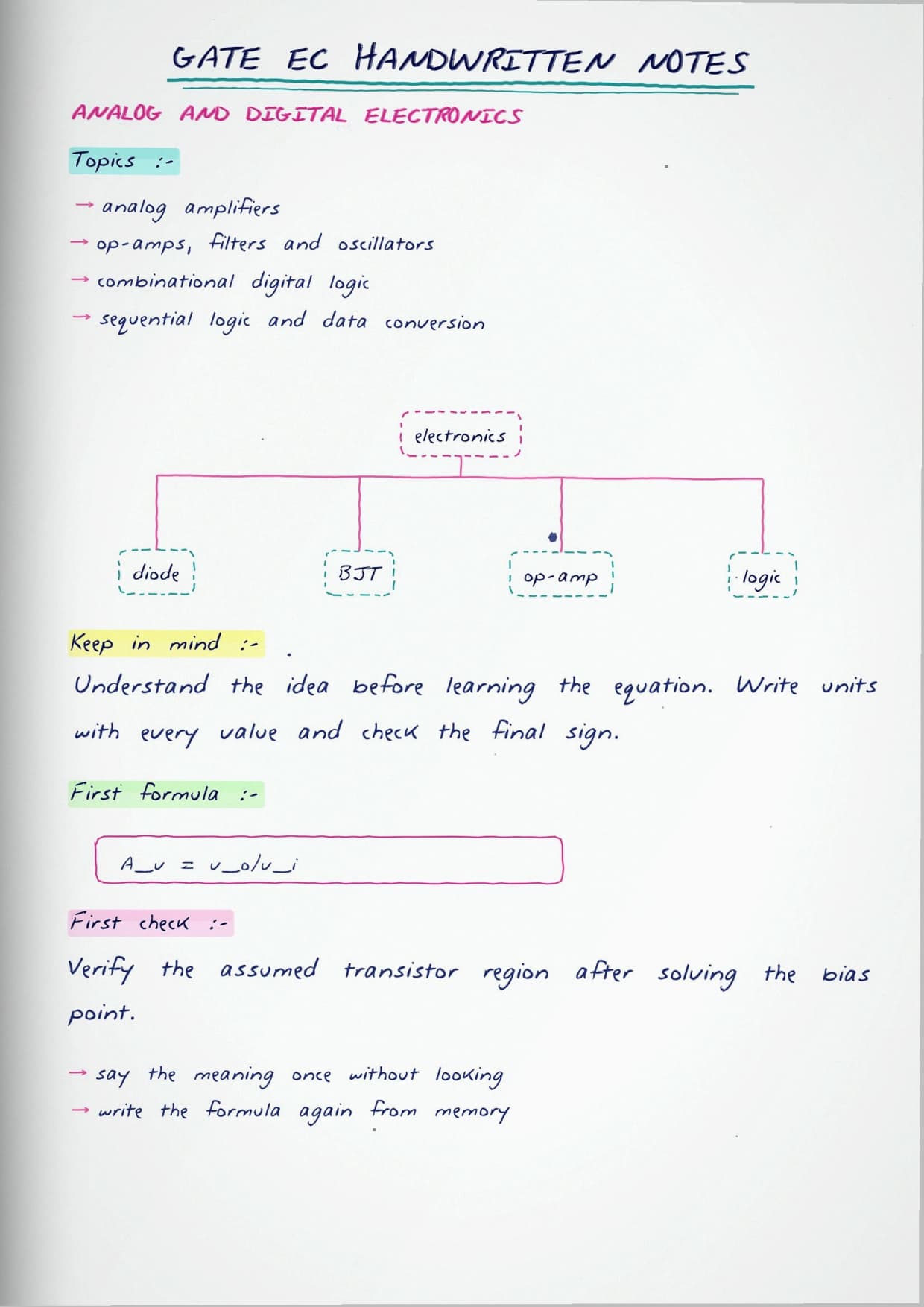
These handwritten notes pull together Analog and Digital Electronics for GATE EC into one connected read, and together these two areas carry a meaningful chunk of the technical section every year.
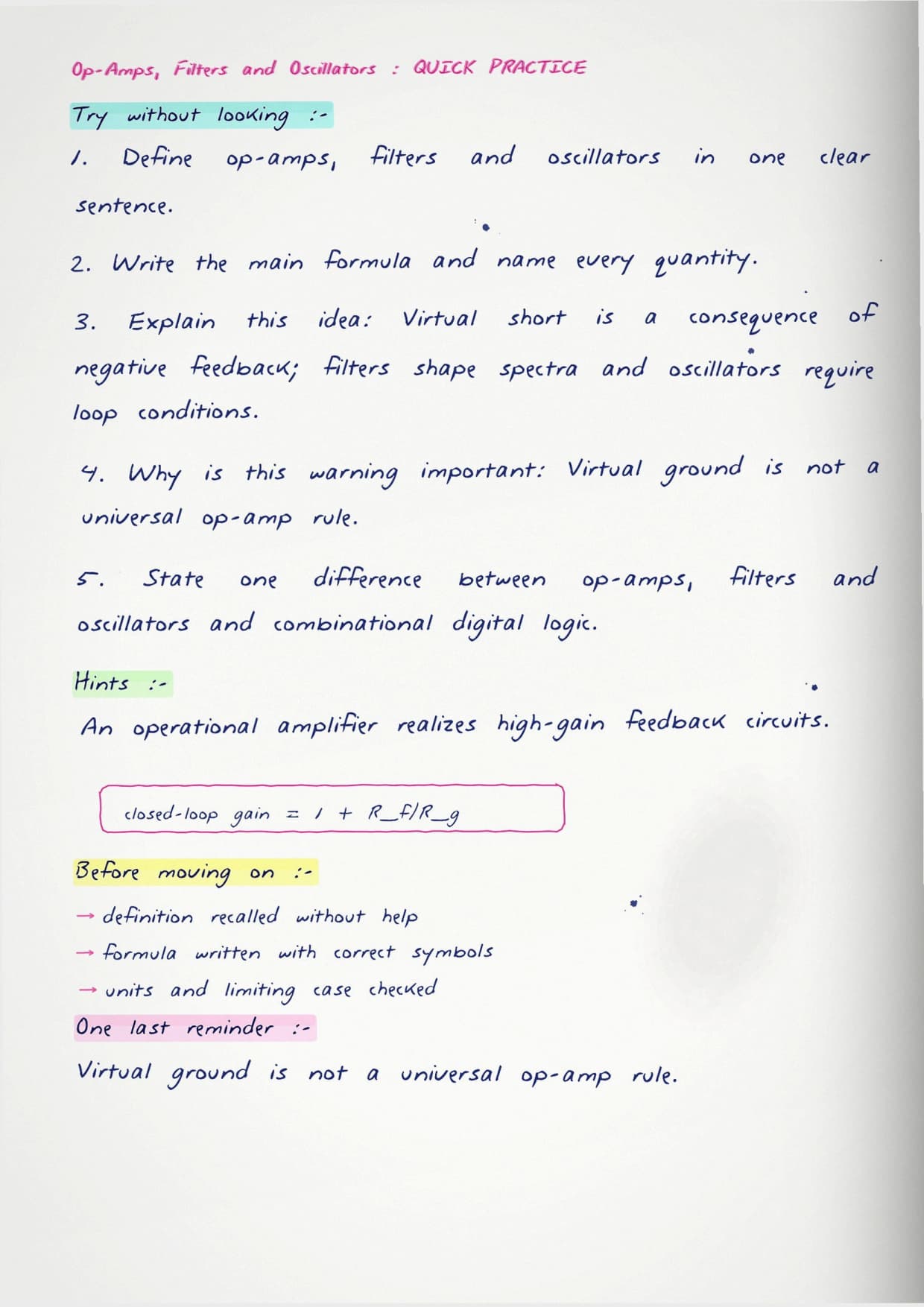
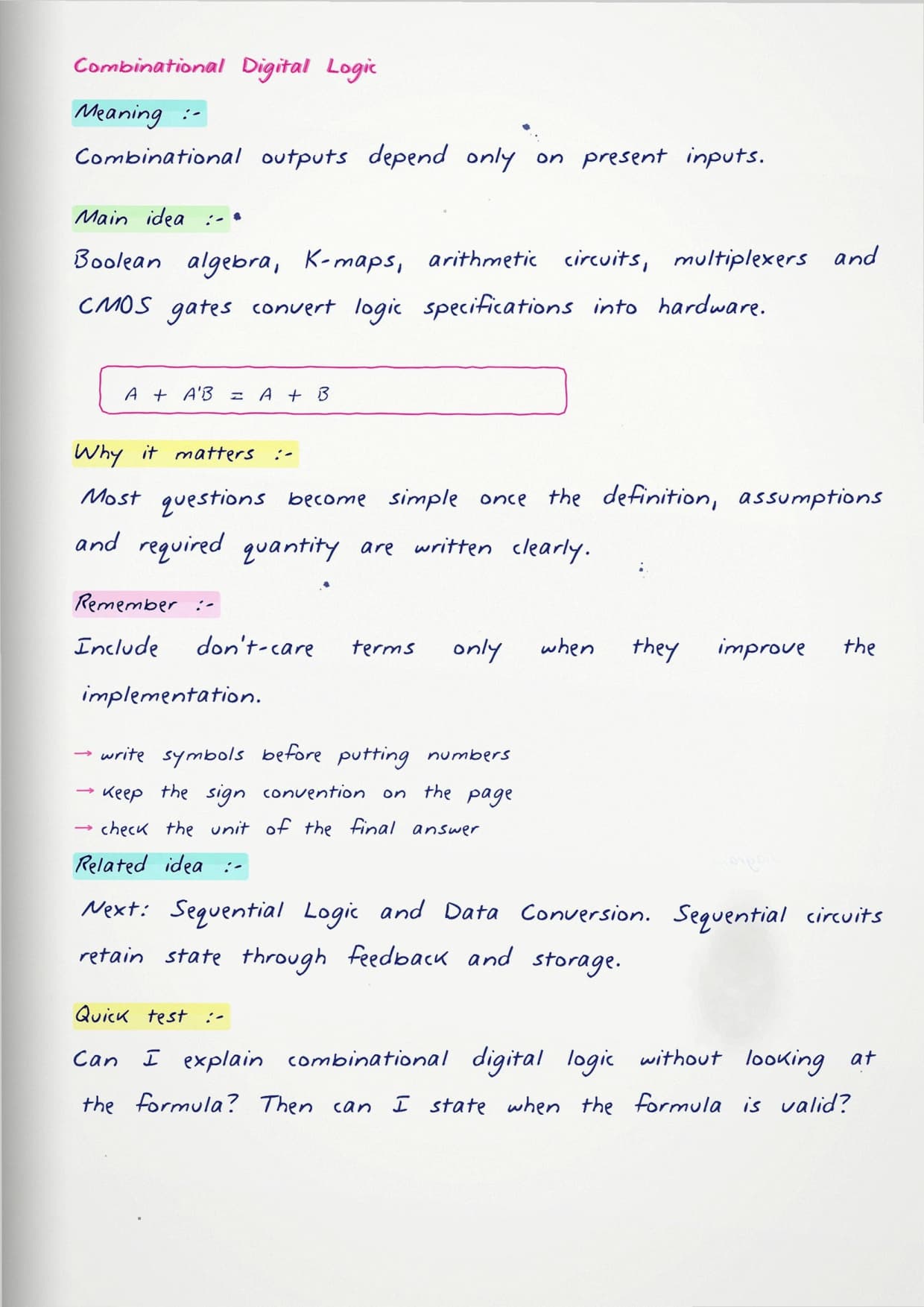
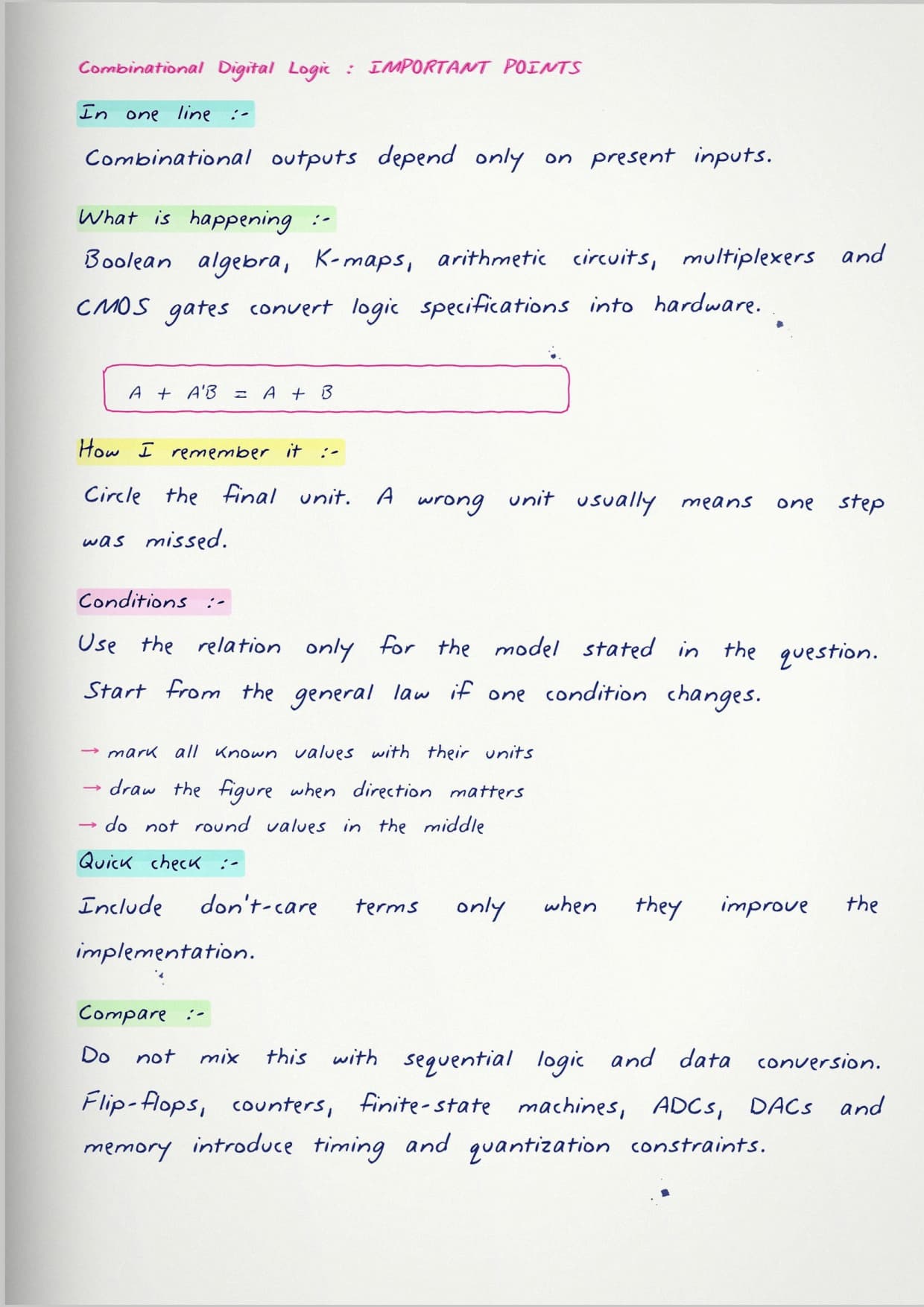
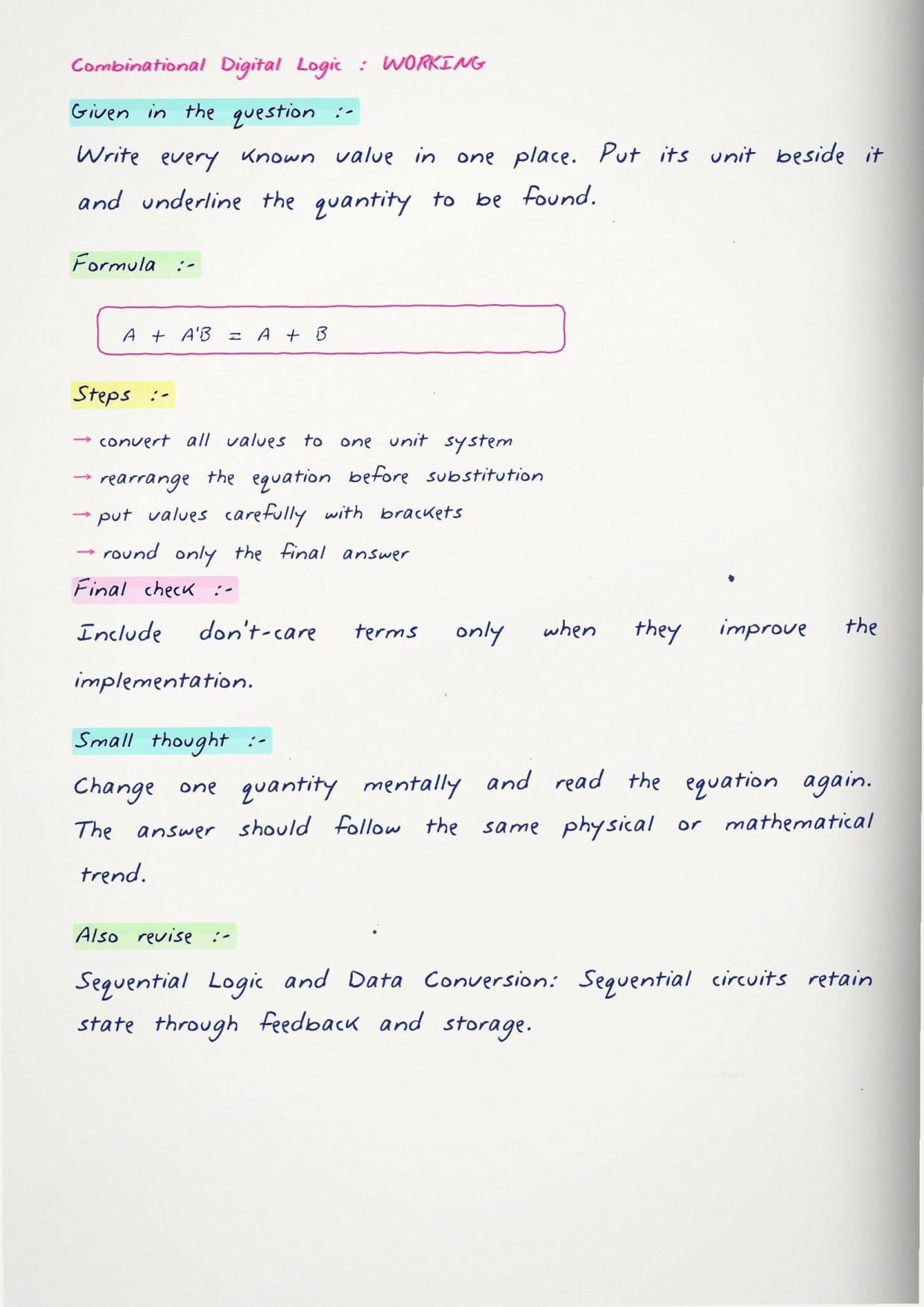
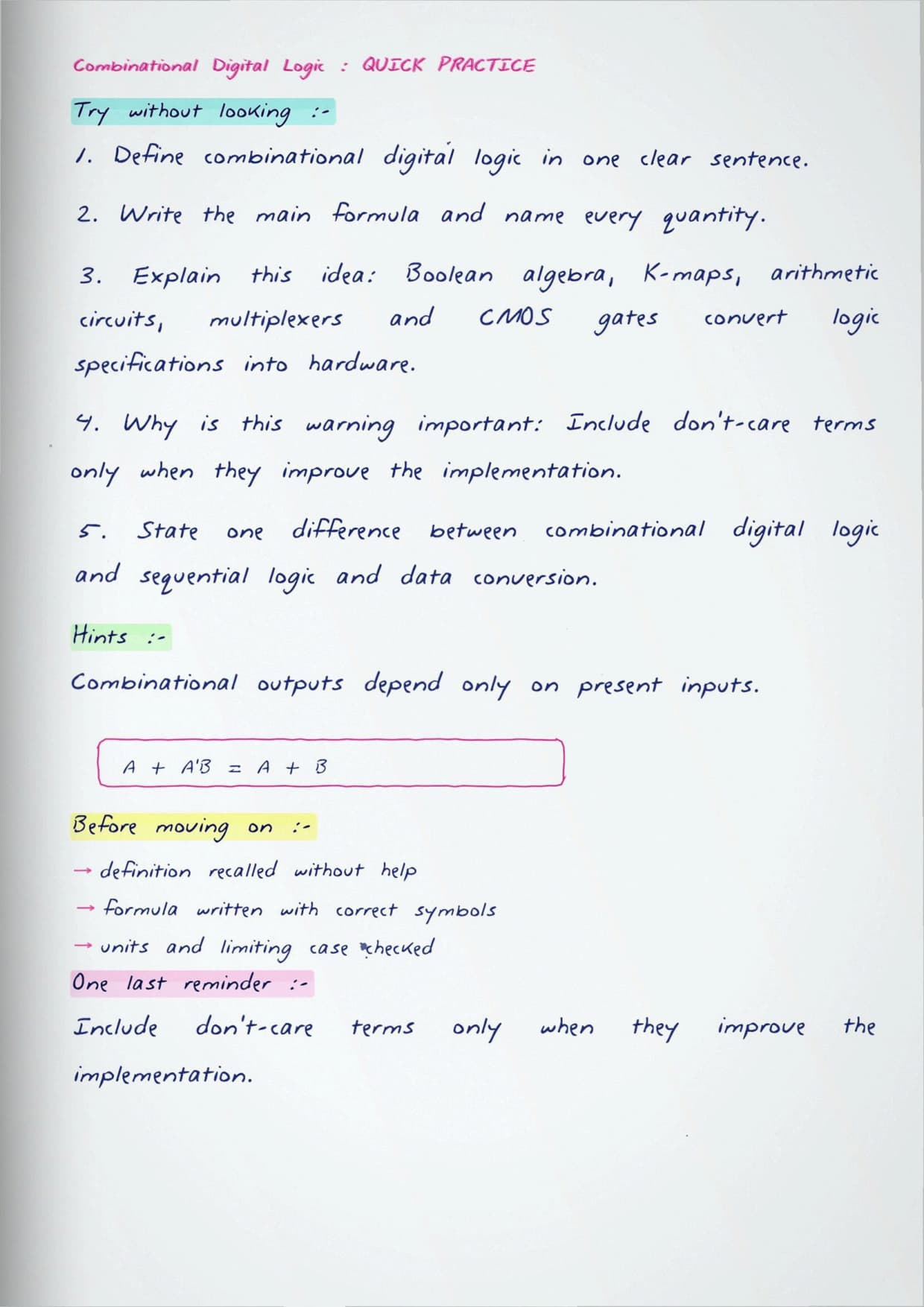
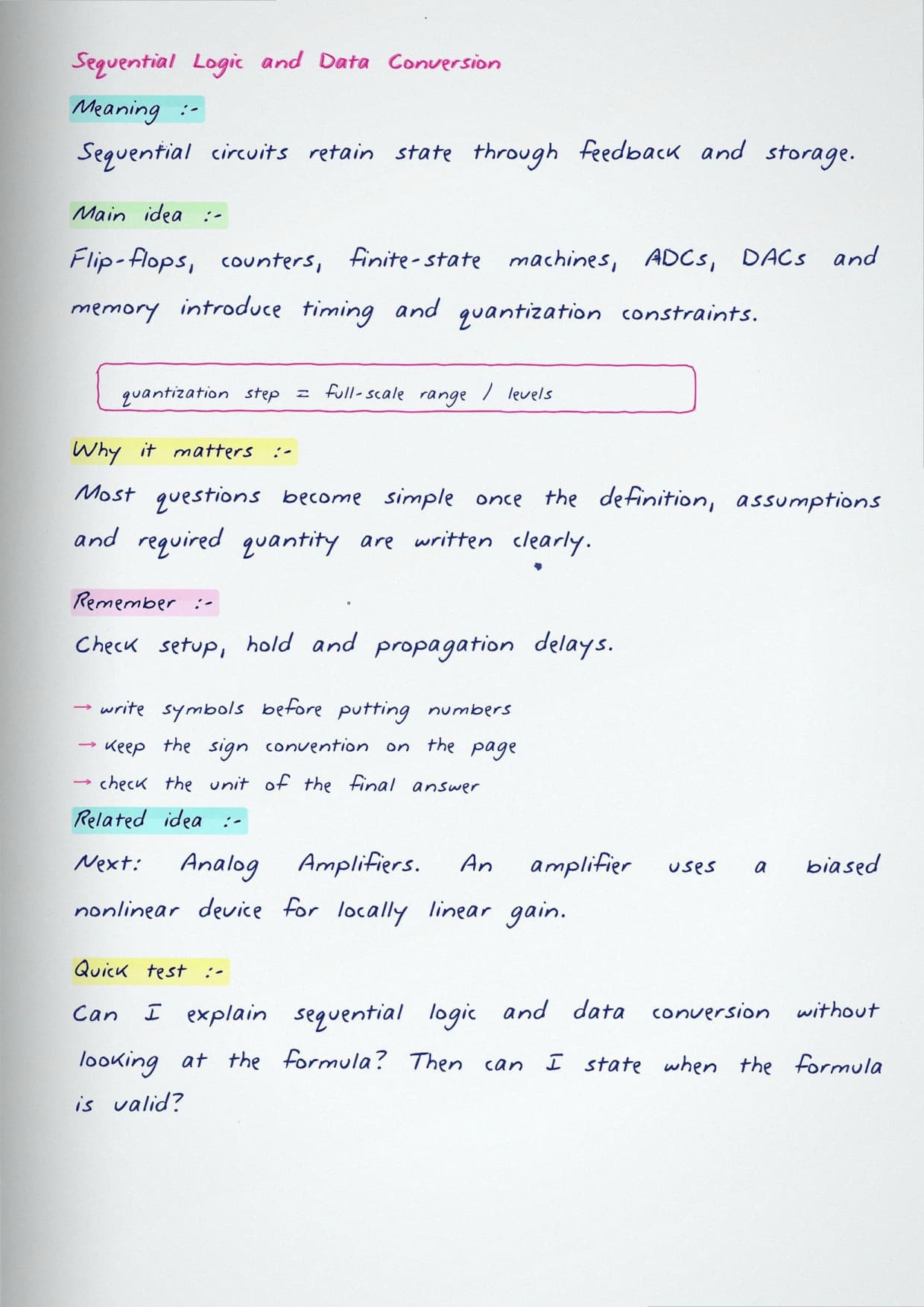
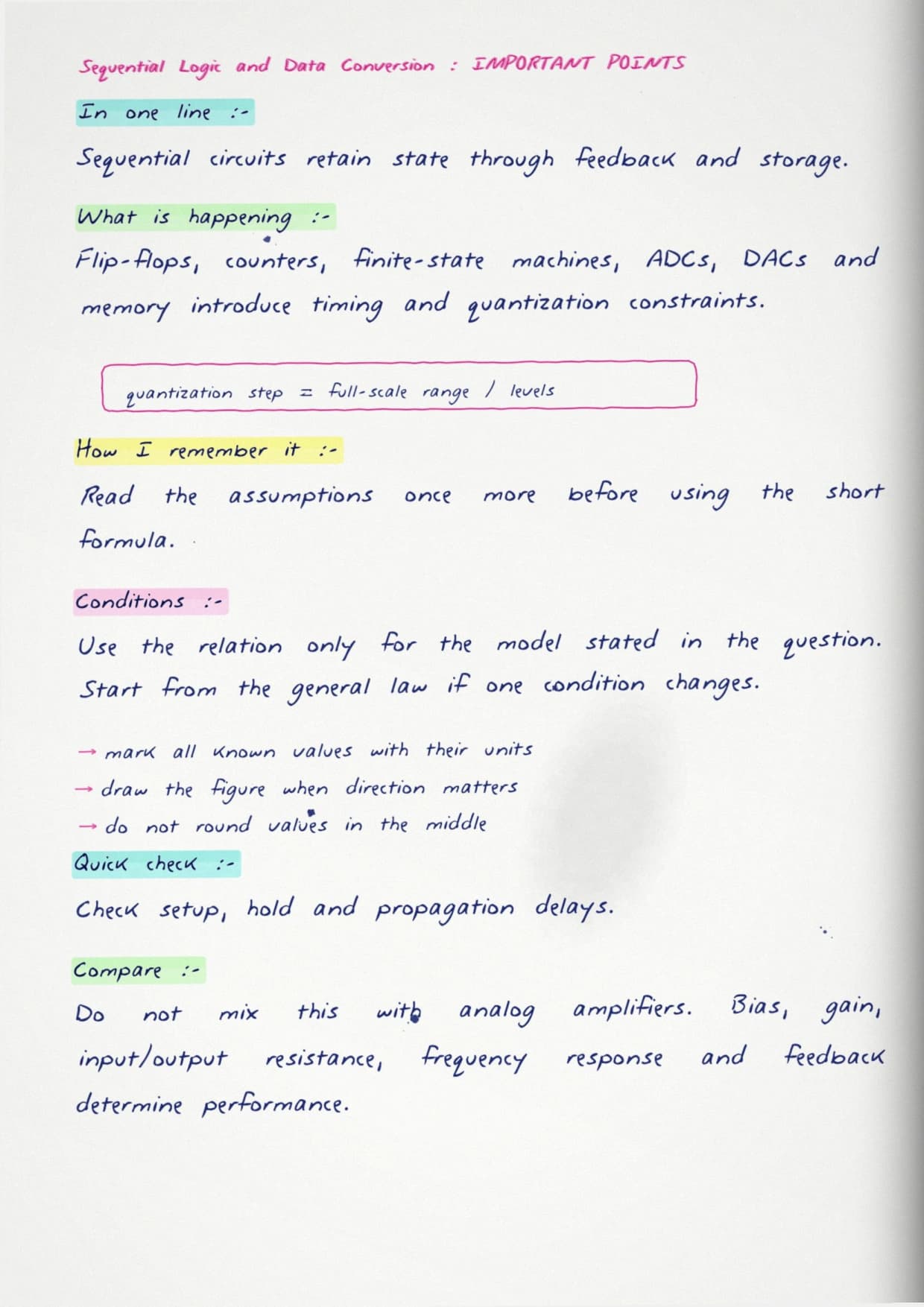
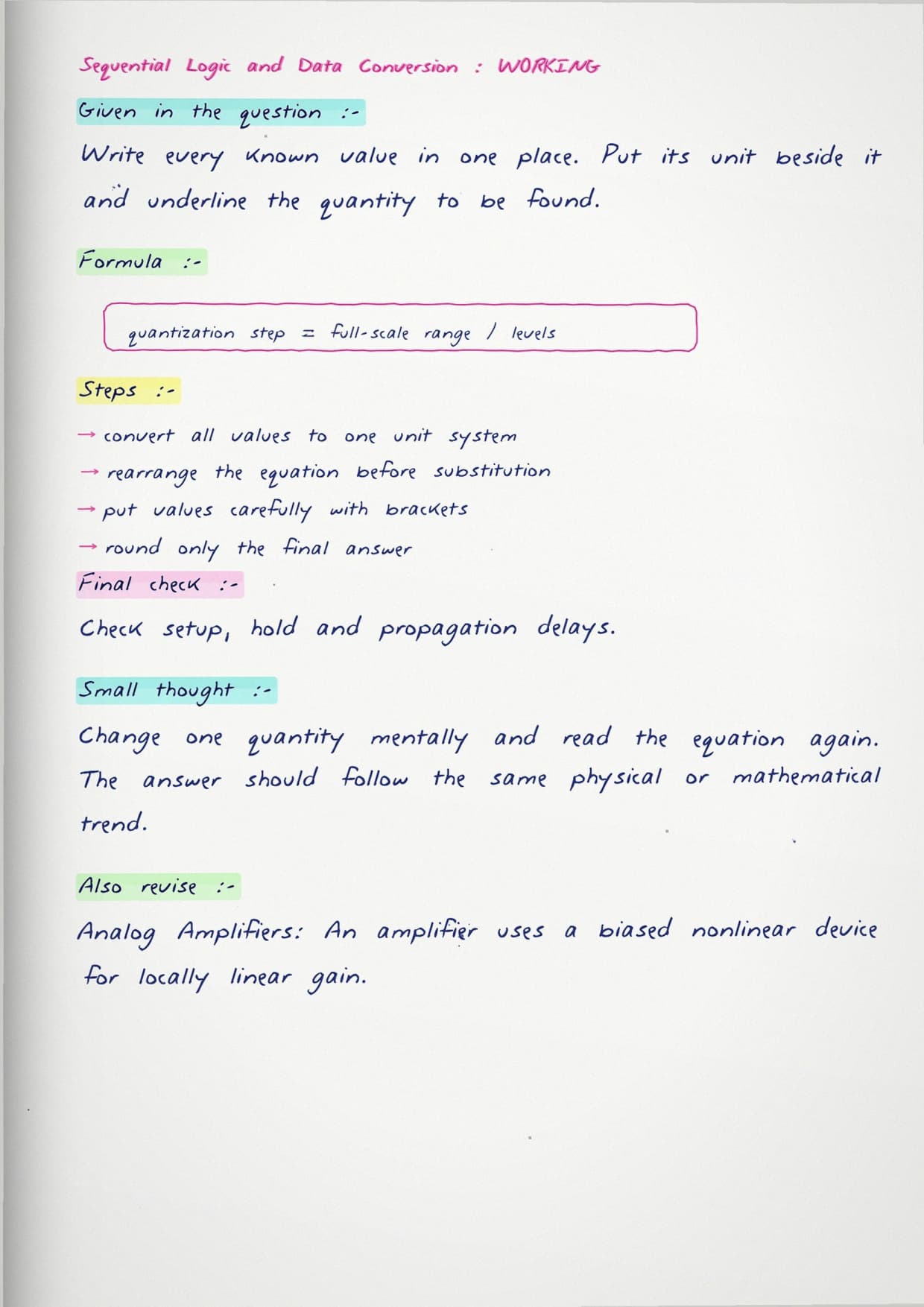
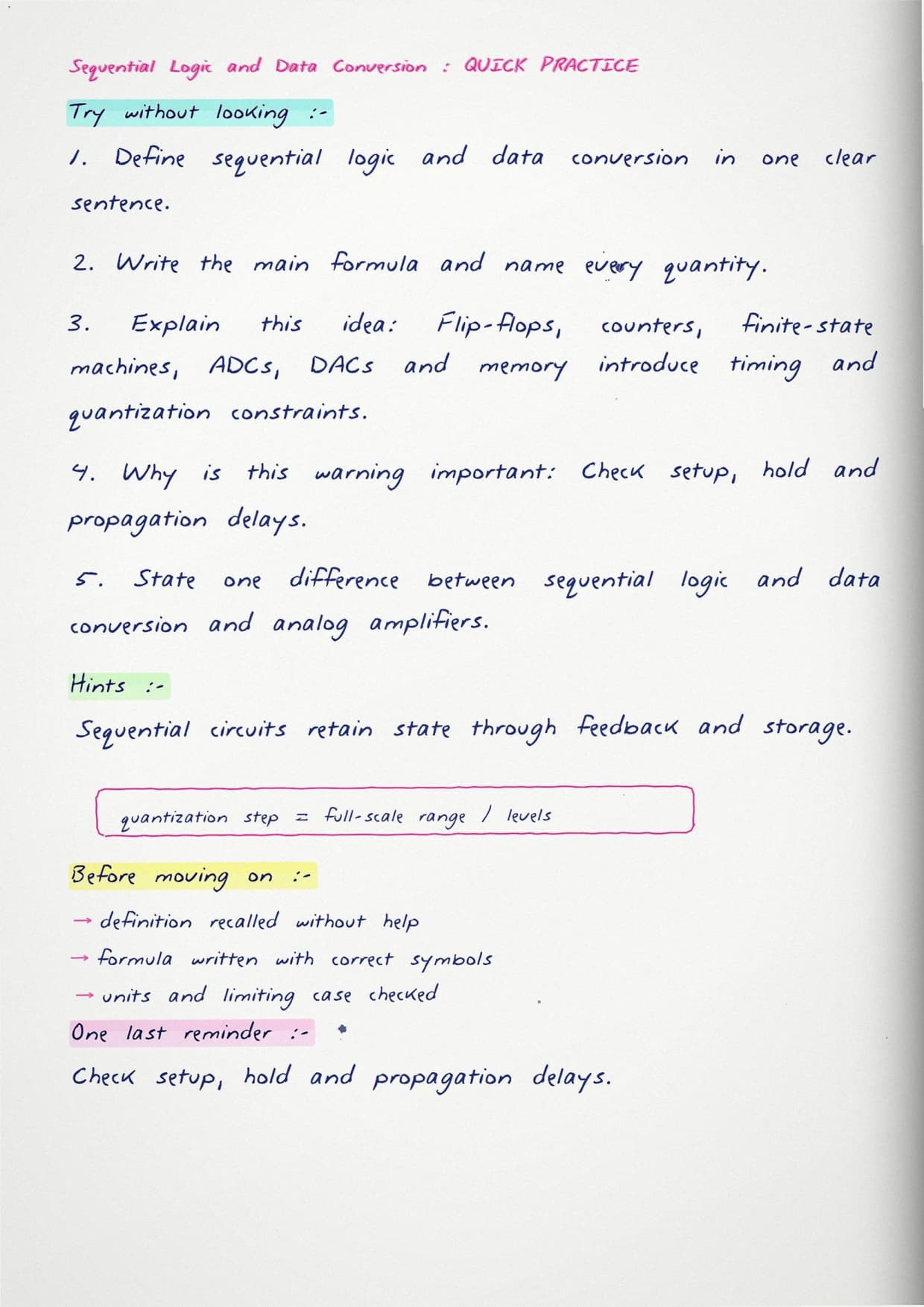
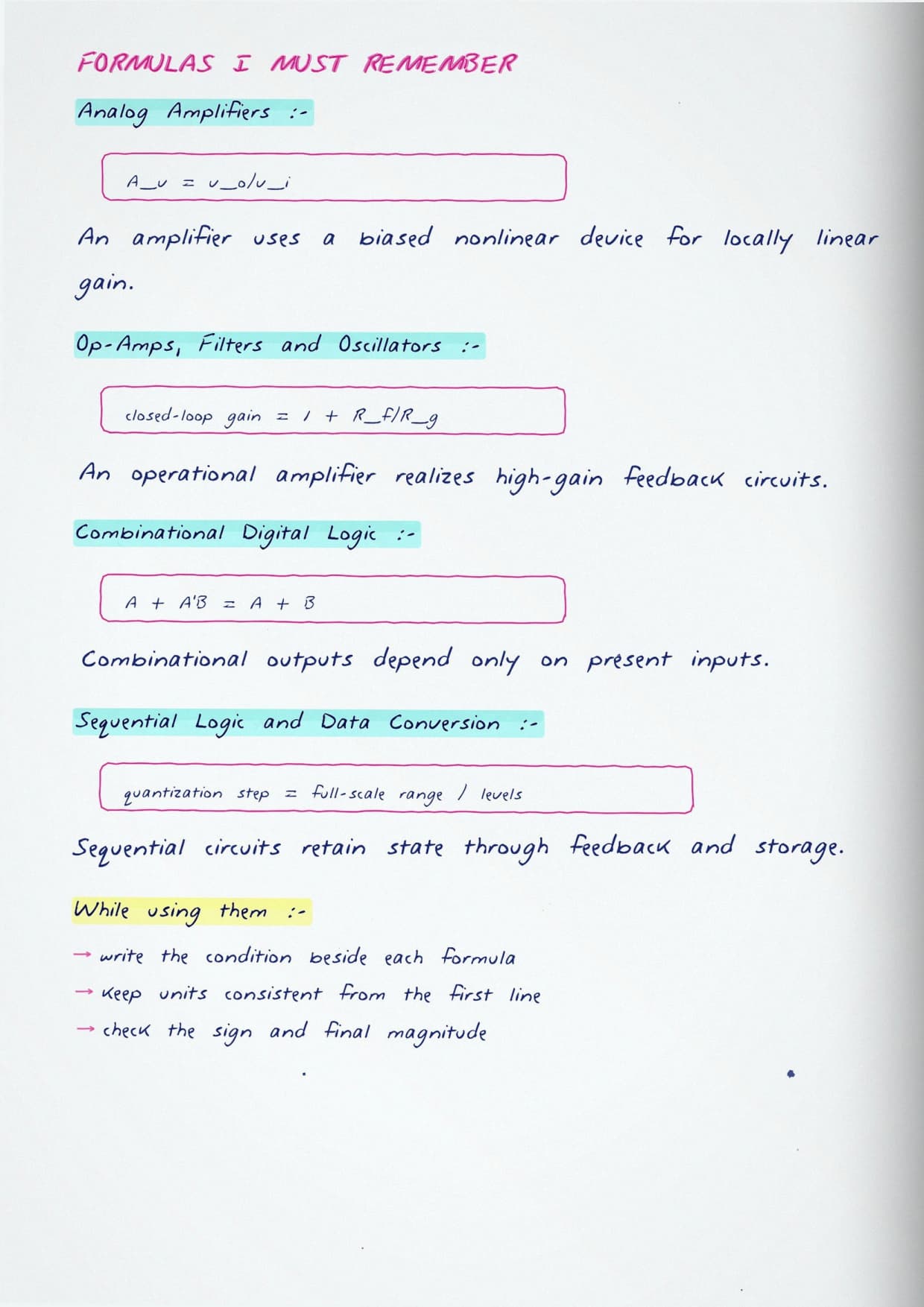
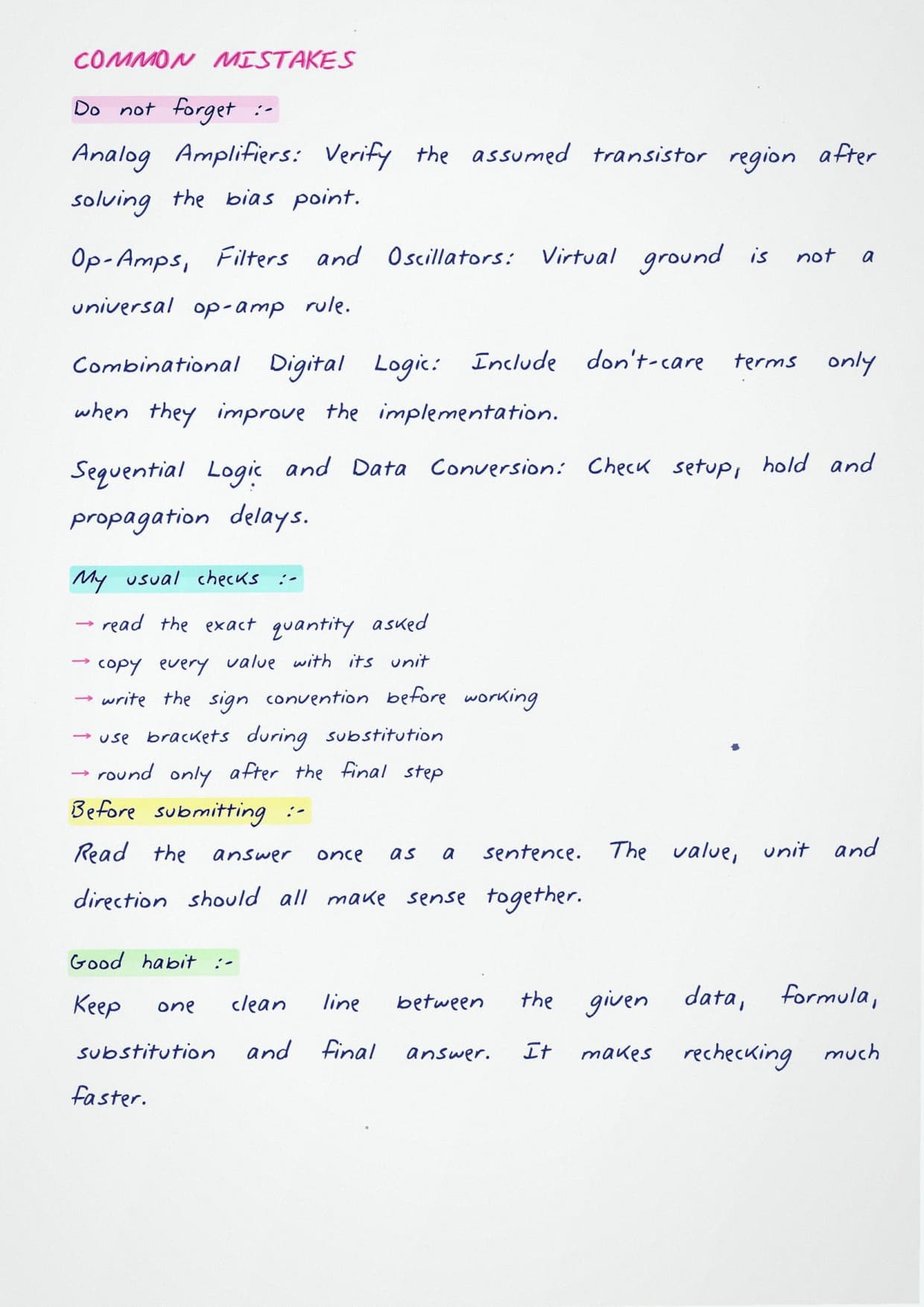
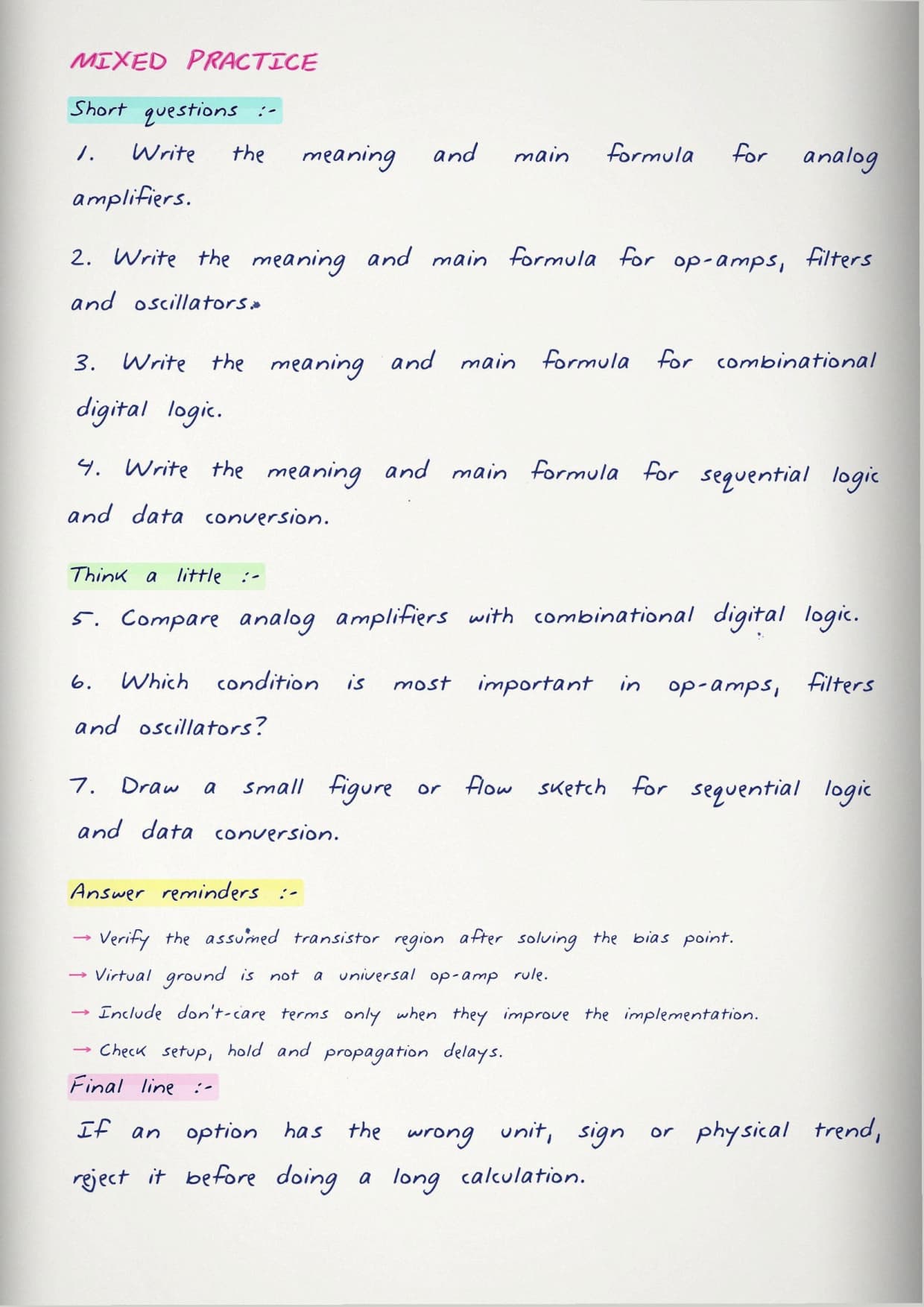
The pages move the way a topper actually revises: analog first, then digital, then the crossover circuits that examiners love to test. Everything below explains how to use them.
What Lives Inside These Analog and Digital Electronics Notes
The notebook is split into two clear halves so students never mix up a small-signal question with a logic-design one. Each concept sits next to a worked circuit.
- Diodes and rectifiers, including clipper and clamper behaviour
- BJT and MOSFET biasing with small-signal models drawn out
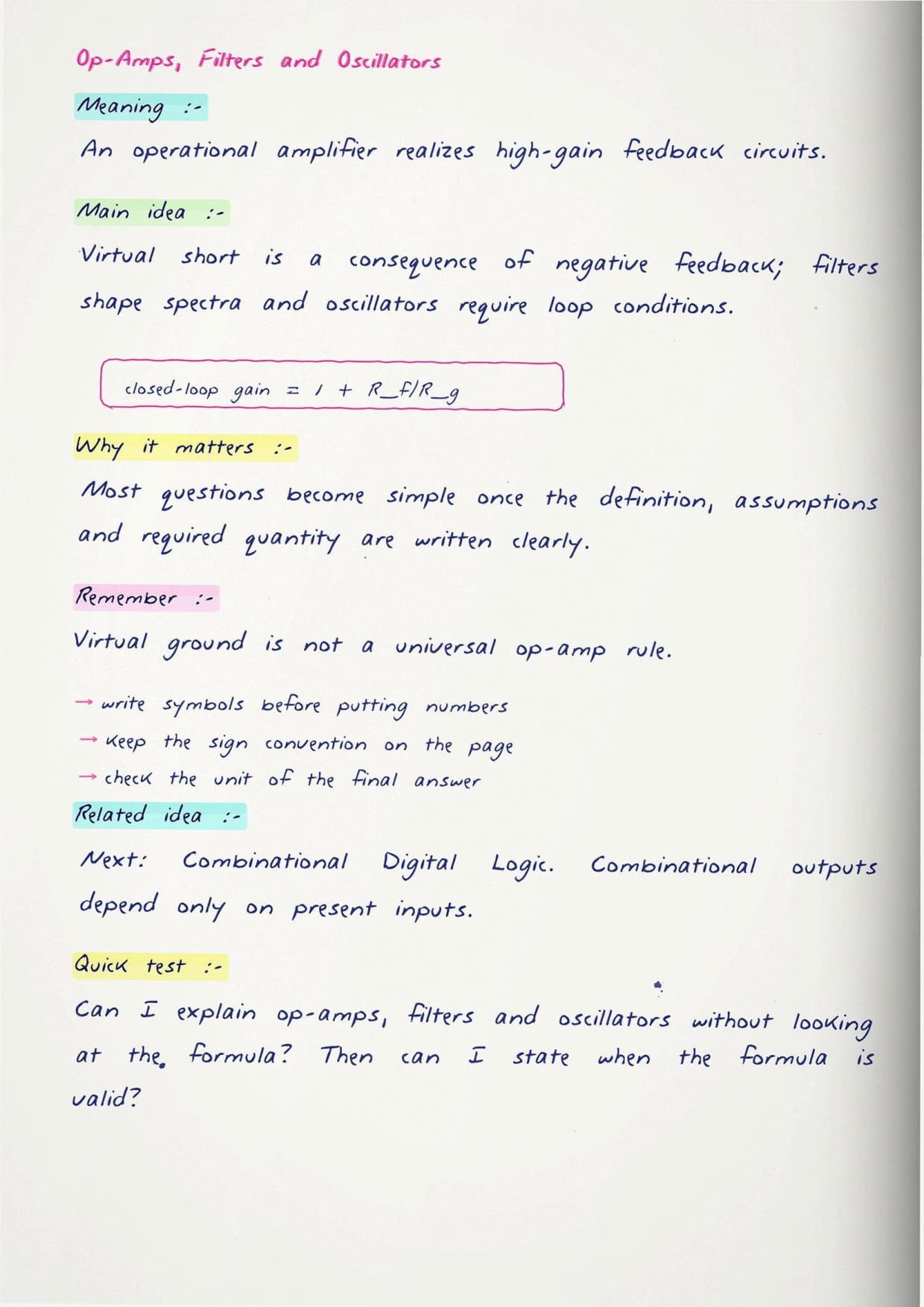
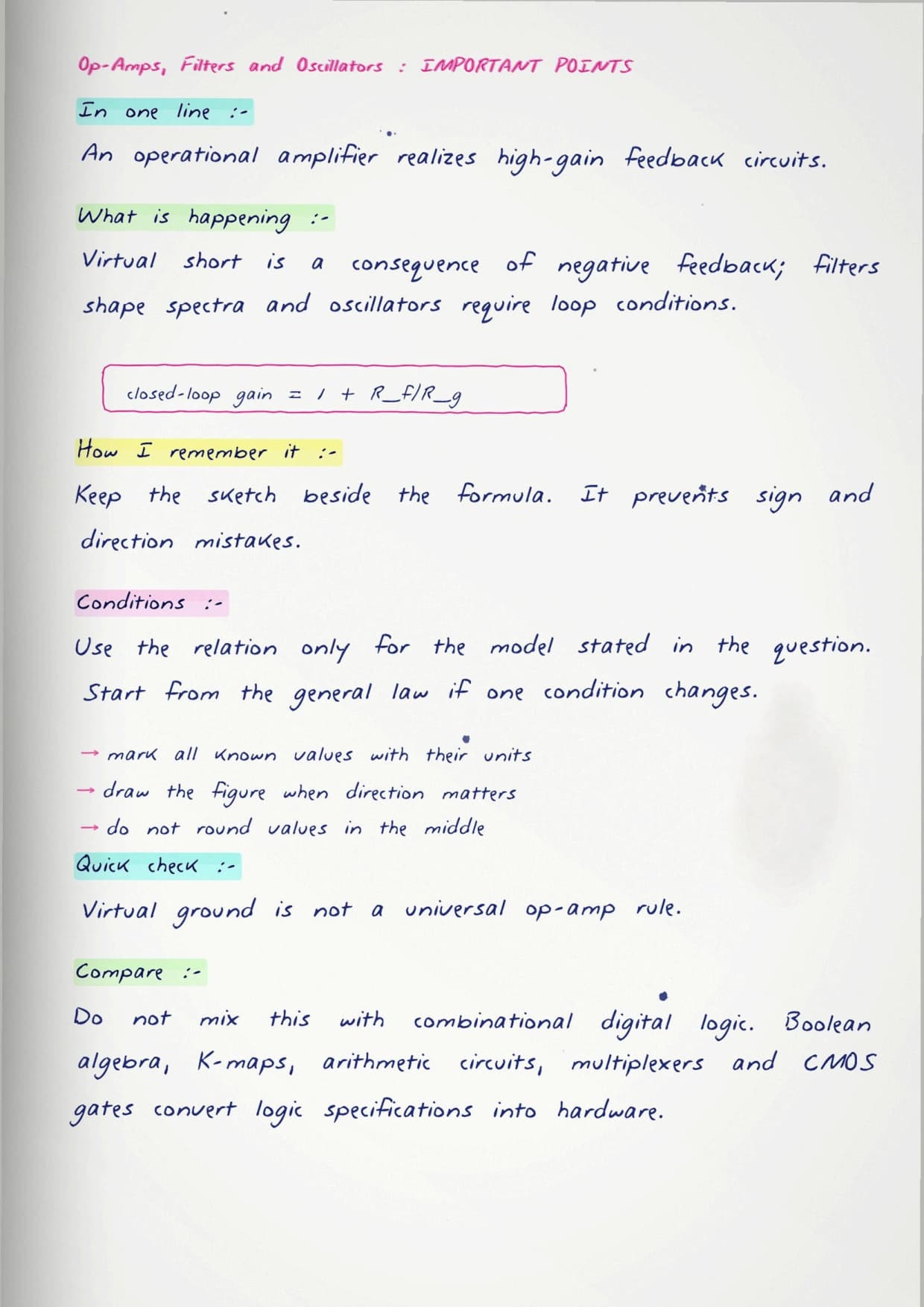
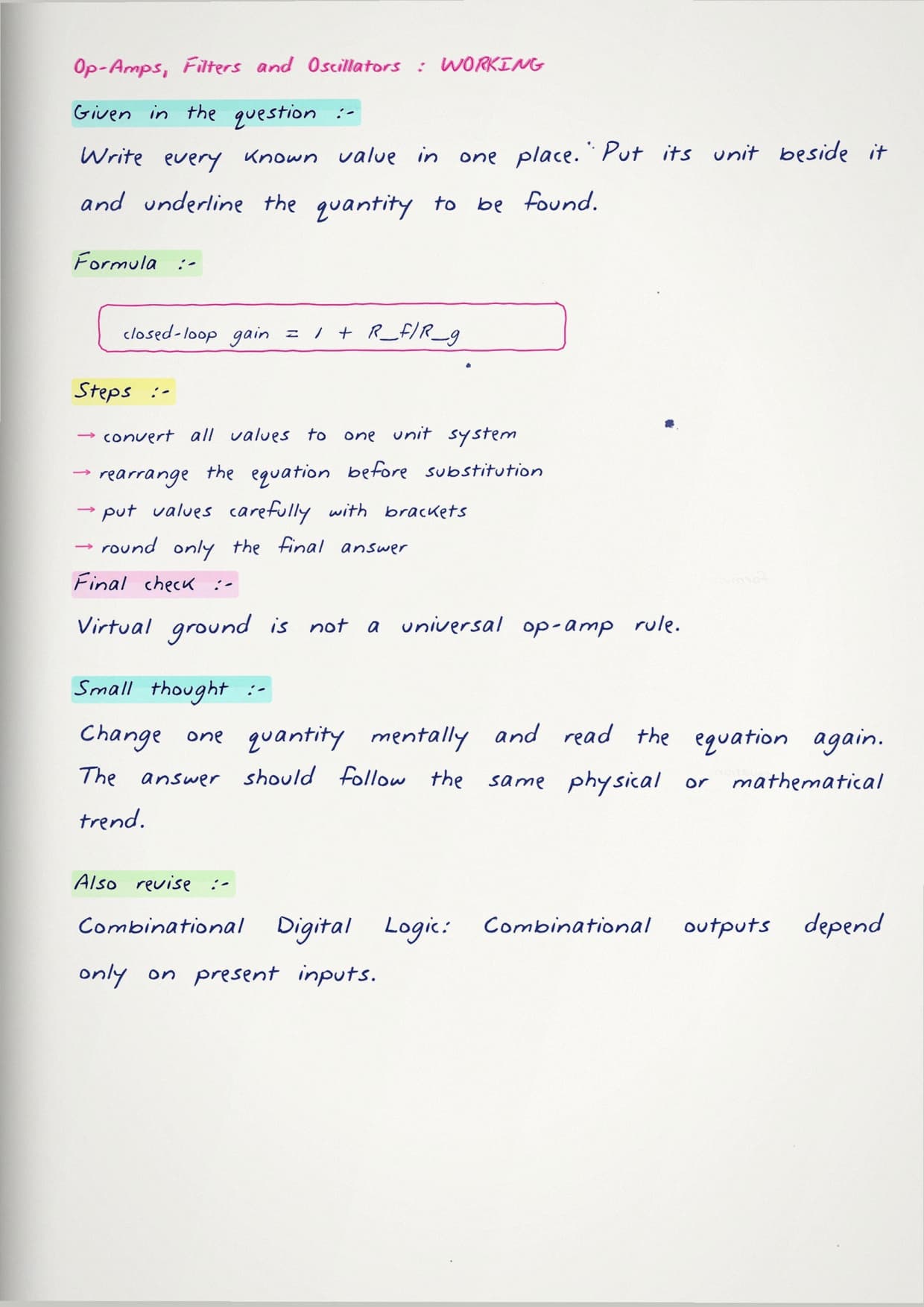
- Operational amplifiers, feedback and basic filters
- Number systems, Boolean algebra and gate minimisation
- Combinational and sequential circuits up to counters and registers
The Analog Half: Amplifiers, Op-Amps and Feedback
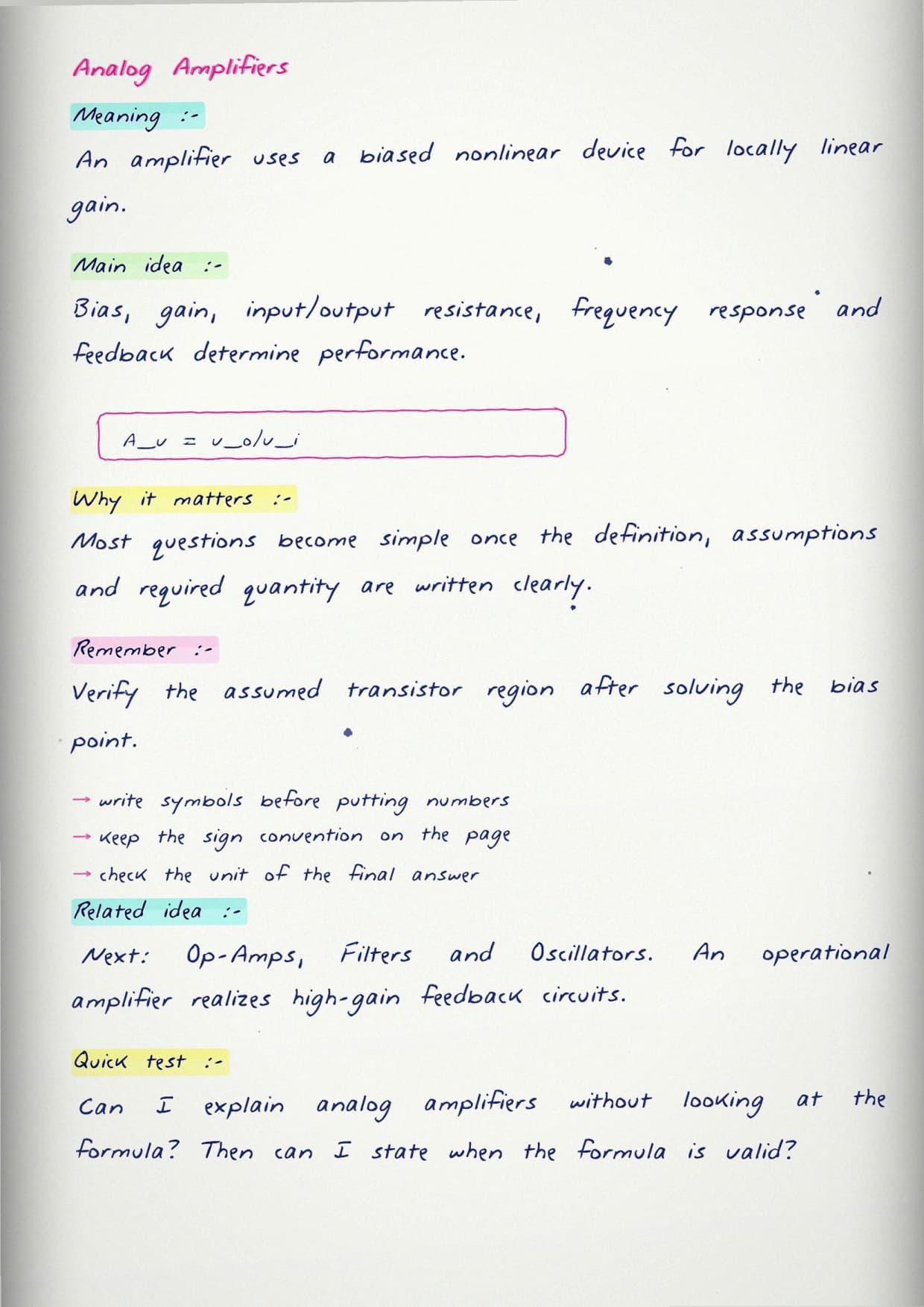
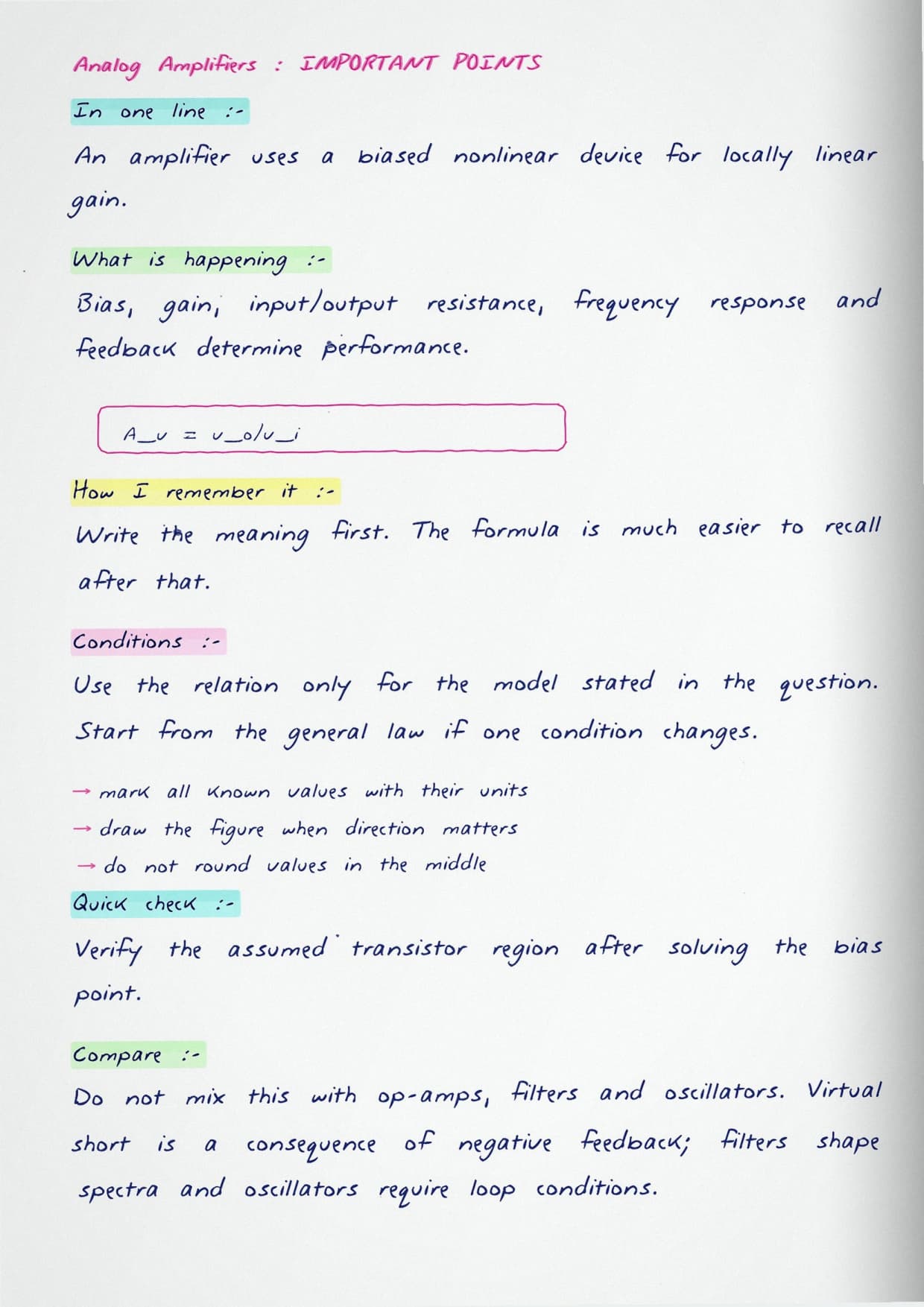
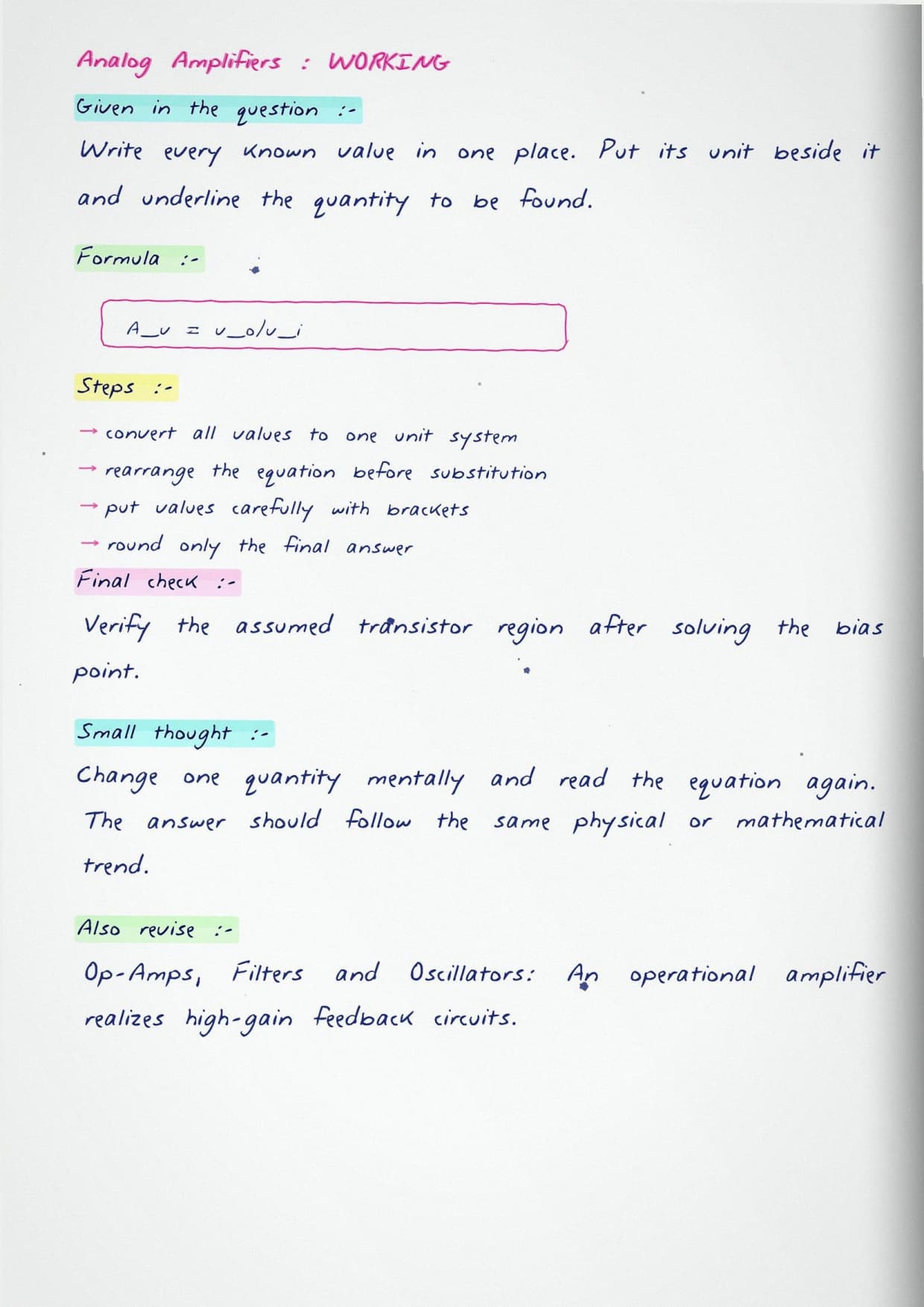
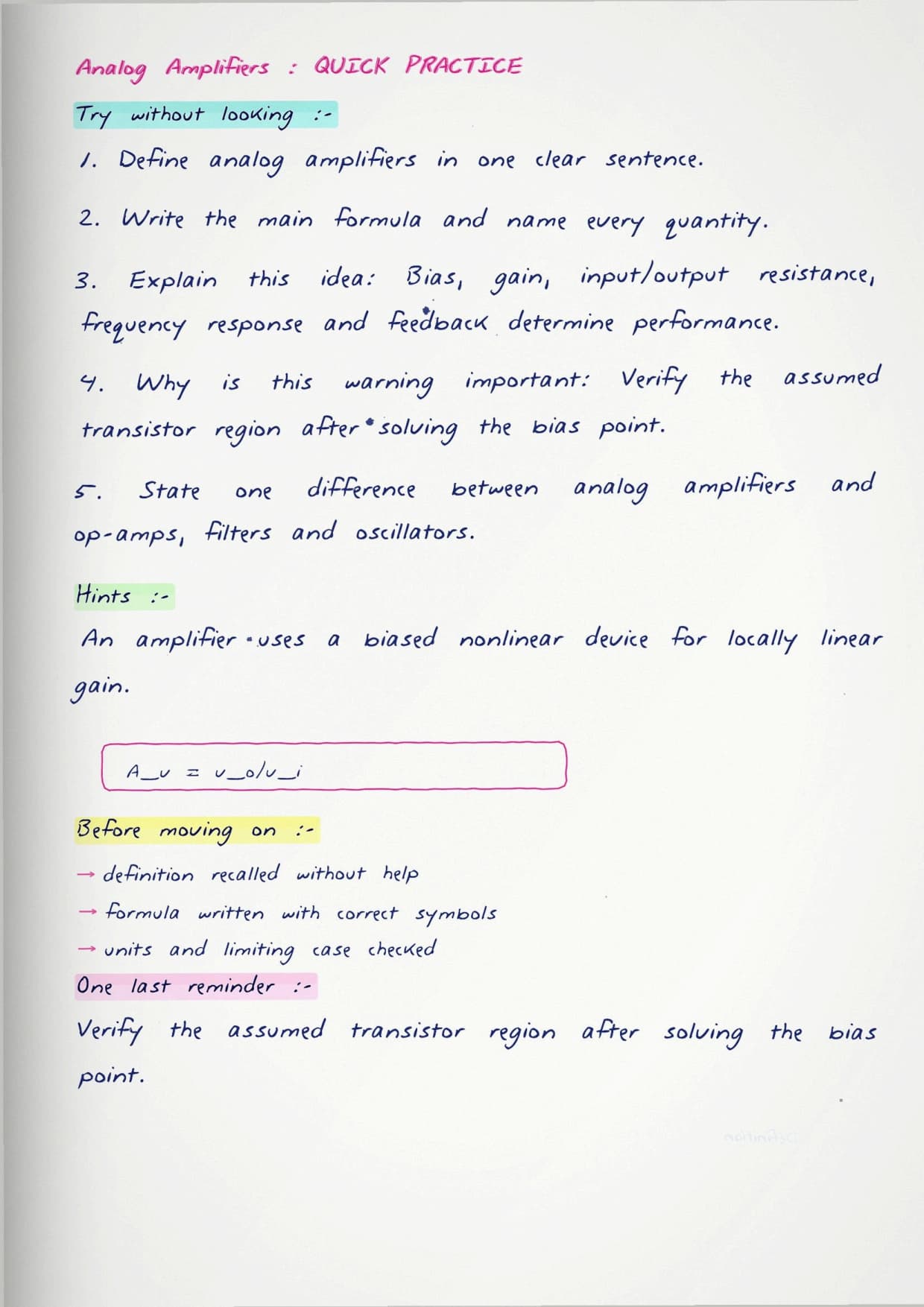
Analog is where marks slip if the DC operating point is wrong, so the notes always fix the bias before touching gain. Each stage is shown as a labelled circuit, then its equivalent model.
- Load-line reasoning for finding the Q-point quickly
- Voltage gain and input resistance for common-emitter and common-source stages
- Negative feedback and how it trades gain for stability
- Ideal op-amp rules applied to inverting, non-inverting and integrator circuits
The Digital Half: Logic Gates to Sequential Circuits
Digital rewards speed and clean bookkeeping. The notes drill the habit of reducing an expression before drawing anything, so students save time in the exam hall.
- K-map grouping for two, three and four variables
- Multiplexers and decoders used to build logic functions
- Flip-flops and their excitation tables
- Synchronous counters and simple state diagrams
Where Analog Meets Digital in Real Circuits
The last section is the bridge. Real systems sit between the two worlds, and GATE often frames a question exactly on that boundary.
Students see how a signal leaves an amplifier, passes through a comparator, and lands in a digital converter. Seeing the chain drawn once makes ADC and DAC questions far less intimidating.
Revise Analog Electronics in One Sitting
Source: GATE Wallah CSE & DA
Points Examiners Come Back to Every Year
A few ideas show up again and again. Keeping these sharp gives students a reliable base of marks.
- Op-amp circuits solved with virtual ground reasoning
- MOSFET region checks before any current calculation
- Timing and the modulo count of counters
- Boolean simplification and its final gate count
Slips That Cost Easy Marks
Most lost marks here are avoidable. The notes flag each trap right where it usually happens.
- Forgetting to confirm the transistor is in the active region
- Mixing up setup and hold conditions in sequential logic
- Dropping a sign while applying feedback
- Reading a K-map group as smaller than it really is
Fitting These Notes Into Your Revision Week
Students get the most from these pages by treating them as a fast second pass, not a first lesson. Read one half, then attempt previous-year questions on it before moving on.
A steady loop of read, solve, and mark your slips turns this notebook into an active revision tool rather than passive reading.
Analog and Digital Electronics Notes FAQs
Ques. Do these notes cover both analog and digital in equal depth?
Ans. Yes. The notebook is split into two balanced halves, with analog device and amplifier circuits on one side and logic design on the other, plus a short bridge section.
Ques. Are these notes enough for the full GATE EC electronics portion?
Ans. They cover the core concepts and worked circuits well for revision, but students should still pair them with previous-year practice for complete readiness.
Ques. How much do these topics matter in GATE EC?
Ans. Analog and digital electronics together form one of the higher-return areas of the technical section, so time spent here usually pays off.
Ques. Should I start with analog or digital?
Ans. Analog first works best, since a firm grip on device behaviour makes the crossover circuits and converters easier to follow later.



Comments