




These Probability, Statistics and Inference notes hand-write the single largest area of the GATE DA paper, giving students the most marks-dense topic in the whole syllabus in clear, worked steps.
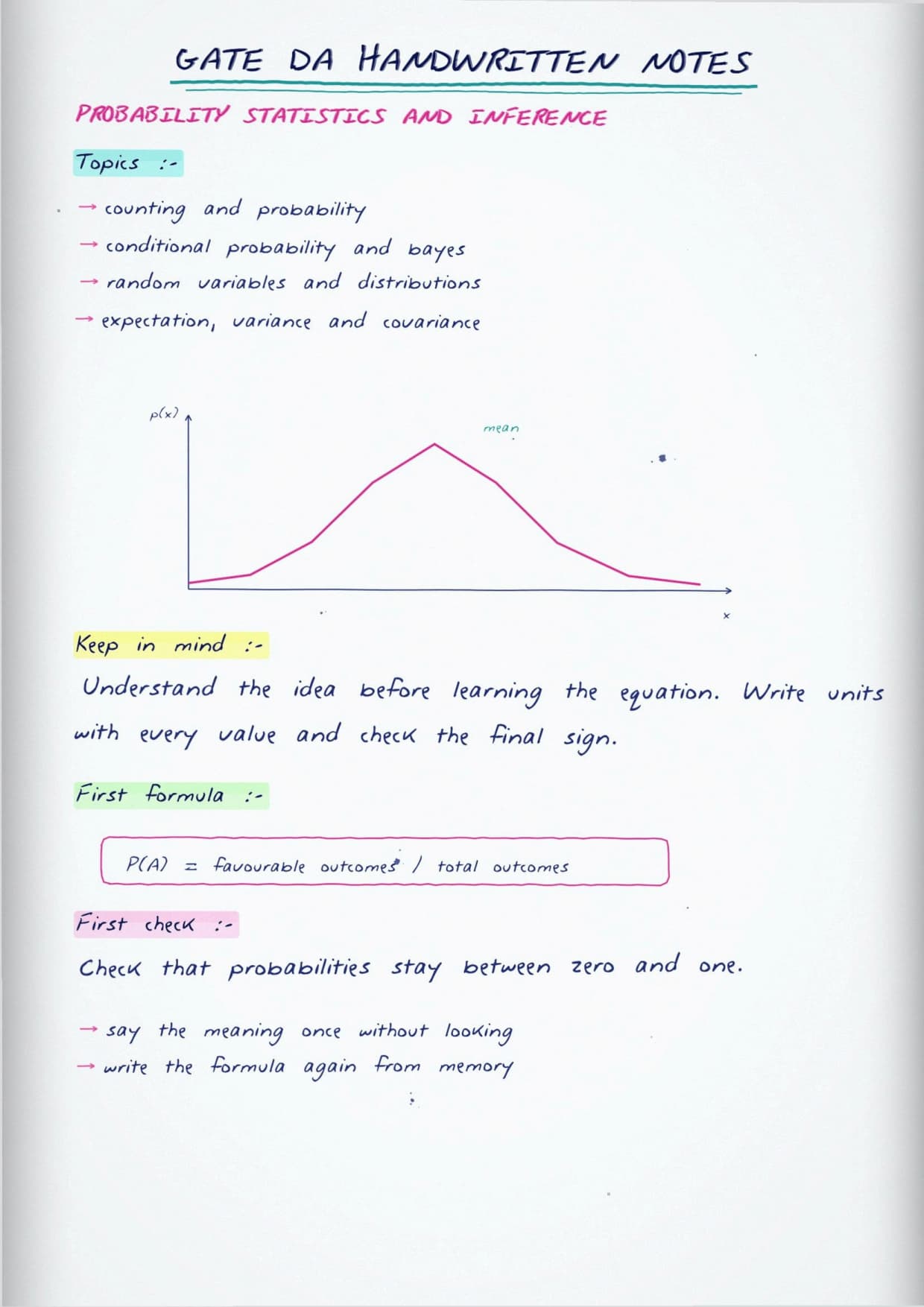
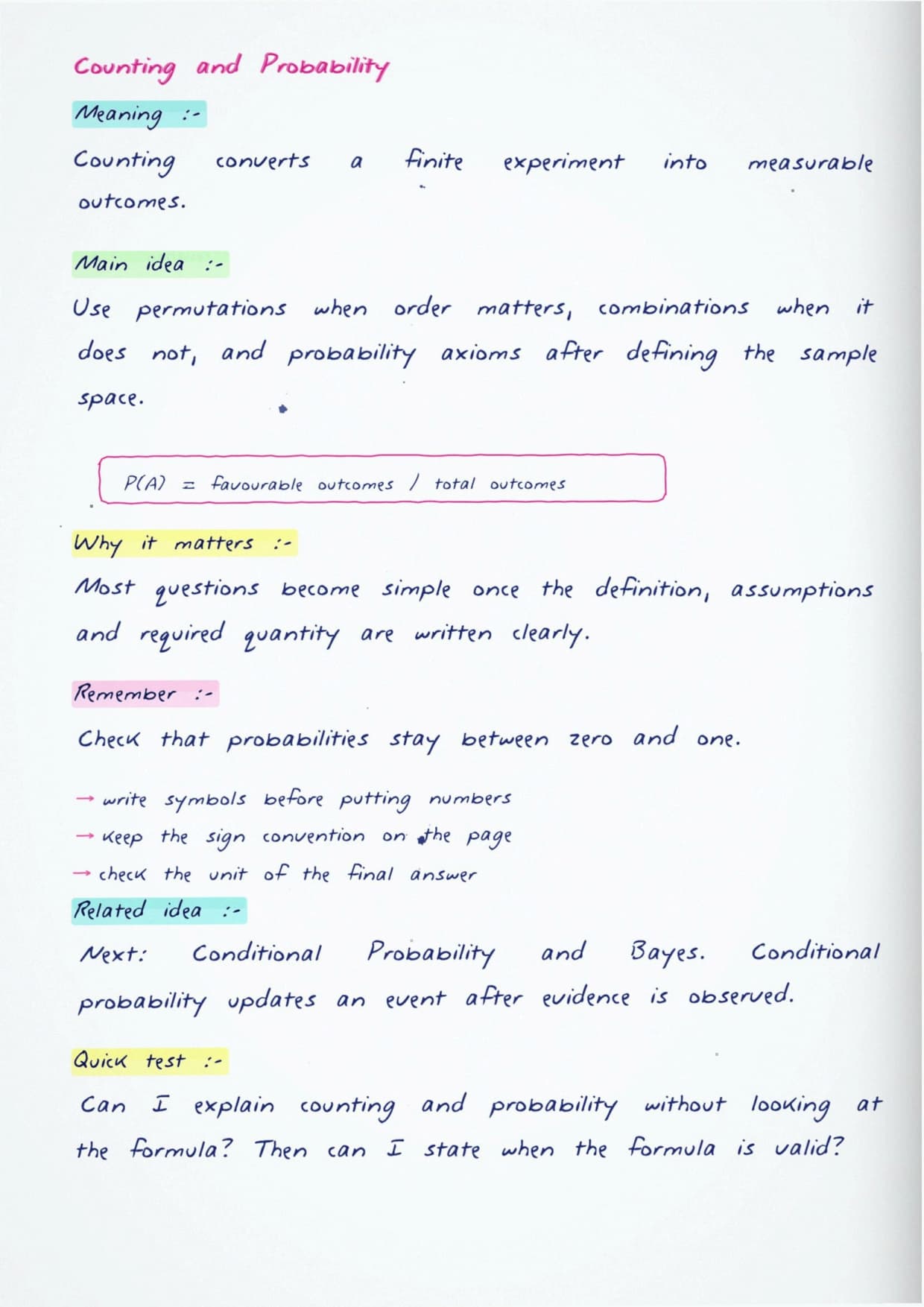
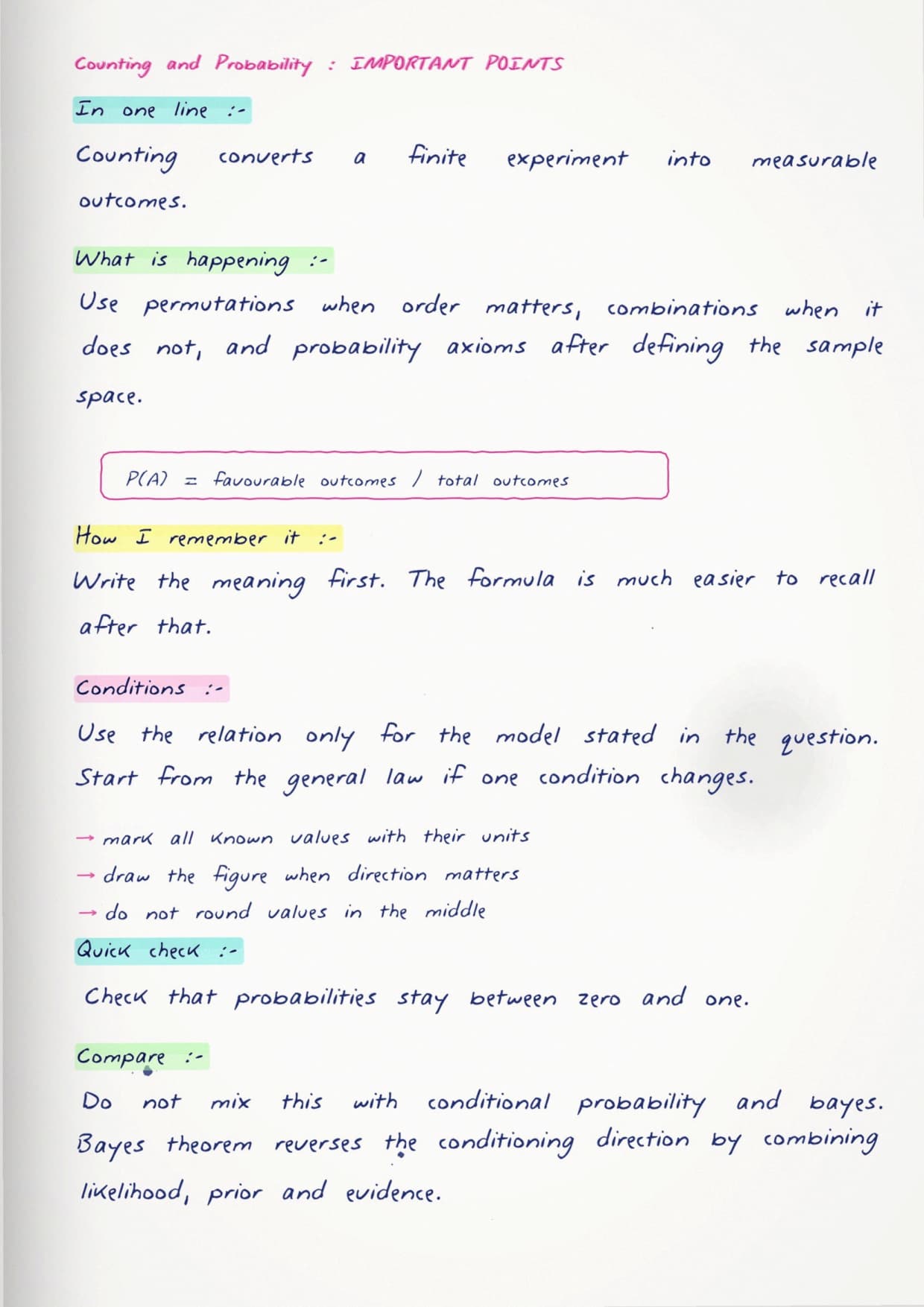
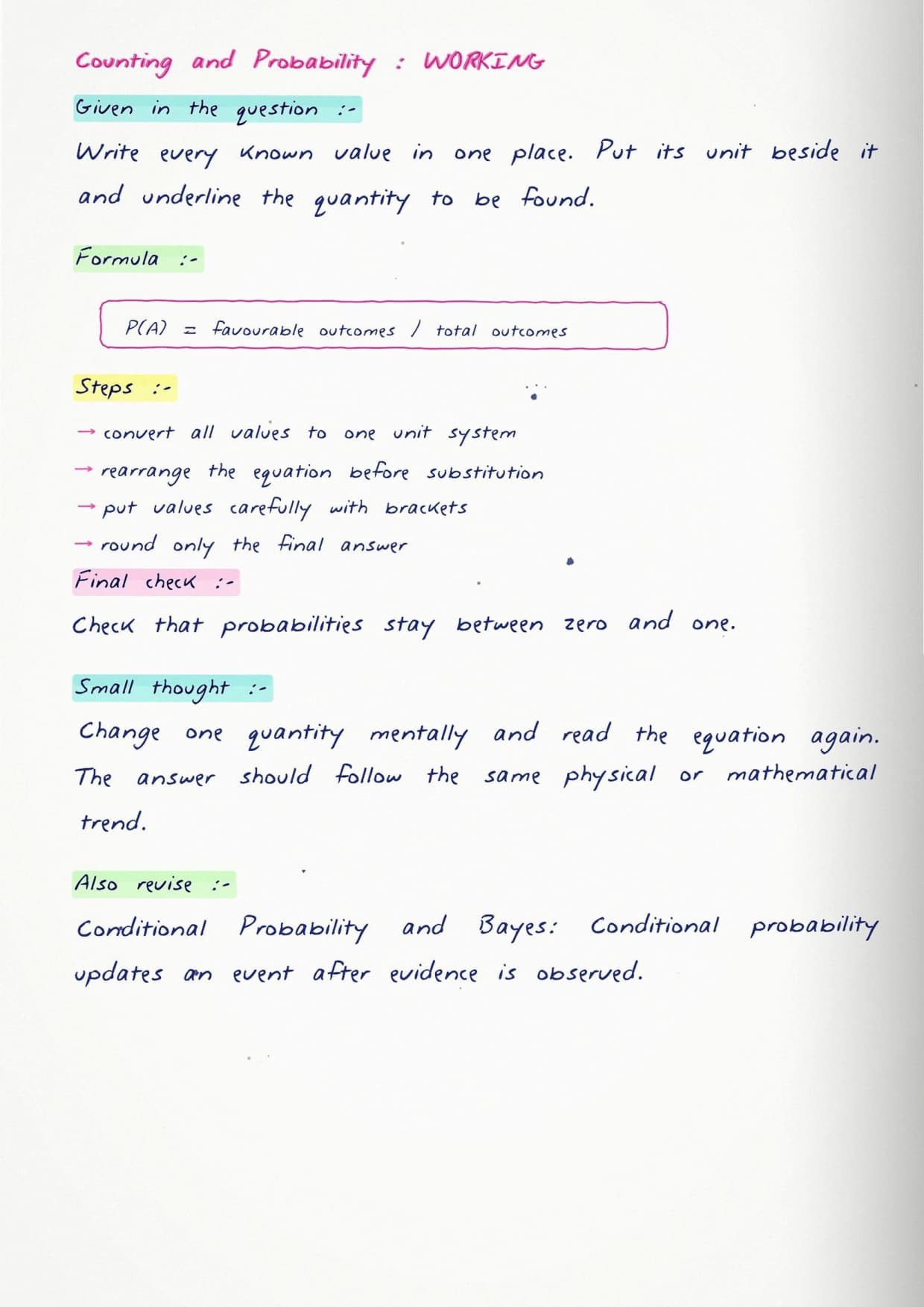
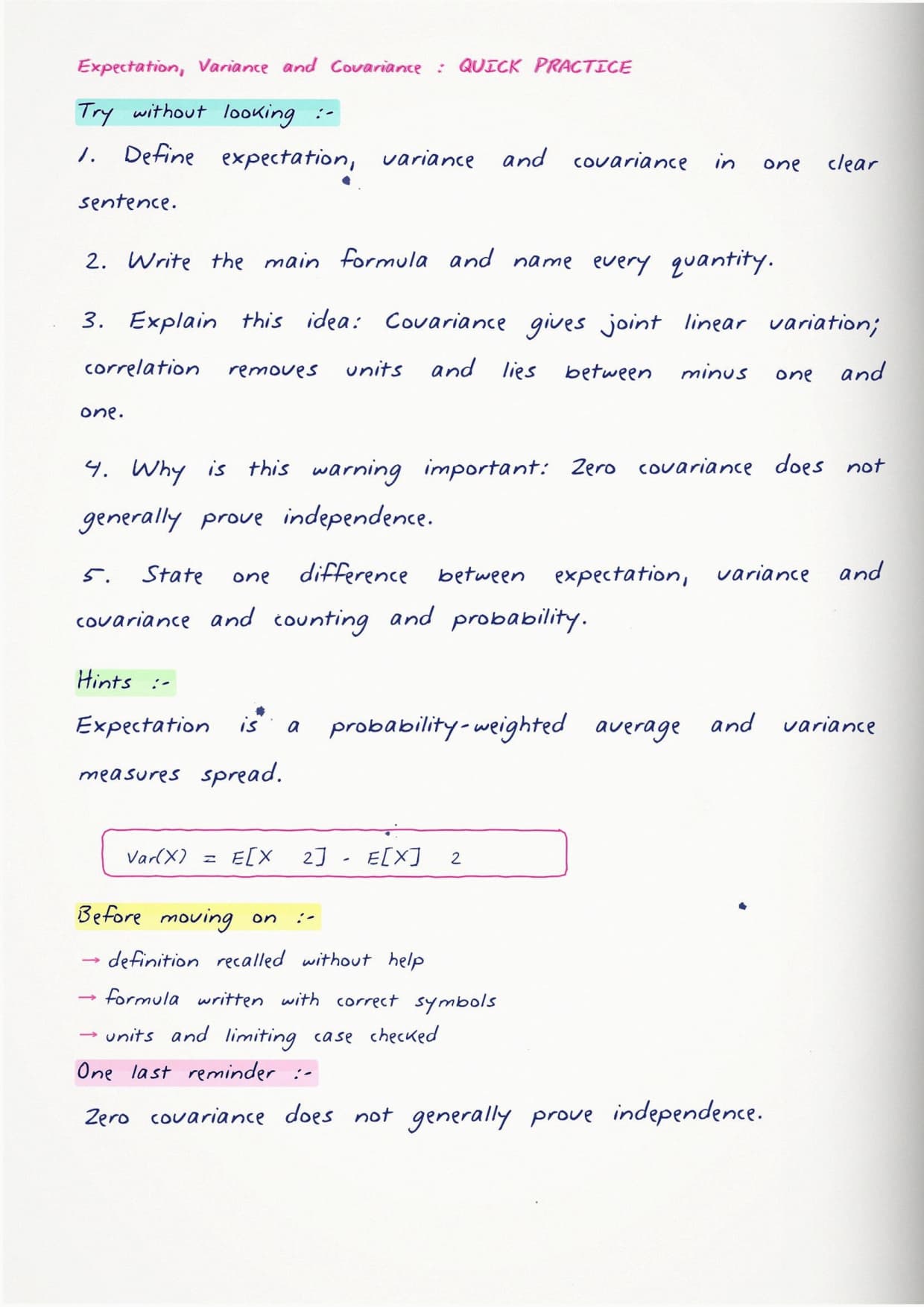
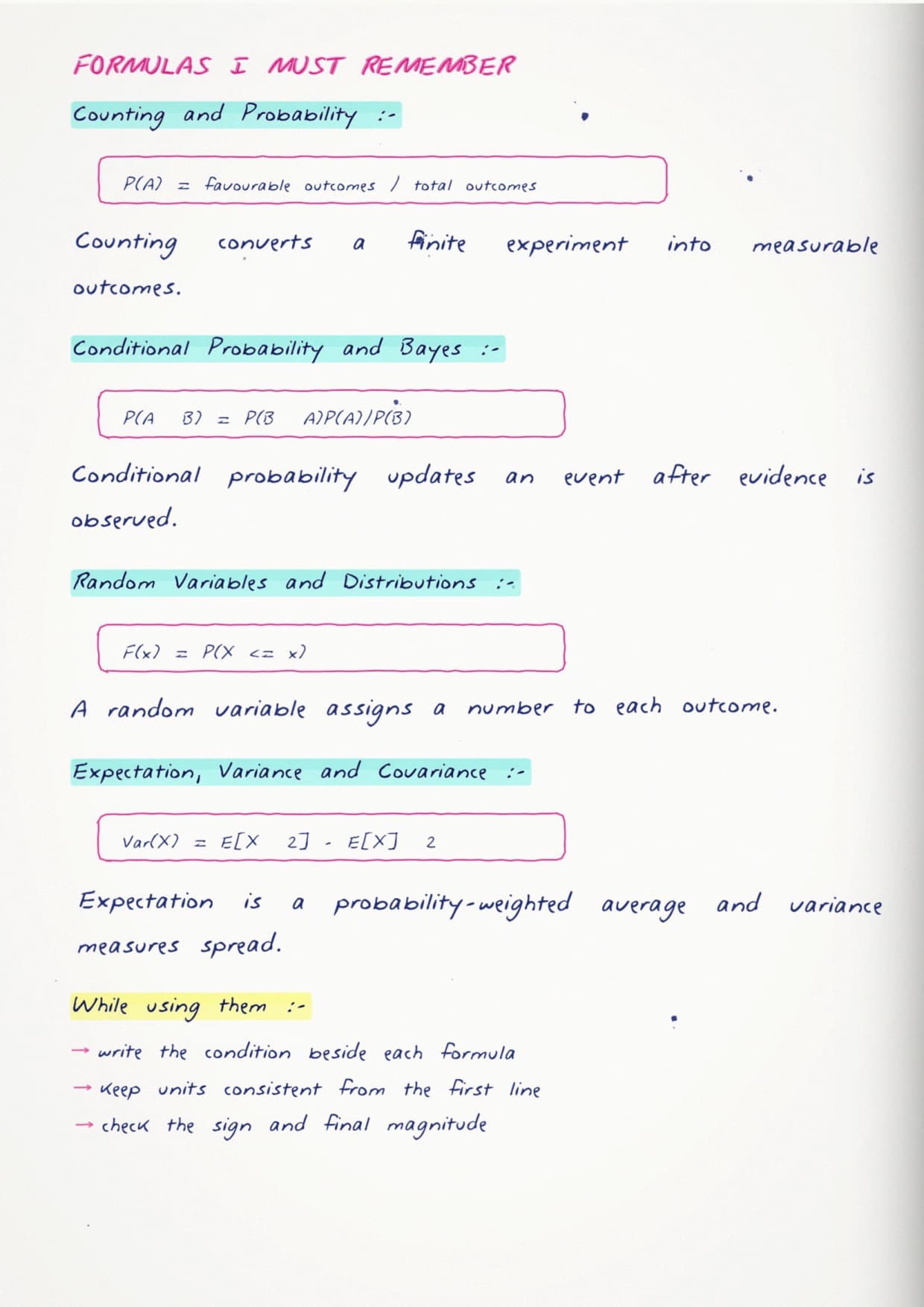
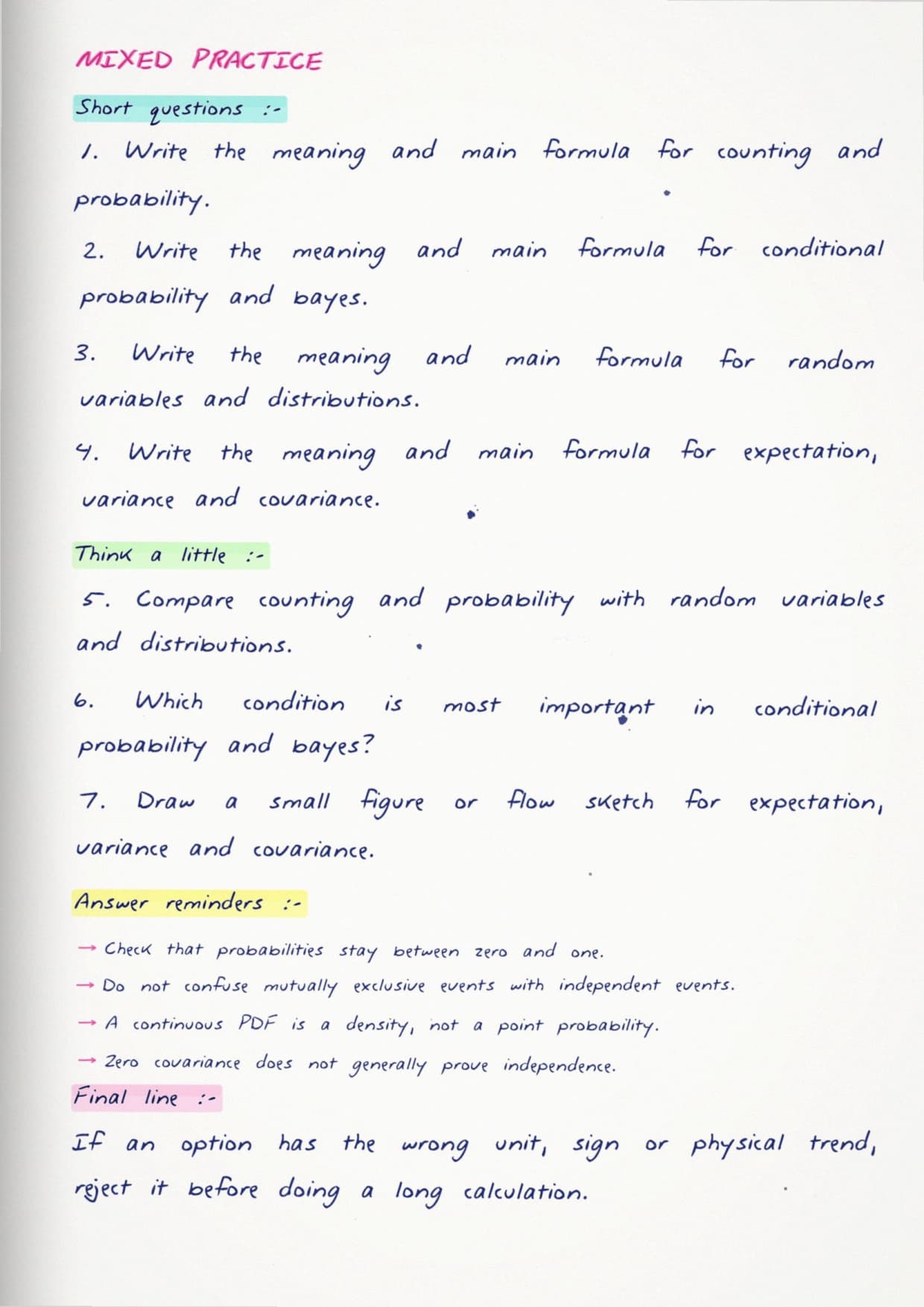
Everything here is drawn the way students actually revise: definitions, a formula, then a small solved case. The pages move from counting rules up to full statistical inference.
Why Probability Carries the Most Marks in DA
Across the official Data Science and AI paper, this block is consistently the heaviest. Probability and Statistics alone tends to account for roughly a quarter of the total marks, more than any other single section.
- It is the one area that rewards steady practice over memorising, so the return per study hour is high.
- Concepts here feed directly into Machine Learning, so mastering them twice pays you back.
- Questions are usually short numericals, which means speed and accuracy matter more than long derivations.
Treat these pages as your anchor topic. If revision time is tight, students should start here.
The Building Blocks You Need First
The notes open with the groundwork every later idea leans on. Nothing is assumed, so students rebuilding from scratch can follow along.
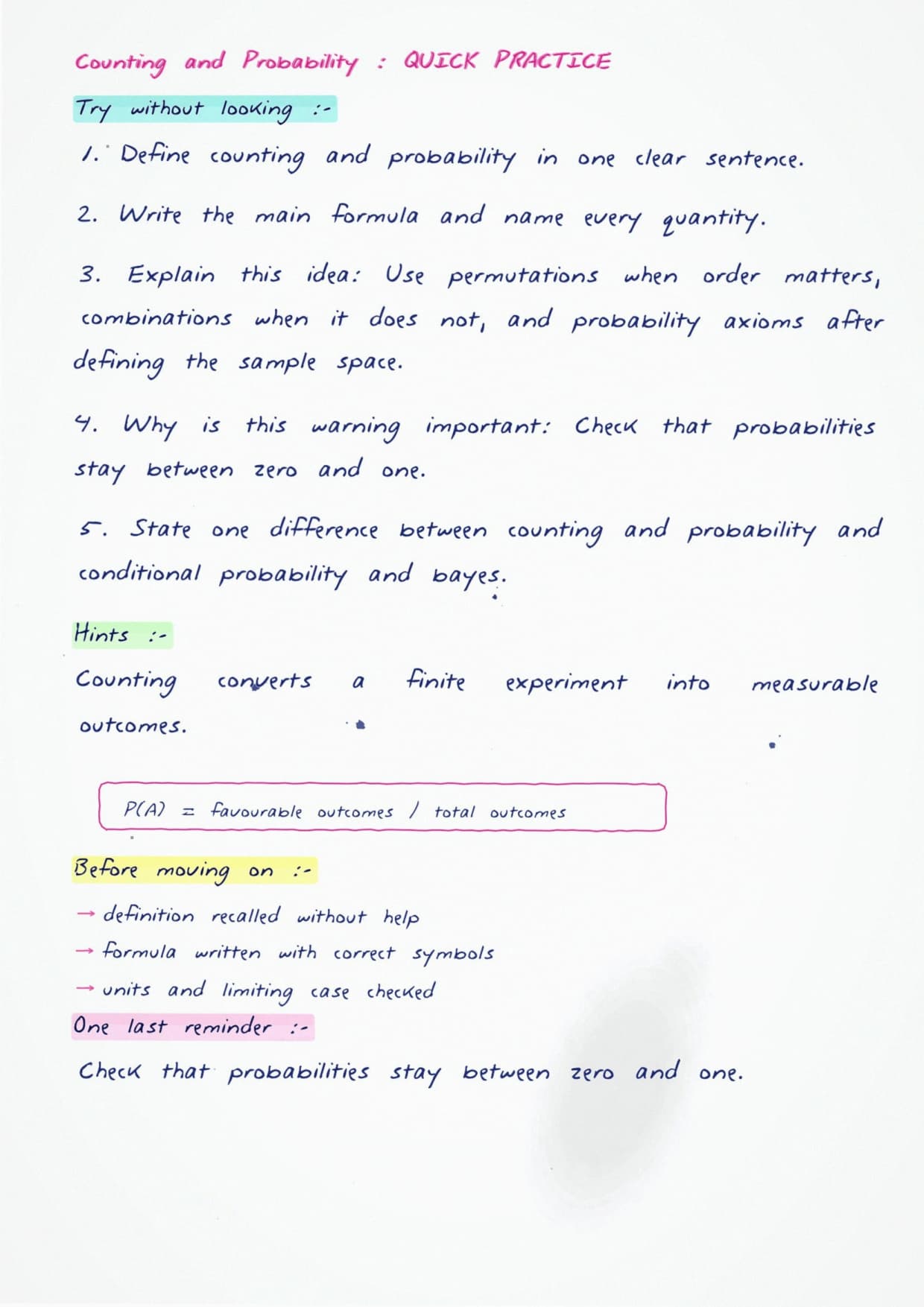
- Counting: permutations, combinations and the multiplication rule for arranging outcomes.
- Axioms of probability, plus the addition and multiplication laws.
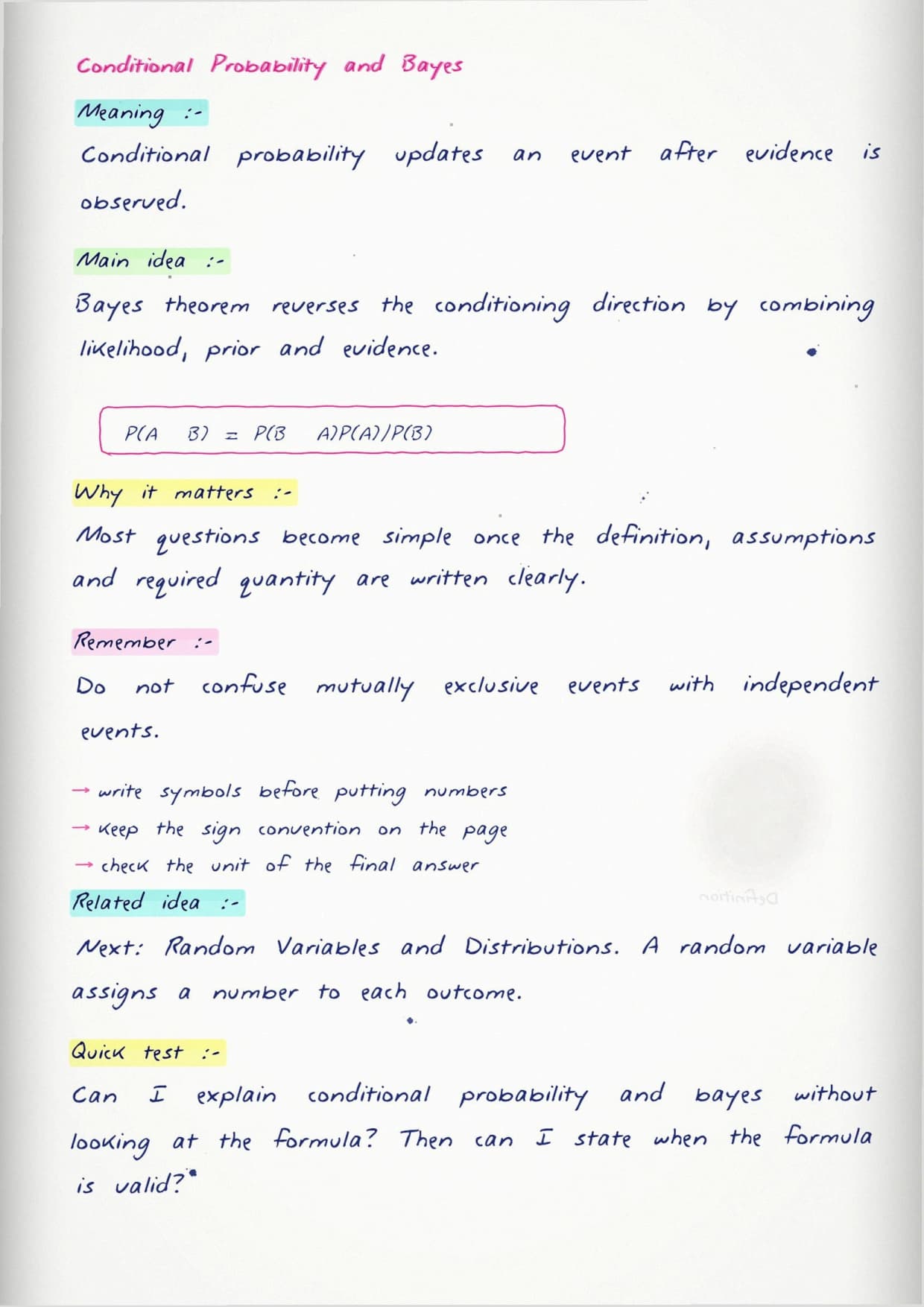
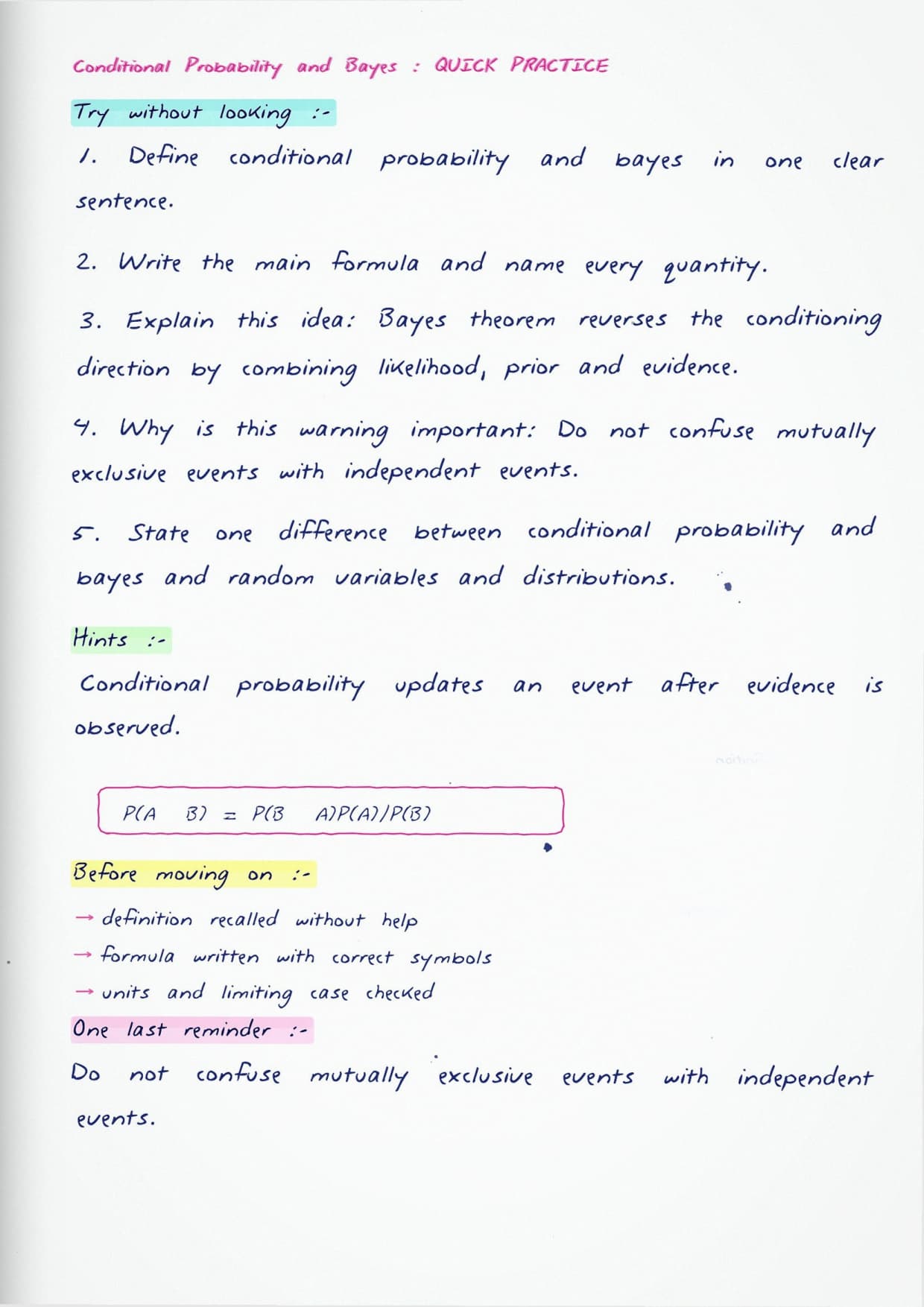
- Conditional probability and independence, worked on small event trees.
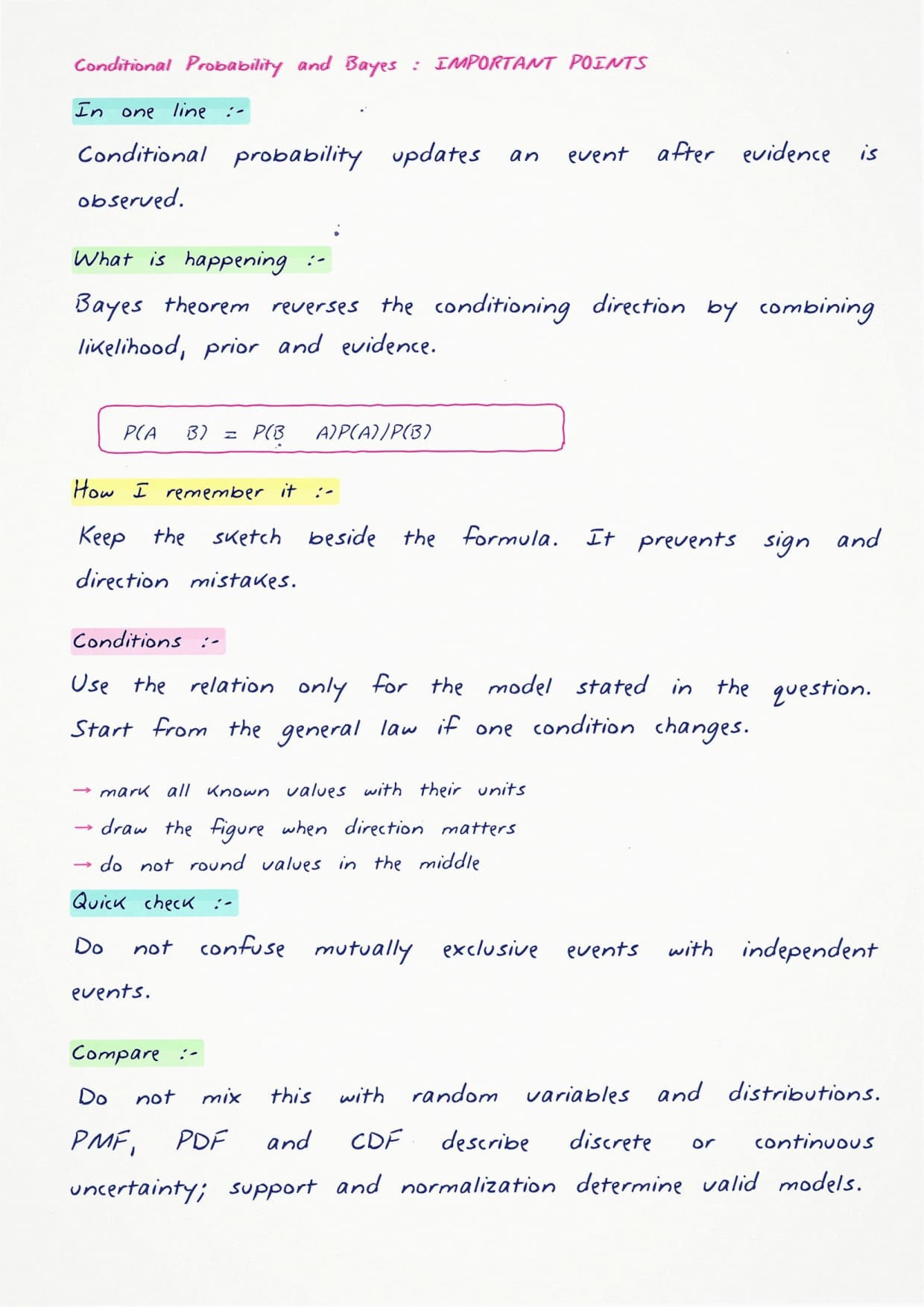
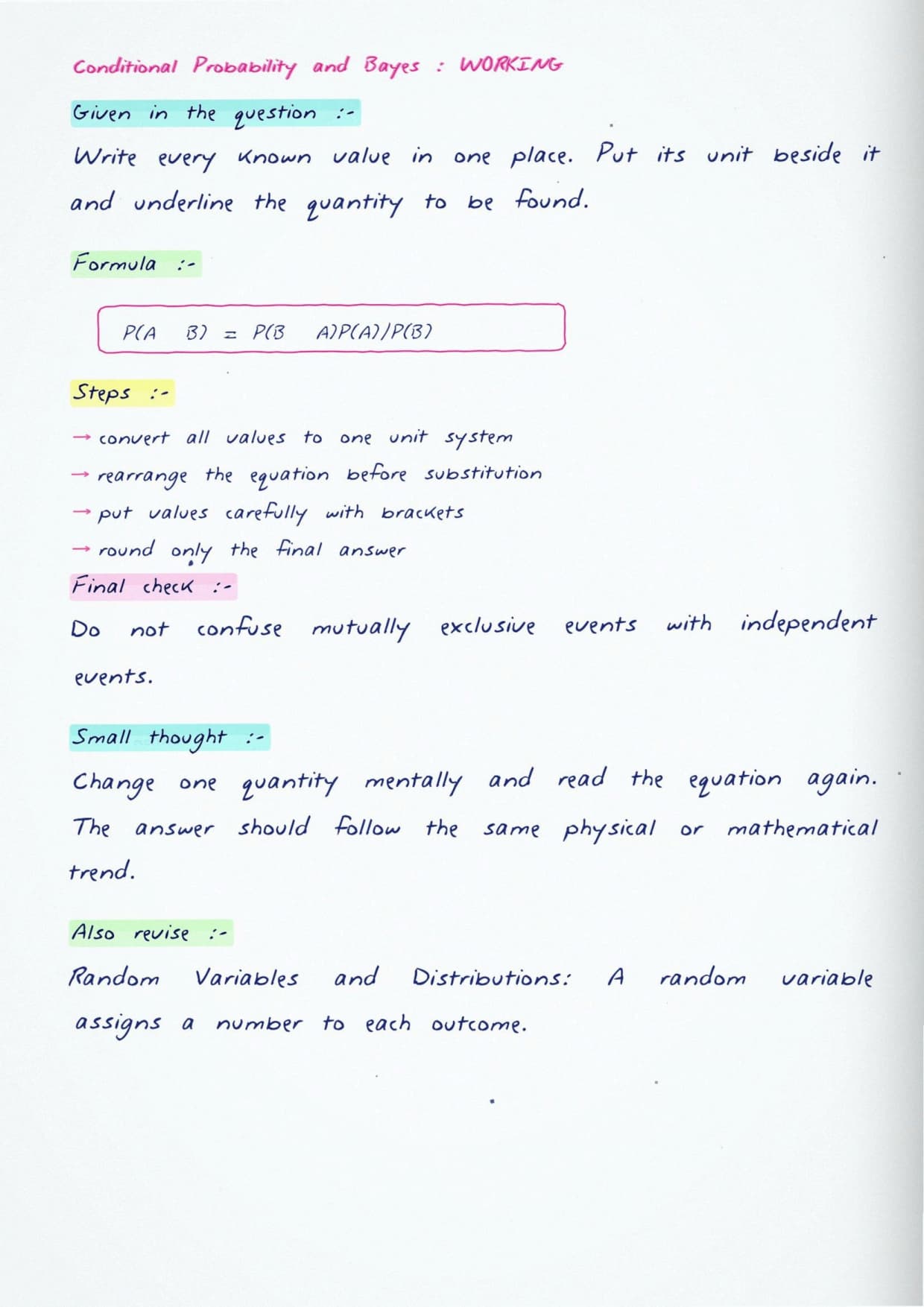
- Bayes theorem, shown as a way to update a belief once new evidence arrives.
From Random Variables to Distributions
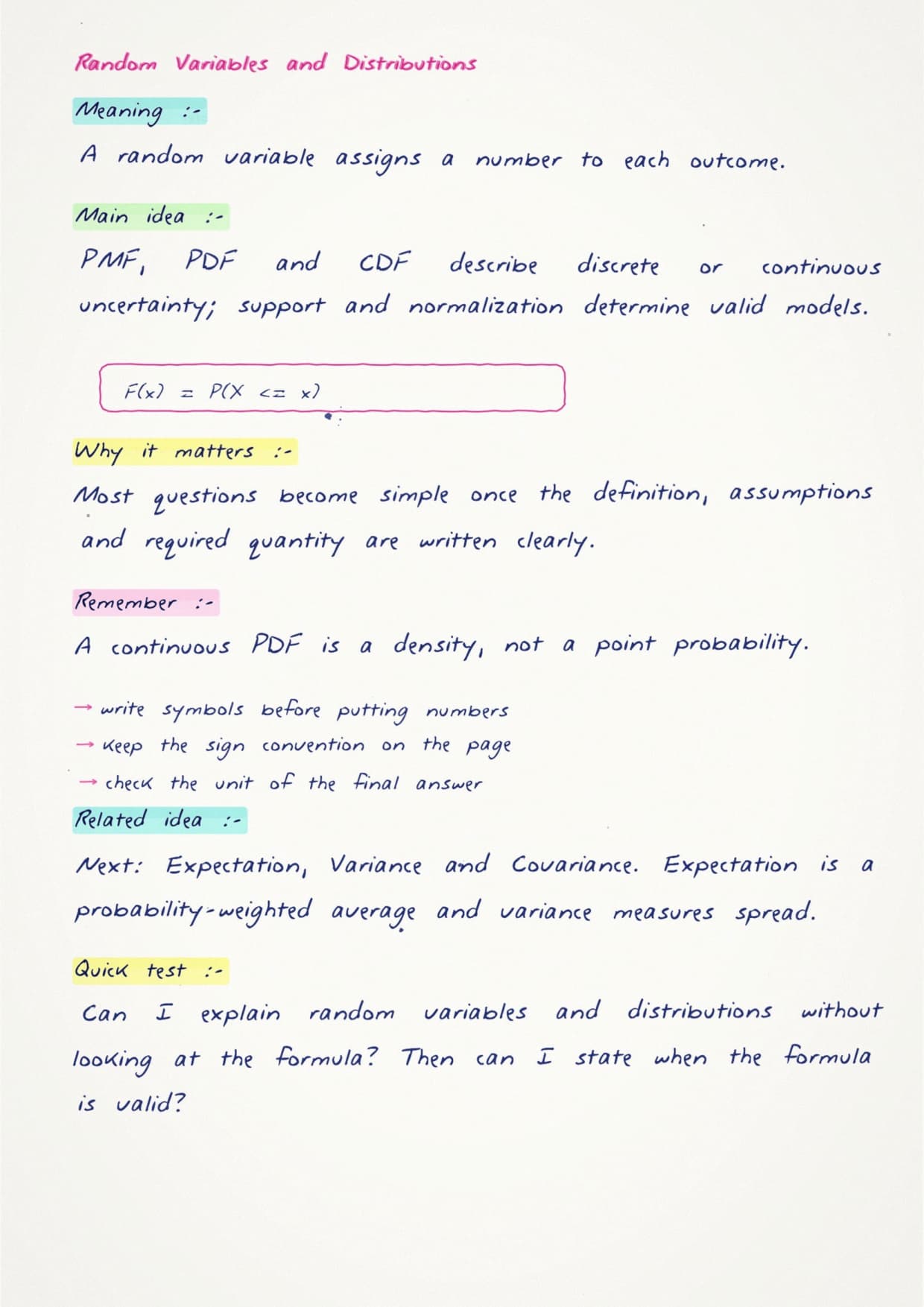
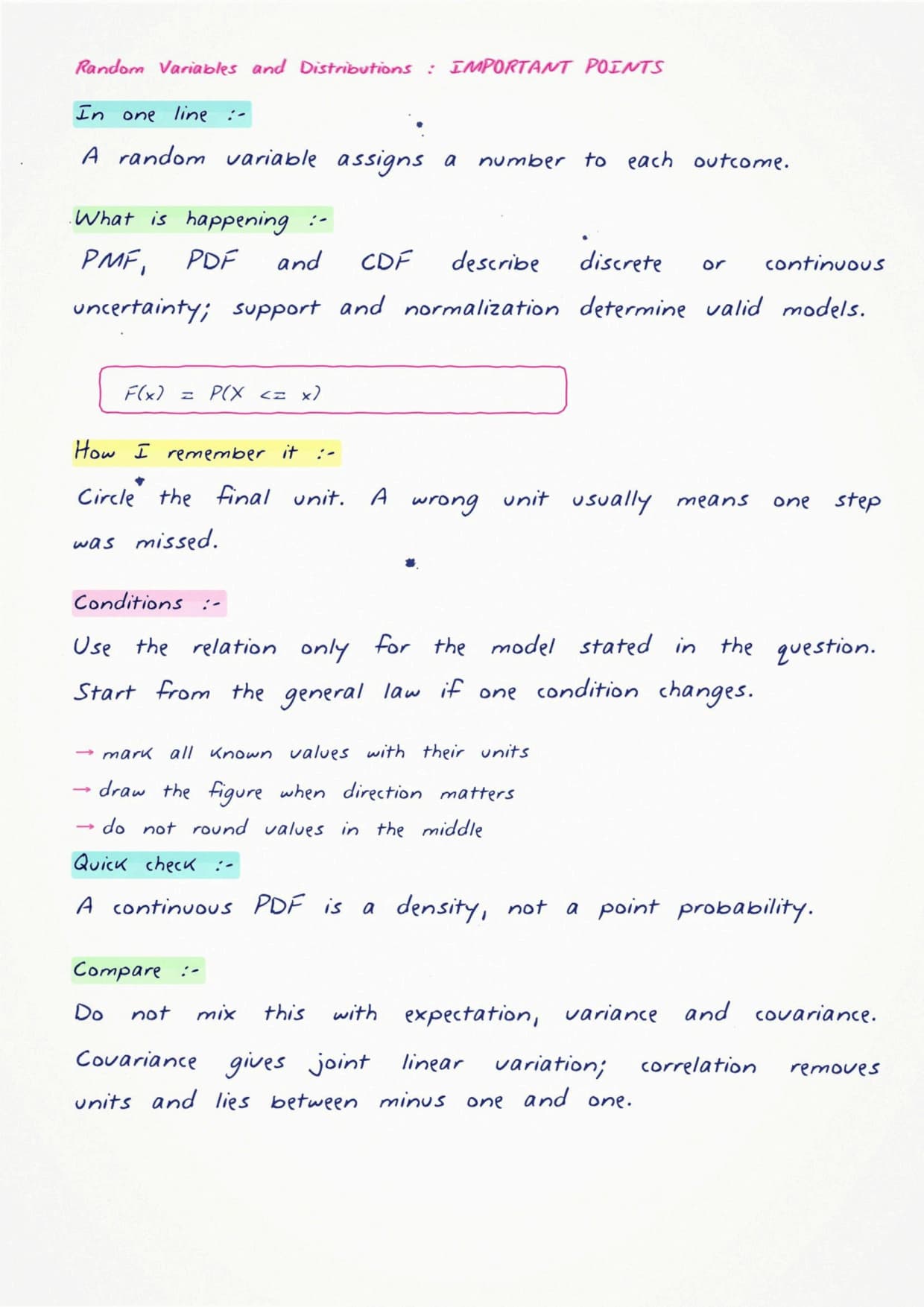
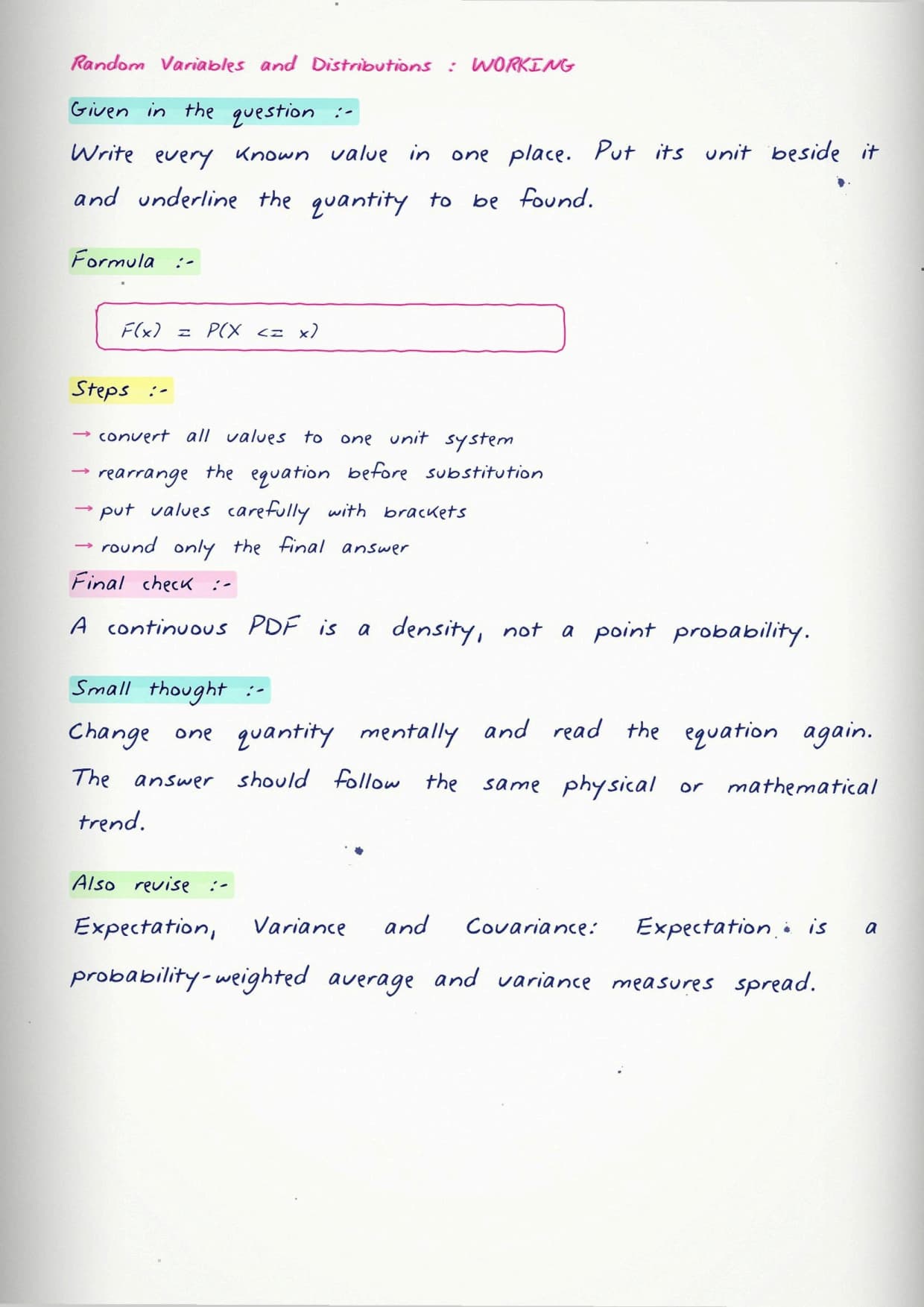
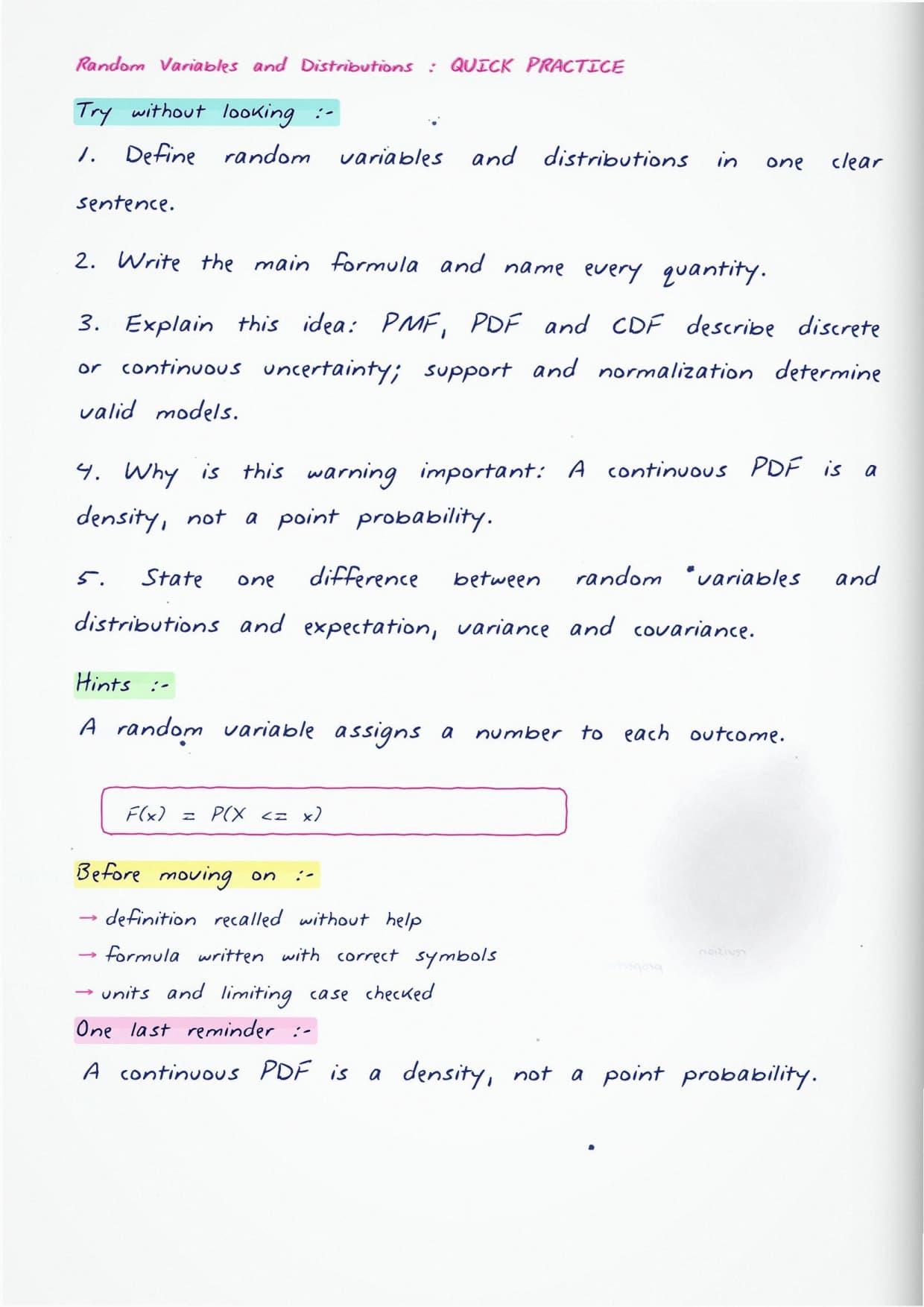
The middle pages turn events into numbers. A random variable is treated as a rule that assigns a value to each outcome, and the distributions follow naturally.
- Discrete families: Bernoulli, binomial and Poisson, with when each one fits.
- Continuous families: uniform, exponential and the normal curve.
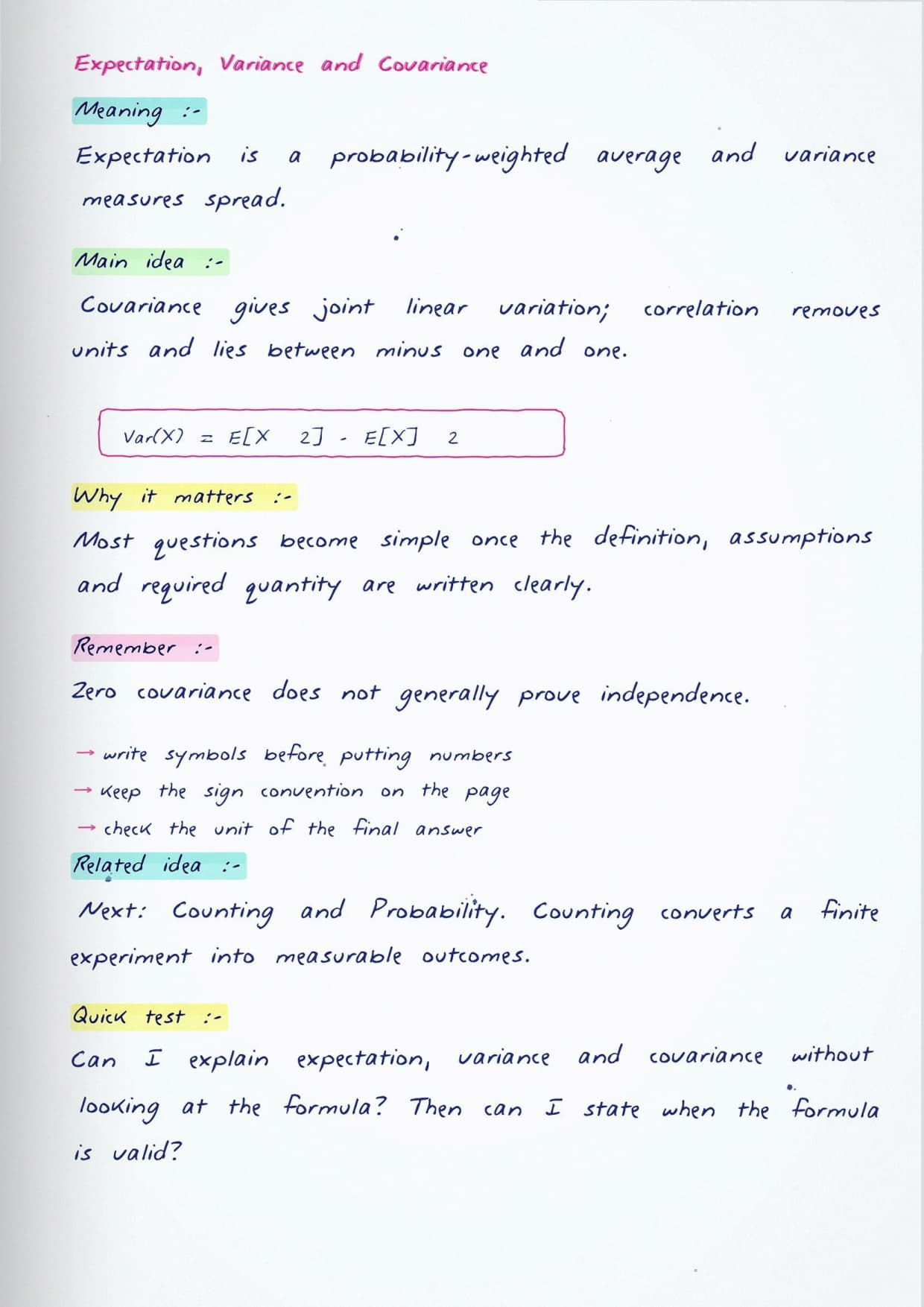
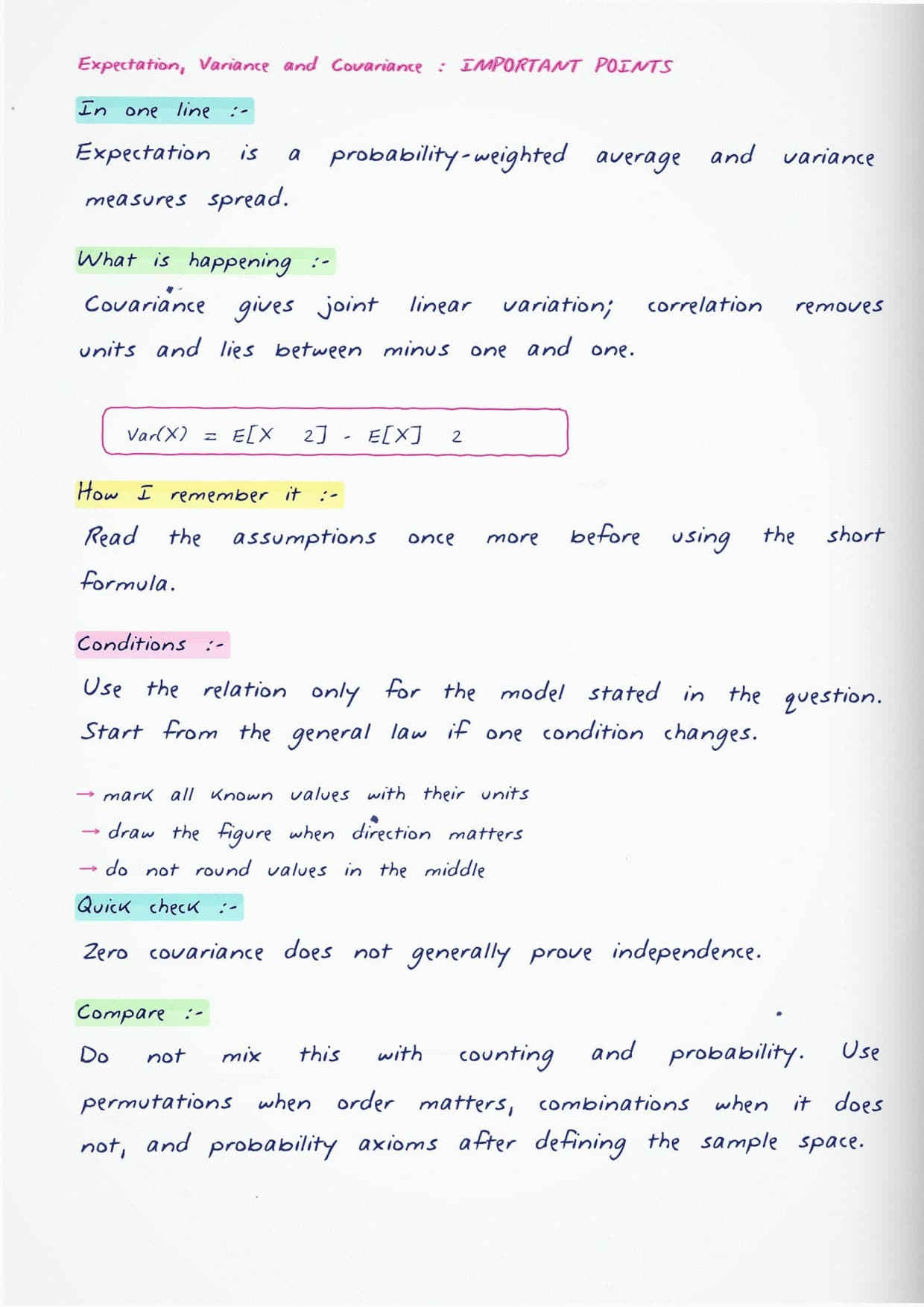
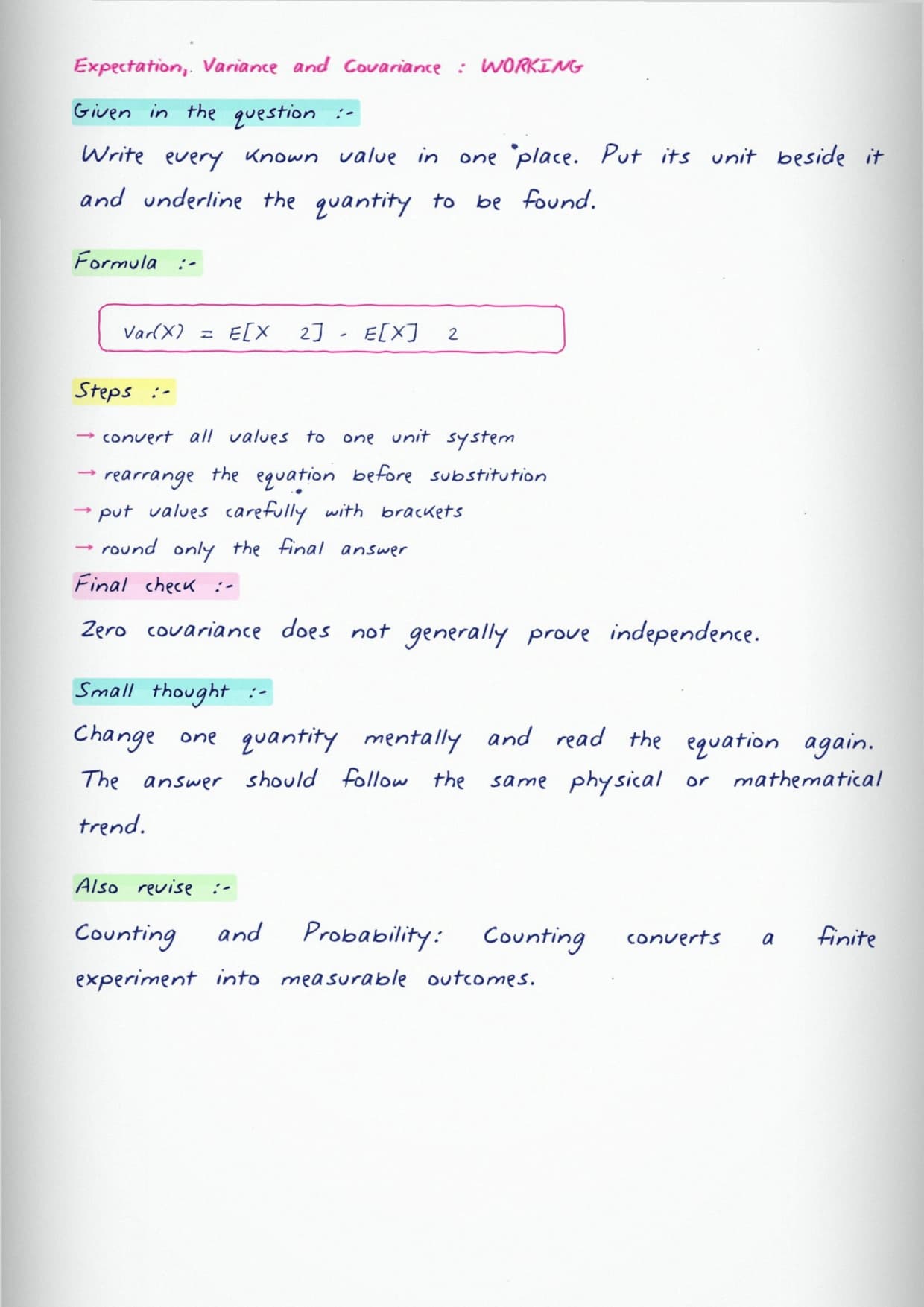
- Expectation and variance, written as the centre and the spread of a distribution.
- The Central Limit Theorem, explained as why sample averages settle into a bell shape.
Each distribution gets one line on its mean and variance, so students can recall the key numbers fast.
Inference: Turning Data Into Decisions
The final third is where statistics earns its name. Inference is about drawing a safe conclusion about a population from a limited sample.
- Point and interval estimation, including confidence intervals.
- Hypothesis testing: null versus alternative, and reading the result correctly.
- Common tests such as the z-test and t-test, matched to the situation that calls for them.
Watch Probability and Statistics Explained for DA
Source: GATE Wallah
Traps That Cost Students Easy Marks
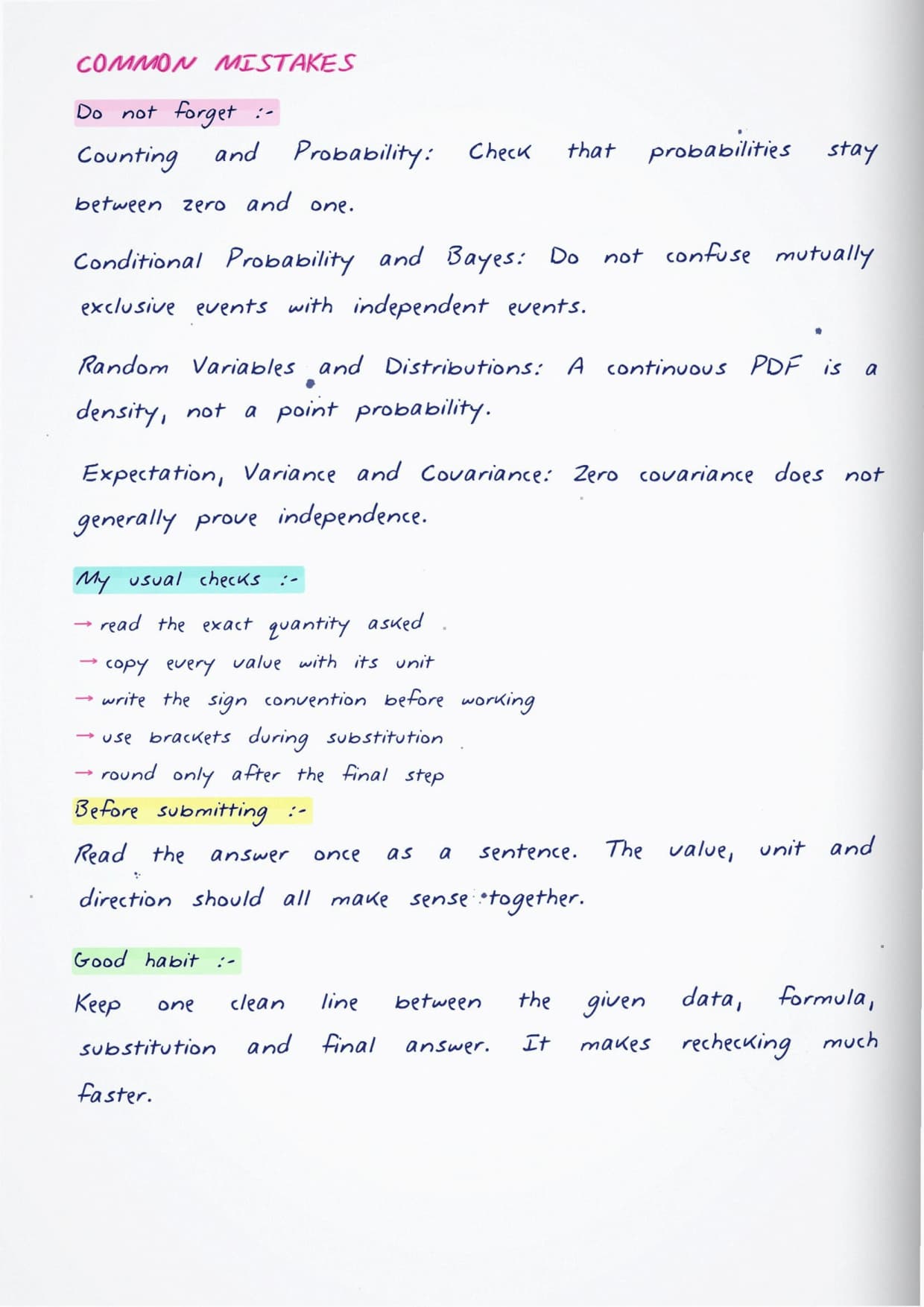
Most lost marks here come from small slips, not hard theory. The notes flag the ones examiners lean on.
- Confusing independent events with mutually exclusive ones.
- Mixing up the probability density and the cumulative function.
- Forgetting to check the conditions before applying a named distribution.
- Misreading a one-tailed test as two-tailed during hypothesis testing.
Fitting These Notes Into Your Revision
Because this topic is so heavily weighted, students should give it a full pass early and a quick recall pass near the exam.
- First read the foundations end to end, solving each small case yourself.
- Then drill previous-year numericals until the formula recall is automatic.
- Keep the distribution table handy as a one-glance revision sheet.
Probability, Statistics and Inference FAQs
Ques. How much of the GATE DA paper comes from Probability and Statistics?
Ans. It is the single largest area, usually close to a quarter of the total marks, which is why students are advised to master it first.
Ques. Do these notes assume prior statistics knowledge?
Ans. No. They begin with counting and the probability axioms and build up to inference, so students starting fresh can follow every step.
Ques. Which distributions should students focus on?
Ans. The binomial, Poisson, uniform, exponential and normal distributions appear most, along with their mean and variance and the Central Limit Theorem.
Ques. Is hypothesis testing important for GATE DA?
Ans. Yes. Estimation and hypothesis testing, including z-tests and t-tests, are regularly tested, so the inference pages deserve careful revision.
Ques. Can I download these handwritten notes as a PDF?
Ans. Yes. The full set is available as a downloadable PDF above, ready to save and revise offline.



Comments