




These Machine Learning and AI notes hand-write the core of the GATE DA syllabus, one of the highest-scoring blocks in the paper, as compact concept cards students can revise in an afternoon.
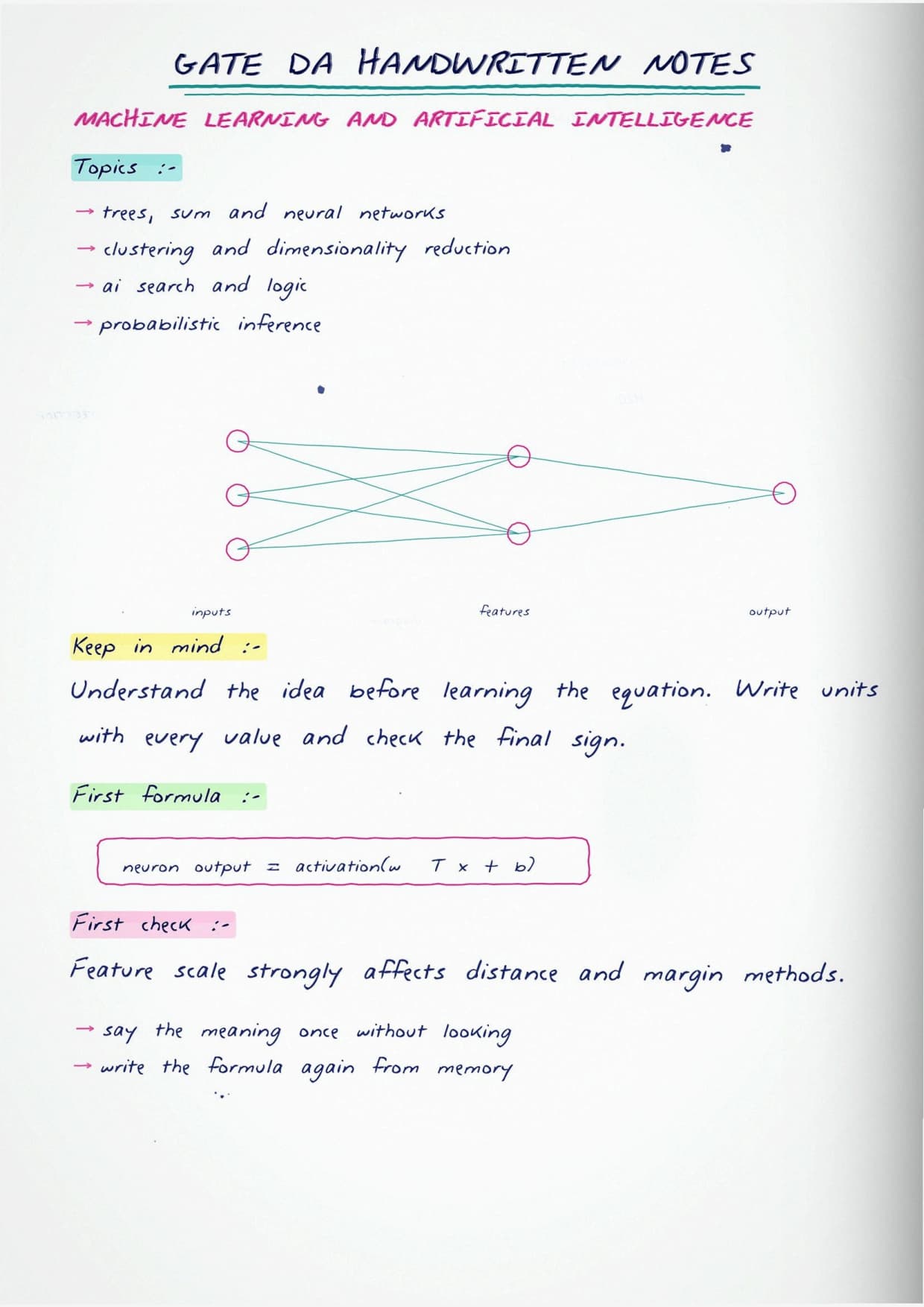
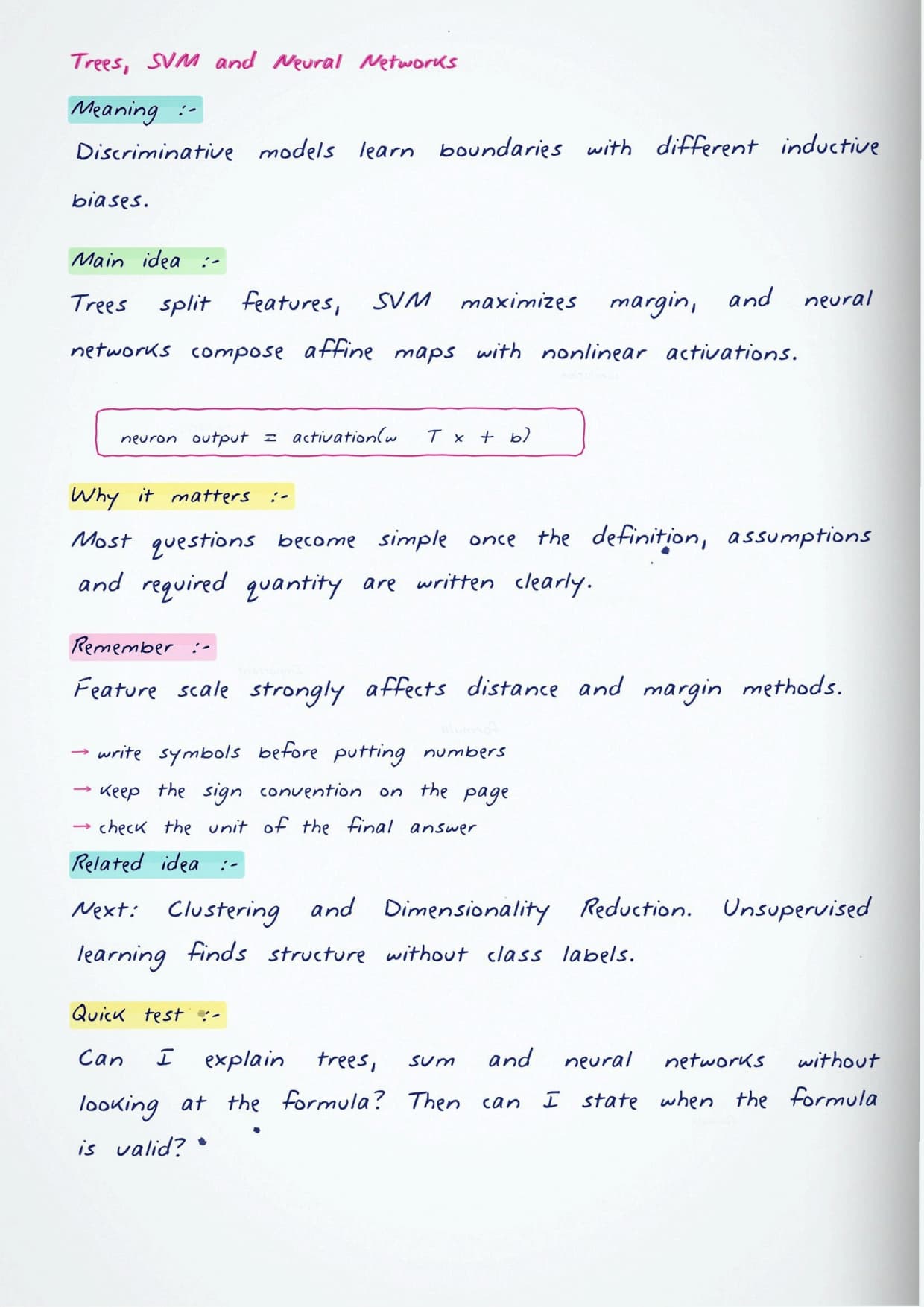
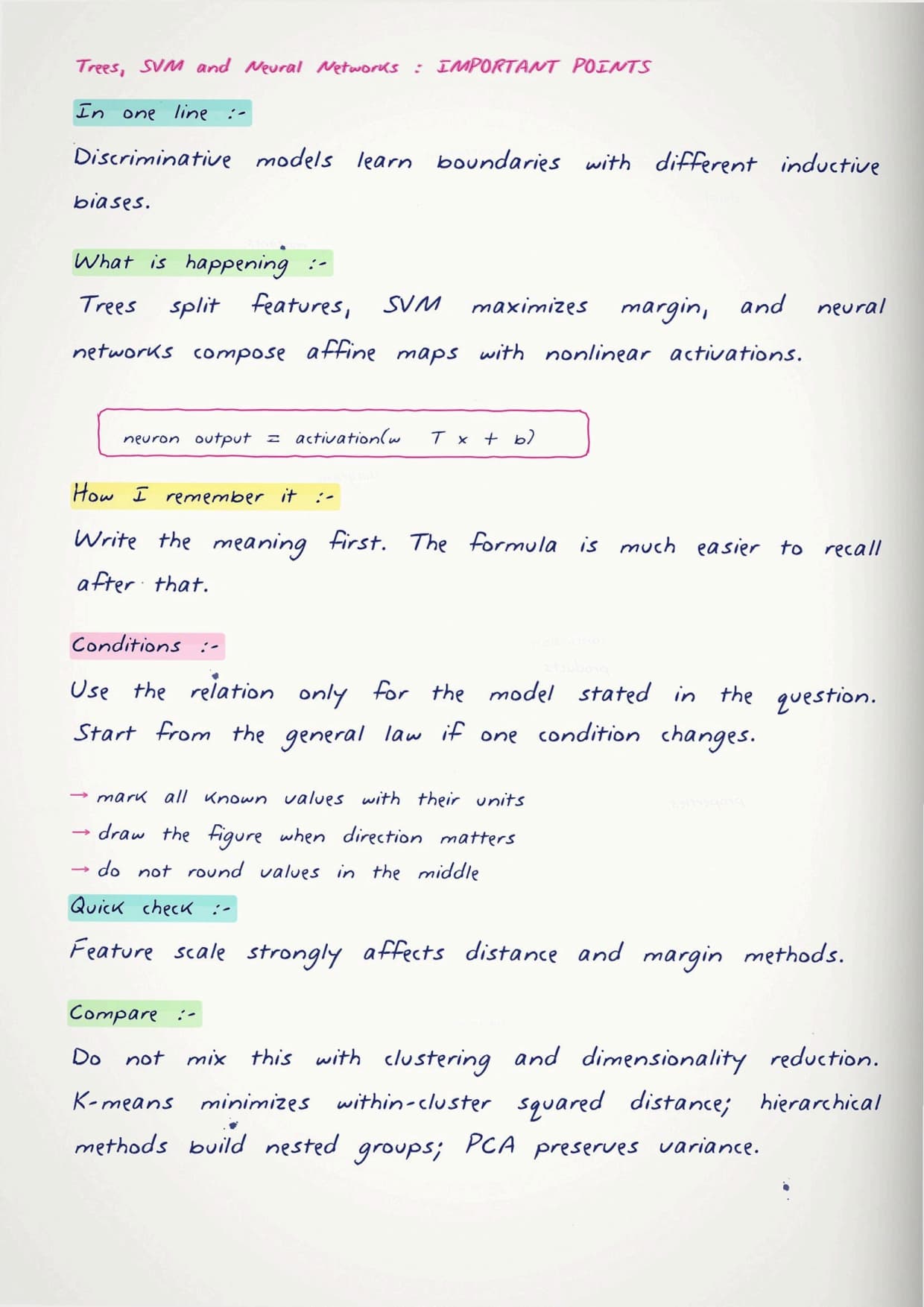
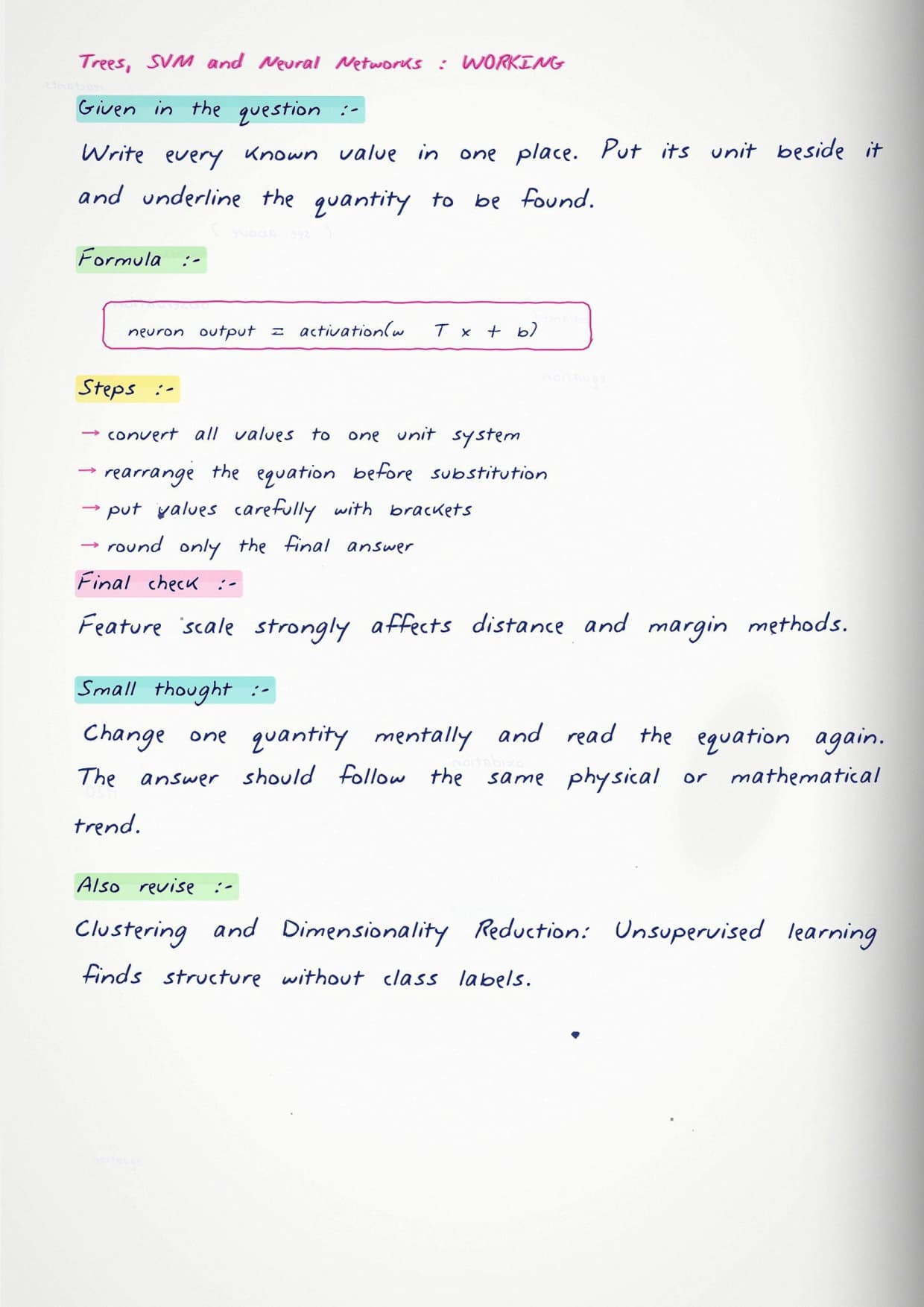
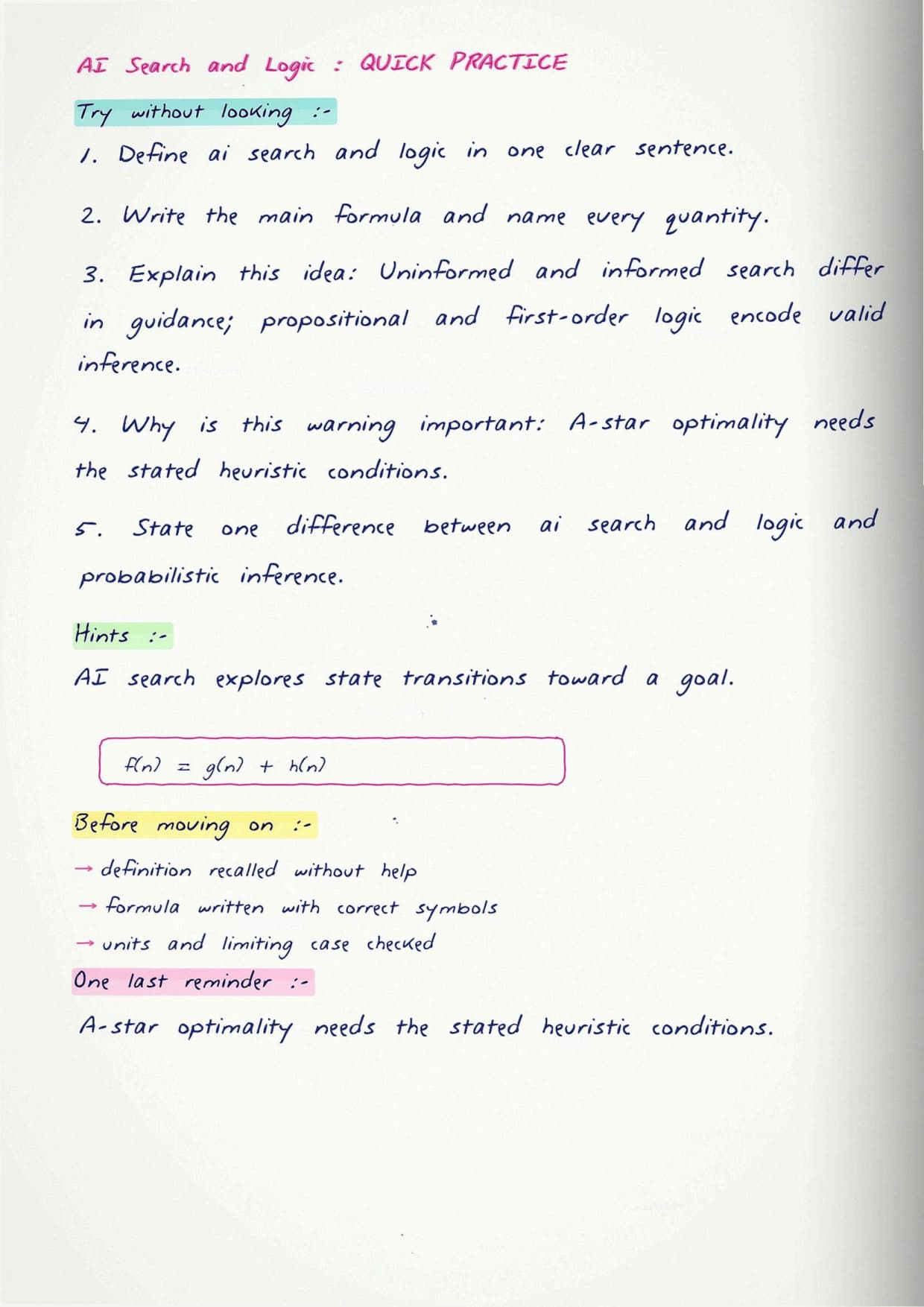
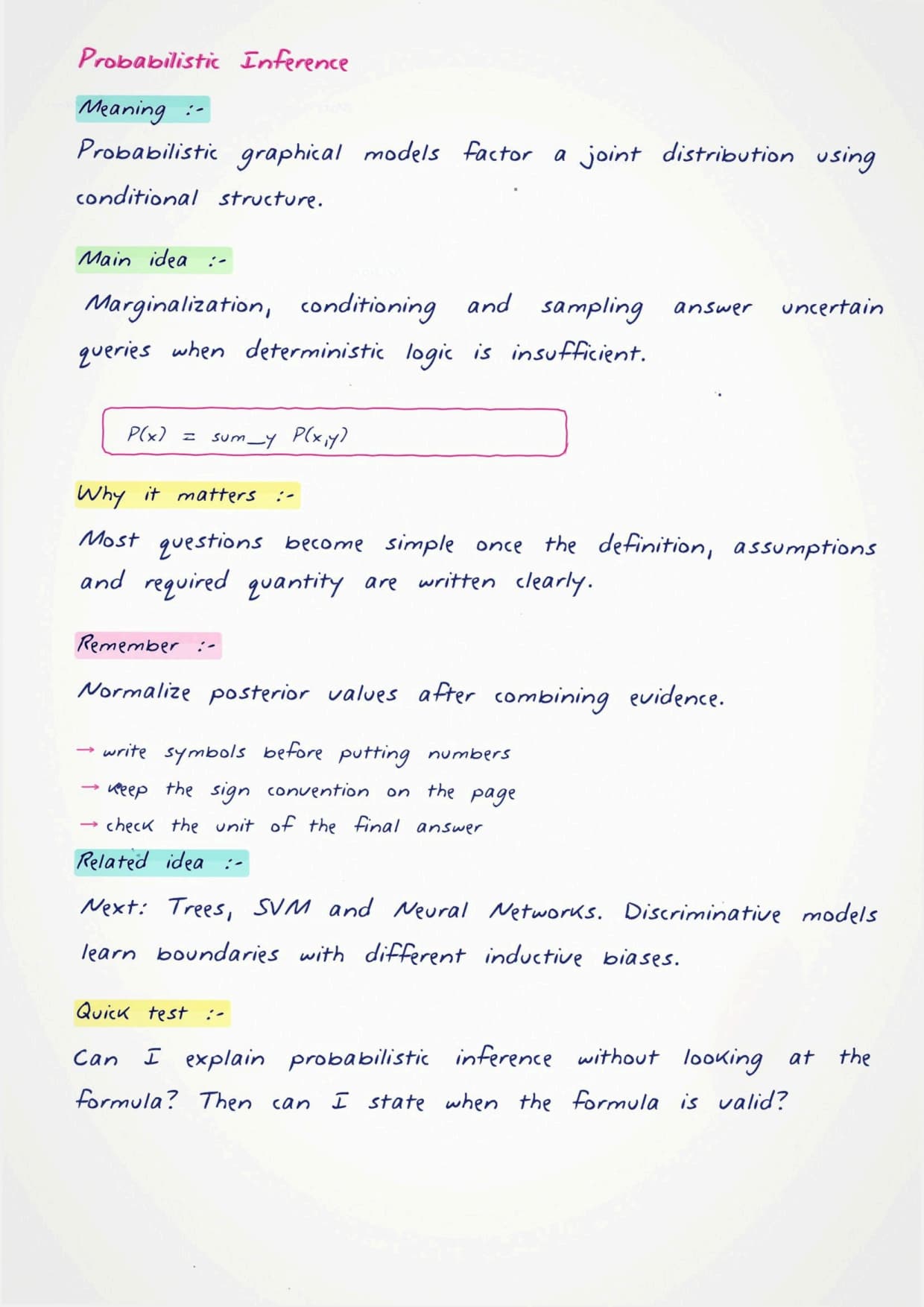
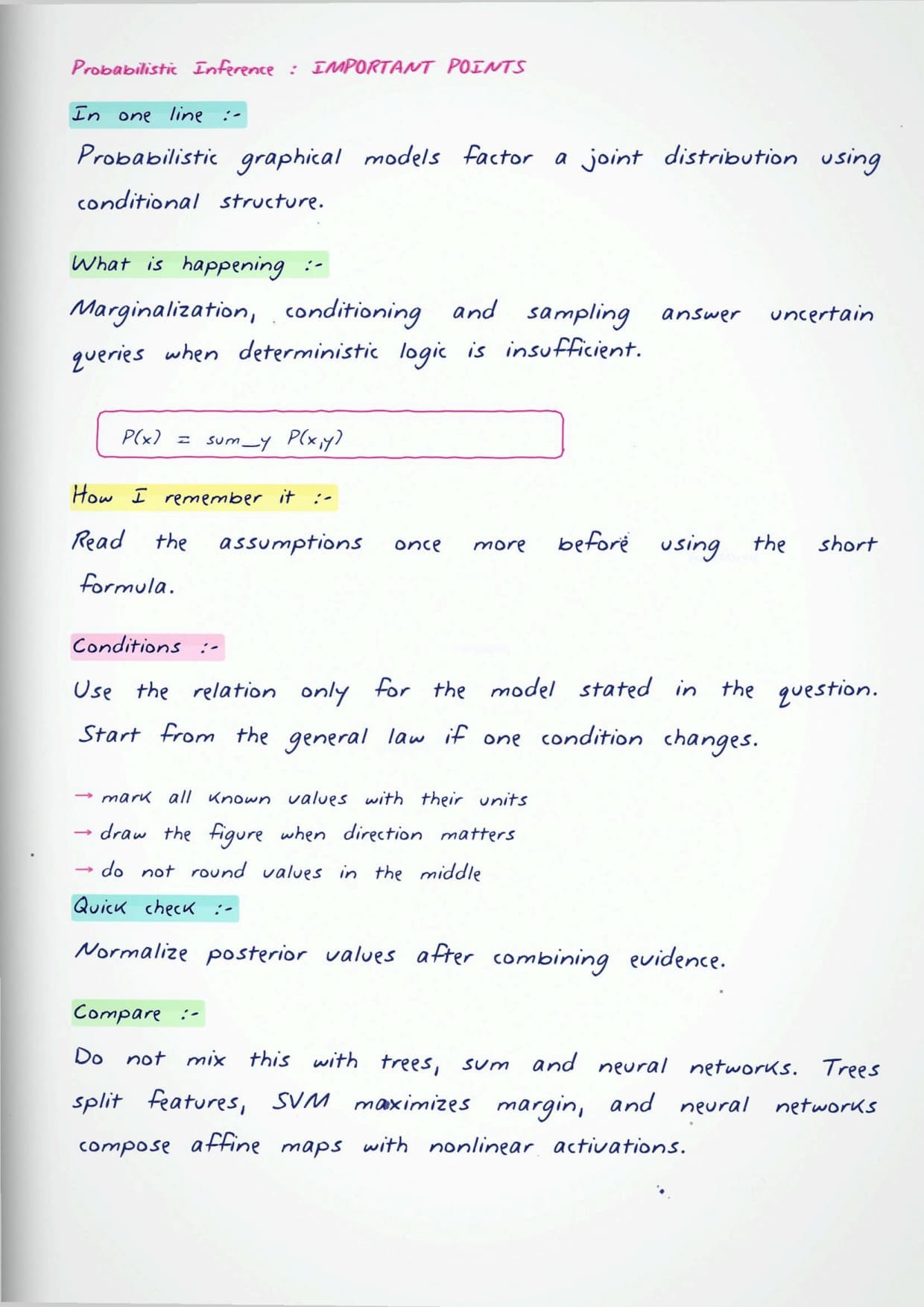
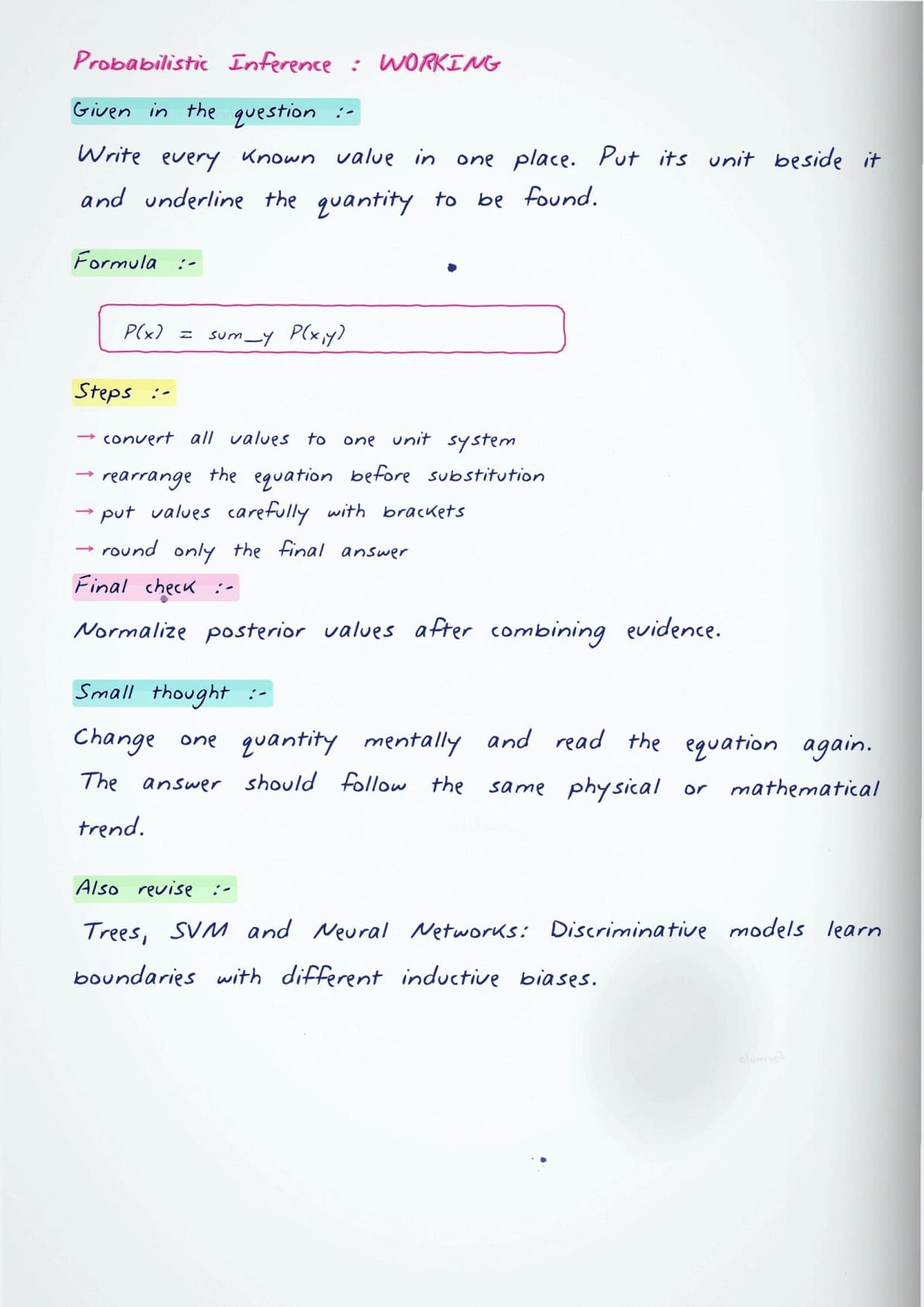
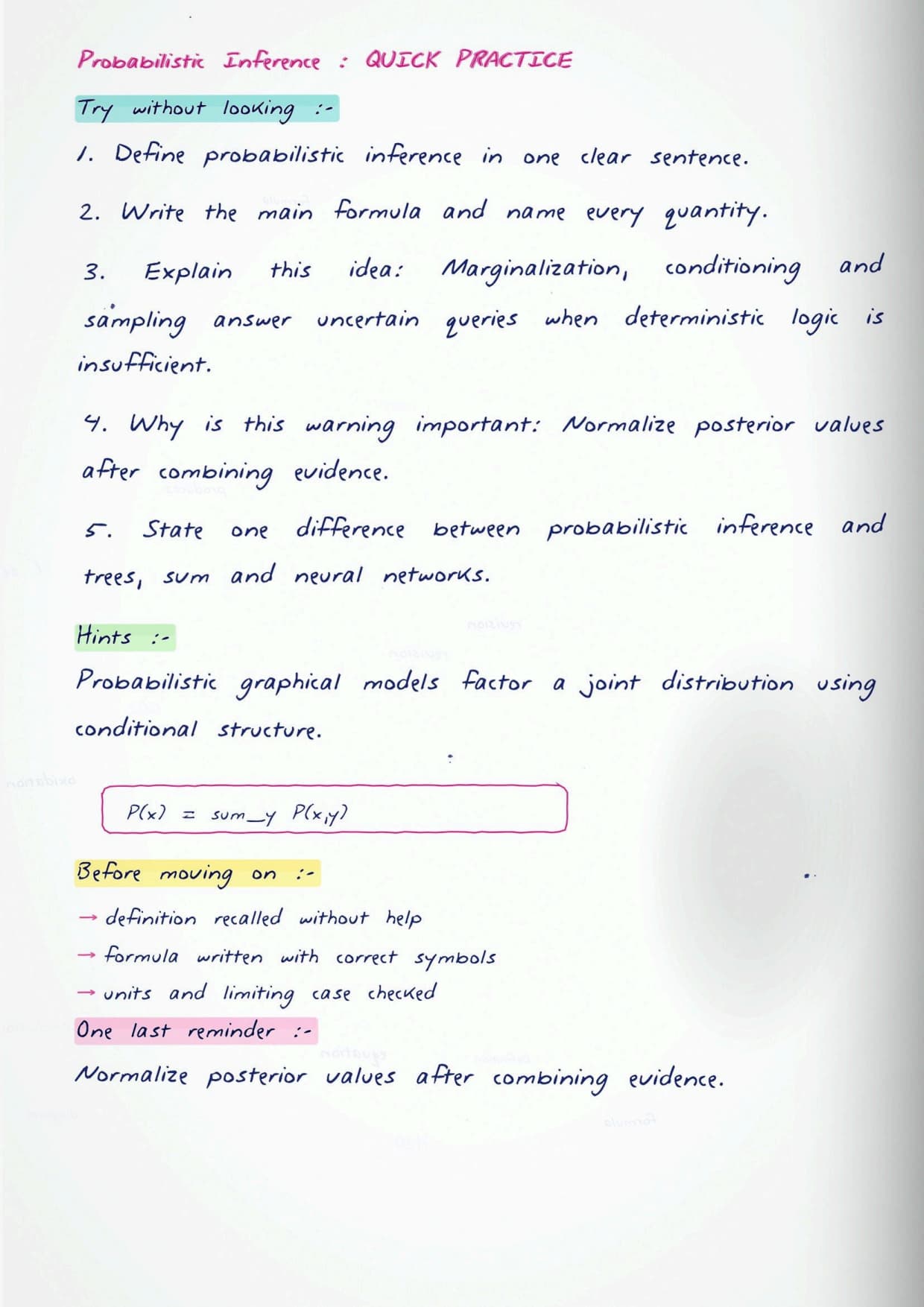
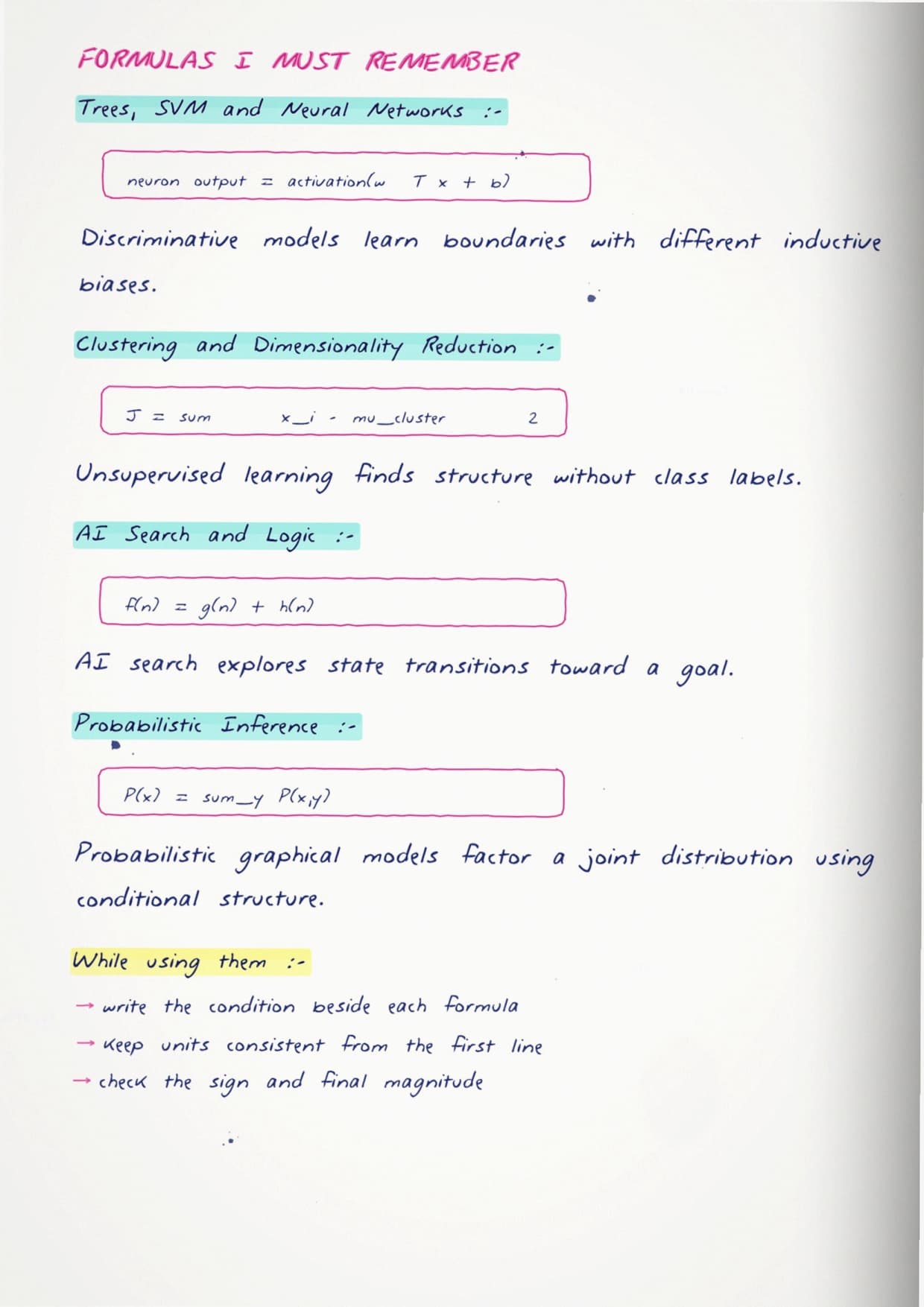
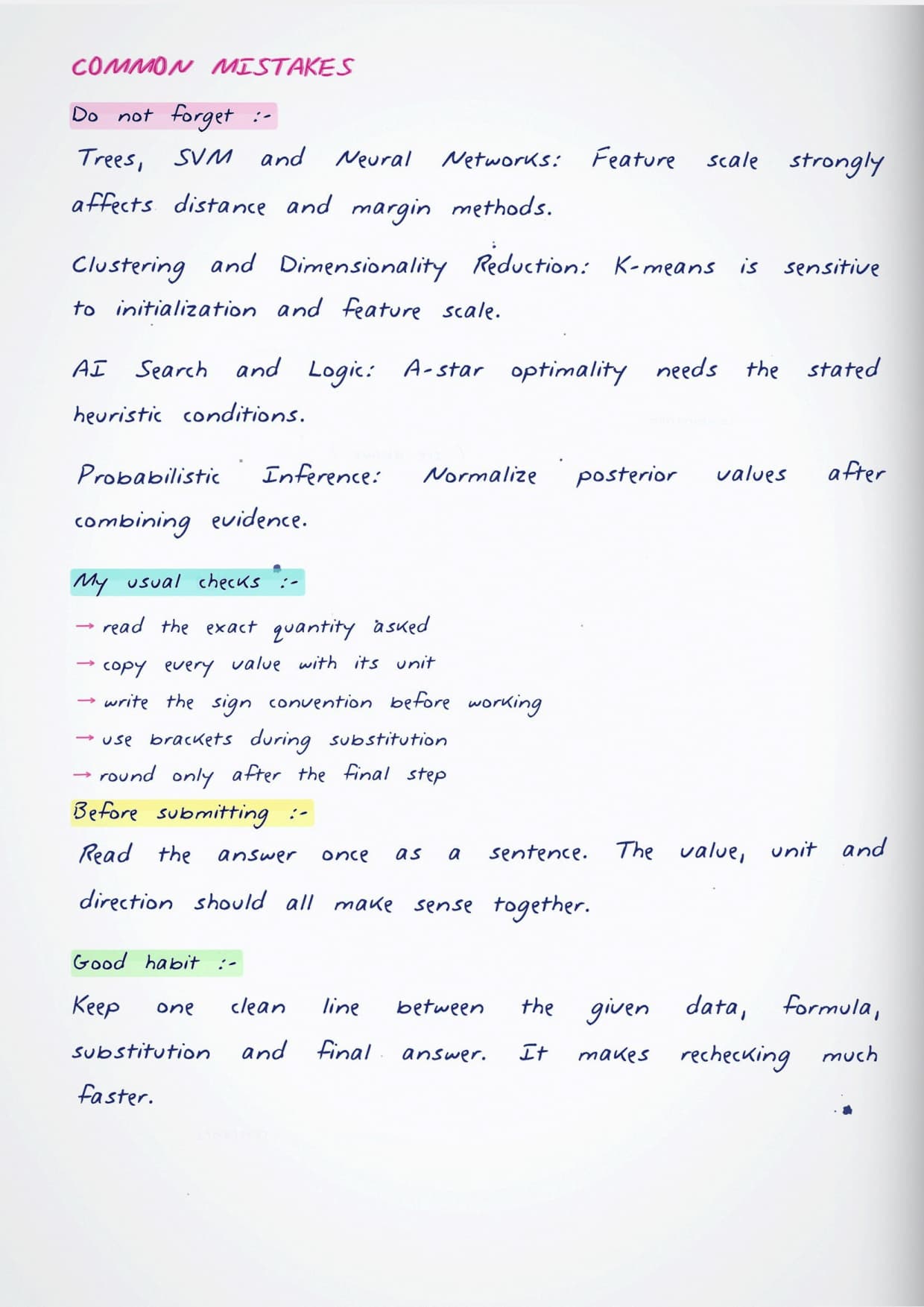
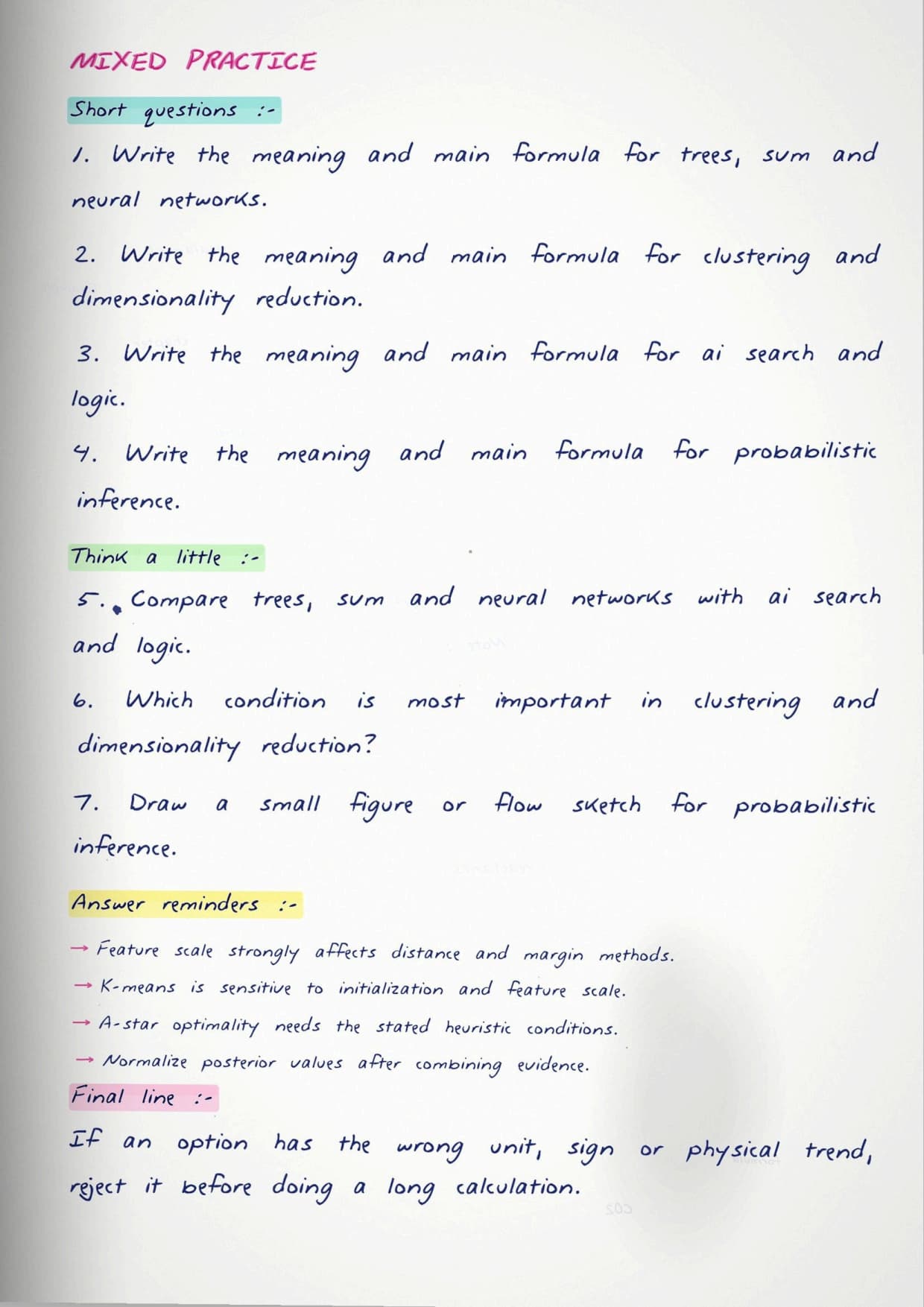
The pages move like a guided tour: one idea per card, a plain definition, then the setting where it is used. No topic assumes you have seen the next.
Where Machine Learning Sits in the DA Paper
Machine Learning and AI together form one of the largest sections of the official Data Science and AI paper, second only to the probability and statistics block in weight.
- Questions reward clear intuition about why an algorithm behaves as it does, not rote formulas.
- Much of it builds on probability, so students who revise statistics first find this easier.
- The concepts are stable year to year, making them a reliable source of marks.
A Tour Through Supervised Learning
The notes open with supervised methods, where the model learns from labelled examples. Each algorithm gets its own card.
- Linear and logistic regression, with the idea of fitting a line or a decision boundary.
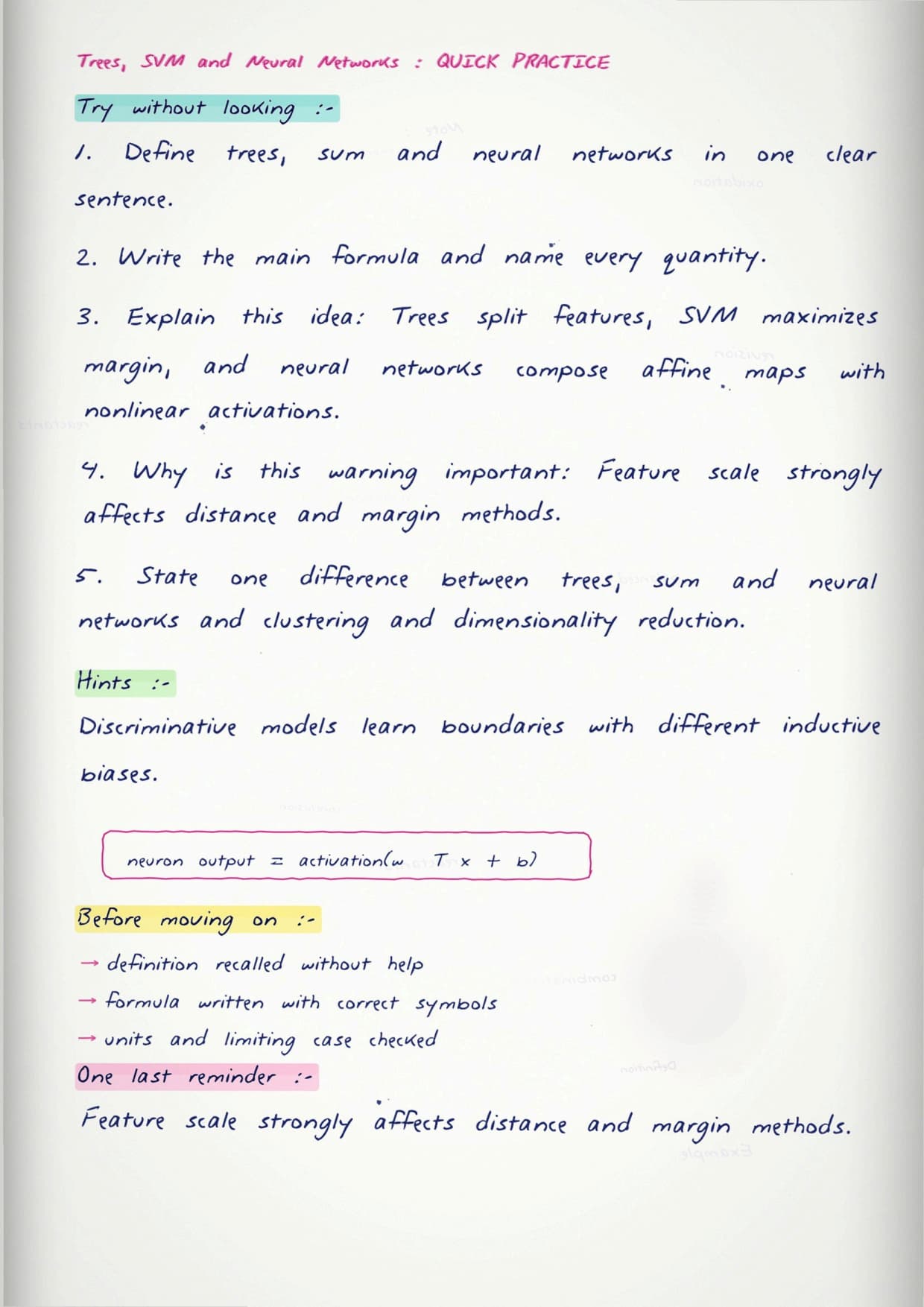
- Decision trees and the way they split data on the most informative feature.
- k-nearest neighbours and the support vector machine, contrasted side by side.
- Bias and variance, drawn as the tension between underfitting and overfitting.
Evaluation metrics such as accuracy, precision and recall sit alongside these so students can judge a model, not just build one.
Unsupervised Methods at a Glance
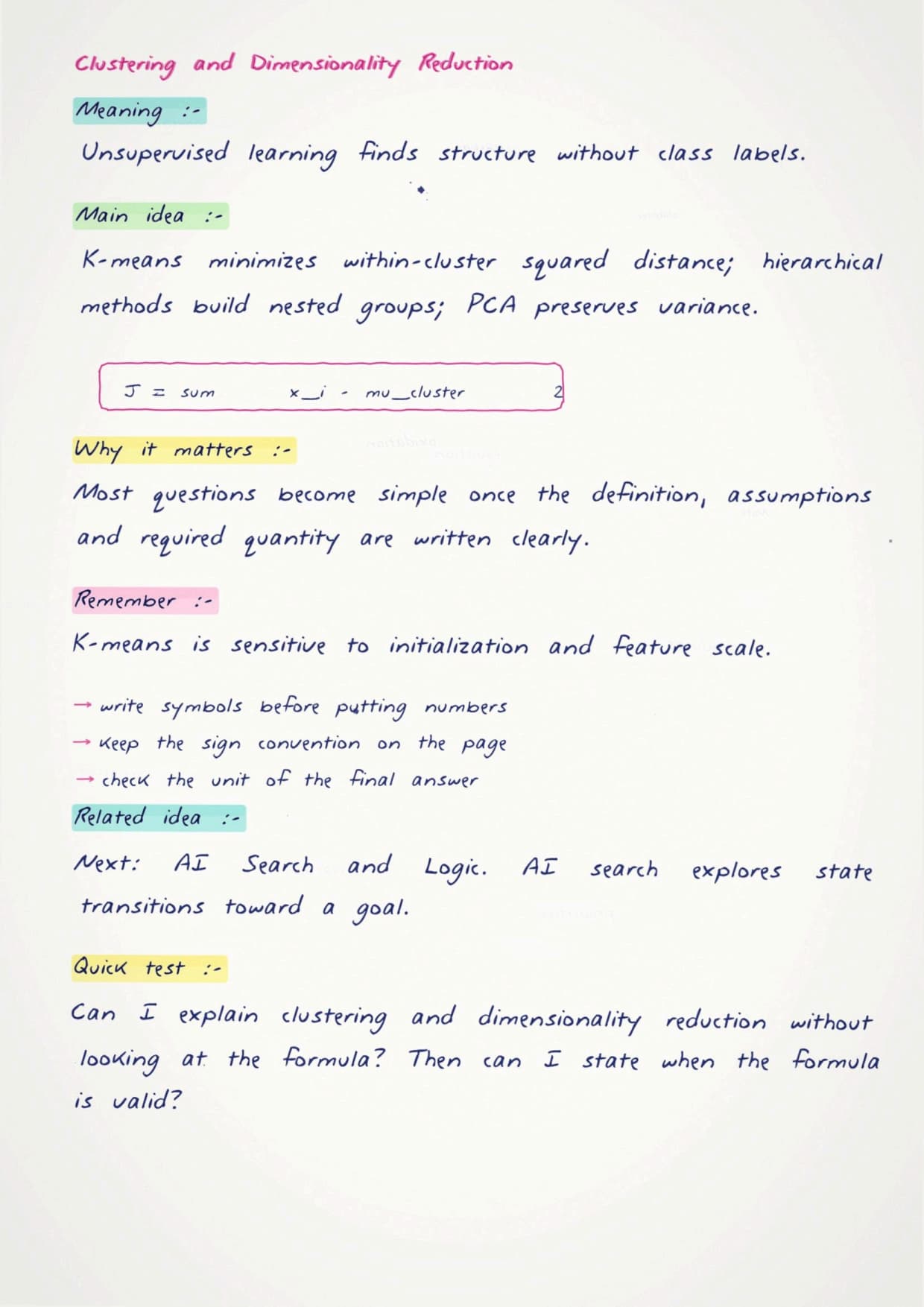
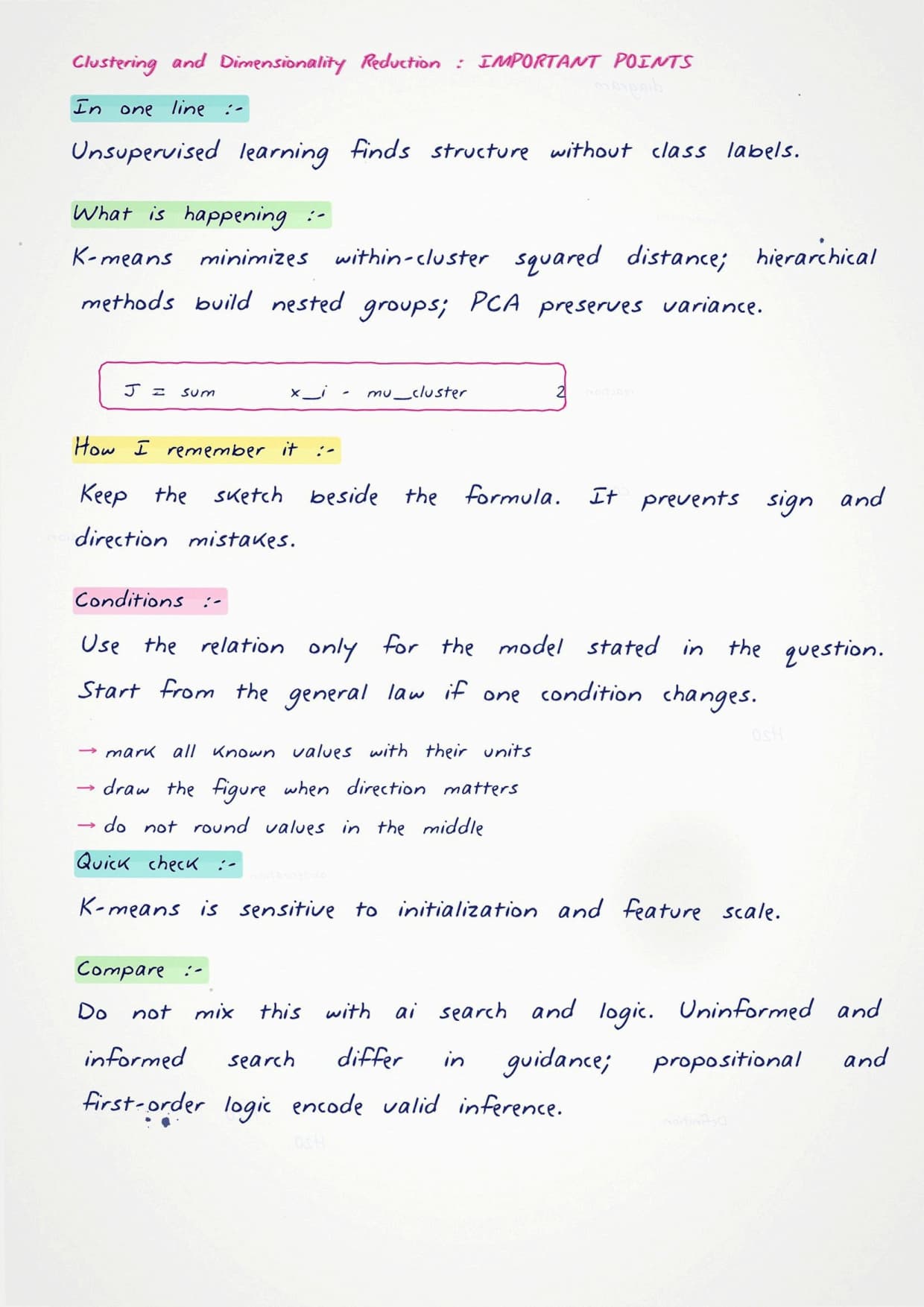
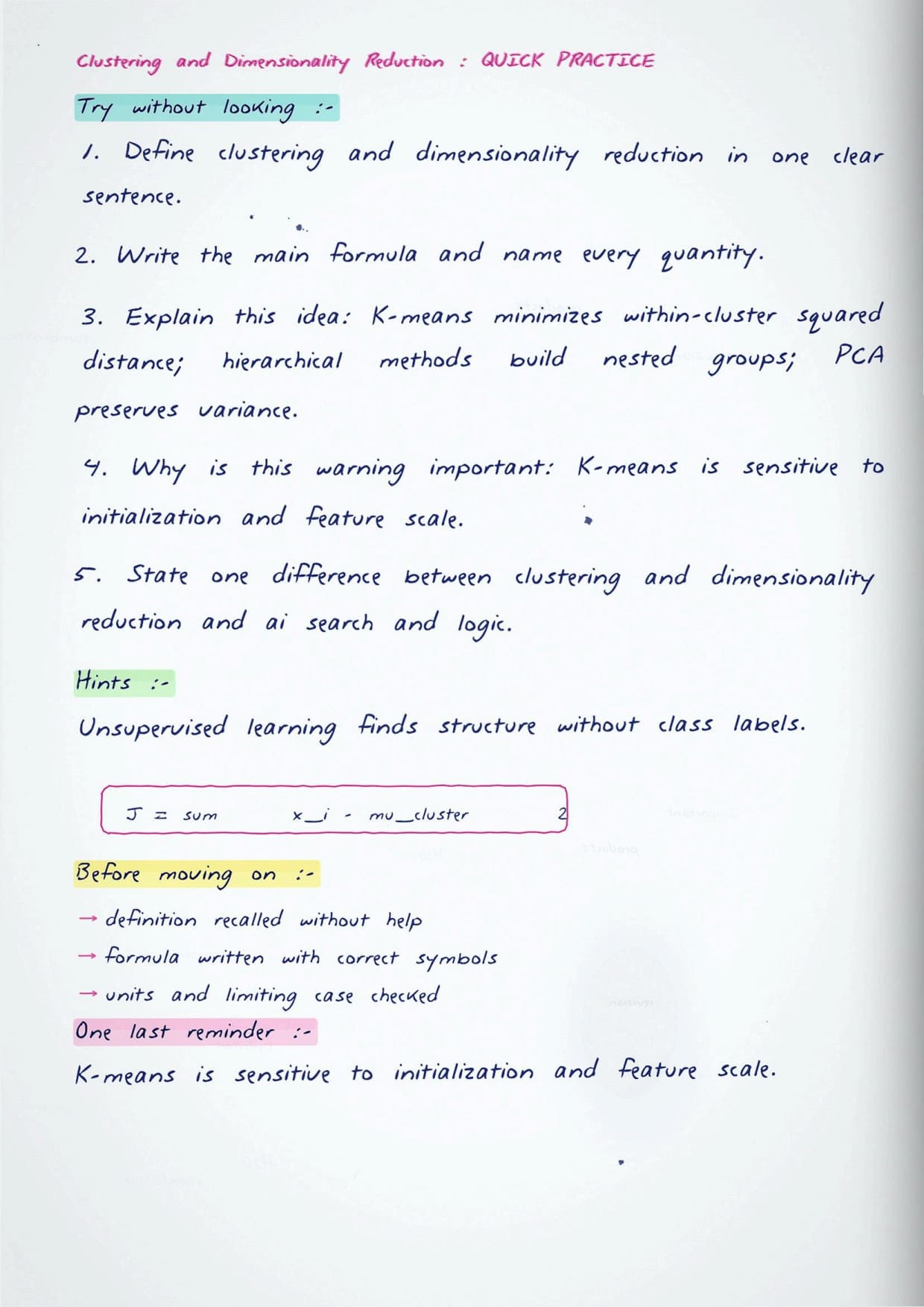
Next come methods that find structure without labels. These pages stay visual, since the ideas are geometric.
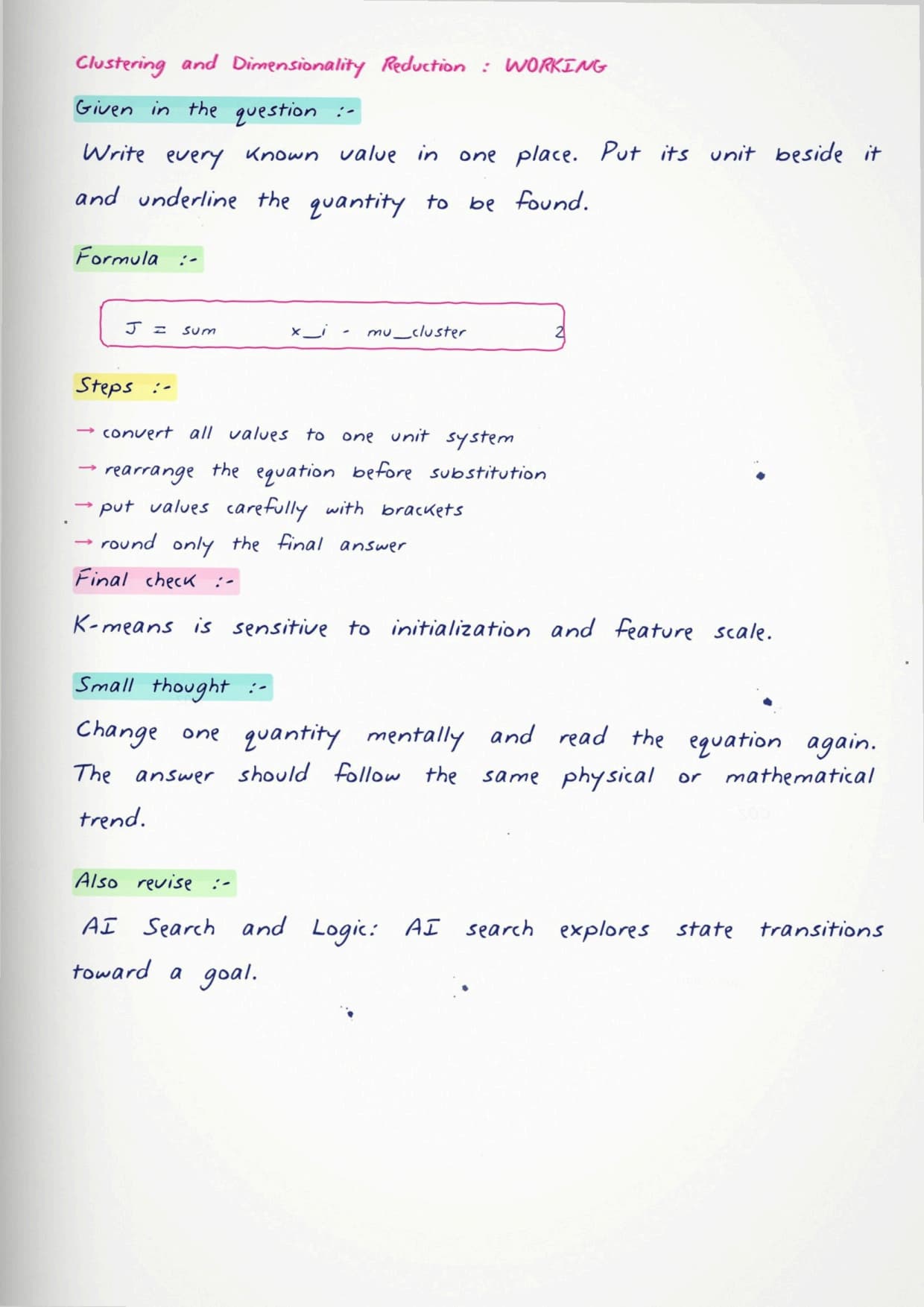
- k-means clustering, shown as grouping points around moving centres.
- Hierarchical clustering and how a dendrogram records the merges.
- Principal component analysis for reducing dimensions while keeping the spread.
The AI Half of the Syllabus
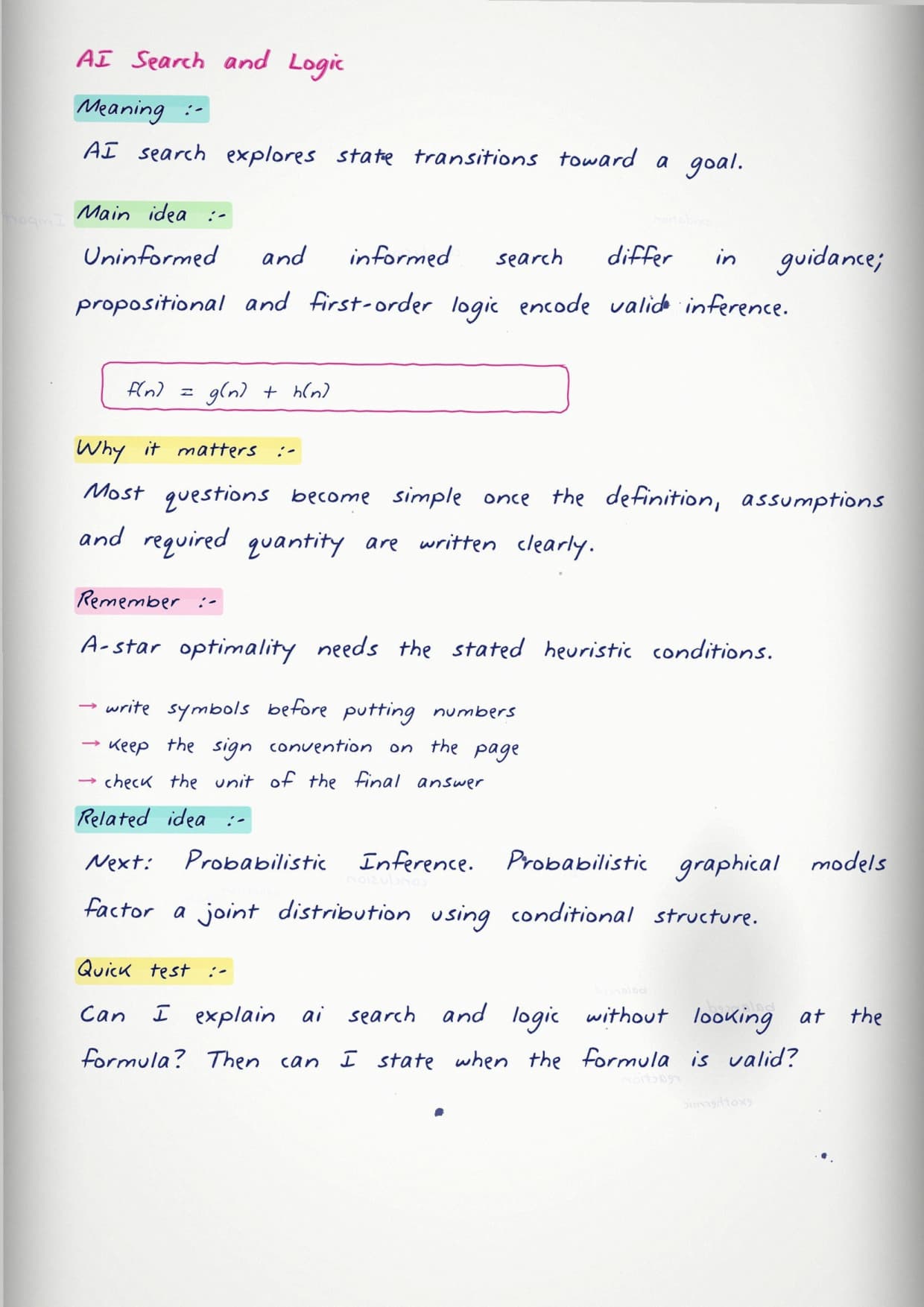
The later cards cover the artificial intelligence topics that share this section. They are treated as reasoning tools rather than pure coding.
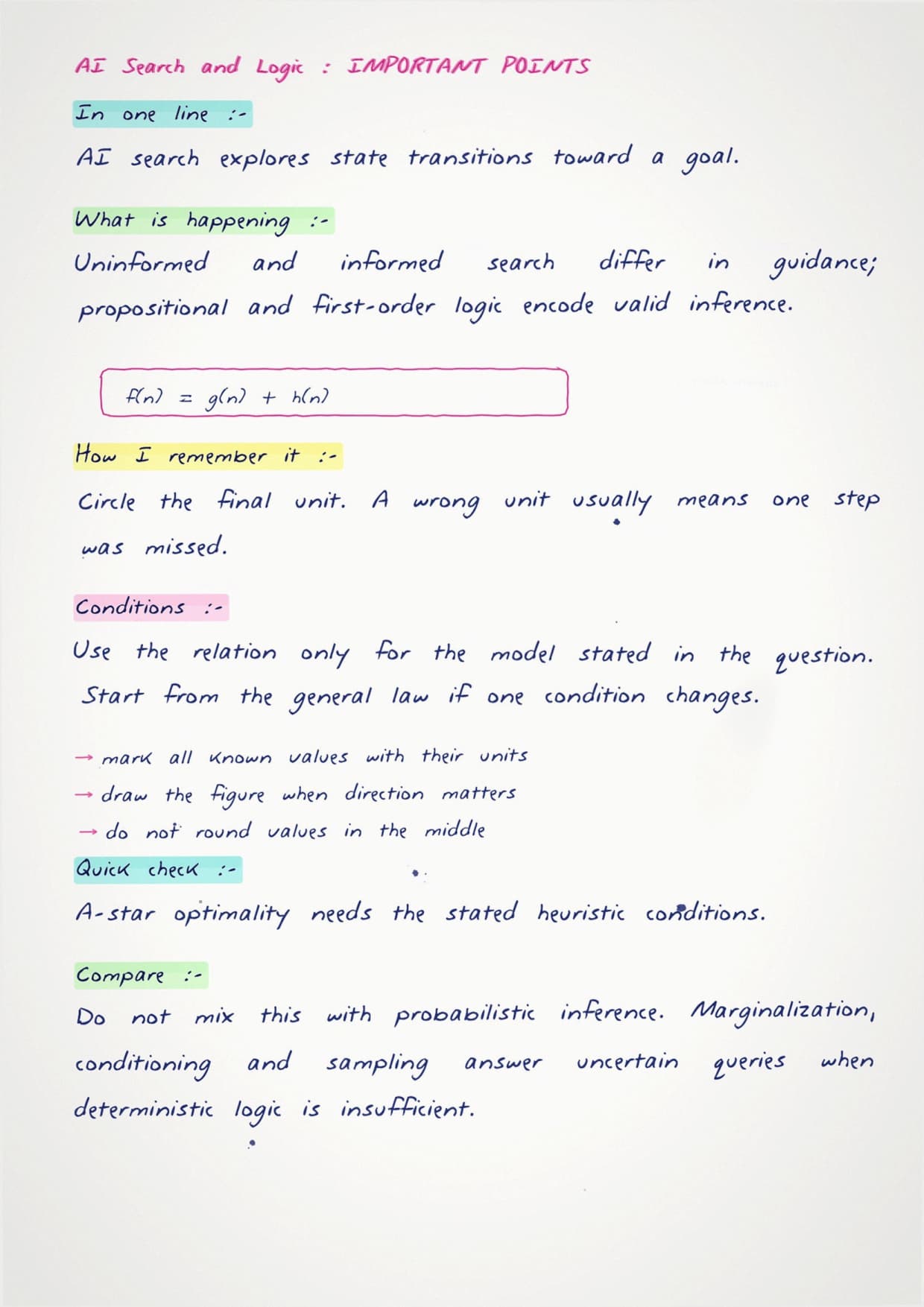
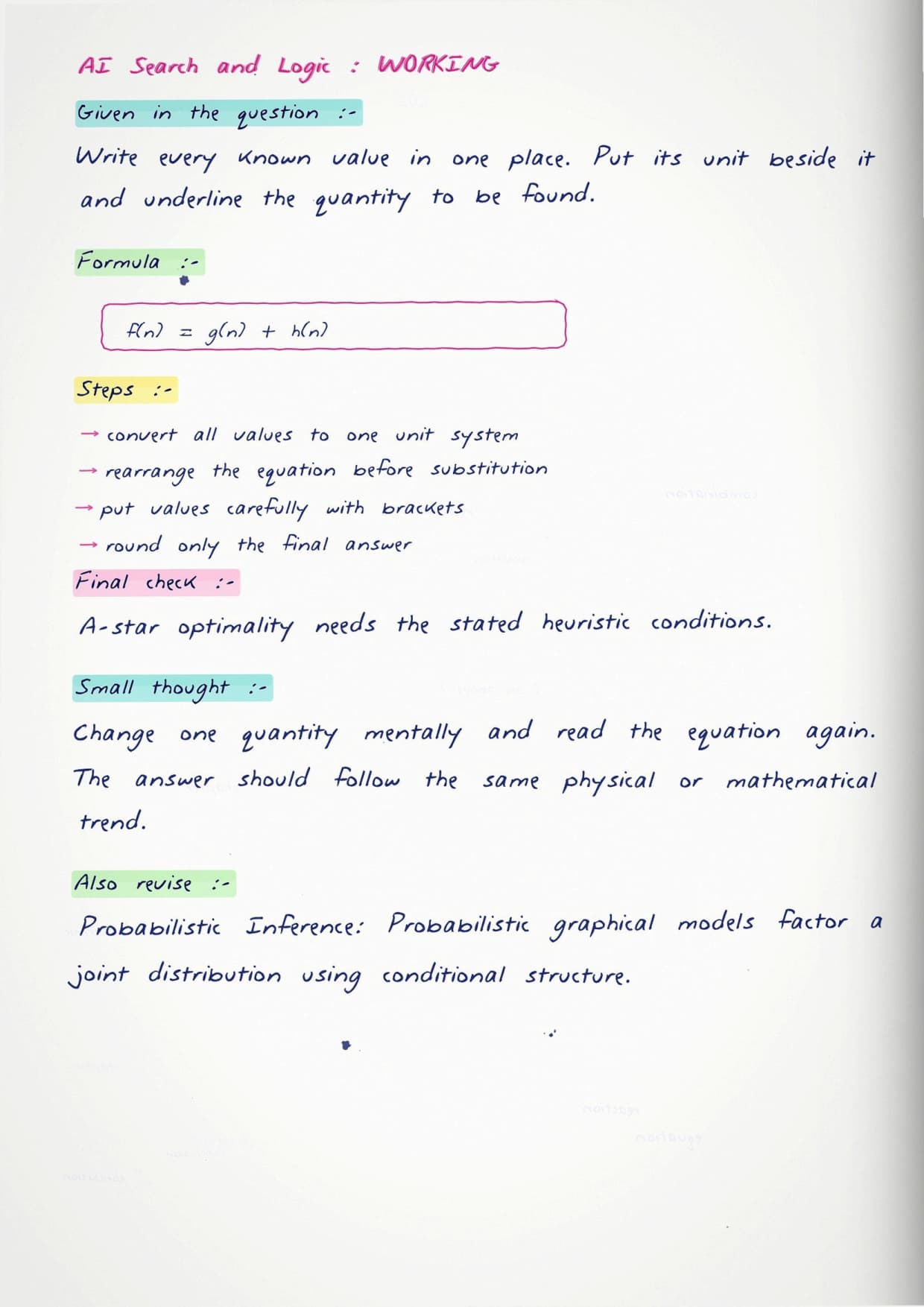
- Search: informed and uninformed strategies for exploring a problem space.
- Logic and reasoning, including how knowledge is represented.
- Neural network basics, from a single perceptron to layered networks.
See Machine Learning for DA on Video
Source: GO Classes for GATE CS
Quick-Recall Facts Before the Exam
These are the one-line reminders students most often want back in the last week.
- Precision answers how many predicted positives were right; recall answers how many real positives were caught.
- High variance means overfitting; high bias means underfitting.
- k-means needs the number of clusters set in advance; hierarchical clustering does not.
- Principal component analysis keeps the directions of largest variance.
How Students Can Work Through These Notes
The tour is built to be read in order, but each card also stands alone for quick revision.
- Read supervised learning first, since later ideas reuse its vocabulary.
- Sketch each algorithm once from memory to lock in the intuition.
- Pair the recall facts with past questions to test yourself under time.
Machine Learning and AI FAQs
Ques. How important is Machine Learning in the GATE DA paper?
Ans. It is one of the largest blocks, close behind probability and statistics, so it is a major and dependable source of marks for students.
Ques. Do I need statistics before studying these notes?
Ans. It helps. Many machine learning ideas rest on probability, so revising statistics first makes topics like regression and evaluation metrics far clearer.
Ques. Which algorithms appear most often?
Ans. Linear and logistic regression, decision trees, k-nearest neighbours, support vector machines, k-means and principal component analysis are the most frequently tested.
Ques. Do these notes cover the AI part of the syllabus too?
Ans. Yes. They include search strategies, logic and reasoning, and the basics of neural networks alongside the core machine learning topics.
Ques. Are the notes available as a downloadable PDF?
Ans. Yes. The complete handwritten set can be downloaded as a PDF above for offline revision.



Comments