




These Linear Algebra, Calculus and Optimization notes pull together the maths that quietly decides most Machine Learning marks in GATE DA, arranged by area so students see exactly where each idea gets used.
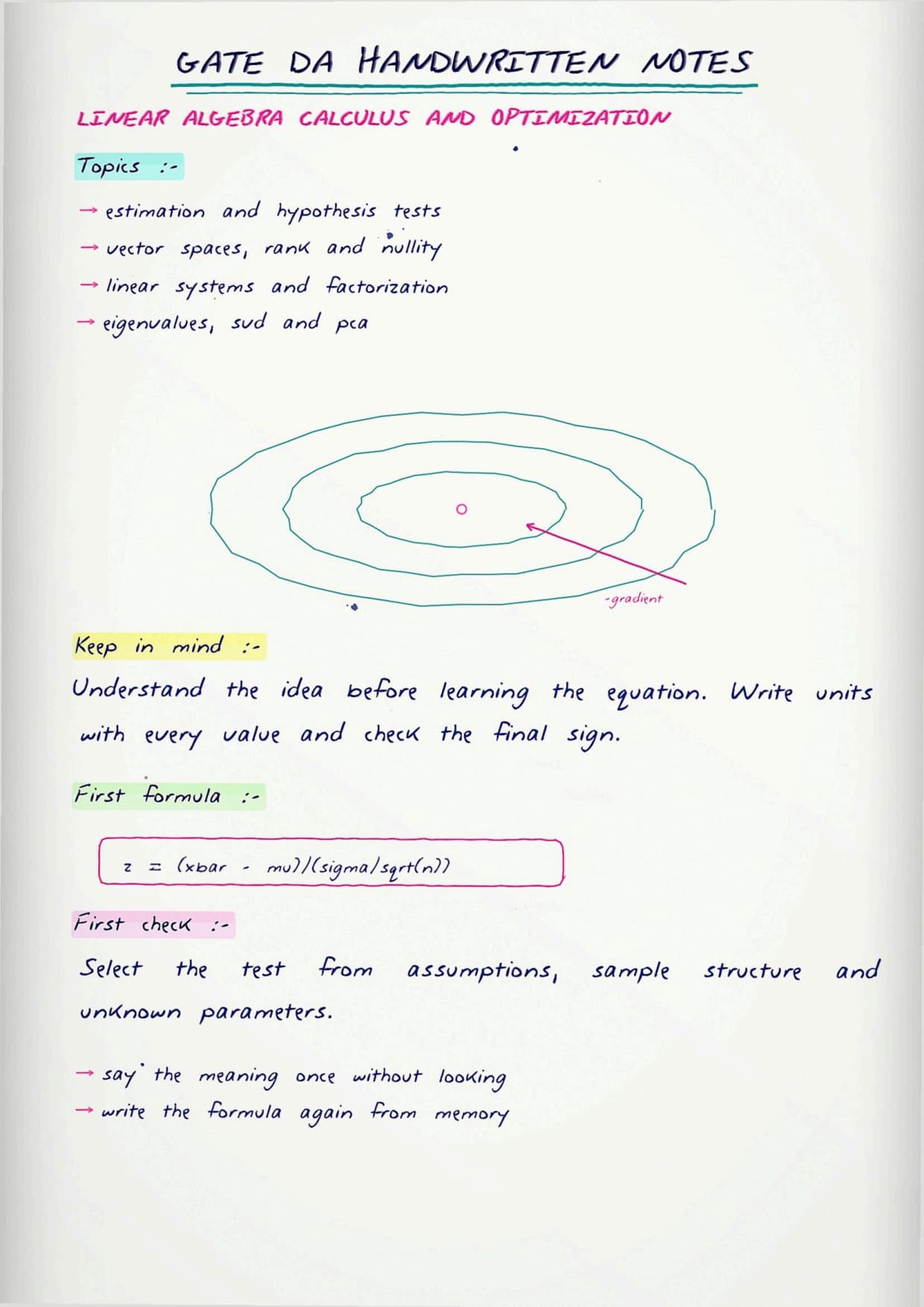
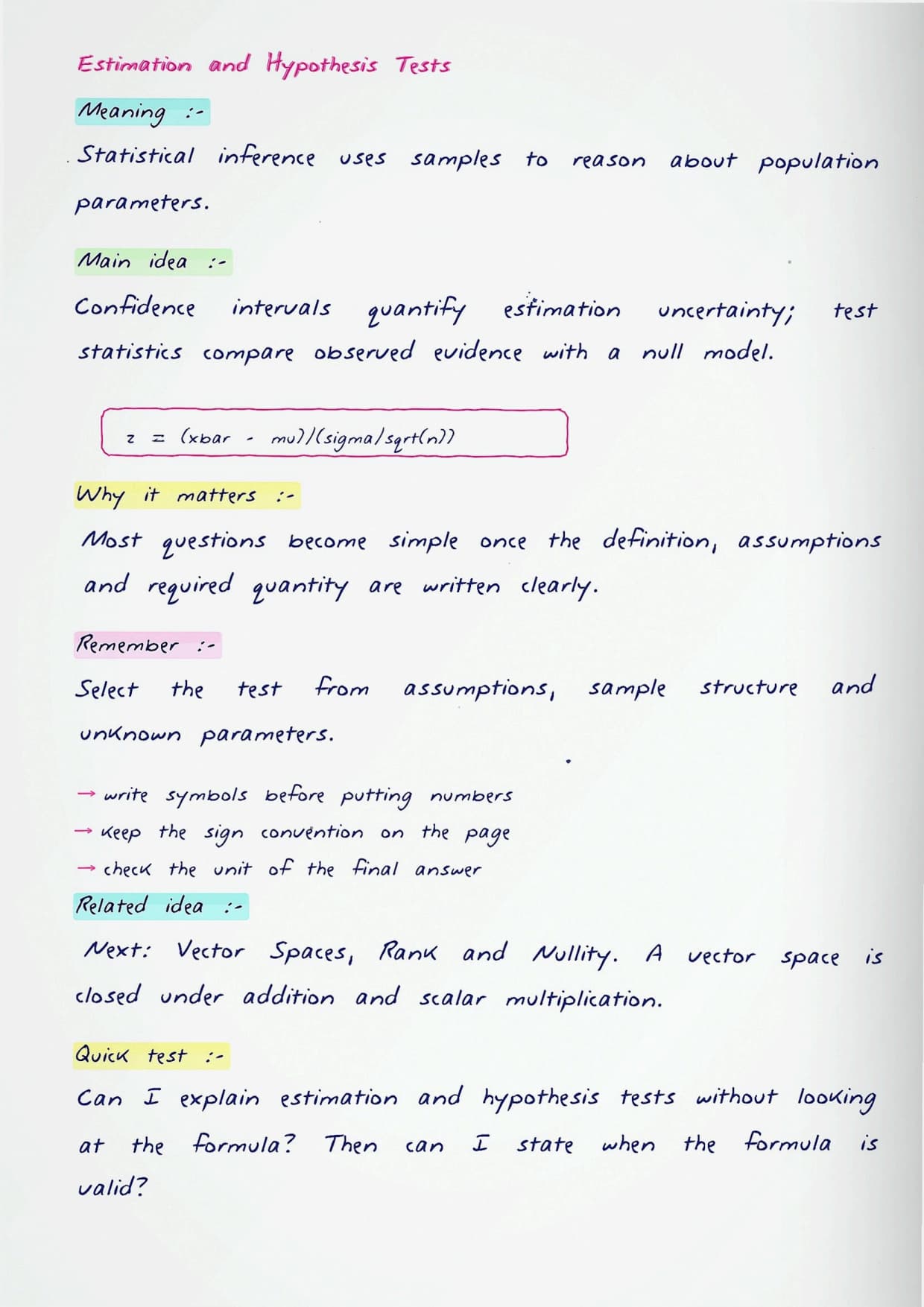
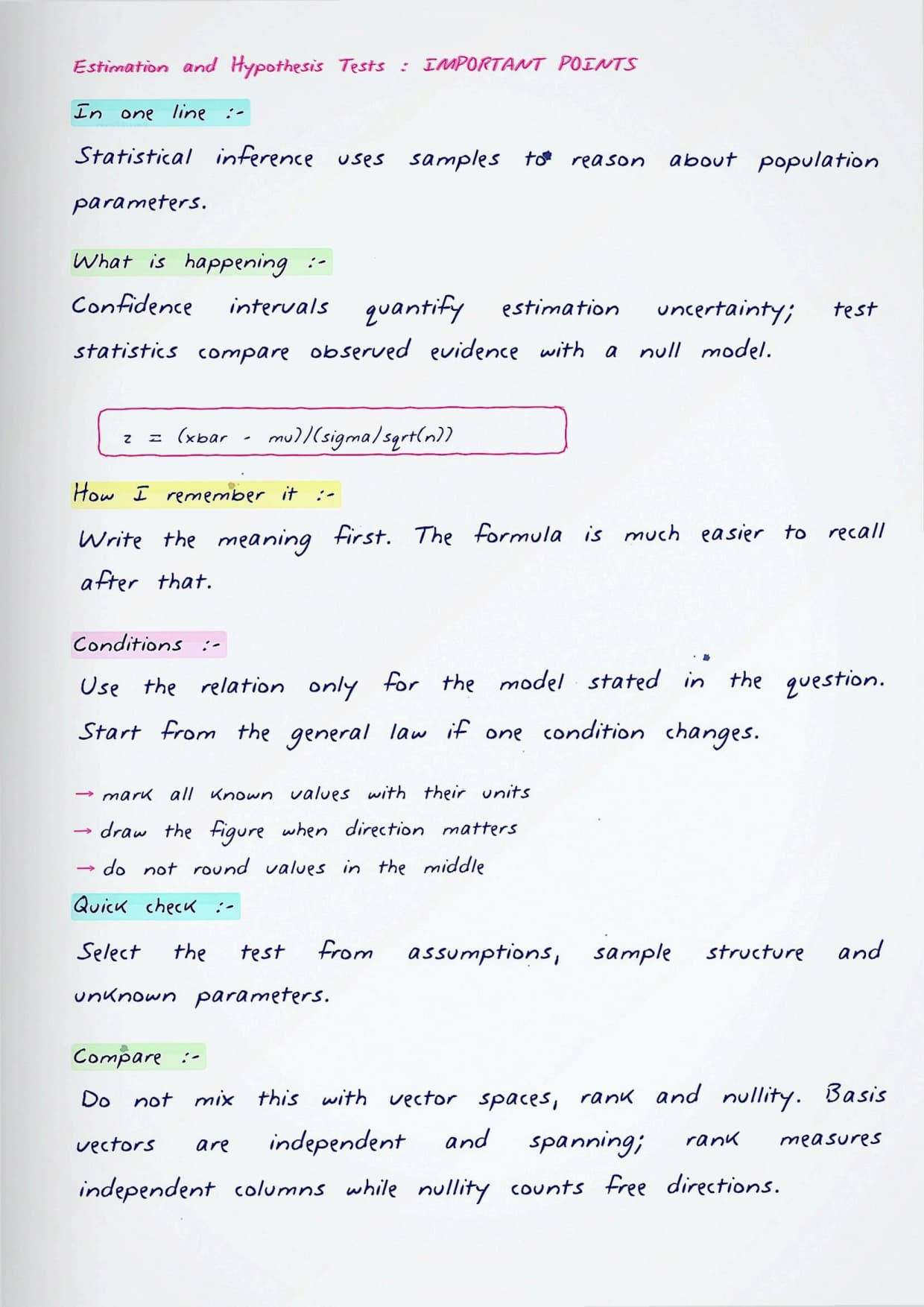
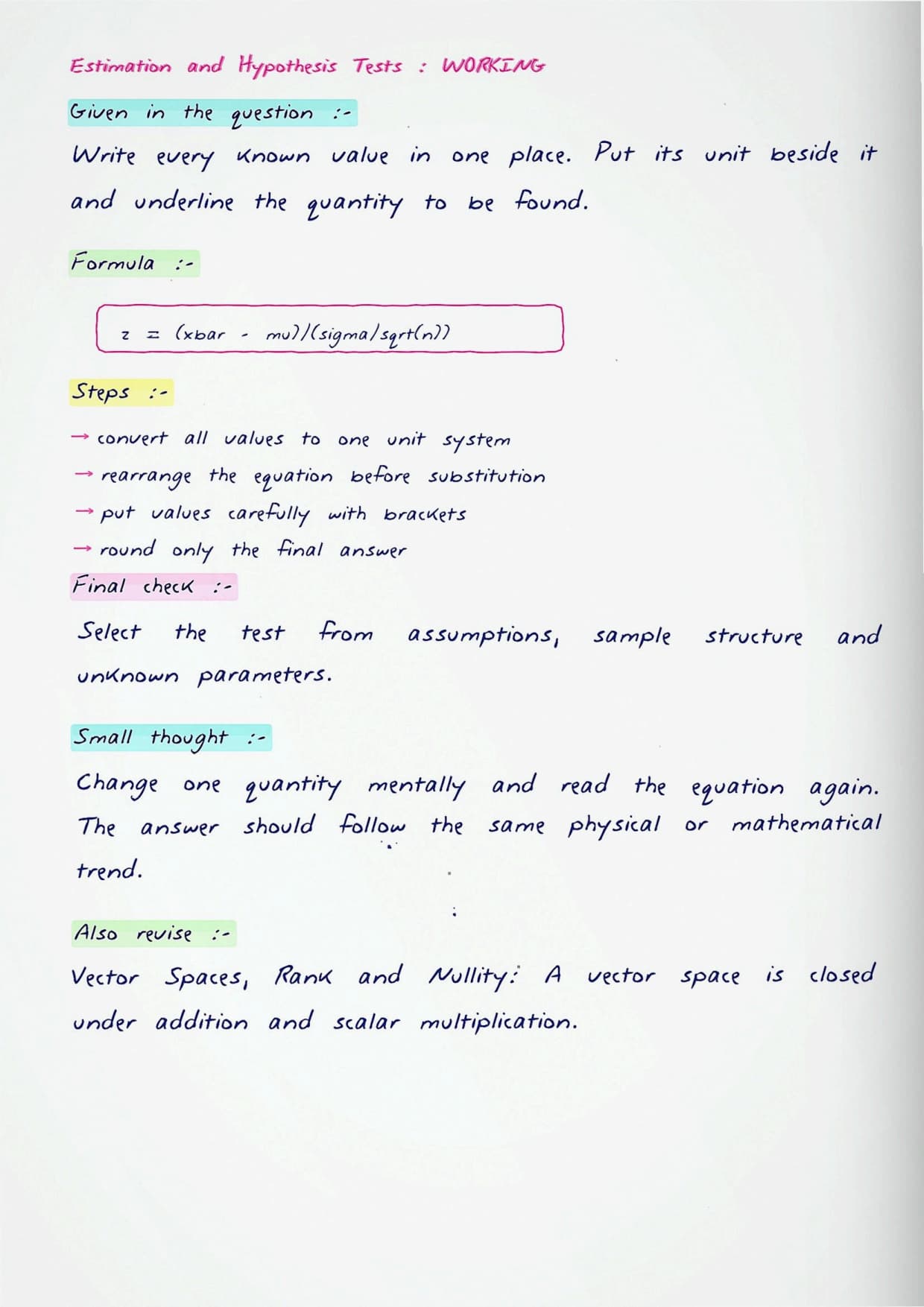
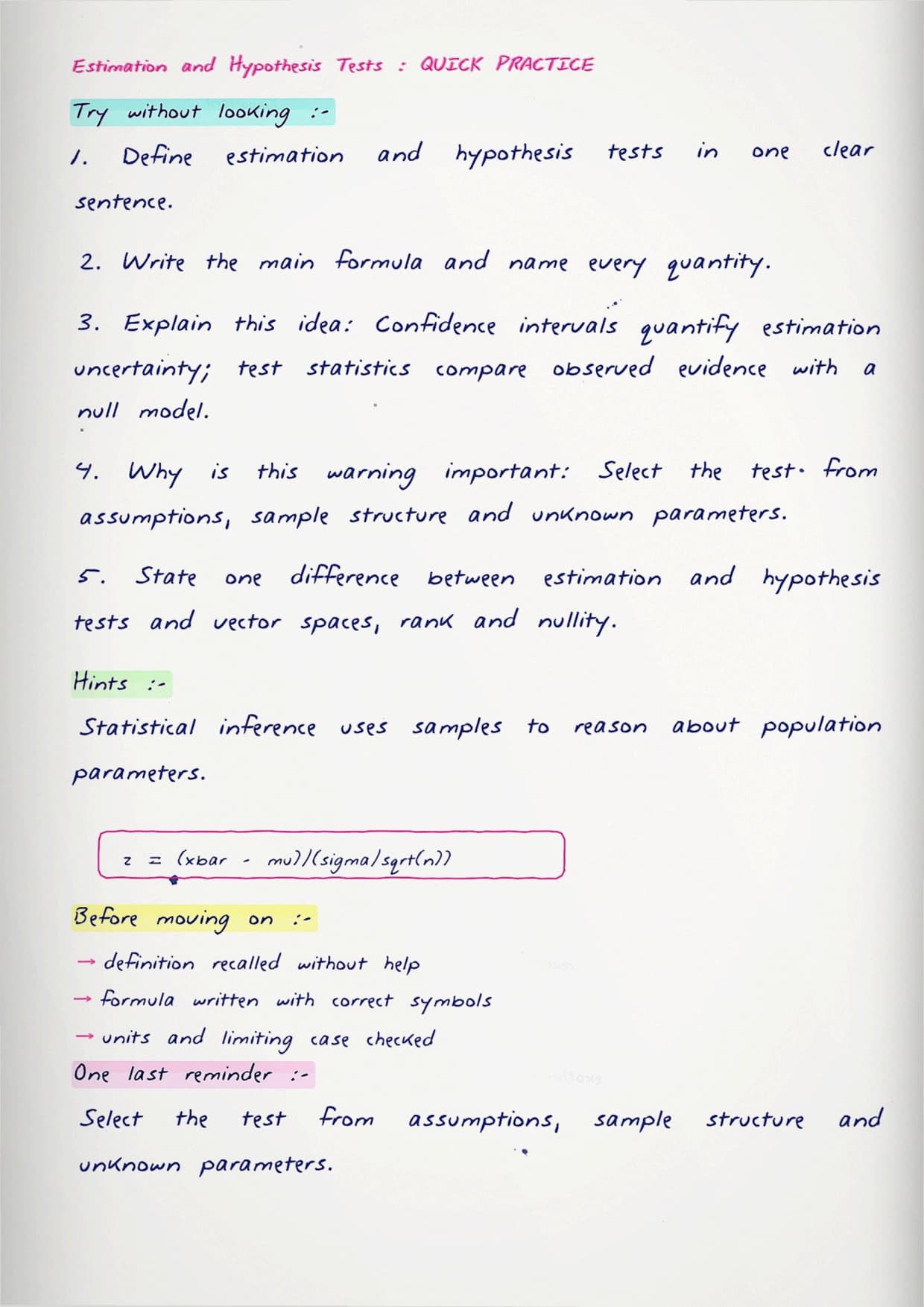
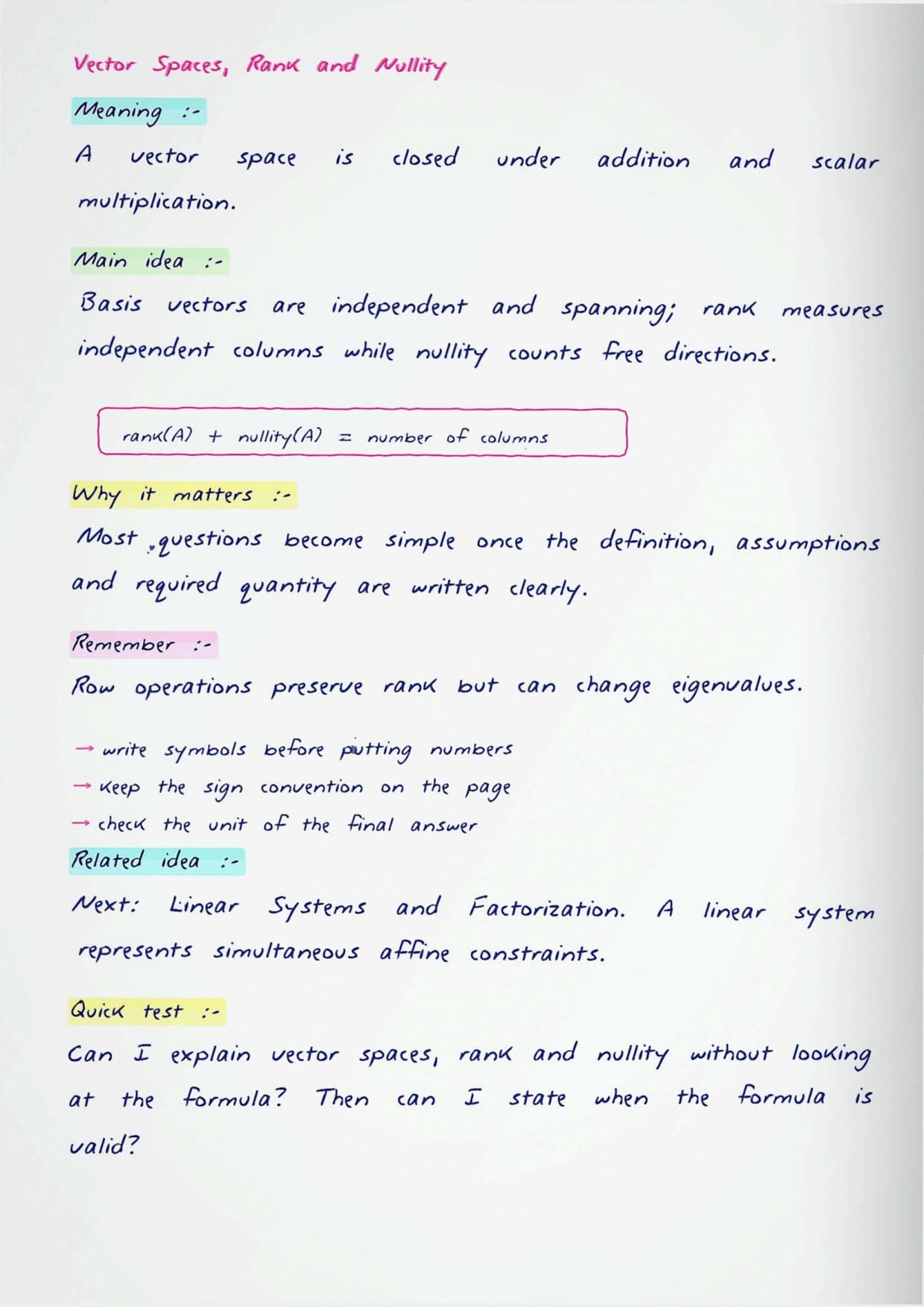
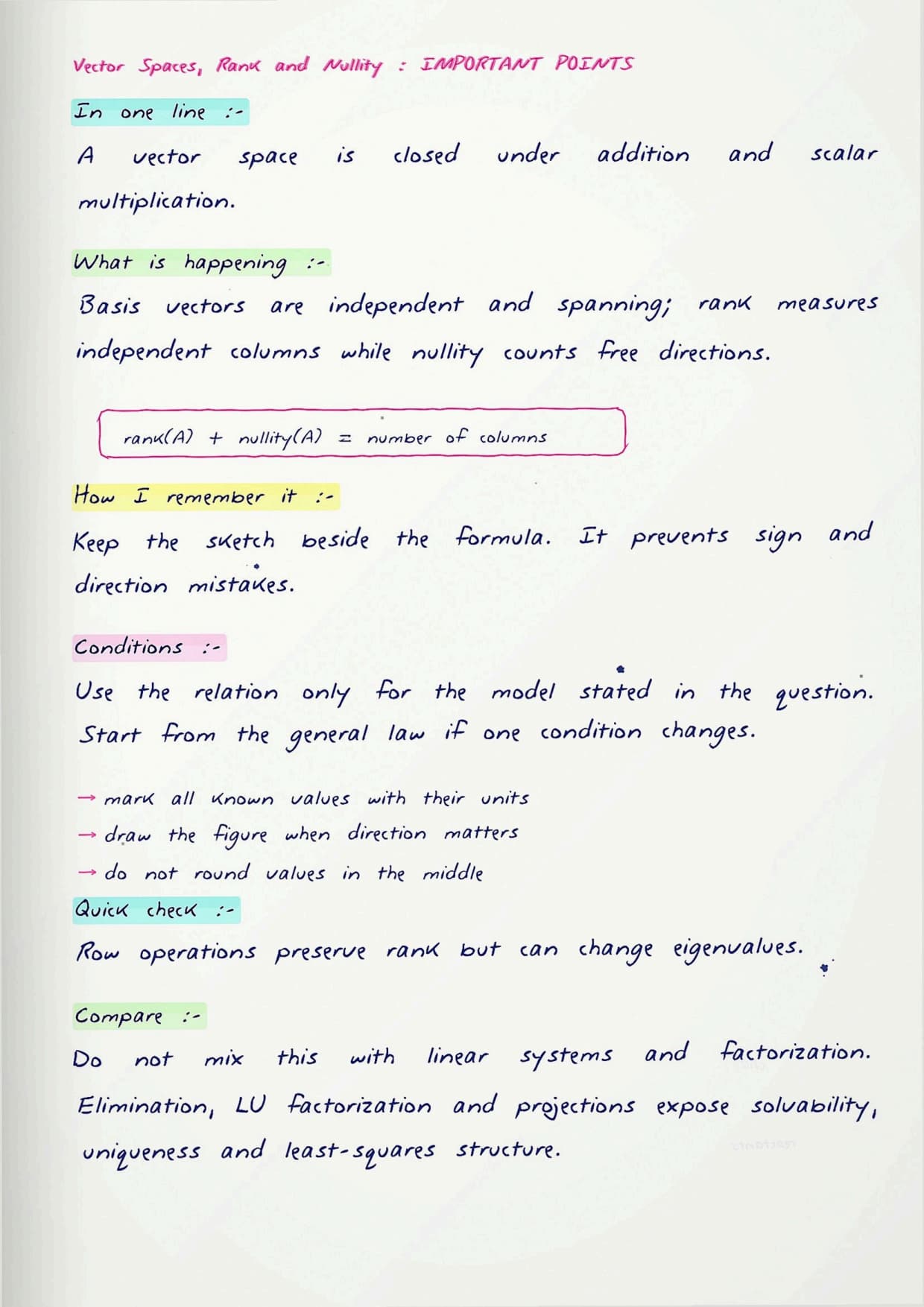
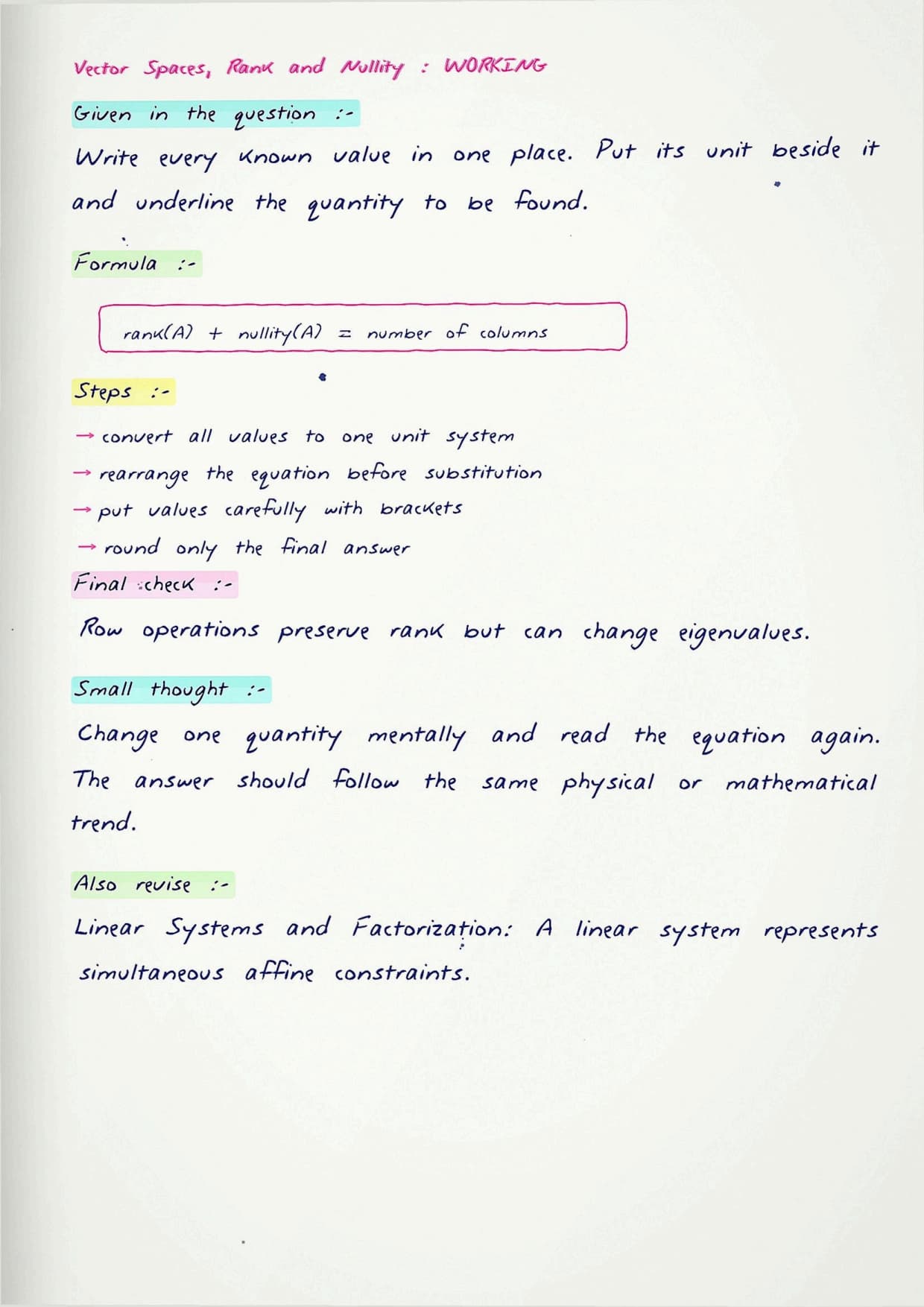
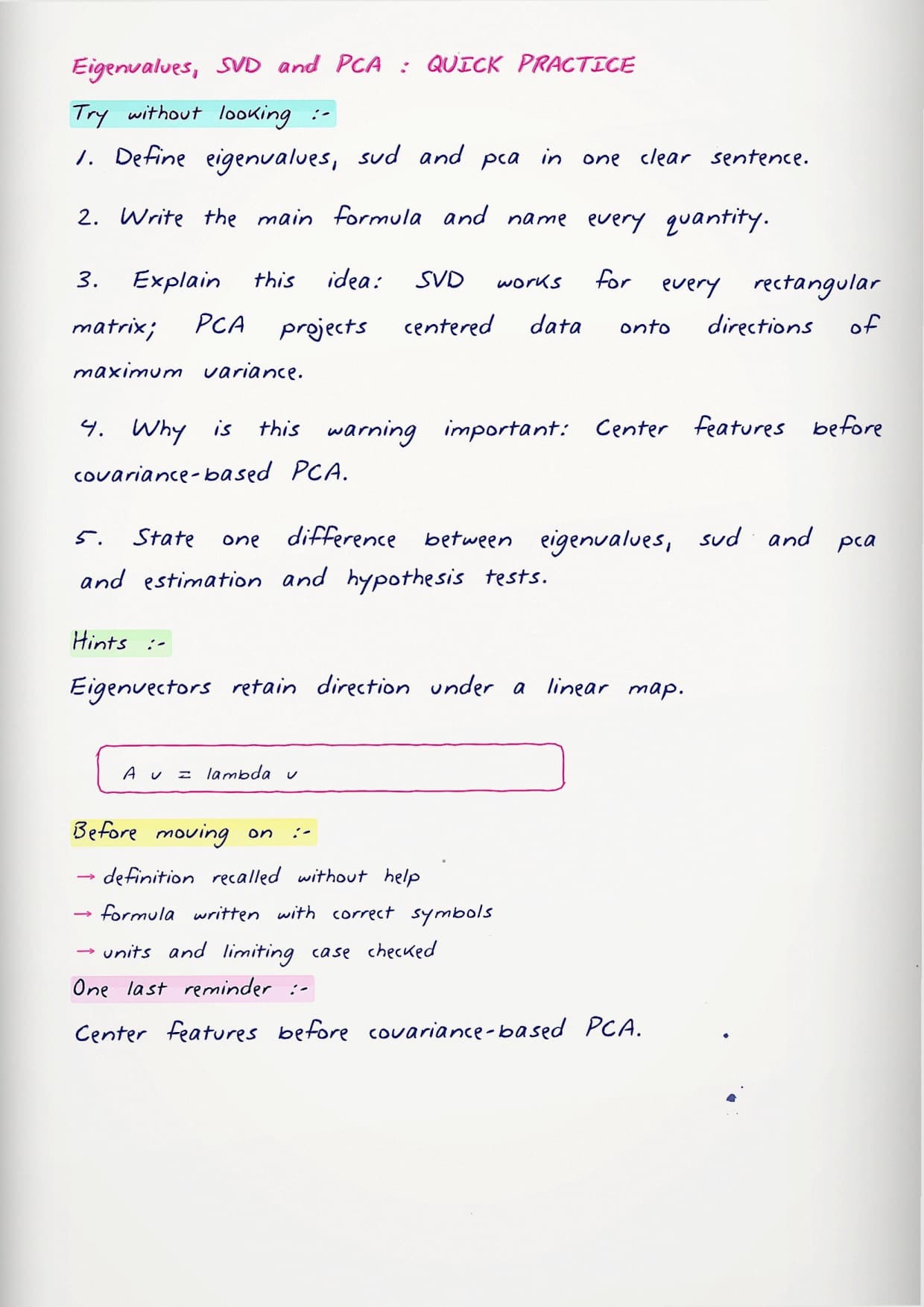
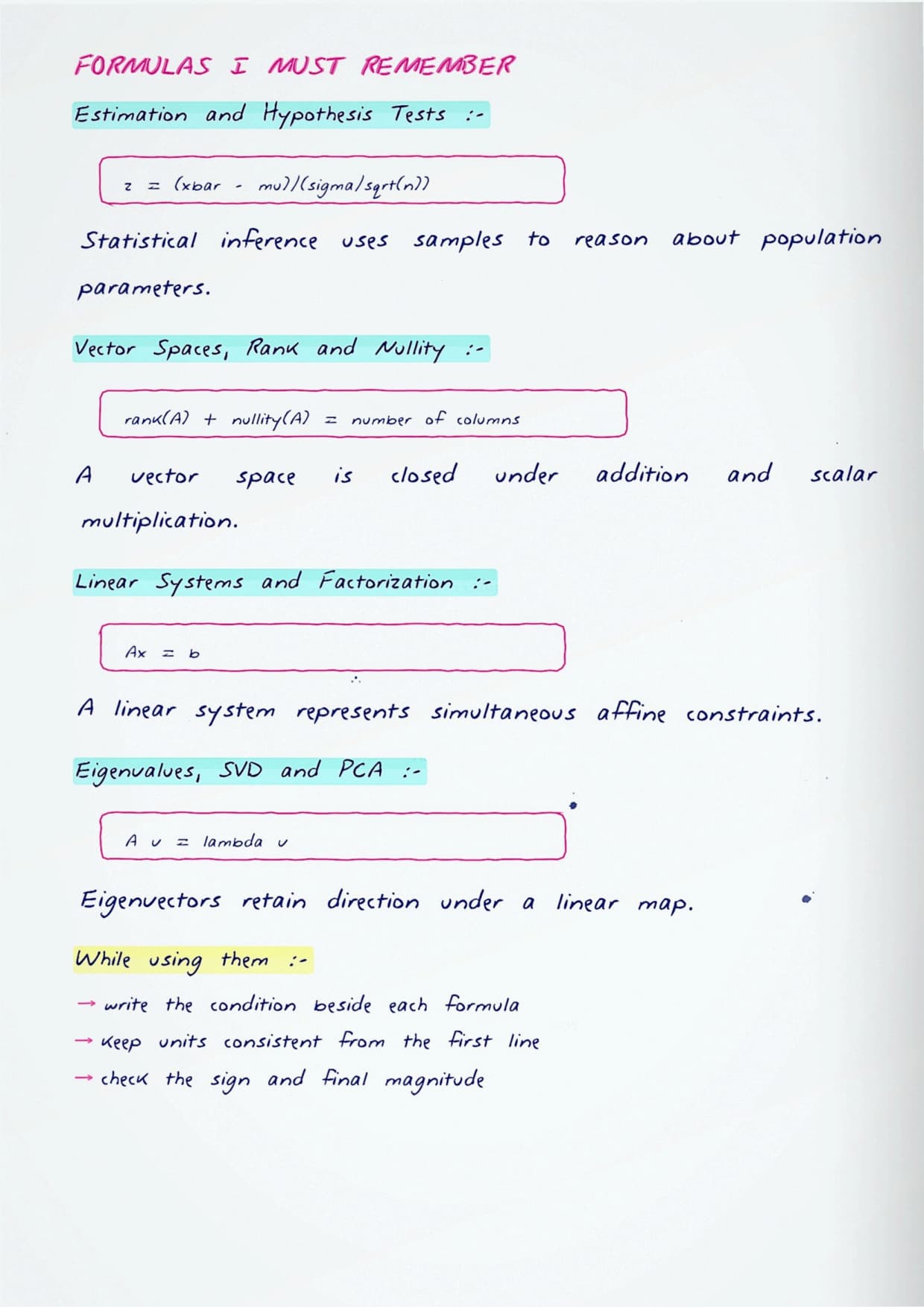
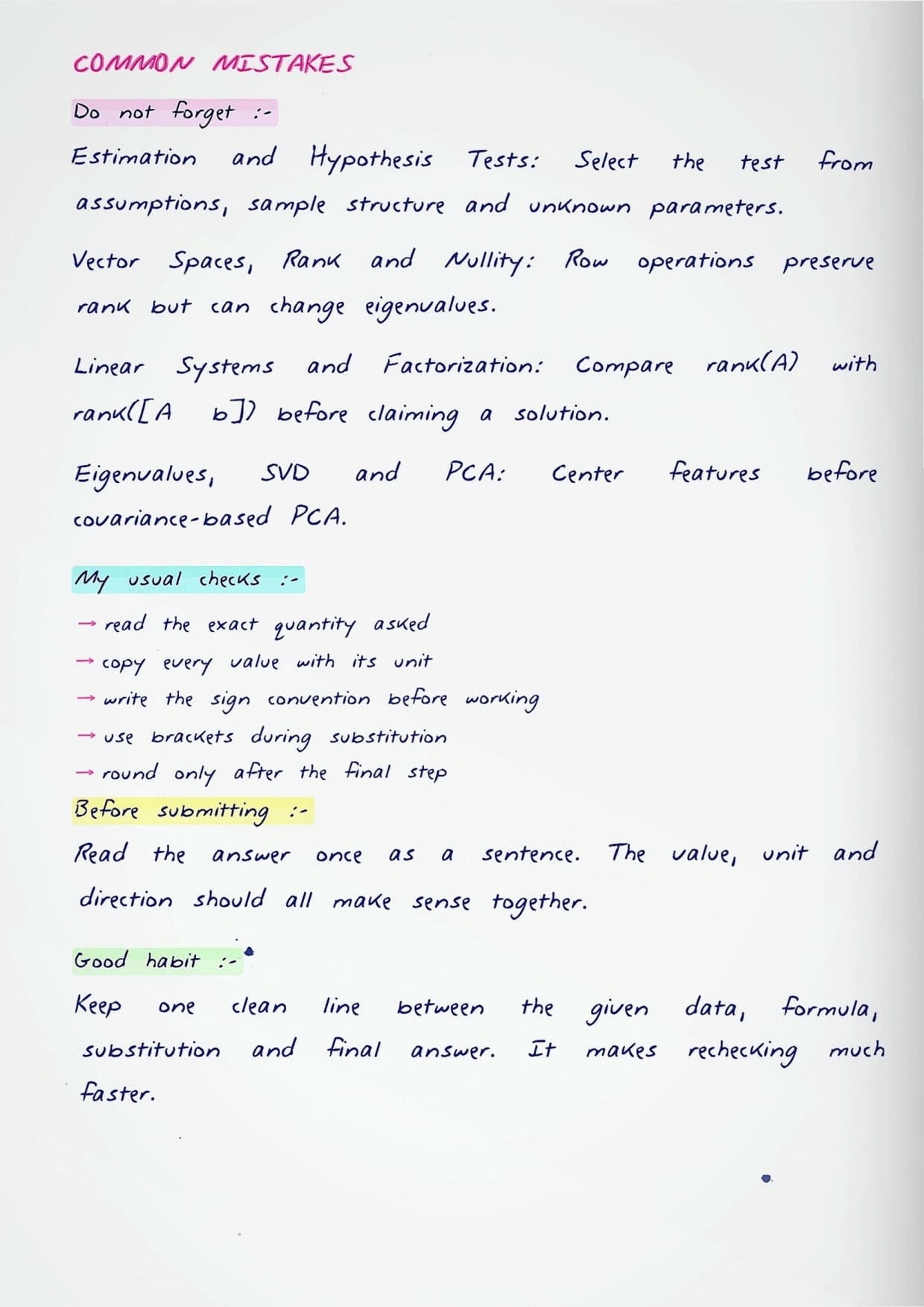
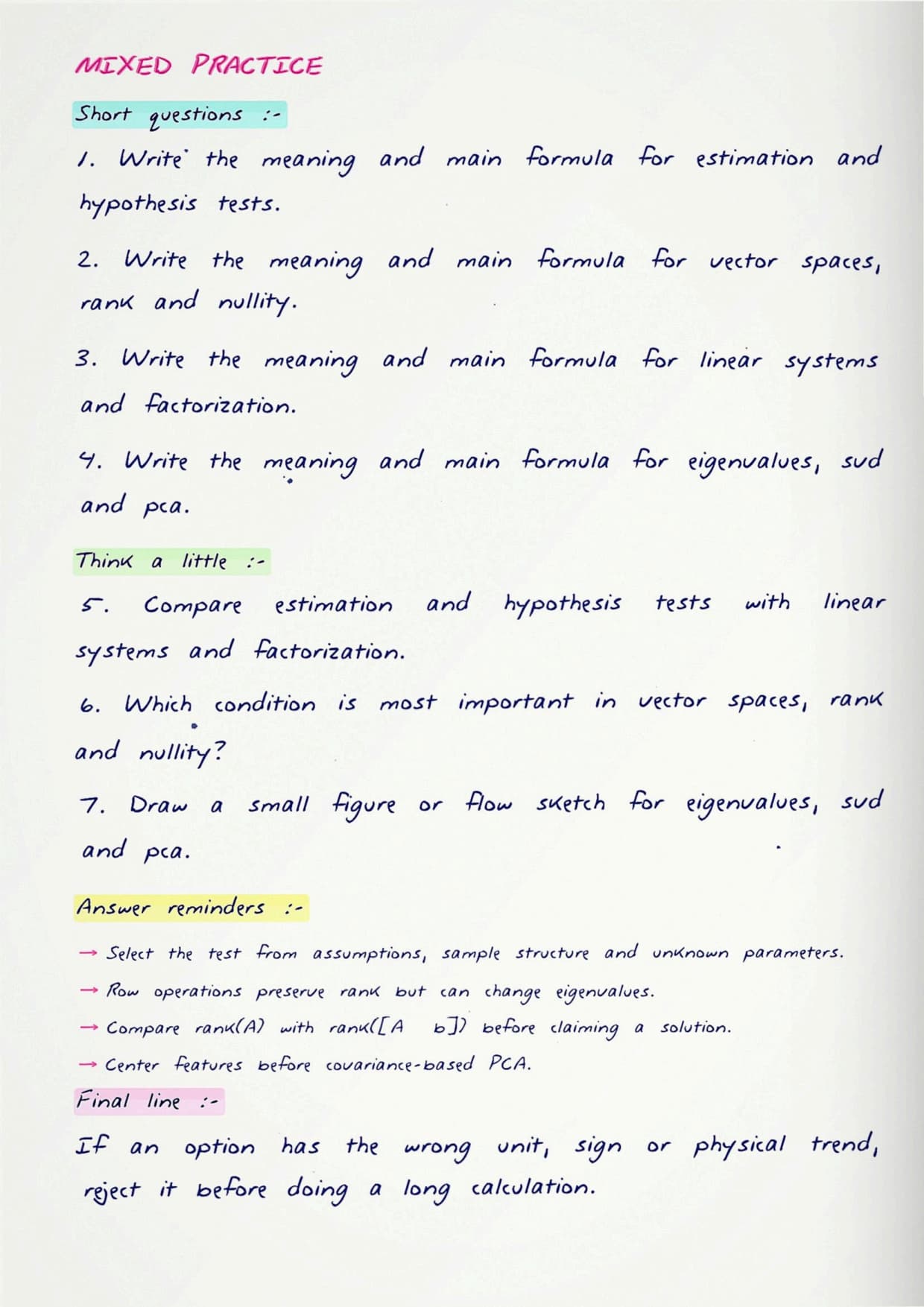
Think of this as one maths toolkit for the whole GATE DA syllabus. Every page ties a method to the place a data scientist reaches for it, so the theory never floats free of its use.
What Sits Inside This Toolkit
The notes span three connected areas, kept together because Machine Learning uses all three in one breath. The split students will see across the pages is:
- Linear algebra for storing and transforming data as vectors and matrices.
- Multivariable calculus for measuring how a model's error changes.
- Optimization for pushing that error down to its lowest point.
- Short worked sums that mirror the one and two-mark style of the paper.
Nothing here is treated as isolated theory. Each result is written next to the model or algorithm that leans on it.
The Linear Algebra Core, Piece by Piece
This is the largest block, since vectors and matrices are the language of nearly every dataset. The notes move from objects to the operations that reshape them.
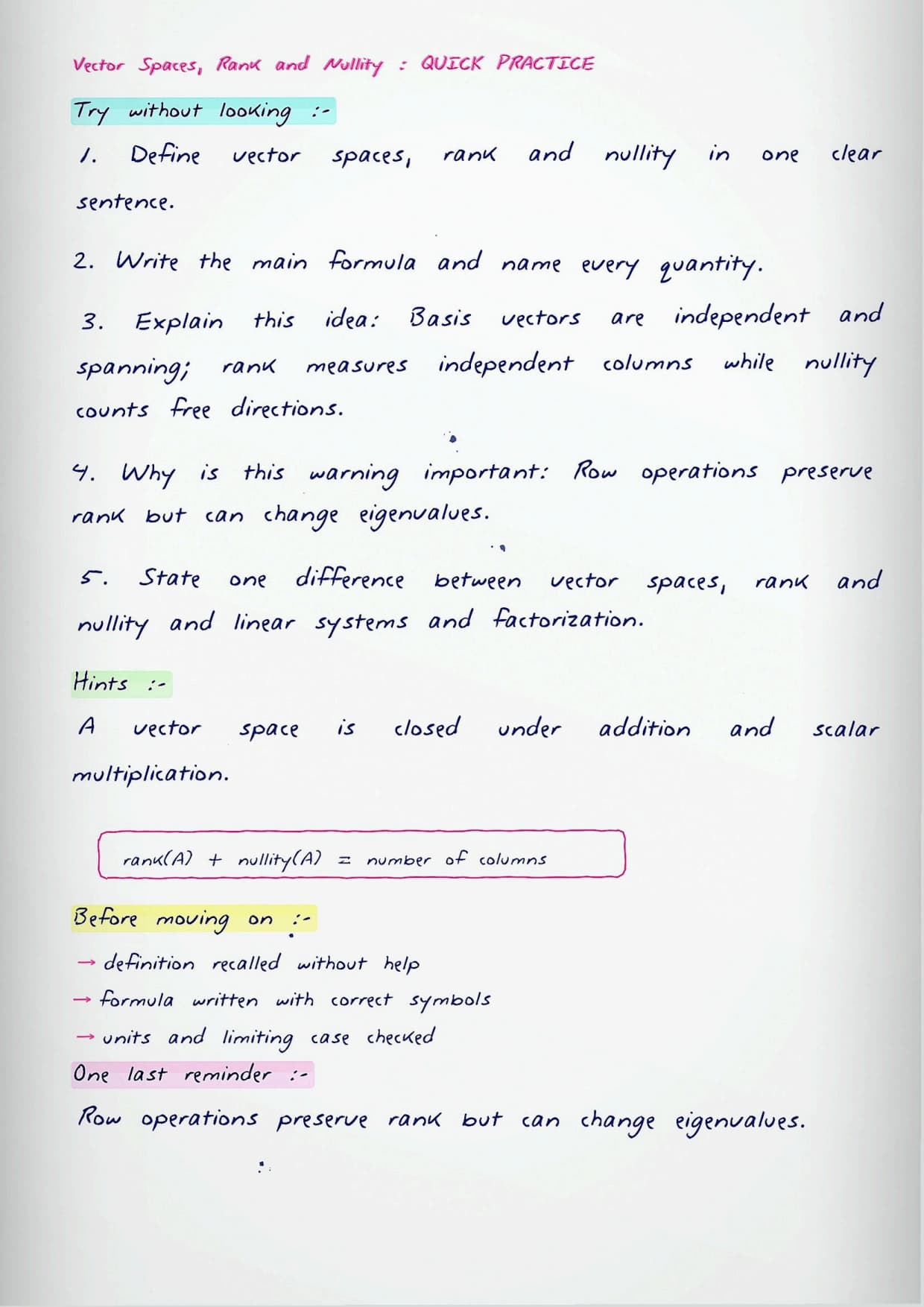
- Vector spaces, span, linear independence and rank.
- Matrix multiplication read as a change of coordinates, not just row-by-column arithmetic.
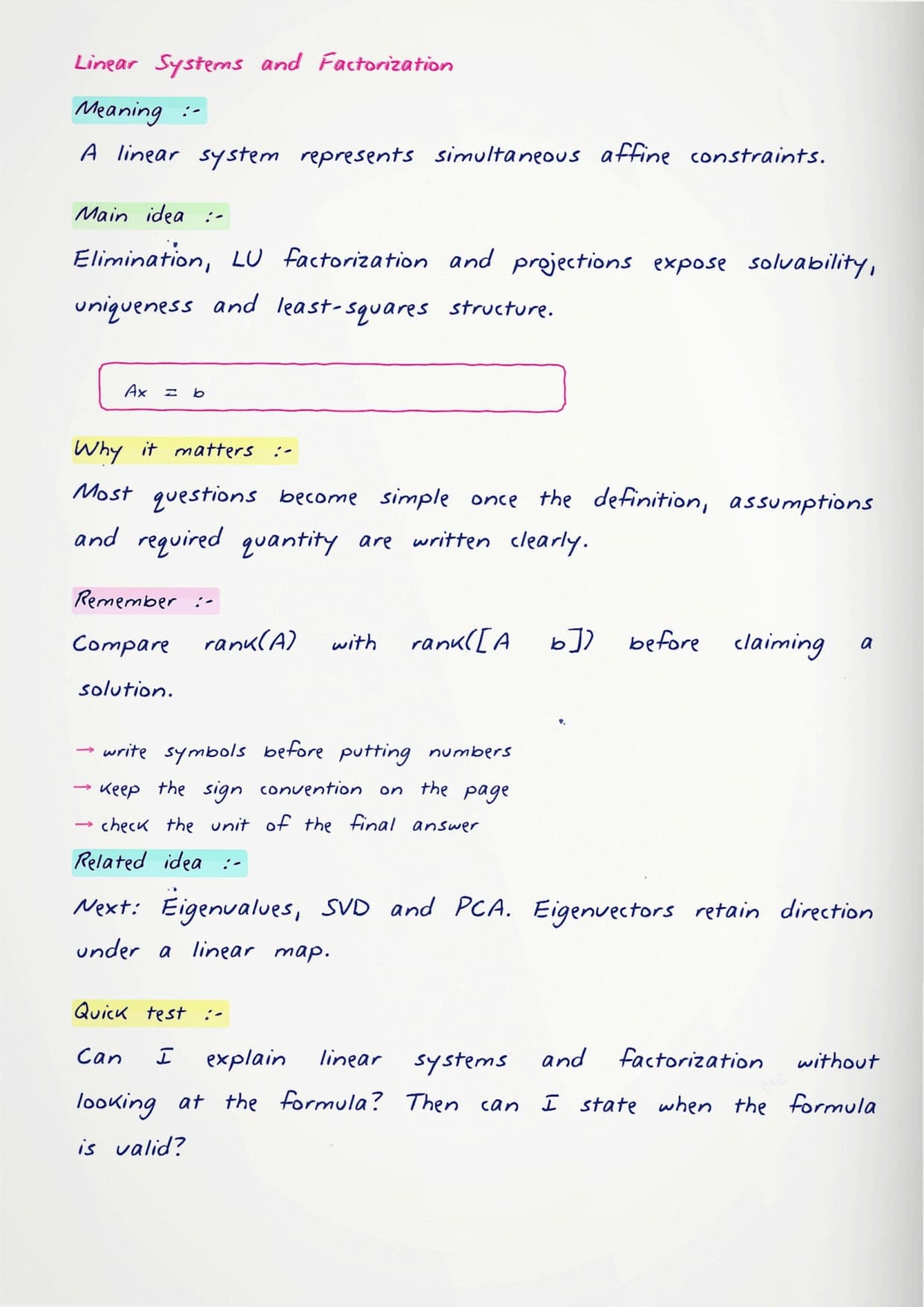
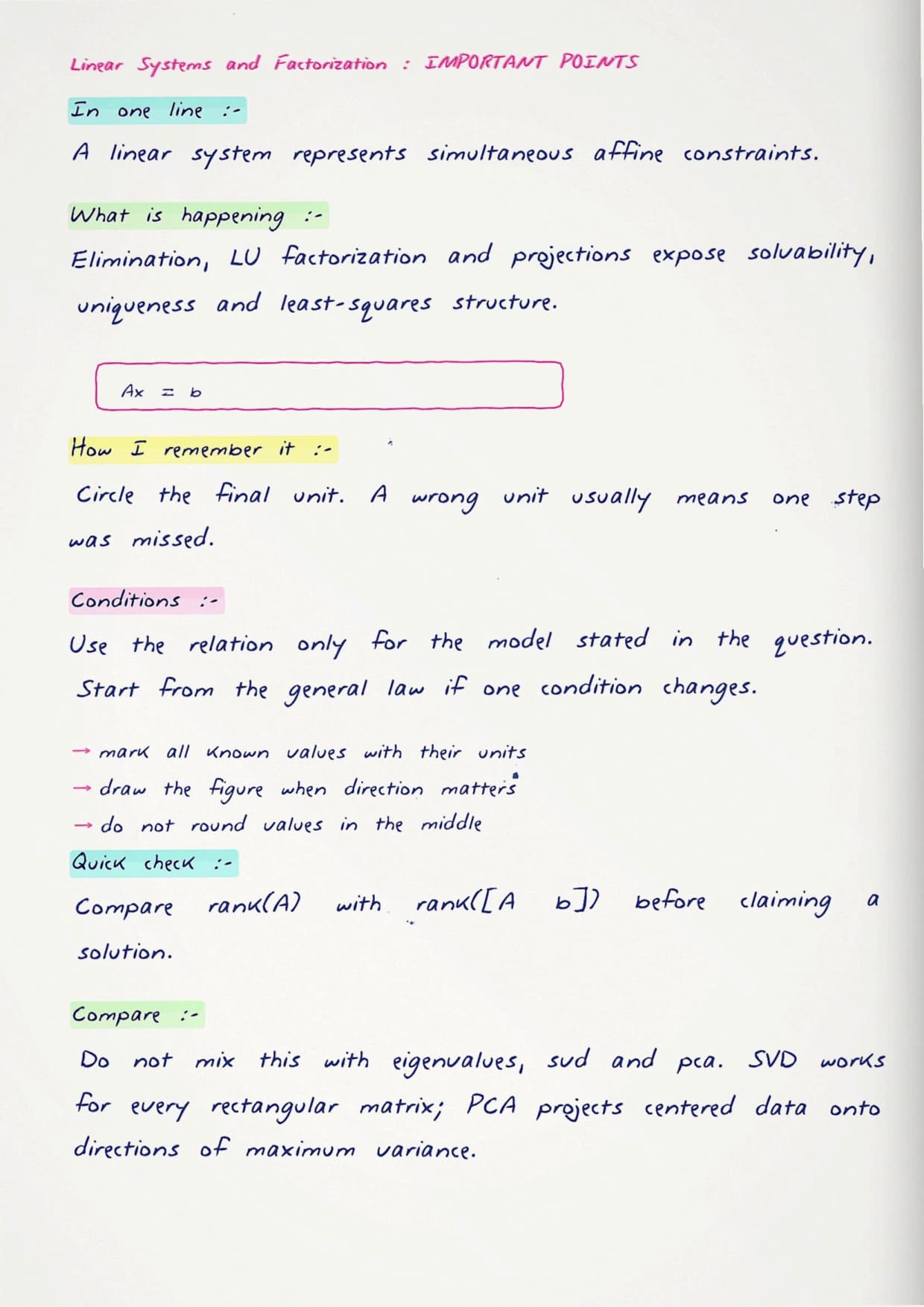
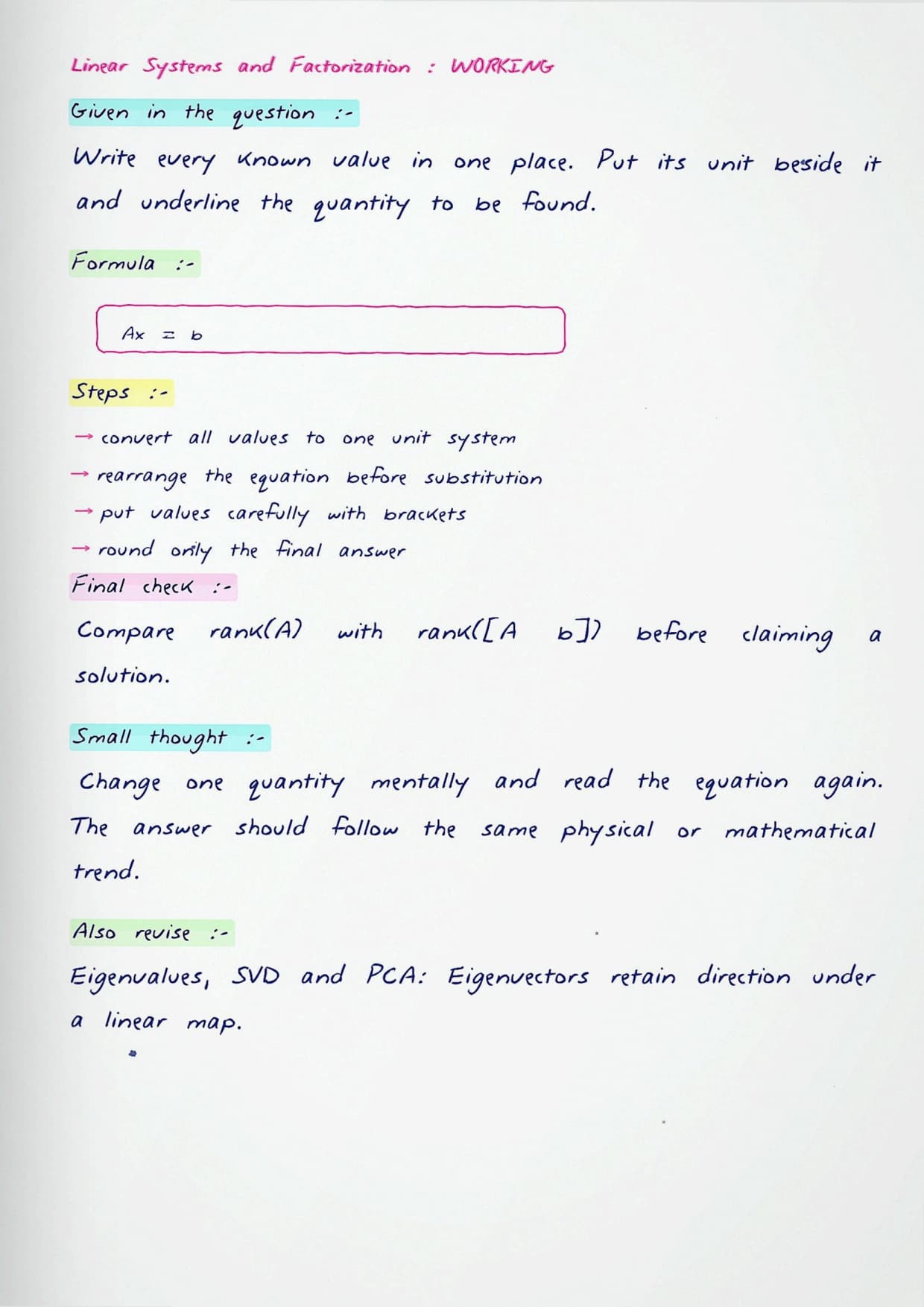
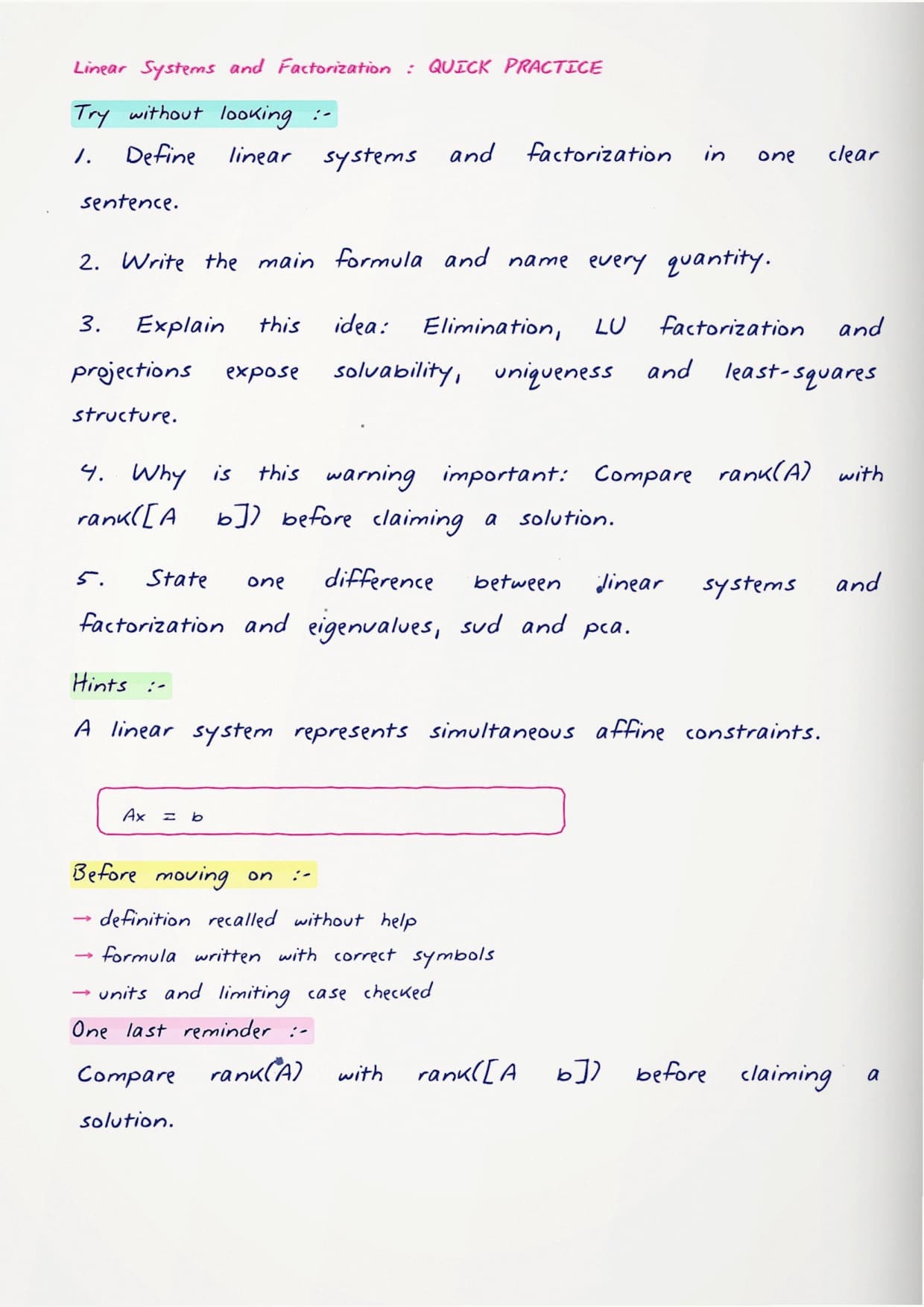
- Systems of equations, the inverse, and when a unique solution exists.
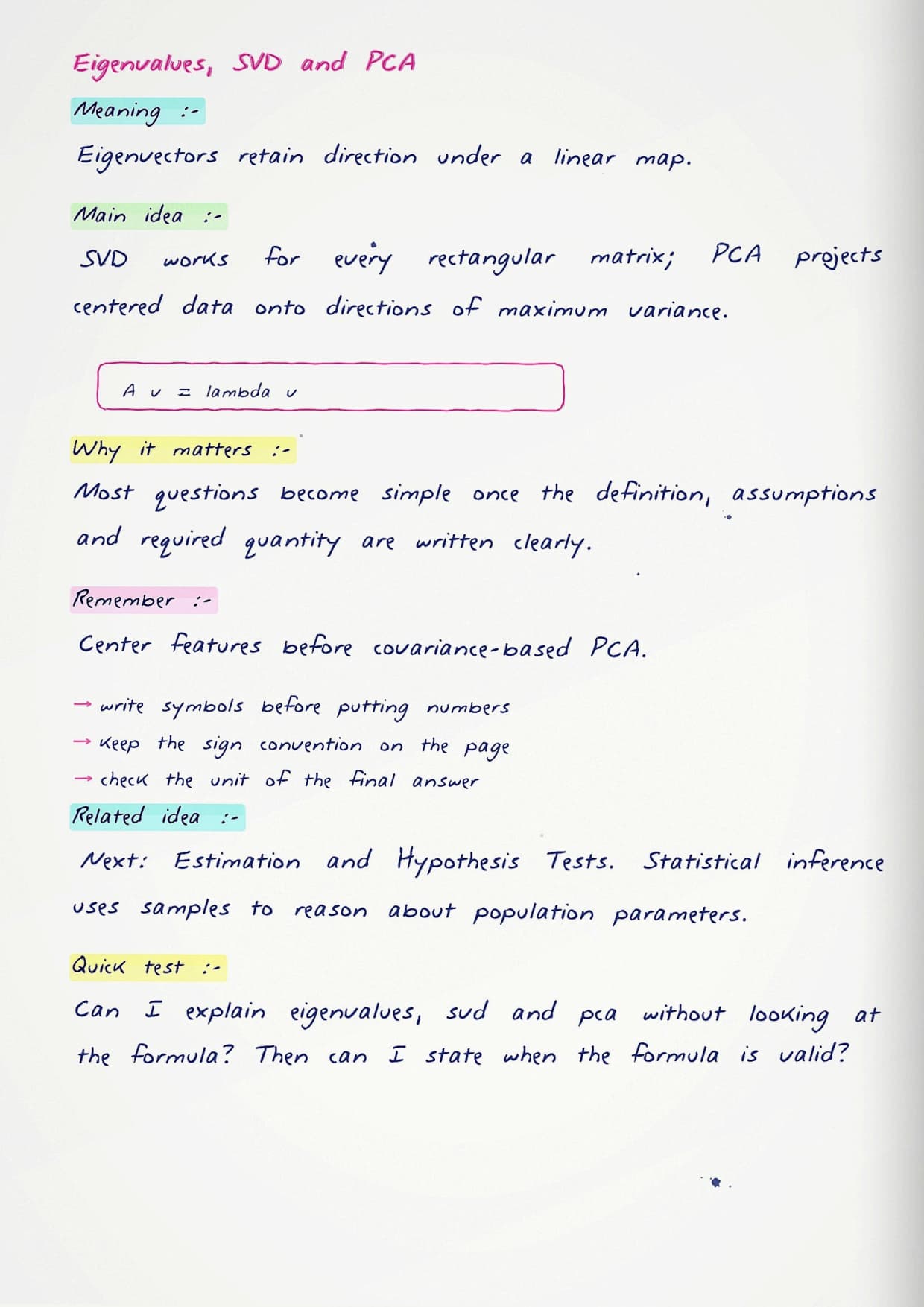
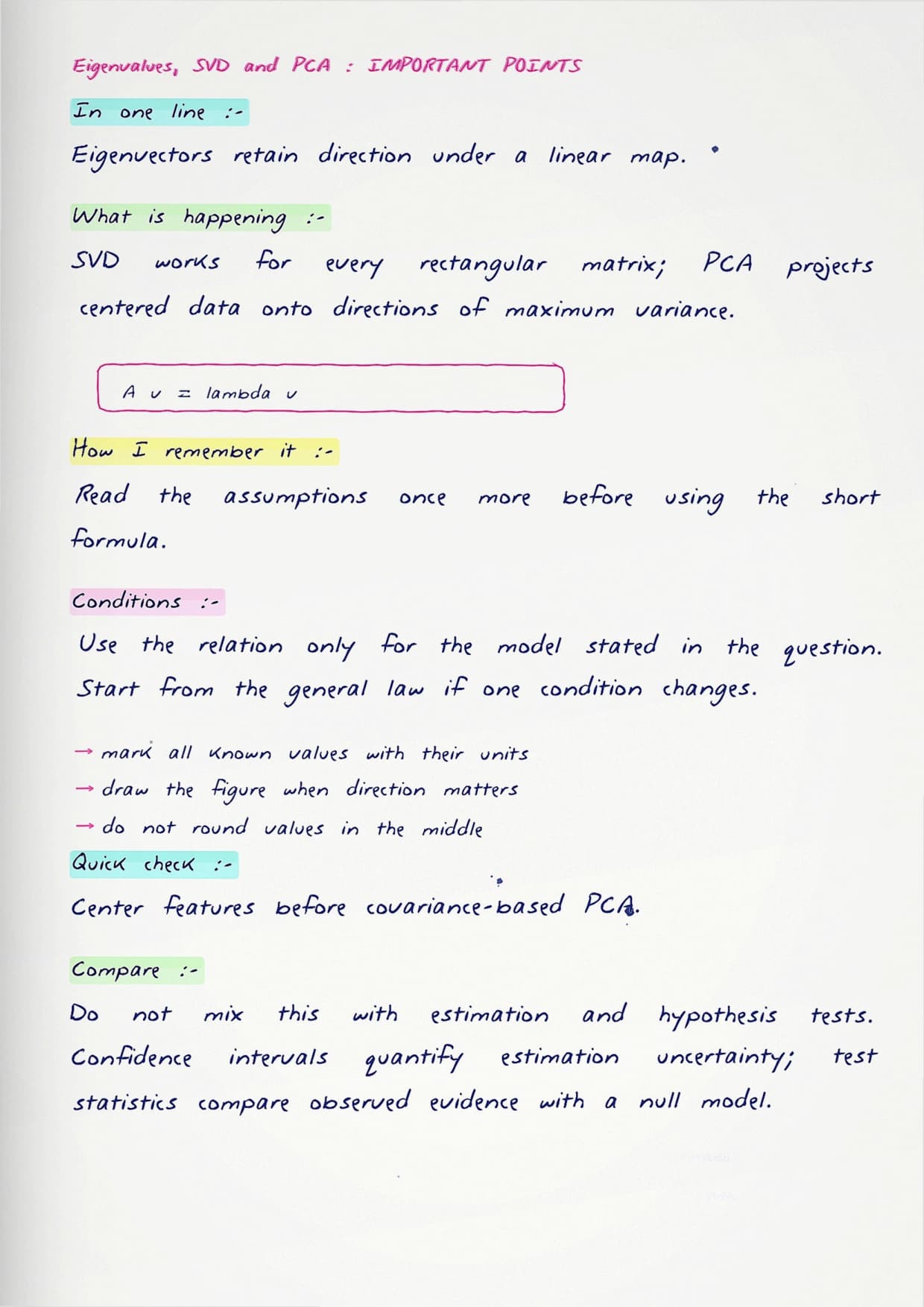
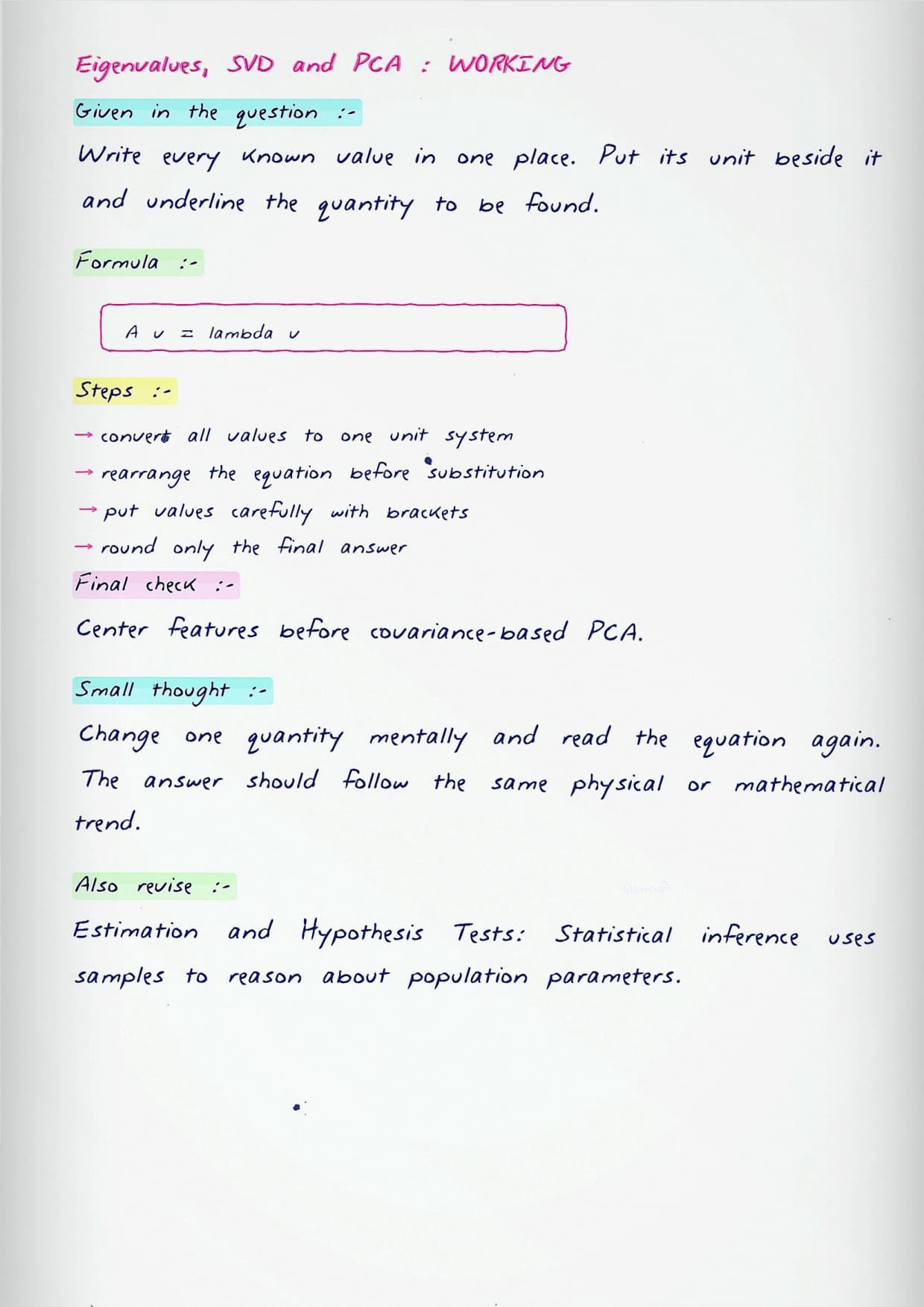
- Eigenvalues and eigenvectors, plus the determinant as a scaling factor.
- Singular value decomposition and projections, the backbone of dimensionality reduction.
Calculus and Gradients That Power Learning
Once data lives in matrices, calculus tells students how a model reacts to change. The focus stays on the multivariable side that actually appears in training.
- Partial derivatives and the gradient as the direction of steepest increase.
- The chain rule, which is the engine behind backpropagation.
- Maxima, minima and saddle points read off the second derivative.
- Taylor approximation for turning a curved loss into a local straight-line guess.
Students should notice that the gradient is not an abstract symbol. It is the exact quantity every learning rule follows.
Optimization: Turning Gradients Into Answers
Optimization is where the toolkit pays off. A model is only as good as the minimum it can reach, so these pages treat the search for that minimum in detail.
- Gradient descent and the role of the learning rate.
- Convex versus non-convex surfaces and why convexity guarantees one global best.
- Constrained problems handled with Lagrange multipliers.
- Common failure signs such as overshooting, slow convergence and getting stuck.
Where Each Tool Shows Up in Data Science
The value of this set is the mapping from maths to method. Students can trace a single topic straight into an algorithm they already study.
- Eigenvectors and SVD drive Principal Component Analysis.
- Matrix inverses solve linear and ridge regression in closed form.
- Gradients and the chain rule train neural networks end to end.
- Convex optimization underpins support vector machines and logistic regression.
Because these links are core foundations that feed the Machine Learning section, they carry real return across a large share of the paper rather than a single fixed block of marks.
Watch Vectors Explained From Scratch
A quick visual refresher on what a vector really is makes the matrix pages click faster.
Source: 3Blue1Brown
Slip-Ups Students Make With Matrices and Minima
A few mistakes cost marks again and again. The margins of these notes flag them so students can build the right habit early.
- Treating matrix multiplication as commutative. Order matters.
- Confusing eigenvalues with eigenvectors, or forgetting the zero-determinant condition.
- Setting the learning rate too high and blaming the model when descent diverges.
- Assuming every stationary point is a minimum instead of checking for a saddle.
Using These Notes Before the Exam
A short, honest plan beats one long panic read. These pages are built for repeated, active passes.
- First pass: read each area and rewrite the boxed results in your own hand.
- Second pass: solve the small sums, then name the data science use of each one.
- Final pass: revise only the mistake flags and the linking map before the paper.
A dependable prerequisite is comfort with basic matrix arithmetic and single-variable differentiation, so brush those up first if they feel rusty.
Linear Algebra, Calculus and Optimization Notes FAQs
Ques. Are these handwritten notes enough for the GATE DA maths foundation?
Ans. They cover the full linear algebra, calculus and optimization syllabus with worked sums and use-case links. Students should still practise past papers to build speed and confidence.
Ques. Why are linear algebra and optimization grouped with Machine Learning?
Ans. They are the core mathematical foundations that feed Machine Learning. Concepts like eigenvectors, gradients and gradient descent appear directly inside models such as PCA and neural networks.
Ques. Which topics here carry the most weight?
Ans. Eigenvalues, SVD, gradients and gradient descent recur most, since they anchor several algorithms. They are high-return areas rather than a single fixed marks block.
Ques. What maths should students know before starting these notes?
Ans. Comfort with basic matrix arithmetic, determinants and single-variable differentiation is enough. The notes build the multivariable and optimization layers on top of that base.
Ques. Can I download and revise these notes offline?
Ans. Yes. The notes are available as a downloadable PDF above, so students can revise the toolkit anytime without an internet connection.



Comments