




Reactive Intermediates and Rearrangements is a high-yield part of the GATE Chemistry paper, usually worth about 3 to 5 marks. It belongs to the Organic Chemistry section and connects to reaction mechanisms across the syllabus. These handwritten notes cover the full topic in a compact, exam-focused form for quick revision.
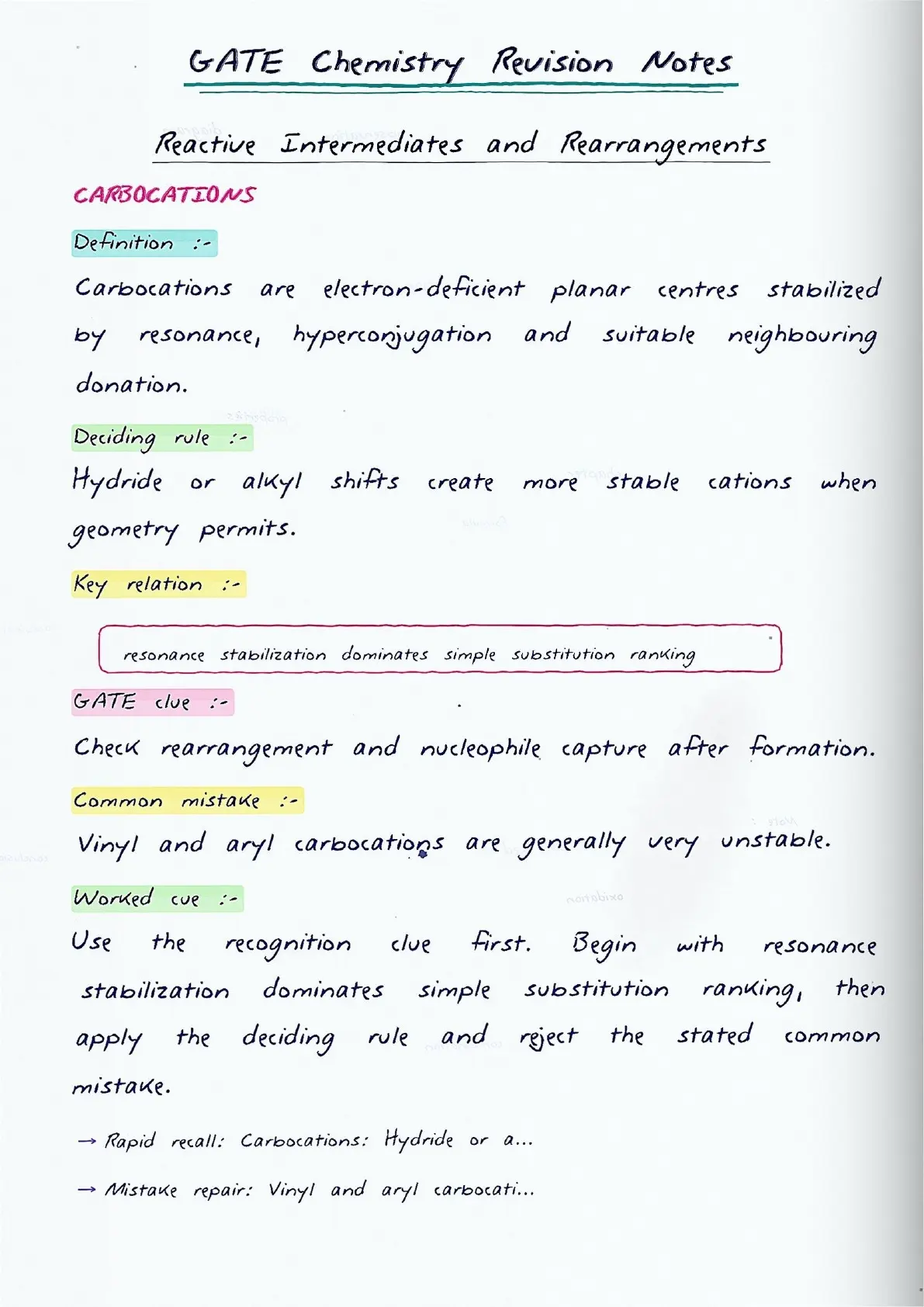
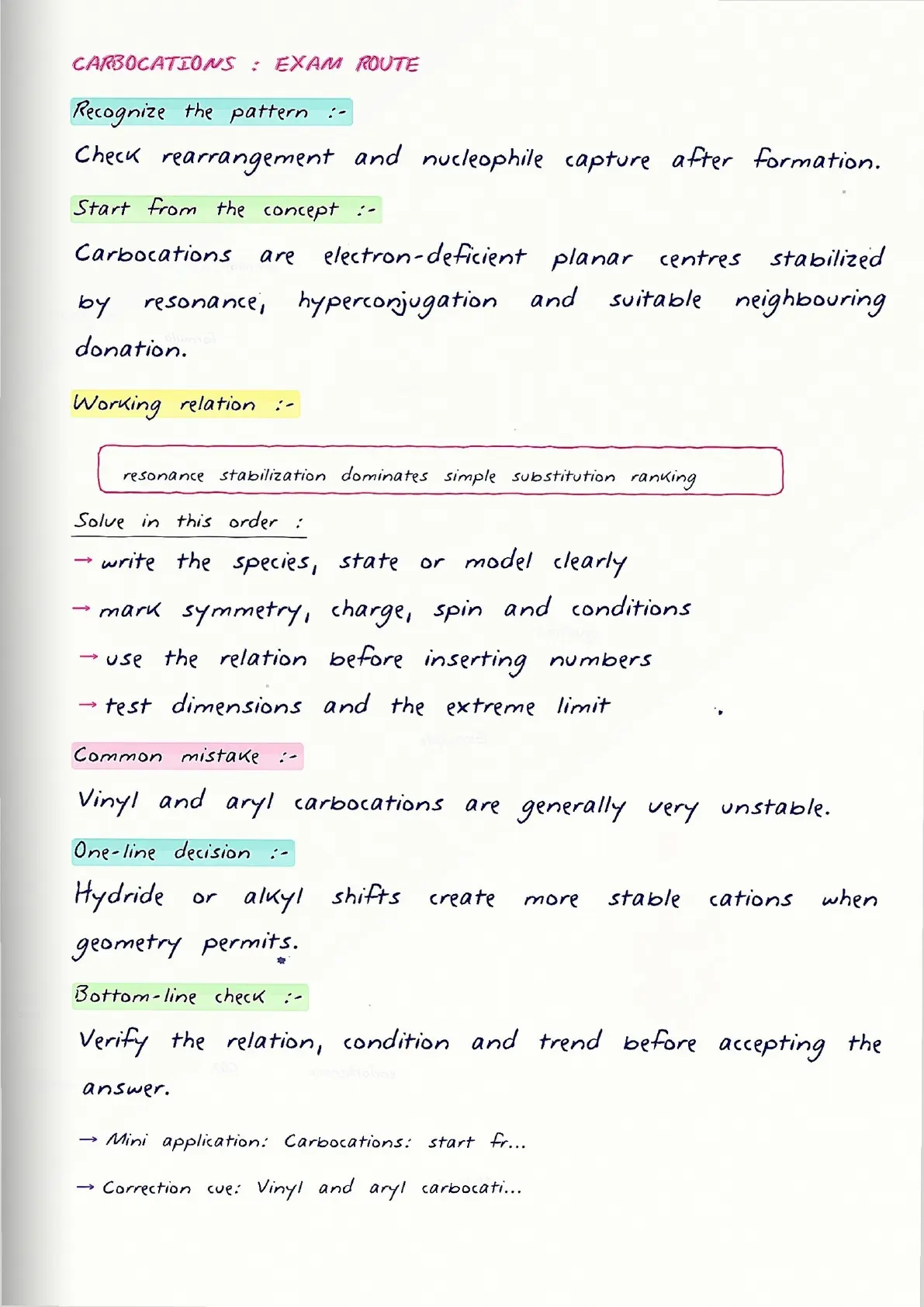
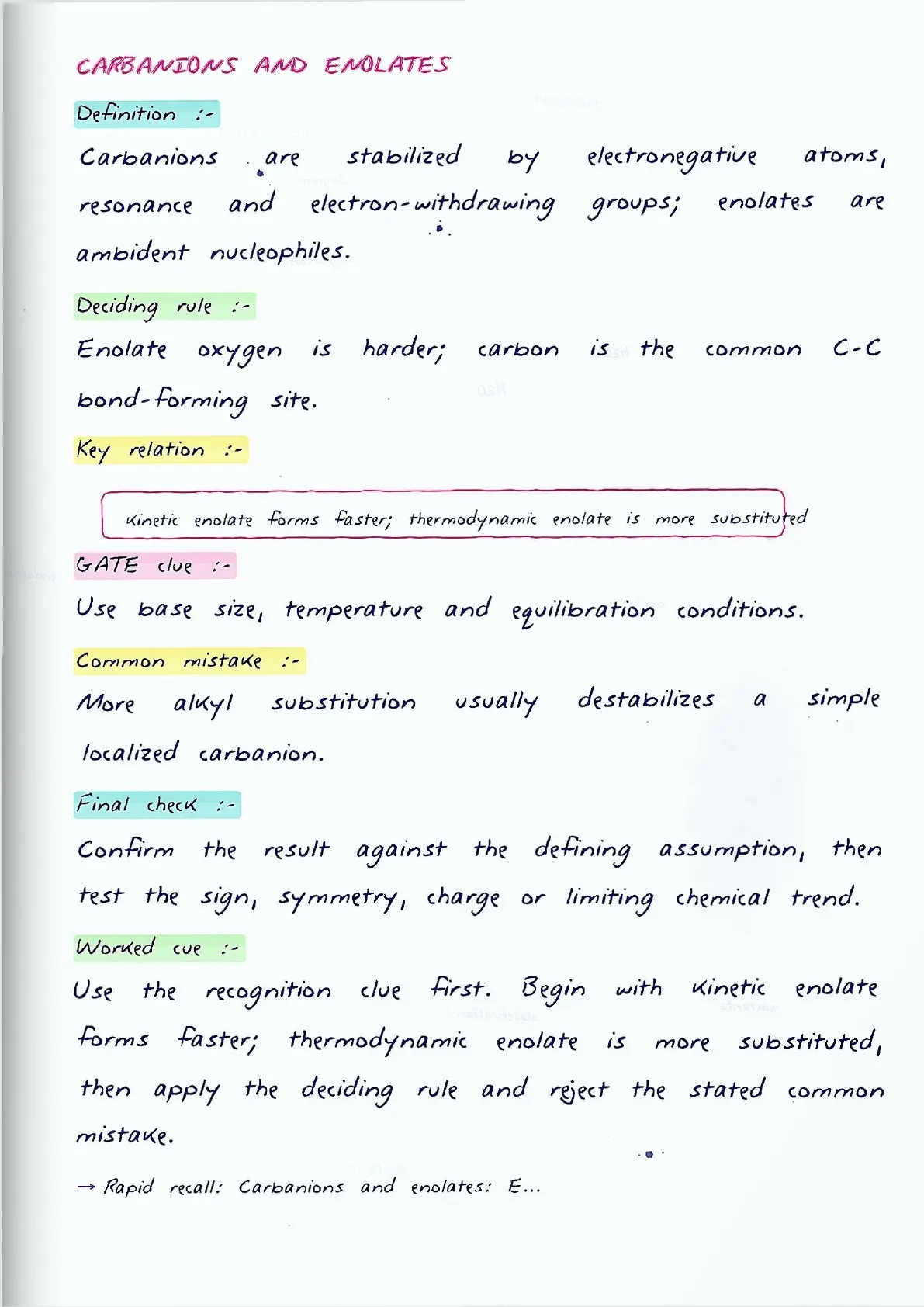
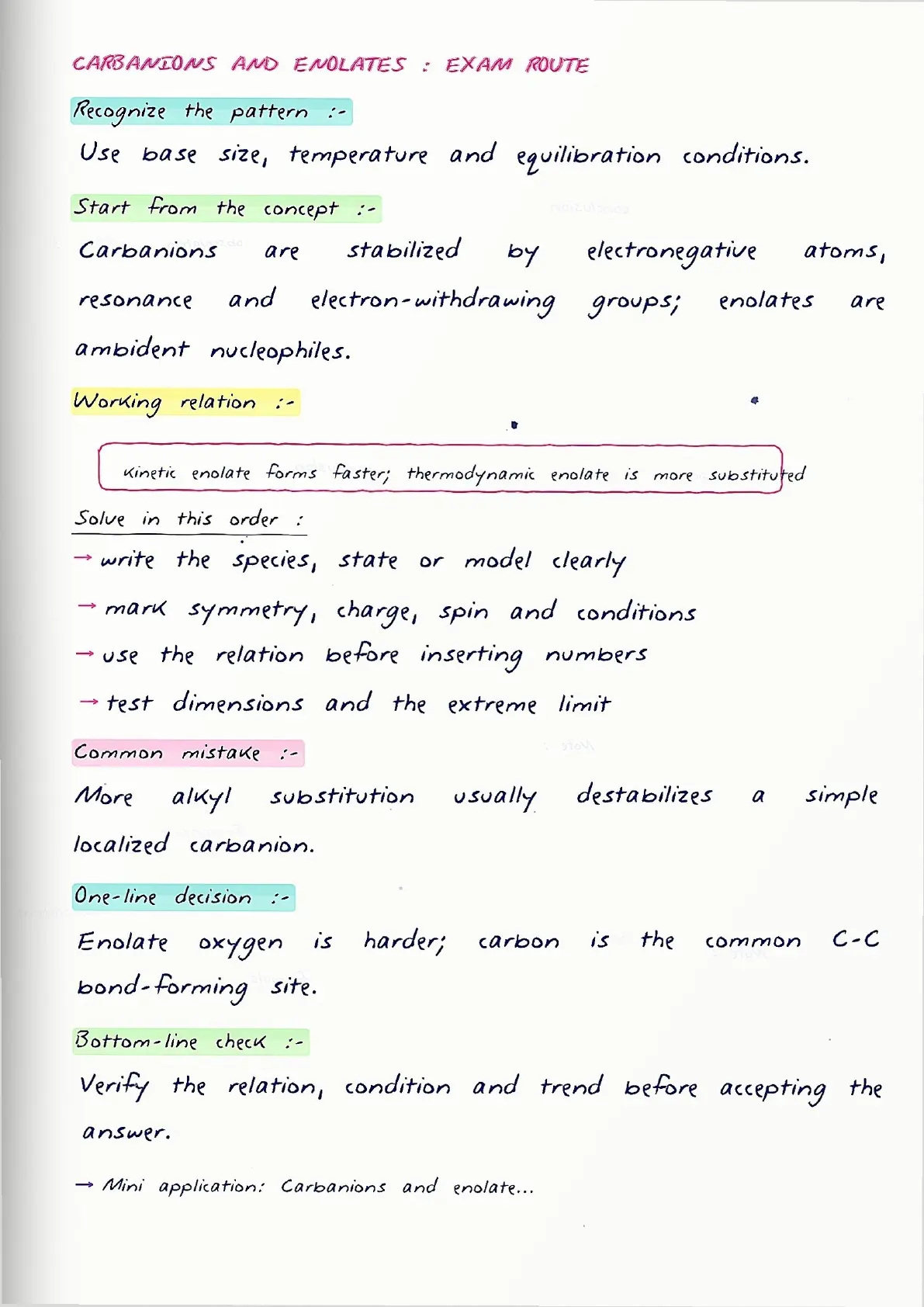
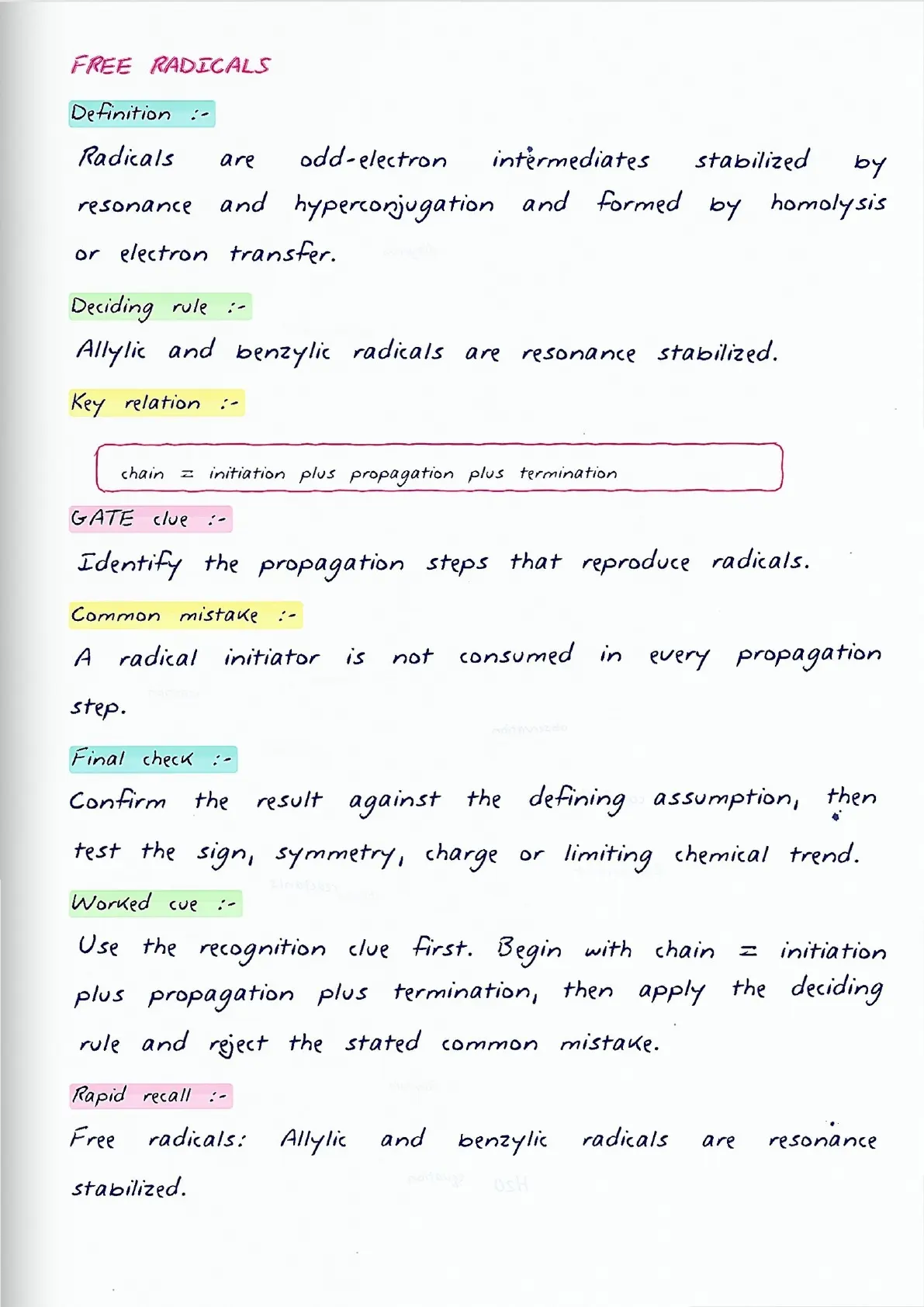
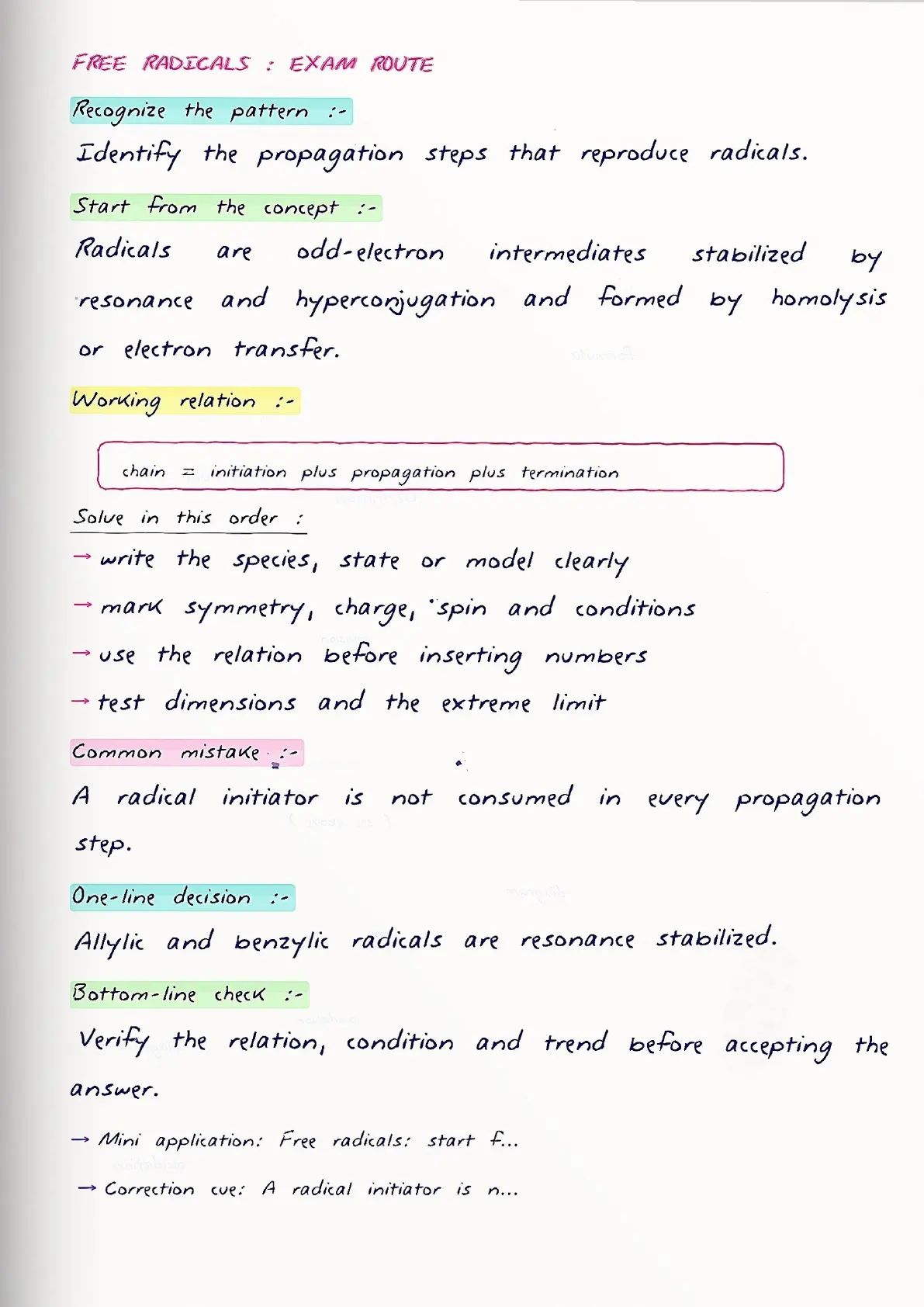
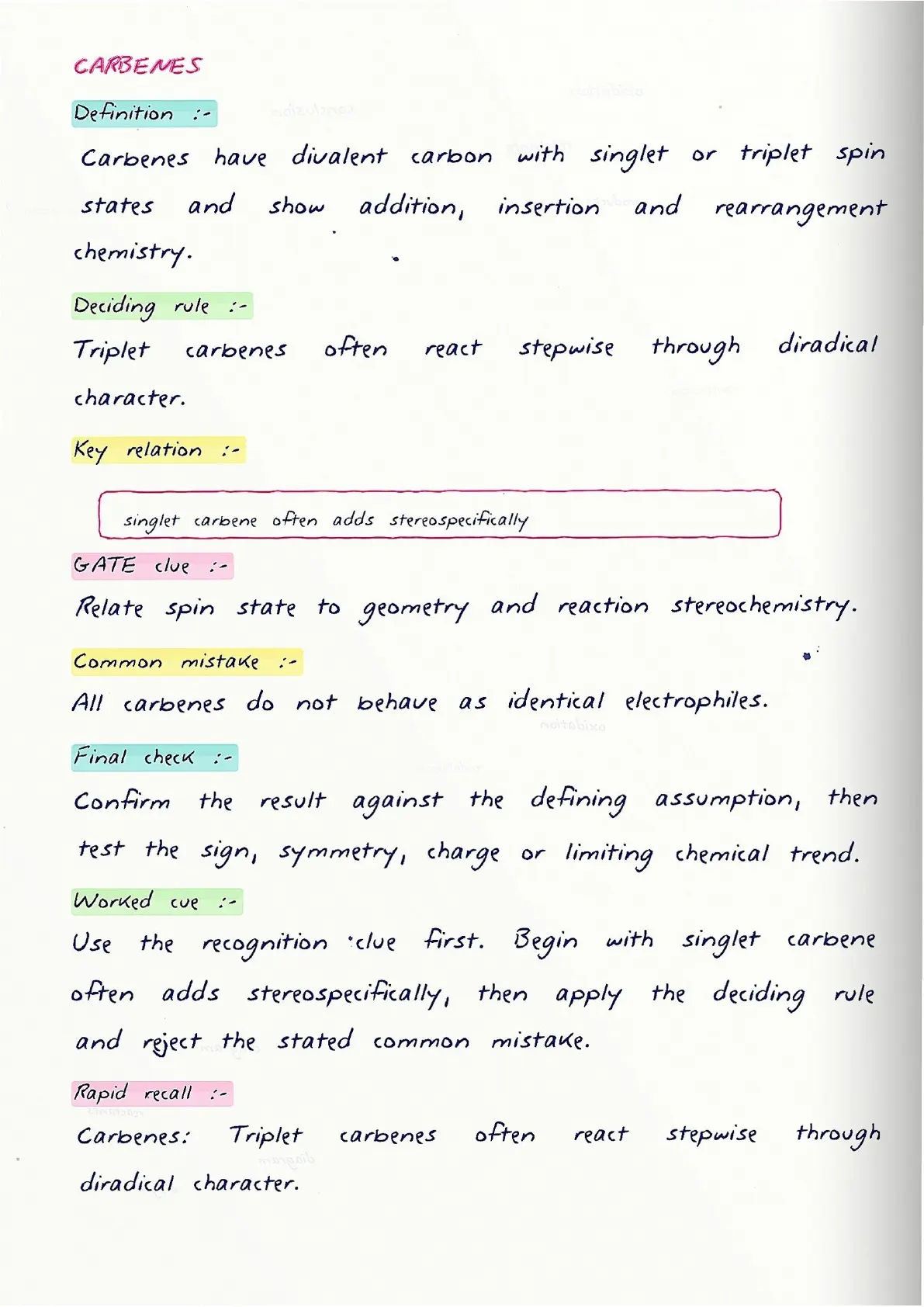
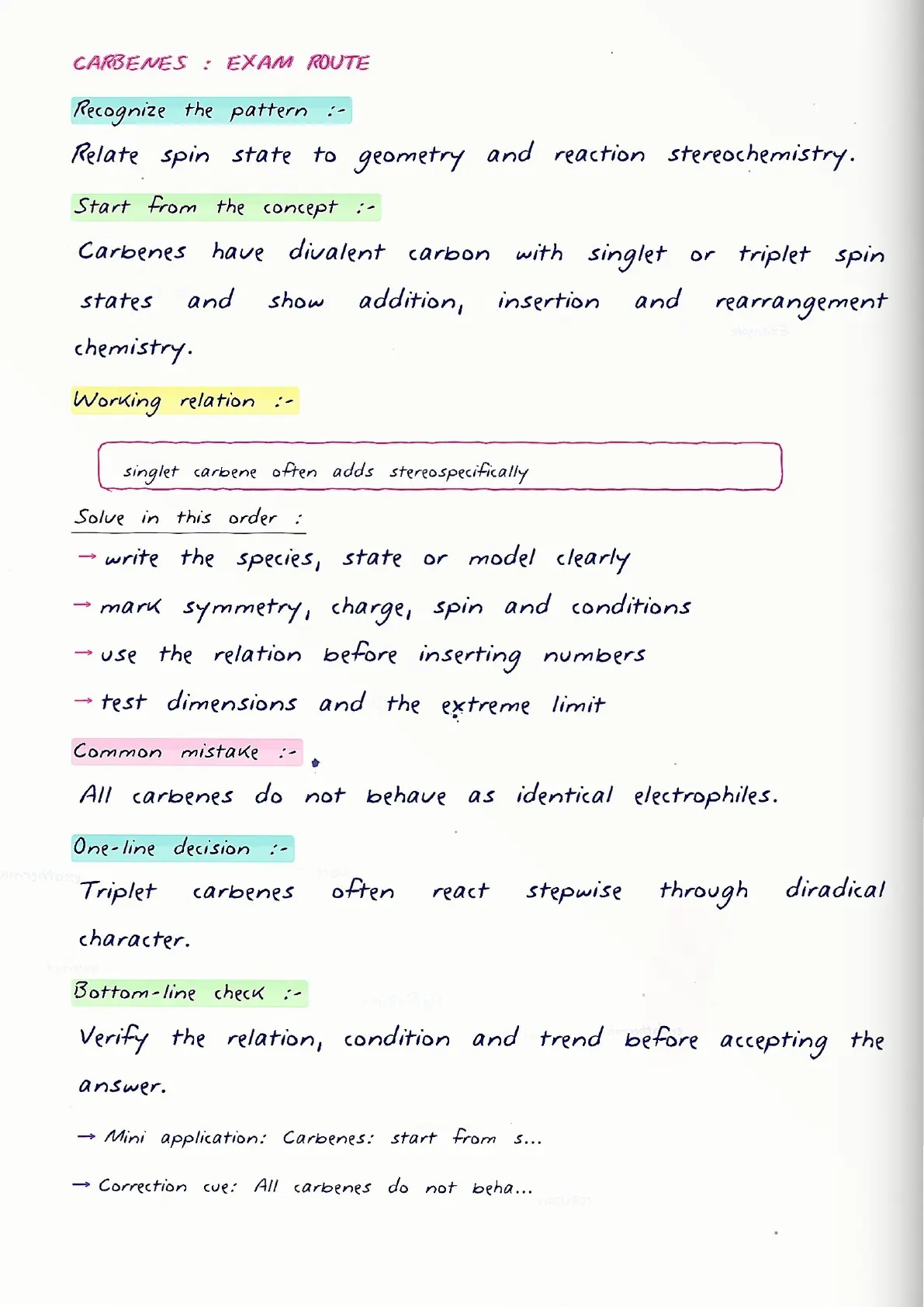
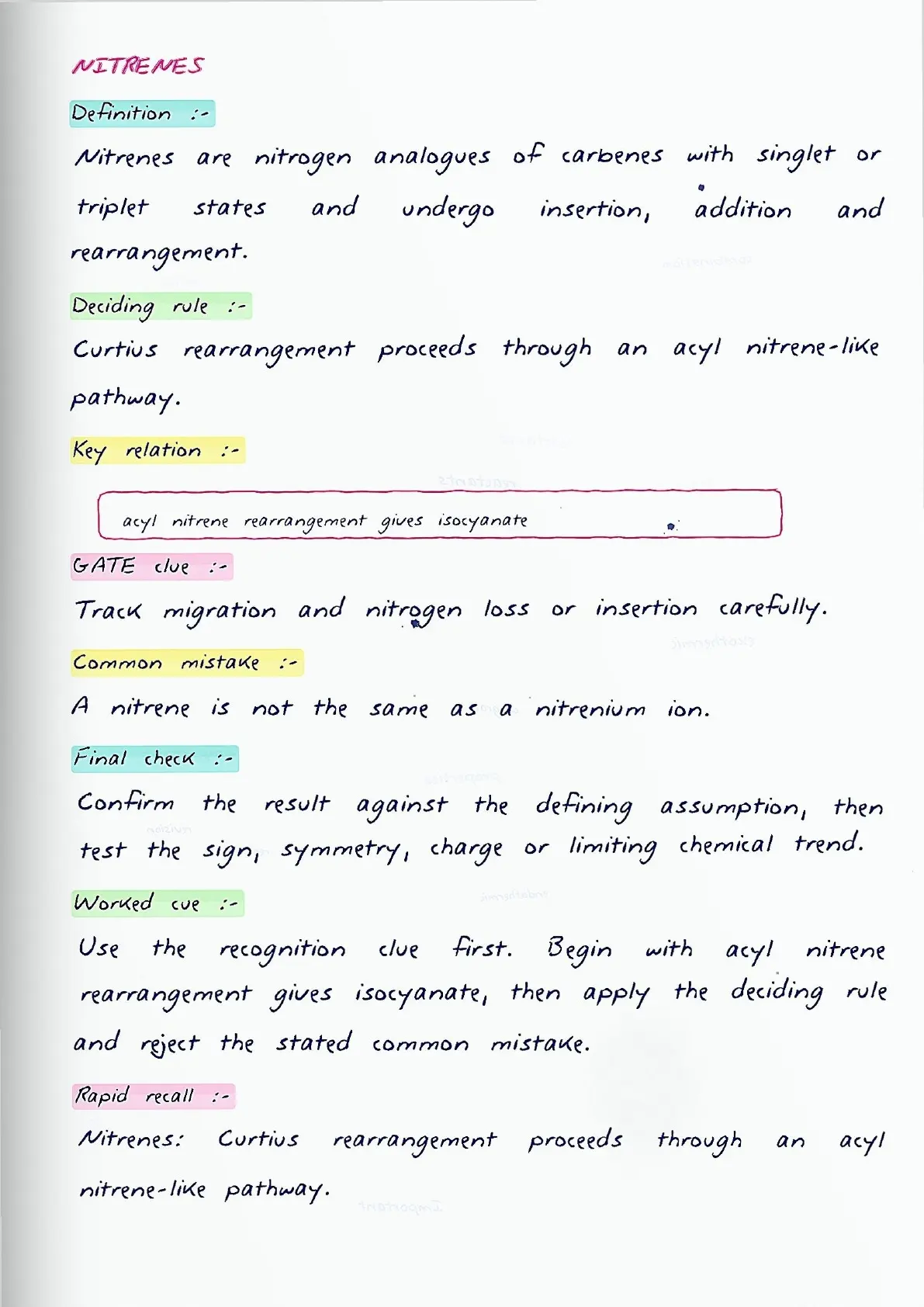
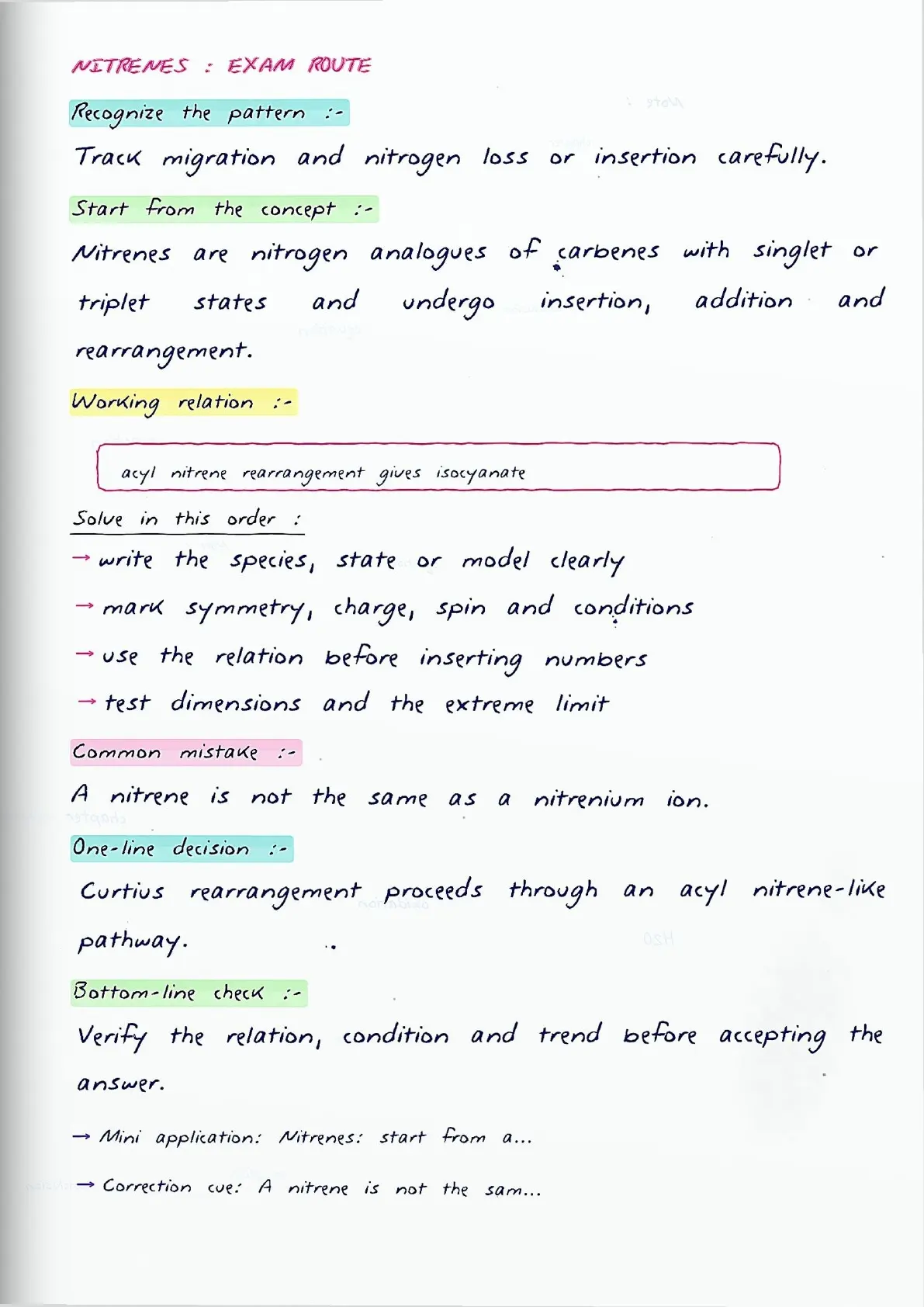
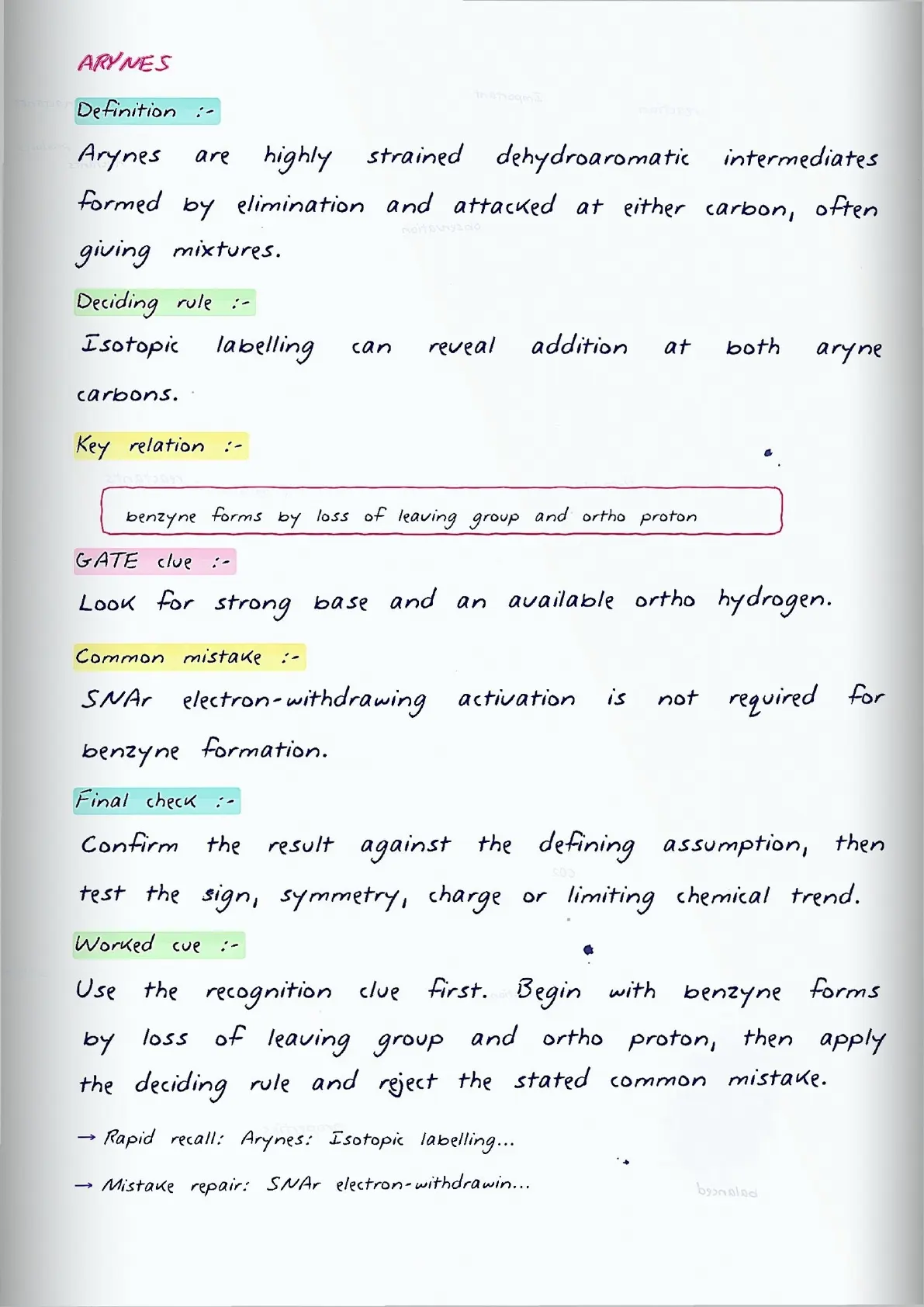
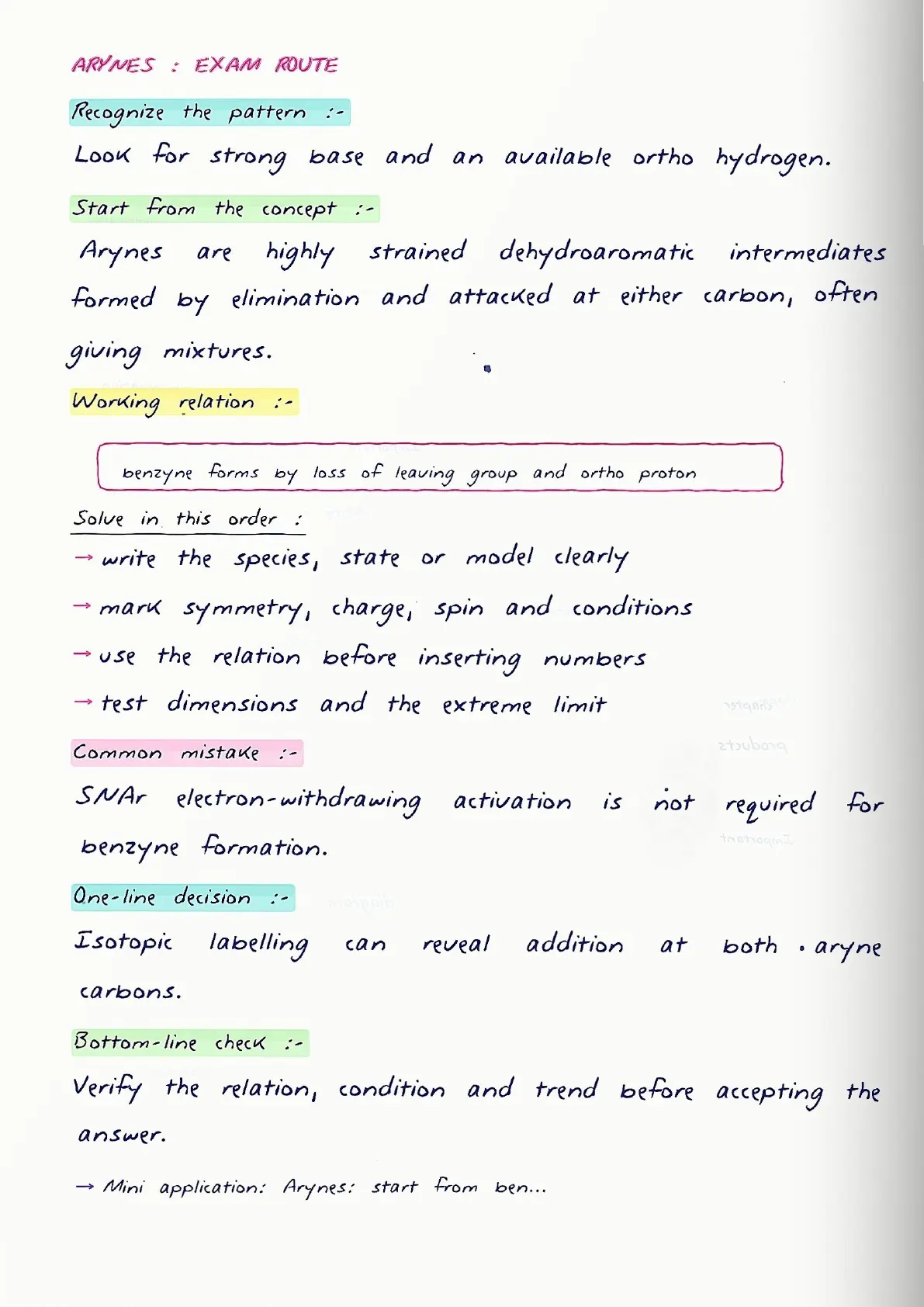
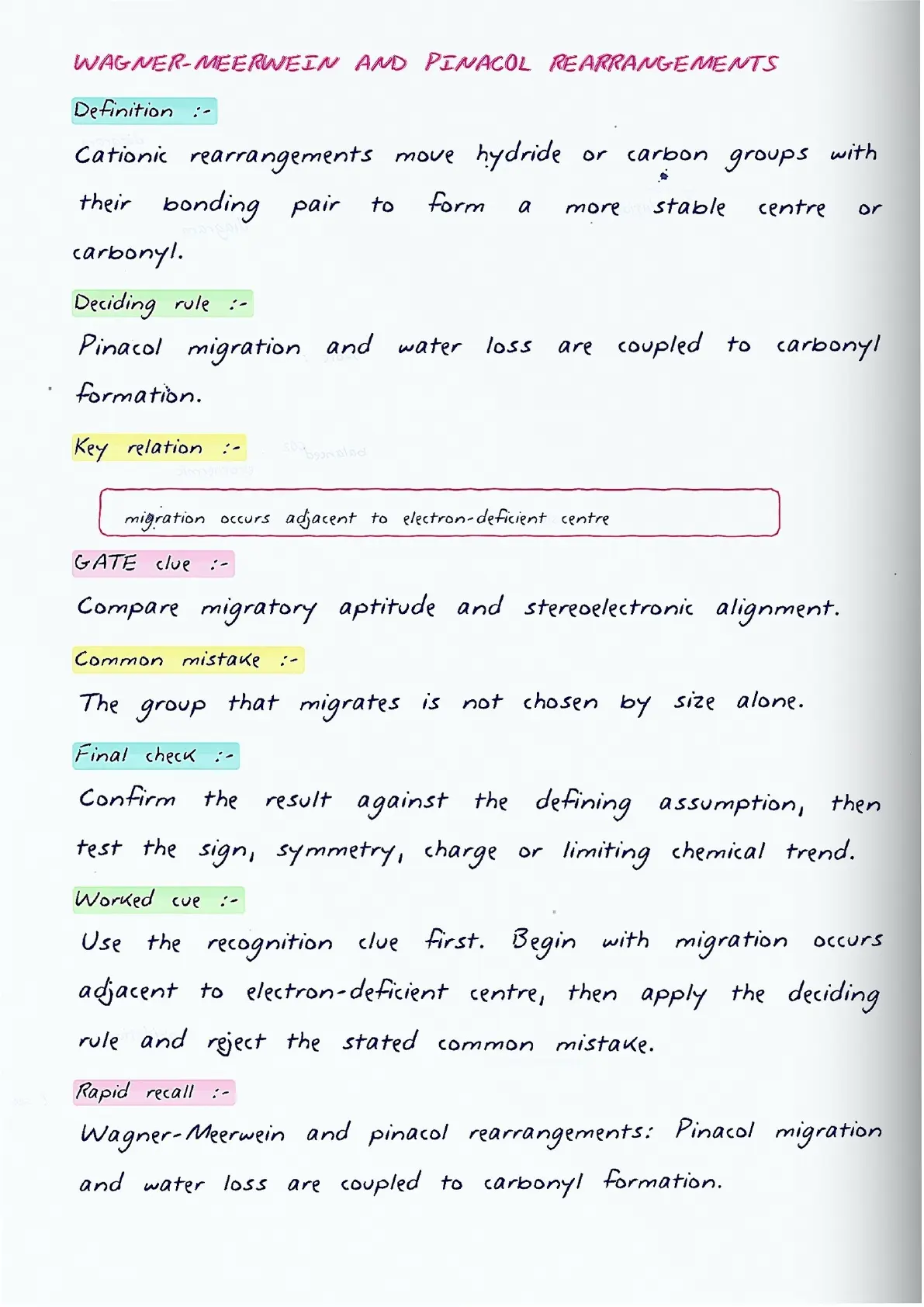
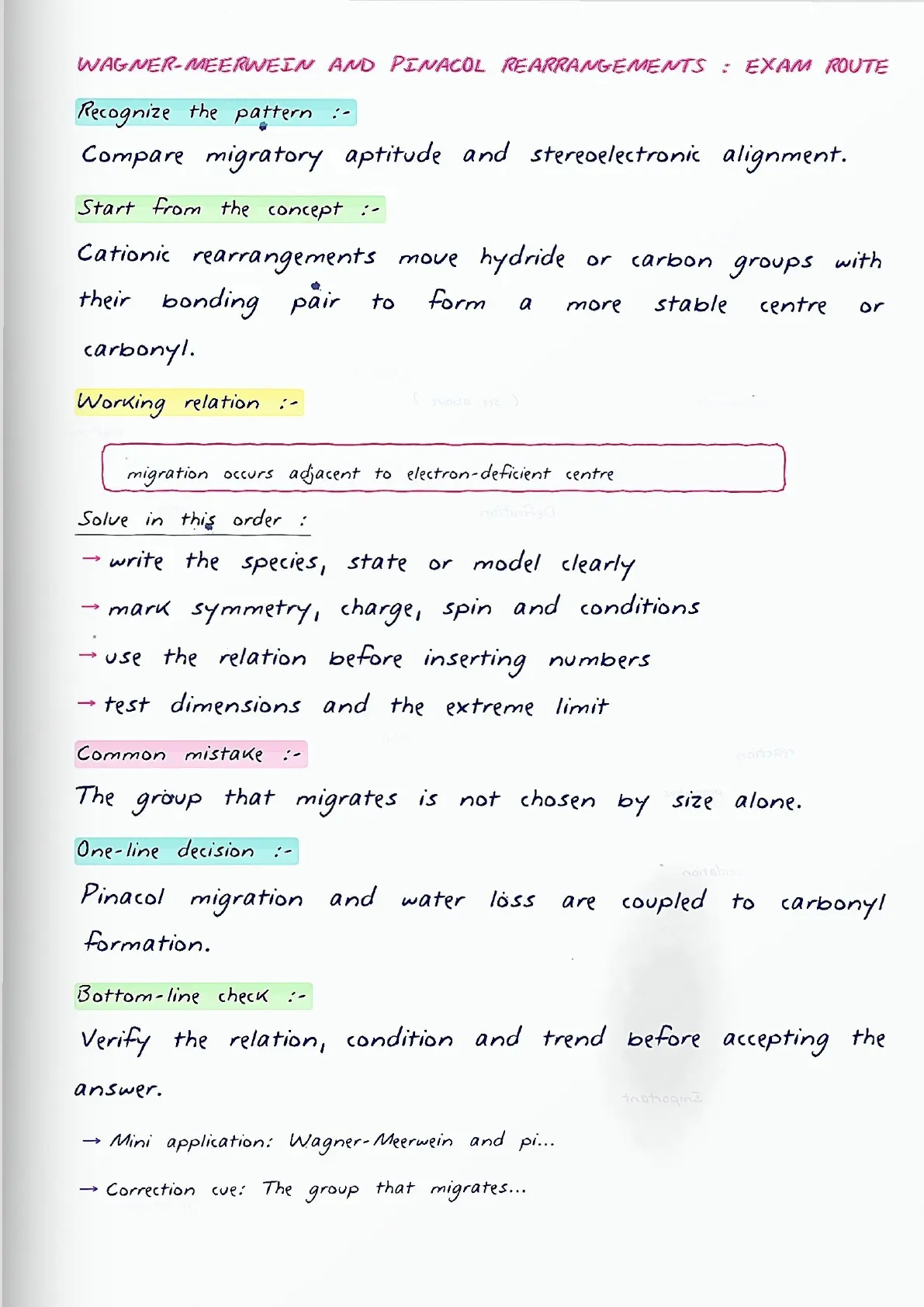
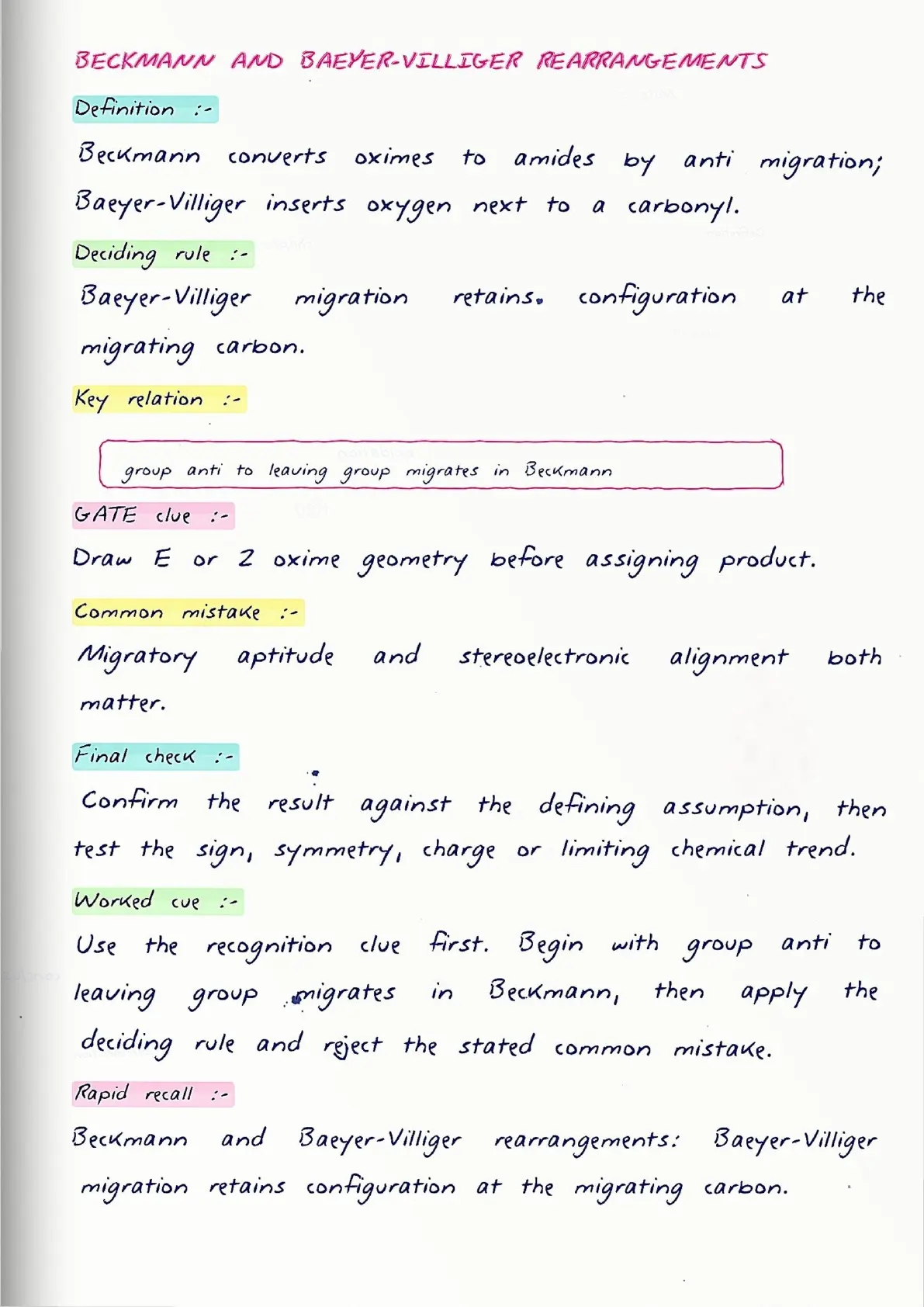
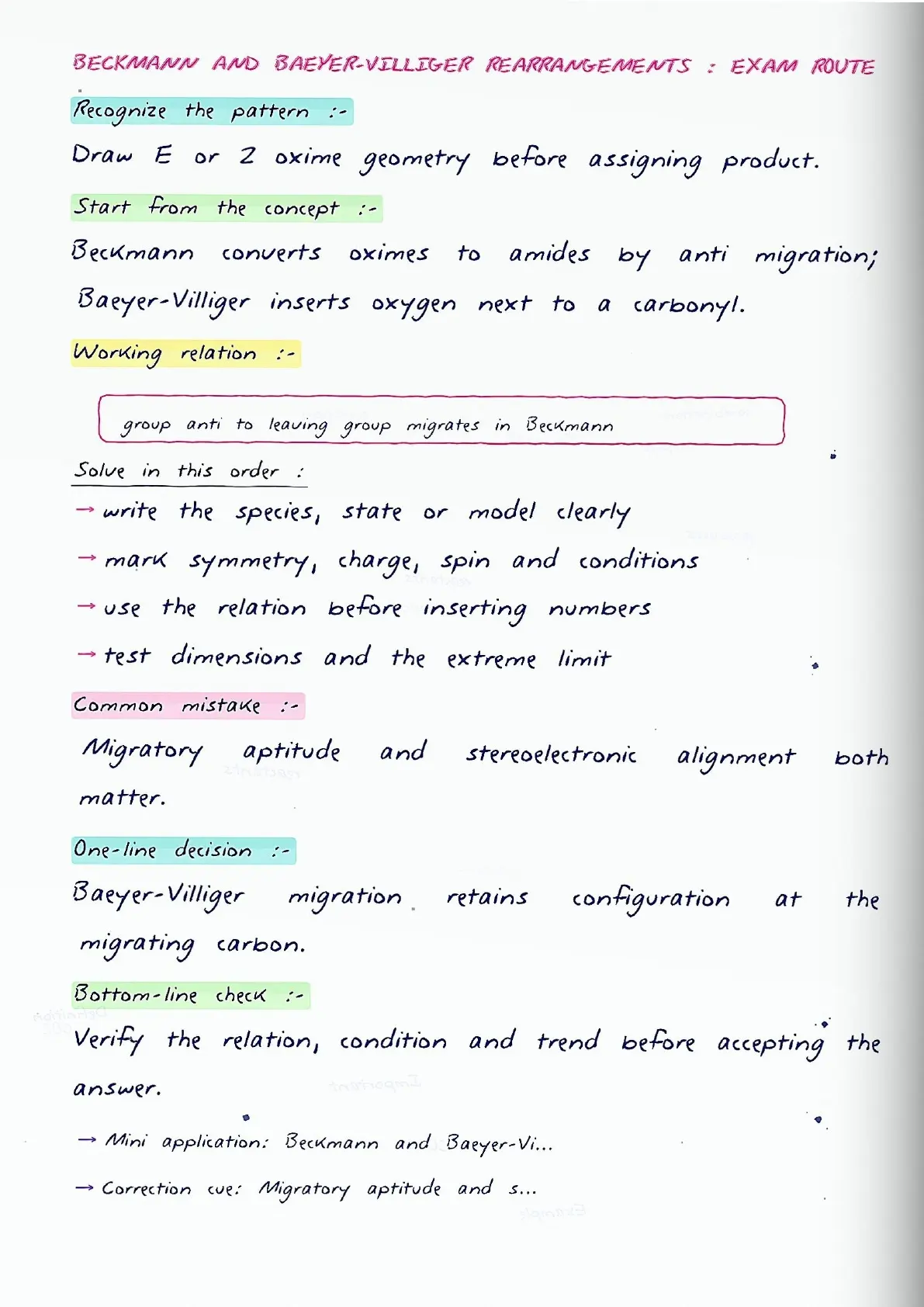
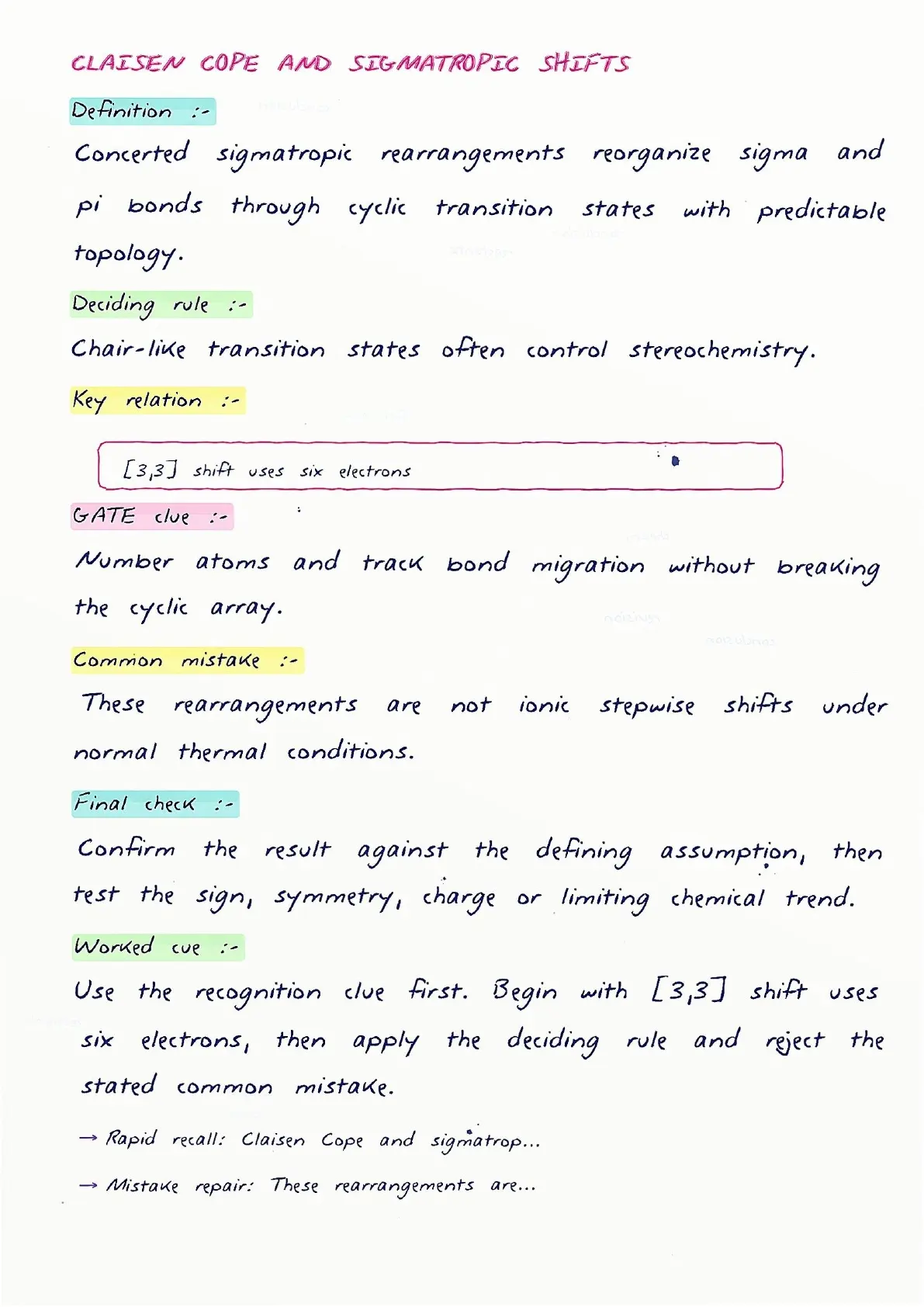
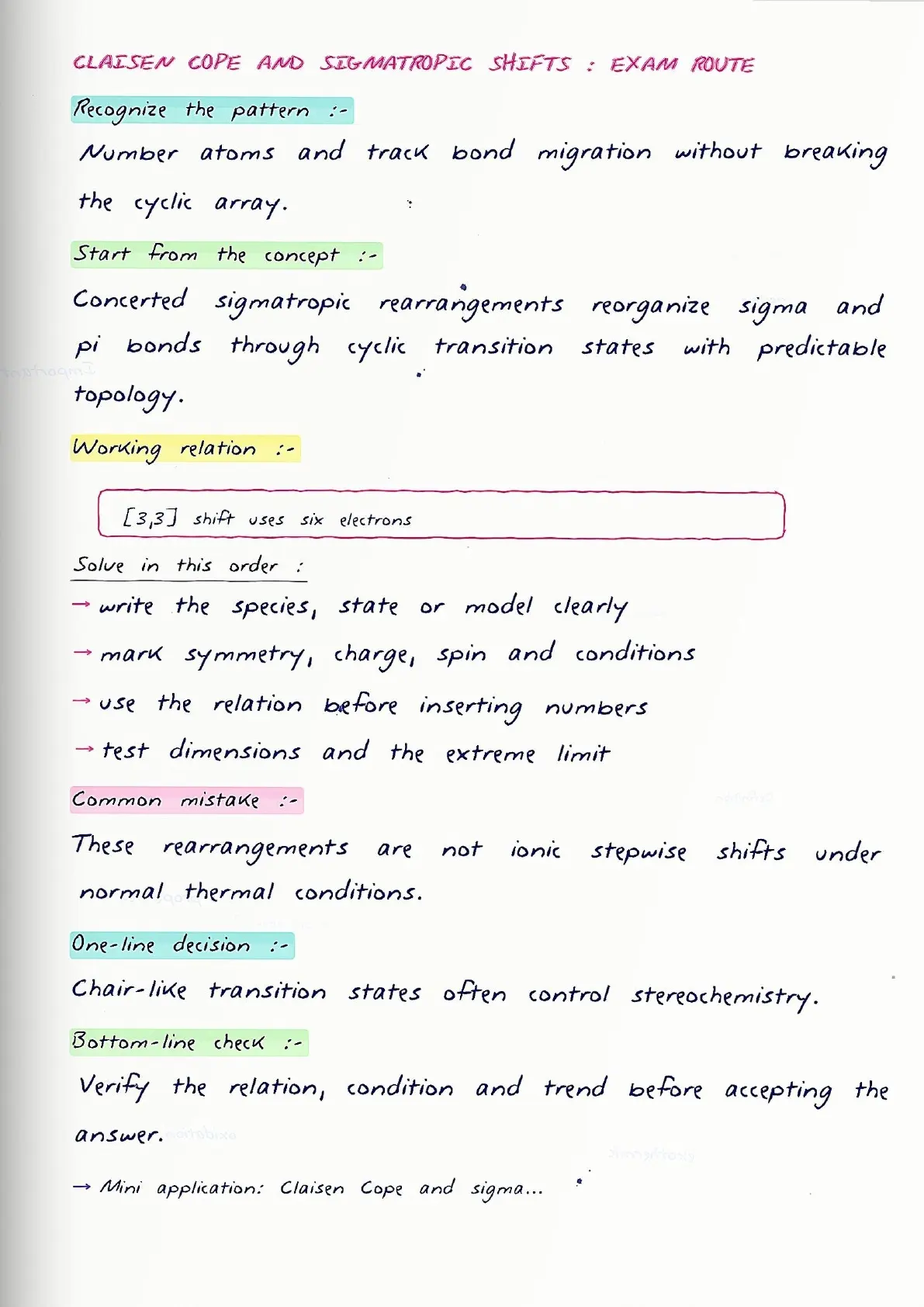
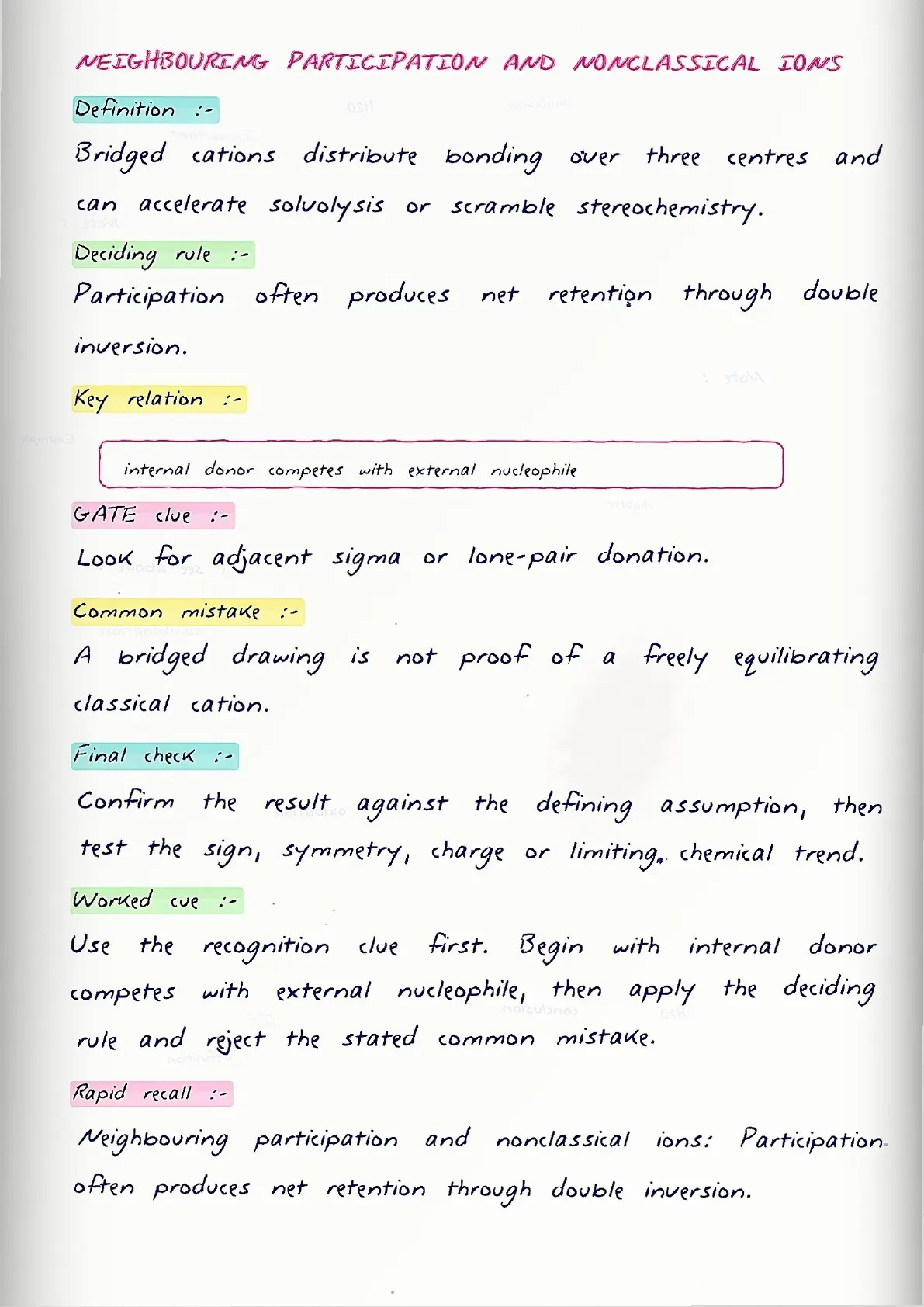
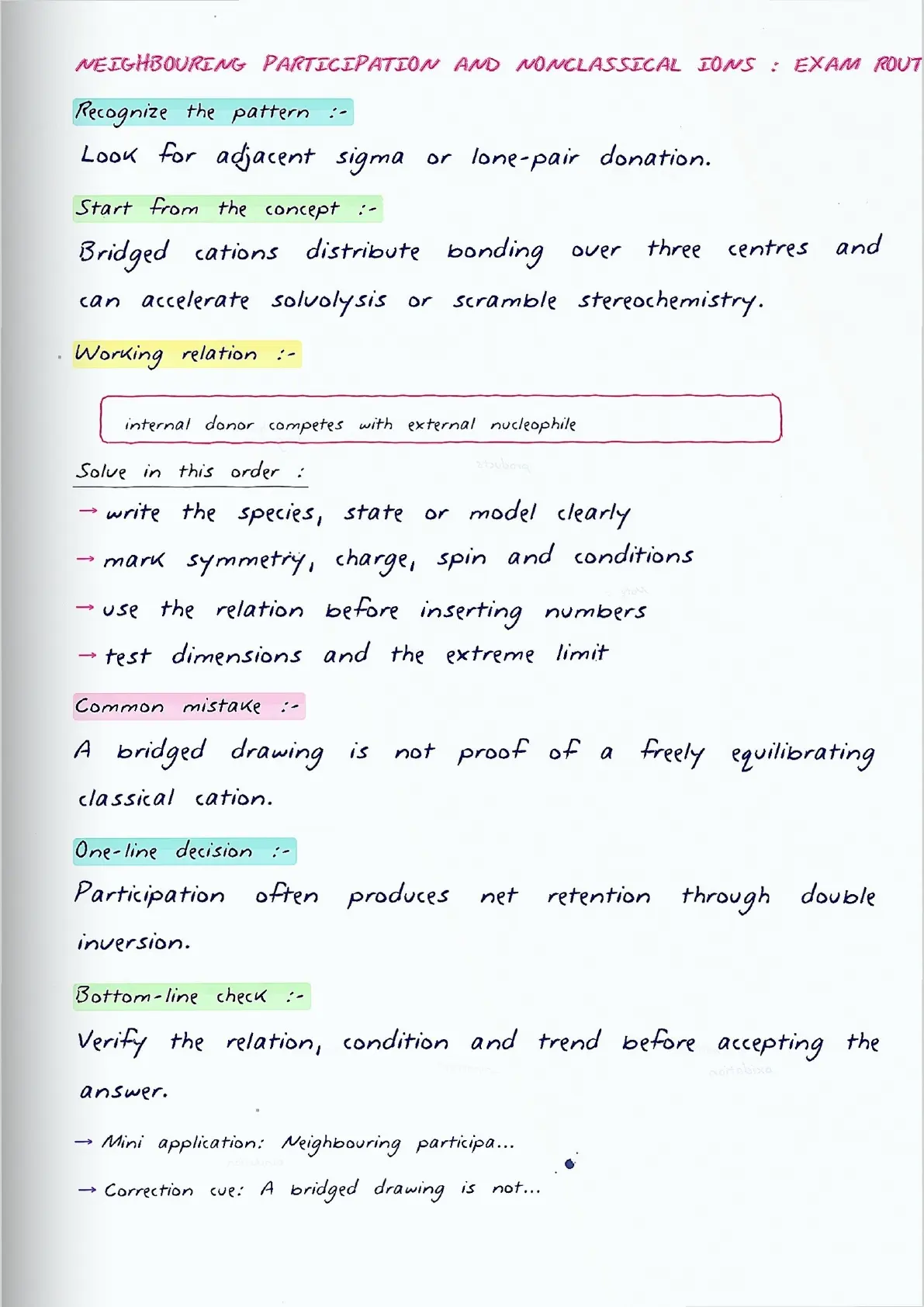
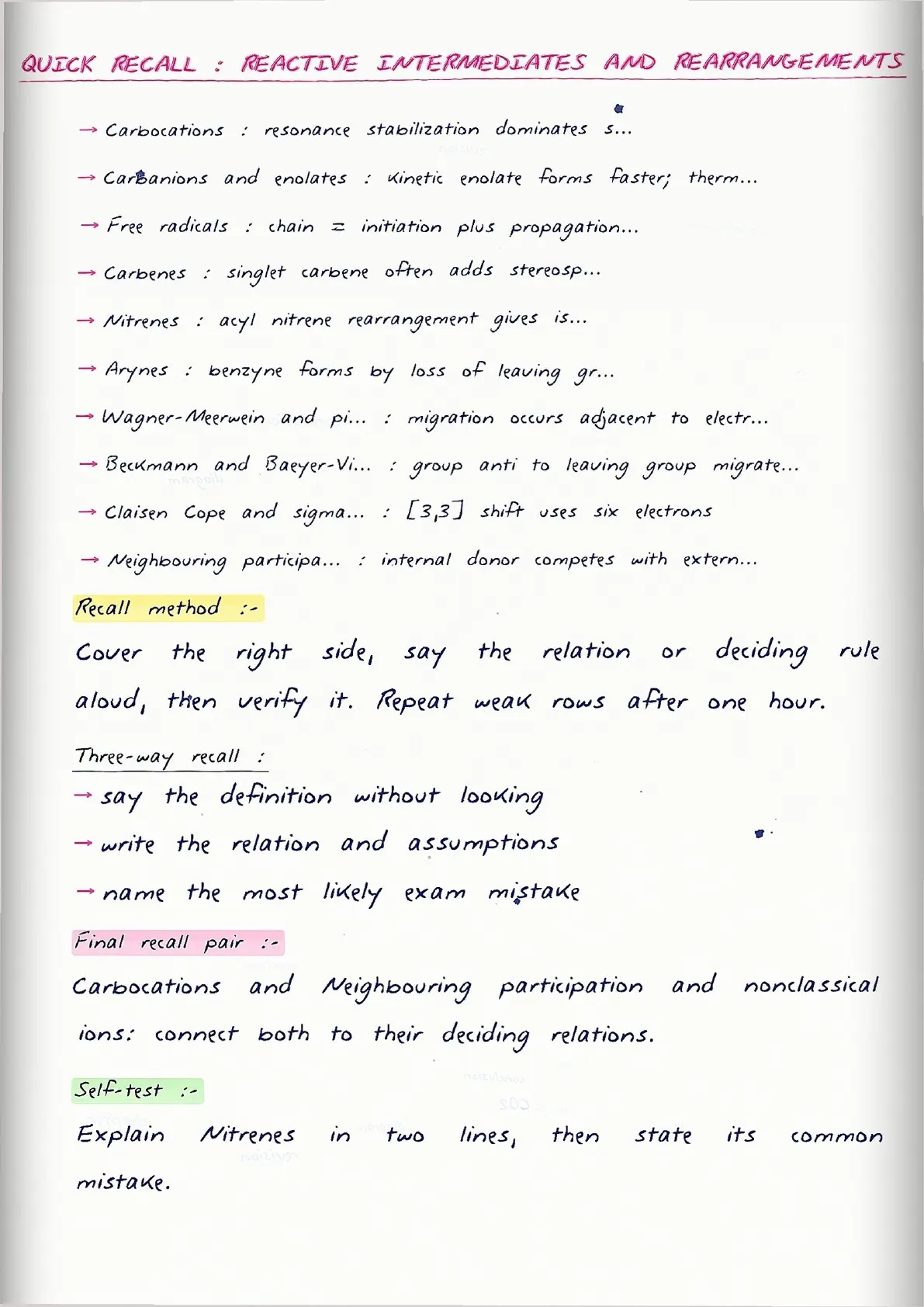
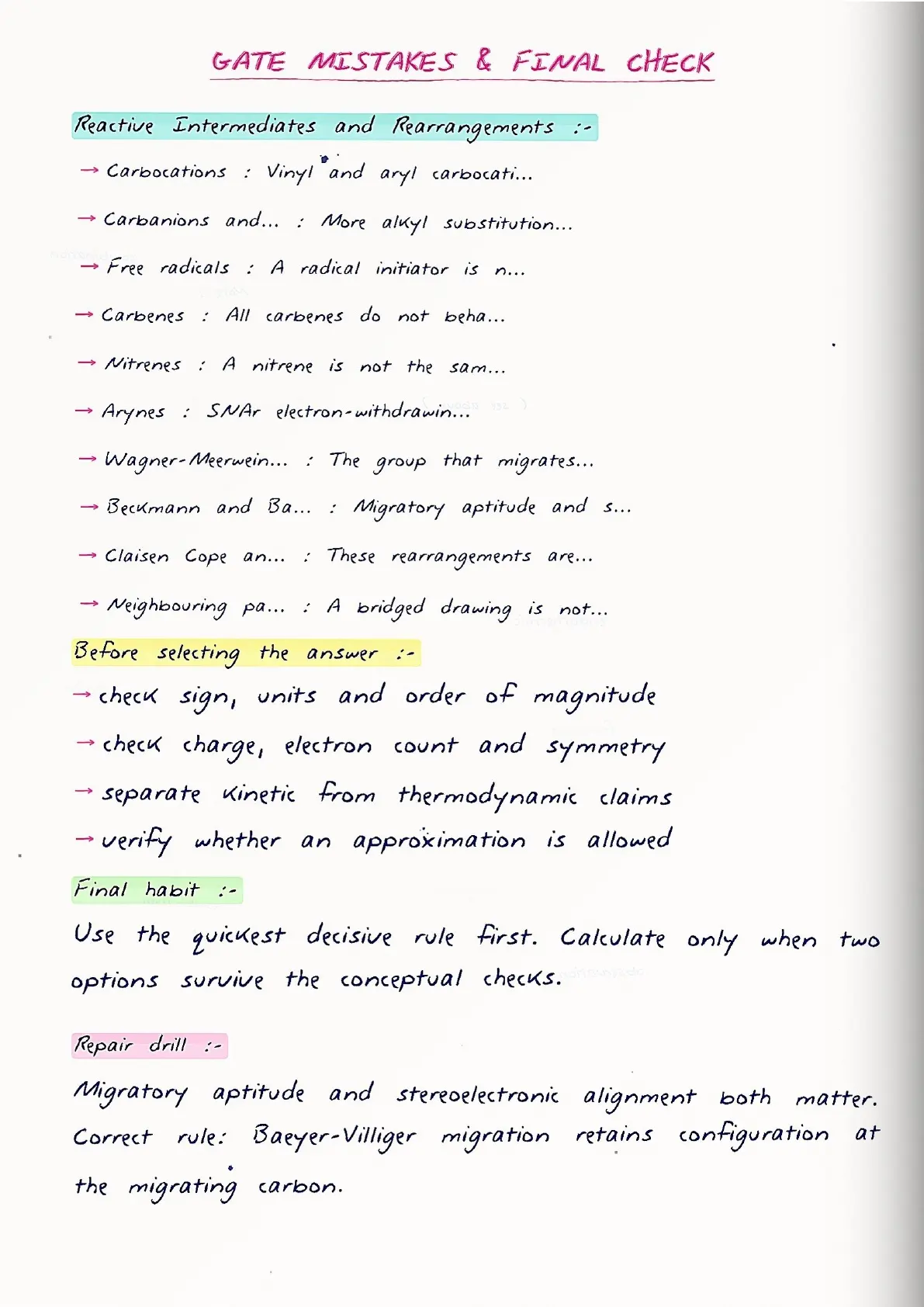
The notes carry hand-drawn structures for carbocations, carbanions and carbenes, plus reaction maps and colour-coded stability tables you can revise fast. Every rearrangement is explained step by step, so you follow the electron shifts instead of memorising a name on its own.
- Full Reactive Intermediates topic in one PDF, in the standard GATE order.
- Key reactions and stability trends for every intermediate and rearrangement.
- Hand-drawn diagrams and a revision sheet for fast last-day revision.
What These GATE Reactive Intermediates Notes Cover
Reactive intermediates are the short-lived species that form during a reaction and decide its path. The notes explain how each one is built, why it is stable or unstable, and where it shows up. They stay close to the GATE Chemistry syllabus, so nothing important is left out.
- Clear meaning of each intermediate, with the reason for its stability.
- Stability orders given with the effects that control them.
- Hand-drawn structures for carbocations, carbanions, radicals and carbenes.
- A revision sheet that collects every trend in one place.
GATE Reactive Intermediates Quick Revision
Source: Learning Simply on YouTube
Topics Covered in GATE Reactive Intermediates
The notes follow the standard GATE order, moving from the common intermediates to the named rearrangements built on them. Each species connects to the next, so the topic reads as one flow. The list below matches the official syllabus.
- Carbocations, their stability order, and hydride and alkyl shifts.
- Carbanions, their formation, and the groups that stabilise them.
- Free radicals, their generation, and chain reactions.
- Carbenes, singlet and triplet forms, and their insertion reactions.
- Nitrenes, the nitrogen analogue of carbenes.
- Benzynes, their formation and trapping reactions.
- Named molecular rearrangements such as Beckmann, Hofmann and pinacol.
How the Notes Are Organised
The material runs from the simple intermediates to the harder rearrangements, so you can read it straight through or open a single page for a quick recap. Carbocations and carbanions come first, while carbenes, nitrenes and benzynes come later once the base is in place. A revision sheet near the end brings the key trends together.
Because each intermediate stands on its own, you can match it to whatever you are practising that day and revise only the part you need before an attempt.
How GATE Reactive Intermediates Links to Other Topics
Reactive intermediates do not stand alone in the GATE Chemistry paper. They are the base for organic reaction mechanisms, so revising them well earns marks across several topics. The notes point out these links as they come up.
- Every intermediate extends directly into Reaction Mechanisms.
- The same species return when planning steps in Organic Synthesis.
- Carbenes and radicals appear again in Pericyclic reactions.
- Stability trends support your reading of substitution and elimination paths.
Important Topics in GATE Reactive Intermediates
A few areas appear in the GATE Chemistry paper almost every year and carry most of the topic's marks. If your time is short, revise these first and make sure you can predict the product quickly and without slips.
- Carbocation rearrangements, near-certain in mechanism questions.
- Named rearrangements like Beckmann, Hofmann and Wagner-Meerwein.
- Carbene reactions, including singlet versus triplet behaviour.
- Benzyne formation and its addition products.
- Common traps: a more stable cation forms by a 1,2-shift before attack.
How to Prepare GATE Reactive Intermediates with Handwritten Notes
This topic rewards clear mechanism sense more than reading, so use the notes as a theory base beside daily practice. Read an intermediate, note its stability rule, then solve a few previous year questions on it before you move on. Return to the notes before mock tests to refresh the ideas quickly.
- First read: cover every intermediate once to build the base.
- Second pass: focus on carbocation shifts and named rearrangements.
- Solve previous year questions topic by topic beside the notes.
- Final week: revise the stability trends and the tips page.
Why These Notes Help You Score Better
Handwritten notes are quick to scan and easy to recall under exam pressure, which is why they work well for revision in the final weeks. A short, colourful page is faster to read than a full textbook chapter, and each structure is right next to the trend it explains, so the link stays clear for students.
GATE Chemistry Reactive Intermediates Handwritten Notes FAQs
Ques. Do these notes cover the full GATE Chemistry Reactive Intermediates topic?
Ans. Yes. They cover every part, from carbocations and carbanions through carbenes, nitrenes and benzynes to the named molecular rearrangements, in the standard GATE order.
Ques. How much weightage does Reactive Intermediates carry in GATE Chemistry?
Ans. It usually carries about 3 to 5 marks, and it also supports reaction mechanisms, organic synthesis and pericyclic reactions across the paper.
Ques. Can I rely only on these notes for Reactive Intermediates?
Ans. Use them as your theory base, but pair them with regular mechanism practice and previous year papers for the best result.
Ques. Are the notes useful for last-minute revision?
Ans. Yes. The topic-wise pages and the revision sheet are made for quick revision in the days before the exam.



Comments