




Inorganic Chemistry Memory Maps and Exception Tables is a revision resource that pulls the whole Inorganic Chemistry section of GATE Chemistry into a few quick pages. It is a set of memory maps and exception tables for fast last-stage revision. These handwritten notes gather periodic trends, colour and magnetic data, and the odd cases that break the usual rules, so you can recall the full section in one calm read before the exam.
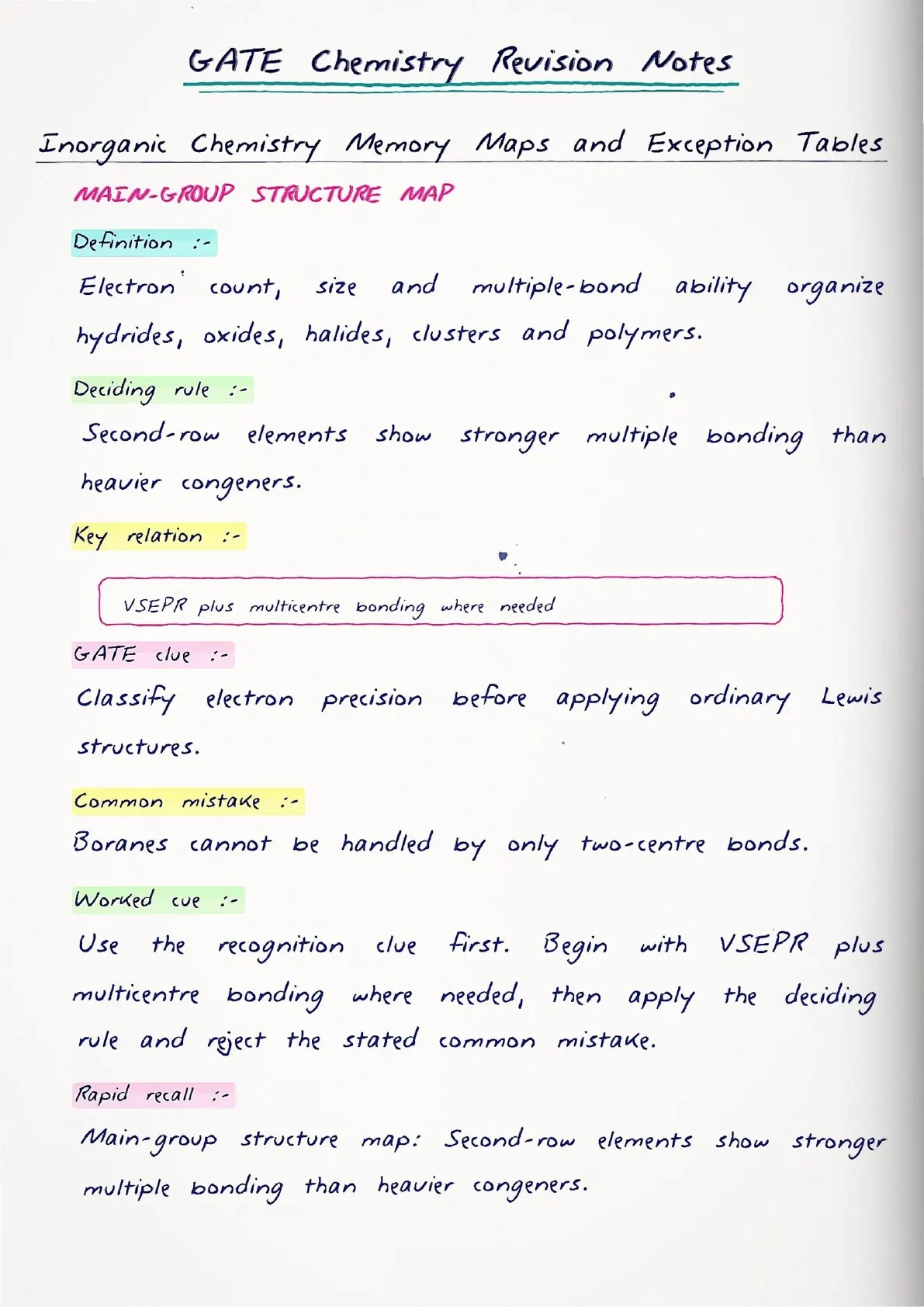
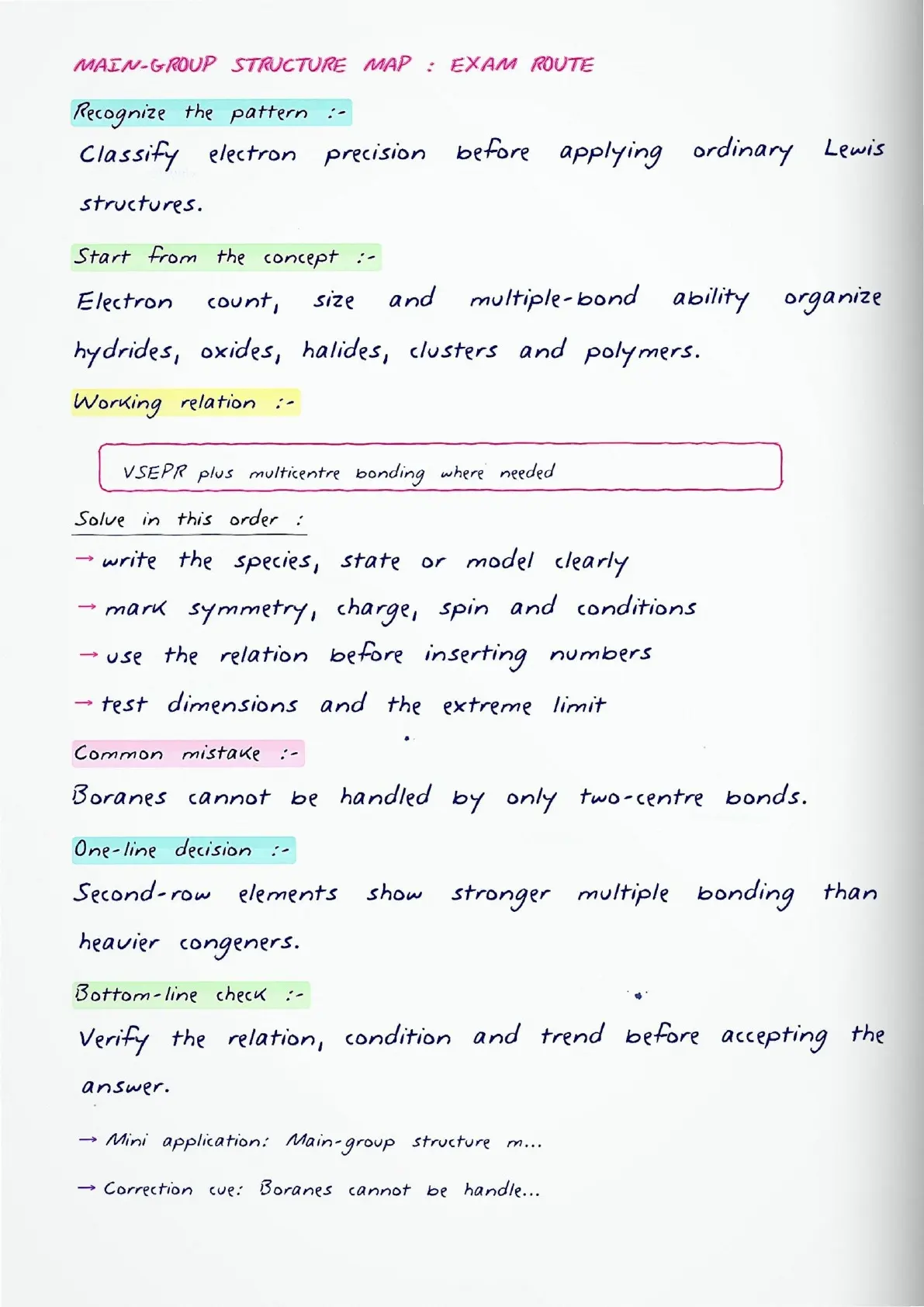
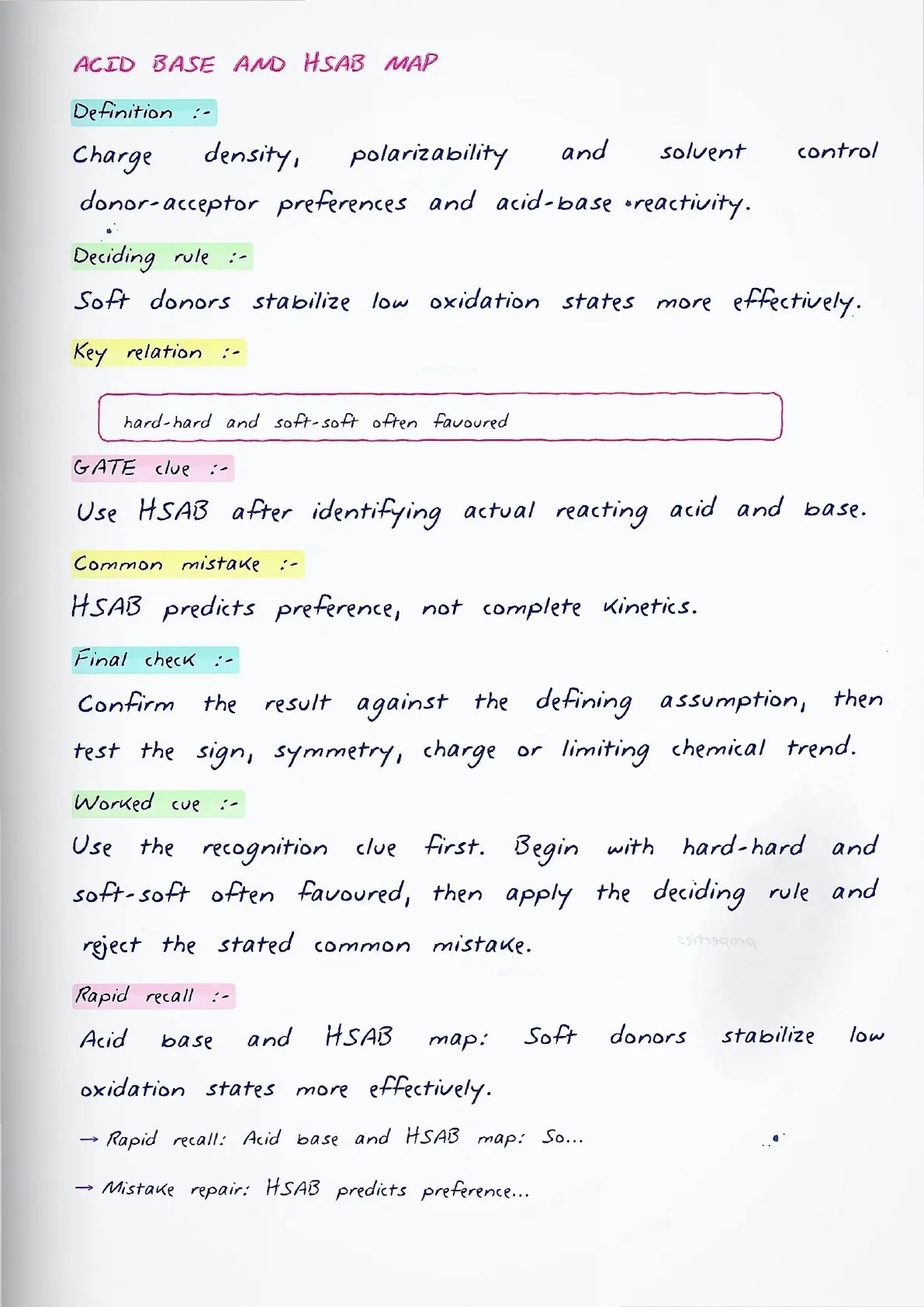
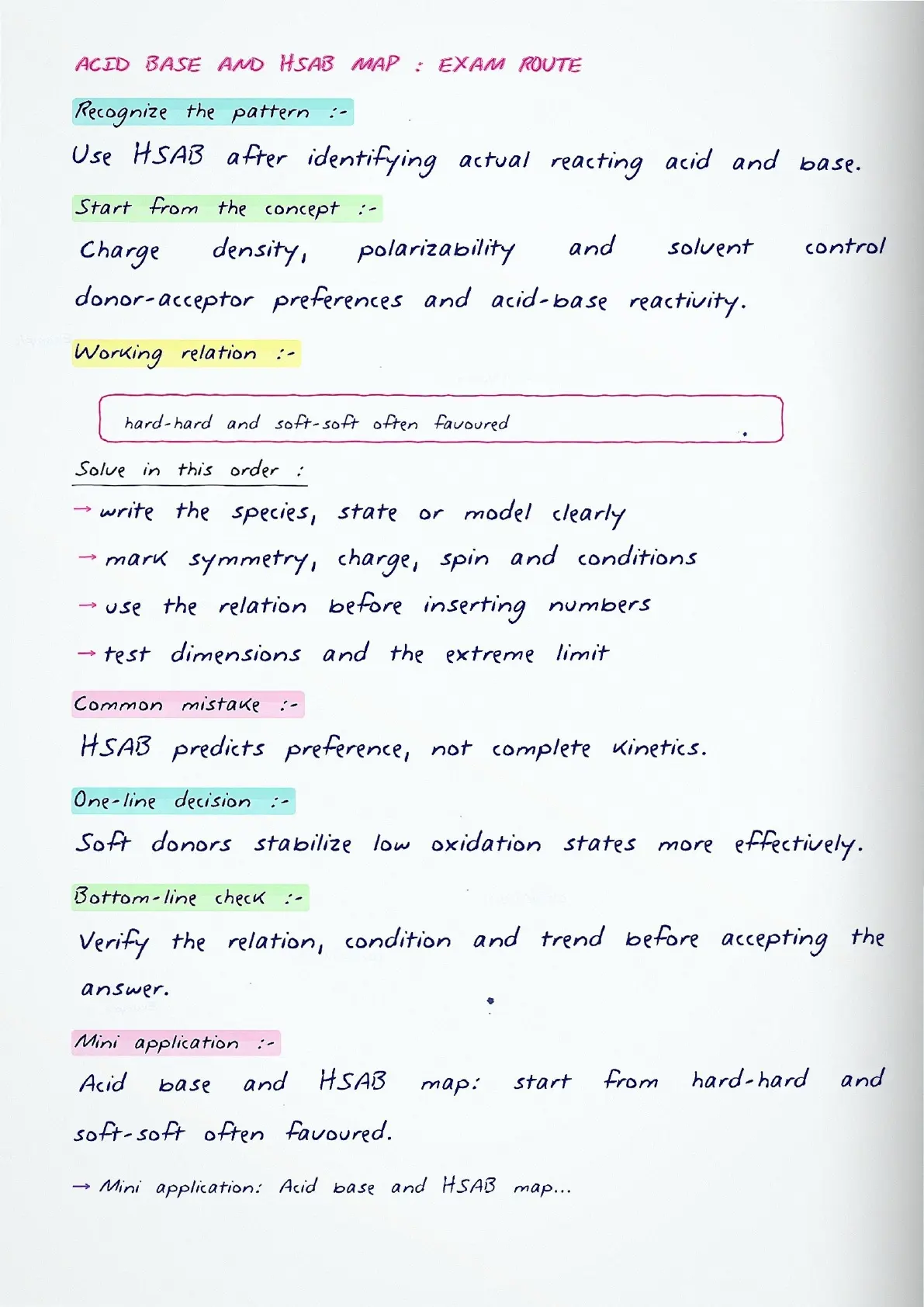
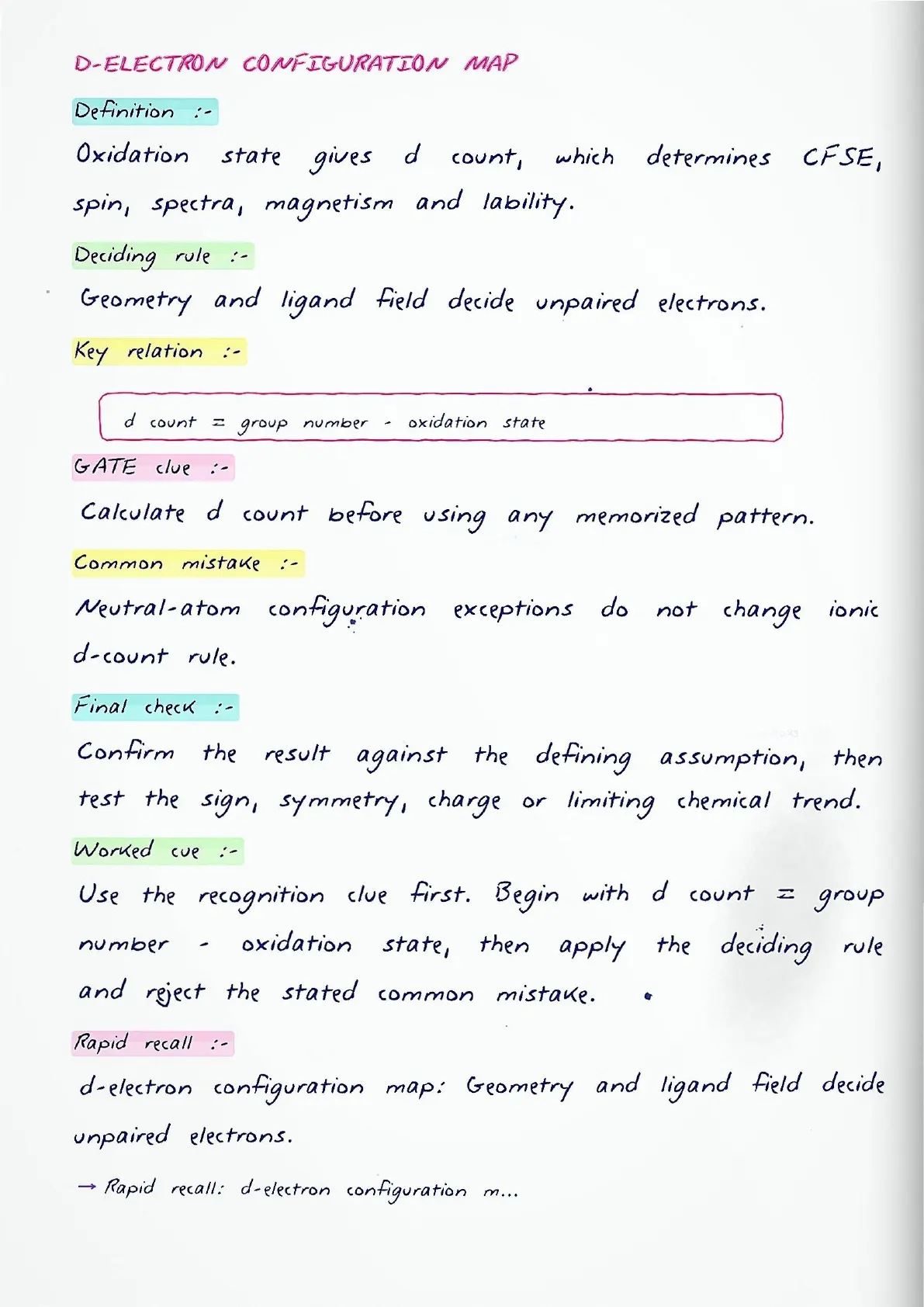
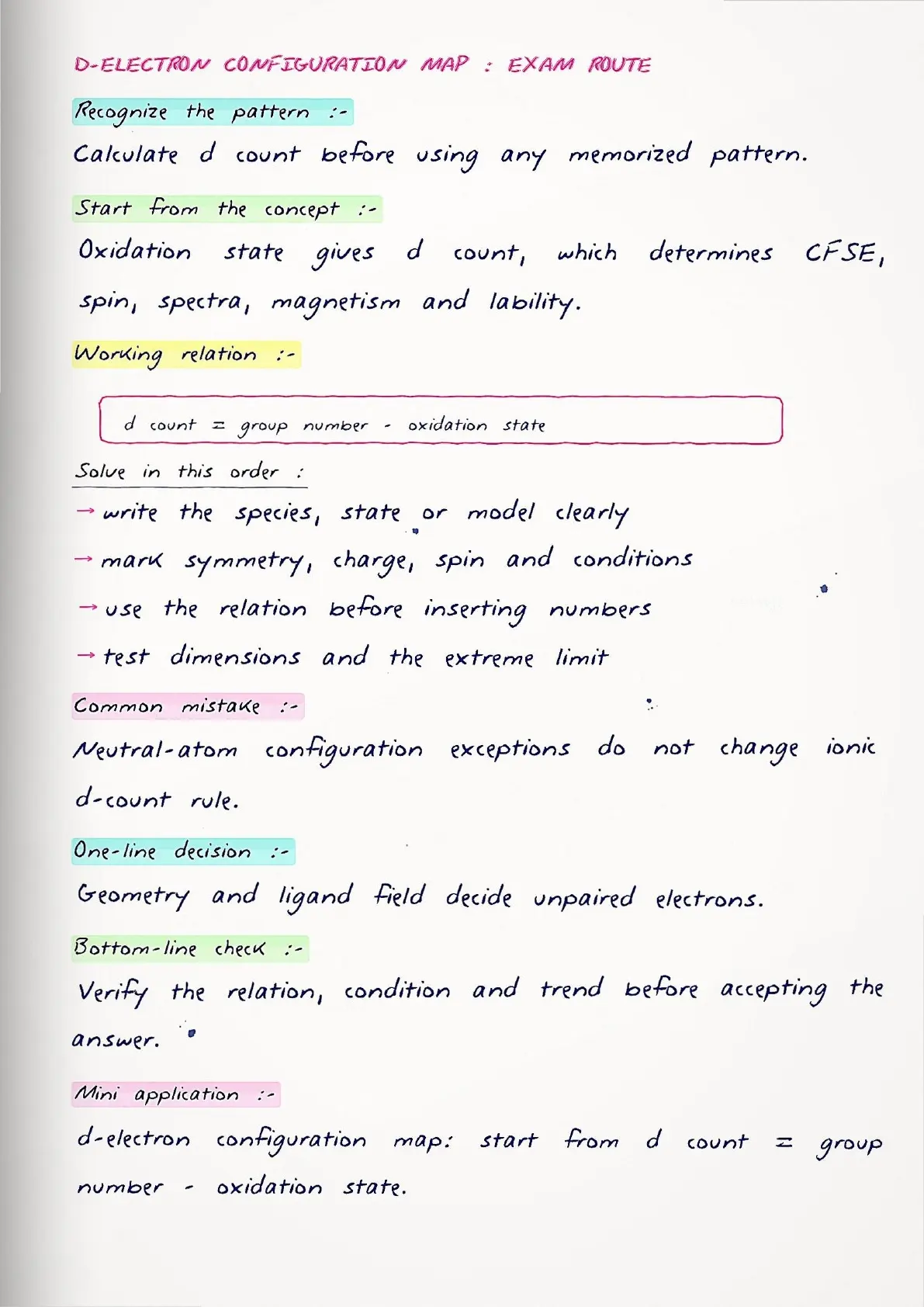
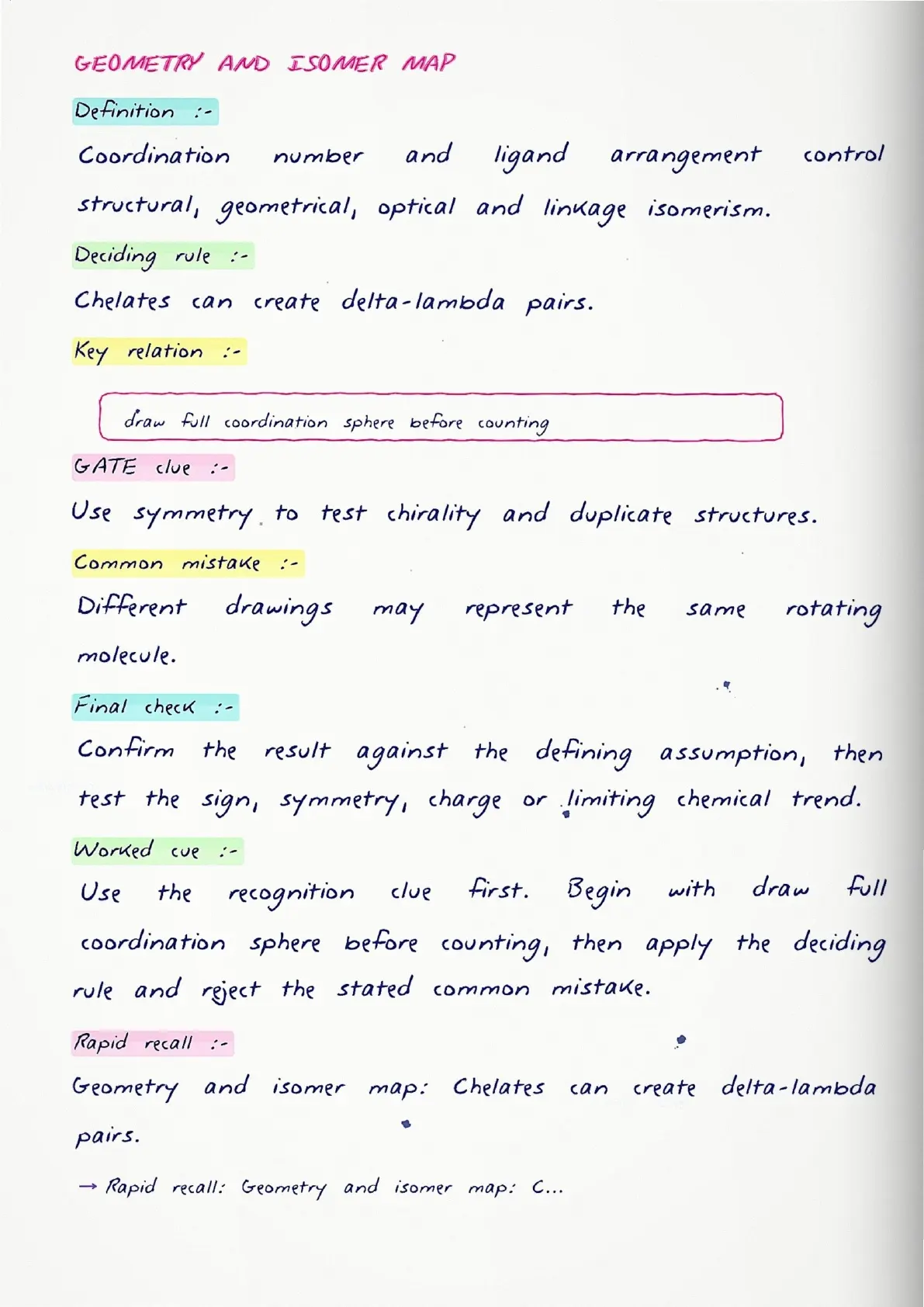
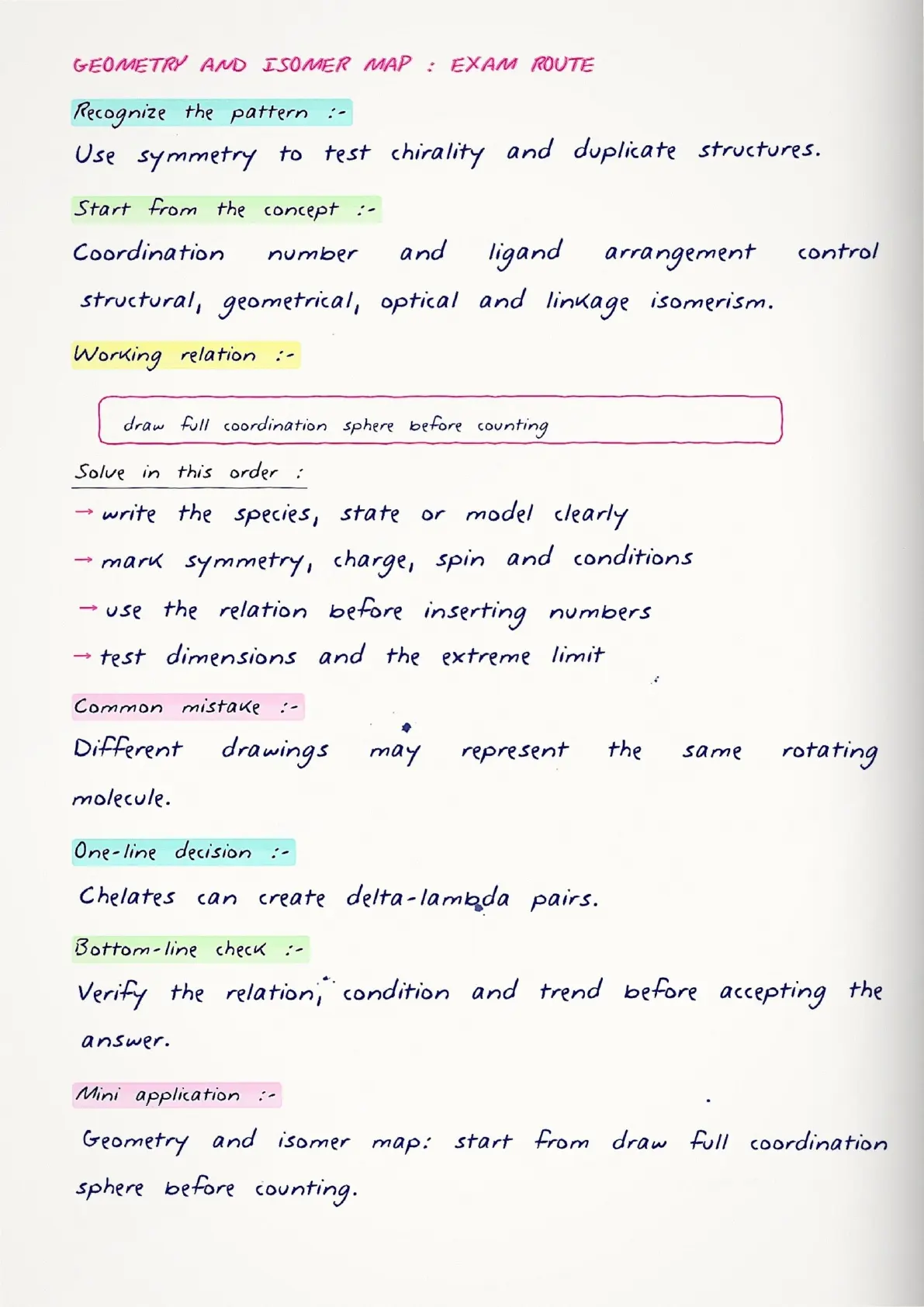
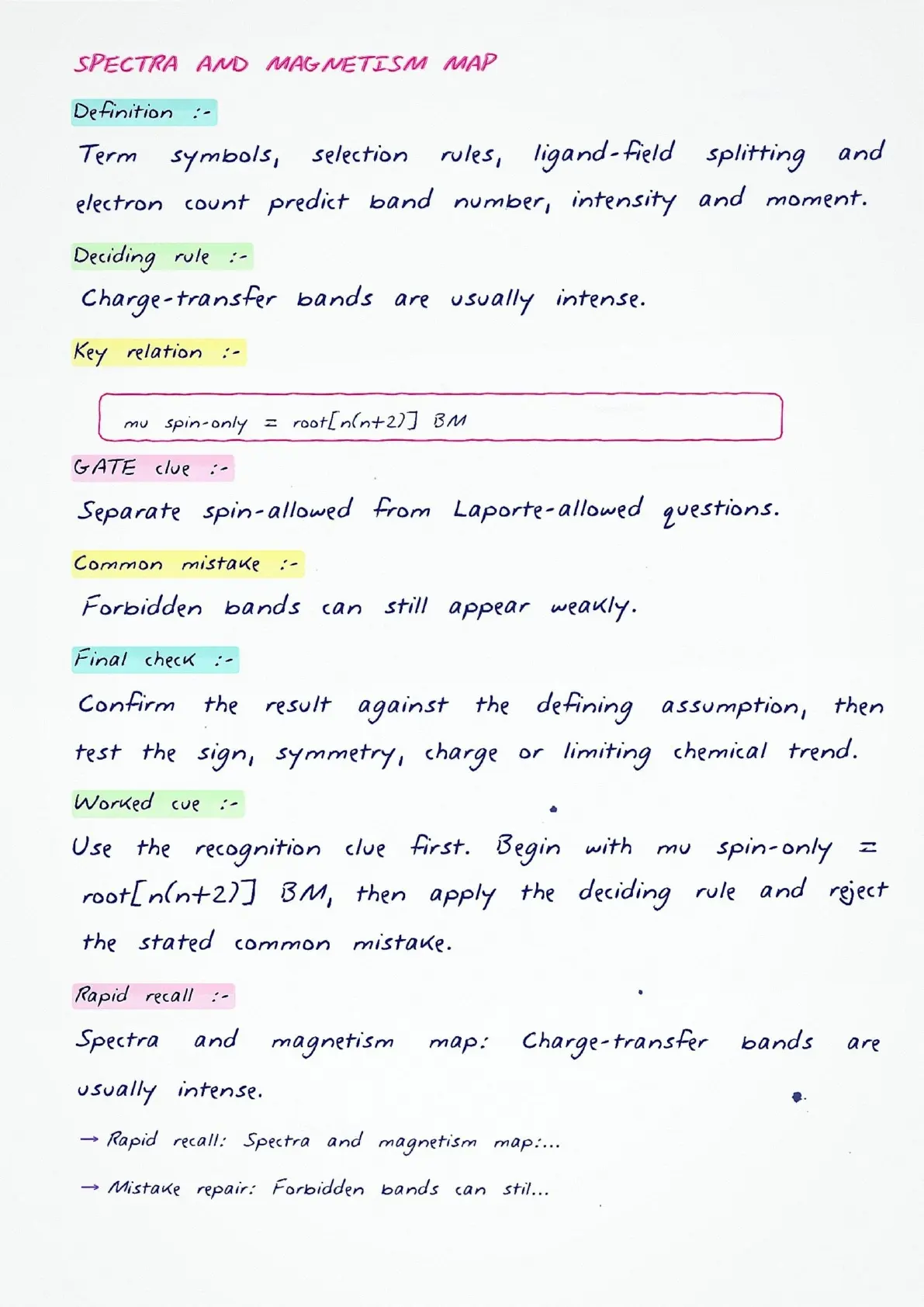
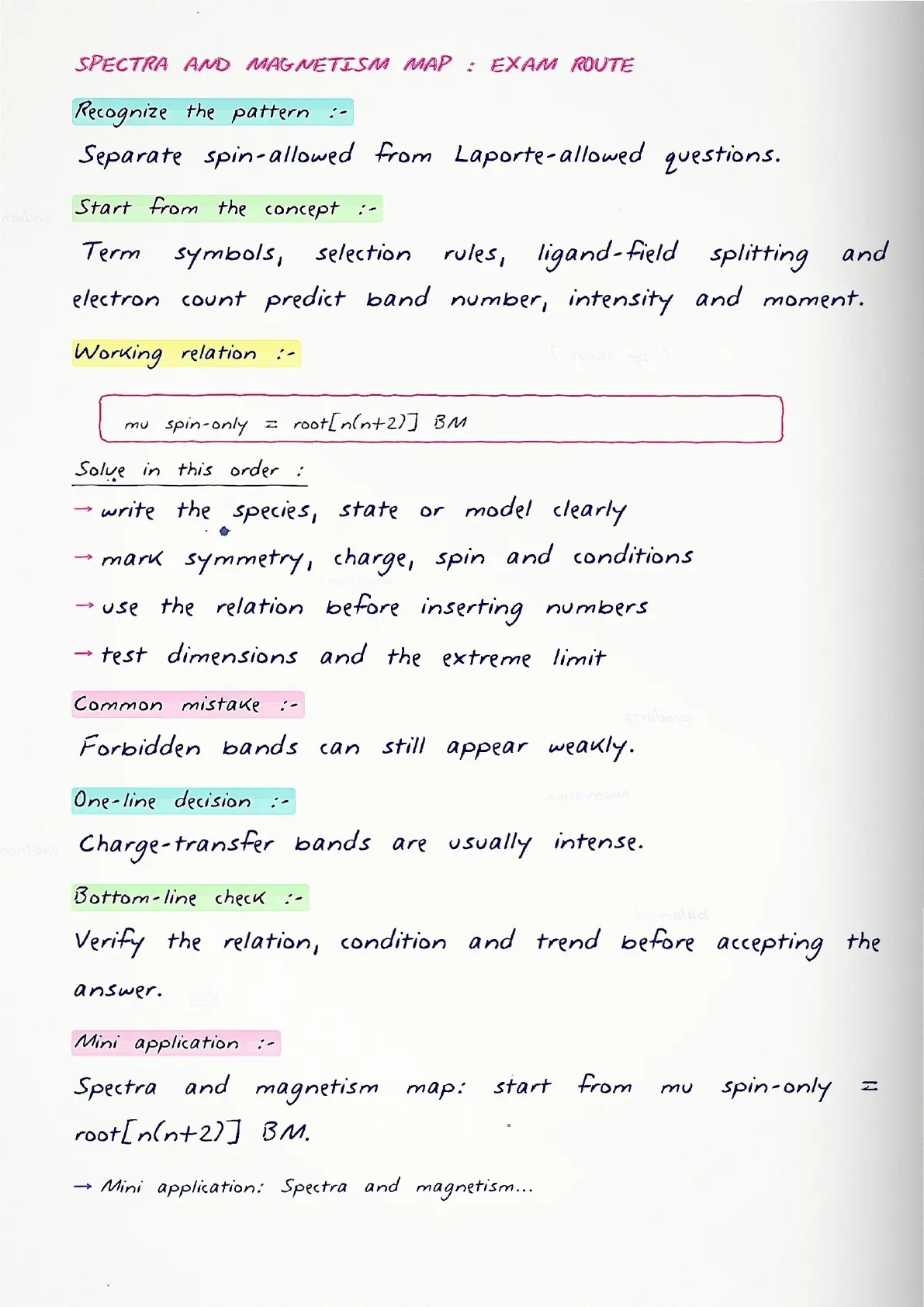
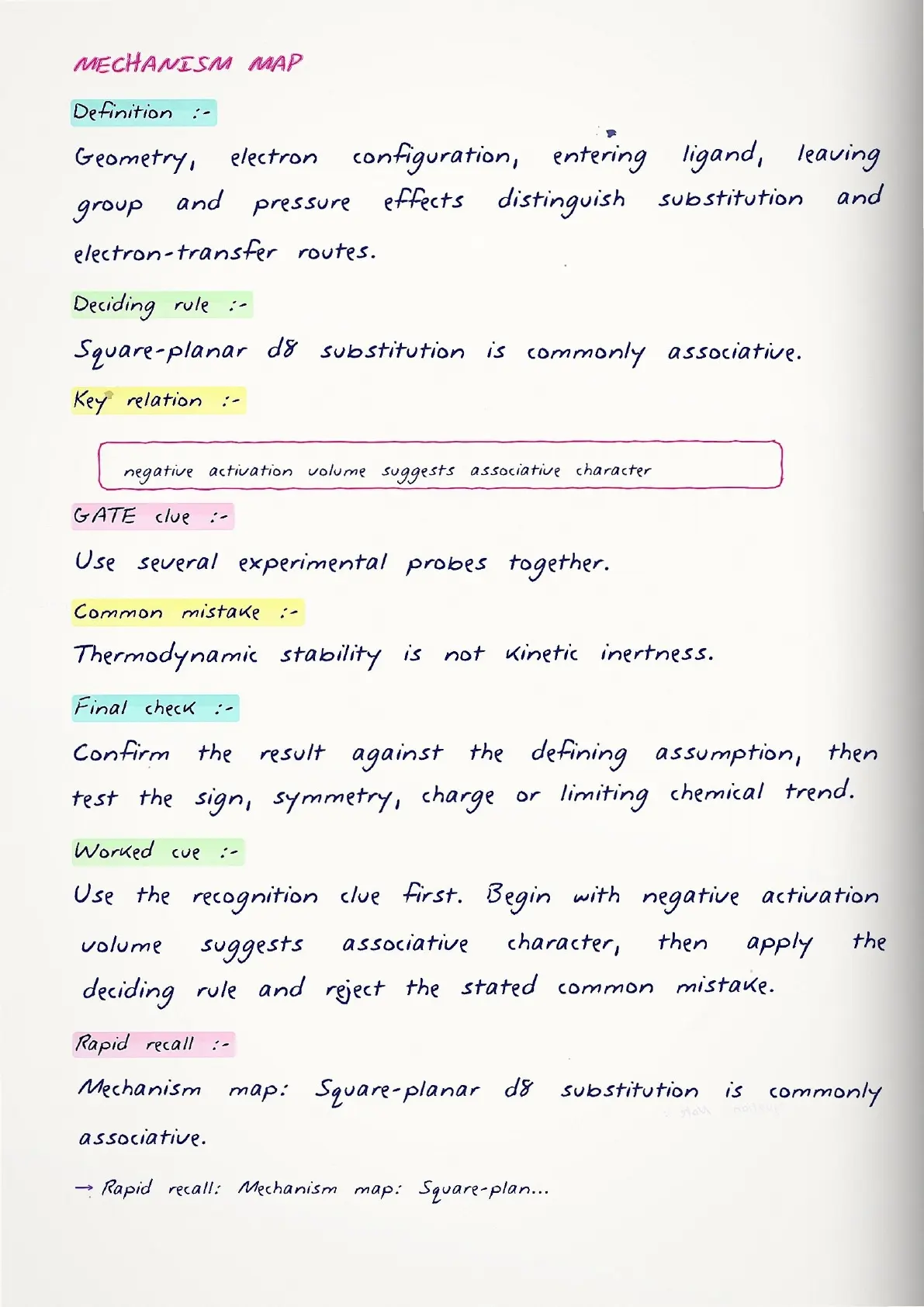
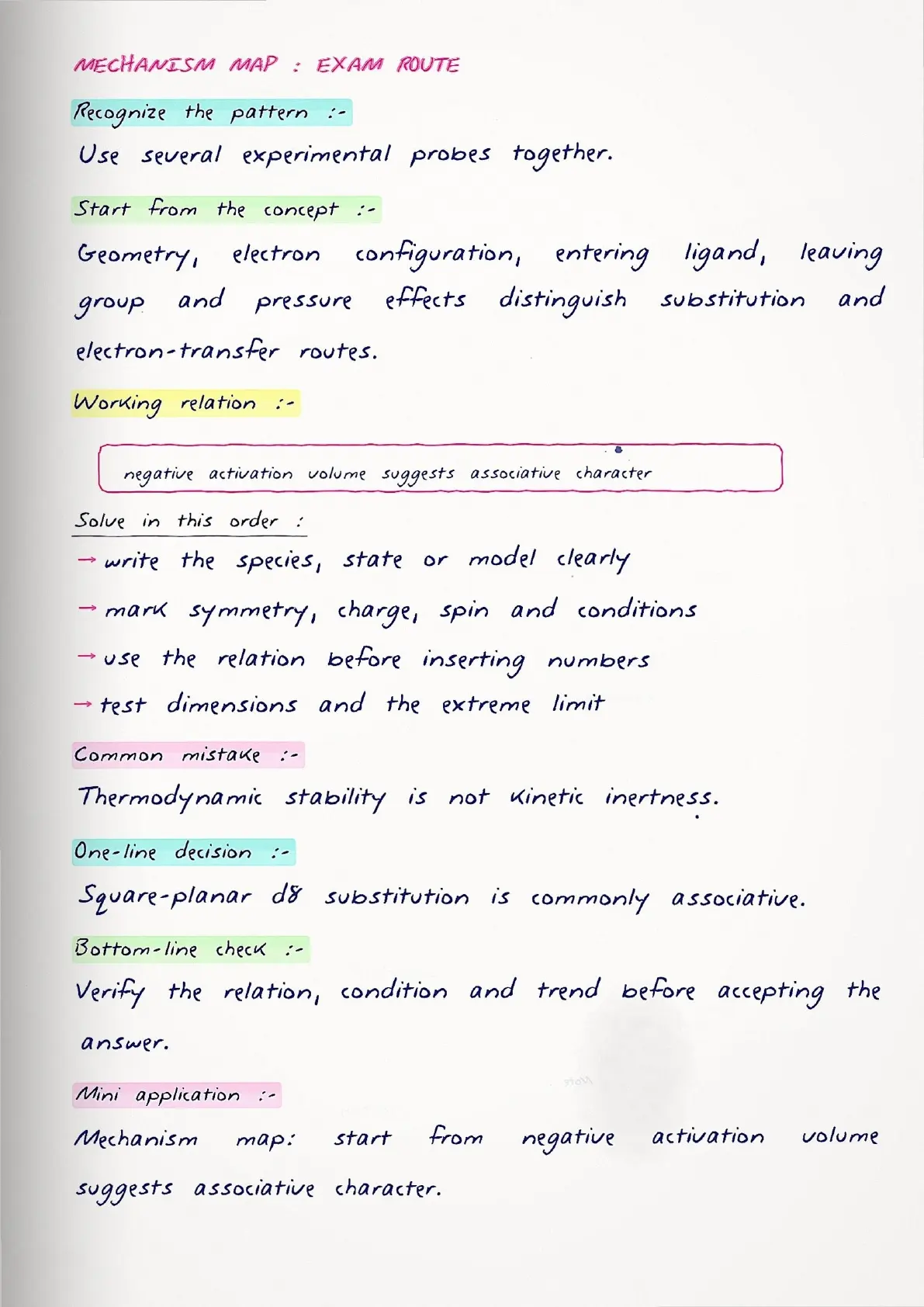
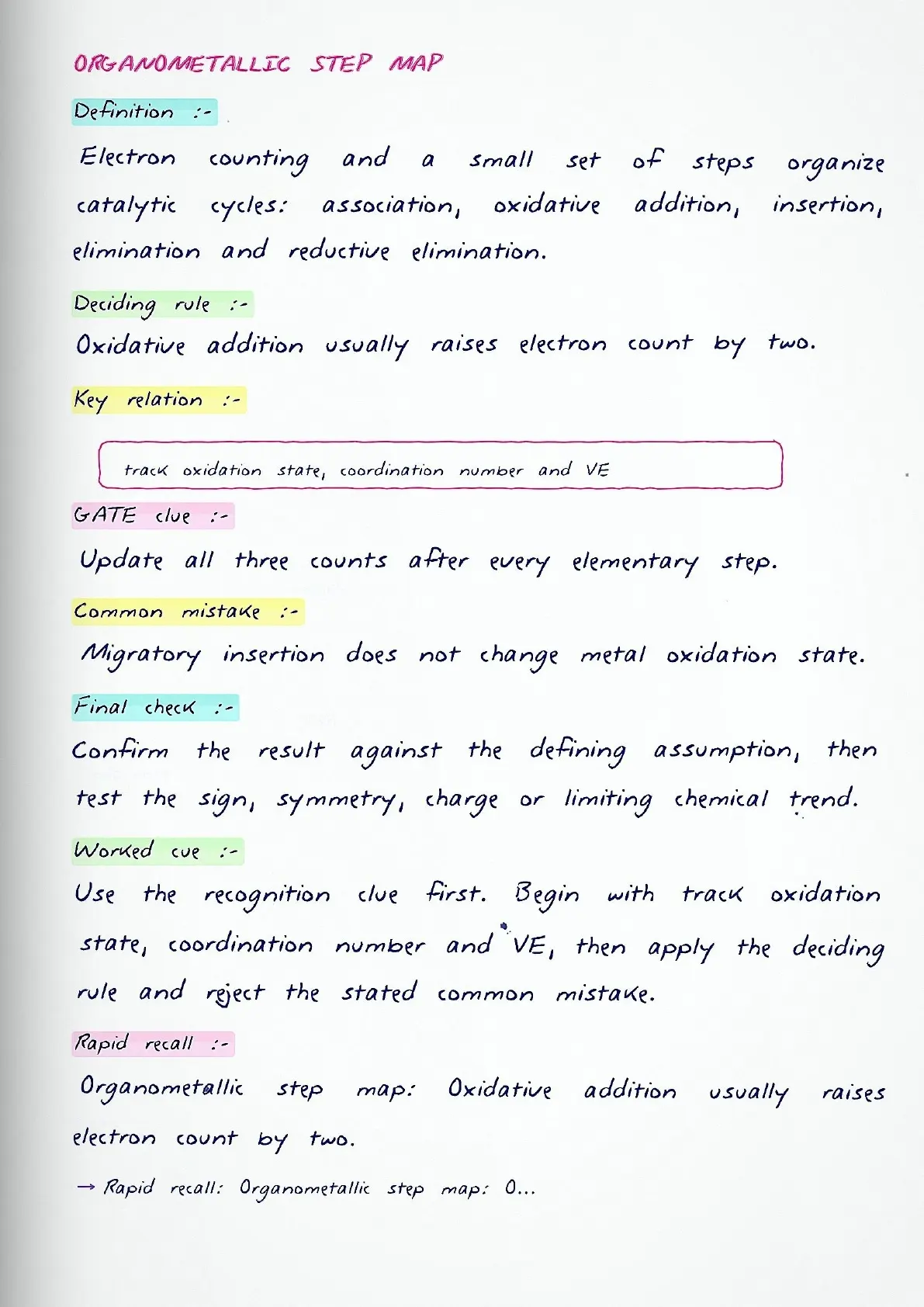
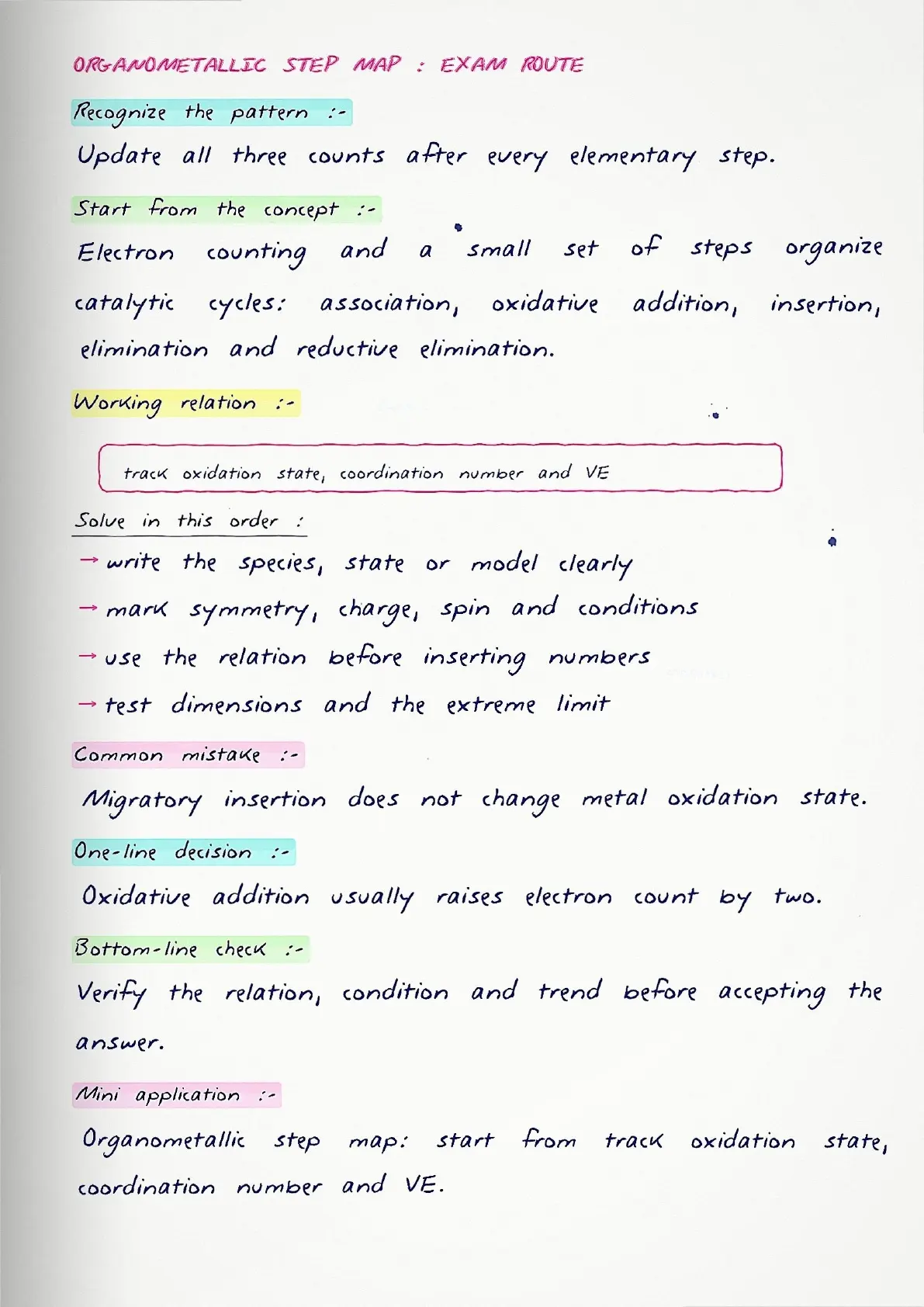
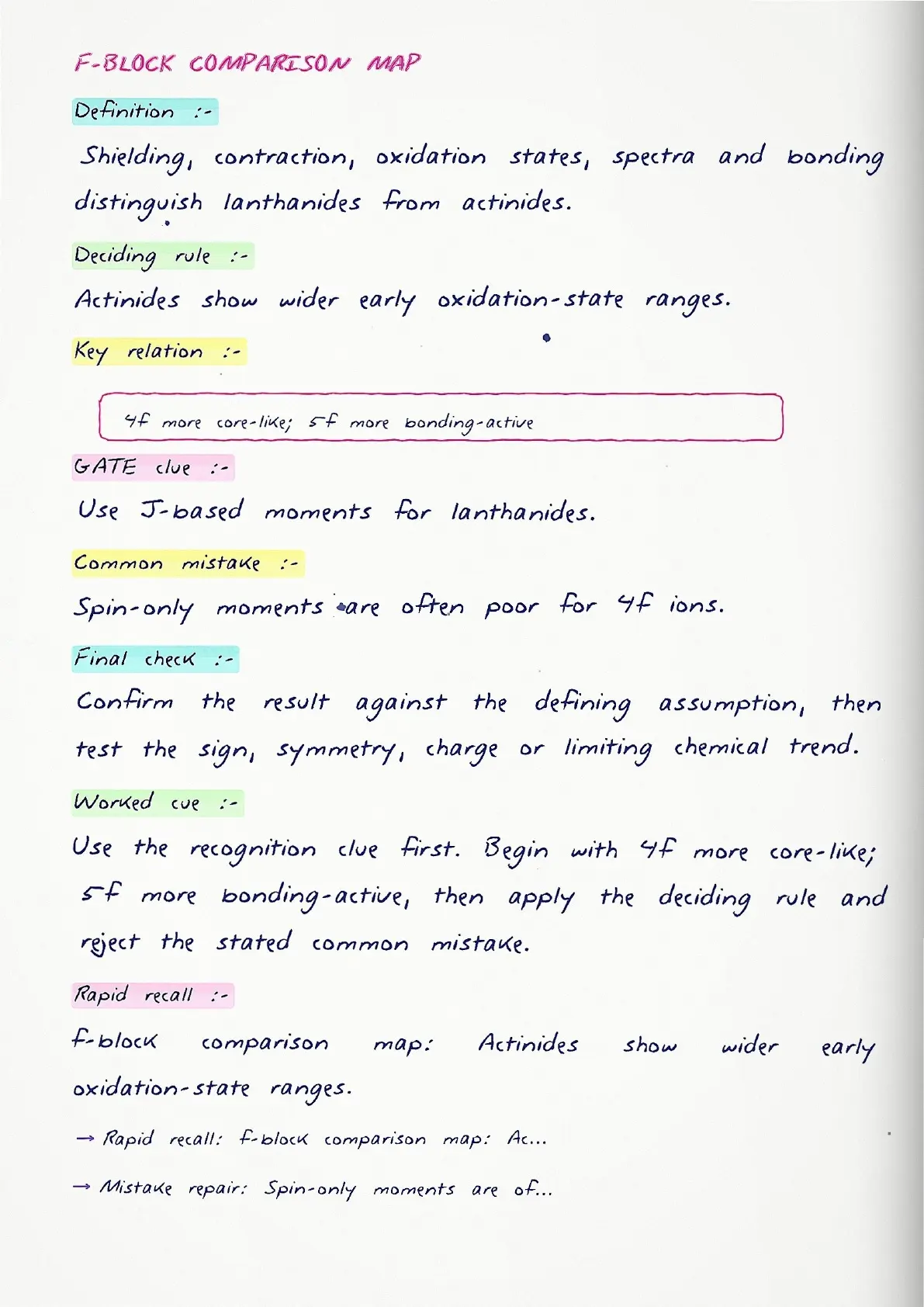
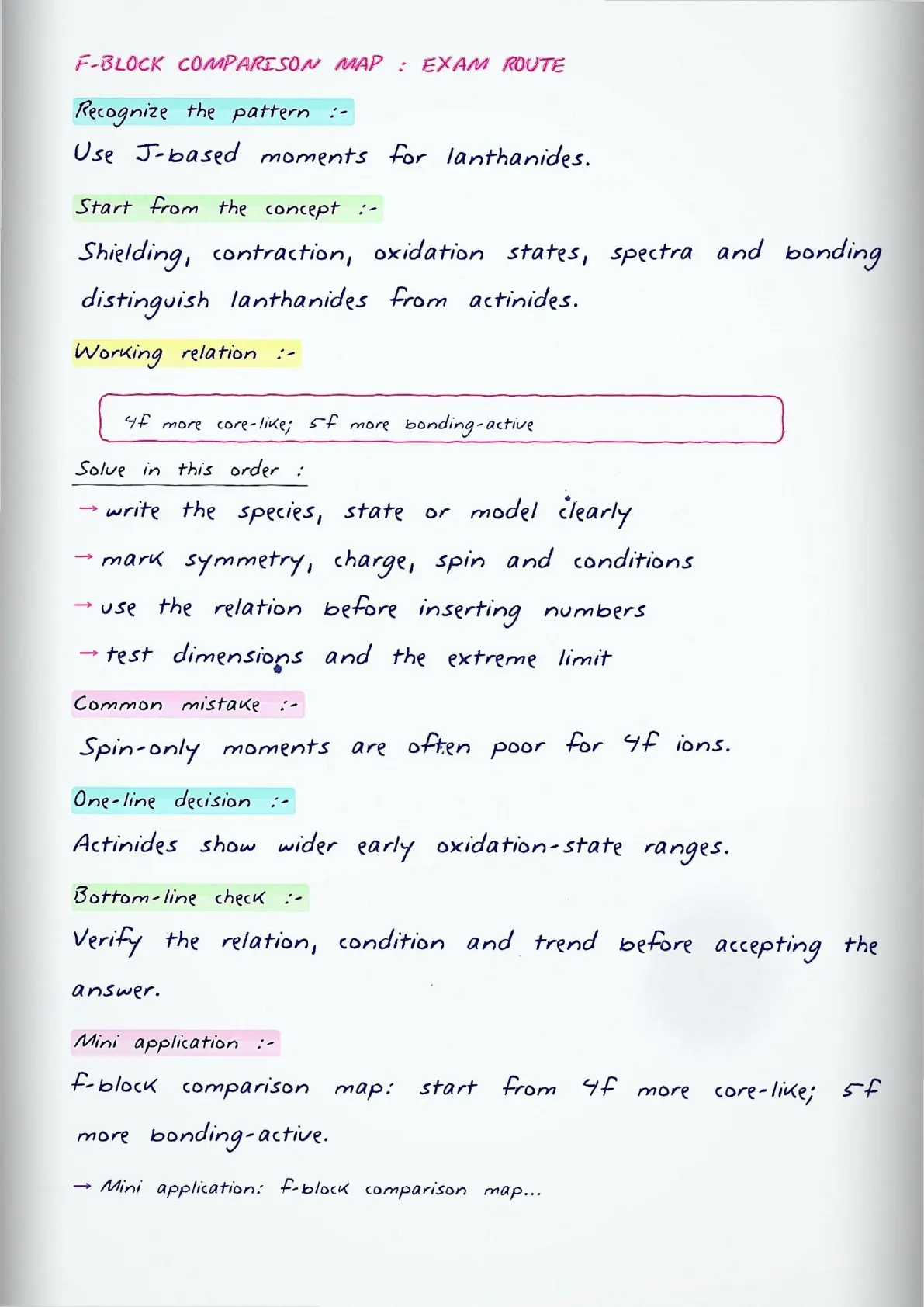
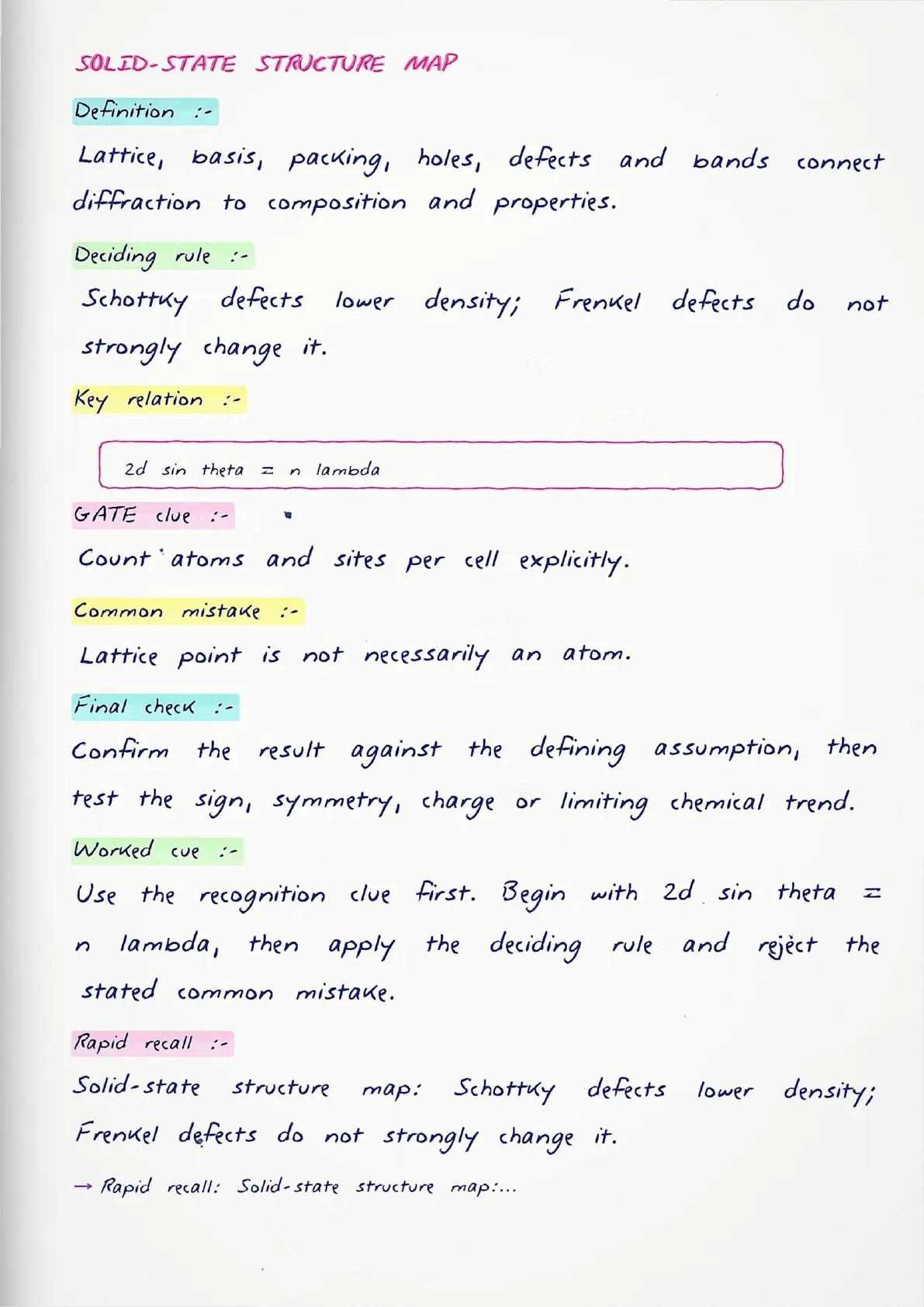
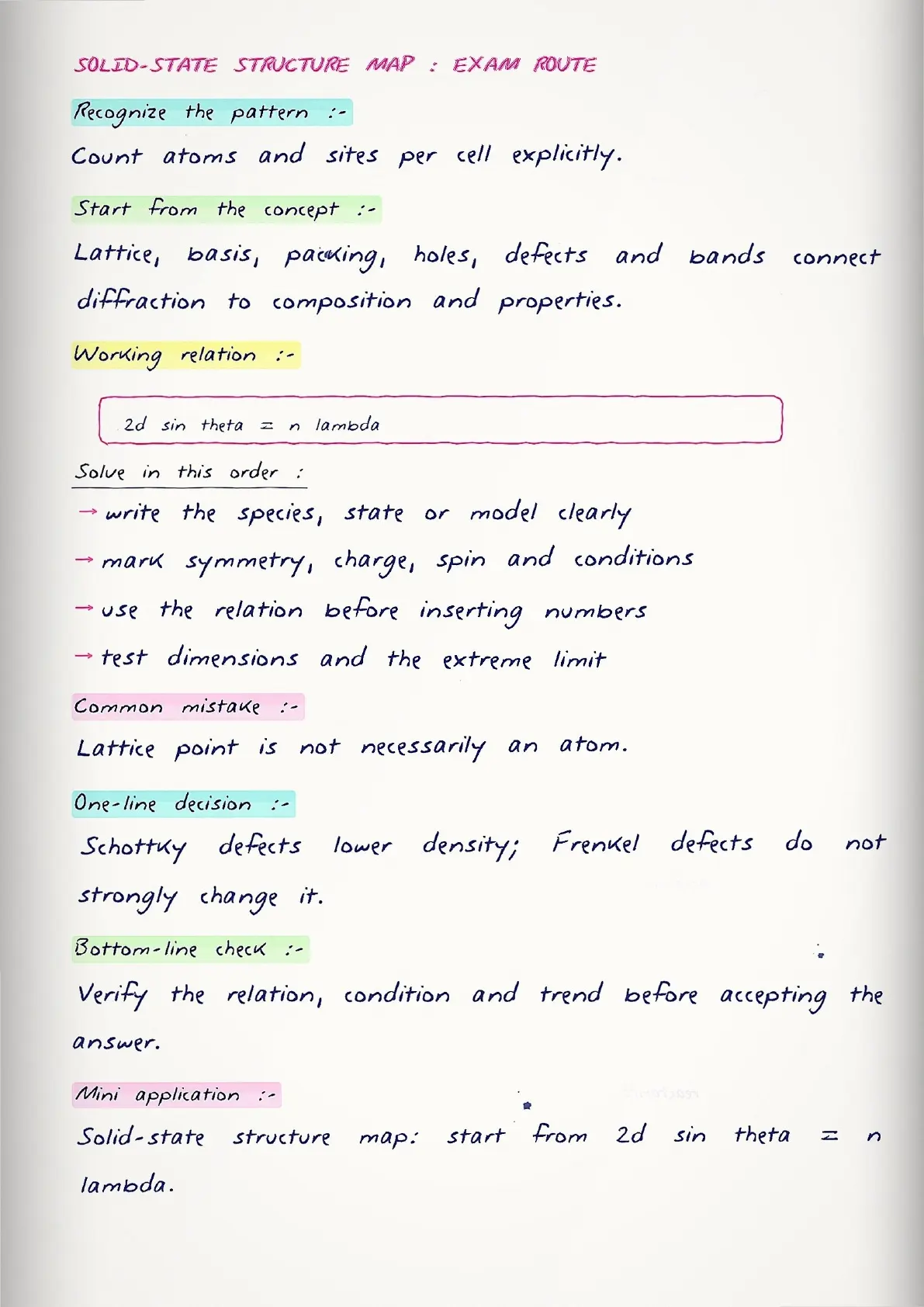
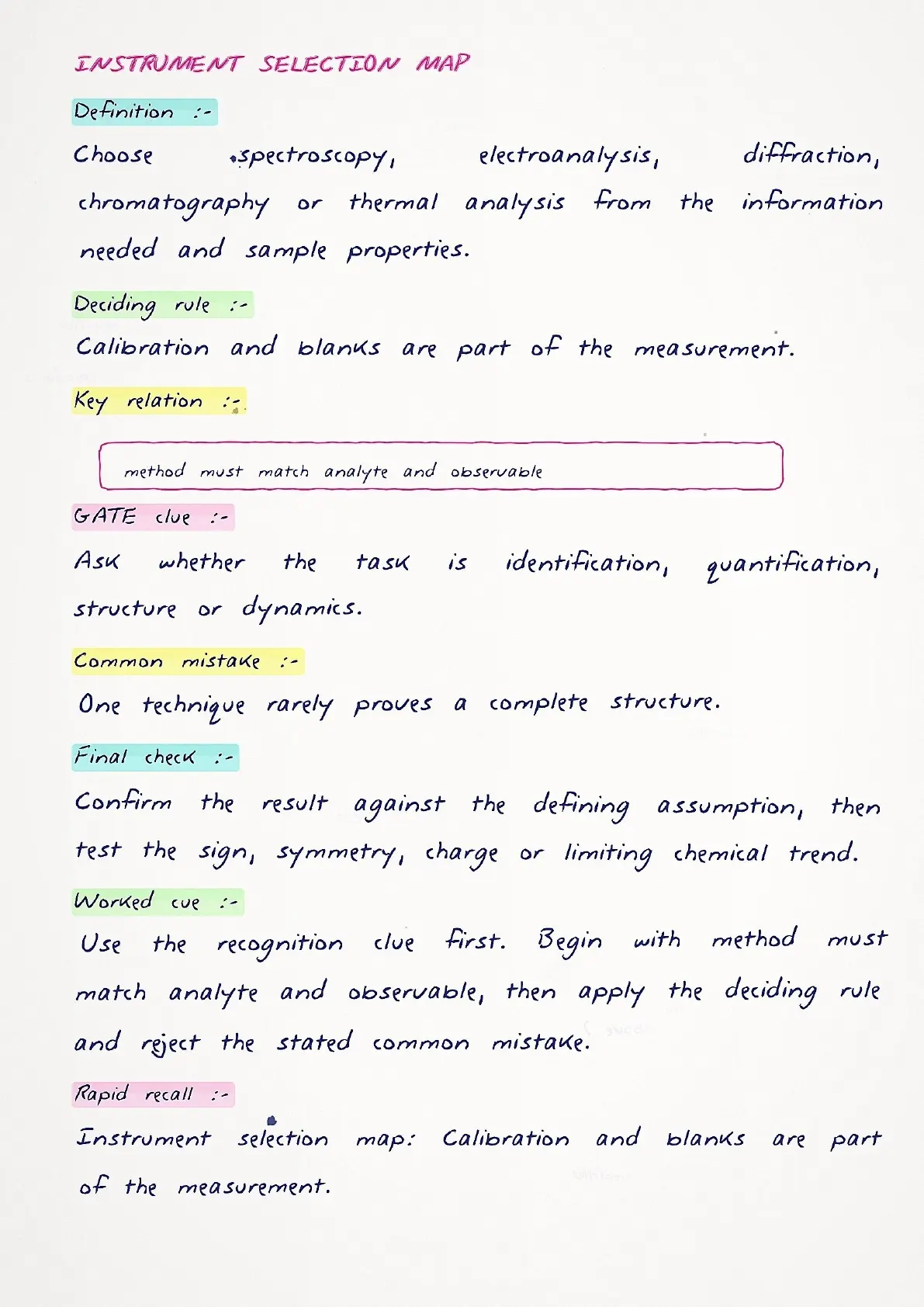
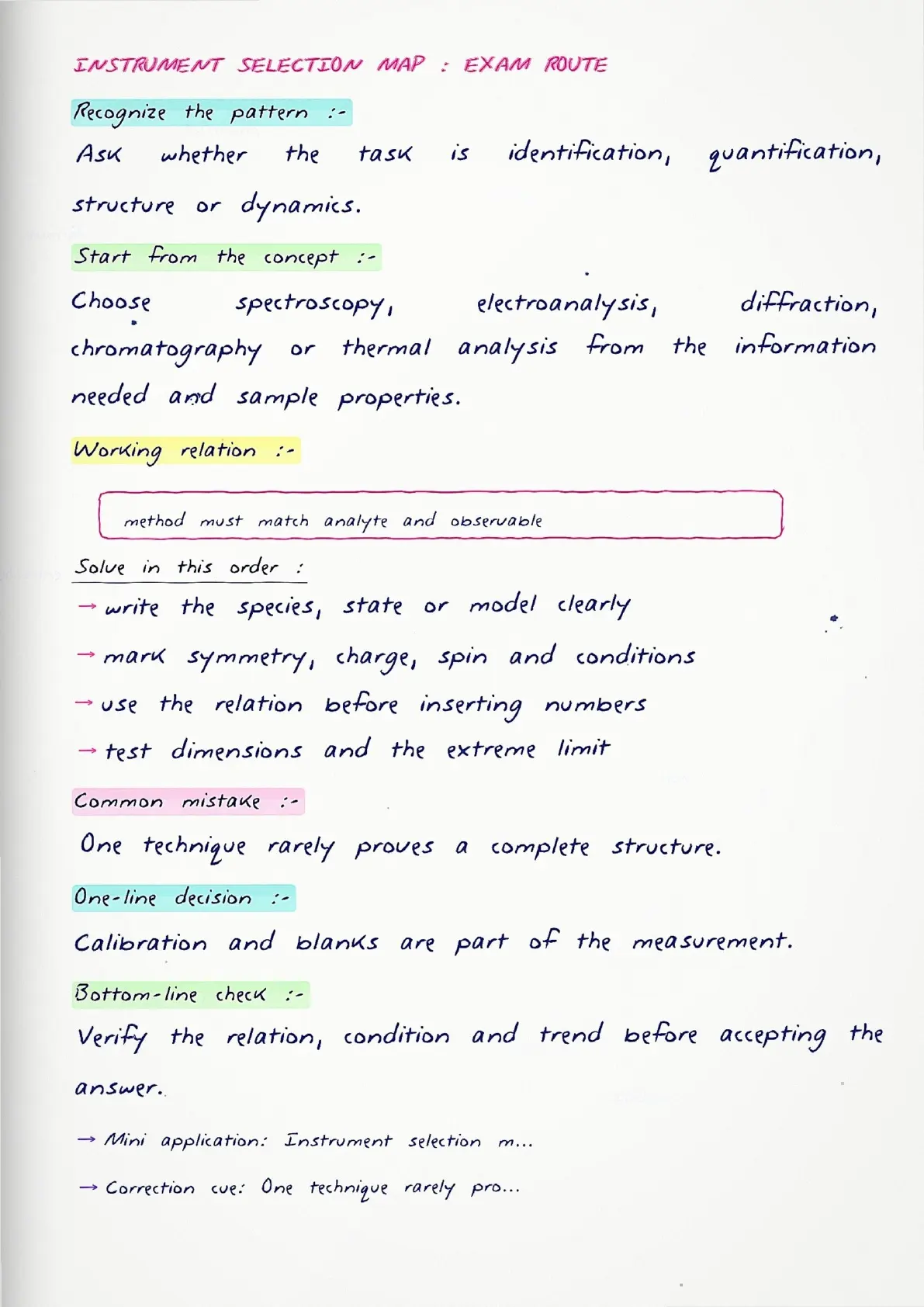
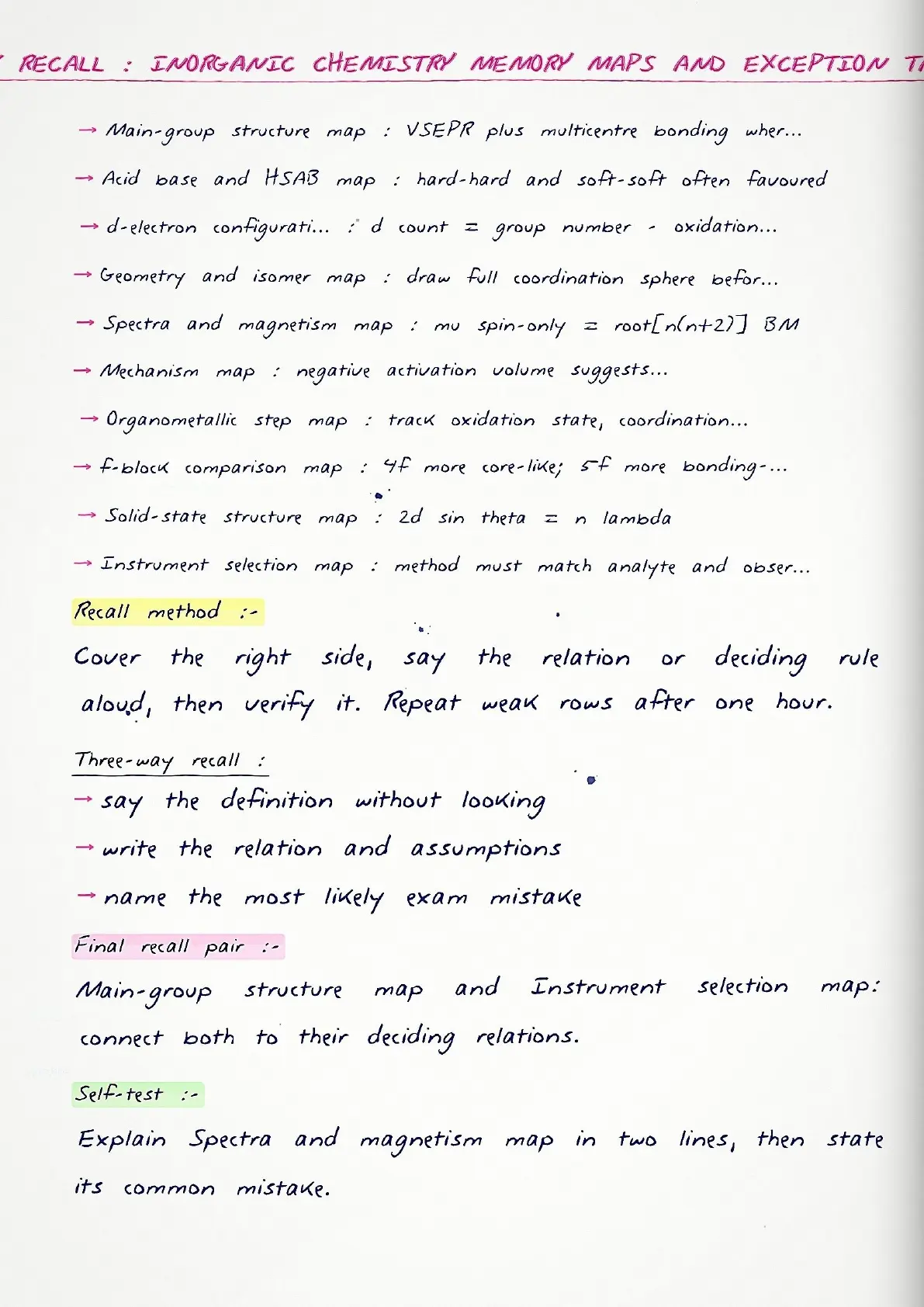
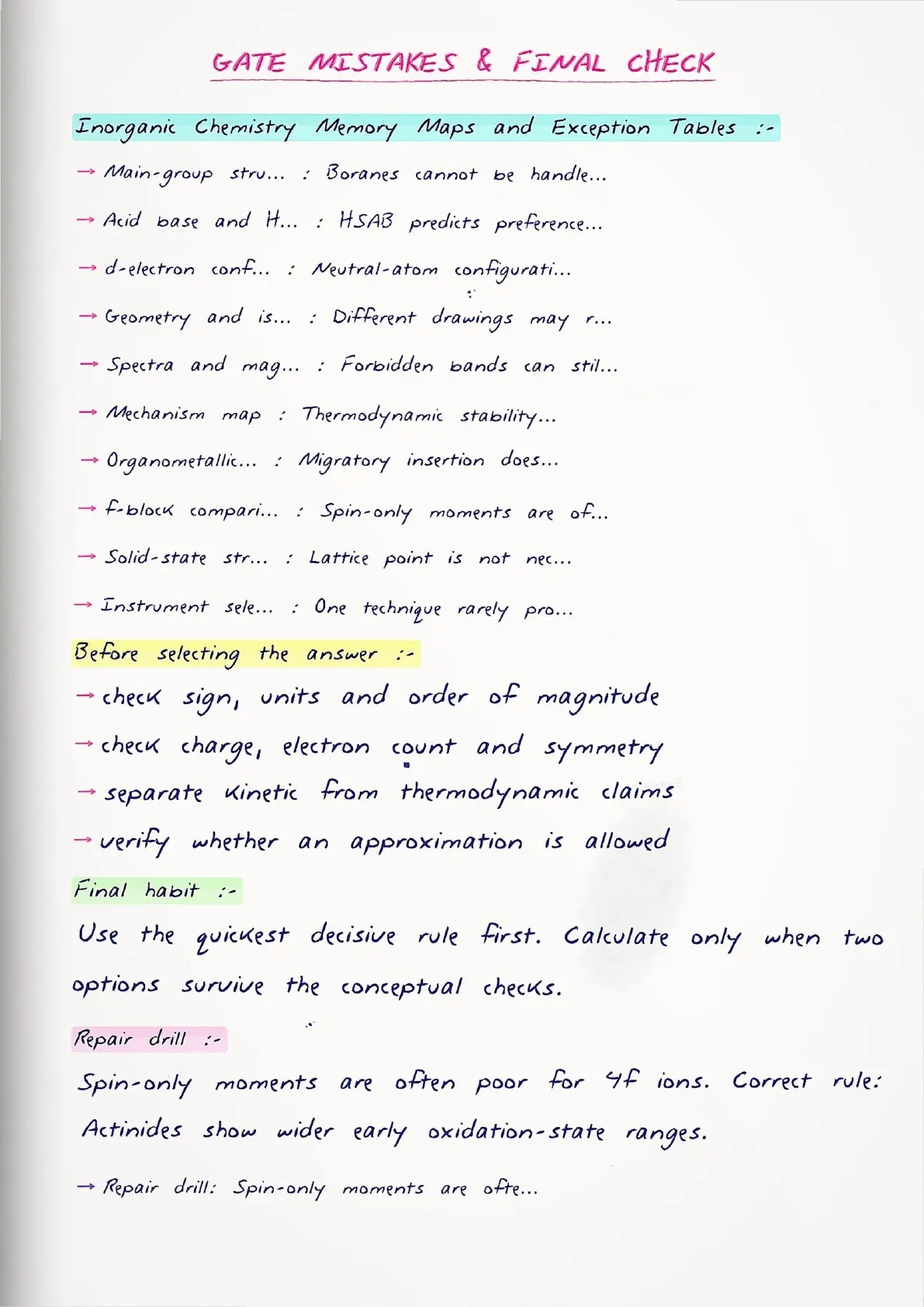
The pages carry hand-drawn memory maps that branch across main group, coordination, and organometallic chemistry, plus colour-coded exception tables for the cases that do not follow the trend. A compact quick-revision sheet holds the colour and magnetic data, and every entry is explained in short steps so you know why the exception happens.
- Whole Inorganic Chemistry section in one map-based PDF, ready for last-day recall.
- Key trends and reactions per subtopic, with the exceptions marked clearly.
- Hand-drawn memory maps and a revision sheet for fast last-day revision.
What These GATE Inorganic Memory Maps Cover
These notes turn the full Inorganic Chemistry section into a few visual maps and tables you can revise quickly. Each map links a group of ideas, and each table lists the odd cases that students often forget. The aim is simple recall, so nothing important from the section is left out.
- Periodic trends across periods and groups, shown as one clear map.
- Exception tables for the cases that break the normal trend.
- Colour and magnetic data for common ions, set out for quick lookup.
- A revision sheet that gathers every map and table in one place.
GATE Inorganic Memory Maps Quick Revision
Source: GATE & SET IFAS: Biotechnology, Life Science & EY on YouTube
Topics Covered in GATE Inorganic Memory Maps
The maps consolidate every part of the Inorganic Chemistry section, so one page can jog your memory of a whole topic. They move from periodic behaviour to bonding, coordination, and organometallic ideas. The list below shows what each map and table brings together.
- Periodic trends, covering size, ionisation energy, and electronegativity.
- Exceptions to the trends, such as odd stable configurations and anomalies.
- Colour and magnetic data for transition metal ions and complexes.
- Reaction summaries for main group and transition metal chemistry.
- Memory maps for coordination chemistry, including geometry and isomerism.
- Organometallic chemistry highlights, with the key rules in short form.
How the Notes Are Organised
The maps run from broad periodic ideas to the more specific coordination and organometallic topics, so you can read them in order or open a single map for a quick recap. Each exception table sits next to the map it belongs to, which keeps the rule and its odd cases side by side.
Because each map stands on its own, you can match it to whatever you are revising that day and check only the table you need before an attempt.
How GATE Inorganic Memory Maps Links to Other Topics
These maps are a last-day summary of the full Inorganic Chemistry section, so they draw on several topics you have already studied. The notes point out where each map connects, which helps the section feel like one linked whole.
- Periodic trends support bonding and the behaviour of main group elements.
- Colour and magnetic data tie back to coordination chemistry and crystal field ideas.
- Reaction summaries pull from main group and transition metal chemistry.
- Memory maps across organometallic chemistry link electron counting to structure.
Important Topics in GATE Inorganic Memory Maps
A few maps carry more weight because they cover the parts of Inorganic Chemistry that come up most often. If your time is short, revise these first so you can recall the trend and its exceptions without a slip.
- Periodic trends and their exceptions, the base for many questions.
- Colour and magnetic data for transition metal complexes.
- Coordination chemistry maps for geometry, isomerism, and stability.
- Reaction summaries that group the most-asked main group reactions.
How to Prepare GATE Inorganic Memory Maps with Handwritten Notes
These maps work best as a final layer over topics you have already learned. Read one map, glance at its exception table, then recall it from memory before you move on. Return to the sheet before mock tests to refresh the whole section fast.
- First read: go through every map once to refresh the section.
- Second pass: focus on trends, exceptions, and coordination data.
- Test yourself: cover a map and recall it, then check the table.
- Final days: revise the full sheet and the exception tables together.
Why These Notes Help You Score Better
Memory maps are quick to scan and easy to recall under exam pressure, which is why they help in the final weeks. A single visual page is faster to revise than a full chapter, and each exception table sits right beside its trend, so the odd cases stay clear for students when the question depends on them.
GATE Chemistry Inorganic Memory Maps Handwritten Notes FAQs
Ques. What do these GATE Chemistry Inorganic Memory Maps notes contain?
Ans. They contain hand-drawn memory maps and colour-coded exception tables that pull the whole Inorganic Chemistry section together, covering periodic trends, colour and magnetic data, and reaction summaries.
Ques. Are these notes a full topic guide or a revision aid?
Ans. They are a revision aid. The maps and tables summarise Inorganic Chemistry for last-day recall, so use them alongside your main topic notes and practice.
Ques. Do the exception tables cover the cases that break the trends?
Ans. Yes. Each table lists the odd cases next to the trend it belongs to, such as unusual stable configurations and anomalies, so they are easy to recall in the exam.
Ques. Are these maps useful for last-minute revision?
Ans. Yes. The visual maps and the quick-revision sheet are made for fast recall of the full Inorganic Chemistry section in the days before the exam.



Comments