




Complete Last Minute Revision is your final-days resource for the whole GATE Chemistry paper. It is not a single chapter. Instead, it pulls the most important results from Physical Chemistry, Inorganic Chemistry, and Organic Chemistry into one place. These handwritten notes act as a last-minute recap, so you refresh the full syllabus fast before the exam. Every key trend, reaction, and formula is written in short, quick-to-scan pages.
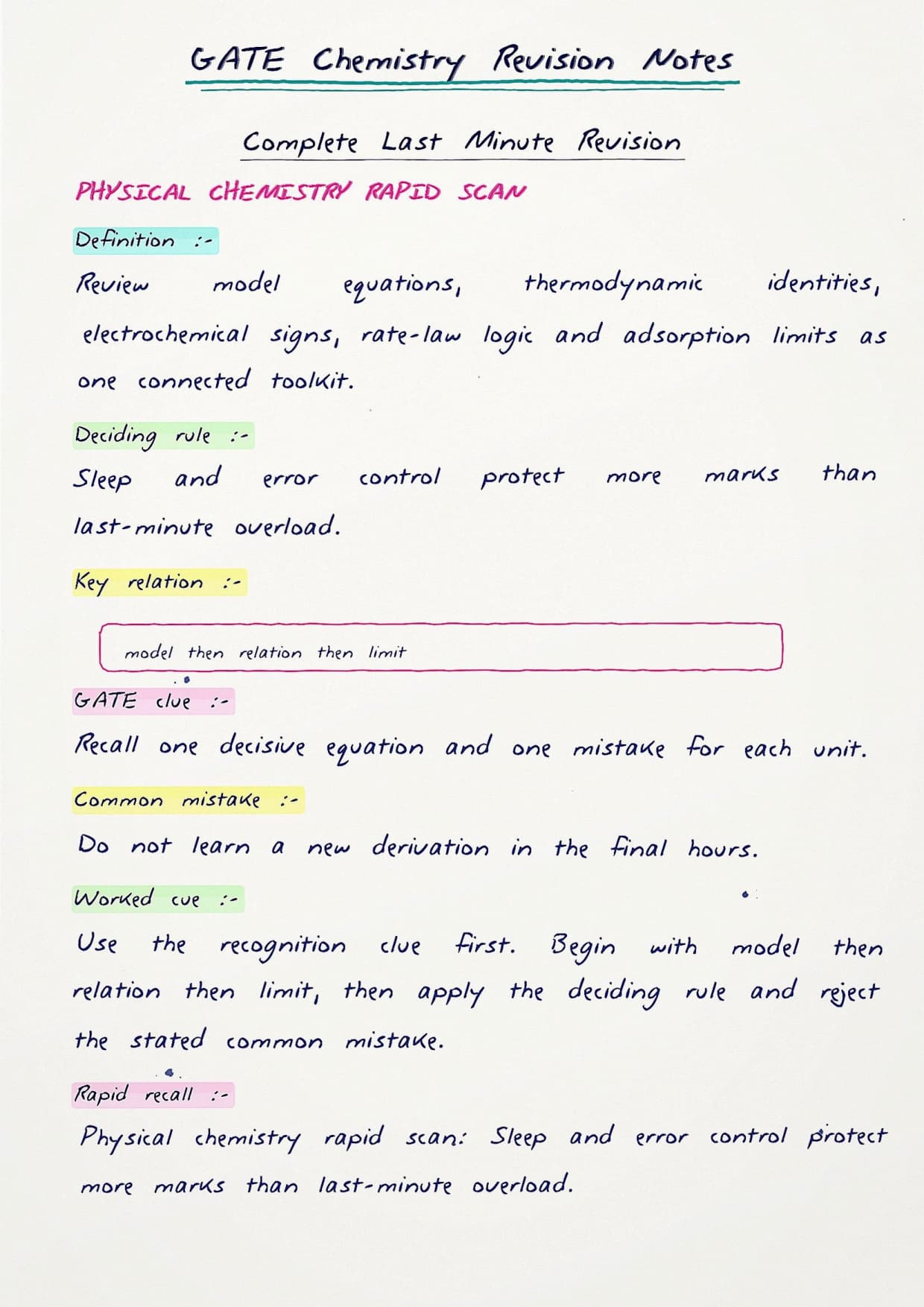
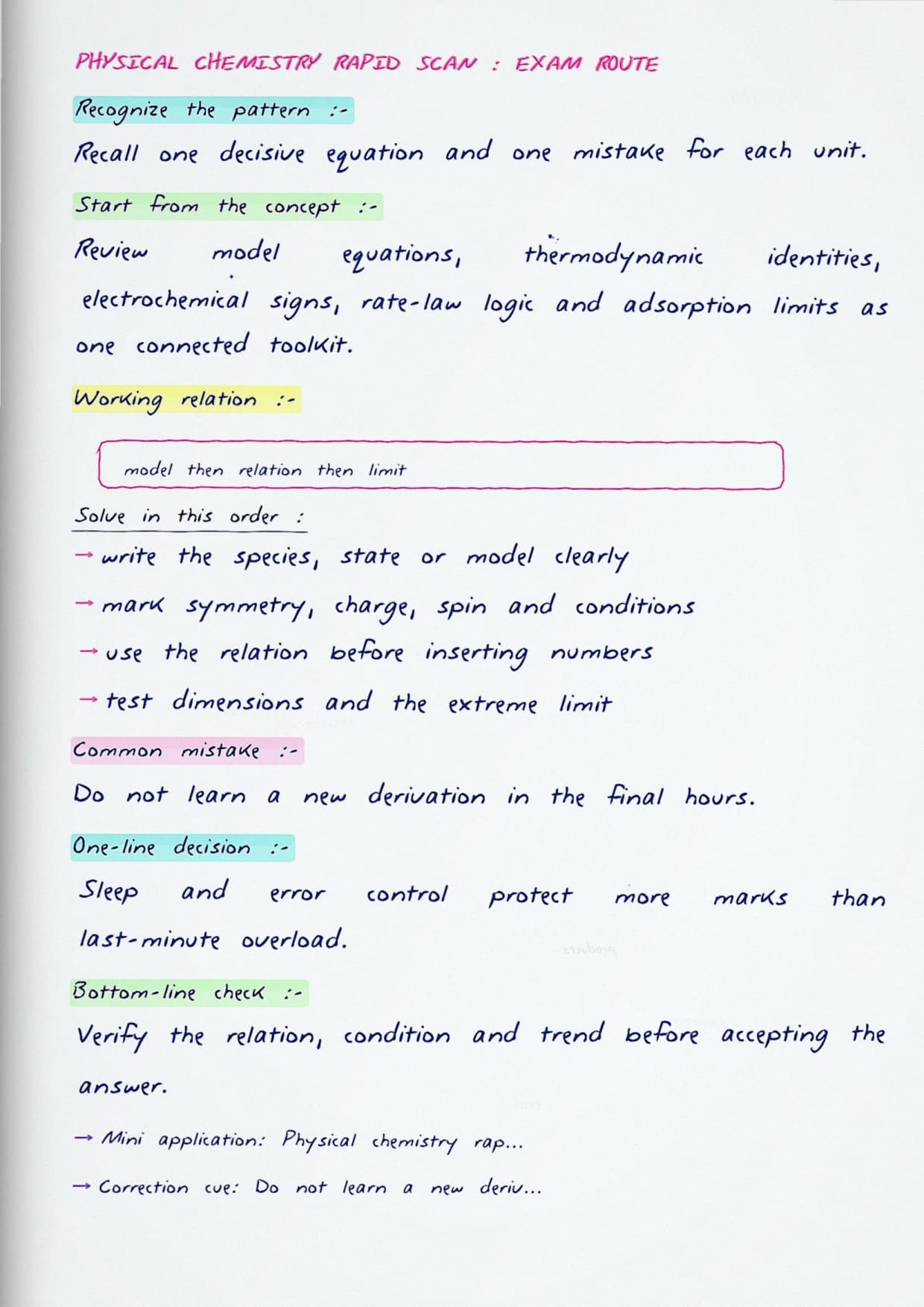
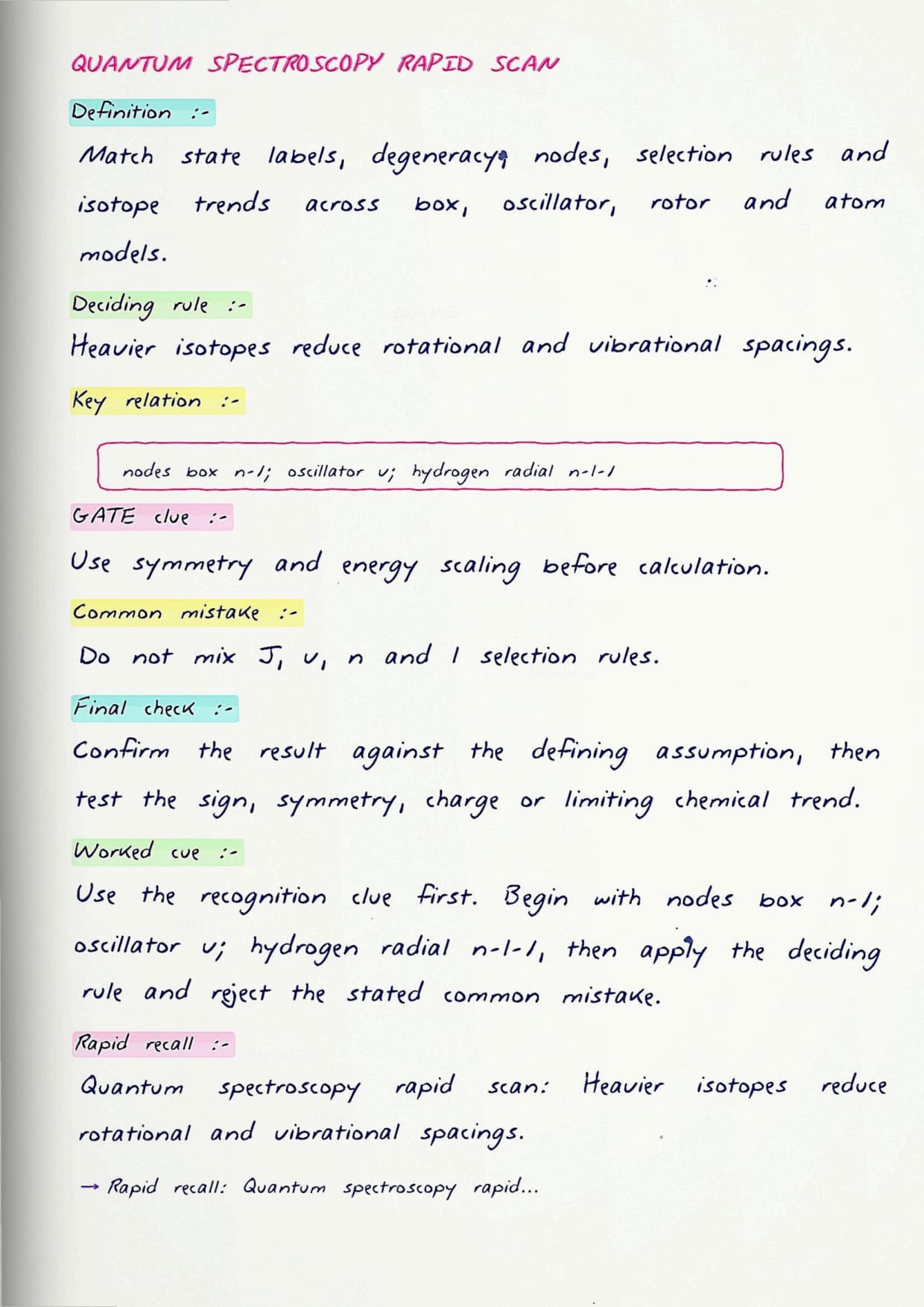
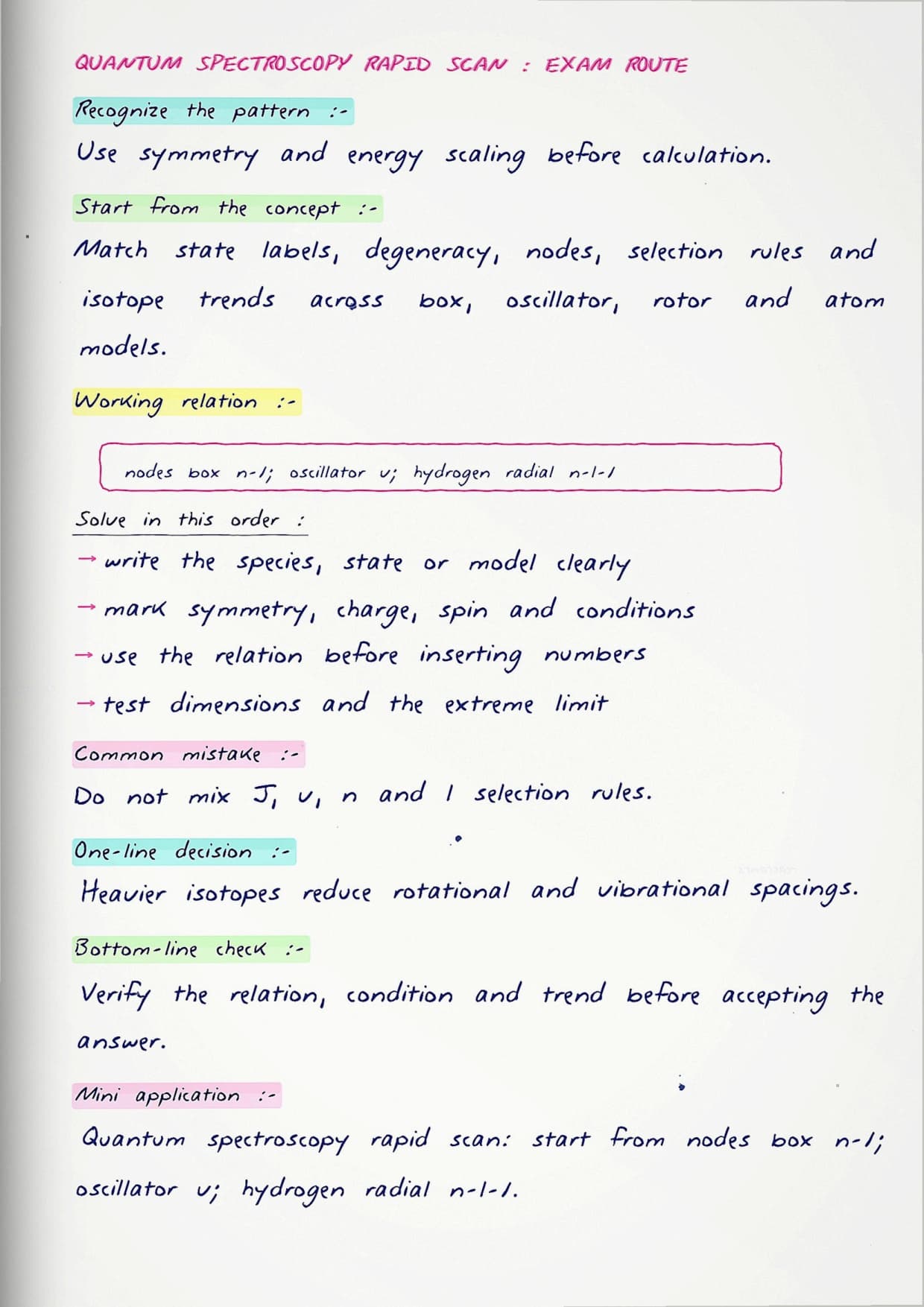
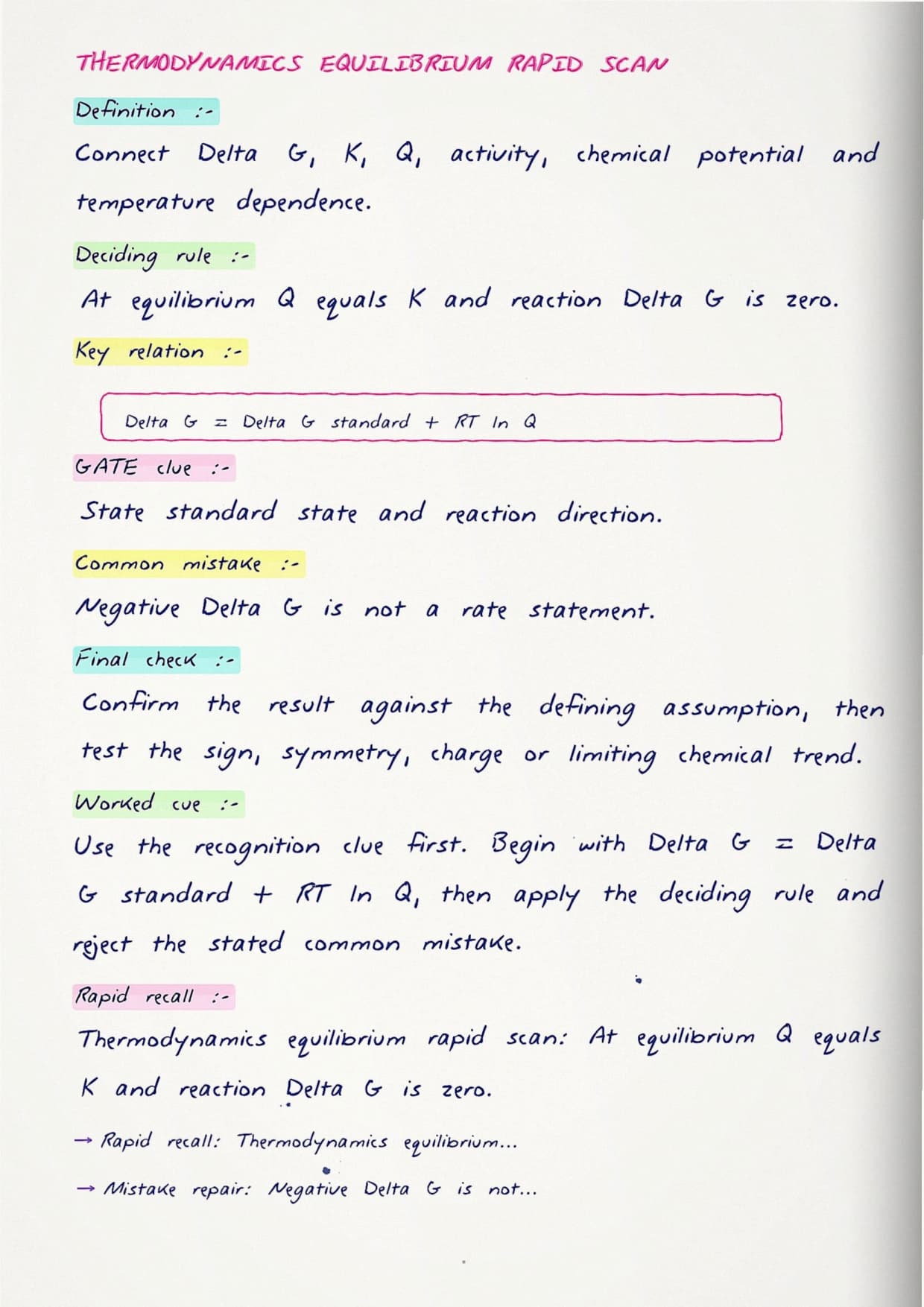
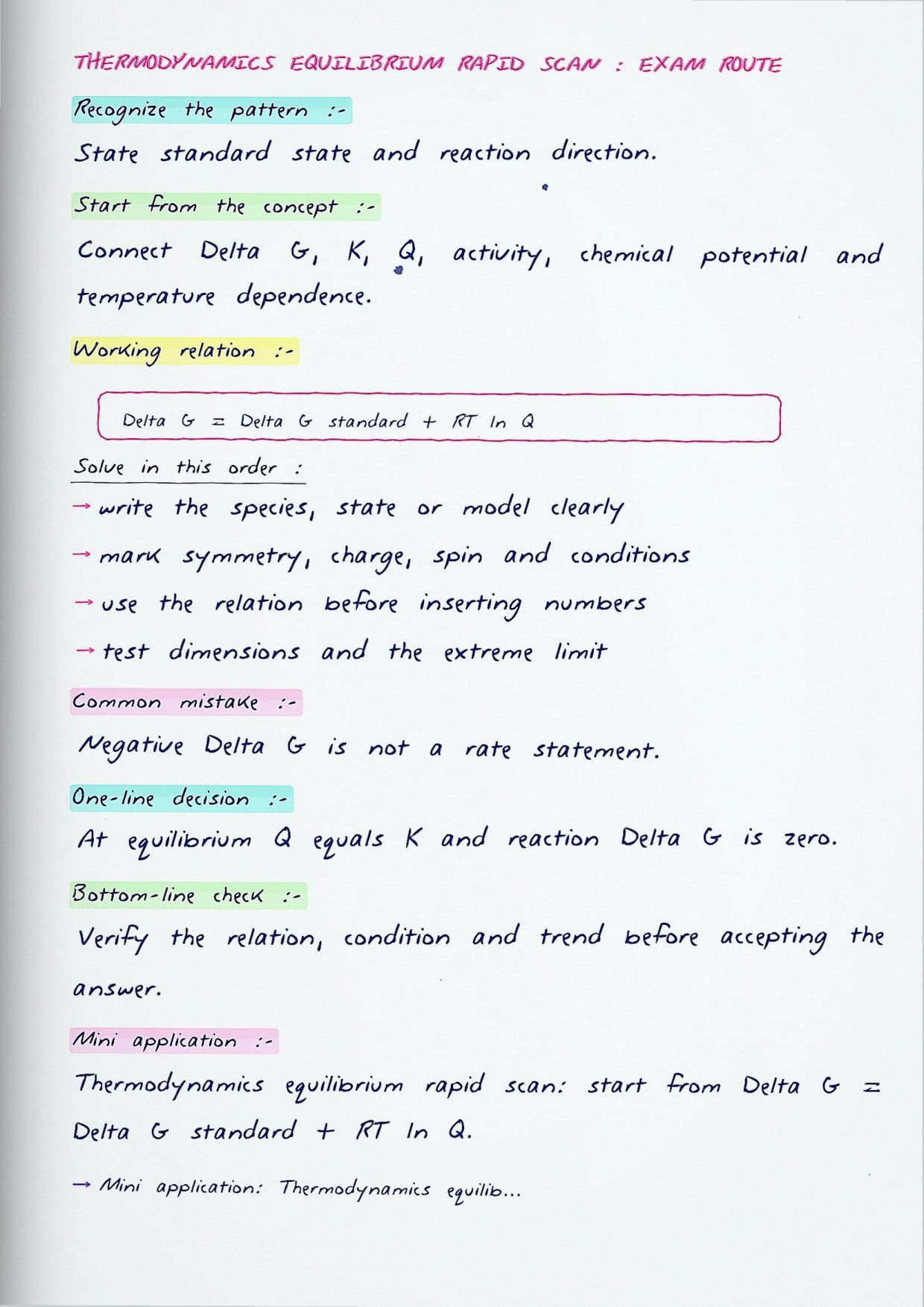
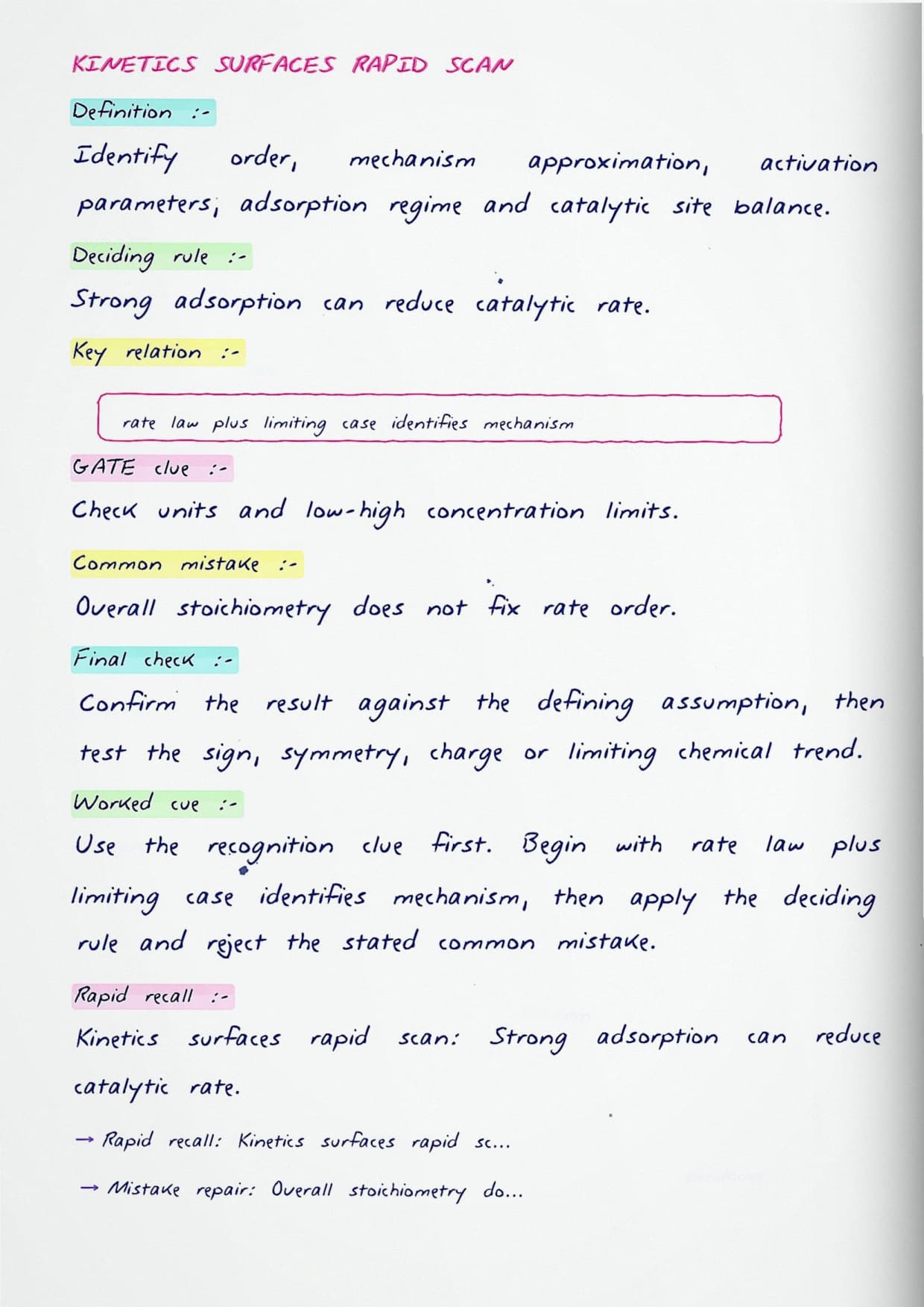
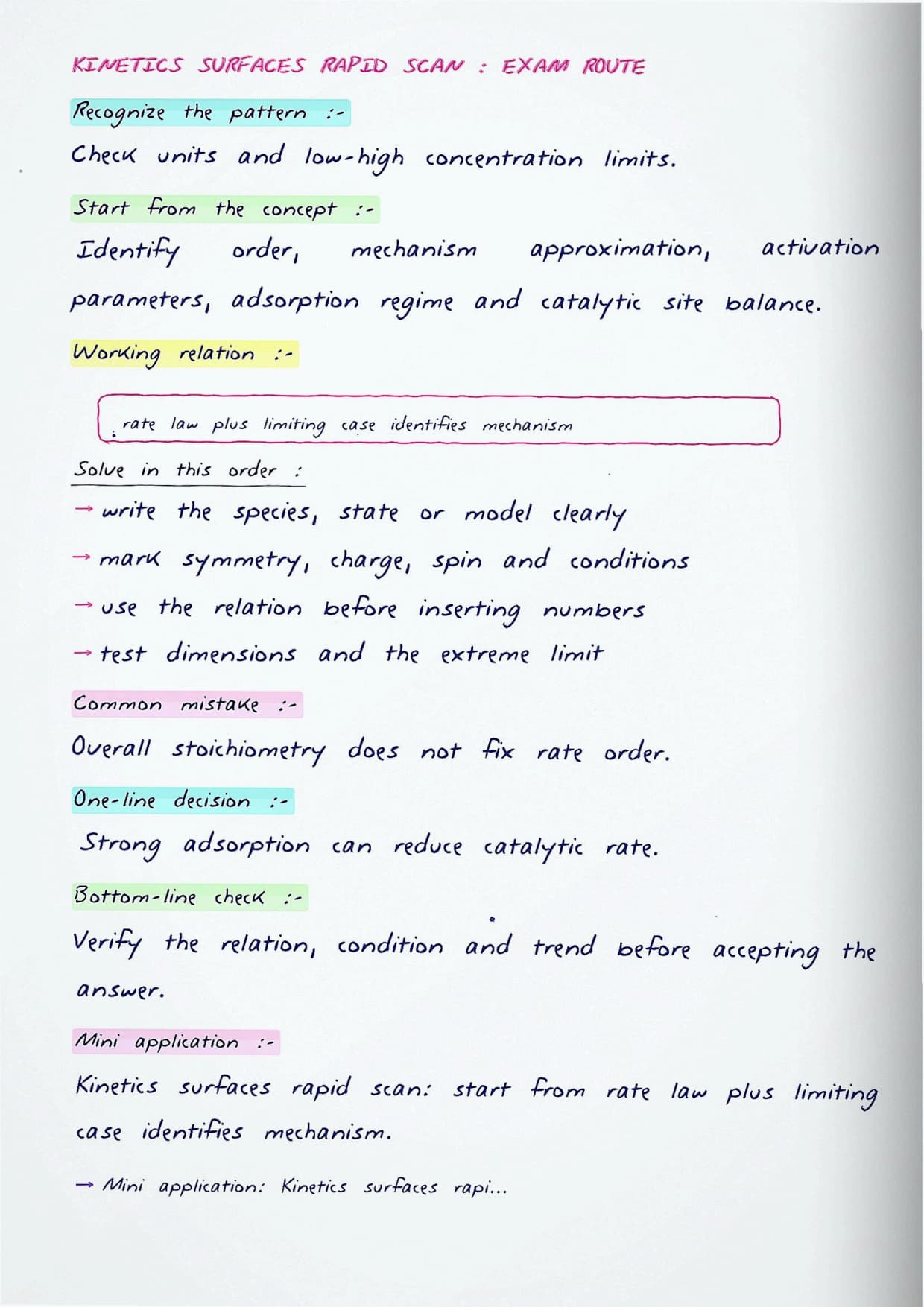
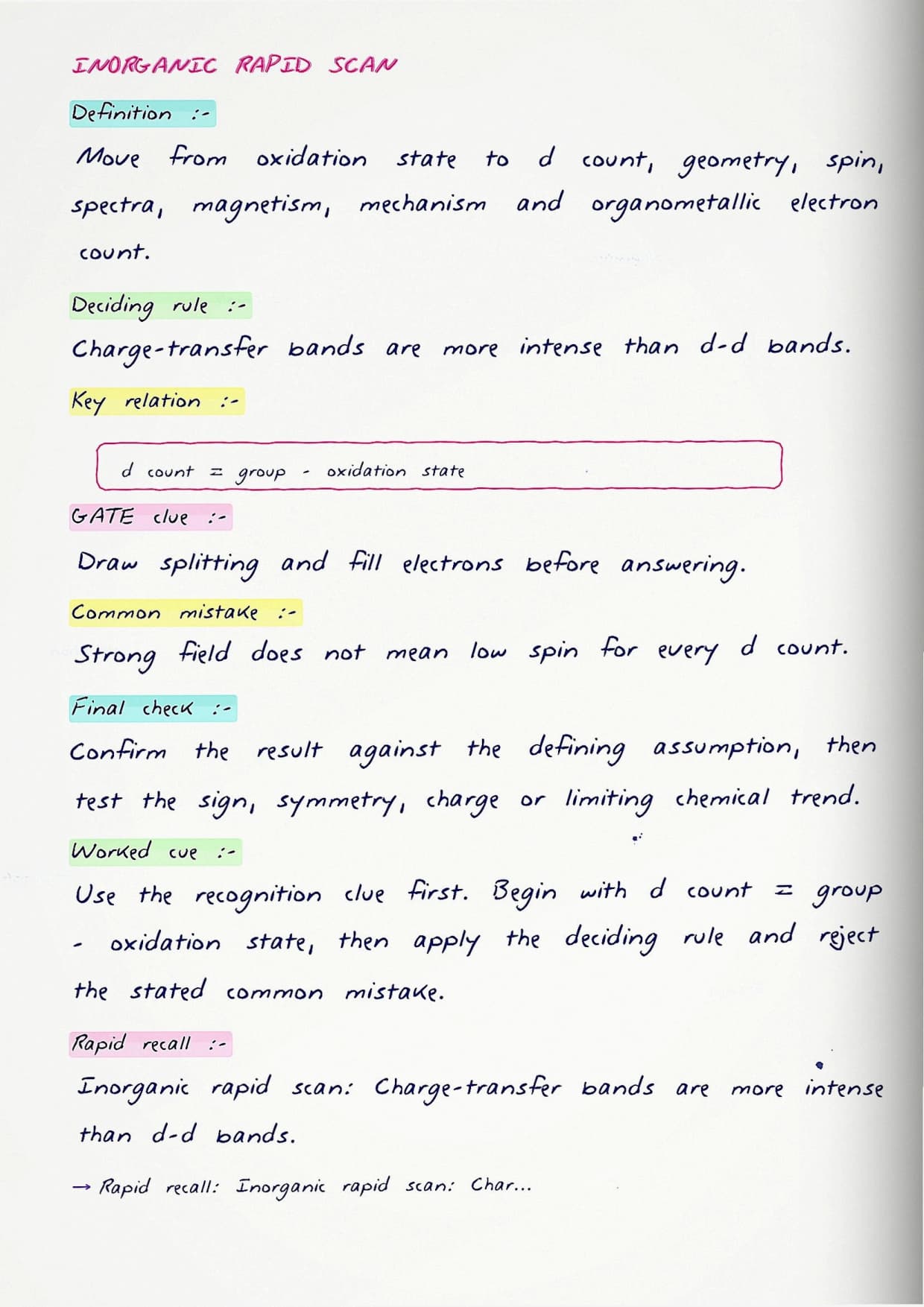
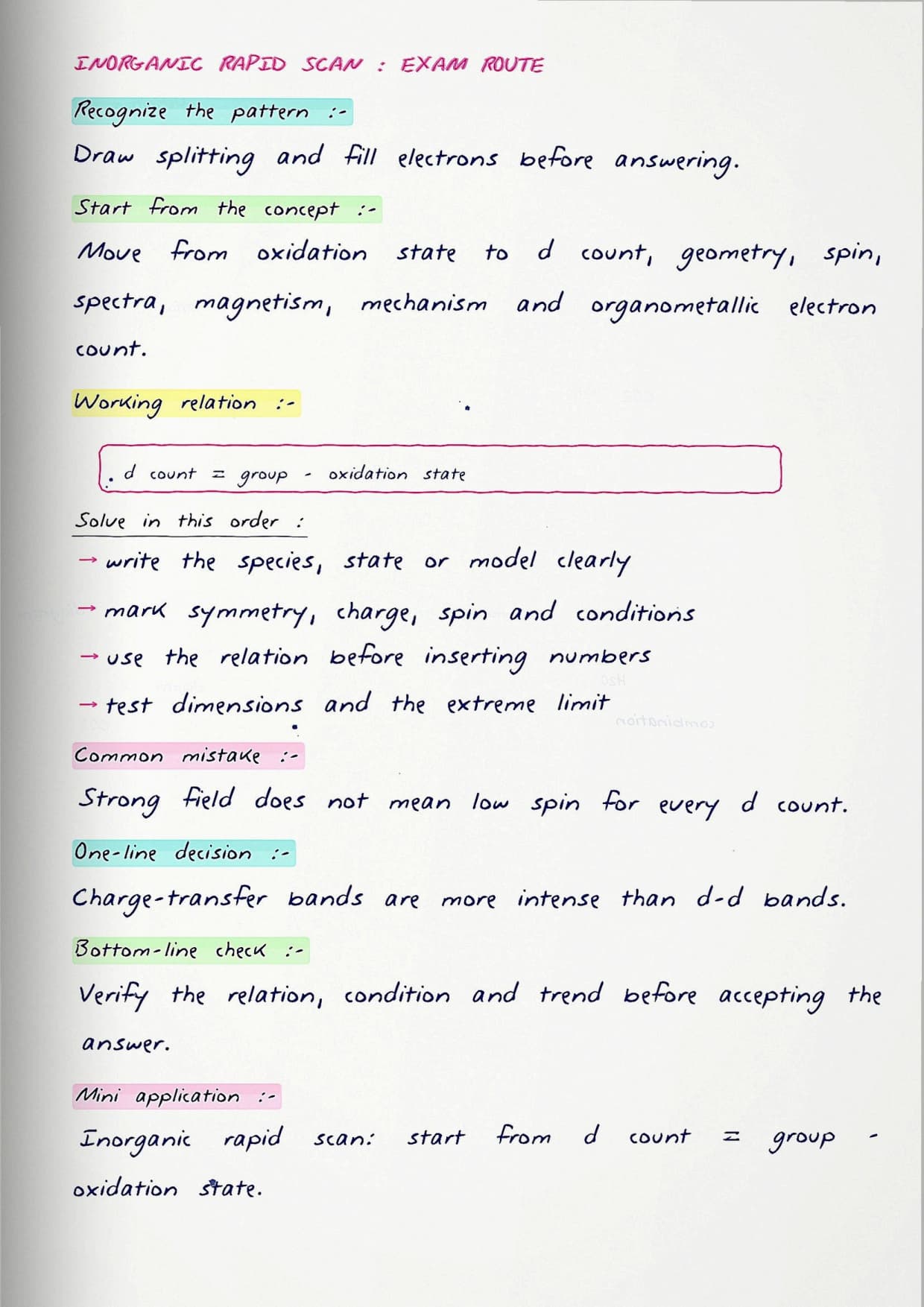
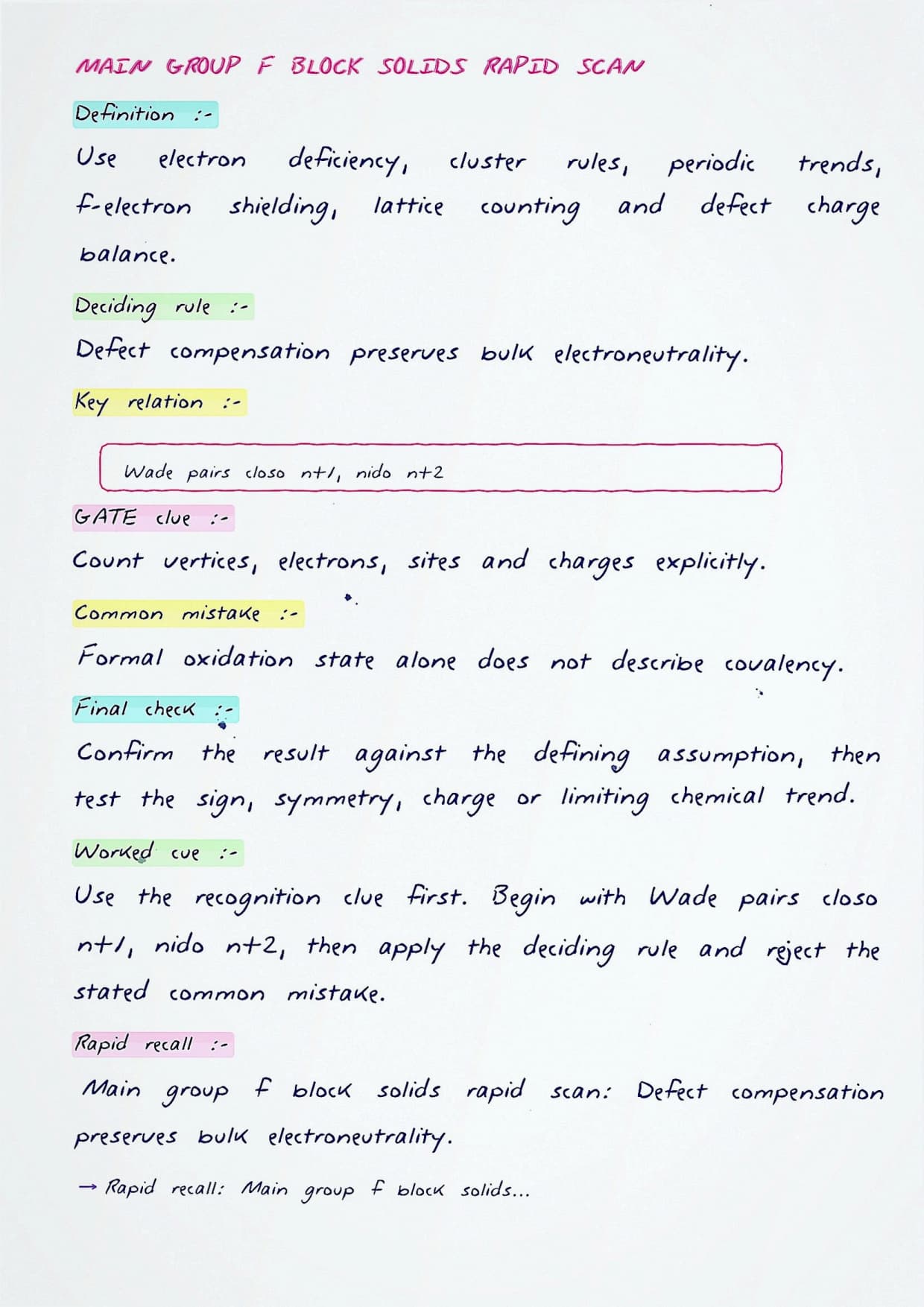
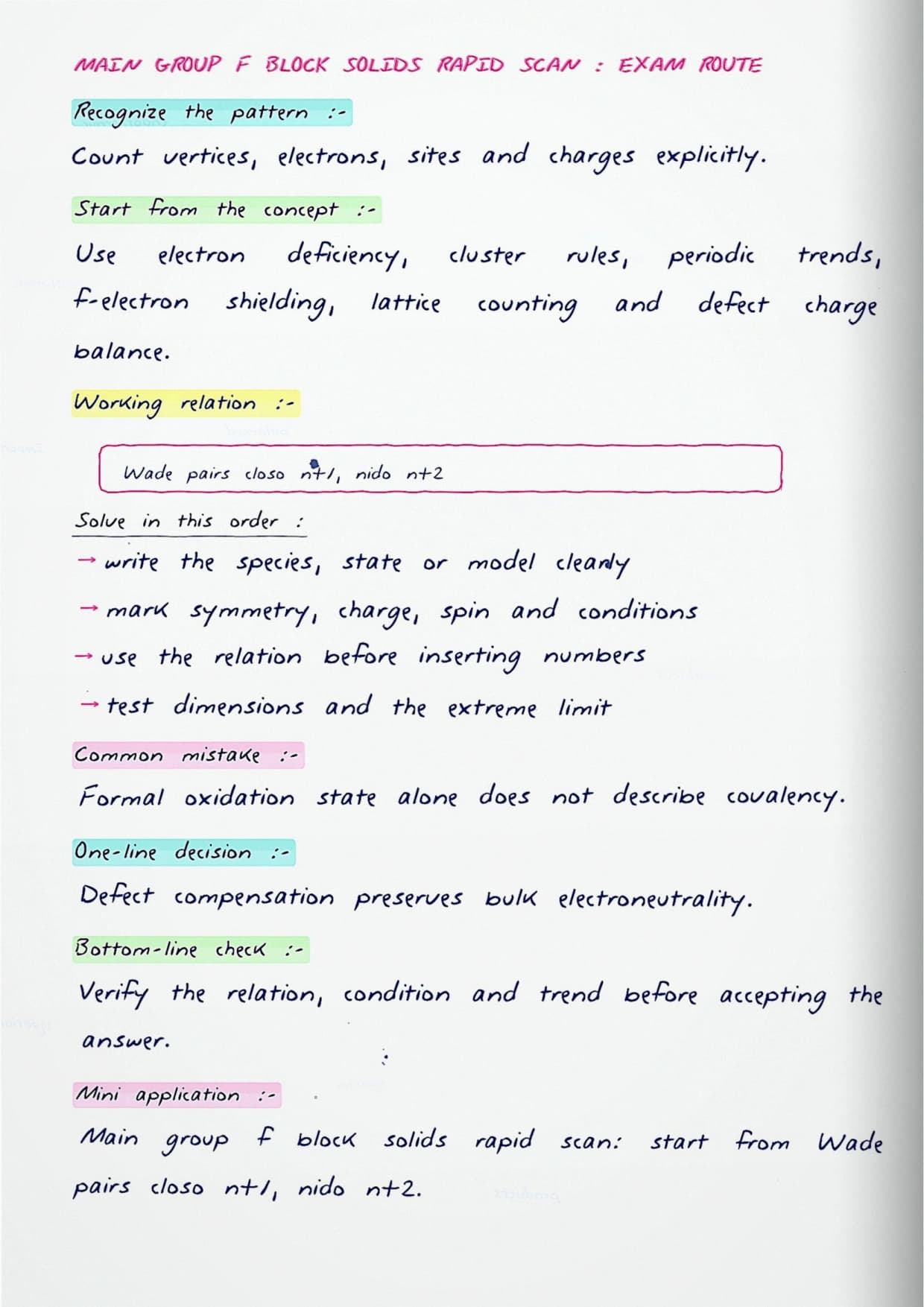
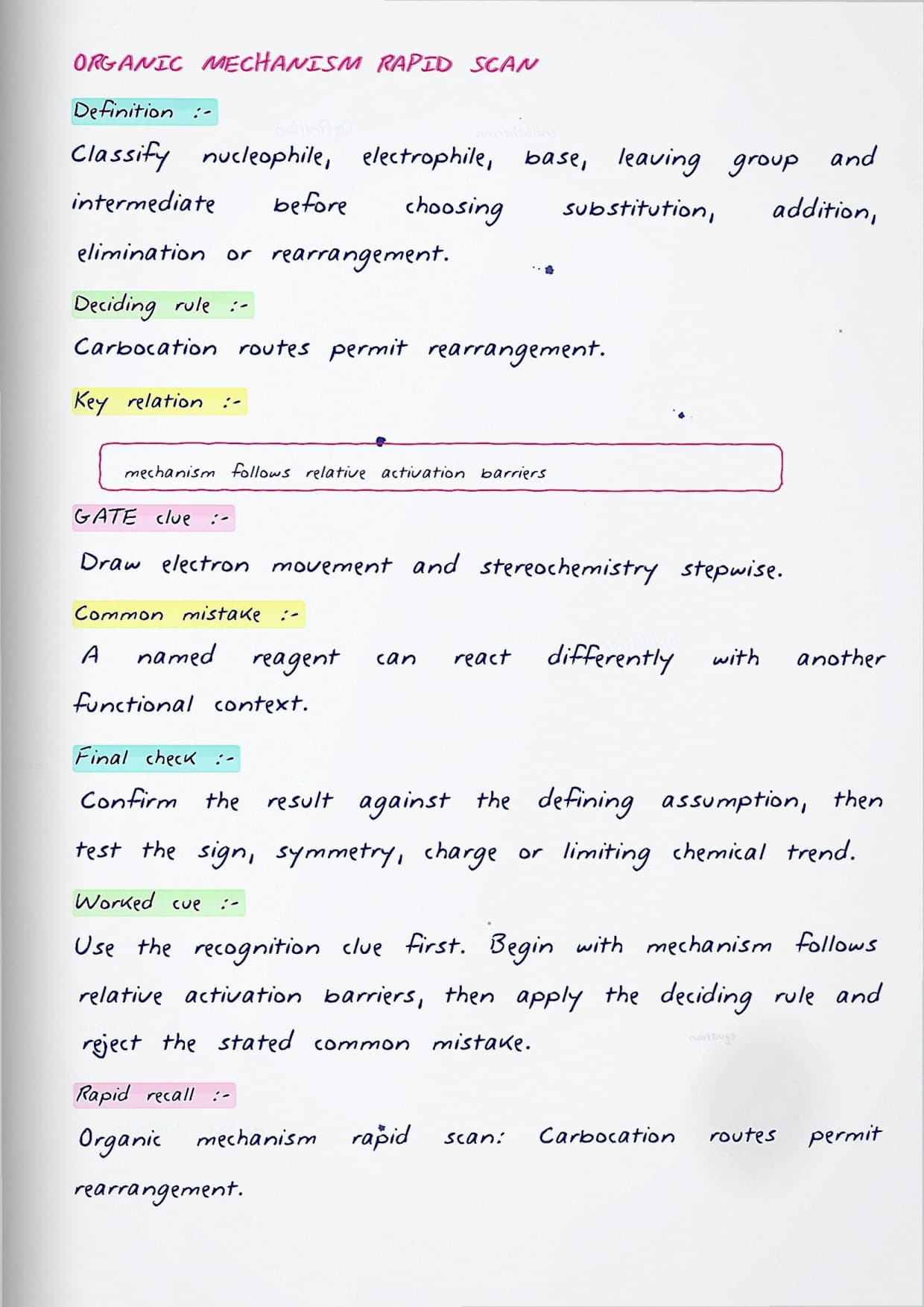
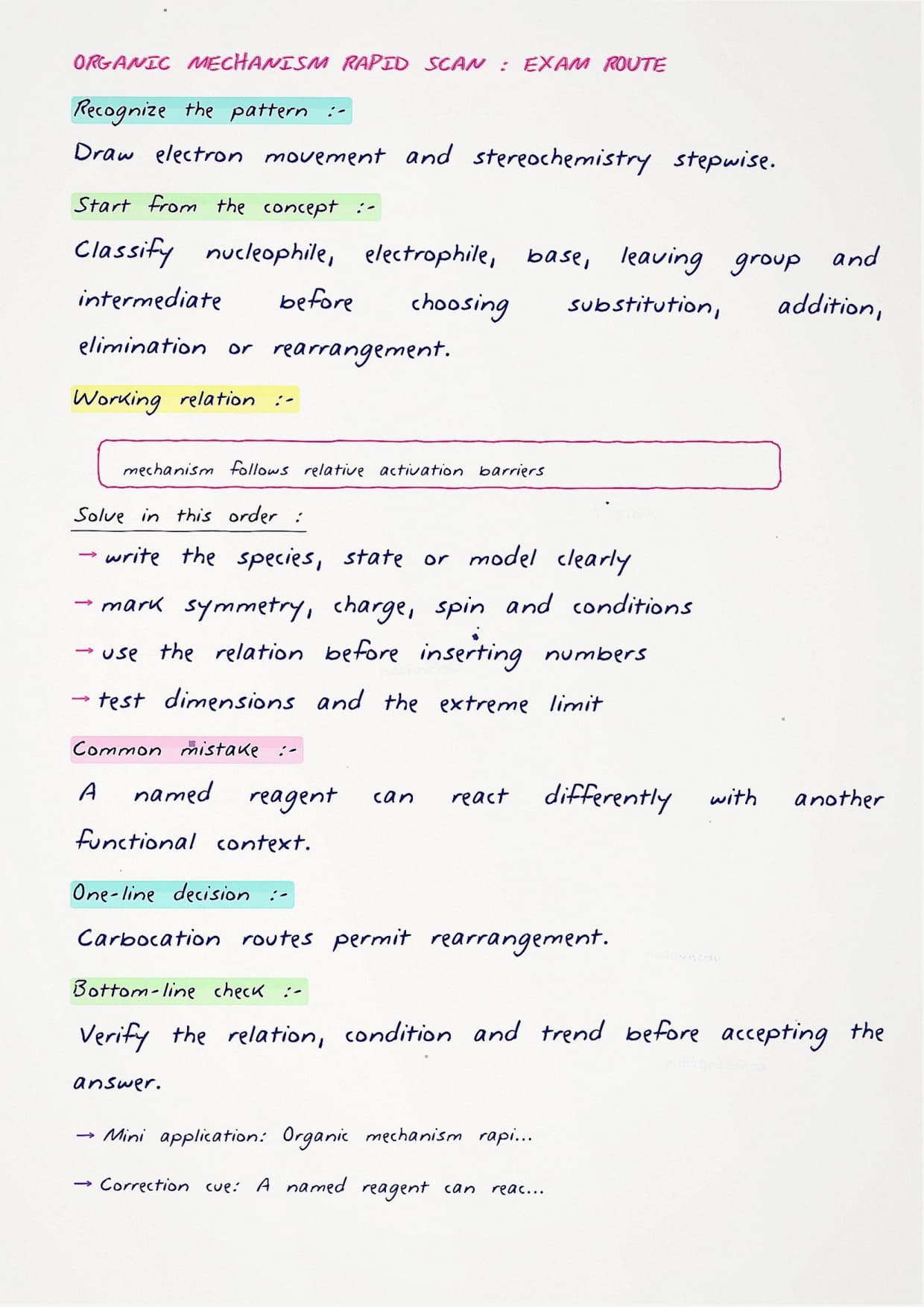
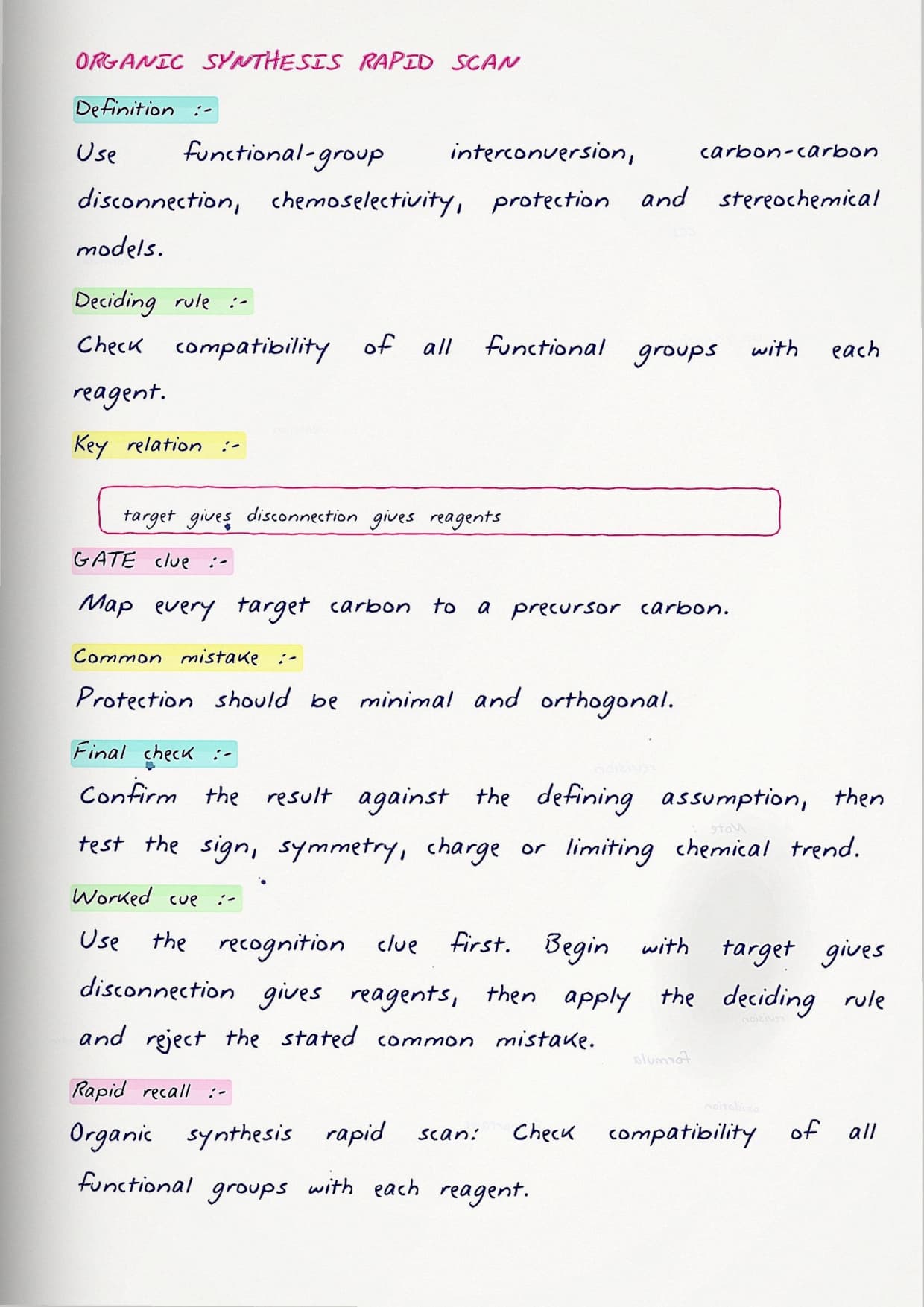
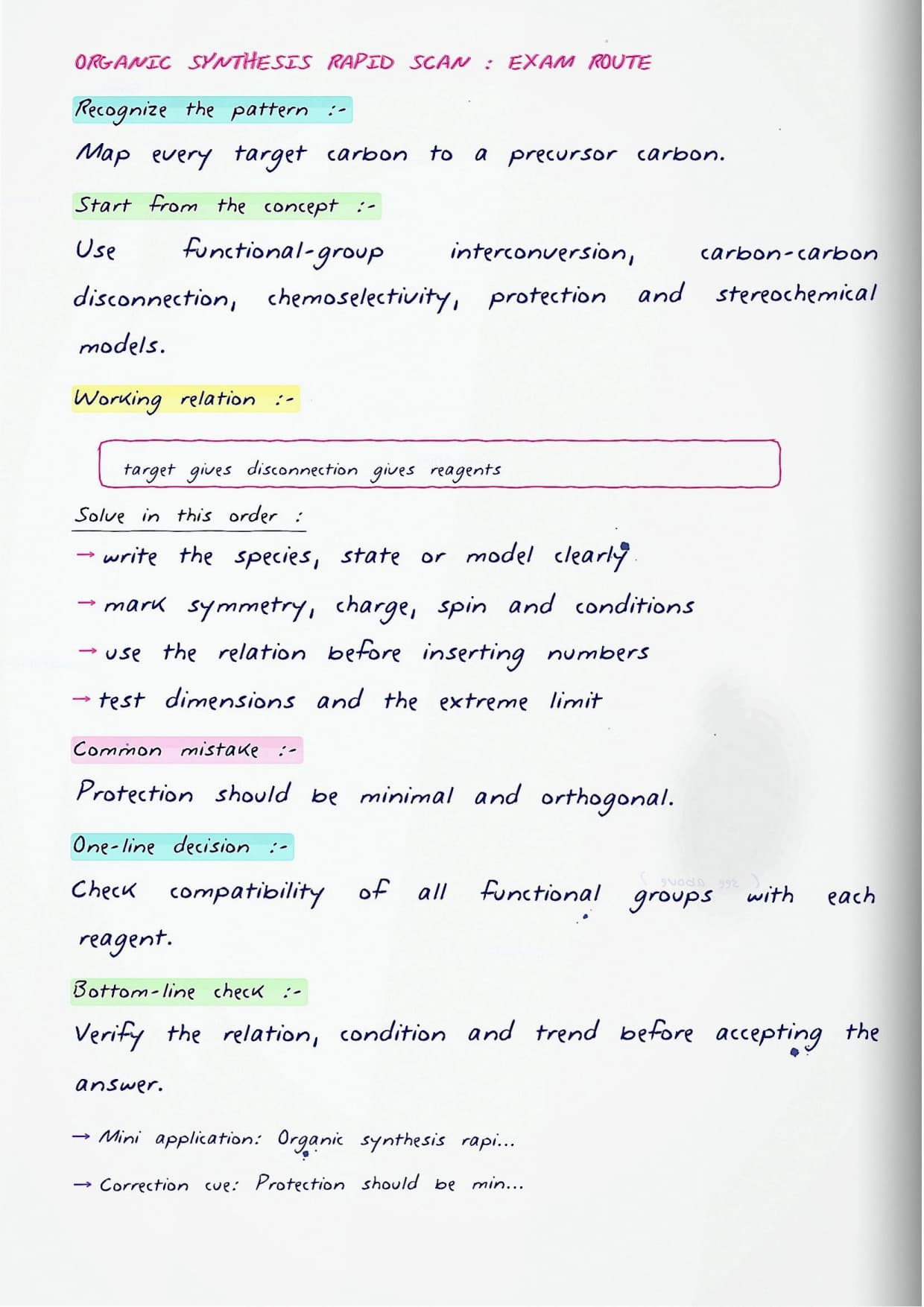
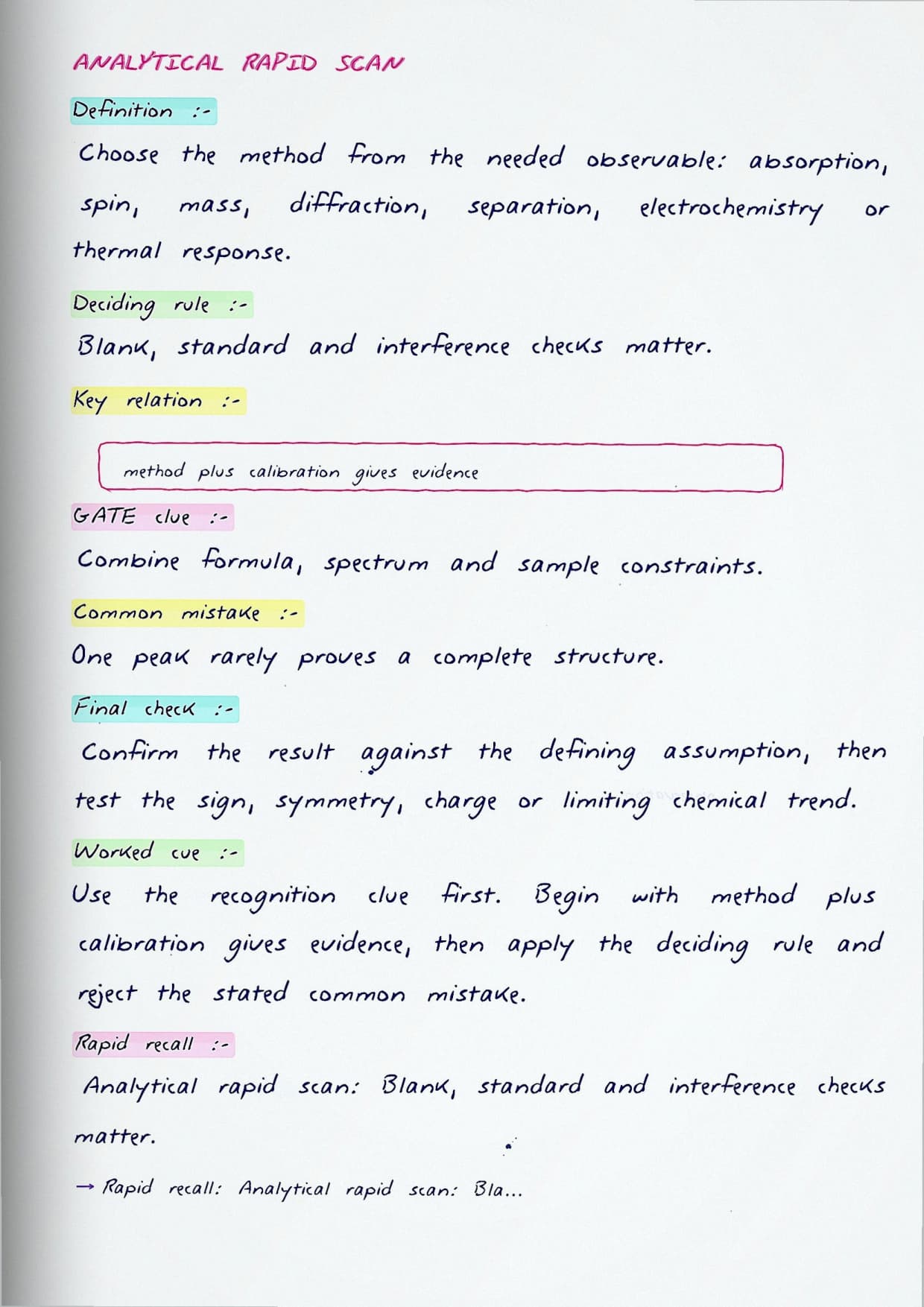
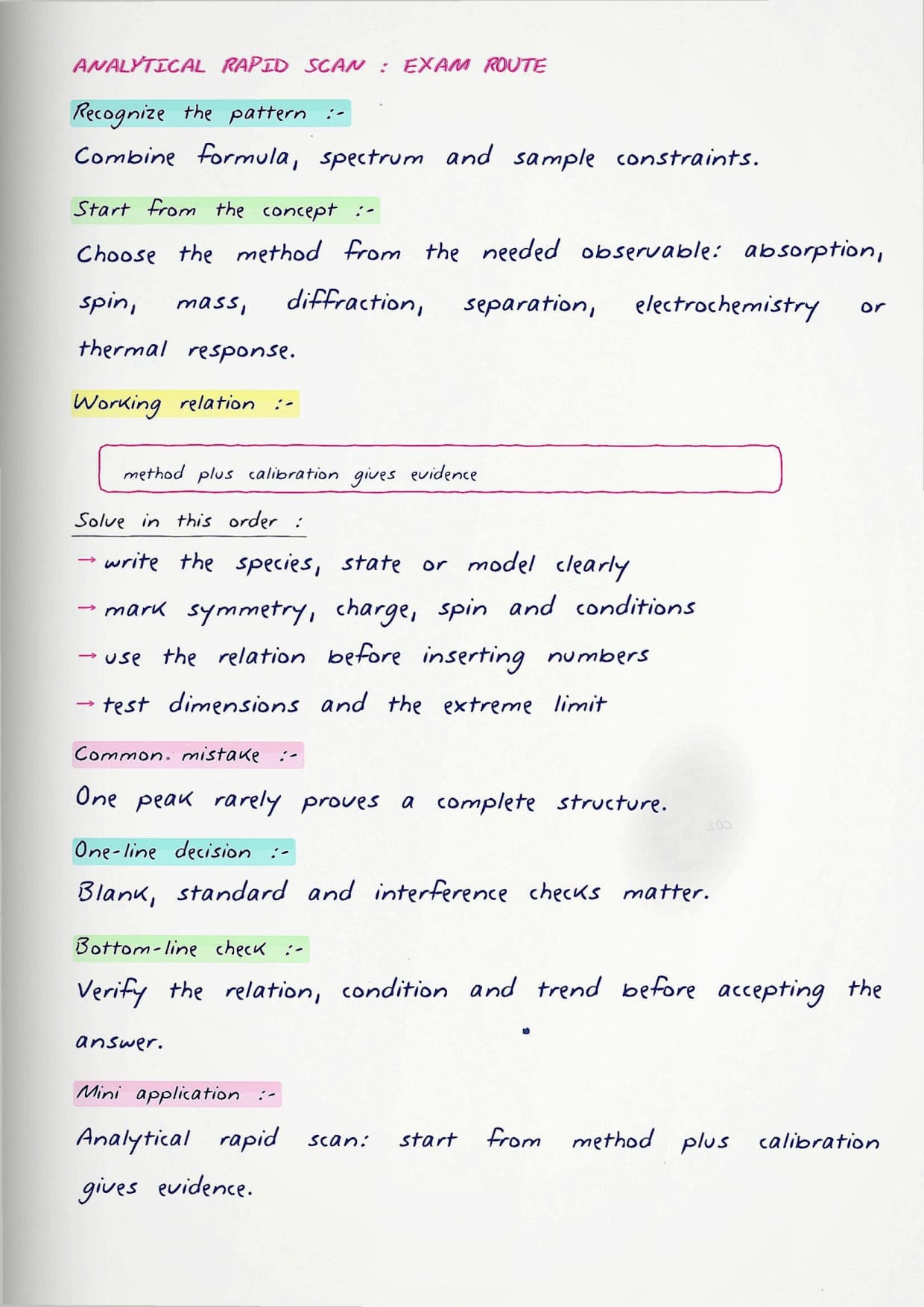
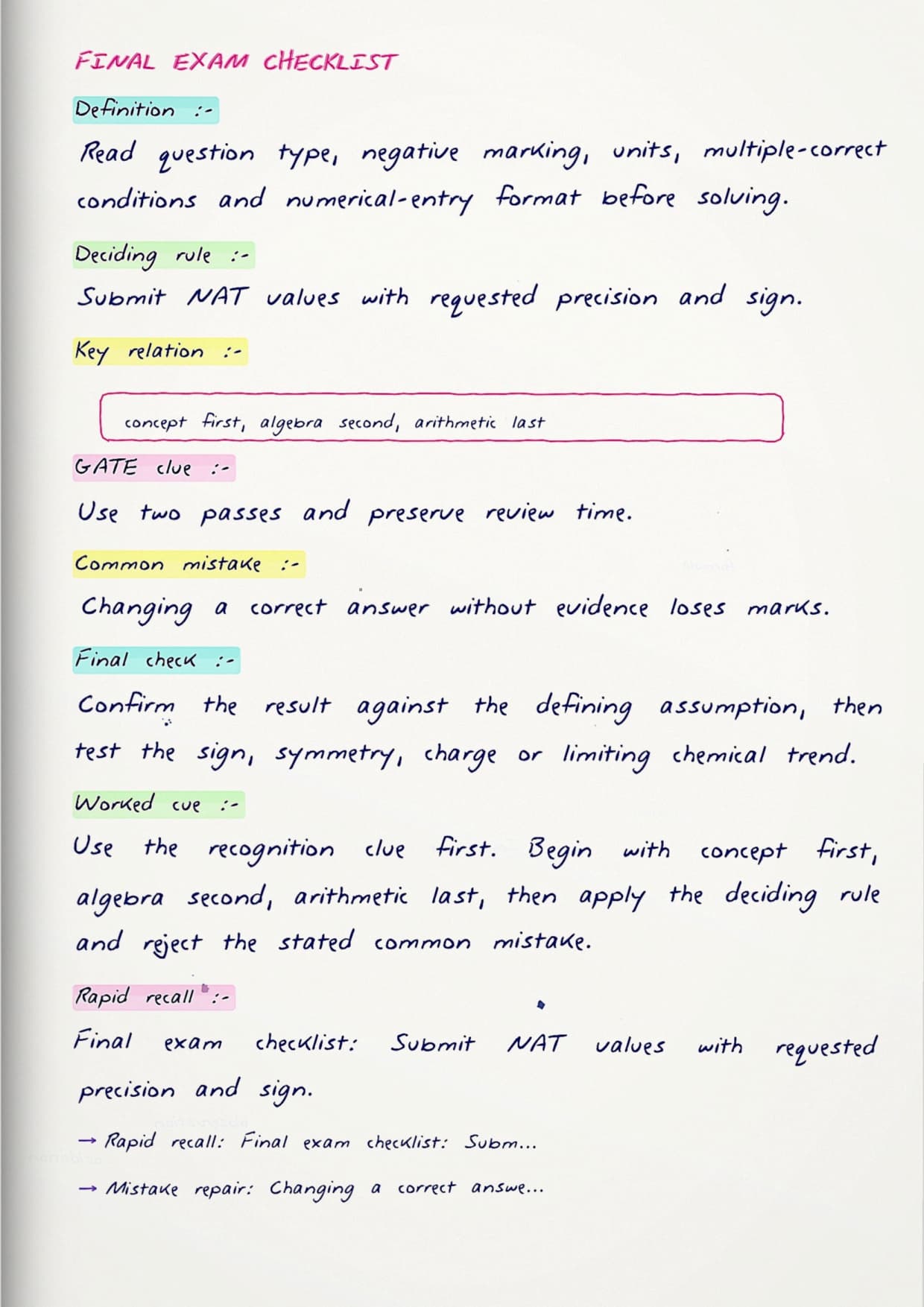
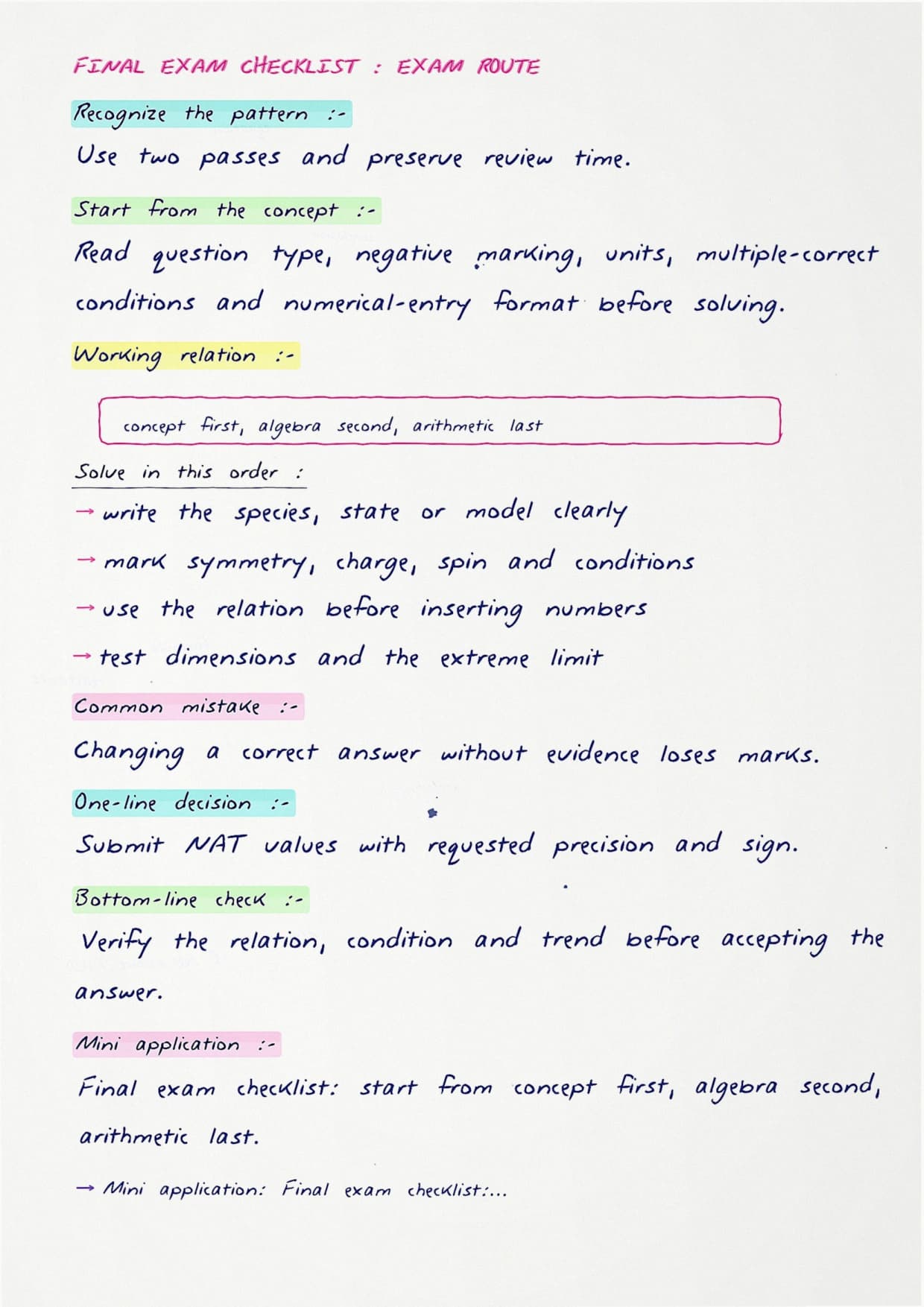
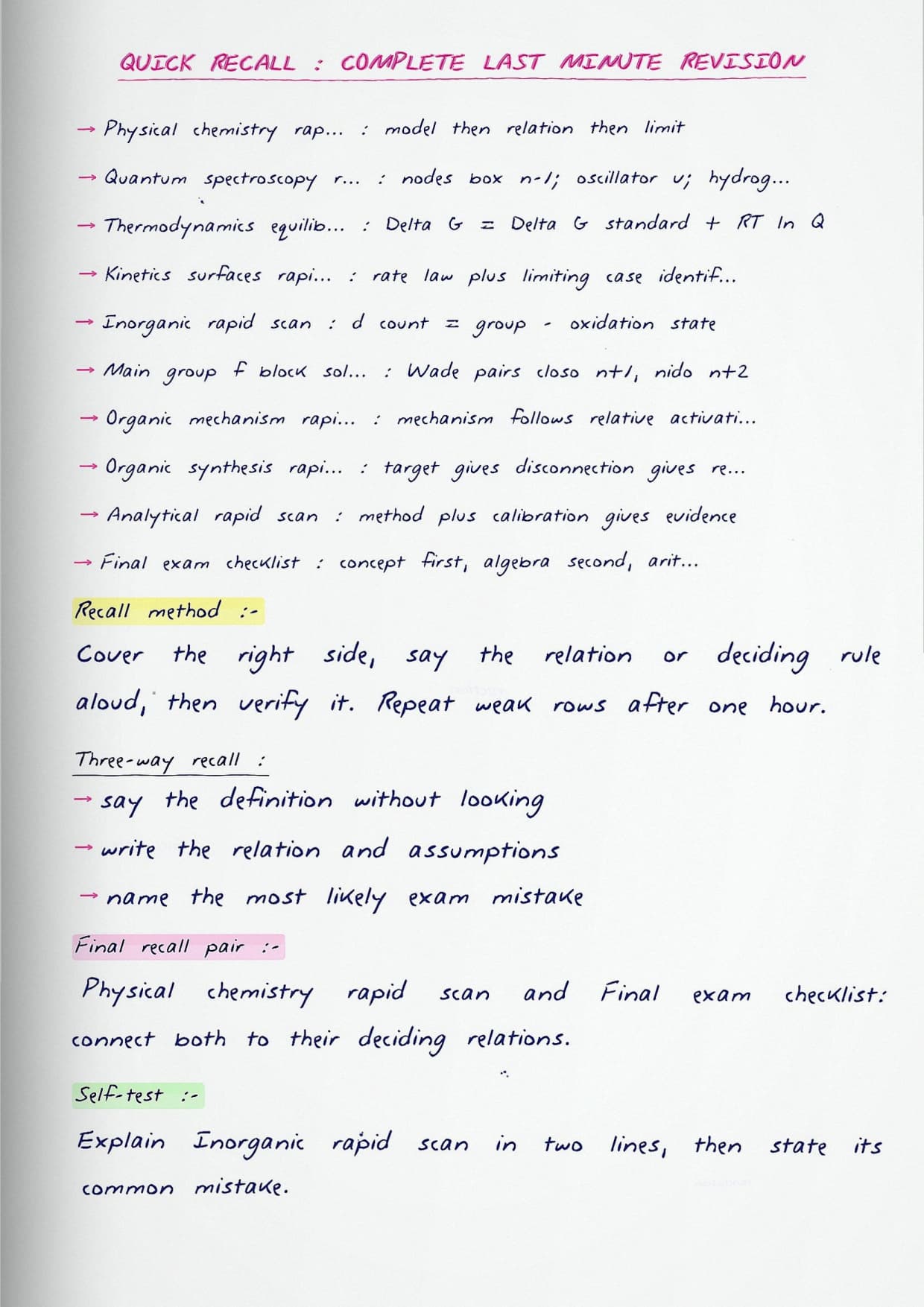
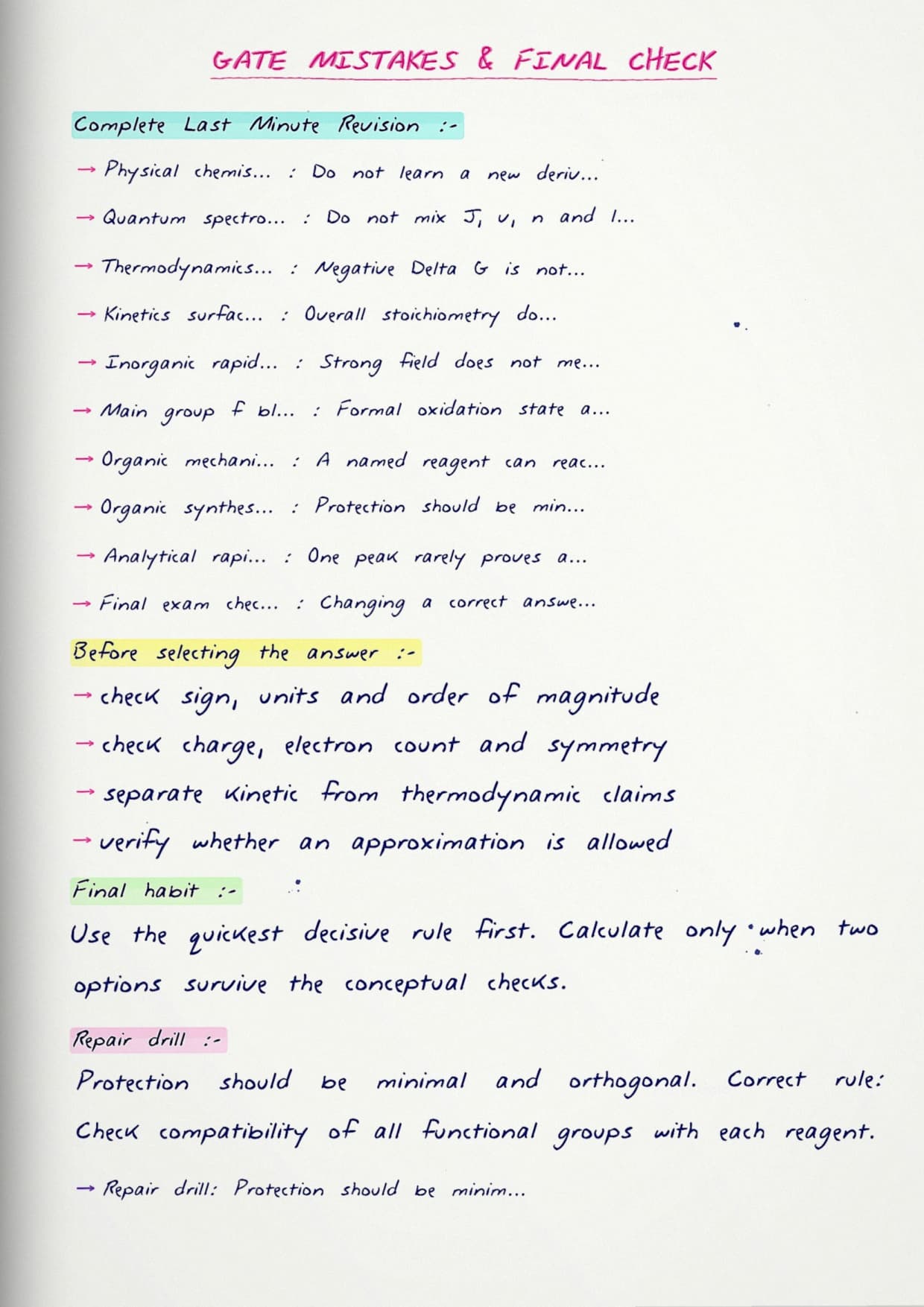
The notes carry hand-drawn reaction maps, MO diagrams, and colour-coded trend tables, next to a compact formula sheet for the final days before the exam. Every result is explained step by step, so you recall the logic and not just the answer.
- Full GATE Chemistry syllabus recap in one PDF, across all three sections.
- Key formulas, reactions, and trends for each subtopic, kept short.
- Hand-drawn diagrams and a formula sheet for fast last-day revision.
What These GATE Last Minute Revision Notes Cover
This is a revision recap, not a first-time study guide. It gathers the highest-yield points from Physical, Inorganic, and Organic Chemistry into one short set. The aim is simple: help you touch every important idea in the final days without opening full textbooks or long notes.
- Quick recap of each core idea, with the formula or rule beside it.
- Key reactions and trends boxed for fast recall.
- Hand-drawn figures for the diagrams asked most often.
- A formula sheet that collects the main results in one place.
GATE Last Minute Revision Quick Revision
Source: VedPrep CSIR NET & GATE on YouTube
Topics Covered in GATE Last Minute Revision
The recap spans all three sections of the GATE Chemistry paper. It picks the topics that appear most often and carry the most marks each year. The list below shows what the final-days notes bring together.
- Physical Chemistry: thermodynamics, chemical kinetics, and electrochemistry.
- Quantum and spectroscopy: core quantum results and NMR, IR, and UV ideas.
- Inorganic Chemistry: periodic trends, coordination compounds, and crystal field theory.
- Main group and organometallics: bonding, structures, and the 18-electron rule.
- Organic Chemistry: reaction mechanisms, named reactions, and stereochemistry.
- Reaction maps: how one functional group converts to another.
How the Notes Are Organised
The notes move section by section, so Physical, Inorganic, and Organic Chemistry stay in clear blocks. Within each block, the most asked topics come first, followed by the supporting ones. You can read a full section or open a single page for a quick recap.
Because each page stands on its own, you match it to whatever you are revising that day. A formula sheet near the end brings the key results from all three sections together for the final read.
How GATE Last Minute Revision Links to Other Topics
This recap draws from every part of the GATE Chemistry syllabus. It does not stand apart from the subjects; it is a short summary of them. The links below show which topics the final-days notes draw from.
- Energy and equilibrium ideas come from Thermodynamics and Chemical Equilibrium.
- Rate and cell results come from Chemical Kinetics and Electrochemistry.
- Bonding and colour ideas come from Coordination Chemistry.
- Mechanism and named-reaction points come from Organic Chemistry.
Important Topics in GATE Last Minute Revision
Some topics return in the GATE Chemistry paper almost every year. If your time is very short, revise these first from the recap. They give the surest marks for the least effort in the final days.
- Coordination chemistry and crystal field theory, near-certain each year.
- Thermodynamics and chemical kinetics from Physical Chemistry.
- Organic reaction mechanisms such as SN1, SN2, E1, and E2.
- Named reactions and stereochemistry for quick objective marks.
- Common traps: sign errors in thermodynamics and mixed-up SN1 and SN2 conditions.
How to Prepare GATE Last Minute Revision with Handwritten Notes
Use this recap in the last one or two weeks, once your main study is done. Read one section, recall its key results, then solve a few previous year questions on it. Return to the formula sheet the night before the exam for a final pass.
- First read: cover all three sections once to refresh the base.
- Second pass: focus on coordination chemistry, thermodynamics, and organic mechanisms.
- Solve previous year questions section by section beside the recap.
- Final day: revise the formula sheet and the common-mistake notes.
Why These Notes Help You Score Better
Handwritten notes are quick to scan and easy to recall under exam pressure, which is why they work so well in the final weeks. A short, visual recap is faster to read than three full subjects of long notes. Each diagram is right next to the result it explains, so the link stays clear for students in the last days before the exam.
GATE Chemistry Last Minute Revision Handwritten Notes FAQs
Ques. Do these notes cover the full GATE Chemistry syllabus?
Ans. Yes. This recap pulls the most important points from Physical, Inorganic, and Organic Chemistry into one short set for the final days.
Ques. Are these notes enough on their own for GATE Chemistry?
Ans. They are a revision recap, not a first study guide. Use them to refresh a syllabus you have already covered, beside previous year practice.
Ques. When should I use this last-minute revision set?
Ans. Use it in the final one or two weeks, and again the night before the exam, for a quick pass over every section.
Ques. What do the notes include for quick revision?
Ans. Hand-drawn diagrams, colour-coded trend tables, boxed formulas, and a formula sheet that collects the key results from all three sections.



Comments