




Bioinorganic and Solid State Chemistry is a steady, high-return topic in GATE Chemistry, usually worth about 3 to 5 marks in the paper. It belongs to the Inorganic Chemistry section and blends the metal chemistry of living systems with the structure of solids. These handwritten notes cover the full GATE topic in a compact, exam-focused form, so you revise both halves without switching between books.
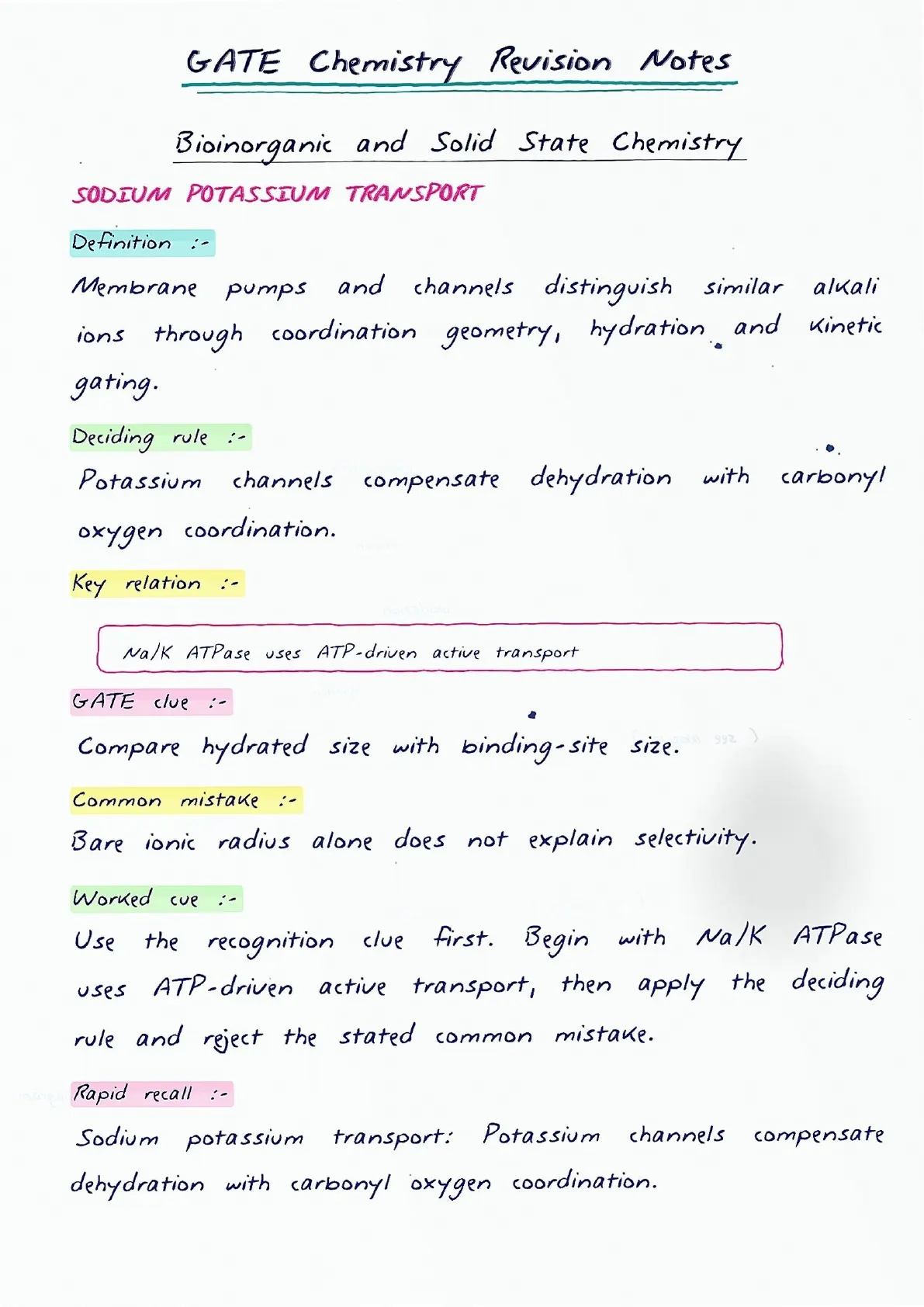
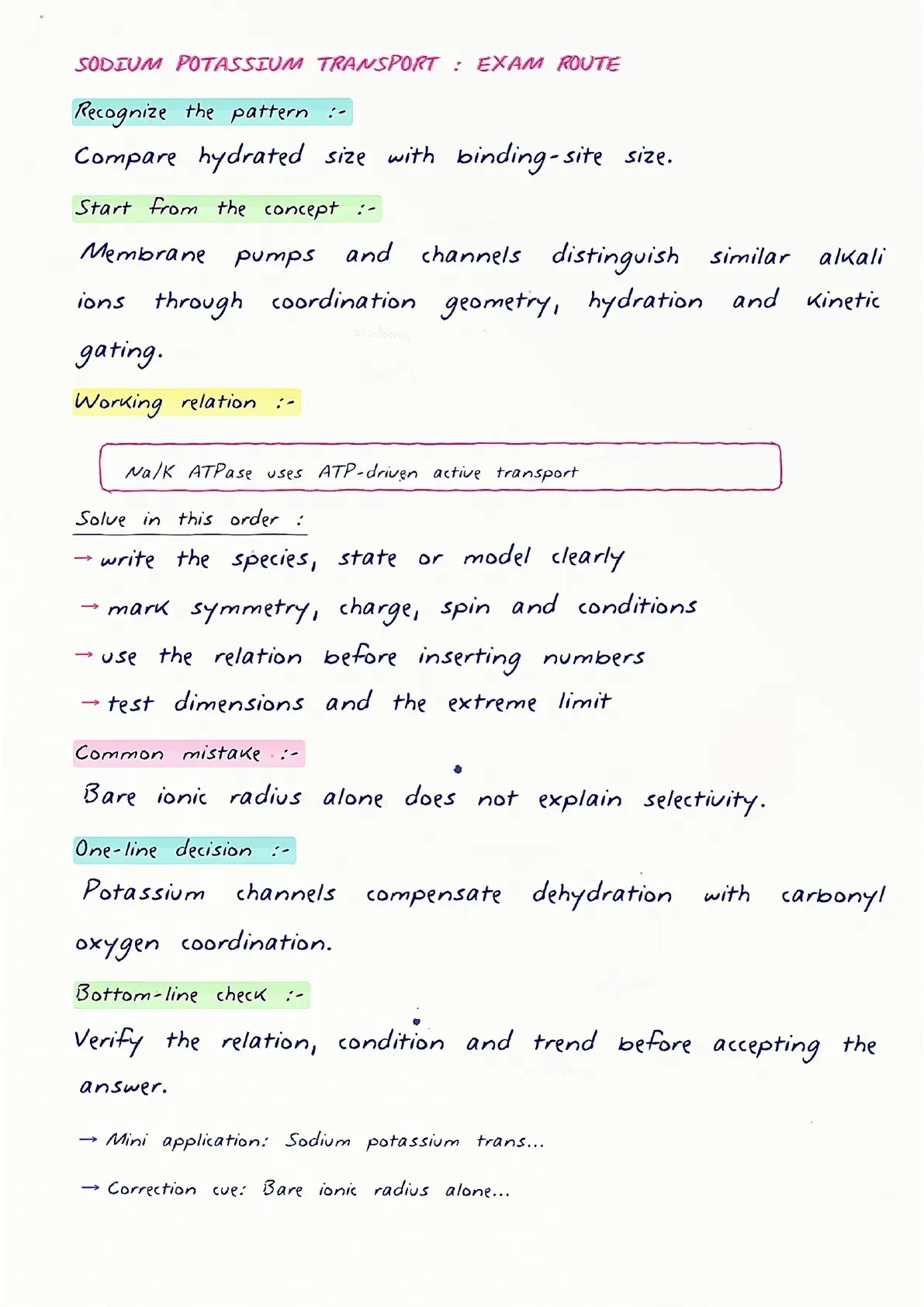
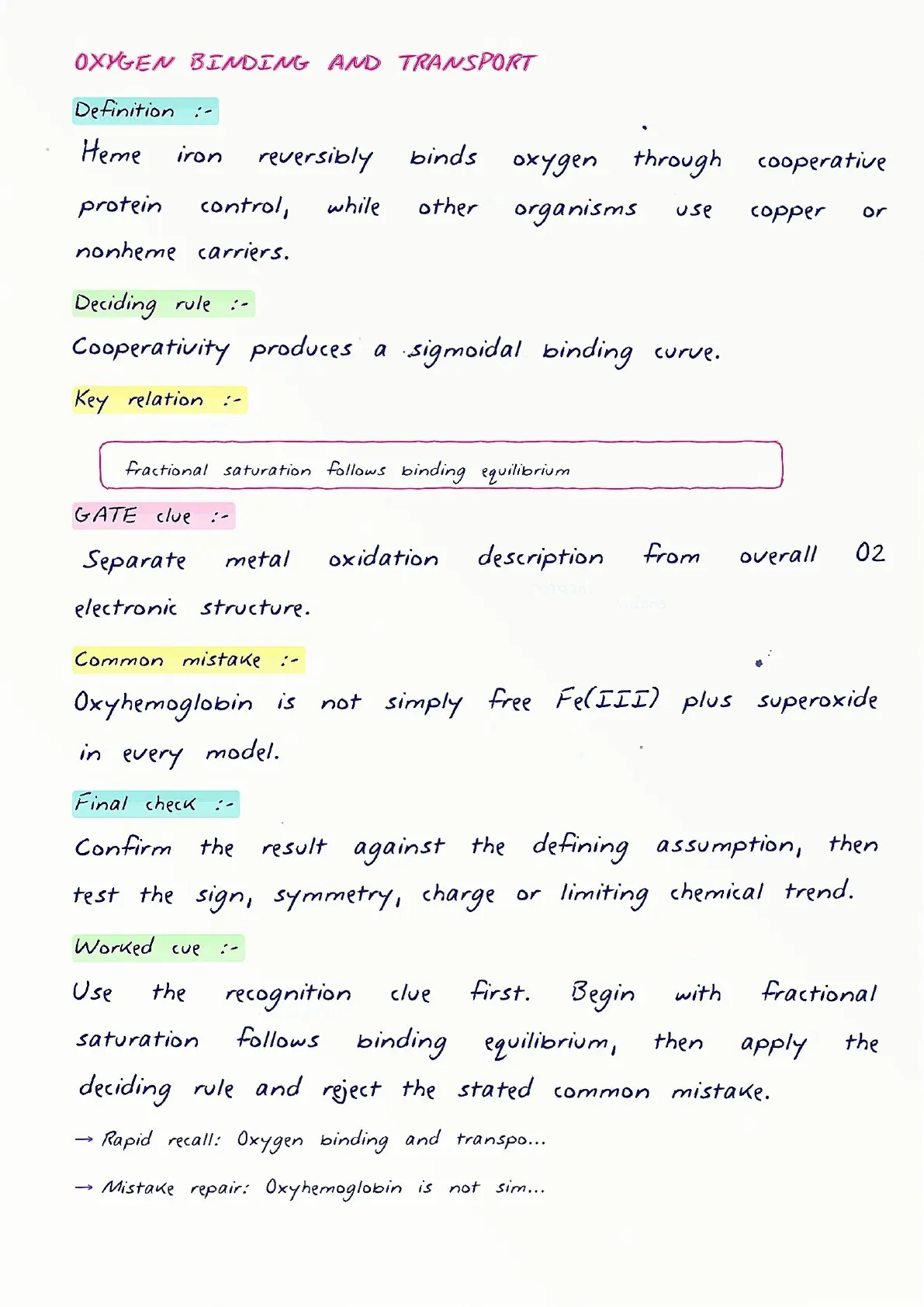
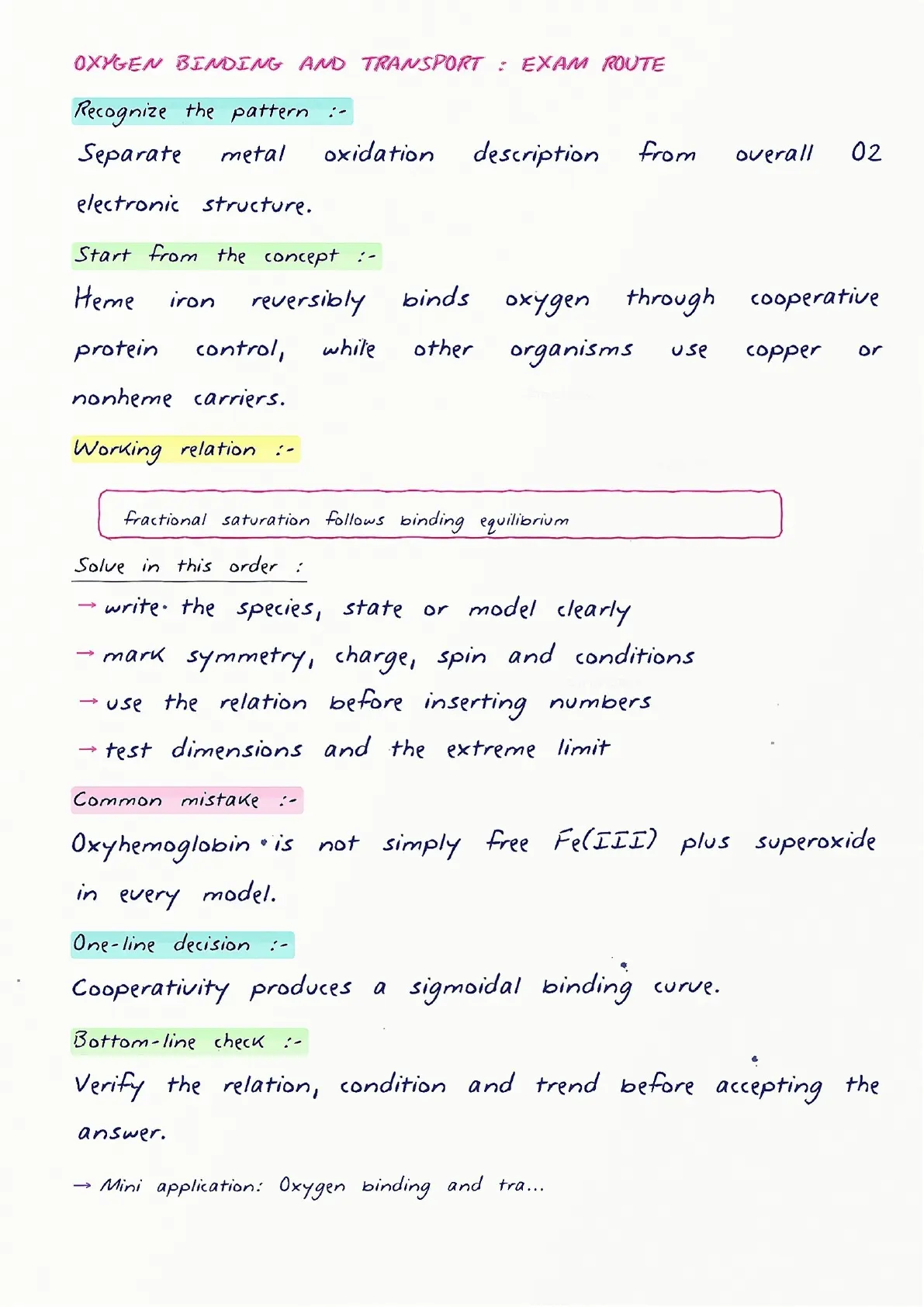
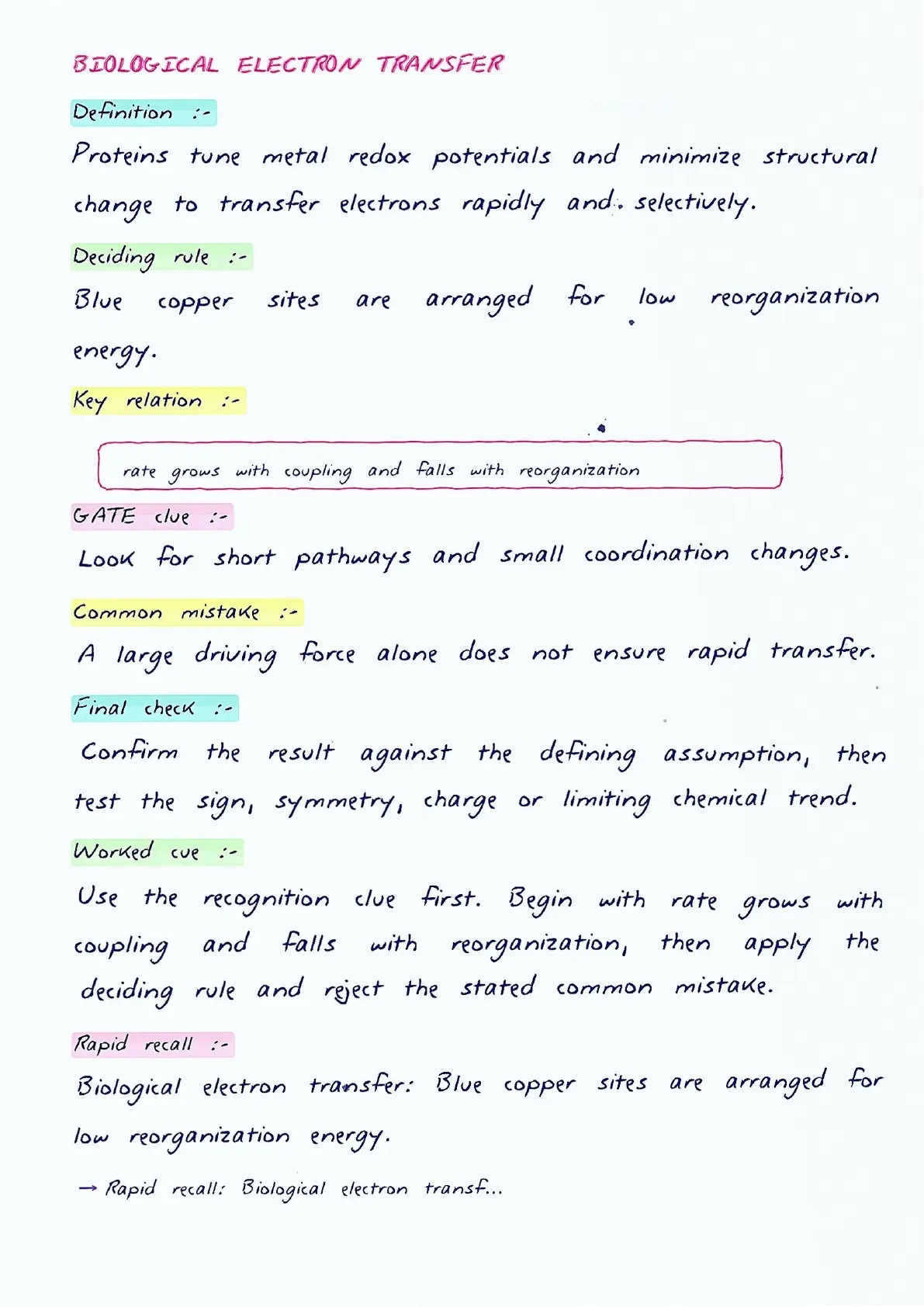
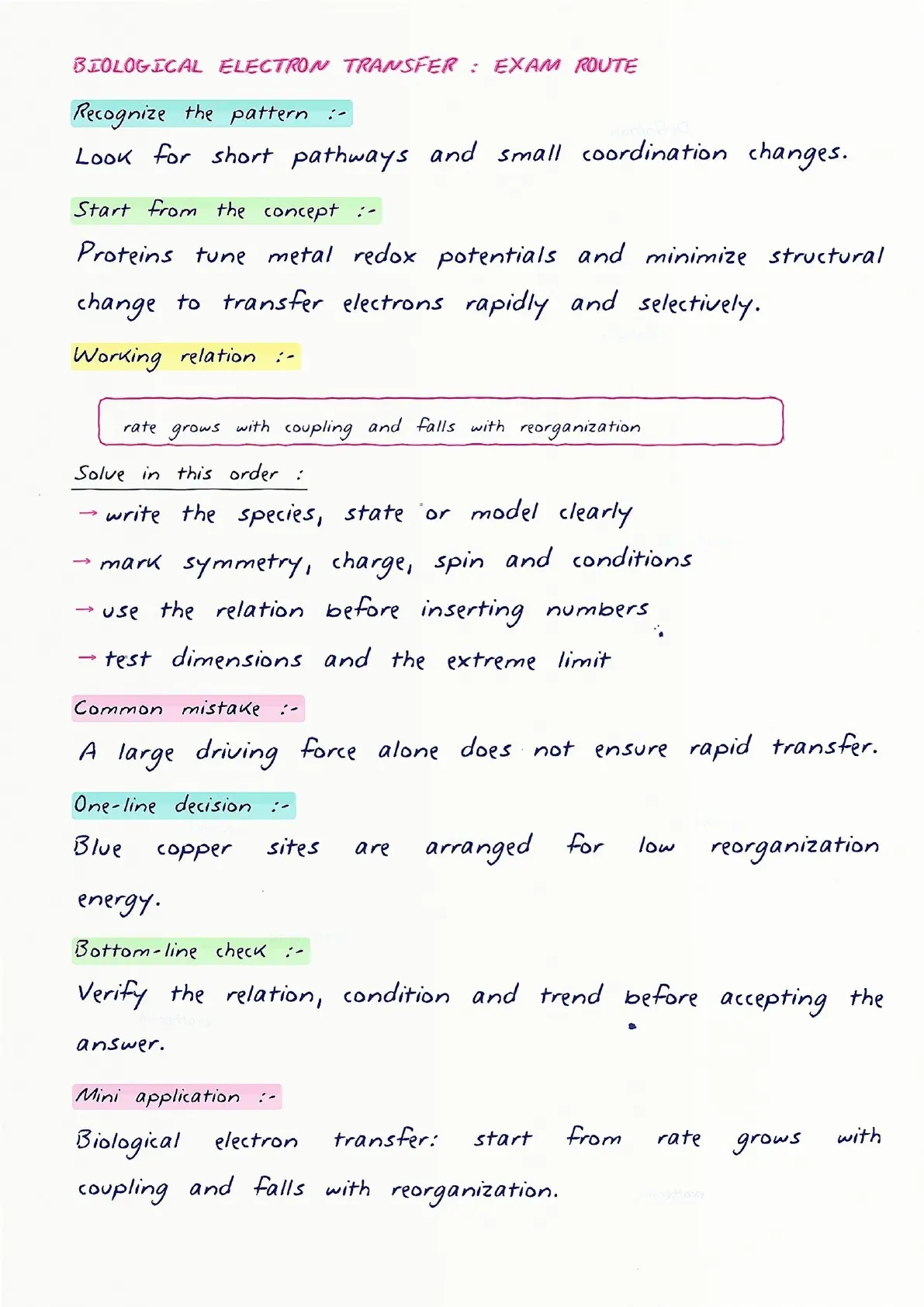
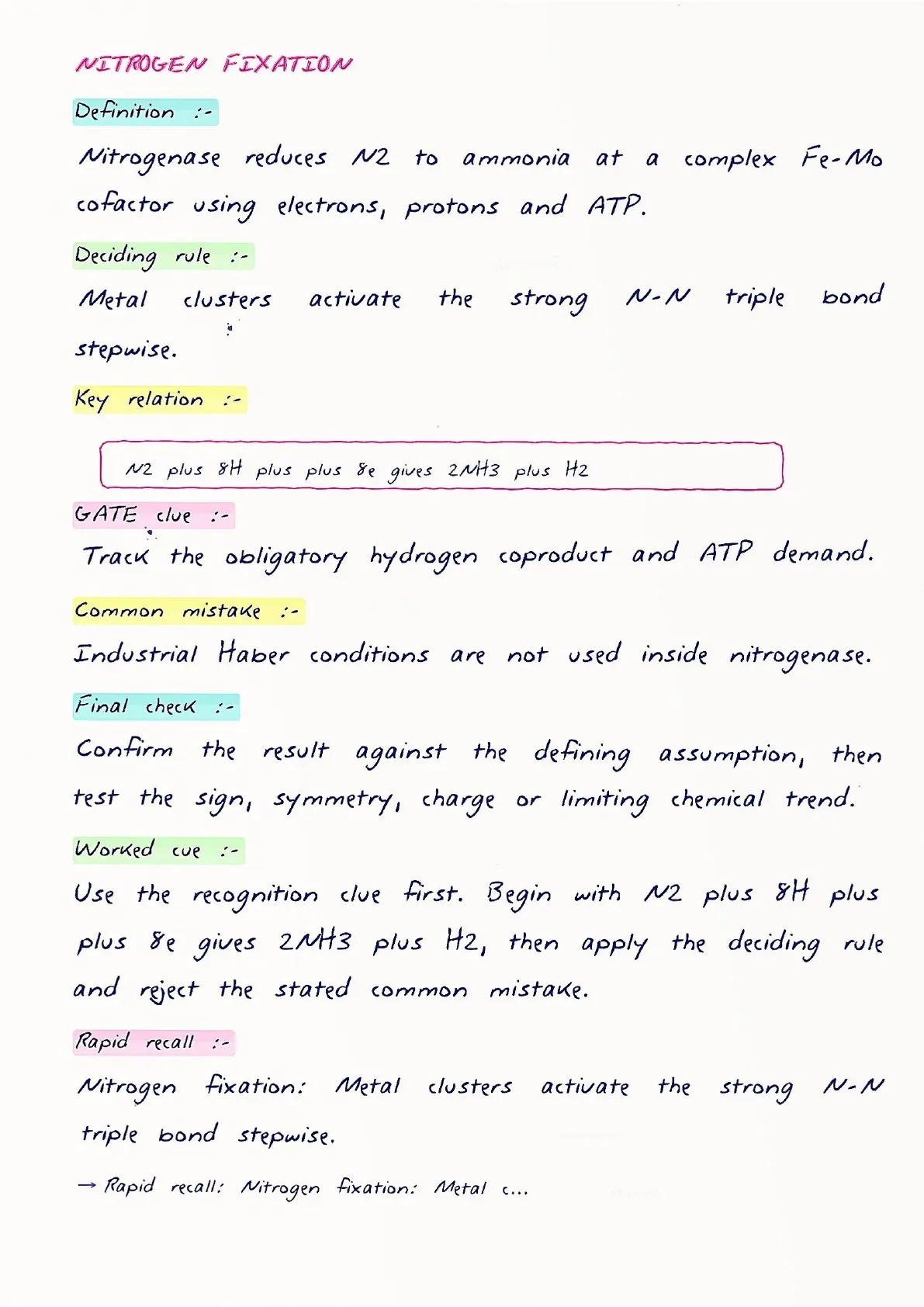
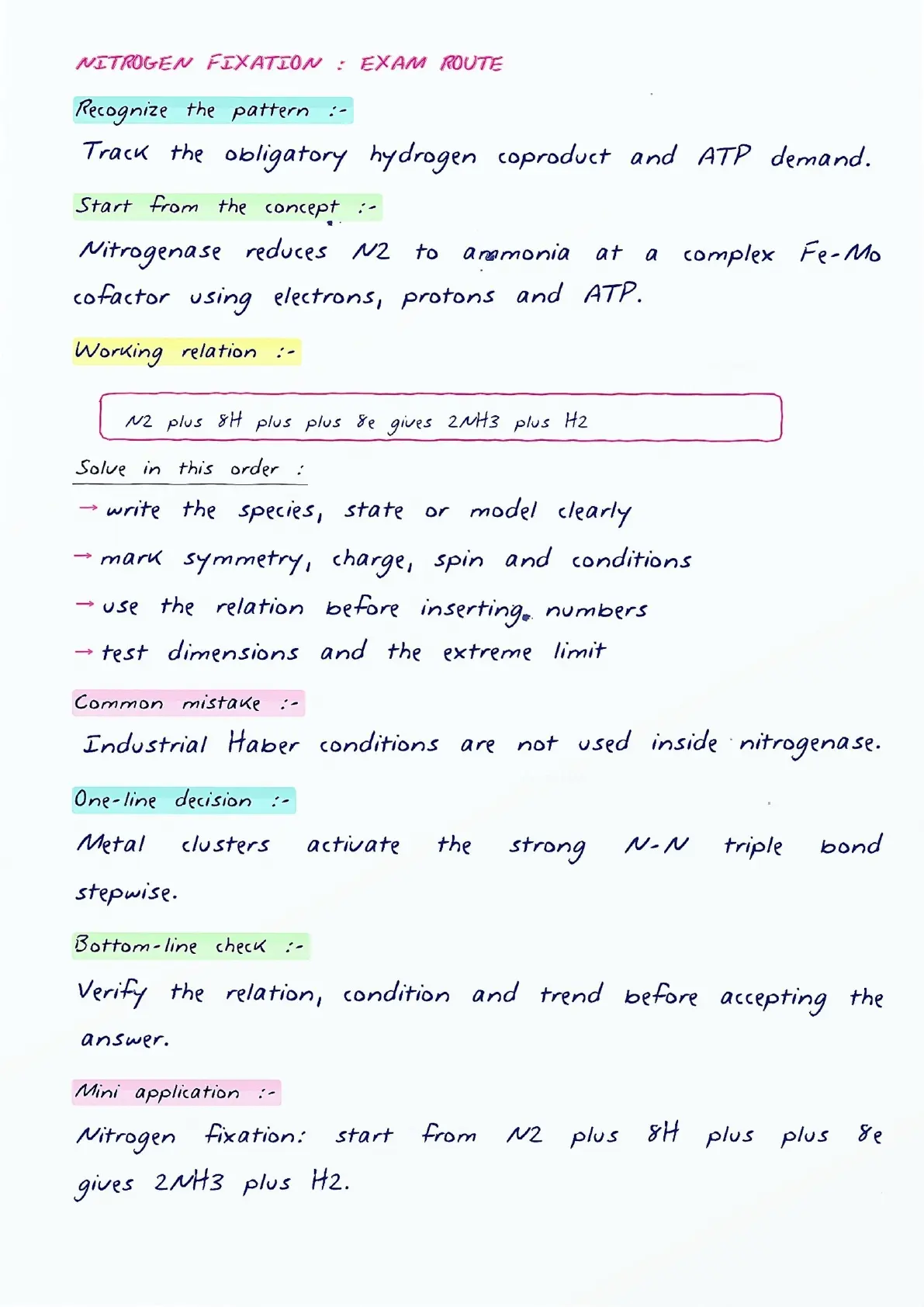
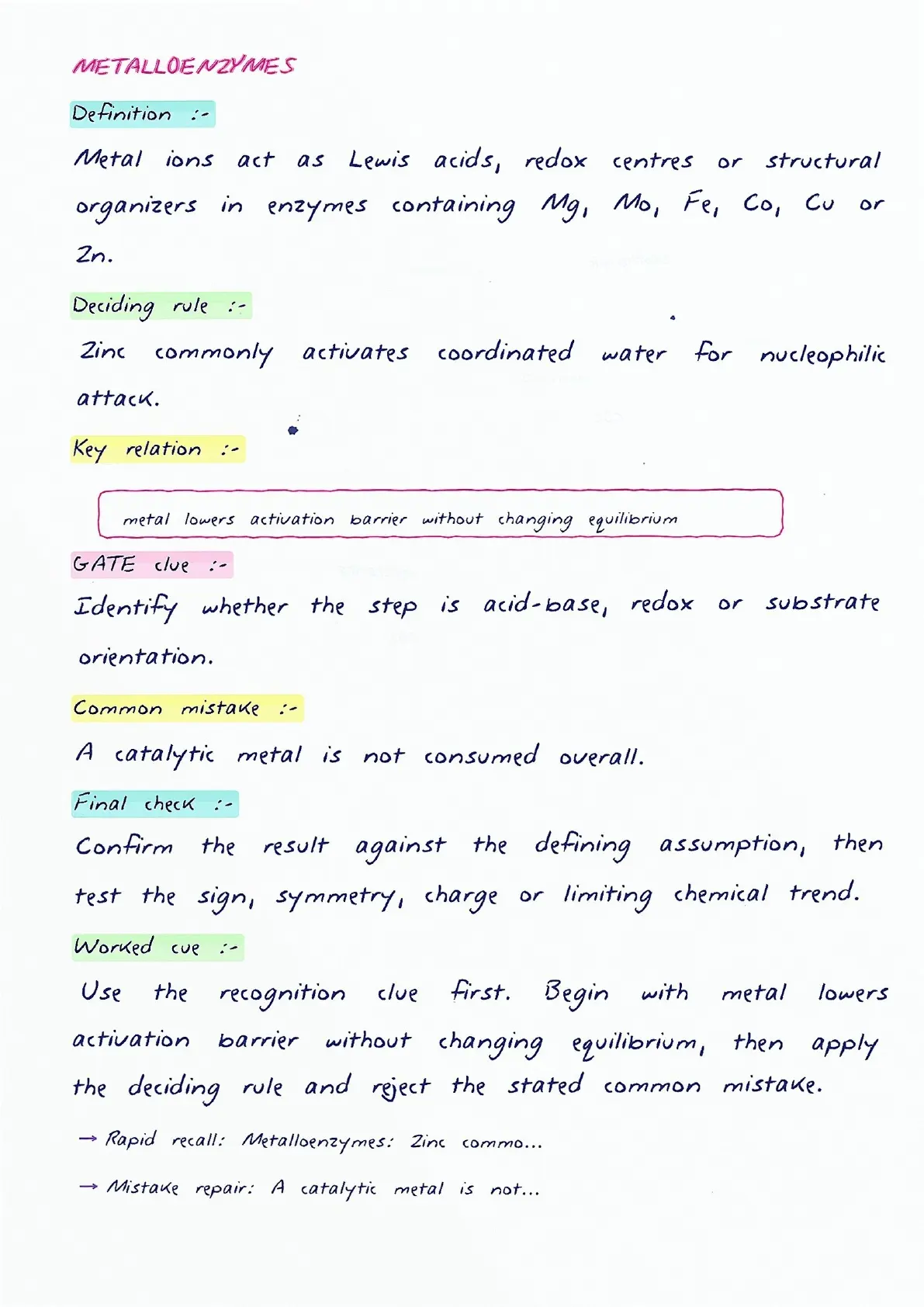
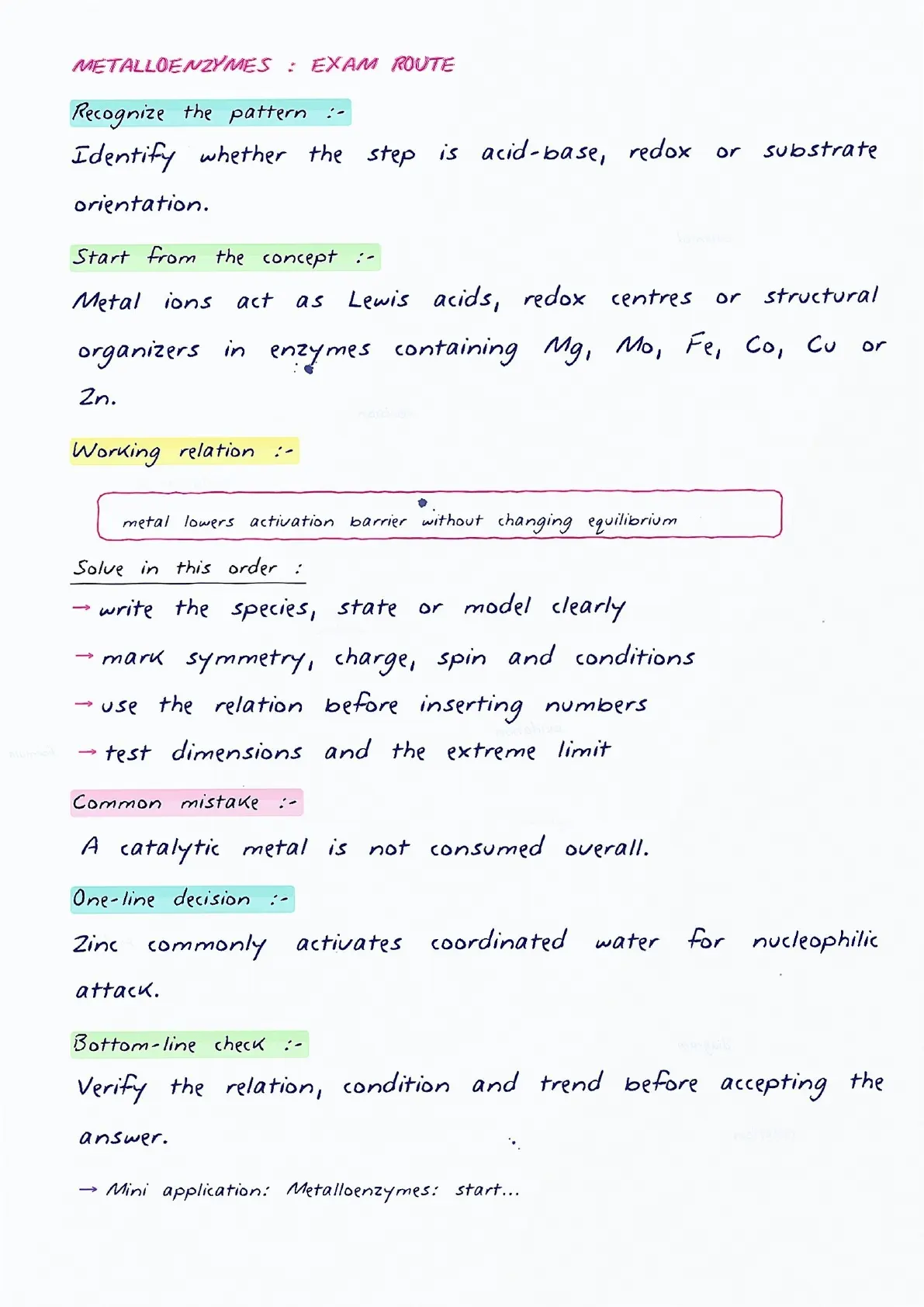
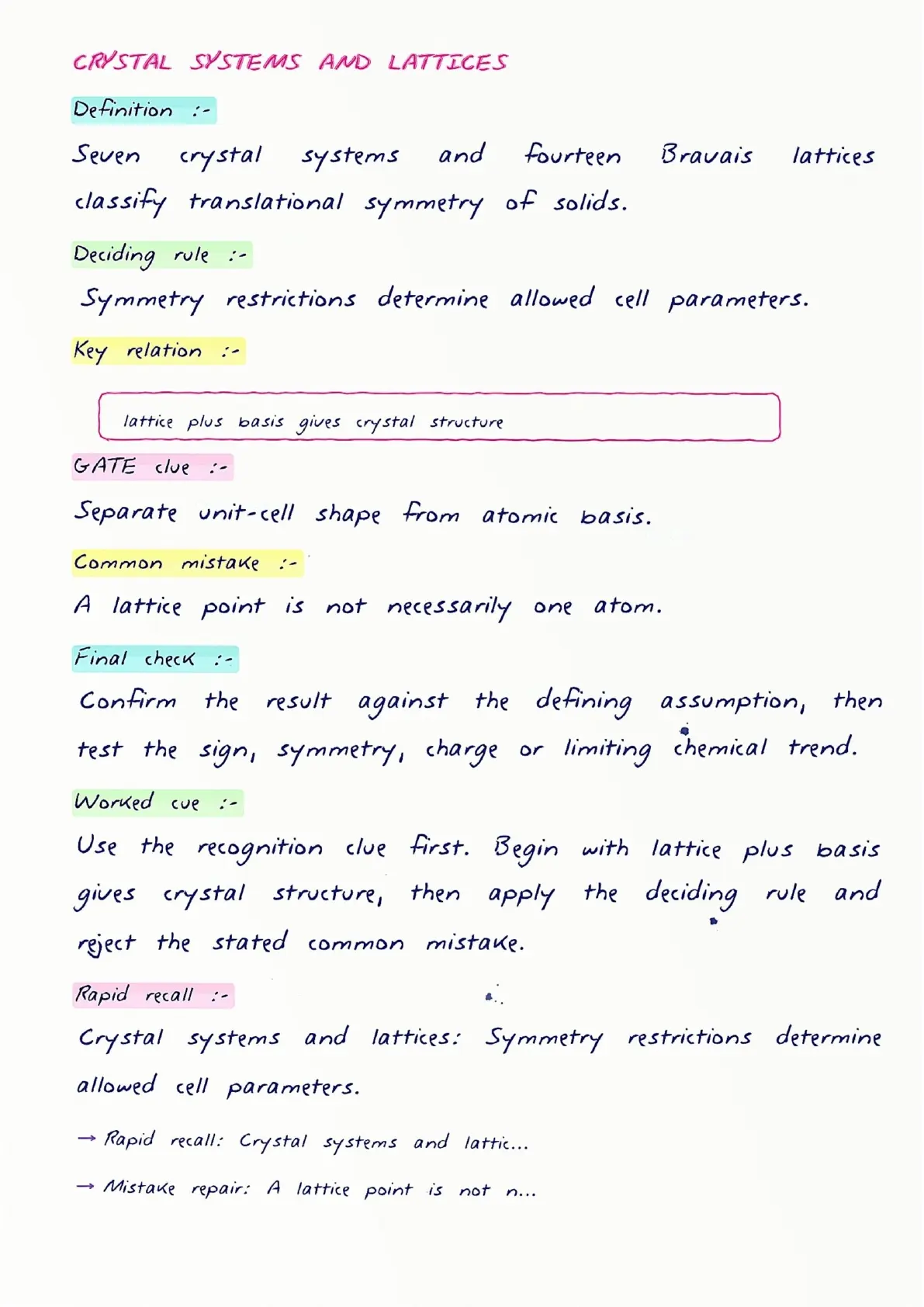
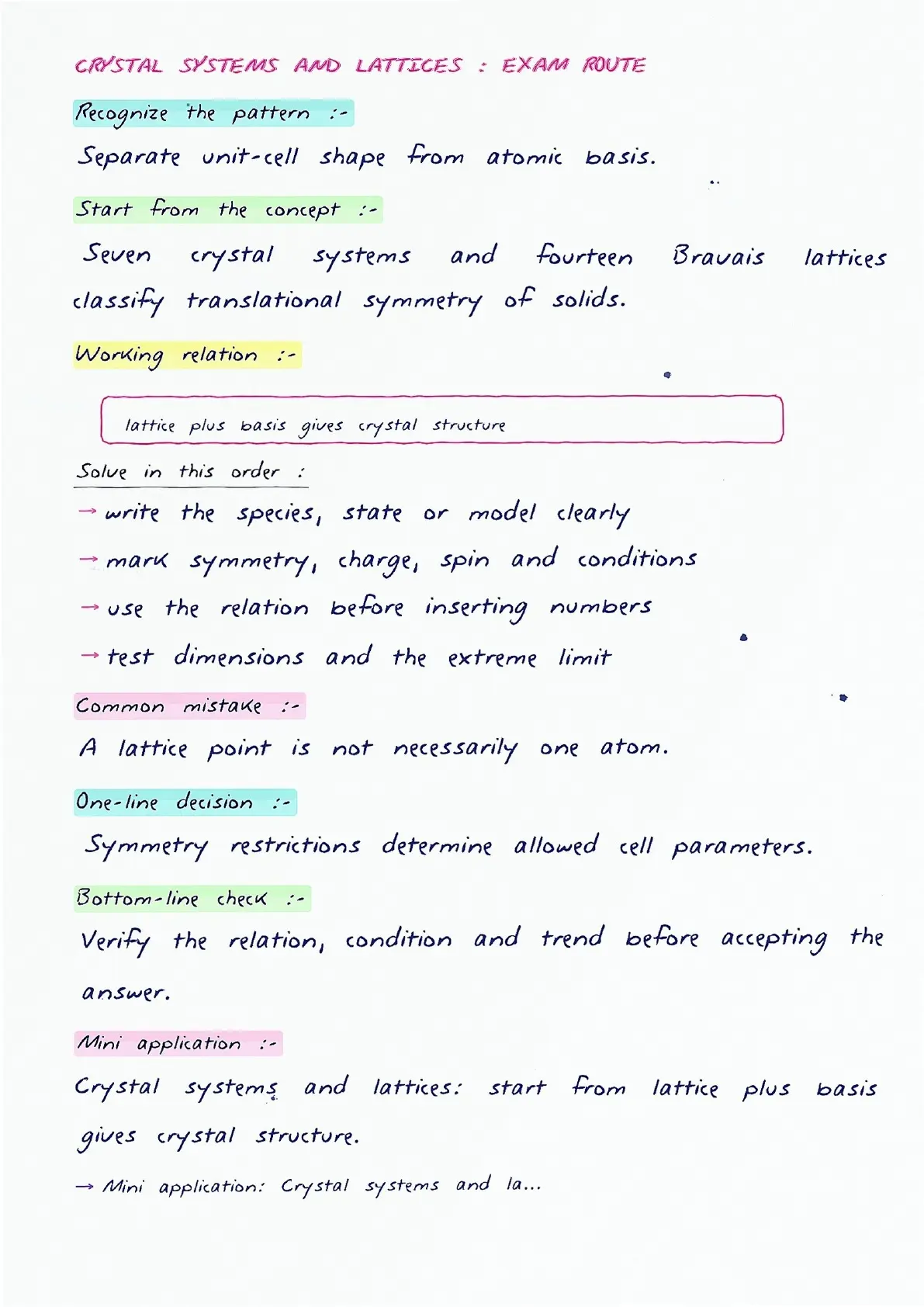
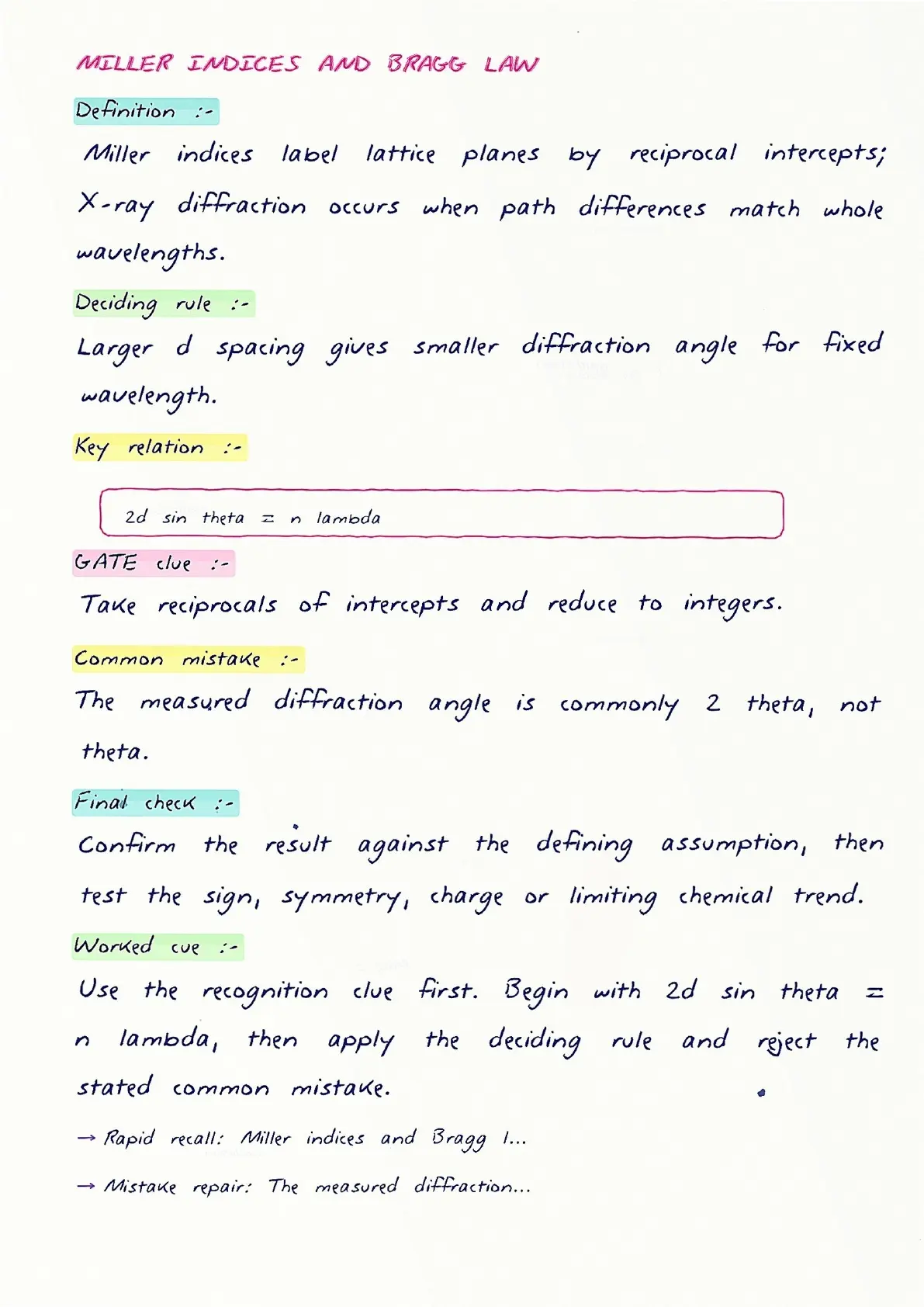
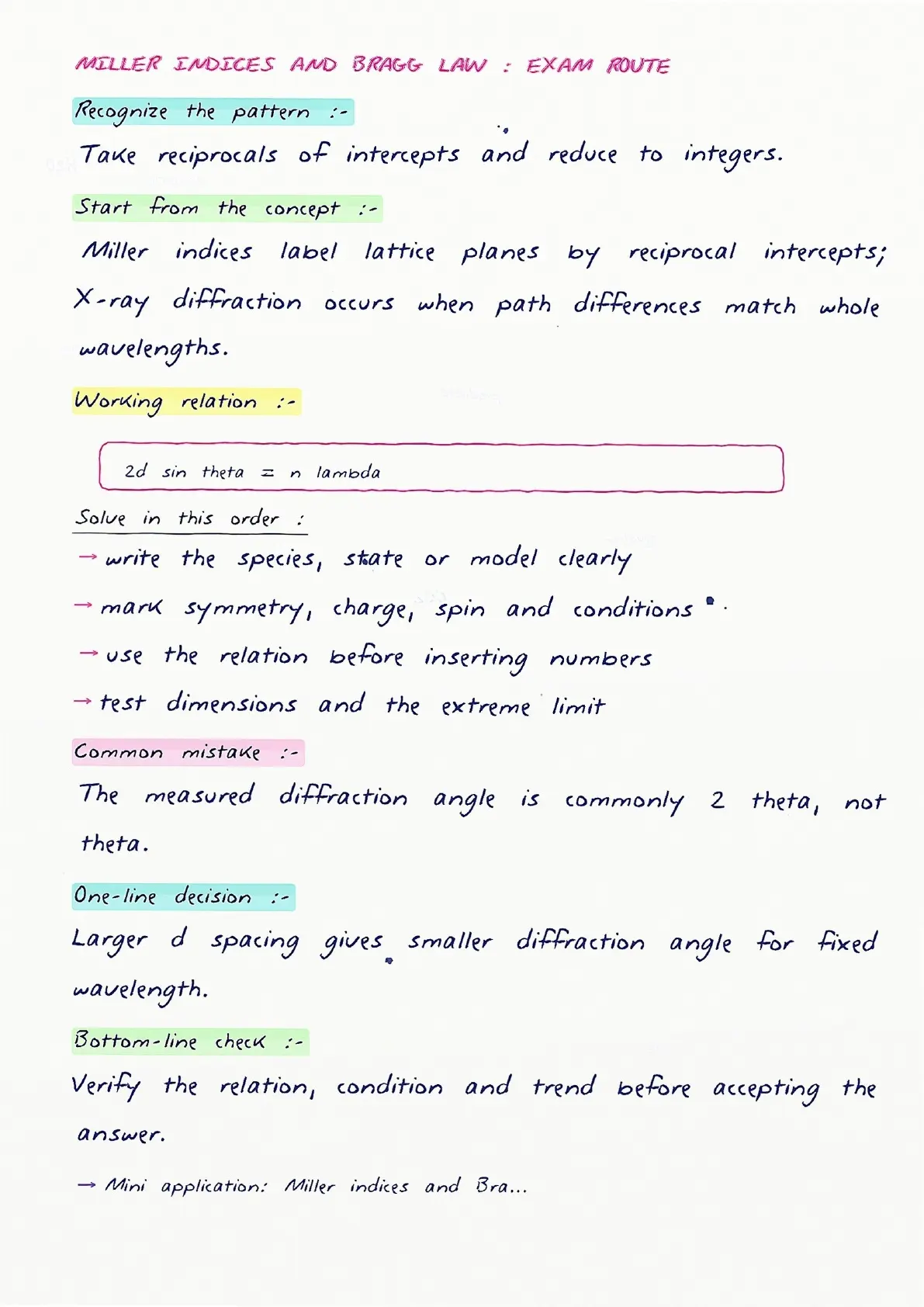
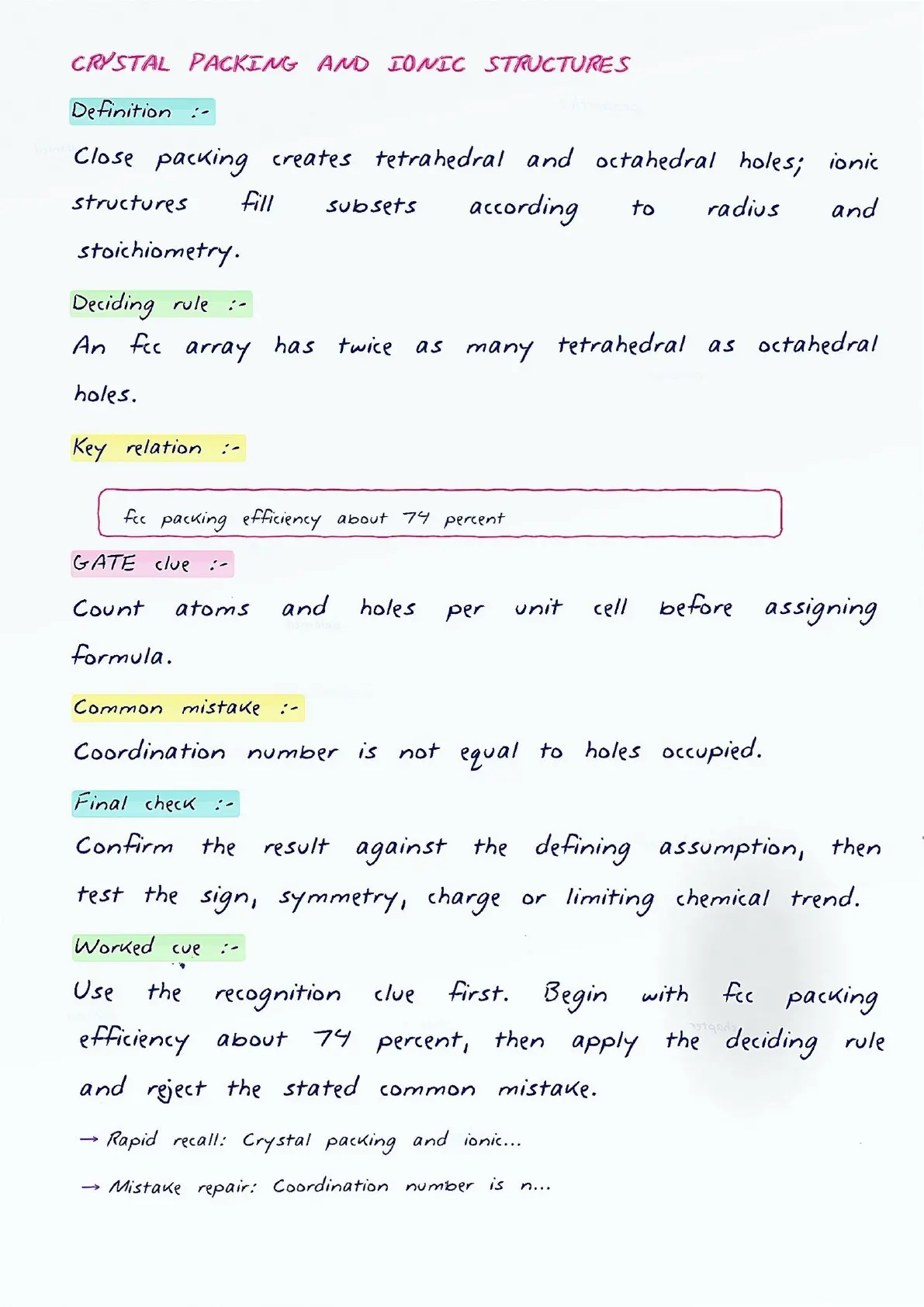
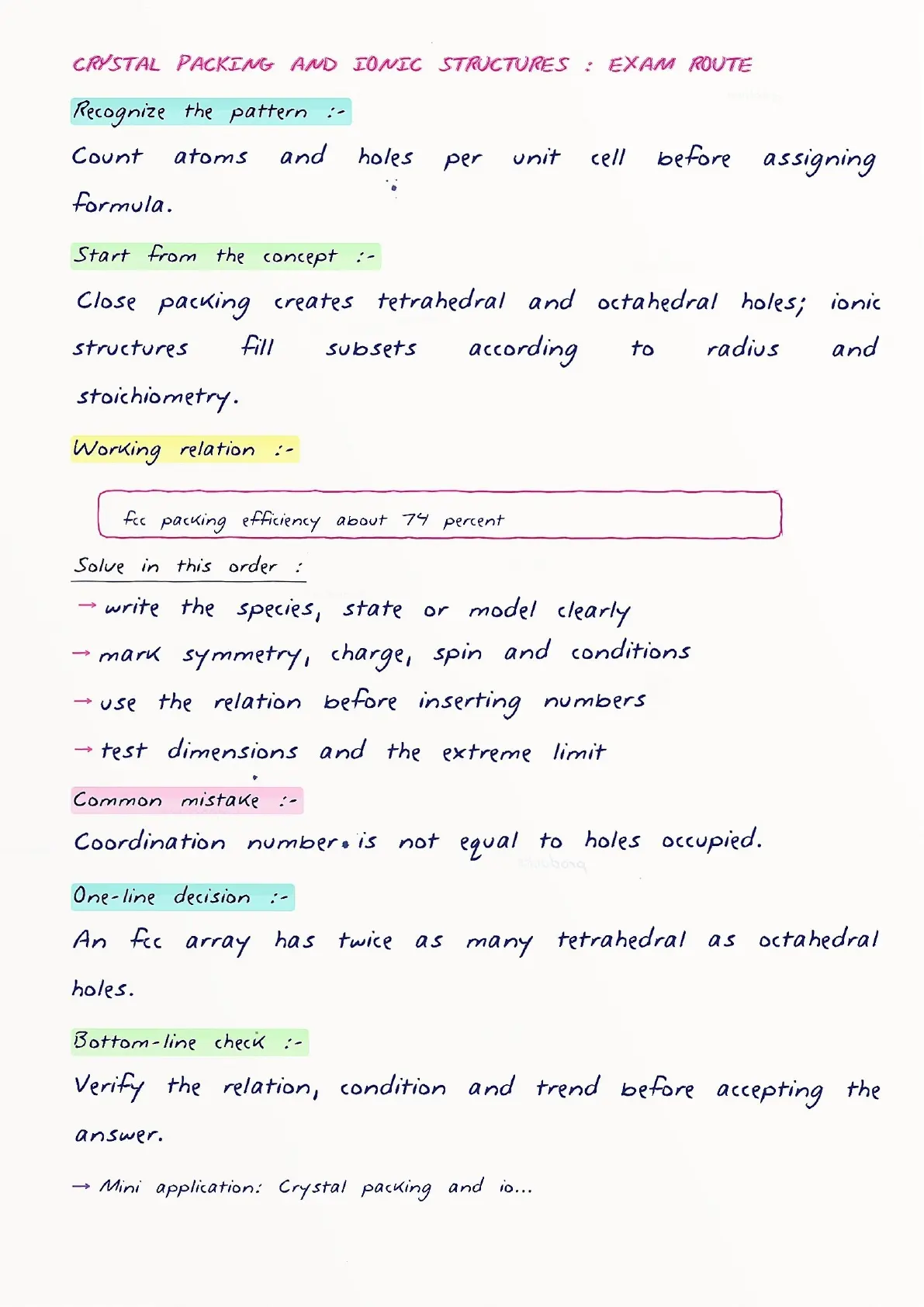
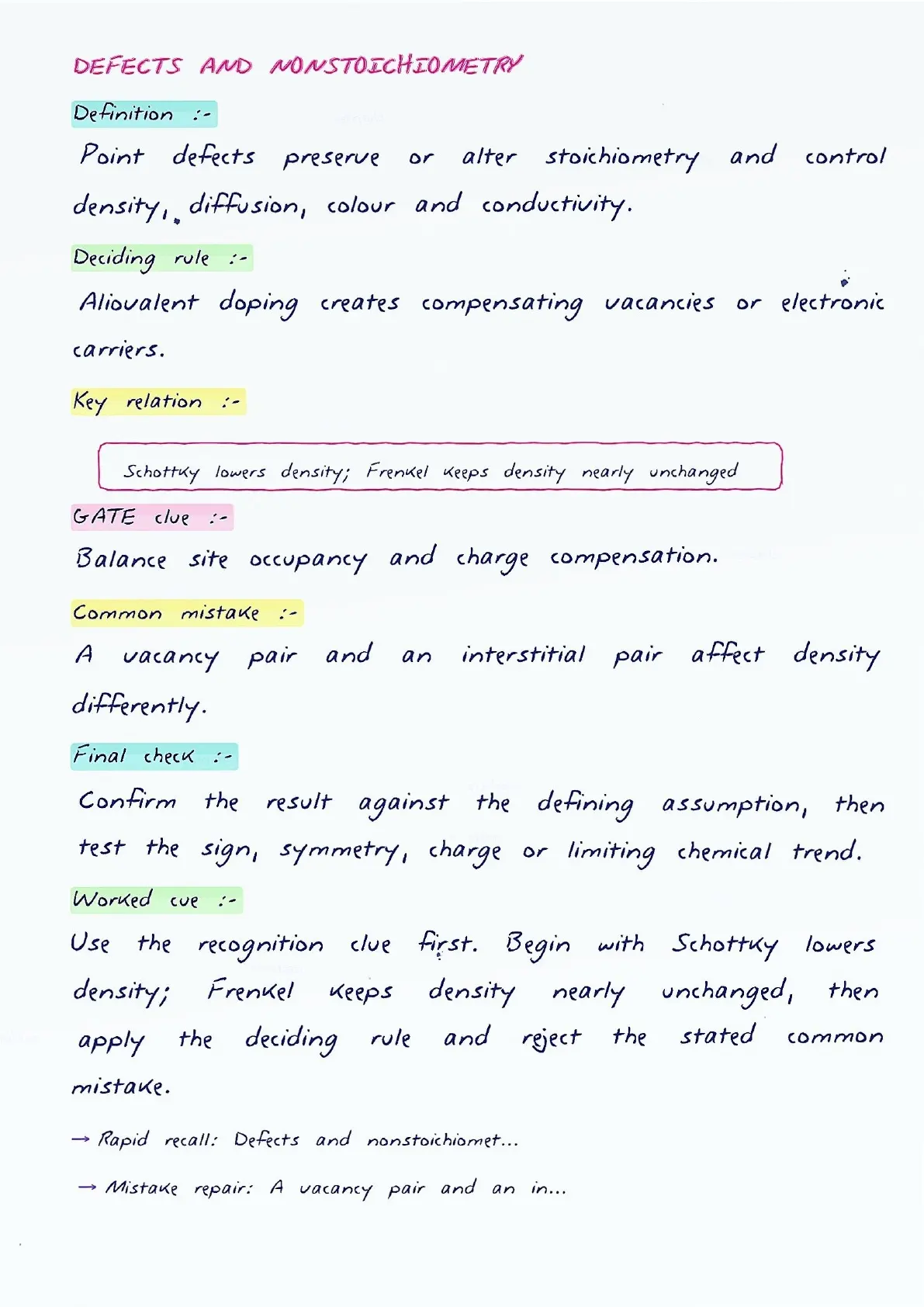
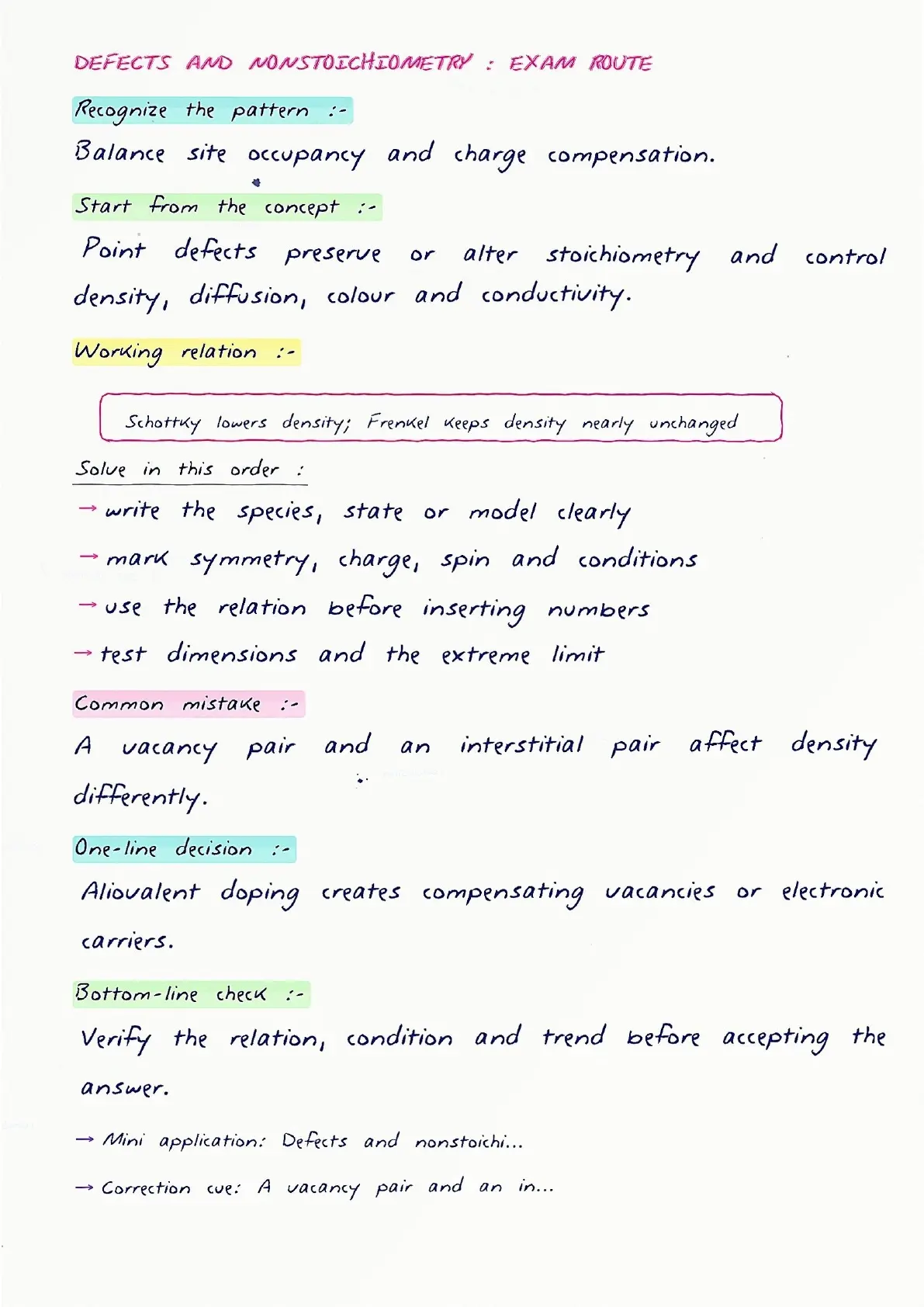
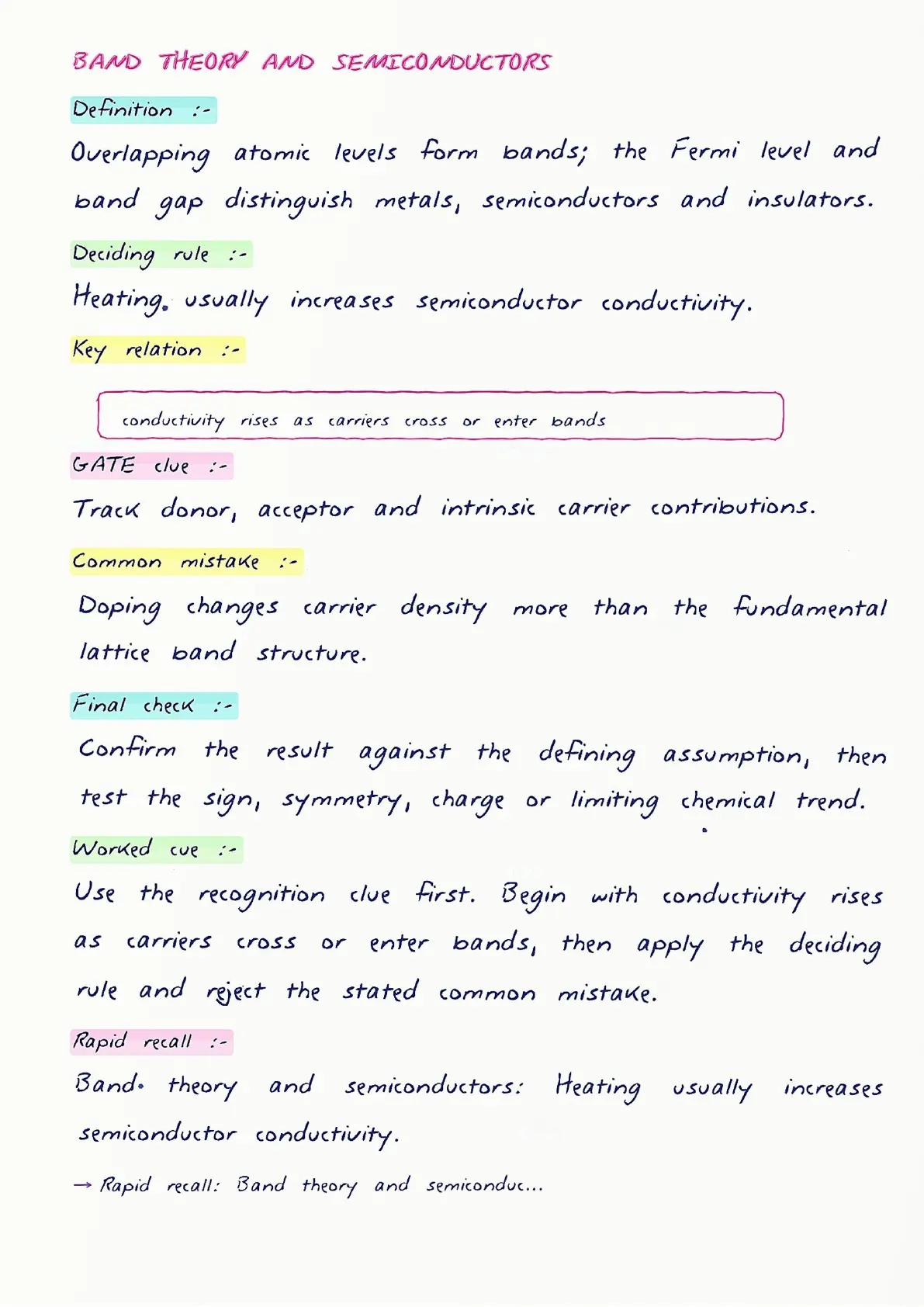
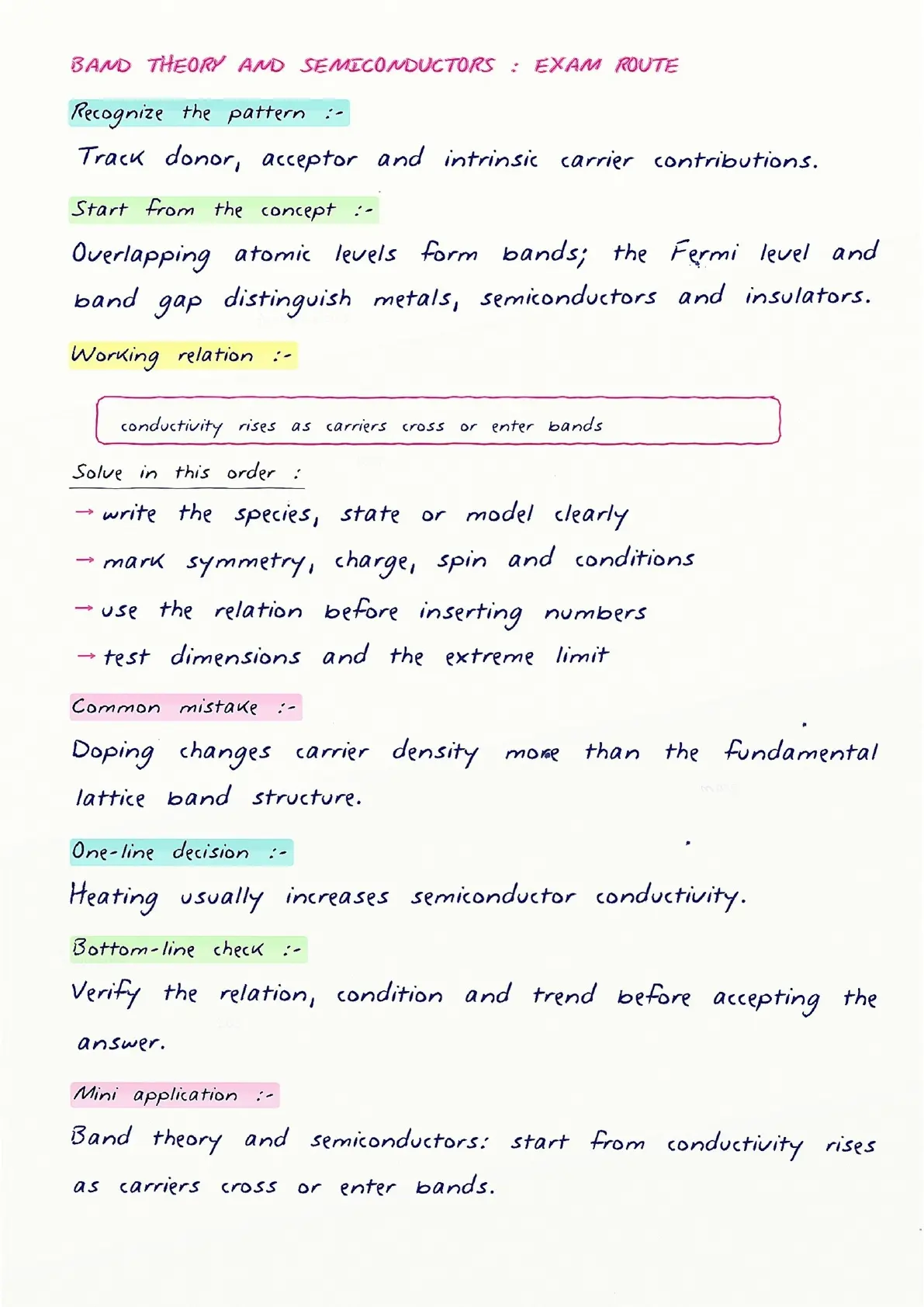
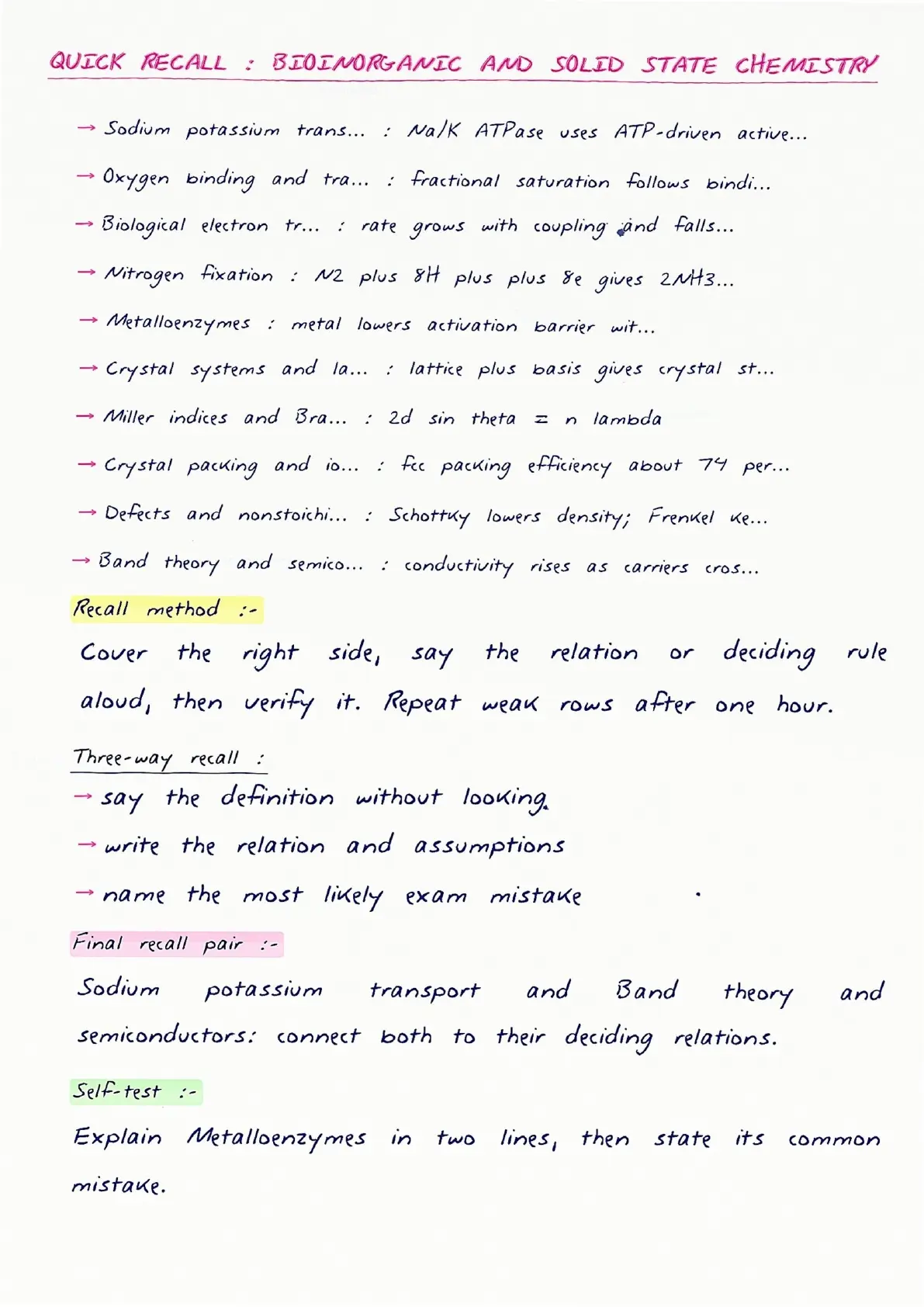
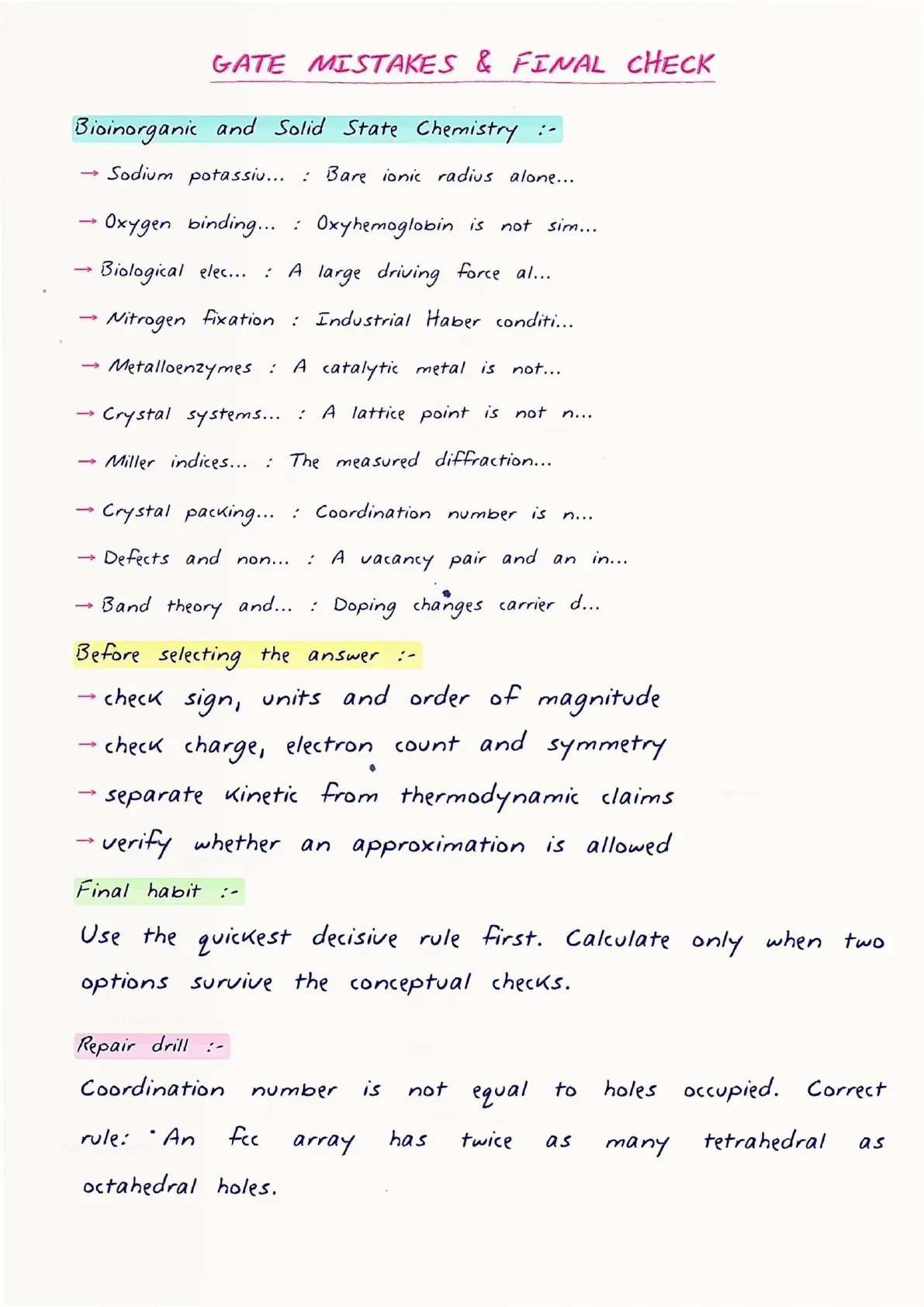
The notes carry hand-drawn diagrams for the heme unit, oxygen binding in haemoglobin and myoglobin, close-packed unit cells, and clear band diagrams for metals, insulators, and semiconductors. A short revision sheet collects the key structures and trends, and every result is explained step by step so you follow the reasoning.
- Full topic in one PDF, covering both the bioinorganic and solid state halves.
- Key structures and trends for each subtopic, with the reason behind them.
- Hand-drawn diagrams and a revision sheet for fast last-day revision.
What These GATE Bioinorganic and Solid State Notes Cover
The notes explain how metal centres do real work in proteins, and how atoms pack to give a solid its properties. Each idea comes in plain words first, then the structure, trend, or diagram you use in the exam. They stay close to the GATE Chemistry syllabus, so nothing important is dropped.
- Clear meaning of each metalloprotein and its metal centre.
- Crystal systems and close packing shown with labelled unit cells.
- Hand-drawn band diagrams for conductors, insulators, and semiconductors.
- A revision sheet that collects every key structure in one place.
GATE Bioinorganic and Solid State Quick Revision
Source: SP Chemistry Classes on YouTube
Topics Covered in GATE Bioinorganic and Solid State
The notes split cleanly into the two halves and follow the standard GATE order. The bioinorganic part builds from metalloproteins to electron transfer, while the solid state part builds from crystal structure to band theory. The list below matches the official syllabus.
- Metalloproteins and their active metal centres, such as iron, zinc, and copper.
- Oxygen carriers like haemoglobin, myoglobin, and haemocyanin.
- Electron transfer proteins, including cytochromes and iron-sulphur clusters.
- Crystal systems and the seven lattice types with their unit cells.
- Close packing in solids, with hexagonal and cubic arrangements.
- Band theory of solids and the meaning of the band gap.
- Semiconductors, including intrinsic, n-type, and p-type behaviour.
How the Notes Are Organised
The bioinorganic pages come first and read as a single flow, from a simple metal centre up to full electron transfer chains. The solid state pages follow, moving from crystal geometry to close packing and then to band theory and semiconductors. A revision sheet near the end pulls the key points together.
Because each subtopic stands on its own, you can open just one page for a quick recap and match it to whatever you are practising that day.
How GATE Bioinorganic and Solid State Links to Other Topics
This topic does not stand alone in the GATE Chemistry paper. It leans on ideas from other parts of the syllabus, so revising it well earns marks in more than one place. The notes point out these links as they come up.
- Bioinorganic Chemistry uses Coordination Chemistry for its metal centres and geometry.
- Crystal field ideas explain why certain metal sites bind oxygen the way they do.
- Solid State links to physical chemistry through band theory and the band gap.
- Semiconductor behaviour connects to electronic structure and doping trends.
Important Topics in GATE Bioinorganic and Solid State
A few areas appear in the GATE Chemistry paper often and carry most of this topic's marks. If your time is short, revise these first and make sure you can recall the structures and trends without slips, since they are the surest source of marks.
- Oxygen carriers, especially how haemoglobin and myoglobin bind oxygen.
- Electron transfer proteins and the role of iron in cytochromes.
- Close packing and counting atoms in a unit cell.
- Band theory and the band gap that separates metals from insulators.
- Semiconductors, with the difference between n-type and p-type doping.
How to Prepare GATE Bioinorganic and Solid State with Handwritten Notes
This topic rewards clear recall of structures and trends more than long calculation, so use the notes as a theory base beside steady practice. Read a subtopic, note its key diagram, then solve a few previous year questions on it before you move on. Return to the notes before mock tests to refresh the ideas quickly.
- First read: cover both halves once to build the base.
- Second pass: focus on oxygen carriers, close packing, and band theory.
- Solve previous year questions subtopic by subtopic beside the notes.
- Final week: revise the diagrams and the quick revision sheet.
Why These Notes Help You Score Better
Handwritten notes are quick to scan and easy to recall under exam pressure, which is why they work well for revision in the final weeks. A short, visual page is faster to go through than a full textbook chapter, and each diagram sits right next to the point it explains, so the link stays clear for students.
GATE Chemistry Bioinorganic and Solid State Handwritten Notes FAQs
Ques. Do these notes cover the full GATE Chemistry Bioinorganic and Solid State topic?
Ans. Yes. They cover both halves, from metalloproteins and oxygen carriers through to crystal systems, close packing, band theory, and semiconductors, in the standard GATE order.
Ques. How much weightage does this topic carry in GATE Chemistry?
Ans. It is a steady scorer in the Inorganic Chemistry section, usually worth about 3 to 5 marks, and it also links to Coordination Chemistry and physical chemistry.
Ques. Can I rely only on these notes for this topic?
Ans. Use them as your theory and revision base, but pair them with regular previous year practice, since GATE often tests structures and trends through applied questions.
Ques. Are the notes useful for last-minute revision?
Ans. Yes. The subtopic-wise pages, the hand-drawn diagrams, and the revision sheet are made for quick revision in the days before the exam.



Comments