




JEE Main Laws of Motion handwritten notes, free to download as a 20-page PDF. The topic is worth about 12 to 16 marks each year and takes roughly ten days to learn, so it is one of the first worth finishing.
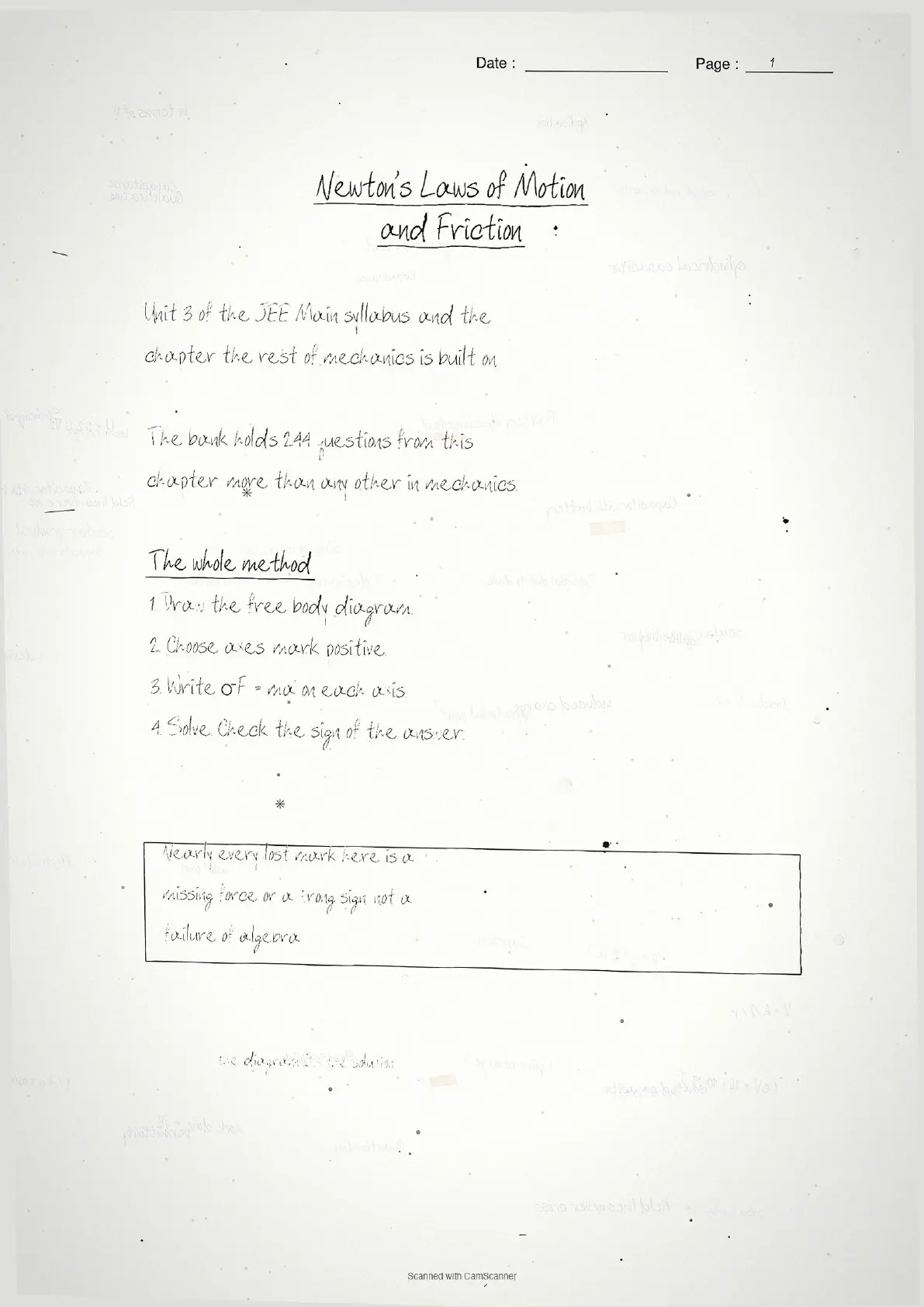
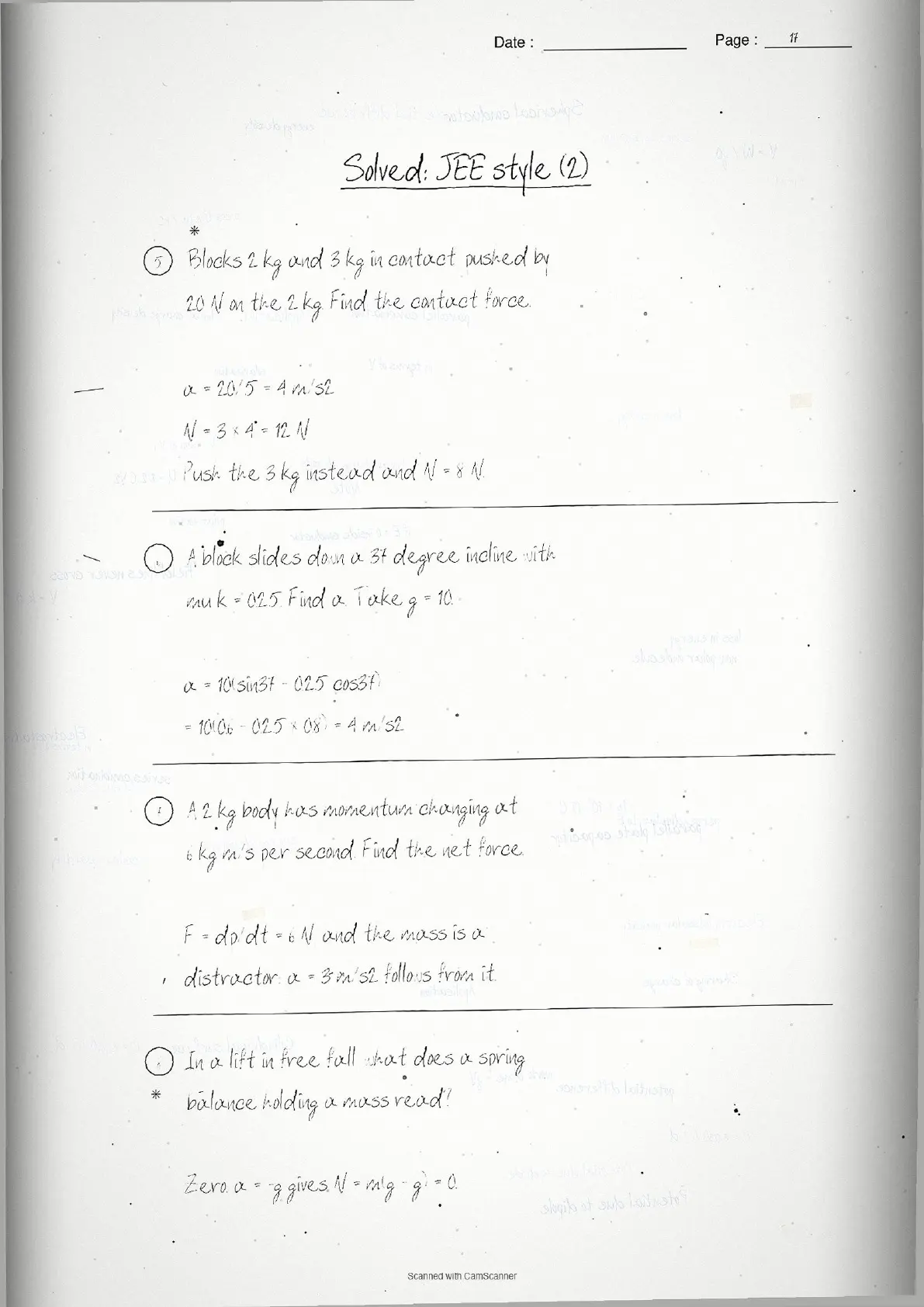
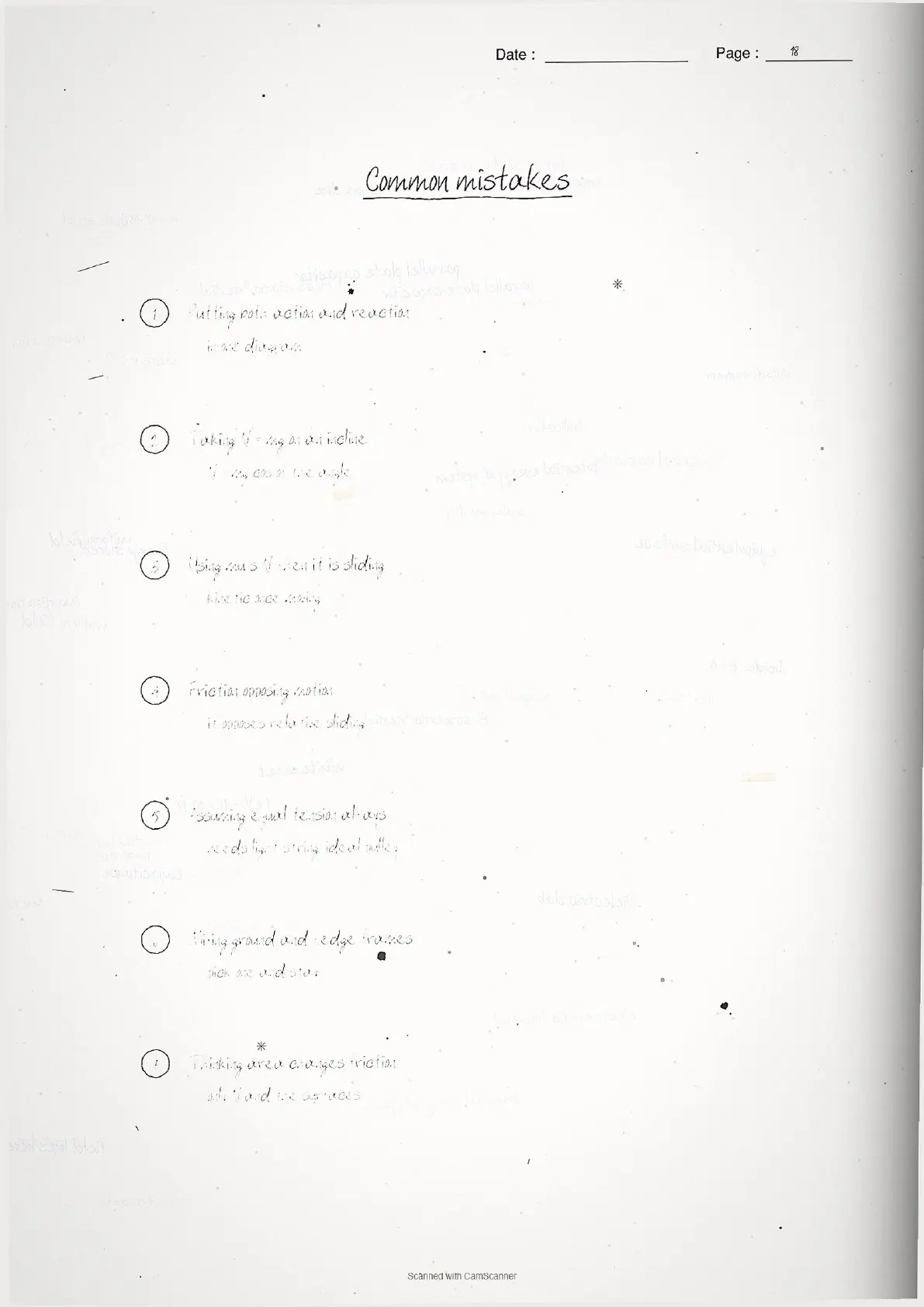
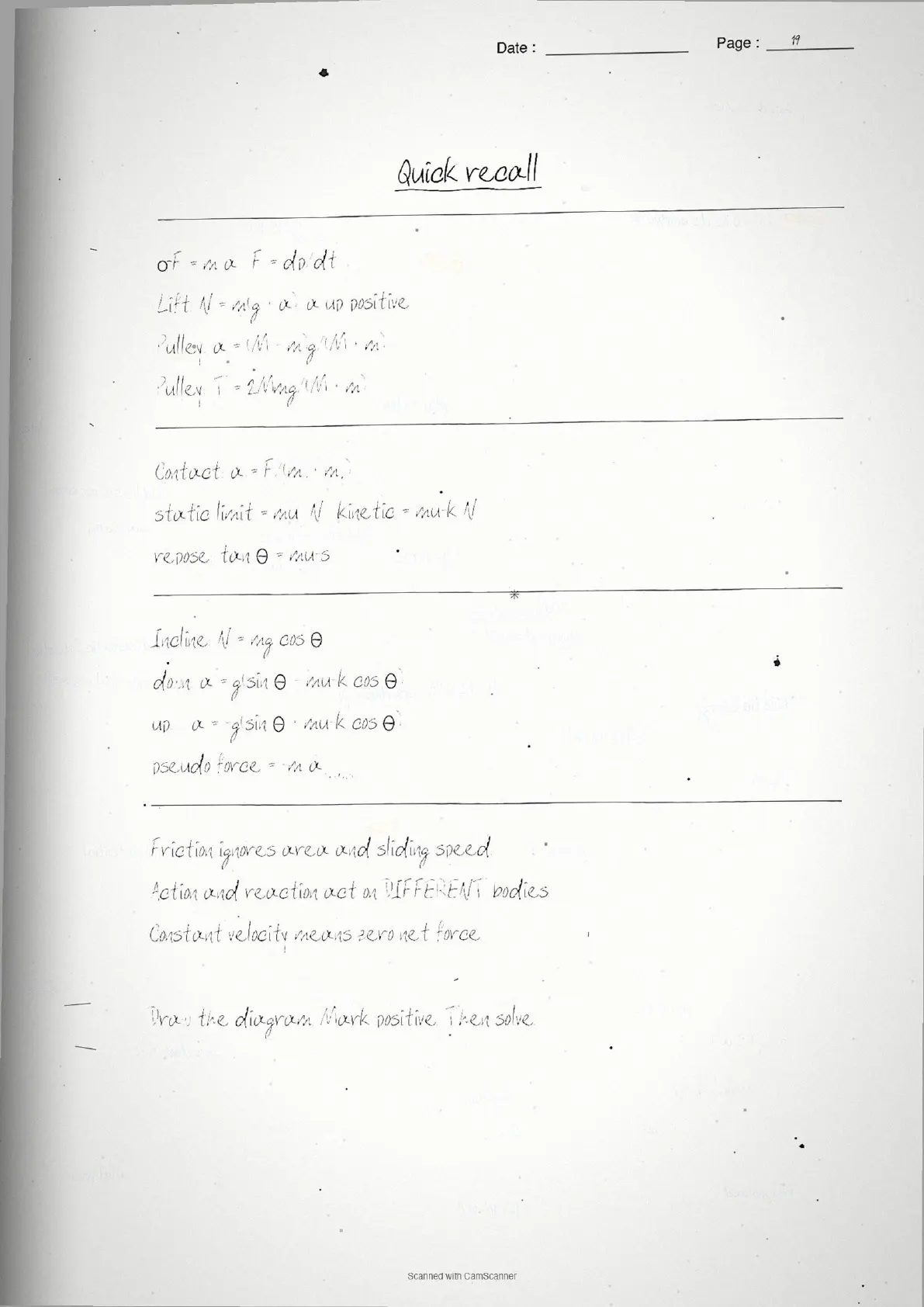
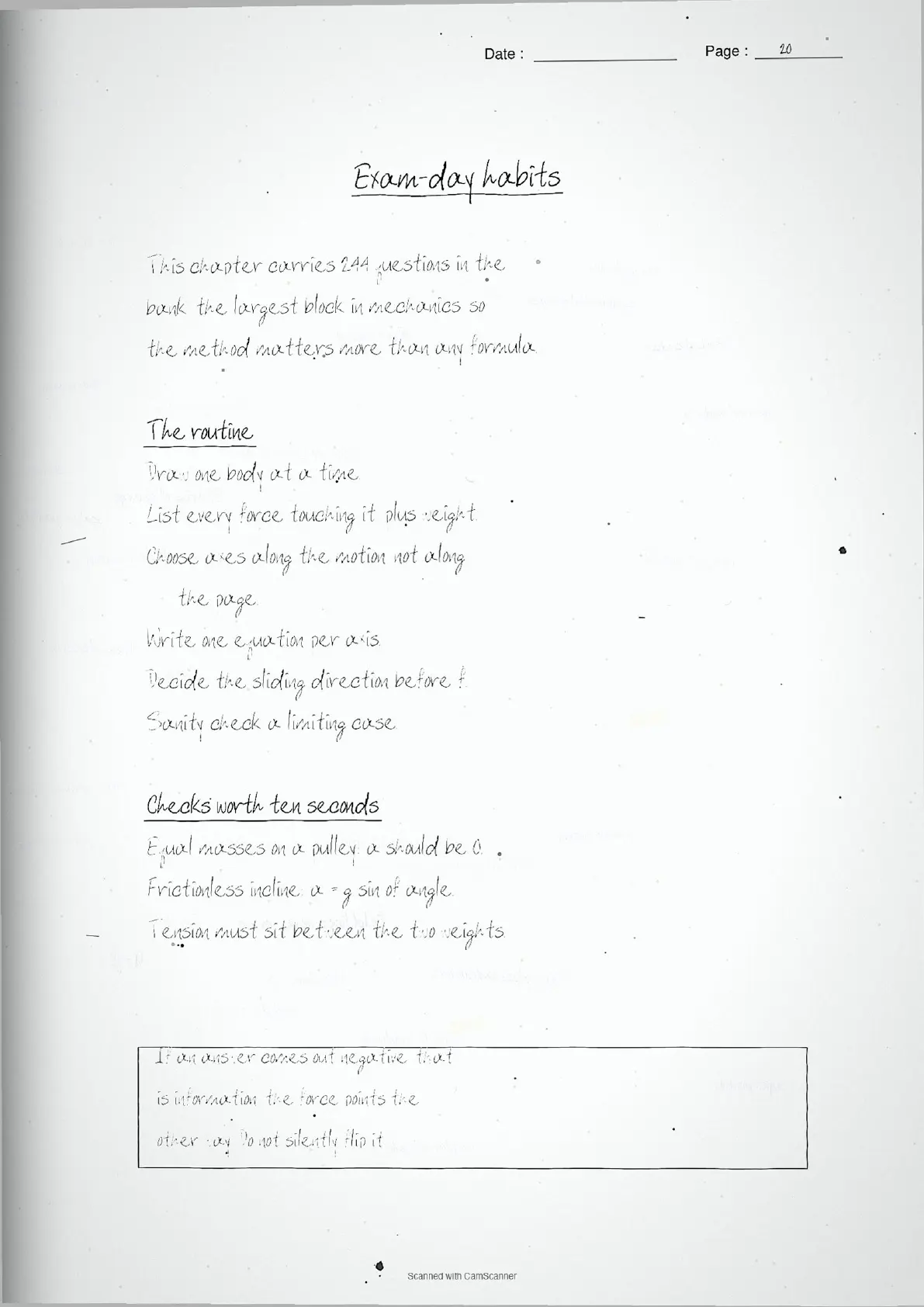
Written to the official NTA syllabus for Unit 3, and structured the way the questions are actually solved: draw the free body diagram, choose axes, write one equation per axis, then check the sign of the answer.
Why This Unit Carries the Most Questions in Mechanics
The previous-year bank holds 244 questions from this chapter, more than any other chapter in mechanics. Nearly every lost mark is a missing force or a wrong sign rather than a failure of algebra.
That is why the notes treat the diagram as the solution and the algebra as bookkeeping.
The Three Laws, Stated Usefully
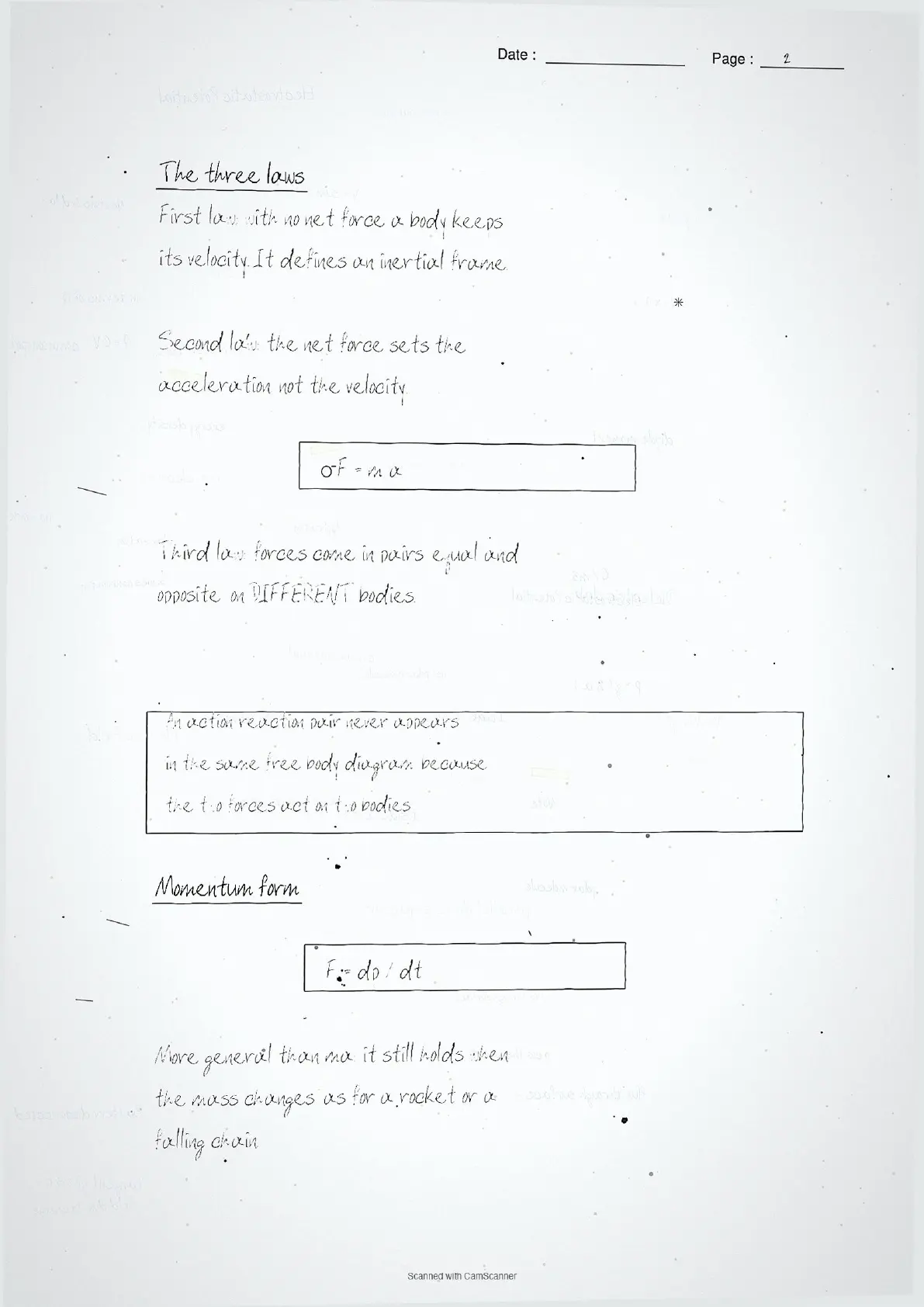
- First law defines an inertial frame: with no net force, velocity is unchanged
- Second law sets the acceleration, not the velocity
- Third law pairs act on different bodies, so they never appear in one free body diagram
The momentum form, force as the rate of change of momentum, is the more general statement. It still holds when the mass itself changes, as for a rocket or a falling chain.
Impulse and Conservation of Momentum
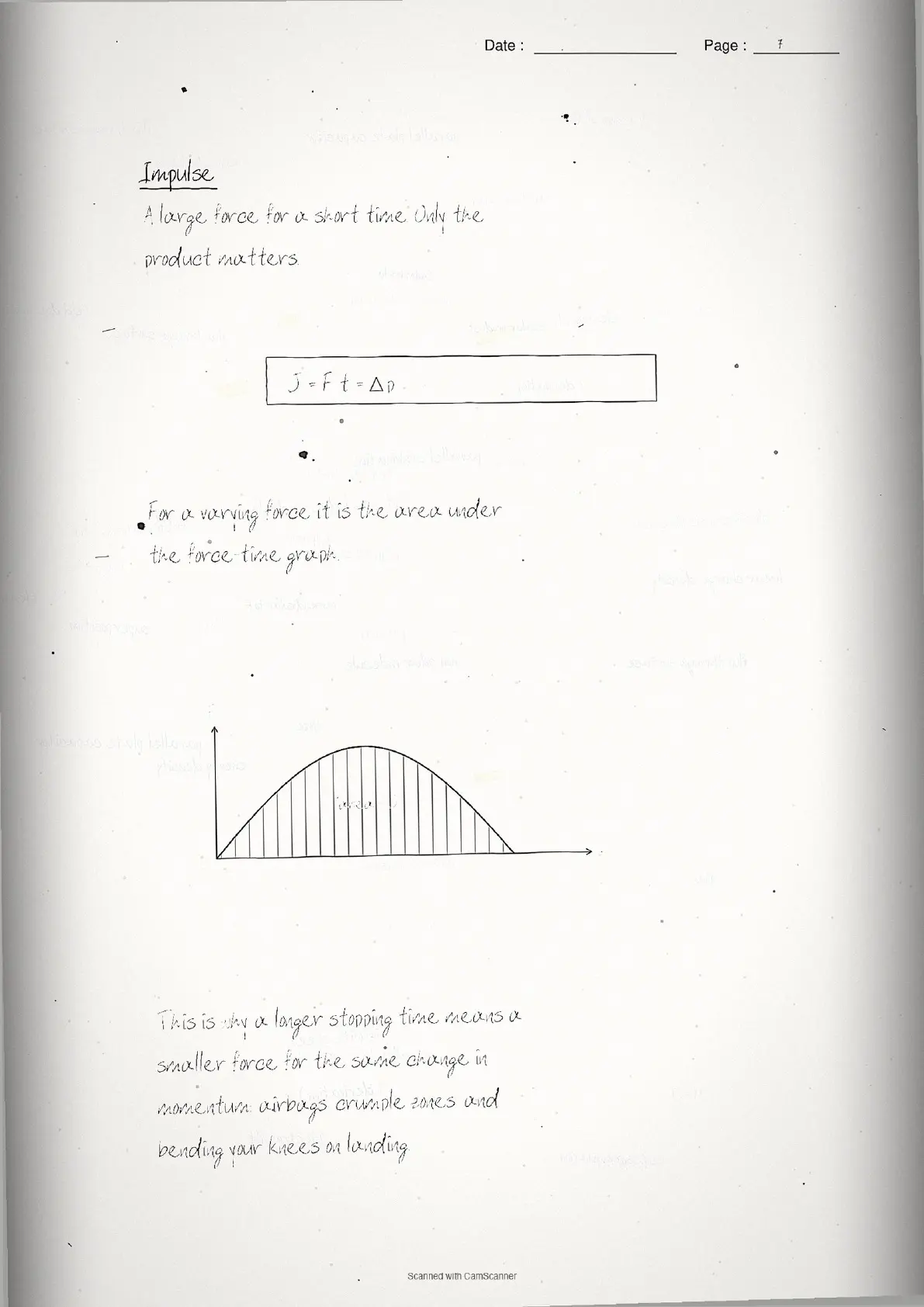
Impulse is force times time, and equals the change in momentum. For a varying force it is the area under the force-time graph, which is why a longer stopping time means a smaller force for the same change.
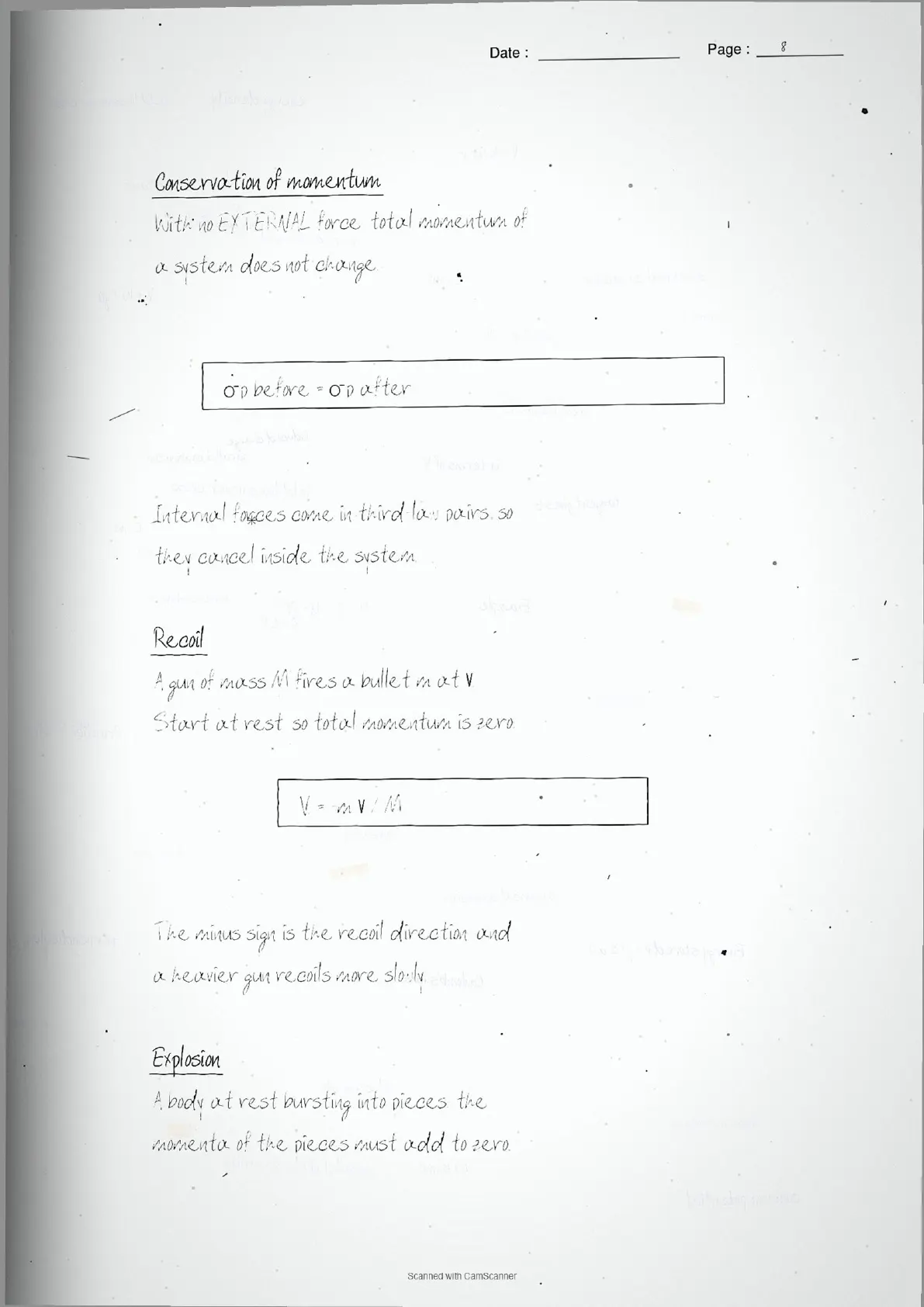
With no external force the total momentum of a system is conserved, because internal forces cancel in third-law pairs.
- Recoil: a heavier gun recoils more slowly, from momentum starting at zero
- Explosion: the momenta of all fragments must still add to zero
Equilibrium of Concurrent Forces
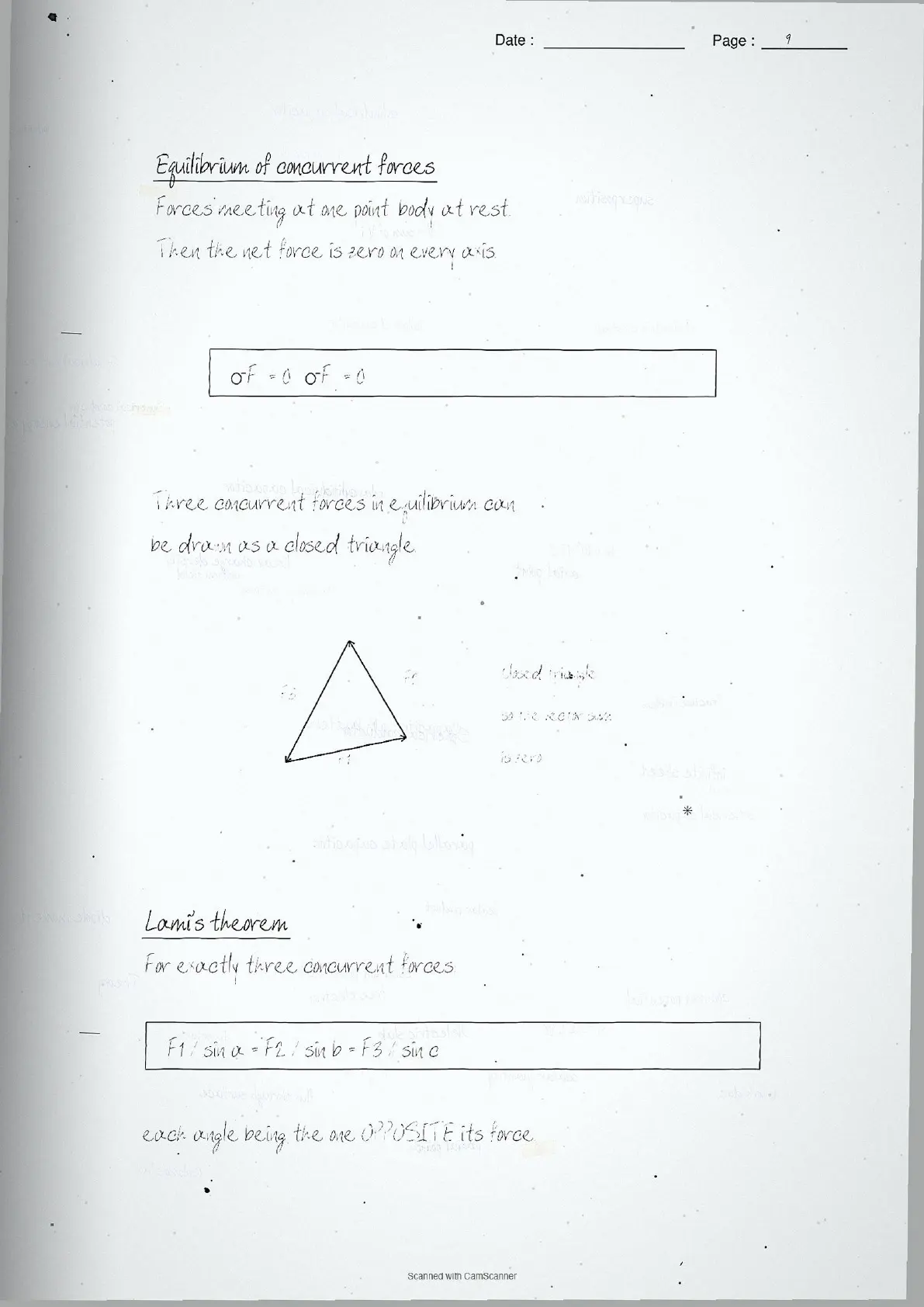
Forces meeting at a point with the body at rest give zero net force on every axis. Three such forces can be drawn as a closed triangle, and Lami's theorem relates each force to the sine of the angle opposite it.
Friction: Two Regimes, Then Three
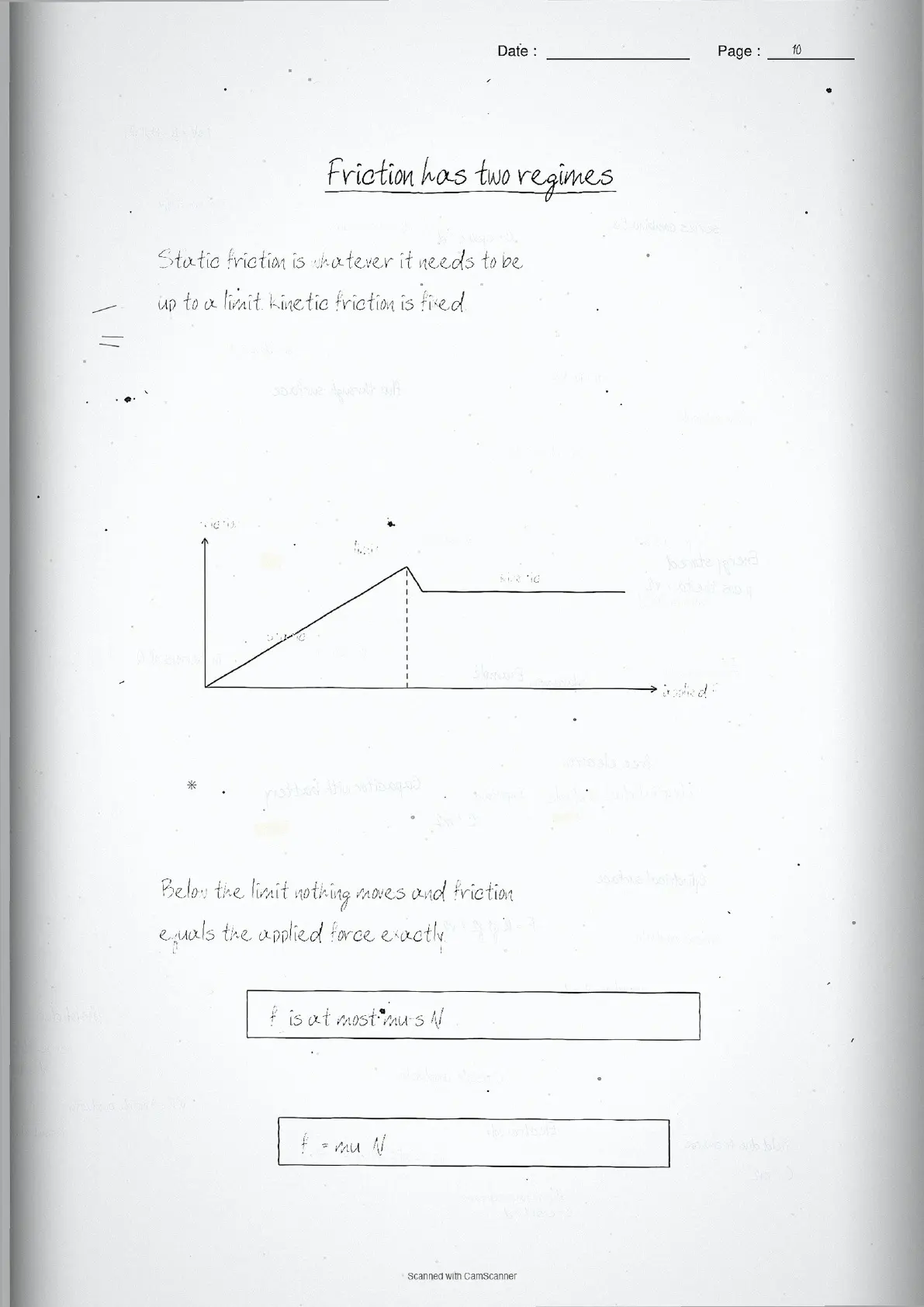
Static friction is whatever it needs to be, up to a limit. Kinetic friction is fixed once sliding starts. The notes draw the friction-against-applied-force graph so the kink at the limit is visible rather than asserted.
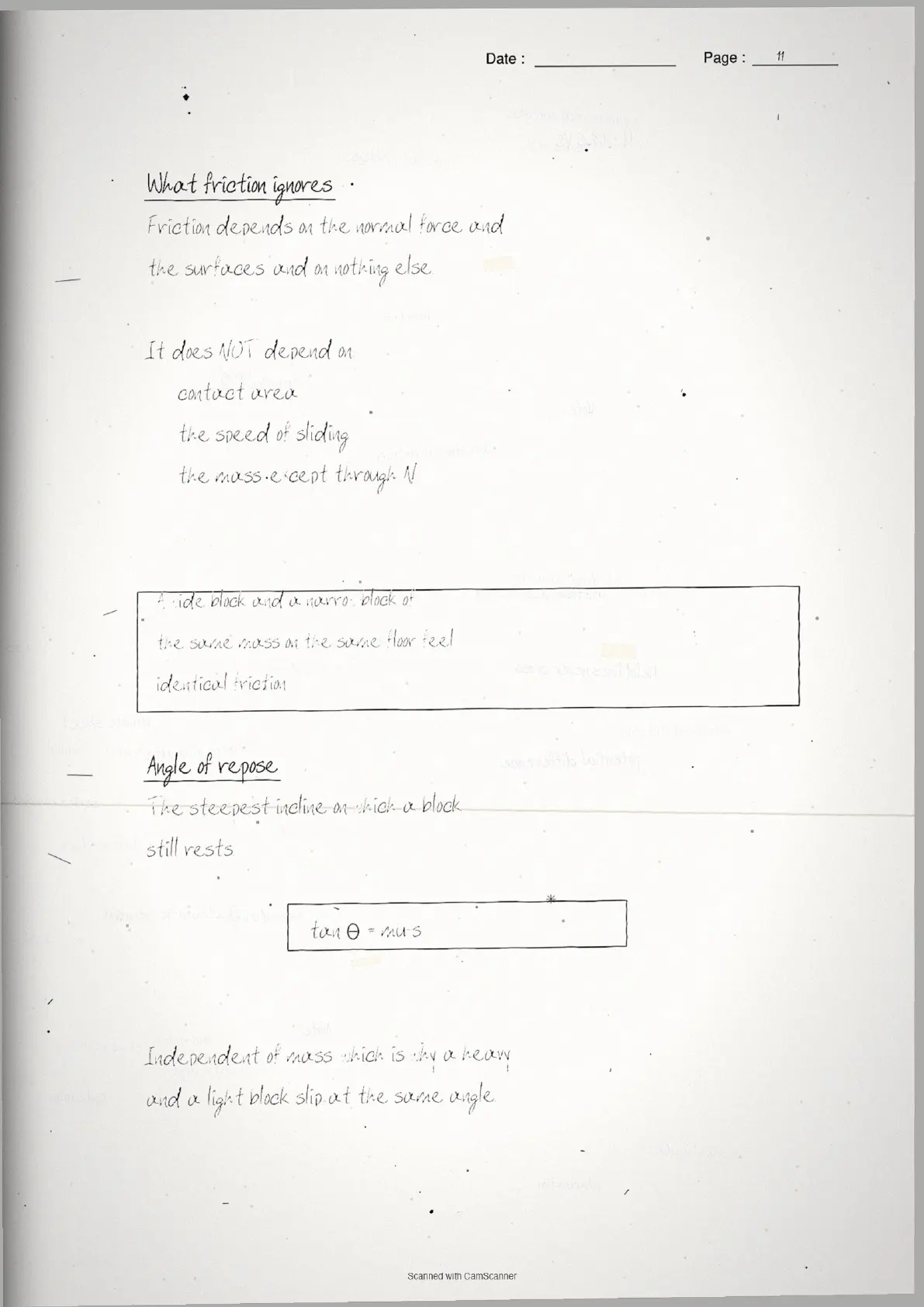
- Friction depends on the normal force and the surfaces, and on nothing else
- It does not depend on contact area or on sliding speed
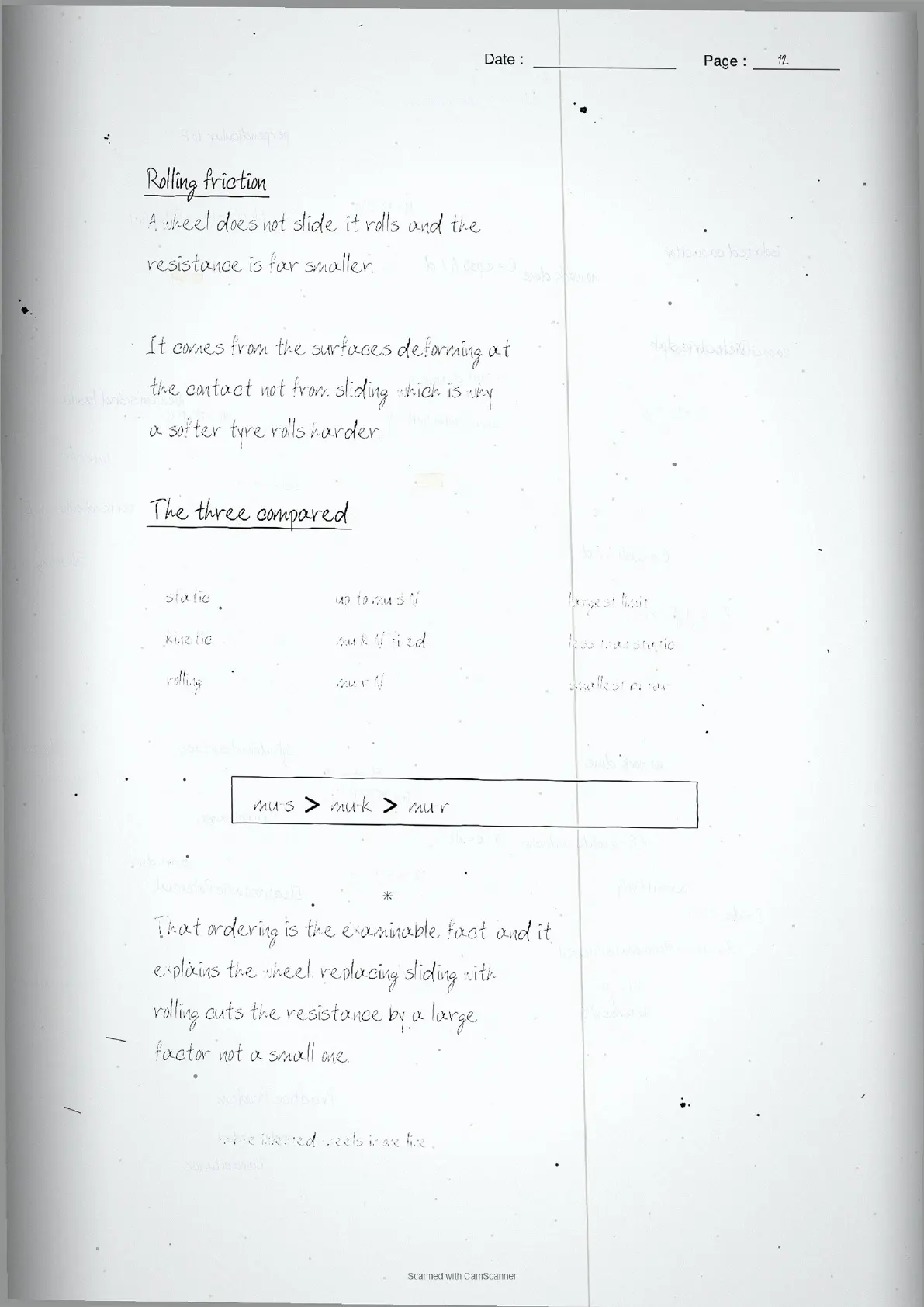
- Rolling friction is smaller again, which is the whole reason for the wheel
- The examinable ordering is static, then kinetic, then rolling
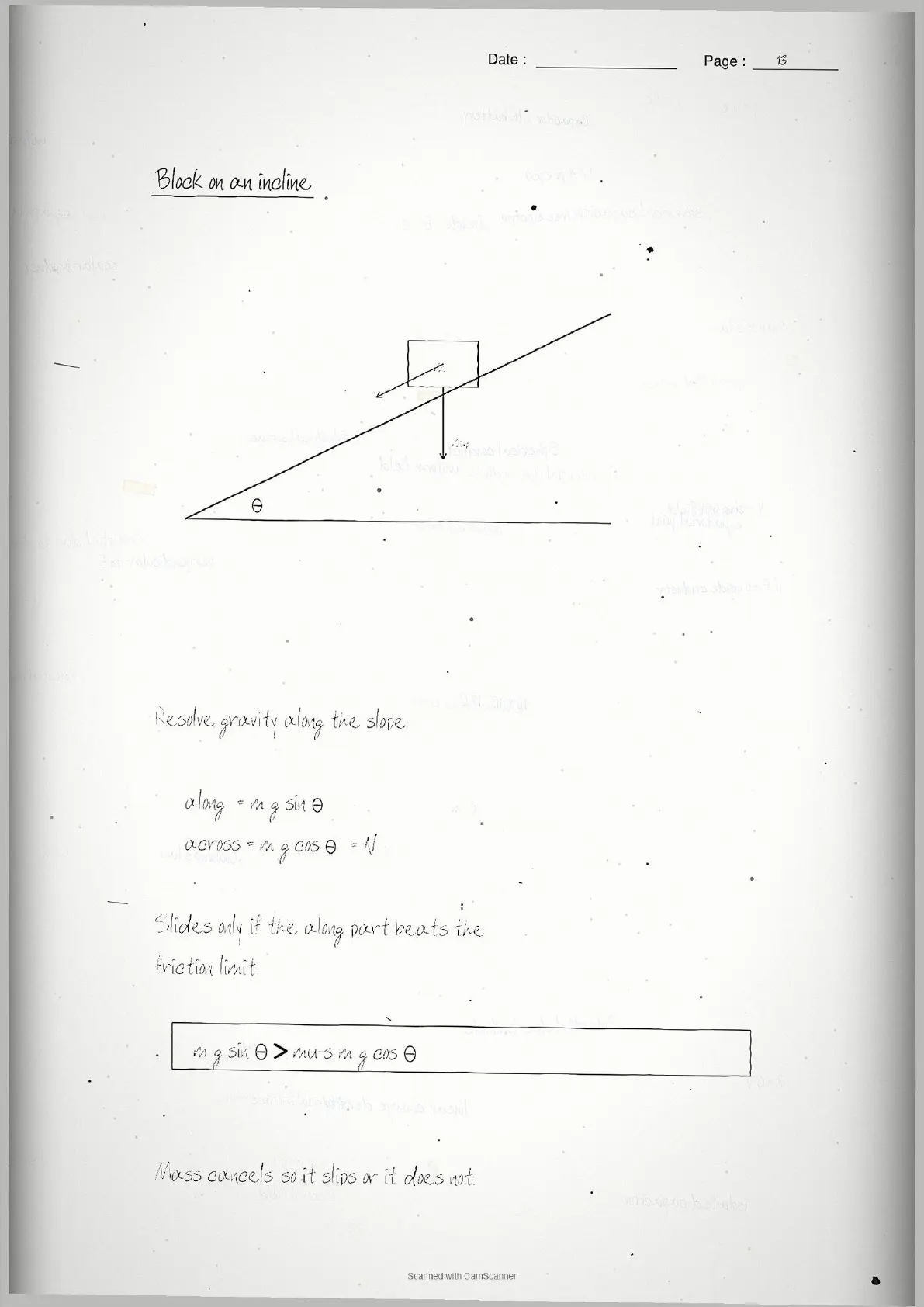
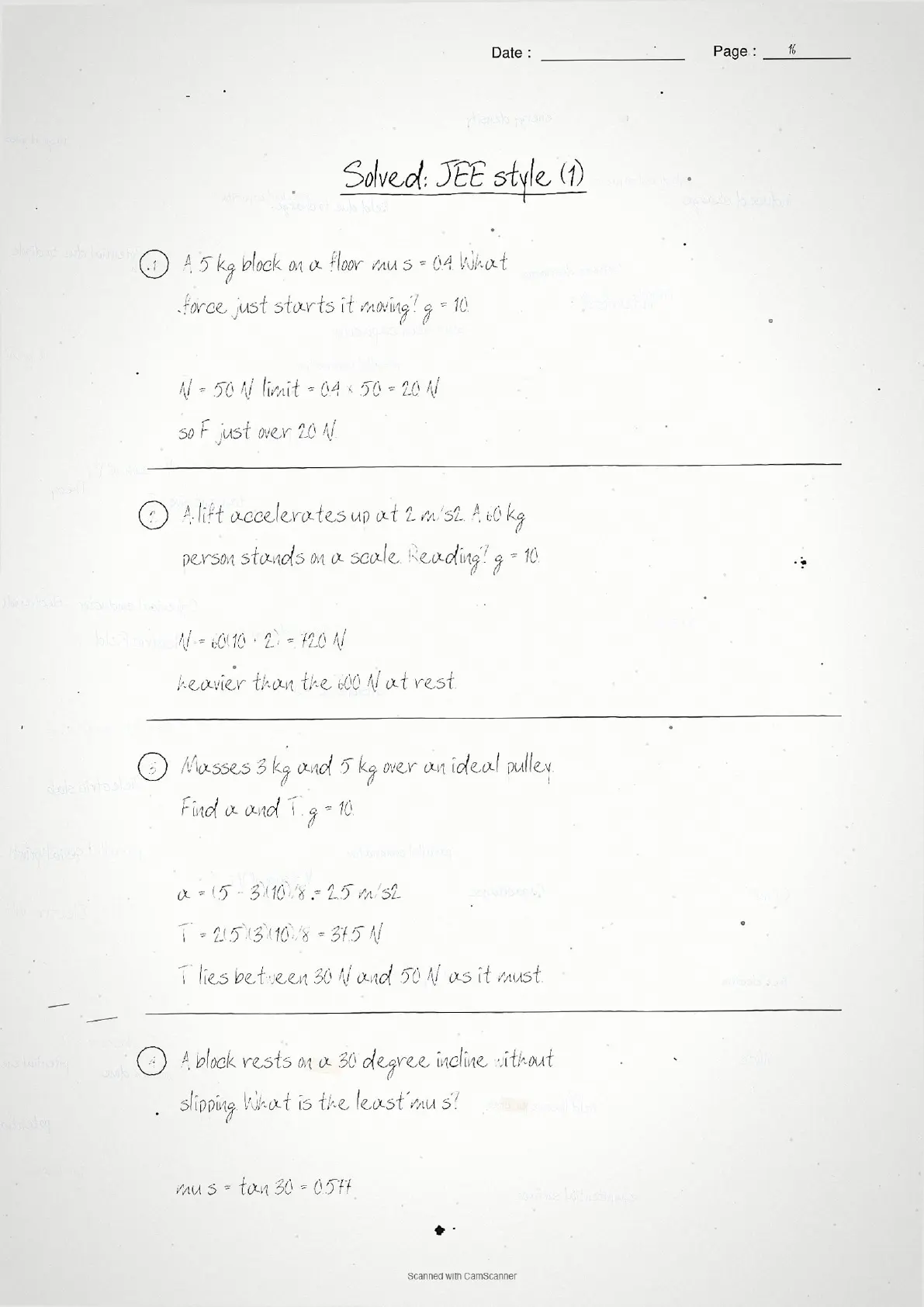
The angle of repose, where a block just rests on an incline, has a tangent equal to the coefficient of static friction and is independent of mass.
Lifts, Pulleys and Blocks
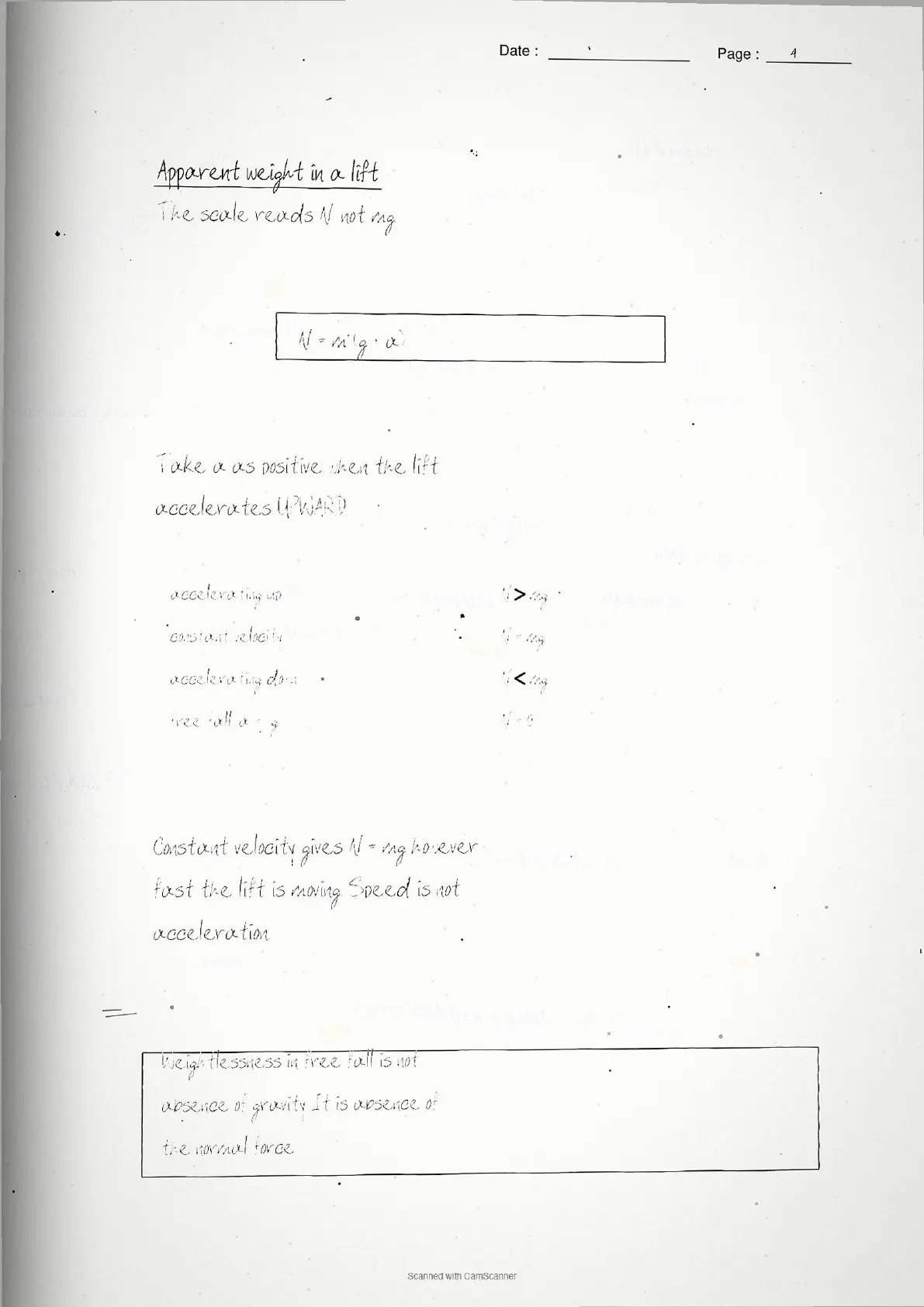
A scale in a lift reads the normal force, not the weight. Constant velocity gives the resting reading however fast the lift moves, because speed is not acceleration. In free fall the reading is zero, which is what weightlessness actually means.
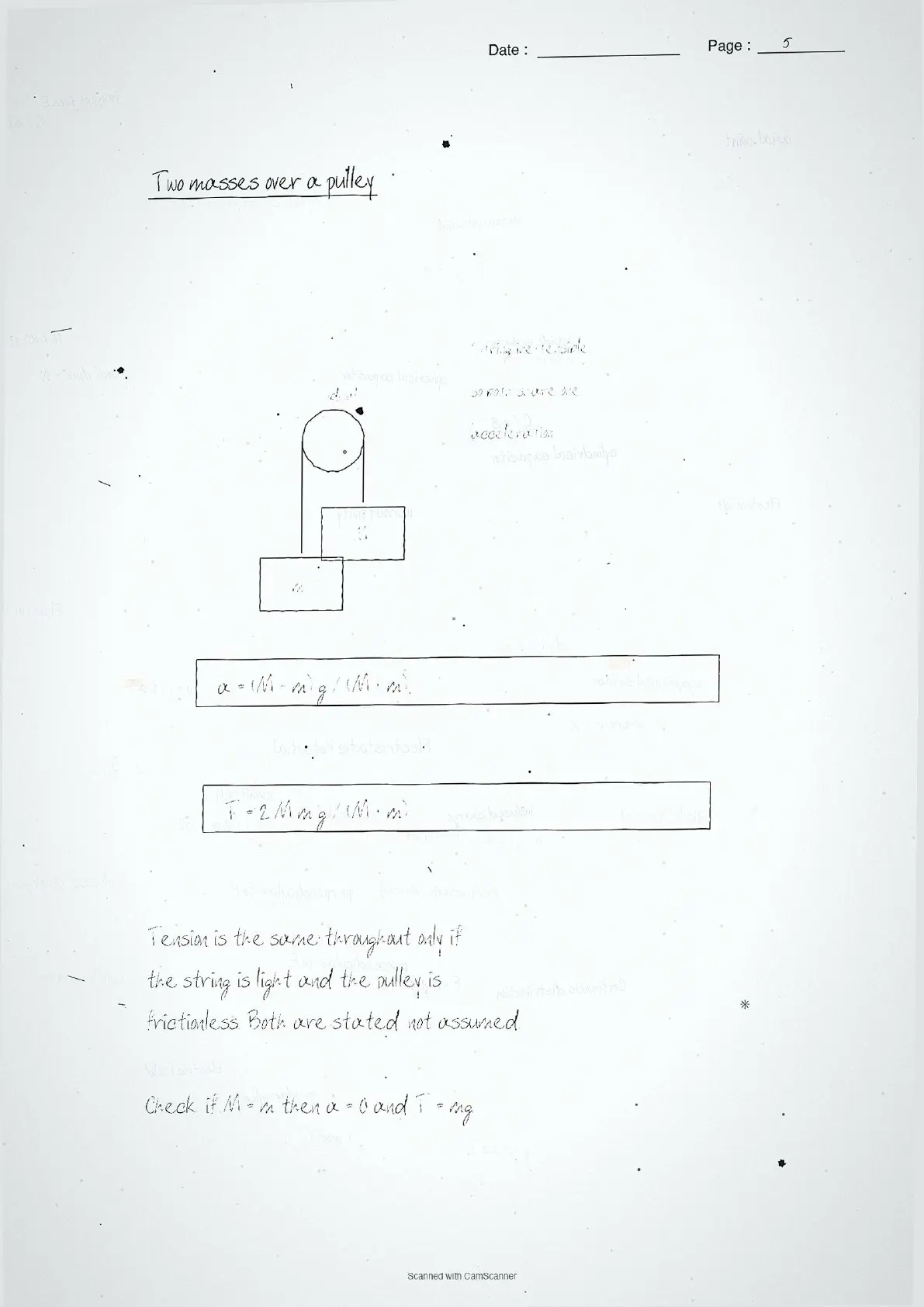
For two masses over an ideal pulley the string being inextensible is what forces one shared acceleration, and the tension always lands between the two weights, a check worth ten seconds.
Watch Laws of Motion Worked on a Board
Source: JEE Wallah
Where Students Lose Marks Here
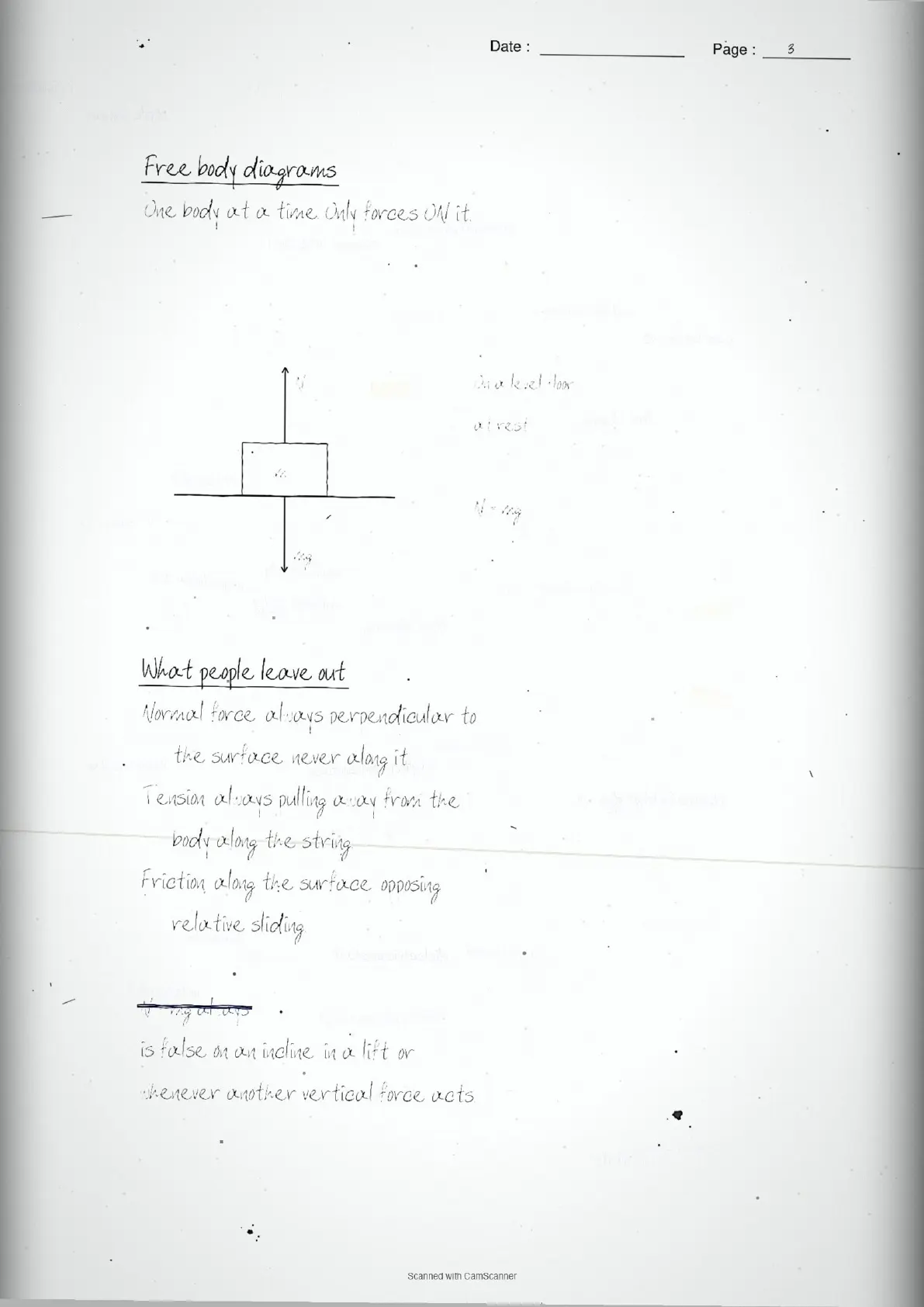
- Putting an action and its reaction in the same diagram
- Taking the normal force as the weight on an incline
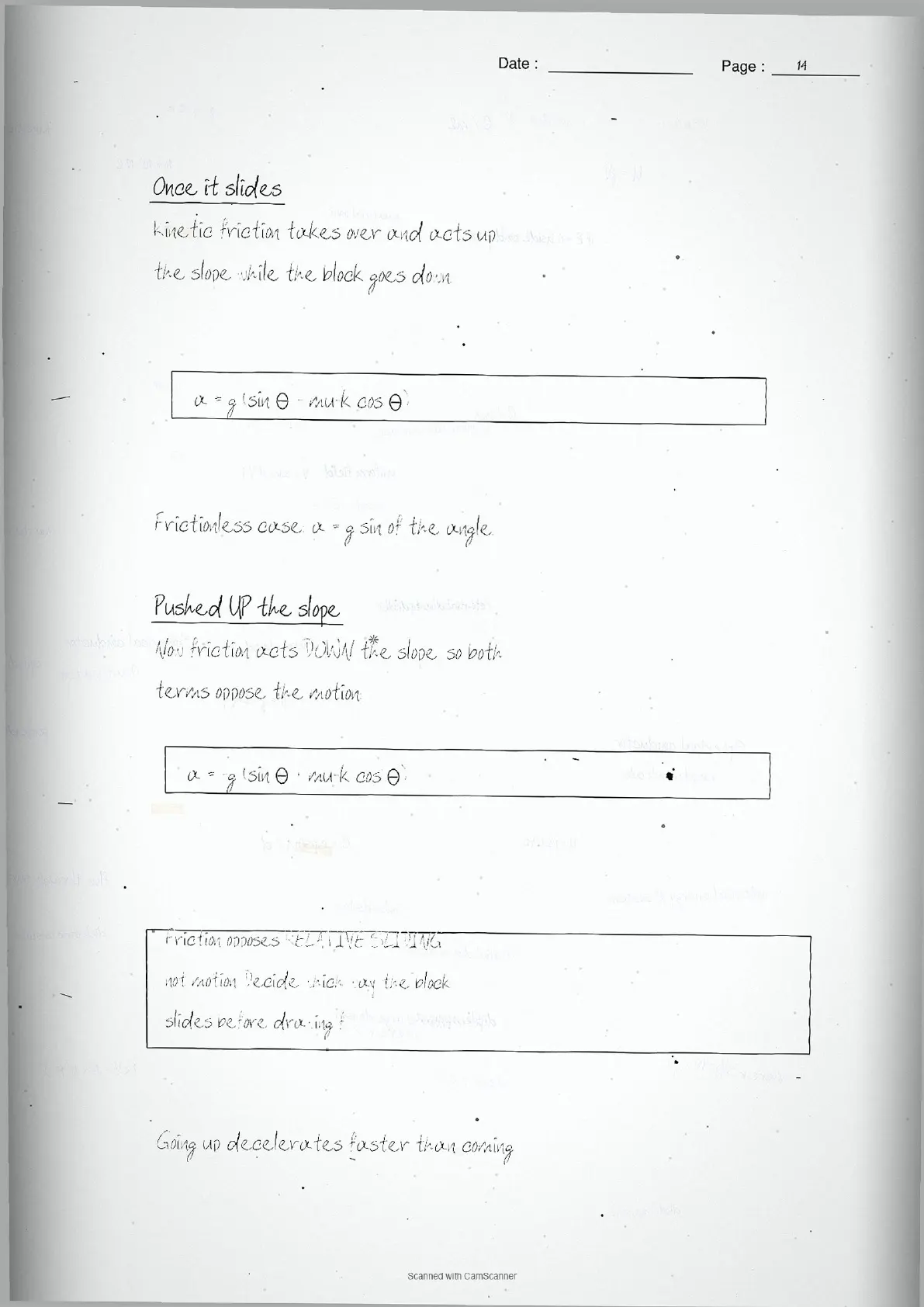
- Using the static coefficient once the block is already sliding
- Drawing friction opposing motion rather than opposing relative sliding
- Assuming equal tension without a light string and an ideal pulley
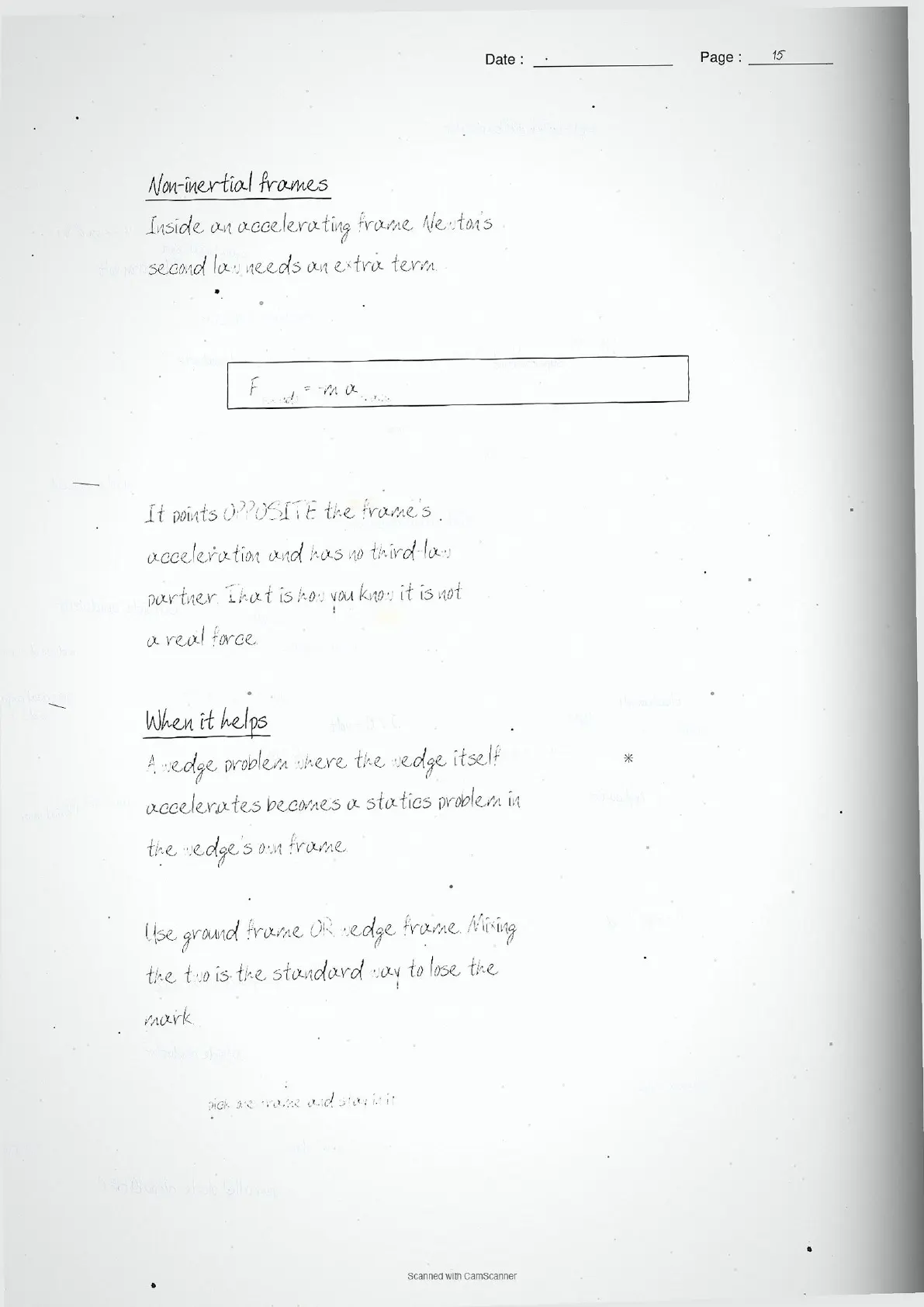
- Mixing ground-frame and wedge-frame equations in one solution
- Believing contact area changes the friction
How to Use These Notes
- Draw one body at a time and list every force touching it, plus weight
- Choose axes along the motion, not along the page
- Decide the sliding direction before drawing friction
- Sanity check a limiting case: equal masses on a pulley must give zero acceleration
If an answer comes out negative that is information, not an error: the force points the other way. Do not silently flip the sign.
JEE Main Laws of Motion Handwritten Notes FAQs
Ques. How important is Laws of Motion for JEE Main?
Ans. It is the largest chapter in mechanics by question count, with 244 questions in the previous-year bank. It also underpins work and energy, rotation and circular motion, so time spent here pays across the paper.
Ques. Why can action and reaction not be drawn in the same free body diagram?
Ans. Because they act on two different bodies. A free body diagram shows only the forces acting on the one body you have isolated, so its third-law partner belongs in a different diagram.
Ques. Does friction depend on the contact area?
Ans. No. It depends on the normal force and on the pair of surfaces, and on nothing else. A wide block and a narrow block of the same mass on the same floor experience identical friction.
Ques. What does weightlessness in a falling lift actually mean?
Ans. That the normal force is zero, not that gravity has gone. Gravity still acts, which is precisely why the lift and the person fall together and the scale reads nothing.
Ques. Can the notes be downloaded for free?
Ans. Yes. The full 20 page PDF can be read on this page and downloaded at no cost, so it can be printed or kept on a phone for revision.



Comments