



.jpg?h=35&w=35&mode=stretch)
JEE Main Moment of Inertia and Torque Handwritten Notes, free to download as a 20-page PDF. The topic is worth about 4 to 8 marks and takes roughly one day to learn, so treat it as a single focused sitting.
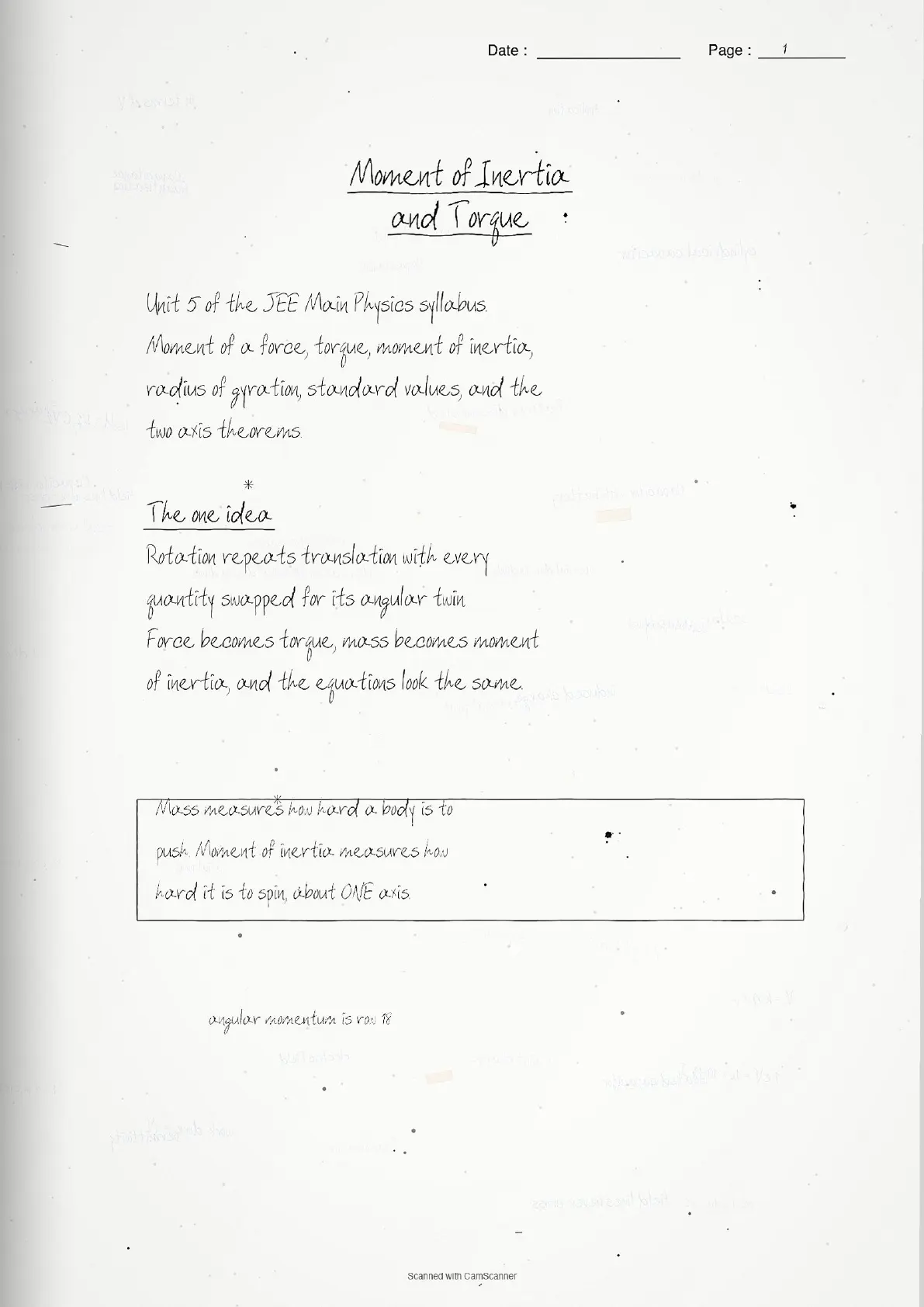
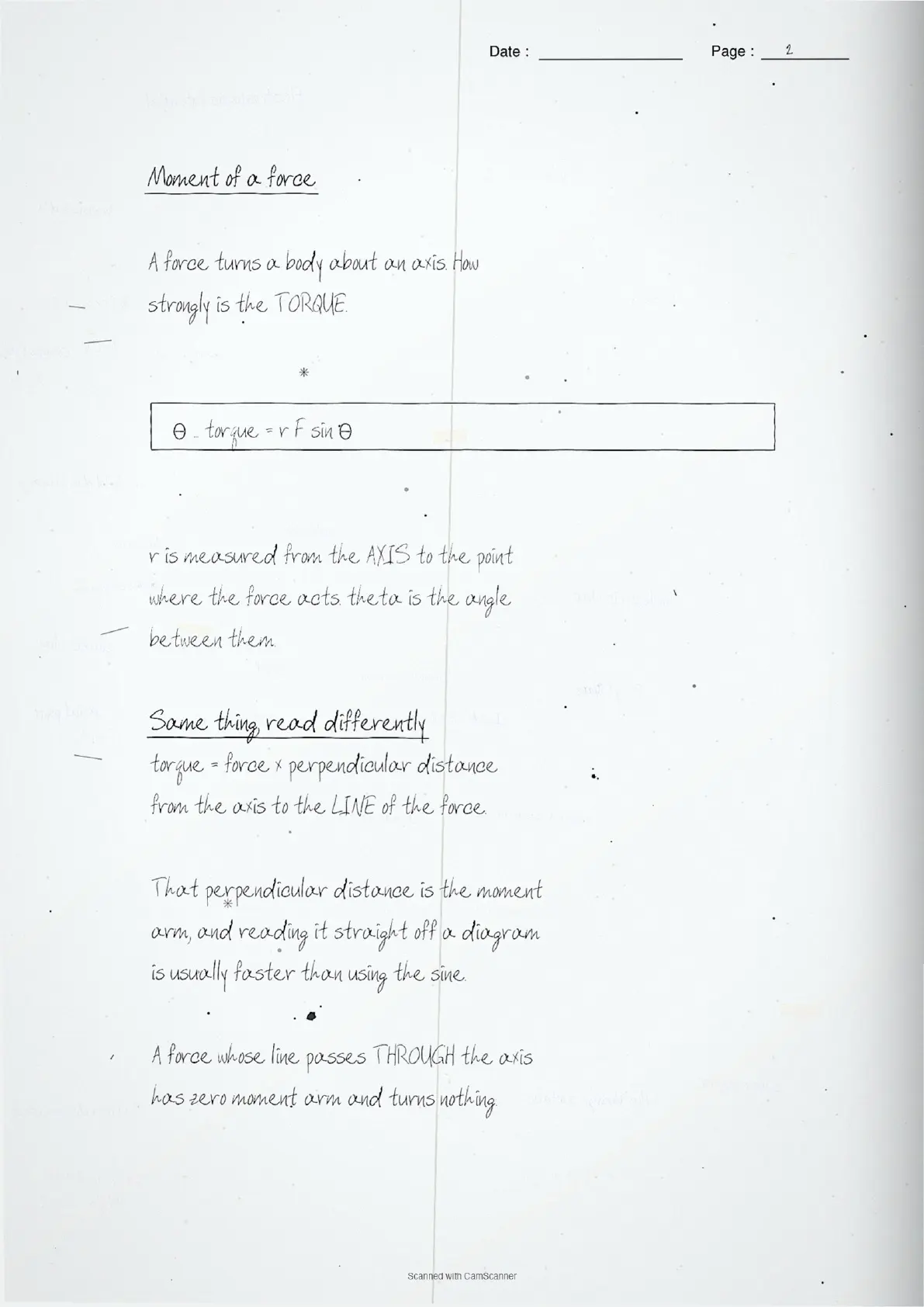
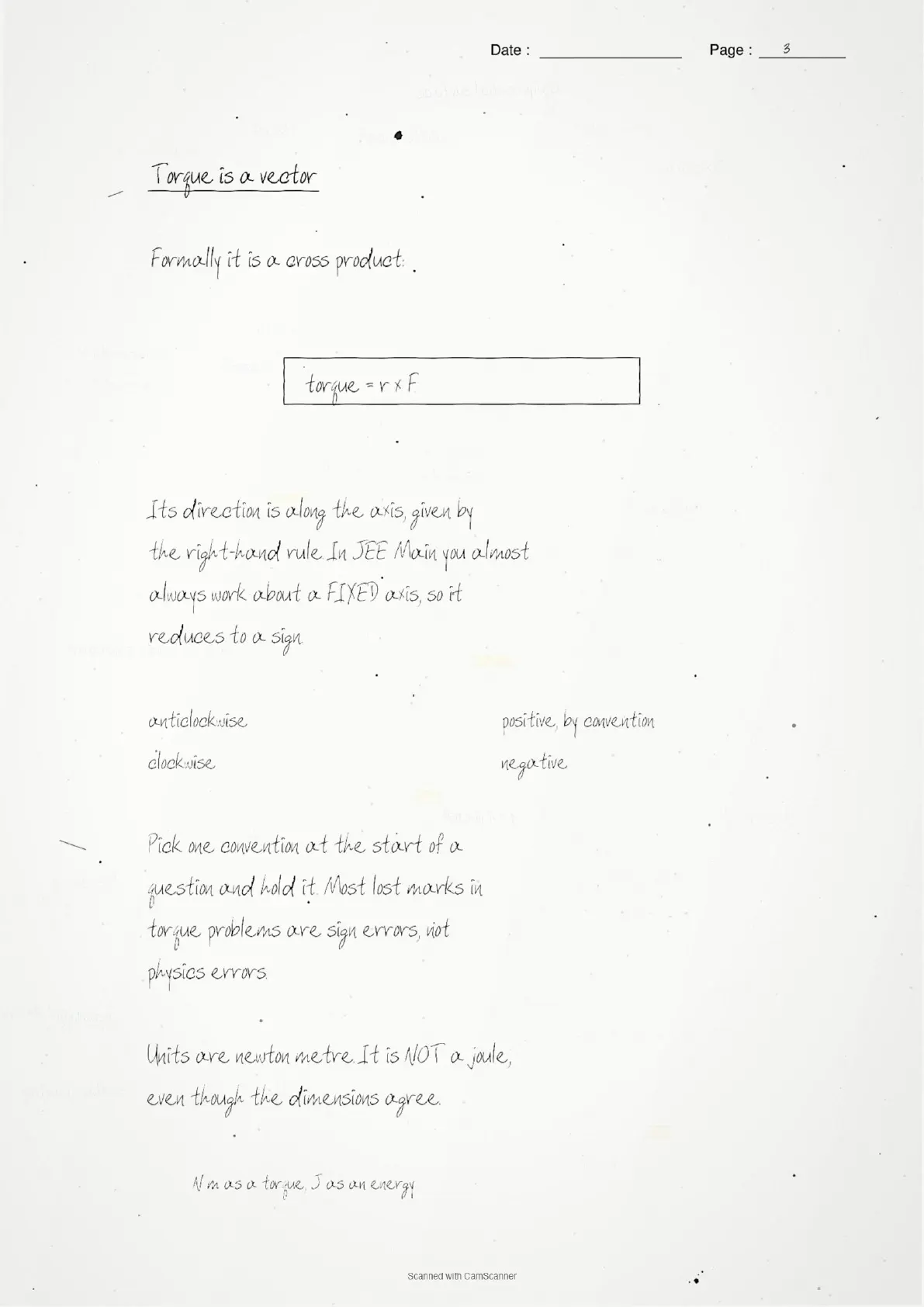
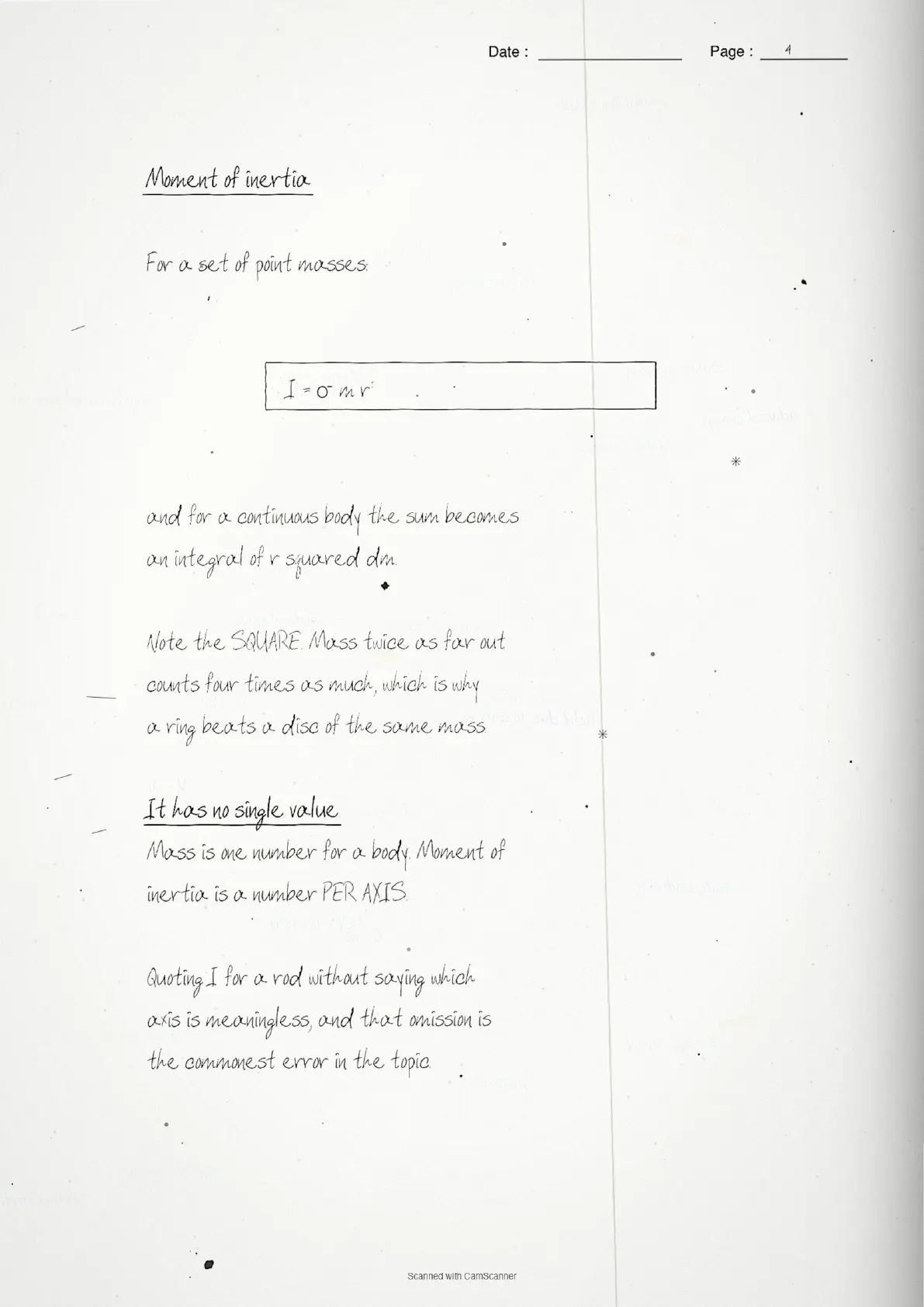
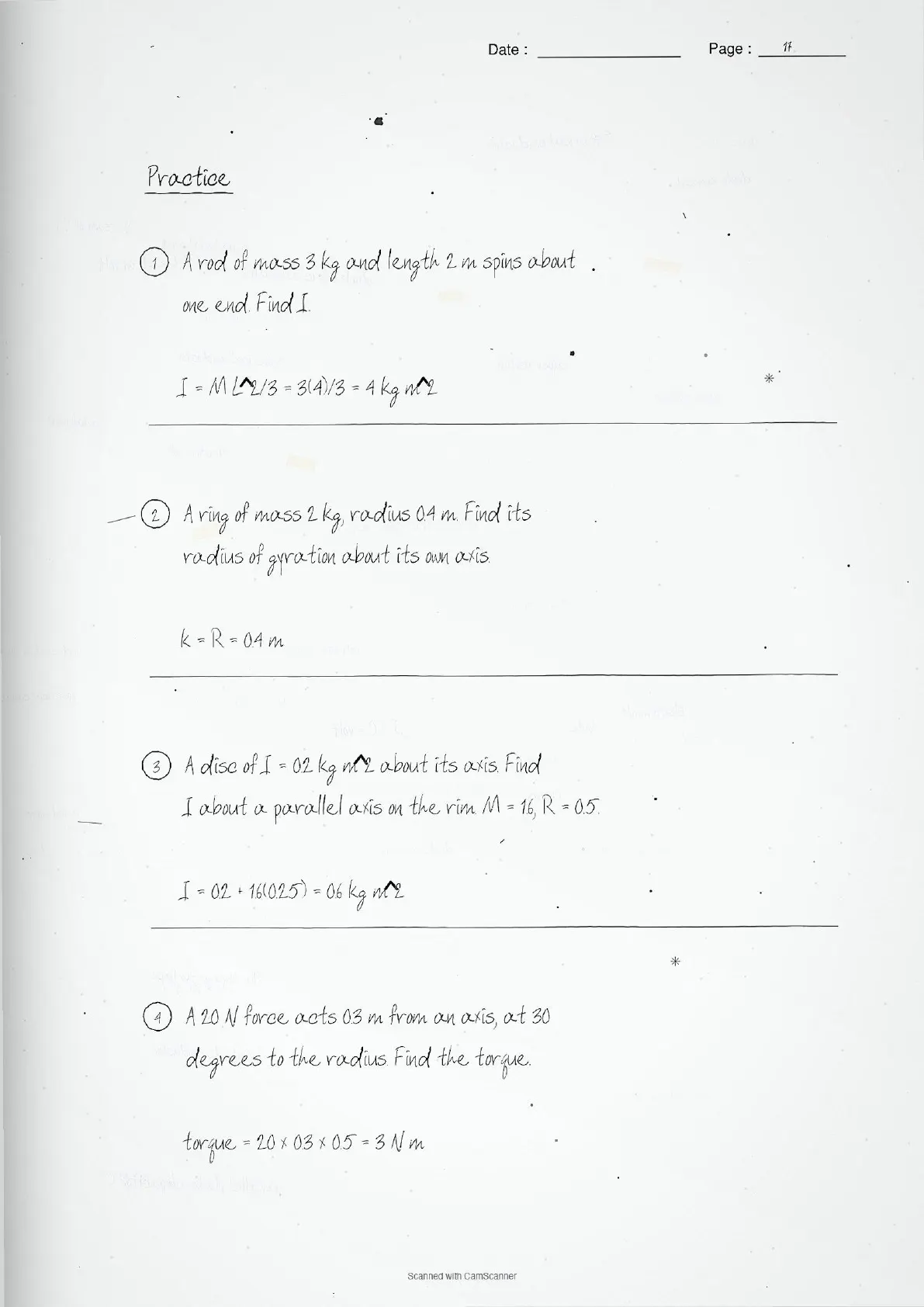
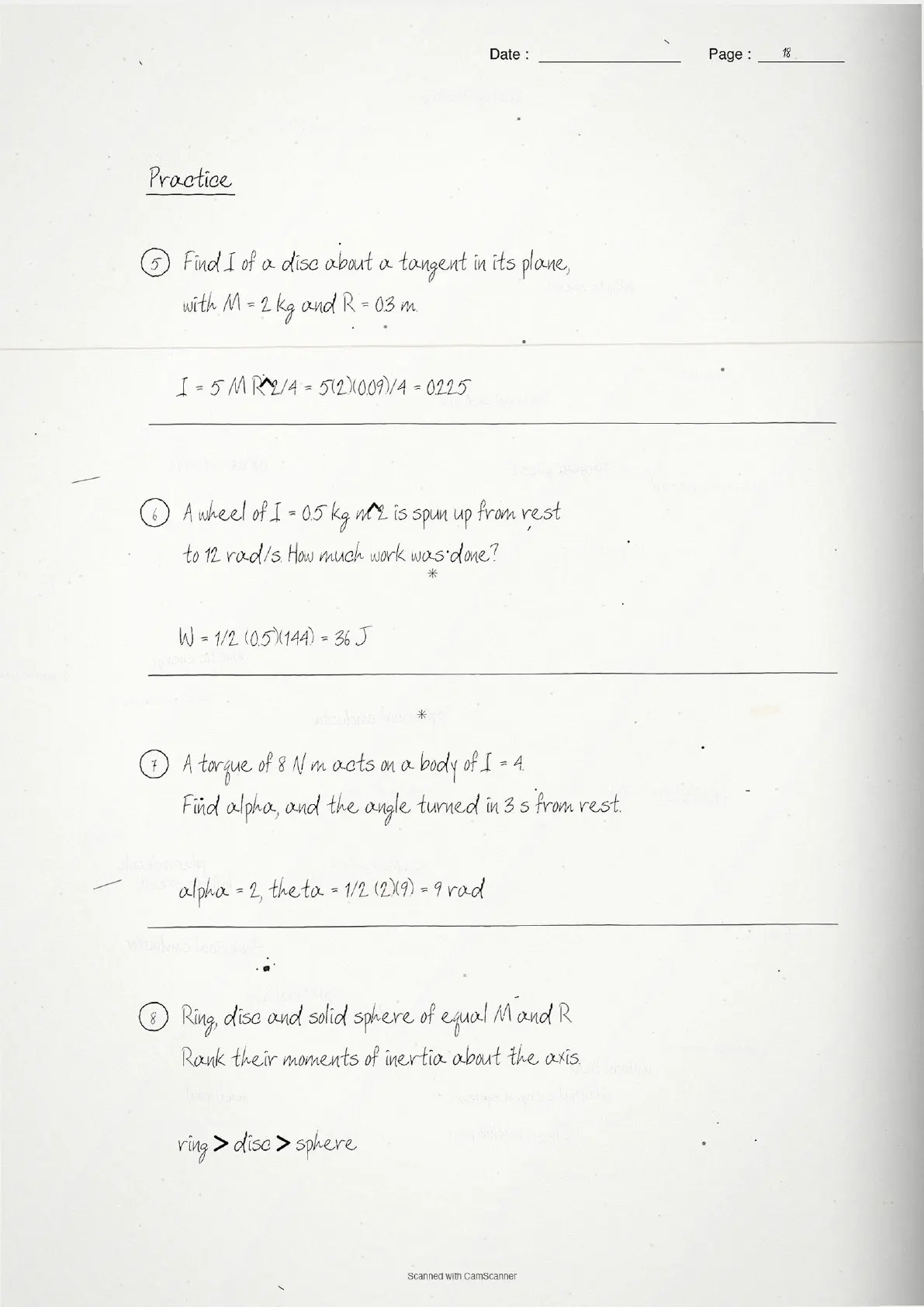
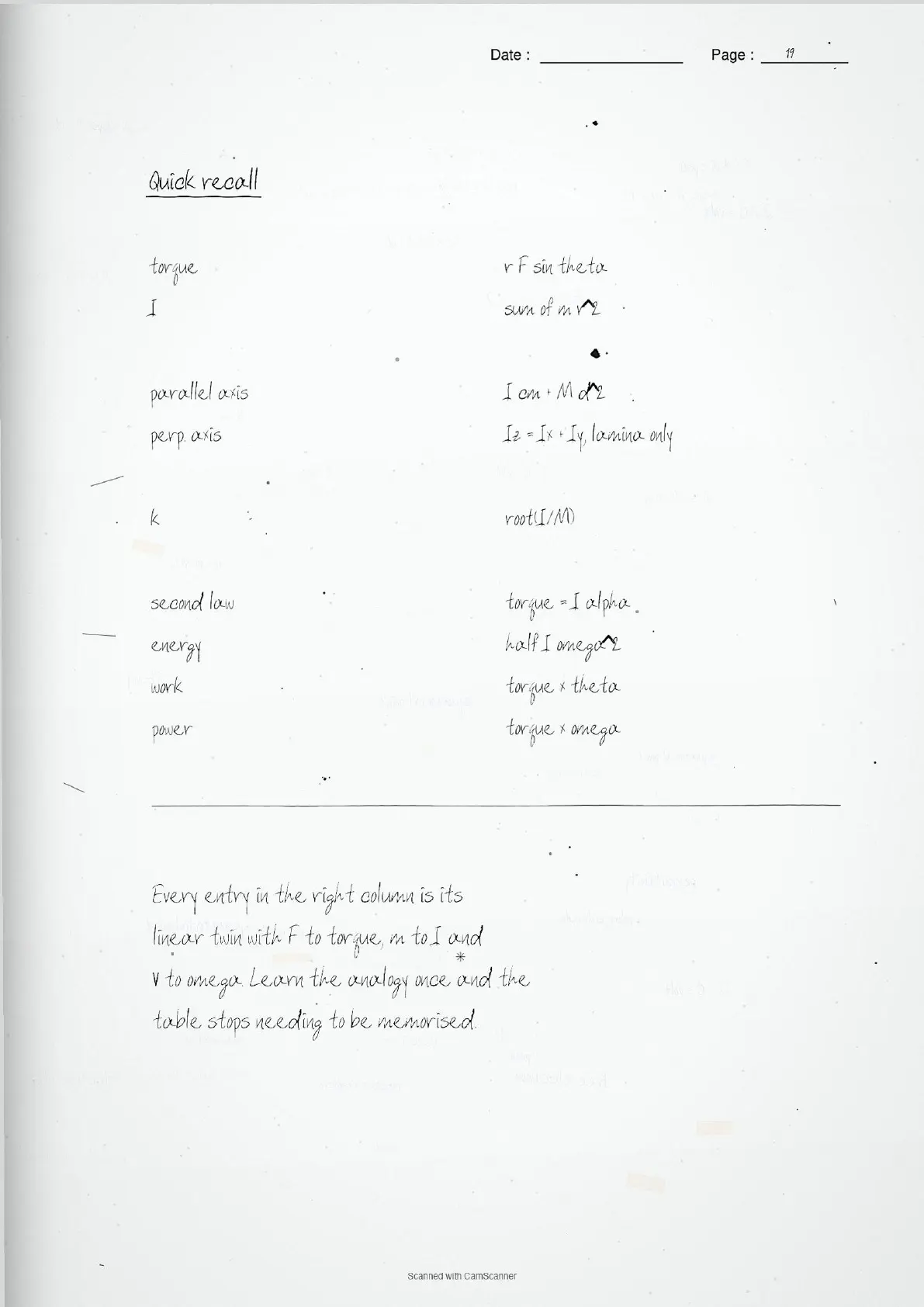
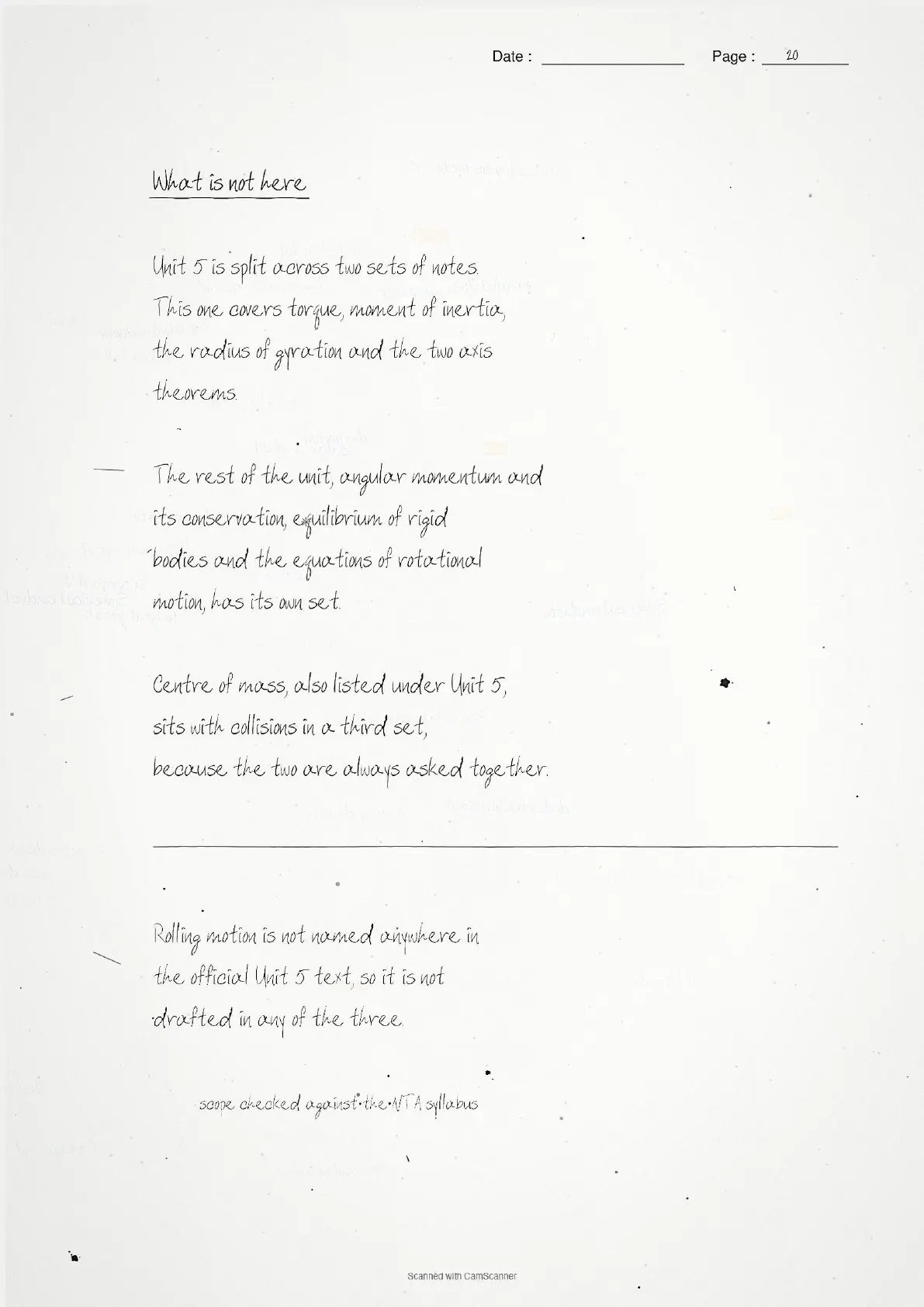
The notes are scans of a real notebook, so they read the way a topper's own pages do: short lines, boxed formulas, and a margin note where something is easy to get wrong.
JEE Main Rotational Motion Weightage
Unit 5 is one of the longest in JEE Main Physics and reliably produces one or two questions a session. This set covers its first half; angular momentum and equilibrium have their own notes.
| Pages | What is on them |
|---|---|
| 2 to 3 | Moment of a force, torque as a vector, sign convention |
| 4 to 6 | Moment of inertia, standard values, radius of gyration |
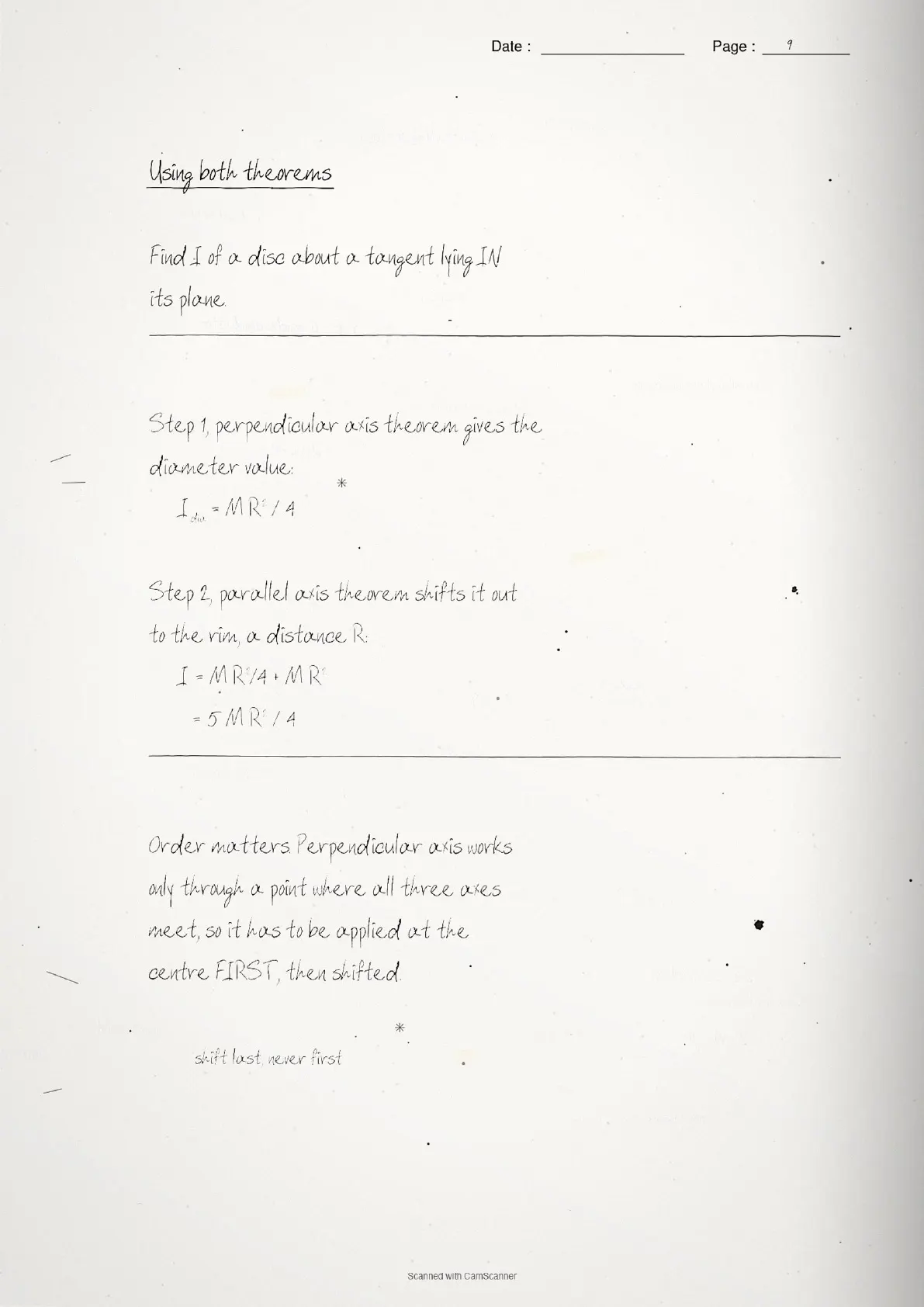
| 7 to 9 | Parallel and perpendicular axis theorems |
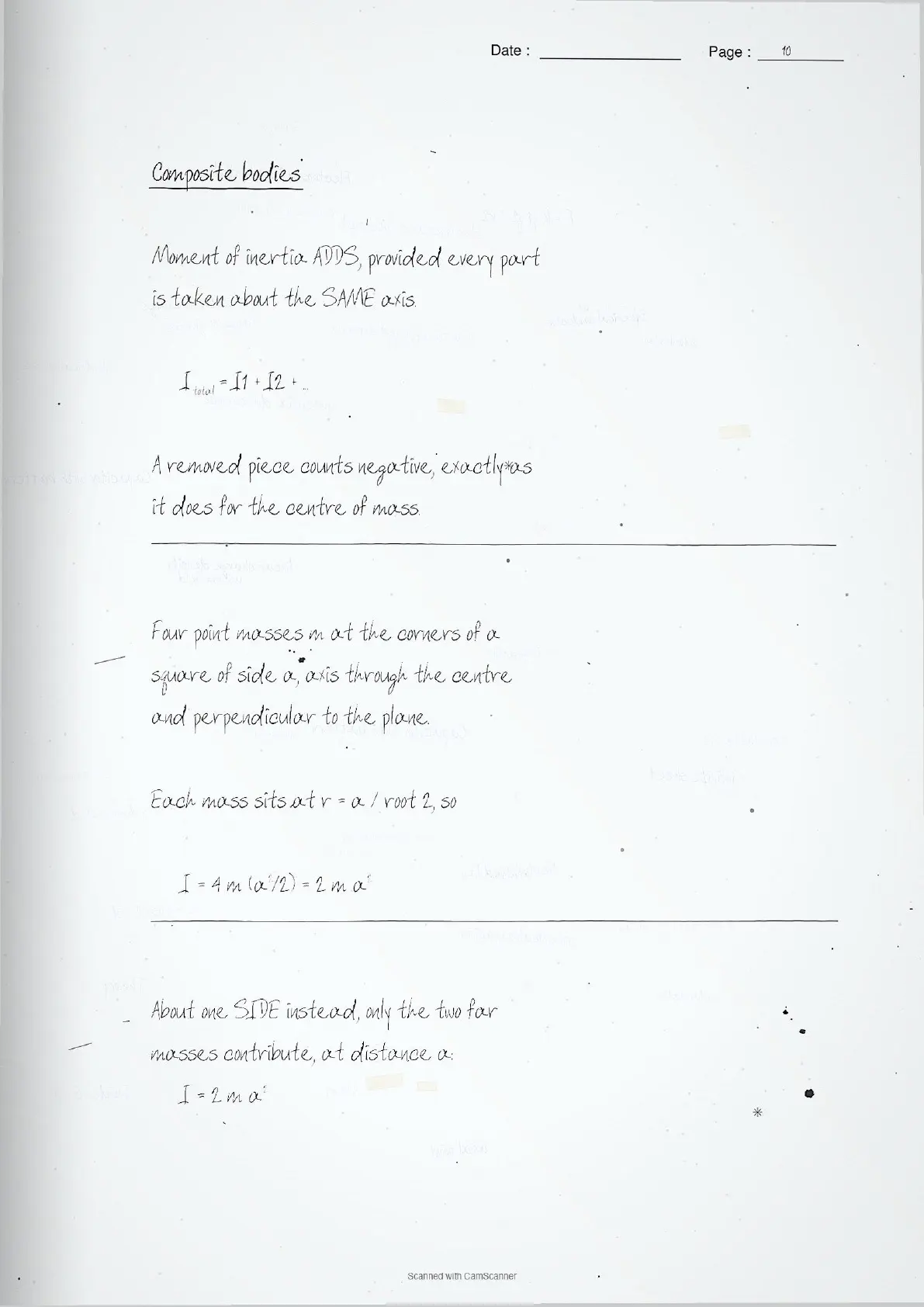
| 10 | Composite bodies and removed pieces |
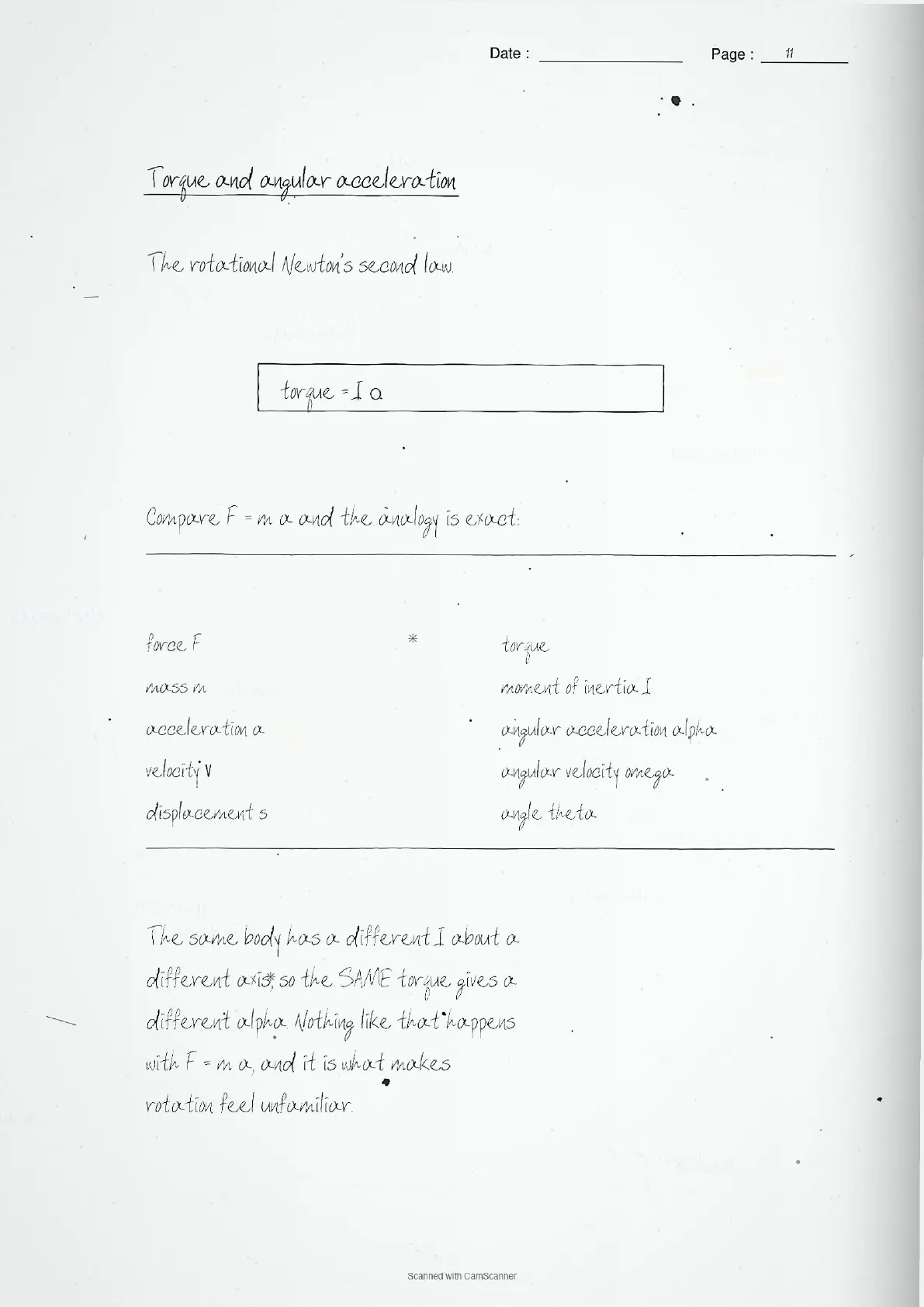
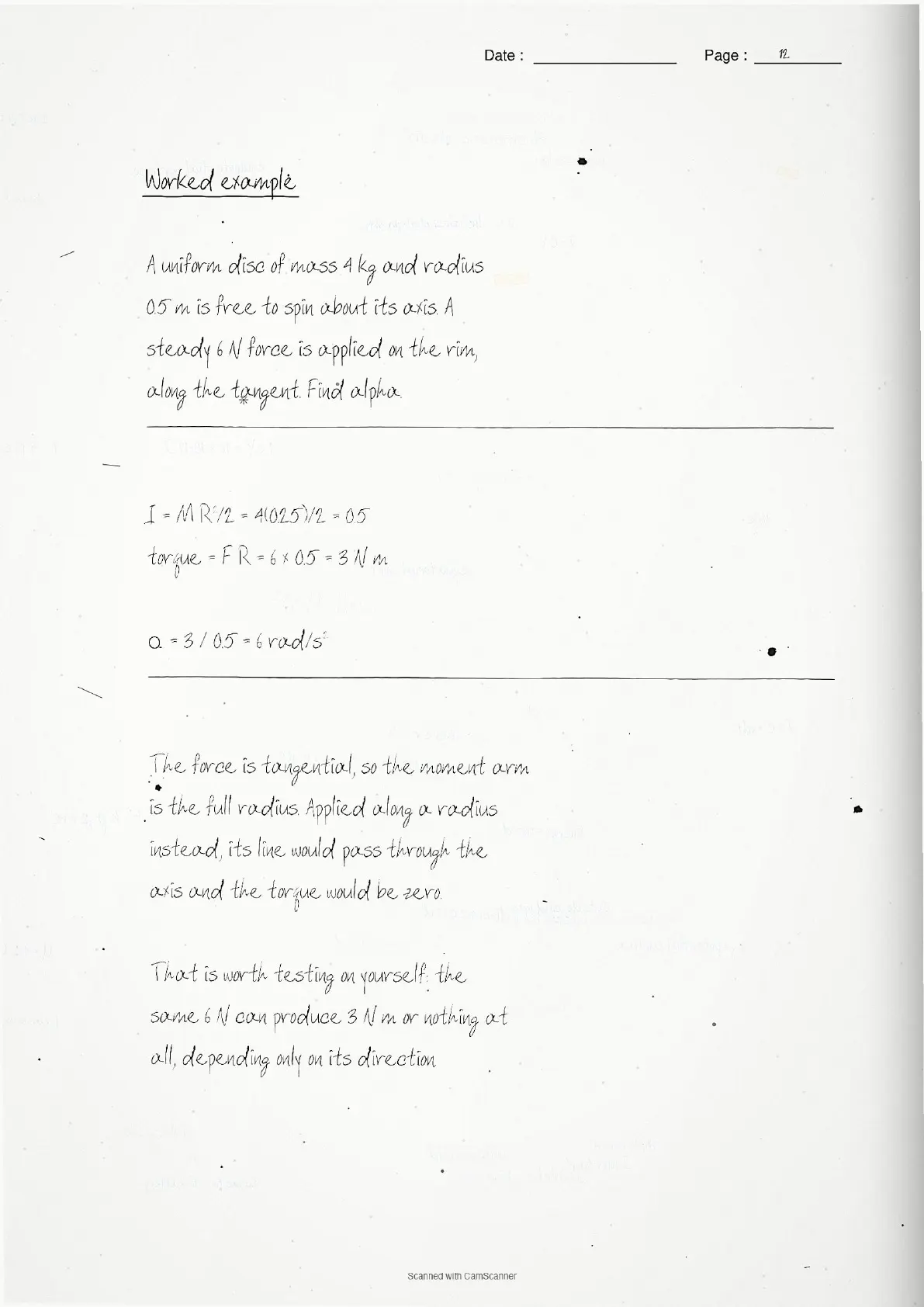
| 11 to 14 | Torque equals I alpha, rotational energy and work |
| 15 to 20 | Ranking shapes, mistakes and practice |
What the Notes Cover
- Moment of a force, and reading the moment arm straight off a diagram
- Torque as a cross product, and the sign convention for a fixed axis
- Moment of inertia as a sum of m r squared, and why it has no single value
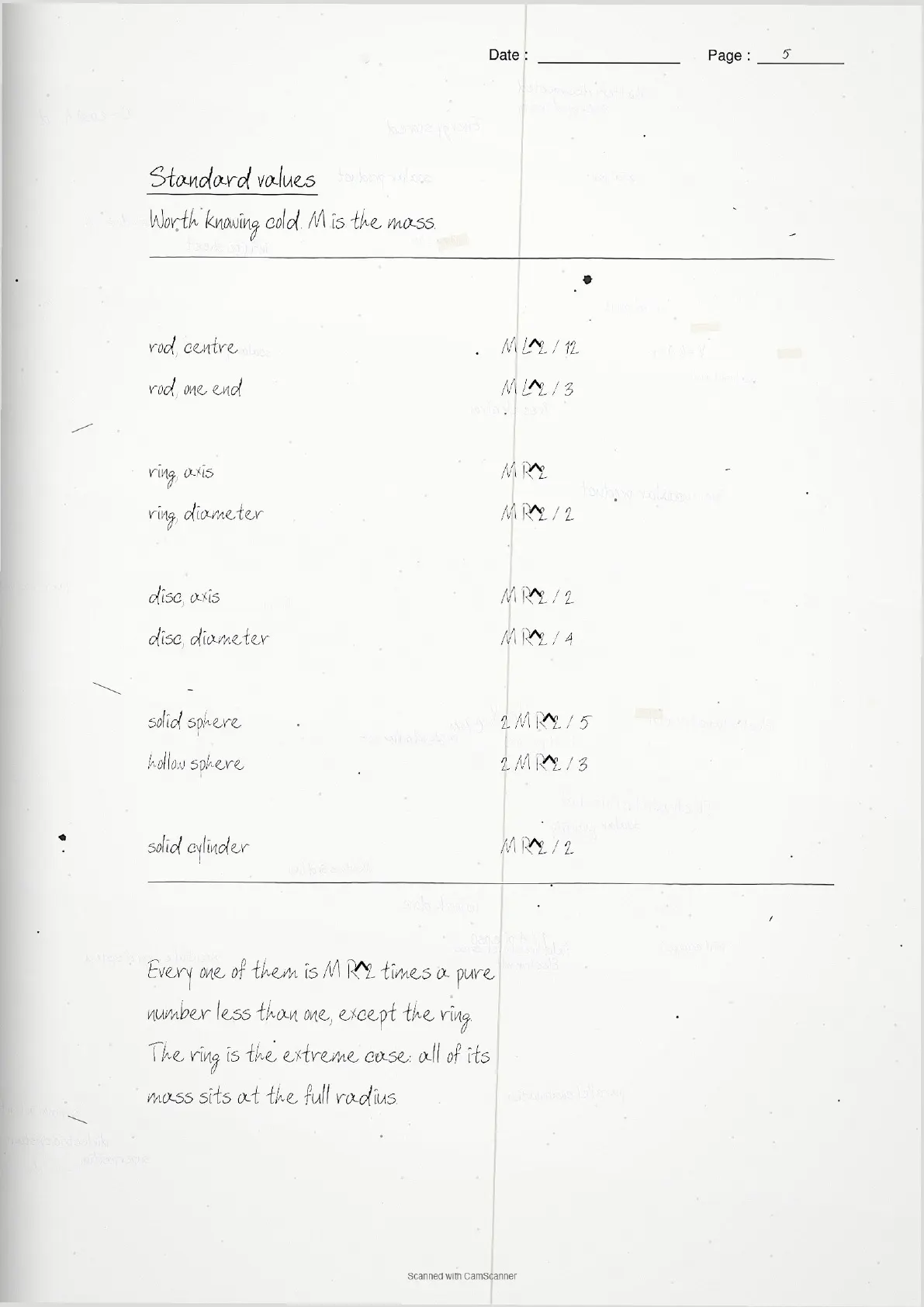
- The nine standard values worth knowing cold
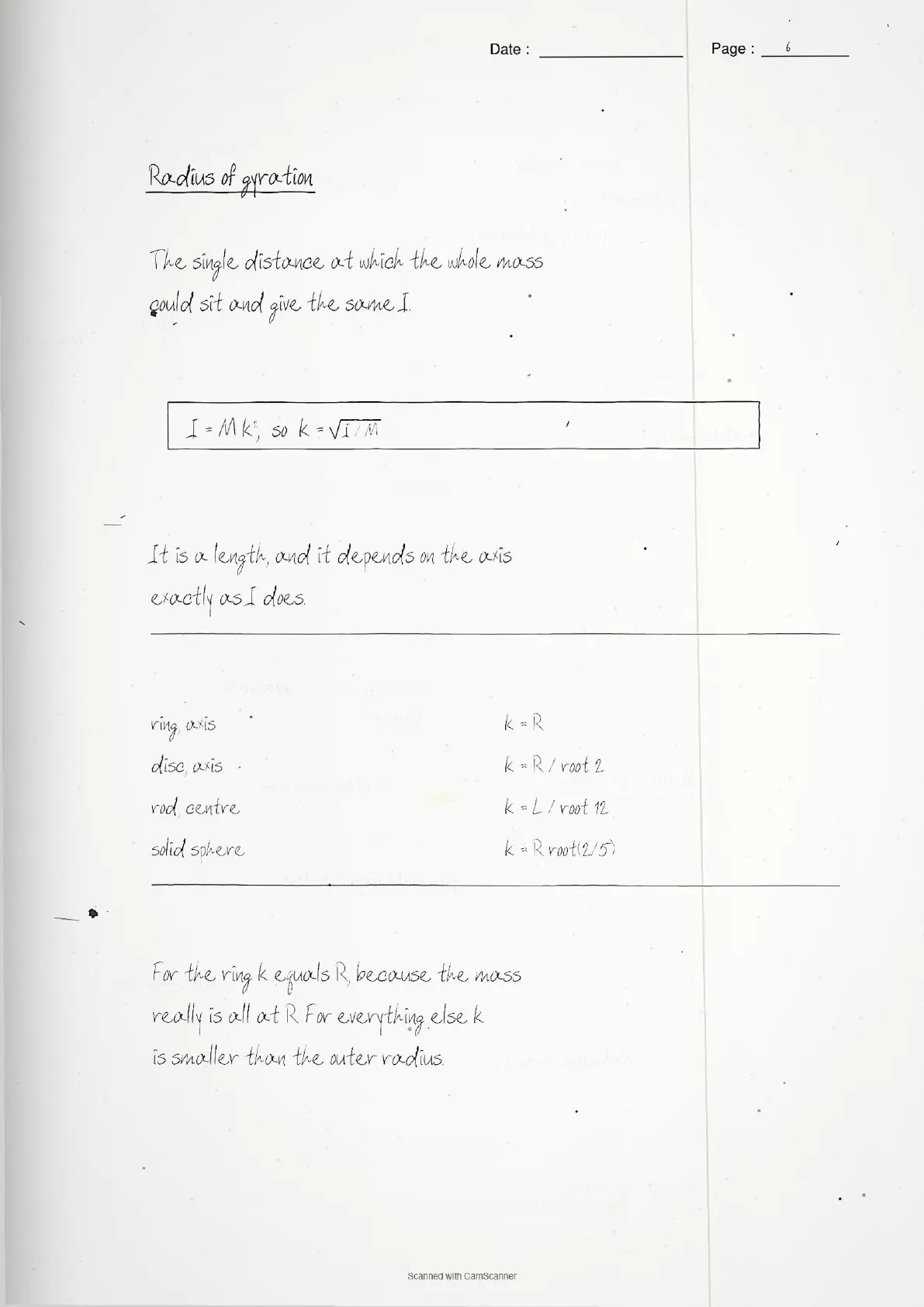
- Radius of gyration
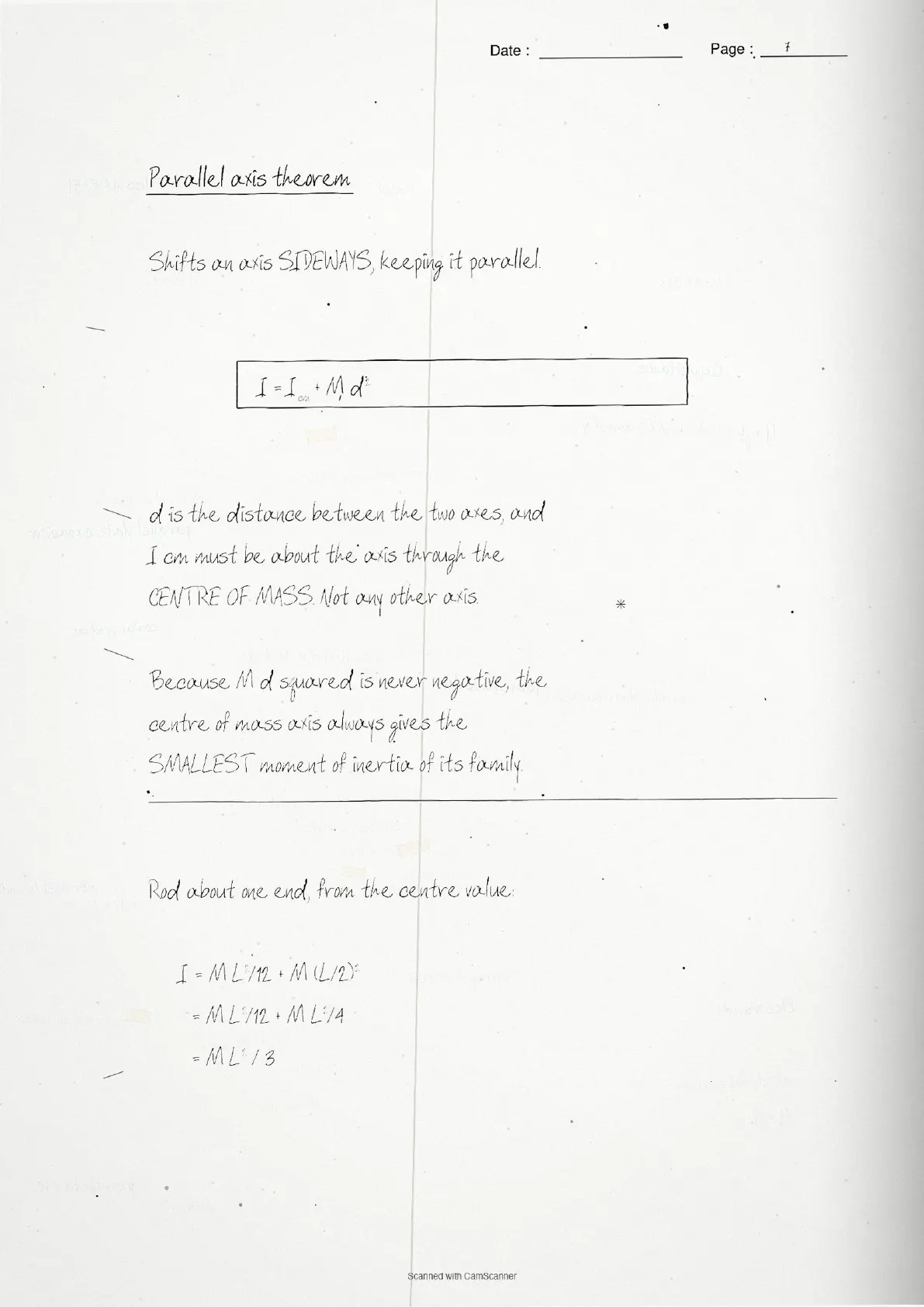
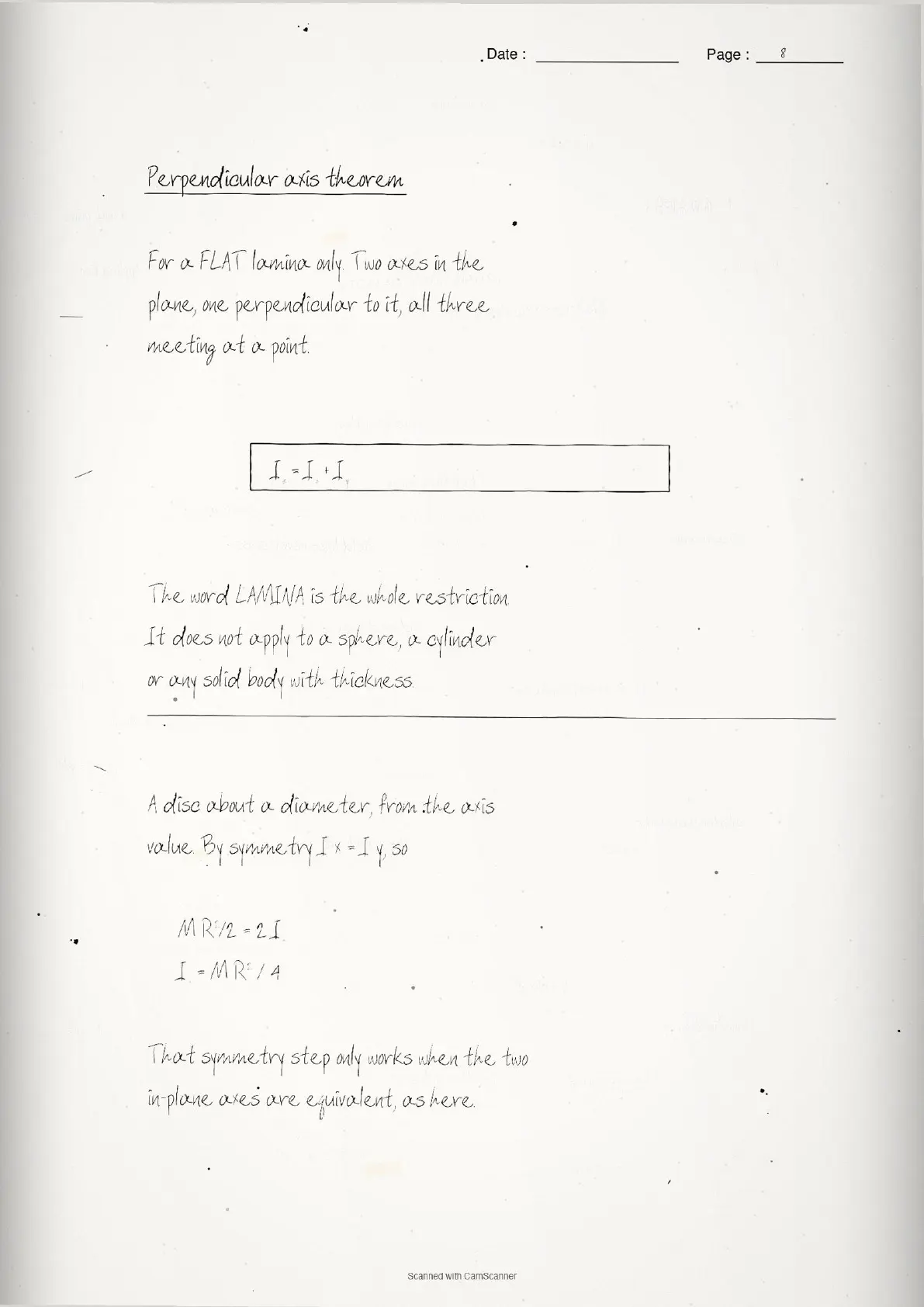
- Parallel and perpendicular axis theorems, and the order to apply them in
- Torque equals I alpha, and the full linear-to-rotational analogy
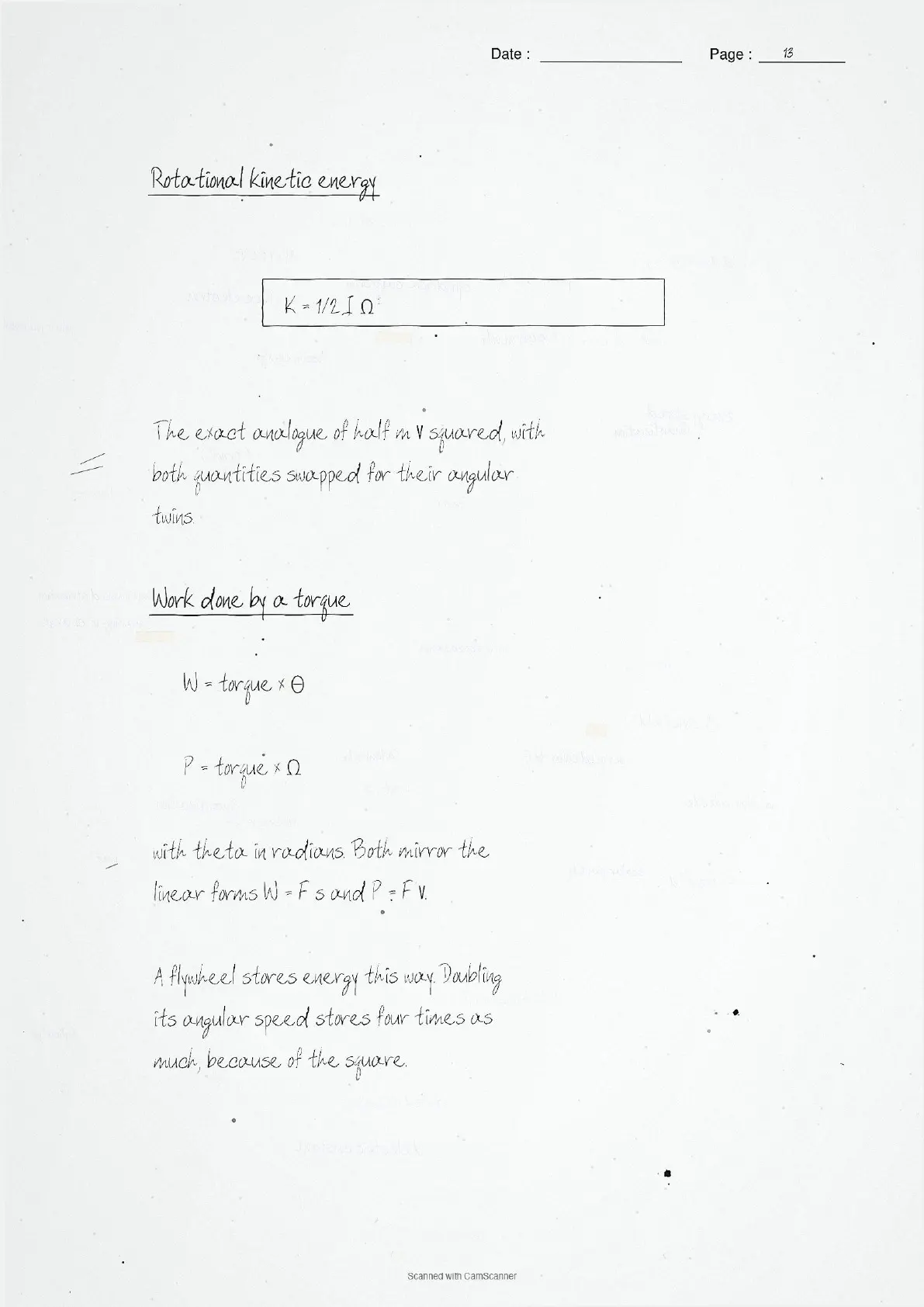
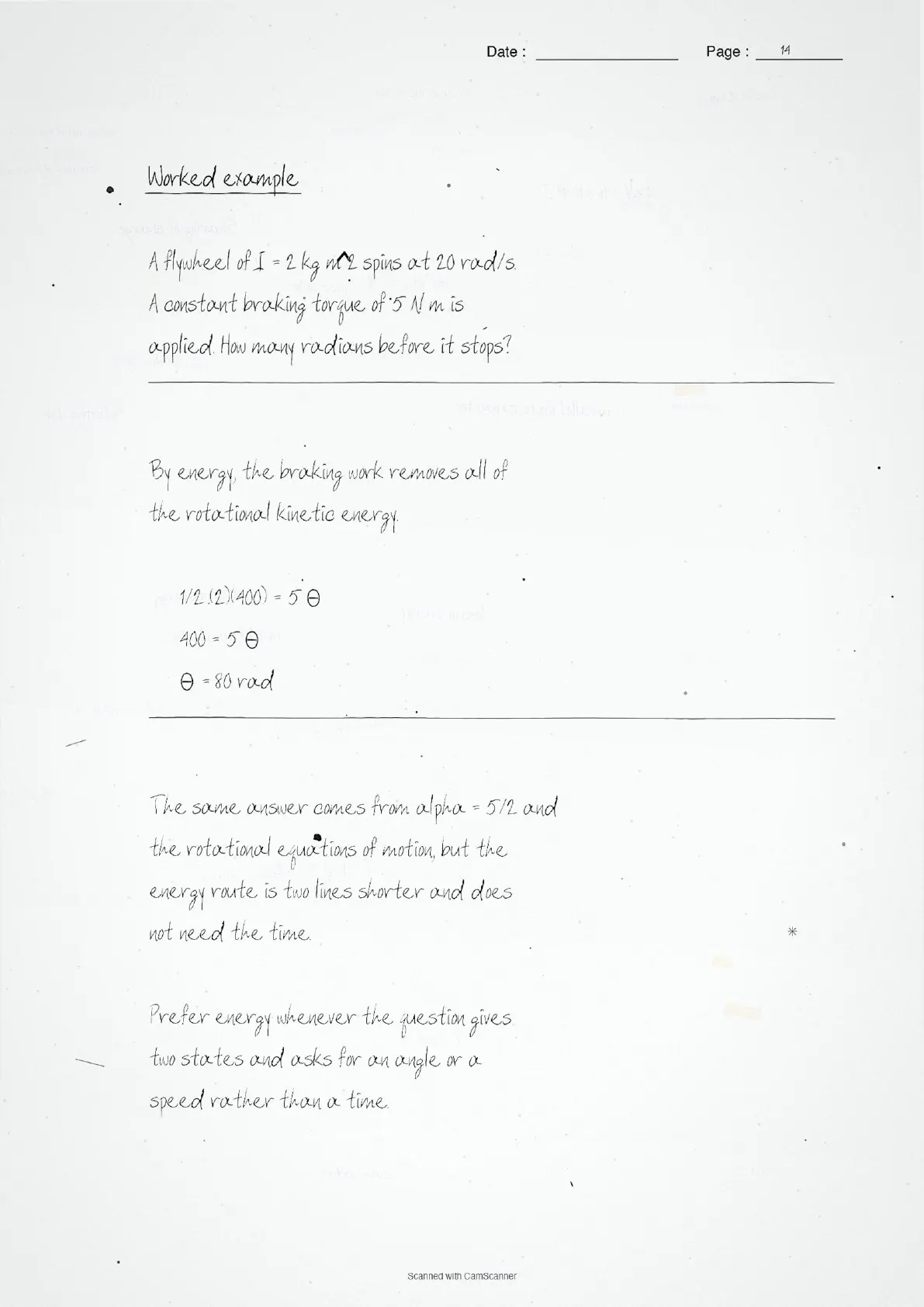
- Rotational kinetic energy, work and power
How to Approach the Chapter
Rotation is translation with every symbol swapped: force for torque, mass for moment of inertia, velocity for angular velocity. Learn the analogy once and most of the formula list stops needing to be memorised.
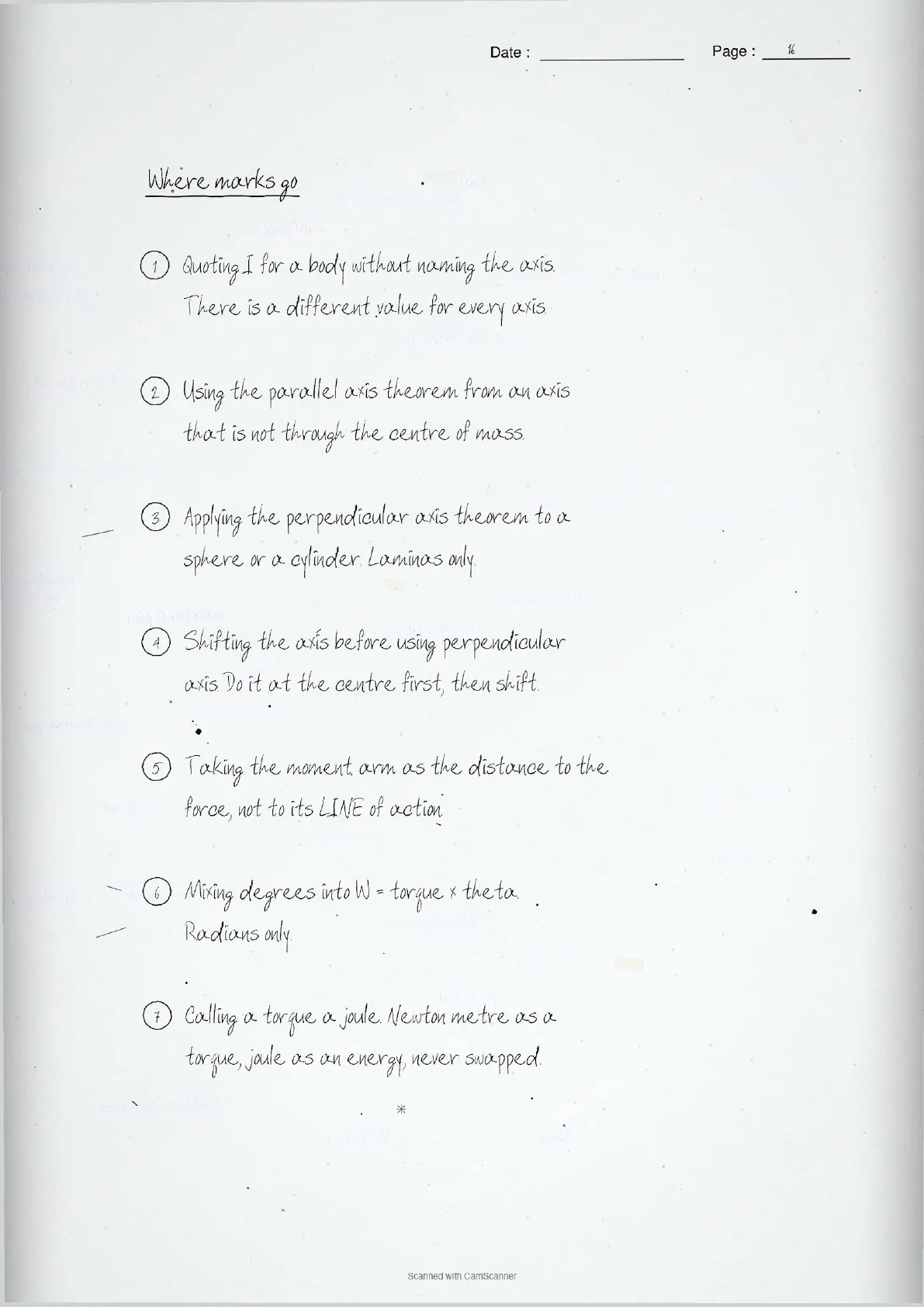
The one place the analogy breaks is that mass is a single number for a body while moment of inertia is a number per axis. Quoting I for a rod without saying which axis is meaningless, and that omission causes more lost marks here than anything else.
When both axis theorems are needed, order matters. Perpendicular axis works only at a point where all three axes meet, so apply it at the centre first and shift the axis afterwards, never the other way round.
Common Mistakes
- Using the parallel axis theorem from an axis that is not through the centre of mass
- Applying the perpendicular axis theorem to a sphere or a cylinder. Laminas only
- Shifting the axis before using perpendicular axis rather than after
- Taking the moment arm to the force rather than to its line of action
- Mixing degrees into W = torque times theta. Radians only
- Calling a torque a joule. Newton metre as a torque, joule as an energy
Video Revision
Source: JEE Wallah
How to Use These Notes
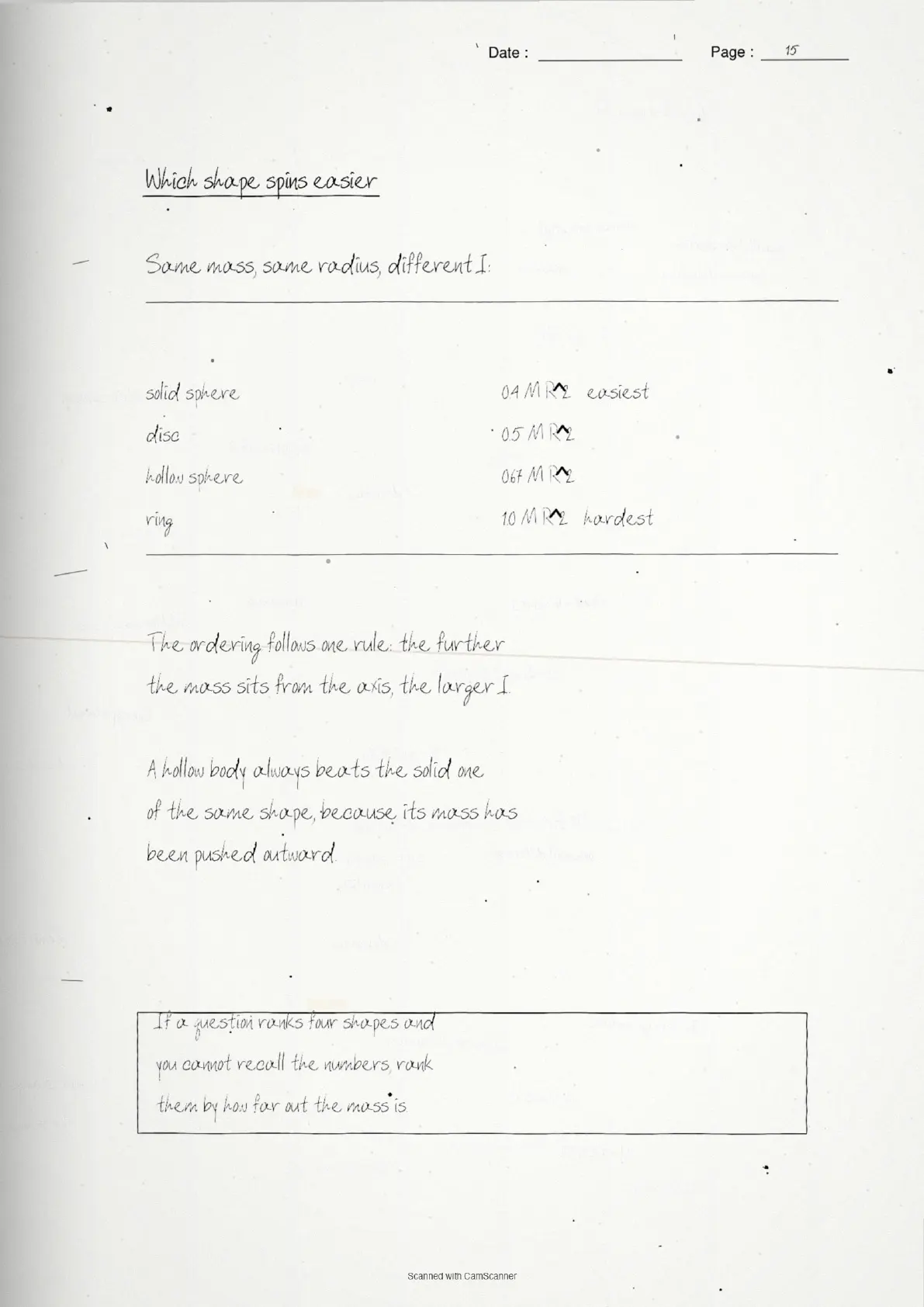
Page 5 carries the nine standard moments of inertia. Every one of them is M R squared times a pure number, and if you cannot recall a number, rank the shapes by how far their mass sits from the axis.
Pages 17 and 18 hold eight practice questions with worked answers, and page 19 is a one-page recall grid for the night before.
Angular momentum, rigid-body equilibrium and the equations of rotational motion are in the second set of Unit 5 notes.
JEE Main Moment of Inertia and Torque Notes FAQs
Ques. How many questions come from rotational motion in JEE Main?
Ans. One or two per session. Unit 5 is among the longest in the physics syllabus, which is why these notes split it across two sets.
Ques. What does NTA include in Unit 5?
Ans. Centre of mass, basic concepts of rotational motion, moment of a force, torque, angular momentum and its conservation, moment of inertia, radius of gyration, standard values, both axis theorems, equilibrium of rigid bodies, and the equations of rotational motion.
Ques. Is rolling motion in the JEE Main syllabus?
Ans. It is not named anywhere in the official Unit 5 text, so these notes do not teach it. If a coaching sheet covers rolling, treat that as an extension rather than as examinable material.
Ques. When can I use the perpendicular axis theorem?
Ans. Only for a flat lamina, and only at a point where all three axes meet. It does not apply to a sphere, a cylinder or any body with thickness.
Ques. Can the notes be downloaded free?
Ans. Yes. All 20 pages can be read on this page and downloaded at no cost.



Comments