




CBSE Class 12 Chemistry Question Paper 2026 Set-1 is now available for download along with detailed solutions. CBSE conducted the Class 12 Chemistry examination on February 28, 2026, from 10:30 AM to 1:30 PM. The question paper consists of 33 questions carrying a total of 70 marks. The paper is divided into five sections: Section A contains MCQs, Section B contains very short answer questions, Section C contains short answer questions, Section D contains case-based questions, and Section E contains long answer questions. All sections are compulsory. The Chemistry question paper 2026 was rated moderate but slightly lengthy by students, with a significant focus on NCERT-based organic reactions and physical chemistry numericals.
CBSE Class 12 Chemistry Question Paper 2026 Set -1 with Solution PDF
| CBSE Class 12 Chemistry Question Paper 2026 (Set-1) with Solution PDF | Download PDF | Check Solutions |
Which of the reactions is used in the conversion of a ketone into hydrocarbon?
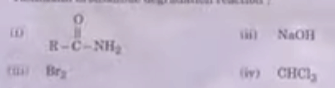
Which of the following reagents are used to prepare primary amines by Hofmann bromamide degradation reaction?
The major product of carbylamine reaction is:
Actinoids show larger number of oxidation states:
Consider the following reaction and identify A and B: \[ CH_3Cl + NaI \xrightarrow{dry acetone} A + B \]
The correct formula of Hinsberg's reagent is:
Half-life (\( t_{1/2} \)) of a first order reaction is 1386 s. The value of rate constant is:
Which of the following ligands forms a chelate complex?
Primary, secondary and tertiary alcohols can be distinguished by:
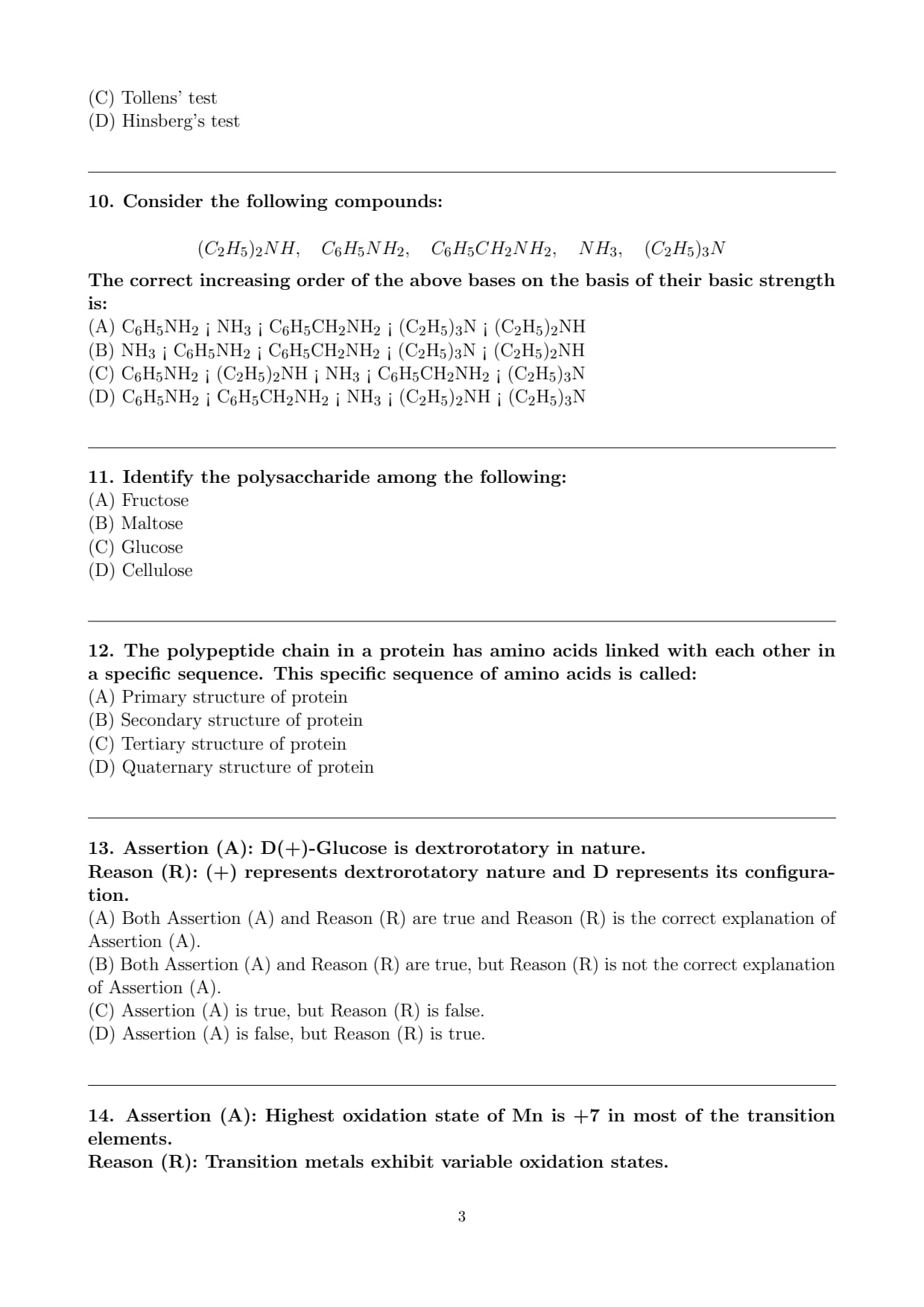
Consider the following compounds:
\[ (C_2H_5)_2NH,\quad C_6H_5NH_2,\quad C_6H_5CH_2NH_2,\quad NH_3,\quad (C_2H_5)_3N \]
The correct increasing order of the above bases on the basis of their basic strength is:
Identify the polysaccharide among the following:
The polypeptide chain in a protein has amino acids linked with each other in a specific sequence. This specific sequence of amino acids is called:
Assertion (A): D(+)-Glucose is dextrorotatory in nature.
Reason (R): (+) represents dextrorotatory nature and D represents its configuration.
Assertion (A): Highest oxidation state of Mn is +7 in most of the transition elements.
Reason (R): Transition metals exhibit variable oxidation states.
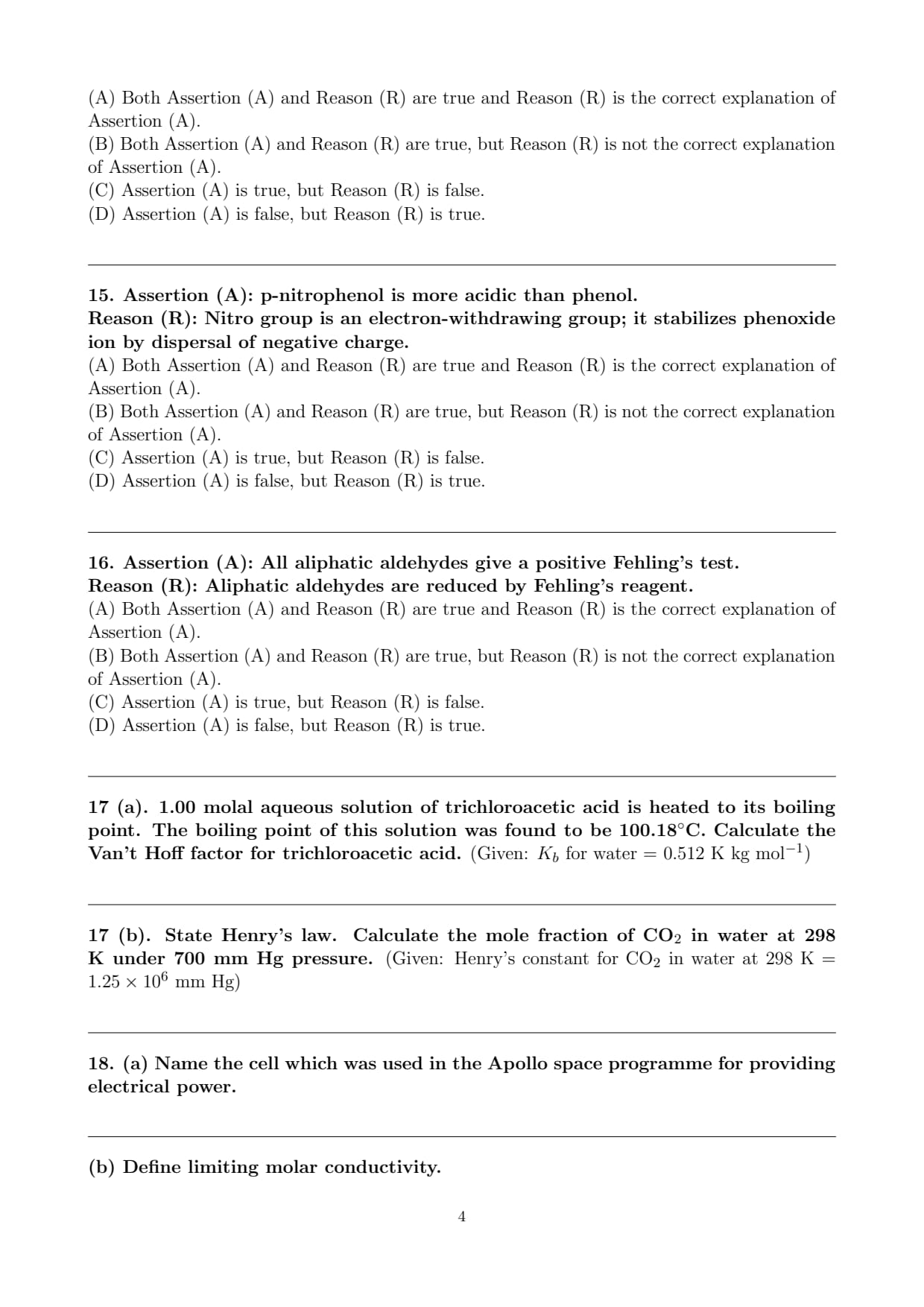
Assertion (A): p-nitrophenol is more acidic than phenol.
Reason (R): Nitro group is an electron-withdrawing group; it stabilizes phenoxide ion by dispersal of negative charge.
Assertion (A): All aliphatic aldehydes give a positive Fehling's test.
Reason (R): Aliphatic aldehydes are reduced by Fehling's reagent.
(a) 1.00 molal aqueous solution of trichloroacetic acid is heated to its boiling point. The boiling point of this solution was found to be 100.18\(^\circ\)C. Calculate the Van’t Hoff factor for trichloroacetic acid.
(Given: \( K_b \) for water = 0.512 K kg mol\(^{-1}\))
(b)State Henry’s law. Calculate the mole fraction of CO\(_2\) in water at 298 K under 700 mm Hg pressure.
(Given: Henry’s constant for CO\(_2\) in water at 298 K = \( 1.25 \times 10^6 \) mm Hg)
(a) Name the cell which was used in the Apollo space programme for providing electrical power.
(b) Define limiting molar conductivity.
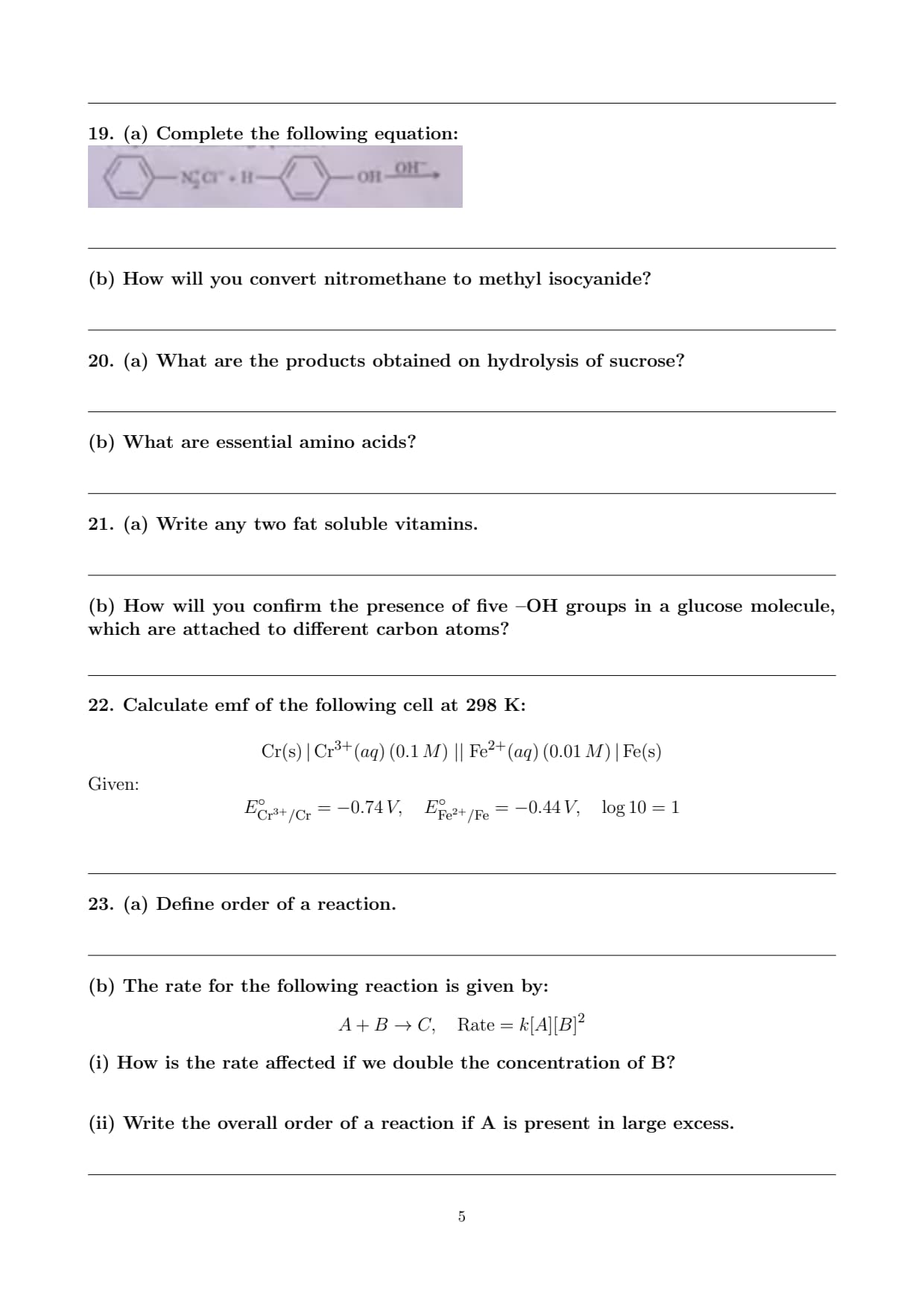
(a) Complete the following equation:

(b) How will you convert nitromethane to methyl isocyanide?
(a) What are the products obtained on hydrolysis of sucrose?
(b) What are essential amino acids?
(a) Write any two fat soluble vitamins.
(b) How will you confirm the presence of five –OH groups in a glucose molecule, which are attached to different carbon atoms?
Calculate emf of the following cell at 298 K:
\[ Cr(s) \, | \, Cr^{3+} (aq) \, (0.1\, M) \; || \; Fe^{2+} (aq) \, (0.01\, M) \, | \, Fe(s) \]
Given: \[ E^\circ_{Cr^{3+}/Cr} = -0.74 \, V, \quad E^\circ_{Fe^{2+}/Fe} = -0.44 \, V, \quad \log 10 = 1 \]
(a) Define order of a reaction.
(b) The rate for the following reaction is given by: \[ A + B \rightarrow C, \quad Rate = k[A][B]^2 \]
(i) How is the rate affected if we double the concentration of B?
(b) (ii) Write the overall order of a reaction if A is present in large excess.
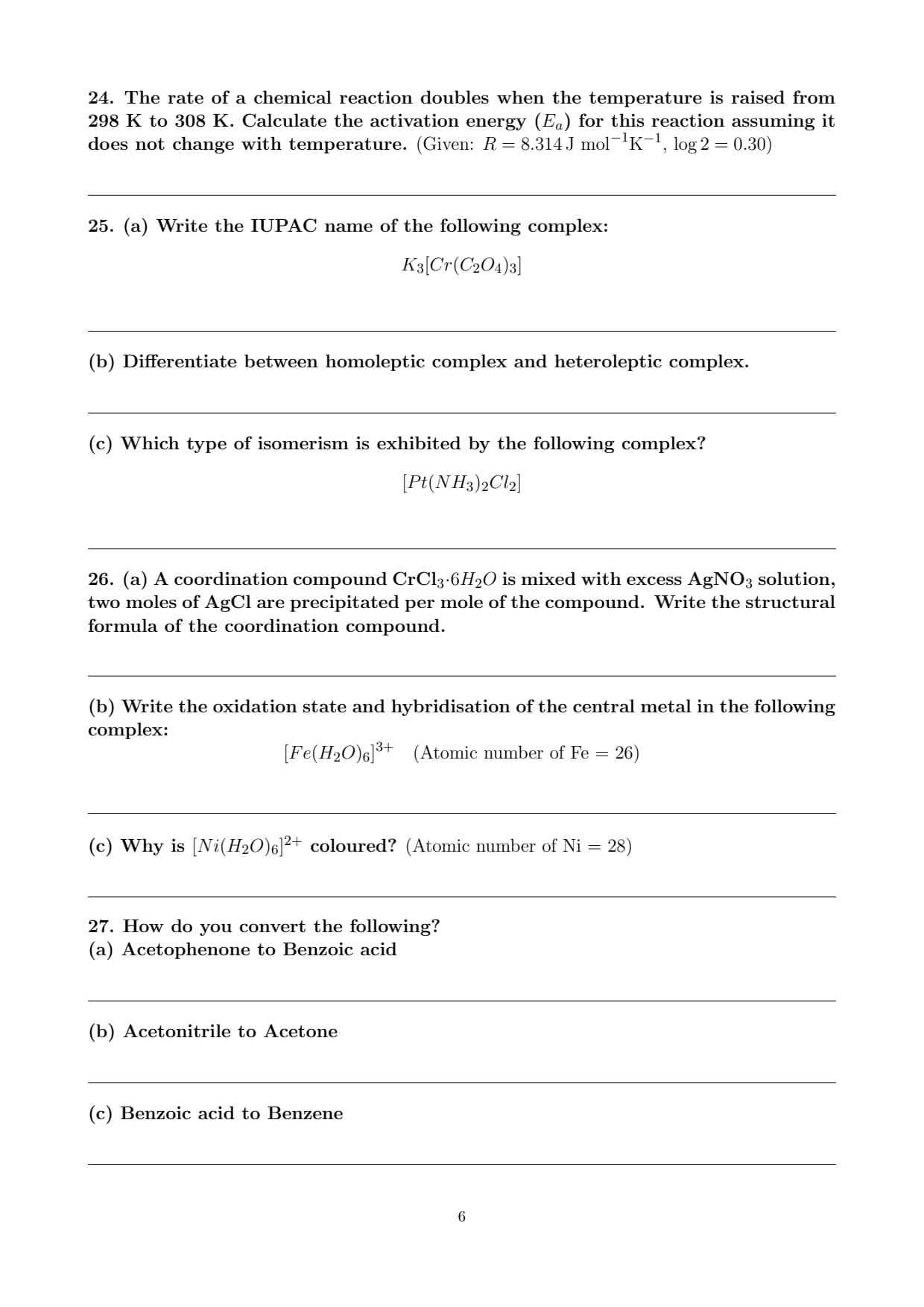
The rate of a chemical reaction doubles when the temperature is raised from 298 K to 308 K. Calculate the activation energy (\(E_a\)) for this reaction assuming it does not change with temperature.
(Given: \( R = 8.314 \, J mol^{-1}K^{-1} \), \( \log 2 = 0.30 \))
(a) Write the IUPAC name of the following complex: \[ K_3[Cr(C_2O_4)_3] \]
(b) Differentiate between homoleptic complex and heteroleptic complex.
(c) Which type of isomerism is exhibited by the following complex? \[ [Pt(NH_3)_2Cl_2] \]
(a) A coordination compound CrCl\(_3 \cdot 6H_2O\) is mixed with excess AgNO\(_3\) solution, two moles of AgCl are precipitated per mole of the compound. Write the structural formula of the coordination compound.
(b) Write the oxidation state and hybridisation of the central metal in the following complex: \[ [Fe(H_2O)_6]^{3+} \quad (Atomic number of Fe = 26) \]
(c) Why is \([Ni(H_2O)_6]^{2+}\) coloured?
(Atomic number of Ni = 28)
How do you convert the following?
(a) Acetophenone to Benzoic acid
(b) Acetonitrile to Acetone
(c) Benzoic acid to Benzene
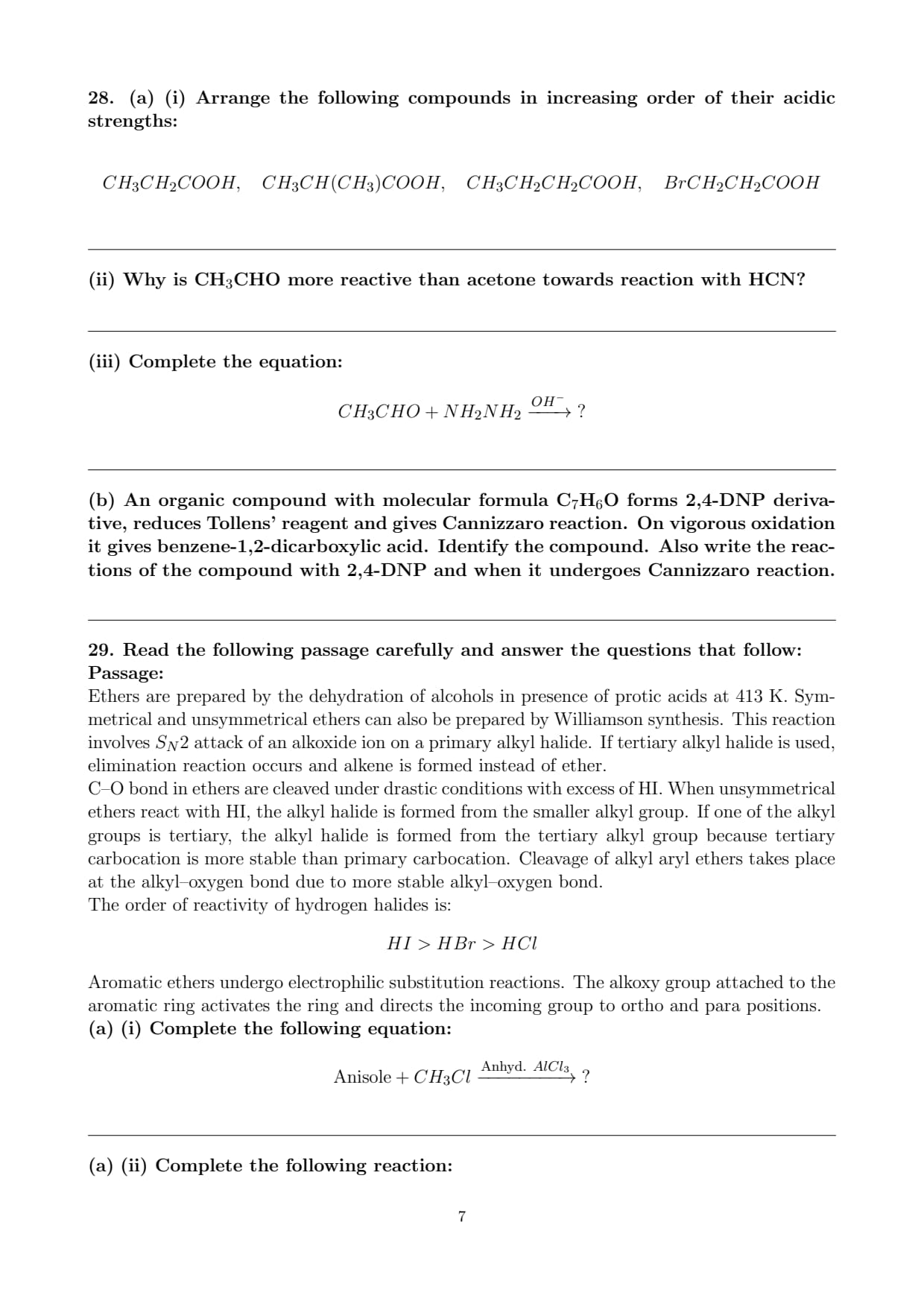
(a) (i) Arrange the following compounds in increasing order of their acidic strengths:
\[ CH_3CH_2COOH,\quad CH_3CH(CH_3)COOH,\quad CH_3CH_2CH_2COOH,\quad BrCH_2CH_2COOH \]
(ii) Why is CH\(_3\)CHO more reactive than acetone towards reaction with HCN?
(iii) Complete the equation:
\[ CH_3CHO + NH_2NH_2 \xrightarrow{OH^-} \; ? \]
(b) An organic compound with molecular formula C\(_7\)H\(_6\)O forms 2,4-DNP derivative, reduces Tollens’ reagent and gives Cannizzaro reaction. On vigorous oxidation it gives benzene-1,2-dicarboxylic acid. Identify the compound. Also write the reactions of the compound with 2,4-DNP and when it undergoes Cannizzaro reaction.
Read the following passage carefully and answer the questions that follow:
Passage:
Ethers are prepared by the dehydration of alcohols in presence of protic acids at 413 K. Symmetrical and unsymmetrical ethers can also be prepared by Williamson synthesis. This reaction involves \( S_N2 \) attack of an alkoxide ion on a primary alkyl halide. If tertiary alkyl halide is used, elimination reaction occurs and alkene is formed instead of ether.
C–O bond in ethers are cleaved under drastic conditions with excess of HI. When unsymmetrical ethers react with HI, the alkyl halide is formed from the smaller alkyl group. If one of the alkyl groups is tertiary, the alkyl halide is formed from the tertiary alkyl group because tertiary carbocation is more stable than primary carbocation. Cleavage of alkyl aryl ethers takes place at the alkyl–oxygen bond due to more stable alkyl–oxygen bond.
The order of reactivity of hydrogen halides is: \[ HI > HBr > HCl \]
Aromatic ethers undergo electrophilic substitution reactions. The alkoxy group attached to the aromatic ring activates the ring and directs the incoming group to ortho and para positions.
(a)
(i) Complete the following equation:
\[ Anisole + CH_3Cl \xrightarrow{Anhyd. AlCl_3} \; ? \]
(a)(ii) Complete the following reaction:
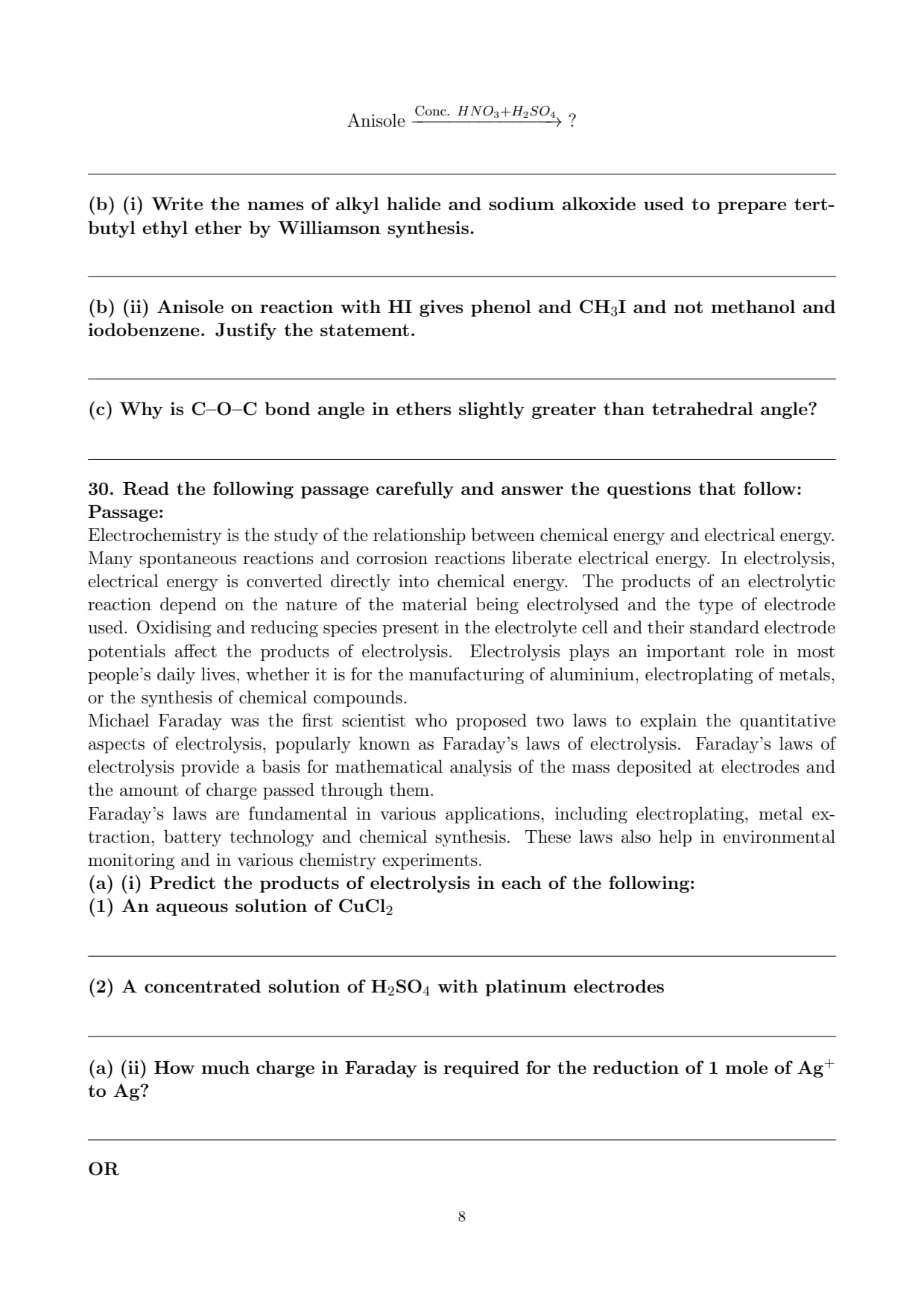
\[ Anisole \xrightarrow{Conc. HNO_3 + H_2SO_4} \; ? \]
(b)(i) Write the names of alkyl halide and sodium alkoxide used to prepare tert-butyl ethyl ether by Williamson synthesis.
(b)(ii) Anisole on reaction with HI gives phenol and CH\(_3\)I and not methanol and iodobenzene. Justify the statement.
(c) Why is C–O–C bond angle in ethers slightly greater than tetrahedral angle?
Read the following passage carefully and answer the questions that follow:
Passage:
Electrochemistry is the study of the relationship between chemical energy and electrical energy. Many spontaneous reactions and corrosion reactions liberate electrical energy. In electrolysis, electrical energy is converted directly into chemical energy. The products of an electrolytic reaction depend on the nature of the material being electrolysed and the type of electrode used. Oxidising and reducing species present in the electrolyte cell and their standard electrode potentials affect the products of electrolysis. Electrolysis plays an important role in most people's daily lives, whether it is for the manufacturing of aluminium, electroplating of metals, or the synthesis of chemical compounds.
Michael Faraday was the first scientist who proposed two laws to explain the quantitative aspects of electrolysis, popularly known as Faraday's laws of electrolysis. Faraday's laws of electrolysis provide a basis for mathematical analysis of the mass deposited at electrodes and the amount of charge passed through them.
Faraday's laws are fundamental in various applications, including electroplating, metal extraction, battery technology and chemical synthesis. These laws also help in environmental monitoring and in various chemistry experiments.
(a)
(i) Predict the products of electrolysis in each of the following:
(1) An aqueous solution of CuCl\(_2\)
(2) A concentrated solution of H\(_2\)SO\(_4\) with platinum electrodes
(ii) How much charge in Faraday is required for the reduction of 1 mole of Ag\(^+\) to Ag?
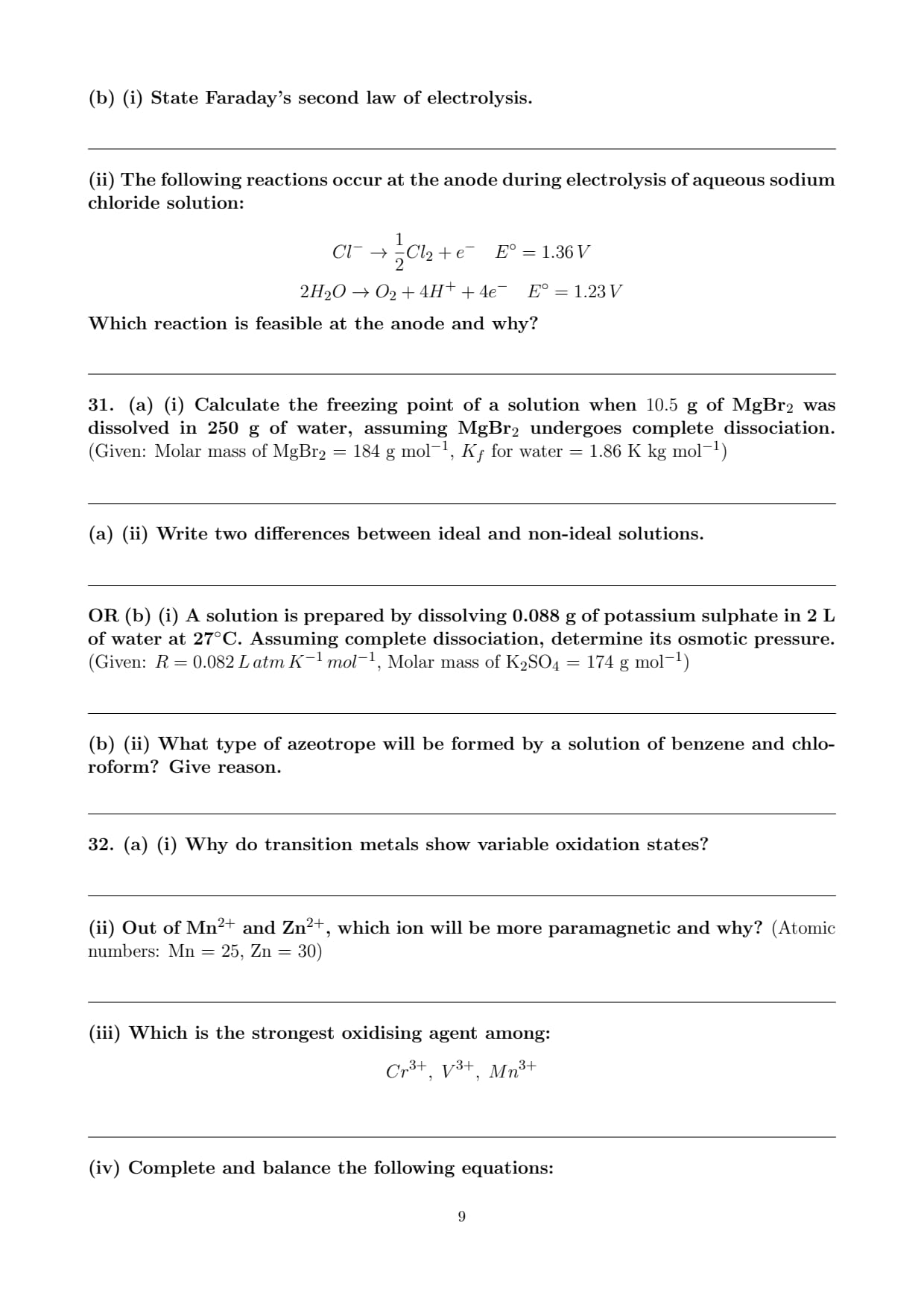
(b)(i) State Faraday’s second law of electrolysis.
(b)(ii) The following reactions occur at the anode during electrolysis of aqueous sodium chloride solution:
\[ Cl^- \rightarrow \frac{1}{2}Cl_2 + e^- \quad E^\circ = 1.36\,V \] \[ 2H_2O \rightarrow O_2 + 4H^+ + 4e^- \quad E^\circ = 1.23\,V \]
Which reaction is feasible at the anode and why?
(a) (i) Calculate the freezing point of a solution when \(10.5\) g of MgBr\(_2\) was dissolved in 250 g of water, assuming MgBr\(_2\) undergoes complete dissociation.
(Given: Molar mass of MgBr\(_2\) = 184 g mol\(^{-1}\), \(K_f\) for water = 1.86 K kg mol\(^{-1}\))
(a) (ii) Write two differences between ideal and non-ideal solutions.
(b) (i) A solution is prepared by dissolving 0.088 g of potassium sulphate in 2 L of water at 27\(^\circ\)C. Assuming complete dissociation, determine its osmotic pressure.
(Given: \(R = 0.082 \, L\,atm\,K^{-1}\,mol^{-1}\), Molar mass of K\(_2\)SO\(_4\) = 174 g mol\(^{-1}\))
(b) (ii) What type of azeotrope will be formed by a solution of benzene and chloroform? Give reason.
(a) (i) Why do transition metals show variable oxidation states?
(ii) Out of Mn\(^{2+}\) and Zn\(^{2+}\), which ion will be more paramagnetic and why?
(Atomic numbers: Mn = 25, Zn = 30)
(iii) Which is the strongest oxidising agent among: \[ Cr^{3+}, \; V^{3+}, \; Mn^{3+} \]
(iv) Complete and balance the following equations:
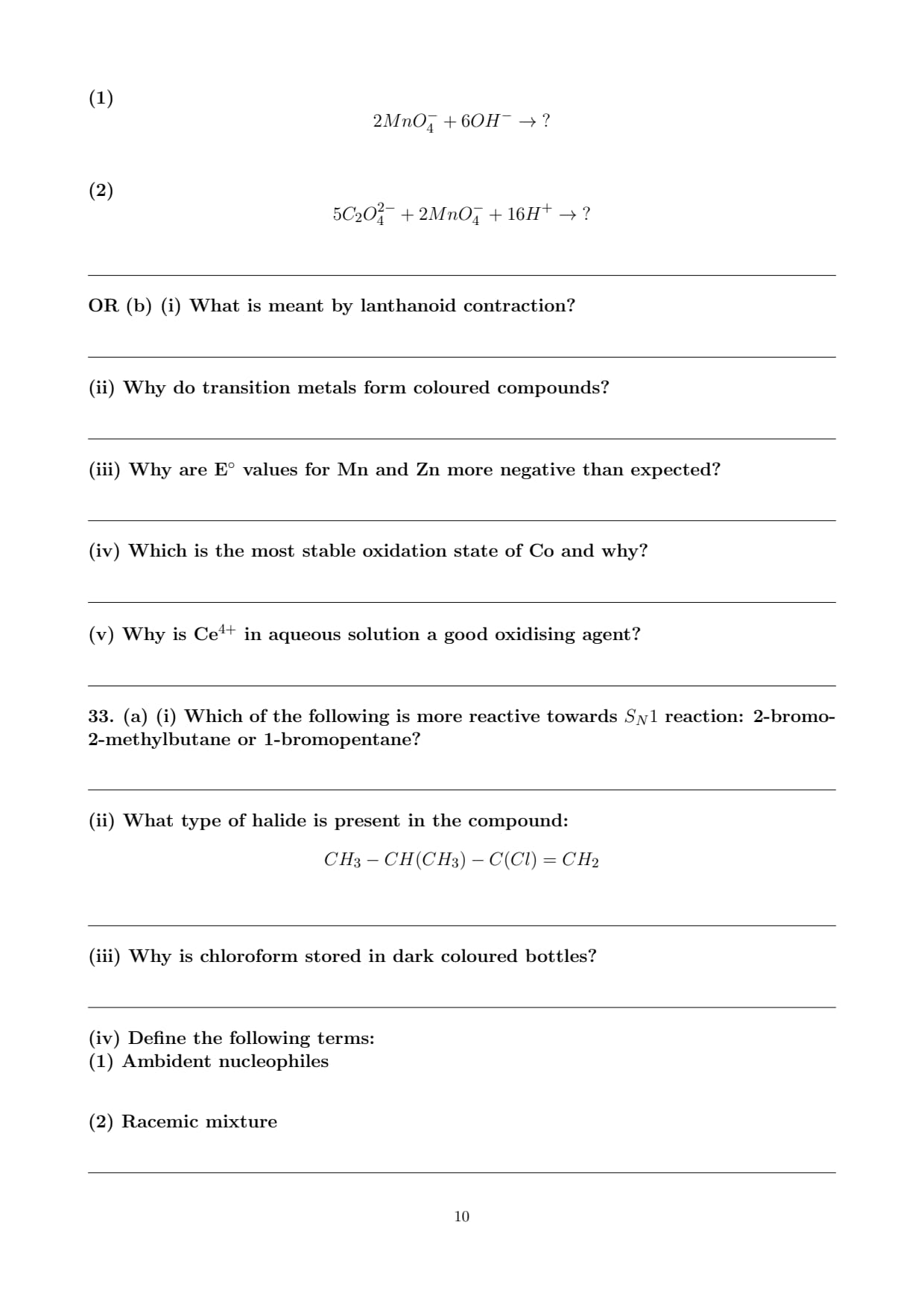
(1) \[ 2MnO_4^- + 6OH^- \rightarrow \; ? \]
(2) \[ 5C_2O_4^{2-} + 2MnO_4^- + 16H^+ \rightarrow \; ? \]
(b) (i) What is meant by lanthanoid contraction?
(ii) Why do transition metals form coloured compounds?
(iii) Why are E\(^\circ\) values for Mn and Zn more negative than expected?
(iv) Which is the most stable oxidation state of Co and why?
(v) Why is Ce\(^{4+}\) in aqueous solution a good oxidising agent?
(a) (i) Which of the following is more reactive towards \(S_N1\) reaction: 2-bromo-2-methylbutane or 1-bromopentane?
(ii) What type of halide is present in the compound: \[ CH_3-CH(CH_3)-C(Cl)=CH_2 \]
(iii) Why is chloroform stored in dark coloured bottles?
(iv) Define the following terms:
(1) Ambident nucleophiles
(2) Racemic mixture
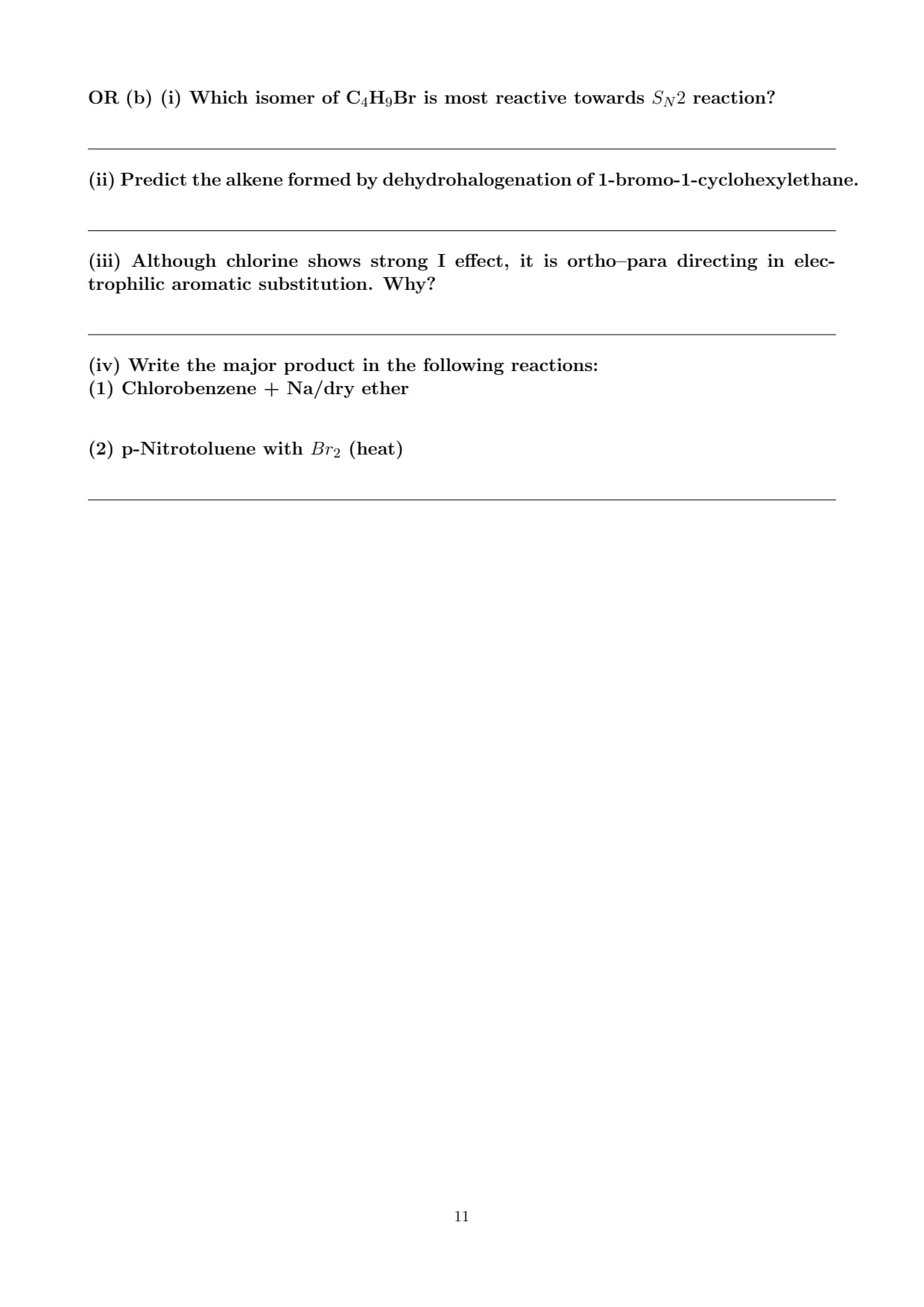
(b) (i) Which isomer of C\(_4\)H\(_9\)Br is most reactive towards \(S_N2\) reaction?
(ii) Predict the alkene formed by dehydrohalogenation of 1-bromo-1-cyclohexylethane.
(iii) Although chlorine shows strong −I effect, it is ortho–para directing in electrophilic aromatic substitution. Why?
(iv) Write the major product in the following reactions:
(1) Chlorobenzene + Na/dry ether



Comments